What Drugs Are Out There
and What Do They Do?
CLAUDIA CHANDLER, MA, MFTI
Fact or Fiction?
QUIZ
What do we mean by drugs?
• Illegal substances such
heroin, cocaine, cannabis
and mephedrone
• Misused household
products –like gases,
and aerosols or other
volatile substances
•Some medicinal drugs
(which can be misused)
• Alcohol and tobacco
• New Psychoactive
Substances often referred
to as so called ‘legal
highs’
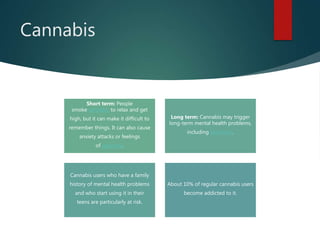
Cannabis
Short term: People
smoke cannabis to relax and get
high, but it can make it difficult to
remember things. It can also cause
anxiety attacks or feelings
of paranoia.
Long term: Cannabis may trigger
long-term mental health problems,
including psychosis.
Cannabis users who have a family
history of mental health problems
and who start using it in their
teens are particularly at risk.
About 10% of regular cannabis users
become addicted to it.
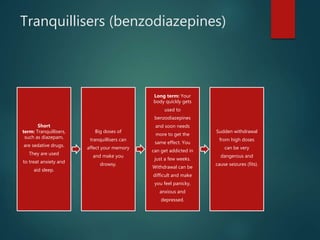
Tranquillisers (benzodiazepines)
Short
term: Tranquillisers,
such as diazepam,
are sedative drugs.
They are used
to treat anxiety and
aid sleep.
Big doses of
tranquillisers can
affect your memory
and make you
drowsy.
Long term: Your
body quickly gets
used to
benzodiazepines
and soon needs
more to get the
same effect. You
can get addicted in
just a few weeks.
Withdrawal can be
difficult and make
you feel panicky,
anxious and
depressed.
Sudden withdrawal
from high doses
can be very
dangerous and
cause seizures (fits).
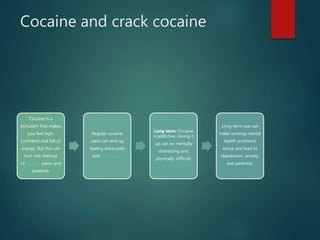
Cocaine and crack cocaine
Cocaine is a
stimulant that makes
you feel high,
confident and full of
energy. But this can
turn into feelings
of anxiety, panic and
paranoia.
Regular cocaine
users can end up
feeling exhausted
and depressed.
Long term: Cocaine
is addictive. Giving it
up can be mentally
distressing and
physically difficult.
Long-term use can
make existing mental
health problems
worse and lead to
depression, anxiety
and paranoia.
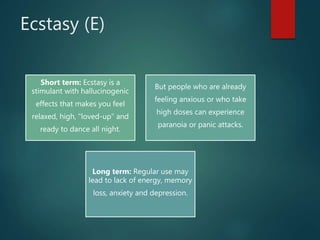
Ecstasy (E)
Short term: Ecstasy is a
stimulant with hallucinogenic
effects that makes you feel
relaxed, high, "loved-up" and
ready to dance all night.
But people who are already
feeling anxious or who take
high doses can experience
paranoia or panic attacks.
Long term: Regular use may
lead to lack of energy, memory
loss, anxiety and depression.
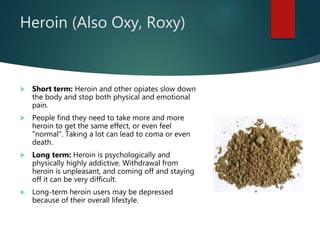
Heroin (Also Oxy, Roxy)
 Short term: Heroin and other opiates slow down
the body and stop both physical and emotional
pain.
 People find they need to take more and more
heroin to get the same effect, or even feel
"normal". Taking a lot can lead to coma or even
death.
 Long term: Heroin is psychologically and
physically highly addictive. Withdrawal from
heroin is unpleasant, and coming off and staying
off it can be very difficult.
 Long-term heroin users may be depressed
because of their overall lifestyle.
Solvents (gases, glues and aerosols)
Short term: Solvents make you
feel high and disorientated.
They can cause aggression,
mood swings and
hallucinations.
Long term: Heavy use of
solvents can damage your
brain, particularly the bit that
controls your movements.
Speed and crystal meth
Short term: Speed can make you
feel energetic and confident but it
can also cause anxiety, paranoia and
aggression.
The "comedown" can make you feel
lethargic and down, and you may
have problems with concentrating
and learning.
The effects of crystal meth are similar
to speed but more exaggerated and
longer-lasting. The comedown can
be worse too.
Long term: Heavy use of speed can
lead to anxiety, depression,
irritability, aggression and paranoia.
It can also cause psychotic
symptoms, such as hallucinations.
Acid (LSD) and magic mushrooms
(shrooms)
Short term: Acid and magic
mushrooms are hallucinogenics,
making people see, hear and
experience the world in a different,
"trippy" way. Colors may become
intensified and sounds distorted.
Users may also become panicky and
suffer from paranoia.
The effects of acid can last 12 hours
or more which, if it's a bad trip, can be
very frightening.
Long term: Some people who use
LSD and magic mushrooms can
experience flashbacks. Both can make
existing mental health problems
worse.
10 Facts About
Blacking Out
That Actually
Make So Much
Sense:
 An explanation for
all those nights you
can't remember.
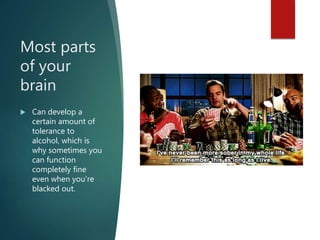
Most parts
of your
brain
 Can develop a
certain amount of
tolerance to
alcohol, which is
why sometimes you
can function
completely fine
even when you're
blacked out.

Samohi

  • 1.
    What Drugs AreOut There and What Do They Do? CLAUDIA CHANDLER, MA, MFTI
  • 2.
  • 3.
    What do wemean by drugs? • Illegal substances such heroin, cocaine, cannabis and mephedrone • Misused household products –like gases, and aerosols or other volatile substances •Some medicinal drugs (which can be misused) • Alcohol and tobacco • New Psychoactive Substances often referred to as so called ‘legal highs’
  • 4.
    Cannabis Short term: People smokecannabis to relax and get high, but it can make it difficult to remember things. It can also cause anxiety attacks or feelings of paranoia. Long term: Cannabis may trigger long-term mental health problems, including psychosis. Cannabis users who have a family history of mental health problems and who start using it in their teens are particularly at risk. About 10% of regular cannabis users become addicted to it.
  • 5.
    Tranquillisers (benzodiazepines) Short term: Tranquillisers, suchas diazepam, are sedative drugs. They are used to treat anxiety and aid sleep. Big doses of tranquillisers can affect your memory and make you drowsy. Long term: Your body quickly gets used to benzodiazepines and soon needs more to get the same effect. You can get addicted in just a few weeks. Withdrawal can be difficult and make you feel panicky, anxious and depressed. Sudden withdrawal from high doses can be very dangerous and cause seizures (fits).
  • 6.
    Cocaine and crackcocaine Cocaine is a stimulant that makes you feel high, confident and full of energy. But this can turn into feelings of anxiety, panic and paranoia. Regular cocaine users can end up feeling exhausted and depressed. Long term: Cocaine is addictive. Giving it up can be mentally distressing and physically difficult. Long-term use can make existing mental health problems worse and lead to depression, anxiety and paranoia.
  • 7.
    Ecstasy (E) Short term:Ecstasy is a stimulant with hallucinogenic effects that makes you feel relaxed, high, "loved-up" and ready to dance all night. But people who are already feeling anxious or who take high doses can experience paranoia or panic attacks. Long term: Regular use may lead to lack of energy, memory loss, anxiety and depression.
  • 8.
    Heroin (Also Oxy,Roxy)  Short term: Heroin and other opiates slow down the body and stop both physical and emotional pain.  People find they need to take more and more heroin to get the same effect, or even feel "normal". Taking a lot can lead to coma or even death.  Long term: Heroin is psychologically and physically highly addictive. Withdrawal from heroin is unpleasant, and coming off and staying off it can be very difficult.  Long-term heroin users may be depressed because of their overall lifestyle.
  • 9.
    Solvents (gases, gluesand aerosols) Short term: Solvents make you feel high and disorientated. They can cause aggression, mood swings and hallucinations. Long term: Heavy use of solvents can damage your brain, particularly the bit that controls your movements.
  • 10.
    Speed and crystalmeth Short term: Speed can make you feel energetic and confident but it can also cause anxiety, paranoia and aggression. The "comedown" can make you feel lethargic and down, and you may have problems with concentrating and learning. The effects of crystal meth are similar to speed but more exaggerated and longer-lasting. The comedown can be worse too. Long term: Heavy use of speed can lead to anxiety, depression, irritability, aggression and paranoia. It can also cause psychotic symptoms, such as hallucinations.
  • 11.
    Acid (LSD) andmagic mushrooms (shrooms) Short term: Acid and magic mushrooms are hallucinogenics, making people see, hear and experience the world in a different, "trippy" way. Colors may become intensified and sounds distorted. Users may also become panicky and suffer from paranoia. The effects of acid can last 12 hours or more which, if it's a bad trip, can be very frightening. Long term: Some people who use LSD and magic mushrooms can experience flashbacks. Both can make existing mental health problems worse.
  • 12.
    10 Facts About BlackingOut That Actually Make So Much Sense:  An explanation for all those nights you can't remember.
  • 13.
    Most parts of your brain Can develop a certain amount of tolerance to alcohol, which is why sometimes you can function completely fine even when you're blacked out.