
Sales Promotion
Vinod Kaul
01 April 2014
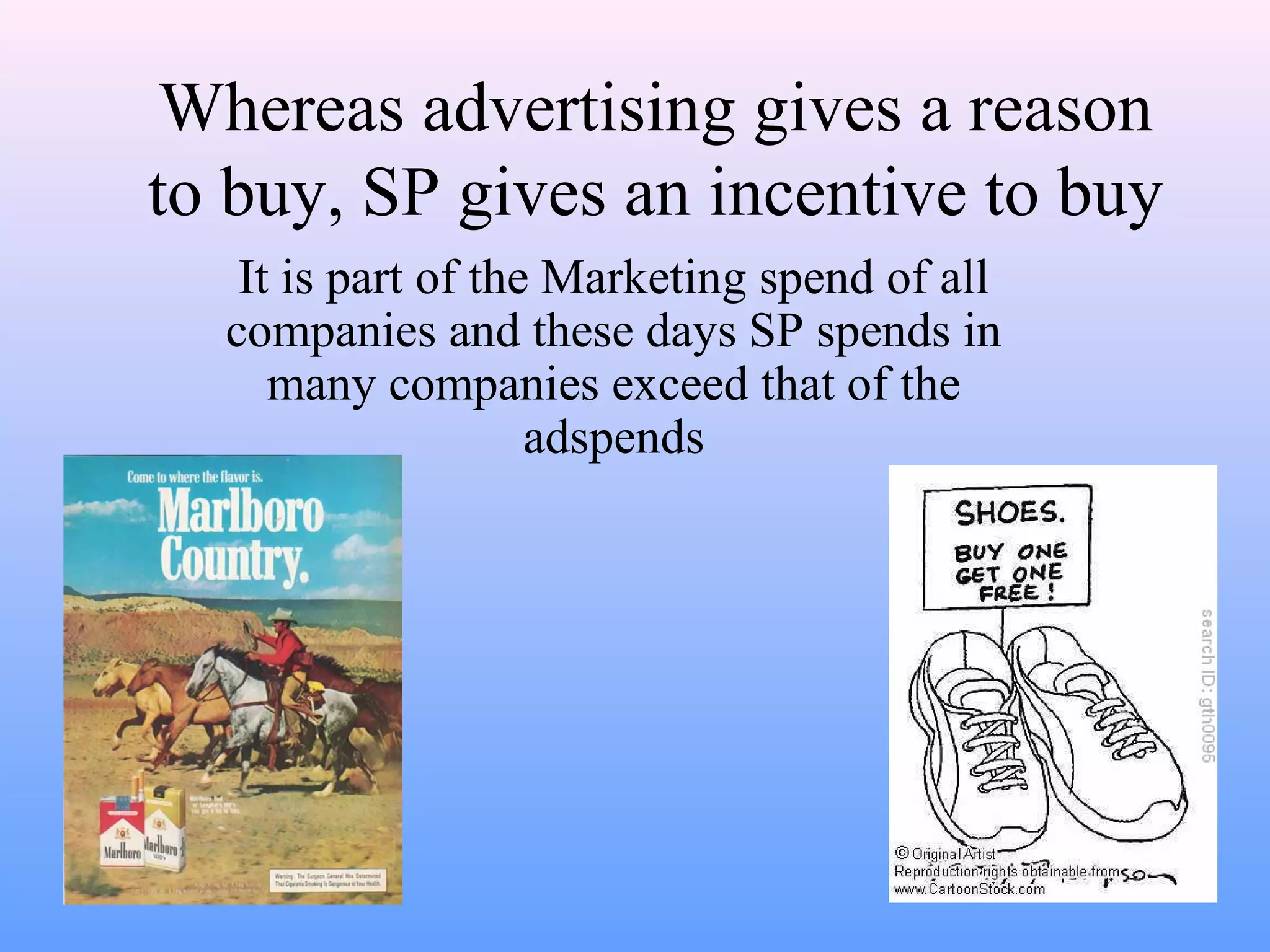
Whereas advertising gives a reason
to buy, SP gives an incentive to buy
It is part of the Marketing spend of all
companies and these days SP spends in
many companies exceed that of the
adspends
Why?
• Internal
• External
Internal reasons
• Top management is more conducive to
spending on promotions
• Line managers under greater pressure to
achieve targets
• Justification of expenditure is easy
External reasons
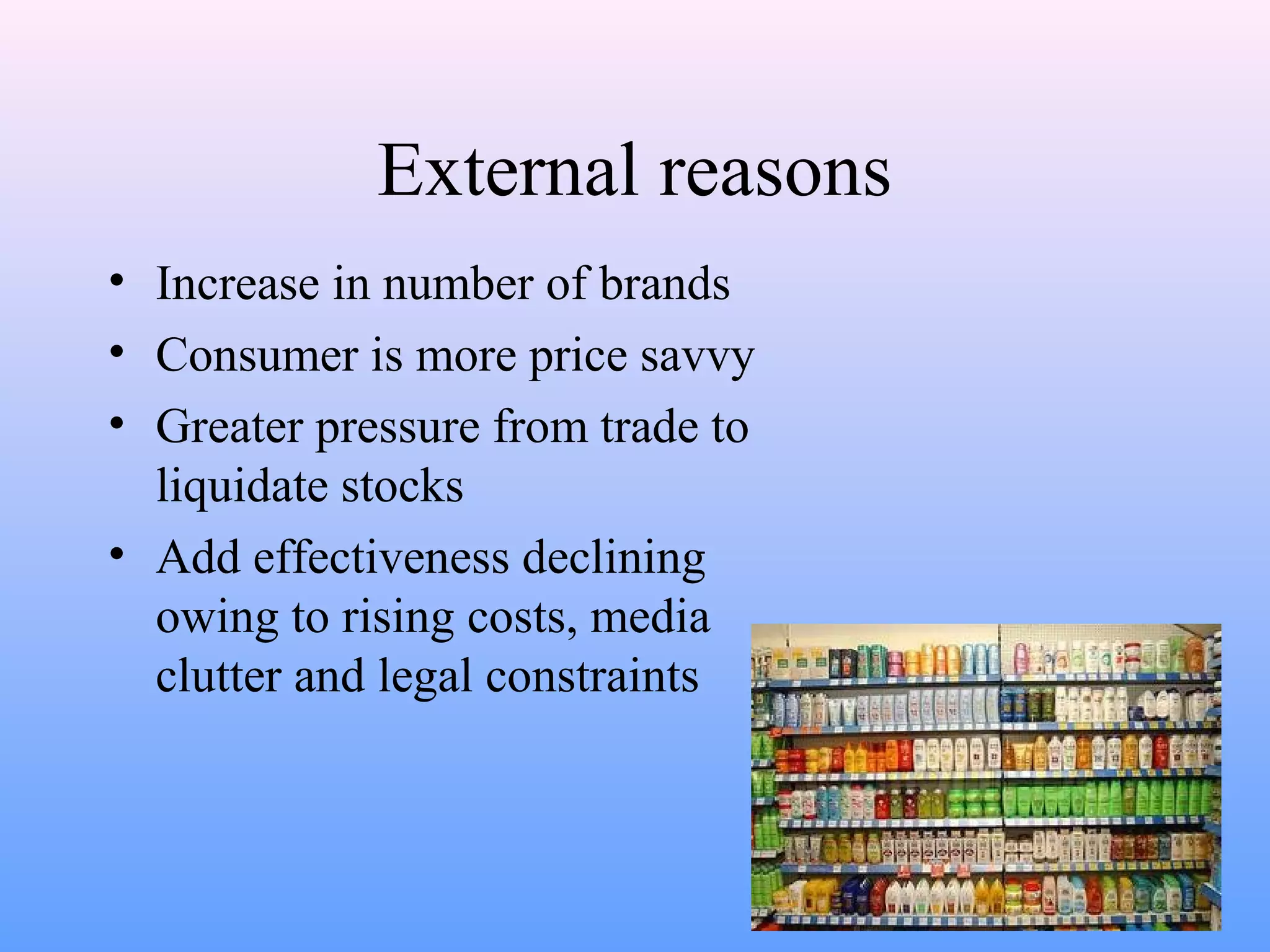
• Increase in number of brands
• Consumer is more price savvy
• Greater pressure from trade to
liquidate stocks
• Add effectiveness declining
owing to rising costs, media
clutter and legal constraints
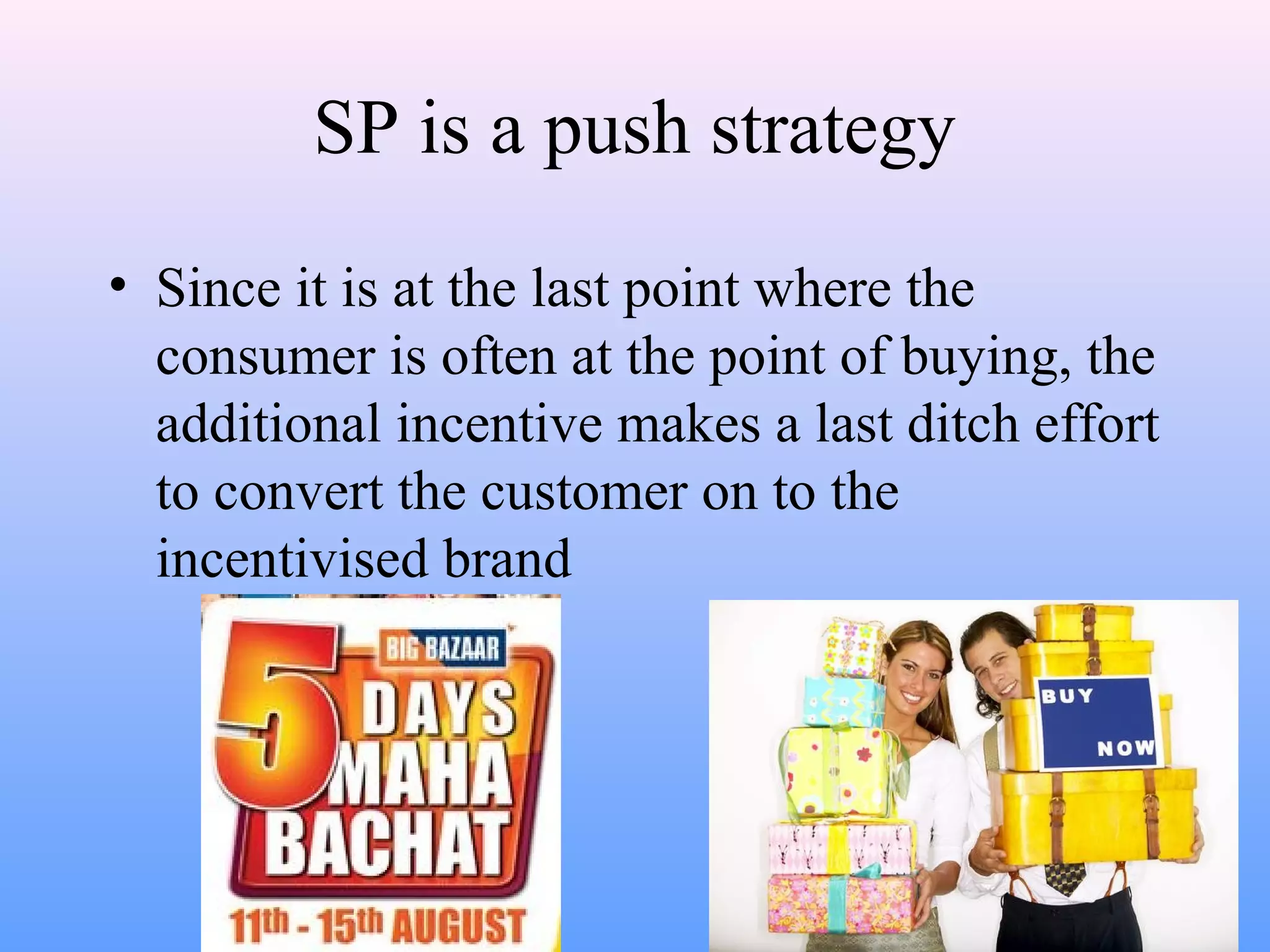
SP is a push strategy
• Since it is at the last point where the
consumer is often at the point of buying, the
additional incentive makes a last ditch effort
to convert the customer on to the
incentivised brand
SP is of two types
• Trade
• Consumer
Trade promotion
• Liquidating heavy
inventories
• Persuade retailers to carry
stock, carry more than
usual stock, promote brand
franchise
Consumer promotion
• Stimulate purchase
• Induce trial
• Create new users
• Increase repurchase from
occasional customers
• Reward loyal customers
Forms of trade promotion
• Bulk discounts
• Free materials
• Display windows
– Live windows
• Shelf hiring
• Lucky draws
• ‘Mystery’ customer
• Redistribution incentives
• Shop salesmen incentives
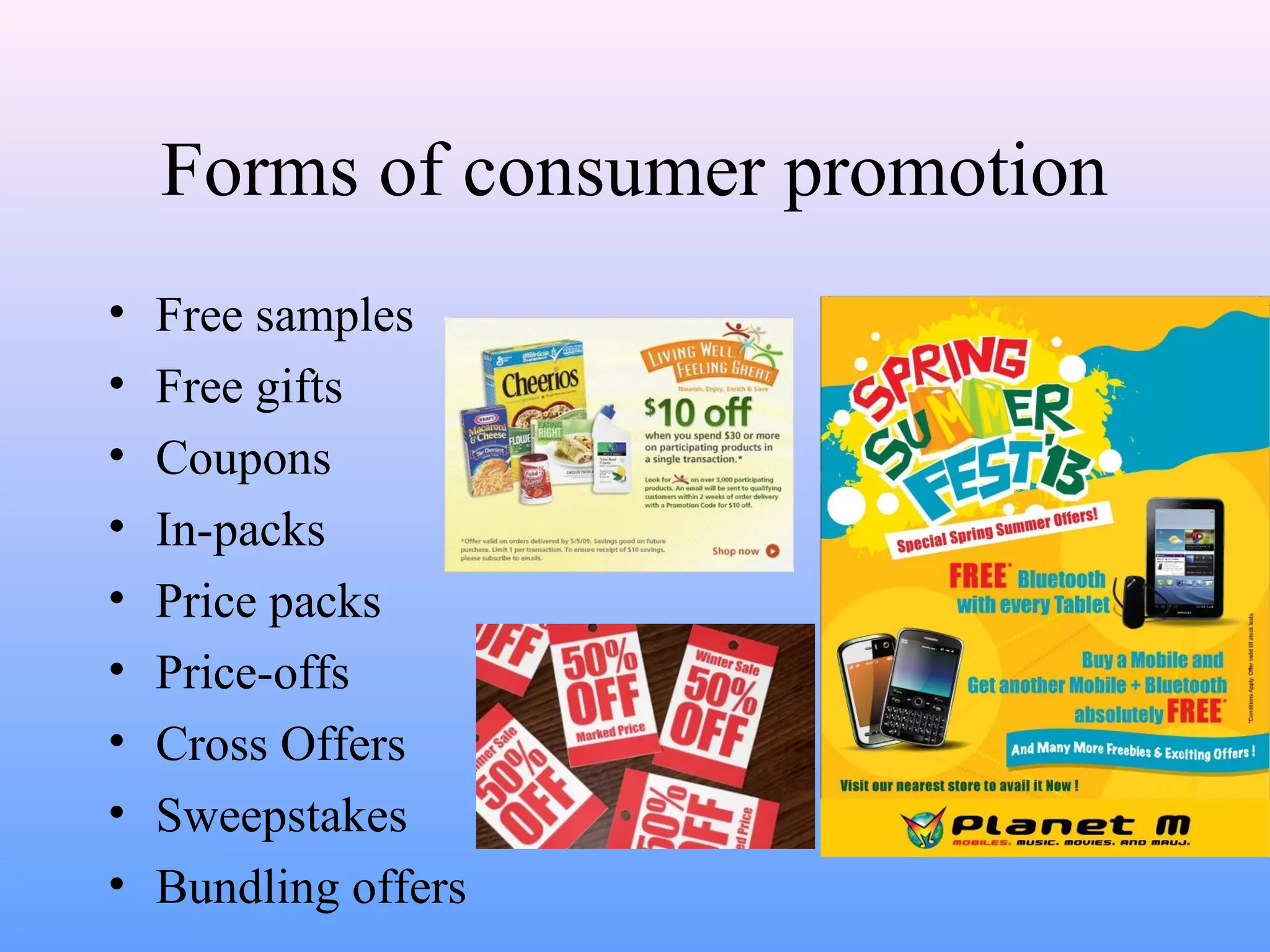
Forms of consumer promotion
• Free samples
• Free gifts
• Coupons
• In-packs
• Price packs
• Price-offs
• Cross Offers
• Sweepstakes
• Bundling offers
SP spurs action because
they are supposed to run
for a limited time
While the
advertising
budgets are
controlled by the
brand managers,
SP budgets usually
are controlled by
the sales managers
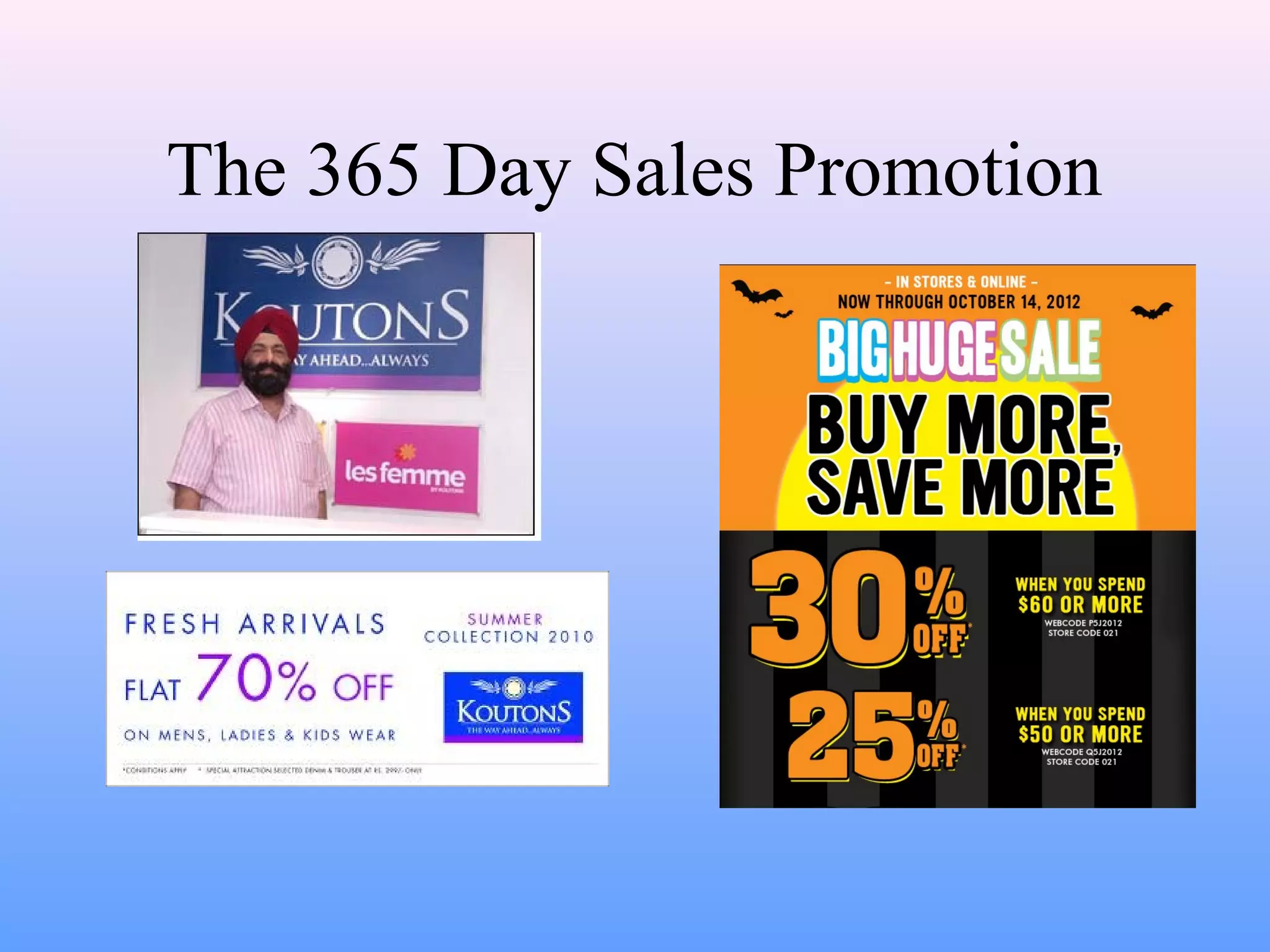
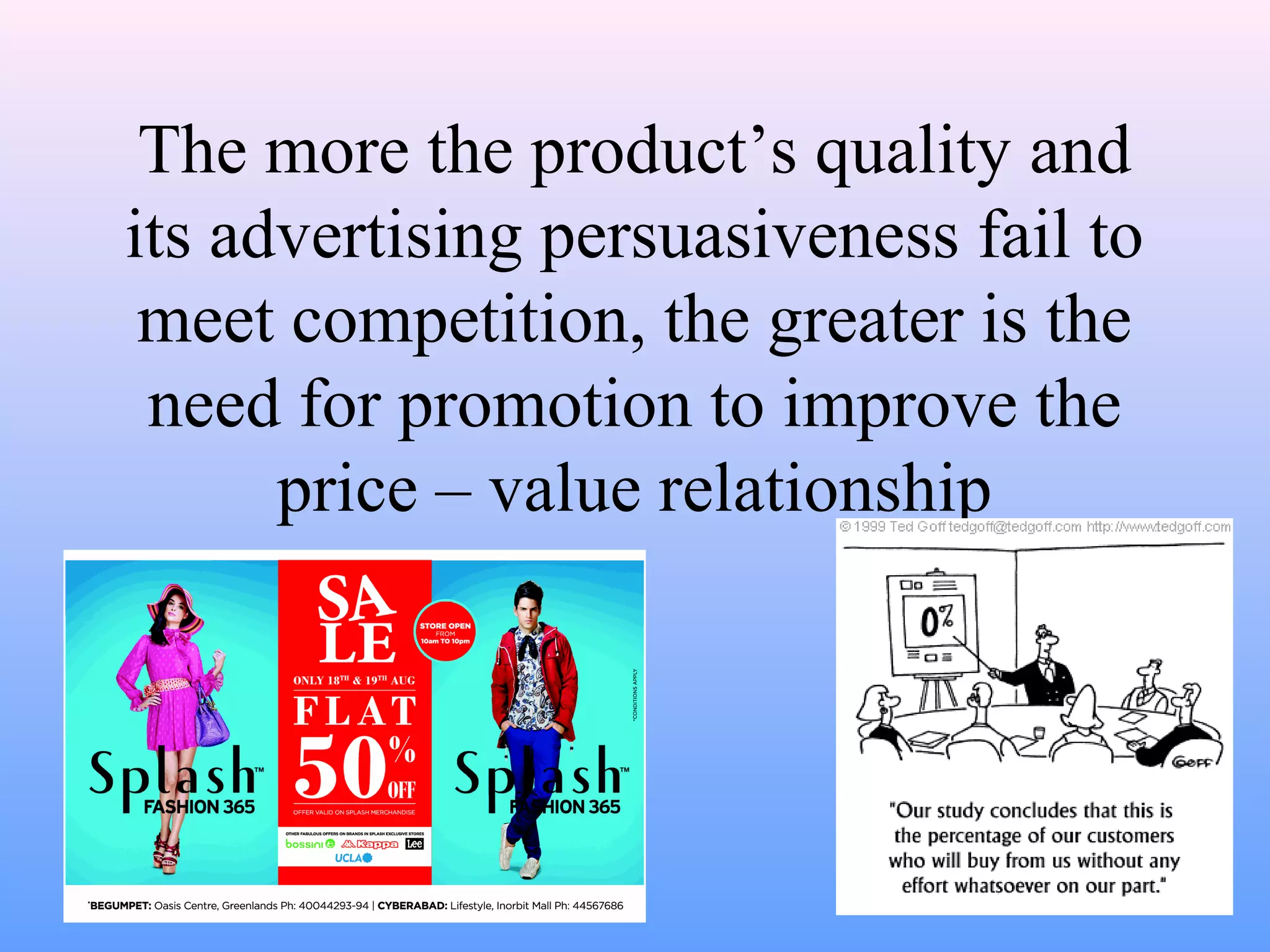
The 365 Day Sales Promotion
The more the product’s quality and
its advertising persuasiveness fail to
meet competition, the greater is the
need for promotion to improve the
price – value relationship
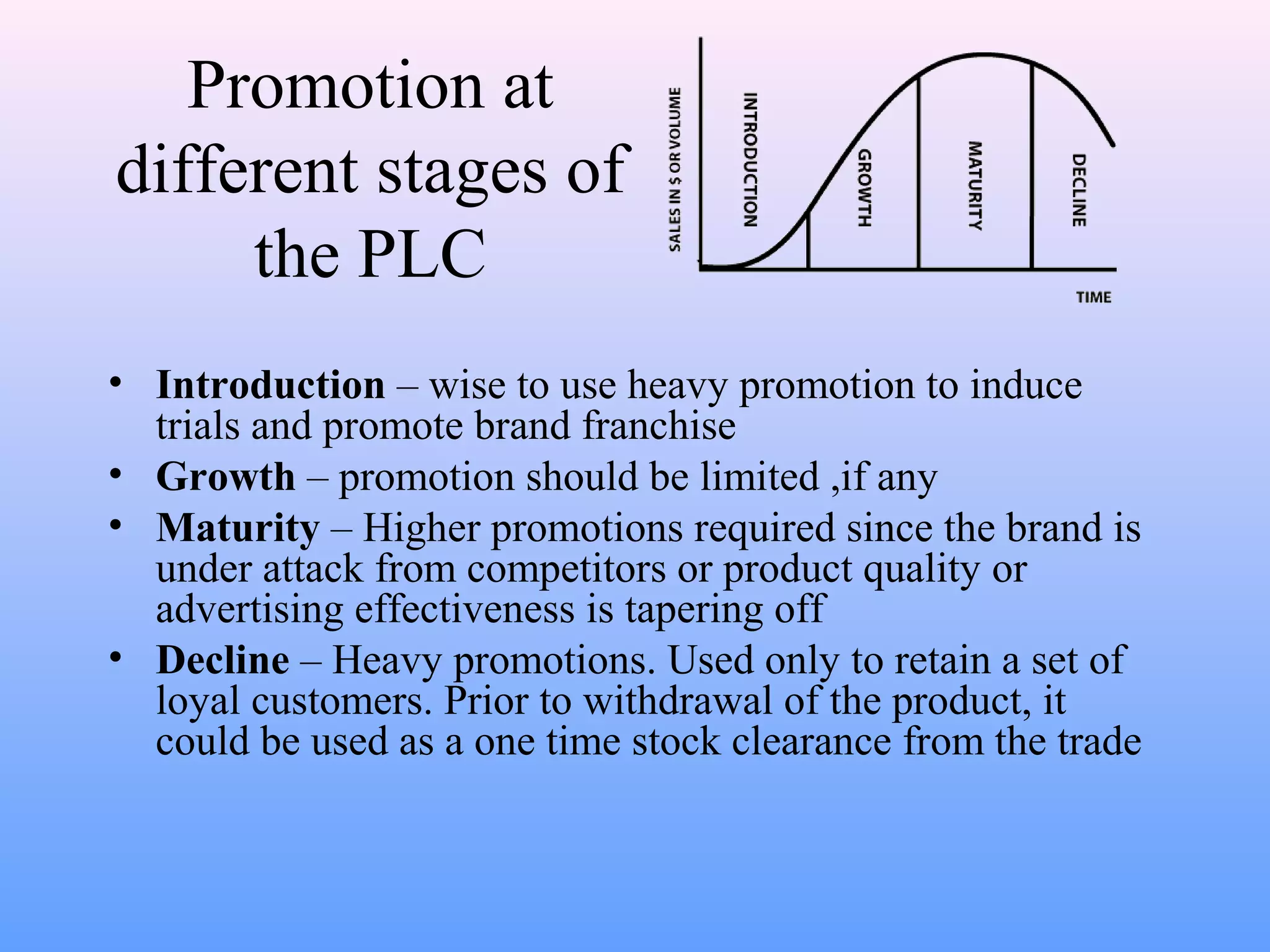
Promotion at
different stages of
the PLC
• Introduction – wise to use heavy promotion to induce
trials and promote brand franchise
• Growth – promotion should be limited ,if any
• Maturity – Higher promotions required since the brand is
under attack from competitors or product quality or
advertising effectiveness is tapering off
• Decline – Heavy promotions. Used only to retain a set of
loyal customers. Prior to withdrawal of the product, it
could be used as a one time stock clearance from the trade
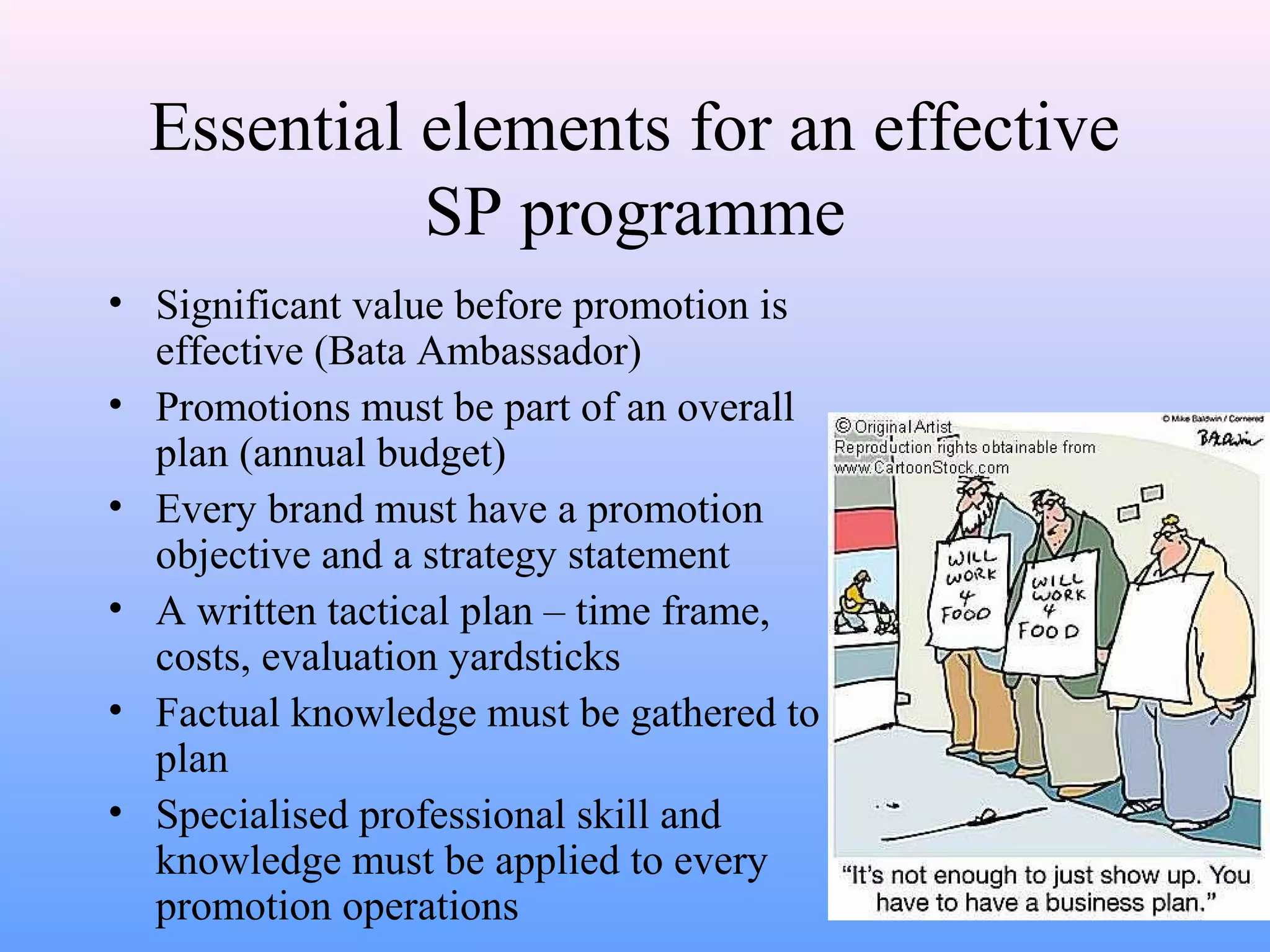
Essential elements for an effective
SP programme
• Significant value before promotion is
effective (Bata Ambassador)
• Promotions must be part of an overall
plan (annual budget)
• Every brand must have a promotion
objective and a strategy statement
• A written tactical plan – time frame,
costs, evaluation yardsticks
• Factual knowledge must be gathered to
plan
• Specialised professional skill and
knowledge must be applied to every
promotion operations
Final considerations
• Don’t promote if the product is not
good
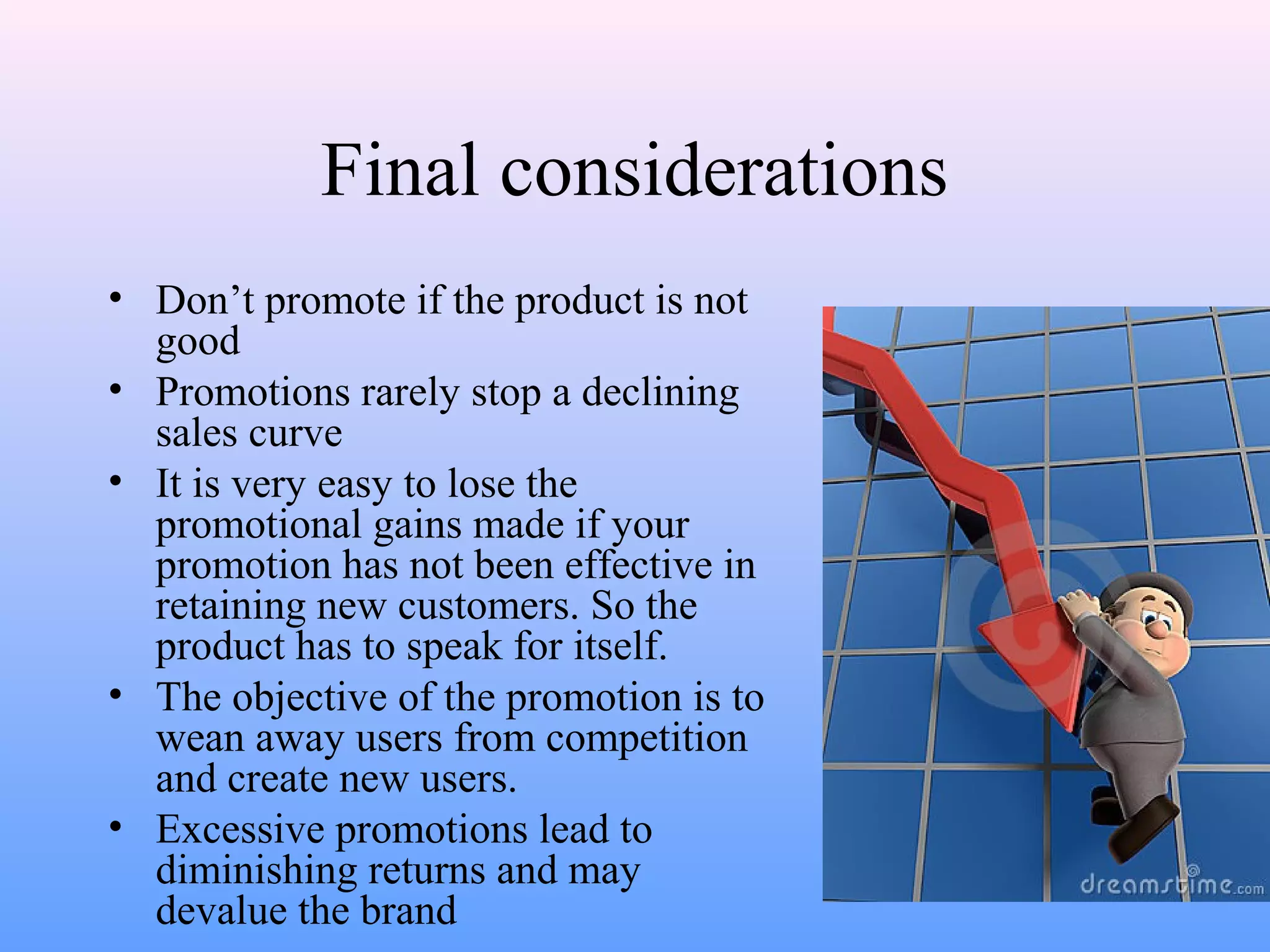
• Promotions rarely stop a declining
sales curve
• It is very easy to lose the
promotional gains made if your
promotion has not been effective in
retaining new customers. So the
product has to speak for itself.
• The objective of the promotion is to
wean away users from competition
and create new users.
• Excessive promotions lead to
diminishing returns and may
devalue the brand
Cont’d
• Promotions may be used in conjunction with
advertising and other marketing communication
tools
• It should be novel and attractive (Red Dot sale)
• Ensure supply lines are good and adequate stock
is available right through the promotion
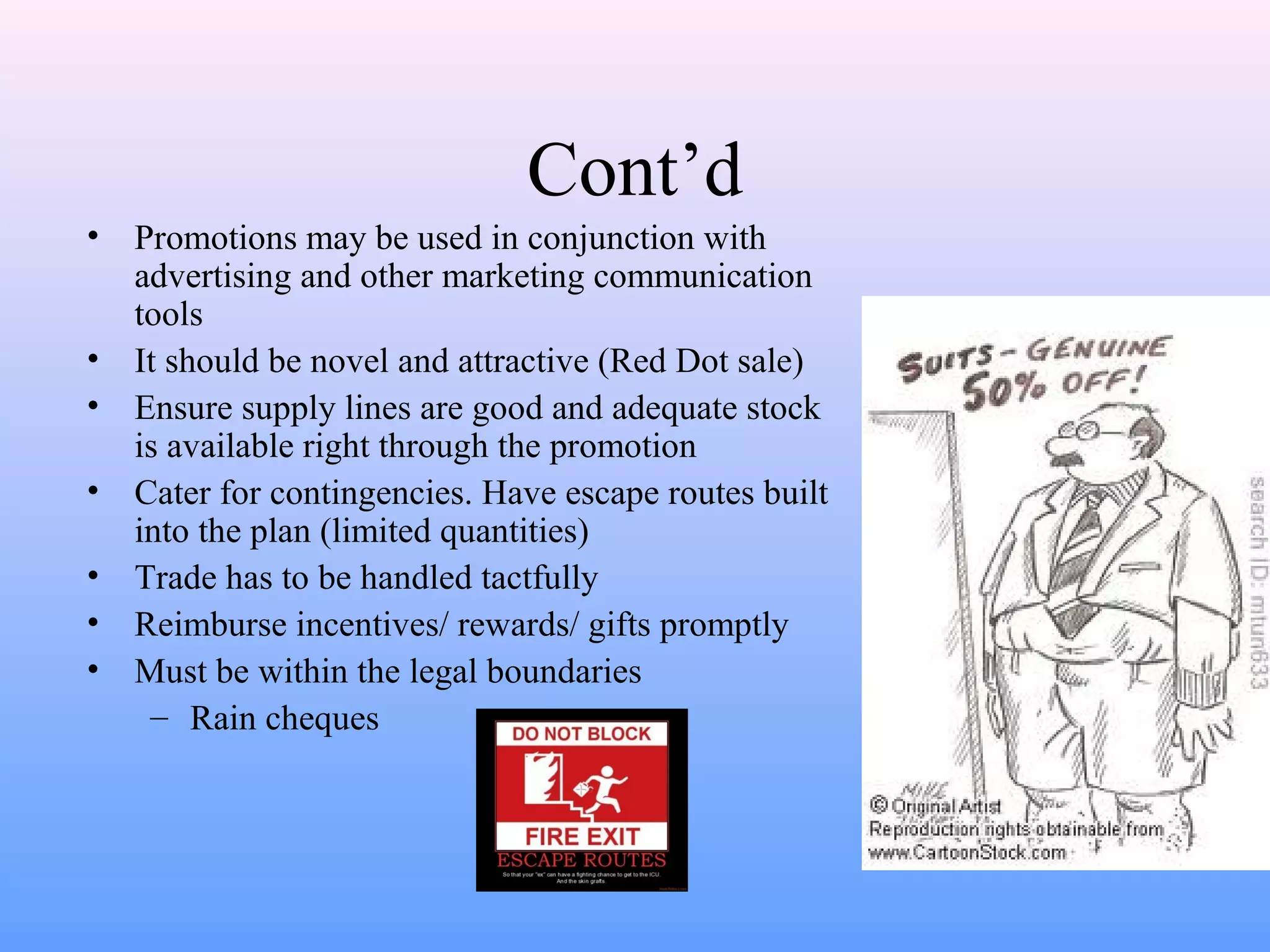
• Cater for contingencies. Have escape routes built
into the plan (limited quantities)
• Trade has to be handled tactfully
• Reimburse incentives/ rewards/ gifts promptly
• Must be within the legal boundaries
– Rain cheques
Sales promotion ppt 01 apr2014

Sales promotion ppt 01 apr2014

  • 1.
  • 2.
    Whereas advertising givesa reason to buy, SP gives an incentive to buy It is part of the Marketing spend of all companies and these days SP spends in many companies exceed that of the adspends
  • 3.
  • 4.
    Internal reasons • Topmanagement is more conducive to spending on promotions • Line managers under greater pressure to achieve targets • Justification of expenditure is easy
  • 5.
    External reasons • Increasein number of brands • Consumer is more price savvy • Greater pressure from trade to liquidate stocks • Add effectiveness declining owing to rising costs, media clutter and legal constraints
  • 6.
    SP is apush strategy • Since it is at the last point where the consumer is often at the point of buying, the additional incentive makes a last ditch effort to convert the customer on to the incentivised brand
  • 7.
    SP is oftwo types • Trade • Consumer
  • 8.
    Trade promotion • Liquidatingheavy inventories • Persuade retailers to carry stock, carry more than usual stock, promote brand franchise
  • 9.
    Consumer promotion • Stimulatepurchase • Induce trial • Create new users • Increase repurchase from occasional customers • Reward loyal customers
  • 10.
    Forms of tradepromotion • Bulk discounts • Free materials • Display windows – Live windows • Shelf hiring • Lucky draws • ‘Mystery’ customer • Redistribution incentives • Shop salesmen incentives
  • 11.
    Forms of consumerpromotion • Free samples • Free gifts • Coupons • In-packs • Price packs • Price-offs • Cross Offers • Sweepstakes • Bundling offers
  • 12.
    SP spurs actionbecause they are supposed to run for a limited time While the advertising budgets are controlled by the brand managers, SP budgets usually are controlled by the sales managers
  • 13.
    The 365 DaySales Promotion
  • 14.
    The more theproduct’s quality and its advertising persuasiveness fail to meet competition, the greater is the need for promotion to improve the price – value relationship
  • 15.
    Promotion at different stagesof the PLC • Introduction – wise to use heavy promotion to induce trials and promote brand franchise • Growth – promotion should be limited ,if any • Maturity – Higher promotions required since the brand is under attack from competitors or product quality or advertising effectiveness is tapering off • Decline – Heavy promotions. Used only to retain a set of loyal customers. Prior to withdrawal of the product, it could be used as a one time stock clearance from the trade
  • 16.
    Essential elements foran effective SP programme • Significant value before promotion is effective (Bata Ambassador) • Promotions must be part of an overall plan (annual budget) • Every brand must have a promotion objective and a strategy statement • A written tactical plan – time frame, costs, evaluation yardsticks • Factual knowledge must be gathered to plan • Specialised professional skill and knowledge must be applied to every promotion operations
  • 17.
    Final considerations • Don’tpromote if the product is not good • Promotions rarely stop a declining sales curve • It is very easy to lose the promotional gains made if your promotion has not been effective in retaining new customers. So the product has to speak for itself. • The objective of the promotion is to wean away users from competition and create new users. • Excessive promotions lead to diminishing returns and may devalue the brand
  • 18.
    Cont’d • Promotions maybe used in conjunction with advertising and other marketing communication tools • It should be novel and attractive (Red Dot sale) • Ensure supply lines are good and adequate stock is available right through the promotion • Cater for contingencies. Have escape routes built into the plan (limited quantities) • Trade has to be handled tactfully • Reimburse incentives/ rewards/ gifts promptly • Must be within the legal boundaries – Rain cheques