SAHARA DESERT
XIMENA DE JESÚS CASTAÑÓN ESPINOSA
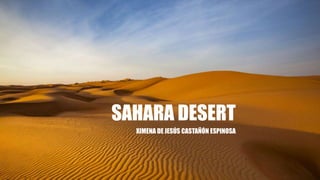
SAHARA DESERT
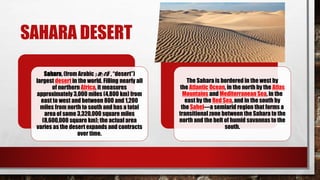
Sahara, (from Arabic ṣaḥrāʾ, “desert”)
largest desert in the world. Filling nearly all
of northern Africa, it measures
approximately 3,000 miles (4,800 km) from
east to west and between 800 and 1,200
miles from north to south and has a total
area of some 3,320,000 square miles
(8,600,000 square km); the actual area
varies as the desert expands and contracts
over time.
The Sahara is bordered in the west by
the Atlantic Ocean, in the north by the Atlas
Mountains and Mediterranean Sea, in the
east by the Red Sea, and in the south by
the Sahel—a semiarid region that forms a
transitional zone between the Sahara to the
north and the belt of humid savannas to the
south.
PHYSIOGRAPHY
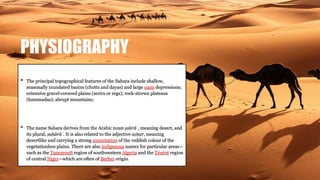
• The principal topographical features of the Sahara include shallow,
seasonally inundated basins (chotts and dayas) and large oasis depressions;
extensive gravel-covered plains (serirs or regs); rock-strewn plateaus
(hammadas); abrupt mountains;
• The name Sahara derives from the Arabic noun ṣaḥrāʾ, meaning desert, and
its plural, ṣaḥārāʾ. It is also related to the adjective aṣḥar, meaning
desertlike and carrying a strong connotation of the reddish colour of the
vegetationless plains. There are also indigenous names for particular areas—
such as the Tanezrouft region of southwestern Algeria and the Ténéré region
of central Niger—which are often of Berber origin.
DRAINAGE OF SAHARA
• Several rivers originating outside the Sahara contribute to both the
surface water and groundwater regimes of the desert and receive
the discharge of its drainage networks.
• Rivers rising in the tropical highlands to the south are particularly
prominent: the main tributaries of the Nile join in the Sahara, and
the river flows northward along the desert’s eastern margin to the
Mediterranean.
• several rivers discharge into Lake Chad in the southern Sahara,
and a significant quantity of water continues northeastward and
contributes to the recharge of regional aquifers; and
the Niger rises in the Fouta Djallon region of Guinea and flows
through the southwestern Sahara before turning southward to the
sea
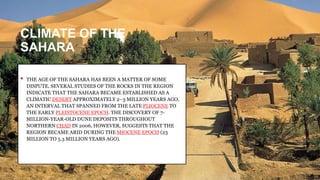
CLIMATE OF THE
SAHARA
• THE AGE OF THE SAHARA HAS BEEN A MATTER OF SOME
DISPUTE. SEVERAL STUDIES OF THE ROCKS IN THE REGION
INDICATE THAT THE SAHARA BECAME ESTABLISHED AS A
CLIMATIC DESERT APPROXIMATELY 2–3 MILLION YEARS AGO,
AN INTERVAL THAT SPANNED FROM THE LATE PLIOCENE TO
THE EARLY PLEISTOCENE EPOCH. THE DISCOVERY OF 7-
MILLION-YEAR-OLD DUNE DEPOSITS THROUGHOUT
NORTHERN CHAD IN 2006, HOWEVER, SUGGESTS THAT THE
REGION BECAME ARID DURING THE MIOCENE EPOCH (23
MILLION TO 5.3 MILLION YEARS AGO).
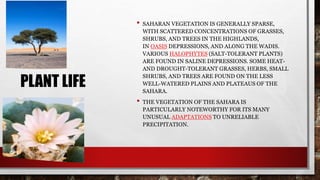
PLANT LIFE
• SAHARAN VEGETATION IS GENERALLY SPARSE,
WITH SCATTERED CONCENTRATIONS OF GRASSES,
SHRUBS, AND TREES IN THE HIGHLANDS,
IN OASIS DEPRESSIONS, AND ALONG THE WADIS.
VARIOUS HALOPHYTES (SALT-TOLERANT PLANTS)
ARE FOUND IN SALINE DEPRESSIONS. SOME HEAT-
AND DROUGHT-TOLERANT GRASSES, HERBS, SMALL
SHRUBS, AND TREES ARE FOUND ON THE LESS
WELL-WATERED PLAINS AND PLATEAUS OF THE
SAHARA.
• THE VEGETATION OF THE SAHARA IS
PARTICULARLY NOTEWORTHY FOR ITS MANY
UNUSUAL ADAPTATIONS TO UNRELIABLE
PRECIPITATION.
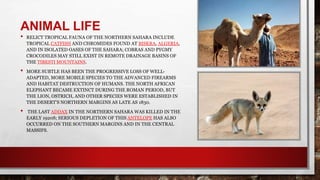
ANIMAL LIFE
• RELICT TROPICAL FAUNA OF THE NORTHERN SAHARA INCLUDE
TROPICAL CATFISH AND CHROMIDES FOUND AT BISKRA, ALGERIA,
AND IN ISOLATED OASES OF THE SAHARA; COBRAS AND PYGMY
CROCODILES MAY STILL EXIST IN REMOTE DRAINAGE BASINS OF
THE TIBESTI MOUNTAINS.
• MORE SUBTLE HAS BEEN THE PROGRESSIVE LOSS OF WELL-
ADAPTED, MORE MOBILE SPECIES TO THE ADVANCED FIREARMS
AND HABITAT DESTRUCTION OF HUMANS. THE NORTH AFRICAN
ELEPHANT BECAME EXTINCT DURING THE ROMAN PERIOD, BUT
THE LION, OSTRICH, AND OTHER SPECIES WERE ESTABLISHED IN
THE DESERT’S NORTHERN MARGINS AS LATE AS 1830.
• THE LAST ADDAX IN THE NORTHERN SAHARA WAS KILLED IN THE
EARLY 1920S; SERIOUS DEPLETION OF THIS ANTELOPE HAS ALSO
OCCURRED ON THE SOUTHERN MARGINS AND IN THE CENTRAL
MASSIFS.
PEOPLE
OF THE
SAHARA
• ALTHOUGH AS LARGE AS THE UNITED STATES, THE SAHARA
(EXCLUDING THE NILE VALLEY) IS ESTIMATED TO CONTAIN
ONLY SOME 2.5 MILLION INHABITANTS—LESS THAN 1 PERSON
PER SQUARE MILE (0.4 PER SQUARE KILOMETRE). HUGE
AREAS ARE WHOLLY EMPTY, BUT WHEREVER MEAGRE
VEGETATION CAN SUPPORT GRAZING ANIMALS OR RELIABLE
WATER SOURCES OCCUR, SCATTERED CLUSTERS OF
INHABITANTS HAVE SURVIVED IN FRAGILE ECOLOGICAL
BALANCE WITH ONE OF THE HARSHEST ENVIRONMENTS ON
EARTH.
• LONG BEFORE RECORDED HISTORY, THE SAHARA WAS
EVIDENTLY MORE WIDELY OCCUPIED. STONE ARTIFACTS,
FOSSILS, AND ROCK ART, WIDELY SCATTERED THROUGH
REGIONS NOW FAR TOO DRY FOR OCCUPATION, REVEAL THE
FORMER HUMAN PRESENCE, TOGETHER WITH THAT OF GAME
ANIMALS, INCLUDING ANTELOPES, BUFFALO, GIRAFFE,
ELEPHANT, RHINOCEROS, AND WARTHOG

Sahara desert.pptx

  • 1.
    SAHARA DESERT XIMENA DEJESÚS CASTAÑÓN ESPINOSA
  • 2.
    SAHARA DESERT Sahara, (fromArabic ṣaḥrāʾ, “desert”) largest desert in the world. Filling nearly all of northern Africa, it measures approximately 3,000 miles (4,800 km) from east to west and between 800 and 1,200 miles from north to south and has a total area of some 3,320,000 square miles (8,600,000 square km); the actual area varies as the desert expands and contracts over time. The Sahara is bordered in the west by the Atlantic Ocean, in the north by the Atlas Mountains and Mediterranean Sea, in the east by the Red Sea, and in the south by the Sahel—a semiarid region that forms a transitional zone between the Sahara to the north and the belt of humid savannas to the south.
  • 3.
    PHYSIOGRAPHY • The principaltopographical features of the Sahara include shallow, seasonally inundated basins (chotts and dayas) and large oasis depressions; extensive gravel-covered plains (serirs or regs); rock-strewn plateaus (hammadas); abrupt mountains; • The name Sahara derives from the Arabic noun ṣaḥrāʾ, meaning desert, and its plural, ṣaḥārāʾ. It is also related to the adjective aṣḥar, meaning desertlike and carrying a strong connotation of the reddish colour of the vegetationless plains. There are also indigenous names for particular areas— such as the Tanezrouft region of southwestern Algeria and the Ténéré region of central Niger—which are often of Berber origin.
  • 4.
    DRAINAGE OF SAHARA •Several rivers originating outside the Sahara contribute to both the surface water and groundwater regimes of the desert and receive the discharge of its drainage networks. • Rivers rising in the tropical highlands to the south are particularly prominent: the main tributaries of the Nile join in the Sahara, and the river flows northward along the desert’s eastern margin to the Mediterranean. • several rivers discharge into Lake Chad in the southern Sahara, and a significant quantity of water continues northeastward and contributes to the recharge of regional aquifers; and the Niger rises in the Fouta Djallon region of Guinea and flows through the southwestern Sahara before turning southward to the sea
  • 5.
    CLIMATE OF THE SAHARA •THE AGE OF THE SAHARA HAS BEEN A MATTER OF SOME DISPUTE. SEVERAL STUDIES OF THE ROCKS IN THE REGION INDICATE THAT THE SAHARA BECAME ESTABLISHED AS A CLIMATIC DESERT APPROXIMATELY 2–3 MILLION YEARS AGO, AN INTERVAL THAT SPANNED FROM THE LATE PLIOCENE TO THE EARLY PLEISTOCENE EPOCH. THE DISCOVERY OF 7- MILLION-YEAR-OLD DUNE DEPOSITS THROUGHOUT NORTHERN CHAD IN 2006, HOWEVER, SUGGESTS THAT THE REGION BECAME ARID DURING THE MIOCENE EPOCH (23 MILLION TO 5.3 MILLION YEARS AGO).
  • 6.
    PLANT LIFE • SAHARANVEGETATION IS GENERALLY SPARSE, WITH SCATTERED CONCENTRATIONS OF GRASSES, SHRUBS, AND TREES IN THE HIGHLANDS, IN OASIS DEPRESSIONS, AND ALONG THE WADIS. VARIOUS HALOPHYTES (SALT-TOLERANT PLANTS) ARE FOUND IN SALINE DEPRESSIONS. SOME HEAT- AND DROUGHT-TOLERANT GRASSES, HERBS, SMALL SHRUBS, AND TREES ARE FOUND ON THE LESS WELL-WATERED PLAINS AND PLATEAUS OF THE SAHARA. • THE VEGETATION OF THE SAHARA IS PARTICULARLY NOTEWORTHY FOR ITS MANY UNUSUAL ADAPTATIONS TO UNRELIABLE PRECIPITATION.
  • 7.
    ANIMAL LIFE • RELICTTROPICAL FAUNA OF THE NORTHERN SAHARA INCLUDE TROPICAL CATFISH AND CHROMIDES FOUND AT BISKRA, ALGERIA, AND IN ISOLATED OASES OF THE SAHARA; COBRAS AND PYGMY CROCODILES MAY STILL EXIST IN REMOTE DRAINAGE BASINS OF THE TIBESTI MOUNTAINS. • MORE SUBTLE HAS BEEN THE PROGRESSIVE LOSS OF WELL- ADAPTED, MORE MOBILE SPECIES TO THE ADVANCED FIREARMS AND HABITAT DESTRUCTION OF HUMANS. THE NORTH AFRICAN ELEPHANT BECAME EXTINCT DURING THE ROMAN PERIOD, BUT THE LION, OSTRICH, AND OTHER SPECIES WERE ESTABLISHED IN THE DESERT’S NORTHERN MARGINS AS LATE AS 1830. • THE LAST ADDAX IN THE NORTHERN SAHARA WAS KILLED IN THE EARLY 1920S; SERIOUS DEPLETION OF THIS ANTELOPE HAS ALSO OCCURRED ON THE SOUTHERN MARGINS AND IN THE CENTRAL MASSIFS.
  • 8.
    PEOPLE OF THE SAHARA • ALTHOUGHAS LARGE AS THE UNITED STATES, THE SAHARA (EXCLUDING THE NILE VALLEY) IS ESTIMATED TO CONTAIN ONLY SOME 2.5 MILLION INHABITANTS—LESS THAN 1 PERSON PER SQUARE MILE (0.4 PER SQUARE KILOMETRE). HUGE AREAS ARE WHOLLY EMPTY, BUT WHEREVER MEAGRE VEGETATION CAN SUPPORT GRAZING ANIMALS OR RELIABLE WATER SOURCES OCCUR, SCATTERED CLUSTERS OF INHABITANTS HAVE SURVIVED IN FRAGILE ECOLOGICAL BALANCE WITH ONE OF THE HARSHEST ENVIRONMENTS ON EARTH. • LONG BEFORE RECORDED HISTORY, THE SAHARA WAS EVIDENTLY MORE WIDELY OCCUPIED. STONE ARTIFACTS, FOSSILS, AND ROCK ART, WIDELY SCATTERED THROUGH REGIONS NOW FAR TOO DRY FOR OCCUPATION, REVEAL THE FORMER HUMAN PRESENCE, TOGETHER WITH THAT OF GAME ANIMALS, INCLUDING ANTELOPES, BUFFALO, GIRAFFE, ELEPHANT, RHINOCEROS, AND WARTHOG