The Sahara Desert Tyler Pyle
Location Largest Desert in the world 3.5 million square miles The US would fit inside of it From north to south it is between 800-1200 miles NYC to Jacksonville, FL is 950 miles It is at least 3000 miles east from west NYC to Los Angeles is 2800 miles
Name Sahara was derived from Arabic word for deserts “The Greatest Desert” الصحراء الكبرى‎ Arabic-  aṣ-ṣaḥrā´ al-kubra
Borders and Countries Algeria, Chad, Egypt, Libya, Mali, Mauritania, Morocco, Niger, Western Sahara, Sudan, and Tunisia Borders the Mediterranean Sea and Atlas Mountain rang to the North Red Sea to the East Atlantic Ocean to the West
 
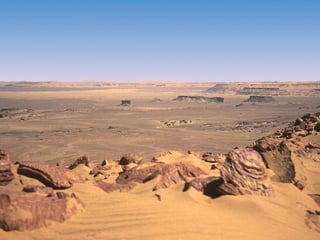
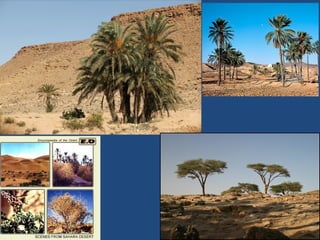
Geography Highest point- 11,204 ft Mount Koussi located in the Atlas Mountains Lowest point- 436 ft below sea level in the Qattera Depression in Egypt Shallow basins, oasis depressions, gravel covered plains, plateaus, mountains, sand sheets, dunes, and sand sees.
 
Dry, Subtropical Climate Northern part of the desert The winters are cool Summers are very hot-136 degrees 3 in. precipitation annually Rainy season- December to March, and August August storms are known to cause flash floods
 
Dry Tropical Climate Southern part of the desert Summers are very hot Winters are mild Average rainfall- 5 in. Snow in the mountains In the Western part of the tropical region the Canary Current reduces the amount of rainfall, lowers the temperatures, and increases the humidity and the chances of fog
 
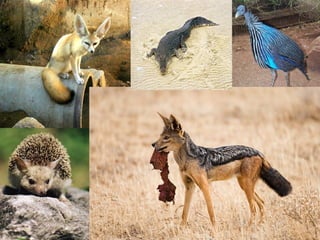
Animals
 
The People 2.5 million inhabitants, that’s 1 person per square mile Majority of people are nomads Wherever abundant food and water sources, you will find many people and wildlife
History Long ago, Archeologists say the Sahara was more densely populated Fossils, rock art, stone artifacts, and bone harpoons have been found where it’s to hot and dry to inhabit today Remains of giraffes, elephants and other large mammals have been found also This suggests that the Sahara used to be less harsh of an environment
The 4 Deserts 7 day ultra marathon across 4 deserts.  (Including the Sahara) Participants must carry their food and supplies that they will live on for the 7 days Each Race is 250 km long
 
 
Roughly 150 competitors from 30 countries About 80% competitors are men Indigenous people to the desert watch the race such as Bedouins
Race Videos http://www.youtube.com/watch?v=WL1QzOl2jBE&feature=related   http://www.youtube.com/watch?v=cg0is6pgiqc&feature=related
Bibliography http://library.thinkquest.org/16645/the_land/sahara_desert.shtml   http://www.4deserts.com/sahararace/   http://lexicorient.com/e.o/sahara.htm

The Sahara Desert

  • 1.
  • 2.
    Location Largest Desertin the world 3.5 million square miles The US would fit inside of it From north to south it is between 800-1200 miles NYC to Jacksonville, FL is 950 miles It is at least 3000 miles east from west NYC to Los Angeles is 2800 miles
  • 3.
    Name Sahara wasderived from Arabic word for deserts “The Greatest Desert” الصحراء الكبرى‎ Arabic- aṣ-ṣaḥrā´ al-kubra
  • 4.
    Borders and CountriesAlgeria, Chad, Egypt, Libya, Mali, Mauritania, Morocco, Niger, Western Sahara, Sudan, and Tunisia Borders the Mediterranean Sea and Atlas Mountain rang to the North Red Sea to the East Atlantic Ocean to the West
  • 5.
  • 6.
    Geography Highest point-11,204 ft Mount Koussi located in the Atlas Mountains Lowest point- 436 ft below sea level in the Qattera Depression in Egypt Shallow basins, oasis depressions, gravel covered plains, plateaus, mountains, sand sheets, dunes, and sand sees.
  • 7.
  • 8.
    Dry, Subtropical ClimateNorthern part of the desert The winters are cool Summers are very hot-136 degrees 3 in. precipitation annually Rainy season- December to March, and August August storms are known to cause flash floods
  • 9.
  • 10.
    Dry Tropical ClimateSouthern part of the desert Summers are very hot Winters are mild Average rainfall- 5 in. Snow in the mountains In the Western part of the tropical region the Canary Current reduces the amount of rainfall, lowers the temperatures, and increases the humidity and the chances of fog
  • 11.
  • 12.
  • 13.
  • 14.
    The People 2.5million inhabitants, that’s 1 person per square mile Majority of people are nomads Wherever abundant food and water sources, you will find many people and wildlife
  • 15.
    History Long ago,Archeologists say the Sahara was more densely populated Fossils, rock art, stone artifacts, and bone harpoons have been found where it’s to hot and dry to inhabit today Remains of giraffes, elephants and other large mammals have been found also This suggests that the Sahara used to be less harsh of an environment
  • 16.
    The 4 Deserts7 day ultra marathon across 4 deserts. (Including the Sahara) Participants must carry their food and supplies that they will live on for the 7 days Each Race is 250 km long
  • 17.
  • 18.
  • 19.
    Roughly 150 competitorsfrom 30 countries About 80% competitors are men Indigenous people to the desert watch the race such as Bedouins
  • 20.
    Race Videos http://www.youtube.com/watch?v=WL1QzOl2jBE&feature=related http://www.youtube.com/watch?v=cg0is6pgiqc&feature=related
  • 21.
    Bibliography http://library.thinkquest.org/16645/the_land/sahara_desert.shtml http://www.4deserts.com/sahararace/ http://lexicorient.com/e.o/sahara.htm