Presented by- Kiran Kadu.
- Shankhinee Borpujari.
 Some preventive measures or plans for
freedom from risk to injury to body, risk of
impairment of health and damage to
property. OR
 Freedom from the risk of accident.
 Freedom from – Personal injury
Property damage,
Looses of various kind
 To reduce work related injuries and deaths.
 Accidents lower morale and decrease
productivity.
 To prevent delays in production.
 Accidents reflects poorly on the
management.
 Cost of prevention of accidents is lower than
cost of handling them(after they have
occurred)
 All machinery should be properly fenced.(sec-21)
 Employment of young persons on dangerous machine
is prohibited(sec 23).
 Hoists and lifts should be in good condition(sec-28 and
29)
 Pressure plants should be checked as per rules. (section
31).
 Safety appliances for eyes, dangerous dusts, gas, fumes
should be provided. (sections 35 and 36)
 Adequate fire fighting equipment should be available.
(section 38).
 In case of hazardous substances, additional safety
measures have been prescribed. (sections 41A to 41H)
 Safety Officer if 1,000 or more workmen are employed.
 All machinery should be properly fenced.(sec-21 to 27)
 Hoists and lifts should be in good condition(sec-28 and
29)
 Pressure plants should be checked as per rules. (section
31).
 Safety appliances for eyes, dangerous dusts, gas, fumes
should be provided. (sections 35 and 36)
 Adequate fire fighting equipment should be available.
(section 38).
 In case of hazardous substances, additional safety
measures have been prescribed. (sections 41A to 41H)
 Safety Officer if 1,000 or more workmen are employed.
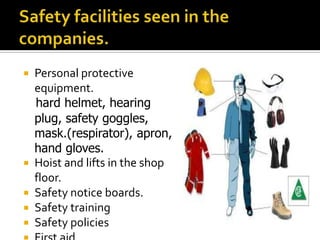
 Personal protective
equipment.
hard helmet, hearing
plug, safety goggles,
mask.(respirator), apron,
hand gloves.
 Hoist and lifts in the shop
floor.
 Safety notice boards.
 Safety training
 Safety policies
 Emergency exits doors.
 Evacuation alarms and emergency assembly
point.
 Systematic shelf.
 Safety lines.
 Kaizen.
 Cleanliness.
 Disposal of wastes and effluents.
 Ventilation andTemperature.
 Dust and Fume.
 Over Crowding.
 Lighting.
 Drinking water
 Latrines and Urinals
 Spittoons.
The term LabourWelfare’ refers to the
facilities provided to workers in and outside
the factory premises such as canteens, rest
and recreation facilities, housing and all other
services that contribute to the wellbeing of
workers.
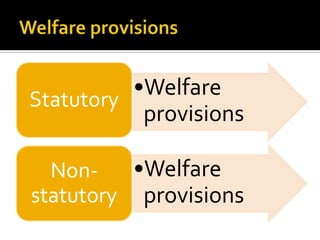
•Welfare
provisions
Statutory
•Welfare
provisions
Non-
statutory
 Washing(sec-42)
 Working condition.
 sitting arrangement should be provided.(section 44)
 Ambulance room if 500 or more workers are employed.
 Canteen if 250 or more workers are employed.
 Rest rooms with drinking water when 150 or more workmen
are employed (section 47)
 Crèches if 30 or more women workers are employed. (section
48)
 Full time Welfare Officer if factory employs 500 or more
workers (section 49])
 first aid(sec-45)
 Sexual harassment committee.
 Educational facilities for employees children.
 Transportation.
 Sports facilities.
 medical insurance.
 Employee engagement
Family get together.
Birth day celebration.
festival celebration..
picnic.
 Individual career growth.
 Reward and recognition
 Employee referral scheme
 Factories act 1948 in detail.
 Safety and health management.
THANKYOU……

safety, health and welfare seen in orientation visists..KInSS, pune.

  • 1.
    Presented by- KiranKadu. - Shankhinee Borpujari.
  • 2.
     Some preventivemeasures or plans for freedom from risk to injury to body, risk of impairment of health and damage to property. OR  Freedom from the risk of accident.  Freedom from – Personal injury Property damage, Looses of various kind
  • 3.
     To reducework related injuries and deaths.  Accidents lower morale and decrease productivity.  To prevent delays in production.  Accidents reflects poorly on the management.  Cost of prevention of accidents is lower than cost of handling them(after they have occurred)
  • 4.
     All machineryshould be properly fenced.(sec-21)  Employment of young persons on dangerous machine is prohibited(sec 23).  Hoists and lifts should be in good condition(sec-28 and 29)  Pressure plants should be checked as per rules. (section 31).  Safety appliances for eyes, dangerous dusts, gas, fumes should be provided. (sections 35 and 36)  Adequate fire fighting equipment should be available. (section 38).  In case of hazardous substances, additional safety measures have been prescribed. (sections 41A to 41H)  Safety Officer if 1,000 or more workmen are employed.
  • 5.
     All machineryshould be properly fenced.(sec-21 to 27)  Hoists and lifts should be in good condition(sec-28 and 29)  Pressure plants should be checked as per rules. (section 31).  Safety appliances for eyes, dangerous dusts, gas, fumes should be provided. (sections 35 and 36)  Adequate fire fighting equipment should be available. (section 38).  In case of hazardous substances, additional safety measures have been prescribed. (sections 41A to 41H)  Safety Officer if 1,000 or more workmen are employed.
  • 6.
     Personal protective equipment. hardhelmet, hearing plug, safety goggles, mask.(respirator), apron, hand gloves.  Hoist and lifts in the shop floor.  Safety notice boards.  Safety training  Safety policies
  • 7.
     Emergency exitsdoors.  Evacuation alarms and emergency assembly point.  Systematic shelf.  Safety lines.  Kaizen.
  • 8.
     Cleanliness.  Disposalof wastes and effluents.  Ventilation andTemperature.  Dust and Fume.  Over Crowding.  Lighting.  Drinking water  Latrines and Urinals  Spittoons.
  • 9.
    The term LabourWelfare’refers to the facilities provided to workers in and outside the factory premises such as canteens, rest and recreation facilities, housing and all other services that contribute to the wellbeing of workers.
  • 10.
  • 11.
     Washing(sec-42)  Workingcondition.  sitting arrangement should be provided.(section 44)  Ambulance room if 500 or more workers are employed.  Canteen if 250 or more workers are employed.  Rest rooms with drinking water when 150 or more workmen are employed (section 47)  Crèches if 30 or more women workers are employed. (section 48)  Full time Welfare Officer if factory employs 500 or more workers (section 49])  first aid(sec-45)  Sexual harassment committee.
  • 12.
     Educational facilitiesfor employees children.  Transportation.  Sports facilities.  medical insurance.  Employee engagement Family get together. Birth day celebration. festival celebration.. picnic.  Individual career growth.  Reward and recognition  Employee referral scheme
  • 13.
     Factories act1948 in detail.  Safety and health management. THANKYOU……