POORVI SHARMA
MBA-PM (05/MBA/DPSRU/2018)
Contents
 Introduction
 Objectives
 Some definitions under the act
growth of factories in India
 Points to memorize
 Health, Safety and Welfare
provisions
 Working hours, leaves and
wages
 Register to maintain
 Hazardous process
 Returns to be sent
Contents
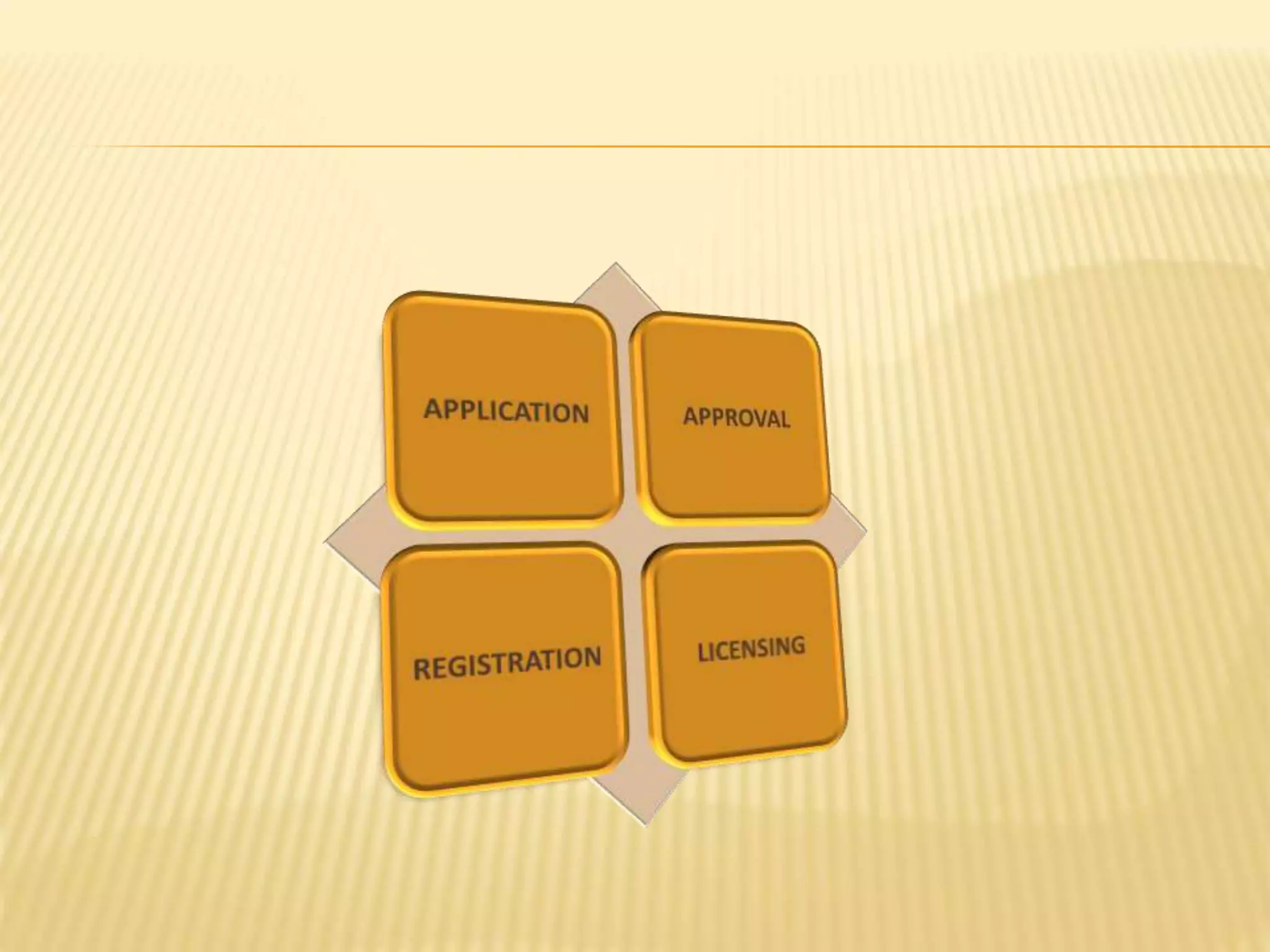
 Application for plan approval
 Application for registration &
grant for factory license
 Application for renewal
 Offence
 Penalties
 Recent Amendments
 Conclusion
Introduction
 It was formed on the basis of British Factories Act .
 Robert Owen and Robert Peet firstly took the initiative for the
safety and welfare of workers.
 As per the requirement of fast growing industrialization-
the act pertaining to establishment of norms of the factory
and other similar workplace come under the prime objectives of
the Factories Act.
 It also favors Preventions of accidents
CONTD…..
 The short title, extend and commencement of the Factory Act is
as under:
• It shall be called the Factories Act, 1948
• It is applicable to all the Factories in India
• It shall come in to force on the 1st day of April1949
INDIAN FACTORIES ACT
OBJECTIVES
Health, Safety, welfare
Proper working hours
Other benefits to workers e.g.
Provident fund, pension etc
SOME DEFINITIONS UNDER THE ACT
1. Factory
 Any premises, including the precincts thereof
 In any part of which manufacturing process is carried on
 With or without the aid of power
 At least 10 or 20 workers are employed on any day of preceding
12 months.
Note: If family members are including, it will not be called as a
Factory.
CONTD….
2. Manufacturing process
1. Making, Altering, Repairing, Ornamenting, finishing,
packing, oiling, washing, cleaning, breaking up, demolishing, or
otherwise treating or adopting any article or substance with
view to its use, sale, transport etc.
2. Pumping oil, water, sewage or any other substance.
3. Generating, transforming, transmitting power
4. Composing types of printing, printing by letter press,
lithography, book binding
5. Constructing, reconstructing, repairing, finishing
6. Preserving or storing in cold storage
EXAMPLE
Shri Laxmi Dass Premji Ghee Merchant
Where ghee brought from various customers was sampled
chemically, analyzed and packed in tins for transportation to
the Head office of the concern for the sale in the market, the
court held that the manufacturing process is going in the
premises. Hence considered to be a factory.
CONTD…
CONTD…
3. Occupier
Is the Person who has ultimate control over the
affairs of the factory-
This includes
• Partner in case of a firm
• Director in case of a company
Note
If factory is run by a company then only the director of the
Company can be treated as occupier
CONTD…
4. Worker/ Occupant
A person employed, directly or by or through any agency
(including contractor) with or without the knowledge of the
principal employer, whether for remuneration or not
“But does not include any member of Armed forces”
5. Child
Below 5 years of age
6. Adolescent
Age between 15 to 18, not more than that
7. Adult
A person who has completed 18 years of age
GROWTH OF FACTORY LEGISLATION IN INDIA
 First cotton factory - 1854 (Bombay)
 First iron & steel factory - 1873 (Bihar)
 Jute spinning mill - 1855 (Rishra)
 Bally paper mill - 1870 (Hoogly)
POINTS TO MEMORIZE
 All the regulations are mentioned in the Section C of the Factories
Act.
 State Govt. is always responsible for any type of activity regarding
the Act.
 It is the duty of Chief inspector to visit factory, empowered by the
state govt. to assist the chief inspector and to divide the duties
Additional, Deputy and Joint Chief inspectors are also appointed.
 District Magistrate of the place is the Inspector of the factory
 Certifying Surgeons are also appointed to safeguard the health of
workers.
Health Provisions
Safety Provisions
Welfare provisions
HEALTH PROVISIONS
1. Cleanliness
2. Proper disposal of wastes and effluents
3. Ventilations and temperature control in work place
4. Dust and fumes
5. Artificial humidification
6. Overcrowding
7. Proper Lighting: Natural, Artificial or both
8. Uninterrupted supply of Drinking water
9. Latrines and urinals: separate gents & women
CONTD.
10. Spittoons provided at adequate places
11. White washing at least once in every 14 months
12. Repainting or revarnishing every 5 years
13. Record the dates on which white washing, painting or varnishing
done in a register in FORM 7.
14. Ensure 19.2 cubic feet of space for every worker without
reference to any space which is more than 14 feet above the
level of the floor of the room.
SAFETY PROVISIONS
1. Fencing of machinery
2. Work on or near machinery in motion
3. Employment of young persons on dangerous machines
4. Striking gear and devices for cutting of power
5. Self acting machines
6. Casing of new machinery
7. Prohibition of employment of women and children near cotton
openers, Hoists, lifts, lifting machines and other Revolving
machinery
CONTD.
10. Pressure plant should be checked as per the rules
11. Floors, stairs, and mean or access sound construction
12. Pits, sumps, opening in floors should be repaired
13. Excessive weights
14. Protection of eyes/precaution against dangerous
15. fumes, gases and others (Safety appliances)
16. Precaution regarding use of portable electric light Explosive or
inflammable dust, gas
17. Precautions in case of fire (Fire fighter equipment)
18. Specifications of defective parts or tests of stability
CONTD.
19. Safety of buildings and machines
20. Safety officers: 1000 or more workers
21. No woman or young person shall, unaided by another person,
lift, carry or move by hand or head any
 Material or tool exceeding the max limit prescribed.
* Adult male 75 Kg
* Adult female 30 Kg
* Adolescent male 30 Kg
* Adolescent female 20 Kg
WELFARE PROVISIONS
1. Washing facilities : Separate for men and women
2. Separate Facilities for men and women for storing and drying of
clothing
3. Separate rest room for men and women
4. Facilities for sitting
5. First aid facilities equipped with medicines.
6. Crèches where 30 or more women are employed
7. Ambulance room where 500 or more are employed
8. Lunch room where 150 or more are employed.
CONTD.
9. Canteen for use of workers where 250 or more are employed
(150 under Plantation Labour Act)
10. Welfare officers appointment where 500 or more are employed
(300 under PLA)
11. The duties, qualification and conditions of service of such
welfare officers shall be in accordance with the rules of the
respective State Government
12. Notice of Dangerous operations
WHEN IT’S A LARGE FACTORY
If no. of workers Facility should be
Ambulance Room 500 or more
Canteen 250 or more
Crèches 30 or more women
Rest Rooms 150 or more
Full time Welfare officer 500 or more
Safety officer 1000 or more
WORKING HOURS OF ADULT
 Weekly hours: < 48 hours
 Weekly holidays: at least one in a week
 Compensatory holidays
 Daily hours: < 9 hours
 Intervals for rest: at least half an hour
 Spread over and Night shifts
 Prohibition of overlapping shifts; NMT two continue shifts
 Extra wages for overtime: wages at the rate of twice at his
ordinary rate of wages for overtime
 Notice of period of work
CONTD.
 Provision relating to hours of work not applicable to supervisory
staff.
 No work for more than 10 days without a day of rest.
 Interval of rest : half an hour for 5 hours of work
 No Child ( who has attained the age of 15 years ) is permitted to
work.
WORKING HOURS OF WOMEN
 Work between 6 a.m. to 7 p.m. only
 Strictly restriction for women for employment between10 p.m.
to 5 a.m.
 Factories act now allow women to work during night shifts
provided adequate safeguards in the factory as regards
occupational safety and health, equal support Unity for women
workers, adequate protection of their dignity, honor and safety
 Transportation from the factory premises to nearest point of their
residence.
ANNUAL PAID LEAVE
 Annual leave with wages
 1 Day leave for every 20 Days of work
 240 Days of work during preceding year
 Days of lay off, paid holidays or leave days considered.
 Encashment of unavailed leave: Encashable at the present rate of
wages.
 Payment in advance in certain cases
LEAVE WITH WAGES RECORD
 The employer has to maintain a register – Leave with wages
register in Form 15.
 Employer has to provide each employee a leave book- thick
bound sheet in Form(with similar entries like form 15)
 Provide each worker an Attendance card in form 28
showing the particulars of employment which shall be substituted
by Electronic cards.
REGISTERS TO MAINTAIN
• Attendance Register in form 25
• Register of Adult Workers in form 12
• Record of Lime washing, painting etc in form 7
• Register of Compensatory Holidays in form 9
• Overtime Muster roll for Exempted workers in form 10
• Register of Leave with Wages in form 15
• Health Register in form 17 (in respect of persons employed in
occupations declared to be dangerous operations u/s 87)
• Register of Accidents and Dangerous Occurrences inform 26
• Particulars of Rooms in the factory in form 35.
IN CASE OF HAZARDOUS PROCESS
1. Compulsory disclosure of information
2. Special responsibilities of the occupier in relation to it
3. Maintaining accurate and up-to-date health & medical records of
workers exposed to any chemical, toxic or any other harmful
substances manufactured, stored, handled or transported
4. Appointing qualified, experienced and compete persons in
handling such substances to supervise handling and for
protecting the workers from the hazard
5. Medical examination of every workers at intervals
RETURNS TO BE SENT
Return Forms
Report of examination of pressure vessel Form 08
Report of examination of water sealed gas
holder
Form 38
Report of examination of hoist/lift Form 41
Certificate of fitness for dangerous operation Form 39
APPLICATION FOR PLAN APPROVAL
 Form 1 questionnaire- Affix court fee stamp of Rs. 10
 Plans Submission : Site plan, Building plan, Factory layout
 List of raw materials ( including solvents/fuels/chemicals used if
any) with maximum storage capacity and mode of storage,
handling.
 Lists of finished products, intermediate products including
emission of toxic gases & by-products along with maximum
quantities & method of handling.
 Process flow chart & Description of manufacturing process
Details of likely hazard involved and methods to control them
APPLICATION FOR REGISTRATION & GRANT FOR FACTORY
LICENSE
 Form 2- Affix court fee stamp of Rs. 10
 Declaration of form, about date of commencement of
manufacturing process in prescribe format.
 Challan/fee receipt, original copy of challan of license fee paid +
one self certified photocopy copy of challan
 Electricity bill as a proof for installed H.P.
 Proof of residence of occupier
 Proof of ownership of premises (owned/rented/leased etc) in
case of owned-7/12 extra tax receipt
APPLICATION FOR RENEWAL
 License can be granted for a period of maximum
 10 years
 Renewal on or before 31st October. Maximum renewal for 10
years
 Form 2- Affix court fee stamp of Rs. 10
 Application in triplicate in form 2 for renewal of license for a
period not exceeding 10 years
 Challan/ Fee receipt, original copy of challan of license fees
paid + one self attested photocopy of challan.
OFFENCES
“A court can take cognizance of the
offence only when the complaint is
made within 3 months of the date
which the alleged commission of the
offence came to the knowledge of the
inspector, but where the offence
consist of disobeying a written order
made by an inspector, complaints may
be made within 6 months of the
commission of the offence.”
PENALTIES
 Provision, Rules, Written orders violation, the following penalties
can be imposed:
(a) Imprisonment for a term which may extend to three months;
(b) Fine which may extend to one lace rupees; or
(c) Both fine and imprisonment.
 If a worker misuses an appliance related to welfare, safety and
health of workers, or in relation to discharge of his duties, he can
be imposed a penalty of Rs. 500/-.
RECENT AMMENMENTS
1. Providing canteen facilities in factories
2. Providing rest rooms for factories employing 75 or more
employees
3. Providing drinking water irrespective of number of workers
4. Enhancement of penalties for different violations
5. Permitting women in night shifts if adequate safeguards are
present
6. No worker shall be allowed to work overtime for more than
seven days at a stretch and the total number of hours of
overtime in any quarter shall not exceed more than 75 hours.
CONCLUSION
“The Factories Act, 1948 is a beneficial legislation.
The aim and object of the Act is essentially to
safeguard the interests of workers, stop their
exploitation and take care of their safety,
hygiene and welfare at their places of work.”
SS

The factories act 1948 (1)

  • 1.
  • 2.
    Contents  Introduction  Objectives Some definitions under the act growth of factories in India  Points to memorize  Health, Safety and Welfare provisions  Working hours, leaves and wages  Register to maintain  Hazardous process  Returns to be sent
  • 3.
    Contents  Application forplan approval  Application for registration & grant for factory license  Application for renewal  Offence  Penalties  Recent Amendments  Conclusion
  • 4.
    Introduction  It wasformed on the basis of British Factories Act .  Robert Owen and Robert Peet firstly took the initiative for the safety and welfare of workers.  As per the requirement of fast growing industrialization- the act pertaining to establishment of norms of the factory and other similar workplace come under the prime objectives of the Factories Act.  It also favors Preventions of accidents
  • 5.
    CONTD…..  The shorttitle, extend and commencement of the Factory Act is as under: • It shall be called the Factories Act, 1948 • It is applicable to all the Factories in India • It shall come in to force on the 1st day of April1949
  • 6.
  • 7.
    OBJECTIVES Health, Safety, welfare Properworking hours Other benefits to workers e.g. Provident fund, pension etc
  • 8.
    SOME DEFINITIONS UNDERTHE ACT 1. Factory  Any premises, including the precincts thereof  In any part of which manufacturing process is carried on  With or without the aid of power  At least 10 or 20 workers are employed on any day of preceding 12 months. Note: If family members are including, it will not be called as a Factory.
  • 9.
    CONTD…. 2. Manufacturing process 1.Making, Altering, Repairing, Ornamenting, finishing, packing, oiling, washing, cleaning, breaking up, demolishing, or otherwise treating or adopting any article or substance with view to its use, sale, transport etc. 2. Pumping oil, water, sewage or any other substance. 3. Generating, transforming, transmitting power 4. Composing types of printing, printing by letter press, lithography, book binding 5. Constructing, reconstructing, repairing, finishing 6. Preserving or storing in cold storage
  • 10.
    EXAMPLE Shri Laxmi DassPremji Ghee Merchant Where ghee brought from various customers was sampled chemically, analyzed and packed in tins for transportation to the Head office of the concern for the sale in the market, the court held that the manufacturing process is going in the premises. Hence considered to be a factory. CONTD…
  • 11.
    CONTD… 3. Occupier Is thePerson who has ultimate control over the affairs of the factory- This includes • Partner in case of a firm • Director in case of a company Note If factory is run by a company then only the director of the Company can be treated as occupier
  • 12.
    CONTD… 4. Worker/ Occupant Aperson employed, directly or by or through any agency (including contractor) with or without the knowledge of the principal employer, whether for remuneration or not “But does not include any member of Armed forces” 5. Child Below 5 years of age 6. Adolescent Age between 15 to 18, not more than that 7. Adult A person who has completed 18 years of age
  • 13.
    GROWTH OF FACTORYLEGISLATION IN INDIA  First cotton factory - 1854 (Bombay)  First iron & steel factory - 1873 (Bihar)  Jute spinning mill - 1855 (Rishra)  Bally paper mill - 1870 (Hoogly)
  • 14.
    POINTS TO MEMORIZE All the regulations are mentioned in the Section C of the Factories Act.  State Govt. is always responsible for any type of activity regarding the Act.  It is the duty of Chief inspector to visit factory, empowered by the state govt. to assist the chief inspector and to divide the duties Additional, Deputy and Joint Chief inspectors are also appointed.  District Magistrate of the place is the Inspector of the factory  Certifying Surgeons are also appointed to safeguard the health of workers.
  • 15.
  • 16.
    HEALTH PROVISIONS 1. Cleanliness 2.Proper disposal of wastes and effluents 3. Ventilations and temperature control in work place 4. Dust and fumes 5. Artificial humidification 6. Overcrowding 7. Proper Lighting: Natural, Artificial or both 8. Uninterrupted supply of Drinking water 9. Latrines and urinals: separate gents & women
  • 17.
    CONTD. 10. Spittoons providedat adequate places 11. White washing at least once in every 14 months 12. Repainting or revarnishing every 5 years 13. Record the dates on which white washing, painting or varnishing done in a register in FORM 7. 14. Ensure 19.2 cubic feet of space for every worker without reference to any space which is more than 14 feet above the level of the floor of the room.
  • 18.
    SAFETY PROVISIONS 1. Fencingof machinery 2. Work on or near machinery in motion 3. Employment of young persons on dangerous machines 4. Striking gear and devices for cutting of power 5. Self acting machines 6. Casing of new machinery 7. Prohibition of employment of women and children near cotton openers, Hoists, lifts, lifting machines and other Revolving machinery
  • 19.
    CONTD. 10. Pressure plantshould be checked as per the rules 11. Floors, stairs, and mean or access sound construction 12. Pits, sumps, opening in floors should be repaired 13. Excessive weights 14. Protection of eyes/precaution against dangerous 15. fumes, gases and others (Safety appliances) 16. Precaution regarding use of portable electric light Explosive or inflammable dust, gas 17. Precautions in case of fire (Fire fighter equipment) 18. Specifications of defective parts or tests of stability
  • 20.
    CONTD. 19. Safety ofbuildings and machines 20. Safety officers: 1000 or more workers 21. No woman or young person shall, unaided by another person, lift, carry or move by hand or head any  Material or tool exceeding the max limit prescribed. * Adult male 75 Kg * Adult female 30 Kg * Adolescent male 30 Kg * Adolescent female 20 Kg
  • 21.
    WELFARE PROVISIONS 1. Washingfacilities : Separate for men and women 2. Separate Facilities for men and women for storing and drying of clothing 3. Separate rest room for men and women 4. Facilities for sitting 5. First aid facilities equipped with medicines. 6. Crèches where 30 or more women are employed 7. Ambulance room where 500 or more are employed 8. Lunch room where 150 or more are employed.
  • 22.
    CONTD. 9. Canteen foruse of workers where 250 or more are employed (150 under Plantation Labour Act) 10. Welfare officers appointment where 500 or more are employed (300 under PLA) 11. The duties, qualification and conditions of service of such welfare officers shall be in accordance with the rules of the respective State Government 12. Notice of Dangerous operations
  • 23.
    WHEN IT’S ALARGE FACTORY If no. of workers Facility should be Ambulance Room 500 or more Canteen 250 or more Crèches 30 or more women Rest Rooms 150 or more Full time Welfare officer 500 or more Safety officer 1000 or more
  • 24.
    WORKING HOURS OFADULT  Weekly hours: < 48 hours  Weekly holidays: at least one in a week  Compensatory holidays  Daily hours: < 9 hours  Intervals for rest: at least half an hour  Spread over and Night shifts  Prohibition of overlapping shifts; NMT two continue shifts  Extra wages for overtime: wages at the rate of twice at his ordinary rate of wages for overtime  Notice of period of work
  • 25.
    CONTD.  Provision relatingto hours of work not applicable to supervisory staff.  No work for more than 10 days without a day of rest.  Interval of rest : half an hour for 5 hours of work  No Child ( who has attained the age of 15 years ) is permitted to work.
  • 26.
    WORKING HOURS OFWOMEN  Work between 6 a.m. to 7 p.m. only  Strictly restriction for women for employment between10 p.m. to 5 a.m.  Factories act now allow women to work during night shifts provided adequate safeguards in the factory as regards occupational safety and health, equal support Unity for women workers, adequate protection of their dignity, honor and safety  Transportation from the factory premises to nearest point of their residence.
  • 27.
    ANNUAL PAID LEAVE Annual leave with wages  1 Day leave for every 20 Days of work  240 Days of work during preceding year  Days of lay off, paid holidays or leave days considered.  Encashment of unavailed leave: Encashable at the present rate of wages.  Payment in advance in certain cases
  • 28.
    LEAVE WITH WAGESRECORD  The employer has to maintain a register – Leave with wages register in Form 15.  Employer has to provide each employee a leave book- thick bound sheet in Form(with similar entries like form 15)  Provide each worker an Attendance card in form 28 showing the particulars of employment which shall be substituted by Electronic cards.
  • 29.
    REGISTERS TO MAINTAIN •Attendance Register in form 25 • Register of Adult Workers in form 12 • Record of Lime washing, painting etc in form 7 • Register of Compensatory Holidays in form 9 • Overtime Muster roll for Exempted workers in form 10 • Register of Leave with Wages in form 15 • Health Register in form 17 (in respect of persons employed in occupations declared to be dangerous operations u/s 87) • Register of Accidents and Dangerous Occurrences inform 26 • Particulars of Rooms in the factory in form 35.
  • 30.
    IN CASE OFHAZARDOUS PROCESS 1. Compulsory disclosure of information 2. Special responsibilities of the occupier in relation to it 3. Maintaining accurate and up-to-date health & medical records of workers exposed to any chemical, toxic or any other harmful substances manufactured, stored, handled or transported 4. Appointing qualified, experienced and compete persons in handling such substances to supervise handling and for protecting the workers from the hazard 5. Medical examination of every workers at intervals
  • 31.
    RETURNS TO BESENT Return Forms Report of examination of pressure vessel Form 08 Report of examination of water sealed gas holder Form 38 Report of examination of hoist/lift Form 41 Certificate of fitness for dangerous operation Form 39
  • 33.
    APPLICATION FOR PLANAPPROVAL  Form 1 questionnaire- Affix court fee stamp of Rs. 10  Plans Submission : Site plan, Building plan, Factory layout  List of raw materials ( including solvents/fuels/chemicals used if any) with maximum storage capacity and mode of storage, handling.  Lists of finished products, intermediate products including emission of toxic gases & by-products along with maximum quantities & method of handling.  Process flow chart & Description of manufacturing process Details of likely hazard involved and methods to control them
  • 34.
    APPLICATION FOR REGISTRATION& GRANT FOR FACTORY LICENSE  Form 2- Affix court fee stamp of Rs. 10  Declaration of form, about date of commencement of manufacturing process in prescribe format.  Challan/fee receipt, original copy of challan of license fee paid + one self certified photocopy copy of challan  Electricity bill as a proof for installed H.P.  Proof of residence of occupier  Proof of ownership of premises (owned/rented/leased etc) in case of owned-7/12 extra tax receipt
  • 35.
    APPLICATION FOR RENEWAL License can be granted for a period of maximum  10 years  Renewal on or before 31st October. Maximum renewal for 10 years  Form 2- Affix court fee stamp of Rs. 10  Application in triplicate in form 2 for renewal of license for a period not exceeding 10 years  Challan/ Fee receipt, original copy of challan of license fees paid + one self attested photocopy of challan.
  • 36.
    OFFENCES “A court cantake cognizance of the offence only when the complaint is made within 3 months of the date which the alleged commission of the offence came to the knowledge of the inspector, but where the offence consist of disobeying a written order made by an inspector, complaints may be made within 6 months of the commission of the offence.”
  • 37.
    PENALTIES  Provision, Rules,Written orders violation, the following penalties can be imposed: (a) Imprisonment for a term which may extend to three months; (b) Fine which may extend to one lace rupees; or (c) Both fine and imprisonment.  If a worker misuses an appliance related to welfare, safety and health of workers, or in relation to discharge of his duties, he can be imposed a penalty of Rs. 500/-.
  • 38.
    RECENT AMMENMENTS 1. Providingcanteen facilities in factories 2. Providing rest rooms for factories employing 75 or more employees 3. Providing drinking water irrespective of number of workers 4. Enhancement of penalties for different violations 5. Permitting women in night shifts if adequate safeguards are present 6. No worker shall be allowed to work overtime for more than seven days at a stretch and the total number of hours of overtime in any quarter shall not exceed more than 75 hours.
  • 39.
    CONCLUSION “The Factories Act,1948 is a beneficial legislation. The aim and object of the Act is essentially to safeguard the interests of workers, stop their exploitation and take care of their safety, hygiene and welfare at their places of work.”
  • 40.