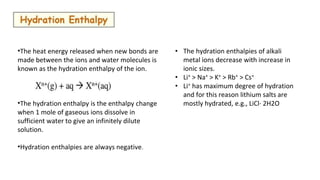
•The heat energy released when new bonds are
made between the ions and water molecules is
known as the hydration enthalpy of the ion.
•The hydration enthalpy is the enthalpy change
when 1 mole of gaseous ions dissolve in
sufficient water to give an infinitely dilute
solution.
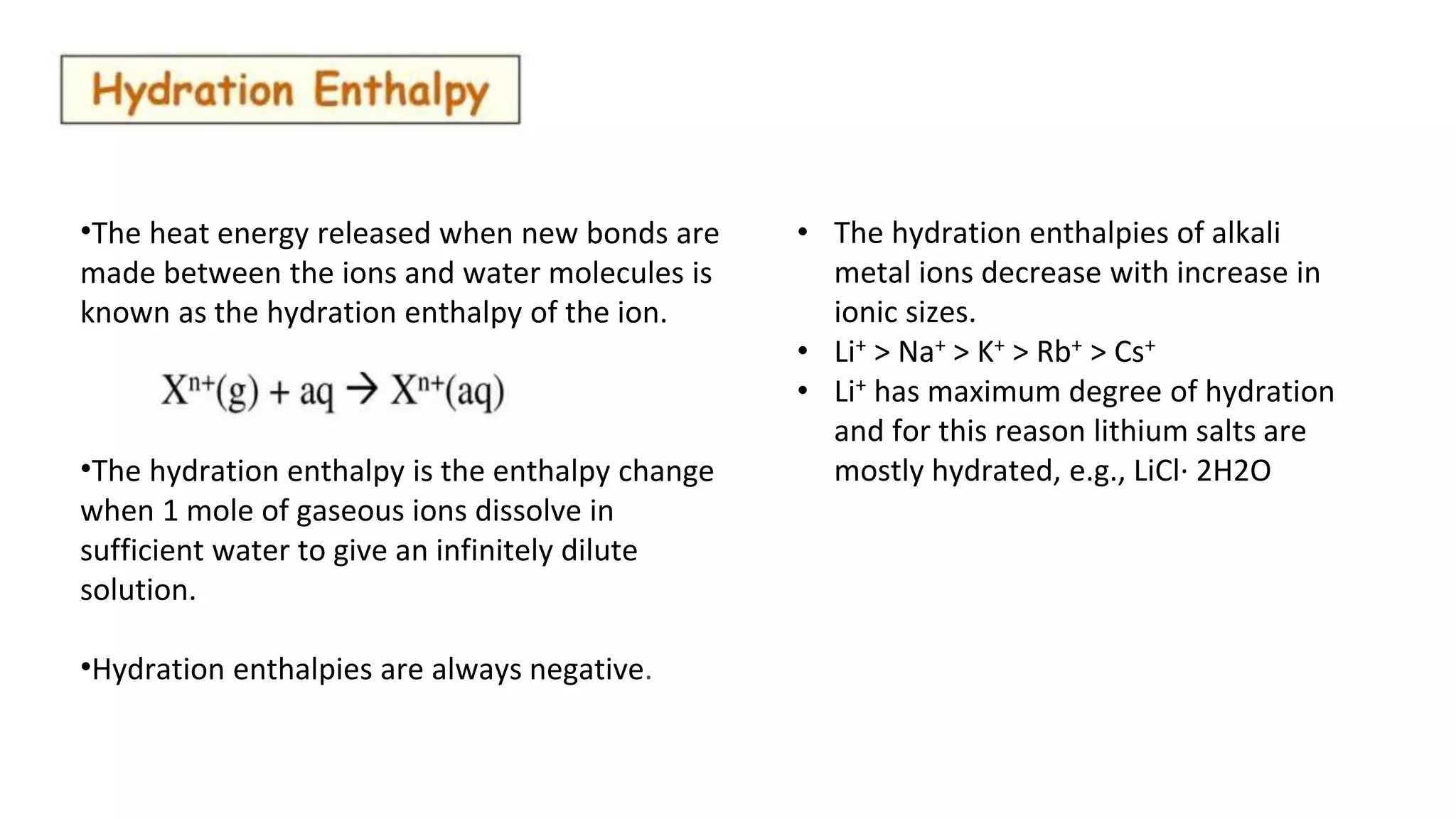
•Hydration enthalpies are always negative.
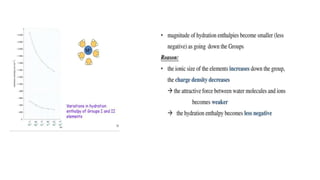
• The hydration enthalpies of alkali
metal ions decrease with increase in
ionic sizes.
• Li+ > Na+ > K+ > Rb+ > Cs+
• Li+ has maximum degree of hydration
and for this reason lithium salts are
mostly hydrated, e.g., LiCl· 2H2O
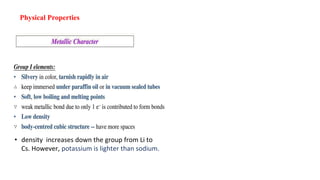
Physical Properties
• density increases down the group from Li to
Cs. However, potassium is lighter than sodium.
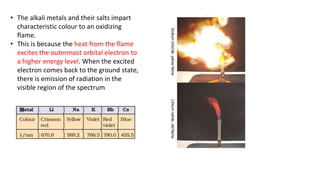
• The alkali metals and their salts impart
characteristic colour to an oxidizing
flame.
• This is because the heat from the flame
excites the outermost orbital electron to
a higher energy level. When the excited
electron comes back to the ground state,
there is emission of radiation in the
visible region of the spectrum
• Detection of Alkali metals,
i. It can be detected by the respective flame tests
ii. can be determined by flame photometry or
atomic absorption spectroscopy.
• These elements when irradiated with light, the
light energy absorbed may be sufficient to make
an atom lose electron.
This property makes caesium and potassium useful
as electrodes in photoelectric cells.
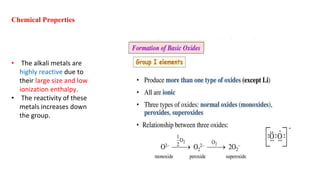
Chemical Properties
• The alkali metals are
highly reactive due to
their large size and low
ionization enthalpy.
• The reactivity of these
metals increases down
the group.

s block elements Part 3.pptx

  • 1.
    •The heat energyreleased when new bonds are made between the ions and water molecules is known as the hydration enthalpy of the ion. •The hydration enthalpy is the enthalpy change when 1 mole of gaseous ions dissolve in sufficient water to give an infinitely dilute solution. •Hydration enthalpies are always negative. • The hydration enthalpies of alkali metal ions decrease with increase in ionic sizes. • Li+ > Na+ > K+ > Rb+ > Cs+ • Li+ has maximum degree of hydration and for this reason lithium salts are mostly hydrated, e.g., LiCl· 2H2O
  • 3.
    Physical Properties • densityincreases down the group from Li to Cs. However, potassium is lighter than sodium.
  • 4.
    • The alkalimetals and their salts impart characteristic colour to an oxidizing flame. • This is because the heat from the flame excites the outermost orbital electron to a higher energy level. When the excited electron comes back to the ground state, there is emission of radiation in the visible region of the spectrum
  • 5.
    • Detection ofAlkali metals, i. It can be detected by the respective flame tests ii. can be determined by flame photometry or atomic absorption spectroscopy. • These elements when irradiated with light, the light energy absorbed may be sufficient to make an atom lose electron. This property makes caesium and potassium useful as electrodes in photoelectric cells.
  • 6.
    Chemical Properties • Thealkali metals are highly reactive due to their large size and low ionization enthalpy. • The reactivity of these metals increases down the group.