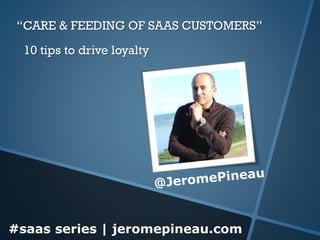
“CARE & FEEDING OF SAAS CUSTOMERS”
10 tips to drive loyalty

#saas series | jeromepineau.com
1.churn is bad

churn is a critical metric for SaaS
businesses.

churn measures the rate of customers who
bail out every month.
healthy SaaS businesses have low churn.

if you leave me now...
2.LTV is good
lifetime value is the customer’s total $$
worth from the day he signs on to the day he
stops renewing.
as it happens, churn and LTV are inversely
related such that churn = 1/LTV.
healthy SaaS businesses have high LTV

renew, renew, renew
3.forever yours
so what makes SaaS customers loyal?
or how do you minimize churn?

or how do you maximize LTV?
or how do you succeed at SaaS? 

we’ll always have Paris…
4.consumption gap
customers who do not use your product
wide and deep are more likely to defect.
it means they simply don’t “get” your
product.
which means it has limited value to them.
which means either your product has limited
value, or you’re not communicating the
value hard and often enough.

or both…

big deep mouthfuls
5.keep talking
customers you don’t interact with frequently
are more likely to defect.
remember the old saying: out of sight, out of
mind.
any excuse to converse with customers is a
good excuse to feed the relationship and
keep them engaged.
engaged customers are loyal customers.

oh, one more thing…
6.new features
new features aren’t just important as a way
to enhance your product. they’re also an
opportunity for communication.

never waste an opportunity to inform and
enchant customers at the same time.
but don’t saturate them with trivial new
feature releases either.

now with 25% more!
7.make heroes
customers who feel like heroes at their job
from using your software will never leave.

if they succeed, you succeed.
your job is to make heroes.

believe it or not, I can fly!
8.build community
can you think of any great product that
doesn’t have a rabidly loyal community
supporting it?

I didn’t think so.
design, build, and nurture it – or your
competition will.

vires in numeris
9.learn the word ‘no’
this one can seem counter-intuitive, right?

but saying ‘yes’ to every customer request
indiscriminately lowers quality for a
majority of customers in the long run.
so be crystal clear from the onset about
what saying ‘yes’ means for overall product
experience.
and remember, it’s not the ‘no’ itself, it’s how
you say it.

saying ‘no’ is ok too
10.how’m I doin?
survey, email, tweet, post, blog, but whatever
you do…
ask customers how you’re doing as often as
humanly possible.
but don’t ask unless you have the will and
means to adapt and adjust accordingly.

#embracethefeedback
11.bonus tip!
if you don’t instrument your backend, you
won’t have a clue what your customers are
doing, where, when, or why.
so you won’t know how they’re using your
product. or not.
and if you don’t know that on a daily basis,
you’re flying blind.

never assume. always measure.

measure, don’t assume

Care and Feeding of SaaS Customers | 10 Tips to Drive Loyalty

  • 1.
    “CARE & FEEDINGOF SAAS CUSTOMERS” 10 tips to drive loyalty #saas series | jeromepineau.com
  • 2.
    1.churn is bad churnis a critical metric for SaaS businesses. churn measures the rate of customers who bail out every month. healthy SaaS businesses have low churn. if you leave me now...
  • 3.
    2.LTV is good lifetimevalue is the customer’s total $$ worth from the day he signs on to the day he stops renewing. as it happens, churn and LTV are inversely related such that churn = 1/LTV. healthy SaaS businesses have high LTV renew, renew, renew
  • 4.
    3.forever yours so whatmakes SaaS customers loyal? or how do you minimize churn? or how do you maximize LTV? or how do you succeed at SaaS?  we’ll always have Paris…
  • 5.
    4.consumption gap customers whodo not use your product wide and deep are more likely to defect. it means they simply don’t “get” your product. which means it has limited value to them. which means either your product has limited value, or you’re not communicating the value hard and often enough. or both… big deep mouthfuls
  • 6.
    5.keep talking customers youdon’t interact with frequently are more likely to defect. remember the old saying: out of sight, out of mind. any excuse to converse with customers is a good excuse to feed the relationship and keep them engaged. engaged customers are loyal customers. oh, one more thing…
  • 7.
    6.new features new featuresaren’t just important as a way to enhance your product. they’re also an opportunity for communication. never waste an opportunity to inform and enchant customers at the same time. but don’t saturate them with trivial new feature releases either. now with 25% more!
  • 8.
    7.make heroes customers whofeel like heroes at their job from using your software will never leave. if they succeed, you succeed. your job is to make heroes. believe it or not, I can fly!
  • 9.
    8.build community can youthink of any great product that doesn’t have a rabidly loyal community supporting it? I didn’t think so. design, build, and nurture it – or your competition will. vires in numeris
  • 10.
    9.learn the word‘no’ this one can seem counter-intuitive, right? but saying ‘yes’ to every customer request indiscriminately lowers quality for a majority of customers in the long run. so be crystal clear from the onset about what saying ‘yes’ means for overall product experience. and remember, it’s not the ‘no’ itself, it’s how you say it. saying ‘no’ is ok too
  • 11.
    10.how’m I doin? survey,email, tweet, post, blog, but whatever you do… ask customers how you’re doing as often as humanly possible. but don’t ask unless you have the will and means to adapt and adjust accordingly. #embracethefeedback
  • 12.
    11.bonus tip! if youdon’t instrument your backend, you won’t have a clue what your customers are doing, where, when, or why. so you won’t know how they’re using your product. or not. and if you don’t know that on a daily basis, you’re flying blind. never assume. always measure. measure, don’t assume