Information Literacy in Remote Indigenous Alaska: Teachers’ Rural VoicesJennifer Ward Outreach Services Librarian, Associate Professor of Library ScienceWilliam A. Egan LibraryUniversity of Alaska Southeast, Juneau, Alaska, United StatesThomas DukeAssociate Professor of EducationSchool of EducationUniversity of Alaska Southeast, Juneau, Alaska, United States
Alaska, United StatesContext– four communities in remote “bush” AlaskaCommunity – four teachers in masters in special education programCulture – multiple/complex (Anglo-European, Mexican, Tlingit, Yupik, Athabascan, Inupiat Alaska Natives)
The StudyWhat role does information literacy play in the lives of teachers who live and work in geographically isolated and sparsely populated rural communities?
 How do special education teachers and their students in remote communities of Alaska benefit from distance-delivered information literacy instruction?
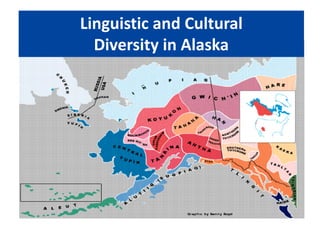
Linguistic and Cultural  Diversity in Alaska
Study MethodsInterviews: Learning the Craft of Qualitative Research Interviewing (2nd ed.) SteinarKvale and SvendBrinkmann – University of Aarhus, Sage, 2009
ResultsFour Themes Emerged:Rural issues and needsDistance education & information literacy instructionDevelopment as a learner and researcherApplication of information literacy and research skills
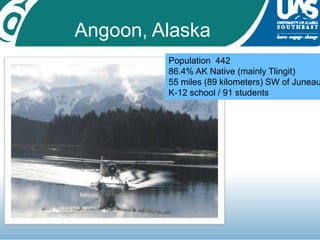
Angoon, AlaskaPopulation  44286.4% AK Native (mainly Tlingit)55 miles (89 kilometers) SW of JuneauK-12 school / 91 students
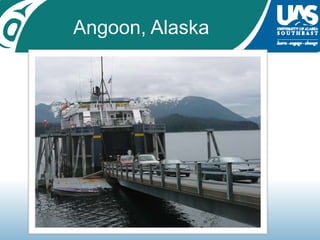
Angoon, Alaska
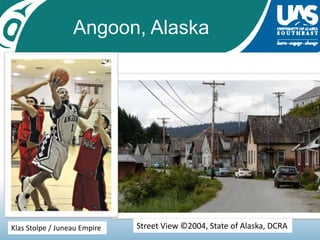
Angoon, AlaskaStreet View ©2004, State of Alaska, DCRAKlasStolpe / Juneau Empire
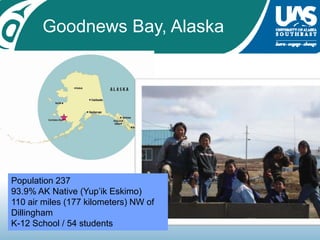
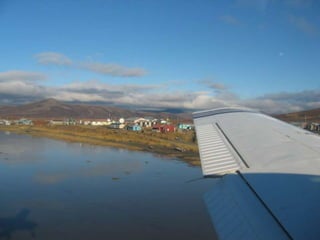
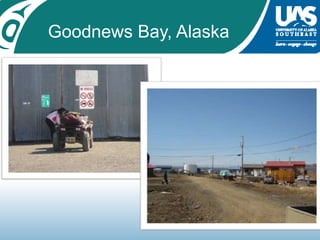
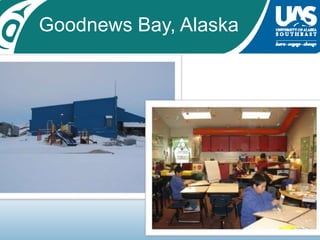
Goodnews Bay, AlaskaPopulation 23793.9% AK Native (Yup’ik Eskimo)110 air miles (177 kilometers) NW of DillinghamK-12 School / 54 students
Goodnews Bay, Alaska
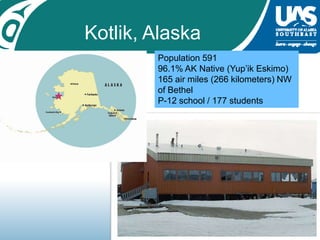
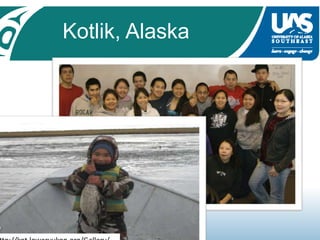
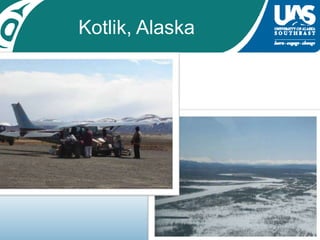
Kotlik, AlaskaPopulation 59196.1% AK Native (Yup’ik Eskimo)165 air miles (266 kilometers) NW of BethelP-12 school / 177 students
Kotlik, Alaskahttp://kot.loweryukon.org/Gallery/
Kotlik, Alaska
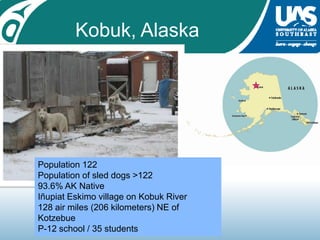
Kobuk, AlaskaPopulation 122Population of sled dogs >12293.6% AK Native Iñupiat Eskimo village on Kobuk River128 air miles (206 kilometers) NE of Kotzebue P-12 school / 35 students
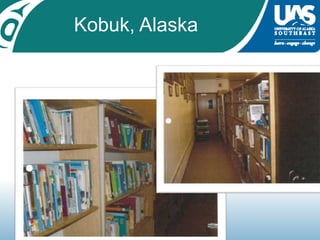
Kobuk, Alaska
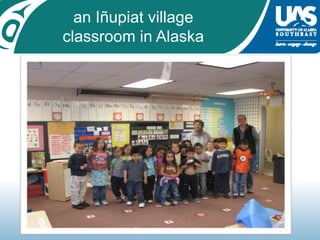
an Iñupiat village classroom in Alaska
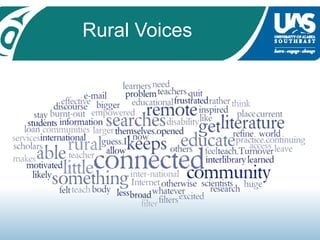
Rural Voices
Rural Voices“… As a teacher in a remote place, I need the Internet, e-mail, and interlibrary loan services”
Rural Voices“Turnover is a huge problem in rural communities. I think teachers would be less likely to get burnt-out and leave if they felt connected to something larger than themselves.”
Rural Voices [learning advanced research skills]“…opened up a world of educational discourse on disability that I wouldn't otherwise be able to access in a remote, rural community.”
Rural Voices“continuing to educate myself keeps me connected to the inter-national literature… and … makes me excited to teach.”
Rural Voices“Before I learned to refine the searches, my searches were too broad. I would get frustrated and quit.”
Rural Voices“I feel empowered to educate myself.”
Rural Voices“I’m inspired now to teach my students to be their own filters of information rather than allow others to filter it for them.”
ConclusionsIf the teachers in Alaska’s rural schools are not information literate – then who will be?Children in rural and remote Alaska need skilled information literate advocates in order to best serve their unique and special needs.Distance education is essential to reach adults in rural communities though there are technological difficulties to overcome
ConclusionsParticipantshighly valued library services and gained a skill set they were not fully aware of before we taught them.
Librarians must be aware of the issues specific to our bush community consumers and follow up with resources after they leave the university.
Awareness of library services is not enough, in order for teachers to transfer these skills to their students they need instruction on how to use library resources.Conclusions

Rural Voices Presentation

  • 1.
    Information Literacy inRemote Indigenous Alaska: Teachers’ Rural VoicesJennifer Ward Outreach Services Librarian, Associate Professor of Library ScienceWilliam A. Egan LibraryUniversity of Alaska Southeast, Juneau, Alaska, United StatesThomas DukeAssociate Professor of EducationSchool of EducationUniversity of Alaska Southeast, Juneau, Alaska, United States
  • 2.
    Alaska, United StatesContext–four communities in remote “bush” AlaskaCommunity – four teachers in masters in special education programCulture – multiple/complex (Anglo-European, Mexican, Tlingit, Yupik, Athabascan, Inupiat Alaska Natives)
  • 3.
    The StudyWhat roledoes information literacy play in the lives of teachers who live and work in geographically isolated and sparsely populated rural communities?
  • 4.
    How dospecial education teachers and their students in remote communities of Alaska benefit from distance-delivered information literacy instruction?
  • 6.
    Linguistic and Cultural Diversity in Alaska
  • 7.
    Study MethodsInterviews: Learningthe Craft of Qualitative Research Interviewing (2nd ed.) SteinarKvale and SvendBrinkmann – University of Aarhus, Sage, 2009
  • 8.
    ResultsFour Themes Emerged:Ruralissues and needsDistance education & information literacy instructionDevelopment as a learner and researcherApplication of information literacy and research skills
  • 10.
    Angoon, AlaskaPopulation 44286.4% AK Native (mainly Tlingit)55 miles (89 kilometers) SW of JuneauK-12 school / 91 students
  • 11.
  • 12.
    Angoon, AlaskaStreet View©2004, State of Alaska, DCRAKlasStolpe / Juneau Empire
  • 13.
    Goodnews Bay, AlaskaPopulation23793.9% AK Native (Yup’ik Eskimo)110 air miles (177 kilometers) NW of DillinghamK-12 School / 54 students
  • 15.
  • 16.
  • 17.
  • 18.
    Kotlik, AlaskaPopulation 59196.1%AK Native (Yup’ik Eskimo)165 air miles (266 kilometers) NW of BethelP-12 school / 177 students
  • 19.
  • 20.
  • 21.
    Kobuk, AlaskaPopulation 122Populationof sled dogs >12293.6% AK Native Iñupiat Eskimo village on Kobuk River128 air miles (206 kilometers) NE of Kotzebue P-12 school / 35 students
  • 22.
  • 23.
    an Iñupiat villageclassroom in Alaska
  • 24.
  • 25.
    Rural Voices“… Asa teacher in a remote place, I need the Internet, e-mail, and interlibrary loan services”
  • 26.
    Rural Voices“Turnover isa huge problem in rural communities. I think teachers would be less likely to get burnt-out and leave if they felt connected to something larger than themselves.”
  • 27.
    Rural Voices [learningadvanced research skills]“…opened up a world of educational discourse on disability that I wouldn't otherwise be able to access in a remote, rural community.”
  • 28.
    Rural Voices“continuing toeducate myself keeps me connected to the inter-national literature… and … makes me excited to teach.”
  • 29.
    Rural Voices“Before Ilearned to refine the searches, my searches were too broad. I would get frustrated and quit.”
  • 30.
    Rural Voices“I feelempowered to educate myself.”
  • 31.
    Rural Voices“I’m inspirednow to teach my students to be their own filters of information rather than allow others to filter it for them.”
  • 32.
    ConclusionsIf the teachersin Alaska’s rural schools are not information literate – then who will be?Children in rural and remote Alaska need skilled information literate advocates in order to best serve their unique and special needs.Distance education is essential to reach adults in rural communities though there are technological difficulties to overcome
  • 33.
    ConclusionsParticipantshighly valued libraryservices and gained a skill set they were not fully aware of before we taught them.
  • 34.
    Librarians must beaware of the issues specific to our bush community consumers and follow up with resources after they leave the university.
  • 35.
    Awareness of libraryservices is not enough, in order for teachers to transfer these skills to their students they need instruction on how to use library resources.Conclusions

Editor's Notes

  • #3 Our study inquired about the information literacy experiences of teachers in four rural Alaskan communities. These teachers had a built-in information literacy component to several classes in their masters program taught by me and Thomas. To give you an idea of the context, I brought some maps…
  • #4 Distance class to teachers throughout the state, assignment is a robust literature review “metasynthesis” study.
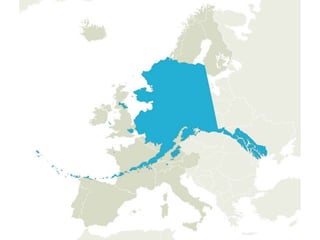
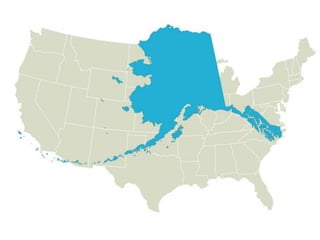
  • #5 The size of Alaska when superimposed over Europe gives a sense for the vastness of the state. And we do not have roads and railroads to get from one place to another. We have a diversity of cultures within our one state which I think is easily overlooked if you do not know about it. In fact it was something that I didn’t think about much before I started this study and then this presentation to you.
  • #6 Alaska is one-fifth the size of the contiguous United States and contains 586,412 square miles (or 1,518,800.11 square kilometers ) and Alaska has 6,640 miles (or 10 686.0442 kilometers) of coastline (longer than that of all of the rest of the lower 48 states)
  • #7 The linguistic and cultural diversity in Alaska is significant. The teachers we interviewed lived in Tlingit, Yupik, and Inupiat Native Alaskan communities.
  • #8 Stevick-Colaizzi-Keen method – we highlighted every statement that
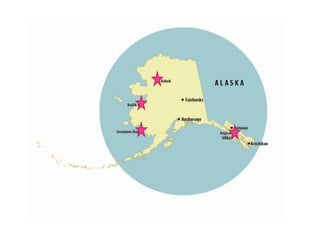
  • #10 We conducted interviews with teachers in Angoon, Goodnews Bay, Kotlik, and Kobuk. These are all communities that are not connected by road to other communities in Alaska – why we call them “bush” communities – they are remote and rural. We reside in Juneau, the capital with over 30,000 people but we also must take an airplane or ferry boat to get out of Juneau.
  • #11 Tlingit Southeast Alaska Tlingit Community Population 44255 miles (89 kilometers) southwest of JuneauCommercial fishing, subsistence lifestyleVisiting healthcare professionals School library – no librarian
  • #16 Goodnews Bay is located in a transitional climatic zone, exhibiting characteristics of both a marine and continental climate. Average annual precipitation is 22 inches, with 43 inches of snowfall. Summer temperatures range from 41 to 57 °F; winter temperatures average 6 to 24 °F. Yup’ik Eskimo Community (first language Yupik)Population 237Climate summer (41-57F = 5-14C) winter (6-24F = 14- -4C)93.9% NativeNo piped sewage systemBarges bring goods in summer monthsNearest community for healthcare / emergency is Dillingham
  • #19 Yupik Eskimo village practicing a fishing, trapping, and subsistence lifestylePopulation 618165 air miles (266 kilometers) NW of BethelPiped water and sewer to most householdsAccessible by airplane, bargeNorton Sound ice-free mid-June thru Octobere climate of Kotlik is subarctic. Temperatures range between -50 and 87 °F. Annually, there is an average of 60 inches of snowfall and a total of 16 inches of precipitation. High winds and poor visibility are common during fall and winter. Norton Sound and the Yukon are ice-free from mid-June through October.
  • #22 Treatment of sicknesses – someone with a high school diploma health aid will call in symptoms to a doctor in the hub community to learn how to treat them-10 to 15 °F Summer 40 to 65 °F during summer. Inupiat Eskimo village on Kobuk River 128 air miles (206 kilometers) northeast of Kotzebue Population 122, smallest village in NW Burough winter: -10 to 15dF = -23 to -9dC Subsistence economy Major means of transportation are plane, small boat, snowmachine, and dogsled
  • #26 Rural needs
  • #27 Turnover – means they only stay for a year or two – less consistency with teachers in the bush where the kids really need a chance.
  • #28 Teaching professionals in remote and rural places need access to electronic resources to counteract isolation, to feel connected to other (special) educators, and to continue to develop professionally. In response to a question about conducting sophisticated advanced Boolean searches in education and social sciences databases…
  • #30 As they learned to search for, evaluate, and synthesize information in a more systematic and strategic manner, our students (the teachers) developed greater confidence in themselves and in their own teaching and research abilities.
  • #31 Empowerment
  • #32 One special educator, who teaches Yup’ik Eskimo children in western Alaska noted that many textbooks exclude – or misrepresent – the contributions of American Indian and Alaska Native peoples. She wants to teach her Yup’ik students to critically evaluate their textbooks and other curricular materials. She stated:
  • #33 These are unique (Native Alaskan) students with special needs – they have disabilities. These teachers can’t be a specialist in all learning disabilities, they need to be information literate in order to find out about disability conditions in each case to treat them
  • #36 All schools have Internet access but many homes do not (statistics?) Access is satellite (not fiber). School receiving federal funds have filters.TACK!