Introduction to Software Development
                 BSCS(2010-2014)
                   27-09-2012


           Video Calling on Ipads

Presented to:
                Ma’am Marium Nosheen

Group Members:
            Sameera Abbas          1852
            Wakeela Batool         1900
CONTENTS
 Problem statement
 What’s an IPad?

 Our suggested Model (RUP)

      *Inception
      *Elaboration
      *Construction
      *Transition
 Score Card

 Conclusion
PROBLEM STATEMENT


Initially there was only audio call system. The
problem of not having video during a call was
common. The persons contacting each other could
not watch each other, the communication between
the two was only audio.
WHAT’S AN IPAD?
   The iPad is a line of tablet computers designed and
    marketed by Apple Inc., primarily as a platform for
    audio-visual media including books, periodicals,
    movies, music, games, apps and web content.


   Its size and weight fall between those of
    contemporary smartphones and laptop computers.
TAP FACE TIME TO MAKE A VIDEO CALL.
   Face Time closes the distance between you and
    the people you care about — from miles to inches

   To make a video call, tap Face Time. Then select a
    name, wait for the person to accept the call, and
    smile big. Face Time works over Wi-Fi or cellular
    networks, so you can wave hello from practically
    anywhere.

   Switch between cameras during a call.
RATIONAL PROCESS MODEL
   RUP was originally developed by Rational Software
    (now part of IBM).

        It is a Software engineering process
        It is a process product
        It enhances team productivity
        It creates and maintains models
        It is a guide to effectively use the Unified Modeling
        Language


   Its goal is to delivery a high quality product that the
    customer actually wants
FEATURES OF RUP


 Iterative Development
 Requirements Management

 Visual Modeling of Systems

 Quality Management

 Change Control Management
ITERATIONS
   The primary goal of each iteration is to slowly chip
    away at the risk facing the project, namely:
      performance risks
      integration risks
      conceptual risks (design flaws)


     The  result of a single iteration is an increment--
      an incremental improvement of the system
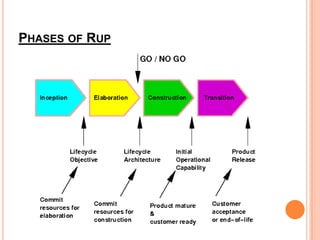
PHASES OF RUP
INCEPTION

 Built a good understanding of the requirements
  and scope of the system.
 Initial requirements capture

 Cost Benefit Analysis

 Initial Risk Analysis

 Defining a candidate architecture
ELABORATION
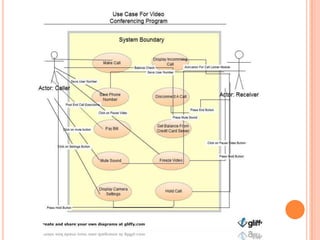
    Use Case Analysis
      Use Case (80% written and reviewed by end of phase)
      Use Case Model (80% done)

      Scenarios

            Sequence and Collaboration Diagrams
            Class, Activity, Component, State Diagrams


    Glossary (so users and developers can speak common
     vocabulary)
    Domain Model
        to understand the problem: the system’s requirements as they
         exist within the context of the problem domain
    Risk Assessment Plan revised
    Architecture Document
CONSTRUCTION
   The Construction Phase is concerned with moving
    from the executable architecture created in the
    Elaboration Phase to an operational system.

   The focus here is to develop the application to the
    point where it is ready for deployment.

   Focus is on implementation of the design
TRANSITION
   Also known as termination phase.

   Development team begins to shrink

   Control is moved to maintenance team

   We can now deliver the system into production
PROS OF RUP


 Regular feedback from and to stakeholders
 Efficient use of resources

 You deliver exactly what the customer wants

 Issues are discovered early in your project

 Supports iterative development

 Improved risk management
CONS OF RUP


 The process may be too complex to implement
 Development can get out of control

 It is a heavyweight process

 You need an expert to fully adopt this process
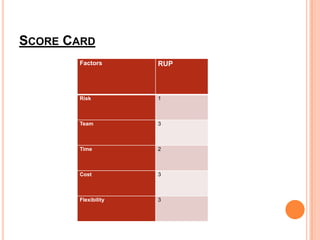
SCORE CARD
       Factors       RUP


       Risk          1


       Team          3


       Time          2


       Cost          3


       Flexibility   3
CONCLUSION
The assignment (software phases) presented by us
has already been accomplished by software
Engineers and are executed at many levels.

We have made this assignment according to the
material and information provided to us by different
software houses , software Engineers and other
members related to this field.

RUP model

  • 1.
    Introduction to SoftwareDevelopment BSCS(2010-2014) 27-09-2012 Video Calling on Ipads Presented to: Ma’am Marium Nosheen Group Members: Sameera Abbas 1852 Wakeela Batool 1900
  • 2.
    CONTENTS  Problem statement What’s an IPad?  Our suggested Model (RUP) *Inception *Elaboration *Construction *Transition  Score Card  Conclusion
  • 3.
    PROBLEM STATEMENT Initially therewas only audio call system. The problem of not having video during a call was common. The persons contacting each other could not watch each other, the communication between the two was only audio.
  • 4.
    WHAT’S AN IPAD?  The iPad is a line of tablet computers designed and marketed by Apple Inc., primarily as a platform for audio-visual media including books, periodicals, movies, music, games, apps and web content.  Its size and weight fall between those of contemporary smartphones and laptop computers.
  • 6.
    TAP FACE TIMETO MAKE A VIDEO CALL.  Face Time closes the distance between you and the people you care about — from miles to inches  To make a video call, tap Face Time. Then select a name, wait for the person to accept the call, and smile big. Face Time works over Wi-Fi or cellular networks, so you can wave hello from practically anywhere.  Switch between cameras during a call.
  • 8.
    RATIONAL PROCESS MODEL  RUP was originally developed by Rational Software (now part of IBM).  It is a Software engineering process  It is a process product  It enhances team productivity  It creates and maintains models  It is a guide to effectively use the Unified Modeling Language  Its goal is to delivery a high quality product that the customer actually wants
  • 9.
    FEATURES OF RUP Iterative Development  Requirements Management  Visual Modeling of Systems  Quality Management  Change Control Management
  • 10.
    ITERATIONS  The primary goal of each iteration is to slowly chip away at the risk facing the project, namely:  performance risks  integration risks  conceptual risks (design flaws)  The result of a single iteration is an increment-- an incremental improvement of the system
  • 11.
  • 12.
    INCEPTION  Built agood understanding of the requirements and scope of the system.  Initial requirements capture  Cost Benefit Analysis  Initial Risk Analysis  Defining a candidate architecture
  • 13.
    ELABORATION  Use Case Analysis  Use Case (80% written and reviewed by end of phase)  Use Case Model (80% done)  Scenarios  Sequence and Collaboration Diagrams  Class, Activity, Component, State Diagrams  Glossary (so users and developers can speak common vocabulary)  Domain Model  to understand the problem: the system’s requirements as they exist within the context of the problem domain  Risk Assessment Plan revised  Architecture Document
  • 15.
    CONSTRUCTION  The Construction Phase is concerned with moving from the executable architecture created in the Elaboration Phase to an operational system.  The focus here is to develop the application to the point where it is ready for deployment.  Focus is on implementation of the design
  • 16.
    TRANSITION  Also known as termination phase.  Development team begins to shrink  Control is moved to maintenance team  We can now deliver the system into production
  • 17.
    PROS OF RUP Regular feedback from and to stakeholders  Efficient use of resources  You deliver exactly what the customer wants  Issues are discovered early in your project  Supports iterative development  Improved risk management
  • 18.
    CONS OF RUP The process may be too complex to implement  Development can get out of control  It is a heavyweight process  You need an expert to fully adopt this process
  • 19.
    SCORE CARD Factors RUP Risk 1 Team 3 Time 2 Cost 3 Flexibility 3
  • 20.
    CONCLUSION The assignment (softwarephases) presented by us has already been accomplished by software Engineers and are executed at many levels. We have made this assignment according to the material and information provided to us by different software houses , software Engineers and other members related to this field.