Informed sampling for testing 
mitigation options 
Mariana C. Rufino
SAMPLES 
Standard 
Assessment 
of 
Mi3ga3on 
Poten3al 
for 
Smallholder 
systems 
h8p://www.samples.ccafs.cgiar.org/
Three 
messages 
• Decide 
on 
what 
ma8ers, 
scale, 
boundaries 
• Address 
heterogeneity, 
don’t 
ignore 
it 
• Aim 
at 
low 
cost, 
but 
collect 
meaningful 
data
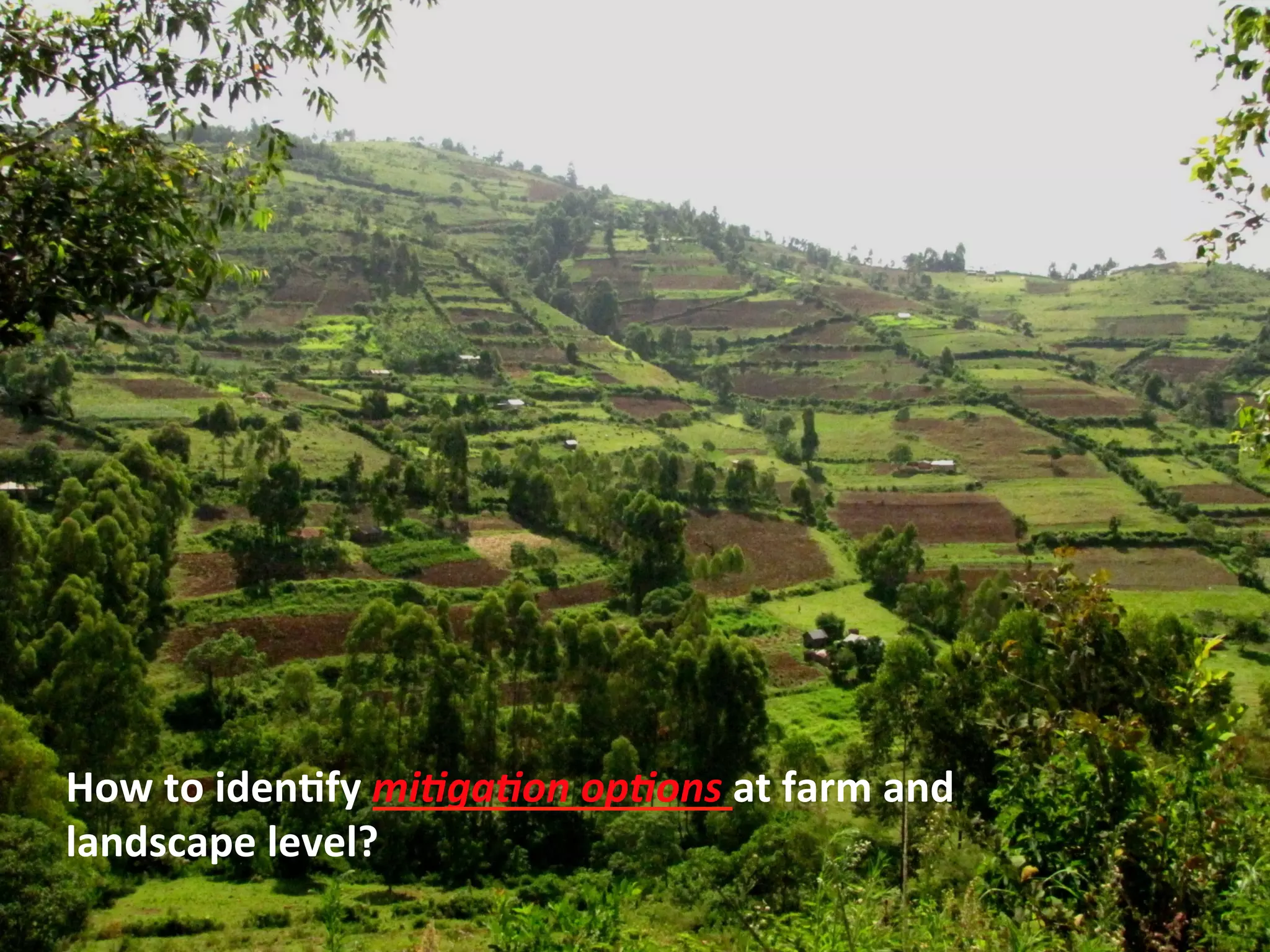
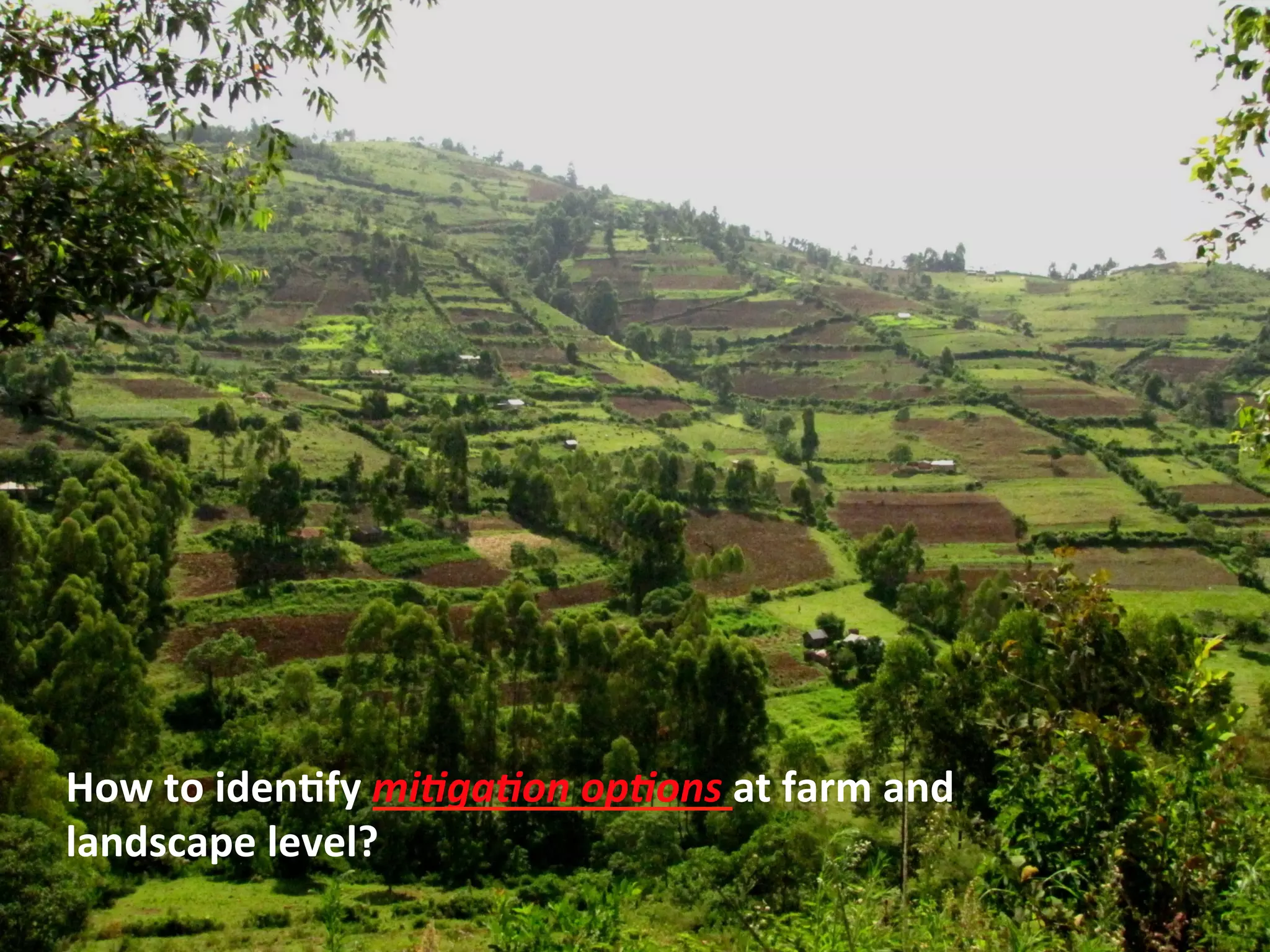
How 
to 
iden3fy 
mi#ga#on 
op#ons 
at 
farm 
and 
landscape 
level?
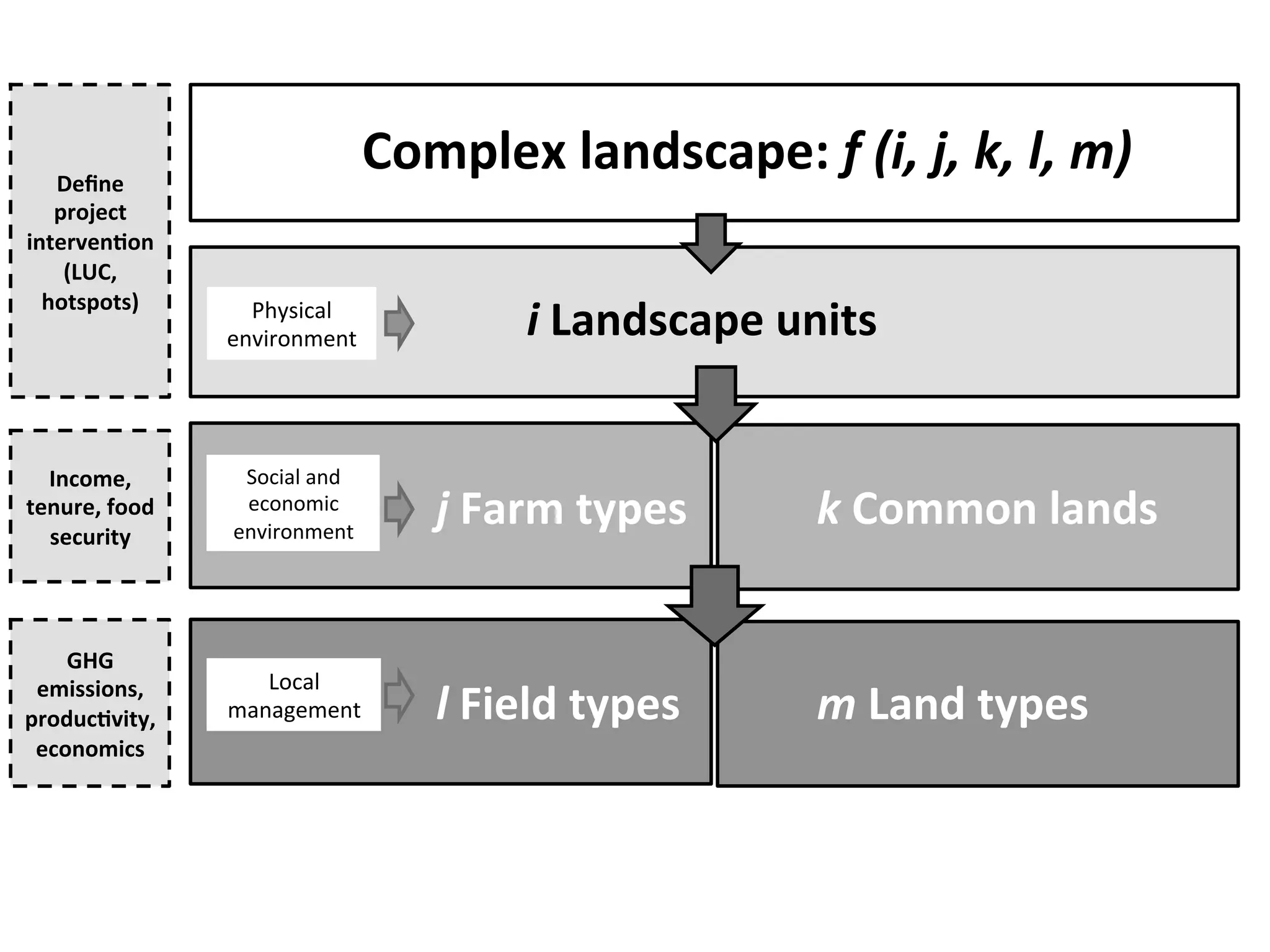
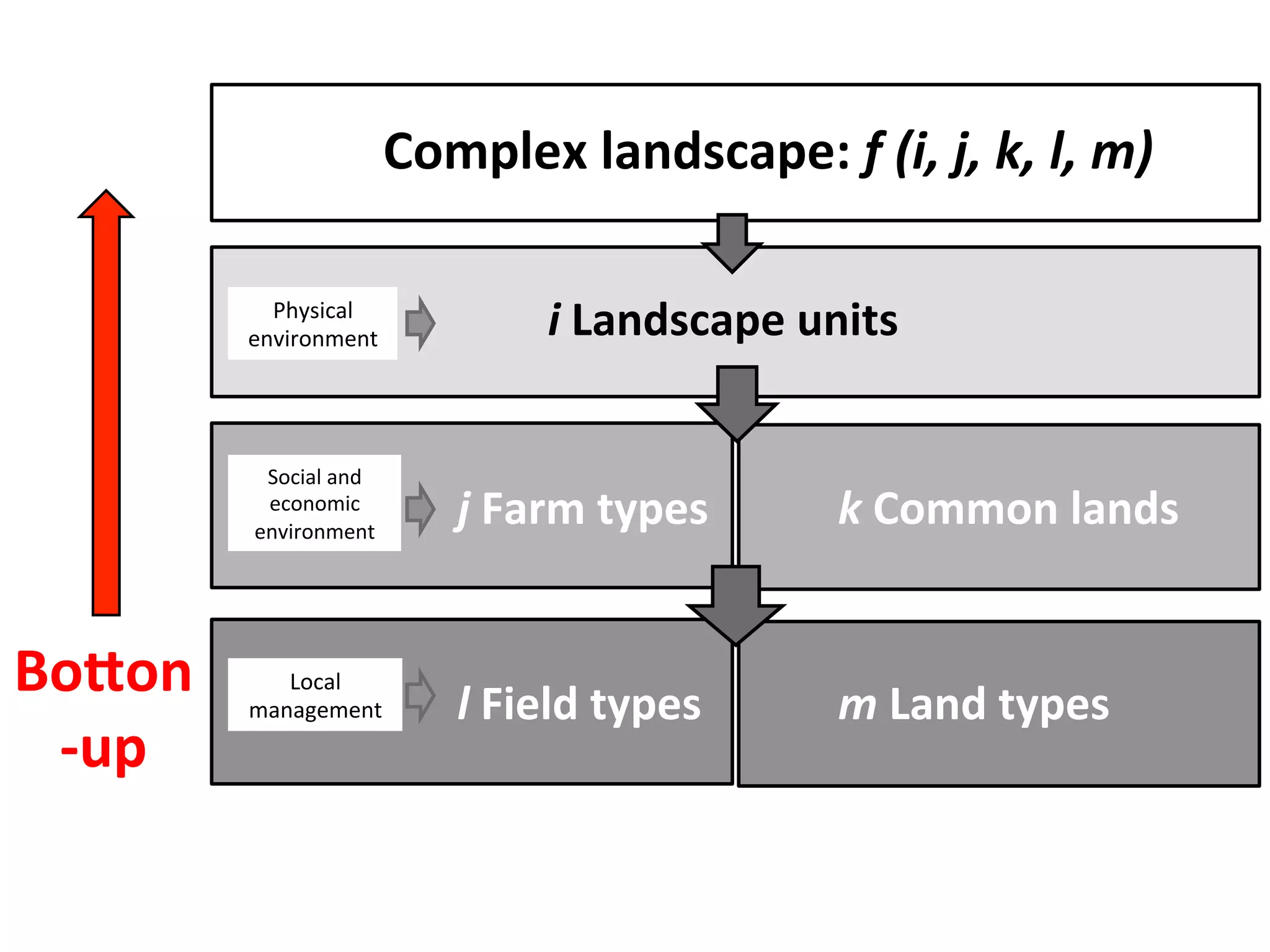
Complex 
landscape: 
f 
(i, 
j, 
k, 
l, 
m) 
i 
Landscape 
units 
j 
Farm 
types 
Physical 
environment 
Social 
and 
economic 
environment 
l 
Field 
types 
Local 
management 
Define 
project 
interven3on 
(LUC, 
hotspots) 
Income, 
tenure, 
food 
security 
GHG 
emissions, 
produc3vity, 
economics 
k 
Common 
lands 
m 
Land 
types
Complex 
landscape: 
f 
(i, 
j, 
k, 
l, 
m) 
i 
Landscape 
units 
j 
Farm 
types 
Physical 
environment 
Social 
and 
economic 
environment 
l 
Field 
types 
Local 
management 
k 
Common 
lands 
m 
Land 
types 
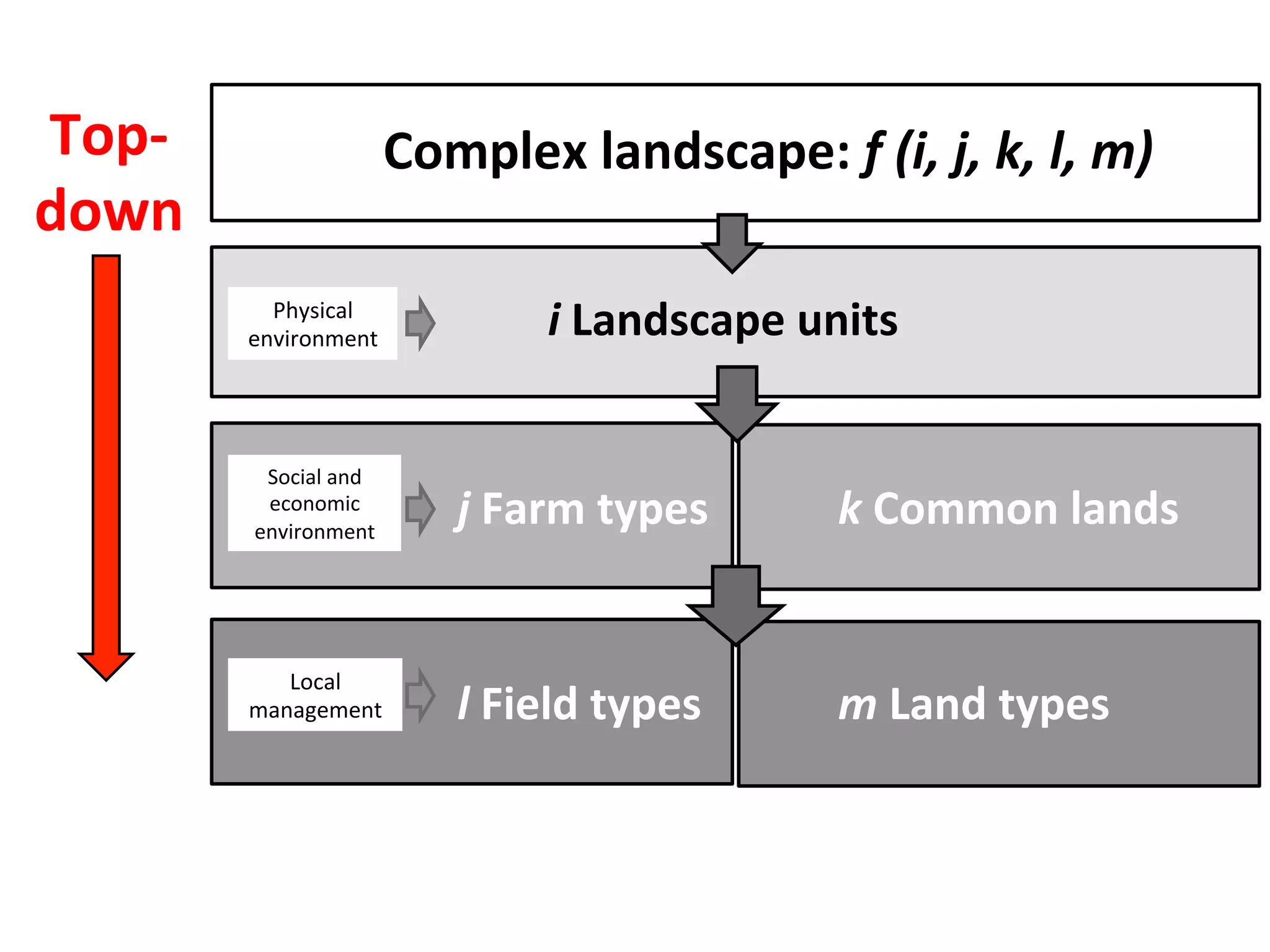
Top-­‐ 
down
Complex 
landscape: 
f 
(i, 
j, 
k, 
l, 
m) 
i 
Landscape 
units 
j 
Farm 
types 
Physical 
environment 
Social 
and 
economic 
environment 
l 
Field 
types 
Local 
management 
k 
Common 
lands 
m 
Land 
types 
Bo8on 
-­‐up
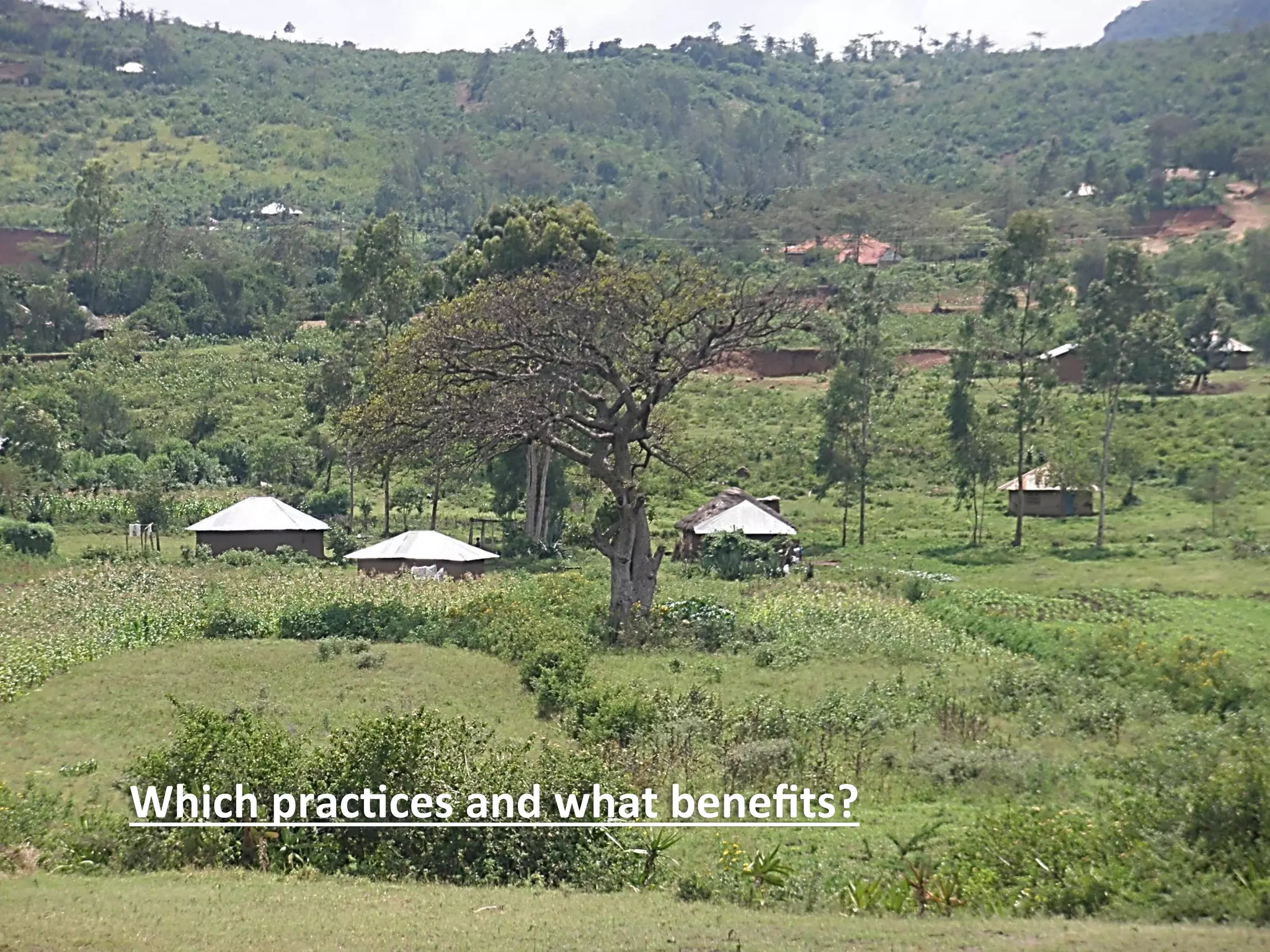
Which 
prac3ces 
and 
what 
benefits?
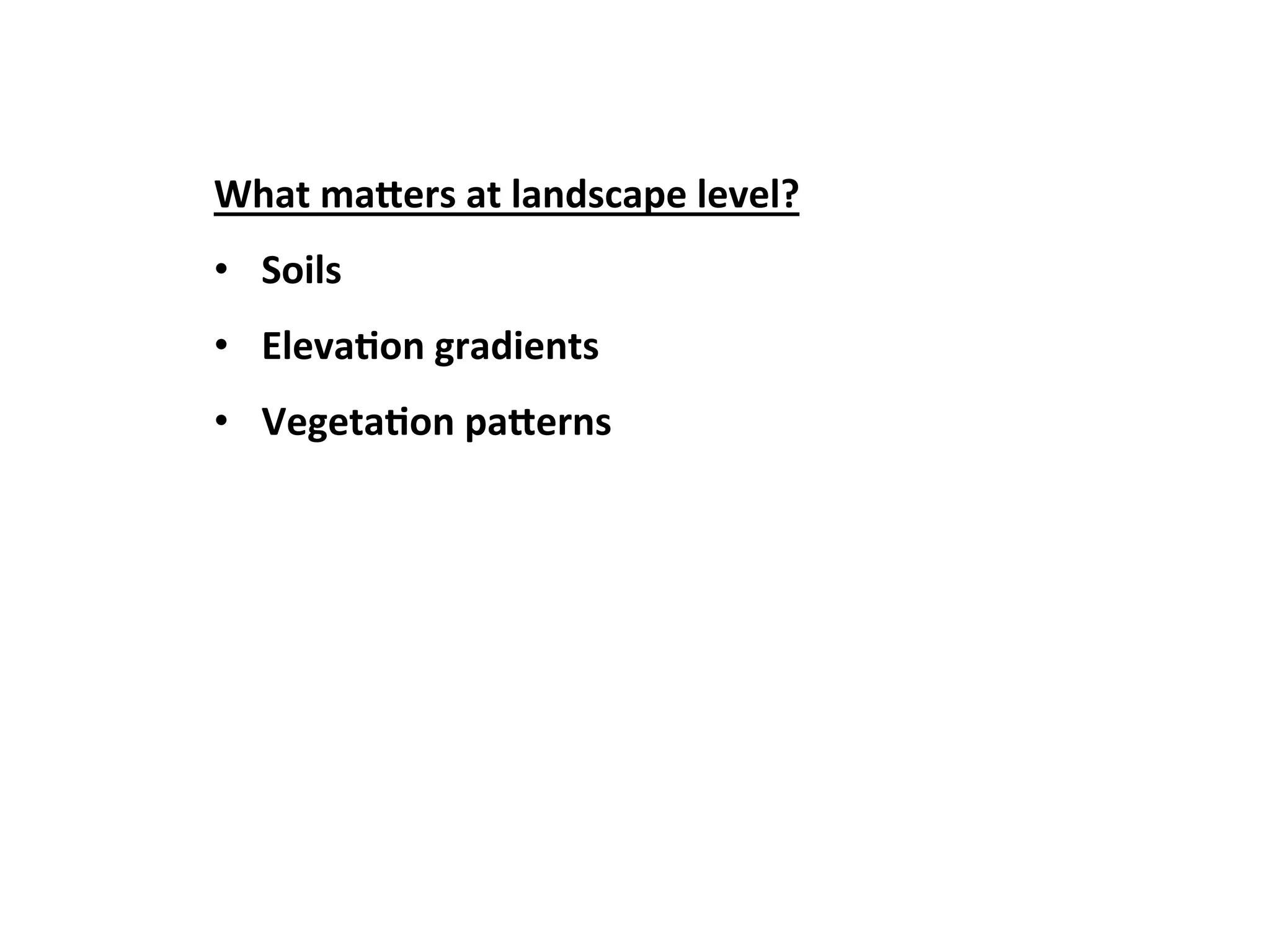
What 
ma8ers 
at 
landscape 
level? 
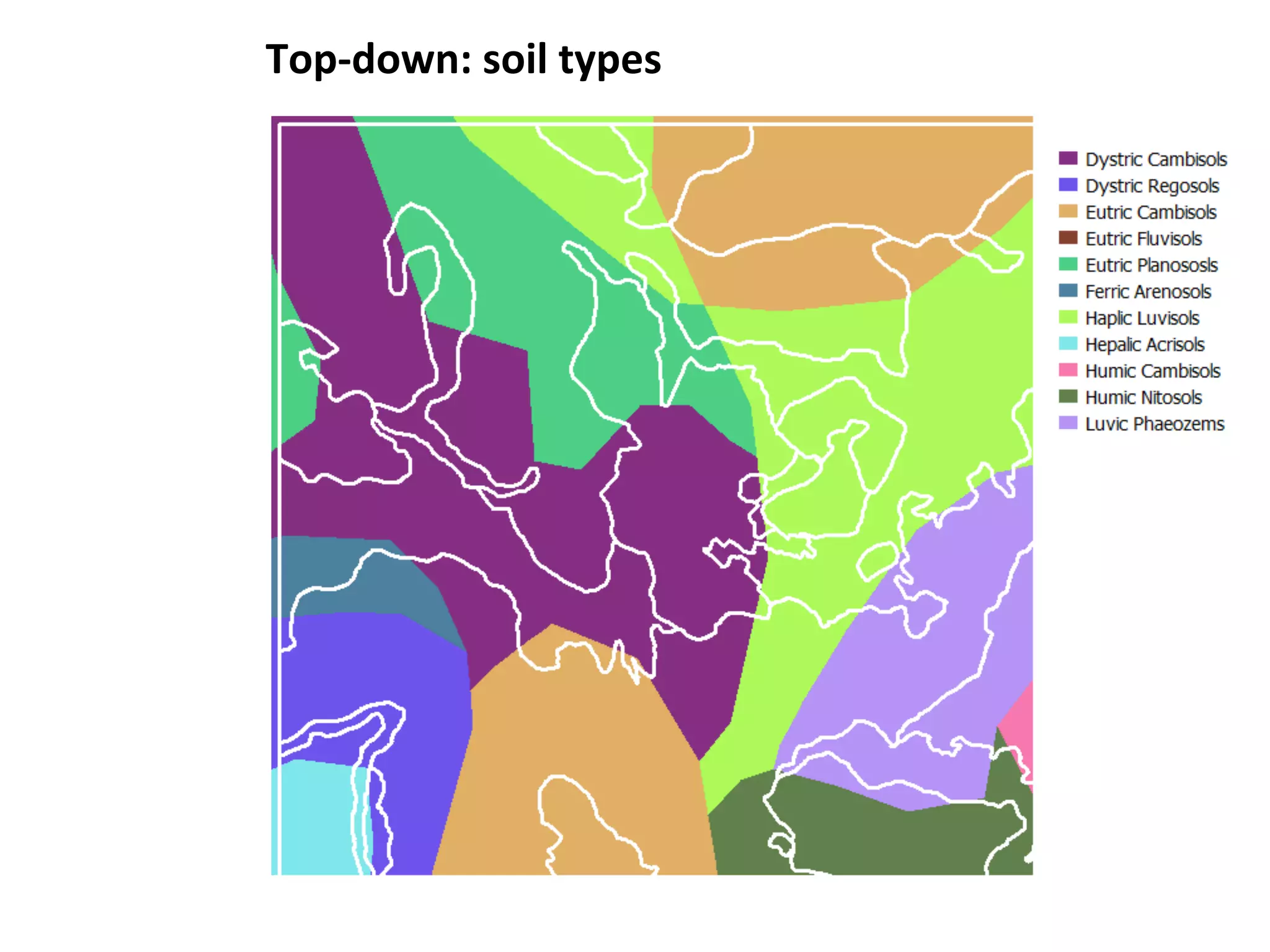
• Soils 
• Eleva3on 
gradients 
• Vegeta3on 
pa8erns
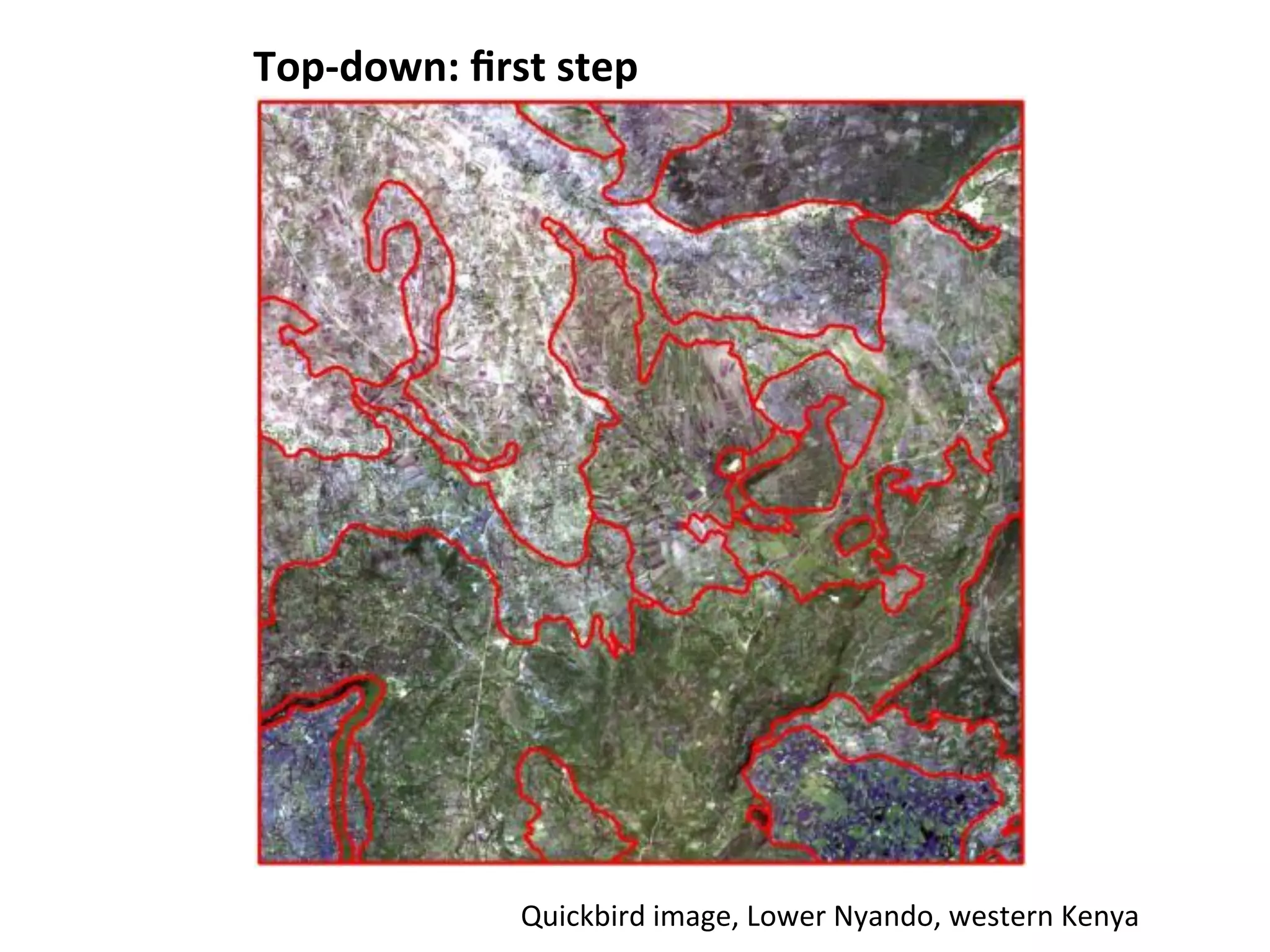
Top-­‐down: 
first 
step 
Quickbird 
image, 
Lower 
Nyando, 
western 
Kenya
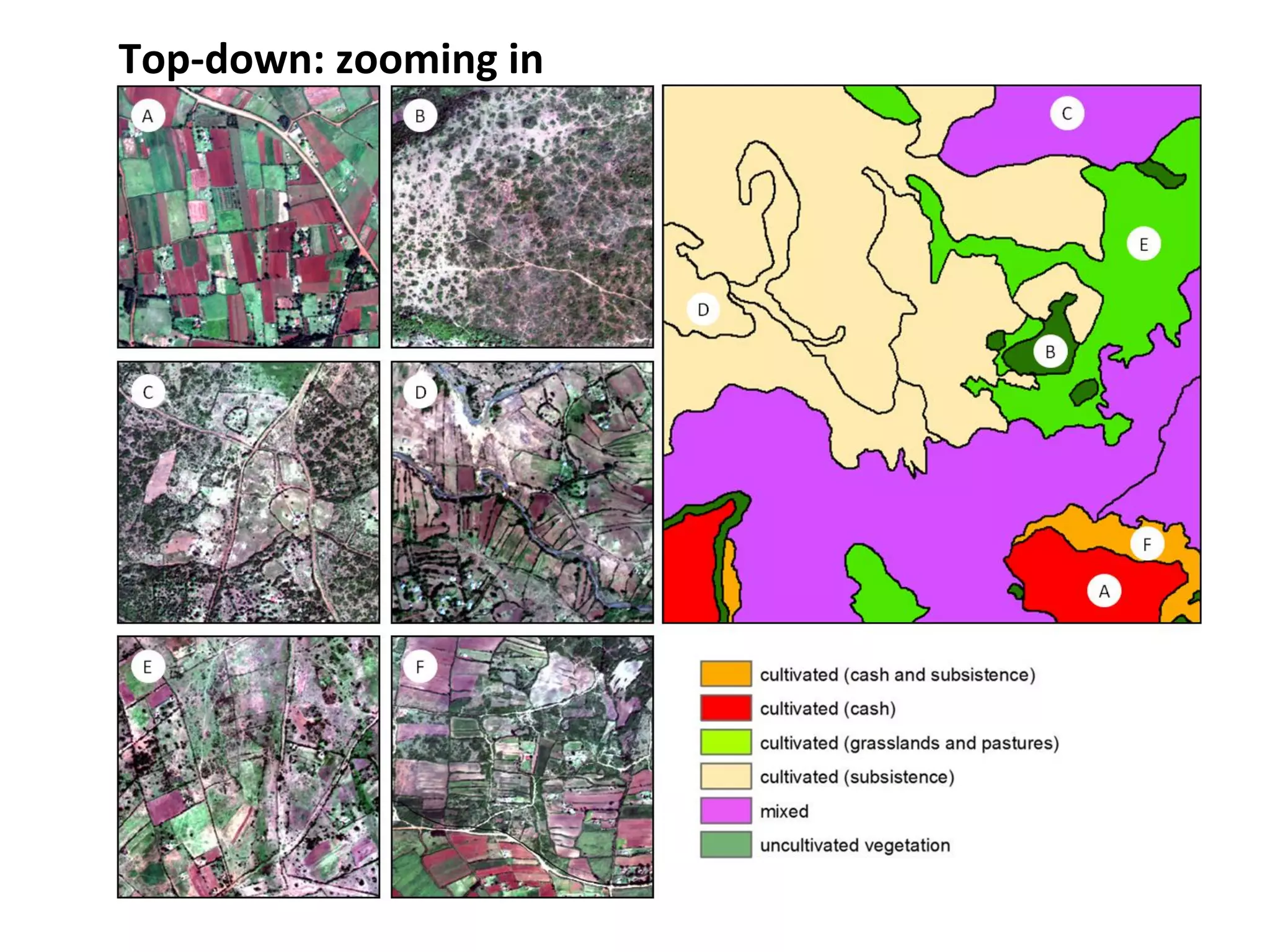
Top-­‐down: 
zooming 
in
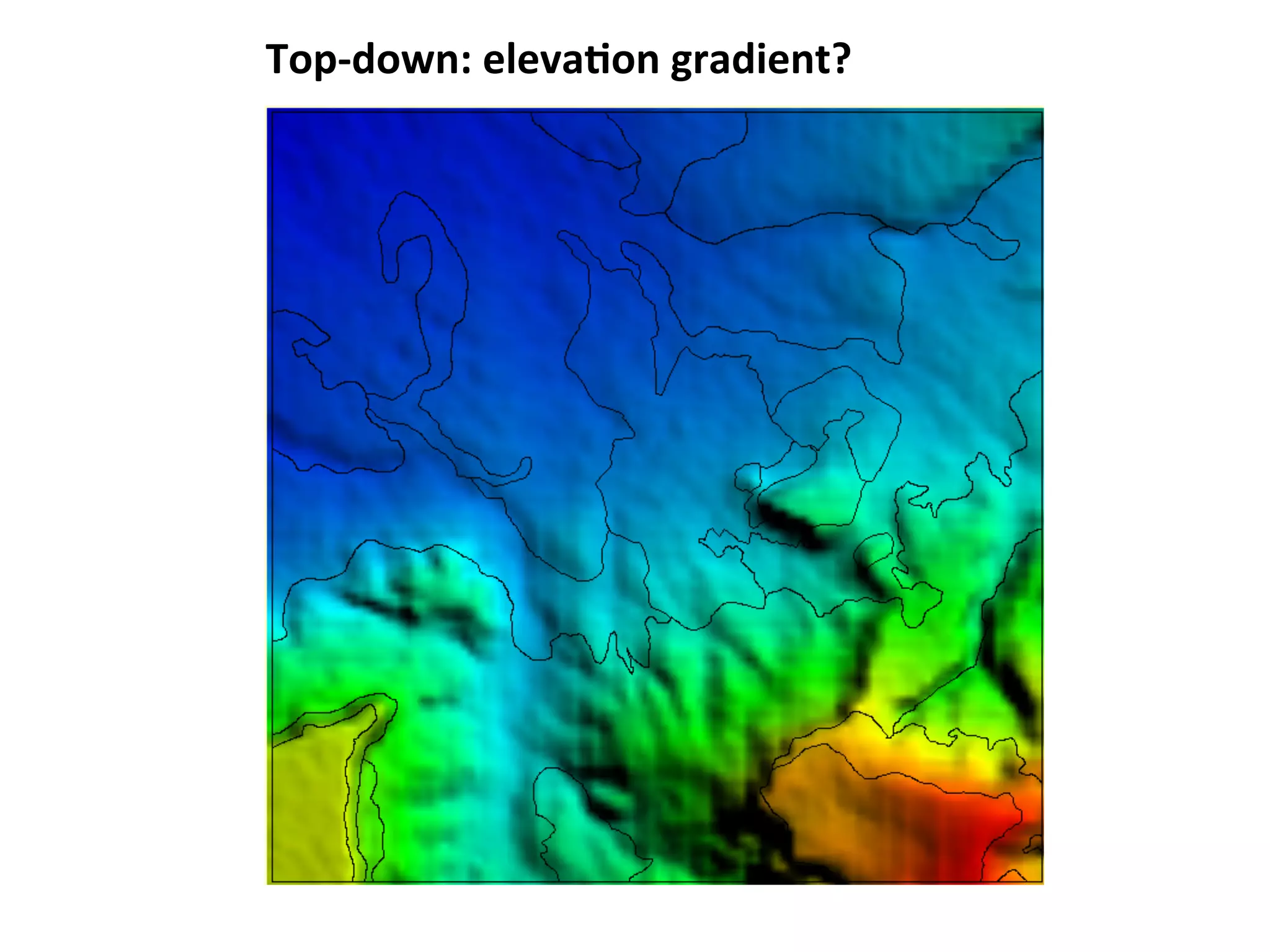
Top-­‐down: 
eleva3on 
gradient?
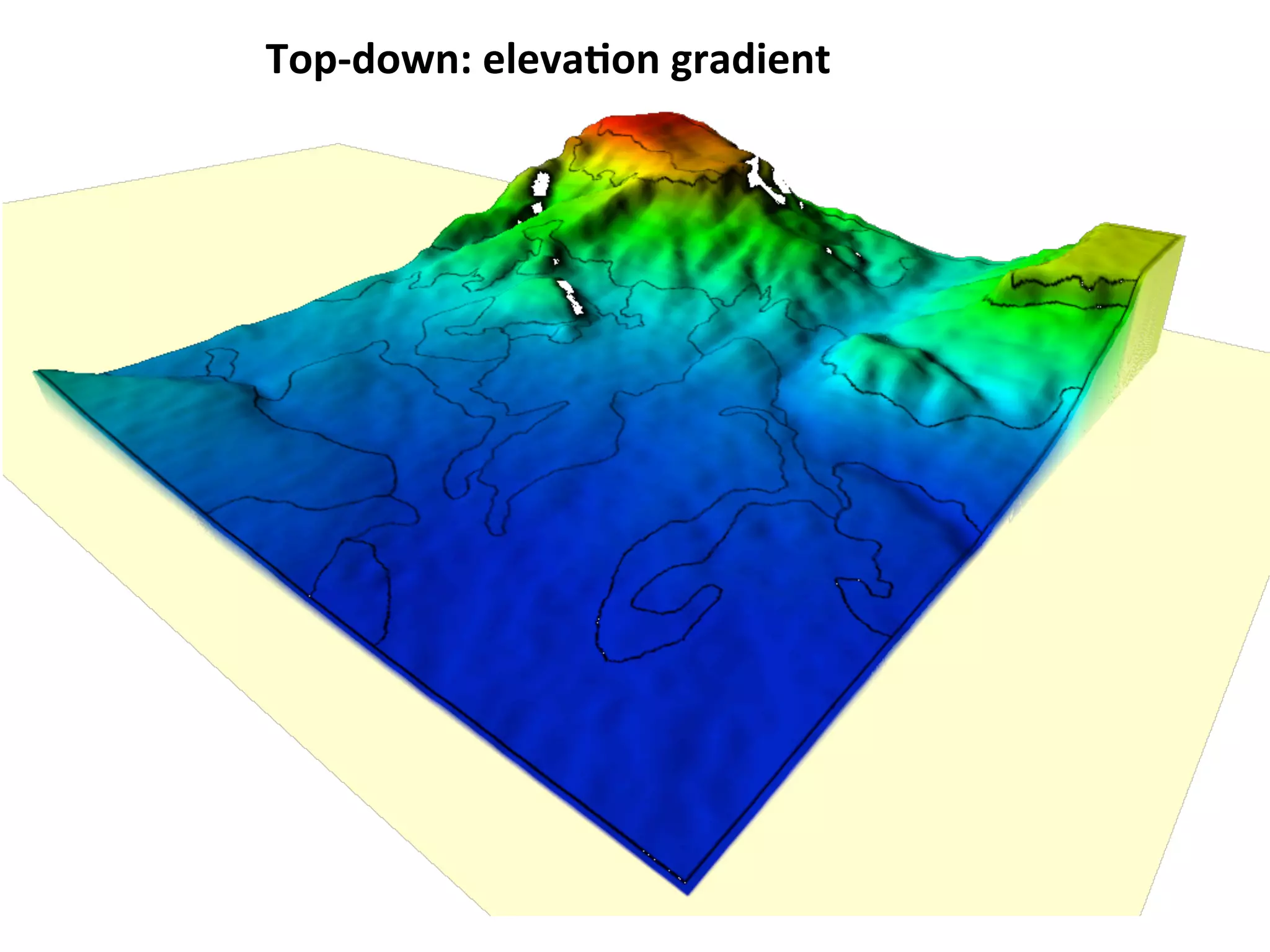
Top-­‐down: 
eleva3on 
gradient
What 
ma8ers 
at 
landscape 
level? 
• Soils 
• Eleva3on 
gradients 
• Vegeta3on 
pa8erns
Top-­‐down: 
soil 
types
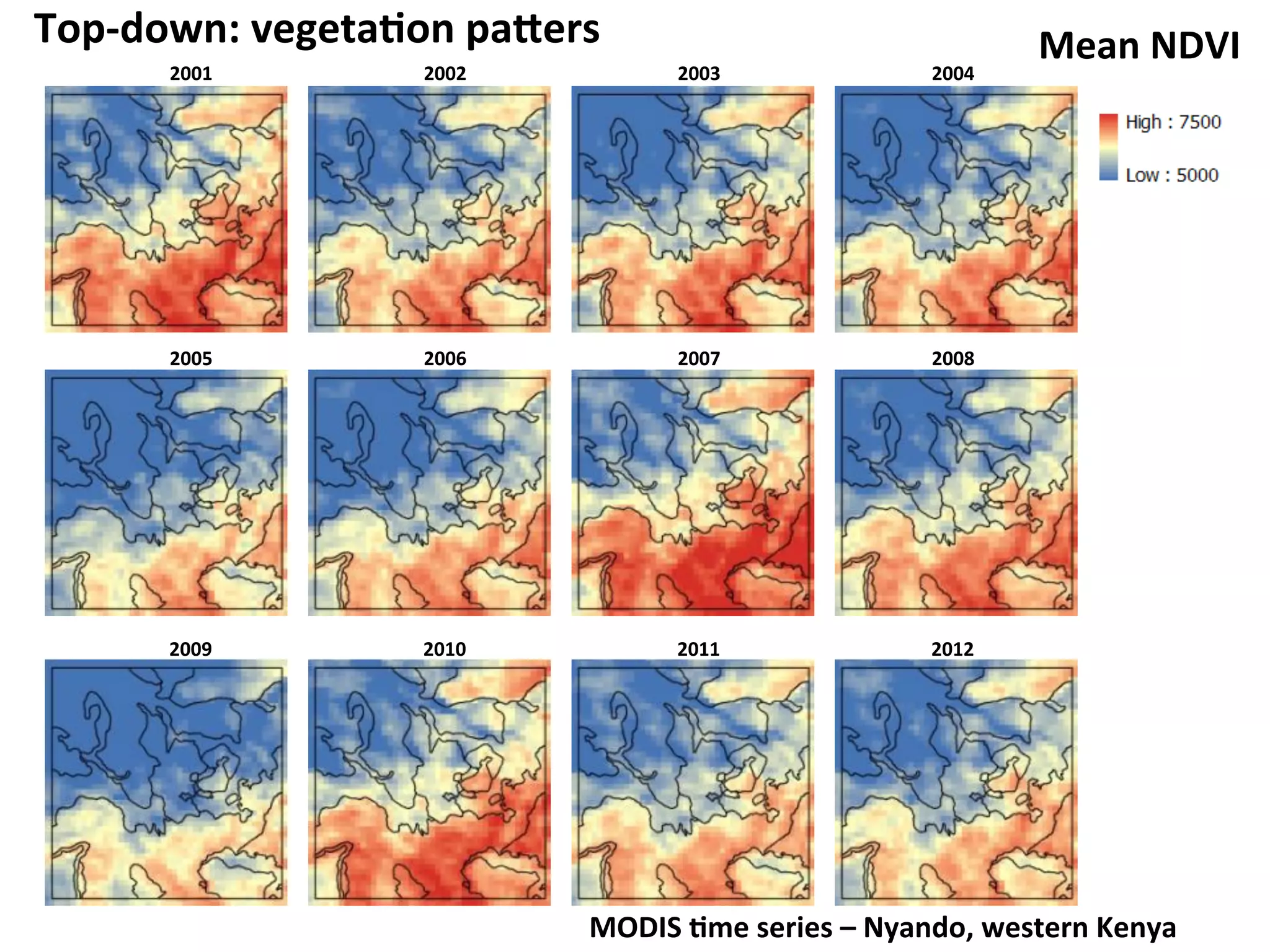
Mean 
NDVI 
Top-­‐down: 
vegeta3on 
pa8ers 
2001 
2002 
2003 
2004 
2005 
2006 
2007 
2008 
2009 
2010 
2011 
2012 
MODIS 
3me 
series 
– 
Nyando, 
western 
Kenya
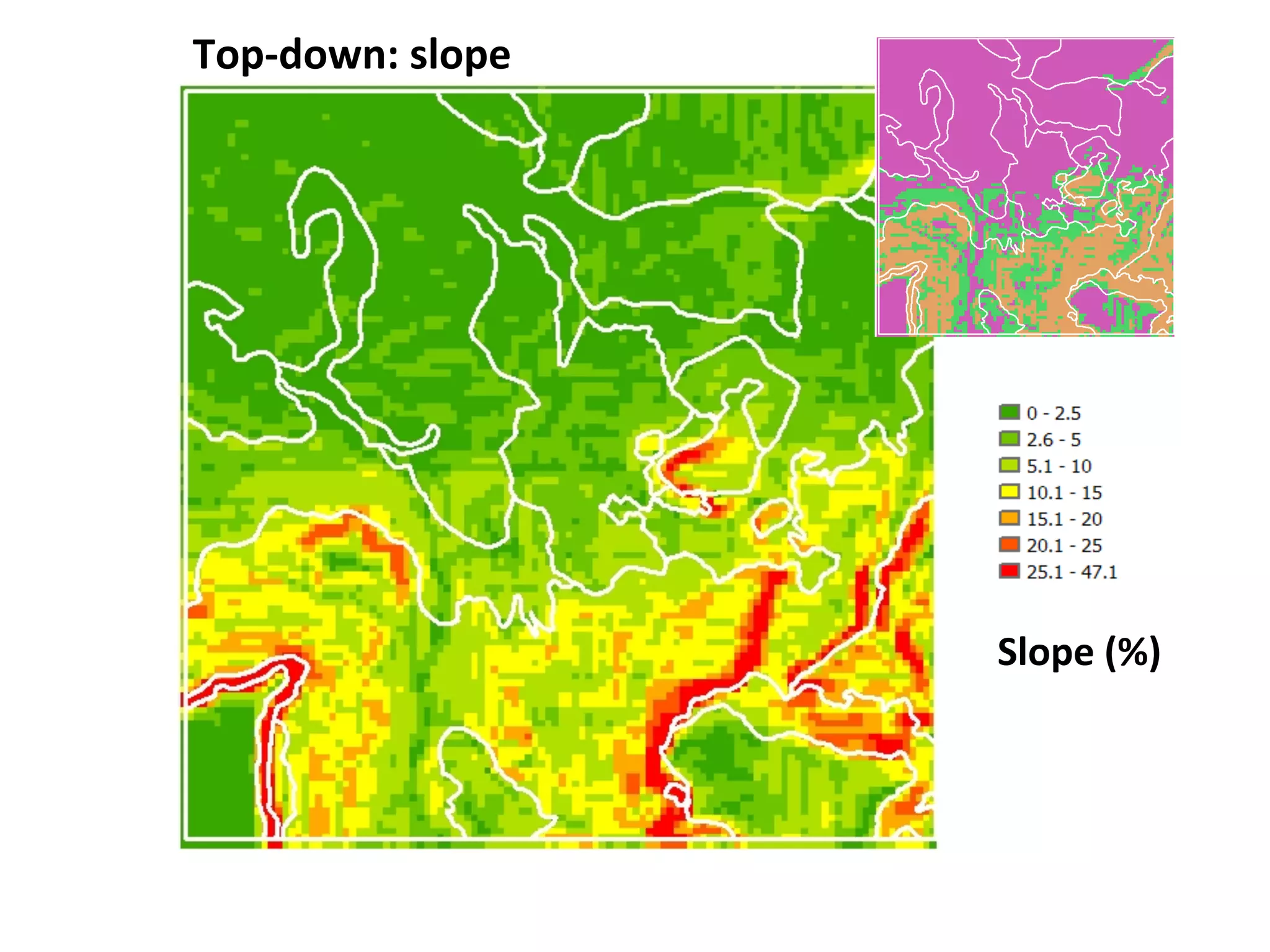
Slope 
(%) 
Top-­‐down: 
slope
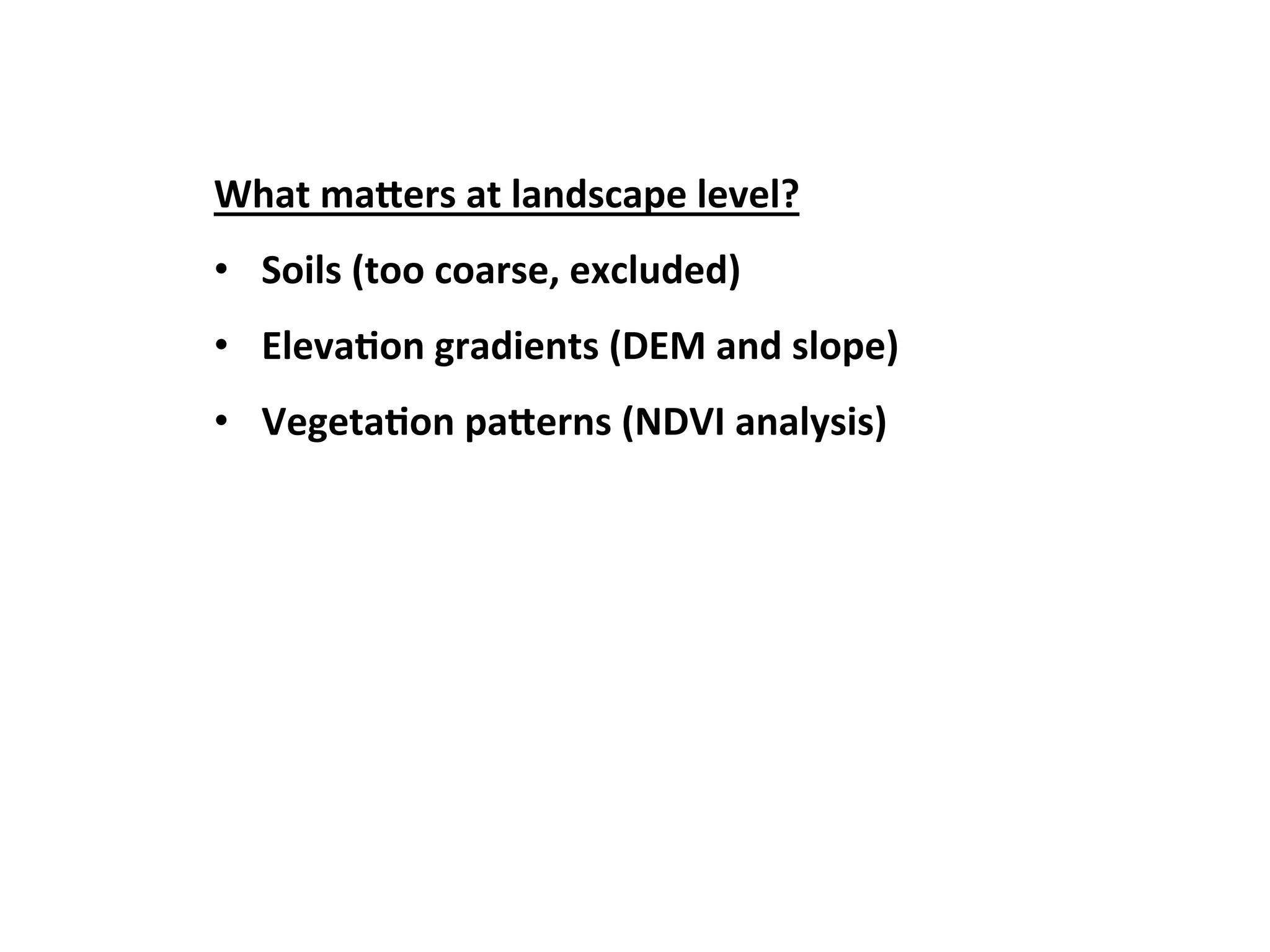
What 
ma8ers 
at 
landscape 
level? 
• Soils 
(too 
coarse, 
excluded) 
• Eleva3on 
gradients 
(DEM 
and 
slope) 
• Vegeta3on 
pa8erns 
(NDVI 
analysis)
Top-­‐down: 
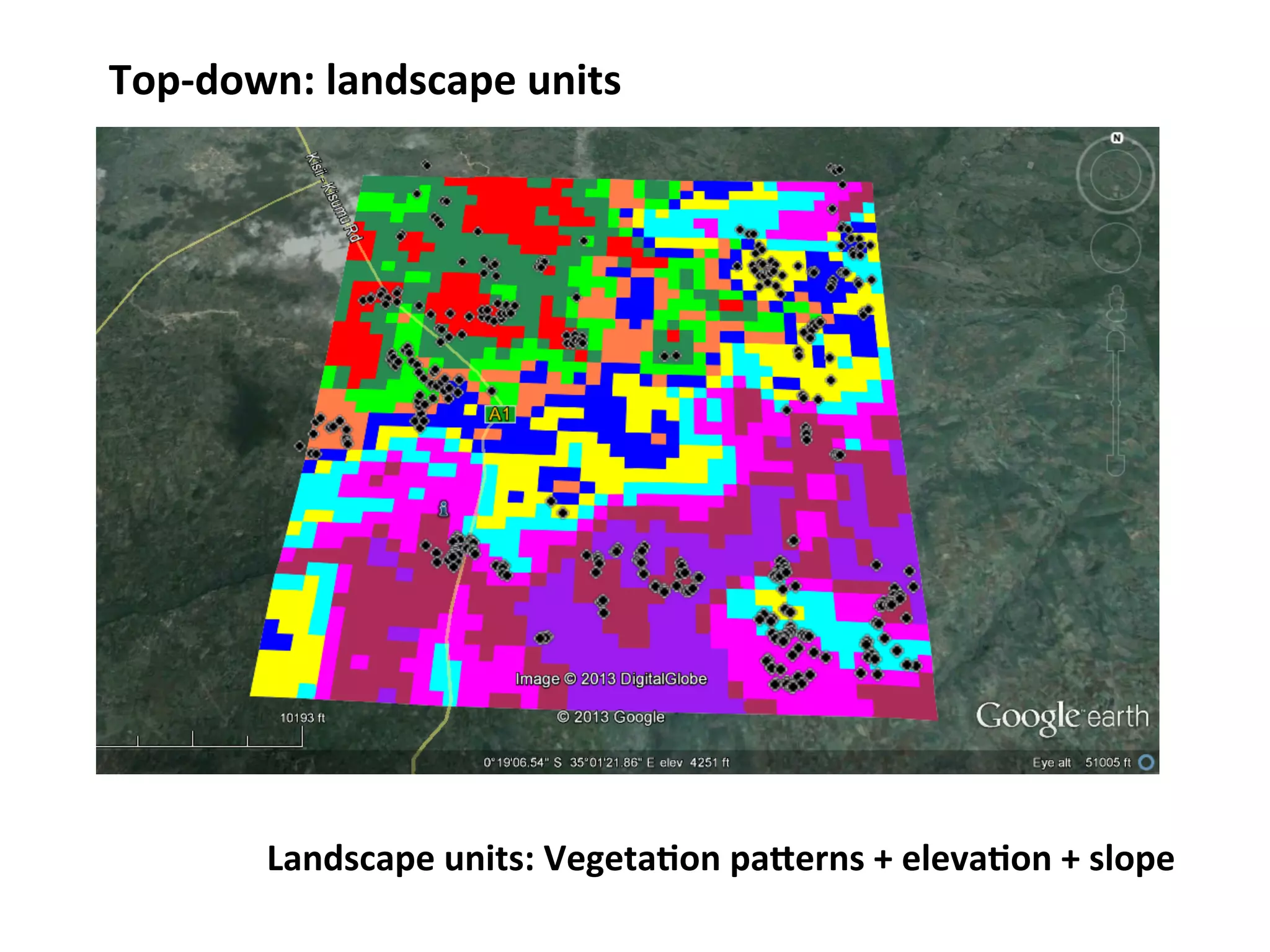
landscape 
units 
Landscape 
units: 
Vegeta3on 
pa8erns 
+ 
eleva3on 
+ 
slope
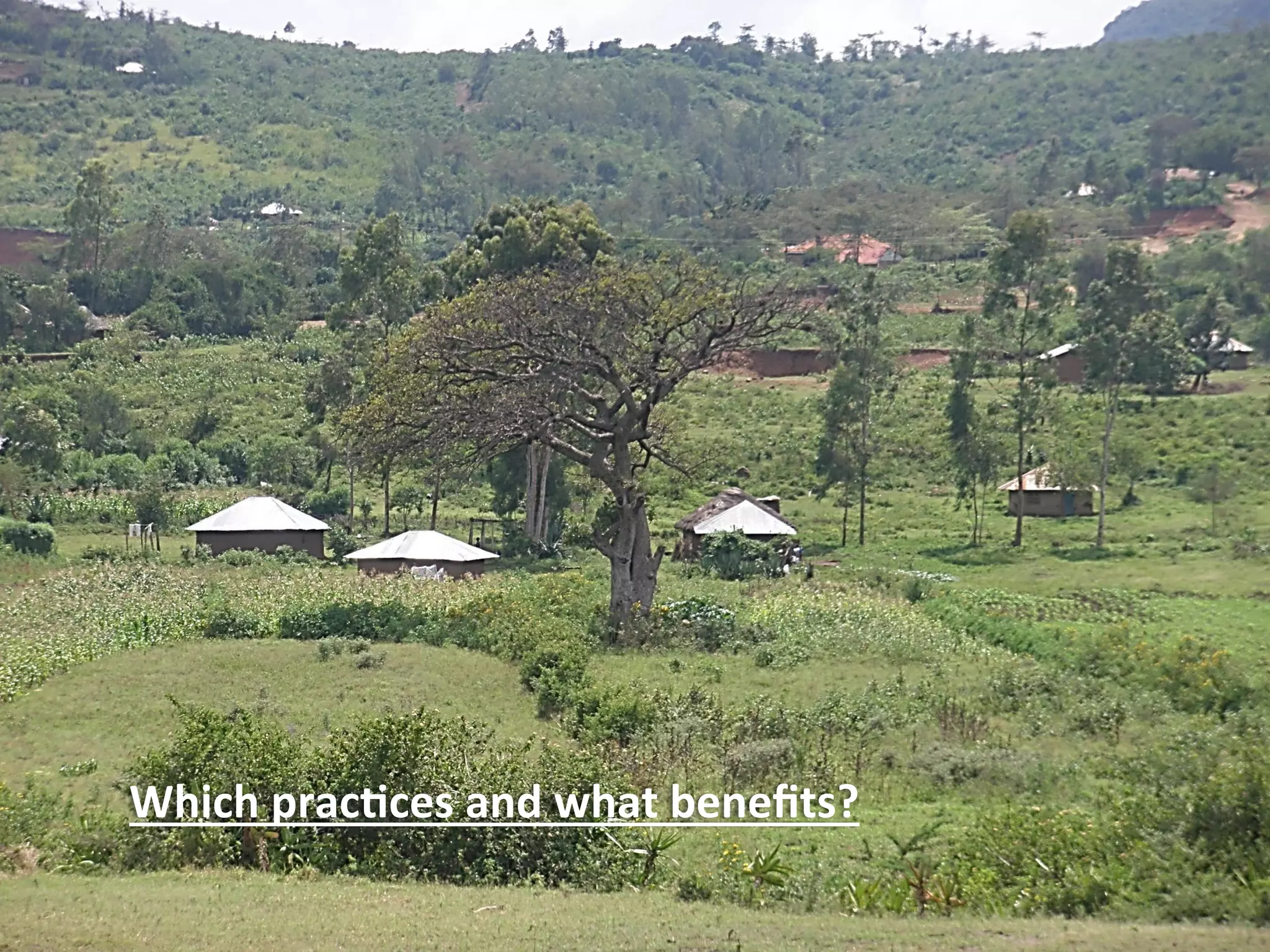
Which 
prac3ces 
and 
what 
benefits?
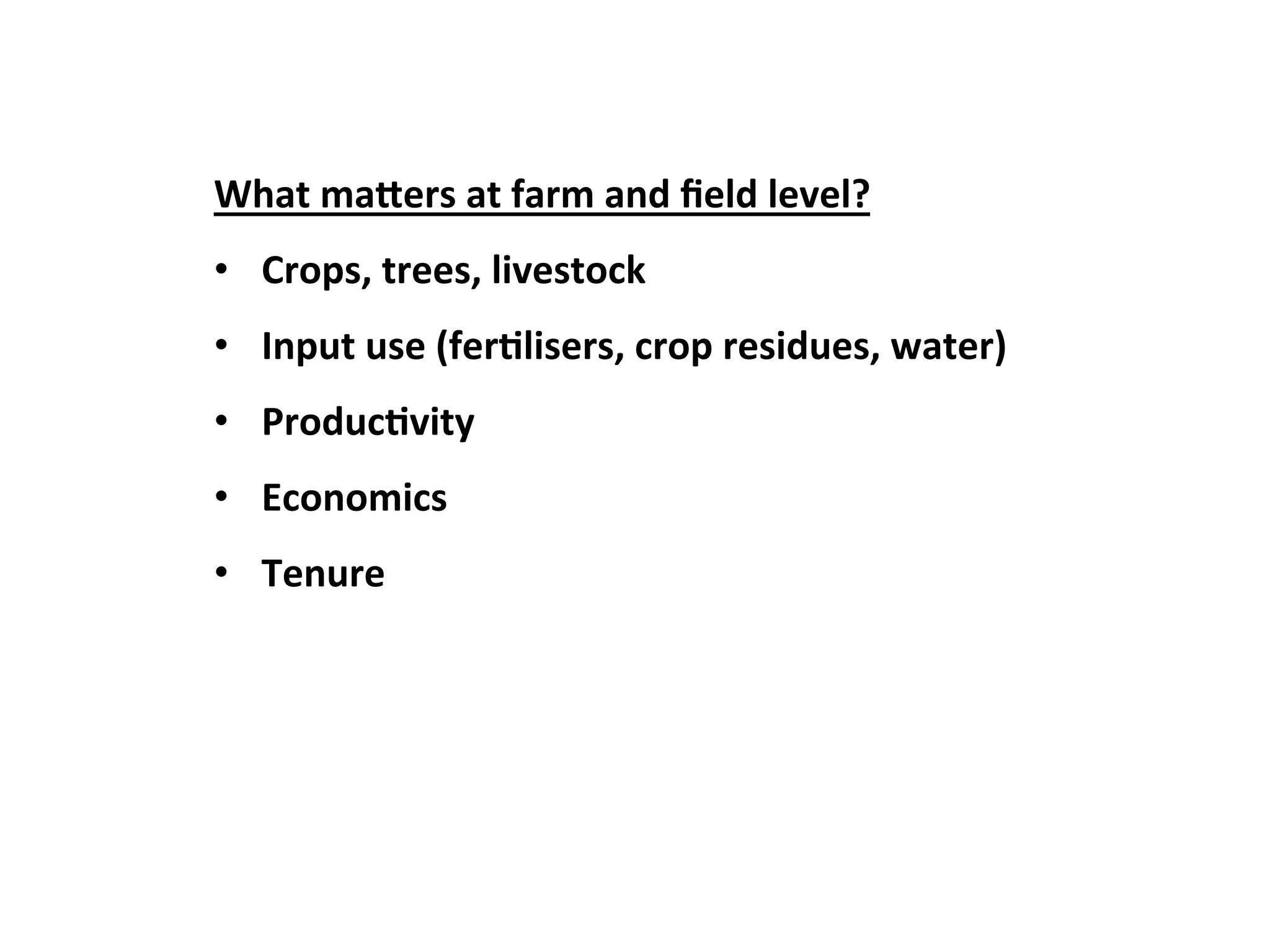
What 
ma8ers 
at 
farm 
and 
field 
level? 
• Crops, 
trees, 
livestock 
• Input 
use 
(fer3lisers, 
crop 
residues, 
water) 
• Produc3vity 
• Economics 
• Tenure
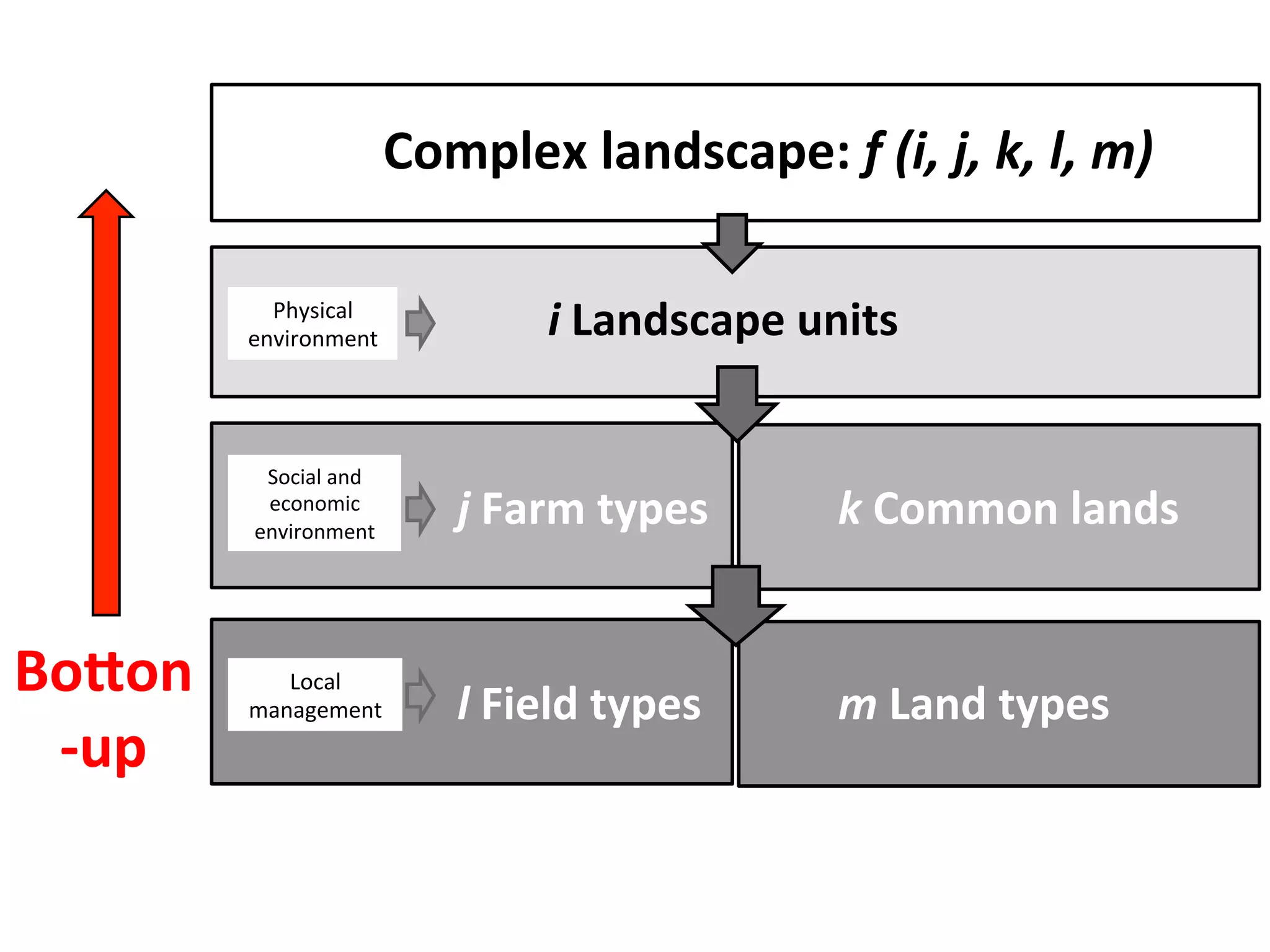
Complex 
landscape: 
f 
(i, 
j, 
k, 
l, 
m) 
i 
Landscape 
units 
j 
Farm 
types 
Physical 
environment 
Social 
and 
economic 
environment 
l 
Field 
types 
Local 
management 
k 
Common 
lands 
m 
Land 
types 
Bo8on 
-­‐up
Top-­‐down 
+ 
bo8on 
up 
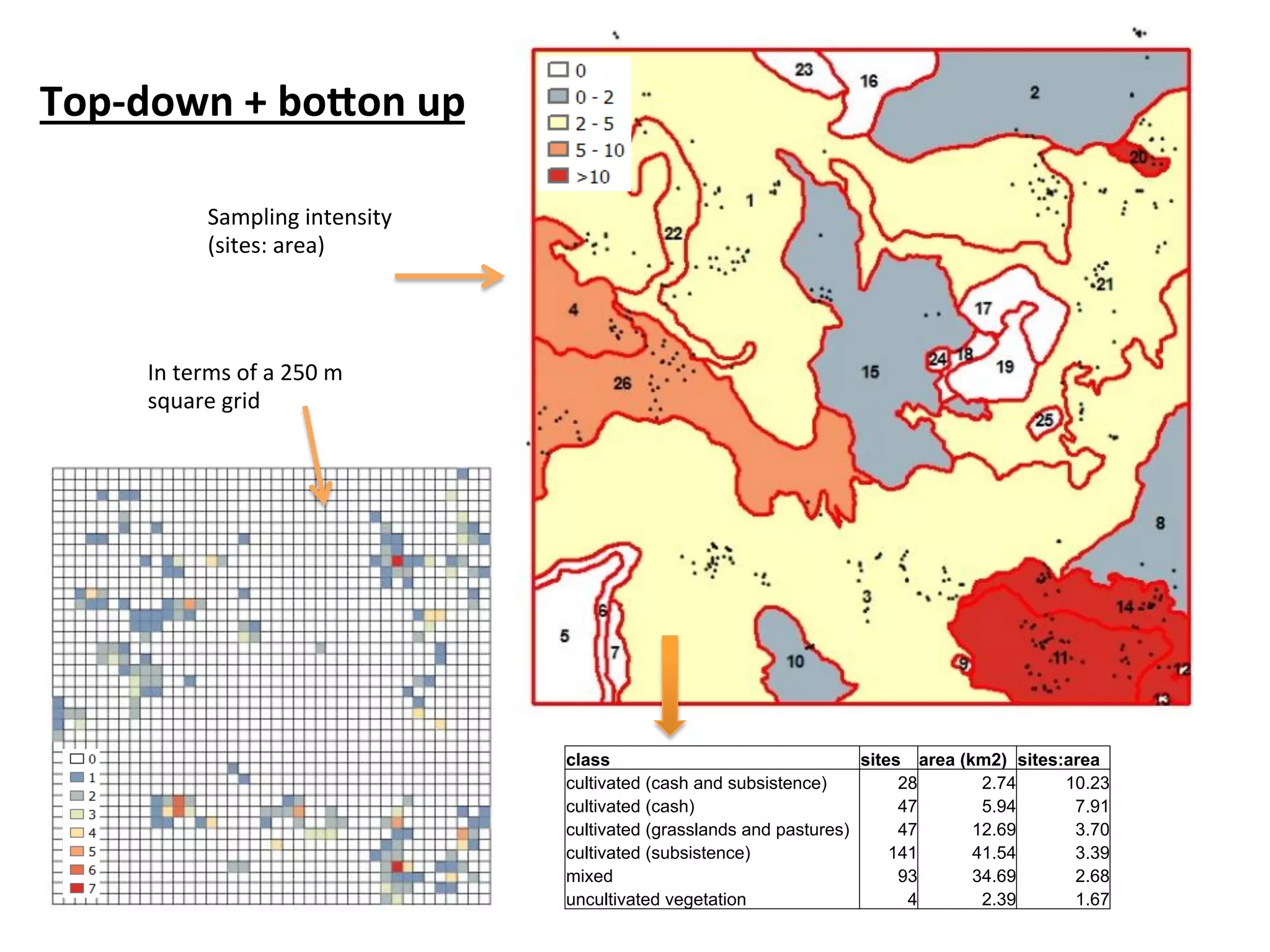
Sampling 
intensity 
(sites: 
area) 
In 
terms 
of 
a 
250 
m 
square 
grid 
class sites area (km2) sites:area 
cultivated (cash and subsistence) 28 2.74 10.23 
cultivated (cash) 47 5.94 7.91 
cultivated (grasslands and pastures) 47 12.69 3.70 
cultivated (subsistence) 141 41.54 3.39 
mixed 93 34.69 2.68 
uncultivated vegetation 4 2.39 1.67
Top-­‐down 
+ 
bo8on 
up 
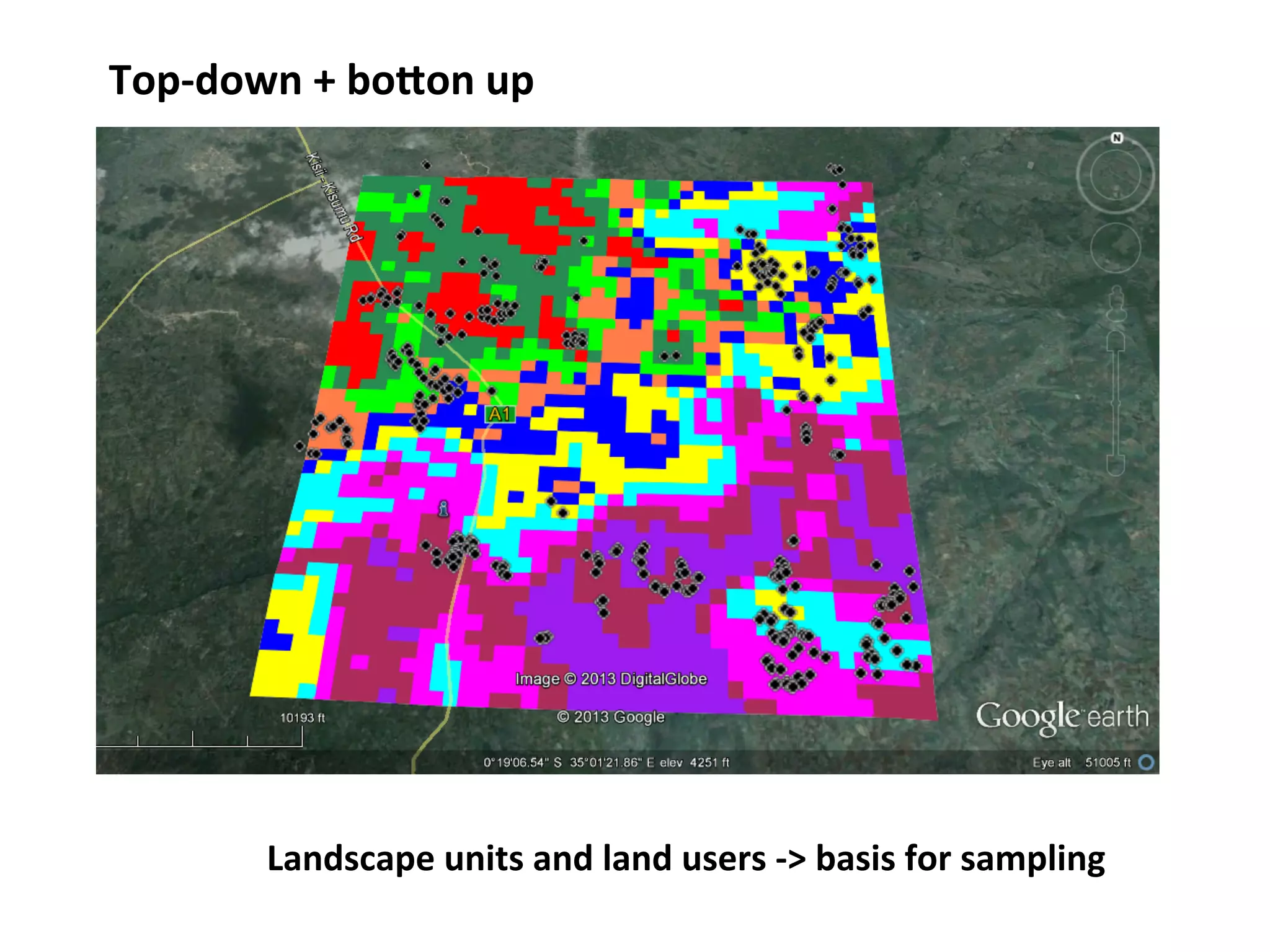
Landscape 
units 
and 
land 
users 
-­‐> 
basis 
for 
sampling
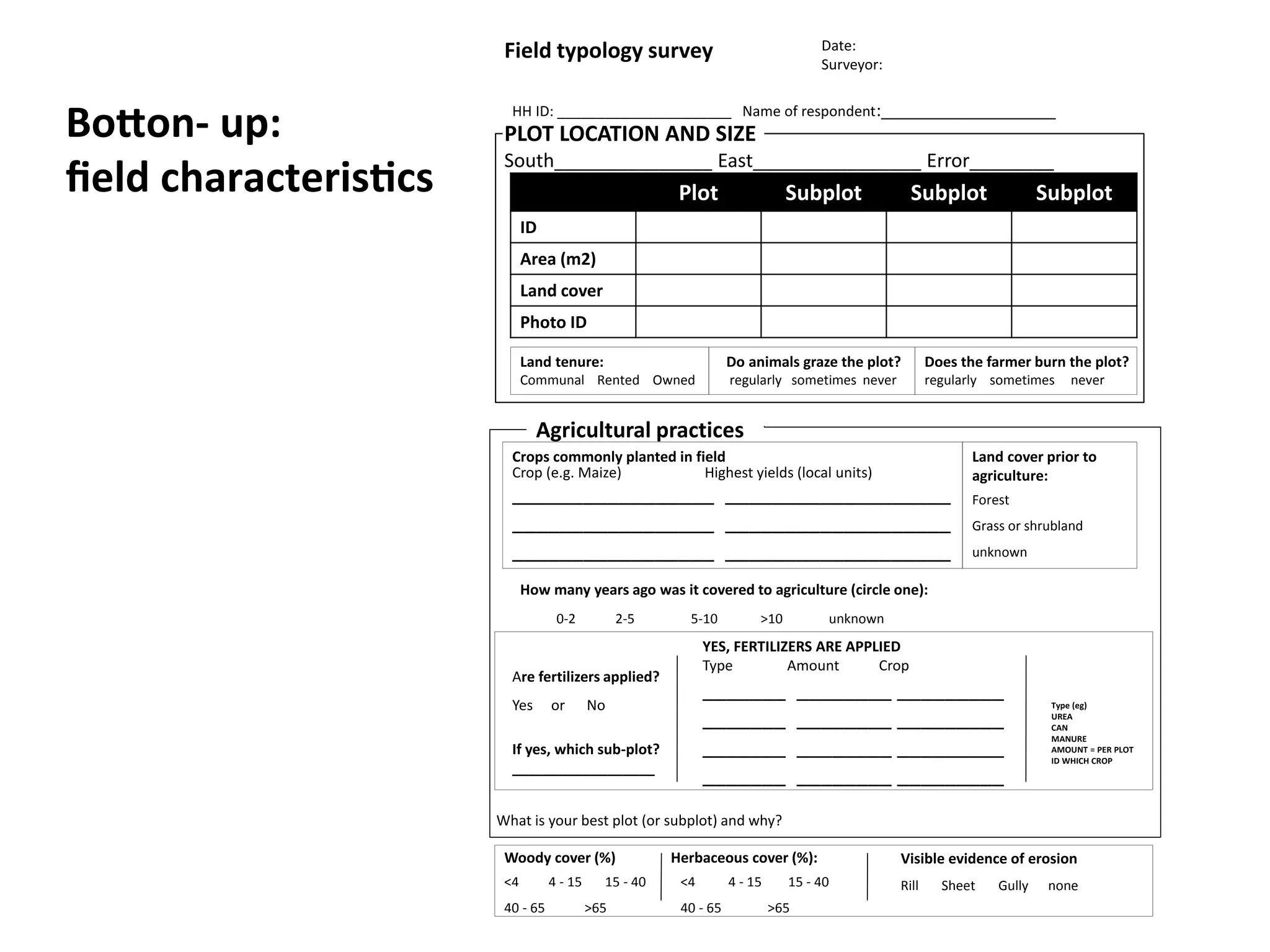
Field 
typology 
survey Date: 
Surveyor: 
HH 
ID: 
______________________ 
Name 
of 
respondent:___________________ 
PLOT 
LOCATION 
AND 
SIZE 
South_______________ 
East________________ 
Error________ 
Plot Subplot Subplot Subplot 
ID 
Area (m2) 
Land 
cover 
Photo 
ID 
Land 
tenure: 
Communal 
Rented 
Owned 
Does 
the 
farmer 
burn 
the 
plot? 
regularly 
sometimes 
never 
Agricultural 
practices 
Crops 
commonly 
planted 
in 
field 
Crop 
(e.g. 
Maize) 
Highest 
yields 
(local 
units) 
_________________ 
___________________ 
_________________ 
___________________ 
_________________ 
___________________ 
Land 
cover 
prior 
to 
agriculture: 
Forest 
Grass 
or 
shrubland 
unknown 
How 
many 
years 
ago 
was 
it 
covered 
to 
agriculture 
(circle 
one): 
0-­‐2 
2-­‐5 
5-­‐10 
>10 
unknown 
Are 
fertilizers 
applied? 
Yes 
or 
No 
If 
yes, 
which 
sub-­‐plot? 
__________________ 
YES, 
FERTILIZERS 
ARE 
APPLIED 
Type 
Amount 
Crop 
_______ 
________ 
_________ 
_______ 
________ 
_________ 
_______ 
________ 
_________ 
_______ 
________ 
_________ 
Woody 
cover 
(%) 
<4 
4 
-­‐ 15 
15 
-­‐ 40 
40 
-­‐ 65 
>65 
Herbaceous 
cover 
(%): 
<4 
4 
-­‐ 15 
15 
-­‐ 40 
40 
-­‐ 65 
>65 
Visible 
evidence 
of 
erosion 
Rill 
Sheet 
Gully 
none 
What 
is 
your 
best 
plot 
(or 
subplot) 
and 
why? 
Type 
(eg) 
UREA 
CAN 
MANURE 
AMOUNT 
= 
PER 
PLOT 
ID 
WHICH 
CROP 
Do 
animals 
graze 
the 
plot? 
regularly 
sometimes 
never 
Bo8on-­‐ 
up: 
field 
characteris3cs
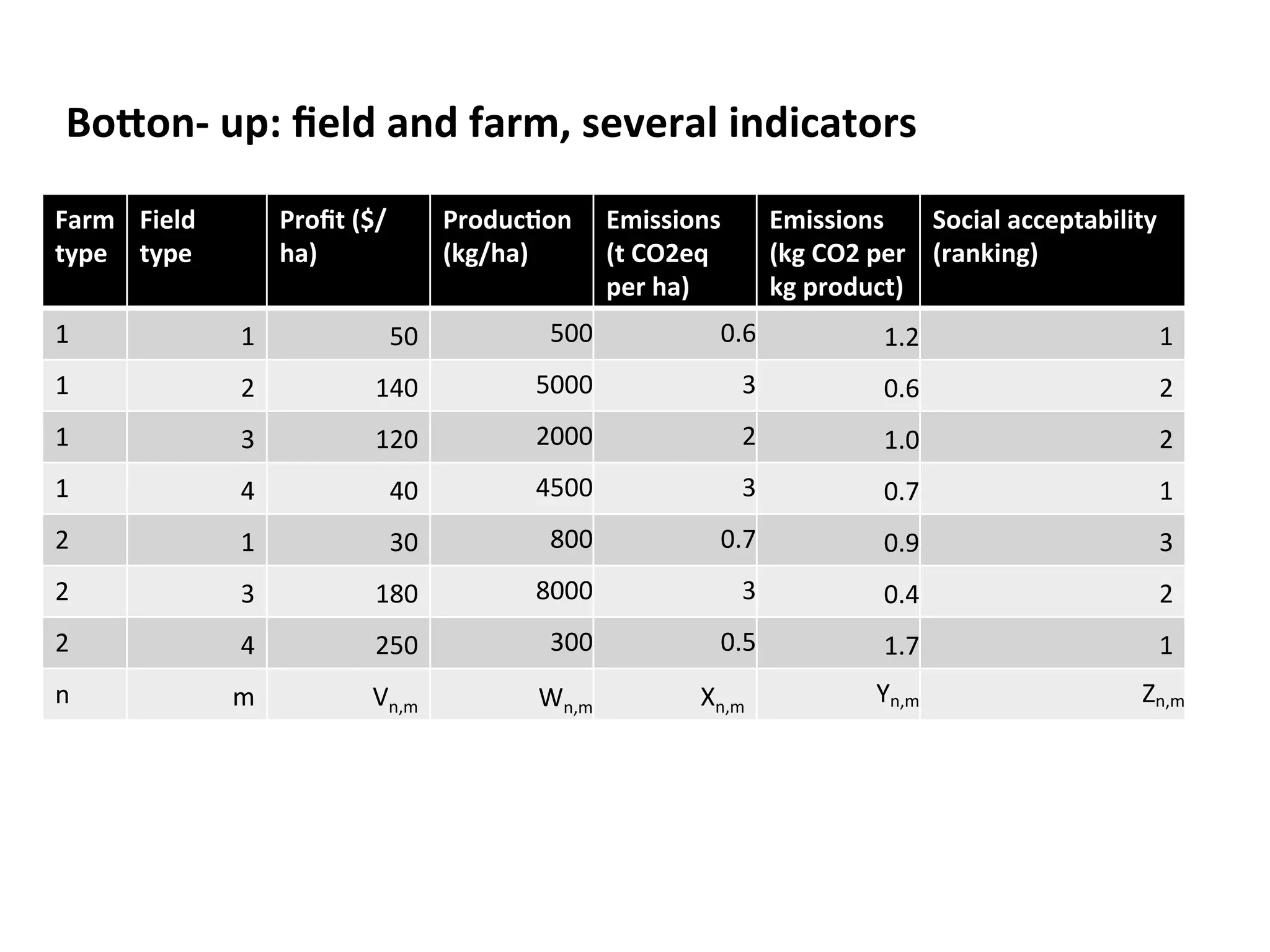
Bo8on-­‐ 
up: 
field 
and 
farm, 
several 
indicators 
Farm 
type 
Field 
type 
Profit 
($/ 
ha) 
Produc3on 
(kg/ha) 
Emissions 
(t 
CO2eq 
per 
ha) 
Emissions 
(kg 
CO2 
per 
kg 
product) 
Social 
acceptability 
(ranking) 
1 
1 
50 
500 
0.6 
1.2 
1 
1 
2 
140 
5000 
3 
0.6 
2 
1 
3 
120 
2000 
2 
1.0 
2 
1 
4 
40 
4500 
3 
0.7 
1 
2 
1 
30 
800 
0.7 
0.9 
3 
2 
3 
180 
8000 
3 
0.4 
2 
2 
4 
250 
300 
0.5 
1.7 
1 
n 
m 
Vn,m 
Wn,m 
Xn,m 
Yn,m 
Zn,m
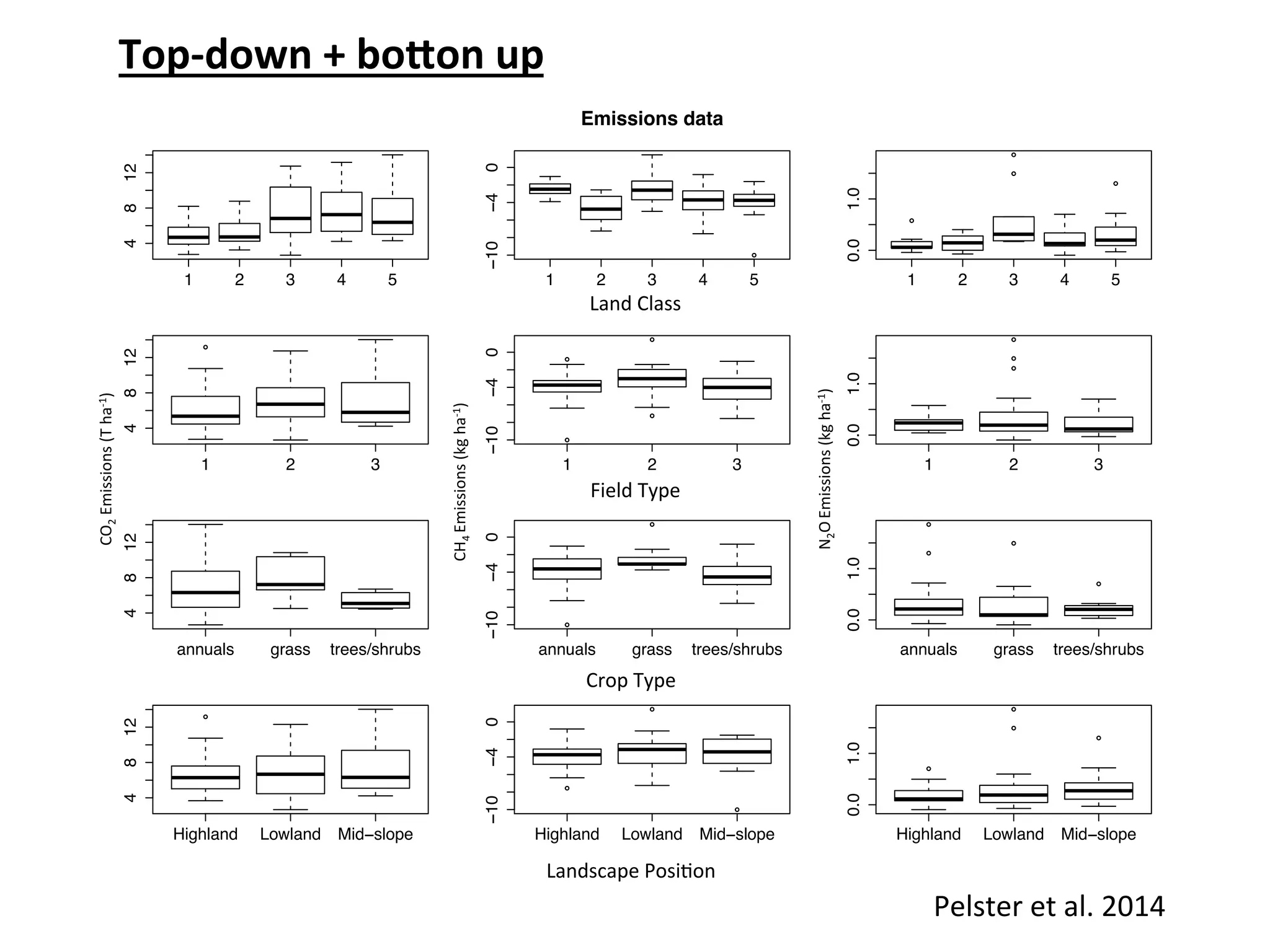
1 2 3 4 5 
4 8 12 
land class 
CO2 emissions 
1 2 3 4 5 
−10 −4 0 
Emissions data 
land class 
CH4 emissions 
1 2 3 4 5 
0.0 1.0 
land class 
N2O emissions 
1 2 3 
4 8 12 
land class 
CO2 emissions 
land class CH4 emissions 
1 2 3 −10 −4 0 
1 2 3 
0.0 1.0 
land class 
N2O emissions 
annuals grass trees/shrubs 
4 8 12 
land class 
CO2 emissions 
annuals grass trees/shrubs 
−10 −4 0 
land class 
CH4 emissions 
annuals grass trees/shrubs 
0.0 1.0 
land class 
N2O emissions 
Highland Lowland Mid−slope 
4 8 12 
CO2 emissions 
Highland Lowland Mid−slope 
−10 −4 0 
CH4 emissions 
Highland Lowland Mid−slope 
0.0 1.0 
N2O emissions 
Land%Class% 
Field%Type% 
Crop%Type% 
Landscape%Posi3on% 
CO2%Emissions%(T%ha:1)% 
CH4%Emissions%(kg%ha:1)% 
N2O%Emissions%(kg%ha:1)% 
Pelster 
et 
al. 
2014 
Top-­‐down 
+ 
bo8on 
up
How 
to 
iden3fy 
mi#ga#on 
op#ons 
at 
farm 
and 
landscape 
level?
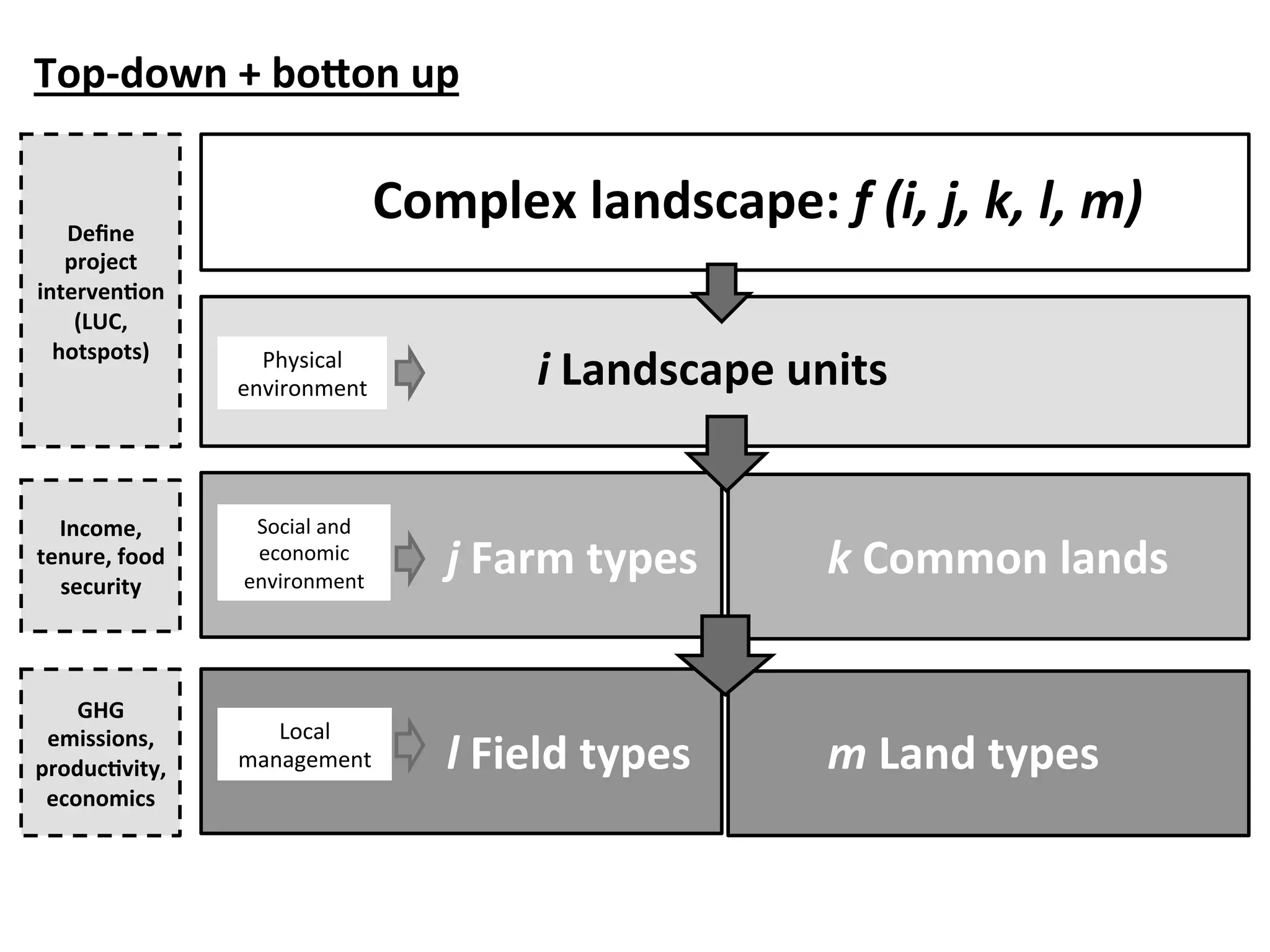
Complex 
landscape: 
f 
(i, 
j, 
k, 
l, 
m) 
i 
Landscape 
units 
j 
Farm 
types 
Physical 
environment 
Social 
and 
economic 
environment 
l 
Field 
types 
Local 
management 
Define 
project 
interven3on 
(LUC, 
hotspots) 
Income, 
tenure, 
food 
security 
GHG 
emissions, 
produc3vity, 
economics 
k 
Common 
lands 
m 
Land 
types 
Top-­‐down 
+ 
bo8on 
up
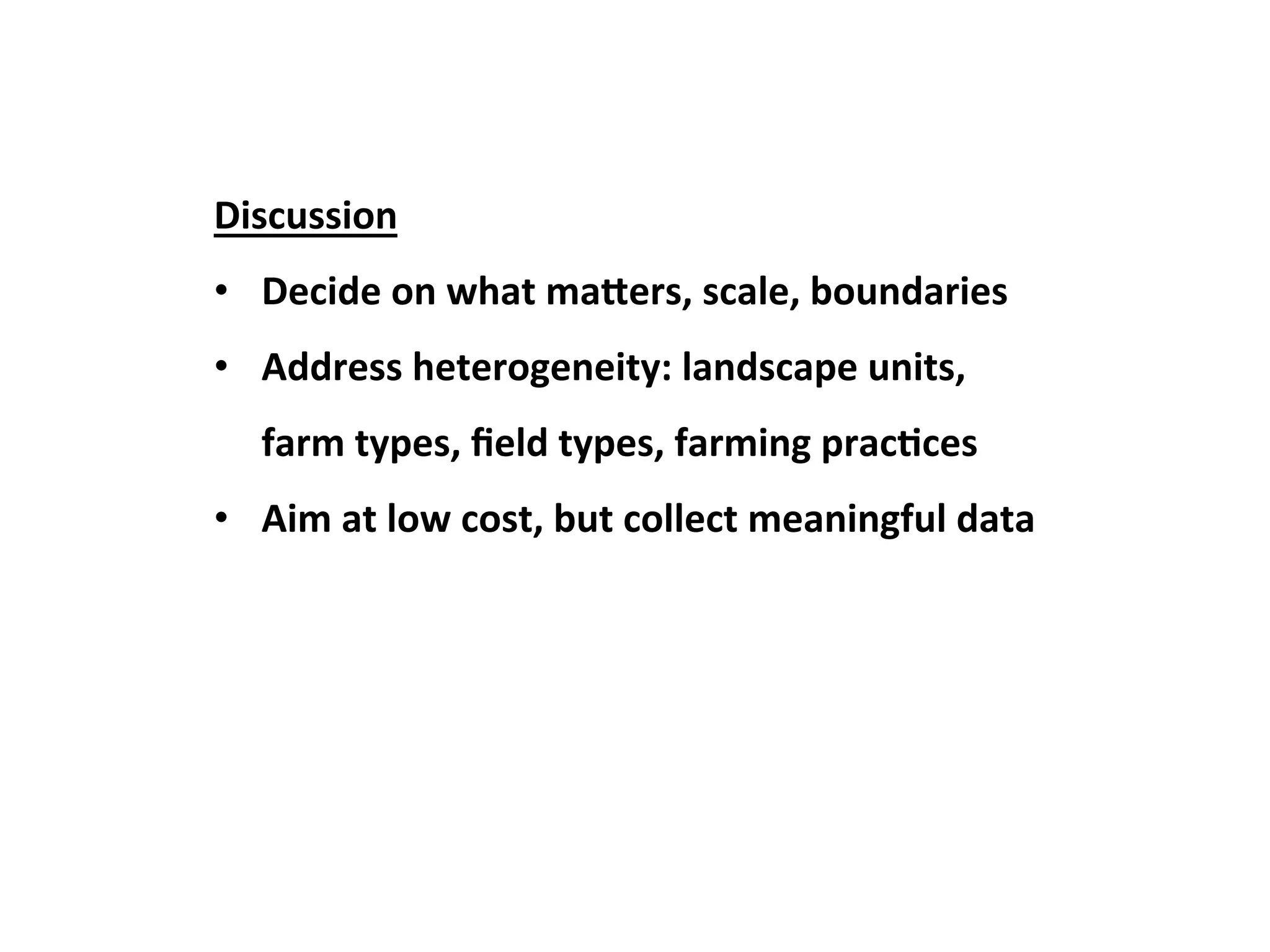
Discussion 
• Decide 
on 
what 
ma8ers, 
scale, 
boundaries 
• Address 
heterogeneity: 
landscape 
units, 
farm 
types, 
field 
types, 
farming 
prac3ces 
• Aim 
at 
low 
cost, 
but 
collect 
meaningful 
data
Mariana C. Rufino, m.rufino@cgiar.org 
SAMPLES 
Standard 
Assessment 
of 
Mi3ga3on 
Poten3al 
for 
Smallholder 
systems 
h8p://www.samples.ccafs.cgiar.org/

Rufino Informed sampling for targeting mitigation Nov 10 2014

  • 1.
    Informed sampling fortesting mitigation options Mariana C. Rufino
  • 2.
    SAMPLES Standard Assessment of Mi3ga3on Poten3al for Smallholder systems h8p://www.samples.ccafs.cgiar.org/
  • 3.
    Three messages •Decide on what ma8ers, scale, boundaries • Address heterogeneity, don’t ignore it • Aim at low cost, but collect meaningful data
  • 4.
    How to iden3fy mi#ga#on op#ons at farm and landscape level?
  • 5.
    Complex landscape: f (i, j, k, l, m) i Landscape units j Farm types Physical environment Social and economic environment l Field types Local management Define project interven3on (LUC, hotspots) Income, tenure, food security GHG emissions, produc3vity, economics k Common lands m Land types
  • 6.
    Complex landscape: f (i, j, k, l, m) i Landscape units j Farm types Physical environment Social and economic environment l Field types Local management k Common lands m Land types Top-­‐ down
  • 7.
    Complex landscape: f (i, j, k, l, m) i Landscape units j Farm types Physical environment Social and economic environment l Field types Local management k Common lands m Land types Bo8on -­‐up
  • 8.
    Which prac3ces and what benefits?
  • 9.
    What ma8ers at landscape level? • Soils • Eleva3on gradients • Vegeta3on pa8erns
  • 10.
    Top-­‐down: first step Quickbird image, Lower Nyando, western Kenya
  • 11.
  • 12.
  • 13.
  • 14.
    What ma8ers at landscape level? • Soils • Eleva3on gradients • Vegeta3on pa8erns
  • 15.
  • 16.
    Mean NDVI Top-­‐down: vegeta3on pa8ers 2001 2002 2003 2004 2005 2006 2007 2008 2009 2010 2011 2012 MODIS 3me series – Nyando, western Kenya
  • 17.
  • 18.
    What ma8ers at landscape level? • Soils (too coarse, excluded) • Eleva3on gradients (DEM and slope) • Vegeta3on pa8erns (NDVI analysis)
  • 19.
    Top-­‐down: landscape units Landscape units: Vegeta3on pa8erns + eleva3on + slope
  • 20.
    Which prac3ces and what benefits?
  • 21.
    What ma8ers at farm and field level? • Crops, trees, livestock • Input use (fer3lisers, crop residues, water) • Produc3vity • Economics • Tenure
  • 22.
    Complex landscape: f (i, j, k, l, m) i Landscape units j Farm types Physical environment Social and economic environment l Field types Local management k Common lands m Land types Bo8on -­‐up
  • 23.
    Top-­‐down + bo8on up Sampling intensity (sites: area) In terms of a 250 m square grid class sites area (km2) sites:area cultivated (cash and subsistence) 28 2.74 10.23 cultivated (cash) 47 5.94 7.91 cultivated (grasslands and pastures) 47 12.69 3.70 cultivated (subsistence) 141 41.54 3.39 mixed 93 34.69 2.68 uncultivated vegetation 4 2.39 1.67
  • 24.
    Top-­‐down + bo8on up Landscape units and land users -­‐> basis for sampling
  • 25.
    Field typology surveyDate: Surveyor: HH ID: ______________________ Name of respondent:___________________ PLOT LOCATION AND SIZE South_______________ East________________ Error________ Plot Subplot Subplot Subplot ID Area (m2) Land cover Photo ID Land tenure: Communal Rented Owned Does the farmer burn the plot? regularly sometimes never Agricultural practices Crops commonly planted in field Crop (e.g. Maize) Highest yields (local units) _________________ ___________________ _________________ ___________________ _________________ ___________________ Land cover prior to agriculture: Forest Grass or shrubland unknown How many years ago was it covered to agriculture (circle one): 0-­‐2 2-­‐5 5-­‐10 >10 unknown Are fertilizers applied? Yes or No If yes, which sub-­‐plot? __________________ YES, FERTILIZERS ARE APPLIED Type Amount Crop _______ ________ _________ _______ ________ _________ _______ ________ _________ _______ ________ _________ Woody cover (%) <4 4 -­‐ 15 15 -­‐ 40 40 -­‐ 65 >65 Herbaceous cover (%): <4 4 -­‐ 15 15 -­‐ 40 40 -­‐ 65 >65 Visible evidence of erosion Rill Sheet Gully none What is your best plot (or subplot) and why? Type (eg) UREA CAN MANURE AMOUNT = PER PLOT ID WHICH CROP Do animals graze the plot? regularly sometimes never Bo8on-­‐ up: field characteris3cs
  • 26.
    Bo8on-­‐ up: field and farm, several indicators Farm type Field type Profit ($/ ha) Produc3on (kg/ha) Emissions (t CO2eq per ha) Emissions (kg CO2 per kg product) Social acceptability (ranking) 1 1 50 500 0.6 1.2 1 1 2 140 5000 3 0.6 2 1 3 120 2000 2 1.0 2 1 4 40 4500 3 0.7 1 2 1 30 800 0.7 0.9 3 2 3 180 8000 3 0.4 2 2 4 250 300 0.5 1.7 1 n m Vn,m Wn,m Xn,m Yn,m Zn,m
  • 27.
    1 2 34 5 4 8 12 land class CO2 emissions 1 2 3 4 5 −10 −4 0 Emissions data land class CH4 emissions 1 2 3 4 5 0.0 1.0 land class N2O emissions 1 2 3 4 8 12 land class CO2 emissions land class CH4 emissions 1 2 3 −10 −4 0 1 2 3 0.0 1.0 land class N2O emissions annuals grass trees/shrubs 4 8 12 land class CO2 emissions annuals grass trees/shrubs −10 −4 0 land class CH4 emissions annuals grass trees/shrubs 0.0 1.0 land class N2O emissions Highland Lowland Mid−slope 4 8 12 CO2 emissions Highland Lowland Mid−slope −10 −4 0 CH4 emissions Highland Lowland Mid−slope 0.0 1.0 N2O emissions Land%Class% Field%Type% Crop%Type% Landscape%Posi3on% CO2%Emissions%(T%ha:1)% CH4%Emissions%(kg%ha:1)% N2O%Emissions%(kg%ha:1)% Pelster et al. 2014 Top-­‐down + bo8on up
  • 28.
    How to iden3fy mi#ga#on op#ons at farm and landscape level?
  • 29.
    Complex landscape: f (i, j, k, l, m) i Landscape units j Farm types Physical environment Social and economic environment l Field types Local management Define project interven3on (LUC, hotspots) Income, tenure, food security GHG emissions, produc3vity, economics k Common lands m Land types Top-­‐down + bo8on up
  • 30.
    Discussion • Decide on what ma8ers, scale, boundaries • Address heterogeneity: landscape units, farm types, field types, farming prac3ces • Aim at low cost, but collect meaningful data
  • 31.
    Mariana C. Rufino,m.rufino@cgiar.org SAMPLES Standard Assessment of Mi3ga3on Poten3al for Smallholder systems h8p://www.samples.ccafs.cgiar.org/