Routes of Drug
Administration
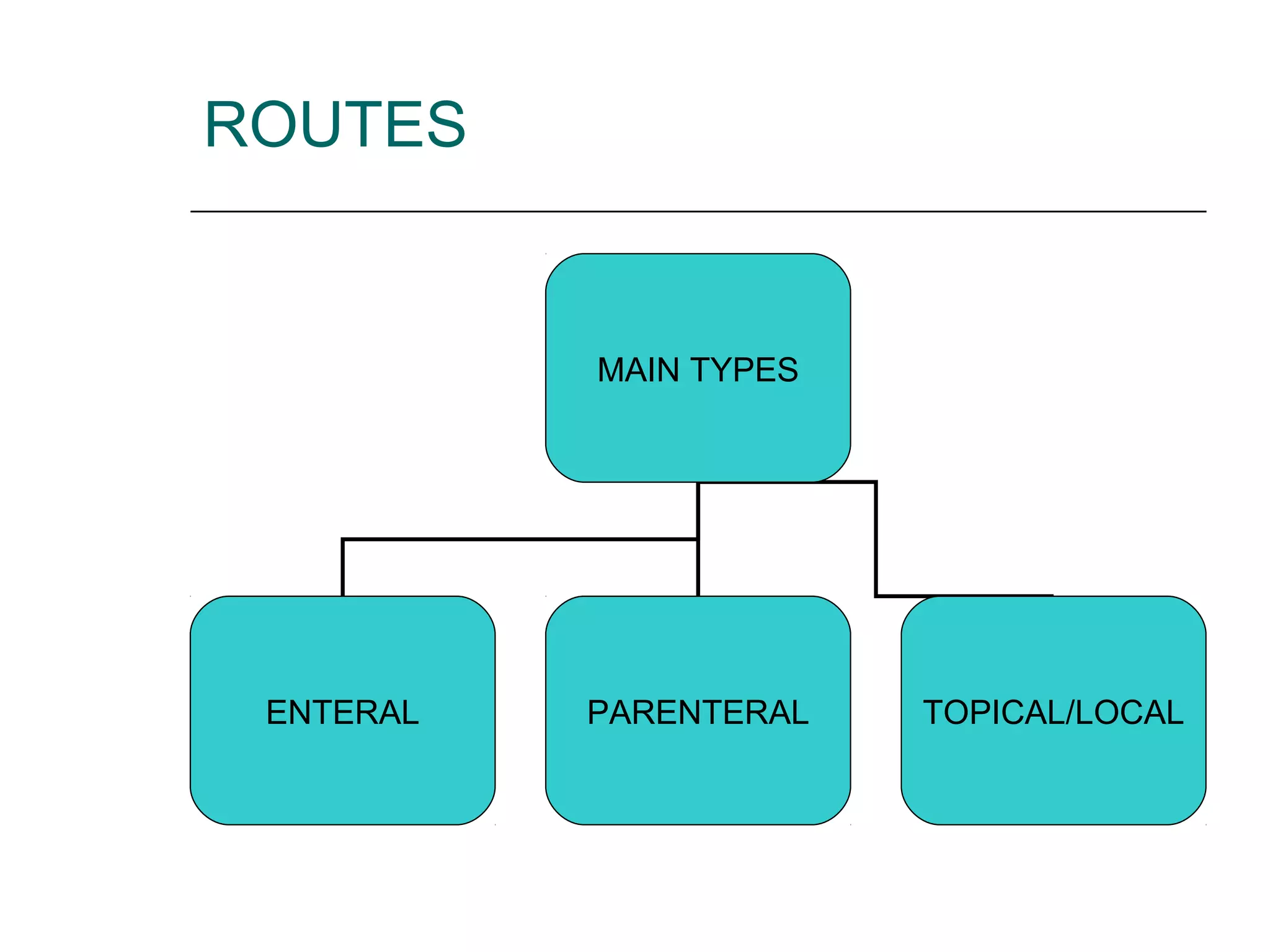
ROUTES

MAIN TYPES

ENTERAL

PARENTERAL

TOPICAL/LOCAL
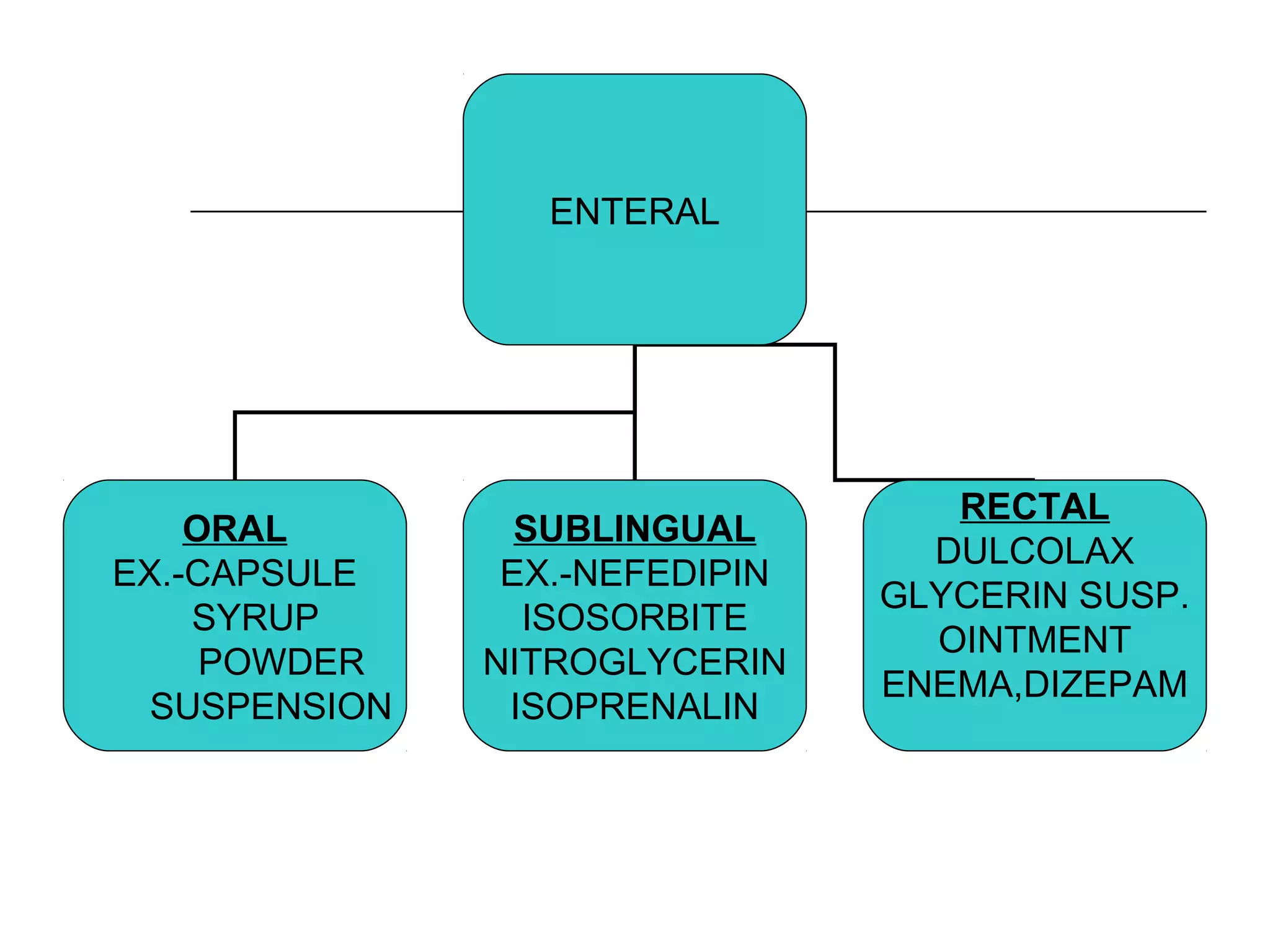
ENTERAL

ORAL
EX.-CAPSULE
SYRUP
POWDER
SUSPENSION

SUBLINGUAL
EX.-NEFEDIPIN
ISOSORBITE
NITROGLYCERIN
ISOPRENALIN

RECTAL
DULCOLAX
GLYCERIN SUSP.
OINTMENT
ENEMA,DIZEPAM
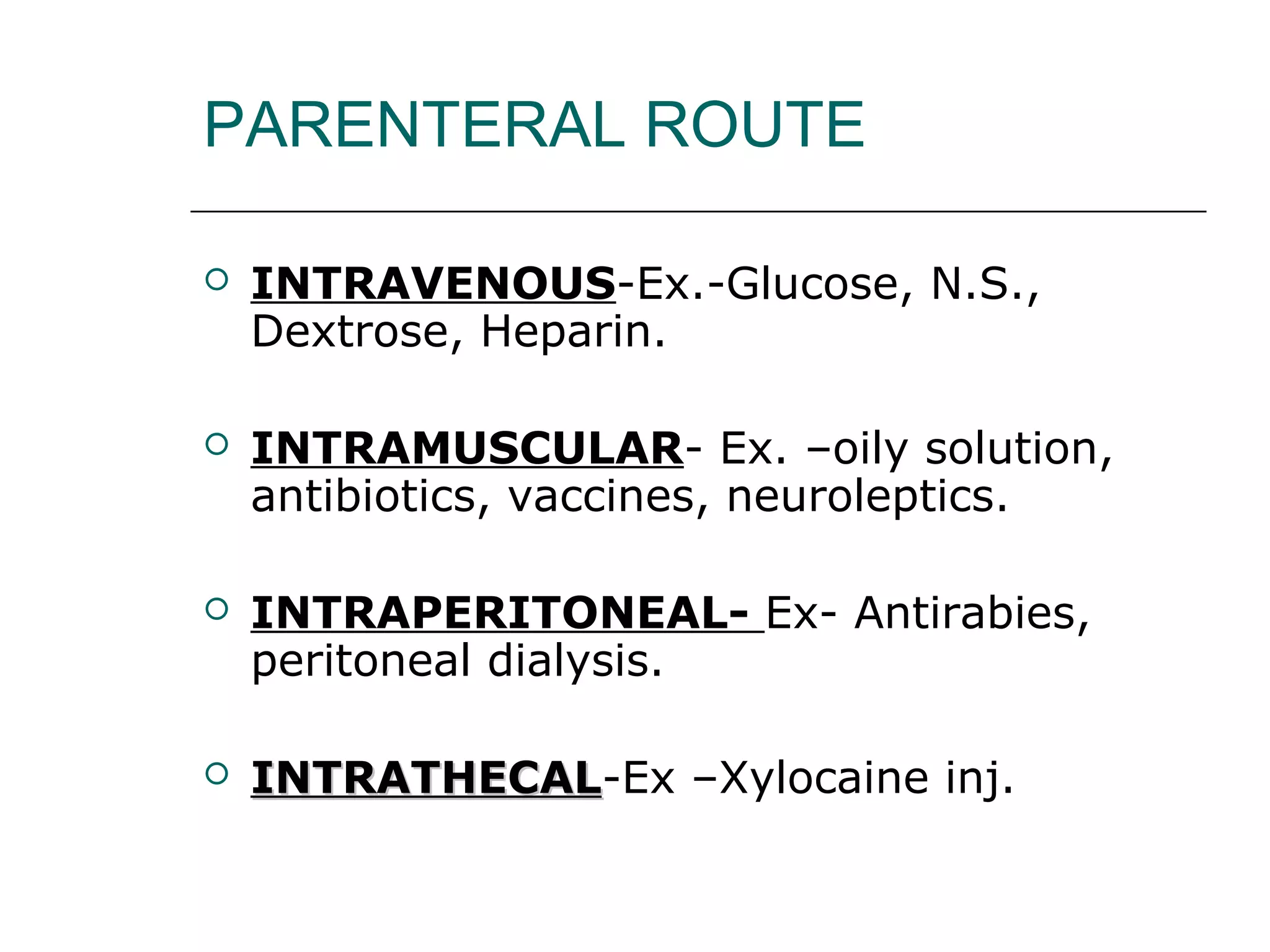
PARENTERAL ROUTE


INTRAVENOUS-Ex.-Glucose, N.S.,
Dextrose, Heparin.



INTRAMUSCULAR- Ex. –oily solution,
antibiotics, vaccines, neuroleptics.



INTRAPERITONEAL- Ex- Antirabies,
peritoneal dialysis.



INTRATHECAL-Ex –Xylocaine inj.
INTRATHECAL


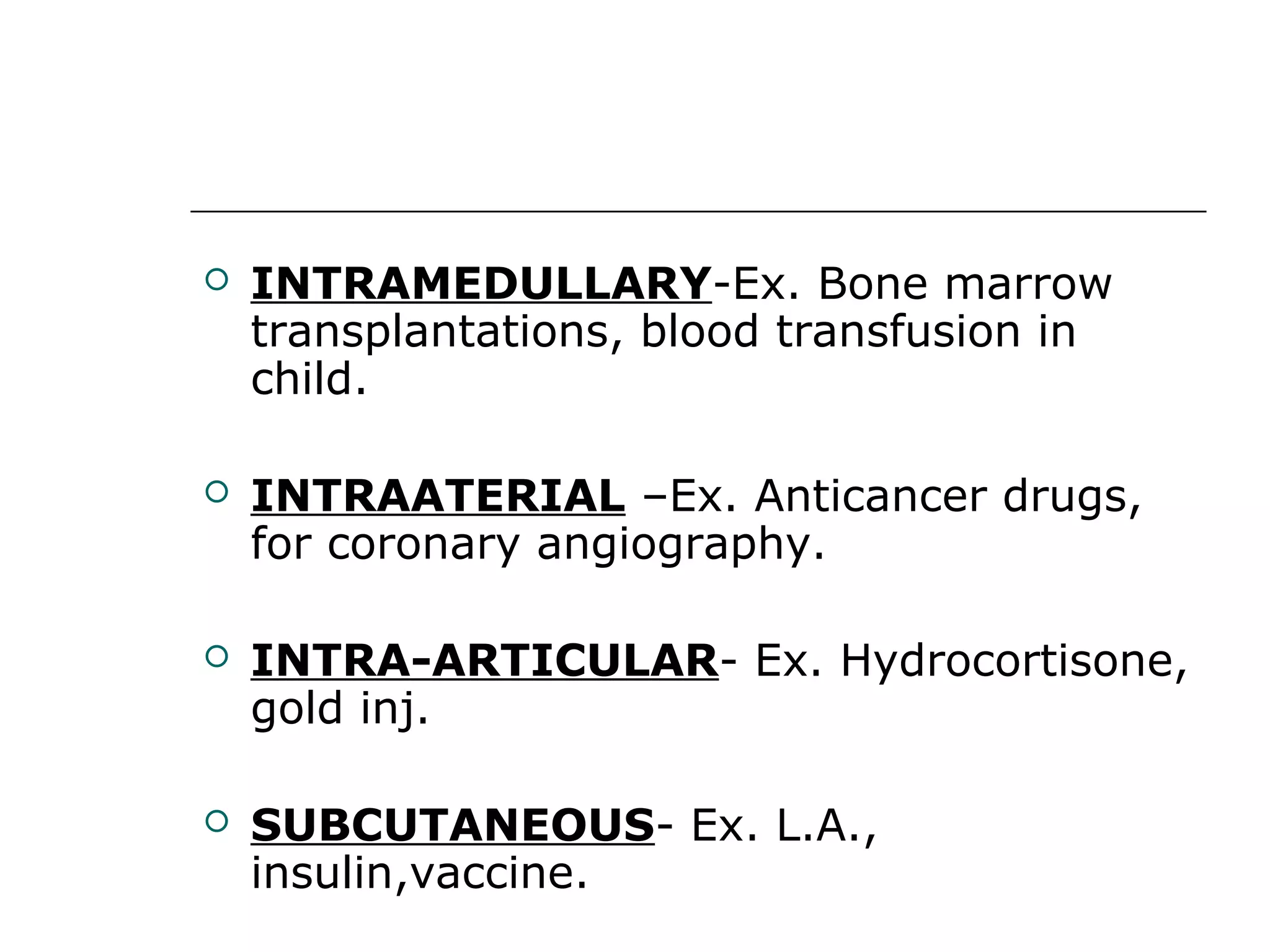
INTRAMEDULLARY-Ex. Bone marrow
transplantations, blood transfusion in
child.



INTRAATERIAL –Ex. Anticancer drugs,
for coronary angiography.



INTRA-ARTICULAR- Ex. Hydrocortisone,
gold inj.



SUBCUTANEOUS- Ex. L.A.,
insulin,vaccine.


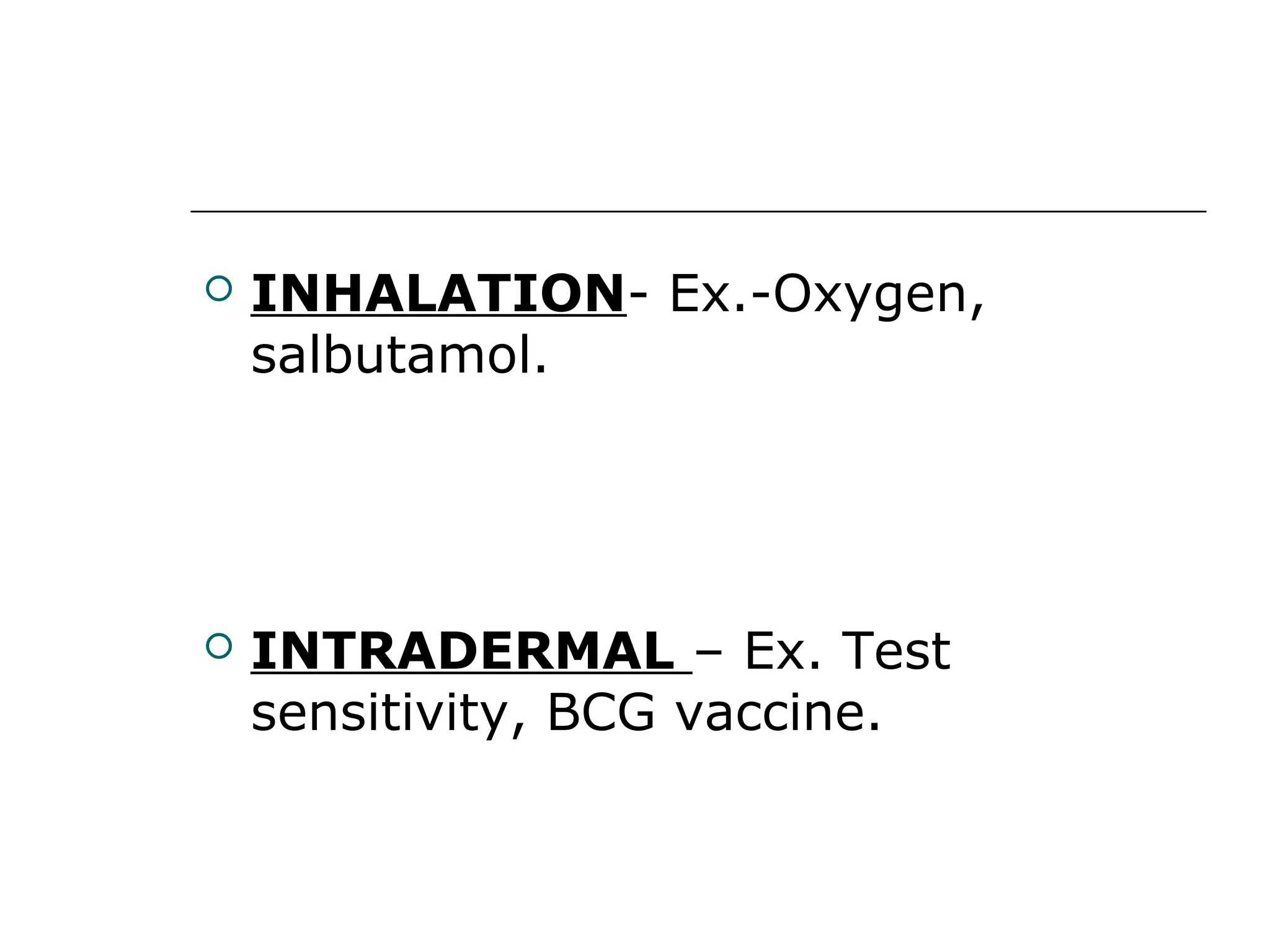
INHALATION- Ex.-Oxygen,
salbutamol.



INTRADERMAL – Ex. Test
sensitivity, BCG vaccine.
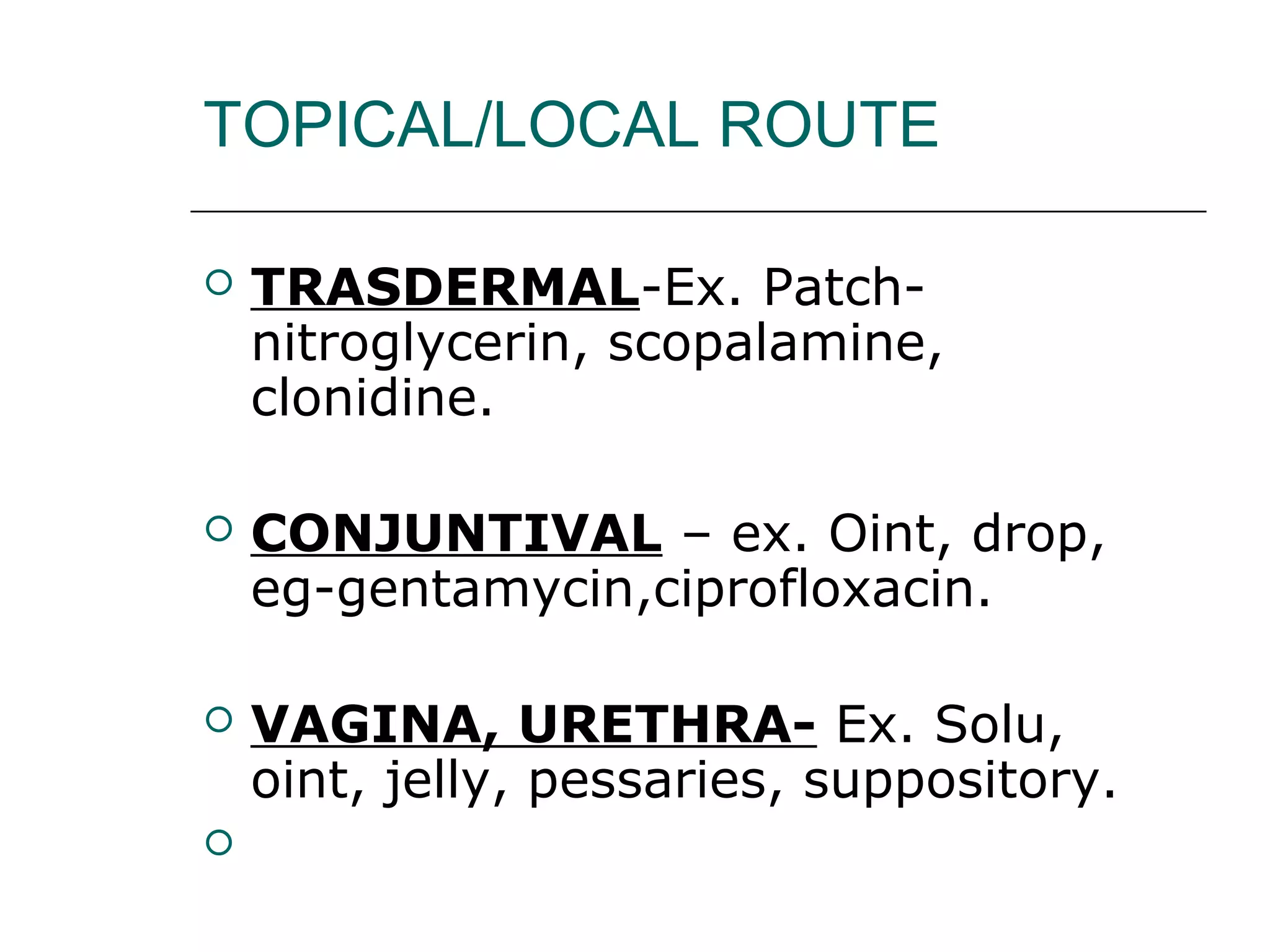
TOPICAL/LOCAL ROUTE


TRASDERMAL-Ex. Patchnitroglycerin, scopalamine,
clonidine.



CONJUNTIVAL – ex. Oint, drop,
eg-gentamycin,ciprofloxacin.



VAGINA, URETHRA- Ex. Solu,
oint, jelly, pessaries, suppository.




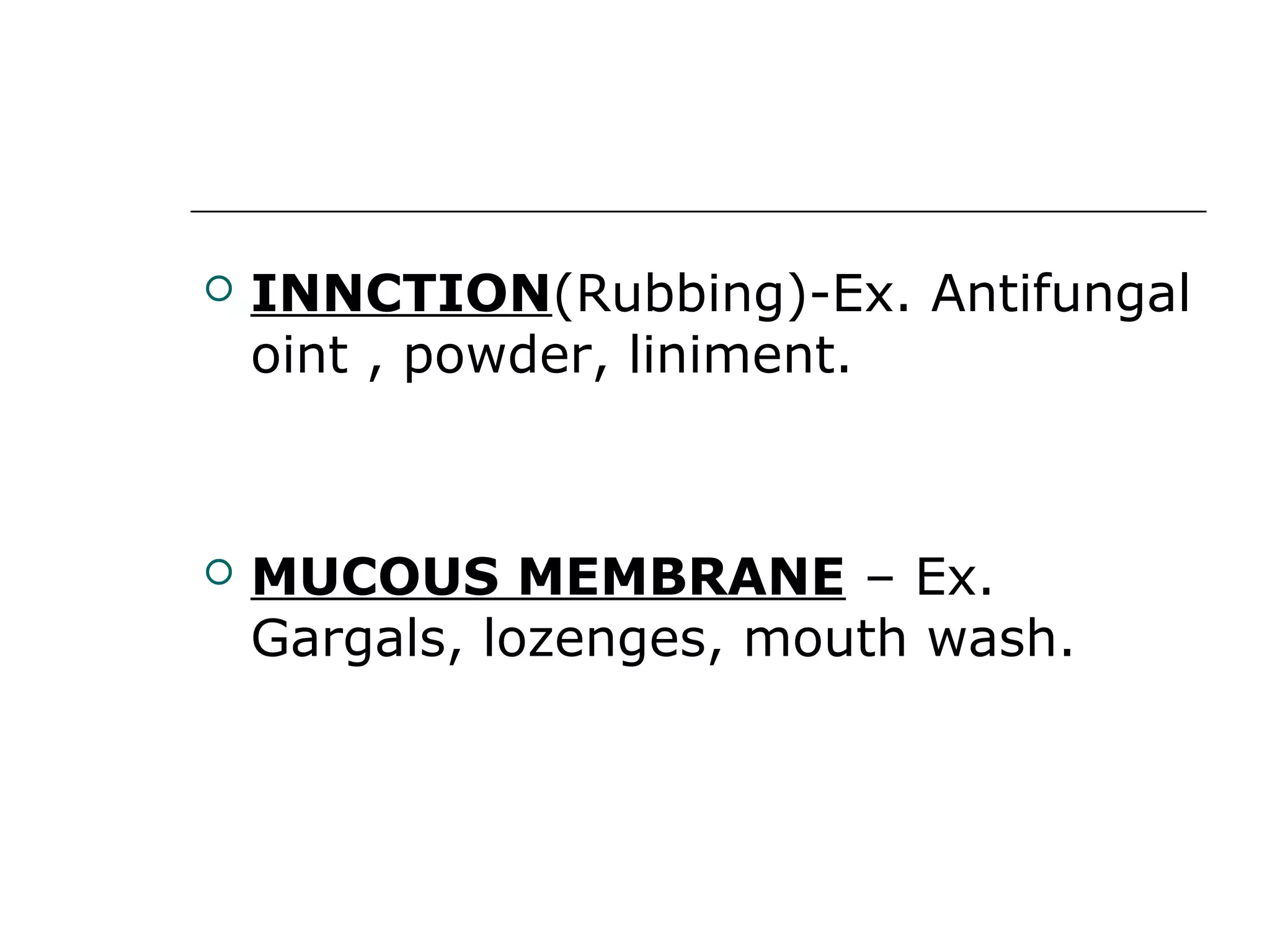
INNCTION(Rubbing)-Ex. Antifungal
oint , powder, liniment.



MUCOUS MEMBRANE – Ex.
Gargals, lozenges, mouth wash.
Routes of Drug
Administration
Important
Info

The route of administration
(ROA) that is chosen may have
a profound effect upon the
speed and efficiency with
which the drug acts
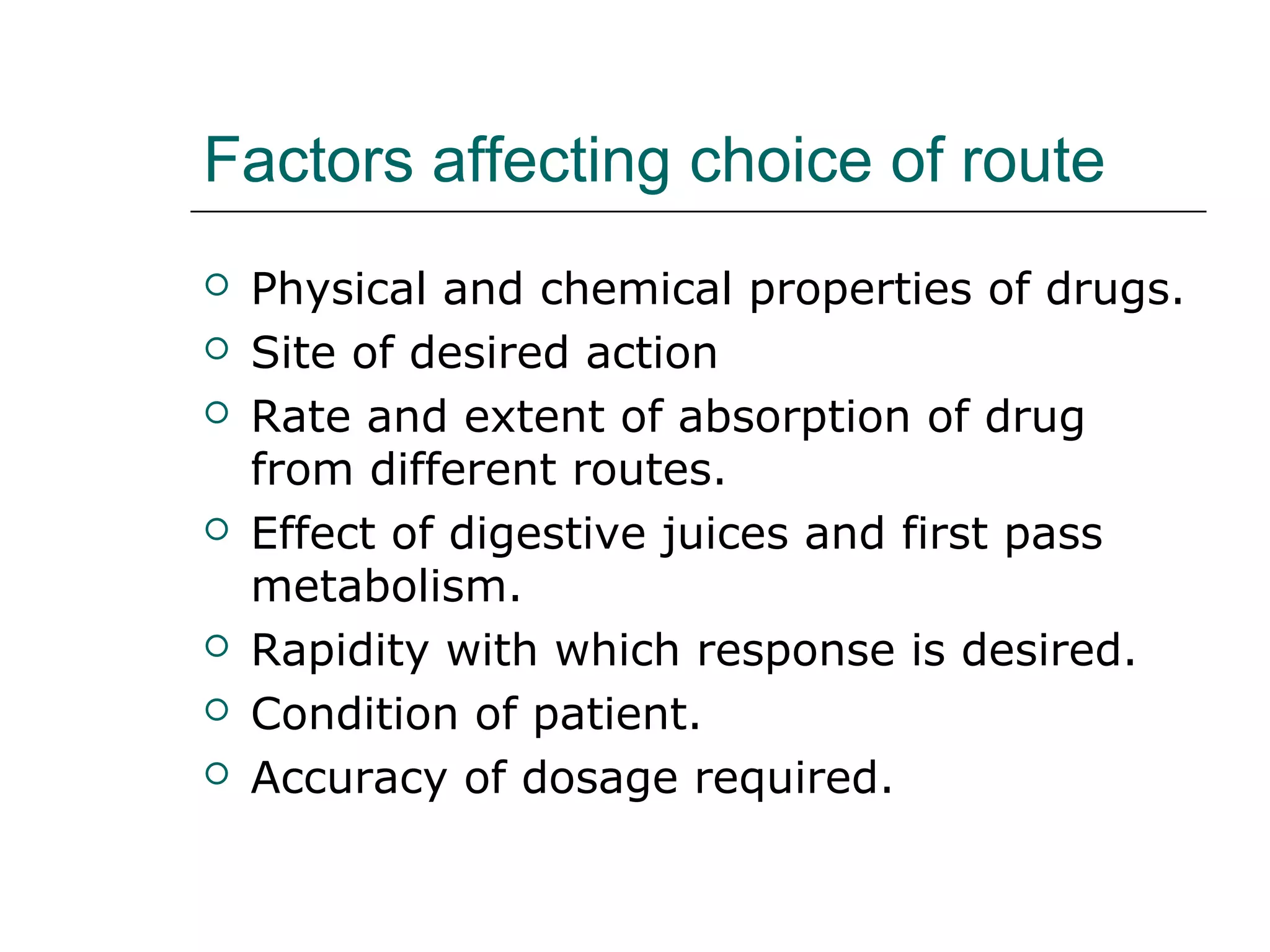
Factors affecting choice of route










Physical and chemical properties of drugs.
Site of desired action
Rate and extent of absorption of drug
from different routes.
Effect of digestive juices and first pass
metabolism.
Rapidity with which response is desired.
Condition of patient.
Accuracy of dosage required.
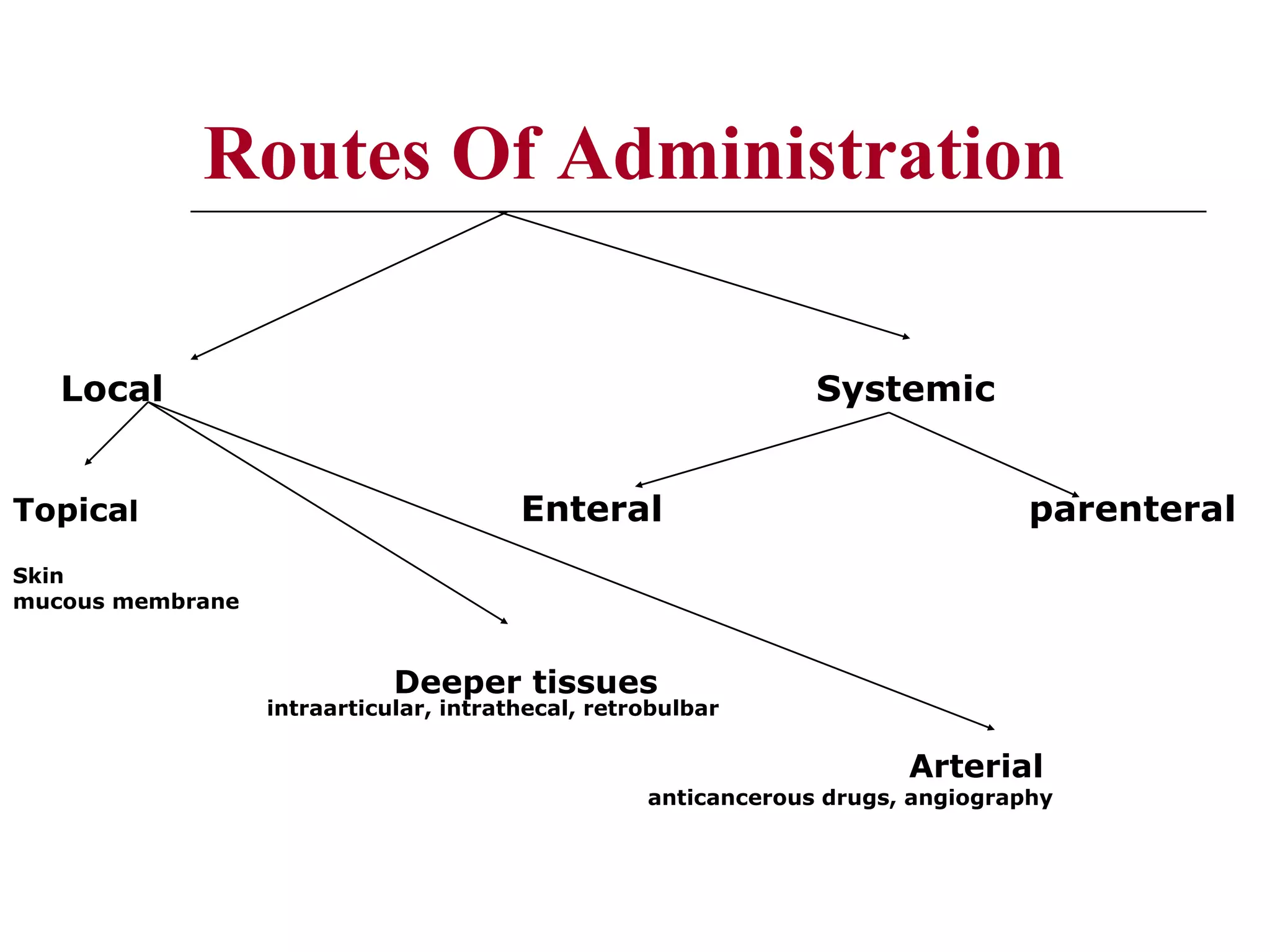
Routes Of Administration
Local
Topical

Systemic
Enteral

parenteral

Skin
mucous membrane

Deeper tissues

intraarticular, intrathecal, retrobulbar

Arterial

anticancerous drugs, angiography
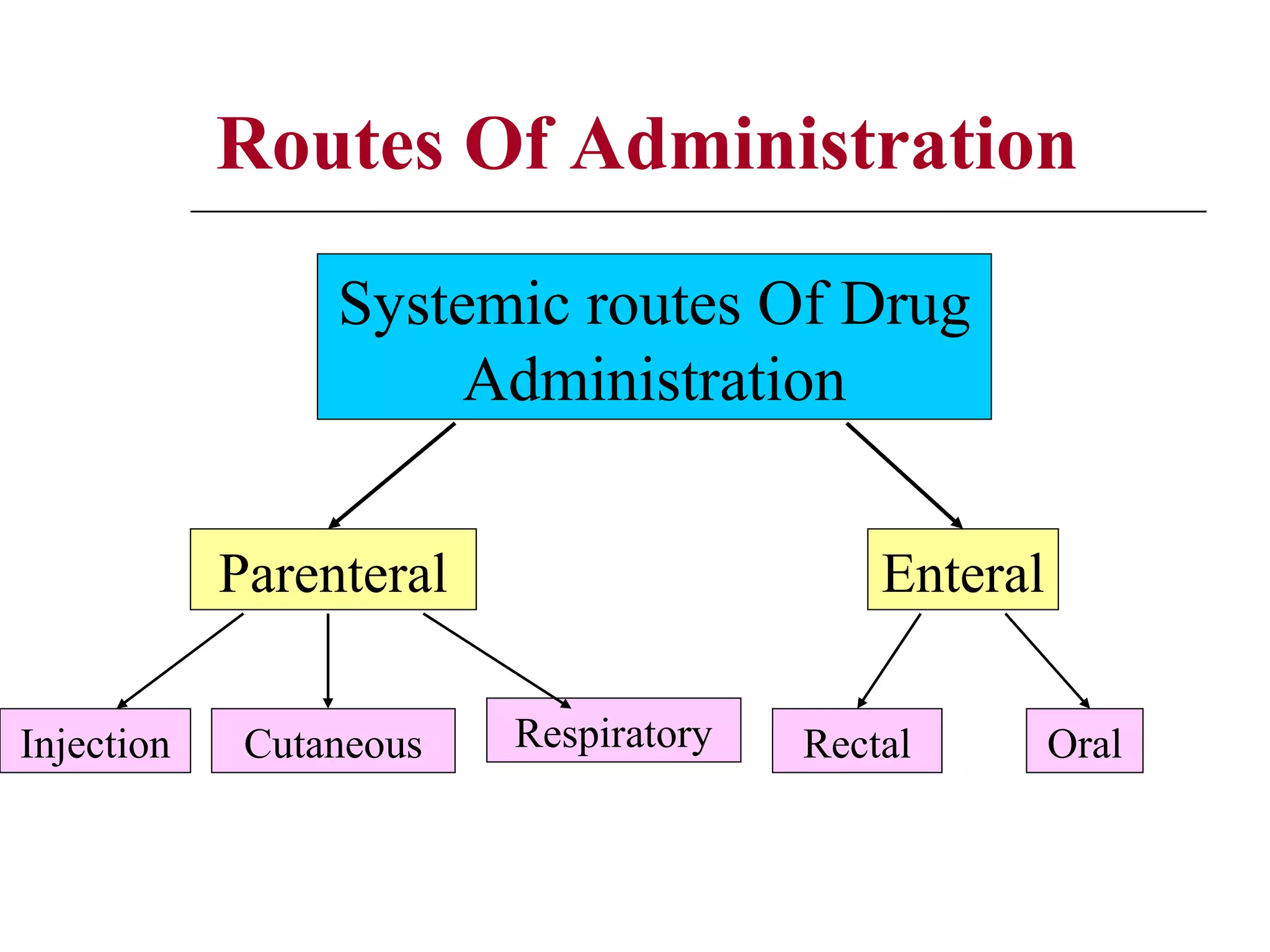
Routes Of Administration
Systemic routes Of Drug
Administration
Parenteral
Injection

Cutaneous

Enteral
Respiratory

Rectal

Oral
 The

possible routes of drug
entry into the body may be
divided into two classes:
Enteral
Parenteral
Enteral Routes


Enteral - drug placed directly in the GI
tract:
sublingual

- placed under the
tongue
oral - swallowing (p.o., per os)
rectum - Absorption through the
rectum
Sublingual/Buccal
Some drugs are taken as smaller
tablets which are held in the mouth
or under the tongue.
 Advantages
 rapid

absorption
 drug stability
 avoid first-pass effect
Sublingual/Buccal


Disadvantages




inconvenient
small doses
unpleasant taste of some drug



Examples

1.

Nitroglycerine
Isoprenaline
clonidine

2.
3.
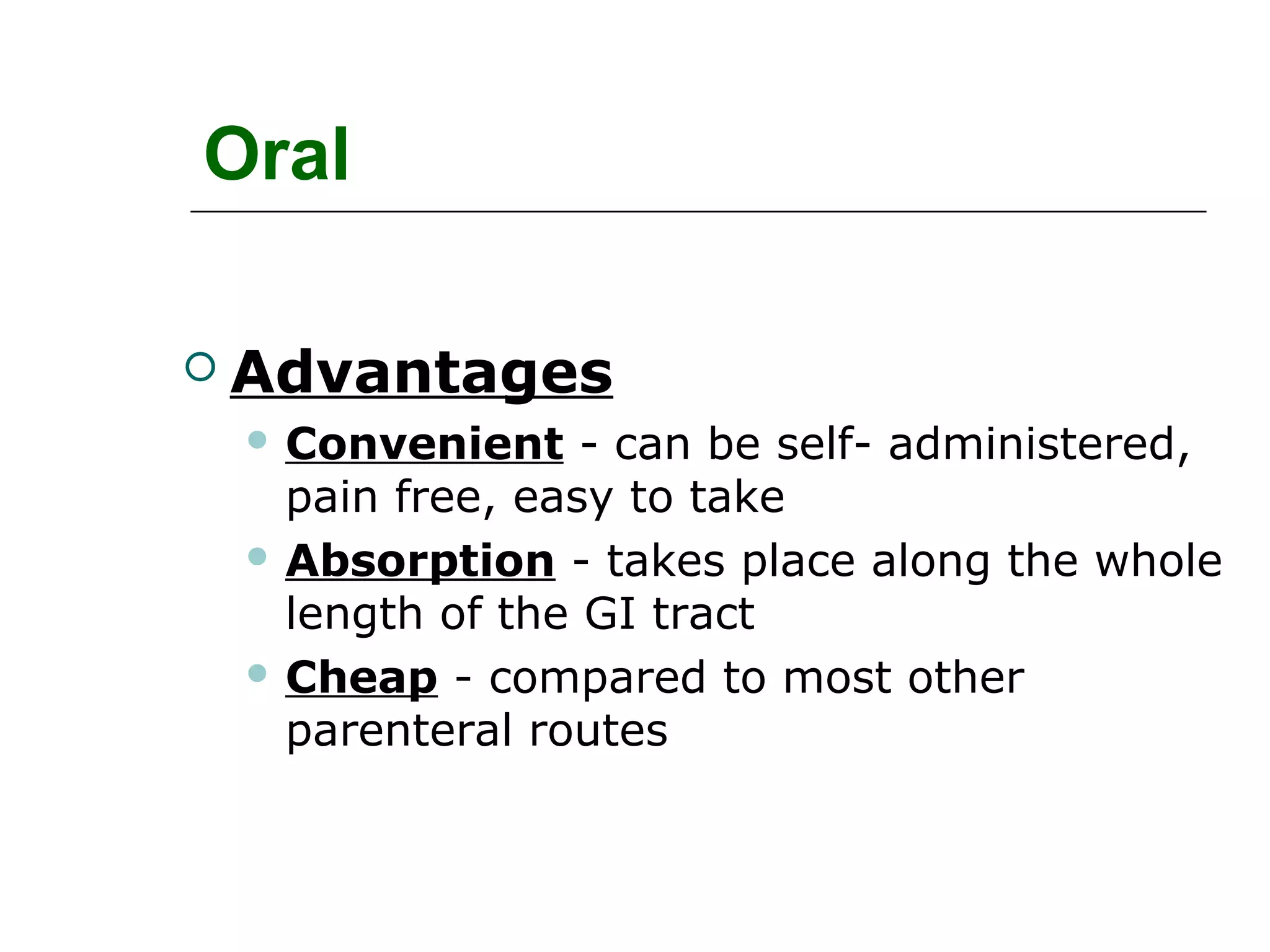
Oral
 Advantages
 Convenient

- can be self- administered,
pain free, easy to take
 Absorption - takes place along the whole
length of the GI tract
 Cheap - compared to most other
parenteral routes
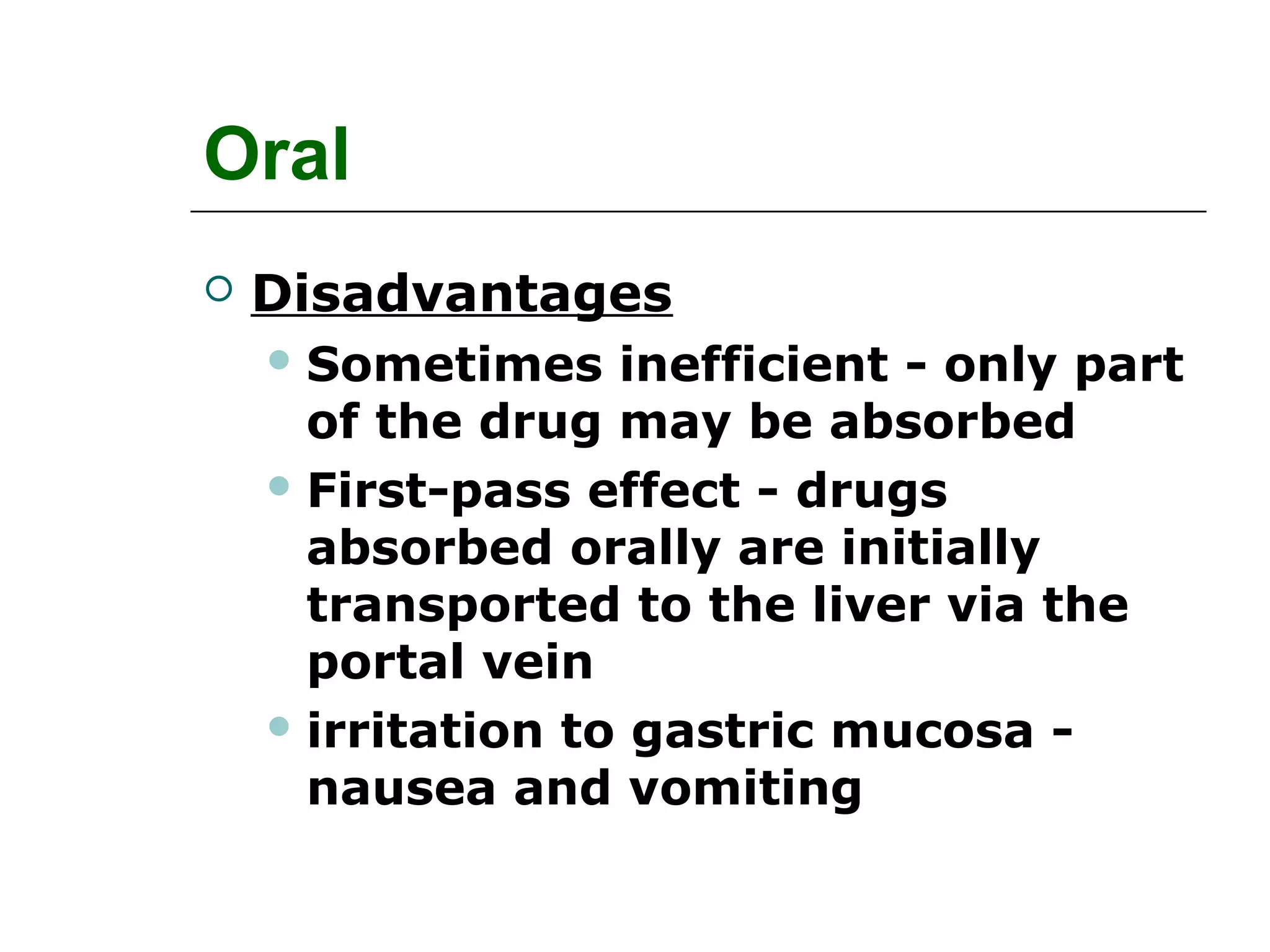
Oral


Disadvantages
 Sometimes
inefficient - only part
of the drug may be absorbed
 First-pass effect - drugs
absorbed orally are initially
transported to the liver via the
portal vein
 irritation to gastric mucosa nausea and vomiting
Oral


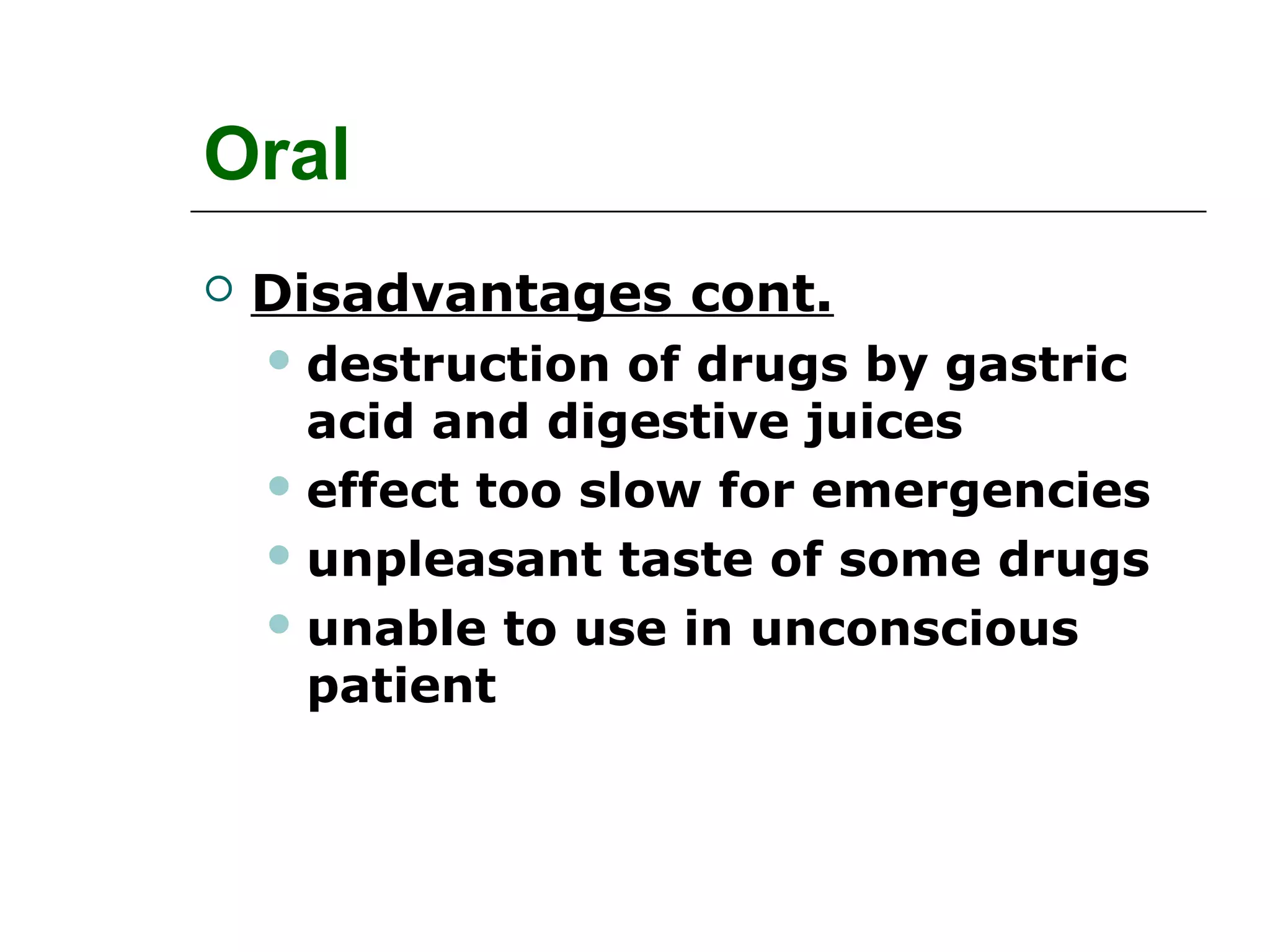
Disadvantages cont.
 destruction

of drugs by gastric
acid and digestive juices
 effect too slow for emergencies
 unpleasant taste of some drugs
 unable to use in unconscious
patient
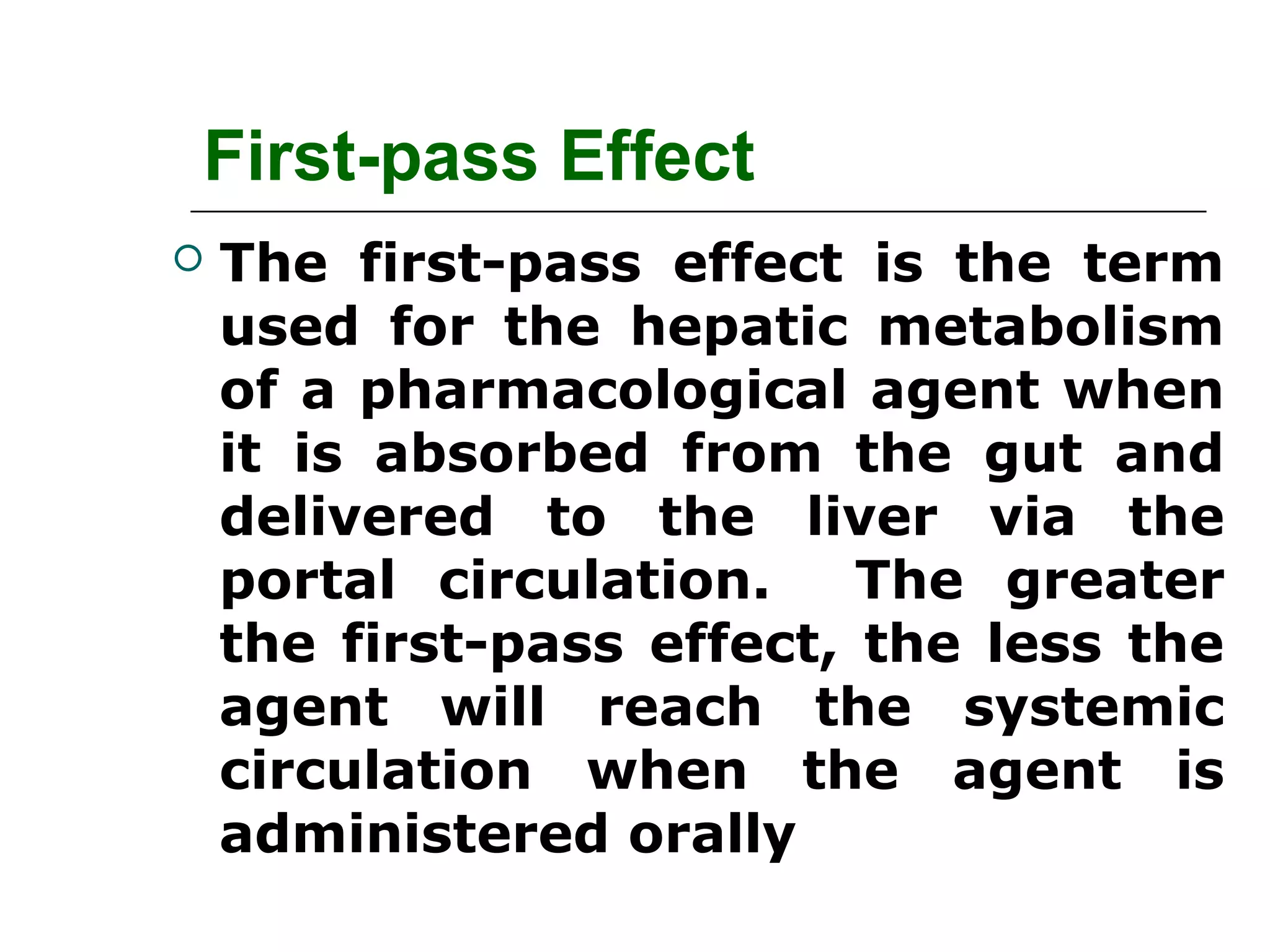
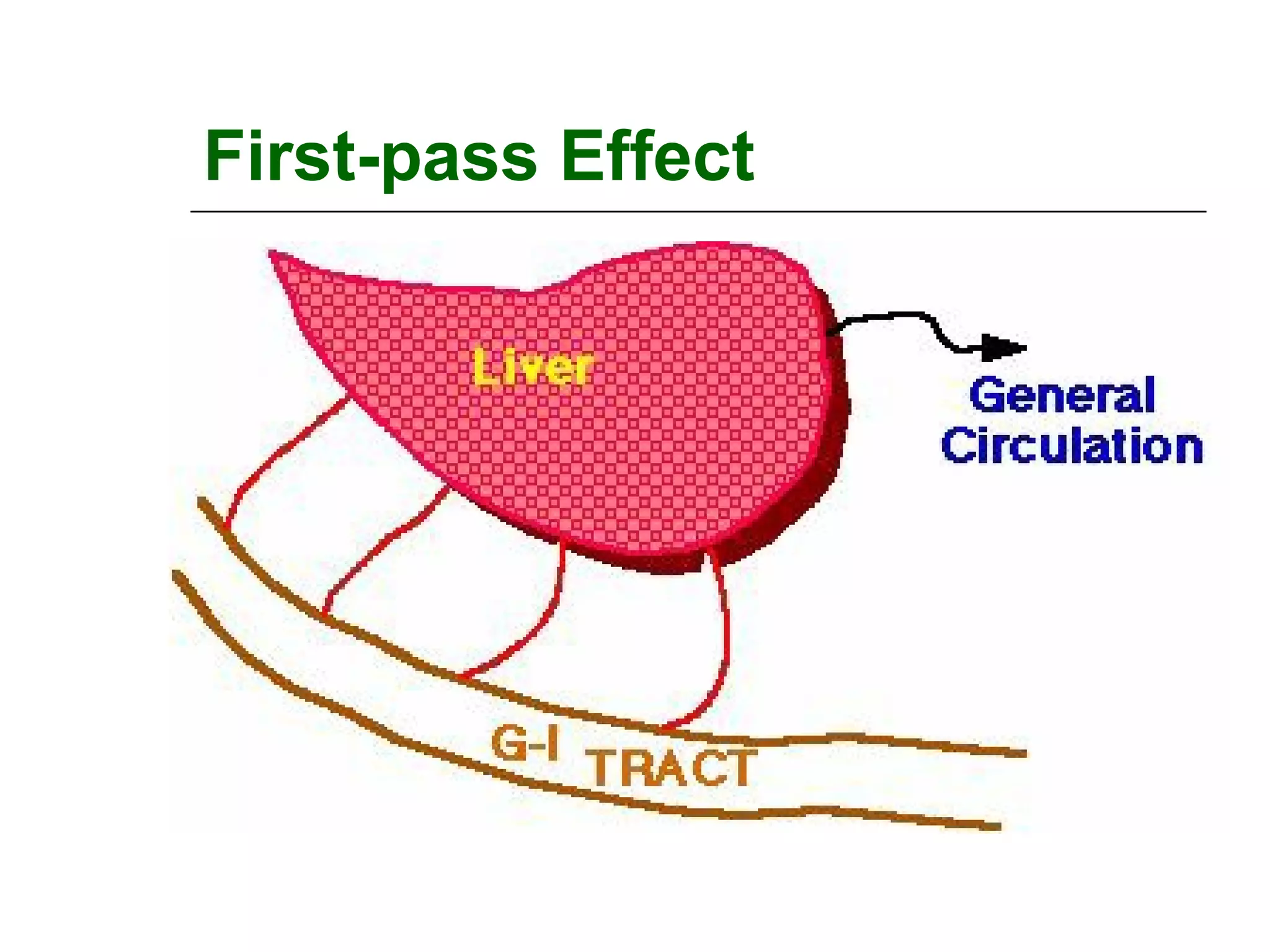
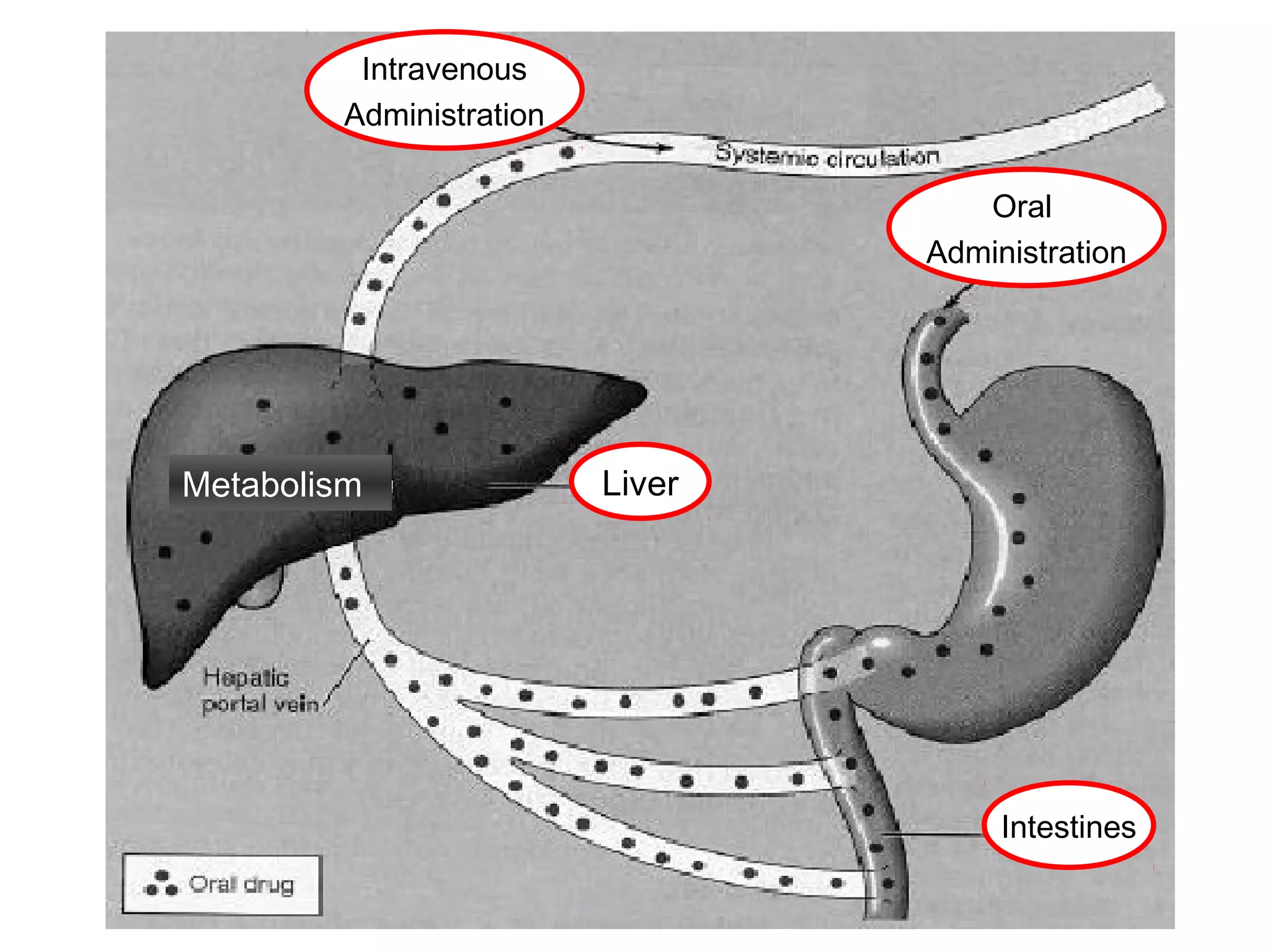
First-pass Effect


The first-pass effect is the term
used for the hepatic metabolism
of a pharmacological agent when
it is absorbed from the gut and
delivered to the liver via the
portal circulation.
The greater
the first-pass effect, the less the
agent will reach the systemic
circulation when the agent is
administered orally
First-pass Effect
Rectal
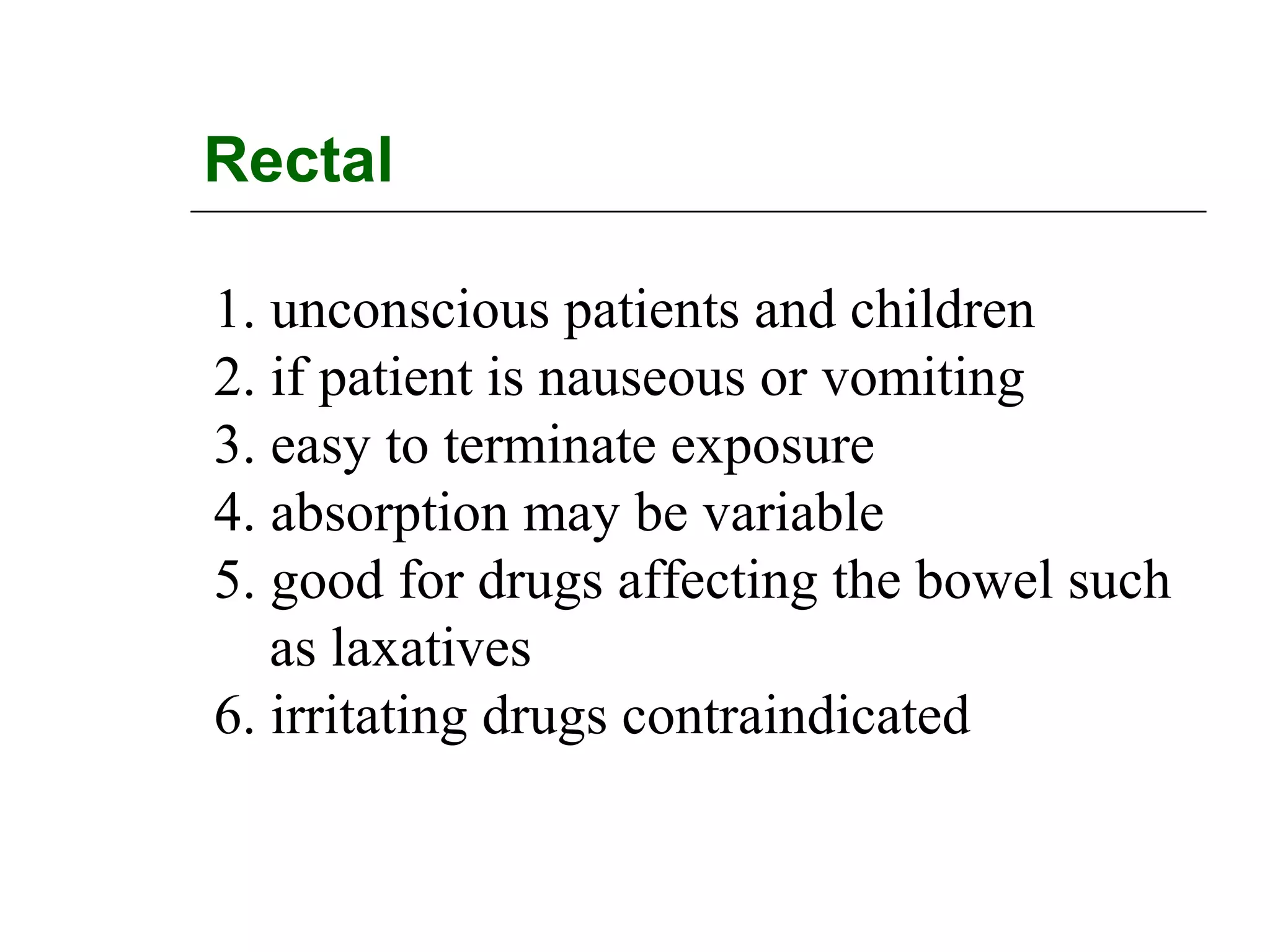
1. unconscious patients and children
2. if patient is nauseous or vomiting
3. easy to terminate exposure
4. absorption may be variable
5. good for drugs affecting the bowel such
as laxatives
6. irritating drugs contraindicated
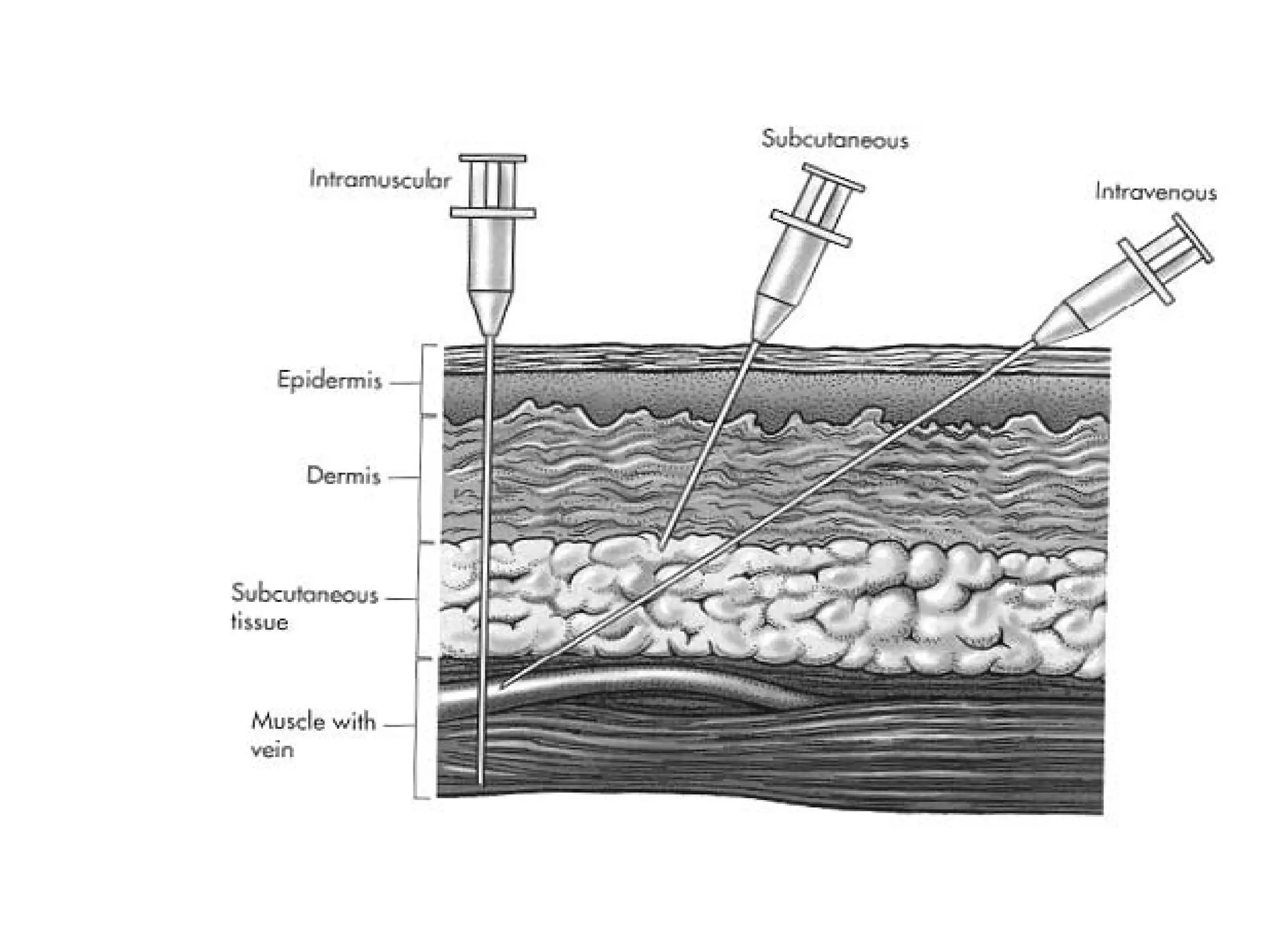
Parenteral Routes
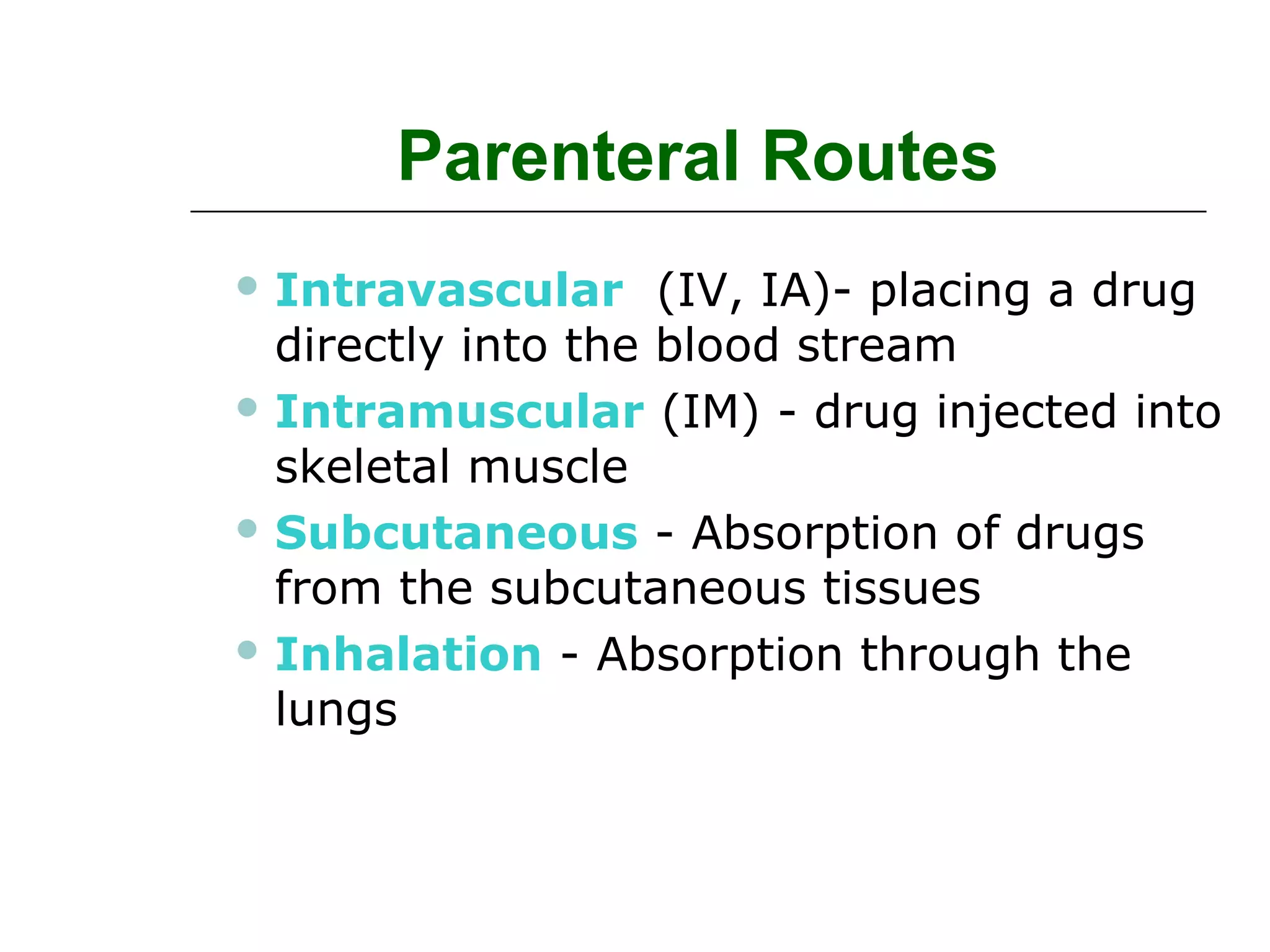
 Intravascular

(IV, IA)- placing a drug
directly into the blood stream
 Intramuscular (IM) - drug injected into
skeletal muscle
 Subcutaneous - Absorption of drugs
from the subcutaneous tissues
 Inhalation - Absorption through the
lungs
Routes of Drug Administration
common abbreviations…
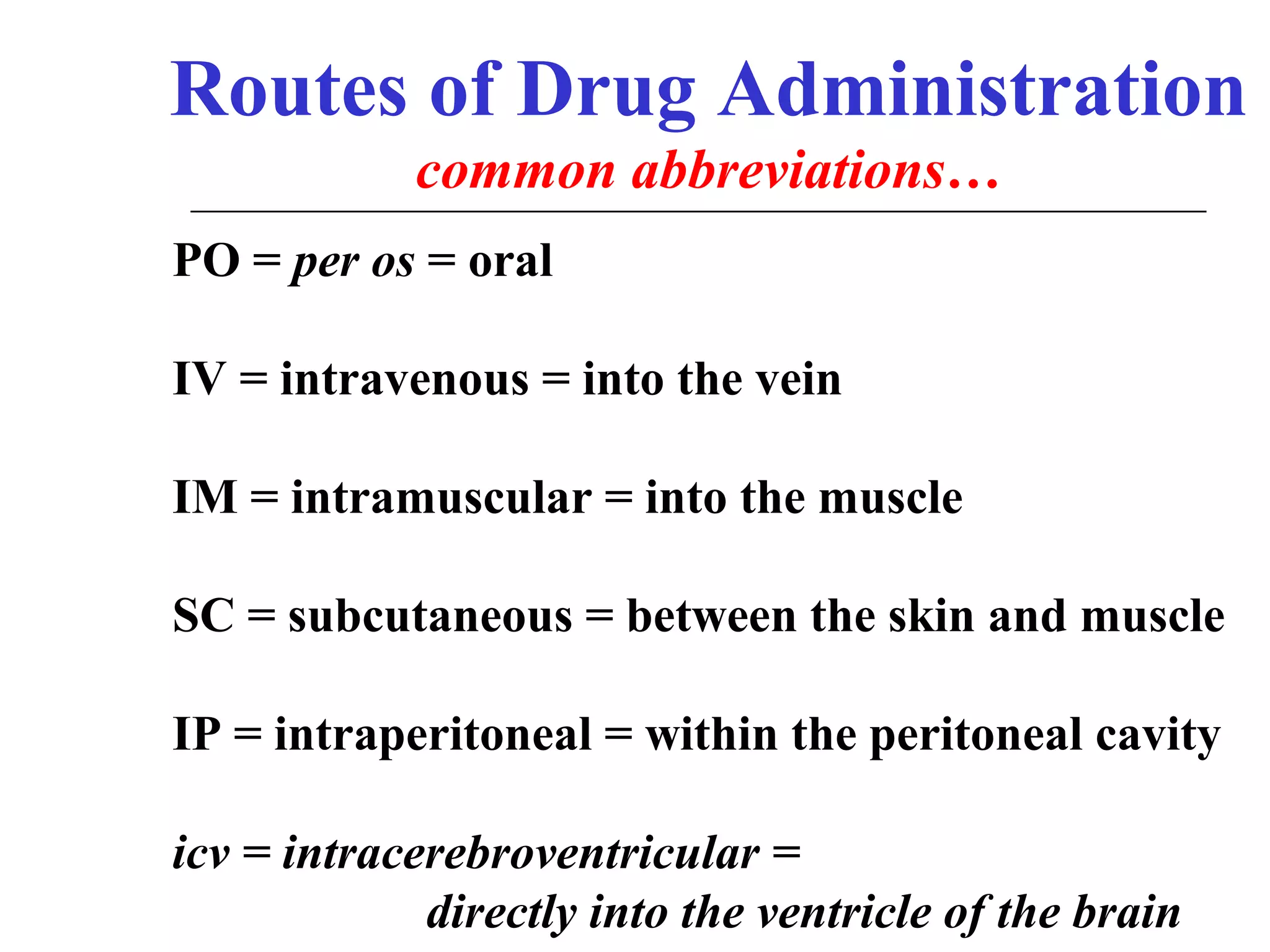
PO = per os = oral
IV = intravenous = into the vein
IM = intramuscular = into the muscle
SC = subcutaneous = between the skin and muscle
IP = intraperitoneal = within the peritoneal cavity
icv = intracerebroventricular =
directly into the ventricle of the brain
Intravenous
Administration
Oral
Administration

Metabolism

Liver

Intestines
Intravascular
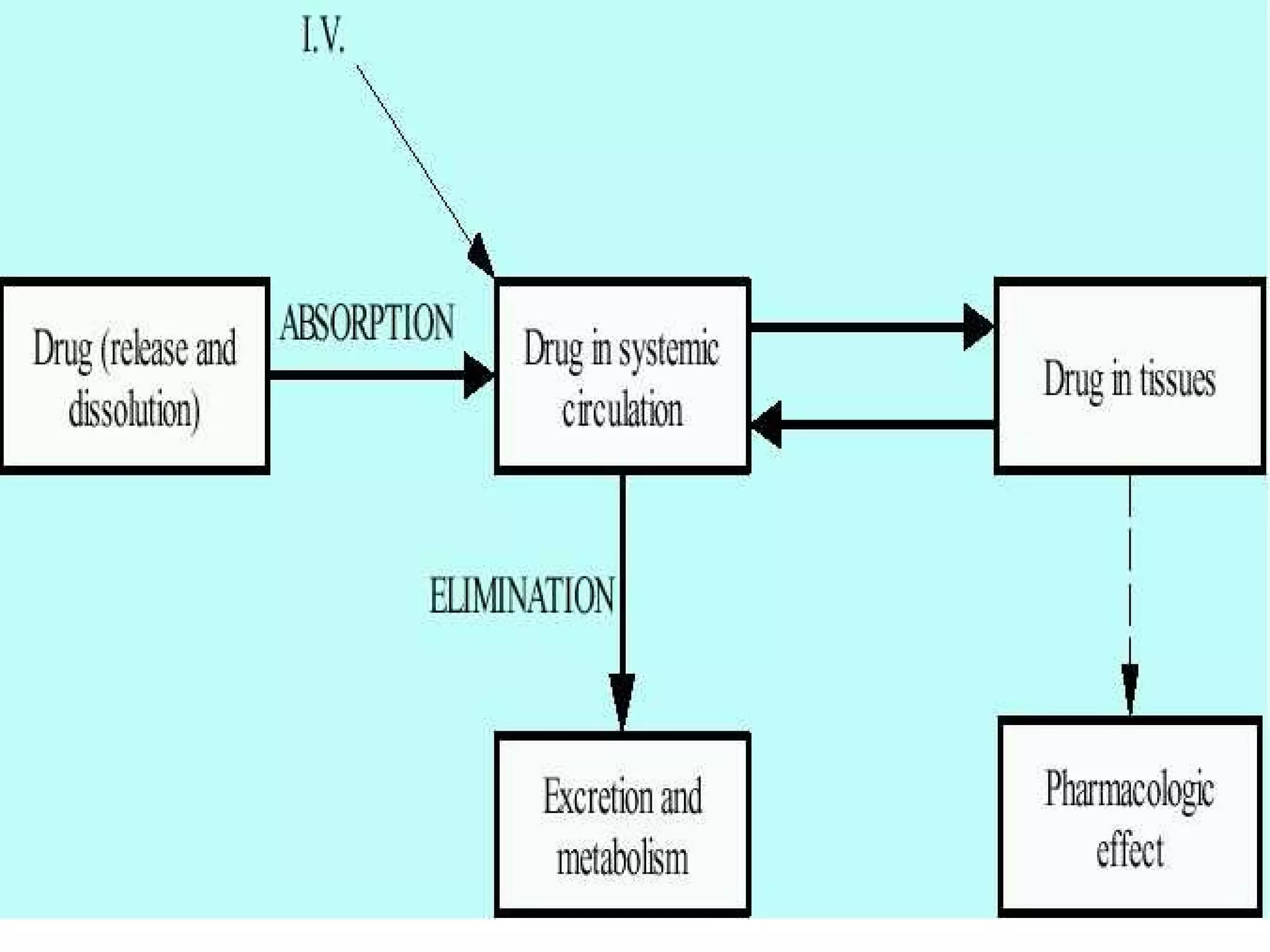
Absorption phase is bypassed
(100% bioavailability)
1.precise, accurate and almost immediate onset of
action,
2. large quantities can be given, fairly pain free
3. greater risk of adverse effects
a. high concentration attained rapidly
b. risk of embolism
c. OOPS factor or !@#$%
Intramuscular
1. very rapid absorption of drugs in
aqueous
solution
2.repository and slow release preparations
3.pain at injection sites for certain drugs
Subcutaneous
1. slow and constant absorption
2. absorption is limited by blood flow,
affected if circulatory problems
exist
3. concurrent administration of
vasoconstrictor will slow absorption
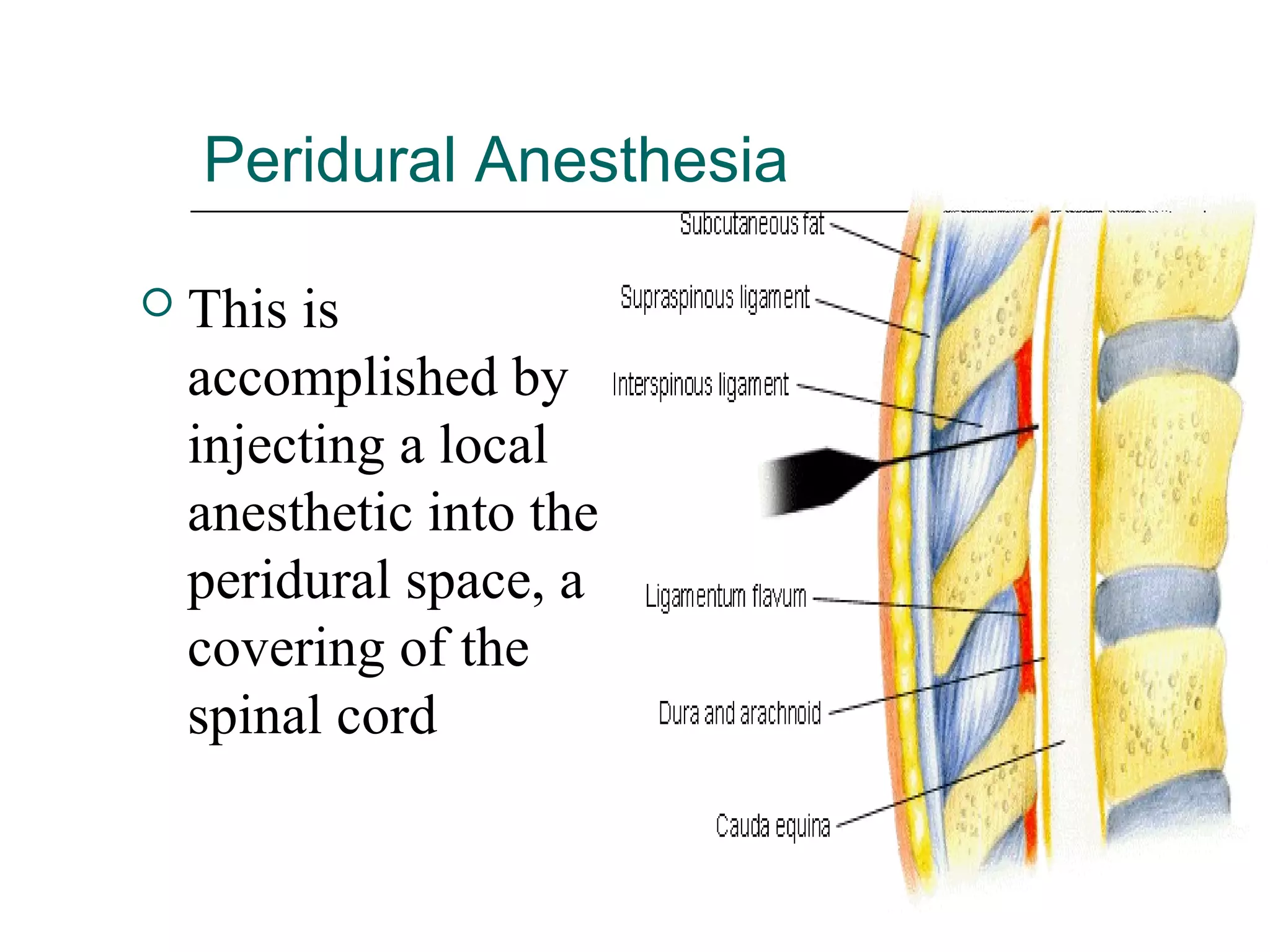
Peridural Anesthesia


This is
accomplished by
injecting a local
anesthetic into the
peridural space, a
covering of the
spinal cord
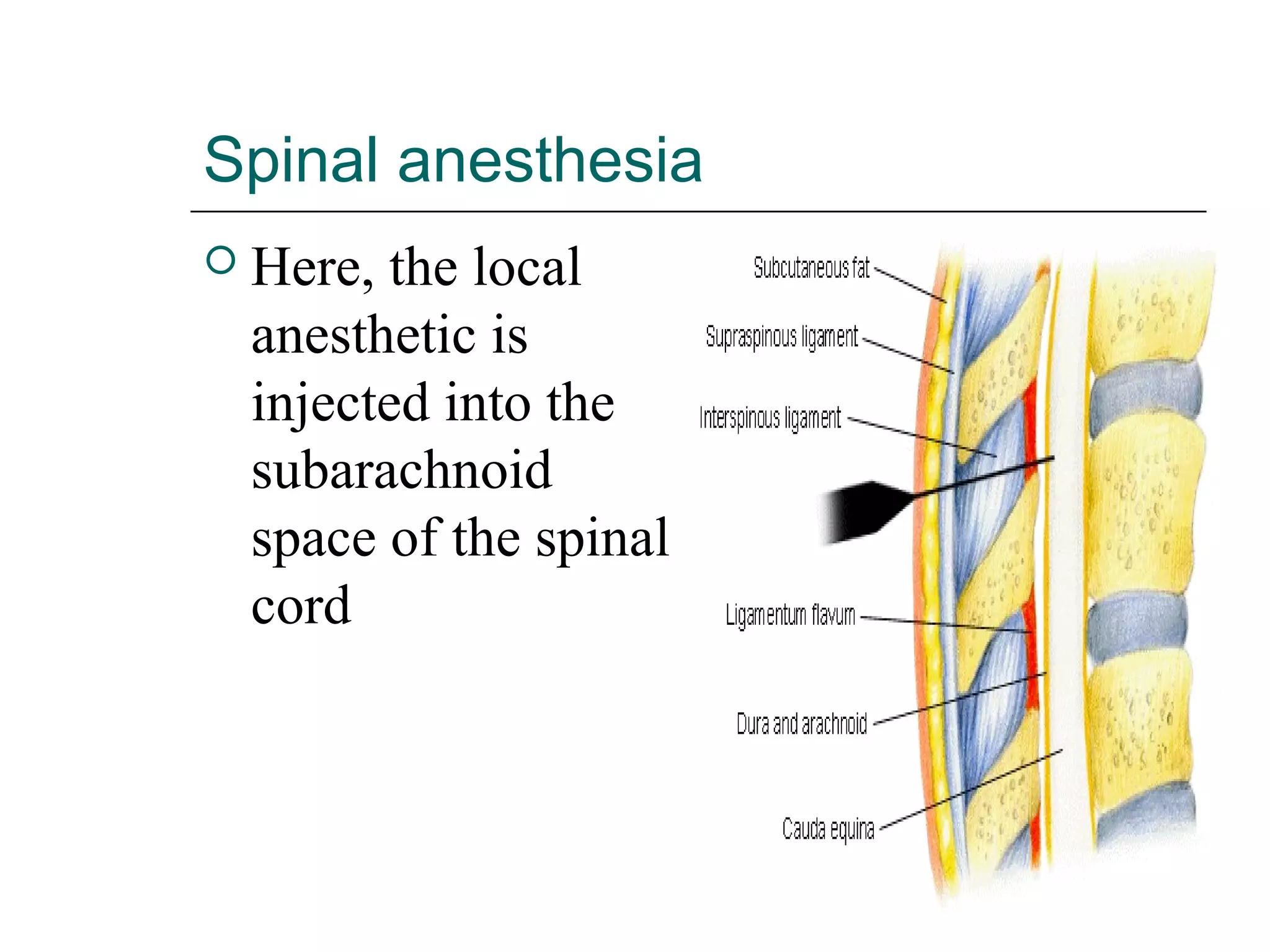
Spinal anesthesia


Here, the local
anesthetic is
injected into the
subarachnoid
space of the spinal
cord
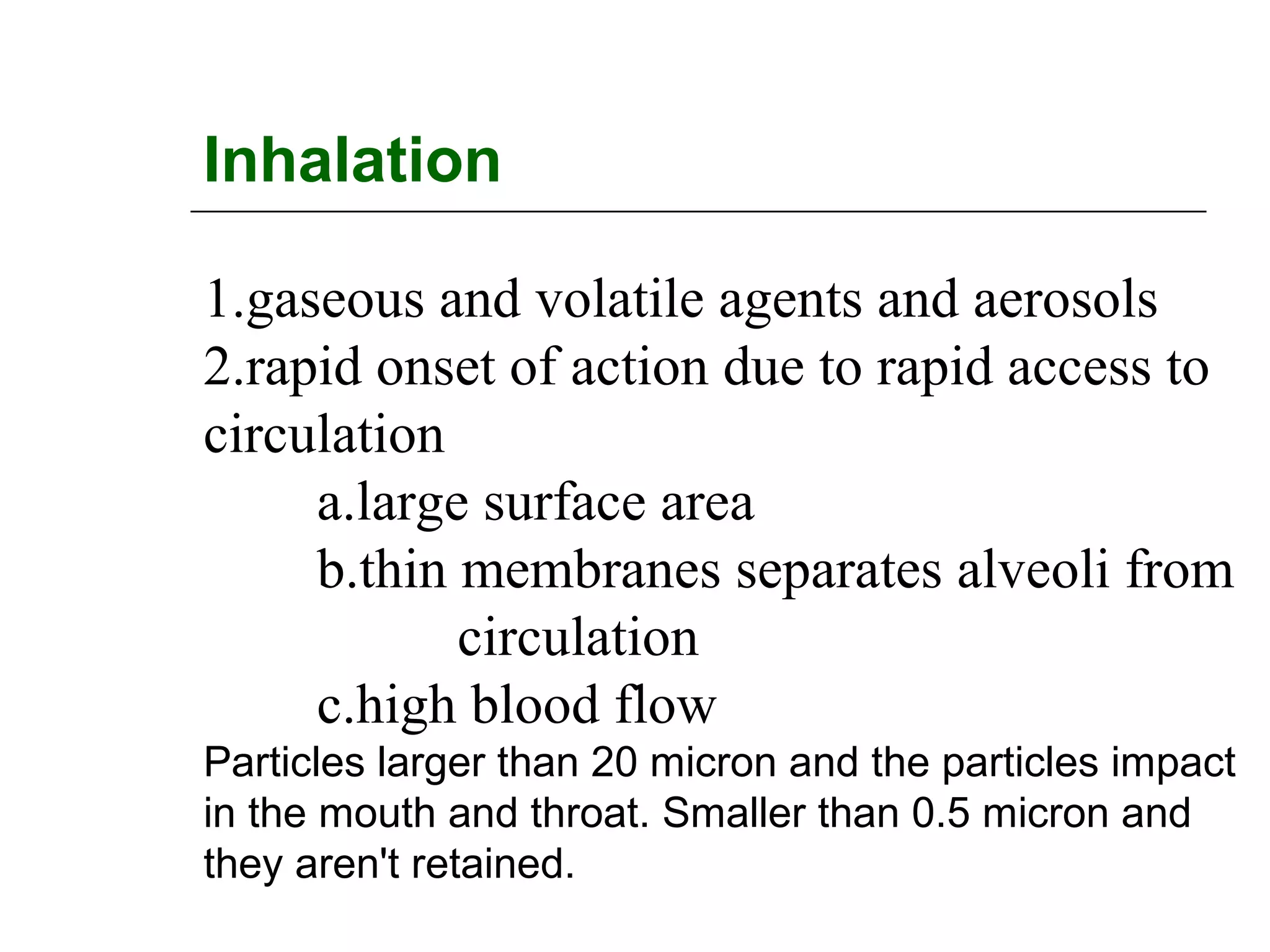
Inhalation
1.gaseous and volatile agents and aerosols
2.rapid onset of action due to rapid access to
circulation
a.large surface area
b.thin membranes separates alveoli from
circulation
c.high blood flow
Particles larger than 20 micron and the particles impact
in the mouth and throat. Smaller than 0.5 micron and
they aren't retained.
Inhalation cont.


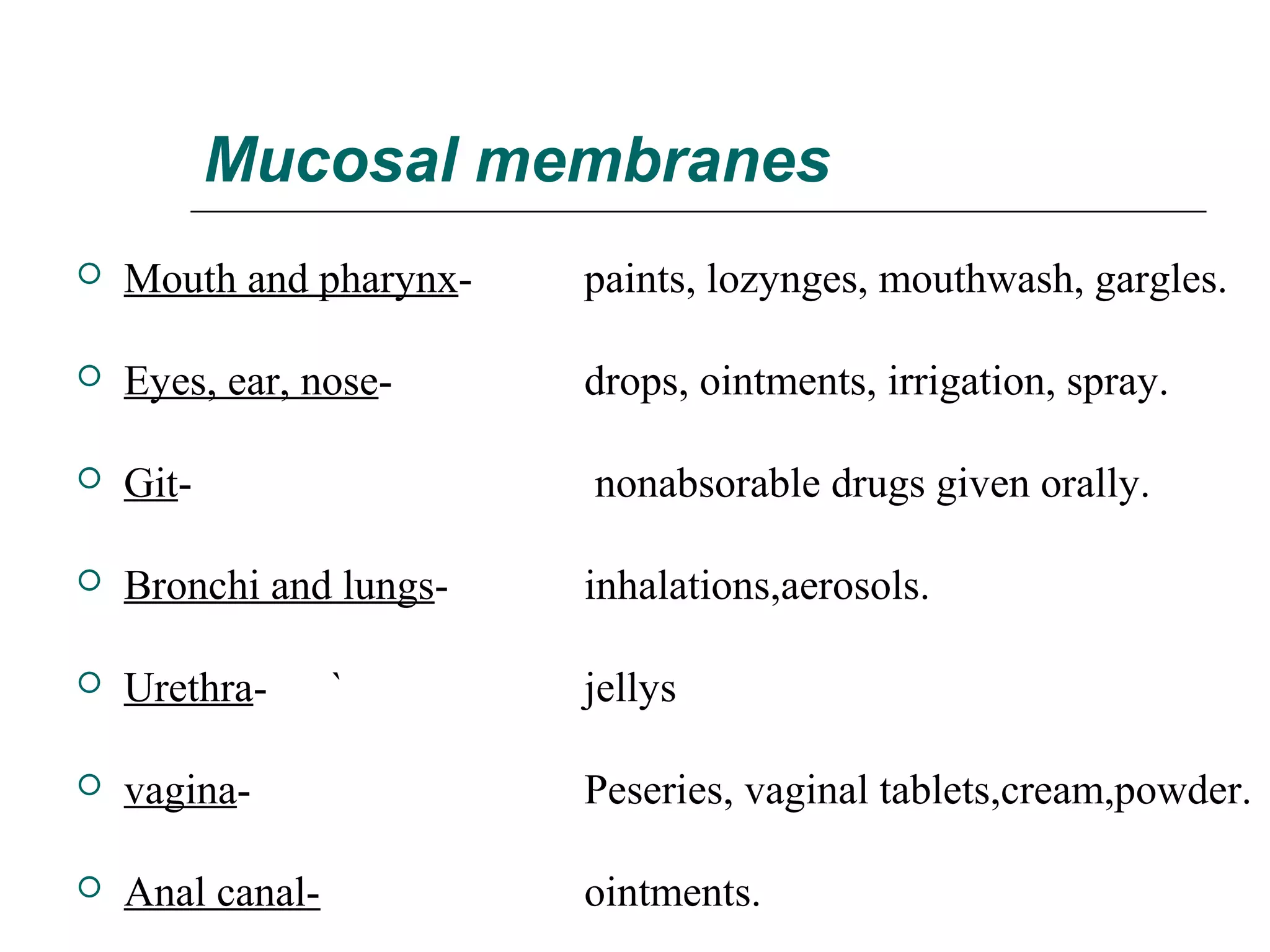
Respiratory system. Except for IN, risk hypoxia.



Intranasal (snorting) Snuff, cocaine may be partly oral via postnasal dripping.



Smoke (Solids in air suspension, vapors) absorbed across lung
alveoli: Nicotine, opium



Volatile gases: Some anaesthetics (nitrous oxide, ether)
petroleum distillates. Diffusion and exhalation (alcohol).



Lung-based transfer may get drug to brain in as little as five
seconds.
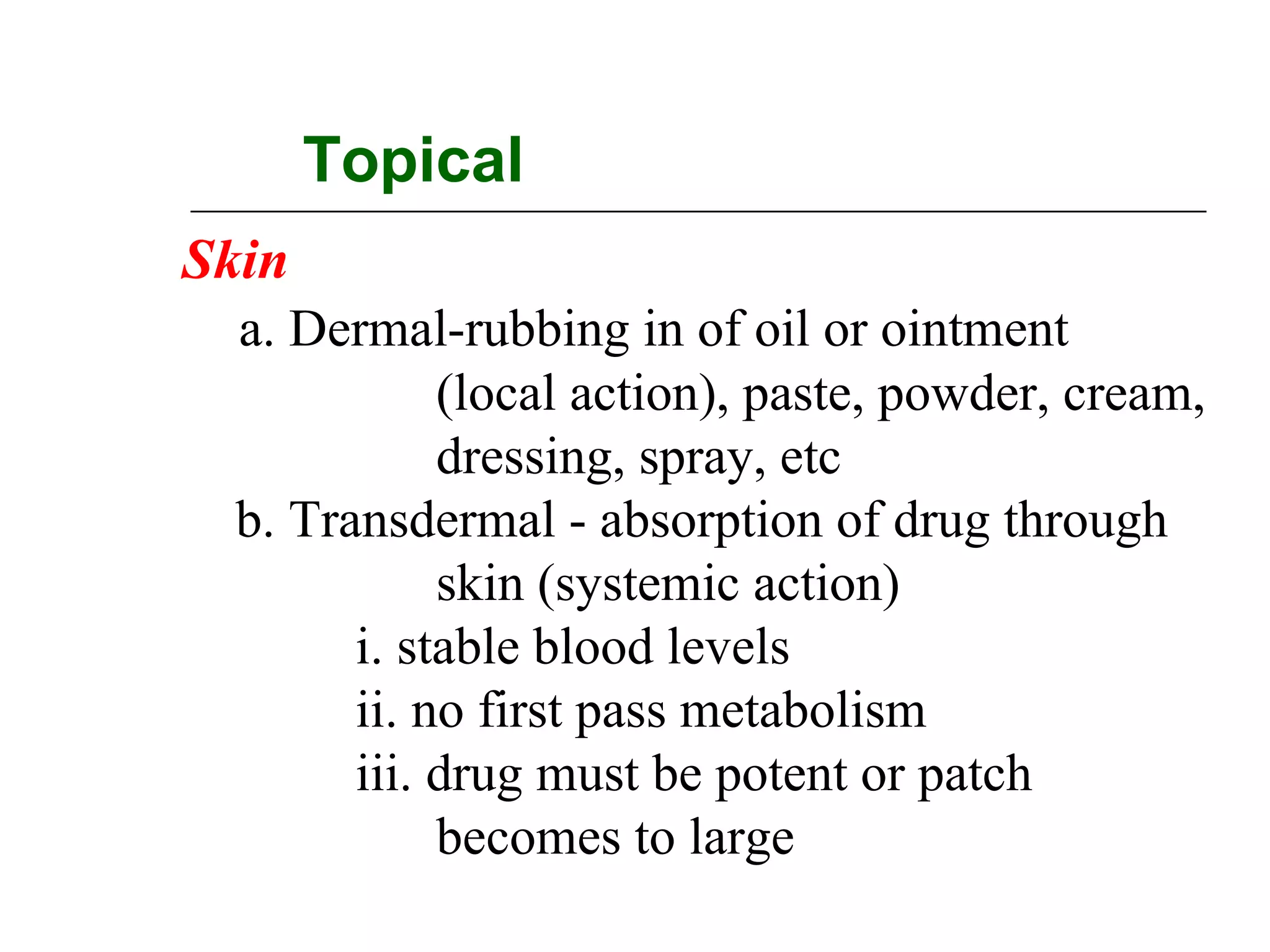
Topical
Skin
a. Dermal-rubbing in of oil or ointment
(local action), paste, powder, cream,
dressing, spray, etc
b. Transdermal - absorption of drug through
skin (systemic action)
i. stable blood levels
ii. no first pass metabolism
iii. drug must be potent or patch
becomes to large
Mucosal membranes


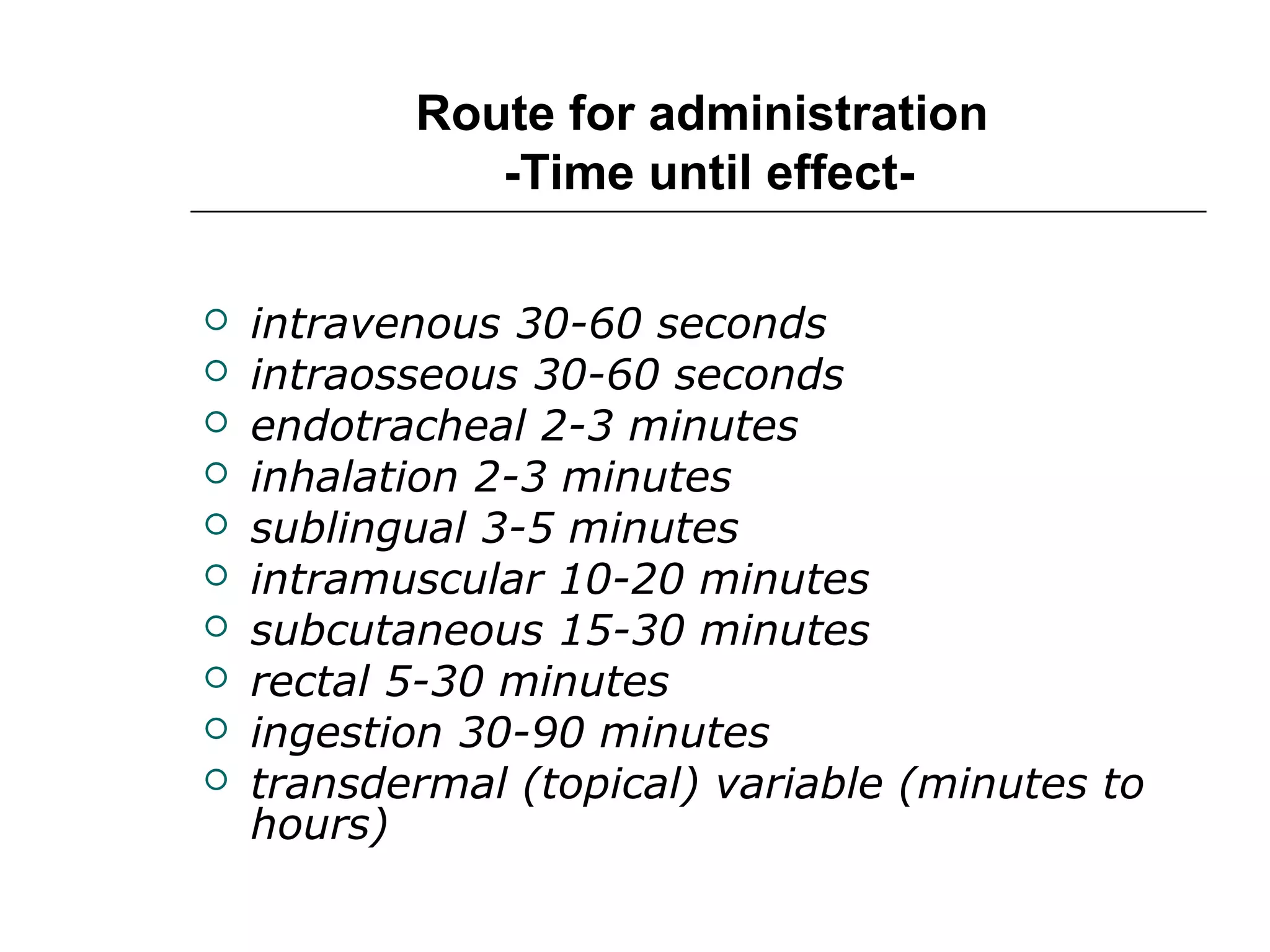
Mouth and pharynx-

paints, lozynges, mouthwash, gargles.



Eyes, ear, nose-

drops, ointments, irrigation, spray.



Git-

nonabsorable drugs given orally.


Bronchi and lungs-

inhalations,aerosols.



Urethra-

jellys



vagina-

Peseries, vaginal tablets,cream,powder.



Anal canal-

ointments.

`
Route for administration
-Time until effect










intravenous 30-60 seconds
intraosseous 30-60 seconds
endotracheal 2-3 minutes
inhalation 2-3 minutes
sublingual 3-5 minutes
intramuscular 10-20 minutes
subcutaneous 15-30 minutes
rectal 5-30 minutes
ingestion 30-90 minutes
transdermal (topical) variable (minutes to
hours)
Time-release preparations


Oral - controlled-release, timedrelease, sustained-release
 designed to produce slow,uniform
absorption for 8 hours or longer
 better compliance, maintain effect
over night, eliminate extreme peaks
and troughs
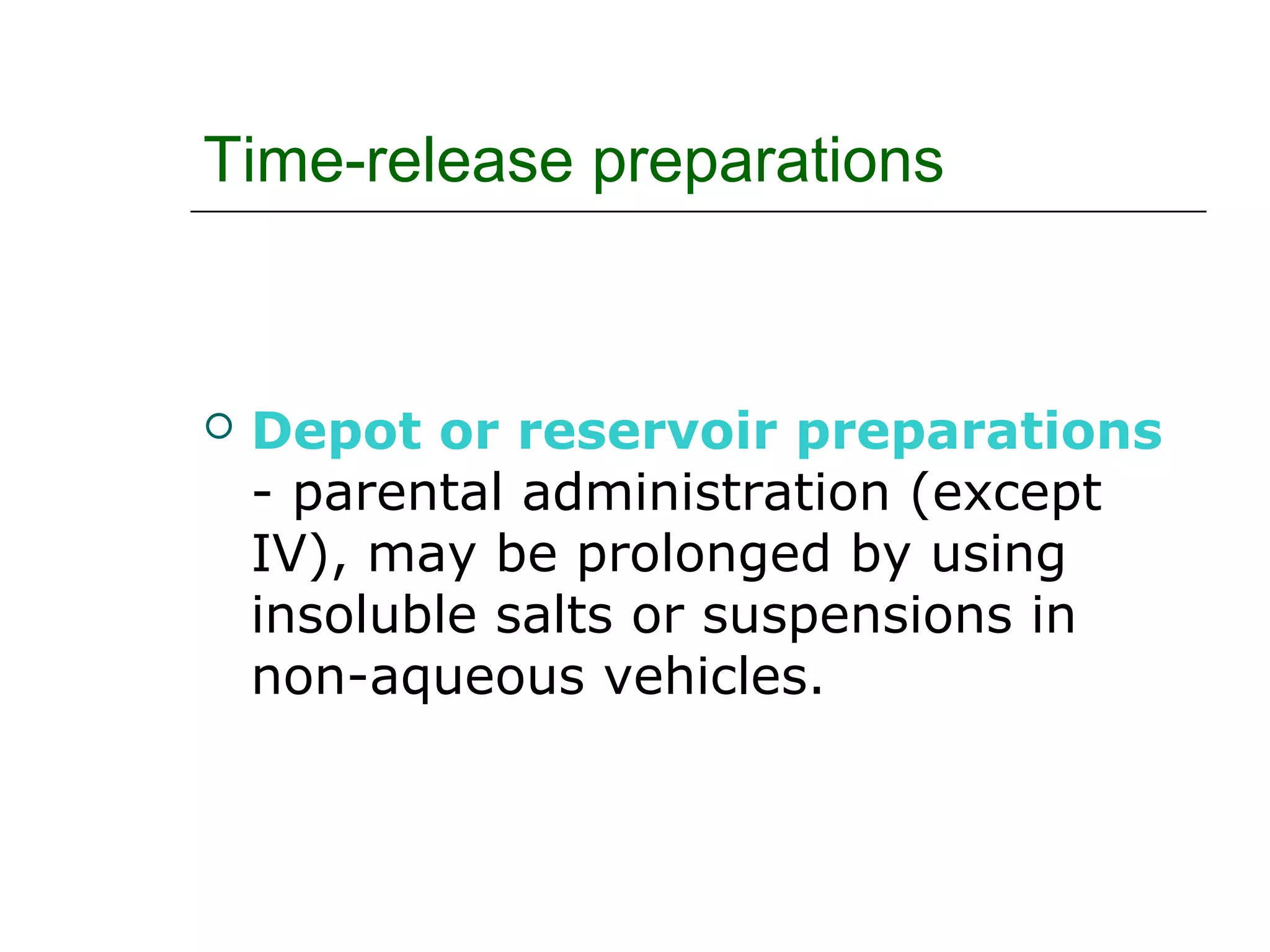
Time-release preparations



Depot or reservoir preparations
- parental administration (except
IV), may be prolonged by using
insoluble salts or suspensions in
non-aqueous vehicles.
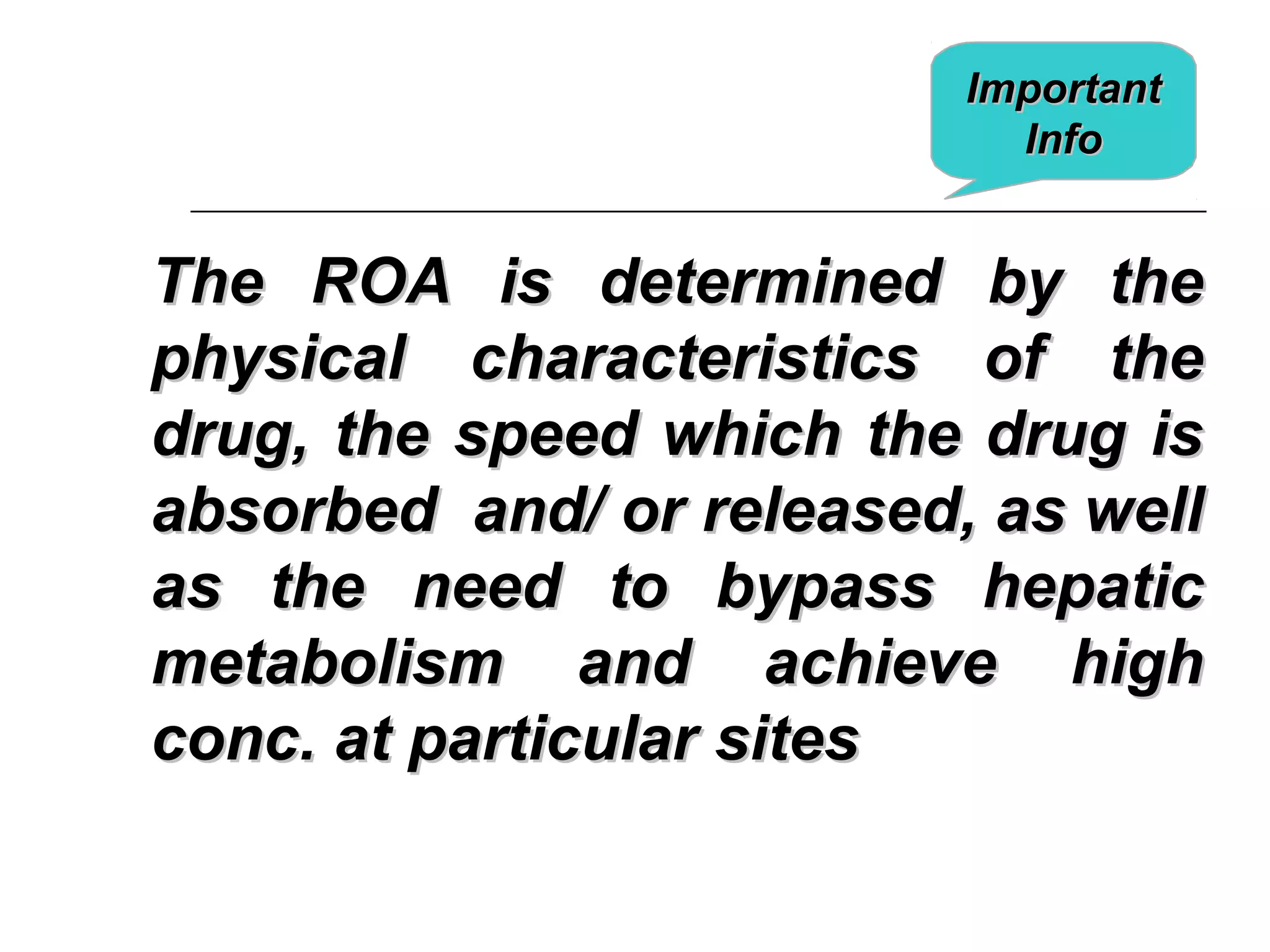
Important
Info

The ROA is determined by the
physical characteristics of the
drug, the speed which the drug is
absorbed and/ or released, as well
as the need to bypass hepatic
metabolism and achieve high
conc. at particular sites
r t an t
Impo
V e r y fo !
In

No single method of drug
administration is ideal for all
drugs in all circumstances

Routes of administration (VK)

Editor's Notes

  • #4 ADVANTAGES-
  • #13 Routes Of Drug Administration - דרך מתן התרופה Enteral - דרך מערכת העיכול Parenteral - שלא דרך מערכת העיכול Rectal - דרך פי הטבעת (ה-rectum) למשל ע”י נרות Respiratory - של מערכת הנשימה למשל אינלציה Topical -מקומי (דרך העור או הרירית) למשל משחת עור או טיפות עיניים oral - הצורה הכי נפוצה