Savitribai Phule Pune University
Department of Geography
Rostow Model of Development
Presented By:- Kiran Anil Thorat
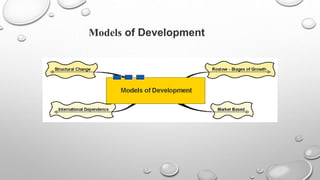
Models of Development
 In this article we will discuss about the Rostow’s theory of
Growth.
 At the end of the Second World War (1939-45) there was a
renewal of interest in the subject of development economics
and the stages of growth once again preoccupied many
scholars.
 As a non-communist manifesto, W. W. Rostow’s stages of
economic growth (1960, 1971) is a foray into positioning the
sweep of modern economic history under capitalism into neat
and hopeful epochs.
History of The Rostow
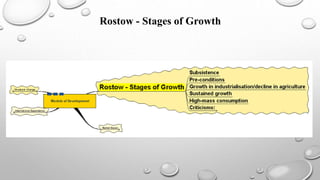
Rostow - Stages of Growth
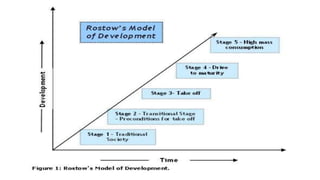
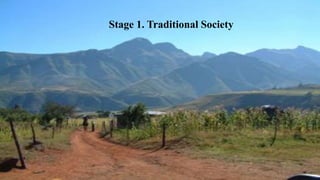
Stage 1. Traditional Society
 Traditional Society
 The economy is dominated by subsistence activity.
 Output is consumed by producers rather than traded.
 Any kind of trading is done by bartering.
 Agriculture is the most important industry and production is labour intensive,
using only limited quantities of capital.
 Characterized by subsistence agriculture or Hunting and Gathering; almost
wholly a "primary" sector economy
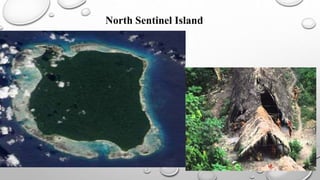
North Sentinel Island
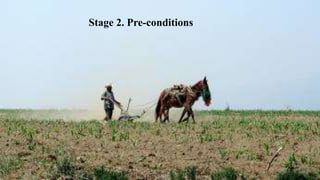
Stage 2. Pre-conditions
 Industrialization would have just began.
 An emergence of transport and infrastructure to support
trade.
 Savings and investment grew.
 This resulted in entrepreneurs emerging and external
trading.
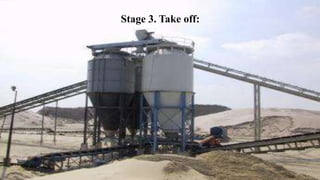
Stage 3. Take off:
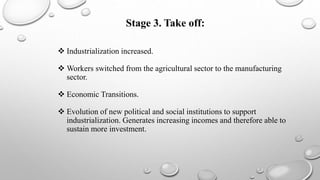
Stage 3. Take off:
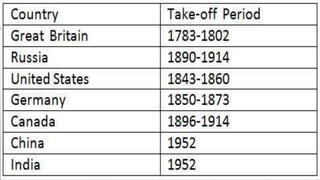
 Industrialization increased.
 Workers switched from the agricultural sector to the manufacturing
sector.
 Economic Transitions.
 Evolution of new political and social institutions to support
industrialization. Generates increasing incomes and therefore able to
sustain more investment.
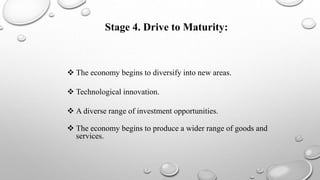
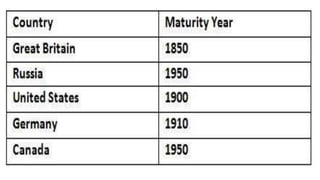
Stage 4. Drive to Maturity:
 The economy begins to diversify into new areas.
 Technological innovation.
 A diverse range of investment opportunities.
 The economy begins to produce a wider range of goods and
services.
Stage 5. Age of Mass Consumption
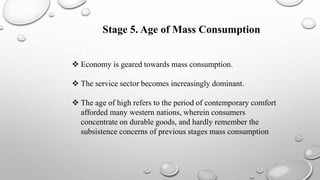
 Economy is geared towards mass consumption.
 The service sector becomes increasingly dominant.
 The age of high refers to the period of contemporary comfort
afforded many western nations, wherein consumers
concentrate on durable goods, and hardly remember the
subsistence concerns of previous stages mass consumption
 Theory of Development Rostow Model  Ppt
 Theory of Development Rostow Model  Ppt

Theory of Development Rostow Model Ppt

  • 1.
    Savitribai Phule PuneUniversity Department of Geography Rostow Model of Development Presented By:- Kiran Anil Thorat
  • 2.
  • 3.
     In thisarticle we will discuss about the Rostow’s theory of Growth.  At the end of the Second World War (1939-45) there was a renewal of interest in the subject of development economics and the stages of growth once again preoccupied many scholars.  As a non-communist manifesto, W. W. Rostow’s stages of economic growth (1960, 1971) is a foray into positioning the sweep of modern economic history under capitalism into neat and hopeful epochs. History of The Rostow
  • 4.
    Rostow - Stagesof Growth
  • 6.
  • 7.
    Stage 1. TraditionalSociety  Traditional Society  The economy is dominated by subsistence activity.  Output is consumed by producers rather than traded.  Any kind of trading is done by bartering.  Agriculture is the most important industry and production is labour intensive, using only limited quantities of capital.  Characterized by subsistence agriculture or Hunting and Gathering; almost wholly a "primary" sector economy
  • 8.
  • 9.
  • 10.
    Stage 2. Pre-conditions Industrialization would have just began.  An emergence of transport and infrastructure to support trade.  Savings and investment grew.  This resulted in entrepreneurs emerging and external trading.
  • 12.
  • 13.
    Stage 3. Takeoff:  Industrialization increased.  Workers switched from the agricultural sector to the manufacturing sector.  Economic Transitions.  Evolution of new political and social institutions to support industrialization. Generates increasing incomes and therefore able to sustain more investment.
  • 15.
    Stage 4. Driveto Maturity:
  • 16.
    Stage 4. Driveto Maturity:  The economy begins to diversify into new areas.  Technological innovation.  A diverse range of investment opportunities.  The economy begins to produce a wider range of goods and services.
  • 18.
    Stage 5. Ageof Mass Consumption
  • 19.
    Stage 5. Ageof Mass Consumption  Economy is geared towards mass consumption.  The service sector becomes increasingly dominant.  The age of high refers to the period of contemporary comfort afforded many western nations, wherein consumers concentrate on durable goods, and hardly remember the subsistence concerns of previous stages mass consumption