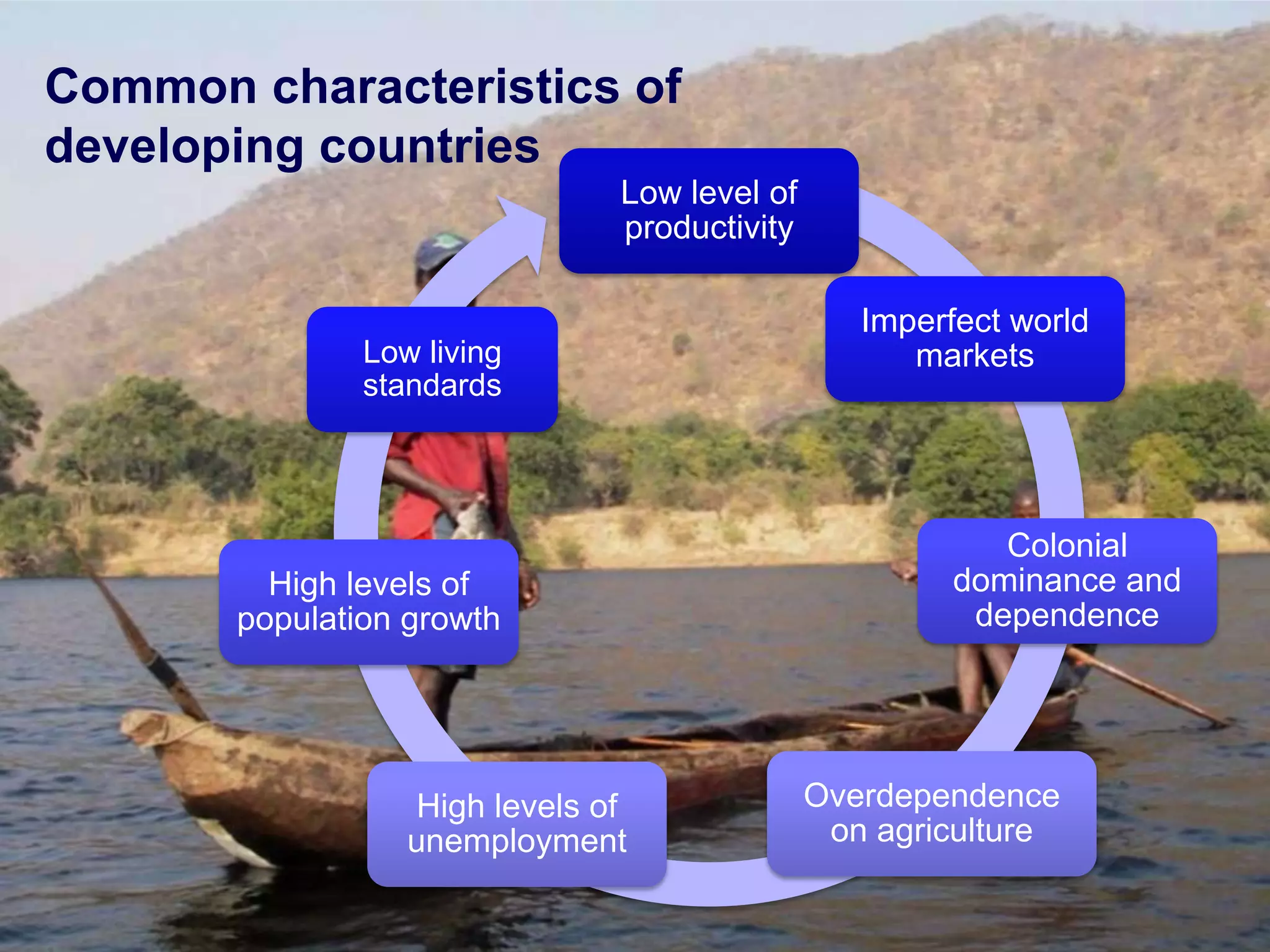
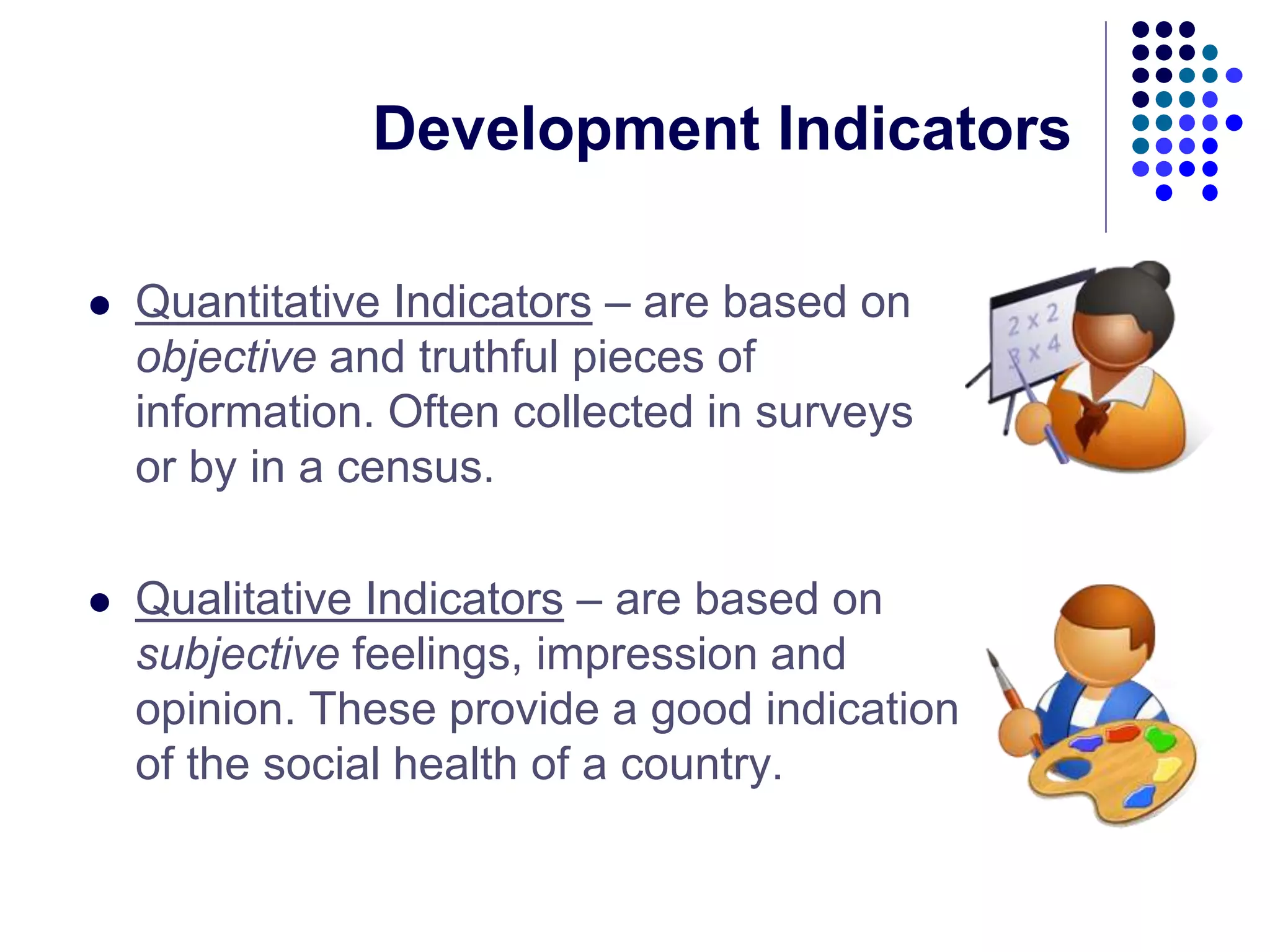

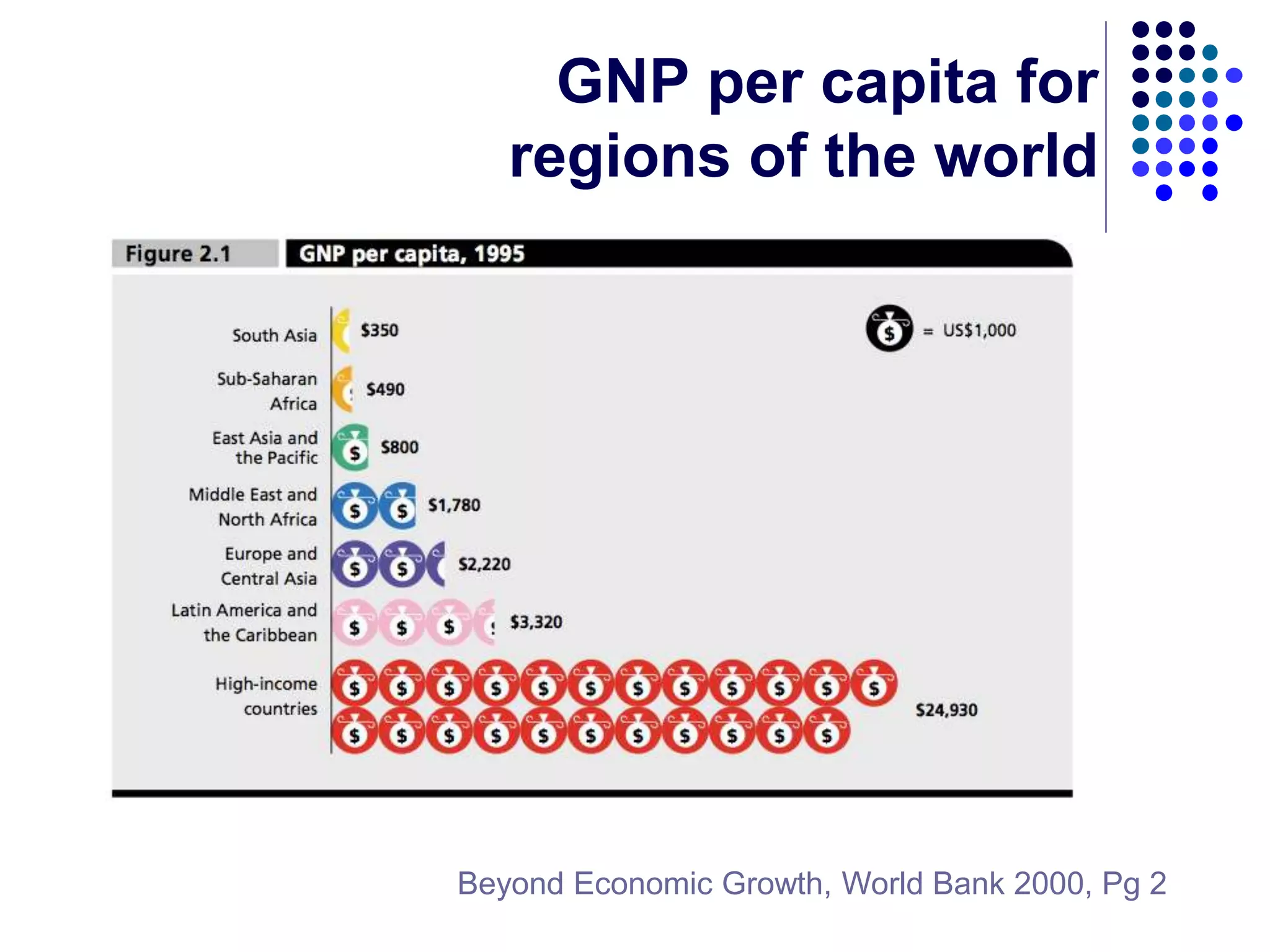
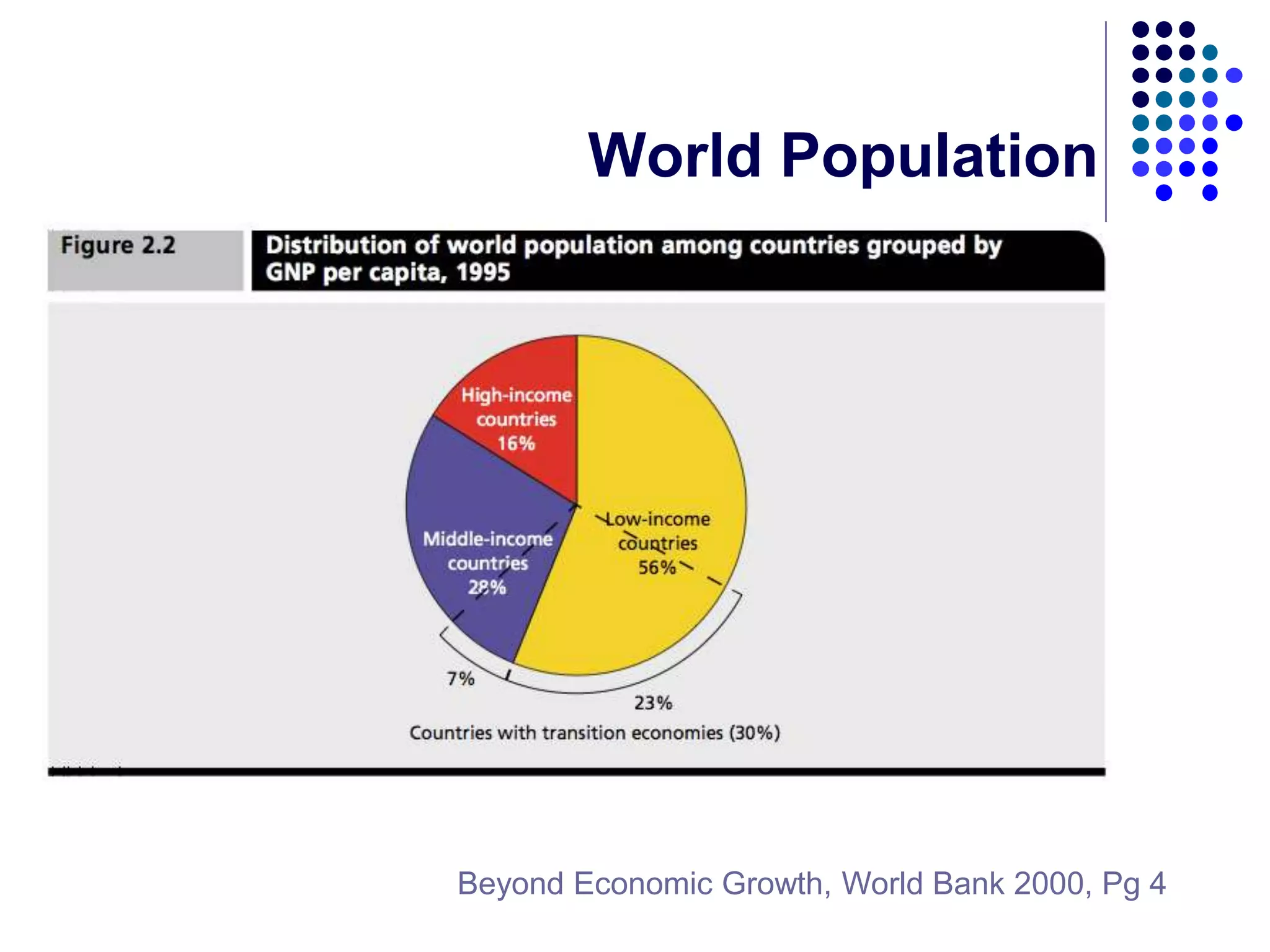





The document provides information on the characteristics of developing nations. It discusses some key obstacles to development, such as reliance on subsistence agriculture and lack of political stability. It also lists some common characteristics of developing countries, including low levels of productivity, imperfect world markets, low living standards, and high population growth. The document then examines ways to measure a nation's level of development, such as through quantitative indicators like GDP per capita and qualitative indicators like the Happiness Index. It introduces the Human Development Index as a composite measure of development.
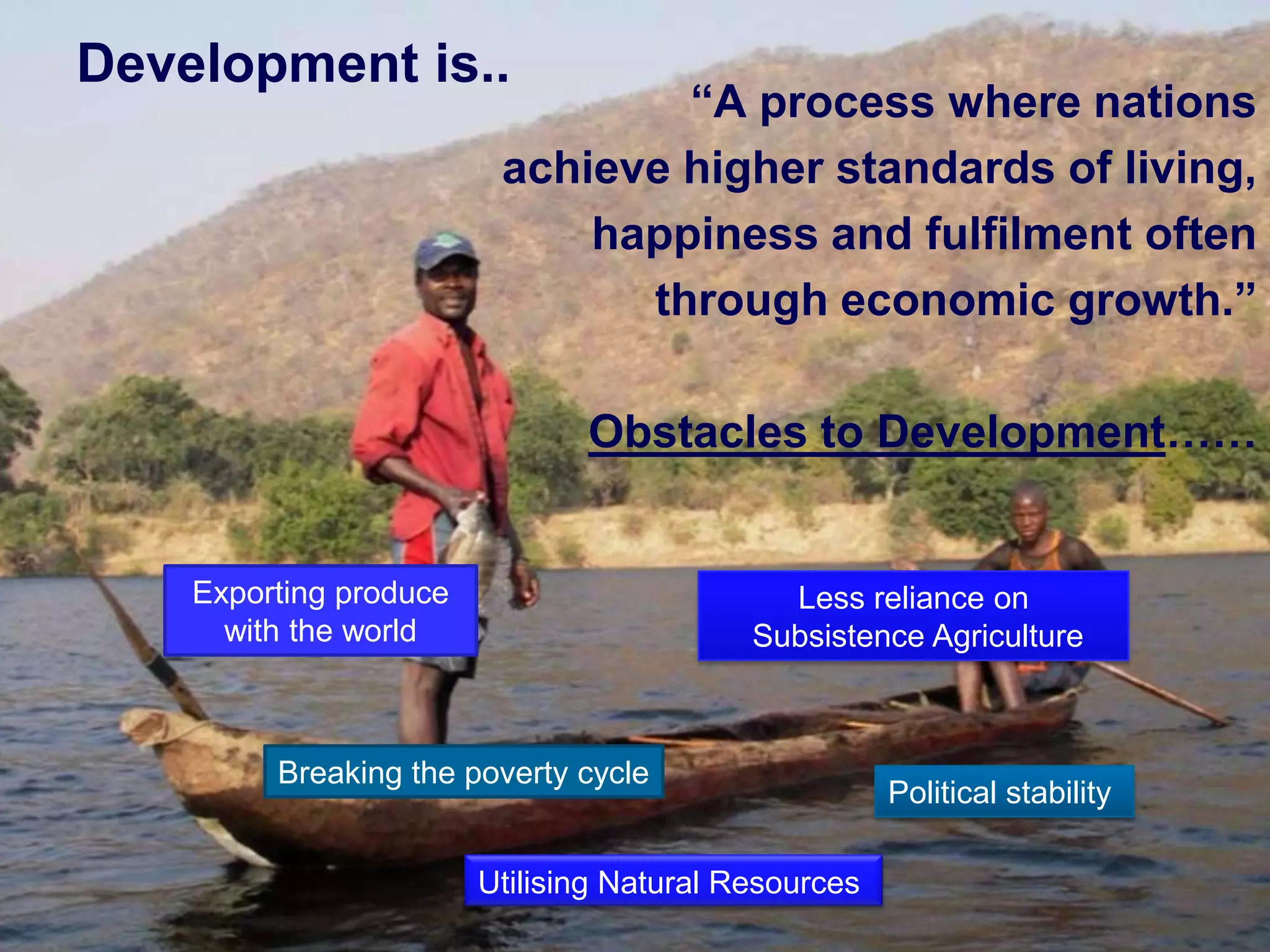
Development entails improving living standards via economic growth; challenges include poverty, reliance on agriculture, and political stability.
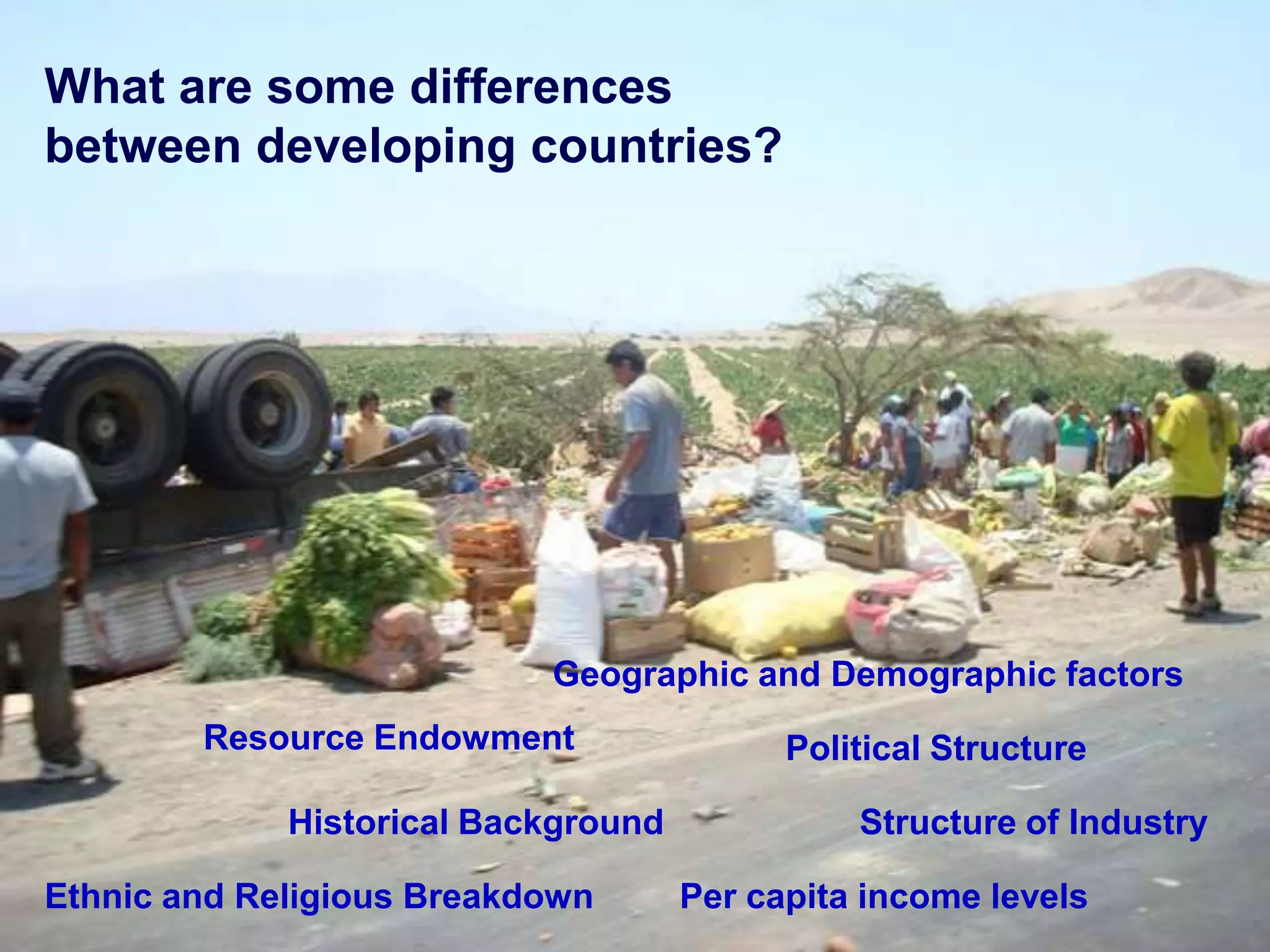
Key differences among developing countries are based on geography, resources, and political structures; evaluated through quantitative and qualitative indicators.
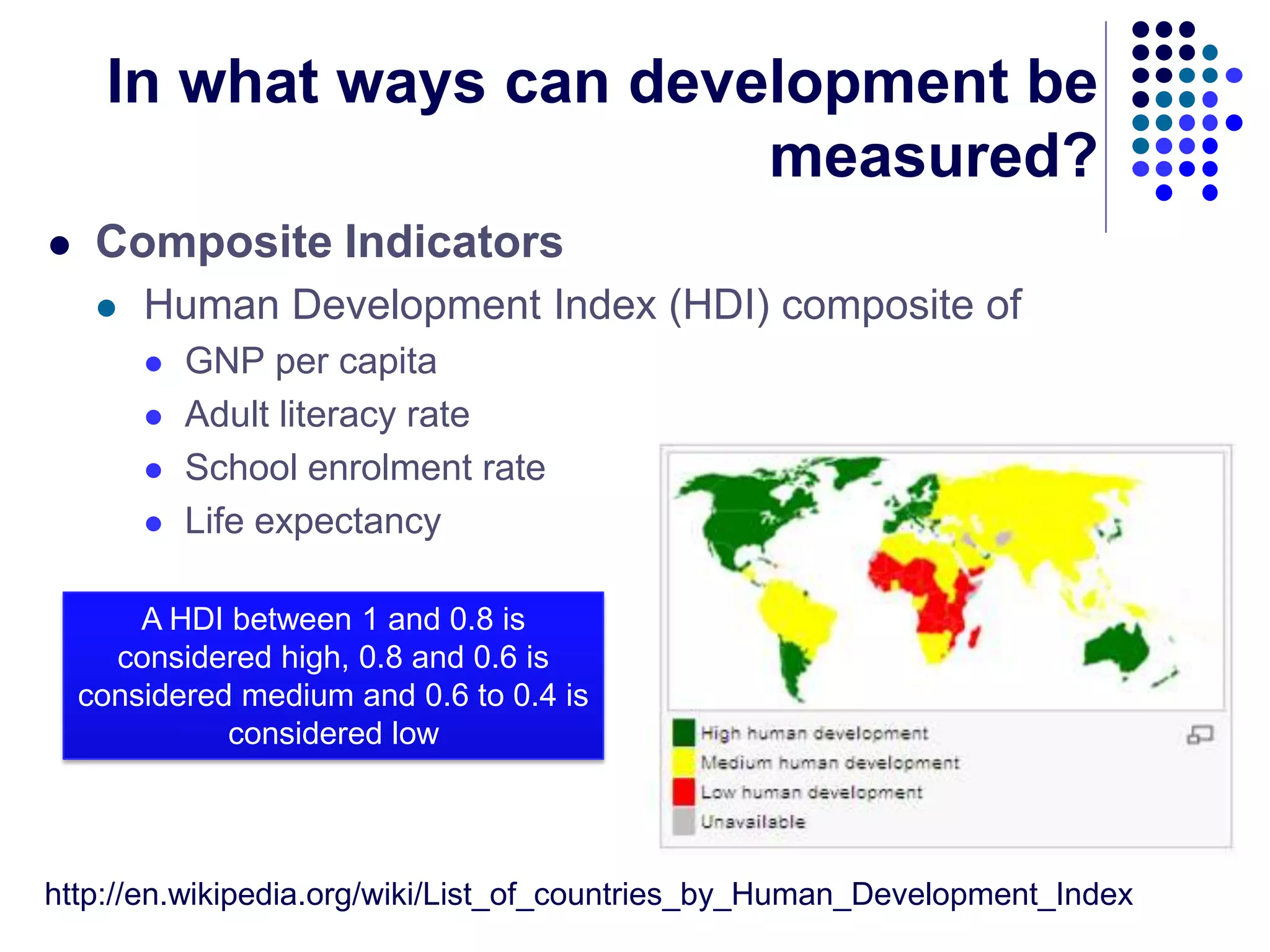
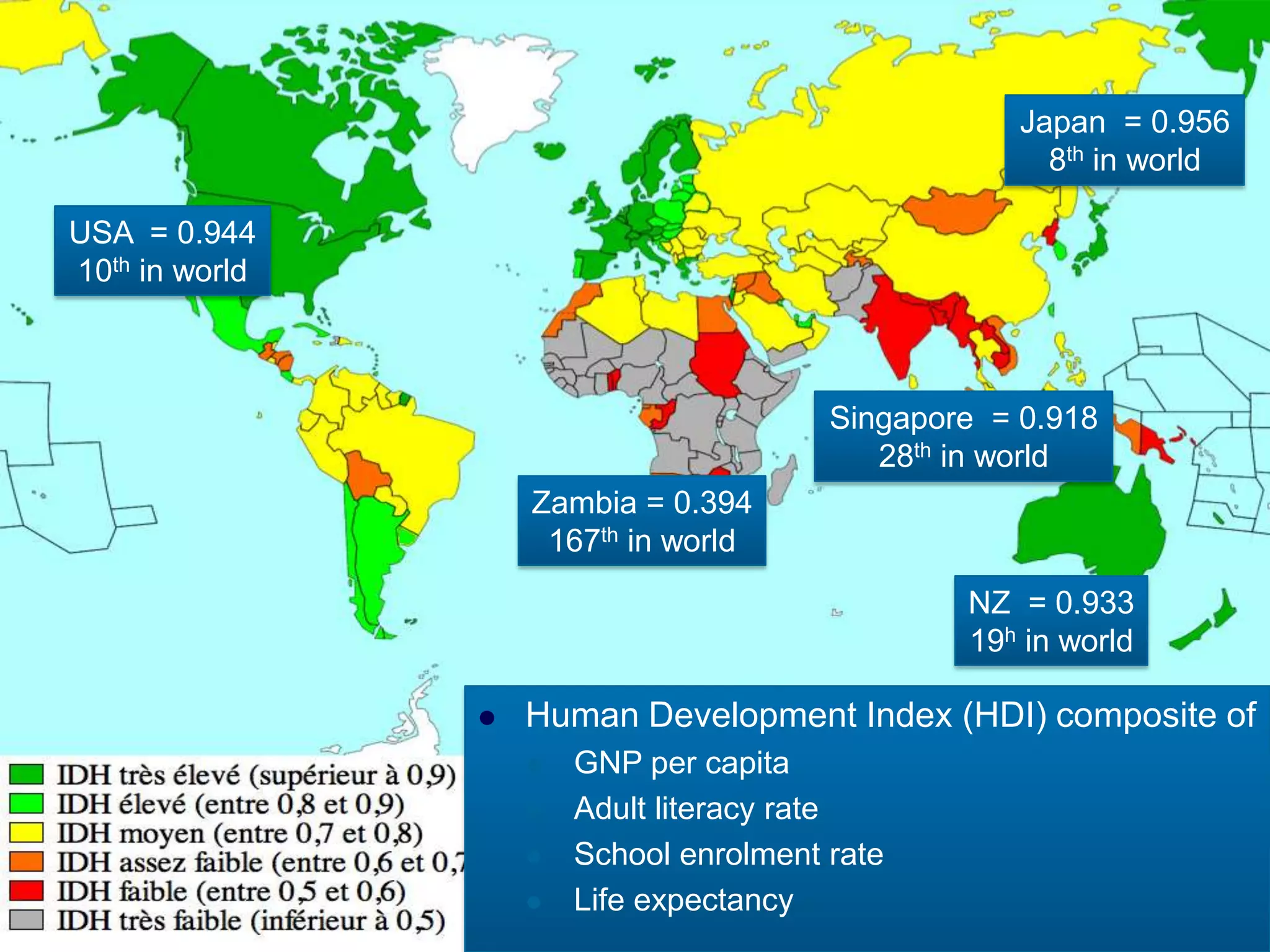
Development measurement includes HDI, assessing GDP per capita, education, and life expectancy; HDI ranges from low (0.4) to high (1) scores.
HDI effectively combines social (education, life quality) and economic measures for a comprehensive development assessment.
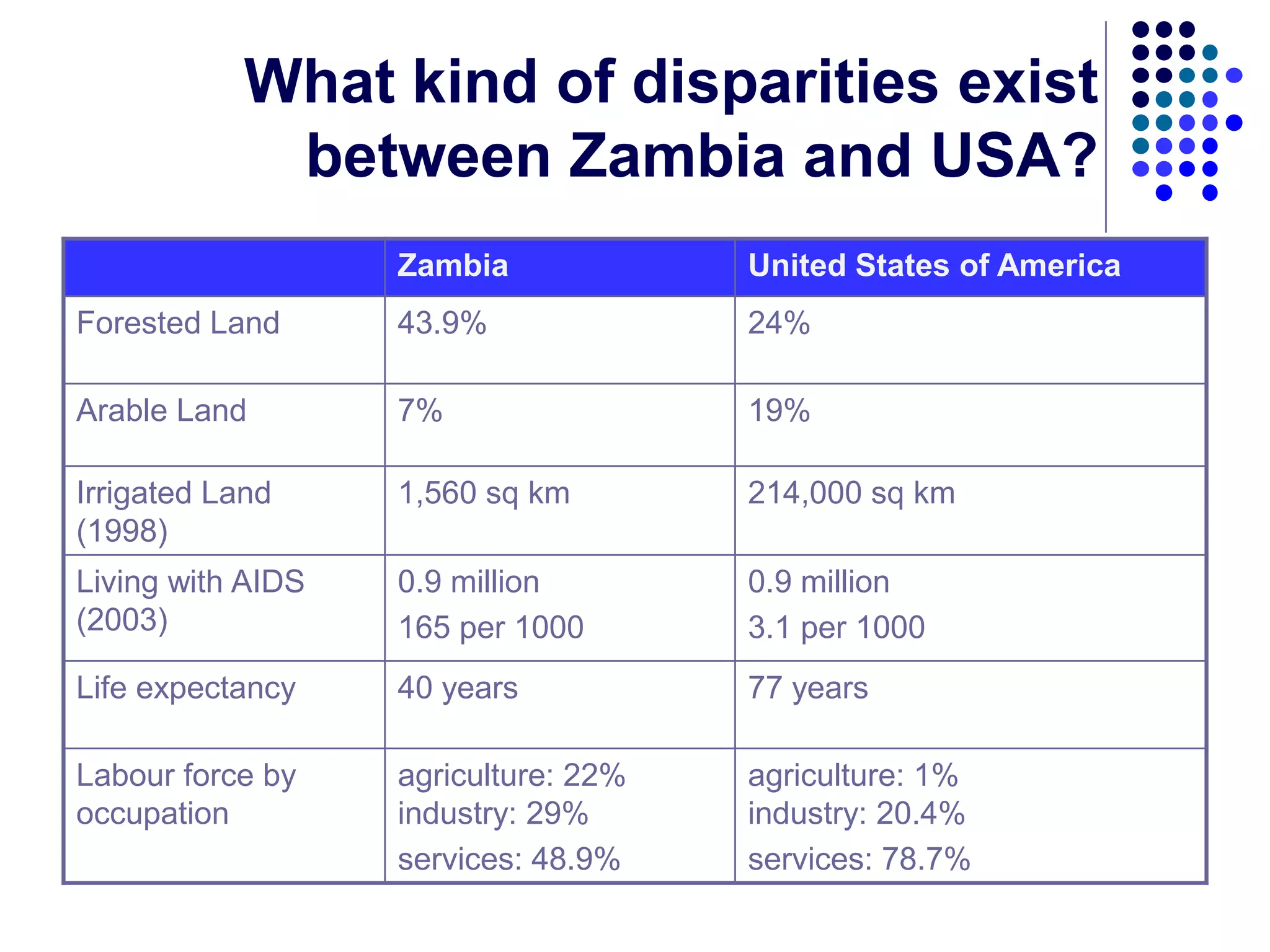
Assignment involves comparing two countries' development levels using HDI; disparities between Zambia and the USA highlight developmental differences.
Comparison includes HDI, poverty levels, GDP, and literacy rates, showcasing stark contrasts in development indicators.
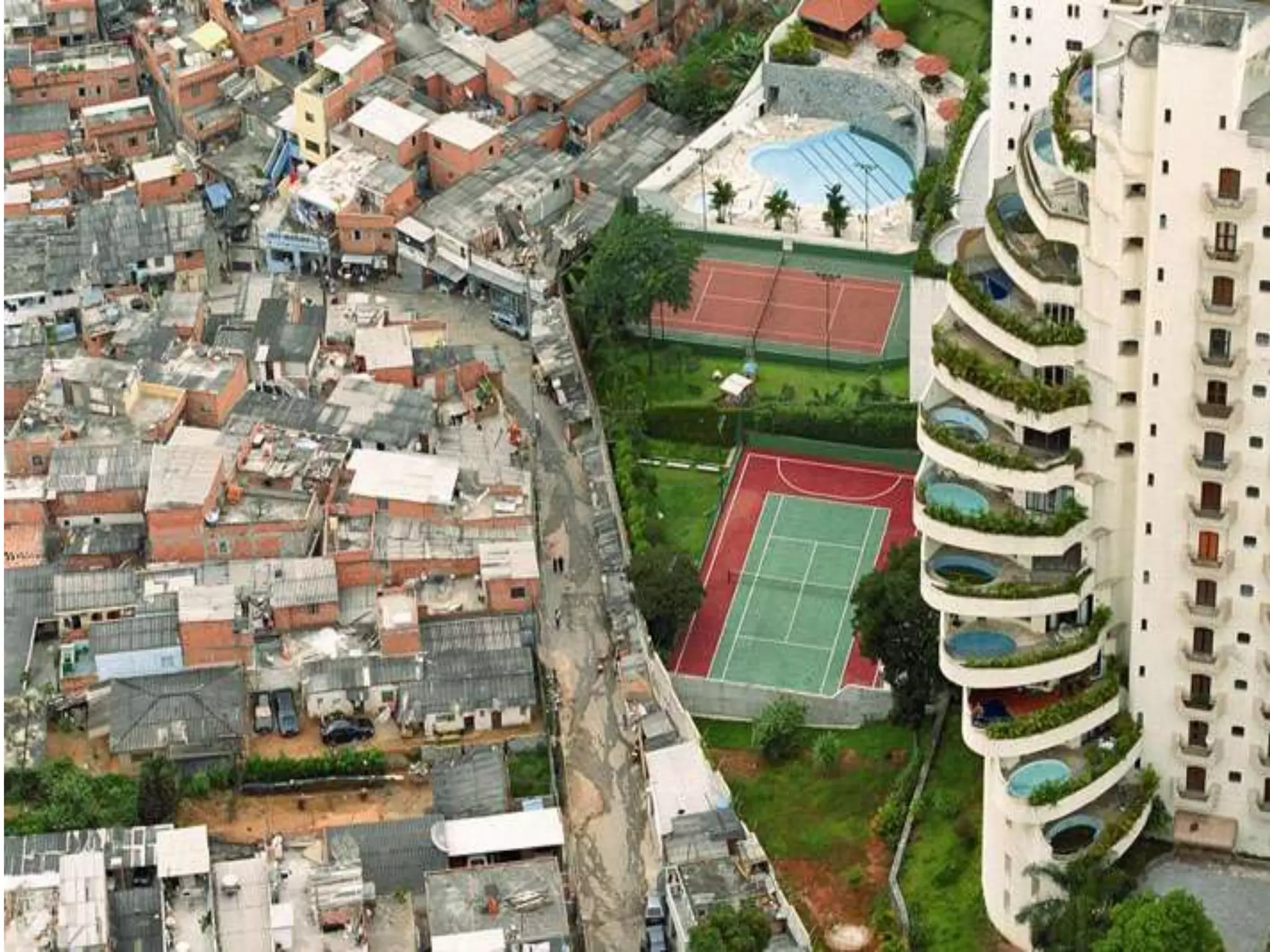
Discussion on the differences between economic growth and broader development indicators.


