Download to read offline

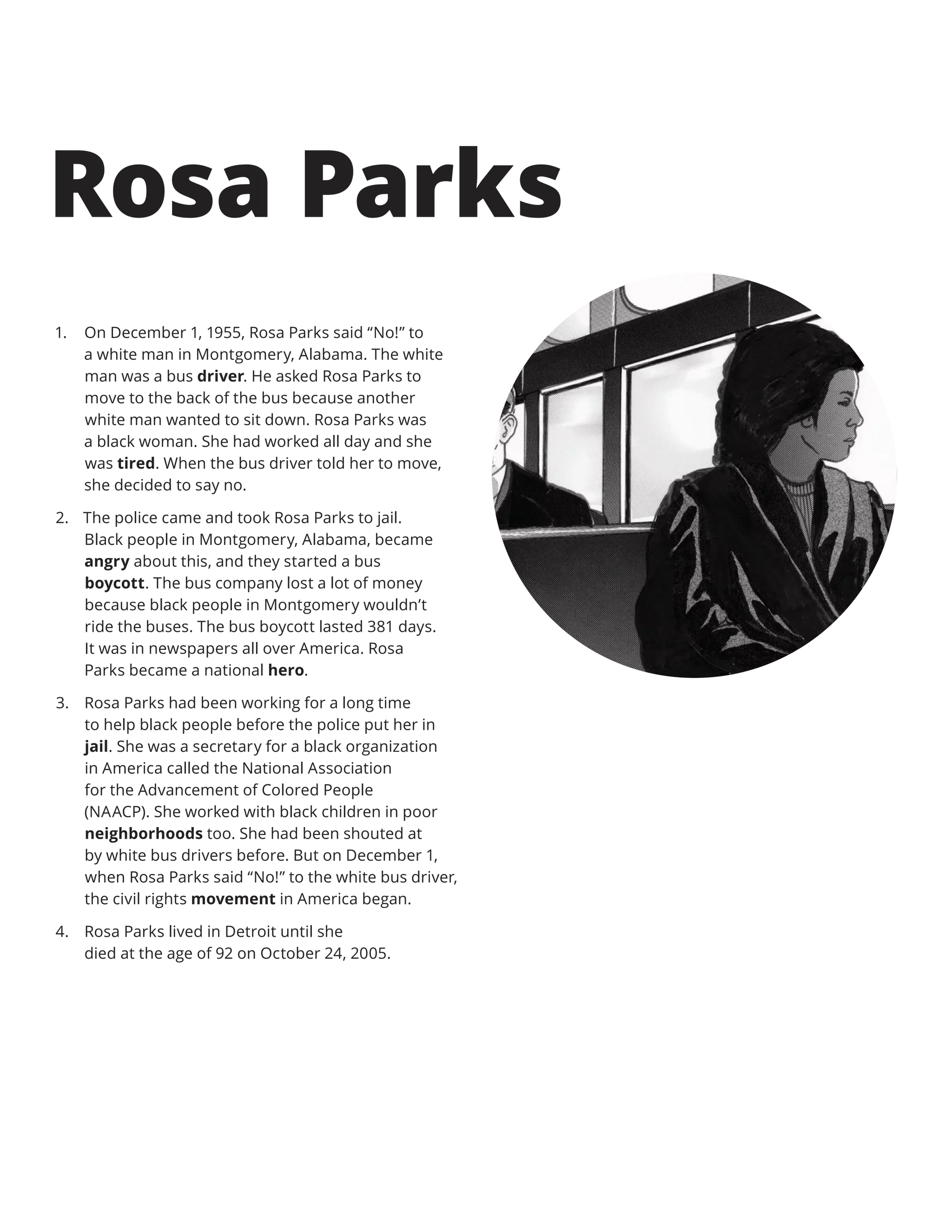

Rosa Parks refused to give up her seat to a white passenger on a bus in Montgomery, Alabama in 1955, which led to her arrest. In response, the black community organized a 381-day bus boycott that drew national attention and support for the civil rights movement. As a leader in the NAACP, Rosa Parks had long advocated for racial equality and her act of defiance helped spark greater activism and challenges to racial segregation laws across the United States. She lived in Detroit until her death in 2005 and became known as "the first lady of civil rights" and a symbol of the struggle for equality.


