Roman Republic
Mr. Dunham
Geography
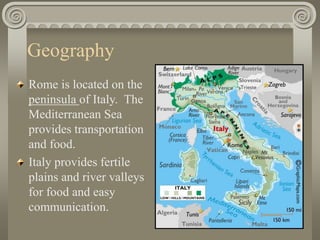
Rome is located on the
peninsula of Italy. The
Mediterranean Sea
provides transportation
and food.
Italy provides fertile
plains and river valleys
for food and easy
communication.
Roman Religious Ideals
Romans were polytheistic,
believing in many gods and
spirits.
Knowledge of the Greek Gods
filtered into Roman culture.
This is known as cultural
diffusion.
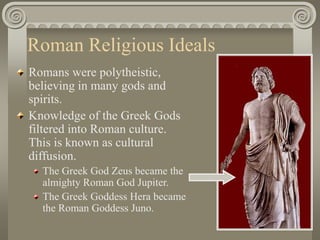
The Greek God Zeus became the
almighty Roman God Jupiter.
The Greek Goddess Hera became
the Roman Goddess Juno.
The Roman Republic
Rome was founded about 509 BCE. Romans founded a new
type of government called a republic. In a republic people
chose officials to represent them.
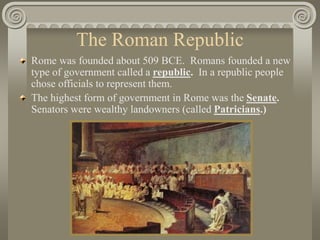
The highest form of government in Rome was the Senate.
Senators were wealthy landowners (called Patricians.)
The Roman Republic Cont…
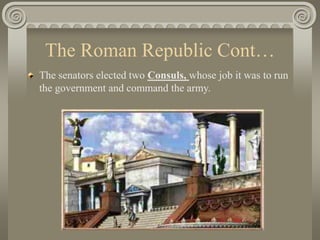
The senators elected two Consuls, whose job it was to run
the government and command the army.
Romans Valued Family Ties
Roman families were headed by the
eldest male. The Romans emphasized
discipline, strength, and loyalty.
Women had many rights and duties in
Roman society. She did not, however
have the key right, the right to vote.
Officially, the Roman women were
expected to remain in the background.
Society was Divided Into Classes
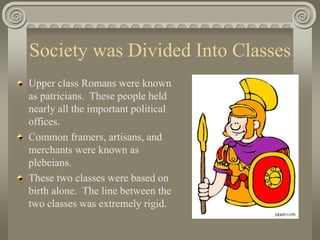
Upper class Romans were known
as patricians. These people held
nearly all the important political
offices.
Common framers, artisans, and
merchants were known as
plebeians.
These two classes were based on
birth alone. The line between the
two classes was extremely rigid.
Rome Built a Mighty Army
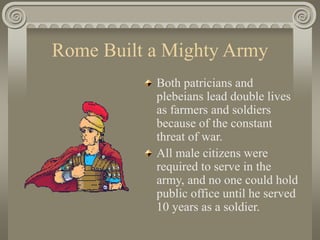
Both patricians and
plebeians lead double lives
as farmers and soldiers
because of the constant
threat of war.
All male citizens were
required to serve in the
army, and no one could hold
public office until he served
10 years as a soldier.
Rome Built a Mighty Army
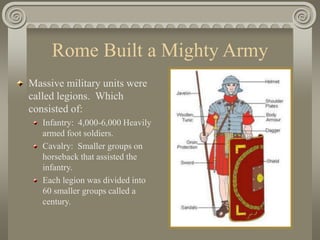
Massive military units were
called legions. Which
consisted of:
Infantry: 4,000-6,000 Heavily
armed foot soldiers.
Cavalry: Smaller groups on
horseback that assisted the
infantry.
Each legion was divided into
60 smaller groups called a
century.
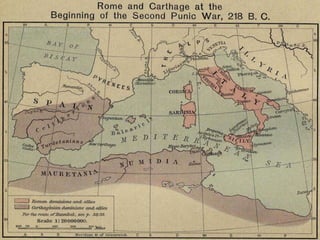
A Fight with Carthage
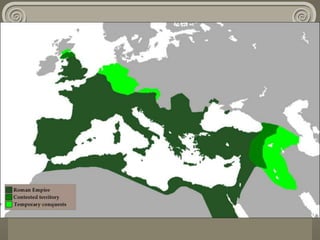
By 270 BC Rome had conquered all of
Italy. They went on to control northern
Africa (Carthage), Greece and parts of Asia
Minor. But the expansion also led to much
corruption.
Film: Ancient Rome’s Accomplishments
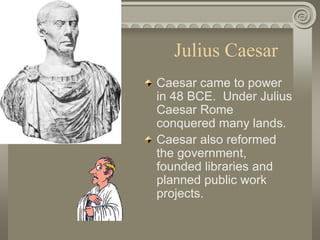
Julius Caesar
Caesar came to power
in 48 BCE. Under Julius
Caesar Rome
conquered many lands.
Caesar also reformed
the government,
founded libraries and
planned public work
projects.
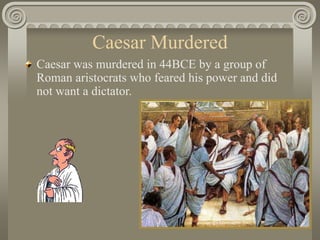
Caesar Murdered
Caesar was murdered in 44BCE by a group of
Roman aristocrats who feared his power and did
not want a dictator.
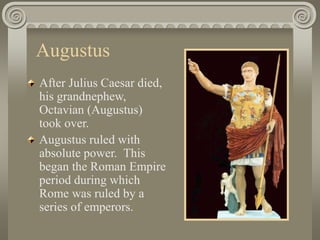
Augustus
After Julius Caesar died,
his grandnephew,
Octavian (Augustus)
took over.
Augustus ruled with
absolute power. This
began the Roman Empire
period during which
Rome was ruled by a
series of emperors.
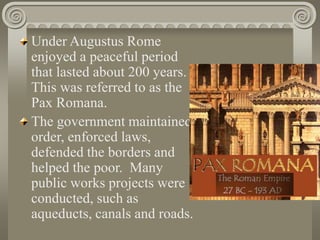
Under Augustus Rome
enjoyed a peaceful period
that lasted about 200 years.
This was referred to as the
Pax Romana.
The government maintained
order, enforced laws,
defended the borders and
helped the poor. Many
public works projects were
conducted, such as
aqueducts, canals and roads.
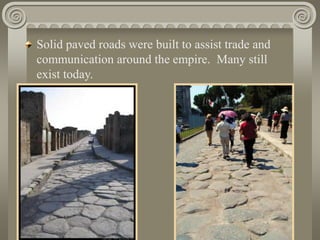
Solid paved roads were built to assist trade and
communication around the empire. Many still
exist today.
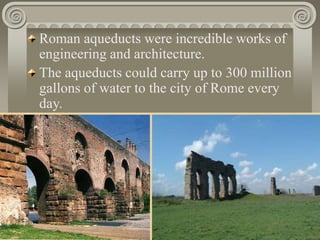
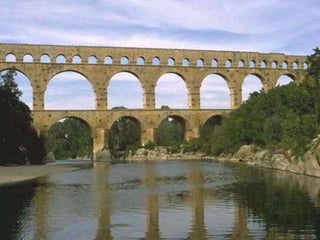
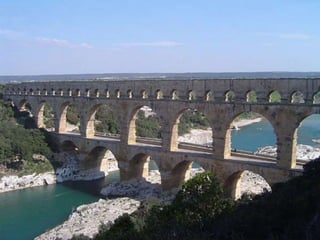
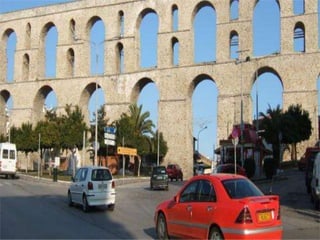
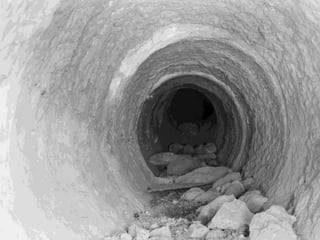
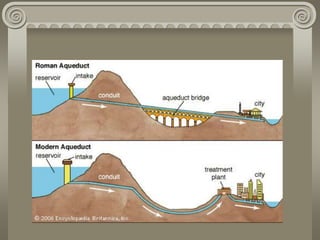
Roman aqueducts were incredible works of
engineering and architecture.
The aqueducts could carry up to 300 million
gallons of water to the city of Rome every
day.
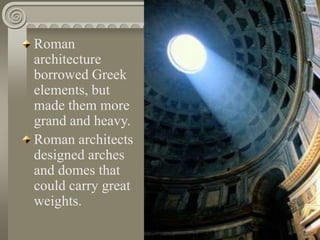
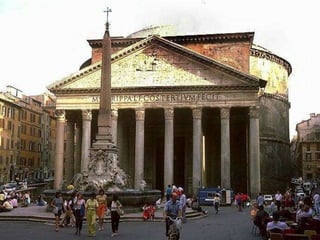
Roman
architecture
borrowed Greek
elements, but
made them more
grand and heavy.
Roman architects
designed arches
and domes that
could carry great
weights.
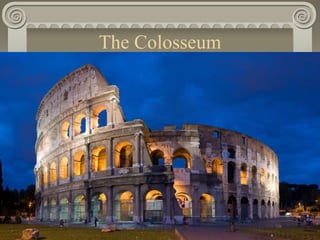
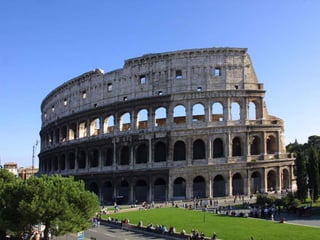
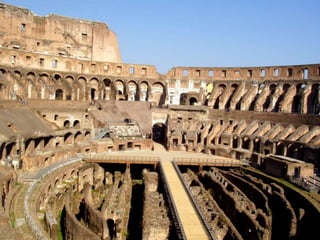
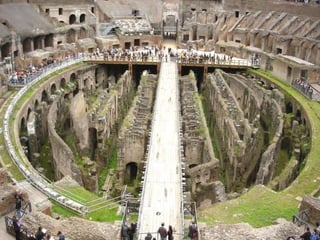
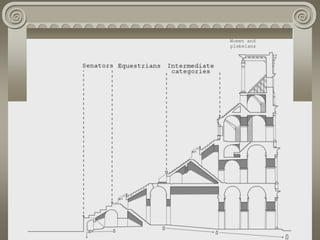
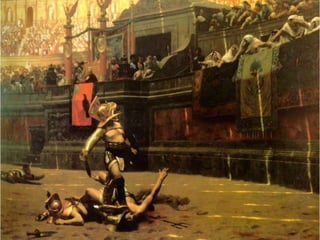
The Colosseum
Cultural Contributions
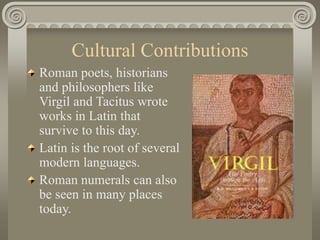
Roman poets, historians
and philosophers like
Virgil and Tacitus wrote
works in Latin that
survive to this day.
Latin is the root of several
modern languages.
Roman numerals can also
be seen in many places
today.
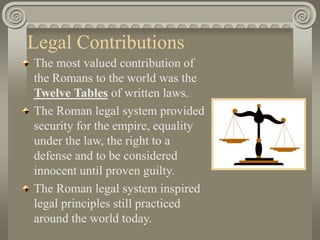
Legal Contributions
The most valued contribution of
the Romans to the world was the
Twelve Tables of written laws.
The Roman legal system provided
security for the empire, equality
under the law, the right to a
defense and to be considered
innocent until proven guilty.
The Roman legal system inspired
legal principles still practiced
around the world today.
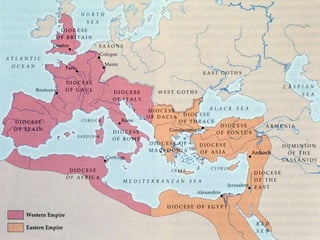
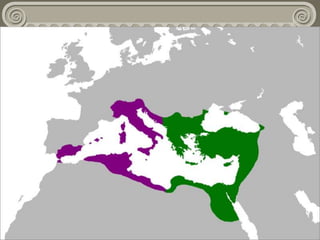
Decline and Fall
Rome wasn’t built in a day and it took a
long time to decline. Eventually the
emperor Diocletian divided the empire into
eastern and western empires.
While the western empire fell into chaos
and was invaded, the eastern empire
survived as a center of trade and culture and
became the Byzantine Empire.
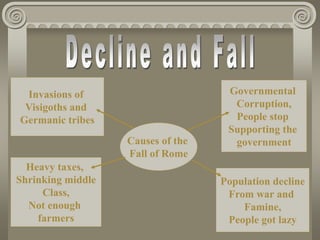
Causes of the
Fall of Rome
Invasions of
Visigoths and
Germanic tribes
Heavy taxes,
Shrinking middle
Class,
Not enough
farmers
Governmental
Corruption,
People stop
Supporting the
government
Population decline
From war and
Famine,
People got lazy
Roman Republic

Roman Republic

  • 1.
  • 2.
    Geography Rome is locatedon the peninsula of Italy. The Mediterranean Sea provides transportation and food. Italy provides fertile plains and river valleys for food and easy communication.
  • 3.
    Roman Religious Ideals Romanswere polytheistic, believing in many gods and spirits. Knowledge of the Greek Gods filtered into Roman culture. This is known as cultural diffusion. The Greek God Zeus became the almighty Roman God Jupiter. The Greek Goddess Hera became the Roman Goddess Juno.
  • 4.
    The Roman Republic Romewas founded about 509 BCE. Romans founded a new type of government called a republic. In a republic people chose officials to represent them. The highest form of government in Rome was the Senate. Senators were wealthy landowners (called Patricians.)
  • 5.
    The Roman RepublicCont… The senators elected two Consuls, whose job it was to run the government and command the army.
  • 7.
    Romans Valued FamilyTies Roman families were headed by the eldest male. The Romans emphasized discipline, strength, and loyalty. Women had many rights and duties in Roman society. She did not, however have the key right, the right to vote. Officially, the Roman women were expected to remain in the background.
  • 8.
    Society was DividedInto Classes Upper class Romans were known as patricians. These people held nearly all the important political offices. Common framers, artisans, and merchants were known as plebeians. These two classes were based on birth alone. The line between the two classes was extremely rigid.
  • 9.
    Rome Built aMighty Army Both patricians and plebeians lead double lives as farmers and soldiers because of the constant threat of war. All male citizens were required to serve in the army, and no one could hold public office until he served 10 years as a soldier.
  • 10.
    Rome Built aMighty Army Massive military units were called legions. Which consisted of: Infantry: 4,000-6,000 Heavily armed foot soldiers. Cavalry: Smaller groups on horseback that assisted the infantry. Each legion was divided into 60 smaller groups called a century.
  • 12.
    A Fight withCarthage By 270 BC Rome had conquered all of Italy. They went on to control northern Africa (Carthage), Greece and parts of Asia Minor. But the expansion also led to much corruption.
  • 14.
    Film: Ancient Rome’sAccomplishments
  • 15.
    Julius Caesar Caesar cameto power in 48 BCE. Under Julius Caesar Rome conquered many lands. Caesar also reformed the government, founded libraries and planned public work projects.
  • 16.
    Caesar Murdered Caesar wasmurdered in 44BCE by a group of Roman aristocrats who feared his power and did not want a dictator.
  • 17.
    Augustus After Julius Caesardied, his grandnephew, Octavian (Augustus) took over. Augustus ruled with absolute power. This began the Roman Empire period during which Rome was ruled by a series of emperors.
  • 18.
    Under Augustus Rome enjoyeda peaceful period that lasted about 200 years. This was referred to as the Pax Romana. The government maintained order, enforced laws, defended the borders and helped the poor. Many public works projects were conducted, such as aqueducts, canals and roads.
  • 19.
    Solid paved roadswere built to assist trade and communication around the empire. Many still exist today.
  • 20.
    Roman aqueducts wereincredible works of engineering and architecture. The aqueducts could carry up to 300 million gallons of water to the city of Rome every day.
  • 26.
    Roman architecture borrowed Greek elements, but madethem more grand and heavy. Roman architects designed arches and domes that could carry great weights.
  • 28.
  • 36.
    Cultural Contributions Roman poets,historians and philosophers like Virgil and Tacitus wrote works in Latin that survive to this day. Latin is the root of several modern languages. Roman numerals can also be seen in many places today.
  • 37.
    Legal Contributions The mostvalued contribution of the Romans to the world was the Twelve Tables of written laws. The Roman legal system provided security for the empire, equality under the law, the right to a defense and to be considered innocent until proven guilty. The Roman legal system inspired legal principles still practiced around the world today.
  • 38.
    Decline and Fall Romewasn’t built in a day and it took a long time to decline. Eventually the emperor Diocletian divided the empire into eastern and western empires. While the western empire fell into chaos and was invaded, the eastern empire survived as a center of trade and culture and became the Byzantine Empire.
  • 40.
    Causes of the Fallof Rome Invasions of Visigoths and Germanic tribes Heavy taxes, Shrinking middle Class, Not enough farmers Governmental Corruption, People stop Supporting the government Population decline From war and Famine, People got lazy