Roll your own customer experience platform
Cleve Gibbon (@cleveg)
CMTO, Cognifide
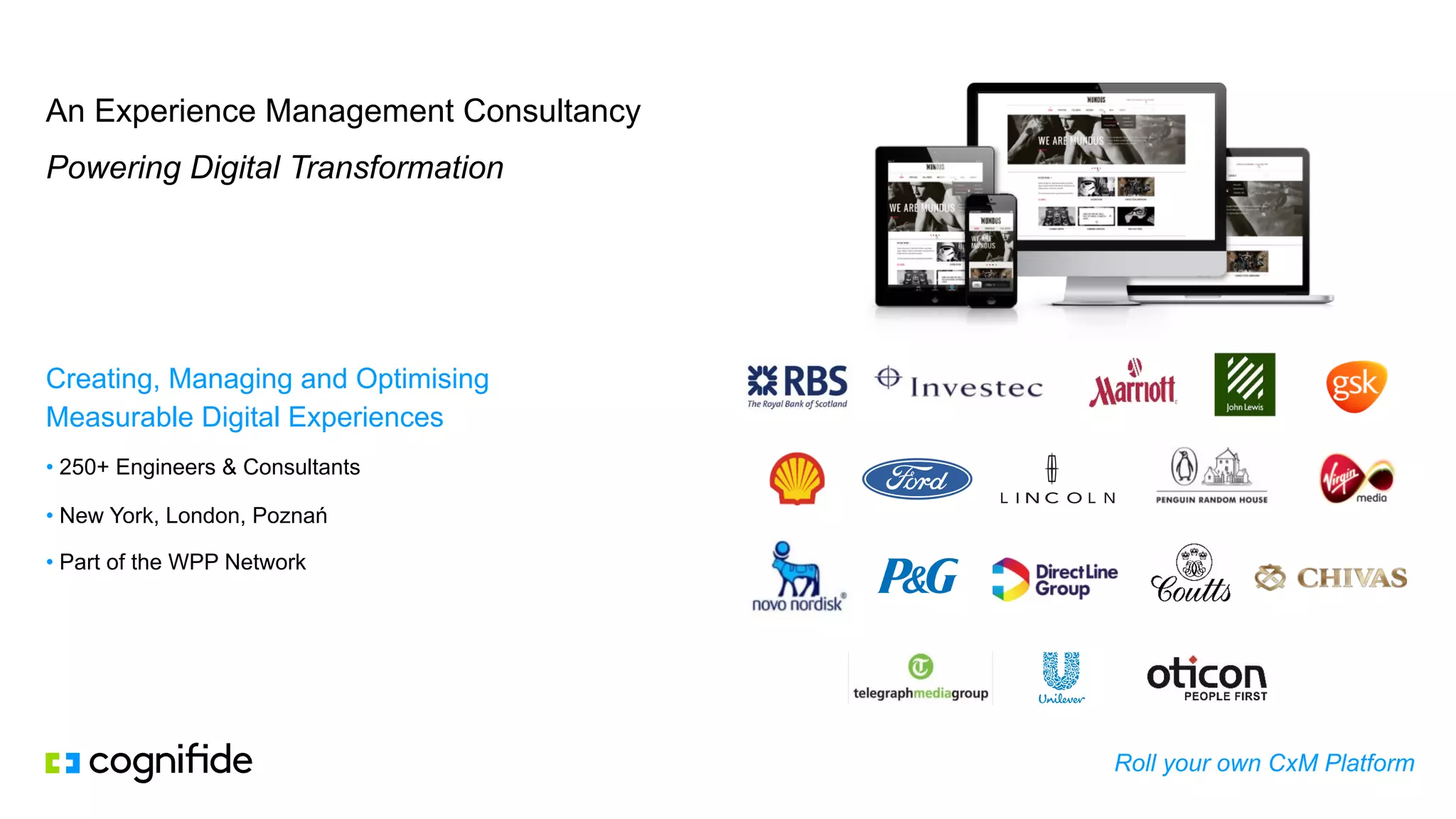
An Experience Management Consultancy
Powering Digital Transformation An Experience Management Consultancy
Powering Digital Transformation
Creating, Managing and Optimising
Measurable Digital Experiences
• 250+ Engineers & Consultants

• New York, London, Poznań
• Part of the WPP Network
Roll your own CxM Platform
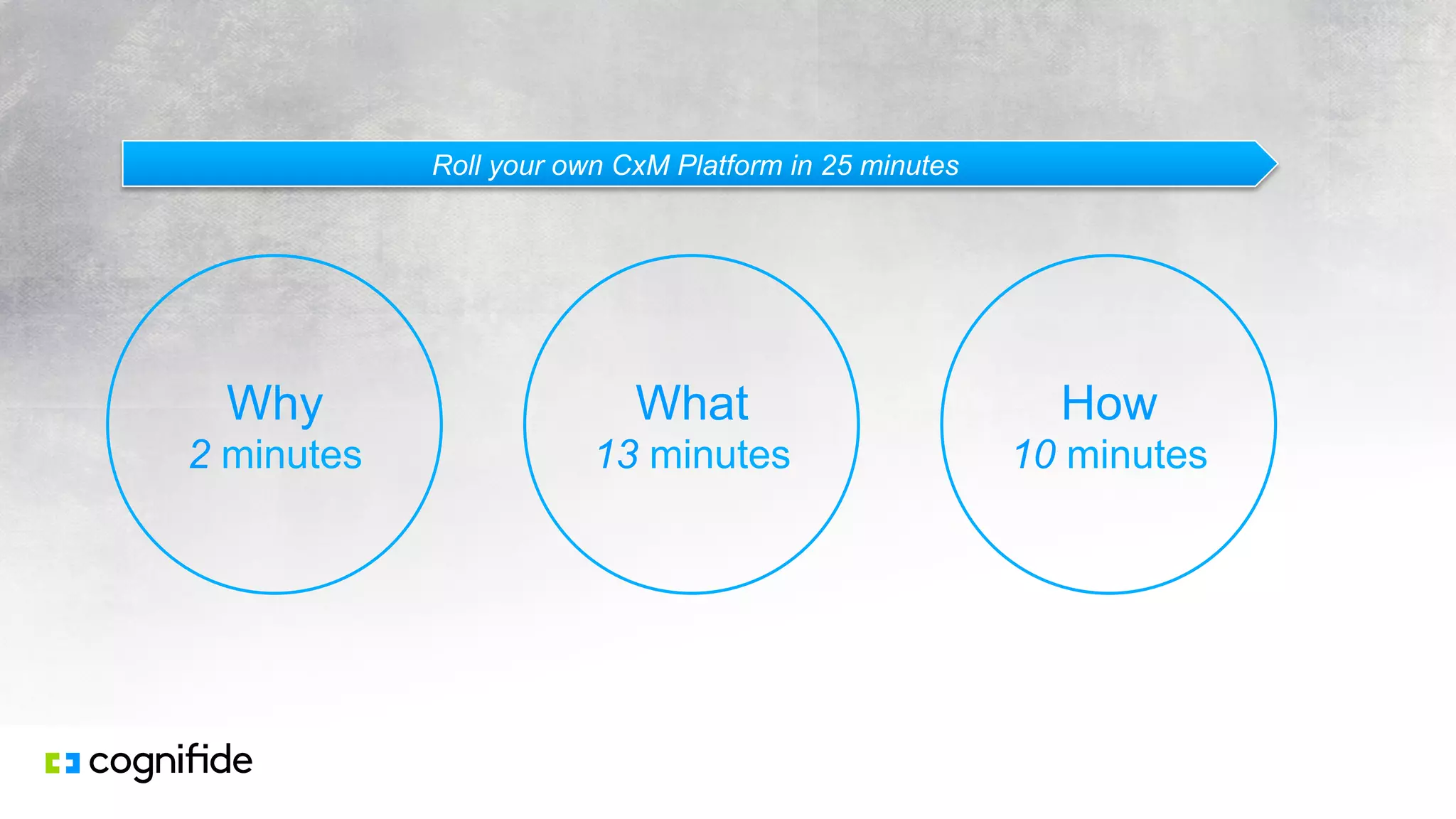
Why
2 minutes
Roll your own CxM Platform in 25 minutes
What
13 minutes
How
10 minutes
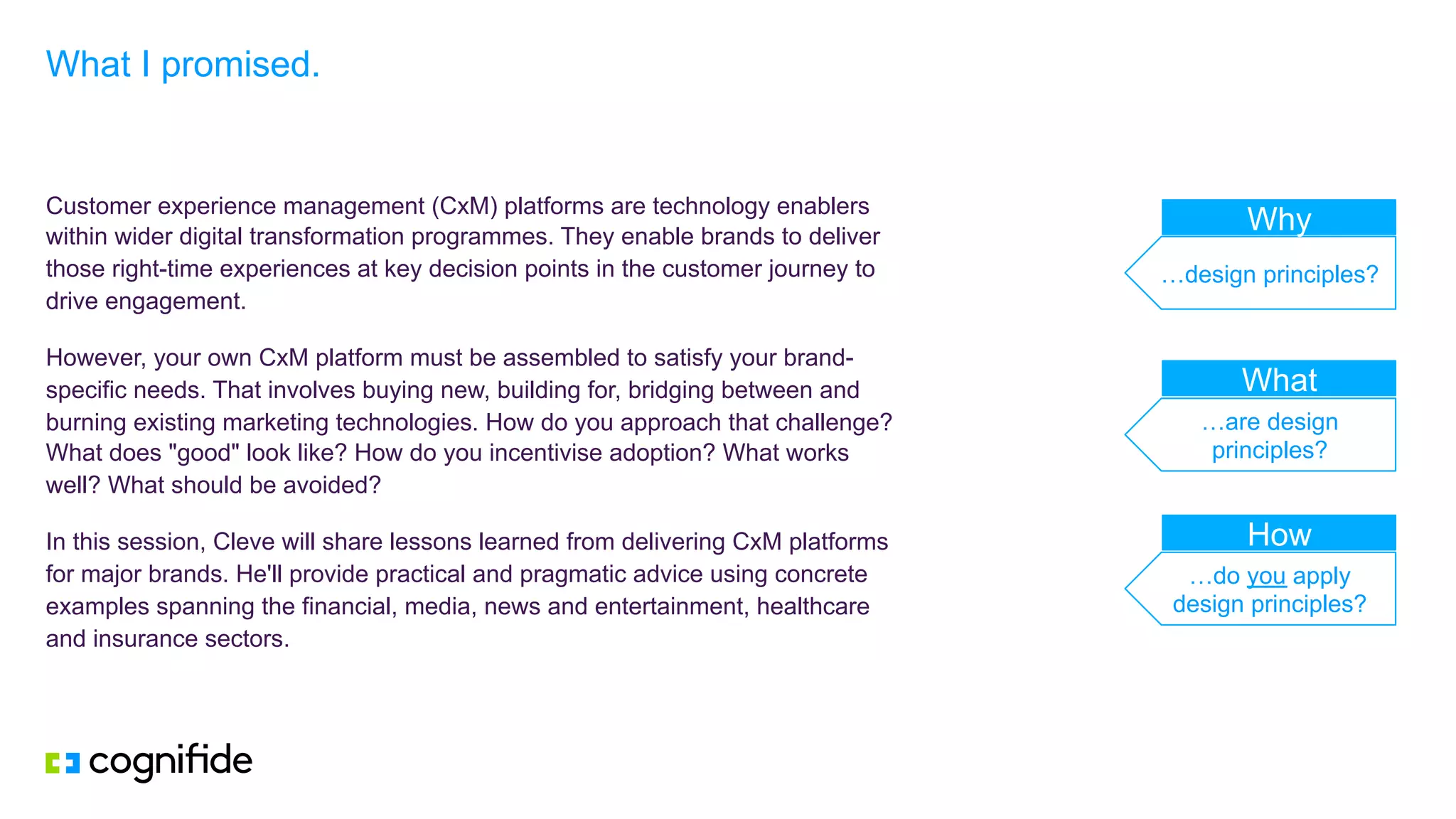
Customer experience management (CxM) platforms are technology enablers
within wider digital transformation programmes. They enable brands to deliver
those right-time experiences at key decision points in the customer journey to
drive engagement.
However, your own CxM platform must be assembled to satisfy your brand-
specific needs. That involves buying new, building for, bridging between and
burning existing marketing technologies. How do you approach that challenge?
What does "good" look like? How do you incentivise adoption? What works
well? What should be avoided?
In this session, Cleve will share lessons learned from delivering CxM platforms
for major brands. He'll provide practical and pragmatic advice using concrete
examples spanning the financial, media, news and entertainment, healthcare
and insurance sectors.
What I promised.
…design principles?
…are design
principles?
…do you apply
design principles?
Why
How
What
Why do we need design principles?
So the basics become basic.
Why do we need design principles,
to roll your own CXM Platform(s)?
So the basics become basic.
What is a design principle?
Accepted Actionable Advice.
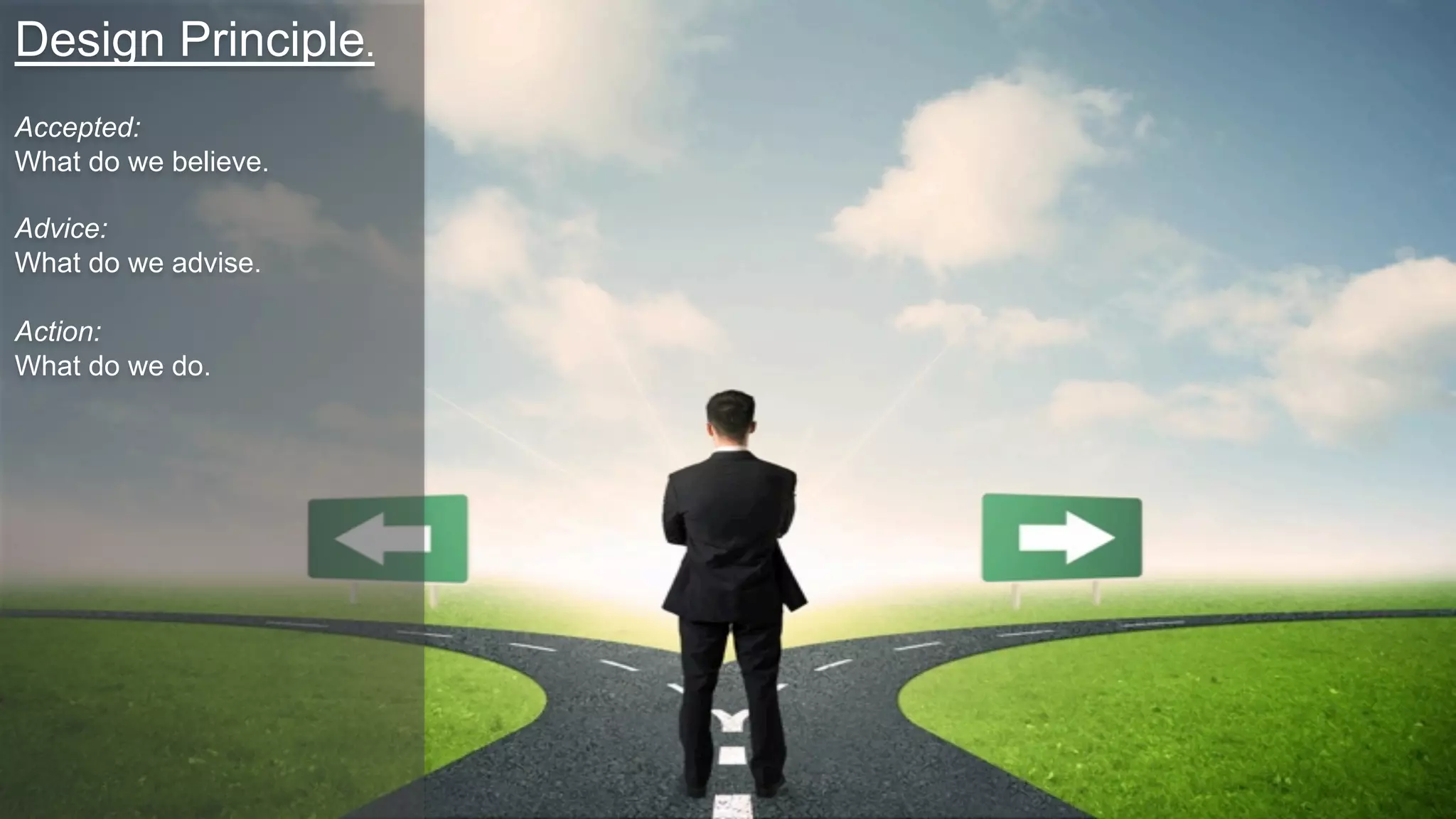
Design Principle.
Accepted:
What do we believe.
Advice:
What do we advise.
Action:
What do we do.
And
so on..
consider Evaluate Buy Experience
UserChannelsenterprise
Customer
Journey
Print
Web
Mobile
Signage
IT
Agency/
Partner
CX
Steps
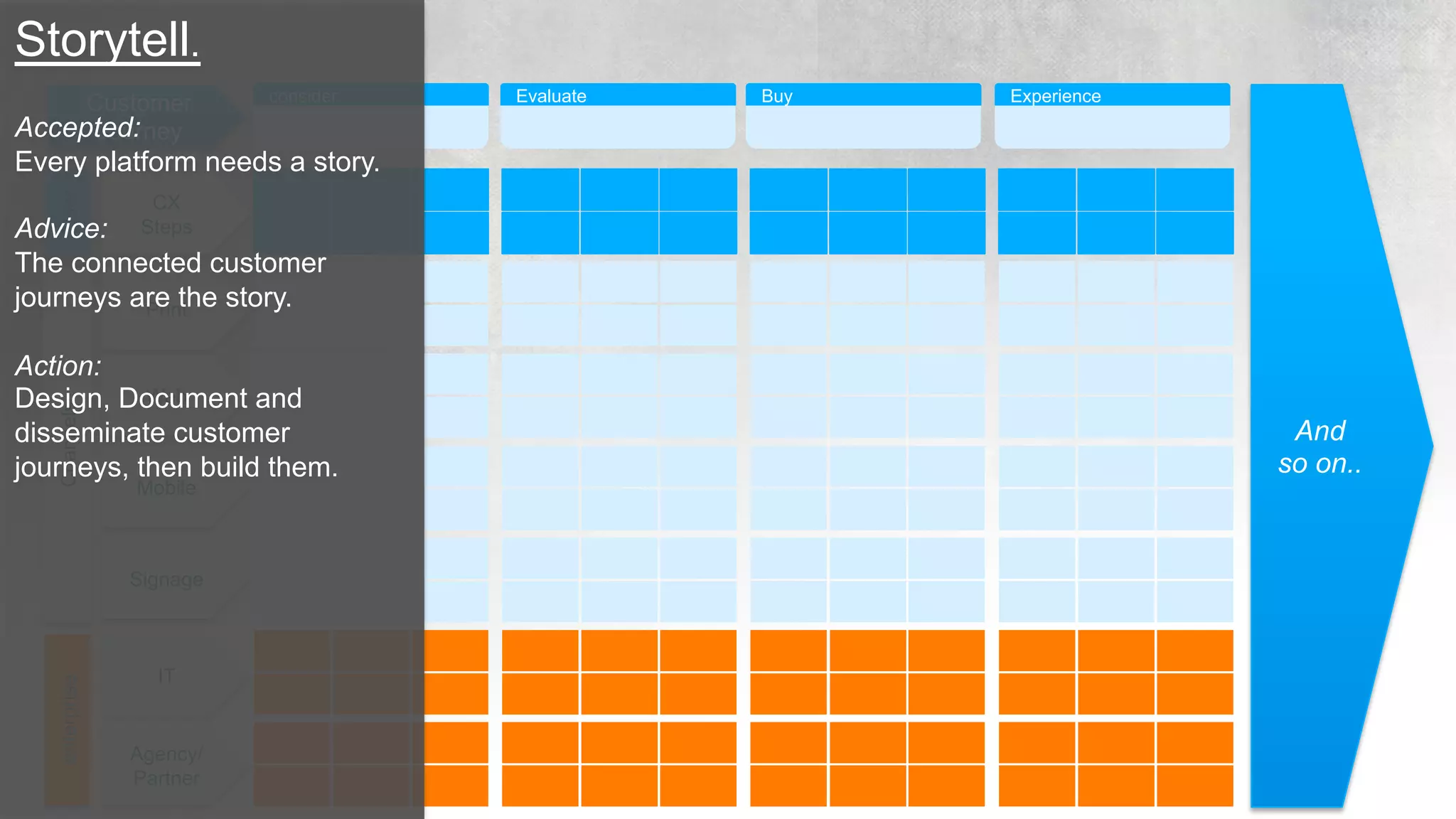
Storytell.
Accepted:
Every platform needs a story.
Advice:
The connected customer
journeys are the story.
Action:
Design, Document and
disseminate customer
journeys, then build them.
Capabilities.
Accepted:
Features are Frenemies.
Advice:
Make Capabilities Fungible.
Action:
Find your unit of measurement
for each core capability, then
measure.
Decouple.
Accepted:
Every platform has assets.
Advice:
Separate the production of
assets from the underlying
platform.
Action:
Use standards, guidelines and
APIs to enforce separation.
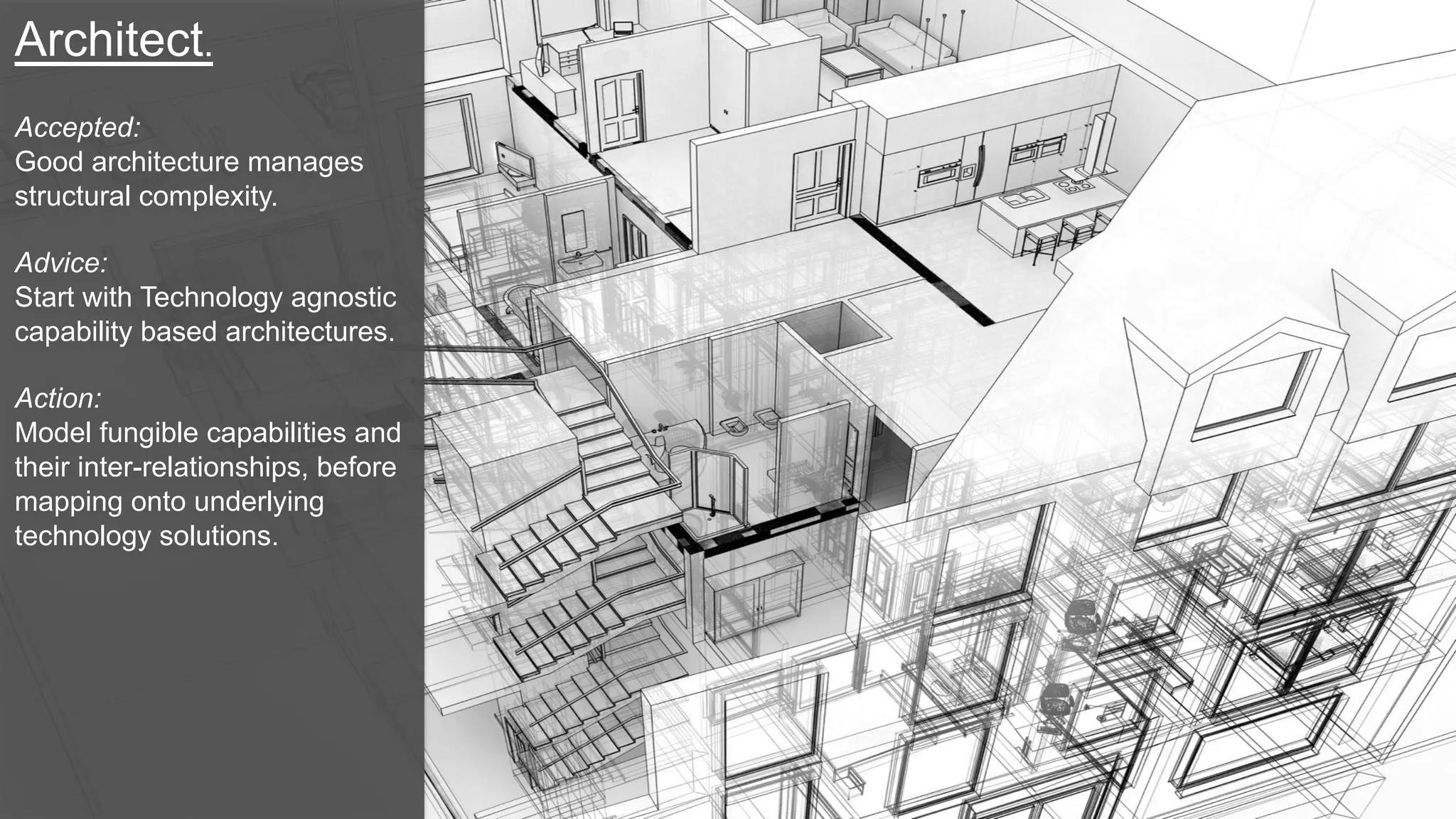
Architect.
Accepted:
Good architecture manages
structural complexity.
Advice:
Start with Technology agnostic
capability based architectures.
Action:
Model fungible capabilities and
their inter-relationships, before
mapping onto underlying
technology solutions.
govern.
Accepted:
Good Governance manages
Behavioural complexity.
Advice:
Use Governance for devolved
and accelerated decision
making.
Action:
Design Governance
Frameworks to:
(1)  Assign ownership
(2)  Align on Policy &
Standards
Creative
Production.
Accepted:
Marketing is risk tolerant.
Advice:
Enable creative production.
Action:
Platforms must enable
agencies to control both
Content and the UX to free
them create without
compromise.
Technical
Production.
Accepted:
IT is risk adverse.
Advice:
Manage the platform as a
product.
Action:
Give it owner, with executive
blessing, develop a product
roadmap, and apply lean and
agile principles.
Orchestrate.
Accepted:
Stacks and platforms need
owners.
Advice:
Brands should own their
technology from the get go.
Action:
Map out platform capabilities,
skills, resources and grow
internal competencies to
orchestrate design, delivery
and deployment.
Connect.
Accepted:
Integrate is NOT the same
Interoperate.
Advice:
Make conscious decisions
between the two.
Action:
when mapping technology onto
capabilities, focus your
attentions on those integrated
capabilities.
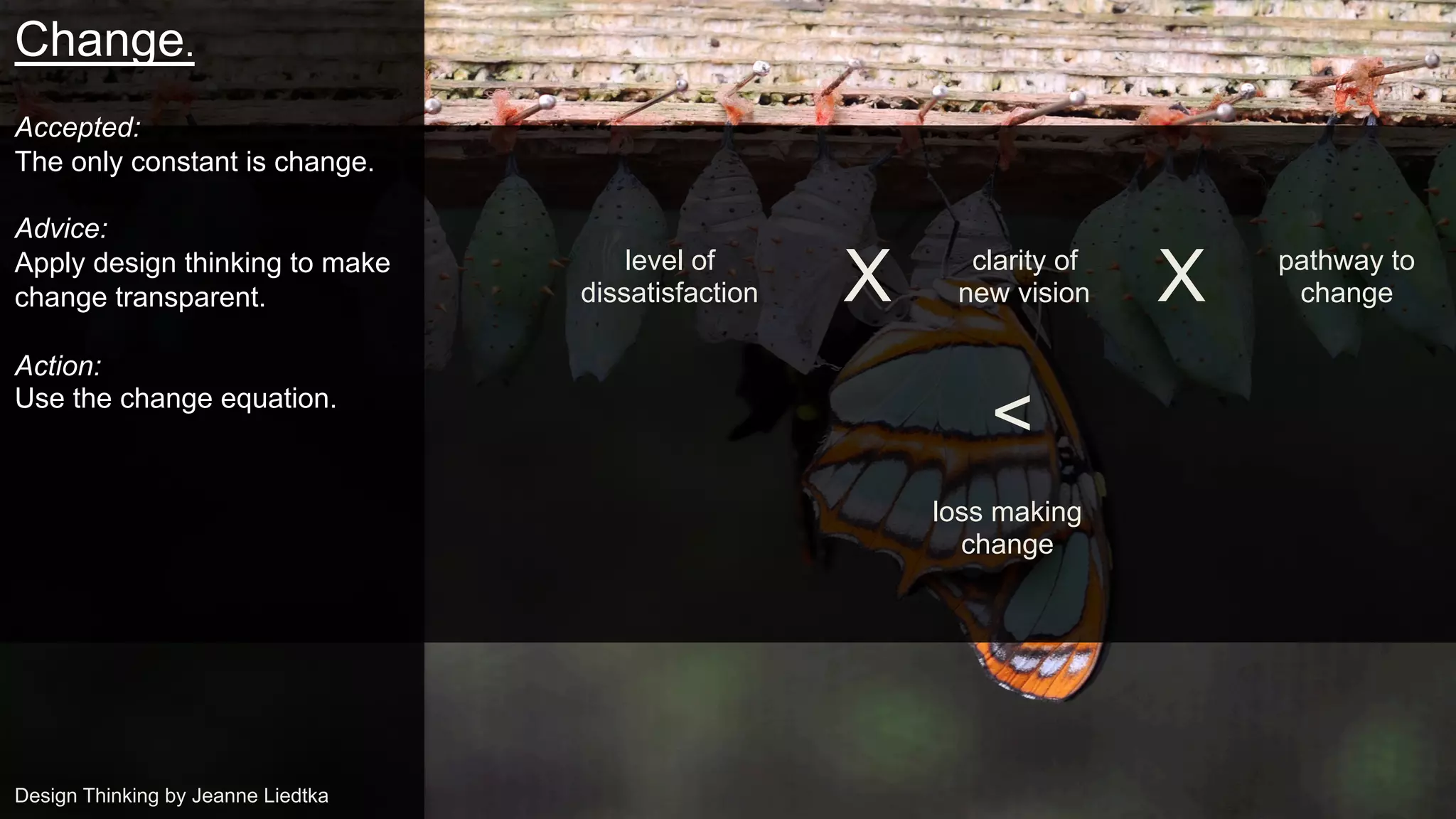
level of
dissatisfaction
clarity of
new vision
pathway to
changeX
<
loss making
change
X
Change.
Accepted:
The only constant is change.
Advice:
Apply design thinking to make
change transparent.
Action:
Use the change equation.
Design Thinking by Jeanne Liedtka
EVOLVE
Accepted:
It’s never one and done!
Advice:
Think Big, Start Small and co-
create a roadmap to success.
Action:
Create a solution roadmap that
overlays the pathway to change.
Customers.
Accepted:
Internal vs external.
Advice:
Deliver equally amazing
experiences for both
consumers and authors.
Action:
Design content production
journeys and user interfaces to
enhance the author
experience.
Operate.
Accepted:
Build sustainable platforms.
Advice:
Design to operate (rather than
launch), then build to last.
Action:
Define what success looks like
for launch + 100 days.
No campaign survives
first contact with real
customers
Improve.
Accepted:
You cannot manage what you
cannot measure.
Advice:
Tie platform benefits back to
business benefits.
Action:
Benchmark current state,
define KPIs, create dashboards
and track business
performance as benefits are
realised.
Signal.
Accepted:
The marketing technology
landscape is noisy.
Advice:
Step back from the technology
noise, and find your capability-
led signal.
Action:
map every technology against
a fungible capability and drive
platform decision making with
facts and not feelings.
If technology is enabler
for digital business…
…why does Marketing often
feel disabled with IT?
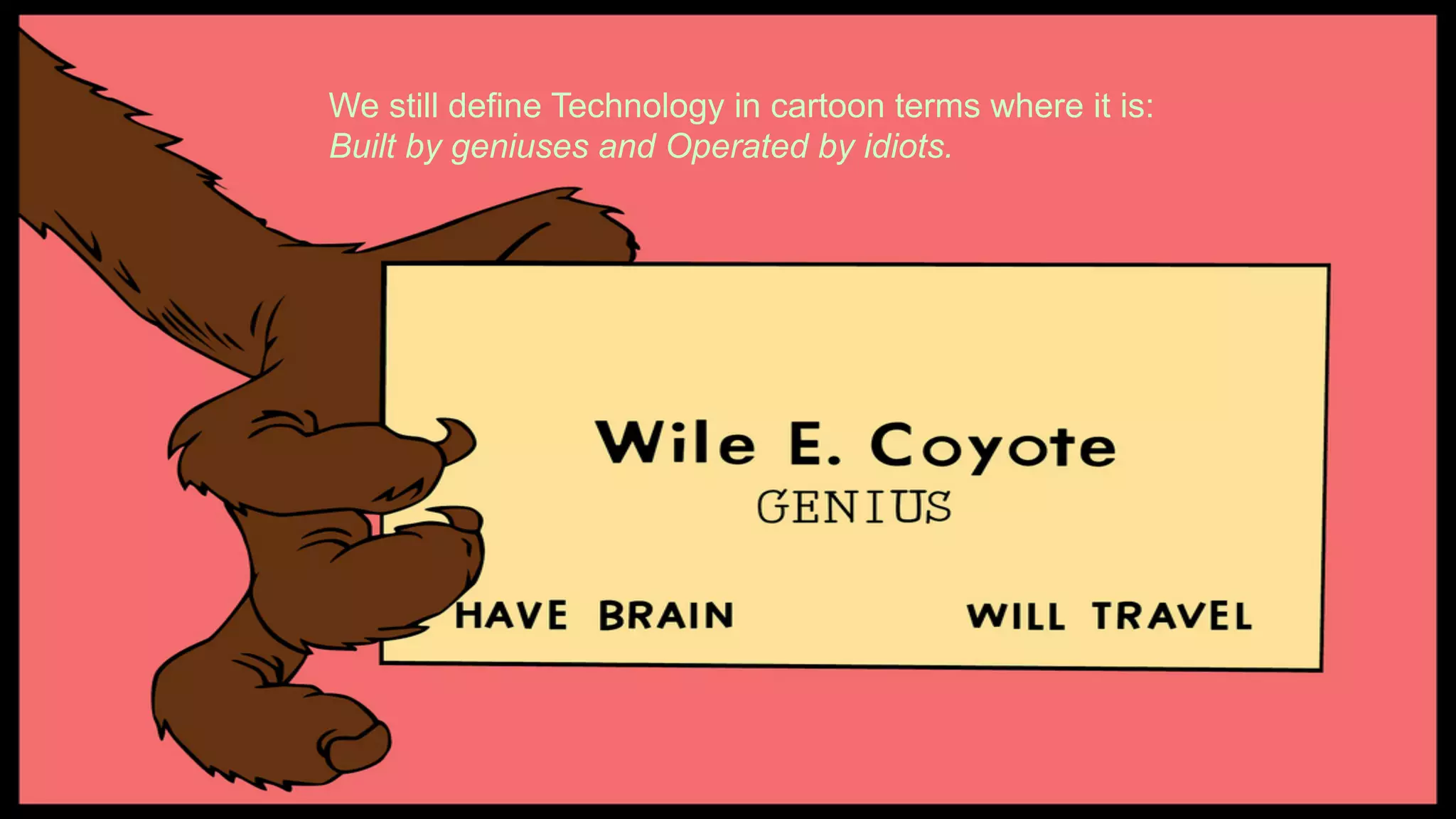
We still define Technology in cartoon terms where it is:
Built by geniuses and Operated by idiots.
Experience is a Strategic Challenge
User
Experience
30%
Technology
70%
Technology
40%
Content,
Consumer &
Author Experience
60%
Focus on what makes you different – the experience.
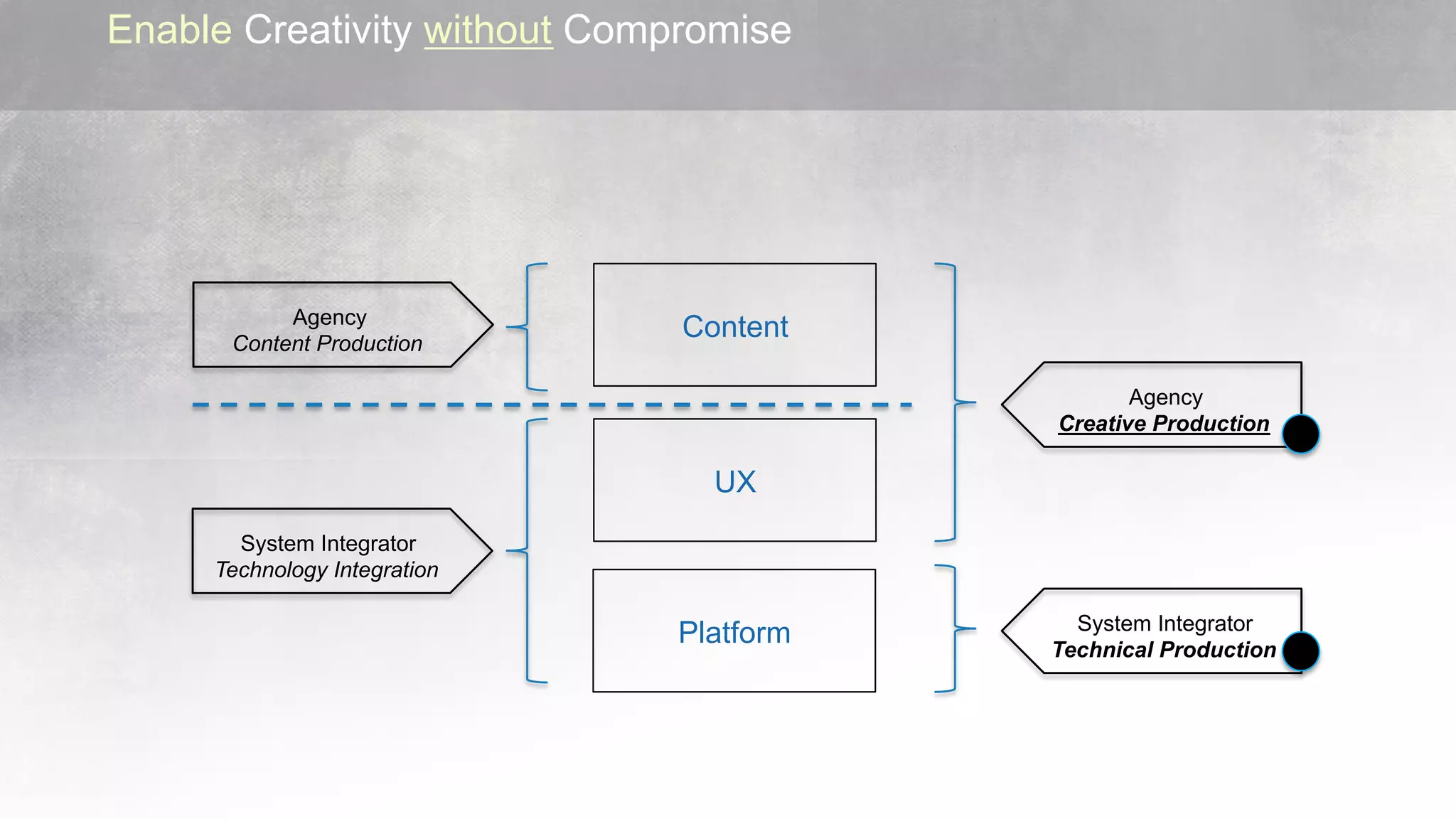
Content
UX
Platform
Agency
Content Production
System Integrator
Technology Integration
Agency
Creative Production
System Integrator
Technical Production
Enable Creativity without Compromise
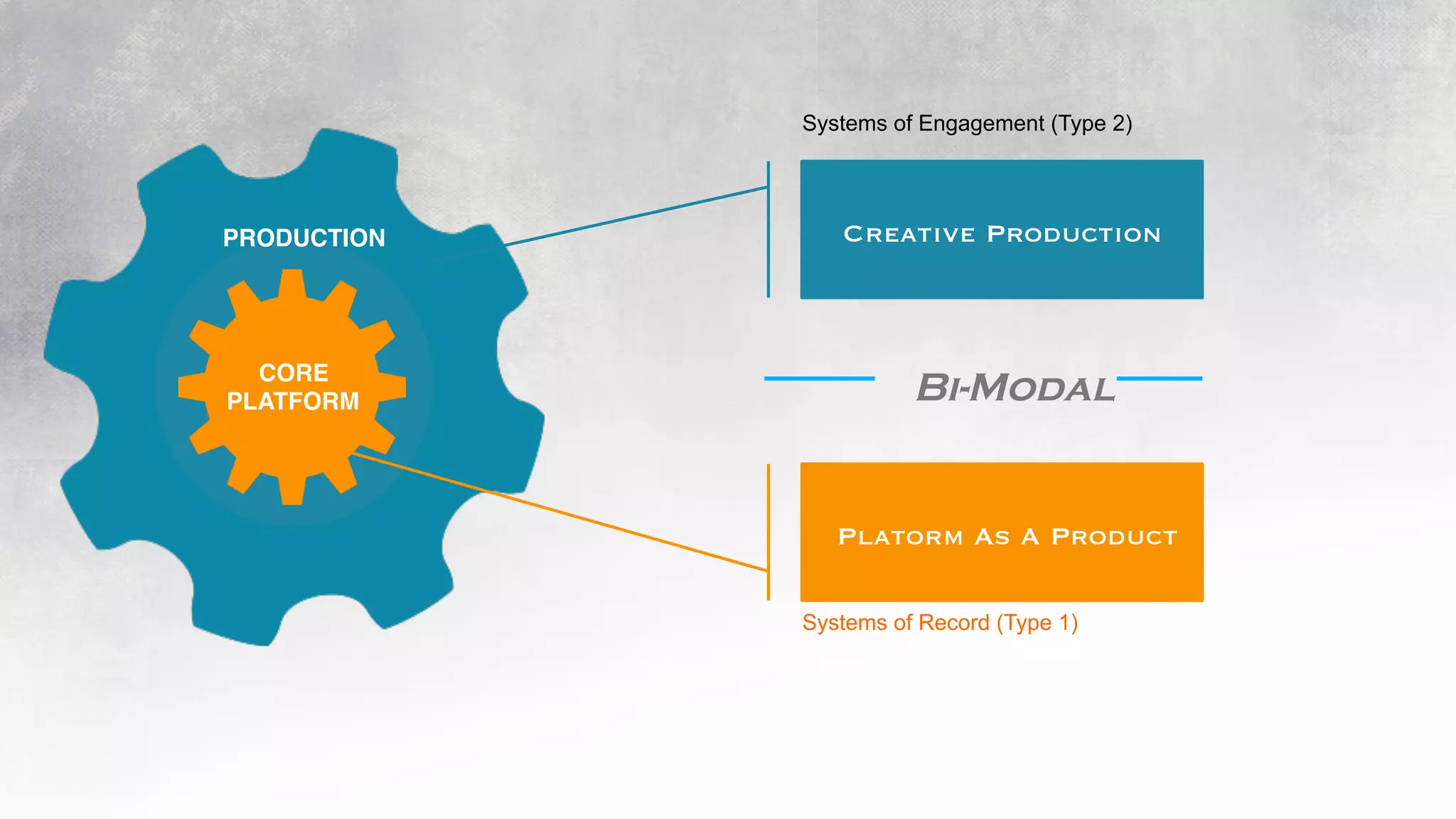
PRODUCTION
CORE
PLATFORM
Creative Production
Systems of Engagement (Type 2)
Platorm As A Product
Systems of Record (Type 1)
Bi-Modal
PRODUCTION
CORE
PLATFORM
Decouple
we need to
Assets from the platform
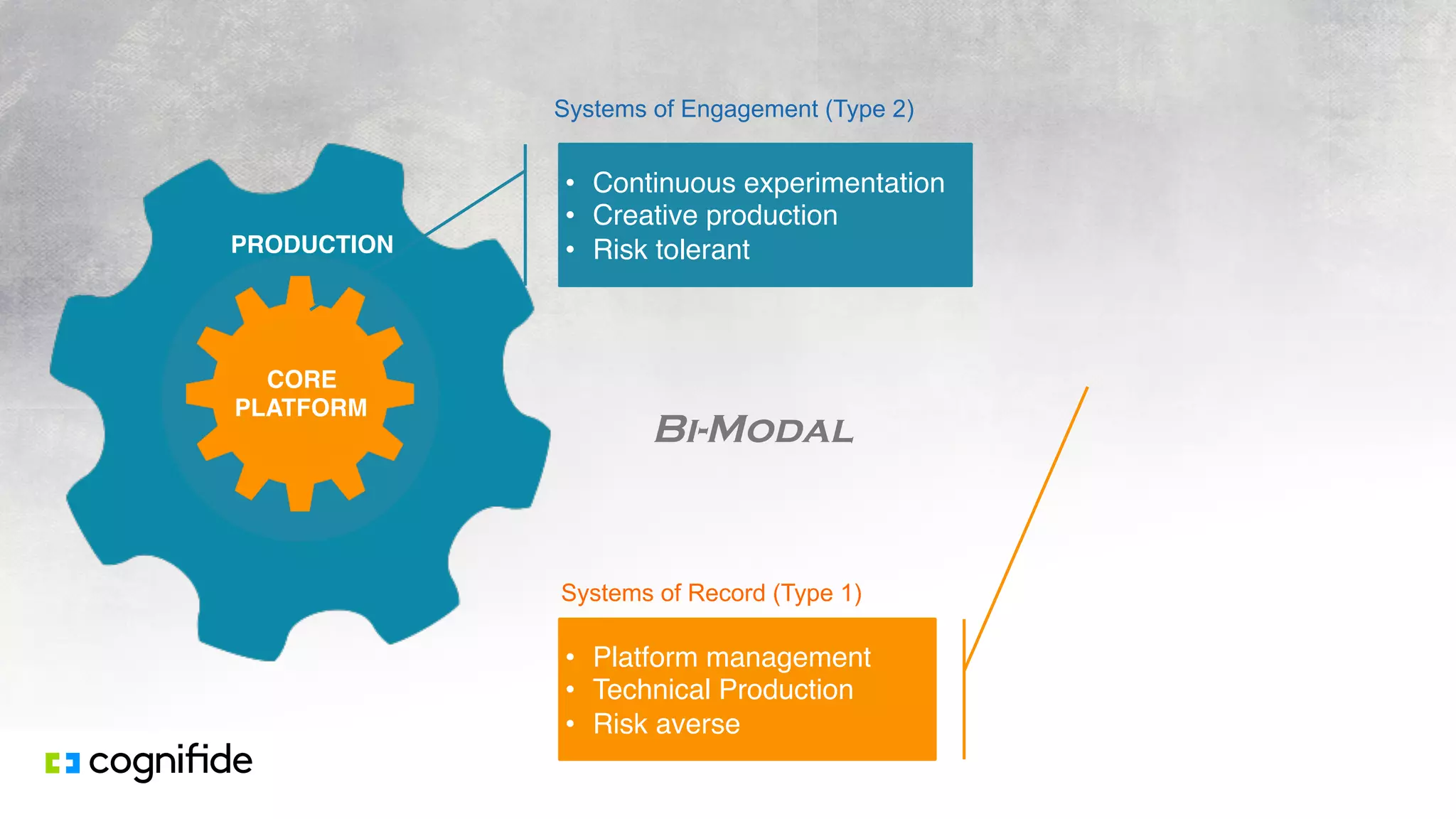
•  Platform management
•  Technical Production
•  Risk averse
PRODUCTION
CORE
PLATFORM
•  Continuous experimentation
•  Creative production
•  Risk tolerant
Systems of Engagement (Type 2)
Systems of Record (Type 1)
Bi-Modal
The global Digital Estate,
enables storytellers to tell,
the connected customer journey story.
We need to proactively manage
our global digital Estate.
Global
Digital Estate
Capabilities
Architect
Govern
Evolve
Advise. Deliver. Support.
Images courtesy of

Roll Your Own Customer Experience Platform By Cleve Gibbon

  • 1.
    Roll your owncustomer experience platform Cleve Gibbon (@cleveg) CMTO, Cognifide
  • 2.
    An Experience ManagementConsultancy Powering Digital Transformation An Experience Management Consultancy Powering Digital Transformation Creating, Managing and Optimising Measurable Digital Experiences • 250+ Engineers & Consultants • New York, London, Poznań • Part of the WPP Network Roll your own CxM Platform
  • 3.
    Why 2 minutes Roll yourown CxM Platform in 25 minutes What 13 minutes How 10 minutes
  • 4.
    Customer experience management(CxM) platforms are technology enablers within wider digital transformation programmes. They enable brands to deliver those right-time experiences at key decision points in the customer journey to drive engagement. However, your own CxM platform must be assembled to satisfy your brand- specific needs. That involves buying new, building for, bridging between and burning existing marketing technologies. How do you approach that challenge? What does "good" look like? How do you incentivise adoption? What works well? What should be avoided? In this session, Cleve will share lessons learned from delivering CxM platforms for major brands. He'll provide practical and pragmatic advice using concrete examples spanning the financial, media, news and entertainment, healthcare and insurance sectors. What I promised. …design principles? …are design principles? …do you apply design principles? Why How What
  • 6.
    Why do weneed design principles? So the basics become basic.
  • 10.
    Why do weneed design principles, to roll your own CXM Platform(s)? So the basics become basic.
  • 12.
    What is adesign principle? Accepted Actionable Advice.
  • 13.
    Design Principle. Accepted: What dowe believe. Advice: What do we advise. Action: What do we do.
  • 14.
    And so on.. consider EvaluateBuy Experience UserChannelsenterprise Customer Journey Print Web Mobile Signage IT Agency/ Partner CX Steps Storytell. Accepted: Every platform needs a story. Advice: The connected customer journeys are the story. Action: Design, Document and disseminate customer journeys, then build them.
  • 15.
    Capabilities. Accepted: Features are Frenemies. Advice: MakeCapabilities Fungible. Action: Find your unit of measurement for each core capability, then measure.
  • 16.
    Decouple. Accepted: Every platform hasassets. Advice: Separate the production of assets from the underlying platform. Action: Use standards, guidelines and APIs to enforce separation.
  • 17.
    Architect. Accepted: Good architecture manages structuralcomplexity. Advice: Start with Technology agnostic capability based architectures. Action: Model fungible capabilities and their inter-relationships, before mapping onto underlying technology solutions.
  • 18.
    govern. Accepted: Good Governance manages Behaviouralcomplexity. Advice: Use Governance for devolved and accelerated decision making. Action: Design Governance Frameworks to: (1)  Assign ownership (2)  Align on Policy & Standards
  • 19.
    Creative Production. Accepted: Marketing is risktolerant. Advice: Enable creative production. Action: Platforms must enable agencies to control both Content and the UX to free them create without compromise.
  • 20.
    Technical Production. Accepted: IT is riskadverse. Advice: Manage the platform as a product. Action: Give it owner, with executive blessing, develop a product roadmap, and apply lean and agile principles.
  • 21.
    Orchestrate. Accepted: Stacks and platformsneed owners. Advice: Brands should own their technology from the get go. Action: Map out platform capabilities, skills, resources and grow internal competencies to orchestrate design, delivery and deployment.
  • 23.
    Connect. Accepted: Integrate is NOTthe same Interoperate. Advice: Make conscious decisions between the two. Action: when mapping technology onto capabilities, focus your attentions on those integrated capabilities.
  • 24.
    level of dissatisfaction clarity of newvision pathway to changeX < loss making change X Change. Accepted: The only constant is change. Advice: Apply design thinking to make change transparent. Action: Use the change equation. Design Thinking by Jeanne Liedtka
  • 25.
    EVOLVE Accepted: It’s never oneand done! Advice: Think Big, Start Small and co- create a roadmap to success. Action: Create a solution roadmap that overlays the pathway to change.
  • 26.
    Customers. Accepted: Internal vs external. Advice: Deliverequally amazing experiences for both consumers and authors. Action: Design content production journeys and user interfaces to enhance the author experience.
  • 27.
    Operate. Accepted: Build sustainable platforms. Advice: Designto operate (rather than launch), then build to last. Action: Define what success looks like for launch + 100 days. No campaign survives first contact with real customers
  • 28.
    Improve. Accepted: You cannot managewhat you cannot measure. Advice: Tie platform benefits back to business benefits. Action: Benchmark current state, define KPIs, create dashboards and track business performance as benefits are realised.
  • 29.
    Signal. Accepted: The marketing technology landscapeis noisy. Advice: Step back from the technology noise, and find your capability- led signal. Action: map every technology against a fungible capability and drive platform decision making with facts and not feelings.
  • 31.
    If technology isenabler for digital business… …why does Marketing often feel disabled with IT?
  • 32.
    We still defineTechnology in cartoon terms where it is: Built by geniuses and Operated by idiots.
  • 33.
    Experience is aStrategic Challenge User Experience 30% Technology 70% Technology 40% Content, Consumer & Author Experience 60% Focus on what makes you different – the experience.
  • 34.
    Content UX Platform Agency Content Production System Integrator TechnologyIntegration Agency Creative Production System Integrator Technical Production Enable Creativity without Compromise
  • 35.
    PRODUCTION CORE PLATFORM Creative Production Systems ofEngagement (Type 2) Platorm As A Product Systems of Record (Type 1) Bi-Modal
  • 36.
  • 37.
    •  Platform management • Technical Production •  Risk averse PRODUCTION CORE PLATFORM •  Continuous experimentation •  Creative production •  Risk tolerant Systems of Engagement (Type 2) Systems of Record (Type 1) Bi-Modal
  • 38.
    The global DigitalEstate, enables storytellers to tell, the connected customer journey story. We need to proactively manage our global digital Estate.
  • 39.
  • 40.
  • 43.