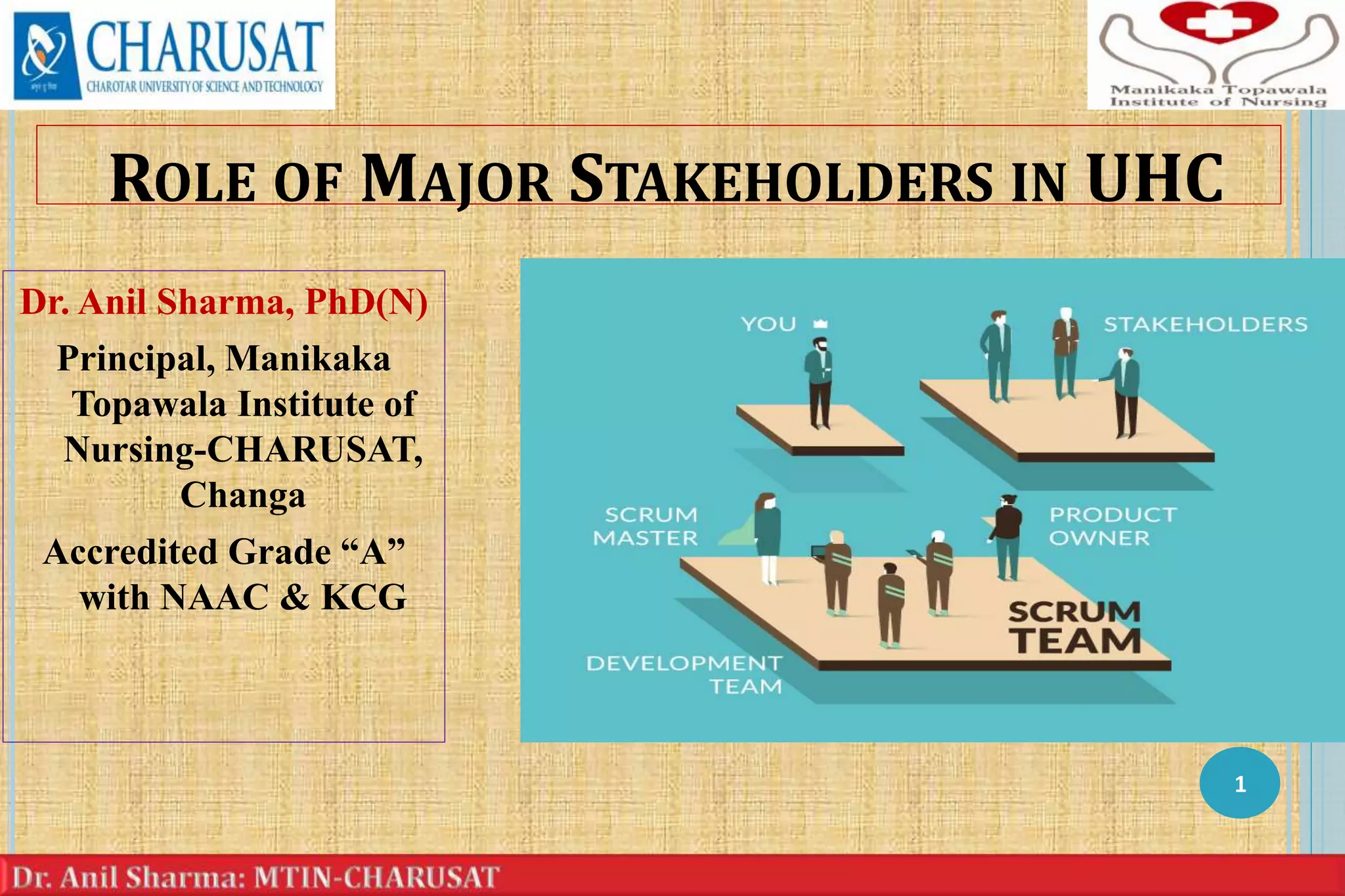
ROLE OF MAJOR STAKEHOLDERS IN UHC
Dr. Anil Sharma, PhD(N)
Principal, Manikaka
Topawala Institute of
Nursing-CHARUSAT,
Changa
Accredited Grade “A”
with NAAC & KCG
1
Flow of Presentation
 To understand what is Universal Health
Coverage (UHC)
 To know meaning of Stakeholders
 To identify major Stakeholders in UHC
 To understand role of major stakeholders
in UHC implementation
2
Universal Health Coverage
Universal Health Coverage: Everyone, Everywhere
Health is a human right. No one should get sick and
die just because they are poor, or because they
cannot access the health services they need
Dr Tedros Adhanom Ghebreyesus,-WHO Director-General
Two Key of UHC
1. Use of Health services: people need
2. Economic consequences for using health services
3
Investing in universal health coverage is
the invest in the long-term prosperity of
people and Nation
Universal health coverage happens when
political will is strong
4
Alarming Facts:
 Half of World population not able to obtain
essential health services
 >100 million people are being pushed into
extreme poverty because to pay for health
services.
 Catastrophic expenditures (almost 12
percent of the world’s population spend at
least 10 percent of their household
budgets on health expenses)
5
Stakeholders: What is a Stakeholder?
 Those groups without whose support the
organization would cease to exist.
Stanford Research Institute (SRI) in 1963
 Those groups who are vital to the survival and
success of the organization.
Freeman (2004)
 Any group or individual who can affect or is
affected by the achievement of the
organization objectives. Freeman (1984)
6
Stakeholders: Who are They?
A very common way of differentiating the
different kinds of stakeholders is to consider
groups of people who have classifiable
relationships with the organization
7
Who are
stakeholders
in UHC
Person, group or
organization who
have interest in
Universal Health
Coverage
Why to involve stakeholders?
Involving stake holders from the beginning
of health for all or Universal Health
Coverage ensure that decisions are
relevant to users and applicable in real
world situations.
8
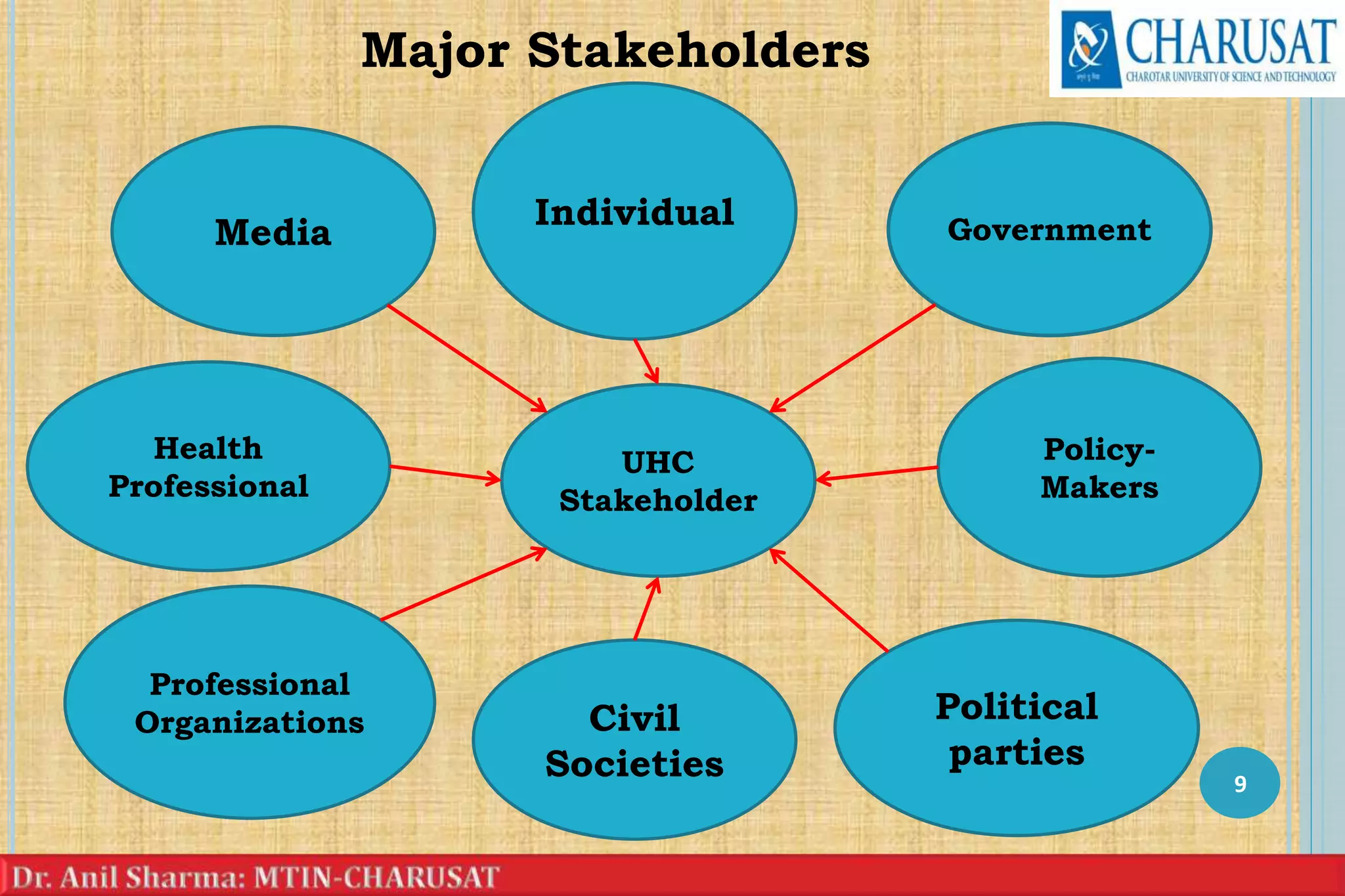
Major Stakeholders
9
UHC
Stakeholder
Professional
Organizations
Individual
Media
Civil
Societies
Political
parties
Policy-
Makers
Government
Health
Professional
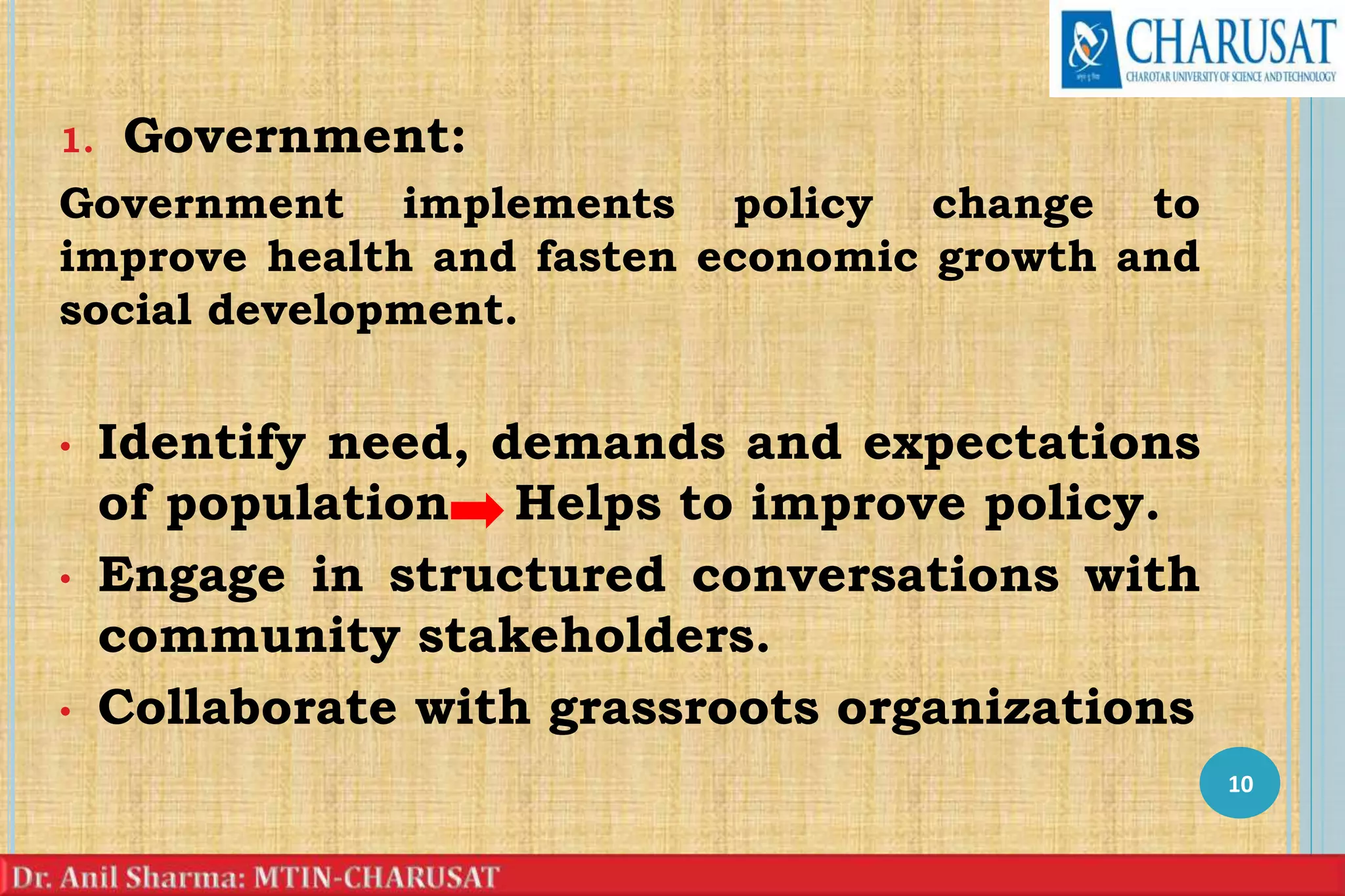
1. Government:
Government implements policy change to
improve health and fasten economic growth and
social development.
• Identify need, demands and expectations
of population Helps to improve policy.
• Engage in structured conversations with
community stakeholders.
• Collaborate with grassroots organizations
10
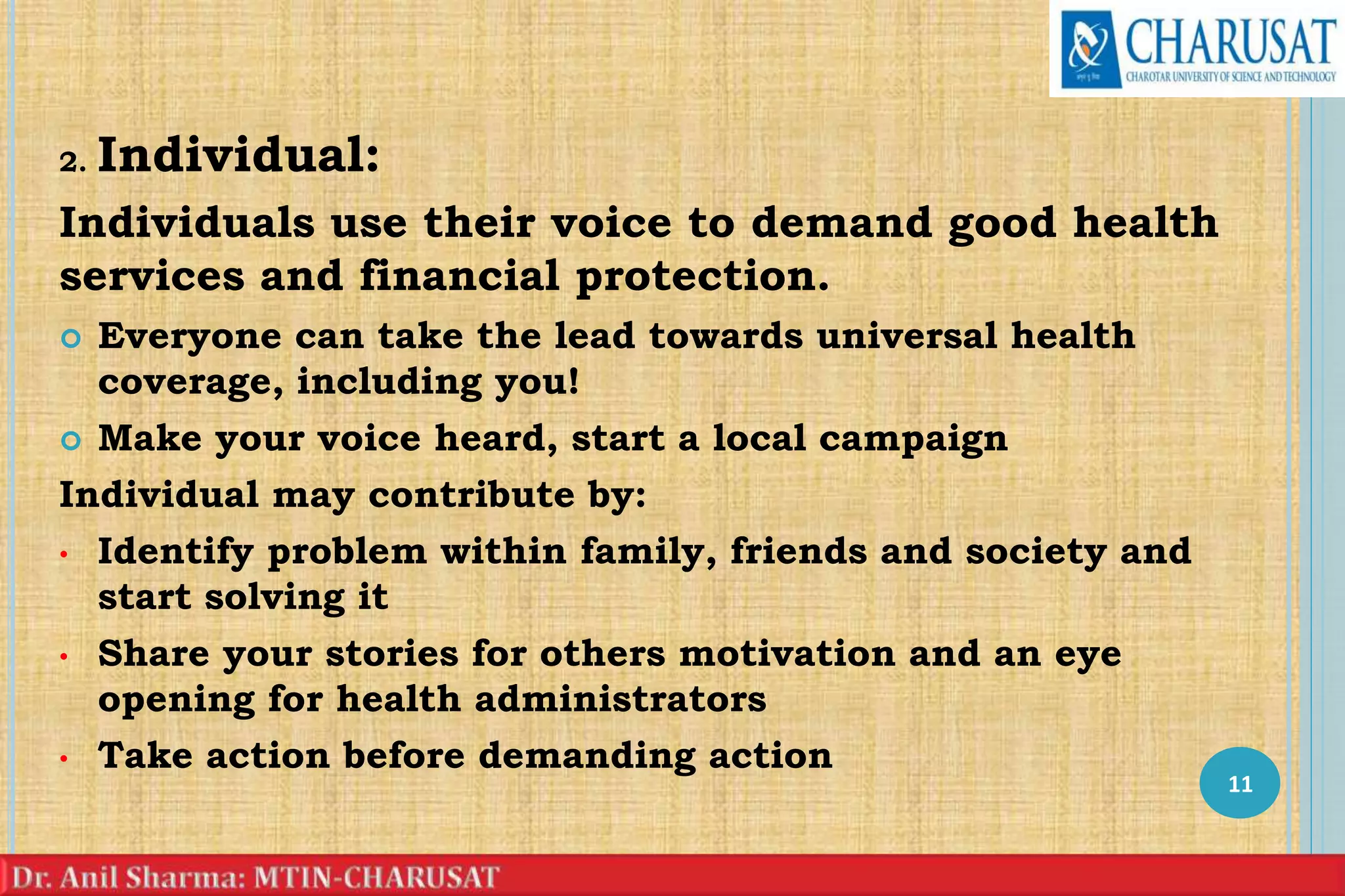
2. Individual:
Individuals use their voice to demand good health
services and financial protection.
 Everyone can take the lead towards universal health
coverage, including you!
 Make your voice heard, start a local campaign
Individual may contribute by:
• Identify problem within family, friends and society and
start solving it
• Share your stories for others motivation and an eye
opening for health administrators
• Take action before demanding action
11
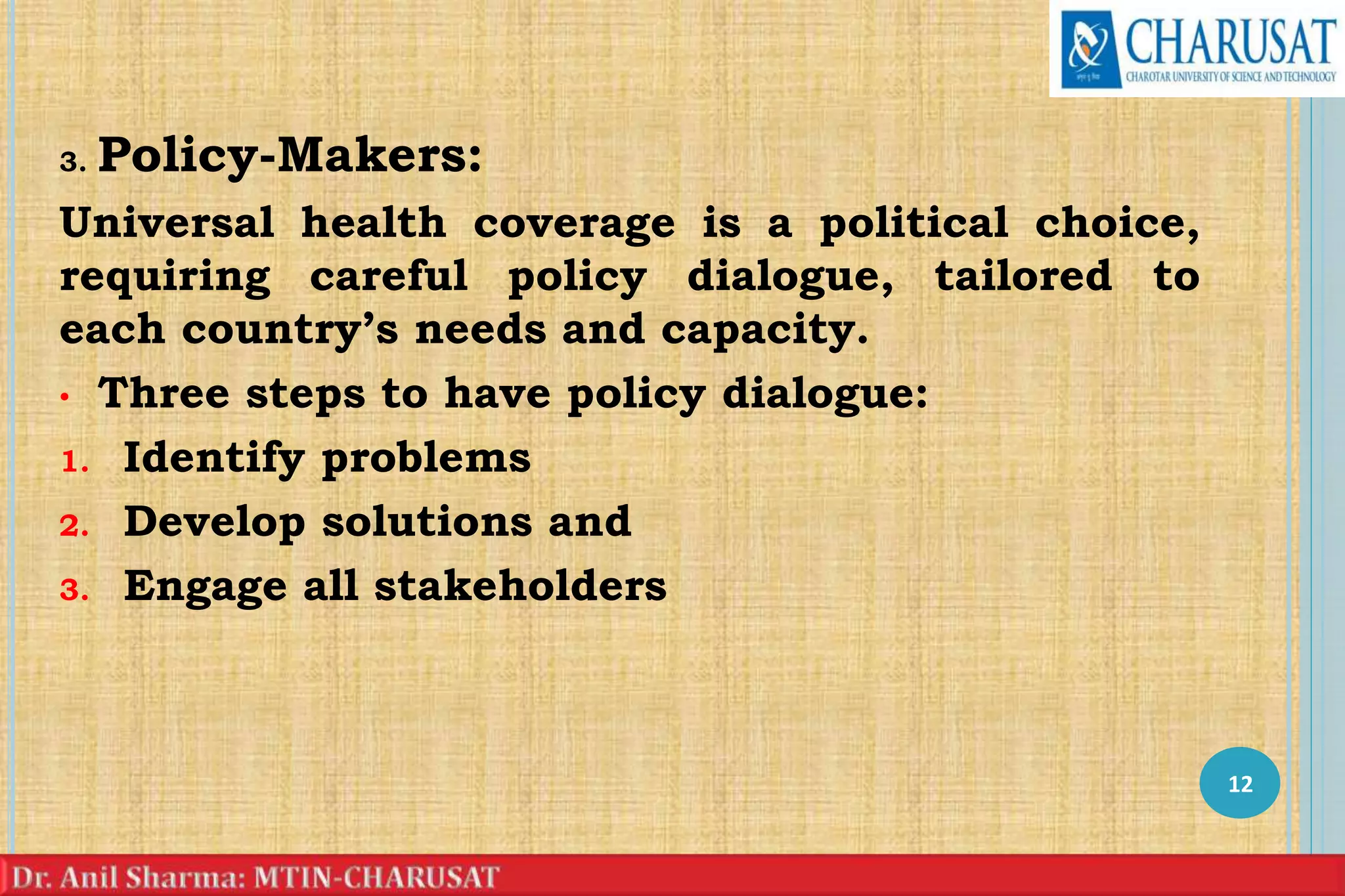
3. Policy-Makers:
Universal health coverage is a political choice,
requiring careful policy dialogue, tailored to
each country’s needs and capacity.
• Three steps to have policy dialogue:
1. Identify problems
2. Develop solutions and
3. Engage all stakeholders
12
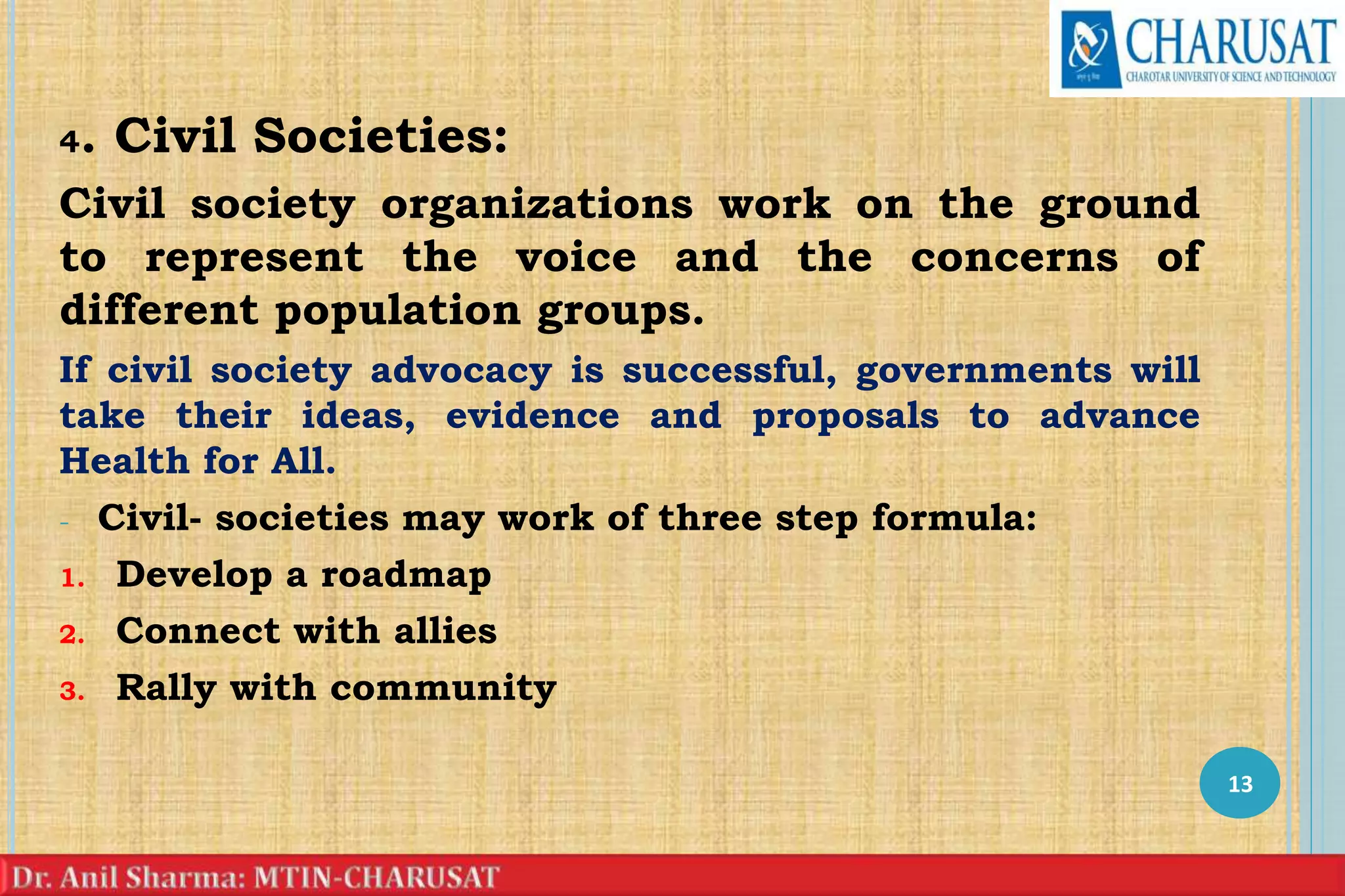
4. Civil Societies:
Civil society organizations work on the ground
to represent the voice and the concerns of
different population groups.
If civil society advocacy is successful, governments will
take their ideas, evidence and proposals to advance
Health for All.
- Civil- societies may work of three step formula:
1. Develop a roadmap
2. Connect with allies
3. Rally with community
13
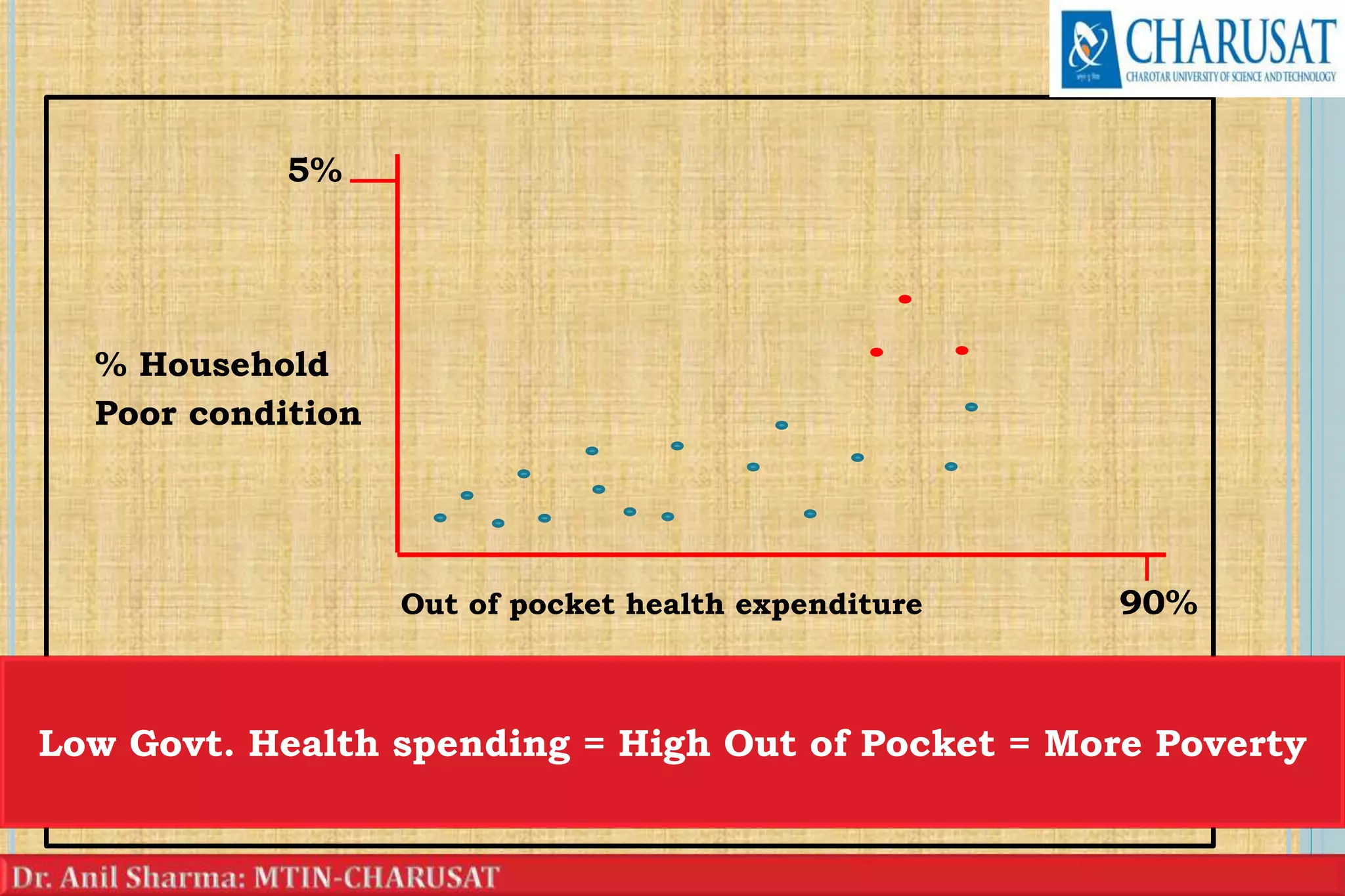
5%
% Household
Poor condition
Out of pocket health expenditure 90%
14
High Out of Pocket = More PovertyLow Govt. Health spending = High Out of Pocket = More Poverty
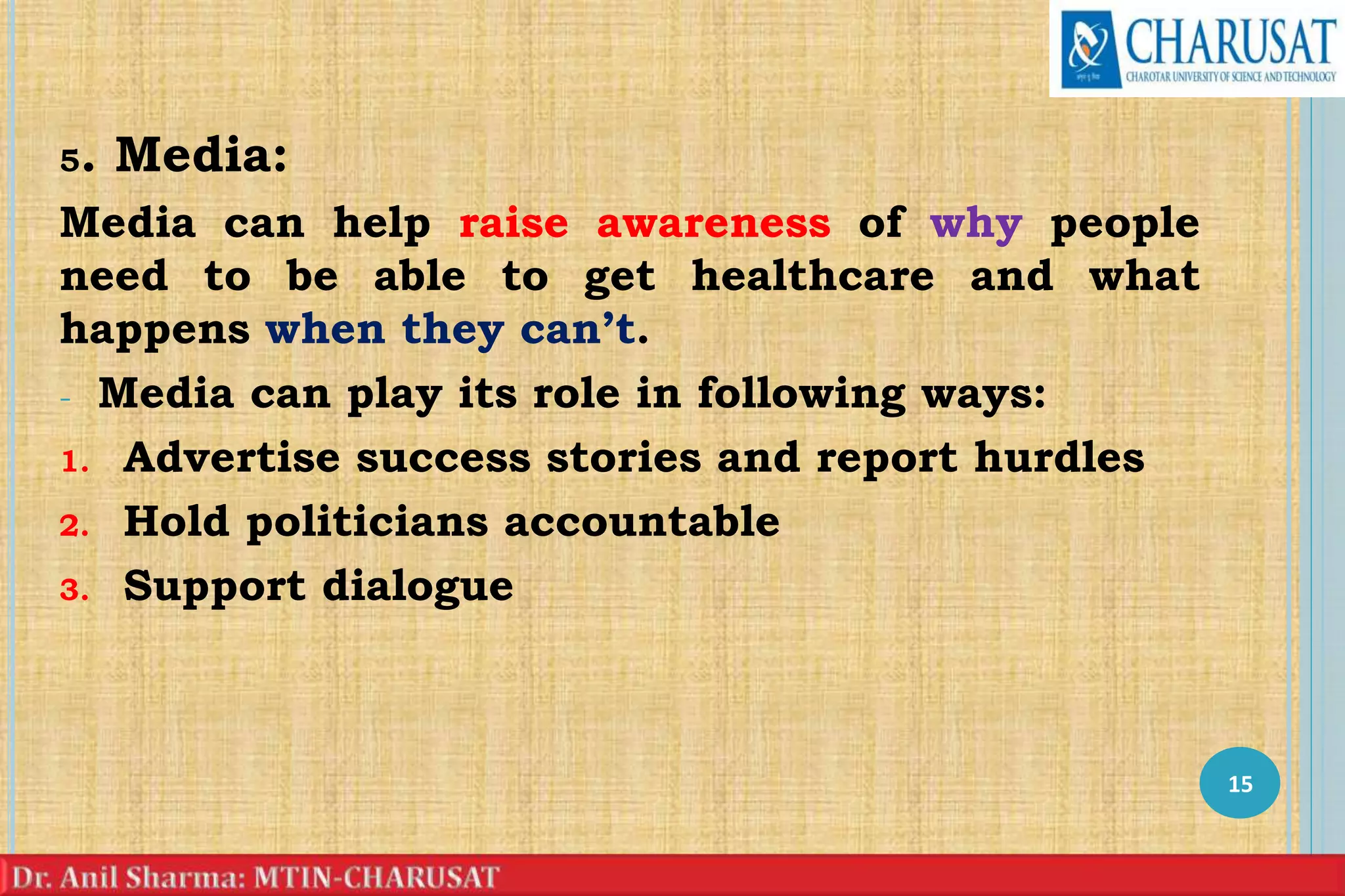
5. Media:
Media can help raise awareness of why people
need to be able to get healthcare and what
happens when they can’t.
- Media can play its role in following ways:
1. Advertise success stories and report hurdles
2. Hold politicians accountable
3. Support dialogue
15
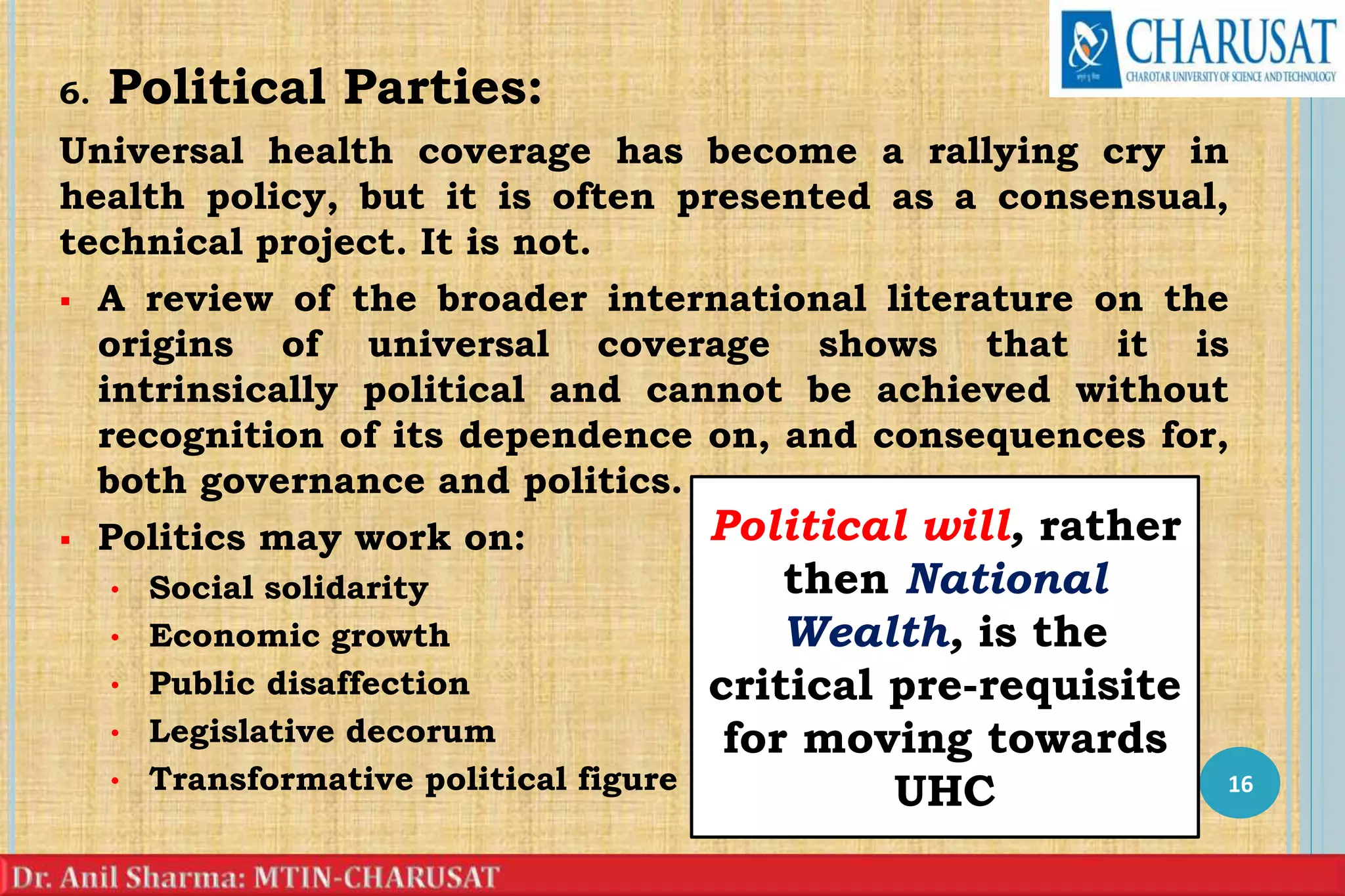
6. Political Parties:
Universal health coverage has become a rallying cry in
health policy, but it is often presented as a consensual,
technical project. It is not.
 A review of the broader international literature on the
origins of universal coverage shows that it is
intrinsically political and cannot be achieved without
recognition of its dependence on, and consequences for,
both governance and politics.
 Politics may work on:
• Social solidarity
• Economic growth
• Public disaffection
• Legislative decorum
• Transformative political figure 16
Political will, rather
then National
Wealth, is the
critical pre-requisite
for moving towards
UHC
7. Professional Organizations and
Health professionals:
 Is there facilities available for the best
diagnostic and treatment choices for the
patients?
 What evidence is available to make
recommendations?
 What facilities are available to provide
best care for patients?
 Must be engaged in awareness drive. 17
Who is the most important
stakeholder for implementing
Universal Health Coverage ?
Everyone of Us
18
Reference Available on Request @
anilsharma.nur@charusat.ac.in
19
Thank You
20

Role of stakeholders in uuniversal health coverage

  • 1.
    ROLE OF MAJORSTAKEHOLDERS IN UHC Dr. Anil Sharma, PhD(N) Principal, Manikaka Topawala Institute of Nursing-CHARUSAT, Changa Accredited Grade “A” with NAAC & KCG 1
  • 2.
    Flow of Presentation To understand what is Universal Health Coverage (UHC)  To know meaning of Stakeholders  To identify major Stakeholders in UHC  To understand role of major stakeholders in UHC implementation 2
  • 3.
    Universal Health Coverage UniversalHealth Coverage: Everyone, Everywhere Health is a human right. No one should get sick and die just because they are poor, or because they cannot access the health services they need Dr Tedros Adhanom Ghebreyesus,-WHO Director-General Two Key of UHC 1. Use of Health services: people need 2. Economic consequences for using health services 3
  • 4.
    Investing in universalhealth coverage is the invest in the long-term prosperity of people and Nation Universal health coverage happens when political will is strong 4
  • 5.
    Alarming Facts:  Halfof World population not able to obtain essential health services  >100 million people are being pushed into extreme poverty because to pay for health services.  Catastrophic expenditures (almost 12 percent of the world’s population spend at least 10 percent of their household budgets on health expenses) 5
  • 6.
    Stakeholders: What isa Stakeholder?  Those groups without whose support the organization would cease to exist. Stanford Research Institute (SRI) in 1963  Those groups who are vital to the survival and success of the organization. Freeman (2004)  Any group or individual who can affect or is affected by the achievement of the organization objectives. Freeman (1984) 6
  • 7.
    Stakeholders: Who areThey? A very common way of differentiating the different kinds of stakeholders is to consider groups of people who have classifiable relationships with the organization 7 Who are stakeholders in UHC Person, group or organization who have interest in Universal Health Coverage
  • 8.
    Why to involvestakeholders? Involving stake holders from the beginning of health for all or Universal Health Coverage ensure that decisions are relevant to users and applicable in real world situations. 8
  • 9.
  • 10.
    1. Government: Government implementspolicy change to improve health and fasten economic growth and social development. • Identify need, demands and expectations of population Helps to improve policy. • Engage in structured conversations with community stakeholders. • Collaborate with grassroots organizations 10
  • 11.
    2. Individual: Individuals usetheir voice to demand good health services and financial protection.  Everyone can take the lead towards universal health coverage, including you!  Make your voice heard, start a local campaign Individual may contribute by: • Identify problem within family, friends and society and start solving it • Share your stories for others motivation and an eye opening for health administrators • Take action before demanding action 11
  • 12.
    3. Policy-Makers: Universal healthcoverage is a political choice, requiring careful policy dialogue, tailored to each country’s needs and capacity. • Three steps to have policy dialogue: 1. Identify problems 2. Develop solutions and 3. Engage all stakeholders 12
  • 13.
    4. Civil Societies: Civilsociety organizations work on the ground to represent the voice and the concerns of different population groups. If civil society advocacy is successful, governments will take their ideas, evidence and proposals to advance Health for All. - Civil- societies may work of three step formula: 1. Develop a roadmap 2. Connect with allies 3. Rally with community 13
  • 14.
    5% % Household Poor condition Outof pocket health expenditure 90% 14 High Out of Pocket = More PovertyLow Govt. Health spending = High Out of Pocket = More Poverty
  • 15.
    5. Media: Media canhelp raise awareness of why people need to be able to get healthcare and what happens when they can’t. - Media can play its role in following ways: 1. Advertise success stories and report hurdles 2. Hold politicians accountable 3. Support dialogue 15
  • 16.
    6. Political Parties: Universalhealth coverage has become a rallying cry in health policy, but it is often presented as a consensual, technical project. It is not.  A review of the broader international literature on the origins of universal coverage shows that it is intrinsically political and cannot be achieved without recognition of its dependence on, and consequences for, both governance and politics.  Politics may work on: • Social solidarity • Economic growth • Public disaffection • Legislative decorum • Transformative political figure 16 Political will, rather then National Wealth, is the critical pre-requisite for moving towards UHC
  • 17.
    7. Professional Organizationsand Health professionals:  Is there facilities available for the best diagnostic and treatment choices for the patients?  What evidence is available to make recommendations?  What facilities are available to provide best care for patients?  Must be engaged in awareness drive. 17
  • 18.
    Who is themost important stakeholder for implementing Universal Health Coverage ? Everyone of Us 18
  • 19.
    Reference Available onRequest @ anilsharma.nur@charusat.ac.in 19
  • 20.