Columbia Heights:
Implementing the Vision of an
Inclusive City

Partners in Innovation:
Including Affordable and Workforce Housing
within Transit Oriented Development
National Housing Conference
Denver, CO
September 27, 2010

     Art Rodgers
     Senior Housing Planner
     Washington, DC Office of Planning
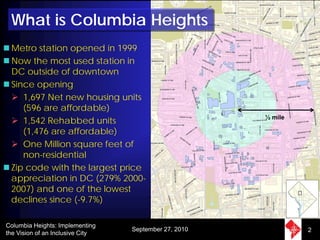
What is Columbia Heights
 Metro station opened in 1999
 Now the most used station in
 DC outside of downtown
 Since opening
    1,697 Net new housing units
    (596 are affordable)
    1,542 Rehabbed units                               ½ mile

    (1,476 are affordable)
    One Million square feet of
    non-residential
 Zip code with the largest price
 appreciation in DC (279% 2000-
 2007) and one of the lowest
 declines since (-9.7%)

Columbia Heights: Implementing
                                  September 27, 2010            2
the Vision of an Inclusive City
Public Role
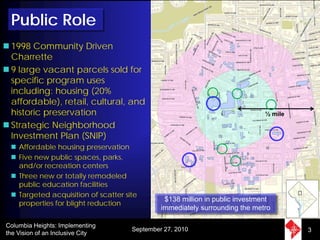
 1998 Community Driven
 Charrette
 9 large vacant parcels sold for
 specific program uses
 including: housing (20%
 affordable), retail, cultural, and
 historic preservation                                                         ½ mile
 Strategic Neighborhood
 Investment Plan (SNIP)
    Affordable housing preservation
    Five new public spaces, parks,
    and/or recreation centers
    Three new or totally remodeled
    public education facilities
    Targeted acquisition of scatter site
                                                $138 million in public investment
    properties for blight reduction
                                               immediately surrounding the metro

Columbia Heights: Implementing
                                      September 27, 2010                                3
the Vision of an Inclusive City
Confluence of Factors

          Metro station
          Available land
          Demographic shift to urban living
          Regional transportation issues
          Pent up market rate demand
          Low interest rates
          Growing confidence in local government

    Like comedy, timing is key
Columbia Heights: Implementing
                                  September 27, 2010   4
the Vision of an Inclusive City
Lessons Learned

          Land, Land, Land
          Local financial resources (Housing
          Production Trust Fund)
          Affordability Pricing
          Other public efforts (Schools, Public Space,
          Cultural Institutions)
          Parking
          Family Housing


Columbia Heights: Implementing
                                  September 27, 2010     5
the Vision of an Inclusive City
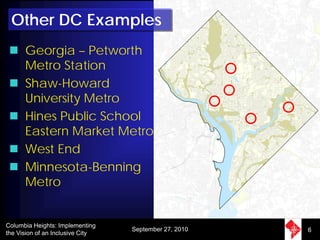
Other DC Examples
      Georgia – Petworth
      Metro Station
      Shaw-Howard
      University Metro
      Hines Public School
      Eastern Market Metro
      West End
      Minnesota-Benning
      Metro


Columbia Heights: Implementing
                                  September 27, 2010   6
the Vision of an Inclusive City
Applying the Lessons Learned

          Inclusionary Zoning
          Street Car Land Use Study
          Identifying corridors of high quality bus
          service
          Estimating impact on household
          transportation costs
          Live Near Your Work

Columbia Heights: Implementing
                                  September 27, 2010   7
the Vision of an Inclusive City
TOD & Inclusionary Zoning in DC
             DC’s IZ started with a TOD approach
             (additive)
                   Mapping was very complicated
                   Potential to shift development investment
                   decisions
             Chose citywide approach with specific
             exemptions (subtractive)
             Pricing & Permanent affordability


             Zoning review is taking other steps to
             improve affordability (parking
             maximums)
Columbia Heights: Implementing
                                   September 27, 2010          8
the Vision of an Inclusive City
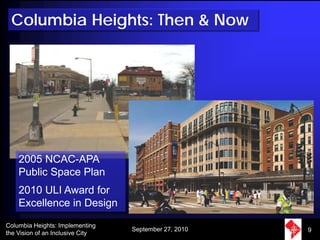
Columbia Heights: Then & Now


    2005 NCAC-APA
    Public Space Plan
    2010 ULI Award for
    Excellence in Design
Columbia Heights: Implementing
                                  September 27, 2010   9
the Vision of an Inclusive City

Denver9/27_Art Rodgers

  • 1.
    Columbia Heights: Implementing theVision of an Inclusive City Partners in Innovation: Including Affordable and Workforce Housing within Transit Oriented Development National Housing Conference Denver, CO September 27, 2010 Art Rodgers Senior Housing Planner Washington, DC Office of Planning
  • 2.
    What is ColumbiaHeights Metro station opened in 1999 Now the most used station in DC outside of downtown Since opening 1,697 Net new housing units (596 are affordable) 1,542 Rehabbed units ½ mile (1,476 are affordable) One Million square feet of non-residential Zip code with the largest price appreciation in DC (279% 2000- 2007) and one of the lowest declines since (-9.7%) Columbia Heights: Implementing September 27, 2010 2 the Vision of an Inclusive City
  • 3.
    Public Role 1998Community Driven Charrette 9 large vacant parcels sold for specific program uses including: housing (20% affordable), retail, cultural, and historic preservation ½ mile Strategic Neighborhood Investment Plan (SNIP) Affordable housing preservation Five new public spaces, parks, and/or recreation centers Three new or totally remodeled public education facilities Targeted acquisition of scatter site $138 million in public investment properties for blight reduction immediately surrounding the metro Columbia Heights: Implementing September 27, 2010 3 the Vision of an Inclusive City
  • 4.
    Confluence of Factors Metro station Available land Demographic shift to urban living Regional transportation issues Pent up market rate demand Low interest rates Growing confidence in local government Like comedy, timing is key Columbia Heights: Implementing September 27, 2010 4 the Vision of an Inclusive City
  • 5.
    Lessons Learned Land, Land, Land Local financial resources (Housing Production Trust Fund) Affordability Pricing Other public efforts (Schools, Public Space, Cultural Institutions) Parking Family Housing Columbia Heights: Implementing September 27, 2010 5 the Vision of an Inclusive City
  • 6.
    Other DC Examples Georgia – Petworth Metro Station Shaw-Howard University Metro Hines Public School Eastern Market Metro West End Minnesota-Benning Metro Columbia Heights: Implementing September 27, 2010 6 the Vision of an Inclusive City
  • 7.
    Applying the LessonsLearned Inclusionary Zoning Street Car Land Use Study Identifying corridors of high quality bus service Estimating impact on household transportation costs Live Near Your Work Columbia Heights: Implementing September 27, 2010 7 the Vision of an Inclusive City
  • 8.
    TOD & InclusionaryZoning in DC DC’s IZ started with a TOD approach (additive) Mapping was very complicated Potential to shift development investment decisions Chose citywide approach with specific exemptions (subtractive) Pricing & Permanent affordability Zoning review is taking other steps to improve affordability (parking maximums) Columbia Heights: Implementing September 27, 2010 8 the Vision of an Inclusive City
  • 9.
    Columbia Heights: Then& Now 2005 NCAC-APA Public Space Plan 2010 ULI Award for Excellence in Design Columbia Heights: Implementing September 27, 2010 9 the Vision of an Inclusive City

Editor's Notes

  • #2 Give thanks,For many years DC’s comprehensive plan has stated goals of creating diverse neighborhoods with access to jobs and public and private services.To date, the Columbia Heights neighborhood comes the closest to exemplifying these goals which are stated in the District’s framework document for the 2006 Comprehensive Plan, A Vision for Growing an Inclusive City.Columbia Heights also strives toward the six livability principles of:Provide more transportation choices. Promote equitable, affordable housing. Enhance economic competitivenessSupport existing communities. Coordinate and leverage federal policies and investment. Value communities and neighborhoods. Found in the federal government’s Partnership for Sustainable Communities
  • #3 This slide gives just a few brief highlights of the Columbia Heights neighborhood. The buildings you see in blue are larger new construction or rehab projects of 10 units or more than 10,000 sf non residential space built since 2000. The 1,697 new construction units represent a 10% increase over the existing number of units. Well over 600,000 sf of the non-residential development is retail. While DC has been very successful in building or rehabbing affordable units around the Columbia Heights metro station, the neighborhood also saw a tremendous investment in the rehab of the surrounding row houses, which often resulted in the loss of previously affordable, market rate units. The 279% change in price appreciation is just one indicator of the tremendous forces changing the neighborhood, and while surrounding jurisdictions saw decline in values of 50% since 2007 , the Columbia Heights zip code only declined 9.7%. This highlights one of our lessons learned of permanent affordability which I’ll go into later in more detail.
  • #4 I think its important to mention the full set of efforts the District took and the dollars invested in Columbia Heights. In addition to selling approximately 13 acres of land with specific requirements including ground floor retail and 20% affordable housing, the District invested $138 million immediately around the metro station for a new middle and high school, a parking garage, historic preservation of a key building and the public space infrastructure. The dollars do not include the amount of subsidies used for financing the affordable housing subsidies.
  • #5 Columbia Heights also benefitted from a confluence of other factors that made it a success. While many of these factors remain, The district, like other areas of the country is suffering from the scarcity of construction financing. Its just been within the last two months that several multi-family projects have broken ground or announced plans to.
  • #6 Land is critical for a achieving a comprehensive neighborhood visionOur Tax–Exempt bond cap is never fully leveraged, so developing HPTF from deed and recordation taxes to create a more flexible source of equity and debt financing for affordable housing is key.Poor controls on pricing of affordable units early on have affected ability to resell and conflicts with condo fees increasesCommutes represent only 15% of trips, so make include a mix of uses to keep household transportation costs low. I’ll go more in that later.DC used a revenue bond to finance 1,000 spaces in three levels of parking. Only the first deck gets used. 66% of DC households own cars.Very few three bedroom units and only a smattering of two-bedrooms
  • #7 That said, the city is actively trying to duplicate the success of Columbia Heights in other TOD neighborhoods. In addition, when issuing Notices of Funding Availability the city’s Department of Housing and Community Development includes as part of the competitive scoring the degree of transit accessbil