RISK IN 
SETTLEMENTS 
{CAPITAL MARKETS} 
BY: 
NAME: AKSHATA VERNEKAR 
ROLL NO: 35 
MCOM-PART I 
SEM-I 
(2014-15)
INTRODUCTION: 
SETTLEMENT: 
There are two types of settlements- fixed and 
rolling. 
A fixed cycle starts on a particular day and ends 
after five days. 
A rolling settlement is one in which trades 
outstanding at the end of the day have to be 
settled at the end of the T+X time framework. 
T is the trade date and X is the days as specified 
by SEBI.
RISK IN SETTLEMENTS: 
DEFINATION: 
“A key source of risk is the possibility that a 
counterparty to a trade will fail to settle its 
obligations when due or any time thereafter 
(credit risk) or will settle its obligations later than 
expected (liquidity risk).
Therefore, we can define settlement risk as 
the risk that one party will fail to deliver the 
terms of a contract with another party at the time 
of settlement.
There are three sources of risk which can create 
settlement risk: 
1. Failure of one party to deliver cash, 
commodities or securities at settlement. 
2. The risk that the settlement agent (clearing 
house, bank, exchange) will fail to perform. 
3. Risk that financial markets will encounter 
several difficulties, which create a systemic 
risk.
TYPES OF 
RISK IN SETTLEMENTS: 
I. MARKET RISK 
Market risk is the risk of losses in positions 
arising from movements in market prices. 
Types 
Some market risks include: 
• Equity risk (e.g. Euro Stoxx 50, etc. ) 
• Interest rate risk (e.g. Libor, Euribor, etc.) 
• Currency risk (e.g. EUR/USD, EUR/GBP, 
• Commodity risk (e.g. corn, copper, crude oil)
II. SYSTEMIC RISK 
In finance, systemic risk is the risk of 
collapse of an entire financial system or entire 
market, as opposed to risk associated with any 
one individual entity, group or component of a 
system that can be contained therein without 
harming the entire system.
III. OPERATIONAL RISK 
Operational risk is "the risk of a change in 
value caused by the fact that actual losses, 
incurred for inadequate or failed internal 
processes, people and systems, or from 
external events (including legal risk), differ from 
the expected losses".
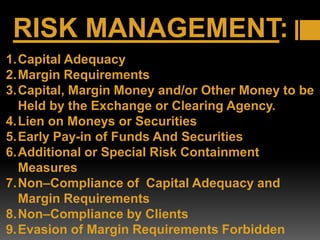
RISK MANAGEMENT: 
1.Capital Adequacy 
2.Margin Requirements 
3.Capital, Margin Money and/or Other Money to be 
Held by the Exchange or Clearing Agency. 
4.Lien on Moneys or Securities 
5.Early Pay-in of Funds And Securities 
6.Additional or Special Risk Containment 
Measures 
7.Non–Compliance of Capital Adequacy and 
Margin Requirements 
8.Non–Compliance by Clients 
9.Evasion of Margin Requirements Forbidden

Risk in settlements ppt

  • 1.
    RISK IN SETTLEMENTS {CAPITAL MARKETS} BY: NAME: AKSHATA VERNEKAR ROLL NO: 35 MCOM-PART I SEM-I (2014-15)
  • 2.
    INTRODUCTION: SETTLEMENT: Thereare two types of settlements- fixed and rolling. A fixed cycle starts on a particular day and ends after five days. A rolling settlement is one in which trades outstanding at the end of the day have to be settled at the end of the T+X time framework. T is the trade date and X is the days as specified by SEBI.
  • 3.
    RISK IN SETTLEMENTS: DEFINATION: “A key source of risk is the possibility that a counterparty to a trade will fail to settle its obligations when due or any time thereafter (credit risk) or will settle its obligations later than expected (liquidity risk).
  • 4.
    Therefore, we candefine settlement risk as the risk that one party will fail to deliver the terms of a contract with another party at the time of settlement.
  • 5.
    There are threesources of risk which can create settlement risk: 1. Failure of one party to deliver cash, commodities or securities at settlement. 2. The risk that the settlement agent (clearing house, bank, exchange) will fail to perform. 3. Risk that financial markets will encounter several difficulties, which create a systemic risk.
  • 6.
    TYPES OF RISKIN SETTLEMENTS: I. MARKET RISK Market risk is the risk of losses in positions arising from movements in market prices. Types Some market risks include: • Equity risk (e.g. Euro Stoxx 50, etc. ) • Interest rate risk (e.g. Libor, Euribor, etc.) • Currency risk (e.g. EUR/USD, EUR/GBP, • Commodity risk (e.g. corn, copper, crude oil)
  • 7.
    II. SYSTEMIC RISK In finance, systemic risk is the risk of collapse of an entire financial system or entire market, as opposed to risk associated with any one individual entity, group or component of a system that can be contained therein without harming the entire system.
  • 8.
    III. OPERATIONAL RISK Operational risk is "the risk of a change in value caused by the fact that actual losses, incurred for inadequate or failed internal processes, people and systems, or from external events (including legal risk), differ from the expected losses".
  • 9.
    RISK MANAGEMENT: 1.CapitalAdequacy 2.Margin Requirements 3.Capital, Margin Money and/or Other Money to be Held by the Exchange or Clearing Agency. 4.Lien on Moneys or Securities 5.Early Pay-in of Funds And Securities 6.Additional or Special Risk Containment Measures 7.Non–Compliance of Capital Adequacy and Margin Requirements 8.Non–Compliance by Clients 9.Evasion of Margin Requirements Forbidden