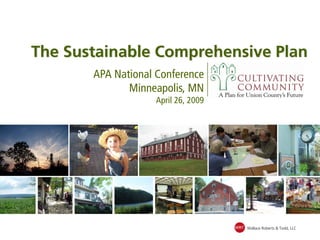
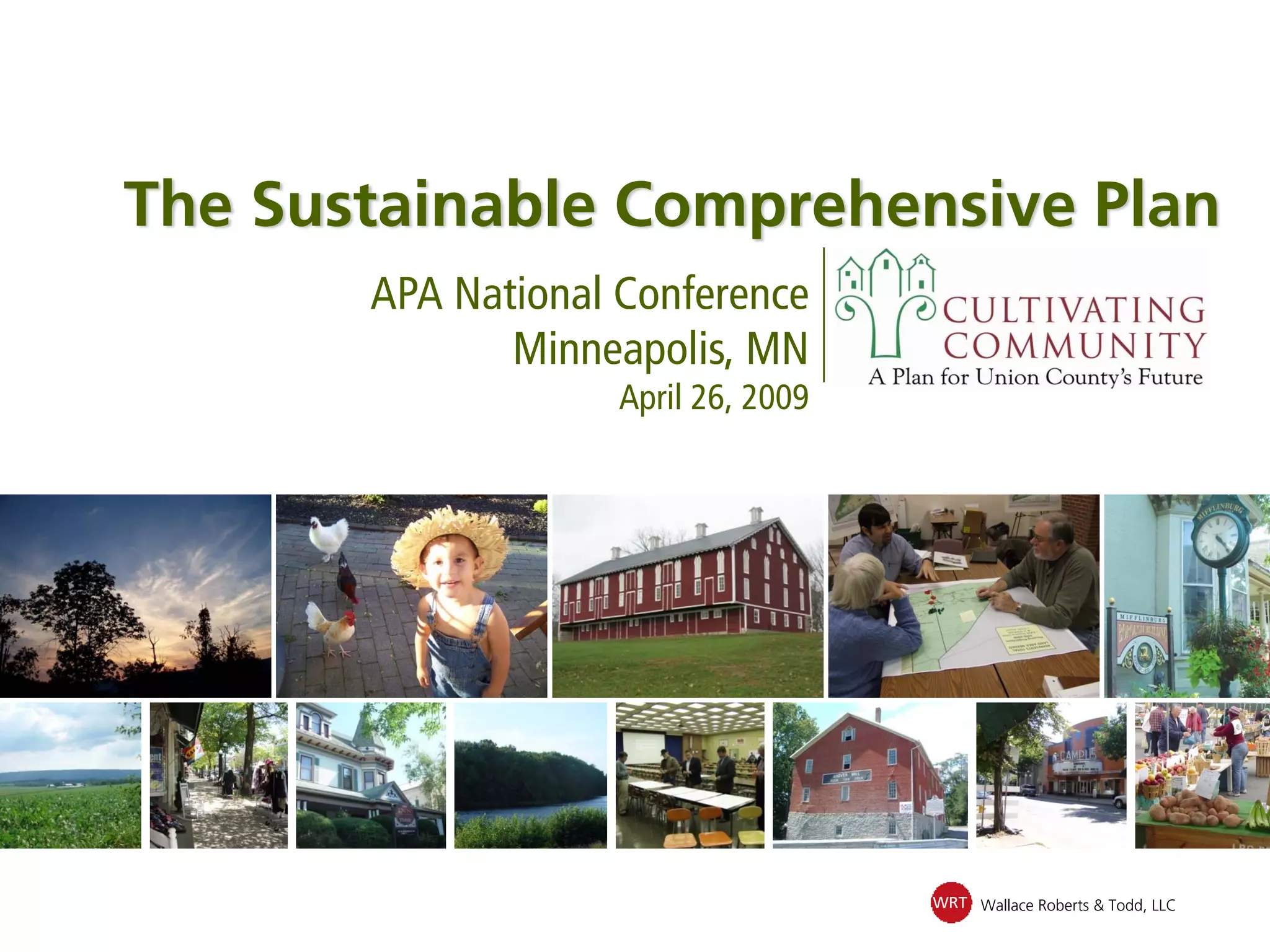
The Sustainable Comprehensive Plan
       APA National Conference
              Minneapolis, MN
                    April 26, 2009


                                     WRT Wallace Roberts & Todd, LLC
Agenda
1.    Introduction and Emerging Trends

2.    Sustainability in the Comprehensive Planning Process

3.    Case Study: Union County Comprehensive Plan
       •     Union County Background
       •     Community Outreach
       •     Cultivating Community: A Sustainable Comprehensive Plan for Union County

4.    Questions and Discussion

David Rouse, AICP, Principal, Wallace Roberts & Todd

Shawn McLaughlin, AICP, Planning Director, Union County, PA

Robert Kerns, AICP, Associate, Wallace Roberts & Todd
Introduction and Emerging Trends
The 21st Century Comprehensive Plan
•     Values-Driven

•     Collaborative

•     Thematic Based

•     Linking Process and Outcome

•     Regional in Focus

•     Beyond Paper


Source: The 21st Century Comprehensive Plan, presentation and paper prepared
by David Rouse, Michael Chandler, and Jon Arason for the 1999 National APA
Conference in Seattle, WA
Sustainability Issues
• Critical Environmental Stresses (Lester Brown)1
       – Deteriorating oil and food security
       – Climate change: rising temperatures and sea levels
       – Emerging water shortages
       – Natural systems under stress
       – Growing divides between rich and poor

• Two Great Oversights of Our Time (Rob Hopkins)2
       – Peak oil
       – Climate change

1 Plan   B 3.0, 2008
2   The Transition Handbook, 2008
What is Sustainability?
• Definitions
   …Development that meets the needs of the present without compromising the
    ability of future generations to meet their own needs (Brundtland Commission,
    1987)
   …Development that improves the long-term health of human and ecological
    systems (Stephen M. Wheeler, Planning for Sustainability, 2004)
• The Three “Es”
   – Environment
   – Economy
   – Equity
Sustainable Comprehensive Plans
• The Leaders
    – Seattle’s Comprehensive Plan: Towards a Sustainable Future
    – Portland, OR: Portland Plan
    – Plan NYC: A Greener, Greater New York
    – Greenburg, KS: Sustainable Comprehensive Master P:lan

• Other Examples
    – Minneapolis, MN: Plan for Sustainable Growth
    – Salem, OH: Sustainable Comprehensive Plan
    – Washtenaw County, MI: A Sense of Place, A Sustainable Future

• Cities with Extensive Sustainability Initiatives
    – San Francisco
    – Chicago
Emerging Trends
• State Legislation
    – California: Climate change legislation
    – Massachusetts Green Community Act (Comprehensive Energy Reform)

• Natural Step Framework
    – Eco-Municipalities (Sweden)
    – Santa Monica, CA Sustainable City Program
    – Grassroots initiatives (e.g., Lewisburg, PA)

• Transition Initiatives
    – 64 adopted Transition Initiatives as of 6/08
    – 54 in UK, 4 in New Zealand, 2 in US, 1 in Ireland
    – US communities: Boulder, CO and Sandpoint, ID
Sustainability in the Comprehensive
        Planning Process
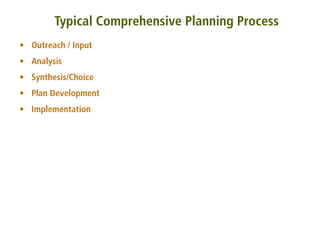
Typical Comprehensive Planning Process
• Outreach / Input
• Analysis
• Synthesis/Choice
• Plan Development
• Implementation
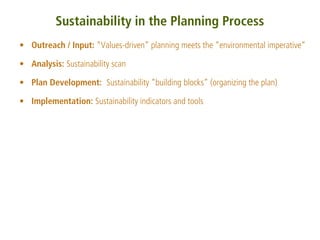
Sustainability in the Planning Process
• Outreach / Input: “Values-driven” planning meets the “environmental imperative”

• Analysis: Sustainability scan

• Plan Development: Sustainability “building blocks” (organizing the plan)

• Implementation: Sustainability indicators and tools
Sustainability Principles
• Energy
   Reduce fossil fuel usage and carbon emissions through the planning and design of
   communities, sites, and buildings

• Resiliency
   Reduce vulnerability to external environmental and economic threats through planning,
   design, and increased reliance on local resources, goods, and services

• Mobility
   Locate and design transportation systems to reduce reliance on the automobile and
   promote alternative modes

• Stewardship
   Preserve and restore natural, cultural, and built resources. Integrate natural and human
   ecological systems in the planning and design of communities

• Equity
   Provide housing, transportation, and employment opportunities for persons of all
   socioeconomic backgrounds and abilities
Outreach / Input
Vision: Define in relation to environmental
challenges and sustainability principles

Education: Frame sustainability issues to
resonate with community
 •   Economic Challenges
 –   Impacts of volatile energy costs
 –   Fiscal impacts of inefficient development patterns
 •   Environmental Challenges
 –   Impacts on climate change and security
 –   Vulnerability to natural and human disasters
 •   Social Challenges
 –   Lack of affordable workforce housing
 –   Effects on community health (obesity)
Analysis
• Sustainability Scan: How sustainable is
  your community?
• Level 1 (Qualitative)
    –   Review existing plans, policies, and regulations
    –   Evaluate land use patterns / infrastructure systems

• Level 2 (Quantitative): Impact modeling
  (e.g., INDEX by Criterion Planners)
    –   Carbon footprint /greenhouse gas emissions
    –   Energy consumption
    –   Stormwater runoff
    –   Traffic impact modeling
    –   Fiscal impact modeling
    –   Land consumption/development patterns
Plan Development: Building Blocks
• Model 1: Conventional Plan Elements         •   Land Use

    • Establish overarching sustainability    •   Transportation
      framework                               •   Housing
    • Define sustainability principles and    •   Natural & Historic Resources
      themes with the community
                                              •   Agricultural Resources
    • “Activate” framework, principles, and   •   Recreation and Open Space
      themes through strategies and
      actions in different elements           •   Community Facilities
                                              •   Economic Development

                                              Potential New Elements:
                                              •   Energy Conservation
                                              •   Community Form
                                              •   Hazard Mitigation
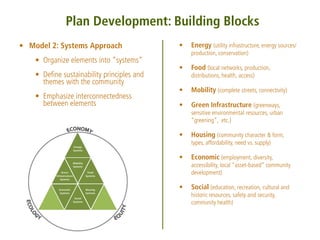
Plan Development: Building Blocks
• Model 2: Systems Approach                  •   Energy (utility infrastructure, energy sources/
                                                 production, conservation)
    • Organize elements into “systems”
                                             •   Food (local networks, production,
    • Define sustainability principles and       distributions, health, access)
      themes with the community
                                             •   Mobility (complete streets, connectivity)
    • Emphasize interconnectedness
      between elements                       •   Green Infrastructure (greenways,
                                                 sensitive environmental resources, urban
                                                 “greening”, etc.)

                                             •   Housing (community character & form,
                                                 types, affordability, need vs. supply)

                                             •   Economic (employment, diversity,
                                                 accessibility, local “asset-based” community
                                                 development)

                                             •   Social (education, recreation, cultural and
                                                 historic resources, safety and security,
                                                 community health)
Implementation
•   Action Plan
     –   Types of actions (policy, regulatory, capital
         investment)
     –   Schedule / timeframes
     –   Responsible parties

•   Capacity-Building / Partnerships
     –   Municipal government
     –   Other levels of government
     –   Non-profit organizations / institutions
     –   Private sector businesses
     –   Citizens

•   Plan Monitoring
     –   Measures of progress (sustainability indicators)
Union County Background

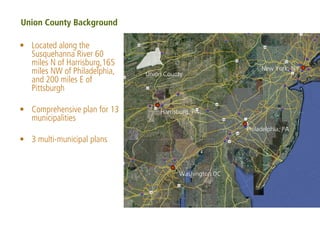
• Located along the
  Susquehanna River 60
  miles N of Harrisburg,165
                                                             New York, NY
  miles NW of Philadelphia,   Union County
  and 200 miles E of
  Pittsburgh

• Comprehensive plan for 13       Harrisburg, PA
  municipalities
                                                        Philadelphia, PA
• 3 multi-municipal plans


                                        Washington DC
Union County Background

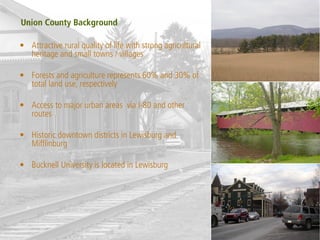
• Attractive rural quality of life with strong agricultural
  heritage and small towns / villages

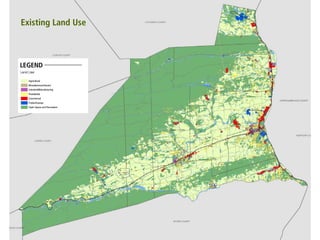
• Forests and agriculture represents 60% and 30% of
  total land use, respectively

• Access to major urban areas via I-80 and other
  routes

• Historic downtown districts in Lewisburg and
  Mifflinburg

• Bucknell University is located in Lewisburg
Existing Land Use
Union County Background

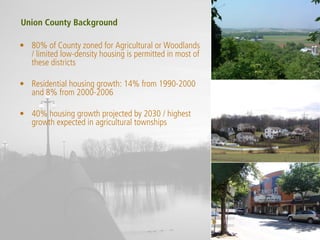
• 80% of County zoned for Agricultural or Woodlands
  / limited low-density housing is permitted in most of
  these districts

• Residential housing growth: 14% from 1990-2000
  and 8% from 2000-2006

• 40% housing growth projected by 2030 / highest
  growth expected in agricultural townships
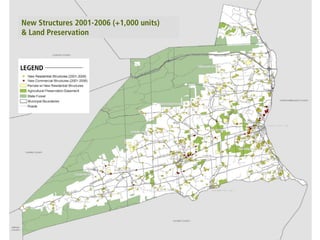
New Structures 2001-2006 (+1,000 units)
& Land Preservation
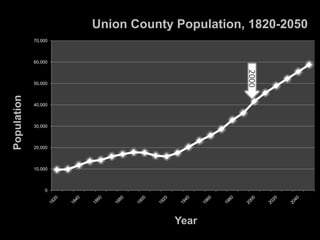
Union County Population, 1820-2050
             70,000


             60,000


                                              2000
             50,000
Population


             40,000


             30,000


             20,000


             10,000


                 0


                                   Year
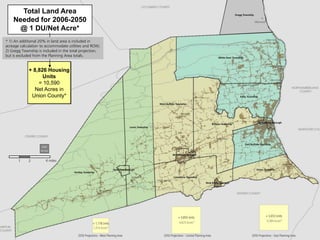
Total Land Area
    Needed for 2006-2050
     @ 1 DU/Net Acre*
* 1) An additional 20% in land area is included in
acreage calculation to accommodate utilities and ROW;
2) Gregg Township is included in the total projection,
but is excluded from the Planning Area totals.


             + 8,826 Housing
                   Units
                 = 10,590
               Net Acres in
              Union County*


                    640
                    Acres


       1     2         4 miles
Community Outreach
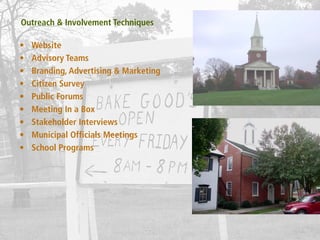
Outreach & Involvement Techniques

•   Website
•   Advisory Teams
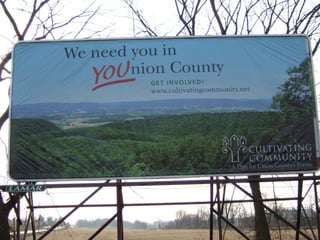
•   Branding, Advertising & Marketing
•   Citizen Survey
•   Public Forums
•   Meeting In a Box
•   Stakeholder Interviews
•   Municipal Officials Meetings
•   School Programs
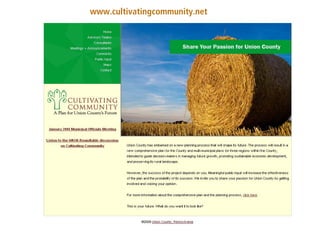
www.cultivatingcommunity.net
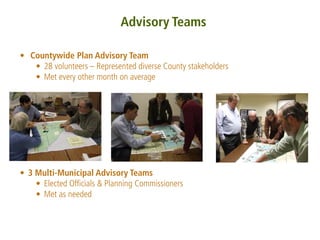
Advisory Teams

• Countywide Plan Advisory Team
   • 28 volunteers – Represented diverse County stakeholders
   • Met every other month on average


• 3 Multi-Municipal Advisory Teams
    • Elected Officials & Planning Commissioners
    • Met as needed
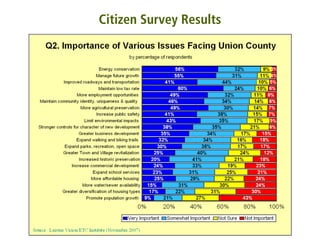
Citizen Survey Results
Outreach & Involvement Themes

•   Energy Conservation & Sustainability
•   Preservation of Agriculture & Natural Resources
•   Growth Management
•   Create Trails & Pedestrian-Friendly Development
•   Expand Public Transportation
•   Vitality of Town Centers
•   Regional Cooperation
•   Concern About Quality of New Growth
•   Economic Opportunity for Current Residents
•   Strategic Infrastructure Investment
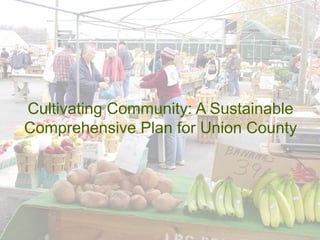
Cultivating Community: A Sustainable
Comprehensive Plan for Union County
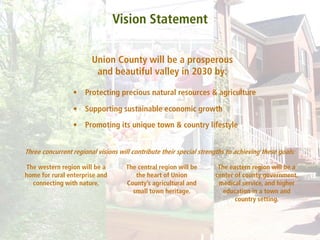
Vision Statement

                        Union County will be a prosperous
                         and beautiful valley in 2030 by:

                 •    Protecting precious natural resources & agriculture

                 •    Supporting sustainable economic growth

                 •    Promoting its unique town & country lifestyle


Three concurrent regional visions will contribute their special strengths to achieving these goals:

The western region will be a         The central region will be       The eastern region will be a
home for rural enterprise and           the heart of Union           center of county government,
  connecting with nature.            County’s agricultural and        medical service, and higher
                                       small town heritage.             education in a town and
                                                                            country setting.
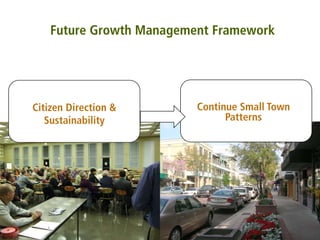
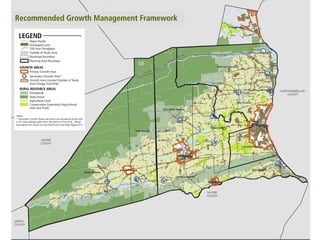
Future Growth Management Framework


Citizen Direction &       Continue Small Town
   Sustainability               Patterns
Recommended Growth Management Framework
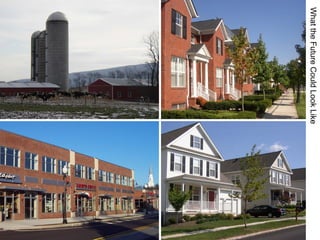
What the Future Could Look Like
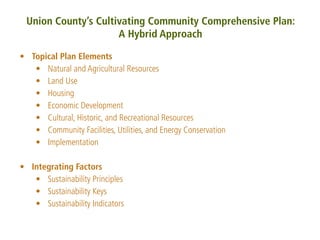
Union County’s Cultivating Community Comprehensive Plan:
                     A Hybrid Approach

• Topical Plan Elements
   • Natural and Agricultural Resources
   • Land Use
   • Housing
   • Economic Development
   • Cultural, Historic, and Recreational Resources
   • Community Facilities, Utilities, and Energy Conservation
   • Implementation

• Integrating Factors
   • Sustainability Principles
   • Sustainability Keys
   • Sustainability Indicators
Sustainability Principles
1.       Focus new development in and around established communities
     •      Promote reinvestment in existing towns and villages
     •      Develop in close proximity to existing infrastructure

2.       Preserve rural resources
     •      Maintain agriculture and prime farmland soils
     •      Preserve sensitive natural features and scenic views

3.       Conserve energy
     •      Decrease fossil fuel consumption
     •      Reduce automobile use / promote transportation alternatives

4.       Conserve fiscal resources
     •      Limit the negative impacts of new development on municipal budgets
     •      Limit the negative impacts of new development on community services
Sustainability Keys
1.   Natural and Agricultural Resources - System Integrity
2.   Land Use - Mixed Use
3.   Housing - Diversity
4.   Economic Development - Building Local Assets
5.   Transportation – Multi-Modal Choices
6.   Cultural, Historic, and Recreational Resources - Adaptive Reuse
7.   Community Facilities, Utilities, and Energy Conservation - Energy
     Conservation
Sustainability Key          – Natural and Agricultural Resources

System Integrity

•   Maintain integrity of woodlands, greenways, waterways, wetlands,
    habitats, open space, soils, and agricultural lands

Sample Sustainability Indicators

•   Water Quality
•   Animal and plant indicator species
•   Agricultural / forest lands preserved (e.g., easements, TDR)
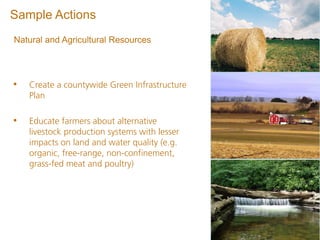
Sample Actions
Natural and Agricultural Resources


•   Create a countywide Green Infrastructure
    Plan

•   Educate farmers about alternative
    livestock production systems with lesser
    impacts on land and water quality (e.g.
    organic, free-range, non-confinement,
    grass-fed meat and poultry)
Sustainability Key          – Land Use

Mixed Use

•   Strengthen the County’s traditional land use pattern of compact, mixed-
    use development focused on small towns and villages


Sample Sustainability Indicators

•   New development inside vs. outside growth areas
•   Vertical vs. horizontal mixed-uses
•   Carbon footprint / greenhouse gas emissions


    Cultivating Community
Sample Actions
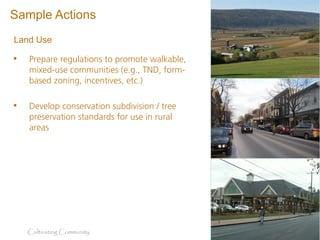
Land Use

•   Prepare regulations to promote walkable,
    mixed-use communities (e.g., TND, form-
    based zoning, incentives, etc.)

•   Develop conservation subdivision / tree
    preservation standards for use in rural
    areas


    Cultivating Community
Sustainability Key           – Housing

Housing Diversity

•   Provide choices in housing types and prices to meet different segments
    of the County’s population


Sample Sustainability Indicators

•   Mix of housing types vs. housing demand based on demographics
•   Affordability
•   Access to services (e.g., community facilities, parks and recreation, retail)
Sample Actions
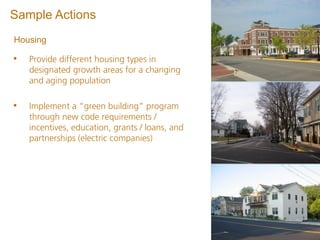
Housing

•   Provide different housing types in
    designated growth areas for a changing
    and aging population

•   Implement a “green building” program
    through new code requirements /
    incentives, education, grants / loans, and
    partnerships (electric companies)
Sustainability Key        – Economic Development

Building Local Assets

•   Build economic activities that:
    • Draw on County’s intrinsic values – high quality of life, fertile
        agricultural soils, quality educational and medical institutions
    • Reduce dependence on outside resources (e.g., use locally produced
        goods and services rather than imported goods)


Sample Sustainability Indicators

•   Locally-owned businesses
•   Employment opportunities / living wages
Sample Actions
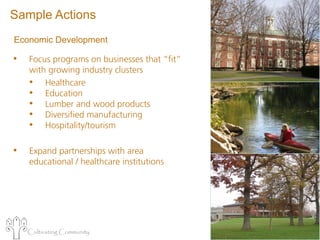
Economic Development

•   Focus programs on businesses that “fit”
    with growing industry clusters
    • Healthcare
    • Education
    • Lumber and wood products
    • Diversified manufacturing
    • Hospitality/tourism

•   Expand partnerships with area
    educational / healthcare institutions


    Cultivating Community
Sustainability Key           – Transportation

Transportation Choices

•   Provide convenient choices for people to use different forms of travel
    (autos, bicycles, transit, and walking) to meet their mobility needs.


Sample Sustainability Indicators
•   Reduction in vehicle miles traveled (VMT)
•   Length of sidewalks / bike lanes / multi-use trails
•   Connectivity index


    Cultivating Community
Sample Actions
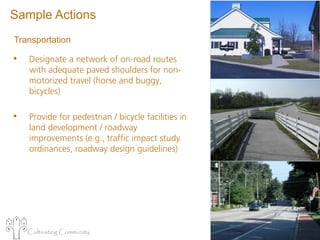
Transportation

•   Designate a network of on-road routes
    with adequate paved shoulders for non-
    motorized travel (horse and buggy,
    bicycles)

•   Provide for pedestrian / bicycle facilities in
    land development / roadway
    improvements (e.g., traffic impact study
    ordinances, roadway design guidelines)


    Cultivating Community
Sustainability Keys         – Cultural, Historic, and Recreational
                              Resources
Adaptive Reuse

•   Refers to modification or rehab of existing structures to serve new uses
    (e.g., “recycling: former schools for retail, office, or residential uses)


Sample Sustainability Indicators
•   Historic resources recognized / preserved
•   Recycled buildings
•   Heritage tourism activity
Sample Actions
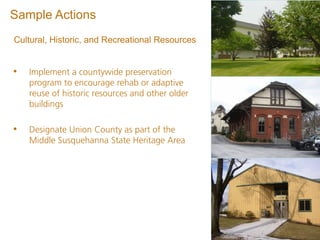
Cultural, Historic, and Recreational Resources


•   Implement a countywide preservation
    program to encourage rehab or adaptive
    reuse of historic resources and other older
    buildings

•   Designate Union County as part of the
    Middle Susquehanna State Heritage Area
Sustainability Keys          – Community Facilities, Utilities, and
                               Energy Conservation
Energy Conservation

•   Energy is required for all life’s activities; minimizing energy usage both
    conserves resources and yields economic returns by lowering costs.


Sample Sustainability Indicators
•   Compactness of infrastructure systems
•   Renewable energy installations
•   Green buildings
•   Reduction in VMT
Sample Actions
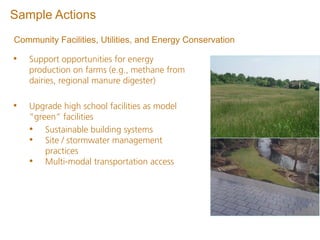
Community Facilities, Utilities, and Energy Conservation

•   Support opportunities for energy
    production on farms (e.g., methane from
    dairies, regional manure digester)

•   Upgrade high school facilities as model
    “green” facilities
    • Sustainable building systems
    • Site / stormwater management
        practices
    • Multi-modal transportation access
Union County’s Cultivating Community
                Comprehensive Plan: Implementation

• Geographic Scale
   • Countywide Action Plan
   • Multi-Municipal Action Plans

• Actions
   • Types (regulatory, policy / planning, capital investment, partnerships)
   • Timeframes
   • Responsibilities
   • Funding sources

• Monitoring
   • Annual Assessments / Work Programs
   • Measures of Progress (sustainability indicators)
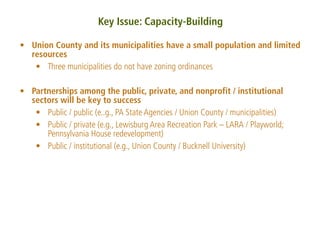
Key Issue: Capacity-Building

• Union County and its municipalities have a small population and limited
  resources
   • Three municipalities do not have zoning ordinances

• Partnerships among the public, private, and nonprofit / institutional
  sectors will be key to success
   • Public / public (e..g., PA State Agencies / Union County / municipalities)
   • Public / private (e.g., Lewisburg Area Recreation Park – LARA / Playworld;
      Pennsylvania House redevelopment)
   • Public / institutional (e.g., Union County / Bucknell University)
The Sustainable Comprehensive Plan
       APA National Conference
              Minneapolis, MN
                    April 26, 2009


                  Contact Information
                  David Rouse, AICP, Principal, Wallace Roberts & Todd
                  drouse@ph.wrtdesign.com
                  Shawn McLaughlin, AICP, Planning Director, Union County
                  smclaughlin@unionco.org
                  Robert Kerns, AICP, Associate, Wallace Roberts & Todd
                  rkerns@ph.wrtdesign.com

                  www.cultivatingcommunity.net

                                               WRT Wallace Roberts & Todd, LLC

2009 APA Sustainable Comprehensive Plan

  • 1.
    The Sustainable ComprehensivePlan APA National Conference Minneapolis, MN April 26, 2009 WRT Wallace Roberts & Todd, LLC
  • 2.
    Agenda 1. Introduction and Emerging Trends 2. Sustainability in the Comprehensive Planning Process 3. Case Study: Union County Comprehensive Plan • Union County Background • Community Outreach • Cultivating Community: A Sustainable Comprehensive Plan for Union County 4. Questions and Discussion David Rouse, AICP, Principal, Wallace Roberts & Todd Shawn McLaughlin, AICP, Planning Director, Union County, PA Robert Kerns, AICP, Associate, Wallace Roberts & Todd
  • 3.
  • 4.
    The 21st CenturyComprehensive Plan • Values-Driven • Collaborative • Thematic Based • Linking Process and Outcome • Regional in Focus • Beyond Paper Source: The 21st Century Comprehensive Plan, presentation and paper prepared by David Rouse, Michael Chandler, and Jon Arason for the 1999 National APA Conference in Seattle, WA
  • 5.
    Sustainability Issues • CriticalEnvironmental Stresses (Lester Brown)1 – Deteriorating oil and food security – Climate change: rising temperatures and sea levels – Emerging water shortages – Natural systems under stress – Growing divides between rich and poor • Two Great Oversights of Our Time (Rob Hopkins)2 – Peak oil – Climate change 1 Plan B 3.0, 2008 2 The Transition Handbook, 2008
  • 6.
    What is Sustainability? •Definitions …Development that meets the needs of the present without compromising the ability of future generations to meet their own needs (Brundtland Commission, 1987) …Development that improves the long-term health of human and ecological systems (Stephen M. Wheeler, Planning for Sustainability, 2004) • The Three “Es” – Environment – Economy – Equity
  • 7.
    Sustainable Comprehensive Plans •The Leaders – Seattle’s Comprehensive Plan: Towards a Sustainable Future – Portland, OR: Portland Plan – Plan NYC: A Greener, Greater New York – Greenburg, KS: Sustainable Comprehensive Master P:lan • Other Examples – Minneapolis, MN: Plan for Sustainable Growth – Salem, OH: Sustainable Comprehensive Plan – Washtenaw County, MI: A Sense of Place, A Sustainable Future • Cities with Extensive Sustainability Initiatives – San Francisco – Chicago
  • 8.
    Emerging Trends • StateLegislation – California: Climate change legislation – Massachusetts Green Community Act (Comprehensive Energy Reform) • Natural Step Framework – Eco-Municipalities (Sweden) – Santa Monica, CA Sustainable City Program – Grassroots initiatives (e.g., Lewisburg, PA) • Transition Initiatives – 64 adopted Transition Initiatives as of 6/08 – 54 in UK, 4 in New Zealand, 2 in US, 1 in Ireland – US communities: Boulder, CO and Sandpoint, ID
  • 9.
    Sustainability in theComprehensive Planning Process
  • 10.
    Typical Comprehensive PlanningProcess • Outreach / Input • Analysis • Synthesis/Choice • Plan Development • Implementation
  • 11.
    Sustainability in thePlanning Process • Outreach / Input: “Values-driven” planning meets the “environmental imperative” • Analysis: Sustainability scan • Plan Development: Sustainability “building blocks” (organizing the plan) • Implementation: Sustainability indicators and tools
  • 12.
    Sustainability Principles • Energy Reduce fossil fuel usage and carbon emissions through the planning and design of communities, sites, and buildings • Resiliency Reduce vulnerability to external environmental and economic threats through planning, design, and increased reliance on local resources, goods, and services • Mobility Locate and design transportation systems to reduce reliance on the automobile and promote alternative modes • Stewardship Preserve and restore natural, cultural, and built resources. Integrate natural and human ecological systems in the planning and design of communities • Equity Provide housing, transportation, and employment opportunities for persons of all socioeconomic backgrounds and abilities
  • 13.
    Outreach / Input Vision:Define in relation to environmental challenges and sustainability principles Education: Frame sustainability issues to resonate with community • Economic Challenges – Impacts of volatile energy costs – Fiscal impacts of inefficient development patterns • Environmental Challenges – Impacts on climate change and security – Vulnerability to natural and human disasters • Social Challenges – Lack of affordable workforce housing – Effects on community health (obesity)
  • 14.
    Analysis • Sustainability Scan:How sustainable is your community? • Level 1 (Qualitative) – Review existing plans, policies, and regulations – Evaluate land use patterns / infrastructure systems • Level 2 (Quantitative): Impact modeling (e.g., INDEX by Criterion Planners) – Carbon footprint /greenhouse gas emissions – Energy consumption – Stormwater runoff – Traffic impact modeling – Fiscal impact modeling – Land consumption/development patterns
  • 15.
    Plan Development: BuildingBlocks • Model 1: Conventional Plan Elements • Land Use • Establish overarching sustainability • Transportation framework • Housing • Define sustainability principles and • Natural & Historic Resources themes with the community • Agricultural Resources • “Activate” framework, principles, and • Recreation and Open Space themes through strategies and actions in different elements • Community Facilities • Economic Development Potential New Elements: • Energy Conservation • Community Form • Hazard Mitigation
  • 16.
    Plan Development: BuildingBlocks • Model 2: Systems Approach • Energy (utility infrastructure, energy sources/ production, conservation) • Organize elements into “systems” • Food (local networks, production, • Define sustainability principles and distributions, health, access) themes with the community • Mobility (complete streets, connectivity) • Emphasize interconnectedness between elements • Green Infrastructure (greenways, sensitive environmental resources, urban “greening”, etc.) • Housing (community character & form, types, affordability, need vs. supply) • Economic (employment, diversity, accessibility, local “asset-based” community development) • Social (education, recreation, cultural and historic resources, safety and security, community health)
  • 17.
    Implementation • Action Plan – Types of actions (policy, regulatory, capital investment) – Schedule / timeframes – Responsible parties • Capacity-Building / Partnerships – Municipal government – Other levels of government – Non-profit organizations / institutions – Private sector businesses – Citizens • Plan Monitoring – Measures of progress (sustainability indicators)
  • 18.
  • 19.
    Union County Background •Located along the Susquehanna River 60 miles N of Harrisburg,165 New York, NY miles NW of Philadelphia, Union County and 200 miles E of Pittsburgh • Comprehensive plan for 13 Harrisburg, PA municipalities Philadelphia, PA • 3 multi-municipal plans Washington DC
  • 20.
    Union County Background •Attractive rural quality of life with strong agricultural heritage and small towns / villages • Forests and agriculture represents 60% and 30% of total land use, respectively • Access to major urban areas via I-80 and other routes • Historic downtown districts in Lewisburg and Mifflinburg • Bucknell University is located in Lewisburg
  • 21.
  • 22.
    Union County Background •80% of County zoned for Agricultural or Woodlands / limited low-density housing is permitted in most of these districts • Residential housing growth: 14% from 1990-2000 and 8% from 2000-2006 • 40% housing growth projected by 2030 / highest growth expected in agricultural townships
  • 23.
    New Structures 2001-2006(+1,000 units) & Land Preservation
  • 24.
    Union County Population,1820-2050 70,000 60,000 2000 50,000 Population 40,000 30,000 20,000 10,000 0 Year
  • 25.
    Total Land Area Needed for 2006-2050 @ 1 DU/Net Acre* * 1) An additional 20% in land area is included in acreage calculation to accommodate utilities and ROW; 2) Gregg Township is included in the total projection, but is excluded from the Planning Area totals. + 8,826 Housing Units = 10,590 Net Acres in Union County* 640 Acres 1 2 4 miles
  • 26.
  • 27.
    Outreach & InvolvementTechniques • Website • Advisory Teams • Branding, Advertising & Marketing • Citizen Survey • Public Forums • Meeting In a Box • Stakeholder Interviews • Municipal Officials Meetings • School Programs
  • 28.
  • 29.
    Advisory Teams • CountywidePlan Advisory Team • 28 volunteers – Represented diverse County stakeholders • Met every other month on average • 3 Multi-Municipal Advisory Teams • Elected Officials & Planning Commissioners • Met as needed
  • 31.
  • 32.
    Outreach & InvolvementThemes • Energy Conservation & Sustainability • Preservation of Agriculture & Natural Resources • Growth Management • Create Trails & Pedestrian-Friendly Development • Expand Public Transportation • Vitality of Town Centers • Regional Cooperation • Concern About Quality of New Growth • Economic Opportunity for Current Residents • Strategic Infrastructure Investment
  • 33.
    Cultivating Community: ASustainable Comprehensive Plan for Union County
  • 34.
    Vision Statement Union County will be a prosperous and beautiful valley in 2030 by: • Protecting precious natural resources & agriculture • Supporting sustainable economic growth • Promoting its unique town & country lifestyle Three concurrent regional visions will contribute their special strengths to achieving these goals: The western region will be a The central region will be The eastern region will be a home for rural enterprise and the heart of Union center of county government, connecting with nature. County’s agricultural and medical service, and higher small town heritage. education in a town and country setting.
  • 35.
    Future Growth ManagementFramework Citizen Direction & Continue Small Town Sustainability Patterns
  • 36.
  • 37.
    What the FutureCould Look Like
  • 38.
    Union County’s CultivatingCommunity Comprehensive Plan: A Hybrid Approach • Topical Plan Elements • Natural and Agricultural Resources • Land Use • Housing • Economic Development • Cultural, Historic, and Recreational Resources • Community Facilities, Utilities, and Energy Conservation • Implementation • Integrating Factors • Sustainability Principles • Sustainability Keys • Sustainability Indicators
  • 39.
    Sustainability Principles 1. Focus new development in and around established communities • Promote reinvestment in existing towns and villages • Develop in close proximity to existing infrastructure 2. Preserve rural resources • Maintain agriculture and prime farmland soils • Preserve sensitive natural features and scenic views 3. Conserve energy • Decrease fossil fuel consumption • Reduce automobile use / promote transportation alternatives 4. Conserve fiscal resources • Limit the negative impacts of new development on municipal budgets • Limit the negative impacts of new development on community services
  • 40.
    Sustainability Keys 1. Natural and Agricultural Resources - System Integrity 2. Land Use - Mixed Use 3. Housing - Diversity 4. Economic Development - Building Local Assets 5. Transportation – Multi-Modal Choices 6. Cultural, Historic, and Recreational Resources - Adaptive Reuse 7. Community Facilities, Utilities, and Energy Conservation - Energy Conservation
  • 41.
    Sustainability Key – Natural and Agricultural Resources System Integrity • Maintain integrity of woodlands, greenways, waterways, wetlands, habitats, open space, soils, and agricultural lands Sample Sustainability Indicators • Water Quality • Animal and plant indicator species • Agricultural / forest lands preserved (e.g., easements, TDR)
  • 42.
    Sample Actions Natural andAgricultural Resources • Create a countywide Green Infrastructure Plan • Educate farmers about alternative livestock production systems with lesser impacts on land and water quality (e.g. organic, free-range, non-confinement, grass-fed meat and poultry)
  • 43.
    Sustainability Key – Land Use Mixed Use • Strengthen the County’s traditional land use pattern of compact, mixed- use development focused on small towns and villages Sample Sustainability Indicators • New development inside vs. outside growth areas • Vertical vs. horizontal mixed-uses • Carbon footprint / greenhouse gas emissions Cultivating Community
  • 44.
    Sample Actions Land Use • Prepare regulations to promote walkable, mixed-use communities (e.g., TND, form- based zoning, incentives, etc.) • Develop conservation subdivision / tree preservation standards for use in rural areas Cultivating Community
  • 45.
    Sustainability Key – Housing Housing Diversity • Provide choices in housing types and prices to meet different segments of the County’s population Sample Sustainability Indicators • Mix of housing types vs. housing demand based on demographics • Affordability • Access to services (e.g., community facilities, parks and recreation, retail)
  • 46.
    Sample Actions Housing • Provide different housing types in designated growth areas for a changing and aging population • Implement a “green building” program through new code requirements / incentives, education, grants / loans, and partnerships (electric companies)
  • 47.
    Sustainability Key – Economic Development Building Local Assets • Build economic activities that: • Draw on County’s intrinsic values – high quality of life, fertile agricultural soils, quality educational and medical institutions • Reduce dependence on outside resources (e.g., use locally produced goods and services rather than imported goods) Sample Sustainability Indicators • Locally-owned businesses • Employment opportunities / living wages
  • 48.
    Sample Actions Economic Development • Focus programs on businesses that “fit” with growing industry clusters • Healthcare • Education • Lumber and wood products • Diversified manufacturing • Hospitality/tourism • Expand partnerships with area educational / healthcare institutions Cultivating Community
  • 49.
    Sustainability Key – Transportation Transportation Choices • Provide convenient choices for people to use different forms of travel (autos, bicycles, transit, and walking) to meet their mobility needs. Sample Sustainability Indicators • Reduction in vehicle miles traveled (VMT) • Length of sidewalks / bike lanes / multi-use trails • Connectivity index Cultivating Community
  • 50.
    Sample Actions Transportation • Designate a network of on-road routes with adequate paved shoulders for non- motorized travel (horse and buggy, bicycles) • Provide for pedestrian / bicycle facilities in land development / roadway improvements (e.g., traffic impact study ordinances, roadway design guidelines) Cultivating Community
  • 51.
    Sustainability Keys – Cultural, Historic, and Recreational Resources Adaptive Reuse • Refers to modification or rehab of existing structures to serve new uses (e.g., “recycling: former schools for retail, office, or residential uses) Sample Sustainability Indicators • Historic resources recognized / preserved • Recycled buildings • Heritage tourism activity
  • 52.
    Sample Actions Cultural, Historic,and Recreational Resources • Implement a countywide preservation program to encourage rehab or adaptive reuse of historic resources and other older buildings • Designate Union County as part of the Middle Susquehanna State Heritage Area
  • 53.
    Sustainability Keys – Community Facilities, Utilities, and Energy Conservation Energy Conservation • Energy is required for all life’s activities; minimizing energy usage both conserves resources and yields economic returns by lowering costs. Sample Sustainability Indicators • Compactness of infrastructure systems • Renewable energy installations • Green buildings • Reduction in VMT
  • 54.
    Sample Actions Community Facilities,Utilities, and Energy Conservation • Support opportunities for energy production on farms (e.g., methane from dairies, regional manure digester) • Upgrade high school facilities as model “green” facilities • Sustainable building systems • Site / stormwater management practices • Multi-modal transportation access
  • 55.
    Union County’s CultivatingCommunity Comprehensive Plan: Implementation • Geographic Scale • Countywide Action Plan • Multi-Municipal Action Plans • Actions • Types (regulatory, policy / planning, capital investment, partnerships) • Timeframes • Responsibilities • Funding sources • Monitoring • Annual Assessments / Work Programs • Measures of Progress (sustainability indicators)
  • 56.
    Key Issue: Capacity-Building •Union County and its municipalities have a small population and limited resources • Three municipalities do not have zoning ordinances • Partnerships among the public, private, and nonprofit / institutional sectors will be key to success • Public / public (e..g., PA State Agencies / Union County / municipalities) • Public / private (e.g., Lewisburg Area Recreation Park – LARA / Playworld; Pennsylvania House redevelopment) • Public / institutional (e.g., Union County / Bucknell University)
  • 57.
    The Sustainable ComprehensivePlan APA National Conference Minneapolis, MN April 26, 2009 Contact Information David Rouse, AICP, Principal, Wallace Roberts & Todd drouse@ph.wrtdesign.com Shawn McLaughlin, AICP, Planning Director, Union County smclaughlin@unionco.org Robert Kerns, AICP, Associate, Wallace Roberts & Todd rkerns@ph.wrtdesign.com www.cultivatingcommunity.net WRT Wallace Roberts & Todd, LLC