RFID Introduction
®
Auto ID Systems
  Auto ID is a short name for Automatic Identification
  Includes a lot of different types of technologies: bar codes, smart cards,
retinal scans, fingerprint scanning, and RFID… (many others)
  What makes them all the same?
  Something is IDENTIFIED (person or item)
  Data is RETRIEVED (cash register pulls up the price of the item)
  Data is USED (a calculation or function takes place)
  Ultimately, people use these technologies to SAVE TIME and INCREASE
ACCURACY. Both of these benefits SAVE MONEY!
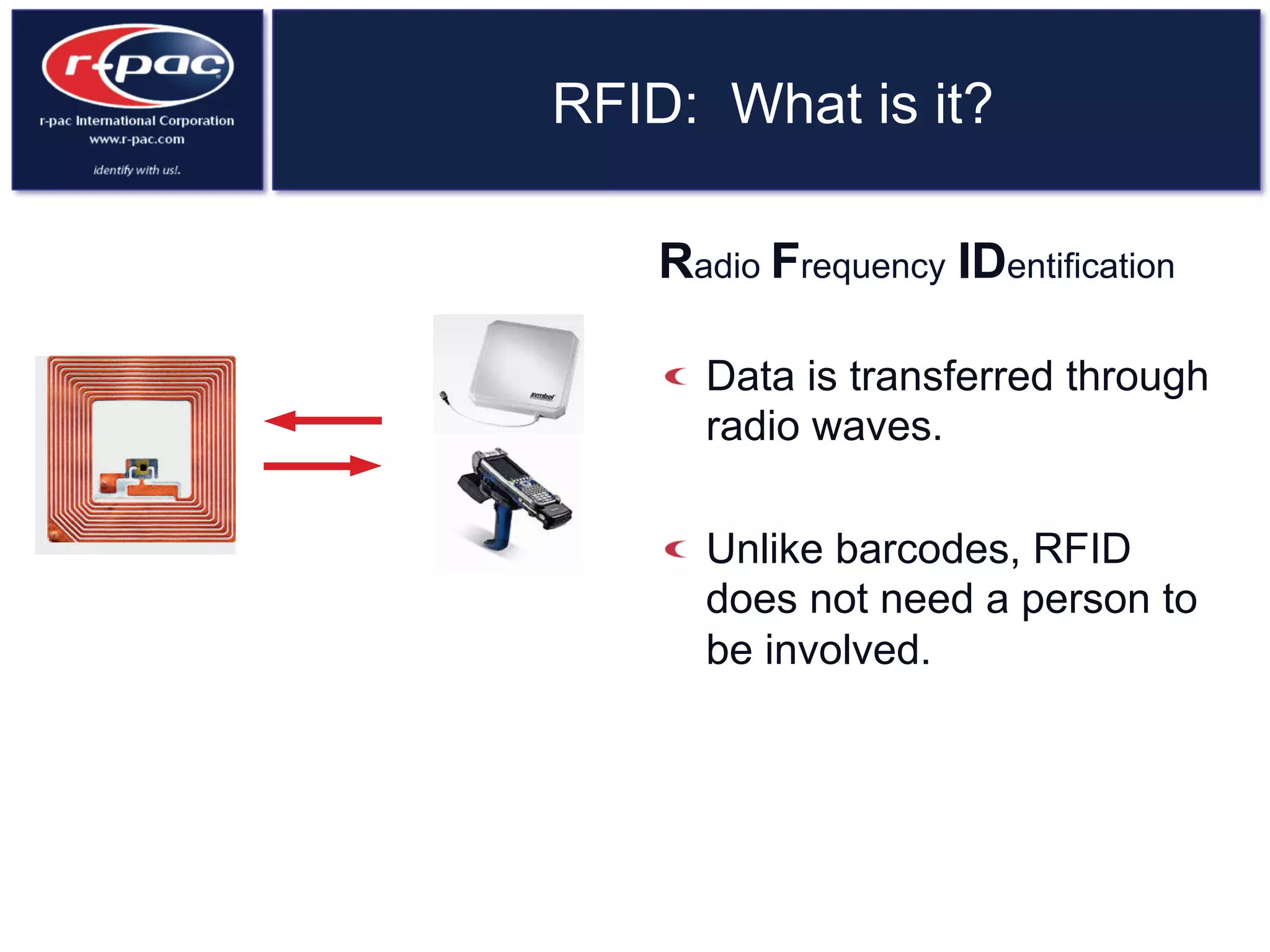
RFID: What is it?
Radio Frequency IDentification
  Data is transferred through
radio waves.
  Unlike barcodes, RFID
does not need a person to
be involved.
The shortest history lesson
on RFID EVER.
  RFID has been around a
long time
  Started in World War 2 to
track airplanes
  1973 - Door Locking
systems (like here!)
  1979 – Animal Tracking
 1980s and 1990s
 Businesses and
Governments used the
technology to track
inventory. Smaller
items than airplanes!
The Here and Now
  Why is it so popular now?
  With more interest
(demand), antennas are
getting less expensive.
  As more businesses
invest in the benefits of
RFID, the greater the
demand.
  The greater the demand,
the lower the price.
  The lower the price, more
businesses will invest in
the the technology.
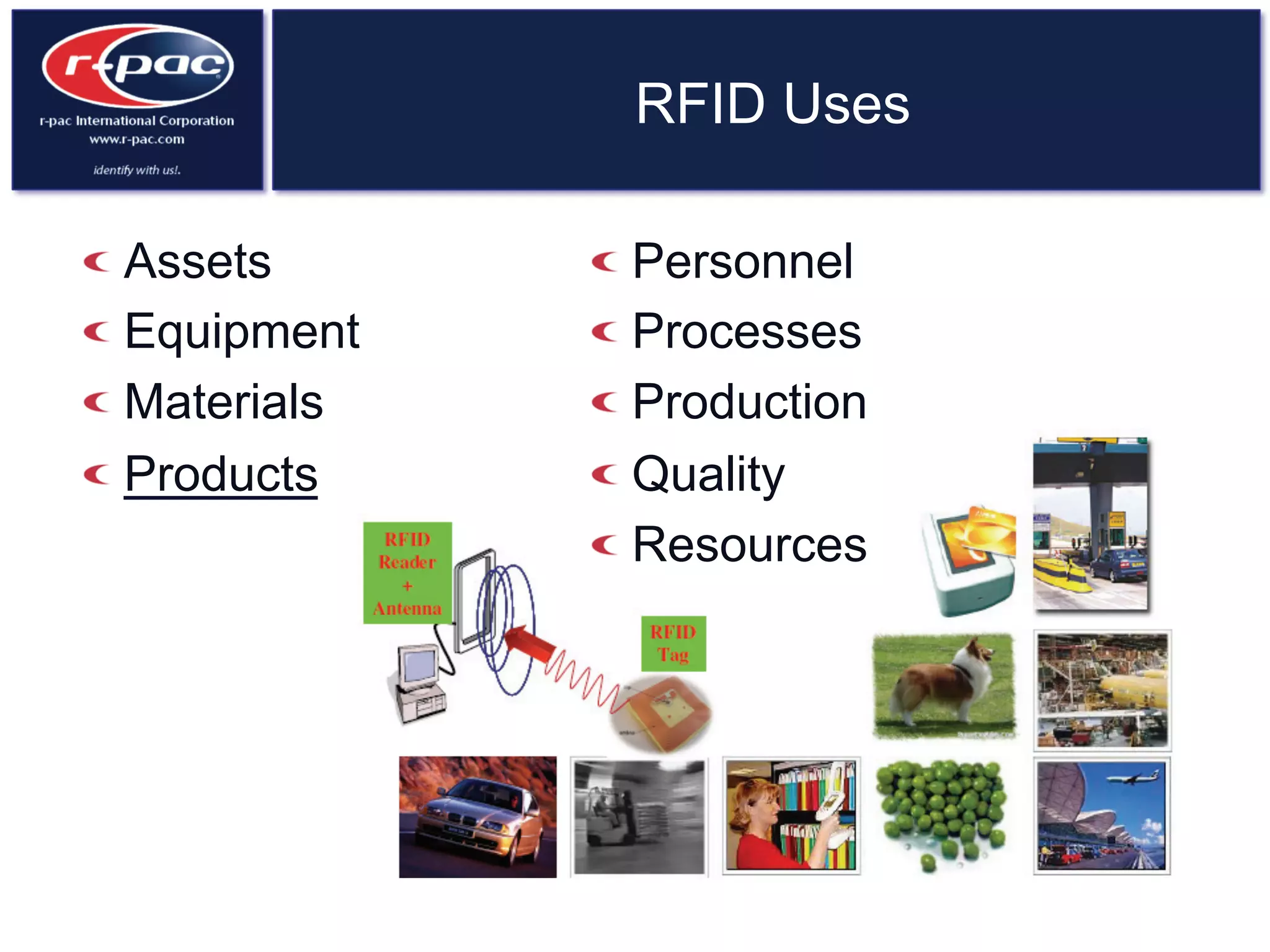
RFID Uses
 Assets
 Equipment
 Materials
Products
 Personnel
 Processes
 Production
 Quality
 Resources
RFID Basics and Converting
®
What is RFID?
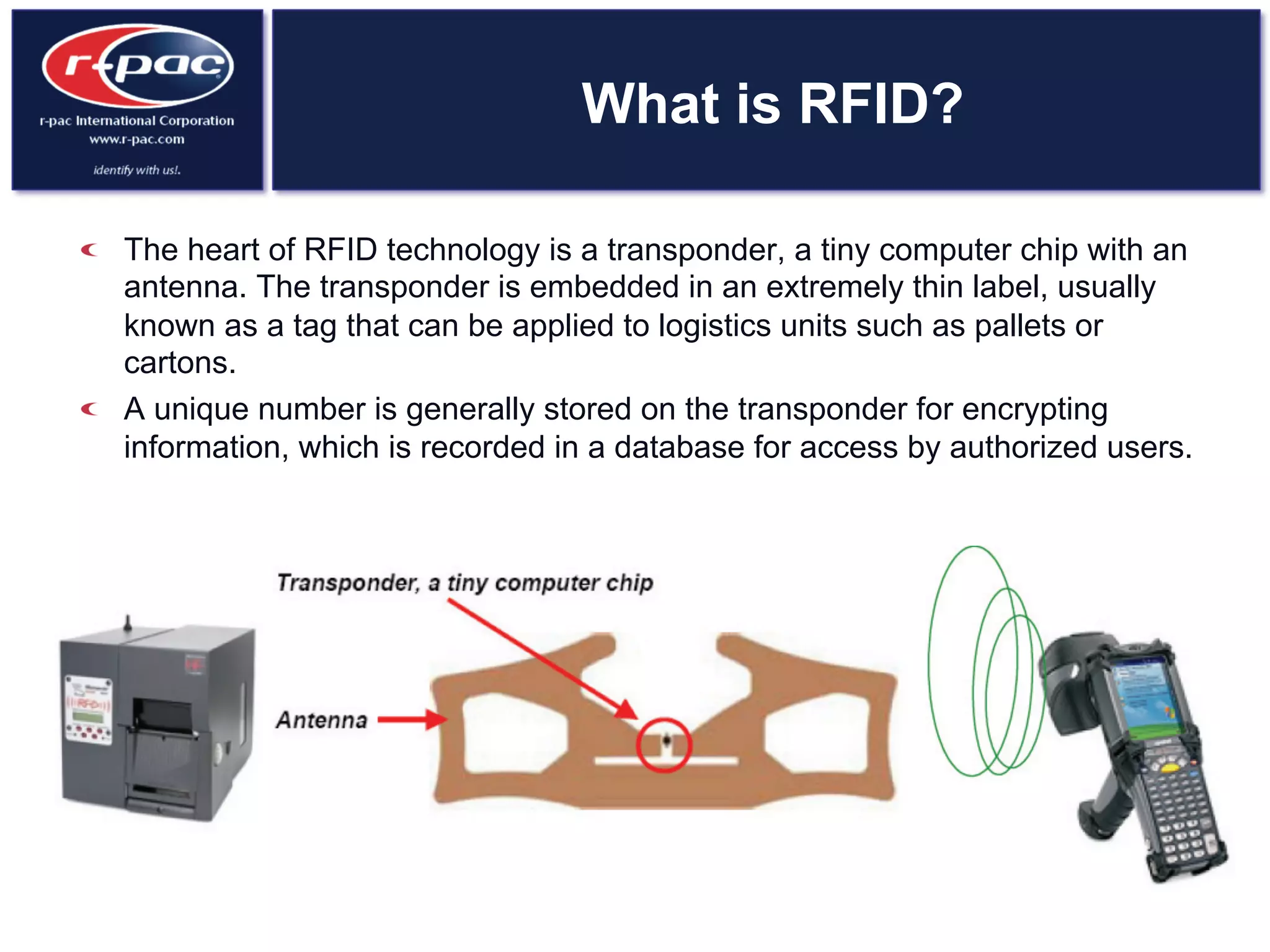
  The heart of RFID technology is a transponder, a tiny computer chip with an
antenna. The transponder is embedded in an extremely thin label, usually
known as a tag that can be applied to logistics units such as pallets or
cartons.
  A unique number is generally stored on the transponder for encrypting
information, which is recorded in a database for access by authorized users.
RFID Tags
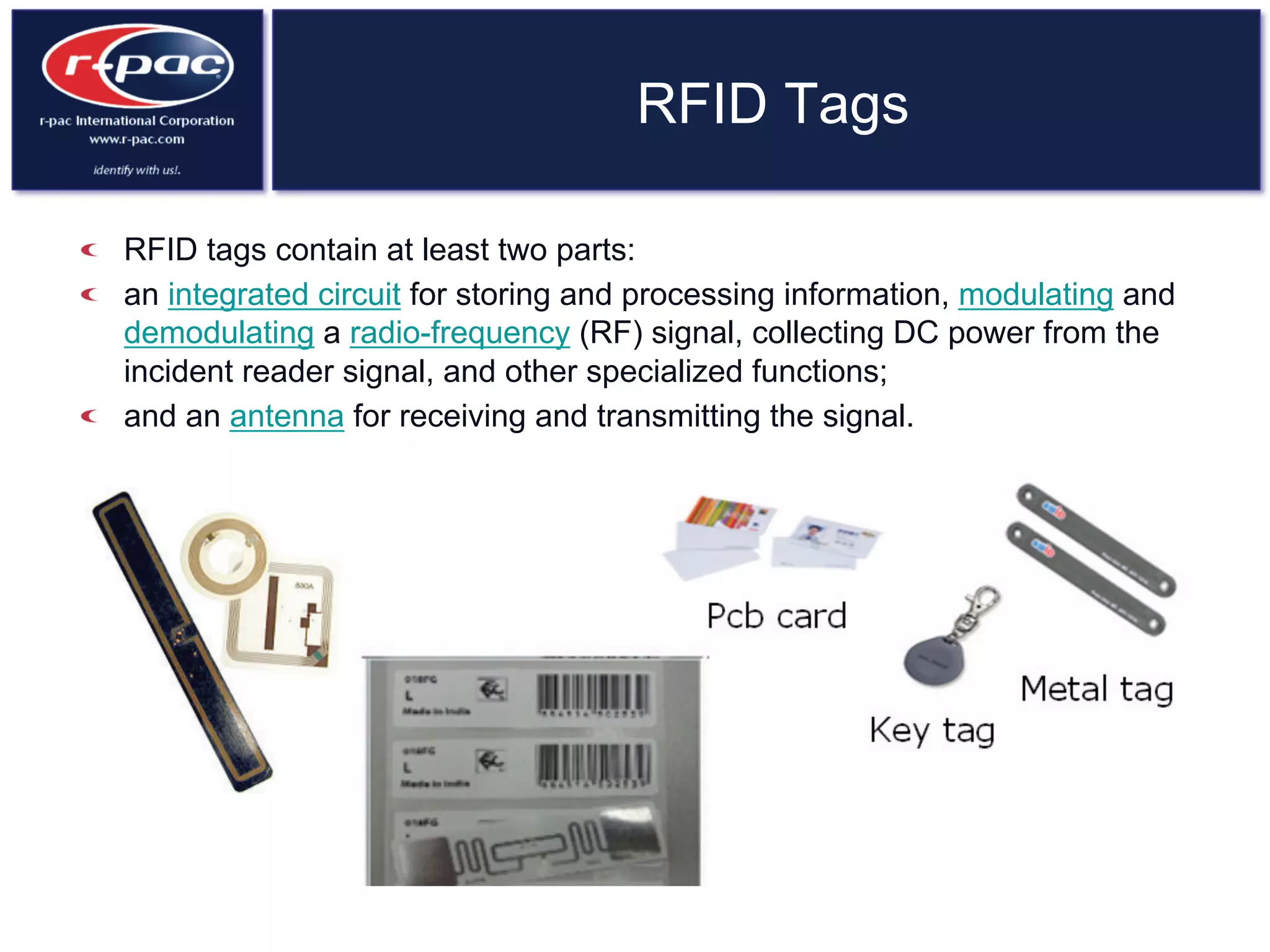
  RFID tags contain at least two parts:
  an integrated circuit for storing and processing information, modulating and
demodulating a radio-frequency (RF) signal, collecting DC power from the
incident reader signal, and other specialized functions;
  and an antenna for receiving and transmitting the signal.
RFID Tags
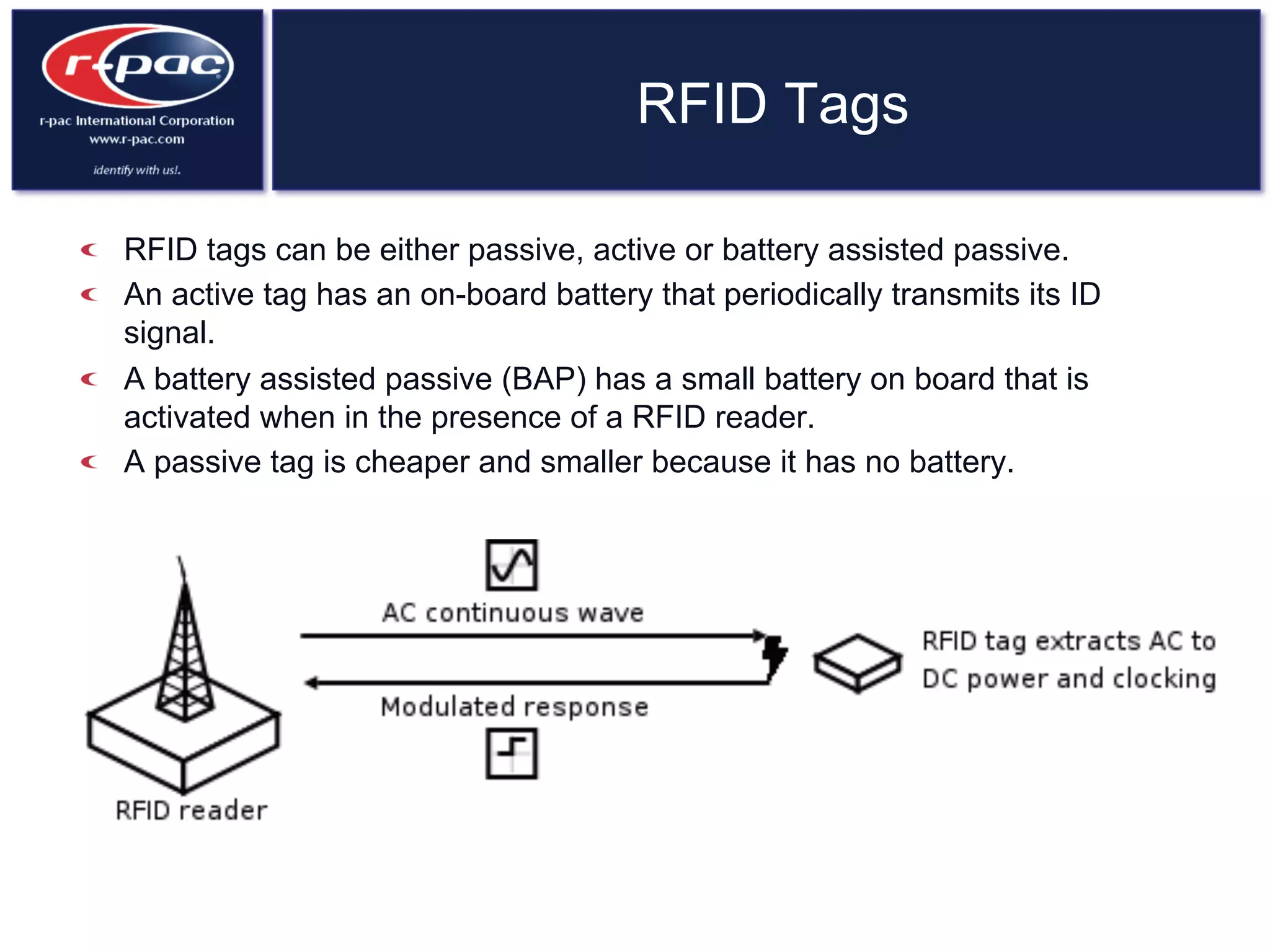
  RFID tags can be either passive, active or battery assisted passive.
  An active tag has an on-board battery that periodically transmits its ID
signal.
  A battery assisted passive (BAP) has a small battery on board that is
activated when in the presence of a RFID reader.
  A passive tag is cheaper and smaller because it has no battery.
RFID Frequency
Tag Data Standards (TDS)
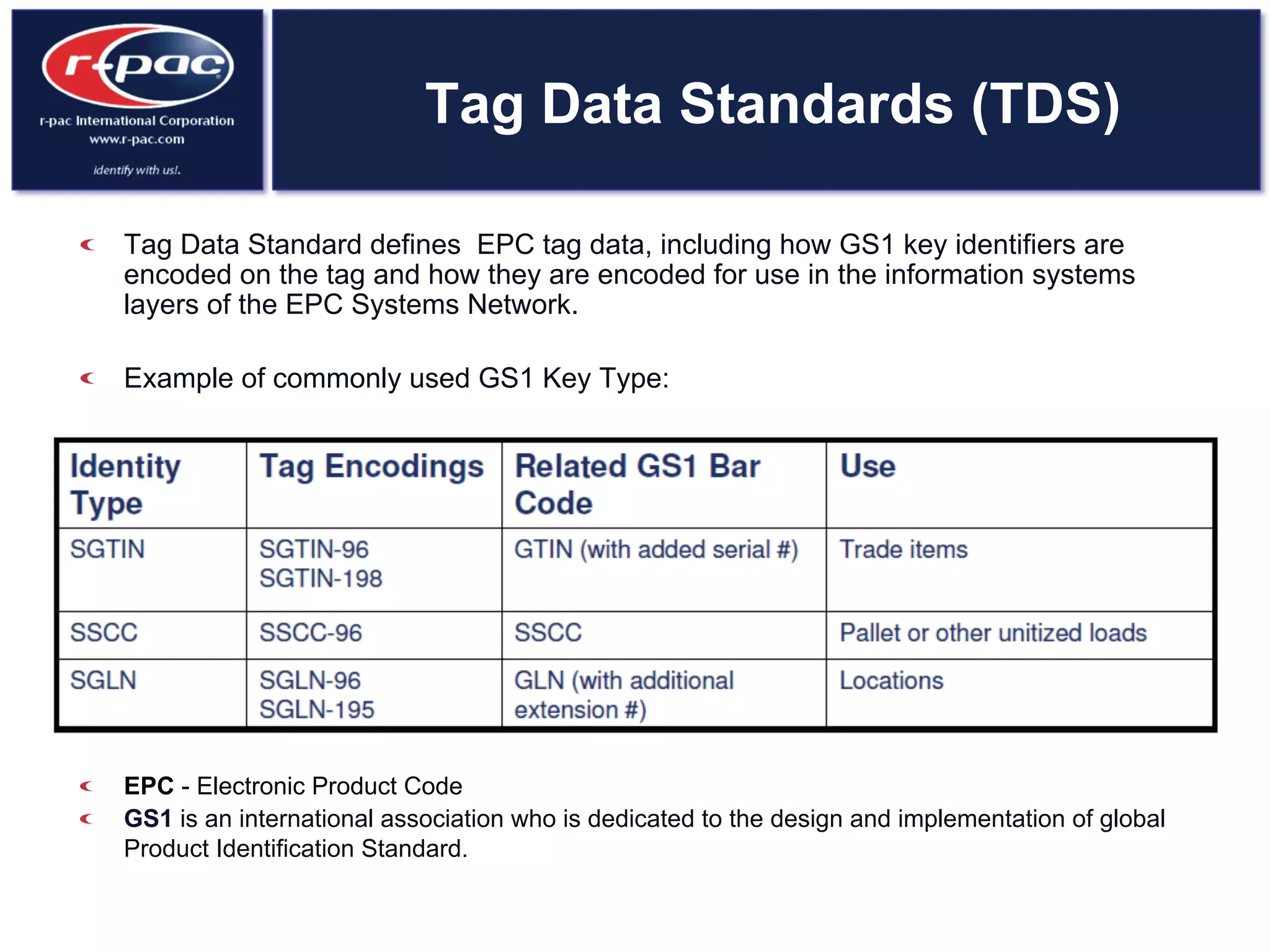
Tag Data Standard defines EPC tag data, including how GS1 key identifiers are
encoded on the tag and how they are encoded for use in the information systems
layers of the EPC Systems Network.
  Example of commonly used GS1 Key Type:
  EPC - Electronic Product Code
  GS1 is an international association who is dedicated to the design and implementation of global
Product Identification Standard. www.gs1.org
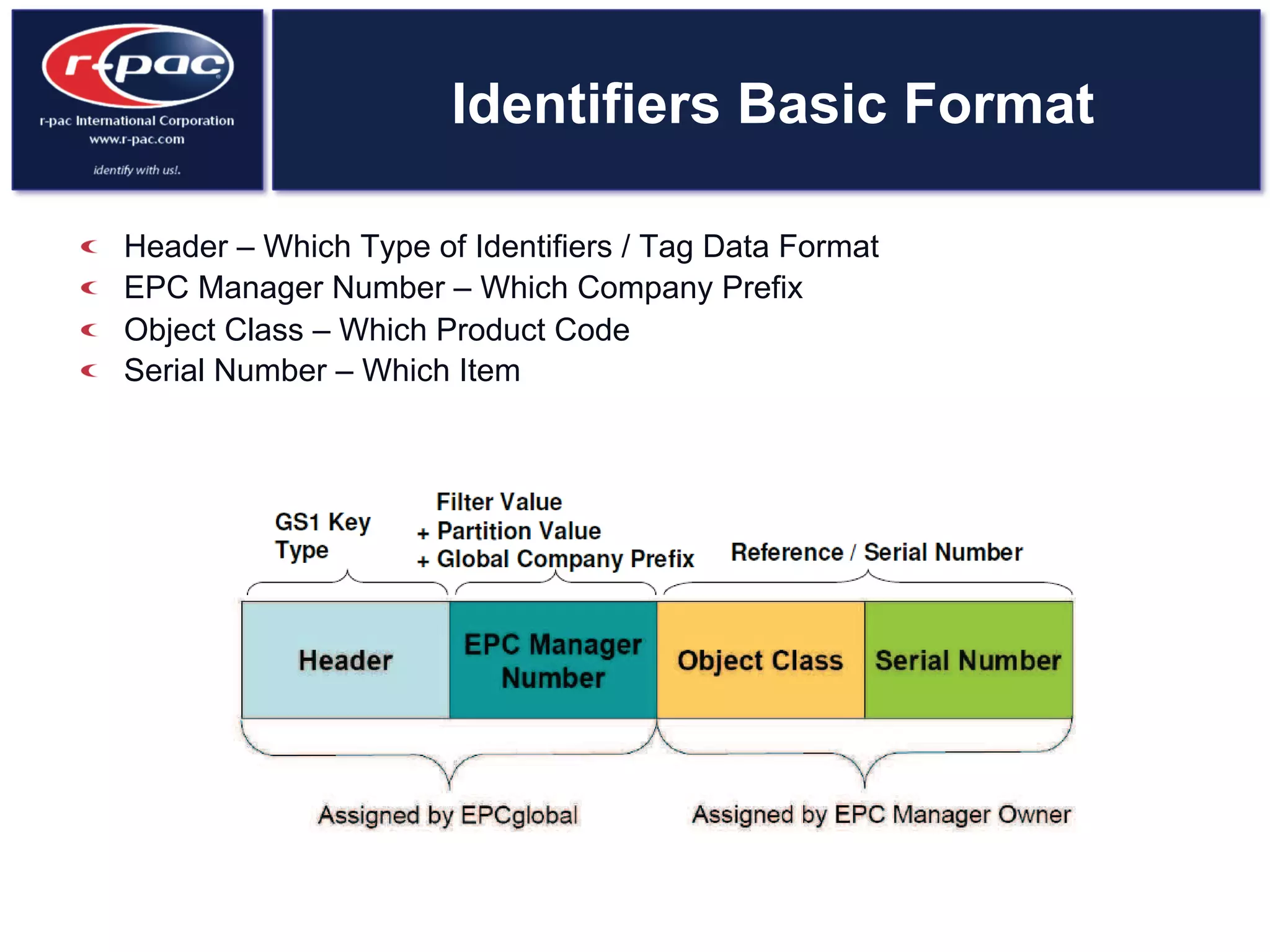
Identifiers Basic Format
  Header – Which Type of Identifiers / Tag Data Format
  EPC Manager Number – Which Company Prefix
  Object Class – Which Product Code
  Serial Number – Which Item
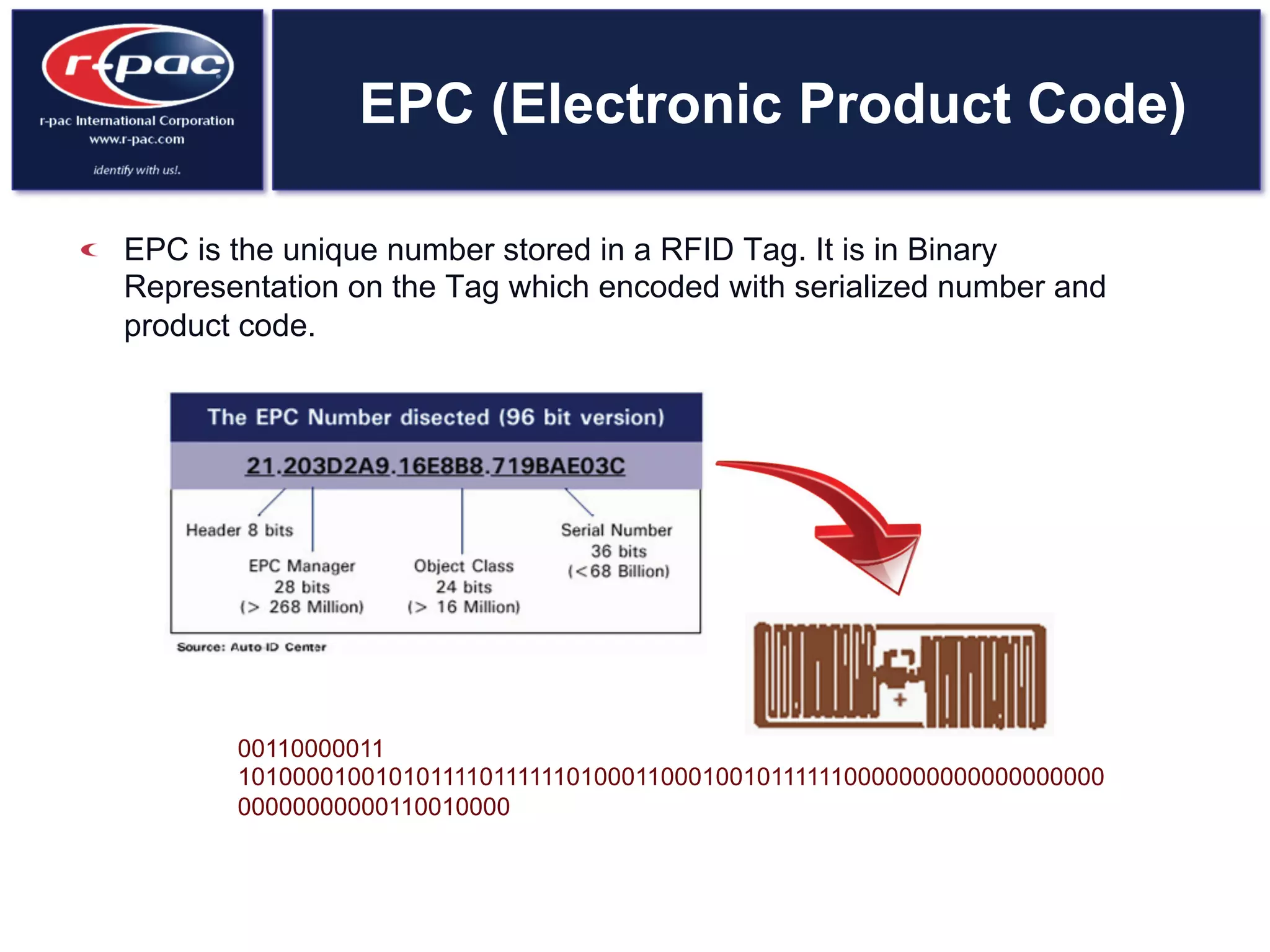
EPC (Electronic Product Code)
  EPC is the unique number stored in a RFID Tag. It is in Binary
Representation on the Tag which encoded with serialized number and
product code.
00110000011
10100001001010111101111110100011000100101111110000000000000000000
00000000000110010000
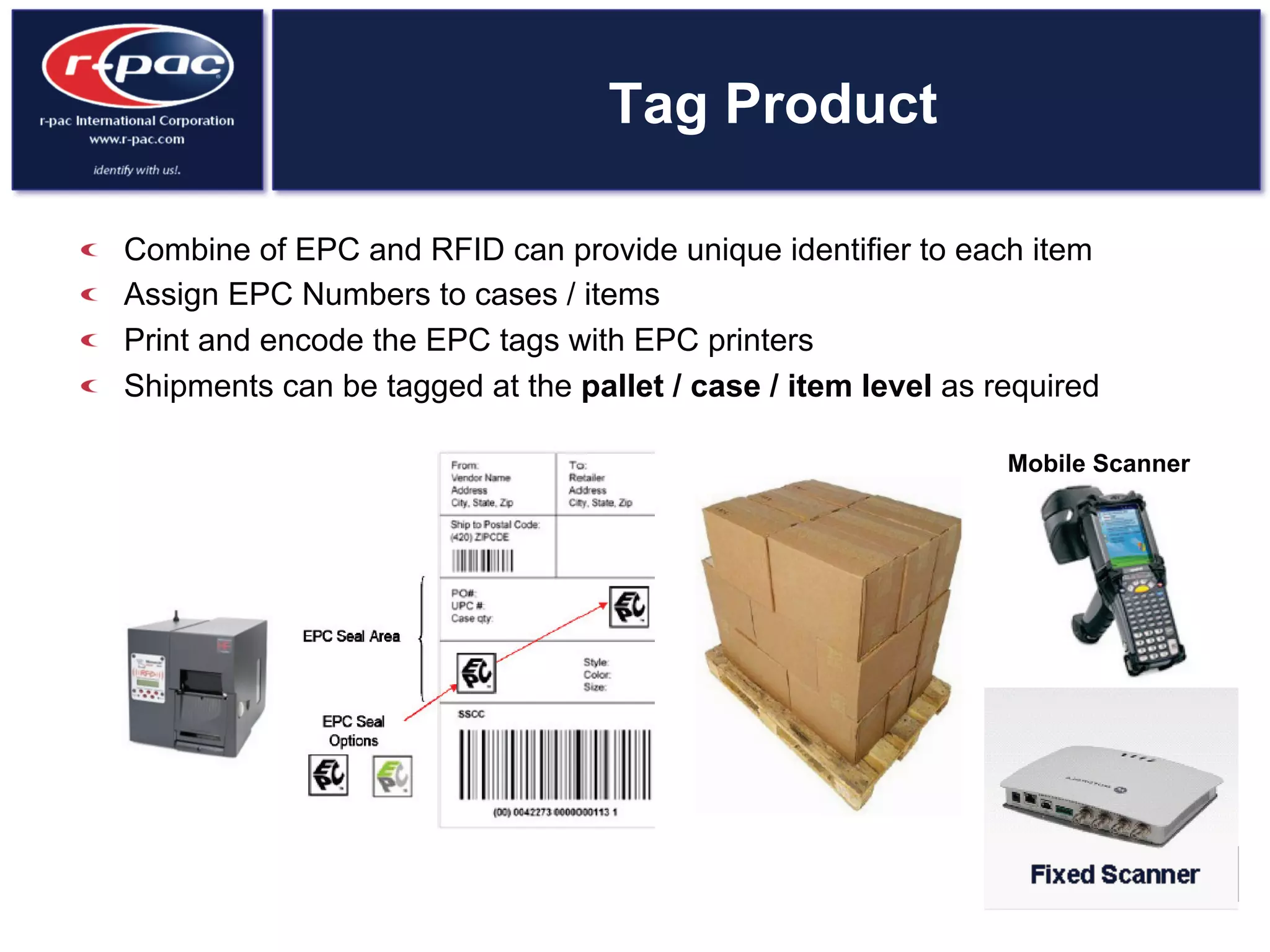
Tag Product
  Combine of EPC and RFID can provide unique identifier to each item
  Assign EPC Numbers to cases / items
  Print and encode the EPC tags with EPC printers
  Shipments can be tagged at the pallet / case / item level as required
Mobile Scanner
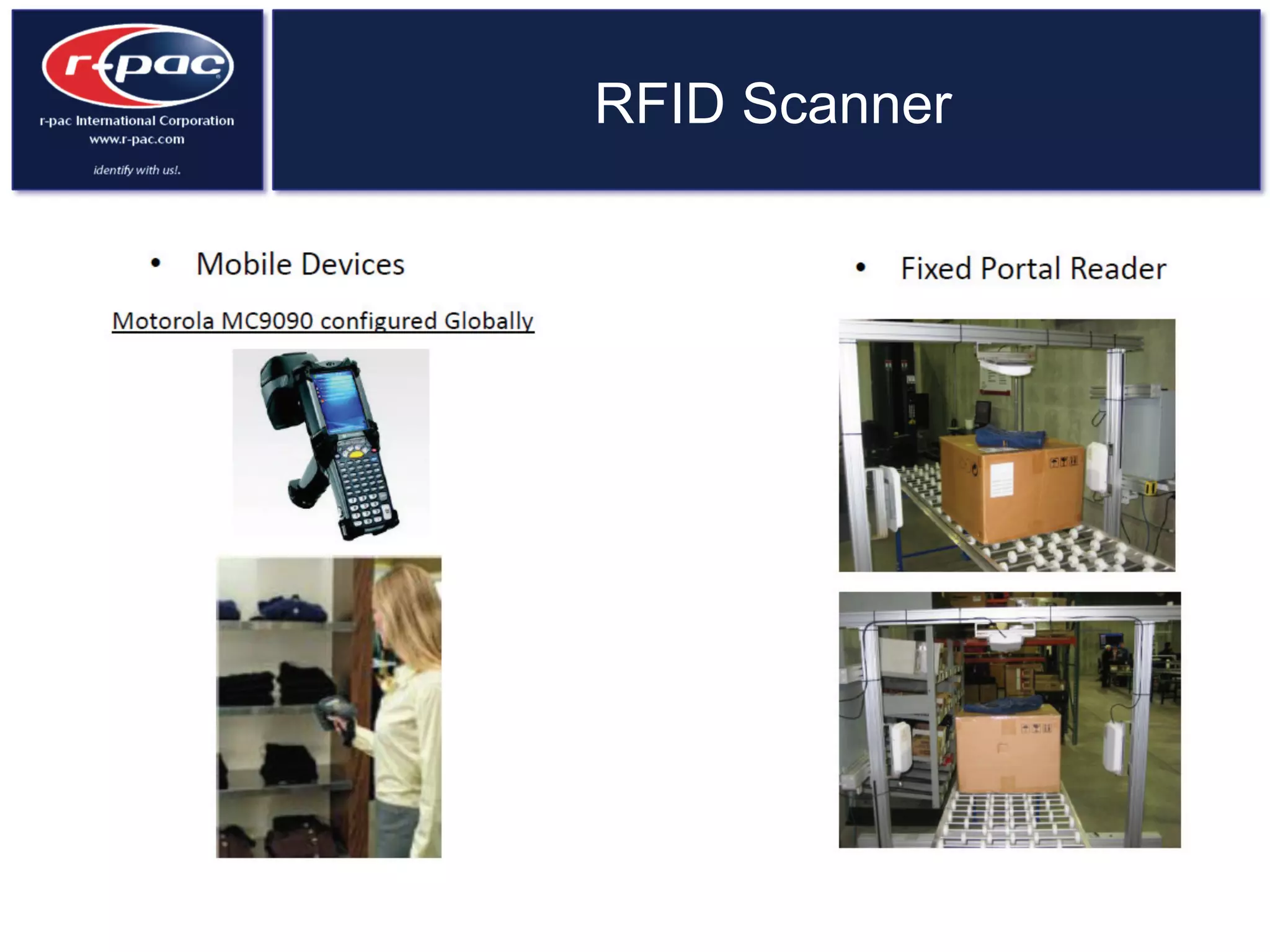
RFID Scanner
Production Flow
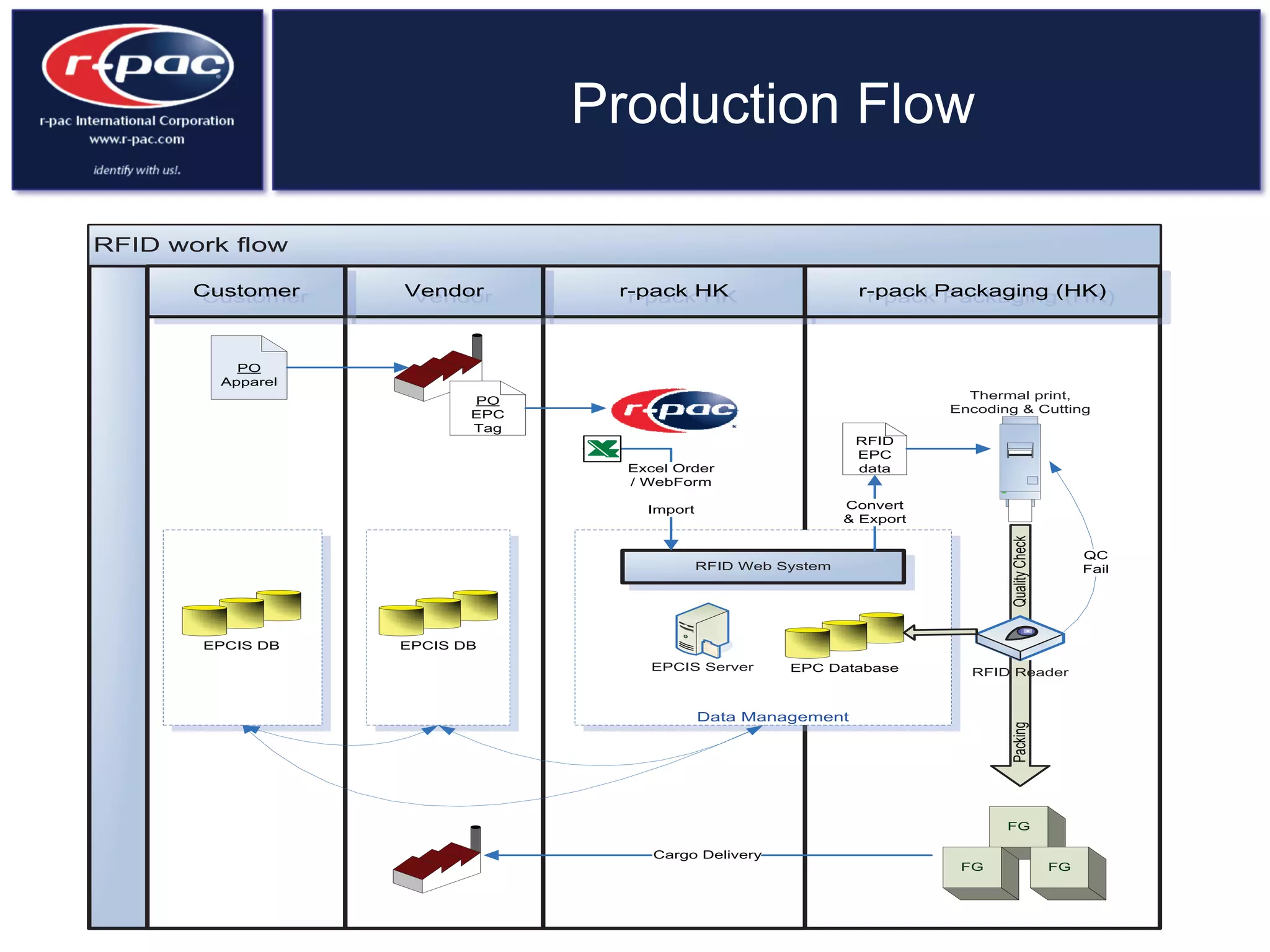
RFID work flow
rr-pppaaaccckkk HHKr-pack HKVVeeennndddoorVendor r-ppaacckk PPaaaccckkkaaagggiinng (HK)r-pack Packaging (HK)CCuussstttooommerCustomer
PO
Apparel
PO
EPC
Tag
RFID Web System
EPC DatabaseEPCIS Server
Excel Order
/ WebForm
Import
RFID
EPC
data
Thermal print,
Encoding & Cutting
FG
FG FG
PackingQualityCheck
RFID Reader
Cargo Delivery
EPCIS DBEPCIS DB
Convert
& Export
QC
Fail
Data Management
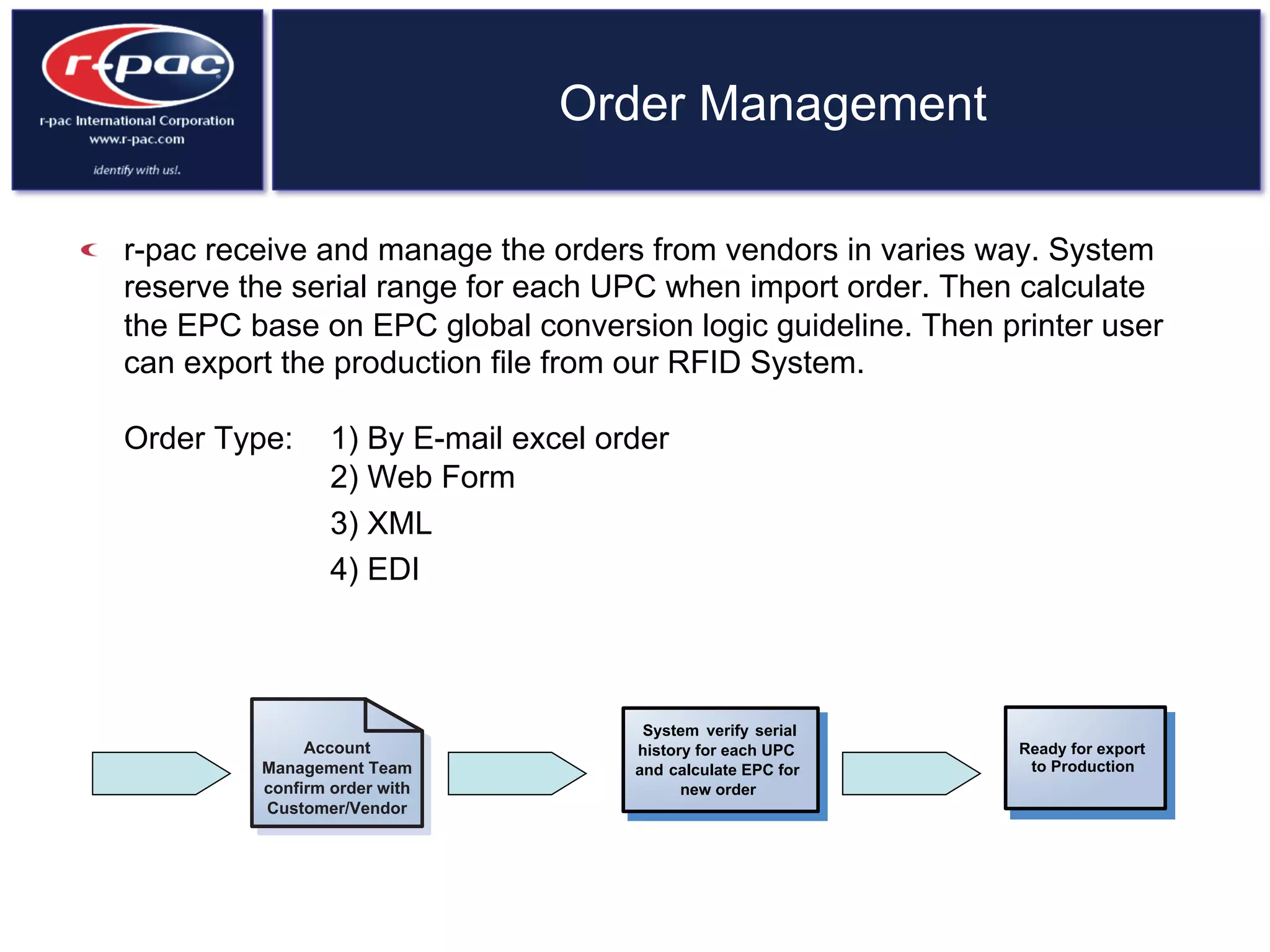
Order Management
  r-pac receive and manage the orders from vendors in varies way. System
reserve the serial range for each UPC when import order. Then calculate
the EPC base on EPC global conversion logic guideline. Then printer user
can export the production file from our RFID System.
Order Type: 1) By E-mail excel order
2) Web Form
3) XML
4) EDI
Account
Management Team
confirm order with
Customer/Vendor
Ready for export
to Production
System verify serial
history for each UPC
and calculate EPC for
new order
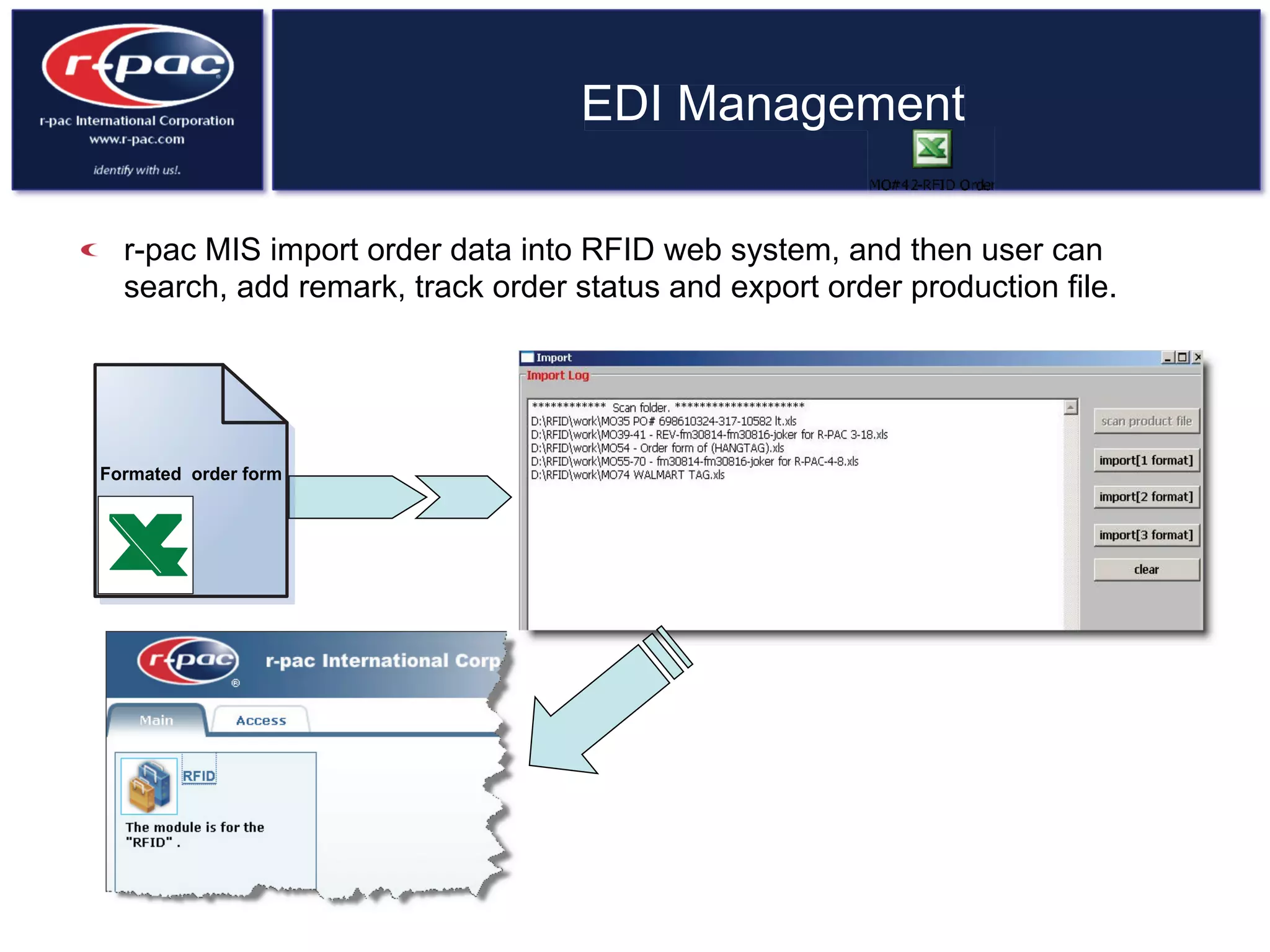
EDI Management
  r-pac MIS import order data into RFID web system, and then user can
search, add remark, track order status and export order production file.
Formated order form
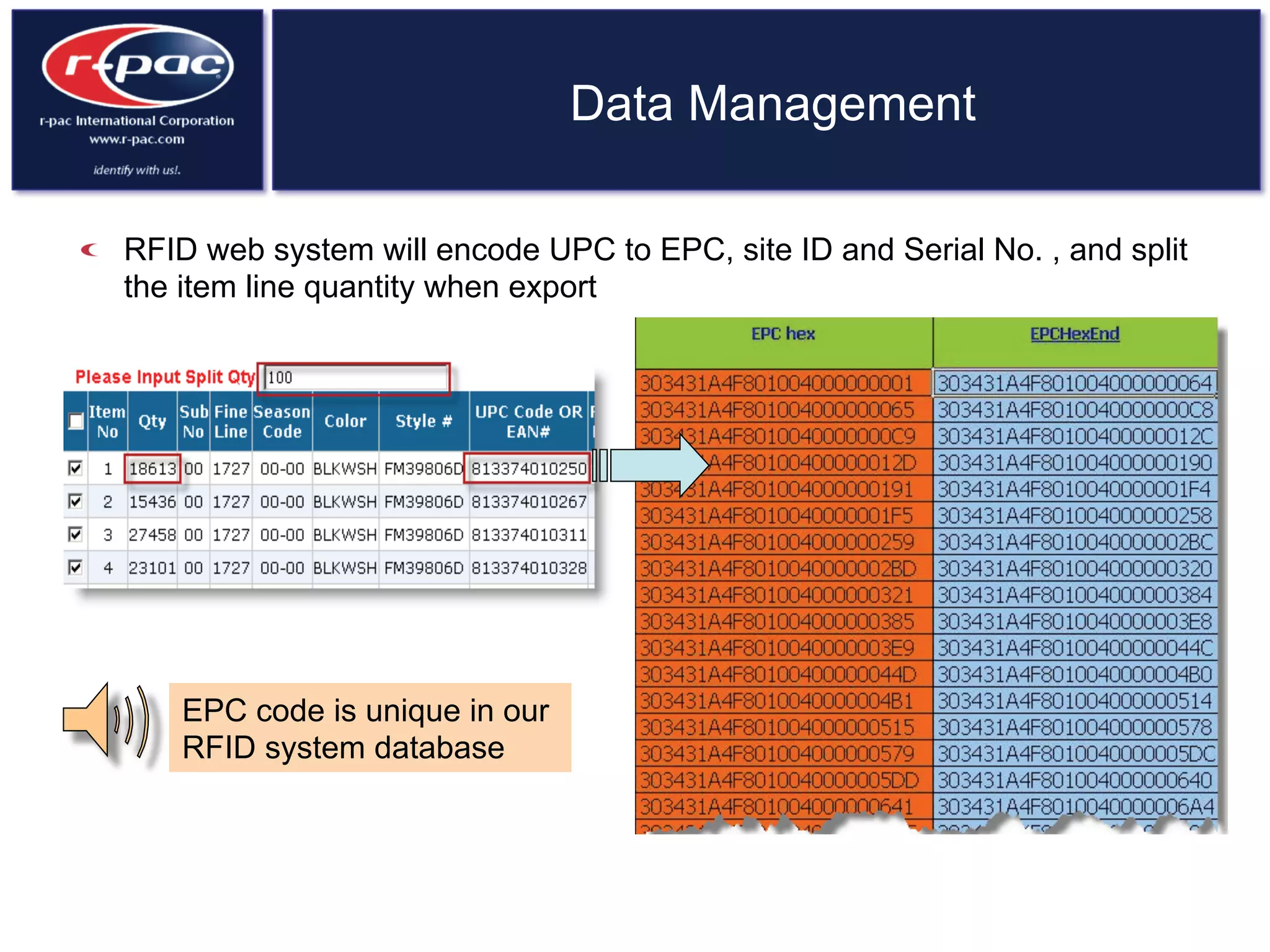
Data Management
  RFID web system will encode UPC to EPC, site ID and Serial No. , and split
the item line quantity when export
EPC code is unique in our
RFID system database
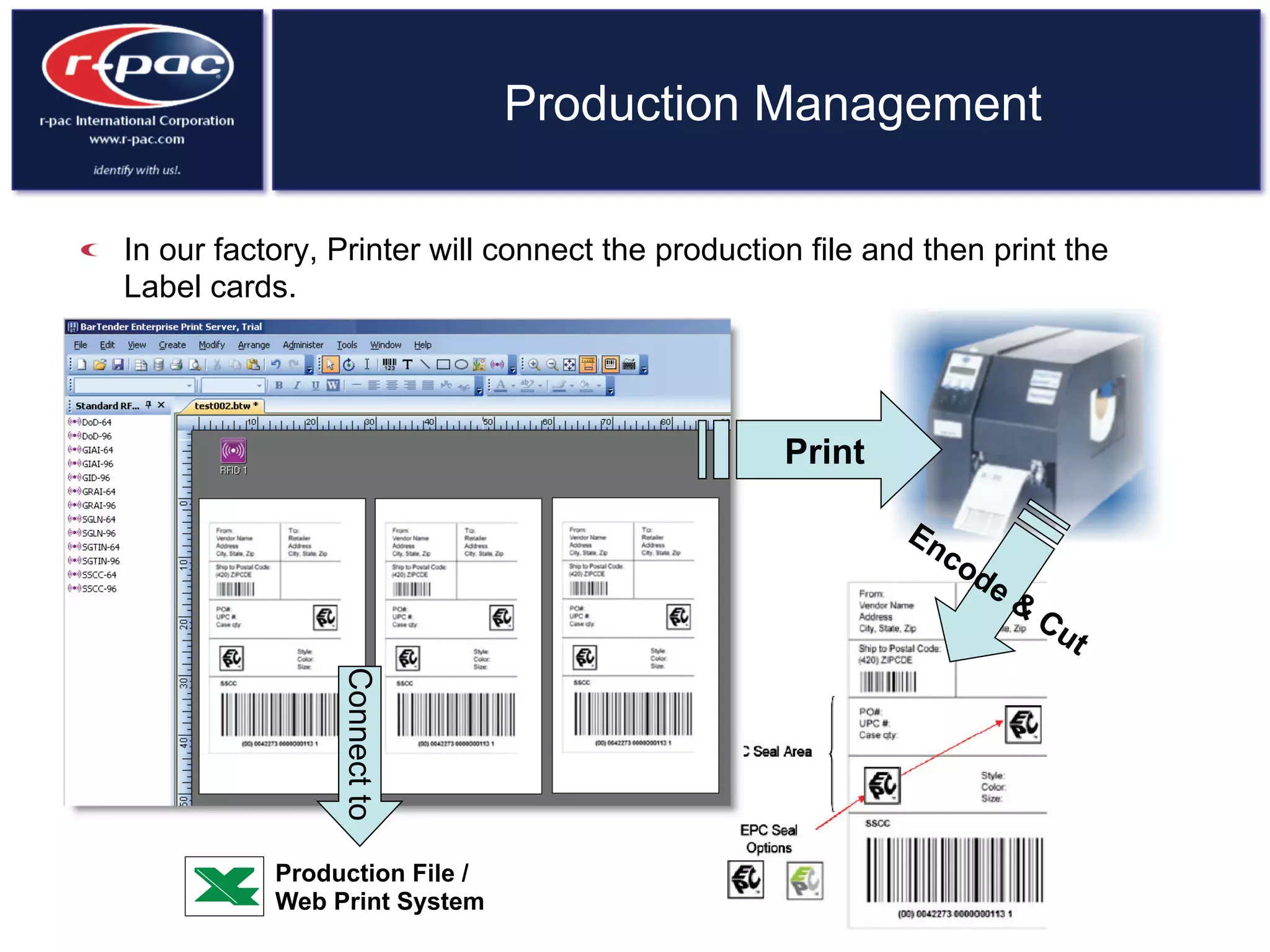
Production Management
  In our factory, Printer will connect the production file and then print the
Label cards.
Connectto
Print
Production File /
Web Print System
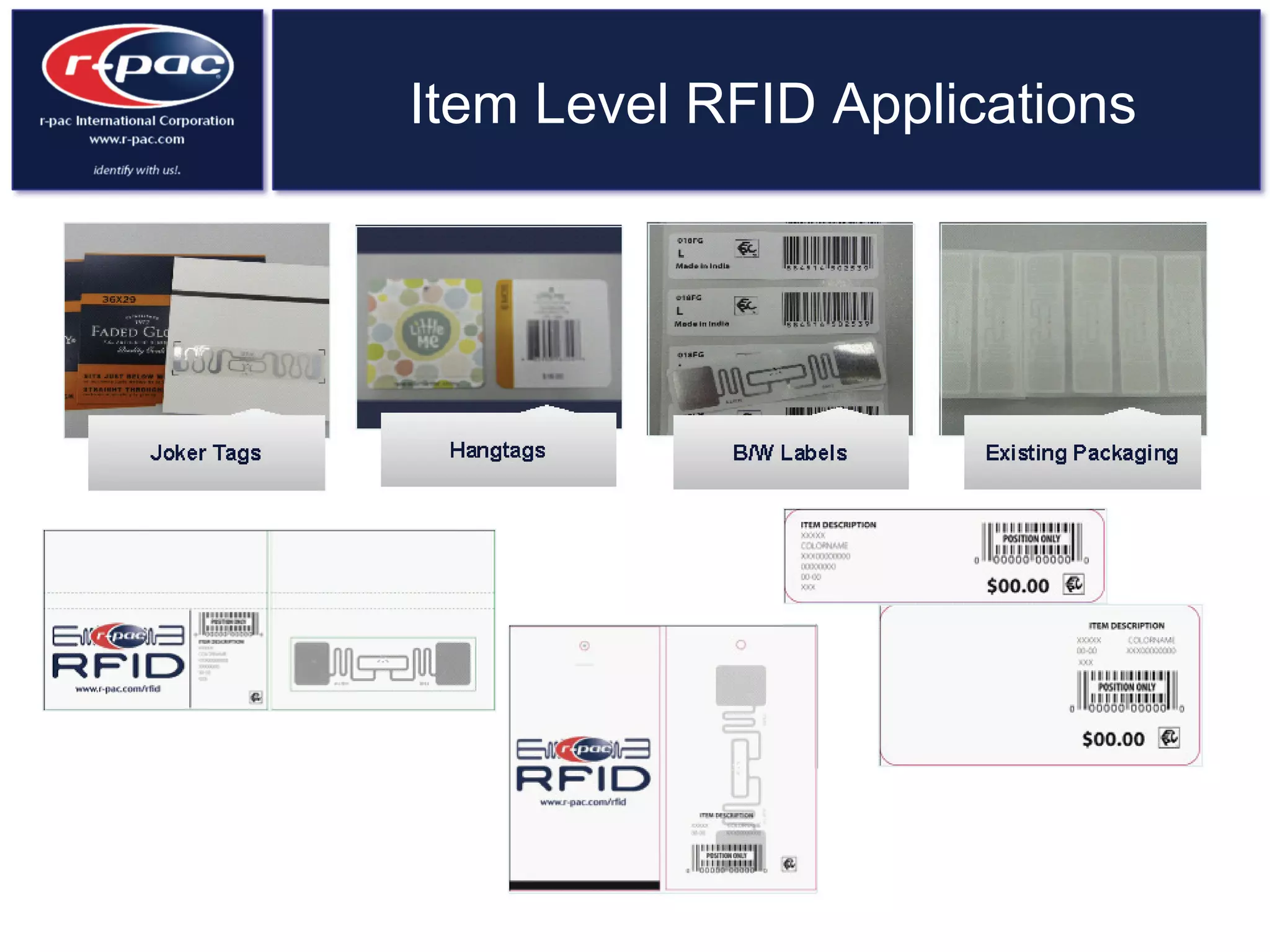
Item Level RFID Applications
 Questions?
Go ahead. Ask!

Rfid101 rfid introduction_lr

  • 1.
  • 2.
    Auto ID Systems  Auto ID is a short name for Automatic Identification   Includes a lot of different types of technologies: bar codes, smart cards, retinal scans, fingerprint scanning, and RFID… (many others)   What makes them all the same?   Something is IDENTIFIED (person or item)   Data is RETRIEVED (cash register pulls up the price of the item)   Data is USED (a calculation or function takes place)   Ultimately, people use these technologies to SAVE TIME and INCREASE ACCURACY. Both of these benefits SAVE MONEY!
  • 3.
    RFID: What isit? Radio Frequency IDentification   Data is transferred through radio waves.   Unlike barcodes, RFID does not need a person to be involved.
  • 4.
    The shortest historylesson on RFID EVER.   RFID has been around a long time   Started in World War 2 to track airplanes   1973 - Door Locking systems (like here!)   1979 – Animal Tracking  1980s and 1990s  Businesses and Governments used the technology to track inventory. Smaller items than airplanes!
  • 5.
    The Here andNow   Why is it so popular now?   With more interest (demand), antennas are getting less expensive.   As more businesses invest in the benefits of RFID, the greater the demand.   The greater the demand, the lower the price.   The lower the price, more businesses will invest in the the technology.
  • 6.
  • 7.
    RFID Basics andConverting ®
  • 8.
    What is RFID?  The heart of RFID technology is a transponder, a tiny computer chip with an antenna. The transponder is embedded in an extremely thin label, usually known as a tag that can be applied to logistics units such as pallets or cartons.   A unique number is generally stored on the transponder for encrypting information, which is recorded in a database for access by authorized users.
  • 9.
    RFID Tags   RFIDtags contain at least two parts:   an integrated circuit for storing and processing information, modulating and demodulating a radio-frequency (RF) signal, collecting DC power from the incident reader signal, and other specialized functions;   and an antenna for receiving and transmitting the signal.
  • 10.
    RFID Tags   RFIDtags can be either passive, active or battery assisted passive.   An active tag has an on-board battery that periodically transmits its ID signal.   A battery assisted passive (BAP) has a small battery on board that is activated when in the presence of a RFID reader.   A passive tag is cheaper and smaller because it has no battery.
  • 11.
  • 12.
    Tag Data Standards(TDS) Tag Data Standard defines EPC tag data, including how GS1 key identifiers are encoded on the tag and how they are encoded for use in the information systems layers of the EPC Systems Network.   Example of commonly used GS1 Key Type:   EPC - Electronic Product Code   GS1 is an international association who is dedicated to the design and implementation of global Product Identification Standard. www.gs1.org
  • 13.
    Identifiers Basic Format  Header – Which Type of Identifiers / Tag Data Format   EPC Manager Number – Which Company Prefix   Object Class – Which Product Code   Serial Number – Which Item
  • 14.
    EPC (Electronic ProductCode)   EPC is the unique number stored in a RFID Tag. It is in Binary Representation on the Tag which encoded with serialized number and product code. 00110000011 10100001001010111101111110100011000100101111110000000000000000000 00000000000110010000
  • 15.
    Tag Product   Combineof EPC and RFID can provide unique identifier to each item   Assign EPC Numbers to cases / items   Print and encode the EPC tags with EPC printers   Shipments can be tagged at the pallet / case / item level as required Mobile Scanner
  • 16.
  • 17.
    Production Flow RFID workflow rr-pppaaaccckkk HHKr-pack HKVVeeennndddoorVendor r-ppaacckk PPaaaccckkkaaagggiinng (HK)r-pack Packaging (HK)CCuussstttooommerCustomer PO Apparel PO EPC Tag RFID Web System EPC DatabaseEPCIS Server Excel Order / WebForm Import RFID EPC data Thermal print, Encoding & Cutting FG FG FG PackingQualityCheck RFID Reader Cargo Delivery EPCIS DBEPCIS DB Convert & Export QC Fail Data Management
  • 18.
    Order Management   r-pacreceive and manage the orders from vendors in varies way. System reserve the serial range for each UPC when import order. Then calculate the EPC base on EPC global conversion logic guideline. Then printer user can export the production file from our RFID System. Order Type: 1) By E-mail excel order 2) Web Form 3) XML 4) EDI Account Management Team confirm order with Customer/Vendor Ready for export to Production System verify serial history for each UPC and calculate EPC for new order
  • 19.
    EDI Management   r-pacMIS import order data into RFID web system, and then user can search, add remark, track order status and export order production file. Formated order form
  • 20.
    Data Management   RFIDweb system will encode UPC to EPC, site ID and Serial No. , and split the item line quantity when export EPC code is unique in our RFID system database
  • 21.
    Production Management   Inour factory, Printer will connect the production file and then print the Label cards. Connectto Print Production File / Web Print System
  • 22.
    Item Level RFIDApplications
  • 23.