Malaysia healthcare
Government
strategy
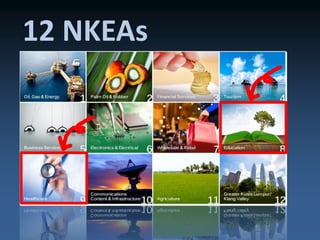
12 NKEAs
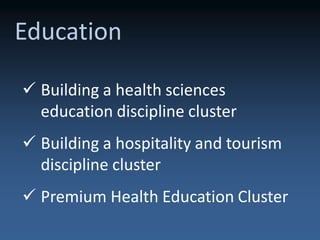
Education

 Building a health sciences
  education discipline cluster
 Building a hospitality and tourism
  discipline cluster
 Premium Health Education Cluster
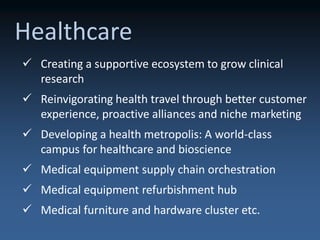
Healthcare
 Creating a supportive ecosystem to grow clinical
  research
 Reinvigorating health travel through better customer
  experience, proactive alliances and niche marketing
 Developing a health metropolis: A world-class
  campus for healthcare and bioscience
 Medical equipment supply chain orchestration
 Medical equipment refurbishment hub
 Medical furniture and hardware cluster etc.
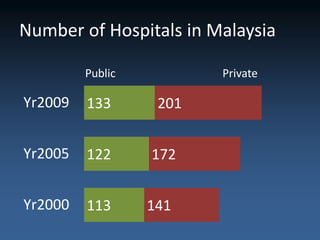
Number of Hospitals in Malaysia

         Public          Private

Yr2009   133       201


Yr2005   122      172


Yr2000   113      141
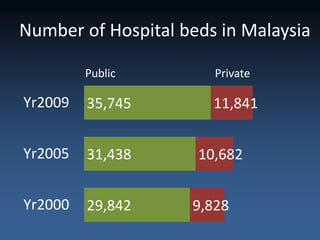
Number of Hospital beds in Malaysia

         Public        Private

Yr2009   35,745        11,841


Yr2005   31,438      10,682


Yr2000   29,842     9,828
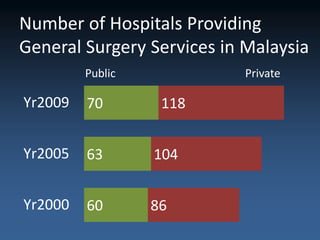
Number of Hospitals Providing
General Surgery Services in Malaysia
         Public             Private

Yr2009   70        118


Yr2005   63       104


Yr2000   60       86
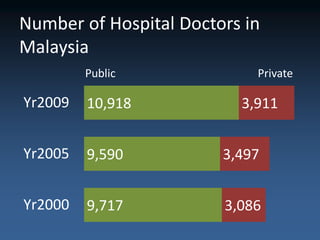
Number of Hospital Doctors in
Malaysia
         Public             Private

Yr2009   10,918           3,911


Yr2005   9,590          3,497


Yr2000   9,717          3,086
Increasing
yearly!!
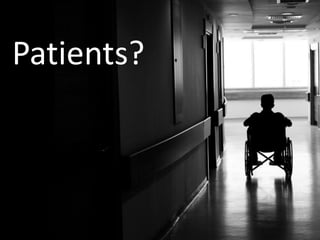
Patients?
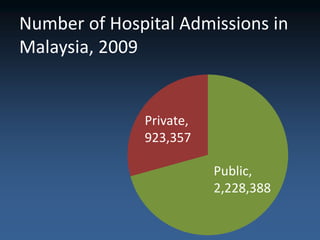
Number of Hospital Admissions in
Malaysia, 2009


              Private,
              923,357

                         Public,
                         2,228,388
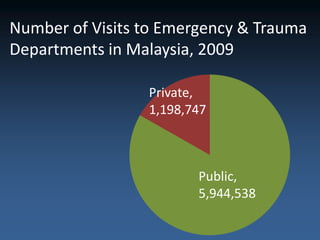
Number of Visits to Emergency & Trauma
Departments in Malaysia, 2009

                  Private,
                  1,198,747
                 Private,
                 923,357

                            Public,
                         Public,
                            2,228,388
                         5,944,538
Medical services sufficient?
Waiting time
for healthcare
Healthcare
   worker
   fatigue
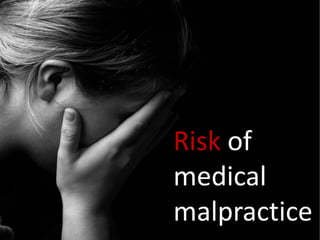
Risk of
medical
malpractice
In the case of Japan…
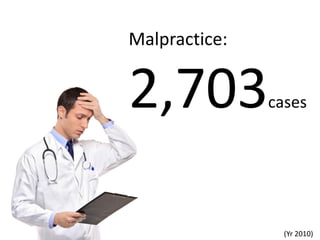
Malpractice:


2,703          cases


                 (Yr 2010)
Medical incident:

    560,024cases


(Yr 2010)
RFID can be help!!
Major elements
• Require huge manual work
• Require huge amount of time
• Troublesome and confuse
• Risk-sensitive
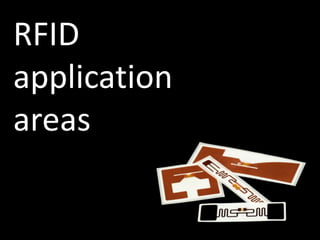
RFID
application
areas
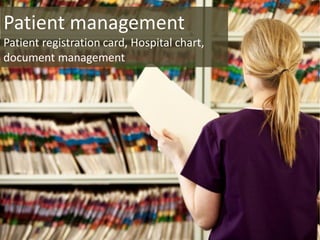
Patient management
Patient registration card, Hospital chart,
document management
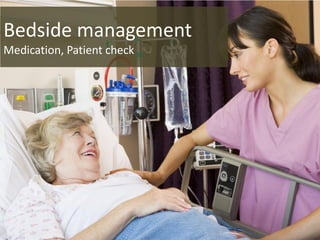
Bedside management
Medication, Patient check
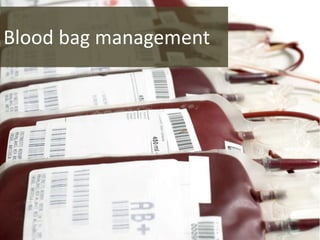
Blood bag management
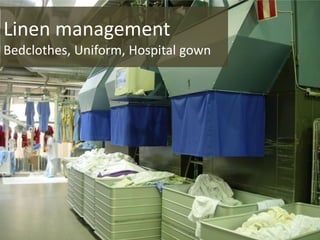
Linen management
Bedclothes, Uniform, Hospital gown
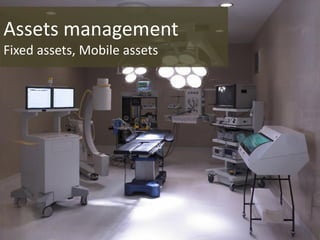
Assets management
Fixed assets, Mobile assets
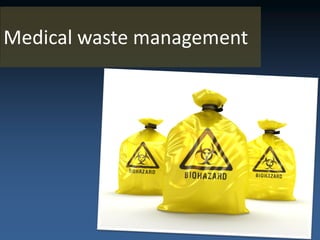
Medical waste management
Pharmaceutical Control
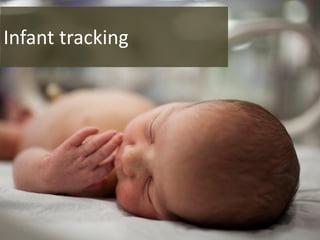
Infant tracking
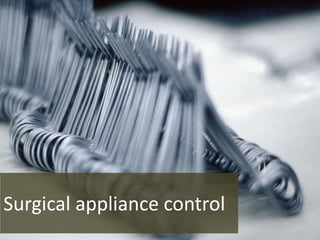
Surgical appliance control
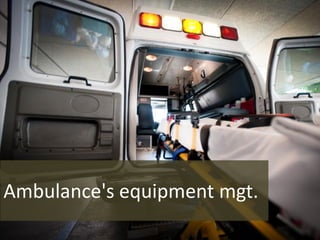
Ambulance's equipment mgt.
Common
benefits?
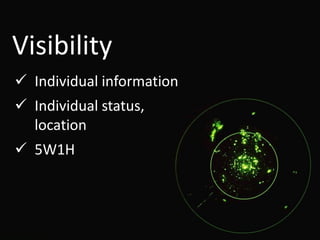
Visibility
 Individual information
 Individual status,
  location
 5W1H
Track & Trace
 Individual history
 Analysis
 Security
Work efficiency
 Increased productivity
 Reduce human error
 Optimize process
Environment
 Enhancement of energy
  efficiency
 Paperless operation
 Waste reduction
Go to advanced
medical environment
 High reliability
 High-quality
  medical service
 Efficient medical
  service
Goal?
Reduce
     healthcare
worker’s burden
Improve of
medical quality
Customer
satisfaction
RFID market
in the global
healthcare
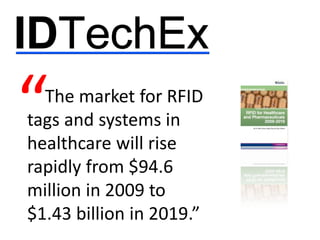
“ The market for RFID
tags and systems in
healthcare will rise
rapidly from $94.6
million in 2009 to
$1.43 billion in 2019.”
Dec. 2011
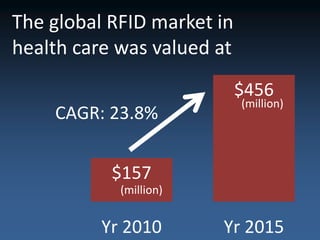
The global RFID market in
health care was valued at
                            $456
                            (million)
    CAGR: 23.8%


           $157
            (million)


          Yr 2010       Yr 2015
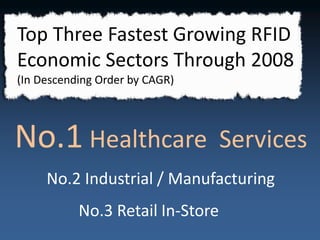
Top Three Fastest Growing RFID
Economic Sectors Through 2008
(In Descending Order by CAGR)


No.1 Healthcare                   Services
     No.2 Industrial / Manufacturing
           No.3 Retail In-Store
RFID in Healthcare Industry
2010-2014


              CAGR: 29%
Because…
RFID provided
high effect to
healthcare

RFID Applications for Healthcare