

Making Dry Eyes Wet Dr. Zia-Ul-Mazhry FCPS(Pak),  FRCS(Edin), FRCS(Glasgow),  CIC Ophth- (UK) Consultant Eye Surgeon &  Head, Department of Ophthalmology  Wapda  Hospital Complex Lahore. Making Dry Eyes Wet
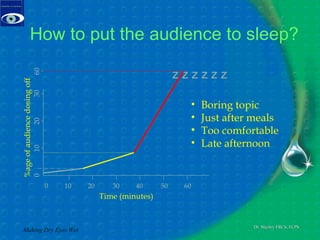
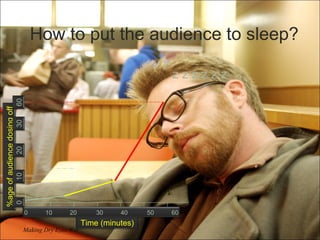
How to put the audience to sleep? Making Dry Eyes Wet z z z z z z %age of audience dosing off Time (minutes) 0  10  20  30  40  50  60 Boring topic Just after meals Too comfortable Late afternoon 10 20 30 60 0
Discussion Plan Definition and classification  Simplified diagnostic approach Therapeutic approach Choosing right treatment for right patient Review of the study Discussion and conclusion Making Dry Eyes Wet
Historical Perspective E. Wolff first described the multi-layer tear film in 1946. 1  In 1973, Frank J. Holly, Ph.D., explained that mucin had a much greater role than previously thought. 2 In 1997, Scheffer Tseng, M.D., Ph.D.,  that the layers are inextricably intertwined to produce a healthy ocular surface. 3 Making Dry Eyes Wet 1-Wolff E. The muco-cutaneous junction of the lid margin and distribution of the tear fluid. Trans Ophthalmol Soc UK 1946;66:291-308.  2-Holly FJ. Formation and stability of the tear film. Int Ophthalmol Clin 1973 Spring;13(1)73-96.  3-Tseng SC, Tsubota K. Important concepts for treating ocular surface an tear disorders. Am J Ophthalmol 1997 Dec;124(6):825-35.
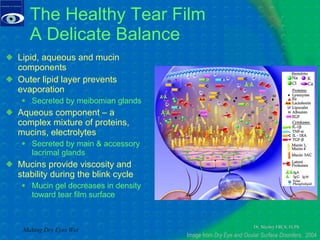
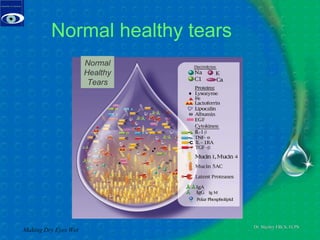
The Healthy Tear Film A Delicate Balance Lipid, aqueous and mucin components Outer lipid layer prevents evaporation Secreted by meibomian glands Aqueous component – a complex mixture of proteins, mucins, electrolytes Secreted by main & accessory lacrimal glands Mucins provide viscosity and stability during the blink cycle Mucin gel decreases in density toward tear film surface Making Dry Eyes Wet Image from  Dry Eye and Ocular Surface Disorders ,  2004
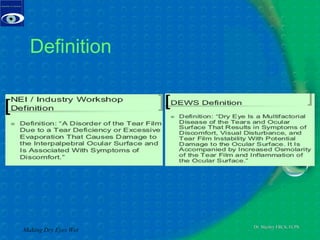
Definition Making Dry Eyes Wet
Prevalance 5% of adult population 4rth decade of life 10-15% Over 65 years of age Making Dry Eyes Wet
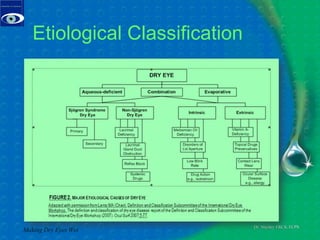
Etiological Classification Making Dry Eyes Wet
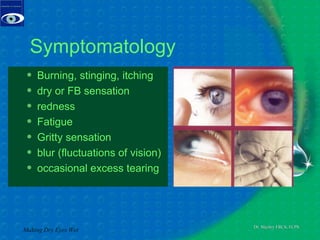
Symptomatology Making Dry Eyes Wet Burning, stinging, itching  dry or FB sensation  redness  Fatigue Gritty sensation  blur (fluctuations of vision)  occasional excess tearing 
 
Consequences of Tear Composition Changes in CDE Altered environment for ocular surface tissues Increased osmolarity Imbalanced growth factors and cytokines fail to promote normal epithelial growth Poor viscosity can cause thin spots in tear film and tear break-up – Lubrication compromised Ocular surface damage Loss of corneal epithelial integrity  Squamous metaplasia of conjunctival epithelium corneal filamentary keratitis; marked corneal punctate staining; central corneal staining, conjunctival scarring; corneal erosions; severe corneal staining Altered lifestyle Making Dry Eyes Wet
Dry Eye affects vision 33 % Report Night Driving Problems 28 % Report Reading Problems 26% Report Computer Problems 17% Report Problems Watching Television DEWS Diagnostic Study Group Making Dry Eyes Wet
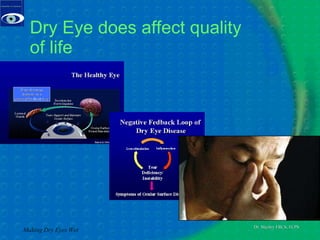
Dry Eye does affect quality of life Making Dry Eyes Wet
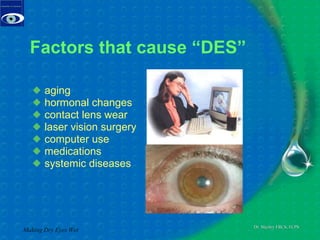
Factors that cause “DES”  aging  hormonal changes  contact lens wear  laser vision surgery  computer use  medications  systemic diseases  Making Dry Eyes Wet
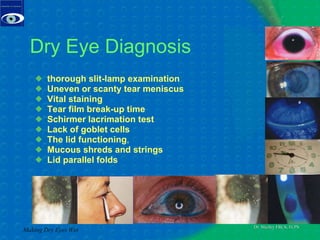
Dry Eye Diagnosis thorough slit-lamp examination Uneven or scanty tear meniscus   Vital staining Tear film break-up time Schirmer lacrimation test Lack of goblet cells   The lid functioning ,  Mucous shreds and strings Lid parallel folds Making Dry Eyes Wet
Dry Eye Diagnosis Making Dry Eyes Wet Test                                         cutoff value for dry eye diagnosis        ●  Schirmer's I                      less than or equal to 5 mm  wetting over 5 minutes      ● Tear Breakup time           less than or equal to 10seconds      ● Tear Meniscus height      less than or equal to 0.2  mm      ●  Fluorescein staining          more than 3 out of 15      ●  Rose Bengal staining        more than 3 out of 18      ● Tear film osmolarity         more than 316 mOsm/L      ●  Impression cytology          more than 1      ● Brush cytology                 more than 1      ● Tear lactoferrin                less than or equal to 0.9 ug/mL
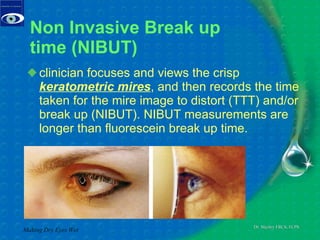
Non Invasive Break up time (NIBUT)   clinician focuses and views the crisp  keratometric mires , and then records the time taken for the mire image to distort (TTT) and/or break up (NIBUT). NIBUT measurements are longer than fluorescein break up time.  Making Dry Eyes Wet
Symptomatic Tear Break-Up Time (SBUT)  test  Obtain a stopwatch or clock.  Blink 2 times, then stare straight ahead, taking care to start timing immediately after your second blink.  Avoid blinking for as long as possible.  Note the time on the clock when you begin to feel eye discomfort (burning, grittiness, dryness, etc.)  The SBUT is the amount of time (in seconds) that passes between your last complete blink and the moment you experience eye discomfort.  Making Dry Eyes Wet SBUT is 5 seconds or less, you may have dry eye  Dry Eye Syndrome test at Systane_com.htm
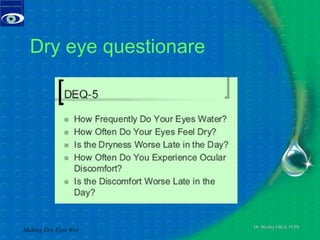
Dry eye questionare Making Dry Eyes Wet
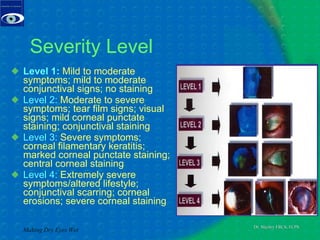
Severity Level Level 1:  Mild to moderate symptoms; mild to moderate conjunctival signs; no staining  Level 2:  Moderate to severe symptoms; tear film signs; visual signs; mild corneal punctate staining; conjunctival staining  Level 3:  Severe symptoms; corneal filamentary keratitis; marked corneal punctate staining; central corneal staining  Level 4:  Extremely severe symptoms/altered lifestyle; conjunctival scarring; corneal erosions; severe corneal staining  Making Dry Eyes Wet
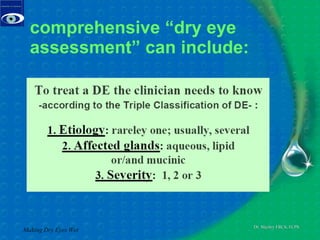
comprehensive “dry eye assessment” can include:   Making Dry Eyes Wet
Principles of treatment Treat the Symptoms Treat the Cause Treat the complications Making Dry Eyes Wet
Treatment Goals Establish the diagnosis of dry eye, differentiating it from other causes of irritation and redness   Identify the causes of dry eye  Establish appropriate therapy  Relieve discomfort  Prevent complications, such as loss of visual function, infection, and structural damage  Educate and involve the patient in the management of this disease Making Dry Eyes Wet
Treatment Algorithm (ITF) Level One  Patient education  Environmental modification  Control systemic medications  Control allergy  Preserved tears  Level Two Unpreserved tears  Gels and nighttime ointments  Nutritional support  Cyclosporine  Topical steroids  Secretagogues  Making Dry Eyes Wet
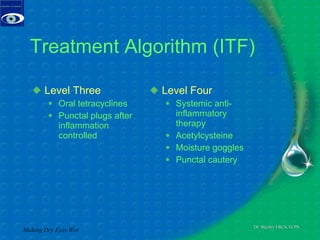
Treatment Algorithm (ITF) Level Three Oral tetracyclines  Punctal plugs after inflammation controlled  Level Four Systemic anti-inflammatory therapy  Acetylcysteine  Moisture goggles  Punctal cautery  Making Dry Eyes Wet
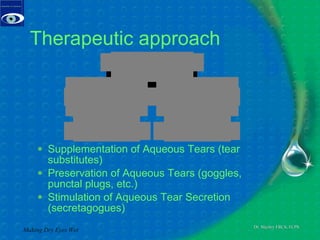
Therapeutic approach Supplementation of Aqueous Tears (tear substitutes)  Preservation of Aqueous Tears (goggles, punctal plugs, etc.)  Stimulation of Aqueous Tear Secretion   (secretagogues) Making Dry Eyes Wet
TEAR REPLACEMENT THERAPY Main stay  of Current dry eye management is : Making Dry Eyes Wet
Normal healthy tears Making Dry Eyes Wet Normal Healthy Tears
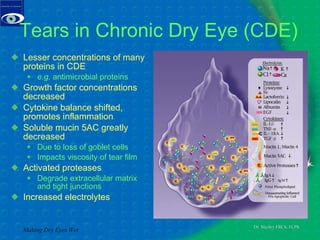
Tears in Chronic Dry Eye (CDE) Lesser concentrations of many proteins in CDE e.g.  antimicrobial proteins Growth factor concentrations decreased Cytokine balance shifted, promotes inflammation Soluble mucin 5AC greatly decreased  Due to loss of goblet cells Impacts viscosity of tear film Activated proteases  Degrade extracellular matrix and tight junctions  Increased electrolytes Making Dry Eyes Wet
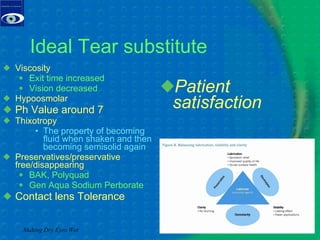
Ideal Tear substitute Viscosity Exit time increased Vision decreased Hypoosmolar Ph Value around 7 Thixotropy The property of becoming fluid when shaken and then becoming semisolid again Preservatives/preservative free/disappearing BAK, Polyquad Gen Aqua Sodium Perborate Contact lens Tolerance Patient satisfaction Making Dry Eyes Wet
Is Ideal tear substitute currently available? NO Making Dry Eyes Wet
A tear drop
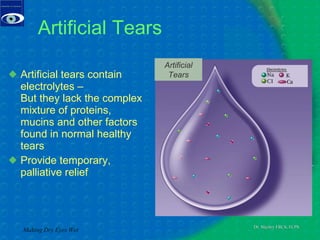
Artificial Tears Artificial tears contain electrolytes –  But they lack the complex mixture of proteins, mucins and other factors found in normal healthy tears Provide temporary, palliative relief Making Dry Eyes Wet Artificial Tears
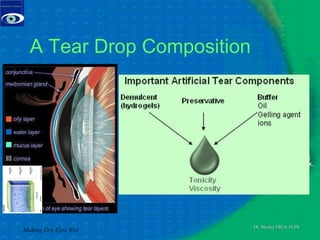
A Tear Drop Composition Making Dry Eyes Wet
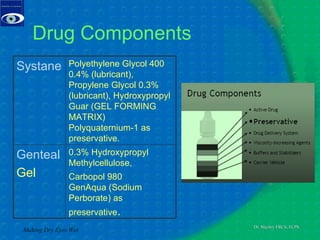
Drug Components Making Dry Eyes Wet Systane   Polyethylene Glycol 400 0.4% (lubricant), Propylene Glycol 0.3% (lubricant), Hydroxypropyl Guar (GEL FORMING MATRIX)  Polyquaternium-1 as preservative.  Genteal Gel  0.3% Hydroxypropyl Methylcellulose,  Carbopol 980  GenAqua (Sodium Perborate) as preservative .
Preservatives Chemicals to prevent microbial spoilage of pharmaceutical preparations 1953: FDA adopted the view that a non-sterile ophthalmic solution was unacceptable 1955:A sterility requirement in the official compendium. Mid 60s: Preservatives to be included in the Ophthalmic preparations by regulatory authorities in Europe and USA.
Ideal Preservative Broad spectrum antimicrobial activity Chemical and thermal activity Compatibility with container and other compounds present Innocuous towards ocular tissues
Preservatives in current use BAK  ( Hicel, Naphtears, Optitears) Polyquad  ( Tears Naturale11, Systane) Chlorbutanol  (Blink fresh,Tears Plus,Lacrilube, Optolube) Sodium Perborate  ( GenTeal ) Stabilized Oxychloro Complex (SOC)  (Refresh)
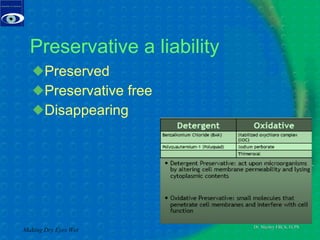
Preservative a liability Preserved Preservative free Disappearing Making Dry Eyes Wet
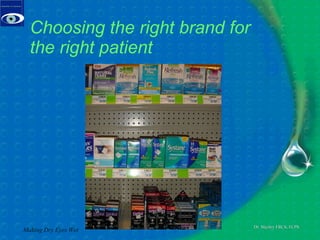
Choosing the right brand for the right patient Making Dry Eyes Wet
Choosing the right brand for the right patient In the treatment of a dry eye, frequent instillation of drops is required We should chose drops which is effective and least toxic. We should chose the one where preservative is either not present or preservative disappear soon after the instillation.
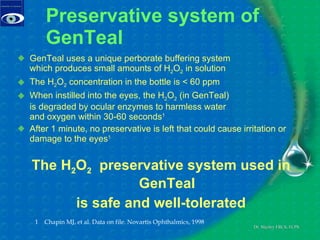
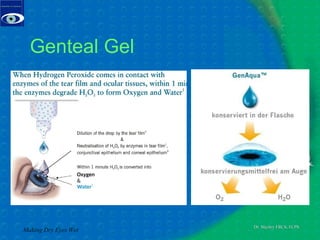
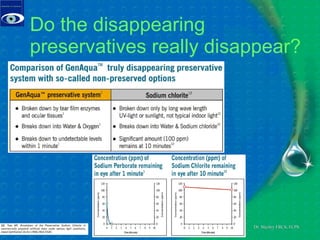
Preservative system of GenTeal GenTeal uses a unique perborate buffering system  which produces small amounts of H 2 O 2  in solution  The H 2 O 2  concentration in the bottle is < 60 ppm  When instilled into the eyes, the H 2 O 2  (in GenTeal)  is degraded by ocular enzymes to harmless water  and oxygen within 30-60 seconds 1 After 1 minute, no preservative is left that could cause irritation or damage to the eyes 1 The H 2 O 2   preservative system used in GenTeal is safe and well-tolerated 1  Chapin MJ, et al. Data on file. Novartis Ophthalmics, 1998
Genteal Gel Preservative sodium perborate Making Dry Eyes Wet
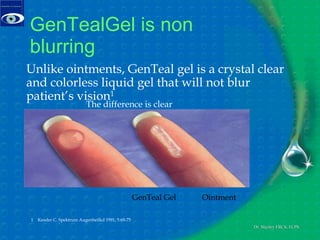
GenTealGel is non blurring  1  Kessler C. Spektrum Augenheilkd 1991; 5:69-75 Unlike ointments, GenTeal gel is a crystal clear and colorless liquid gel that will not blur patient’s vision 1 The difference is clear GenTeal Gel Ointment
Genteal Gel has dual lubricant system Carbomer, a mucomimetic,  provides the gel properties and stabilizes the tear film 1 Hypromellose  lubricates and soothes 1  Marquardt R, et al. Klin Monatsbl Augenheilkd 1986; 189:254-257  2  Kessler C. Spektrum Augenheilkd 1991; 5:69-75
GenTeal gel is thixotropic From gel to liquid in the blink of an eye GenTeal gel is a drop-like gel with thixotropic properties Natural forces applied by blinking liquefies the gel allowing an even, non-smearing distribution over the  ocular surface 2
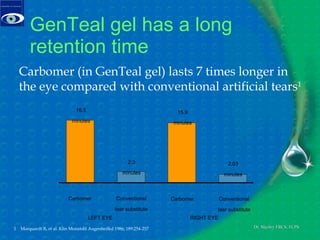
GenTeal gel has a long retention time Carbomer (in GenTeal gel) lasts 7 times longer in the eye compared with conventional artificial tears 1 1  Marquardt R, et al. Klin Monatsbl Augenheilkd 1986; 189:254-257 16.5 minutes 2.3 minutes 15.9 minutes 2.03 minutes Carbomer Conventional tear substitute Carbomer Conventional tear substitute LEFT EYE RIGHT EYE
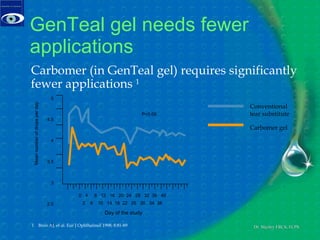
GenTeal gel needs fewer applications 1  Bron AJ, et al. Eur J Ophthalmol 1998; 8:81-89 Carbomer (in GenTeal gel) requires significantly fewer applications  1 Mean number of drops per day Day of the study 5 4.5 4 3.5 3 2.5 2 0  4  8  12  16  20  24  28  32  36  40 2  6  10  14  18  22  26  30  34  38 P<0.05 Conventional  tear substitute Carbomer gel
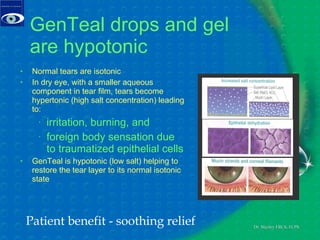
GenTeal drops and gel are hypotonic Normal tears are isotonic In dry eye, with a smaller aqueous component in tear film, tears become hypertonic (high salt concentration) leading to: irritation, burning, and foreign body sensation due  to traumatized epithelial cells GenTeal is hypotonic (low salt) helping to restore the tear layer to its normal isotonic state Patient benefit - soothing relief
Do the disappearing preservatives really disappear? Making Dry Eyes Wet
Genteal Gel Dual Lubricating Carbomer, a mucomimetic,  provides the gel properties and stabilizes the tear film 1 Hypromellose  lubricates and soothes Thixotropy GenTeal gel is a drop-like gel with thixotropic properties Natural forces applied by blinking liquefies the gel allowing an even, non-smearing distribution over the  ocular surface 2 Making Dry Eyes Wet
GenTeal drops and gel – summary Preserved in the bottle - preservative free in the eye 1 Hypotonic formulation to help break the dry eye cycle Convenient and economic multi-dose packaging Available as: Drops for mild to moderate dry eyes Gel for moderate to severe dry eyes clear, colorless and non-smearing 2 lasts 7 times longer than conventional artificial tears 3 requires just 3-4 applications daily   even in severe dry eyes 4 1  Chapin MJ, et al. Data on file. Novartis Ophthalmics. 1998 2  Kessler C. Spektrum Augenheilkd 1991; 5:69-75 3  Marquardt R, et al. Klin Monatsbl Augenheilkd 1986; 189:254-257 4  Marquardt R. Klin Monatsbl Augenheilkd 1986; 189:51-53
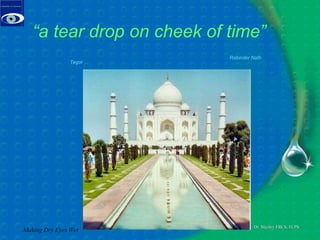
“ a tear drop on cheek of time” Rabinder Nath Tegor Making Dry Eyes Wet
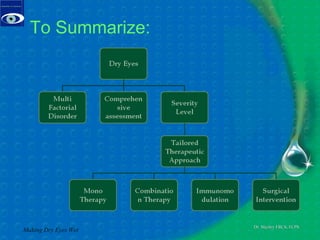
To Summarize: Making Dry Eyes Wet
Conclusion Genteal artificial tears family is an excellent recent additions to available options to treat dry eyes symptomatically. Both drops and gel showed higher satisfaction and better clinical outcomes as compared to other available wetting agents. Making Dry Eyes Wet
Conclusion To reach our collective goal of ocular surface protection, we must heal the damage and reduce inflammation and irritation. This will likely be accomplished by a line of products rather than one “cure-all”. With the many causes of dry eye and nearly as many therapeutic approaches, we will certainly be looking at combination therapy, with different treatments for different ideologies. Making Dry Eyes Wet
Keep blinking Making Dry Eyes Wet
How to put the audience to sleep? Making Dry Eyes Wet z z z z z z %age of audience dosing off Time (minutes) 0  10  20  30  40  50  60 10 20 30 60 0
Thank you

Review-making dry eyes wet

  • 1.
    Making Dry EyesWet Dr. Zia-Ul-Mazhry FCPS(Pak), FRCS(Edin), FRCS(Glasgow), CIC Ophth- (UK) Consultant Eye Surgeon & Head, Department of Ophthalmology Wapda Hospital Complex Lahore. Making Dry Eyes Wet
  • 2.
    How to putthe audience to sleep? Making Dry Eyes Wet z z z z z z %age of audience dosing off Time (minutes) 0 10 20 30 40 50 60 Boring topic Just after meals Too comfortable Late afternoon 10 20 30 60 0
  • 3.
    Discussion Plan Definitionand classification Simplified diagnostic approach Therapeutic approach Choosing right treatment for right patient Review of the study Discussion and conclusion Making Dry Eyes Wet
  • 4.
    Historical Perspective E.Wolff first described the multi-layer tear film in 1946. 1 In 1973, Frank J. Holly, Ph.D., explained that mucin had a much greater role than previously thought. 2 In 1997, Scheffer Tseng, M.D., Ph.D., that the layers are inextricably intertwined to produce a healthy ocular surface. 3 Making Dry Eyes Wet 1-Wolff E. The muco-cutaneous junction of the lid margin and distribution of the tear fluid. Trans Ophthalmol Soc UK 1946;66:291-308. 2-Holly FJ. Formation and stability of the tear film. Int Ophthalmol Clin 1973 Spring;13(1)73-96. 3-Tseng SC, Tsubota K. Important concepts for treating ocular surface an tear disorders. Am J Ophthalmol 1997 Dec;124(6):825-35.
  • 5.
    The Healthy TearFilm A Delicate Balance Lipid, aqueous and mucin components Outer lipid layer prevents evaporation Secreted by meibomian glands Aqueous component – a complex mixture of proteins, mucins, electrolytes Secreted by main & accessory lacrimal glands Mucins provide viscosity and stability during the blink cycle Mucin gel decreases in density toward tear film surface Making Dry Eyes Wet Image from Dry Eye and Ocular Surface Disorders , 2004
  • 6.
  • 7.
    Prevalance 5% ofadult population 4rth decade of life 10-15% Over 65 years of age Making Dry Eyes Wet
  • 8.
  • 9.
    Symptomatology Making DryEyes Wet Burning, stinging, itching dry or FB sensation redness Fatigue Gritty sensation blur (fluctuations of vision) occasional excess tearing 
  • 10.
  • 11.
    Consequences of TearComposition Changes in CDE Altered environment for ocular surface tissues Increased osmolarity Imbalanced growth factors and cytokines fail to promote normal epithelial growth Poor viscosity can cause thin spots in tear film and tear break-up – Lubrication compromised Ocular surface damage Loss of corneal epithelial integrity Squamous metaplasia of conjunctival epithelium corneal filamentary keratitis; marked corneal punctate staining; central corneal staining, conjunctival scarring; corneal erosions; severe corneal staining Altered lifestyle Making Dry Eyes Wet
  • 12.
    Dry Eye affectsvision 33 % Report Night Driving Problems 28 % Report Reading Problems 26% Report Computer Problems 17% Report Problems Watching Television DEWS Diagnostic Study Group Making Dry Eyes Wet
  • 13.
    Dry Eye doesaffect quality of life Making Dry Eyes Wet
  • 14.
    Factors that cause“DES” aging hormonal changes contact lens wear laser vision surgery computer use medications systemic diseases Making Dry Eyes Wet
  • 15.
    Dry Eye Diagnosisthorough slit-lamp examination Uneven or scanty tear meniscus Vital staining Tear film break-up time Schirmer lacrimation test Lack of goblet cells The lid functioning , Mucous shreds and strings Lid parallel folds Making Dry Eyes Wet
  • 16.
    Dry Eye DiagnosisMaking Dry Eyes Wet Test                                       cutoff value for dry eye diagnosis    ● Schirmer's I                     less than or equal to 5 mm wetting over 5 minutes    ● Tear Breakup time          less than or equal to 10seconds    ● Tear Meniscus height     less than or equal to 0.2 mm    ● Fluorescein staining       more than 3 out of 15    ● Rose Bengal staining     more than 3 out of 18    ● Tear film osmolarity        more than 316 mOsm/L    ● Impression cytology       more than 1    ● Brush cytology                more than 1    ● Tear lactoferrin               less than or equal to 0.9 ug/mL
  • 17.
    Non Invasive Breakup time (NIBUT) clinician focuses and views the crisp keratometric mires , and then records the time taken for the mire image to distort (TTT) and/or break up (NIBUT). NIBUT measurements are longer than fluorescein break up time. Making Dry Eyes Wet
  • 18.
    Symptomatic Tear Break-UpTime (SBUT) test Obtain a stopwatch or clock. Blink 2 times, then stare straight ahead, taking care to start timing immediately after your second blink. Avoid blinking for as long as possible. Note the time on the clock when you begin to feel eye discomfort (burning, grittiness, dryness, etc.) The SBUT is the amount of time (in seconds) that passes between your last complete blink and the moment you experience eye discomfort. Making Dry Eyes Wet SBUT is 5 seconds or less, you may have dry eye Dry Eye Syndrome test at Systane_com.htm
  • 19.
    Dry eye questionareMaking Dry Eyes Wet
  • 20.
    Severity Level Level1: Mild to moderate symptoms; mild to moderate conjunctival signs; no staining Level 2: Moderate to severe symptoms; tear film signs; visual signs; mild corneal punctate staining; conjunctival staining Level 3: Severe symptoms; corneal filamentary keratitis; marked corneal punctate staining; central corneal staining Level 4: Extremely severe symptoms/altered lifestyle; conjunctival scarring; corneal erosions; severe corneal staining Making Dry Eyes Wet
  • 21.
    comprehensive “dry eyeassessment” can include: Making Dry Eyes Wet
  • 22.
    Principles of treatmentTreat the Symptoms Treat the Cause Treat the complications Making Dry Eyes Wet
  • 23.
    Treatment Goals Establishthe diagnosis of dry eye, differentiating it from other causes of irritation and redness  Identify the causes of dry eye Establish appropriate therapy Relieve discomfort Prevent complications, such as loss of visual function, infection, and structural damage Educate and involve the patient in the management of this disease Making Dry Eyes Wet
  • 24.
    Treatment Algorithm (ITF)Level One Patient education Environmental modification Control systemic medications Control allergy Preserved tears Level Two Unpreserved tears Gels and nighttime ointments Nutritional support Cyclosporine Topical steroids Secretagogues Making Dry Eyes Wet
  • 25.
    Treatment Algorithm (ITF)Level Three Oral tetracyclines Punctal plugs after inflammation controlled Level Four Systemic anti-inflammatory therapy Acetylcysteine Moisture goggles Punctal cautery Making Dry Eyes Wet
  • 26.
    Therapeutic approach Supplementationof Aqueous Tears (tear substitutes) Preservation of Aqueous Tears (goggles, punctal plugs, etc.) Stimulation of Aqueous Tear Secretion   (secretagogues) Making Dry Eyes Wet
  • 27.
    TEAR REPLACEMENT THERAPYMain stay of Current dry eye management is : Making Dry Eyes Wet
  • 28.
    Normal healthy tearsMaking Dry Eyes Wet Normal Healthy Tears
  • 29.
    Tears in ChronicDry Eye (CDE) Lesser concentrations of many proteins in CDE e.g. antimicrobial proteins Growth factor concentrations decreased Cytokine balance shifted, promotes inflammation Soluble mucin 5AC greatly decreased Due to loss of goblet cells Impacts viscosity of tear film Activated proteases Degrade extracellular matrix and tight junctions Increased electrolytes Making Dry Eyes Wet
  • 30.
    Ideal Tear substituteViscosity Exit time increased Vision decreased Hypoosmolar Ph Value around 7 Thixotropy The property of becoming fluid when shaken and then becoming semisolid again Preservatives/preservative free/disappearing BAK, Polyquad Gen Aqua Sodium Perborate Contact lens Tolerance Patient satisfaction Making Dry Eyes Wet
  • 31.
    Is Ideal tearsubstitute currently available? NO Making Dry Eyes Wet
  • 32.
  • 33.
    Artificial Tears Artificialtears contain electrolytes – But they lack the complex mixture of proteins, mucins and other factors found in normal healthy tears Provide temporary, palliative relief Making Dry Eyes Wet Artificial Tears
  • 34.
    A Tear DropComposition Making Dry Eyes Wet
  • 35.
    Drug Components MakingDry Eyes Wet Systane Polyethylene Glycol 400 0.4% (lubricant), Propylene Glycol 0.3% (lubricant), Hydroxypropyl Guar (GEL FORMING MATRIX) Polyquaternium-1 as preservative. Genteal Gel 0.3% Hydroxypropyl Methylcellulose, Carbopol 980 GenAqua (Sodium Perborate) as preservative .
  • 36.
    Preservatives Chemicals toprevent microbial spoilage of pharmaceutical preparations 1953: FDA adopted the view that a non-sterile ophthalmic solution was unacceptable 1955:A sterility requirement in the official compendium. Mid 60s: Preservatives to be included in the Ophthalmic preparations by regulatory authorities in Europe and USA.
  • 37.
    Ideal Preservative Broadspectrum antimicrobial activity Chemical and thermal activity Compatibility with container and other compounds present Innocuous towards ocular tissues
  • 38.
    Preservatives in currentuse BAK ( Hicel, Naphtears, Optitears) Polyquad ( Tears Naturale11, Systane) Chlorbutanol (Blink fresh,Tears Plus,Lacrilube, Optolube) Sodium Perborate ( GenTeal ) Stabilized Oxychloro Complex (SOC) (Refresh)
  • 39.
    Preservative a liabilityPreserved Preservative free Disappearing Making Dry Eyes Wet
  • 40.
    Choosing the rightbrand for the right patient Making Dry Eyes Wet
  • 41.
    Choosing the rightbrand for the right patient In the treatment of a dry eye, frequent instillation of drops is required We should chose drops which is effective and least toxic. We should chose the one where preservative is either not present or preservative disappear soon after the instillation.
  • 42.
    Preservative system ofGenTeal GenTeal uses a unique perborate buffering system which produces small amounts of H 2 O 2 in solution The H 2 O 2 concentration in the bottle is < 60 ppm When instilled into the eyes, the H 2 O 2 (in GenTeal) is degraded by ocular enzymes to harmless water and oxygen within 30-60 seconds 1 After 1 minute, no preservative is left that could cause irritation or damage to the eyes 1 The H 2 O 2 preservative system used in GenTeal is safe and well-tolerated 1 Chapin MJ, et al. Data on file. Novartis Ophthalmics, 1998
  • 43.
    Genteal Gel Preservativesodium perborate Making Dry Eyes Wet
  • 44.
    GenTealGel is nonblurring 1 Kessler C. Spektrum Augenheilkd 1991; 5:69-75 Unlike ointments, GenTeal gel is a crystal clear and colorless liquid gel that will not blur patient’s vision 1 The difference is clear GenTeal Gel Ointment
  • 45.
    Genteal Gel hasdual lubricant system Carbomer, a mucomimetic, provides the gel properties and stabilizes the tear film 1 Hypromellose lubricates and soothes 1 Marquardt R, et al. Klin Monatsbl Augenheilkd 1986; 189:254-257 2 Kessler C. Spektrum Augenheilkd 1991; 5:69-75
  • 46.
    GenTeal gel isthixotropic From gel to liquid in the blink of an eye GenTeal gel is a drop-like gel with thixotropic properties Natural forces applied by blinking liquefies the gel allowing an even, non-smearing distribution over the ocular surface 2
  • 47.
    GenTeal gel hasa long retention time Carbomer (in GenTeal gel) lasts 7 times longer in the eye compared with conventional artificial tears 1 1 Marquardt R, et al. Klin Monatsbl Augenheilkd 1986; 189:254-257 16.5 minutes 2.3 minutes 15.9 minutes 2.03 minutes Carbomer Conventional tear substitute Carbomer Conventional tear substitute LEFT EYE RIGHT EYE
  • 48.
    GenTeal gel needsfewer applications 1 Bron AJ, et al. Eur J Ophthalmol 1998; 8:81-89 Carbomer (in GenTeal gel) requires significantly fewer applications 1 Mean number of drops per day Day of the study 5 4.5 4 3.5 3 2.5 2 0 4 8 12 16 20 24 28 32 36 40 2 6 10 14 18 22 26 30 34 38 P<0.05 Conventional tear substitute Carbomer gel
  • 49.
    GenTeal drops andgel are hypotonic Normal tears are isotonic In dry eye, with a smaller aqueous component in tear film, tears become hypertonic (high salt concentration) leading to: irritation, burning, and foreign body sensation due to traumatized epithelial cells GenTeal is hypotonic (low salt) helping to restore the tear layer to its normal isotonic state Patient benefit - soothing relief
  • 50.
    Do the disappearingpreservatives really disappear? Making Dry Eyes Wet
  • 51.
    Genteal Gel DualLubricating Carbomer, a mucomimetic, provides the gel properties and stabilizes the tear film 1 Hypromellose lubricates and soothes Thixotropy GenTeal gel is a drop-like gel with thixotropic properties Natural forces applied by blinking liquefies the gel allowing an even, non-smearing distribution over the ocular surface 2 Making Dry Eyes Wet
  • 52.
    GenTeal drops andgel – summary Preserved in the bottle - preservative free in the eye 1 Hypotonic formulation to help break the dry eye cycle Convenient and economic multi-dose packaging Available as: Drops for mild to moderate dry eyes Gel for moderate to severe dry eyes clear, colorless and non-smearing 2 lasts 7 times longer than conventional artificial tears 3 requires just 3-4 applications daily even in severe dry eyes 4 1 Chapin MJ, et al. Data on file. Novartis Ophthalmics. 1998 2 Kessler C. Spektrum Augenheilkd 1991; 5:69-75 3 Marquardt R, et al. Klin Monatsbl Augenheilkd 1986; 189:254-257 4 Marquardt R. Klin Monatsbl Augenheilkd 1986; 189:51-53
  • 53.
    “ a teardrop on cheek of time” Rabinder Nath Tegor Making Dry Eyes Wet
  • 54.
  • 55.
    Conclusion Genteal artificialtears family is an excellent recent additions to available options to treat dry eyes symptomatically. Both drops and gel showed higher satisfaction and better clinical outcomes as compared to other available wetting agents. Making Dry Eyes Wet
  • 56.
    Conclusion To reachour collective goal of ocular surface protection, we must heal the damage and reduce inflammation and irritation. This will likely be accomplished by a line of products rather than one “cure-all”. With the many causes of dry eye and nearly as many therapeutic approaches, we will certainly be looking at combination therapy, with different treatments for different ideologies. Making Dry Eyes Wet
  • 57.
  • 58.
    How to putthe audience to sleep? Making Dry Eyes Wet z z z z z z %age of audience dosing off Time (minutes) 0 10 20 30 40 50 60 10 20 30 60 0
  • 59.

Editor's Notes

  • #6 The normal tear film contains lipid, aqueous, and mucin components. The outer lipid layer protects against evaporation. (It contains a much greater variety of lipids than is shown in this drawing.) Tear lipids are secreted by meibomian glands with orifices at the lid margins. The aqueous component is thought to form a gel with soluble mucins that decreases in density toward the lipid layer. It includes a complex mixture of proteins, mucins, and electrolytes. Both the water component and nearly all of the tear proteins are secreted by the main and accessory lacrimal glands. Mucins are a crucial component: they provide viscosity Stabilize the tear film against the shear force exerted by each blink cycle Transmembrane mucins anchored in epithelial cells provide a transition between the hydrophobic cell surface and the hydrophilic aqueous component Soluble mucins are secreted by goblet cells of the conjunctival epithelium
  • #12 What are the consequences of the changes in tear composition that are associated with chronic dry eye? The ocular surface environment changed from the normal trophic environment that supports normal growth and function. Increased osmolarity is known to affect the growth and function of many cells. The lack of growth factors and imbalance in cytokines means that normal epithelial growth is poorly supported. Poor viscosity can result in thin spots in the tear film – and tear break-up. Lubrication that is necessary for ocular comfort during the blink cycle is compromised, and irregularities in the tear film may contribute to the blurred vision experienced by many CDE patients. Changes in tear composition contribute to the ocular surface damage found in chronic dry eye patients. Proteolytic degradation of tight junctions between corneal epithelial cells results in loss of corneal barrier function (often visualized with fluorescein staining). Squamous metaplasia of the conjunctival epithelium is associated with a markedly reduced population of mucin-secreting goblet cells. Membrane-bound mucins are decreased in chronic dry eye as well. Tears bathe all ocular surface tissues – it is not surprising that altered tear composition would have profound impacts on their growth and function.
  • #30 Contrast the graphic of healthy tears on the previous slide with tears in chronic dry eye shown here. The concentrations of many tear proteins, including those with antimicrobial functions, are reduced. Growth factor concentrations are reduced as well. The soluble mucin 5AC is greatly reduced in concentration, because of the profound loss of goblet cells from the conjunctival epithelium that is typical of chronic dry eye. This impacts the viscosity of the tear film. Protease that are present in healthy tears in a latent inactivated form, are now activated. They can degrade the extracellular matrix and the tight junctions between adjacent cells of the corneal epithelium. Activated proteases are also responsible for cleavage of many cytokines into an activated pro-inflammatory form. The increase in electrolyte concentrations means that the osmolarity of the tear film is increased in chronic dry eye.
  • #34 This slide contrasts the complexity of the mixture of proteins, mucins and other factors found in normal healthy tears, with artificial tears. Artificial tears contain electrolytes, which are balanced to mimic the osmolarity and pH of normal tears, but they lack the important biological properties provided by the proteins and mucins that are present in normal healthy tears.