REVERSE CAR PARKING USING
ARDUINO
PROJECT BY:
SALEHIN RAHMAN KHAN
SUMAMA MUNTAHA ISLAM
Powered by Celltech IT
Contents
 Reasons to build this project
 Equipment
 Concepts
 Diagram
 The process
 Arduino Code
 Experimental Result
 Application
 Future Plans
 Conclusion
Reasons to build this project :
 Help people to park car in reverse direction
 Using ultrasonic sensor for more efficiency
 Save people’s time
 Decrease the difficulties to park in reverse direction
 Help to avoid collision
Equipment
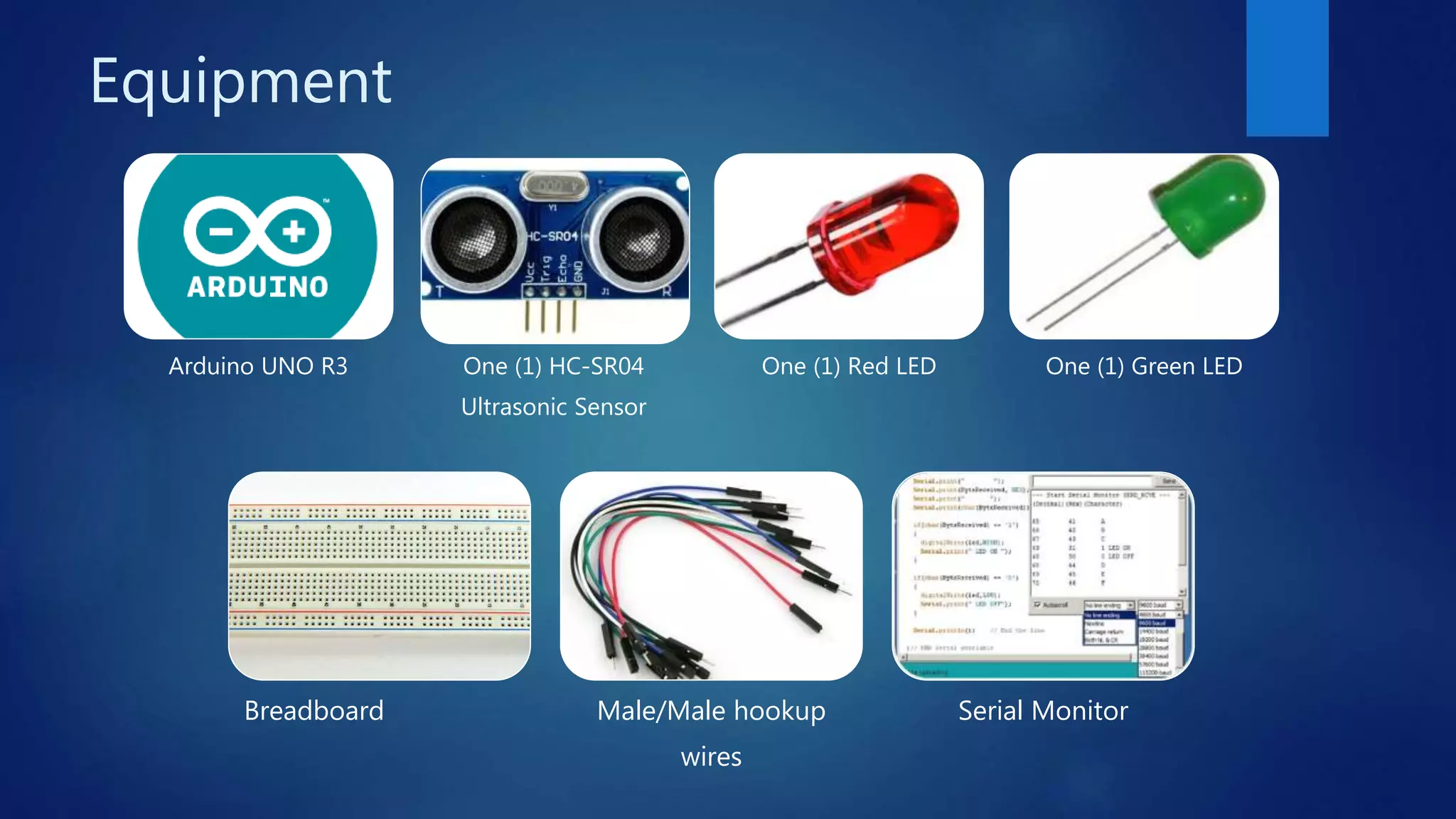
Arduino UNO R3 One (1) HC-SR04
Ultrasonic Sensor
One (1) Red LED One (1) Green LED
Breadboard Male/Male hookup
wires
Serial Monitor
Concepts
Arduino UNO R3 :
Arduino/Genuino Uno is a microcontroller board. It has 14 digital
input/output pins, 6 analog inputs, a 16 MHz quartz crystal, a USB connection,
a power jack, an ICSP header and a reset button.
HC-SR04 :
The HC-SR04 is an excellent low-cost ultrasonic sensor that works well with
Arduino micro-controllers. It will help to find the distance with ultrasonic
sound.
The process:
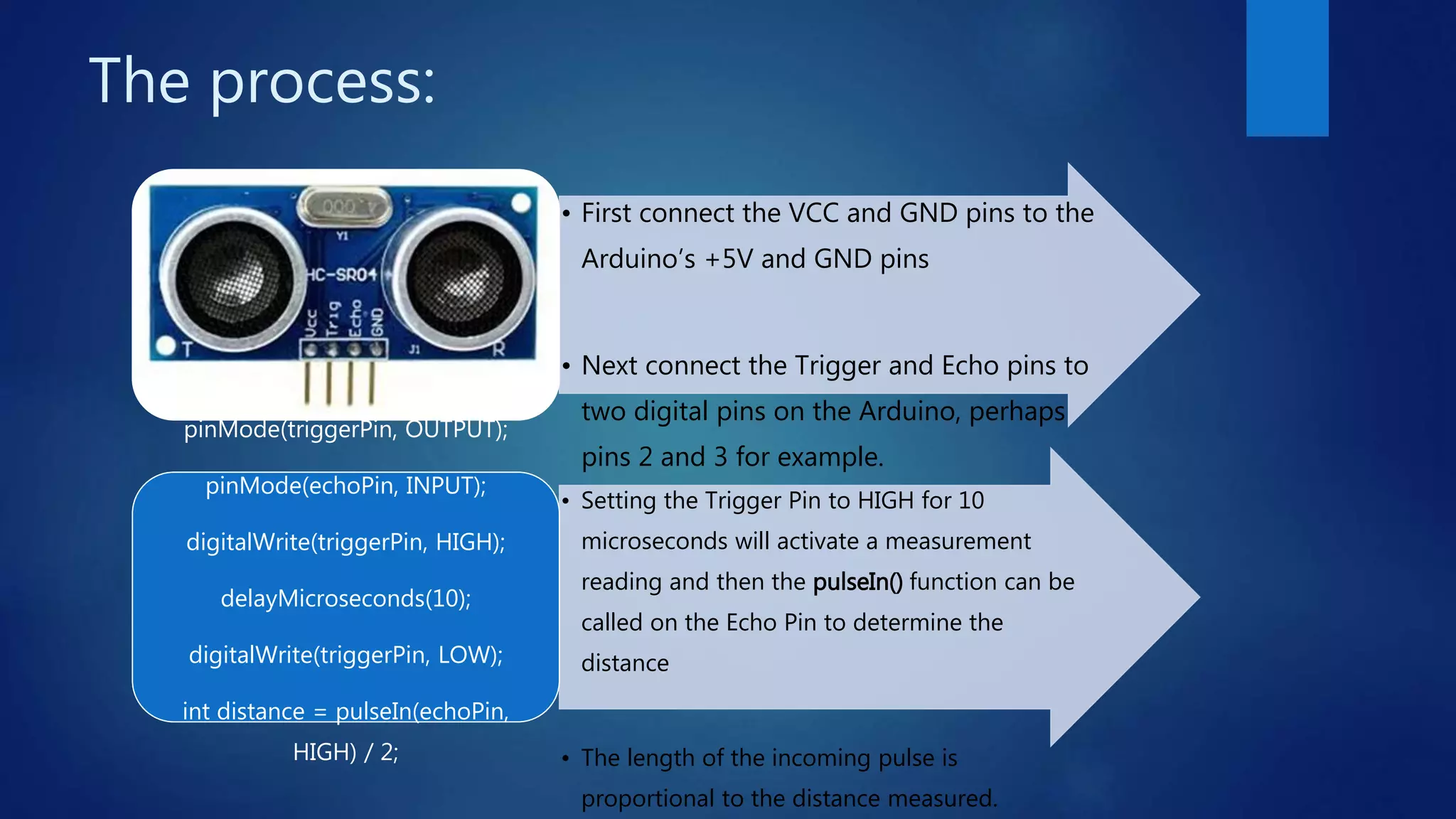
• First connect the VCC and GND pins to the
Arduino’s +5V and GND pins
• Next connect the Trigger and Echo pins to
two digital pins on the Arduino, perhaps
pins 2 and 3 for example.
• Setting the Trigger Pin to HIGH for 10
microseconds will activate a measurement
reading and then the pulseIn() function can be
called on the Echo Pin to determine the
distance
• The length of the incoming pulse is
proportional to the distance measured.
pinMode(triggerPin, OUTPUT);
pinMode(echoPin, INPUT);
digitalWrite(triggerPin, HIGH);
delayMicroseconds(10);
digitalWrite(triggerPin, LOW);
int distance = pulseIn(echoPin,
HIGH) / 2;
The process:
• This code returns the raw measurement of the time for
the sound to reach the object. Sound travels at
approximately 340 meters per second at sea level.
Therefore, the length of time it takes sound to travel 1
meter is 1/340 which is 0.0029 seconds. To calculate the
length of time for sound to travel 1 centimeter, we
divide this by 100 to get 0.000029 seconds, or 29
microseconds.
int distance_cm = distance /
29;
• For accurate readings, it is recommended to leave
some time in between measurements, as the sound
waves could be echoing around for a while
• a timeout when calling pulseIn() to avoid waiting a
long time for a signal that never arrives. If you are only
interested in measuring distances up to 100 cm for
instance then you could specify a timeout of 5,800
microseconds (100 * 29 * 2)
int distance =
pulseIn(echoPin, HIGH, 5800)
/ 2;
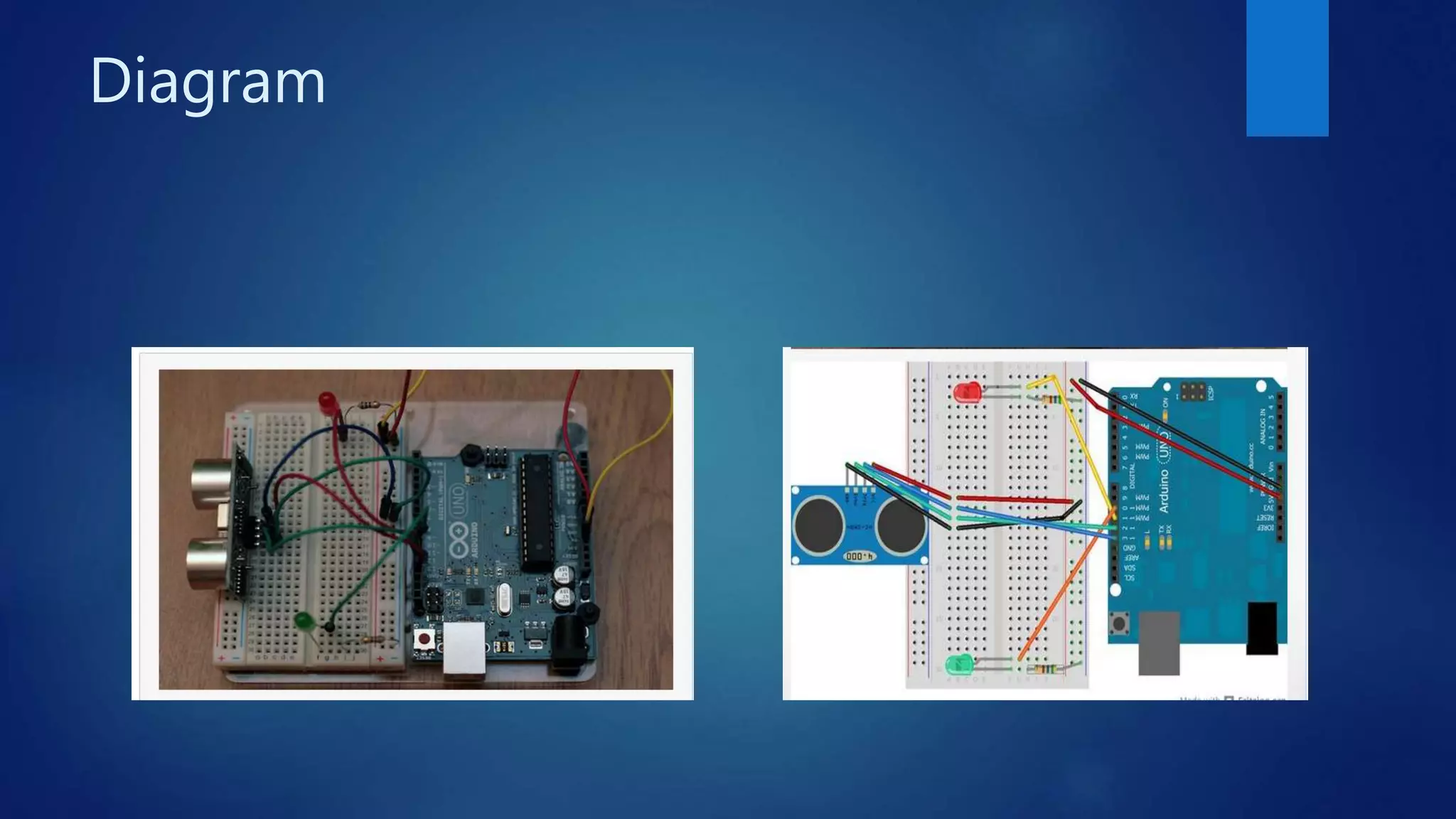
Diagram
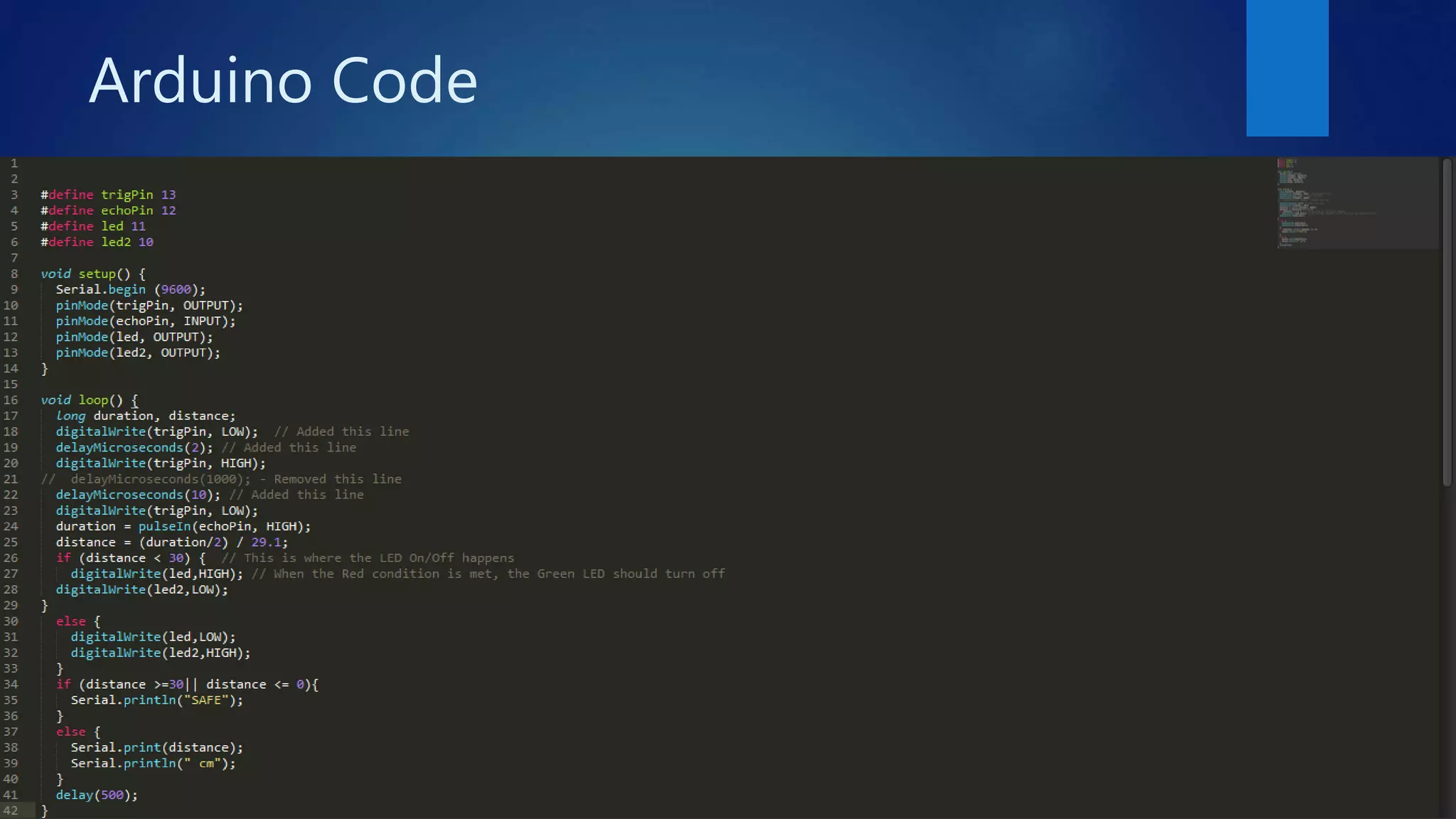
Arduino Code
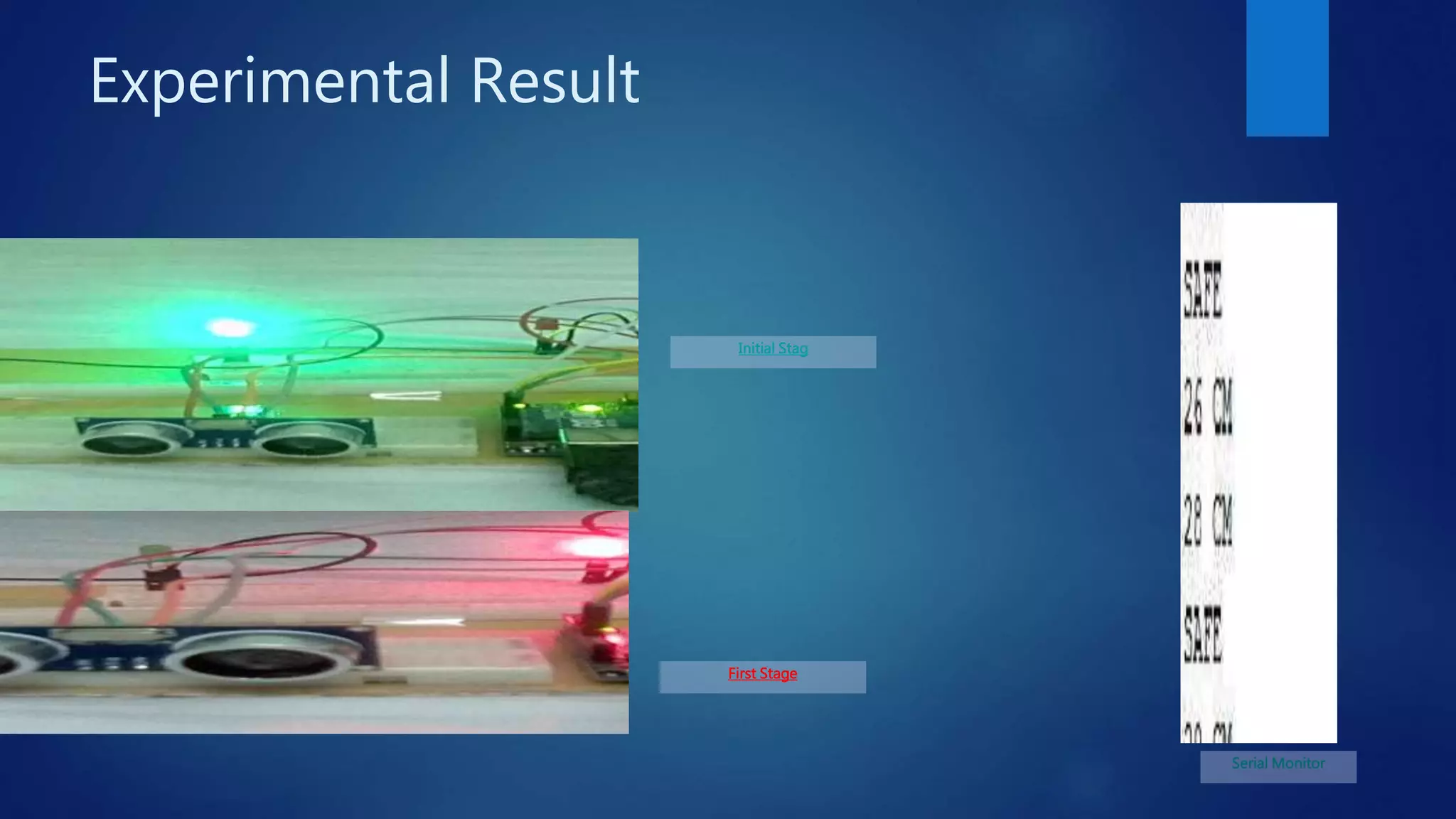
Experimental Result
Initial Stag
First Stage
Serial Monitor
Application
Future Plan
 Using it in robots
 Making it available for all types of vehicle
 Using several sensor to get proper reading around the whole car not in
just reverse direction
 Automatic Car Parking
 Effective implementation on Intelligent Parking Assist System (IPAS), also
known as the Advanced Parking Guidance System (APGS)
Conclusion
 Operations have been discussed
 The purpose of Arduino is discussed
 Future plan and its applications are discussed
 Equipment and the process of this project is discussed
Reverse car-parking
Reverse car-parking

Reverse car-parking

  • 1.
    REVERSE CAR PARKINGUSING ARDUINO PROJECT BY: SALEHIN RAHMAN KHAN SUMAMA MUNTAHA ISLAM Powered by Celltech IT
  • 2.
    Contents  Reasons tobuild this project  Equipment  Concepts  Diagram  The process  Arduino Code  Experimental Result  Application  Future Plans  Conclusion
  • 3.
    Reasons to buildthis project :  Help people to park car in reverse direction  Using ultrasonic sensor for more efficiency  Save people’s time  Decrease the difficulties to park in reverse direction  Help to avoid collision
  • 4.
    Equipment Arduino UNO R3One (1) HC-SR04 Ultrasonic Sensor One (1) Red LED One (1) Green LED Breadboard Male/Male hookup wires Serial Monitor
  • 5.
    Concepts Arduino UNO R3: Arduino/Genuino Uno is a microcontroller board. It has 14 digital input/output pins, 6 analog inputs, a 16 MHz quartz crystal, a USB connection, a power jack, an ICSP header and a reset button. HC-SR04 : The HC-SR04 is an excellent low-cost ultrasonic sensor that works well with Arduino micro-controllers. It will help to find the distance with ultrasonic sound.
  • 6.
    The process: • Firstconnect the VCC and GND pins to the Arduino’s +5V and GND pins • Next connect the Trigger and Echo pins to two digital pins on the Arduino, perhaps pins 2 and 3 for example. • Setting the Trigger Pin to HIGH for 10 microseconds will activate a measurement reading and then the pulseIn() function can be called on the Echo Pin to determine the distance • The length of the incoming pulse is proportional to the distance measured. pinMode(triggerPin, OUTPUT); pinMode(echoPin, INPUT); digitalWrite(triggerPin, HIGH); delayMicroseconds(10); digitalWrite(triggerPin, LOW); int distance = pulseIn(echoPin, HIGH) / 2;
  • 7.
    The process: • Thiscode returns the raw measurement of the time for the sound to reach the object. Sound travels at approximately 340 meters per second at sea level. Therefore, the length of time it takes sound to travel 1 meter is 1/340 which is 0.0029 seconds. To calculate the length of time for sound to travel 1 centimeter, we divide this by 100 to get 0.000029 seconds, or 29 microseconds. int distance_cm = distance / 29; • For accurate readings, it is recommended to leave some time in between measurements, as the sound waves could be echoing around for a while • a timeout when calling pulseIn() to avoid waiting a long time for a signal that never arrives. If you are only interested in measuring distances up to 100 cm for instance then you could specify a timeout of 5,800 microseconds (100 * 29 * 2) int distance = pulseIn(echoPin, HIGH, 5800) / 2;
  • 8.
  • 9.
  • 10.
  • 11.
  • 12.
    Future Plan  Usingit in robots  Making it available for all types of vehicle  Using several sensor to get proper reading around the whole car not in just reverse direction  Automatic Car Parking  Effective implementation on Intelligent Parking Assist System (IPAS), also known as the Advanced Parking Guidance System (APGS)
  • 13.
    Conclusion  Operations havebeen discussed  The purpose of Arduino is discussed  Future plan and its applications are discussed  Equipment and the process of this project is discussed