Retinoids in
Therapy
Something in
Everything
Presenter: Dr Panini Patankar
Guide: Dr Shirish Joshi
Flow of Seminar
 Definition & classification
 History
 Physiology of retinoids
 Retinoids in dermatology
 Retinoids in ophthalmology
 Retinoids in oncology
 Miscellaneous uses of retinoids
 Adverse effects of retinoids
What Are
Retinoids
Chemical compounds
which are derivatives of
Vitamin A or compounds
sharing structural or
functional similarity with
Vitamin A
Khalil S, Bardawil T, Stephan C, Darwiche N, Abbas O, Kibbi A et al. Retinoids: a journey from the molecular structures and
mechanisms of action to clinical uses in dermatology and adverse effects. Journal of Dermatological Treatment.
2017;28(8):684-696.
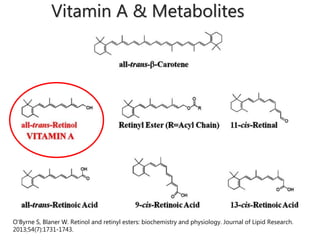
Vitamin A & Metabolites
O'Byrne S, Blaner W. Retinol and retinyl esters: biochemistry and physiology. Journal of Lipid Research.
2013;54(7):1731-1743.
Classification
First Generation: Non-aromatic
naturally occurring retinoids: retinol,
retinal, isotretinoin & alitretinoin
Second generation: Monoaromatic
lipophilic compounds: Etretinate,
Acitretin, Motretinate
Third generation: Cyclised polyene
side chain compounds: Adapalene,
Tazarotene & Bexarotene
Goodman L, Gilman A, Brunton L, Hilal-Dandan R, Knollmann B.
Goodman & Gilman's the pharmacological basis of therapeutics. 13th
ed. New York [etc.]: McGraw Hill Education; 2018.
History
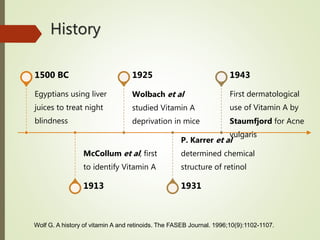
Egyptians using liver
juices to treat night
blindness
1500 BC
McCollum et al, first
to identify Vitamin A
1913
Wolbach et al
studied Vitamin A
deprivation in mice
1925
P. Karrer et al
determined chemical
structure of retinol
1931
First dermatological
use of Vitamin A by
Staumfjord for Acne
vulgaris
1943
Wolf G. A history of vitamin A and retinoids. The FASEB Journal. 1996;10(9):1102-1107.
History
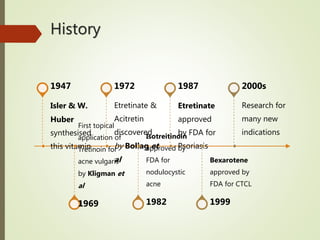
Isler & W.
Huber
synthesised
this vitamin
1947
First topical
application of
Tretinoin for
acne vulgaris
by Kligman et
al
1969
Etretinate &
Acitretin
discovered
by Bollag et
al
1972
Isotreitinoin
approved by
FDA for
nodulocystic
acne
1982
Etretinate
approved
by FDA for
Psoriasis
1987
Bexarotene
approved by
FDA for CTCL
1999
Research for
many new
indications
2000s
Retinoid Physiology
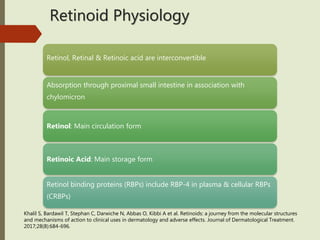
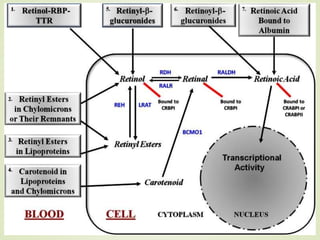
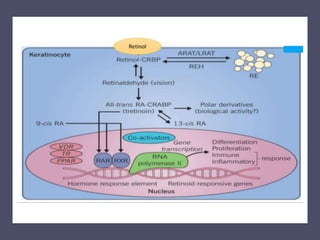
Retinol, Retinal & Retinoic acid are interconvertible
Absorption through proximal small intestine in association with
chylomicron
Retinol: Main circulation form
Retinoic Acid: Main storage form
Retinol binding proteins (RBPs) include RBP-4 in plasma & cellular RBPs
(CRBPs)
Khalil S, Bardawil T, Stephan C, Darwiche N, Abbas O, Kibbi A et al. Retinoids: a journey from the molecular structures
and mechanisms of action to clinical uses in dermatology and adverse effects. Journal of Dermatological Treatment.
2017;28(8):684-696.
Retinoid
Receptors
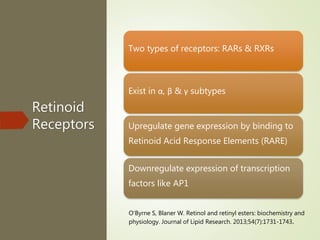
Two types of receptors: RARs & RXRs
Exist in α, β & γ subtypes
Upregulate gene expression by binding to
Retinoid Acid Response Elements (RARE)
Downregulate expression of transcription
factors like AP1
O'Byrne S, Blaner W. Retinol and retinyl esters: biochemistry and
physiology. Journal of Lipid Research. 2013;54(7):1731-1743.
Retinoids in Dermatology
Effects of Retinoids on skin
Effects on Keratinization: normalises hyper-proliferative
epidermis & thus keratinization
Immunologic & anti-inflammatory effects: Inhibits pro-
inflammatory cytokines & enzymes of phagocytosis
Effect on sebaceous gland activity: Decreases
gland size by decreased proliferation of basal sebocytes &
maximum effect seen with Isotretinoin
Cong T, Hao D, Wen X, Li X, He G, Jiang X. From pathogenesis of acne vulgaris to anti-acne
agents. Archives of Dermatological Research. 2019;311(5):337-349.
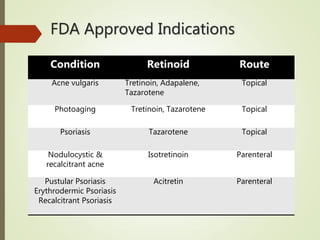
FDA Approved Indications
Condition Retinoid Route
Acne vulgaris Tretinoin, Adapalene,
Tazarotene
Topical
Photoaging Tretinoin, Tazarotene Topical
Psoriasis Tazarotene Topical
Nodulocystic &
recalcitrant acne
Isotretinoin Parenteral
Pustular Psoriasis
Erythrodermic Psoriasis
Recalcitrant Psoriasis
Acitretin Parenteral
Retinoids
in Acne
Vulgaris
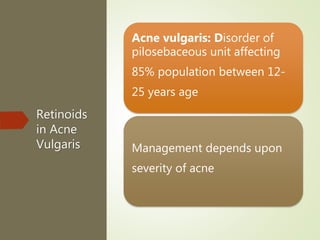
Acne vulgaris: Disorder of
pilosebaceous unit affecting
85% population between 12-
25 years age
Management depends upon
severity of acne
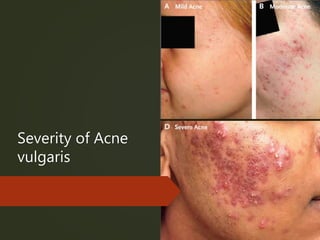
Severity of Acne
vulgaris
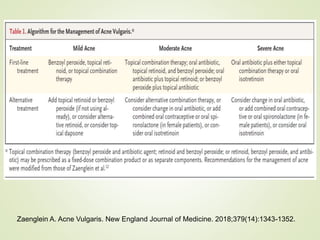
Zaenglein A. Acne Vulgaris. New England Journal of Medicine. 2018;379(14):1343-1352.
Topical Retinoids in Acne
 Topical retinoids are first choice in acne
but under prescribed
 Good efficacy but poor compliance
 All topical retinoids photosensitive &
concurrent sunscreen use essential
 Difficult to rank topical retinoids due to
limited comparative trials
Lee YH, Liu G, Thiboutot DM, Leslie DL, Kirby JS. A retrospective analysis of the duration
of oral antibiotic therapy for the treatment of acne among adolescents: investigating
practice gaps and potential cost-savings. J Am Acad Dermatol 2014; 71: 70-6.
Tretinoin
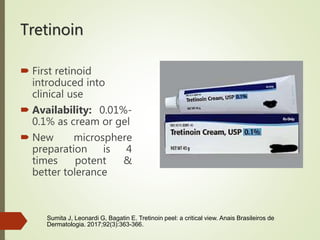
 First retinoid
introduced into
clinical use
 Availability: 0.01%-
0.1% as cream or gel
 New microsphere
preparation is 4
times potent &
better tolerance
Sumita J, Leonardi G, Bagatin E. Tretinoin peel: a critical view. Anais Brasileiros de
Dermatologia. 2017;92(3):363-366.
Adapalene
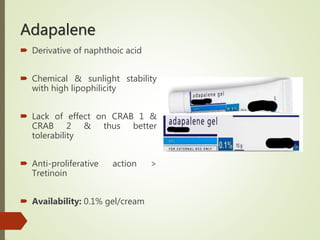
 Derivative of naphthoic acid
 Chemical & sunlight stability
with high lipophilicity
 Lack of effect on CRAB 1 &
CRAB 2 & thus better
tolerability
 Anti-proliferative action >
Tretinoin
 Availability: 0.1% gel/cream
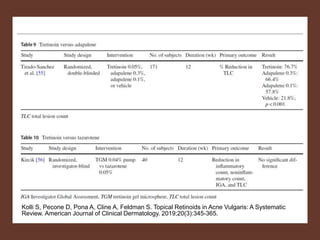
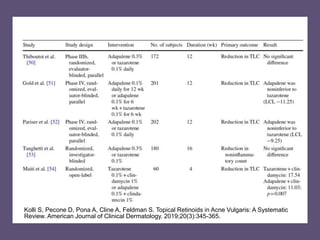
Kolli S, Pecone D, Pona A, Cline A, Feldman S. Topical Retinoids in Acne Vulgaris: A Systematic
Review. American Journal of Clinical Dermatology. 2019;20(3):345-365.
Kolli S, Pecone D, Pona A, Cline A, Feldman S. Topical Retinoids in Acne Vulgaris: A Systematic
Review. American Journal of Clinical Dermatology. 2019;20(3):345-365.
Systemic
Retinoids
in Acne
 Isotretinoin: Only FDA
approved retinoid to treat
recalcitrant nodulocystic
acne
 Decreases sebum & has
comedolytic effects
 Potent teratogen
 Common A/E: Dryness of
mouth & increased serum
triglycerides
 Dosing range: 0.5-2
mg/kg/day
Greywal T, Zaenglein A, Baldwin H, et al. Evidence based
recommendations for the management of acne fulminans and
its variants. J Am Acad Dermatol 2017;77(1):109–17
Retinoids in
Psoriasis
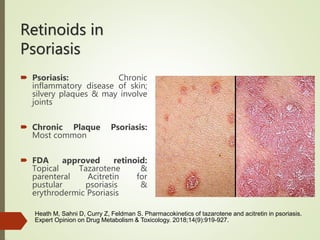
 Psoriasis: Chronic
inflammatory disease of skin;
silvery plaques & may involve
joints
 Chronic Plaque Psoriasis:
Most common
 FDA approved retinoid:
Topical Tazarotene &
parenteral Acitretin for
pustular psoriasis &
erythrodermic Psoriasis
Heath M, Sahni D, Curry Z, Feldman S. Pharmacokinetics of tazarotene and acitretin in psoriasis.
Expert Opinion on Drug Metabolism & Toxicology. 2018;14(9):919-927.
Pathophysiology of Psoriasis
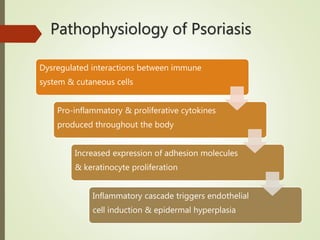
Dysregulated interactions between immune
system & cutaneous cells
Pro-inflammatory & proliferative cytokines
produced throughout the body
Increased expression of adhesion molecules
& keratinocyte proliferation
Inflammatory cascade triggers endothelial
cell induction & epidermal hyperplasia
Tazarotene
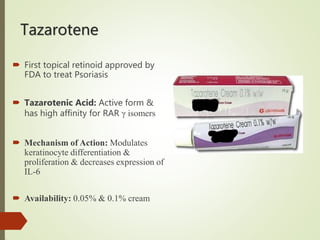
 First topical retinoid approved by
FDA to treat Psoriasis
 Tazarotenic Acid: Active form &
has high affinity for RAR γ isomers
 Mechanism of Action: Modulates
keratinocyte differentiation &
proliferation & decreases expression of
IL-6
 Availability: 0.05% & 0.1% cream
Acitretin
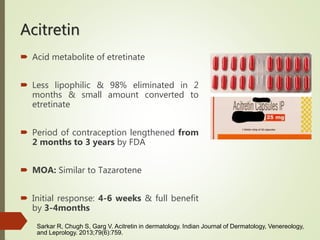
 Acid metabolite of etretinate
 Less lipophilic & 98% eliminated in 2
months & small amount converted to
etretinate
 Period of contraception lengthened from
2 months to 3 years by FDA
 MOA: Similar to Tazarotene
 Initial response: 4-6 weeks & full benefit
by 3-4months
Sarkar R, Chugh S, Garg V. Acitretin in dermatology. Indian Journal of Dermatology, Venereology,
and Leprology. 2013;79(6):759.
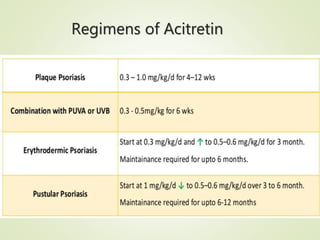
Regimens of Acitretin
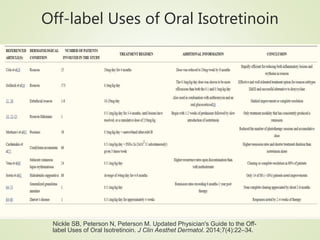
Off-label Uses of Oral Isotretinoin
Nickle SB, Peterson N, Peterson M. Updated Physician's Guide to the Off-
label Uses of Oral Isotretinoin. J Clin Aesthet Dermatol. 2014;7(4):22–34.
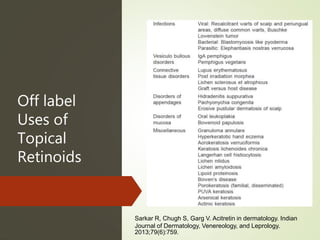
Off label
Uses of
Topical
Retinoids
Sarkar R, Chugh S, Garg V. Acitretin in dermatology. Indian
Journal of Dermatology, Venereology, and Leprology.
2013;79(6):759.
Retinoids in
Ophthalmology
National
Vitamin A
Prophylaxis
Programme
Five year trial by NIN: Massive dose of Vit A
(200000 IU) administered per 6 months between 1
& 3 years reduces corneal xerophthalmia by 80%
1970: National Prophylaxis Programme Against
Nutritional Blindness
2006: Age group broadened; 6 months-5 years
Dose: 100000 IU at 9 months followed by 200000
IU, 6 monthly up to 5 years
National Vitamin A prophylaxis program | National Health Portal Of India
[Internet]. Nhp.gov.in. 2019 [cited 6 June 2019]. Available from:
https://www.nhp.gov.in/national-vitamin-a-prophylaxis-program_pg
Retinoids in
Degenerative
Retinal Diseases
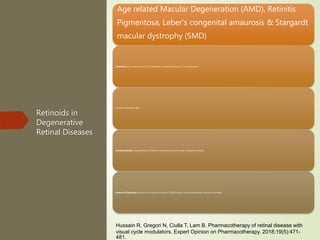
Age related Macular Degeneration (AMD), Retinitis
Pigmentosa, Leber’s congenital amaurosis & Stargardt
macular dystrophy (SMD)
Treatment: 9-cis-retinyl and 9-cis-β-carotene may help restoring 11-cis-retinal levels
Insufficient Phase III data
Oral Isotretinoin: Good efficacy for SMD in murine models but human evidence is lacking
Vitamin A Palmitate: Berson et al, long term doses of 15000 IU/day slows photoreceptor functional damage
Hussain R, Gregori N, Ciulla T, Lam B. Pharmacotherapy of retinal disease with
visual cycle modulators. Expert Opinion on Pharmacotherapy. 2018;19(5):471-
481.
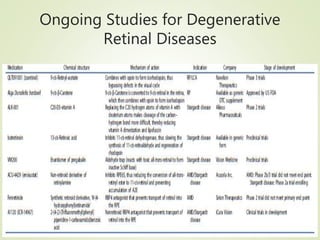
Ongoing Studies for Degenerative
Retinal Diseases
Retinoids in
Oncology
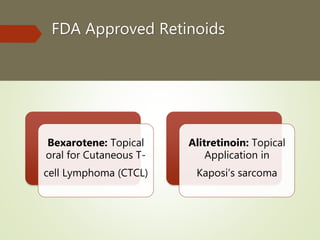
FDA Approved Retinoids
Bexarotene: Topical
oral for Cutaneous T-
cell Lymphoma (CTCL)
Alitretinoin: Topical
Application in
Kaposi’s sarcoma
Cutaneous T-Cell
Lymphoma
 Heterogenous subset of extra-
nodal Non Hodgkin’s
lymphoma of skin homing T
cells mainly localised to skin
 Most common: Mycosis
fungoides
 Treatment: Early disease
topical followed by systemic
Bexarotene
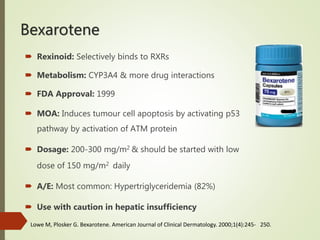
 Rexinoid: Selectively binds to RXRs
 Metabolism: CYP3A4 & more drug interactions
 FDA Approval: 1999
 MOA: Induces tumour cell apoptosis by activating p53
pathway by activation of ATM protein
 Dosage: 200-300 mg/m2 & should be started with low
dose of 150 mg/m2 daily
 A/E: Most common: Hypertriglyceridemia (82%)
 Use with caution in hepatic insufficiency
Lowe M, Plosker G. Bexarotene. American Journal of Clinical Dermatology. 2000;1(4):245- 250.
Alitretinoin
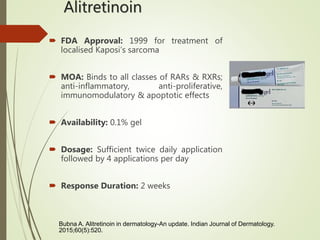
 FDA Approval: 1999 for treatment of
localised Kaposi’s sarcoma
 MOA: Binds to all classes of RARs & RXRs;
anti-inflammatory, anti-proliferative,
immunomodulatory & apoptotic effects
 Availability: 0.1% gel
 Dosage: Sufficient twice daily application
followed by 4 applications per day
 Response Duration: 2 weeks
Bubna A. Alitretinoin in dermatology-An update. Indian Journal of Dermatology.
2015;60(5):520.
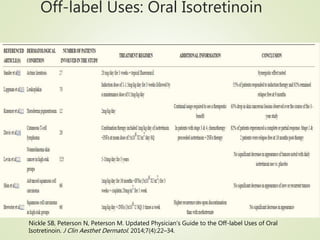
Off-label Uses: Oral Isotretinoin
Nickle SB, Peterson N, Peterson M. Updated Physician's Guide to the Off-label Uses of Oral
Isotretinoin. J Clin Aesthet Dermatol. 2014;7(4):22–34.
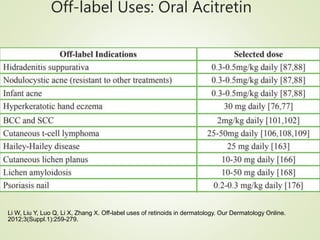
Off-label Uses: Oral Acitretin
Li W, Liu Y, Luo Q, Li X, Zhang X. Off-label uses of retinoids in dermatology. Our Dermatology Online.
2012;3(Suppl.1):259-279.
Miscellaneous
Uses of
Retinoids
Retinoid
Antibiotics
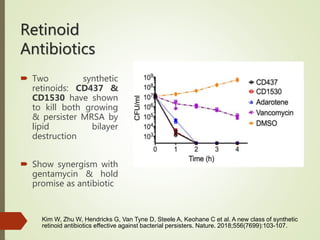
 Two synthetic
retinoids: CD437 &
CD1530 have shown
to kill both growing
& persister MRSA by
lipid bilayer
destruction
 Show synergism with
gentamycin & hold
promise as antibiotic
Kim W, Zhu W, Hendricks G, Van Tyne D, Steele A, Keohane C et al. A new class of synthetic
retinoid antibiotics effective against bacterial persisters. Nature. 2018;556(7699):103-107.
Other
Disorders:
Conflicting
Reports
Diabetes Mellitus
Prophylaxis of Cardiovascular events
Treatment of neuroblastoma
Treatment of colonic cancer
Memory enhancer
Antioxidant
Adverse Effects: Topical Retinoids
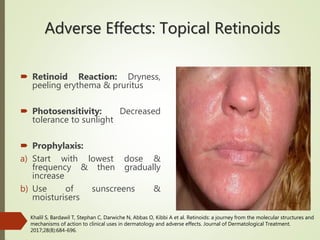
 Retinoid Reaction: Dryness,
peeling erythema & pruritus
 Photosensitivity: Decreased
tolerance to sunlight
 Prophylaxis:
a) Start with lowest dose &
frequency & then gradually
increase
b) Use of sunscreens &
moisturisers
Khalil S, Bardawil T, Stephan C, Darwiche N, Abbas O, Kibbi A et al. Retinoids: a journey from the molecular structures and
mechanisms of action to clinical uses in dermatology and adverse effects. Journal of Dermatological Treatment.
2017;28(8):684-696.
Systemic Retinoids: Minor Adverse Effect
 Dose dependent &
mucocutaneous effects
common
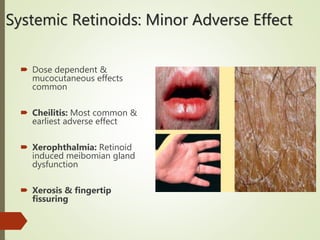
 Cheilitis: Most common &
earliest adverse effect
 Xerophthalmia: Retinoid
induced meibomian gland
dysfunction
 Xerosis & fingertip
fissuring
Systemic
Retinoids:
Major
Adverse
Effects
 Musculoskeletal: Myalgia, arthralgias
& bony pain
 Bone: Increased osteoclastic activity
& inhibition of cortical bone
formation
 Neurological: Headaches,
pseudotumor ceribri
 Ocular: Nyctalopia by inhibition of
11-cis retinol dehydrogenase
 Gastrointestinal: Nausea & increased
risk of pancreatitis
 Lipid profile: Increase triglycerides,
total cholesterol & decrease in high
density lipoproteins
 Liver enzymes: Increase for couple of
weeks & then normalise in a month
Systemic Retinoids:
Teratogenicity
 As per US FDA, oral retinoids are
category X
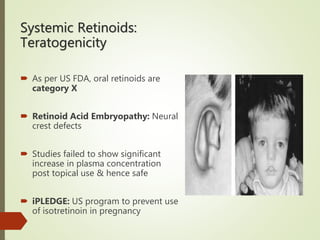
 Retinoid Acid Embryopathy: Neural
crest defects
 Studies failed to show significant
increase in plasma concentration
post topical use & hence safe
 iPLEDGE: US program to prevent use
of isotretinoin in pregnancy
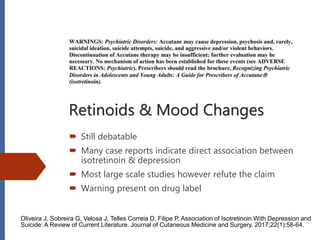
Retinoids & Mood Changes
 Still debatable
 Many case reports indicate direct association between
isotretinoin & depression
 Most large scale studies however refute the claim
 Warning present on drug label
Oliveira J, Sobreira G, Velosa J, Telles Correia D, Filipe P. Association of Isotretinoin With Depression and
Suicide: A Review of Current Literature. Journal of Cutaneous Medicine and Surgery. 2017;22(1):58-64.
Summary
 Compounds related structurally or functionally to Vitamin A are called
Retinoids
 Retinoids act through two types of receptors: RARs & RXRs
 Currently retinoids are most commonly used in dermatology followed by
oncology
 Topical retinoids is the first line of pharmacotherapy in treatment of acne
vulgaris
 Acitretin is drug of choice for systemic therapy of psoriasis
 Retinoids have many promising off-label uses in both dermatology & other
fields
 Systemic retinoids are highly teratogenic & should be avoided in
pregnancy
Retinoids in therapy

Retinoids in therapy

  • 1.
    Retinoids in Therapy Something in Everything Presenter:Dr Panini Patankar Guide: Dr Shirish Joshi
  • 2.
    Flow of Seminar Definition & classification  History  Physiology of retinoids  Retinoids in dermatology  Retinoids in ophthalmology  Retinoids in oncology  Miscellaneous uses of retinoids  Adverse effects of retinoids
  • 3.
    What Are Retinoids Chemical compounds whichare derivatives of Vitamin A or compounds sharing structural or functional similarity with Vitamin A Khalil S, Bardawil T, Stephan C, Darwiche N, Abbas O, Kibbi A et al. Retinoids: a journey from the molecular structures and mechanisms of action to clinical uses in dermatology and adverse effects. Journal of Dermatological Treatment. 2017;28(8):684-696.
  • 4.
    Vitamin A &Metabolites O'Byrne S, Blaner W. Retinol and retinyl esters: biochemistry and physiology. Journal of Lipid Research. 2013;54(7):1731-1743.
  • 5.
    Classification First Generation: Non-aromatic naturallyoccurring retinoids: retinol, retinal, isotretinoin & alitretinoin Second generation: Monoaromatic lipophilic compounds: Etretinate, Acitretin, Motretinate Third generation: Cyclised polyene side chain compounds: Adapalene, Tazarotene & Bexarotene Goodman L, Gilman A, Brunton L, Hilal-Dandan R, Knollmann B. Goodman & Gilman's the pharmacological basis of therapeutics. 13th ed. New York [etc.]: McGraw Hill Education; 2018.
  • 6.
    History Egyptians using liver juicesto treat night blindness 1500 BC McCollum et al, first to identify Vitamin A 1913 Wolbach et al studied Vitamin A deprivation in mice 1925 P. Karrer et al determined chemical structure of retinol 1931 First dermatological use of Vitamin A by Staumfjord for Acne vulgaris 1943 Wolf G. A history of vitamin A and retinoids. The FASEB Journal. 1996;10(9):1102-1107.
  • 7.
    History Isler & W. Huber synthesised thisvitamin 1947 First topical application of Tretinoin for acne vulgaris by Kligman et al 1969 Etretinate & Acitretin discovered by Bollag et al 1972 Isotreitinoin approved by FDA for nodulocystic acne 1982 Etretinate approved by FDA for Psoriasis 1987 Bexarotene approved by FDA for CTCL 1999 Research for many new indications 2000s
  • 8.
    Retinoid Physiology Retinol, Retinal& Retinoic acid are interconvertible Absorption through proximal small intestine in association with chylomicron Retinol: Main circulation form Retinoic Acid: Main storage form Retinol binding proteins (RBPs) include RBP-4 in plasma & cellular RBPs (CRBPs) Khalil S, Bardawil T, Stephan C, Darwiche N, Abbas O, Kibbi A et al. Retinoids: a journey from the molecular structures and mechanisms of action to clinical uses in dermatology and adverse effects. Journal of Dermatological Treatment. 2017;28(8):684-696.
  • 11.
    Retinoid Receptors Two types ofreceptors: RARs & RXRs Exist in α, β & γ subtypes Upregulate gene expression by binding to Retinoid Acid Response Elements (RARE) Downregulate expression of transcription factors like AP1 O'Byrne S, Blaner W. Retinol and retinyl esters: biochemistry and physiology. Journal of Lipid Research. 2013;54(7):1731-1743.
  • 12.
  • 14.
    Effects of Retinoidson skin Effects on Keratinization: normalises hyper-proliferative epidermis & thus keratinization Immunologic & anti-inflammatory effects: Inhibits pro- inflammatory cytokines & enzymes of phagocytosis Effect on sebaceous gland activity: Decreases gland size by decreased proliferation of basal sebocytes & maximum effect seen with Isotretinoin Cong T, Hao D, Wen X, Li X, He G, Jiang X. From pathogenesis of acne vulgaris to anti-acne agents. Archives of Dermatological Research. 2019;311(5):337-349.
  • 15.
    FDA Approved Indications ConditionRetinoid Route Acne vulgaris Tretinoin, Adapalene, Tazarotene Topical Photoaging Tretinoin, Tazarotene Topical Psoriasis Tazarotene Topical Nodulocystic & recalcitrant acne Isotretinoin Parenteral Pustular Psoriasis Erythrodermic Psoriasis Recalcitrant Psoriasis Acitretin Parenteral
  • 16.
    Retinoids in Acne Vulgaris Acne vulgaris:Disorder of pilosebaceous unit affecting 85% population between 12- 25 years age Management depends upon severity of acne
  • 17.
  • 18.
    Zaenglein A. AcneVulgaris. New England Journal of Medicine. 2018;379(14):1343-1352.
  • 19.
    Topical Retinoids inAcne  Topical retinoids are first choice in acne but under prescribed  Good efficacy but poor compliance  All topical retinoids photosensitive & concurrent sunscreen use essential  Difficult to rank topical retinoids due to limited comparative trials Lee YH, Liu G, Thiboutot DM, Leslie DL, Kirby JS. A retrospective analysis of the duration of oral antibiotic therapy for the treatment of acne among adolescents: investigating practice gaps and potential cost-savings. J Am Acad Dermatol 2014; 71: 70-6.
  • 20.
    Tretinoin  First retinoid introducedinto clinical use  Availability: 0.01%- 0.1% as cream or gel  New microsphere preparation is 4 times potent & better tolerance Sumita J, Leonardi G, Bagatin E. Tretinoin peel: a critical view. Anais Brasileiros de Dermatologia. 2017;92(3):363-366.
  • 21.
    Adapalene  Derivative ofnaphthoic acid  Chemical & sunlight stability with high lipophilicity  Lack of effect on CRAB 1 & CRAB 2 & thus better tolerability  Anti-proliferative action > Tretinoin  Availability: 0.1% gel/cream
  • 22.
    Kolli S, PeconeD, Pona A, Cline A, Feldman S. Topical Retinoids in Acne Vulgaris: A Systematic Review. American Journal of Clinical Dermatology. 2019;20(3):345-365.
  • 23.
    Kolli S, PeconeD, Pona A, Cline A, Feldman S. Topical Retinoids in Acne Vulgaris: A Systematic Review. American Journal of Clinical Dermatology. 2019;20(3):345-365.
  • 24.
    Systemic Retinoids in Acne  Isotretinoin:Only FDA approved retinoid to treat recalcitrant nodulocystic acne  Decreases sebum & has comedolytic effects  Potent teratogen  Common A/E: Dryness of mouth & increased serum triglycerides  Dosing range: 0.5-2 mg/kg/day Greywal T, Zaenglein A, Baldwin H, et al. Evidence based recommendations for the management of acne fulminans and its variants. J Am Acad Dermatol 2017;77(1):109–17
  • 25.
    Retinoids in Psoriasis  Psoriasis:Chronic inflammatory disease of skin; silvery plaques & may involve joints  Chronic Plaque Psoriasis: Most common  FDA approved retinoid: Topical Tazarotene & parenteral Acitretin for pustular psoriasis & erythrodermic Psoriasis Heath M, Sahni D, Curry Z, Feldman S. Pharmacokinetics of tazarotene and acitretin in psoriasis. Expert Opinion on Drug Metabolism & Toxicology. 2018;14(9):919-927.
  • 26.
    Pathophysiology of Psoriasis Dysregulatedinteractions between immune system & cutaneous cells Pro-inflammatory & proliferative cytokines produced throughout the body Increased expression of adhesion molecules & keratinocyte proliferation Inflammatory cascade triggers endothelial cell induction & epidermal hyperplasia
  • 27.
    Tazarotene  First topicalretinoid approved by FDA to treat Psoriasis  Tazarotenic Acid: Active form & has high affinity for RAR γ isomers  Mechanism of Action: Modulates keratinocyte differentiation & proliferation & decreases expression of IL-6  Availability: 0.05% & 0.1% cream
  • 28.
    Acitretin  Acid metaboliteof etretinate  Less lipophilic & 98% eliminated in 2 months & small amount converted to etretinate  Period of contraception lengthened from 2 months to 3 years by FDA  MOA: Similar to Tazarotene  Initial response: 4-6 weeks & full benefit by 3-4months Sarkar R, Chugh S, Garg V. Acitretin in dermatology. Indian Journal of Dermatology, Venereology, and Leprology. 2013;79(6):759.
  • 29.
  • 30.
    Off-label Uses ofOral Isotretinoin Nickle SB, Peterson N, Peterson M. Updated Physician's Guide to the Off- label Uses of Oral Isotretinoin. J Clin Aesthet Dermatol. 2014;7(4):22–34.
  • 31.
    Off label Uses of Topical Retinoids SarkarR, Chugh S, Garg V. Acitretin in dermatology. Indian Journal of Dermatology, Venereology, and Leprology. 2013;79(6):759.
  • 32.
  • 33.
    National Vitamin A Prophylaxis Programme Five yeartrial by NIN: Massive dose of Vit A (200000 IU) administered per 6 months between 1 & 3 years reduces corneal xerophthalmia by 80% 1970: National Prophylaxis Programme Against Nutritional Blindness 2006: Age group broadened; 6 months-5 years Dose: 100000 IU at 9 months followed by 200000 IU, 6 monthly up to 5 years National Vitamin A prophylaxis program | National Health Portal Of India [Internet]. Nhp.gov.in. 2019 [cited 6 June 2019]. Available from: https://www.nhp.gov.in/national-vitamin-a-prophylaxis-program_pg
  • 34.
    Retinoids in Degenerative Retinal Diseases Agerelated Macular Degeneration (AMD), Retinitis Pigmentosa, Leber’s congenital amaurosis & Stargardt macular dystrophy (SMD) Treatment: 9-cis-retinyl and 9-cis-β-carotene may help restoring 11-cis-retinal levels Insufficient Phase III data Oral Isotretinoin: Good efficacy for SMD in murine models but human evidence is lacking Vitamin A Palmitate: Berson et al, long term doses of 15000 IU/day slows photoreceptor functional damage Hussain R, Gregori N, Ciulla T, Lam B. Pharmacotherapy of retinal disease with visual cycle modulators. Expert Opinion on Pharmacotherapy. 2018;19(5):471- 481.
  • 35.
    Ongoing Studies forDegenerative Retinal Diseases
  • 36.
  • 37.
    FDA Approved Retinoids Bexarotene:Topical oral for Cutaneous T- cell Lymphoma (CTCL) Alitretinoin: Topical Application in Kaposi’s sarcoma
  • 38.
    Cutaneous T-Cell Lymphoma  Heterogenoussubset of extra- nodal Non Hodgkin’s lymphoma of skin homing T cells mainly localised to skin  Most common: Mycosis fungoides  Treatment: Early disease topical followed by systemic
  • 39.
    Bexarotene  Rexinoid: Selectivelybinds to RXRs  Metabolism: CYP3A4 & more drug interactions  FDA Approval: 1999  MOA: Induces tumour cell apoptosis by activating p53 pathway by activation of ATM protein  Dosage: 200-300 mg/m2 & should be started with low dose of 150 mg/m2 daily  A/E: Most common: Hypertriglyceridemia (82%)  Use with caution in hepatic insufficiency Lowe M, Plosker G. Bexarotene. American Journal of Clinical Dermatology. 2000;1(4):245- 250.
  • 40.
    Alitretinoin  FDA Approval:1999 for treatment of localised Kaposi’s sarcoma  MOA: Binds to all classes of RARs & RXRs; anti-inflammatory, anti-proliferative, immunomodulatory & apoptotic effects  Availability: 0.1% gel  Dosage: Sufficient twice daily application followed by 4 applications per day  Response Duration: 2 weeks Bubna A. Alitretinoin in dermatology-An update. Indian Journal of Dermatology. 2015;60(5):520.
  • 41.
    Off-label Uses: OralIsotretinoin Nickle SB, Peterson N, Peterson M. Updated Physician's Guide to the Off-label Uses of Oral Isotretinoin. J Clin Aesthet Dermatol. 2014;7(4):22–34.
  • 42.
    Off-label Uses: OralAcitretin Li W, Liu Y, Luo Q, Li X, Zhang X. Off-label uses of retinoids in dermatology. Our Dermatology Online. 2012;3(Suppl.1):259-279.
  • 43.
  • 44.
    Retinoid Antibiotics  Two synthetic retinoids:CD437 & CD1530 have shown to kill both growing & persister MRSA by lipid bilayer destruction  Show synergism with gentamycin & hold promise as antibiotic Kim W, Zhu W, Hendricks G, Van Tyne D, Steele A, Keohane C et al. A new class of synthetic retinoid antibiotics effective against bacterial persisters. Nature. 2018;556(7699):103-107.
  • 45.
    Other Disorders: Conflicting Reports Diabetes Mellitus Prophylaxis ofCardiovascular events Treatment of neuroblastoma Treatment of colonic cancer Memory enhancer Antioxidant
  • 46.
    Adverse Effects: TopicalRetinoids  Retinoid Reaction: Dryness, peeling erythema & pruritus  Photosensitivity: Decreased tolerance to sunlight  Prophylaxis: a) Start with lowest dose & frequency & then gradually increase b) Use of sunscreens & moisturisers Khalil S, Bardawil T, Stephan C, Darwiche N, Abbas O, Kibbi A et al. Retinoids: a journey from the molecular structures and mechanisms of action to clinical uses in dermatology and adverse effects. Journal of Dermatological Treatment. 2017;28(8):684-696.
  • 47.
    Systemic Retinoids: MinorAdverse Effect  Dose dependent & mucocutaneous effects common  Cheilitis: Most common & earliest adverse effect  Xerophthalmia: Retinoid induced meibomian gland dysfunction  Xerosis & fingertip fissuring
  • 48.
    Systemic Retinoids: Major Adverse Effects  Musculoskeletal: Myalgia,arthralgias & bony pain  Bone: Increased osteoclastic activity & inhibition of cortical bone formation  Neurological: Headaches, pseudotumor ceribri  Ocular: Nyctalopia by inhibition of 11-cis retinol dehydrogenase  Gastrointestinal: Nausea & increased risk of pancreatitis  Lipid profile: Increase triglycerides, total cholesterol & decrease in high density lipoproteins  Liver enzymes: Increase for couple of weeks & then normalise in a month
  • 49.
    Systemic Retinoids: Teratogenicity  Asper US FDA, oral retinoids are category X  Retinoid Acid Embryopathy: Neural crest defects  Studies failed to show significant increase in plasma concentration post topical use & hence safe  iPLEDGE: US program to prevent use of isotretinoin in pregnancy
  • 50.
    Retinoids & MoodChanges  Still debatable  Many case reports indicate direct association between isotretinoin & depression  Most large scale studies however refute the claim  Warning present on drug label Oliveira J, Sobreira G, Velosa J, Telles Correia D, Filipe P. Association of Isotretinoin With Depression and Suicide: A Review of Current Literature. Journal of Cutaneous Medicine and Surgery. 2017;22(1):58-64.
  • 51.
    Summary  Compounds relatedstructurally or functionally to Vitamin A are called Retinoids  Retinoids act through two types of receptors: RARs & RXRs  Currently retinoids are most commonly used in dermatology followed by oncology  Topical retinoids is the first line of pharmacotherapy in treatment of acne vulgaris  Acitretin is drug of choice for systemic therapy of psoriasis  Retinoids have many promising off-label uses in both dermatology & other fields  Systemic retinoids are highly teratogenic & should be avoided in pregnancy

Editor's Notes

  • #5 Vitamin A is a small hydrophobic molecule with three structural domains: a cyclic ring, a polyene side chain, and a polar end-group & cannot be synthesised de novo. vitamin A is converted into several metabolites called retinoids that differ mainly in their polar end-group: a hydroxyl in retinols, an aldehyde in retinals, a carboxylic acid in retinoic acids and an ester in retinyl esters. Retinol is the main circulating form of the vitamin, retinyl ester is the storage form in the liver and retinoic acid is the main active metabolite. Retinoids are metabolized by the hepatic system and eliminated through the biliary or renal tract.
  • #6 First generation: Retain cyclic structure of vit A with changes in polar end group & polyene side chain Third generation: Bind to narrower variety of receptors Fourth generation: Derived from pyranones. Example: Seletenoid G
  • #7 McCollum identified vitamin A in egg yolk & butter & hypothesised that it is essential for growth in rats Vitamin A deprivation in mice led to squamous metaplasia in several epithelial tissues, atrophy of glands & failure to store fat
  • #11 RXRs only bind to 9-cis retinoic acid (Rexinoids). Both families of receptors exist together as dimer. RXRs can heterodimerise with several other families of receptors including RARs, Vitamin D3, Thyroid Hormone receptors & they can act as silent or active partners. If active they can regulate pathways mediated by other receptors. Example retinoic acid can stimulate lipolysis & improve insulin sensitivity by activation of PPAR.
  • #13 Retinoids are most commonly used in dermatology amongst all the disease areas
  • #15 Effects on Keratinization: Induces heparin binding HB-EGF, TGF α & amphiregulin. Also decreases corneocyte adhesiveness Immunologic & anti-inflammatory effects: Increases cell surface antigens of T cells & NK cells. Also decreases neutrophil migration, leukotriene B4 mediated chemotaxis & TNF α levels. In psoriasis, increases IL-6, IL-8 & ICAM. Inhibits transcription factor AP-1 Effect on sebaceous gland activity: Increases free sterols, cholesterol & ceramides in sebum
  • #17 The face is usually the first thing that is noticed about a person, and acne can negatively affect others’ perceptions. The psychological effects of acne can be profound, and persons with acne are at risk for substantial, negative effects on quality of life
  • #20 due to common adverse events like skin irritation
  • #25 First FDA approved retinoid for systemic use In the United States, the use of isotretinoin is regulated by the FDA mandated risk-management program iPLEDGE. Only providers may prescribe isotretinoin, and they must obtain written informed consent and register every patient (regardless of sex). In patients of childbearing potential, two specific forms of contraception and monthly pregnancy tests are required
  • #26 Currently biologics constitute first line of therapy
  • #27 INF γ & TNF α are most commonly increased cytokines in Psoriais
  • #28 RAR γ predominantly present in skin. tazarotene modulates keratinocyte differentiation and proliferation by increasing filaggrin expression and downregulating keratinocyte transglutaminase, ornithine decarboxylase, hyperproliferative keratins, involucrin, and epidermal growth factor receptor expression.[12, 30, 33, 34] The anti-inflammatory effects of tazarotene include decreased expression of interleukin-6, cellular adhesion molecule type 1 and human leukocyte antigen-D related (HLA-DR).
  • #29 Etretinate has high teratogenicity & has half life of >120 days & has also been found in skin biopsy 2 years after stopping the drug Decreases STAT 1 & STAT 3 thus decreasing JAK STAT pathway of keratinocyte proliferation
  • #30 Not much difference between two drugs as per clinical trial data in terms of both efficacy & safety
  • #37 cases of RP and LCA caused by mutations in LRAT and RPE65
  • #42 Hardly excreted renally unlike other retinoids. Many times used in combination with other systemic drugs like
  • #43 Also blocks neoangiogenesis
  • #47 Done in C. eligans
  • #51 Tetracyclines also lead to pseudotumor cerebri & thus should be avoided