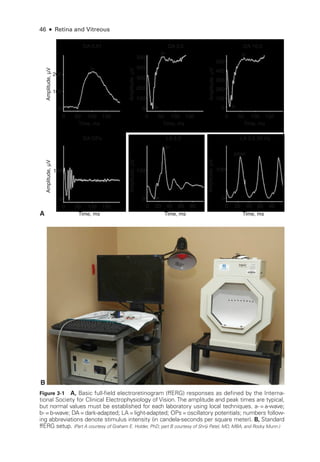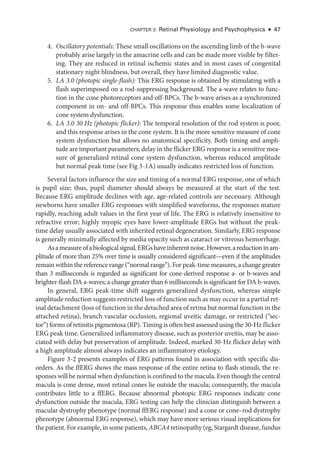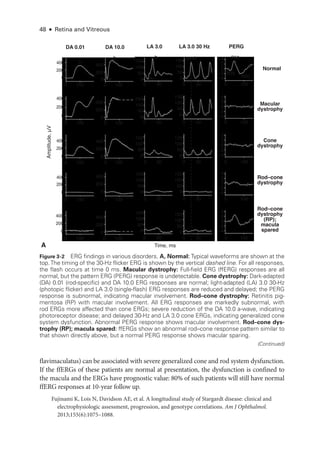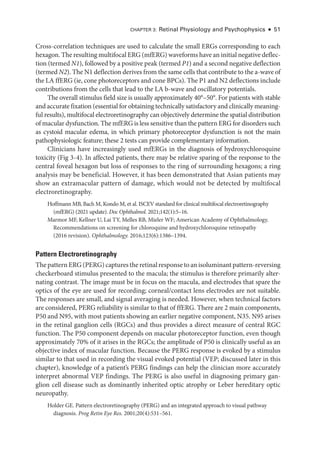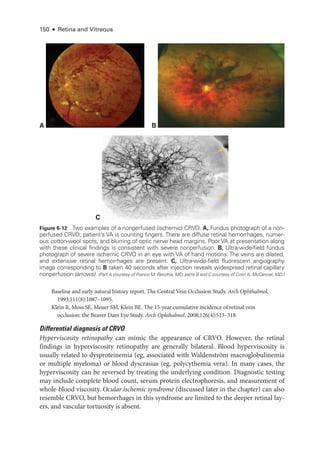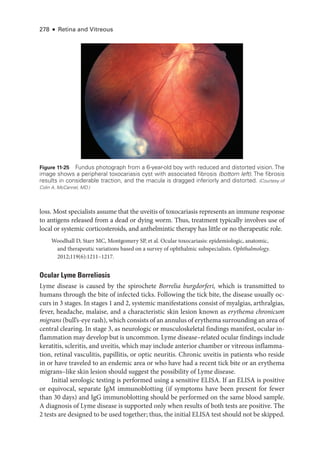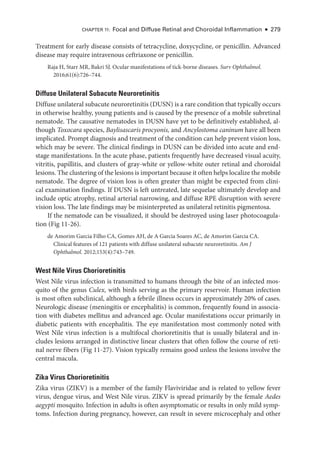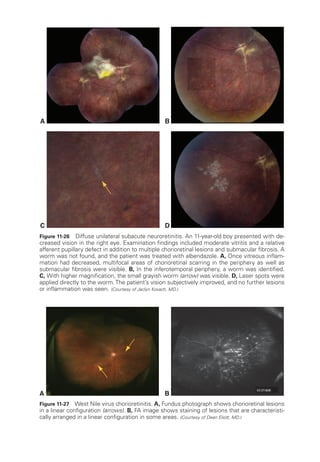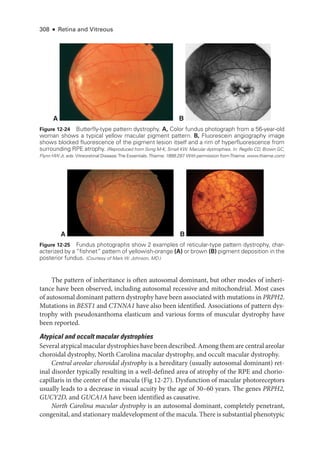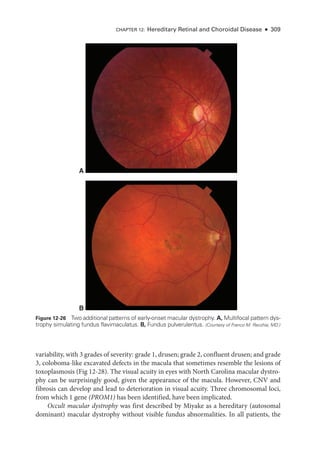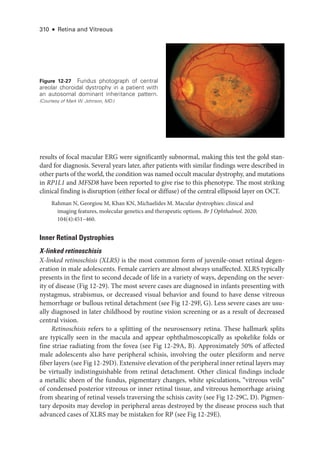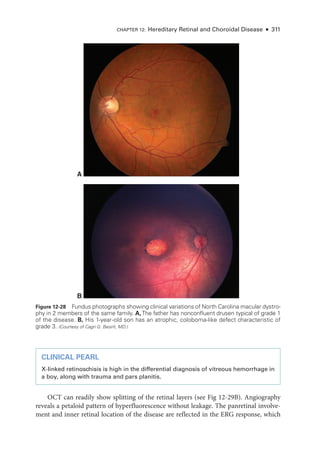







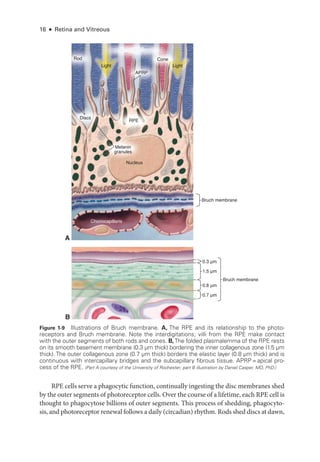

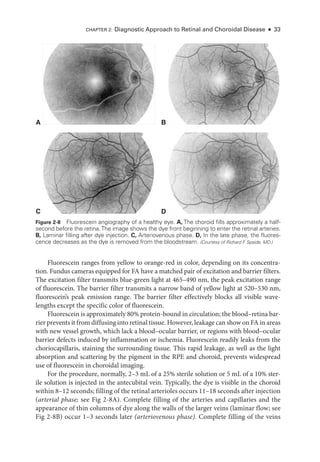
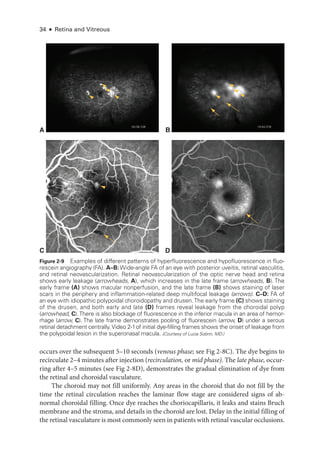
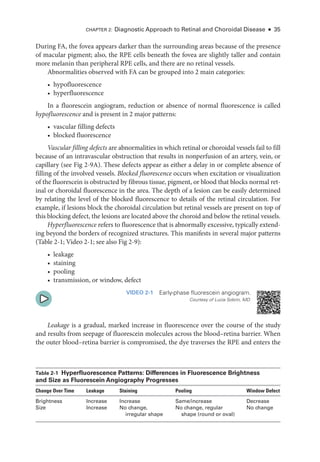
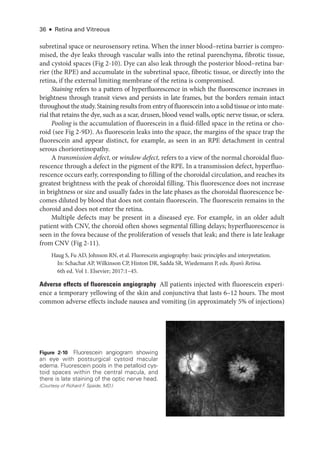

HP1 AMERICAN ACADEMY
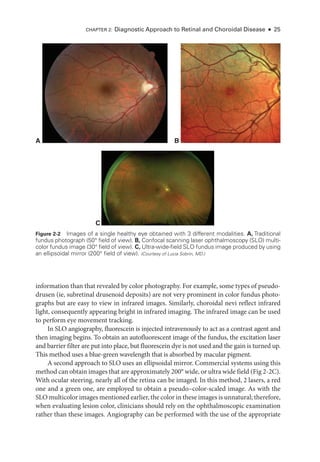
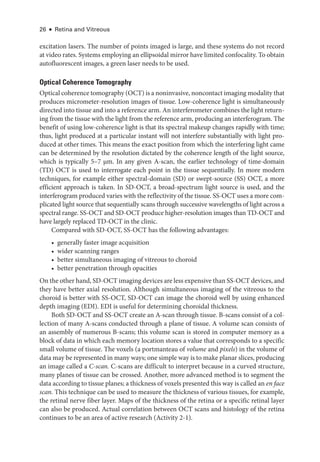
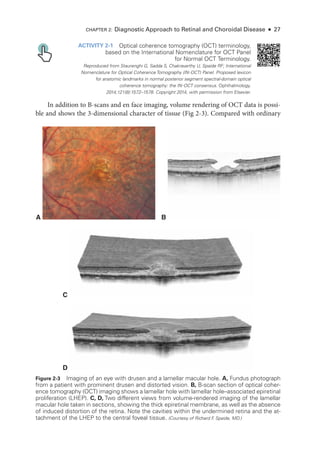
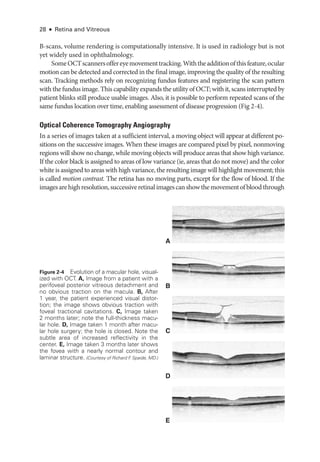
OF OPHTHALMOLOGY
Protecting Sight.Empowering Lives.
12 Retina and Vitreous
2023-2024
Basic and Clinical
Science Course "
Editorial Committee
Stephen J.Kim, MD, Chair
Amani Fawzi, MD
Jaclyn L.Kovach, MD
Shriji Patel, MD, MBA
Franco M.Recchia, MD
Lucia Sobrin, MD, MPH
Jennifer K.Sun, MD, MPH
Charles C.Wykoff, MD, PhD
Published after collaborative
review with the European Board
of Ophthalmology subcommittee
Retina and Vitreous
12
2023–2024
BCSC
Basic and Clinical
Science Course™
Funded in part by the Educational Trust
Fund/Retina Research Foundation
Last major revision 2022–2023
The American Academy of Ophthalmology is accredited by the Accreditation Council for Con-
tinuing Medical Education (ACCME) to provide continuing medical education for physicians.
The American Academy of Ophthalmology designates this enduring material for a maximum of
15 AMA PRA Category 1 Credits
™. Physicians should claim only the credit commensurate with
the extent of their participation in the activity.
CME expiration date: June 1, 2025. AMA PRA Category 1 Credits
™may be claimed only once between
June 1, 2022, and the expiration date.
BCSC
®volumes are designed to increase the physician’s ophthalmic knowledge through study and
review. Users of this activity are encouraged to read the text and then answer the study questions
provided at the back of the book.
To claim AMA PRA Category 1 Credits
™upon completion of this activity, learners must demon-
strate appropriate knowledge and participation in the activity by taking the posttest for Section 12
and achieving a score of 80% or higher. For further details, please see the instructions for requesting
CME credit at the back of the book.
The Academy provides this material for educational purposes only. It is not intended to represent
the only or best method or procedure in every case, nor to replace a physician’s own judgment or
give specific advice for case management. Including all indications, contraindications, side effects,
and alternative agents for each drug or treatment is beyond the scope of this material. All informa-
tion and recommendations should be verified, prior to use, with current information included in the
manufacturers’ package inserts or other independent sources, and considered in light of the patient’s
condition and history. Reference to certain drugs, instruments, and other products in this course is
made for illustrative purposes only and is not intended to constitute an endorsement of such. Some
material may include information on applications that are not considered community standard, that re-
flect indications not included in approved FDA labeling, or that are approved for use only in restricted
research settings. The FDA has stated that it is the responsibility of the physician to determine
the FDA status of each drug or device he or she wishes to use, and to use them with appropriate,
informed patient consent in compliance with applicable law. The Academy specifically disclaims
any and all liability for injury or other damages of any kind, from negligence or otherwise, for any and
all claims that may arise from the use of any recommendations or other information contained herein.
All trademarks, trade names, logos, brand names, and service marks of the American Academy
of Ophthalmology (AAO), whether registered or unregistered, are the property of AAO and are
protected by US and international trademark laws. These trademarks include, but are not limited
to, AAO; AAOE; AMERICAN ACADEMY OF OPHTHALMOLOGY; BASIC AND CLINICAL
SCIENCE COURSE; BCSC; EYENET; EYEWIKI; FOCAL POINTS; FOCUS DESIGN (logo on
cover); IRIS; IRIS REGISTRY; ISRS; OKAP; ONE NETWORK; OPHTHALMOLOGY; OPHTHAL-
MOLOGY GLAUCOMA; OPHTHALMOLOGY RETINA; OPHTHALMOLOGY SCIENCE; OPH-
THALMOLOGY WORLD NEWS; PREFERRED PRACTICE PATTERN; PROTECTING SIGHT.
EMPOWERING LIVES.; THE OPHTHALMIC NEWS AND EDUCATION NETWORK.
Cover image: From BCSC Section 9, Uveitis and Ocular Inflammation. Image courtesy of Sam
S. Dahr, MD, MS.
Copyright © 2023 American Academy of Ophthalmology. All rights reserved. No part of
this publication may be reproduced without written permission.
Printed in South Korea.
Basic and Clinical Science Course
Section 12
Faculty for the Major Revision
J.Timothy Stout, MD, PhD, MBA, Houston, Texas
Secretary for Lifelong Learning and Assessment
Colin A.McCannel, MD, Los Angeles, California
BCSC Course Chair
Stephen J.Kim, MD
Chair
Nashville, Tennessee
Franco M. Recchia, MD
Nashville, Tennessee
Amani Fawzi, MD
Chicago, Illinois
Lucia Sobrin, MD, MPH
Boston, Massachusetts
Jaclyn L.Kovach, MD
Naples, Florida
Jennifer K.Sun, MD, MPH
Boston, Massachusetts
Shriji Patel, MD, MBA
Nashville, Tennessee
Charles C.Wykoff, MD, PhD
Houston, Texas
Christopher J. Rapuano, MD, Philadelphia, Pennsylvania
Se­nior Secretary for Clinical Education
The Acad­
emy acknowledges the American Society of Ret­
ina Specialists (ASRS), the Macula
Society, and the Ret­ina Society for recommending faculty members to the BCSC Section 12
committee.
The Acad­
emy also acknowledges the following committees for review of this edition:
Committee on Aging: Christopher R. Henry, MD, Houston, Texas
Vision Rehabilitation Committee: Linda A. Lam, MD, MBA, Los Angeles, California
BCSC Resident/Fellow Reviewers: Sharon L. Jick, MD, Chair, St Louis, Missouri; Sunil Bel-
lur, MD; Gordon S. Crabtree, MD; Maria Paula Fernandez, MD; Michael J. Heiferman,
MD; Hong-­
Uyen Hua, MD; Hong-­
Gam T. Le, MD; Danny Mammo, MD; Archana Nair,
MD; Daniel J. Oh, MD; Ivy Zhu, MD
Practicing Ophthalmologists Advisory Committee for Education: Gaurav K. Shah, MD, Pri-
mary Reviewer, Town and Country, Missouri; Cynthia S. Chiu, MD, Oakland, California;
George S. Ellis Jr, MD, New Orleans, Louisiana; Bradley D. Fouraker, MD, Tampa, Florida;
Philip R. Rizzuto, MD, Providence, Rhode Island; Rosa A. Tang, MD, MPH, MBA, Hous-
ton, Texas; Troy M. Tanji, MD, Waipahu, Hawaii; Michelle S. Ying, MD, Ladson, South
Carolina
In addition, the Acad­
emy acknowledges the following committee for assistance in devel-
oping Study Questions and Answers for this BCSC Section:
Resident Self-­Assessment Committee: Evan L. Waxman, MD, PhD, Chair, Pittsburgh, Penn-
sylvania; Robert A. Beaulieu, MD, Southfield, Michigan; Benjamin W. Botsford, MD, New
York, New York; Olga M. Ceron, MD, Grafton, Mas­sa­chu­setts; Kevin Halenda, MD, Cleve-
land, Ohio; Amanda D. Henderson, MD, Baltimore, Mary­land; Andrew M. Hendrick, MD,
Atlanta, Georgia; Joshua Hendrix, MD, Dalton, Georgia; Matthew B. Kaufman, MD, Port-
land, Oregon; Zachary A. Koretz, MD, MPH, Pittsburgh, Pennsylvania; Kevin E. Lai, MD,
Indianapolis, Indiana; Kenneth C. Lao, MD, ­Temple, Texas; Yasha S. Modi, MD, New York,
New York; Mark E. Robinson, MD, MPH, Columbia, South Carolina; Jamie B. Rosen-
berg, MD, New York, New York; Tahira M. Scholle, MD, Houston, Texas; Ann Shue, MD,
Sunnyvale, California; Jeong-­
Hyeon Sohn, MD, Shavano Park, Texas; Misha F. Syed, MD,
League City, Texas; Parisa Taravati, MD, Seattle, Washington; Sarah Van Tassel, MD, New
York, New York; Matthew S. Wieder, MD, Scarsdale, New York; Jules A. Winokur, MD,
­
Great Neck, New York
Eu­ro­pean Board of Ophthalmology: Lotte Welinder, MD, Liaison, Aalborg, Denmark; Katja
Christina Schielke, MBBS, Aalborg, Denmark
Financial Disclosures
Acad­
emy staff members who contributed to the development of this product state that
within the 24 months prior to their contributions to this CME activity and for the dura-
tion of development, they have had no financial interest in or other relationship with any
entity that produces, markets, resells, or distributes health care goods or ser­
vices con-
sumed by or used in patients.
The authors and reviewers state that within the 24 months prior to their contributions
to this CME activity and for the duration of development, they have had the following
financial relationships:*
Dr Fouraker: Addition Technology (C, L), AJL Ophthalmic, SA (C, L), Alcon (C, L),
OASIS Medical (C, L)
Dr Fawzi: Bayer (L), Boehringer Ingelheim (C), Novartis (C), Regeneron Phar­
ma­
ceu­
ti­
cals
(C), Roche (C)
Dr Henry: Aldeyra Therapeutics (C), Alimera Sciences (C), ­Castle Biosciences (C), Clear-
side Biomedical (C), Lexitas (C)
Dr Kovach: Novartis (L), Regeneron Phar­
ma­
ceu­
ti­
cals (L)
Dr Lai: Twenty/Twenty Therapeutics (C)
Dr Lam: Ocutrx (C)
Dr Modi: Alimera Sciences (C), Allergan (C), Carl Zeiss (C), Genentech (C), Novartis (C),
Théa Laboratories (C)
Dr Patel: Alcon (S)
Dr Recchia: Adverum Biotechnologies (S), Astellas Pharma (S), Chengdu Kanghong (S),
Genentech (S), Kodiak Sciences (S), Mylan (S), Novartis (S), Regeneron Phar­
ma­
ceu­
ti­
cals
(S), REGENXBIO (S)
Dr Robinson: Horizon Therapeutics (O)
Dr Shah: Allergan (C, L, S), Bausch + Lomb (L), DORC Dutch Ophthalmic Research Cen-
ter (International) BV (S), Regeneron Phar­
ma­
ceu­
ti­
cals (C, L, S)
Dr Sobrin: Novartis (C), Santen (C)
Dr Sun: Adaptive Sensory Technology (S), Boehringer Ingelheim (S), Boston Micro-
machines (S), Genentech (S), JAMA Ophthalmology (C), KalVista Phar­ma­ceu­ti­cals (S),
Merck (C), Novartis (C, S), Novo Nordisk (C, S), Optovue (S), Regeneron Phar­
ma­
ceu­
ti­
cals (S), Roche (C, S)
Dr Tang: EMD Serono (L), Horizon Therapeutics (C, S), Immunovant (S), Novartis (S),
Quark Phar­
ma­
ceu­
ti­
cals (C, S), Regenera Pharma (S), Sanofi (L), ZEISS (L)
Dr Van Tassel: AbbVie (C), Aerie Phar­
ma­
ceu­
ti­
cals (C), Allergan (C), Bausch + Lomb (C),
Carl Zeiss Meditec (C), Equinox (C), New World Medical (C, L)
Dr Wykoff: AbbVie (C), Acucela (C), Adverum Biotechnologies (C, S), Aerie Phar­
ma­
ceu­
ti­
cals (C, S), Aerpio Phar­
ma­
ceu­
ti­
cals (C, S), Alcon (C, S), Aldeyra (S), Alimera Sciences (C, S),
Alkahest (S), Allegro Ophthalmics (C, S), Allergan (C, L, S), Apellis (C, S), AsclepiX Thera-
peutics (S), Astellas Pharma (S), Bausch+Lomb (C), Bayer (C, S), Boehringer Ingelheim (S),
*C = con­
sul­
tant fee, paid advisory boards, or fees for attending a meeting; E = employed by or received
a W2 from a commercial com­
pany; L = lecture fees or honoraria, travel fees or reimbursements when
speaking at the invitation of a commercial com­
pany; O = equity own­
ership/stock options in publicly or
privately traded firms, excluding mutual funds; P = patents and/or royalties for intellectual property;
S = grant support or other financial support to the investigator from all sources, including research sup-
port from government agencies, foundations, device manufacturers, and/or phar­
ma­
ceu­
ti­
cal companies
Chengdu Kanghong (C, S), Clearside Biomedical (C, S), EyePoint Phar­
ma­
ceu­
ti­
cals (C),
Gemini Therapeutics (S), Genentech (C, S), Graybug Vision (S), Gyroscope (C, S), Ionis
Phar­
ma­
ceu­
ti­
cals (S), Iveric Bio (C, S), Kato Phar­
ma­
ceu­
ti­
cals (C), Kodiak Sciences (C, S),
Merck (C), Nanoscope (S), Neurotech (S), NGM Biopharmaceuticals (C, S), Notal Vision
(C), Novartis (C, S), OccuRx (C), Ocular Therapeutix (C), OHR Phar­
ma­
ceu­
ti­
cals (S), ONL
Therapeutics (C), Ophthotech Corporation (S), Opthea (C, S), Outlook Therapeutics (S),
Oxurion (C, S), Palatin (C), PolyPhotonix (C), RecensMedical (C, O, S), Regeneron Phar­
ma­
ceu­
ti­
cals (C, L, S), RegenxBio (C, S), Roche (C, S), SamChunDang Pharm (S), Samsung
(S), Santen (C, S), SciFluor Life Sciences (S), Senju Phar­
ma­
ceu­
ti­
cal Co, Ltd (S), Takeda (C),
Théa Open Innovation (C), ThromboGenics (S), Tyrogenex (S), Valo Health (C), Visgenx
(O), Vitranu (C), Xbrane Biopharma (S)
All relevant financial relationships have been mitigated.
The other authors and reviewers state that within the 24 months prior to their contribu-
tions to this CME activity and for the duration of development, they have had no financial
interest in or other relationship with any entity that produces, markets, resells, or distrib-
utes health care goods or ser­
vices consumed by or used in patients.
Recent Past Faculty
Audina M. Berrocal, MD
Graham E. Holder, PhD
Brian C. Leonard, MD
Colin A. McCannel, MD
Richard B. Rosen, MD
Richard F. Spaide, MD
In addition, the Acad­
emy gratefully acknowledges the contributions of numerous past
faculty and advisory committee members who have played an impor­tant role in the devel-
opment of previous editions of the Basic and Clinical Science Course.
American Acad­
emy of Ophthalmology Staff
Dale E. Fajardo, EdD, MBA, Vice President, Education
Beth Wilson, Director, Continuing Professional Development
Denise Evenson, Director, Brand & Creative
Susan Malloy, Acquisitions and Development Man­
ag­
er
Stephanie Tanaka, Publications Man­ag­er
Rayna Ungersma, Man­ag­er, Curriculum Development
Jasmine Chen, Man­ag­er, E-­Learning
Sarah Page, Online Education & Licensing Man­
ag­
er
Lana Ip, Se­nior Designer
Amanda Fernandez, Publications Editor
Beth Collins, Medical Editor
Eric Gerdes, Interactive Designer
Kenny Guay, Publications Specialist
Debra Marchi, Administrative Assistant
American Acad­
emy of Ophthalmology
655 Beach Street
Box 7424
San Francisco, CA 94120-7424
vii
Contents
Introduction to the BCSC  .  .  .  .  .  .  .  .  .  .  .  .  .  .  .  .  .  .  .  .  .  . xvii
Introduction to Section 12   .   .   .   .   .   .   .   .   .   .   .   .   .   .   .   .   .   .   .   .   .   . xix
Objectives  .   .   .   .   .   .   .   .   .   .   .   .   .   .   .   .   .   .   .   .   .   .   .   .   .   .   .   .  1
PART I Fundamentals and Diagnostic
Approaches  .  .  .  .  .  .  .  .  .  .  .  .  .  .  .  .  .  .  .  .  .  .  .  .  .  .  .  .  . 3
1 Basic Anatomy  .   .   .   .   .   .   .   .   .   .   .   .   .   .   .   .   .   .   .   .   .   .   .   .   .  5
Highlights   .   .   .   .   .   .   .   .   .   .   .   .   .   .   .   .   .   .   .   .   .   .   .   .   .   .   .   .   . 5
Vitreous  .   .   .   .   .   .   .   .   .   .   .   .   .   .   .   .   .   .   .   .   .   .   .   .   .   .   .   .   .   .  5
Neurosensory Ret­ina  .  .  .  .  .  .  .  .  .  .  .  .  .  .  .  .  .  .  .  .  .  .  .  .  . 7
Ret­i­nal Topography  .  .  .  .  .  .  .  .  .  .  .  .  .  .  .  .  .  .  .  .  .  .  .  . 7
Ret­
i­
nal Layers and Neurosensory Ele­
ments   .   .   .   .   .   .   .   .   .   .   .   .   . 9
Ret­
i­
nal Vasculature and Oxygen Supply  .   .   .   .   .   .   .   .   .   .   .   .   .   .   . 13
Ret­i­nal Pigment Epithelium  .  .  .  .  .  .  .  .  .  .  .  .  .  .  .  .  .  .  .  .  . 15
Bruch Membrane  .   .   .   .   .   .   .   .   .   .   .   .   .   .   .   .   .   .   .   .   .   .   .   .   .   . 17
Choroid   .   .   .   .   .   .   .   .   .   .   .   .   .   .   .   .   .   .   .   .   .   .   .   .   .   .   .   .   .   . 17
Sclera   .   .   .   .   .   .   .   .   .   .   .   .   .   .   .   .   .   .   .   .   .   .   .   .   .   .   .   .   .   .   . 19
2 Diagnostic Approach to Ret­
i­
nal
and Choroidal Disease  .  .  .  .  .  .  .  .  .  .  .  .  .  .  .  .  .  .  .  . 21
Highlights   .   .   .   .   .   .   .   .   .   .   .   .   .   .   .   .   .   .   .   .   .   .   .   .   .   .   .   .   . 21
Introduction   .   .   .   .   .   .   .   .   .   .   .   .   .   .   .   .   .   .   .   .   .   .   .   .   .   .   .   . 21
Ophthalmoscopy   .   .   .   .   .   .   .   .   .   .   .   .   .   .   .   .   .   .   .   .   .   .   .   .   .   . 22
Examination With the Binocular Indirect Ophthalmoscope  .   .   .   .   .   . 22
Indirect Ophthalmoscopy With the Slit Lamp   .   .   .   .   .   .   .   .   .   .   .   . 22
Imaging Technologies   .   .   .   .   .   .   .   .   .   .   .   .   .   .   .   .   .   .   .   .   .   .   .   . 23
Fundus Camera Imaging   .   .   .   .   .   .   .   .   .   .   .   .   .   .   .   .   .   .   .   .   . 23
Scanning ­
Laser Ophthalmoscopy  .  .  .  .  .  .  .  .  .  .  .  .  .  .  .  .  . 24
Optical Coherence Tomography  .   .   .   .   .   .   .   .   .   .   .   .   .   .   .   .   .   . 26
Optical Coherence Tomography Angiography  .   .   .   .   .   .   .   .   .   .   .   . 28
Fundus Autofluorescence  .   .   .   .   .   .   .   .   .   .   .   .   .   .   .   .   .   .   .   .   . 29
Adaptive Optics Imaging  .   .   .   .   .   .   .   .   .   .   .   .   .   .   .   .   .   .   .   .   . 32
Ret­i­nal Angiographic Techniques  .  .  .  .  .  .  .  .  .  .  .  .  .  .  .  .  . 32
Ultrasonography  .   .   .   .   .   .   .   .   .   .   .   .   .   .   .   .   .   .   .   .   .   .   .   .   . 39
3 Ret­
i­
nal Physiology and Psychophysics  .  .  .  .  .  .  .  .  .  .  . 43
Highlights   .   .   .   .   .   .   .   .   .   .   .   .   .   .   .   .   .   .   .   .   .   .   .   .   .   .   .   .   . 43
Electrophysiologic Testing   .   .   .   .   .   .   .   .   .   .   .   .   .   .   .   .   .   .   .   .   .   . 43
viii ● Contents
Electroretinography  .   .   .   .   .   .   .   .   .   .   .   .   .   .   .   .   .   .   .   .   .   .   .   .   . 44
Full-­
Field (Ganzfeld) Electroretinography  .   .   .   .   .   .   .   .   .   .   .   .   .   . 45
Multifocal Electroretinography  .  .  .  .  .  .  .  .  .  .  .  .  .  .  .  .  .  . 49
Pattern Electroretinography  .   .   .   .   .   .   .   .   .   .   .   .   .   .   .   .   .   .   .   . 51
Clinical Considerations  .   .   .   .   .   .   .   .   .   .   .   .   .   .   .   .   .   .   .   .   .   . 52
Electro-­oculography  .   .   .   .   .   .   .   .   .   .   .   .   .   .   .   .   .   .   .   .   .   .   .   .   . 53
Visual Evoked Potentials  .   .   .   .   .   .   .   .   .   .   .   .   .   .   .   .   .   .   .   .   .   .   . 55
Microperimetry  .   .   .   .   .   .   .   .   .   .   .   .   .   .   .   .   .   .   .   .   .   .   .   .   .   .   . 56
Psychophysical Testing  .   .   .   .   .   .   .   .   .   .   .   .   .   .   .   .   .   .   .   .   .   .   .   . 56
Color Vision  .  .  .  .  .  .  .  .  .  .  .  .  .  .  .  .  .  .  .  .  .  .  .  .  .  . 57
Contrast Sensitivity  .  .  .  .  .  .  .  .  .  .  .  .  .  .  .  .  .  .  .  .  .  .  . 59
Dark Adaptometry  .   .   .   .   .   .   .   .   .   .   .   .   .   .   .   .   .   .   .   .   .   .   .   . 61
PART II Diseases of the Ret­
ina and Vitreous  .  .  .  .  .  . 63
4 Age-­
Related Macular Degeneration and
Other ­
Causes of Choroidal Neovascularization   .   .   .   .   .   . 65
Highlights   .   .   .   .   .   .   .   .   .   .   .   .   .   .   .   .   .   .   .   .   .   .   .   .   .   .   .   .   . 65
Age-­
Related Macular Degeneration   .   .   .   .   .   .   .   .   .   .   .   .   .   .   .   .   .   . 66
Ge­ne­tics and AMD  .  .  .  .  .  .  .  .  .  .  .  .  .  .  .  .  .  .  .  .  .  .  . 68
Nonneovascular AMD  .   .   .   .   .   .   .   .   .   .   .   .   .   .   .   .   .   .   .   .   .   . 69
Neovascular AMD  .   .   .   .   .   .   .   .   .   .   .   .   .   .   .   .   .   .   .   .   .   .   .   . 77
Other ­
Causes of Choroidal Neovascularization  .  .  .  .  .  .  .  .  .  .  .  .  . 93
Ocular Histoplasmosis Syndrome   .   .   .   .   .   .   .   .   .   .   .   .   .   .   .   .   . 93
Angioid Streaks  .   .   .   .   .   .   .   .   .   .   .   .   .   .   .   .   .   .   .   .   .   .   .   .   . 95
Pathologic Myopia  .   .   .   .   .   .   .   .   .   .   .   .   .   .   .   .   .   .   .   .   .   .   .   . 96
Idiopathic CNV and Miscellaneous ­
Causes of CNV  .  .  .  .  .  .  .  .  . 97
5 Diabetic Retinopathy   .   .   .   .   .   .   .   .   .   .   .   .   .   .   .   .   .   .   .   .   . 99
Highlights   .   .   .   .   .   .   .   .   .   .   .   .   .   .   .   .   .   .   .   .   .   .   .   .   .   .   .   .   . 99
Introduction   .   .   .   .   .   .   .   .   .   .   .   .   .   .   .   .   .   .   .   .   .   .   .   .   .   .   .   . 99
Terminology and Classification  .   .   .   .   .   .   .   .   .   .   .   .   .   .   .   .   .   .   .  100
Diabetes Terminology   .   .   .   .   .   .   .   .   .   .   .   .   .   .   .   .   .   .   .   .   . 100
Diabetic Retinopathy Terminology  .   .   .   .   .   .   .   .   .   .   .   .   .   .   .   .  100
Epidemiology of Diabetic Retinopathy  .   .   .   .   .   .   .   .   .   .   .   .   .   .   .   .  101
Pathogenesis of Diabetic Retinopathy  .  .  .  .  .  .  .  .  .  .  .  .  .  .  .  .  . 102
Recommended Diabetes Mellitus–­
Related
Ophthalmic Examinations  .   .   .   .   .   .   .   .   .   .   .   .   .   .   .   .   .   .   .   .  103
Systemic Medical Management of Diabetic Retinopathy  .  .  .  .  .  .  .  .  . 104
Nonproliferative Diabetic Retinopathy  .   .   .   .   .   .   .   .   .   .   .   .   .   .   .   .  108
Treatment of Nonproliferative Diabetic Retinopathy   .   .   .   .   .   .   .   . 111
Proliferative Diabetic Retinopathy  .   .   .   .   .   .   .   .   .   .   .   .   .   .   .   .   .   .  111
Management of Proliferative Diabetic Retinopathy
and Its Complications   .   .   .   .   .   .   .   .   .   .   .   .   .   .   .   .   .   .   .   . 115
Additional Vision-­
Threatening Complications
of Diabetic Retinopathy   .   .   .   .   .   .   .   .   .   .   .   .   .   .   .   .   .   .   . 119
Contents ● ix
Diabetic Macular Edema  .   .   .   .   .   .   .   .   .   .   .   .   .   .   .   .   .   .   .   .   .   .  121
Classification of Diabetic Macular Edema  .   .   .   .   .   .   .   .   .   .   .   .   .  122
Management of Diabetic Macular Edema  .   .   .   .   .   .   .   .   .   .   .   .   .  123
Cataract Surgery in Patients With Diabetes Mellitus   .   .   .   .   .   .   .   .   .   . 128
6 Ret­
i­
nal Vascular Diseases Associated With
Cardiovascular Disease  .   .   .   .   .   .   .   .   .   .   .   .   .   .   .   .   .   .   . 131
Highlights   .   .   .   .   .   .   .   .   .   .   .   .   .   .   .   .   .   .   .   .   .   .   .   .   .   .   .   . 131
Systemic Arterial Hypertension and Associated Ocular
Diseases  .   .   .   .   .   .   .   .   .   .   .   .   .   .   .   .   .   .   .   .   .   .   .   .   .   .   .   .  131
Hypertensive Retinopathy  .  .  .  .  .  .  .  .  .  .  .  .  .  .  .  .  .  .  .  . 132
Hypertensive Choroidopathy   .   .   .   .   .   .   .   .   .   .   .   .   .   .   .   .   .   . 133
Hypertensive Optic Neuropathy  .   .   .   .   .   .   .   .   .   .   .   .   .   .   .   .   .  134
Ret­i­nal Venous Occlusion  .  .  .  .  .  .  .  .  .  .  .  .  .  .  .  .  .  .  .  .  .  . 134
Overview of Ret­
i­
nal Venous Occlusion  .   .   .   .   .   .   .   .   .   .   .   .   .   .  134
Branch Ret­
i­
nal Vein Occlusion  .  .  .  .  .  .  .  .  .  .  .  .  .  .  .  .  .  . 145
Central Ret­
i­
nal Vein Occlusion  .  .  .  .  .  .  .  .  .  .  .  .  .  .  .  .  .  . 148
Ocular Ischemic Syndrome and Retinopathy
of Carotid Occlusive Disease  .   .   .   .   .   .   .   .   .   .   .   .   .   .   .   .   .   .   .  152
Symptoms and Signs of OIS  .   .   .   .   .   .   .   .   .   .   .   .   .   .   .   .   .   .   .  152
Etiology and Course of OIS  .   .   .   .   .   .   .   .   .   .   .   .   .   .   .   .   .   .   .  153
Treatment of OIS  .  .  .  .  .  .  .  .  .  .  .  .  .  .  .  .  .  .  .  .  .  .  .  . 154
Arterial Occlusive Disease   .   .   .   .   .   .   .   .   .   .   .   .   .   .   .   .   .   .   .   .   . 154
Cotton-­Wool Spots  .  .  .  .  .  .  .  .  .  .  .  .  .  .  .  .  .  .  .  .  .  .  . 154
Branch Ret­
i­
nal Artery Occlusion  .   .   .   .   .   .   .   .   .   .   .   .   .   .   .   .   .  155
Central Ret­
i­
nal Artery Occlusion  .  .  .  .  .  .  .  .  .  .  .  .  .  .  .  .  . 158
Cilioret­i­nal Artery Occlusion   .   .   .   .   .   .   .   .   .   .   .   .   .   .   .   .   .   . 162
Ophthalmic Artery Occlusion  .   .   .   .   .   .   .   .   .   .   .   .   .   .   .   .   .   .  162
Paracentral Acute ­
Middle Maculopathy  .   .   .   .   .   .   .   .   .   .   .   .   .   .  164
Arterial Macroaneurysms  .  .  .  .  .  .  .  .  .  .  .  .  .  .  .  .  .  .  .  .  .  . 165
7 Other Ret­
i­
nal Vascular Diseases  .   .   .   .   .   .   .   .   .   .   .   .   .   . 167
Highlights   .   .   .   .   .   .   .   .   .   .   .   .   .   .   .   .   .   .   .   .   .   .   .   .   .   .   .   . 167
Sickle Cell Disease and Retinopathy   .   .   .   .   .   .   .   .   .   .   .   .   .   .   .   .   . 167
Sickle Cell Disease  .   .   .   .   .   .   .   .   .   .   .   .   .   .   .   .   .   .   .   .   .   .   .  167
Stages of Sickle Cell Retinopathy  .   .   .   .   .   .   .   .   .   .   .   .   .   .   .   .   .  168
Nonproliferative Sickle Cell Retinopathy   .   .   .   .   .   .   .   .   .   .   .   .   . 168
Proliferative Sickle Cell Retinopathy   .   .   .   .   .   .   .   .   .   .   .   .   .   .   . 168
Other Ocular Abnormalities in Sickle Cell Hemoglobinopathies   .   .   . 171
Management of Sickle Cell Retinopathy and Its Complications  .   .   .   .  174
Vasculitis  .   .   .   .   .   .   .   .   .   .   .   .   .   .   .   .   .   .   .   .   .   .   .   .   .   .   .   .   .  175
Cystoid Macular Edema   .   .   .   .   .   .   .   .   .   .   .   .   .   .   .   .   .   .   .   .   .   . 176
Etiologies of CME  .   .   .   .   .   .   .   .   .   .   .   .   .   .   .   .   .   .   .   .   .   .   .  176
Treatment of CME  .   .   .   .   .   .   .   .   .   .   .   .   .   .   .   .   .   .   .   .   .   .   .  178
Coats Disease  .   .   .   .   .   .   .   .   .   .   .   .   .   .   .   .   .   .   .   .   .   .   .   .   .   .   .  178
Coats-­
like Reaction in Other Ret­
i­
nal Conditions  .   .   .   .   .   .   .   .   .   .  179
x ● Contents
Macular Telangiectasia  .   .   .   .   .   .   .   .   .   .   .   .   .   .   .   .   .   .   .   .   .   .   .  180
Macular Telangiectasia Type 1  .   .   .   .   .   .   .   .   .   .   .   .   .   .   .   .   .   .  180
Macular Telangiectasia Type 2  .   .   .   .   .   .   .   .   .   .   .   .   .   .   .   .   .   .  180
Macular Telangiectasia Type 3  .   .   .   .   .   .   .   .   .   .   .   .   .   .   .   .   .   .  181
Phakomatoses  .  .  .  .  .  .  .  .  .  .  .  .  .  .  .  .  .  .  .  .  .  .  .  .  .  .  . 181
Von Hippel–­
Lindau Syndrome  .  .  .  .  .  .  .  .  .  .  .  .  .  .  .  .  .  . 181
Wyburn-­Mason Syndrome   .   .   .   .   .   .   .   .   .   .   .   .   .   .   .   .   .   .   . 186
Ret­i­nal Cavernous Hemangioma  .   .   .   .   .   .   .   .   .   .   .   .   .   .   .   .   .  186
Radiation Retinopathy  .   .   .   .   .   .   .   .   .   .   .   .   .   .   .   .   .   .   .   .   .   .   .  187
Valsalva Retinopathy . . . . . . . . . . . . . . . . . . . . . . . . 189
Purtscher Retinopathy and Purtscher-­
like Retinopathy  .   .   .   .   .   .   .   .   .  190
Terson Syndrome  .   .   .   .   .   .   .   .   .   .   .   .   .   .   .   .   .   .   .   .   .   .   .   .   .  192
8 Retinopathy of Prematurity  .  .  .  .  .  .  .  .  .  .  .  .  .  .  .  . 193
Highlights   .   .   .   .   .   .   .   .   .   .   .   .   .   .   .   .   .   .   .   .   .   .   .   .   .   .   .   . 193
Introduction   .   .   .   .   .   .   .   .   .   .   .   .   .   .   .   .   .   .   .   .   .   .   .   .   .   .   . 193
Epidemiology  .   .   .   .   .   .   .   .   .   .   .   .   .   .   .   .   .   .   .   .   .   .   .   .   .  193
Classification, Terminology, and Clinical Features  .   .   .   .   .   .   .   .   .   .   .  194
Pathophysiology of ROP  .   .   .   .   .   .   .   .   .   .   .   .   .   .   .   .   .   .   .   .   .   .  199
Natu­ral Course   .   .   .   .   .   .   .   .   .   .   .   .   .   .   .   .   .   .   .   .   .   .   .   . 201
Screening Recommendations  .   .   .   .   .   .   .   .   .   .   .   .   .   .   .   .   .   .   .   .  201
Screening Criteria  .   .   .   .   .   .   .   .   .   .   .   .   .   .   .   .   .   .   .   .   .   .   .  201
Screening Intervals  .   .   .   .   .   .   .   .   .   .   .   .   .   .   .   .   .   .   .   .   .   .   .  202
Fundus Photographic Screening of ROP  .  .  .  .  .  .  .  .  .  .  .  .  .  . 203
Prevention and Risk ­
Factors  .  .  .  .  .  .  .  .  .  .  .  .  .  .  .  .  .  .  .  .  . 203
Treatment of Acute ROP  .   .   .   .   .   .   .   .   .   .   .   .   .   .   .   .   .   .   .   .   .   .  204
­
Laser and Cryoablation Surgery  .   .   .   .   .   .   .   .   .   .   .   .   .   .   .   .   .  207
Anti-­VEGF Drugs  .   .   .   .   .   .   .   .   .   .   .   .   .   .   .   .   .   .   .   .   .   .   .  207
Vitrectomy and Scleral Buckling Surgery   .   .   .   .   .   .   .   .   .   .   .   .   . 209
Associated Conditions and Late Sequelae of ROP   .   .   .   .   .   .   .   .   .   .   . 209
Medicolegal Aspects of ROP  .  .  .  .  .  .  .  .  .  .  .  .  .  .  .  .  .  .  .  .  . 211
9 Choroidal Disease  .   .   .   .   .   .   .   .   .   .   .   .   .   .   .   .   .   .   .   .   .   . 215
Highlights   .   .   .   .   .   .   .   .   .   .   .   .   .   .   .   .   .   .   .   .   .   .   .   .   .   .   .   . 215
Scope of Chapter   .   .   .   .   .   .   .   .   .   .   .   .   .   .   .   .   .   .   .   .   .   .   .   .   . 215
Central Serous Chorioretinopathy  .   .   .   .   .   .   .   .   .   .   .   .   .   .   .   .   .   .  215
Demographics and Features  .   .   .   .   .   .   .   .   .   .   .   .   .   .   .   .   .   .   .  215
Systemic Associations  .  .  .  .  .  .  .  .  .  .  .  .  .  .  .  .  .  .  .  .  .  . 217
Imaging  .  .  .  .  .  .  .  .  .  .  .  .  .  .  .  .  .  .  .  .  .  .  .  .  .  .  .  . 217
Differential Diagnosis  .  .  .  .  .  .  .  .  .  .  .  .  .  .  .  .  .  .  .  .  .  . 218
Treatment  .  .  .  .  .  .  .  .  .  .  .  .  .  .  .  .  .  .  .  .  .  .  .  .  .  .  . 221
Choroidal Perfusion Abnormalities  .  .  .  .  .  .  .  .  .  .  .  .  .  .  .  .  .  . 222
Arteritic Disease  .   .   .   .   .   .   .   .   .   .   .   .   .   .   .   .   .   .   .   .   .   .   .   .  222
Nonarteritic Disease  .   .   .   .   .   .   .   .   .   .   .   .   .   .   .   .   .   .   .   .   .   .  222
Choriocapillaris Blood Flow Abnormalities   .   .   .   .   .   .   .   .   .   .   .   . 225
Increased Venous Pressure   .   .   .   .   .   .   .   .   .   .   .   .   .   .   .   .   .   .   . 226
Age-­
Related Choroidal Atrophy  .   .   .   .   .   .   .   .   .   .   .   .   .   .   .   .   .   .   .  227
Contents ● xi
Choroidal Folds  .   .   .   .   .   .   .   .   .   .   .   .   .   .   .   .   .   .   .   .   .   .   .   .   .   .  230
Choroidal Hemangiomas  .   .   .   .   .   .   .   .   .   .   .   .   .   .   .   .   .   .   .   .   .   .  231
Uveal Effusion Syndrome . . . . . . . . . . . . . . . . . . . . . . 231
Bilateral Diffuse Uveal Melanocytic Proliferation  .  .  .  .  .  .  .  .  .  .  .  . 233
10 Myopia and Pathologic Myopia  .  .  .  .  .  .  .  .  .  .  .  .  .  . 235
Highlights   .   .   .   .   .   .   .   .   .   .   .   .   .   .   .   .   .   .   .   .   .   .   .   .   .   .   .   . 235
Definition, Prevalence, and Epidemiology  .  .  .  .  .  .  .  .  .  .  .  .  .  .  . 235
Prevention of Pathologic Myopia  .  .  .  .  .  .  .  .  .  .  .  .  .  .  .  .  .  .  . 235
The Ret­
ina and Choroid   .   .   .   .   .   .   .   .   .   .   .   .   .   .   .   .   .   .   .   .   .   . 236
The Ret­ina   .   .   .   .   .   .   .   .   .   .   .   .   .   .   .   .   .   .   .   .   .   .   .   .   .   . 236
Bruch Membrane   .   .   .   .   .   .   .   .   .   .   .   .   .   .   .   .   .   .   .   .   .   .   . 239
Choroidal Neovascularization  .   .   .   .   .   .   .   .   .   .   .   .   .   .   .   .   .   .  239
The Choroid  .  .  .  .  .  .  .  .  .  .  .  .  .  .  .  .  .  .  .  .  .  .  .  .  .  . 240
The Sclera   .   .   .   .   .   .   .   .   .   .   .   .   .   .   .   .   .   .   .   .   .   .   .   .   .   .   .   . 243
The Optic Nerve  .  .  .  .  .  .  .  .  .  .  .  .  .  .  .  .  .  .  .  .  .  .  .  .  .  . 246
11 Focal and Diffuse Ret­
i­
nal
and Choroidal Inflammation  .   .   .   .   .   .   .   .   .   .   .   .   .   .   .   . 249
Highlights   .   .   .   .   .   .   .   .   .   .   .   .   .   .   .   .   .   .   .   .   .   .   .   .   .   .   .   . 249
Overview  .  .  .  .  .  .  .  .  .  .  .  .  .  .  .  .  .  .  .  .  .  .  .  .  .  .  .  .  . 249
Noninfectious Ret­
i­
nal and Choroidal Inflammation   .   .   .   .   .   .   .   .   .   . 250
White Dot Syndromes   .   .   .   .   .   .   .   .   .   .   .   .   .   .   .   .   .   .   .   .   . 250
Chorioret­i­nal Autoimmune Conditions  .   .   .   .   .   .   .   .   .   .   .   .   .   .  261
Sympathetic Ophthalmia  .   .   .   .   .   .   .   .   .   .   .   .   .   .   .   .   .   .   .   .  263
Uveitis Masquerade: Intraocular Lymphoma  .   .   .   .   .   .   .   .   .   .   .   .  264
Infectious Ret­
i­
nal and Choroidal Inflammation  .   .   .   .   .   .   .   .   .   .   .   .  267
Cytomegalovirus Retinitis  .  .  .  .  .  .  .  .  .  .  .  .  .  .  .  .  .  .  .  . 267
Non-­
CMV Necrotizing Herpetic Retinitis  .   .   .   .   .   .   .   .   .   .   .   .   .  268
Endogenous Bacterial Endophthalmitis  .   .   .   .   .   .   .   .   .   .   .   .   .   .  270
Fungal Endophthalmitis  .  .  .  .  .  .  .  .  .  .  .  .  .  .  .  .  .  .  .  .  . 271
Ocular Tuberculosis   .   .   .   .   .   .   .   .   .   .   .   .   .   .   .   .   .   .   .   .   .   . 272
Syphilitic Retinochoroiditis  .   .   .   .   .   .   .   .   .   .   .   .   .   .   .   .   .   .   .  274
Ocular Bartonellosis  .   .   .   .   .   .   .   .   .   .   .   .   .   .   .   .   .   .   .   .   .   .  274
Toxoplasmic Chorioretinitis  .   .   .   .   .   .   .   .   .   .   .   .   .   .   .   .   .   .   .  274
Toxocariasis  .   .   .   .   .   .   .   .   .   .   .   .   .   .   .   .   .   .   .   .   .   .   .   .   .   .  277
Ocular Lyme Borreliosis  .  .  .  .  .  .  .  .  .  .  .  .  .  .  .  .  .  .  .  .  . 278
Diffuse Unilateral Subacute Neuroretinitis  .  .  .  .  .  .  .  .  .  .  .  .  . 279
West Nile Virus Chorioretinitis   .   .   .   .   .   .   .   .   .   .   .   .   .   .   .   .   . 279
Zika Virus Chorioretinitis  .  .  .  .  .  .  .  .  .  .  .  .  .  .  .  .  .  .  .  . 279
Ebola Virus Panuveitis   .   .   .   .   .   .   .   .   .   .   .   .   .   .   .   .   .   .   .   .   . 281
Chikungunya Virus Retinitis  .  .  .  .  .  .  .  .  .  .  .  .  .  .  .  .  .  .  . 281
12 Hereditary Ret­
i­
nal and Choroidal Disease  .   .   .   .   .   .   .   . 283
Highlights   .   .   .   .   .   .   .   .   .   .   .   .   .   .   .   .   .   .   .   .   .   .   .   .   .   .   .   . 283
Color Vision Abnormalities  .   .   .   .   .   .   .   .   .   .   .   .   .   .   .   .   .   .   .   .   .  283
Congenital Color Deficiency  .  .  .  .  .  .  .  .  .  .  .  .  .  .  .  .  .  .  . 283
xii ● Contents
Night Vision Abnormalities  .   .   .   .   .   .   .   .   .   .   .   .   .   .   .   .   .   .   .   .   .  285
Congenital Night-­
Blinding Disorders With Normal Fundi  .   .   .   .   .   .  285
Congenital Night-­
Blinding Disorders With Fundus
Abnormality   .   .   .   .   .   .   .   .   .   .   .   .   .   .   .   .   .   .   .   .   .   .   .   . 286
Ret­
i­
nal and Choroidal Dystrophies  .  .  .  .  .  .  .  .  .  .  .  .  .  .  .  .  .  . 288
Classification and Terminology   .   .   .   .   .   .   .   .   .   .   .   .   .   .   .   .   . 288
General Diagnostic Considerations . . . . . . . . . . . . . . . . 289
General Ge­ne­tic Considerations  .   .   .   .   .   .   .   .   .   .   .   .   .   .   .   .   .  290
General Management Considerations . . . . . . . . . . . . . . . 290
Diffuse Dystrophies: Photoreceptor Dystrophies  .   .   .   .   .   .   .   .   .   .  291
Diffuse Dystrophies: Choroidal Dystrophies  .   .   .   .   .   .   .   .   .   .   .   .  297
Macular Dystrophies  .   .   .   .   .   .   .   .   .   .   .   .   .   .   .   .   .   .   .   .   .   .  300
Inner Ret­i­nal Dystrophies  .   .   .   .   .   .   .   .   .   .   .   .   .   .   .   .   .   .   .   .  310
13 Ret­i­nal Degenerations Associated
With Systemic Disease  .  .  .  .  .  .  .  .  .  .  .  .  .  .  .  .  .  .  . 315
Highlights   .   .   .   .   .   .   .   .   .   .   .   .   .   .   .   .   .   .   .   .   .   .   .   .   .   .   .   . 315
Introduction   .   .   .   .   .   .   .   .   .   .   .   .   .   .   .   .   .   .   .   .   .   .   .   .   .   .   . 315
Ret­
i­
nal Degeneration With Systemic Involvement  .   .   .   .   .   .   .   .   .   .   .  315
Infantile-­
Onset to Early Childhood–­
Onset Syndromes   .   .   .   .   .   .   . 318
Bardet-­Biedl Syndrome  .   .   .   .   .   .   .   .   .   .   .   .   .   .   .   .   .   .   .   .   .  318
Hearing Loss and Pigmentary Retinopathy: Usher Syndrome  .  .  .  .  . 319
Neuromuscular Disorders  .   .   .   .   .   .   .   .   .   .   .   .   .   .   .   .   .   .   .   .  319
Diseases Affecting Other Organ Systems   .   .   .   .   .   .   .   .   .   .   .   .   . 320
Paraneoplastic and Autoimmune Retinopathies   .   .   .   .   .   .   .   .   .   . 322
Metabolic Diseases  .  .  .  .  .  .  .  .  .  .  .  .  .  .  .  .  .  .  .  .  .  .  .  .  . 324
Albinism  .   .   .   .   .   .   .   .   .   .   .   .   .   .   .   .   .   .   .   .   .   .   .   .   .   .   .  324
Metabolic Diseases With Central Ner­
vous System
Abnormalities  .  .  .  .  .  .  .  .  .  .  .  .  .  .  .  .  .  .  .  .  .  .  .  . 325
Amino Acid Disorders  .   .   .   .   .   .   .   .   .   .   .   .   .   .   .   .   .   .   .   .   .  329
Mitochondrial Disorders  .   .   .   .   .   .   .   .   .   .   .   .   .   .   .   .   .   .   .   .  330
14 Systemic Drug–­Induced Ret­i­nal Toxicity  .   .   .   .   .   .   .   .   . 333
Highlights   .   .   .   .   .   .   .   .   .   .   .   .   .   .   .   .   .   .   .   .   .   .   .   .   .   .   .   . 333
Overview  .  .  .  .  .  .  .  .  .  .  .  .  .  .  .  .  .  .  .  .  .  .  .  .  .  .  .  .  . 333
Drugs Causing Abnormalities of the Ret­
i­
nal Pigment
Epithelium/Photoreceptor Complex  .   .   .   .   .   .   .   .   .   .   .   .   .   .   .   .  333
Chloroquine Derivatives   .   .   .   .   .   .   .   .   .   .   .   .   .   .   .   .   .   .   .   . 333
Phenothiazines   .   .   .   .   .   .   .   .   .   .   .   .   .   .   .   .   .   .   .   .   .   .   .   . 337
Miscellaneous Medi­cations   .   .   .   .   .   .   .   .   .   .   .   .   .   .   .   .   .   .   . 337
Drugs Causing Occlusive Retinopathy or Microvasculopathy   .   .   .   .   .   . 342
Drugs Causing Ganglion Cell Damage and Optic Neuropathy  .   .   .   .   .   .  343
Drugs Causing Macular Edema  .   .   .   .   .   .   .   .   .   .   .   .   .   .   .   .   .   .   .  343
Drugs Causing Crystalline Retinopathy  .  .  .  .  .  .  .  .  .  .  .  .  .  .  .  . 344
Drugs Causing Color Vision or ERG Abnormalities   .   .   .   .   .   .   .   .   .   . 347
Drugs Causing Other Ocular Toxicities  .   .   .   .   .   .   .   .   .   .   .   .   .   .   .   .  347
Contents ● xiii
15 Diseases of the Vitreous and Vitreoret­
i­
nal
Interface  .  .  .  .  .  .  .  .  .  .  .  .  .  .  .  .  .  .  .  .  .  .  .  .  .  .  . 349
Highlights   .   .   .   .   .   .   .   .   .   .   .   .   .   .   .   .   .   .   .   .   .   .   .   .   .   .   .   . 349
Posterior Vitreous Detachment   .   .   .   .   .   .   .   .   .   .   .   .   .   .   .   .   .   .   . 349
Epiret­i­nal Membranes   .   .   .   .   .   .   .   .   .   .   .   .   .   .   .   .   .   .   .   .   . 351
Vitreomacular Traction Diseases  .   .   .   .   .   .   .   .   .   .   .   .   .   .   .   .   .  354
Idiopathic Macular Holes  .   .   .   .   .   .   .   .   .   .   .   .   .   .   .   .   .   .   .   .  355
Developmental Abnormalities . . . . . . . . . . . . . . . . . . . . 358
Tunica Vasculosa Lentis  .  .  .  .  .  .  .  .  .  .  .  .  .  .  .  .  .  .  .  .  . 358
Prepapillary Vascular Loops  .   .   .   .   .   .   .   .   .   .   .   .   .   .   .   .   .   .   .  358
Per­sis­tent Fetal Vasculature  .   .   .   .   .   .   .   .   .   .   .   .   .   .   .   .   .   .   .  360
Hereditary Hyaloideoretinopathies With Optically Empty Vitreous:
Wagner and Stickler Syndromes  .  .  .  .  .  .  .  .  .  .  .  .  .  .  .  .  .  . 360
Familial Exudative Vitreoretinopathy  .  .  .  .  .  .  .  .  .  .  .  .  .  .  .  .  . 362
Vitreous Opacities  .   .   .   .   .   .   .   .   .   .   .   .   .   .   .   .   .   .   .   .   .   .   .   .   .  364
Opacities Associated With Vitreous Degeneration
and Detachment  .  .  .  .  .  .  .  .  .  .  .  .  .  .  .  .  .  .  .  .  .  .  . 364
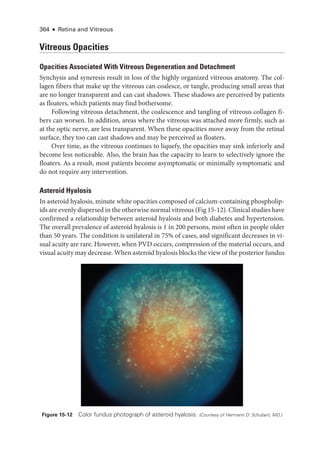
Asteroid Hyalosis   .   .   .   .   .   .   .   .   .   .   .   .   .   .   .   .   .   .   .   .   .   .   . 364
Vitreous Hemorrhage  .  .  .  .  .  .  .  .  .  .  .  .  .  .  .  .  .  .  .  .  .  . 365
Pigment Granules   .   .   .   .   .   .   .   .   .   .   .   .   .   .   .   .   .   .   .   .   .   .   . 365
Cholesterolosis  .  .  .  .  .  .  .  .  .  .  .  .  .  .  .  .  .  .  .  .  .  .  .  .  . 366
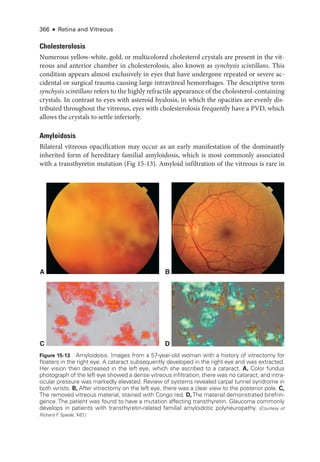
Amyloidosis  .  .  .  .  .  .  .  .  .  .  .  .  .  .  .  .  .  .  .  .  .  .  .  .  .  . 366
16 Ret­
i­
nal Detachment and Predisposing Lesions . . . . . 369
Highlights   .   .   .   .   .   .   .   .   .   .   .   .   .   .   .   .   .   .   .   .   .   .   .   .   .   .   .   . 369
Examination and Management of Posterior Vitreous Detachment   .   .   .   . 369
Lesions That Predispose Eyes to Ret­
i­
nal Detachment  .   .   .   .   .   .   .   .   .   .  371
Lattice Degeneration  .   .   .   .   .   .   .   .   .   .   .   .   .   .   .   .   .   .   .   .   .   .  371
Vitreoret­i­nal Tufts  .   .   .   .   .   .   .   .   .   .   .   .   .   .   .   .   .   .   .   .   .   .   .  371
Meridional Folds, Enclosed Ora Bays, and Peripheral Ret­
i­
nal
Excavations  .  .  .  .  .  .  .  .  .  .  .  .  .  .  .  .  .  .  .  .  .  .  .  .  . 374
Lesions That Do Not Predispose Eyes to Ret­
i­
nal Detachment   .   .   .   .   .   . 374
Paving-­Stone Degeneration  .   .   .   .   .   .   .   .   .   .   .   .   .   .   .   .   .   .   .  374
Ret­
i­
nal Pigment Epithelial Hyperplasia  .   .   .   .   .   .   .   .   .   .   .   .   .   .  375
Ret­
i­
nal Pigment Epithelial Hypertrophy  .  .  .  .  .  .  .  .  .  .  .  .  .  . 375
Peripheral Cystoid Degeneration  .   .   .   .   .   .   .   .   .   .   .   .   .   .   .   .   .  375
Ret­i­nal Breaks  .  .  .  .  .  .  .  .  .  .  .  .  .  .  .  .  .  .  .  .  .  .  .  .  .  .  . 376
Traumatic Breaks  .  .  .  .  .  .  .  .  .  .  .  .  .  .  .  .  .  .  .  .  .  .  .  . 376
Trauma in Young Eyes   .   .   .   .   .   .   .   .   .   .   .   .   .   .   .   .   .   .   .   .   . 377
Prophylactic Treatment of Ret­
i­
nal Breaks  .   .   .   .   .   .   .   .   .   .   .   .   .   .   .  379
Symptomatic Ret­i­nal Breaks  .   .   .   .   .   .   .   .   .   .   .   .   .   .   .   .   .   .   .  380
Asymptomatic Ret­i­nal Breaks  .   .   .   .   .   .   .   .   .   .   .   .   .   .   .   .   .   .  380
Lattice Degeneration  .   .   .   .   .   .   .   .   .   .   .   .   .   .   .   .   .   .   .   .   .   .  380
Aphakia and Pseudophakia  .   .   .   .   .   .   .   .   .   .   .   .   .   .   .   .   .   .   .  381
Fellow Eye in Patients With Ret­
i­
nal Detachment  .   .   .   .   .   .   .   .   .   .  381
Subclinical Ret­i­nal Detachment   .   .   .   .   .   .   .   .   .   .   .   .   .   .   .   .   . 381
xiv ● Contents
Ret­i­nal Detachment  .   .   .   .   .   .   .   .   .   .   .   .   .   .   .   .   .   .   .   .   .   .   .   .  381
Rhegmatogenous Ret­i­nal Detachment   .   .   .   .   .   .   .   .   .   .   .   .   .   . 382
Traction Ret­i­nal Detachment   .   .   .   .   .   .   .   .   .   .   .   .   .   .   .   .   .   . 387
Exudative Ret­i­nal Detachment  .  .  .  .  .  .  .  .  .  .  .  .  .  .  .  .  .  . 388
Differential Diagnosis of Ret­
i­
nal Detachment  .   .   .   .   .   .   .   .   .   .   .   .   .  389
Retinoschisis   .   .   .   .   .   .   .   .   .   .   .   .   .   .   .   .   .   .   .   .   .   .   .   .   . 389
Differentiation of Retinoschisis From Rhegmatogenous
Ret­i­nal Detachment  .   .   .   .   .   .   .   .   .   .   .   .   .   .   .   .   .   .   .   .   .  391
Macular Lesions Associated With Ret­
i­
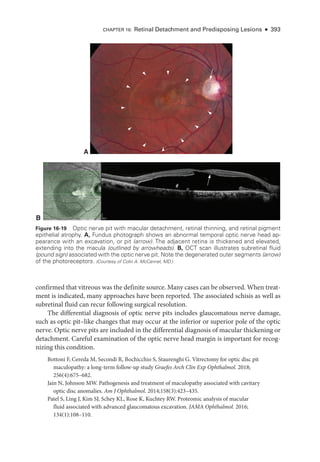
nal Detachment  .   .   .   .   .   .   .   .   .  392
Optic Pit Maculopathy  .   .   .   .   .   .   .   .   .   .   .   .   .   .   .   .   .   .   .   .   .  392
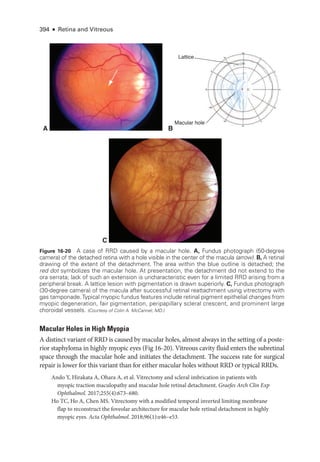
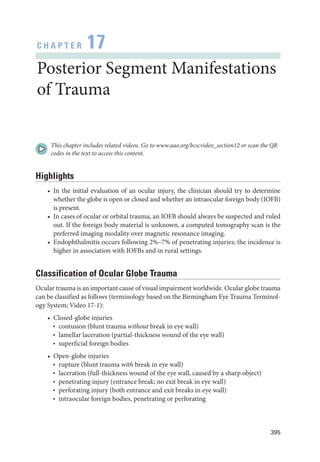
Macular Holes in High Myopia  .  .  .  .  .  .  .  .  .  .  .  .  .  .  .  .  .  . 394
17 Posterior Segment Manifestations of Trauma  .  .  .  .  .  . 395
Highlights   .   .   .   .   .   .   .   .   .   .   .   .   .   .   .   .   .   .   .   .   .   .   .   .   .   .   .   . 395
Classification of Ocular Globe Trauma  .   .   .   .   .   .   .   .   .   .   .   .   .   .   .   .  395
Evaluation of the Patient ­
After Ocular Trauma  .  .  .  .  .  .  .  .  .  .  .  .  . 396
Blunt Trauma Without a Break in the Eye Wall  .  .  .  .  .  .  .  .  .  .  .  .  . 397
Commotio Ret­i­nae  .   .   .   .   .   .   .   .   .   .   .   .   .   .   .   .   .   .   .   .   .   .   .  398
Choroidal Rupture  .   .   .   .   .   .   .   .   .   .   .   .   .   .   .   .   .   .   .   .   .   .   .  398
Posttraumatic Macular Hole  .   .   .   .   .   .   .   .   .   .   .   .   .   .   .   .   .   .   .  399
Vitreous Hemorrhage  .  .  .  .  .  .  .  .  .  .  .  .  .  .  .  .  .  .  .  .  .  . 400
Traumatic Chorioret­i­nal Disruption   .   .   .   .   .   .   .   .   .   .   .   .   .   .   . 401
Open-­Globe Injuries  .   .   .   .   .   .   .   .   .   .   .   .   .   .   .   .   .   .   .   .   .   .   .   .  401
Scleral Rupture   .   .   .   .   .   .   .   .   .   .   .   .   .   .   .   .   .   .   .   .   .   .   .   . 401
Lacerating and Penetrating Injuries  .  .  .  .  .  .  .  .  .  .  .  .  .  .  .  . 402
Perforating Injuries  .  .  .  .  .  .  .  .  .  .  .  .  .  .  .  .  .  .  .  .  .  .  . 402
Surgical Management  .  .  .  .  .  .  .  .  .  .  .  .  .  .  .  .  .  .  .  .  .  . 402
Intraocular Foreign Bodies   .   .   .   .   .   .   .   .   .   .   .   .   .   .   .   .   .   .   . 404
Posttraumatic Endophthalmitis  .   .   .   .   .   .   .   .   .   .   .   .   .   .   .   .   .   .   .  407
Prognostication of Globe Injuries   .   .   .   .   .   .   .   .   .   .   .   .   .   .   .   .   .   . 409
Sympathetic Ophthalmia  .   .   .   .   .   .   .   .   .   .   .   .   .   .   .   .   .   .   .   .   .   .  410
Avulsion of the Optic Nerve Head  .   .   .   .   .   .   .   .   .   .   .   .   .   .   .   .   .   .  410
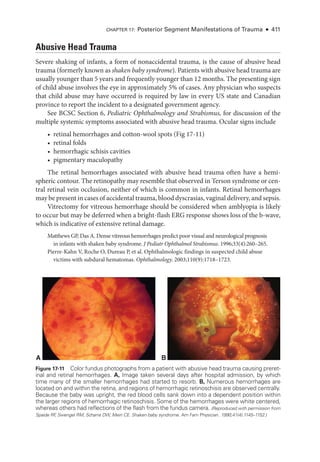
Abusive Head Trauma  .   .   .   .   .   .   .   .   .   .   .   .   .   .   .   .   .   .   .   .   .   .   .  411
Photic Damage   .   .   .   .   .   .   .   .   .   .   .   .   .   .   .   .   .   .   .   .   .   .   .   .   .   . 412
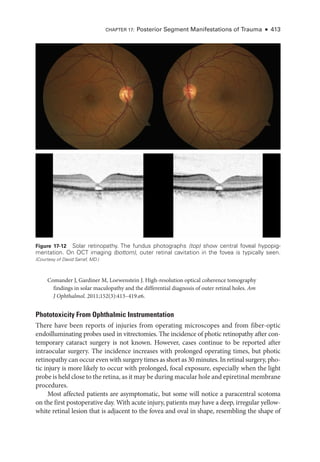
Solar Retinopathy   .   .   .   .   .   .   .   .   .   .   .   .   .   .   .   .   .   .   .   .   .   .   . 412
Phototoxicity From Ophthalmic Instrumentation  .  .  .  .  .  .  .  .  .  . 413
Occupational Light Toxicity  .   .   .   .   .   .   .   .   .   .   .   .   .   .   .   .   .   .   .  414
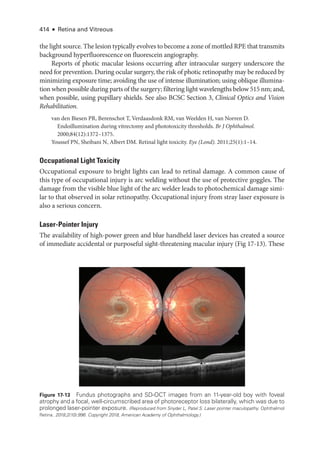
Laser-­Pointer Injury   .   .   .   .   .   .   .   .   .   .   .   .   .   .   .   .   .   .   .   .   .   . 414
PART III Selected Therapeutic Topics  .   .   .   .   .   .   .   .   .   . 417
18 ­
Laser Therapy and Cryotherapy for Posterior
Segment Diseases   .   .   .   .   .   .   .   .   .   .   .   .   .   .   .   .   .   .   .   .   .   . 419
Highlights   .   .   .   .   .   .   .   .   .   .   .   .   .   .   .   .   .   .   .   .   .   .   .   .   .   .   .   . 419
Basic Princi­
ples of Photocoagulation  .   .   .   .   .   .   .   .   .   .   .   .   .   .   .   .   .  419
Choice of ­
Laser Wavelength  .   .   .   .   .   .   .   .   .   .   .   .   .   .   .   .   .   .   .  420
Contents ● xv
Practical Aspects of ­
Laser Photocoagulation  .   .   .   .   .   .   .   .   .   .   .   .  421
Complications of Photocoagulation  .  .  .  .  .  .  .  .  .  .  .  .  .  .  .  . 424
Transpupillary Thermotherapy   .   .   .   .   .   .   .   .   .   .   .   .   .   .   .   .   .   .   . 425
Photodynamic Therapy  .  .  .  .  .  .  .  .  .  .  .  .  .  .  .  .  .  .  .  .  .  .  . 426
Complications of Photodynamic Therapy  .   .   .   .   .   .   .   .   .   .   .   .   .  426
Cryotherapy   .   .   .   .   .   .   .   .   .   .   .   .   .   .   .   .   .   .   .   .   .   .   .   .   .   .   . 426
Cryopexy Technique  .   .   .   .   .   .   .   .   .   .   .   .   .   .   .   .   .   .   .   .   .   .  427
19 Vitreoret­
i­
nal Surgery and Intravitreal Injections   .   .   .   . 429
Highlights   .   .   .   .   .   .   .   .   .   .   .   .   .   .   .   .   .   .   .   .   .   .   .   .   .   .   .   . 429
Pars Plana Vitrectomy  .   .   .   .   .   .   .   .   .   .   .   .   .   .   .   .   .   .   .   .   .   .   .  429
Vitrectomy for Selected Macular Diseases  .  .  .  .  .  .  .  .  .  .  .  .  .  .  . 431
Macular Epiret­i­nal Membranes  .  .  .  .  .  .  .  .  .  .  .  .  .  .  .  .  .  . 431
Vitreomacular Traction Diseases  .   .   .   .   .   .   .   .   .   .   .   .   .   .   .   .   .  432
Submacular Hemorrhage  .   .   .   .   .   .   .   .   .   .   .   .   .   .   .   .   .   .   .   .  434
Vitrectomy for Vitreous Opacities  .   .   .   .   .   .   .   .   .   .   .   .   .   .   .   .   .   .  435
Vitrectomy for Complications of Diabetic Retinopathy  .   .   .   .   .   .   .   .   .  435
Vitreous Hemorrhage  .  .  .  .  .  .  .  .  .  .  .  .  .  .  .  .  .  .  .  .  .  . 436
Diabetic Traction Ret­
i­
nal Detachment   .   .   .   .   .   .   .   .   .   .   .   .   .   . 436
Diabetic Macular Edema   .   .   .   .   .   .   .   .   .   .   .   .   .   .   .   .   .   .   .   . 437
Vitrectomy for Posterior Segment Complications of Anterior
Segment Surgery   .   .   .   .   .   .   .   .   .   .   .   .   .   .   .   .   .   .   .   .   .   .   .   . 437
Postoperative Endophthalmitis  .  .  .  .  .  .  .  .  .  .  .  .  .  .  .  .  .  . 437
Retained Lens Fragments ­
After Phacoemulsification   .   .   .   .   .   .   .   . 441
Posteriorly Dislocated Intraocular Lenses  .   .   .   .   .   .   .   .   .   .   .   .   .  442
Cystoid Macular Edema  .  .  .  .  .  .  .  .  .  .  .  .  .  .  .  .  .  .  .  .  . 443
Suprachoroidal Hemorrhage  .  .  .  .  .  .  .  .  .  .  .  .  .  .  .  .  .  .  . 443
Needle Injury of the Globe   .   .   .   .   .   .   .   .   .   .   .   .   .   .   .   .   .   .   . 445
Rhegmatogenous Ret­
i­
nal Detachment Surgery  .  .  .  .  .  .  .  .  .  .  .  .  . 445
Techniques for Surgical Repair of Ret­
i­
nal Detachments  .   .   .   .   .   .   .  447
Outcomes Following Ret­
i­
nal Reattachment Surgery  .  .  .  .  .  .  .  .  . 450
Complications of Pars Plana Vitrectomy   .   .   .   .   .   .   .   .   .   .   .   .   .   .   . 451
Intravitreal Injections   .   .   .   .   .   .   .   .   .   .   .   .   .   .   .   .   .   .   .   .   .   .   . 452
20 Gene Therapy  .  .  .  .  .  .  .  .  .  .  .  .  .  .  .  .  .  .  .  .  .  .  .  . 455
Highlights   .   .   .   .   .   .   .   .   .   .   .   .   .   .   .   .   .   .   .   .   .   .   .   .   .   .   .   . 455
Introduction   .   .   .   .   .   .   .   .   .   .   .   .   .   .   .   .   .   .   .   .   .   .   .   .   .   .   . 455
Gene Augmentation Therapy  .   .   .   .   .   .   .   .   .   .   .   .   .   .   .   .   .   .   .   .  456
Optoge­ne­tics  .   .   .   .   .   .   .   .   .   .   .   .   .   .   .   .   .   .   .   .   .   .   .   .   .   .   .  458
Genome Editing  .  .  .  .  .  .  .  .  .  .  .  .  .  .  .  .  .  .  .  .  .  .  .  .  .  . 458
Current Limitations  .   .   .   .   .   .   .   .   .   .   .   .   .   .   .   .   .   .   .   .   .   .   .   .  458
Additional Materials and Resources   .   .   .   .   .   .   .   .   .   .   .   .   .   .   .   .   . 459
Requesting Continuing Medical Education Credit  .   .   .   .   .   .   .   .   .   .   .  461
Study Questions  .   .   .   .   .   .   .   .   .   .   .   .   .   .   .   .   .   .   .   .   .   .   .   .   .   .  463
Answers  .   .   .   .   .   .   .   .   .   .   .   .   .   .   .   .   .   .   .   .   .   .   .   .   .   .   .   .   .  473
Index   .   .   .   .   .   .   .   .   .   .   .   .   .   .   .   .   .   .   .   .   .   .   .   .   .   .   .   .   .   . 481
xvii
Introduction to the BCSC
The Basic and Clinical Science Course (BCSC) is designed to meet the needs of residents
and practitioners for a comprehensive yet concise curriculum of the field of ophthal-
mology. The BCSC has developed from its original brief outline format, which relied
heavily on outside readings, to a more convenient and educationally useful self-contained
text. The Academy updates and revises the course annually, with the goals of integrating
the basic science and clinical practice of ophthalmology and of keeping ophthalmologists
current with new developments in the various subspecialties.
The BCSC incorporates the effort and expertise of more than 100 ophthalmologists,
organized into 13 Section faculties, working with Academy editorial staff. In addition, the
course continues to benefit from many lasting contributions made by the faculties of previ-
ous editions. Members of the Academy Practicing Ophthalmologists Advisory Committee
for Education, Committee on Aging, and Vision Rehabilitation Committee review every
volume before major revisions, as does a group of select residents and fellows. Members of
the European Board of Ophthalmology, organized into Section faculties, also review volumes
before major revisions, focusing primarily on differences between American and European
ophthalmology practice.
Organization of the Course
The Basic and Clinical Science Course comprises 13 volumes, incorporating fundamental
ophthalmic knowledge, subspecialty areas, and special topics:
1 Update on General Medicine
2 Fundamentals and Principles of Ophthalmology
3 Clinical Optics and Vision Rehabilitation
4 Ophthalmic Pathology and Intraocular Tumors
5 Neuro-Ophthalmology
6 Pediatric Ophthalmology and Strabismus
7 Oculofacial Plastic and Orbital Surgery
8 External Disease and Cornea
9 Uveitis and Ocular Inflammation
10 Glaucoma
11 Lens and Cataract
12 Retina and Vitreous
13 Refractive Surgery
References
Readers who wish to explore specific topics in greater detail may consult the references
cited within each chapter and listed in the Additional Materials and Resources section at
the back of the book. These references are intended to be selective rather than exhaustive,
chosen by the BCSC faculty as being important, current, and readily available to residents
and practitioners.
Multimedia
This edition of Section 12, Retina and Vitreous, includes videos related to topics covered in
the book and interactive content, or ­
“activities,” developed by members of the BCSC faculty.
The videos and activities are available to readers of the print and electronic versions of
Section 12 (www.aao.org/bcscvideo_section12 and www.aao.org/bcscactivity_section12).
Mobile-device users can scan the QR codes below (a QR-code reader may need to be in-
stalled on the device) to access the videos and activities.
Self-Assessment and CME Credit
Each volume of the BCSC is designed as an independent study activity for ophthalmology
residents and practitioners. The learning objectives for this volume are given on page 1.
The text, illustrations, and references provide the information necessary to achieve the
objectives; the study questions allow readers to test their understanding of the material
and their mastery of the objectives. Physicians who wish to claim CME credit for this
educational activity may do so by following the instructions given at the end of the book.*
Conclusion
The Basic and Clinical Science Course has expanded greatly over the years, with the ad-
dition of much new text, numerous illustrations, and video content. Recent editions have
sought to place greater emphasis on clinical applicability while maintaining a solid foun-
dation in basic science. As with any educational program, it reflects the experience of
its authors. As its faculties change and medicine progresses, new viewpoints emerge on
controversial subjects and techniques. Not all alternate approaches can be included in
this series; as with any educational endeavor, the learner should seek additional sources,
including Academy Preferred Practice Pattern Guidelines.
The BCSC faculty and staff continually strive to improve the educational usefulness of
the course; you, the reader, can contribute to this ongoing process. If you have any sugges-
tions or questions about the series, please do not hesitate to contact the faculty or the editors.
The authors, editors, and reviewers hope that your study of the BCSC will be of last-
ing value and that each Section will serve as a practical resource for quality patient care.
Activities
Videos
xviii ● Introduction to the BCSC
*There is no formal American Board of Ophthalmology (ABO) approval process for self-assessment
activities. Any CME activity that qualifies for ABO Continuing Certification credit may also be counted
as “self-assessment” as long as it provides a mechanism for individual learners to review their own per-
formance, knowledge base, or skill set in a defined area of practice. For instance, grand rounds, medical
conferences, or journal activities for CME credit that involve a form of individualized self-assessment
may count as a self-assessment activity.
xix
Introduction to Section 12
BCSC Section 12, Ret­
ina and Vitreous, is arranged into 3 parts. Part I, Fundamentals and
Diagnostic Approaches, covers ret­
i­
nal anatomy, imaging, and functional evaluation in 3
chapters. Chapter 1 provides an overview of the anatomy of the posterior segment. Chap-
ter 2 discusses examination techniques, including dilated slit-­
lamp biomicroscopy in com-
bination with precorneal non–­
contact or contact lenses, as well as indirect ophthalmoscopy,
which is often aided by scleral indentation to facilitate viewing the anterior ret­
ina.
Documenting clinical findings, ­
either by description or by illustration, remains an
essential ele­
ment of a complete posterior segment examination. Ancillary testing, such
as fundus photography, autofluorescence, fluorescein angiography, indocyanine green
angiography, optical coherence tomography (OCT), scanning ­
laser ophthalmoscopy, mi-
croperimetry, and electrophysiology, may provide additional diagnostic information or
help detect changes over time. The vari­
ous incarnations of OCT (time-­
domain, spectral-­
domain, and swept-­
source) deserve special mention. OCT has become perhaps the most
commonly ordered ancillary ophthalmic test and is revolutionizing our understanding of
many vitreoret­
i­
nal conditions. Ultrasonography (also called echography) employing both
A-­and B-­
scan techniques, is useful for examining patients with opaque media, can aid
in the diagnosis of ret­
i­
nal or choroidal lesions, and can be used to monitor a lesion’s size.
Chapter 3 reviews electrophysiologic tests and their significance in diagnosis and follow-
up of ret­
i­
nal disease.
Part II, Diseases of the Ret­
ina and Vitreous, which includes Chapters 4 through 17,
covers specific diseases of and trauma to the posterior segment. Appropriate diagnostic
techniques are indicated throughout ­
these discussions. By necessity, the illustrative find-
ings associated with the described vitreoret­i­nal diseases are presented as highlights—­using
schematics as well as the dif­
fer­
ent imaging technologies—­
rather than as a comprehensive
collection. Narratives describing the management of, and therapy for, the ret­
i­
nal diseases
covered in Part II are complemented by descriptions of the impor­
tant clinical ­
trials that
have helped establish appropriate evidence-­
based practices. As part of the major revision
of the book, content in Part II has been reor­
ga­
nized. Congenital and stationary ret­
i­
nal
disease, discussed in a separate chapter in the last edition, is now part of Chapter 12, “He-
reditary Ret­
i­
nal and Choroidal Disease.” Also, the chapter titled “Diseases of the Vitreous
and Vitreoret­
i­
nal Interface,” which previously appeared ­
after “Ret­
i­
nal Detachment and
Predisposing Lesions,” now precedes it, providing a more logical flow.
In Part III, Selected Therapeutic Topics, Chapters 18 and 19 offer more detailed in-
formation on the 3 most impor­
tant posterior segment treatment approaches: vitreoret­
i­
nal
surgery, ­
laser surgery, and intravitreal injection of effective pharmacologic agents, espe-
cially anti–­
vascular endothelial growth ­
factor. The emergence of each of ­
these treatment
approaches has been associated with dramatic improvements in the outcomes that ret­
ina
specialists can accomplish in terms of preserving or restoring patients’ vision. The field of
gene therapy has advanced tremendously over the last de­
cade and offers ­
great promise in
xx ● Introduction to Section 12
the treatment of ret­
i­
nal disease. This edition features a new chapter dedicated to this topic
(Chapter 20, “Gene Therapy”).
Increasingly, when treating patients with vitreoret­
i­
nal diseases, clinicians base treat-
ment decisions on evidence from clinical ­
trials. Readers should familiarize themselves
with ­
those topics that are impor­
tant for interpreting the scientific lit­
er­
a­
ture, such as study
design, levels of evidence, results interpretation, and clinical practice applications of trial
results (see BCSC Section 1, Update on General Medicine).
This book is not meant as a thorough review of the field; rather, it serves as what a
group of experts considers the most impor­
tant and up-­
to-­
date highlights of the subspe-
cialty. Readers interested in more comprehensive information can obtain additional detail
from the selected references that appear throughout the chapters as well as from the refer-
ences provided in the Additional Materials and Resources section at the end of the book.
Objectives
Upon completion of BCSC Section 12, Ret­
ina and Vitreous, the
reader should be able to
• describe the basic structure and function of the ret­
ina and its
relationship to the pigment epithelium, choroid, and vitreous
• select appropriate methods of examination, based on an
understanding of the relative benefits and disadvantages of
dif­fer­ent examination techniques
• identify vitreoret­
i­
nal diseases by their clinical appearance and
features of supportive diagnostic testing
• select appropriate ancillary studies to help establish the
diagnosis of dif­
fer­
ent vitreoret­
i­
nal diseases and follow them
over time
• explain how to incorporate data from major prospective
clinical ­
trials in the management of vitreoret­
i­
nal disorders
• describe the effect of ocular conditions on the ret­
ina, such as in
severe myopia
• list the ret­
i­
nal manifestations of inherited diseases, as well as
the likely course of ­
these diseases over time
• identify ret­
i­
nal toxicities of medi­
cations
• describe the appropriateness and timing of prophylactic
interventions
• explain the urgency of intervention for dif­
fer­
ent vitreoret­
i­
nal
conditions
• describe the effect of trauma on the eye and vision, to better
counsel patients about visual outcomes
• explain the appropriateness and timing of surgical intervention
for vitreoret­
i­
nal diseases to patients
Fundamentals
and
Diagnostic
Approaches
PART I
5
C H A P T E R 1
Basic Anatomy
Highlights
• Spectral-­
domain optical coherence tomography is a noninvasive, high-­
resolution
imaging technique that allows discernment of individual ret­
i­
nal layers which di-
rectly correlate with the layers seen in cross-­
sectional histologic preparations.
• The ret­
i­
nal pigment epithelium has many functions that are critical to ret­
i­
nal func-
tion, including absorbing light, forming the outer blood–­
ocular barrier, maintain-
ing a fluid-­
free subret­
i­
nal space, phagocytosing rod and cone outer segments, and
recycling visual pigment.
• The choroid has the highest rate of blood flow per unit weight of any tissue in the
body, supplying most of the metabolic needs of the ret­
ina.
Vitreous
The vitreous is a transparent gel composed principally of ­
water, collagen, and hyaluronic
acid. It occupies 80% of the volume of the eye. The vitreous body is divided into 2 main
topographic areas: the central, or core, vitreous and the peripheral, or cortical, vitreous.
Ultrastructurally, the vitreous gel is made up of collagen fibrils separated by hydrated hy-
aluronic acid molecules, which act as fillers between adjacent collagen fibrils.
The anterior surface of the vitreous body, called the anterior cortical gel, is made up of
a condensation of collagenous fibers that attach to the posterior lens capsule, forming the
Wieger ligament (Fig 1-1). The retrolental indentation of the anterior vitreous is called the
patellar fossa. The potential space between the peripheral posterior lens and the anterior
cortical gel bordered by the Wieger ligament is called the Berger space. In the vitreous
base, the collagen fibers are particularly dense; they are firmly attached to the anterior
ret­
ina and posterior pars plana, creating a ringlike area that extends approximately 2 mm
anterior and 3–4 mm posterior to the ora serrata. The vitreous is not only attached at its
base; it is also firmly attached to the posterior lens capsule, ret­i­nal vessels, optic nerve, and
fovea. The densely packed collagen fibrils in the cortical vitreous form the cortical gel.
Posteriorly, fibers course in a direction roughly parallel to the inner surface of the ret­
ina,
forming the preret­
i­
nal tract. The vitreous attaches to the ret­
i­
nal surface, specifically the
internal limiting membrane, via the adhesion molecules fibronectin and laminin. ­
There
is no basement membrane between the vitreous base and lens, an area called the annular
gap, which is a ringlike zone impor­
tant for diffusion between the aqueous and vitreous
6 ● Retina and Vitreous
Wieger ligament
Vitreous base
Premacular bursa
Area of Martegiani
Fovea
Zonule
Anterior hyaloid
Cloquet canal
Berger space
A
B
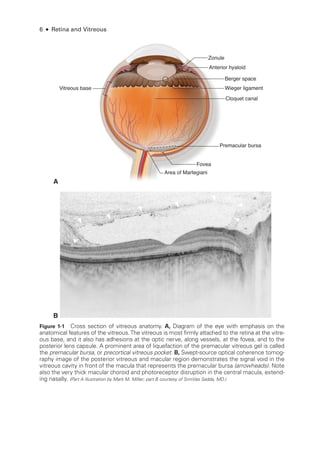
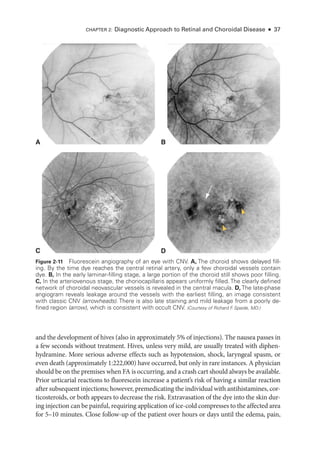
Figure 1-1 Cross section of vitreous anatomy. A, Diagram of the eye with emphasis on the
anatomical features of the vitreous.The vitreous is most firmly attached to the ret­
ina at the vitre-
ous base, and it also has adhesions at the optic nerve, along vessels, at the fovea, and to the
posterior lens capsule. A prominent area of liquefaction of the premacular vitreous gel is called
the premacular bursa, or precortical vitreous pocket. B, Swept-­
source optical coherence tomog-
raphy image of the posterior vitreous and macular region demonstrates the signal void in the
vitreous cavity in front of the macula that represents the premacular bursa (arrowheads). Note
also the very thick macular choroid and photoreceptor disruption in the central macula, extend-
ing nasally. (Part A illustration by Mark M. Miller; part B courtesy of SriniVas Sadda, MD.)
Chapter 1: Basic Anatomy ● 7
compartments. The space known as the premacular bursa, or precortical vitreous pocket
(see Fig 1-1), which is anterior to the posterior attachment of the vitreous to the macula,
is believed to decrease the tractional forces generated during ocular motion. The vitreous
inserts on the edges of the optic nerve head, creating a funnel-­
shaped void of vitreous.
This void is the opening of the Cloquet canal and is referred to as the area of Martegiani.
The anatomy of the vitreous is difficult to delineate in vivo; however, the vitreous appears
to contain interconnected cisterns and canals, most notably the ciliobursal canal that con-
nects the ciliary body and macula.
The vitreous also contains hyalocytes, which arise from bone marrow–­
derived stem
cells. Oxygen is derived through diffusion from the choroidal and ret­i­nal circulation. Hya-
locytes consume most of this, limiting the amount of oxygen that reaches the lens and
anterior segment. However, the vitreous has high ascorbate levels, which protect against
oxidative damage (eg, to the lens).
Worst JGF, Los LI. Cisternal Anatomy of the Vitreous. Kugler; 1995.
Neurosensory Ret­ina
Ret­i­nal Topography
The central area of the ret­
ina, or macula (sometimes called the area centralis), mea­sures
approximately 5.5 mm in dia­
meter and is centered between the optic nerve head and
the temporal vascular arcades (Fig 1-2, ­Table 1-1). On histologic examination, this area
features 2 or more layers of ganglion cells, accounting for half of all ganglion cells in the
ret­
ina. Oxygenated carotenoids, in par­
tic­
u­
lar lutein and zeaxanthin, accumulate within
the central macula and contribute to its yellow color.
The central 1.5 mm of the macula, which is called the fovea (or fovea centralis), is
specialized for high spatial acuity and color vision. The fovea has a margin; a downward
slope; and a floor known as the foveola, a 0.35-­
mm-­
diameter region where the cones are
a
b
c
d
e
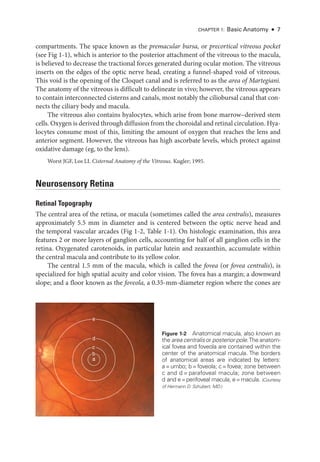
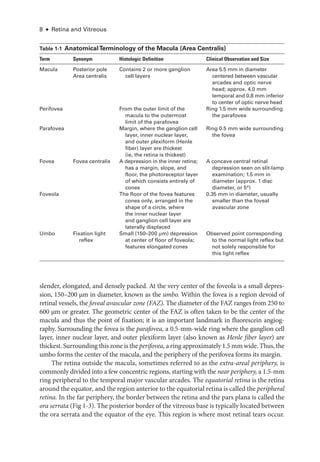
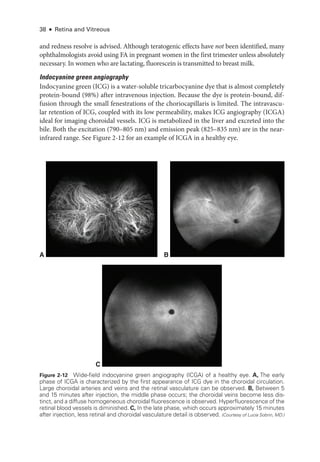
Figure 1-2 Anatomical macula, also known as
the area centralis or posterior pole.The anatom-
ical fovea and foveola are contained within the
center of the anatomical macula. The borders
of anatomical areas are indicated by letters:
a=umbo; b=foveola; c=fovea; zone between
c and d = parafoveal macula; zone between
d and e=perifoveal ­macula; e=macula. (Courtesy
of Hermann D. Schubert, MD.)
8 ● Retina and Vitreous
slender, elongated, and densely packed. At the very center of the foveola is a small depres-
sion, 150–200 μm in dia­
meter, known as the umbo. Within the fovea is a region devoid of
ret­i­nal vessels, the foveal avascular zone (FAZ). The diameter of the FAZ ranges from 250 to
600 μm or greater. The geometric center of the FAZ is often taken to be the center of the
macula and thus the point of fixation; it is an impor­
tant landmark in fluorescein angio­
g­
raphy. Surrounding the fovea is the parafovea, a 0.5-­
mm-­
wide ring where the ganglion cell
layer, inner nuclear layer, and outer plexiform layer (also known as Henle fiber layer) are
thickest. Surrounding this zone is the perifovea, a ring approximately 1.5 mm wide. Thus, the
umbo forms the center of the macula, and the periphery of the perifovea forms its margin.
The ret­
ina outside the macula, sometimes referred to as the extra-­areal periphery, is
commonly divided into a few concentric regions, starting with the near periphery, a 1.5-mm
ring peripheral to the temporal major vascular arcades. The equatorial ret­i­na is the ret­
ina
around the equator, and the region anterior to the equatorial ret­
ina is called the peripheral
ret­i­na. In the far periphery, the border between the ret­
ina and the pars plana is called the
ora serrata (Fig 1-3). The posterior border of the vitreous base is typically located between
the ora serrata and the equator of the eye. This region is where most ret­
i­
nal tears occur.
­Table 1-1 ​
AnatomicalTerminology of the Macula (Area Centralis)
Term Synonym Histologic Definition Clinical Observation and Size
Macula Posterior pole
Area centralis
Contains 2 or more ganglion
cell layers
Area 5.5 mm in dia­
meter
centered between vascular
arcades and optic nerve
head; approx. 4.0 mm
temporal and 0.8 mm inferior
to center of optic nerve head
Perifovea From the outer limit of the
macula to the outermost
limit of the parafovea
Ring 1.5 mm wide surrounding
the parafovea
Parafovea Margin, where the ganglion cell
layer, inner nuclear layer,
and outer plexiform (Henle
fiber) layer are thickest
(ie, the ret­
ina is thickest)
Ring 0.5 mm wide surrounding
the fovea
Fovea Fovea centralis A depression in the inner ret­
i­
na;
has a margin, slope, and
floor, the photoreceptor layer
of which consists entirely of
cones
A concave central ret­
i­
nal
depression seen on slit-­
lamp
examination; 1.5 mm in
dia­
meter (approx. 1 disc
dia­
meter, or 5°)
Foveola The floor of the fovea features
cones only, arranged in the
shape of a circle, where
the inner nuclear layer
and ganglion cell layer are
laterally displaced
0.35 mm in dia­
meter, usually
smaller than the foveal
avascular zone
Umbo Fixation light
reflex
Small (150–200 μm) depression
at center of floor of foveola;
features elongated cones
Observed point corresponding
to the normal light reflex but
not solely responsible for
this light reflex
Chapter 1: Basic Anatomy ● 9
Jetties of ret­
i­
nal tissue, called dentate pro­cesses, extend anteriorly into the pars plana.
­
These pro­
cesses are more prominent nasally. Ora bays are posterior extensions of the pars
plana ­
toward the ret­
ina. On occasion, dentate pro­
cesses may wrap around a portion of an
ora bay to form an enclosed ora bay. A meridional fold is a radially oriented, prominent
thickening of ret­
i­
nal tissue that extends into the pars plana. When aligned with a ciliary
pro­
cess, such folds are known as a meridional complex.
Polyak SL. The Ret­i­na. University of Chicago Press; 1941.
Ret­
i­
nal Layers and Neurosensory Ele­
ments
The layers of the ret­
ina can be seen in cross-­
sectional histologic preparations, and most
layers can be identified with spectral-­
domain optical coherence tomography (SD-­
OCT)
(see Chapter 2, Activity 2-1), a noninvasive high-­resolution imaging technique. The layers of
the ret­
ina as seen in histologic sections and in corresponding OCT cross-­
sectional images
are shown in Figure 1-4.
To reach the photoreceptors—­
retinal rods and cones—­
light must travel through the
full thickness of the ret­
ina. The density and distribution of photoreceptors vary with their
topographic location. In the fovea, the cones, which are predominantly red-­and green-­
sensitive, are densely packed; their density exceeds 140,000 cones/mm2
. The foveola has
no rods; the fovea contains only photoreceptors and pro­cesses of Müller cells. The number
of cone photoreceptors decreases rapidly in areas farther from the center, even though
90% of cones overall reside outside the foveal region. The rods have their greatest density
in a zone lying approximately 4 mm from the foveal center, or 12° from fixation, where
they reach a peak density of about 160,000 rods/mm2
. The density of rods also decreases
­
toward the periphery. A small area of high rod concentration (176,000 rods/mm2
) has
Pigmentary demarcation line
Retina
Ciliary body
(pars plana)
Dentate process
(ora tooth)
Enlarged ciliary process
Meridional complex
Tear
Ora bay
Ora serrata
Meridional fold
Figure 1-3 Schematic of the ora serrata, detail of which shows an ora bay, dentate pro­
cess, and
meridional folds (pleats of redundant ret­
ina). Tears may occur at the posterior end of such folds.
Pigmentary demarcation lines may be a marker of chronicity. (Used with permission from Federman JL,
Gouras P
, Schubert H, et al. Ret­ina andVitreous. Mosby; 1998. Podos SM,Yanoff M, eds. Textbook of Ophthalmology; vol 9.)
10 ● Retina and Vitreous
NFL
ILM
GCL
ILM
ONL
EZ
Choroid
IPL
INL
OPL
ELM
RPE
GCL
INL
ONL
EZ
Choroid
IPL
OPL
ELM
RPE
Choroid
Choriocapillaris
Outer segments
RPE
Outer nuclear layer
Inner nuclear layer
Inner plexiform layer
Ganglion cell layer
Nerve fiber layer
Outer plexiform layer
Inner segments
Bruch
membrane
A
External
limiting
membrane
Internal
limiting
membrane
Middle
limiting
membrane
C
Outer nuclear layer
Henle fiber layer
Inner nuclear layer
Inner plexiform layer
Ganglion cell layer
Outer plexiform layer
Inner segments
B Choroid
Choriocapillaris
Outer segments
RPE
Bruch
membrane
External
limiting
membrane
Internal
limiting
membrane
Middle
limiting
membrane
D
Figure 1-4 Cross-­
sectional images of peripheral macular (A, C) and foveal (B, D) ret­ina. A, B, Photo­
micrographs (hematoxylin-­
eosin stain) of ret­
ina and choroid (labeled). In the fovea (B), the inner
cellular layers are laterally displaced, and ­
there is an increased density of pigment in the ret­
i­
nal
pigment epithelium (RPE). Note that on the right edge of the image, the inner cellular layers are
laterally displaced. This allows incident light to fall directly onto the photoreceptors, avoiding the
inner ret­
i­
nal layers, thereby reducing the potential for scattering of light. C, D, Corresponding
spectral-domain optical coherence tomography cross-­
sectional images of macular and foveal ret­
ina. Layers labeled from inner to outer ret­
ina, following the path of incident light: internal limiting
membrane (ILM), nerve fiber layer (NFL), ganglion cell layer (GCL), inner plexiform layer (IPL), inner
nuclear layer (INL), outer plexiform layer (OPL), outer nuclear layer (ONL), external limiting mem-
brane (ELM), ellipsoid zone (EZ), RPE, and choroid. (Parts A and B courtesy of Ralph Ea­
gle, MD; parts C and
D courtesy of Hannah J. Yu, BS, and Charles C. Wykoff, MD, PhD.)
Chapter 1: Basic Anatomy ● 11
been found in the superior macula. The arrangement of rods and cones can be visualized
with noninvasive adaptive optics imaging (Fig 1-5).
Each photoreceptor cell consists of an outer segment and an inner segment. The light-­
sensitive molecules in rods and cones are derived from vitamin A and are contained in
the disc membranes of the photoreceptor outer segments (Fig 1-6). The discs are attached
to a cilium, which is rooted through neurotubules in the ellipsoid and myoid of the inner
segment. The ellipsoid, which is adjacent to the cilium, contains mitochondria and is
A B
C 100 μm
Figure 1-5 Comparison of a conventional fundus photo­
graph and confocal adaptive optics
scanning ­
laser ophthalmoscope (AOSLO) images of a healthy left-­
eye macula. A, In the fundus
photo­
graph, the white box that is closer to the fovea is 0.5° from fixation and represents a
300 × 300–­
μm area of macula. B, The corresponding AOSLO image of the ret­
ina within that
white box shows cones that are smaller and very tightly packed; no rods are vis­
i­
ble. C, AOSLO
image corresponding to the white box in A that is closer to the optic nerve and 7° from fixa-
tion and also represents a 300 × 300–­
μm area of macula. The image shows cones that are
larger and less densely packed; intervening rods are starting to become vis­
i­
ble. (Courtesy of
Mina M. Chung, MD, and Hongxin Song, MD, PhD.)
12 ● Retina and Vitreous
PE
Cone Rod
60 μm
OS
C
IS
SER
DM
MV DM
CP
PC
PC
RF
RER RER
ELM
OF
P
IF
N
N
R
G
G
S
M
M
M
50 μm
Figure 1-6 Schematic of a cone cell (left) and a rod cell (right) in the peripheral ret­
ina. In the
diagram, light enters from the top; the pigmented epithelium is on the distal side. C=cilium;
CP=cone cell pedicle; DM=membranous discs; ELM=external limiting membrane; G=Golgi
apparatus; IF=inner fiber; IS=inner segment; M=mitochondria; MV=microvilli of pigment epi-
thelial cells; N=nucleus; OF=outer fiber; OS=outer segment; P=perikaryon; PC=pro­cessus
calycoides; PE=pigment epithelium; R= ­
free ribosomes; RER=rough endoplasmic reticulum;
RF=rootlet fiber; S=rod cell spherule; SER=smooth endoplasmic reticulum. (Adapted with permis-
sion from Springer Nature. Krebs W, Krebs I. Primate Ret­
ina and Choroid. Atlas of Fine Structure in Man and Monkey. 1991.)
Chapter 1: Basic Anatomy ● 13
responsible for the cone shape. The myoid, which is closer to the photoreceptor nucleus,
contains endoplasmic reticulum. The mitochondria, cilia, and inner discs together form
the inner-­
outer segment junction, which provides evidence of the origin of the photo-
receptor as a modified sensory cilium prone to the full range of ciliopathies. Rod outer
segments may contain up to 1000 discs stacked like coins. ­
These discs are renewed in and
shed from the outer ret­
ina and are phagocytosed by the ret­
i­
nal pigment epithelium (RPE)
for pro­
cessing and recycling of components.
Cone photoreceptors have a 1-­
to-1 synapse with a type of bipolar cell known as a
midget bipolar cell. Other types of bipolar cells also synapse with each cone. Conversely,
more than 1 rod—­
and sometimes more than 100 rods—­
converge on each bipolar cell. Bipo-
lar cells, the first neurons of the visual pathway, synapse with ganglion cells, the second neu-
rons of the visual pathway, in the inner plexiform layer (IPL). The ganglion cells summate
responses from bipolar and amacrine cells and develop action potentials that are conducted
to the dorsolateral geniculate nucleus and the third neuron in the brain. Amacrine cells in
the inner portion of the inner nuclear layer (INL) help pro­
cess signals by responding to spe-
cific alterations in ret­i­nal stimuli, such as sudden changes in light intensity or the presence of
certain sizes of stimuli. The INL is composed of horizontal cells, bipolar cells, and amacrine
cells. In the nerve fiber layer (NFL), axons of the ganglion cell layer (GCL) course along the
inner portion of the ret­
ina to form the optic nerve, a brain tract. The internal limiting mem-
brane (ILM), which is not a true membrane but is formed by the footplates of Müller cells, is
attached to the posterior cortical gel of the vitreous (Fig 1-7).
Two additional intraret­
i­
nal “membranes” identified by histologists, the external limit-
ing membrane (ELM) and the ­
middle limiting membrane (MLM), are actually junctional
systems, not true membranes. At the outer extent of the Müller cells, zonular attachments
between photoreceptors and Müller cells form the ELM, a structure vis­
i­
ble with both light
microscopy and OCT. Thus, the Müller cells, whose nuclei reside in the INL, course through
almost the entire thickness of the ret­
ina. The inner third of the outer plexiform layer (OPL)
has a linear density in which synaptic and desmosomal connections occur between the
photoreceptor inner fibers and the pro­
cesses of the bipolar cells. This linear density, which
is also apparent with OCT, is the junctional system that has been called the MLM.
Ret­
i­
nal Vasculature and Oxygen Supply
The vascular supply of the ret­
ina comes from the ret­
i­
nal circulation for the inner ret­
ina and indirectly from the choroidal circulation for the avascular outer ret­
ina. The cen-
tral ret­
i­
nal artery (a branch of the ophthalmic artery) enters the eye and divides into 4
branches, each supplying blood to a quadrant of the ret­
ina. ­
These branches are located in
the inner ret­
ina. A cilioret­
i­
nal artery, derived from the ciliary circulation, supplies a por-
tion of the inner ret­
ina in approximately one-­
third of ­
human eyes (Fig 1-8). On a tissue
level, the ret­
ina is supplied by up to 4 layers of vessels:
• radial peripapillary capillary network, located in the NFL and around the optic nerve
head
• superficial vascular plexus, which includes the superficial capillary plexus, in the ret­
i­nal GCL
• deep capillary complex with 2 capillary beds, one on ­
either side of the INL
14 ● Retina and Vitreous
Although the superficial layer of the deep capillary plexus is sometimes referred to as the
intermediate capillary plexus, typically both layers are collectively referred to as the deep capil-
lary complex. OCT angiography can visualize ­
these distinct capillary layers. The ret­
i­
nal vas-
culature, including its capillaries, retains the blood–­brain barrier with tight junctions between
capillary endothelial cells. Blood from the capillaries is collected by the ret­i­nal venous system;
it eventually leaves the eye through the central ret­
i­
nal vein by way of branch ret­
i­
nal veins.
The outer ret­
i­
nal layers, beginning with the OPL, derive their oxygen supply from the
choroidal circulation. The exact boundary between the ret­
i­
nal vascular supply and the
diffusion from the choriocapillaris varies according to the topographic location, ret­
i­
nal
thickness, and amount of light pre­
sent. For additional discussion, see the choroid section
­
later in this chapter, as well as Part I, Anatomy, of BCSC Section 2, Fundamentals and
Princi­
ples of Ophthalmology.
Internal
limiting
membrane
Rod
External
limiting
membrane
Middle
limiting
membrane
Ganglion
cell
Bipolar
cell
Horizontal
cell
Cone
Müller
fiber
(glia)
Inner
nuclear
layer
Amacrine
cell
Figure 1-7 Schematic of the neuronal connections in the ret­
ina and participating cells. In the dia-
gram, light enters from the top, at the ganglion cell layer. (Redrawn from Federman JL, Gouras P
, Schubert H,
et al. Ret­ina and Vitreous. Mosby; 1988. Podos SM,Yanoff M, eds. Textbook of Ophthalmology; vol 9. Illustration by Mark
Miller.)
Chapter 1: Basic Anatomy ● 15
Ret­i­nal Pigment Epithelium
The RPE is a monolayer of pigmented, hexagonal cells derived from the outer layer of the
optic cup. This layer is continuous with the pigment epithelium of the ciliary body and iris.
In the macula, RPE cells are taller and denser than in the periphery. The lateral surfaces of
adjacent cells are closely apposed and joined by tight junctional complexes (zonulae occlu-
dentes) near the apices, forming apical girdles and the outer blood–­ocular barrier. Each RPE
cell has an apex and base; the apical portion envelops the outer segments of the photorecep-
tor cells with villous pro­
cesses (Fig 1-9). The basal surface of the cells shows a rich infolding
of the plasma membrane. The basement membrane does not follow ­
these infoldings. The
cytoplasm of the typical RPE cell contains several melanosomes, each designed to absorb
light. Melanosomes are spheroidal; their melanin is distributed on protein fibers.
The RPE contributes to ret­
i­
nal function in several ways; it
• absorbs light
• phagocytoses rod and cone outer segments
• participates in ret­
i­
nal and polyunsaturated fatty acid metabolism
• forms the outer blood–­
ocular barrier
• maintains a fluid-­
free subret­
i­
nal space
• heals and forms scar tissue
• regenerates and recycles visual pigment
Figure 1-8 A central ret­
i­
nal artery occlusion in a young patient with a previously unknown patent
foramen ovale. Presumably, an embolus from the systemic circulation passed through the pat-
ent foramen ovale and lodged in the central ret­
i­
nal artery, occluding its blood flow. Fortunately,
a cilioret­
i­
nal artery supplied part of the eye’s ret­
ina. Note the ret­
i­
nal ischemic whitening in the
distribution of the central ret­
i­
nal artery but preservation of the normal ret­
i­
nal transparency in
the zone supplied by the cilioret­
i­
nal artery. (Used with permission from Ho IV, Spaide RF
. Central ret­
i­
nal artery
occlusion associated with a patent foramen ovale. Ret­i­na. 2007;27(2):259–260. doi:10.1097/IAE.0b013e318030cc2)
16 ● Retina and Vitreous
Figure 1-9 Illustrations of Bruch membrane. A, The RPE and its relationship to the photo­
receptors and Bruch membrane. Note the interdigitations; villi from the RPE make contact
with the outer segments of both rods and cones. B,The folded plasmalemma of the RPE rests
on its smooth basement membrane (0.3 μm thick) bordering the inner collagenous zone (1.5 μm
thick). The outer collagenous zone (0.7 μm thick) borders the elastic layer (0.8 μm thick) and is
continuous with intercapillary bridges and the subcapillary fibrous tissue. APRP = apical pro­
cess of the RPE. (Part A courtesy of the University of Rochester; part B illustration by Daniel Casper, MD, PhD.)
0.7 μm
1.5 μm
0.8 μm
0.3 μm
Bruch membrane
B
Bruch membrane
A
Rod
Nucleus
RPE
APRP
Choriocapillaris
Melanin
granules
Light
Cone
Light
Discs
RPE cells serve a phagocytic function, continually ingesting the disc membranes shed
by the outer segments of photoreceptor cells. Over the course of a lifetime, each RPE cell is
thought to phagocytose billions of outer segments. This pro­
cess of shedding, phagocyto-
sis, and photoreceptor renewal follows a daily (circadian) rhythm. Rods shed discs at dawn,
Chapter 1: Basic Anatomy ● 17
and cones shed them at dusk. The ingested outer segments are digested gradually, broken
down by enzymes from lysosomes.
Visual pigments contain 11-­
cis-­
retinaldehyde that is converted to 11-trans-retinal­­
dehyde in the photoreceptor outer segments. Most of the regeneration of 11-­
cis to the
11-­
trans configuration occurs in the RPE and requires a highly efficient transfer of metab-
olites from the outer segments to the RPE cells and back. The interdigitation of the RPE
and outer segments facilitates the regeneration by increasing the surface area of contact and
allowing proximity. The visual pigments’ biochemical cycle is discussed in more detail in
BCSC Section 2, Fundamentals and Princi­
ples of Ophthalmology.
A variety of pathologic changes—­
caused by such ­
factors as ge­
ne­
tic defects, drugs, di-
etary insufficiency (of vitamin A), or senescence—­
can impair the pro­
cess of phagocytosis
and renewal. Physical separation of the ret­
ina from the RPE, which occurs when subret­
i­
nal fluid (ie, ret­i­nal detachment) or blood is pre­sent, also disrupts the impor­tant exchange
of metabolites.
The RPE functions as a barrier to prevent diffusion of metabolites between the cho-
roid and the subret­
i­
nal space. ­
Because of this, the environment of the photoreceptors is
largely regulated by the selective transport properties of the RPE. The RPE has a high ca-
pacity for ­
water transport, so in a healthy eye, fluid does not accumulate in the subret­
i­
nal
space. This RPE-­
mediated dehydration of the subret­
i­
nal space also modulates the bond-
ing properties of the interphotoreceptor matrix, which acts as a bridge between the RPE
and photoreceptors and helps bond the neurosensory ret­
ina to the RPE. With deteriora-
tion or loss of the RPE, ­
there is corresponding atrophy of the overlying photoreceptors
and under­
lying choriocapillaris.
Bruch Membrane
The basal portion of the RPE is attached to Bruch membrane, which has 5 layers. Starting
with the innermost, the layers are as follows (see Fig 1-9):
• basement membrane of the RPE
• inner collagenous zone
• ­
middle layer of elastic fibers
• outer collagenous zone
• basement membrane of the endothelium of the choriocapillaris
Degeneration of Bruch membrane over time is associated with buildup of lipids and ox-
idatively damaged materials as well as calcification. In some disease states, extensive Bruch
membrane calcification can lead to fractures, known as angioid streaks. In age-­related macu-
lar degeneration, areas of calcification with microscopic breaks have also been found.
Choroid
The choroid nourishes the outer portion of the ret­
ina. Blood enters the choroid, which con-
sists of 3 layers of vessels, through the posterior ciliary arteries (Fig 1-10). The outer layer
18 ● Retina and Vitreous
v
v
a
CH
Figure 1-10 Scanning electron micrograph
(70×) of the choroid. Vascular cast of the cho-
roid from the posterior pole of a 62-year-­
old
man, showing arteries (a), veins (v), and the
choriocapillaris (CH). (Courtesy of A. Fryczkowski, MD.)
of large-­
caliber vessels, known as the Haller layer, is relatively thick. The vessels in this layer
divide into smaller-­
diameter vessels and precapillary arterioles, which make up the ­
middle
layer, known as the Sattler layer. ­
These smaller vessels distribute the blood throughout the
choroid, reducing arterial pressure to the relatively low pressure found in the innermost
layer, the choriocapillaris.
The choroid has a maximal thickness posteriorly. On histologic examination, it is
0.22 mm thick in the central macular region, becoming progressively thinner anteriorly;
at the ora serrata, it is 0.1 mm thick. Subfoveal choroidal thickness, mea­
sured by SD-­
OCT
in vivo in healthy volunteers with a mean age of 50 years, is approximately 287 μm. How-
ever, thickness changes with age and disease states of the eye. The presence of thin choroid
(leptochoroid) and thick choroid (pachychoroid) may be associated with ocular diseases.
In the posterior pole, the choriocapillaris forms a plexus of capillaries, even though
the capillaries themselves are not arranged strictly into lobules. The capillary arrange-
ment becomes more irregular ­
toward the periphery, where the capillaries are arranged
more radially. Interspersed between the vessels of the choroid are loose connective tissue,
fibroblasts, and melanocytes.
­
After passing through the choriocapillaris, the blood is collected in venules, which
coalesce into collecting channels, or ampullae, of the vortex veins. Most eyes have 4 or 5
vortex veins, which exit the eye at or posterior to the equator. The vortex veins drain into
the superior and inferior ophthalmic veins.
The choroid supplies the metabolic needs of the ret­
ina, which has one of the highest
metabolic rates per gram of tissue in the body. In some estimates, the choroidal circulation
supplies 90% of the oxygen consumed by the ret­
ina, primarily by the photoreceptors. The
choroid also has the highest rate of blood flow per unit weight of any tissue in the body,
and the venous blood exiting the choroid still has a very high oxygen tension. The RPE
cells, which are anatomically closely associated with the choriocapillaris, are exposed to
the highest oxygen tensions of any perfused tissue, increasing the risk of oxidative damage.
Chapter 1: Basic Anatomy ● 19
The rapid flow in the choroid also acts as a heat sink, removing thermal energy obtained
by light absorption.
Mrejen S, Spaide RF. Optical coherence tomography: imaging of the choroid and beyond.
Surv Ophthalmol. 2013;58(5):387–429.
Sclera
The sclera is composed of collagen and a few elastic fibers embedded in a matrix of pro-
teoglycans. It terminates at the histologists’ limbus. The sclera does not have uniform
thickness. It is thinnest immediately ­behind the insertion of the rectus muscles, whereas it
is thicker at the posterior pole, around the optic nerve head.
The sclera is normally permeable to the passage of molecules in both directions. Up to
40% of the aqueous leaves the eye via uveoscleral outflow, making the sclera an impor­
tant
path of fluid movement. Scleral permeability allows drugs to be delivered to the eye by means
of injection into the sub-­
Tenon space. The sclera is a hydrophilic tissue and is therefore only
variably permeable to hydrophobic or amphiphilic substances or medi­
cations. This charac-
teristic is an impor­
tant consideration for periocular injection of pharmacologic agents.
Hogan MJ, Alvarado JA, Weddell JE. Histology of the ­
Human Eye. Saunders; 1971:chaps 5, 8, 9, 11.
21
C H A P T E R 2
Diagnostic Approach to Ret­
i­
nal
and Choroidal Disease
This chapter includes related videos. Go to www​.­aao​.­org​/­bcscvideo​_­section12 or scan the QR
codes in the text to access this content.
This chapter also includes a related activity. Go to www​.­aao​.­org​/­bcscactivity​_­section12 or scan
the QR code in the text to access this content.
Highlights
• A thorough history and full eye examination, including careful examination of the
central and peripheral ret­
ina, are necessary for evaluation of ret­
i­
nal diseases.
• Many ret­i­nal imaging modalities are now available, each of which provides dif­fer­ent,
complementary information about ret­
i­
nal and choroidal disease pro­
cesses.
• Obtaining and integrating information from multimodal imaging is necessary for
efficient and precise diagnosis of ret­
i­
nal and choroidal diseases.
Introduction
Evaluating a patient for ret­
i­
nal disease begins with obtaining a thorough patient history,
including ­
family history, and a careful review of systems. The patient should undergo a de-
tailed ophthalmic examination, beginning with visual acuity mea­
sure­
ment and including
careful examination of the central and peripheral ret­
ina and testing for a relative afferent
pupillary defect. Testing for ret­
i­
nal disease is directed by findings from the clinical examina-
tion. In addition, in-­
office Amsler grid testing can be performed, as it can provide evidence
of macular disease, when pre­
sent.
This chapter explores some of the many imaging modalities used to evaluate ret­
i­
nal dis-
ease. No par­
tic­
u­
lar modality supplies all the information needed to appropriately evaluate
­
every disease. Rather, each modality provides dif­
fer­
ent, complementary information. Thus,
integrating information from multimodal imaging is necessary for efficient and precise diag-
nosis of ret­
i­
nal and choroidal diseases.
22 ● Retina and Vitreous
Ophthalmoscopy
The direct ophthalmoscope provides an upright, monocular, high-­
magnification (15×)
image of the ret­
ina. ­
Because of its lack of stereopsis, small field of view (5°–8°), and poor
view of the ret­
i­
nal periphery, the direct ophthalmoscope has ­
limited use, and this tech-
nique has largely been supplanted by indirect ophthalmoscopy. In indirect ophthalmos-
copy, light from the illumination source is directed into the eye through a condensing lens,
which helps form a flat, inverted, and reversed aerial image of the patient’s ret­
ina between
the lens and the examiner. Indirect ophthalmoscopy can be performed with the binocular
indirect ophthalmoscope or at the slit lamp. A variety of condensing lenses are available
for use with the slit lamp or the binocular indirect ophthalmoscope, allowing the clinician
to choose the best lens for the par­
tic­
u­
lar situation. The magnification is calculated by di-
viding the dioptric power of the examination lens into μ60. For example, a 20-­
diopter (D)
lens would result in a magnification of –3 (the negative sign indicates an inverted image).
Examination With the Binocular Indirect Ophthalmoscope
The binocular indirect ophthalmoscope has a unitary magnification. Through the use of
prisms, it reduces the distance between the pupils in the instrument, and using a mirror, it
reduces the distance from the light source to the optical axis. The examiner’s ret­
ina, the aer-
ial image, and the patient’s ret­
ina all become conjugate (see BCSC Section 3, Clinical Optics
and Vision Rehabilitation, Chapter 9). Binocular indirect ophthalmoscopes allow stereop-
sis, have a field of view that depends on the dioptric power of the condensing lens (higher
powers deliver wider ­
angles of view but at a lower magnification), and with ocular steering,
can visualize the entire fundus—­
unlike direct ophthalmoscopes. If the patient’s pupil can be
fully dilated, the ora serrata may be seen without the use of any additional instruments. If
the pupil cannot be widely dilated or the clinician needs to see peripheral ret­
i­
nal details in
profile, scleral depression can be performed. Disadvantages of binocular indirect ophthal-
moscopy include the resulting low magnification from the condensing lens and the inverted
and reversed image.
Indirect Ophthalmoscopy With the Slit Lamp
Indirect ophthalmoscopy can also be performed with a slit lamp by using a noncontact
lens, for example, a 60-­
D or 78-­
D lens. With a 60-­
D lens, the magnification afforded by the
lens is 1×; however, the slit lamp typically has a magnification of 10× or 16×. The field of view
provided by ­
these lenses is good, a ­
little less than 70° with the 60-­
D lens and more than 80°
with the 78-­
D lens. Ocular steering can be used to evaluate a large area of the fundus. Lenses
of higher dioptric powers can aid visualization of wide areas of the ret­
ina even if the pupil
does not dilate. ­
These lenses may have a field of view of 100° or more.
With noncontact indirect biomicroscopy, the power and capabilities of a slit lamp with
a wide field of view may be employed without any contact with the eye; subsequent ocular
imaging can proceed without a prob­
lem ­
because no contact is made with the cornea. The
main disadvantage is that the image created is inverted and reversed.
Chapter 2: Diagnostic Approach to Ret­
i­
nal and Choroidal Disease ● 23
A contact lens provides one of the highest-­resolution methods to view the fundus. Al-
though ­these lenses provide no significant magnification, they nullify the refractive power,
and potentially any astigmatism, of the cornea. The 3-­
mirror lens is one commonly used
contact lens. The central portion is used to visualize the posterior pole directly and has a
field of view of a ­little more than 20°. The 3 mirrors can be used to evaluate the midperiphery
and far periphery of the ret­
ina as well as the iridocorneal ­
angle. The 3-­
mirror lens produces
a noninverted image; however, the field of view through any one component is ­
limited, and
rotation of the lens on the patient’s eye is required to visualize 360° of the peripheral fundus.
Wide-­
field contact lenses allow visualization of peripheral pathology with fields of view up
to 160° without rotation of the lens, but they produce an inverted image. All contact lenses
require use of a viscous coupling fluid, which may hinder subsequent ocular imaging.
Lenses are chosen at the discretion of the examining clinician, according to what is
needed for the specific examination. For example, an opacified posterior capsule with a
small posterior capsulotomy may inhibit good visualization of the ret­
i­
nal periphery with
a 3-­
mirror lens but pose no significant prob­
lem for a wide-­
field contact lens. For more
information about lens choice and indirect ophthalmoscopy, see the following reference.
Roybal CN. Indirect ophthalmoscopy 101. American Acad­
emy of Ophthalmology. May 15, 2017.
Accessed January 17, 2022. https://­www​.­aao​.­org​/­young​-­ophthalmologists​/­yo​-­info​/­article​
/­indirect​-­ophthalmoscopy​-­101
Imaging Technologies
Fundus Camera Imaging
Fundus camera imaging employs the optical princi­
ples of indirect ophthalmoscopy. The
objective lens is used to deliver a cone of light through the entrance pupil. Light reflected
from the eye subsequently forms a flat, inverted aerial image within the body of the cam-
era. This image is transferred to and projected onto an image sensor through a system of
relay lenses. Fundus cameras use flash illumination to obtain high-­
quality images of the
eye (a capacitor must be charged to power the flash unit; consequently, fundus cameras
typically rec­
ord images at a speed of only about once per second).
Color fundus photography provides photographic rec­
ords of the state of a patient’s
fundus for their medical rec­
ords; ­
these images may also be used in research and for teach-
ing. ­
Because a large amount of information can be extracted from a ­
simple color fundus
photo­graph (Fig 2-1A, B), this mode of imaging has been the cornerstone of many large
epidemiologic and treatment studies. The color rendition is the best of any imaging system
in terms of color accuracy, noise, and resolution.
With the addition of dif­
fer­
ent filters, the fundus camera can be used to perform fluo-
rescein angiography, indocyanine green angiography, and fundus autofluorescence imag-
ing (Fig 2-1C); ­
these techniques are discussed ­
later in the chapter.
Imaging from fundus cameras may be affected by cloudy media, with light scattering
obscuring fundus details and reducing image contrast.
24 ● Retina and Vitreous
Scanning ­
Laser Ophthalmoscopy
The confocal scanning ­
laser ophthalmoscope (SLO) functions as both an ophthalmo-
scope and a fundus camera and allows additional applications, such as fluorescein angi-
ography and autofluorescence imaging. The SLO generates ret­
i­
nal images by scanning
an illuminated spot on the ret­
ina in a raster pattern and uses a Maxwellian view system to
build the ret­
i­
nal image. ­
Because the system is confocal, the scattered light can be rejected
by the crystalline lens, as can the fluorescence, allowing for the use of shorter wavelengths
in autofluorescence imaging. A photodiode is used to detect the light received from the eye.
A variety of wavelengths can be used as dictated by need. A fundus photo­
graph can
be reconstructed with 3 si­mul­ta­neously acquired color ­laser images in the blue, green, and
infrared spectra; however, the color in ­
these multicolor images is unnatural compared
with that in a traditional fundus photo­
graph (Fig 2-2A, B). Infrared imaging alone can
be used to evaluate the fundus; in some circumstances, it provides more comprehensive
A B
C
Figure 2-1 Multimodal imaging of refractile drusen and associated atrophy. A, Color fundus
photo­
graph of geographic atrophy with refractile drusen. B, Enlarging the section within the white
square from A reveals a remarkable amount of information, even showing the diamondlike par­
ticles that seem to correspond to the hydroxyapatite spherules seen in histologic sections of
drusen. C, Fundus autofluorescence (FAF) image shows attenuated autofluorescence in areas
of geographic atrophy that are also depicted in the color photo­
graph; in addition, FAF reveals
an absence of autofluorescence colocalized to the locations of the refractile drusen. (Courtesy of
Richard F
. Spaide, MD.)
Chapter 2: Diagnostic Approach to Ret­
i­
nal and Choroidal Disease ● 25
information than that revealed by color photography. For example, some types of pseudo-
drusen (ie, subret­
i­
nal drusenoid deposits) are not very prominent in color fundus photo­
graphs but are easy to view in infrared images. Similarly, choroidal nevi reflect infrared
light, consequently appearing bright in infrared imaging. The infrared image can be used
to perform eye movement tracking.
In SLO angiography, fluorescein is injected intravenously to act as a contrast agent and
then imaging begins. To obtain an autofluorescent image of the fundus, the excitation ­
laser
and barrier filter are put into place, but fluorescein dye is not used and the gain is turned up.
This method uses a blue-­
green wavelength that is absorbed by macular pigment.
A second approach to SLO uses an ellipsoidal mirror. Commercial systems using this
method can obtain images that are approximately 200° wide, or ultra wide field (Fig 2-2C).
With ocular steering, nearly all of the ret­
ina can be imaged. In this method, 2 ­
lasers, a red
one and a green one, are employed to obtain a pseudo–­
color-­
scaled image. As with the
SLO multicolor images mentioned ­earlier, the color in ­these images is unnatural; therefore,
when evaluating lesion color, clinicians should rely on the ophthalmoscopic examination
rather than ­
these images. Angiography can be performed with the use of the appropriate
Figure 2-2 Images of a single healthy eye obtained with 3 dif­
fer­
ent modalities. A, Traditional
fundus photo­
graph (50° field of view). B, Confocal scanning ­
laser ophthalmoscopy (SLO) multi­
color fundus image (30° field of view). C, Ultra-­
wide-­
field SLO fundus image produced by using
an ellipsoidal mirror (200° field of view). (Courtesy of Lucia Sobrin, MD.)
C
A B
26 ● Retina and Vitreous
excitation ­
lasers. The number of points imaged is large, and ­
these systems do not rec­
ord
at video rates. Systems employing an ellipsoidal mirror have ­limited confocality. To obtain
autofluorescent images, a green ­
laser needs to be used.
Optical Coherence Tomography
Optical coherence tomography (OCT) is a noninvasive, noncontact imaging modality that
produces micrometer-­
resolution images of tissue. Low-­
coherence light is si­
mul­
ta­
neously
directed into tissue and into a reference arm. An interferometer combines the light return-
ing from the tissue with the light from the reference arm, producing an interferogram. The
benefit of using low-­
coherence light is that its spectral makeup changes rapidly with time;
thus, light produced at a par­
tic­
u­
lar instant ­
will not interfere substantially with light pro-
duced at other times. This means the exact position from which the interfering light came
can be determined by the resolution dictated by the coherence length of the light source,
which is typically 5–7 μm. In any given A-­
scan, the ­
earlier technology of time-­
domain
(TD) OCT is used to interrogate each point in the tissue sequentially. In more modern
techniques, for example ­
either spectral-­
domain (SD) or swept-­
source (SS) OCT, a more
efficient approach is taken. In SD-­
OCT, a broad-­
spectrum light source is used, and the
interferogram produced varies with the reflectivity of the tissue. SS-­
OCT uses a more com-
plicated light source that sequentially scans through successive wavelengths of light across a
spectral range. SS-­
OCT and SD-­
OCT produce higher-­
resolution images than TD-­
OCT and
have largely replaced TD-­
OCT in the clinic.
Compared with SD-­
OCT, SS-­
OCT has the following advantages:
• generally faster image acquisition
• wider scanning ranges
• better simultaneous imaging of vitreous to choroid
• better penetration through opacities
On the other hand, SD-­OCT imaging devices are less expensive than SS-­OCT devices, and
they have better axial resolution. Although simultaneous imaging of the vitreous to the
choroid is better with SS-­
OCT, SD-­
OCT can image the choroid well by using enhanced
depth imaging (EDI). EDI is useful for determining choroidal thickness.
Both SD-­
OCT and SS-­
OCT create an A-­
scan through tissue. B-­
scans consist of a col-
lection of many A-­
scans conducted through a plane of tissue. A volume scan consists of
an assembly of numerous B-­
scans; this volume scan is stored in computer memory as a
block of data in which each memory location stores a value that corresponds to a specific
small volume of tissue. The voxels (a portmanteau of volume and pixels) in the volume of
data may be represented in many ways; one ­simple way is to make planar slices, producing
an image called a C-­scan. C-­
scans are difficult to interpret ­
because in a curved structure,
many planes of tissue can be crossed. Another, more advanced method is to segment the
data according to tissue planes; a thickness of voxels presented this way is called an en face
scan. This technique can be used to mea­
sure the thickness of vari­
ous tissues, for example,
the ret­
i­
nal nerve fiber layer. Maps of the thickness of the ret­
ina or a specific ret­
i­
nal layer
can also be produced. ­
Actual correlation between OCT scans and histology of the ret­
ina
continues to be an area of active research (Activity 2-1).
Chapter 2: Diagnostic Approach to Ret­
i­
nal and Choroidal Disease ● 27
ACTIVITY 2-1 Optical coherence tomography (OCT) terminology,
based on the International Nomenclature for OCT Panel
for Normal OCT Terminology.
Reproduced from Staurenghi G, Sadda S, Chakravarthy U, Spaide RF; International
Nomenclature for Optical Coherence Tomography (IN·OCT) Panel. Proposed lexicon
for anatomic landmarks in normal posterior segment spectral-­
domain optical
coherence tomography: the IN·OCT consensus. Ophthalmology.
2014;121(8):1572–1578. Copyright 2014, with permission from Elsevier.
In addition to B-­
scans and en face imaging, volume rendering of OCT data is pos­
si­
ble and shows the 3-­
dimensional character of tissue (Fig 2-3). Compared with ordinary
C
D
A B
Figure 2-3 Imaging of an eye with drusen and a lamellar macular hole. A, Fundus photo­
graph
from a patient with prominent drusen and distorted vision. B, B-­
scan section of optical coher­
ence tomography (OCT) imaging shows a lamellar hole with lamellar hole–­
associated epiret­
i­
nal
proliferation (LHEP). C, D, Two dif­
fer­
ent views from volume-­
rendered imaging of the lamellar
macular hole taken in sections, showing the thick epiret­
i­
nal membrane, as well as the absence
of induced distortion of the ret­
ina. Note the cavities within the undermined ret­
ina and the at­
tachment of the LHEP to the central foveal tissue. (Courtesy of Richard F
. Spaide, MD.)
28 ● Retina and Vitreous
B-­
scans, volume rendering is computationally intensive. It is used in radiology but is not
yet widely used in ophthalmology.
SomeOCTscannersoffereyemovementtracking.Withtheadditionofthisfeature,ocular
motion can be detected and corrected in the final image, improving the quality of the resulting
scan. Tracking methods rely on recognizing fundus features and registering the scan pattern
with the fundus image. This capability expands the utility of OCT; with it, scans interrupted by
patient blinks still produce usable images. Also, it is pos­
si­
ble to perform repeated scans of the
same fundus location over time, enabling assessment of disease progression (Fig 2-4).
Optical Coherence Tomography Angiography
In a series of images taken at a sufficient interval, a moving object ­
will appear at dif­
fer­
ent po-
sitions on the successive images. When ­
these images are compared pixel by pixel, nonmoving
regions ­
will show no change, while moving objects ­
will produce areas that show high variance.
If the color black is assigned to areas of low variance (ie, areas that do not move) and the color
white is assigned to areas with high variance, the resulting image ­
will highlight movement; this
is called motion contrast. The ret­
ina has no moving parts, except for the flow of blood. If the
imagesarehighresolution,successiveret­i­nalimagescanshowthemovementofbloodthrough
A
B
D
E
C
Figure 2-4 Evolution of a macular hole, visual­
ized with OCT. A, Image from a patient with a
perifoveal posterior vitreous detachment and
no obvious traction on the macula. B, ­After
1 year, the patient experienced visual distor­
tion; the image shows obvious traction with
foveal tractional cavitations. C, Image taken
2 months ­
later; note the full-­
thickness macu­
lar hole. D, Image taken 1 month ­
after macu­
lar hole surgery; the hole is closed. Note the
subtle area of increased reflectivity in the
center. E, Image taken 3 months ­
later shows
the fovea with a nearly normal contour and
laminar structure. (Courtesy of Richard F
. Spaide, MD.)
Chapter 2: Diagnostic Approach to Ret­
i­
nal and Choroidal Disease ● 29
the ret­ina. Images taken with OCT are not only high resolution but also depth resolved. There-
fore, data obtained from tissue at one point in time can be compared with data obtained from
the same tissue at successive points in time. The result is a 3-­
dimensional visualization of
movement within the ret­
ina, corresponding to blood flow in its vari­
ous layers.
Unlike fluorescein angiography, which can visualize only the superficial capillary
plexus, OCT angiography (OCTA) can image all capillary layers, including the super-
ficial plexus, the radial peripapillary capillary network, and the deep capillary complex.
This provides huge opportunities to advance our understanding of ret­
i­
nal diseases. Other
advantages of OCTA over fluorescein angiography are that it is noninvasive and faster for
imaging of the ret­
i­
nal circulation. However, OCTA cannot show vascular leakage, which
fluorescein angiography can demonstrate in diseases such as ret­
i­
nal vasculitis (see the
section “Fluorescein angiography” ­
later in the chapter). En face OCTA offers another way
to visualize flow information. En face imaging of flow in the ret­
ina is a useful technique
­
because the resulting image of the ret­
ina is arranged in layers, as is its blood supply. In this
method, a slab of the flow information corresponding to the expected position of a layer
of vessels is selected. Next, the brightest pixel in each column of voxels is selected and
displayed; this is called a maximal intensity projection. This projection creates a flat image
from the data, which exists in 3 dimensions.
OCTA can visualize the ret­
i­
nal vasculature at a higher resolution than any other cur-
rent imaging modality (Fig 2-5). However, OCTA is prone to artifacts. Understanding
how ­
these artifacts are created is key to understanding and interpreting the images pro-
duced. Motion results in bright areas in the image, but this motion does not necessarily
come from blood flow. For example, if the patient’s eye moves during the examination,
portions of the resulting image ­
will contain motion artifacts. Multiple automatic scans
with eye movement tracking and software repair can suppress most motion artifacts. An-
other type of defect, called a projection artifact, is created when light passes through a
blood vessel and strikes a deeper reflective structure; over time, the light that reflects from
that structure ­
will change, mimicking the overlying blood vessel. The image created ­
will
have what appears to be 2 levels of the same vessel: the first at its ­
actual location and the
second at the level of the reflecting structure. Several mathematical approaches can re-
move projection artifacts. A third potential issue in OCTA is the appearance of dark areas
on the image. Dark areas visualized in the fundus can be the result of a lack of blood flow,
or at least blood flow too slow to be detected in successive scans at the interval time used.
Often, however, it is too difficult to ascertain ­
whether ­
there is a true lack of flow, so the
dark areas on the images are called signal voids.
Clinical OCTA devices have primarily imaged the macula, but technological advances
have allowed wider-­
field OCTA imaging (see Fig 2-5E).
Spaide RF, Fujimoto JG, Waheed NK, Sadda SR, Staurenghi G. Optical coherence tomography
angiography. Prog Retin Eye Res. 2018;64:1–55. doi:10.1016/j.preteyeres.2017.11.003
Fundus Autofluorescence
Fundus autofluorescence (FAF) is a rapid, noncontact, noninvasive way to visualize fluo-
rophores in the fundus. Intrinsic fluorophores in the ret­ina include lipofuscin/bisretinoids
and melanin. In FAF, the excitation light is introduced into the eye; fluorescence from
30 ● Retina and Vitreous
intrinsic fluorophores is detected by using a barrier filter to exclude that excitation light
from the image (see Figure 2-6 for an example of FAF imaging in a healthy eye). For ex-
ample, bisretinoids accumulate within the lysosomes of ret­
i­
nal pigment epithelium (RPE)
cells as a normal part of the aging pro­
cess; they are not necessarily harmful. When RPE
cells die, the contained lipofuscin disperses, resulting in a loss of autofluorescence, so that
­
these areas appear dark on FAF images. When ­
there is a tear in the RPE, which is ­
usually
seen in patients with choroidal neovascularization (CNV), the scrolled RPE is hyper­
autofluorescent ­
because of reduplication, while the bared area shows no autofluorescence
signal (Fig 2-7). This mechanism of autofluorescence gain or loss is used to monitor the
absence of RPE cells in a variety of diseases. Autofluorescence is particularly helpful for
monitoring the rate of growth of geographic atrophy, characterized by areas of hypoauto-
fluorescence, and for monitoring chorioret­
i­
nal lesions in posterior uveitides; when ­
these
lesions are active, hyperautofluorescence is often seen at the lesions’ borders on FAF.
Two main types of systems are used to image autofluorescence: fundus cameras and
SLOs. For FAF with the fundus camera, special filters are used that are tuned to detect the
signal generated by lipofuscin granules without being overcome by the interference of auto-
fluorescence from the crystalline lens, which may be derived, in part, from tryptophan
and by nonenzymatic glycosylation of lens proteins. ­
These cameras use wavelengths that
D E
A B C
Figure 2-5 OCT angiography (OCTA) of a healthy eye (same eye in all parts). A, Superficial
­
vascular plexus with fractal branching. B, Deep capillary plexus. Its vessels are small and do
not show the same branching as the vessels of the superficial vascular plexus. C, Choriocapil­
laris. D, Color depth-­
encoded OCTA image of the macula. E, Color depth-encoded OCTA
image. Wider-­
field fundus view shows the vessels at each layer delineated by a dif­
fer­
ent color.
(Courtesy of Lucia Sobrin, MD.)
Chapter 2: Diagnostic Approach to Ret­
i­
nal and Choroidal Disease ● 31
are in the green end of the spectrum, and the recorded autofluorescence begins closer to
the orange wavelengths. The excitation wavelengths are not absorbed by macular pigment.
Commercial SLOs initially used blue excitation light to excite fluorescein, but ­
these
wavelengths ­
were absorbed by macular pigment. Use of a green ­
laser for excitation, the
wavelengths of which are not absorbed by macular pigment, was ­
later introduced and is
still used ­
today. By comparing the ratio of green light autofluorescence in 2 registered
fundus images, it is pos­
si­
ble to make a 2-­
dimensional map of macular pigment density.
Although lipofuscin in the RPE is the main source of autofluorescence from the fun-
dus, accumulation of fluorophores in the subret­
i­
nal space is another impor­
tant signal
source for the evaluation of some diseases, such as central serous chorioretinopathy. ­
After
the disease is pre­
sent for a few months, the detachment becomes lighter in color and
slightly more yellow, as well as hyperautofluorescent. This hyperautofluorescence is easier
to detect with a fundus camera than with an SLO system for 2 main reasons. First, SLO
systems are confocal; if the plane of focus is at the level of the RPE, the top of the detach-
ment may not be in the confocal range. Second, the wavelengths used for FAF imaging
B
A
A B
Figure 2-7 Tears in the ret­
i­
nal pigment epithelium (RPE). A, Fundus photo­
graph from a patient
with choroidal neovascularization (CNV) who was given an intravitreal injection of an anti–­
vascular endothelial growth ­
factor agent and developed what appeared to be 4 RPE tears
(arrows). B, FAF image reveals the absence of autofluorescence and an increased signal where
the RPE appears to be scrolled, thus confirming the RPE tear (arrows). Small areas of atrophy
are also revealed by the hypoautofluorescence (arrowheads). (Courtesy of Richard F
. Spaide, MD.)
Figure 2-6 Fundus autofluorescence images of a healthy eye, acquired using scanning ­
laser
ophthalmoscopy. Two dif­
fer­
ent devices ­
were used, each with a dif­
fer­
ent field of view: central
(A) and ultra-­wide-­field (B). (Courtesy of Lucia Sobrin, MD.)
32 ● Retina and Vitreous
with the fundus camera are more closely tuned to the fluorescence wavelengths emitted by
fluorophores in the ret­
ina. On OCT imaging, an accumulation of material has been found
on the back surface of the ret­ina in eyes with central serous chorioretinopathy with hyper-
autofluorescent detachments. It is thought that the photoreceptor outer segments typically
are phagocytized and pro­
cessed by the RPE, but if the ret­
ina has been physically elevated
by fluid, the photoreceptors become separated from the RPE, thus impeding phagocytosis.
This mechanism of disease pathophysiology may also be seen in vitelliform deposits in
vitelliform macular dystrophy, adult vitelliform lesions, the yellow material that builds up
­
under chronic ret­
i­
nal detachments caused by optic pit maculopathy, and the pockets of
retained subret­
i­
nal fluid ­
after detachment surgery.
Near-­infrared FAF imaging using 787-nm excitation and greater than 800-nm emis-
sion reveals fluorescence that was previously attributed to melanin from the RPE and the
deeper layers of the choroid. However, lipofuscin can also fluoresce when excited at the
wavelengths mentioned, and it appears that during lipofuscin pro­
cessing, melanosomes
are fused with lysosomes to produce melanolysosomes. The melanin may bind to some of
the ­
free radicals in lipofuscin, but in any case, molecular cross-­
linking occurs. The result-
ing melanolipofuscin also fluoresces in the selected ranges. Thus, it may be pos­
si­
ble to
detect differing molecular species with near-­
infrared FAF.
Time-­resolved fluorescence imaging has shown that dif­
fer­
ent molecules can fluoresce at
the same wavelengths but at measurably dif­fer­ent times ­after excitation. Using time-­resolved
imaging with a phasor approach allows in vivo identification of vari­ous molecular species, as
well as mea­
sure­
ment of the reduction–­
oxidation reaction state. Studies are being conducted
on hyperspectral autofluorescence in which differing wavelengths of fluorescence are mea­
sured in order to better understand the formation of component molecules.
Adaptive Optics Imaging
Adaptive optics imaging is a collection of techniques that compensates for wavefront ab-
errations in real time. ­
These techniques, which ­
were developed for use in astronomical
telescopes, can help compensate for changes induced by variations in tear film, among
other sources of aberration. This compensation for aberrations allows visualization of in-
dividual ret­
i­
nal photoreceptors and RPE cells. However, this type of imaging is extremely
time-­
consuming and requires expensive custom-­
built instruments to obtain satisfactory
results. Significant adoption of adaptive optics imaging in eye clinics has been prevented by
the time required, the complexity of the instrumentation, and the ­
limited ability to image
all patients (eg, patients with media opacities or intraocular lenses cannot be imaged).
Ret­i­nal Angiographic Techniques
Fluorescein angiography
Fluorescein angiography (FA) is a technique used to examine the ret­
i­
nal circulation. It
involves rapid serial photography ­
after intravenous injection of fluorescein (Fig 2-8). Tra-
ditionally, a fundus camera or an SLO with a field of view of up to about 50° has been
used for FA imaging. More recently, wide-­field systems that can image most of the fundus,
including the periphery, have been increasingly used (Fig 2-9).
Chapter 2: Diagnostic Approach to Ret­
i­
nal and Choroidal Disease ● 33
Fluorescein ranges from yellow to orange-­
red in color, depending on its concentra-
tion. Fundus cameras equipped for FA have a matched pair of excitation and barrier filters.
The excitation filter transmits blue-­
green light at 465–490 nm, the peak excitation range
of fluorescein. The barrier filter transmits a narrow band of yellow light at 520–530 nm,
fluorescein’s peak emission range. The barrier filter effectively blocks all vis­
i­
ble wave-
lengths except the specific color of fluorescein.
Fluorescein is approximately 80% protein-­bound in circulation; the blood–­retina bar-
rier prevents it from diffusing into ret­i­nal tissue. However, leakage can show on FA in areas
with new vessel growth, which lack a blood–­
ocular barrier, or regions with blood–­
ocular
barrier defects induced by inflammation or ischemia. Fluorescein readily leaks from the
choriocapillaris, staining the surrounding tissue. This rapid leakage, as well as the light
absorption and scattering by the pigment in the RPE and choroid, prevents widespread
use of fluorescein in choroidal imaging.
For the procedure, normally, 2–3 mL of a 25% sterile solution or 5 mL of a 10% ster-
ile solution is injected in the antecubital vein. Typically, the dye is vis­
i­
ble in the choroid
within 8–12 seconds; filling of the ret­i­nal arterioles occurs 11–18 seconds ­after injection
(arterial phase; see Fig 2-8A). Complete filling of the arteries and capillaries and the
appearance of thin columns of dye along the walls of the larger veins (laminar flow; see
Fig 2-8B) occur 1–3 seconds ­
later (arteriovenous phase). Complete filling of the veins
A B
D
C
Figure 2-8 Fluorescein angiography of a healthy eye. A, The choroid fills approximately a half-­
second before the ret­
ina.The image shows the dye front beginning to enter the ret­
i­
nal arteries.
B, Laminar filling ­
after dye injection. C, Arteriovenous phase. D, In the late phase, the fluores­
cence decreases as the dye is removed from the bloodstream. (Courtesy of Richard F
. Spaide, MD.)
34 ● Retina and Vitreous
occurs over the subsequent 5–10 seconds (venous phase; see Fig 2-8C). The dye begins to
recirculate 2–4 minutes ­
after injection (recirculation, or mid phase). The late phase, occur-
ring ­
after 4–5 minutes (see Fig 2-8D), demonstrates the gradual elimination of dye from
the ret­
i­
nal and choroidal vasculature.
The choroid may not fill uniformly. Any areas in the choroid that do not fill by the
time the ret­
i­
nal circulation reaches the laminar flow stage are considered signs of ab-
normal choroidal filling. Once dye reaches the choriocapillaris, it leaks and stains Bruch
membrane and the stroma, and details in the choroid are lost. Delay in the initial filling of
the ret­i­nal vasculature is most commonly seen in patients with ret­i­nal vascular occlusions.
A
C D
B
Figure 2-9 Examples of dif­
fer­
ent patterns of hyperfluorescence and hypofluorescence in fluo­
rescein angiography (FA). A–­B: Wide-­
angle FA of an eye with posterior uveitis, ret­
i­
nal vasculitis,
and ret­
i­
nal neovascularization. Ret­
i­
nal neovascularization of the optic nerve head and ret­
ina
shows early leakage (arrowheads, A), which increases in the late frame (arrowheads, B). The
early frame (A) shows macular nonperfusion, and the late frame (B) shows staining of ­
laser
scars in the periphery and inflammation-­
related deep multifocal leakage (arrows). C–­D: FA of
an eye with idiopathic polypoidal choroidopathy and drusen.The early frame (C) shows staining
of the drusen, and both early and late (D) frames reveal leakage from the choroidal polyp
­(arrowhead, C).­
There is also blockage of fluorescence in the inferior macula in an area of hemor­
rhage (arrow, C). The late frame demonstrates pooling of fluorescein (arrow, D) ­
under a serous
ret­
i­
nal detachment centrally.Video 2-1of initial dye-­
filling frames shows the onset of leakage from
the polypoidal lesion in the superonasal macula. (Courtesy of Lucia Sobrin, MD.)
Chapter 2: Diagnostic Approach to Ret­
i­
nal and Choroidal Disease ● 35
During FA, the fovea appears darker than the surrounding areas ­
because of the presence
of macular pigment; also, the RPE cells beneath the fovea are slightly taller and contain
more melanin than peripheral RPE cells, and ­
there are no ret­
i­
nal vessels.
Abnormalities observed with FA can be grouped into 2 main categories:
• hypofluorescence
• hyperfluorescence
In a fluorescein angiogram, reduction or absence of normal fluorescence is called
hypofluorescence and is pre­
sent in 2 major patterns:
• vascular filling defects
• blocked fluorescence
Vascular filling defects are abnormalities in which ret­
i­
nal or choroidal vessels fail to fill
­
because of an intravascular obstruction that results in nonperfusion of an artery, vein, or
capillary (see Fig 2-9A). ­
These defects appear as ­
either a delay in or complete absence of
filling of the involved vessels. Blocked fluorescence occurs when excitation or visualization
of the fluorescein is obstructed by fibrous tissue, pigment, or blood that blocks normal ret­
i­
nal or choroidal fluorescence in the area. The depth of a lesion can be easily determined
by relating the level of the blocked fluorescence to details of the ret­
i­
nal circulation. For
example, if lesions block the choroidal circulation but ret­
i­
nal vessels are pre­
sent on top of
this blocking defect, the lesions are located above the choroid and below the ret­
i­
nal vessels.
Hyperfluorescence refers to fluorescence that is abnormally excessive, typically extend-
ing beyond the borders of recognized structures. This manifests in several major patterns
(­Table 2-1; Video 2-1; see also Fig 2-9):
• leakage
• staining
• pooling
• transmission, or win­
dow, defect
VIDEO 2-1 Early-­
phase fluorescein angiogram.
Courtesy of Lucia Sobrin, MD.
Leakage is a gradual, marked increase in fluorescence over the course of the study
and results from seepage of fluorescein molecules across the blood–­
retina barrier. When
the outer blood–­
retina barrier is compromised, the dye traverses the RPE and enters the
­Table 2-1 Hyperfluorescence Patterns: Differences in Fluorescence Brightness
and Size as Fluorescein Angiography Progresses
Change Over Time Leakage Staining Pooling Win­dow Defect
Brightness Increase Increase Same/increase Decrease
Size Increase No change,
irregular shape
No change, regular
shape (round or oval)
No change
36 ● Retina and Vitreous
subret­
i­
nal space or neurosensory ret­
ina. When the inner blood–­
retina barrier is compro-
mised, the dye leaks through vascular walls into the ret­
i­
nal parenchyma, fibrotic tissue,
and cystoid spaces (Fig 2-10). Dye can also leak through the posterior blood–­
retina bar-
rier (the RPE) and accumulate in the subret­
i­
nal space, fibrotic tissue, or directly into the
ret­
ina, if the external limiting membrane of the ret­
ina is compromised.
Staining refers to a pattern of hyperfluorescence in which the fluorescence increases in
brightness through transit views and persists in late frames, but the borders remain intact
throughout the study. Staining results from entry of fluorescein into a solid tissue or into mate-
rial that retains the dye, such as a scar, drusen, blood vessel walls, optic nerve tissue, or sclera.
Pooling is the accumulation of fluorescein in a fluid-­
filled space in the ret­
ina or cho-
roid (see Fig 2-9D). As fluorescein leaks into the space, the margins of the space trap the
fluorescein and appear distinct, for example, as seen in an RPE detachment in central
serous chorioretinopathy.
A transmission defect, or win­dow defect, refers to a view of the normal choroidal fluo-
rescence through a defect in the pigment of the RPE. In a transmission defect, hyperfluo-
rescence occurs early, corresponding to filling of the choroidal circulation, and reaches its
greatest brightness with the peak of choroidal filling. This fluorescence does not increase
in brightness or size and usually fades in the late phases as the choroidal fluorescence be-
comes diluted by blood that does not contain fluorescein. The fluorescein remains in the
choroid and does not enter the ret­
ina.
Multiple defects may be pre­
sent in a diseased eye. For example, in an older adult
patient with CNV, the choroid often shows segmental filling delays; hyperfluorescence is
seen in the fovea ­
because of the proliferation of vessels that leak; and ­
there is late leakage
from CNV (Fig 2-11).
Haug S, Fu AD, Johnson RN, et al. Fluorescein angiography: basic princi­
ples and interpretation.
In: Schachat AP, Wilkinson CP, Hinton DR, Sadda SR, Wiedemann P, eds. Ryan’s Ret­i­na.
6th ed. Vol 1. Elsevier; 2017:1–45.
Adverse effects of fluorescein angiography ​
All patients injected with fluorescein experi-
ence a temporary yellowing of the skin and conjunctiva that lasts 6–12 hours. The most
common adverse effects include nausea and vomiting (in approximately 5% of injections)
Figure 2-10 Fluorescein angiogram showing
an eye with postsurgical cystoid macular
edema. Fluorescein pools in the petalloid cys­
toid spaces within the central macula, and
­
there is late staining of the optic nerve head.
(Courtesy of Richard F
. Spaide, MD.)
Chapter 2: Diagnostic Approach to Ret­
i­
nal and Choroidal Disease ● 37
and the development of hives (also in approximately 5% of injections). The nausea passes in
a few seconds without treatment. Hives, ­
unless very mild, are usually treated with diphen-
hydramine. More serious adverse effects such as hypotension, shock, laryngeal spasm, or
even death (approximately 1:222,000) have occurred, but only in rare instances. A physician
should be on the premises when FA is occurring, and a crash cart should always be available.
Prior urticarial reactions to fluorescein increase a patient’s risk of having a similar reaction
­after subsequent injections; however, premedicating the individual with antihistamines, cor-
ticosteroids, or both appears to decrease the risk. Extravasation of the dye into the skin dur-
ing injection can be painful, requiring application of ice-­cold compresses to the affected area
for 5–10 minutes. Close follow-up of the patient over hours or days ­
until the edema, pain,
A B
D
C
Figure 2-11 Fluorescein angiography of an eye with CNV. A, The choroid shows delayed fill­
ing. By the time dye reaches the central ret­
i­
nal artery, only a few choroidal vessels contain
dye. B, In the early laminar-­
filling stage, a large portion of the choroid still shows poor filling.
C, In the arteriovenous stage, the choriocapillaris appears uniformly filled. The clearly defined
network of choroidal neovascular vessels is revealed in the central macula. D, The late-­phase
angiogram reveals leakage around the vessels with the earliest filling, an image consistent
with classic CNV (arrowheads). ­
There is also late staining and mild leakage from a poorly de­
fined region (arrow), which is consistent with occult CNV. (Courtesy of Richard F
. Spaide, MD.)
38 ● Retina and Vitreous
and redness resolve is advised. Although teratogenic effects have not been identified, many
ophthalmologists avoid using FA in pregnant ­
women in the first trimester ­
unless absolutely
necessary. In ­
women who are lactating, fluorescein is transmitted to breast milk.
Indocyanine green angiography
Indocyanine green (ICG) is a water-­
soluble tricarbocyanine dye that is almost completely
protein-­
bound (98%) ­
after intravenous injection. ­
Because the dye is protein-­
bound, dif-
fusion through the small fenestrations of the choriocapillaris is ­
limited. The intravascu-
lar retention of ICG, coupled with its low permeability, makes ICG angiography (ICGA)
ideal for imaging choroidal vessels. ICG is metabolized in the liver and excreted into the
bile. Both the excitation (790–805 nm) and emission peak (825–835 nm) are in the near-­
infrared range. See Figure 2-12 for an example of ICGA in a healthy eye.
A
C
B
Figure 2-12 Wide-­
field indocyanine green angiography (ICGA) of a healthy eye. A, The early
phase of ICGA is characterized by the first appearance of ICG dye in the choroidal circulation.
Large choroidal arteries and veins and the ret­
i­
nal vasculature can be observed. B, Between 5
and 15 minutes ­
after injection, the ­
middle phase occurs; the choroidal veins become less dis­
tinct, and a diffuse homogeneous choroidal fluorescence is observed. Hyperfluorescence of the
ret­
i­
nal blood vessels is diminished. C, In the late phase, which occurs approximately 15 minutes
­
after injection, less ret­
i­
nal and choroidal vasculature detail is observed. (Courtesy of Lucia Sobrin, MD.)
Chapter 2: Diagnostic Approach to Ret­
i­
nal and Choroidal Disease ● 39
ICGA is a valuable tool for identification of choroidal diseases (Video 2-2). It is used to
image polypoidal choroidal vasculopathy, which is a common form of CNV (Fig 2-13), and
to provide impor­
tant information about the pathophysiology of type 3 neovascularization
(also known as ret­i­nal angiomatous proliferation). With the use of ICGA, it was discovered
that patients with drusen could have asymptomatic CNV. ICGA, particularly ultra-­wide-­
field
imaging, is helpful for diagnosing inflammatory diseases such as birdshot chorioretinopathy
and multifocal choroiditis and panuveitis. Eyes with central serous chorioretinopathy show
multifocal areas of choroidal vascular hyperpermeability when visualized with ICGA. How-
ever, use of this technique for diagnosing uveitis and central serous chorioretinopathy has
been somewhat supplanted by autofluorescence imaging combined with EDI-OCT.
VIDEO 2-2 Early-­
phase indocyanine green angiogram.
Courtesy of Lucia Sobrin, MD.
Adverse effects of indocyanine green angiography ​
Mild adverse events occur in fewer than
1% of patients. ICG is dissolved in a 5% sodium iodide solution (sodium iodide is an addi-
tive used in ­
table salt). Although an iodine allergy is considered a relative contraindication
to ICGA, ­
there is no reason that a shellfish allergy should preclude the use of ICG. However,
angiographic facilities should have emergency plans and establish protocols to manage com-
plications associated with ­
either fluorescein or ICG administration, including anaphylaxis.
ICG may persist in the blood longer in patients with liver disease than in healthy patients.
Ultrasonography
Contact B-­
scan (also called B-­mode) ultrasonography is the most common form of ultra-
sonography used in the clinic (Video 2-3). For the procedure, a 10-­
MHz probe is placed
A B
Figure 2-13 Polypoidal choroidal vasculopathy. A, Fundus photo­
graph shows an area of lipid
exudation surrounding a hemorrhage, large orange-­
colored vessels, and an area of decreased
pigmentation inferotemporal to the optic nerve. B,The ICGA image clearly shows the sub-­
RPE
vessels affected by polypoidal choroidal vasculopathy. (Courtesy of Richard F
. Spaide, MD.)
40 ● Retina and Vitreous
on the patient’s closed eyelid. A piezoelectric crystal within the transducer is used to send
and receive sound waves for each A-­
scan. The ultrasound beam is approximately 1 mm
wide at the level of the ret­ina, which severely limits the lateral resolution. The axial resolu-
tion, which is the resolution along the axis of the ultrasound beam, is very dif­
fer­
ent in the
eye versus as mea­
sured with flat surfaces. This difference is due to the interaction of the
eye’s curved surfaces with the lateral summation of the signal.
VIDEO 2-3 Diagnostic B-­
scan ultrasonography: basic technique.
Courtesy of Patrick Lavalle, CDOS, and Lucia Sobrin, MD.
Contact B-­
scan ultrasonography is used to evaluate tumor thickness, detect foreign
bodies, assess choroidal and ret­
i­
nal detachments, and analyze the vitreous (Figs 2-14,
2-15; Videos 2-4, 2-5). Optic disc drusen can be detected by observing small areas of
bright reflection in the nerve that cause shadows. Careful ultrasonography allows ret­
i­
nal
tears to be identified. Ultrasonography can also be used to image the eye during saccades,
­
because imaging does not occur through the pupil. Information gained during dynamic
examinations is helpful for examining the vitreous and for differentiating retinoschisis
from true detachment. Contact B-­
scan ultrasonography can produce images through
opaque media, although gases and silicone oil used for vitreoret­
i­
nal surgery attenuate im-
aging substantially.
VIDEO 2-4 Contact B-­
scan ultrasonography showing
choroidal effusions.
Courtesy of Patrick Lavalle, CDOS, and Lucia Sobrin, MD.
VIDEO 2-5 Contact B-­
scan ultrasonography showing
a dislocated cataractous lens in the vitreous cavity.
Courtesy of Patrick Lavalle, CDOS, and Lucia Sobrin, MD.
Figure 2-14 Contact B-­
scan ultrasonography shows massive choroidal effusions (“kissing cho­
roidals,
” or appositional choroidal detachment) containing liquefied (arrow) and clotted (arrowhead)
blood.The corresponding video (Video 2-4) shows the swirling of the blood and clot within the
choroidals with eye movement. Dynamic evaluation of ocular contents during ultrasonography
is a power­
ful tool. (Courtesy of Patrick Lavalle, CDOS, and Lucia Sobrin, MD.)
Chapter 2: Diagnostic Approach to Ret­
i­
nal and Choroidal Disease ● 41
Ultrasound biomicroscopy (UBM) uses higher frequencies than B-­
scan ultrasonogra-
phy and thus offers higher-­
resolution images but at the cost of decreased tissue penetra-
tion depth. The probe, typically 50 MHz, is contained inside a soft, water-­
filled bag that is
placed against the patient’s eye. UBM is used to evaluate the anterior chamber and ciliary
body and can also be employed to visualize the vitreous insertion anteriorly. Typical uses
in a ret­
ina practice include the evaluation of tumors, iris cysts, foreign bodies, anterior
suprachoroidal effusions, cyclodialysis clefts, intraocular lens placement, and hyphemas.
Singh AD, Lorek BH. Ophthalmic Ultrasonography. Saunders; 2012.
Figure 2-15 Dislocated cataractous lens in the vitreous cavity. B-­
scan view shows a strongly
reflective ovoid lesion with moderately reflective internal signals consistent with a dislocated
lens. The corresponding video (Video 2-5) shows the vitreous and lens and their interactions
during eye movement. (Courtesy of Patrick Lavalle, CDOS, and Lucia Sobrin, MD.)
43
C H A P T E R 3
Ret­i­nal Physiology
and Psychophysics
This chapter includes related videos. Go to www​.­aao​.­org​/­bcscvideo​_­section12 or scan the
QR codes in the text to access this content.
Highlights
• Electrophysiologic testing provides objective mea­
sures of visual system function,
which are interpreted in conjunction with structural imaging data; normal struc­
ture should not be assumed to mean normal function.
• Multifocal electroretinography (ERG) can produce a topographic ERG map of cen­
tral ret­
i­
nal cone system function, which can help the clinician diagnose macular
dysfunction and assess the extent of central ret­
i­
nal involvement in generalized ret­
i­nal disease.
• The electro-­
oculogram assesses the health and function of the ret­
i­
nal pigment
epithelium.
• Though nonspecific, visual evoked potentials can objectively demonstrate normal
function in the presence of symptoms that suggest other­
wise.
• Psychophysical tests can be highly sensitive, but they are subjective and do not pro­
vide information about specific levels of the visual system.
Electrophysiologic Testing
Most electrophysiologic tests use evoked potential techniques in which a controlled stim­
ulus is used to evoke an electrophysiologic response. Dif­
fer­
ent techniques can be used to
assess the function of the majority of the visual system, extending from the ret­
i­
nal pig­
ment epithelium (RPE) to the primary visual cortex (­Table 3 -1).
Electrophysiologic testing provides objective mea­
sures of visual system function,
which are interpreted in conjunction with structural imaging data; normal structure
should not be assumed to mean normal function. In order to accurately interpret the data
obtained from electrophysiologic testing, the clinician needs to know the origin of the
signals generated during testing. The test findings can then be correlated to the patient’s
under­
lying pathophysiology. In addition to diagnostic uses, electrophysiologic data are
used in objective monitoring, ­
either of disease progression or the efficacy of treatment,
44 ● Retina and Vitreous
and/or as both an outcome mea­
sure and an index of safety in the evaluation of novel
therapeutic interventions.
A thorough patient history and careful ophthalmic examination help the clinician
determine the most appropriate tests to employ; ­
those tests should then be performed
using standardized protocols. The International Society for Clinical Electrophysiology of
Vision (ISCEV) publishes minimum standards for performing routine tests, thus enabling
meaningful interlaboratory comparison and lit­
er­
a­
ture searches.
Brigell M, Bach M, Barber C, Moskowitz A, Robson J; Calibration Standard Committee of the
International Society for Clinical Electrophysiology of Vision. Guidelines for calibration
of stimulus and recording par­
ameters used in clinical electrophysiology of vision. Doc
Ophthalmol. 2003;107(2):185–193.
Standards, guidelines and extended protocols. International Society for Clinical Electrophysiology
of Vision. Accessed January 17, 2022. https://­iscev​.­wildapricot​.­org​/­standards
Electroretinography
The clinical electroretinogram (ERG) provides an objective mea­
sure of the electrical ac­
tivity of the ret­ina, usually evoked by a brief flash of light. ERGs are recorded with electrodes
that contact the cornea or bulbar conjunctiva or with skin electrodes attached to the lower
eyelids. Several types of corneal electrodes can be used, including contact lens, fiber, jet,
and gold foil electrodes (Video 3 -1). The 3 main types of electroretinography—­
full-­
field
(Ganzfeld), multifocal, and pattern—­
are discussed in the following sections.
VIDEO 3-1 Performing electroretinography.
Courtesy of Shriji Patel, MD, MBA.
­Table 3-1 ElectrophysiologicTesting
Electrophysiologic Test Level of Visual System and Characteristic Tested
Full-­
field electroretinogram (ffERG) Generalized ret­
i­
nal function ­
under light-­and dark-­
adapted conditions
Dark-­
adapted 0.01 (weak flash) On-­
bipolar cells (inner nuclear layer) of rod system;
the only test that selectively monitors rod system
function
Dark-­
adapted 3.0 (standard flash) Mixed rod-­
cone response (rod dominant)
Dark-­
adapted 10.0/30.0 (strong flash) Mixed rod-­
cone response
Oscillatory potentials Primarily amacrine cell signaling
Light-­
adapted 3.0 flash Cones and bipolar cells
Light-­
adapted 3.0 30-­
Hz flicker Generalized cone system function
Multifocal ERG (mfERG) Mea­
sure of cone system function over central
40°–50° of the visual field
Pattern ERG (PERG) Macular ret­
i­
nal ganglion cell function
Electro-­oculogram (EOG) Generalized ret­
i­
nal pigment epithelium function
Visual evoked potential (VEP) Function of the entire visual pathway from the ret­
ina
to area V1 of the visual cortex
Chapter 3: Ret­
i­
nal Physiology and Psychophysics ● 45
Full-­
Field (Ganzfeld) Electroretinography
In full-­
field electroretinography, a Ganzfeld bowl uniformly illuminates the entire ret­
ina
with a full-­field luminance stimulus; the Ganzfeld also provides a uniform background for
photopic adaptation and photopic ERG recording. Regular calibration of flash strength is
required for clinical accuracy. Figure 3 -1 shows typical full-­
field ERG (ffERG) responses;
however, normal values vary with recording techniques, and each laboratory must estab­
lish its own normative data (Video 3 -2). Even with standardization, variations in the type
of electrode and specific equipment used ­
will affect the test results.
VIDEO 3-2 Interpreting an electroretinogram.
Courtesy of Milam A. Brantley, MD, PhD.
The pupils are dilated to maximize ret­
i­
nal illumination. In most laboratories, the pa­
tient is dark-­
adapted while the pupils are dilating, the electrodes are positioned ­
under
dim red light, and then stimulation commences by using an interstimulus interval sufficient
to allow the ret­
ina to recover between flashes (from 2 seconds for low intensities up to
20 seconds for high intensities). Many laboratories rec­
ord responses to a series of increas­
ing stimulus strengths. The patient is then light-­
adapted (using standardized background
intensity and adaptation time), and photopic testing is performed, in which the stimuli are
delivered ­
under rod-­
suppressing background illumination.
The ISCEV standard ffERG consists of 6 dif­
fer­
ent responses (see Fig 3 -1A). The no­
menclature used for ­
these is based on the flash strength as mea­
sured in candela-­
seconds
per square meter and the adaptive state of the eye (ie, dark-­
adapted [DA] or light-­
adapted
[LA]); older terms are given in parentheses in the following list. Mea­
sure­
ment of the ERG
focuses on the size and timing of the major components, as indicated in Figure 3 -1.
1. DA 0.01 (rod-­
specific): In this response, a b-­wave arises in the on-­bipolar cells (BPCs)
(inner nuclear layer) of the rod system. A reduction in this response identifies dys­
function within the rod system, but ­
because it arises at an inner ret­
i­
nal level, this
response cannot differentiate between dysfunction at the level of the photoreceptor
and inner ret­
i­
nal dysfunction. It therefore acts as a mea­
sure of rod system sensitivity.
2. DA 3.0 (mixed rod–­
cone): This response consists of an a-­
wave and a b-­
wave. The
a-­
wave at this flash strength usually has 2 peaks between approximately 15 and 21 milli­
seconds, ­
either of which may be prominent. ­
Because only approximately the first
8 milliseconds of the DA a-­
wave reflects photoreceptor hyperpolarization, the ISCEV
standard includes additional brighter flash testing for better diagnostic specificity.
3. DA 10.0/30.0: At ­
either of ­
these flash strengths, the a-­
wave has an easily mea­
sur­
able
peak, and most of the a-­
wave reflects photoreceptor function. Consequently, this
response can localize dysfunction to ­
either a photoreceptor or an inner ret­
i­
nal level.
Thus, a reduced DA 0.01 response accompanied by marked reduction in the a-­
wave
of the DA 10.0/30.0 response indicates photoreceptor dysfunction. However, if
the a-­
wave amplitude is normal (see Fig 3 -1A) or near normal and the b-­
wave am­
plitude is lower than that of the a-­
wave (known as a negative or electronegative ERG
waveform), dysfunction occurs post-­
phototransduction, at an inner ret­
i­
nal level.
46 ● Retina and Vitreous
Amplitude,
μV
500
400
300
200
100
0
0 50 100
Time, ms
150
Amplitude,
μV
200
100
0
0 50 100
Time, ms
150
b-
b-
a-
DA 0.01
Amplitude,
μV
100
0
0 50 100
Time, ms
150
DA OPs
DA 3.0
Amplitude,
μV
500
400
300
200
100
0
0 50 100
Time, ms
150
b-
a-
DA 10.0
Amplitude,
μV
100
0
0 20 40
Time, ms
60 80
b-
a-
LA 3.0
Amplitude,
μV
100
0
0 20 40
Time, ms
60 80
peak
LA 3.0 30 Hz
Amplitude,
μV
500
400
300
200
100
0
0 50 100
Time, ms
150
b-
a-
DA 3.0
Amplitude,
μV
500
400
300
200
100
0
0 50 100
Time, ms
150
b-
a-
DA 10.0
Amplitude,
μV
100
0
0 20 40
Time, ms
60 80
b-
a-
LA 3.0
Amplitude,
μV
100
0
0 20 40
Time, ms
60 80
peak
LA 3.0 30 Hz
Amplitude,
μV
500
400
300
200
100
0
0 50 100
Time, ms
150
Amplitude,
μV
200
100
0
0 50 100
Time, ms
150
b-
b-
a-
DA 0.01
Amplitude,
μV
100
0
0 50 100
Time, ms
150
DA OPs
DA 3.0
Amplitude,
μV
100
0
0 20 40
Time, ms
60 80
peak
LA 3.0 30 Hz
A
B
Figure 3-1 A, Basic full-­
field electroretinogram (ffERG) responses as defined by the Interna-
tional Society for Clinical Electrophysiology of Vision. The amplitude and peak times are typical,
but normal values must be established for each laboratory using local techniques. a-­ =a-­
wave;
b-­ =b-­wave; DA=dark-­adapted; LA=light-­adapted; OPs=oscillatory potentials; numbers follow-
ing abbreviations denote stimulus intensity (in candela-­
seconds per square meter). B, Standard
ffERG setup. (Part A courtesy of Graham E. Holder, PhD; part B courtesy of Shriji Patel, MD, MBA, and Rocky Munn.)
Chapter 3: Ret­
i­
nal Physiology and Psychophysics ● 47
4. Oscillatory potentials: ­These small oscillations on the ascending limb of the b-­wave
prob­
ably arise largely in the amacrine cells and can be made more vis­
i­
ble by filter­
ing. They are reduced in ret­
i­
nal ischemic states and in most cases of congenital
stationary night blindness, but overall, they have ­
limited diagnostic value.
5. LA 3.0 (photopic single-­
flash): This ERG response is obtained by stimulating with a
flash superimposed on a rod-­
suppressing background. The a-­
wave relates to func­
tion in the cone photoreceptors and off-­
BPCs. The b-­
wave arises as a synchronized
component in on-­and off-­
BPCs. This response thus enables some localization of
cone system dysfunction.
6. LA 3.0 30 Hz (photopic flicker): The temporal resolution of the rod system is poor,
and this response arises in the cone system. It is the more sensitive mea­
sure of cone
system dysfunction but allows no anatomical specificity. Both timing and ampli­
tude are impor­tant par­ameters; delay in the flicker ERG response is a sensitive mea­
sure of generalized ret­
i­
nal cone system dysfunction, whereas reduced amplitude
but normal peak time (see Fig 3 -1A) usually indicates restricted loss of function.
Several ­
factors influence the size and timing of a normal ERG response, one of which
is pupil size; thus, pupil dia­
meter should always be mea­
sured at the start of the test.
­
Because ERG amplitude declines with age, age-­
related controls are necessary. Although
newborns have smaller ERG responses with simplified waveforms, the responses mature
rapidly, reaching adult values in the first year of life. The ERG is relatively insensitive to
refractive error; highly myopic eyes have lower-­
amplitude ERGs but without the peak-­
time delay usually associated with inherited ret­i­nal degeneration. Similarly, ERG response
is generally minimally affected by media opacity such as cataract or vitreous hemorrhage.
Asamea­sureofabiologicalsignal,ERGshaveinherentnoise.However,areductioninam­
plitude of more than 25% over time is usually considered significant—­
even if the amplitudes
remain within the reference range (“normal range”). For peak-­time mea­
sures, a change greater
than 3 milliseconds is regarded as significant for cone-­
derived response a-­or b-­
waves and
brighter-­
flash DA a-­
waves; a change greater than 6 milliseconds is significant for DA b-­
waves.
In general, ERG peak-­
time shift suggests generalized dysfunction, whereas ­
simple
amplitude reduction suggests restricted loss of function such as may occur in a partial ret­
i­nal detachment (loss of function in the detached area of ret­ina but normal function in the
attached ret­
ina), branch vascular occlusion, regional uveitic damage, or restricted (“sec­
tor”) forms of retinitis pigmentosa (RP). Timing is often best assessed using the 30-­Hz flicker
ERG peak time. Generalized inflammatory disease, such as posterior uveitis, may be asso­
ciated with delay but preservation of amplitude. Indeed, marked 30-­
Hz flicker delay with
a high amplitude almost always indicates an inflammatory etiology.
Figure 3 -2 pre­
sents examples of ERG patterns found in association with specific dis­
orders. As the ffERG shows the mass response of the entire ret­
ina to flash stimuli, the re­
sponses ­will be normal when dysfunction is confined to the macula. Even though the central
macula is cone dense, most ret­
i­
nal cones lie outside the macula; consequently, the macula
contributes ­
little to a ffERG. ­
Because abnormal photopic ERG responses indicate cone
dysfunction outside the macula, ERG testing can help the clinician distinguish between a
macular dystrophy phenotype (normal ffERG response) and a cone or cone–­
rod dystrophy
phenotype (abnormal ERG response), which may have more serious visual implications for
the patient. For example, in some patients, ABCA4 retinopathy (eg, Stargardt disease, fundus
48 ● Retina and Vitreous
flavimaculatus) can be associated with severe generalized cone and rod system dysfunction.
If the ffERGs of ­
these patients are normal at pre­
sen­
ta­
tion, the dysfunction is confined to
the macula and the ERGs have prognostic value: 80% of such patients ­
will still have normal
ffERG responses at 10-­
year follow up.
Fujinami K, Lois N, Davidson AE, et al. A longitudinal study of Stargardt disease: clinical and
electrophysiologic assessment, progression, and genotype correlations. Am J Ophthalmol.
2013;155(6):1075–1088.
Amplitude,
μV DA 0.01 DA 10.0 LA 3.0 30 Hz LA 3.0 PERG
Normal
Macular
dystrophy
Cone
dystrophy
Rod–cone
dystrophy
Rod–cone
dystrophy;
macula
spared
400
200
0
100
0
0
0
0
0 0
0
0
0
0
400
200
0
100 0 50
150
100
50
0
0 50
150
100
50
0
b-
b- peak
a-
b- P50
N35
N95
a-
0 100
4
0
2
–2
–4
0 100
4
0
2
–2
–4
0 100
4
0
2
–2
–4
0 100
4
0
2
–2
–4
0 100
4
0
2
–2
–4
4
0
2
0 50
150
100
50
0
0 50
150
100
50
0
0 50
150
100
50
0
0 50
150
100
50
0
0 50
150
100
50
0
0 50
150
100
50
0
0 50
150
100
50
0
0 50
150
100
50
0
400
200
0
100
400
200
0
100
400
200
0
100
400
200
0
100
400
200
0
100
400
200
0
100
400
200
0
100
400
200
0
100
DA 0.01 DA 10.0 LA 3.0 30 Hz LA 3.0 PERG
Normal
Macular
dystrophy
Cone
dystrophy
Rod–cone
dystrophy
Rod–cone
dystrophy;
macula
spared
100
0
0
0
0
0
400
200
0
100 0 50
150
100
50
0
0 50
150
100
50
0
b-
b- peak
a-
b- P50
N35
N95
a-
0 100
4
0
2
–2
–4
0 100
4
0
2
–2
–4
0 100
4
0
2
–2
–4
0 100
4
0
2
–2
–4
0 100
4
0
2
–2
–4
4
0
2
0 50
150
100
50
0
0 50
150
100
50
0
0 50
150
100
50
0
0 50
150
100
50
0
0 50
150
100
50
0
0 50
150
100
50
0
0 50
150
100
50
0
0 50
150
100
50
0
150
400
200
0
100
400
200
0
100
400
200
0
100
400
200
0
100
100
100
100
100
Amplitude,
μV
DA 0.01 DA 10.0 LA 3.0 30 Hz LA 3.0 PERG
400
200
0
100
0
0
0
0
0 0
0
0
0
0
400
200
0
100 0 50
150
100
50
0
0 50
150
100
50
0
b-
b- peak
a-
b- P50
N35
N95
a-
0 100
4
0
2
–2
–4
0 100
4
0
2
–2
–4
0 100
4
0
2
–2
–4
0 100
4
0
2
–2
–4
0 100
4
0
2
–2
–4
4
0
2
0 50
150
100
50
0
0 50
150
100
50
0
0 50
150
100
50
0
0 50
150
100
50
0
0 50
150
100
50
0
0 50
150
100
50
0
0 50
150
100
50
0
0 50
150
100
50
0
150
400
200
0
100
400
200
0
100
400
200
0
100
400
200
0
100
400
200
0
100
400
200
0
100
400
200
0
100
400
200
0
100
Amplitude,
μV DA 0.01 DA 10.0 LA 3.0 30 Hz LA 3.0 PERG
Normal
Macular
dystrophy
Cone
dystrophy
Rod–cone
dystrophy
400
200
0
100
0
0
0
0
0 0
0
0
0
0
400
200
0
100 0 50
150
100
50
0
0 50
150
100
50
0
b-
b- peak
a-
b- P50
N35
N95
a-
0 100
4
0
2
–2
–4
0 100
4
0
2
–2
–4
0 100
4
0
2
–2
–4
0 100
4
0
2
–2
–4
0 100
4
0
2
–2
–4
4
0
2
0 50
150
100
50
0
0 50
150
100
50
0
0 50
150
100
50
0
0 50
150
100
50
0
0 50
150
100
50
0
0 50
150
100
50
0
0 50
150
100
50
0
0 50
150
100
50
0
150
400
200
0
100
400
200
0
100
400
200
0
100
400
200
0
100
400
200
0
100
400
200
0
100
400
200
0
100
400
200
0
100
Rod–cone
dystrophy
(RP);
macula
spared
Time, ms
A
Figure 3-2 ERG findings in vari­
ous disorders. A, Normal: Typical waveforms are shown at the
top.The timing of the 30-­
Hz flicker ERG is shown by the vertical dashed line. For all responses,
the flash occurs at time 0 ms. Macular dystrophy: Full-­
field ERG (ffERG) responses are all
normal, but the pattern ERG (PERG) response is undetectable. Cone dystrophy: Dark-­adapted
(DA) 0.01 (rod-­
specific) and DA 10.0 ERG responses are normal; light-­
adapted (LA) 3.0 30-­
Hz
(photopic flicker) and LA 3.0 (single-­
flash) ERG responses are reduced and delayed; the PERG
response is subnormal, indicating macular involvement. Rod–­cone dystrophy: Retinitis pig-
mentosa (RP) with macular involvement. All ERG responses are markedly subnormal, with
rod ERGs more affected than cone ERGs; severe reduction of the DA 10.0 a-­
wave, indicating
photoreceptor disease; and delayed 30-­
Hz and LA 3.0 cone ERGs, indicating generalized cone
system dysfunction. Abnormal PERG response shows macular involvement. Rod–­cone dys-
trophy (RP); macula spared: ffERGs show an abnormal rod–­
cone response pattern similar to
that shown directly above, but a normal PERG response shows macular sparing.
(Continued)
Chapter 3: Ret­
i­
nal Physiology and Psychophysics ● 49
Multifocal Electroretinography
Multifocal electroretinography can produce a topographic ERG map of central ret­
i­
nal
cone system function, which can help the clinician diagnose macular dysfunction and
assess the extent of central ret­
i­
nal involvement in generalized ret­
i­
nal disease (Fig 3 -3).
The stimulus consists of multiple hexagons, smaller in the center than the periphery to
reflect cone photoreceptor density, each of which flashes in a pseudorandom sequence.
Time, ms
Amplitude,
μV
cCSNB
iCSNB
XLRS
BCM
0
0
0 0
0
0
0 0
0 0
0 100
–4
0 100
4
0
2
–2
–4
0 100
4
0
2
–2
–4
0 100
4
0
2
–2
–4
0 100
4
0
2
–2
–4
0 50
0
0 50
150
100
50
0
0 50
150
100
50
0
0 50
150
100
50
0
0 50
150
100
50
0
0 50
0
0 50
150
100
50
0
0 50
150
100
50
0
0 50
150
100
50
0
0 50
150
100
50
0
0
100
400
200
0
100
400
200
0
100
400
200
0
100
400
200
0
100
0
100
400
200
0
100
400
200
0
100
400
200
0
100
400
200
0
100
Time, ms
cCSNB
iCSNB
XLRS
BCM
0
0
0
0
0
0 100
–4
0 100
4
0
2
–2
–4
0 100
4
0
2
–2
–4
0 100
4
0
2
–2
–4
0 100
4
0
2
–2
–4
0 50
0
0 50
150
100
50
0
0 50
150
100
50
0
0 50
150
100
50
0
0 50
150
100
50
0
0 50
0
0 50
150
100
50
0
0 50
150
100
50
0
0 50
150
100
50
0
0 50
150
100
50
0
0
100
400
200
0
100
400
200
0
100
400
200
0
100
400
200
0
100
100
100
100
100
100
Amplitude,
μV
0
0
0 0
0
0
0 0
0 0
0 100
–4
0 100
4
0
2
–2
–4
0 100
4
0
2
–2
–4
0 100
4
0
2
–2
–4
0 100
4
0
2
–2
–4
0 50
0
0 50
150
100
50
0
0 50
150
100
50
0
0 50
150
100
50
0
0 50
150
100
50
0
0 50
0
0 50
150
100
50
0
0 50
150
100
50
0
0 50
150
100
50
0
0 50
150
100
50
0
0
100
400
200
0
100
400
200
0
100
400
200
0
100
400
200
0
100
0
100
400
200
0
100
400
200
0
100
400
200
0
100
400
200
0
100
Time, ms
Amplitude,
μV
cCSNB
iCSNB
XLRS
BCM
0
0
0 0
0
0
0 0
0 0
0 100
–4
0 100
4
0
2
–2
–4
0 100
4
0
2
–2
–4
0 100
4
0
2
–2
–4
0 100
4
0
2
–2
–4
0 50
0
0 50
150
100
50
0
0 50
150
100
50
0
0 50
150
100
50
0
0 50
150
100
50
0
0 50
0
0 50
150
100
50
0
0 50
150
100
50
0
0 50
150
100
50
0
0 50
150
100
50
0
0
100
400
200
0
100
400
200
0
100
400
200
0
100
400
200
0
100
0
100
400
200
0
100
400
200
0
100
400
200
0
100
400
200
0
100
Time, ms
Rod–cone
dystrophy
(RP);
macula
spared
A
B
DA 0.01 DA 10.0 LA 3.0 30 Hz
LA 3.0 PERG
Figure 3-2 (continued) B, cCSNB (“complete” congenital stationary night blindness): Findings
show loss of on-­
pathway function at a postreceptoral level. DA 0.01 response is undetectable;
DA 10.0 response is profoundly electronegative, with the normal a-­
wave reflecting normal pho-
toreceptor function and the relatively marked b-­
wave reduction indicating inner ret­
i­
nal disease;
30-­
Hz flicker ERG shows only minor changes in waveform and mild delay; LA 3.0 ERG shows
changes diagnostic of loss of cone on-­
pathway function but sparing of the off-­
pathway. The
­
a-­
wave commences normally but then shows a broadened trough.The b-­
wave rises sharply, with
loss of the photopic oscillatory potentials, and marked reduction in the b-wave:a-wave ratio.
The PERG response is markedly subnormal. iCSNB (“incomplete” CSNB): DA 0.01 response
is subnormal but detectable; DA 10.0 response is markedly electronegative; 30-­
Hz flicker ERG
response is markedly subnormal, showing delay and a characteristic triphasic waveform; LA 3.0
ERG shows a subnormal a-­
wave and a markedly subnormal b-­
wave, reflecting involvement of
both on-­and off-­
cone pathways; the PERG response is subnormal. XLRS (X-­
linked retinoschisis):
DA 0.01 response is severely reduced; DA 10.0 response is profoundly electronegative; 30-­
Hz
flicker ERG shows delay; LA 3.0 ERG shows delay and marked reduction in the b-wave:­
a-wave
ratio; the PERG response is markedly subnormal. BCM (blue-­
cone [S-­
cone] monochromatism):
DA 0.01 and DA 10.0 ERG responses are normal; 30-­
Hz flicker ERG response is virtually unde-
tectable; LA 3.0 response shows only a small b-­
wave at approximately 50 ms, consistent with
an S-­
cone origin; PERG response is undetectable. (Courtesy of Graham E. Holder, PhD.)
E
1 µV
50 ms
Amp.P1 [nV/deg2
]
D
DA 0.01 DA 10.0
400
200
0
0 100
400
200
0
0
100
400
200
0
200
150
100
50
0
0 100 0 50
200
150
100
50
0
0 50
4
2
0
–2
–4
0 100
4
2
0
–2
–4
0 100
4
2
0
–2
–4
0 100
4
2
0
–2
–4
0 100
200
150
100
50
0
0 50
200
150
100
50
0
0 50
400
200
0
0 100
LA 3.0 30 Hz LA 3.0 PERG 15° PERG 30°
A B 200 µm
C
DA 0.01 DA 10.0
400
200
0
200
150
100
50
0
0 100 0 50
200
150
100
50
0
0 50
4
2
0
–2
–4
0 100
4
2
0
–2
–4
0 100
4
2
0
–2
–4
0 100
4
2
0
–2
–4
0 100
200
150
100
50
0
0 50
200
150
100
50
0
0 50
400
200
0
0 100
LA 3.0 30 Hz LA 3.0 PERG 15° PERG 30°
D
DA 0.01 DA 10.0
400
200
0
0 100
400
200
0
0
100
400
200
0
200
150
100
50
0
0 100 0 50
200
150
100
50
0
0 50
4
2
0
–2
–4
0 100
4
2
0
–2
–4
0 100
200
150
100
50
0
0 50
200
150
100
50
0
0 50
400
200
0
0 100
LA 3.0 30 Hz LA 3.0 PERG 15°
Figure 3-3 Multifocal ERG (mfERG), full-­
field ERG (ffERG), and pattern ERG (PERG) from a pa-
tient with ABCA4 retinopathy (Stargardt disease; fundus flavimaculatus) show the importance
of fixation in mfERG recording and interpretation. A–­C: Macular atrophy centralized on the
fovea. A, Fundus photograph. B, Fundus autofluorescence image. C, Near-­
infrared and spectral-­
domain optical coherence tomography (SD-­
OCT) images. D, ffERG responses are normal (see
Fig 3-1 for explanation of abbreviations; x-­
axis = ms; y-­
axis = μV); PERG response to a 15° field
is undetectable; however, PERG response to a 30° field is pre­
sent but subnormal. E, mfERG
shows an area of dysfunction that is localized but apparently not around the fovea, which sim-
ply reflects the eccentric fixation often pre­
sent in a patient with a central scotoma. (Courtesy of
Graham E. Holder, PhD.)
Chapter 3: Ret­
i­
nal Physiology and Psychophysics ● 51
Cross-­
correlation techniques are used to calculate the small ERGs corresponding to each
hexagon. The resulting multifocal ERG (mfERG) waveforms have an initial negative deflec­
tion (termed N1), followed by a positive peak (termed P1) and a second negative deflection
(termed N2). The N1 deflection derives from the same cells that contribute to the a-­wave of
the LA ffERG (ie, cone photoreceptors and cone BPCs). The P1 and N2 deflections include
contributions from the cells that lead to the LA b-­
wave and oscillatory potentials.
The overall stimulus field size is usually approximately 40°–50°. For patients with stable
and accurate fixation (essential for obtaining technically satisfactory and clinically meaning­
ful results), multifocal electroretinography can objectively determine the spatial distribution
of macular dysfunction. The mfERG is less sensitive than the pattern ERG for disorders such
as cystoid macular edema, in which primary photoreceptor dysfunction is not the main
pathophysiologic feature; ­
these 2 tests can provide complementary information.
Clinicians have increasingly used mfERGs in the diagnosis of hydroxychloroquine
toxicity (Fig 3 - 4). In affected patients, ­
there may be relative sparing of the response to the
central foveal hexagon but loss of responses to the ring of surrounding hexagons; a ring
analy­
sis may be beneficial. However, it has been demonstrated that Asian patients may
show an extramacular pattern of damage, which would not be detected by multifocal
electroretinography.
Hoffmann MB, Bach M, Kondo M, et al. ISCEV standard for clinical multifocal electroretinography
(mfERG) (2021 update). Doc Ophthalmol. 2021;142(1):5–16.
Marmor MF, Kellner U, Lai TY, Melles RB, Mieler WF; American Acad­
emy of Ophthalmology.
Recommendations on screening for chloroquine and hydroxychloroquine retinopathy
(2016 revision). Ophthalmology. 2016;123(6):1386–1394.
Pattern Electroretinography
The pattern ERG (PERG) captures the ret­i­nal response to an isoluminant pattern-­reversing
checkerboard stimulus presented to the macula; the stimulus is therefore primarily alter­
nating contrast. The image must be in focus on the macula, and electrodes that spare the
optics of the eye are used for recording; corneal/contact lens electrodes are not suitable.
The responses are small, and signal averaging is needed. However, when technical ­
factors
are considered, PERG reliability is similar to that of ffERG. ­
There are 2 main components,
P50 and N95, with most patients showing an ­
earlier negative component, N35. N95 arises
in the ret­
i­
nal ganglion cells (RGCs) and thus provides a direct mea­
sure of central RGC
function. The P50 component depends on macular photoreceptor function, even though
approximately 70% of it arises in the RGCs; the amplitude of P50 is clinically useful as an
objective index of macular function. ­
Because the PERG response is evoked by a stimulus
similar to that used in recording the visual evoked potential (VEP; discussed ­
later in this
chapter), knowledge of a patient’s PERG findings can help the clinician more accurately
interpret abnormal VEP findings. The PERG is also useful in diagnosing primary gan­
glion cell disease such as dominantly inherited optic atrophy or Leber hereditary optic
neuropathy.
Holder GE. Pattern electroretinography (PERG) and an integrated approach to visual pathway
diagnosis. Prog Retin Eye Res. 2001;20(4):531–561.
52 ● Retina and Vitreous
Clinical Considerations
The ERG provides objective data on ret­
i­
nal function and is therefore impor­
tant in the diag­
nosis, management, and follow-up of ret­
i­
nal disease. Symptomatic indications include nycta­
lopia, which requires distinguishing between the potentially blinding rod–­
cone dystrophies
and the relatively benign congenital stationary night blindness (CSNB). The dystrophies are
associated with markedly abnormal a-­
waves in DA bright-­
flash ERGs; CSNB is usually
associated with a normal a-­
wave and a negative ERG waveform (see Fig 3 -2). Other symp­
tomatic indications include photophobia, which indicates generalized cone dysfunction (as
A B
C
D
200 μm
200 μm
2 μV
50 ms
Amp.P1 [nV/deg2
]
100 μV/Div
DA 0.01 DA 10.0
50 ms/Div
+
100 μV/Div
50 ms/Div
+
100 μV/Div
50 ms/Div
+
100 μV/Div
50 ms/Div
+
100 μV/Div
50 ms/Div
+
LA 3.0 30 Hz LA 3.0 PERG 15°
100 μV/Div
DA 10.0
50 ms/Div
+
100 μV/Div
50 ms/Div
+
100 μV/Div
50 ms/Div
+
100 μV/Div
50 ms/Div
+
LA 3.0 30 Hz LA 3.0 PERG 15°
100 μV/Div
DA 0.01 DA 10.0
50 ms/Div
+
100 μV/Div
50 ms/Div
+
100 μV/Div
50 ms/Div
+
100 μV/Div
50 ms/Div
+
LA 3.0 30 Hz LA 3.0
Figure 3-4 mfERG, ffERG, and PERG from a patient with hydroxychloroquine toxicity. A, Fun-
dus autofluorescence image. B, Near-­
infrared and SD-­
OCT images. The changes shown on
OCT are less marked, particularly temporal to the fovea, than may have been predicted by the
degree of functional vision loss. C, ffERG responses are normal (see Fig 3-1 for explanation of
abbreviations); PERG response to a 15° field is barely detectable. D,The mfERG shows marked
abnormality with some sparing of the response to the central foveal hexagon (inner circle) but
loss of parafoveal responses (outer circle). (Courtesy of Graham E. Holder, PhD.)
Chapter 3: Ret­
i­
nal Physiology and Psychophysics ● 53
in cone dystrophy), and photopsia or shimmering, which can sometimes signal the devel­
opment of autoimmune retinopathy, possibly paraneoplastic. The ERG can be used in the
assessment and monitoring of inflammatory disorders such as birdshot chorioretinopathy.
The ERG facilitates an objective assessment of disease severity, with clinicians using the re­
sults in making decisions on when and how to treat; following treatment, the ERG provides a
valuable mea­
sure of treatment effectiveness that is more sensitive than conventional clinical
par­ameters. In addition, the ERG can be used to monitor for early drug-­related ret­i­nal toxic­
ity, as can occur with systemically administered chemotherapy.
ERGs must always be interpreted in a clinical context. Results are diagnostic (pathog­
nomonic) for only 3 relatively rare inherited disorders: bradyopsia (mutation in RGS9 or
R9AP), enhanced S-­
cone syndrome (NR2E3), and “cone dystrophy with supernormal rod
ERG” (KCNV2).
The ERG can be useful in assessing patients with vascular disease. In patients with
central ret­
i­
nal artery occlusion, the ERG is characteristically negative (b-­
wave amplitude
is smaller than the a-­
wave amplitude), reflecting the dual blood supply to the ret­
i­
na; the
photoreceptors are supplied via the choroidal circulation, but the central ret­
i­
nal artery
supplies the inner nuclear layer. Thus, the b-­
wave amplitude is reduced but the a-­
wave is
relatively preserved. In eyes with central ret­
i­
nal vein occlusion, a negative ERG or delay in
the 30-­
Hz flicker response suggests significant ischemia.
The ERG can also be helpful in determining the carrier state of individuals with
X-­
linked disease. For example, carriers of X-­
linked RP usually have abnormal ERG find­
ings that reflect lyonization, even with a healthy-­
appearing fundus. However, in choroidere­
mia, carriers usually exhibit a normal ERG response despite an abnormal fundus appearance
(also resulting from lyonization).
Electroretinography is suitable for use in ­
children of all ages, providing objective
functional data for patients who may not be able to describe their symptoms. Interpreta­
tion of pediatric ERGs involves special consideration, as adult ERG values are not reached
­until 6–9 months of age and general anesthesia, which may be necessary depending on the
child’s age, can affect the sensitivity of the assessment.
Johnson MA, Marcus S, Elman MJ, McPhee TJ. Neovascularization in central ret­
i­
nal vein
occlusion: electroretinographic findings. Arch Ophthalmol. 1988;106(3):348–352.
Vincent A, Robson AG, Holder GE. Pathognomonic (diagnostic) ERGs. A review and update.
Ret­i­na. 2013;33(1):5–12.
Electro-­oculography
Electro-­
oculography assesses the health of the RPE and its interaction with the photore­
ceptors by mea­
sur­
ing the corneo-­
retinal standing potential during dark adaptation and
light adaptation. The standing potential, which reflects the voltage differential across the
RPE, is positive at the cornea. Estimates of trans-­
RPE potential range from 1 to 10 mV.
For the electro-­
oculographic (EOG) test, the patient makes fixed 30° lateral eye move­
ments for approximately 10 seconds each minute during 15 minutes of dark adaptation, and
again during a 12-­
minute period of light adaptation (Fig 3 -5). The amplitude of the signal
54 ● Retina and Vitreous
recorded between electrodes positioned near the medial and lateral canthi reaches a mini­
mum ­
after approximately 12 minutes of dark adaptation—­
the dark trough—­
and a maximum
at approximately 8 minutes of light adaptation—­
the light peak. The ratio of the amplitude of
the light peak to that of the dark trough is expressed as a percentage (the Arden index or ratio).
A normal light rise ­
will be greater than 170% and requires fully functioning photoreceptors
in contact with a normally functioning RPE. The light peak reflects progressive depolariza­
tion of the RPE basal membrane via mechanisms that are not fully understood; however, the
protein bestrophin is implicated in the final opening of chloride channels.
Any disorder of rod photoreceptor function ­will affect an EOG, and the light rise is typi­
cally severely reduced in an EOG of any widespread photoreceptor degeneration, including
RP. However, the EOG is principally used in clinical practice in the diagnosis of acute zonal
occult outer retinopathy (AZOOR) and diseases due to mutations in bestrophin 1 (BEST1)
(see Chapter 12). In patients with Best disease, a dominantly inherited disorder caused by
mutations in BEST1, a severely reduced or absent EOG light rise is accompanied by a nor­
mal ffERG response. Severe loss of the EOG light rise is also seen in patients with autosomal
recessive bestrophinopathy (ARB). ARB is a progressive ret­
i­
nal dystrophy and, unlike Best
disease, requires biallelic mutation. Affected patients have ffERG responses that are abnor­
mal but not sufficiently so to explain the degree of EOG response abnormality. Also, unlike
Best disease carriers, ARB carriers do not show an EOG response abnormality. In patients
with adult vitelliform macular dystrophy, the EOG findings may be mildly subnormal but
are not reduced as much as they are in Best disease (Fig 3 - 6).
A B
Lights on
15°
15°
15°
15°
Time, min
Standing
potentials,
mV
40
30
20
10
10
0 20
Lights out
Figure 3-5 The clinical electro-­
oculogram (EOG). A, ­
After electrodes are fixed to an area near the
medial and lateral canthi, the patient is asked to alternate their gaze on 2 fixation targets (dimly lit
lights), which are separated by a distance that results in a 30° horizontal eye movement. As each
eye moves, the voltage between skin electrodes varies in proportion to the size of the standing
potential of the eye (the voltage differential across the ret­
i­
nal pigment epithelium). B, Plot of the
amplitude of the oscillations. As the eyes turn ­
toward the cornea-­
positive electrodes, an increased
potential is mea­
sured; thus, the slow back-­
and-­
forth motions result in the relatively square-­
looking
voltage curve. During testing, the standing potential diminishes to a minimum in the dark (the
dark trough) and then rises to a maximum ­
after the light is turned on (the light peak). In clinical
practice, the EOG result is usually reported as the ratio of the amplitude of the light peak to that
of the dark trough expressed as a percentage, the Arden index or ratio. (Illustrations by Mark Miller.)
Chapter 3: Ret­
i­
nal Physiology and Psychophysics ● 55
Arden GB, Constable PA. The electro-­
oculogram. Prog Retin Eye Res. 2006;25(2):207–248.
Burgess R, Millar ID, Leroy BP, et al. Biallelic mutation of BEST1 ­
causes a distinct retinopathy
in ­humans. Am J Hum Genet. 2008;82(1):19–31.
Visual Evoked Potentials
Visual evoked potential (VEP; also called visual evoked cortical potential [VECP] or re-
sponse [VER]) testing mea­
sures electrical signals produced in the brain in response to
stimulation of the ret­
ina by ­
either light flashes (flash VEP) or patterned stimuli, usually a
pattern-­
reversing black-­
and-­
white checkerboard displayed on a monitor (pattern-­reversal
VEP or pattern onset-­
offset VEP). The signals are recorded via electrodes placed on the
occipital scalp. The VEP is extracted from the larger background electroencephalogram
by averaging the responses to multiple reversals or flashes. Pattern-­
reversal VEPs have
a similar waveform across a population and a remarkably consistent timing; amplitudes
show greater variability. Flash VEPs are far more variable across a population but can be
useful when clinicians compare eyes or hemispheric responses in the same patient; hemi­
spheric comparison requires multiple recording channels. A normal pattern-­
reversal VEP
(Fig 3 -7) contains a major positive component at approximately 100 milliseconds, P100.
Mea­sure­ment is usually taken of P100 amplitude and peak time (sometimes called latency).
In adults, VEPs are often used to demonstrate optic nerve conduction delay, particularly
in patients with suspected multiple sclerosis; patients with demyelinating optic neuritis
almost invariably show VEP delay even when vision recovers (see Fig 3 -7). However, ­there
can be subclinical delay in patients without any history or signs of optic neuropathy. In
most optic nerve diseases, VEP delay is pre­
sent, but a VEP abnormality can be confined
to amplitude (interocular asymmetry), for example, as in patients with nonarteritic anterior
ischemic optic neuropathy. It is impor­
tant to note that a delayed VEP is not diagnostic of
optic nerve disease. Macular dysfunction can cause similarly abnormal findings, and assess­
ment of macular function with multifocal or pattern electroretinography enables improved
VEP interpretation. In patients with medically unexplained vision loss, VEPs are crucial
when the vision loss is suspected to be nonorganic. Though nonspecific, VEPs can objec­
tively demonstrate normal function in the presence of symptoms that suggest other­
wise.
A B
Normal EOG Best disease
Dark
AR: 2.18 AR: 1.18
AR: 2.30
OD
OS
AR: 1.17
OS
Light Dark
OD Light
Figure 3-6 Best disease. A, Fundus photo­
graph shows an egg yolk–­
like vitelliform macular le-
sion. B,The EOG demonstrates a reduced light peak to dark trough (Arden) ratio compared with
a normal EOG. AR =Arden ratio. (From Gundogan FC, Yolcu U. Clinical ocular electrophysiology. In: Davey P
, ed.
Ophthalmology: Current Clinical and Research Updates. IntechOpen; 2014. doi:10.5772/57609)
56 ● Retina and Vitreous
VEPs are indispensable in examining ­
children, particularly ­
those who are preverbal,
who have apparent vision loss or who pre­
sent in infancy with roving eye movements or
unexplained nystagmus.
Pattern-­
appearance stimulation—in which the stimulus appears from a uniformly
gray background and then dis­
appears, maintaining isoluminance throughout—­
can also
be used to elicit VEPs. VEPs elicited in this manner are particularly useful in demonstrat­
ing the intracranial misrouting associated with ocular or oculocutaneous albinism (mul­
tiple recording channels are required) ­because they are less affected by nystagmus than are
reversal VEPs. For babies and infants who cannot maintain adequate fixation on a pattern
stimulus, flash stimulation is effective. If the check size and contrast levels are varied,
pattern-­
appearance VEPs can also be used to objectively assess visual system resolution,
providing a surrogate mea­
sure of visual acuity.
Microperimetry
Microperimetry is a visual field test that si­
mul­
ta­
neously integrates computer threshold pe­
rimetry with real-­
time ret­
i­
nal imaging. Microperimeters mea­
sure a patient’s response to
light stimuli at individual ret­
i­
nal points and then superimpose that data on an image cap­
tured by scanning ­
laser ophthalmoscopy or fundus photography. This test can be used to
accurately and reliably identify points of impaired ret­
i­
nal light sensitivity as well as assist
in localization of functional defects. Ret­
i­
nal tracking allows real-­
time detection of ret­
i­
nal
movement and correction for changes in fixation. This correction is particularly useful in
assessing residual visual functioning in patients with significant vision loss due to macular
disease. See also BCSC Section 3, Clinical Optics and Vision Rehabilitation.
Markowitz SN, Reyes SV. Microperimetry and clinical practice: an evidence-­
based review.
Can J Ophthalmol. 2013;48(5):350–357.
Psychophysical Testing
Although electrophysiologic testing objectively assesses the functioning of cell layers and
cell types in the visual pathway, it does not always provide localized responses and may
RE
LE
P100
P100
N135
100 ms
5 μV
Figure 3-7 Pattern-­
reversal visual evoked po-
tential from a patient with a 4-­
month history
of right eye (RE) optic neuritis and recovery of
right visual acuity to 20/20. Left eye (LE) re-
sponse is normal; RE P100 component shows
profound delay with preservation of amplitude
and waveform. (Courtesy of Graham E. Holder, PhD.)
Chapter 3: Ret­
i­
nal Physiology and Psychophysics ● 57
not be sensitive to small areas of localized dysfunction. Psychophysical tests can be highly
sensitive, but they are subjective and do not provide information about specific levels of
the visual system; perception represents an integration of information provided by dif­
fer­
ent parts of the visual pathway. Psychophysical tests relevant to ret­
i­
nal disease include
testing of
• visual acuity
• visual field
• color vision
• contrast sensitivity
• dark adaptation
Color vision, contrast sensitivity, and dark adaptation testing are discussed in this
chapter. See BCSC Section 3, Clinical Optics and Vision Rehabilitation, for discussion of
visual acuity and contrast sensitivity; Section 5, Neuro-­Ophthalmology, for further discus­
sion of contrast sensitivity; and Section 10, Glaucoma, for discussion of visual field testing.
Dingcai C. Color vision and night vision. In: Ryan SJ, Schachat AP, Wilkinson CP, Hinton DR,
Sadda SR, Wiedemann P, eds. Ret­i­na. 5th ed. Elsevier/Saunders; 2013:285–299.
Color Vision
A healthy ­
human ret­
ina has 3 cone types, each containing a dif­
fer­
ent outer segment visual
pigment: short-­
wavelength sensitive (S cone; formerly, blue), medium-­
wavelength sensitive
(M cone; formerly, green), and long-­
wavelength sensitive (L cone; formerly, red). The integra­
tive cells in the ret­
ina and higher visual centers are or­
ga­
nized primarily to recognize contrasts
between light or colors, and the receptive fields of color-­
sensitive cells typically have regions
that compare the intensity of red versus green or blue versus yellow.
Theclassificationandthetestingofdysfunctionalcolorvisionarebasedonthiscontrast-­
recognition physiology. Red-­
green color deficiency, which is common in males through
X-­
linked inheritance (5%–8% incidence), is traditionally separated into protan and deutan
types, referring to absent or defective long-­
wavelength–­
sensitive or medium-­
wavelength–­
sensitive pigment, respectively. ­
These distinctions have value in terms of patients’ percep­
tion, even though individuals with normal color vision often have a duplication of pigment
genes, and individuals with color vision deficiency may not have single or ­
simple gene de­
fects. Blue-­
yellow color deficiency is rarely inherited and can be an impor­
tant early marker
for acquired disease. Inherited color vision defects are described in Chapter 12.
Testing of color vision
The most accurate instrument for classifying congenital red-­
green color defects is the
anomaloscope, but it is not widely used. In this test, the patient views a split screen and is
asked to match the yellow appearance of one half by mixing varying proportions of red
and green light in the other half. Individuals with red-­green color deficiency use abnormal
proportions of red and green to make the match.
The most common tests of color vision use colored tablets or diagrams. ­
These tests
must be performed in appropriate lighting, usually illumination that mimics sunlight.
58 ● Retina and Vitreous
Pseudoisochromatic plates, such as the Ishihara plates (which assess color discrimination
along protan [red] and deutan [green] axes only) and Hardy-­Rand-­Rittler plates (which
also assess the tritan [blue] axis), pre­sent colored numbers or figures against a background
of colored dots (Fig 3 -8). The colors of both figure and background are selected from hues
that are difficult for a person with abnormal color vision to distinguish. Individuals with
defective color vision see ­
either no pattern at all or an alternative pattern based on bright­
ness rather than hue. ­These tests are quick to perform and sensitive for screening for color
vision abnormalities, but they are not effective in classifying the deficiency.
Panel tests, including the Farnsworth-­
Munsell 100 and the Farnsworth Panel D-15
hue tests, are more accurate in classifying color deficiency. The Farnsworth-­Munsell 100-­hue
test is very sensitive ­
because the difference in hues between adjacent tablets approximates
the minimum that a typical observer can distinguish (1–4 nm). The spectrum is divided
into 4 parts of 25 colored tablets each, and the patient is asked to discriminate between
subtle shades of similar colors. Testing is tiring and time-­
consuming but is more sensitive
in identifying difficulties with hue discrimination and color confusion.
Consisting of only 15 colored tablets, the Farnsworth Panel D-­
15 test (Fig 3 -9) is
quicker than the Farnsworth-­
Munsell 100 and more con­
ve­
nient for routine clinical use.
The hues are more saturated, and they cover the spectrum so that patients ­
will confuse
colors for which they have deficient perception (such as red and green). The patient is
asked to arrange the tablets in sequence, and errors can be quickly plotted to define the
color deficiency. The D-15 test may miss mildly affected individuals, but it is still deemed
useful ­
because of its speed. The relative insensitivity may also be an asset in judging the
practical significance of mild degrees of color deficiency. For example, individuals who
fail the Ishihara plates but pass the D-15 test ­
will prob­
ably not have color discrimination
prob­
lems ­
under most circumstances and in most occupations. Desaturated versions of
the D-15 test, such as the L’Anthony D-15, which recognize more subtle degrees of color
deficiency, are perhaps more clinically useful.
Figure 3-8 Pseudoisochromatic plates. (Courtesy of Carl Regillo, MD.)
Chapter 3: Ret­
i­
nal Physiology and Psychophysics ● 59
Individuals with major congenital color deficiencies typically show a distinct protan
or deutan pattern on the D-15 scoring graph, whereas ­
those with acquired optic nerve or
ret­
i­
nal disease show an irregular pattern of errors. Tritan axis errors (blue-­
yellow confu­
sion), which usually signify acquired disease, are readily detected using the D-15 test. En­
larged versions (PV-16 tests) are available for testing patients with reduced visual acuity.
Neitz M, Green DG, Neitz J. Visual acuity, color vision, and adaptation. In: Albert DM,
Miller JW, Azar DT, Blodi BA, eds. Albert & Jakobiec’s Princi­
ples and Practice of Ophthalmology.
3rd ed. Saunders; 2008:chap 123.
Contrast Sensitivity
Contrast sensitivity (CS) is a very impor­
tant concept to understand. The loss of CS often
results in visual difficulties and dysfunction out of proportion to the patient’s mea­
sured
visual acuity. For example, patients with nonexudative macular degeneration or diabetic
macular edema may have good mea­
sured visual acuity of 20/30 or better but have dimin­
ished CS that makes it difficult for them to perform routine visual tasks such as reading the
newspaper or navigating stairways. ­
Because a conventional Snellen visual acuity is based
on high-­
contrast, achromatic, square-­
wave stimuli, it does not mea­
sure the patient’s ability
to perceive the subtleties of light. However, the visual system codes much of what is seen
on the basis of contrast rather than spatial resolution, with subtleties of light and dark pro­
viding most of the richness of visual perception. For example, when dusk, fog, or smoke
reduces contrast, it becomes very difficult for anyone to resolve ordinary objects. Similarly,
when a patient becomes unable to perceive contrast ­
under ordinary environmental condi­
tions ­
because of ret­
i­
nal disease or media opacity, visual function is adversely impacted.
Testing of contrast sensitivity
Several clinical tests of CS are available. Most relate CS to spatial frequency, which refers
to the size of the light–­
dark cycles. Individuals are typically most sensitive to contrast for
Figure 3-9 Farnsworth Panel D-15 test. (© 2021 American Acad­
emy of Ophthalmology.)
60 ● Retina and Vitreous
objects that have a spatial frequency between 2 and 5 cycles per degree, but this sensitivity
can change in patients with ophthalmic disease. Some tests use letters or optotypes of
varying dimness and size to provide a more clinical context.
The Pelli-­Robson test mea­
sures CS using a single, large letter size (20/60 optotype),
with the contrast of the 3-­
letter groups decreasing from top to bottom of the chart and left
to right within each line (Fig 3 -10). Patients read the letters, starting with the highest con­
trast, and continue ­until they are unable to read 2 or 3 letters in a single group. The subject
is assigned a score based on the contrast of the last group in which 2 or 3 letters ­
were cor­
rectly read. The Pelli-­
Robson score is a logarithmic mea­
sure of the subject’s CS. Thus, a
score of 2 means that the subject could read at least 2 of the 3 letters with a contrast of 1%
(CS = 100%, or log10 2). That is, a score of 2.0 indicates normal CS of 100%. A Pelli-­
Robson
CS score less than 1.5 is consistent with visual impairment, and a score less than 1.0 repre­
sents visual disability.
See BCSC Section 3, Clinical Optics and Vision Rehabilitation, and Section 5, Neuro-­
Ophthalmology, for additional discussion of CS testing.
Owsley C. Contrast sensitivity. Ophthalmol Clin North Am. 2003;16(2):171–177.
Rubin GS. Visual acuity and contrast sensitivity. In: Ryan SJ, Schachat AP, Wilkinson CP,
Hinton DR, Sadda SR, Wiedemann P, eds. Ret­i­na. 5th ed. Elsevier/Saunders; 2013:300–306.
Figure 3-10 The top 5 of 8 lines of a standard Pelli-­
Robson contrast sensitivity chart. The top
left 3-­
letter block has a log contrast value of 0.05; ­
there is a log contrast change of 0.15 with
each 3-­
letter block. In the full 8-­
line chart, the lowest contrast letters have a log value of 2.3; 2.0
represents normal contrast sensitivity. (Used with permission from Pelli DG, Robson JG, Wilkins AJ.The design
of a new letter chart for mea­
sur­
ing contrast sensitivity. Clin Vision Sci.1988;2(3):187–199.)
Chapter 3: Ret­
i­
nal Physiology and Psychophysics ● 61
Dark Adaptometry
The sensitivity of the ­human eye extends over a range of 10–11 log10 units. Cones and rods
adapt to dif­
fer­
ent levels of background light through neural mechanisms and through the
bleaching and regeneration of visual pigments. Clinical dark adaptometry primarily mea­
sures the absolute thresholds of cone and rod sensitivity.
Dark adaptation can be mea­
sured and quantified with the Goldmann-­Weekers (G-­W)
adaptometer; however, it is neither widely available nor used. Although newer instruments
have been introduced, they have yet to gain widespread ac­
cep­
tance, and most of the research
lit­
er­
a­
ture is devoted to the G-­
W instrument.
Dark adaptometry is useful in assessing patients with nyctalopia. Although it is a subjec­
tive test, dark adaptometry can complement the ERG; as a focal test (relevant when interpret­
ing results from patients with local rather than generalized ret­
i­
nal dysfunction), it can be a
more sensitive indicator of pathology than the ERG, especially early in the disease pro­
cess.
Diseases
of the Ret­
ina
and Vitreous
PART II
65
C H A P T E R 4
Age-­Related Macular
Degeneration and Other ­
Causes
of Choroidal Neovascularization
This chapter includes a related activity. Go to www.aao.org/bcscactivity_section12 or scan the
QR code in the text to access this content.
Highlights
• Age-­
related macular degeneration (AMD) is a leading cause of permanent vision
loss worldwide. It has 2 late-­
stage manifestations, which may coexist: a nonneo-
vascular form known as geographic atrophy and a neovascular form characterized
by the presence of macular neovascularization, previously known as choroidal
neovascularization.
• Risk ­
factors for AMD may be nonmodifiable (eg, age) or modifiable (eg, cigarette
smoking and low micronutrient intake).
• According to multiple genome-­
wide association studies, ge­
ne­
tic ­
factors account for
at least 55% of total AMD risk, and the pathway most consistently implicated in
AMD is the complement cascade.
• Anti‒vascular endothelial growth ­
factor agents are the mainstay of treatment for
exudative AMD and are typically administered using 1 of 3 broad approaches:
fixed-­
interval dosing, as-­
needed dosing, or treat-­
and-­
extend dosing.
• In addition to AMD, multiple ret­
i­
nal pathologies may lead to choroidal neovascu-
larization; ­
these distinct exudative diseases are also frequently managed with anti‒
vascular endothelial growth ­
factor drugs.
Age-­
Related Macular Degeneration Studies
This glossary provides the abbreviated and full names of age-­
related macular degenera-
tion studies referenced in this chapter. Only the short names are used in the text.
ANCHOR Anti-­
VEGF Antibody for the Treatment of Predominantly Classic Choroidal
Neovascularization in AMD
66 ● Retina and Vitreous
AREDS Age-­
Related Eye Disease Study
AREDS2 Age-­
Related Eye Disease Study 2
CATT Comparison of Age-­
Related Macular Degeneration Treatments ­
Trials
EXCITE Efficacy and Safety of Ranibizumab in Patients With Subfoveal Choroidal Neovas-
cularization Secondary to AMD
HARBOR A Study of Ranibizumab Administered Monthly or on an As-­
Needed Basis in
Patients With Subfoveal Neovascular AMD
HOME HOme Monitoring of the Eye (HOME) Study
HORIZON Open-­
label Extension Trial of Ranibizumab for Choroidal Neovascularization
Secondary to AMD
MARINA Minimally Classic/Occult Trial of the Anti-­VEGF Antibody Ranibizumab in the
Treatment of Neovascular AMD
MESA Multi-­
Ethnic Study of Atherosclerosis
PIER Phase 3b, Multicenter, Randomized, Double-­
Masked, Sham Injection‒Controlled
Study of the Efficacy and Safety of Ranibizumab in Subjects With Subfoveal Choroidal Neo-
vascularization With or Without Classic Choroidal Neovascularization Secondary to AMD
PLANET Aflibercept in Polypoidal Choroidal Vasculopathy study
SUSTAIN Study of Ranibizumab in Patients With Subfoveal Choroidal Neovascularization
Secondary to AMD
TREND TReat and extEND
VIEW 1 and VIEW 2 VEGF Trap-­Eye: Investigation of Efficacy and Safety in Wet AMD 1 and 2
Age-­
Related Macular Degeneration
Age-­
related macular degeneration (AMD) is a leading cause of irreversible vision loss
worldwide among ­
people older than 50 years. In the United States, it is the most common
cause of ­
legal blindness, affecting an estimated 2.07 million ­
people in 2010 and projected
to affect 3.7 million by 2030. An estimated 71,000 new cases of neovascular AMD develop
each year in North Amer­
i­
ca.
This complex disorder has 2 main clinical stages: an intermediate or ­
earlier phase of
nonexudative degeneration (often referred to collectively as dry AMD) and a late stage
(also known as advanced AMD). Late-­
stage AMD is further subdivided into a nonneo-
vascular form, known as geographic atrophy, and a neovascular form characterized by
macular neovascularization (MNV). ­
These 2 late stages often coexist in the same eye.
Historically, the term choroidal neovascularization (CNV), or CNV membrane (CNVM),
Chapter 4: Age-­
Related Macular Degeneration ● 67
was used to refer to the neovascular complex associated with AMD. However, the term
MNV is now preferred ­
because in some cases, the neovascularization arises from the ret­
i­
nal vasculature. The terms neovascular AMD, exudative AMD, and wet AMD are also used
for the neovascular form.
Normal aging initiates a spectrum of changes in the macula that affect the outer ret­
ina, ret­
i­
nal pigment epithelium (RPE), Bruch membrane, and choriocapillaris (Fig 4-1):
• Photoreceptors, rods more than cones, are reduced in density and distribution.
• In the RPE, ultrastructural changes include loss of melanin granules, formation of
lipofuscin granules, and accumulation of residual bodies.
• Basal laminar deposits accumulate between the plasma membrane of the RPE cell
and the native RPE basement membrane in AMD; ­
these deposits consist of extra-
cellular matrix proteins, including widely spaced collagen fibers.
• Basal linear deposits accumulate and expand to soft drusen in AMD; this lipid-­
rich
material is attributed to lipoprotein particles that accumulate between the base-
ment membrane of the RPE and the inner collagenous layer of Bruch membrane.
• In the choriocapillaris, progressive involutional changes occur.
All of ­
these changes represent aging and may not be part of AMD pathology.
}
RPE cell
Photoreceptor
outer segment
Villous process
Pigment granules
Plasma membrane
of RPE
Basement
membrane
of RPE
Basement
membrane of
choriocapillaris
Choriocapillaris
Bruch
membrane
Basal laminar
deposits
Basal linear
deposits
Figure 4-1 Schematic illustration of basal laminar deposits and basal linear deposits that result
in a thickened inner collagenous layer of Bruch membrane. RPE = ret­
i­
nal pigment epithelium.
(Illustration by Christine Gralapp.)
68 ● Retina and Vitreous
Abnormalities associated with AMD that are not related to normal aging may be clas-
sified as nonneovascular or neovascular.
Population-­
based studies have demonstrated that age is the foremost risk ­
factor for
AMD; in resource-­
rich countries, approximately 10% of individuals older than 65 years and
25% older than 75 years have AMD. In addition to age, other nonmodifiable risk ­
factors
for AMD include female sex, ­
family history of AMD, hyperopia, light iris color, and race.
MESA, a 10-­
year longitudinal study, found that the prevalence of AMD in the United
States was highest in White participants (5.4%) and lowest in African American individuals
(2.4%); among participants of Asian and Hispanic ethnicity, the prevalence was 4.6% and
4.2%, respectively.
The most common modifiable risk ­
factor for AMD is cigarette smoking. ­
Others in-
clude hypertension, hypercholesterolemia, cardiovascular disease, high waist-­
to-­
hip ratio
in men, and elevated levels of C-­
reactive protein and other inflammatory markers.
Klein R, Klein BE, Knudtson MD, et al. Prevalence of age-­
related macular degeneration
in 4 racial/ethnic groups in the Multi-­
Ethnic Study of Atherosclerosis. Ophthalmology.
2006;113(3):373–380.
Ge­ne­tics and AMD
Although the exact etiology of AMD is poorly understood, its development appears to
involve an interplay of extrinsic and intrinsic risk ­
factors. Within this context, a ge­
ne­
tic
predisposition has emerged as one of the most impor­
tant risk ­
factors for the disorder. Ac-
cording to familial and population-­
based studies, ge­
ne­
tic ­
factors account for an estimated
55% or more of the total variability in AMD risk. Although the emerging association
between AMD and ge­ne­tics is strong, it is also complex. ­Human genome-­wide association
studies have identified more than 34 ge­
ne­
tic loci for AMD on at least 19 chromosomes.
Although ge­
ne­
tic studies have identified multiple biochemical pathways related to
AMD pathophysiology, including lipid transport and metabolism (eg, APOE), modula-
tion of the extracellular matrix (eg, COL8A1, COL10A1, MMP9, and TIMP3), clearance
of all-­
trans-­
retinaldehyde from photoreceptors (ABCA4), and angiogenesis (eg, VEGFA),
the pathway most consistently implicated in ge­
ne­
tic studies of AMD is the complement
cascade. The complement system is a complex, innate immune response that allows a host
to clear damaged cells, regulate inflammation, and opsonize foreign cells; polymorphisms
within certain complement components, including CFD, CFH, CFI, C2/CFB, C3, C5, and C7,
have been strongly linked to AMD risk.
The 2 major susceptibility genes for AMD are CFH (1q31), which codes for complement
­
factor H, and ARMS2/HTRA1 (10q26). The CFH Y402H polymorphism confers a 4.6-­
fold
increased risk for AMD when heterozygous and a 7.4-­fold increased risk when homozygous.
The A69S ARMS2/HTRA1 polymorphism confers a 2.7-­
fold increased risk for AMD when
heterozygous and an 8.2-­
fold increased risk when homozygous. When both genes are ho-
mozygous for the aforementioned mutations, the risk for AMD is increased 50-­
fold.
Although ge­
ne­
tic testing is available for AMD, the American Acad­
emy of Ophthalmol-
ogy’s official recommendation is to defer this testing ­
until replicable studies have confirmed
its value for prognostication or response to therapy.
Chapter 4: Age-­
Related Macular Degeneration ● 69
American Acad­
emy of Ophthalmology Preferred Practice Pattern Ret­
i­
na/Vitreous Committee,
Hoskins Center for Quality Eye Care. Preferred Practice Pattern Guidelines. Age-­Related
Macular Degeneration. American Acad­
emy of Ophthalmology; 2015. www.aao.org/ppp
Frisch LG, Igl W, Cooke Bailey JN, et al. A large genome-­
wide association study of age-­
related
macular degeneration highlights contributions of rare and common variants. Nat Genet.
2016;48(2):134–143.
Nonneovascular AMD
In all stages of nonneovascular AMD, the defining lesion is the druse (plural, drusen).
­Because drusen variably affect overlying photoreceptors, they may be associated with mild
to moderate vision loss, decreased contrast sensitivity and color vision, and impaired dark
adaptation. Other indicators of nonneovascular AMD are abnormalities of the RPE, in-
cluding hypopigmentation, hyperpigmentation, and atrophy.
Drusen
Clinically, drusen typically are round, yellow lesions located along the basal surface of
the RPE, mostly in the postequatorial ret­
ina (Fig 4-2). Histologically, this material cor-
responds to the abnormal thickening of the inner aspect of Bruch membrane, shown in
Figure 4-1. Ultrastructurally, basal laminar deposits (granular, lipid-­
rich material and
widely spaced collagen fibers between the plasma membrane and basement membrane of
B C
A
Figure 4-2 Drusen. A, Color fundus photo­
graph shows large soft and confluent drusen in a
patient with nonneovascular (dry) age-­
related macular degeneration (AMD). B, Corresponding
spectral-­
domain optical coherence tomography (SD-­
OCT) image of the soft drusen. C, Auto-
fluorescence image of an eye with areas of confluent drusen. (Courtesy of David Sarraf, MD.)
70 ● Retina and Vitreous
the RPE cell) and basal linear deposits (phospholipid vesicles and electron-­
dense granules
within the inner collagenous zone of Bruch membrane) are observed.
The thickened inner aspect of Bruch membrane, along with the RPE, may separate
from the rest of the membrane, resulting in a pigment epithelial detachment (PED). When
small, such a detachment may be identified as a large or soft druse; when larger (ie, diam-
eter >350 μm), it is recognizable as large confluent drusen that have coalesced into a PED,
also known as a drusenoid PED.
Drusen are categorized by size as follows, with the typical dia­
meter given within pa-
rentheses: small (<63 μm), intermediate (63–124 μm), and large (≤125 μm). Increasing
size, number, and confluence of the drusen elevate the risk of progression to MNV or geo-
graphic atrophy (GA). In AREDS, among patients with early AMD (ie, with many small
drusen or a few intermediate drusen, category 2), the risk of progression to category 4
AMD over a 5-­
year period was 1.3%. In contrast, for patients with nonsubfoveal GA,
many intermediate drusen, or even a single large druse (category 3), the risk was 18%.
Patients who progressed to MNV or subfoveal GA ­
were considered to have advanced,
or category 4, AMD. Patients with no AMD (a few small or no drusen without pigment
changes, category 1) had 0% risk of progression to category 4 AMD.
Drusen are further distinguished by their bound­
aries: hard (discrete and well demar-
cated), soft (amorphous and poorly demarcated; see Fig 4-2A, B), or confluent (contigu-
ous drusen without clear bound­
aries; see Fig 4-2C). Hard drusen are well-­
defined focal
areas of lipidization or hyalinization of the RPE–­
Bruch membrane complex. Soft drusen
are associated with diffuse thickening of the inner aspects of Bruch membrane (ie, basal
linear deposits). An eye containing soft, and perhaps confluent, drusen is more likely to
pro­
gress to atrophy or MNV than an eye containing only hard drusen; consistent with
this, drusen volume has emerged as a pos­
si­
ble biomarker for increased risk of late AMD
development.
Reticular pseudodrusen or subret­
i­
nal drusenoid deposits are similar in appearance
to drusen; however, they are recognizable by their reticular-­
like network, best seen on
fundus autofluorescence and near-­
infrared imaging (Fig 4-3). ­
These lesions are typically
smaller than soft drusen, are located on the apical surface of the RPE, and are commonly
distributed in the superior macular region. Although they share some proteins with dru-
sen (eg, apolipoprotein E, complement ­
factor H, and vitronectin), they contain dif­
fer­
ent
lipids and do not contain shed disc remnants. Their presence has been associated with
progressive atrophy of the photoreceptor layer, GA, and increased risk of MNV.
Fluorescein angiography of drusen ​
On fluorescein angiography (FA), drusen appearance
may vary. Typically, small hard drusen hyperfluoresce early in FA studies ­
because of a win­
dow defect, whereas larger soft and confluent drusen and drusenoid PEDs slowly and homo-
geneously stain late ­
because of pooling of the fluorescein dye in the sub-­
RPE compartment.
Optical coherence tomography of drusen ​Spectral-­domain optical coherence tomography
(SD-­
OCT) of small and large drusen typically reveals sub-­
RPE nodular elevations with
a notable absence of intraret­
i­
nal and subret­
i­
nal fluid (see Fig 4-2). Reticular pseudo-
drusen are identified above the RPE and beneath the inner segment ellipsoid layer (see
Fig 4-3).
Chapter 4: Age-­
Related Macular Degeneration ● 71
Enhanced depth imaging (EDI) OCT provides more details of choroidal architecture
and a clearer definition of the choroidal-­
scleral interface, which is helpful in character-
izing AMD. In eyes with AMD, choroidal thickness is often reduced.
Abnormalities of the ret­
i­
nal pigment epithelium
In patients with nonneovascular AMD, characteristic RPE abnormalities include focal hy-
perpigmentation or hypopigmentation, intraret­i­nal pigment migration, focal atrophy, and
GA. Focal RPE hyperpigmentation appears as increased pigmentation at the level of the
outer ret­
ina. ­
These areas typically block fluorescence on FA and appear as hyperreflective
outer ret­
i­
nal foci on SD-­
OCT. Intraret­
i­
nal pigment migration within the neurosensory
ret­
ina may be visualized superficial to drusen or drusenoid PEDs. The incidence of ­
these
abnormalities increases with age, and their presence increases the risk of progression to
more advanced forms of AMD.
Geographic atrophy ​
In the eye, focal atrophy can appear clinically as areas of mottled pig-
mentation or depigmentation. When ­
these lesions are contiguous and have a dia­
meter
greater than 175 μm, they are described as GA of the RPE. In areas of GA, absence or
depigmentation of the RPE exposes the choroidal vessels. The overlying outer ret­
ina typi-
cally appears thin, and the under­
lying choriocapillaris is attenuated or atrophied. On FA,
GA appears as well-­
circumscribed win­
dow defects of varying sizes corresponding to the
B C
A
Figure 4-3 Reticular pseudodrusen. A, Near-­
infrared reflectance image shows the multi­
focal
and typical netlike arrangement of pseudodrusen. Green arrows mark locations of B (top
arrow) and C (bottom arrow). B, SD-­
OCT image demonstrates the location of typical peak-­
shaped reticular pseudodrusen above the RPE. C, SD-­
OCT image demonstrates the location of
undulating reticular pseudodrusen above the RPE. (Courtesy of Charles C. Wykoff, MD, PhD.)
72 ● Retina and Vitreous
area of absent RPE. On SD-­
OCT, GA manifests as loss of the photoreceptors and RPE.
Choriocapillaris loss may also be appreciated. On fundus autofluorescence (FAF), another
useful noninvasive technique for monitoring disease progression (Fig 4-4), GA appears
as well-­
demarcated areas of decreased signal intensity; multiple potential FAF patterns
involving adjacent tissue have also been described.
GA often spares the fovea ­
until late in the disease course, and affected patients may
maintain good vision ­
until then. Although GA was traditionally considered slowly pro-
gressive, multiple analyses have highlighted the severe functional impairment and consis-
tent, inexorable rate of annual progression associated with the condition. The average rate
of disease progression is approximately 1.79 mm2
/year; however, this rate of longitudinal
GA enlargement is highly variable and is influenced by multiple ­
factors, including lesion
size at baseline and adjacent FAF patterns. When the fovea becomes involved and visual
A
C
B 200 μm
200 μm
200 μm
Figure 4-4 Geographic atrophy (GA). A, Color fundus photo­
graph of right eye, demonstrat-
ing advanced GA. B, Corresponding fundus autofluorescence image from the same patient.The
areas of RPE atrophy are hypoautofluorescent (dark gray or black), the areas of “sick” RPE are
hyperautofluorescent (brighter than background), and the areas of healthy RPE are gray. C, Cor-
responding near-­
infrared reflectance image in the same patient (left). Large choroidal vessels
are vis­
i­
ble through the central area of GA. Green arrow marks the location seen in the SD-­
OCT
image (right) showing complete atrophy of photoreceptors, RPE, and choriocapillaris. (Courtesy of
Charles C. Wykoff, MD, PhD.)
Chapter 4: Age-­
Related Macular Degeneration ● 73
acuity (VA) declines, patients are able to read and perform detailed visual tasks by relying
on eccentric fixation using the noncentral ret­
ina. Among patients with GA, 12%–20%
experience severe vision loss.
Although not all eyes with drusen ­
will develop GA, the incidence of atrophy appears
to increase with age. In addition, 10% of patients with AMD and a VA of 20/200 or less
have GA. Decreased contrast sensitivity and reduced microperimetry sensitivity values
reflect the presence of pseudodrusen before progression to GA.
Holekamp N, Wykoff CC, Schmitz-­
Valckenberg S, et al. Natu­
ral history of geographic
atrophy secondary to age-­
related macular degeneration: results from the Prospective
Proxima A and B Clinical ­
Trials. Ophthalmology. 2020;127(6):769–783.
Sadda SR, Guymer R, Holz FG, et al. Consensus definition for atrophy associated with age-­
related macular degeneration on OCT: classification of atrophy report 3. Ophthalmology.
2018;125(4):537–548. Published correction appears in Ophthalmology. 2019;126(1):177.
Other abnormalities ​
As drusen resorb over time, atrophy of the RPE may develop. Dys-
trophic lipidization and calcification may also occur, resulting in the development of
refractile or crystalline lesions in the macula (termed refractile or calcific drusen). Fur-
thermore, pigment or pigment-­
laden cells (­
either RPE cells or macrophages that have
ingested the pigment) may migrate to the photoreceptor level, causing focal clumps or a
reticulated pattern of hyperpigmentation, a proposed prognosticator of progression to
late-­
stage AMD. On OCT, areas of outer ret­
i­
nal tubulation may be misidentified as exu-
dative fluid. ­
These ovoid hyporeflective spaces with hyperreflective borders are located
at the outer nuclear layer and represent degenerating photoreceptor rearrangement ­
after
ret­i­nal injury (Fig 4-5).
Differential diagnosis of nonneovascular AMD
Multiple disorders associated with RPE abnormalities are often misinterpreted as nonneo-
vascular AMD. Central serous chorioretinopathy may produce changes in the RPE and
PEDs similar to ­
those in AMD (discussed in Chapter 9). However, in patients with central
200 μm
200 μm
A B
Figure 4-5 Outer ret­i­nal tubulation. A, Near-­
infrared reflectance image with green arrow mark-
ing the location of the SD-­
OCT image (B) showing multiple areas of outer ret­
i­
nal tubulation, indi-
cated by white arrows in the context of extensive macular atrophy. (Courtesy of K. Bailey Freund, MD.)
74 ● Retina and Vitreous
serous chorioretinopathy, EDI-­OCT reveals a thickened choroid in the affected and fellow
eyes, as opposed to the normal or thin choroid often associated with AMD.
Other differential diagnoses include pattern dystrophies, a group of predominantly
autosomal dominant diseases of the RPE that may pre­
sent with reticular or butterfly-­
shaped hyperpigmentation of the macula in both eyes, which is often symmetric. Patients
with adult-­
onset foveomacular vitelliform dystrophy (AOFVD) may pre­
sent with unilat-
eral or bilateral yellow subret­
i­
nal lesions. On SD-­
OCT, this condition appears as a hy-
perreflective, dome-­
shaped central lesion between the photoreceptor layer and the RPE,
often with subret­i­nal fluid that is not responsive to anti‒vascular endothelial growth ­factor
(anti-­
VEGF) therapy (Fig 4-6). However, unlike in AMD, increased subfoveal choroidal
thickness is frequently apparent in AOFVD. FAF typically shows decreased central auto­
fluorescence corresponding to the lesion with annular hyperautofluorescence. On FA,
early blocked fluorescence is seen, with a surrounding zone of hyperfluorescence; late
staining of the vitelliform material may also occur.
Consideration of the patient’s concurrent or past phar­
ma­
ceu­
ti­
cal exposure is critical
in the differential diagnosis of AMD. For example, a history of drug ingestion and lack of
large drusen may help differentiate RPE mottling and macular atrophy from AMD (see
Chapter 14).
Management of nonneovascular AMD
Education and follow-­
up ​
Although eyes in early-­and intermediate-­
stage AMD are often
minimally symptomatic, they may pro­
gress to late AMD with associated severe vision
loss. Therefore, patients should be educated about modifiable risk ­
factors, such as low
micronutrient levels and tobacco use. Patients with nonneovascular AMD should also be
educated about the symptoms of late-­
stage disease, including metamorphopsia or scoto-
mata, and instructed to promptly seek ophthalmic care when they occur.
Figure 4-6 Color fundus photo­
graph (left) and corresponding SD-­
OCT image (right) of adult-­
onset foveomacular vitelliform maculopathy.The foveal region has a yellowish discoloration re-
sembling an egg yolk. OCT demonstrates that the lesion is elevated. (Courtesy of David Sarraf, MD.)
Chapter 4: Age-­
Related Macular Degeneration ● 75
Micronutrients ​Ophthalmologists should counsel patients with nonneovascular AMD about
epidemiologic studies demonstrating positive associations between the intake of certain
micronutrients and decreased risk of the disease.
AREDS first established the benefits of vitamin and zinc supplementation in reducing
vision loss in nonexudative AMD. In the study, patients with intermediate or advanced
AMD who took antioxidant vitamins C (500 mg) and E (400 IU), beta carotene (15 mg),
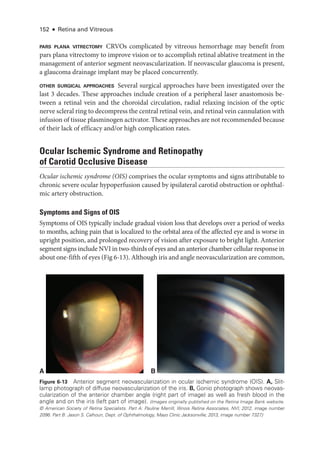
and the micronutrient zinc (80 mg zinc oxide and 2 mg cupric oxide to prevent zinc-­
induced anemia) had a 25% reduced risk of progression to more-­advanced stages of AMD
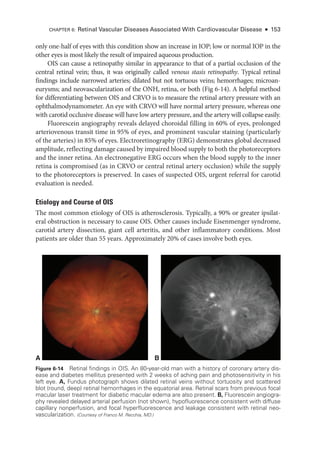
and a 19% reduced risk of moderate vision loss (≤3 lines of VA) at 5 years. The study de-
fined intermediate (category 3) AMD as the presence of at least 1 large druse (≤125 μm),
extensive intermediate drusen (dia­
meter of 63–124 μm), or nonsubfoveal GA. Advanced
(category 4) AMD was defined as vision loss due to neovascular AMD or subfoveal GA in
only 1 eye. At 10 years, 44% of placebo recipients had advanced AMD compared with 34%
of supplement recipients (a 23% risk reduction). In addition, mortality did not increase
among patients taking the AREDS-­
recommended formula. However, among participants
with no AMD or with only early-­
stage AMD (ie, a few small drusen), supplementation
provided no mea­
sur­
able benefit.
AREDS investigators developed a simplified 5-­
step severity scale for classifying the
severity of AMD and predicting the disease course based on the following findings:
• presence of 1 or more large (≤125-­
μm dia­
meter) drusen (1 point)
• presence of any pigment abnormalities (1 point)
• for patients with no large drusen, presence of bilateral intermediate (63-­to 124-­μm)
drusen (1 point)
• presence of neovascular AMD (2 points)
In the study, risk ­
factors ­
were totaled across both eyes to reach a number between 0 and
4, which was used to estimate patients’ 5-­and 10-­
year risk of advanced AMD developing
in 1 eye (­Table 4-1).
AREDS2, a large, prospective, follow-up study, tested ­
whether replacing beta carotene
with xanthophylls (lutein and zeaxanthin) and adding omega-3 long-­
chain polyunsaturated
fatty acids (LCPUFAs; docosahexaenoic acid and eicosapentaenoic acid) would further re-
duce AMD progression. The response of the 4000 participants confirmed the overall risk
reduction found in the original AREDS study, leading the authors to conclude that lutein
­Table 4-1 ​Five-­ and 10-­Year Risksa
of Advanced AMD in 1 Eye
Number of Risk ­
Factor Points 5-­
Year Risk, % 10-­
Year Risk, %
0 0.5 1
1 3 7
2 12 22
3 25 50
4 50 67
AMD = age-­related macular degeneration.
a
Risks are based on the number of Age-­
Related Eye Disease Study (AREDS) risk ­
factors (see chapter text).
76 ● Retina and Vitreous
and zeaxanthin had effects similar to ­
those of beta carotene but without the increased risk of
lung cancer reported in other studies in current and former smokers. It also confirmed that
an 80-mg dose of zinc is appropriate for AMD prophylaxis. The addition of LCPUFAs at the
dose studied did not decrease the rate of progression to advanced AMD.
The study’s final recommendation was to modify the original AREDS supplement,
replacing beta carotene with lutein and zeaxanthin (­Table 4-2). Currently, patients with
category 3 or 4 AMD are advised to take the AREDS2 supplement.
Age-­
Related Eye Disease Study 2 Research Group. Lutein + zeaxanthin and omega-3
fatty acids for age-­
related macular degeneration: the Age-­
Related Eye Disease Study 2
(AREDS2) randomized clinical trial. JAMA. 2013;309(19):2005–2015.
Ferris FL, Davis MD, Clemons TE, et al; Age-­
Related Eye Disease Study (AREDS) Research
Group. A simplified severity scale for age-­
related macular degeneration: AREDS report
no. 18. Arch Ophthalmol. 2005;123(11):1570–1574.
Lifestyle changes ​Smoking cessation, obesity reduction, and blood pressure control may re-
duce the development and progression of AMD. Evidence linking cataract surgery to AMD
progression is inconsistent, and evidence linking ultraviolet (UVA or UVB) light exposure
to disease progression is weak. In addition, no evidence has linked blue light emitted from
electronic devices to increased risk of AMD.
Amsler grid testing ​
Patients may use the Amsler grid at home to monitor for visual distor-
tion due to AMD-­
related ret­
i­
nal architectural distortion, including the development of exu-
dative AMD. The Amsler test card, which contains grid lines and a central dot for fixation, is
commonly used to test the central 10° of vision. Each eye is tested individually with reading
glasses and at reading distance to check for new or progressive metamorphopsia, scotoma,
or other changes in central vision. Any changes noted by the patient should be evaluated
promptly. Online and smartphone app versions of the Amsler grid may be more con­
ve­
nient
than the test card.
Hyperacuity testing ​
Vernier acuity mea­
sures a patient’s ability to detect deviations in the
alignment of visual objects, for example, 2 line segments. Hyperacuity, which helps the
viewer discern deviations as small as a single point on a line, is extremely sensitive to any
geometric shift in the outer ret­
i­
nal morphology, producing a perception of distortion. In
­Table 4-2 ​
AREDS2 Recommendations for Nutritional Supplementationa
Nutrient Daily Dose
Vitamin C 500 mg
Vitamin E 400 IU
Lutein 10 mg
Zeaxanthin 2 mg
Zinc 80 mg
Copperb
2 mg
AREDS2 = Age-­
Related Eye Disease Study 2.
a
Recommendations for nutritional supplementation are based on the AREDS2 study (see text).
b
 As cupric oxide; added to avoid zinc-­
related copper deficiency.
Chapter 4: Age-­
Related Macular Degeneration ● 77
patients with intermediate AMD, preferential hyperacuity perimetry (PHP), which has
been studied extensively, can detect recent-­
onset MNV with high sensitivity (82%) and
high specificity (88%). The HOME study, a phase 3 randomized clinical trial with 1520
participants, demonstrated the efficacy and potential benefit of PHP in early detection
of MNV.
Shape-­
discrimination hyperacuity uses a princi­
ple similar to that of PHP but instead
tests for discrimination of shapes, such as the ability to discern a perfect circle from a
distorted contour.
Chew EY, Clemons TE, Harrington M, et al; AREDS2-­
HOME Study Research Group.
Effectiveness of dif­
fer­
ent monitoring modalities in the detection of neovascular age-­
related
macular degeneration: the Home Study, report number 3. Ret­i­na. 2016;36(8):1542–1547.
Neovascular AMD
The presence of MNV is the defining characteristic of neovascular AMD. Degenerative
changes in Bruch membrane (eg, the accumulation of drusen and progressive thickening
of the membrane that characterize nonneovascular AMD) and possibly the choriocapil-
laris may lead to a proangiogenic environment, with pathologic neovascularization devel-
oping from the choriocapillaris or from the neurosensory ret­
ina itself. ­
These new vessels,
which may be accompanied by fibroblasts, may leak and bleed, disrupting the normal ret­
i­
nal architecture with a degenerate fibrovascular complex; when untreated, this complex
ultimately produces a hypertrophic, fibrotic, disciform scar.
Signs and symptoms of neovascular AMD
Patients with neovascular AMD may describe a sudden decrease in vision, metamorphop-
sia, and/or paracentral scotomata. Amsler grid self-­testing by patients is highly effective in
detecting early exudative AMD. Clinical signs of MNV may include subret­i­nal or intraret­
i­
nal fluid (eg, cystoid macular edema [CME]), exudate and/or blood, a pigment ring or
gray-­
green membrane, irregular elevation of the RPE or a PED, an RPE tear, and/or a sea
fan pattern of subret­
i­
nal vessels.
Anatomical classification of MNV
The 3 main subtypes of MNV are based on level of origin:
• In type 1 MNV, also called occult CNV, new vessels originating from the choriocap-
illaris grow through Bruch membrane into the sub-­
RPE space (Fig 4-7). Fluid leak-
age and bleeding may produce a vascularized serous or fibrovascular PED. ­
These
fibrovascular PEDs typically have an irregular surface contour.
• In type 2 MNV, also called classic CNV, new vessels extend into the space between
the RPE and the neurosensory ret­
ina. On examination, this may appear as a lacy
or gray-­
green lesion. Neovascularization that exists beneath both the neurosensory
ret­
ina and the RPE is designated as mixed type 1 and type 2 MNV, also termed
minimally classic CNV.
• In type 3 MNV, the pathologic vessels develop from the deep capillary plexus of the
ret­
ina and grow downward ­
toward the RPE. ­
Because of their intraret­
i­
nal origin,
78 ● Retina and Vitreous
­
these lesions ­
were originally called ret­i­nal angiomatous proliferations; intraret­i­nal
pigment migration may occur before the development and maturation of this sub-
type of MNV. On examination, type 3 MNV often appears as a small area of red
discoloration associated with ret­
i­
nal exudate or a bleb of subret­
i­
nal fluid.
Nonexudative neovascular AMD
Type 1 MNV may manifest without the clinical signs of exudation; that is, MNV may be ob-
served between Bruch membrane and the RPE without associated intraret­
i­
nal fluid, subret­
i­
nal fluid, or hemorrhage. This clinical scenario is called nonexudative neovascular AMD.
­
These lesions, which have been reported in up to 14% of eyes with intermediate AMD or
GA, can be identified with OCT angiography (OCTA) and/or indocyanine green angiogra-
phy (ICGA). A less reliable finding—­
a double-­
layer sign on structural SD-­
OCT (ie, a low-­
lying, irregular PED)—­
may be misdiagnosed as an area of confluent drusen or a drusenoid
PED. Clinical recognition of ­
these lesions is relevant ­
because they have been associated with
a substantially increased risk of progression to exudative AMD (21%) at 1-­
year follow-up
compared with eyes without ­
these lesions (4%). ­
There may also be a relationship between
the presence of nonexudative neovascular AMD and GA progression; type 1 MNV has been
hypothesized to be potentially protective against local GA development.
de Oliveira Dias JR, Zhang Q, Garcia JMB, et al. Natu­
ral history of subclinical neovascularization
in nonexudative age-­
related macular degeneration using swept-­
source OCT angiography.
Ophthalmology. 2018;125(2):255–266.
Imaging of MNV ​
Several imaging techniques play an impor­
tant role in describing, diag-
nosing, and/or classifying MNV.
Sensory retina
Macular neovascularization
Figure 4-7 Schematic illustration of type 1 macular neovascularization (MNV) originating from
the choriocapillaris, breaking through Bruch membrane (indicated by gray horizontal line bi-
sected by MNV extending up from the choriocapillaris), and proliferating in the subret­
i­
nal pig-
ment epithelial space. (Modified with permission from Bressler NM, Bressler SB, Fine SL. Age-­
related macular
degeneration. Surv Ophthalmol.1988;32(6):375–413.)
Chapter 4: Age-­
Related Macular Degeneration ● 79
fluorescein angiography of mnv Before multimodal imaging‒based classification with
SD-­
OCT and OCTA, FA was instrumental in describing types of neovascularization, in-
cluding classic, occult, and minimally classic patterns. As mentioned previously, classic
MNV refers to a bright, lacy, and well-­
defined hyperfluorescent lesion that appears in the
early phase of FA and progressively leaks by the late phases. Occult MNV refers to more
diffuse hyperfluorescence that takes 1 of 2 forms: (1) PED, ­
either fibrovascular PED or
vascularized serous PED; or (2) late leakage from an undetermined source. Minimally
classic MNV refers to a pattern of early hyperfluorescence with late leakage and surround-
ing stippled hyperfluorescence that also shows late leakage (Fig 4-8).
A fibrovascular PED is an irregular elevation of the RPE with progressive, stippled
leakage on FA. Alternatively, the PED may pool dye rapidly in a homogeneous ground-­
glass pattern that is consistent with a serous PED but has a notch, or hot spot, due to a
vascular component, hence the term vascularized serous PED (Fig 4-9).
Late leakage from an undetermined source describes fluorescence at the level of the RPE
that is poorly defined in the early phases of FA, but better appreciated in the late phases.
The angiographic appearance of occult MNV is consistent with that of type 1 neovas-
cularization, whereas the appearance of classic MNV is more often related to that of type 2
neovascularization; however, this is not a hard-­
and-­
fast rule. Type 3 neovascularization, or
ret­
i­
nal angiomatous proliferations, may appear as a spot of ret­
i­
nal hemorrhage in the macula.
It produces a focal hot spot on FA and ICGA with late CME or pooling into a PED.
A
D
B C
200 μm 200 μm
Subretinal fluid
Sub-RPE fluid
Subretinal
hyperreflective
material
Intraretinal fluid
Figure 4-8 Treatment-­
naive neovascular AMD. Color fundus photo­
graph (A) with early (B) and
late (C) frames of fluorescein angiogram of a minimally classic, fovea-­
involving, choroidal neo-
vascular membrane. D, Near-­
infrared reflectance image (left) with green arrow marking the
location seen in the SD-­
OCT image (right) showing intraret­
i­
nal, subret­
i­
nal, and sub-­
RPE fluid with
subret­i­nal hyperreflective material. (Courtesy of Charles C. Wykoff, MD, PhD.)
80 ● Retina and Vitreous
A B
E, G
F, H
G H
E F
C D
Figure 4-9 Vascularized serous pigment epithelial detachment (PED). A, Color fundus photo­
graph
of a vascularized serous PED with a notch (arrow) that corresponds to a hot spot on fluorescein
angiography (black arrow in B). Red letters and arrows in B indicate the SD-­
OCT scan locations for
parts E through H. Early (C) and late (D) indocyanine green (ICG) angiography images show pool-
ing of the serous PED and hyperfluorescence of the hot spot (arrow in D). E, F, SD-­
OCT images
of the large serous PED. Note the irregular portion of the PED (arrow in E), which corresponds to
the hot spot and harbors the type 1 neovascular membrane. G, H, SD-­
OCT images show that the
PED has resolved ­
after therapy with anti–­
vascular endothelial growth ­
factor. (Modified with permission
from Mrejen S, Sarraf D, Mukkamala SK, Freund KB. Multimodal imaging of pigment epithelial detachment: a guide to evalu-
ation. Ret­i­na. 2013;33(9):1735–1762.)
Chapter 4: Age-­
Related Macular Degeneration ● 81
During angiography, thick blood, pigment, scar tissue, or a PED may block fluores-
cence and obscure an under­
lying MNV. ICGA, with its longer wavelength fluorescence
in the infrared spectrum, may penetrate deeper through heme or pigment to reveal a hot
spot that identifies MNV. ­
Because it has 90% protein binding, ICGA may also be able to
differentiate between scar tissue and serous RPE fluid to reveal an active vascular lesion.
sd-­
oct of mnv ​SD-­OCT is noninvasive and is the most practical visualization technique
for diagnosing and classifying MNV as well as monitoring response to treatment. For
example, SD-­
OCT reveals the elevation of the RPE and PEDs produced by type 1 MNV.
Serous PEDs appear as sharply elevated, dome-­
shaped lesions with hollow internal re-
flectivity and typically no associated subret­i­nal or intraret­i­nal fluid. Fibrovascular PEDs
may or may not be sharply elevated and typically demonstrate lacy or polyplike hyper-
reflective lesions on the undersurface of the RPE, with or without signs of contraction
(Fig 4-10; Activity 4-1). Chronic fibrovascular PEDs often have a multilayered appear-
ance ­
because of sub-­
RPE cholesterol crystal precipitation in an aqueous environment;
this appearance has been called the onion sign. The fibrotic “bridge arch–­
shaped” se-
rous PED may develop ­
after anti-­
VEGF treatment and is associated with a poor visual
outcome.
ACTIVITY 4-1 OCT Activity: OCT of subfoveal pigment
epithelial detachment.
Courtesy of Colin A. McCannel, MD.
In eyes with MNV, subret­
i­
nal hyperreflective material (SHRM) may be hyperreflective
on SD-­OCT. This morphological feature found between the ret­ina and RPE is thought to be
a heterogeneous mixture of fluid, fibrin, blood, MNV, and other material. SHRM may have
an adverse effect on VA and may cause scarring when it persists. Complex fibrovascular
Figure 4-10 OCT image from a 61-­
year-­
old ­
woman who reported progressively decreased vi-
sion and onset of waviness of straight lines in the right eye. OCT shows a subfoveal PED with
associated subret­
i­
nal fluid, intraret­
i­
nal fluid, and intraret­
i­
nal hyperreflective material.­
There is also
an area of hyperreflective material on the underside of the RPE, likely representing a neovascular
complex (see slices 13 and 14 in Activity 4-1). Scrolling through the macula in Activity 4-1 reveals
the extent of the lesion, as well as RPE irregularities that resemble small PEDs (drusen). (Courtesy
of Colin A. McCannel, MD.)
82 ● Retina and Vitreous
scarring may also be visualized in the sub-­
PED compartment, with or without associated
subret­i­nal and/or intraret­i­nal fluid.
Recognition of MNV patterns on SD-­
OCT may be helpful for differential diagnosis
and for predicting treatment outcomes. Type 1 MNV complexes start from the choroid
and are ­
limited to the sub-­
RPE space, vis­
i­
ble as heterogeneous hyperreflective RPE eleva-
tions. Type 2 MNV appears as a hyperreflective band or plaque in the subneurosensory
space, with associated subret­
i­
nal and/or intraret­
i­
nal fluid. Type 3 MNV pre­
sents on SD-­
OCT
as hyperreflective foci emanating from the deep capillary plexus of the ret­
ina, with or with-
out associated CME and PED.
Mrejen S, Sarraf D, Mukkamala SK, Freund KB. Multimodal imaging of pigment epithelial
detachment: a guide to evaluation. Ret­i­na. 2013;33(9):1735–1762.
octa of mnv ​
The structural details of MNV can be revealed by OCTA. The fine details of the
vascular architecture of each MNV type may be easily visualized, ­
free of the blur caused by
fluorescein leakage in FA (Figs 4-11, 4-12, 4-13). In type 1 MNV, OCTA shows abnormal ves-
sels below the RPE. In type 2 MNV, the angiogenic complexes are seen above the RPE. Com-
parably, downgrowth of new vessels ­
toward the RPE may be seen in type 3 MNV.
C
A B
Figure 4-11 Type 1 MNV. A, OCT angiogram (OCTA) of type 1 MNV located beneath the RPE.
The lesion has a “sea fan” configuration, with large feeder vessels and large caliper vessels. B,
En face OCT structural image highlights the hyperreflective dome over the vessels. C, Cross-­
sectional B-­
scan OCT shows the distortion of the ret­
i­
nal profile caused by the MNV. (Courtesy
of Richard B. Rosen, MD.)
Chapter 4: Age-­
Related Macular Degeneration ● 83
E
A B
C D
Figure 4-12 OCTA series of progressively deeper en face slices (A–­D) of a type 2 MNV lo-
cated above the RPE in the avascular zone of the ret­
ina. A, Superficial slab shows the superficial
capillary plexus level and large ret­
i­
nal vessels. B, Deep capillary plexus level with an expanded
foveal avascular zone caused by elevation of the under­
lying MNV. C, Avascular zone of the
ret­
ina with MNV. D, Choriocapillaris level with MNV extending upward in the ret­
ina. E, Cross-­
sectional B-­
scan OCT shows disturbance in the RPE subret­
i­
nal fluid and fibrosis. (Courtesy of Bruno
Lumbroso.)
84 ● Retina and Vitreous
Choroid capillary
A B
C D
E F
Deep Outer retina
Figure 4-13 OCTA of type 3 MNV (ret­
i­
nal angiomatous proliferation lesion). A, Deep capillary
plexus level reveals dilated blood vessels (arrow) wider than surrounding capillaries near the edge
of the foveal avascular zone. B, Avascular zone level shows isolated MNV (arrow). C, Choriocapil-
laris level demonstrates interconnection of dilated deep capillary plexus vessels and choroidal
vessels (arrow). D, Cross-­
sectional B-­
scan OCT shows segmentation of A. E, Cross-­sectional
B-­
scan OCT shows segmentation of B. F, Cross-­
sectional B-­
scan OCT shows segmentation of
C. (Courtesy of Richard B. Rosen, MD.)
Chapter 4: Age-­
Related Macular Degeneration ● 85
Spaide RF, Jaffe GJ, Sarraf D, et al. Consensus nomenclature for reporting neovascular
age-­
related macular degeneration data: Consensus on Neovascular Age-­
Related Macular
Degeneration Nomenclature Study Group. Ophthalmology. 2020;127(5):616–636.
Published correction appears in Ophthalmology. 2020;127(10):1434–1435.
Polypoidal choroidal vasculopathy ​
Polypoidal choroidal vasculopathy (PCV), initially
called posterior uveal bleeding syndrome, is a variant of MNV (type 1) and pre­
sents with
multiple, recurrent serosanguineous RPE detachments. A network of polyps is associ-
ated with feeder vessels that adhere to the RPE monolayer of the fibrovascular PED in a
“string-­
of-­
pearls” configuration. Although PCV was first discovered in middle-­
aged Af-
rican American or Asian American ­
women with hypertension, it has since been identi-
fied in ­
women and men of all races. In Asian individuals, however, 20%–50% of cases of
neovascular AMD are PCV type, whereas in White ­
people, less than 5% of cases of MNV
are PCV type.
In PCV, associated serosanguineous detachments are often peripapillary and multi­
focal but may be peripheral, and ­
there may be associated nodular, orange, subret­
i­
nal lesions.
Vitreous hemorrhage occurs more frequently in PCV AMD than in the non-­
PCV form.
Soft drusen, typical in AMD, may or may not be pre­
sent, whereas a thickened or so-­
called
pachychoroid is often observed on EDI-­
OCT. ICGA, SD-­
OCT, and OCTA are all useful for
identifying polyps.
Natu­
ral history and VA outcomes of PCV may be better than ­
those of MNV associ-
ated with AMD, except in cases with severe subret­
i­
nal hemorrhage (Figs 4-14, 4-15; see
also Chapter 2, Fig 2-13). PCV is less responsive to anti-­
VEGF therapy than other types
of MNV. Although the EVEREST studies demonstrated that photodynamic therapy with
verteporfin with or without ranibizumab provided better response than ranibizumab
alone for PCV, the PLANET study found that aflibercept monotherapy was noninferior
to aflibercept plus photodynamic therapy with verteporfin for treatment of the disorder.
Koh A, Lai TYY, Takahashi K, et al; EVEREST II study group. Efficacy and safety of ranibizumab
with or without verteporfin photodynamic therapy for polypoidal choroidal vasculopathy:
a randomized clinical trial. JAMA Ophthalmol. 2017;135(11):1206–1213.
A B
Figure 4-14 Polypoidal choroidal vasculopathy. A, Fundus photo­
graph shows a large RPE de-
tachment with multiple yellow-­
orange nodular lesions temporally. B, ICG angiogram demon-
strates the characteristic polypoidal lesions temporally. (Courtesy of Lawrence A. Yannuzzi, MD.)
86 ● Retina and Vitreous
Lee WK, Iida T, Ogura Y, et al; PLANET Investigators. Efficacy and safety of intravitreal
aflibercept for polypoidal choroidal vasculopathy in the PLANET study: a randomized
clinical trial. JAMA Ophthalmol. 2018;136(7):786–793. Published correction appears in
JAMA Ophthalmol. 2018;136(7):840.
Differential diagnosis of neovascular AMD
Many conditions associated with disruption of Bruch membrane complex and secondary
CNV can mimic the MNV of AMD (see the section Other ­
Causes of Choroidal Neovascu-
larization ­later in this chapter). For example, central serous chorioretinopathy (CSC) may be
confused with AMD, as subret­
i­
nal fluid may be seen in both conditions; however, eyes with
CSC typically do not have associated subret­
i­
nal hemorrhage ­
unless secondary CNV has
developed. In addition, the choroidal layer, readily visualized using EDI-­
OCT, is frequently
thick in eyes with CSC compared with the typical thin choroidal layer in eyes with AMD.
Macular telangiectasia, especially the most common variant type 2, may also be mis-
diagnosed as neovascular AMD (see Chapter 7).
Management of neovascular AMD
When neovascular AMD is suspected clinically, OCT can help establish the diagnosis and
monitor response to therapy.
B C
A 200 μm
200 μm
53 / 97
Figure 4-15 Polypoidal choroidal vasculopathy (PCV). A, Near-­
infrared reflectance image (left)
showing ring-­
shaped PCV lesion within a ret­
i­
nal PED. Green arrow marks the location of the
­SD-­OCT image (right) showing PED and subret­
i­
nal fluid with PCV polyp vis­
i­
ble just ­
under the RPE
monolayer. B, Corresponding wide-­
field ICG angiography. PCV complex is vis­
i­
ble in the central
macula with diffuse hyperpermeability in the macula and peripapillary regions. C, Corresponding
OCTA. Red-­
highlighted area within the PED illustrates the polypoidal lesion with high vascular
flow. (Courtesy of Gregg T. Kokame, MD.)
Chapter 4: Age-­
Related Macular Degeneration ● 87
­Laser photocoagulation ​(“thermal ­laser”) Thermal ­
laser treatment is now used only in ex-
ceptionally rare instances of neovascular AMD ­
because of poor outcomes from high re-
currence rates, as revealed in the Macular Photocoagulation Study ­
trials.
Photodynamic therapy ​
(“cold ­
laser”) Photodynamic therapy (PDT) was introduced in 2000
as a less-­
destructive phototherapy for treating MNV. Treatment involves intravenous ad-
ministration of the photosensitizing drug verteporfin followed by the application of light of
a specific wavelength. The light incites a localized photochemical reaction in the targeted
area, resulting in MNV thrombosis. Although PDT slows progression, it does not prevent
major vision loss in most eyes with MNV and has been shown to upregulate VEGF in the
treatment area. Use of PDT to manage exudative AMD is now rare, except in eyes with PCV.
Antiangiogenic therapies ​
Angiogenesis is the sprouting of new blood vessels from exist-
ing vessels. The first events in this complex cascade are vasodilation of existing vessels
and increased vascular permeability. Next, degradation of the surrounding extracellular
matrix occurs, facilitating migration and proliferation of endothelial cells. As endothelial
cells join to create lumen, new capillaries develop and then mature, remodeling into stable
vascular networks. To date, the most impor­
tant activator of angiogenesis in ret­
i­
nal dis-
eases is VEGF, originally known as vascular permeability ­
factor.
VEGF is a homodimeric glycoprotein with a heparin-­
binding domain with specific-
ity for vascular endothelial cells. In addition to angiogenesis and vascular permeability,
it induces lymphangiogenesis, and it acts as a survival ­
factor for endothelial cells by pre-
venting apoptosis. VEGF is actually a ­
family of 5 distinct cytokines: VEGF-­
A, VEGF-­
B,
VEGF-­
C, VEGF-­
D, and placental growth ­
factor. ­
Because the latter 4 ­
were discovered ­
after
VEGF-­
A, VEGF-­
A is often referred to simply as VEGF.
Most anti-­
angiogenesis research has focused on the inhibition of VEGF-­
A (hereafter
called VEGF ­
unless specification is warranted), which has multiple isoforms. Elevated con-
centrations of VEGF in excised MNV and vitreous samples from patients with AMD have
suggested a causal role for the glycoprotein in the pathologic neovascularization of AMD.
To date, 4 anti-­
VEGF phar­
ma­
ceu­
ti­
cals given by intravitreal injection have been ap-
proved by the US Food and Drug Administration (FDA) for the treatment of exudative
AMD; an additional drug is widely used but is not FDA approved for ophthalmic use.
Overall, this class of therapeutics has been incredibly valuable, changing the epidemiology
of blindness in some countries ­
after its clinical introduction. In general, the ­
earlier that
conversion to exudative AMD is diagnosed and anti-­
VEGF therapy is initiated, the better
the long-­
term outcomes.
Although antiangiogenic therapies are effective in AMD, the biggest challenge with their
clinical application is the need for repeated doses to achieve optimal long-­
term outcomes.
When exudative AMD is treated with anti-­
VEGF pharmacotherapy, a variety of clinical ap-
proaches may be used. Broadly, ­
these include 1 of 3 strategies or a hybrid of them: (1) fixed
dosing; (2) as-­needed dosing, also referred to as pro re nata (PRN) dosing; and (3) treat-­and-­
extend dosing, also referred to as TAE, T&E, or TREX. In the following subsections, ­
these
management approaches are discussed in the context of the phar­
ma­
ceu­
ti­
cal agent(s) used
in key studies.
88 ● Retina and Vitreous
Pegaptanib ​
In 2004, the FDA approved pegaptanib as the first intravitreal anti-­
VEGF ther-
apy. Studies showed that pegaptanib, an RNA oligonucleotide ligand (or aptamer) that in-
hibits the ­
human VEGF165 isoform without inhibiting all VEGF isoforms, slowed vision loss;
however, it has since been supplanted by more effective agents that inhibit all VEGF isoforms.
Ranibizumab ​
Ranibizumab is a recombinant humanized antibody fragment that binds
VEGF. Monthly ranibizumab dosing was assessed in 2 studies, MARINA and ANCHOR.
At 12 months, a loss of fewer than 15 ETDRS (Early Treatment Diabetic Retinopathy
Study) letters was reported in 95% of ranibizumab-­
treated patients compared with 62% of
sham-­
treated patients and 64% of PDT-­
treated patients. In addition, VA improvement of
15 letters or more was reported in 30%–40% of ranibizumab-­
treated patients compared
with 5% or less of control participants (Fig 4-16, ­Table 4-3). At 24 months, approximately
90% of ranibizumab-­
treated eyes had lost fewer than 15 ETDRS letters, and the VA gains
achieved in the first year ­
were maintained.
Multiple studies have analyzed less-­
frequent dosing of ranibizumab. VA improve-
ments similar to ­those seen in the MARINA and ANCHOR studies over the first 3 months
­
were also reported in the PIER and EXCITE studies. However, treatment effects declined
in participants undergoing quarterly (ie, ­
every 3 months) ranibizumab dosing as opposed
to monthly dosing.
With PRN dosing, ranibizumab is administered ­
until signs of exudation are resolved on
OCT and clinical examination; ­
after that, patients are followed up monthly, and treatment
15
+11.3
+7.2
–0.2
–7.3
–11.2
–17.4
10
–5
–10
–15
–20
MARINA
PIER
ANCHOR
VISION
TAP (PC)
TAP
placebo
Months
Letters
read
3 6 9 12
5
0
Figure 4-16 Graph illustrates the mean change in visual acuity (number of letters read) from sev-
eral phase 3 clinical ­
trials. Comparison of data between dif­
fer­
ent ­
trials should be interpreted with
caution; the potentially dif­
fer­
ent study inclusion criteria and baseline characteristics of eyes for
dif­
fer­
ent studies may affect the stated visual acuity gains. ANCHOR = Anti-­
VEGF Antibody for the
Treatment of Predominantly Classic Choroidal Neovascularization in AMD; MARINA = Minimally
Classic/OccultTrial of the Anti-­
VEGF Antibody Ranibizumab in theTreatment of Neovascular AMD;
PC = predominantly classic; PIER = Phase 3b, Multicenter, Randomized, Double-­
Masked, Sham
Injection-Controlled Study of the Efficacy and Safety of Ranibizumab in Subjects With Subfoveal
Choroidal Neovascularization With or Without Classic Choroidal Neovascularization Secondary to
AMD; TAP = Treatment of AMD with Photodynamic Therapy; VISION = VEGF Inhibition Study in
Ocular Neovascularization. (Courtesy of Peter K. Kaiser, MD.)
Chapter 4: Age-­
Related Macular Degeneration ● 89
is resumed only when ­
there are signs of recurrent exudation. Several clinical ­
trials have
evaluated PRN approaches to anti-­VEGF therapy: SUSTAIN, HORIZON, and HARBOR. In
each of ­
these studies, participants ­
were administered 3 monthly injections of ranibizumab,
followed by vari­
ous as-­
needed treatment regimens according to clinical and OCT-­
guided
criteria. In ­
these studies, visual acuity improvements ­
were comparable to or less favorable
than ­
those reported in MARINA and ANCHOR. In the HORIZON study, which involved
patients enrolled in prior ranibizumab AMD ­trials, eyes that had gained 10.2 letters on the
ETDRS eye chart ­
after 2 years of monthly injections during ANCHOR or MARINA lost
VA, ending with a mean letter gain of only 2.0 compared with baseline (ie, they lost nearly
8 letters once the regimen was switched from monthly injections to an as-­
needed proto-
col). HORIZON did not offer any re-­
treatment guidelines for investigators, resulting in a
mean of only 3.6 ranibizumab injections in the 12 months of the extension trial. The phase 3
HARBOR study compared higher-­
dose (2.0 mg) with standard-­
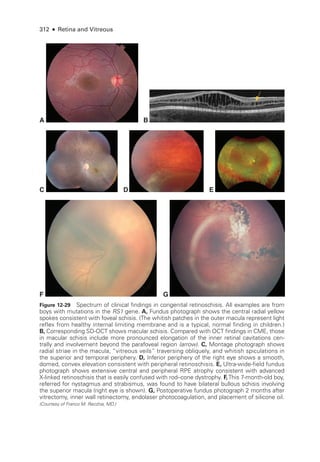
dose (0.5 mg) ranibizumab

using both monthly and PRN dosing with specific predefined re-­
treatment criteria. Subjects
randomly assigned to PRN dosing ­
were evaluated monthly to determine their need for re-­
treatment. Study authors reported no differences in VA or anatomical outcomes between
the fixed monthly and PRN dosing and noted a very wide range of dosing needs among
individual patients.
In patients with MNV, the goal of TAE management is to suppress exudative activity
using as few re-­
treatments as pos­
si­
ble. This typically involves 3 phases. First, monthly anti-­
VEGF therapy is administered ­
until exudation is resolved. Second, treatment continues at
­Table 4-3 ​
Selected Clinical­
Trials,Treatments, and Outcomes
Clinical Trial Treatment Outcome
ANCHOR Ranibizumab monthly vs
photodynamic therapy as
needed quarterly
Increase of 11.3 letters in ranibizumab monthly
group vs decrease of 9.5 letters in verteporfin
group (P < 0.001 at 2 years)
MARINA Ranibizumab monthly vs
sham treatment
Increase of 7.2 letters in ranibizumab monthly
group vs loss of 10.4 letters in sham group
(P < 0.001 at 2 years)
VIEW 1 Ranibizumab monthly vs
aflibercept monthly and
bimonthly
Increase of 8.1 letters in ranibizumab monthly
group (94.4% lost <15 letters)
Increase of 10.9 letters in aflibercept monthly
group (95.1% lost <15 letters)
Increase of 7.9 letters in aflibercept bimonthly
group (95.1% lost <15 letters)
Aflibercept deemed noninferior to ranibizumab
VIEW 2 Ranibizumab monthly vs
aflibercept monthly and
bimonthly
Increase of 9.4 letters in ranibizumab monthly
group (94.4% lost <15 letters)
Increase of 7.6 letters in aflibercept monthly group
(95.6% lost <15 letters)
Increase of 8.9 letters in aflibercept bimonthly
group (95.6% lost <15 letters)
Aflibercept deemed noninferior to ranibizumab
Data from Rofagha S, Bhisitkul RB, Boyer DS, Sadda SR, Zhang K; SEVEN-­
UP Study Group. Seven-­
year
outcomes in ranibizumab-­
treated patients in ANCHOR, MARINA, and HORIZON: a multicenter cohort
study (SEVEN-­UP). Ophthalmology. 2013;120(11):2292–2299.
90 ● Retina and Vitreous
progressively increasing intervals, with intervals between doses often lengthened by 2-­
week
increments, ­
until recurrent exudation is identified. Third, a fixed-­
interval dosing strategy is
initiated using an interval just less than the interval at which signs of exudation recurred.
In the TREND study, 650 patients with exudative AMD ­
were randomly assigned to ­
either
monthly or TAE management with ranibizumab. At 1 year, TAE management was associ-
ated with a mean of 8.7 injections and was found to be noninferior to monthly management,
which was associated with a mean of 11.1 injections. In addition, TAE and monthly regi-
mens ­were associated with mean gains of 6.6 and 7.9 ETDRS letters, respectively, and 62% of
eyes managed with TAE ­
were receiving injections at intervals of 8 weeks or longer.
Silva R, Berta A, Larsen M, Macfadden W, Feller C, Monés J; TREND Study Group. Treat-­
and-­
extend versus monthly regimen in neovascular age-­
related macular degeneration:
results with ranibizumab from the TREND study. Ophthalmology. 2018;125(1):57–65.
Aflibercept ​
Aflibercept is a soluble VEGF receptor decoy; it combines the ligand-­
binding
ele­
ments of the extracellular domains of VEGFR1 and VEGFR2 and the constant region
(Fc) of immunoglobulin G and binds VEGF-­
A, VEGF-­
B, and placental growth ­
factor. In
the paired VIEW 1 and VIEW 2 studies, patients received aflibercept monthly or ­
every
second month ­after 3 monthly loading doses, while a comparison group received monthly
ranibizumab. Both aflibercept regimens demonstrated noninferiority to monthly ranibi-
zumab, with each of the 6 arms gaining between 7.6 and 10.9 letters at 1 year (ie, primary
endpoint; see ­
Table 4-3). At 96 weeks, VA gains ­
were maintained with both aflibercept
dosing regimens; in addition, 3-­
line VA increases ­
were seen in 30%–33% of patients in
each arm, comparable to results with monthly ranibizumab. In addition, OCT-­
measured
anatomical response was similar among the 3 randomized arms through 2 years, as ­
were
safety profiles for both aflibercept and ranibizumab. Among patients with per­
sis­
tent exu-
dative disease activity through the first 3 monthly doses, transition to every-­second-­month
dosing was associated with maintenance of the VA gains achieved during the 3 monthly
doses; however, among ­these incomplete responders, continued monthly dosing appeared
to achieve better visual and anatomical outcomes than every-­
second-­
month dosing.
Heier JS, Brown DM, Chong V, et al; VIEW 1 and VIEW 2 Study Groups. Intravitreal
aflibercept (VEGF trap-­
eye) in wet age-­
related macular degeneration. Ophthalmology.
2012;119(12):2537–2548.
Jaffe GJ, Kaiser PK, Thompson D, et al. Differential response to anti-­
VEGF regimens in age-­
related macular degeneration patients with early per­
sis­
tent ret­
i­
nal fluid. Ophthalmology.
2016;123(9):1856–1864.
Bevacizumab ​
Bevacizumab is a full-­
length monoclonal antibody against VEGF that is
FDA approved for the intravenous treatment of multiple types of systemic cancer. It is also
widely used “off-­
label” for the intravitreal treatment of exudative AMD. Ranibizumab is de-
rived from bevacizumab, although ­
there are key differences between the drugs. First, with
2 antigen-­
binding domains, bevacizumab is larger than ranibizumab, which has a single
domain. ­
Because full-­
length antibodies are not cleared as rapidly as antibody fragments,
intravitreal injections of bevacizumab have a longer systemic half-­
life (as well as longer in-
travitreal half-­life) than intravitreal injections of ranibizumab. Second, the repackaged beva-
cizumab used to treat exudative ret­
i­
nal diseases costs substantially less than ranibizumab.
Chapter 4: Age-­
Related Macular Degeneration ● 91
Several large, prospective, randomized studies on neovascular AMD have demon-
strated comparable efficacy between bevacizumab and ranibizumab (­Table 4-4). CATT,
a multicenter trial funded by the US National Eye Institute, studied 1208 patients and
found that bevacizumab and ranibizumab had similar effects on VA over a 2-­
year pe-
riod and that PRN treatment provided lower VA gains than fixed monthly dosing. Mean
gains from baseline ­
were 8.8 letters in the ranibizumab-­
monthly group, 7.8 letters in the
bevacizumab-­
monthly group, 6.7 letters in the ranibizumab PRN group, and 5.0 letters
in the bevacizumab PRN group. Although the proportion of patients with 1 or more sys-
temic adverse events was significantly greater in the bevacizumab group (39.9%) than in
the ranibizumab group (31.7%), death and arteriothrombotic events ­
were not statistically
dif­
fer­
ent between the 2 drugs. At 5 years, vision gains in the first 2 years ­
were not sus-
tained, but 50% of eyes maintained VA of 20/40 or better.
Brolucizumab ​
Brolucizumab is a single-­
chain antibody fragment with a molecular weight
of 26 kDa, compared with 48 kDa for ranibizumab, 115 kDa for aflibercept, and 149 kDa
for bevacizumab. In the HAWK and HARRIER paired ­
trials, the largest phase 3 exudative
AMD program to date, 2824 eyes ­
were randomly assigned to aflibercept given ­
every sec-
ond month ­after 3 monthly doses or brolucizumab. Patients taking brolucizumab received
3 monthly doses and then transitioned to injections ­
every 12 weeks, with dosing short-
ened to ­
every 8 weeks when exudative disease activity worsened at multiple prespecified
assessment visits. At 48 weeks, VA noninferiority between the drugs, the primary study
endpoint, was achieved. At the final study visit at 96 weeks, fewer than half of patients
receiving brolucizumab remained on quarterly dosing. Anatomically, brolucizumab ap-
peared to be a statistically significant superior drying agent. However, during the phase 3
program, intraocular inflammation developed in 4.6% of brolucizumab-­
treated patients,
with ret­
i­
nal vasculitis and/or vascular occlusion also developing in some of ­
these patients;
in contrast, intraocular inflammation developed in 1.1% of aflibercept-­
treated patients.
Dugel PU, Singh RP, Koh A, et al. HAWK and HARRIER: ninety-­
six-­
week outcomes from
the phase 3 ­
trials of brolucizumab for neovascular age-­
related macular degeneration.
Ophthalmology. 2021;128(1):89–99.
Complications of intravitreal antiangiogenic therapy ​
Intravitreal antiangiogenic therapy
has been associated with a range of potential adverse effects. The rate of endophthalmitis is
approximately 1 in 2000 patients who use anti-­
VEGF agents (see also Chapter 19). With
or without anti-­
VEGF therapy, eyes with fibrovascular PEDs may be at increased risk for
the development of an RPE tear, especially with PEDs greater than 600 μm in height. The
mechanism of the tear is thought to be contraction of the under­
lying type 1 MNV, which
may occur ­
after anti-­
VEGF dosing. Use of bevacizumab to treat cancer has also increased
the risk of hypertension; thromboembolic events, especially myo­
car­
dial infarctions and ce­
re­
bral vascular accidents; gastrointestinal perforations; and bleeding. However, evidence
that intravitreal anti-­
VEGF agents increase the rate of systemic complications is conflicting.
Solomon SD, Lindsley K, Vedula SS, Krzystolik MG, Hawkins BS. Anti-­
vascular endothelial
growth ­
factor for neovascular age-­
related macular degeneration. Cochrane Database Syst
Rev. 2014;8(8):CD005139.
­
T
able
4-4
 ​
Clinical
­
T
rials
Comparing
Bevacizumab
With
Ranibizumab
Study
Abbreviation
Study
Name
Location
Patients
Enrolled
Treatment
Regimen
Major
Outcome
BRAMD
Comparing
the
Effectiveness
of
Bevacizumab
to
Ranibizumab
in
Patients
With
Exudative
Age-­
Related
Macular
Degeneration
The
Netherlands
327
Fixed-­
i
nterval
dosing
Bevacizumab
noninferior
to
ranibizumab
with
regard
to
visual
acuity
outcomes
CATT
Comparison
of
Age-­
R
elated
Macular
Degeneration
Treatments
­Trials
United
States
1208
As-­
n
eeded,
fixed-­
interval
dosing
Bevacizumab
noninferior
to
ranibizumab
with
regard
to
visual
acuity
outcomes
GEFAL
Groupe
d’Evaluation
Français
Avastin
vs
Lucentis
France
501
As-­
n
eeded
dosing
No
significant
difference
in
outcomes
between
drugs
IVAN
Randomised
Controlled
Trial
of
Alternative
Treatments
to
Inhibit
VEGF
in
Age-­
R
elated
Choroidal
Neovascularisation
United
Kingdom
610
As-­
n
eeded,
fixed-­
interval
dosing
No
statistically
significant
differences
in
visual
or
anatomical
outcomes
between
drugs
LUCAS
Lucentis
Compared
to
Avastin
Study
Norway
432
Treat-­
a
nd-­
e
xtend
dosing
No
significant
differences
in
outcomes
between
drugs
MANTA
A
Randomized
Observer
and
Subject
Masked
Trial
Comparing
the
Visual
Outcome
­After
Treatment
With
Ranibizumab
or
Bevacizumab
in
Patients
With
Neovascular
Age-­
Related
Macular
Degeneration
Multicenter
Anti-­
V
EGF
Trial
in
Austria
Austria
321
As-­
n
eeded
dosing
Groups
had
similar
visual
acuity
and
anatomical
outcomes
Data
from
CATT
Research
Group;
Martin
DF
,
Maguire
MG,
Ying
G,
et
al.
Ranibizumab
and
bevacizumab
for
neovascular
age-­
r
elated
macular
degeneration.
N
Engl
J
Med.
2011;364(20):1897–1908;
and
from
CATT
Research
Group;
Martin
DF
,
Maguire
MG,
Fine
SL,
et
al.
Ranibizumab
and
bevacizumab
for
treatment
of
neovascular
age-­
r
elated
macular
degeneration:
two-­
y
ear
results.
Ophthalmology.
2012;119(7):1388–1398.
Chapter 4: Age-­
Related Macular Degeneration ● 93
Combination treatment ​
To address the complex interactions between inflammation, an-
giogenesis, and fibrosis that are thought to play a role in exudative AMD pathogenesis,
combinations of therapies have been explored. ­
Trials have shown that combining PDT with
ranibizumab may reduce re-­
treatment rates compared with ranibizumab monotherapy.
Combination strategies may be particularly beneficial for patients with PCV that is refractive
to anti-­
VEGF monotherapy. In ­
those with exudative AMD, cytokines and molecular path-
ways beyond VEGF-­
A are also being evaluated to improve outcomes and reduce treatment
frequency.
Lim TH, Lai TYY, Takahashi K, et al; EVEREST II Study Group. Comparison of ranibizumab
with or without verteporfin photodynamic therapy for polypoidal choroidal vasculopathy:
the EVEREST II randomized clinical trial. JAMA Ophthalmol. 2020;138(9):935–942.
Surgical treatments ​
In cases of thick submacular hemorrhage, injection of intravitreal or
subret­
i­
nal tissue plasminogen activator with pneumatic displacement may be considered.
In contrast, both submacular surgery, with removal of the MNV from beneath the fovea,
and macular translocation surgery involve complex techniques developed before the
introduction of anti-­
VEGF agents and have been abandoned.
Low-­
vision therapies and low-­
vision rehabilitation ​
Despite the success of intravitreal anti-­
VEGF pharmacotherapy, a substantial number of patients with AMD ­will ultimately pro­gress
to bilateral central blindness. However, for some of ­
these patients, the use of optical and non-
optical devices may improve functional status and quality of life (see BCSC Section 3, Clinical
Optics and Vision Rehabilitation). For example, an implantable miniature telescope can pro-
vide magnification up to a ­
factor of 2.7, although corneal decompensation due to endothelial
cell loss is a known risk of this technology. Even ­
simple strategies such as magnification (eg,
high-­
plus lenses, video magnifiers), optimal lighting, and contrast enhancement techniques
may be beneficial and warrant discussion with patients.
Social determinants of neovascular AMD treatment ​
A lack of caretakers and the financial
burden of treatment may play a major role in patient nonadherence with treatment visits.
Other ­
Causes of Choroidal Neovascularization
A number of conditions other than AMD can produce degenerative changes within the
macula, with central vision loss caused by CNV, atrophy, or scarring. Although histori-
cally focused on ­laser therapies or PDT, CNV management now involves primarily the use
of intravitreal anti-­
VEGF agents.
Ocular Histoplasmosis Syndrome
Histoplasma capsulatum fungus is endemic to the Mississippi and Ohio River valleys.
­
Humans become infected by inhaling the yeast form of this fungus, which then dissemi-
nates throughout the bloodstream. Although the systemic infection eventually subsides,
the individual may be left with chorioret­
i­
nal scars that produce visual symptoms years
­later.
94 ● Retina and Vitreous
Ocular histoplasmosis syndrome (OHS), a disease associated with H capsulatum in-
fection, is also referred to as presumed OHS ­
because the causality has not been defini-
tively confirmed. OHS is most prevalent among individuals with the greatest percentage
of positive skin reactors; more than 90% of patients with the characteristic OHS fundus
appearance react positively to the histoplasmin skin test. The organism has been identi-
fied histologically in the choroid of 5 patients with OHS. Nevertheless, other etiologies
besides H capsulatum may produce a similar phenotype (see also the section “Multifocal
choroiditis, including inner punctate choroiditis” in Chapter 11).
Clinically, OHS pre­sents with small, atrophic, “punched-­out” chorioret­i­nal scars in the
midperiphery and posterior pole (“histo spots”), linear peripheral atrophic tracks, and jux-
tapapillary chorioret­
i­
nal scarring with or without CNV in the macula (Fig 4-17). Lesions
are bilateral in more than 60% of patients, and characteristically, vitreous inflammation is
C
A B
Figure 4-17 Ocular histoplasmosis syndrome with CNV. A, Fundus photo­
graph shows peri-
papillary atrophy and numerous atrophic scars. B, Transit frame of the angiographic study re-
veals blocked fluorescence from blood and pigment as well as hyperfluorescence resulting
from the CNV (arrows) and choroidal transmission in areas of atrophy. C, Leakage from the
choroidal neovascular membrane (arrows) late in the study, as well as staining of the sclera
beneath atrophic scars.
Chapter 4: Age-­
Related Macular Degeneration ● 95
absent. Most patients with OHS are asymptomatic ­
until the development of CNV, which
may cause vision loss, metamorphopsia, and paracentral scotomata. Diseases with fea-
tures similar to ­those of OHS include panuveitis and multifocal choroiditis; see also BCSC
Section 9, Uveitis and Ocular Inflammation.
Angioid Streaks
Irregular dark red or brown lines radiating from a ring of peripapillary atrophy surround-
ing the optic nerve head are referred to as angioid streaks ­
because they mimic the appear-
ance of blood vessels. On FA, characteristic win­
dow defects with late staining are noted,
resulting from dehiscences or cracks in the thickened and calcified Bruch membrane
(Fig 4-18).
The systemic disease most commonly associated with angioid streaks is pseudoxan-
thoma elasticum (PXE), or Grönblad-­
Strandberg syndrome, a predominantly autosomal
recessive disorder inherited through mutation in the ABCC6 gene, which is located on
band 16p13.11. Additional fundus findings associated with PXE include optic disc dru-
sen, peripheral round atrophic scars with a “comet” sign, and a mottled RPE appearance
referred to as peau d’orange (“skin of an orange”). Paget disease of bone, β-­thalassemia,
sickle cell anemia, and Ehlers-­
Danlos syndrome may also be associated with angioid
streaks. When the ophthalmologist establishes a new diagnosis of angioid streaks and
the patient has none of the aforementioned conditions, the patient should be referred for
evaluation and management of pos­
si­
ble under­
lying systemic diseases.
­
Unless they are subfoveal, angioid streaks usually are asymptomatic. Visual distur-
bances may develop owing to submacular hemorrhage resulting from trauma, but ­
these
disturbances may resolve spontaneously when ­
there is no CNV. The most relevant visual
complication is the development of CNV. Safety glasses are an advisable precaution for pa-
tients with angioid streaks, who may be highly susceptible to choroidal rupture ­
after even
Figure 4-18 Color montages of fundus photo­
graphs from a patient with pseudoxanthoma
elasticum showing, in both eyes, angioid streaks radiating from the optic nerve head; a “peau
d’orange” appearance of the fundus temporal to the macula; optic disc drusen; midperipheral
comet lesions; and in the left eye, an old, inactive CNV. (Courtesy of Stephen J. Kim, MD.)
96 ● Retina and Vitreous
A
B 200 μm
200 μm
Figure 4-19 Pathologic myopia. A, Color fundus photo­
graph of the right eye demonstrating
myopic macular degeneration with a posterior staphyloma, prominent peripapillary atrophy of
the RPE, and extensive pigment mottling centrally. B, Near-­
infrared reflectance image (left)
with green arrow marking the location of the SD-­
OCT image (right) showing extensive intraret­
i­
nal
fluid with myopic macular schisis as well as central subret­
i­
nal fluid and a mild epiret­
i­
nal mem-
brane. (Courtesy of Charles C. Wykoff, MD, PhD.)
minor blunt injury. Medical consultation is indicated to evaluate for systemic manifesta-
tions of PXE, including benign features such as “plucked chicken” skin appearance and
more serious life-­
threatening findings such as calcific arteriosclerosis of coronary arteries
and gastrointestinal and cerebrovascular bleeding.
Pathologic Myopia
Choroidal neovascularization may develop in 5%–10% of adult eyes with an axial length
of 26.5 mm or more, with or without lacquer cracks or widespread chorioret­
i­
nal degen-
eration (Fig 4-19; see also Chapter 10). ­
Laser therapy is typically not used ­
because of the
risk of ­
laser scar expansion through the foveal center over time (so-­
called atrophic creep).
Although PDT has been shown to be beneficial, the mainstay of treatment currently is
intravitreal anti-­VEGF therapy. Several studies have demonstrated sustained regression of
myopic CNV ­
after anti-­
VEGF treatment, with stabilization or improvement of VA ­
after as
Chapter 4: Age-­
Related Macular Degeneration ● 97
few as 1 or 2 injections and no need for ongoing repeated injections in many patients, in
contrast to management of exudative AMD.
Wolf S, Balciuniene VJ, Laganovska G, et al; RADIANCE Study Group. RADIANCE: a
randomized controlled study of ranibizumab in patients with choroidal neovascularization
secondary to pathologic myopia. Ophthalmology. 2014;121(3):682–692.e2.
Idiopathic CNV and Miscellaneous ­
Causes of CNV
Choroidal neovascularization may complicate any of the conditions known to damage
Bruch membrane, including inflammatory chorioretinopathies, choroidal neoplasms,
traumatic choroidal rupture, and optic nerve head abnormalities (­Table 4-5). It may also
develop in eyes with no apparent risk ­factors or predisposing lesions (eg, idiopathic CNV).
Heier JS, Brown D, Ciulla T, et al. Ranibizumab for choroidal neovascularization secondary to
­
causes other than age-­
related macular degeneration: a phase I clinical trial. Ophthalmology.
2011;118(1):111–118.
­Table 4-5 ​
Conditions Associated With Choroidal Neovascularization
Degenerative Neoplastic
Age-­
related macular degeneration Choroidal hemangioma
Choroidal nevus
Hamartoma of the RPE
Metastatic choroidal tumors
Traumatic
Choroidal rupture
Intense photocoagulation
Idiopathic
Angioid streaks
Myopic degeneration
Heredodegenerative
Fundus flavimaculatus
Optic disc drusen
Vitelliform maculopathy
Inflammatory
Behçet disease
Multifocal choroiditis
Ocular histoplasmosis syndrome
Rubella
Serpiginous-­
like choroiditis (also called multifocal
serpiginoid choroiditis)
Sympathetic ophthalmia
Toxocariasis
Toxoplasmosis
Vogt-­Koyanagi-­Harada syndrome
RPE = ret­
i­
nal pigment epithelium.
99
C H A P T E R 5
Diabetic Retinopathy
This chapter includes a related activity. Go to www​.­aao​.­org​/­bcscactivity​_­section12 or scan the
QR code in the text to access this content.
Highlights
• Systemic control of hyperglycemia, hypertension, and hyperlipidemia is the foun-
dation of care for all diabetic eye diseases.
• For treating proliferative diabetic retinopathy, both panret­
i­
nal photocoagulation
and intravitreal anti-­VEGF therapy are effective. Panret­i­nal photocoagulation may
also be considered for eyes with severe nonproliferative diabetic retinopathy, es-
pecially in patients with type 2 diabetes. Anti‒vascular endothelial growth ­
factor
(anti-­
VEGF) agents frequently reduce the severity of diabetic retinopathy and the
risk of vision-­
threatening complications in eyes with nonproliferative disease but
may not improve long-­
term visual outcomes.
• Intravitreal anti-­
VEGF is first-­
line therapy for most eyes with center-­
involved
diabetic macular edema and vision loss. In contrast, treatment can generally
be deferred in eyes with good vision despite center-­
involved diabetic macular
edema.
• When anti-­
VEGF treatment is inappropriate or in­
effec­
tive for diabetic macular
edema, intravitreal corticosteroid therapy and macular focal/grid ­
laser photo­
coagulation may be used as alternative or adjunctive therapy.
Introduction
Diabetic retinopathy is a leading cause of vision loss worldwide among patients aged
25–74 years, especially in resource-­
rich countries such as the United States. This chap-
ter provides a foundation for the evaluation and treatment of diabetic retinopathy. See
BCSC Section 1, Update on General Medicine, for discussion of diabetes mellitus. The
following glossary provides the abbreviated and full names of diabetic retinopathy and
diabetic and macular edema studies referenced in this chapter. Only the short names are
used in the text.
100 ● Retina and Vitreous
Diabetic Retinopathy and Diabetic Macular Edema Studies
ACCORD Action to Control Cardiovascular Risk in Diabetes
ACCORDION ACCORD Follow-­
On Study
CLARITY Clinical Efficacy and Mechanistic Evaluation of Aflibercept for Proliferative Dia-
betic Retinopathy
DCCT Diabetes Control and Complications Trial
DRS Diabetic Retinopathy Study
DRVS Diabetic Retinopathy Vitrectomy Study
ETDRS Early Treatment Diabetic Retinopathy Study
FIELD Fenofibrate Intervention and Event Lowering in Diabetes
PA­NORAMA Study of the Efficacy and Safety of Intravitreal Aflibercept for the Improve-
ment of Moderately Severe to Severe Nonproliferative Diabetic Retinopathy
RIDE and RISE Ranibizumab Injection in Subjects with CSME With Center Involvement
Secondary to Diabetes Mellitus
UKPDS United Kingdom Prospective Diabetes Study
VISTA Study of Intravitreal Aflibercept Injection in Patients with Diabetic Macular Edema
VIVID IntravitrealAfliberceptInjectioninVisionImpairmentDuetoDiabeticMacularEdema
WESDR Wisconsin Epidemiologic Study of Diabetic Retinopathy
Terminology and Classification
Diabetes Terminology
The American Diabetes Association classifies diabetes mellitus as type 1 diabetes (formerly,
insulin-­
dependent diabetes mellitus) or type 2 diabetes (formerly, non–­insulin-­dependent dia-
betes mellitus). Type 1 diabetes results from the idiopathic or immune-­
mediated destruction
of pancreatic β cells, which usually leads to absolute insulin deficiency. Type 2 diabetes is
characterized by insulin re­
sis­
tance with or without insulin deficiency. Other classifications
of diabetes mellitus recognized by the American Diabetes Association include a genet­
ically
mediated form secondary to endocrinopathy and drug-­or chemical-­
induced diabetes.
Diabetic Retinopathy Terminology
Diabetic retinopathy is classified according to the severity and extent of hallmark diabetic
lesions found within an eye. In nonproliferative diabetic retinopathy (NPDR), intraret­i­nal
Chapter 5: Diabetic Retinopathy ● 101
vascular changes are pre­sent, but extraret­i­nal fibrovascular tissue does not develop. NPDR
is staged across a spectrum of severity levels as mild, moderate, or severe. (Of note, al-
though NPDR has been referred to as background diabetic retinopathy, this term is no
longer used.) Proliferative diabetic retinopathy (PDR) is defined as the presence of ret­
i­
nal neovascularization due to diabetes-­
induced ischemia. It represents the most advanced
level of diabetic retinopathy and may develop ­
after an eye has progressed through the
sequential stages of NPDR. Clinically, PDR is staged as ­
either early disease or PDR with
high-­risk characteristics.
Diabetic macular edema (DME), or swelling of the central ret­ina, results from abnormal
vascular permeability and may develop in patients with diabetic retinopathy of any severity.
DME is classified as center-­involved (or central-­involved) when the central 1-­
mm–­
dia­
meter
ret­
i­
nal subfield is thickened on optical coherence tomography (OCT); it is classified as
non–­center-­involved DME when ret­
i­
nal thickening occurs only outside the central ret­
i­
nal
subfield. Clinically significant diabetic macular edema (CSME) is an older term from the
ETDRS that describes DME that meets certain severity criteria for size and location. How-
ever, this classification is no longer routinely used to determine the need for treatment.
In this chapter, research results are reported using terminology from the respective
study being discussed, even though it may not conform to current usage.
Epidemiology of Diabetic Retinopathy
Diabetes mellitus is a growing global epidemic, projected to affect 700 million ­
people by
2045, with a corresponding increase in the prevalence of diabetic retinopathy worldwide.
Approximately one-­
third of the global population with diabetes mellitus also has diabetic
retinopathy; of this group, one-­
third has a vision-­
threatening form of retinopathy.
Impor­
tant long-­
term data on disease rates and progression, including a direct associ-
ation between longer duration of both type 1 and type 2 diabetes and increased prevalence
of diabetic retinopathy, ­
were provided by the WESDR. Among WESDR participants with
a 20-­
year history of diabetes mellitus, nearly 99% of ­
those with type 1 disease and 60% of
­
those with type 2 disease had some degree of diabetic retinopathy. PDR was also reported
in 50% of patients with a 20-­
year history of type 1 diabetes and in 25% of ­
those with
a 25-­
year history of type 2 diabetes. In addition, a visual acuity of 20/200 or worse was
observed in 3.6% of patients with younger-­
onset disease (ie, aged <30 years at diagnosis)
and 1.6% of patients with older-­onset disease (ie, aged 30 years or older at diagnosis). This
vision loss was attributed to diabetic retinopathy in 86% of the younger-­
onset group and
33% of the older-­
onset group.
Of note, epidemiologic data from the WESDR study, first published in the 1980s,
­
were drawn largely from White patients of northern Eu­
ro­
pean descent and therefore are
not entirely applicable to other racial groups. Also, social determinants of health are in-
creasingly recognized for their contributions to the increasing incidence of diabetes in the
United States and the disproportionate effect of this disease on racial and ethnic minority
groups and low-­
income adult populations. In 2011, data from the US Centers for Disease
Control and Prevention indicated that the age-­
adjusted percentages of adults with a diag-
nosis of diabetes mellitus who reported visual impairment ­were 20.7%, 17.1%, and 15.6%
among Black, White, and Hispanic participants, respectively. More recent studies indicate
102 ● Retina and Vitreous
that rates of diabetic retinopathy progression and vision loss have fallen with improve-
ments in both systemic control of diabetes and treatments.
About diabetes: diabetes facts and figures. International Diabetes Federation Web site.
Updated December 2, 2020. Accessed January 18, 2022. www​.­idf​.­org​/­aboutdiabetes​/­what​
-­is​-­diabetes​/­facts​-­figures​.­html.
Centers for Disease Control and Prevention. National Diabetes Statistics Report 2020. US
Dept of Health and ­
Human Ser­
vices, Centers for Disease Control and Prevention; 2020.
Accessed January 18, 2022. https://­www​.­cdc​.­gov​/­diabetes​/­pdfs​/­data​/­statistics​/­national​
-­diabetes​-­statistics​-­report​.­pdf
Klein R, Lee KE, Knudtson MD, Gangnon RE, Klein BE. Changes in visual impairment
prevalence by period of diagnosis of diabetes: the Wisconsin Epidemiologic Study of
Diabetic Retinopathy. Ophthalmology. 2009;116(10):1937–1942.
Yau JW, Rogers SL, Kawasaki R, et al; Meta-­
Analysis for Eye Disease (META-­
EYE) Study
Group. Global prevalence and major risk ­
factors of diabetic retinopathy. Diabetes Care.
2012;35(3):556–564.
Pathogenesis of Diabetic Retinopathy
Although the primary cause of diabetic microvascular disease remains poorly understood,
exposure to hyperglycemia over time is known to adversely alter biochemical and molecu-
lar pathways. Changes include increases in inflammatory oxidative stress, advanced glyca-
tion end products, and plasma kallikrein and protein kinase C pathways, which ultimately
cause endothelial damage and pericyte loss. Concomitant systemic ­
factors, such as hyper-
tension and hyperlipidemia, may exacerbate diabetic pathology. In addition, numerous
hematologic abnormalities are associated with the onset and progression of retinopathy,
including increased platelet adhesion, increased erythrocyte aggregation, and defective
fibrinolysis. Diabetic neural pathology includes inner ret­
i­
nal layer thinning before de-
velopment of clinically vis­
i­
ble vascular lesions and perturbations in neural ret­
i­
nal func-
tion, as well as disor­
ga­
ni­
za­
tion of neural ret­
i­
nal tissue in late-­
stage disease. However, the
precise role of ­
these abnormalities in the pathogenesis of retinopathy—­
individually or in
combination—is not well defined.
Overtime,changesinret­i­nalcapillaries,suchasbasementmembranethickeningandse-
lectivelossofpericytes,leadtocapillaryocclusionandret­i­nalnonperfusion.High-­resolution
imaging of the ret­
i­
nal vasculature, available through OCT angiography (OCTA) and adap-
tive optics scanning ­
laser ophthalmoscopy, often reveals areas of vascular remodeling even
in eyes with clinically mild diabetic retinopathy. ­
These vascular abnormalities occur in both
the superficial and deeper ret­
i­
nal capillary plexuses and worsen with increasing severity
of diabetic retinopathy (Fig 5-1). In addition, endothelial barrier decompensation leads to
serum leakage and ret­
i­
nal edema. In late stages of the disease, ret­
i­
nal neovascularization
occurs in response to increased levels of intraocular VEGF, which is produced by ischemic
ret­i­nal tissue.
Duh EJ, Sun JK, Stitt AW. Diabetic retinopathy: current understanding, mechanisms, and
treatment strategies. JCI Insight. 2017;2(14):e93751.
Chapter 5: Diabetic Retinopathy ● 103
Recommended Diabetes Mellitus–­
Related
Ophthalmic Examinations
In the first 5 years ­
after a diagnosis of type 1 diabetes, advanced retinopathy is rare. In
contrast, at initial diagnosis of type 2 diabetes, which may postdate the advent of hypergly-
cemia by years, a larger percentage of patients already have retinopathy and require con-
comitant ophthalmic examination.
­
Because pregnancy is associated with progression of diabetic retinopathy, pregnant
­
women with diabetes mellitus may require more frequent ret­
i­
nal evaluations than the
general population. An eye examination is recommended soon ­
after conception and early
A B
D
C
Figure 5-1 Optical coherence tomography angiography images demonstrate macular capillary
nonperfusion and vascular tortuosity in diabetic eyes. The foveal avascular zone dia­
meters in
­
these images increase with worsening diabetic retinopathy severity level. A, Nondiabetic eye.
B, Mild nonproliferative diabetic retinopathy (NPDR). C, Moderate NPDR. D, Proliferative dia-
betic retinopathy. (Courtesy of Jennifer K. Sun, MD, MPH.)
104 ● Retina and Vitreous
in the first trimester and at the discretion of the ophthalmologist thereafter (­Table 5-1).
Vision loss in pregnant ­
women may occur from DME or from the complications of PDR.
Although retinopathy may regress ­
after delivery, high-­
risk PDR that develops just before
or during pregnancy generally requires photocoagulation treatment. The frequency of
follow-up visits during pregnancy depends on the severity of the retinopathy, history of
blood glucose levels, and blood pressure control, as well as the need to identify worsening
disease while it can still be treated in a timely fashion to prevent vision loss.
To help detect diabetic retinopathy and triage patients with the disorder, effective and
efficient telemedicine screening approaches are needed globally to supplement in-­
person
clinical examinations (­Table 5-2). In recent years, artificial intelligence algorithms have
successfully identified clinically referable cases of diabetic eye disease. Two of ­
these sys-
tems, IDx-­
DR (Digital Diagnostics) and EyeArt (Eyenuk), are currently cleared by the US
Food and Drug Administration for diabetic retinopathy screening, and the role of artif­icial
intelligence in ocular telehealth systems is expected to grow. See BCSC Section 2, Funda-
mentals and Princi­
ples of Ophthalmology, for further discussion of artificial intelligence.
Abràmoff MD, Lavin PT, Birch M, Shah N, Folk JC. Pivotal trial of an autonomous AI-­
based
diagnostic system for detection of diabetic retinopathy in primary care offices. NPJ Digit
Med. 2018;1:39.
American Acad­
emy of Ophthalmology Ret­
i­
na/Vitreous Preferred Practice Pattern Panel.
Diabetic Retinopathy Preferred Practice Pattern. American Acad­
emy of Ophthalmology;
2019. https://­www​.­aao​.­org​/­preferred​-­practice​-­pattern​/­diabetic​-­retinopathy​-­ppp
Horton MB, Brady CJ, Cavallerano J, et al. Practice guidelines for ocular telehealth-­
diabetic
retinopathy, third edition. Telemed J E Health. 2020;26(4):495–543.
Systemic Medical Management of Diabetic Retinopathy
Optimal glycemic control is by far the most impor­
tant ­
factor in the systemic management
of diabetic retinopathy, as demonstrated by both the DCCT and the UKPDS (­Table 5-3). In
­
these studies, intensive glycemic control was associated with a reduced risk of new-­
onset
­Table 5-1 Recommended Eye Examination Schedule for Patients
With Diabetes Mellitus
Diabetes Type Recommended Time of First Eye Examination Routine Minimum Follow-up Interval
Type 1 5 years ­
after diagnosis Annually
Type 2 Upon diagnosis Annually
Pregnant
patients
(type 1 or 2)
Soon ­
after conception and early in the
first trimester
For patients with no retinopathy to
mild or moderate NPDR: ­
every
3–12 months
For patients with severe NPDR or
worse: ­
every 1–3 months
NPDR = nonproliferative diabetic retinopathy.
Modified from American Acad­
emy of Ophthalmology Ret­
i­
na/Vitreous Panel. Preferred Practice Pattern
Guidelines. Diabetic Retinopathy. American Acad­
emy of Ophthalmology; 2019. aao​.­org​/­preferred​-­practice​
-­pattern​/­diabetic​-­retinopathy​-­ppp
Chapter 5: Diabetic Retinopathy ● 105
retinopathy and with reduced progression of existing retinopathy in ­
people with diabetes
mellitus (type 1 in the DCCT and type 2 in the UKPDS). In addition, the DCCT showed that
intensive glycemic control reduced progression to severe NPDR and PDR, the incidence of
DME, and the need for panret­
i­
nal and focal photocoagulation compared with conventional
treatment. Even small but sustained changes in hemoglobin A1c (HbA1c) levels had a substan-
tial effect on progression of diabetic retinopathy. Indeed, the delay in retinopathy onset and
the reduction in disease progression and need for ocular surgery with intensive glycemic con-
trol ­
were sustained over at least 2 de­
cades, a “metabolic memory” that persisted even ­after the
DCCT study ended and HbA1c levels between the original randomization groups converged.
On the basis of the DCCT and UKPDS results, most patients with diabetes are now
advised to achieve an HbA1c level of less than 7.0%. The ACCORD trial and its follow-up,
ACCORDION, found that further reduction in HbA1c levels to less than 6.0% slowed dia-
betic retinopathy progression in patients with type 2 diabetes; however, this intensive regi-
men is not generally recommended ­because it is also associated with a greater mortality rate.
Effective management of comorbidities such as hypertension and hyperlipidemia can
also reduce the risk of diabetic retinopathy worsening. When poorly controlled over many
years,hypertensionisassociatedwithanincreasedriskofprogressionofdiabeticretino­pathy
­Table 5-2 Recommended Eye Examination Schedule Based on Diabetic
Retinopathy Severity
Diabetic Retinopathy Severity Presence of Macular Edema Suggested Follow-up Interval (months)
Normal or minimal NPDR No 12
Mild NPDR No 12
Non-­CI DME 3–6
CI DMEa
1
Moderate NPDR No 6–12
Non-­CI DME 3–6
CI DMEa
1
Severe NPDRb
No 3–4
Non-­CI DME 2–4
CI DMEa
1
Non–­high-­risk PDRc
No 3–4
Non-­CI DME 2–4
CI DMEa
1
High-­risk PDRc
No 2–4
Non-­CI DME 2–4
CI DMEa
1
Inactive/involuted PDR No 6–12
Non-­CI DME 3–4
CI DMEa
1
CI DME = center-­
involved diabetic macular edema; non-­
CI DME = non–­
center-­
involved diabetic macular
edema; NPDR = nonproliferative diabetic retinopathy; PDR = proliferative diabetic retinopathy.
a
Consider intravitreal anti–­
vascular endothelial growth ­
factor injection.
b
Consider panret­
i­
nal scatter ­
laser surgery, especially in patients with type 2 diabetes.
c
Consider panret­
i­
nal scatter ­
laser surgery or intravitreal anti–­
vascular endothelial growth ­
factor injection.
Modified from American Acad­
emy of Ophthalmology Ret­
i­
na/Vitreous Panel. Preferred Practice Pattern
Guidelines. Diabetic Retinopathy. American Acad­
emy of Ophthalmology; 2019. aao​.­org​/­preferred​-­practice​
-­pattern​/­diabetic​-­retinopathy​-­ppp
­
T
able
5-3
Seminal
­
T
rials
in
Diabetic
Retinopathy
Management
Study
Major
Study
Question(s)
Study
Cohort
Randomization
Primary
Results
Diabetes
Control
and
Complications
Trial
(DCCT)
Primary
prevention
study:
­
W
ill
intensive
control
of
blood
glucose
level
slow
development
and
subsequent
progression
of
diabetic
retinopathy
(neuropathy
and
nephropathy)?
Secondary
intervention
study:
­
W
ill
intensive
control
of
blood
glucose
level
slow
progression
of
diabetic
retinopathy
(neuropathy
and
nephropathy)?
Primary
prevention
study:
726
patients
with
type
1
diabetes
(1–5
years’
duration)
and
no
diabetic
retinopathy.
Secondary
intervention
study:
715
patients
with
type
1
diabetes
(1–15
years’
duration)
and
mild
to
moderate
diabetic
retinopathy.
Intensive
control
of
blood
glucose
level
(multiple
daily
insulin
injections
or
insulin
pump)
vs
conventional
management.
In
the
primary
prevention
cohort,
intensive
control
reduced
the
risk
of
developing
retinopathy
by
76%,
and
in
the
secondary
intervention
cohort,
it
slowed
progression
of
retinopathy
by
54%.
In
the
2
cohorts
combined,
intensive
control
reduced
the
risk
of
clinical
neuropathy
by
60%
and
albuminuria
(nephropathy)
by
54%.
United
Kingdom
Prospective
Diabetes
Study
(UKPDS)
1.

W
ill
intensive
control
of
blood
glucose
level
in
patients
with
type
2
diabetes
reduce
the
risk
of
microvascular
complications
of
diabetes,
including
the
risk
of
retinopathy
progression?
2.
­
W
ill
intensive
control
of
blood
pressure
in
patients
with
type
2
diabetes
and
elevated
blood
pressure
reduce
the
risk
of
microvascular
complications
of
diabetes,
including
the
risk
of
retinopathy
progression?
1.

4
209
patients
with
newly
diagnosed
type
2
diabetes.
2.

1
148
patients
with
hypertension
and
newly
diagnosed
type
2
diabetes.
1.

C
onventional
policy
starting
with
diet
(1138
patients)
vs
an
intensive
policy
starting
with
sulfonylurea—­
c
hlorpropamide
(788
patients),
glibenclamide
(615
patients),
or
glipizide
(170
patients)
treatment—or
treatment
with
insulin
(1156
patients).
If
overweight
and
in
the
intensive
group,
patients
­
w
ere
assigned
to
start
treatment
with
metformin
(342
patients).
2.
Tight
control
of
blood
pressure
(400
with
ACE
inhibitor
and
398
with
beta-­
b
lockers)
vs
less
tight
control
(390
patients).
1.

I
ntensive
control
of
blood
glucose
level
slowed
progression
of
retinopathy
and
reduced
the
risk
of
other
microvascular
complications
of
diabetes
mellitus.
Sulfonylureas
did
not
increase
the
risk
of
cardiovascular
disease.
2.

I
ntensive
control
of
blood
pressure
slowed
progression
of
retinopathy
and
reduced
the
risk
of
other
microvascular
and
macrovascular
complications
of
diabetes
mellitus.
No
clinically
or
statistically
significant
difference
was
found
in
retinopathy
outcomes
when
comparing
blood
pressure
reduction
with
ACE
inhibitors
versus
beta-­
b
lockers.
Study
Major
Study
Question(s)
Study
Cohort
Randomization
Primary
Results
Diabetic
Retinopathy
Study
(DRS)
Is
photocoagulation
(argon
or
xenon
arc)
effective
for
treating
diabetic
retinopathy?
1742
participants
with
PDR
or
bilateral
severe
NPDR,
with
visual
acuity
of
20/100
or
better
in
each
eye.
1

e
ye
randomly
assigned
to
photocoagulation
(argon
or
xenon
arc)
and
1
eye
assigned
to
no
photocoagulation.
At
5
years
of
follow-up,
eyes
treated
with
PRP
had
a
reduction
of
50%
or
more
in
rates
of
SVL
compared
with
untreated
control
eyes.
Thus,
photocoagulation
(argon
or
xenon
arc)
reduces
the
risk
of
SVL
compared
with
no
treatment.
Treated
eyes
with
high-­
r
isk
PDR
achieved
the
greatest
benefit
(see
Fig
5-9).
In
the
DRS,
complications
of
argon
­
l
aser
PRP
­
w
ere
generally
mild
but
included
a
decrease
in
visual
acuity
by
1
or
more
lines
in
11%
of
eyes
and
visual
field
loss
in
5%.
Early
Treatment
Diabetic
Retinopathy
Study
(ETDRS)
1.

I
s
photocoagulation
effective
for
treating
DME?
2.

I
s
photocoagulation
effective
for
treating
diabetic
retinopathy?
3.

I
s
aspirin
effective
in
preventing
progression
of
diabetic
retinopathy?
3711
participants
with
mild
NPDR
through
early
PDR,
with
visual
acuity
of
20/200
or
better
in
each
eye.
1

e
ye
randomly
assigned
to
photocoagulation
(scatter
and/
or
focal)
and
1
eye
assigned
to
no
photocoagulation;
patients
randomly
assigned
to
650
mg/day
aspirin
or
placebo.
Macular
edema
results:
Focal
photocoagulation
for
DME
decreased
risk
of
moderate
vision
loss
(doubling
of
initial
visual
­
a
ngle),
increased
chance
of
moderate
vision
gain
(halving
of
initial
visual
­
a
ngle),
and
reduced
ret­
i
­
n
al
thickening.
Early
scatter
photocoagulation
results:
 Early
scatter
photocoagulation
resulted
in
a
small
reduction
in
the
risk
of
severe
vision
loss
(5/200
for
at
least
4
months),
but
is
not
indicated
for
eyes
with
mild
to
moderate
diabetic
retinopathy.
Early
scatter
photocoagulation
may
be
most
effective
in
patients
with
type
2
diabetes.
Aspirin
use
results:
 Aspirin
use
did
not
alter
progression
of
diabetic
retinopathy,
increase
risk
of
vitreous
hemorrhage,
or
adversely
affect
vision.
Aspirin
use
reduced
risk
of
cardiovascular
morbidity
and
mortality.
ACE
=
angiotensin-converting
enzyme;
DME
=
diabetic
macular
edema;
DRCR
=
Diabetic
Retinopathy
Clinical
Research;
NPDR
=
nonproliferative
diabetic
retinopathy;
PDR
=
proliferative
diabetic
retinopathy;
PRP
=
panret­
i
­
n
al
photocoagulation;
SVL
=
severe
vision
loss.
108 ● Retina and Vitreous
and DME. In contrast, the UKPDS showed that control of hypertension reduced progres-
sion of retinopathy and vision loss in patients with type 2 diabetes. Abnormally high lipid
levels are associated with increased risk of vision loss from DME-­
associated hard exudates.
­Because hard exudates can resolve over time and with therapy, a fasting lipid panel should be
checked in patients with extensive macular lipid deposits and treatment of hyperlipidemia
initiated. Severe carotid artery occlusive disease may result in advanced PDR as part of ocu-
lar ischemic syndrome, whereas advanced diabetic nephropathy and anemia may exacerbate
diabetic retinopathy.
Aiello LP, Sun W, Das A, et al; DCCT/EDIC Research Group. Intensive diabetes therapy and
ocular surgery in type 1 diabetes. N Engl J Med. 2015;372(18):1722–1733.
Chew EY, Mills JL, Metzger BE, et al. Metabolic control and progression of retinopathy:
The Diabetes in Early Pregnancy Study. National Institute of Child Health and ­
Human
Development Diabetes in Early Pregnancy Study. Diabetes Care. 1995;18(5):631–637.
Diabetes Control and Complications Trial Research Group. Progression of retinopathy with
intensive versus conventional treatment in the Diabetes Control and Complications Trial.
Ophthalmology. 1995;102(4):647–661.
UK Prospective Diabetes Study Group. Intensive blood-­
glucose control with sulphonylureas
or insulin compared with conventional treatment and risk of complications in patients
with type 2 diabetes (UKPDS 33). Lancet. 1998;352(9131):837–853.
UK Prospective Diabetes Study Group. Tight blood pressure control and risk of macrovascular
and microvascular complications in type 2 diabetes: UKPDS 38. BMJ. 1998;317(7160):703–713.
CLINICAL PEARL
In patients with diabetic retinopathy, vision loss is commonly associated with the
following abnormalities:
• capillary leakage (DME)
• capillary occlusion (macular ischemia)
• sequelae from ret­
i­
nal ischemia (ret­
i­
nal neovascularization, vitreous hemo­
r­
rhage, traction ret­
i­
nal detachment, neovascular glaucoma)
Nonproliferative Diabetic Retinopathy
In NPDR, ret­
i­
nal microvascular changes are ­
limited to the ret­
ina and do not extend be-
yond the internal limiting membrane (ILM). Characteristic findings include intraret­
i­
nal
hemorrhages, microaneurysms, cotton-­
wool spots, intraret­
i­
nal microvascular abnormali-
ties (IRMAs), and dilation and beading of ret­i­nal veins. NPDR is generally graded as mild,
moderate, or severe according to the extent and degree of clinical findings compared with
standard photo­
graphs from the ETDRS (the photo­
graphs are discussed ­
later in this sec-
tion). More severe ETDRS retinopathy level at baseline has been associated with higher
rates of progression to PDR.
To help clinicians identify patients at greatest risk of progression to PDR and high-­
risk PDR, the ETDRS investigators developed the 4:2:1 rule, which is based largely on
Chapter 5: Diabetic Retinopathy ● 109
results from ETDRS Report Number 9 (see ­
Table 5-3). According to this rule, severe
NPDR manifests with any 1 of the following features:
• severe intraret­
i­
nal hemorrhages (typically estimated as 20 intraret­i­nal hemor-
rhages) and microaneurysms in 4 quadrants (Fig 5-2)
• definite venous beading in 2 or more quadrants (Fig 5-3)
• moderate IRMA in 1 or more quadrants (Fig 5-4)
In the ETDRS, patients with severe NPDR had 15% and 60% chances of progression to
high-­risk PDR within 1 and 3 years, respectively. In patients with very severe NPDR, which
was defined as having 2 or more of the features in the preceding list, the chance of progres-
sion to high-­
risk PDR within 1 year increased to 45%.
The ETDRS severity scale has been the reference standard for classifying diabetic reti-
nopathy for several de­
cades. To use it, clinicians need to acquire and interpret standardized
photographic fields that cover approximately 90° of the patient’s posterior ret­
ina (eg, with
ultra-­wide-­field imaging, 80% of the ret­
ina can now be visualized in a single 200° image).
Peripheral diabetic retinopathy lesions are often pre­
sent outside the standard ETDRS fields;
in approximately 10% of eyes, ­
these lesions suggest more severe diabetic retinopathy. Pre-
liminary studies also suggest that a predominance of peripheral diabetic retinopathy lesions
increases the risk of diabetic retinopathy progression. This association is being evaluated in
the ongoing DRCR Ret­
ina Network (DRCR​.­net) Protocol AA study.
In more advanced cases of NPDR, ret­
i­
nal capillary nonperfusion is a common finding.
Closure of ret­
i­
nal arterioles may expand areas of nonperfusion and progressive ischemia. In
addition, the foveal avascular zone may appear increasingly irregular on fluorescein angiog-
raphy (FA) or OCTA as well as enlarged when the innermost capillaries become nonperfused.
With increasing retinopathy severity, macular vessel density decreases in the superficial and
deep capillary plexuses. Peripheral nonperfusion is also frequently seen on ultra-­
wide-­
field
FA (Fig 5-5), even in eyes with mild NPDR.
When NPDR leads to loss of visual function, 1 of 2 mechanisms is typically impli-
cated: (1) increased intraret­
i­
nal vascular permeability, resulting in macular edema (see
Figure 5-2 Fundus photo­
graph shows diffuse
intraret­i­nal hemorrhages (arrow) and microan-
eurysms in an eye with NPDR. (Standard photo­graph
2A, courtesy of the EarlyTreatment Diabetic Study [ETDRS].)
Figure 5-3 Fundus photo­
graph shows venous
beading (arrows) in an eye with NPDR. (Standard
photo­
graph 6B, courtesy of the ETDRS.)
110 ● Retina and Vitreous
the section Diabetic Macular Edema ­
later in this chapter); and (2) variable degrees of
intra­
ret­
i­
nal capillary closure, resulting in macular ischemia.
Ashraf M, Sampani K, Clermont A, et al. Vascular density of deep, intermediate and
superficial vascular plexuses are differentially affected by diabetic retinopathy severity.
Invest Ophthalmol Vis Sci. 2020;61(10):53.
Early Treatment Diabetic Retinopathy Study Research Group. Early photocoagulation for
diabetic retinopathy. ETDRS report number 9. Ophthalmology. 1991;98(5 Suppl):766–785.
Early Treatment Diabetic Retinopathy Study Research Group. Grading diabetic retinopathy
from stereoscopic color fundus photo­
graphs—an extension of the modified Airlie
House classification. ETDRS report number 10. Ophthalmology. 1991;98(5 Suppl):​
786–806.
Silva PS, Cavallerano JD, Haddad NM, et al. Peripheral lesions identified on ultrawide
field imaging predict increased risk of diabetic retinopathy progression over 4 years.
Ophthalmology. 2015;122(5):949–956.
Figure 5-4 Fundus photo­
graph demonstrates
intraret­
i­
nal microvascular abnormalities (IRMAs)
(arrows) in an eye with NPDR. (Courtesy of Jennifer
K. Sun, MD, MPH.)
Figure 5-5 Ultra-­
wide-­
field fluorescein angiogram with focal areas of hyperfluorescence (ar­
rows) representing leakage from ret­
i­
nal neovascularization along the vascular arcades. ­
There
are also patchy areas of hypofluorescence due to nonperfusion. (Courtesy of Jennifer K. Sun, MD, MPH.)
Chapter 5: Diabetic Retinopathy ● 111
Treatment of Nonproliferative Diabetic Retinopathy
For eyes with NPDR without DME, ­
there is no clear treatment mandate aside from sys-
temic control of blood glucose, lipid, and hypertension levels. For patients with severe
NPDR or worse, especially if they have type 2 diabetes or are unlikely to adhere to recom-
mendations for follow-up or systemic control, early treatment with panret­
i­
nal photocoagu-
lation (PRP) should be considered. In eyes at all levels of NPDR, anti-­
VEGF therapy can
reduce rates of vision-­
threatening complications and improve diabetic retinopathy severity.
In addition, the DRCR Ret­ina Network Protocol W study (­Table 5-4) found that the cumula-
tive probability of developing ­
either center-­
involved DME with vision loss or PDR was re-
duced nearly threefold ­after 2 years of treatment with aflibercept versus sham injections. The
PA­NORAMA trial, which also randomly assigned eyes to aflibercept versus sham treatment,
showed that approximately 50% to 60% of eyes with moderately severe to severe NPDR at
baseline improved by 2 or more levels on the ETDRS disease severity scale with aflibercept
treatment. Despite improvements in anatomical outcomes in cohorts of eyes with good vi-
sion at baseline, neither Protocol W nor PA­
NORAMA demonstrated gains in visual acuity
with aflibercept treatment at 2 years. Both aflibercept and ranibizumab have been approved
by the US Food and Drug Administration for use in diabetic retinopathy, including NPDR
without DME; however, it is unclear at this time ­whether routine early treatment of eyes with
NPDR is warranted given the lack of a clear long-­
term visual benefit.
Additional methods may improve diabetic retinopathy severity and slow the progres-
sion of diabetic ret­
i­
nal disease. For example, intravitreal ste­
roid therapy for DME has
been shown to reduce diabetic retinopathy severity. Similarly, in the ACCORD and FIELD
studies, diabetic retinopathy progression was slowed in patients with type 2 diabetes ­
after
fenofibrate treatment, most likely in­
de­
pen­
dent of the drug’s effects on blood lipid levels.
Bressler SB, Qin H, Melia M, et al; Diabetic Retinopathy Clinical Research Network. Exploratory
analy­
sis of the effect of intravitreal ranibizumab or triamcinolone on worsening of diabetic
retinopathy in a randomized clinical trial. JAMA Ophthalmol. 2013;131(8):1033–1040.
Chew EY, Ambrosius WT, Davis MD, et al; ACCORD Study Group; ACCORD Eye Study Group.
Effects of medical therapies on retinopathy progression in type 2 diabetes. N Engl J Med. 2010;​
363(3):233–244.
Ferris F. Early photocoagulation in patients with ­
either type I or type II diabetes. Trans Am
Ophthalmol Soc. 1996;94:505–537.
Maturi RK, Glassman AR, Josic K, et al; DRCR Ret­
ina Network. Effect of intravitreous anti-­
vascular endothelial growth ­
factor vs sham treatment for prevention of vision-­
threatening
complications of diabetic retinopathy: the Protocol W Randomized Clinical Trial. JAMA
Ophthalmol. 2021;139(7):701–712.
Proliferative Diabetic Retinopathy
As retinopathy progresses, capillary damage and nonperfusion increase. Worsening ret­
i­
nal ischemia leads to release of vasoproliferative ­
factors and the subsequent development
of ret­
i­
nal neovascularization. VEGF, a major proangiogenic ­
factor isolated from the vit-
reous of patients with PDR, may stimulate neovascularization of the ret­
ina, optic nerve
head, or anterior segment.
­
T
able
5-4
Selected
DRCR
Ret­
i
na
Network
Studies
Protocol
Study
Name
End
Date
Study
Conclusions
B
A
Randomized
Trial
Comparing
Intravitreal
Triamcinolone
Acetonide
and
­
L
aser
Photocoagulation
for
Diabetic
Macular
Edema
10/03/2008
At
2
years,
focal/grid
­
l
aser
photocoagulation
for
center-­
i
nvolved
DME
was
more
effective
and
had
fewer
adverse
effects
than
1-mg
or
4-mg
doses
of
preservative-­
f
ree
intravitreal
triamcinolone.
D
Evaluation
of
Vitrectomy
for
Diabetic
Macular
Edema
Study
02/26/2009
Vitrectomy
reduced
ret­
i
­
n
al
thickening
in
most
eyes
with
DME
and
vitreomacular
traction.
Although
VA
outcomes
improved
by
10
or
more
letters
in
38%
of
eyes,
22%
lost
10
or
more
letters
­
a
fter
vitrectomy.
I
Intravitreal
Ranibizumab
or
Triamcinolone
Acetonide
in
Combination
with
­
L
aser
Photocoagulation
for
Diabetic
Macular
Edema
12/31/2013
At
2
years,
intravitreal
ranibizumab
with
prompt
or
deferred
(≥24
weeks)
focal/grid
­
l
aser
photocoagulation
was
more
effective
in
increasing
VA
than
focal/grid
­
l
aser
treatment
alone
or
intravitreal
triamcinolone
with
­
l
aser
photocoagulation
for
the
treatment
of
center-­
i
nvolved
DME.
In
eyes
with
center-­
i
nvolved
DME
with
vision
impairment,
focal/grid
­
l
aser
treatment
at
the
initiation
of
intravitreal
ranibizumab
was
no
better,
and
was
possibly
worse,
for
vision
outcomes
than
deferring
­
l
aser
treatment
for
24
weeks
or
longer.
P
A
Pi­
l
ot
Study
in
Individuals
with
Center-­
I
nvolved
DME
Undergoing
Cataract
Surgery
11/12/2010
This
small
observational
study
of
eyes
with
DME
undergoing
cataract
surgery
revealed
that
only
a
small
percentage
of
eyes
experienced
substantial
VA
loss
or
definitive
worsening
of
DME
­
a
fter
surgery.
Q
An
Observational
Study
in
Individuals
with
Diabetic
Retinopathy
without
Center-­
I
nvolved
DME
Undergoing
Cataract
Surgery
05/19/2011
A
history
of
DME
treatment
and
presence
of
non–­
c
enter-­
i
nvolved
DME
are
risk
­
f
actors
for
development
of
center-­
i
nvolved
DME
­
a
fter
cataract
surgery
in
eyes
with
diabetic
retinopathy
and
no
center-­
i
nvolved
DME
before
surgery.
S
Prompt
Panret­
i
­
n
al
Photocoagulation
versus
Intravitreal
Ranibizumab
with
Deferred
Panret­
i­
n
al
Photocoagulation
for
Proliferative
Diabetic
Retinopathy
02/05/2018
Ranibizumab
injections
are
an
effective
alternative
to
PRP
in
treating
PDR.
At
2
and
5
years,
VA
outcomes
with
ranibizumab
­
w
ere
noninferior
to
outcomes
with
PRP
,
whereas
average
VA
over
the
2-­
y
ear
(but
not
the
5-­
y
ear)
period
was
better
with
ranibizumab.
Over
5
years,
ranibizumab
was
associated
with
less
peripheral
field
loss,
reduced
rates
of
DME
onset,
and
fewer
eyes
requiring
vitrectomy.
T
A
Comparative
Effectiveness
Study
of
Intravitreal
Aflibercept,
Bevacizumab
and
Ranibizumab
for
Diabetic
Macular
Edema
10/18/2018
The
2-­
y
ear
clinical
trial
compared
3
drugs
used
to
treat
DME
and
found
that
gains
in
vision
­
w
ere
greater
for
participants
receiving
aflibercept
than
for
­
t
hose
receiving
bevacizumab,
but
only
among
participants
starting
treatment
with
VA
of
20/50
or
worse.
At
1
year,
aflibercept
showed
superior
gains
compared
with
ranibizumab
in
this
vision
subgroup;
however,
a
difference
could
not
be
identified
at
2
years.
The
3
drugs
yielded
similar
gains
in
vision
for
patients
with
a
VA
of
20/32
or
20/40
at
the
start
of
treatment.
Protocol
Study
Name
End
Date
Study
Conclusions
Tx
A
Comparative
Effectiveness
Study
of
Intravitreal
Aflibercept,
Bevacizumab
and
Ranibizumab
for
Diabetic
Macular
Edema—­
F
ollow-up
Extension
Study
04/18/2019
Approximately
two-­
t
hirds
of
eligible
Protocol
T
participants
completed
a
5-­
y
ear
visit
­
a
fter
study
enrollment
(2
years
of
study
participation
and
3
years
of
standard
clinical
care).
Average
vision
at
5
years
was
better
than
the
baseline
value
by
7.4
letters,
but
mean
vision
declined
by
nearly
5
letters
between
2
and
5
years.
Average
OCT
central
subfield
thickness
remained
stable
from
2
to
5
years.
U
Short-­
t
erm
Evaluation
of
Combination
Corticosteroid
+
Anti-­
V
EGF
Treatment
for
Per­
s
is­
t
ent
Central-­
I
nvolved
Diabetic
Macular
Edema
Following
Anti-­
V
EGF
Therapy
6/01/2017
In
eyes
with
per­
s
is­
t
ent
DME
and
visual
impairment
despite
previous
anti-­
VEGF
therapy,
the
dexamethasone
+
ranibizumab
group
experienced
greater
reduction
of
DME
than
the
sham
+
ranibizumab
group
but
no
greater
improvement
in
vision
over
6
months.
V
Treatment
for
Central-­
I
nvolved
Diabetic
Macular
Edema
in
Eyes
with
Very
Good
Visual
Acuity
09/11/2018
Eyes
with
good
vision
(20/25
or
better)
despite
center-­
i
nvolved
DME
had
similar
rates
of
vision
loss
(ie,
5
or
more
letters
lost)
over
2
years
­
w
hether
they
initially
received
intravitreal
aflibercept,
­
l
aser
therapy,
or
observation
(aflibercept
was
given
to
patients
in
the
­
l
aser
and
observation
groups
who
experienced
vision
loss
during
follow-up).
At
2
years,
all
3
groups
had
a
mean
VA
of
20/20.
W
Intravitreous
Anti-­
V
EGF
Treatment
for
Prevention
of
Vision-­Threatening
Diabetic
Retinopathy
in
Eyes
at
High
Risk
Anticipated
01/04/2022
Among
eyes
with
moderate
to
severe
NPDR,
the
proportion
that
developed
PDR
or
center-­
i
nvolved
DME
with
vision
loss
was
lower
with
periodic
aflibercept
treatment
than
with
sham
treatment
through
at
least
2
years.
However,
compared
with
aflibercept
initiated
­
a
fter
development
of
PDR
or
DME,
preventive
treatment
with
aflibercept
did
not
confer
visual
benefits
at
2
years.
AB
Intravitreous
Anti-­
V
EGF
vs.
Prompt
Vitrectomy
for
Vitreous
Hemorrhage
from
Proliferative
Diabetic
Retinopathy
01/09/2020
Eyes
with
vitreous
hemorrhage
from
PDR
that
­
w
ere
randomly
assigned
to
vitrectomy
or
intravitreal
aflibercept
had
similar
visual
outcomes
at
6
months
and
2
years.
On
average,
vitrectomy-­
t
reated
eyes
had
faster
early
visual
recovery.
Approximately
one-­
t
hird
of
eyes
in
each
group
received
the
alternative
treatment
for
PDR
during
the
2
years
of
the
study.
AC
Randomized
Trial
of
Intravitreous
Aflibercept
versus
Intravitreous
Bevacizumab
+
Deferred
Aflibercept
for
Treatment
of
Central-Involved
Diabetic
Macular
Edema
12/22/2021
Over
2
years,
no
significant
difference
in
visual
outcomes
was
found
between
eyes
treated
with
aflibercept
monotherapy
vs
those
that
started
treatment
with
bevacizumab
and
were
switched
to
aflibercept
if
visual
improvement
was
suboptimal.
DME
=
diabetic
macular
edema;
DRCR
=
Diabetic
Retinopathy
Clinical
Research;
NPDR
=
nonproliferative
diabetic
retinopathy;
OCT
=
optical
coherence
tomography;
PDR
=
proliferative
diabetic
retinopathy;
PRP
=
panretinal
photocoagulation;
VA
=
visual
acuity;
VEGF
=
vascular
endothelial
growth
­
f
actor.
Data
from
JAEB
Center
for
Health
Research.
Diabetic
Retinopathy
Clinical
Research
Network
(DRCR​
.
­
n
et)
website.
Accessed
October
11,
2022.
www​
.
­
d
rcr​
.
­
n
et
114 ● Retina and Vitreous
Extraret­
i­
nal fibrovascular proliferation, which defines PDR, progresses through
3 stages:
1. Fine new vessels with minimal fibrous tissue cross and extend beyond the ILM,
often using the posterior hyaloid as a scaffold.
2. The new vessels grow in size and extent, developing an increased fibrous component.
3. The new vessels regress, leaving residual fibrovascular tissue that may be tethered
within the posterior hyaloid.
In PDR, neovascular proliferation is categorized by its location: ­
either on or within a
disc dia­meter of the optic nerve head (neovascularization of the disc [NVD]) or elsewhere
(neovascularization elsewhere [NVE]).
Patients may receive treatment at any stage of PDR. However, treatment is usually
considered mandatory once an eye has developed high-­
risk characteristics, and it has been
shown to dramatically reduce rates of severe vision loss. PDR with high-­
risk characteris-
tics is defined as the presence of any of the following findings:
• any NVD with vitreous or preret­
i­
nal hemorrhage
• extent of NVD greater than or equal to one-­
fourth the disc area, with or without
vitreous or preret­
i­
nal hemorrhage (ie, greater than or equal to the extent shown in
ETDRS standard photo­
graph 10A) (Fig 5-6)
• extent of NVE greater than or equal to one-­
half the disc area, with vitreous or pre­
ret­i­nal hemorrhage (Fig 5-7)
In eyes that have not developed high-­
risk characteristics, treatment may be deferred.
Treatment may also be deferred in eyes that have peripheral neovascularization outside the
seven 30° photographic fields comprising the standard protocol for diabetic retinopathy
Figure 5-6 Fundus photo­
graph of a left eye
shows neovascularization of the disc (NVD,
arrow) with a small amount of vitreous hemor-
rhage. Even without vitreous hemorrhage, this
degree of neovascularization is the lower limit
of moderate NVD and is considered high-­
risk
proliferative diabetic retinopathy. (Standard photo­
graph 10A, courtesy of the Diabetic Retinopathy Study.)
Figure 5-7 Fundus photo­
graph of a right eye
shows cotton-­
wool spots and moderate neo-
vascularization elsewhere with preret­
i­
nal hem-
orrhage. (Standard photo­
graph 7
, courtesy of the Diabetic
Retinopathy Study.)
Chapter 5: Diabetic Retinopathy ● 115
imaging set by the ETDRS, but that do not have accompanying intraocular hemorrhage.
However, patients at especially high risk for diabetic retinopathy progression ­
because of
nonadherence or poor systemic control should be treated promptly.
Management of Proliferative Diabetic Retinopathy and Its Complications
The goals of PDR treatment are to control ischemia and reduce ocular VEGF levels so
that neovascularization can involute or regress and the incidence of vitreous hemor-
rhage is reduced. This can be accomplished with ­
either intravitreal administration of
anti-­
VEGF drugs or ablation of ischemic ret­
ina via ­
laser photocoagulation. ­
Because
of the contraction of fibrovascular tissue that can occur with ­
either anti-­
VEGF therapy
or PRP, treatment may be followed by increased vitreoret­
i­
nal traction, recurring ­
vitreous
hemorrhage, traction (also called tractional) ret­i­nal detachment, and/or combined traction
and rhegmatogenous ret­
i­
nal detachment. When appropriate, complications from PDR or
its treatment (eg, vitreous hemorrhage and traction ret­i­nal detachment) may be addressed
with vitreoret­i­nal surgery.
Pharmacologic management of proliferative diabetic retinopathy
Anti-­
VEGF and ste­
roid drugs ​
Multiple studies of anti-­
VEGF drugs, including phase 3
­
trials for the treatment of DME, have shown that intravitreal administration (see the sec-
tion Intravitreal Injections in Chapter 19 of this volume for a discussion of the injection
procedure) of ­
these agents is highly effective at regressing ret­
i­
nal neovascularization in
eyes with PDR. This regression has been observed in both newly diagnosed cases and
chronic, refractory disease. Potential complications from the use of anti-­
VEGF drugs
to manage PDR include traction ret­
i­
nal detachments, ret­
i­
nal tears, and as mentioned
previously, combined traction and rhegmatogenous ret­
i­
nal detachments related to the
induced rapid contracture of fibrovascular tissue, sometimes referred to as the “crunch”
phenomenon.
­Because of its effectiveness in regressing intraocular neovascularization and its gen-
erally favorable safety profile, anti-­
VEGF therapy is a reasonable alternative or adjunc-
tive therapy to PRP for many eyes with PDR. In the DRCR​.­net Protocol S study, eyes
with active PDR ­were randomly assigned to treatment with ­either prompt PRP (ie, stan-
dard care) or intravitreal ranibizumab and deferred PRP (see Figure 5-8 for a simplified
flowchart of the DRCR​.­net anti-­
VEGF treatment algorithm for PDR). At 2 and 5 years,
visual outcomes ­
were equivalent between treatment groups. However, ranibizumab did
show some benefits over PRP, including better average vision over the first 2 years of
treatment. In addition, over 5 years, the ranibizumab-­
treated group had less peripheral
visual field loss, reduced rates of vitrectomy surgery, and fewer cases of DME onset with
visual impairment. No substantial differences in rates of major cardiovascular adverse
events ­
were found between the treatment groups, and most eyes in the ranibizumab
group ­
were still receiving injections at 5 years. (For more information on DRCR​.­net
studies, see the sidebar Selected DRCR Ret­ina Network Studies.) Similarly, the CLARITY
study reported superior visual outcomes ­
after 1 year of aflibercept therapy versus PRP
in patients with PDR.
116 ● Retina and Vitreous
SELECTED DRCR RET­
INA NETWORK STUDIES
The DRCR Ret­
ina Network (DRCR​.­net, formerly known as the Diabetic
Retinopathy Clinical Research Network) conducts clinical research on dia-
betic eye disease, initiatives that typically involve community practices as
well as academic centers. Since its inception in 2002, DRCR​.­net has con-
ducted many of the studies underpinning current standard care practices
for diabetic retinopathy and DME. See­Table 5-4 ­
earlier in this chapter and
eTable 5-1, which provides an additional list of DRCR​.­net studies with pri-
mary results reported. Visit www.aao.org/bcscsupplement_section12 to
view the eTable.
Anti-­
VEGF drugs can also cause beneficial involution of anterior segment neovascu-
larization and can be successfully used to treat neovascular glaucoma, although long-­term
control is better achieved with PRP. In addition, when administered preoperatively, anti-­
VEGF drugs may be an adjunct to vitrectomy to manage complications of PDR. Of note,
anti-­
VEGF injections should be given within a week of surgery to minimize the risk of
vision-­impairing traction ret­i­nal detachment.
Assessment 1 month
after initial injection(s)a
Defer injection and
return in 1 month
Reinject and return
in 1 month
Is NV or DME
worsened or
recurrent?
Double follow-up interval
to maximum of 4 months
Is NV or DME
stable or
resolved?b
YES
YES
NO
NO
Figure 5-8 Simplified flowchart of the DRCR Ret­
ina Network anti-­
VEGF treatment algorithm for
proliferative diabetic retinopathy and diabetic macular edema. DME = diabetic macular edema;
NV = neovascularization; OCT = optical coherence tomography; PDR = proliferative diabetic
retinopathy; VEGF = vascular endothelial growth ­
factor.
a
In DRCR​.­net studies, an initial series of monthly injections was given for PDR or DME.
b
PDR is considered stable once ­
there is no improvement or worsening in NV over 2 injection
visits. Resolved PDR is defined as the absence of any NV, including fibrous proliferation. DME is
considered stable once ­
there is no improvement or worsening in ­
either visual acuity of 5 letters
or more or OCT central subfield thickness of 10% or more over 2 injection visits. Resolved DME
is defined as a normal central subfield thickness on OCT with visual acuity of 20/20 or better.
(Courtesy of Jennifer K. Sun, MD, MPH.)
Chapter 5: Diabetic Retinopathy ● 117
Although anti-­
VEGF therapy is effective for PDR and offers some advantages over
PRP, the decision to use ­
these agents should be made on an individual basis. Once
anti-­
VEGF therapy is selected, patients should adhere to near-­
monthly follow-up visits
throughout the first 1–2 years of treatment. When the recommended follow-up intervals
are ignored, recurrent and unchecked ret­
i­
nal neovascularization may occur, resulting in
irreversible vision loss. For patients with medical instability or other limitations that may
hinder adherence, treatment with PRP is more appropriate, as its effects may last for de­
cades. In clinical practice, some physicians combine anti-­
VEGF and PRP treatments to
take advantage of the respective advantages of each.
Although ste­
roid agents are not used for primary treatment of PDR, they do reduce
PDR-­
related outcomes in diabetic eyes. Combined rates of vitreous hemorrhage, need for
PRP, and development of neovascularization (as viewed on fundus photo­
graphs or during
a clinical examination) have decreased in eyes receiving intravitreal ste­
roid therapy for
non-­
PDR indications, such as DME.
Aiello LP, Avery RL, Arrigg PG, et al. Vascular endothelial growth ­
factor in ocular fluid of patients
with diabetic retinopathy and other ret­
i­
nal disorders. N Engl J Med. 1994;331(22):1480–1487.
Gross JG, Glassman AR, Liu D, et al. Five-­
year outcomes of panret­
i­
nal photocoagulation vs
intravitreous ranibizumab for proliferative diabetic retinopathy: a randomized clinical trial.
JAMA Ophthalmol. 2018;136(10):1138–1148.
Sivaprasad S, Prevost AT, Vasconcelos JC, et al; CLARITY Study Group. Clinical efficacy of
intravitreal aflibercept versus panret­
i­
nal photocoagulation for best corrected visual
acuity in patients with proliferative diabetic retinopathy at 52 weeks (CLARITY): a
multicentre, single-­
blinded, randomised, controlled, phase 2b, non-­
inferiority trial.
Lancet. 2017;389(10085):2193–2203.
Nonpharmacologic management of proliferative diabetic retinopathy
­Laser treatment ​Over the last 4 de­cades (ie, ­until the recent advent of anti-­VEGF therapy),
the mainstay of treatment for PDR was thermal ­
laser photocoagulation in a panret­
i­
nal
pattern to induce regression of neovascularization. Indications for photocoagulation are
still largely based on findings from the DRS (Fig 5-9; see ­
Table 5-3). For patients with
high-­
risk PDR who are not already receiving anti-­
VEGF therapy, PRP treatment is almost
always recommended. PRP destroys ischemic ret­
ina, thus reducing production of growth
­
factors that promote disease progression, such as VEGF. PRP also increases oxygen ten-
sion in the eye via 2 mechanisms: (1) decreased oxygen consumption overall as a result
of purposeful ret­
i­
nal destruction; and (2) increased diffusion of oxygen from the choroid
in the areas of the photocoagulation scars. Collectively, ­
these changes cause regression of
existing neovascular tissue and prevent progressive neovascularization.
­
Laser treatment may be accomplished in a single session or over multiple sessions.
The DRCR​.­net Protocol F study found no long-­
term vision benefits with multiple-­
session
versus single-­session ­laser administration. ­After the initial PRP, additional therapy may be
applied incrementally in an attempt to achieve complete regression of per­
sis­
tent or recur-
rent neovascularization. As mentioned previously, some clinicians combine anti-­
VEGF
therapy with PRP based on the premise that initial anti-­VEGF therapy ­will regress neovas-
cularization quickly and reduce onset or worsening of DME, whereas the effect of the PRP
­
will endure for years, without the need for long-­
term intravitreal injections.
118 ● Retina and Vitreous
Full PRP, as used in the DRS and ETDRS (see ­
Table 5-3), included 1200 or more 500-­
µm
burns created by using argon green or blue-­
green ­
lasers, separated by one-­
half burn width
(Fig 5-10). Although use of automated pattern scan ­
lasers has increased in recent years, un-
controlled studies suggest that ­
these treatments do not have equivalent effects in a burn-­
for-­
burn comparison.
Adverse effects of scatter PRP include choroidal detachment as well as decreases in
peripheral field vision, night vision, color vision, contrast sensitivity, and in rare cases,
pupillary dilation. ­
After treatment, some patients may experience a transient loss of 1 or
2 lines of visual acuity or increased glare. Other transient adverse effects include loss of
accommodation, loss of corneal sensitivity, and photopsias. Macular edema may also be
precipitated or worsened by PRP. Sparing the horizontal meridians (ie, the path of the
long ciliary vessels and nerves) protects accommodation, pupillary function, and corneal
innervation. When necessary, heavy treatment should be performed in areas of the ret­
ina where vision loss is less noticed by patients (ie, the inferior ret­
ina) or in areas that are
associated with a low likelihood of morbidity. ­
Great care must be taken to avoid foveal
photocoagulation, especially when image-­
inverting lenses are used.
Chew EY, Ferris FL III, Csaky KG, et al. The long-­
term effects of ­
laser photocoagulation
treatment in patients with diabetic retinopathy: the early treatment diabetic retinopathy
follow-up study. Ophthalmology. 2003;110(9):1683–1689.
Diabetic Retinopathy Study Research Group. Photocoagulation treatment of proliferative
diabetic retinopathy. Clinical application of Diabetic Retinopathy Study (DRS) findings,
DRS report number 8. Ophthalmology. 1981;88(7):583–600.
Months of follow-up
Treated
40
30
20
10
0 4 8 12 16 20 24 28 32 36 40 44 48 52 56 60 64 68 72
Percentage
of
eyes
with
severe
vision
loss
Control
Figure 5-9 Comparison of argon ­
laser and xenon arc treatment groups combined versus con-
trol groups in the Diabetic Retinopathy Study shows cumulative percentage of eyes that ex-
perienced severe vision loss during the follow-up period. (Reprinted from Diabetic Retinopathy Study
Research Group. Photocoagulation treatment of proliferative diabetic retinopathy. Clinical application of DRS findings,
DRS report number 8. Ophthalmology. 1981;88(7):583–600. ©1981, with permission from Elsevier.)
Chapter 5: Diabetic Retinopathy ● 119
Vitrectomy ​
In patients with PDR, indications for pars plana vitrectomy are
• nonclearing vitreous hemorrhage
• substantial recurring vitreous hemorrhage, despite use of maximal PRP
• dense premacular subhyaloid hemorrhage
• traction ret­
i­
nal detachment involving or threatening the macula
• combined traction and rhegmatogenous ret­
i­
nal detachment
• red blood cell–­
induced (erythroclastic) glaucoma and ghost cell glaucoma
• anterior segment neovascularization with media opacities preventing PRP
A more extensive discussion of the surgical management of PDR appears in the section
Vitrectomy for Complications of Diabetic Retinopathy in Chapter 19 of this volume.
Recchia FM, Scott IU, Brown GC, Brown MM, Ho AC, Ip MS. Small-­
gauge pars plana
vitrectomy: a report by the American Acad­
emy of Ophthalmology. Ophthalmology.
2010;117(9):1851–1857.
Additional Vision-­
Threatening Complications of Diabetic Retinopathy
Neovascularization of the iris or anterior chamber ­
angle
Small, isolated tufts of neovascularization at the pupillary border are relatively common
in patients with diabetes mellitus. Treatment may be withheld in ­
these eyes in ­
favor of
careful monitoring, with relatively short intervals between slit-­
lamp and gonioscopic ex-
aminations. However, treatment should be considered for eyes that have contiguous neo-
vascularization of the pupil and iris collarette, with or without inclusion of the anterior
chamber ­
angle, and when wide-­
field FA reveals widespread nonperfusion or peripheral
neovascularization. Treatment is usually PRP; intravitreal injection of anti-­
VEGF drugs
may be used as a temporizing mea­sure to reduce neovascularization ­until definitive PRP is
administered. Development of peripheral anterior synechiae despite treatment with PRP
or anti-­
VEGF may require glaucoma surgery.
Figure 5-10 Fundus photo­
graph shows an eye
that has under­
gone panret­
i­
nal photocoagula-
tion treatment. ­
Laser scars are characterized
by ­
either chorioret­
i­
nal and ret­
i­
nal pigment epi-
thelium (RPE) atrophy or RPE hyperpigmenta-
tion. (Courtesy of Jennifer K. Sun, MD, MPH.)
120 ● Retina and Vitreous
Vitreous hemorrhage
The DRVS was a prospective randomized clinical trial published in 1985 that investigated
the role of vitrectomy in the management of eyes with severe PDR. Benefits of early
(1–6 months ­
after onset of vitreous hemorrhage) versus late (1 year ­
after onset) vitrec-
tomy ­were evaluated. Eyes of patients with type 1 diabetes and severe vitreous hemorrhage
clearly showed a benefit from ­
earlier vitrectomy, whereas eyes of patients with type 2 or
mixed diabetes did not.
In patients with PDR and no history of PRP, ­
earlier intervention should be consid-
ered. In contrast, patients with previous, well-­
placed, complete PRP who have vitreous
hemorrhage secondary to PDR may be observed for a longer period before intervention
is initiated. In patients with dense, nonclearing vitreous hemorrhages, frequent ultraso-
nography studies are necessary to monitor for ret­
i­
nal detachment. When ret­
i­
nal detach-
ment is discovered, the timing for the vitrectomy depends on the characteristics of the
detachment. Patients with bilateral severe vitreous hemorrhage should undergo vitrec-
tomy in 1 eye as soon as pos­
si­
ble for vision rehabilitation. Recent advances in vitreoret­
i­
nal surgery, including smaller-­
gauge instrumentation that shortens operating times and
decreases complications, allow ­earlier intervention for nonclearing vitreous hemorrhage.
In the DRCR​.­net Protocol AB study, patients with vitreous hemorrhage from PDR
­
were randomly assigned to vitrectomy versus intravitreal anti-­
VEGF therapy with afliber-
cept. Visual outcomes at 6 months and 2 years ­
were similar between the groups. However,
eyes treated with vitrectomy, especially ­
those with worse baseline vision, recovered vision
more quickly than eyes treated with anti-­
VEGF over the first 4–12 weeks.
Traction ret­i­nal detachment
Complications from PDR may be exacerbated by vitreous attachment to and traction
on fibrovascular proliferative tissue, causing secondary traction ret­
i­
nal detachments.
Partial posterior vitreous detachment frequently develops in eyes with fibrovascular
proliferation, resulting in traction on the new vessels and vitreous or preret­
i­
nal hem-
orrhage. Tractional complications such as vitreous hemorrhage, ret­
i­
nal schisis, ret­
i­
nal
detachment, or macular heterotopia may ensue, as well as progressive fibrovascular pro-
liferation. In addition, contraction of the fibrovascular proliferation and vitreous may
result in ret­
i­
nal breaks and subsequent combined traction and rhegmatogenous ret­
i­
nal
detachment.
Traction ret­
i­
nal detachment that does not involve the macula may remain stable for
many years even when left untreated. However, when the macula becomes involved or is
threatened, prompt vitrectomy is generally recommended.
Diabetic papillopathy
Unilateral or bilateral optic nerve head edema may occur in patients with diabetes, some-
times in association with DME from increased vascular leakage. Risk ­
factors for diabetic
papillopathy include a small cup–­disc ratio or rapid reduction of glycemia; however, it can
develop at any severity stage of diabetic retinopathy or level of glycemic control. Although
­
there is no proven therapy for diabetic papillopathy, this condition generally has a good
prognosis.
Chapter 5: Diabetic Retinopathy ● 121
Diabetic Macular Edema
Diabetic macular edema results from a hyperglycemia-­
induced breakdown of the blood–­
retina barrier, which leads to fluid extravasation from ret­
i­
nal vessels into the surrounding
neural ret­
ina (Fig 5-11). A diagnosis of DME is made when ret­
i­
nal thickening involves
the macula. DME may be associated with hard exudates, which are precipitates of plasma
lipoproteins that may persist ­
after DME resolution.
In patients with diabetes, central subfield–­
involved DME that affects the fovea is a
common cause of vision loss. In contrast, non–­
center-­
involved DME is unlikely to affect
vision ­
unless it progresses to center involvement. Although DME is increasingly common
A
Microaneurysm
Exudate
Exudate
Swollen retina
Normal retina
Normal capillary
Retinal pigment epithelium
Damaged
capillary
OR
B
Figure 5-11 Diabetic macular edema (DME). A, Artist’s rendering of the mechanism of DME,
demonstrating development of ret­
i­
nal thickening from a breakdown of the blood–­
retina barrier.
B, Spectral-­
domain OCT scan of DME. Although ­
there are extensive cystic changes in the
outer plexiform and outer nuclear layers, the external limiting membrane line appears intact
across the extent of the scan, with the exception of shadowing artifacts from more superficial
hyperreflective lesions. Note the foveal detachment. (Part A from Ginsburg LH, Aiello LM. Diabetic reti­
nopathy: classification, progression, and management. Focal Points: Clinical Modules for Ophthalmologists. American
Acad­
emy of Ophthalmology; 1993, module 7
. Illustration by Christine Gralapp. Part B courtesy of Colin A. McCannel, MD.)
122 ● Retina and Vitreous
among eyes with more advanced diabetic retinopathy, DME may occur with diabetic reti-
nopathy of any severity. Even patients with mild NPDR may experience substantial vision
loss from highly thickened ret­
i­
nas.
Imaging studies are useful for diagnosing DME. FA depicts the breakdown of the
blood–­
retina barrier by showing local areas of ret­
i­
nal capillary leakage. However, leak-
age may also be observed on an angiogram in the absence of macular ret­
i­
nal thickening.
OCT and slit-­
lamp biomicroscopy are the most appropriate studies for detecting macular
thickening (Fig 5-12; Activity 5-1).
ACTIVITY 5-1 OCT Activity: OCT of diabetic macular edema.
Courtesy of Colin A. McCannel, MD.
Classification of Diabetic Macular Edema
Diabetic macular edema is classified as center involved or non‒center involved (Fig 5-13)
by using algorithms based on a ­
simple, OCT-­
related definition. Quantitative thresholds
for abnormal thickening of the 1-­
mm-dia­
meter OCT central subfield vary according to
machine type and, on average, are thicker in men than in ­
women (see Fig 5-12).
The prospective, randomized ETDRS was the first study to establish standard treat-
ment paradigms for managing DME in patients with diabetes and non‒high-­
risk PDR
(see ­
Table 5-3). It defined clinically significant diabetic macular edema (CSME) with the
following features as an indication for focal ­
laser photocoagulation treatment:
• ret­
i­
nal thickening located at or within 500 µm of the center of the macula
• hard exudates at or within 500 µm of the center if associated with thickening of
adjacent ret­ina
• a zone of thickening larger than 1 disc area that is located within 1 disc dia­
meter of
the center of the macula
As mentioned previously, CSME is an older term that predates use of OCT to diagnose
DME. Now that anti-­
VEGF treatment has supplanted macular ­
laser photocoagulation as
first-­
line therapy for DME, the CSME diagnosis, which is made clinically, is less relevant.
Figure 5-12 OCT volume scan of an eye with DME from a 75-­
year-­
old Hispanic man with a
long history of poorly controlled type 2 diabetes (hemoglobin A1c levels typically in the 9–9.6
range). The right eye has moderate NPDR. The patient previously underwent treatment with
bevacizumab and aflibercept, but ­
there is per­
sis­
tent center-­
involved DME. The cystic changes
involving the temporal and inferior foveal regions are most noticeable in slices 10 through 7 in
Activity 5-1. (Courtesy of Colin A. McCannel, MD.)
Chapter 5: Diabetic Retinopathy ● 123
­
Whether it is center involved or non–­
center involved, DME may manifest as focal or
diffuse ret­
i­
nal thickening. Focal macular edema is characterized by areas of local fluo-
rescein leakage from specific capillary lesions, such as microaneurysms. Diffuse macular
edema is characterized by extensive ret­
i­
nal capillary leakage and widespread breakdown
of the blood–­
retina barrier, often accumulating in a cystoid configuration in the perifo-
veal macula (ie, cystoid macular edema). Studies have shown no differences in treatment
response based on pattern of macular edema, ­
whether focal, diffuse, or a combination of
­these.
Management of Diabetic Macular Edema
To maximize visual function and prevent progressive vision loss in eyes with DME, ocular
therapies should be considered in parallel with medical management and optimization of
patient health habits. When macular edema is center involved and affects visual acuity,
treatment is typically indicated. When patients are asymptomatic or have normal visual
acuity, the decision to treat DME becomes more complex, as the condition may resolve
spontaneously. In general, treatment may be safely deferred in eyes with good visual acuity
despite center-­
involved DME as long as patients are followed up closely and therapy is in-
stituted when vision worsens. ­
Factors for consideration include the proximity of exudates
or thickening to the fovea; the status and course of the fellow eye; any anticipated cataract
surgery; the presence of high-­
risk PDR; treatment risks; any systemic conditions or medi­
cations (eg, thiazolidinediones) that may exacerbate or cause edema; and systemic control
A
B
200 μm 200 μm
200 μm 200 μm
Figure 5-13 Imaging of eyes with DME on fundus photography and OCT. A, Eye with non–­
center-­involved DME. B, Eye with center-­
involved DME. (Courtesy of Jennifer K. Sun, MD, MPH.)
124 ● Retina and Vitreous
of glycemia, hypertension, and hyperlipidemia. Ideally, DME treatment is initiated before
scatter photocoagulation and cataract surgery are performed to reduce the risk of DME
from ­
these interventions.
Pharmacologic management of diabetic macular edema
Anti-­
VEGF drugs are first-­
line therapy for most eyes with center-­
involved DME, espe-
cially ­
those with visual impairment caused by the DME. Corticosteroids are alternative
agents for eyes that are not candidates for anti-­
VEGF therapy or in some eyes that ­
were
incompletely responsive to previous anti-­
VEGF treatment.
Anti-­VEGF drugs ​Clinical ­trials have shown that anti-­VEGF treatment is generally bene­ficial
for eyes with DME. The DRCR​.­net Protocol I study was the first phase 3 trial to demonstrate
that visual acuity outcomes with intravitreal anti-­
VEGF therapy ­
were superior to outcomes
with ­
laser treatment for center-­
involved DME. This study revealed that intravitreal ranibi-
zumab combined with prompt or deferred (≥24 weeks) focal/grid ­
laser treatment was more
effective in increasing visual acuity than focal/grid ­
laser treatment alone or in combination
with triamcinolone acetonide injections at both 1-­and 2-­
year follow-up. ­
After 1 year of
treatment, eyes in the ranibizumab-­
treated groups gained an average of 8 or 9 letters of vi-
sual acuity versus ­
those in the ­
laser monotherapy group, which gained an average of only 3
letters. Through 5 years of follow-up, eyes in the ranibizumab treatment groups maintained
the vision gains accrued in the first year of therapy, despite a progressively decreasing num-
ber of injections (Fig 5-14). Results from this study also suggest that for DME, adding focal/
grid ­
laser treatment at the initiation of intravitreal ranibizumab is no better, and is possibly
worse, for vision outcomes than deferring ­
laser treatment for 24 weeks or more.
RISE and RIDE, 2 additional parallel phase 3 ­
trials with identical study designs, indi-
cated that compared with sham injections, ranibizumab rapidly and sustainably improved
vision, reduced the risk of further vision loss, and improved macular edema in patients
with DME, with low rates of complications. Phase 3 ­
trials have also demonstrated excel-
lent efficacy of aflibercept for treatment of DME. In the VIVID and VISTA ­trials, an initial
phase of 5 monthly injections of aflibercept followed by 148 weeks of ­
either monthly or
bimonthly therapy provided substantial visual acuity gains compared with ­
laser photoco-
agulation therapy.
Although all available anti-­
VEGF agents are effective in treating DME, results from
the DRCR​.­net Protocol T study demonstrated the superiority of aflibercept over beva-
cizumab in improving ETDRS visual acuity ­
after both 1 and 2 years of treatment (see
Figure 5-8 for a simplified flowchart of the DRCR​.­net anti-­
VEGF treatment algorithm
for DME). Aflibercept was also superior to ranibizumab at 1-­
year follow-up but was sta-
tistically similar to ranibizumab at 2 years. The differences between the agents ­
were due
to the effects of ­
these agents in eyes with worse (ie, ≤20/50) baseline vision. In eyes with
milder visual impairment (ie, 20/32 to 20/40), results ­
were equivalent for all 3 treatments
at both 1 and 2 years. At 2 years, visual acuity improvements of 10 or more letters ­
were
observed in 50%, 41%, and 46% of the aflibercept, bevacizumab, and ranibizumab groups,
respectively. In contrast, in eyes with worse visual impairment, 2-­
year improvement of
10 or more letters was observed in 76%, 66%, and 71% of aflibercept, bevacizumab, and
Chapter 5: Diabetic Retinopathy ● 125
ranibizumab groups, respectively. Rates of substantial vision loss ­were low in all 3 treatment
groups. A more recent study, DRCR.net Protocol AC, compared aflibercept monotherapy
to initiation of treatment with bevacizumab first and switching to aflibercept if improve-
ment was suboptimal. This trial demonstrated that over 2 years, visual outcomes were simi-
lar between these approaches in eyes with moderate visual impairment from DME.
In general, anti-­VEGF agents are well tolerated. Serious intraocular events such as en-
dophthalmitis are rare, with a prevalence of approximately 1 in 1000 injections. Although
systemic thromboembolic events are known to be associated with systemic anti-­VEGF ad-
ministration, they have not been shown to be more common among patients who receive
intraocular anti-­
VEGF treatment.
Change
in
visual
acuity
from
baseline
(letter
score)
12
9
6
3
0
Visit week
0 104
Sham + Laser
Triamcinolone + Laser
Ranibizumab + Laser
Ranibizumab + Deferred Laser
156 208
52 260
Figure 5-14 Results of the DRCR​.­net Protocol I study through 5 years demonstrating the supe-
rior visual acuity outcomes of treatment with ranibizumab with ­
either prompt or deferred ­
laser
treatment compared with ­
laser alone or in combination with triamcinolone through 2 years.
Starting in the third year, only patients originally assigned to the ranibizumab groups ­
were fol-
lowed up. Results from years 3 to 5 suggest that treatment with ranibizumab plus prompt ­
laser
therapy is no better than ranibizumab with deferred ­
laser treatment. (Reprinted from Diabetic Reti­
nop­­
athy Clinical Research Network; Elman MJ, Qin H, Aiello LP
, et al. Intravitreal ranibizumab for diabetic macular edema
with prompt versus deferred ­
laser treatment: three-­
year randomized trial results. Ophthalmology. 2012;119(11):2312–2318.
© 2012, with permission from Elsevier.)
126 ● Retina and Vitreous
Although anti-­
VEGF therapy is indicated for most eyes with center-­
involved DME
and visual impairment of 20/32 or worse, in eyes with DME and better vision, a strategy of
initial observation with treatment only when vision worsens is generally safe. In the DRCR​
.­net Protocol V study, eyes with visual acuity of 20/25 or better despite center-­involved DME
­
were randomly assigned to aflibercept therapy, macular ­
laser treatment, or initial observa-
tion. Eyes in the ­
laser and observation groups ­
were given aflibercept if visual acuity wors-
ened during study follow-up. At 2 years, rates of 1 line or greater vision loss (ie, decrease
of 5 or more letters) ­
were not significantly dif­
fer­
ent between the groups, and all groups
had mean visual acuity of 20/20. In the observation and ­
laser groups, two-­
thirds and three-­
fourths of eyes, respectively, did not require aflibercept over the course of the study.
Corticosteroids ​Corticosteroids are generally used as second-­line agents for DME ­because
of studies that have demonstrated inferiority of visual outcomes with ste­
roids versus other
therapies and ­
because of the high proportion of eyes that develop adverse effects with
continued ste­
roid use. At 2 years in the DRCR​.­net Protocol B trial, treatment of DME
with focal/grid ­
laser photocoagulation was more effective and caused fewer adverse ef-
fects than 1-mg or 4-mg doses of preservative-­
free intravitreal triamcinolone acetonide.
Similarly, the DRCR​.­net Protocol I trial showed that at 2 years, treatment with intravit-
real triamcinolone acetonide combined with ­
laser therapy was inferior to treatment with
ranibizumab with or without ­
laser therapy as well as to ­
laser treatment alone. A number
of small studies initially suggested that intravitreal triamcinolone acetonide benefited pa-
tients with refractory DME. However, the DRCR​.­net Protocol U study, which evaluated
eyes with per­
sis­
tent center-­
involved DME and visual impairment despite at least 6 prior
injections of anti-­
VEGF agents, demonstrated that combination therapy with continued
anti-­
VEGF treatment and a dexamethasone implant did not provide superior vision gains
compared with continued anti-­
VEGF treatment alone. Eyes in the combination group did
show greater improvements in ret­
i­
nal thickening over the 6-­
month study period, but this
anatomical benefit was not associated with functional gains. Rates of cataracts and glau-
coma are also higher in steroid-­
treated eyes than in anti-­
VEGF‒treated eyes.
Nonetheless, corticosteroids are beneficial in some patients with DME. Studies of
2 types of sustained-­
release ste­
roid implants, one made of dexamethasone and the other
made of fluocinolone acetonide, reported improved visual acuity of 3 or more lines in eyes
with DME. In patients with DME who have already under­
gone cataract surgery, ste­
roid
treatment may be a reasonable alternative to anti-­
VEGF therapy. In the DRCR​.­net Proto-
col I, visual acuity results in steroid-­
treated eyes that ­
were pseudophakic at baseline (ie,
they could not develop cataracts as a result of ste­
roid treatment) ­
were similar to ­
those in
anti-­
VEGF‒treated eyes and ­
were superior to results in the laser-­
treated group.
Baker CW, Glassman AR, Beaulieu WT, et al. Effect of initial management with aflibercept vs
­
laser photocoagulation vs observation on vision loss among patients with diabetic macular
edema involving the center of the macula and good visual acuity: a randomized clinical
trial. JAMA. 2019;321(19):1880–1894.
Boyer DS, Yoon YH, Belfort R Jr, et al; Ozurdex MEAD Study Group. Three-­
year, randomized,
sham-­
controlled trial of dexamethasone intravitreal implant in patients with diabetic macular
edema. Ophthalmology. 2014;121(10):1904–1914.
Chapter 5: Diabetic Retinopathy ● 127
Campochiaro PA, Brown DM, Pearson A, et al; FAME Study Group. Long-­
term benefit of
sustained-­
delivery fluocinolone acetonide vitreous inserts for diabetic macular edema.
Ophthalmology. 2011;118(4):626–635.e2.
Elman MJ, Ayala A, Bressler NM, et al; Diabetic Retinopathy Clinical Research Network.
Intravitreal ranibizumab for diabetic macular edema with prompt versus deferred ­
laser
treatment: 5-­
year randomized trial results. Ophthalmology. 2015;122(2):375–381.
Wells JA, Glassman AR, Ayala AR, et al; Diabetic Retinopathy Clinical Research Network.
Aflibercept, bevacizumab, or ranibizumab for diabetic macular edema. N Engl J Med.
2015;372(13):1193–1203.
Nonpharmacologic management of diabetic macular edema
­
There are 2 nonpharmacologic interventions for DME: ­
laser treatment and surgery. Macular
focal/grid ­
laser photocoagulation retains an impor­
tant role as adjunctive treatment in eyes
that are resistant to anti-­
VEGF agents; it is also an occasional first-­
line treatment in eyes with
DME resulting from non‒central focal leakage, which can be easily targeted by the ­
laser. In
addition, ­
laser therapy may be a useful first-­
line treatment for patients who are not good
candidates for anti-­
VEGF therapy ­
because they are medically unstable or who are unable
to adhere to near-­
monthly anti-­
VEGF treatment, especially in the first year. Pars plana vit-
rectomy, with or without ILM peeling, is often effective in improving ret­
i­
nal thickening in
eyes with DME, especially when ­
there is traction from the vitreous or an overlying epiret­
i­
nal
membrane; however, it does not always improve vision. Furthermore, definitive studies are
needed to clearly define the role of vitrectomy in DME treatment.
­Laser treatment ​
Although anti-­
VEGF therapy has largely supplanted ­
laser photocoagula-
tion in the treatment of DME, ­
laser therapy is well proven and ­
causes minimal adverse
events. Compared with observation alone in the ETDRS, macular focal/grid ­
laser photo­
coagulation treatment of CSME reduced the risk of moderate vision loss, increased the
chance of vision improvement, and was associated with only minor visual field loss. In
contrast, eyes with DME that did not meet the criteria for CSME showed no benefit with
­
laser treatment over the control group at 2 years.
Potential adverse effects of macular ­
laser therapy include paracentral scotomata,
transient increases of edema and/or decreases in vision, ­
laser scar expansion, subret­
i­
nal
fibrosis, choroidal neovascularization, and inadvertent foveal burns. Clinical features as-
sociated with poorer visual acuity outcomes ­
after photocoagulation treatment for DME
include macular ischemia (extensive perifoveal capillary nonperfusion) and hard exudates
in the fovea.
During treatment of DME, FA, along with an OCT thickness map, may be used to
guide the ­
laser. The ­
laser par­
ameters differ from ­
those used in PRP and typically include
spot sizes of 50–100 µm and burn durations of 0.1 second or less. For focal leakage, direct
­laser treatment using green or yellow wavelengths is applied to all leaking microa­neurysms
between 500 µm and 3000 µm from the center of the macula. For diffuse leakage or zones
of capillary nonperfusion in the macula, a light-­
intensity grid pattern may be applied.
Burns are typically separated by 1 burn width, and a green-­or yellow-­
wavelength ­
laser
is used. Treatment should include areas of diffuse leakage more than 500 µm from the
center of the macula and 500 µm from the temporal margin of the optic nerve head. ­
Laser
128 ● Retina and Vitreous
sessions are repeated as often as ­
every 16 weeks ­
until ret­
i­
nal thickening has resolved or all
leaking microaneurysms have been adequately treated.
Some studies suggest that micropulse therapy, or subthreshold intensity burns, is as
effective as standard macular ­
laser treatment while reducing damage to the ret­
i­
nal pig-
ment epithelium and outer ret­
i­
nal layers. In eyes with DME, treatment of peripheral non-
perfusion as visualized on ultra-­
wide-­
field FA with scatter photocoagulation does not
improve vision or ret­
i­
nal thickening.
Early Treatment Diabetic Retinopathy Study Research Group. Treatment techniques and
clinical guidelines for photocoagulation of diabetic macular edema: Early Treatment
Diabetic Retinopathy Study report number 2. Ophthalmology. 1987;94(7):761–774.
Vitrectomy ​When posterior hyaloidal traction or an associated epiret­i­nal membrane lead-
ing to mechanical traction is pre­
sent, creation of a posterior vitreous detachment and
pos­
si­
ble ILM or epiret­
i­
nal membrane peeling can help reduce ret­
i­
nal thickening. The use
of vitrectomy as first-­
line therapy for DME without vitreomacular traction is uncommon
in the United States; however, it is more prevalent internationally.
Although vitrectomy generally improves ret­
i­
nal thickening in eyes with DME, mul-
tiple studies have reported inconsistent effects of the procedure on visual acuity in eyes
with DME, despite consistent improvements in edema. In the DRCR​.­net Protocol D study,
a prospective observational case series, ret­
i­
nal thickening was reduced in most eyes ­
after
vitrectomy; however, median visual acuity remained unchanged over the 6-­
month follow-up
period.
Haller JA, Qin H, Apte RS, et al; Diabetic Retinopathy Clinical Research Network Writing
Committee. Vitrectomy outcomes in eyes with diabetic macular edema and vitreomacular
traction. Ophthalmology. 2010;117(6):1087–1093.e3.
Jackson TL, Nicod E, Angelis A, Grimaccia F, Pringle E, Kanavos P. Pars plana vitrectomy for
diabetic macular edema: a systematic review, meta-­
analysis, and synthesis of safety lit­
er­
a­
ture. Ret­i­na. 2017;37(5):886–895.
Cataract Surgery in Patients With Diabetes Mellitus
Vari­
ous studies suggest that the severity of both diabetic retinopathy and DME may
worsen ­
after cataract surgery. In the DRCR​.­net Protocol Q trial, patients with NPDR but
no preoperative center-­
involved DME ­
were more likely to develop postoperative DME
­
after cataract surgery if they had non–­
center-­
involved DME or a history of DME treat-
ment before surgery. In the Protocol P study, which enrolled patients with preexisting
DME, a small percentage of eyes had substantial visual acuity loss or definitive progres-
sion in central ret­
i­
nal thickening ­
after cataract surgery. Therefore, in clinical practice,
a preoperative anti-­
VEGF or ste­
roid injection is typically given to patients with center-­
involved DME who are about to undergo cataract surgery. In addition, control of systemic
­
factors should be optimized as much as pos­
si­
ble before surgery.
In patients with severe NPDR or PDR, scatter photocoagulation should be considered
before cataract removal if the ocular media are sufficiently clear to allow for treatment. When
the density of the cataract precludes adequate evaluation of the ret­
ina or treatment, prompt
Chapter 5: Diabetic Retinopathy ● 129
postoperative ret­i­nal evaluation and treatment are recommended. In general, all patients with
preexisting diabetic retinopathy should be reevaluated ­
after cataract surgery.
Cataract surgeons should be mindful of the need for regular ret­
i­
nal evaluations post-
operatively and pos­
si­
ble surgical interventions in the ­
future. They should perform an
adequate capsulorrhexis to prevent anterior capsular phimosis and should avoid the use
of silicone lenses in diabetic eyes, as ­
these lenses may fog with condensation during sub-
sequent vitrectomies. The use of multifocal lenses may also complicate ­
future surgical
approaches and may result in unsatisfactory visual outcomes in patients with macular
disease. BCSC Section 11, Lens and Cataract, briefly discusses issues that should be con-
sidered by the cataract surgeon when treating patients with diabetes mellitus.
Baker CW, Almukhtar T, Bressler NM, et al; Diabetic Retinopathy Clinical Research
Network Authors/Writing Committee. Macular edema ­
after cataract surgery in eyes
without preoperative central-­
involved diabetic macular edema. JAMA Ophthalmol.
2013;131(7):870–879.
Bressler SB, Baker CW, Almukhtar T, et al; Diabetic Retinopathy Clinical Research Network
Authors/Writing Committee. Pi­
lot study of individuals with diabetic macular edema
undergoing cataract surgery. JAMA Ophthalmol. 2014;132(2):224–226.
131
C H A P T E R 6
Ret­i­nal Vascular Diseases
Associated With Cardiovascular
Disease
This chapter includes related activities. Go to www.aao.org/bcscactivity_section12 or scan the
QR codes in the text to access this content.
Highlights
• Ret­
i­
nal venous and arterial occlusions are frequently associated with systemic dis-
ease and represent a unique opportunity for the ophthalmologist to contribute to
a patient’s general medical care. The most common associations are hypertension,
diabetes, and atherosclerosis; but inflammatory, infectious, or hematologic disor-
ders can also be identified.
• Ret­
i­
nal artery occlusion is a medical emergency that must be regarded as a “stroke
equivalent,” requiring immediate evaluation for carotid and cardiac disease.
• Pharmacologic therapy is presently the standard of care for macular edema associ-
ated with ret­
i­
nal vein occlusion. Intravitreal injection of anti–­
vascular endothelial
growth ­
factor (anti-­
VEGF) agents is the first-­
line treatment, and intravitreal cor-
ticosteroid may be helpful as a second-­
line or adjunctive treatment in recalcitrant
cases.
• Cases of artery occlusion without obvious emboli must be evaluated for ­
giant cell
arteritis, which can result in bilateral blindness if not treated promptly and correctly.
Systemic Arterial Hypertension and Associated Ocular Diseases
Elevated blood pressure (BP) is defined as systolic BP of 120–129 mm Hg and diastolic
BP less than 80 mm Hg. Stage 1 hypertension is defined as 130–139 mm Hg systolic or
80–89 mm Hg diastolic. Ocular effects of hypertension can be observed in the ret­
ina,
choroid, and optic nerve. Ret­
i­
nal changes can be described and classified with the use of
ophthalmoscopy and angiography. An ophthalmologist’s recognition of posterior segment
vascular changes may prompt the initial diagnosis of hypertension. BCSC Section 1, Update
on General Medicine, discusses hypertension in more detail.
132 ● Retina and Vitreous
Hypertensive Retinopathy
Hypertension affects arterioles and capillaries, the anatomical loci of both autoregulation
and nonperfusion. An acute hypertensive episode may produce focal intraret­i­nal periarte-
riolar transudates (FIPTs) at the precapillary level. The presence of infarctions of the nerve
fiber layer (NFL), or cotton-­wool spots (also called soft exudates), indicates ischemia of the
ret­i­nal NFL (Fig 6-1). Uncontrolled systemic hypertension leads to nonperfusion at vari­
ous ret­
i­
nal levels as well as neuronal loss and associated scotomata (Fig 6-2). Other, more
chronic, hypertensive ret­
i­
nal lesions include microaneurysms, intraret­
i­
nal microvascular
abnormalities (IRMAs), blot hemorrhages, lipid exudates (also called hard exudates), venous
beading, and neovascularization.
The relationship between hypertensive vascular changes and arteriosclerotic vascu-
lar disease is complex, with wide variation related to the duration and severity of the hy-
pertension, the presence of diabetic retinopathy, the severity of any dyslipidemia, the
patient’s age, and a history of smoking. Hence, it is difficult to classify which ret­
i­
nal vas-
cular changes ­
were caused strictly by hypertension; the often-­
cited features of focal ar-
teriolar narrowing and arteriovenous nicking have been shown to have ­
little predictive
value for severity of hypertension. Nonetheless, 1 well-­
known historical classification of
mostly arteriosclerotic retinopathy is the Modified Scheie Classification of Hypertensive
Retinopathy:
• Grade 0: No changes
• Grade 1: Barely detectable arterial narrowing
• Grade 2: Obvious arterial narrowing with focal irregularities
• Grade 3: Grade 2 plus ret­
i­
nal hemorrhages and/or exudates
• Grade 4: Grade 3 plus optic nerve head swelling
Hypertension may be complicated by branch ret­
i­
nal artery occlusion, branch ret­
i­
nal vein occlusion, central ret­
i­
nal vein occlusion, or ret­
i­
nal arterial macroaneurysms (all
A B
Figure 6-1 Severe hypertensive retinopathy. A, Fundus photo­
graph from a 25-­
year-­
old man
with renal hypertension shows large, superficial, white cotton-­
wool spots (arrows) contrasting
with small, deep, tan focal intraret­
i­
nal periarteriolar transudates (FIPTs, arrowheads). B, Angi­og­
raphy image shows areas of nonperfusion corresponding to the cotton-­
wool spots and punctate
hyperfluorescence corresponding to the FIPTs. (Courtesy of Hermann D. Schubert, MD.)
CHAPTER 6: Ret­
i­
nal Vascular Diseases Associated With Cardiovascular Disease ● 133
discussed ­
later in this chapter). In addition, the coexistence of hypertension and diabetes
results in more severe retinopathy.
Cheung CYL, Wong TY. Hypertension. In: Schachat AP, Wilkinson CP, Hinton DR, Sadda SR,
Wiedemann P, eds. Ryan’s Ret­i­na. 6th ed. Elsevier/Saunders; 2018:chap 52.
Wong TY, Mitchell P. The eye in hypertension. Lancet. 2007;369(9559):425–435.
Hypertensive Choroidopathy
Hypertensive choroidopathy typically occurs in young patients who have experienced
an episode of acute, severe hypertension, often associated with preeclampsia, eclampsia,
pheochromocytoma, or renal hypertension (see Chapter 9 for more on choroidal dis-
ease). Lobular nonperfusion of the choriocapillaris may occur, initially resulting in tan,
Figure 6-2 Acute hypertensive episode. This 40-­
year-­
old patient presented with several weeks
of blurred vision and headache. Blood pressure at pre­
sen­
ta­
tion was 245/150 mm Hg. A, B, Fun-
dus photo­
graphs of the right and left eyes, respectively, show ele­
ments of both retinopathy
and optic neuropathy: optic nerve head edema, dilated capillaries on the nerve head, flame-­
shaped nerve fiber layer (NFL) hemorrhages, cotton-­
wool spots, macular exudates, and subret­
i­nal fluid. C, Optical coherence tomography (OCT) of the right macula shows fluid in the NFL,
ret­ina, and subret­i­nal space. D, Photo­
graph of the left fundus 3 months ­
later, after initiation
of systemic antihypertensive medi­
cations, shows resolution of optic nerve head edema and
reduction in ret­
i­
nal exudation and hemorrhage. Blood pressure at this visit was 197/99 mm Hg.
(Parts A and B courtesy of Jeremy Anderson, OD, and parts C and D courtesy of Franco M. Recchia, MD.)
T
10
S
N
A B
C D
134 ● Retina and Vitreous
lobule-­
shaped patches that, in time, become hyperpigmented and surrounded by margins
of hypopigmentation; ­
these lesions are known as Elschnig spots). Linear configurations of
similar-­
appearing hyperpigmentation, known as Siegrist streaks, follow the meridional
course of choroidal arteries. Fluorescein angiography shows focal choroidal hypoperfusion
in the early phases and multiple subret­
i­
nal areas of leakage in the late phases. Focal ret­
i­
nal
pigment epithelium detachments may occur, and in severe cases, extensive bilateral exuda-
tive ret­
i­
nal detachments may develop.
Hypertensive Optic Neuropathy
Patients with optic neuropathy secondary to severe hypertension may exhibit linear peri-
papillary flame-­
shaped hemorrhages, blurring of the optic nerve head (ONH) margins,
florid ONH edema with secondary ret­i­nal venous stasis, and macular exudates (see Fig 6-2).
The differential diagnosis for patients with this clinical appearance includes central ret­
i­
nal
vein occlusion, anterior ischemic optic neuropathy, diabetic papillopathy, radiation papil-
lopathy, neuroretinitis, and retrobulbar tumor.
Ret­i­nal Venous Occlusion
Overview of Ret­
i­
nal Venous Occlusion
Ret­
i­
nal venous occlusion (RVO) is the second most common ret­
i­
nal vascular disorder,
following diabetic retinopathy. It is caused by a thrombus located at any point along the
venous circulation and is named according to the site of the occlusion. A branch ret­i­nal
vein occlusion (BRVO) produces a sectorial (typically quadrantic) area of damage due to
thrombosis in 1 of the branches of the intraret­i­nal portion of the venous tree. A central ret­
i­
nal vein occlusion (CRVO) arises from thrombosis in the retrolaminar portion and, thus,
affects the entire ret­
ina. Hemicentral ret­
i­
nal vein occlusion (HRVO) occurs in eyes with a
per­
sis­
tent vestigial bifurcation in the retrolaminar portion of the central ret­
i­
nal vein, af-
fecting ­
either the superior or the inferior half of the ret­
ina.
Clinical pre­
sen­
ta­
tion and pathogenesis of RVO
Patients typically pre­
sent with acute decline in central vision and/or a paracentral or periph-
eral scotoma. The classic ophthalmoscopic findings are dilated, tortuous ret­
i­
nal veins and
intraret­
i­
nal hemorrhages in the areas affected by the occlusion. In BRVO, this is most com-
monly seen in the superotemporal quadrant (Fig 6-3); the occlusion may also be restricted to
the macula, termed a macular BRVO (Fig 6-4). In CRVO, all 4 ret­
i­
nal quadrants are involved
(Fig 6-5). HRVO may involve ­
either the superior or the inferior half of the ret­
ina (Fig 6-6).
Cotton-­
wool spots and ONH edema occur in more severe cases of RVO. Varying degrees of
macular edema, macular ischemia, and foveal hemorrhage may be seen. Macular edema is
best assessed and quantified with spectral-­domain optical coherence tomography (SD-­OCT),
whereas ischemia is best detected using fluorescein angiography or OCT angiography.
The pathogenesis of RVO mirrors Virchow’s triad for thrombosis: endothelial in-
jury, venous stasis, and hypercoagulability. Normally, ret­
i­
nal arteries and veins share a
common adventitial sheath. Progressive arteriolosclerosis (as occurs in normal aging
Figure 6-3 Typical findings of a major branch ret­
i­
nal vein occlusion (BRVO): moderate dilation
and tortuosity of veins, intraret­
i­
nal hemorrhages, and cotton-­
wool spots. Note that the hem-
orrhages are restricted to the superotemporal quadrant. The presumed site of obstruction is
designated by the arrow. (Courtesy of Franco M. Recchia, MD.)
and hypertension) leads to thickening of the arterial wall, which in turn leads to com-
pression and inelasticity of the venous wall. ­
These changes to the venous wall (endothe-
lial damage) may produce turbulent blood flow and venous stasis, which predispose to
venous thrombosis.
At the cellular level, ret­
i­
nal ischemia caused by impairment of normal ret­
i­
nal circula-
tion leads to the local upregulation and release of hypoxia-­
related ­
factors into the ret­
ina
and into the eye. The most salient of ­
these are vascular endothelial growth ­
factor (VEGF)
and vari­
ous mediators of inflammation. VEGF has 2 profound effects on the ret­
i­
nal vas-
culature: (1) increased vessel-­wall permeability, leading to macular edema; and (2) growth
of new blood vessels (neovascularization). Pro-­
inflammatory ­
factors may worsen vascular
leakage and macular edema.
Risk ­
factors and ­
causes of RVO
Ret­
i­
nal vein occlusion is most commonly associated with increasing age (90% of patients
are 50 years old) and hypertension. ­
Every patient with RVO should undergo medical
evaluation in addition to a comprehensive ocular examination. In the absence of known
cardiovascular disease, a search for other causative or predisposing systemic conditions
should be considered, especially in patients younger than 50 years or in patients with si-
multaneous bilateral CRVO. The Eye Disease Case-­
Control Study and other studies have
enumerated risk ­
factors associated with BRVO and CRVO:
• increasing age
• systemic arterial hypertension
• cigarette smoking
CHAPTER 6: Ret­
i­
nal Vascular Diseases Associated With Cardiovascular Disease ● 135
136 ● Retina and Vitreous
• open-­angle glaucoma
• diabetes mellitus
• hyperlipidemia
• hypercoagulability
• hypothyroidism
Although rare, predisposing hypercoagulable and inflammatory conditions may be
pre­
sent. However, when CRVO occurs in patients older than 50 years or patients with
known cardiovascular risk ­factors, an extensive systemic workup is generally unnecessary.
American Acad­
emy of Ophthalmology Ret­
i­
na/Vitreous Panel. Preferred Practice Pattern
Guidelines. Ret­i­nal Vein Occlusions. American Acad­
emy of Ophthalmology; 2019. www​
.­aao​.­org​/­preferred​-­practice​-­pattern​/­retinal​-­vein​-­occlusions​-­ppp
Goldman DR, Shah CP, Morley MG, Heier JS. Venous occlusive disease of the ret­
ina. In:
Yanoff M, Duker JS, eds. Ophthalmology. 4th ed. Elsevier/Saunders; 2014:526–534.
Hayreh SS. Ret­
i­
nal vein occlusion. Indian J Ophthalmol. 1994;42(3):109–132.
A
C D
B
Figure 6-4 A, Fundus photo­
graph of a macular BRVO. At pre­
sen­
ta­
tion, corrected distance visual
acuity (CDVA; also called best-­
corrected visual acuity) was 20/40. Intraret­
i­
nal hemorrhages are
confined to the superior macula and involve the fovea. B, OCT shows intraret­
i­
nal and subret­
i­
nal
edema and an incidental finding of vitreofoveal adhesion. ­
After 3 intravitreal injections of afliber-
cept, VA had improved to 20/20−2
, with improvement in ret­
i­
nal hemorrhages (C) and resolution
of macular edema (D). (Courtesy of Franco M. Recchia, MD.)
Risk ­
factors for branch ret­
i­
nal vein occlusion. The Eye Disease Case-­
Control Study Group.
Am J Ophthalmol. 1993;116(3):286–296.
Risk ­
factors for central ret­
i­
nal vein occlusion. The Eye Disease Case-­
Control Study Group.
Arch Ophthalmol. 1996;114(5):545–554.
Complications of RVO
The mostcommoncomplicationsofRVOareintraocularneovascularizationandthesequelae
thereof. Neovascularization is driven by VEGF, the levels of which are correlated with the ex-
tent of ret­
i­
nal ischemia. In BRVO, neovascularization occurs most commonly at the border
between the affected ischemic ret­
ina and normal perfused ret­
i­
na; it is seen less frequently at
the ONH and, in rare instances, in the anterior segment. In CRVO, neovascularization occurs
most commonly in the anterior segment and can also occur within the ret­
ina or at the ONH.
Spontaneous resolution of RVO can occur and is usually associated with the devel-
opment of alternative paths of venous outflow (collateral vessels). In BRVO, capillaries
extending across the median raphe dilate, helping to compensate for the compromised
venous drainage. In CRVO, small vessels that normally connect the ret­
i­
nal circulation to
the choroidal circulation near the ONH expand, resulting in the undulating appearance
of optociliary shunt vessels (Fig 6-7). ­
These mechanisms redirect venous drainage to the
choroid, vortex veins, and superior and inferior ophthalmic veins in the orbit, bypassing
the occluded central ret­
i­
nal vein. The presence of collateral vessels, however, does not
Figure 6-5 Typical findings of a central ret­
i­
nal vein occlusion (CRVO): dilation and tortuosity of
veins and intraret­
i­
nal hemorrhages involving all 4 ret­
i­
nal quadrants, edema of the optic nerve
head, and scattered cotton-­
wool spots. (Courtesy of Franco M. Recchia, MD.)
CHAPTER 6: Ret­
i­
nal Vascular Diseases Associated With Cardiovascular Disease ● 137
138 ● Retina and Vitreous
consistently equate with functional improvement. Chronic, untreated venous occlusive
disease commonly leads to the development of ret­
i­
nal microvascular changes character-
ized by microaneurysms, telangiectasias, and macular edema.
Pharmacologic management of RVO
Anti-­VEGF drugs have become the first-­line treatment for macular edema associated with
RVO ­
because of their excellent efficacy and safety profiles. Improvement and mainte-
nance of visual acuity are optimized by administering anti-­
VEGF treatment immediately
upon diagnosis of RVO-­
related macular edema and continuing treatment long enough to
A
C D
B
Figure 6-6 Typical findings of a hemicentral ret­
i­
nal vein occlusion (HRVO). A, Fundus photo­
graph at pre­
sen­
ta­
tion shows dilation and tortuosity of veins and intraret­
i­
nal hemorrhages con-
fined to the 2 inferior ret­
i­
nal quadrants. B, OCT at pre­
sen­
ta­
tion shows inner hyporeflectivity
consistent with intraret­
i­
nal edema and outer hyporeflectivity consistent with subfoveal fluid.
Fundus photo­graph (C) and OCT (D) taken 10 months ­
after pre­
sen­
ta­
tion show diminution of
ret­
i­
nal hemorrhage and resolution of macular edema ­
after 6 treatments with intravitreal afliber-
cept. Thinning of the inner ret­
ina and discontinuity of the ellipsoid zone are demonstrated
on OCT; ­
these anatomical changes ­
will likely limit the degree of visual recovery. (Courtesy of
Franco M. Recchia, MD.)
prevent recurrence of macular edema. Intraocular corticosteroids are also effective at re-
ducing macular edema. ­
Because studies are increasingly not separating BRVO and CRVO
when evaluating pharmacologic treatment of macular edema secondary to ret­
i­
nal venous
occlusive disease, they are discussed together in this section.
­
Laser photocoagulation, pars plana vitrectomy, and other surgical techniques are also
used in selected cases of BRVO and CRVO. See the discussions of surgical management in
the specific sections for ­
those entities.
­
Table 6-1 summarizes the major clinical ­
trials that inform con­
temporary manage-
ment of RVO and their salient findings. ­
Because the study acronyms are generally more
familiar to readers than are the study titles, the acronyms are used in the chapter text; for
the complete titles, please refer to the ­
table.
Figure 6-7 Characteristic ret­
i­
nal changes seen in a chronic ret­
i­
nal vein occlusion (RVO). A, Color
photo­
graph shows collateral vessels (specifically optociliary shunt vessels) on the superior optic
nerve head, macular atrophy, and epiret­
i­
nal membrane. B, Corresponding fluorescein angiogram
shows areas of nonperfusion, telangiectasias, and mild macular edema.The collateral optic nerve
head vessels can be contrasted with neovascularization of the disc shown in C and D. (Parts A and B
courtesy of Franco M. Recchia, MD; parts C and D courtesy of Gary C. Brown, MD.)
A
C D
B
CHAPTER 6: Ret­
i­
nal Vascular Diseases Associated With Cardiovascular Disease ● 139
­
T
able
6-1
 ​Clinical
­
T
rials
for
Ret­
i
­
n
al
Vein
Occlusion
Study
Acronym,
Title
(Year
Completed)
Outcome
Mea­
s
ure(s)
Number
of
Patients
Treatment
Arms
Main
Conclusions
­
T
rials
Evaluating
­
L
aser
CVOS,
Central
Vein
Occlusion
Study
(1994)
Visual
acuity
at
3
y
155
1.
Grid
macular
­
l
aser
q4mo
PRN
2.
Observation
­
L
aser
reduced
angiographic
macular
edema
but
did
not
improve
visual
acuity.
Incidence
of
anterior
segment
neovascularization
181
1.
Prompt
PRP
2.
PRP
deferred
­
u
ntil
appearance
of
NVI
or
NVA
PRP
is
recommended
when
at
least
2
clock-­
h
ours
of
NVI
or
any
degree
of
NVA
is
observed.
BVOS,
Branch
Vein
Occlusion
Study
(1984)
Visual
acuity
at
final
study
visit
(mean
3.1
y)
139
1.
Grid
macular
­
l
aser
q4mo
PRN
2.
Observation
In
patients
with
macular
edema
of
3
mo
and
BCVA
≤20/40,
grid
­
l
aser
improved
BCVA.
Development
of
ret­
i
­
nal
NV
and
vitreous
hemorrhage
(mean
2.8
y)
319
1.
Scatter
peripheral
­
l
aser
q4mo
PRN
2.
Observation
Patients
in
whom
ret­
i
­
n
al
NV
develops
should
be
treated
with
scatter
­
l
aser
photocoagulation
to
the
involved
ret­
i
­
n
al
sector.
Risk
of
posterior
segment
NV
correlates
with
extent
of
ret­
i
­
n
al
ischemia.
­
T
rials
Evaluating
Corticosteroid
SCORE,
The
Standard
Care
vs
Corticosteroid
for
Ret­
i­
n
al
Vein
Occlusion,
for
BRVO
(2008)
Gain
in
15
letters
of
BCVA
at
12
mo
352
with
BRVO,
59
with
hemi-­
C
RVO
1.

I
ntravitreal
triamcinolone,
1
mg
q4mo
if
re-­
t
reatment
criteria
­
w
ere
met
2.
Intravitreal
triamcinolone,
4
mg
q4mo
if
re-­
t
reatment
criteria
­
w
ere
met
3.
Grid
macular
­
l
aser
photocoagulation
Early
visual
acuity
gains
with
ste­
r
oid
treatment
­
w
ere
not
sustained.
Cataract
progression
and
need
for
IOP-­
l
owering
medi­
c
ations
­
w
ere
greater
following
ste­
r
oid
treatment
and
­
w
ere
dose
dependent.
Study
Acronym,
Title
(Year
Completed)
Outcome
Mea­
s
ure(s)
Number
of
Patients
Treatment
Arms
Main
Conclusions
SCORE,
The
Standard
Care
vs
Corticosteroid
for
Retinal
Vein
Occlusion
Study
(2008)
Gain
in
15
letters
of
BCVA
at
12
mo
271
with
CRVO
1.

I
ntravitreal
triamcinolone,
1
mg
q4mo
2.
Intravitreal
triamcinolone,
4
mg
q4mo
3.
Observation
Intravitreal
corticosteroid
was
more
likely
to
produce
gains
in
visual
acuity.
Cataract
progression
and/or
ocular
hypertension
occurred
in
one-­
third
of
eyes
by
12
mo.
GENEVA,
Global
Evaluation
of
Implantable
Dexa­
methasone
in
Ret
­
i
­
n
al
Vein
Occlusion
With
Macular
Edema
(2008)
Time
to
achieve
gain
of
15
letters
in
BCVA
830
with
BRVO,
437
with
CRVO
1.
Single
intravitreal
dexamethasone
implant,
0.7
mg
2.
Single
intravitreal
dexamethasone
implant,
0.35
mg
3.
Sham
injection
Improvement
in
BCVA
was
greatest
with
dexamethasone
implant
at
60
d,
but
effectiveness
waned
by
6
mo.
Risk
of
ocular
hypertension
was
16%
­
a
fter
1
dexamethasone
injection.
COMRADE
C,
Clinical
Efficacy
and
Safety
of
Ranibizumab
Versus
Dexamethasone
for
Central
Ret­
i
­
n
al
Vein
Occlusion:
A
Eu­
r
o­
p
ean
Label
Study
(2014)
Mean
change
in
BCVA
at
6
mo
144
1.
Single
intravitreal
dexamethasone
implant,
0.7
mg
2.
Intravitreal
ranibizumab,
0.5
mg
(monthly
×3,
then
PRN)
Ranibizumab
(monthly
loading,
then
PRN)
was
superior
to
a
single
injection
of
dexamethasone
(mean
BCVA
gain
of
16
letters
vs
9
letters,
respectively).
FDA
Registration
­
T
rials
for
Anti-­
V
EGF
Medi­
c
ations
BRAVO,
Ranibizumab
for
Macular
Edema
Following
Branch
Ret­
i
­
n
al
Vein
Occlusion
(2008)
Mean
change
in
BCVA
at
6
mo
397
1.
Monthly
intravitreal
ranibizumab,
0.3
mg
2.
Monthly
intravitreal
ranibizumab,
0.5
mg
3.
Sham
injection
Monthly
treatment
with
ranibizumab
is
superior
to
sham
treatment.
Mean
gains
of
16
and
18
letters
for
the
0.3-mg
and
0.5-mg
ranibizumab
groups,
respectively,
compared
with
7
letters
for
sham
group;
61%
of
eyes
treated
with
0.5-mg
ranibizumab
gained
at
least
15
letters.
(Continued)
­
T
able
6-1
 ​
(
continued)
Study
Acronym,
Title
(Year
Completed)
Outcome
Mea­
s
ure(s)
Number
of
Patients
Treatment
Arms
Main
Conclusions
CRUISE,
Ranibizumab
for
Macular
Edema
Following
Central
Ret­
i
­
n
al
Vein
Occlusion
(2008)
Mean
change
in
BCVA
at
6
mo
392
1.
Monthly
intravitreal
ranibizumab,
0.3
mg
2.
Monthly
intravitreal
ranibizumab,
0.5
mg
3.
Sham
injection
Monthly
treatment
with
ranibizumab
is
superior
to
sham
treatment.
Mean
gains
of
13
and
15
letters
for
the
0.3-mg
and
0.5-mg
ranibizumab
groups,
respectively,
compared
with
0.8
letters
for
sham
group;
48%
of
eyes
treated
with
0.5-mg
ranibizumab
gained
at
least
15
letters.
VIBRANT,
Intravitreal
Aflibercept
for
Macular
Edema
Following
Branch
Ret­
i
­
n
al
Vein
Occlusion
(2012)
Gain
in
15
letters
of
BCVA
at
6
mo
183
1.
Monthly
intravitreal
aflibercept,
2
mg
2.
Macular
­
l
aser
photocoagulation
Monthly
treatment
with
aflibercept
is
superior
to
­
l
aser.
53%
of
eyes
treated
with
aflibercept
gained
≥15
letters
vs
28%
of
eyes
treated
with
­
l
aser.
GALILEO/COPERNICUS,
Vascular
Endothelial
Growth
­
F
actor
Trap-­
E
ye
for
Macular
Edema
Secondary
to
Central
Ret­
i
­
nal
Vein
Occlusion
(2010)
Gain
in
15
letters
of
BCVA
at
6
mo
189
1.
Monthly
intravitreal
aflibercept,
2
mg
2.
Sham
injection
Monthly
treatment
with
aflibercept
is
superior
to
sham
treatment.
56%
of
eyes
treated
with
aflibercept
gained
≥15
letters
vs
12%
in
the
sham
group.
­
T
rials
Comparing
Pharmacologic
Treatments
SCORE2,
Effect
of
Bevacizumab
vs
Aflibercept
on
Visual
Acuity
Among
Patients
With
Macular
Edema
Due
to
Central
Ret­
i
­
n
al
Vein
Occlusion
(2016)
Mean
change
in
BCVA
at
6
mo
305
with
CRVO,
57
with
hemi-­
C
RVO
1.
Intravitreal
bevacizumab,
1.25
mg
2.
Intravitreal
aflibercept,
2
mg
Bevacizumab
was
noninferior
to
aflibercept
(mean
gain
of
18
letters
in
each
group).
Study
Acronym,
Title
(Year
Completed)
Outcome
Mea­
s
ure(s)
Number
of
Patients
Treatment
Arms
Main
Conclusions
CRAVE,
Bevacizumab
Versus
Ranibizumab
in
the
Treatment
of
Macular
Edema
Due
to
Ret­
i
­
n
al
Vein
Occlusion
(2015)
Change
in
central
foveal
thickness
at
6
mo
98
1.
Monthly
intravitreal
bevacizumab,
1.25
mg
2.
Monthly
intravitreal
ranibizumab,
0.5
mg
Both
bevacizumab
and
ranibizumab
reduced
mean
ret­
i
­
n
al
thickness
and
improved
visual
acuity.
LEAVO,
Clinical
Effectiveness
of
Intravitreal
Therapy
With
Ranibizumab
vs
Aflibercept
vs
Bevacizumab
for
Macular
Edema
Secondary
to
Central
Ret­
i
­
n
al
Vein
Occlusion
(2016)
Change
in
visual
acuity
at
100
wk
463
1.

I
ntravitreal
bevacizumab,
1.25
mg
2.
Intravitreal
ranibizumab,
0.5
mg
3.

I
ntravitreal
aflibercept,
2
mg
Doses
­
w
ere
monthly
for
the
first
3
months,
then
given
as
needed
if
re-­
t
reatment
criteria
­
w
ere
met.
Mean
gain
of
12.5
ETDRS
letters
for
ranibizumab,
15.1
letters
for
aflibercept,
and
9.8
letters
for
bevacizumab.
Visual
results
may
be
worse
with
bevacizumab
when
compared
with
other
2
agents.
MARVEL,
A
Randomised,
Double-­
M
asked,
Controlled
Study
of
the
Efficacy
and
Safety
of
Intravitreal
Bevacizumab
Versus
Ranibizumab
in
the
Treatment
of
Macular
Oedema
due
to
Branch
­
Ret­
i
­
n
al
Vein
Occlusion
(2015)
Change
in
BCVA
at
6
mo
75
1.

I
ntravitreal
bevacizumab,
1.25
mg
2.
Intravitreal
ranibizumab,
0.5
mg
Mean
BCVA
gain
was
similar
between
bevacizumab
(18
letters)
and
ranibizumab
(15.6
letters).
BCVA
=
best-­
c
orrected
visual
acuity;
BRVO
=
branch
ret­
i
­
n
al
vein
occlusion;
CRVO
=
central
ret­
i
­
n
al
vein
occlusion;
d
=
day(s);
ETDRS
=
Early
Treatment
Diabetic
Retinopathy
Study;
IOP
=
intraocular
pressure;
mo
=
month(s);
NV
=
neovascularization;
NVA
=
neovascularization
of
the
anterior
chamber
­
a
ngle;
NVI
=
neovas-
cularization
of
the
iris;
PRN
=
pro
re
nata
(as
needed);
PRP
=
panret­
i
­
n
al
photocoagulation;
q4mo
= ­
e
very
4
months;
VEGF
=
vascular
endothelial
growth
­
f
actor;
wk
=
week(s);
y
=
year(s).
144 ● Retina and Vitreous
Intravitreal anti-­VEGF therapy The initial studies of anti-­VEGF therapy for macular edema
caused by RVO ­
were the BRAVO and CRUISE ­
trials. In ­
these studies, monthly injection
of ­
either 0.5 mg or 0.3 mg of ranibizumab was superior to sham injection for improving
visual acuity. Similar results ­
were achieved with intravitreal aflibercept (also called VEGF
Trap-­Eye) in the VIBRANT, COPERNICUS, and GALILEO studies (see Figs 6-4 and 6-6).
The benefits ­
were maintained during the second 6 months of ­
these aflibercept studies,
during which as-­
needed treatment was administered.
Bevacizumab, which is commonly used off label for ret­
i­
nal disease, has also demon-
strated efficacy in the management of cystoid macular edema (CME) secondary to RVO
(Fig 6-8). In SCORE2, bevacizumab was shown to be noninferior to (not worse than)
aflibercept in the treatment of macular edema secondary to CRVO.
More recently, in the LEAVO study, the 3 most commonly used anti-­
VEGF agents
­
were compared in a prospective multicenter noninferiority trial in the United Kingdom.
Aflibercept treatment was noninferior to ranibizumab treatment at 100 weeks. However,
bevacizumab was not noninferior to ranibizumab and, by post hoc analy­
sis, was not non-
inferior to aflibercept. In other words, change in visual acuity may be worse with the use
of bevacizumab than with the use of ranibizumab or aflibercept.
In current clinical practice, anti-­
VEGF regimens for RVO include fixed monthly dos-
ing, as-­
needed treatment, and treat-­
and-­
extend approaches. Clinical ­
trials have shown no
additive benefit of macular grid or peripheral scatter ­
laser photocoagulation for BRVO in
patients treated with anti-­
VEGF agents.
Brown DM, Campochiaro PA, Bhisitkul RB, et al. Sustained benefits from ranibizumab for
macular edema following branch ret­
i­
nal vein occlusion: 12-­
month outcomes of a phase III
study. Ophthalmology. 2011;118(8):1594–1602.
Campochiaro PA, Brown DM, Awh CC, et al. Sustained benefits from ranibizumab for macular
edema following central ret­
i­
nal vein occlusion: twelve-­
month outcomes of a phase III
study. Ophthalmology. 2011;118(10):2041–2049.
Hykin P, Prevost AT, Vasconcelos JC, et al. Clinical effectiveness of intravitreal therapy with
ranibizumab vs aflibercept vs bevacizumab for macular edema secondary to central ret­
i­
nal
vein occlusion: a randomized clinical trial. JAMA Ophthalmol. 2019;137(11):1256–1264.
Scott IU, VanVeldhuisen PC, Ip MS, et al; SCORE2 Investigator Group. Effect of bevacizumab
vs aflibercept on visual acuity among patients with macular edema due to central
ret­
i­
nal vein occlusion: the SCORE2 randomized clinical trial. JAMA. 2017;317(20):
2072–2087.
A B
Figure 6-8 Cystoid macular edema (CME) secondary to CRVO, before and ­
after treatment.
A, Spectral-­
domain OCT (SD-­
OCT) scan shows severe CME with foveal detachment in a pa-
tient with a nonischemic CRVO. VA was 20/200. B, One month ­
after intravitreal injection of
bevacizumab 1.25 mg, the cystic changes and foveal detachment resolved, and VA was 20/25.
(Courtesy of Colin A. McCannel, MD.)
Intravitreal corticosteroids Intravitreal corticosteroids are efficacious for RVO, but their
risks include cataract formation and steroid-­
induced elevation of intraocular pressure
(IOP) (in 20%–65% of individuals). The SCORE trial found that intravitreal triamcino-
lone injection in eyes with BRVO was comparable in efficacy to macular grid ­
laser treat-
ment in terms of visual acuity gain of 3 or more lines; however, ­
because eyes receiving
triamcinolone ­
were more likely to develop a cataract or experience elevated IOP, macular
grid ­
laser therapy was recommended. In the CRVO arm of the SCORE study, intravitreal
ste­
roid was associated with improved visual acuity.
The GENEVA study explored the use of a 0.7-mg dexamethasone intravitreal implant
to treat macular edema secondary to RVO. The dexamethasone implant (Ozurdex, Al-
lergan, Inc) is a small, biodegradable pellet injected into the vitreous cavity. Visual im-
provement was noted between 30 and 90 days, with the greatest response at day 60. The
COMRADE study compared the dexamethasone implant against monthly ranibizumab
treatment. The efficacy of the 2 treatments was similar early, but at months 4–6, the eyes
treated with ranibizumab had significantly better visual acuity.
Haller JA, Bandello F, Belfort R Jr, et al; OZURDEX GENEVA Study Group. Randomized,
sham-­
controlled trial of dexamethasone intravitreal implant in patients with macular
edema due to ret­
i­
nal vein occlusion. Ophthalmology. 2010;117(6):1134–1146.e3.
Hoerauf H, Feltgen N, Weiss C, et al; COMRADE-­
C Study Group. Clinical efficacy and safety of
ranibizumab versus dexamethasone for central ret­
i­
nal vein occlusion (COMRADE C): a Eu­
ro­
pean label study. Am J Ophthalmol. 2016;169:258–267.
Scott IU, Ip MS, VanVeldhuisen PC, et al; SCORE Study Research Group. A randomized trial
comparing the efficacy and safety of intravitreal triamcinolone with standard care to treat vision
loss associated with macular edema secondary to branch ret­
i­
nal vein occlusion: the Standard
Care vs Corticosteroid for Ret­
i­
nal Vein Occlusion (SCORE) study report 6. Arch Ophthalmol.
2009;127(9):1115–1128. Published correction appears in Arch Ophthalmol. 2009;127(12):1655.
Systemic anticoagulation Systemic anticoagulation is not recommended for the treatment
of RVO. Case series suggest that patients may experience worse outcomes as a result of
increased bleeding in the ret­
ina.
Branch Ret­
i­
nal Vein Occlusion
In BRVO, venous thrombosis and obstruction occur most commonly at an arteriovenous
crossing in the superotemporal quadrant. When the occlusion does not occur at an arte-
riovenous crossing, other inflammatory and infectious ­
causes should be considered.
Prognosis for patients with BRVO
In acute disease, the presence or absence of macular or foveal involvement determines the
visual prognosis. Before the availability of pharmacologic intervention, the BVOS found that
the incidence of neovascularization from the ret­
ina or optic nerve was 36% in eyes with ex-
tensive ret­i­nal ischemia; extensive ischemia was defined as an area of at least 5 disc dia­meters
in size (Fig 6-9). Vitreous hemorrhage developed in 60%–90% of such eyes if ­
laser photoco-
agulation was not performed.
Over the long term, permanent vision loss may be related to macular ischemia,
lipid residues (hard exudates) in the fovea, pigmentary macular disturbances, subret­
i­
nal
CHAPTER 6: Ret­
i­
nal Vascular Diseases Associated With Cardiovascular Disease ● 145
146 ● Retina and Vitreous
fibrosis, CME, and epiret­
i­
nal membrane formation. The last 2 conditions can be treated,
and treatment may restore some visual function. Less common treatable ­
causes of vision
loss include vitreous hemorrhage, traction (also called tractional) ret­
i­
nal detachment, and
rhegmatogenous ret­
i­
nal detachment. Traction ret­
i­
nal detachment typically arises from
fibrosis and contraction of prior ret­
i­
nal neovascularization. Rhegmatogenous ret­
i­
nal de-
tachment typically develops following a ret­i­nal break induced by vitreous traction in areas
adjacent to or beneath the ret­
i­
nal neovascularization and fibrosis.
Treatment of BRVO
Pharmacologic management PharmacologicmanagementiscurrentlythemainstayofBRVO
management. See the ­
earlier section “Pharmacologic management of RVO” for more detail.
Ehlers JP, Kim SJ, Yeh S, et al. Therapies for macular edema associated with branch ret­
i­
nal
vein occlusion: a report by the American Acad­
emy of Ophthalmology. Ophthalmology.
2017;124(9):1412–1423.
Surgical management of BRVO In BRVO, macular ­
laser photocoagulation and scatter
panret­
i­
nal photocoagulation may address macular edema and ret­
i­
nal neovascularization,
respectively, by local destruction of ischemic ret­ina and reduction in local pro-­inflammatory
and proangiogenic ­
factors.
A
C
B
Figure 6-9 Branch ret­
i­
nal vein occlusion (BRVO) with ischemia. A, Fundus photo­
graph shows
inferotemporal BRVO. B, Fluorescein angiography image corresponding to A reveals pronounced
ret­
i­
nal capillary nonperfusion in the distribution of the ret­
ina drained by the obstructed vein.
C, SD-­
OCT image of the same eye reveals CME. (Courtesy of Neal H. Atebara, MD.)
macular ­
laser surgery Grid ­
laser photocoagulation may be applied to areas of macu-
lar edema caused by the obstructed vein (Fig 6-10). The BVOS found that laser-­
treated
eyes with intact foveal vasculature, macular edema, and visual acuity in the 20/40–20/200
range ­
were more likely to gain 2 lines of visual acuity (65%) than untreated eyes (37%). At
3-­
year follow-up, treated eyes ­
were more likely to have 20/40 or better visual acuity than
untreated eyes (60% vs 34%, respectively), with a mean visual acuity improvement of 1.3
ETDRS (Early Treatment Diabetic Retinopathy Study) lines versus 0.2 line, respectively.
In the BVOS, ­
laser treatment of macular edema was delayed for at least 3 months to per-
mit the maximum spontaneous resolution of intraret­
i­
nal blood and edema. Although this
practice may still be appropriate for macular ­
laser therapy, treatment with pharmacologic
agents should commence immediately upon diagnosis of BRVO.
scatter photocoagulation The BVOS showed that scatter photocoagulation to the area of
ret­
i­
nal capillary nonperfusion is effective in causing regression of the new vessels in eyes with
A B
C
Figure 6-10 Two examples of ­
laser photocoagulation for BRVO. A, Grid treatment for macular
edema. The area of treatment corresponds to the area of leakage, as demonstrated by hyper-
fluorescence on fluorescein angiography. B,The ­
laser spots spare the fovea. C, Peripheral scat-
ter ­
laser to an area of inferotemporal ret­
i­
nal ischemia (note the sclerotic vessels) as treatment
for neovascularization of the disc and vitreous hemorrhage. Residual preret­
i­
nal hemorrhage is
seen inferiorly, but the neovascularization has regressed. (Parts A and B courtesy of Gary C. Brown, MD;
part C courtesy of Franco M. Recchia, MD.)
CHAPTER 6: Ret­
i­
nal Vascular Diseases Associated With Cardiovascular Disease ● 147
148 ● Retina and Vitreous
ret­
i­
nal, ONH, or iris neovascularization (see Fig 6-9); it also reduced the risk of vitreous hemor-
rhage from 60% to 30%. Although the BVOS found that patients with large areas of nonperfu-
sion­wereatsignificantriskofdevelopingneovascularization,thestudyconcludedthatischemia
alone was not an indication for treatment, provided that follow-up could be maintained.
Neovascularization of the iris occurs in approximately 2% of eyes with BRVO. In ­these
cases, scatter ­
laser photocoagulation in the distribution of the occluded vein should be
considered to prevent the development of neovascular glaucoma.
pars plana vitrectomy Vitrectomy may be indicated for eyes that develop vitreous hem-
orrhage or ret­
i­
nal detachment (also see Chapters 16 and 19).
Central Ret­
i­
nal Vein Occlusion
In CRVO, vision loss is most commonly sudden and painless, with presenting visual acu-
ity ranging from 20/20 to hand motions. Less commonly, patients may experience pre-
monitory symptoms of transient obscuration of vision before overt ret­
i­
nal manifestations
appear. Histologic studies suggest that most forms of CRVO arise from thrombosis of the
central ret­
i­
nal vein at or posterior to the level of the lamina cribrosa. When thrombosis is
more anterior, fewer collaterals are available, resulting in greater ischemia.
The CVOS was a multicenter prospective clinical study conducted in the early 1990s
that elucidated the natu­
ral history of CRVO, the incidence of neovascular complications,
and the utility of ­laser photocoagulation, as well as developing precise definitions of ische­
mic and nonischemic CRVO.
Nonischemic (perfused) CRVO is characterized by visual acuity of 20/200 or better,
minimal or no afferent pupillary defect, and mild visual field changes. Ophthalmoscopy
shows some dilation and tortuosity of all branches of the central ret­i­nal vein as well as dot-­
and flame-­
shaped hemorrhages in all quadrants of the ret­
ina (Fig 6-11). Macular edema
and slight ONH swelling may be pre­
sent (Activity 6-1). Fluorescein angiography usually
demonstrates prolongation of the ret­
i­
nal circulation time with breakdown of capillary
permeability but minimal areas of nonperfusion (10 disc areas on standardized 7-­
field
photography). Anterior segment neovascularization is rare in mild CRVO.
ACTIVITY 6-1 OCT Activity: Macular OCT of an eye with
CRVO, severe CME, and foveal detachment.
Courtesy of Colin A. McCannel, MD.
Ischemic (nonperfused) CRVO is defined as at least 10 disc areas of ret­
i­
nal capillary
nonperfusion on fluorescein angiography. Ischemic cases are usually associated with poor
vision (worse than 20/200), an afferent pupillary defect, dense central scotoma, and periph-
eral visual field constriction. Marked venous dilation, more extensive hemorrhage, ret­
i­
nal
edema, and variable numbers of cotton-­wool spots are more frequent than in nonischemic
CRVO (Fig 6-12). Fluorescein angiography demonstrates prolonged arteriovenous circu-
lation time and widespread capillary nonperfusion. ­
Because of inner ret­
i­
nal dysfunction
due to ischemia, the b-­wave to a-­wave amplitude ratio is decreased in electroretinographic
bright-­
flash dark-­
adapted testing. The CVOS showed that the natu­
ral history of ische­
mic CRVO is generally poor; only approximately 10% of eyes achieve vision better than
20/400. With anti-­
VEGF treatment, however, the prognosis may now be somewhat better
in all but the most severe cases.
Iris neovascularization in CRVO
Among eyes with severely ischemic CRVO, the incidence of anterior segment neovascu-
larization (of the iris or ­
angle) approaches 60%. Neovascularization of the iris (NVI) can
occur as early as 2 weeks and as late as 6 months ­
after the onset of symptoms, with the
peak at approximately 2 months ­
after pre­
sen­
ta­
tion. The CVOS found that poor visual
acuity is the risk ­
factor most predictive of NVI. Other risk ­
factors include large areas of
ret­
i­
nal capillary nonperfusion and intraret­
i­
nal blood. If NVI is not detected and treated
promptly, neovascular glaucoma may develop.
A
B
Figure 6-11 Perfused CRVO. A 38-­
year-­
old ­
woman with a history of migraines presented with
VA of 20/80. A, Montage of color fundus images shows prominent dilation and tortuosity of
veins in all 4 ret­
i­
nal quadrants. B, Corresponding fluorescein angiography shows peripheral
capillary nonperfusion, but this eye would be classified as perfused, according to Central Vein
Occlusion Study criteria, on the basis of the intact perfusion in the postequatorial ret­
ina. (Courtesy
of Franco M. Recchia, MD.)
CHAPTER 6: Ret­
i­
nal Vascular Diseases Associated With Cardiovascular Disease ● 149
150 ● Retina and Vitreous
Baseline and early natu­
ral history report. The Central Vein Occlusion Study. Arch Ophthalmol.
1993;111(8):1087–1095.
Klein R, Moss SE, Meuer SM, Klein BE. The 15-­
year cumulative incidence of ret­
i­
nal vein
occlusion: the Beaver Dam Eye Study. Arch Ophthalmol. 2008;126(4):513–518.
Differential diagnosis of CRVO
Hyperviscosity retinopathy can mimic the appearance of CRVO. However, the ret­
i­
nal
findings in hyperviscosity retinopathy are generally bilateral. Blood hyperviscosity is
usually related to dysproteinemia (eg, associated with Waldenström macroglobulinemia
or multiple myeloma) or blood dyscrasias (eg, polycythemia vera). In many cases, the
hyperviscosity can be reversed by treating the under­
lying condition. Diagnostic testing
may include complete blood count, serum protein electrophoresis, and mea­
sure­
ment of
whole-­blood viscosity. Ocular ischemic syndrome (discussed ­
later in the chapter) can also
resemble CRVO, but hemorrhages in this syndrome are ­
limited to the deeper ret­
i­
nal lay-
ers, and vascular tortuosity is absent.
C
B
A
Figure 6-12 Two examples of a nonperfused (ischemic) CRVO. A, Fundus photo­
graph of a non-
perfused CRVO; patient’s VA is counting fin­
gers. ­
There are diffuse ret­
i­
nal hemorrhages, numer-
ous cotton-­
wool spots, and blurring of optic nerve head margins. Poor VA at pre­
sen­
ta­
tion along
with ­
these clinical findings is consistent with severe nonperfusion. B, Ultra-­wide-­field fundus
photo­
graph of severe ischemic CRVO in an eye with VA of hand motions. The veins are dilated,
and extensive ret­
i­
nal hemorrhages are pre­
sent. C, Ultra-­
wide-­
field fluorescein angiography
image corresponding to B taken 40 seconds ­
after injection reveals widespread ret­
i­
nal capillary
nonperfusion (arrows). (Part A courtesy of Franco M. Recchia, MD; parts B and C courtesy of Colin A. McCannel, MD.)
American Acad­
emy of Ophthalmology Ret­
i­
na/Vitreous Panel. Preferred Practice Pattern
Guidelines. Ret­i­nal Vein Occlusions. American Acad­
emy of Ophthalmology; 2019. www​
.­aao​.­org​/­preferred​-­practice​-­pattern​/­retinal​-­vein​-­occlusions​-­ppp
Natu­
ral history and clinical management of central ret­
i­
nal vein occlusion. The Central Vein
Occlusion Study Group. Arch Ophthalmol. 1997;115(4):486–491. Published correction
appears in Arch Ophthalmol. 1997;115(10):1275.
Evaluation and management of CRVO
Visual acuity, visual field, and relative afferent defect testing and dilated ophthalmoscopy
can be useful in determining ­
whether the vein occlusion is nonischemic or ischemic.
Fluorescein angiography and OCT provide valuable additional data. It is impor­
tant to
perform gonioscopy at pre­
sen­
ta­
tion and during follow-up to check for ­
angle neovascu-
larization. Eyes that initially appear perfused sometimes develop progressive ischemia. In
the CVOS, 16% and 34% of CRVOs initially classified as nonischemic converted to ischemic
by 4 months and 36 months, respectively. Patients presenting with CRVO may also have
elevated IOP or frank open-­
angle glaucoma, ­
either in the affected eye alone or in both eyes.
Follow-­up In the absence of treatment, patients with CRVO should be monitored monthly
during the first 6 months for evidence of progression and development of macular edema, an-
terior segment neovascularization, or neovascular glaucoma. Patients treated with intravitreal
anti-­
VEGF agents may need to be observed even longer ­
after discontinuation of treatment.
Stem MS, Talwar N, Comer GM, Stein JD. A longitudinal analy­
sis of risk ­
factors associated
with central ret­
i­
nal vein occlusion. Ophthalmology. 2013;120(2):362–370.
Treatment of CRVO
Pharmacologic management Pharmacologic management is currently the mainstay of
CRVO management. See the ­earlier section “Pharmacologic management of RVO” for more
detail.
Yeh S, Kim SJ, Ho AC, et al. Therapies for macular edema associated with central ret­
i­
nal
vein occlusion: a report by the American Acad­
emy of Ophthalmology. Ophthalmology.
2015;122(4):769–778.
Surgical management of CRVO ­
Laser therapy does not appear to provide benefit in CRVO,
although other surgical techniques may be useful in select cases.
macular ­
laser surgery The CVOS showed that grid ­
laser photocoagulation in CRVO with
macular edema does not improve visual acuity, and therefore it is no longer recommended.
panret­
i­
nal photocoagulation The CVOS found that immediate prophylactic panret­
i­
nal
photocoagulation (PRP) did not result in a statistically significant decrease in the inci-
dence of NVI; in fact, NVI developed in 20% of participants who received the prophy-
lactic PRP. Although the CVOS investigators recommended delaying ­
laser therapy ­
until
at least 2 clock-­
hours of NVI are pre­
sent, PRP is often performed at the first sign of NVI.
A randomized clinical trial of early panret­
i­
nal photocoagulation for ischemic central vein occlusion.
The Central Vein Occlusion Study Group N report. Ophthalmology. 1995;102(10):1434–1444.
CHAPTER 6: Ret­
i­
nal Vascular Diseases Associated With Cardiovascular Disease ● 151
152 ● Retina and Vitreous
pars plana vitrectomy CRVOs complicated by vitreous hemorrhage may benefit from
pars plana vitrectomy to improve vision or to accomplish ret­
i­
nal ablative treatment in the
management of anterior segment neovascularization. If neovascular glaucoma is pre­
sent,
a glaucoma drainage implant may be placed concurrently.
other surgical approaches Several surgical approaches have been investigated over the
last 3 de­
cades. ­
These approaches include creation of a peripheral ­
laser anastomosis be-
tween a ret­
i­
nal vein and the choroidal circulation, radial relaxing incision of the optic
nerve scleral ring to decompress the central ret­i­nal vein, and ret­i­nal vein cannulation with
infusion of tissue plasminogen activator. ­These approaches are not recommended ­because
of their lack of efficacy and/or high complication rates.
Ocular Ischemic Syndrome and Retinopathy
of Carotid Occlusive Disease
Ocular ischemic syndrome (OIS) comprises the ocular symptoms and signs attributable to
chronic severe ocular hypoperfusion caused by ipsilateral carotid obstruction or ophthal-
mic artery obstruction.
Symptoms and Signs of OIS
Symptoms of OIS typically include gradual vision loss that develops over a period of weeks
to months, aching pain that is localized to the orbital area of the affected eye and is worse in
upright position, and prolonged recovery of vision ­
after exposure to bright light. Anterior
segment signs include NVI in two-­thirds of eyes and an anterior chamber cellular response in
about one-­fifth of eyes (Fig 6-13). Although iris and ­angle neovascularization are common,
A B
Figure 6-13 Anterior segment neovascularization in ocular ischemic syndrome (OIS). A, Slit-­
lamp photo­
graph of diffuse neovascularization of the iris. B, Gonio photo­
graph shows neovas-
cularization of the anterior chamber ­
angle (right part of image) as well as fresh blood in the
­
angle and on the iris (left part of image). (Images originally published on the Ret­
ina Image Bank website.
© American Society of Ret­
ina Specialists. Part A: Pauline Merrill, Illinois Ret­
ina Associates, NVI; 2012, image number
2096. Part B: Jason S. Calhoun, Dept. of Ophthalmology, Mayo Clinic Jacksonville; 2013, image number 7327
.)
only one-­
half of eyes with this condition show an increase in IOP; low or normal IOP in the
other eyes is most likely the result of impaired aqueous production.
OIS can cause a retinopathy similar in appearance to that of a partial occlusion of the
central ret­
i­
nal vein; thus, it was originally called venous stasis retinopathy. Typical ret­i­nal
findings include narrowed arteries; dilated but not tortuous veins; hemorrhages; microan-
eurysms; and neovascularization of the ONH, ret­
ina, or both (Fig 6-14). A helpful method
for differentiating between OIS and CRVO is to mea­
sure the ret­
i­
nal artery pressure with an
ophthalmodynamometer. An eye with CRVO ­
will have normal artery pressure, whereas one
with carotid occlusive disease ­
will have low artery pressure, and the artery ­
will collapse easily.
Fluorescein angiography reveals delayed choroidal filling in 60% of eyes, prolonged
arteriovenous transit time in 95% of eyes, and prominent vascular staining (particularly
of the arteries) in 85% of eyes. Electroretinography (ERG) demonstrates global decreased
amplitude, reflecting damage caused by impaired blood supply to both the photoreceptors
and the inner ret­
ina. An electronegative ERG occurs when the blood supply to the inner
ret­
ina is compromised (as in CRVO or central ret­
i­
nal artery occlusion) while the supply
to the photoreceptors is preserved. In cases of suspected OIS, urgent referral for carotid
evaluation is needed.
Etiology and Course of OIS
The most common etiology of OIS is atherosclerosis. Typically, a 90% or greater ipsilat-
eral obstruction is necessary to cause OIS. Other ­
causes include Eisenmenger syndrome,
carotid artery dissection, ­
giant cell arteritis, and other inflammatory conditions. Most
patients are older than 55 years. Approximately 20% of cases involve both eyes.
A B
Figure 6-14 Retinal findings in OIS. An 80-­
year-­
old man with a history of coronary artery dis-
ease and diabetes mellitus presented with 2 weeks of aching pain and photosensitivity in his
left eye. A, Fundus photo­
graph shows dilated ret­
i­
nal veins without tortuosity and scattered
blot (round, deep) ret­
i­
nal hemorrhages in the equatorial area. Ret­
i­
nal scars from previous focal
macular ­
laser treatment for diabetic macular edema are also pre­
sent. B, Fluorescein angiogra-
phy revealed delayed arterial perfusion (not shown), hypofluorescence consistent with diffuse
capillary nonperfusion, and focal hyperfluorescence and leakage consistent with ret­
i­
nal neo-
vascularization. (Courtesy of Franco M. Recchia, MD.)
CHAPTER 6: Ret­
i­
nal Vascular Diseases Associated With Cardiovascular Disease ● 153
154 ● Retina and Vitreous
When rubeosis iridis is pre­
sent in OIS, visual acuity ­
will decline to 20/200 or worse in
more than 90% of cases within 1 year ­
after diagnosis. Approximately one-­
half of patients
with OIS also have ischemic cardiovascular disease; the stroke rate in ­
these patients is
higher than that of the general population, and the 5-­year mortality is approximately 40%,
mostly resulting from complications of cardiovascular disease.
Treatment of OIS
The most definitive treatment for OIS appears to be carotid artery stenting and endarter-
ectomy. Unfortunately, ­
these procedures are in­
effec­
tive when ­
there is 100% obstruction.
In eyes with iris neovascularization and low or normal IOP as a result of impaired cili-
ary body perfusion and decreased aqueous formation, carotid reperfusion can lead to in-
creased aqueous formation and a severe rise in IOP. Full-­
scatter PRP results in regression
of anterior segment neovascularization in approximately two-­
thirds of cases. Anti-­
VEGF
therapy has also been shown to cause regression of anterior segment neovascularization
in patients with OIS.
Brown GC, Sharma S. Ocular ischemic syndrome. In: Schachat AP, Wilkinson CP, Hinton DR,
Sadda SR, Wiedemann P, eds. Ryan’s Ret­i­na. 6th ed. Elsevier/Saunders; 2018:chap 62.
Arterial Occlusive Disease
The blood supply to the inner layers of the ret­
ina is derived entirely from the central ret­
i­
nal artery ­
unless a cilioret­
i­
nal artery is pre­
sent. Ret­
i­
nal ischemia results from disease pro­
cesses that affect the vessels anywhere from the common carotid artery to the intraret­
i­
nal
arterioles. The signs and symptoms of arterial obstruction depend on the vessel involved:
occlusion of a peripheral arteriole may be asymptomatic, whereas an ophthalmic artery
occlusion can cause total blindness.
Cotton-­Wool Spots
Acute obstruction in the distribution of the radial peripapillary capillary net leads to the
formation of an NFL infarct, or cotton-­wool spot, which ­causes impaired axoplasmic trans-
port in the NFL (Fig 6-15). ­
These inner ret­
i­
nal ischemic spots are superficial, white, and
typically one-­
fourth disc area or less in size. They usually fade in 5–7 weeks, although
spots pre­sent in association with diabetic retinopathy often remain longer. A subtle ret­i­nal
depression caused by inner ret­i­nal ischemic atrophy may develop in an area of prior ische­
mia. The effect on visual function, including visual acuity loss and visual field defects, is
related to the size and location of the occluded area.
The most common cause of cotton-­
wool spots is diabetic retinopathy (discussed in
Chapter 5). Other ­
causes, which should be investigated, are listed in ­
Table 6-2. If even 1
cotton-­
wool spot is discovered in the fundus of an other­
wise apparently healthy eye, the
clinician should initiate a workup for the most likely under­
lying etiologies.
Brown GC, Brown MM, Hiller T, Fischer D, Benson WE, Magargal LE. Cotton-­
wool spots.
Ret­i­na. 1985;5(4):206–214.
Branch Ret­
i­
nal Artery Occlusion
Although an acute branch ret­
i­
nal artery occlusion (BRAO) may be subtle and unapparent
on initial ophthalmoscopic examination, within hours to days it can lead to edematous
opacification caused by infarction of the inner ret­
ina in the distribution of the affected
vessel (Fig 6-16). In time, the occluded vessel recanalizes, perfusion returns, and the
A B
C
Figure 6-15 Examples of cotton-­
wool spots. A, Wide-­
field color fundus photo­
graph of the right
eye shows multiple fluffy, ill-­
defined white parapapillary lesions consistent with cotton-­
wool
spots. Their superficial location is demonstrated by the obscuration of ret­
i­
nal vessels by some
of the larger lesions. B, Fundus photo­
graph shows an isolated cotton-­
wool spot just outside
the superotemporal macula of the right eye. C, OCT through the lesion in B shows hyperreflec-
tivity in the inner ret­
ina. (Courtesy of Franco M. Recchia, MD.)
­Table 6-2 ​­Causes of Cotton-­Wool Spots
Diabetic retinopathy
Systemic arterial hypertension
HIV-­associated retinopathy
Anemia (severe)
Radiation retinopathy
Sickle cell retinopathy
Cardiac embolic disease
Carotid artery obstructive disease
Vasculitis
Collagen vascular disease
Leukemia
Purtscher and Purtscher-­
like retinopathy
­
Giant cell arteritis
CHAPTER 6: Ret­
i­
nal Vascular Diseases Associated With Cardiovascular Disease ● 155
156 ● Retina and Vitreous
edema resolves; however, a permanent visual field defect remains. A ret­
i­
nal arterial occlu-
sion that occurs outside the posterior pole may be clinically asymptomatic.
Occlusion at any point along the arterial tree can be caused by embolization of the
affected vessel. ­
There are 3 main types of emboli:
• cholesterol emboli (so-­called Hollenhorst plaques) arising in the carotid arteries (see
Fig 6-16)
• platelet-­
fibrin emboli associated with large-­
vessel arteriosclerosis (Fig 6-17)
• calcific emboli arising from diseased cardiac valves
In rare cases, emboli might be caused by cardiac myxoma, long-­
bone fractures (fat em-
boli), infective endocarditis (septic emboli), and intravenous drug use (talc emboli). Al-
though the occurrence is rare, migraine can cause ocular arterial occlusions in patients
younger than 40 years.
Conditions other than embolic events, including infectious, inflammatory, and throm-
bophilic ­
causes, can lead to ret­
i­
nal artery occlusion, especially in younger patients with no
cardiovascular comorbidity (­
Table 6-3). Diagnosis can be facilitated by a detailed history
and review of systems and complete ophthalmologic examination.
Initial management is directed ­
toward determining the under­
lying systemic disorder.
Patients with ret­
i­
nal arterial occlusion should be referred urgently to an emergency de-
partment or stroke center for evaluation of cerebrovascular disease and cardiac valvular
disease. No specific ocular therapy has been found to be consistently effective in improv-
ing visual acuity.
Hayreh SS, Podhajsky PA, Zimmerman MB. Branch ret­
i­
nal artery occlusion: natu­
ral history
of visual outcome. Ophthalmology. 2009;116(6):1188–1194.e944.
Wang JJ, Cugati S, Knudtson MD, et al. Ret­
i­
nal arteriolar emboli and long-­
term mortality:
pooled data analy­
sis from two older populations. Stroke. 2006;37(7):1833–1836.
A B
Figure 6-16 Branch ret­
i­
nal artery occlusion (BRAO). A, Fundus photo­
graph shows a BRAO
associated with 2 intra-­
arterial emboli: 1 at the first bifurcation of the inferotemporal arteriole,
and 1 at its second bifurcation. Ret­
i­
nal whitening distal to ­
these sites of occlusion signals
acute ret­
i­
nal edema in response to ret­
i­
nal ischemia. B, In the corresponding fluorescein angio-
gram, blood flow is absent in the arterioles distal to the emboli, and the ret­
ina appears darker
­
because of lack of capillary blood flow. (Courtesy of Franco M. Recchia, MD.)
C
A B
Figure 6-17 Central ret­
i­
nal artery occlusion (CRAO) caused by multiple emboli. A, The right eye
shows diffuse ret­
i­
nal whitening, a cotton-­
wool spot, arteriolar attenuation, and multiple intra-­
arterial refractile lesions in both superior and inferior arterial distributions. B, Fluorescein angiogra-
phy shows markedly delayed arterial filling and “boxcarring” of blood flow within ret­
i­
nal arterioles.
Subsequent computed tomography angiography revealed an ulcerative atherosclerotic plaque in
the right internal carotid artery. C, Simultaneous OCT shows inner ret­
i­
nal hyperreflectivity due to
ret­
i­
nal edema with corresponding hyporeflectivity of the outer ret­
ina. (Courtesy of Franco M. Recchia, MD.)
­Table 6-3 ​Nonembolic Conditions Associated With Ret­i­nal Artery Occlusion
Infectious
Acute ret­i­nal necrosis
Bartonellosis (cat-­
scratch disease)
Endocarditis
Endogenous endophthalmitis
HIV
Ocular or neurosyphilis
Ocular toxoplasmosis
Orbital cellulitis/subperiosteal abscess
Systemic COVID-19 disease
Inflammatory
Behçet syndrome
Churg-­
Strauss syndrome (eosinophilic granulomatosis)
Crohn disease
Granulomatosis with polyangiitis (formerly called Wegener’s granulomatosis)
Neurosarcoidosis
Susac syndrome
Systemic lupus erythematosus
Thrombophilic
Antiphospholipid syndrome
Ge­
ne­
tic polymorphisms or deficiencies in vari­
ous clotting ­
factors
Lupus anticoagulant antibodies
Pregnancy
CHAPTER 6: Ret­
i­
nal Vascular Diseases Associated With Cardiovascular Disease ● 157
158 ● Retina and Vitreous
Central Ret­
i­
nal Artery Occlusion
Sudden, complete, and painless loss of vision in 1 eye is characteristic of central ret­
i­
nal ar-
tery occlusion (CRAO). Three-­
fourths of patients pre­
sent with visual acuity in the range of
counting fin­
gers. The ret­
ina becomes opaque and edematous, particularly in the posterior
pole, where the nerve fiber and ganglion cell layers are thickest (Fig 6-18; see also Fig 6-17).
The orange reflex from the intact choroidal vasculature beneath the foveola thus stands out
in contrast to the surrounding opaque neural ret­
ina, producing a cherry-­red spot. Even before
the cherry-­
red spot appears, OCT imaging reveals a normal macular profile with diffuse hy-
perreflectivity and loss of internal layer definition (Fig 6-19, Activity 6-2; see also Fig 6-18).
A cilioret­
i­
nal artery may preserve some degree of macular vision (see Chapter 1, Fig 1-­
8).
ACTIVITY 6-2 OCT Activity: SD-­
OCT scan of an eye with CRAO
and cilioret­
i­
nal artery sparing.
Courtesy of Colin A. McCannel, MD.
X X
*
Figure 6-19 SD-­
OCT scan of a case of CRAO (similar to that seen in Figure 6-18) with cilioret­
i­
nal artery sparing shows hyperreflectivity in the area of clinical opacification of the inner two-­
thirds of the ret­
ina in the affected areas (X). All ret­
i­
nal layers are identifiable in the area of ret­
ina
perfused by the cilioret­
i­
nal artery, adjacent to the optic nerve head. The foveal ret­
ina is spared
from opacification, resulting in the appearance of a cherry-­
red spot on examination. Subfoveal
fluid (asterisk) is variably pre­
sent in ­
these cases. (Courtesy of Colin A. McCannel, MD.)
A B
Figure 6-18 CRAO. A, Fundus photo­
graph shows superficial macular opacification and a
cherry-­
red spot in the foveola. B, Angiography image reveals preservation of a sector of su-
peronasal macula related to cilioret­
i­
nal vessels, which are perfused in this image. The patient
had hand motions VA. (Courtesy of Hermann D. Schubert, MD.)
With time, the central ret­
i­
nal artery reopens or recanalizes, and the ret­
i­
nal edema
clears; however, the effect on visual acuity is usually permanent ­
because the inner ret­
ina
has been infarcted. In one study, 66% of eyes had final visual acuity worse than 20/400,
and 18% of eyes had 20/40 or better. Most eyes in which visual acuity recovers to 20/40
or better have a patent cilioret­
i­
nal artery. Vaso-­
occlusive vision loss to the level of no light
perception is usually caused by choroidal vascular insufficiency from partial or complete
ophthalmic artery occlusion or occlusions of the parent ciliary arteries in conjunction
with occlusion of the central ret­
i­
nal artery (Fig 6-20). Studies in nonhuman primates have
suggested that irreversible damage to the sensory ret­
ina begins ­
after 90 minutes of com-
plete CRAO. Nevertheless, clinical return of vision can occur in some instances even if the
obstruction has persisted for many hours.
CRAO is most often caused by emboli originating anywhere between the heart and
the ophthalmic artery or by atherosclerosis-­
related thrombosis occurring at the level of the
lamina cribrosa. Emboli within the carotid distribution can cause transient ischemic attacks,
amaurosis fugax, or both. Bright cholesterol emboli (Hollenhorst plaques), typically located
at ret­
i­
nal artery bifurcations, suggest a carotid atheromatous origin and may be an indica-
tion for endarterectomy if accompanied by relevant symptoms and findings. Systemic etio-
logic considerations, such as ­
those listed ­
earlier in this chapter for BRAO, are impor­
tant and
require evaluation.
­
Giant cell arteritis (GCA) accounts for approximately 1%–2% of CRAO cases. When an
embolus is not readily vis­
i­
ble in an eye with CRAO, a thorough evaluation for GCA should be
considered. The risk of GCA increases with advancing age, starting at 55 years. The erythro-
cyte sedimentation rate (ESR), C-­
reactive protein level, and fibrinogen levels, all of which are
A B
Figure 6-20 Central ret­
i­
nal and parent short ciliary artery occlusion. A, Fundus photo­
graph of
acute central ret­
i­
nal and short ciliary artery obstruction. Severe ret­
i­
nal opacification is pre­
sent.
The patient’s VA was no light perception. B, Fluorescein angiography image taken 3 minutes
­
after injection reveals hypofluorescence of the ret­
i­
nal vessels, the nasal choroid, and the optic
nerve head, corresponding to an occlusion of the central ret­
i­
nal artery and nasal parent ciliary
artery. Occlusion of the latter results in ischemia in the distribution of the short posterior cili-
ary arteries, with a vertical watershed of choroidal perfusion. (Courtesy of Hermann D. Schubert, MD.)
CHAPTER 6: Ret­
i­
nal Vascular Diseases Associated With Cardiovascular Disease ● 159
160 ● Retina and Vitreous
markers of inflammation, are usually elevated. A complete blood count may detect an elevated
platelet count, which is suggestive of GCA; the blood count also aids in the interpretation of
the ESR. If GCA is suspected, high-­
dose systemic corticosteroid therapy should be instituted
promptly ­
because the second eye can become involved by ischemia within hours to days ­
after
the first. In addition, a temporal artery biopsy should be performed within 14 days to confirm
the diagnosis and determine the need for prolonged corticosteroid treatment. See BCSC
Section 5, Neuro-­Ophthalmology, for further discussion of GCA.
Ahn SJ, Woo SJ, Park KH, Jung C, Hong JH, Han MK. Ret­
i­
nal and choroidal changes and
visual outcome in central ret­
i­
nal artery occlusion: an optical coherence tomography study.
Am J Ophthalmol. 2015;159(4):667–676.
Atkins EJ, Bruce BB, Newman NJ, Biousse V. Translation of clinical studies to clinical
practice: survey on the treatment of central ret­
i­
nal artery occlusion. Am J Ophthalmol.
2009;148(1):172–173.
Callizo J, Feltgen N, Pantenburg S, et al; Eu­
ro­
pean Assessment Group for Lysis in the Eye.
Cardiovascular risk ­
factors in central ret­
i­
nal artery occlusion: results of a prospective and
standardized medical examination. Ophthalmology. 2015;122(9):1881–1888.
Falkenberry SM, Ip MS, Blodi BA, Gunther JB. Optical coherence tomography findings in
central ret­
i­
nal artery occlusion. Ophthalmic Surg ­
Lasers Imaging. 2006;37(6):502–505.
Park SJ, Choi NK, Yang BR, et al. Risk and risk periods for stroke and acute myo­
car­
dial infarction
in patients with central ret­
i­
nal artery occlusion. Ophthalmology. 2015;122(11):2336–2343.e2.
Management of CRAO
The most impor­
tant step in initial management is identification of the under­
lying sys-
temic etiologic ­
factors and an urgent referral to an emergency department for a stroke
workup. In 2011 and 2013, the National Stroke Association and the American Heart As-
sociation included “ret­
i­
nal cell death” in their consensus statement defining central ner­
vous system infarction (stroke). The leading cause of death in patients with ret­
i­
nal arterial
obstruction is cardiovascular disease, with an elevated risk of myo­
car­
dial infarction within
the first 7 days ­
after onset of the obstruction. Studies have reported that as many as 78% of
patients may have undiagnosed risk ­
factors.
Patients should preferably undergo neuroimaging evaluation within 24 hours of
symptom onset and be evaluated at an emergency department associated with a stroke
center. Carotid ultrasonography is useful as a first-­
line screening test, but it depends on
the availability of an experienced ultrasonographer and can image only the extracranial
portion of the carotid tree. Computed tomography angiography or magnetic resonance
angiography is therefore recommended for a more definitive imaging study.
In addition to a stroke workup, patients with isolated acute ret­i­nal ischemia should un-
dergo brain imaging, ideally brain magnetic resonance imaging with diffusion-­
weighted
imaging, analogous to the management of patients with acute ce­
re­
bral ischemia. Multiple
small ce­
re­
bral infarctions are seen on diffusion-­
weighted magnetic resonance imaging of
the brain in up to 31% of patients with acute RAO. The presence of ­
these ­
silent (asymp-
tomatic) ce­
re­
bral infarctions is associated with a higher chance of identifying an embolic
cause for the acute ret­
i­
nal ischemia (Fig 6-21).
At pre­
sent, ­
there is no proven treatment for symptomatic RAO. Case reports and un-
controlled studies have suggested the utility of digital massage of the affected eye, anterior
chamberparacentesis,vasodilation,breathingintoapaperbag,carbogentherapy(amixtureof
95% oxygen and 5% carbon dioxide), topical IOP-­
lowering medi­
cations, hyperbaric oxygen,
and transvitreal Nd:YAG embolysis. However, ­
there are no level I data to support any specific
therapy. Treatment with antifibrinolytic agents (typically, tissue plasminogen activator [tPA])
A
C D
B
Figure 6-21 Acute ret­
i­
nal ischemia. This 64-­
year-­
old man with diabetes, hypertension, hyper-
lipidemia, and coronary artery disease presented with a 3-­
day history of a central blind spot in
his left eye and VA of counting fin­
gers. A, Fundus photo­
graph shows parapapillary cotton-­
wool
spots, macular whitening, and a cherry-­
red spot. B, Fluorescein angiography shows arterial
filling beginning at 1 minute 19 seconds ­
after dye injection. Stroke workup was performed im-
mediately and revealed 90% carotid occlusion, which was treated with carotid endarterectomy
(CEA). Three weeks ­
after CEA, VA had improved to 20/40. C, ­
There was resolution of ret­
i­
nal
whitening and improvement in ret­
i­
nal perfusion. D, Dye appearance at 33 seconds ­
after infusion
demonstrates the improved perfusion. (Courtesy of Franco M. Recchia, MD.)
CHAPTER 6: Ret­
i­
nal Vascular Diseases Associated With Cardiovascular Disease ● 161
162 ● Retina and Vitreous
can be considered in select circumstances. In a recent white paper based on meta-­analysis and
lit­
er­
a­
ture review, the American Heart Association recommends the following:
• intravenous tPA for patients without systemic contraindication and who are evalu-
ated within 4.5 hours of onset of visual symptoms; or
• intra-­
arterial tPA, through superselective catheterization of the ipsilateral ophthal-
mic artery, for patients who are not candidates for intravenous therapy and who are
evaluated within 6 hours of onset of visual symptoms.
NVI develops in approximately 18% of eyes within 1–12 weeks ­
after acute CRAO
(mean interval, approximately 4 weeks). Treatment of NVI is highly effective in avoid-
ing neovascular glaucoma. Full-­
scatter PRP results in regression of anterior segment neo-
vascularization in approximately two-­
thirds of cases. Anti-­
VEGF therapy, ­
either alone or
in conjunction with PRP, is also effective. The current American Acad­
emy of Ophthal-
mology recommendations for acute management of RAO can be found at www.aao.org​
/­preferred-practice-pattern/retinal-ophthalmic-artery-occlusions-ppp.
Patients in whom RAO is diagnosed incidentally as a chronic or remote event should
still be evaluated for cerebrovascular disease and for modifiable vascular risk ­
factors.
However, unlike the procedures for acute RAO, such evaluation likely does not need to
be immediate.
Biousse V, Nahab F, Newman NJ. Management of acute ret­
i­
nal ischemia: follow the guidelines!
Ophthalmology. 2018;125(10):1597–1607.
Hayreh SS, Podhajsky PA, Zimmerman MB. Ret­
i­
nal artery occlusion: associated systemic and
ophthalmic abnormalities. Ophthalmology. 2009;116(10):1928–1936.
Mac Grory B, Schrag M, Biousse V, et al. Management of central ret­
i­
nal artery occlusion: a
scientific statement from the American Heart Association. Stroke. 2021;52(6):e282–­e294.
Published correction appears in Stroke. 2021;52(6):e309.
Cilioret­i­nal Artery Occlusion
A distinct clinical entity is the occlusion of the cilioret­
i­
nal artery, which arises from the
short posterior ciliary vessels rather than the central ret­
i­
nal artery. ­
These vessels, which
are pre­
sent in approximately 18%–32% of eyes, usually contribute to some portion of the
macular circulation. Most commonly, their occlusion occurs in patients with a CRVO; it
is postulated that the increased hydrostatic pressure associated with CRVO can reduce
blood flow in the cilioret­i­nal artery to the point of stagnation (Fig 6-22). When cilioret­i­nal
artery occlusion occurs in isolation, GCA should be considered.
Hayreh SS, Fraterrigo L, Jonas J. Central ret­
i­
nal vein occlusion associated with cilioret­
i­
nal
artery occlusion. Ret­i­na. 2008;28(4):581–594.
Ophthalmic Artery Occlusion
Ophthalmic artery occlusion is very rare. Clinically, the disorder typically produces vision
loss to the level of light perception or no light perception ­because simultaneous nonperfu-
sion of the choroid and ret­
ina results in ischemia of all ret­
i­
nal layers. Both the inner ret­
ina
and outer ret­
ina become opacified from the infarction; thus, a cherry-­
red spot may not be
pre­
sent ­
because ­
there is a lack of contrast between the foveal and perifoveal ret­
ina.
Ophthalmic artery occlusion may be caused by internal carotid artery dissection, orbital
mucormycosis, or embolization. A growing number of ophthalmic artery occlusions caused
by cosmetic facial-­
filler injections, particularly into the periocular and brow area, have been
reported as the popularity of such procedures has increased (Fig 6-23). In autopsy studies of
patients who died during active GCA, up to 76% had some degree of vasculitis affecting the
ophthalmic artery; clinically, however, ophthalmic artery occlusion is rare in GCA.
C
A B
Figure 6-22 Cilioretinal artery occlusion. This 53-­
year-­
old ­
woman presented with acutely de-
creased VA of 20/400 in her right eye. Medical history was notable for 2 first-­
trimester spontane-
ous abortions, and systemic workup ultimately revealed high levels of circulating anticardiolipin
antibodies. A, Montage of color fundus photo­
graphs shows ele­
ments of both RVO (venous
dilation and tortuosity, intraret­
i­
nal hemorrhages at vari­
ous layers, and cotton-­
wool spots) and
cilioret­
i­
nal artery occlusion (whitening in the temporal macula). B, Fluorescein angiography in the
early arteriovenous phase shows multiple areas of arterial occlusion and peripheral nonperfu-
sion. Note that in this case, the occlusions do not occur at arteriolar bifurcations, as would be
expected in embolic occlusive disease. C, Angiogram taken in the late recirculation phase shows
staining of the ret­
i­
nal veins, per­
sis­
tent arteriolar occlusion (notably, in branches of the inferotem-
poral arcade), and leakage consistent with macular edema. (Courtesy of Franco M. Recchia, MD.)
CHAPTER 6: Ret­
i­
nal Vascular Diseases Associated With Cardiovascular Disease ● 163
164 ● Retina and Vitreous
Paracentral Acute ­
Middle Maculopathy
Paracentral acute ­
middle maculopathy (PAMM) refers to macular lesions with changes in
the inner nuclear layer on SD-­
OCT. The primary etiology in PAMM may be ischemia of
the deep capillary system, which is responsible for blood supply to the ­
middle ret­
ina.
The typical pre­
sen­
ta­
tion is acute onset of diminished central visual acuity (although
Snellen mea­
sure­
ment of 20/20 is pos­
si­
ble) or paracentral scotoma. Ophthalmoscopically,
the lesions may appear only as subtle parafoveal gray-­
white spots or wedges. Compared
with cotton-­
wool spots, the ret­
i­
nal whitening associated with PAMM lesions is more dis-
tinct, duller gray-­
white, less opaque, and deeper in the ret­
i­
na; also, it is not distributed
along the NFL. However, ­
these lesions are evanescent and may resolve before clinical ex-
amination takes place. In such cases, the characteristic hyperreflective bands on SD-­
OCT
should still be detectable (Fig 6-24). Over time, PAMM lesions typically resolve with thin-
ning of the inner nuclear layer, resulting in per­
sis­
tent paracentral scotomata.
PAMM is primarily a disease of ret­
i­
nal ischemia and often seen in association with
ret­
i­
nal vascular occlusion. Evaluation in suspected cases includes imaging and systemic
workup for cardiovascular risk ­
factors and sickle cell disease.
Chu S, Nesper PL, Soetikno BT, Bakri SJ, Fawzi AA. Projection-­
resolved OCT angiography
of microvascular changes in paracentral acute ­
middle maculopathy and acute macular
neuroretinopathy. Invest Ophthalmol Vis Sci. 2018;59(7):2913–2922.
Figure 6-23 Ophthalmic artery occlusion. Fundus photo­
graph montage of the left eye of a
44-­
year-­
old ­
woman ­
after ipsilateral injection of synthetic calcium hydroxyapatite gel into her
left lateral lower eyelid for cosmetic purposes. Sudden loss of vision ensued to the level of
no light perception. An ophthalmic artery occlusion occurred from presumed retrograde flow
of the cosmetic filler into the ophthalmic artery by way of anastomotic arteries in the orbit
bridging the internal and external carotid circulations. The white filler material is vis­
i­
ble in the
ret­
i­
nal circulation and choroidal blood vessels. (Courtesy of Kathryn Sun, MD, PhD;Thomas F
. Essman, MD;
and Brenda Schoenauer, CDOS.)
Arterial Macroaneurysms
Ret­
i­
nal arterial macroaneurysms are acquired ectasias of the first 3 ­
orders of ret­
i­
nal arte-
rioles. Large macroaneurysms can actually traverse the full thickness of the ret­
ina. Vision
loss may occur from embolic or thrombotic occlusion of the end arteriole (white infarct)
or from hemorrhage in any ret­
i­
nal layer. Other ret­
i­
nal findings may include capillary tel-
angiectasia and remodeling, as well as ret­
i­
nal edema and exudate involving the macula
(Fig 6-25). Often, ­
there are multiple arterial macroaneurysms, although only 10% of cases
are bilateral. Arterial macroaneurysms are associated with systemic arterial hypertension
in approximately two-­
thirds of cases and may occur in the area of previous vascular oc-
clusions. Systemic blood pressure should be mea­
sured at the time of diagnosis, and the
patient should be referred for further evaluation.
Typically, the macroaneurysm closes and scleroses spontaneously, with accompany-
ing resorption of related hemorrhage. Reopening of the macroaneurysm and rebleeding
are rare. Thus, initial management is usually observation. ­
Laser photocoagulation treat-
ment may be considered if increasing edema in the macula threatens central vision. In
most instances, closure can be achieved with moderate-­
intensity ­
laser treatment of the
ret­
ina, performed immediately adjacent to the macroaneurysm, using 2–3 rows of large-­
spot-­
size (200–500 µm) applications. Some specialists prefer direct treatment. Caution
A B
C
Figure 6-24 Paracentral acute ­
middle maculopathy (PAMM). A 57-­
year-­
old ­
woman presented
with acute visual defects that she described as “lacy patterns” in her vision. A, Fundus photo­
graph shows ill-­
defined grayish lesions in the macula, corresponding to intraret­
i­
nal opacifi-
cation. B, Fundus autofluorescence highlights the blocking defect of the perivenular ret­
i­
nal
opacification. C, SD-­
OCT shows hyperreflectivity of the inner nuclear layer, more patchy na-
sally and more continuous temporally. ­
These clinical and imaging findings are consistent with
PAMM. (Courtesy of Amani Fawzi, MD.)
CHAPTER 6: Ret­
i­
nal Vascular Diseases Associated With Cardiovascular Disease ● 165
166 ● Retina and Vitreous
should be used when treating macroaneurysms that occur in macular arterioles ­
because
thrombosis with ret­
i­
nal arterial obstruction distal to the macroaneurysm may result.
Lee EK, Woo SJ, Ahn J, Park KH. Morphologic characteristics of ret­
i­
nal arterial macroaneurysm
and its regression pattern on spectral-­
domain optical coherence tomography. Ret­i­na.
2011;31(10):2095–2101.
Pitkänen L, Tommila P, Kaarniranta K, Jääskeläinen JE, Kinnunen K. Ret­
i­
nal arterial
macroaneurysms. Acta Ophthalmol. 2014;92(2):101–104.
Figure 6-25 Fundus photo­
graph of a ret­
i­
nal
arterial macroaneurysm with some exudate
in the superior macula, resulting from leakage
of the lesion, and mild hemorrhage. (Courtesy of
Colin A. McCannel, MD.)
167
C H A P T E R 7
Other Ret­
i­
nal Vascular Diseases
Highlights
• Proliferativesicklecellretinopathyoccursmostcommonlywithsicklecell–­hemoglobin
C disease.
• All Black patients presenting with a traumatic hyphema should be screened for a
sickling hemoglobinopathy.
• Cerebellar hemangioblastoma and renal cell carcinoma are the leading ­
causes of
death in patients with von Hippel–­
Lindau syndrome.
Sickle Cell Disease and Retinopathy
Sickle Cell Disease
Sickle cell anemia is the most common inherited blood disorder in the United States.
The sickle cell hemoglobinopathies of greatest ocular importance are ­
those in which mutant
hemoglobins S, C, or both are inherited instead of hemoglobin A, which is normally pre-
dominant in adults (see Part III, Ge­
ne­
tics, in BCSC Section 2, Fundamentals and Princi­
ples of Ophthalmology). Sickle cell hemoglobinopathies are most prevalent in the Black
population and affect approximately 10% of African American ­
people (­Table 7-1). Thal-
assemia, in which the α-­ or β-­
polypeptide chain is defective, is rare but frequently ­
causes
retinopathy.
­Table 7-1 ​
Incidence of Sickle Cell Hemoglobinopathies in North Amer­
i­
ca
Hemoglobinopathy Incidence in Population, %
Incidence of Proliferative
Retinopathy in Subgroups
Any sickle hemoglobin 10 —
Sickle cell trait (HbAS) 8 Uncommon
Hemoglobin C trait (HbAC) 2 Uncommon
Homozygous sickle cell (HbSS) 0.4 3%a
Sickle cell–­
hemoglobin C (HbSC) 0.2 33%a
Sickle cell–­
thalassemia (SThal) 0.03 14%a
Homozygous C (HbCC) 0.016 Unknown
a
Approximate.
Reproduced with permission from Fekrat S, Goldberg MF
. Sickle retinopathy. In: Regillo CD, Brown GC,
Flynn HW Jr, eds. Vitreoret­i­nal Disease:The Essentials.Thieme; 1999:333. www​.­Thieme​.­com
168 ● Retina and Vitreous
Although sickling and solubility tests (sickle cell preparations) are reliable indicators of
the presence of hemoglobin S and therefore are excellent for sickle cell anemia screening,
­
these tests do not distinguish between heterozygous and homozygous states in the hemo-
globinopathies. Patients who test positive on sickle cell preparations should also undergo
hemoglobin electrophoresis testing. See BCSC Section 1, Update on General Medicine, for
further discussion of sickle cell disease.
Scott AW, Lutty GA, Goldberg MF. Hemoglobinopathies. In: Schachat AP, Wilkinson CP,
Hinton DR, Sadda SR, Wiedemann P, eds. Ryan’s Ret­i­na. Vol 1. 6th ed. Elsevier/Saunders;
2018:chap 60.
Stages of Sickle Cell Retinopathy
Sickle cell retinopathy has been classified into 5 stages based on the following pathoge­
ne­
tic sequence (stages 1 through 3 are depicted in Fig 7-1):
• peripheral arteriolar occlusions (stage 1) leading to
• peripheral nonperfusion and peripheral arteriovenular anastomoses (stage 2),
which are dilated, preexisting capillary channels
• peripheral sea fan neovascularization (stage 3), which may occur at the posterior
border of areas of nonperfusion and lead to
• vitreous hemorrhage (stage 4) and
• traction (also called tractional) ret­i­nal detachment (stage 5)
Nonproliferative Sickle Cell Retinopathy
The ret­
i­
nal changes in nonproliferative sickle cell retinopathy are caused by arteriolar and
capillary occlusion. Anastomosis and remodeling occur in the periphery, as does the re-
sorption of blood around the infarct (see Fig 7-1). Salmon-­
patch hemorrhages represent
areas of intraret­
i­
nal hemorrhage that occur ­
after a peripheral ret­
i­
nal arteriolar occlusion
(Fig 7-2A). Refractile spots are old, resorbed hemorrhages with hemosiderin deposition
within the inner ret­
ina just beneath the internal limiting membrane (ILM) (Fig 7-2B).
Black “sunburst” lesions are localized areas of ret­i­nal pigment epithelial hypertrophy, hyper-
plasia, and pigment migration in the peripheral ret­
ina, prob­
ably caused by hemorrhage.
Occlusion of parafoveal capillaries and arterioles is one cause of decreased vision in
patients with sickle cell retinopathy (Fig 7-3). ­
These changes can be detected on angi­
ography, particularly with optical coherence tomography angiography (OCTA), and may
be subtle (Fig 7-4) or catastrophic (Fig 7-5). Spontaneous occlusion of the central ret­
i­
nal
artery may also develop in patients with sickle cell hemoglobinopathies.
Proliferative Sickle Cell Retinopathy
Proliferative sickle cell retinopathy (PSR) occurs most commonly with sickle cell–­
hemoglobin C (also called HbSC) disease, with an incidence of approximately 33% (see
­
Table 7-1). It occurs less commonly with sickle cell–­
thalassemia (SThal), the incidence of
which is approximately 14%. Homozygous sickle cell disease (also called HbSS disease)
results in more systemic complications than the other types of sickle cell disease but has a
CHAPTER 7: Other Ret­i­nal Vascular Diseases ● 169
A
C
B
Figure 7-1 Fluorescein angiograms (FAs) showing the first 3 stages of sickle cell retinopathy.
A, Stage 1: The image shows normal vessels posteriorly but severe capillary dropout through-
out the periphery. B, Stage 2: FA shows peripheral nonperfusion and dilated arteriovenular
anastomosis. C, Stage 3: The image shows peripheral ret­
i­
nal neovascularization, consistent
with proliferative sickle cell retinopathy. (­
These images ­
were originally published in the Ret­
ina Image Bank.
Part A: Thomas A. Ciulla, MD, MBA. Photo­
graph by Thomas Steele. Sickle Cell Retinopathy. Ret­
ina Image Bank, 2015;
image number 2566. Parts B and C: Michael P
. Kelly, FOPS. Sickle Cell Retinopathy. Ret­
ina Image Bank, 2012; image
numbers 949, 721. © American Society of Ret­
ina Specialists.)
very low incidence of proliferative retinopathy at approximately 3%. Proliferative retinop-
athy is rare with sickle cell trait (also called HbAS). The ocular complications result from
ischemia secondary to infarction of the ret­
i­
nal tissue by means of arteriolar, precapillary
arteriolar, capillary, or venular occlusions; they include ret­
i­
nal neovascularization, preret­
i­
nal or vitreous hemorrhage, and traction ret­
i­
nal detachment.
PSR is one of many ret­
i­
nal vascular diseases in which extraret­
i­
nal fibrovascular pro-
liferation occurs in response to ret­
i­
nal ischemia. While the neovascularization in eyes
with proliferative diabetic retinopathy (PDR) generally begins postequatorially, the neo-
vascularization in PSR is located more peripherally (Fig 7-6). Another way in which PSR
170 ● Retina and Vitreous
A B
Figure 7-2 Salmon-­
patch hemorrhage in sickle cell retinopathy. A, Peripheral fundus photo­
graph from a patient with sickle cell disease shows a ret­
i­
nal hemorrhage unrelated to prolif-
eration; instead, it is the result of infarction of the ret­
ina from a vascular occlusion—­
a salmon
patch. B, Peripheral fundus photo­
graph of an iridescent, or refractile, patch that represents an
area of previous, now resorbed, ret­
i­
nal hemorrhage (salmon patch). (Part A: This image was originally
published in the Ret­
ina Image Bank. Larry Halperin, MD. Sickle Salmon-­
Patch Hemorrhage. Ret­
ina Image Bank, 2012;
image number 1789. © American Society of Ret­
ina Specialists. Part B courtesy of G. Baker Hubbard III, MD.)
A B
Arteriolar
occlusions
C
Hyperreflectivity
Retinal thinning
Figure 7-3 Retinal arteriolar occlusions in nonproliferative sickle cell retinopathy. A, Fundus
photo­
graph of patchy, creamy parafoveal ret­
i­
nal infarctions in the left eye of a 21-­
year-­
old
­
woman with sickle cell (HbSS) disease; the sickling crisis was dehydration induced. B, FA dem-
onstrates occlusion of multiple small ret­
i­
nal arterioles (arrows); however, none correspond to
the areas of opacified ret­
ina. Similar findings ­
were pre­
sent in the other eye. Note that unlike
embolic events, ­
these occlusions do not occur at a bifurcation. The patient maintained good
central visual function. C, Optical coherence tomography (OCT) demonstrates hyperreflectivity
in the ­
middle ret­
ina corresponding to an area of creamy ret­
i­
nal infarction, suggesting ischemia
of the deep capillary plexus.­
There is temporal ret­i­nal thinning with loss of the inner ret­
i­
nal layers,
indicating previous infarctions in that area. (Courtesy of Michael Dollin, MD.)
can be differentiated from PDR is that in PSR, spontaneous regression of the peripheral
neovascularization by autoinfarction frequently occurs, resulting in a white sea fan neo-
vascularization (Fig 7-7). ­Table 7-2 pre­
sents a differential diagnosis for peripheral ret­
i­
nal
neovascularization.
Elagouz M, Jyothi S, Gupta B, Sivaprasad S. Sickle cell disease and the eye: old and new concepts.
Surv Ophthalmol. 2010;55(4):359–377.
Other Ocular Abnormalities in Sickle Cell Hemoglobinopathies
Many patients with HbSS or HbSC disease exhibit segmentation of blood in the conjunc-
tival blood vessels. Numerous comma-­
shaped thrombi dilate and occlude capillaries, most
often in the inferior bulbar conjunctiva and fornix (referred to as the comma sign). Simi-
larly, small vessels on the surface of the optic nerve head can exhibit intravascular occlu-
sions, manifested as dark red spots (called the nerve head sign of sickling). Angioid streaks
A
B C
150 150
156
150 150
105
109
102
94
38
156
156
46
5
44
44
45
156
Superficial (ILM - IPL)
Vessel Density (Superficial) Inner Thickness (ILM - IPL)
100 250
200
150
100
50
0
90
80
70
60
50
40
30
20
10
0 %
Deep (IPL - OPL)
Figure 7-4 A, Fundus photo­
graph of the right eye of a 47-­
year-­
old ­
woman with sickle cell–hemo-
globin C (HbSC) disease and 20/20 vision. B, FA is unremarkable. C, Top row: OCT angiography
(OCTA) of the superficial and deep capillary plexus shows an enlarged foveal avascular zone
(FAZ) that is especially prominent in the superficial, pruned capillaries. ­Middle row: Cross-­
sectional OCT with flow overlay, showing widened foveal depression, vitreomacular adhesion,
and expanded vascular FAZ bound­
aries. Bottom row: Superficial vessel density (right) and
inner ret­i­nal thickness (left) maps. Left image shows central thinning consistent with an en-
larged FAZ, while the capillary density map highlights decreased density in areas outside the
FAZ (pseudocolored in deeper shades of blue). (Courtesy of Jennifer Irene Lim, MD.)
CHAPTER 7: Other Ret­i­nal Vascular Diseases ● 171
172 ● Retina and Vitreous
A
B
C
Figure 7-5 Bilateral, multiple branch ret­
i­
nal artery occlusions (BRAOs) in nonproliferative sickle
cell retinopathy. A, Fundus photo­
graphs from a 5½-­
year-­
old boy with HbSS disease (sickle cell
anemia) show multiple acute BRAOs during a massive sickling episode. B, FA images show
numerous medium and large arteriolar vessel occlusions (arrows), notably not located at bi-
furcations. C, The patient was treated promptly following a hypertransfusion protocol, which
resulted in dramatic reperfusion of the ret­
ina. However, the corrected distance visual acuity did
not improve beyond 20/200 in ­
either eye. (Courtesy of Brian Leonard, MD.)
A
B
Figure 7-6 Wide-­
field fundus image montages of the left eye of a 26-­
year-­
old African American
man with a history of HbSC disease. A, Hemorrhaging has occurred at the anterior border of
the proliferative lesions. B, FA imaging shows leakage from the sea fan lesions in the periphery
and peripheral nonperfusion anterior to the sea fans. (Courtesy of Asheesh Tewari, MD.)
Figure 7-7 Fundus photo­
graph of peripheral
neovascularization (sea fan neovascularization)
with autoinfarction, as illustrated by the white
atrophic vessels. (Courtesy of Harry W. Flynn Jr, MD.)
CHAPTER 7: Other Ret­i­nal Vascular Diseases ● 173
174 ● Retina and Vitreous
have been reported clinically in up to 6% of cases of HbSS disease and in persons with
sickle cell trait (HbAS).
Management of Sickle Cell Retinopathy and Its Complications
Traumatic hyphema
All Black patients presenting with a traumatic hyphema should be screened for a sickling
hemoglobinopathy (including HbAS) ­
because of the increased risk of rigid sickled erythro-
cytes inducing high intraocular pressure (IOP). For patients with hyphema and increased
IOP, early anterior chamber washout is recommended in order to control the IOP and pre-
vent corneal blood staining. In general, carbonic anhydrase inhibitors should be avoided in
patients with sickle cell disease as ­
these drugs may worsen sickling through the production
of systemic acidosis.
­Table 7-2 ​
Differential Diagnosis of Peripheral Ret­
i­
nal Neovascularization
Vascular diseases with ischemia
Aortic arch syndromes/ocular ischemic syndromes
Branch ret­
i­
nal artery occlusion (BRAO)
Branch ret­
i­
nal vein occlusion (BRVO)
Carotid-­cavernous fistula
Central ret­
i­
nal artery occlusion
Central ret­
i­
nal vein occlusion
Coats disease
Eales disease
Familial exudative vitreoretinopathy (FEVR)
Hyperviscosity syndromes (eg, chronic myelogenous leukemia)
Idiopathic ret­
i­
nal vasculitis, aneurysms, and neuroretinitis (IRVAN)
Proliferative diabetic retinopathy (PDR)
Ret­
i­
nal embolization (eg, talc emboli)
Retinopathy of prematurity (ROP)
Sickling hemoglobinopathies (eg, SC, SS) and
other hemoglobinopathies (eg, HbAC, HbAS)
Inflammatory diseases with pos­
si­
ble ischemia
Birdshot chorioretinopathy
Multiple sclerosis
Ret­
i­
nal vasculitis (eg, systemic lupus erythematosus)
Sarcoidosis
Susac syndrome
Toxoplasmosis
Uveitis, including pars planitis
Miscellaneous conditions
Choroidal melanoma
Chronic ret­i­nal detachment
Incontinentia pigmenti
Radiation retinopathy
Retinitis pigmentosa
Retinoschisis
Modified with permission from Elsevier. Jampol LM, Ebroon DA, Goldbaum MH. Peripheral proliferative
­
retinopathies: an update on angiogenesis, etiologies, and management. Surv Ophthalmol. 1994;38(6):
519–540.
CLINICAL PEARL
Always remember to test for sickle cell disease in patients with traumatic hyphema
(especially in Black patients).
McLeod DS, Merges C, Fukushima A, Goldberg MF, Lutty GA. Histopathologic features of
neovascularization in sickle cell retinopathy. Am J Ophthalmol. 1997;124(4):455–472.
Proliferative sickle cell retinopathy: photocoagulation
Peripheral scatter photocoagulation applied to the ischemic peripheral ret­
ina generally ­
causes
regression of neovascular fronds and thus decreases the risk of vitreous hemorrhage. The deci-
sion to treat PSR with scatter photocoagulation should be made cautiously, however, ­
because
ret­
i­
nal tears can occur and do so more commonly ­
after such treatment in PSR than in PDR.
Proliferative sickle cell retinopathy: vitreoret­
i­
nal surgery
Surgery may be indicated for nonclearing vitreous hemorrhage and for rhegmatogenous,
traction, schisis, or combined ret­
i­
nal detachment. Ret­
i­
nal detachment usually begins in
the ischemic peripheral ret­
ina. The tears typically occur at the base of sea fans and can
be precipitated by photocoagulation treatment. Anterior segment ischemia or necrosis
has been reported in association with 360° scleral buckling procedures, particularly when
combined with extensive diathermy or cryopexy.
Vasculitis
Ret­
i­
nal vasculitis from any cause may pro­
gress through the stages of inflammation, is­
chemia, neovascularization, and subsequent hemorrhagic and tractional complications. The
early clinical manifestations are generally nonspecific, consisting of perivascular infiltrates
and sheathing of the ret­i­nal vessels (vascular wall thickening with vessel involution; Fig 7-8).
Veins tend to become inflamed ­
earlier and more frequently than arterioles, but involvement
of both arteries and veins is the rule. A variety of inflammatory uveitides may cause ret­
i­
nal
vasculitis; see ­
Chapter 5 in BCSC Section 9, Uveitis and Ocular Inflammation. Masquerade
Figure 7-8 Fundus photo­
graph of ret­
i­
nal vas-
culitis in an eye of a patient with Crohn disease.
Ret­
i­
nal hemorrhages and edema are pre­
sent,
as is prominent sheathing of the ret­
i­
nal ves-
sels. (Courtesy of Gary C. Brown, MD.)
CHAPTER 7: Other Ret­i­nal Vascular Diseases ● 175
176 ● Retina and Vitreous
syndromes should also be considered as pos­
si­
ble ­
causes. See Section 9 for further discussion
of most of ­
these conditions and Section 5, Neuro-­Ophthalmology, for discussion of multiple
sclerosis and ­
giant cell arteritis.
A primary occlusive ret­
i­
nal vasculopathy for which no cause can be found is termed
Eales disease. This condition usually involves the peripheral ret­
ina of both eyes and often
results in extraret­
i­
nal neovascularization with vitreous hemorrhage. It typically occurs in
males and may be associated with tuberculin hypersensitivity. ­
There is also a pos­
si­
ble as-
sociation between tuberculosis and Eales disease.
Susacsyndromeischaracterizedbymultiplebranchret­i­nalarteryocclusionsandcanbe
associated with hearing loss and, in rare cases, with strokes. It is most commonly diagnosed
in ­
women in their third de­
cade of life, and ­
there is no known cause. Treatment of Susac
syndrome includes corticosteroids and generally requires long-­
term immunosuppression.
Chronic embolism or thrombosis without inflammation may result in a clinical pic-
ture that is indistinguishable from previous ret­
i­
nal vasculitis. Evaluation includes a search
for pos­
si­
ble ­
causes: cardiac valvular disease, cardiac arrhythmias, ulcerated atheromatous
disease of the carotid vessels, and hemoglobinopathies.
Idiopathic ret­
i­
nal vasculitis, aneurysms, and neuroretinitis (IRVAN) describes a syn-
drome characterized by the presence of ret­
i­
nal vasculitis, multiple macroaneurysms, neu-
roretinitis, and peripheral capillary nonperfusion. Systemic investigations are generally
noncontributory, and oral prednisone has demonstrated ­little benefit. Capillary nonperfu-
sion is often sufficiently severe to warrant panret­
i­
nal photocoagulation.
Cystoid Macular Edema
Cystoid macular edema (CME) is characterized by intraret­
i­
nal edema contained in
honeycomb-­
like cystoid spaces. The source of the edema is abnormal perifoveal ret­
i­
nal capil-
lary permeability, which in many cases is vis­
i­
ble on fluorescein angiography (FA) as multiple
small focal leaks and late pooling of the dye in extracellular cystoid spaces. OCT findings in
CME include diffuse ret­
i­
nal thickening with cystoid areas that are more prominent in the
inner nuclear and outer plexiform layers. On occasion, a nonreflective cavity that is consistent
with subret­
i­nal fluid accumulation is pre­sent beneath the neurosensory ret­
ina (see Chapter 5,
Fig 5-11B, and Chapter 6, Fig 6-8A). ­
Because of the radial foveal arrangement of both the
glia and Henle inner fibers, this pooling classically forms a “flower petal” (petaloid) pattern
(Fig 7-9).
Etiologies of CME
Abnormal permeability of the perifoveal ret­
i­
nal capillaries may occur in a wide variety of
conditions, including diabetic retinopathy, central ret­i­nal vein occlusion, branch ret­i­nal vein
occlusion, any type of uveitis, and retinitis pigmentosa (RP). CME can also be triggered or
worsened by drugs. In addition, CME may occur ­
after any ocular surgery. Cataract surgery
is one of the most common etiologies of CME from any cause and is discussed in detail
in BCSC Section 11, Lens and Cataract. CME occurring ­
after cataract extraction is called
Irvine-­Gass syndrome. ­
There is no uniform definition of pseudophakic CME, the reported
A
B
C
D
Figure 7-9 Pseudophakic cystoid macular edema (CME). A, Fundus photo­
graph of an optic
nerve head and macula 3 months ­
after complex cataract surgery. A small incidental grayish-­
yellow adult vitelliform dystrophy lesion is pre­
sent in the subfoveal region (circled). B, A mid-­
phase FA image demonstrates cystoid hyperfluorescence, with a classic petaloid pattern. As
is typical in eyes with pseudophakic CME, ­
there is mild hyperfluorescence of the nasal portion
of the optic nerve head. C, OCT image shows cystoid ret­
i­
nal thickening and a subfoveal vitel-
liform lesion. D, ­
After 8 weeks of topical ste­
roidal and nonsteroidal anti-­
inflammatory therapy,
OCT shows that the CME has fully resolved. (Courtesy of Brian Leonard, MD.)
178 ● Retina and Vitreous
incidence of which ranges from approximately 1% to over 30% following extracapsular cat-
aract extraction. The incidence of clinically relevant pseudophakic CME, which includes
reduced vision in the presence of CME, is 1%–2%. The differential diagnosis of CME in
which FA fails to show leakage includes conditions such as X-­linked hereditary retinoschisis,
Goldmann-­
Favre disease, and RP. Angiographically ­
silent CME may also occur as an ad-
verse effect of treatment with nicotinic acid and taxanes (see also Chapter 14 in this volume).
Johnson MW. Etiology and treatment of macular edema. Am J Ophthalmol. 2009;147(1):11–21.
Treatment of CME
Treatment of CME is generally directed ­
toward the under­
lying etiology (eg, branch ret­
i­
nal
vein occlusion, uveitis). To reduce the risk of postoperative pseudophakic CME, a combina-
tion of topical corticosteroids and nonsteroidal anti-­
inflammatory drugs is commonly used
as prophylactic treatment. If CME is severe or refractory to topical therapy, periocular (eg,
posterior sub-­
Tenon triamcinolone acetonide) or intraocular injection of ste­
roid prepara-
tions is an appropriate escalation of therapy. Oral and/or topical acetazolamide may be suc-
cessful for treatment of CME, especially in chronic cases (eg, associated with RP).
If CME is associated with vitreous adhesions to the iris or a corneoscleral wound,
vitrectomy or Nd:YAG ­
laser treatment to interrupt the vitreous strands may be helpful. In
cases of CME caused by epiret­
i­
nal membranes or vitreomacular traction, surgical inter-
vention may be appropriate (see Chapter 19).
Kim SJ, Schoenberger SD, Thorne JE, Ehlers JP, Yeh S, Bakri SJ. Topical nonsteroidal anti-­
inflammatory drugs and cataract surgery: a report by the American Acad­
emy of Ophthal­
mology. Ophthalmology. 2015;122(11):2159–2168.
Coats Disease
Coats disease is characterized by the presence of vascular abnormalities (ret­
i­
nal telangiectasia),
suchasectaticarterioles,microaneurysms,venousdilatations(phlebectasias),andfusiformcap-
illary dilatations, which are often associated with exudative ret­
i­
nal detachment (Fig 7-10). Age
at onset is 6–8 years, usually only 1 eye is involved, and ­
there is a marked male predominance
(85%ofcases).Researchershavenotyetidentifiedanassociatedgeneorchromosomeoranyhe-
reditarypattern,andnoassociationbetweenCoatsdiseaseandsystemicdiseasehasbeenfound.
In an eye with Coats disease, the abnormal vessels are compromised, resulting in the leak-
age of serum and other blood components, which accumulate in and ­
under the ret­
ina. Any
portion of the peripheral and macular capillary system may be involved. Although angiogra-
phy demonstrates the presence of ret­
i­
nal capillary nonperfusion, posterior segment neovas-
cularization is unusual. The clinical findings vary widely, ranging from mild ret­
i­
nal vascular
abnormalities and minimal exudation to extensive areas of ret­
i­
nal telangiectasia associated
with massive leakage and exudative ret­
i­
nal detachment. The severity and rate of progression
appear greater in ­
children younger than 4 years, in whom massive exudative ret­
i­
nal detach-
ment with the ret­
ina juxtaposed to the lens may simulate retinoblastoma or other ­
causes of
leukocoria (called Coats reaction) or xanthocoria (yellow pupil). See BCSC Section 6, Pediatric
Ophthalmology and Strabismus, for the differential diagnosis of leukocoria.
Pediatric patients with peripheral involvement typically pre­
sent with lipid deposition
in an other­
wise angiographically normal macula, ­
because hard exudate tends to accu-
mulate in the macula. Similar findings in adults prob­
ably represent late decompensation
of preexisting vascular anomalies. Occasionally, the initial finding is a submacular lipo-
granuloma or subret­
i­
nal fibrosis. The differential diagnosis for Coats disease may include
• dominant (familial) exudative vitreoretinopathy
• facioscapulohumeral muscular dystrophy
• retinopathy of prematurity (ROP)
• ret­
i­
nal hemangioblastomas (von Hippel–­
Lindau syndrome)
For milder cases of lipid exudation, additional considerations are diabetic retinopathy,
branch ret­
i­
nal vein occlusion, juxtafoveal ret­
i­
nal telangiectasia, and radiation retinopathy.
Treatment of Coats disease generally consists of direct ablation of the vascular anom-
alies with photocoagulation or cryotherapy and, in severe cases, ret­
i­
nal reattachment sur-
gery. Intravitreal anti–­
vascular endothelial growth ­
factor (VEGF) therapy may be a useful
adjunctive treatment for cases that are resistant to ablative therapy alone.
Coats-­
like Reaction in Other Ret­
i­
nal Conditions
Certain forms of RP may be associated with a “Coats-­
like” reaction, characterized by telan-
giectatic, dilated vessels and extensive lipid exudation. Most well documented among ­
these
forms is CRB1-­associated RP1 (preserved para-­arteriolar ret­i­nal pigment epithelium pheno-
type). Other retinopathies that may pre­
sent with a unilateral Coats-­
like phenotype include
ret­
i­
nal vasoproliferative tumor (VPT; also known as reactive ret­
i­
nal astrocytic tumor), which
is distinguished by a preret­
i­
nal fibrotic mass, disor­
ga­
nized vasculature, and isolated tempo-
ral location.
Sigler EJ, Randolph JC, Calzada JI, Wilson MW, Haik BG. Current management of Coats
disease. Surv Ophthalmol. 2014;59(1):30–46.
A B
Figure 7-10 Photo­graph (A) and FA image (B) from a boy who presented with unilateral leuko-
coria.The patient had extensive vascular changes, telangiectatic vessels, and an exudative ret­
i­
nal detachment with extensive lipid deposition characteristic of Coats disease. FA highlights
the peripheral telangiectasias and characteristic aneurysms. (Courtesy of Safa Rahmani, MD.)
CHAPTER 7: Other Ret­i­nal Vascular Diseases ● 179
180 ● Retina and Vitreous
Macular Telangiectasia
Macular telangiectasia is divided into 3 general types:
• type 1: unilateral parafoveal telangiectasia, congenital or acquired
• type 2: bilateral parafoveal telangiectasia
• type 3: bilateral parafoveal telangiectasia with ret­
i­
nal capillary obliteration
Macular Telangiectasia Type 1
Macular telangiectasia type 1 (MacTel 1; also called aneurysmal telangiectasia), typically
occurs unilaterally, predominantly in young males, and with characteristic aneurysmal
dilatations of the temporal macular vasculature with surrounding CME and yellowish
exudates. MacTel 1 is considered a macular variant of Coats disease. Peripheral vascular
changes may also occur. Anti-­
VEGF therapy is generally in­
effec­
tive.
Macular Telangiectasia Type 2
Macular telangiectasia type 2 (MacTel 2; also called juxtafoveal telangiectasis), the most
common form of macular telangiectasis, is a rare, progressive bilateral idiopathic neuro-
degenerative disease of the macular, parafoveal, ret­
ina. Characteristic findings begin to
appear in affected individuals in the fifth to seventh de­
cades of life and include a reduced
foveolar reflex, loss of ret­
i­
nal transparency (ret­
i­
nal graying), superficial ret­
i­
nal crystalline
deposits, mildly ectatic capillaries, slightly dilated blunted venules, progression to pig-
ment hyperplasia, and foveal atrophy (Fig 7-11). Subret­
i­
nal neovascularization may occur
during the natu­
ral disease course and can be difficult to differentiate from the anomalous
vasculature, requiring multimodal imaging and clinical suspicion. Many of the clinical
features of MacTel 2 are characterized by dysfunction of both neural and vascular ret­
i­
nal
ele­
ments, suggesting that a macular Müller cell defect plays an essential role in the patho-
genesis of this disease (see Fig 7-11).
The telangiectatic vessels are readily apparent on FA and usually leak. OCT imaging
typically shows a thinned central macular ret­
ina, including the fovea; within the inner
foveal layers, oblong cavitations are pre­
sent in which the long axis is parallel to the ret­
i­
nal
surface (Fig 7-12; also see Fig 7-11). OCTA visualizes the deep capillary plexus changes of
MacTel 2 (Fig 7-13).
To date, ­
there is no FDA-approved, effective treatment of MacTel 2. Intravitreal anti-­
VEGF therapy is used for the management of active subret­i­nal neovascularization with as-
sociated hemorrhage or exudation. The MacTel Proj­
ect (www​.­lmri​.­net​/­mactel​/­the​-­mactel​
-­project​/­
) is an impor­
tant ongoing international collaboration that aims to better under-
stand MacTel 2 and find new therapeutic targets and therapies.
Chew EY, Clemons TE, Jaffe GJ, et al. Effect of ciliary neurotrophic ­
factor on ret­
i­
nal neuro­
degeneration in patients with macular telangiectasia type 2: a randomized clinical trial.
Ophthalmology. 2019;126(4):540–549.
Clemons TE, Gillies MC, Chew EY, et al; MacTel Research Group. Baseline characteristics of
participants in the natu­
ral history study of macular telangiectasia (MacTel). MacTel Proj­
ect
report no. 2. Ophthalmic Epidemiol. 2010;17(1):66–73.
Gantner ML, Eade K, Wallace M, et al. Serine and lipid metabolism in macular disease and
peripheral neuropathy. N Engl J Med. 2019;381(15):1422–1433. doi:10.1056/NEJMoa1815111
Yannuzzi LA, Bardal AM, Freund KB, Chen KJ, Eandi CM, Blodi B. Idiopathic macular
telangiectasia. Arch Ophthalmol. 2006;124(4):450–460.
Macular Telangiectasia Type 3
Macular telangiectasia type 3 is an extremely rare vaso-occlusive pro­
cess that affects the
parafoveal region and is distinct from macular telangiectasia types 1 and 2.
Phakomatoses
Conventionally, many of the syndromes referred to as phakomatoses (“­
mother spot”) are
grouped loosely by the common features of ocular and extraocular or systemic involvement
of a congenital nature. Most, but not all, are hereditary. Except for Sturge-­
Weber syndrome,
the phakomatoses involve the neuroret­
ina and its circulation. The phakomatoses discussed
in this chapter are ­
those most commonly associated with ret­
i­
nal vascular disease. For further
discussion of the phakomatoses, see BCSC Section 5, Neuro-­Ophthalmology, and Section 6,
Pediatric Ophthalmology and Strabismus.
Von Hippel–­
Lindau Syndrome
Von Hippel–­
Lindau (VHL) syndrome (also called familial cerebelloret­i­nal angiomatosis,
among other names) is caused by a tumor suppressor gene mutation on the short arm of
A B C
D E
Figure 7-11 Early MacTel 2. A, Color photo­
graph shows a subtle parafoveal halo and a few crys-
tals in the temporal parafovea, highlighted in the red-­
free image (B). C, Fundus autofluorescence
(488 nm) shows loss of foveal pigment, apparent as a hyperautofluorescent signal. D, Early
frames of FA show the telangiectatic vessels around the FAZ. E, OCT (right) shows characteristic
central cavitary lesions in the inner ret­
ina and loss of the ellipsoid zone in the fovea and tempo-
rally. Corresponding infrared image (left) highlights the parafoveal halo. (Courtesy of Amani Fawzi, MD.)
CHAPTER 7: Other Ret­i­nal Vascular Diseases ● 181
182 ● Retina and Vitreous
chromosome 3 (3p26–­
p25), the inheritance of which is autosomal dominant with incom-
plete penetrance and variable expression. The disease is characterized by ret­i­nal and central
ner­
vous system hemangioblastomas and visceral manifestations (see BCSC Section 6, Pe­
diatric Ophthalmology and Strabismus). Central ner­vous system tumors include hemangio-
blastomas of the cerebellum, medulla, pons, and spinal cord in 20% of patients with VHL
syndrome. Systemic manifestations include renal cell carcinoma; pheochromocytomas;
A B
D
C
E
Figure 7-12 Advanced MacTel 2. A, Fundus photo­
graph of the right eye shows the chorioret­
i­
nal
venous shunt vessel (arrow).This patient receives recurring intravitreal anti–­
vascular endothelial
growth ­
factor (VEGF) treatments for a subret­
i­
nal neovascular membrane. B, Red-­
free image of
the eye shown in A. C, Mid-­
phase FA image demonstrates subret­
i­
nal neovascularization with
superficial and deep components. D, Later-­
phase FA image shows late staining of the neovas-
cular membrane complex. E, OCT demonstrates the neovascular membrane complex and Mac-
Tel 2–­
like hyporeflective cavities within the inner foveal layers (arrow). (Courtesy of Brian Leonard, MD.)
endolymphatic sac tumors; cysts of the kidney, pancreas, and liver; and bilateral papillary
cystadenomas of the epididymis (men) or broad ligament of the uterus (­
women). Diagno-
sis of a ret­
i­
nal hemangioblastoma warrants a systemic workup and ge­
ne­
tic testing, the re-
sults of which can confirm the diagnosis of VHL syndrome. Cerebellar hemangioblastoma
and renal cell carcinoma are the leading ­
causes of death in patients with VHL syndrome.
A fully developed ret­
i­
nal lesion is a ­
spherical orange-­
red tumor fed by a dilated, tor-
tuous ret­
i­
nal artery and drained by an engorged vein (Fig 7-14). Hemangioblastomas of
the optic nerve head and peripapillary region are often flat and difficult to recognize.
A B
C
Figure 7-13 MacTel 2 OCT and OCTA imaging. OCTA images do not show leakage and thus can
better reveal the complex vascular pathology. A, Volume-­
rendered OCTA image of a right eye. At
the level of the superficial vascular plexus, the vessels are blue; at the deep plexus they are red;
and external to the deep plexus, they are yellow. Ret­
i­
nal cavitations are cyan. A contraction in
the temporal juxtafoveal region ­
causes a dragging of the perifoveal capillary ring temporally. Note
the dragging of vessels such as the large ret­
i­
nal vein (arrowheads), producing an appearance of
a right-­
angle vein. B, OCTA image shows enlargement of the area of contracture in the temporal
juxtafoveal macula. Note the angled capillary segments (arrow) that point ­
toward the epicenter
of the contracture. C,This B-­
scan structural OCT shows a flow overlay in red.The scan was taken
at the fovea. The hyperreflective material extends nearly the full thickness of the ret­
ina (arrow).
Note the considerable flow (red color) on the temporal side, which is suggestive of retinochoroidal
anastomotic vessels. Nasal to the hyperreflective region are cavitations (arrowheads). Over time,
cavitations may change in size, shape, and number. (Courtesy of Richard F
. Spaide, MD.)
CHAPTER 7: Other Ret­i­nal Vascular Diseases ● 183
184 ● Retina and Vitreous
Multiple hemangioblastomas may be pre­
sent in the same eye, and bilateral involvement
occurs in 50% of patients. Leakage from a hemangioblastoma may cause decreased vision
from macular exudates (Fig 7-15) with or without exudative ret­
i­
nal detachment. Vitreous
hemorrhage or traction detachment may also occur.
Ocular management includes destructive treatment of all identified ret­
i­
nal hemangio-
blastomas with careful follow-up to detect recurrence or the development of new lesions.
Successful treatment is facilitated by early diagnosis, ­
because the lesions usually enlarge
with time and require repeated sessions for complete ablation. ­
Laser photocoagulation or
cryotherapy is used to treat and destroy the angiomatous lesions directly, with an end point
of blanching of the vascular structure. Photodynamic therapy with verteporfin can also
be used (Fig 7-16). Successful treatment results in shrinkage of the hemangioblastoma,
Figure 7-14 Fundus photo­
graph from a patient
with von Hippel–­
Lindau syndrome shows a
peripheral ret­
i­
nal hemangioblastoma with sur-
rounding exudate and ret­
i­
nal detachment. The
feeder arteriole and draining venule are dilated.
Figure 7-15 Ultra-­
wide-­
field fundus photo­
graph from a patient with von Hippel–­
Lindau syn-
drome, showing a ret­
i­
nal hemangioblastoma in the near periphery and associated exudative
maculopathy. (Courtesy of Colin A. McCannel, MD.)
attenuation of the afferent vessels, and resorption of the subret­
i­
nal fluid. Cryotherapy may
be used to treat larger, especially more peripheral, lesions but can cause a temporary and
marked increase in the amount of exudation and sometimes exudative ret­
i­
nal detachment.
Anti-­
VEGF therapy does not usually result in a meaningful, long-­
term treatment effect.
Ret­
i­
nal hemangioblastomas may also occur sporadically without systemic involve-
ment; ­
these have been called von Hippel lesions. Another form of ret­
i­
nal lesions, VPTs
(discussed ­
earlier in the chapter), are thought to be reactive astrocytic in nature and may
pre­
sent as a large peripheral vascular mass with surrounding exudation/Coats-­
like reac-
tion. ­
These acquired lesions do not have the dilated feeder and draining vessels seen with
hemangioblastomas. Generally, vasoproliferative lesions are idiopathic and isolated; in rare
cases, they may be pre­
sent as a late complication of ROP, RP, uveitis, or other conditions.
Gaudric A, Krivosic V, Duquid G, Massin P, Giraud S, Richard S. Vitreoret­
i­
nal surgery for severe
ret­
i­
nal capillary hemangiomas in von Hippel–­
Lindau disease. Ophthalmology. 2011;118(1):​
142–149.
A B D
E F G
C
Figure 7-16 Retinal hemangioblastoma (RH). A, Classic appearance with dilated feeder vessels,
along with hard exudates. Note the large area of fluid in the macula. Classic early-phase (B) and
late-phase (C) FA images showing RH leakage. D, Appearance of this tumor ­
after a single photo-
dynamic therapy (PDT) session. Note that the vessel caliber and tortuosity normalize ­
after treat-
ment. E, OCT of the tumor itself (inset depicts the location of the OCT slice). F, Intraret­i­nal and
subret­
i­
nal fluid in the macula at pre­
sen­
ta­
tion. G, Resorption of the fluid following PDT. (Courtesy of
Anthony B. Daniels, MD, MSc.)
CHAPTER 7: Other Ret­i­nal Vascular Diseases ● 185
186 ● Retina and Vitreous
Wyburn-­Mason Syndrome
In Wyburn-­
Mason syndrome, congenital ret­
i­
nal arteriovenous malformations occur in con-
junction with similar ipsilateral vascular malformations in the brain, face, orbit, and mandi-
ble.Thelesionsarecomposedofbloodvesselswithoutaninterveningcapillarybed(racemose
hemangioma). The abnormalities may range from a single arteriovenous communication to
a complex anastomotic system. In the eye, the lesions are usually located in the ret­
ina and
optic nerve and are unilateral and asymptomatic. Typically, they do not show leakage on
FA. Intraosseous vascular malformations that may occur in the maxilla and mandible can
lead to unexpected hemorrhaging during dental extractions. Most commonly, racemose
hemangiomas in the ret­
ina are isolated and are not part of the full syndrome (Fig 7-17).
Ret­i­nal Cavernous Hemangioma
Although most cases of cavernous hemangioma are sporadic and restricted to the ret­
ina
or optic nerve head, they may occur in a familial (autosomal dominant) pattern and may
be associated with intracranial and skin hemangiomas. For this reason, cavernous heman-
gioma may be considered one of the phakomatoses.
Ret­
i­
nal cavernous hemangioma is characterized by the formation of grapelike clus-
ters of thin-­
walled saccular angiomatous lesions in the inner ret­
ina or on the optic nerve
head (Fig 7-18). The blood flow in ­
these lesions is derived from the ret­
i­
nal circulation
and is relatively stagnant, producing a characteristic picture on FA. ­
These dilated saccu-
lar lesions fill slowly during angiography, and the sluggish blood flow results in plasma-­
erythrocyte layering, which is pathognomonic. Fluorescein leakage is characteristically
absent, correlating with the absence of subret­
i­
nal fluid and exudate in the ret­
i­
nal cavern-
ous hemangioma and serving to differentiate the condition from ret­
i­
nal telangiectasia,
ret­
i­
nal hemangioblastomas, and racemose hemangioma of the ret­
ina.
A B
Figure 7-17 A, Fundus photo­
graph from a 16-­
year-­
old female patient with poor vision in one eye
demonstrates racemose angiomatosis as seen inWyburn-­
Mason syndrome. B, FA highlights the
vascular lesion without fluorescein leakage. (­
These images ­
were originally published in the Ret­
ina Image Bank.
Caesar K. Luo, MD. Photo­
graphs by Joseph Trabucco. Wyburn Mason. Ret­
ina Image Bank, 2018; image numbers 28305,
28304. © American Society of Ret­
ina Specialists.)
­
These hemangiomas usually remain asymptomatic but may bleed into the vitreous
in rare instances. Treatment of ret­
i­
nal cavernous hemangiomas is usually not indicated
­
unless vitreous hemorrhage recurs, in which case photocoagulation or cryotherapy may
be effective. Intracranial hemangiomas may lead to seizures, intracranial hemorrhages,
and even death (see Fig 7-18). Neuroimaging should always be done to rule out intracra-
nial involvement. See also BCSC Section 4, Ophthalmic Pathology and Intraocular Tumors.
Radiation Retinopathy
Exposure to ionizing radiation can damage the ret­
i­
nal vasculature. Radiation retinopathy
typically has a delayed onset, is slowly progressive, and ­
causes microangiopathic changes
that clinically resemble diabetic retinopathy. The development of radiation retinopathy
depends on dose fractionation and can occur ­
after ­
either external beam or local plaque
brachytherapy, typically within months to years ­after radiation treatment. In general, radia-
tion retinopathy is noted around 18 months ­
after treatment with external beam radiation
and ­
earlier ­
after treatment with brachytherapy. ­
Because radiation retinopathy appears very
similar to other vascular diseases, eliciting a history of radiation treatment is impor­
tant in
establishing the diagnosis. An exposure to doses of 30–35 grays (Gy) or more is usually
A C
B
Figure 7-18 Retinal cavernous hemangioma in a 13-­
year-­
old girl. A, Color fundus image mon-
tage of the left eye (right eye was normal) shows superficial gliosis and grapelike clusters
of thin-­
walled saccular angiomatous lesions in the inner ret­
ina. B, FA (of the area circled in
A) shows characteristic findings of dilated saccular lesions and plasma-­
erythrocyte layering
(arrows) but no leaking ­
because of stagnant blood flow. C, Magnetic resonance image (T2
fluid-­
attenuated inversion recovery) demonstrates an associated left-­
sided ce­
re­
bral cavernous
hemangioma (arrowhead). The patient underwent stereotactic image-­
guided resection to re-
duce the risk of intracranial hemorrhage. (Courtesy of Kenneth Taubenslag, MD, and Stephen J. Kim, MD.)
CHAPTER 7: Other Ret­i­nal Vascular Diseases ● 187
188 ● Retina and Vitreous
necessary to induce clinical symptoms; occasionally, however, retinopathy may develop
­after as ­little as 15 Gy of external beam radiation. Studies have shown ret­i­nal damage in 50%
of patients receiving 60 Gy and in 85%–95% of patients receiving 70–80 Gy. The total dose,
volume of ret­
ina irradiated, and fractionation scheme are impor­
tant in determining the
threshold dose for radiation retinopathy. See BCSC Section 4, Ophthalmic Pathology and
Intraocular Tumors, for further discussion of external beam radiation and brachytherapy.
CLINICAL PEARL
Remember to inquire about previous radiation treatment in patients who pre­
sent
with microvascular changes that mimic diabetic retinopathy.
Clinically, affected patients may be asymptomatic or may describe decreased vision.
Ophthalmic examination may reveal signs of ret­
i­
nal vascular disease, including cotton-­
wool spots, which are foci of axoplasmic stasis in the nerve fiber layer (Fig 7-19); ret­
i­
nal
hemorrhages; microaneurysms; perivascular sheathing; capillary telangiectasis; macular
edema; and optic nerve head edema. Capillary nonperfusion, documented by FA, is com-
monly pre­
sent, and extensive ret­
i­
nal ischemia can lead to neovascularization of the ret­
ina,
iris, or optic nerve head. Other pos­
si­
ble complications include optic atrophy, central ret­
i­
nal artery occlusion, central ret­
i­
nal vein occlusion, choroidal neovascularization, vitreous
hemorrhage, neovascular glaucoma, and traction ret­
i­
nal detachment. Visual outcome is
primarily related to the extent of the macular involvement with CME, exudative macu-
lopathy, or capillary nonperfusion. Occasionally, vision loss may be caused by acute optic
neuropathy.
A B
Figure 7-19 Radiation retinopathy following plaque brachytherapy for choroidal melanoma.
Progression of retinopathy over time. A, Image shows intraret­
i­
nal hemorrhages and cotton-­
wool spots. Compared with other entities (such as diabetes) that can cause intraret­
i­
nal hemor-
rhages and cotton-­
wool spots, radiation retinopathy ­
causes many more of ­
these spots relative
to the extent of the hemorrhages. B, Eight months ­
later, ­
there is substantial progression of the
retinopathy, with increased exudation and subret­
i­
nal and intraret­
i­
nal fluid in the macula. Visual
acuity declined in the interim. (Courtesy of Anthony B. Daniels, MD, MSc.)
Anti-­
VEGF agents or ste­
roids may be effective (off-­
label) treatments for radiation
retinopathy. ­
Laser photocoagulation is less effective ­
because it results in ret­
i­
nal atrophy
and ­
laser scar expansion.
Patel SJ, Schachat AP. Radiation retinopathy. In: Albert DM, Miller JW, Azar DT, Blodi BA, eds.
Albert  Jakobiec’s Princi­
ples and Practice of Ophthalmology. 3rd ed. Saunders; 2008:​
chap 175.
Valsalva Retinopathy
A sudden rise in intrathoracic or intra-­
abdominal pressure (eg, as during coughing, vomit-
ing, lifting, or straining for a bowel movement) may increase intraocular venous pressure
sufficiently to rupture small superficial capillaries in the macula. The hemorrhage is typically
located ­
under the ILM, where it may create a hemorrhagic detachment of the ILM (Fig 7-20),
but patients can pre­
sent with hemorrhage in any layer of the ret­
ina. Vitreous hemorrhage
CHAPTER 7: Other Ret­i­nal Vascular Diseases ● 189
A
B
Figure 7-20 Valsalva retinopathy. A, Fundus photo­
graph from a 30-­
year-­
old man who expe-
rienced sudden vision loss ­
after receiving the Heimlich maneuver. B, Spectral-­
domain OCT
demonstrates classic hemorrhagic detachment of the internal limiting membrane with corre-
sponding shadowing effect. (Courtesy of Kenneth Taubenslag, MD, and Edward Cherney, MD.)
190 ● Retina and Vitreous
and subret­
i­
nal hemorrhage may be pre­
sent. Vision is usually only mildly reduced, and the
prognosis is excellent, with spontaneous resolution usually occurring within months ­
after
onset. The differential diagnosis of Valsalva retinopathy includes posterior vitreous separa-
tion or a macroaneurysm, which may cause an identical hemorrhage. Therefore, in all cases,
a peripheral ret­
i­
nal tear or an aneurysm along an arteriole must be ruled out.
Purtscher Retinopathy and Purtscher-­
like Retinopathy
­
After acute compression injuries to the thorax or head, a patient may experience vision
loss associated with Purtscher retinopathy in 1 or both eyes (Table 7-3). This retinopathy
is characterized by cotton-­
wool spots, polygonal areas of ret­
i­
nal whitening (Purtscher
flecken), hemorrhages, and ret­
i­
nal edema, which are found most commonly surrounding
the optic nerve head. FA reveals evidence of arteriolar obstruction and leakage. Occasion-
ally, patients pre­
sent with optic nerve head edema and an afferent pupillary defect. Vision
may be permanently lost from infarction, and optic atrophy may develop.
Purtscher retinopathy is thought to be a result of injury-­
induced complement activa-
tion, which ­causes granulocyte aggregation and leukoembolization. This pro­cess in turn can
occlude small arterioles. When the occlusion of a precapillary arteriole affects the radial peri-
papillary capillary network, cotton-­
wool spots develop; ­
these areas of ret­
i­
nal whitening have
indistinct borders and can obscure or partially overlie ret­
i­
nal blood vessels. When capillaries
in lamina deeper than the radial peripapillary network are blocked, the ophthalmoscopic cor-
relate is instead Purtscher flecken, which manifest as intraret­
i­
nal whitening with a clear zone
on ­
either side of the ret­
i­
nal arterioles, venules, and precapillary arterioles.
Vari­
ous other conditions may activate complement and produce a similar fundus appear-
ance. Purtscher’s original description involved trauma; cases not involving trauma but with
similarfundusfindingsarethereforetermedPurtscher-­likeretinopathy(Fig7-21;­seeTable7-3).
­Table 7-3 ​
Conditions Associated With Purtscher or Purtscher-­
like Retinopathy
Acute pancreatitis
Amniotic fluid embolism
Autoimmune diseases
Chest compression
Chronic renal failure
Dermatomyositis
Early postpartum state
Head injury
Long-­
bone fractures (fat embolism syndrome)
Orbital ste­
roid injection
Retrobulbar anesthesia
Scleroderma
Sjögren syndrome
Systemic lupus erythematosus
Thrombotic thrombocytopenic purpura
Trauma
Modified with permission from Regillo CD. Posterior segment manifestations of systemic trauma. In:
Regillo CD, Brown GC, Flynn HW Jr, eds. Vitreoret­i­nal Disease:The Essentials.Thieme; 1999:538.
www​.­Thieme​.­com
A
B
*
Figure 7-21 Purtscher-­like retinopathy. A, Fundus photo­
graphs from a 20-­
year-­
old ­
woman ­
were
taken 1 day ­
after an uncomplicated delivery of a healthy baby.The patient had noted profound,
per­
sis­
tent bilateral vision loss beginning 1 hour ­
after parturition. Intraret­
i­
nal hemorrhages (arrows)
and bright, superficial cotton-­
wool spots (arrowheads) ­
were pre­
sent, in addition to extensive
areas of well-­
demarcated Purtscher flecken (asterisk) with characteristic sparing of the perivas-
cular ret­
ina.The flecken are likely the result of occlusion of the precapillary arterioles.The loca-
tion of ­
these flecken and cotton-­
wool spots surrounding the optic nerve head is characteristic
and distinguishes this entity from other ischemic conditions. B, Corresponding fundus photo­
graphs taken 4 years ­
later demonstrate optic atrophy and deep macular pigmentary atrophy.
Visual acuity was 20/200 OD and 20/800 OS. (Courtesy of Brian Leonard, MD.)
CHAPTER 7: Other Ret­i­nal Vascular Diseases ● 191
192 ● Retina and Vitreous
A B
Figure 7-22 Fundus photo­
graphs from an 18-­
year-­
old male who presented with central blurred
vision in his right eye ­
after traumatic brain injury (due to a skateboarding accident), occipital
skull fracture, and right-­
sided subdural and epidural hematoma. A, Image from the initial pre­
sen­
ta­
tion shows a premacular (subhyaloid) hemorrhage. B, Over the following 3 weeks, the
hemorrhage dispersed into the vitreous cavity. (Courtesy of Brian C. Joondeph, MD, MPS.)
For example, the retinopathy associated with acute pancreatitis, which appears identical to
traumatic Purtscher retinopathy, is prob­
ably also caused by complement-­
mediated leuko-
embolization. Other conditions that may cause ­
these changes include collagen vascular dis-
eases (such as systemic lupus erythematosus), early postpartum state, and amniotic fluid
embolism. Fat embolism following crush injuries or long-­
bone fractures may cause similar
ret­i­nal findings.
Terson Syndrome
Terson syndrome is recognized as a vitreous and sub-­
ILM or subhyaloid hemorrhage
caused by an abrupt intracranial hemorrhage (Fig 7-22). Although the exact mechanism is
not known, it is suspected that the acute intracranial hemorrhage ­
causes an acute rise in
the intraocular venous pressure, resulting in a rupture of peripapillary and ret­
i­
nal vessels.
Approximately one-­
third of patients with subarachnoid or subdural hemorrhage have as-
sociated intraocular hemorrhage, which may include intraret­
i­
nal and subret­
i­
nal bleeding. In
most cases, visual function is unaffected once the hemorrhage clears. Spontaneous improve-
ment generally occurs, although vitrectomy is occasionally required to clear the ocular media.
Agarwal A. Gass’ Atlas of Macular Diseases. 5th ed. Saunders; 2012:724–726.
193
C H A P T E R 8
Retinopathy of Prematurity
This chapter includes related videos. Go to www.aao.org/bcscvideo_section12 or scan the QR
codes in the text to access this content.
This chapter also includes a related activity. Go to www.aao.org/bcscactivity_section12 or scan
the QR code in the text to access this content.
Highlights
• Retinopathy of prematurity (ROP) is the arrest of normal ret­
i­
nal vascular develop-
ment in the preterm infant, with compensatory mechanisms that produce aberrant
vascularization of the ret­
ina.
• In most infants, ROP follows a predictable course of onset, progression, and resolu-
tion that is closely tied to gestational age, not postnatal (also called chronologic) age.
• The level of ROP for which treatment is recommended is currently termed type 1 ROP.
Introduction
Retinopathy of prematurity is a complex disease pro­
cess in preterm infants initiated in
part by incomplete or abnormal ret­
i­
nal vascularization. When normal vascular growth
(ie, vasculogenesis) is disturbed, new vessels proliferate (ie, angiogenesis) into the vitreous
cavity at the border of the vascular and avascular ret­
ina. Left untreated, ROP culminates
in the development of a dense, white, fibrovascular plaque ­
behind the lens and complete
traction ret­
i­
nal detachment (this end stage is reflected in the former name for ROP, retro-
lental fibroplasia).
The main risk ­factors for ROP are prematurity and low birth weight. See BCSC Section 6,
Pediatric Ophthalmology and Strabismus, for additional discussion of ROP.
Epidemiology
Premature birth is defined as any delivery before 37 weeks of gestation, whereas delivery
before 32 weeks of gestation is generally associated with the development of ret­
i­
nal dis-
ease. In the United States, according to the National Institutes of Health, approximately
80,000 infants are at risk for ROP each year, and approximately 1100–1500 have disease
that is severe enough to require treatment. Among ­
these infants, 400–600 ­
will never
achieve visual acuity better than 20/200. Globally, an estimated 50,000 ­
children younger
194 ● Retina and Vitreous
than 15 years are blind ­
because of complications of ROP. The prevalence is highest in the
poorest countries of Latin Amer­
i­
ca, southeast Asia, and Africa. In ­
these resource-­
limited
regions, the rise in cases of ROP corresponds to increased survival rates among at-­
risk
preterm infants.
In a study by the Cryotherapy for Retinopathy of Prematurity Cooperative Group,
some signs of ROP ­
were pre­
sent in 66% of infants with a birth weight of ≤1250 g and in
82% of infants with a birth weight of 1000 g. Progression to treatment-­
requiring ROP
occurred in approximately 10% of infants with a birth weight of ≤1250 g, but up to 50% of
infants with a birth weight of ≤500 g.
Palmer EA, Flynn JT, Hardy RJ, et al. Incidence and early course of retinopathy of
prematurity. The Cryotherapy for Retinopathy of Prematurity Cooperative Group.
Ophthalmology. 1991;98(11):1628–1640.
Classification, Terminology, and Clinical Features
Normal ret­
i­
nal vascularization begins at approximately week 16 of gestation, with ves-
sel growth proceeding from the optic nerve head to the periphery. Vascularization is
completed nasally by approximately 36 weeks’ gestation and temporally by 40 weeks’
gestation. Thus, a child born prematurely (typically before 32 weeks of gestation) is at risk
for ROP.
To formalize discussion of the clinical aspects of ROP and to standardize and sup-
port research into ROP, a necessary lexicon of clinical descriptors was developed. This
lexicon, the International Classification of ROP (ICROP), was introduced in 1984 and
revised in 2005 and most recently in 2021. The original ICROP group introduced 4 defin-
ing concepts for ROP: the location, or zone, of involvement; the extent of disease (mea­
sured in clock-­
hours); the disease severity, or stage; and the presence or absence of plus
disease, which is defined as the presence of dilatation and tortuosity of vessels in zone I
(see ­Table 8-­
1 and accompanying Figs 8-1 through 8-8).
As an extension of ­
these concepts, the following diagnostic terminology can be used
to further classify ROP, which can help clinicians optimize management and treatment
decisions (­Table 8-­
2):
• The term threshold ROP was coined in the mid-1980s by investigators in the Cryo-
therapy for ROP (CRYO-­
ROP) study to define disease with equal chances of spon-
taneous regression or progression to an unfavorable outcome. Threshold disease
is characterized by at least 5 contiguous clock-­
hours of extraret­
i­
nal neovascular-
ization or 8 cumulative clock-­
hours of extraret­
i­
nal neovascularization with plus
disease as well as ret­
i­
nal vessels ending in zone I or II.
• The term prethreshold disease was introduced in the early 2000s with the Early
Treatment for Retinopathy of Prematurity (ETROP) study. Prethreshold dis-
ease is further divided into high-­
risk prethreshold, or type 1, ROP and lower-­
risk prethreshold, or type 2, ROP (see ­
Table 8-2 for a detailed description).
In current practice, type 1 ROP is the point at which treatment is indicated
(Activity 8-1).
CHAPTER 8: Retinopathy of Prematurity ● 195
­Table 8-1 ​
Classification of Acute Retinopathy of Prematurity
Location
Zone I: posterior ret­
ina within a circle (the radius of which is twice the estimated distance between
the optic nerve head center and foveal center) centered on the optic nerve
Zone II: annulus centered on the nerve extending from zone I to the nasal ora serrata
Zone III: remaining crescent of temporal peripheral ret­
ina
Extent: number of clock-­
hours involved (from 1 to 12)
Severity
Stage 0: immature ret­
i­
nal vasculature without pathologic changes (see Fig 8-1)
Stage 1: a flat, thin, white demarcation line between vascularized and avascular ret­
ina (see
Fig 8-2); abnormal branching or dilatation of the ret­
i­
nal vessels may lead up to the line
Stage 2: a demarcation line that has height, width, and volume (ridge); small, isolated tufts of
neovascular tissue lying on the surface of the ret­
ina, commonly called popcorn, may be seen
posterior to the ridge (see Fig 8-3)
Stage 3: a ridge with extraret­
i­
nal fibrovascular proliferation infiltrating the vitreous (see Fig 8-4)
Stage 4: a partial ret­
i­
nal detachment (see Fig 8-5)
A: extrafoveal
B: ret­
i­
nal detachment including the fovea
Stage 5: total ret­
i­
nal detachment (see Fig 8-6)
A: 
optic nerve head is vis­
i­
ble by ophthalmoscopy (suggesting open-­
funnel configuration
of ret­i­nal detachment
B: 
optic nerve head is not vis­
i­
ble by ophthalmoscopy (due to retrolental fibrosis or a
closed-­funnel ret­i­nal detachment)
C: abnormalities of the anterior segment accompanying stage 5B
Plus disease: vascular dilatation (venous) and tortuosity (arteriolar or venous) of the ret­
i­
nal vessels
within zone I; iris vascular dilatation and vitreous haze may be pre­
sent (see Fig 8-7; see also Fig 8-4B)
Aggressive ROP (also referred to as Rush disease and aggressive posterior ROP): a rapidly
progressive, severe form of ROP often (but not always) characterized by posterior location,
prominent plus disease, and sometimes iris rubeosis; the peripheral retinopathy may be
ill-­
defined (see Fig 8-8)
ROP = retinopathy of prematurity.
Figure 8-1 Fundus photo­
graph demonstrating immature ret­
i­
nal vascularization (stage 0 ROP).
Note the progressive tapering and eventual disappearance of ret­
i­
nal vessels (arrows) as they
course peripherally. ROP = retinopathy of prematurity. (Courtesy of Franco M. Recchia, MD.)
196 ● Retina and Vitreous
Figure 8-2 Stage 1 ROP
. Fundus photo­
graph reveals a faint white demarcation line temporally
(arrows). Arborizing, dilated vessels approach the line, and a choroidal vessel is seen extending
to the periphery (arrowheads). (Courtesy of Franco M. Recchia, MD.)
Figure 8-3 Stage 2 ROP
. Fundus photo­
graph shows an elevated gray-­
white ridge (arrows) at
the border of the vascularized (rosy) and avascular (grayish) ret­ina. (Courtesy of Franco M. Recchia, MD.)
• Aggressive ROP (A-­ROP; previously referred to as Rush disease and aggressive pos-
terior ROP [AP-­
ROP]) is characterized by the rapid development of pathologic
neovascularization and severe plus disease without progression through the typical
stages of ROP. Hemorrhages at the junction of the vascular and avascular ret­
ina,
as well as iris rubeosis, may be seen (see Fig 8-8). The vascular‒avascular junction
CHAPTER 8: Retinopathy of Prematurity ● 197
A B
A
C
Retinal
detachment
(extrafoveal)
12
9
3
6
I
II
III
B
D
Retinal
detachment
(including fovea)
12
9 3
6
I
II
III
Figure 8-4 Stage 3 ROP
. A, Fundus photo­
graph shows fibrovascular tissue (arrows) extend-
ing from the surface of the ret­
ina into the vitreous and preret­
i­
nal hemorrhage (lower right).
B, Fundus photo­
graph shows an elevated circumferential fibrovascular ridge and marked plus
disease (dilation and tortuosity of all posterior vessels). (Part A courtesy of Colin A. McCannel, MD; part B
courtesy of Franco M. Recchia, MD.)
Figure 8-5 Stage 4 ROP
. Schematic repre­
sen­
ta­
tions show stage 4A (A) and stage 4B (B).
The roman numerals in each circle indicate the zones, per the international classification, and
the arabic numerals indicate clock-­
hours. Wide-­
angle clinical photo­
graphs of stage 4A (C) and
stage 4B (D) correspond to the schematic diagrams. (Parts A and B courtesy of J. Arch McNamara, MD;
parts C and D courtesy of Audina Berrocal, MD.)
may be deceptively featureless, with neovascularization appearing only as a flat net-
work of fine vessels that may be confused with under­
lying choroid (Fig 8-9). This
phenomenon is not restricted to the posterior ret­
ina or to the smallest infants, as
originally thought.
198 ● Retina and Vitreous
According to the ICROP, an eye is classified on the basis of the most advanced disease
noted. However, documentation should reflect all affected zones and stages observed, in-
cluding their relative extent.
ACTIVITY 8-1 Interactive schematic for type 1 ROP
.
Developed by Franco M. Recchia, MD.
Chiang MF, Quinn GE, Fielder AR, et al. International Classification of Retinopathy of Pre­
maturity, 3rd ed [epub ahead of print, July 8, 2021]. Ophthalmology. 2021;128(10):e51–­e68.
doi:10.1016/j.ophtha.2021.05.031
Early Treatment for Retinopathy of Prematurity Cooperative Group. Revised indications for the
treatment of retinopathy of prematurity: results of the Early Treatment for Retinopathy of
Prematurity randomized trial. Arch Ophthalmol. 2003;121(12):1684–1694.
A B
Figure 8-7 Fundus photo­
graphs show pronounced plus disease in eyes with ROP
. The ret­
i­
nal
arteries and veins are dilated and tortuous. A, The avascular ret­
ina and preret­
i­
nal proliferations
can be seen inferiorly and inferotemporally (bottom right). B, Preret­
i­
nal hemorrhages are vis­
i­
ble, originating from the proliferative disease. (Part A courtesy of Colin A. McCannel, MD; part B courtesy
of Audina Berrocal, MD.)
A B
Figure 8-6 Stage 5 ROP
. Wide-­
angle fundus photo­
graphs show total ROP ret­
i­
nal detachment
(RD). A, Total RD with vis­
i­
ble optic nerve head is now defined as stage 5A. Per­
sis­
tent vascular
activity accompanies the preret­
i­
nal fibrovascular ridge that contracts circumferentially, acting like
a purse string. B, Eventually, the vascular activity subsides, and the fibrosis starts to close the
funnel anteriorly (evolution into stage 5B). The arrow denotes the optic nerve head, which is al-
most completely obscured. (Part A courtesy of Audina Berrocal, MD; part B courtesy of Franco M. Recchia, MD.)
CHAPTER 8: Retinopathy of Prematurity ● 199
International Committee for the Classification of Retinopathy of Prematurity. The Inter­
national Classification of Retinopathy of Prematurity revisited. Arch Ophthalmol. 2005;
123(7):​991–999.
Pathophysiology of ROP
A link between excessively exuberant perinatal oxygen supplementation and severe ROP was
well recognized by the 1950s. ­
After substantial reductions in oxygen use in neonatal intensive
care units (NICUs), the incidence of ROP decreased dramatically. However, many infants
experienced adverse neurologic outcomes as an unintended consequence of that oxygen re-
striction, and infant death rates ­
rose. Once oxygen was again used more liberally, neurologic
outcomes and survival improved, with the consequence of a resurgence of ROP.
Figure 8-8 Aggressive ROP (A-­
ROP). Fundus
photo­
graph shows prominent plus disease and
ill-­
defined retinopathy in zone I, accompanied by
blot hemorrhages. (Courtesy of Franco M. Recchia, MD.)
­Table 8-2 ​
CommonTerms Used in Clinical­
Trials to Describe Acute Retinopathy
of Prematurity (ROP)
Threshold disease (all 3 features must be pre­
sent)
Extraret­
i­
nal neovascularization (stage 3 disease): ­
EITHER 5 contiguous clock-­
hours
OR 8 cumulative clock-­
hours
Ret­
i­
nal vessels ending within zone I or zone II
Plus disease
Prethreshold disease
All zone I and zone II changes, except zone II stage 1 and zone II stage 2 without plus disease,
that do not meet threshold treatment criteria; subdivided into type 1 and type 2 disease
Type 1 ROP
Zone I, any stage ROP with plus disease, or
Zone I, stage 3 ROP without plus disease, or
Zone II, stage 2 or 3 ROP with plus disease
Type 2 ROP
Zone I, stage 1 or 2 ROP without plus disease, or
Zone II, stage 3 ROP without plus disease
200 ● Retina and Vitreous
Since then, converging lines of experimental and clinical evidence suggest that the
disease proceeds in 2 phases linked in large part to fluctuations in ret­
i­
nal oxygenation:
• Phase 1 of ROP occurs from birth ­
until approximately 31 weeks of gestational age,
when ­
there is relative hyperoxia compared with the typical intrauterine environ-
ment. The relative hyperoxia leads to a lower demand for ret­
i­
nal oxygenation and a
subsequent arrest in ret­
i­
nal blood vessel growth. This cessation in vessel growth is
largely due to a decrease in the levels of hormones and growth ­
factors that govern
normal vascular development in the eye, such as vascular endothelial growth ­
factor
(VEGF) and insulin-­
like growth ­
factor 1 (IGF-1).
• Phase 2 of ROP begins over the ensuing weeks (typically by 32–34 weeks’ gesta-
tional age). Increased metabolic demands in the ret­
ina coupled with insufficient
oxygenation (due to the suppression of vessel growth in phase 1) lead to relative
hypoxia, which then induces increased ret­
i­
nal production of growth ­
factors (par-
ticularly VEGF). This leads to the proliferation of abnormal blood vessels, and oxi-
dative damage to endothelial cells, which leads to disor­
ga­
nized vascular growth.
Figure 8-9 Type 1 ROP (stage 3, zone II) treated with peripheral ­
laser photocoagulation. A, Color
fundus photo­
graph shows the long posterior ciliary nerve (arrowheads) and flat neovasculariza-
tion in posterior zone II temporally (arrows), which is identified definitively by the areas of leak-
age on the corresponding fluorescein angiogram (B). C, Color photo­
graph taken immediately
­
after ­
laser treatment. Note that treatment abuts the ridge and is intentionally more sparse in
the region of the long posterior ciliary nerve (arrowheads) to minimize damage to the nerve.
(Courtesy of Franco M. Recchia, MD.)
A B
C
CHAPTER 8: Retinopathy of Prematurity ● 201
The onset of phase 2 corresponds to the clinical appearance of ROP on ophthal-
moscopy and is closely correlated with the infant’s gestational age, rather than his or
her postnatal age. Initially, this pro­
cess ­
causes the formation of vis­
i­
ble flat or raised
whitish tissue (ROP stages 1 [flat line] and 2 [ridge]). As the disease progresses, vas-
cular growth proliferates into the vitreous cavity (ROP stage 3). In this vasoprolifera-
tive phase, new vessels varying widely in size and extent arise from ret­
i­
nal vessels just
posterior to the peripheral ridge. ­
These abnormal new vessels easily bleed, leading to
vitreous hemorrhage, and may induce contracture of the firmly attached vitreous gel.
Eventually, growth ­
factor and hormonal changes cause involution and fibrosis of the
blood vessels with cicatricial contraction that may lead to traction (also called tractional)
ret­
i­
nal detachment (ROP stages 4 and 5).
Hartnett ME, Penn JS. Mechanisms and management of retinopathy of prematurity. N Engl
J Med. 2012;367(26):2515–2526.
Natu­ral Course
Although the precise systemic and/or local tissue ­
factors that influence progression and
regression of ROP are not known, the time course is predictable. ROP is typically a tran-
sient disease that regresses spontaneously in most infants, particularly ­
those with heavier
birth weights (closer to 1500 g) and older gestational age (closer to 32 weeks) at birth. In
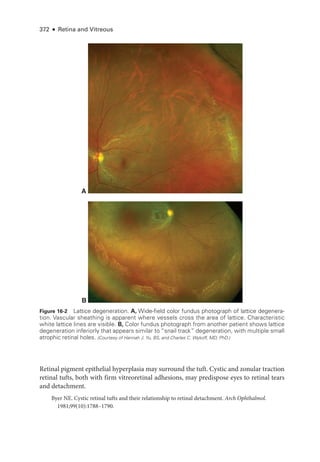
general, eyes with ROP in zone III have a good visual prognosis. In contrast, the more
posterior the zone at the time of diagnosis, the greater the area of nonperfused ret­
ina and
thus the more worrisome the prognosis.
Screening Recommendations
Screening for ROP consists of a dilated fundus examination using binocular indirect oph-
thalmoscopy. Use of a topical anesthetic and an eyelid speculum facilitates examination.
The pupils should be examined for failure to dilate and the iris inspected for vessel en-
gorgement or frank rubeosis, as ­
these may be signs of aggressive disease. In addition, the
optic nerve should be evaluated for plus disease and the periphery examined with scleral
depression to establish the extent of vessel growth.
Alternatively, telemedicine (ie, photographic) screening approaches may replace the
indirect ophthalmoscopic examination (see the section Fundus Photographic Screening
of ROP). However, clinicians should be aware that telemedicine screening criteria devel-
oped in one country may not apply in another country, especially when the level or quality
of available medical or perinatal care is not comparable.
Screening Criteria
All infants with a birth weight 1500 g or a gestational age of ≤30 weeks should be
screened for ROP. Infants with a birth weight between 1500 and 2000 g or a gestational
age 30 weeks who have an unstable clinical course and are considered by their attending
pediatrician or neonatologist to be at high risk for the disease should also be screened. The
202 ● Retina and Vitreous
first examination is generally performed at a postnatal age of between 4 and 6 weeks or, al-
ternatively, between 31 and 33 weeks’ gestational or postmenstrual age, whichever is ­
later.
Newer neonatal algorithms, such as WINROP (Weight, Insulin-­
like growth factor-­
I,
Neonatal, ROP), can identify infants at highest risk for ROP as early as 6 weeks before the
onset of clinical findings of ROP through a calculation using birth weight, rate of postnatal
weight gain, levels of IGF-1 and IGF-­
binding proteins, and other ­
factors. Conversely, they
may also predict which infants ­
will not develop ROP and may not require examination
despite meeting the conventional screening criteria. ­
These algorithms are a useful adjunct
to standard screening criteria and are being used with increasing frequency worldwide.
Screening Intervals
­After each patient evaluation for ROP, disease features dictate the follow-up interval (eg, more
severe disease indicates a shorter follow-up interval).
Follow up in 1 week or less
• zone I: immature vascularization only (stage 0);
• zone I: stage 1 or stage 2 ROP;
• immature ret­
ina (stage 0) extending into posterior zone II, near the boundary of
zone I and zone II;
• suspected A-­
ROP; and
• stage 3 ROP: zone I requires treatment not observation
Follow up in 1‒2 weeks
• posterior zone II: immature vascularization (stage 0);
• zone II: stage 2 ROP; and
• zone I: unequivocally regressing ROP
Follow up in 2 weeks
• zone II: stage 1 ROP;
• zone II: immature vascularization (stage 0); and
• zone II: unequivocally regressing ROP
Follow up in 2‒3 weeks
• zone III: stage 1 or 2 ROP; and
• zone III: regressing ROP
Ret­
i­
nal screening examinations are usually discontinued when any one of the following
criteria is met:
• full ret­
i­
nal vascularization (ie, vascularization ending within 1 disc-­
diameter of the
ora serrata; this criterion should be used for all patients with ROP treated with in-
travitreal anti-­
VEGF medi­
cations alone)
• zone III ret­
i­
nal vascularization attained without previous zone I or II ROP
• postmenstrual age of 45 weeks and no type 1 ROP (ie, as stage 3 ROP in zone II or
any ROP in zone I) or more severe ROP
CHAPTER 8: Retinopathy of Prematurity ● 203
• postmenstrual age of at least 65 weeks in patients for whom intravitreal anti-­
VEGF
medi­
cations caused regression of ROP (ie, this treatment alters the natu­
ral history
of the disease); ­
because very late recurrences of proliferative ROP have been re-
ported, clinical judgment and caution should be used on a case-­
by-­
case basis to
determine when surveillance can be safely terminated in ­
these patients
• regression of ROP (care must be taken to confirm the absence of abnormal vascular
tissue that could reactivate)
Fierson WM; American Acad­
emy of Pediatrics Section on Ophthalmology; American Acad­
emy of Ophthalmology; American Association for Pediatric Ophthalmology and Strabismus;
American Association of Certified Orthoptists. Screening examination of premature infants
for retinopathy of prematurity. Pediatrics. 2018;142(6). doi:10.1542/peds.2018-3061 [Published
correction appears in Pediatrics. 2019;143(3):320183810.]
Fundus Photographic Screening of ROP
Ultra-­
wide-­
angle (120°) fundus photography is useful for documenting disease in pre-
mature infant eyes, for assessing disease progression, and for screening. Given short-
ages of willing examiners skilled in indirect ophthalmoscopy and ROP screening, remote
screening of photographic fundus images (ie, telemedicine) has efficiently and cost-­
effectively improved access to eye care for premature infants at high risk for ROP, provid-
ing real-­
time diagnosis and improving documentation. For detection of plus disease and
disease requiring treatment, photoscreening by experienced personnel is comparable
to binocular indirect ophthalmoscopy, which is considered the gold standard for ROP
screening examinations.
To help identify patients who require an in-­
person examination ­
after photoscreening, the
Photographic Screening for Retinopathy of Prematurity (Photo-­
ROP) Cooperative Group es-
tablished a definition of clinically significant ROP based on features detectable by photography:
• zone I, any ROP without plus disease
• zone II, stage 2 with no plus disease or up to 1 quadrant of plus disease
• zone II, stage 3 with no plus disease or up to 1 quadrant of plus disease
In addition, more advanced approaches to interpretation of fundus photo­
graphs, such as
electronic image recognition and deep learning algorithms, are ­
under study.
Daniel E, Quinn GE, Hildebrand PL, et al; e-­
ROP Cooperative Group. Validated system
for centralized grading of retinopathy of prematurity: telemedicine approaches to
Evaluating Acute-­
Phase Retinopathy of Prematurity (e-­
ROP) study. JAMA Ophthalmol.
2015;133(6):675–682.
Prevention and Risk ­
Factors
Preventing ROP begins with preventing prematurity through optimal prenatal, perinatal,
and postnatal care. During the postnatal clinical course, ­
factors that appear to increase
the risk of severe ROP include sepsis, blood transfusion, intraventricular hemorrhage,
necrotizing enterocolitis, and slow weight gain.
204 ● Retina and Vitreous
AlterationofoxygenationlevelsastheinfantgrowsisthoughttomodifythecourseofROP.
In keeping with the two-­
phase pathophysiology of ROP (discussed ­
earlier), some researchers
have suggested that oxygen saturation should be decreased during phase 1 ROP, when the in-
fant’s oxygen requirements are lower, whereas oxygenation should be increased during phase 2
to meet the infant’s growing demands. Aggressive parenteral nutrition has reduced the risk of
lesssevereROPbutnotsevereROP.SupplementationwithvitaminsAandE,inositol,orbreast
milk also appears to reduce the incidence of ROP but only in observational studies, whereas
use of transfusion guidelines, erythropoietin, and antifungal agents showed no benefit.
Fang JL, Sorita A, Carey WA, Colby CE, Murad MH, Alahdab F. Interventions to prevent
retinopathy of prematurity: a meta-­
analysis. Pediatrics. 2016;137(4):e20153387. doi:10.1542/​
peds.2015-3387
Kim SJ, Port AD, Swan R, Campbell JP, Chan RVP, Chiang MF. Retinopathy of prematurity: a
review of risk ­
factors and their clinical significance. Surv Ophthalmol. 2018;63(5):618–637.
Treatment of Acute ROP
In 1988, the multicenter CRYO-­
ROP study demonstrated that ablation of the avascular
anterior ret­
ina reduced the incidence of unfavorable outcomes by approximately one-­
half
in eyes with threshold ROP (­
Table 8-3). Although this finding represented a major advance,
nearly one-­
fourth of eyes still experienced unfavorable outcomes with treatment; eyes with
posterior disease had the worst outcomes. Also in the late 1980s, the introduction of por-
table ­
laser units coupled with an indirect ophthalmoscope offered a promising alternative
for treating the peripheral ret­
ina with photocoagulation.
To examine ­
whether early ablation of the avascular ret­
ina improves visual and
structural outcomes in infants with bilateral, high-­
risk, prethreshold ROP, the ETROP
trial randomly assigned 1 eye to early ­
laser photocoagulation and the fellow (ie, con-
trol) eye to conventional management per the CRYO-­
ROP study. High-­
risk disease
was determined using a computational model based on the natu­
ral history cohort of
the CRYO-­
ROP study. The ETROP group determined that in infants with high-­
risk
prethreshold ROP, ­
earlier treatment was associated with reduced rates of unfavorable
functional and structural outcomes. For risk assessment of prethreshold eyes, the study
also determined that clinical categorization of eyes as having ­
either type 1 or type 2
ROP achieved results very similar to ­
those of the computational model. The authors
concluded that treatment should be initiated in eyes with the following ret­
i­
nal findings
characteristic of type 1 ROP:
• zone I ROP: any stage with plus disease;
• zone I ROP: stage 3, no plus disease; and
• zone II ROP: stage 2 or 3 with plus disease
The authors also suggested that eyes meeting the criteria for type 1 ROP should be
considered for peripheral ret­
i­
nal ­
laser treatment, whereas ­
those meeting the criteria for
type 2 ROP may be monitored at short intervals. When eyes with type 2 ROP pro­
gress to
type 1 ROP or to threshold ROP, ­
laser ablative treatment may be considered.
­
T
able
8-3
 ​
Summary
of
Multicenter
Clinical
­
T
rials
That
Guide
Current
Treatment
of
Acute
ROP
Study
Name
(Year
Enrollment
Completed)
Outcome
Mea­
s
ure(s)
Number
of
Eyes
Assessed
for
Primary
Outcome
Randomization
Point
Treatment
Arms
Main
Conclusions
Comments
­
T
rials
of
Peripheral
Ret­
i
­
n
al
Ablation
Cryotherapy
for
Retinopathy
of
Prematurity;
CRYO-­
R
OP
(1987)
(1) Unfavorable
structural
outcome
at
1
year
(defined
as
the
presence
of
a
macular
fold,
RD
involving
zone
I,
or
obscuration
of
the
posterior
pole
by
cataract
or
retrolental
fibrosis)
(2) Unfavorable
functional
outcome
at
1
year
(Snellen
equivalent
of
20/200
or
worse)
291
Threshold
disease
(a)
Observation
(b)

P
eripheral
cryotherapy
Unfavorable
structural
outcomes
occurred
in
48%
of
observed
eyes
vs
26%
of
treated
eyes.
Unfavorable
functional
outcomes
occurred
in
56%
of
observed
eyes
vs
35%
of
treated
eyes.
Findings
­
w
ere
consistent
through
15
years
of
follow-up.
Long-­
t
erm
risk
of
RD
increased
in
all
eyes
throughout
follow-up.
The
Early
Treatment
for
Retinopathy
of
Prematurity
Study;
ETROP
(2002)
(1) Unfavorable
functional
outcome
at
9
months
(2) Unfavorable
structural
outcome
at
9
months
657
(718
randomized
enrolled)
High-­
r
isk
prethreshold
disease
a
(a) Immediate
­
l
aser
photocoagulation
to
peripheral
ret­
i
na
(361
eyes)
(b) Conventional
treatment
(delay
of
­
l
aser
­
u
ntil
reaching
threshold
disease)
(357
eyes)
­
E
arlier
treatment
was
associated
with
a
reduction
in
unfavorable
visual
acuity
outcomes
(from
19.5%
to
14.5%)
and
a
reduction
in
unfavorable
structural
outcomes
(from
15.6%
to
9.1%).
The
rate
of
cardiopulmonary
complications
was
higher
among
infants
treated
­
e
arlier,
but
­
t
here
was
no
difference
in
mortality
between
the
two
groups.
The
greatest
benefit
from
early
treatment
was
seen
in
eyes
with
zone
I
disease.
(Continued)
­
T
able
8-3
(continued)
Study
Name
(Year
Enrollment
Completed)
Outcome
Mea­
s
ure(s)
Number
of
Eyes
Assessed
for
Primary
Outcome
Randomization
Point
Treatment
Arms
Main
Conclusions
Comments
­
T
rials
of
Intravitreal
Anti-­
V
EGF
Agents
Bevacizumab
Eliminates
the
Angiogenic
Threat
for
Retinopathy
of
Prematurity;
BEAT-­
R
OP
(2010)
Recurrence
of
ROP
requiring
re-­
t
reatment
by
54
weeks
of
postconceptional
age
143
(150
enrolled)
Stage
3+
ROP
in
zone
I
or
posterior
zone
II
(a) Laser
ret­
i
­
n
al
ablation
(b) Intravitreal
bevacizumab,
0.625
mg
in
0.025
mL
Recurrence
of
ROP
was
significantly
higher
in
zone
I
eyes
treated
with
­
l
aser
than
in
eyes
treated
with
bevacizumab
(42%
vs
6%,
respectively).
The
difference
for
zone
II
eyes
was
not
statistically
significant
(12%
vs
5%,
respectively).
The
recurrence
rate
in
the
­
l
aser
arm
was
higher
than
rates
in
previous
studies.
Two-­
t
hirds
of
study
sites
­
w
ere
in
Texas.
Median
time
to
recurrent
ROP
was
16
weeks
­
a
fter
injection
and
6
weeks
­
a
fter
­
l
aser
therapy.
The
follow-up
period
was
short
(≈6
months
­
a
fter
treatment).
Ranibizumab
Compared
With
­
L
aser
Therapy
for
the
Treatment
of
INfants
BOrn
Prematurely
With
Retinopathy
of
Prematurity
study;
RAINBOW
(2017)
Treatment
success
was
defined
as
no
active
retinopathy,
no
unfavorable
structural
out-
comes,
and
no
need
for
a
dif­
f
er­
e
nt
treatment
modality
by
24
weeks
­
a
fter
therapy.
214
(225
enrolled)
Bilateral
ROP
as
follows:
Zone
I,
stage
1+,
2+,
3,
or
3+
ROP
Zone
II,
stage
3+
AP
-ROP
(a) ­Laser
ret­
i
­
n
al
ablation
(b) Bilateral
intravitreal
ranibizumab,
0.1
mg
(c) Bilateral
intravitreal
ranibizumab,
0.2
mg
Treatment
was
successful
in
80%
of
eyes
receiving
ranibizumab
0.2
mg,
75%
of
eyes
receiving
ranibizumab
0.1
mg,
and
66%
of
eyes
undergoing
­
l
aser
therapy.
The
RAINBOW
study
cohort
was
not
identical
to
the
BEAT-­
R
OP
study
cohort.
Inclusion
criteria
­
w
ere
closer
to
the
clinical
profile
of
eyes
typically
treated
in
modern
practice.
­
T
here
was
no
reduction
in
circulating
serum
levels
of
VEGF
in
any
of
the
groups.
AP
-ROP
=
aggressive
posterior
retinopathy
of
prematurity;
RD
=
ret­
i
­
n
al
detachment;
ROP
=
retinopathy
of
prematurity;
VEGF
=
vascular
endothelial
growth
­
f
actor.
a
The
term
high-­
r
isk
prethreshold,
which
was
coined
by
the
ETROP
investigators,
required
2
findings:
(1)
clinical
evidence
of
prethreshold
ROP;
AND
(2)
15%
computed
risk
of
progression
to
unfavorable
outcome
if
untreated.
This
risk
was
calculated
using
an
algorithm
incorporating
demographic
and
clinical
variables
from
the
natu­
r
al
history
arm
of
the
CRYO-­
R
OP
study.
CHAPTER 8: Retinopathy of Prematurity ● 207
Early Treatment for Retinopathy of Prematurity Cooperative Group. Revised indications for
the treatment of retinopathy of prematurity: results of the Early Treatment for Retinopathy
of Prematurity randomized trial. Arch Ophthalmol. 2003;121(12):1684–1694.
Shulman JP, Hobbs R, Hartnett ME. Retinopathy of prematurity: evolving concepts in diagnosis
and management. Focal Points: Clinical Modules for Ophthalmologists. American Acad­
emy of
Ophthalmology; 2015, module 1.
­
Laser and Cryoablation Surgery
Ablation of ROP should be performed with a ­
laser rather than cryoablation ­
because
­
laser surgery is associated with less treatment-­
related morbidity. A diode red (810-nm)
­
laser is preferred, as its energy ­
will not be absorbed by prominent iris vessels or a per­
sis­
tent tunica vasculosa lentis. The conventional treatment pattern is best described as
nearly confluent, with burns placed 0.5-­to 1-­
burn width apart starting at the ridge and
proceeding anteriorly to the ora serrata for 360° to treat all avascular ret­
ina (see Fig 8-9
earlier in the chapter). In the horizontal meridians, ­
laser treatment should be applied in a
lighter pattern to avoid damaging the long ciliary vessels and nerves, as damage to ­
these
structures may cause severe anterior segment ischemia. Although ret­
i­
nal cryoablation
surgery is now rare in the United States, the technique may still be used when ­
laser or in-
travitreal therapy is unavailable. ­
Because respiratory or cardiorespiratory arrest occurs in
up to 5% of infants treated with cryotherapy, treatment should be performed in conjunc-
tion with systemic monitoring. To minimize stress and risk to the infant, use of systemic
analgesia may be considered. Some neonatologists prefer that infants undergo treatment
with general anesthesia in an operating room.
Follow-up is recommended at 1 week ­
after ­
laser treatment. At that time, some reduc-
tion in the level of plus disease, but not necessarily regression of neovascularization, is
expected. The primary purpose of this follow-up visit is to confirm that the disease has
not worsened. By 1 month ­
after ­
laser therapy, obvious improvement, and even complete
regression, of peripheral disease is expected.
Simpson JL, Melia M, Yang MB, Buffenn AN, Chiang MF, Lambert SR. Current role of cryo-
therapy in retinopathy of prematurity: a report by the American Acad­
emy of Ophthalmology.
Ophthalmology. 2012;119(4):873–877.
Anti-­VEGF Drugs
Intravitreal bevacizumab monotherapy for zone I or posterior zone II stage 3 ROP with
plus disease was studied by the Bevacizumab Eliminates the Angiogenic Threat for Reti-
nopathy of Prematurity (BEAT-­
ROP) group. In eyes with zone I ROP, recurrent neovascu-
larization was observed significantly less often with bevacizumab treatment than with ­
laser
therapy by 54 weeks’ gestational age. In contrast, in eyes with zone II disease, outcomes
­
were similar with ­
either treatment. Interestingly, normal peripheral ret­
i­
nal vascularization
continued ­
after treatment with intravitreal bevacizumab, though at gestational ages several
months older than normally seen. Recurrence of ROP requiring treatment was noted in 6%
of all infants treated with bevacizumab, at a median interval of 16 weeks ­
after injection. On
average, ROP recurred sooner in eyes with zone II disease than in eyes with zone I disease.
208 ● Retina and Vitreous
The authors concluded that the sample size was too small and the follow-up period too
short to allow proper evaluation of the systemic safety of intravitreal bevacizumab or to
assess the true incidence of late recurrence of ROP.
In the international prospective study RAnibizumab Compared With ­
Laser Ther-
apy for the Treatment of INfants BOrn Prematurely With Retinopathy of Prematurity
(RAINBOW), investigators compared the efficacy and safety of intravitreal ranibizumab
with that of ­
laser therapy for ROP and concluded that ranibizumab 0.2 mg may be supe-
rior for the treatment of very low‒birth-­
weight infants with ROP. However, 15% of eyes
treated with ranibizumab 0.2 mg still required at least 1 retreatment within 6 months.
VanderVeen DK, Melia M, Yang MB, Hutchinson AK, Wilson LB, Lambert SR. Anti-­
vascular endothelial growth ­
factor therapy for primary treatment of type 1 retinopathy
of prematurity: a report by the American Acad­
emy of Ophthalmology. Ophthalmology.
2017;124(5):619‒633.
Indications
For most cases of type I ROP, ­
laser therapy remains the mainstay of treatment, given its
proven safety, efficacy, predictable outcomes, and high probability of long-­
term success. Nev-
ertheless, anti-­
VEGF treatment may be preferred in cases of iris rubeosis with poor dilation
and very posterior disease and in infants who cannot tolerate the anesthesia associated with
­laser treatment.
Intravitreal injection technique
Intravitreal injections may be performed in the NICU (Video 8-1). A topical anesthetic
and 5% betadine solution are applied first, and a sterile eyelid speculum is used to retract
the eyelids. The injection site should be no more than 1.5 mm posterior to the corneal
limbus, through the pars plicata. Given that infants have a proportionally larger crystalline
lens than adults, the direction of the injection should be parallel to, rather than oblique
to, the visual axis. Injection volume is typically 0.03 mL or less (approximately half the
volume used in adults). Risks associated with the injection include ocular hypertension,
cataract, endophthalmitis, bleeding, and ret­
i­
nal detachment.
VIDEO 8-1 Intravitreal injection in an infant.
Courtesy of Franco M. Recchia, MD.
Follow-up
Follow-up is recommended within 1 week of injection to assess therapeutic response and to
determine the need for additional treatment. ­
Because late reactivation of major proliferative
disease is pos­
si­
ble in infants whose ROP was treated with an intravitreal injection of bevaci-
zumab or ranibizumab alone, continued close follow-up is crucial. This is particularly impor­
tant between 2 and 4 months ­
after injection, when the risk of ROP reactivation is highest.
In addition, special caution is urged before suspending regular ret­
i­
nal examinations
in infants receiving anti-­
VEGF medi­
cations for ROP. Initial ROP regression (as with ­
laser
treatment) or achievement of 45 weeks’ postmenstrual age (as with untreated type 2 ROP)
is not sufficient to discontinue monitoring. Although full ret­
i­
nal vascularization is the
CHAPTER 8: Retinopathy of Prematurity ● 209
only clear criterion for terminating examinations, full ret­
i­
nal vascularization is not always
achieved in infants treated with anti-­
VEGF monotherapy. Thus, many experts recom-
mend definitive treatment with peripheral ret­
i­
nal ­
laser photocoagulation before ­
these pa-
tients are discharged from the NICU.
Safety profile
The results of the BEAT-­
ROP, RAINBOW, and other studies have dramatically changed
how zone I ROP, and prob­
ably all ROP, is treated. However, substantive long-­
term data on
systemic safety are ­
limited.
Mintz-­
Hittner HA, Kennedy KA, Chuang AZ; BEAT-­
ROP Cooperative Group. Efficacy of
intravitreal bevacizumab for stage 3+
retinopathy of prematurity. N Engl J Med. 2011;364(7):​
603–615.
Stahl A, Lepore D, Fielder A, et al. Ranibizumab versus ­
laser therapy for the treatment of
very low birthweight infants with retinopathy of prematurity (RAINBOW): an open-­
label
randomised controlled trial. Lancet. 2019;394(10208):1551–1559.
Vitrectomy and Scleral Buckling Surgery
Eyes with stage 4 ROP (ie, progressive, active-­
phase ROP) require surgical intervention
using scleral buckling or a lens-­
sparing vitrectomy to alleviate the vitreoret­
i­
nal traction
causing ret­
i­
nal detachment. Eyes undergoing surgical intervention at stage 4A have more
favorable outcomes than ­
those undergoing surgery at ­
later stage 4B or 5; in addition, lens-­
sparing vitrectomy at stage 4A ROP may reduce progression to stage 4B and 5 disease.
Given the improved visual outcome, this is the preferred approach.
In one study of infants with stage 5 ROP, vitrectomy combined with dissection of the
fibrovascular membranes and adherent vitreous resulted in full or partial reattachment of
the ret­
ina in approximately 30% of eyes (Video 8-2). Nevertheless, only 25% of ret­
i­
nas in
eyes with initial partial or total reattachment ­
after surgery remained fully attached at a me-
dian follow-up of 5 years. When a drainage retinotomy is performed or an iatrogenic ret­
i­
nal break occurs during a vitrectomy for ROP, the prognosis for that eye is uniformly poor.
VIDEO 8-2 Stage 5 ROP surgery.
Courtesy of Audina M. Berrocal, MD.
Capone A Jr, Trese MT. Lens-­
sparing vitreous surgery for tractional stage 4A retinopathy of
prematurity ret­i­nal detachments. Ophthalmology. 2001;108(11):2068–2070.
Quinn GE, Dobson V, Barr CC, et al. Visual acuity of eyes ­
after vitrectomy for retinopathy
of prematurity: follow-up at 5 1/2 years. The Cryotherapy for Retinopathy of Prematurity
Cooperative Group. Ophthalmology. 1996;103(4):595–600.
Associated Conditions and Late Sequelae of ROP
FollowingresolutionoftheacutephaseofROP,theinfantshouldbeexaminedbyapediatric
ophthalmologist (typically within 6‒12 months) for myopia, strabismus, and amblyopia.
210 ● Retina and Vitreous
In the ETROP study, high myopia (minus 5 diopters or greater) among ­
children receiving
­
laser treatment for ROP was observed in approximately one-­
fourth within 1 year of age
and one-­
half by 6 years of age.
Conditions that are more likely to occur over time in eyes with regressed ROP include
• myopia with astigmatism
• anisometropia
• strabismus
• amblyopia
• cataract
• glaucoma
• macular dragging (Fig 8-10)
• ret­i­nal pigmentary changes
• ret­i­nal tears
• abnormal vitreoret­i­nal interface/adhesions
• ret­
i­
nal detachment (rhegmatogenous, traction, and/or exudative) (Figs 8-11, 8-12,
8-13, respectively)
• anomalous foveal anatomy (Fig 8-14)
Figure 8-11 Rhegmatogenous ret­i­nal detach-
ment in a 16-­
year-­
old male who was born at
26 weeks of gestational age. Avascular ret­
ina
with numerous atrophic ret­
i­
nal holes (arrows)
are seen peripheral to an old demarcation
line in the temporal periphery. Subret­
i­
nal fluid
extends into the temporal macula. (Courtesy of
Franco M. Recchia, MD.)
Figure 8-10 Montage color fundus photo­
graph from an adult who had untreated ROP
as an infant, showing severe dragging of ret­
i­
nal vessels and a macular fold extending to
the temporal periphery. Diffuse pigmentary
changes are also visible. (Courtesy of Franco M.
Recchia, MD.)
CHAPTER 8: Retinopathy of Prematurity ● 211
Figure 8-12 Traction ret­
i­
nal detachment in a 19-­
year-­
old male with a history of severe prematu-
rity. Circumferential contraction of the posterior hyaloid has led to superior traction detachment.
Scattered old ­
laser photocoagulation scars are seen in the periphery. (Courtesy of Franco M. Recchia, MD.)
Figure 8-13 Montage of color fundus photo­
graphs showing exudative (also termed Coats-­
like) retinopathy in the right eye of a 22-­
year-­
old
­
woman who was born at 24 weeks of gesta-
tion. Dense lipid exudate and subret­
i­
nal fluid
are pre­
sent in the inferior and temporal pre-­
equatorial ret­
ina. Macular dragging and resid-
ual white fibrotic ridge tissue are also pre­
sent in
the superotemporal quadrant. (Courtesy of Franco M.
Recchia, MD.)
Medicolegal Aspects of ROP
Several unique aspects of ROP care contribute to the risk of liability. The protracted hos-
pital stay of premature infants requires complex coordination of multiple ser­
vices, prac­
ti­
tion­
ers, caregivers, and specialists, of whom the ophthalmologist is just one of many
and may be forgotten. Miscommunication between care coordinators and the ophthal-
mologist may delay scheduling or per­
for­
mance of eye examinations. If the narrow treat-
ment win­
dow is missed, adverse outcomes may result. In addition, given the shortage of
C
A
D
B
Figure 8-14 A–­C: Images from a 10-year-old boy who was referred for evaluation ­
because visual
acuity was correctable only to 20/40. Pertinent medical history was his birth at 28 weeks’ gesta-
tion. Color photo­graph (A) shows macular dragging and a blood vessel entering the foveal area.
Optical coherence tomography (OCT) (B) through the anatomical center of the macula shows
absence of a foveal depression and per­
sis­
tence of all ret­
i­
nal layers. OCT angiography (OCTA)
(C) shows absence of a foveal avascular zone. D, OCTA from a 10-­
year-­
old child born at full
term is shown for comparison. The finding of a blunted or absent foveal depression (also
termed fovea plana) is a biomarker of premature birth. Normally, the foveal depression forms
embryologically by a patterned centrifugal regression of inner ret­
i­
nal layers by the 30th week
of gestation. Although the finding of foveal dysplasia or fovea plana, as seen ­
here, indicates a
premature birth, it is still compatible with good vision. (Courtesy of Eric W. Schneider, MD.)
CHAPTER 8: Retinopathy of Prematurity ● 213
experienced ROP screeners, management of ROP in some hospitals becomes the respon-
sibility of ophthalmologists who may be uncomfortable or unfamiliar with the nuances
and complexities of ROP care.
Poor outcomes from ROP may be perceived as medical malpractice and therefore
pose a risk for litigation by patients or their families. Malpractice claims alleging misman-
agement of ROP rank among the highest in ophthalmology and indeed all of medicine.
Indemnity payments have exceeded 20 million dollars and are rationalized by the young
age of the plaintiff and the lifelong duration of irreversible vision loss.
Patient safety can be promoted and liability minimized through implementation of an
“ROP safety net,” offered through the Ophthalmic Mutual Insurance Com­
pany (OMIC).
See the following reference for toolkits that detail ­
every step in the care pro­
cess.
Menke AM. ROP Safety Net: Risk Analy­
sis. Version 8/15/18. Ophthalmic Mutual Insurance
Com­pany; 2018. https://­www​.­omic​.­com​/­rop​-­safety​-­net/
215
C H A P T E R 9
Choroidal Disease
Highlights
• Pachychoroid is an entity with an evolving definition but is generally thought of as
abnormally dilated choroidal vessels abutting the ret­
i­
nal pigment epithelium (with
or without choroidal thickening).
• Fluorescein angiography can contribute to the diagnosis of arteritic anterior is­
chemic optic neuropathy.
• Hypertensive choroidopathy can be diagnosed by means of multimodal imaging
­
because of its unique characteristics on optical coherence tomography and fundus
autofluorescence.
Scope of Chapter
This chapter describes noninflammatory choroidal diseases that also involve the ret­
ina.
Inflammatory disorders of the ret­
ina and choroid are discussed in Chapter 11. See also
BCSC Section 9, Uveitis and Ocular Inflammation. Intraocular tumors such as melanoma
are covered in BCSC Section 4, Ophthalmic Pathology and Intraocular Tumors.
Central Serous Chorioretinopathy
Central serous chorioretinopathy (CSC; also called central serous retinopathy [CSR]) ­
causes an
idiopathic serous detachment of the ret­
ina related to leakage at the level of the ret­
i­
nal pigment
epithelium (RPE) secondary to hyperpermeability of the choriocapillaris, as seen on indocya­
nine green angiography (ICGA). While the condition was originally described in 1866 by von
Graefe as recurrent central retinitis, it was Maumenee who first performed fluorescein angios­
copy on patients with CSC and found a leak at the level of the RPE, not from ret­i­nal vessels (the
previously hypothesized source of leakage). Gass subsequently described the findings seen on
fluorescein angiography (FA) and suggested that ­
laser photocoagulation could be used to treat
affected patients. Gass also stated that the disease was secondary to hyperpermeability of the
choriocapillaris, a hypothesis that was confirmed de­
cades ­
later via ICGA.
Demographics and Features
Central serous chorioretinopathy occurs primarily in persons between the ages of 35 and
55 years, with a male-to-female ratio of 3:1; at pre­
sent, ­
there are no reliable statistics
216 ● Retina and Vitreous
suggesting any association with race. Patients describe a variety of symptoms, including
sudden onset of blurred or dim vision, micropsia, metamorphopsia, paracentral scoto­
mata, decreased color vision, and prolonged afterimages. Visual acuity ranges from 20/20
to 20/200, but in most patients, it is better than 20/30. Decreased visual acuity can often be
improved with a small hyperopic correction.
CSC has several clinical variations. In an acute manifestation, the ret­
ina has a round
or oval elevation in the macular region; it often involves the fovea. FA shows leaks from
the RPE that may appear early in the angiographic sequence as a dot (the dot form) or as
a tree-­
shaped movement of dye in the subret­
i­
nal space (the smokestack form) (Fig 9-1). In
some circumstances, vigorous leaks can cause deposition of a grayish-­
white, feathered-­
edge subret­
i­
nal material that is generally believed to be fibrin. In chronic CSC, the RPE
A B
D
C
Dot
Smokestack
Figure 9-1 Fluorescein angiographic (FA) patterns of the leaks in central serous chorioretinopa-
thy (CSC). A, In the early phase, the patient was seen to have 2 main leaks. B, ­
Later in the angio-
gram, the leaks show 2 dif­
fer­
ent morphologies: the smokestack and the dot va­ri­e­ties. C, Acute
CSC generally pre­
sents with 1 leak or a few leaks. D, Chronic forms of CSC exhibit many small
leaks, as demonstrated in this image from a dif­
fer­
ent patient. (Courtesy of Richard F
. Spaide, MD.)
CHAPTER 9: Choroidal Disease ● 217
shows granular pigmentation; FA reveals many small, sometimes inconspicuous leaks; and
­
there is widespread shallow detachment with areas of atrophy of the photoreceptors (see
Fig 9-1D).
CLINICAL PEARL
Ret­
i­
nal pigment epithelial changes on optical coherence tomography (OCT) or fun­
dus autofluorescence (FAF) may suggest previous episodes of CSC and resolved
subret­i­nal fluid.
Systemic Associations
Central serous chorioretinopathy is associated with stress and with a tense, driven person­
ality. Systemic associations include endogenous hypercortisolism (Cushing syndrome), hy­
pertension, sleep apnea, use of psychopharmacologic medi­
cations, and pregnancy. Use of
systemic corticosteroids, which may be administered through intramuscular, topical, inha­
lational, epidural, or even intra-­
articular routes, is associated with CSC; but, curiously, use
of intraocular corticosteroids does not appear to be associated with the condition. Organ
transplant recipients and patients with autoimmune disease requiring long-­
standing, high-­
dose ste­
roids are particularly vulnerable to the more severe and chronic variants.
Fawzi AA, Holland GN, Kreiger AE, Heckenlively JR, Arroyo JG, Cunningham ET Jr. Central
serous chorioretinopathy ­
after solid organ transplantation. Ophthalmology. 2006;113(5):
805–813.e5.
Mrejen S, Balaratnasingam C, Kaden TR, et al. Long-­
term visual outcomes and ­
causes of
vision loss in chronic central serous chorioretinopathy. Ophthalmology. 2019;126(4):
576–588.
Imaging
The extent of the detachment can be documented with color fundus photo­
graphs.
FAF imaging shows the accumulation of shed photoreceptor outer segments in the
subret­
i­
nal space, as well as distributed defects of the RPE. It has been theorized that
the white dots seen ­
under the ret­
ina are macrophages with fluorophores from phago­
cytized outer segments (Fig 9-2). Eyes with chronic CSC can display descending tracts
during both FA and FAF imaging (Fig 9-3). Enhanced depth imaging OCT (EDI-­OCT)
shows thickening of the choroid and, in areas where thickening is most prominent,
posterior loculation of fluid in the deep choroid. Figure 9-4 shows the internal struc­
ture of a healthy choroid, and Figure 9-5 shows the choroid in 1 healthy eye and in 3
eyes with CSC.
Although ICGA can reveal choroidal vascular hyperpermeability (Fig 9-6), it has
largely been supplanted by OCT, even for detecting pos­
si­
ble coexisting choroidal neo­
vascularization (CNV), which may be pre­
sent in up to 20% of cases in individuals older
than 50 years. OCT angiography seems to be ­
adept at detecting secondary CNV that may
develop in ­
these patients.
218 ● Retina and Vitreous
Imamura Y, Fujiwara T, Margolis R, Spaide RF. Enhanced depth imaging optical coherence
tomography of the choroid in central serous chorioretinopathy. Ret­i­na. 2009;29(10):
1469–1473.
Spaide RF, Klancnik JM Jr. Fundus autofluorescence and central serous chorioretinopathy.
Ophthalmology. 2005;112(5):825–833.
Differential Diagnosis
Other entities that may be considered in the differential diagnosis of CSC include type 1
CNV and polypoidal choroidal vasculopathy (PCV; see Chapter 4), which is a variant
of type 1 CNV. The FA findings can overlap significantly; both entities show leakage of
fluorescein, and the visualization of the structures under­
lying the RPE is poor. If CNV is
pre­
sent, OCT demonstrates an irregular wavy, shallow elevation of the RPE by a layer of
material with heterogeneous reflectivity. The neovascularization seen in association with
CSC is generally easy to detect with OCT angiography. What complicates the issue, par­
ticularly regarding treatment, is that type 1 CNV and PCV appear to be associated with
CSC; they may be its sequelae.
C
Punctate reflectors Shaggy
photoreceptors
A B
Figure 9-2 Central serous chorioretinopathy with white dots. A, Fundus photo­
graph shows an
ovoid elevation of the ret­
ina with white dots on the undersurface (arrowheads). B, FA reveals a
single leakage point. C, The elevated ret­
ina, seen in cross section, has a thick coat on its inner
surface that has autofluorescent characteristics consistent with ret­
i­
nal outer segment–­
derived
fluorophores. ­
These fluorophores are therefore considered to be derived from the outer seg-
ments that could not be phagocytized by the ret­
i­
nal pigment epithelium (RPE) ­
because of the
physical separation, caused by the fluid, between the ret­
ina and RPE. The region of shaggy
photoreceptors contains punctate dots that are highly reflective; it has been theorized that
­
these dots are macrophages. (Courtesy of Richard F
. Spaide, MD.)
CHAPTER 9: Choroidal Disease ● 219
Pachychoroid spectrum and its evolving nomenclature
The widespread utilization of EDI-­
OCT has facilitated quantitative evaluation of the
choroid and, with it, the recognition of a thick, or pachy, choroid phenotype, which is
commonly seen in CSC. The spectrum of disease encompassed in this entity ranges from
pigment epithelial changes in the setting of thick, poorly tessellated choroid (pachychoroid
pigment epitheliopathy) to pachyvessels, which on cross-­
sectional OCT appear to compress
and obliterate the overlying choriocapillaris, to PCV (see Chapter 4 for further discus­
sion). Ophthalmologists have recently recognized that increased choroidal thickness may
not be universally pre­sent in ­these eyes and have moved ­toward a more pathogene­sis-­based
definition, with the understanding that ­
these pachyvessels are actually dilated anastomotic
A
B
Figure 9-3 Autofluorescence abnormalities in CSC. A, Fundus photo­
graphs show the right
and left eyes of a patient with CSC. Although subtle pigmentary changes are vis­
i­
ble, it can be
difficult to discern where fluid has accumulated. B, Autofluorescent images show widespread
abnormalities induced by the presence of subret­
i­
nal fluid, particularly the descending tracts
created by the fluid. (Reproduced with permission from Elsevier. Imamura Y, Fujiwara T, Spaide RF
. Fundus auto-
fluorescence and visual acuity in central serous chorioretinopathy. Ophthalmology. 2011;118(4):700–705. Copyright 2011.)
220 ● Retina and Vitreous
venous channels that run across the choroidal watershed zones, traversing the macula.
­
These observations signal choroidal venous insufficiency as the potential unifying under­
lying pathogenesis of ­
these entities.
Cheung CMG, Lee WK, Koizumi H, Dansingani K, Lai TYY, Freund KB. Pachychoroid
disease. Eye (Lond). 2019;33(1):14–33.
A
B
Figure 9-4 The internal structure of the healthy choroid, depicted on enhanced depth imaging
optical coherence tomography (EDI-­
OCT). The choroidal vessels decrease in dia­
meter from
the outer to the inner choroid. A, The larger vessels (white arrowheads) are dark in the center
with a thick hyperreflective wall.The medium-­
sized vessels (yellow arrowheads) have a smaller
hyporeflective area in the center and a hyperreflective wall. B, As vessel dia­
meter decreases,
the central hyporeflective area decreases ­
until it is not vis­
i­
ble. At that size, the vessel appears
as a white hyperreflective structure (white arrows). Note the delineation of the hyporeflective
line near the junction with the inner sclera, which appears to be in the suprachoroidal space.
The red arrow points to a vessel coursing through the sclera. (Reproduced with permission from
Elsevier. Mrejen S, Spaide RF
. Optical coherence tomography: imaging of the choroid and beyond. Surv Ophthalmol.
2013;58(5):387–429. Copyright 2013.)
A B
D
C
217 μm 449 μm
546 μm 722 μm
Figure 9-5 The choroid is seen in cross section using EDI-­
OCT. Subfoveal choroidal thickness
was mea­
sured vertically from the outer border of the RPE to the inner border of the sclera
(brackets) in a healthy eye in a 55-­
year-­
old man (A) and in 3 representative eyes with CSC: in a
44-­year-­old man (B), a 57-­
year-­
old man (C), and a 63-­
year-­
old man (D). (Reproduced with permission
from Imamura Y, Fujiwara T, Margolis R, Spaide RF
. Enhanced depth imaging optical coherence tomography of the choroid
in central serous chorioretinopathy. Ret­i­na. 2009;29(10):1469–1473. doi:10.1097/IAE.0b013e3181be0a83)
CHAPTER 9: Choroidal Disease ● 221
Matsumoto H, Hoshino J, Mukai R, et al. Vortex vein anastomosis at the watershed in pachy­
choroid spectrum diseases. Ophthalmol Ret­i­na. 2020;4(9):938–945.
Warrow DJ, Hoang QV, Freund KB. Pachychoroid pigment epitheliopathy. Ret­i­na. 2013;33(8):
1659–1672.
Treatment
Central serous chorioretinopathy is generally self-­
limited and resolves spontaneously, with
the majority of patients attaining excellent visual results. However, it can be destructive in
some chronic cases, causing visually significant scotomata. Verteporfin photodynamic ther-
apy (PDT), ­
whether at full fluence or, more commonly, reduced fluence, has been shown to
decrease or eliminate subret­
i­
nal fluid, decreases choroidal thickness, and reduces choroidal
vascular hyperpermeability. Treatment is guided by ­
either FA or ICGA, and a sufficiently
large spot size is used to cover the main leakage point(s) with a surrounding safety margin of
1000 µm. This therapy (at full fluence, in studies of age-­
related macular degeneration) is as­
sociated with a 4% risk of vision decrease. CSC may recur ­
after successful PDT, and therapy
can be repeated safely, especially if lower fluence is used and the lesion is extrafoveal.
­
Laser photocoagulation therapy is no longer preferred for CSC, as secondary CNV
occurred in the immediate postoperative period in up to 2% of eyes treated with this
modality. Moreover, unlike PDT, photocoagulation has no effect on choroidal thickness.
Useofmineralocorticoidreceptorantagonists(eplerenoneorspironolactone)hasshown
some benefit in anecdotal reports. However, a recent randomized placebo-­
controlled trial
using eplerenone in chronic CSC demonstrated no benefit with the medi­
cation (25 mg/
day for 1 week, increasing to 50 mg/day for up to 12 months).
Lotery A, Sivaprasad S, O’Connell A, et al. Eplerenone for chronic central serous chorio­
retinopathy in patients with active, previously untreated disease for more than 4 months
(VICI): a randomised, double-­
blind, placebo-­
controlled trial. Lancet. 2020;395(10220):
294–303.
Maruko I, Iida T, Sugano Y, Ojima A, Ogasawara M, Spaide RF. Subfoveal choroidal thickness
­
after treatment of central serous chorioretinopathy. Ophthalmology. 2010;117(9):1792–1799.
C
A B
Figure 9-6 Stages of indocyanine green angiography (ICGA) in CSC. A, Early ­
after injection, the
dye can be seen within the choroidal vessels. B, During the ­middle phase of the angiogram, cho-
riocapillaris hyperpermeability results in the appearance of multiple hyperfluorescent clouds.
C, ­
Later in the angiogram, the dye has largely been removed from the choroidal vessels. Dye
that has leaked into the stroma has diffused posteriorly, silhouetting the larger choroidal ves-
sels. (Reproduced with permission from Spaide RF
, Hall L, Haas A, et al. Indocyanine green videoangiography of older
patients with central serous chorioretinopathy. Ret­i­na. 1996;16(3):203–213. doi:10.1097/00006982-199616030-00004)
222 ● Retina and Vitreous
Choroidal Perfusion Abnormalities
The choroid receives its arterial supply from approximately 20 short posterior ciliary arter­
ies and 2 anterior ciliary arteries. A network of branching arterioles distributes the blood
throughout the choroid in a segmental fashion, ultimately leading to the choriocapillaris,
and helps reduce the blood pressure as well. Although the vessels in the choriocapillaris
exhibit relatively uniform patterns in any given region of the eye, the pressure gradients
imposed by the feeding arterioles and draining venules establish a lobular perfusion pat­
tern. Abnormalities in choroidal blood flow can be divided into several main categories
based on the under­
lying disease pro­
cess.
Arteritic Disease
In arteritic diseases such as ­
giant cell arteritis (Figs 9-7, 9-8) or granulomatosis with poly-
angiitis (formerly called Wegener granulomatosis; Fig 9-9), inflammatory occlusion can
cause sectorial areas of nonperfusion. FA or ICGA is typically performed in cases in which
an arteritic cause of vision loss is suspected; flow defects in the choroid are often unde­
tected by ophthalmoscopy alone. Patchy and delayed choroidal filling, especially around
the optic nerve, is characteristic of arteritic ischemic optic neuropathy (see Fig 9-7).
Nonarteritic Disease
Nonarteritic prob­lems with blood flow can occur as a result of embolic or systemic disease
or as a manifestation of severe hypertension. Emboli from the heart, injection of corti­
costeroids or calcium hydroxylapatite, and intravascular coagulation all have the poten­
tial to occlude choroidal vessels. Vascular occlusion can also occur in patients with lupus
anticoagulants.
A B
Figure 9-7 Arteritic anterior ischemic optic neuropathy with delayed choroidal filling. A, Color
fundus photo­
graph showing pallid edema of the right optic nerve head. B, Early venous phase
of the angiogram showing incomplete filling of the choroidal lobule surrounding the optic nerve
(arrows). Normally, choroidal filling is complete by the early venous to mid-­
venous phase. (Cour-
tesy of Nicholas J. Volpe, MD.)
CHAPTER 9: Choroidal Disease ● 223
Thrombotic thrombocytopenic purpura ­
causes a classic pentad of findings: (1) micro­
angiopathic hemolytic anemia, (2) thrombocytopenia, (3) fever, (4) neurologic dys­
function, and (5) renal dysfunction. Patients with this condition may have multifocal
yellow placoid areas and associated serous detachment of the ret­
ina. Similar fundus
findings may occur in patients with disseminated intravascular coagulation, in which
consumption of coagulation proteins, involvement of cellular ele­
ments, and release of
fibrin degradation products lead to hemorrhage from multiple sites and ischemia from
microthrombi.
Similar fundus findings also occur in patients with acute hypertension, such as ma­
lignant hypertension or eclampsia. In addition to causing ret­
i­
nal and optic nerve head
abnormalities, ­
these disorders commonly lead to serous detachment of the ret­
ina asso­
ciated with areas of yellow placoid discoloration of the RPE (Fig 9-10). The perfusion
Figure 9-8 ­
Giant cell arteritis. ICGA image
taken 1 day ­
after this patient had severe vision
loss secondary to arteritic anterior ischemic
optic neuropathy. A wedge-­
shaped area of cho-
roidal nonperfusion is apparent (curved arrow).
The apex of the wedge of nonperfusion points
­
toward the area of the occluded short posterior
ciliary artery. (Courtesy of Richard F
. Spaide, MD.)
*
Figure 9-9 Granulomatosis with polyangiitis
(formerly, Wegener granulomatosis). The early
phase of wide-­
angle ICGA of the left eye re-
veals a widespread filling defect of the arteri-
oles and choriocapillaris in the inferior fundus
(curved arrow) and in a segmental area of
the superior fundus (asterisk). (Reproduced with
permission from Elsevier. Iida T, Spaide RF
, Kantor J. Ret­
i­
nal
and choroidal ­
arterial occlusion inWegener’s granulomatosis.
Am J Ophthalmol. 2002;133(1):151–152. Copyright 2002.)
224 ● Retina and Vitreous
A B
D E
C
Figure 9-10 Preeclampsia with hemolysis, elevated liver enzymes, and low platelet count
(HELLP) syndrome. A, Fundus photo­
graph reveals a serous detachment of the ret­
ina and
multiple yellowish placoid areas at the level of the RPE and inner choroid. B, Early-­
phase FA
image shows reticular patterns of decreased choroidal perfusion bordering areas of hyperfluo-
rescence. Early leakage from the level of the RPE is evident and becomes more apparent in
the ­
later phases of the study (C). ­
There is also staining of and leakage from the optic nerve.
D, ICGA image shows profound choroidal vascular filling defects alternating with areas of ab-
normal vessel leakage and staining, a rare finding. E, In the late phase, numerous arterioles
show staining of their walls, indicating severe vascular damage. (Reproduced with permission from
Spaide RF
, Goldbaum M, Wong DW, Tang KC, Iida T. Serous detachment of the ret­
i­
na. Ret­i­na. 2003;23(6):820–846.)
CHAPTER 9: Choroidal Disease ● 225
abnormalities may range from focal infarction of the choriocapillaris to fibrinoid necrosis
of larger arterioles. Resolution of smaller infarcts, which initially appear tan in color, pro­
duces small patches of atrophy and pigmentary hyperplasia called Elschnig spots (Fig 9-11).
Infarction of an arteriole can lead to Siegrist streaks, which are hyperpigmented flecks ar­
ranged linearly along choroidal vessels. Posterior ciliary artery occlusions can result in
wedge-­
shaped zones of choroidal infarction called Amalric triangles.
Choriocapillaris Blood Flow Abnormalities
Choroidal blood flow defects affect lobule-­
sized areas of the choroid or areas supplied by
arterioles and therefore affect 1 to several choroidal lobules. Many ocular diseases (eg, acute
A
B
Figure 9-11 OCT images from a 43-­
year-­
old man with a history of hypertension, type 2 dia-
betes, chronic kidney disease, and proliferative diabetic retinopathy who had previously un-
dergone vitrectomy for bilateral traction ret­
i­
nal detachment. He presented to the emergency
department with a hypertensive urgency requiring admission and initiation of dialysis for acute
renal failure. A, Imaging performed 2 months ­
after ­
these events. Notably, hyperreflective le-
sions on the infrared (IR) image (to the right of the OCT image) ­
were new and not pre­
sent at
prior ophthalmologic visits. OCT shows sub-­
RPE deposits and subret­
i­
nal and intraret­
i­
nal fluid,
consistent with hypertensive choroidopathy, and Elschnig spots. The patient was observed
without ret­
i­
nal intervention while blood pressure and renal issues resolved. B, Vision stabilized
and fluid resolved without further ocular intervention, with some fading of the IR hyperreflec-
tive lesions and inner ret­
i­
nal thinning over the following 18 months. (Courtesy of Amani Fawzi, MD.)
226 ● Retina and Vitreous
posterior multifocal placoid pigment epitheliopathy; Fig 9-12) characteristically produce
lesions that are the putative size of a choroidal lobule. On OCT angiography at the level of
the choriocapillaris, multiple areas of signal voids are frequently seen and are consistent
with decreased perfusion, which is best depicted by this modality. ­
These areas increase in
size and number with age; they are also larger and more numerous in patients with hyper­
tension, pseudodrusen, or, interestingly, late age-­
related macular degeneration in the fellow
eye. ­
These characteristic OCT angiographic findings are consistent with histologic studies
showing a growing number of ghost vessels in the choriocapillaris (a sign of vessel death),
basal linear deposits, and subret­
i­
nal drusenoid deposits with increasing age. Some diseases
are known to be associated with both RPE atrophy and geographic atrophy; they include
pseudoxanthoma elasticum and maternally inherited diabetes mellitus and deafness. Even
in the absence of RPE atrophy, patients with ­
these diseases can exhibit remarkable loss of
the choriocapillaris (Fig 9-13).
Hayreh SS. Posterior ciliary artery circulation in health and disease: the Weisenfeld lecture.
Invest Ophthalmol Vis Sci. 2004;45(3):749–757; 748.
Increased Venous Pressure
In rare cases, choroidal blood flow abnormalities may be related to venous outflow prob­
lems, including ­
those caused by dural arteriovenous malformations or carotid-­cavernous
C
A B
D
Figure 9-12 Resolving case of acute posterior multifocal placoid pigment epitheliopathy
(APMPPE). A, Infrared image shows the hallmark jigsaw pattern pigmentary changes. B,­These
changes are vis­
i­
ble as hyporeflective lesions on the fundus photo­
graph. C, OCT angiography
focused on the choriocapillaris shows focal flow deficit (arrow). D, Corresponding outer ret­
i­
nal lesion on OCT is seen as thinning and disruption of the ellipsoid zone (between arrows).
(Courtesy of Amani Fawzi, MD.)
CHAPTER 9: Choroidal Disease ● 227
fistulas (Fig 9-14). Diagnosis of choroidal blood flow abnormalities often requires dye-­
based angiography and occasionally a stethoscope (to detect a bruit). ­
These patients
should be referred for appropriate medical evaluation.
Age-­
Related Choroidal Atrophy
The thickness of the choroid decreases with higher levels of myopia and increasing age.
In some older patients, the choroid is much thinner than expected. The eyes of ­
these
A B
D
C
Figure 9-13 OCT angiography images of the choriocapillaris in a healthy patient and in patients
with pseudoxanthoma elasticum (PXE). A, Healthy 63-­
year-­
old patient with no ocular disease.
B–­D: Three dif­
fer­
ent patients with PXE: a 55-­
year-old patient (B) and two 63-­
year-old patients
(C, D). The eyes with PXE show no evidence of RPE atrophy but have remarkable loss of the
choriocapillaris. (Reproduced with permission from Spaide RF
. Choriocapillaris signal voids in maternally inherited diabe-
tes and deafness and in pseudoxanthoma elasticum. Ret­i­na. 2017;37(11):2008–2014. doi:10.1097/IAE.0000000000001497)
228 ● Retina and Vitreous
A
E
C
D
B
Figure 9-14 Constellation of classic findings with carotid-­
cavernous fistulas. A,Wide-­angle color
photo­
graph from an older adult patient who was referred for “multiple choroidal melanomas”
found incidentally on examination. B, B-­
scan shows large choroidals. C, Diagnostic A-­
scan shows
very low internal reflectivity, consistent with serous choroidals rather than tumor masses. D, E,
The patient was noted to have a red eye. On very specific questioning, he revealed that he had
fallen and hit his head approximately 9 months ­
earlier, and the eye began to turn red approxi-
mately 1–2 months ­
after the fall.The patient was hypertensive.­
These images show classic cork-
screw vessels. Patients with a carotid-­
cavernous fistula can also have a hyporeactive pupil from
anterior segment ischemia, as was the case with this patient. (Courtesy of Anthony B. Daniels, MD, MSc.)
CHAPTER 9: Choroidal Disease ● 229
individuals tend to have pseudodrusen, which resemble drusen in appearance but are
caused by collections of subret­i­nal drusenoid deposits above the RPE. Like eyes with dru­
sen, eyes with subret­
i­
nal drusenoid deposits have an increased risk of CNV, particularly
types 2 and 3, and geographic atrophy. More than 90% of eyes with geographic atrophy
also have pseudodrusen. In contrast with patients with drusen, patients with subret­
i­
nal drusenoid deposits perform more poorly on microperimetry, and dark adaptation is
markedly prolonged in this group (Figs 9-15, 9-16).
Spaide RF. Disease expression in nonexudative age-­
related macular degeneration varies with
choroidal thickness. Ret­i­na. 2018;38(4):708–716.
A
B
121 μm
Figure 9-15 Pseudodrusen and the choroid.
A, Fundus photo­
graph shows an eye with
prominent pseudodrusen. B, The true nature
of the pseudodrusen is seen as subret­
i­
nal
drusenoid deposits. The subfoveal choroidal
thickness is 121 µm. The choroid is thinner in
eyes with pseudodrusen than in ­
those with
drusen. (Reproduced with permission from Spaide RF
.
Disease expression in nonexudative age-­
related macu-
lar degeneration varies with choroidal thickness. Ret­ina.
2018;38(4):708–716. doi:10.1097/IAE.0000000000001689)
A
B
162 μm
Figure 9-16 Drusen and the choroid. A, An
eye with typical soft drusen. B, The subfoveal
choroidal thickness is 162 µm. (Reproduced with
permission from Spaide RF
. Disease expression in nonexu-
dative age-­
related macular degeneration varies with cho-
roidal thickness. Ret­ina. 2018;38(4):708–716. doi:10.1097/
IAE.0000000000001689)
230 ● Retina and Vitreous
Choroidal Folds
Folds in the choroid, sometimes called chorioret­i­nal folds, occur for vari­
ous reasons, in­
cluding secondary to disease. Forces external to the eye, such as an indenting tumor or
thyroid eye disease, can cause choroidal folds. The sclera may be thickened by poste­
rior scleritis, thereby crowding the choroid (Fig 9-17). A relatively common phenom­
enon, which is poorly characterized, is the development of choroidal folds in middle-­
aged
adults, with acquired hyperopia occurring in some of ­
these individuals. Engorgement of
the choroid ­
causes an expansion of the tissue, which is ­
limited by the sclera. Reduced in­
traocular pressure, occurring most commonly as a postoperative complication, can cause
ciliochoroidal effusions and curvilinear choroidal folds in the posterior pole, a condition
known as hypotony maculopathy. Use of medi­
cations such as topiramate can cause idio­
pathic swelling of the choroid resulting in chorioret­
i­
nal folds and ciliochoroidal effusions
without hypotony. Increased intracranial pressure can cause papilledema resulting in fine
folds that course circumferentially around the optic nerve head; ­
these folds are called
Patton lines. Localized choroidal folds can be seen in association with CNV, choroidal
neoplasms, and scleral buckles (­
Table 9-1).
Spaide RF, Goldbaum M, Wong DW, Tang KC, Iida T. Serous detachment of the ret­
ina. Ret­i­na.
2003;23(6):820–846.
A B
C
Figure 9-17 Choroidal folds in a patient with nodular posterior scleritis. A, Fundus photo­
graph
shows subtle striae associated with choroidal folds extending through the temporal macula.
B, Fundus autofluorescence highlights the striae of folds with alternating hyper-­and hypoauto­
fluorescent changes emanating from the inferotemporal area of posterior nodular scleritis.
C, Spectral-­
domain OCT shows characteristic undulations of RPE consistent with choroidal folds
and a thickening choroid consistent with posterior scleritis. (Courtesy of Avni P
. Finn, MD, MBA.)
CHAPTER 9: Choroidal Disease ● 231
Choroidal Hemangiomas
Isolated choroidal hemangiomas are reddish-­
orange, well-­
circumscribed tumors of varying
thickness that can affect the macula ­
either directly or through subret­
i­
nal fluid (Fig 9-18). Cir­
cumscribed hemangiomas transilluminate readily and exhibit highly echographic patterns
on ultrasonography. During dye-­
based angiography, hemangiomas show very early filling of
large vessels.
Sturge-­
Weber syndrome (encephalofacial hemangiomatosis) ­
causes a diffuse hemangi­
oma that, in ­
children, may pre­
sent first as glaucoma or amblyopia. The areas correspond­
ing to the hemangioma typically appear reddish orange on ophthalmoscopy, a pattern
referred to as “tomato ketchup fundus”; the under­
lying choroidal markings are not vis­
i­
ble. The choroidal hemangiomas in Sturge-­
Weber syndrome are sometimes overlooked
­
because they are diffuse and may blend imperceptibly into adjacent normal choroid. An
ipsilateral facial nevus flammeus (port-­
wine birthmark) is also typically pre­
sent in pa­
tients with this syndrome. See BCSC Section 4, Ophthalmic Pathology and Intraocular
Tumors, and Section 6, Pediatric Ophthalmology and Strabismus, for further discussion.
Hemangiomas have been treated with ­
laser photocoagulation, cryopexy, external
beam and plaque radiation, and PDT.
Blasi MA, Tiberti AC, Scupola A, et al. Photodynamic therapy with verteporfin for sympto­
matic circumscribed choroidal hemangioma: five-­
year outcomes. Ophthalmology.
2010;117(8):1630–1637.
Madreperla SA, Hungerford JL, Plowman PN, Laganowski HC, Gregory PT. Choroidal
hemangiomas: visual and anatomic results of treatment by photocoagulation or radiation
therapy. Ophthalmology. 1997;104(11):1773–1778.
Uveal Effusion Syndrome
Uveal effusion syndrome is a rare condition in which abnormal scleral composition or
thickness reduces transscleral aqueous outflow, inhibiting net fluid movement through
­Table 9-1 ​
Differential Diagnosis of Choroidal Folds
Etiology of Choroidal Folds Characteristic
Focal choroidal mass/neovascularization Usually radiating from center of the lesion
Hyperopia Usually horizontal in posterior pole/papillo­
macular bundle; extreme example
in posterior microphthalmia
Hypotony Ciliochoroidal effusions and curvilinear
choroidal folds in the posterior pole
Idiopathic; theories include scleral calcification
and/or inflammation
Oblique, along the insertion of the oblique
muscles
Medi­
cations (eg, topiramate) Ciliochoroidal effusions without hypotony
Papilledema Patton lines, concentric with optic nerve head
Retrobulbar mass/orbital hardware Varies according to indent location
Thyroid eye disease Nonspecific
232 ● Retina and Vitreous
the posterior eye wall. Choroidal and ciliary body thickening, RPE alterations, and exuda­
tive ret­
i­
nal detachment may occur. The choroid is often so thick that OCT imaging is not
pos­si­ble, but the gross thickening can be imaged with ultrasonography. FA usually shows a
leopard-­
spot pattern of hypofluorescence without focal leakage (Fig 9-19). Uveal effusion
syndrome is a diagnosis of exclusion, usually made ­
after ruling out all of the more com­
mon entities, such as posterior scleritis, and other etiologies of exudative detachments.
A high index of suspicion for uveal effusion syndrome should be maintained for young
patients with hyperopia. Scleral win­
dow surgery may yield anatomical restoration.
Elagouz M, Stanescu-­
Segall D, Jackson TL. Uveal effusion syndrome. Surv Ophthalmol.
2010;55(2):134–145.
Johnson MW, Gass JD. Surgical management of the idiopathic uveal effusion syndrome.
Ophthalmology. 1990;97(6):778–785.
A B
C D
Figure 9-18 Choroidal hemangioma. A, Fundus photo­
graph of the typical reddish-­
orange el-
evation of a circumscribed choroidal hemangioma. B, Soon ­
after injection of ICG dye, the vas-
cular composition of the hemangioma is revealed. C, Hyperfluorescence of the tumor occurs
in the ­
middle phase of the angiographic study from a combination of dye within and leakage
from the vessels of the hemangioma. D, In the late phase of the study, the dye “washes out”
of the lesion, leaving hyperfluorescent staining in the adjacent tissues. (Reproduced with permission
from Spaide RF
, Goldbaum M, Wong DW,Tang KC, Iida T. Serous detachment of the ret­
i­
na. Ret­i­na. 2003;23(6):820–846.)
CHAPTER 9: Choroidal Disease ● 233
Bilateral Diffuse Uveal Melanocytic Proliferation
A rare paraneoplastic disorder affecting the choroid, bilateral diffuse uveal melanocytic
proliferation (BDUMP) ­
causes diffuse thickening of the choroid, “giraffe skin” reddish or
brownish choroidal discoloration, serous ret­
i­
nal detachment, and cataracts (Fig 9-20).
The bilateral proliferation of benign melanocytes is usually associated with or often her­
alds systemic cancer. ­
These proliferations can look like large nevi.
Most patients with BDUMP also exhibit nummular loss of the RPE, an anatomical
change that differs distinctly from large nevi or thickening of the choroid. ­
These areas
of RPE loss are hypoautofluorescent during FAF but hyperfluorescent during FA. OCT
shows mounds of residual material, presumed to be per­
sis­
tent RPE cells, between areas
of loss. Tumors commonly associated with BDUMP are cancers of the ovary, uterus, and
A B
C D
Figure 9-19 Idiopathic uveal effusion syndrome. A–­C: In this patient’s left eye, visual acuity was
reduced to 20/70, and results of the systemic workup ­
were negative. A, Fundus photo­
graph
demonstrates a blunted foveal reflex and irregular, subtle subret­
i­
nal deposits. B, Corresponding
FA image reveals a diffuse leopard-­
spot pattern of blocking with intervening win­
dow defects in-
volving the entire posterior pole. C, OCT scan reveals a small amount of subfoveal fluid and outer
ret­
i­
nal deposits. Not shown is a peripheral serous ret­
i­
nal detachment. D, Fundus photo­
graph
from a dif­
fer­
ent patient with recent-­
onset uveal effusion shows the typical appearance of serous
ret­
i­
nal detachment syndrome as well as an under­
lying choroidal detachment, which is common
for this condition. (Parts A–­
C courtesy of Ronald C. Gentile, MD; part D courtesy of Colin A. McCannel, MD.)
234 ● Retina and Vitreous
lung, although BDUMP may also occur with cancers of the kidney, colon, pancreas, gall­
bladder, breast, and esophagus.
Gass JD, Gieser RG, Wilkinson CP, Beahm DE, Pautler SE. Bilateral diffuse uveal melanocytic
proliferation in patients with occult carcinoma. Arch Ophthalmol. 1990;108(4):527–533.
Wu S, Slakter JS, Shields JA, Spaide RF. Cancer-­
associated nummular loss of the pigment
epithelium. Am J Ophthalmol. 2005;139(5):933–935.
A
C
B
Figure 9-20 Multimodal imaging of bilateral diffuse uveal melanocytic proliferation (BDUMP).
A, Pseudocolor image (Optos) shows the “giraffe skin” pattern of hypopigmentation and hy-
perpigmentation (arrow). B, Autofluorescence (530 nm) shows that the hyperpigmented areas
(arrow) correspond to hypoautofluorescence (green autofluorescence) and hyporeflectivity on
IR imaging (C, left).­
These areas correspond to attenuation of the RPE on OCT (C, right). In addi-
tion, the hyperautofluorescent areas around the attenuation correspond to the hypopigmented
areas on the color photo­
graph. C, The OCT image highlights the thickened, disor­
ga­
nized cho-
roidal architecture and the thickened RPE (thickened RPE corresponds to the hypopigmented,
hyperautofluorescent, and hyperreflective areas on the color, autofluorescence, and IR images,
respectively). (Courtesy of Amani Fawzi, MD.)
235
C H A P T E R 10
Myopia and Pathologic Myopia
Highlights
• Pathologic myopia and its consequences are increasingly among the most common
­
causes of vision loss and blindness throughout the world.
• Posterior segment manifestations of pathologic myopia include macular schisis,
choroidal neovascularization, staphyloma, and ret­
i­
nal detachment.
• Ret­
i­
nal and scleral thinning are impor­
tant posterior segment surgical consider-
ations in patients with pathologic myopia.
Definition, Prevalence, and Epidemiology
­
There has been a dramatic increase in the prevalence of myopia around the world. Al-
though the more severe manifestations of myopia, variously termed pathologic myopia
or high myopia, are found in a small proportion of the population, this subset accounts
for many of the vision prob­
lems that occur in eyes with myopia. Moreover, pathologic
myopia and its consequences rank at or near the top of the list of ­
causes of vision decrease
or blindness in many countries (­
Table 10-1). Pathologic myopia may be defined as the de-
velopment of the pathologic changes associated with myopia. However, most studies use
a myopic refractive error of –6.00 diopters (D) or greater or an axial length of 26.5 mm
or more as the threshold for pathologic myopia. Currently, pathologic myopia is found in
1%–2% of individuals in the United States; approximately 5%, in Italy; 5%–8%, in Japan;
15%, in Singapore; and 38% of university students in Taiwan, China.
Many ­
factors may contribute to the occurrence of myopia, but determining a cause
has proved difficult as findings from one study have not necessarily been replicated in
other studies. A ge­
ne­
tic association with the occurrence of pathologic myopia has also
been difficult to prove. Common ­
factors among patients with pathologic myopia include
a lack of outdoor activities at a young age and concentrated near work.
Prevention of Pathologic Myopia
Prevention of pathologic myopia is a complex and evolving topic. Participation in outdoor
activities is thought to be a contributing ­
factor in reducing the incidence of myopia. This
finding is supported by experimental animal model data showing that periods of blue light
236 ● Retina and Vitreous
exposure decrease the amount of myopia that develops. Some theories posit chromatic aber-
ration in the eye as a cause of myopia; red light is focused at a deeper level than blue light.
McBrien and colleagues demonstrated that atropine could slow the development of
form-­
deprivation myopia via a mechanism that was in­
de­
pen­
dent of accommodation. Nu-
merous studies have been conducted using atropine eyedrops, including eyedrops at very
low concentrations, and suggest a decrease in the amount of myopia progression but a
pos­
si­
ble rebound in myopia progression ­
after discontinuation of treatment.
Chia A, Chua WH, Cheung YB, et al. Atropine for the treatment of childhood myopia: safety
and efficacy of 0.5%, 0.1%, and 0.01% doses (Atropine for the Treatment of Myopia 2).
Ophthalmology. 2012;119(2):347–354.
Chia A, Lu QS, Tan D. Five-­
year clinical trial on atropine for the treatment of myopia 2:
myopia control with atropine 0.01% eyedrops. Ophthalmology. 2016;123(2):391–399.
McBrien NA, Moghaddam HO, Reeder AP. Atropine reduces experimental myopia and eye
enlargement via a nonaccommodative mechanism. Invest Ophthalmol Vis Sci. 1993;34(1):​
205–215.
Pineles SL, Kraker RT, VanderVeen DK, et al. Atropine for the prevention of myopia progression
in ­
children: a report by the American Acad­
emy of Ophthalmology. Ophthalmology.
2017;124(12):1857–1866. doi:10.1016/j.ophtha.2017.05.032
The Ret­
ina and Choroid
The Ret­ina
In the central macula, the ret­
i­
nal thickness in eyes with pathologic myopia is not sub-
stantially dif­
fer­
ent from that in emmetropic eyes, particularly in younger individuals. In
older persons with marked thinning of the choroid, ­
there may be loss of the outer ret­
i­
nal
bands and apparent thinning of the central macula (Fig 10-1). Outside the macula, the
­Table 10-1 ​
Classic Findings Associated With Pathologic Myopia
Lattice degeneration
Vitreous degeneration
Ret­i­nal tear/hole/detachment
Ret­i­nal thinning
Ret­i­nal vascular traction
Macular schisis/hole
Lacquer crack
Choroidal neovascularization
Choroidal thinning
Fundus tessellation
Peripapillary intrachoroidal cavitation
Chorioret­i­nal atrophy
Scleral thinning
Staphyloma
Inferior staphyloma syndrome, or tilted disc syndrome
Glaucoma
Dome-­
shaped macula (anterior bowing of the macula associated
with posterior staphyloma; see Fig 10-8B)
Chapter 10: Myopia and Pathologic Myopia ● 237
ret­
i­
nal thickness in eyes with pathologic myopia is reduced compared with that in em-
metropic eyes.
Lattice degeneration is more commonly found in myopic eyes than in emmetropic
eyes. With increasing age, the vitreous starts to detach, with small areas of detachment
bordering areas of attachment; this occurs in all eyes, including ­
those with myopia. Vit-
reous traction in areas of per­
sis­
tent attachment can cause ret­
i­
nal tears and then ret­
i­
nal
detachment or may cause subret­i­nal fluid to occur in association with small atrophic holes
in lattice degeneration. The proportion of ret­i­nal detachment secondary to holes increases
with higher degrees of myopia, as compared with that secondary to ret­
i­
nal tears. In pa-
tients with high myopia, repair of ret­
i­
nal detachment may be more difficult ­
because of the
thinner ret­ina, the higher prevalence of lattice degeneration, the thinner sclera (which can
complicate buckle placement), the more posterior location of ret­
i­
nal breaks, and the pos-
sibility of multiple ret­
i­
nal defects.
In eyes with larger amounts of myopia, traction on the ret­
ina can affect broader areas
of the ret­
ina, in­
de­
pen­
dent of vitreous attachment. However, the posterior portion of the
ret­
ina can remain attached to the ret­
i­
nal pigment epithelium (RPE) despite broad areas of
traction. Ret­
i­
nal thickness increases ­
because of the fluid accumulation within the ret­
ina
and distention of the cellular ele­
ments in the ret­
ina.
Myopic macular schisis most commonly involves Henle fiber layer but can also in-
volve the inner nuclear layer, the ganglion cell layer, and the region under­
neath the in-
ternal limiting membrane (ILM). The traction can be related to vitreous traction from
attached vitreous, but eyes with myopic macular schisis can still have vitreous traction
with posterior vitreous detachment (Fig 10-2). ­
After posterior vitreous detachment, a
Choroid 15 μm
Sclera 78 μm
Vessels behind eye
Figure 10-1 Swept-­
source optical coherence tomography (SS-­
OCT) image demonstrates some
of the many abnormalities that can be pre­
sent in a highly myopic eye. The magnitude and thick-
ness of the reflection from the ellipsoid layer (arrowheads) show a rough correlation to the
thickness of the under­
lying choroid but do vary with the location in the image ­
because of a num-
ber of ­
factors, including defocus of the illumination beam and astigmatism.The subfoveal choroid
is 15 µm thick; the subfoveal sclera, 78 µm thick. Both mea­
sure­
ments are less than 10% of their
expected values. The layers of this eye are so thin that it is pos­
si­
ble to image structures in the
orbit ­
behind the eye, including blood vessels. Note the unusual shape of the eye, which is due to
the presence of a staphyloma. (Courtesy of Richard F
. Spaide, MD.)
238 ● Retina and Vitreous
skim coat of vitreous remains on the surface of the ret­
ina and appears to cause traction.
Varying amounts of epiret­
i­
nal membrane may also contribute to the traction. Peeling of
the ILM results in resolution of the schisis, typically near the area where the ILM was
peeled; this has led to the conclusion that the ILM may be altered in eyes with myopic
macular schisis. Another possibility is that many of ­
these eyes have progressive myopia
with continued ocular expansion. The ILM may not necessarily be remodeled, and there-
fore it may not expand like the outer ret­
ina.
More advanced tractional changes can lead to ret­
i­
nal detachment over staphylomas
and to myopic macular holes. For macular holes, the rate of successful repair is lower
in eyes with high myopia than in emmetropic eyes. Also, macular holes in high myopia
frequently require use of the inverted ILM technique, in which the ILM is folded over
the hole prior to fluid gas exchange. In addition, in eyes with high myopia, macular holes
A B
C D
E F
G H
I J
Figure 10-2 Successive OCT examinations of a female patient with myopic macular schisis. At
pre­
sen­
ta­
tion, the patient had a perifoveal vitreous detachment (A) that separated (B). C, Four
months ­
later, a larger foveal cavitation developed. D, One month ­
after that, a localized detach-
ment of the fovea occurred. E–­F: One month ­
after the image in D was taken, the detachment
was slightly larger (E) and persisted (F). G, At 4-­
month follow-up, the macular detachment had
increased in size. H, One month ­
later, she returned with a substantial loss of central vision.
Imaging revealed a large ret­
i­
nal detachment with edematous folding of the outer ret­
ina. I, A
small macular hole caused the larger detachment (arrow). J,The macular hole was repaired by
vitrectomy with internal limiting membrane removal, which resulted in resolution of the ret­
i­
nal
detachment and the myopic macular schisis. (Courtesy of Richard F
. Spaide, MD.)
Chapter 10: Myopia and Pathologic Myopia ● 239
may lead to extensive or complete ret­
i­
nal detachment (see Chapter 16, Fig 16-20). Fovea-­
sparing ILM peeling may result in better visual outcomes when treating foveal ret­
i­
nal
detachments caused by myopic traction maculopathy.
Traction appears to affect the ret­
i­
nal vessels in pathologic myopia. ­
These vessels, par-
ticularly the maculopapillary bundle, can straighten, with occasional microaneurysm for-
mation, and slight elevation of the arcade vessels is pos­
si­
ble. Paravascular cavitations and
lamellar holes may also be found, but ­
these defects do not appear to have any clinically
meaningful effect.
Bruch Membrane
Located between the RPE and the choriocapillaris, Bruch membrane forms early in the
development of the eye and appears to undergo varying amounts of remodeling over time.
However, this may not be true in eyes with higher degrees of myopia. In ­
these eyes, the
Bruch membrane opening shifts so that the nasal portion of the optic nerve head is under-
mined by Bruch membrane. The nerve fibers must course around the nasal portion of the
Bruch membrane opening; this has been referred to as “supertraction” or “supertraction
crescent.” Corresponding temporal displacement of the posterior part of the Bruch mem-
brane opening is related to the myopic macular crescent, which is typically located on the
temporal side of the optic nerve. The lack of choroidal circulation in this region gives it a
white appearance due to visualization of the sclera.
Ocular expansion in pathologic myopia puts stress on Bruch membrane, potentially
leading to fine ruptures called lacquer cracks. The outer lamella of Bruch membrane is the
basement membrane of the choriocapillaris. The cracks not only disrupt the avascular mem-
brane but may also rupture the capillaries in the choriocapillaris, resulting in subret­
i­
nal hem-
orrhages. ­
These hemorrhages can be difficult to differentiate from ­
those caused by choroidal
neovascularization (CNV; discussed in the following section). Lacquer cracks offer a region
of ingress for CNV (Fig 10-3). Extension of lacquer cracks through the center of the fovea
can cause distortion and loss of visual acuity. If many lacquer cracks develop, a region of pig-
mentary granularity can form. In late-­
stage myopic degeneration, large dehiscences in Bruch
membrane may occur.
Choroidal Neovascularization
EarlymanifestationsofCNVinpathologicmyopiaincludedecreasedordistortedvision.The
clinical findings include subret­i­nal hemorrhage, elevation and infiltration of the outer ret­ina
by vascular invasion, accumulation of subret­
i­
nal fluid, and a localized area of pigmentary
change. In highly myopic eyes, the findings can easily be overlooked on ophthalmoscopy.
Myopic CNV is often seen in close association with lacquer cracks (see the previous sec-
tion), or it may occur as an extension from a region of chorioret­
i­
nal atrophy. In the United
States, it is not uncommon to find CNV in young ­
women with myopia who show signs of
multifocal choroiditis ­
either concurrently or ­
later. ­
These eyes may develop damage from the
CNV, from inflammation, or from both; each component requires careful treatment.
Myopic CNV was first treated with thermal ­
laser photocoagulation; ­
later, photo­
dynamic therapy was used, but both approaches ­were suboptimal. The advent of injections
240 ● Retina and Vitreous
of anti–­
vascular endothelial growth ­
factor (anti-­
VEGF) agents, which allow regression of
neovascularization without causing immediate collateral damage, was a major advance-
ment (Fig 10-4). To control the CNV, episodic reinjection of medi­
cations may be neces-
sary. Compared with CNV secondary to age-­
related macular degeneration, myopic CNV
generally requires fewer injections. With or without treatment, CNV in pathologic myo-
pia may become hyperpigmented (known as a Fuchs spot). With longer follow-up, areas of
atrophy often develop at or adjacent to the pigmented lesions, and the atrophy eventually
encompasses the central macula.
The Choroid
The choroidal circulation accounts for more than 80% of the total blood flow in the eye. The
innermost layer of the choroid, the choriocapillaris, supplies the RPE and the outer ret­
ina.
In addition, the choroid serves as a heat sink, absorbing stray light, participating in immune
response and host defense, and playing an integral part in the pro­
cess of emmetropization.
Thinning of the choroid can impair function. Even small decreases in atmospheric oxygen
tension can result in suboptimal visual function. Optical coherence tomography (OCT),
C
B
A
Figure 10-3 Myopic choroidal neovascularization (CNV) emanating from a lacquer crack. A, In a
patient with –16.00 diopter myopia, a small scotoma developed near the center of the visual field.
Note the lacquer cracks (arrow) and associated pigmentary changes (arrowhead). B, Fluorescein
angiography image shows hyperfluorescent leakage (arrowheads) consistent with CNV and the
win­
dow defect of the lacquer crack (arrow). C, OCT scan shows a small elevated lesion (arrow)
and also nonassociated macular schisis. (Reproduced with permission from Springer Nature. Spaide RF
. Patho-
logic Myopia. Copyright 2014.)
Chapter 10: Myopia and Pathologic Myopia ● 241
B
A
D
C
F
E
Figure 10-4 Expansion of CNV ­
after treatment with photodynamic therapy (PDT) followed by
bevacizumab. A, This patient was treated with PDT for myopic CNV with leakage. Note the
rings of pigment centrally, indicating successive expansions of the lesion. B, ­After treatment,
the lesion expanded even more. Note the increased pigment (arrow). C, ­
After several PDT
treatments, the lesion expanded further (arrow), and a hemorrhage developed (arrowhead).
Visual acuity was 20/80. D, Fluorescein angiography image reveals the extent of the neovascu-
larization.The patient was given an injection of intravitreal bevacizumab 1.25 mg. E,The patient
received 2 additional injections over time. Six years ­
after first being treated with bevacizumab,
the patient had some residual hyperpigmentation, but also a wide area of pigmentary loss.
Visual acuity was 20/60. F, Nearly 10 years ­
after injection, the atrophy continued to expand.
(Courtesy of Richard F
. Spaide, MD.)
242 ● Retina and Vitreous
particularly ­
either swept-­
source OCT or enhanced depth imaging using spectral-­
domain
OCT, can image the full thickness of the choroid in myopic eyes.
With increasing age, the choroid becomes thinner. One study found that the mean
subfoveal choroidal thickness in ­
children aged 11–12 years was 369 ± 81 µm in girls and
348 ± 72 μm in boys. In contrast, the typical subfoveal choroidal thickness in an emme-
tropic 60-­
year-­
old is approximately 220–260 µm. Eyes with myopia, particularly with
myopia progressing into the range of pathologic myopia, undergo expansion starting in
late childhood, and this expansion is also associated with choroidal thinning (Fig 10-5).
In another study, a group of myopic patients with a mean age of 59.7 years had a mean
refractive error of –11.9 D and a mean subfoveal choroidal thickness of 93 µm, with a
relatively large standard deviation of 63 µm. The thinning of the choroid per de­
cade of life
is approximately the same in myopic and nonmyopic eyes. Thus, older individuals, and in-
dividuals with higher amounts of myopia, may have remarkably thin choroids. The most
significant predictor of visual acuity in highly myopic eyes with no macular pathology is
subfoveal choroidal thickness. In patients with pathologic myopia, visual acuity is lost for
many reasons, some of which are dramatic, such as ret­
i­
nal detachment. However, in com-
parison, a greater number of older individuals with high myopia have smaller amounts of
visual acuity loss associated with decreased choroidal thickness.
When the choroid becomes very thin, the pigmentation of the RPE often becomes
granular. The larger choroidal vessels are easily vis­
i­
ble. The choroid may show a repeating
pattern of pigmentation, blood vessel, pigmentation, blood vessel, referred to as tessella-
tion. Eventually, the choroid may become so thin that the choroidal tissue and the overly-
ing RPE are no longer supported (Fig 10-6). This produces ovoid areas of white, called
25
20
15
10
Diopters of myopic refractive error
Subfoveal
choroidal
thickness,
μm
5
0
100
200
300
400
Figure 10-5 Subfoveal choroidal thickness versus myopic refractive error in a group of 145
highly myopic eyes with no macular pathology. The trend line demonstrates the decrease in
choroidal thickness with increasing refractive error, and the thinner bordering lines show the
95% confidence interval of the trend line. (Data from Nishida Y, Fujiwara T, Imamura Y, Lima LH, Kurosaka D,
Spaide RF
. Choroidal thickness and visual acuity in highly myopic eyes. Ret­i­na. 2012;32(7):1229–1236.)
Chapter 10: Myopia and Pathologic Myopia ● 243
patchy atrophy, in which the under­
lying sclera is vis­
i­
ble. If the central macula is involved,
the patient’s vision ­
will be poor. In eyes with larger areas of atrophy, even Bruch mem-
brane can rupture, leaving a truly bare sclera.
Around the optic nerve, between 5% and 10% of highly myopic eyes have a yellow-­
orange pocket, which at one time was thought to be a localized ret­
i­
nal detachment, but
more refined OCT imaging revealed it to be an acquired cavitation in the choroid (Fig 10-7).
Therefore, ­
these lesions are called peripapillary intrachoroidal cavitations. Enhanced depth
imaging OCT demonstrated that ­
these cavitations are associated with a posterior bowing of
the sclera around the nerve.
Li XQ, Jeppesen P, Larsen M, Munch IC. Subfoveal choroidal thickness in 1323 ­
children aged
11 to 12 years and association with puberty: the Copenhagen Child Cohort 2000 Eye Study.
Invest Ophthalmol Vis Sci. 2014;55(1):550–555.
Nickla DL, Wallman J. The multifunctional choroid. Prog Retin Eye Res. 2010;29(2):144–168.
Ohno-­
Matsui K, Jonas JB, Spaide RF. Macular Bruch membrane holes in highly myopic
patchy chorioret­i­nal atrophy. Am J Ophthalmol. 2016;166:22–28.
Spaide RF, Akiba M, Ohno-­
Matsui K. Evaluation of peripapillary intrachoroidal cavitation
with swept source and enhanced depth imaging optical coherence tomography. Ret­i­na.
2012;32(6):1037–1044.
The Sclera
The thickness of the sclera in a nonmyopic eye varies considerably with location; the thick-
est area, which is around the optic nerve, can be slightly more than 1 mm, whereas the area
immediately ­
under the rectus muscle insertions may be as thin as 0.3 mm. When ocular ex-
pansion related to myopia begins, the eye elongates, but the amount of material that makes
up the sclera does not increase (see Fig 10-1). The collagen fibers become thinner, the typical
gradient in fiber thickness in the sclera is lost, and the amount of extracellular matrix de-
creases. Over time, the sclera in a myopic eye shows more elasticity and greater viscoelastic
creep than the sclera in a nonmyopic eye. ­
These ­
factors appear to be necessary to allow the
myopic eye to expand, but why it expands is unknown.
Figure 10-6 End-­
stage chorioretinal atrophy
in pathologic myopia. Note the patches of
full-­
thickness tissue loss; these appear white
­
because of direct visualization of the sclera.
The emissary openings in the sclera become
enlarged. Inset: OCT image, taken at the origin
of the arrow, demonstrates remarkable thin-
ning of the sclera and near absence of scleral
tissue in the emissary opening itself. (Courtesy of
Richard F
. Spaide, MD.)
244 ● Retina and Vitreous
B
C
D
E
F
A
D
C
F
E
Figure 10-7 Peripapillary intrachoroidal cavitation. A, Color fundus photo­
graph shows the yellow-­
orange region of the intrachoroidal cavitation (white arrows).The green arrows show the locations
of subsequent OCT sections. B, Fluorescein angiography image shows a modest late collection
of dye within the cavity (white arrows). Note the upper edge of the cavity is sharply demarcated
(yellow arrow).The edge of the ret­
i­
nal defect is more clearly evident than in the color photo­
graph.
C–­F: Successive serial sections taken using SS-­
OCT show the inner ret­
i­
nal defect and the exten-
sion of the cavitation into the choroid. A veil of tissue extends through the thickness of the cho-
roid at the border of the cavitation. In F, the hyperreflective band that corresponds to the ret­
i­
nal
pigment epithelium is nearly straight, as illustrated by the blue dashed line.The red line follows a
posterior bowing at the center-­
point thickness in the sclera. (Used with permission from Spaide RF
, Akiba M,
Ohno-­
Matsui K. Evaluation of peripapillary intrachoroidal cavitation with swept source and enhanced depth imaging optical
coherence tomography. Ret­i­na. 2012;32(6):1037–1044. doi:10.1097/IAE.0b013e318242b9c0)
Chapter 10: Myopia and Pathologic Myopia ● 245
In animal models, form deprivation and lens-­
induced defocus result in abnormal
changes in axial length. Neither optic nerve sectioning nor the destruction of the ciliary
nerve prevents the development of experimental myopia. Form deprivation of a hemifield
results in expansion of the eye that is conjugate with that hemifield, even if the optic nerve
is sectioned. ­
These findings support the hypothesis that remodeling of the eye results
from local effects within the eye, beginning with signaling that originates in the ret­
ina
and choroid and eventually affects the sclera. Connection to the brain does not appear to
be necessary. Eyes that develop axial myopia lengthen, but in comparison to the posterior
pole, the periphery becomes relatively hyperopic. Peripheral hyperopia can induce myo-
pia in animal models, and curiously myopia can develop in eyes with peripheral hyperopia
even if the posterior portion of the ret­
ina has been destroyed.
Ocular expansion can vary regionally, inducing formation of areas of the sclera that
have differing radii of curvature. Bulging of the sclera and adherent uveal tissue in an area
of thin sclera, or staphyloma, can result from regional expansion of the eye. ­
These protru-
sions typically involve 3 general areas of the eye: (1) the area around the nerve; (2) the
macular region, which leads to exaggerated thinning of the choroid and possibly myopic
traction maculopathy; and (3) the inferior or inferotemporal portion of the eye (Fig 10-8).
The superior portion of the eye has one radius of curvature, the inferior portion has an-
other, and ­
there is a vis­
i­
ble border between ­
these 2 curves. If the border occurs above
the optic nerve, the optic nerve head ­
will appear grossly tilted and rotated. If the border
bisects the fovea, several alterations may be seen. In ­
later life, ­
there may be atrophy along
the border that affects the RPE ­
under the fovea, and ­
either subret­
i­
nal fluid without CNV
or frank CNV may also develop in ­these eyes. ­
Because a staphyloma involving the inferior
or inferotemporal eye may be accompanied by a set of pos­
si­
ble ocular manifestations, it
has been referred to as inferior staphyloma syndrome or tilted disc syndrome.
B
A Inferior
Superior
*
Figure 10-8 Inferior staphyloma syndrome, also known as tilted disc syndrome. A, Fundus
photo­
graph shows that the superior fundus is darker than the staphylomatous inferior fundus.
At the border between the 2 regions (arrowheads) ­
there is a pigmentary change in the macula
(yellow arrow). ­
Because this border runs through the superior border of the optic nerve head,
the patient has a tilted disc (white arrow). B, Dome-­
shaped macula. Vertical OCT image taken
through the fovea shows the 2 curves. At the ridge between them, ­
there is CNV (arrow) as-
sociated with a small amount of submacular fluid.The sclera is typically thicker at the border zone
(asterisk) than anywhere in the neighboring areas. (Courtesy of Richard F
. Spaide, MD.)
246 ● Retina and Vitreous
Diether S, Schaeffel F. Local changes in eye growth induced by imposed local refractive error
despite active accommodation. Vision Res. 1997;37(6):659–668.
Smith EL 3rd, Hung LF, Huang J, Blasdel TL, Humbird TL, Bockhorst KH. Effects of optical
defocus on refractive development in monkeys: evidence for local, regionally selective
mechanisms. Invest Ophthalmol Vis Sci. 2010;51(8):3864–3873.
Smith EL 3rd, Ramamirtham R, Qiao-­
Grider Y, et al. Effects of foveal ablation on
emmetropization and form-­
deprivation myopia. Invest Ophthalmol Vis Sci. 2007;48(9):​
3914–3922.
Wildsoet CF, Schmid KL. Optical correction of form deprivation myopia inhibits refractive
recovery in chick eyes with intact or sectioned optic nerves. Vision Res. 2000;40(23):​
3273–3282.
The Optic Nerve
In eyes with pathologic myopia, the optic nerve head is undercut by a shifted Bruch
membrane opening (Fig 10-9), the scleral canal may be stretched and tilted, the circle of
Zinn-­
Haller is greatly enlarged, and the optic nerve may appear stretched and pallorous.
A
2 3
1
D
B C
Figure 10-9 Optic nerve changes in patho-
logic myopia. A, The optic nerve head seen
in the color fundus photo­
graph does not ac-
curately show the size of the Bruch mem-
brane opening. B, Enhanced depth imaging
OCT shows the ­
actual Bruch membrane
opening (arrows). Note how far Bruch mem-
brane extends into what appears to be
the nerve (left arrow). C, A vertical section
through 2 in the color photo­
graph shows the
extent of Bruch membrane.The white arrow
shows Bruch membrane extending into the
nerve tissue. The nerve fibers have to arch
nasally ­
under Bruch membrane to reach the
lamina cribrosa (yellow arrow). D, A vertical
section through 3 in the color photo­
graph
shows 2 dehiscences (arrowheads) in the
lamina cribrosa. Although this is a common
finding in both glaucoma and pathologic my-
opia, it is not known ­
whether ­
every patient
with a lamina defect in high myopia also
has glaucoma. When an eye with glaucoma
develops a Drance hemorrhage, typically
a lamina cribrosa dehiscence is apparent.
However, in pathologic myopia, dehiscences
in the lamina are not typically found to have
any associated hemorrhage. (Courtesy of Rich-
ard F
. Spaide, MD.)
Chapter 10: Myopia and Pathologic Myopia ● 247
Glaucoma is much more common in highly myopic eyes than in emmetropic eyes and
frequently goes undetected. Mea­
sur­
ing the ret­
i­
nal nerve fiber layer with OCT is problem-
atic not only ­
because of the varying shape of the eye and the potential for schisis, but also
­
because normative databases ­
were developed for eyes that are not pathologically myopic.
Visual field tests may show defects ­
because of the shape of the eye, some of which can
be “fixed” by using a refractive correction for that portion of the eye. Dehiscences in the
lamina cribrosa are common in eyes with high myopia (see Fig 10-9D).
Ohno-­
Matsui K, Akiba M, Moriyama M, et al. Acquired optic nerve and peripapillary pits in
pathologic myopia. Ophthalmology. 2012;119(8):1685–1692.
249
C H A P T E R 11
Focal and Diffuse Ret­
i­
nal
and Choroidal Inflammation
Highlights
• The most impor­
tant step in managing chorioret­
i­
nal inflammation is distinguishing
between noninfectious and infectious etiologies.
• Noninfectious forms of chorioret­
i­
nal inflammation, particularly the white dot syn-
dromes, have characteristic features that can be useful in identifying ­
these entities,
for which the workup, treatments, and prognoses vary substantially.
• A good history and high index of suspicion are necessary to obtain the ap-
propriate laboratory tests for patients with infectious forms of chorioret­
i­
nal
inflammation.
• Primary vitreoret­
i­
nal lymphoma can masquerade as uveitis.
Overview
A variety of inflammatory diseases are associated with yellow-­
white lesions of the ret­
ina and choroid. This chapter highlights vari­
ous focal and diffuse ret­
i­
nal and choroidal
inflammatory diseases that can cause such lesions. When the term standard treatment is
used to describe therapy, options for inflammatory eye disease include corticosteroids in
the acute phase and immunosuppressive agents for longer-­
term therapy. Choice of im-
munosuppressive therapy can vary widely. Other therapies or disease-­
specific treatment
options are also outlined as appropriate. See BCSC Section 9, Uveitis and Ocular Inflam-
mation, for more in-­
depth information on ­
these diseases, further detail on treatment ap-
proaches, and additional illustrations.
Agarwal A. Gass’ Atlas of Macular Diseases. 2 vols. 5th ed. Saunders; 2012:805–1064.
Albert DM, Miller JW, Azar DT, Young LH. Intermediate and Posterior Uveitis section.
Albert and Jakobiec’s Principles and Practice of Ophthalmology. 4th ed. Springer;
2022:4025–4363.
Foster CS, Vitale AT, Jakobiec FA. Diagnosis and Treatment of Uveitis. 2nd ed. Jaypee ­
Brothers Medical Publishers; 2013.
Freund KB, Sarraf D, Mieler WF, Yannuzzi LA. The Ret­
ina Atlas. 2nd ed. Saunders;
2017:399–492.
250 ● Retina and Vitreous
Noninfectious Ret­
i­
nal and Choroidal Inflammation
White Dot Syndromes
The term white dot syndromes has been used to refer to the following conditions (­Table 11-1):
• acute posterior multifocal placoid pigment epitheliopathy
• serpiginous choroiditis
• multiple evanescent white dot syndrome
• birdshot chorioretinopathy
• multifocal choroiditis (MFC)
• multifocal choroiditis and panuveitis syndrome
• punctate inner choroiditis or choroidopathy (PIC)
Many authorities now believe that MFC and PIC are part of a spectrum of the same con-
dition. Acute zonal occult outer retinopathy, acute macular neuroretinopathy, and acute
idiopathic maculopathy are often included in discussions of the more classic white dot
syndromes listed previously ­
because of their presumed inflammatory etiology and the
frequently shared symptoms of decreased vision, scotomata, and photopsias; thus, in this
chapter, they are discussed ­
under White Dot Syndromes.
Acute posterior multifocal placoid pigment epitheliopathy
Acute posterior multifocal placoid pigment epitheliopathy (APMPPE; also known as
AMPPPE or AMPPE) is an uncommon, bilateral inflammatory disease characterized by
the acute onset of blurred vision, scotomata, and in some patients, photopsias. Approxi-
mately one-­
third of patients describe an antecedent flulike illness. Men and ­
women are af-
fected equally; onset usually occurs in early adulthood to ­
middle age. Mild anterior chamber
and vitreous inflammation may be pre­
sent. The lesions, which are typically multiple, yellow-­
white, placoid, and variable in size, occur at the level of the outer ret­
ina (ret­
i­
nal pigment epi-
thelium, RPE) and inner choroid (choriocapillaris) (Fig 11-1). Recurrences are uncommon.
The etiology is unknown, although the condition is characterized by hypoperfusion of the
choriocapillaris that results in injury to the overlying RPE. Systemic involvement—­
especially
ce­
re­
bral vasculitis—­
may occur in rare cases, and neurologic symptoms should prompt ur-
gent neuroimaging. APMPPE-­
like lesions may be pre­
sent in patients with sarcoidosis, syph-
ilis, and tuberculosis; therefore, testing to exclude ­
these conditions should be considered.
In the acute stage, fluorescein angiography (FA) of active lesions shows early blockage
followed by progressive late leakage and staining. Indocyanine green angiography (ICGA)
shows early and late (per­
sis­
tent) hypofluorescence, corresponding to and often extend-
ing beyond ­
those lesions identified clinically and on FA. Optical coherence tomography
(OCT) through active lesions reveals outer ret­
i­
nal lesions associated with disruption of
the outer ret­i­nal hyperreflective bands. Autofluorescence in and around active lesions var-
ies over time and may be ­either increased or decreased at pre­sen­ta­tion; it tends to decrease
as disease activity subsides. With time, hypoautofluorescence develops in areas of RPE
disruption. The fundus appearance and visual symptoms typically improve within weeks.
­
There is no definitive evidence that treatment with corticosteroids is beneficial in
altering the outcome for APMPPE, but systemic corticosteroids are required in cases with
­
T
able
11-1
 ​
W
hite
Dot
Syndromes:
Comparative
Findings,
Course,
and
Treatment
Disease
Laterality
Age
Sex
Notable
Findings
Course
Treatment
APMPPE
Bilateral
Early
adulthood
to
­
m
iddle
age
M
=
F
Early
blockage
(hypofluorescence)
and
late
staining
(hyperfluorescence)
on
fluorescein
angiogram
Ce­
r
e­
b
ral
vasculitis
in
rare
cases
No
vitritis
Spontaneous
resolution
with
good
visual
prognosis;
recurrences
rare
No
proven
treatment
Evaluate
for
ce­
r
ebral
vasculitis
if
indicated;
when
it
is
pre­
s
ent,
systemic
corticosteroids
required
Serpiginous
choroiditis
Bilateral
Young
to
­
m
iddle
age
M
=
F
Angiogram
findings
similar
to
­
t
hose
in
acute
APMPPE;
presence
of
vitritis
should
raise
suspicion
for
tubercular
serpiginous-­
l
ike
choroiditis
Central
vision
loss
due
to
scarring;
chronic,
progressive
Standard
autoimmune
disease
treatment
MEWDS
Unilateral
Young
to
­
m
iddle
age
F

M
Central
foveal
granularity
on
clinical
examination
with
surrounding
hyperfluorescent
lesions
in
wreathlike
pattern
on
FA;
usually
no
vitritis
Spontaneous
resolution
with
good
visual
prognosis;
recurrences
rare
No
proven
treatment
Birdshot
chorioretinopathy
Bilateral
Late
­
m
iddle
age
F

M
Strong
association
with
HLA-­
A
29
Vitritis
Pos­
s
i­
b
le
nyctalopia,
diminished
contrast
sensitivity,
and
decreased
color
vision
Vision
loss
due
to
CME,
CNV,
epiret­
i
­
n
al
membrane
formation,
and/or
outer
ret­
i
­
nal
atrophy;
chronic,
progressive
Standard
autoimmune
disease
treatment
MFC
Bilateral
Young
F

M
Chorioret­
i
­
n
al
lesions
evolve
to
burnt-­
o
ut
or
punched-­
o
ut
scars;
usually
minimal
or
no
vitritis,
but
some
cases
can
have
moderate
vitritis
Central
vision
loss
due
to
direct
central
macular
involvement
or
CNV;
chronic,
progressive
Standard
autoimmune
disease
treatment
PIC
Bilateral
Young
F

M
Subtype
of
MFC
distinguished
by
lack
of
vitritis
and
smaller
(100–300
µm),
round,
yellow
lesions
that
are
usually
confined
to
the
posterior
pole
Central
vision
loss
due
to
CNV;
self-­
l
imited
or
chronic,
progressive
Standard
autoimmune
disease
treatment
APMPPE
=
acute
posterior
multifocal
placoid
pigment
epitheliopathy;
CME
=
cystoid
macular
edema;
CNV
=
choroidal
neovascularization;
HLA
= ­
h
uman
leukocyte
antigen;
MEWDS
=
multiple
evanescent
white
dot
syndrome;
MFC
=
multifocal
choroiditis;
PIC
=
punctate
inner
choroiditis/choroidopathy.
252 ● Retina and Vitreous
ce­
re­
bral vasculitis. Severe APMPPE may be difficult to distinguish from serpiginous cho-
roiditis (discussed in the following section); this difficulty led to the introduction of the
term ampiginous to characterize the APMPPE–­serpiginous choroiditis disease continuum.
Other entities in this placoid disorder continuum include per­sis­tent placoid maculopathy,
which is characterized by central macular involvement, a longer healing time, and a high
risk of choroidal neovascularization (CNV); and relentless placoid chorioretinitis, which
is characterized by the frequent occurrence of smaller, geo­
graph­
i­
cally distributed lesions
that typically require immunosuppressive treatment.
Marchese A, Agarwal AK, Erba S, et al. Placoid lesions of the ret­
i­
na: pro­
gress in multimodal
imaging and clinical perspective. Br J Ophthalmol. 2022;106(1):14–25.
B
A
C D
Figure 11-1 Acute posterior multifocal placoid pigment epitheliopathy (APMPPE). A, Color ­fundus
photo­
graph of the left eye of a 23-­
year-­
old male patient shows confluent yellowish placoid le-
sions in the posterior pole.The right eye (not pictured) was also involved. Early (B) and late-­
phase
(C) fluorescein angiography (FA) demonstrates hypofluorescence (due to decreased choriocap-
illaris perfusion and/or thickening of the ret­
i­
nal pigment epithelium [RPE]), and hyperfluorescence,
respectively. D, Indocyanine green angiography (ICGA; left) shows hypofluorescence of the
lesions, and the optical coherence tomography (OCT) scan (right) demonstrates outer ret­
i­
nal
involvement in the areas of lesions. (Courtesy of Lucia Sobrin, MD.)
Chapter 11: Focal and Diffuse Ret­
i­
nal and Choroidal Inflammation ● 253
Serpiginous choroiditis
Serpiginous choroiditis, also known as geographic choroiditis or helicoid peripapillary cho-
roidopathy, is an uncommon, often vision-­
threatening, recurring inflammatory disease
involving the outer ret­
ina, RPE, and inner choroid (the choriocapillaris). Serpiginous cho-
roiditis tends to affect men and ­
women equally; onset typically occurs in ­
middle age. Per­
sis­
tent scotomata and decreased central vision are common symptoms. Classically, lesions
first appear at or near the optic nerve head and extend centrifugally in a serpentine pattern.
With numerous recurrences, a serpiginous (pseudopodial) or geographic (maplike) pattern
of chorioret­
i­
nal scarring develops (Fig 11-2). Findings on clinical examination and through
multimodal imaging of active serpiginous lesions resemble ­
those of severe APMPPE. Lesions
tend to occur near or adjacent to inactive scars from prior episodes of inflammation. Recent,
active inflammation can be detected noninvasively as hyperautofluorescence on fundus auto­
fluorescence (FAF) (see Fig 11-2). CNV can occur at the edge of the chorioret­
i­
nal scars.
In endemic areas, such as India, tuberculosis is recognized as producing serpiginous-­
like lesions, leading some clinicians to describe such lesions as tubercular serpiginous-­like
choroiditis. In patients with serpiginous-­
like lesions, evaluation for tuberculosis, sarcoid-
osis, and syphilis should be considered.
B
A C
D E
Figure 11-2 Serpiginous choroiditis. A, Color fundus photo­
graph shows an old peripapillary
chorioret­
i­
nal scar with an active serpentine lesion (arrow) extending centrifugally into the
fovea. B, Early-­
phase FA demonstrates classic hypofluorescence, with hyperfluorescence of
the edge of the older peripapillary chorioret­
i­
nal scar. C, Late-­
phase angiogram demonstrates
hyperfluorescence of involved areas. D, Fundus autofluorescence (FAF) image demonstrates a
complete absence of autofluorescence in the area of older chorioret­
i­
nal scarring, but not in the
area of active extension (arrow). E, OCT image demonstrates disor­
ga­
ni­
za­
tion of outer ret­
i­
nal
layers and choroid nasal to and under­
neath the fovea, which corresponds to the involved areas.
(Courtesy of Stephen J. Kim, MD.)
254 ● Retina and Vitreous
Multiple evanescent white dot syndrome
Multiple evanescent white dot syndrome (MEWDS) is an acute-­
onset syndrome character-
ized by multiple small gray, white, or yellow-­
white dots at the level of the outer ret­
ina in and
around the posterior pole (Fig 11-3). Affected individuals are typically young to ­
middle
aged; ­
women are affected more often than men. The etiology of MEWDS is unknown, al-
though one-­
third of patients describe a flulike prodrome. Symptoms tend to be unilateral and
include decreased vision, scotomata, and sometimes photopsias. In some patients, an unusual
transient foveal granularity consisting of tiny yellow-­
orange flecks at the level of the RPE also
develops; this is highly suggestive of the condition. Abnormalities on ICGA suggest simulta-
neous choroidal involvement. Mild anterior chamber cell reaction or vitritis may be pre­
sent
A B
C
E
D F
Figure 11-3 Multiple evanescent white dot syndrome (MEWDS). A, Color fundus photo­
graph
demonstrates foveal granularity. B, In the red-­
free image, the lesions (arrow) are more readily
apparent than they are on the fundus photo­
graph. C, OCT image demonstrates disruption
of the outer ret­
i­
nal hyperreflective bands and RPE. D, FAF image shows hyperautofluores-
cence of the lesions. E, FA demonstrates hyperfluorescent lesions. F, ICGA shows hypofluo-
rescence of the lesions. (Courtesy of Lucia Sobrin, MD.)
Chapter 11: Focal and Diffuse Ret­
i­
nal and Choroidal Inflammation ● 255
but is more commonly absent. Temporal visual field abnormalities and an enlarged blind
spot are common, and an afferent pupillary defect is often pre­
sent.
FA reveals multiple punctate, hyperfluorescent lesions associated with the dots observed
clinically, typically in a wreathlike configuration. Mild, late leakage and staining of the optic
nerve head are often observed. ICGA shows hypofluorescence around the optic nerve head
as well as multiple hypofluorescent dots, which are typically more numerous than ­
those
observed ­
either clinically or on FA. OCT taken through active lesions reveals dome-­
shaped
outer ret­
i­
nal lesions associated with disruption of the outer ret­
i­
nal hyperreflective bands.
FAF imaging often shows focal hyperautofluorescence in the area of the white dots. On elec-
troretinographic (ERG) testing, some patients show delayed light-­
adapted (LA) (photopic
flicker) responses and decreased bright-­
flash, dark-­
adapted a-­
wave amplitudes. In most pa-
tients, the symptoms and fundus findings start to improve in 2–6 weeks without treatment.
Birdshot chorioretinopathy
Birdshot chorioretinopathy, previously called vitiliginous chorioretinitis, is bilateral and
affects ­
women more often than men, typically in late ­
middle age. Most patients with
birdshot chorioretinopathy are White, and in more than 90% of patients, test results are
positive for ­
human leukocyte antigen (HLA)–­
A29; birdshot chorioretinopathy has the
strongest association documented between a disease and HLA class I. Early symptoms
include floaters and blurred or decreased vision. ­
Later in the course of disease, nyctalo-
pia, diminished contrast sensitivity, and decreased color vision may occur as photorecep-
tors degenerate from ongoing inflammation. Examination reveals vitreous inflammation,
which is typically mild and is associated with multiple yellow-­
white choroiditis spots that
are often most prominent nasal to the optic nerve head (Fig 11-4). FA often shows leak-
age from the ret­
i­
nal vessels and optic nerve head, frequently producing cystoid macular
edema (CME). Variable amounts of outer ret­
i­
nal atrophy can also be pre­
sent, resulting in
win­
dow defects. Choroidal lesions are best visualized using ICGA. OCT and FAF can be
used to assess the extent of outer ret­
i­
nal atrophy.
A B
Figure 11-4 Color fundus photo­
graph montage of the right (A) and left (B) eyes of a patient
with birdshot chorioretinopathy demonstrates multiple creamy, yellow-­
white choroiditis le-
sions scattered around the posterior pole and midperiphery. The images are slightly hazy due
to vitritis. (Courtesy of Stephen J. Kim, MD.)
256 ● Retina and Vitreous
The disease is chronic, progressive, and prone to recurrent episodes of inflammation.
Vision loss may be caused by CNV, CME, epiret­
i­
nal membrane formation, and/or outer
ret­
i­
nal atrophy, which can be extensive and is associated with optic atrophy in advanced
cases. Disease activity and progression may be assessed in the office using multimodal
imaging (FA, ICGA, spectral-­
domain OCT, enhanced depth OCT, and FAF) and through
periodic electrophysiologic (ERG), color vision, ret­
i­
nal nerve fiber layer OCT, and visual
field testing—­
each of which may show a degree of dysfunction far greater than that sug-
gested by Snellen visual acuity assessments. Common ERG abnormalities include pro-
longed LA implicit times and decreased b-­
wave amplitudes.
Multifocal choroiditis, including punctate inner choroiditis
Use of the terms idiopathic multifocal choroiditis, multifocal choroiditis and panuveitis
(MFCPU), recurrent multifocal choroiditis (RMC), punctate inner choroiditis or choroidop-
athy (PIC), pseudo-­
presumed ocular histoplasmosis syndrome (pseudo-­
POHS), and subret­
i­
nal fibrosis and uveitis syndrome, among ­
others, is both inconsistent and confusing in
the lit­
er­
a­
ture. Current recommendations suggest that only the term multifocal choroiditis
(MFC) should be used to refer to the occurrence of discrete chorioretinitis lesions in the
absence of an identifiable under­
lying infection (such as tuberculosis or histoplasmosis) or
systemic inflammation (such as sarcoidosis). In MFC, lesions are commonly clustered in
the macula and around the optic nerve head, although they can also occur in the mid-­and
far periphery and are frequently aligned in a curvilinear manner—­
configurations some-
times referred to as Schlaegel lines (Fig 11-5). Blurred or decreased vision and scotomata
are the most common symptoms. Affected individuals are typically young, myopic, and
female. Clinical examination usually reveals ­
little or no anterior chamber or vitreous in-
flammation, although patients may have mild to moderate vitreous inflammation—­
a pre­
sen­
ta­
tion some clinicians mean when using the term MFCPU. Decreased central vision
A B
Figure 11-5 Multifocal choroiditis. Color fundus photo­
graph montage of the right (A) and left
(B) eyes showing multifocal chorioret­
i­
nal scars, some with a punched-­
out appearance clus-
tered in the macula and around the optic nerve. Note the curvilinear pattern of lesions nasally
(more evident in the right), referred to as Schlaegel lines.The patient was a young female with
myopia and 20/200 vision in the left eye due to previous choroidal neovascularization (CNV;
arrow). (Courtesy of Stephen J. Kim, MD.)
Chapter 11: Focal and Diffuse Ret­
i­
nal and Choroidal Inflammation ● 257
results most frequently from direct central macular involvement or from CNV, which
occurs in one-­
third of patients (Fig 11-6). Subret­
i­
nal fibrosis may occur in and around
lesions and, when the central macula is involved, can also limit vision.
Acute zonal occult outer retinopathy
Acute zonal occult outer retinopathy (AZOOR), a presumed inflammatory disease, damages
broad zones of the outer ret­
ina in 1 or both eyes. AZOOR typically occurs in young ­
women
with myopia, and onset is acute and unilateral. Three-­
fourths of cases pro­
gress to bilateral in-
volvement. Initial symptoms include photopsia, nasal visual field loss, and sometimes an en-
larged blind spot; visual acuity is affected in rare instances. On initial pre­sen­ta­tion, the fundus
may appear normal or show evidence of mild vitritis. Nearly 25% of patients have an afferent
pupillary defect. Angiographic findings may include ret­
i­
nal and optic nerve head capillary
leakage, especially in patients with evidence of vitritis. On ERG, a delayed LA response is
common; multifocal ERG shows decreased responses in areas of the visual field defect. Visual
field testing may show scotomata, which can enlarge over weeks or months.
Some patients recover from AZOOR, whereas ­others have per­sis­tent, large visual field
defects, which tend to stabilize over 6 months. Permanent visual field loss is often associ-
ated with late development of fundus changes. Depigmentation of large zones of RPE usu-
ally corresponds to scotomata (Fig 11-7); narrowed ret­
i­
nal vessels may be vis­
i­
ble within
­
these areas. In some patients, the late fundus appearance may resemble cancer-­
associated
retinopathy or retinitis pigmentosa.
Mrejen S, Khan S, Gallego-­
Pinazo R, Jampol LM, Yannuzzi LA. Acute zonal occult
outer retinopathy: a classification based on multimodal imaging. JAMA Ophthalmol.
2014;132(9):1089–1098.
Acute macular neuroretinopathy
Acute macular neuroretinopathy (AMN) is a rare condition characterized by the acute
onset of paracentral scotomata in 1 or both eyes in young, other­
wise healthy patients. The
pathogenesis of AMN is unclear. ­
Women outnumber men nearly 6 to 1 in this condition.
A B
Figure 11-6 Choroidal neovascularization (CNV). A, Fundus photo­
graph from a patient with
multifocal choroiditis with central subfoveal fibrosis and CNV with adjacent subret­
i­
nal hem­
orrhage
inferiorly. B, ­
After CNV resolves, subret­
i­
nal fibrosis occurs at the site of previous CNV inferiorly.
(Courtesy of Stephen J. Kim, MD.)
A
C
B
D E
F
Figure 11-7 Acute zonal occult outer retinopathy (AZOOR). A, Annular depigmentation of the
RPE can be seen around the optic nerve. B, FAF demonstrates a trizonal pattern of changes
extending from the optic nerve: hypoautofluorescence adjacent to the nerve, an intermediate
area of hyperautofluorescence, and normal autofluorescence. C, OCT image demonstrates
outer ret­
i­
nal atrophy in the involved area. D, FA shows hypofluorescence in the area of peripapil-
lary atrophy surrounded by staining. E, ICGA shows hypofluorescence of the peripapillary lesion.
F, Humphrey 24-2 visual field shows enlargement of the blind spot. (Courtesy of Lucia Sobrin, MD.)
Chapter 11: Focal and Diffuse Ret­
i­
nal and Choroidal Inflammation ● 259
Clinically, reddish-­
brown teardrop or wedge-­
shaped lesions are observed around the
fovea. The tips of ­
these lesions point centrally; the lesions correspond in size and location
to the subjective paracentral scotomata. The lesions can be difficult to see on fundus ex-
amination or with traditional color photography but are apparent on near-­
infrared imag-
ing and multicolor images. The ret­
i­
nal vessels and optic nerve are unaffected, and ­
there
is no vitreous inflammation. High-­
resolution OCT is particularly helpful for visualizing
the lesions, which characteristically involve the outer retina—­
including both the outer
nuclear layer and the hyperreflective bands associated with the photoreceptors of the el-
lipsoid zone (Fig 11-8). ­
These OCT changes are believed to result from ischemia of the
deep capillary plexus of the central ret­
ina. AMN lesions can be distinguished from para-
central acute ­
middle maculopathy (PAMM) lesions, which pre­
sent with hyperreflectivity
of the inner plexiform layer and inner nuclear layer (INL) and pro­
gress to INL thinning
without outer ret­
i­
nal involvement (see Chapter 6).
Fawzi AA, Pappuru RR, Sarraf D, et al. Acute macular neuroretinopathy: long-­
term insights
revealed by multimodal imaging. Ret­i­na. 2012;32(8):1500–1513.
Acute idiopathic maculopathy
Acute idiopathic maculopathy (AIM) is a rare disorder that pre­
sents with sudden, severe
central or paracentral vision loss, typically in younger individuals following a flulike illness.
Figure 11-8 Acute macular neuroretinopathy (AMN). Reddish-­
brown lesions in the macula are dif-
ficult to see in a color fundus photo­
graph (A), but they are apparent in a near-­
infrared image (B).
C, OCT image demonstrates involvement of the outer nuclear layer, external limiting mem-
brane, and ellipsoid zone (arrows). D, OCT image from a patient with ischemic ret­
i­
nal vasculitis
shows involvement of the inner nuclear layer (arrows), which distinguishes paracentral acute
­
middle maculopathy (PAMM) from AMN. (Courtesy of Lucia Sobrin, MD.)
A B
C D
260 ● Retina and Vitreous
Men and ­
women are affected equally. The cause is unknown, although isolated cases
have been associated with coxsackievirus infection. Initially, only central unilateral le-
sions ­
were described, but both bilateral and eccentric macular lesions have since been
added to the disease spectrum. The main clinical finding is an exudative neurosensory
macular detachment with ­
little or no vitreous inflammation and variable discoloration
of the under­
lying RPE (Fig 11-9). Mild optic nerve head swelling, ret­
i­
nal hemorrhages,
vasculitis, and subret­
i­
nal infiltrates occur infrequently. FA typically shows progressive ir-
regular hyperfluorescence at the level of the RPE, followed in the late stages by pooling in
the detachment space. High-­
resolution OCT imaging documents the size and extent of
the detachment space and shows loss of the hyperreflective outer ret­
i­
nal bands associated
with the photoreceptors and RPE. The lesions resolve spontaneously but leave a bull’s-­
eye
pattern of RPE alteration. Typically near-­
complete recovery of vision occurs over weeks
to months.
Freund KB, Yannuzzi LA, Barile GR, Spaide RF, Milewski SA, Guyer DR. The expanding
clinical spectrum of unilateral acute idiopathic maculopathy. Arch Ophthalmol.
1996;114(5):555–559.
Figure 11-9 Acute idiopathic maculopathy. A, Ret­
i­
nal hemorrhages and an exudative neurosen-
sory macular detachment with under­
lying yellowish discoloration. B, OCT through the lesion
shows subret­
i­
nal fluid with hyperreflective debris and loss of the outer ret­
i­
nal bands. (Courtesy of
Lucia Sobrin, MD.)
A
B
Chapter 11: Focal and Diffuse Ret­
i­
nal and Choroidal Inflammation ● 261
Chorioret­i­nal Autoimmune Conditions
The following sections detail selected autoimmune diseases that affect the ret­
ina and cho-
roid. ­
These conditions are generally treated using standard autoimmune treatment op-
tions. Specific treatment considerations are mentioned when applicable.
Inflammatory vasculitis
See BCSC Section 9, Uveitis and Ocular Inflammation, Chapter 5 for a full list of ­
causes of
inflammatory vasculitis.
Behçet disease Behçet disease is a complex systemic disorder characterized by recurrent
attacks of inflammation and vascular occlusion involving multiple organ systems. The dis-
ease tends to affect men more than ­
women and is particularly common in regions along
the Silk Road trading routes: Japan, Southeast Asia, the ­
Middle East, and the Mediterra-
nean. The etiology is unknown.
­
There are no specific tests to confirm a diagnosis of Behçet disease, but it is asso-
ciated with the major histocompatibility complex HLA-­
B5 allele, and more specifically
with HLA-­
B51 (the predominant split antigen). The diagnosis is based on clinical criteria
(­Table 11-2). Recurrent oral ulceration affects nearly all patients, and genital ulcers and
cutaneous lesions such as erythema nodosum are common. Central ner­
vous system in-
volvement may develop in more than 50% of patients and should be suspected in any pa-
tient with neurologic signs. Other systemic manifestations include arthritis, epididymitis,
and intestinal ulcers.
Uveitis is common in patients with this disorder and may be anterior, posterior, or
diffuse (panuveitis). Posterior segment involvement may include vitritis, an occlusive ret­
i­
nal vasculitis, intraret­
i­
nal hemorrhages, macular edema, focal areas of ret­
i­
nal necrosis,
and ischemic optic neuropathy. Recurring episodes of ret­
i­
nal vasculitis may lead to severe
ischemia and ret­
i­
nal neovascularization, which is often treated with panret­
i­
nal photoco-
agulation. Despite treatment, the visual prognosis is often poor ­because of progressive ret­
i­nal ischemia from recurring episodes of occlusive vasculitis. Treatment with azathioprine
and cyclosporine has been shown to reduce ocular manifestations in prospective ­
trials.
Biologic agents, such as inhibitors of tumor necrosis ­factor α, as well as interferon, are also
quite effective.
Tugal-­
Tutkun I, Ozdal PC, Oray M, Onal S. Review for diagnostics of the year: multimodal
imaging in Behçet uveitis. Ocul Immunol Inflamm. 2017;25(1):7–19.
­Table 11-2 ​
International Clinical Criteria for Diagnosis of Behçet Disease
Recurrent oral ulceration (aphthous or herpetiform) at least 3 times in 1 year in addition to 2 of
the following:
• recurring genital ulcerations
• ocular inflammation
• skin lesions (erythema nodosum, pseudofolliculitis, papulopustular lesions, acneiform nodules)
• positive pathergy test
Adapted from the International Study Group for Behçet’s Disease. Criteria for diagnosis of Behçet’s disease.
Lancet. 1990;335(8697):1078–1080.
262 ● Retina and Vitreous
Lupus vasculitis Systemic lupus erythematosus (SLE) is a systemic autoimmune disorder
that most commonly affects ­
women of childbearing age. Black and Hispanic ­
women are
at higher risk than White ­
women. As a multisystem disease, SLE can involve almost ­
every
ocular and periocular structure. Approximately 3%–10% of patients with SLE have ret­
i­
nal
findings ranging from asymptomatic cotton-­
wool spots and intraret­
i­
nal hemorrhages to
macular infarction with severe central vision loss (Fig 11-10). Lupus choroidopathy is less
common and pre­sents as multifocal serous ret­
i­nal detachments. The ret­
i­
nal and choroidal
pathology is vascular and thought to be autoimmune in nature.
The presence of ret­
i­
nal vascular occlusion, including cotton-­
wool spots, is indicative
of active systemic inflammation and should prompt treatment. Sarcoidosis can also cause
ret­
i­
nal vasculitis and should be considered in the differential diagnosis (see BCSC Section 9,
Uveitis and Ocular Inflammation).
A
B
Figure 11-10 Vasculitis secondary to systemic lupus erythematosus. A, Fundus photo­
graph
shows perivascular exudate and perivascular hemorrhages superiorly. B, Late-­
phase FA image
reveals ret­
i­
nal nonperfusion superiorly and mild perivascular leakage along the inferior arcade
(arrow). (Courtesy of Lucia Sobrin, MD.)
Chapter 11: Focal and Diffuse Ret­
i­
nal and Choroidal Inflammation ● 263
Vogt-­Koyanagi-­Harada disease
Vogt-­
Koyanagi-­
Harada (VKH) disease (or syndrome) is a systemic autoimmune disorder in
which T lymphocytes are directed against melanocytes in the eye, auditory system, menin-
ges, and skin. VKH disease most commonly affects ­
people of Asian, American Indian, Asian
Indian, Mediterranean, and ­
Middle Eastern descent. Ocular findings are typically bilateral
and include vitreous inflammation associated with serous ret­
i­
nal detachment. Optic nerve
head hyperemia and edema are common. FA studies can be particularly helpful in monitor-
ing disease activity and often show multiple RPE leaks in the areas of detachment, a finding
referred to as the “starry sky” or “Milky Way” sign (Fig 11-11). Depigmentation of the choroid
results in the classic orange-­
red fundus discoloration, or “sunset glow” fundus appearance, as
the uveitis subsides.
A diagnosis of VKH disease should be made only in patients who have not had a
­
penetrating ocular injury or ocular surgery in ­
either eye, to help distinguish this disease
from sympathetic ophthalmia. VKH disease is called probable when characteristic ocu-
lar inflammation occurs in the absence of skin or neurologic findings; it is called incom-
plete when ­
either skin or neurologic findings but not both are pre­
sent; and it is called
complete when both skin and neurologic findings develop.
The clinical course of VKH disease can be divided into 3 phases:
1. prodromal phase: characterized by a flulike illness with symptoms that can include
headache, meningismus, tinnitus, and dysacusis
2. acute uveitic phase: closely follows the prodromal phase; characterized by pain,
photophobia, and vision loss accompanied by the onset of bilateral panuveitis with
serous ret­i­nal detachments
3. chronic (convalescent) phase: the uveitis subsides, but depigmentation of the skin
(vitiligo), eyelashes (poliosis), and uvea can occur; ocular depigmentation may de-
velop at the limbus (“Sugiura” sign), the trabecular meshwork (“Ohno” sign), or the
choroid (“sunset glow” fundus appearance)
Sympathetic Ophthalmia
Sympathetic ophthalmia, a rare condition that occurs ­
after penetrating ocular injury or oc-
ular surgery, is caused by exposure of the immune system to sequestered uveal antigens
(see BCSC Section 9, Uveitis and Ocular Inflammation). The ocular findings in sympathetic
ophthalmia are clinically and histologically indistinguishable from ­
those in VKH disease.
Inflammation of the exciting (injured or operated) and sympathizing (fellow) eye may occur
days to de­
cades ­
after the initial insult. As in VKH disease, the inflammation is bilateral and
is characterized by the presence of panuveitis, often associated with areas of serous ret­
i­
nal
detachment and yellowish white midperipheral choroidal lesions (Dalen-­
Fuchs nodules).
Nonocular complications, such as vitiligo or poliosis, can occur but are much less common
than in VKH disease. Moreover, in the rare instances when sympathetic ophthalmia does
follow ­either injury or surgery, standard treatments almost always control the inflammation.
Therefore, enucleation or evisceration of an injured eye to minimize risk of sympathetic
ophthalmia is rarely practiced.
264 ● Retina and Vitreous
Uveitis Masquerade: Intraocular Lymphoma
Primary vitreoret­i­nal lymphoma (PVRL; previously called primary intraocular lymphoma
PIOL), is a non-­
Hodgkin diffuse large B-­
cell lymphoma and is considered the most ag-
gressive of the ocular lymphomas. Half of all cases of PVRL occur in patients older than
60 years. In most patients with PVRL, central ner­
vous system (CNS) involvement ­
will
develop. Conversely, of patients who pre­
sent with CNS involvement, approximately 20%
­
will have intraocular involvement. HIV infection is associated with an increased risk of
A
B
D
C E
Figure 11-11 Vogt-­Koyanagi-­Harada (VKH) disease. A, Fundus photo­
graph (left eye) taken during
an acute uveitic phase in a patient with multiple serous detachments (arrows). B, OCT shows
vitreous cells, subret­
i­
nal fluid, and subret­
i­
nal inflammatory debris and septae (arrow). C, Early-­
phase FA shows multifocal pinpoint RPE leakage, or the “starry sky” appearance. D, Late-­phase
FA shows pooling of fluid in the subret­
i­
nal space. E,Three months ­
after pre­
sen­
ta­
tion, the patient
noted that vitiligo had developed on the dorsum of his hand. (Courtesy of Lucia Sobrin, MD.)
Chapter 11: Focal and Diffuse Ret­
i­
nal and Choroidal Inflammation ● 265
lymphoma that ranges from 50-­fold (with potent antiretroviral therapy) to more than 500-­
fold (prior to—or without access to—­
potent antiretroviral therapy).
Diagnosis of PVRL may be challenging, as PVRL often masquerades as posterior uve-
itis. Clinical features suggestive of PVRL include
• incomplete or transient response to corticosteroid treatment
• presence of aty­
pi­
cal large vitreous cells, which may be uncharacteristically white
and/or align along a single vitreous fibril (“string of pearls” pattern; Fig 11-12) or ap-
pear as a sheet formed by multiple, aligned vitreous fibrils (aurora borealis effect)
• presence of subret­
i­
nal and/or sub-­
RPE infiltrates, which may be transient and/or
shift location over time (Fig 11-13)
Optic nerve head edema and serous ret­
i­
nal detachment may also occur.
Patients with suspected PVRL should undergo magnetic resonance imaging of the
brain with contrast material as well as a lumbar puncture for cytologic studies to evaluate
for CNS involvement. A confirmatory CNS or vitreoret­
i­
nal biopsy is usually performed.
Best results are obtained when the vitreoret­
i­
nal biopsy specimen is obtained as part of a
surgical vitrectomy (as opposed to a vitreous tap) and both undiluted and diluted sam-
ples are taken. It is notoriously difficult to arrive at a diagnosis on the basis of tests of
a vitreous specimen ­
because of the low cell concentrations and the propensity of lym-
phoma cells to undergo autolysis. ­
Because corticosteroids ­
will also reduce cell count, it is
best to stop any corticosteroid treatments for a period of weeks before a planned biopsy.
Best results are achieved with rapid test pro­
cessing and analy­
sis by cytopathology, immuno-
globulin or T-­
cell receptor gene rearrangement studies, flow cytometry, cytokine analyses
(IL-10:IL-6 ratio 1.0), and MYD88 mutation detection. Current management practices
involve both chemotherapy and radiation treatment. Intravitreal injection of methotrex-
ate and rituximab can be effective at controlling intraocular disease, but the recurrence rate
is high and the long-­
term prognosis guarded.
In contrast with PVRL, uveal lymphoma is usually more indolent and is associated
with systemic lymphoma in up to one-­
third of cases. Characteristic clinical findings in-
clude uveal thickening, which often produces a birdshot uveitis–­
like fundus appearance,
Figure 11-12 Classic “string of pearls” pattern,
consistingoflargelymphomacellsconnectedby
vitreous fibrils, in an eye with primary vitreoret­
i­
nal lymphoma (PVRL). Vitreous cells are larger
and less abundant in PVRL than in typical vitritis
and tend to aggregate. Note the distinct differ-
ences when compared to the string of pearls
pattern seen in Candida endophthalmitis (see
Fig 11-20). (Courtesy of Anthony B. Daniels, MD, MSc.)
266 ● Retina and Vitreous
with or without serous ret­
i­
nal detachment (Fig 11-14). Episcleral involvement may mani-
fest anteriorly as salmon-­
colored conjunctival infiltration or posteriorly as a juxtascleral
mass on ultrasonography. Biopsy of affected tissues can confirm the diagnosis. Evaluation
A B
Figure 11-14 Uveal lymphoma. A, Fundus photo­
graph demonstrates birdshot uveitis–­
like fundus
appearance. B, B-­
scan ultrasonography reveals characteristic uveal thickening (arrows). (Courtesy of
Stephen J. Kim, MD.)
A
B
Figure 11-13 Primary vitreoret­i­nal lymphoma. A, Fundus photo­
graph shows sub-­
RPE infiltrates
(arrows) in a patient with known central ner­
vous system B-­
cell lymphoma. B, OCT shows diffuse
sub-­
RPE hyperreflective material. (Courtesy of Lucia Sobrin, MD.)
Chapter 11: Focal and Diffuse Ret­
i­
nal and Choroidal Inflammation ● 267
for systemic involvement includes use of computed tomography (CT) or combined CT
and positron emission tomography (PET) imaging of the thorax, abdomen, and pelvis.
Chan CC, Sen HN. Current concepts in diagnosing and managing primary vitreoret­
i­
nal
(intraocular) lymphoma. Discov Med. 2013;15(81):93–100.
Infectious Ret­
i­
nal and Choroidal Inflammation
The following sections briefly describe selected infectious diseases that can cause ret­
i­
nal
and choroidal inflammation.
Cytomegalovirus Retinitis
Cytomegalovirus (CMV) causes the most common infectious congenital syndrome world-
wide and can result in congenital CMV retinitis (see BCSC Section 6, Pediatric Ophthalmol-
ogy and Strabismus, Chapter 27 for additional discussion). CMV retinitis is also the most
common ocular opportunistic infection in adult patients with advanced AIDS and usually
occurs when CD4+
T-­
cell counts are less than 50/µL. Patients with CMV retinitis typically
pre­
sent with floaters or decreased vision. Clinically, CMV retinitis has a characteristic ap-
pearance that consists of opacification of the necrotic ret­
ina, typically along ret­
i­
nal vessels
and often with areas of hemorrhage (Fig 11-15). Periphlebitis and “frosted branch” angiitis—­
florid, dense, perivascular exudation that often obliterates visualization of the ret­
i­
nal
vessels—­
may be prominent features. The degree of vitreous inflammation is highly variable
but often minimal in immunocompromised patients. Early CMV retinitis may resemble
the cotton-­
wool spots associated with HIV-­
related retinopathy. Although the diagnosis is
often made clinically, polymerase chain reaction (PCR)–­
based analy­
sis of ocular fluids
may be diagnostic in unclear cases.
CMV retinitis can be treated with oral valganciclovir, or with ganciclovir or foscarnet,
administered systemically or intravitreally. High-­
dose induction therapy is typically given
for 2–3 weeks, ­after which maintenance therapy is continued ­until immune reconstitution
A B
Figure 11-15 Cytomegalovirus retinitis. A, Retinitis with a hemorrhagic component in a patient
with AIDS. B, Granular appearance of retinitis in a patient ­
after renal transplant. (Courtesy of Lucia
Sobrin, MD.)
268 ● Retina and Vitreous
results in restoration of anti-­CMV T-­cell immunity—­usually at CD4+
T-­cell counts greater
than 200/µL. Immune recovery uveitis and its complications, most notably CME and
epiret­i­nal membrane formation, occur in approximately 20% of HIV-­seropositive patients
following immune reconstitution. Up to 50% of eyes with CMV retinitis eventually de-
velop a rhegmatogenous ret­
i­
nal detachment.
CMV retinitis can occur in the absence of HIV infection/AIDS. This scenario almost
always is associated with relative immunosuppression, such as that which occurs in organ
transplant recipients and in other patients with use of systemic corticosteroids, steroid-­
sparing immunosuppressive agents, or chemotherapeutics.
Non-­
CMV Necrotizing Herpetic Retinitis
Both varicella-­
zoster virus (VZV) and herpes simplex virus (HSV) infection can cause
necrotizing retinitis in patients, ­
whether or not they are immunocompromised. Unlike
CMV infection, ­
these infections can pro­
gress rapidly and therefore should be treated
aggressively. Two distinct clinical syndromes have been described: acute ret­i­nal necrosis
(ARN) and progressive outer ret­
i­
nal necrosis (PORN).
Characteristic features of ARN include the presence of 1 or more foci of retinitis,
which usually occur in the periphery and are associated with occlusive ret­
i­
nal vasculitis
and moderate to severe anterior chamber and vitreous inflammation (Fig 11-16).
PORN occurs in patients who are severely immunocompromised and consists of rap-
idly progressive, multifocal necrotizing retinitis with ­little or no anterior chamber or vitreous
inflammation. PORN is rare ­because it occurs only with more severe immunosuppression in
which the immune system is unable to mount any significant response to infection. Com-
pared with ARN, PORN is associated with more rapid progression (Fig 11-17).
Figure 11-16 Peripheral necrotizing herpetic retinitis (acute ret­
i­
nal necrosis). Color fundus
photo­
graph montage shows intraret­
i­
nal hemorrhage and full-­
thickness opacification of the ret­
ina. (Courtesy of Lucia Sobrin, MD.)
Chapter 11: Focal and Diffuse Ret­
i­
nal and Choroidal Inflammation ● 269
Evaluation should include serologic testing for syphilis as well as intraocular fluid as-
piration for use in PCR analy­
sis for VZV, HSV, CMV, and Toxoplasma gondii. VZV infec-
tion is the most commonly identified cause of both ARN and PORN. ­
Because ARN and
PORN pro­
gress rapidly, treatment should commence immediately upon suspicion of ­
either
(­Table 11-3). Some specialists initiate therapy with intraocular injection of ganciclovir or
foscarnet, particularly when the macula or optic nerve is threatened. High-­
dose antiviral
therapy, using ­
either intravenous acyclovir or oral valacyclovir (2 g, 3 times daily), should
be administered initially. Thereafter, immunocompetent patients should be treated with
oral suppressive therapy; treatment duration can vary from several months to long-­
term,
even lifelong treatment. Patients with HIV infection/AIDS should be treated at least ­
until
the CD4+
cell count exceeds 200/µL, or perhaps in­
def­
initely. Once antiviral therapy is
initiated, systemic corticosteroids may be added in nonimmunocompromised patients
and then tapered over several weeks. Ret­
i­
nal detachment is a common complication of
A B
C
Figure 11-17 Progressive outer ret­
i­
nal necrosis (PORN) syndrome in a patient severely im-
munocompromised from high-­
dose chemotherapy for mantle cell lymphoma.The color fundus
photo­
graph montages show the rapid progression of retinitis and coalescence of lesions in
the absence of vitreous inflammation from initial pre­
sen­
ta­
tion (A), day 3 (B), and day 6 (C). An
aqueous biopsy specimen was positive for varicella-­
zoster virus on polymerase chain reaction
(PCR) testing. (Courtesy of Daniel F
. Martin, MD, and Stephen J. Kim, MD.)
270 ● Retina and Vitreous
necrotizing retinitis, occurring in up to 70%–75% of cases, and reattachment surgery
often is complex and requires silicone oil placement.
Schoenberger SD, Kim SJ, Thorne JE, et al. Diagnosis and treatment of acute ret­
i­
nal necrosis:
a report by the American Acad­
emy of Ophthalmology. Ophthalmology. 2017;124(3):382–392.
Endogenous Bacterial Endophthalmitis
Endogenous bacterial endophthalmitis results from hematogenous seeding of the eye, typi-
cally during transient bacteremia. A wide range of bacteria can cause endogenous bacte-
rial endophthalmitis. In North Amer­
i­
ca, 40% of cases occur in patients with endocarditis,
most typically caused by infection with ­
either Staphylococcus or Streptococcus species. In
contrast, 60% of endogenous endophthalmitis cases in Asia occur in patients with liver
abscesses caused by Klebsiella pneumoniae infection. Nearly one-­
third of cases occur in
patients who have urinary tract infections, most often caused by Escherichia coli. Other
­Table 11-3 ​
Treatment Options for Herpetic Retinitis Caused by Cytomegalovirus
(CMV),Varicella-­
Zoster Virus (VZV), or Herpes Simplex Virus (HSV) Infection
Intraocular Treatment
Causative Virus Drug Dose Maintenance/Suppression
CMV, VZV, HSV Ganciclovir 2 mg
Foscarnet 1.2–2.4 mg
CMV only Ganciclovir
intraocular
implant    a
4.5 mg The implant was
designed to release
the drug over a 5-­to
8-­month period.
Systemic Treatment
Causative Virus Drug Induction/High Dose Maintenance/Suppression
CMV
Valganciclovir 900 mg twice daily 900 mg once daily
Ganciclovirb
5 mg/kg, intravenously,
­
every 12 hours for
2 weeks
Foscarnetb,c
90 mg/kg, intravenously,
­
every 12 hours for
2 weeks
VZV/HSV
Acyclovirb
10 mg/kg, intravenously,
­
every 8 hours
800 mg, orally, 5 times
daily
Valacyclovirb
2 g, orally, 3 times daily 1 g, orally, 3 times daily
Prednisone (optional) 0.5 mg/kg/day for 3–6
weeksd
a
No longer clinically available.
b
Standard adult dosages. Monitoring of kidney function is required, as kidney toxicity can occur. Note
that ganciclovir-­
resistant CMV strains exist; thus, ­
after initiation of ganciclovir, close monitoring for
response is required.
c
Monitoring of bone marrow function is required, as suppression can occur.
d
After antiviral therapy is initiated.
Chapter 11: Focal and Diffuse Ret­
i­
nal and Choroidal Inflammation ● 271
cases can be associated with intravenous drug use or with procedures known to produce
bacteremia, particularly placement of indwelling catheters.
Clinical pre­
sen­
ta­
tion can vary and depends on both the size of the inoculum and
the virulence of the organism; it ranges from a focal chorioretinitis (Fig 11-18) with ­
little
vitreous inflammation to a dense panophthalmitis that obscures the view of the posterior
segment. Although decreased vision and eye pain are common symptoms, many patients
do not have any constitutional symptoms. The patient should undergo systemic evaluation
for the source of infection, and treatment with systemic antibiotics should be initiated. In
addition, intravitreal injection of broad-­
spectrum antibiotics should be considered.
Fungal Endophthalmitis
Endophthalmitis caused by fungal infections may be ­
either endogenous or exogenous.
Exogenous fungal endophthalmitis is uncommon in North Amer­
i­
ca and Eu­
rope. In con-
trast, in tropical regions such as India, fungi account for up to one-­fifth of culture-­positive
cases following surgery or trauma. Endogenous fungal endophthalmitis is rare regardless of
setting and typically occurs in ­
either severely immunocompromised patients with per­
sis­
tent fungemia or other­wise healthy persons who inject drugs following transient fungemia.
A
B
Figure 11-18 Endogenous bacterial endophthalmitis. A, Fundus photo­
graph from a patient
with Streptococcus mitis endocarditis shows 3 focal yellow chorioret­
i­
nal infiltrates, as well as
vitritis concentrated over the macula. B, OCT demonstrates the full-­
thickness hyperreflectivity
of the macular chorioret­
i­
nal lesion. (Courtesy of Lucia Sobrin, MD.)
272 ● Retina and Vitreous
The clinical pre­
sen­
ta­
tion is often subacute, and the diagnosis is typically delayed for weeks.
Aspergillus (Fig 11-19) and Fusarium are the most commonly identified pathogens. Fungal
keratitis may also pro­
gress to endophthalmitis, most typically when caused by Fusarium.
Treatment is frequently difficult and typically involves vitrectomy, intravitreal injection of
amphotericin B (5 µg/0.1 mL) and/or voriconazole (0.1 mg/0.1 mL), and systemic antifun-
gal therapy. Two-­
thirds of patients with fungal endophthalmitis lose useful vision.
Endogenous yeast endophthalmitis is most frequently caused by Candida species.
Affected patients frequently have previously used illicit intravenous drugs or indwelling
catheters or have under­
gone long-­
term antibiotic treatment or immunosuppressive ther-
apy. Many also have a history of hyperalimentation, recent abdominal surgery, or diabetes
mellitus. The initial intraocular inflammation is usually mild to moderate, and yellow-­
white choroidal or chorioret­
i­
nal lesions may be single or multiple (Fig 11-20). Subret­i­nal
infiltrates may coalesce into a mushroom-­
shaped white nodule that proj­
ects through the
ret­
ina into the vitreous. Exogenous Candida endophthalmitis is rare.
The diagnosis of Candida endophthalmitis is usually made according to the history,
clinical setting, and presence of characteristic fundus features. Intraocular culture speci-
mens are best obtained during pars plana vitrectomy.
If the macula is not involved, the visual prognosis ­
after treatment is generally good.
Chorioret­
i­
nal lesions are often successfully treated with systemic medi­
cations alone, for
example, intravenous fluconazole or voriconazole, which penetrates the eye well.
Durand ML. Bacterial and fungal endophthalmitis. Clin Microbiol Rev. 2017;30(3):597–613.
Ocular Tuberculosis
Even though one-­
third of the world’s population has been exposed to Mycobacterium tu-
berculosis, active M tuberculosis uveitis is uncommon, even in endemic areas. Suggestive
clinical findings include solitary (Fig 11-21) or MFC, serpiginous-­
like chorioretinitis, and
Eales disease–­
like peripheral nonperfusion in association with uveitis. Patients suspected
of having tuberculous uveitis should undergo testing for prior M tuberculosis exposure,
including a chest x-­
ray and a blood-­
based interferon-­
gamma release assay.
Once the diagnosis of ocular tuberculosis is ­
either confirmed or strongly suggested, the
patient should be treated for extrapulmonary tuberculosis as recommended by ­
either the
US Centers for Disease Control and Prevention (CDC) or the World Health Organ­
ization.
Figure11-19 Fundusphoto­graphofendophthal­
mitis caused by infection with Aspergillus spe-
cies. Features pre­
sent include vitritis, a diffuse
macular chorioret­
i­
nal lesion with subretinal in-
filtration, and intraret­
i­
nal hemorrhage. (Courtesy
of Dean Eliott, MD.)
Chapter 11: Focal and Diffuse Ret­
i­
nal and Choroidal Inflammation ● 273
C
B
A
Figure 11-20 Fundus photo­
graphs of endogenous yeast (Candida) endophthalmitis. A, Note
the vitreous infiltrates in a “string of pearls” configuration. B, Photo­
graph from a patient with
endogenous endophthalmitis before treatment. C, ­
After treatment with vitrectomy and intra-
vitreal amphotericin B, the endogenous endophthalmitis shown in B was resolved. (Courtesy of
Harry W. Flynn, Jr, MD.)
Ethambutol hydrochloride, a medi­
cation commonly used in the treatment of tuberculosis,
can cause optic neuropathy; patients taking ethambutol need close monitoring for this treat-
ment complication.
Agrawal R, Testi I, Mahajan S, et al; Collaborative Ocular Tuberculosis Study Consensus
Group. Collaborative Ocular Tuberculosis Study consensus guidelines on the management
of tubercular uveitis—­
report 1: guidelines for initiating antitubercular therapy in tubercular
choroiditis. Ophthalmology. 2021;128(2):266–276.
Figure 11-21 Ocular tuberculosis. Fundus photo­
graph shows a choroidal granuloma superotem-
poral to the optic nerve head.The inflammation
can be localized to the choroid as the overlying
ret­
ina and ret­
i­
nal vessels are relatively spared.
(Courtesy of Janet L. Davis, MD.)
274 ● Retina and Vitreous
Syphilitic Retinochoroiditis
Uveitis is often the presenting sign of syphilis but can occur at any stage of the infection. Syphi-
litic uveitis is confirmed through serologic testing. The traditional screening algorithm for
syphilisusesanontreponemalassay(eg,thenonspecificbutquantitativeVDRLorrapidplasma
reagin[RPR]test)forprimaryevaluationandifthetestisreactive,atreponemalassay(eg,fluo­
rescent treponemal antibody absorption [FTA-­
ABS] test, Treponema pallidum particle agglu-
tination assay [TP-­
PA], microhemagglutination assay for T pallidum antibodies [MHA-­
TP])
for confirmation. More recently, laboratories have reversed the order in which treponemal and
nontreponemal tests are performed, leading to the development of the reverse sequence syph-
ilis screening (RSSS) algorithm. Although the CDC currently continues to recommend the
traditional testing approach, it provides a recommended algorithm for the use of RSSS. Briefly,
initial testing is done with a treponemal assay, followed by a quantitative nontreponemal test
for confirmation. Discordant samples are resolved on the basis of a second treponemal assay.
For patients with uveitis whose serologic test results are positive for syphilis, cerebro-
spinal fluid (CSF-) VDRL titers should be assessed before and, if the CSF-­
VDRL results are
positive, ­
after completion of treatment in order to document a complete response.
Many patients with syphilitic uveitis pre­sent with a nondescript panuveitis, which sup-
ports the need for routine syphilis testing in all sexually active patients with uveitis. Spe-
cifically suggestive clinical findings include inflammatory ocular hypertensive syndrome,
iris roseola, and retinochoroiditis. The retinochoroiditis is often diaphanous—­
appearing
less opaque than ­
either herpetic or toxoplasmic retinitis—­
and is accompanied by overly-
ing inflammatory accumulations called ret­i­nal precipitates. A distinctive form of syphilitic
outer retinitis termed acute syphilitic posterior placoid chorioretinitis (ASPPC) is character-
ized by the presence of a placoid, round or oval, yellow lesion that involves or is near the
macula (Fig 11-22). ­
Because coinfection is common, all patients with syphilis should be
tested for HIV. Patients with syphilitic uveitis should be treated for neurosyphilis.
Begaj T, Sobrin L. Ophthalmic consequences of syphilis. Int Ophthalmol Clinics. 2022;62(2):251–268.
Ocular Bartonellosis
Cat-­scratch disease, caused by Bartonella, is associated with 2 ocular syndromes: Parinaud
oculoglandular syndrome, which consists of conjunctival inflammation with preauricular
adenopathy; and Leber stellate neuroretinitis, which includes macular star formation and
optic nerve head swelling, often associated with a peripapillary serous macular detach-
ment (Fig 11-23). Cat-­
scratch disease is the most common cause of neuroretinitis with
stellate maculopathy, but several other infectious diseases can have this pre­
sen­
ta­
tion, in-
cluding toxoplasmosis, ehrlichiosis, and syphilis. Small, focal areas of retinitis or chorio-
retinitis are frequently noted in patients with Bartonella neuroretinitis. In rare cases, an
optic nerve head angiomatous lesion can develop. Treatment with antibiotics is necessary
in immunocompromised adults or in patients with per­
sis­
tent infection.
Toxoplasmic Chorioretinitis
Toxoplasmosis is the most common cause of posterior segment infectious disease world-
wide. The causative organism, Toxoplasma gondii, is an obligate intracellular parasite.
Chapter 11: Focal and Diffuse Ret­
i­
nal and Choroidal Inflammation ● 275
A B
C
Figure 11-22 Syphilitic retinochoroiditis. A, Ultra-­
wide-­
field fundus photo­
graph montage
shows a right eye with a large placoid yellow lesion in the macula consistent with acute syphi-
litic posterior placoid chorioretinitis (ASPPC). In the inferior midperiphery are 2 other large
areas of retinitis with overlying ret­
i­
nal precipitates. B, Fundus photo­
graph shows a magnified
view of ASPPC. C, OCT image demonstrates disruption of outer ret­
i­
nal layers with hyperreflec-
tive deposits in the area of ASPPC. (Courtesy of Lucia Sobrin, MD.)
­
Because seropositivity for T gondii is very common, seropositivity alone does not con-
firm that uveitis is related to toxoplasmosis. Congenital disease occurs via transplacental
infection; a pregnant ­
woman acquires the organism through exposure to tissue cysts or
oocytes in uncooked meat or substances contaminated with cat feces (see also BCSC Sec-
tion 6, Pediatric Ophthalmology and Strabismus, Chapter 25). The typical ocular finding in
congenital toxoplasmosis is a chorioret­
i­
nal scar, usually in the macula and often bilateral.
Most cases of toxoplasmosis are currently assumed to be acquired postnatally, al-
though proving this assumption can be difficult. A positive serologic test result for im-
munoglobulin (Ig) M anti–­
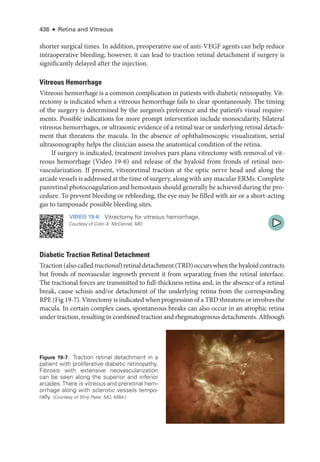
T gondii antibodies supports the diagnosis of acquired disease.
PCR analy­
sis of ocular fluids for T gondii DNA and determining the Goldmann-­
Witmer
coefficient to compare the IgG level in ocular fluid with that in serum can also assist in
confirming the diagnosis. Of note, PCR analy­
sis of ocular fluid for Toxoplasma is not as
sensitive or specific as PCR analy­
sis of ocular fluid for herpes virus (see BCSC Section 9,
Uveitis and Ocular Inflammation, Chapter 5).
Decreased vision and floaters are the most common presenting symptoms of toxoplas-
mic chorioretinitis. Clinically, the condition consists of a focal area of intense, necrotizing
276 ● Retina and Vitreous
chorioretinitis, typically with moderate to severe overlying vitreous inflammation (Fig 11-24).
Recurring disease is indicated by an adjacent or nearby chorioret­
i­
nal scar. Multiple active le-
sions are rare and should prompt HIV testing and inquiry for other pos­
si­
ble ­
causes of im-
munosuppression. HIV-­
seropositive patients with ocular toxoplasmosis have a high risk
of CNS involvement and thus should undergo magnetic resonance imaging with contrast
material. Older adult patients may pre­
sent with more aggressive disease ­
because of their
relative immunosuppression.
Active ocular toxoplasmosis is commonly treated with antibiotics, despite the lack
of well-­
designed randomized controlled ­
trials. The simplest approach is treatment with
trimethoprim-­
sulfamethoxazole. Classic therapy uses sulfadiazine with pyrimethamine
and prednisone (prescribed with folinic acid and accompanied by regular monitoring of
blood cell counts); the addition of clindamycin results in so-­
called qua­
dru­
ple therapy.
Atovaquone and azithromycin are also commonly used in clinical practice. None of ­
these
approaches has been shown to be superior to another for the final visual outcome, lesion
size, or recurrence rate. Treatment typically lasts 4–6 weeks, and complete healing of ac-
tive lesions occurs over 4–6 months. When used, systemic corticosteroids should be given
­
under antibiotic cover. Use of long-­
acting, depot periocular or intraocular corticosteroid
injections should be avoided. Long-­
term maintenance treatment with trimethoprim-­
sulfamethoxazole has been used to decrease the attack rate in patients experiencing fre-
quent recurrences or in severely immunosuppressed patients. Intravitreal clindamycin
with or without dexamethasone has been used to treat vision-­
threatening lesions or for
patients who are intolerant of or who do not respond to systemic therapy.
Figure 11-23 Color fundus photo­
graph montage of neuroretinitis shows optic nerve head
swelling and a macular star formation resulting from cat-­
scratch disease (Bartonella henselae
infection). In the inferonasal periphery, a small focal area of chorioretinitis is vis­
i­
ble.Two smaller
foci are vis­
i­
ble in the inferotemporal and superonasal periphery. (Courtesy of Lucia Sobrin, MD.)
Chapter 11: Focal and Diffuse Ret­
i­
nal and Choroidal Inflammation ● 277
Fernandes Felix JP, Cavalcanti Lira RP, Grupenmacher AT, et al. Long-­
term results of
trimethoprim-sulfamethoxazole versus placebo to reduce the risk of recurrent Toxoplasma
gondii retinochoroiditis. Am J Ophthalmol. 2020;213:195–202.
Kim SJ, Scott IU, Brown GC, et al. Interventions for Toxoplasma retinochoroiditis: a report by
the American Acad­
emy of Ophthalmology. Ophthalmology. 2013;120(2):371–378.
Toxocariasis
Toxocariasis is a parasitic infection caused by 1 of 2 roundworms, Toxocara canis or Toxo-
cara cati, which are common intestinal parasites of dogs and cats, respectively. ­
Humans
are most commonly infected following ingestion of soil or vegetables contaminated by the
Toxocara eggs. Although ocular toxocariasis is part of a systemic infestation by the nema-
tode, systemic manifestations such as visceral larva migrans, fever, and eosinophilia are
relatively uncommon. ­
Children and young adults are affected disproportionately. Com-
mon ocular symptoms include decreased vision and floaters. The condition is unilateral
in most cases and typically has 1 of 3 pre­
sen­
ta­
tions:
• peripheral granuloma, which often produces a traction band that extends ­
toward
the macula (Fig 11-25) and occasionally mimics unilateral intermediate uveitis
with snowbank formation
• posterior pole granuloma, which can decrease vision dramatically when the central
macula is involved
• moderate to severe panuveitis that can mimic endogenous endophthalmitis
Enzyme-­linked immunosorbent assay (ELISA) analy­sis of serum or intraocular fluids
can help establish the diagnosis in ­these cases but is relatively insensitive. Vitreous inflam-
mation, CME, and traction ret­
i­
nal detachment are the most common ­
causes of vision
A B
Figure 11-24 Toxoplasmic chorioretinitis. A, Color fundus photo­
graph montage from a patient
with recurring toxoplasmic chorioretinitis. B, Color fundus photo­
graph shows white focal reti-
nitis (white arrow) with overlying vitreous inflammation, which creates a “headlight in the fog”
appearance, with an adjacent pigmented chorioret­
i­
nal scar. Accompanying perivasculitis and
nonspecific exudates are pre­
sent, in addition to distinct lobular periarteriolar collections of cells
(black arrow) called Kyrieleis plaques. (Courtesy of Stephen J. Kim, MD.)
278 ● Retina and Vitreous
loss. Most specialists assume that the uveitis of toxocariasis represents an immune response
to antigens released from a dead or ­
dying worm. Thus, treatment typically involves use of
local or systemic corticosteroids, and anthelmintic therapy has ­
little or no therapeutic role.
Woodhall D, Starr MC, Montgomery SP, et al. Ocular toxocariasis: epidemiologic, anatomic,
and therapeutic variations based on a survey of ophthalmic subspecialists. Ophthalmology.
2012;119(6):1211–1217.
Ocular Lyme Borreliosis
Lyme disease is caused by the spirochete Borrelia burgdorferi, which is transmitted to
­
humans through the bite of infected ticks. Following the tick bite, the disease usually oc-
curs in 3 stages. In stages 1 and 2, systemic manifestations consist of myalgias, arthralgias,
fever, headache, malaise, and a characteristic skin lesion known as erythema chronicum
migrans (bull’s-­eye rash), which consists of an annulus of erythema surrounding an area of
central clearing. In stage 3, as neurologic or musculoskeletal findings manifest, ocular in-
flammation may develop but is uncommon. Lyme disease–­
related ocular findings include
keratitis, scleritis, and uveitis, which may include anterior chamber or vitreous inflamma-
tion, ret­
i­
nal vasculitis, papillitis, or optic neuritis. Chronic uveitis in patients who reside
in or have traveled to an endemic area or who have had a recent tick bite or an erythema
migrans–­
like skin lesion should suggest the possibility of Lyme disease.
Initial serologic testing is performed using a sensitive ELISA. If an ELISA is positive
or equivocal, separate IgM immunoblotting (if symptoms have been pre­
sent for fewer
than 30 days) and IgG immunoblotting should be performed on the same blood sample.
A diagnosis of Lyme disease is supported only when results of both tests are positive. The
2 tests are designed to be used together; thus, the initial ELISA test should not be skipped.
Figure 11-25 Fundus photo­
graph from a 6-­
year-­
old boy with reduced and distorted vision. The
image shows a peripheral toxocariasis cyst with associated fibrosis (bottom left). The fibrosis
results in considerable traction, and the macula is dragged inferiorly and distorted. (Courtesy of
Colin A. McCannel, MD.)
Chapter 11: Focal and Diffuse Ret­
i­
nal and Choroidal Inflammation ● 279
Treatment for early disease consists of tetracycline, doxycycline, or penicillin. Advanced
disease may require intravenous ceftriaxone or penicillin.
Raja H, Starr MR, Bakri SJ. Ocular manifestations of tick-­
borne diseases. Surv Ophthalmol.
2016;61(6):726–744.
Diffuse Unilateral Subacute Neuroretinitis
Diffuse unilateral subacute neuroretinitis (DUSN) is a rare condition that typically occurs
in other­
wise healthy, young patients and is caused by the presence of a mobile subret­
i­
nal
nematode. The causative nematodes in DUSN have yet to be definitively established, al-
though Toxocara species, Baylisascaris procyonis, and Ancylostoma caninum have all been
implicated. Prompt diagnosis and treatment of the condition can help prevent vision loss,
which may be severe. The clinical findings in DUSN can be divided into acute and end-­
stage manifestations. In the acute phase, patients frequently have decreased visual acuity,
vitritis, papillitis, and clusters of gray-­
white or yellow-­
white outer ret­
i­
nal and choroidal
lesions. The clustering of the lesions is impor­tant ­because it often helps localize the mobile
nematode. The degree of vision loss is often greater than might be expected from clini-
cal examination findings. If DUSN is left untreated, late sequelae ultimately develop and
include optic atrophy, ret­
i­
nal arterial narrowing, and diffuse RPE disruption with severe
vision loss. The late findings may be misinterpreted as unilateral retinitis pigmentosa.
If the nematode can be visualized, it should be destroyed using ­
laser photocoagula-
tion (Fig 11-26).
de Amorim Garcia Filho CA, Gomes AH, de A Garcia Soares AC, de Amorim Garcia CA.
Clinical features of 121 patients with diffuse unilateral subacute neuroretinitis. Am J
Ophthalmol. 2012;153(4):743–749.
West Nile Virus Chorioretinitis
West Nile virus infection is transmitted to ­
humans through the bite of an infected mos-
quito of the genus Culex, with birds serving as the primary reservoir. ­
Human infection
is most often subclinical, although a febrile illness occurs in approximately 20% of cases.
Neurologic disease (meningitis or encephalitis) is common, frequently found in associa-
tion with diabetes mellitus and advanced age. Ocular manifestations occur primarily in
diabetic patients with encephalitis. The eye manifestation most commonly noted with
West Nile virus infection is a multifocal chorioretinitis that is usually bilateral and in-
cludes lesions arranged in distinctive linear clusters that often follow the course of ret­
i­
nal nerve fibers (Fig 11-27). Vision typically remains good ­
unless the lesions involve the
central macula.
Zika Virus Chorioretinitis
Zika virus (ZIKV) is a member of the ­
family Flaviviridae and is related to yellow fever
virus, dengue virus, and West Nile virus. ZIKV is spread primarily by the female Aedes
aegypti mosquito. Infection in adults is often asymptomatic or results in only mild symp-
toms. Infection during pregnancy, however, can result in severe microcephaly and other
Figure 11-27 West Nile virus chorioretinitis. A, Fundus photo­
graph shows chorioret­
i­
nal lesions
in a linear configuration (arrows). B, FA image shows staining of lesions that are characteristi-
cally arranged in a linear configuration in some areas. (Courtesy of Dean Eliott, MD.)
A B
B
A
D
C
Figure 11-26 Diffuse unilateral subacute neuroretinitis. An 11-­
year-­
old boy presented with de-
creased vision in the right eye. Examination findings included moderate vitritis and a relative
afferent pupillary defect in addition to multiple chorioret­
i­
nal lesions and submacular fibrosis. A
worm was not found, and the patient was treated with albendazole. A, Once vitreous inflam-
mation had decreased, multifocal areas of chorioret­
i­
nal scarring in the periphery as well as
submacular fibrosis ­were vis­i­ble. B, In the inferotemporal periphery, a worm was identified.
C, With higher magnification, the small grayish worm (arrow) was vis­i­ble. D, ­
Laser spots ­
were
applied directly to the worm.The patient’s vision subjectively improved, and no further lesions
or inflammation was seen. (Courtesy of Jaclyn Kovach, MD.)
Chapter 11: Focal and Diffuse Ret­
i­
nal and Choroidal Inflammation ● 281
brain malformations in some infants. Macular and optic nerve abnormalities as well as
chorioret­
i­
nal lesions have been reported in some patients with ZIKV infection.
Ebola Virus Panuveitis
Ebola virus ­
causes a severe and fatal hemorrhagic fever in ­
humans; the mortality rate is as
high as 90%. The virus is transmitted by direct contact with infected blood or other body
fluids. Among survivors, uveitis has been described. ­
There has been 1 report of severe
panuveitis that occurred ­
after the patient experienced a complete systemic recovery but
still had per­
sis­
tent viral replication in the aqueous humor.
Chikungunya Virus Retinitis
Chikungunya virus (CHIKV) is a species of the genus Alphavirus. Typically, the virus
is transmitted to ­
humans by a mosquito bite. The most common symptoms of CHIKV
infection are fever and joint pain. Several ocular findings have been reported, including
retinitis and optic neuritis, but anterior uveitis may be the most common pre­
sen­
ta­
tion.
283
C H A P T E R 12
Hereditary Ret­i­nal and
Choroidal Disease
Highlights
• Congenital color vision defects are stationary and usually affect both eyes equally.
Whenhereditary,theyaremostfrequentlyX-­linkedrecessivered-­greenabnormalities.
• Patients with ret­
i­
nal dystrophies should be monitored regularly for treatable ­
causes
of vision loss associated with their condition: cataract, macular edema, glaucoma,
and ret­i­nal exudation.
• Drusenarenotonlyseeninolder-­adulteyes;maculardystrophiesaffectingyoungadults
typically include drusenlike deposits and may lead to choroidal neovascularization.
• Patients with minimal signs of ocular pathology who pre­sent with unexplained vision
loss or are suspected of malingering may in fact have early stages of ret­
i­
nal dystrophy.
• Ge­
ne­
tic screening can assist in confirming a diagnosis of ret­
i­
nal degeneration,
establishing the inheritance pattern, informing at-­
risk relatives, and identifying
candidates for gene therapies.
Color Vision Abnormalities
Defects in color vision, termed dyschromatopsias, are caused by abnormalities of the cone
system. Dyschromatopsia can be ­
either static (stationary) or progressive. Stable dyschro-
matopsia is usually, although not always, congenital. Congenital color vision defects are
stationary and usually affect both eyes equally, whereas acquired color vision defects may
be progressive and/or uniocular. This chapter describes the nonprogressive forms of color
vision loss. For further discussion of optic neuropathies that may lead to acquired vision
loss, refer to BCSC Section 5, Neuro-­Ophthalmology.
Congenital Color Deficiency
Congenital color vision defects are traditionally classified by an individual’s per­
for­
mance on
color-­matching tests. A person with normal color vision (trichromatism, or trichromacy) can
match any colored light by varying a mixture of the 3 primary colors (eg, a long-­
wavelength
red, middle-­
wavelength green, and short-­
wavelength blue light).
Individuals with anomalous trichromatism, who make up the largest group of color-­
deficient persons, can also use 3 primary colors to match a given color. However, ­
because
284 ● Retina and Vitreous
1 of their cone photopigments has an abnormal absorption spectrum, they use dif­
fer­
ent
proportions of colors than ­
those used by persons with normal color vision. Some indi-
viduals have only a mild abnormality. ­
Others have poor color discrimination and may
appear to have dichromatism on some of the color vision tests.
Hereditary congenital color vision defects are most frequently X-­linked recessive red-­
green abnormalities; they affect 5%–8% of males and 0.5% of females. Acquired defects
are more frequently of the blue-­
yellow, or tritan, variety and affect males and females
equally. ­Table 12-1 shows the traditional classification of color vision deficits based on
color-­
matching test results.
Individuals who need only 2 primary colors to make a color match have dichromatism
(also called dichromacy). It is assumed that such individuals lack 1 of the cone photopig-
ments. Approximately 2% of males have dichromatism.
An absence of color discrimination, or achromatopsia, means that any spectral color
can be matched with any other solely by intensity adjustments. The congenital achroma-
topsias are disorders of photoreceptor function. Essentially, ­
there are 2 forms of achroma-
topsia: rod monochromatism and blue-­
cone (S-­
cone) monochromatism. Both disorders
typically pre­
sent with infantile nystagmus syndrome (congenital nystagmus), poor vision,
and photophobia. Electroretinography (ERG) testing helps differentiate achromatopsia
from infantile nystagmus syndrome or ocular albinism, both of which are associated with
normal cone ERGs (see Chapter 3, Fig 3-2).
Rod monochromatism (complete achromatopsia) is the most severe form; affected indi-
viduals have normal rod function but no detectable cone function and thus see the world in
shades of gray. Patients may have partial to full expression of the disorder, with visual acuity
­Table 12-1 ​
Classification and Male-­
Population Incidence of Color Vision Defects
Color Vision Inheritance
Incidence in Male
Population, %
Hereditary
Trichromatism
Normal –­ 92.0
Deuteranomalousa
XR 5.0
Protanomalousb
XR 1.0
Tritanomalousc
AD 0.0001
Dichromatism
Deuteranomalous XR 1.0
Protanomalous XR 1.0
Tritanomalous AD 0.001
Achromatopsia (monochromatism)
Typical (rod monochromatism) AR 0.0001
Aty­pi­cal (blue-­cone monochromatism) XR Unknown
Acquired
Protanomalous-­deuteranomalous (red-­green) Unknown Unknown
Tritanomalous (blue-­yellow) Unknown Unknown
AD = autosomal dominant; AR = autosomal recessive; XR = X-­
linked recessive.
a
Deuteranomalous means reduced sensitivity to green light.
b
Protanomalous means reduced sensitivity to red light.
c
  
Tritanomalous means reduced sensitivity to blue light.
CHAPTER 12: Hereditary Ret­
i­
nal and Choroidal Disease ● 285
ranging from 20/80 to 20/200. Nystagmus is usually pre­
sent in childhood and may improve
with age. Characteristically, the ERG pattern in patients with rod monochromatism shows
an absence of cone-­
derived responses and normal rod responses. Dark adaptometry shows
no cone plateau and no cone–­
rod break. The disorder has autosomal recessive inheritance.
In blue-­cone (S-­cone) monochromatism, the function of rods and S cones is normal,
but L-­and M-­
cone function is absent. (“S” refers to short wavelength.) The condition
is usually X-­
linked and can be difficult to distinguish clinically from rod monochroma-
tism in the absence of a ­
family history or results from specialized color or ERG testing.
Individuals with blue-­
cone monochromatism exhibit preserved S-­
cone ERG responses,
severely reduced light-­
adapted (LA) 3.0 30-­
Hz responses, and normal rod ERGs. ­
These
individuals typically have a visual acuity of approximately 20/80, which is better than the
visual acuity of individuals with typical rod monochromatism.
Night Vision Abnormalities
Deficiencies in night vision, termed nyctalopia, are caused by abnormalities of the rod
system. ­
These are typically static (stationary) and associated with normal visual acuity.
Congenital Night-­
Blinding Disorders With Normal Fundi
Congenital stationary night blindness (CSNB) is a nonprogressive disorder of night vision.
CSNB has 3 ge­
ne­
tic subtypes:
• X-­
linked (most common)
• autosomal recessive
• autosomal dominant (rare)
Snellen visual acuities of patients with CSNB range from normal to occasionally as poor
as 20/200, but most cases of decreased vision are associated with significant myopia. The
appearance of the fundus is usually normal, except for myopic changes in some cases. Pa-
tients commonly pre­
sent with difficulty with night vision, nystagmus, and reduced visual
acuity. Some patients may have a paradoxical pupillary response, in which the pupil initially
constricts when the ambient light dims. Dark-­
adaptometry curves reveal markedly reduced
responses.
Electroretinography is impor­
tant in the diagnosis of CSNB. The most common ERG
pattern seen in patients with CSNB is the negative ERG (the Schubert-­
Bornschein form
of CSNB), in which the 10.0/30.0 response has a normal (or near-­
normal) a-­
wave but a
markedly reduced b-­
wave. The normal a-­
wave excludes significant rod photoreceptor dys-
function, and this result helps to differentiate CSNB from the potentially blinding disorder
retinitis pigmentosa (see Chapter 3 for discussion of electrophysiologic testing). The dif-
ferential diagnosis of CSNB includes other conditions with a negative ERG, such as X-­
linked
juvenile retinoschisis, central ret­
i­
nal artery occlusion, birdshot chorioretinopathy, and
melanoma-­
associated retinopathy; the latter demonstrates an ERG pattern identical to that
of CSNB but usually pre­
sents with acquired nyctalopia (night blindness) and shimmering
photopsias.
286 ● Retina and Vitreous
X-­
linked CSNB has been categorized into 2 types: complete and incomplete. Patients
with complete CSNB have an undetectable dark-­
adapted (DA) 0.01 (rod-­
specific) ERG re-
sponse and psychophysical thresholds that are mediated by cones (see Chapter 3, Fig 3-2B).
Patients with incomplete CSNB have some detectable rod function on ERG and an elevated
dark-­
adaptation final threshold (Fig 12-1). Mutations in the NYX and CACNA1F genes,
which encode proteins involved in the transmission of signals between photoreceptors
and bipolar cells, are responsible for complete and incomplete CSNB, respectively.
Congenital Night-­
Blinding Disorders With Fundus Abnormality
Fundus albipunctatus results from a mutation in RDH5 (12q13–­q14). RDH5 encodes
11-­
cis-­
retinol dehydrogenase, a microsomal enzyme in the ret­
i­
nal pigment epithelium
(RPE) that is involved in the regeneration of rhodopsin. Patients with fundus albipuncta-
tus have very delayed rhodopsin regeneration; and although levels eventually normalize,
the pro­cess may require many hours in the dark. Affected individuals have night blindness
from birth and usually exhibit yellow-­
white dots in the posterior pole that extend into
the midperiphery but spare the fovea (Fig 12-2). ERG responses commonly show a cone-­
isolated ret­
ina pattern, with undetectable DA 0.01 ERG response, and a severely reduced
C
40 μV
20 μV
–20 μV
–40 μV
0 200 ms
0 V
A
40 μV
20 μV
–20 μV
–40 μV
0 200 ms
0 V
B
Complete CSNB Incomplete CSNB Normal
200 ms
40 μV
20 μV
–20 μV
–40 μV
0
0 V
Figure 12-1 Electroretinography (ERG) patterns of on-­and off-­
responses in congenital sta-
tionary night blindness (CSNB). The stimulus has a 200-­
millisecond (ms) duration to enable
in­
de­
pen­
dent recording of the ERG responses to onset and offset. A, The pattern of a patient
with complete CSNB shows a negative-­
waveform on-­
response but a normal off-­
response.
B, The pattern of a patient with incomplete CSNB shows both on-­and off-­
response abnor-
malities. C, Pattern of a subject with normal responses. (Courtesy of Graham E. Holder, PhD.)
Figure 12-2 Fundus photo­
graphs and fundus autofluorescence (FAF) images from a patient
with fundus albipunctatus, showing multiple spots of unknown material scattered primarily
throughout the deep ret­
ina. (Reproduced from Sergouniotis PI, Sohn EH, Li Z, et al. Phenotypic variability in RDH5
retinopathy (fundus albipunctatus). Ophthalmology. 2011;118(8):1661–1670, with permission from Elsevier.)
CHAPTER 12: Hereditary Ret­
i­
nal and Choroidal Disease ● 287
DA 10.0/30.0 response (arising in dark-­
adapted cones) that normalizes with sufficiently
extended dark adaptation (Fig 12-3).
The differential diagnosis of fundus albipunctatus includes retinitis punctata albes-
cens, a disorder related to mutation in RLBP1, which encodes cellular retinaldehyde-­
binding protein. In this condition, which is a progressive rod–­
cone dystrophy, the white
dots may be finer than ­
those of fundus albipunctatus, and the ret­
i­
nal vessels may be at-
tenuated (Fig 12-4). ERG responses are usually very subnormal: although they show some
recovery with extended dark adaptation, they do not normalize.
Patients with Oguchi disease also are night blind from birth. This condition is due
to a mutation ­
either in SAG (2q37), which encodes arrestin, or in GRK1 (13q34), which
encodes rhodopsin kinase. This very rare disorder is most common in Japa­
nese patients.
The fundus in eyes with Oguchi disease is normal ­
after dark adaptation but shows a pe-
culiar yellow iridescent sheen ­
after even brief exposure to light (the Mizuo-­Nakamura
phenomenon; Fig 12-5).
5
4
3
2
Log
relative
intensity
1
0
10 20 30 40 50
Minutes in dark
7' pre-adapt to 3.11 log ft. L.
stimulus = 1.25°, white
located 15° temporal retina
60 70 80 90 100
Figure 12-3 Dark-­adaptometry curve in stationary night blindness.The dark-­adaptometry curve
of this patient (dotted curve) with good vision and nyctalopia and clinical findings of fundus albi-
punctatus shows no rod adaptation. Dashed curve indicates normal response. (Reproduced from
Margolis S, Siegel IM, Ripps H. Variable expressivity in fundus albipunctatus. Ophthalmology. 1987;94(11):1416–1422.
Copyright 1987
, with permission from Elsevier.)
Figure 12-4 Fundus photo­
graph of a patient
with retinitis punctata albescens shows nu-
merous deep ret­
i­
nal white dots. (Courtesy of
John R. Heckenlively, MD.)
288 ● Retina and Vitreous
De Silva SR, Arno G, Robson AG, et al. The X-­
linked retinopathies: physiological insights,
pathogenic mechanisms, phenotypic features and novel therapies. Prog Retin Eye Res.
2021;82:100898.
Zeitz C, Robson AG, Audo I. Congenital stationary night blindness: an analy­
sis and update
of genotype-­
phenotype correlations and pathogenic mechanisms. Prog Retin Eye Res.
2015;45:58–110.
Ret­
i­
nal and Choroidal Dystrophies
Classification and Terminology
Most ret­i­nal and choroidal dystrophies ­were originally named and described purely on the
basis of ophthalmoscopic appearance and clinical course, many years before the discovery
of DNA. Over time, identification of additional affected patients and families, coupled
with advances in gene mapping and molecular biology, has led to a compendium of spe-
cific gene defects associated with previously known phenotypes.
The Online Mendelian Inheritance in Man website (www​.­omim​.­org) lists nearly 1000

ge­
ne­
tic disorders with significant involvement of the ret­
ina, choroid, or both. The Ret­
i­
nal
Information Network, RetNet (https://­sph​.­uth​.­edu​/­retnet​/­
), lists more than 300 dif­
fer­
ent
ret­
i­
nal degenerations for which the gene locus and often the specific gene defect have
been identified. ­
These websites are regularly updated with the most current information
regarding ge­
ne­
tic aspects of ret­
i­
nal and choroidal disorders.
Growing knowledge of the ge­
ne­
tic basis for ­
these diseases further demonstrates the
complexity of the association of genotype and phenotype. For example, in families in which
a single mutation has been identified, the onset, severity, and course of disease can vary
widely among ­family members (termed variable expressivity). Some diseases and syndromes
display distinctive clinical features and are associated with only 1 gene. However, most con-
ditions are associated with multiple genes that give rise to a similar clinical picture (termed
ge­ne­tic heterogeneity).
Figure 12-5 Fundus photo­
graphs showing the Mizuo-­
Nakamura phenomenon. The fundus of
this patient with X-­
linked cone dystrophy is unremarkable in a dark-­
adapted state (right) but has
a yellow iridescent sheen ­
after exposure to light (left).
CHAPTER 12: Hereditary Ret­
i­
nal and Choroidal Disease ● 289
Historically, ret­
i­
nal and choroidal dystrophies have been classified in vari­
ous ways,
each with its logic and limitations:
• On the basis of which ret­
i­
nal layer is involved, such as ret­
ina, RPE, choroid, and
vitreoret­
i­
nal interface. ­
These distinctions are helpful clinically but do not always
correspond to the site(s) of expression of the causative gene.
• On the basis of inheritance pattern of the disease (eg, autosomal dominant, X-­
linked re-
cessive, ­
etc). However, due to ge­
ne­
tic heterogeneity, the same phenotype may be caused
insomecasesbyageneonanautosomalchromosomeandinothercasesbyageneonthe
Xchromosome, and each may be transmitted in ­either a dominant or recessive pattern.
• On the basis of disease phenotype through clinical examination and electrophysi-
ological and psychophysical testing. However, dif­
fer­
ent genes can give rise to simi-
lar phenotypes.
For con­
ve­
nience, this chapter organizes the ret­
i­
nal and choroidal dystrophies on the
basis of clinical phenotypes and anatomical involvement rather than on molecular ge­
ne­
tics. Thus, the reader ­will note that some genes are causative across multiple phenotypes (ge­
ne­
tic heterogeneity), and only in rare instances is a specific phenotype defined by a unique
causative gene. In this schema, disorders that typically affect the photoreceptors of the entire
ret­
ina are classified separately from ­
those that typically affect the macula predominantly, as
the symptoms and prognoses of ­
these disorders often differ. The category of disorders that
affect photoreceptors diffusely or “retina-­wide” is further subdivided into diseases that affect
predominantly rods (rod–­cone dystrophies), diseases that affect predominantly cones (cone–­
rod dystrophies), and diseases that affect predominantly the choroid.
Daiger SP, ­
Sullivan LS, Bowne SJ. Ge­
ne­
tic mechanisms of ret­
i­
nal disease. In: Schachat AP,
Wilkinson CP, Hinton DR, Sadda SR, Wiedemann P, eds. Ryan’s Ret­i­na. Vol 2. 6th ed.
Elsevier/Saunders; 2018:711–721.
General Diagnostic Considerations
With rare exceptions, hereditary diseases of the eye have bilateral, symmetric involvement. If
ocular involvement is unilateral, other ­causes—­such as birth defects, intrauterine or antenatal
infections, inflammatory diseases, or trauma—­
should be considered. ­
Because ret­
i­
nal degen-
erations can also occur as part of a systemic disorder, obtaining a thorough medical history is
crucial, as is ruling out any reversible or treatable cause of ret­i­nal dysfunction, such as vitamin
A deficiency, autoimmune disorders, and paraneoplastic or infectious retinopathy.
Clinical diagnostic evaluation, assessment of disease severity, and monitoring of pro-
gression of chorioret­
i­
nal dystrophies usually involve some combination of fundus auto-
fluorescence (FAF), optical coherence tomography (OCT), perimetric testing, ERG, and
ge­
ne­
tic testing. Several photoreceptor dystrophies have typical phenotypes, such as the
deep ret­
i­
nal white dots or flecks in retinitis punctata albescens (see Fig 12-4), choriocapil-
laris atrophy in choroideremia (CHM), or the crystalline deposits associated with Bietti
crystalline dystrophy (CYP4V2). Distinctive phenotypes are the exception, however.
Generally, panret­i­nal dystrophies or degenerations of the RPE and ret­ina are divided into
2 groups: nonsyndromic retinopathies and syndromic retinopathies. The term nonsyndromic
290 ● Retina and Vitreous
panret­i­nal dystrophies refers to hereditary disorders that diffusely involve photoreceptor
and pigment epithelial function; ­
these conditions are characterized by progressive visual
field loss, central vision loss, and subnormal ERG responses. The disease pro­
cess is confined
to the eyes and is not associated with systemic manifestations. In syndromic (secondary)
panret­i­nal dystrophies, the ret­
i­
nal degeneration is associated with 1 or more organ systems,
such as hearing loss (in Usher syndrome) or neurodegeneration and nephronophthisis (in
Joubert syndrome; for discussion of ret­
i­
nal degenerations associated with systemic disease,
see Chapter 13). Occasionally, when the etiology is unknown and no associated disease is
pre­
sent, the term pigmentary retinopathy is used to describe the disorder. The focus of this
chapter is on the nonsyndromic retinopathies.
General Ge­ne­tic Considerations
All inheritance patterns are represented among the currently known inherited ret­
i­
nal dys-
trophies. Thus, obtaining an accurate and complete ­family history is essential in determining
the dystrophy’s inheritance pattern (ie, autosomal dominant, autosomal recessive, X-­
linked
recessive, X-­
linked dominant, or mitochondrial). However, patients with ret­
i­
nal dystrophies
may have a negative ­
family history for a variety of reasons, including lack of information,
variable expressivity or incomplete penetrance within the ­
family, or de novo mutations. It is
helpful to examine relatives for any signs of asymptomatic ret­
i­
nal degeneration.
Molecular ge­
ne­
tic testing helps to confirm a suspected diagnosis of ret­
i­
nal degenera-
tion, to identify the causative gene(s) of a generalized phenotype, to uncover a de novo mu-
tation, and to identify asymptomatic relatives and carriers. This type of testing is also useful
for identifying syndromic versus nonsyndromic ­
causes of ret­
i­
nal dystrophies, but it does
not predict the penetrance, expressivity, or rate of progression of ­
these conditions. Testing
asymptomatic individuals to determine a potential ­
future risk of vision loss is generally not
warranted (­
unless a treatment is available), given the wide variability of expressivity.
Stone EM, Aldave AJ, Drack AV, et al. Recommendations of the American Acad­
emy of
Ophthalmology Task Force on Ge­
ne­
tic Testing. February 2014. Accessed January 5, 2022.
www.aao.org/clinical-statement/recommendations-genetic-testing-of-inherited-eye-d
General Management Considerations
Management of patients with ret­
i­
nal degeneration should include ophthalmic evaluations
­
every 1–2 years. Follow-up visits are appropriate to address refractive management and
to monitor for the development of treatable ocular conditions: cystoid macular edema
(CME), cataract, glaucoma, and ret­
i­
nal exudation. CME develops in 10%–20% of patients
with ret­i­nal degenerations.
Patients with ret­i­nal dystrophies may understandably fear that they ­will become blind
in the near ­future. The clinician should help ­these patients understand that total blindness
is an infrequent endpoint but that the disease’s impact on visual function (eg, reduced vi-
sual acuity, reduced visual field) may affect their activities and quality of life. Patients and
their ­
family members may benefit from psychological and ge­
ne­
tic counseling. Patients
with subnormal visual acuity may benefit from low vision aids, while ­those with advanced
disease may need vocational rehabilitation and mobility training. The American Acad­emy
CHAPTER 12: Hereditary Ret­
i­
nal and Choroidal Disease ● 291
of Ophthalmology’s Initiative in Vision Rehabilitation, available on the ONE Network,
provides information and a variety of resources, including a patient handout (www​.­aao​
.­org​/­low​-­vision​-­and​-­vision​-­rehab).
Diffuse Dystrophies: Photoreceptor Dystrophies
Rod–­cone dystrophies
Patients with rod–­
cone dystrophies, usually referred to as retinitis pigmentosa (RP), often
pre­sent with history of nyctalopia and peripheral visual field loss. ­These findings correlate
with the location and primary function of rod photoreceptors. The history may not be
clear; patients may assume that their visual function is normal, ­
because it is “normal” for
them not to be able to see in the dark. Validated methods and instruments (such as dark-­
adapted ERG and visual field testing or low-­
luminance questionnaires) are also available
for quantification of visual dysfunction.
Typical fundus findings in rod–­
cone dystrophy include arteriolar narrowing, with
or without optic nerve head pallor, and variable amounts of bone spicule–­
like pigmentary
changes (Fig 12-6). ­
These pigmentary changes result from intraret­
i­
nal pigment deposition
by macrophages that migrate into the ret­
ina to pro­
cess degenerating ret­
i­
nal cells. This form
of pigment deposition within the ret­
ina occurs in regions of outer ret­
i­
nal atrophy (eg, fol-
lowing ret­
i­
nal detachment or inflammatory retinopathies) and is not specific to hereditary
retinopathies. The peripheral ret­
ina and RPE may be atrophic even if intraret­
i­
nal pigment
is absent (RP sine pigmento), and the macula typically shows a loss of the foveal reflex and
irregularity of the vitreoret­
i­
nal interface. Autofluorescence imaging can often identify ad-
ditional areas of ret­
i­
nal involvement that are not evident on clinical examination.
Vitreous cells, CME, epiret­
i­
nal membranes, optic disc drusen, and posterior subcapsu-
lar cataracts are commonly observed in eyes with panret­
i­
nal dystrophies. CME, which is de-
tected by OCT in about one-­
quarter of cases, may be treatable with oral carbonic anhydrase
inhibitors (Fig 12-7). In approximately 2%–5% of patients with panret­i­nal dystrophies, areas
of vascular hyperpermeability and areas of exudative retinopathy (the so-­
called Coats reac-
tion; Fig 12-8) ­
will develop. Eyes with rod–­
cone degenerations typically develop partial-­to
full-­
ring scotomata in midequatorial regions; ­
these often expand into the periphery, leaving
only a small central island of visual field (Fig 12-9). The coexistence of cataract, vitreous
cells, and macular edema can sometimes lead to the mistaken diagnosis of uveitis.
The ERG response in eyes with rod–­
cone dystrophies typically shows a marked re-
duction in rod-­
derived responses, more than in cone-­
derived responses. Both a-­and b-­
waves are reduced ­
because the photoreceptors are primarily involved. The b-­
waves are
characteristically prolonged in duration and diminished in amplitude. Individuals with
the carrier state of X-­
linked recessive RP often show a mild reduction or delay in b-­
wave
responses. Eyes with postinflammatory retinopathies (eg, retinopathies resulting from
rubella) often have better preservation of the ERG than eyes with similar-­
appearing pig-
mentary changes from a hereditary retinopathy. Although the rod and cone amplitudes
are reduced in postinflammatory retinopathies, the implicit times are usually within nor-
mal ranges ­
because the remaining photoreceptors are essentially normal. In contrast, in
patients with a hereditary retinopathy, the remaining photoreceptors are impaired by the
292 ● Retina and Vitreous
ge­
ne­
tic condition, and the ERG response shows prolonged implicit times. In conventional
testing of many rod–­
cone dystrophies, the ERG responses may initially pre­
sent as unde-
tectable or become undetectable over time. ­
Unless the patient has a treatable condition,
such as vitamin A deficiency or an autoimmune retinopathy, repetitive ERG testing has
minimal benefit for monitoring disease progression.
Sector RP refers to disease that involves only 1 or 2 sectors of the fundus (Fig 12-10).
This condition is generally symmetric between eyes, which helps rule out acquired dam-
age (eg, from trauma, vascular insult, or inflammation). Unilateral RP is extremely rare.
Typical ­
causes of unexplained unilateral pigmentary retinopathy are infection (rubella,
A B
C
Figure 12-6 Examples of fundus findings characteristic of rod–­
cone dystrophy. A, Fundus of a
54-­year-­old ­woman with USH2A mutation shows optic nerve head pallor, arteriolar attenuation,
macular atrophy, and widespread peripheral pigmentary alteration. Corrected distance visual
acuity (CDVA) was hand motions. B, Fundus of a 66-­
year-­
old man with USH2A mutation shows
extensive peripheral ret­
i­
nal pigment epithelium (RPE) atrophy but relative preservation of the
optic nerve, macula, and arterioles. CDVA was 20/30. Note the wide differences in phenotypes
between panels A and B, despite involvement of the same gene. C, Fundus of a 45-­
year-­
old
­
woman with mutations in the PCARE and CRB1 genes shows arteriolar attenuation, prominent
RPE hyperplasia (so-­
called bone spicules) posterior to the equator, and lacunar RPE atrophy in
the periphery. A tiny island of healthy ret­
ina remains in the fovea. CDVA was 20/100. (Courtesy
of Franco M. Recchia, MD.)
CHAPTER 12: Hereditary Ret­
i­
nal and Choroidal Disease ● 293
syphilis), inflammation, remote trauma, and retained intraocular metallic foreign body.
Most cases of pigmented paravenous retinopathy are postinflammatory, have interocular
asymmetry, and are usually nonprogressive.
When a suspected panret­
i­
nal dystrophy is being evaluated in a patient with a negative
­family history (sporadic ret­i­nal dystrophy), it is impor­
tant to consider acquired ­
causes of
ret­
i­
nal degeneration that can mimic hereditary conditions, including previous bilateral
ophthalmic artery occlusions, diffuse uveitis, infections (eg, syphilis), paraneoplastic syn-
dromes, and ret­
i­
nal drug toxicity. Syndromic forms of pigmentary retinopathy associated
with metabolic or other organ system disease must also be considered (see Chapter 13).
Gregory-­
Evans K, Pennesi ME, Weleber RG. Retinitis pigmentosa and allied disorders. In:
Schachat AP, Wilkinson CP, Hinton DR, Sadda SR, Wiedemann P, eds. Ryan’s Ret­i­na. Vol 2.
6th ed. Elsevier/Saunders; 2018:861–935.
A
B
C
Figure 12-7 Rod–­
cone dystrophy (associated with a pathogenic RDH12 variant) complicated
by cystoid macular edema (CME). Montage fundus photo­
graph (A) and spectral-­
domain optical
coherence tomography (SD-­
OCT) (B) at pre­
sen­
ta­
tion show cysts in the foveal area. CDVA was
20/50. C, SD-­
OCT 3 months ­
after treatment was initiated with oral acetazolamide, 500 mg daily,
shows a substantial reduction in macular edema. CDVA was 20/40. (Courtesy of Franco M. Recchia, MD.)
294 ● Retina and Vitreous
Figure 12-8 Exudative retinopathy and subsequent traction-­
exudative ret­
i­
nal detachment
complicating a case of USH2A-­
associated rod–­
cone dystrophy. Background arteriolar attenua-
tion and peripheral pigmentary changes are also pre­
sent. (Courtesy of Franco M. Recchia, MD.)
A B
Figure 12-9 Examples of visual fields in retinitis pigmentosa (RP), which were obtained with a
Goldmann III-4 test object. A, Early disease: midperipheral scotomata. B, Late disease: severe
loss, sparing only a central tunnel and a far-­
peripheral island, which may eventually dis­
appear.
(Courtesy of Michael F
. Marmor, MD.)
Management One large study reported that high daily doses of vitamin A palmitate
(15,000 IU/day) slowed the decline in ERG response in eyes with RP. A slight benefit from
supplementation with omega-3 and omega-6 fatty acids has also been reported. The mod-
est benefit of high-­
dose vitamin A supplementation must be weighed against the risks of
long-­
term liver toxicity, vitamin A–­
related intracranial hypertension, and teratogenicity.
Excessive light exposure may play a role in ret­
i­
nal degenerations caused by rhodop-
sin mutations and/or genes that contribute to lipofuscin accumulation, such as ABCA4.
Recommendations for patients to wear UV-­
absorbing sunglasses and brimmed hats for
CHAPTER 12: Hereditary Ret­
i­
nal and Choroidal Disease ● 295
protection from high levels of light exposure seem prudent, despite the absence of direct
evidence of benefit.
Efforts to restore at least some vision in patients rendered completely blind from RP
have included the use of electronic chips that interface with the remaining ret­i­nal tissue or
directly with the visual cortex. At least 5 variations of a “ret­
i­
nal prosthesis” have been, or
continue to be, investigated. Other therapeutic investigative efforts involve gene therapy
and stem cell transplantation.
Makiyama Y, Oishi A, Otani A, et al. Prevalence and spatial distribution of cystoid spaces in
retinitis pigmentosa: investigation with spectral domain optical coherence tomography.
Ret­i­na. 2014;34(5):981–988.
Salvatore S, Fishman GA, Genead MA. Treatment of cystic macular lesions in hereditary ret­
i­
nal dystrophies. Surv Ophthalmol. 2013;58(6):560–584.
Cone and cone–­
rod dystrophies
The cone dystrophies comprise a heterogeneous group of hereditary diseases with more than
25 identified causative genes. Patients with cone dystrophy typically pre­
sent with progressive
loss of central vision and color discrimination (reflecting the primary location and function
of cone photoreceptors). They may also experience hemeralopia (day blindness) and photo-
phobia (discomfort and/or pain in the presence of normal levels of light). Onset of symptoms
typically occurs in the teenage years or ­
later adulthood. Ophthalmoscopy may be normal
early in the course of the disease. In other patients, ophthalmoscopy may reveal the typical
symmetric bull’s-­
eye pattern of macular atrophy (Fig 12-11) or more severe atrophy, such as
demarcated circular macular lesions. Mild to severe temporal optic atrophy and tapetal ret­
i­
nal reflexes (with a glistening greenish or golden sheen) may also be pre­
sent. Unlike macular
dystrophies, the cone dystrophies are more associated with color discrimination symptoms
and photophobia; and as such, they must be differentiated from color vision defects.
Cone dystrophies are diagnosed when ERG results indicate a subnormal or undetectable
photopicERGresponseandanormalornear-­normalrod-­isolatedERGresponse.Whenpres­
ent, the LA 3.0 30-­
Hz ERG response is almost invariably delayed, in keeping with generalized
A B
Figure 12-10 Fundus photo­
graphs of delimited forms of inherited ret­
i­
nal dystrophies. Note
the sharp demarcation between the areas of degeneration and other regions of the fundus
that appear healthy. It is impor­
tant to assess interocular symmetry and the pattern of cell dam-
age to consider acquired forms of retinopathy (such as pigmented paravenous retinopathy).
A, Fundus with degenerative changes near the arcades. B, Fundus with sector RP (between
arrows), showing vascular narrowing and spicules only in the inferonasal quadrant. (Courtesy of
Michael F
. Marmor, MD.)
296 ● Retina and Vitreous
cone system dysfunction. Peripheral visual fields may remain normal. The cone dystrophies
are progressive. In some patients, secondary rod photoreceptor involvement develops in ­
later
life, suggesting overlap between progressive cone dystrophies and cone–­
rod dystrophies.
Similar to patients with cone dystrophies, patients with cone–­rod dystrophies typically
pre­
sent with reduced central vision and symptoms of dyschromatopsia and photophobia.
On visual field testing, some patients show a tight ring or central scotoma within the central
20° or 30° of the visual field. Ophthalmoscopy may initially be normal; ­
later, it may demon-
strate intraret­
i­
nal pigment in areas of ret­
i­
nal atrophy in the fundus periphery, and patients
may report progressive nyctalopia. The diagnostic ERG hallmark of a cone–­
rod dystrophy
is that the cone-­
derived full-­
field ERG responses are more subnormal than the rod ERG
responses (see Chapter 3, Fig 3-2).
Leber congenital amaurosis
The dystrophies that are typified by early onset and rapid progression of severe bilateral
vision loss are collectively termed Leber congenital amaurosis (LCA; see also BCSC Sec-
tion 6, Pediatric Ophthalmology and Strabismus, Chapter 24). LCA is characterized by
severely reduced vision from birth, usually associated with wandering nystagmus. Infants
exhibit ­limited to no visual response, and visual acuities tend to range between 20/200 and
no light perception. Some infants with LCA rub or poke their eyes (the oculodigital reflex)
in order to create visual stimulation, as do other infants with poor vision.
In the early stages, obvious fundus changes are rare, and molecular ge­
ne­
tic testing
offers the best method of distinguishing stationary and progressive hereditary retinopa-
thies. In addition, ­
because ­
there are both syndromic and nonsyndromic forms of LCA,
a molecular ge­
ne­
tic diagnosis can help identify potential systemic features that warrant
medical management. Some forms of LCA involve developmental defects, while ­
others
appear to represent degenerations of normally formed ret­
ina. Postinfectious etiologies
should be considered based on history and clinical findings. Central macular atrophic le-
sions (sometimes incorrectly referred to as macular colobomas) are often seen in eyes with
LCA, in addition to early-­onset cataracts and keratoconus in older ­children. Most ­children
Figure 12-11 Fundus photo­
graph of cone dys-
trophy shows the bull’s-­
eye pattern of central
atrophy.
CHAPTER 12: Hereditary Ret­
i­
nal and Choroidal Disease ● 297
with nonsyndromic LCA have normal intelligence, and some of the observed psychomo-
tor impairment may be secondary to sensory deprivation.
The ERG response is typically minimal or undetectable, but ERG testing cannot differ-
entiate stationary (CSNB or achromatopsia) from progressive (rod–­cone dystrophy or cone–­
rod dystrophy) conditions. LCA typically progresses the most rapidly of ­
these conditions.
Autosomal dominant and autosomal recessive inheritance of LCA have been linked to
at least 3 genes and 23 genes, respectively. ­
There is some overlap in the genes responsible for
LCA and ­
those that cause later-­
onset ret­
i­
nal dystrophies (both rod–­
cone and cone–­
rod). In
2017, the US Food and Drug Administration issued the first approval for a gene therapy,
voretigene neparvovec-­
rzyl (Luxturna, Spark Therapeutics), for RPE65-­
linked LCA in indi-
viduals aged 1 year or older. See Chapter 20 for further discussion of gene therapy.
Russell S, Bennett J, Wellman JA, et al. Efficacy and safety of voretigene neparvovec (AAV2-­
hRPE65v2) in patients with RPE65-­
mediated inherited ret­
i­
nal dystrophy: a randomised,
controlled, open-­
label, phase 3 trial. Lancet. 2017;390(10097):849–860. Published correction
appears in Lancet. 2017;390(10097):848.
Enhanced S-­
cone syndrome
The most prominent features of the severe form of enhanced S-­
cone syndrome (ESCS),
also known as Goldmann-­Favre syndrome, include nyctalopia, increased sensitivity to blue
light, pigmentary ret­
i­
nal degeneration, an optically empty vitreous, hyperopia, pathogno-
monicERGabnormalities,andvaryingdegreesofperipheraltomidperipheralvisualfieldloss
(Fig 12-12). The posterior pole may show round, yellow, sheenlike lesions along the arcades,
accompanied by areas of diffuse degeneration. Deep nummular pigmentary deposition is
usually observed at the level of the RPE around the vascular arcades. Macular (and sometimes
peripheral) schisis may be pre­
sent, overlapping the phenotype of X-­
linked retinoschisis. The
ERG response includes no detectable DA 0.01 signal; delayed and simplified responses to a
brighter flash that have the same waveform ­
under both DA and LA conditions; and a LA 3.0
30-­
Hz response of lower amplitude than that of the LA 3.0 (photopic single-­
flash) a-­
wave.
Eyes with ESCS have an overabundance of blue cones, a reduced number of red and
green cones, and few, if any, functional rods. This condition is unique in that it is both a
developmental and degenerative photoreceptor retinopathy. ESCS is autosomal recessive
and results from homozygous or compound heterozygous mutations in NR2E3. The vi-
sual prognosis is highly variable.
Diffuse Dystrophies: Choroidal Dystrophies
Widespread primary ret­
i­
nal or RPE disease that ­
causes advanced atrophy of the cho-
riocapillaris occurs in choroideremia, gyrate atrophy, Bietti crystalline dystrophy, and
phenothiazine-­
related ret­
i­
nal toxicity (see also Chapter 14). In FAF imaging, hypoauto-
fluorescence in the areas of atrophy is typically observed in all of ­
these conditions and is
therefore helpful for monitoring the disease progression.
Choroideremia
Patients with choroideremia have nyctalopia and show progressive peripheral visual field
loss over 3–5 de­
cades. Most patients maintain good visual acuity ­
until a central island of
298 ● Retina and Vitreous
foveal vision is lost. The degeneration initially manifests as mottled areas of pigmenta-
tion in the anterior equatorial region and macula. The anterior areas gradually degenerate
­
toward the posterior pole to form confluent scalloped areas of RPE and choriocapillaris
loss; larger choroidal vessels are preserved (Fig 12-13). The ret­
i­
nal vessels appear normal,
and ­
there is no optic atrophy.
On fluorescein angiography, the changes are pronounced: the scalloped areas of miss-
ing choriocapillaris appear hypofluorescent next to brightly hyperfluorescent areas of
perfused choriocapillaris with intact overlying RPE. FAF imaging shows a characteristic
speckled pattern of autofluorescence in the nonatrophic areas. The ERG response is sub-
normal early in the course of the disease and is generally extinguished by midlife. ­
Because
phenotypes can overlap with other conditions, especially other choroidal dystrophies, the
clinical and imaging features should not be considered pathognomonic.
A
B
C
D G
E H
F I
Figure 12-12 Clinical characteristics of enhanced S-­
cone syndrome. In the early stages, the
fundus may be normal. In older subjects, the fundus usually shows 360° nummular pigmentary
changes outside the vascular arcades at the level of the RPE (A–­C). The macula may show
changes resulting from schisis or nonspecific pigment epithelial changes (C). The autofluo-
rescence is variable (D–­F). ­
There may be hyperautofluorescence within the arcades that ­
either
spares or involves the foveal region. SD-­
OCT imaging of the macula may be normal (G) or show
schitic and/or cystoid changes (H) or outer ret­
i­
nal abnormalities (I). (Reproduced with permission from
Vincent A, Robson AG, Holder GE. Pathognomonic (diagnostic) ERGs. A review and update. Ret­i­na. 2013;33(1):5–12.
doi:10.1097/IAE.0b013e31827e2306)
CHAPTER 12: Hereditary Ret­
i­
nal and Choroidal Disease ● 299
Choroideremia is X-­
linked and caused by mutations in CHM, which is constitutively
expressed and encodes geranylgeranyl transferase Rab escort protein (REP1). REP1 plays
an essential role in the intracellular trafficking of proteins, substrates, and organelles by
mediating proper lipid modification (prenylation) of specific G proteins called Rab pro-
teins. Carriers of choroideremia are usually asymptomatic and have normal ERGs. How-
ever, they often show patches of subret­
i­
nal black mottled pigment, and occasionally, older
female carriers show a lobular pattern of choriocapillaris and RPE loss. Gene therapy ­trials
for choroideremia are ongoing.
Edwards TL, Jolly JK, Groppe M, et al. Visual acuity ­
after ret­
i­
nal gene therapy for choroideremia.
N Engl J Med. 2016;374(20):1996–1998.
Gyrate atrophy
Patients affected by gyrate atrophy usually develop nyctalopia during the first de­
cade of
life and experience progressive loss of visual field and visual acuity ­
later in the course
of the disease. Macular edema is commonly pre­
sent. In the early stages of the disease,
patients have large, geographic, peripheral paving-­
stone–­
like areas of atrophy of the RPE
and choriocapillaris, which gradually coalesce to form a characteristic scalloped border
at the junction of normal and abnormal RPE (Fig 12-14). Gyrate atrophy is an autosomal
recessive dystrophy caused by mutations in OAT, the gene for ornithine aminotransferase.
The diagnosis is supported by elevated plasma levels of ornithine, as well as by ge­
ne­
tic
testing for mutations of OAT. If started at a young age, aggressive dietary restriction of
Figure 12-13 Montage fundus photo­
graph of a 22-­
year-­
old patient with choroideremia. (Courtesy
of Cagri G. Besirli, MD.)
300 ● Retina and Vitreous
arginine intake and, in some cases, vitamin B6 supplementation can slow or halt progression
of the ret­
i­
nal degeneration.
Bietti crystalline dystrophy
Individuals with Bietti crystalline dystrophy develop symptoms of nyctalopia, decreased
vision, and paracentral scotomata in the second to fourth de­cades of life. On examination,
intraret­
i­
nal yellow-­
white crystals are vis­
i­
ble in the posterior ret­
ina and in the peripheral
cornea near the limbus. As the disease progresses, widespread retinochoroidal atrophy
develops and peripheral vision worsens. The condition is a very rare autosomal recessive
disorder caused by mutations in the gene CYP4V2. ­
There is no known treatment.
Macular Dystrophies
Stargardt disease
With an incidence of roughly 1 in 10,000, Stargardt disease is the most common juvenile
macular dystrophy and a common cause of central vision loss in adults younger than
50 years. The visual acuity in Stargardt disease typically ranges from 20/50 to 20/200.
The classic Stargardt phenotype is characterized by a juvenile-­
onset foveal atrophy
surrounded by discrete, yellowish, round or pisciform (fish-­
shaped) flecks at the level of
the RPE (Fig 12-15). ­
These flecks represent excessive accumulation of lipofuscin, a waste
product of RPE metabolism, within the RPE cells. On fluorescein angiography, 80% or
more of patients with Stargardt disease have a “dark choroid,” in which blocking of choroi-
dal fluorescence by swollen, lipofuscin-­
laden RPE cells accentuates the ret­
i­
nal circulation
(see Fig 12-15B). FAF imaging is a more reliable means of demonstrating elevated back-
ground autofluorescence and characteristic findings, including peripapillary sparing of
RPE changes, central macular hypoautofluorescence, and over time, an outward expand-
ing pattern of hyperautofluorescent flecks that leave hypoautofluorescent areas in their
wake. Full-­
field ERGs are not diagnostic for this condition.
The age at onset and pre­
sen­
ta­
tion of the clinical features in Stargardt disease vary,
sometimes even among individuals in the same ­
family. The condition is usually slowly
progressive with the accumulation of lipofuscin in the RPE (Fig 12-16). In ­
later stages,
atrophic maculopathy, with or without lipofuscin flecks and panret­
i­
nal degeneration, can
be observed.
Figure 12-14 Gyrate atrophy. Wide-­
angle fun-
dus photo­
graph shows scalloped edges of
the remaining posterior ret­
ina, as is typically
seen in gyrate atrophy. A crescent of nasal
macular atrophy is also pre­
sent. (Courtesy of
Colin A. McCannel, MD.)
CHAPTER 12: Hereditary Ret­
i­
nal and Choroidal Disease ● 301
A B
C D
Figure 12-15 Examples of Stargardt disease. A, Fundus photo­
graph shows paramacular yel-
lowish flecks and “beaten-­
bronze” central macular atrophy. B, Fluorescein angiography image of
the same eye shows a dark choroid, hyperfluorescence associated with the flecks, and bull’s-­
eye
pattern of macular transmission defect. C, D, Fundus photo­
graphs of the right and left eye,
respectively, show classic multiple, discrete, yellowish, pisciform (fish-­
shaped) flecks scattered
throughout the posterior pole. (Parts A and B courtesy of Mark W. Johnson, MD; parts C and D courtesy of Paul
Sternberg Jr, MD.)
Figure 12-16 Scanning electron micrograph
of the RPE in Stargardt disease.The regions of
RPE cells engorged with abnormal lipofuscin-­
like material (arrow) are seen clinically as yel-
lowish flecks. Note that the cells comprising
the normal RPE monolayer are substantially
smaller (arrowheads). (Reproduced from Ea­
gle RC Jr,
Lucier AC, BernardinoVB Jr,Yanoff M. Ret­
i­
nal pigment epithe-
lial abnormalities in fundus flavimaculatus: a light and electron
microscopic study. Ophthalmology. 1980;87(12):1189–1200.
Copyright 1980, modified with permission from Elsevier.)
302 ● Retina and Vitreous
Most cases of Stargardt disease are autosomal recessive and are caused by mutations
in ABCA4. However, autosomal dominant transmission patterns can result from muta-
tions in other genes, most notably ELOVL4, PROM1, and PRPH2 (RDS/peripherin). The
ABCA4 gene encodes an adenosine triphosphate (ATP)-­
binding cassette transporter pro-
tein expressed by rod outer segments and RPE. Dysfunction of this transporter protein
impairs the proper disposal of lipofuscin, which is toxic to RPE cells. In animal models
of ABCA4-­
related disease, vitamin A supplementation accelerates the accumulation of
lipofuscin pigments in the RPE and, in conjunction with blue light, also accelerates ret­i­nal
cell death. Drug therapies to reduce lipofuscin accumulation, gene therapies, and stem cell
treatments are currently undergoing clinical ­
trials.
A clinical variant termed fundus flavimaculatus results from mutations in the same
genes that cause Stargardt disease and can be pre­
sent in families with the classic Stargardt
phenotype. In patients with the variant, the flecks are widely scattered throughout the
fundus but spare the macula.
Best disease, or Best vitelliform dystrophy
Individuals affected by Best disease frequently develop a yellow, egg yolk–­
like (vitelliform)
macular lesion in childhood. The solid-­
appearing vitelliform lesion eventually breaks
down, leaving a mottled geographic atrophy appearance (Fig 12-17). The breakdown of
the solid lesion can proceed over years or even de­
cades. Late in the course of the disease,
the geographic atrophy may be difficult to distinguish from other types of macular degen-
eration or dystrophy. Some patients (up to 30% in some series) have extrafoveal vitelliform
lesions in the fundus. The macular appearance in all stages is deceptive, as most patients
maintain relatively good visual acuity throughout the course of the disease. Even patients
with “scrambled-­
egg” macular lesions typically have visual acuities from 20/30 to 20/60. In
approximately 20% of patients, a choroidal neovascular membrane develops in at least 1 eye.
The ERG response is characteristically normal, but the electro-­
oculogram (EOG) result is
almostalwaysabnormal,eveninapparentlyunaffected,asymptomaticindividualswhohavethe
causative ge­
ne­
tic variant but have normal-­
appearing fundi (ie, carriers). The light peak to dark
trough ratio (Arden ratio) of the EOG (see Chapter 3) is typically 1.5 or less. Before ordering
an EOG to rule out Best disease, the clinician should ensure that the full-­
field ERG is normal.
A B
Figure 12-17 Fundus photo­
graphs of Best vitelliform dystrophy. A, Characteristic “yolk” stage,
during which visual acuity is typically good. B, Atrophy and scarring ­
after the yolk breaks down.
(Courtesy of Mark W. Johnson, MD.)
CHAPTER 12: Hereditary Ret­
i­
nal and Choroidal Disease ● 303
Best disease is an autosomal dominant maculopathy caused by mutations in the BEST1
gene (also known as VMD2). The encoded protein bestrophin localizes to the basolateral
plasma membrane of the RPE and functions as a transmembrane ion channel. Although
some BEST1 variants cause autosomal dominant disease, other mutations, when pre­
sent
as homozygous or compound heterozygous variants, can give rise to autosomal recessive
bestrophinopathy (ARB). Unlike Best disease, ARB is associated with progressive ret­
i­
nal
dysfunction on the full-­field ERG, loss of visual acuity, diffuse irregularity of the RPE, and
dispersed punctate flecks that are distinct from extramacular vitelliform lesions.
Agarwal A. Gass’ Atlas of Macular Diseases. 5th ed. Saunders; 2011:278–280.
Boon CJ, Klevering BJ, Leroy BP, Hoyng CB, Keunen JE, den Hollander AI. The spectrum
of ocular phenotypes caused by mutations in the BEST1 gene. Prog Retin Eye Res. 2009;
28(3):187–205.
Conditions and disorders with adult-­
onset vitelliform lesions
Several conditions and disorders feature adult-­onset macular vitelliform lesions. The most
common of ­
these disorders, adult-­
onset foveomacular vitelliform dystrophy, is one of the
pattern dystrophies (discussed ­
later in this chapter). It is characterized by yellow subfo-
veal lesions that are bilateral, round or oval, and typically one-­
third disc dia­
meter in size;
they often contain a central pigmented spot (Fig 12-18). Occasionally, when the lesions
are larger, the patient may be misdiagnosed as having Best disease or even age-­
related
macular degeneration. This dystrophy generally appears in the fourth to sixth de­
cades
of life in patients who ­
either are visually asymptomatic or have mild blurring and meta-
morphopsia. Eventually, the lesions may fade, leaving an area of RPE atrophy, but most
patients retain reading vision in at least 1 eye throughout their lives. Autosomal dominant
inheritance has been recognized in some affected families. The most common causative
gene is PRPH2, and ­
there is evidence of ge­
ne­
tic heterogeneity for this phenotype.
Patients with numerous basal laminar (cuticular) drusen may develop an unusual
vitelliform exudative macular detachment (Fig 12-19), which can be mistaken for cho-
roidal neovascularization (CNV) ­
because of the subret­
i­
nal hyporeflectivity on OCT. The
diagnosis of CNV can be confirmed by the presence of leakage (enlarging and increasing
hyperfluorescence over time) on fluorescein angiography or OCT angiography. In the ab-
sence of CNV, the angiographic findings are early blockage by the subret­
i­
nal material and
late staining without lesion enlargement.
Some patients with large soft drusen have a large, central coalescence of drusen, or
drusenoid RPE detachment, which may occasionally mimic a macular vitelliform lesion
(Fig 12-20). Such lesions often have pigment mottling on their surface and are surrounded by
numerous other individual or confluent soft drusen. They may remain stable (and allow good
vision) for many years, but eventually they tend to flatten and evolve into geographic atrophy.
Early-­
onset “drusenoid” macular dystrophies
Drusen are commonly seen in the aging fundus but are also a component of age-­
related
macular degeneration (AMD), which is exceedingly rare before the age of 50. The term early-­
onset drusen, therefore, refers to the spectrum of deep and subret­i­nal yellow-­white lesions that
occur in younger patients. Macular dystrophies associated with early-­
onset drusen are enti-
ties that are typically distinct from AMD in their pre­
sen­
ta­
tion and clinical course. However,
304 ● Retina and Vitreous
A
B
C
Figure 12-18 Adult-­
onset foveomacular vitelliform dystrophy. (Left panels in each part show
the right eye, and right panels show the left eye of the same patient.) A, Fundus photo­
graphs
demonstrate small, round, yellow subfoveal lesions. B, The lesions are hyperautofluorescent
on autofluorescence imaging. C, SD-­
OCT images show the reflective, dome-­
shaped subfoveal
material elevating the overlying neurosensory ret­
ina. (Courtesy of Stephen J. Kim, MD.)
the causative genes in several juvenile and early-­
onset macular dystrophies are the same as
the genes that have been implicated in the complex ge­
ne­
tic disorder of AMD. Although they
are frequently referred to as familial or autosomal dominant drusen, the clinician needs to
establish ­
whether other ­
family members are affected before assuming an inheritance pattern.
Drusen are numerous and of vari­
ous sizes, typically extending beyond the vascular ar-
cades and nasal to the optic nerve head (Fig 12-21). Early-­
onset drusen have been classi-
fied into 3 entities: large colloid drusen, Malattia Leventinese drusen, and cuticular drusen
(Fig 12-22). On fundus examination, large colloid drusen appear as bilateral large, yellowish
lesions located in the macula and/or the periphery of the ret­ina. The vitelliform lesions are hy-
perautofluorescent on FAF and are thought to be made up of lipofuscin, while the associated
CHAPTER 12: Hereditary Ret­
i­
nal and Choroidal Disease ● 305
surrounding cuticular drusen and/or subret­
i­
nal drusenoid deposits are generally not auto-
fluorescent. The drusen of Malattia Leventinese (also called Doyne honeycomb dystrophy)
often show a distinctive pattern of radial extensions of small and intermediate-­
sized deposits
emanating from the fovea. The condition is caused by a shared single autosomal dominant
mutation in the gene EFEMP1, which to date has not been associated with AMD risk. Patients
generally retain good central visual acuity through their sixth de­
cade, ­
after which visual acu-
ity generally deteriorates to 20/200 or worse ­
because of progressive RPE atrophy.
A B
Figure 12-19 Vitelliform exudative macular detachment. A, Fundus photo­
graph of a vitelliform
lesion associated with numerous cuticular (basal laminar) drusen. B, Corresponding late-­
phase
fluorescein angiography image shows staining of the drusen and vitelliform lesion. (Courtesy of
Michael F
. Marmor, MD.)
Figure 12-20 Fundus photo­
graph shows cen-
tral coalescence of large drusen simulating a
macular vitelliform lesion. (Courtesy of Mark W.
Johnson, MD.)
Figure 12-21 Fundus photo­
graphs of dif­
fer­
ent manifestations of early-­
onset drusen. Variable
size and distribution of the drusen are evident. (Courtesy of Michael F
. Marmor, MD.)
306 ● Retina and Vitreous
Sorsby macular dystrophy (SMD) is a rare cause of bilateral central vision loss by the
fifth de­
cade of life. Early signs of SMD are yellowish-­
gray drusenlike deposits or a con-
fluent plaque of yellow material at the level of Bruch membrane within the macula and
along the temporal arcades. The deposits pro­
gress over time to include the central mac-
ula and take on the appearance of geographic atrophy, with pronounced clumps of black
pigmentation around the central ischemic and atrophic zone (a pseudoinflammatory ap-
pearance). Vision loss results from expansion of macular atrophy or from development
of subfoveal CNV (Fig 12-23). SMD is inherited in an autosomal dominant pattern and
results from mutations in TIMP3, which plays an impor­tant role in the regulation of extra-
cellular matrix turnover. Both common and rare variants of TIMP3 have been implicated
in the pathogenesis of AMD.
Other drusenlike deposits that manifest before 50 years of age include ­
those associ-
ated with several hereditary basement membrane abnormalities that lead to significant
renal disease. They include Alport syndrome, membranoproliferative glomerulonephritis
type II, and aty­
pi­
cal hemolytic uremia syndromes.
Pattern dystrophies
The pattern dystrophies are a group of disorders characterized by the development, typi-
cally in midlife, of vari­
ous patterns of yellow, orange, or gray pigment deposition at the
level of the RPE within the macula. ­
These dystrophies have been divided into 5 major
subtypes according to the distribution of pigment deposits:
• adult-­
onset foveomacular vitelliform dystrophy (discussed ­
earlier in this chapter)
• butterfly-­
type pattern dystrophy (Fig 12-24)
• reticular-­
type pattern dystrophy (Fig 12-25)
• multifocal pattern dystrophy simulating fundus flavimaculatus (Fig 12-26A)
• fundus pulverulentus (“dustlike,” coarse pigment mottling (Fig 12-26B)
A B
Figure 12-22 Basal laminar (cuticular) drusen. Fundus photo­
graphs of the right (A) and left
(B) eyes of a 38-­
year-­
old man with numerous round, yellow drusen scattered in the macula.
Basal laminar (cuticular) drusen are pre­
sent between the plasma membrane of the RPE and
its basement membrane and are more easily seen on angiography and in young patients with
brunette fundi. (Courtesy of Stephen J. Kim, MD.)
CHAPTER 12: Hereditary Ret­
i­
nal and Choroidal Disease ● 307
Pattern dystrophy may best be considered as a single disease with variable expressivity.
Dif­
fer­
ent patterns are known to occur in members of the same ­
family carry­
ing an identical
mutation. Furthermore, one pattern can evolve into another within a single patient.
Patients are often asymptomatic and diagnosed incidentally. The most common pre-
senting symptom is diminished visual acuity or mild metamorphopsia. Overall, the visual
prognosis is good, as the risk of developing CNV is low. Geographic macular atrophy may
eventually develop in some cases.
A
B
Figure 12-23 Fundus photo­
graphs from a 54-­
year-­
old ­
woman with Sorsby macular dystro-
phy. Characteristic pale drusen are seen just outside the macula in both eyes. A, ­There is
fovea-­
sparing geographic atrophy in the left eye. B, The more severely affected right eye has
subret­
i­
nal fibrosis as well as geographic atrophy. (Courtesy of Cagri G. Besirli, MD.)
308 ● Retina and Vitreous
The pattern of inheritance is often autosomal dominant, but other modes of inheri-
tance have been observed, including autosomal recessive and mitochondrial. Most cases
of autosomal dominant pattern dystrophy have been associated with mutations in PRPH2.
Mutations in BEST1 and CTNNA1 have also been identified. Associations of pattern dys-
trophy with pseudoxanthoma elasticum and vari­
ous forms of muscular dystrophy have
been reported.
Aty­
pi­
cal and occult macular dystrophies
Several aty­pi­cal macular dystrophies have been described. Among them are central areolar
choroidal dystrophy, North Carolina macular dystrophy, and occult macular dystrophy.
Central areolar choroidal dystrophy is a hereditary (usually autosomal dominant) ret­
i­
nal disorder typically resulting in a well-­
defined area of atrophy of the RPE and chorio-
capillaris in the center of the macula (Fig 12-27). Dysfunction of macular photoreceptors
usually leads to a decrease in visual acuity by the age of 30–60 years. The genes PRPH2,
GUCY2D, and GUCA1A have been identified as causative.
North Carolina macular dystrophy is an autosomal dominant, completely penetrant,
congenital, and stationary maldevelopment of the macula. ­There is substantial phenotypic
A B
A B
Figure 12-24 Butterfly-­
type pattern dystrophy. A, Color fundus photo­
graph from a 56-­
year-­
old
­
woman shows a typical yellow macular pigment pattern. B, Fluorescein angiography image
shows blocked fluorescence of the pigment lesion itself and a rim of hyperfluorescence from
surrounding RPE atrophy. (Reproduced from Song M-­
K, Small KW. Macular dystrophies. In: Regillo CD, Brown GC,
Flynn HW Jr, eds. Vitreoret­i­nal Disease:The Essentials.Thieme; 1999:297
. With permission fromThieme. www​.­thieme​.­com)
Figure 12-25 Fundus photo­
graphs show 2 examples of reticular-­
type pattern dystrophy, char-
acterized by a “fishnet” pattern of yellowish-­
orange (A) or brown (B) pigment deposition in the
posterior fundus. (Courtesy of Mark W. Johnson, MD.)
CHAPTER 12: Hereditary Ret­
i­
nal and Choroidal Disease ● 309
variability, with 3 grades of severity: grade 1, drusen; grade 2, confluent drusen; and grade
3, coloboma-­
like excavated defects in the macula that sometimes resemble the lesions of
toxoplasmosis (Fig 12-28). The visual acuity in eyes with North Carolina macular dystro-
phy can be surprisingly good, given the appearance of the macula. However, CNV and
fibrosis can develop and lead to deterioration in visual acuity. Three chromosomal loci,
from which 1 gene (PROM1) has been identified, have been implicated.
Occult macular dystrophy was first described by Miyake as a hereditary (autosomal
dominant) macular dystrophy without vis­
i­
ble fundus abnormalities. In all patients, the
A
B
Figure 12-26 Two additional patterns of early-­
onset macular dystrophy. A, Multifocal pattern dys-
trophy simulating fundus flavimaculatus. B, Fundus pulverulentus. (Courtesy of Franco M. Recchia, MD.)
310 ● Retina and Vitreous
Figure 12-27 Fundus photo­
graph of central
areolar choroidal dystrophy in a patient with
an autosomal dominant inheritance pattern.
(Courtesy of Mark W. Johnson, MD.)
results of focal macular ERG ­
were significantly subnormal, making this test the gold stan-
dard for diagnosis. Several years ­
later, ­
after patients with similar findings ­
were described in
other parts of the world, the condition was named occult macular dystrophy, and mutations
in RP1L1 and MFSD8 have been reported to give rise to this phenotype. The most striking
clinical finding is disruption (­
either focal or diffuse) of the central ellipsoid layer on OCT.
Rahman N, Georgiou M, Khan KN, Michaelides M. Macular dystrophies: clinical and
imaging features, molecular ge­
ne­
tics and therapeutic options. Br J Ophthalmol. 2020;
104(4):451–460.
Inner Ret­i­nal Dystrophies
X-­linked retinoschisis
X-­
linked retinoschisis (XLRS) is the most common form of juvenile-­
onset ret­
i­
nal degen-
eration in male adolescents. Female carriers are almost always unaffected. XLRS typically
pre­
sents in the first to second de­
cade of life in a variety of ways, depending on the sever-
ity of disease (Fig 12-29). The most severe cases are diagnosed in infants presenting with
nystagmus, strabismus, or decreased visual be­
hav­
ior and found to have dense vitreous
hemorrhage or bullous ret­
i­
nal detachment (see Fig 12-29F, G). Less severe cases are usu-
ally diagnosed in ­
later childhood by routine vision screening or as a result of decreased
central vision.
Retinoschisis refers to a splitting of the neurosensory ret­
ina. ­
These hallmark splits
are typically seen in the macula and appear ophthalmoscopically as spokelike folds or
fine striae radiating from the fovea (see Fig 12-29A, B). Approximately 50% of affected
male adolescents also have peripheral schisis, involving the outer plexiform and nerve
fiber layers (see Fig 12-29D). Extensive elevation of the peripheral inner ret­i­nal layers may
be virtually indistinguishable from ret­
i­
nal detachment. Other clinical findings include
a metallic sheen of the fundus, pigmentary changes, white spiculations, “vitreous veils”
of condensed posterior vitreous or inner ret­
i­
nal tissue, and vitreous hemorrhage arising
from shearing of ret­
i­
nal vessels traversing the schisis cavity (see Fig 12-29C, D). Pigmen-
tary deposits may develop in peripheral areas destroyed by the disease pro­
cess such that
advanced cases of XLRS may be mistaken for RP (see Fig 12-29E).
CHAPTER 12: Hereditary Ret­
i­
nal and Choroidal Disease ● 311
CLINICAL PEARL
X-­
linked retinoschisis is high in the differential diagnosis of vitreous hemorrhage in
a boy, along with trauma and pars planitis.
OCT can readily show splitting of the ret­
i­
nal layers (see Fig 12-29B). Angiography
reveals a petaloid pattern of hyperfluorescence without leakage. The panret­
i­
nal involve-
ment and inner ret­
i­
nal location of the disease are reflected in the ERG response, which
A
B
Figure 12-28 Fundus photo­
graphs showing clinical variations of North Carolina macular dystro-
phy in 2 members of the same ­
family. A,The ­
father has nonconfluent drusen typical of grade 1
of the disease. B, His 1-­
year-­
old son has an atrophic, coloboma-­
like defect characteristic of
grade 3. (Courtesy of Cagri G. Besirli, MD.)
312 ● Retina and Vitreous
C D E
A B
F G
Figure 12-29 Spectrum of clinical findings in congenital retinoschisis. All examples are from
boys with mutations in the RS1 gene. A, Fundus photo­
graph shows the central radial yellow
spokes consistent with foveal schisis. (The whitish patches in the outer macula represent light
reflex from healthy internal limiting membrane and is a typical, normal finding in ­
children.)
B, Corresponding SD-­
OCT shows macular schisis. Compared with OCT findings in CME, ­
those
in macular schisis include more pronounced elongation of the inner ret­
i­
nal cavitations cen-
trally and involvement beyond the parafoveal region (arrow). C, Montage photo­
graph shows
radial striae in the macula, “vitreous veils” traversing obliquely, and whitish spiculations in
the superior and temporal periphery. D, Inferior periphery of the right eye shows a smooth,
domed, convex elevation consistent with peripheral retinoschisis. E, Ultra-­wide-­field fundus
photo­
graph shows extensive central and peripheral RPE atrophy consistent with advanced
X-­
linked retinoschisis that is easily confused with rod–­
cone dystrophy. F,This 7-­month-­old boy,
referred for nystagmus and strabismus, was found to have bilateral bullous schisis involving
the superior macula (right eye is shown). G, Postoperative fundus photo­
graph 2 months ­
after
vitrectomy, inner wall retinectomy, endolaser photocoagulation, and placement of silicone oil.
(Courtesy of Franco M. Recchia, MD.)
CHAPTER 12: Hereditary Ret­
i­
nal and Choroidal Disease ● 313
has a negative waveform in which the a-­
wave is normal or near normal, but the b-­
wave is
reduced (see Chapter 3, Fig 3-2).
The vast majority of cases of XLRS are caused by variants in the RS1 gene. RS1 en-
codes an adhesion protein called retinoschisin, which is crucial for the structural integrity
of the ret­
ina provided by the Müller cells; it also acts in neurosynaptic transmission.
315
C H A P T E R 13
Ret­i­nal Degenerations Associated
With Systemic Disease
Highlights
• Many systemic diseases can have ret­
i­
nal manifestations.
• A multidisciplinary approach to management is often warranted for ret­
i­
nal degen-
erations associated with systemic disease.
• Gene therapies are ­
under investigation for many systemic diseases with ret­
i­
nal
degenerations.
Introduction
For many of the conditions discussed in this chapter, a correct diagnosis could lead to
meaningful, and in some cases life-­
saving, interventions. Impor­
tant diagnostic and prog-
nostic questions that arise in evaluating a patient who pre­
sents with ret­
i­
nal degeneration
include the following:
• Is the degeneration hereditary or acquired?
• Is the condition stable or progressive?
• Can a precise diagnosis be made?
Systemic diseases with ret­
i­
nal degenerations are a highly heterogeneous group that often
require multidisciplinary subspecialty care ­
because of potentially severe associated mor-
bidities and mortality. Gene therapies are ­
under investigation for many of ­
these diseases.
Ret­
i­
nal Degeneration With Systemic Involvement
Pigmentary retinopathy and ret­
i­
nal degenerations may be associated with a wide spec-
trum of ge­
ne­
tic or acquired diseases. The term pigmentary retinopathy refers broadly to a
panret­
i­
nal disturbance of the ret­
ina and ret­
i­
nal pigment epithelium (RPE). Pigment de-
posits define most pigmentary retinopathies and typically pre­
sent in the form of pigment
clumps or spicules. In some diseases, ­
there is generalized depigmentation characterized
by atrophy and ­
little or no pigment deposition. This section summarizes some impor­
tant
examples of ­
these disorders (­Table 13-1).
­
T
able
13-1
Selected
Systemic
Diseases
With
Pigmentary
Retinopathies
Disorder
Features
Autosomal
dominant
disorders
Arteriohepatic
dysplasia
(Alagille
syndrome)
Intrahepatic
cholestatic
syndrome,
posterior
embryotoxon,
Axenfeld
anomaly,
congenital
heart
disease,
flattened
facies
and
bridge
of
nose,
bony
abnormalities,
myopia,
pigmentary
retinopathy
Charcot-­
M
arie-­
T
ooth
disease
Pigmentary
retinopathy,
degeneration
of
lateral
horn
of
spinal
cord,
optic
atrophy
Myotonic
dystrophy
(Steinert
disease)
Muscle
wasting,
“Christmas
tree”
cataract,
ret­
i
­
n
al
degeneration,
pattern
dystrophy
or
reticular
degeneration;
ERG
response
subnormal
Oculodentodigital
dysplasia
(oculodentodigital
syndrome)
Thin
nose
with
hypoplastic
alae,
narrow
nostrils,
abnormality
of
fourth
and
fifth
fin­
g
ers,
hypoplastic
dental
enamel,
congenital
cataract,
colobomas
Olivopontocerebellar
atrophy
Ret­
i
­
n
al
degeneration
(peripheral
and/or
macular),
cerebellar
ataxia,
pos­
s
i­
b
le
external
ophthalmoplegia
Stickler
syndrome
arthro-­
o
phthalmopathy)
Progressive
myopia
with
myopic
ret­
i
­
n
al
degeneration,
arthropathy
including
joint
hypermobility
and
arthritis,
midfacial
hypoplasia,
high
arched
or
cleft
palate,
bifid
uvula;
ret­
i
­
n
al
detachment
common;
ERG
response
subnormal
Waardenburg
syndrome
Hypertelorism,
wide
bridge
of
nose,
cochlear
deafness,
white
forelock,
heterochromia
iridis,
poliosis,
pigment
disturbance
of
RPE,
choroidal
vitiligo;
ERG
response
normal
to
subnormal
Wagner
hereditary
vitreoret­
i
­
n
al
degeneration
Narrowed
and
sheathed
ret­
i
­
n
al
vessels,
pigmented
spots
in
the
ret­
i
­
n
al
periphery
and
along
ret­
i
­
n
al
vessels,
choroidal
atrophy
and
optic
atrophy,
extensive
liquefaction
and
membranous
condensation
of
vitreous
body;
subnormal
ERG
response;
overlapping
features
with
Stickler
syndrome
Autosomal
recessive
disorders
Bardet-­
B
iedl
syndrome
Pigmentary
retinopathy,
bull’s-­
e
ye
maculopathy,
mild
cognitive
disabilities,
polydactyly,
obesity,
hypogenitalism,
renal
abnormalities,
progressive
visual
field
loss;
ERG
response
severely
diminished
to
undetectable
Bietti
crystalline
dystrophy
Yellow-­
w
hite
crystals
scattered
in
posterior
pole,
round
subret­
i
­
n
al
pigment
deposits,
confluent
loss
of
RPE
and
choriocapillaris
on
fluorescein
angiogram,
pos­
s
i­
b
le
crystals
in
limbal
cornea
Homocystinuria
Fine
pigmentary
or
cystic
degeneration
of
ret­
i
na,
marfanoid
appearance,
myopia,
lens
subluxation
or
dislocation,
cardiovascular
abnormalities
(thromboses),
glaucoma,
cognitive
disabilities
●-­
M
annosidosis
Macroglossia
(enlarged
tongue),
flat
nose,
large
head
and
ears,
skeletal
abnormalities,
pos­
s
i­
b
le
hepatosplenomegaly,
storage
material
in
ret­
i
­
n
a;
resembles
severe
mucopolysaccharidosis
I
Mucopolysaccharidosis
I
(severe;
Hurler
syndrome)
Early
corneal
clouding,
ret­
i
­
n
al
pigmentary
degeneration,
coarse
facies,
deafness,
cognitive
disabilities,
dwarfism,
skeletal
abnormalities,
hepatosplenomegaly,
optic
atrophy;
subnormal
ERG
response
Mucopolysaccharidosis
I
(attenuated;
Scheie
syndrome)
Coarse
facies,
aortic
regurgitation,
stiff
joints,
early
clouding
of
the
cornea,
normal
life
span,
normal
intellect,
pigmentary
retinopathy
Mucopolysaccharidosis
III
(Sanfilippo
syndrome)
Milder
somatic
stigmata
than
in
severe
mucopolysaccharidosis
I,
but
severe
pigmentary
retinopathy
Disorder
Features
Neonatal
adrenoleukodystrophy
(Zellweger
spectrum
disorder)
Pigmentary
retinopathy,
optic
atrophy,
seizures,
hypotonia,
adrenal
cortical
atrophy,
psychomotor
impairment;
extinguished
ERG
response
Neuronal
ceroid
lipofuscinoses
(CLN;
Batten
disease)
Infantile
(CLN1,
Haltia-­
S
antavuori):
onset
age
6–18
months
with
rapid
deterioration,
fine
granular
inclusions,
bull’s-­
e
ye
maculopathy
Late
infantile
(CLN2,
Jansky-­
B
ielschowsky):
onset
age
2–4
years,
rapid
CNS
deterioration,
curvilinear
body
inclusions
Lake-­
C
avanagh:
onset
4–6
years,
ataxia,
dementia,
curvilinear
and
fingerprint-­
l
ike
inclusions
Juvenile
(CLN3,
Batten-­
S
pielmeyer-­
V
ogt):
onset
age
6–8
years,
slowly
progressive,
fingerprint-­
l
ike
inclusions,
pigmentary
retinopathy,
bull’s-eye
maculopathy
Refsum
disease
Elevations
of
phytanic
acid,
pigmentary
retinopathy,
optic
atrophy,
partial
deafness,
cerebellar
ataxia,
ichthyosis
Spinocerebellar
degeneration
Ataxia,
limb
incoordination,
nerve
deafness,
maculopathy,
ret­
i
­
n
al
degeneration,
optic
atrophy
Usher
syndrome
Congenital
deafness
(partial
or
profound),
pigmentary
retinopathy,
vestibular
areflexia
(type
1)
Zellweger
(cerebrohepatorenal)
syndrome
(Zellweger
spectrum
disorder)
Hypotonia,
high
forehead
and
hypertelorism,
hepatomegaly,
deficient
ce­
r
e­
b
ral
myelination,
nystagmus,
cataract,
microphthalmia,
ret­
i
­
n
al
degeneration;
undetectable
ERG
response
X-­
l
inked
disorders
Incontinentia
pigmenti
(Bloch-­
Sulzberger
syndrome)
Skin
pigmentation
in
lines
and
whorls,
alopecia,
dental
and
CNS
anomalies,
optic
atrophy,
falciform
folds,
cataract,
nystagmus,
strabismus,
patchy
mottling
of
fundi,
conjunctival
pigmentation
Mucopolysaccharidosis
II
(Hunter
syndrome)
Minimal
or
no
corneal
clouding,
mild
clinical
course;
onset
of
signs
at
age
2–4
years:
full
lips,
large
and
rounded
cheeks,
broad
nose,
enlarged
tongue,
pos­
s
i­
b
le
cognitive
disabilities,
pigmentary
retinopathy;
subnormal
ERG
response;
over
time,
voice
changes
from
vocal
cord
enlargement;
pos­
s
i­
b
le
airway
obstruction
from
airway
narrowing
Pelizaeus-­
M
erzbacher
disease
Infantile
progressive
leukodystrophy,
cerebellar
ataxia,
limb
spasticity,
cognitive
impairment,
pos­
s
i­
b
le
pigmentary
retinopathy
with
absent
foveal
reflex
Mitochondrial
disorders
Kearns-­
S
ayre
syndrome;
maternally
inherited
diabetes
and
deafness
(MIDD);
mitochondrial
encephalopathy,
lactic
acidosis,
stroke
like
episodes
(MELAS)
Chronic
progressive
external
ophthalmoplegia,
ptosis,
pigmentary
retinopathy
and/or
macular
atrophy,
heart
block
(Kearns-­
S
ayre
syndrome);
normal
to
subnormal
ERG
response
CNS
=
central
ner­
v
ous
system;
ERG
=
electroretinogram;
RPE
=
ret­
i
­
n
al
pigment
epithelium.
Information
from
Rimoin
DL,
Connor
JM,
Pyeritz
RE,
Korf
BR,
eds.
Emery
and
Rimoin’s
Princi­
p
les
and
Practice
of
Medical
Ge­
n
e­
t
ics.
3
vols.
4th
ed.
Churchill
Livingstone;
2002:chap
137.
318 ● Retina and Vitreous
Infantile-­
Onset to Early Childhood–­
Onset Syndromes
The dystrophies characterized by early onset and rapid progression of severe bilateral vi-
sion loss are collectively called Leber congenital amaurosis (LCA). In any infant suspected of
having poor or declining vision, LCA should be considered when a severely diminished or
extinguished electroretinogram (ERG) signal is pre­
sent at birth (see Chapter 12 for further
discussion). When the ERG signal is diminished and the changes in vision are progressive,
evaluation should include careful screening for congenital syndromes and metabolic disor-
ders that affect the ret­
ina.
Huang CH, Yang CM, Yang CH, Hou YC, Chen TC. Leber’s congenital amaurosis: current
concepts of genotype-­
phenotype correlations. Genes (Basel). 2021;12(8):1261. doi:10.3390/genes​
12081261.
Bardet-­Biedl Syndrome
Bardet-­
Biedl syndrome is a genet­
ically and clinically heterogeneous disorder of ciliary func-
tion. Many dif­
fer­
ent types have been identified and have a similar constellation of findings,
including pigmentary retinopathy (with or without pigment deposits), obesity, polydactyly,
hypogonadism, cognitive disability, and renal abnormalities (see the section “Renal dis-
eases”). Patients with Bardet-­
Biedl syndrome typically demonstrate a form of rod–­
cone dys-
trophy with variable severity, usually sine pigmento, with a bull’s-­
eye atrophic maculopathy
(Fig 13-1). ­
These disorders are sometimes classified as autosomal recessive, but molecular
studies strongly suggest that many are multigenic, with 2 or even 3 dif­
fer­
ent mutations con-
tributing to the phenotype. Increasing evidence suggests that the primary function of the
proteins affected in Bardet-­
Biedl syndrome are to mediate and regulate microtubule-­
based
intracellular transport pro­
cesses.
A B
D
C
Figure 13-1 Bardet-­Biedl syndrome. A, B, Fundus photo­
graphs show pigmentary alterations
in the periphery and macula. C, Fundus photo­
graph from the sibling of the patient in A and B
demonstrates similar macular changes. D, Clinical photo­
graph of a patient’s foot with 6 toes
(polydactyly). (Courtesy of David Sarraf, MD.)
Chapter 13: Ret­
i­
nal Degenerations Associated With Systemic Disease ● 319
M’hamdi O, Ouertani I, Chaabouni-­
Bouhamed H. Update on the ge­
ne­
tics of Bardet-­
Biedl
syndrome. Mol Syndromol. 2014;5(2):51–56.
Hearing Loss and Pigmentary Retinopathy: Usher Syndrome
Usher syndrome is the most common name used to describe the association of retinitis
pigmentosa (RP) with congenital sensorineural hearing loss, ­
whether partial or profound.
The prevalence of Usher syndrome is thought to be 3 cases per 100,000 persons. ­
There are
3 types of Usher syndrome, with types 1 and 2 being more common than type 3. Patients
with type 1 have early and profound deafness, RP, and vestibular areflexia. Patients with
type 2 are born with moderate to severe hearing loss and develop RP within the second
de­
cade of life but have normal vestibular function. Patients with type 3 have progressive
hearing loss, RP of variable severity, and sporadic vestibular function.
All forms show autosomal recessive inheritance. Currently, 16 ge­
ne­
tic loci have been
identified as associated with Usher syndrome. The proteins encoded by ­
these genes are
part of a dynamic protein complex pre­
sent in the cilia of the inner ear and in the cone
outer segments of the photoreceptor cells of the ret­
ina. See ­Table 13-2 for other ge­
ne­
tic
conditions that may lead to pigmentary retinopathy and hearing loss.
Mathur P, Yang J. Usher syndrome: hearing loss, ret­
i­
nal degeneration and associated
abnormalities. Biochim Biophys Acta. 2015;1852(3):406–420.
Neuromuscular Disorders
Pigmentary retinopathy associated with neuromuscular pathology is pre­
sent in a variety
of disorders (see ­Table 13-1). ERG abnormalities found in ­these neurologic disorders con-
firm the presence of retinopathy but are not diagnostic for any one disorder.
Although Duchenne muscular dystrophy does not cause a pigmentary retinopathy, it de-
serves mention ­
because the ERG signal shows a negative waveform similar to that found in
patients with congenital stationary night blindness—­
specifically, a normal a-­
wave but a re-
duced b-­
wave (see Chapters 3 and 12). This ERG response suggests a defective “on-­
response”
pathway, but patients with this disorder do not have nyctalopia (night blindness). Interest-
ingly, Duchenne muscular dystrophy is caused by mutations in the gene for dystrophin, a
protein that is abundant in muscle but also found in neural synaptic regions and in the ret­
ina.
Barboni MT, Nagy BV, de Araújo Moura AL, et al. ON and OFF electroretinography and
contrast sensitivity in Duchenne muscular dystrophy. Invest Ophthalmol Vis Sci. 2013;​
54(5):3195–3204.
­Table 13-2 Disorders Causing Pigmentary Retinopathy and Hearing Loss
Alport syndrome
Alström syndrome
Cockayne syndrome
Congenital rubella syndrome
Mucopolysaccharidosis I (severe; also known as Hurler syndrome)
Refsum disease
Spondyloepiphyseal dysplasia congenita
320 ● Retina and Vitreous
Diseases Affecting Other Organ Systems
Most retinopathies associated with diseases affecting other organ systems are rare and ge­
ne­
tic. Clinicians may find the OMIM, Online Mendelian Inheritance in Man, website (www​
.omim.org) useful in recognizing ­
these disorders.
Renal diseases
Several forms of congenital renal disease are ciliopathies associated with ret­
i­
nal degenera-
tion. Familial juvenile nephronophthisis (also called Senior-­Løken syndrome, renal-­retinal
dysplasia) is one of a group of diseases characterized by autosomal recessive inheritance,
ret­
i­
nal degeneration, and childhood onset of end-­
stage renal disease. Individuals with
Joubert syndrome have cerebellar malformation (a characteristic “molar tooth” deformity
that can be observed on magnetic resonance imaging of the brain) and may also have as-
sociated chorioret­
i­
nal coloboma. Patients with Bardet-­Biedl syndrome (discussed ­
earlier)
commonly have urethral reflux with pyelonephritis and kidney damage, whereas patients
with Alström syndrome may demonstrate obesity and have short stature and cardiomyopa-
thy in addition to renal disease. Jeune syndrome is a ret­
i­
nal ciliopathy that is complicated
by cystic kidney disease and asphyxiating thoracic dystrophy.
Liver disease
Patients with arteriohepatic dysplasia (also called Alagille syndrome) present with hepa-
torenal abnormalities, including cholestatic jaundice. Characteristic ocular findings, which
include posterior embryotoxon and pigmentary retinopathy, can have a peripapillary and
macular predilection.
Gastrointestinal tract disease
Familial adenomatous polyposis (FAP; also known as Gardner syndrome) is associated
with pigmented lesions that are similar to ­
those found in congenital hypertrophy of the
RPE. However, the lesions in FAP are ovoid, more variegated than the classic isolated lesions
of congenital hypertrophy of the RPE, and typically multiple and bilateral. The presence of
more than 4 widely spaced, small (0.5–­
disc dia­
meter) lesions per eye and bilateral involve-
ment suggest FAP. Note that congenital grouped pigmentation (bear tracks) is not associ-
ated with FAP (Fig 13-2). Caused by mutations in the adenomatous polyposis gene (APC),
FAP has an autosomal dominant inheritance pattern with incomplete expression. The pig-
mented ret­
i­
nal lesions are an impor­
tant marker for identifying ­
family members at risk for
colonic polyps, which have a high malignant potential (see BCSC Section 4, Ophthalmic
Pathology and Intraocular Tumors).
Nusliha A, Dalpatadu U, Amarasinghe B, Chandrasinghe PC, Deen KI. Congenital hypertrophy
of ret­
i­
nal pigment epithelium (CHRPE) in patients with familial adenomatous polyposis
(FAP): a polyposis registry experience. BMC Res Notes. 2014;7:734.
Dermatologic diseases
Ichthyosis, comprising abnormal scaling, dryness, and tightness of the skin, may be found in
conjunction with the pigmentary retinopathy of Refsum disease and the crystalline macu-
lopathy of Sjögren-­
Larsson syndrome (Fig 13-3). Incontinentia pigmenti (Bloch-­
Sulzberger
syndrome) is a rare X-­
linked disorder that pre­
sents only in females; the syndrome is lethal
in utero to males. It is characterized by streaky skin lesions and abnormalities of the teeth
and central ner­
vous system (CNS). Ocular involvement occurs in approximately 35%–77%
of affected females and includes pigmentary abnormalities as well as peripheral ret­
i­
nal non-
perfusion and neovascularization that may cause traction and cicatricial ret­
i­
nal detachment
(see also BCSC Section 6, Pediatric Ophthalmology and Strabismus). Pseudoxanthoma elas-
ticum is associated with a “plucked chicken” skin appearance, peripapillary angioid streaks,
and a peau d’orange fundus appearance (see Chapter 4).
Figure 13-2 Bilateral, extensive bear tracks in congenital hypertrophy of the ret­
i­
nal pigment
epithelium (CHRPE). Inset shows a magnified cluster, highlighting the sharp borders and loca-
tion deep to the ret­
ina (­
under the ret­
i­
nal vessels), consistent with localization at the level of
the RPE. In contrast, pigmented lesions in familial adenomatous polyposis are more widely
spaced, larger, and typically ovoid compared to the bear track lesions in this fundus photo­
graph. (Courtesy of Anthony B. Daniels, MD, MSc.)
Chapter 13: Ret­
i­
nal Degenerations Associated With Systemic Disease ● 321
322 ● Retina and Vitreous
Swinney CC, Han DP, Karth PA. Incontinentia pigmenti: a comprehensive review and update.
Ophthalmic Surg ­
Lasers Imaging Ret­
i­
na. 2015;46(6):650–657.
Dental disease
Amelogenesis imperfecta is a ge­
ne­
tic disease that ­
causes abnormalities in dentition devel-
opment resulting from defective enamel production. When associated with a cone–­
rod
dystrophy, this condition is referred to as Jalili syndrome and has a wide range of clinical
ret­
i­
nal manifestations, including macular coloboma and pigmentary retinopathy.
Paraneoplastic and Autoimmune Retinopathies
Occasionally, ret­
i­
nal degeneration is a complication of cancer resulting from a paraneo­
plastic immunologic mechanism. The 2 main paraneoplastic retinopathy syndromes
are cancer-­associated retinopathy (CAR; Fig 13-4) and melanoma-­associated retinopathy
(MAR). Patients with ­
these syndromes can have normal-­
appearing fundi. The character-
istic ERG findings in MAR are a preserved dark-­
adapted a-­
wave followed by a strikingly
A
C D E
B
Figure 13-3 Images from a patient with late-­
stage Sjögren-­
Larsson syndrome. A, Fundus im-
ages demonstrate RPE changes and atrophy with lipofuscin deposits in the macula. B, Fundus
autofluorescence reveals hyperautofluorescence of lipofuscin deposits. C, D, Increased flow
voids, vessel dilation, and decreased capillary density in the superficial and deep ret­
i­
nal capillary
plexuses are displayed with optical coherence tomography (OCT) angiography. E, Spectral-­
domain OCT (SD-­
OCT) shows hyperreflective dots in the inner ret­
ina and RPE and disruption
of the ellipsoid zone. (Courtesy of Jaclyn L. Kovach, MD.)
reduced b-­wave, resulting in an electronegative ERG, which is similar to the ERG findings in
congenital stationary night blindness. Patients with MAR usually pre­sent with acquired nyc-
talopia and shimmering photopsias. In CAR, the ERG shows decreased or extinguished
a-­ and b-­waves.
A third entity, autoimmune retinopathy, refers to an acquired, presumed immunologi-
cally mediated, ret­
i­
nal degeneration that resembles paraneoplastic retinopathy but ­
there
is no identifiable systemic malignancy. See BCSC Section 9, Uveitis and Ocular Inflamma-
tion, for more on this retinopathy, CAR, and MAR.
Bilateral diffuse uveal melanocytic proliferation (BDUMP) is a paraneoplasticsyndrome
characterized by multiple melanocytic lesions of the choroid that may be associated with
rapidly progressive posterior subcapsular cataract, iris and ciliary body cysts, and exudative
ret­
i­
nal detachment. BDUMP has been associated with vari­
ous systemic malignancies (see
Chapter 9). Acute exudative polymorphous vitelliform maculopathy, which is characterized
by multiple waxing and waning subret­
i­
nal vitelliform lesions, has been reported in associa-
tion with metastatic cutaneous melanoma and other systemic malignancies.
A
B
Figure 13-4 Cancer-­
associated retinopathy (CAR). A, Fundus photo­
graph of CAR in a patient
with ovarian carcinoma. Note the severe vascular attenuation without obvious pigmentary
alterations. B, Fourier-­
domain cross-­
sectional OCT of an eye with CAR that shows disruption
(arrowheads) of the outer nuclear layer and external limiting membrane as well as decreases
in reflectivity of the inner segment ellipsoid zone (arrows). (Part A courtesy of John R. Heckenlively, MD;
part B modified from Mesiwala NK, Shemonski N, Sandrian MG, et al. Ret­
i­
nal imaging with en face and cross-­
sectional
optical coherence tomography delineates outer ret­
i­
nal changes in cancer-­
associated retinopathy secondary to Merkel cell
carcinoma. J Ophthalmic Inflamm Infect. 2015;5(1):53. https://doi.org/10.1186/s12348-015-0053-0)
Chapter 13: Ret­
i­
nal Degenerations Associated With Systemic Disease ● 323
324 ● Retina and Vitreous
Fox AR, Gordon LK, Heckenlively JR, et al. Consensus on the diagnosis and management
of nonparaneoplastic autoimmune retinopathy using a modified Delphi approach. Am J
Ophthalmol. 2016;168:183–190.
Grange L, Dalal M, Nussenblatt RB, Sen HN. Autoimmune retinopathy. Am J Ophthalmol.
2014;157(2):266–272.
Rahimy E, Sarraf D. Paraneoplastic and non-­
paraneoplastic retinopathy and optic neuropathy:
evaluation and management. Surv Ophthalmol. 2013;58(5):430–458.
Metabolic Diseases
When patientswithret­i­naldegenerationarebeingevaluated,itisimpor­tanttoconsidermeta-
bolic diseases, as some of ­these disorders are potentially lethal and ­others have severe morbid-
ities. Disorders such as abetalipoproteinemia and Refsum disease are among the differential
diagnostic concerns for RP even though the retinopathy associated with ­
these diseases can be
granular and aty­
pi­
cal. See BCSC Section 6, Pediatric Ophthalmology and Strabismus, which
covers many of the entities discussed in the following subsections, including albinism.
Albinism
In albinism, the synthesis of melanin is reduced or absent. When the reduction in melanin
biosynthesis affects the eyes, skin, and hair follicles, the disease is called oculocutaneous albi-
nism (OCA). ­
There are several dif­
fer­
ent types, which are usually inherited in an autosomal
recessive pattern. If the skin and hair appear normally pigmented and only ocular pigmen-
tation is affected, the condition is called ocular albinism. Ocular albinism typically has an
X-­
linked inheritance pattern. Female carriers of X-­
linked ocular albinism may show partial
iris transillumination and fundus pigment mosaicism.
Regardless of the type of albinism, ocular involvement generally conforms to 1 of 2
clinical patterns: (1) congenitally subnormal visual acuity (typically 20/100–20/400) and
nystagmus; or (2) normal or minimally reduced visual acuity without nystagmus. The first
pattern is true albinism; the second has been termed albinoidism ­
because of its milder
visual consequences. Both patterns share the clinical features of photophobia, iris transil-
lumination, and hypopigmented fundi (Fig 13-5A). They differ according to ­
whether or
not the fovea develops normally; in true albinism, the fovea is hypoplastic, with no foveal
pit or reflex and no evident luteal pigment (Fig 13-5B, C). The gold standard for diagno-
sis of true albinism is the finding of characteristic abnormalities of the flash and pattern
visual evoked potentials (VEP): in albinism, stimulation of 1 eye results in an asymmetric
occipital response, which is due to the greater number of decussating fibers in individuals
with this disorder and contrasts with the symmetric VEP in persons without albinism.
OCA has 2 forms that are potentially lethal. The first, Chédiak-­
Higashi syndrome,
is characterized by albinism, neutropenia, and an extreme susceptibility to infections, as
well as other complications such as bleeding (caused by deficient platelets). The second,
Hermansky-­
Pudlak syndrome, is characterized by a platelet defect that ­
causes easy bruis-
ing and bleeding. In the United States, most patients with Hermansky-­
Pudlak syndrome
are of Puerto Rican descent.
King RA, Jackson IJ, Oetting WS. ­
Human albinism and mouse models. In: Wright AF, Jay B,
eds. Molecular Ge­
ne­
tics of Inherited Eye Disorders. Harwood Academic; 1994:89–122.
Metabolic Diseases With Central Ner­
vous System Abnormalities
The following subsections discuss some of the major inherited metabolic diseases known
to affect the CNS and ret­
ina (see ­
Table 13-1). See BCSC Section 6, Pediatric Ophthalmol-
ogy and Strabismus, for a list of the ocular findings in inborn errors of metabolism.
Neuronal ceroid lipofuscinoses
The neuronal ceroid lipofuscinoses (NCLs) are a group of autosomal recessive diseases
caused by the accumulation of waxy lipopigments (eg, ceroid and lipofuscin) within the
lysosomes of neurons and other cells. ­
These disorders usually become evident in early
childhood and are characterized by progressive dementia, seizures, vision loss associated
with a pigmentary retinopathy in early-­
onset cases, and variable life expectancy. A diag-
nosis can be made with ge­
ne­
tic testing, in addition to a peripheral blood smear or biopsy
and electron microscopy of conjunctival or other tissues, which can reveal the character-
istic curvilinear, fingerprint-­
like or granular inclusions. The infantile and juvenile types
A B
C
Figure 13-5 Albinism. A, Fundus photo­
graph shows generalized fundus hypopigmentation.
B, High-­
magnification fundus photo­
graph shows foveal hypoplasia. No foveal reflex or luteal
pigment is evident. C, SD-­
OCT image shows the lack of a foveal pit. Eccentric fixation was also
pre­
sent, resulting in superior decentration of the scans. (Parts A and B courtesy of Carl D. Regillo, MD;
part C courtesy of David Browning, MD.)
Chapter 13: Ret­
i­
nal Degenerations Associated With Systemic Disease ● 325
326 ● Retina and Vitreous
of NCLs are associated with pigmentary retinopathies (see ­
Table 13-1). Ocular findings
in infantile NCL include optic atrophy; macular pigmentary changes including bull’s-­
eye
atrophic maculopathy, mottling of the fundus periphery, and ret­
i­
nal vascular attenuation;
and reduced or absent ERG signals (Fig 13-6). The 2 adult forms of NCL do not have
ocular manifestations.
Haltia M. The neuronal ceroid-­
lipofuscinoses: from past to pre­
sent. Biochim Biophys Acta.
2006;1762(10):850–856.
Abetalipoproteinemia and vitamin A deficiency
Abetalipoproteinemia is an autosomal recessive disorder in which apolipoprotein B is not
synthesized, which ­
causes fat malabsorption, resulting in deficiency of fat-­
soluble vita-
mins and ret­
i­
nal and spinocerebellar degeneration. Supplementation with vitamins A and
E is needed to prevent or ameliorate the ret­
i­
nal degeneration. The most common form
of vitamin A deficiency retinopathy occurs in patients who have under­
gone gastric by-
pass surgery for obesity or small-­
bowel resection for Crohn disease. ­
These patients have
malabsorption of fat-­
soluble vitamins and may develop a blind loop syndrome, in which
an overgrowth of bacteria consumes vitamin A. Patients experience nyctalopia, and if the
condition remains untreated, they eventually demonstrate vision loss and diffuse, drusen-
like spots similar to ­
those observed in retinitis punctata albescens.
Zellweger spectrum disorders
Zellweger spectrum refers to a group of related peroxisomal disorders that are mostly auto-
somal recessive diseases and are caused by the dysfunction or absence of peroxisomes or
peroxisomal enzymes, which leads to defective oxidation and accumulation of very-­
long-­
chain fatty acids. Zellweger syndrome is the most severe of the disorders in the spectrum.
Severe infantile-­
onset ret­
i­
nal degeneration is associated with hypotonia, psychomotor
A B
Grade 1
200 μm
Figure 13-6 A, Fundus photo­
graph from a patient with neuronal ceroid lipofuscinosis (Batten
disease; CLN3, juvenile onset) shows bull’s eye maculopathy, an early manifestation of the dis-
ease. B, SD-­
OCT shows foveal atrophy in a “flying saucer” pattern. (Reproduced from Dulz S, Atiskova Y,
Wibbeler E, et al. An ophthalmic rating scale to assess ocular involvement in juvenile CLN3 disease. Am J Ophthalmol.
2020;220:64–71. Copyright 2020, with permission from Elsevier.)
impairment, seizures, characteristic facies, renal cysts, and hepatic interstitial fibrosis.
Death usually occurs in infancy. Patients with neonatal adrenoleukodystrophy, the inter-
mediate form in the spectrum, also pre­
sent in infancy but generally survive ­
until the age
of 7–10 years (Fig 13-7). Similar but less severe findings are pre­
sent in infantile Refsum
disease, which is characterized by pigmentary retinopathy with reduced or extinguished
ERG signals, cerebellar ataxia, polyneuropathy, anosmia, hearing loss, and cardiomy-
opathy. Diagnosis is made by demonstrating elevated plasma levels of phytanic acid or
reduced phytanic acid oxidase activity in cultured fibroblasts. Dietary restriction of phy-
tanic acid precursors may slow or stabilize the neuropathy but typically not the ret­
i­
nal
degeneration.
Mucopolysaccharidoses
The systemic mucopolysaccharidoses (MPSs) are caused by inherited defects in catabolic
lysosomal enzymes that degrade the glycosaminoglycans dermatan sulfate, keratan sul-
fate, and heparan sulfate. The MPSs are transmitted as autosomal recessive traits except
for type II, which is an X-­
linked recessive disorder (see ­
Table 13-1).
Only ­
those MPSs in which heparan sulfate is stored are associated with ret­
i­
nal dystro-
phy. ­
These include severe MPS I (also known as Hurler syndrome) and attenuated MPS I
(Hurler-­Scheie and Scheie syndromes), the clinical features of which include coarse facies,
cognitive disabilities (severe MPS I only), corneal clouding, and ret­
i­
nal degeneration. The
ret­
i­
nal pigmentary changes may be subtle, but the ERG response is subnormal. MPS II
(Hunter syndrome) also features pigmentary retinopathy but corneal clouding, if pre­
sent, is
only mild; patients have coarse facies and short stature and may show cognitive disabilities.
In MPS type III (Sanfilippo syndrome), somatic stigmata are mild, but pigmentary retinopa-
thy is severe.
Figure 13-7 Neonatal adrenoleukodystrophy (Zellweger spectrum disorder). Fundus photo­
graph
shows ret­
i­
nal arteriolar attenuation, diffuse pigmentary alterations, and mild optic atrophy. (Courtesy
of Mark W. Johnson, MD.)
Chapter 13: Ret­
i­
nal Degenerations Associated With Systemic Disease ● 327
328 ● Retina and Vitreous
Other lysosomal metabolic disorders
Tay-­Sachs disease (GM2 gangliosidosis type I), caused by a mutation in the hexosa-
minidase subunit alpha gene (HEXA), is the most common ganglioside storage disease,
with an incidence of 1 in 320,000 births in the United States. Glycolipid accumula-
tion in the brain and ret­
ina ­
causes cognitive disability and blindness, respectively, and
death generally occurs between the ages of 2 and 5 years. Ganglion cells surrounding
the fovea become filled with ganglioside, and areas with such cells appear grayish or
white, in contrast with the fovea, which lacks ­
these cells, causing a cherry-­
red spot
(Fig 13-8).
The chronic nonneuronopathic adult form of Gaucher disease does not have ce­
re­
bral
involvement. This disease is characterized by large accumulations of glucosylceramide in
the liver, spleen, lymph nodes, skin, and bone marrow. Some patients have a cherry-­
red
spot; ­
others show whitish superficial lesions in the midperiphery of the fundus. Spectral-­
domain optical coherence tomography analy­
sis demonstrates multiple characteristic hy-
perreflective lesions located along the ret­
i­
nal surface.
The vari­
ous types of Niemann-­
Pick disease (NPD) are caused by the absence of dif­
fer­
ent sphingomyelinase isoenzymes and resultant accumulation of sphingomyelin in
the liver, spleen, lung, brain, and other organs. In NPD type A (acute neuronopathic),
a cherry-­
red spot is pre­
sent in approximately 50% of cases. NPD type B (chronic), also
known as sea-­
blue histiocyte syndrome, is the mildest, and ­
there is no functional in-
volvement of the CNS; ­
these patients have a macular halo that is considered diagnostic
(Fig 13-9).
Fabry disease (angiokeratoma corporis diffusum) is an X-­
linked condition caused by
mutations in the gene encoding α-­
galactosidase A. Ceramide trihexoside accumulates in
the smooth muscle of blood vessels in the kidneys, skin, gastrointestinal tract, CNS, heart,
Figure 13-8 Tay-­
Sachs disease. Fundus photo­
graph shows a cherry-­
red spot.
Figure 13-9 Chronic Niemann-­
Pick disease.
Fundus photo­
graph shows a macular halo. (Cour-
tesy of Mark W. Johnson, MD.)
Chapter 13: Ret­
i­
nal Degenerations Associated With Systemic Disease ● 329
and reticuloendothelial system. Ocular signs include cornea verticillata (whorls), tortuous
conjunctival vessels, tortuous and dilated ret­
i­
nal vessels, and lens changes. Tortuosity of
conjunctival and ret­
i­
nal vessels is also characteristic of fucosidosis, a rare lysosomal stor-
age disorder caused by buildup of complex sugars due to reduced or absent activity of
the α-­l-­fucosidase enzyme. CNS abnormalities may include hemiparesis, vertigo, diplopia,
dysarthria, nystagmus, and ataxia.
Gregory-­
Evans K, Pennesi ME, Weleber RG. Retinitis pigmentosa and allied disorders.
In: Schachat AP, Wilkinson CP, Hinton DR, Sadda SR, Wiedemann P, eds. Ryan’s Ret­i­na.
6th ed. Elsevier/Saunders; 2018:861–935.
Amino Acid Disorders
In cystinosis, intralysosomal cystine accumulates ­
because of a deficiency in the carrier
protein cystinosin, which typically transports cystine out of lysosomes. Three types are
recognized, all autosomal recessive: nephropathic, late-­
onset (or intermediate), and be-
nign. Cystine crystals accumulate in the cornea and conjunctiva in all 3 types, but reti-
nopathy develops only in patients with the nephropathic type; ­
these patients pre­
sent early
(8 to 15 months of age) with progressive renal failure, growth delays, renal rickets, and
hypothyroidism. The retinopathy is characterized by areas of patchy depigmentation of
the RPE alternating with irregularly distributed pigment clumps and associated fine ret­
i­
nal crystals, but no significant visual disturbance. Treatment with cysteamine may be ben-
eficial. Bietti crystalline dystrophy may also cause crystalline keratopathy and retinopathy
associated with patchy loss of the choriocapillaris and RPE and with associated photore-
ceptor loss.
Oishi A, Oishi M, Miyata M, et al. Multimodal imaging for differential diagnosis of Bietti
crystalline dystrophy. Ophthalmol Retina. 2018;2(10):1071–1077.
330 ● Retina and Vitreous
A B
C
Figure 13-10 Chronic progressive external ophthalmoplegia (CPEO) and retinopathy associ-
ated with mitochondrial myopathy. A, Fundus photo­
graph shows diffuse RPE mottling. B, Cor-
responding mottled hyper-­and hypofluorescence in the arteriovenous phase of fluorescein
angiography. C, Photo­
graph shows bilateral ptotic eyelids and eyes in a misaligned exotropic
position from poor extraocular muscle function, features consistent with CPEO caused by a
mitochondrial mutation. (Courtesy of David Sarraf, MD.)
Mitochondrial Disorders
Chronic progressive external ophthalmoplegia (CPEO) belongs to a group of diseases col-
lectively termed mitochondrial myopathies (Fig 13-10), in which mitochondria are ab-
normally ­
shaped and increased in number. Muscle biopsy specimens may reveal ragged
red fibers. In addition to CPEO, the syndrome is associated with aty­
pi­
cal RP and vari­
ous
systemic abnormalities. When associated with cardiomyopathy and cardiac conduction
defects (heart block), the disorder is known as Kearns-­Sayre syndrome; onset is usually
before the age of 10 years. The severity of the pigmentary retinopathy is highly variable.
Many patients retain good visual function and a normal ERG signal. Other mitochondrial
myopathies with pigmentary retinopathy include MIDD (maternally inherited diabetes
and deafness; Fig 13-11), MELAS (mitochondrial encephalomyopathy, lactic acidosis,
and stroke), and NARP (neurogenic muscle weakness, ataxia, and retinitis pigmentosa)
syndromes.
A B
C
Figure 13-11 Maternally inherited diabetes and deafness (MIDD) caused by a mitochondrial
mutation. Color fundus photo­
graph (A), late fluorescein angiography frame (B), and fundus
autofluorescence image (C) show RPE atrophy in a perifoveal distribution.­
These findings ­
were
all symmetrically pre­
sent in the fellow eye. (Courtesy of Herb Cantrill, MD.)
Chapter 13: Ret­
i­
nal Degenerations Associated With Systemic Disease ● 331
333
C H A P T E R 14
Systemic Drug–­Induced
Ret­i­nal Toxicity
Highlights
• Early detection of hydroxychloroquine toxicity is critical and requires the presence
of abnormalities on 2 modalities (spectral-­
domain optical coherence tomography
[OCT] and automated threshold visual field testing).
• In Asian patients with hydroxychloroquine toxicity, more peripheral changes may
develop, which are best captured with long OCT scans and Humphrey 24-2 or 30-2
visual fields.
• Tamoxifen-­
related maculopathy can have many of the same features as macular tel-
angiectasia type 2 (MacTel 2) and should be considered in the differential diagnosis
of MacTel 2.
Overview
Ret­
i­
nal toxicities caused by systemic therapeutic agents may be categorized according to
the ret­
i­
nal level affected and the pattern of toxicity. Broadly, ­
these toxicities manifest as
(1) abnormalities at the level of the ret­i­nal pigment epithelium (RPE)/photoreceptor com-
plex; (2) occlusive retinopathy or microvasculopathy; (3) ganglion cell and optic nerve dam-
age; and (4) other abnormalities, which include macular edema, crystalline retinopathy,
and alterations in color vision and electroretinogram (ERG) responses.
Drugs Causing Abnormalities of the Ret­
i­
nal Pigment
Epithelium/Photoreceptor Complex
Chloroquine Derivatives
Although ret­
i­
nal toxicity from chloroquine use remains a prob­
lem in many parts of the
world, it is rare in the United States, where this medi­
cation has largely been replaced by
the much safer, related drug hydroxychloroquine. ­These medi­cations are used for the treat-
ment of malaria and rheumatologic and dermatologic diseases. Both medi­
cations bind
to melanin in the RPE, which may concentrate or prolong their effects. Although the
334 ● Retina and Vitreous
incidence of toxicity is low, it is a serious concern ­
because associated vision loss rarely re-
covers. Patients and their primary care physicians must be made aware of the ophthalmic
risks and the need for regular screening examinations to detect ret­
i­
nal toxicity at an early
stage, before vision loss occurs. Typical symptoms include paracentral scotomata, central
vision decline, and/or reading difficulty.
Theearliestsignsoftoxicityincludebilateralparacentralvisualfielddefectsand/orinner
segment ellipsoid loss in a paracentral location, which appears as the “flying saucer” sign
on spectral-­
domain optical coherence tomography (SD-­
OCT) images (Fig 14-1). However,
most patients of Asian descent ­
will show initial damage in a more peripheral distribution
outside the macular area (Fig 14-2). When ­
there is continued drug exposure, progressive
pigmentary changes may develop, and a bilateral atrophic bull’s-­
eye maculopathy may
ensue (Fig 14-3). End-­
stage cases of advanced toxicity may show panret­
i­
nal degeneration
that simulates retinitis pigmentosa. In some patients, corneal intraepithelial deposits, usu-
ally referred to as cornea verticillata, may also be noted.
Ophthalmic screening of patients receiving chloroquine or hydroxychloroquine is
aimed primarily at early detection and minimization of toxicity. As summarized in a 2016
Clinical Statement from the American Acad­
emy of Ophthalmology (https://www.aao
.org/clinical-statement/revised-recommendations-on-screening-chloroquine-h), the risk
of toxicity is low for individuals who have no complicating conditions and take less than
6.5 mg/kg/d of hydroxychloroquine or 3 mg/kg/d of chloroquine. The most recent data
suggest that a hydroxychloroquine dosage of 5 mg/kg/d or less and a chloroquine dosage
of 2.3 mg/kg/d or less based on the patient’s real body weight may be safer across all body
mass indexes than the dosage recommendation of 6.5 mg/kg/d and 3 mg/kg/d, respec-
tively using the patient’s ideal body weight.
Cumulative total doses greater than 1000 g of hydroxychloroquine and 460 g of chloro-
quine place patients at high risk of toxicity. Additional risk ­
factors include duration of use
(5 years), kidney disease, concomitant use of tamoxifen (fivefold increase), and concomitant
10-07-2013 SITA-Standard
27
28
30
31
29
29 32
31
30 31 32 30 30 31 32 30
30 30 28
29 31
31 28 31
31 32 31 32 31 31 29
30 31 31 33 32 28 27 27
30 29 30 31 33 29 26 27 28
28 25 28 29 26 29 29
29 28 28 28 28 29 29
29 30 29 27 26
28
5.9 mm
Fovea: 37 dB FL: 0/16 FN: 0% FP: 1%
MD: –3.24 dB P  2% PSD: 1.64 dB P  5%
Figure 14-1 Spectral-­
domain optical coherence tomography (SD-­
OCT) image and Humphrey
visual field (HVF) from a 50-­
year-­
old ­
woman who had been using Plaquenil 400 mg daily for
10 years to treat systemic lupus erythematosus. Notably, she also had lupus-­
related nephrotic
syndrome. Her Plaquenil dosage, which was based on ­
actual body weight, was 4.4 mg/kg/d.
She was completely asymptomatic. However, SD-­
OCT (left) showed attenuation of the ellipsoid
zone and interdigitation zone in a perifoveal pattern, with early “flying saucer” sign with relative
preservation of the central photoreceptors. Given the characteristic superior arcuate defect on
the 10-2 HVF (right), Plaquenil was ­
stopped. It is likely that renal disease accelerated the pre­
sen­
ta­
tion in this patient despite the dose being within the American Acad­
emy of Ophthalmology
recommendation of 5 mg/kg/d or less.Therefore, clinicians should maintain heightened vigilance
in patients with renal disease, especially when no alternatives to Plaquenil can be safely used.
(Courtesy of Amani Fawzi, MD.)
Chapter 14: Systemic Drug–­Induced Ret­i­nal Toxicity ● 335
ret­i­nal disease such as age-­related macular degeneration. The latter can also make early detec-
tionoftoxicitydifficult.Furthermore,well-­documentedbutrarecasesofhydroxychloroquine
maculopathy have occurred with “safe” daily doses and in the absence of other risk ­
factors.
Baseline evaluation for patients beginning treatment with a chloroquine derivative
should include a complete ophthalmic examination. For follow-up comparison, the oph-
thalmologist can employ SD-­
OCT as well as automated threshold visual field testing with
a white pattern (Humphrey white 10-2 protocol), although some clinicians prefer red for
A
B
C
30°
–1 3 0 0
30° 30° 30°
| |
Figure 14-2 Peripheral ret­
i­
nal manifestations of hydroxychloroquine toxicity in Asian patients.
A, Fundus autofluorescence (FAF) shows hyperautofluorescence along the inferior arcade in
both eyes. B, OCT scan through the right fovea (left) shows disruption of the outer ret­
ina and
loss of the ellipsoid zone temporal to the optic nerve. More inferior scans (right) highlight the
extension of this loss along the inferior arcade.This photoreceptor loss explains the unmasking
of the ret­
i­
nal pigment epithelium (RPE) autofluorescence and relative hyperautofluorescence
in this region. C, 30-2 HVF illustrates the peripheral localization of the visual field defects,
which would be missed on 10-2 HVF
. (Courtesy of Amani Fawzi, MD.)
336 ● Retina and Vitreous
its increased sensitivity. In Asian patients with hydroxychloroquine toxicity, more periph-
eral changes may develop, which are best captured with long OCT scans and Humphrey
24-2 or 30-2 visual fields.
Current guidelines recommend a baseline fundus examination within the first year
of use and then annual screening ­
after 5 years of use in patients at low risk for toxicity.
A
B
C
Figure 14-3 Bilateral, symmetric bull’s-­
eye maculopathy in a patient with hydroxychloroquine
toxicity. A, Fundus photo­graphs of right and left eyes. B, Corresponding FAF images. C, SD-­OCT
images demonstrate the characteristic “flying saucer” sign (arrowhead): the ovoid appearance
of the central fovea due to preservation of the outer ret­
i­
nal structures in the central fovea
surrounded by perifoveal loss of the outer ret­
i­
nal structures. With progression of the toxic ef-
fect, pigment migration into the outer ret­
ina can be seen (arrows). (Courtesy of Stephen J. Kim, MD.)
Chapter 14: Systemic Drug–­Induced Ret­i­nal Toxicity ● 337
However, many prac­
ti­
tion­
ers screen patients ­
every 6 to 12 months with a combination
of Humphrey 10-2 testing and SD-­
OCT for 5 years and then ­
every 6 months thereafter.
Patients who are at risk of toxicity or who have unclear symptoms can be further assessed
with fundus autofluorescence and multifocal electroretinography (mfERG). Signs of tox-
icity include a paracentral ring of hyperautofluorescence or hypoautofluorescence and
paracentral mfERG depressions.
Marmor MF, Kellner U, Lai TY, Melles RB, Mieler WF; American Acad­
emy of Ophthalmology.
Recommendations on screening for chloroquine and hydroxychloroquine retinopathy
(2016 revision). Ophthalmology. 2016;123(6):1386–1394.
Melles RB, Marmor MF. Pericentral retinopathy and racial differences in hydroxychloroquine
toxicity. Ophthalmology. 2015;122(1):110–116.
Melles RB, Marmor MF. The risk of toxic retinopathy in patients on long-­
term hydroxy-
chloroquine therapy. JAMA Ophthalmol. 2014;132(12):1453–1460.
Mititelu M, Wong BJ, Brenner M, Bryar PJ, Jampol LM, Fawzi AA. Progression of hydroxy-
chloroquine toxic effects ­
after drug therapy cessation: new evidence from multimodal imaging.
JAMA Ophthalmol. 2013;131(9):1187–1197. doi:10.1001/jamaophthalmol.2013.4244
Phenothiazines
Phenothiazines, including chlorpromazine and thioridazine, are antipsychotic tranquilizing
medi­
cations that are concentrated in uveal tissue and RPE by binding to melanin granules.
High-­
dose chlorpromazine therapy commonly ­
causes abnormal pigmentation of the eye-
lids, interpalpebral conjunctiva, cornea, and anterior lens capsule. Anterior and posterior
subcapsular cataracts may also develop. However, pigmentary retinopathy from chlor-
promazine therapy is unusual.
In contrast, high-­
dose thioridazine treatment can cause development of a severe pig-
mentary retinopathy within a few weeks or months of dosing initiation (Fig 14-4). Toxic-
ity is rare at doses of 800 mg/d or lower. Initially, patients experience blurred vision, and
the fundus shows coarse RPE stippling in the posterior pole. Eventually, patchy nummular
atrophy of the RPE and choriocapillaris may develop. The late stages may be mistaken
for choroideremia or Bietti crystalline dystrophy; late-­
stage signs and symptoms include
visual field loss and nyctalopia (night blindness).
Generally, patients receiving thioridazine are not monitored ophthalmoscopically
­
because toxicity is rare at standard doses. However, symptomatic patients or patients sus-
pected of having a toxic reaction, especially ­
those who have taken high doses of the drug,
should undergo a full ret­
i­
nal examination.
Miscellaneous Medi­cations
Other systemic medi­
cations that can induce toxicity of the RPE include clofazimine, de­
feroxamine (Fig 14-5), and nucleoside reverse transcriptase inhibitors (NRTIs; ­Table 14-1).
Clofazimine is a phenazine dye used to treat dapsone-­
resistant leprosy and vari­
ous auto-
immune disorders, such as psoriasis and systemic lupus erythematosus. Its toxicity
manifests as a bull’s-­
eye maculopathy. Deferoxamine, an iron-­
chelating agent, can cause
reticular or vitelliform pigment epithelial changes in the macula (see Fig 14-5B) and can
338 ● Retina and Vitreous
be associated with macular edema caused by RPE pump failure. NRTIs such as didano-
sine (formerly, dideoxydinosine) have been used in the systemic treatment of patients
infected with HIV to inhibit replication of the virus. This class of medi­
cations can cause
mitochondrial toxicity and damage to tissues with high oxygen requirements, such as
the optic nerve and RPE. Patients may develop peripheral vision loss associated with a
bilateral, symmetric, and midperipheral pattern of concentric mottling and atrophy of
the RPE and choriocapillaris.
Mitogen-­
activated protein kinase kinase (MEK) inhibitors, a class of drugs used as
chemotherapeutic agents in the treatment of metastatic cancers, can cause a condition
similar to central serous chorioretinopathy. This condition is characterized by multi-
focal serous ret­
i­
nal detachments (Fig 14-6). Immune checkpoint inhibitors, a class of im-
munomodulatory drugs for treatment of metastatic cancers, have been associated with a
variety of ocular manifestations, including serous ret­
i­
nal detachments, all thought to be
related to autoimmune dysregulation. In rare instances, the use of sildenafil has been asso-
ciated with serous macular detachment and central serous chorioretinopathy, presumably
A
B
Figure 14-4 Thioridazine toxicity in a patient with schizo­
phre­
nia. A, Fundus photo­
graph mon-
tages of right and left eyes. B, Corresponding fluorescein angiography montages. Note the diffuse
nummular loss of RPE in the posterior pole and periphery of each eye. (Courtesy of David Sarraf, MD.)
Chapter 14: Systemic Drug–­Induced Ret­i­nal Toxicity ● 339
A
B
C
Figure 14-5 Deferoxamine (also called desferrioxamine) toxicity. A, Fundus photo­
graphs show
pigmentary macular changes in a patient with sickle cell disease who was receiving deferoxamine
for transfusional hemosiderosis. B, Corresponding FAF images highlight the classic reticular pig-
ment epithelial changes. C, SD-­
OCT demonstrates ellipsoid loss and hyperreflective deposits at
the level of the RPE. (Courtesy of KennethTaubenslag, MD, Edward Cherney, MD, and Anita Agarwal, MD.)
caused by choroidal vascular dilation and choroidal congestion manifesting as increased
choroidal thickness on enhanced depth imaging (EDI) SD-­
OCT. Corticosteroids are the
most common medi­
cations to be associated with the development of central serous
chorioretinopathy.
340 ● Retina and Vitreous
­Table 14-1 ​
Miscellaneous Medi­
cations Causing RPE/Photoreceptor ComplexToxicity
Medi­cation Use Complication
Alkyl nitrites (poppers) Recreational use; euphoric and
smooth muscle relaxant usually
used in preparation for male-­
male sexual contact
Foveal outer ret­
i­
nal defect at the
photoreceptor level
Clofazimine Treatment of dapsone-­
resistant
leprosy, autoimmune disorders
Bull’s-­eye maculopathy
Corticosteroids Many indications Central serous chorioretinopathy
Deferoxamine Iron-­chelating agent Reticular or vitelliform
maculopathy
Macular edema
Didanosine
(dideoxyinosine)
Nucleoside reverse transcriptase
inhibitor; inhibit replication of
HIV
Mitochondrial toxicity
Peripheral pigmentary
retinopathy
Immune checkpoint
inhibitors
Immunomodulatory therapy for
metastatic cancer
Vari­
ous ocular manifestations,
serous ret­i­nal detachment,
inflammatory
Mitogen-­activated
protein kinase kinase
(MEK) inhibitors
Chemotherapeutic, for metastatic
cancer
Multifocal serous ret­i­nal
detachments, self-­limited
Pentosan polysulfate
sodium
Treatment of interstitial cystitis Maculopathy with pigmentary
changes and dark-­
adaptation
defects
RPE  = ret­i­nal pigment epithelium.
Alkyl nitrites (“poppers”) are a class of drugs used for recreation and can cause a toxic
maculopathy. Patients pre­
sent with a central scotoma or photopsia. Fundus examination may
reveal a yellow spot on the fovea. SD-­
OCT imaging may reveal focal disruption of the central
inner segment ellipsoid band, indicating an abnormality of the foveal cones (Fig 14-7).
Pentosan polysulfate sodium, which is approved by the US Food and Drug Admin-
istration for the treatment of interstitial cystitis, has recently been associated with a pig-
mentary maculopathy with characteristic bilateral findings of parafoveal pigmentary
changes, dense hypo-­and hyperautofluorescence, and nodular RPE thickening on OCT
(Fig 14-8).
Dalvin LA, Shields CL, Orloff M, Sato T, Shields JA. Checkpoint inhibitor immune therapy:
systemic indications and ophthalmic side effects. Ret­i­na. 2018;38(6):1063–1078.
Davies AJ, Kelly SP, Naylor SG, et al. Adverse ophthalmic reaction in poppers users: case series
of ‘poppers maculopathy’. Eye (Lond). 2012;26(11):1479–1486.
Gabrielian A, MacCumber MM, Kukuyev A, Mitsuyasu R, Holland GN, Sarraf D. Didanosine-­
associated ret­
i­
nal toxicity in adults infected with ­
human immunodeficiency virus. JAMA
Ophthalmol. 2013;131(2):255–259.
McCannel TA, Chmielowski B, Finn RS, et al. Bilateral subfoveal neurosensory ret­
i­
nal
detachment associated with MEK inhibitor use for metastatic cancer. JAMA Ophthalmol.
2014;132(8):1005–1009.
Pearce WA, Chen R, Jain N. Pigmentary maculopathy associated with chronic exposure to
pentosan polysulfate sodium. Ophthalmology. 2018;125(11):1793–1802.
Chapter 14: Systemic Drug–­Induced Ret­i­nal Toxicity ● 341
Figure 14-6 MEK toxicity. Fundus photo­
graphs and OCT images of both eyes demonstrate
multifocal serous detachments involving the fovea and the area around the arcades.The patient
reported decreased vision 3 weeks ­
after starting the MEK inhibitor trametinib for metastatic
cutaneous melanoma. Subsequent stoppage of trametinib resulted in complete resolution.
(Courtesy of Stephen J. Kim, MD.)
Figure 14-7 SD-­
OCT images from a 40-­
year-­
old man with a 6-­
month history of blurred vision,
who admitted to long-­
term use of alkyl nitrites (“poppers”). Corrected distance visual acuity (also
called best-­
corrected visual acuity) was 20/40 OD, 20/50 OS. SD-­
OCT of both eyes showed
bilateral focal disruption of the central inner segment ellipsoid band in the fovea. (Courtesy of
Manjot K. Gill, MD.)
342 ● Retina and Vitreous
Drugs Causing Occlusive Retinopathy or Microvasculopathy
Interferon alfa-2a is an antiviral and immunomodulatory drug used for the treatment of
viral hepatitis. This treatment may be complicated by the development of cotton-­
wool spots
and ret­i­nal hemorrhages. Ergot alkaloids (vasoconstrictors used to treat migraine) and
oral contraceptives have been associated with thrombotic complications, including ret­i­
nal
vein and ret­i­nal artery occlusions. Procainamide is an antiarrhythmic agent that can induce
systemic lupus erythematosus and cause extensive “pruning” of second-­
order ret­
i­
nal vessels
and infarction of the ret­
ina, leading to severe vision loss.
A few drugs administered intraocularly but not systemically deserve special mention.
The aminoglycosides amikacin and especially gentamicin antibiotics can cause macular in-
farction and severe macular ischemia, leading to irreversible central vision loss. Recently,
intracameral vancomycin, used for prophylaxis of endophthalmitis, has been associated
with hemorrhagic occlusive ret­
i­
nal vasculitis (HORV). Postmarketing research studies
of brolucizumab, a newer anti–­
vascular endothelial growth ­
factor agent approved for the
treatment of neovascular age-­
related macular degeneration, have reported an association
with intraocular inflammation and occlusive ret­
i­
nal vasculitis.
A B
C
Figure 14-8 Presumed pentosan polysulfate toxicity. A 64-­
year-­
old ­
woman reported a yellow
discoloration to her vision and difficulties adjusting to light. She had been using pentosan
polysulfate sodium for 30 years to treat interstitial cystitis. A, Color fundus photo­
graph shows
subtle pigmentary changes, while FAF (B) and infrared (C, left) images reveal alternating
hyper-­and hypoautofluorescent/reflective lesions that are characteristic. C (right), OCT shows
subtle photoreceptor and RPE changes. (Courtesy of Amani Fawzi, MD.)
Chapter 14: Systemic Drug–­Induced Ret­i­nal Toxicity ● 343
Baumal CR, Spaide RF, Vajzovic L, et al. Ret­
i­
nal vasculitis and intraocular inflammation ­
after
intravitreal injection of brolucizumab. Ophthalmology. 2020;127(10):1345–1359.
Narkewicz MR, Rosenthal P, Schwarz KB, et al; PEDS-­
C Study Group. Ophthalmologic
complications in ­
children with chronic hepatitis C treated with pegylated interferon. J Pediatr
Gastroenterol Nutr. 2010;51(2):183–186.
Raza A, Mittal S, Sood GK. Interferon-­
associated retinopathy during the treatment of chronic
hepatitis C: a systematic review. J Viral Hepat. 2013;20(9):593–599.
Witkin AJ, Shah AR, Engstrom RE, et al. Postoperative hemorrhagic occlusive ret­
i­
nal
vasculitis: expanding the clinical spectrum and pos­
si­
ble association with vancomycin.
Ophthalmology. 2015;122(7):1438–1451.
Drugs Causing Ganglion Cell Damage and Optic Neuropathy
Quinine is used as a muscle relaxant for leg cramps and as an antimalarial. It has a narrow
therapeutic index that is safe at doses ­
under 2 g, but it ­
causes morbidity at doses greater
than 4 g and mortality at doses greater than 8 g. At toxic levels, acute severe vision loss may
occur as a result of ret­
i­
nal ganglion cell toxicity, mimicking a central ret­
i­
nal artery occlusion.
A cherry-­
red spot may be observed, and SD-­
OCT imaging may demonstrate ganglion
cell layer thickening and hyperreflectivity. Diffuse inner ret­
i­
nal atrophy ­
will ensue, ac-
companied by ret­
i­
nal vascular attenuation and optic atrophy. Full-­
field ERG testing ­
will
show a negative waveform, similar to that observed with a central ret­
i­
nal artery occlusion
(Fig 14-9). Blindness caused by quinine toxicity is permanent.
Methanol toxicity, usually occurring as a result of ingesting contaminated or “cheap”
alcohol, ­
causes acute blindness. Posterior segment manifestations include acute transient
optic nerve head and macular edema. In histologic studies of acute methanol toxicity, the
ret­
ina, RPE, and optic nerve demonstrate vacuolization, a sign of cell death. Eventually,
optic atrophy and occasionally ret­
i­
nal vascular attenuation caused by diffuse ganglion cell
loss may develop. Full-­
field ERG testing shows a negative waveform. The most commonly
reported sequela of methanol toxicity is optic atrophy.
Drugs Causing Macular Edema
The taxanes are a class of microtubule inhibitors that include paclitaxel, albumin-­bound
paclitaxel, and docetaxel. ­
These drugs are employed as chemotherapeutics for the treat-
ment of vari­
ous cancers, including breast carcinoma. In rare cases, they are associated with
cystoid macular edema (CME) that is vis­i­
ble on examination or SD-­OCT but without leak-
age on fluorescein angiography. Similarly, the cholesterol-­
lowering agent niacin, also called
nicotinic acid, can produce angiographically ­
silent CME. Initially, central vision may be
impaired, but full recovery follows discontinuation of the drug and resolution of the cys-
toid edema.
The glitazones rosiglitazone and pioglitazone are oral hypoglycemics used for the treat-
ment of diabetes mellitus. They can cause severe fluid retention, leading to pulmonary edema,
and are occasionally associated with the development or exacerbation of macular edema. Fin-
golimod, an oral agent used in the management of relapsing forms of multiple sclerosis, can
344 ● Retina and Vitreous
infrequently cause macular edema, usually within 3 months of initiation of treatment; the
edema resolves with cessation but warrants monitoring and differentiation of visual symp-
toms related to optic neuritis. Topical prostaglandin F2α analogs, used in treating glaucoma,
have been reported in small case series to cause macular edema. Deferoxamine may also
cause secondary macular edema due to RPE toxicity, as mentioned ­
earlier in the chapter.
Drugs Causing Crystalline Retinopathy
Crystalline retinopathies can be caused by systemic medi­
cations and other agents and can
be associated with several ocular and systemic diseases; ­
these diseases are discussed else-
where in this book or the BCSC series (Fig 14-10, ­Table 14-2). Tamoxifen is an antiestrogen
drug used as adjuvant therapy following primary treatment of breast cancer. Retinopathy
is rare at typical doses (20 mg daily), but crystalline retinopathy has been reported in pa-
tients receiving high-­
dose tamoxifen therapy (daily doses 200 mg or cumulative doses
A B
C D
Maximal response
Time, ms
Amplitude,
μV
0.00 50.00 100.00 150.00 200.00
300
200
100
0
–100
–200
–300
Figure 14-9 Quinine toxicity. A, Fundus photo­
graph shows optic nerve head pallor and ret­
i­
nal
vascular attenuation. B, SD-­
OCT image demonstrates diffuse inner ret­
i­
nal atrophy. C, OCT map
analy­
sis shows diffuse ret­
i­
nal thinning. D, Full-­
field electroretinogram shows an electronegative
response (the positive b-­
wave amplitude is less than the negative a-­
wave amplitude). (Courtesy
of David Sarraf, MD.)
Chapter 14: Systemic Drug–­Induced Ret­i­nal Toxicity ● 345
100 g). The maculopathy is characterized by brilliant inner ret­
i­
nal crystalline deposits
clustered around the fovea and may be associated with CME and substantial vision loss
in severe cases; it may be irreversible. In rare instances, SD-­
OCT imaging has revealed
central loss of the inner segment ellipsoid band in patients receiving low-­
dose tamoxifen
therapy, without crystals vis­
i­
ble on ophthalmoscopic examination (Fig 14-11). On fluo-
rescein angiography and OCT angiography, eyes with tamoxifen maculopathy may also
Figure 14-10 Fundus photo­graph (left) shows scattered hyperreflective, crystalline lesions
throughout the fundus in a patient with Bietti crystalline dystrophy. FAF image (right; same pa-
tient) illustrates the hyperautofluorescent crystalline deposits as well as hypoautofluorescence
seen in areas of RPE atrophy. (Reproduced from Berry JL, Fawzi A. Heritable disorders of the ret­
i­
nal pigment epi-
thelium, Bruch’s membrane, and the choriocapillaris. In: Wright KW, Strube YNJ. Pediatric Ophthalmology and Strabismus.
3rd ed. Oxford University Press; 2012, Figures 2 and 28. Copyright 2012, used with permission.)
­Table 14-2 ​​­Causes of Crystalline Retinopathy
Systemic diseases
Cystinosis
Primary hereditary hyperoxaluria (primary oxalosis)
Sjögren-­Larsson syndrome
Drug-­induced ­causes
Canthaxanthine toxicity
Ethylene glycol ingestion (secondary oxalosis)
Methoxyflurane anesthesia (secondary oxalosis)
Nitrofurantoin toxicity
Talc emboli (caused by long-­
term intravenous drug use with methylphenidate)
Tamoxifen toxicity (see Fig 14-11)
Triamcinolone acetonide injection–­
associated crystalline maculopathy (caused
by intravitreal triamcinolone injection)
Ocular diseases
Bietti crystalline dystrophy (see Fig 14-10)
Calcific drusen
Gyrate atrophy
Ret­i­nal telangiectasia
346 ● Retina and Vitreous
show telangiectasia, masquerading as macular telangiectasia type 2 (MacTel 2); thus, this
maculopathy should be considered in the differential diagnosis of MacTel 2.
A crystalline maculopathy may also occur ­
after ingestion of high doses of canthaxan-
thine, a widely available carotenoid used to simulate tanning. In the inner ret­
ina, cantha­
xanthine deposits distribute in a doughnut pattern around the macula, with a predilection
for the juxtapapillary region. They do not typically cause vision loss and may resolve ­
after
the medi­
cation is discontinued.
Intravascular crystalline deposits of oxalate have been observed ­
after the ingestion of
ethylene glycol and ­
after prolonged administration of methoxyflurane anesthesia (an agent
that is no longer used in the United States) in patients with renal dysfunction. Other ret­
i­
nal crystals that may be deposited intravascularly include talc emboli, which are injected
along with drugs such as methylphenidate in persons who inject drugs. The refractile talc
deposits usually embolize in the smaller-­caliber perifoveal ret­i­nal arterioles and may cause
peripheral ret­
i­
nal neovascularization in rare cases; they do not typically cause vision loss.
Drenser K, Sarraf D, Jain A, Small KW. Crystalline retinopathies. Surv Ophthalmol. 2006;51(6):
535–549.
A
B
Figure 14-11 Crystalline retinopathy in a ­
woman receiving tamoxifen for treatment of breast
cancer. A, Fundus photo­
graphs show punctate pigmentary changes. Rare inner ret­
i­
nal crystals
­
were noted on slit-­
lamp biomicroscopy. B, SD-­
OCT of the right eye shows subtle but charac-
teristic inner layer foveal cystic changes with central disruption and loss of the ellipsoid band;
the left eye demonstrates inner layer foveal cystic changes only. (Courtesy of KennethTaubenslag, MD,
and Stephen J. Kim, MD.)
Chapter 14: Systemic Drug–­Induced Ret­i­nal Toxicity ● 347
Drugs Causing Color Vision or ERG Abnormalities
Phosphodiesterase 5 (PDE-5) inhibitors such as sildenafil and tadalafil can also partially
inhibit PDE-6, an integral enzyme in the phototransduction cascade. Transient blue tint-
ing of vision and temporarily subnormal ERG responses (including a delayed cone b-­
wave
implicit time) have been observed in patients taking high doses of sildenafil. ­
These changes
may occur in up to 50% of patients ingesting doses greater than 100 mg, but no permanent
ret­
i­
nal toxic effects have been reported. Reversible yellow tinting of vision, or xanthopsia,
may be caused by the cardiac glycoside digitalis.
Some patients taking isotretinoin for the treatment of acne have reported poor night
vision and have been found to have abnormal dark-­adaptation curves and ERG responses.
Toxicity seems to be infrequent but is more likely in patients undergoing repetitive courses
of therapy. The changes are largely reversible.
The antiepileptic drug vigabatrin can cause visual field constriction and ERG abnor-
malities, including depression of the 30-­
Hz cone amplitude.
Drugs Causing Other Ocular Toxicities
The use of rifabutin has been associated with vision loss arising from anterior and pos-
terior uveitis with hypopyon and hypotony. Certain sulfur-­
derived medi­
cations such as
acetazolamide and topiramate can cause medication-­
induced myopia and associated ret­
i­
nal and choroidal folds and macular edema. Vision loss may be mild (caused by isolated
macular folds) or severe (caused by ciliochoroidal effusion, leading to angle-­
closure glau-
coma) and may be reversed with early recognition and prompt discontinuation of the
drug. ­
There are rare reports of buproprion causing choroidal effusion.
Ocular argyrosis may develop ­after colloidal silver ingestion over a period longer than
1 year; this condition manifests as ocular pigmentation, black tears, and a dark choroid
caused by brown-­
black granules diffusely deposited in Bruch membrane, which can lead
to “leopard spotting” and drusenlike deposition.
349
C H A P T E R 15
Diseases of the Vitreous
and Vitreoret­i­nal Interface
This chapter includes related activities. Go to www.aao.org/bcscactivity_section12 or scan the
QR codes in the text to access this content.
Highlights
• Posterior vitreous detachment occurs commonly with age and can be associated
with vitreous hemorrhage or ret­
i­
nal tears.
• ­
There are 3 recognized categories of vitreomacular traction disease: vitreomacular
adhesion, vitreomacular traction syndrome, and macular hole.
• Phenotypically similar to retinopathy of prematurity, familial exudative vitreoreti-
nopathy is characterized by failure of the temporal ret­
ina to vascularize in an indi-
vidual born at full term with normal respiratory status.
Posterior Vitreous Detachment
The vitreous is a transparent gel composed mainly of ­
water, collagen, and hyaluronan
(hyaluronic acid) that is attached to the basal lamina of the lens, optic nerve, and ­
ret­
ina,
and fills the vitreous cavity of the eye. A posterior vitreous detachment (PVD) is the sepa-
ration of the posterior cortical gel from the ret­
i­
nal surface, including its adhesions at the
optic nerve head (the area of Martegiani), macula, and blood vessels. At its base, the vitre-
ous remains firmly attached to the ret­
ina. ­
Because of this firm attachment, the basal corti-
cal vitreous collagen cannot be peeled off the ret­i­na; instead, the vitreous must be “shaved”
during vitrectomy, instead of being removed.
With increasing age, the vitreous gel undergoes both liquefaction (synchysis) and col-
lapse (syneresis). The viscous hyaluronan accumulates in lacunae, which are surrounded
by displaced collagen fibers. The gel can then contract. With this contraction, the poste-
rior cortical gel detaches ­
toward the firmly attached vitreous base. Clinical studies typi-
cally reveal a low occurrence of PVD in patients younger than 50 years. Autopsy studies
demonstrate PVD in less than 10% of patients younger than 50 years but in 63% of ­
those
older than 70 years. The prevalence of PVD is increased in conditions such as apha-
kia, pseudophakia with open posterior capsule, inflammatory disease, trauma, vitreous
350 ● Retina and Vitreous
hemorrhage, and axial myopia. Localized regions of the posterior cortical gel can separate
slowly, over the course of many years, with few if any symptoms, compared with the more
acute, symptomatic event. Common symptoms of an acute PVD include the appreciation
of floaters that can take many forms or of a cloud that can follow eye movement.
The diagnosis of PVD is often made with indirect ophthalmoscopy or slit-­
lamp bio-
microscopy, with which the posterior vitreous face may be observed a few millimeters in
front of the ret­
i­
nal surface. In eyes with a PVD, a translucent ring of fibroglial tissue (the
“Weiss” or “Vogt” ring) (Fig 15-1) is frequently torn loose from the surface of the optic
nerve head, and its observation helps the clinician make the diagnosis. Although a shal-
low detachment of the posterior cortical gel may be difficult or impossible to observe with
biomicroscopy, this type of detachment may be revealed on contact B-­
scan ultrasonog-
raphy as a thin, hyperreflective line bounding the posterior vitreous. Optical coherence
tomography (OCT) has shown that PVDs often start as a localized detachment of the vit-
reous over the perifovea, called a posterior perifoveal vitreous detachment, ­
later spreading
anteriorly to involve larger areas.
Per­
sis­
tent focal attachment of the vitreous to the ret­
ina can cause a number of patho-
logic conditions. Vitreous contraction as well as traction caused by ocular saccades may
lead to breaks, particularly at the posterior edge of the vitreous base. Per­
sis­
tent attachment
to the macula may lead to vitreomacular traction syndrome (Fig 15-2). Focal attachment to
the foveola can induce foveal cavitation and macular hole formation. Remnants of the
vitreous often remain on the internal limiting membrane (ILM) ­
after a posterior vitreous
“detachment.” For this reason, some authorities state that a presumed PVD often is actually
posterior vitreoschisis that is internal or external to the layer of hyalocytes. ­
These vitreous
remnants may have a role in epiret­
i­
nal membrane or macular hole formation and can con-
tribute to traction detachments in patients with pathologic myopia and to macular edema in
patients with diabetes. Plaques of ­
these adherent remnants of cortical vitreous can often be
highlighted during vitreous surgery by applying triamcinolone (Fig 15-3).
A B
Figure 15-1 Posterior vitreous detachment. Color fundus photo­
graphs show attached vitre-
ous (A) and an acute Weiss ring over the fovea with obscuration (arrow) occurring several
days ­later (B). (Courtesy of Stephen J. Kim, MD.)
CHAPTER 15: Diseases of the Vitreous and Vitreoret­
i­
nal Interface ● 351
Gishti O, van den Nieuwenhof R, Verhoekx J, van Overdam K. Symptoms related to posterior
vitreous detachment and the risk of developing ret­
i­
nal tears: a systematic review. Acta
Ophthalmol. 2019;97(4):347–352.
Epiret­i­nal Membranes
An epiret­i­nal membrane (ERM) is a transparent, avascular, fibrocellular membrane on the
inner ret­
i­
nal surface that adheres to and covers the ILM of the ret­
ina. Proliferation of glia,
ret­
i­
nal pigment epithelium (RPE), or hyalocytes at the vitreoret­
i­
nal interface, especially at
the posterior pole, results in ERM formation.
ERMs are relatively common; at autopsy, they are discovered in 2% of persons older
than 50 years and in 20% older than 75 years. Both sexes are equally affected. Bilaterality
occurs in approximately 10%–20% of cases, and severity is usually asymmetric. Detachment
or separation of the posterior vitreous is pre­sent in almost all eyes with idiopathic ERMs and
may be a requisite for ERM development. Schisis of the posterior vitreous may leave variable
portions of the posterior cortical vitreous attached to the macula, allowing glial cells from
the ret­
ina to proliferate along the ret­
i­
nal surface and hyalocytes to proliferate on posterior
cortical vitreous remnants on the ret­
i­
nal surface. Secondary ERMs occur regardless of age
or sex in association with abnormal vitreoret­
i­
nal adhesions, occult ret­
i­
nal tears, and areas of
inflammation, as well as following ret­
i­
nal detachment or ret­
i­
nal bleeding.
Signs and symptoms
Epiret­
i­
nal proliferation is generally located in the central macula—­
over, surrounding, or ec-
centric to the fovea (Fig 15-4). The membranes usually appear as a mild sheen or glint on the
ret­
i­
nal surface. Over time, ERMs may become more extensive, increasing ret­
i­
nal distortion
andthickening(Activities15-1,15-2),whichcanleadtoadeclineinvisualacuityandtoimage
distortion. However, their rate of progression and severity vary greatly. In some cases, the
ERM may become opaque, obscuring under­
lying ret­
i­
nal details. A “pseudohole” appearance
Figure 15-2 A 3-­
dimensional rendering of spectral-­
domain optical coherence tomography
(SD-­
OCT) imaging of vitreomacular traction syndrome. The cone of vitreous is attached to and
elevates the central fovea. (Courtesy of Richard F
. Spaide, MD.)
352 ● Retina and Vitreous
is produced when this preret­i­nal membrane contracts to the edge of the clivus, steepening the
gentle slope around the fovea into a cylindrical depression. Occasionally, intraret­
i­
nal hemor-
rhages or whitened patches of superficial ret­
ina representing delayed axoplasmic flow in
the nerve fiber layer and edema may be pre­
sent, which can imitate a ret­
i­
nal vein occlusion.
Lamellar hole–­
associated epiret­
i­
nal proliferation (LHEP) features an avascular tissue layer of
medium reflectivity that covers the premacular surface and surrounds a foveal defect without
a tractional component. The cellular origin of ERMs is still ­
under debate. Histologic exami-
nation reveals mainly RPE cells and ret­
i­
nal glial cells (astrocytes and Müller cells); however,
myofibroblasts, fibroblasts, hyalocytes, and macrophages have also been identified.
ACTIVITY 15-1 OCT Activity: Epiret­i­nal membrane.
Courtesy of Colin A. McCannel, MD.
A B
C D
Figure 15-3 Visualization of a thin layer of adherent vitreous during vitrectomy with the use
of triamcinolone. This patient appeared to have a posterior vitreous detachment (PVD) and
underwent a vitrectomy. A, A small amount of triamcinolone was injected into the vitreous
cavity; the excess was aspirated from the surface of the ret­
ina, leaving a fine distribution
of triamcinolone sticking to the adherent vitreous. B, The vitreous membrane was elevated
using a diamond-­
dusted silicone scraper. Note that the vitreous is difficult to see; the sheet
of triamcinolone is the clue to its presence. C, A wide-­
angle viewing system then was used
to visualize the elevation of the adherent vitreous, and the vitrector was set to suction only.
D, Note the extent of the adherent vitreous sheet, which was removed with the vitrector set to
cut. (Courtesy of Richard F
. Spaide, MD.)
ACTIVITY 15-2 OCT Activity: Epiret­
i­
nal membrane progression.
Courtesy of Colin A. McCannel, MD.
Contracture of ERMs produces distortion and wrinkling of the inner surface of the
ret­ina, called cellophane maculopathy or preret­i­nal macular fibrosis. It can range from mild
to severe, with wrinkling or striae to severe macular puckering. Increased traction may
cause shallow macular detachment, diffuse thickening, or cystic changes. Furthermore,
traction on ret­
i­
nal vessels results in increased vascular tortuosity and straightening of
the perimacular vessels. Fluorescein angiography (FA) may show staining of the optic
nerve and capillary leakage in the central macula. The most common OCT findings are
a highly reflective epiret­
i­
nal reflective layer, loss of the normal ret­
i­
nal contour, and ret­
i­
nal thickening. Additional findings include irregularities of the inner ret­
i­
nal surface and
cystic edema.
B
A
Figure 15-4 Epiretinal membrane (ERM). A, Multicolor fundus image obtained with the scan-
ning ­
laser ophthalmoscope (30° field of view) reveals an ERM in the central macula with radiat-
ing striae of the internal limiting membrane (ILM) in the superior, temporal, and inferior macula.
The colors in reflectance multicolor images are not exactly true to life. B, OCT scan through
the fovea shows increased ret­
i­
nal thickening and cystoid edema with a large central cyst. The
ERM is distorting the ret­
i­
nal surface temporally, which appears as several small optical voids
between the ERM and the ret­
ina. (Courtesy of Colin A. McCannel, MD.)
CHAPTER 15: Diseases of the Vitreous and Vitreoret­
i­
nal Interface ● 353
354 ● Retina and Vitreous
Treatment
When ERMs are asymptomatic and visual acuity is good, intervention is not indicated.
Asymptomatic ERMs should be monitored periodically ­
because they ­
will often worsen,
sometimes over a relatively short period, ­
after being stable. In rare cases, an ERM may
spontaneously detach from the inner ret­
i­
nal surface, with concomitant improvement or
resolution of the ret­i­nal distortion and improvement in symptoms and vision. OCT can be
used to monitor the integrity of the ellipsoid zone for progressive disruption. This metric
can also provide information about prognosis, which can be useful in surgical decision-
making, and about postoperative visual potential. If the patient is both­
ered by reduced
vision or metamorphopsia, vitrectomy should be considered (see also Chapter 19). The
goal of surgery is to optimize vision, reduce metamorphopsia, and restore binocularity if
it was affected preoperatively.
Johnson TM, Johnson MW. Epiret­
i­
nal membrane. In: Yanoff M, Duker JS. Ophthalmology.
4th ed. Elsevier; 2014:614–619.
Vitreomacular Traction Diseases
Vitreomacular traction (VMT) diseases include abnormalities that arise from focal or
broad vitreomacular adhesions in the presence of detaching or other­
wise detached pos-
terior vitreous. The 3 recognized categories of VMT disease are vitreomacular adhesion,
VMT syndrome, and macular hole. ­Table 15-1 summarizes a useful classification system
for VMT diseases that relies on OCT findings.
Vitreomacular adhesions
Vitreomacular adhesions typically do not cause visual symptoms. They can be focal or
broad and may lead to secondary traction disease, that is, VMT and macular holes.
Vitreomacular traction syndrome
In VMT syndrome, the posterior hyaloid is abnormally adherent to the macula (eg, a
vitreomacular adhesion). As the vitreous detaches, the posterior hyaloid remains tethered
­Table 15-1 The International VitreomacularTraction Study Classification System for
Vitreomacular Adhesion,Traction, and Macular Hole
Classification Subclassification
Vitreomacular adhesion Size: focal (≤1500 µm) or broad (1500 µm)
Isolated or concurrent
Vitreomacular traction Size: focal (≤1500 µm) or broad (1500 µm)
Isolated or concurrent
Full-­
thickness macular hole Size (dia­
meter): small (≤250 µm), medium (250–­
≤400 µm),
or large (400 µm)
Status of vitreous: with or without vitreomacular traction
Cause: primary or secondary
Modified from Duker JS, Kaiser PK, ­
Binder S, et al.The International VitreomacularTraction Study Group
classification of vitreomacular adhesion, traction, and macular hole. Ophthalmology. 2013;120(12):​
2611–2619. Copyright 2013, with permission from Elsevier.
at the macula, usually the fovea, causing tractional foveal distortion, cystic edema, and in se-
vere cases, traction foveal detachment. ­
These changes lead to metamorphopsia, decreased
vision, and often vague reports about poor vision in the affected eye that are out of pro-
portion to the mea­
sured visual acuity. VMT syndrome is differentiated clinically from
typical ERM. The fundus examination is often normal. VMT syndrome is best diagnosed
and differentiated from ERM with the aid of OCT, which is useful for demonstrating the
vitreoret­
i­
nal interface abnormalities and the tractional effects of the syndrome on foveal
architecture, particularly the outer ret­
i­
nal layers. VMT syndrome is often progressive and
is associated with a greater loss of vision compared with ERM alone. Chronic traction is
generally understood to be harmful over the long term, particularly when cystic edema
is pre­
sent or when the patient’s vision is affected. Close observation may be appropriate,
as traction can spontaneously release. Spontaneous separation of the focal vitreoret­
i­
nal
adhesion, with resolution of all clinical features, occurs in approximately 50% of cases and
less commonly when ­there is an associated ERM or when the adhesion is broad (Fig 15-5).
Voo I, Mavrofrides EC, Puliafito CA. Clinical applications of optical coherence tomography
for the diagnosis and management of macular diseases. Ophthalmol Clin North Am. 2004;​
17(1):21–31.
Idiopathic Macular Holes
The incidence rate of idiopathic macular holes is approximately 8 per 100,000 persons
per year, and the female to male ratio is 2 to 1. Macular holes occur mostly in the sixth
through eighth de­
cades of life but can appear at a younger age in myopic eyes. Idiopathic
macular holes are bilateral in approximately 10% of patients. Investigations using OCT
suggest that idiopathic macular holes are caused by the same tractional forces as the
forces associated with perifoveal vitreous detachment and thus are likely an early stage
of age-­
related PVD.
The following description of the stages of macular hole formation is useful for making
management decisions (Fig 15-6):
• A stage 0, or pre–­
macular, hole occurs when a PVD with per­
sis­
tent foveal attach-
ment develops. Subtle loss of the foveal depression can be observed, and visual acu-
ity is usually unaffected. Most stage 0 holes do not pro­gress to advanced stages. This
stage represents a vitreomacular adhesion.
Figure 15-5 Vitreomacular traction syndrome. OCT scan of the macula through the fovea
shows vitreomacular traction causing a large foveal cyst and distortion of the inner ret­
ina. An
ERM is also pre­
sent. (Courtesy of Tara A. McCannel, MD, PhD.)
CHAPTER 15: Diseases of the Vitreous and Vitreoret­
i­
nal Interface ● 355
C
A
B
D E
Figure 15-6 Stages of macular hole formation. A, Stage 1A. Color fundus photo­
graph and cor-
responding OCT scan, the latter demonstrating horizontal splitting of ret­
i­
nal layers. B, Stage 1B.
Fundus photo­
graph and corresponding OCT scan. C, Stage 2. Fundus photo­
graph shows a hole
with a small opening in the inner layer eccentrically. Corresponding OCT scan of stage 2. D, Stage 3.
OCT scan shows a full-­
thickness hole with elevation of adjacent ret­
i­
nal edges. E, Stage 4. OCT
scan shows a full-­
thickness hole with operculum. (Courtesy of Mark W. Johnson, MD, and Peter K. Kaiser, MD.)
• A stage 1 macular hole (impending macular hole) typically ­
causes visual symptoms
of metamorphopsia and central vision decline, usually to a visual acuity range of
20/25 to 20/60. The characteristic findings are ­
either a small yellow spot (stage 1A)
or a yellow ring (stage 1B) in the fovea. OCT examination reveals that a stage 1A
hole is a foveal “pseudocyst,” or horizontal splitting (schisis), associated with vit-
reous traction on the foveal center. A stage 1B hole indicates a break in the outer
fovea, the margins of which constitute the yellow ring noted clinically. Spontaneous
resolution of a stage 1 hole occurs in approximately 50% of cases without ERM.
This stage represents VMT syndrome.
• Stage 2 represents an early full-­thickness macular hole that is less than 400 µm in diam-
eter. As a tractional break develops in the “roof” (inner layer) of a foveal pseudocyst,
foveal schisis progresses to a full-­
thickness dehiscence. Progression to stage 2 is ac-
companied by a further decline in visual acuity. OCT demonstrates the full-­
thickness
defect and the continuing attachment of the posterior hyaloid to the foveal center. This
stage represents VMT syndrome with a small-­to medium-­
sized macular hole.
• A stage 3 macular hole is a fully developed hole (●400 µm in dia­
meter), typically
surrounded by a rim of thickened and detached ret­
ina. Visual acuity varies widely.
The posterior hyaloid remains attached to the optic nerve head but is detached
from the fovea. An operculum suspended by the posterior hyaloid may be seen
overlying the hole. On OCT, this stage represents a large macular hole with no
VMT (Fig 15-7, Activity 15-3).
• A stage 4 macular hole is a fully developed hole with a complete PVD, as evidenced
by the presence of a Weiss ring. On OCT, this stage represents a large macular hole
with no VMT.
Figure 15-7 SD-­
OCT line cube scan of the left macula of a 62-­
year-­
old ­
woman who had vi-
sion loss 18 months before pre­
sen­
ta­
tion. At the time of the scan, the visual acuity of this eye
was 20/40 (eccentric fixation). The infrared reflectance image (left) shows a hole in the central
macular ret­
ina. See also Activity 15-3; scrolling through the images, a discontinuity of the ret­
ina in the central macular scans can be seen, corresponding to the macular hole. The scan
through the macular hole (scan 10) shows an operculum. This operculum represents a small
glial plug that helps keep the fovea together; when it is pulled away by the posterior vitreous,
a macular hole is facilitated. Histologic studies indicate that the number of photoreceptors at-
tached to the plug can vary, from none to many.The prominent posterior vitreous face can also
be seen; its contour suggests that it is likely attached at the optic nerve head and peripheral
macula (dome-­
shaped configuration), which is typical in idiopathic macular holes. (Courtesy of
Colin A. McCannel, MD.)
CHAPTER 15: Diseases of the Vitreous and Vitreoret­
i­
nal Interface ● 357
358 ● Retina and Vitreous
ACTIVITY 15-3 OCT Activity: Stage 3 macular hole.
Courtesy of Colin A. McCannel, MD.
The fellow-­
eye risk of macular hole development depends on the vitreous attachment
status. If a complete vitreous detachment is pre­
sent in the fellow eye, ­
there is ­
little, if any,
risk of macular hole development. However, if the fellow eye has stage 1A abnormalities,
­
there is a substantial risk of progression to a full-­
thickness macular hole. When the fellow
eye is normal and its vitreous is attached, the risk of developing a macular hole in that eye
is approximately 10%, the rate of bilaterality.
Management options
Stage 1 macular holes without ERM have an approximate 50% rate of spontaneous resolution
and thus are usually monitored. For stage 2 or higher macular holes, surgical intervention is
indicated—­
specifically, pars plana vitrectomy usually performed with ILM peeling and gas
tamponade. In most recent case series, the success rate of this procedure for closure and vi-
sion improvement was greater than 90% (see Chapter 19). Modifications of routine macular
hole surgery are usually reserved for very large, chronic, or nonclosing holes; ­
these include
inverted ILM flaps and autologous ret­
i­
nal grafts composed of peripheral ret­
ina. Although
­
these techniques may achieve anatomical hole closure, visual acuity may not improve.
Duker JS, Kaiser PK, ­
Binder S, et al. The International Vitreomacular Traction Study Group
classification of vitreomacular adhesion, traction, and macular hole. Ophthalmology. 2013;​
120(12):2611–2619.
Developmental Abnormalities
Tunica Vasculosa Lentis
Remnants of the tunica vasculosa lentis and hyaloid artery are commonly noted and are
usually not visually significant. Mittendorf dot, an anterior remnant, is a small, dense,
and white round plaque attached to the posterior lens capsule nasally and inferiorly to its
posterior pole (Fig 15-8). Bergmeister papilla, a prepapillary remnant, is a fibroglial tuft of
tissue extending from the margin of the optic nerve head into the vitreous for a short dis-
tance. The entire hyaloid artery may persist from optic nerve head to lens as multilayered
fenestrated sheaths forming the Cloquet canal.
Prepapillary Vascular Loops
Initially thought to be remnants of the hyaloid artery, prepapillary vascular loops are nor-
mal ret­
i­
nal vessels that have grown into Bergmeister papilla before returning to the ret­
ina
(Fig 15-9). The loops typically extend less than 5 mm into the vitreous. ­
These vessels may
supply 1 or more quadrants of the ret­
ina. FA has shown that 95% of ­
these vessels are arte-
rial and 5% are venous. Complications associated with prepapillary vascular loops include
branch ret­
i­
nal artery occlusion, amaurosis fugax, and vitreous hemorrhage.
A B
C D
Figure 15-8 Persisting hyaloid artery. A, Healthy right eye. B, C, In the left eye, the hyaloid ar-
tery can be seen from the optic nerve head, traveling through the vitreous cavity to the lens as
multilayered sheaths forming the Cloquet canal. D, Mittendorf dot. (Courtesy of Stephen J. Kim, MD.)
Figure 15-9 Color fundus photo­
graph shows
a pre­
papillary vascular loop. (Courtesy of M. Gilbert
­Grand, MD.)
CHAPTER 15: Diseases of the Vitreous and Vitreoret­
i­
nal Interface ● 359
360 ● Retina and Vitreous
Per­sis­tent Fetal Vasculature
Per­
sis­
tent fetal vasculature (PFV) is a congenital anomaly thought to result from failure
of the primary vascular vitreous to regress. The disorder is unilateral in 90% of cases and
usually has no associated systemic findings. Anterior, posterior, and combined forms of
this developmental abnormality have been described. Most cases are sporadic, but PFV
can occur as ­
either an autosomal recessive (mutations in ATOH7) or autosomal dominant
trait. In some patients with ATOH7 mutations, the disease is bilateral and asymmetric,
with the fellow eye showing a variety of changes, including avascularity. See also BCSC
Section 6, Pediatric Ophthalmology and Strabismus.
Anterior per­
sis­
tent fetal vasculature
In anterior PFV, the hyaloid artery remains, and a white fibrovascular membrane or mass
is pre­
sent ­
behind the lens. Associated findings include microphthalmos, a shallow anterior
chamber, and elongated ciliary pro­
cesses that are vis­
i­
ble around the small lens. Leukocoria
is often pre­sent at birth. A dehiscence of the posterior lens capsule may, in many cases, cause
swelling of the lens and cataract as well as secondary angle-­
closure glaucoma. In addition,
glaucoma may result from incomplete development of the anterior chamber ­
angle.
Anterior PFV may result in blindness in the most advanced cases. Lensectomy and re-
moval of the fibrovascular retrolental membrane prevent angle-­
closure glaucoma in some
cases; however, development of a secondary cataract is common. Deprivation amblyopia
and refractive amblyopia are serious postoperative challenges in patients with PFV. Ante-
rior PFV should be considered in the differential diagnosis of leukocoria.
Posterior per­
sis­
tent fetal vasculature
Posterior PFV may occur in association with anterior PFV or as an isolated finding. The
eye may be microphthalmic, but the anterior chamber is usually normal and the lens is
typically clear and without a retrolental membrane. A stalk of tissue emanates from the
optic nerve head and courses ­
toward the retrolental region, often ­
running along the apex
of a ret­
i­
nal fold that may extend anteriorly from the optic nerve head, usually in an infe-
rior quadrant. The stalk fans out circumferentially ­
toward the anterior ret­
ina. Posterior
PFV should be distinguished from retinopathy of prematurity (ROP), familial exudative
vitreoretinopathy, and ocular toxocariasis. Surgical repair of posterior PFV consists of
lensectomy and vitrectomy, which result in formed vision in approximately 70% of cases.
Goldberg MF. Per­
sis­
tent fetal vasculature (PFV): an integrated interpretation of signs and
symptoms associated with per­
sis­
tent hyperplastic primary vitreous (PHPV). LIV Edward
Jackson Memorial Lecture. Am J Ophthalmol. 1997;124(5):587–626.
Sisk RA, Berrocal AM, Feuer WJ, Murray TG. Visual and anatomic outcomes with or without
surgery in per­
sis­
tent fetal vasculature. Ophthalmology. 2010;117(11):2178–2183.
Hereditary Hyaloideoretinopathies With Optically Empty Vitreous:
Wagner and Stickler Syndromes
The hallmark of the group of conditions known as hereditary hyaloideoretinopathies is vit-
reous liquefaction that results in an optically empty cavity except for a thin layer of cortical
vitreous ­
behind the lens and threadlike, avascular membranes that run circumferentially
and adhere to the ret­
ina. Fundus abnormalities include equatorial and perivascular (ra-
dial) lattice degeneration. The electroretinogram response may be subnormal.
In Wagner syndrome, the optically empty vitreous is accompanied by myopia, strabis-
mus, and cataract. It is not associated with ret­
i­
nal detachment. The syndrome is inherited
in an autosomal dominant manner, and ­
there are no associated systemic findings.
Stickler syndrome is the most common form of hereditary hyaloideoretinopathy with
associated systemic findings and is transmitted as an autosomal dominant trait (Fig 15-10).
Most patients have a mutation in COL2A1, which encodes type II procollagen. Vari­
ous
mutations may produce Stickler syndrome phenotypes of differing severity. Additional
ocular abnormalities include myopia, open-­
angle glaucoma, and cataract. Orofacial find-
ings include midfacial flattening and the Pierre Robin malformation complex of cleft
palate, micrognathia, and glossoptosis. ­
These abnormalities may be dramatic at birth, re-
quiring tracheostomy, or they may not be obvious at all. Generalized skeletal abnormali-
ties include joint hyperextensibility and enlargement; arthritis, particularly of the knees;
and mild spondyloepiphyseal dysplasia.
Early recognition of Stickler syndrome is impor­
tant ­
because of the high occurrence
of ret­
i­
nal detachment. In one case series, ret­
i­
nal tears ­
were associated with mutations in
COL2A1 in 91% of cases and ret­
i­
nal detachments in 53%. The detachments may be dif-
ficult to repair ­
because of multiple, posterior, or large breaks and the tendency for prolif-
erative vitreoretinopathy to develop in ­
these cases. Patients with this condition typically
have cortical vitreous condensations that are firmly adherent to the ret­ina. For this reason,
prophylactic treatment of ret­
i­
nal breaks should be performed (see the section Prophylac-
tic Treatment of Ret­
i­
nal Breaks in Chapter 16).
Other forms of hereditary hyaloideoretinopathy associated with systemic abnormali-
ties include Weill-­
Marchesani syndrome and some va­
ri­
e­
ties of dwarfism.
Rose PS, Levy HP, Liberfarb RM, et al. Stickler syndrome: clinical characteristics and diagnostic
criteria. Am J Med Genet A. 2005;138A(3):199–207.
Figure 15-10 Color fundus photo­
graph shows
extensive lattice degeneration and pigmentary
change in a patient with Stickler ­
syndrome. (Cour-
tesy of Franco M. Recchia, MD.)
CHAPTER 15: Diseases of the Vitreous and Vitreoret­
i­
nal Interface ● 361
362 ● Retina and Vitreous
Familial Exudative Vitreoretinopathy
Familial exudative vitreoretinopathy (FEVR) is characterized by failure of the temporal
ret­
ina to vascularize and is phenotypically similar to ROP (­Table 15-2). Ret­
i­
nal folds and
peripheral fibrovascular proliferation, as well as traction and exudative ret­
i­
nal detach-
ments, are often associated with FEVR (Fig 15-11). Temporal dragging of the macula
may cause the patient to appear to have exotropia. Late-­
onset rhegmatogenous ret­
i­
nal
detachments may occur. Generally, the ­
earlier the disease pre­
sents, the more severe the
manifestations.
The condition is frequently bilateral, although the severity of ocular involvement may
be asymmetric. Unlike patients with ROP, individuals with FEVR are born full term and
have normal respiratory status. In FEVR, the peripheral ret­
i­
nal vessels are dragged and
straightened, and they end abruptly a variable distance from the ora serrata (brush border).
Distinguishing FEVR from ROP is also aided by the ­
family history and a careful examina-
tion of all ­
family members. The only finding in some ­
family members with FEVR may
be a straightening of vessels and peripheral ret­
i­
nal nonperfusion. Parents and siblings of
affected ­
children may be mildly affected and asymptomatic. FA with peripheral sweeps or
wide-­
field angiography is indispensable when examining ­
family members. Treatment of af-
fected ­
family members may consist of ­
laser therapy applied to the avascular ret­
ina, guided
by FA.
FEVR is usually inherited as an autosomal dominant trait, but X-­
linked transmission
also occurs. Several gene loci have been associated with the FEVR phenotype. A number of
ge­
ne­
tic disorders can pre­
sent with the ret­
i­
nal characteristics of FEVR, including dyskerato-
sis congenita, Coats plus syndrome, facioscapulohumeral muscular dystrophy, and progres-
sive hemifacial atrophy (Parry-­
Romberg syndrome). It is impor­
tant to differentiate ­
these
diseases genet­ically.
Ranchod TM, Ho LY, Drenser KA, Capone A Jr, Trese MT. Clinical pre­
sen­
ta­
tion of familial
exudative vitreoretinopathy. Ophthalmology. 2011;118(10):2070–2075.
­Table 15-2 Features of Familial ExudativeVitreoretinopathy and Retinopathy
of Prematurity
Familial Exudative
Vitreoretinopathy
Retinopathy of
Prematurity
Prematurity Absent Pre­sent
Normal respiratory status Pre­sent Absent
Birth weight Often normal Often low
­Family history Pre­sent Absent
Exudates Pre­sent Absent
Course of disease Unpredictable Predictable
Late stage Reactivation common Cicatrization common
A B
C D
E
Figure 15-11 Familial exudative vitreoretinopathy (FEVR) due to the LRP5 mutation. A, B, The
temporal ret­
ina shows a zone of nonperfusion that is horizontally V-­
shaped, causing a tractional
macular fold. C, D, Fluorescein angiography images from the same patient demonstrate drag-
ging of the vasculature. ­
There is evidence of leakage and avascularity. E, Color fundus image
montage from a dif­
fer­
ent patient with FEVR shows folding of the ret­
ina with massive exuda-
tion. (Courtesy of Audina M. Berrocal, MD.)
CHAPTER 15: Diseases of the Vitreous and Vitreoret­
i­
nal Interface ● 363
364 ● Retina and Vitreous
Vitreous Opacities
Opacities Associated With Vitreous Degeneration and Detachment
Synchysis and syneresis result in loss of the highly or­
ga­
nized vitreous anatomy. The col-
lagen fibers that make up the vitreous can coalesce, or tangle, producing small areas that
are no longer transparent and can cast shadows. ­
These shadows are perceived by patients
as floaters, which patients may find bothersome.
Following vitreous detachment, the coalescence and tangling of vitreous collagen fi-
bers can worsen. In addition, areas where the vitreous was attached more firmly, such as
at the optic nerve, are less transparent. When ­
these opacities move away from the ret­
i­
nal
surface, they too can cast shadows and may be perceived as floaters.
Over time, as the vitreous continues to liquefy, the opacities may sink inferiorly and
become less noticeable. Also, the brain has the capacity to learn to selectively ignore the
floaters. As a result, most patients become asymptomatic or minimally symptomatic and
do not require any intervention.
Asteroid Hyalosis
In asteroid hyalosis, minute white opacities composed of calcium-­
containing phospholip-
ids are evenly dispersed in the other­wise normal vitreous (Fig 15-12). Clinical studies have
confirmed a relationship between asteroid hyalosis and both diabetes and hypertension.
The overall prevalence of asteroid hyalosis is 1 in 200 persons, most often in ­
people older
than 50 years. The condition is unilateral in 75% of cases, and significant decreases in vi-
sual acuity are rare. However, when PVD occurs, compression of the material occurs, and
visual acuity may decrease. When asteroid hyalosis blocks the view of the posterior fundus
Figure 15-12 Color fundus photo­
graph of asteroid hyalosis. (Courtesy of Hermann D. Schubert, MD.)
and ret­
i­
nal pathology is suspected, FA is usually successful in imaging the abnormalities.
Occasionally, vitrectomy may be necessary to remove visually significant opacities or to
facilitate treatment of under­
lying ret­
i­
nal abnormalities such as proliferative retinopathy.
Mochizuki Y, Hata Y, Kita T, et al. Anatomical findings of vitreoret­
i­
nal interface in eyes with
asteroid hyalosis. Graefes Arch Clin Exp Ophthalmol. 2009;247(9):1173–1177.
Vitreous Hemorrhage
A common cause of emergency visits to ophthalmology offices is sudden vision loss due
to vitreous hemorrhage not associated with ocular trauma. In adults, the most common
­causes include proliferative diabetic retinopathy (see Chapter 5), PVD, central ret­i­nal vein
occlusion, and ret­
i­
nal neovascularization from a variety of other ­
causes (see Chapter 7,
­
Table 7-2). Bleeding can be exacerbated by the use of systemic anticoagulants. Vitreous
hemorrhage may arise from avulsion of the superficial ret­
i­
nal or prepapillary vessels or
from rupture of ret­
i­
nal vessels that cross ret­
i­
nal tears. In cases of vitreous hemorrhage
associated with an acute PVD, ret­
i­
nal tears are found in approximately 50%–70% of eyes;
clinical ret­i­nal detachment, in 8%–12%. In ­children, X-­linked hereditary retinoschisis and
pars planitis are common ­causes of vitreous hemorrhage; however, trauma must always be
considered in the differential diagnosis (see Chapter 17).
In most cases of vitreous hemorrhage, the under­
lying cause can be determined by
obtaining a history or on ret­
i­
nal examination. If the hemorrhage is too dense to permit
indirect ophthalmoscopy or biomicroscopy, suggestive clues can be obtained from ex-
amination of the fellow eye. Diagnostic ultrasonography can be performed to detect any
tractional tear (often superotemporally) and to rule out ret­
i­
nal detachment or tumor. Bi-
lateral eye patching with bed rest for a few hours to several days, with the head of the bed
elevated, may permit the intrahyaloid and retrohyaloid blood to ­
settle, allowing a better
view of the posterior segment. If the etiology still cannot be established, the ophthalmol-
ogist should consider frequent reexamination with repeated ultrasonography ­
until the
cause is found. Alternatively, prompt diagnostic vitrectomy in nondiabetic patients may
be considered and may help prevent progression of a ret­
i­
nal tear to ret­
i­
nal detachment.
Ghost cell glaucoma can result from long-­
standing vitreous hemorrhage.
El-­
Sanhouri AA, Foster RE, Petersen MR, et al. Ret­
i­
nal tears ­
after posterior vitreous
detachment and vitreous hemorrhage in patients on systemic anticoagulants. Eye (Lond).
2011;25(8):1016–1019.
Sarrafizadeh R, Hassan TS, Ruby AJ, et al. Incidence of ret­
i­
nal detachment and visual outcome
in eyes presenting with posterior vitreous separation and dense fundus-­
obscuring vitreous
hemorrhage. Ophthalmology. 2001;108(12):2273–2278.
Witmer MT, Cohen SM. Oral anticoagulation and the risk of vitreous hemorrhage and ret­
i­
nal
tears in eyes with acute posterior vitreous detachment. Ret­i­na. 2013;33(3):621–626.
Pigment Granules
In a patient without uveitis, retinitis pigmentosa, or a history of surgical or accidental eye
trauma, the presence of pigmented cells in the anterior vitreous (“tobacco dust”), known
as a Shafer sign, is highly suggestive of a ret­
i­
nal break. See Chapter 16.
CHAPTER 15: Diseases of the Vitreous and Vitreoret­
i­
nal Interface ● 365
366 ● Retina and Vitreous
Cholesterolosis
Numerous yellow-­
white, gold, or multicolored cholesterol crystals are pre­
sent in the vit-
reous and anterior chamber in cholesterolosis, also known as synchysis scintillans. This
condition appears almost exclusively in eyes that have under­
gone repeated or severe ac-
cidental or surgical trauma causing large intravitreal hemorrhages. The descriptive term
synchysis scintillans refers to the highly refractile appearance of the cholesterol-­containing
crystals. In contrast to eyes with asteroid hyalosis, in which the opacities are evenly dis-
tributed throughout the vitreous, eyes with cholesterolosis frequently have a PVD, which
allows the crystals to ­
settle inferiorly.
Amyloidosis
Bilateral vitreous opacification may occur as an early manifestation of the dominantly
inherited form of hereditary familial amyloidosis, which is most commonly associated
with a transthyretin mutation (Fig 15-13). Amyloid infiltration of the vitreous is rare in
A
C
B
D
Figure 15-13 Amyloidosis. Images from a 57-­
year-­
old ­
woman with a history of vitrectomy for
floaters in the right eye. A cataract subsequently developed in the right eye and was extracted.
Her vision then decreased in the left eye, which she ascribed to a cataract. A, Color fundus
photo­
graph of the left eye showed a dense vitreous infiltration; ­
there was no cataract, and intra-
ocular pressure was markedly elevated. Review of systems revealed carpal tunnel syndrome in
both wrists. B, ­
After vitrectomy on the left eye, ­
there was a clear view to the posterior pole. C,
The removed vitreous material, stained with Congo red. D, The material demonstrated birefrin-
gence. The patient was found to have a mutation affecting transthyretin. Glaucoma commonly
develops in patients with transthyretin-­
related familial amyloidotic polyneuropathy. (Courtesy of
Richard F
. Spaide, MD.)
nonfamilial cases. In addition to the vitreous, amyloid may be deposited in the ret­
i­
nal
vasculature, the choroid, and the trabecular meshwork.
Ret­
i­
nal findings include hemorrhages, exudates, cotton-­
wool spots, and peripheral
neovascularization. In addition, infiltrations may be pre­
sent in the orbit, extraocular
muscles, eyelids, conjunctiva, cornea, and iris. Nonocular manifestations of amyloidosis
include upper-­and lower-­
extremity polyneuropathy and central ner­
vous system abnor-
malities. Amyloid may be deposited in several organs, including the heart and skin, and
in the gastrointestinal tract.
Initially, the extracellular vitreous opacities appear to lie adjacent to ret­
i­
nal vessels pos-
teriorly; they ­
later develop anteriorly. At first, the opacities appear granular and have wispy
fringes, but as they enlarge and aggregate, the vitreous takes on a “glass wool” appearance.
The differential diagnosis of amyloidosis includes chronic (dehemoglobinized) vitre-
ous hemorrhage, lymphoma, sarcoidosis, and Whipple disease. Vitrectomy may be indi-
cated for vitreous opacities when symptoms warrant intervention, but recurrent opacities
may develop in residual vitreous. Histologic examination of removed vitreous shows ma-
terial with a fibrillar appearance and a staining reaction to Congo red, characteristic of
amyloid. Birefringence and electron microscopic studies are confirmatory.
Sandgren O. Ocular amyloidosis, with special reference to the hereditary forms with vitreous
involvement. Surv Ophthalmol. 1995;40(3):173–196.
CHAPTER 15: Diseases of the Vitreous and Vitreoret­
i­
nal Interface ● 367
369
C H A P T E R 16
Ret­i­nal Detachment
and Predisposing Lesions
This chapter includes a related activity. Go to www.aao.org/bcscactivity_section12 or scan the
QR code in the text to access this content.
Highlights
• Lattice degeneration is pre­
sent in 6%–10% of ­
people and may predispose eyes to ret­
i­
nal detachment (RD).
• Although symptomatic ret­
i­
nal breaks typically are treated in most eyes, the complete
clinical scenario is impor­
tant to consider when clinicians are determining ­
whether
asymptomaticlesions,includinglatticeandret­i­nalbreaks,shouldbeobservedortreated.
• Ret­
i­
nal detachments are categorized as rhegmatogenous, traction (or tractional), or
exudative.
• Retinoschisis can be differentiated from rhegmatogenous RD by examination and
imaging.
• Retinoschisis without RD typically does not require treatment.
Examination and Management of Posterior Vitreous Detachment
The vitreous gel is attached most firmly at the vitreous base, a circumferential zone strad­
dling the ora serrata that extends approximately 2 mm anterior and 3–4 mm posterior to
the ora. Vitreous collagen fibers at this base are so firmly attached to the anterior ret­
ina
and pars plana epithelium that the vitreous typically cannot be separated from ­
these tis­
sues without tearing them. The vitreous is also firmly attached at the margin of the optic
nerve head, at the macula, along major vessels, at the margins of lattice degeneration, and
at chorioret­i­nal scars.
Most ret­i­nal tears result from traction caused by posterior vitreous detachment (PVD).
The predisposing event is syneresis (collapse) of the central vitreous. Vitreous traction
on the ret­
ina can produce a ret­i­nal break, a full-­
thickness defect in the neurosensory ret­
i­
na;
in this setting, the break usually occurs at the posterior edge of the vitreous base (Fig 16-1).
Many patients do not report acute symptoms when a PVD occurs. Symptoms of PVD at
the initial examination include the entoptic phenomena of photopsias (flashing lights), mul­
tiple floaters, and the appearance of a curtain or cloud across the visual field. Patients with
370 ● Retina and Vitreous
­
these symptoms should be examined promptly, and office staff should be made aware of the
urgency of ­
these symptoms. Photopsias are caused by the physical stimulus of vitreoret­
i­
nal
traction on the ret­
ina. Floaters are caused by vitreous opacities such as blood, glial cells torn
from the optic nerve head, or aggregated collagen fibers, all of which can cast shadows on
the ret­ina.
Vitreous hemorrhage may arise from avulsion of superficial ret­
i­
nal or prepapillary
vessels or from rupture of ret­
i­
nal vessels that cross ret­
i­
nal tears. Overall, 7%–18% of pa­
tients with acute symptomatic PVD have ret­
i­
nal tears. If vitreous hemorrhage is pre­
sent,
50%–70% of patients have ret­
i­
nal tears, versus 7%–12% without vitreous hemorrhage.
Patients with an acute PVD complicated by a ret­i­nal tear are 7 times more likely to pre­sent
with vitreous pigment or granules than are ­
those without a tear.
Indirect ophthalmoscopy with scleral depression or slit-­
lamp biomicroscopy are used
to clinically diagnose PVD and rule out ret­
i­
nal breaks or detachment. Optical coherence to­
mography (OCT) can also be employed to visualize the state of the vitreous gel on the optic
nerve head and throughout the posterior pole. Reexamination of the patient 2–4 weeks ­
after
pre­
sen­
ta­
tion may be appropriate, ­
because as the PVD evolves over time, new ret­
i­
nal breaks
may occur. Additional risk ­
factors to consider in follow-up determination include trauma,
aphakia, myopia, fellow-­
eye history, ­
family history of ret­
i­
nal detachment (RD), and signs of
Stickler syndrome. All patients should be instructed to return to the ophthalmologist im­
mediately if they notice a change in symptoms, such as increasing numbers of floaters or the
development of visual field loss. They should also be told that a PVD may occur in the fellow
eye. Four to 8 weeks ­
after initial pre­
sen­
ta­
tion and examination, if clinical symptoms of flashes
and floaters are stable or improving, the risk of new ret­
i­
nal breaks is low.
If a large vitreous hemorrhage precludes complete examination, ultrasonography
may be performed to evaluate for flap tears and rule out RD and other fundus lesions.
B
A
Figure 16-1 Schematic repre­
sen­
ta­
tions of mechanisms of ret­
i­
nal tear formation associated with
posterior vitreous separation. A, Round or oval hole. B, Flap tear: posterior extension of vitreous
base with firm vitreoret­
i­
nal attachment. (Illustration by Christine Gralapp, based on illustrations byTim Hengst.)
CHAPTER 16: Ret­
i­
nal Detachment and Predisposing Lesions ● 371
In addition, bilateral ocular patching and bed rest, with the patient’s head elevated 45° or
more for a few days, may allow the hemorrhage to ­settle sufficiently to permit detection of
superior breaks. If the cause of the hemorrhage cannot be identified, the patient should be
reexamined at frequent intervals, and early vitrectomy may be considered.
Byer NE. Natu­
ral history of posterior vitreous detachment with early management as the premier
line of defense against ret­
i­
nal detachment. Ophthalmology. 1994;101(9):1503–1514.
van Overdam KA, Bettink-­
Remeijer MW, Klaver CC, Mulder PG, Moll AC, van Meurs JC.
Symptoms and findings predictive for the development of new ret­
i­
nal breaks. Arch Ophthalmol.
2005;123(4):479–484.
Lesions That Predispose Eyes to Ret­
i­
nal Detachment
Lattice Degeneration
Lattice degeneration, a vitreoret­
i­
nal interface abnormality, is pre­
sent in 6%–10% of the gen­
eral population and is bilateral in one-­
third to one-­
half of affected patients. It occurs more
commonly in—­
but is not ­
limited to—­
myopic eyes; ­there is a familial predilection. Examina­
tion findings characteristic of lattice include well-­
defined oval or linear regions of ret­
i­
nal
thinning classically with white crossing lines. ­
There may be 1 or more lesions, and they may
contain areas of hyperpigmentation, hypopigmentation, or atrophic ret­
i­
nal holes.
Lattice may predispose eyes to ret­
i­
nal breaks and detachment. The most impor­
tant
histologic features include varying degrees of atrophy and irregularity of the inner ret­
i­
nal
layers, an overlying pocket of liquefied vitreous, condensation, and adherence of vitreous
at the margin of the lesion (Figs 16-2, 16-3).
Lattice is found in approximately 20%–30% of all patients who pre­
sent with rheg­
matogenous ret­i­nal detachments (RRDs). However, ­because lattice is not necessarily causa­
tive, prophylactic ­
laser treatment is not universally recommended. When lattice is the
cause of RD, a tractional tear at the lateral or posterior margin of the lattice or, less com­
monly, an atrophic hole within the zone of lattice may be found (see Fig 16-3). RDs sec­
ondary to atrophic holes typically occur in younger patients with myopia and absence of
PVD; they are often asymptomatic ­
until fixation is involved.
Byer NE. Lattice degeneration of the ret­
ina. Surv Ophthalmol. 1979;23(4):213–248.
Byer NE. Long-­
term natu­
ral history of lattice degeneration of the ret­
ina. Ophthalmology.
1989;96(9):1396–1402.
Vitreoret­i­nal Tufts
Peripheral ret­
i­
nal tufts are small, focal areas of elevated glial hyperplasia associated with
vitreous or zonular attachment and traction, which may be overlooked if careful periph­
eral examination with scleral depression is not performed. Tractional tufts are classified
according to anatomical, pathoge­
ne­
tic, and clinical distinctions into the following groups:
• noncystic ret­
i­
nal tufts (Fig 16-4)
• cystic ret­i­nal tufts
• zonular traction ret­
i­
nal tufts (Fig 16-5)
372 ● Retina and Vitreous
Ret­
i­
nal pigment epithelial hyperplasia may surround the tuft. Cystic and zonular traction
ret­
i­
nal tufts, both with firm vitreoret­
i­
nal adhesions, may predispose eyes to ret­
i­
nal tears
and detachment.
Byer NE. Cystic ret­
i­
nal tufts and their relationship to ret­
i­
nal detachment. Arch Ophthalmol.
1981;99(10):1788–1790.
A
B
Figure 16-2 Lattice degeneration. A, Wide-­
field color fundus photo­
graph of lattice degenera-
tion. Vascular sheathing is apparent where vessels cross the area of lattice. Characteristic
white lattice lines are vis­
i­
ble. B, Color fundus photo­
graph from another patient shows lattice
degeneration inferiorly that appears similar to “snail track” degeneration, with multiple small
atrophic ret­i­nal holes. (Courtesy of Hannah J. Yu, BS, and Charles C. Wykoff, MD, PhD.)
CHAPTER 16: Ret­
i­
nal Detachment and Predisposing Lesions ● 373
A B
Figure 16-3 Lattice degeneration with atrophic hole. A, Fundus photo­
graph of lattice degen-
eration with a small atrophic hole as viewed with scleral depression. B, Fundus photo­
graph of
atrophic holes as viewed without scleral depression. (Part A courtesy of Norman E. Byer, MD.)
Figure 16-4 Color photo­
graph of a gross eye specimen shows a cluster of white surface nod-
ules with characteristic gross appearance and location of noncystic ret­
i­
nal tufts. (Reproduced with
permission from Foos RY, Silverstein RN, eds. System of Ocular Pathology. Vol. 3. iPATH Press; 2004.)
Figure 16-5 Color photo­
graph of a gross eye
specimen shows a small zonular traction ret-
inal tuft (arrow) with cystic base. Note that
the tuft points anteriorly ­
toward the peripheral
lens. (Reproduced with permission from Foos RY, Silver-
stein RN, eds. System of Ocular Pathology. Vol. 3. iPATH
Press; 2004.)
374 ● Retina and Vitreous
Meridional Folds, Enclosed Ora Bays, and Peripheral Ret­
i­
nal Excavations
Meridional folds are folds of redundant ret­
ina, usually located superonasally. They are
usually associated with dentate pro­
cesses but may also extend posteriorly from ora bays.
Occasionally, tears associated with PVD occur at the most posterior limit of the folds
(see Chapter 1, Fig 1-3). Ret­
i­
nal tears can also occur at or near the posterior margins of
enclosed ora bays, which are oval islands of pars plana epithelium located immediately
posterior to the ora serrata and completely or almost completely surrounded by periph­
eral ret­
ina (Fig 16-6). Occasionally, tears may occur at the site of peripheral ret­
i­
nal exca­
vations, which represent a mild form of lattice degeneration. The excavations may have
firm vitreoret­
i­
nal adhesions and are found adjacent to, or up to 4 disc dia­
meters (DDs)
posterior to, the ora serrata. They are often aligned with meridional folds.
Engstrom RE Jr, Glasgow BJ, Foos RY, Straatsma BR. Degenerative diseases of the peripheral
ret­
ina. In: Tasman W, Jaeger EA, eds. Duane’s Clinical Ophthalmology on DVD-­
ROM. Vol 3.
Lippincott Williams  Wilkins; 2013:chap 26.
Lesions That Do Not Predispose Eyes to Ret­
i­
nal Detachment
Paving-­Stone Degeneration
Cobblestone (or paving-­stone) degeneration is characterized by peripheral, discrete areas of
ret­i­nal atrophy (Fig 16-7); it appears in 22% of individuals older than 20 years. The atrophic
areas may occur singly or in groups and are sometimes confluent. On histologic examina­
tion, ­
these “paving stones” are characterized by atrophy of the ret­
i­
nal pigment epithelium
(RPE) and outer ret­
i­
nal layers, attenuation or absence of the choriocapillaris, and adhesions
*
Figure 16-6 Color photo­
graph of a gross eye specimen shows a meridional complex, consist-
ing of an aty­
pi­
cal and large dentate pro­
cess (white arrow) that is continuous with a ciliary
pro­
cess of the pars plicata and an area of enclosed pars plana and ora bay (asterisk). Slightly
posterior to the complex is a small area in the same meridian that appears to be excavated
but is in fact a cyst (arrowhead). (Modified with permission from Foos RY, Silverstein RN, eds. System of Ocular
Pathology. Vol. 3. iPATH Press; 2004.)
CHAPTER 16: Ret­
i­
nal Detachment and Predisposing Lesions ● 375
between the remaining neuroepithelial layers and Bruch membrane. ­
These lesions are most
common in the inferior quadrants, anterior to the equator. Ophthalmoscopically, they ap­
pear yellowish white and are sometimes surrounded by a rim of hypertrophic RPE. ­
Because
the RPE is absent or hypoplastic, large choroidal vessels can be vis­
i­
ble beneath the lesions.
Ret­
i­
nal Pigment Epithelial Hyperplasia
When stimulated by chronic low-­
grade traction, RPE cells proliferate. Diffuse ret­
i­
nal pig­
ment epithelial hyperplasia may be observed straddling the ora serrata, in latitudes that
correspond roughly to the insertion of the vitreous base. Focal hyperplasia may also occur
on the pars plana and in the peripheral ret­
ina, especially in areas of focal traction such as
vitreoret­
i­
nal tufts and lattice degeneration. Areas of previous inflammation and trauma
may also be sites of ret­
i­
nal pigment epithelial hyperplasia.
Ret­
i­
nal Pigment Epithelial Hypertrophy
Acquired ret­
i­
nal pigment epithelial hypertrophy is a degenerative change associated with
aging that commonly occurs in the periphery, often in a reticular pattern. Histologically, it
is characterized by large cells and by large, ­
spherical melanin granules. Similar histologic
features are pre­
sent in congenital hypertrophy of the RPE (eg, grouped pigmentation, or
“bear tracks”), for which pos­
si­
ble associations with systemic findings such as familial ad­
enomatous polyposis (Gardner syndrome) should be considered.
Peripheral Cystoid Degeneration
Typical peripheral cystoid degeneration, characterized by zones of microcysts in the far-­
peripheral ret­ina, is pre­sent in the eyes of almost all adults older than 20 years. Although
ret­
i­
nal holes may form in ­
these areas, they rarely cause RD. Reticular peripheral cystoid
Figure 16-7 Gross appearance of paving-­
stone degeneration. (Reproduced with permission from Green WR.
Pathology of the ret­
ina. In: Frayer WC, ed. Lancaster Course in Ophthalmic Histopathology, unit 9. FA Davis; 1988:181.)
376 ● Retina and Vitreous
degeneration, found in approximately 20% of adult eyes, is almost always located poste­
rior to typical peripheral cystoid degeneration. It usually occurs in the inner ret­
ina and
pre­
sents with a linear or reticular pattern that follows the ret­
i­
nal vessels. This form may
develop into reticular degenerative retinoschisis. See also the section Retinoschisis.
Ret­i­nal Breaks
Ret­
i­
nal breaks are clinically significant in that they may allow liquid from the vitreous cavity
to enter the potential space between the neurosensory ret­
ina and the RPE, thereby causing an
RRD. Some breaks are caused by vitreoret­
i­
nal traction (tears); ­
others result from atrophy of the
ret­
i­
nal layers (holes). Traumatic breaks are discussed in the next section. Ret­
i­
nal breaks may be
classified as
• flap, or ­
horse­
shoe, tears
• ­giant ret­i­nal tears
• operculated holes
• ret­i­nal dialyses
• atrophic ret­i­nal holes
A flap tear occurs when a strip of ret­ina is pulled anteriorly by vitreoret­i­nal traction, often
during a PVD or secondary to trauma (Fig 16-8). A tear is considered symptomatic when the
patient reports photopsias, floaters, or both. A ­giant ret­i­nal tear extends 90° (3 clock-­
hours)
or more circumferentially and usually occurs along the posterior edge of the vitreous base.
An operculated hole occurs when traction is sufficient to tear a piece of ret­
ina completely ­
free
from the adjacent ret­
i­
nal surface. A ret­i­nal dialysis is a circumferential, linear break that oc­
curs at the ora serrata, with vitreous base attached to the ret­ina posterior to the tear’s edge; it is
commonly a consequence of blunt trauma. An atrophic ret­i­nal hole is generally not associated
with vitreoret­
i­
nal traction and has not been linked to an increased risk of RD.
American Acad­
emy of Ophthalmology Ret­
i­
na/Vitreous Panel. Preferred Practice Pattern
Guidelines. Posterior Vitreous Detachment, Ret­
i­
nal Breaks, and Lattice Degeneration.
American Acad­
emy of Ophthalmology; 2019. www​.­aao​.­org​/­ppp
Traumatic Breaks
Blunt or penetrating eye trauma can cause ret­
i­
nal breaks by direct ret­
i­
nal perforation,
contusion, or vitreous traction. Fibrocellular proliferation occurring ­
later at the site of an
injury may cause vitreoret­
i­
nal traction and subsequent detachment. Also see Chapter 17.
Blunt trauma can cause ret­
i­
nal breaks by direct contusive injury to the globe through
2 mechanisms: (1) coup, adjacent to the point of trauma, and (2) contrecoup, opposite
the point of trauma. Blunt trauma compresses the eye along its anteroposterior axis and
expands it in the equatorial plane. ­Because the vitreous body is viscoelastic, slow compres­
sion of the eye has no deleterious effect on the ret­
ina. However, rapid compression of the
eye results in severe traction on the vitreous base that may tear the ret­
ina.
Contusion injury may cause large, ragged equatorial breaks; dialysis; or a macular hole.
Traumatic breaks are often multiple, and they are commonly found in the inferotemporal
CHAPTER 16: Ret­
i­
nal Detachment and Predisposing Lesions ● 377
and superonasal quadrants. The most common contusion injuries are dialyses, which may
be as small as 1 ora bay (the distance between 2 ret­
i­
nal dentate pro­
cesses at the latitude of
the ora serrata) or may extend 90° or more. Dialyses are usually located at the posterior bor­
der of the vitreous base but can also occur at the anterior border (Fig 16-9, Activity 16-1).
Avulsion of the vitreous base may be associated with dialysis and is considered pathogno­
monic of ocular contusion. The vitreous base can be avulsed from the under­
lying ret­
ina and
nonpigmented epithelium of the pars plana without tearing ­
either one; generally, however,
one or both may also be torn in the pro­
cess. Less common types of breaks caused by blunt
trauma are ­
horse­
shoe tears (which may occur at the posterior margin of the vitreous base, at
the posterior end of a meridional fold, or at the equator) and operculated holes.
ACTIVITY 16-1 Anatomy Marker Activity: Ret­
i­
nal tears and holes.
Courtesy of Mark M. Miller and Colin McCannel, MD.
Trauma in Young Eyes
Although young patients have a higher incidence of eye injury than do other age groups,
only in rare instances does the ret­
ina detach immediately ­
after blunt trauma ­
because
C D
A B
Figure 16-8 Flap ret­
i­
nal tear. Sequence of color fundus photo­
graphs of a large, temporally lo-
cated flap tear with associated small cuff of subret­
i­
nal fluid and multiple small ruptured bridging
ret­
i­
nal vessels with mild vitreous hemorrhage. A, At pre­sen­ta­tion. B, Immediately following
­laser demarcation. C, One week ­
after ­
laser demarcation. D, One month ­
after ­
laser demarca-
tion. (Courtesy of Hannah J. Yu, BS, and Charles C. Wykoff, MD, PhD.)
378 ● Retina and Vitreous
young vitreous has not yet under­
gone synchysis (liquefaction). The vitreous, therefore,
does not allow fluid movement through the ret­
i­
nal tears or dialyses. With time, however,
the vitreous may liquefy over a tear, allowing fluid to pass through the break to detach the
ret­
ina. The clinical pre­
sen­
ta­
tion of the RD is thus usually delayed:
• 12% of detachments identified immediately
• 30% identified within 1 month
• 50% identified within 8 months
• 80% identified within 24 months
Traumatic RDs in young patients may be shallow and often show signs of chronicity, in­
cluding multiple demarcation lines, subret­
i­
nal deposits, and areas of intraret­
i­
nal schisis.
Figure 16-9 Schematic illustration of ret­
i­
nal tears and holes. Part 1: Ret­
i­
nal breaks at borders
of the vitreous base. A, Avulsion of the vitreous base that lies ­
free in the vitreous cavity.
B, ­
Dialysis of the ora serrata. C, Ret­
i­
nal tear at the posterior border of the vitreous base. D, Ret­i­nal
tear at the anterior border of the vitreous base. Part 2: Ret­
i­
nal breaks with areas of abnormal
vitreoret­
i­
nal interface (lattice degeneration). E, Lattice degeneration with holes. F, Round holes
in atrophic ret­
ina. Part 3: Ret­
i­
nal breaks associated with abnormal vitreoret­
i­
nal attachments.
G, Flap, or ­
horse­
shoe, tear at the posterior end of a meridional fold. H, Horse­
shoe tear in the
equatorial zone. I, Tear with operculum in the overlying vitreous. J, Horse­
shoe tear associated
with an anomalous posterior extension of the vitreous base. (Illustration by Mark M. Miller.)
D, Retinal tear at
anterior border
of vitreous base
C, Retinal tear at
posterior border of
vitreous base
A, Avulsion of
vitreous base
that lies free in
vitreous cavity
F, Round holes in
atrophic retina
E, Lattice degeneration
with holes J, Horseshoe-shaped
tear associated with
an anomalous posterior
extension of the
vitreous base
G, Horseshoe-shaped tear
at posterior end of meridional fold
H, Horseshoe-shaped tear
in equatorial zone
I, Tear with operculum
in overlying vitreous
2 3
1
B, Dialysis at ora serrata
CHAPTER 16: Ret­
i­
nal Detachment and Predisposing Lesions ● 379
When posterior vitreous separation is pre­
sent or occurs ­
later ­
after trauma, ret­
i­
nal
breaks are often associated with abnormal vitreoret­
i­
nal attachments and may resemble
nontraumatic breaks. RDs may occur acutely in ­
these patients.
Prophylactic Treatment of Ret­
i­
nal Breaks
Any ret­
i­
nal break can cause an RD by allowing liquid from the vitreous cavity to pass
through the break and separate the sensory ret­
ina from the RPE. However, the majority of
ret­
i­
nal holes and breaks do not cause a detachment.
The ophthalmologist may consider prophylactic treatment of breaks in an attempt to
reduce the risk of RD (­Table 16-1). Treatment does not eliminate the risk of new tears or
detachment, an impor­
tant point for patient counseling.
The goal of prophylactic ­
laser treatment of or cryotherapy for ret­
i­
nal breaks is the
creation of a chorioret­
i­
nal adhesion around each break to prevent fluid from entering the
subret­
i­
nal space. When subret­
i­
nal fluid is pre­
sent, treatment is applied so that it fully sur­
rounds the area of subret­
i­
nal fluid (see Fig 16-8). When insufficient treatment is applied,
vitreous traction can lead to anterior extension of ­
horse­
shoe tears and RD (Fig 16-10).
Similarly, when lattice degeneration is treated, typically the entire lesion is surrounded
with treatment applications.
When considering prophylaxis, the ophthalmologist weighs numerous ­
factors, includ­
ing symptoms, ­
family history, residual traction, size and location of the break, phakic status,
refractive error, status of the fellow eye, presence of subret­
i­
nal fluid, and availability of the
patient for follow-up evaluation. The following discussion serves only as a broad guide­
line, ­
because individual patient characteristics and clinical ­
factors must be considered for
each patient (see also the discussion of hereditary hyaloideoretinopathies with optically
empty vitreous in Chapter 15).
­Table 16-1 ProphylacticTreatment of Ret­
i­
nal Breaks
Type of Ret­
i­
nal Lesion Treatment
Acute symptomatic dialysis Treat promptly
Acute symptomatic flap, or ­
horse­
shoe, tear Treat promptly
Acute symptomatic operculated hole Consider treatment
Asymptomatic atrophic hole Often observed without treatment, but consider
treatment in specific clinical circumstances
Asymptomatic dialysis No consensus guidelines, but consider
treatment
Asymptomatic ­
horse­
shoe tear (no subret­
i­
nal fluid) Consider treatment
Asymptomatic lattice degeneration, with or
without atrophic holes (no subret­
i­
nal fluid)
Often observed without treatment, but consider
treatment in specific clinical circumstances
Asymptomatic operculated hole Often observed without treatment, but consider
treatment in specific clinical circumstances
Eyes with lattice degeneration, atrophic holes,
or asymptomatic ret­
i­
nal tear where the fellow
eye has had a ret­
i­
nal detachment
No consensus guidelines, but consider
treatment
380 ● Retina and Vitreous
Symptomatic Ret­i­nal Breaks
Overall, 7%–18% of eyes with a symptomatic PVD are found to have 1 or more tractional
tears at initial examination. Numerous clinical studies have demonstrated that acute symp­
tomatic breaks are at substantial risk of progressing to RD, especially when ­
there is associ­
ated vitreous hemorrhage. Therefore, acute symptomatic flap tears are commonly treated
prophylactically.
Acute symptomatic operculated holes may be less likely to cause detachment ­
because
­
there may be no residual traction on the adjacent ret­
ina. Typically, prophylactic treatment is
performed when evaluation reveals per­
sis­
tent vitreous traction at the margin of an opercu­
lated hole, when the hole is large or located superiorly, or when ­there is vitreous hemorrhage.
Atrophic holes may be incidental findings in a patient who pre­
sents with an acute
PVD, and treatment may not be necessary for ­
these holes.
Asymptomatic Ret­i­nal Breaks
Asymptomatic flap tears pro­
gress to RD in approximately 5% of cases. ­
Because of this risk,
treatment may be considered but may not be universally recommended in emmetropic, pha­
kic eyes. Asymptomatic flap tears accompanied by additional clinically relevant findings such
as lattice degeneration, myopia, or subclinical detachment, or by aphakia, pseudophakia,
or history of RD in the fellow eye may confer an increased risk of progression to RD, and
treatment may be recommended. Asymptomatic operculated holes and atrophic holes rarely
cause RD, so treatment is generally not recommended ­unless the patient is at high risk for RD.
Lattice Degeneration
Although ­
limited data are available, an 11-­
year follow-up study of patients with untreated
lattice degeneration and no symptomatic tears showed that RD occurred in approximately
1% of cases. Thus, the presence of lattice, with or without atrophic holes, generally does
not require prophylaxis in the absence of other risk ­
factors or symptoms. If lattice degen­
eration is pre­sent in a patient with additional risk ­factors, such as RD in the fellow eye, flap
tears, pseudophakia, or aphakia, prophylactic treatment may be considered.
Wilkinson CP. Interventions for asymptomatic ret­
i­
nal breaks and lattice degeneration for
preventing ret­
i­
nal detachment. Cochrane Database Syst Rev. 2014;(9):CD003170.
Figure 16-10 Wide-­
field image shows a horse­
shoe tear inadequately surrounded by ­
laser ap-
plications and subsequent ret­i­nal detachment
(RD). (Courtesy of Stephen J. Kim, MD.)
CHAPTER 16: Ret­
i­
nal Detachment and Predisposing Lesions ● 381
Aphakia and Pseudophakia
Removal of the native crystalline lens can lead to anterior shifting of the vitreous and sub­
sequent ret­
i­
nal traction. ­
Because aphakic and pseudophakic eyes have higher risks of RD
(1%–3%) than phakic eyes, such patients should be warned of potential symptoms of RD and
carefully examined if they occur. ­
These symptoms overlap with symptoms associated with
PVD and include new flashes, floaters, or the appearance of curtains in the visual field. In a
population-­
based 25-­
year follow-up study comparing eyes that underwent cataract surgery
with eyes that did not, the probability of RD following cataract surgery was greatest in the first
year (an approximately 11-­
fold difference, compared with approximately fourfold in years 5
through 20). The cumulative risk of RD steadily increased to 1.79% at 20 years. Risk ­
factors
for the development of RD following cataract surgery include male sex, younger age, myopia,
increased axial length, posterior capsule tear, and absence of a PVD.
Erie JC, Raecker MA, Baratz KH, Schleck CD, Burke JP, Robertson DM. Risk of ret­
i­
nal
detachment ­
after cataract extraction, 1980–2004: a population-­
based study. Ophthalmology.
2006;113(11):2026–2032.
Fellow Eye in Patients With Ret­
i­
nal Detachment
In patients with RD, the fellow-­
eye risk of detachment is approximately 10% for phakic
patients and substantially higher for aphakic and pseudophakic patients. Vitreous sta­
tus may play a role in determining this clinical risk. Complete ret­
i­
nal evaluation, includ­
ing peripheral evaluation with 360° scleral depression, may be considered for patients
developing concerning symptoms. Prophylactic treatment of ret­
i­
nal breaks and lattice
degeneration, even if asymptomatic, may be considered. Additional clinical scenarios, in­
cluding Stickler syndrome, may indicate the need for fellow-­
eye prophylactic treatment to
decrease the risk of RD development.
Folk JC, Arrindell EL, Klugman MR. The fellow eye of patients with phakic lattice ret­
i­
nal
detachment. Ophthalmology. 1989;96(1):72–79.
Subclinical Ret­i­nal Detachment
The term subclinical RD is used in vari­
ous ways in the lit­
er­
a­
ture. It can refer to an asymp­
tomatic RD, or a detachment in which subret­
i­
nal fluid extends more than 1 DD from the
break but not more than 2 DDs posterior to the equator. ­
Because approximately 30% of such
detachments pro­
gress, treatment may be considered. Treatment may be advised particularly
for symptomatic patients and cases involving traction on the break. Presence of a demarca­
tion line suggests a lower risk; however, progression may occur through the demarcation line.
Brod RD, Flynn HW Jr, Lightman DA. Asymptomatic rhegmatogenous ret­
i­
nal detachments.
Arch Ophthalmol. 1995;113(8):1030–1032.
Ret­i­nal Detachment
Ret­
i­
nal detachments are classified as rhegmatogenous, traction, or exudative. The most
common are rhegmatogenous retinal detachments (RRDs). The term is derived from the
382 ● Retina and Vitreous
Greek rhegma, meaning “break.” RRDs are caused by fluid passing from the vitreous cavity
through a ret­
i­
nal break into the potential space between the neurosensory ret­
ina and the
RPE. Less common than RRDs, traction (also called tractional) detachments are caused by
proliferative membranes that contract and elevate the ret­
ina. Combinations of traction and
rhegmato­
genous pathophysiologic components may also lead to RD. Exudative, or serous,
detachments are caused by ret­i­nal or choroidal diseases in which fluid accumulates beneath
the neurosensory ret­
ina.
The differential diagnosis of RD includes retinoschisis, choroidal tumors, and ret­
i­
nal
elevation secondary to detachment of the choroid. ­Table 16-2 lists diagnostic features of
the 3 types of RD.
Rhegmatogenous Ret­i­nal Detachment
The Rochester epidemiology proj­
ect determined that RRD has an annual incidence of
12.6 per 100,000 persons in a primarily White population. A given individual’s risk is af­
fected by the presence or absence of certain ­
factors, including high myopia, ­
family history
of RD, fellow-­
eye ret­
i­
nal tear or detachment, recent vitreous detachment, pseudophakia,
trauma, peripheral high-­
risk lesions, and vitreoret­
i­
nal degenerations.
In 90%–95% of RRDs, a definite ret­
i­
nal break can be found, often with the help of
Lincoff rules (Fig 16-11). In the remainder, an occult break is presumed to be pre­
sent.
If no break can be found, the ophthalmologist must rule out all other ­
causes of ret­
i­
nal
elevation. Half of patients with RRD have photopsias or floaters. The intraocular pres­
sure is usually lower in the affected eye than in the fellow eye but may occasionally be
higher, for example, when associated with Schwartz-­
Matsuo syndrome. A Shafer sign,
descriptively termed “tobacco dust” ­
because of the small clumps of pigmented cells in the
anterior vitreous, is frequently pre­
sent. The ret­
ina typically detaches progressively from
the periphery to the optic nerve head; usually it has convex borders and contours and a
corrugated appearance, especially in recent RDs, and undulates with eye movements. In
contrast, in a long-­
standing RRD, the ret­
ina may appear smoother and thinner. Further,
ret­
i­
nal macrocysts, arising from the outer plexiform layer, can be seen in long-­
standing
RRD, particularly of the traumatic type with ret­i­nal dialysis (Fig 16-12). Fixed folds result­
ing from proliferative vitreoretinopathy (PVR) almost always indicate an RRD. Shifting
fluid may occur, but it is uncommon and more typical of exudative RDs.
PVR is the most common cause of failure ­after surgical repair of an RRD. In PVR, ret­
i­nal pigment epithelial, glial, and other cells grow and migrate on both the inner and outer
ret­
i­
nal surfaces and on the vitreous face, forming membranes. Contraction of ­
these mem­
branes ­
causes fixed ret­
i­
nal folds, often appearing as star-­
shaped folds; equatorial traction;
detachment of the nonpigmented epithelium from the pars plana; and generalized ret­
i­
nal
shrinkage (Fig 16-13). As a result, the causative ret­
i­
nal breaks may reopen, new breaks
may occur, or a traction detachment may develop.
To better compare preoperative anatomy with postoperative outcomes, a classification
scheme of PVR was created (­Table 16-3). The classification lists 3 grades of PVR (A, B, and
C), which correspond to increasing severity of disease. Anterior and posterior involvement
(CA, CP) are distinguished and subclassified into focal, diffuse, circumferential, subret­
i­
nal,
and anterior displacement, and the extent of the pathology is described in clock-­
hours.
­
T
able
16-2
Diagnostic
Features
of
the
3
Types
of
Ret­
i
­
n
al
Detachments
Rhegmatogenous
(Primary)
Nonrhegmatogenous
(Secondary)
Traction
Exudative
History
Aphakia,
myopia,
blunt
trauma,
photopsia,
floaters,
visual
field
defect;
progressive,
generally
healthy
Diabetes,
ischemic
venous
occlusive
disease,
sickle
cell
disease,
penetrating
trauma,
prematurity
Systemic
­
f
actors
such
as
malignant
hypertension,
eclampsia,
renal
failure,
severe
central
serous
chorioretinopathy
Ret­
i
­
n
al
break
Tears
or
holes
identified
in
90%–95%
of
cases
None
or
may
develop
secondarily
None,
or
coincidental
Extent
and
characteristics
of
detachment
Extends
ora
serrata
to
optic
nerve
head
early,
has
convex
borders
and
surfaces
and
corrugated
appearance;
gravity
dependent
Frequently
does
not
extend
to
ora
serrata,
may
be
central
or
peripheral,
has
concave
borders
and
surfaces
Volume
and
gravity
dependent;
extension
to
ora
serrata
is
variable,
may
be
central
or
peripheral,
smooth
surface
Ret­
i
­
n
al
mobility
Undulating
bullae
or
folds
Taut
ret­
i
na,
peaks
to
traction
points
Smoothly
elevated
bullae,
usually
without
folds
Evidence
of
chronicity
Demarcation
lines,
intraret­
i
­
n
al
macrocysts,
atrophic
ret­
i
na
Demarcation
lines
Usually
none
Pigment
in
vitreous
Pre­
s
ent
in
70%
of
cases
Pre­
s
ent
in
trauma
cases
Not
pre­
s
ent
Vitreous
changes
Frequently
syneretic;
posterior
vitreous
detachment,
traction
on
flap
of
tear
Vitreoret­
i
­
n
al
traction
with
preret­
i
­
n
al
proliferative
membranes
Usually
clear,
except
in
uveitis
Subret­
i
­
n
al
fluid
Clear
Clear,
no
shift
May
be
turbid
and
shift
rapidly
to
dependent
location
with
changes
in
head
position
Choroidal
mass
None
None
May
be
pre­
s
ent
Intraocular
pressure
Frequently
low
Usually
normal
Varies
Transillumination
Normal
Normal
Normal;
however,
blocked
transillumination
if
pigmented
choroidal
lesion
pre­
s
ent
Examples
of
conditions
causing
detachment
Ret­
i
­
n
al
break
Proliferative
diabetic
retinopathy,
retinopathy
of
prematurity,
toxocariasis,
sickle
cell
retinopathy,
posttraumatic
vitreous
traction
Uveitis,
metastatic
tumor,
malignant
melanoma,
Coats
disease,
Vogt-­
K
oyanagi-­
Harada
syndrome,
retinoblastoma,
choroidal
hemangioma,
senile
exudative
maculopathy,
exudative
detachment
­
a
fter
cryotherapy
or
diathermy
Modified
from
Hilton
GF
,
McLean
EB,
Brinton
DA,
eds.
Ret­
i
­
n
al
Detachment:
Princi­
p
les
and
Practice.
2nd
ed.
Ophthalmology
Monograph
1.
American
Acad­
e
my
of
Ophthalmology;
1995.
Rule 1:
Superior temporal or nasal detachments:
In 98%, the primary break lies within 11
/2 clock-hours of the highest border.
Rules to Find the Primary Break
Rule 2:
Total or superior detachments that cross the 12 o’clock meridian:
In 93%, the primary break is at 12 o’clock or in a triangle, the apex of which is at the
ora serrata, and the sides of which extend 11
/2 clock-hours to either side of 12 o’clock.
Rule 3:
Inferior detachments:
In 95%, the higher side of the detachment indicates on which side of the disc an inferior break lies.
Rule 4:
“Inferior” bullous detachment:
Inferior bullae in a rhegmatogenous detachment originate from a superior break.
95%
98%
Figure 16-11 Lincoff rules for finding the primary ret­
i­
nal break. Guttering, as illustrated in Rule 4,
may be difficult to identify and may require indirect ophthalmoscopy with scleral depression for
visualization. (Reproduced with permission from Kreissig I. A Practical Guide to Minimal Surgery for Ret­
i­
nal Detachment.
Vol 1.Thieme Medical Publishers, Inc; 2000:13–18. www.thieme.com.)
CHAPTER 16: Ret­
i­
nal Detachment and Predisposing Lesions ● 385
Han DP, Lean JS. Proliferative vitreoretinopathy. In: Albert DM, Miller JW, Azar DT,
Blodi BA, eds. Albert  Jakobiec’s Princi­
ples and Practice of Ophthalmology. Saunders;
2008:chap 183.
Rowe JA, Erie JC, Baratz KH, et al. Ret­
i­
nal detachment in Olmsted County, Minnesota, 1976
through 1995. Ophthalmology. 1999;106(1):154–159.
Management of rhegmatogenous ret­
i­
nal detachment
The princi­
ples of surgery for RD are as follows:
• Find all ret­
i­
nal breaks.
• Create a chorioret­
i­
nal irritation around each break.
• Close the ret­
i­
nal breaks.
The most impor­
tant ele­
ment in management of RD is a careful ret­
i­
nal examination.
Ret­
i­
nal breaks can be closed by several methods, all of which involve bringing the RPE
and choroid into contact with the ret­
ina long enough to produce a chorioret­
i­
nal adhe­
sion that ­
will permanently wall off the subret­
i­
nal space. This pro­
cess usually involves 1 of 3
approaches: (1) scleral buckling, (2) vitrectomy, or (3) pneumatic retinopexy. For acute,
B 200 μm 200 μm
A
Figure 16-12 Retinal dialysis and macrocysts. A, Wide-field color fundus photo­
graph shows a
long-­
standing macula-­
off RD with an inferotemporal dialysis (yellow arrow) and large nasal and
inferior macrocysts (black arrows) that arise from the outer plexiform layer. B, OCT shows that
the detachment extends through the macula. (Courtesy of Avni P
. Finn, MD, MBA.)
386 ● Retina and Vitreous
A B 200 μm 200 μm
C
D
200 μm 200 μm
Figure 16-13 Proliferative vitreoretinopathy. A, Wide-­
field color fundus photo­
graph of rhegmato-
genous retinal detachment (RRD) with multiple early fixed ret­
i­
nal folds in the inferonasal quad-
rant. Under­
lying indentation of the peripheral ret­
i­
nal pigment epithelium is visualized ­
because of
a previously placed encircling scleral buckle. B, Corresponding near-­
infrared reflectance image
from the same patient (left).Green arrow marks the location of the spectral-­
domain optical coher-
ence tomography (SD-­
OCT) image (right), which shows RD with no appreciable preret­
i­
nal pro-
liferative tissues posteriorly. C, Wide-­
field color fundus photo­
graph (different patient) of total
RRD with extensive and severe preret­
i­
nal ­
proliferative tissues with ret­
i­
nal contraction, multiple
fixed ret­
i­
nal folds, and a large ret­
i­
nal break temporally. D, Corresponding near-­
infrared reflec-
tance image from the same patient (left). Green arrow marks the location of the SD-­
OCT image
(right), which shows RD with thick preret­
i­
nal proliferative tissues posteriorly. (Courtesy ofTien P
. Wong, MD,
and Charles C. Wykoff, MD, PhD.)
CHAPTER 16: Ret­
i­
nal Detachment and Predisposing Lesions ● 387
macula-on RDs with symptoms, surgery is typically performed urgently. Preoperatively,
minimizing patient eye movement, particularly saccadic movements while reading, and
head positioning to orient the RD in a dependent position can minimize the risk of subret­
i­
nal fluid extension into the fovea. In contrast, in eyes with chronic RDs with pigmented
demarcation lines, treatment may be delayed or may not be needed (Fig 16-14). See Chap­
ter 19 for a more detailed discussion of ­
these management approaches.
Traction Ret­i­nal Detachment
Vitreous membranes caused by penetrating injuries or by proliferative retinopathies such
as diabetic retinopathy can pull the neurosensory ret­
ina away from the RPE, causing a
traction RD (Fig 16-15). The ret­
ina characteristically has a smooth concave surface and
contours and is immobile. The detachment may be central or peripheral and, in rare cases,
may extend from the optic nerve head to the ora serrata. In most cases, the causative
­Table 16-3 Classification of Proliferative Vitreoretinopathy, 1991
Grade Features
A Vitreous haze, vitreous pigment clumps, pigment clusters on inferior ret­
ina
B Wrinkling of inner ret­
i­
nal surface, ret­
i­
nal stiffness, vessel tortuosity, rolled and
irregular edge of ret­
i­
nal break, decreased mobility of vitreous
CP 1–12 Posterior to equator: focal, diffuse, or circumferential full-­
thickness folds,a
subret­i­nal
strandsa
CA 1–12 Anterior to equator: focal, diffuse, or circumferential full-­
thickness folds,a
subret­i­nal
strands,a
anterior displacement,a
condensed vitreous with strands
a
Expressed in number of clock-­
hours involved.
Used with permission from Machemer R, Aaberg TM, Freeman HM, Irvine AR, Lean JS, Michels RM.
An updated classification of ret­
i­
nal detachment with proliferative vitreoretinopathy. Am J Ophthalmol.
1991;112(2):159–165.
Figure 16-14 Chronic RD. At initial examination (left), the patient presented with an asympto­
matic large RD with a pigmented and atrophic demarcation line. No progression was observed
over several weeks, and surgery was performed electively (right). (Courtesy of Stephen J. Kim, MD.)
388 ● Retina and Vitreous
vitreous membrane can be visualized. If the traction can be released by vitrectomy, the
detachment may resolve without evacuation of the subret­
i­
nal fluid.
In some cases, traction may tear the ret­
ina and cause a combined traction and rheg­
matogenous detachment. Clinically, the ret­
ina loses its concave surface and assumes a
convex shape similar to that in an RRD. Ret­
i­
nal mobility is often ­
limited ­
because of the
tethering by proliferative tissue. In addition, corrugations characteristic of an RRD are
pre­
sent, and subret­
i­
nal fluid, which is more extensive than in traction RD, may extend
from the optic nerve head to the ora.
Exudative Ret­i­nal Detachment
Recognizing that an RD is exudative is crucial ­because, unlike with other types of RDs, the
management of exudative RD is usually nonsurgical. Exudative detachment occurs when
­either ret­i­nal blood vessels leak or the RPE is damaged, allowing fluid to accumulate in the
A
B 200 μm
200 μm
Figure 16-15 Traction RD secondary to proliferative diabetic retinopathy. A, Wide-­field color
fundus photo­
graph of macula-­
involving traction RD. Extensive fibrotic neovascularization of the
optic nerve head extending along the arcade vasculature is vis­
i­
ble with associated severe ret­
i­
nal
traction. Peripheral panret­
i­
nal photocoagulation marks are vis­
i­
ble. B, Corresponding near-­
infrared
reflectance image from the same patient (left). Green arrow marks the location of the SD-­
OCT
image (right), which shows separation of the neurosensory ret­
ina from the under­
lying retinal
pigment epithelium due to thick preret­
i­
nal proliferative tissues. (Courtesy of Tien P
. Wong, MD, and
Charles C. Wykoff, MD, PhD.)
CHAPTER 16: Ret­
i­
nal Detachment and Predisposing Lesions ● 389
subret­i­nal space (Fig 16-16). Neoplasia and inflammatory diseases are the leading ­
causes
of large exudative detachments.
The presence of shifting fluid strongly suggests an exudative RD. ­
Because the subret­
i­
nal
fluid responds to gravity, it ­
causes detachment of the area of ret­
ina in which it accumulates.
For example, when the patient is sitting, the inferior ret­
ina is detached. When the patient
becomes supine, the fluid moves posteriorly in a ­matter of seconds or minutes, detaching the
macula. Another characteristic of exudative detachments is the smoothness of the detached
ret­
i­
nal surface, in contrast to the corrugated appearance in eyes with RRDs. Included in
the differential diagnosis is rhegmatogenous inferior bullous detachment associated with
a superior ret­
i­
nal tear, in which the subret­
i­
nal fluid may shift (see Fig 16-11, Rule 4). Fixed
ret­
i­
nal folds, which usually indicate PVR, are rarely, if ever, pre­
sent in exudative detach­
ments. Occasionally, the ret­
ina is sufficiently elevated in exudative detachments to be vis­
i­
ble
directly ­
behind the lens (eg, in Coats disease), a rare occurrence in RRDs.
Differential Diagnosis of Ret­
i­
nal Detachment
Retinoschisis
Typical peripheral cystoid degeneration is pre­sent in virtually all adult eyes bilaterally. Con­
tiguous with and extending up to 2–3 mm posterior to the ora serrata, the area of degen­
eration, which is best visualized with scleral depression, has a “bubbly” appearance. The
cystoid cavities in the outer plexiform layer contain a hyaluronidase-­
sensitive mucopoly­
saccharide. The only known complications of typical cystoid degeneration are coalescence
and extension of the cavities and progression to typical degenerative retinoschisis.
Reticular peripheral cystoid degeneration is almost always located posterior to and con­
tinuous with typical peripheral cystoid degeneration, but it is considerably less common. It
Figure 16-16 Color fundus photo­
graph of an exudative RD that resulted from metastatic breast
carcinoma. (Courtesy of Hermann D. Schubert, MD.)
390 ● Retina and Vitreous
has a linear or reticular pattern that corresponds to the ret­
i­
nal vessels and a finely stippled
internal surface. The cystoid spaces are in the nerve fiber layer. This condition may pro­
gress
to reticular degenerative retinoschisis, also known as bullous retinoschisis (Fig 16-17).
Although degenerative retinoschisis is sometimes divided into typical and reticular
forms, clinical differentiation is difficult. The complications of posterior extension and
progression to RD are associated with the reticular form. Retinoschisis is bilateral in
50%–80% of affected patients, often occurs in the inferotemporal quadrant, and is com­
monly associated with hyperopia.
In typical degenerative retinoschisis, the ret­
ina splits in the outer plexiform layer. The
outer layer is irregular and appears pockmarked on scleral depression. The inner layer is
thin and appears clinically as a smooth, oval elevation, usually in the inferotemporal quad­
rant but sometimes located superotemporally. Occasionally, small, irregular white dots
(“snowflakes”) are pre­
sent; ­
these are footplates of Müller cells and neurons that bridge or
formerly bridged the cavity. The ret­
i­
nal vessels may appear sclerotic. In all cases, periph­
eral cystoid degeneration with a typical bubbly appearance can be found anterior to the
A
B 200 μm
Figure 16-17 Bullous degenerative retinoschisis, also referred to as reticular degenerative reti-
noschisis. A, Wide-­
field color fundus photo­
graph of inferotemporal bullous retinoschisis with
vis­i­ble “snowflakes.
” B, Corresponding near-­
infrared reflectance image from the same patient
(left).The area of retinoschisis is vis­
i­
ble as the slightly darker area to the left with flat posterior
ret­
ina to the right. Green arrow marks the location of the SD-­
OCT image (right), which shows
the transition into the area of retinoschisis with splitting of the ret­
ina in the outer plexiform layer
and thinning of the inner layer compared with the uninvolved more posterior ret­
ina. (Courtesy of
Hannah J. Yu, BS, and Charles C. Wykoff, MD, PhD.)
CHAPTER 16: Ret­
i­
nal Detachment and Predisposing Lesions ● 391
schisis cavity. The schisis may extend posteriorly to the equator, but complications such as
hole formation, RD, or marked posterior extension are rare. The split in the ret­
ina almost
never extends as far posteriorly as the macula. ­
Laser barricade is generally not effective.
In reticular degenerative retinoschisis, the splitting occurs in the nerve fiber layer. The
very thin inner layer may be markedly elevated. As in typical retinoschisis, the outer layer
appears pockmarked, and the ret­
i­
nal vessels may appear sclerotic. Posterior extension is
more common in reticular than in typical retinoschisis. Approximately 23% of cases have
holes in the outer wall that may be large and have rolled edges (Fig 16-18).
Reed D, Garg AJ. Degenerative retinoschisis. In: Schachat AP, Wilkinson CP, Hinton DR,
Sadda SR, Wiedemann P, eds. Ryan’s Ret­i­na. 6th ed. Elsevier/Saunders; 2018:chap 100.
Differentiation of Retinoschisis From Rhegmatogenous Ret­
i­
nal Detachment
Retinoschisis must be differentiated from RRD (­Table 16-4); this can be accomplished
by examination and imaging. Retinoschisis ­
causes an absolute scotoma, whereas RRD
­
causes a relative scotoma. Tobacco dust, hemorrhage, or both are pre­
sent in the vitreous
Figure 16-18 Retinoschisis with large, irregular outer-­
schisis-­
layer holes (outlined by arrowheads)
and yellow dots on the inner surface. (Courtesy of Colin A. McCannel, MD.)
­Table 16-4 Differentiation of Retinoschisis From Rhegmatogenous
Ret­i­nal Detachment
Clinical Feature Retinoschisis Rhegmatogenous Ret­i­nal Detachment
Ret­i­nal surface Smooth-­domed Corrugated
Hemorrhage or pigment Usually absent Pre­sent
Scotoma Absolute Relative
Response to photocoagulation Generally pre­sent Absent
Shifting fluid Absent Usually absent
Optical coherence tomography Subret­
i­
nal fluid generally absent Subret­i­nal fluid pre­sent
392 ● Retina and Vitreous
with retinoschisis only in rare instances, whereas they are commonly observed with RRD.
In retinoschisis, the ret­
ina has a smooth surface and usually appears dome ­
shaped; in
contrast, in eyes with RRD, the ret­
ina often has a corrugated, irregular surface. In long-­
standing RRD, however, the ret­ina also may appear smooth and thin, similar to its appear­
ance in retinoschisis. In addition, atrophy of the under­lying RPE, demarcation line(s), and
degenerative ret­
i­
nal macrocysts may be pre­
sent in eyes with long-­
standing RRD, whereas
the under­
lying RPE is normal in eyes with retinoschisis.
Retinoschisis is associated with approximately 3% of RDs. Two types of schisis-­related
detachments occur. In the first type, holes are pre­sent in the outer but not the inner wall of
the schisis cavity, so cavity contents can migrate through a hole in the outer wall and slowly
detach the ret­
ina (see Fig 16-18). Demarcation lines and degeneration of the under­
lying
RPE are common. A demarcation line in an eye with retinoschisis suggests that a full-­
thickness detachment is pre­sent or was formerly pre­sent and has spontaneously regressed.
This type of retinoschisis detachment usually does not pro­
gress, or it may pro­
gress slowly
and seldom requires treatment.
In the second type of schisis-­
related detachment, holes are pre­
sent in both the inner
and outer layers of the schisis cavity, which may collapse, resulting in a progressive RRD.
Such detachments often pro­
gress rapidly and usually require treatment. The causative
breaks may be located very posteriorly and thus may be difficult to repair with scleral
buckling, often requiring vitrectomy.
Byer NE. Long-­
term natu­
ral history study of senile retinoschisis with implications for
man­agement. Ophthalmology. 1986;93(9):1127–1137.
Gotzaridis EV, Georgalas I, Petrou P, Assi AC, ­
Sullivan P. Surgical treatment of retinal
detachment associated with degenerative retinoschisis. Semin Ophthalmol. 2014;29(3):​
136–141.
Ip M, Garza-­
Karren C, Duker JS, et al. Differentiation of degenerative retinoschisis from ret­
i­
nal detachment using optical coherence tomography. Ophthalmology. 1999;106(3):600–605.
Xue K, Muqit MMK, Ezra E, et al. Incidence, mechanism and outcomes of schisis ret­
i­
nal
detachments revealed through a prospective population-­
based study. Br J Ophthalmol.
2017;101(8):1022–1026.
Macular Lesions Associated With Ret­
i­
nal Detachment
Optic Pit Maculopathy
Optic nerve pits are small, hypopigmented, excavated colobomatous defects of the optic
nerve. ­
These oval or round, yellow or whitish defects are usually found within the infe­
rior temporal portion of the optic nerve head margin (Fig 16-19). Most are unilateral,
asymptomatic, and congenital, but they can be acquired in the setting of glaucomatous
excavation. Optic nerve pits may lead to serous macular detachments with a potentially
poor prognosis if left untreated. The macular ret­
i­
nal thickening and detachment typically
extend from the optic nerve pit in an oval shape ­
toward the fovea. OCT imaging reveals
macular schisis as well as subret­
i­
nal fluid. ­
Whether the subret­
i­
nal fluid is liquid vitre­
ous or cerebrospinal fluid is controversial; a proteomic analy­
sis of fluid in 1 adult case
CHAPTER 16: Ret­
i­
nal Detachment and Predisposing Lesions ● 393
confirmed that vitreous was the definite source. Many cases can be observed. When treat­
ment is indicated, many approaches have been reported. The associated schisis as well as
subret­
i­
nal fluid can recur following surgical resolution.
The differential diagnosis of optic nerve pits includes glaucomatous nerve damage,
such as optic pit–­
like changes that may occur at the inferior or superior pole of the optic
nerve. Optic nerve pits are included in the differential diagnosis of macular thickening or
detachment. Careful examination of the optic nerve head margin is impor­
tant for recog­
nizing this condition.
Bottoni F, Cereda M, Secondi R, Bochicchio S, Staurenghi G. Vitrectomy for optic disc pit
maculopathy: a long-­
term follow-up study Graefes Arch Clin Exp Ophthalmol. 2018;​
256(4):675–682.
Jain N, Johnson MW. Pathogenesis and treatment of maculopathy associated with cavitary
optic disc anomalies. Am J Ophthalmol. 2014;158(3):423–435.
Patel S, Ling J, Kim SJ, Schey KL, Rose K, Kuchtey RW. Proteomic analy­
sis of macular
fluid associated with advanced glaucomatous excavation. JAMA Ophthalmol. 2016;​
134(1):108–110.
B
#
A
Figure 16-19 Optic nerve pit with macular detachment, ret­
i­
nal thinning, and ret­
i­
nal pigment
epithelial atrophy. A, Fundus photo­
graph shows an abnormal temporal optic nerve head ap-
pearance with an excavation, or pit (arrow). The adjacent ret­
ina is thickened and elevated,
extending into the macula (outlined by arrowheads). B, OCT scan illustrates subret­
i­
nal fluid
(pound sign) associated with the optic nerve pit. Note the degenerated outer segments (arrow)
of the photoreceptors. (Courtesy of Colin A. McCannel, MD.)
394 ● Retina and Vitreous
Macular Holes in High Myopia
A distinct variant of RRD is caused by macular holes, almost always in the setting of a post­
e­
rior staphyloma in highly myopic eyes (Fig 16-20). Vitreous cavity fluid enters the subret­
i­
nal
space through the macular hole and initiates the detachment. The success rate for surgical
repair is lower for this variant than for ­
either macular holes without RRD or typical RRDs.
Ando Y, Hirakata A, Ohara A, et al. Vitrectomy and scleral imbrication in patients with
myopic traction maculopathy and macular hole ret­
i­
nal detachment. Graefes Arch Clin Exp
Ophthalmol. 2017;255(4):673–680.
Ho TC, Ho A, Chen MS. Vitrectomy with a modified temporal inverted limiting membrane
flap to reconstruct the foveolar architecture for macular hole ret­
i­
nal detachment in highly
myopic eyes. Acta Ophthalmol. 2018;96(1):e46–­e53.
C
A B
Macular hole
Lattice
Figure 16-20 A case of RRD caused by a macular hole. A, Fundus photo­
graph (50-­
degree
camera) of the detached ret­
ina with a hole vis­
i­
ble in the center of the macula (arrow). B, A ret­i­nal
drawing of the extent of the detachment. The area within the blue outline is detached; the
red dot symbolizes the macular hole. At pre­
sen­
ta­
tion, the detachment did not extend to the
ora serrata; lack of such an extension is uncharacteristic even for a ­
limited RRD arising from a
peripheral break. A lattice lesion with pigmentation is drawn superiorly. C, Fundus photo­
graph
(30-­
degree camera) of the macula ­
after successful ret­
i­
nal reattachment using vitrectomy with
gas tamponade.Typical myopic fundus features include ret­
i­
nal pigment epithelial changes from
myopic degeneration, fair pigmentation, peripapillary scleral crescent, and prominent large
choroidal vessels. (Courtesy of Colin A. McCannel, MD.)
395
C H A P T E R 17
Posterior Segment Manifestations
of Trauma
This chapter includes related videos. Go to www.aao.org/bcscvideo_section12 or scan the QR
codes in the text to access this content.
Highlights
• In the initial evaluation of an ocular injury, the clinician should try to determine
­
whether the globe is open or closed and ­
whether an intraocular foreign body (IOFB)
is pre­sent.
• In cases of ocular or orbital trauma, an IOFB should always be suspected and ruled
out. If the foreign body material is unknown, a computed tomography scan is the
preferred imaging modality over magnetic resonance imaging.
• Endophthalmitis occurs following 2%–7% of penetrating injuries; the incidence is
higher in association with IOFBs and in rural settings.
Classification of Ocular Globe Trauma
Ocular trauma is an impor­tant cause of visual impairment worldwide. Ocular globe trauma
can be classified as follows (terminology based on the Birmingham Eye Trauma Terminol-
ogy System; Video 17-1):
• Closed-­globe injuries
■
■
contusion (blunt trauma without break in eye wall)
■
■
lamellar laceration (partial-­
thickness wound of the eye wall)
■
■
superficial foreign bodies
• Open-­globe injuries
■
■
rupture (blunt trauma with break in eye wall)
■
■
laceration (full-­
thickness wound of the eye wall, caused by a sharp object)
■
■
penetrating injury (entrance break; no exit break in eye wall)
■
■
perforating injury (both entrance and exit breaks in eye wall)
■
■
intraocular foreign bodies, penetrating or perforating
396 ● Retina and Vitreous
This chapter focuses on closed-­and open-­
globe injuries primarily affecting the posterior
segment of the eye.
VIDEO 17-1 Birmingham Eye Trauma Terminology System.
Animation developed by Shriji Patel, MD, MBA.
Microsurgical techniques have improved the ability to repair corneal and scleral lac-
erations, and vitrectomy techniques allow management of severe intraocular injuries (see
Chapter 19). Ocular trauma is also discussed in BCSC Section 6, Pediatric Ophthalmology
and Strabismus; Section 7, Oculofacial Plastic and Orbital Surgery; and Section 8, External
Disease and Cornea.
Evaluation of the Patient ­
After Ocular Trauma
In the initial evaluation of an ocular injury, the clinician should try to determine ­
whether the
globe is open or closed and ­whether an intraocular foreign body (IOFB) is pre­sent. The evalu-
ation includes obtaining a complete history (­Table 17-1) and performing a thorough exami-
nation. If pos­
si­
ble, the visual acuity of each eye should be mea­
sured separately and the pupils
evaluated for an afferent pupillary defect. To the extent pos­
si­
ble, the clinician should perform
external, slit-­
lamp, and fundus examinations and mea­
sure intraocular pressure (IOP) with
care to avoid exacerbating the injury. Severe chemosis, ecchymosis, eyelid edema, low IOP,
presence of an entrance wound, iris damage or incarceration, cataract, or other anterior seg-
ment pathology may suggest an ocular rupture or laceration. Normal IOP and/or absence of
findings on examination does not exclude an occult penetration of the globe.
­Table 17-1 Impor­
tant Questions to Ask in Cases of OcularTrauma
When exactly did the injury occur?
What was the exact mechanism of injury?
How forceful was the injury?
Was ­
there any object (eg, wood stick, nail, knife) that may have penetrated the eye? If so, what
was the object’s material?
Is the presence of an intraocular foreign body a possibility? Could it be wood or organic
material?
Was the patient hammering metal on metal or working near machinery that could have
caused a projectile to enter the eye?
Was the patient wearing spectacles or was he or she close to shattered glass?
Was the patient wearing eye protection?
What was the health status of the eye before the injury?
Has the patient had previous ocular surgery, including ­
laser in situ keratomileusis (LASIK),
penetrating keratoplasty, and/or cataract surgery?
Are ­
there concomitant systemic injuries?
What emergency mea­
sures ­
were taken, if any (eg, tetanus shot given, antibiotics administered)?
When was the last tetanus toxoid administered?
When was the patient’s last oral intake (in case surgery is required)?
Was the injury work related?
Chapter 17: Posterior Segment Manifestations of Trauma ● 397
If an open-­
globe injury is suspected but cannot be confirmed on the basis of findings
or ­
because of lack of patient cooperation, a thorough examination with pos­
si­
ble surgical
exploration should be performed ­
under general anesthesia in the operating room.
Multimodal imaging can help assess the status of the injured eye and facilitate detec-
tion of an IOFB, particularly in the presence of media opacities. For acute injury, the 2 most
helpful imaging systems are computed tomography (CT) of the eye and orbits and ocular
ultrasonography (B-­
scan). A CT scan without contrast should be considered for any trauma
patient when an IOFB is suspected on the basis of the mechanism of injury. CT can also aid in
identifying periocular trauma, including orbital fractures. When B-­
scan examination is per-
formed, care must be taken to avoid expulsion of intraocular ­matter. It is advisable to perform
ultrasonography through the patient’s closed eyelids, aided by copious amounts of ultrasound
gel. B-­
scan ultrasonography can be particularly helpful in detecting nonradiopaque IOFBs,
such as wood and plastic. Signs of a scleral rupture that are vis­i­ble on ultrasonography include
the entrapment of vitreous strands into the rupture site. Intraocular air may cause image arti-
facts that can complicate image interpretation.
CT is very helpful in detecting radiopaque IOFBs; however, dense IOFBs may introduce
image artifacts that cause them to appear larger than they ­
really are, making exact localiza-
tion difficult. Although magnetic resonance imaging (MRI) is not usually used with acute
injuries, it can be helpful in visualizing detailed ocular anatomy and in identifying the pres-
ence and location of IOFBs, including ­
those that are not radiopaque. However, MRI should
be used only ­
after the presence of ferromagnetic foreign bodies has been definitively ruled
out, ­
because of the possibility that the magnetic field ­
will move such foreign bodies, causing
additional damage. When the foreign body material is unknown, CT is preferred over MRI
as the imaging modality.
Blunt Trauma Without a Break in the Eye Wall
In blunt trauma, the object does not penetrate the eye but may cause rupture of the eye wall.
Serious sequelae from blunt trauma affecting the anterior segment include
• ­
angle recession (see BCSC Section 10, Glaucoma)
• iridodialysis (see BCSC Section 8, External Disease and Cornea)
• iritis
• hemorrhage into the anterior chamber (hyphema) (see BCSC Section 8, External
Disease and Cornea)
• subluxated or dislocated lens (see BCSC Section 11, Lens and Cataract)
Serious sequelae from blunt trauma affecting the posterior segment include
• commotio ret­i­nae
• choroidal rupture
• macular hole
• suprachoroidal hemorrhage
• ret­
i­
nal tears or detachment
• vitreous hemorrhage
398 ● Retina and Vitreous
• traumatic chorioret­
i­
nal disruption (chorioretinitis sclopetaria)
• vitreous base avulsion
• optic nerve avulsion
See Chapter 16 for discussion of traumatic ret­i­nal breaks and ret­i­nal detachment and Chap-
ter 19 for discussion of suprachoroidal hemorrhage. Sequelae of blunt trauma affecting the
posterior segment are discussed in the following sections.
Commotio Ret­i­nae
The term commotio ret­i­nae refers to damage to the outer ret­
i­
nal layers caused by shock waves
that traverse the eye from the site of impact following blunt trauma. Ophthalmoscopic ex-
amination reveals a sheenlike ret­
i­
nal whitening that appears some hours ­
after the injury
(Fig 17-1). This ret­
i­
nal whitening occurs most commonly in the posterior pole but may also
be found peripherally. Spectral-­
domain optical coherence tomography (SD-­
OCT) findings
suggest that the major site of disruption is in the photoreceptor and ret­
i­
nal pigment epithelial
(RPE) layers, resulting in the observed ret­
i­
nal opacification (Fig 17-2). With foveal involve-
ment, a cherry-­
red spot may appear ­
because the cells involved in the whitening are not pres­
ent in the foveola. Commotio ret­
i­
nae in the posterior pole may reduce visual acuity to as
low as 20/200. Gradual visual recovery may occur if ­
there is no associated macular pigment
epitheliopathy, choroidal rupture, or macular hole formation. Disruption of the cone outer
segment tips, ellipsoid zone, and external limiting membrane is associated with poorer visual
and anatomical outcomes.
Choroidal Rupture
When the eye is compressed along its anteroposterior axis, tears may occur in Bruch mem-
brane, which has ­
little elasticity, as well as in the overlying RPE and fibrous tissue around
the choriocapillaris. Adjacent subret­
i­
nal hemorrhage is common. Choroidal ruptures may
be single or multiple and occur typically in the periphery and concentric to the optic nerve
*
Figure 17-1 Extensive commotio ret­
i­
nae with
sheenlike ret­i­nal whitening (arrow) and preret­
i­
nal hemorrhage (asterisk) following blunt ocular
trauma due to a rubber bullet. (Reproduced from
Barnes AC, Hudson LE, Jain N. Rubber bullet ocular trauma.
Ophthalmology. 2020;127(9):1190. Copyright 2020, with per-
mission from Elsevier.)
IR 30º ART [HS] OCT 30º (8.6 mm) ART (100) Q: 22 [HS]
200 μm
200 μm
Figure 17-2 Spectral-­
domain optical coherence
tomography (SD-­
OCT) image of the left eye of a
patient who experienced a rock injury at work.
Examination revealed macular ret­
i­
nal whiten­
ing with visual acuity (VA) decreased to 20/100.
OCT image demonstrates increased reflectivity
of the parafoveal ellipsoid zone (arrows). (Courtesy
of Shriji Patel, MD, MBA.)
head (Fig 17-3). Ruptures that extend through the fovea may cause permanent vision loss.
­
There is no effective treatment.
Occasionally, choroidal neovascularization (CNV) develops as a late complication ­after
damage to Bruch membrane (Fig 17-4). A patient with a choroidal rupture near the macula
requires ongoing monitoring and should be alerted to the risk of CNV. Subfoveal CNV, if
pre­sent, is generally treated with a vascular endothelial growth ­factor (VEGF) inhibitor. See
Chapter 4 for information on the management of CNV.
Posttraumatic Macular Hole
Blunt trauma may cause a full-­
thickness macular hole by vari­
ous mechanisms, including
contusion necrosis and vitreous traction. Holes may be observed immediately ­
after blunt
trauma that ­
causes severe commotio ret­
i­
nae, following a submacular hemorrhage caused
by a choroidal rupture, or ­
after a whiplash separation of the vitreous from the ret­
ina. In
A
200 μm
200 μm
B
Figure 17-3 Images from a 24-­
year-­
old ­
after a motor vehicle accident. A, Color fundus photo­
graph montage reveals choroidal ruptures with subret­
i­
nal hemorrhage along the superior
arcade. B, SD-­
OCT shows breaks in the ret­
i­
nal pigment epithelium (RPE)–­
Bruch membrane
complex with a highly reflective choroidal signal beneath the choroidal ruptures due to greater
coherence of light penetration. (Courtesy of Kenneth Taubenslag, MD, and Edward Chaum, MD, PhD.)
Chapter 17: Posterior Segment Manifestations of Trauma ● 399
400 ● Retina and Vitreous
addition, central depressions, or macular pits (similar to ­
those observed in patients ­after sun
gazing), have been described following blunt trauma to the eye and whiplash injuries. Light-
ning and electrical injury can also cause macular holes; patients with ­
these injuries usu-
ally have signs of cataract and can have acute peripapillary ret­
i­
nal whitening. Posttraumatic
macular holes may close spontaneously or may be successfully closed surgically.
Vitreous Hemorrhage
Vitreous hemorrhage is a common sequela of ocular trauma. ­
Because a hemorrhage that
is loculated at pre­
sen­
ta­
tion can ­
later become diffuse, a determination of the cause of the
A B
C D
Figure 17-4 Images from a 10-­
year-­
old who was hit in the eye with a tennis ball. A, Color fundus
photo­
graph reveals choroidal ruptures (arrows). A subret­
i­
nal hemorrhage is pre­
sent around the
optic nerve head (arrowhead). VA was 20/30. B, Six weeks ­
later, VA decreased to 20/400. Late-­
phase fluorescein angiography image shows multiple fronds of choroidal neovascularization (CNV)
arising from the choroidal ruptures (arrows). C, Late-­
phase fluorescein angiography image taken
2 weeks ­
after treatment with corticosteroids and photodynamic therapy shows that the CNV has
regressed dramatically. D, Color fundus photo­
graph taken 6 months ­
after treatment. The scar­
ring around the choroidal ruptures obscures their characteristic appearance. Some pigmentary
changes have occurred in the macula as well, but VA is 20/25. (Courtesy of Richard F
. Spaide, MD.)
hemorrhage should always be undertaken as soon as pos­
si­
ble. Bed rest with elevation of
the head may enable the hemorrhage to ­
settle sufficiently to allow a more detailed ophthal-
moscopic examination. If vitreous hemorrhage obscures the view of the posterior segment,
B-­
scan or radiologic ocular imaging should be considered given the increased incidence of
ret­
i­
nal tear and detachment in this setting. See also Chapter 19.
Traumatic Chorioret­i­nal Disruption
Chorioretinitis sclopetaria is an unusual ret­
i­
nal pathology produced by high-­
speed projec-
tile injuries to the orbit, leading to large areas of choroidal and ret­
i­
nal disruption combined
with extensive subret­
i­
nal, ret­
i­
nal, or vitreous hemorrhage (Fig 17-5). As the blood resorbs,
the injured area is repaired by extensive scar formation and widespread pigmentary altera-
tion. If the macula is involved, ­
there is significant vision loss. Secondary ret­
i­
nal detachment
rarely develops. The pattern of damage is ascribed to shock waves generated by the decelera-
tion of the projectile passing close to the sclera. Blunt trauma due to injuries from paintballs
or other projectiles may produce a similar fundus appearance.
Open-­Globe Injuries
Open-­
globe injuries generally have a guarded prognosis regarding visual acuity outcomes
(see the section Prognostication of Globe Injuries ­later in this chapter). The development of
a ret­i­nal detachment is common; the detachment is usually caused by the primary injury or
by traction resulting from proliferative vitreoretinopathy (PVR). In all cases of open-­
globe
injuries, the presence of an IOFB should be ruled out.
Scleral Rupture
Severe blunt injuries can rupture the globe. Rupture injuries may be very severe; ­
there is
often expulsion of intraocular content (to varying degrees). The most common locations
Figure 17-5 Wide-­
field color fundus
photo­graph from a 32-­year-­old ­woman
who presented ­
after blunt trauma to her
right eye. ­
There is evidence of chorio­
retinitis sclopetaria, including temporal
preret­i­nal and subret­i­nal hemorrhage
and areas of whitening that are associ­
ated with bare sclera. (Courtesy of Franco M.
Recchia, MD.)
Chapter 17: Posterior Segment Manifestations of Trauma ● 401
402 ● Retina and Vitreous
for rupture are (1) the corneal limbus, especially through previous surgical wounds; and
(2) through areas of physiologic scleral thinning parallel to and ­under the insertions of the
rectus muscles. Impor­
tant diagnostic signs of rupture include the following:
• marked decrease in ocular ductions
• very boggy conjunctival chemosis with hemorrhage
• deepened anterior chamber
• severe vitreous hemorrhage
The IOP is usually very low but may be normal or even elevated.
CLINICAL PEARL
The presence of 360° of hemorrhagic chemosis is highly suggestive of occult scleral
rupture; ­
there should be a low threshold for surgical exploration.
Lacerating and Penetrating Injuries
Lacerating injuries result from cutting or tearing of the eye wall by objects of varying sharp-
ness. In a penetrating injury of the globe, ­
there is an entrance break but no exit break in the
eye wall. The prognosis is related to the location and extent of the wound, as well as the as-
sociated damage and degree of hemorrhage. An uncommon iatrogenic injury is scleral pen-
etration with a needle during retrobulbar or peribulbar anesthesia for intraocular surgery.
Perforating Injuries
A globe-­
perforating injury has both entrance and exit wounds. Globe-­
perforating injuries
may be caused by objects of varying sharpness such as ­
needles, knives, high-­
velocity pel-
lets, or small fragments of metal. Studies have shown that, ­
after perforating injuries, fibrous
proliferation occurs along the scaffold of damaged vitreous between the entrance and exit
wounds. The wounds are often closed by fibrosis within 5–7 days ­
after the injury, depend-
ing on wound size. Small-­
gauge injuries with only a small amount of hemorrhage and no
significant collateral damage may heal without serious sequelae. Posterior exit wounds may
be identified with gentle B-­
scan ultrasonography or CT scan.
Surgical Management
In most instances, primary repair of open-­
globe injuries consists of suturing of the corneal
and scleral wounds. Although ­
there are some theoretical reasons for performing an early
vitrectomy, the priority at the time of the acute injury is to close the globe. Primary wound
closure should not be delayed, particularly ­
because closure ­
will facilitate a ­
later vitrectomy
if it is needed. For more on vitrectomy, see Chapter 19. Open-­
globe trauma surgery is best
performed with the patient ­under general anesthesia; use of peribulbar anesthesia is avoided
­
because injection of local anesthetics into the orbit can cause compression of the globe and
expulsion of intraocular contents.
Primary repair
The princi­
ples of primary repair of open-­
globe injuries include careful, gentle microsurgi-
cal corneoscleral wound repair, during which incarcerated uvea is reposited or excised. If a
laceration crosses the limbus, or if ­
there is any suspicion of a scleral laceration or rupture, a
gentle and generous peritomy, usually 360°, should be considered for best pos­
si­
ble exposure.
Corneal lacerations may be closed with 10-0 nylon interrupted sutures, and scleral wounds
may be closed with stronger 7-0, 8-0, or 9-0 nonabsorbable sutures. Vitreous should be ex-
cised from the wound and the anterior chamber re-­formed. Any uvea or ret­ina that protrudes
should be amputated if devitalized or ­
gently reposited into the eye. Chapter 4 of BCSC Sec-
tion 4, Ophthalmic Pathology and Intraocular Tumors, discusses wound healing in detail.
Attempts should be made to safely explore any scleral laceration ­
until its posterior extent
has been located. If no laceration or rupture can be seen, and a posterior rupture is suspected,
a meticulous scleral exploration, including under­
neath the rectus muscles, should be per-
formed. This may necessitate disinserting 1 or more extraocular muscles to achieve adequate
exposure. If the wound is very posterior, the site should be left to heal without suturing; at-
tempts to suture very posterior wounds may result in expulsion of intraocular content. Some
ophthalmologists advocate placing a prophylactic encircling scleral buckle at the time of pri-
mary repair to reduce the likelihood of a ­
later ret­
i­
nal detachment.
Immediate vitrectomy
Immediate vitrectomy may be necessary or advisable in some circumstances—­for example,
whenevaluationsuggeststhepossibilityofanIOFB,ret­i­naldetachment,orendophthalmitis.
Some surgeons ­
favor immediate vitrectomy at the time of the primary repair, before
cellular proliferation (PVR) begins. Inducing a posterior vitreous detachment and thor-
ough dissection of the vitreous remove some of the scaffold on which contractile mem-
branes grow. This may reduce the risk of late complications such as traction (also called
tractional) ret­i­nal detachments, cyclitic membrane formation, and phthisis bulbi. Separat-
ing the posterior cortical vitreous from the ret­
ina may be difficult, especially in ­
children
and young adults and in eyes with ret­
i­
nal breaks or ret­
i­
nal detachment. If the injury is
perforating, the posterior wound may pre­
sent challenges ­
because infusate may leak from
it, making the maintenance of IOP during surgery difficult.
Delayed vitrectomy
Most prac­
ti­
tion­
ers in the United States prefer initially performing a primary repair of the
wound(s) to restore the globe and IOP, followed by delayed vitrectomy, if necessary. The
following are some advantages of delayed vitrectomy:
• reduces the risk of intraoperative hemorrhage in eyes that are acutely inflamed and
congested
• allows the cornea to clear and improve intraoperative visualization
• permits spontaneous separation of the vitreous from the ret­
ina, which facilitates a
safer and more complete vitrectomy
• allows posterior wounds in perforating injuries to heal, so ­
there is ocular integrity
during vitrectomy
Chapter 17: Posterior Segment Manifestations of Trauma ● 403
404 ● Retina and Vitreous
The optimal timing of vitrectomy ­
after primary repair remains controversial. Many ad-
vocate waiting at least 5 days if ­
there are unsutured (posterior) wounds. Vitrectomy that is
delayed more than 2 weeks following the injury may contribute to substantial worsening of
PVR and associated worse anatomical and visual outcomes.
Typical indications for vitrectomy include the following:
• the presence of moderate to severe vitreous hemorrhage
• uncontrolled IOP despite medical management
• other tissue damage that requires repair
• phacoanaphylactic uveitis, which may occur if the lens is damaged
• signs of developing transvitreal traction
• ret­i­nal detachment
• posttraumatic endophthalmitis
Kuhn F. The timing of reconstruction in severe mechanical trauma. Ophthalmic Res.
2014;51(2):67–72.
Mieler WF, Mittra RA. The role and timing of pars plana vitrectomy in penetrating
ocular trauma. Arch Ophthalmol. 1997;115(9):1191–1192.
Intraocular Foreign Bodies
In some cases, an IOFB is observed (Fig 17-6), or it is suggested by the presence of an entry
site or the reported mechanism of injury. A detailed history helps the clinician assess the
likelihood of the presence of an IOFB. As previously discussed, ocular imaging can be very
Figure 17-6 Color montage photo­
graph of an aluminum intraocular foreign body (IOFB) with
ret­
i­
nal penetration and vis­
i­
ble sclera. Note the minimal reactive inflammation to aluminum,
which the eye tolerates better than copper or iron. (Courtesy of Edward Chaum, MD, PhD.)
Chapter 17: Posterior Segment Manifestations of Trauma ● 405
helpful in the detection of IOFBs (Figs 17-7, 17-8). If surgical removal of an IOFB cannot be
accomplished promptly, intravitreal injection and systemic administration of antimicrobial
agents should be considered in order to minimize the risk of endophthalmitis developing.
Surgical techniques for removal of intraocular foreign bodies
Surgical planning should address the following issues:
• location of the foreign body in the eye
• surgeon’s ability to visualize and localize the foreign body
• size and shape of the foreign body
• composition of the foreign body (ferromagnetic vs nonferromagnetic)
• encapsulation of the foreign body
A B
C D
R L
H
*
Figure 17-7 Images from a patient with an intraocular BB pellet. Axial (A) and coronal (B) computed
tomography (CT) views show the pellet’s position to be in the superior and posterior globe. B-­
scan
(C) shows ret­
i­
nal detachment (arrow) and subret­
i­
nal hemorrhage (H). A characteristic reverbera­
tion of echoes between the front and back surfaces of the round pellet gives a “trail of echoes”
artifact that extends posterior to the foreign body on B-­
scan (asterisk) and on A-­
scan (D) (arrow).
406 ● Retina and Vitreous
Pars plana vitrectomy allows removal of traumatized vitreous and facilitates controlled
microsurgical extraction of IOFBs and media opacities such as cataract and hemorrhage
(Video 17-2). Before forceps extraction is attempted, the IOFB should be freed of all attach-
ments. A small rare-­
earth magnet or kidney stone basket may be used to engage and sepa-
rate the foreign body from the ret­
i­
nal surface (Video 17-3). Although small foreign bodies
can be removed through enlargement of the pars plana sclerotomy site, it may be safer to
extract some large foreign bodies through the corneoscleral limbus or the initial wound to
minimize collateral damage.
VIDEO 17-2 Intraocular foreign body with subhyaloid hypopyon.
Courtesy of Tomas A. Moreno, MD, and Shriji Patel, MD, MBA.
VIDEO 17-3 Removal of an intraocular foreign body using a tipless
kidney stone basket.
Courtesy of Shriji Patel, MD, MBA.
Retained intraocular foreign bodies
The reaction of the eye to a retained foreign body varies widely and depends on the object’s
chemical composition, sterility, and location. Inert, sterile foreign bodies such as stone, sand,
glass, porcelain, plastic, and cilia are generally well tolerated. If such material is found several
days ­
after the injury and does not appear to create an inflammatory reaction, it may be left
in place, provided it is not obstructing vision.
Zinc, aluminum, copper, and iron are metals that are commonly reactive in the eye.
Of ­
these, zinc and aluminum tend to cause minimal inflammation (see Fig 17-6) and may
become encapsulated. However, any very large foreign body may incite inflammation and
thereby cause PVR. Epiret­
i­
nal proliferations, traction ret­
i­
nal detachment, and phthisis bulbi
may result.
Figure 17-8 CT scan demonstrating a non­
metallic IOFB. (Reproduced from Arey ML, Mootha VV,
Whittemore AR, Chason DP
, Blomquist PH. Computed to-
mography in the diagnosis of occult open-­
globe injuries.
Ophthalmology. 2007;114(8):1448–1452. Copyright 2007
,
with permission from Elsevier.)
Chalcosis ​Purecopper(eg,copperwire)isespeciallytoxicand­causesacutechalcosis.Prompt
removal is required to prevent severe inflammation that may lead to loss of the eye. Foreign
bodies with a copper content of less than 85% (eg, brass, bronze) may cause chronic chalcosis.
Typical findings in chronic chalcosis are deposits in Descemet membrane (a sign similar to
the Kayser-­
Fleischer ring in Wilson disease and the result of copper’s affinity for basement
membranes), greenish aqueous particles, green discoloration of the iris, petal-­
shaped depo-
sition of yellow or brown pigment in the lens capsule (“sunflower” cataract), brownish-­
red
vitreous opacities and strand formation, and metallic flecks on ret­
i­
nal vessels and the internal
limiting membrane in the macular region.
Siderosis bulbi ​
In siderosis bulbi, iron from IOFBs is deposited primarily in neuroepi-
thelial tissues such as the iris sphincter and dilator muscles, the nonpigmented ciliary
epithelium, the lens epithelium (see BCSC Section 11, Lens and Cataract, Fig 5-17), the
ret­
ina, and the RPE. Ret­
i­
nal photoreceptors and RPE cells are especially susceptible to
damage from iron (­Table 17-2). Electroretinography (ERG) changes in eyes with early sid-
erosis include an increased a-­wave and normal b-­wave, a progressively diminishing b-­
wave
amplitude over time, and eventually an undetectable signal during the final stage of iron
toxicity of the ret­
ina (Fig 17-9).
Posttraumatic Endophthalmitis
Endophthalmitis occurs ­after 2%–7% of penetrating injuries; the incidence is higher in asso-
ciationwithIOFBsandinruralsettings.Posttraumaticendophthalmitiscanpro­gressrapidly.
Its clinical signs include marked inflammation featuring hypopyon, fibrin, vitreous infil-
tration, and corneal opacification. The risk of endophthalmitis occurring ­
after penetrating
ocular injury may be reduced by prompt wound closure and early removal of IOFBs. Use of
prophylactic subconjunctival, intravenous, or intravitreal antibiotics should be considered.
­Table 17-2 Symptoms and Signs of Siderosis Bulbi
Symptoms
Nyctalopia
Concentrically constricted visual field
Decreased vision
Signs
Rust-­
colored corneal stromal staining
Heterochromia iridis
Pupillary mydriasis and poor reactivity
Brown deposits on the anterior lens capsule
Cataract
Vitreous opacities
Peripheral ret­
i­
nal pigmentation (early)
Diffuse ret­
i­
nal pigmentation (late)
Narrowed ret­i­nal vessels
Optic nerve head discoloration and atrophy
Secondary open-­
angle glaucoma from iron accumulation in the trabecular meshwork
Chapter 17: Posterior Segment Manifestations of Trauma ● 407
408 ● Retina and Vitreous
Intravitreal or periocular aminoglycoside antibiotics should be avoided ­because of their high
risk of ret­
i­
nal toxicity. Anterior chamber and vitreous cultures should be obtained, and if
endophthalmitis is suspected, antibiotics should be injected.
CLINICAL PEARL
• In penetrating or perforating ocular injuries, involvement of the crystalline
lens raises the risk of endophthalmitis (even in the absence of an IOFB).
A common mechanism is a dirty wire or stick that perforates the cornea,
inoculates the anterior chamber or vitreous cavity, and then retracts from
the eye. In such cases, ­
there should be a low threshold for intravitreal in-
jection of antibiotics.
• Fluoroquinolones have acceptable vitreous penetration ­
after systemic
(intravenous or oral) administration. Levofloxacin 500 mg daily or moxi-
floxacin 400 mg daily is a good option for treatment of posttraumatic en-
dophthalmitis in addition to intravitreal antibiotics.
Bacillus cereus, which rarely ­
causes endophthalmitis in other settings, accounts for
almost 25% of cases of posttraumatic endophthalmitis. Endophthalmitis caused by infec-
tion with B cereus has a rapid and severe course and, once established, leads to profound
vision loss and often loss of the eye. Most commonly, B cereus endophthalmitis is associ-
ated with injuries caused by soil-­
contaminated objects, especially in the setting of IOFB.
Gram-­
negative organisms are also frequent pathogens in posttraumatic endophthalmitis.
When ­
there is contamination with vegetable ­
matter, posttraumatic fungal infection, most
commonly Candida, should be considered.
Bhagat N, Nagori S, Zarbin M. Post-­
traumatic infectious endophthalmitis. Surv Ophthalmol.
2011;56(3):214–251.
Right eye Left eye
Rod
Mixed
cone-rod
20 ms
20 ms
10 ms
100
μV
25
μV
25
μV
Cone
1 Hz
29 Hz
Figure 17-9 Standard full-­
field electroretinog­
raphy (ERG) in the left eye of a patient with
an iron IOFB removed several years ­
after ini­
tial trauma. The ERG demonstrates moderate
outer ret­
i­
nal dysfunction (a-­
wave reduction)
and severe inner ret­
i­
nal dysfunction (b-­
wave
loss) in the mixed cone-­and rod-­
mediated
responses, causing an electronegative config­
uration, as well as barely detectable cone re­
sponses. (Reproduced from Sulewski ME Jr, Serrano LW,
Han G, Aleman TS, Nichols CW. Structural and electrophysi-
ologic outcomes in a patient with ret­
i­
nal metallosis. Oph­
thalmol Ret­i­na. 2018;2(2):173–175. Copyright 2018 American
Academy of Ophthalmology.)
Jindal A, Pathengay A, Mithal K, et al. Endophthalmitis ­
after open globe injuries: changes in
microbiological spectrum and isolate susceptibility patterns over 14 years. J Ophthalmic
Inflamm Infect. 2014;4(1):5.
Prognostication of Globe Injuries
The severity of the damage to the eye and its function at pre­
sen­
ta­
tion have prognostic sig-
nificance. Functional assessments include mea­
sur­
ing visual acuity, determining ­
whether
an afferent pupillary defect is pre­
sent, and noting the injury descriptors, specifically the
type of trauma and the zone of injury. A higher zone of injury increases the risk for ret­
i­
nal detachment and portends a worse visual prognosis. The Ocular Trauma Score assigns
a point value based on ­
these assessments (­Table 17-3). In this system, visual acuity is the
most impor­
tant predictor of injury severity; other characteristics are assigned a negative
point value that is subtracted from the visual acuity score to produce the total raw score.
The higher the raw score, the better the final visual acuity prognosis. This system is a use-
ful general guide to roughly estimate visual acuity outcomes following globe trauma, but
the clinician should use it cautiously when counseling patients.
­Table 17-3 ​
Calculating the OcularTrauma Score
Step 1: Rec­
ord any variables pre­
sent and their associated raw points.
Variables Used Raw Points
A. Visual acuity at
pre­sen­ta­tion
NLP
LP/HM
1/200–19/200
20/200–20/50
≥20/40
60
70
80
90
100
B. Rupture
C. Endophthalmitis
D.Perforating injury
E. Ret­i­nal detachment
F
. Afferent pupillary defect
−23
−17
−14
−11
−10
Step 2: Total the raw points of the applicable variables (A–­
F) to determine the raw score.
Step 3: Use the raw score to look up the estimate of the likelihood of vari­
ous final visual acuity
outcomes.
Raw Score NLP LP/HM 1/200–19/200 20/200–20/50 ●20/40
0–44
45–65
66–80
81–91
74%
27%
2%
1%
15%
26%
11%
2%
7%
18%
15%
3%
3%
15%
31%
22%
1%
15%
41%
73%
92–100 0% 1% 1% 5% 94%
HM = hand motions; LP = light perception; NLP = no light perception.
Adapted from Kuhn F
, Maisiak R, Mann L, Mester V, Morris R, Witherspoon CD.The OcularTrauma Score
(OTS). Ophthalmol Clin North Am. 2002;15(2):163–165, vi. Copyright 2002, with permission from Elsevier.
Chapter 17: Posterior Segment Manifestations of Trauma ● 409
410 ● Retina and Vitreous
Kuhn F, Maisiak R, Mann L, Mester V, Morris R, Witherspoon CD. The Ocular Trauma Score
(OTS). Ophthalmol Clin North Am. 2002;15(2):163–165, vi.
Pieramici DJ, Au Eong KG, Sternberg P Jr, Marsh MJ. The prognostic significance of a system
for classifying mechanical injuries of the eye (globe) in open-­
globe injuries. J Trauma. 2003;​
54(4):750–754.
Sympathetic Ophthalmia
Sympathetic ophthalmia is a rare complication of penetrating ocular trauma in which
the fellow, uninjured eye develops a severe autoimmune inflammatory reaction. Primary
removal of the injured eye is not routinely necessary ­
because the disorder is rare and
treatable, and superior cosmetic and psychological outcomes are achieved with globe
retention.
Avulsion of the Optic Nerve Head
A forceful backward dislocation of the optic nerve from the scleral canal can occur ­
under
several circumstances, including
• extreme rotation and forward displacement of the globe
• penetrating orbital injury, causing a backward pull on the optic nerve
• sudden increase in IOP, causing rupture of the lamina cribrosa
Total loss of vision characteristically occurs. Findings may vary from a pitlike depres-
sion of the optic nerve head to posterior hemorrhage and contusion necrosis (Fig 17-10).
B-­
scan ultrasonography may reveal a hypoechoic defect in the area of the posterior sclera
in the region of the optic nerve.
Figure 17-10 Avulsion of the optic nerve head. In this color fundus photo­
graph, the nerve is
obscured by hemorrhage, and a mixed vascular occlusion is pre­
sent.
Abusive Head Trauma
Severe shaking of infants, a form of nonaccidental trauma, is the cause of abusive head
trauma (formerly known as shaken baby syndrome). Patients with abusive head trauma are
usually younger than 5 years and frequently younger than 12 months. The presenting sign
of child abuse involves the eye in approximately 5% of cases. Any physician who suspects
that child abuse may have occurred is required by law in ­
every US state and Canadian
province to report the incident to a designated government agency.
See BCSC Section 6, Pediatric Ophthalmology and Strabismus, for discussion of the
multiple systemic symptoms associated with abusive head trauma. Ocular signs include
• ret­
i­
nal hemorrhages and cotton-­
wool spots (Fig 17-11)
• ret­i­nal folds
• hemorrhagic schisis cavities
• pigmentary maculopathy
The ret­
i­
nal hemorrhages associated with abusive head trauma often have a hemi-
spheric contour. The retinopathy may resemble that observed in Terson syndrome or cen-
tral ret­
i­
nal vein occlusion, neither of which is common in infants. Ret­
i­
nal hemorrhages
may be pre­sent in cases of accidental trauma, blood dyscrasias, vaginal delivery, and sepsis.
Vitrectomy for vitreous hemorrhage should be considered when amblyopia is likely
to occur but may be deferred when a bright-­
flash ERG response shows loss of the b-­
wave,
which is indicative of extensive ret­
i­
nal damage.
Matthews GP, Das A. Dense vitreous hemorrhages predict poor visual and neurological prognosis
in infants with shaken baby syndrome. J Pediatr Ophthalmol Strabismus. 1996;33(4):260–265.
Pierre-­
Kahn V, Roche O, Dureau P, et al. Ophthalmologic findings in suspected child abuse
victims with subdural hematomas. Ophthalmology. 2003;110(9):1718–1723.
A B
Figure 17-11 Color fundus photo­
graphs from a patient with abusive head trauma causing preret­
i­nal and ret­i­nal hemorrhages. A, Image taken several days ­
after hospital admission, by which
time many of the smaller hemorrhages had started to resorb. B, Numerous hemorrhages are
located on and within the ret­
ina, and regions of hemorrhagic retinoschisis are observed centrally.
­
Because the baby was upright, the red blood cells sank down into a dependent position within
the larger regions of hemorrhagic retinoschisis. Some of the hemorrhages ­
were white centered,
whereas ­
others had reflections of the flash from the fundus camera. (Reproduced with permission from
Spaide RF
, Swengel RM, Scharre DW, Mein CE. Shaken baby syndrome. Am Fam Physician. 1990;41(4):1145–1152.)
Chapter 17: Posterior Segment Manifestations of Trauma ● 411
412 ● Retina and Vitreous
Photic Damage
The eye has several mechanisms to protect itself against light damage, including pupil con-
striction, light absorption by melanin in the RPE, and the presence of antioxidants, such as
lutein and zeaxanthin, in the macula. Light injures the ret­
ina by 3 basic mechanisms: me-
chanical, thermal, and photochemical.
Mechanical injury occurs when the power of the absorbed light is high enough to form
gas or ­
water vapor or to produce acoustic shock waves that mechanically disrupt ret­
i­
nal tis-
sues. The absorbed energy may be enough to strip electrons from molecules in the target
tissue, producing a collection of ions and electrons referred to as plasma. For example, a
Q-­
switched Nd:YAG ­
laser produces its therapeutic effect through mechanical light damage
and uses this effect to disrupt a cloudy posterior capsule ­
behind an intraocular lens.
Thermal injury occurs when excessive light absorption by the RPE and surrounding
structures ­
causes local elevation of tissue temperature, leading to coagulation, inflamma-
tion, and scarring of the RPE and the surrounding neurosensory ret­
ina and choroid. A
therapeutic application of thermal light injury is the ret­
i­
nal burn caused by ­
laser photoco-
agulation. See Chapter 18 for discussion of photocoagulation.
Photochemical injury results from biochemical reactions that cause ret­
i­
nal tissue de-
struction without temperature elevation. It is the result of the transfer of light energy to a
molecule; the excess energy initiates reactions that cause tissue damage. Damaging reactions
can include oxidation, photoisomerization, photochemical cleavage, and electrocyclic reac-
tions. Such changes occur primarily at the level of the outer segments of the photoreceptors,
which are more sensitive than the inner segments. Examples of photochemical injury are
solar retinopathy and photic retinopathy that occurs ­after excessive exposure to illumination
from an operating microscope.
Mainster MA, Turner PL. Photic ret­
i­
nal injuries: mechanisms, ­
hazards, and prevention.
In: Schachat AP, Wilkinson CP, Hinton DR, Sadda SR, Wiedemann P, eds. Ryan’s Ret­i­na.
Vol 2. 6th ed. Elsevier/Saunders; 2018:chap 93.
Solar Retinopathy
Solar retinopathy, also known as foveomacular retinitis, eclipse retinopathy, or solar retinitis,
is a thermally enhanced photochemical ret­
i­
nal injury caused by direct or indirect gazing at
the sun; it may also occur ­
after viewing a solar eclipse without proper eye protection. The
extent of the damage depends on the duration and intensity of the exposure. Younger, em-
metropic patients with clearer lenses are at increased risk of solar retinopathy. Symptoms
include decreased vision, central scotomata, dyschromatopsia, metamorphopsia, micropsia,
and frontal or temporal headache within hours of exposure. Visual acuity is typically reduced
to 20/25–20/100 but may be worse depending on the degree of exposure. Most patients re-
cover within 3–6 months, with visual acuity returning to the level of 20/20–20/40, but ­
there
may be residual metamorphopsia and paracentral scotomata. Typical findings include a cen-
tral opacified area of the fovea acutely and hypopigmentation ­
after the acute changes resolve
(Fig 17-12). No known beneficial treatment exists, and therefore prevention through educa-
tion is critically impor­
tant.
Comander J, Gardiner M, Loewenstein J. High-­
resolution optical coherence tomography
findings in solar maculopathy and the differential diagnosis of outer ret­
i­
nal holes. Am
J Ophthalmol. 2011;152(3):413–419.e6.
Phototoxicity From Ophthalmic Instrumentation
­
There have been reports of injuries from operating microscopes and from fiber-­
optic
endoilluminating probes used in vitrectomies. The incidence of photic retinopathy ­
after con­
temporary cataract surgery is not known. However, cases continue to be reported ­
after
intraocular surgery. The incidence increases with prolonged operating times, but photic
retinopathy can occur even with surgery times as short as 30 minutes. In ret­i­nal surgery, pho-
tic injury is more likely to occur with prolonged, focal exposure, especially when the light
probe is held close to the ret­ina, as it may be during macular hole and epiret­i­nal membrane
procedures.
Most affected patients are asymptomatic, but some ­
will notice a paracentral scotoma
on the first postoperative day. With acute injury, patients may have a deep, irregular yellow-­
white ret­
i­
nal lesion that is adjacent to the fovea and oval in shape, resembling the shape of
Figure 17-12 Solar retinopathy. The fundus photo­
graphs (top) show central foveal hypopig­
mentation. On OCT imaging (bottom), outer ret­
i­
nal cavitation in the fovea is typically seen.
(Courtesy of David Sarraf, MD.)
Chapter 17: Posterior Segment Manifestations of Trauma ● 413
414 ● Retina and Vitreous
the light source. The lesion typically evolves to become a zone of mottled RPE that transmits
background hyperfluorescence on fluorescein angiography.
Reports of photic macular lesions occurring ­
after intraocular surgery underscore the
need for prevention. During ocular surgery, the risk of photic retinopathy may be reduced by
minimizing exposure time; avoiding the use of intense illumination; using oblique illumina-
tion when pos­si­ble during parts of the surgery; filtering light wavelengths below 515 nm; and,
when pos­
si­
ble, using pupillary shields. See also BCSC Section 3, Clinical Optics and Vision
Rehabilitation.
van den Biesen PR, Berenschot T, Verdaasdonk RM, van Weelden H, van Norren D.
Endoillumination during vitrectomy and phototoxicity thresholds. Br J Ophthalmol.
2000;84(12):1372–1375.
Youssef PN, Sheibani N, Albert DM. Ret­
i­
nal light toxicity. Eye (Lond). 2011;25(1):1–14.
Occupational Light Toxicity
Occupational exposure to bright lights can lead to ret­
i­
nal damage. A common cause of
this type of occupational injury is arc welding without the use of protective goggles. The
damage from the vis­
i­
ble blue light of the arc welder leads to photochemical damage simi-
lar to that observed in solar retinopathy. Occupational injury from stray ­
laser exposure is
also a serious concern.
Laser-­Pointer Injury
The availability of high-­
power green and blue handheld ­
laser devices has created a source
of immediate accidental or purposeful sight-­
threatening macular injury (Fig 17-13). ­These
Figure 17-13 Fundus photo­
graphs and SD-­
OCT images from an 11-­
year-­
old boy with foveal
atrophy and a focal, well-­
circumscribed area of photoreceptor loss bilaterally, which was due to
prolonged laser-­
pointer exposure. (Reproduced from Snyder L, Patel S. ­
Laser pointer maculopathy. Ophthalmol
Ret­i­na. 2018;2(10):996. Copyright 2018, American Academy of Ophthalmology.)
Chapter 17: Posterior Segment Manifestations of Trauma ● 415
devices are easily obtainable via the internet and resemble the much safer, ubiquitous low-­
power red ­
laser pointers. The devices also have the potential to cause secondary harm by
visually incapacitating individuals while they are performing visually demanding functions,
such as firefighting and pi­
loting planes.
Alsulaiman SM, Alrushood AA, Almasaud J, et al; King Khaled Eye Specialist Hospital
Collaborative Ret­
ina Study Group. High-­
power handheld blue ­
laser–­
induced maculopathy:
the results of the King Khaled Eye Specialist Hospital Collaborative Ret­
ina Study Group.
Ophthalmology. 2014;121(2):566–572.e1.
Selected
Therapeutic
Topics
PART III
419
C H A P T E R 18
­
Laser Therapy and Cryotherapy
for Posterior Segment Diseases
This chapter includes a related video. Go to www.aao.org/bcscvideo_section12 or scan the QR
code in the text to access this content.
Highlights
• ­
Laser setting par­
ameters, including wavelength, power, duration, and spot size, are
chosen with the goal of the ­
laser treatment and the targeted tissue in mind.
• Although anti–­
vascular endothelial growth ­
factor injections have replaced ­
laser
photocoagulation as the treatment of choice for several diseases, ­
laser photo­
coagulation remains a useful treatment for proliferative retinopathies and ablation
of ret­
i­
nal vascular lesions.
• Photodynamic therapy is effective for selective diseases, including idiopathic poly­
poidal choroidal vasculopathy and central serous chorioretinopathy.
Basic Princi­
ples of Photocoagulation
Photocoagulation uses light energy to coagulate tissue. ­
After light energy is applied to the
target tissue, it converts into thermal energy and the tissue temperature rises above 65°C,
causing denaturation of tissue proteins and coagulative necrosis.
Current posterior segment ­
laser delivery systems span the vis­
i­
ble light spectrum of
400–700nm(green,yellow,red)andventureintotheinfraredwavelengths(700nm).Delivery
systems may use a transpupillary approach with slit-­
lamp or indirect ophthalmoscopic delivery,
endophotocoagulation during vitrectomy, or transscleral application with a contact probe.
The effectiveness of photocoagulation depends on the transmission of light through oc­
ular media and the absorption of that light by pigment in the target tissue. Light is absorbed
principally by ocular tissues that contain melanin, xanthophyll, or hemoglobin. Figure 18-1
illustrates the absorption spectra of the key pigments found in ocular tissues:
• Melanin is an effective absorber of green, yellow, red, and infrared wavelengths.
• Macular xanthophyll readily absorbs blue wavelengths but minimally absorbs yel­
low and red wavelengths.
• Hemoglobin easily absorbs blue, green, and yellow wavelengths but has minimal
absorption of red wavelength.
420 ● Retina and Vitreous
Choice of ­
Laser Wavelength
­
Laser wavelength se­
lection depends on the specific goals of treatment and the degree to
which the photocoagulation must be targeted to the par­
tic­
u­
lar tissue while sparing adjacent
healthy tissue. The area (depth and dia­
meter) of effective coagulation is directly related to the
intensity and duration of irradiation. For a specific set of ­
laser par­
ameters (spot size, duration,
and power), the intensity of the burn obtained depends on the clarity of the ocular media and
the degree of pigmentation.
The green ­
laser produces light that is absorbed well by melanin and hemoglobin and
less completely by xanthophyll. ­
Because of ­
these characteristics and the absence of unde­
sirable short (blue) wavelengths, the green ­laser has replaced the blue-­green ­laser for treat­
ment of ret­
i­
nal vascular abnormalities and choroidal neovascularization (CNV).
The red ­
laser penetrates through nuclear sclerotic cataracts and moderate vitreous
hemorrhages better than ­
lasers with other wavelengths do. In addition, it is minimally
absorbed by xanthophyll and thus may be useful in treatments near the fovea. However,
the red ­laser ­causes deeper burns with a higher rate of patient discomfort than other wave­
lengths and inhomogeneous absorption at the level of the choroid. The infrared ­
laser has
characteristics similar to ­
those of the red ­
laser with even deeper tissue penetration.
The advantages of the yellow ­
laser include minimal scatter through nuclear scle­
rotic lenses, low xanthophyll absorption, and ­
little potential for photochemical damage.
100
90
80
70
60
50
40
Absorption,
%
30
20
10
400 500
Wavelength, nm
600 700
Melanin
Xanthophyll
Hemoglobin
(488 nm)
Blue
(647 nm)
Red
(570 nm)
Yellow
(610 nm)
Orange
(514 nm)
Green
Figure 18-1 Absorption spectra of xanthophyll,
hemoglobin, and melanin. (From Folk JC, Pulido JS.
­
Laser Photocoagulation of the Ret­
ina and Choroid. Ophthal-
mology Monograph 11. American Acad­
emy of Ophthalmol-
ogy; 1997:9.)
CHAPTER 18: ­
Laser Therapy and Cryotherapy for Posterior Segment Diseases ● 421
It appears to be useful for destroying vascular structures while minimizing damage to
adjacent pigmented tissue; thus, it may be valuable for treating ret­
i­
nal vascular and CNV
lesions.
­
Laser effects on posterior segment tissues include photochemical and thermal effects
and vaporization. Photochemical reactions can be induced by ultraviolet or vis­
i­
ble light
that is absorbed by tissue molecules or by molecules of a photosensitizing medi­
cation
(eg, verteporfin), producing cytotoxic reactive oxygen species (eg, ­
free radicals). Absorp­
tion of ­laser energy by pigment results in a temperature rise by tens of degrees and subse­
quent protein denaturation; the exact temperature rise depends on ­
laser wavelength, ­
laser
power, duration of ­
laser application, and spot size. Vaporization is generated by the rise in
­
water temperature above the boiling point, which ­
causes microexplosions, as can occur in
overly intense burns. For further discussion of ­
laser light characteristics and light–­
tissue
interactions, see BCSC Section 3, Clinical Optics and Vision Rehabilitation, Chapter 2.
Atebara NH, Thall EH. Princi­
ples of ­
lasers. In: Yanoff M, Duker JS. Ophthalmology. 4th ed.
Elsevier/Saunders; 2014:32–37.
Palanker D, Blumenkranz MS. Ret­
i­
nal ­
laser therapy: biophysical basis and applications. In:
Schachat AP, Wilkinson CP, Hinton DR, Sadda SR, Wiedemann P, eds. Ryan’s Ret­i­na; vol 1.
6th ed. Elsevier/Saunders; 2018:chap 41.
Practical Aspects of ­
Laser Photocoagulation
Anesthesia
Topical, peribulbar, or retrobulbar anesthesia may be necessary to facilitate delivery of
­laser photocoagulation.
Lenses
Two types of contact lenses are available to assist in slit-­
lamp delivery of photocoagu­
lation: negative-­
power planoconcave lenses and high-­
plus-­
power lenses. Planoconcave
lenses provide an upright image with superior resolution of a small ret­
i­
nal area, and most
clinicians ­
favor their use for macular treatments. Mirrored planoconcave lenses facilitate
viewing and photocoagulation of more peripheral ret­
ina. In general, planoconcave lenses
provide the same ret­
i­
nal spot size as that selected on the slit-­
lamp setting.
High-­
plus-­
power lenses provide an inverted image with some loss of fine resolution,
but they offer a wide field of view, which facilitates efficient treatment over a broad area.
High-­plus-­power lenses provide a spot size that is magnified over the ­laser setting size; the
magnification ­
factor depends on the lens used (­Table 18-1).
Par­
ameters and indications
Se­
lection of ­
laser setting par­
ameters depends on the treatment goals, the clarity of the oc­
ular media, and the fundus pigmentation. As a rule, smaller spot sizes require less energy
than larger spot sizes, and longer-­
duration exposures require less energy than shorter-­
duration exposures to achieve the same intensity effects.
Macular ­laser ​
Although intravitreal anti-­
vascular endothelial growth ­
factor injections
have replaced ­
laser as the treatment of choice for many etiologies of macular edema and
422 ● Retina and Vitreous
CNV, ­
laser photocoagulation still has a role in the management of some forms of macular
edema, extrafoveal CNV, and focal ret­
i­
nal pigment epithelium (RPE) abnormalities with
leakage, such as ­
those seen in central serous chorioretinopathy and around ret­
i­
nal arte­
rial macroaneurysms. To avoid central scotomata, treatment should not be administered
within 500 µm of the foveal center. Macular ­
laser treatment for edema generally uses a
small spot size (50–200 µm) and short duration (≤0.1 second) to achieve smaller, less-­
intense burns. For diabetic macular edema, green or yellow direct ­laser therapy is typically
applied to all leaking microaneurysms located between 500 µm and 3000 µm from the
center of the macula. For zones of capillary nonperfusion and diffuse leakage more than
500 µm from the center of the macula and 500 µm from the temporal margin of the optic
nerve head, a light-­
intensity grid pattern is applied using a green or yellow ­
laser. A similar
strategy is used to treat macular edema caused by branch ret­
i­
nal vein occlusion. In the
treatment of CNV or RPE leakage spots, the aim is to achieve a more intense burn of the
entire lesion or area of leakage.
Peripheral ret­i­nal photocoagulation ​
Peripheral ret­
i­
nal photocoagulation may be performed
with ­
either a slit-­
lamp or indirect ophthalmoscopic delivery system. In panret­
i­
nal photo­
coagulation (PRP) or ­laser retinopexy, spot size typically is 200–500 µm and ­laser power is ad­
justed to achieve gray or light-­
cream burns. For PRP, burns are usually one-­
half to one burn
width apart (see Chapter 5, Fig 5-10) and should spare the macula. For milder retinopathy,
­Table 18-1 Magnification ­
Factors for Common ­
Laser Lenses
Lens Magnification ­
Laser Spot Magnification
Panret­i­nal photocoagulation lenses
Ocular Mainster PRP 165 0.51× 1.96×
Ocular Mainster Wide Field PDT 0.68× 1.5×
Ocular Pro Ret­
ina 0.5× 2.0×
Rodenstock Panfunduscope 0.7× 1.43×
Volk Equator Plus 0.44× 2.27×
Volk HR Wide Field 0.5× 2.0×
Volk QuadrAspheric 0.51× 1.97×
Volk SuperQuad 160 0.5× 2.0×
Focal ­
laser lenses
Goldmann 3-­
mirror (central) 0.93× 1.08×
Ocular Fundus ­
Laser 0.93× 1.08×
Ocular Mainster High Magnification 1.25× 0.8×
Ocular PDT 1.6× 0.63× 1.6×
Ocular Reichel-­
Mainster 1× Ret­ina 0.95× 1.05×
Ocular Reichel-­
Mainster 2× Ret­ina 0.5× 2.0×
OcularYannuzzi Fundus 0.93× 1.08×
Volk Area Centralis 1.06× 0.94×
Volk Centralis Direct 0.9× 1.11×
Volk Fundus 20 1.44× 0.7×
Volk Fundus ­
Laser 1.25× 0.8×
Volk HR Centralis 1.08× 0.93×
Volk HR Wide Field 0.5× 2.0×
Volk PDT Lens 0.66× 1.5×
Volk Super Macula 2.2 1.49× 0.67×
one can leave approximately 1–2 disc dia­meters of ret­ina outside the macula and optic nerve
head untreated, whereas more severe retinopathy may require treatment up to the arcade
vessels and closer to the optic nerve (Fig 18-2). Initial treatment should be concentrated in
the inferior ret­
ina in case of subsequent vitreous hemorrhage and to preserve the temporal,
nasal, and inferior visual field. The posterior ciliary nerves in the 3 and 9 ­
o’clock meridians
should be avoided, and any coexisting macular edema should be treated beforehand to avoid
exacerbation. Typically, 1200–1400 ­
laser applications of 500-­
µm spot size, or the equivalent
of smaller burns, ­
are placed.
­
Laser retinopexy is used to create a chorioret­
i­
nal adhesion around ret­
i­
nal tears or for
demarcation of a (small) ret­
i­
nal detachment. Usually, 2 or 3 rows of photocoagulation
around the break are sufficient.
­
Laser ablation of ret­
i­
nal vascular lesions ​
Vascular lesions, such as ret­
i­
nal arterial macro-
aneurysms, are often treated using a large spot size (≥500 µm), low power, and long dura­
tion so each lesion slowly heats up and coagulates “from the inside out.” High-­
intensity
burns whiten the surface of ret­i­nal vascular lesions, ­after which visible-­light ­laser does not
penetrate well, making it difficult to achieve the treatment goal.
Alternative ­
laser delivery systems and strategies
Recent innovations in slit-­
lamp delivery systems include pattern scanners that deliver an
entire array of ­
laser applications with each foot-­
pedal depression; the high-­
intensity ­
laser
pulses are ultrashort (20–50 milliseconds) and are delivered in rapid succession. This ap­
proach may increase the efficiency of treatment, but it may not achieve an effect equiva­
lent to that of traditional ­
laser treatment on a spot number–­
to–­
spot number comparison.
Figure 18-2 Illustration of the posterior extent of full panret­
i­
nal photocoagulation showing
sparing of the 3 and 9 ­
o’clock meridians to avoid damage to the posterior ciliary nerves. (Courtesy
of Gaurav K. Shah, MD.)
CHAPTER 18: ­
Laser Therapy and Cryotherapy for Posterior Segment Diseases ● 423
424 ● Retina and Vitreous
Some ­
laser delivery systems incorporate real-­
time ret­
i­
nal image overlay and registra­
tion. This configuration allows for computer-­
assisted planning and precise targeting of
the ret­
i­
nal lesions during treatments.
Delivery systems that apply subthreshold (ie, barely vis­
i­
ble to invisible) ­
laser spots ad­
minister micropulses (≤0.1 millisecond) that confine heat conduction to the RPE while
limiting thermal damage to the photoreceptors and choriocapillaris. ­
These systems have
been effective in treating diabetic macular edema and may reduce the number and size of
scotomata. Titration of burn intensity and monitoring of the area of placement of invisible
­
laser spots during ­
laser delivery is facilitated by commercial ­
laser systems using endpoint
software technology.
Baumal CR, Ip M, Puliafito CA. Light and ­
laser injury. In: Yanoff M, Duker JS.
Ophthalmology. 4th ed. Saunders/Elsevier; 2013:461–466.
Chappelow AV, Tan K, Waheed NK, Kaiser PK. Panret­
i­
nal photocoagulation for
pro­
liferative diabetic retinopathy: pattern scan ­
laser versus argon ­
laser. Am J
Ophthalmol. 2012;153(1):137–142.e2.
Complications of Photocoagulation
The most serious complications of photocoagulation are caused by the use of excessive en­
ergy or misdirected light. ­
These complications include inadvertent corneal and iris burns,
which can lead to corneal opacities, and iritis and zones of iris atrophy, respectively. Thermal
damage to the posterior ciliary nerves in the suprachoroidal space and/or the iris sphinc­
ter muscle can lead to per­
sis­
tent mydriasis, loss of accommodation, and corneal anesthesia
with subsequent dry eye, whereas absorption by lens pigments may create lenticular burns
and resultant opacities. Optic neuropathy may occur from treatment directly to or adjacent
to the optic nerve head, and nerve fiber damage may follow intense absorption in zones of
intraret­
i­
nal hemorrhage, increased pigmentation, or ret­
i­
nal thinning. Chorioret­
i­
nal com­
plications include foveal burns, Bruch membrane ruptures, creation of ret­
i­
nal or choroidal
lesions, and exudative choroidal or ret­
i­
nal detachment. When the ret­
i­
nal nerve fiber layer is
damaged during ­
laser treatment, visual field loss may extend beyond the local area.
Accidental foveal burns
­
Great care should be taken to identify the fovea by means of biomicroscopy. To maintain
orientation, frequent reference to the foveal center throughout the procedure is helpful. In
some instances, the risk of foveal burns may be reduced by immobilizing the globe with
peribulbar or retrobulbar anesthesia.
Bruch membrane ruptures
Small spot size, high power, and short duration of ­
laser applications all increase the risk of
a rupture in Bruch membrane, which may subsequently give rise to hemorrhage from the
choriocapillaris and development of CNV.
Ret­i­nal lesions
Intense photocoagulation may cause full-­
thickness ret­
i­
nal holes. Similarly, intense treat­
ment may lead to fibrous proliferation, striae, and foveal distortion, with resultant meta­
morphopsia or diplopia. Focal treatment with small-­
diameter, high-­
intensity burns may
cause vascular occlusion or perforate blood vessels, leading to preret­
i­
nal or vitreous hemor­
rhage. In addition, extensive panret­i­nal treatment may induce or exacerbate macular edema,
particularly in patients with diabetes.
Choroidal lesions
Treatment of CNV may be complicated by subret­
i­
nal hemorrhage, choroidal ischemia,
and additional CNV or chorioret­
i­
nal anastomosis. Progressive atrophy of the RPE may
occur at the margin of photocoagulation scars, resulting in enlarged scotomata. Also, photo­
coagulation may precipitate tears of the pigment epithelium.
Exudative ret­
i­
nal and choroidal detachment
Extensive, intense photocoagulation may lead to massive chorioret­
i­
nal edema and resul­
tant serous ret­
i­
nal and choroidal detachment (Fig 18-3). In turn, the latter may lead to
narrowing of the anterior chamber ­
angle from forward rotation of the ciliary body, el­
evated intraocular pressure, and in rare cases, aqueous misdirection. Limiting the extent
of the ­
laser burns delivered in one session of PRP may prevent this complication.
Palanker D, Lavinsky D, Blumenkranz MS, Marcellino G. The impact of pulse duration and
burn grade on size of ret­
i­
nal photocoagulation lesion: implications for pattern density.
Ret­i­na. 2011;31(8):1664–1669.
Transpupillary Thermotherapy
Transpupillary thermotherapy (TTT) acts in a subthreshold manner by slightly raising
the choroidal temperature, thus causing minimal thermal damage to the RPE and over­
lying ret­
ina. TTT is administered with an infrared ­
laser (810 nm) using beam sizes from
0.8 mm to 3.0 mm, power settings between 250 mW and 750 mW, and a 1-­
minute expo­
sure time. For choroidal melanoma, TTT may be considered as a stand-­
alone treatment
for tumors less than 4 mm thick; however, for thicker tumors, a combination of TTT and
plaque radiotherapy provides better local tumor control than TTT alone.
Figure 18-3 Color fundus photo­
graph shows
choroidal detachment that occurred ­
after
panret­
i­
nal scatter photocoagulation for diabetic
retinopathy. (Courtesy of M. Gilbert ­
Grand, MD.)
CHAPTER 18: ­
Laser Therapy and Cryotherapy for Posterior Segment Diseases ● 425
426 ● Retina and Vitreous
Photodynamic Therapy
Photodynamic therapy (PDT) using the photosensitizing drug verteporfin is approved
by the US Food and Drug Administration for treating certain types of subfoveal CNV
in age-­
related macular degeneration and secondary to ocular histoplasmosis syndrome
and myopia. ­
Because more effective treatments have become available, PDT has generally
fallen out of ­
favor; however, it is still a valuable option for the treatment of leaking polyps
in idiopathic polypoidal choroidal vasculopathy. It is also useful in central serous chorio­
retinopathy and some ocular tumors.
PDT is a 2-­
step procedure:
1. intravenous administration of the photosensitizing drug, which localizes to endo­
thelial cells of vessels pre­
sent in CNV and tumors
2. local activation of the drug by a ­
laser wavelength preferentially absorbed by the
sensitizing drug
The low-­intensity ­laser energy induces a photochemical reaction, leading to the formation
of reactive oxygen species, including ­
free radicals. ­
These radicals cause endothelial cell
damage, platelet adherence, vascular thrombosis, and capillary closure.
Complications of Photodynamic Therapy
The most serious adverse effects of PDT are photosensitivity reactions that range from
mild to second-­
degree burns of sun-­
exposed skin. ­
These can be avoided by having the
patient minimize exposure to sunlight for 5 days ­
after treatment. Severe vision loss may
occur in approximately 4% of patients ­
after standard-­
fluence PDT of subfoveal lesions.
To minimize choriocapillaris nonperfusion, treatment using half-­
fluence PDT (25 J/cm2
energy; 300 mW/cm2
light intensity) has become more common. Another method to ap­
proximate (but not duplicate) half-­
fluence is to use full fluence for 41–42 seconds, or half
the typical time of 83 seconds.
Cryotherapy
Cryotherapy involves the freezing and thawing of tissue, resulting in cell injury and death.
In practice, cryotherapy is most often used to treat ret­
i­
nal breaks (cryopexy), ­
either as a
stand-alone procedure or as part of ret­
i­
nal detachment repair. When media opacity, light
pigmentation, far peripheral breaks, and subret­
i­
nal fluid around the tear could impede
­
laser uptake, cryopexy may be preferable over ­
laser retinopexy. Cryotherapy is also used
to treat ret­
i­
nal vascular tumors and pars planitis.
Cryotherapy freezes the tissue that is in direct contact with a handheld probe. The
freezing interface progresses in an outward direction, resulting in a temperature distribu­
tion that is coldest at the point of contact with the probe. ­
After reaching a temperature
below −40°C, cells at the center of the cryoablated tissue die from the disruptive pro­
cess
of extracellular and intracellular ice formation. Peripheral cells that do not reach −40°C
die primarily from apoptosis and necrosis. Cryotherapy also induces ischemia by causing
vascular stasis and disruption of small-­
caliber vessels and may lead to breakdown of the
blood–­
ocular barrier. Subsequent chorioret­
i­
nal scarring produces a firm adhesion be­
tween the ret­
ina and choroid.
Cryopexy Technique
Before cryotherapy is applied to the eye, the surgeon should confirm that the cryoprobe
tip is cooling properly. When the cryoprobe is initially applied to the conjunctiva or sclera,
however, the tip should be at room temperature. Using indirect ophthalmoscopy or a sur­
gical microscope for visualization, the surgeon begins by positioning the cryopexy probe
tip near the ret­
i­
nal tear and pressing down ­
gently, creating an indentation. Typically, a
footswitch is depressed to allow coolant to flow to the tip, causing an ice ball to form and
turning the tissue a whitish color. ­
Because strong adhesion is created with freezing, the
probe should not be moved at this time to avoid tearing the tissue. Once the probe has
been allowed to thaw, it can be repositioned for another application. This sequence con­
tinues ­
until the entire tear has been completely surrounded by cryopexy. See Video 18-1
for an example of cryopexy used to treat a ret­
i­
nal break.
VIDEO 18-1 Intraoperative cryopexy for a peripheral ret­
i­
nal break.
Courtesy of Franco M. Recchia, MD.
Inadvertent freezing of the macula may occur if indentation of the shaft of the
cryotherapy probe is mistaken for the tip. Other treatment complications include eye­
lid damage from inadvertent freezing from the probe shaft, transitory uveitis, temporary
chemosis, and subconjunctival hemorrhage.
CHAPTER 18: ­
Laser Therapy and Cryotherapy for Posterior Segment Diseases ● 427
429
C H A P T E R 19
Vitreoret­i­nal Surgery
and Intravitreal Injections
This chapter includes related videos. Go to www.aao.org/bcscvideo_section12 or scan the QR
codes in the text to access this content.
Highlights
• Pars plana vitrectomy is typically used for removing vitreous opacities (vitreous hem-
orrhage), relieving vitreoret­
i­
nal traction, restoring the normal anatomical relationship
of the ret­
ina and ret­
i­
nal pigment epithelium, and accessing the subret­
i­
nal space.
• ­
There are 3 surgical techniques for eyes with primary uncomplicated rhegmatog-
enous ret­i­nal detachment: pneumatic retinopexy, scleral buckling, and primary vit-
rectomy with or without scleral buckling. The common goals of ­
these procedures are
to identify and treat all causative ret­
i­
nal breaks while providing support through
external and internal tamponade as needed.
• Intravitreal injection is the most common procedure in ophthalmology and in
medicine in general.
Pars Plana Vitrectomy
Pars plana vitrectomy is usually used for removing vitreous opacities (vitreous hemor-
rhage), relieving vitreoret­
i­
nal traction, restoring the normal anatomical relationship of
the ret­
ina and ret­
i­
nal pigment epithelium (RPE), and accessing the subret­
i­
nal space. This
vitreoret­
i­
nal surgical technique involves a closed-­
system approach in which 3 ports are
placed 3–4 mm posterior to the surgical limbus, depending on the status of the patient’s
lens. One port is dedicated to infusion of balanced salt solution into the vitreous cavity
to maintain the desired intraocular pressure. Epinephrine can be added to the infusion
solution to induce mydriasis and to cause vasoconstriction for reduction of intraoperative
bleeding; however, it may promote ischemia and inflammation. Dextrose is often added
to infusions to reduce cataractogenesis in phakic diabetic patients. The remaining ports
are used to access and visualize the vitreous cavity with tools such as a fiberoptic endo­
illuminator and instruments to manipulate, dissect, or remove intraocular tissues, fluids,
and objects.
430 ● Retina and Vitreous
Vitrectomy is performed with the use of an operating microscope in conjunction with
a contact lens or noncontact viewing system. Direct and indirect visualization are pos­si­ble;
the latter requires the use of an inverting system to orient the image. The advantages of
indirect visualization include a wider viewing ­
angle, which enables visualization through
media opacities and miotic pupils, as well as when the eye is filled with gas. Although
direct viewing systems offer greater magnification and enhanced stereopsis for macular
work, their field of view is smaller.
Instrumentation includes a high-­
speed vitreous cutter, intraocular forceps, endolaser
probe, micro-­
pic forceps, intraocular scissors, extrusion cannula, and fragmatome. Visu-
alization aids include indocyanine green (ICG) or brilliant blue G (BBG) dyes and triam-
cinolone suspension (Video 19-1). ­
These substances aid in visualization of the internal
limiting membrane (ILM) and, in the case of triamcinolone, identification of the vitreous.
Perfluorocarbon liquids, which are heavier than ­water, can be used to temporarily stabilize
the ret­
ina during dissection and facilitate anterior drainage of subret­
i­
nal fluid during ret­
i­
nal detachment repair. Tamponade of the ret­
ina can be accomplished with use of air, gas,
or silicone oil as a vitreous substitute. Commonly used gases include sulfur hex­
a­
fluor­
ide
(SF6) and perfluoropropane (C3F8), which last approximately 2 and 8 weeks, respectively,
at nonexpansile, isovolumic concentrations (­Table 19-1).
VIDEO 19-1 Triamcinolone-­
aided pars plana vitrectomy.
Courtesy of Shriji Patel, MD, MBA.
The development of smaller-­
gauge vitrectomy instrumentation has facilitated trans-
conjunctival,suturelessvitrectomytechniques.With­thesesystems,surgeonsplace23-­gauge,
25-­
gauge, or 27-­
gauge trocar cannulas to align conjunctival and scleral openings and to
allow instrument insertions. ­
These cannulas obviate the need for conjunctival peritomy
and do not usually require suture closure. The dia­meter of 20-­gauge sclerotomies is 1 mm,
compared with 0.7 mm, 0.5 mm, and 0.4 mm for 23-­
gauge, 25-­
gauge, and 27-­
gauge in-
strumentation, respectively. Potential advantages of small-­
gauge vitrectomy include fewer
­Table 19-1 Properties of Commonly Used IntraocularTamponades
Chemical
Formula
Expected
Expansion
Time to
Expansion
(hr)
Nonexpansile
Concentration
Approximate
Duration Inside
Eye
Surface Tension
(milli-­Newton/
meter)
Air –­ –­ –­ 5–7 d 70
Sulfur hex­a­fluor­ide SF6 2× 24–48 20% 2 wk 70
Perfluoropropane C3F8 4× 72–96 14% 6–8 wk 70
Silicone oil (1000 cSt) NA NA NA ­Until removal
in OR
21
Silicone oil (5000 cSt) NA NA NA ­Until removal
in OR
21
cSt = centistokes (a mea­
sure of viscosity); NA = not applicable; OR = operating room.
Information from Schachat AP
, Wilkinson CP
, Hinton DR, Sadda SR, Wiedemann P
, eds. Ryan’s Ret­i­na.
Vol 3. 6th ed. Elsevier/Saunders; 2018:2040–2043.
Chapter 19: Vitreoret­
i­
nal Surgery and Intravitreal Injections ● 431
intraoperative iatrogenic ret­
i­
nal tears, shorter operative time, increased postoperative pa-
tient comfort, faster visual recovery, and reduced conjunctival scarring.
Chen GH, Tzekov R, Jiang FZ, Mao SH, Tong YH, Li WS. Iatrogenic ret­
i­
nal breaks and
postoperative ret­
i­
nal detachments in microincision vitrectomy surgery compared with
conventional 20-­
gauge vitrectomy: a meta-­
analysis. Eye (Lond). 2019;33(5):785–795.
Vitrectomy for Selected Macular Diseases
Macular Epiret­i­nal Membranes
Epiret­i­nal membranes (ERMs; Fig 19-1) have a variable clinical course. See Chapter 15 for
discussion of ERM signs, symptoms, and treatment. ­
There are generally 2 indications for
surgery: (1) reduced visual acuity or (2) distortion causing dysfunction of binocularity. In
general, ERM peel may be advised if visual acuity is reduced (Video 19-2). However, even
if the visual acuity is good, vitrectomy may be indicated if difficulty in fusing a normal and
a distorted image results in disruption of binocularity.
VIDEO 19-2 Vitrectomy for epiret­
i­
nal membrane peel.
Courtesy of Colin A. McCannel, MD.
A
B
Figure 19-1 Epiretinal membrane. A, Fundus photo­
graph shows an epiret­
i­
nal membrane (ERM)
with a pseudohole (arrow). B, Optical coherence tomography (OCT) confirms the ERM with
pseudohole formation and steepened foveal slope due to contraction of the ERM. (© 2021 American
Acad­
emy of Ophthalmology.)
432 ● Retina and Vitreous
­
After surgery, approximately two-­
thirds of patients achieve an improvement in visual
acuity of 2 or more lines. Maximal improvement may take up to 6–12 months (Fig 19-2).
Preoperative patient counseling is critical. Although improvement in metamorphopsia is
common, complete resolution usually does not occur.
Vitreomacular Traction Diseases
Vitreomacular traction syndrome
Vitreomacular traction (VMT) syndrome is a distinct vitreoret­
i­
nal interface disorder that
is differentiated clinically from typical ERM. VMT syndrome stems from anomalous, in-
complete posterior vitreous separation at the macula. The disorder may create focal eleva-
tion of the fovea (Fig 19-3) and, occasionally, a shallow ret­
i­
nal detachment. Classically, in
eyes with this syndrome, the hyaloid tightly inserts into the macula, usually at or near the
fovea, creating traction. Symptoms include metamorphopsia and decreased vision. Surgi-
cal treatment consists of a pars plana vitrectomy and peeling of the cortical vitreous from
the surface of the ret­
ina. Intraoperative use of triamcinolone may aid visualization of the
cortical vitreous. See Chapter 15 for further discussion of VMT syndrome.
Idiopathic macular holes
The stages of macular hole formation are discussed in Chapter 15. Vitrectomy is not gen-
erally recommended for stage 1 macular holes ­
because approximately 50% of cases with-
out ERMs resolve spontaneously. It is typically indicated for recent full-­
thickness macular
holes (stages 2, 3, and 4). Early intervention for full-­
thickness macular holes is impor­
tant;
shorter time between the development and the closure of a macular hole has been associ-
ated with improved anatomical and functional outcomes.
A
B
Figure 19-2 OCT images of an ERM forming
a pseudohole in a patient with visual distortion
and reduced visual acuity (20/50). A, A preret­
i­
nal membrane distorts the ret­
i­
nal contour,
and intraret­
i­
nal edema is pre­
sent. B, Image
taken 2 months ­
after surgery shows contin-
ued restoration of normal macular contour
and absence of the preret­
i­
nal membrane and
traction; visual acuity had improved to 20/25.
(Courtesy of Edward F
. Cherney, MD.)
Figure 19-3 Vitreomacular traction syndrome
in a patient with visual acuity of 20/60 and mild
ophthalmoscopic findings. OCT scan shows a
partial posterior detachment with per­
sis­
tent hya-
loidal insertion at the center of the macula. Note
the elevated fovea with complete loss of contour
and inner schisis cavity. Pars plana vitrectomy
with membrane peeling led to an improved vi-
sual acuity of 20/25 and resolution of symptom-
atic distortion. (Courtesy of Stephen J. Kim, MD.)
Chapter 19: Vitreoret­
i­
nal Surgery and Intravitreal Injections ● 433
Surgery for full-­thickness macular holes typically consists of (1) pars plana vitrectomy,
(2) separation and removal of the posterior cortical vitreous, (3) removal of the ILM, and
(4) use of intraocular air or gas tamponade (Video 19-3). Vari­
ous studies have demon-
strated that ILM peeling improves the rate of hole closure, particularly for larger stage 3 or
4 holes, and reduces reopening rates. ILM inverted flap is a newer surgical technique that
can be used to close any macular hole (Video 19-4). Intraoperative dyes (eg, ICG, trypan
blue, BBG) or other visualization techniques (eg, triamcinolone) are widely used to aid in
peeling the ILM. Duration of face-­down positioning ­after surgery ranges from a few hours
to 2 or more weeks. Since the early 2000s, most studies have reported macular hole closure
at rates higher than 90%, especially for smaller holes (Fig 19-4). ­
After successful closure,
it is uncommon for the hole to reopen; however, this may occur if severe cystoid macular
edema or ERM develops.
VIDEO 19-3 Vitrectomy with ILM peeling for macular hole repair.
Courtesy of Colin A. McCannel, MD.
VIDEO 19-4 Inverted ILM flap for macular hole closure.
Courtesy of María H. Berrocal, MD.
A B
Figure 19-4 Idiopathic macular hole. A, Color fundus photo­
graph and corresponding OCT image
of a full-­
thickness macular hole in a patient who had experienced reduced visual acuity (20/100)
for 3 months. B, Postoperative fundus photo­
graph and OCT image from the same patient. ­
After
vitrectomy, membrane peeling, and fluid–­
gas exchange, the macular hole closed, normal foveal
anatomy was restored, and visual acuity improved to 20/25. (Courtesy of Stephen J. Kim, MD.)
434 ● Retina and Vitreous
Kelly NE, Wendel RT. Vitreous surgery for idiopathic macular holes. Results of a pi­
lot study.
Arch Ophthalmol. 1991;109(5):654–659.
Kumagai K, Furukawa M, Ogino N, Uemura A, Demizu S, Larson E. Vitreous surgery
with and without internal limiting membrane peeling for macular hole repair. Ret­i­na.
2004;24(5):721–727.
Submacular Hemorrhage
Patients with neovascular age-­
related macular degeneration (AMD) and larger submacular
hemorrhages generally have poor visual outcomes. Pars plana vitrectomy techniques may
be considered for thick submacular hemorrhage. The surgery involves pneumatic displace-
ment of subret­
i­
nal blood away from the macular center without attempting to drain the
hemorrhage. This technique can be performed with vitrectomy, subret­
i­
nal injection of tis-
sue plasminogen activator (tPA) via a 39-­
gauge to 41-­
gauge cannula, and partial air–­
fluid
exchange (Video 19-5). Postoperative face-­
down positioning can result in substantial in-
ferior extramacular displacement of the blood (Fig 19-5). Intravitreal injection of expans-
ile gas (eg, SF6 or C3F8) and face-­
down positioning, with or without adjunctive intravitreal
tPA administration, has also been performed in an office setting. Resolution of submacu-
lar hemorrhage with improvement of visual acuity can be achieved with administration of
C
A
B
Figure 19-5 Submacular hemorrhage. A, Fundus photo­
graph montage shows a large sub-
macular hemorrhage in the setting of neovascular age-­
related macular degeneration (AMD).
B, OCT shows large pigment epithelial detachment with overlying subret­
i­
nal hemorrhage.
C, OCT taken ­
after pars plana vitrectomy with subret­
i­
nal tissue plasminogen activator shows
resolution of the subret­
i­
nal hemorrhage with fibrosis. Vision improved from counting fin­
gers
to 20/150. (Courtesy of Shriji Patel, MD, MBA.)
Chapter 19: Vitreoret­
i­
nal Surgery and Intravitreal Injections ● 435
A
B
Figure19-6 Submacularhemorrhage.A,Color
fundus photo­
graph from a 74-­
year-­
old man
with 2 days of vision loss and 20/400 visual
acuity. Note the lighter-­
appearing blood in
the sub–­
retinal pigment epithelium (sub-­
RPE) space in the center and temporal
macula versus the darker-­
appearing blood
in the subret­
i­
nal space in the nasal mac-
ula and inferior ret­
ina. B, Spectral-­domain
OCT vertical line scan through the macula
shows inferior (left) subret­i­nal hemorrhage
and central sub-­
RPE hemorrhage. Sub-­
RPE
hemorrhage is not amenable to pneumatic
displacement; thus, the patient was treated
with intravitreal anti–­
vascular endothelial
growth ­
factor (anti-­
VEGF) alone, and visual
acuity improved to 20/60. (Courtesy of Kenneth
Taubenslag, MD.)
anti–­
vascular endothelial growth ­
factor (anti-­
VEGF) agents alone, which is the only ­
viable
option for blood predominantly located in the sub-­
RPE space (Fig 19-6). Following treat-
mentofthehemorrhage,mostpatientsrequireanti-­VEGFtreatmentfortheexudativeAMD.
VIDEO 19-5 Subretinal tPA for macular hemorrhage.
Courtesy of Shriji Patel, MD, MBA.
Vitrectomy for Vitreous Opacities
The majority of patients with vitreous opacities experience improvement without interven-
tion. Nevertheless, surgery to remove vitreous opacities or symptomatic floaters has become
more common. Appropriate case se­
lection is necessary, given the 2.6% return to the operat-
ing room rate for ret­
i­
nal detachment. YAG vitreolysis can be used as an alternative to sur-
gical removal of floaters, but ­
there is ­
limited high-­
quality scientific lit­
er­
a­
ture assessing the
efficacy of this technique, and vision-­
threatening complications have been reported.
Hahn P, Schneider EW, Tabandeh H, Wong RW, Emerson GG; American Society of ­
Retina
Specialists Research and Safety in Therapeutics (ASRS ReST) Committee. Reported
complications following ­
laser vitreolysis. JAMA Ophthalmol. 2017;135(9):973–976.
Rubino SM, Parke DW III, Lum F. Return to the operating room ­
after vitrectomy for vitreous
opacities: Intelligent Research in Sight Registry analy­
sis. Ophthalmol Ret­i­na. 2021;5(1):4–8.
Vitrectomy for Complications of Diabetic Retinopathy
Advances in vitreoret­
i­
nal surgical techniques have facilitated ­
earlier surgical intervention
in patients with diabetic retinopathy and have resulted in reduced surgical morbidity and
436 ● Retina and Vitreous
shorter surgical times. In addition, preoperative use of anti-­
VEGF agents can help reduce
intraoperative bleeding; however, it can lead to traction ret­
i­
nal detachment if surgery is
significantly delayed ­
after the injection.
Vitreous Hemorrhage
Vitreous hemorrhage is a common complication in patients with diabetic retinopathy. Vit-
rectomy is indicated when a vitreous hemorrhage fails to clear spontaneously. The timing
of the surgery is determined by the surgeon’s preference and the patient’s visual require-
ments. Pos­
si­
ble indications for more prompt intervention include monocularity, bilateral
vitreous hemorrhages, or ultrasonic evidence of a ret­
i­
nal tear or under­
lying ret­
i­
nal detach-
ment that threatens the macula. In the absence of ophthalmoscopic visualization, serial
ultrasonography helps the clinician assess the anatomical condition of the ret­
ina.
If surgery is indicated, treatment involves pars plana vitrectomy with removal of vit-
reous hemorrhage (Video 19-6) and release of the hyaloid from fronds of ret­
i­
nal neo-
vascularization. If pre­
sent, vitreoret­
i­
nal traction at the optic nerve head and along the
arcade vessels is addressed at the time of surgery, along with any macular ERMs. Complete
panret­i­nal photocoagulation and hemostasis should generally be achieved during the pro-
cedure. To prevent bleeding or rebleeding, the eye may be filled with air or a short-­
acting
gas to tamponade pos­
si­
ble bleeding sites.
VIDEO 19-6 Vitrectomy for vitreous hemorrhage.
Courtesy of Colin A. McCannel, MD.
Diabetic Traction Ret­
i­
nal Detachment
Traction(alsocalledtractional)ret­i­naldetachment(TRD)occurswhenthehyaloidcontracts
but fronds of neovascular ingrowth prevent it from separating from the ret­
i­
nal interface.
The tractional forces are transmitted to full-­
thickness ret­
ina and, in the absence of a ret­
i­
nal
break, cause schisis and/or detachment of the under­
lying ret­
ina from the corresponding
RPE (Fig 19-7). Vitrectomy is indicated when progression of a TRD threatens or involves the
macula. In certain complex cases, spontaneous breaks can also occur in an atrophic ret­
ina
­under traction, resulting in combined traction and rhegmatogenous detachments. Although
Figure 19-7 Traction ret­
i­
nal detachment in a
patient with proliferative diabetic retinopathy.
Fibrosis with extensive neovascularization
can be seen along the superior and inferior
­
arcades.­
There is vitreous and preret­
i­
nal hem-
orrhage along with sclerotic vessels tempo-
rally. (Courtesy of Shriji Patel, MD, MBA.)
Chapter 19: Vitreoret­
i­
nal Surgery and Intravitreal Injections ● 437
panret­
i­
nal photocoagulation should precede vitrectomy whenever pos­
si­
ble, it can be more
difficult to accomplish in the presence of vitreous hemorrhage. A preoperative adjunctive
intravitreal injection of an anti-­
VEGF agent (3–5 days before surgery) may induce regres-
sion of neovascularization, facilitating dissection and minimizing intraoperative bleeding.
During vitrectomy for TRD, the cortical vitreous and posterior hyaloid are removed
from the ret­
i­
nal surface (Video 19-7). Point adhesions of cortical vitreous to surface ret­
i­
nal neovascularization can be relieved with use of vari­
ous instruments, including scissors
or the vitreous cutter. Surgical approaches to fibrovascular tissue include segmentation
and delamination. In segmentation, bands of fibrovascular tissue causing traction are cut,
but the epiret­
i­
nal proliferations are not completely removed. In delamination, the epiret­
i­
nal proliferations are completely, or almost completely, dissected off the ret­
i­
nal surface
to relieve the traction. ­
After tractional membranes are removed, diathermy may be used to
treat fibrovascular tufts and achieve hemostasis, and supplementary ­
laser treatment may
be applied in the periphery to reduce ischemia.
Brunner S, ­
Binder S. Surgery for proliferative diabetic retinopathy. In: Schachat AP,
Wilkinson CP, Hinton DR, Sadda SR, Wiedemann P, eds. Ryan’s Ret­i­na. Vol 3. 6th ed.
Elsevier/Saunders; 2018.
VIDEO 19-7 Tractional ret­
i­
nal detachment repair with
subret­i­nal hemorrhage removal.
Courtesy of Enchun M. Liu, MD.
Diabetic Macular Edema
The current mainstays of treatment for diabetic macular edema are intravitreal anti-­
VEGF, corticosteroid pharmacotherapy, and photocoagulation (for more information
about pharmacologic agents, see Chapter 5). However, vitrectomy with membrane peel-
ing may be considered for recalcitrant cases in which the posterior hyaloid or epiret­
i­
nal
membrane is exerting traction on the macula.
Vitrectomy for Posterior Segment Complications of Anterior
Segment Surgery
Postoperative Endophthalmitis
Postoperative endophthalmitis is classified on the basis of time of onset: acute onset occurs
within 6 weeks ­
after surgery, and delayed onset occurs more than 6 weeks ­
after surgery.
A specific subtype of endophthalmitis that occurs following filtering bleb surgery has a
markedly dif­
fer­
ent spectrum of causative organisms.
Acute-­
onset postoperative endophthalmitis
Clinical features of acute-­
onset postoperative endophthalmitis include intraocular in-
flammation, often with hypopyon, conjunctival vascular hyperemia, and corneal and
eyelid edema. Symptoms include pain and vision loss. Common causative organisms are
coagulase-­negative Staphylococcus species, Staphylococcus aureus, Streptococcus species,
438 ● Retina and Vitreous
and gram-­
negative organisms. Monitoring includes obtaining intraocular cultures. A vit-
reous specimen can be obtained ­
either by needle tap or with a vitrectomy instrument. A
vitreous needle tap is typically performed with a 25-­
gauge, 5/8-­
inch needle on a 3-­
mL sy-
ringe (to provide greater vacuum) introduced through the pars plana and directed ­
toward
the midvitreous cavity. In­
de­
pen­
dent of vitreous sample collection, an anterior chamber
specimen may be obtained by using a 30-­
gauge needle on a tuberculin syringe. Vitreous
specimens are more likely to yield a positive culture. Management includes administering
intravitreal antibiotics; see ­Table 19-2 for typical dosing regimens.
Intravitreal antibiotic injections should always be administered ­
after culture samples
are collected. Commonly used agents include ceftazidime and vancomycin. Ceftazidime
has largely replaced amikacin or gentamicin in clinical practice ­
because of concerns of
potential aminoglycoside toxicity. Intravitreal dexamethasone may reduce posttreatment
inflammation, but its role in endophthalmitis management remains controversial.
The use of vitrectomy for acute-­
onset post–­
cataract surgery endophthalmitis may be
guided by the results of the Endophthalmitis Vitrectomy Study (EVS; Clinical Trial 19-1).
In the EVS, patients ­
were randomly assigned to undergo ­
either vitrectomy or vitreous
tap/biopsy. Both groups received intravitreal and subconjunctival antibiotics (vancomy-
cin and amikacin). The EVS concluded that vitrectomy was indicated in patients with
acute-­
onset postoperative endophthalmitis (within 6 weeks of cataract extraction) with
light perception vision (Fig 19-8). Patients with hand motions visual acuity or better had
equivalent outcomes in both treatment groups.
Endophthalmitis Vitrectomy Study Group. Results of the Endophthalmitis Vitrectomy
Study. A randomized trial of immediate vitrectomy and of intravenous antibiotics
for the treatment of postoperative bacterial endophthalmitis. Arch Ophthalmol.
1995;113(12):1479–1496.
Chronic endophthalmitis
Chronic (delayed-­onset) endophthalmitis has a progressive or indolent course over months
or years. Common causative organisms are Propionibacterium acnes, coagulase-­negative
Staphylococcus spp, and fungi. Endophthalmitis caused by P acnes characteristically in-
duces a peripheral white plaque within the capsular bag and an associated chronic granu-
lomatous inflammation (Fig 19-9A). An injection of antibiotics into the capsular bag or
vitreous cavity usually does not eliminate the infection; instead, the preferred treatment is
pars plana vitrectomy, partial capsulectomy with selective removal of intracapsular white
plaque, and injection of 1 mg intravitreal vancomycin adjacent to or inside the capsular
bag (Fig 19-9B). If the condition recurs ­
after vitrectomy, removal of the entire capsular
bag, with removal or exchange of the intraocular lens, should be considered.
­Table 19-2 Dosing of Commonly Used Intravitreal Antimicrobials
Vancomycin 1.0 mg/0.1 mL
Ceftazidime 2.25 mg/0.1 mL
Clindamycin 1 mg/0.1 mL
Amikacin 400 µg/0.1 mL
Voriconazole 100 µg/0.1 mL
Chapter 19: Vitreoret­
i­
nal Surgery and Intravitreal Injections ● 439
CLINICAL TRIAL 19-1
Endophthalmitis Vitrectomy Study
Objective: To evaluate the role of pars plana vitrectomy and intravenous
antibiotics in the management of postoperative bacterial endophthalmitis.
Participants: Patients with clinical signs and symptoms of bacterial endoph­
thalmitis in an eye ­
after cataract surgery or intraocular lens implantation;
onset of infection occurred within 6 weeks of surgery.
Randomization: Patients ­
were randomly assigned to immediate pars
plana vitrectomy or to immediate tap and inject. Patients ­
were randomly
assigned to receive systemic antibiotics or no systemic antibiotics and
evaluated at regular intervals ­
after treatment.
Outcome mea­sures: Standardized visual acuity testing and media clarity.
Outcomes:
1. No difference in final visual acuity or media clarity ­
whether or not
systemic antibiotics (amikacin/ceftazidime) ­
were used.
2. No difference in outcomes between the 3-­port pars plana vitrectomy
group and the immediate tap/biopsy group for patients with better
than light perception visual acuity at the study entry examination.
3. For patients with light perception visual acuity, much better results
in the immediate pars plana vitrectomy group:
a.	Three times more likely to achieve ≥20/40 (33% vs 11%)
b. Almost 2 times more likely to achieve ≥20/100 (56% vs 30%)
c. Less likely to incur 5/200 (20% vs 47%)
Clinical impact: This study, completed in 1995, revolutionized treatment of
post–­
cataract surgery endophthalmitis by making tap and inject an office
procedure for most eyes.
A B
Figure 19-8 Acute-­onset endophthalmitis. A, Patient with marked epibulbar hyperemia, iritis,
and hypopyon indicative of endophthalmitis 5 days ­
after cataract surgery. B, ­
After a needle tap
of vitreous and injection of intravitreal antibiotics, the inflammation resolved and visual acuity
improved to 20/30. (Courtesy of Harry W. Flynn Jr, MD.)
440 ● Retina and Vitreous
Clark WL, Kaiser PK, Flynn HW Jr, Belfort A, Miller D, Meisler DM. Treatment strategies and
visual acuity outcomes in chronic postoperative Propionibacterium acnes endophthalmitis.
Ophthalmology. 1999;106(9):1665–1670.
Endophthalmitis associated with glaucoma surgery
Except for the additional sign of a purulent bleb, the clinical features of conjunctival fil-
tering bleb–­
associated endophthalmitis are similar to ­
those of acute-­
onset postoperative
endophthalmitis. ­
These features include conjunctival vascular hyperemia and noticeable
intraocular inflammation, often with hypopyon (occurring months or years ­
after glau-
coma filtering surgery; Fig 19-10A). The initial infection may involve the bleb only (blebi-
tis), without anterior chamber or vitreous involvement. Blebitis without endophthalmitis
can be treated with frequent applications of topical and subconjunctival antibiotics and
close follow-up. However, if blebitis progresses to bleb-­
associated endophthalmitis, pa-
tients are treated with intravitreal antibiotics with or without vitrectomy (Fig 19-10B).
Likewise, exposed glaucoma drainage implants or microinvasive glaucoma surgery can
result in endophthalmitis, typically months to years ­
after surgery.
A B
Figure 19-9 Chronic (delayed-­
onset) postoperative endophthalmitis. A, Endophthalmitis in a pa-
tient with progressive intraocular inflammation 3 months ­
after cataract surgery. B, Same patient
­
after pars plana vitrectomy, capsulectomy, and injection of intravitreal antibiotics. Culture results
confirmed a diagnosis of Propionibacterium acnes endophthalmitis. (Courtesy of Harry W. Flynn Jr, MD.)
A B
Figure 19-10 Bleb-­associated endophthalmitis. A, Patient with endophthalmitis who had sud-
den onset of decreased vision, redness, and pain 2 years ­
after glaucoma filtering surgery.
B, Same patient ­
after treatment with pars plana vitrectomy and injection of intravitreal antibiotics.
(Courtesy of Harry W. Flynn Jr, MD.)
Chapter 19: Vitreoret­
i­
nal Surgery and Intravitreal Injections ● 441
Causative organisms frequently include Streptococcus spp, Haemophilus species, and
other gram-­
positive organisms. The recommended intravitreal antibiotics are similar to
­
those used in acute-­
onset postoperative endophthalmitis. However, the most common
causative organisms in bleb-­
associated endophthalmitis are more virulent than the most
frequently encountered organisms in endophthalmitis that occurs ­
after other intraocular
surgeries (such as cataract surgery). Even with prompt treatment, bleb-­associated endophthal-
mitis has visual outcomes that are generally worse than ­those for acute-­onset ­endophthalmitis
­
after cataract surgery.
Retained Lens Fragments ­
After Phacoemulsification
The incidence of posteriorly displaced, or retained, lens fragments during cataract surgery
ranges from 0.3% to 1.1% in reported series. Retained lens fragments may cause severe
intraocular inflammation and secondary glaucoma. Nuclear fragments usually continue
to cause chronic intraocular inflammation, whereas cortical remnants typically resorb
spontaneously (­Table 19-3).
Indications for vitrectomy include secondary glaucoma, lens-­
induced uveitis, and the
presence of large nuclear fragments. In the 4 largest reported case series, 52% of patients
with retained lens fragments had an intraocular pressure (IOP) of at least 30 mm Hg be-
fore vitrectomy. Removal of the lens fragments reduced this incidence by 50% or more in
­
these series. Pars plana vitrectomy, with or without use of a fragmatome, is the preferred
approach to remove harder pieces of the lens nucleus (Video 19-8). ­
After the lens frag-
ments are removed, the ret­
i­
nal periphery should be examined for ret­
i­
nal tears or ret­
i­
nal
detachment.
­Table 19-3 General Recommendations for Management of Retained Lens Fragments
For the anterior segment surgeon
Attempt retrieval of displaced lens fragments only if they are readily accessible.
Perform anterior vitrectomy as necessary to avoid vitreous prolapse into the wound.
Insert an intraocular lens if pos­
si­
ble.
Close the cataract wound with interrupted sutures.
Prescribe topical medi­
cations as needed.
Refer the patient to a vitreoret­
i­
nal con­
sul­
tant.
For the vitreoret­
i­
nal surgeon
Observe eyes with minimal inflammation and/or a small lens fragment.
Continue topical medi­
cations as needed.
Schedule vitrectomy
if inflammation or intraocular pressure is not controlled.
if a nuclear fragment or nonresolving cortical fragment is pre­
sent.
Delay vitrectomy if necessary to allow clearing of corneal edema.
Perform maximal core vitrectomy before phacofragmentation.
Start with low fragmentation power (5%–10%) for more efficient removal of the nucleus.
Prepare for secondary intraocular lens insertion if necessary.
Examine the ret­
i­
nal periphery for ret­
i­
nal tears or ret­
i­
nal detachment.
Modified with permission from Flynn HW Jr, Smiddy WE, Vilar NF
. Management of retained lens frag­
ments ­
after cataract surgery. In: Saer JB, ed. Vitreo-­
Retinal and Uveitis Update: Proceedings of the New
Orleans Acad­
emy of Ophthalmology Symposium. Kugler Publications; 1998:149, 150.
442 ● Retina and Vitreous
VIDEO 19-8 Vitrectomy for removal of retained lens fragment.
Courtesy of Colin A. McCannel, MD.
Studies with long-­
term follow-up have reported that ret­
i­
nal detachment occurs in
approximately 15% of eyes with retained lens fragments. Aggressive attempts to retrieve
posterior lens fragments through a limbal approach are sometimes complicated by ret­
i­
nal
detachments caused by ­
giant ret­
i­
nal tears. ­
Giant ret­
i­
nal tears are more commonly found
180° away from the incision used for cataract surgery.
Aaberg TM Jr, Rubsamen PE, Flynn HW Jr, Chang S, Mieler WF, Smiddy WE. ­
Giant ret­
i­
nal
tear as a complication of attempted removal of intravitreal lens fragments during cataract
surgery. Am J Ophthalmol. 1997;124(2):222–226.
Modi YS, Epstein A, Smiddy WE, Murray TG, Feuer W, Flynn HW Jr. Retained lens fragments
­
after cataract surgery: outcomes of same-­
day versus ­
later pars plana vitrectomy. Am
J Ophthalmol. 2013;156(3):454–459.e1.
Vanner EA, Stewart MW. Vitrectomy timing for retained lens fragments ­
after surgery
for age-­
related cataracts: a systematic review and meta-­
analysis. Am J Ophthalmol.
2011;152(3):345–357.e3.
Posteriorly Dislocated Intraocular Lenses
Posterior chamber intraocular lenses (PCIOLs) may become dislocated despite seemingly
satisfactory capsular support at the time of the initial surgery. ­
Factors to consider when
placing a sulcus-­
fixated IOL include the presence of zonular dehiscence, total amount of
anterior capsule support (eg, 180°), size of the eye, and haptic-­
to-­
haptic dia­
meter of the
IOL. Foldable IOLs have a haptic-­
to-­
haptic length of 12.5–13.0 mm. This length, which is
frequently smaller than the sulcus-­
to-­
sulcus dia­
meter into which the haptics are placed,
may contribute to postoperative subluxation or dislocation of the IOL. A flexible IOL may
also become dislocated following Nd:YAG ­
laser capsulotomy performed soon ­
after cata-
ract surgery. Late dislocation of the IOL (from several months to de­
cades ­
after surgery) is
less common but may occur as a result of trauma or spontaneous loss of zonular support
in eyes with pseudoexfoliation syndrome. Treatment options in such cases include obser-
vation only, surgical repositioning, IOL exchange, or IOL removal.
In vitrectomy for posteriorly dislocated IOLs, all vitreous adhesions to the IOL are re-
moved in order to minimize vitreous traction on the ret­
ina when the lens is manipulated
back into the anterior chamber. The IOL may be placed into the ciliary sulcus provided
that ­
there is adequate support. If capsular support is inadequate, the IOL may be ­
fixated
by suturing the haptics to the iris (iris fixation) or sclera (scleral fixation) or by placing the
haptics into intrascleral tunnels (intrascleral fixation). Alternatively, the PCIOL can be re-
moved through a limbal incision and exchanged for an anterior chamber IOL (Video 19-9)
or scleral-­
sutured IOL (Video 19-10).
VIDEO 19-9 Vitrectomy for retrieval of posteriorly dislocated IOL.
Courtesy of Colin A. McCannel, MD.
Chapter 19: Vitreoret­
i­
nal Surgery and Intravitreal Injections ● 443
VIDEO 19-10 Scleral-­sutured IOL.
Courtesy of Shriji Patel, MD, MBA.
Smiddy WE, Flynn HW Jr. Managing retained lens fragments and dislocated posterior
chamber IOLs ­
after cataract surgery. Focal Points: Clinical Modules for Ophthalmologists.
American Acad­
emy of Ophthalmology; 1996, module 7.
Cystoid Macular Edema
Cystoid macular edema (CME) that develops ­
after anterior segment surgery usually re-
solves spontaneously. Treatment with corticosteroid and nonsteroidal anti-­
inflammatory
eyedrops is the first-­
line approach for patients with per­
sis­
tent CME. Periocular or in-
travitreal corticosteroids may be used in recalcitrant cases. Oral acetazolamide may also
be useful in some cases. Lysis of isolated vitreous wicks in the anterior chamber can be
performed with the Nd:YAG ­
laser. Pars plana vitrectomy may be required for more exten-
sive adhesions or anterior chamber vitreous migration. Removal of vitreous adhesions to
anterior segment structures may promote resolution of CME and improve visual acuity in
select cases (Fig 19-11). An IOL may require repositioning, exchange, or removal if it is
thought to be irritating the iris by chafing or capture.
Suprachoroidal Hemorrhage
Suprachoroidal hemorrhage can occur during or ­
after any type of intraocular surgery,
particularly glaucoma surgery, in which large variations in IOP are commonplace. By
definition, such hemorrhages accumulate in the supraciliary and suprachoroidal space,
a potential space between the sclera and uvea that is modified by uveal adhesions and
entries of vessels. When ret­
i­
nal surfaces touch one another, the choroidal hemorrhage is
termed appositional, or “kissing.” These hemorrhages may be further classified as expulsive
A B
Figure 19-11 Fundus photo­
graphs of pseudophakic cystoid macular edema (CME). A, Patient
has nonresolving CME, vitreous strands adhering to the cataract wound, and a dislocated in-
traocular lens (IOL). B, Same patient ­
after pars plana vitrectomy, removal of vitreous strands,
repositioning of IOL, and periocular administration of corticosteroids. CME has improved mark-
edly. (Courtesy of Harry W. Flynn Jr, MD.)
444 ● Retina and Vitreous
or nonexpulsive; the expulsive type involves extrusion of intraocular contents. Reported
risk ­
factors for suprachoroidal hemorrhage include
• advanced age
• aphakia
• arteriosclerotic cardiovascular disease
• glaucoma
• hypertension
• intraoperative tachycardia
• myopia
• Sturge-­Weber–­associated choroidal hemangiomas
• use of anticoagulant drugs
Transient hypotony is a common feature of all incisional ocular surgery; in a small per-
centage of patients, it may be associated with suprachoroidal hemorrhage from rupture of
the long or short posterior ciliary arteries.
Surgical management strategies are controversial. Most studies recommend immedi-
ate closure of ocular surgical incisions and removal of vitreous incarcerated in the wound,
if pos­
si­
ble; the primary goal is to prevent or limit expulsion. Successful intraoperative
drainage of a suprachoroidal hemorrhage is rare, however, ­
because the blood coagulates
rapidly. Most surgeons recommend observation of suprachoroidal hemorrhages for 7–14
days to allow some degree of liquefaction of the hemorrhage. Determining the timing of
secondary surgical intervention is aided by B-­
scan ultrasonography, which enables evalu-
ation of ultrasonographic features of clot liquefaction. Indications for surgical drainage
include recalcitrant pain, increased IOP, ret­
i­
nal detachment, and appositional choroidal
detachments associated with ciliary body rotation and ­
angle closure. In addition, pro-
longed IOP elevation in the presence of an anterior chamber hemorrhage (hyphema) in-
creases the risk of corneal blood staining and is an indication for surgical intervention.
In surgical management of suprachoroidal hemorrhage, an anterior chamber infusion
line is placed to maintain IOP (Fig 19-12, Video 19-11). A full-­
thickness sclerotomy is
A B
Figure 19-12 Schematic of suprachoroidal hemorrhage drainage. A, Anterior infusion and si-
multaneous drainage of suprachoroidal hemorrhage through pars plana sclerotomy. B, Pars
plana vitrectomy removes vitreous prolapse while drainage of suprachoroidal hemorrhage con-
tinues. (Courtesy of Harry W. Flynn Jr, MD.)
Chapter 19: Vitreoret­
i­
nal Surgery and Intravitreal Injections ● 445
then placed subjacent to the site of maximum accumulation of blood. ­
After the supracho-
roidal blood drains, pars plana vitrectomy may be performed. Appositional and closed-­
funnel suprachoroidal hemorrhage, prolonged elevation of IOP, and ret­
i­
nal detachment
all portend a poor visual prognosis.
VIDEO 19-11 How to drain a suprachoroidal hemorrhage.
Courtesy of Christina Y. Weng, MD, MBA.
Scott IU, Flynn HW Jr, Schiffman J, Smiddy WE, Murray TG, Ehlies F. Visual acuity
outcomes among patients with appositional suprachoroidal hemorrhage. Ophthalmology.
1997;104(12):2039–2046. Published correction appears in Ophthalmology. 1998;105(3):394.
Needle Injury of the Globe
­
Factors predisposing patients to needle penetration of the globe during retrobulbar block
include
• axial high myopia
• inexperience of the surgeon
• poor patient cooperation at the time of the injection
• posterior staphyloma
• previous scleral buckling surgery
• scleromalacia
Care should be taken to avoid iatrogenic globe penetration at the time of retrobul-
bar and peribulbar injection of anesthetic or medi­
cation (Video 19-12). Resulting injury
can occur based on the depth and location of needle penetration, intraocular injection of
drug, and globe perforation (Fig 19-13A). Management options vary with the severity of
the intraocular damage. Often, blood obscures and surrounds the ret­
i­
nal penetration site,
making ­
laser treatment difficult. Observation or transscleral cryotherapy may be consid-
ered in such cases. When ret­
i­
nal detachment is pre­
sent, early vitrectomy with or without
scleral buckling is often recommended (Fig 19-13B). Posterior pole damage from needle
extension into the macula or optic nerve is associated with a very poor visual prognosis.
VIDEO 19-12 Retrobulbar injection: technique and tips.
Courtesy of Julian D. Perry, MD, Alexander D. Blandford, MD,
Joseph D. Boss, MD, and Rishi P
. Singh, MD.
Rhegmatogenous Ret­
i­
nal Detachment Surgery
Rhegmatogenous ret­i­nal detachment (RRD) occurs when a ret­i­nal break (or multiple breaks)
allows ingress of fluid from the vitreous cavity into the subret­
i­
nal space (Fig 19-14). Breaks can
be atrophic, often associated with lattice degeneration, or they may be tractional tears related
to vitreous traction on the ret­ina and posterior vitreous detachment (PVD). The risk of RRD
in other­
wise normal eyes is approximately 5 new cases in 100,000 persons per year; lifetime
risk is approximately 1 in 300 persons. The most significant risk ­
factors are high myopia,
446 ● Retina and Vitreous
­
family history of ret­
i­
nal detachment, and fellow-­
eye ret­
i­
nal detachment. Pseudophakia is
also an impor­
tant risk ­
factor; the reported incidence ­
after cataract surgery is less than 1%
but increases over time. Patient characteristics that increase the risk of pseudophakic ret­
i­
nal
detachment include younger age at the time of cataract extraction, male sex, and longer axial
length. A surgical complication such as posterior capsule rupture with vitreous loss has been
estimated to increase the risk of ret­
i­
nal detachment as much as 20-­
fold.
Management options for RRD include ­
laser demarcation of the detachment, pneu-
matic retinopexy, scleral buckling procedure, and vitrectomy with or without scleral buck-
ling. In rare cases, observation may be considered for select patients with localized ret­
i­
nal
detachment surrounded by demarcation line and no associated symptoms (subclinical
ret­i­nal detachment).
A B
Figure 19-13 Damage caused by needle penetration of the globe. A, Multiple ret­
i­
nal breaks
and damage to the macula caused by needle penetration of the globe. B, ­After ret­i­nal detach-
ment, treatment consisted of vitrectomy, fluid–­
gas exchange, and endolaser photocoagula-
tion of ret­
i­
nal breaks. Although ret­
i­
nal reattachment was achieved, the patient’s visual acuity
remained very poor. (Courtesy of Harry W. Flynn Jr, MD.)
Figure 19-14 Color fundus photo­
graph mon-
tage of a patient with symptomatic ret­
i­
nal de-
tachment from a large superotemporal break
following cataract surgery. (Courtesy of Nancy M.
Holekamp, MD.)
Chapter 19: Vitreoret­
i­
nal Surgery and Intravitreal Injections ● 447
Clark A, Morlet N, Ng JQ, Preen DB, Semmens JB. Risk for ret­
i­
nal detachment ­
after
phacoemulsification: a whole-­
population study of cataract surgery outcomes. Arch
Ophthalmol. 2012;130(7):882–888.
Powell SK, Olson RJ. Incidence of ret­
i­
nal detachment ­
after cataract surgery and
neodymium:YAG ­
laser capsulotomy. J Cataract Refract Surg. 1995;21(2):132–135.
Techniques for Surgical Repair of Ret­
i­
nal Detachments
­
There are 3 surgical techniques for eyes with primary uncomplicated RRD: pneumatic
retinopexy, scleral buckling, and primary vitrectomy with or without scleral buckling.
The common goals of ­
these procedures are to identify and treat all causative ret­
i­
nal breaks while supporting such breaks through external and internal tamponade as
needed.
Campo RV, Sipperley JO, Sneed SR, et al. Pars plana vitrectomy without scleral buckle
for pseudophakic ret­
i­
nal detachments. Ophthalmology. 1999;106(9):1811–1816.
Kreissig I, ed. Primary Ret­
i­
nal Detachment: Options for Repair. Springer-­
Verlag; 2005.
Pneumatic retinopexy
Pneumatic retinopexy closes ret­
i­
nal breaks by using an intraocular gas ­
bubble for a suf-
ficient time to allow the subret­
i­
nal fluid to resorb and a chorioret­
i­
nal adhesion to form
around the causative break(s) (Fig 19-15). The classic indications for pneumatic retino-
pexy include
• confidence that all ret­
i­
nal breaks have been identified
• ret­
i­
nal breaks that are confined to the superior 8 clock-­
hours
• a single ret­
i­
nal break or multiple breaks within 1–2 clock-­
hours
• the absence of proliferative vitreoretinopathy (PVR) grade CP or CA according to
the updated Ret­
ina Society Classification
• a cooperative patient who can maintain proper positioning
• clear media
With direct pneumatic occlusion of the causative ret­
i­
nal breaks in acute detachments,
subret­
i­
nal fluid is often completely resorbed within 6–8 hours.
A B
Gas bubble injection
Detached
retina Gas bubble
Retinal tear Bubble seals and
reattaches retina
Figure 19-15 Schematic of pneumatic retinopexy. A, A small expansile gas ­
bubble is injected
into the vitreous cavity. B,The ­
bubble enlarges.The patient is positioned so that the gas ­
bubble
occludes the ret­
i­
nal break, allowing for retinal reattachment. The break is sealed with either
cryotherapy or laser. (Illustration by Cyndie C. H. Wooley. Part A adapted with permission from Elsevier. From Baino F
.
Towards an ideal biomaterial for vitreous replacement: historical overview and future trends. Acta Biomater. 2011;7(3):921–935.
doi:10.1016/j.actbio.2010.10.030)
448 ● Retina and Vitreous
Transconjunctival cryopexy can be performed on the causative ret­
i­
nal breaks; alterna-
tively, ­laser retinopexy may be performed ­
after ret­
i­
nal apposition. A variety of intraocular
gases (eg, air, SF6, C3F8) can be used for tamponade, and a concomitant anterior chamber
paracentesis is generally required to normalize the elevated IOP that results from the gas
injection. The patient must maintain a predetermined head posture to place the breaks in
the least dependent position.
A prospective multicenter randomized clinical trial comparing pneumatic retinopexy
with scleral buckling demonstrated successful ret­
i­
nal reattachment in 73% of patients who
underwent pneumatic retinopexy and in 82% of ­
those who received scleral buckling proce-
dures; this difference was not statistically significant. Complications from pneumatic reti-
nopexy include subret­
i­
nal gas migration, anterior chamber gas migration, endophthalmitis,
cataract, and recurrent ret­
i­
nal detachment from the formation of new ret­
i­
nal breaks.
Gilca M, Duval R, Goodyear E, Olivier S, Cordahi G. ­
Factors associated with outcomes
of pneumatic retinopexy for rhegmatogenous ret­
i­
nal detachments: a retrospective review
of 422 cases. Ret­i­na. 2014;34(4):693–699.
Tornambe PE, Hilton GF. Pneumatic retinopexy. A multicenter randomized controlled
clinical trial comparing pneumatic retinopexy with scleral buckling. The Ret­
i­
nal
Detachment Study Group. Ophthalmology. 1989;96(6):772–784.
Scleral buckling
Scleral buckling closes ret­
i­
nal breaks through external scleral indentation. Transscleral
cryopexy is used to create a permanent adhesion between the ret­ina and RPE at the sites of
ret­
i­
nal breaks. The buckling material is then carefully positioned to support the causative
breaks by scleral imbrication.
The surgeon chooses the scleral buckling technique (eg, encircling, segmental, or ra-
dial placement of the sponge, sutured versus scleral tunnels) according to the number
and position of ret­
i­
nal breaks, eye size, age of patient, presence of PVD and associated
vitreoret­
i­
nal findings (eg, lattice degeneration, vitreoret­
i­
nal traction, aphakia), and indi-
vidual preference and training (Fig 19-16, Video 19-13). Scleral buckling is specifically
A B C
Figure 19-16 Scleral buckling procedure (see also Video 19-13). A, The conjunctiva is opened;
the rectus muscles are isolated and tagged with a silk suture. B, The eye is rotated so the
sclera is exposed. Using calipers, the surgeon mea­
sures and marks the location for the ante-
rior and posterior scleral pass for the radial mattress suture. C, A forceps is used to pass the
encircling ele­
ment ­
under the rectus muscle. Partial-­
thickness scleral suture passes are made
anterior and posterior to the target buckle position.The tied-up radial mattress suture is shown,
which ­
will hold the buckle in place. The ele­
ment can then be tightened to create the desired
imbrication. (Courtesy of Gaurav K. Shah, MD.)
Chapter 19: Vitreoret­
i­
nal Surgery and Intravitreal Injections ● 449
useful in younger, phakic patients with attached posterior hyaloid, complex detachments
involving multiple ret­
i­
nal breaks, and detachments due to ret­
i­
nal dialysis.
VIDEO 19-13 Scleral buckle for rhegmatogenous ret­
i­
nal detachment.
Courtesy of Ravi Pandit, MD, David Xu, MD, and Ajay Kuriyan, MD.
An increase in IOP related to compression from the buckling effect may indicate the
need for external drainage of the subret­i­nal fluid, anterior chamber paracentesis, or both.
Chronic viscous subret­
i­
nal fluid, “fish-­
mouthing” of large ret­
i­
nal breaks, and bullous ret­
i­
nal detachments may necessitate treatment with intraocular gas tamponade, drainage,
or both. Complications of scleral buckling include induced myopia, anterior ocular ische­
mia, diplopia, extraocular muscle disinsertion, ptosis, orbital cellulitis, subret­
i­
nal hemor-
rhage from drainage, and ret­
i­
nal incarceration at the drainage site.
Primary vitrectomy
Traction on focal areas of adhesion of the vitreous to the peripheral ret­
ina (frequently at
the posterior vitreous base insertion) may cause ret­
i­
nal breaks, allowing intraocular fluid
to migrate into the subret­
i­
nal space, which leads to ret­
i­
nal detachment. Consequently, the
goals of primary vitrectomy are to remove cortical vitreous adherent to ret­
i­
nal breaks, di-
rectly drain the subret­
i­
nal fluid, tamponade the breaks (using air, gas, or silicone oil), and
create chorioret­i­nal adhesions around each ret­i­nal break with endolaser photocoagulation
or cryopexy.
In general, the 3-­port vitrectomy technique is used, employing 20-­, 23-­, 25-­, or 27-­gauge
instruments. At the surgeon’s discretion, vitrectomy can be combined with a scleral buckling
procedure. During vitrectomy, a complete posterior vitreous separation is ensured, and the
peripheral cortical vitreous is carefully shaved ­
toward the vitreous base to relieve traction
on the ret­
i­
nal breaks (Fig 19-17, Video 19-14). The use of intraoperative triamcinolone can
confirm complete vitreous separation. To drain the subret­
i­
nal fluid and achieve intraopera-
tive ret­
i­
nal reattachment, the surgeon can ­
either drain through the causative break, create a
drainage retinotomy, or use perfluorocarbon liquid. If PVR is pre­
sent, it may be necessary
to peel the epiret­
i­
nal (and, less commonly, subret­
i­
nal) membranes to facilitate the ret­
i­
nal
reattachment. For extensive PVR, a relaxing retinotomy or retinectomy may be required.
A B
Infusion cannula
Vitrectomy
cutting probe
Vitreous
Endoillumination
probe
Figure 19-17 Schematic of vitrectomy. A, Surgeon’s view of a 3-­
port pars plana vitrectomy.
B, Cross-­
sectional view shows an infusion cannula, endoillumination probe, and vitrectomy cut-
ting probe. (Illustration by Dave Yates.)
450 ● Retina and Vitreous
Once the ret­
ina is flattened, chorioret­
i­
nal ­
laser photocoagulation or cryopexy can be ap-
plied. Postoperative tamponade is generally provided by intraocular air or nonexpansile
concentrations of SF6 or C3F8 gas, although silicone oil may be required in complex cases.
Complications of vitrectomy for ret­
i­
nal detachment include postvitrectomy nuclear sclero-
sis (in phakic eyes), glaucoma, PVR, and recurrent ret­
i­
nal detachment.
VIDEO 19-14 Vitrectomy for rhegmatogenous ret­
i­
nal detachment.
Courtesy of Colin A. McCannel, MD.
Features of complex ret­i­nal detachment include ­
giant ret­
i­
nal tears, recurrent ret­
i­
nal de-
tachment, vitreous hemorrhage, and PVR. The surgeon may employ pars plana vitrectomy
techniques to address the common features of PVR, including proliferative membranes, ret­
i­
nal folds, and media opacities. In the past, controversy surrounded the use of long-­
acting
gas versus silicone oil for ret­i­nal tamponade in eyes with complex ret­i­nal detachment caused
by advanced grades of PVR. This issue was explored in the Silicone Study, a prospective mul-
ticenter randomized trial, which concluded that tamponade with SF6 was inferior to long-­
term tamponade with ­
either C3F8 or silicone oil. Although differences in outcomes between
the use of C3F8 and silicone oil ­
were statistically insignificant, patients treated with silicone
oil experienced a lower rate of hypotony than ­
those treated with C3F8.
Vitrectomy with silicone oil or sulfur hex­
a­
fluor­
ide gas in eyes with severe proliferative
vitreoretinopathy: results of a randomized clinical trial. Silicone Study Report 1. Arch
Ophthalmol. 1992;110(6):770–779.
Vitrectomy with silicone oil or perfluoropropane gas in eyes with severe proliferative
vitreoretinopathy: results of a randomized clinical trial. Silicone Study Report 2. Arch
Ophthalmol. 1992;110(6):780–792.
Outcomes Following Ret­
i­
nal Reattachment Surgery
Anatomical reattachment
In the absence of PVR, the overall rate of anatomical reattachment with current tech-
niques is 80%–90% for the primary surgery. In patients with PVR (an indicator of chro-
nicity) or who have had previous reattachment surgeries, success rates are in the 70%
range. However, rates for final reattachment, even if multiple procedures are required, are
in the 90%–100% range. Ret­
i­
nal detachments caused by dialyses or small holes or that are
associated with demarcation lines have a better prognosis. Aphakic and pseudophakic
eyes have a slightly less favorable prognosis. Detachments caused by ­
giant tears or that
are associated with PVR, uveitis, choroidal detachments, or posterior breaks secondary to
trauma have the worst prognosis for anatomical reattachment.
­
Sullivan P. Techniques of scleral buckling. In: Schachat AP, Wilkinson CP, Hinton DR,
Sadda SR, Wiedemann P, eds. Ryan’s Ret­i­na. Vol 3. 6th ed. Elsevier/Saunders; 2018.
Postoperative visual acuity
The status of the macula—­
whether it is detached and for how long—is the primary
presurgical determinant of postoperative visual acuity. If the macula is not detached
Chapter 19: Vitreoret­
i­
nal Surgery and Intravitreal Injections ● 451
(“macula-on” ret­i­nal detachment) and the ret­
i­
nal detachment is successfully repaired, res-
toration of preoperative visual acuity is usually expected.
If the macula is detached preoperatively (“macula-­off” ret­i­nal detachment), damage
to—or degeneration of—­
photoreceptors may prevent good postoperative visual acuity.
Only approximately one-­
third to one-­
half of eyes with a detached macula recover visual
acuity to the level of 20/50 or better. Among patients with a macular detachment of less than
1 week’s duration, 75% ­will obtain a final visual acuity of 20/70 or better, as opposed to 50%
with a macular detachment of a duration exceeding 7–10 days but less than 8 weeks.
In addition to photoreceptor damage from the detachment, ­
factors associated with vi-
sual acuity deterioration or incomplete recovery following successful ret­
i­
nal reattachment
surgery include irregular astigmatism, cataract progression, per­
sis­
tent subfoveal fluid, mac-
ular edema, or macular pucker.
Complications of Pars Plana Vitrectomy
Nuclear sclerotic cataract is the most common complication of vitrectomy. Within 3–6
months ­
after vitrectomy, as many as 90% of phakic eyes in patients older than 50 years
may develop visually significant nuclear sclerotic cataract. Vitrectomy may also increase
the long-­
term risk of open-­
angle glaucoma. Both cataract progression and glaucoma are
speculated to be the result of increased oxygen tension in the eye ­
after vitrectomy, which
in turn leads to oxidative damage to the lens and trabecular meshwork, respectively.
Other complications of pars plana vitrectomy include intraoperative ret­
i­
nal tears
­
(approximately 1%–5%), postoperative detachment (approximately 1%–2%), retention of
subret­i­nal perfluorocarbon liquid (when used), ret­i­nal and vitreous incarceration, endoph­
thalmitis (approximately 0.05%), suprachoroidal hemorrhage, and vitreous hemorrhage
(approximately less than 1%; up to 5% and higher in patients with diabetes). ­Table 19-4
lists some of the complications of pars plana vitrectomy.
­Table 19-4 Complications of Pars Plana Vitrectomy
Complications associated with pars plana vitrectomy
Postoperative nuclear sclerotic cataract
Long-­
term risk of open-­
angle glaucoma
Intraoperative or postoperative ret­
i­
nal break
Intraoperative or postoperative ret­
i­
nal detachment
Intraoperative cataract
Postoperative vitreous hemorrhage
Postoperative massive fibrin exudation
Postoperative anterior segment neovascularization
Endophthalmitis
Ret­i­nal phototoxicity
Complications associated with silicone oil
Glaucoma
Band keratopathy
Corneal decompensation
452 ● Retina and Vitreous
Banker AS, Freeman WR, Kim JW, Munguia D, Azen SP; Vitrectomy for Macular Hole Study
Group. Vision-­
threatening complications of surgery for full-­
thickness macular holes.
Ophthalmology. 1997;104(9):1442–1453.
Chang S. LXII Edward Jackson lecture: open ­
angle glaucoma ­
after vitrectomy. Am J Ophthalmol.
2006;141(6):1033–1043.
Thompson JT. The role of patient age and intraocular gases in cataract progression following
vitrectomy for macular holes and epiret­
i­
nal membranes. Trans Am Ophthalmol Soc.
2003;101:485–498.
Intravitreal Injections
Intravitreal injection is the most common procedure in ophthalmology and in medicine
in general (Fig 19-18, Video 19-15). The number of injections performed in the United
States, estimated from Medicare procedure codes, increased from fewer than 3000 per
year in 1999 to an estimated 6.5 million in 2016. The most common indications for ­
these
injections include AMD, diabetic retinopathy, and macular edema associated with venous
occlusive disease. Intravitreal injections are used most frequently to administer antian-
giogenic agents such as aflibercept, bevacizumab, and ranibizumab. Intravitreal injections
are also used to deliver ste­
roid preparations and sustained-­
delivery devices, antimicrobial
medi­
cations, and vari­
ous medi­
cations currently in clinical ­
trials. The number of intravit-
real injections continues to increase as a result of the aging population, the availability of
new medi­
cations, and an expanding list of indications.
VIDEO 19-15 Intravitreal injection of a pharmacologic agent.
Courtesy of Stephen J. Kim, MD.
Injections can be accomplished safely 3–4 mm posterior to the limbus, depending on
the lens status (­Table 19-5). Commonly employed methods for administering anesthesia
before intravitreal injections include use of pledgets or cotton-­
tipped applicators soaked
with anesthetic and held on the site of injection, application of topical (including vis-
cous) formulations of anesthetic, and subconjunctival injection of lidocaine. ­
There is no
Figure 19-18 Intravitreal injection. The ocular
surface was anesthetized with subconjunctival
injection of lidocaine, 2%, in the inferotempo-
ral quadrant. An eyelid speculum was inserted,
and povidone-­
iodine, 5%, applied to the ocu-
lar surface. ­
After 2 minutes, povidone-­
iodine
was reapplied over the injection site and—­
after proper hand placement and no talking by
the patient or the clinician—­
the injection was
made approximately 4 mm from the limbus.
(Courtesy of Stephen J. Kim, MD.)
Chapter 19: Vitreoret­
i­
nal Surgery and Intravitreal Injections ● 453
consensus regarding the optimal method of anesthesia for patient comfort and reduced
risk of infection. However, some evidence has suggested that topical lidocaine gel formu-
lations could form a physical barrier that blocks contact between the povidone-­
iodine
used for antisepsis and the ocular surface flora.
Strict aseptic technique, including avoiding contact with the eyelid to prevent con-
tamination of the needle tip from the margin and lashes, is recommended. The applica-
tion of povidone-­
iodine, 5%, to the ocular surface for at least 90 seconds prior to injection
is widely considered beneficial. Antibiotic eyedrop use before or ­
after injections is not
recommended for routine procedures; repeated application of topical antibiotics can lead
to development of resistant ocular flora.
Endophthalmitis remains the most-­
feared complication of intravitreal injection, and
the reported incidence ranges from 0.02% to 0.2%. Although respiratory organisms can
cause endophthalmitis, the most common source of infection is presumed to be the pa-
tient’s own conjunctiva or eyelids. Thus, potential mechanisms of infection include di-
rect inoculation of ocular surface bacteria into the vitreous or subsequent entry through
a wound track. In addition, multiple studies have reported that Streptococcus viridans,
a common component of oral flora, is a cause of endophthalmitis ­
after intravitreal in-
jections, presumably from contamination by respiratory droplets. Therefore, restricting
talking by both the patient and provider during the procedure and the use of face masks
(with the nasal bridge taped to r
Retina and Vitreous ....................

Retina and Vitreous ....................

  • 1.
    HP1 AMERICAN ACADEMY OFOPHTHALMOLOGY Protecting Sight.Empowering Lives. 12 Retina and Vitreous 2023-2024 Basic and Clinical Science Course " Editorial Committee Stephen J.Kim, MD, Chair Amani Fawzi, MD Jaclyn L.Kovach, MD Shriji Patel, MD, MBA Franco M.Recchia, MD Lucia Sobrin, MD, MPH Jennifer K.Sun, MD, MPH Charles C.Wykoff, MD, PhD
  • 2.
    Published after collaborative reviewwith the European Board of Ophthalmology subcommittee Retina and Vitreous 12 2023–2024 BCSC Basic and Clinical Science Course™ Funded in part by the Educational Trust Fund/Retina Research Foundation Last major revision 2022–2023
  • 3.
    The American Academyof Ophthalmology is accredited by the Accreditation Council for Con- tinuing Medical Education (ACCME) to provide continuing medical education for physicians. The American Academy of Ophthalmology designates this enduring material for a maximum of 15 AMA PRA Category 1 Credits ™. Physicians should claim only the credit commensurate with the extent of their participation in the activity. CME expiration date: June 1, 2025. AMA PRA Category 1 Credits ™may be claimed only once between June 1, 2022, and the expiration date. BCSC ®volumes are designed to increase the physician’s ophthalmic knowledge through study and review. Users of this activity are encouraged to read the text and then answer the study questions provided at the back of the book. To claim AMA PRA Category 1 Credits ™upon completion of this activity, learners must demon- strate appropriate knowledge and participation in the activity by taking the posttest for Section 12 and achieving a score of 80% or higher. For further details, please see the instructions for requesting CME credit at the back of the book. The Academy provides this material for educational purposes only. It is not intended to represent the only or best method or procedure in every case, nor to replace a physician’s own judgment or give specific advice for case management. Including all indications, contraindications, side effects, and alternative agents for each drug or treatment is beyond the scope of this material. All informa- tion and recommendations should be verified, prior to use, with current information included in the manufacturers’ package inserts or other independent sources, and considered in light of the patient’s condition and history. Reference to certain drugs, instruments, and other products in this course is made for illustrative purposes only and is not intended to constitute an endorsement of such. Some material may include information on applications that are not considered community standard, that re- flect indications not included in approved FDA labeling, or that are approved for use only in restricted research settings. The FDA has stated that it is the responsibility of the physician to determine the FDA status of each drug or device he or she wishes to use, and to use them with appropriate, informed patient consent in compliance with applicable law. The Academy specifically disclaims any and all liability for injury or other damages of any kind, from negligence or otherwise, for any and all claims that may arise from the use of any recommendations or other information contained herein. All trademarks, trade names, logos, brand names, and service marks of the American Academy of Ophthalmology (AAO), whether registered or unregistered, are the property of AAO and are protected by US and international trademark laws. These trademarks include, but are not limited to, AAO; AAOE; AMERICAN ACADEMY OF OPHTHALMOLOGY; BASIC AND CLINICAL SCIENCE COURSE; BCSC; EYENET; EYEWIKI; FOCAL POINTS; FOCUS DESIGN (logo on cover); IRIS; IRIS REGISTRY; ISRS; OKAP; ONE NETWORK; OPHTHALMOLOGY; OPHTHAL- MOLOGY GLAUCOMA; OPHTHALMOLOGY RETINA; OPHTHALMOLOGY SCIENCE; OPH- THALMOLOGY WORLD NEWS; PREFERRED PRACTICE PATTERN; PROTECTING SIGHT. EMPOWERING LIVES.; THE OPHTHALMIC NEWS AND EDUCATION NETWORK. Cover image: From BCSC Section 9, Uveitis and Ocular Inflammation. Image courtesy of Sam S. Dahr, MD, MS. Copyright © 2023 American Academy of Ophthalmology. All rights reserved. No part of this publication may be reproduced without written permission. Printed in South Korea.
  • 4.
    Basic and ClinicalScience Course Section 12 Faculty for the Major Revision J.Timothy Stout, MD, PhD, MBA, Houston, Texas Secretary for Lifelong Learning and Assessment Colin A.McCannel, MD, Los Angeles, California BCSC Course Chair Stephen J.Kim, MD Chair Nashville, Tennessee Franco M. Recchia, MD Nashville, Tennessee Amani Fawzi, MD Chicago, Illinois Lucia Sobrin, MD, MPH Boston, Massachusetts Jaclyn L.Kovach, MD Naples, Florida Jennifer K.Sun, MD, MPH Boston, Massachusetts Shriji Patel, MD, MBA Nashville, Tennessee Charles C.Wykoff, MD, PhD Houston, Texas Christopher J. Rapuano, MD, Philadelphia, Pennsylvania Se­nior Secretary for Clinical Education
  • 5.
    The Acad­ emy acknowledgesthe American Society of Ret­ ina Specialists (ASRS), the Macula Society, and the Ret­ina Society for recommending faculty members to the BCSC Section 12 committee. The Acad­ emy also acknowledges the following committees for review of this edition: Committee on Aging: Christopher R. Henry, MD, Houston, Texas Vision Rehabilitation Committee: Linda A. Lam, MD, MBA, Los Angeles, California BCSC Resident/Fellow Reviewers: Sharon L. Jick, MD, Chair, St Louis, Missouri; Sunil Bel- lur, MD; Gordon S. Crabtree, MD; Maria Paula Fernandez, MD; Michael J. Heiferman, MD; Hong-­ Uyen Hua, MD; Hong-­ Gam T. Le, MD; Danny Mammo, MD; Archana Nair, MD; Daniel J. Oh, MD; Ivy Zhu, MD Practicing Ophthalmologists Advisory Committee for Education: Gaurav K. Shah, MD, Pri- mary Reviewer, Town and Country, Missouri; Cynthia S. Chiu, MD, Oakland, California; George S. Ellis Jr, MD, New Orleans, Louisiana; Bradley D. Fouraker, MD, Tampa, Florida; Philip R. Rizzuto, MD, Providence, Rhode Island; Rosa A. Tang, MD, MPH, MBA, Hous- ton, Texas; Troy M. Tanji, MD, Waipahu, Hawaii; Michelle S. Ying, MD, Ladson, South Carolina In addition, the Acad­ emy acknowledges the following committee for assistance in devel- oping Study Questions and Answers for this BCSC Section: Resident Self-­Assessment Committee: Evan L. Waxman, MD, PhD, Chair, Pittsburgh, Penn- sylvania; Robert A. Beaulieu, MD, Southfield, Michigan; Benjamin W. Botsford, MD, New York, New York; Olga M. Ceron, MD, Grafton, Mas­sa­chu­setts; Kevin Halenda, MD, Cleve- land, Ohio; Amanda D. Henderson, MD, Baltimore, Mary­land; Andrew M. Hendrick, MD, Atlanta, Georgia; Joshua Hendrix, MD, Dalton, Georgia; Matthew B. Kaufman, MD, Port- land, Oregon; Zachary A. Koretz, MD, MPH, Pittsburgh, Pennsylvania; Kevin E. Lai, MD, Indianapolis, Indiana; Kenneth C. Lao, MD, ­Temple, Texas; Yasha S. Modi, MD, New York, New York; Mark E. Robinson, MD, MPH, Columbia, South Carolina; Jamie B. Rosen- berg, MD, New York, New York; Tahira M. Scholle, MD, Houston, Texas; Ann Shue, MD, Sunnyvale, California; Jeong-­ Hyeon Sohn, MD, Shavano Park, Texas; Misha F. Syed, MD, League City, Texas; Parisa Taravati, MD, Seattle, Washington; Sarah Van Tassel, MD, New York, New York; Matthew S. Wieder, MD, Scarsdale, New York; Jules A. Winokur, MD, ­ Great Neck, New York Eu­ro­pean Board of Ophthalmology: Lotte Welinder, MD, Liaison, Aalborg, Denmark; Katja Christina Schielke, MBBS, Aalborg, Denmark Financial Disclosures Acad­ emy staff members who contributed to the development of this product state that within the 24 months prior to their contributions to this CME activity and for the dura- tion of development, they have had no financial interest in or other relationship with any entity that produces, markets, resells, or distributes health care goods or ser­ vices con- sumed by or used in patients.
  • 6.
    The authors andreviewers state that within the 24 months prior to their contributions to this CME activity and for the duration of development, they have had the following financial relationships:* Dr Fouraker: Addition Technology (C, L), AJL Ophthalmic, SA (C, L), Alcon (C, L), OASIS Medical (C, L) Dr Fawzi: Bayer (L), Boehringer Ingelheim (C), Novartis (C), Regeneron Phar­ ma­ ceu­ ti­ cals (C), Roche (C) Dr Henry: Aldeyra Therapeutics (C), Alimera Sciences (C), ­Castle Biosciences (C), Clear- side Biomedical (C), Lexitas (C) Dr Kovach: Novartis (L), Regeneron Phar­ ma­ ceu­ ti­ cals (L) Dr Lai: Twenty/Twenty Therapeutics (C) Dr Lam: Ocutrx (C) Dr Modi: Alimera Sciences (C), Allergan (C), Carl Zeiss (C), Genentech (C), Novartis (C), Théa Laboratories (C) Dr Patel: Alcon (S) Dr Recchia: Adverum Biotechnologies (S), Astellas Pharma (S), Chengdu Kanghong (S), Genentech (S), Kodiak Sciences (S), Mylan (S), Novartis (S), Regeneron Phar­ ma­ ceu­ ti­ cals (S), REGENXBIO (S) Dr Robinson: Horizon Therapeutics (O) Dr Shah: Allergan (C, L, S), Bausch + Lomb (L), DORC Dutch Ophthalmic Research Cen- ter (International) BV (S), Regeneron Phar­ ma­ ceu­ ti­ cals (C, L, S) Dr Sobrin: Novartis (C), Santen (C) Dr Sun: Adaptive Sensory Technology (S), Boehringer Ingelheim (S), Boston Micro- machines (S), Genentech (S), JAMA Ophthalmology (C), KalVista Phar­ma­ceu­ti­cals (S), Merck (C), Novartis (C, S), Novo Nordisk (C, S), Optovue (S), Regeneron Phar­ ma­ ceu­ ti­ cals (S), Roche (C, S) Dr Tang: EMD Serono (L), Horizon Therapeutics (C, S), Immunovant (S), Novartis (S), Quark Phar­ ma­ ceu­ ti­ cals (C, S), Regenera Pharma (S), Sanofi (L), ZEISS (L) Dr Van Tassel: AbbVie (C), Aerie Phar­ ma­ ceu­ ti­ cals (C), Allergan (C), Bausch + Lomb (C), Carl Zeiss Meditec (C), Equinox (C), New World Medical (C, L) Dr Wykoff: AbbVie (C), Acucela (C), Adverum Biotechnologies (C, S), Aerie Phar­ ma­ ceu­ ti­ cals (C, S), Aerpio Phar­ ma­ ceu­ ti­ cals (C, S), Alcon (C, S), Aldeyra (S), Alimera Sciences (C, S), Alkahest (S), Allegro Ophthalmics (C, S), Allergan (C, L, S), Apellis (C, S), AsclepiX Thera- peutics (S), Astellas Pharma (S), Bausch+Lomb (C), Bayer (C, S), Boehringer Ingelheim (S), *C = con­ sul­ tant fee, paid advisory boards, or fees for attending a meeting; E = employed by or received a W2 from a commercial com­ pany; L = lecture fees or honoraria, travel fees or reimbursements when speaking at the invitation of a commercial com­ pany; O = equity own­ ership/stock options in publicly or privately traded firms, excluding mutual funds; P = patents and/or royalties for intellectual property; S = grant support or other financial support to the investigator from all sources, including research sup- port from government agencies, foundations, device manufacturers, and/or phar­ ma­ ceu­ ti­ cal companies
  • 7.
    Chengdu Kanghong (C,S), Clearside Biomedical (C, S), EyePoint Phar­ ma­ ceu­ ti­ cals (C), Gemini Therapeutics (S), Genentech (C, S), Graybug Vision (S), Gyroscope (C, S), Ionis Phar­ ma­ ceu­ ti­ cals (S), Iveric Bio (C, S), Kato Phar­ ma­ ceu­ ti­ cals (C), Kodiak Sciences (C, S), Merck (C), Nanoscope (S), Neurotech (S), NGM Biopharmaceuticals (C, S), Notal Vision (C), Novartis (C, S), OccuRx (C), Ocular Therapeutix (C), OHR Phar­ ma­ ceu­ ti­ cals (S), ONL Therapeutics (C), Ophthotech Corporation (S), Opthea (C, S), Outlook Therapeutics (S), Oxurion (C, S), Palatin (C), PolyPhotonix (C), RecensMedical (C, O, S), Regeneron Phar­ ma­ ceu­ ti­ cals (C, L, S), RegenxBio (C, S), Roche (C, S), SamChunDang Pharm (S), Samsung (S), Santen (C, S), SciFluor Life Sciences (S), Senju Phar­ ma­ ceu­ ti­ cal Co, Ltd (S), Takeda (C), Théa Open Innovation (C), ThromboGenics (S), Tyrogenex (S), Valo Health (C), Visgenx (O), Vitranu (C), Xbrane Biopharma (S) All relevant financial relationships have been mitigated. The other authors and reviewers state that within the 24 months prior to their contribu- tions to this CME activity and for the duration of development, they have had no financial interest in or other relationship with any entity that produces, markets, resells, or distrib- utes health care goods or ser­ vices consumed by or used in patients. Recent Past Faculty Audina M. Berrocal, MD Graham E. Holder, PhD Brian C. Leonard, MD Colin A. McCannel, MD Richard B. Rosen, MD Richard F. Spaide, MD In addition, the Acad­ emy gratefully acknowledges the contributions of numerous past faculty and advisory committee members who have played an impor­tant role in the devel- opment of previous editions of the Basic and Clinical Science Course. American Acad­ emy of Ophthalmology Staff Dale E. Fajardo, EdD, MBA, Vice President, Education Beth Wilson, Director, Continuing Professional Development Denise Evenson, Director, Brand & Creative Susan Malloy, Acquisitions and Development Man­ ag­ er Stephanie Tanaka, Publications Man­ag­er Rayna Ungersma, Man­ag­er, Curriculum Development Jasmine Chen, Man­ag­er, E-­Learning Sarah Page, Online Education & Licensing Man­ ag­ er Lana Ip, Se­nior Designer Amanda Fernandez, Publications Editor Beth Collins, Medical Editor Eric Gerdes, Interactive Designer Kenny Guay, Publications Specialist Debra Marchi, Administrative Assistant American Acad­ emy of Ophthalmology 655 Beach Street Box 7424 San Francisco, CA 94120-7424
  • 8.
    vii Contents Introduction to theBCSC . . . . . . . . . . . . . . . . . . . . . . xvii Introduction to Section 12 . . . . . . . . . . . . . . . . . . . . . . xix Objectives . . . . . . . . . . . . . . . . . . . . . . . . . . . . 1 PART I Fundamentals and Diagnostic Approaches . . . . . . . . . . . . . . . . . . . . . . . . . . . . . 3 1 Basic Anatomy . . . . . . . . . . . . . . . . . . . . . . . . . 5 Highlights . . . . . . . . . . . . . . . . . . . . . . . . . . . . . 5 Vitreous . . . . . . . . . . . . . . . . . . . . . . . . . . . . . . 5 Neurosensory Ret­ina . . . . . . . . . . . . . . . . . . . . . . . . . 7 Ret­i­nal Topography . . . . . . . . . . . . . . . . . . . . . . . . 7 Ret­ i­ nal Layers and Neurosensory Ele­ ments . . . . . . . . . . . . . 9 Ret­ i­ nal Vasculature and Oxygen Supply . . . . . . . . . . . . . . . 13 Ret­i­nal Pigment Epithelium . . . . . . . . . . . . . . . . . . . . . 15 Bruch Membrane . . . . . . . . . . . . . . . . . . . . . . . . . . 17 Choroid . . . . . . . . . . . . . . . . . . . . . . . . . . . . . . 17 Sclera . . . . . . . . . . . . . . . . . . . . . . . . . . . . . . . 19 2 Diagnostic Approach to Ret­ i­ nal and Choroidal Disease . . . . . . . . . . . . . . . . . . . . 21 Highlights . . . . . . . . . . . . . . . . . . . . . . . . . . . . . 21 Introduction . . . . . . . . . . . . . . . . . . . . . . . . . . . . 21 Ophthalmoscopy . . . . . . . . . . . . . . . . . . . . . . . . . . 22 Examination With the Binocular Indirect Ophthalmoscope . . . . . . 22 Indirect Ophthalmoscopy With the Slit Lamp . . . . . . . . . . . . 22 Imaging Technologies . . . . . . . . . . . . . . . . . . . . . . . . 23 Fundus Camera Imaging . . . . . . . . . . . . . . . . . . . . . 23 Scanning ­ Laser Ophthalmoscopy . . . . . . . . . . . . . . . . . 24 Optical Coherence Tomography . . . . . . . . . . . . . . . . . . 26 Optical Coherence Tomography Angiography . . . . . . . . . . . . 28 Fundus Autofluorescence . . . . . . . . . . . . . . . . . . . . . 29 Adaptive Optics Imaging . . . . . . . . . . . . . . . . . . . . . 32 Ret­i­nal Angiographic Techniques . . . . . . . . . . . . . . . . . 32 Ultrasonography . . . . . . . . . . . . . . . . . . . . . . . . . 39 3 Ret­ i­ nal Physiology and Psychophysics . . . . . . . . . . . 43 Highlights . . . . . . . . . . . . . . . . . . . . . . . . . . . . . 43 Electrophysiologic Testing . . . . . . . . . . . . . . . . . . . . . . 43
  • 9.
    viii ● Contents Electroretinography . . . . . . . . . . . . . . . . . . . . . . . . . 44 Full-­ Field (Ganzfeld) Electroretinography . . . . . . . . . . . . . . 45 Multifocal Electroretinography . . . . . . . . . . . . . . . . . . 49 Pattern Electroretinography . . . . . . . . . . . . . . . . . . . . 51 Clinical Considerations . . . . . . . . . . . . . . . . . . . . . . 52 Electro-­oculography . . . . . . . . . . . . . . . . . . . . . . . . . 53 Visual Evoked Potentials . . . . . . . . . . . . . . . . . . . . . . . 55 Microperimetry . . . . . . . . . . . . . . . . . . . . . . . . . . . 56 Psychophysical Testing . . . . . . . . . . . . . . . . . . . . . . . . 56 Color Vision . . . . . . . . . . . . . . . . . . . . . . . . . . 57 Contrast Sensitivity . . . . . . . . . . . . . . . . . . . . . . . 59 Dark Adaptometry . . . . . . . . . . . . . . . . . . . . . . . . 61 PART II Diseases of the Ret­ ina and Vitreous . . . . . . 63 4 Age-­ Related Macular Degeneration and Other ­ Causes of Choroidal Neovascularization . . . . . . 65 Highlights . . . . . . . . . . . . . . . . . . . . . . . . . . . . . 65 Age-­ Related Macular Degeneration . . . . . . . . . . . . . . . . . . 66 Ge­ne­tics and AMD . . . . . . . . . . . . . . . . . . . . . . . 68 Nonneovascular AMD . . . . . . . . . . . . . . . . . . . . . . 69 Neovascular AMD . . . . . . . . . . . . . . . . . . . . . . . . 77 Other ­ Causes of Choroidal Neovascularization . . . . . . . . . . . . . 93 Ocular Histoplasmosis Syndrome . . . . . . . . . . . . . . . . . 93 Angioid Streaks . . . . . . . . . . . . . . . . . . . . . . . . . 95 Pathologic Myopia . . . . . . . . . . . . . . . . . . . . . . . . 96 Idiopathic CNV and Miscellaneous ­ Causes of CNV . . . . . . . . . 97 5 Diabetic Retinopathy . . . . . . . . . . . . . . . . . . . . . 99 Highlights . . . . . . . . . . . . . . . . . . . . . . . . . . . . . 99 Introduction . . . . . . . . . . . . . . . . . . . . . . . . . . . . 99 Terminology and Classification . . . . . . . . . . . . . . . . . . . 100 Diabetes Terminology . . . . . . . . . . . . . . . . . . . . . 100 Diabetic Retinopathy Terminology . . . . . . . . . . . . . . . . 100 Epidemiology of Diabetic Retinopathy . . . . . . . . . . . . . . . . 101 Pathogenesis of Diabetic Retinopathy . . . . . . . . . . . . . . . . . 102 Recommended Diabetes Mellitus–­ Related Ophthalmic Examinations . . . . . . . . . . . . . . . . . . . . 103 Systemic Medical Management of Diabetic Retinopathy . . . . . . . . . 104 Nonproliferative Diabetic Retinopathy . . . . . . . . . . . . . . . . 108 Treatment of Nonproliferative Diabetic Retinopathy . . . . . . . . 111 Proliferative Diabetic Retinopathy . . . . . . . . . . . . . . . . . . 111 Management of Proliferative Diabetic Retinopathy and Its Complications . . . . . . . . . . . . . . . . . . . . 115 Additional Vision-­ Threatening Complications of Diabetic Retinopathy . . . . . . . . . . . . . . . . . . . 119
  • 10.
    Contents ● ix DiabeticMacular Edema . . . . . . . . . . . . . . . . . . . . . . 121 Classification of Diabetic Macular Edema . . . . . . . . . . . . . 122 Management of Diabetic Macular Edema . . . . . . . . . . . . . 123 Cataract Surgery in Patients With Diabetes Mellitus . . . . . . . . . . 128 6 Ret­ i­ nal Vascular Diseases Associated With Cardiovascular Disease . . . . . . . . . . . . . . . . . . . 131 Highlights . . . . . . . . . . . . . . . . . . . . . . . . . . . . 131 Systemic Arterial Hypertension and Associated Ocular Diseases . . . . . . . . . . . . . . . . . . . . . . . . . . . . 131 Hypertensive Retinopathy . . . . . . . . . . . . . . . . . . . . 132 Hypertensive Choroidopathy . . . . . . . . . . . . . . . . . . 133 Hypertensive Optic Neuropathy . . . . . . . . . . . . . . . . . 134 Ret­i­nal Venous Occlusion . . . . . . . . . . . . . . . . . . . . . . 134 Overview of Ret­ i­ nal Venous Occlusion . . . . . . . . . . . . . . 134 Branch Ret­ i­ nal Vein Occlusion . . . . . . . . . . . . . . . . . . 145 Central Ret­ i­ nal Vein Occlusion . . . . . . . . . . . . . . . . . . 148 Ocular Ischemic Syndrome and Retinopathy of Carotid Occlusive Disease . . . . . . . . . . . . . . . . . . . 152 Symptoms and Signs of OIS . . . . . . . . . . . . . . . . . . . 152 Etiology and Course of OIS . . . . . . . . . . . . . . . . . . . 153 Treatment of OIS . . . . . . . . . . . . . . . . . . . . . . . . 154 Arterial Occlusive Disease . . . . . . . . . . . . . . . . . . . . . 154 Cotton-­Wool Spots . . . . . . . . . . . . . . . . . . . . . . . 154 Branch Ret­ i­ nal Artery Occlusion . . . . . . . . . . . . . . . . . 155 Central Ret­ i­ nal Artery Occlusion . . . . . . . . . . . . . . . . . 158 Cilioret­i­nal Artery Occlusion . . . . . . . . . . . . . . . . . . 162 Ophthalmic Artery Occlusion . . . . . . . . . . . . . . . . . . 162 Paracentral Acute ­ Middle Maculopathy . . . . . . . . . . . . . . 164 Arterial Macroaneurysms . . . . . . . . . . . . . . . . . . . . . . 165 7 Other Ret­ i­ nal Vascular Diseases . . . . . . . . . . . . . . 167 Highlights . . . . . . . . . . . . . . . . . . . . . . . . . . . . 167 Sickle Cell Disease and Retinopathy . . . . . . . . . . . . . . . . . 167 Sickle Cell Disease . . . . . . . . . . . . . . . . . . . . . . . 167 Stages of Sickle Cell Retinopathy . . . . . . . . . . . . . . . . . 168 Nonproliferative Sickle Cell Retinopathy . . . . . . . . . . . . . 168 Proliferative Sickle Cell Retinopathy . . . . . . . . . . . . . . . 168 Other Ocular Abnormalities in Sickle Cell Hemoglobinopathies . . . 171 Management of Sickle Cell Retinopathy and Its Complications . . . . 174 Vasculitis . . . . . . . . . . . . . . . . . . . . . . . . . . . . . 175 Cystoid Macular Edema . . . . . . . . . . . . . . . . . . . . . . 176 Etiologies of CME . . . . . . . . . . . . . . . . . . . . . . . 176 Treatment of CME . . . . . . . . . . . . . . . . . . . . . . . 178 Coats Disease . . . . . . . . . . . . . . . . . . . . . . . . . . . 178 Coats-­ like Reaction in Other Ret­ i­ nal Conditions . . . . . . . . . . 179
  • 11.
    x ● Contents MacularTelangiectasia . . . . . . . . . . . . . . . . . . . . . . . 180 Macular Telangiectasia Type 1 . . . . . . . . . . . . . . . . . . 180 Macular Telangiectasia Type 2 . . . . . . . . . . . . . . . . . . 180 Macular Telangiectasia Type 3 . . . . . . . . . . . . . . . . . . 181 Phakomatoses . . . . . . . . . . . . . . . . . . . . . . . . . . . 181 Von Hippel–­ Lindau Syndrome . . . . . . . . . . . . . . . . . . 181 Wyburn-­Mason Syndrome . . . . . . . . . . . . . . . . . . . 186 Ret­i­nal Cavernous Hemangioma . . . . . . . . . . . . . . . . . 186 Radiation Retinopathy . . . . . . . . . . . . . . . . . . . . . . . 187 Valsalva Retinopathy . . . . . . . . . . . . . . . . . . . . . . . . 189 Purtscher Retinopathy and Purtscher-­ like Retinopathy . . . . . . . . . 190 Terson Syndrome . . . . . . . . . . . . . . . . . . . . . . . . . 192 8 Retinopathy of Prematurity . . . . . . . . . . . . . . . . 193 Highlights . . . . . . . . . . . . . . . . . . . . . . . . . . . . 193 Introduction . . . . . . . . . . . . . . . . . . . . . . . . . . . 193 Epidemiology . . . . . . . . . . . . . . . . . . . . . . . . . 193 Classification, Terminology, and Clinical Features . . . . . . . . . . . 194 Pathophysiology of ROP . . . . . . . . . . . . . . . . . . . . . . 199 Natu­ral Course . . . . . . . . . . . . . . . . . . . . . . . . 201 Screening Recommendations . . . . . . . . . . . . . . . . . . . . 201 Screening Criteria . . . . . . . . . . . . . . . . . . . . . . . 201 Screening Intervals . . . . . . . . . . . . . . . . . . . . . . . 202 Fundus Photographic Screening of ROP . . . . . . . . . . . . . . 203 Prevention and Risk ­ Factors . . . . . . . . . . . . . . . . . . . . . 203 Treatment of Acute ROP . . . . . . . . . . . . . . . . . . . . . . 204 ­ Laser and Cryoablation Surgery . . . . . . . . . . . . . . . . . 207 Anti-­VEGF Drugs . . . . . . . . . . . . . . . . . . . . . . . 207 Vitrectomy and Scleral Buckling Surgery . . . . . . . . . . . . . 209 Associated Conditions and Late Sequelae of ROP . . . . . . . . . . . 209 Medicolegal Aspects of ROP . . . . . . . . . . . . . . . . . . . . . 211 9 Choroidal Disease . . . . . . . . . . . . . . . . . . . . . . 215 Highlights . . . . . . . . . . . . . . . . . . . . . . . . . . . . 215 Scope of Chapter . . . . . . . . . . . . . . . . . . . . . . . . . 215 Central Serous Chorioretinopathy . . . . . . . . . . . . . . . . . . 215 Demographics and Features . . . . . . . . . . . . . . . . . . . 215 Systemic Associations . . . . . . . . . . . . . . . . . . . . . . 217 Imaging . . . . . . . . . . . . . . . . . . . . . . . . . . . . 217 Differential Diagnosis . . . . . . . . . . . . . . . . . . . . . . 218 Treatment . . . . . . . . . . . . . . . . . . . . . . . . . . . 221 Choroidal Perfusion Abnormalities . . . . . . . . . . . . . . . . . . 222 Arteritic Disease . . . . . . . . . . . . . . . . . . . . . . . . 222 Nonarteritic Disease . . . . . . . . . . . . . . . . . . . . . . 222 Choriocapillaris Blood Flow Abnormalities . . . . . . . . . . . . 225 Increased Venous Pressure . . . . . . . . . . . . . . . . . . . 226 Age-­ Related Choroidal Atrophy . . . . . . . . . . . . . . . . . . . 227
  • 12.
    Contents ● xi ChoroidalFolds . . . . . . . . . . . . . . . . . . . . . . . . . . 230 Choroidal Hemangiomas . . . . . . . . . . . . . . . . . . . . . . 231 Uveal Effusion Syndrome . . . . . . . . . . . . . . . . . . . . . . 231 Bilateral Diffuse Uveal Melanocytic Proliferation . . . . . . . . . . . . 233 10 Myopia and Pathologic Myopia . . . . . . . . . . . . . . 235 Highlights . . . . . . . . . . . . . . . . . . . . . . . . . . . . 235 Definition, Prevalence, and Epidemiology . . . . . . . . . . . . . . . 235 Prevention of Pathologic Myopia . . . . . . . . . . . . . . . . . . . 235 The Ret­ ina and Choroid . . . . . . . . . . . . . . . . . . . . . . 236 The Ret­ina . . . . . . . . . . . . . . . . . . . . . . . . . . 236 Bruch Membrane . . . . . . . . . . . . . . . . . . . . . . . 239 Choroidal Neovascularization . . . . . . . . . . . . . . . . . . 239 The Choroid . . . . . . . . . . . . . . . . . . . . . . . . . . 240 The Sclera . . . . . . . . . . . . . . . . . . . . . . . . . . . . 243 The Optic Nerve . . . . . . . . . . . . . . . . . . . . . . . . . . 246 11 Focal and Diffuse Ret­ i­ nal and Choroidal Inflammation . . . . . . . . . . . . . . . . 249 Highlights . . . . . . . . . . . . . . . . . . . . . . . . . . . . 249 Overview . . . . . . . . . . . . . . . . . . . . . . . . . . . . . 249 Noninfectious Ret­ i­ nal and Choroidal Inflammation . . . . . . . . . . 250 White Dot Syndromes . . . . . . . . . . . . . . . . . . . . . 250 Chorioret­i­nal Autoimmune Conditions . . . . . . . . . . . . . . 261 Sympathetic Ophthalmia . . . . . . . . . . . . . . . . . . . . 263 Uveitis Masquerade: Intraocular Lymphoma . . . . . . . . . . . . 264 Infectious Ret­ i­ nal and Choroidal Inflammation . . . . . . . . . . . . 267 Cytomegalovirus Retinitis . . . . . . . . . . . . . . . . . . . . 267 Non-­ CMV Necrotizing Herpetic Retinitis . . . . . . . . . . . . . 268 Endogenous Bacterial Endophthalmitis . . . . . . . . . . . . . . 270 Fungal Endophthalmitis . . . . . . . . . . . . . . . . . . . . . 271 Ocular Tuberculosis . . . . . . . . . . . . . . . . . . . . . . 272 Syphilitic Retinochoroiditis . . . . . . . . . . . . . . . . . . . 274 Ocular Bartonellosis . . . . . . . . . . . . . . . . . . . . . . 274 Toxoplasmic Chorioretinitis . . . . . . . . . . . . . . . . . . . 274 Toxocariasis . . . . . . . . . . . . . . . . . . . . . . . . . . 277 Ocular Lyme Borreliosis . . . . . . . . . . . . . . . . . . . . . 278 Diffuse Unilateral Subacute Neuroretinitis . . . . . . . . . . . . . 279 West Nile Virus Chorioretinitis . . . . . . . . . . . . . . . . . 279 Zika Virus Chorioretinitis . . . . . . . . . . . . . . . . . . . . 279 Ebola Virus Panuveitis . . . . . . . . . . . . . . . . . . . . . 281 Chikungunya Virus Retinitis . . . . . . . . . . . . . . . . . . . 281 12 Hereditary Ret­ i­ nal and Choroidal Disease . . . . . . . . 283 Highlights . . . . . . . . . . . . . . . . . . . . . . . . . . . . 283 Color Vision Abnormalities . . . . . . . . . . . . . . . . . . . . . 283 Congenital Color Deficiency . . . . . . . . . . . . . . . . . . . 283
  • 13.
    xii ● Contents NightVision Abnormalities . . . . . . . . . . . . . . . . . . . . . 285 Congenital Night-­ Blinding Disorders With Normal Fundi . . . . . . 285 Congenital Night-­ Blinding Disorders With Fundus Abnormality . . . . . . . . . . . . . . . . . . . . . . . . 286 Ret­ i­ nal and Choroidal Dystrophies . . . . . . . . . . . . . . . . . . 288 Classification and Terminology . . . . . . . . . . . . . . . . . 288 General Diagnostic Considerations . . . . . . . . . . . . . . . . 289 General Ge­ne­tic Considerations . . . . . . . . . . . . . . . . . 290 General Management Considerations . . . . . . . . . . . . . . . 290 Diffuse Dystrophies: Photoreceptor Dystrophies . . . . . . . . . . 291 Diffuse Dystrophies: Choroidal Dystrophies . . . . . . . . . . . . 297 Macular Dystrophies . . . . . . . . . . . . . . . . . . . . . . 300 Inner Ret­i­nal Dystrophies . . . . . . . . . . . . . . . . . . . . 310 13 Ret­i­nal Degenerations Associated With Systemic Disease . . . . . . . . . . . . . . . . . . . 315 Highlights . . . . . . . . . . . . . . . . . . . . . . . . . . . . 315 Introduction . . . . . . . . . . . . . . . . . . . . . . . . . . . 315 Ret­ i­ nal Degeneration With Systemic Involvement . . . . . . . . . . . 315 Infantile-­ Onset to Early Childhood–­ Onset Syndromes . . . . . . . 318 Bardet-­Biedl Syndrome . . . . . . . . . . . . . . . . . . . . . 318 Hearing Loss and Pigmentary Retinopathy: Usher Syndrome . . . . . 319 Neuromuscular Disorders . . . . . . . . . . . . . . . . . . . . 319 Diseases Affecting Other Organ Systems . . . . . . . . . . . . . 320 Paraneoplastic and Autoimmune Retinopathies . . . . . . . . . . 322 Metabolic Diseases . . . . . . . . . . . . . . . . . . . . . . . . . 324 Albinism . . . . . . . . . . . . . . . . . . . . . . . . . . . 324 Metabolic Diseases With Central Ner­ vous System Abnormalities . . . . . . . . . . . . . . . . . . . . . . . . 325 Amino Acid Disorders . . . . . . . . . . . . . . . . . . . . . 329 Mitochondrial Disorders . . . . . . . . . . . . . . . . . . . . 330 14 Systemic Drug–­Induced Ret­i­nal Toxicity . . . . . . . . . 333 Highlights . . . . . . . . . . . . . . . . . . . . . . . . . . . . 333 Overview . . . . . . . . . . . . . . . . . . . . . . . . . . . . . 333 Drugs Causing Abnormalities of the Ret­ i­ nal Pigment Epithelium/Photoreceptor Complex . . . . . . . . . . . . . . . . 333 Chloroquine Derivatives . . . . . . . . . . . . . . . . . . . . 333 Phenothiazines . . . . . . . . . . . . . . . . . . . . . . . . 337 Miscellaneous Medi­cations . . . . . . . . . . . . . . . . . . . 337 Drugs Causing Occlusive Retinopathy or Microvasculopathy . . . . . . 342 Drugs Causing Ganglion Cell Damage and Optic Neuropathy . . . . . . 343 Drugs Causing Macular Edema . . . . . . . . . . . . . . . . . . . 343 Drugs Causing Crystalline Retinopathy . . . . . . . . . . . . . . . . 344 Drugs Causing Color Vision or ERG Abnormalities . . . . . . . . . . 347 Drugs Causing Other Ocular Toxicities . . . . . . . . . . . . . . . . 347
  • 14.
    Contents ● xiii 15Diseases of the Vitreous and Vitreoret­ i­ nal Interface . . . . . . . . . . . . . . . . . . . . . . . . . . . 349 Highlights . . . . . . . . . . . . . . . . . . . . . . . . . . . . 349 Posterior Vitreous Detachment . . . . . . . . . . . . . . . . . . . 349 Epiret­i­nal Membranes . . . . . . . . . . . . . . . . . . . . . 351 Vitreomacular Traction Diseases . . . . . . . . . . . . . . . . . 354 Idiopathic Macular Holes . . . . . . . . . . . . . . . . . . . . 355 Developmental Abnormalities . . . . . . . . . . . . . . . . . . . . 358 Tunica Vasculosa Lentis . . . . . . . . . . . . . . . . . . . . . 358 Prepapillary Vascular Loops . . . . . . . . . . . . . . . . . . . 358 Per­sis­tent Fetal Vasculature . . . . . . . . . . . . . . . . . . . 360 Hereditary Hyaloideoretinopathies With Optically Empty Vitreous: Wagner and Stickler Syndromes . . . . . . . . . . . . . . . . . . 360 Familial Exudative Vitreoretinopathy . . . . . . . . . . . . . . . . . 362 Vitreous Opacities . . . . . . . . . . . . . . . . . . . . . . . . . 364 Opacities Associated With Vitreous Degeneration and Detachment . . . . . . . . . . . . . . . . . . . . . . . 364 Asteroid Hyalosis . . . . . . . . . . . . . . . . . . . . . . . 364 Vitreous Hemorrhage . . . . . . . . . . . . . . . . . . . . . . 365 Pigment Granules . . . . . . . . . . . . . . . . . . . . . . . 365 Cholesterolosis . . . . . . . . . . . . . . . . . . . . . . . . . 366 Amyloidosis . . . . . . . . . . . . . . . . . . . . . . . . . . 366 16 Ret­ i­ nal Detachment and Predisposing Lesions . . . . . 369 Highlights . . . . . . . . . . . . . . . . . . . . . . . . . . . . 369 Examination and Management of Posterior Vitreous Detachment . . . . 369 Lesions That Predispose Eyes to Ret­ i­ nal Detachment . . . . . . . . . . 371 Lattice Degeneration . . . . . . . . . . . . . . . . . . . . . . 371 Vitreoret­i­nal Tufts . . . . . . . . . . . . . . . . . . . . . . . 371 Meridional Folds, Enclosed Ora Bays, and Peripheral Ret­ i­ nal Excavations . . . . . . . . . . . . . . . . . . . . . . . . . 374 Lesions That Do Not Predispose Eyes to Ret­ i­ nal Detachment . . . . . . 374 Paving-­Stone Degeneration . . . . . . . . . . . . . . . . . . . 374 Ret­ i­ nal Pigment Epithelial Hyperplasia . . . . . . . . . . . . . . 375 Ret­ i­ nal Pigment Epithelial Hypertrophy . . . . . . . . . . . . . . 375 Peripheral Cystoid Degeneration . . . . . . . . . . . . . . . . . 375 Ret­i­nal Breaks . . . . . . . . . . . . . . . . . . . . . . . . . . . 376 Traumatic Breaks . . . . . . . . . . . . . . . . . . . . . . . . 376 Trauma in Young Eyes . . . . . . . . . . . . . . . . . . . . . 377 Prophylactic Treatment of Ret­ i­ nal Breaks . . . . . . . . . . . . . . . 379 Symptomatic Ret­i­nal Breaks . . . . . . . . . . . . . . . . . . . 380 Asymptomatic Ret­i­nal Breaks . . . . . . . . . . . . . . . . . . 380 Lattice Degeneration . . . . . . . . . . . . . . . . . . . . . . 380 Aphakia and Pseudophakia . . . . . . . . . . . . . . . . . . . 381 Fellow Eye in Patients With Ret­ i­ nal Detachment . . . . . . . . . . 381 Subclinical Ret­i­nal Detachment . . . . . . . . . . . . . . . . . 381
  • 15.
    xiv ● Contents Ret­i­nalDetachment . . . . . . . . . . . . . . . . . . . . . . . . 381 Rhegmatogenous Ret­i­nal Detachment . . . . . . . . . . . . . . 382 Traction Ret­i­nal Detachment . . . . . . . . . . . . . . . . . . 387 Exudative Ret­i­nal Detachment . . . . . . . . . . . . . . . . . . 388 Differential Diagnosis of Ret­ i­ nal Detachment . . . . . . . . . . . . . 389 Retinoschisis . . . . . . . . . . . . . . . . . . . . . . . . . 389 Differentiation of Retinoschisis From Rhegmatogenous Ret­i­nal Detachment . . . . . . . . . . . . . . . . . . . . . 391 Macular Lesions Associated With Ret­ i­ nal Detachment . . . . . . . . . 392 Optic Pit Maculopathy . . . . . . . . . . . . . . . . . . . . . 392 Macular Holes in High Myopia . . . . . . . . . . . . . . . . . . 394 17 Posterior Segment Manifestations of Trauma . . . . . . 395 Highlights . . . . . . . . . . . . . . . . . . . . . . . . . . . . 395 Classification of Ocular Globe Trauma . . . . . . . . . . . . . . . . 395 Evaluation of the Patient ­ After Ocular Trauma . . . . . . . . . . . . . 396 Blunt Trauma Without a Break in the Eye Wall . . . . . . . . . . . . . 397 Commotio Ret­i­nae . . . . . . . . . . . . . . . . . . . . . . . 398 Choroidal Rupture . . . . . . . . . . . . . . . . . . . . . . . 398 Posttraumatic Macular Hole . . . . . . . . . . . . . . . . . . . 399 Vitreous Hemorrhage . . . . . . . . . . . . . . . . . . . . . . 400 Traumatic Chorioret­i­nal Disruption . . . . . . . . . . . . . . . 401 Open-­Globe Injuries . . . . . . . . . . . . . . . . . . . . . . . . 401 Scleral Rupture . . . . . . . . . . . . . . . . . . . . . . . . 401 Lacerating and Penetrating Injuries . . . . . . . . . . . . . . . . 402 Perforating Injuries . . . . . . . . . . . . . . . . . . . . . . . 402 Surgical Management . . . . . . . . . . . . . . . . . . . . . . 402 Intraocular Foreign Bodies . . . . . . . . . . . . . . . . . . . 404 Posttraumatic Endophthalmitis . . . . . . . . . . . . . . . . . . . 407 Prognostication of Globe Injuries . . . . . . . . . . . . . . . . . . 409 Sympathetic Ophthalmia . . . . . . . . . . . . . . . . . . . . . . 410 Avulsion of the Optic Nerve Head . . . . . . . . . . . . . . . . . . 410 Abusive Head Trauma . . . . . . . . . . . . . . . . . . . . . . . 411 Photic Damage . . . . . . . . . . . . . . . . . . . . . . . . . . 412 Solar Retinopathy . . . . . . . . . . . . . . . . . . . . . . . 412 Phototoxicity From Ophthalmic Instrumentation . . . . . . . . . . 413 Occupational Light Toxicity . . . . . . . . . . . . . . . . . . . 414 Laser-­Pointer Injury . . . . . . . . . . . . . . . . . . . . . . 414 PART III Selected Therapeutic Topics . . . . . . . . . . 417 18 ­ Laser Therapy and Cryotherapy for Posterior Segment Diseases . . . . . . . . . . . . . . . . . . . . . . 419 Highlights . . . . . . . . . . . . . . . . . . . . . . . . . . . . 419 Basic Princi­ ples of Photocoagulation . . . . . . . . . . . . . . . . . 419 Choice of ­ Laser Wavelength . . . . . . . . . . . . . . . . . . . 420
  • 16.
    Contents ● xv PracticalAspects of ­ Laser Photocoagulation . . . . . . . . . . . . 421 Complications of Photocoagulation . . . . . . . . . . . . . . . . 424 Transpupillary Thermotherapy . . . . . . . . . . . . . . . . . . . 425 Photodynamic Therapy . . . . . . . . . . . . . . . . . . . . . . . 426 Complications of Photodynamic Therapy . . . . . . . . . . . . . 426 Cryotherapy . . . . . . . . . . . . . . . . . . . . . . . . . . . 426 Cryopexy Technique . . . . . . . . . . . . . . . . . . . . . . 427 19 Vitreoret­ i­ nal Surgery and Intravitreal Injections . . . . 429 Highlights . . . . . . . . . . . . . . . . . . . . . . . . . . . . 429 Pars Plana Vitrectomy . . . . . . . . . . . . . . . . . . . . . . . 429 Vitrectomy for Selected Macular Diseases . . . . . . . . . . . . . . . 431 Macular Epiret­i­nal Membranes . . . . . . . . . . . . . . . . . . 431 Vitreomacular Traction Diseases . . . . . . . . . . . . . . . . . 432 Submacular Hemorrhage . . . . . . . . . . . . . . . . . . . . 434 Vitrectomy for Vitreous Opacities . . . . . . . . . . . . . . . . . . 435 Vitrectomy for Complications of Diabetic Retinopathy . . . . . . . . . 435 Vitreous Hemorrhage . . . . . . . . . . . . . . . . . . . . . . 436 Diabetic Traction Ret­ i­ nal Detachment . . . . . . . . . . . . . . 436 Diabetic Macular Edema . . . . . . . . . . . . . . . . . . . . 437 Vitrectomy for Posterior Segment Complications of Anterior Segment Surgery . . . . . . . . . . . . . . . . . . . . . . . . 437 Postoperative Endophthalmitis . . . . . . . . . . . . . . . . . . 437 Retained Lens Fragments ­ After Phacoemulsification . . . . . . . . 441 Posteriorly Dislocated Intraocular Lenses . . . . . . . . . . . . . 442 Cystoid Macular Edema . . . . . . . . . . . . . . . . . . . . . 443 Suprachoroidal Hemorrhage . . . . . . . . . . . . . . . . . . . 443 Needle Injury of the Globe . . . . . . . . . . . . . . . . . . . 445 Rhegmatogenous Ret­ i­ nal Detachment Surgery . . . . . . . . . . . . . 445 Techniques for Surgical Repair of Ret­ i­ nal Detachments . . . . . . . 447 Outcomes Following Ret­ i­ nal Reattachment Surgery . . . . . . . . . 450 Complications of Pars Plana Vitrectomy . . . . . . . . . . . . . . . 451 Intravitreal Injections . . . . . . . . . . . . . . . . . . . . . . . 452 20 Gene Therapy . . . . . . . . . . . . . . . . . . . . . . . . 455 Highlights . . . . . . . . . . . . . . . . . . . . . . . . . . . . 455 Introduction . . . . . . . . . . . . . . . . . . . . . . . . . . . 455 Gene Augmentation Therapy . . . . . . . . . . . . . . . . . . . . 456 Optoge­ne­tics . . . . . . . . . . . . . . . . . . . . . . . . . . . 458 Genome Editing . . . . . . . . . . . . . . . . . . . . . . . . . . 458 Current Limitations . . . . . . . . . . . . . . . . . . . . . . . . 458 Additional Materials and Resources . . . . . . . . . . . . . . . . . 459 Requesting Continuing Medical Education Credit . . . . . . . . . . . 461 Study Questions . . . . . . . . . . . . . . . . . . . . . . . . . . 463 Answers . . . . . . . . . . . . . . . . . . . . . . . . . . . . . 473 Index . . . . . . . . . . . . . . . . . . . . . . . . . . . . . . 481
  • 18.
    xvii Introduction to theBCSC The Basic and Clinical Science Course (BCSC) is designed to meet the needs of residents and practitioners for a comprehensive yet concise curriculum of the field of ophthal- mology. The BCSC has developed from its original brief outline format, which relied heavily on outside readings, to a more convenient and educationally useful self-contained text. The Academy updates and revises the course annually, with the goals of integrating the basic science and clinical practice of ophthalmology and of keeping ophthalmologists current with new developments in the various subspecialties. The BCSC incorporates the effort and expertise of more than 100 ophthalmologists, organized into 13 Section faculties, working with Academy editorial staff. In addition, the course continues to benefit from many lasting contributions made by the faculties of previ- ous editions. Members of the Academy Practicing Ophthalmologists Advisory Committee for Education, Committee on Aging, and Vision Rehabilitation Committee review every volume before major revisions, as does a group of select residents and fellows. Members of the European Board of Ophthalmology, organized into Section faculties, also review volumes before major revisions, focusing primarily on differences between American and European ophthalmology practice. Organization of the Course The Basic and Clinical Science Course comprises 13 volumes, incorporating fundamental ophthalmic knowledge, subspecialty areas, and special topics: 1 Update on General Medicine 2 Fundamentals and Principles of Ophthalmology 3 Clinical Optics and Vision Rehabilitation 4 Ophthalmic Pathology and Intraocular Tumors 5 Neuro-Ophthalmology 6 Pediatric Ophthalmology and Strabismus 7 Oculofacial Plastic and Orbital Surgery 8 External Disease and Cornea 9 Uveitis and Ocular Inflammation 10 Glaucoma 11 Lens and Cataract 12 Retina and Vitreous 13 Refractive Surgery References Readers who wish to explore specific topics in greater detail may consult the references cited within each chapter and listed in the Additional Materials and Resources section at the back of the book. These references are intended to be selective rather than exhaustive,
  • 19.
    chosen by theBCSC faculty as being important, current, and readily available to residents and practitioners. Multimedia This edition of Section 12, Retina and Vitreous, includes videos related to topics covered in the book and interactive content, or ­ “activities,” developed by members of the BCSC faculty. The videos and activities are available to readers of the print and electronic versions of Section 12 (www.aao.org/bcscvideo_section12 and www.aao.org/bcscactivity_section12). Mobile-device users can scan the QR codes below (a QR-code reader may need to be in- stalled on the device) to access the videos and activities. Self-Assessment and CME Credit Each volume of the BCSC is designed as an independent study activity for ophthalmology residents and practitioners. The learning objectives for this volume are given on page 1. The text, illustrations, and references provide the information necessary to achieve the objectives; the study questions allow readers to test their understanding of the material and their mastery of the objectives. Physicians who wish to claim CME credit for this educational activity may do so by following the instructions given at the end of the book.* Conclusion The Basic and Clinical Science Course has expanded greatly over the years, with the ad- dition of much new text, numerous illustrations, and video content. Recent editions have sought to place greater emphasis on clinical applicability while maintaining a solid foun- dation in basic science. As with any educational program, it reflects the experience of its authors. As its faculties change and medicine progresses, new viewpoints emerge on controversial subjects and techniques. Not all alternate approaches can be included in this series; as with any educational endeavor, the learner should seek additional sources, including Academy Preferred Practice Pattern Guidelines. The BCSC faculty and staff continually strive to improve the educational usefulness of the course; you, the reader, can contribute to this ongoing process. If you have any sugges- tions or questions about the series, please do not hesitate to contact the faculty or the editors. The authors, editors, and reviewers hope that your study of the BCSC will be of last- ing value and that each Section will serve as a practical resource for quality patient care. Activities Videos xviii ● Introduction to the BCSC *There is no formal American Board of Ophthalmology (ABO) approval process for self-assessment activities. Any CME activity that qualifies for ABO Continuing Certification credit may also be counted as “self-assessment” as long as it provides a mechanism for individual learners to review their own per- formance, knowledge base, or skill set in a defined area of practice. For instance, grand rounds, medical conferences, or journal activities for CME credit that involve a form of individualized self-assessment may count as a self-assessment activity.
  • 20.
    xix Introduction to Section12 BCSC Section 12, Ret­ ina and Vitreous, is arranged into 3 parts. Part I, Fundamentals and Diagnostic Approaches, covers ret­ i­ nal anatomy, imaging, and functional evaluation in 3 chapters. Chapter 1 provides an overview of the anatomy of the posterior segment. Chap- ter 2 discusses examination techniques, including dilated slit-­ lamp biomicroscopy in com- bination with precorneal non–­ contact or contact lenses, as well as indirect ophthalmoscopy, which is often aided by scleral indentation to facilitate viewing the anterior ret­ ina. Documenting clinical findings, ­ either by description or by illustration, remains an essential ele­ ment of a complete posterior segment examination. Ancillary testing, such as fundus photography, autofluorescence, fluorescein angiography, indocyanine green angiography, optical coherence tomography (OCT), scanning ­ laser ophthalmoscopy, mi- croperimetry, and electrophysiology, may provide additional diagnostic information or help detect changes over time. The vari­ ous incarnations of OCT (time-­ domain, spectral-­ domain, and swept-­ source) deserve special mention. OCT has become perhaps the most commonly ordered ancillary ophthalmic test and is revolutionizing our understanding of many vitreoret­ i­ nal conditions. Ultrasonography (also called echography) employing both A-­and B-­ scan techniques, is useful for examining patients with opaque media, can aid in the diagnosis of ret­ i­ nal or choroidal lesions, and can be used to monitor a lesion’s size. Chapter 3 reviews electrophysiologic tests and their significance in diagnosis and follow- up of ret­ i­ nal disease. Part II, Diseases of the Ret­ ina and Vitreous, which includes Chapters 4 through 17, covers specific diseases of and trauma to the posterior segment. Appropriate diagnostic techniques are indicated throughout ­ these discussions. By necessity, the illustrative find- ings associated with the described vitreoret­i­nal diseases are presented as highlights—­using schematics as well as the dif­ fer­ ent imaging technologies—­ rather than as a comprehensive collection. Narratives describing the management of, and therapy for, the ret­ i­ nal diseases covered in Part II are complemented by descriptions of the impor­ tant clinical ­ trials that have helped establish appropriate evidence-­ based practices. As part of the major revision of the book, content in Part II has been reor­ ga­ nized. Congenital and stationary ret­ i­ nal disease, discussed in a separate chapter in the last edition, is now part of Chapter 12, “He- reditary Ret­ i­ nal and Choroidal Disease.” Also, the chapter titled “Diseases of the Vitreous and Vitreoret­ i­ nal Interface,” which previously appeared ­ after “Ret­ i­ nal Detachment and Predisposing Lesions,” now precedes it, providing a more logical flow. In Part III, Selected Therapeutic Topics, Chapters 18 and 19 offer more detailed in- formation on the 3 most impor­ tant posterior segment treatment approaches: vitreoret­ i­ nal surgery, ­ laser surgery, and intravitreal injection of effective pharmacologic agents, espe- cially anti–­ vascular endothelial growth ­ factor. The emergence of each of ­ these treatment approaches has been associated with dramatic improvements in the outcomes that ret­ ina specialists can accomplish in terms of preserving or restoring patients’ vision. The field of gene therapy has advanced tremendously over the last de­ cade and offers ­ great promise in
  • 21.
    xx ● Introductionto Section 12 the treatment of ret­ i­ nal disease. This edition features a new chapter dedicated to this topic (Chapter 20, “Gene Therapy”). Increasingly, when treating patients with vitreoret­ i­ nal diseases, clinicians base treat- ment decisions on evidence from clinical ­ trials. Readers should familiarize themselves with ­ those topics that are impor­ tant for interpreting the scientific lit­ er­ a­ ture, such as study design, levels of evidence, results interpretation, and clinical practice applications of trial results (see BCSC Section 1, Update on General Medicine). This book is not meant as a thorough review of the field; rather, it serves as what a group of experts considers the most impor­ tant and up-­ to-­ date highlights of the subspe- cialty. Readers interested in more comprehensive information can obtain additional detail from the selected references that appear throughout the chapters as well as from the refer- ences provided in the Additional Materials and Resources section at the end of the book.
  • 22.
    Objectives Upon completion ofBCSC Section 12, Ret­ ina and Vitreous, the reader should be able to • describe the basic structure and function of the ret­ ina and its relationship to the pigment epithelium, choroid, and vitreous • select appropriate methods of examination, based on an understanding of the relative benefits and disadvantages of dif­fer­ent examination techniques • identify vitreoret­ i­ nal diseases by their clinical appearance and features of supportive diagnostic testing • select appropriate ancillary studies to help establish the diagnosis of dif­ fer­ ent vitreoret­ i­ nal diseases and follow them over time • explain how to incorporate data from major prospective clinical ­ trials in the management of vitreoret­ i­ nal disorders • describe the effect of ocular conditions on the ret­ ina, such as in severe myopia • list the ret­ i­ nal manifestations of inherited diseases, as well as the likely course of ­ these diseases over time • identify ret­ i­ nal toxicities of medi­ cations • describe the appropriateness and timing of prophylactic interventions • explain the urgency of intervention for dif­ fer­ ent vitreoret­ i­ nal conditions • describe the effect of trauma on the eye and vision, to better counsel patients about visual outcomes • explain the appropriateness and timing of surgical intervention for vitreoret­ i­ nal diseases to patients
  • 23.
  • 24.
    5 C H AP T E R 1 Basic Anatomy Highlights • Spectral-­ domain optical coherence tomography is a noninvasive, high-­ resolution imaging technique that allows discernment of individual ret­ i­ nal layers which di- rectly correlate with the layers seen in cross-­ sectional histologic preparations. • The ret­ i­ nal pigment epithelium has many functions that are critical to ret­ i­ nal func- tion, including absorbing light, forming the outer blood–­ ocular barrier, maintain- ing a fluid-­ free subret­ i­ nal space, phagocytosing rod and cone outer segments, and recycling visual pigment. • The choroid has the highest rate of blood flow per unit weight of any tissue in the body, supplying most of the metabolic needs of the ret­ ina. Vitreous The vitreous is a transparent gel composed principally of ­ water, collagen, and hyaluronic acid. It occupies 80% of the volume of the eye. The vitreous body is divided into 2 main topographic areas: the central, or core, vitreous and the peripheral, or cortical, vitreous. Ultrastructurally, the vitreous gel is made up of collagen fibrils separated by hydrated hy- aluronic acid molecules, which act as fillers between adjacent collagen fibrils. The anterior surface of the vitreous body, called the anterior cortical gel, is made up of a condensation of collagenous fibers that attach to the posterior lens capsule, forming the Wieger ligament (Fig 1-1). The retrolental indentation of the anterior vitreous is called the patellar fossa. The potential space between the peripheral posterior lens and the anterior cortical gel bordered by the Wieger ligament is called the Berger space. In the vitreous base, the collagen fibers are particularly dense; they are firmly attached to the anterior ret­ ina and posterior pars plana, creating a ringlike area that extends approximately 2 mm anterior and 3–4 mm posterior to the ora serrata. The vitreous is not only attached at its base; it is also firmly attached to the posterior lens capsule, ret­i­nal vessels, optic nerve, and fovea. The densely packed collagen fibrils in the cortical vitreous form the cortical gel. Posteriorly, fibers course in a direction roughly parallel to the inner surface of the ret­ ina, forming the preret­ i­ nal tract. The vitreous attaches to the ret­ i­ nal surface, specifically the internal limiting membrane, via the adhesion molecules fibronectin and laminin. ­ There is no basement membrane between the vitreous base and lens, an area called the annular gap, which is a ringlike zone impor­ tant for diffusion between the aqueous and vitreous
  • 25.
    6 ● Retinaand Vitreous Wieger ligament Vitreous base Premacular bursa Area of Martegiani Fovea Zonule Anterior hyaloid Cloquet canal Berger space A B Figure 1-1 Cross section of vitreous anatomy. A, Diagram of the eye with emphasis on the anatomical features of the vitreous.The vitreous is most firmly attached to the ret­ ina at the vitre- ous base, and it also has adhesions at the optic nerve, along vessels, at the fovea, and to the posterior lens capsule. A prominent area of liquefaction of the premacular vitreous gel is called the premacular bursa, or precortical vitreous pocket. B, Swept-­ source optical coherence tomog- raphy image of the posterior vitreous and macular region demonstrates the signal void in the vitreous cavity in front of the macula that represents the premacular bursa (arrowheads). Note also the very thick macular choroid and photoreceptor disruption in the central macula, extend- ing nasally. (Part A illustration by Mark M. Miller; part B courtesy of SriniVas Sadda, MD.)
  • 26.
    Chapter 1: BasicAnatomy ● 7 compartments. The space known as the premacular bursa, or precortical vitreous pocket (see Fig 1-1), which is anterior to the posterior attachment of the vitreous to the macula, is believed to decrease the tractional forces generated during ocular motion. The vitreous inserts on the edges of the optic nerve head, creating a funnel-­ shaped void of vitreous. This void is the opening of the Cloquet canal and is referred to as the area of Martegiani. The anatomy of the vitreous is difficult to delineate in vivo; however, the vitreous appears to contain interconnected cisterns and canals, most notably the ciliobursal canal that con- nects the ciliary body and macula. The vitreous also contains hyalocytes, which arise from bone marrow–­ derived stem cells. Oxygen is derived through diffusion from the choroidal and ret­i­nal circulation. Hya- locytes consume most of this, limiting the amount of oxygen that reaches the lens and anterior segment. However, the vitreous has high ascorbate levels, which protect against oxidative damage (eg, to the lens). Worst JGF, Los LI. Cisternal Anatomy of the Vitreous. Kugler; 1995. Neurosensory Ret­ina Ret­i­nal Topography The central area of the ret­ ina, or macula (sometimes called the area centralis), mea­sures approximately 5.5 mm in dia­ meter and is centered between the optic nerve head and the temporal vascular arcades (Fig 1-2, ­Table 1-1). On histologic examination, this area features 2 or more layers of ganglion cells, accounting for half of all ganglion cells in the ret­ ina. Oxygenated carotenoids, in par­ tic­ u­ lar lutein and zeaxanthin, accumulate within the central macula and contribute to its yellow color. The central 1.5 mm of the macula, which is called the fovea (or fovea centralis), is specialized for high spatial acuity and color vision. The fovea has a margin; a downward slope; and a floor known as the foveola, a 0.35-­ mm-­ diameter region where the cones are a b c d e Figure 1-2 Anatomical macula, also known as the area centralis or posterior pole.The anatom- ical fovea and foveola are contained within the center of the anatomical macula. The borders of anatomical areas are indicated by letters: a=umbo; b=foveola; c=fovea; zone between c and d = parafoveal macula; zone between d and e=perifoveal ­macula; e=macula. (Courtesy of Hermann D. Schubert, MD.)
  • 27.
    8 ● Retinaand Vitreous slender, elongated, and densely packed. At the very center of the foveola is a small depres- sion, 150–200 μm in dia­ meter, known as the umbo. Within the fovea is a region devoid of ret­i­nal vessels, the foveal avascular zone (FAZ). The diameter of the FAZ ranges from 250 to 600 μm or greater. The geometric center of the FAZ is often taken to be the center of the macula and thus the point of fixation; it is an impor­ tant landmark in fluorescein angio­ g­ raphy. Surrounding the fovea is the parafovea, a 0.5-­ mm-­ wide ring where the ganglion cell layer, inner nuclear layer, and outer plexiform layer (also known as Henle fiber layer) are thickest. Surrounding this zone is the perifovea, a ring approximately 1.5 mm wide. Thus, the umbo forms the center of the macula, and the periphery of the perifovea forms its margin. The ret­ ina outside the macula, sometimes referred to as the extra-­areal periphery, is commonly divided into a few concentric regions, starting with the near periphery, a 1.5-mm ring peripheral to the temporal major vascular arcades. The equatorial ret­i­na is the ret­ ina around the equator, and the region anterior to the equatorial ret­ ina is called the peripheral ret­i­na. In the far periphery, the border between the ret­ ina and the pars plana is called the ora serrata (Fig 1-3). The posterior border of the vitreous base is typically located between the ora serrata and the equator of the eye. This region is where most ret­ i­ nal tears occur. ­Table 1-1 ​ AnatomicalTerminology of the Macula (Area Centralis) Term Synonym Histologic Definition Clinical Observation and Size Macula Posterior pole Area centralis Contains 2 or more ganglion cell layers Area 5.5 mm in dia­ meter centered between vascular arcades and optic nerve head; approx. 4.0 mm temporal and 0.8 mm inferior to center of optic nerve head Perifovea From the outer limit of the macula to the outermost limit of the parafovea Ring 1.5 mm wide surrounding the parafovea Parafovea Margin, where the ganglion cell layer, inner nuclear layer, and outer plexiform (Henle fiber) layer are thickest (ie, the ret­ ina is thickest) Ring 0.5 mm wide surrounding the fovea Fovea Fovea centralis A depression in the inner ret­ i­ na; has a margin, slope, and floor, the photoreceptor layer of which consists entirely of cones A concave central ret­ i­ nal depression seen on slit-­ lamp examination; 1.5 mm in dia­ meter (approx. 1 disc dia­ meter, or 5°) Foveola The floor of the fovea features cones only, arranged in the shape of a circle, where the inner nuclear layer and ganglion cell layer are laterally displaced 0.35 mm in dia­ meter, usually smaller than the foveal avascular zone Umbo Fixation light reflex Small (150–200 μm) depression at center of floor of foveola; features elongated cones Observed point corresponding to the normal light reflex but not solely responsible for this light reflex
  • 28.
    Chapter 1: BasicAnatomy ● 9 Jetties of ret­ i­ nal tissue, called dentate pro­cesses, extend anteriorly into the pars plana. ­ These pro­ cesses are more prominent nasally. Ora bays are posterior extensions of the pars plana ­ toward the ret­ ina. On occasion, dentate pro­ cesses may wrap around a portion of an ora bay to form an enclosed ora bay. A meridional fold is a radially oriented, prominent thickening of ret­ i­ nal tissue that extends into the pars plana. When aligned with a ciliary pro­ cess, such folds are known as a meridional complex. Polyak SL. The Ret­i­na. University of Chicago Press; 1941. Ret­ i­ nal Layers and Neurosensory Ele­ ments The layers of the ret­ ina can be seen in cross-­ sectional histologic preparations, and most layers can be identified with spectral-­ domain optical coherence tomography (SD-­ OCT) (see Chapter 2, Activity 2-1), a noninvasive high-­resolution imaging technique. The layers of the ret­ ina as seen in histologic sections and in corresponding OCT cross-­ sectional images are shown in Figure 1-4. To reach the photoreceptors—­ retinal rods and cones—­ light must travel through the full thickness of the ret­ ina. The density and distribution of photoreceptors vary with their topographic location. In the fovea, the cones, which are predominantly red-­and green-­ sensitive, are densely packed; their density exceeds 140,000 cones/mm2 . The foveola has no rods; the fovea contains only photoreceptors and pro­cesses of Müller cells. The number of cone photoreceptors decreases rapidly in areas farther from the center, even though 90% of cones overall reside outside the foveal region. The rods have their greatest density in a zone lying approximately 4 mm from the foveal center, or 12° from fixation, where they reach a peak density of about 160,000 rods/mm2 . The density of rods also decreases ­ toward the periphery. A small area of high rod concentration (176,000 rods/mm2 ) has Pigmentary demarcation line Retina Ciliary body (pars plana) Dentate process (ora tooth) Enlarged ciliary process Meridional complex Tear Ora bay Ora serrata Meridional fold Figure 1-3 Schematic of the ora serrata, detail of which shows an ora bay, dentate pro­ cess, and meridional folds (pleats of redundant ret­ ina). Tears may occur at the posterior end of such folds. Pigmentary demarcation lines may be a marker of chronicity. (Used with permission from Federman JL, Gouras P , Schubert H, et al. Ret­ina andVitreous. Mosby; 1998. Podos SM,Yanoff M, eds. Textbook of Ophthalmology; vol 9.)
  • 29.
    10 ● Retinaand Vitreous NFL ILM GCL ILM ONL EZ Choroid IPL INL OPL ELM RPE GCL INL ONL EZ Choroid IPL OPL ELM RPE Choroid Choriocapillaris Outer segments RPE Outer nuclear layer Inner nuclear layer Inner plexiform layer Ganglion cell layer Nerve fiber layer Outer plexiform layer Inner segments Bruch membrane A External limiting membrane Internal limiting membrane Middle limiting membrane C Outer nuclear layer Henle fiber layer Inner nuclear layer Inner plexiform layer Ganglion cell layer Outer plexiform layer Inner segments B Choroid Choriocapillaris Outer segments RPE Bruch membrane External limiting membrane Internal limiting membrane Middle limiting membrane D Figure 1-4 Cross-­ sectional images of peripheral macular (A, C) and foveal (B, D) ret­ina. A, B, Photo­ micrographs (hematoxylin-­ eosin stain) of ret­ ina and choroid (labeled). In the fovea (B), the inner cellular layers are laterally displaced, and ­ there is an increased density of pigment in the ret­ i­ nal pigment epithelium (RPE). Note that on the right edge of the image, the inner cellular layers are laterally displaced. This allows incident light to fall directly onto the photoreceptors, avoiding the inner ret­ i­ nal layers, thereby reducing the potential for scattering of light. C, D, Corresponding spectral-domain optical coherence tomography cross-­ sectional images of macular and foveal ret­ ina. Layers labeled from inner to outer ret­ ina, following the path of incident light: internal limiting membrane (ILM), nerve fiber layer (NFL), ganglion cell layer (GCL), inner plexiform layer (IPL), inner nuclear layer (INL), outer plexiform layer (OPL), outer nuclear layer (ONL), external limiting mem- brane (ELM), ellipsoid zone (EZ), RPE, and choroid. (Parts A and B courtesy of Ralph Ea­ gle, MD; parts C and D courtesy of Hannah J. Yu, BS, and Charles C. Wykoff, MD, PhD.)
  • 30.
    Chapter 1: BasicAnatomy ● 11 been found in the superior macula. The arrangement of rods and cones can be visualized with noninvasive adaptive optics imaging (Fig 1-5). Each photoreceptor cell consists of an outer segment and an inner segment. The light-­ sensitive molecules in rods and cones are derived from vitamin A and are contained in the disc membranes of the photoreceptor outer segments (Fig 1-6). The discs are attached to a cilium, which is rooted through neurotubules in the ellipsoid and myoid of the inner segment. The ellipsoid, which is adjacent to the cilium, contains mitochondria and is A B C 100 μm Figure 1-5 Comparison of a conventional fundus photo­ graph and confocal adaptive optics scanning ­ laser ophthalmoscope (AOSLO) images of a healthy left-­ eye macula. A, In the fundus photo­ graph, the white box that is closer to the fovea is 0.5° from fixation and represents a 300 × 300–­ μm area of macula. B, The corresponding AOSLO image of the ret­ ina within that white box shows cones that are smaller and very tightly packed; no rods are vis­ i­ ble. C, AOSLO image corresponding to the white box in A that is closer to the optic nerve and 7° from fixa- tion and also represents a 300 × 300–­ μm area of macula. The image shows cones that are larger and less densely packed; intervening rods are starting to become vis­ i­ ble. (Courtesy of Mina M. Chung, MD, and Hongxin Song, MD, PhD.)
  • 31.
    12 ● Retinaand Vitreous PE Cone Rod 60 μm OS C IS SER DM MV DM CP PC PC RF RER RER ELM OF P IF N N R G G S M M M 50 μm Figure 1-6 Schematic of a cone cell (left) and a rod cell (right) in the peripheral ret­ ina. In the diagram, light enters from the top; the pigmented epithelium is on the distal side. C=cilium; CP=cone cell pedicle; DM=membranous discs; ELM=external limiting membrane; G=Golgi apparatus; IF=inner fiber; IS=inner segment; M=mitochondria; MV=microvilli of pigment epi- thelial cells; N=nucleus; OF=outer fiber; OS=outer segment; P=perikaryon; PC=pro­cessus calycoides; PE=pigment epithelium; R= ­ free ribosomes; RER=rough endoplasmic reticulum; RF=rootlet fiber; S=rod cell spherule; SER=smooth endoplasmic reticulum. (Adapted with permis- sion from Springer Nature. Krebs W, Krebs I. Primate Ret­ ina and Choroid. Atlas of Fine Structure in Man and Monkey. 1991.)
  • 32.
    Chapter 1: BasicAnatomy ● 13 responsible for the cone shape. The myoid, which is closer to the photoreceptor nucleus, contains endoplasmic reticulum. The mitochondria, cilia, and inner discs together form the inner-­ outer segment junction, which provides evidence of the origin of the photo- receptor as a modified sensory cilium prone to the full range of ciliopathies. Rod outer segments may contain up to 1000 discs stacked like coins. ­ These discs are renewed in and shed from the outer ret­ ina and are phagocytosed by the ret­ i­ nal pigment epithelium (RPE) for pro­ cessing and recycling of components. Cone photoreceptors have a 1-­ to-1 synapse with a type of bipolar cell known as a midget bipolar cell. Other types of bipolar cells also synapse with each cone. Conversely, more than 1 rod—­ and sometimes more than 100 rods—­ converge on each bipolar cell. Bipo- lar cells, the first neurons of the visual pathway, synapse with ganglion cells, the second neu- rons of the visual pathway, in the inner plexiform layer (IPL). The ganglion cells summate responses from bipolar and amacrine cells and develop action potentials that are conducted to the dorsolateral geniculate nucleus and the third neuron in the brain. Amacrine cells in the inner portion of the inner nuclear layer (INL) help pro­ cess signals by responding to spe- cific alterations in ret­i­nal stimuli, such as sudden changes in light intensity or the presence of certain sizes of stimuli. The INL is composed of horizontal cells, bipolar cells, and amacrine cells. In the nerve fiber layer (NFL), axons of the ganglion cell layer (GCL) course along the inner portion of the ret­ ina to form the optic nerve, a brain tract. The internal limiting mem- brane (ILM), which is not a true membrane but is formed by the footplates of Müller cells, is attached to the posterior cortical gel of the vitreous (Fig 1-7). Two additional intraret­ i­ nal “membranes” identified by histologists, the external limit- ing membrane (ELM) and the ­ middle limiting membrane (MLM), are actually junctional systems, not true membranes. At the outer extent of the Müller cells, zonular attachments between photoreceptors and Müller cells form the ELM, a structure vis­ i­ ble with both light microscopy and OCT. Thus, the Müller cells, whose nuclei reside in the INL, course through almost the entire thickness of the ret­ ina. The inner third of the outer plexiform layer (OPL) has a linear density in which synaptic and desmosomal connections occur between the photoreceptor inner fibers and the pro­ cesses of the bipolar cells. This linear density, which is also apparent with OCT, is the junctional system that has been called the MLM. Ret­ i­ nal Vasculature and Oxygen Supply The vascular supply of the ret­ ina comes from the ret­ i­ nal circulation for the inner ret­ ina and indirectly from the choroidal circulation for the avascular outer ret­ ina. The cen- tral ret­ i­ nal artery (a branch of the ophthalmic artery) enters the eye and divides into 4 branches, each supplying blood to a quadrant of the ret­ ina. ­ These branches are located in the inner ret­ ina. A cilioret­ i­ nal artery, derived from the ciliary circulation, supplies a por- tion of the inner ret­ ina in approximately one-­ third of ­ human eyes (Fig 1-8). On a tissue level, the ret­ ina is supplied by up to 4 layers of vessels: • radial peripapillary capillary network, located in the NFL and around the optic nerve head • superficial vascular plexus, which includes the superficial capillary plexus, in the ret­ i­nal GCL • deep capillary complex with 2 capillary beds, one on ­ either side of the INL
  • 33.
    14 ● Retinaand Vitreous Although the superficial layer of the deep capillary plexus is sometimes referred to as the intermediate capillary plexus, typically both layers are collectively referred to as the deep capil- lary complex. OCT angiography can visualize ­ these distinct capillary layers. The ret­ i­ nal vas- culature, including its capillaries, retains the blood–­brain barrier with tight junctions between capillary endothelial cells. Blood from the capillaries is collected by the ret­i­nal venous system; it eventually leaves the eye through the central ret­ i­ nal vein by way of branch ret­ i­ nal veins. The outer ret­ i­ nal layers, beginning with the OPL, derive their oxygen supply from the choroidal circulation. The exact boundary between the ret­ i­ nal vascular supply and the diffusion from the choriocapillaris varies according to the topographic location, ret­ i­ nal thickness, and amount of light pre­ sent. For additional discussion, see the choroid section ­ later in this chapter, as well as Part I, Anatomy, of BCSC Section 2, Fundamentals and Princi­ ples of Ophthalmology. Internal limiting membrane Rod External limiting membrane Middle limiting membrane Ganglion cell Bipolar cell Horizontal cell Cone Müller fiber (glia) Inner nuclear layer Amacrine cell Figure 1-7 Schematic of the neuronal connections in the ret­ ina and participating cells. In the dia- gram, light enters from the top, at the ganglion cell layer. (Redrawn from Federman JL, Gouras P , Schubert H, et al. Ret­ina and Vitreous. Mosby; 1988. Podos SM,Yanoff M, eds. Textbook of Ophthalmology; vol 9. Illustration by Mark Miller.)
  • 34.
    Chapter 1: BasicAnatomy ● 15 Ret­i­nal Pigment Epithelium The RPE is a monolayer of pigmented, hexagonal cells derived from the outer layer of the optic cup. This layer is continuous with the pigment epithelium of the ciliary body and iris. In the macula, RPE cells are taller and denser than in the periphery. The lateral surfaces of adjacent cells are closely apposed and joined by tight junctional complexes (zonulae occlu- dentes) near the apices, forming apical girdles and the outer blood–­ocular barrier. Each RPE cell has an apex and base; the apical portion envelops the outer segments of the photorecep- tor cells with villous pro­ cesses (Fig 1-9). The basal surface of the cells shows a rich infolding of the plasma membrane. The basement membrane does not follow ­ these infoldings. The cytoplasm of the typical RPE cell contains several melanosomes, each designed to absorb light. Melanosomes are spheroidal; their melanin is distributed on protein fibers. The RPE contributes to ret­ i­ nal function in several ways; it • absorbs light • phagocytoses rod and cone outer segments • participates in ret­ i­ nal and polyunsaturated fatty acid metabolism • forms the outer blood–­ ocular barrier • maintains a fluid-­ free subret­ i­ nal space • heals and forms scar tissue • regenerates and recycles visual pigment Figure 1-8 A central ret­ i­ nal artery occlusion in a young patient with a previously unknown patent foramen ovale. Presumably, an embolus from the systemic circulation passed through the pat- ent foramen ovale and lodged in the central ret­ i­ nal artery, occluding its blood flow. Fortunately, a cilioret­ i­ nal artery supplied part of the eye’s ret­ ina. Note the ret­ i­ nal ischemic whitening in the distribution of the central ret­ i­ nal artery but preservation of the normal ret­ i­ nal transparency in the zone supplied by the cilioret­ i­ nal artery. (Used with permission from Ho IV, Spaide RF . Central ret­ i­ nal artery occlusion associated with a patent foramen ovale. Ret­i­na. 2007;27(2):259–260. doi:10.1097/IAE.0b013e318030cc2)
  • 35.
    16 ● Retinaand Vitreous Figure 1-9 Illustrations of Bruch membrane. A, The RPE and its relationship to the photo­ receptors and Bruch membrane. Note the interdigitations; villi from the RPE make contact with the outer segments of both rods and cones. B,The folded plasmalemma of the RPE rests on its smooth basement membrane (0.3 μm thick) bordering the inner collagenous zone (1.5 μm thick). The outer collagenous zone (0.7 μm thick) borders the elastic layer (0.8 μm thick) and is continuous with intercapillary bridges and the subcapillary fibrous tissue. APRP = apical pro­ cess of the RPE. (Part A courtesy of the University of Rochester; part B illustration by Daniel Casper, MD, PhD.) 0.7 μm 1.5 μm 0.8 μm 0.3 μm Bruch membrane B Bruch membrane A Rod Nucleus RPE APRP Choriocapillaris Melanin granules Light Cone Light Discs RPE cells serve a phagocytic function, continually ingesting the disc membranes shed by the outer segments of photoreceptor cells. Over the course of a lifetime, each RPE cell is thought to phagocytose billions of outer segments. This pro­ cess of shedding, phagocyto- sis, and photoreceptor renewal follows a daily (circadian) rhythm. Rods shed discs at dawn,
  • 36.
    Chapter 1: BasicAnatomy ● 17 and cones shed them at dusk. The ingested outer segments are digested gradually, broken down by enzymes from lysosomes. Visual pigments contain 11-­ cis-­ retinaldehyde that is converted to 11-trans-retinal­­ dehyde in the photoreceptor outer segments. Most of the regeneration of 11-­ cis to the 11-­ trans configuration occurs in the RPE and requires a highly efficient transfer of metab- olites from the outer segments to the RPE cells and back. The interdigitation of the RPE and outer segments facilitates the regeneration by increasing the surface area of contact and allowing proximity. The visual pigments’ biochemical cycle is discussed in more detail in BCSC Section 2, Fundamentals and Princi­ ples of Ophthalmology. A variety of pathologic changes—­ caused by such ­ factors as ge­ ne­ tic defects, drugs, di- etary insufficiency (of vitamin A), or senescence—­ can impair the pro­ cess of phagocytosis and renewal. Physical separation of the ret­ ina from the RPE, which occurs when subret­ i­ nal fluid (ie, ret­i­nal detachment) or blood is pre­sent, also disrupts the impor­tant exchange of metabolites. The RPE functions as a barrier to prevent diffusion of metabolites between the cho- roid and the subret­ i­ nal space. ­ Because of this, the environment of the photoreceptors is largely regulated by the selective transport properties of the RPE. The RPE has a high ca- pacity for ­ water transport, so in a healthy eye, fluid does not accumulate in the subret­ i­ nal space. This RPE-­ mediated dehydration of the subret­ i­ nal space also modulates the bond- ing properties of the interphotoreceptor matrix, which acts as a bridge between the RPE and photoreceptors and helps bond the neurosensory ret­ ina to the RPE. With deteriora- tion or loss of the RPE, ­ there is corresponding atrophy of the overlying photoreceptors and under­ lying choriocapillaris. Bruch Membrane The basal portion of the RPE is attached to Bruch membrane, which has 5 layers. Starting with the innermost, the layers are as follows (see Fig 1-9): • basement membrane of the RPE • inner collagenous zone • ­ middle layer of elastic fibers • outer collagenous zone • basement membrane of the endothelium of the choriocapillaris Degeneration of Bruch membrane over time is associated with buildup of lipids and ox- idatively damaged materials as well as calcification. In some disease states, extensive Bruch membrane calcification can lead to fractures, known as angioid streaks. In age-­related macu- lar degeneration, areas of calcification with microscopic breaks have also been found. Choroid The choroid nourishes the outer portion of the ret­ ina. Blood enters the choroid, which con- sists of 3 layers of vessels, through the posterior ciliary arteries (Fig 1-10). The outer layer
  • 37.
    18 ● Retinaand Vitreous v v a CH Figure 1-10 Scanning electron micrograph (70×) of the choroid. Vascular cast of the cho- roid from the posterior pole of a 62-year-­ old man, showing arteries (a), veins (v), and the choriocapillaris (CH). (Courtesy of A. Fryczkowski, MD.) of large-­ caliber vessels, known as the Haller layer, is relatively thick. The vessels in this layer divide into smaller-­ diameter vessels and precapillary arterioles, which make up the ­ middle layer, known as the Sattler layer. ­ These smaller vessels distribute the blood throughout the choroid, reducing arterial pressure to the relatively low pressure found in the innermost layer, the choriocapillaris. The choroid has a maximal thickness posteriorly. On histologic examination, it is 0.22 mm thick in the central macular region, becoming progressively thinner anteriorly; at the ora serrata, it is 0.1 mm thick. Subfoveal choroidal thickness, mea­ sured by SD-­ OCT in vivo in healthy volunteers with a mean age of 50 years, is approximately 287 μm. How- ever, thickness changes with age and disease states of the eye. The presence of thin choroid (leptochoroid) and thick choroid (pachychoroid) may be associated with ocular diseases. In the posterior pole, the choriocapillaris forms a plexus of capillaries, even though the capillaries themselves are not arranged strictly into lobules. The capillary arrange- ment becomes more irregular ­ toward the periphery, where the capillaries are arranged more radially. Interspersed between the vessels of the choroid are loose connective tissue, fibroblasts, and melanocytes. ­ After passing through the choriocapillaris, the blood is collected in venules, which coalesce into collecting channels, or ampullae, of the vortex veins. Most eyes have 4 or 5 vortex veins, which exit the eye at or posterior to the equator. The vortex veins drain into the superior and inferior ophthalmic veins. The choroid supplies the metabolic needs of the ret­ ina, which has one of the highest metabolic rates per gram of tissue in the body. In some estimates, the choroidal circulation supplies 90% of the oxygen consumed by the ret­ ina, primarily by the photoreceptors. The choroid also has the highest rate of blood flow per unit weight of any tissue in the body, and the venous blood exiting the choroid still has a very high oxygen tension. The RPE cells, which are anatomically closely associated with the choriocapillaris, are exposed to the highest oxygen tensions of any perfused tissue, increasing the risk of oxidative damage.
  • 38.
    Chapter 1: BasicAnatomy ● 19 The rapid flow in the choroid also acts as a heat sink, removing thermal energy obtained by light absorption. Mrejen S, Spaide RF. Optical coherence tomography: imaging of the choroid and beyond. Surv Ophthalmol. 2013;58(5):387–429. Sclera The sclera is composed of collagen and a few elastic fibers embedded in a matrix of pro- teoglycans. It terminates at the histologists’ limbus. The sclera does not have uniform thickness. It is thinnest immediately ­behind the insertion of the rectus muscles, whereas it is thicker at the posterior pole, around the optic nerve head. The sclera is normally permeable to the passage of molecules in both directions. Up to 40% of the aqueous leaves the eye via uveoscleral outflow, making the sclera an impor­ tant path of fluid movement. Scleral permeability allows drugs to be delivered to the eye by means of injection into the sub-­ Tenon space. The sclera is a hydrophilic tissue and is therefore only variably permeable to hydrophobic or amphiphilic substances or medi­ cations. This charac- teristic is an impor­ tant consideration for periocular injection of pharmacologic agents. Hogan MJ, Alvarado JA, Weddell JE. Histology of the ­ Human Eye. Saunders; 1971:chaps 5, 8, 9, 11.
  • 40.
    21 C H AP T E R 2 Diagnostic Approach to Ret­ i­ nal and Choroidal Disease This chapter includes related videos. Go to www​.­aao​.­org​/­bcscvideo​_­section12 or scan the QR codes in the text to access this content. This chapter also includes a related activity. Go to www​.­aao​.­org​/­bcscactivity​_­section12 or scan the QR code in the text to access this content. Highlights • A thorough history and full eye examination, including careful examination of the central and peripheral ret­ ina, are necessary for evaluation of ret­ i­ nal diseases. • Many ret­i­nal imaging modalities are now available, each of which provides dif­fer­ent, complementary information about ret­ i­ nal and choroidal disease pro­ cesses. • Obtaining and integrating information from multimodal imaging is necessary for efficient and precise diagnosis of ret­ i­ nal and choroidal diseases. Introduction Evaluating a patient for ret­ i­ nal disease begins with obtaining a thorough patient history, including ­ family history, and a careful review of systems. The patient should undergo a de- tailed ophthalmic examination, beginning with visual acuity mea­ sure­ ment and including careful examination of the central and peripheral ret­ ina and testing for a relative afferent pupillary defect. Testing for ret­ i­ nal disease is directed by findings from the clinical examina- tion. In addition, in-­ office Amsler grid testing can be performed, as it can provide evidence of macular disease, when pre­ sent. This chapter explores some of the many imaging modalities used to evaluate ret­ i­ nal dis- ease. No par­ tic­ u­ lar modality supplies all the information needed to appropriately evaluate ­ every disease. Rather, each modality provides dif­ fer­ ent, complementary information. Thus, integrating information from multimodal imaging is necessary for efficient and precise diag- nosis of ret­ i­ nal and choroidal diseases.
  • 41.
    22 ● Retinaand Vitreous Ophthalmoscopy The direct ophthalmoscope provides an upright, monocular, high-­ magnification (15×) image of the ret­ ina. ­ Because of its lack of stereopsis, small field of view (5°–8°), and poor view of the ret­ i­ nal periphery, the direct ophthalmoscope has ­ limited use, and this tech- nique has largely been supplanted by indirect ophthalmoscopy. In indirect ophthalmos- copy, light from the illumination source is directed into the eye through a condensing lens, which helps form a flat, inverted, and reversed aerial image of the patient’s ret­ ina between the lens and the examiner. Indirect ophthalmoscopy can be performed with the binocular indirect ophthalmoscope or at the slit lamp. A variety of condensing lenses are available for use with the slit lamp or the binocular indirect ophthalmoscope, allowing the clinician to choose the best lens for the par­ tic­ u­ lar situation. The magnification is calculated by di- viding the dioptric power of the examination lens into μ60. For example, a 20-­ diopter (D) lens would result in a magnification of –3 (the negative sign indicates an inverted image). Examination With the Binocular Indirect Ophthalmoscope The binocular indirect ophthalmoscope has a unitary magnification. Through the use of prisms, it reduces the distance between the pupils in the instrument, and using a mirror, it reduces the distance from the light source to the optical axis. The examiner’s ret­ ina, the aer- ial image, and the patient’s ret­ ina all become conjugate (see BCSC Section 3, Clinical Optics and Vision Rehabilitation, Chapter 9). Binocular indirect ophthalmoscopes allow stereop- sis, have a field of view that depends on the dioptric power of the condensing lens (higher powers deliver wider ­ angles of view but at a lower magnification), and with ocular steering, can visualize the entire fundus—­ unlike direct ophthalmoscopes. If the patient’s pupil can be fully dilated, the ora serrata may be seen without the use of any additional instruments. If the pupil cannot be widely dilated or the clinician needs to see peripheral ret­ i­ nal details in profile, scleral depression can be performed. Disadvantages of binocular indirect ophthal- moscopy include the resulting low magnification from the condensing lens and the inverted and reversed image. Indirect Ophthalmoscopy With the Slit Lamp Indirect ophthalmoscopy can also be performed with a slit lamp by using a noncontact lens, for example, a 60-­ D or 78-­ D lens. With a 60-­ D lens, the magnification afforded by the lens is 1×; however, the slit lamp typically has a magnification of 10× or 16×. The field of view provided by ­ these lenses is good, a ­ little less than 70° with the 60-­ D lens and more than 80° with the 78-­ D lens. Ocular steering can be used to evaluate a large area of the fundus. Lenses of higher dioptric powers can aid visualization of wide areas of the ret­ ina even if the pupil does not dilate. ­ These lenses may have a field of view of 100° or more. With noncontact indirect biomicroscopy, the power and capabilities of a slit lamp with a wide field of view may be employed without any contact with the eye; subsequent ocular imaging can proceed without a prob­ lem ­ because no contact is made with the cornea. The main disadvantage is that the image created is inverted and reversed.
  • 42.
    Chapter 2: DiagnosticApproach to Ret­ i­ nal and Choroidal Disease ● 23 A contact lens provides one of the highest-­resolution methods to view the fundus. Al- though ­these lenses provide no significant magnification, they nullify the refractive power, and potentially any astigmatism, of the cornea. The 3-­ mirror lens is one commonly used contact lens. The central portion is used to visualize the posterior pole directly and has a field of view of a ­little more than 20°. The 3 mirrors can be used to evaluate the midperiphery and far periphery of the ret­ ina as well as the iridocorneal ­ angle. The 3-­ mirror lens produces a noninverted image; however, the field of view through any one component is ­ limited, and rotation of the lens on the patient’s eye is required to visualize 360° of the peripheral fundus. Wide-­ field contact lenses allow visualization of peripheral pathology with fields of view up to 160° without rotation of the lens, but they produce an inverted image. All contact lenses require use of a viscous coupling fluid, which may hinder subsequent ocular imaging. Lenses are chosen at the discretion of the examining clinician, according to what is needed for the specific examination. For example, an opacified posterior capsule with a small posterior capsulotomy may inhibit good visualization of the ret­ i­ nal periphery with a 3-­ mirror lens but pose no significant prob­ lem for a wide-­ field contact lens. For more information about lens choice and indirect ophthalmoscopy, see the following reference. Roybal CN. Indirect ophthalmoscopy 101. American Acad­ emy of Ophthalmology. May 15, 2017. Accessed January 17, 2022. https://­www​.­aao​.­org​/­young​-­ophthalmologists​/­yo​-­info​/­article​ /­indirect​-­ophthalmoscopy​-­101 Imaging Technologies Fundus Camera Imaging Fundus camera imaging employs the optical princi­ ples of indirect ophthalmoscopy. The objective lens is used to deliver a cone of light through the entrance pupil. Light reflected from the eye subsequently forms a flat, inverted aerial image within the body of the cam- era. This image is transferred to and projected onto an image sensor through a system of relay lenses. Fundus cameras use flash illumination to obtain high-­ quality images of the eye (a capacitor must be charged to power the flash unit; consequently, fundus cameras typically rec­ ord images at a speed of only about once per second). Color fundus photography provides photographic rec­ ords of the state of a patient’s fundus for their medical rec­ ords; ­ these images may also be used in research and for teach- ing. ­ Because a large amount of information can be extracted from a ­ simple color fundus photo­graph (Fig 2-1A, B), this mode of imaging has been the cornerstone of many large epidemiologic and treatment studies. The color rendition is the best of any imaging system in terms of color accuracy, noise, and resolution. With the addition of dif­ fer­ ent filters, the fundus camera can be used to perform fluo- rescein angiography, indocyanine green angiography, and fundus autofluorescence imag- ing (Fig 2-1C); ­ these techniques are discussed ­ later in the chapter. Imaging from fundus cameras may be affected by cloudy media, with light scattering obscuring fundus details and reducing image contrast.
  • 43.
    24 ● Retinaand Vitreous Scanning ­ Laser Ophthalmoscopy The confocal scanning ­ laser ophthalmoscope (SLO) functions as both an ophthalmo- scope and a fundus camera and allows additional applications, such as fluorescein angi- ography and autofluorescence imaging. The SLO generates ret­ i­ nal images by scanning an illuminated spot on the ret­ ina in a raster pattern and uses a Maxwellian view system to build the ret­ i­ nal image. ­ Because the system is confocal, the scattered light can be rejected by the crystalline lens, as can the fluorescence, allowing for the use of shorter wavelengths in autofluorescence imaging. A photodiode is used to detect the light received from the eye. A variety of wavelengths can be used as dictated by need. A fundus photo­ graph can be reconstructed with 3 si­mul­ta­neously acquired color ­laser images in the blue, green, and infrared spectra; however, the color in ­ these multicolor images is unnatural compared with that in a traditional fundus photo­ graph (Fig 2-2A, B). Infrared imaging alone can be used to evaluate the fundus; in some circumstances, it provides more comprehensive A B C Figure 2-1 Multimodal imaging of refractile drusen and associated atrophy. A, Color fundus photo­ graph of geographic atrophy with refractile drusen. B, Enlarging the section within the white square from A reveals a remarkable amount of information, even showing the diamondlike par­ ticles that seem to correspond to the hydroxyapatite spherules seen in histologic sections of drusen. C, Fundus autofluorescence (FAF) image shows attenuated autofluorescence in areas of geographic atrophy that are also depicted in the color photo­ graph; in addition, FAF reveals an absence of autofluorescence colocalized to the locations of the refractile drusen. (Courtesy of Richard F . Spaide, MD.)
  • 44.
    Chapter 2: DiagnosticApproach to Ret­ i­ nal and Choroidal Disease ● 25 information than that revealed by color photography. For example, some types of pseudo- drusen (ie, subret­ i­ nal drusenoid deposits) are not very prominent in color fundus photo­ graphs but are easy to view in infrared images. Similarly, choroidal nevi reflect infrared light, consequently appearing bright in infrared imaging. The infrared image can be used to perform eye movement tracking. In SLO angiography, fluorescein is injected intravenously to act as a contrast agent and then imaging begins. To obtain an autofluorescent image of the fundus, the excitation ­ laser and barrier filter are put into place, but fluorescein dye is not used and the gain is turned up. This method uses a blue-­ green wavelength that is absorbed by macular pigment. A second approach to SLO uses an ellipsoidal mirror. Commercial systems using this method can obtain images that are approximately 200° wide, or ultra wide field (Fig 2-2C). With ocular steering, nearly all of the ret­ ina can be imaged. In this method, 2 ­ lasers, a red one and a green one, are employed to obtain a pseudo–­ color-­ scaled image. As with the SLO multicolor images mentioned ­earlier, the color in ­these images is unnatural; therefore, when evaluating lesion color, clinicians should rely on the ophthalmoscopic examination rather than ­ these images. Angiography can be performed with the use of the appropriate Figure 2-2 Images of a single healthy eye obtained with 3 dif­ fer­ ent modalities. A, Traditional fundus photo­ graph (50° field of view). B, Confocal scanning ­ laser ophthalmoscopy (SLO) multi­ color fundus image (30° field of view). C, Ultra-­ wide-­ field SLO fundus image produced by using an ellipsoidal mirror (200° field of view). (Courtesy of Lucia Sobrin, MD.) C A B
  • 45.
    26 ● Retinaand Vitreous excitation ­ lasers. The number of points imaged is large, and ­ these systems do not rec­ ord at video rates. Systems employing an ellipsoidal mirror have ­limited confocality. To obtain autofluorescent images, a green ­ laser needs to be used. Optical Coherence Tomography Optical coherence tomography (OCT) is a noninvasive, noncontact imaging modality that produces micrometer-­ resolution images of tissue. Low-­ coherence light is si­ mul­ ta­ neously directed into tissue and into a reference arm. An interferometer combines the light return- ing from the tissue with the light from the reference arm, producing an interferogram. The benefit of using low-­ coherence light is that its spectral makeup changes rapidly with time; thus, light produced at a par­ tic­ u­ lar instant ­ will not interfere substantially with light pro- duced at other times. This means the exact position from which the interfering light came can be determined by the resolution dictated by the coherence length of the light source, which is typically 5–7 μm. In any given A-­ scan, the ­ earlier technology of time-­ domain (TD) OCT is used to interrogate each point in the tissue sequentially. In more modern techniques, for example ­ either spectral-­ domain (SD) or swept-­ source (SS) OCT, a more efficient approach is taken. In SD-­ OCT, a broad-­ spectrum light source is used, and the interferogram produced varies with the reflectivity of the tissue. SS-­ OCT uses a more com- plicated light source that sequentially scans through successive wavelengths of light across a spectral range. SS-­ OCT and SD-­ OCT produce higher-­ resolution images than TD-­ OCT and have largely replaced TD-­ OCT in the clinic. Compared with SD-­ OCT, SS-­ OCT has the following advantages: • generally faster image acquisition • wider scanning ranges • better simultaneous imaging of vitreous to choroid • better penetration through opacities On the other hand, SD-­OCT imaging devices are less expensive than SS-­OCT devices, and they have better axial resolution. Although simultaneous imaging of the vitreous to the choroid is better with SS-­ OCT, SD-­ OCT can image the choroid well by using enhanced depth imaging (EDI). EDI is useful for determining choroidal thickness. Both SD-­ OCT and SS-­ OCT create an A-­ scan through tissue. B-­ scans consist of a col- lection of many A-­ scans conducted through a plane of tissue. A volume scan consists of an assembly of numerous B-­ scans; this volume scan is stored in computer memory as a block of data in which each memory location stores a value that corresponds to a specific small volume of tissue. The voxels (a portmanteau of volume and pixels) in the volume of data may be represented in many ways; one ­simple way is to make planar slices, producing an image called a C-­scan. C-­ scans are difficult to interpret ­ because in a curved structure, many planes of tissue can be crossed. Another, more advanced method is to segment the data according to tissue planes; a thickness of voxels presented this way is called an en face scan. This technique can be used to mea­ sure the thickness of vari­ ous tissues, for example, the ret­ i­ nal nerve fiber layer. Maps of the thickness of the ret­ ina or a specific ret­ i­ nal layer can also be produced. ­ Actual correlation between OCT scans and histology of the ret­ ina continues to be an area of active research (Activity 2-1).
  • 46.
    Chapter 2: DiagnosticApproach to Ret­ i­ nal and Choroidal Disease ● 27 ACTIVITY 2-1 Optical coherence tomography (OCT) terminology, based on the International Nomenclature for OCT Panel for Normal OCT Terminology. Reproduced from Staurenghi G, Sadda S, Chakravarthy U, Spaide RF; International Nomenclature for Optical Coherence Tomography (IN·OCT) Panel. Proposed lexicon for anatomic landmarks in normal posterior segment spectral-­ domain optical coherence tomography: the IN·OCT consensus. Ophthalmology. 2014;121(8):1572–1578. Copyright 2014, with permission from Elsevier. In addition to B-­ scans and en face imaging, volume rendering of OCT data is pos­ si­ ble and shows the 3-­ dimensional character of tissue (Fig 2-3). Compared with ordinary C D A B Figure 2-3 Imaging of an eye with drusen and a lamellar macular hole. A, Fundus photo­ graph from a patient with prominent drusen and distorted vision. B, B-­ scan section of optical coher­ ence tomography (OCT) imaging shows a lamellar hole with lamellar hole–­ associated epiret­ i­ nal proliferation (LHEP). C, D, Two dif­ fer­ ent views from volume-­ rendered imaging of the lamellar macular hole taken in sections, showing the thick epiret­ i­ nal membrane, as well as the absence of induced distortion of the ret­ ina. Note the cavities within the undermined ret­ ina and the at­ tachment of the LHEP to the central foveal tissue. (Courtesy of Richard F . Spaide, MD.)
  • 47.
    28 ● Retinaand Vitreous B-­ scans, volume rendering is computationally intensive. It is used in radiology but is not yet widely used in ophthalmology. SomeOCTscannersoffereyemovementtracking.Withtheadditionofthisfeature,ocular motion can be detected and corrected in the final image, improving the quality of the resulting scan. Tracking methods rely on recognizing fundus features and registering the scan pattern with the fundus image. This capability expands the utility of OCT; with it, scans interrupted by patient blinks still produce usable images. Also, it is pos­ si­ ble to perform repeated scans of the same fundus location over time, enabling assessment of disease progression (Fig 2-4). Optical Coherence Tomography Angiography In a series of images taken at a sufficient interval, a moving object ­ will appear at dif­ fer­ ent po- sitions on the successive images. When ­ these images are compared pixel by pixel, nonmoving regions ­ will show no change, while moving objects ­ will produce areas that show high variance. If the color black is assigned to areas of low variance (ie, areas that do not move) and the color white is assigned to areas with high variance, the resulting image ­ will highlight movement; this is called motion contrast. The ret­ ina has no moving parts, except for the flow of blood. If the imagesarehighresolution,successiveret­i­nalimagescanshowthemovementofbloodthrough A B D E C Figure 2-4 Evolution of a macular hole, visual­ ized with OCT. A, Image from a patient with a perifoveal posterior vitreous detachment and no obvious traction on the macula. B, ­After 1 year, the patient experienced visual distor­ tion; the image shows obvious traction with foveal tractional cavitations. C, Image taken 2 months ­ later; note the full-­ thickness macu­ lar hole. D, Image taken 1 month ­ after macu­ lar hole surgery; the hole is closed. Note the subtle area of increased reflectivity in the center. E, Image taken 3 months ­ later shows the fovea with a nearly normal contour and laminar structure. (Courtesy of Richard F . Spaide, MD.)
  • 48.
    Chapter 2: DiagnosticApproach to Ret­ i­ nal and Choroidal Disease ● 29 the ret­ina. Images taken with OCT are not only high resolution but also depth resolved. There- fore, data obtained from tissue at one point in time can be compared with data obtained from the same tissue at successive points in time. The result is a 3-­ dimensional visualization of movement within the ret­ ina, corresponding to blood flow in its vari­ ous layers. Unlike fluorescein angiography, which can visualize only the superficial capillary plexus, OCT angiography (OCTA) can image all capillary layers, including the super- ficial plexus, the radial peripapillary capillary network, and the deep capillary complex. This provides huge opportunities to advance our understanding of ret­ i­ nal diseases. Other advantages of OCTA over fluorescein angiography are that it is noninvasive and faster for imaging of the ret­ i­ nal circulation. However, OCTA cannot show vascular leakage, which fluorescein angiography can demonstrate in diseases such as ret­ i­ nal vasculitis (see the section “Fluorescein angiography” ­ later in the chapter). En face OCTA offers another way to visualize flow information. En face imaging of flow in the ret­ ina is a useful technique ­ because the resulting image of the ret­ ina is arranged in layers, as is its blood supply. In this method, a slab of the flow information corresponding to the expected position of a layer of vessels is selected. Next, the brightest pixel in each column of voxels is selected and displayed; this is called a maximal intensity projection. This projection creates a flat image from the data, which exists in 3 dimensions. OCTA can visualize the ret­ i­ nal vasculature at a higher resolution than any other cur- rent imaging modality (Fig 2-5). However, OCTA is prone to artifacts. Understanding how ­ these artifacts are created is key to understanding and interpreting the images pro- duced. Motion results in bright areas in the image, but this motion does not necessarily come from blood flow. For example, if the patient’s eye moves during the examination, portions of the resulting image ­ will contain motion artifacts. Multiple automatic scans with eye movement tracking and software repair can suppress most motion artifacts. An- other type of defect, called a projection artifact, is created when light passes through a blood vessel and strikes a deeper reflective structure; over time, the light that reflects from that structure ­ will change, mimicking the overlying blood vessel. The image created ­ will have what appears to be 2 levels of the same vessel: the first at its ­ actual location and the second at the level of the reflecting structure. Several mathematical approaches can re- move projection artifacts. A third potential issue in OCTA is the appearance of dark areas on the image. Dark areas visualized in the fundus can be the result of a lack of blood flow, or at least blood flow too slow to be detected in successive scans at the interval time used. Often, however, it is too difficult to ascertain ­ whether ­ there is a true lack of flow, so the dark areas on the images are called signal voids. Clinical OCTA devices have primarily imaged the macula, but technological advances have allowed wider-­ field OCTA imaging (see Fig 2-5E). Spaide RF, Fujimoto JG, Waheed NK, Sadda SR, Staurenghi G. Optical coherence tomography angiography. Prog Retin Eye Res. 2018;64:1–55. doi:10.1016/j.preteyeres.2017.11.003 Fundus Autofluorescence Fundus autofluorescence (FAF) is a rapid, noncontact, noninvasive way to visualize fluo- rophores in the fundus. Intrinsic fluorophores in the ret­ina include lipofuscin/bisretinoids and melanin. In FAF, the excitation light is introduced into the eye; fluorescence from
  • 49.
    30 ● Retinaand Vitreous intrinsic fluorophores is detected by using a barrier filter to exclude that excitation light from the image (see Figure 2-6 for an example of FAF imaging in a healthy eye). For ex- ample, bisretinoids accumulate within the lysosomes of ret­ i­ nal pigment epithelium (RPE) cells as a normal part of the aging pro­ cess; they are not necessarily harmful. When RPE cells die, the contained lipofuscin disperses, resulting in a loss of autofluorescence, so that ­ these areas appear dark on FAF images. When ­ there is a tear in the RPE, which is ­ usually seen in patients with choroidal neovascularization (CNV), the scrolled RPE is hyper­ autofluorescent ­ because of reduplication, while the bared area shows no autofluorescence signal (Fig 2-7). This mechanism of autofluorescence gain or loss is used to monitor the absence of RPE cells in a variety of diseases. Autofluorescence is particularly helpful for monitoring the rate of growth of geographic atrophy, characterized by areas of hypoauto- fluorescence, and for monitoring chorioret­ i­ nal lesions in posterior uveitides; when ­ these lesions are active, hyperautofluorescence is often seen at the lesions’ borders on FAF. Two main types of systems are used to image autofluorescence: fundus cameras and SLOs. For FAF with the fundus camera, special filters are used that are tuned to detect the signal generated by lipofuscin granules without being overcome by the interference of auto- fluorescence from the crystalline lens, which may be derived, in part, from tryptophan and by nonenzymatic glycosylation of lens proteins. ­ These cameras use wavelengths that D E A B C Figure 2-5 OCT angiography (OCTA) of a healthy eye (same eye in all parts). A, Superficial ­ vascular plexus with fractal branching. B, Deep capillary plexus. Its vessels are small and do not show the same branching as the vessels of the superficial vascular plexus. C, Choriocapil­ laris. D, Color depth-­ encoded OCTA image of the macula. E, Color depth-encoded OCTA image. Wider-­ field fundus view shows the vessels at each layer delineated by a dif­ fer­ ent color. (Courtesy of Lucia Sobrin, MD.)
  • 50.
    Chapter 2: DiagnosticApproach to Ret­ i­ nal and Choroidal Disease ● 31 are in the green end of the spectrum, and the recorded autofluorescence begins closer to the orange wavelengths. The excitation wavelengths are not absorbed by macular pigment. Commercial SLOs initially used blue excitation light to excite fluorescein, but ­ these wavelengths ­ were absorbed by macular pigment. Use of a green ­ laser for excitation, the wavelengths of which are not absorbed by macular pigment, was ­ later introduced and is still used ­ today. By comparing the ratio of green light autofluorescence in 2 registered fundus images, it is pos­ si­ ble to make a 2-­ dimensional map of macular pigment density. Although lipofuscin in the RPE is the main source of autofluorescence from the fun- dus, accumulation of fluorophores in the subret­ i­ nal space is another impor­ tant signal source for the evaluation of some diseases, such as central serous chorioretinopathy. ­ After the disease is pre­ sent for a few months, the detachment becomes lighter in color and slightly more yellow, as well as hyperautofluorescent. This hyperautofluorescence is easier to detect with a fundus camera than with an SLO system for 2 main reasons. First, SLO systems are confocal; if the plane of focus is at the level of the RPE, the top of the detach- ment may not be in the confocal range. Second, the wavelengths used for FAF imaging B A A B Figure 2-7 Tears in the ret­ i­ nal pigment epithelium (RPE). A, Fundus photo­ graph from a patient with choroidal neovascularization (CNV) who was given an intravitreal injection of an anti–­ vascular endothelial growth ­ factor agent and developed what appeared to be 4 RPE tears (arrows). B, FAF image reveals the absence of autofluorescence and an increased signal where the RPE appears to be scrolled, thus confirming the RPE tear (arrows). Small areas of atrophy are also revealed by the hypoautofluorescence (arrowheads). (Courtesy of Richard F . Spaide, MD.) Figure 2-6 Fundus autofluorescence images of a healthy eye, acquired using scanning ­ laser ophthalmoscopy. Two dif­ fer­ ent devices ­ were used, each with a dif­ fer­ ent field of view: central (A) and ultra-­wide-­field (B). (Courtesy of Lucia Sobrin, MD.)
  • 51.
    32 ● Retinaand Vitreous with the fundus camera are more closely tuned to the fluorescence wavelengths emitted by fluorophores in the ret­ ina. On OCT imaging, an accumulation of material has been found on the back surface of the ret­ina in eyes with central serous chorioretinopathy with hyper- autofluorescent detachments. It is thought that the photoreceptor outer segments typically are phagocytized and pro­ cessed by the RPE, but if the ret­ ina has been physically elevated by fluid, the photoreceptors become separated from the RPE, thus impeding phagocytosis. This mechanism of disease pathophysiology may also be seen in vitelliform deposits in vitelliform macular dystrophy, adult vitelliform lesions, the yellow material that builds up ­ under chronic ret­ i­ nal detachments caused by optic pit maculopathy, and the pockets of retained subret­ i­ nal fluid ­ after detachment surgery. Near-­infrared FAF imaging using 787-nm excitation and greater than 800-nm emis- sion reveals fluorescence that was previously attributed to melanin from the RPE and the deeper layers of the choroid. However, lipofuscin can also fluoresce when excited at the wavelengths mentioned, and it appears that during lipofuscin pro­ cessing, melanosomes are fused with lysosomes to produce melanolysosomes. The melanin may bind to some of the ­ free radicals in lipofuscin, but in any case, molecular cross-­ linking occurs. The result- ing melanolipofuscin also fluoresces in the selected ranges. Thus, it may be pos­ si­ ble to detect differing molecular species with near-­ infrared FAF. Time-­resolved fluorescence imaging has shown that dif­ fer­ ent molecules can fluoresce at the same wavelengths but at measurably dif­fer­ent times ­after excitation. Using time-­resolved imaging with a phasor approach allows in vivo identification of vari­ous molecular species, as well as mea­ sure­ ment of the reduction–­ oxidation reaction state. Studies are being conducted on hyperspectral autofluorescence in which differing wavelengths of fluorescence are mea­ sured in order to better understand the formation of component molecules. Adaptive Optics Imaging Adaptive optics imaging is a collection of techniques that compensates for wavefront ab- errations in real time. ­ These techniques, which ­ were developed for use in astronomical telescopes, can help compensate for changes induced by variations in tear film, among other sources of aberration. This compensation for aberrations allows visualization of in- dividual ret­ i­ nal photoreceptors and RPE cells. However, this type of imaging is extremely time-­ consuming and requires expensive custom-­ built instruments to obtain satisfactory results. Significant adoption of adaptive optics imaging in eye clinics has been prevented by the time required, the complexity of the instrumentation, and the ­ limited ability to image all patients (eg, patients with media opacities or intraocular lenses cannot be imaged). Ret­i­nal Angiographic Techniques Fluorescein angiography Fluorescein angiography (FA) is a technique used to examine the ret­ i­ nal circulation. It involves rapid serial photography ­ after intravenous injection of fluorescein (Fig 2-8). Tra- ditionally, a fundus camera or an SLO with a field of view of up to about 50° has been used for FA imaging. More recently, wide-­field systems that can image most of the fundus, including the periphery, have been increasingly used (Fig 2-9).
  • 52.
    Chapter 2: DiagnosticApproach to Ret­ i­ nal and Choroidal Disease ● 33 Fluorescein ranges from yellow to orange-­ red in color, depending on its concentra- tion. Fundus cameras equipped for FA have a matched pair of excitation and barrier filters. The excitation filter transmits blue-­ green light at 465–490 nm, the peak excitation range of fluorescein. The barrier filter transmits a narrow band of yellow light at 520–530 nm, fluorescein’s peak emission range. The barrier filter effectively blocks all vis­ i­ ble wave- lengths except the specific color of fluorescein. Fluorescein is approximately 80% protein-­bound in circulation; the blood–­retina bar- rier prevents it from diffusing into ret­i­nal tissue. However, leakage can show on FA in areas with new vessel growth, which lack a blood–­ ocular barrier, or regions with blood–­ ocular barrier defects induced by inflammation or ischemia. Fluorescein readily leaks from the choriocapillaris, staining the surrounding tissue. This rapid leakage, as well as the light absorption and scattering by the pigment in the RPE and choroid, prevents widespread use of fluorescein in choroidal imaging. For the procedure, normally, 2–3 mL of a 25% sterile solution or 5 mL of a 10% ster- ile solution is injected in the antecubital vein. Typically, the dye is vis­ i­ ble in the choroid within 8–12 seconds; filling of the ret­i­nal arterioles occurs 11–18 seconds ­after injection (arterial phase; see Fig 2-8A). Complete filling of the arteries and capillaries and the appearance of thin columns of dye along the walls of the larger veins (laminar flow; see Fig 2-8B) occur 1–3 seconds ­ later (arteriovenous phase). Complete filling of the veins A B D C Figure 2-8 Fluorescein angiography of a healthy eye. A, The choroid fills approximately a half-­ second before the ret­ ina.The image shows the dye front beginning to enter the ret­ i­ nal arteries. B, Laminar filling ­ after dye injection. C, Arteriovenous phase. D, In the late phase, the fluores­ cence decreases as the dye is removed from the bloodstream. (Courtesy of Richard F . Spaide, MD.)
  • 53.
    34 ● Retinaand Vitreous occurs over the subsequent 5–10 seconds (venous phase; see Fig 2-8C). The dye begins to recirculate 2–4 minutes ­ after injection (recirculation, or mid phase). The late phase, occur- ring ­ after 4–5 minutes (see Fig 2-8D), demonstrates the gradual elimination of dye from the ret­ i­ nal and choroidal vasculature. The choroid may not fill uniformly. Any areas in the choroid that do not fill by the time the ret­ i­ nal circulation reaches the laminar flow stage are considered signs of ab- normal choroidal filling. Once dye reaches the choriocapillaris, it leaks and stains Bruch membrane and the stroma, and details in the choroid are lost. Delay in the initial filling of the ret­i­nal vasculature is most commonly seen in patients with ret­i­nal vascular occlusions. A C D B Figure 2-9 Examples of dif­ fer­ ent patterns of hyperfluorescence and hypofluorescence in fluo­ rescein angiography (FA). A–­B: Wide-­ angle FA of an eye with posterior uveitis, ret­ i­ nal vasculitis, and ret­ i­ nal neovascularization. Ret­ i­ nal neovascularization of the optic nerve head and ret­ ina shows early leakage (arrowheads, A), which increases in the late frame (arrowheads, B). The early frame (A) shows macular nonperfusion, and the late frame (B) shows staining of ­ laser scars in the periphery and inflammation-­ related deep multifocal leakage (arrows). C–­D: FA of an eye with idiopathic polypoidal choroidopathy and drusen.The early frame (C) shows staining of the drusen, and both early and late (D) frames reveal leakage from the choroidal polyp ­(arrowhead, C).­ There is also blockage of fluorescence in the inferior macula in an area of hemor­ rhage (arrow, C). The late frame demonstrates pooling of fluorescein (arrow, D) ­ under a serous ret­ i­ nal detachment centrally.Video 2-1of initial dye-­ filling frames shows the onset of leakage from the polypoidal lesion in the superonasal macula. (Courtesy of Lucia Sobrin, MD.)
  • 54.
    Chapter 2: DiagnosticApproach to Ret­ i­ nal and Choroidal Disease ● 35 During FA, the fovea appears darker than the surrounding areas ­ because of the presence of macular pigment; also, the RPE cells beneath the fovea are slightly taller and contain more melanin than peripheral RPE cells, and ­ there are no ret­ i­ nal vessels. Abnormalities observed with FA can be grouped into 2 main categories: • hypofluorescence • hyperfluorescence In a fluorescein angiogram, reduction or absence of normal fluorescence is called hypofluorescence and is pre­ sent in 2 major patterns: • vascular filling defects • blocked fluorescence Vascular filling defects are abnormalities in which ret­ i­ nal or choroidal vessels fail to fill ­ because of an intravascular obstruction that results in nonperfusion of an artery, vein, or capillary (see Fig 2-9A). ­ These defects appear as ­ either a delay in or complete absence of filling of the involved vessels. Blocked fluorescence occurs when excitation or visualization of the fluorescein is obstructed by fibrous tissue, pigment, or blood that blocks normal ret­ i­ nal or choroidal fluorescence in the area. The depth of a lesion can be easily determined by relating the level of the blocked fluorescence to details of the ret­ i­ nal circulation. For example, if lesions block the choroidal circulation but ret­ i­ nal vessels are pre­ sent on top of this blocking defect, the lesions are located above the choroid and below the ret­ i­ nal vessels. Hyperfluorescence refers to fluorescence that is abnormally excessive, typically extend- ing beyond the borders of recognized structures. This manifests in several major patterns (­Table 2-1; Video 2-1; see also Fig 2-9): • leakage • staining • pooling • transmission, or win­ dow, defect VIDEO 2-1 Early-­ phase fluorescein angiogram. Courtesy of Lucia Sobrin, MD. Leakage is a gradual, marked increase in fluorescence over the course of the study and results from seepage of fluorescein molecules across the blood–­ retina barrier. When the outer blood–­ retina barrier is compromised, the dye traverses the RPE and enters the ­Table 2-1 Hyperfluorescence Patterns: Differences in Fluorescence Brightness and Size as Fluorescein Angiography Progresses Change Over Time Leakage Staining Pooling Win­dow Defect Brightness Increase Increase Same/increase Decrease Size Increase No change, irregular shape No change, regular shape (round or oval) No change
  • 55.
    36 ● Retinaand Vitreous subret­ i­ nal space or neurosensory ret­ ina. When the inner blood–­ retina barrier is compro- mised, the dye leaks through vascular walls into the ret­ i­ nal parenchyma, fibrotic tissue, and cystoid spaces (Fig 2-10). Dye can also leak through the posterior blood–­ retina bar- rier (the RPE) and accumulate in the subret­ i­ nal space, fibrotic tissue, or directly into the ret­ ina, if the external limiting membrane of the ret­ ina is compromised. Staining refers to a pattern of hyperfluorescence in which the fluorescence increases in brightness through transit views and persists in late frames, but the borders remain intact throughout the study. Staining results from entry of fluorescein into a solid tissue or into mate- rial that retains the dye, such as a scar, drusen, blood vessel walls, optic nerve tissue, or sclera. Pooling is the accumulation of fluorescein in a fluid-­ filled space in the ret­ ina or cho- roid (see Fig 2-9D). As fluorescein leaks into the space, the margins of the space trap the fluorescein and appear distinct, for example, as seen in an RPE detachment in central serous chorioretinopathy. A transmission defect, or win­dow defect, refers to a view of the normal choroidal fluo- rescence through a defect in the pigment of the RPE. In a transmission defect, hyperfluo- rescence occurs early, corresponding to filling of the choroidal circulation, and reaches its greatest brightness with the peak of choroidal filling. This fluorescence does not increase in brightness or size and usually fades in the late phases as the choroidal fluorescence be- comes diluted by blood that does not contain fluorescein. The fluorescein remains in the choroid and does not enter the ret­ ina. Multiple defects may be pre­ sent in a diseased eye. For example, in an older adult patient with CNV, the choroid often shows segmental filling delays; hyperfluorescence is seen in the fovea ­ because of the proliferation of vessels that leak; and ­ there is late leakage from CNV (Fig 2-11). Haug S, Fu AD, Johnson RN, et al. Fluorescein angiography: basic princi­ ples and interpretation. In: Schachat AP, Wilkinson CP, Hinton DR, Sadda SR, Wiedemann P, eds. Ryan’s Ret­i­na. 6th ed. Vol 1. Elsevier; 2017:1–45. Adverse effects of fluorescein angiography ​ All patients injected with fluorescein experi- ence a temporary yellowing of the skin and conjunctiva that lasts 6–12 hours. The most common adverse effects include nausea and vomiting (in approximately 5% of injections) Figure 2-10 Fluorescein angiogram showing an eye with postsurgical cystoid macular edema. Fluorescein pools in the petalloid cys­ toid spaces within the central macula, and ­ there is late staining of the optic nerve head. (Courtesy of Richard F . Spaide, MD.)
  • 56.
    Chapter 2: DiagnosticApproach to Ret­ i­ nal and Choroidal Disease ● 37 and the development of hives (also in approximately 5% of injections). The nausea passes in a few seconds without treatment. Hives, ­ unless very mild, are usually treated with diphen- hydramine. More serious adverse effects such as hypotension, shock, laryngeal spasm, or even death (approximately 1:222,000) have occurred, but only in rare instances. A physician should be on the premises when FA is occurring, and a crash cart should always be available. Prior urticarial reactions to fluorescein increase a patient’s risk of having a similar reaction ­after subsequent injections; however, premedicating the individual with antihistamines, cor- ticosteroids, or both appears to decrease the risk. Extravasation of the dye into the skin dur- ing injection can be painful, requiring application of ice-­cold compresses to the affected area for 5–10 minutes. Close follow-up of the patient over hours or days ­ until the edema, pain, A B D C Figure 2-11 Fluorescein angiography of an eye with CNV. A, The choroid shows delayed fill­ ing. By the time dye reaches the central ret­ i­ nal artery, only a few choroidal vessels contain dye. B, In the early laminar-­ filling stage, a large portion of the choroid still shows poor filling. C, In the arteriovenous stage, the choriocapillaris appears uniformly filled. The clearly defined network of choroidal neovascular vessels is revealed in the central macula. D, The late-­phase angiogram reveals leakage around the vessels with the earliest filling, an image consistent with classic CNV (arrowheads). ­ There is also late staining and mild leakage from a poorly de­ fined region (arrow), which is consistent with occult CNV. (Courtesy of Richard F . Spaide, MD.)
  • 57.
    38 ● Retinaand Vitreous and redness resolve is advised. Although teratogenic effects have not been identified, many ophthalmologists avoid using FA in pregnant ­ women in the first trimester ­ unless absolutely necessary. In ­ women who are lactating, fluorescein is transmitted to breast milk. Indocyanine green angiography Indocyanine green (ICG) is a water-­ soluble tricarbocyanine dye that is almost completely protein-­ bound (98%) ­ after intravenous injection. ­ Because the dye is protein-­ bound, dif- fusion through the small fenestrations of the choriocapillaris is ­ limited. The intravascu- lar retention of ICG, coupled with its low permeability, makes ICG angiography (ICGA) ideal for imaging choroidal vessels. ICG is metabolized in the liver and excreted into the bile. Both the excitation (790–805 nm) and emission peak (825–835 nm) are in the near-­ infrared range. See Figure 2-12 for an example of ICGA in a healthy eye. A C B Figure 2-12 Wide-­ field indocyanine green angiography (ICGA) of a healthy eye. A, The early phase of ICGA is characterized by the first appearance of ICG dye in the choroidal circulation. Large choroidal arteries and veins and the ret­ i­ nal vasculature can be observed. B, Between 5 and 15 minutes ­ after injection, the ­ middle phase occurs; the choroidal veins become less dis­ tinct, and a diffuse homogeneous choroidal fluorescence is observed. Hyperfluorescence of the ret­ i­ nal blood vessels is diminished. C, In the late phase, which occurs approximately 15 minutes ­ after injection, less ret­ i­ nal and choroidal vasculature detail is observed. (Courtesy of Lucia Sobrin, MD.)
  • 58.
    Chapter 2: DiagnosticApproach to Ret­ i­ nal and Choroidal Disease ● 39 ICGA is a valuable tool for identification of choroidal diseases (Video 2-2). It is used to image polypoidal choroidal vasculopathy, which is a common form of CNV (Fig 2-13), and to provide impor­ tant information about the pathophysiology of type 3 neovascularization (also known as ret­i­nal angiomatous proliferation). With the use of ICGA, it was discovered that patients with drusen could have asymptomatic CNV. ICGA, particularly ultra-­wide-­ field imaging, is helpful for diagnosing inflammatory diseases such as birdshot chorioretinopathy and multifocal choroiditis and panuveitis. Eyes with central serous chorioretinopathy show multifocal areas of choroidal vascular hyperpermeability when visualized with ICGA. How- ever, use of this technique for diagnosing uveitis and central serous chorioretinopathy has been somewhat supplanted by autofluorescence imaging combined with EDI-OCT. VIDEO 2-2 Early-­ phase indocyanine green angiogram. Courtesy of Lucia Sobrin, MD. Adverse effects of indocyanine green angiography ​ Mild adverse events occur in fewer than 1% of patients. ICG is dissolved in a 5% sodium iodide solution (sodium iodide is an addi- tive used in ­ table salt). Although an iodine allergy is considered a relative contraindication to ICGA, ­ there is no reason that a shellfish allergy should preclude the use of ICG. However, angiographic facilities should have emergency plans and establish protocols to manage com- plications associated with ­ either fluorescein or ICG administration, including anaphylaxis. ICG may persist in the blood longer in patients with liver disease than in healthy patients. Ultrasonography Contact B-­ scan (also called B-­mode) ultrasonography is the most common form of ultra- sonography used in the clinic (Video 2-3). For the procedure, a 10-­ MHz probe is placed A B Figure 2-13 Polypoidal choroidal vasculopathy. A, Fundus photo­ graph shows an area of lipid exudation surrounding a hemorrhage, large orange-­ colored vessels, and an area of decreased pigmentation inferotemporal to the optic nerve. B,The ICGA image clearly shows the sub-­ RPE vessels affected by polypoidal choroidal vasculopathy. (Courtesy of Richard F . Spaide, MD.)
  • 59.
    40 ● Retinaand Vitreous on the patient’s closed eyelid. A piezoelectric crystal within the transducer is used to send and receive sound waves for each A-­ scan. The ultrasound beam is approximately 1 mm wide at the level of the ret­ina, which severely limits the lateral resolution. The axial resolu- tion, which is the resolution along the axis of the ultrasound beam, is very dif­ fer­ ent in the eye versus as mea­ sured with flat surfaces. This difference is due to the interaction of the eye’s curved surfaces with the lateral summation of the signal. VIDEO 2-3 Diagnostic B-­ scan ultrasonography: basic technique. Courtesy of Patrick Lavalle, CDOS, and Lucia Sobrin, MD. Contact B-­ scan ultrasonography is used to evaluate tumor thickness, detect foreign bodies, assess choroidal and ret­ i­ nal detachments, and analyze the vitreous (Figs 2-14, 2-15; Videos 2-4, 2-5). Optic disc drusen can be detected by observing small areas of bright reflection in the nerve that cause shadows. Careful ultrasonography allows ret­ i­ nal tears to be identified. Ultrasonography can also be used to image the eye during saccades, ­ because imaging does not occur through the pupil. Information gained during dynamic examinations is helpful for examining the vitreous and for differentiating retinoschisis from true detachment. Contact B-­ scan ultrasonography can produce images through opaque media, although gases and silicone oil used for vitreoret­ i­ nal surgery attenuate im- aging substantially. VIDEO 2-4 Contact B-­ scan ultrasonography showing choroidal effusions. Courtesy of Patrick Lavalle, CDOS, and Lucia Sobrin, MD. VIDEO 2-5 Contact B-­ scan ultrasonography showing a dislocated cataractous lens in the vitreous cavity. Courtesy of Patrick Lavalle, CDOS, and Lucia Sobrin, MD. Figure 2-14 Contact B-­ scan ultrasonography shows massive choroidal effusions (“kissing cho­ roidals, ” or appositional choroidal detachment) containing liquefied (arrow) and clotted (arrowhead) blood.The corresponding video (Video 2-4) shows the swirling of the blood and clot within the choroidals with eye movement. Dynamic evaluation of ocular contents during ultrasonography is a power­ ful tool. (Courtesy of Patrick Lavalle, CDOS, and Lucia Sobrin, MD.)
  • 60.
    Chapter 2: DiagnosticApproach to Ret­ i­ nal and Choroidal Disease ● 41 Ultrasound biomicroscopy (UBM) uses higher frequencies than B-­ scan ultrasonogra- phy and thus offers higher-­ resolution images but at the cost of decreased tissue penetra- tion depth. The probe, typically 50 MHz, is contained inside a soft, water-­ filled bag that is placed against the patient’s eye. UBM is used to evaluate the anterior chamber and ciliary body and can also be employed to visualize the vitreous insertion anteriorly. Typical uses in a ret­ ina practice include the evaluation of tumors, iris cysts, foreign bodies, anterior suprachoroidal effusions, cyclodialysis clefts, intraocular lens placement, and hyphemas. Singh AD, Lorek BH. Ophthalmic Ultrasonography. Saunders; 2012. Figure 2-15 Dislocated cataractous lens in the vitreous cavity. B-­ scan view shows a strongly reflective ovoid lesion with moderately reflective internal signals consistent with a dislocated lens. The corresponding video (Video 2-5) shows the vitreous and lens and their interactions during eye movement. (Courtesy of Patrick Lavalle, CDOS, and Lucia Sobrin, MD.)
  • 62.
    43 C H AP T E R 3 Ret­i­nal Physiology and Psychophysics This chapter includes related videos. Go to www​.­aao​.­org​/­bcscvideo​_­section12 or scan the QR codes in the text to access this content. Highlights • Electrophysiologic testing provides objective mea­ sures of visual system function, which are interpreted in conjunction with structural imaging data; normal struc­ ture should not be assumed to mean normal function. • Multifocal electroretinography (ERG) can produce a topographic ERG map of cen­ tral ret­ i­ nal cone system function, which can help the clinician diagnose macular dysfunction and assess the extent of central ret­ i­ nal involvement in generalized ret­ i­nal disease. • The electro-­ oculogram assesses the health and function of the ret­ i­ nal pigment epithelium. • Though nonspecific, visual evoked potentials can objectively demonstrate normal function in the presence of symptoms that suggest other­ wise. • Psychophysical tests can be highly sensitive, but they are subjective and do not pro­ vide information about specific levels of the visual system. Electrophysiologic Testing Most electrophysiologic tests use evoked potential techniques in which a controlled stim­ ulus is used to evoke an electrophysiologic response. Dif­ fer­ ent techniques can be used to assess the function of the majority of the visual system, extending from the ret­ i­ nal pig­ ment epithelium (RPE) to the primary visual cortex (­Table 3 -1). Electrophysiologic testing provides objective mea­ sures of visual system function, which are interpreted in conjunction with structural imaging data; normal structure should not be assumed to mean normal function. In order to accurately interpret the data obtained from electrophysiologic testing, the clinician needs to know the origin of the signals generated during testing. The test findings can then be correlated to the patient’s under­ lying pathophysiology. In addition to diagnostic uses, electrophysiologic data are used in objective monitoring, ­ either of disease progression or the efficacy of treatment,
  • 63.
    44 ● Retinaand Vitreous and/or as both an outcome mea­ sure and an index of safety in the evaluation of novel therapeutic interventions. A thorough patient history and careful ophthalmic examination help the clinician determine the most appropriate tests to employ; ­ those tests should then be performed using standardized protocols. The International Society for Clinical Electrophysiology of Vision (ISCEV) publishes minimum standards for performing routine tests, thus enabling meaningful interlaboratory comparison and lit­ er­ a­ ture searches. Brigell M, Bach M, Barber C, Moskowitz A, Robson J; Calibration Standard Committee of the International Society for Clinical Electrophysiology of Vision. Guidelines for calibration of stimulus and recording par­ ameters used in clinical electrophysiology of vision. Doc Ophthalmol. 2003;107(2):185–193. Standards, guidelines and extended protocols. International Society for Clinical Electrophysiology of Vision. Accessed January 17, 2022. https://­iscev​.­wildapricot​.­org​/­standards Electroretinography The clinical electroretinogram (ERG) provides an objective mea­ sure of the electrical ac­ tivity of the ret­ina, usually evoked by a brief flash of light. ERGs are recorded with electrodes that contact the cornea or bulbar conjunctiva or with skin electrodes attached to the lower eyelids. Several types of corneal electrodes can be used, including contact lens, fiber, jet, and gold foil electrodes (Video 3 -1). The 3 main types of electroretinography—­ full-­ field (Ganzfeld), multifocal, and pattern—­ are discussed in the following sections. VIDEO 3-1 Performing electroretinography. Courtesy of Shriji Patel, MD, MBA. ­Table 3-1 ElectrophysiologicTesting Electrophysiologic Test Level of Visual System and Characteristic Tested Full-­ field electroretinogram (ffERG) Generalized ret­ i­ nal function ­ under light-­and dark-­ adapted conditions Dark-­ adapted 0.01 (weak flash) On-­ bipolar cells (inner nuclear layer) of rod system; the only test that selectively monitors rod system function Dark-­ adapted 3.0 (standard flash) Mixed rod-­ cone response (rod dominant) Dark-­ adapted 10.0/30.0 (strong flash) Mixed rod-­ cone response Oscillatory potentials Primarily amacrine cell signaling Light-­ adapted 3.0 flash Cones and bipolar cells Light-­ adapted 3.0 30-­ Hz flicker Generalized cone system function Multifocal ERG (mfERG) Mea­ sure of cone system function over central 40°–50° of the visual field Pattern ERG (PERG) Macular ret­ i­ nal ganglion cell function Electro-­oculogram (EOG) Generalized ret­ i­ nal pigment epithelium function Visual evoked potential (VEP) Function of the entire visual pathway from the ret­ ina to area V1 of the visual cortex
  • 64.
    Chapter 3: Ret­ i­ nalPhysiology and Psychophysics ● 45 Full-­ Field (Ganzfeld) Electroretinography In full-­ field electroretinography, a Ganzfeld bowl uniformly illuminates the entire ret­ ina with a full-­field luminance stimulus; the Ganzfeld also provides a uniform background for photopic adaptation and photopic ERG recording. Regular calibration of flash strength is required for clinical accuracy. Figure 3 -1 shows typical full-­ field ERG (ffERG) responses; however, normal values vary with recording techniques, and each laboratory must estab­ lish its own normative data (Video 3 -2). Even with standardization, variations in the type of electrode and specific equipment used ­ will affect the test results. VIDEO 3-2 Interpreting an electroretinogram. Courtesy of Milam A. Brantley, MD, PhD. The pupils are dilated to maximize ret­ i­ nal illumination. In most laboratories, the pa­ tient is dark-­ adapted while the pupils are dilating, the electrodes are positioned ­ under dim red light, and then stimulation commences by using an interstimulus interval sufficient to allow the ret­ ina to recover between flashes (from 2 seconds for low intensities up to 20 seconds for high intensities). Many laboratories rec­ ord responses to a series of increas­ ing stimulus strengths. The patient is then light-­ adapted (using standardized background intensity and adaptation time), and photopic testing is performed, in which the stimuli are delivered ­ under rod-­ suppressing background illumination. The ISCEV standard ffERG consists of 6 dif­ fer­ ent responses (see Fig 3 -1A). The no­ menclature used for ­ these is based on the flash strength as mea­ sured in candela-­ seconds per square meter and the adaptive state of the eye (ie, dark-­ adapted [DA] or light-­ adapted [LA]); older terms are given in parentheses in the following list. Mea­ sure­ ment of the ERG focuses on the size and timing of the major components, as indicated in Figure 3 -1. 1. DA 0.01 (rod-­ specific): In this response, a b-­wave arises in the on-­bipolar cells (BPCs) (inner nuclear layer) of the rod system. A reduction in this response identifies dys­ function within the rod system, but ­ because it arises at an inner ret­ i­ nal level, this response cannot differentiate between dysfunction at the level of the photoreceptor and inner ret­ i­ nal dysfunction. It therefore acts as a mea­ sure of rod system sensitivity. 2. DA 3.0 (mixed rod–­ cone): This response consists of an a-­ wave and a b-­ wave. The a-­ wave at this flash strength usually has 2 peaks between approximately 15 and 21 milli­ seconds, ­ either of which may be prominent. ­ Because only approximately the first 8 milliseconds of the DA a-­ wave reflects photoreceptor hyperpolarization, the ISCEV standard includes additional brighter flash testing for better diagnostic specificity. 3. DA 10.0/30.0: At ­ either of ­ these flash strengths, the a-­ wave has an easily mea­ sur­ able peak, and most of the a-­ wave reflects photoreceptor function. Consequently, this response can localize dysfunction to ­ either a photoreceptor or an inner ret­ i­ nal level. Thus, a reduced DA 0.01 response accompanied by marked reduction in the a-­ wave of the DA 10.0/30.0 response indicates photoreceptor dysfunction. However, if the a-­ wave amplitude is normal (see Fig 3 -1A) or near normal and the b-­ wave am­ plitude is lower than that of the a-­ wave (known as a negative or electronegative ERG waveform), dysfunction occurs post-­ phototransduction, at an inner ret­ i­ nal level.
  • 65.
    46 ● Retinaand Vitreous Amplitude, μV 500 400 300 200 100 0 0 50 100 Time, ms 150 Amplitude, μV 200 100 0 0 50 100 Time, ms 150 b- b- a- DA 0.01 Amplitude, μV 100 0 0 50 100 Time, ms 150 DA OPs DA 3.0 Amplitude, μV 500 400 300 200 100 0 0 50 100 Time, ms 150 b- a- DA 10.0 Amplitude, μV 100 0 0 20 40 Time, ms 60 80 b- a- LA 3.0 Amplitude, μV 100 0 0 20 40 Time, ms 60 80 peak LA 3.0 30 Hz Amplitude, μV 500 400 300 200 100 0 0 50 100 Time, ms 150 b- a- DA 3.0 Amplitude, μV 500 400 300 200 100 0 0 50 100 Time, ms 150 b- a- DA 10.0 Amplitude, μV 100 0 0 20 40 Time, ms 60 80 b- a- LA 3.0 Amplitude, μV 100 0 0 20 40 Time, ms 60 80 peak LA 3.0 30 Hz Amplitude, μV 500 400 300 200 100 0 0 50 100 Time, ms 150 Amplitude, μV 200 100 0 0 50 100 Time, ms 150 b- b- a- DA 0.01 Amplitude, μV 100 0 0 50 100 Time, ms 150 DA OPs DA 3.0 Amplitude, μV 100 0 0 20 40 Time, ms 60 80 peak LA 3.0 30 Hz A B Figure 3-1 A, Basic full-­ field electroretinogram (ffERG) responses as defined by the Interna- tional Society for Clinical Electrophysiology of Vision. The amplitude and peak times are typical, but normal values must be established for each laboratory using local techniques. a-­ =a-­ wave; b-­ =b-­wave; DA=dark-­adapted; LA=light-­adapted; OPs=oscillatory potentials; numbers follow- ing abbreviations denote stimulus intensity (in candela-­ seconds per square meter). B, Standard ffERG setup. (Part A courtesy of Graham E. Holder, PhD; part B courtesy of Shriji Patel, MD, MBA, and Rocky Munn.)
  • 66.
    Chapter 3: Ret­ i­ nalPhysiology and Psychophysics ● 47 4. Oscillatory potentials: ­These small oscillations on the ascending limb of the b-­wave prob­ ably arise largely in the amacrine cells and can be made more vis­ i­ ble by filter­ ing. They are reduced in ret­ i­ nal ischemic states and in most cases of congenital stationary night blindness, but overall, they have ­ limited diagnostic value. 5. LA 3.0 (photopic single-­ flash): This ERG response is obtained by stimulating with a flash superimposed on a rod-­ suppressing background. The a-­ wave relates to func­ tion in the cone photoreceptors and off-­ BPCs. The b-­ wave arises as a synchronized component in on-­and off-­ BPCs. This response thus enables some localization of cone system dysfunction. 6. LA 3.0 30 Hz (photopic flicker): The temporal resolution of the rod system is poor, and this response arises in the cone system. It is the more sensitive mea­ sure of cone system dysfunction but allows no anatomical specificity. Both timing and ampli­ tude are impor­tant par­ameters; delay in the flicker ERG response is a sensitive mea­ sure of generalized ret­ i­ nal cone system dysfunction, whereas reduced amplitude but normal peak time (see Fig 3 -1A) usually indicates restricted loss of function. Several ­ factors influence the size and timing of a normal ERG response, one of which is pupil size; thus, pupil dia­ meter should always be mea­ sured at the start of the test. ­ Because ERG amplitude declines with age, age-­ related controls are necessary. Although newborns have smaller ERG responses with simplified waveforms, the responses mature rapidly, reaching adult values in the first year of life. The ERG is relatively insensitive to refractive error; highly myopic eyes have lower-­ amplitude ERGs but without the peak-­ time delay usually associated with inherited ret­i­nal degeneration. Similarly, ERG response is generally minimally affected by media opacity such as cataract or vitreous hemorrhage. Asamea­sureofabiologicalsignal,ERGshaveinherentnoise.However,areductioninam­ plitude of more than 25% over time is usually considered significant—­ even if the amplitudes remain within the reference range (“normal range”). For peak-­time mea­ sures, a change greater than 3 milliseconds is regarded as significant for cone-­ derived response a-­or b-­ waves and brighter-­ flash DA a-­ waves; a change greater than 6 milliseconds is significant for DA b-­ waves. In general, ERG peak-­ time shift suggests generalized dysfunction, whereas ­ simple amplitude reduction suggests restricted loss of function such as may occur in a partial ret­ i­nal detachment (loss of function in the detached area of ret­ina but normal function in the attached ret­ ina), branch vascular occlusion, regional uveitic damage, or restricted (“sec­ tor”) forms of retinitis pigmentosa (RP). Timing is often best assessed using the 30-­Hz flicker ERG peak time. Generalized inflammatory disease, such as posterior uveitis, may be asso­ ciated with delay but preservation of amplitude. Indeed, marked 30-­ Hz flicker delay with a high amplitude almost always indicates an inflammatory etiology. Figure 3 -2 pre­ sents examples of ERG patterns found in association with specific dis­ orders. As the ffERG shows the mass response of the entire ret­ ina to flash stimuli, the re­ sponses ­will be normal when dysfunction is confined to the macula. Even though the central macula is cone dense, most ret­ i­ nal cones lie outside the macula; consequently, the macula contributes ­ little to a ffERG. ­ Because abnormal photopic ERG responses indicate cone dysfunction outside the macula, ERG testing can help the clinician distinguish between a macular dystrophy phenotype (normal ffERG response) and a cone or cone–­ rod dystrophy phenotype (abnormal ERG response), which may have more serious visual implications for the patient. For example, in some patients, ABCA4 retinopathy (eg, Stargardt disease, fundus
  • 67.
    48 ● Retinaand Vitreous flavimaculatus) can be associated with severe generalized cone and rod system dysfunction. If the ffERGs of ­ these patients are normal at pre­ sen­ ta­ tion, the dysfunction is confined to the macula and the ERGs have prognostic value: 80% of such patients ­ will still have normal ffERG responses at 10-­ year follow up. Fujinami K, Lois N, Davidson AE, et al. A longitudinal study of Stargardt disease: clinical and electrophysiologic assessment, progression, and genotype correlations. Am J Ophthalmol. 2013;155(6):1075–1088. Amplitude, μV DA 0.01 DA 10.0 LA 3.0 30 Hz LA 3.0 PERG Normal Macular dystrophy Cone dystrophy Rod–cone dystrophy Rod–cone dystrophy; macula spared 400 200 0 100 0 0 0 0 0 0 0 0 0 0 400 200 0 100 0 50 150 100 50 0 0 50 150 100 50 0 b- b- peak a- b- P50 N35 N95 a- 0 100 4 0 2 –2 –4 0 100 4 0 2 –2 –4 0 100 4 0 2 –2 –4 0 100 4 0 2 –2 –4 0 100 4 0 2 –2 –4 4 0 2 0 50 150 100 50 0 0 50 150 100 50 0 0 50 150 100 50 0 0 50 150 100 50 0 0 50 150 100 50 0 0 50 150 100 50 0 0 50 150 100 50 0 0 50 150 100 50 0 400 200 0 100 400 200 0 100 400 200 0 100 400 200 0 100 400 200 0 100 400 200 0 100 400 200 0 100 400 200 0 100 DA 0.01 DA 10.0 LA 3.0 30 Hz LA 3.0 PERG Normal Macular dystrophy Cone dystrophy Rod–cone dystrophy Rod–cone dystrophy; macula spared 100 0 0 0 0 0 400 200 0 100 0 50 150 100 50 0 0 50 150 100 50 0 b- b- peak a- b- P50 N35 N95 a- 0 100 4 0 2 –2 –4 0 100 4 0 2 –2 –4 0 100 4 0 2 –2 –4 0 100 4 0 2 –2 –4 0 100 4 0 2 –2 –4 4 0 2 0 50 150 100 50 0 0 50 150 100 50 0 0 50 150 100 50 0 0 50 150 100 50 0 0 50 150 100 50 0 0 50 150 100 50 0 0 50 150 100 50 0 0 50 150 100 50 0 150 400 200 0 100 400 200 0 100 400 200 0 100 400 200 0 100 100 100 100 100 Amplitude, μV DA 0.01 DA 10.0 LA 3.0 30 Hz LA 3.0 PERG 400 200 0 100 0 0 0 0 0 0 0 0 0 0 400 200 0 100 0 50 150 100 50 0 0 50 150 100 50 0 b- b- peak a- b- P50 N35 N95 a- 0 100 4 0 2 –2 –4 0 100 4 0 2 –2 –4 0 100 4 0 2 –2 –4 0 100 4 0 2 –2 –4 0 100 4 0 2 –2 –4 4 0 2 0 50 150 100 50 0 0 50 150 100 50 0 0 50 150 100 50 0 0 50 150 100 50 0 0 50 150 100 50 0 0 50 150 100 50 0 0 50 150 100 50 0 0 50 150 100 50 0 150 400 200 0 100 400 200 0 100 400 200 0 100 400 200 0 100 400 200 0 100 400 200 0 100 400 200 0 100 400 200 0 100 Amplitude, μV DA 0.01 DA 10.0 LA 3.0 30 Hz LA 3.0 PERG Normal Macular dystrophy Cone dystrophy Rod–cone dystrophy 400 200 0 100 0 0 0 0 0 0 0 0 0 0 400 200 0 100 0 50 150 100 50 0 0 50 150 100 50 0 b- b- peak a- b- P50 N35 N95 a- 0 100 4 0 2 –2 –4 0 100 4 0 2 –2 –4 0 100 4 0 2 –2 –4 0 100 4 0 2 –2 –4 0 100 4 0 2 –2 –4 4 0 2 0 50 150 100 50 0 0 50 150 100 50 0 0 50 150 100 50 0 0 50 150 100 50 0 0 50 150 100 50 0 0 50 150 100 50 0 0 50 150 100 50 0 0 50 150 100 50 0 150 400 200 0 100 400 200 0 100 400 200 0 100 400 200 0 100 400 200 0 100 400 200 0 100 400 200 0 100 400 200 0 100 Rod–cone dystrophy (RP); macula spared Time, ms A Figure 3-2 ERG findings in vari­ ous disorders. A, Normal: Typical waveforms are shown at the top.The timing of the 30-­ Hz flicker ERG is shown by the vertical dashed line. For all responses, the flash occurs at time 0 ms. Macular dystrophy: Full-­ field ERG (ffERG) responses are all normal, but the pattern ERG (PERG) response is undetectable. Cone dystrophy: Dark-­adapted (DA) 0.01 (rod-­ specific) and DA 10.0 ERG responses are normal; light-­ adapted (LA) 3.0 30-­ Hz (photopic flicker) and LA 3.0 (single-­ flash) ERG responses are reduced and delayed; the PERG response is subnormal, indicating macular involvement. Rod–­cone dystrophy: Retinitis pig- mentosa (RP) with macular involvement. All ERG responses are markedly subnormal, with rod ERGs more affected than cone ERGs; severe reduction of the DA 10.0 a-­ wave, indicating photoreceptor disease; and delayed 30-­ Hz and LA 3.0 cone ERGs, indicating generalized cone system dysfunction. Abnormal PERG response shows macular involvement. Rod–­cone dys- trophy (RP); macula spared: ffERGs show an abnormal rod–­ cone response pattern similar to that shown directly above, but a normal PERG response shows macular sparing. (Continued)
  • 68.
    Chapter 3: Ret­ i­ nalPhysiology and Psychophysics ● 49 Multifocal Electroretinography Multifocal electroretinography can produce a topographic ERG map of central ret­ i­ nal cone system function, which can help the clinician diagnose macular dysfunction and assess the extent of central ret­ i­ nal involvement in generalized ret­ i­ nal disease (Fig 3 -3). The stimulus consists of multiple hexagons, smaller in the center than the periphery to reflect cone photoreceptor density, each of which flashes in a pseudorandom sequence. Time, ms Amplitude, μV cCSNB iCSNB XLRS BCM 0 0 0 0 0 0 0 0 0 0 0 100 –4 0 100 4 0 2 –2 –4 0 100 4 0 2 –2 –4 0 100 4 0 2 –2 –4 0 100 4 0 2 –2 –4 0 50 0 0 50 150 100 50 0 0 50 150 100 50 0 0 50 150 100 50 0 0 50 150 100 50 0 0 50 0 0 50 150 100 50 0 0 50 150 100 50 0 0 50 150 100 50 0 0 50 150 100 50 0 0 100 400 200 0 100 400 200 0 100 400 200 0 100 400 200 0 100 0 100 400 200 0 100 400 200 0 100 400 200 0 100 400 200 0 100 Time, ms cCSNB iCSNB XLRS BCM 0 0 0 0 0 0 100 –4 0 100 4 0 2 –2 –4 0 100 4 0 2 –2 –4 0 100 4 0 2 –2 –4 0 100 4 0 2 –2 –4 0 50 0 0 50 150 100 50 0 0 50 150 100 50 0 0 50 150 100 50 0 0 50 150 100 50 0 0 50 0 0 50 150 100 50 0 0 50 150 100 50 0 0 50 150 100 50 0 0 50 150 100 50 0 0 100 400 200 0 100 400 200 0 100 400 200 0 100 400 200 0 100 100 100 100 100 100 Amplitude, μV 0 0 0 0 0 0 0 0 0 0 0 100 –4 0 100 4 0 2 –2 –4 0 100 4 0 2 –2 –4 0 100 4 0 2 –2 –4 0 100 4 0 2 –2 –4 0 50 0 0 50 150 100 50 0 0 50 150 100 50 0 0 50 150 100 50 0 0 50 150 100 50 0 0 50 0 0 50 150 100 50 0 0 50 150 100 50 0 0 50 150 100 50 0 0 50 150 100 50 0 0 100 400 200 0 100 400 200 0 100 400 200 0 100 400 200 0 100 0 100 400 200 0 100 400 200 0 100 400 200 0 100 400 200 0 100 Time, ms Amplitude, μV cCSNB iCSNB XLRS BCM 0 0 0 0 0 0 0 0 0 0 0 100 –4 0 100 4 0 2 –2 –4 0 100 4 0 2 –2 –4 0 100 4 0 2 –2 –4 0 100 4 0 2 –2 –4 0 50 0 0 50 150 100 50 0 0 50 150 100 50 0 0 50 150 100 50 0 0 50 150 100 50 0 0 50 0 0 50 150 100 50 0 0 50 150 100 50 0 0 50 150 100 50 0 0 50 150 100 50 0 0 100 400 200 0 100 400 200 0 100 400 200 0 100 400 200 0 100 0 100 400 200 0 100 400 200 0 100 400 200 0 100 400 200 0 100 Time, ms Rod–cone dystrophy (RP); macula spared A B DA 0.01 DA 10.0 LA 3.0 30 Hz LA 3.0 PERG Figure 3-2 (continued) B, cCSNB (“complete” congenital stationary night blindness): Findings show loss of on-­ pathway function at a postreceptoral level. DA 0.01 response is undetectable; DA 10.0 response is profoundly electronegative, with the normal a-­ wave reflecting normal pho- toreceptor function and the relatively marked b-­ wave reduction indicating inner ret­ i­ nal disease; 30-­ Hz flicker ERG shows only minor changes in waveform and mild delay; LA 3.0 ERG shows changes diagnostic of loss of cone on-­ pathway function but sparing of the off-­ pathway. The ­ a-­ wave commences normally but then shows a broadened trough.The b-­ wave rises sharply, with loss of the photopic oscillatory potentials, and marked reduction in the b-wave:a-wave ratio. The PERG response is markedly subnormal. iCSNB (“incomplete” CSNB): DA 0.01 response is subnormal but detectable; DA 10.0 response is markedly electronegative; 30-­ Hz flicker ERG response is markedly subnormal, showing delay and a characteristic triphasic waveform; LA 3.0 ERG shows a subnormal a-­ wave and a markedly subnormal b-­ wave, reflecting involvement of both on-­and off-­ cone pathways; the PERG response is subnormal. XLRS (X-­ linked retinoschisis): DA 0.01 response is severely reduced; DA 10.0 response is profoundly electronegative; 30-­ Hz flicker ERG shows delay; LA 3.0 ERG shows delay and marked reduction in the b-wave:­ a-wave ratio; the PERG response is markedly subnormal. BCM (blue-­ cone [S-­ cone] monochromatism): DA 0.01 and DA 10.0 ERG responses are normal; 30-­ Hz flicker ERG response is virtually unde- tectable; LA 3.0 response shows only a small b-­ wave at approximately 50 ms, consistent with an S-­ cone origin; PERG response is undetectable. (Courtesy of Graham E. Holder, PhD.)
  • 69.
    E 1 µV 50 ms Amp.P1[nV/deg2 ] D DA 0.01 DA 10.0 400 200 0 0 100 400 200 0 0 100 400 200 0 200 150 100 50 0 0 100 0 50 200 150 100 50 0 0 50 4 2 0 –2 –4 0 100 4 2 0 –2 –4 0 100 4 2 0 –2 –4 0 100 4 2 0 –2 –4 0 100 200 150 100 50 0 0 50 200 150 100 50 0 0 50 400 200 0 0 100 LA 3.0 30 Hz LA 3.0 PERG 15° PERG 30° A B 200 µm C DA 0.01 DA 10.0 400 200 0 200 150 100 50 0 0 100 0 50 200 150 100 50 0 0 50 4 2 0 –2 –4 0 100 4 2 0 –2 –4 0 100 4 2 0 –2 –4 0 100 4 2 0 –2 –4 0 100 200 150 100 50 0 0 50 200 150 100 50 0 0 50 400 200 0 0 100 LA 3.0 30 Hz LA 3.0 PERG 15° PERG 30° D DA 0.01 DA 10.0 400 200 0 0 100 400 200 0 0 100 400 200 0 200 150 100 50 0 0 100 0 50 200 150 100 50 0 0 50 4 2 0 –2 –4 0 100 4 2 0 –2 –4 0 100 200 150 100 50 0 0 50 200 150 100 50 0 0 50 400 200 0 0 100 LA 3.0 30 Hz LA 3.0 PERG 15° Figure 3-3 Multifocal ERG (mfERG), full-­ field ERG (ffERG), and pattern ERG (PERG) from a pa- tient with ABCA4 retinopathy (Stargardt disease; fundus flavimaculatus) show the importance of fixation in mfERG recording and interpretation. A–­C: Macular atrophy centralized on the fovea. A, Fundus photograph. B, Fundus autofluorescence image. C, Near-­ infrared and spectral-­ domain optical coherence tomography (SD-­ OCT) images. D, ffERG responses are normal (see Fig 3-1 for explanation of abbreviations; x-­ axis = ms; y-­ axis = μV); PERG response to a 15° field is undetectable; however, PERG response to a 30° field is pre­ sent but subnormal. E, mfERG shows an area of dysfunction that is localized but apparently not around the fovea, which sim- ply reflects the eccentric fixation often pre­ sent in a patient with a central scotoma. (Courtesy of Graham E. Holder, PhD.)
  • 70.
    Chapter 3: Ret­ i­ nalPhysiology and Psychophysics ● 51 Cross-­ correlation techniques are used to calculate the small ERGs corresponding to each hexagon. The resulting multifocal ERG (mfERG) waveforms have an initial negative deflec­ tion (termed N1), followed by a positive peak (termed P1) and a second negative deflection (termed N2). The N1 deflection derives from the same cells that contribute to the a-­wave of the LA ffERG (ie, cone photoreceptors and cone BPCs). The P1 and N2 deflections include contributions from the cells that lead to the LA b-­ wave and oscillatory potentials. The overall stimulus field size is usually approximately 40°–50°. For patients with stable and accurate fixation (essential for obtaining technically satisfactory and clinically meaning­ ful results), multifocal electroretinography can objectively determine the spatial distribution of macular dysfunction. The mfERG is less sensitive than the pattern ERG for disorders such as cystoid macular edema, in which primary photoreceptor dysfunction is not the main pathophysiologic feature; ­ these 2 tests can provide complementary information. Clinicians have increasingly used mfERGs in the diagnosis of hydroxychloroquine toxicity (Fig 3 - 4). In affected patients, ­ there may be relative sparing of the response to the central foveal hexagon but loss of responses to the ring of surrounding hexagons; a ring analy­ sis may be beneficial. However, it has been demonstrated that Asian patients may show an extramacular pattern of damage, which would not be detected by multifocal electroretinography. Hoffmann MB, Bach M, Kondo M, et al. ISCEV standard for clinical multifocal electroretinography (mfERG) (2021 update). Doc Ophthalmol. 2021;142(1):5–16. Marmor MF, Kellner U, Lai TY, Melles RB, Mieler WF; American Acad­ emy of Ophthalmology. Recommendations on screening for chloroquine and hydroxychloroquine retinopathy (2016 revision). Ophthalmology. 2016;123(6):1386–1394. Pattern Electroretinography The pattern ERG (PERG) captures the ret­i­nal response to an isoluminant pattern-­reversing checkerboard stimulus presented to the macula; the stimulus is therefore primarily alter­ nating contrast. The image must be in focus on the macula, and electrodes that spare the optics of the eye are used for recording; corneal/contact lens electrodes are not suitable. The responses are small, and signal averaging is needed. However, when technical ­ factors are considered, PERG reliability is similar to that of ffERG. ­ There are 2 main components, P50 and N95, with most patients showing an ­ earlier negative component, N35. N95 arises in the ret­ i­ nal ganglion cells (RGCs) and thus provides a direct mea­ sure of central RGC function. The P50 component depends on macular photoreceptor function, even though approximately 70% of it arises in the RGCs; the amplitude of P50 is clinically useful as an objective index of macular function. ­ Because the PERG response is evoked by a stimulus similar to that used in recording the visual evoked potential (VEP; discussed ­ later in this chapter), knowledge of a patient’s PERG findings can help the clinician more accurately interpret abnormal VEP findings. The PERG is also useful in diagnosing primary gan­ glion cell disease such as dominantly inherited optic atrophy or Leber hereditary optic neuropathy. Holder GE. Pattern electroretinography (PERG) and an integrated approach to visual pathway diagnosis. Prog Retin Eye Res. 2001;20(4):531–561.
  • 71.
    52 ● Retinaand Vitreous Clinical Considerations The ERG provides objective data on ret­ i­ nal function and is therefore impor­ tant in the diag­ nosis, management, and follow-up of ret­ i­ nal disease. Symptomatic indications include nycta­ lopia, which requires distinguishing between the potentially blinding rod–­ cone dystrophies and the relatively benign congenital stationary night blindness (CSNB). The dystrophies are associated with markedly abnormal a-­ waves in DA bright-­ flash ERGs; CSNB is usually associated with a normal a-­ wave and a negative ERG waveform (see Fig 3 -2). Other symp­ tomatic indications include photophobia, which indicates generalized cone dysfunction (as A B C D 200 μm 200 μm 2 μV 50 ms Amp.P1 [nV/deg2 ] 100 μV/Div DA 0.01 DA 10.0 50 ms/Div + 100 μV/Div 50 ms/Div + 100 μV/Div 50 ms/Div + 100 μV/Div 50 ms/Div + 100 μV/Div 50 ms/Div + LA 3.0 30 Hz LA 3.0 PERG 15° 100 μV/Div DA 10.0 50 ms/Div + 100 μV/Div 50 ms/Div + 100 μV/Div 50 ms/Div + 100 μV/Div 50 ms/Div + LA 3.0 30 Hz LA 3.0 PERG 15° 100 μV/Div DA 0.01 DA 10.0 50 ms/Div + 100 μV/Div 50 ms/Div + 100 μV/Div 50 ms/Div + 100 μV/Div 50 ms/Div + LA 3.0 30 Hz LA 3.0 Figure 3-4 mfERG, ffERG, and PERG from a patient with hydroxychloroquine toxicity. A, Fun- dus autofluorescence image. B, Near-­ infrared and SD-­ OCT images. The changes shown on OCT are less marked, particularly temporal to the fovea, than may have been predicted by the degree of functional vision loss. C, ffERG responses are normal (see Fig 3-1 for explanation of abbreviations); PERG response to a 15° field is barely detectable. D,The mfERG shows marked abnormality with some sparing of the response to the central foveal hexagon (inner circle) but loss of parafoveal responses (outer circle). (Courtesy of Graham E. Holder, PhD.)
  • 72.
    Chapter 3: Ret­ i­ nalPhysiology and Psychophysics ● 53 in cone dystrophy), and photopsia or shimmering, which can sometimes signal the devel­ opment of autoimmune retinopathy, possibly paraneoplastic. The ERG can be used in the assessment and monitoring of inflammatory disorders such as birdshot chorioretinopathy. The ERG facilitates an objective assessment of disease severity, with clinicians using the re­ sults in making decisions on when and how to treat; following treatment, the ERG provides a valuable mea­ sure of treatment effectiveness that is more sensitive than conventional clinical par­ameters. In addition, the ERG can be used to monitor for early drug-­related ret­i­nal toxic­ ity, as can occur with systemically administered chemotherapy. ERGs must always be interpreted in a clinical context. Results are diagnostic (pathog­ nomonic) for only 3 relatively rare inherited disorders: bradyopsia (mutation in RGS9 or R9AP), enhanced S-­ cone syndrome (NR2E3), and “cone dystrophy with supernormal rod ERG” (KCNV2). The ERG can be useful in assessing patients with vascular disease. In patients with central ret­ i­ nal artery occlusion, the ERG is characteristically negative (b-­ wave amplitude is smaller than the a-­ wave amplitude), reflecting the dual blood supply to the ret­ i­ na; the photoreceptors are supplied via the choroidal circulation, but the central ret­ i­ nal artery supplies the inner nuclear layer. Thus, the b-­ wave amplitude is reduced but the a-­ wave is relatively preserved. In eyes with central ret­ i­ nal vein occlusion, a negative ERG or delay in the 30-­ Hz flicker response suggests significant ischemia. The ERG can also be helpful in determining the carrier state of individuals with X-­ linked disease. For example, carriers of X-­ linked RP usually have abnormal ERG find­ ings that reflect lyonization, even with a healthy-­ appearing fundus. However, in choroidere­ mia, carriers usually exhibit a normal ERG response despite an abnormal fundus appearance (also resulting from lyonization). Electroretinography is suitable for use in ­ children of all ages, providing objective functional data for patients who may not be able to describe their symptoms. Interpreta­ tion of pediatric ERGs involves special consideration, as adult ERG values are not reached ­until 6–9 months of age and general anesthesia, which may be necessary depending on the child’s age, can affect the sensitivity of the assessment. Johnson MA, Marcus S, Elman MJ, McPhee TJ. Neovascularization in central ret­ i­ nal vein occlusion: electroretinographic findings. Arch Ophthalmol. 1988;106(3):348–352. Vincent A, Robson AG, Holder GE. Pathognomonic (diagnostic) ERGs. A review and update. Ret­i­na. 2013;33(1):5–12. Electro-­oculography Electro-­ oculography assesses the health of the RPE and its interaction with the photore­ ceptors by mea­ sur­ ing the corneo-­ retinal standing potential during dark adaptation and light adaptation. The standing potential, which reflects the voltage differential across the RPE, is positive at the cornea. Estimates of trans-­ RPE potential range from 1 to 10 mV. For the electro-­ oculographic (EOG) test, the patient makes fixed 30° lateral eye move­ ments for approximately 10 seconds each minute during 15 minutes of dark adaptation, and again during a 12-­ minute period of light adaptation (Fig 3 -5). The amplitude of the signal
  • 73.
    54 ● Retinaand Vitreous recorded between electrodes positioned near the medial and lateral canthi reaches a mini­ mum ­ after approximately 12 minutes of dark adaptation—­ the dark trough—­ and a maximum at approximately 8 minutes of light adaptation—­ the light peak. The ratio of the amplitude of the light peak to that of the dark trough is expressed as a percentage (the Arden index or ratio). A normal light rise ­ will be greater than 170% and requires fully functioning photoreceptors in contact with a normally functioning RPE. The light peak reflects progressive depolariza­ tion of the RPE basal membrane via mechanisms that are not fully understood; however, the protein bestrophin is implicated in the final opening of chloride channels. Any disorder of rod photoreceptor function ­will affect an EOG, and the light rise is typi­ cally severely reduced in an EOG of any widespread photoreceptor degeneration, including RP. However, the EOG is principally used in clinical practice in the diagnosis of acute zonal occult outer retinopathy (AZOOR) and diseases due to mutations in bestrophin 1 (BEST1) (see Chapter 12). In patients with Best disease, a dominantly inherited disorder caused by mutations in BEST1, a severely reduced or absent EOG light rise is accompanied by a nor­ mal ffERG response. Severe loss of the EOG light rise is also seen in patients with autosomal recessive bestrophinopathy (ARB). ARB is a progressive ret­ i­ nal dystrophy and, unlike Best disease, requires biallelic mutation. Affected patients have ffERG responses that are abnor­ mal but not sufficiently so to explain the degree of EOG response abnormality. Also, unlike Best disease carriers, ARB carriers do not show an EOG response abnormality. In patients with adult vitelliform macular dystrophy, the EOG findings may be mildly subnormal but are not reduced as much as they are in Best disease (Fig 3 - 6). A B Lights on 15° 15° 15° 15° Time, min Standing potentials, mV 40 30 20 10 10 0 20 Lights out Figure 3-5 The clinical electro-­ oculogram (EOG). A, ­ After electrodes are fixed to an area near the medial and lateral canthi, the patient is asked to alternate their gaze on 2 fixation targets (dimly lit lights), which are separated by a distance that results in a 30° horizontal eye movement. As each eye moves, the voltage between skin electrodes varies in proportion to the size of the standing potential of the eye (the voltage differential across the ret­ i­ nal pigment epithelium). B, Plot of the amplitude of the oscillations. As the eyes turn ­ toward the cornea-­ positive electrodes, an increased potential is mea­ sured; thus, the slow back-­ and-­ forth motions result in the relatively square-­ looking voltage curve. During testing, the standing potential diminishes to a minimum in the dark (the dark trough) and then rises to a maximum ­ after the light is turned on (the light peak). In clinical practice, the EOG result is usually reported as the ratio of the amplitude of the light peak to that of the dark trough expressed as a percentage, the Arden index or ratio. (Illustrations by Mark Miller.)
  • 74.
    Chapter 3: Ret­ i­ nalPhysiology and Psychophysics ● 55 Arden GB, Constable PA. The electro-­ oculogram. Prog Retin Eye Res. 2006;25(2):207–248. Burgess R, Millar ID, Leroy BP, et al. Biallelic mutation of BEST1 ­ causes a distinct retinopathy in ­humans. Am J Hum Genet. 2008;82(1):19–31. Visual Evoked Potentials Visual evoked potential (VEP; also called visual evoked cortical potential [VECP] or re- sponse [VER]) testing mea­ sures electrical signals produced in the brain in response to stimulation of the ret­ ina by ­ either light flashes (flash VEP) or patterned stimuli, usually a pattern-­ reversing black-­ and-­ white checkerboard displayed on a monitor (pattern-­reversal VEP or pattern onset-­ offset VEP). The signals are recorded via electrodes placed on the occipital scalp. The VEP is extracted from the larger background electroencephalogram by averaging the responses to multiple reversals or flashes. Pattern-­ reversal VEPs have a similar waveform across a population and a remarkably consistent timing; amplitudes show greater variability. Flash VEPs are far more variable across a population but can be useful when clinicians compare eyes or hemispheric responses in the same patient; hemi­ spheric comparison requires multiple recording channels. A normal pattern-­ reversal VEP (Fig 3 -7) contains a major positive component at approximately 100 milliseconds, P100. Mea­sure­ment is usually taken of P100 amplitude and peak time (sometimes called latency). In adults, VEPs are often used to demonstrate optic nerve conduction delay, particularly in patients with suspected multiple sclerosis; patients with demyelinating optic neuritis almost invariably show VEP delay even when vision recovers (see Fig 3 -7). However, ­there can be subclinical delay in patients without any history or signs of optic neuropathy. In most optic nerve diseases, VEP delay is pre­ sent, but a VEP abnormality can be confined to amplitude (interocular asymmetry), for example, as in patients with nonarteritic anterior ischemic optic neuropathy. It is impor­ tant to note that a delayed VEP is not diagnostic of optic nerve disease. Macular dysfunction can cause similarly abnormal findings, and assess­ ment of macular function with multifocal or pattern electroretinography enables improved VEP interpretation. In patients with medically unexplained vision loss, VEPs are crucial when the vision loss is suspected to be nonorganic. Though nonspecific, VEPs can objec­ tively demonstrate normal function in the presence of symptoms that suggest other­ wise. A B Normal EOG Best disease Dark AR: 2.18 AR: 1.18 AR: 2.30 OD OS AR: 1.17 OS Light Dark OD Light Figure 3-6 Best disease. A, Fundus photo­ graph shows an egg yolk–­ like vitelliform macular le- sion. B,The EOG demonstrates a reduced light peak to dark trough (Arden) ratio compared with a normal EOG. AR =Arden ratio. (From Gundogan FC, Yolcu U. Clinical ocular electrophysiology. In: Davey P , ed. Ophthalmology: Current Clinical and Research Updates. IntechOpen; 2014. doi:10.5772/57609)
  • 75.
    56 ● Retinaand Vitreous VEPs are indispensable in examining ­ children, particularly ­ those who are preverbal, who have apparent vision loss or who pre­ sent in infancy with roving eye movements or unexplained nystagmus. Pattern-­ appearance stimulation—in which the stimulus appears from a uniformly gray background and then dis­ appears, maintaining isoluminance throughout—­ can also be used to elicit VEPs. VEPs elicited in this manner are particularly useful in demonstrat­ ing the intracranial misrouting associated with ocular or oculocutaneous albinism (mul­ tiple recording channels are required) ­because they are less affected by nystagmus than are reversal VEPs. For babies and infants who cannot maintain adequate fixation on a pattern stimulus, flash stimulation is effective. If the check size and contrast levels are varied, pattern-­ appearance VEPs can also be used to objectively assess visual system resolution, providing a surrogate mea­ sure of visual acuity. Microperimetry Microperimetry is a visual field test that si­ mul­ ta­ neously integrates computer threshold pe­ rimetry with real-­ time ret­ i­ nal imaging. Microperimeters mea­ sure a patient’s response to light stimuli at individual ret­ i­ nal points and then superimpose that data on an image cap­ tured by scanning ­ laser ophthalmoscopy or fundus photography. This test can be used to accurately and reliably identify points of impaired ret­ i­ nal light sensitivity as well as assist in localization of functional defects. Ret­ i­ nal tracking allows real-­ time detection of ret­ i­ nal movement and correction for changes in fixation. This correction is particularly useful in assessing residual visual functioning in patients with significant vision loss due to macular disease. See also BCSC Section 3, Clinical Optics and Vision Rehabilitation. Markowitz SN, Reyes SV. Microperimetry and clinical practice: an evidence-­ based review. Can J Ophthalmol. 2013;48(5):350–357. Psychophysical Testing Although electrophysiologic testing objectively assesses the functioning of cell layers and cell types in the visual pathway, it does not always provide localized responses and may RE LE P100 P100 N135 100 ms 5 μV Figure 3-7 Pattern-­ reversal visual evoked po- tential from a patient with a 4-­ month history of right eye (RE) optic neuritis and recovery of right visual acuity to 20/20. Left eye (LE) re- sponse is normal; RE P100 component shows profound delay with preservation of amplitude and waveform. (Courtesy of Graham E. Holder, PhD.)
  • 76.
    Chapter 3: Ret­ i­ nalPhysiology and Psychophysics ● 57 not be sensitive to small areas of localized dysfunction. Psychophysical tests can be highly sensitive, but they are subjective and do not provide information about specific levels of the visual system; perception represents an integration of information provided by dif­ fer­ ent parts of the visual pathway. Psychophysical tests relevant to ret­ i­ nal disease include testing of • visual acuity • visual field • color vision • contrast sensitivity • dark adaptation Color vision, contrast sensitivity, and dark adaptation testing are discussed in this chapter. See BCSC Section 3, Clinical Optics and Vision Rehabilitation, for discussion of visual acuity and contrast sensitivity; Section 5, Neuro-­Ophthalmology, for further discus­ sion of contrast sensitivity; and Section 10, Glaucoma, for discussion of visual field testing. Dingcai C. Color vision and night vision. In: Ryan SJ, Schachat AP, Wilkinson CP, Hinton DR, Sadda SR, Wiedemann P, eds. Ret­i­na. 5th ed. Elsevier/Saunders; 2013:285–299. Color Vision A healthy ­ human ret­ ina has 3 cone types, each containing a dif­ fer­ ent outer segment visual pigment: short-­ wavelength sensitive (S cone; formerly, blue), medium-­ wavelength sensitive (M cone; formerly, green), and long-­ wavelength sensitive (L cone; formerly, red). The integra­ tive cells in the ret­ ina and higher visual centers are or­ ga­ nized primarily to recognize contrasts between light or colors, and the receptive fields of color-­ sensitive cells typically have regions that compare the intensity of red versus green or blue versus yellow. Theclassificationandthetestingofdysfunctionalcolorvisionarebasedonthiscontrast-­ recognition physiology. Red-­ green color deficiency, which is common in males through X-­ linked inheritance (5%–8% incidence), is traditionally separated into protan and deutan types, referring to absent or defective long-­ wavelength–­ sensitive or medium-­ wavelength–­ sensitive pigment, respectively. ­ These distinctions have value in terms of patients’ percep­ tion, even though individuals with normal color vision often have a duplication of pigment genes, and individuals with color vision deficiency may not have single or ­ simple gene de­ fects. Blue-­ yellow color deficiency is rarely inherited and can be an impor­ tant early marker for acquired disease. Inherited color vision defects are described in Chapter 12. Testing of color vision The most accurate instrument for classifying congenital red-­ green color defects is the anomaloscope, but it is not widely used. In this test, the patient views a split screen and is asked to match the yellow appearance of one half by mixing varying proportions of red and green light in the other half. Individuals with red-­green color deficiency use abnormal proportions of red and green to make the match. The most common tests of color vision use colored tablets or diagrams. ­ These tests must be performed in appropriate lighting, usually illumination that mimics sunlight.
  • 77.
    58 ● Retinaand Vitreous Pseudoisochromatic plates, such as the Ishihara plates (which assess color discrimination along protan [red] and deutan [green] axes only) and Hardy-­Rand-­Rittler plates (which also assess the tritan [blue] axis), pre­sent colored numbers or figures against a background of colored dots (Fig 3 -8). The colors of both figure and background are selected from hues that are difficult for a person with abnormal color vision to distinguish. Individuals with defective color vision see ­ either no pattern at all or an alternative pattern based on bright­ ness rather than hue. ­These tests are quick to perform and sensitive for screening for color vision abnormalities, but they are not effective in classifying the deficiency. Panel tests, including the Farnsworth-­ Munsell 100 and the Farnsworth Panel D-15 hue tests, are more accurate in classifying color deficiency. The Farnsworth-­Munsell 100-­hue test is very sensitive ­ because the difference in hues between adjacent tablets approximates the minimum that a typical observer can distinguish (1–4 nm). The spectrum is divided into 4 parts of 25 colored tablets each, and the patient is asked to discriminate between subtle shades of similar colors. Testing is tiring and time-­ consuming but is more sensitive in identifying difficulties with hue discrimination and color confusion. Consisting of only 15 colored tablets, the Farnsworth Panel D-­ 15 test (Fig 3 -9) is quicker than the Farnsworth-­ Munsell 100 and more con­ ve­ nient for routine clinical use. The hues are more saturated, and they cover the spectrum so that patients ­ will confuse colors for which they have deficient perception (such as red and green). The patient is asked to arrange the tablets in sequence, and errors can be quickly plotted to define the color deficiency. The D-15 test may miss mildly affected individuals, but it is still deemed useful ­ because of its speed. The relative insensitivity may also be an asset in judging the practical significance of mild degrees of color deficiency. For example, individuals who fail the Ishihara plates but pass the D-15 test ­ will prob­ ably not have color discrimination prob­ lems ­ under most circumstances and in most occupations. Desaturated versions of the D-15 test, such as the L’Anthony D-15, which recognize more subtle degrees of color deficiency, are perhaps more clinically useful. Figure 3-8 Pseudoisochromatic plates. (Courtesy of Carl Regillo, MD.)
  • 78.
    Chapter 3: Ret­ i­ nalPhysiology and Psychophysics ● 59 Individuals with major congenital color deficiencies typically show a distinct protan or deutan pattern on the D-15 scoring graph, whereas ­ those with acquired optic nerve or ret­ i­ nal disease show an irregular pattern of errors. Tritan axis errors (blue-­ yellow confu­ sion), which usually signify acquired disease, are readily detected using the D-15 test. En­ larged versions (PV-16 tests) are available for testing patients with reduced visual acuity. Neitz M, Green DG, Neitz J. Visual acuity, color vision, and adaptation. In: Albert DM, Miller JW, Azar DT, Blodi BA, eds. Albert & Jakobiec’s Princi­ ples and Practice of Ophthalmology. 3rd ed. Saunders; 2008:chap 123. Contrast Sensitivity Contrast sensitivity (CS) is a very impor­ tant concept to understand. The loss of CS often results in visual difficulties and dysfunction out of proportion to the patient’s mea­ sured visual acuity. For example, patients with nonexudative macular degeneration or diabetic macular edema may have good mea­ sured visual acuity of 20/30 or better but have dimin­ ished CS that makes it difficult for them to perform routine visual tasks such as reading the newspaper or navigating stairways. ­ Because a conventional Snellen visual acuity is based on high-­ contrast, achromatic, square-­ wave stimuli, it does not mea­ sure the patient’s ability to perceive the subtleties of light. However, the visual system codes much of what is seen on the basis of contrast rather than spatial resolution, with subtleties of light and dark pro­ viding most of the richness of visual perception. For example, when dusk, fog, or smoke reduces contrast, it becomes very difficult for anyone to resolve ordinary objects. Similarly, when a patient becomes unable to perceive contrast ­ under ordinary environmental condi­ tions ­ because of ret­ i­ nal disease or media opacity, visual function is adversely impacted. Testing of contrast sensitivity Several clinical tests of CS are available. Most relate CS to spatial frequency, which refers to the size of the light–­ dark cycles. Individuals are typically most sensitive to contrast for Figure 3-9 Farnsworth Panel D-15 test. (© 2021 American Acad­ emy of Ophthalmology.)
  • 79.
    60 ● Retinaand Vitreous objects that have a spatial frequency between 2 and 5 cycles per degree, but this sensitivity can change in patients with ophthalmic disease. Some tests use letters or optotypes of varying dimness and size to provide a more clinical context. The Pelli-­Robson test mea­ sures CS using a single, large letter size (20/60 optotype), with the contrast of the 3-­ letter groups decreasing from top to bottom of the chart and left to right within each line (Fig 3 -10). Patients read the letters, starting with the highest con­ trast, and continue ­until they are unable to read 2 or 3 letters in a single group. The subject is assigned a score based on the contrast of the last group in which 2 or 3 letters ­ were cor­ rectly read. The Pelli-­ Robson score is a logarithmic mea­ sure of the subject’s CS. Thus, a score of 2 means that the subject could read at least 2 of the 3 letters with a contrast of 1% (CS = 100%, or log10 2). That is, a score of 2.0 indicates normal CS of 100%. A Pelli-­ Robson CS score less than 1.5 is consistent with visual impairment, and a score less than 1.0 repre­ sents visual disability. See BCSC Section 3, Clinical Optics and Vision Rehabilitation, and Section 5, Neuro-­ Ophthalmology, for additional discussion of CS testing. Owsley C. Contrast sensitivity. Ophthalmol Clin North Am. 2003;16(2):171–177. Rubin GS. Visual acuity and contrast sensitivity. In: Ryan SJ, Schachat AP, Wilkinson CP, Hinton DR, Sadda SR, Wiedemann P, eds. Ret­i­na. 5th ed. Elsevier/Saunders; 2013:300–306. Figure 3-10 The top 5 of 8 lines of a standard Pelli-­ Robson contrast sensitivity chart. The top left 3-­ letter block has a log contrast value of 0.05; ­ there is a log contrast change of 0.15 with each 3-­ letter block. In the full 8-­ line chart, the lowest contrast letters have a log value of 2.3; 2.0 represents normal contrast sensitivity. (Used with permission from Pelli DG, Robson JG, Wilkins AJ.The design of a new letter chart for mea­ sur­ ing contrast sensitivity. Clin Vision Sci.1988;2(3):187–199.)
  • 80.
    Chapter 3: Ret­ i­ nalPhysiology and Psychophysics ● 61 Dark Adaptometry The sensitivity of the ­human eye extends over a range of 10–11 log10 units. Cones and rods adapt to dif­ fer­ ent levels of background light through neural mechanisms and through the bleaching and regeneration of visual pigments. Clinical dark adaptometry primarily mea­ sures the absolute thresholds of cone and rod sensitivity. Dark adaptation can be mea­ sured and quantified with the Goldmann-­Weekers (G-­W) adaptometer; however, it is neither widely available nor used. Although newer instruments have been introduced, they have yet to gain widespread ac­ cep­ tance, and most of the research lit­ er­ a­ ture is devoted to the G-­ W instrument. Dark adaptometry is useful in assessing patients with nyctalopia. Although it is a subjec­ tive test, dark adaptometry can complement the ERG; as a focal test (relevant when interpret­ ing results from patients with local rather than generalized ret­ i­ nal dysfunction), it can be a more sensitive indicator of pathology than the ERG, especially early in the disease pro­ cess.
  • 82.
  • 84.
    65 C H AP T E R 4 Age-­Related Macular Degeneration and Other ­ Causes of Choroidal Neovascularization This chapter includes a related activity. Go to www.aao.org/bcscactivity_section12 or scan the QR code in the text to access this content. Highlights • Age-­ related macular degeneration (AMD) is a leading cause of permanent vision loss worldwide. It has 2 late-­ stage manifestations, which may coexist: a nonneo- vascular form known as geographic atrophy and a neovascular form characterized by the presence of macular neovascularization, previously known as choroidal neovascularization. • Risk ­ factors for AMD may be nonmodifiable (eg, age) or modifiable (eg, cigarette smoking and low micronutrient intake). • According to multiple genome-­ wide association studies, ge­ ne­ tic ­ factors account for at least 55% of total AMD risk, and the pathway most consistently implicated in AMD is the complement cascade. • Anti‒vascular endothelial growth ­ factor agents are the mainstay of treatment for exudative AMD and are typically administered using 1 of 3 broad approaches: fixed-­ interval dosing, as-­ needed dosing, or treat-­ and-­ extend dosing. • In addition to AMD, multiple ret­ i­ nal pathologies may lead to choroidal neovascu- larization; ­ these distinct exudative diseases are also frequently managed with anti‒ vascular endothelial growth ­ factor drugs. Age-­ Related Macular Degeneration Studies This glossary provides the abbreviated and full names of age-­ related macular degenera- tion studies referenced in this chapter. Only the short names are used in the text. ANCHOR Anti-­ VEGF Antibody for the Treatment of Predominantly Classic Choroidal Neovascularization in AMD
  • 85.
    66 ● Retinaand Vitreous AREDS Age-­ Related Eye Disease Study AREDS2 Age-­ Related Eye Disease Study 2 CATT Comparison of Age-­ Related Macular Degeneration Treatments ­ Trials EXCITE Efficacy and Safety of Ranibizumab in Patients With Subfoveal Choroidal Neovas- cularization Secondary to AMD HARBOR A Study of Ranibizumab Administered Monthly or on an As-­ Needed Basis in Patients With Subfoveal Neovascular AMD HOME HOme Monitoring of the Eye (HOME) Study HORIZON Open-­ label Extension Trial of Ranibizumab for Choroidal Neovascularization Secondary to AMD MARINA Minimally Classic/Occult Trial of the Anti-­VEGF Antibody Ranibizumab in the Treatment of Neovascular AMD MESA Multi-­ Ethnic Study of Atherosclerosis PIER Phase 3b, Multicenter, Randomized, Double-­ Masked, Sham Injection‒Controlled Study of the Efficacy and Safety of Ranibizumab in Subjects With Subfoveal Choroidal Neo- vascularization With or Without Classic Choroidal Neovascularization Secondary to AMD PLANET Aflibercept in Polypoidal Choroidal Vasculopathy study SUSTAIN Study of Ranibizumab in Patients With Subfoveal Choroidal Neovascularization Secondary to AMD TREND TReat and extEND VIEW 1 and VIEW 2 VEGF Trap-­Eye: Investigation of Efficacy and Safety in Wet AMD 1 and 2 Age-­ Related Macular Degeneration Age-­ related macular degeneration (AMD) is a leading cause of irreversible vision loss worldwide among ­ people older than 50 years. In the United States, it is the most common cause of ­ legal blindness, affecting an estimated 2.07 million ­ people in 2010 and projected to affect 3.7 million by 2030. An estimated 71,000 new cases of neovascular AMD develop each year in North Amer­ i­ ca. This complex disorder has 2 main clinical stages: an intermediate or ­ earlier phase of nonexudative degeneration (often referred to collectively as dry AMD) and a late stage (also known as advanced AMD). Late-­ stage AMD is further subdivided into a nonneo- vascular form, known as geographic atrophy, and a neovascular form characterized by macular neovascularization (MNV). ­ These 2 late stages often coexist in the same eye. Historically, the term choroidal neovascularization (CNV), or CNV membrane (CNVM),
  • 86.
    Chapter 4: Age-­ RelatedMacular Degeneration ● 67 was used to refer to the neovascular complex associated with AMD. However, the term MNV is now preferred ­ because in some cases, the neovascularization arises from the ret­ i­ nal vasculature. The terms neovascular AMD, exudative AMD, and wet AMD are also used for the neovascular form. Normal aging initiates a spectrum of changes in the macula that affect the outer ret­ ina, ret­ i­ nal pigment epithelium (RPE), Bruch membrane, and choriocapillaris (Fig 4-1): • Photoreceptors, rods more than cones, are reduced in density and distribution. • In the RPE, ultrastructural changes include loss of melanin granules, formation of lipofuscin granules, and accumulation of residual bodies. • Basal laminar deposits accumulate between the plasma membrane of the RPE cell and the native RPE basement membrane in AMD; ­ these deposits consist of extra- cellular matrix proteins, including widely spaced collagen fibers. • Basal linear deposits accumulate and expand to soft drusen in AMD; this lipid-­ rich material is attributed to lipoprotein particles that accumulate between the base- ment membrane of the RPE and the inner collagenous layer of Bruch membrane. • In the choriocapillaris, progressive involutional changes occur. All of ­ these changes represent aging and may not be part of AMD pathology. } RPE cell Photoreceptor outer segment Villous process Pigment granules Plasma membrane of RPE Basement membrane of RPE Basement membrane of choriocapillaris Choriocapillaris Bruch membrane Basal laminar deposits Basal linear deposits Figure 4-1 Schematic illustration of basal laminar deposits and basal linear deposits that result in a thickened inner collagenous layer of Bruch membrane. RPE = ret­ i­ nal pigment epithelium. (Illustration by Christine Gralapp.)
  • 87.
    68 ● Retinaand Vitreous Abnormalities associated with AMD that are not related to normal aging may be clas- sified as nonneovascular or neovascular. Population-­ based studies have demonstrated that age is the foremost risk ­ factor for AMD; in resource-­ rich countries, approximately 10% of individuals older than 65 years and 25% older than 75 years have AMD. In addition to age, other nonmodifiable risk ­ factors for AMD include female sex, ­ family history of AMD, hyperopia, light iris color, and race. MESA, a 10-­ year longitudinal study, found that the prevalence of AMD in the United States was highest in White participants (5.4%) and lowest in African American individuals (2.4%); among participants of Asian and Hispanic ethnicity, the prevalence was 4.6% and 4.2%, respectively. The most common modifiable risk ­ factor for AMD is cigarette smoking. ­ Others in- clude hypertension, hypercholesterolemia, cardiovascular disease, high waist-­ to-­ hip ratio in men, and elevated levels of C-­ reactive protein and other inflammatory markers. Klein R, Klein BE, Knudtson MD, et al. Prevalence of age-­ related macular degeneration in 4 racial/ethnic groups in the Multi-­ Ethnic Study of Atherosclerosis. Ophthalmology. 2006;113(3):373–380. Ge­ne­tics and AMD Although the exact etiology of AMD is poorly understood, its development appears to involve an interplay of extrinsic and intrinsic risk ­ factors. Within this context, a ge­ ne­ tic predisposition has emerged as one of the most impor­ tant risk ­ factors for the disorder. Ac- cording to familial and population-­ based studies, ge­ ne­ tic ­ factors account for an estimated 55% or more of the total variability in AMD risk. Although the emerging association between AMD and ge­ne­tics is strong, it is also complex. ­Human genome-­wide association studies have identified more than 34 ge­ ne­ tic loci for AMD on at least 19 chromosomes. Although ge­ ne­ tic studies have identified multiple biochemical pathways related to AMD pathophysiology, including lipid transport and metabolism (eg, APOE), modula- tion of the extracellular matrix (eg, COL8A1, COL10A1, MMP9, and TIMP3), clearance of all-­ trans-­ retinaldehyde from photoreceptors (ABCA4), and angiogenesis (eg, VEGFA), the pathway most consistently implicated in ge­ ne­ tic studies of AMD is the complement cascade. The complement system is a complex, innate immune response that allows a host to clear damaged cells, regulate inflammation, and opsonize foreign cells; polymorphisms within certain complement components, including CFD, CFH, CFI, C2/CFB, C3, C5, and C7, have been strongly linked to AMD risk. The 2 major susceptibility genes for AMD are CFH (1q31), which codes for complement ­ factor H, and ARMS2/HTRA1 (10q26). The CFH Y402H polymorphism confers a 4.6-­ fold increased risk for AMD when heterozygous and a 7.4-­fold increased risk when homozygous. The A69S ARMS2/HTRA1 polymorphism confers a 2.7-­ fold increased risk for AMD when heterozygous and an 8.2-­ fold increased risk when homozygous. When both genes are ho- mozygous for the aforementioned mutations, the risk for AMD is increased 50-­ fold. Although ge­ ne­ tic testing is available for AMD, the American Acad­ emy of Ophthalmol- ogy’s official recommendation is to defer this testing ­ until replicable studies have confirmed its value for prognostication or response to therapy.
  • 88.
    Chapter 4: Age-­ RelatedMacular Degeneration ● 69 American Acad­ emy of Ophthalmology Preferred Practice Pattern Ret­ i­ na/Vitreous Committee, Hoskins Center for Quality Eye Care. Preferred Practice Pattern Guidelines. Age-­Related Macular Degeneration. American Acad­ emy of Ophthalmology; 2015. www.aao.org/ppp Frisch LG, Igl W, Cooke Bailey JN, et al. A large genome-­ wide association study of age-­ related macular degeneration highlights contributions of rare and common variants. Nat Genet. 2016;48(2):134–143. Nonneovascular AMD In all stages of nonneovascular AMD, the defining lesion is the druse (plural, drusen). ­Because drusen variably affect overlying photoreceptors, they may be associated with mild to moderate vision loss, decreased contrast sensitivity and color vision, and impaired dark adaptation. Other indicators of nonneovascular AMD are abnormalities of the RPE, in- cluding hypopigmentation, hyperpigmentation, and atrophy. Drusen Clinically, drusen typically are round, yellow lesions located along the basal surface of the RPE, mostly in the postequatorial ret­ ina (Fig 4-2). Histologically, this material cor- responds to the abnormal thickening of the inner aspect of Bruch membrane, shown in Figure 4-1. Ultrastructurally, basal laminar deposits (granular, lipid-­ rich material and widely spaced collagen fibers between the plasma membrane and basement membrane of B C A Figure 4-2 Drusen. A, Color fundus photo­ graph shows large soft and confluent drusen in a patient with nonneovascular (dry) age-­ related macular degeneration (AMD). B, Corresponding spectral-­ domain optical coherence tomography (SD-­ OCT) image of the soft drusen. C, Auto- fluorescence image of an eye with areas of confluent drusen. (Courtesy of David Sarraf, MD.)
  • 89.
    70 ● Retinaand Vitreous the RPE cell) and basal linear deposits (phospholipid vesicles and electron-­ dense granules within the inner collagenous zone of Bruch membrane) are observed. The thickened inner aspect of Bruch membrane, along with the RPE, may separate from the rest of the membrane, resulting in a pigment epithelial detachment (PED). When small, such a detachment may be identified as a large or soft druse; when larger (ie, diam- eter >350 μm), it is recognizable as large confluent drusen that have coalesced into a PED, also known as a drusenoid PED. Drusen are categorized by size as follows, with the typical dia­ meter given within pa- rentheses: small (<63 μm), intermediate (63–124 μm), and large (≤125 μm). Increasing size, number, and confluence of the drusen elevate the risk of progression to MNV or geo- graphic atrophy (GA). In AREDS, among patients with early AMD (ie, with many small drusen or a few intermediate drusen, category 2), the risk of progression to category 4 AMD over a 5-­ year period was 1.3%. In contrast, for patients with nonsubfoveal GA, many intermediate drusen, or even a single large druse (category 3), the risk was 18%. Patients who progressed to MNV or subfoveal GA ­ were considered to have advanced, or category 4, AMD. Patients with no AMD (a few small or no drusen without pigment changes, category 1) had 0% risk of progression to category 4 AMD. Drusen are further distinguished by their bound­ aries: hard (discrete and well demar- cated), soft (amorphous and poorly demarcated; see Fig 4-2A, B), or confluent (contigu- ous drusen without clear bound­ aries; see Fig 4-2C). Hard drusen are well-­ defined focal areas of lipidization or hyalinization of the RPE–­ Bruch membrane complex. Soft drusen are associated with diffuse thickening of the inner aspects of Bruch membrane (ie, basal linear deposits). An eye containing soft, and perhaps confluent, drusen is more likely to pro­ gress to atrophy or MNV than an eye containing only hard drusen; consistent with this, drusen volume has emerged as a pos­ si­ ble biomarker for increased risk of late AMD development. Reticular pseudodrusen or subret­ i­ nal drusenoid deposits are similar in appearance to drusen; however, they are recognizable by their reticular-­ like network, best seen on fundus autofluorescence and near-­ infrared imaging (Fig 4-3). ­ These lesions are typically smaller than soft drusen, are located on the apical surface of the RPE, and are commonly distributed in the superior macular region. Although they share some proteins with dru- sen (eg, apolipoprotein E, complement ­ factor H, and vitronectin), they contain dif­ fer­ ent lipids and do not contain shed disc remnants. Their presence has been associated with progressive atrophy of the photoreceptor layer, GA, and increased risk of MNV. Fluorescein angiography of drusen ​ On fluorescein angiography (FA), drusen appearance may vary. Typically, small hard drusen hyperfluoresce early in FA studies ­ because of a win­ dow defect, whereas larger soft and confluent drusen and drusenoid PEDs slowly and homo- geneously stain late ­ because of pooling of the fluorescein dye in the sub-­ RPE compartment. Optical coherence tomography of drusen ​Spectral-­domain optical coherence tomography (SD-­ OCT) of small and large drusen typically reveals sub-­ RPE nodular elevations with a notable absence of intraret­ i­ nal and subret­ i­ nal fluid (see Fig 4-2). Reticular pseudo- drusen are identified above the RPE and beneath the inner segment ellipsoid layer (see Fig 4-3).
  • 90.
    Chapter 4: Age-­ RelatedMacular Degeneration ● 71 Enhanced depth imaging (EDI) OCT provides more details of choroidal architecture and a clearer definition of the choroidal-­ scleral interface, which is helpful in character- izing AMD. In eyes with AMD, choroidal thickness is often reduced. Abnormalities of the ret­ i­ nal pigment epithelium In patients with nonneovascular AMD, characteristic RPE abnormalities include focal hy- perpigmentation or hypopigmentation, intraret­i­nal pigment migration, focal atrophy, and GA. Focal RPE hyperpigmentation appears as increased pigmentation at the level of the outer ret­ ina. ­ These areas typically block fluorescence on FA and appear as hyperreflective outer ret­ i­ nal foci on SD-­ OCT. Intraret­ i­ nal pigment migration within the neurosensory ret­ ina may be visualized superficial to drusen or drusenoid PEDs. The incidence of ­ these abnormalities increases with age, and their presence increases the risk of progression to more advanced forms of AMD. Geographic atrophy ​ In the eye, focal atrophy can appear clinically as areas of mottled pig- mentation or depigmentation. When ­ these lesions are contiguous and have a dia­ meter greater than 175 μm, they are described as GA of the RPE. In areas of GA, absence or depigmentation of the RPE exposes the choroidal vessels. The overlying outer ret­ ina typi- cally appears thin, and the under­ lying choriocapillaris is attenuated or atrophied. On FA, GA appears as well-­ circumscribed win­ dow defects of varying sizes corresponding to the B C A Figure 4-3 Reticular pseudodrusen. A, Near-­ infrared reflectance image shows the multi­ focal and typical netlike arrangement of pseudodrusen. Green arrows mark locations of B (top arrow) and C (bottom arrow). B, SD-­ OCT image demonstrates the location of typical peak-­ shaped reticular pseudodrusen above the RPE. C, SD-­ OCT image demonstrates the location of undulating reticular pseudodrusen above the RPE. (Courtesy of Charles C. Wykoff, MD, PhD.)
  • 91.
    72 ● Retinaand Vitreous area of absent RPE. On SD-­ OCT, GA manifests as loss of the photoreceptors and RPE. Choriocapillaris loss may also be appreciated. On fundus autofluorescence (FAF), another useful noninvasive technique for monitoring disease progression (Fig 4-4), GA appears as well-­ demarcated areas of decreased signal intensity; multiple potential FAF patterns involving adjacent tissue have also been described. GA often spares the fovea ­ until late in the disease course, and affected patients may maintain good vision ­ until then. Although GA was traditionally considered slowly pro- gressive, multiple analyses have highlighted the severe functional impairment and consis- tent, inexorable rate of annual progression associated with the condition. The average rate of disease progression is approximately 1.79 mm2 /year; however, this rate of longitudinal GA enlargement is highly variable and is influenced by multiple ­ factors, including lesion size at baseline and adjacent FAF patterns. When the fovea becomes involved and visual A C B 200 μm 200 μm 200 μm Figure 4-4 Geographic atrophy (GA). A, Color fundus photo­ graph of right eye, demonstrat- ing advanced GA. B, Corresponding fundus autofluorescence image from the same patient.The areas of RPE atrophy are hypoautofluorescent (dark gray or black), the areas of “sick” RPE are hyperautofluorescent (brighter than background), and the areas of healthy RPE are gray. C, Cor- responding near-­ infrared reflectance image in the same patient (left). Large choroidal vessels are vis­ i­ ble through the central area of GA. Green arrow marks the location seen in the SD-­ OCT image (right) showing complete atrophy of photoreceptors, RPE, and choriocapillaris. (Courtesy of Charles C. Wykoff, MD, PhD.)
  • 92.
    Chapter 4: Age-­ RelatedMacular Degeneration ● 73 acuity (VA) declines, patients are able to read and perform detailed visual tasks by relying on eccentric fixation using the noncentral ret­ ina. Among patients with GA, 12%–20% experience severe vision loss. Although not all eyes with drusen ­ will develop GA, the incidence of atrophy appears to increase with age. In addition, 10% of patients with AMD and a VA of 20/200 or less have GA. Decreased contrast sensitivity and reduced microperimetry sensitivity values reflect the presence of pseudodrusen before progression to GA. Holekamp N, Wykoff CC, Schmitz-­ Valckenberg S, et al. Natu­ ral history of geographic atrophy secondary to age-­ related macular degeneration: results from the Prospective Proxima A and B Clinical ­ Trials. Ophthalmology. 2020;127(6):769–783. Sadda SR, Guymer R, Holz FG, et al. Consensus definition for atrophy associated with age-­ related macular degeneration on OCT: classification of atrophy report 3. Ophthalmology. 2018;125(4):537–548. Published correction appears in Ophthalmology. 2019;126(1):177. Other abnormalities ​ As drusen resorb over time, atrophy of the RPE may develop. Dys- trophic lipidization and calcification may also occur, resulting in the development of refractile or crystalline lesions in the macula (termed refractile or calcific drusen). Fur- thermore, pigment or pigment-­ laden cells (­ either RPE cells or macrophages that have ingested the pigment) may migrate to the photoreceptor level, causing focal clumps or a reticulated pattern of hyperpigmentation, a proposed prognosticator of progression to late-­ stage AMD. On OCT, areas of outer ret­ i­ nal tubulation may be misidentified as exu- dative fluid. ­ These ovoid hyporeflective spaces with hyperreflective borders are located at the outer nuclear layer and represent degenerating photoreceptor rearrangement ­ after ret­i­nal injury (Fig 4-5). Differential diagnosis of nonneovascular AMD Multiple disorders associated with RPE abnormalities are often misinterpreted as nonneo- vascular AMD. Central serous chorioretinopathy may produce changes in the RPE and PEDs similar to ­ those in AMD (discussed in Chapter 9). However, in patients with central 200 μm 200 μm A B Figure 4-5 Outer ret­i­nal tubulation. A, Near-­ infrared reflectance image with green arrow mark- ing the location of the SD-­ OCT image (B) showing multiple areas of outer ret­ i­ nal tubulation, indi- cated by white arrows in the context of extensive macular atrophy. (Courtesy of K. Bailey Freund, MD.)
  • 93.
    74 ● Retinaand Vitreous serous chorioretinopathy, EDI-­OCT reveals a thickened choroid in the affected and fellow eyes, as opposed to the normal or thin choroid often associated with AMD. Other differential diagnoses include pattern dystrophies, a group of predominantly autosomal dominant diseases of the RPE that may pre­ sent with reticular or butterfly-­ shaped hyperpigmentation of the macula in both eyes, which is often symmetric. Patients with adult-­ onset foveomacular vitelliform dystrophy (AOFVD) may pre­ sent with unilat- eral or bilateral yellow subret­ i­ nal lesions. On SD-­ OCT, this condition appears as a hy- perreflective, dome-­ shaped central lesion between the photoreceptor layer and the RPE, often with subret­i­nal fluid that is not responsive to anti‒vascular endothelial growth ­factor (anti-­ VEGF) therapy (Fig 4-6). However, unlike in AMD, increased subfoveal choroidal thickness is frequently apparent in AOFVD. FAF typically shows decreased central auto­ fluorescence corresponding to the lesion with annular hyperautofluorescence. On FA, early blocked fluorescence is seen, with a surrounding zone of hyperfluorescence; late staining of the vitelliform material may also occur. Consideration of the patient’s concurrent or past phar­ ma­ ceu­ ti­ cal exposure is critical in the differential diagnosis of AMD. For example, a history of drug ingestion and lack of large drusen may help differentiate RPE mottling and macular atrophy from AMD (see Chapter 14). Management of nonneovascular AMD Education and follow-­ up ​ Although eyes in early-­and intermediate-­ stage AMD are often minimally symptomatic, they may pro­ gress to late AMD with associated severe vision loss. Therefore, patients should be educated about modifiable risk ­ factors, such as low micronutrient levels and tobacco use. Patients with nonneovascular AMD should also be educated about the symptoms of late-­ stage disease, including metamorphopsia or scoto- mata, and instructed to promptly seek ophthalmic care when they occur. Figure 4-6 Color fundus photo­ graph (left) and corresponding SD-­ OCT image (right) of adult-­ onset foveomacular vitelliform maculopathy.The foveal region has a yellowish discoloration re- sembling an egg yolk. OCT demonstrates that the lesion is elevated. (Courtesy of David Sarraf, MD.)
  • 94.
    Chapter 4: Age-­ RelatedMacular Degeneration ● 75 Micronutrients ​Ophthalmologists should counsel patients with nonneovascular AMD about epidemiologic studies demonstrating positive associations between the intake of certain micronutrients and decreased risk of the disease. AREDS first established the benefits of vitamin and zinc supplementation in reducing vision loss in nonexudative AMD. In the study, patients with intermediate or advanced AMD who took antioxidant vitamins C (500 mg) and E (400 IU), beta carotene (15 mg), and the micronutrient zinc (80 mg zinc oxide and 2 mg cupric oxide to prevent zinc-­ induced anemia) had a 25% reduced risk of progression to more-­advanced stages of AMD and a 19% reduced risk of moderate vision loss (≤3 lines of VA) at 5 years. The study de- fined intermediate (category 3) AMD as the presence of at least 1 large druse (≤125 μm), extensive intermediate drusen (dia­ meter of 63–124 μm), or nonsubfoveal GA. Advanced (category 4) AMD was defined as vision loss due to neovascular AMD or subfoveal GA in only 1 eye. At 10 years, 44% of placebo recipients had advanced AMD compared with 34% of supplement recipients (a 23% risk reduction). In addition, mortality did not increase among patients taking the AREDS-­ recommended formula. However, among participants with no AMD or with only early-­ stage AMD (ie, a few small drusen), supplementation provided no mea­ sur­ able benefit. AREDS investigators developed a simplified 5-­ step severity scale for classifying the severity of AMD and predicting the disease course based on the following findings: • presence of 1 or more large (≤125-­ μm dia­ meter) drusen (1 point) • presence of any pigment abnormalities (1 point) • for patients with no large drusen, presence of bilateral intermediate (63-­to 124-­μm) drusen (1 point) • presence of neovascular AMD (2 points) In the study, risk ­ factors ­ were totaled across both eyes to reach a number between 0 and 4, which was used to estimate patients’ 5-­and 10-­ year risk of advanced AMD developing in 1 eye (­Table 4-1). AREDS2, a large, prospective, follow-up study, tested ­ whether replacing beta carotene with xanthophylls (lutein and zeaxanthin) and adding omega-3 long-­ chain polyunsaturated fatty acids (LCPUFAs; docosahexaenoic acid and eicosapentaenoic acid) would further re- duce AMD progression. The response of the 4000 participants confirmed the overall risk reduction found in the original AREDS study, leading the authors to conclude that lutein ­Table 4-1 ​Five-­ and 10-­Year Risksa of Advanced AMD in 1 Eye Number of Risk ­ Factor Points 5-­ Year Risk, % 10-­ Year Risk, % 0 0.5 1 1 3 7 2 12 22 3 25 50 4 50 67 AMD = age-­related macular degeneration. a Risks are based on the number of Age-­ Related Eye Disease Study (AREDS) risk ­ factors (see chapter text).
  • 95.
    76 ● Retinaand Vitreous and zeaxanthin had effects similar to ­ those of beta carotene but without the increased risk of lung cancer reported in other studies in current and former smokers. It also confirmed that an 80-mg dose of zinc is appropriate for AMD prophylaxis. The addition of LCPUFAs at the dose studied did not decrease the rate of progression to advanced AMD. The study’s final recommendation was to modify the original AREDS supplement, replacing beta carotene with lutein and zeaxanthin (­Table 4-2). Currently, patients with category 3 or 4 AMD are advised to take the AREDS2 supplement. Age-­ Related Eye Disease Study 2 Research Group. Lutein + zeaxanthin and omega-3 fatty acids for age-­ related macular degeneration: the Age-­ Related Eye Disease Study 2 (AREDS2) randomized clinical trial. JAMA. 2013;309(19):2005–2015. Ferris FL, Davis MD, Clemons TE, et al; Age-­ Related Eye Disease Study (AREDS) Research Group. A simplified severity scale for age-­ related macular degeneration: AREDS report no. 18. Arch Ophthalmol. 2005;123(11):1570–1574. Lifestyle changes ​Smoking cessation, obesity reduction, and blood pressure control may re- duce the development and progression of AMD. Evidence linking cataract surgery to AMD progression is inconsistent, and evidence linking ultraviolet (UVA or UVB) light exposure to disease progression is weak. In addition, no evidence has linked blue light emitted from electronic devices to increased risk of AMD. Amsler grid testing ​ Patients may use the Amsler grid at home to monitor for visual distor- tion due to AMD-­ related ret­ i­ nal architectural distortion, including the development of exu- dative AMD. The Amsler test card, which contains grid lines and a central dot for fixation, is commonly used to test the central 10° of vision. Each eye is tested individually with reading glasses and at reading distance to check for new or progressive metamorphopsia, scotoma, or other changes in central vision. Any changes noted by the patient should be evaluated promptly. Online and smartphone app versions of the Amsler grid may be more con­ ve­ nient than the test card. Hyperacuity testing ​ Vernier acuity mea­ sures a patient’s ability to detect deviations in the alignment of visual objects, for example, 2 line segments. Hyperacuity, which helps the viewer discern deviations as small as a single point on a line, is extremely sensitive to any geometric shift in the outer ret­ i­ nal morphology, producing a perception of distortion. In ­Table 4-2 ​ AREDS2 Recommendations for Nutritional Supplementationa Nutrient Daily Dose Vitamin C 500 mg Vitamin E 400 IU Lutein 10 mg Zeaxanthin 2 mg Zinc 80 mg Copperb 2 mg AREDS2 = Age-­ Related Eye Disease Study 2. a Recommendations for nutritional supplementation are based on the AREDS2 study (see text). b  As cupric oxide; added to avoid zinc-­ related copper deficiency.
  • 96.
    Chapter 4: Age-­ RelatedMacular Degeneration ● 77 patients with intermediate AMD, preferential hyperacuity perimetry (PHP), which has been studied extensively, can detect recent-­ onset MNV with high sensitivity (82%) and high specificity (88%). The HOME study, a phase 3 randomized clinical trial with 1520 participants, demonstrated the efficacy and potential benefit of PHP in early detection of MNV. Shape-­ discrimination hyperacuity uses a princi­ ple similar to that of PHP but instead tests for discrimination of shapes, such as the ability to discern a perfect circle from a distorted contour. Chew EY, Clemons TE, Harrington M, et al; AREDS2-­ HOME Study Research Group. Effectiveness of dif­ fer­ ent monitoring modalities in the detection of neovascular age-­ related macular degeneration: the Home Study, report number 3. Ret­i­na. 2016;36(8):1542–1547. Neovascular AMD The presence of MNV is the defining characteristic of neovascular AMD. Degenerative changes in Bruch membrane (eg, the accumulation of drusen and progressive thickening of the membrane that characterize nonneovascular AMD) and possibly the choriocapil- laris may lead to a proangiogenic environment, with pathologic neovascularization devel- oping from the choriocapillaris or from the neurosensory ret­ ina itself. ­ These new vessels, which may be accompanied by fibroblasts, may leak and bleed, disrupting the normal ret­ i­ nal architecture with a degenerate fibrovascular complex; when untreated, this complex ultimately produces a hypertrophic, fibrotic, disciform scar. Signs and symptoms of neovascular AMD Patients with neovascular AMD may describe a sudden decrease in vision, metamorphop- sia, and/or paracentral scotomata. Amsler grid self-­testing by patients is highly effective in detecting early exudative AMD. Clinical signs of MNV may include subret­i­nal or intraret­ i­ nal fluid (eg, cystoid macular edema [CME]), exudate and/or blood, a pigment ring or gray-­ green membrane, irregular elevation of the RPE or a PED, an RPE tear, and/or a sea fan pattern of subret­ i­ nal vessels. Anatomical classification of MNV The 3 main subtypes of MNV are based on level of origin: • In type 1 MNV, also called occult CNV, new vessels originating from the choriocap- illaris grow through Bruch membrane into the sub-­ RPE space (Fig 4-7). Fluid leak- age and bleeding may produce a vascularized serous or fibrovascular PED. ­ These fibrovascular PEDs typically have an irregular surface contour. • In type 2 MNV, also called classic CNV, new vessels extend into the space between the RPE and the neurosensory ret­ ina. On examination, this may appear as a lacy or gray-­ green lesion. Neovascularization that exists beneath both the neurosensory ret­ ina and the RPE is designated as mixed type 1 and type 2 MNV, also termed minimally classic CNV. • In type 3 MNV, the pathologic vessels develop from the deep capillary plexus of the ret­ ina and grow downward ­ toward the RPE. ­ Because of their intraret­ i­ nal origin,
  • 97.
    78 ● Retinaand Vitreous ­ these lesions ­ were originally called ret­i­nal angiomatous proliferations; intraret­i­nal pigment migration may occur before the development and maturation of this sub- type of MNV. On examination, type 3 MNV often appears as a small area of red discoloration associated with ret­ i­ nal exudate or a bleb of subret­ i­ nal fluid. Nonexudative neovascular AMD Type 1 MNV may manifest without the clinical signs of exudation; that is, MNV may be ob- served between Bruch membrane and the RPE without associated intraret­ i­ nal fluid, subret­ i­ nal fluid, or hemorrhage. This clinical scenario is called nonexudative neovascular AMD. ­ These lesions, which have been reported in up to 14% of eyes with intermediate AMD or GA, can be identified with OCT angiography (OCTA) and/or indocyanine green angiogra- phy (ICGA). A less reliable finding—­ a double-­ layer sign on structural SD-­ OCT (ie, a low-­ lying, irregular PED)—­ may be misdiagnosed as an area of confluent drusen or a drusenoid PED. Clinical recognition of ­ these lesions is relevant ­ because they have been associated with a substantially increased risk of progression to exudative AMD (21%) at 1-­ year follow-up compared with eyes without ­ these lesions (4%). ­ There may also be a relationship between the presence of nonexudative neovascular AMD and GA progression; type 1 MNV has been hypothesized to be potentially protective against local GA development. de Oliveira Dias JR, Zhang Q, Garcia JMB, et al. Natu­ ral history of subclinical neovascularization in nonexudative age-­ related macular degeneration using swept-­ source OCT angiography. Ophthalmology. 2018;125(2):255–266. Imaging of MNV ​ Several imaging techniques play an impor­ tant role in describing, diag- nosing, and/or classifying MNV. Sensory retina Macular neovascularization Figure 4-7 Schematic illustration of type 1 macular neovascularization (MNV) originating from the choriocapillaris, breaking through Bruch membrane (indicated by gray horizontal line bi- sected by MNV extending up from the choriocapillaris), and proliferating in the subret­ i­ nal pig- ment epithelial space. (Modified with permission from Bressler NM, Bressler SB, Fine SL. Age-­ related macular degeneration. Surv Ophthalmol.1988;32(6):375–413.)
  • 98.
    Chapter 4: Age-­ RelatedMacular Degeneration ● 79 fluorescein angiography of mnv Before multimodal imaging‒based classification with SD-­ OCT and OCTA, FA was instrumental in describing types of neovascularization, in- cluding classic, occult, and minimally classic patterns. As mentioned previously, classic MNV refers to a bright, lacy, and well-­ defined hyperfluorescent lesion that appears in the early phase of FA and progressively leaks by the late phases. Occult MNV refers to more diffuse hyperfluorescence that takes 1 of 2 forms: (1) PED, ­ either fibrovascular PED or vascularized serous PED; or (2) late leakage from an undetermined source. Minimally classic MNV refers to a pattern of early hyperfluorescence with late leakage and surround- ing stippled hyperfluorescence that also shows late leakage (Fig 4-8). A fibrovascular PED is an irregular elevation of the RPE with progressive, stippled leakage on FA. Alternatively, the PED may pool dye rapidly in a homogeneous ground-­ glass pattern that is consistent with a serous PED but has a notch, or hot spot, due to a vascular component, hence the term vascularized serous PED (Fig 4-9). Late leakage from an undetermined source describes fluorescence at the level of the RPE that is poorly defined in the early phases of FA, but better appreciated in the late phases. The angiographic appearance of occult MNV is consistent with that of type 1 neovas- cularization, whereas the appearance of classic MNV is more often related to that of type 2 neovascularization; however, this is not a hard-­ and-­ fast rule. Type 3 neovascularization, or ret­ i­ nal angiomatous proliferations, may appear as a spot of ret­ i­ nal hemorrhage in the macula. It produces a focal hot spot on FA and ICGA with late CME or pooling into a PED. A D B C 200 μm 200 μm Subretinal fluid Sub-RPE fluid Subretinal hyperreflective material Intraretinal fluid Figure 4-8 Treatment-­ naive neovascular AMD. Color fundus photo­ graph (A) with early (B) and late (C) frames of fluorescein angiogram of a minimally classic, fovea-­ involving, choroidal neo- vascular membrane. D, Near-­ infrared reflectance image (left) with green arrow marking the location seen in the SD-­ OCT image (right) showing intraret­ i­ nal, subret­ i­ nal, and sub-­ RPE fluid with subret­i­nal hyperreflective material. (Courtesy of Charles C. Wykoff, MD, PhD.)
  • 99.
    80 ● Retinaand Vitreous A B E, G F, H G H E F C D Figure 4-9 Vascularized serous pigment epithelial detachment (PED). A, Color fundus photo­ graph of a vascularized serous PED with a notch (arrow) that corresponds to a hot spot on fluorescein angiography (black arrow in B). Red letters and arrows in B indicate the SD-­ OCT scan locations for parts E through H. Early (C) and late (D) indocyanine green (ICG) angiography images show pool- ing of the serous PED and hyperfluorescence of the hot spot (arrow in D). E, F, SD-­ OCT images of the large serous PED. Note the irregular portion of the PED (arrow in E), which corresponds to the hot spot and harbors the type 1 neovascular membrane. G, H, SD-­ OCT images show that the PED has resolved ­ after therapy with anti–­ vascular endothelial growth ­ factor. (Modified with permission from Mrejen S, Sarraf D, Mukkamala SK, Freund KB. Multimodal imaging of pigment epithelial detachment: a guide to evalu- ation. Ret­i­na. 2013;33(9):1735–1762.)
  • 100.
    Chapter 4: Age-­ RelatedMacular Degeneration ● 81 During angiography, thick blood, pigment, scar tissue, or a PED may block fluores- cence and obscure an under­ lying MNV. ICGA, with its longer wavelength fluorescence in the infrared spectrum, may penetrate deeper through heme or pigment to reveal a hot spot that identifies MNV. ­ Because it has 90% protein binding, ICGA may also be able to differentiate between scar tissue and serous RPE fluid to reveal an active vascular lesion. sd-­ oct of mnv ​SD-­OCT is noninvasive and is the most practical visualization technique for diagnosing and classifying MNV as well as monitoring response to treatment. For example, SD-­ OCT reveals the elevation of the RPE and PEDs produced by type 1 MNV. Serous PEDs appear as sharply elevated, dome-­ shaped lesions with hollow internal re- flectivity and typically no associated subret­i­nal or intraret­i­nal fluid. Fibrovascular PEDs may or may not be sharply elevated and typically demonstrate lacy or polyplike hyper- reflective lesions on the undersurface of the RPE, with or without signs of contraction (Fig 4-10; Activity 4-1). Chronic fibrovascular PEDs often have a multilayered appear- ance ­ because of sub-­ RPE cholesterol crystal precipitation in an aqueous environment; this appearance has been called the onion sign. The fibrotic “bridge arch–­ shaped” se- rous PED may develop ­ after anti-­ VEGF treatment and is associated with a poor visual outcome. ACTIVITY 4-1 OCT Activity: OCT of subfoveal pigment epithelial detachment. Courtesy of Colin A. McCannel, MD. In eyes with MNV, subret­ i­ nal hyperreflective material (SHRM) may be hyperreflective on SD-­OCT. This morphological feature found between the ret­ina and RPE is thought to be a heterogeneous mixture of fluid, fibrin, blood, MNV, and other material. SHRM may have an adverse effect on VA and may cause scarring when it persists. Complex fibrovascular Figure 4-10 OCT image from a 61-­ year-­ old ­ woman who reported progressively decreased vi- sion and onset of waviness of straight lines in the right eye. OCT shows a subfoveal PED with associated subret­ i­ nal fluid, intraret­ i­ nal fluid, and intraret­ i­ nal hyperreflective material.­ There is also an area of hyperreflective material on the underside of the RPE, likely representing a neovascular complex (see slices 13 and 14 in Activity 4-1). Scrolling through the macula in Activity 4-1 reveals the extent of the lesion, as well as RPE irregularities that resemble small PEDs (drusen). (Courtesy of Colin A. McCannel, MD.)
  • 101.
    82 ● Retinaand Vitreous scarring may also be visualized in the sub-­ PED compartment, with or without associated subret­i­nal and/or intraret­i­nal fluid. Recognition of MNV patterns on SD-­ OCT may be helpful for differential diagnosis and for predicting treatment outcomes. Type 1 MNV complexes start from the choroid and are ­ limited to the sub-­ RPE space, vis­ i­ ble as heterogeneous hyperreflective RPE eleva- tions. Type 2 MNV appears as a hyperreflective band or plaque in the subneurosensory space, with associated subret­ i­ nal and/or intraret­ i­ nal fluid. Type 3 MNV pre­ sents on SD-­ OCT as hyperreflective foci emanating from the deep capillary plexus of the ret­ ina, with or with- out associated CME and PED. Mrejen S, Sarraf D, Mukkamala SK, Freund KB. Multimodal imaging of pigment epithelial detachment: a guide to evaluation. Ret­i­na. 2013;33(9):1735–1762. octa of mnv ​ The structural details of MNV can be revealed by OCTA. The fine details of the vascular architecture of each MNV type may be easily visualized, ­ free of the blur caused by fluorescein leakage in FA (Figs 4-11, 4-12, 4-13). In type 1 MNV, OCTA shows abnormal ves- sels below the RPE. In type 2 MNV, the angiogenic complexes are seen above the RPE. Com- parably, downgrowth of new vessels ­ toward the RPE may be seen in type 3 MNV. C A B Figure 4-11 Type 1 MNV. A, OCT angiogram (OCTA) of type 1 MNV located beneath the RPE. The lesion has a “sea fan” configuration, with large feeder vessels and large caliper vessels. B, En face OCT structural image highlights the hyperreflective dome over the vessels. C, Cross-­ sectional B-­ scan OCT shows the distortion of the ret­ i­ nal profile caused by the MNV. (Courtesy of Richard B. Rosen, MD.)
  • 102.
    Chapter 4: Age-­ RelatedMacular Degeneration ● 83 E A B C D Figure 4-12 OCTA series of progressively deeper en face slices (A–­D) of a type 2 MNV lo- cated above the RPE in the avascular zone of the ret­ ina. A, Superficial slab shows the superficial capillary plexus level and large ret­ i­ nal vessels. B, Deep capillary plexus level with an expanded foveal avascular zone caused by elevation of the under­ lying MNV. C, Avascular zone of the ret­ ina with MNV. D, Choriocapillaris level with MNV extending upward in the ret­ ina. E, Cross-­ sectional B-­ scan OCT shows disturbance in the RPE subret­ i­ nal fluid and fibrosis. (Courtesy of Bruno Lumbroso.)
  • 103.
    84 ● Retinaand Vitreous Choroid capillary A B C D E F Deep Outer retina Figure 4-13 OCTA of type 3 MNV (ret­ i­ nal angiomatous proliferation lesion). A, Deep capillary plexus level reveals dilated blood vessels (arrow) wider than surrounding capillaries near the edge of the foveal avascular zone. B, Avascular zone level shows isolated MNV (arrow). C, Choriocapil- laris level demonstrates interconnection of dilated deep capillary plexus vessels and choroidal vessels (arrow). D, Cross-­ sectional B-­ scan OCT shows segmentation of A. E, Cross-­sectional B-­ scan OCT shows segmentation of B. F, Cross-­ sectional B-­ scan OCT shows segmentation of C. (Courtesy of Richard B. Rosen, MD.)
  • 104.
    Chapter 4: Age-­ RelatedMacular Degeneration ● 85 Spaide RF, Jaffe GJ, Sarraf D, et al. Consensus nomenclature for reporting neovascular age-­ related macular degeneration data: Consensus on Neovascular Age-­ Related Macular Degeneration Nomenclature Study Group. Ophthalmology. 2020;127(5):616–636. Published correction appears in Ophthalmology. 2020;127(10):1434–1435. Polypoidal choroidal vasculopathy ​ Polypoidal choroidal vasculopathy (PCV), initially called posterior uveal bleeding syndrome, is a variant of MNV (type 1) and pre­ sents with multiple, recurrent serosanguineous RPE detachments. A network of polyps is associ- ated with feeder vessels that adhere to the RPE monolayer of the fibrovascular PED in a “string-­ of-­ pearls” configuration. Although PCV was first discovered in middle-­ aged Af- rican American or Asian American ­ women with hypertension, it has since been identi- fied in ­ women and men of all races. In Asian individuals, however, 20%–50% of cases of neovascular AMD are PCV type, whereas in White ­ people, less than 5% of cases of MNV are PCV type. In PCV, associated serosanguineous detachments are often peripapillary and multi­ focal but may be peripheral, and ­ there may be associated nodular, orange, subret­ i­ nal lesions. Vitreous hemorrhage occurs more frequently in PCV AMD than in the non-­ PCV form. Soft drusen, typical in AMD, may or may not be pre­ sent, whereas a thickened or so-­ called pachychoroid is often observed on EDI-­ OCT. ICGA, SD-­ OCT, and OCTA are all useful for identifying polyps. Natu­ ral history and VA outcomes of PCV may be better than ­ those of MNV associ- ated with AMD, except in cases with severe subret­ i­ nal hemorrhage (Figs 4-14, 4-15; see also Chapter 2, Fig 2-13). PCV is less responsive to anti-­ VEGF therapy than other types of MNV. Although the EVEREST studies demonstrated that photodynamic therapy with verteporfin with or without ranibizumab provided better response than ranibizumab alone for PCV, the PLANET study found that aflibercept monotherapy was noninferior to aflibercept plus photodynamic therapy with verteporfin for treatment of the disorder. Koh A, Lai TYY, Takahashi K, et al; EVEREST II study group. Efficacy and safety of ranibizumab with or without verteporfin photodynamic therapy for polypoidal choroidal vasculopathy: a randomized clinical trial. JAMA Ophthalmol. 2017;135(11):1206–1213. A B Figure 4-14 Polypoidal choroidal vasculopathy. A, Fundus photo­ graph shows a large RPE de- tachment with multiple yellow-­ orange nodular lesions temporally. B, ICG angiogram demon- strates the characteristic polypoidal lesions temporally. (Courtesy of Lawrence A. Yannuzzi, MD.)
  • 105.
    86 ● Retinaand Vitreous Lee WK, Iida T, Ogura Y, et al; PLANET Investigators. Efficacy and safety of intravitreal aflibercept for polypoidal choroidal vasculopathy in the PLANET study: a randomized clinical trial. JAMA Ophthalmol. 2018;136(7):786–793. Published correction appears in JAMA Ophthalmol. 2018;136(7):840. Differential diagnosis of neovascular AMD Many conditions associated with disruption of Bruch membrane complex and secondary CNV can mimic the MNV of AMD (see the section Other ­ Causes of Choroidal Neovascu- larization ­later in this chapter). For example, central serous chorioretinopathy (CSC) may be confused with AMD, as subret­ i­ nal fluid may be seen in both conditions; however, eyes with CSC typically do not have associated subret­ i­ nal hemorrhage ­ unless secondary CNV has developed. In addition, the choroidal layer, readily visualized using EDI-­ OCT, is frequently thick in eyes with CSC compared with the typical thin choroidal layer in eyes with AMD. Macular telangiectasia, especially the most common variant type 2, may also be mis- diagnosed as neovascular AMD (see Chapter 7). Management of neovascular AMD When neovascular AMD is suspected clinically, OCT can help establish the diagnosis and monitor response to therapy. B C A 200 μm 200 μm 53 / 97 Figure 4-15 Polypoidal choroidal vasculopathy (PCV). A, Near-­ infrared reflectance image (left) showing ring-­ shaped PCV lesion within a ret­ i­ nal PED. Green arrow marks the location of the ­SD-­OCT image (right) showing PED and subret­ i­ nal fluid with PCV polyp vis­ i­ ble just ­ under the RPE monolayer. B, Corresponding wide-­ field ICG angiography. PCV complex is vis­ i­ ble in the central macula with diffuse hyperpermeability in the macula and peripapillary regions. C, Corresponding OCTA. Red-­ highlighted area within the PED illustrates the polypoidal lesion with high vascular flow. (Courtesy of Gregg T. Kokame, MD.)
  • 106.
    Chapter 4: Age-­ RelatedMacular Degeneration ● 87 ­Laser photocoagulation ​(“thermal ­laser”) Thermal ­ laser treatment is now used only in ex- ceptionally rare instances of neovascular AMD ­ because of poor outcomes from high re- currence rates, as revealed in the Macular Photocoagulation Study ­ trials. Photodynamic therapy ​ (“cold ­ laser”) Photodynamic therapy (PDT) was introduced in 2000 as a less-­ destructive phototherapy for treating MNV. Treatment involves intravenous ad- ministration of the photosensitizing drug verteporfin followed by the application of light of a specific wavelength. The light incites a localized photochemical reaction in the targeted area, resulting in MNV thrombosis. Although PDT slows progression, it does not prevent major vision loss in most eyes with MNV and has been shown to upregulate VEGF in the treatment area. Use of PDT to manage exudative AMD is now rare, except in eyes with PCV. Antiangiogenic therapies ​ Angiogenesis is the sprouting of new blood vessels from exist- ing vessels. The first events in this complex cascade are vasodilation of existing vessels and increased vascular permeability. Next, degradation of the surrounding extracellular matrix occurs, facilitating migration and proliferation of endothelial cells. As endothelial cells join to create lumen, new capillaries develop and then mature, remodeling into stable vascular networks. To date, the most impor­ tant activator of angiogenesis in ret­ i­ nal dis- eases is VEGF, originally known as vascular permeability ­ factor. VEGF is a homodimeric glycoprotein with a heparin-­ binding domain with specific- ity for vascular endothelial cells. In addition to angiogenesis and vascular permeability, it induces lymphangiogenesis, and it acts as a survival ­ factor for endothelial cells by pre- venting apoptosis. VEGF is actually a ­ family of 5 distinct cytokines: VEGF-­ A, VEGF-­ B, VEGF-­ C, VEGF-­ D, and placental growth ­ factor. ­ Because the latter 4 ­ were discovered ­ after VEGF-­ A, VEGF-­ A is often referred to simply as VEGF. Most anti-­ angiogenesis research has focused on the inhibition of VEGF-­ A (hereafter called VEGF ­ unless specification is warranted), which has multiple isoforms. Elevated con- centrations of VEGF in excised MNV and vitreous samples from patients with AMD have suggested a causal role for the glycoprotein in the pathologic neovascularization of AMD. To date, 4 anti-­ VEGF phar­ ma­ ceu­ ti­ cals given by intravitreal injection have been ap- proved by the US Food and Drug Administration (FDA) for the treatment of exudative AMD; an additional drug is widely used but is not FDA approved for ophthalmic use. Overall, this class of therapeutics has been incredibly valuable, changing the epidemiology of blindness in some countries ­ after its clinical introduction. In general, the ­ earlier that conversion to exudative AMD is diagnosed and anti-­ VEGF therapy is initiated, the better the long-­ term outcomes. Although antiangiogenic therapies are effective in AMD, the biggest challenge with their clinical application is the need for repeated doses to achieve optimal long-­ term outcomes. When exudative AMD is treated with anti-­ VEGF pharmacotherapy, a variety of clinical ap- proaches may be used. Broadly, ­ these include 1 of 3 strategies or a hybrid of them: (1) fixed dosing; (2) as-­needed dosing, also referred to as pro re nata (PRN) dosing; and (3) treat-­and-­ extend dosing, also referred to as TAE, T&E, or TREX. In the following subsections, ­ these management approaches are discussed in the context of the phar­ ma­ ceu­ ti­ cal agent(s) used in key studies.
  • 107.
    88 ● Retinaand Vitreous Pegaptanib ​ In 2004, the FDA approved pegaptanib as the first intravitreal anti-­ VEGF ther- apy. Studies showed that pegaptanib, an RNA oligonucleotide ligand (or aptamer) that in- hibits the ­ human VEGF165 isoform without inhibiting all VEGF isoforms, slowed vision loss; however, it has since been supplanted by more effective agents that inhibit all VEGF isoforms. Ranibizumab ​ Ranibizumab is a recombinant humanized antibody fragment that binds VEGF. Monthly ranibizumab dosing was assessed in 2 studies, MARINA and ANCHOR. At 12 months, a loss of fewer than 15 ETDRS (Early Treatment Diabetic Retinopathy Study) letters was reported in 95% of ranibizumab-­ treated patients compared with 62% of sham-­ treated patients and 64% of PDT-­ treated patients. In addition, VA improvement of 15 letters or more was reported in 30%–40% of ranibizumab-­ treated patients compared with 5% or less of control participants (Fig 4-16, ­Table 4-3). At 24 months, approximately 90% of ranibizumab-­ treated eyes had lost fewer than 15 ETDRS letters, and the VA gains achieved in the first year ­ were maintained. Multiple studies have analyzed less-­ frequent dosing of ranibizumab. VA improve- ments similar to ­those seen in the MARINA and ANCHOR studies over the first 3 months ­ were also reported in the PIER and EXCITE studies. However, treatment effects declined in participants undergoing quarterly (ie, ­ every 3 months) ranibizumab dosing as opposed to monthly dosing. With PRN dosing, ranibizumab is administered ­ until signs of exudation are resolved on OCT and clinical examination; ­ after that, patients are followed up monthly, and treatment 15 +11.3 +7.2 –0.2 –7.3 –11.2 –17.4 10 –5 –10 –15 –20 MARINA PIER ANCHOR VISION TAP (PC) TAP placebo Months Letters read 3 6 9 12 5 0 Figure 4-16 Graph illustrates the mean change in visual acuity (number of letters read) from sev- eral phase 3 clinical ­ trials. Comparison of data between dif­ fer­ ent ­ trials should be interpreted with caution; the potentially dif­ fer­ ent study inclusion criteria and baseline characteristics of eyes for dif­ fer­ ent studies may affect the stated visual acuity gains. ANCHOR = Anti-­ VEGF Antibody for the Treatment of Predominantly Classic Choroidal Neovascularization in AMD; MARINA = Minimally Classic/OccultTrial of the Anti-­ VEGF Antibody Ranibizumab in theTreatment of Neovascular AMD; PC = predominantly classic; PIER = Phase 3b, Multicenter, Randomized, Double-­ Masked, Sham Injection-Controlled Study of the Efficacy and Safety of Ranibizumab in Subjects With Subfoveal Choroidal Neovascularization With or Without Classic Choroidal Neovascularization Secondary to AMD; TAP = Treatment of AMD with Photodynamic Therapy; VISION = VEGF Inhibition Study in Ocular Neovascularization. (Courtesy of Peter K. Kaiser, MD.)
  • 108.
    Chapter 4: Age-­ RelatedMacular Degeneration ● 89 is resumed only when ­ there are signs of recurrent exudation. Several clinical ­ trials have evaluated PRN approaches to anti-­VEGF therapy: SUSTAIN, HORIZON, and HARBOR. In each of ­ these studies, participants ­ were administered 3 monthly injections of ranibizumab, followed by vari­ ous as-­ needed treatment regimens according to clinical and OCT-­ guided criteria. In ­ these studies, visual acuity improvements ­ were comparable to or less favorable than ­ those reported in MARINA and ANCHOR. In the HORIZON study, which involved patients enrolled in prior ranibizumab AMD ­trials, eyes that had gained 10.2 letters on the ETDRS eye chart ­ after 2 years of monthly injections during ANCHOR or MARINA lost VA, ending with a mean letter gain of only 2.0 compared with baseline (ie, they lost nearly 8 letters once the regimen was switched from monthly injections to an as-­ needed proto- col). HORIZON did not offer any re-­ treatment guidelines for investigators, resulting in a mean of only 3.6 ranibizumab injections in the 12 months of the extension trial. The phase 3 HARBOR study compared higher-­ dose (2.0 mg) with standard-­ dose (0.5 mg) ranibizumab using both monthly and PRN dosing with specific predefined re-­ treatment criteria. Subjects randomly assigned to PRN dosing ­ were evaluated monthly to determine their need for re-­ treatment. Study authors reported no differences in VA or anatomical outcomes between the fixed monthly and PRN dosing and noted a very wide range of dosing needs among individual patients. In patients with MNV, the goal of TAE management is to suppress exudative activity using as few re-­ treatments as pos­ si­ ble. This typically involves 3 phases. First, monthly anti-­ VEGF therapy is administered ­ until exudation is resolved. Second, treatment continues at ­Table 4-3 ​ Selected Clinical­ Trials,Treatments, and Outcomes Clinical Trial Treatment Outcome ANCHOR Ranibizumab monthly vs photodynamic therapy as needed quarterly Increase of 11.3 letters in ranibizumab monthly group vs decrease of 9.5 letters in verteporfin group (P < 0.001 at 2 years) MARINA Ranibizumab monthly vs sham treatment Increase of 7.2 letters in ranibizumab monthly group vs loss of 10.4 letters in sham group (P < 0.001 at 2 years) VIEW 1 Ranibizumab monthly vs aflibercept monthly and bimonthly Increase of 8.1 letters in ranibizumab monthly group (94.4% lost <15 letters) Increase of 10.9 letters in aflibercept monthly group (95.1% lost <15 letters) Increase of 7.9 letters in aflibercept bimonthly group (95.1% lost <15 letters) Aflibercept deemed noninferior to ranibizumab VIEW 2 Ranibizumab monthly vs aflibercept monthly and bimonthly Increase of 9.4 letters in ranibizumab monthly group (94.4% lost <15 letters) Increase of 7.6 letters in aflibercept monthly group (95.6% lost <15 letters) Increase of 8.9 letters in aflibercept bimonthly group (95.6% lost <15 letters) Aflibercept deemed noninferior to ranibizumab Data from Rofagha S, Bhisitkul RB, Boyer DS, Sadda SR, Zhang K; SEVEN-­ UP Study Group. Seven-­ year outcomes in ranibizumab-­ treated patients in ANCHOR, MARINA, and HORIZON: a multicenter cohort study (SEVEN-­UP). Ophthalmology. 2013;120(11):2292–2299.
  • 109.
    90 ● Retinaand Vitreous progressively increasing intervals, with intervals between doses often lengthened by 2-­ week increments, ­ until recurrent exudation is identified. Third, a fixed-­ interval dosing strategy is initiated using an interval just less than the interval at which signs of exudation recurred. In the TREND study, 650 patients with exudative AMD ­ were randomly assigned to ­ either monthly or TAE management with ranibizumab. At 1 year, TAE management was associ- ated with a mean of 8.7 injections and was found to be noninferior to monthly management, which was associated with a mean of 11.1 injections. In addition, TAE and monthly regi- mens ­were associated with mean gains of 6.6 and 7.9 ETDRS letters, respectively, and 62% of eyes managed with TAE ­ were receiving injections at intervals of 8 weeks or longer. Silva R, Berta A, Larsen M, Macfadden W, Feller C, Monés J; TREND Study Group. Treat-­ and-­ extend versus monthly regimen in neovascular age-­ related macular degeneration: results with ranibizumab from the TREND study. Ophthalmology. 2018;125(1):57–65. Aflibercept ​ Aflibercept is a soluble VEGF receptor decoy; it combines the ligand-­ binding ele­ ments of the extracellular domains of VEGFR1 and VEGFR2 and the constant region (Fc) of immunoglobulin G and binds VEGF-­ A, VEGF-­ B, and placental growth ­ factor. In the paired VIEW 1 and VIEW 2 studies, patients received aflibercept monthly or ­ every second month ­after 3 monthly loading doses, while a comparison group received monthly ranibizumab. Both aflibercept regimens demonstrated noninferiority to monthly ranibi- zumab, with each of the 6 arms gaining between 7.6 and 10.9 letters at 1 year (ie, primary endpoint; see ­ Table 4-3). At 96 weeks, VA gains ­ were maintained with both aflibercept dosing regimens; in addition, 3-­ line VA increases ­ were seen in 30%–33% of patients in each arm, comparable to results with monthly ranibizumab. In addition, OCT-­ measured anatomical response was similar among the 3 randomized arms through 2 years, as ­ were safety profiles for both aflibercept and ranibizumab. Among patients with per­ sis­ tent exu- dative disease activity through the first 3 monthly doses, transition to every-­second-­month dosing was associated with maintenance of the VA gains achieved during the 3 monthly doses; however, among ­these incomplete responders, continued monthly dosing appeared to achieve better visual and anatomical outcomes than every-­ second-­ month dosing. Heier JS, Brown DM, Chong V, et al; VIEW 1 and VIEW 2 Study Groups. Intravitreal aflibercept (VEGF trap-­ eye) in wet age-­ related macular degeneration. Ophthalmology. 2012;119(12):2537–2548. Jaffe GJ, Kaiser PK, Thompson D, et al. Differential response to anti-­ VEGF regimens in age-­ related macular degeneration patients with early per­ sis­ tent ret­ i­ nal fluid. Ophthalmology. 2016;123(9):1856–1864. Bevacizumab ​ Bevacizumab is a full-­ length monoclonal antibody against VEGF that is FDA approved for the intravenous treatment of multiple types of systemic cancer. It is also widely used “off-­ label” for the intravitreal treatment of exudative AMD. Ranibizumab is de- rived from bevacizumab, although ­ there are key differences between the drugs. First, with 2 antigen-­ binding domains, bevacizumab is larger than ranibizumab, which has a single domain. ­ Because full-­ length antibodies are not cleared as rapidly as antibody fragments, intravitreal injections of bevacizumab have a longer systemic half-­ life (as well as longer in- travitreal half-­life) than intravitreal injections of ranibizumab. Second, the repackaged beva- cizumab used to treat exudative ret­ i­ nal diseases costs substantially less than ranibizumab.
  • 110.
    Chapter 4: Age-­ RelatedMacular Degeneration ● 91 Several large, prospective, randomized studies on neovascular AMD have demon- strated comparable efficacy between bevacizumab and ranibizumab (­Table 4-4). CATT, a multicenter trial funded by the US National Eye Institute, studied 1208 patients and found that bevacizumab and ranibizumab had similar effects on VA over a 2-­ year pe- riod and that PRN treatment provided lower VA gains than fixed monthly dosing. Mean gains from baseline ­ were 8.8 letters in the ranibizumab-­ monthly group, 7.8 letters in the bevacizumab-­ monthly group, 6.7 letters in the ranibizumab PRN group, and 5.0 letters in the bevacizumab PRN group. Although the proportion of patients with 1 or more sys- temic adverse events was significantly greater in the bevacizumab group (39.9%) than in the ranibizumab group (31.7%), death and arteriothrombotic events ­ were not statistically dif­ fer­ ent between the 2 drugs. At 5 years, vision gains in the first 2 years ­ were not sus- tained, but 50% of eyes maintained VA of 20/40 or better. Brolucizumab ​ Brolucizumab is a single-­ chain antibody fragment with a molecular weight of 26 kDa, compared with 48 kDa for ranibizumab, 115 kDa for aflibercept, and 149 kDa for bevacizumab. In the HAWK and HARRIER paired ­ trials, the largest phase 3 exudative AMD program to date, 2824 eyes ­ were randomly assigned to aflibercept given ­ every sec- ond month ­after 3 monthly doses or brolucizumab. Patients taking brolucizumab received 3 monthly doses and then transitioned to injections ­ every 12 weeks, with dosing short- ened to ­ every 8 weeks when exudative disease activity worsened at multiple prespecified assessment visits. At 48 weeks, VA noninferiority between the drugs, the primary study endpoint, was achieved. At the final study visit at 96 weeks, fewer than half of patients receiving brolucizumab remained on quarterly dosing. Anatomically, brolucizumab ap- peared to be a statistically significant superior drying agent. However, during the phase 3 program, intraocular inflammation developed in 4.6% of brolucizumab-­ treated patients, with ret­ i­ nal vasculitis and/or vascular occlusion also developing in some of ­ these patients; in contrast, intraocular inflammation developed in 1.1% of aflibercept-­ treated patients. Dugel PU, Singh RP, Koh A, et al. HAWK and HARRIER: ninety-­ six-­ week outcomes from the phase 3 ­ trials of brolucizumab for neovascular age-­ related macular degeneration. Ophthalmology. 2021;128(1):89–99. Complications of intravitreal antiangiogenic therapy ​ Intravitreal antiangiogenic therapy has been associated with a range of potential adverse effects. The rate of endophthalmitis is approximately 1 in 2000 patients who use anti-­ VEGF agents (see also Chapter 19). With or without anti-­ VEGF therapy, eyes with fibrovascular PEDs may be at increased risk for the development of an RPE tear, especially with PEDs greater than 600 μm in height. The mechanism of the tear is thought to be contraction of the under­ lying type 1 MNV, which may occur ­ after anti-­ VEGF dosing. Use of bevacizumab to treat cancer has also increased the risk of hypertension; thromboembolic events, especially myo­ car­ dial infarctions and ce­ re­ bral vascular accidents; gastrointestinal perforations; and bleeding. However, evidence that intravitreal anti-­ VEGF agents increase the rate of systemic complications is conflicting. Solomon SD, Lindsley K, Vedula SS, Krzystolik MG, Hawkins BS. Anti-­ vascular endothelial growth ­ factor for neovascular age-­ related macular degeneration. Cochrane Database Syst Rev. 2014;8(8):CD005139.
  • 111.
    ­ T able 4-4  ​ Clinical ­ T rials Comparing Bevacizumab With Ranibizumab Study Abbreviation Study Name Location Patients Enrolled Treatment Regimen Major Outcome BRAMD Comparing the Effectiveness of Bevacizumab to Ranibizumab in Patients With Exudative Age-­ Related Macular Degeneration The Netherlands 327 Fixed-­ i nterval dosing Bevacizumab noninferior to ranibizumab with regard to visual acuity outcomes CATT Comparison of Age-­ R elated Macular Degeneration Treatments ­Trials United States 1208 As-­ n eeded, fixed-­ interval dosing Bevacizumab noninferior to ranibizumab with regard to visual acuity outcomes GEFAL Groupe d’Evaluation Français Avastin vs Lucentis France 501 As-­ n eeded dosing No significant difference in outcomes between drugs IVAN Randomised Controlled Trial of Alternative Treatments to Inhibit VEGF in Age-­ R elated Choroidal Neovascularisation United Kingdom 610 As-­ n eeded, fixed-­ interval dosing No statistically significant differences in visual or anatomical outcomes between drugs LUCAS Lucentis Compared to Avastin Study Norway 432 Treat-­ a nd-­ e xtend dosing No significant differences in outcomes between drugs MANTA A Randomized Observer and Subject Masked Trial Comparing the Visual Outcome ­After Treatment With Ranibizumab or Bevacizumab in Patients With Neovascular Age-­ Related Macular Degeneration Multicenter Anti-­ V EGF Trial in Austria Austria 321 As-­ n eeded dosing Groups had similar visual acuity and anatomical outcomes Data from CATT Research Group; Martin DF , Maguire MG, Ying G, et al. Ranibizumab and bevacizumab for neovascular age-­ r elated macular degeneration. N Engl J Med. 2011;364(20):1897–1908; and from CATT Research Group; Martin DF , Maguire MG, Fine SL, et al. Ranibizumab and bevacizumab for treatment of neovascular age-­ r elated macular degeneration: two-­ y ear results. Ophthalmology. 2012;119(7):1388–1398.
  • 112.
    Chapter 4: Age-­ RelatedMacular Degeneration ● 93 Combination treatment ​ To address the complex interactions between inflammation, an- giogenesis, and fibrosis that are thought to play a role in exudative AMD pathogenesis, combinations of therapies have been explored. ­ Trials have shown that combining PDT with ranibizumab may reduce re-­ treatment rates compared with ranibizumab monotherapy. Combination strategies may be particularly beneficial for patients with PCV that is refractive to anti-­ VEGF monotherapy. In ­ those with exudative AMD, cytokines and molecular path- ways beyond VEGF-­ A are also being evaluated to improve outcomes and reduce treatment frequency. Lim TH, Lai TYY, Takahashi K, et al; EVEREST II Study Group. Comparison of ranibizumab with or without verteporfin photodynamic therapy for polypoidal choroidal vasculopathy: the EVEREST II randomized clinical trial. JAMA Ophthalmol. 2020;138(9):935–942. Surgical treatments ​ In cases of thick submacular hemorrhage, injection of intravitreal or subret­ i­ nal tissue plasminogen activator with pneumatic displacement may be considered. In contrast, both submacular surgery, with removal of the MNV from beneath the fovea, and macular translocation surgery involve complex techniques developed before the introduction of anti-­ VEGF agents and have been abandoned. Low-­ vision therapies and low-­ vision rehabilitation ​ Despite the success of intravitreal anti-­ VEGF pharmacotherapy, a substantial number of patients with AMD ­will ultimately pro­gress to bilateral central blindness. However, for some of ­ these patients, the use of optical and non- optical devices may improve functional status and quality of life (see BCSC Section 3, Clinical Optics and Vision Rehabilitation). For example, an implantable miniature telescope can pro- vide magnification up to a ­ factor of 2.7, although corneal decompensation due to endothelial cell loss is a known risk of this technology. Even ­ simple strategies such as magnification (eg, high-­ plus lenses, video magnifiers), optimal lighting, and contrast enhancement techniques may be beneficial and warrant discussion with patients. Social determinants of neovascular AMD treatment ​ A lack of caretakers and the financial burden of treatment may play a major role in patient nonadherence with treatment visits. Other ­ Causes of Choroidal Neovascularization A number of conditions other than AMD can produce degenerative changes within the macula, with central vision loss caused by CNV, atrophy, or scarring. Although histori- cally focused on ­laser therapies or PDT, CNV management now involves primarily the use of intravitreal anti-­ VEGF agents. Ocular Histoplasmosis Syndrome Histoplasma capsulatum fungus is endemic to the Mississippi and Ohio River valleys. ­ Humans become infected by inhaling the yeast form of this fungus, which then dissemi- nates throughout the bloodstream. Although the systemic infection eventually subsides, the individual may be left with chorioret­ i­ nal scars that produce visual symptoms years ­later.
  • 113.
    94 ● Retinaand Vitreous Ocular histoplasmosis syndrome (OHS), a disease associated with H capsulatum in- fection, is also referred to as presumed OHS ­ because the causality has not been defini- tively confirmed. OHS is most prevalent among individuals with the greatest percentage of positive skin reactors; more than 90% of patients with the characteristic OHS fundus appearance react positively to the histoplasmin skin test. The organism has been identi- fied histologically in the choroid of 5 patients with OHS. Nevertheless, other etiologies besides H capsulatum may produce a similar phenotype (see also the section “Multifocal choroiditis, including inner punctate choroiditis” in Chapter 11). Clinically, OHS pre­sents with small, atrophic, “punched-­out” chorioret­i­nal scars in the midperiphery and posterior pole (“histo spots”), linear peripheral atrophic tracks, and jux- tapapillary chorioret­ i­ nal scarring with or without CNV in the macula (Fig 4-17). Lesions are bilateral in more than 60% of patients, and characteristically, vitreous inflammation is C A B Figure 4-17 Ocular histoplasmosis syndrome with CNV. A, Fundus photo­ graph shows peri- papillary atrophy and numerous atrophic scars. B, Transit frame of the angiographic study re- veals blocked fluorescence from blood and pigment as well as hyperfluorescence resulting from the CNV (arrows) and choroidal transmission in areas of atrophy. C, Leakage from the choroidal neovascular membrane (arrows) late in the study, as well as staining of the sclera beneath atrophic scars.
  • 114.
    Chapter 4: Age-­ RelatedMacular Degeneration ● 95 absent. Most patients with OHS are asymptomatic ­ until the development of CNV, which may cause vision loss, metamorphopsia, and paracentral scotomata. Diseases with fea- tures similar to ­those of OHS include panuveitis and multifocal choroiditis; see also BCSC Section 9, Uveitis and Ocular Inflammation. Angioid Streaks Irregular dark red or brown lines radiating from a ring of peripapillary atrophy surround- ing the optic nerve head are referred to as angioid streaks ­ because they mimic the appear- ance of blood vessels. On FA, characteristic win­ dow defects with late staining are noted, resulting from dehiscences or cracks in the thickened and calcified Bruch membrane (Fig 4-18). The systemic disease most commonly associated with angioid streaks is pseudoxan- thoma elasticum (PXE), or Grönblad-­ Strandberg syndrome, a predominantly autosomal recessive disorder inherited through mutation in the ABCC6 gene, which is located on band 16p13.11. Additional fundus findings associated with PXE include optic disc dru- sen, peripheral round atrophic scars with a “comet” sign, and a mottled RPE appearance referred to as peau d’orange (“skin of an orange”). Paget disease of bone, β-­thalassemia, sickle cell anemia, and Ehlers-­ Danlos syndrome may also be associated with angioid streaks. When the ophthalmologist establishes a new diagnosis of angioid streaks and the patient has none of the aforementioned conditions, the patient should be referred for evaluation and management of pos­ si­ ble under­ lying systemic diseases. ­ Unless they are subfoveal, angioid streaks usually are asymptomatic. Visual distur- bances may develop owing to submacular hemorrhage resulting from trauma, but ­ these disturbances may resolve spontaneously when ­ there is no CNV. The most relevant visual complication is the development of CNV. Safety glasses are an advisable precaution for pa- tients with angioid streaks, who may be highly susceptible to choroidal rupture ­ after even Figure 4-18 Color montages of fundus photo­ graphs from a patient with pseudoxanthoma elasticum showing, in both eyes, angioid streaks radiating from the optic nerve head; a “peau d’orange” appearance of the fundus temporal to the macula; optic disc drusen; midperipheral comet lesions; and in the left eye, an old, inactive CNV. (Courtesy of Stephen J. Kim, MD.)
  • 115.
    96 ● Retinaand Vitreous A B 200 μm 200 μm Figure 4-19 Pathologic myopia. A, Color fundus photo­ graph of the right eye demonstrating myopic macular degeneration with a posterior staphyloma, prominent peripapillary atrophy of the RPE, and extensive pigment mottling centrally. B, Near-­ infrared reflectance image (left) with green arrow marking the location of the SD-­ OCT image (right) showing extensive intraret­ i­ nal fluid with myopic macular schisis as well as central subret­ i­ nal fluid and a mild epiret­ i­ nal mem- brane. (Courtesy of Charles C. Wykoff, MD, PhD.) minor blunt injury. Medical consultation is indicated to evaluate for systemic manifesta- tions of PXE, including benign features such as “plucked chicken” skin appearance and more serious life-­ threatening findings such as calcific arteriosclerosis of coronary arteries and gastrointestinal and cerebrovascular bleeding. Pathologic Myopia Choroidal neovascularization may develop in 5%–10% of adult eyes with an axial length of 26.5 mm or more, with or without lacquer cracks or widespread chorioret­ i­ nal degen- eration (Fig 4-19; see also Chapter 10). ­ Laser therapy is typically not used ­ because of the risk of ­ laser scar expansion through the foveal center over time (so-­ called atrophic creep). Although PDT has been shown to be beneficial, the mainstay of treatment currently is intravitreal anti-­VEGF therapy. Several studies have demonstrated sustained regression of myopic CNV ­ after anti-­ VEGF treatment, with stabilization or improvement of VA ­ after as
  • 116.
    Chapter 4: Age-­ RelatedMacular Degeneration ● 97 few as 1 or 2 injections and no need for ongoing repeated injections in many patients, in contrast to management of exudative AMD. Wolf S, Balciuniene VJ, Laganovska G, et al; RADIANCE Study Group. RADIANCE: a randomized controlled study of ranibizumab in patients with choroidal neovascularization secondary to pathologic myopia. Ophthalmology. 2014;121(3):682–692.e2. Idiopathic CNV and Miscellaneous ­ Causes of CNV Choroidal neovascularization may complicate any of the conditions known to damage Bruch membrane, including inflammatory chorioretinopathies, choroidal neoplasms, traumatic choroidal rupture, and optic nerve head abnormalities (­Table 4-5). It may also develop in eyes with no apparent risk ­factors or predisposing lesions (eg, idiopathic CNV). Heier JS, Brown D, Ciulla T, et al. Ranibizumab for choroidal neovascularization secondary to ­ causes other than age-­ related macular degeneration: a phase I clinical trial. Ophthalmology. 2011;118(1):111–118. ­Table 4-5 ​ Conditions Associated With Choroidal Neovascularization Degenerative Neoplastic Age-­ related macular degeneration Choroidal hemangioma Choroidal nevus Hamartoma of the RPE Metastatic choroidal tumors Traumatic Choroidal rupture Intense photocoagulation Idiopathic Angioid streaks Myopic degeneration Heredodegenerative Fundus flavimaculatus Optic disc drusen Vitelliform maculopathy Inflammatory Behçet disease Multifocal choroiditis Ocular histoplasmosis syndrome Rubella Serpiginous-­ like choroiditis (also called multifocal serpiginoid choroiditis) Sympathetic ophthalmia Toxocariasis Toxoplasmosis Vogt-­Koyanagi-­Harada syndrome RPE = ret­ i­ nal pigment epithelium.
  • 118.
    99 C H AP T E R 5 Diabetic Retinopathy This chapter includes a related activity. Go to www​.­aao​.­org​/­bcscactivity​_­section12 or scan the QR code in the text to access this content. Highlights • Systemic control of hyperglycemia, hypertension, and hyperlipidemia is the foun- dation of care for all diabetic eye diseases. • For treating proliferative diabetic retinopathy, both panret­ i­ nal photocoagulation and intravitreal anti-­VEGF therapy are effective. Panret­i­nal photocoagulation may also be considered for eyes with severe nonproliferative diabetic retinopathy, es- pecially in patients with type 2 diabetes. Anti‒vascular endothelial growth ­ factor (anti-­ VEGF) agents frequently reduce the severity of diabetic retinopathy and the risk of vision-­ threatening complications in eyes with nonproliferative disease but may not improve long-­ term visual outcomes. • Intravitreal anti-­ VEGF is first-­ line therapy for most eyes with center-­ involved diabetic macular edema and vision loss. In contrast, treatment can generally be deferred in eyes with good vision despite center-­ involved diabetic macular edema. • When anti-­ VEGF treatment is inappropriate or in­ effec­ tive for diabetic macular edema, intravitreal corticosteroid therapy and macular focal/grid ­ laser photo­ coagulation may be used as alternative or adjunctive therapy. Introduction Diabetic retinopathy is a leading cause of vision loss worldwide among patients aged 25–74 years, especially in resource-­ rich countries such as the United States. This chap- ter provides a foundation for the evaluation and treatment of diabetic retinopathy. See BCSC Section 1, Update on General Medicine, for discussion of diabetes mellitus. The following glossary provides the abbreviated and full names of diabetic retinopathy and diabetic and macular edema studies referenced in this chapter. Only the short names are used in the text.
  • 119.
    100 ● Retinaand Vitreous Diabetic Retinopathy and Diabetic Macular Edema Studies ACCORD Action to Control Cardiovascular Risk in Diabetes ACCORDION ACCORD Follow-­ On Study CLARITY Clinical Efficacy and Mechanistic Evaluation of Aflibercept for Proliferative Dia- betic Retinopathy DCCT Diabetes Control and Complications Trial DRS Diabetic Retinopathy Study DRVS Diabetic Retinopathy Vitrectomy Study ETDRS Early Treatment Diabetic Retinopathy Study FIELD Fenofibrate Intervention and Event Lowering in Diabetes PA­NORAMA Study of the Efficacy and Safety of Intravitreal Aflibercept for the Improve- ment of Moderately Severe to Severe Nonproliferative Diabetic Retinopathy RIDE and RISE Ranibizumab Injection in Subjects with CSME With Center Involvement Secondary to Diabetes Mellitus UKPDS United Kingdom Prospective Diabetes Study VISTA Study of Intravitreal Aflibercept Injection in Patients with Diabetic Macular Edema VIVID IntravitrealAfliberceptInjectioninVisionImpairmentDuetoDiabeticMacularEdema WESDR Wisconsin Epidemiologic Study of Diabetic Retinopathy Terminology and Classification Diabetes Terminology The American Diabetes Association classifies diabetes mellitus as type 1 diabetes (formerly, insulin-­ dependent diabetes mellitus) or type 2 diabetes (formerly, non–­insulin-­dependent dia- betes mellitus). Type 1 diabetes results from the idiopathic or immune-­ mediated destruction of pancreatic β cells, which usually leads to absolute insulin deficiency. Type 2 diabetes is characterized by insulin re­ sis­ tance with or without insulin deficiency. Other classifications of diabetes mellitus recognized by the American Diabetes Association include a genet­ ically mediated form secondary to endocrinopathy and drug-­or chemical-­ induced diabetes. Diabetic Retinopathy Terminology Diabetic retinopathy is classified according to the severity and extent of hallmark diabetic lesions found within an eye. In nonproliferative diabetic retinopathy (NPDR), intraret­i­nal
  • 120.
    Chapter 5: DiabeticRetinopathy ● 101 vascular changes are pre­sent, but extraret­i­nal fibrovascular tissue does not develop. NPDR is staged across a spectrum of severity levels as mild, moderate, or severe. (Of note, al- though NPDR has been referred to as background diabetic retinopathy, this term is no longer used.) Proliferative diabetic retinopathy (PDR) is defined as the presence of ret­ i­ nal neovascularization due to diabetes-­ induced ischemia. It represents the most advanced level of diabetic retinopathy and may develop ­ after an eye has progressed through the sequential stages of NPDR. Clinically, PDR is staged as ­ either early disease or PDR with high-­risk characteristics. Diabetic macular edema (DME), or swelling of the central ret­ina, results from abnormal vascular permeability and may develop in patients with diabetic retinopathy of any severity. DME is classified as center-­involved (or central-­involved) when the central 1-­ mm–­ dia­ meter ret­ i­ nal subfield is thickened on optical coherence tomography (OCT); it is classified as non–­center-­involved DME when ret­ i­ nal thickening occurs only outside the central ret­ i­ nal subfield. Clinically significant diabetic macular edema (CSME) is an older term from the ETDRS that describes DME that meets certain severity criteria for size and location. How- ever, this classification is no longer routinely used to determine the need for treatment. In this chapter, research results are reported using terminology from the respective study being discussed, even though it may not conform to current usage. Epidemiology of Diabetic Retinopathy Diabetes mellitus is a growing global epidemic, projected to affect 700 million ­ people by 2045, with a corresponding increase in the prevalence of diabetic retinopathy worldwide. Approximately one-­ third of the global population with diabetes mellitus also has diabetic retinopathy; of this group, one-­ third has a vision-­ threatening form of retinopathy. Impor­ tant long-­ term data on disease rates and progression, including a direct associ- ation between longer duration of both type 1 and type 2 diabetes and increased prevalence of diabetic retinopathy, ­ were provided by the WESDR. Among WESDR participants with a 20-­ year history of diabetes mellitus, nearly 99% of ­ those with type 1 disease and 60% of ­ those with type 2 disease had some degree of diabetic retinopathy. PDR was also reported in 50% of patients with a 20-­ year history of type 1 diabetes and in 25% of ­ those with a 25-­ year history of type 2 diabetes. In addition, a visual acuity of 20/200 or worse was observed in 3.6% of patients with younger-­ onset disease (ie, aged <30 years at diagnosis) and 1.6% of patients with older-­onset disease (ie, aged 30 years or older at diagnosis). This vision loss was attributed to diabetic retinopathy in 86% of the younger-­ onset group and 33% of the older-­ onset group. Of note, epidemiologic data from the WESDR study, first published in the 1980s, ­ were drawn largely from White patients of northern Eu­ ro­ pean descent and therefore are not entirely applicable to other racial groups. Also, social determinants of health are in- creasingly recognized for their contributions to the increasing incidence of diabetes in the United States and the disproportionate effect of this disease on racial and ethnic minority groups and low-­ income adult populations. In 2011, data from the US Centers for Disease Control and Prevention indicated that the age-­ adjusted percentages of adults with a diag- nosis of diabetes mellitus who reported visual impairment ­were 20.7%, 17.1%, and 15.6% among Black, White, and Hispanic participants, respectively. More recent studies indicate
  • 121.
    102 ● Retinaand Vitreous that rates of diabetic retinopathy progression and vision loss have fallen with improve- ments in both systemic control of diabetes and treatments. About diabetes: diabetes facts and figures. International Diabetes Federation Web site. Updated December 2, 2020. Accessed January 18, 2022. www​.­idf​.­org​/­aboutdiabetes​/­what​ -­is​-­diabetes​/­facts​-­figures​.­html. Centers for Disease Control and Prevention. National Diabetes Statistics Report 2020. US Dept of Health and ­ Human Ser­ vices, Centers for Disease Control and Prevention; 2020. Accessed January 18, 2022. https://­www​.­cdc​.­gov​/­diabetes​/­pdfs​/­data​/­statistics​/­national​ -­diabetes​-­statistics​-­report​.­pdf Klein R, Lee KE, Knudtson MD, Gangnon RE, Klein BE. Changes in visual impairment prevalence by period of diagnosis of diabetes: the Wisconsin Epidemiologic Study of Diabetic Retinopathy. Ophthalmology. 2009;116(10):1937–1942. Yau JW, Rogers SL, Kawasaki R, et al; Meta-­ Analysis for Eye Disease (META-­ EYE) Study Group. Global prevalence and major risk ­ factors of diabetic retinopathy. Diabetes Care. 2012;35(3):556–564. Pathogenesis of Diabetic Retinopathy Although the primary cause of diabetic microvascular disease remains poorly understood, exposure to hyperglycemia over time is known to adversely alter biochemical and molecu- lar pathways. Changes include increases in inflammatory oxidative stress, advanced glyca- tion end products, and plasma kallikrein and protein kinase C pathways, which ultimately cause endothelial damage and pericyte loss. Concomitant systemic ­ factors, such as hyper- tension and hyperlipidemia, may exacerbate diabetic pathology. In addition, numerous hematologic abnormalities are associated with the onset and progression of retinopathy, including increased platelet adhesion, increased erythrocyte aggregation, and defective fibrinolysis. Diabetic neural pathology includes inner ret­ i­ nal layer thinning before de- velopment of clinically vis­ i­ ble vascular lesions and perturbations in neural ret­ i­ nal func- tion, as well as disor­ ga­ ni­ za­ tion of neural ret­ i­ nal tissue in late-­ stage disease. However, the precise role of ­ these abnormalities in the pathogenesis of retinopathy—­ individually or in combination—is not well defined. Overtime,changesinret­i­nalcapillaries,suchasbasementmembranethickeningandse- lectivelossofpericytes,leadtocapillaryocclusionandret­i­nalnonperfusion.High-­resolution imaging of the ret­ i­ nal vasculature, available through OCT angiography (OCTA) and adap- tive optics scanning ­ laser ophthalmoscopy, often reveals areas of vascular remodeling even in eyes with clinically mild diabetic retinopathy. ­ These vascular abnormalities occur in both the superficial and deeper ret­ i­ nal capillary plexuses and worsen with increasing severity of diabetic retinopathy (Fig 5-1). In addition, endothelial barrier decompensation leads to serum leakage and ret­ i­ nal edema. In late stages of the disease, ret­ i­ nal neovascularization occurs in response to increased levels of intraocular VEGF, which is produced by ischemic ret­i­nal tissue. Duh EJ, Sun JK, Stitt AW. Diabetic retinopathy: current understanding, mechanisms, and treatment strategies. JCI Insight. 2017;2(14):e93751.
  • 122.
    Chapter 5: DiabeticRetinopathy ● 103 Recommended Diabetes Mellitus–­ Related Ophthalmic Examinations In the first 5 years ­ after a diagnosis of type 1 diabetes, advanced retinopathy is rare. In contrast, at initial diagnosis of type 2 diabetes, which may postdate the advent of hypergly- cemia by years, a larger percentage of patients already have retinopathy and require con- comitant ophthalmic examination. ­ Because pregnancy is associated with progression of diabetic retinopathy, pregnant ­ women with diabetes mellitus may require more frequent ret­ i­ nal evaluations than the general population. An eye examination is recommended soon ­ after conception and early A B D C Figure 5-1 Optical coherence tomography angiography images demonstrate macular capillary nonperfusion and vascular tortuosity in diabetic eyes. The foveal avascular zone dia­ meters in ­ these images increase with worsening diabetic retinopathy severity level. A, Nondiabetic eye. B, Mild nonproliferative diabetic retinopathy (NPDR). C, Moderate NPDR. D, Proliferative dia- betic retinopathy. (Courtesy of Jennifer K. Sun, MD, MPH.)
  • 123.
    104 ● Retinaand Vitreous in the first trimester and at the discretion of the ophthalmologist thereafter (­Table 5-1). Vision loss in pregnant ­ women may occur from DME or from the complications of PDR. Although retinopathy may regress ­ after delivery, high-­ risk PDR that develops just before or during pregnancy generally requires photocoagulation treatment. The frequency of follow-up visits during pregnancy depends on the severity of the retinopathy, history of blood glucose levels, and blood pressure control, as well as the need to identify worsening disease while it can still be treated in a timely fashion to prevent vision loss. To help detect diabetic retinopathy and triage patients with the disorder, effective and efficient telemedicine screening approaches are needed globally to supplement in-­ person clinical examinations (­Table 5-2). In recent years, artificial intelligence algorithms have successfully identified clinically referable cases of diabetic eye disease. Two of ­ these sys- tems, IDx-­ DR (Digital Diagnostics) and EyeArt (Eyenuk), are currently cleared by the US Food and Drug Administration for diabetic retinopathy screening, and the role of artif­icial intelligence in ocular telehealth systems is expected to grow. See BCSC Section 2, Funda- mentals and Princi­ ples of Ophthalmology, for further discussion of artificial intelligence. Abràmoff MD, Lavin PT, Birch M, Shah N, Folk JC. Pivotal trial of an autonomous AI-­ based diagnostic system for detection of diabetic retinopathy in primary care offices. NPJ Digit Med. 2018;1:39. American Acad­ emy of Ophthalmology Ret­ i­ na/Vitreous Preferred Practice Pattern Panel. Diabetic Retinopathy Preferred Practice Pattern. American Acad­ emy of Ophthalmology; 2019. https://­www​.­aao​.­org​/­preferred​-­practice​-­pattern​/­diabetic​-­retinopathy​-­ppp Horton MB, Brady CJ, Cavallerano J, et al. Practice guidelines for ocular telehealth-­ diabetic retinopathy, third edition. Telemed J E Health. 2020;26(4):495–543. Systemic Medical Management of Diabetic Retinopathy Optimal glycemic control is by far the most impor­ tant ­ factor in the systemic management of diabetic retinopathy, as demonstrated by both the DCCT and the UKPDS (­Table 5-3). In ­ these studies, intensive glycemic control was associated with a reduced risk of new-­ onset ­Table 5-1 Recommended Eye Examination Schedule for Patients With Diabetes Mellitus Diabetes Type Recommended Time of First Eye Examination Routine Minimum Follow-up Interval Type 1 5 years ­ after diagnosis Annually Type 2 Upon diagnosis Annually Pregnant patients (type 1 or 2) Soon ­ after conception and early in the first trimester For patients with no retinopathy to mild or moderate NPDR: ­ every 3–12 months For patients with severe NPDR or worse: ­ every 1–3 months NPDR = nonproliferative diabetic retinopathy. Modified from American Acad­ emy of Ophthalmology Ret­ i­ na/Vitreous Panel. Preferred Practice Pattern Guidelines. Diabetic Retinopathy. American Acad­ emy of Ophthalmology; 2019. aao​.­org​/­preferred​-­practice​ -­pattern​/­diabetic​-­retinopathy​-­ppp
  • 124.
    Chapter 5: DiabeticRetinopathy ● 105 retinopathy and with reduced progression of existing retinopathy in ­ people with diabetes mellitus (type 1 in the DCCT and type 2 in the UKPDS). In addition, the DCCT showed that intensive glycemic control reduced progression to severe NPDR and PDR, the incidence of DME, and the need for panret­ i­ nal and focal photocoagulation compared with conventional treatment. Even small but sustained changes in hemoglobin A1c (HbA1c) levels had a substan- tial effect on progression of diabetic retinopathy. Indeed, the delay in retinopathy onset and the reduction in disease progression and need for ocular surgery with intensive glycemic con- trol ­ were sustained over at least 2 de­ cades, a “metabolic memory” that persisted even ­after the DCCT study ended and HbA1c levels between the original randomization groups converged. On the basis of the DCCT and UKPDS results, most patients with diabetes are now advised to achieve an HbA1c level of less than 7.0%. The ACCORD trial and its follow-up, ACCORDION, found that further reduction in HbA1c levels to less than 6.0% slowed dia- betic retinopathy progression in patients with type 2 diabetes; however, this intensive regi- men is not generally recommended ­because it is also associated with a greater mortality rate. Effective management of comorbidities such as hypertension and hyperlipidemia can also reduce the risk of diabetic retinopathy worsening. When poorly controlled over many years,hypertensionisassociatedwithanincreasedriskofprogressionofdiabeticretino­pathy ­Table 5-2 Recommended Eye Examination Schedule Based on Diabetic Retinopathy Severity Diabetic Retinopathy Severity Presence of Macular Edema Suggested Follow-up Interval (months) Normal or minimal NPDR No 12 Mild NPDR No 12 Non-­CI DME 3–6 CI DMEa 1 Moderate NPDR No 6–12 Non-­CI DME 3–6 CI DMEa 1 Severe NPDRb No 3–4 Non-­CI DME 2–4 CI DMEa 1 Non–­high-­risk PDRc No 3–4 Non-­CI DME 2–4 CI DMEa 1 High-­risk PDRc No 2–4 Non-­CI DME 2–4 CI DMEa 1 Inactive/involuted PDR No 6–12 Non-­CI DME 3–4 CI DMEa 1 CI DME = center-­ involved diabetic macular edema; non-­ CI DME = non–­ center-­ involved diabetic macular edema; NPDR = nonproliferative diabetic retinopathy; PDR = proliferative diabetic retinopathy. a Consider intravitreal anti–­ vascular endothelial growth ­ factor injection. b Consider panret­ i­ nal scatter ­ laser surgery, especially in patients with type 2 diabetes. c Consider panret­ i­ nal scatter ­ laser surgery or intravitreal anti–­ vascular endothelial growth ­ factor injection. Modified from American Acad­ emy of Ophthalmology Ret­ i­ na/Vitreous Panel. Preferred Practice Pattern Guidelines. Diabetic Retinopathy. American Acad­ emy of Ophthalmology; 2019. aao​.­org​/­preferred​-­practice​ -­pattern​/­diabetic​-­retinopathy​-­ppp
  • 125.
    ­ T able 5-3 Seminal ­ T rials in Diabetic Retinopathy Management Study Major Study Question(s) Study Cohort Randomization Primary Results Diabetes Control and Complications Trial (DCCT) Primary prevention study: ­ W ill intensive control of blood glucose level slow development and subsequent progression of diabetic retinopathy (neuropathy and nephropathy)? Secondary intervention study: ­ W ill intensive control of blood glucose level slow progression of diabetic retinopathy (neuropathy and nephropathy)? Primary prevention study: 726 patients with type 1 diabetes (1–5 years’ duration) and no diabetic retinopathy. Secondary intervention study: 715 patients with type 1 diabetes (1–15 years’ duration) and mild to moderate diabetic retinopathy. Intensive control of blood glucose level (multiple daily insulin injections or insulin pump) vs conventional management. In the primary prevention cohort, intensive control reduced the risk of developing retinopathy by 76%, and in the secondary intervention cohort, it slowed progression of retinopathy by 54%. In the 2 cohorts combined, intensive control reduced the risk of clinical neuropathy by 60% and albuminuria (nephropathy) by 54%. United Kingdom Prospective Diabetes Study (UKPDS) 1. W ill intensive control of blood glucose level in patients with type 2 diabetes reduce the risk of microvascular complications of diabetes, including the risk of retinopathy progression? 2. ­ W ill intensive control of blood pressure in patients with type 2 diabetes and elevated blood pressure reduce the risk of microvascular complications of diabetes, including the risk of retinopathy progression? 1. 4 209 patients with newly diagnosed type 2 diabetes. 2. 1 148 patients with hypertension and newly diagnosed type 2 diabetes. 1. C onventional policy starting with diet (1138 patients) vs an intensive policy starting with sulfonylurea—­ c hlorpropamide (788 patients), glibenclamide (615 patients), or glipizide (170 patients) treatment—or treatment with insulin (1156 patients). If overweight and in the intensive group, patients ­ w ere assigned to start treatment with metformin (342 patients). 2. Tight control of blood pressure (400 with ACE inhibitor and 398 with beta-­ b lockers) vs less tight control (390 patients). 1. I ntensive control of blood glucose level slowed progression of retinopathy and reduced the risk of other microvascular complications of diabetes mellitus. Sulfonylureas did not increase the risk of cardiovascular disease. 2. I ntensive control of blood pressure slowed progression of retinopathy and reduced the risk of other microvascular and macrovascular complications of diabetes mellitus. No clinically or statistically significant difference was found in retinopathy outcomes when comparing blood pressure reduction with ACE inhibitors versus beta-­ b lockers.
  • 126.
    Study Major Study Question(s) Study Cohort Randomization Primary Results Diabetic Retinopathy Study (DRS) Is photocoagulation (argon or xenon arc) effective for treating diabetic retinopathy? 1742 participants with PDR or bilateral severe NPDR, with visual acuity of 20/100 or better in each eye. 1 e ye randomly assigned to photocoagulation (argon or xenon arc) and 1 eye assigned to no photocoagulation. At 5 years of follow-up, eyes treated with PRP had a reduction of 50% or more in rates of SVL compared with untreated control eyes. Thus, photocoagulation (argon or xenon arc) reduces the risk of SVL compared with no treatment. Treated eyes with high-­ r isk PDR achieved the greatest benefit (see Fig 5-9). In the DRS, complications of argon ­ l aser PRP ­ w ere generally mild but included a decrease in visual acuity by 1 or more lines in 11% of eyes and visual field loss in 5%. Early Treatment Diabetic Retinopathy Study (ETDRS) 1. I s photocoagulation effective for treating DME? 2. I s photocoagulation effective for treating diabetic retinopathy? 3. I s aspirin effective in preventing progression of diabetic retinopathy? 3711 participants with mild NPDR through early PDR, with visual acuity of 20/200 or better in each eye. 1 e ye randomly assigned to photocoagulation (scatter and/ or focal) and 1 eye assigned to no photocoagulation; patients randomly assigned to 650 mg/day aspirin or placebo. Macular edema results: Focal photocoagulation for DME decreased risk of moderate vision loss (doubling of initial visual ­ a ngle), increased chance of moderate vision gain (halving of initial visual ­ a ngle), and reduced ret­ i ­ n al thickening. Early scatter photocoagulation results:  Early scatter photocoagulation resulted in a small reduction in the risk of severe vision loss (5/200 for at least 4 months), but is not indicated for eyes with mild to moderate diabetic retinopathy. Early scatter photocoagulation may be most effective in patients with type 2 diabetes. Aspirin use results:  Aspirin use did not alter progression of diabetic retinopathy, increase risk of vitreous hemorrhage, or adversely affect vision. Aspirin use reduced risk of cardiovascular morbidity and mortality. ACE = angiotensin-converting enzyme; DME = diabetic macular edema; DRCR = Diabetic Retinopathy Clinical Research; NPDR = nonproliferative diabetic retinopathy; PDR = proliferative diabetic retinopathy; PRP = panret­ i ­ n al photocoagulation; SVL = severe vision loss.
  • 127.
    108 ● Retinaand Vitreous and DME. In contrast, the UKPDS showed that control of hypertension reduced progres- sion of retinopathy and vision loss in patients with type 2 diabetes. Abnormally high lipid levels are associated with increased risk of vision loss from DME-­ associated hard exudates. ­Because hard exudates can resolve over time and with therapy, a fasting lipid panel should be checked in patients with extensive macular lipid deposits and treatment of hyperlipidemia initiated. Severe carotid artery occlusive disease may result in advanced PDR as part of ocu- lar ischemic syndrome, whereas advanced diabetic nephropathy and anemia may exacerbate diabetic retinopathy. Aiello LP, Sun W, Das A, et al; DCCT/EDIC Research Group. Intensive diabetes therapy and ocular surgery in type 1 diabetes. N Engl J Med. 2015;372(18):1722–1733. Chew EY, Mills JL, Metzger BE, et al. Metabolic control and progression of retinopathy: The Diabetes in Early Pregnancy Study. National Institute of Child Health and ­ Human Development Diabetes in Early Pregnancy Study. Diabetes Care. 1995;18(5):631–637. Diabetes Control and Complications Trial Research Group. Progression of retinopathy with intensive versus conventional treatment in the Diabetes Control and Complications Trial. Ophthalmology. 1995;102(4):647–661. UK Prospective Diabetes Study Group. Intensive blood-­ glucose control with sulphonylureas or insulin compared with conventional treatment and risk of complications in patients with type 2 diabetes (UKPDS 33). Lancet. 1998;352(9131):837–853. UK Prospective Diabetes Study Group. Tight blood pressure control and risk of macrovascular and microvascular complications in type 2 diabetes: UKPDS 38. BMJ. 1998;317(7160):703–713. CLINICAL PEARL In patients with diabetic retinopathy, vision loss is commonly associated with the following abnormalities: • capillary leakage (DME) • capillary occlusion (macular ischemia) • sequelae from ret­ i­ nal ischemia (ret­ i­ nal neovascularization, vitreous hemo­ r­ rhage, traction ret­ i­ nal detachment, neovascular glaucoma) Nonproliferative Diabetic Retinopathy In NPDR, ret­ i­ nal microvascular changes are ­ limited to the ret­ ina and do not extend be- yond the internal limiting membrane (ILM). Characteristic findings include intraret­ i­ nal hemorrhages, microaneurysms, cotton-­ wool spots, intraret­ i­ nal microvascular abnormali- ties (IRMAs), and dilation and beading of ret­i­nal veins. NPDR is generally graded as mild, moderate, or severe according to the extent and degree of clinical findings compared with standard photo­ graphs from the ETDRS (the photo­ graphs are discussed ­ later in this sec- tion). More severe ETDRS retinopathy level at baseline has been associated with higher rates of progression to PDR. To help clinicians identify patients at greatest risk of progression to PDR and high-­ risk PDR, the ETDRS investigators developed the 4:2:1 rule, which is based largely on
  • 128.
    Chapter 5: DiabeticRetinopathy ● 109 results from ETDRS Report Number 9 (see ­ Table 5-3). According to this rule, severe NPDR manifests with any 1 of the following features: • severe intraret­ i­ nal hemorrhages (typically estimated as 20 intraret­i­nal hemor- rhages) and microaneurysms in 4 quadrants (Fig 5-2) • definite venous beading in 2 or more quadrants (Fig 5-3) • moderate IRMA in 1 or more quadrants (Fig 5-4) In the ETDRS, patients with severe NPDR had 15% and 60% chances of progression to high-­risk PDR within 1 and 3 years, respectively. In patients with very severe NPDR, which was defined as having 2 or more of the features in the preceding list, the chance of progres- sion to high-­ risk PDR within 1 year increased to 45%. The ETDRS severity scale has been the reference standard for classifying diabetic reti- nopathy for several de­ cades. To use it, clinicians need to acquire and interpret standardized photographic fields that cover approximately 90° of the patient’s posterior ret­ ina (eg, with ultra-­wide-­field imaging, 80% of the ret­ ina can now be visualized in a single 200° image). Peripheral diabetic retinopathy lesions are often pre­ sent outside the standard ETDRS fields; in approximately 10% of eyes, ­ these lesions suggest more severe diabetic retinopathy. Pre- liminary studies also suggest that a predominance of peripheral diabetic retinopathy lesions increases the risk of diabetic retinopathy progression. This association is being evaluated in the ongoing DRCR Ret­ ina Network (DRCR​.­net) Protocol AA study. In more advanced cases of NPDR, ret­ i­ nal capillary nonperfusion is a common finding. Closure of ret­ i­ nal arterioles may expand areas of nonperfusion and progressive ischemia. In addition, the foveal avascular zone may appear increasingly irregular on fluorescein angiog- raphy (FA) or OCTA as well as enlarged when the innermost capillaries become nonperfused. With increasing retinopathy severity, macular vessel density decreases in the superficial and deep capillary plexuses. Peripheral nonperfusion is also frequently seen on ultra-­ wide-­ field FA (Fig 5-5), even in eyes with mild NPDR. When NPDR leads to loss of visual function, 1 of 2 mechanisms is typically impli- cated: (1) increased intraret­ i­ nal vascular permeability, resulting in macular edema (see Figure 5-2 Fundus photo­ graph shows diffuse intraret­i­nal hemorrhages (arrow) and microan- eurysms in an eye with NPDR. (Standard photo­graph 2A, courtesy of the EarlyTreatment Diabetic Study [ETDRS].) Figure 5-3 Fundus photo­ graph shows venous beading (arrows) in an eye with NPDR. (Standard photo­ graph 6B, courtesy of the ETDRS.)
  • 129.
    110 ● Retinaand Vitreous the section Diabetic Macular Edema ­ later in this chapter); and (2) variable degrees of intra­ ret­ i­ nal capillary closure, resulting in macular ischemia. Ashraf M, Sampani K, Clermont A, et al. Vascular density of deep, intermediate and superficial vascular plexuses are differentially affected by diabetic retinopathy severity. Invest Ophthalmol Vis Sci. 2020;61(10):53. Early Treatment Diabetic Retinopathy Study Research Group. Early photocoagulation for diabetic retinopathy. ETDRS report number 9. Ophthalmology. 1991;98(5 Suppl):766–785. Early Treatment Diabetic Retinopathy Study Research Group. Grading diabetic retinopathy from stereoscopic color fundus photo­ graphs—an extension of the modified Airlie House classification. ETDRS report number 10. Ophthalmology. 1991;98(5 Suppl):​ 786–806. Silva PS, Cavallerano JD, Haddad NM, et al. Peripheral lesions identified on ultrawide field imaging predict increased risk of diabetic retinopathy progression over 4 years. Ophthalmology. 2015;122(5):949–956. Figure 5-4 Fundus photo­ graph demonstrates intraret­ i­ nal microvascular abnormalities (IRMAs) (arrows) in an eye with NPDR. (Courtesy of Jennifer K. Sun, MD, MPH.) Figure 5-5 Ultra-­ wide-­ field fluorescein angiogram with focal areas of hyperfluorescence (ar­ rows) representing leakage from ret­ i­ nal neovascularization along the vascular arcades. ­ There are also patchy areas of hypofluorescence due to nonperfusion. (Courtesy of Jennifer K. Sun, MD, MPH.)
  • 130.
    Chapter 5: DiabeticRetinopathy ● 111 Treatment of Nonproliferative Diabetic Retinopathy For eyes with NPDR without DME, ­ there is no clear treatment mandate aside from sys- temic control of blood glucose, lipid, and hypertension levels. For patients with severe NPDR or worse, especially if they have type 2 diabetes or are unlikely to adhere to recom- mendations for follow-up or systemic control, early treatment with panret­ i­ nal photocoagu- lation (PRP) should be considered. In eyes at all levels of NPDR, anti-­ VEGF therapy can reduce rates of vision-­ threatening complications and improve diabetic retinopathy severity. In addition, the DRCR Ret­ina Network Protocol W study (­Table 5-4) found that the cumula- tive probability of developing ­ either center-­ involved DME with vision loss or PDR was re- duced nearly threefold ­after 2 years of treatment with aflibercept versus sham injections. The PA­NORAMA trial, which also randomly assigned eyes to aflibercept versus sham treatment, showed that approximately 50% to 60% of eyes with moderately severe to severe NPDR at baseline improved by 2 or more levels on the ETDRS disease severity scale with aflibercept treatment. Despite improvements in anatomical outcomes in cohorts of eyes with good vi- sion at baseline, neither Protocol W nor PA­ NORAMA demonstrated gains in visual acuity with aflibercept treatment at 2 years. Both aflibercept and ranibizumab have been approved by the US Food and Drug Administration for use in diabetic retinopathy, including NPDR without DME; however, it is unclear at this time ­whether routine early treatment of eyes with NPDR is warranted given the lack of a clear long-­ term visual benefit. Additional methods may improve diabetic retinopathy severity and slow the progres- sion of diabetic ret­ i­ nal disease. For example, intravitreal ste­ roid therapy for DME has been shown to reduce diabetic retinopathy severity. Similarly, in the ACCORD and FIELD studies, diabetic retinopathy progression was slowed in patients with type 2 diabetes ­ after fenofibrate treatment, most likely in­ de­ pen­ dent of the drug’s effects on blood lipid levels. Bressler SB, Qin H, Melia M, et al; Diabetic Retinopathy Clinical Research Network. Exploratory analy­ sis of the effect of intravitreal ranibizumab or triamcinolone on worsening of diabetic retinopathy in a randomized clinical trial. JAMA Ophthalmol. 2013;131(8):1033–1040. Chew EY, Ambrosius WT, Davis MD, et al; ACCORD Study Group; ACCORD Eye Study Group. Effects of medical therapies on retinopathy progression in type 2 diabetes. N Engl J Med. 2010;​ 363(3):233–244. Ferris F. Early photocoagulation in patients with ­ either type I or type II diabetes. Trans Am Ophthalmol Soc. 1996;94:505–537. Maturi RK, Glassman AR, Josic K, et al; DRCR Ret­ ina Network. Effect of intravitreous anti-­ vascular endothelial growth ­ factor vs sham treatment for prevention of vision-­ threatening complications of diabetic retinopathy: the Protocol W Randomized Clinical Trial. JAMA Ophthalmol. 2021;139(7):701–712. Proliferative Diabetic Retinopathy As retinopathy progresses, capillary damage and nonperfusion increase. Worsening ret­ i­ nal ischemia leads to release of vasoproliferative ­ factors and the subsequent development of ret­ i­ nal neovascularization. VEGF, a major proangiogenic ­ factor isolated from the vit- reous of patients with PDR, may stimulate neovascularization of the ret­ ina, optic nerve head, or anterior segment.
  • 131.
    ­ T able 5-4 Selected DRCR Ret­ i na Network Studies Protocol Study Name End Date Study Conclusions B A Randomized Trial Comparing Intravitreal Triamcinolone Acetonide and ­ L aser Photocoagulation for Diabetic Macular Edema 10/03/2008 At 2 years, focal/grid ­ l aser photocoagulation for center-­ i nvolved DME was more effective and had fewer adverse effects than 1-mg or 4-mg doses of preservative-­ f ree intravitreal triamcinolone. D Evaluation of Vitrectomy for Diabetic Macular Edema Study 02/26/2009 Vitrectomy reduced ret­ i ­ n al thickening in most eyes with DME and vitreomacular traction. Although VA outcomes improved by 10 or more letters in 38% of eyes, 22% lost 10 or more letters ­ a fter vitrectomy. I Intravitreal Ranibizumab or Triamcinolone Acetonide in Combination with ­ L aser Photocoagulation for Diabetic Macular Edema 12/31/2013 At 2 years, intravitreal ranibizumab with prompt or deferred (≥24 weeks) focal/grid ­ l aser photocoagulation was more effective in increasing VA than focal/grid ­ l aser treatment alone or intravitreal triamcinolone with ­ l aser photocoagulation for the treatment of center-­ i nvolved DME. In eyes with center-­ i nvolved DME with vision impairment, focal/grid ­ l aser treatment at the initiation of intravitreal ranibizumab was no better, and was possibly worse, for vision outcomes than deferring ­ l aser treatment for 24 weeks or longer. P A Pi­ l ot Study in Individuals with Center-­ I nvolved DME Undergoing Cataract Surgery 11/12/2010 This small observational study of eyes with DME undergoing cataract surgery revealed that only a small percentage of eyes experienced substantial VA loss or definitive worsening of DME ­ a fter surgery. Q An Observational Study in Individuals with Diabetic Retinopathy without Center-­ I nvolved DME Undergoing Cataract Surgery 05/19/2011 A history of DME treatment and presence of non–­ c enter-­ i nvolved DME are risk ­ f actors for development of center-­ i nvolved DME ­ a fter cataract surgery in eyes with diabetic retinopathy and no center-­ i nvolved DME before surgery. S Prompt Panret­ i ­ n al Photocoagulation versus Intravitreal Ranibizumab with Deferred Panret­ i­ n al Photocoagulation for Proliferative Diabetic Retinopathy 02/05/2018 Ranibizumab injections are an effective alternative to PRP in treating PDR. At 2 and 5 years, VA outcomes with ranibizumab ­ w ere noninferior to outcomes with PRP , whereas average VA over the 2-­ y ear (but not the 5-­ y ear) period was better with ranibizumab. Over 5 years, ranibizumab was associated with less peripheral field loss, reduced rates of DME onset, and fewer eyes requiring vitrectomy. T A Comparative Effectiveness Study of Intravitreal Aflibercept, Bevacizumab and Ranibizumab for Diabetic Macular Edema 10/18/2018 The 2-­ y ear clinical trial compared 3 drugs used to treat DME and found that gains in vision ­ w ere greater for participants receiving aflibercept than for ­ t hose receiving bevacizumab, but only among participants starting treatment with VA of 20/50 or worse. At 1 year, aflibercept showed superior gains compared with ranibizumab in this vision subgroup; however, a difference could not be identified at 2 years. The 3 drugs yielded similar gains in vision for patients with a VA of 20/32 or 20/40 at the start of treatment.
  • 132.
    Protocol Study Name End Date Study Conclusions Tx A Comparative Effectiveness Study of Intravitreal Aflibercept, Bevacizumab and Ranibizumab for Diabetic Macular Edema—­ F ollow-up Extension Study 04/18/2019 Approximately two-­ t hirds of eligible Protocol T participants completed a 5-­ y ear visit ­ a fter study enrollment (2 years of study participation and 3 years of standard clinical care). Average vision at 5 years was better than the baseline value by 7.4 letters, but mean vision declined by nearly 5 letters between 2 and 5 years. Average OCT central subfield thickness remained stable from 2 to 5 years. U Short-­ t erm Evaluation of Combination Corticosteroid + Anti-­ V EGF Treatment for Per­ s is­ t ent Central-­ I nvolved Diabetic Macular Edema Following Anti-­ V EGF Therapy 6/01/2017 In eyes with per­ s is­ t ent DME and visual impairment despite previous anti-­ VEGF therapy, the dexamethasone + ranibizumab group experienced greater reduction of DME than the sham + ranibizumab group but no greater improvement in vision over 6 months. V Treatment for Central-­ I nvolved Diabetic Macular Edema in Eyes with Very Good Visual Acuity 09/11/2018 Eyes with good vision (20/25 or better) despite center-­ i nvolved DME had similar rates of vision loss (ie, 5 or more letters lost) over 2 years ­ w hether they initially received intravitreal aflibercept, ­ l aser therapy, or observation (aflibercept was given to patients in the ­ l aser and observation groups who experienced vision loss during follow-up). At 2 years, all 3 groups had a mean VA of 20/20. W Intravitreous Anti-­ V EGF Treatment for Prevention of Vision-­Threatening Diabetic Retinopathy in Eyes at High Risk Anticipated 01/04/2022 Among eyes with moderate to severe NPDR, the proportion that developed PDR or center-­ i nvolved DME with vision loss was lower with periodic aflibercept treatment than with sham treatment through at least 2 years. However, compared with aflibercept initiated ­ a fter development of PDR or DME, preventive treatment with aflibercept did not confer visual benefits at 2 years. AB Intravitreous Anti-­ V EGF vs. Prompt Vitrectomy for Vitreous Hemorrhage from Proliferative Diabetic Retinopathy 01/09/2020 Eyes with vitreous hemorrhage from PDR that ­ w ere randomly assigned to vitrectomy or intravitreal aflibercept had similar visual outcomes at 6 months and 2 years. On average, vitrectomy-­ t reated eyes had faster early visual recovery. Approximately one-­ t hird of eyes in each group received the alternative treatment for PDR during the 2 years of the study. AC Randomized Trial of Intravitreous Aflibercept versus Intravitreous Bevacizumab + Deferred Aflibercept for Treatment of Central-Involved Diabetic Macular Edema 12/22/2021 Over 2 years, no significant difference in visual outcomes was found between eyes treated with aflibercept monotherapy vs those that started treatment with bevacizumab and were switched to aflibercept if visual improvement was suboptimal. DME = diabetic macular edema; DRCR = Diabetic Retinopathy Clinical Research; NPDR = nonproliferative diabetic retinopathy; OCT = optical coherence tomography; PDR = proliferative diabetic retinopathy; PRP = panretinal photocoagulation; VA = visual acuity; VEGF = vascular endothelial growth ­ f actor. Data from JAEB Center for Health Research. Diabetic Retinopathy Clinical Research Network (DRCR​ . ­ n et) website. Accessed October 11, 2022. www​ . ­ d rcr​ . ­ n et
  • 133.
    114 ● Retinaand Vitreous Extraret­ i­ nal fibrovascular proliferation, which defines PDR, progresses through 3 stages: 1. Fine new vessels with minimal fibrous tissue cross and extend beyond the ILM, often using the posterior hyaloid as a scaffold. 2. The new vessels grow in size and extent, developing an increased fibrous component. 3. The new vessels regress, leaving residual fibrovascular tissue that may be tethered within the posterior hyaloid. In PDR, neovascular proliferation is categorized by its location: ­ either on or within a disc dia­meter of the optic nerve head (neovascularization of the disc [NVD]) or elsewhere (neovascularization elsewhere [NVE]). Patients may receive treatment at any stage of PDR. However, treatment is usually considered mandatory once an eye has developed high-­ risk characteristics, and it has been shown to dramatically reduce rates of severe vision loss. PDR with high-­ risk characteris- tics is defined as the presence of any of the following findings: • any NVD with vitreous or preret­ i­ nal hemorrhage • extent of NVD greater than or equal to one-­ fourth the disc area, with or without vitreous or preret­ i­ nal hemorrhage (ie, greater than or equal to the extent shown in ETDRS standard photo­ graph 10A) (Fig 5-6) • extent of NVE greater than or equal to one-­ half the disc area, with vitreous or pre­ ret­i­nal hemorrhage (Fig 5-7) In eyes that have not developed high-­ risk characteristics, treatment may be deferred. Treatment may also be deferred in eyes that have peripheral neovascularization outside the seven 30° photographic fields comprising the standard protocol for diabetic retinopathy Figure 5-6 Fundus photo­ graph of a left eye shows neovascularization of the disc (NVD, arrow) with a small amount of vitreous hemor- rhage. Even without vitreous hemorrhage, this degree of neovascularization is the lower limit of moderate NVD and is considered high-­ risk proliferative diabetic retinopathy. (Standard photo­ graph 10A, courtesy of the Diabetic Retinopathy Study.) Figure 5-7 Fundus photo­ graph of a right eye shows cotton-­ wool spots and moderate neo- vascularization elsewhere with preret­ i­ nal hem- orrhage. (Standard photo­ graph 7 , courtesy of the Diabetic Retinopathy Study.)
  • 134.
    Chapter 5: DiabeticRetinopathy ● 115 imaging set by the ETDRS, but that do not have accompanying intraocular hemorrhage. However, patients at especially high risk for diabetic retinopathy progression ­ because of nonadherence or poor systemic control should be treated promptly. Management of Proliferative Diabetic Retinopathy and Its Complications The goals of PDR treatment are to control ischemia and reduce ocular VEGF levels so that neovascularization can involute or regress and the incidence of vitreous hemor- rhage is reduced. This can be accomplished with ­ either intravitreal administration of anti-­ VEGF drugs or ablation of ischemic ret­ ina via ­ laser photocoagulation. ­ Because of the contraction of fibrovascular tissue that can occur with ­ either anti-­ VEGF therapy or PRP, treatment may be followed by increased vitreoret­ i­ nal traction, recurring ­ vitreous hemorrhage, traction (also called tractional) ret­i­nal detachment, and/or combined traction and rhegmatogenous ret­ i­ nal detachment. When appropriate, complications from PDR or its treatment (eg, vitreous hemorrhage and traction ret­i­nal detachment) may be addressed with vitreoret­i­nal surgery. Pharmacologic management of proliferative diabetic retinopathy Anti-­ VEGF and ste­ roid drugs ​ Multiple studies of anti-­ VEGF drugs, including phase 3 ­ trials for the treatment of DME, have shown that intravitreal administration (see the sec- tion Intravitreal Injections in Chapter 19 of this volume for a discussion of the injection procedure) of ­ these agents is highly effective at regressing ret­ i­ nal neovascularization in eyes with PDR. This regression has been observed in both newly diagnosed cases and chronic, refractory disease. Potential complications from the use of anti-­ VEGF drugs to manage PDR include traction ret­ i­ nal detachments, ret­ i­ nal tears, and as mentioned previously, combined traction and rhegmatogenous ret­ i­ nal detachments related to the induced rapid contracture of fibrovascular tissue, sometimes referred to as the “crunch” phenomenon. ­Because of its effectiveness in regressing intraocular neovascularization and its gen- erally favorable safety profile, anti-­ VEGF therapy is a reasonable alternative or adjunc- tive therapy to PRP for many eyes with PDR. In the DRCR​.­net Protocol S study, eyes with active PDR ­were randomly assigned to treatment with ­either prompt PRP (ie, stan- dard care) or intravitreal ranibizumab and deferred PRP (see Figure 5-8 for a simplified flowchart of the DRCR​.­net anti-­ VEGF treatment algorithm for PDR). At 2 and 5 years, visual outcomes ­ were equivalent between treatment groups. However, ranibizumab did show some benefits over PRP, including better average vision over the first 2 years of treatment. In addition, over 5 years, the ranibizumab-­ treated group had less peripheral visual field loss, reduced rates of vitrectomy surgery, and fewer cases of DME onset with visual impairment. No substantial differences in rates of major cardiovascular adverse events ­ were found between the treatment groups, and most eyes in the ranibizumab group ­ were still receiving injections at 5 years. (For more information on DRCR​.­net studies, see the sidebar Selected DRCR Ret­ina Network Studies.) Similarly, the CLARITY study reported superior visual outcomes ­ after 1 year of aflibercept therapy versus PRP in patients with PDR.
  • 135.
    116 ● Retinaand Vitreous SELECTED DRCR RET­ INA NETWORK STUDIES The DRCR Ret­ ina Network (DRCR​.­net, formerly known as the Diabetic Retinopathy Clinical Research Network) conducts clinical research on dia- betic eye disease, initiatives that typically involve community practices as well as academic centers. Since its inception in 2002, DRCR​.­net has con- ducted many of the studies underpinning current standard care practices for diabetic retinopathy and DME. See­Table 5-4 ­ earlier in this chapter and eTable 5-1, which provides an additional list of DRCR​.­net studies with pri- mary results reported. Visit www.aao.org/bcscsupplement_section12 to view the eTable. Anti-­ VEGF drugs can also cause beneficial involution of anterior segment neovascu- larization and can be successfully used to treat neovascular glaucoma, although long-­term control is better achieved with PRP. In addition, when administered preoperatively, anti-­ VEGF drugs may be an adjunct to vitrectomy to manage complications of PDR. Of note, anti-­ VEGF injections should be given within a week of surgery to minimize the risk of vision-­impairing traction ret­i­nal detachment. Assessment 1 month after initial injection(s)a Defer injection and return in 1 month Reinject and return in 1 month Is NV or DME worsened or recurrent? Double follow-up interval to maximum of 4 months Is NV or DME stable or resolved?b YES YES NO NO Figure 5-8 Simplified flowchart of the DRCR Ret­ ina Network anti-­ VEGF treatment algorithm for proliferative diabetic retinopathy and diabetic macular edema. DME = diabetic macular edema; NV = neovascularization; OCT = optical coherence tomography; PDR = proliferative diabetic retinopathy; VEGF = vascular endothelial growth ­ factor. a In DRCR​.­net studies, an initial series of monthly injections was given for PDR or DME. b PDR is considered stable once ­ there is no improvement or worsening in NV over 2 injection visits. Resolved PDR is defined as the absence of any NV, including fibrous proliferation. DME is considered stable once ­ there is no improvement or worsening in ­ either visual acuity of 5 letters or more or OCT central subfield thickness of 10% or more over 2 injection visits. Resolved DME is defined as a normal central subfield thickness on OCT with visual acuity of 20/20 or better. (Courtesy of Jennifer K. Sun, MD, MPH.)
  • 136.
    Chapter 5: DiabeticRetinopathy ● 117 Although anti-­ VEGF therapy is effective for PDR and offers some advantages over PRP, the decision to use ­ these agents should be made on an individual basis. Once anti-­ VEGF therapy is selected, patients should adhere to near-­ monthly follow-up visits throughout the first 1–2 years of treatment. When the recommended follow-up intervals are ignored, recurrent and unchecked ret­ i­ nal neovascularization may occur, resulting in irreversible vision loss. For patients with medical instability or other limitations that may hinder adherence, treatment with PRP is more appropriate, as its effects may last for de­ cades. In clinical practice, some physicians combine anti-­ VEGF and PRP treatments to take advantage of the respective advantages of each. Although ste­ roid agents are not used for primary treatment of PDR, they do reduce PDR-­ related outcomes in diabetic eyes. Combined rates of vitreous hemorrhage, need for PRP, and development of neovascularization (as viewed on fundus photo­ graphs or during a clinical examination) have decreased in eyes receiving intravitreal ste­ roid therapy for non-­ PDR indications, such as DME. Aiello LP, Avery RL, Arrigg PG, et al. Vascular endothelial growth ­ factor in ocular fluid of patients with diabetic retinopathy and other ret­ i­ nal disorders. N Engl J Med. 1994;331(22):1480–1487. Gross JG, Glassman AR, Liu D, et al. Five-­ year outcomes of panret­ i­ nal photocoagulation vs intravitreous ranibizumab for proliferative diabetic retinopathy: a randomized clinical trial. JAMA Ophthalmol. 2018;136(10):1138–1148. Sivaprasad S, Prevost AT, Vasconcelos JC, et al; CLARITY Study Group. Clinical efficacy of intravitreal aflibercept versus panret­ i­ nal photocoagulation for best corrected visual acuity in patients with proliferative diabetic retinopathy at 52 weeks (CLARITY): a multicentre, single-­ blinded, randomised, controlled, phase 2b, non-­ inferiority trial. Lancet. 2017;389(10085):2193–2203. Nonpharmacologic management of proliferative diabetic retinopathy ­Laser treatment ​Over the last 4 de­cades (ie, ­until the recent advent of anti-­VEGF therapy), the mainstay of treatment for PDR was thermal ­ laser photocoagulation in a panret­ i­ nal pattern to induce regression of neovascularization. Indications for photocoagulation are still largely based on findings from the DRS (Fig 5-9; see ­ Table 5-3). For patients with high-­ risk PDR who are not already receiving anti-­ VEGF therapy, PRP treatment is almost always recommended. PRP destroys ischemic ret­ ina, thus reducing production of growth ­ factors that promote disease progression, such as VEGF. PRP also increases oxygen ten- sion in the eye via 2 mechanisms: (1) decreased oxygen consumption overall as a result of purposeful ret­ i­ nal destruction; and (2) increased diffusion of oxygen from the choroid in the areas of the photocoagulation scars. Collectively, ­ these changes cause regression of existing neovascular tissue and prevent progressive neovascularization. ­ Laser treatment may be accomplished in a single session or over multiple sessions. The DRCR​.­net Protocol F study found no long-­ term vision benefits with multiple-­ session versus single-­session ­laser administration. ­After the initial PRP, additional therapy may be applied incrementally in an attempt to achieve complete regression of per­ sis­ tent or recur- rent neovascularization. As mentioned previously, some clinicians combine anti-­ VEGF therapy with PRP based on the premise that initial anti-­VEGF therapy ­will regress neovas- cularization quickly and reduce onset or worsening of DME, whereas the effect of the PRP ­ will endure for years, without the need for long-­ term intravitreal injections.
  • 137.
    118 ● Retinaand Vitreous Full PRP, as used in the DRS and ETDRS (see ­ Table 5-3), included 1200 or more 500-­ µm burns created by using argon green or blue-­ green ­ lasers, separated by one-­ half burn width (Fig 5-10). Although use of automated pattern scan ­ lasers has increased in recent years, un- controlled studies suggest that ­ these treatments do not have equivalent effects in a burn-­ for-­ burn comparison. Adverse effects of scatter PRP include choroidal detachment as well as decreases in peripheral field vision, night vision, color vision, contrast sensitivity, and in rare cases, pupillary dilation. ­ After treatment, some patients may experience a transient loss of 1 or 2 lines of visual acuity or increased glare. Other transient adverse effects include loss of accommodation, loss of corneal sensitivity, and photopsias. Macular edema may also be precipitated or worsened by PRP. Sparing the horizontal meridians (ie, the path of the long ciliary vessels and nerves) protects accommodation, pupillary function, and corneal innervation. When necessary, heavy treatment should be performed in areas of the ret­ ina where vision loss is less noticed by patients (ie, the inferior ret­ ina) or in areas that are associated with a low likelihood of morbidity. ­ Great care must be taken to avoid foveal photocoagulation, especially when image-­ inverting lenses are used. Chew EY, Ferris FL III, Csaky KG, et al. The long-­ term effects of ­ laser photocoagulation treatment in patients with diabetic retinopathy: the early treatment diabetic retinopathy follow-up study. Ophthalmology. 2003;110(9):1683–1689. Diabetic Retinopathy Study Research Group. Photocoagulation treatment of proliferative diabetic retinopathy. Clinical application of Diabetic Retinopathy Study (DRS) findings, DRS report number 8. Ophthalmology. 1981;88(7):583–600. Months of follow-up Treated 40 30 20 10 0 4 8 12 16 20 24 28 32 36 40 44 48 52 56 60 64 68 72 Percentage of eyes with severe vision loss Control Figure 5-9 Comparison of argon ­ laser and xenon arc treatment groups combined versus con- trol groups in the Diabetic Retinopathy Study shows cumulative percentage of eyes that ex- perienced severe vision loss during the follow-up period. (Reprinted from Diabetic Retinopathy Study Research Group. Photocoagulation treatment of proliferative diabetic retinopathy. Clinical application of DRS findings, DRS report number 8. Ophthalmology. 1981;88(7):583–600. ©1981, with permission from Elsevier.)
  • 138.
    Chapter 5: DiabeticRetinopathy ● 119 Vitrectomy ​ In patients with PDR, indications for pars plana vitrectomy are • nonclearing vitreous hemorrhage • substantial recurring vitreous hemorrhage, despite use of maximal PRP • dense premacular subhyaloid hemorrhage • traction ret­ i­ nal detachment involving or threatening the macula • combined traction and rhegmatogenous ret­ i­ nal detachment • red blood cell–­ induced (erythroclastic) glaucoma and ghost cell glaucoma • anterior segment neovascularization with media opacities preventing PRP A more extensive discussion of the surgical management of PDR appears in the section Vitrectomy for Complications of Diabetic Retinopathy in Chapter 19 of this volume. Recchia FM, Scott IU, Brown GC, Brown MM, Ho AC, Ip MS. Small-­ gauge pars plana vitrectomy: a report by the American Acad­ emy of Ophthalmology. Ophthalmology. 2010;117(9):1851–1857. Additional Vision-­ Threatening Complications of Diabetic Retinopathy Neovascularization of the iris or anterior chamber ­ angle Small, isolated tufts of neovascularization at the pupillary border are relatively common in patients with diabetes mellitus. Treatment may be withheld in ­ these eyes in ­ favor of careful monitoring, with relatively short intervals between slit-­ lamp and gonioscopic ex- aminations. However, treatment should be considered for eyes that have contiguous neo- vascularization of the pupil and iris collarette, with or without inclusion of the anterior chamber ­ angle, and when wide-­ field FA reveals widespread nonperfusion or peripheral neovascularization. Treatment is usually PRP; intravitreal injection of anti-­ VEGF drugs may be used as a temporizing mea­sure to reduce neovascularization ­until definitive PRP is administered. Development of peripheral anterior synechiae despite treatment with PRP or anti-­ VEGF may require glaucoma surgery. Figure 5-10 Fundus photo­ graph shows an eye that has under­ gone panret­ i­ nal photocoagula- tion treatment. ­ Laser scars are characterized by ­ either chorioret­ i­ nal and ret­ i­ nal pigment epi- thelium (RPE) atrophy or RPE hyperpigmenta- tion. (Courtesy of Jennifer K. Sun, MD, MPH.)
  • 139.
    120 ● Retinaand Vitreous Vitreous hemorrhage The DRVS was a prospective randomized clinical trial published in 1985 that investigated the role of vitrectomy in the management of eyes with severe PDR. Benefits of early (1–6 months ­ after onset of vitreous hemorrhage) versus late (1 year ­ after onset) vitrec- tomy ­were evaluated. Eyes of patients with type 1 diabetes and severe vitreous hemorrhage clearly showed a benefit from ­ earlier vitrectomy, whereas eyes of patients with type 2 or mixed diabetes did not. In patients with PDR and no history of PRP, ­ earlier intervention should be consid- ered. In contrast, patients with previous, well-­ placed, complete PRP who have vitreous hemorrhage secondary to PDR may be observed for a longer period before intervention is initiated. In patients with dense, nonclearing vitreous hemorrhages, frequent ultraso- nography studies are necessary to monitor for ret­ i­ nal detachment. When ret­ i­ nal detach- ment is discovered, the timing for the vitrectomy depends on the characteristics of the detachment. Patients with bilateral severe vitreous hemorrhage should undergo vitrec- tomy in 1 eye as soon as pos­ si­ ble for vision rehabilitation. Recent advances in vitreoret­ i­ nal surgery, including smaller-­ gauge instrumentation that shortens operating times and decreases complications, allow ­earlier intervention for nonclearing vitreous hemorrhage. In the DRCR​.­net Protocol AB study, patients with vitreous hemorrhage from PDR ­ were randomly assigned to vitrectomy versus intravitreal anti-­ VEGF therapy with afliber- cept. Visual outcomes at 6 months and 2 years ­ were similar between the groups. However, eyes treated with vitrectomy, especially ­ those with worse baseline vision, recovered vision more quickly than eyes treated with anti-­ VEGF over the first 4–12 weeks. Traction ret­i­nal detachment Complications from PDR may be exacerbated by vitreous attachment to and traction on fibrovascular proliferative tissue, causing secondary traction ret­ i­ nal detachments. Partial posterior vitreous detachment frequently develops in eyes with fibrovascular proliferation, resulting in traction on the new vessels and vitreous or preret­ i­ nal hem- orrhage. Tractional complications such as vitreous hemorrhage, ret­ i­ nal schisis, ret­ i­ nal detachment, or macular heterotopia may ensue, as well as progressive fibrovascular pro- liferation. In addition, contraction of the fibrovascular proliferation and vitreous may result in ret­ i­ nal breaks and subsequent combined traction and rhegmatogenous ret­ i­ nal detachment. Traction ret­ i­ nal detachment that does not involve the macula may remain stable for many years even when left untreated. However, when the macula becomes involved or is threatened, prompt vitrectomy is generally recommended. Diabetic papillopathy Unilateral or bilateral optic nerve head edema may occur in patients with diabetes, some- times in association with DME from increased vascular leakage. Risk ­ factors for diabetic papillopathy include a small cup–­disc ratio or rapid reduction of glycemia; however, it can develop at any severity stage of diabetic retinopathy or level of glycemic control. Although ­ there is no proven therapy for diabetic papillopathy, this condition generally has a good prognosis.
  • 140.
    Chapter 5: DiabeticRetinopathy ● 121 Diabetic Macular Edema Diabetic macular edema results from a hyperglycemia-­ induced breakdown of the blood–­ retina barrier, which leads to fluid extravasation from ret­ i­ nal vessels into the surrounding neural ret­ ina (Fig 5-11). A diagnosis of DME is made when ret­ i­ nal thickening involves the macula. DME may be associated with hard exudates, which are precipitates of plasma lipoproteins that may persist ­ after DME resolution. In patients with diabetes, central subfield–­ involved DME that affects the fovea is a common cause of vision loss. In contrast, non–­ center-­ involved DME is unlikely to affect vision ­ unless it progresses to center involvement. Although DME is increasingly common A Microaneurysm Exudate Exudate Swollen retina Normal retina Normal capillary Retinal pigment epithelium Damaged capillary OR B Figure 5-11 Diabetic macular edema (DME). A, Artist’s rendering of the mechanism of DME, demonstrating development of ret­ i­ nal thickening from a breakdown of the blood–­ retina barrier. B, Spectral-­ domain OCT scan of DME. Although ­ there are extensive cystic changes in the outer plexiform and outer nuclear layers, the external limiting membrane line appears intact across the extent of the scan, with the exception of shadowing artifacts from more superficial hyperreflective lesions. Note the foveal detachment. (Part A from Ginsburg LH, Aiello LM. Diabetic reti­ nopathy: classification, progression, and management. Focal Points: Clinical Modules for Ophthalmologists. American Acad­ emy of Ophthalmology; 1993, module 7 . Illustration by Christine Gralapp. Part B courtesy of Colin A. McCannel, MD.)
  • 141.
    122 ● Retinaand Vitreous among eyes with more advanced diabetic retinopathy, DME may occur with diabetic reti- nopathy of any severity. Even patients with mild NPDR may experience substantial vision loss from highly thickened ret­ i­ nas. Imaging studies are useful for diagnosing DME. FA depicts the breakdown of the blood–­ retina barrier by showing local areas of ret­ i­ nal capillary leakage. However, leak- age may also be observed on an angiogram in the absence of macular ret­ i­ nal thickening. OCT and slit-­ lamp biomicroscopy are the most appropriate studies for detecting macular thickening (Fig 5-12; Activity 5-1). ACTIVITY 5-1 OCT Activity: OCT of diabetic macular edema. Courtesy of Colin A. McCannel, MD. Classification of Diabetic Macular Edema Diabetic macular edema is classified as center involved or non‒center involved (Fig 5-13) by using algorithms based on a ­ simple, OCT-­ related definition. Quantitative thresholds for abnormal thickening of the 1-­ mm-dia­ meter OCT central subfield vary according to machine type and, on average, are thicker in men than in ­ women (see Fig 5-12). The prospective, randomized ETDRS was the first study to establish standard treat- ment paradigms for managing DME in patients with diabetes and non‒high-­ risk PDR (see ­ Table 5-3). It defined clinically significant diabetic macular edema (CSME) with the following features as an indication for focal ­ laser photocoagulation treatment: • ret­ i­ nal thickening located at or within 500 µm of the center of the macula • hard exudates at or within 500 µm of the center if associated with thickening of adjacent ret­ina • a zone of thickening larger than 1 disc area that is located within 1 disc dia­ meter of the center of the macula As mentioned previously, CSME is an older term that predates use of OCT to diagnose DME. Now that anti-­ VEGF treatment has supplanted macular ­ laser photocoagulation as first-­ line therapy for DME, the CSME diagnosis, which is made clinically, is less relevant. Figure 5-12 OCT volume scan of an eye with DME from a 75-­ year-­ old Hispanic man with a long history of poorly controlled type 2 diabetes (hemoglobin A1c levels typically in the 9–9.6 range). The right eye has moderate NPDR. The patient previously underwent treatment with bevacizumab and aflibercept, but ­ there is per­ sis­ tent center-­ involved DME. The cystic changes involving the temporal and inferior foveal regions are most noticeable in slices 10 through 7 in Activity 5-1. (Courtesy of Colin A. McCannel, MD.)
  • 142.
    Chapter 5: DiabeticRetinopathy ● 123 ­ Whether it is center involved or non–­ center involved, DME may manifest as focal or diffuse ret­ i­ nal thickening. Focal macular edema is characterized by areas of local fluo- rescein leakage from specific capillary lesions, such as microaneurysms. Diffuse macular edema is characterized by extensive ret­ i­ nal capillary leakage and widespread breakdown of the blood–­ retina barrier, often accumulating in a cystoid configuration in the perifo- veal macula (ie, cystoid macular edema). Studies have shown no differences in treatment response based on pattern of macular edema, ­ whether focal, diffuse, or a combination of ­these. Management of Diabetic Macular Edema To maximize visual function and prevent progressive vision loss in eyes with DME, ocular therapies should be considered in parallel with medical management and optimization of patient health habits. When macular edema is center involved and affects visual acuity, treatment is typically indicated. When patients are asymptomatic or have normal visual acuity, the decision to treat DME becomes more complex, as the condition may resolve spontaneously. In general, treatment may be safely deferred in eyes with good visual acuity despite center-­ involved DME as long as patients are followed up closely and therapy is in- stituted when vision worsens. ­ Factors for consideration include the proximity of exudates or thickening to the fovea; the status and course of the fellow eye; any anticipated cataract surgery; the presence of high-­ risk PDR; treatment risks; any systemic conditions or medi­ cations (eg, thiazolidinediones) that may exacerbate or cause edema; and systemic control A B 200 μm 200 μm 200 μm 200 μm Figure 5-13 Imaging of eyes with DME on fundus photography and OCT. A, Eye with non–­ center-­involved DME. B, Eye with center-­ involved DME. (Courtesy of Jennifer K. Sun, MD, MPH.)
  • 143.
    124 ● Retinaand Vitreous of glycemia, hypertension, and hyperlipidemia. Ideally, DME treatment is initiated before scatter photocoagulation and cataract surgery are performed to reduce the risk of DME from ­ these interventions. Pharmacologic management of diabetic macular edema Anti-­ VEGF drugs are first-­ line therapy for most eyes with center-­ involved DME, espe- cially ­ those with visual impairment caused by the DME. Corticosteroids are alternative agents for eyes that are not candidates for anti-­ VEGF therapy or in some eyes that ­ were incompletely responsive to previous anti-­ VEGF treatment. Anti-­VEGF drugs ​Clinical ­trials have shown that anti-­VEGF treatment is generally bene­ficial for eyes with DME. The DRCR​.­net Protocol I study was the first phase 3 trial to demonstrate that visual acuity outcomes with intravitreal anti-­ VEGF therapy ­ were superior to outcomes with ­ laser treatment for center-­ involved DME. This study revealed that intravitreal ranibi- zumab combined with prompt or deferred (≥24 weeks) focal/grid ­ laser treatment was more effective in increasing visual acuity than focal/grid ­ laser treatment alone or in combination with triamcinolone acetonide injections at both 1-­and 2-­ year follow-up. ­ After 1 year of treatment, eyes in the ranibizumab-­ treated groups gained an average of 8 or 9 letters of vi- sual acuity versus ­ those in the ­ laser monotherapy group, which gained an average of only 3 letters. Through 5 years of follow-up, eyes in the ranibizumab treatment groups maintained the vision gains accrued in the first year of therapy, despite a progressively decreasing num- ber of injections (Fig 5-14). Results from this study also suggest that for DME, adding focal/ grid ­ laser treatment at the initiation of intravitreal ranibizumab is no better, and is possibly worse, for vision outcomes than deferring ­ laser treatment for 24 weeks or more. RISE and RIDE, 2 additional parallel phase 3 ­ trials with identical study designs, indi- cated that compared with sham injections, ranibizumab rapidly and sustainably improved vision, reduced the risk of further vision loss, and improved macular edema in patients with DME, with low rates of complications. Phase 3 ­ trials have also demonstrated excel- lent efficacy of aflibercept for treatment of DME. In the VIVID and VISTA ­trials, an initial phase of 5 monthly injections of aflibercept followed by 148 weeks of ­ either monthly or bimonthly therapy provided substantial visual acuity gains compared with ­ laser photoco- agulation therapy. Although all available anti-­ VEGF agents are effective in treating DME, results from the DRCR​.­net Protocol T study demonstrated the superiority of aflibercept over beva- cizumab in improving ETDRS visual acuity ­ after both 1 and 2 years of treatment (see Figure 5-8 for a simplified flowchart of the DRCR​.­net anti-­ VEGF treatment algorithm for DME). Aflibercept was also superior to ranibizumab at 1-­ year follow-up but was sta- tistically similar to ranibizumab at 2 years. The differences between the agents ­ were due to the effects of ­ these agents in eyes with worse (ie, ≤20/50) baseline vision. In eyes with milder visual impairment (ie, 20/32 to 20/40), results ­ were equivalent for all 3 treatments at both 1 and 2 years. At 2 years, visual acuity improvements of 10 or more letters ­ were observed in 50%, 41%, and 46% of the aflibercept, bevacizumab, and ranibizumab groups, respectively. In contrast, in eyes with worse visual impairment, 2-­ year improvement of 10 or more letters was observed in 76%, 66%, and 71% of aflibercept, bevacizumab, and
  • 144.
    Chapter 5: DiabeticRetinopathy ● 125 ranibizumab groups, respectively. Rates of substantial vision loss ­were low in all 3 treatment groups. A more recent study, DRCR.net Protocol AC, compared aflibercept monotherapy to initiation of treatment with bevacizumab first and switching to aflibercept if improve- ment was suboptimal. This trial demonstrated that over 2 years, visual outcomes were simi- lar between these approaches in eyes with moderate visual impairment from DME. In general, anti-­VEGF agents are well tolerated. Serious intraocular events such as en- dophthalmitis are rare, with a prevalence of approximately 1 in 1000 injections. Although systemic thromboembolic events are known to be associated with systemic anti-­VEGF ad- ministration, they have not been shown to be more common among patients who receive intraocular anti-­ VEGF treatment. Change in visual acuity from baseline (letter score) 12 9 6 3 0 Visit week 0 104 Sham + Laser Triamcinolone + Laser Ranibizumab + Laser Ranibizumab + Deferred Laser 156 208 52 260 Figure 5-14 Results of the DRCR​.­net Protocol I study through 5 years demonstrating the supe- rior visual acuity outcomes of treatment with ranibizumab with ­ either prompt or deferred ­ laser treatment compared with ­ laser alone or in combination with triamcinolone through 2 years. Starting in the third year, only patients originally assigned to the ranibizumab groups ­ were fol- lowed up. Results from years 3 to 5 suggest that treatment with ranibizumab plus prompt ­ laser therapy is no better than ranibizumab with deferred ­ laser treatment. (Reprinted from Diabetic Reti­ nop­­ athy Clinical Research Network; Elman MJ, Qin H, Aiello LP , et al. Intravitreal ranibizumab for diabetic macular edema with prompt versus deferred ­ laser treatment: three-­ year randomized trial results. Ophthalmology. 2012;119(11):2312–2318. © 2012, with permission from Elsevier.)
  • 145.
    126 ● Retinaand Vitreous Although anti-­ VEGF therapy is indicated for most eyes with center-­ involved DME and visual impairment of 20/32 or worse, in eyes with DME and better vision, a strategy of initial observation with treatment only when vision worsens is generally safe. In the DRCR​ .­net Protocol V study, eyes with visual acuity of 20/25 or better despite center-­involved DME ­ were randomly assigned to aflibercept therapy, macular ­ laser treatment, or initial observa- tion. Eyes in the ­ laser and observation groups ­ were given aflibercept if visual acuity wors- ened during study follow-up. At 2 years, rates of 1 line or greater vision loss (ie, decrease of 5 or more letters) ­ were not significantly dif­ fer­ ent between the groups, and all groups had mean visual acuity of 20/20. In the observation and ­ laser groups, two-­ thirds and three-­ fourths of eyes, respectively, did not require aflibercept over the course of the study. Corticosteroids ​Corticosteroids are generally used as second-­line agents for DME ­because of studies that have demonstrated inferiority of visual outcomes with ste­ roids versus other therapies and ­ because of the high proportion of eyes that develop adverse effects with continued ste­ roid use. At 2 years in the DRCR​.­net Protocol B trial, treatment of DME with focal/grid ­ laser photocoagulation was more effective and caused fewer adverse ef- fects than 1-mg or 4-mg doses of preservative-­ free intravitreal triamcinolone acetonide. Similarly, the DRCR​.­net Protocol I trial showed that at 2 years, treatment with intravit- real triamcinolone acetonide combined with ­ laser therapy was inferior to treatment with ranibizumab with or without ­ laser therapy as well as to ­ laser treatment alone. A number of small studies initially suggested that intravitreal triamcinolone acetonide benefited pa- tients with refractory DME. However, the DRCR​.­net Protocol U study, which evaluated eyes with per­ sis­ tent center-­ involved DME and visual impairment despite at least 6 prior injections of anti-­ VEGF agents, demonstrated that combination therapy with continued anti-­ VEGF treatment and a dexamethasone implant did not provide superior vision gains compared with continued anti-­ VEGF treatment alone. Eyes in the combination group did show greater improvements in ret­ i­ nal thickening over the 6-­ month study period, but this anatomical benefit was not associated with functional gains. Rates of cataracts and glau- coma are also higher in steroid-­ treated eyes than in anti-­ VEGF‒treated eyes. Nonetheless, corticosteroids are beneficial in some patients with DME. Studies of 2 types of sustained-­ release ste­ roid implants, one made of dexamethasone and the other made of fluocinolone acetonide, reported improved visual acuity of 3 or more lines in eyes with DME. In patients with DME who have already under­ gone cataract surgery, ste­ roid treatment may be a reasonable alternative to anti-­ VEGF therapy. In the DRCR​.­net Proto- col I, visual acuity results in steroid-­ treated eyes that ­ were pseudophakic at baseline (ie, they could not develop cataracts as a result of ste­ roid treatment) ­ were similar to ­ those in anti-­ VEGF‒treated eyes and ­ were superior to results in the laser-­ treated group. Baker CW, Glassman AR, Beaulieu WT, et al. Effect of initial management with aflibercept vs ­ laser photocoagulation vs observation on vision loss among patients with diabetic macular edema involving the center of the macula and good visual acuity: a randomized clinical trial. JAMA. 2019;321(19):1880–1894. Boyer DS, Yoon YH, Belfort R Jr, et al; Ozurdex MEAD Study Group. Three-­ year, randomized, sham-­ controlled trial of dexamethasone intravitreal implant in patients with diabetic macular edema. Ophthalmology. 2014;121(10):1904–1914.
  • 146.
    Chapter 5: DiabeticRetinopathy ● 127 Campochiaro PA, Brown DM, Pearson A, et al; FAME Study Group. Long-­ term benefit of sustained-­ delivery fluocinolone acetonide vitreous inserts for diabetic macular edema. Ophthalmology. 2011;118(4):626–635.e2. Elman MJ, Ayala A, Bressler NM, et al; Diabetic Retinopathy Clinical Research Network. Intravitreal ranibizumab for diabetic macular edema with prompt versus deferred ­ laser treatment: 5-­ year randomized trial results. Ophthalmology. 2015;122(2):375–381. Wells JA, Glassman AR, Ayala AR, et al; Diabetic Retinopathy Clinical Research Network. Aflibercept, bevacizumab, or ranibizumab for diabetic macular edema. N Engl J Med. 2015;372(13):1193–1203. Nonpharmacologic management of diabetic macular edema ­ There are 2 nonpharmacologic interventions for DME: ­ laser treatment and surgery. Macular focal/grid ­ laser photocoagulation retains an impor­ tant role as adjunctive treatment in eyes that are resistant to anti-­ VEGF agents; it is also an occasional first-­ line treatment in eyes with DME resulting from non‒central focal leakage, which can be easily targeted by the ­ laser. In addition, ­ laser therapy may be a useful first-­ line treatment for patients who are not good candidates for anti-­ VEGF therapy ­ because they are medically unstable or who are unable to adhere to near-­ monthly anti-­ VEGF treatment, especially in the first year. Pars plana vit- rectomy, with or without ILM peeling, is often effective in improving ret­ i­ nal thickening in eyes with DME, especially when ­ there is traction from the vitreous or an overlying epiret­ i­ nal membrane; however, it does not always improve vision. Furthermore, definitive studies are needed to clearly define the role of vitrectomy in DME treatment. ­Laser treatment ​ Although anti-­ VEGF therapy has largely supplanted ­ laser photocoagula- tion in the treatment of DME, ­ laser therapy is well proven and ­ causes minimal adverse events. Compared with observation alone in the ETDRS, macular focal/grid ­ laser photo­ coagulation treatment of CSME reduced the risk of moderate vision loss, increased the chance of vision improvement, and was associated with only minor visual field loss. In contrast, eyes with DME that did not meet the criteria for CSME showed no benefit with ­ laser treatment over the control group at 2 years. Potential adverse effects of macular ­ laser therapy include paracentral scotomata, transient increases of edema and/or decreases in vision, ­ laser scar expansion, subret­ i­ nal fibrosis, choroidal neovascularization, and inadvertent foveal burns. Clinical features as- sociated with poorer visual acuity outcomes ­ after photocoagulation treatment for DME include macular ischemia (extensive perifoveal capillary nonperfusion) and hard exudates in the fovea. During treatment of DME, FA, along with an OCT thickness map, may be used to guide the ­ laser. The ­ laser par­ ameters differ from ­ those used in PRP and typically include spot sizes of 50–100 µm and burn durations of 0.1 second or less. For focal leakage, direct ­laser treatment using green or yellow wavelengths is applied to all leaking microa­neurysms between 500 µm and 3000 µm from the center of the macula. For diffuse leakage or zones of capillary nonperfusion in the macula, a light-­ intensity grid pattern may be applied. Burns are typically separated by 1 burn width, and a green-­or yellow-­ wavelength ­ laser is used. Treatment should include areas of diffuse leakage more than 500 µm from the center of the macula and 500 µm from the temporal margin of the optic nerve head. ­ Laser
  • 147.
    128 ● Retinaand Vitreous sessions are repeated as often as ­ every 16 weeks ­ until ret­ i­ nal thickening has resolved or all leaking microaneurysms have been adequately treated. Some studies suggest that micropulse therapy, or subthreshold intensity burns, is as effective as standard macular ­ laser treatment while reducing damage to the ret­ i­ nal pig- ment epithelium and outer ret­ i­ nal layers. In eyes with DME, treatment of peripheral non- perfusion as visualized on ultra-­ wide-­ field FA with scatter photocoagulation does not improve vision or ret­ i­ nal thickening. Early Treatment Diabetic Retinopathy Study Research Group. Treatment techniques and clinical guidelines for photocoagulation of diabetic macular edema: Early Treatment Diabetic Retinopathy Study report number 2. Ophthalmology. 1987;94(7):761–774. Vitrectomy ​When posterior hyaloidal traction or an associated epiret­i­nal membrane lead- ing to mechanical traction is pre­ sent, creation of a posterior vitreous detachment and pos­ si­ ble ILM or epiret­ i­ nal membrane peeling can help reduce ret­ i­ nal thickening. The use of vitrectomy as first-­ line therapy for DME without vitreomacular traction is uncommon in the United States; however, it is more prevalent internationally. Although vitrectomy generally improves ret­ i­ nal thickening in eyes with DME, mul- tiple studies have reported inconsistent effects of the procedure on visual acuity in eyes with DME, despite consistent improvements in edema. In the DRCR​.­net Protocol D study, a prospective observational case series, ret­ i­ nal thickening was reduced in most eyes ­ after vitrectomy; however, median visual acuity remained unchanged over the 6-­ month follow-up period. Haller JA, Qin H, Apte RS, et al; Diabetic Retinopathy Clinical Research Network Writing Committee. Vitrectomy outcomes in eyes with diabetic macular edema and vitreomacular traction. Ophthalmology. 2010;117(6):1087–1093.e3. Jackson TL, Nicod E, Angelis A, Grimaccia F, Pringle E, Kanavos P. Pars plana vitrectomy for diabetic macular edema: a systematic review, meta-­ analysis, and synthesis of safety lit­ er­ a­ ture. Ret­i­na. 2017;37(5):886–895. Cataract Surgery in Patients With Diabetes Mellitus Vari­ ous studies suggest that the severity of both diabetic retinopathy and DME may worsen ­ after cataract surgery. In the DRCR​.­net Protocol Q trial, patients with NPDR but no preoperative center-­ involved DME ­ were more likely to develop postoperative DME ­ after cataract surgery if they had non–­ center-­ involved DME or a history of DME treat- ment before surgery. In the Protocol P study, which enrolled patients with preexisting DME, a small percentage of eyes had substantial visual acuity loss or definitive progres- sion in central ret­ i­ nal thickening ­ after cataract surgery. Therefore, in clinical practice, a preoperative anti-­ VEGF or ste­ roid injection is typically given to patients with center-­ involved DME who are about to undergo cataract surgery. In addition, control of systemic ­ factors should be optimized as much as pos­ si­ ble before surgery. In patients with severe NPDR or PDR, scatter photocoagulation should be considered before cataract removal if the ocular media are sufficiently clear to allow for treatment. When the density of the cataract precludes adequate evaluation of the ret­ ina or treatment, prompt
  • 148.
    Chapter 5: DiabeticRetinopathy ● 129 postoperative ret­i­nal evaluation and treatment are recommended. In general, all patients with preexisting diabetic retinopathy should be reevaluated ­ after cataract surgery. Cataract surgeons should be mindful of the need for regular ret­ i­ nal evaluations post- operatively and pos­ si­ ble surgical interventions in the ­ future. They should perform an adequate capsulorrhexis to prevent anterior capsular phimosis and should avoid the use of silicone lenses in diabetic eyes, as ­ these lenses may fog with condensation during sub- sequent vitrectomies. The use of multifocal lenses may also complicate ­ future surgical approaches and may result in unsatisfactory visual outcomes in patients with macular disease. BCSC Section 11, Lens and Cataract, briefly discusses issues that should be con- sidered by the cataract surgeon when treating patients with diabetes mellitus. Baker CW, Almukhtar T, Bressler NM, et al; Diabetic Retinopathy Clinical Research Network Authors/Writing Committee. Macular edema ­ after cataract surgery in eyes without preoperative central-­ involved diabetic macular edema. JAMA Ophthalmol. 2013;131(7):870–879. Bressler SB, Baker CW, Almukhtar T, et al; Diabetic Retinopathy Clinical Research Network Authors/Writing Committee. Pi­ lot study of individuals with diabetic macular edema undergoing cataract surgery. JAMA Ophthalmol. 2014;132(2):224–226.
  • 150.
    131 C H AP T E R 6 Ret­i­nal Vascular Diseases Associated With Cardiovascular Disease This chapter includes related activities. Go to www.aao.org/bcscactivity_section12 or scan the QR codes in the text to access this content. Highlights • Ret­ i­ nal venous and arterial occlusions are frequently associated with systemic dis- ease and represent a unique opportunity for the ophthalmologist to contribute to a patient’s general medical care. The most common associations are hypertension, diabetes, and atherosclerosis; but inflammatory, infectious, or hematologic disor- ders can also be identified. • Ret­ i­ nal artery occlusion is a medical emergency that must be regarded as a “stroke equivalent,” requiring immediate evaluation for carotid and cardiac disease. • Pharmacologic therapy is presently the standard of care for macular edema associ- ated with ret­ i­ nal vein occlusion. Intravitreal injection of anti–­ vascular endothelial growth ­ factor (anti-­ VEGF) agents is the first-­ line treatment, and intravitreal cor- ticosteroid may be helpful as a second-­ line or adjunctive treatment in recalcitrant cases. • Cases of artery occlusion without obvious emboli must be evaluated for ­ giant cell arteritis, which can result in bilateral blindness if not treated promptly and correctly. Systemic Arterial Hypertension and Associated Ocular Diseases Elevated blood pressure (BP) is defined as systolic BP of 120–129 mm Hg and diastolic BP less than 80 mm Hg. Stage 1 hypertension is defined as 130–139 mm Hg systolic or 80–89 mm Hg diastolic. Ocular effects of hypertension can be observed in the ret­ ina, choroid, and optic nerve. Ret­ i­ nal changes can be described and classified with the use of ophthalmoscopy and angiography. An ophthalmologist’s recognition of posterior segment vascular changes may prompt the initial diagnosis of hypertension. BCSC Section 1, Update on General Medicine, discusses hypertension in more detail.
  • 151.
    132 ● Retinaand Vitreous Hypertensive Retinopathy Hypertension affects arterioles and capillaries, the anatomical loci of both autoregulation and nonperfusion. An acute hypertensive episode may produce focal intraret­i­nal periarte- riolar transudates (FIPTs) at the precapillary level. The presence of infarctions of the nerve fiber layer (NFL), or cotton-­wool spots (also called soft exudates), indicates ischemia of the ret­i­nal NFL (Fig 6-1). Uncontrolled systemic hypertension leads to nonperfusion at vari­ ous ret­ i­ nal levels as well as neuronal loss and associated scotomata (Fig 6-2). Other, more chronic, hypertensive ret­ i­ nal lesions include microaneurysms, intraret­ i­ nal microvascular abnormalities (IRMAs), blot hemorrhages, lipid exudates (also called hard exudates), venous beading, and neovascularization. The relationship between hypertensive vascular changes and arteriosclerotic vascu- lar disease is complex, with wide variation related to the duration and severity of the hy- pertension, the presence of diabetic retinopathy, the severity of any dyslipidemia, the patient’s age, and a history of smoking. Hence, it is difficult to classify which ret­ i­ nal vas- cular changes ­ were caused strictly by hypertension; the often-­ cited features of focal ar- teriolar narrowing and arteriovenous nicking have been shown to have ­ little predictive value for severity of hypertension. Nonetheless, 1 well-­ known historical classification of mostly arteriosclerotic retinopathy is the Modified Scheie Classification of Hypertensive Retinopathy: • Grade 0: No changes • Grade 1: Barely detectable arterial narrowing • Grade 2: Obvious arterial narrowing with focal irregularities • Grade 3: Grade 2 plus ret­ i­ nal hemorrhages and/or exudates • Grade 4: Grade 3 plus optic nerve head swelling Hypertension may be complicated by branch ret­ i­ nal artery occlusion, branch ret­ i­ nal vein occlusion, central ret­ i­ nal vein occlusion, or ret­ i­ nal arterial macroaneurysms (all A B Figure 6-1 Severe hypertensive retinopathy. A, Fundus photo­ graph from a 25-­ year-­ old man with renal hypertension shows large, superficial, white cotton-­ wool spots (arrows) contrasting with small, deep, tan focal intraret­ i­ nal periarteriolar transudates (FIPTs, arrowheads). B, Angi­og­ raphy image shows areas of nonperfusion corresponding to the cotton-­ wool spots and punctate hyperfluorescence corresponding to the FIPTs. (Courtesy of Hermann D. Schubert, MD.)
  • 152.
    CHAPTER 6: Ret­ i­ nalVascular Diseases Associated With Cardiovascular Disease ● 133 discussed ­ later in this chapter). In addition, the coexistence of hypertension and diabetes results in more severe retinopathy. Cheung CYL, Wong TY. Hypertension. In: Schachat AP, Wilkinson CP, Hinton DR, Sadda SR, Wiedemann P, eds. Ryan’s Ret­i­na. 6th ed. Elsevier/Saunders; 2018:chap 52. Wong TY, Mitchell P. The eye in hypertension. Lancet. 2007;369(9559):425–435. Hypertensive Choroidopathy Hypertensive choroidopathy typically occurs in young patients who have experienced an episode of acute, severe hypertension, often associated with preeclampsia, eclampsia, pheochromocytoma, or renal hypertension (see Chapter 9 for more on choroidal dis- ease). Lobular nonperfusion of the choriocapillaris may occur, initially resulting in tan, Figure 6-2 Acute hypertensive episode. This 40-­ year-­ old patient presented with several weeks of blurred vision and headache. Blood pressure at pre­ sen­ ta­ tion was 245/150 mm Hg. A, B, Fun- dus photo­ graphs of the right and left eyes, respectively, show ele­ ments of both retinopathy and optic neuropathy: optic nerve head edema, dilated capillaries on the nerve head, flame-­ shaped nerve fiber layer (NFL) hemorrhages, cotton-­ wool spots, macular exudates, and subret­ i­nal fluid. C, Optical coherence tomography (OCT) of the right macula shows fluid in the NFL, ret­ina, and subret­i­nal space. D, Photo­ graph of the left fundus 3 months ­ later, after initiation of systemic antihypertensive medi­ cations, shows resolution of optic nerve head edema and reduction in ret­ i­ nal exudation and hemorrhage. Blood pressure at this visit was 197/99 mm Hg. (Parts A and B courtesy of Jeremy Anderson, OD, and parts C and D courtesy of Franco M. Recchia, MD.) T 10 S N A B C D
  • 153.
    134 ● Retinaand Vitreous lobule-­ shaped patches that, in time, become hyperpigmented and surrounded by margins of hypopigmentation; ­ these lesions are known as Elschnig spots). Linear configurations of similar-­ appearing hyperpigmentation, known as Siegrist streaks, follow the meridional course of choroidal arteries. Fluorescein angiography shows focal choroidal hypoperfusion in the early phases and multiple subret­ i­ nal areas of leakage in the late phases. Focal ret­ i­ nal pigment epithelium detachments may occur, and in severe cases, extensive bilateral exuda- tive ret­ i­ nal detachments may develop. Hypertensive Optic Neuropathy Patients with optic neuropathy secondary to severe hypertension may exhibit linear peri- papillary flame-­ shaped hemorrhages, blurring of the optic nerve head (ONH) margins, florid ONH edema with secondary ret­i­nal venous stasis, and macular exudates (see Fig 6-2). The differential diagnosis for patients with this clinical appearance includes central ret­ i­ nal vein occlusion, anterior ischemic optic neuropathy, diabetic papillopathy, radiation papil- lopathy, neuroretinitis, and retrobulbar tumor. Ret­i­nal Venous Occlusion Overview of Ret­ i­ nal Venous Occlusion Ret­ i­ nal venous occlusion (RVO) is the second most common ret­ i­ nal vascular disorder, following diabetic retinopathy. It is caused by a thrombus located at any point along the venous circulation and is named according to the site of the occlusion. A branch ret­i­nal vein occlusion (BRVO) produces a sectorial (typically quadrantic) area of damage due to thrombosis in 1 of the branches of the intraret­i­nal portion of the venous tree. A central ret­ i­ nal vein occlusion (CRVO) arises from thrombosis in the retrolaminar portion and, thus, affects the entire ret­ ina. Hemicentral ret­ i­ nal vein occlusion (HRVO) occurs in eyes with a per­ sis­ tent vestigial bifurcation in the retrolaminar portion of the central ret­ i­ nal vein, af- fecting ­ either the superior or the inferior half of the ret­ ina. Clinical pre­ sen­ ta­ tion and pathogenesis of RVO Patients typically pre­ sent with acute decline in central vision and/or a paracentral or periph- eral scotoma. The classic ophthalmoscopic findings are dilated, tortuous ret­ i­ nal veins and intraret­ i­ nal hemorrhages in the areas affected by the occlusion. In BRVO, this is most com- monly seen in the superotemporal quadrant (Fig 6-3); the occlusion may also be restricted to the macula, termed a macular BRVO (Fig 6-4). In CRVO, all 4 ret­ i­ nal quadrants are involved (Fig 6-5). HRVO may involve ­ either the superior or the inferior half of the ret­ ina (Fig 6-6). Cotton-­ wool spots and ONH edema occur in more severe cases of RVO. Varying degrees of macular edema, macular ischemia, and foveal hemorrhage may be seen. Macular edema is best assessed and quantified with spectral-­domain optical coherence tomography (SD-­OCT), whereas ischemia is best detected using fluorescein angiography or OCT angiography. The pathogenesis of RVO mirrors Virchow’s triad for thrombosis: endothelial in- jury, venous stasis, and hypercoagulability. Normally, ret­ i­ nal arteries and veins share a common adventitial sheath. Progressive arteriolosclerosis (as occurs in normal aging
  • 154.
    Figure 6-3 Typicalfindings of a major branch ret­ i­ nal vein occlusion (BRVO): moderate dilation and tortuosity of veins, intraret­ i­ nal hemorrhages, and cotton-­ wool spots. Note that the hem- orrhages are restricted to the superotemporal quadrant. The presumed site of obstruction is designated by the arrow. (Courtesy of Franco M. Recchia, MD.) and hypertension) leads to thickening of the arterial wall, which in turn leads to com- pression and inelasticity of the venous wall. ­ These changes to the venous wall (endothe- lial damage) may produce turbulent blood flow and venous stasis, which predispose to venous thrombosis. At the cellular level, ret­ i­ nal ischemia caused by impairment of normal ret­ i­ nal circula- tion leads to the local upregulation and release of hypoxia-­ related ­ factors into the ret­ ina and into the eye. The most salient of ­ these are vascular endothelial growth ­ factor (VEGF) and vari­ ous mediators of inflammation. VEGF has 2 profound effects on the ret­ i­ nal vas- culature: (1) increased vessel-­wall permeability, leading to macular edema; and (2) growth of new blood vessels (neovascularization). Pro-­ inflammatory ­ factors may worsen vascular leakage and macular edema. Risk ­ factors and ­ causes of RVO Ret­ i­ nal vein occlusion is most commonly associated with increasing age (90% of patients are 50 years old) and hypertension. ­ Every patient with RVO should undergo medical evaluation in addition to a comprehensive ocular examination. In the absence of known cardiovascular disease, a search for other causative or predisposing systemic conditions should be considered, especially in patients younger than 50 years or in patients with si- multaneous bilateral CRVO. The Eye Disease Case-­ Control Study and other studies have enumerated risk ­ factors associated with BRVO and CRVO: • increasing age • systemic arterial hypertension • cigarette smoking CHAPTER 6: Ret­ i­ nal Vascular Diseases Associated With Cardiovascular Disease ● 135
  • 155.
    136 ● Retinaand Vitreous • open-­angle glaucoma • diabetes mellitus • hyperlipidemia • hypercoagulability • hypothyroidism Although rare, predisposing hypercoagulable and inflammatory conditions may be pre­ sent. However, when CRVO occurs in patients older than 50 years or patients with known cardiovascular risk ­factors, an extensive systemic workup is generally unnecessary. American Acad­ emy of Ophthalmology Ret­ i­ na/Vitreous Panel. Preferred Practice Pattern Guidelines. Ret­i­nal Vein Occlusions. American Acad­ emy of Ophthalmology; 2019. www​ .­aao​.­org​/­preferred​-­practice​-­pattern​/­retinal​-­vein​-­occlusions​-­ppp Goldman DR, Shah CP, Morley MG, Heier JS. Venous occlusive disease of the ret­ ina. In: Yanoff M, Duker JS, eds. Ophthalmology. 4th ed. Elsevier/Saunders; 2014:526–534. Hayreh SS. Ret­ i­ nal vein occlusion. Indian J Ophthalmol. 1994;42(3):109–132. A C D B Figure 6-4 A, Fundus photo­ graph of a macular BRVO. At pre­ sen­ ta­ tion, corrected distance visual acuity (CDVA; also called best-­ corrected visual acuity) was 20/40. Intraret­ i­ nal hemorrhages are confined to the superior macula and involve the fovea. B, OCT shows intraret­ i­ nal and subret­ i­ nal edema and an incidental finding of vitreofoveal adhesion. ­ After 3 intravitreal injections of afliber- cept, VA had improved to 20/20−2 , with improvement in ret­ i­ nal hemorrhages (C) and resolution of macular edema (D). (Courtesy of Franco M. Recchia, MD.)
  • 156.
    Risk ­ factors forbranch ret­ i­ nal vein occlusion. The Eye Disease Case-­ Control Study Group. Am J Ophthalmol. 1993;116(3):286–296. Risk ­ factors for central ret­ i­ nal vein occlusion. The Eye Disease Case-­ Control Study Group. Arch Ophthalmol. 1996;114(5):545–554. Complications of RVO The mostcommoncomplicationsofRVOareintraocularneovascularizationandthesequelae thereof. Neovascularization is driven by VEGF, the levels of which are correlated with the ex- tent of ret­ i­ nal ischemia. In BRVO, neovascularization occurs most commonly at the border between the affected ischemic ret­ ina and normal perfused ret­ i­ na; it is seen less frequently at the ONH and, in rare instances, in the anterior segment. In CRVO, neovascularization occurs most commonly in the anterior segment and can also occur within the ret­ ina or at the ONH. Spontaneous resolution of RVO can occur and is usually associated with the devel- opment of alternative paths of venous outflow (collateral vessels). In BRVO, capillaries extending across the median raphe dilate, helping to compensate for the compromised venous drainage. In CRVO, small vessels that normally connect the ret­ i­ nal circulation to the choroidal circulation near the ONH expand, resulting in the undulating appearance of optociliary shunt vessels (Fig 6-7). ­ These mechanisms redirect venous drainage to the choroid, vortex veins, and superior and inferior ophthalmic veins in the orbit, bypassing the occluded central ret­ i­ nal vein. The presence of collateral vessels, however, does not Figure 6-5 Typical findings of a central ret­ i­ nal vein occlusion (CRVO): dilation and tortuosity of veins and intraret­ i­ nal hemorrhages involving all 4 ret­ i­ nal quadrants, edema of the optic nerve head, and scattered cotton-­ wool spots. (Courtesy of Franco M. Recchia, MD.) CHAPTER 6: Ret­ i­ nal Vascular Diseases Associated With Cardiovascular Disease ● 137
  • 157.
    138 ● Retinaand Vitreous consistently equate with functional improvement. Chronic, untreated venous occlusive disease commonly leads to the development of ret­ i­ nal microvascular changes character- ized by microaneurysms, telangiectasias, and macular edema. Pharmacologic management of RVO Anti-­VEGF drugs have become the first-­line treatment for macular edema associated with RVO ­ because of their excellent efficacy and safety profiles. Improvement and mainte- nance of visual acuity are optimized by administering anti-­ VEGF treatment immediately upon diagnosis of RVO-­ related macular edema and continuing treatment long enough to A C D B Figure 6-6 Typical findings of a hemicentral ret­ i­ nal vein occlusion (HRVO). A, Fundus photo­ graph at pre­ sen­ ta­ tion shows dilation and tortuosity of veins and intraret­ i­ nal hemorrhages con- fined to the 2 inferior ret­ i­ nal quadrants. B, OCT at pre­ sen­ ta­ tion shows inner hyporeflectivity consistent with intraret­ i­ nal edema and outer hyporeflectivity consistent with subfoveal fluid. Fundus photo­graph (C) and OCT (D) taken 10 months ­ after pre­ sen­ ta­ tion show diminution of ret­ i­ nal hemorrhage and resolution of macular edema ­ after 6 treatments with intravitreal afliber- cept. Thinning of the inner ret­ ina and discontinuity of the ellipsoid zone are demonstrated on OCT; ­ these anatomical changes ­ will likely limit the degree of visual recovery. (Courtesy of Franco M. Recchia, MD.)
  • 158.
    prevent recurrence ofmacular edema. Intraocular corticosteroids are also effective at re- ducing macular edema. ­ Because studies are increasingly not separating BRVO and CRVO when evaluating pharmacologic treatment of macular edema secondary to ret­ i­ nal venous occlusive disease, they are discussed together in this section. ­ Laser photocoagulation, pars plana vitrectomy, and other surgical techniques are also used in selected cases of BRVO and CRVO. See the discussions of surgical management in the specific sections for ­ those entities. ­ Table 6-1 summarizes the major clinical ­ trials that inform con­ temporary manage- ment of RVO and their salient findings. ­ Because the study acronyms are generally more familiar to readers than are the study titles, the acronyms are used in the chapter text; for the complete titles, please refer to the ­ table. Figure 6-7 Characteristic ret­ i­ nal changes seen in a chronic ret­ i­ nal vein occlusion (RVO). A, Color photo­ graph shows collateral vessels (specifically optociliary shunt vessels) on the superior optic nerve head, macular atrophy, and epiret­ i­ nal membrane. B, Corresponding fluorescein angiogram shows areas of nonperfusion, telangiectasias, and mild macular edema.The collateral optic nerve head vessels can be contrasted with neovascularization of the disc shown in C and D. (Parts A and B courtesy of Franco M. Recchia, MD; parts C and D courtesy of Gary C. Brown, MD.) A C D B CHAPTER 6: Ret­ i­ nal Vascular Diseases Associated With Cardiovascular Disease ● 139
  • 159.
    ­ T able 6-1  ​Clinical ­ T rials for Ret­ i ­ n al Vein Occlusion Study Acronym, Title (Year Completed) Outcome Mea­ s ure(s) Number of Patients Treatment Arms Main Conclusions ­ T rials Evaluating ­ L aser CVOS, Central Vein Occlusion Study (1994) Visual acuity at 3 y 155 1. Grid macular ­ l aser q4mo PRN 2. Observation ­ L aser reduced angiographic macular edema but did not improve visual acuity. Incidence of anterior segment neovascularization 181 1. Prompt PRP 2. PRP deferred ­ u ntil appearance of NVI or NVA PRP is recommended when at least 2 clock-­ h ours of NVI or any degree of NVA is observed. BVOS, Branch Vein Occlusion Study (1984) Visual acuity at final study visit (mean 3.1 y) 139 1. Grid macular ­ l aser q4mo PRN 2. Observation In patients with macular edema of 3 mo and BCVA ≤20/40, grid ­ l aser improved BCVA. Development of ret­ i ­ nal NV and vitreous hemorrhage (mean 2.8 y) 319 1. Scatter peripheral ­ l aser q4mo PRN 2. Observation Patients in whom ret­ i ­ n al NV develops should be treated with scatter ­ l aser photocoagulation to the involved ret­ i ­ n al sector. Risk of posterior segment NV correlates with extent of ret­ i ­ n al ischemia. ­ T rials Evaluating Corticosteroid SCORE, The Standard Care vs Corticosteroid for Ret­ i­ n al Vein Occlusion, for BRVO (2008) Gain in 15 letters of BCVA at 12 mo 352 with BRVO, 59 with hemi-­ C RVO 1. I ntravitreal triamcinolone, 1 mg q4mo if re-­ t reatment criteria ­ w ere met 2. Intravitreal triamcinolone, 4 mg q4mo if re-­ t reatment criteria ­ w ere met 3. Grid macular ­ l aser photocoagulation Early visual acuity gains with ste­ r oid treatment ­ w ere not sustained. Cataract progression and need for IOP-­ l owering medi­ c ations ­ w ere greater following ste­ r oid treatment and ­ w ere dose dependent.
  • 160.
    Study Acronym, Title (Year Completed) Outcome Mea­ s ure(s) Number of Patients Treatment Arms Main Conclusions SCORE, The Standard Care vs Corticosteroid for Retinal Vein Occlusion Study (2008) Gain in 15 letters of BCVA at 12 mo 271 with CRVO 1. I ntravitreal triamcinolone, 1 mg q4mo 2. Intravitreal triamcinolone, 4 mg q4mo 3. Observation Intravitreal corticosteroid was more likely to produce gains in visual acuity. Cataract progression and/or ocular hypertension occurred in one-­ third of eyes by 12 mo. GENEVA, Global Evaluation of Implantable Dexa­ methasone in Ret ­ i ­ n al Vein Occlusion With Macular Edema (2008) Time to achieve gain of 15 letters in BCVA 830 with BRVO, 437 with CRVO 1. Single intravitreal dexamethasone implant, 0.7 mg 2. Single intravitreal dexamethasone implant, 0.35 mg 3. Sham injection Improvement in BCVA was greatest with dexamethasone implant at 60 d, but effectiveness waned by 6 mo. Risk of ocular hypertension was 16% ­ a fter 1 dexamethasone injection. COMRADE C, Clinical Efficacy and Safety of Ranibizumab Versus Dexamethasone for Central Ret­ i ­ n al Vein Occlusion: A Eu­ r o­ p ean Label Study (2014) Mean change in BCVA at 6 mo 144 1. Single intravitreal dexamethasone implant, 0.7 mg 2. Intravitreal ranibizumab, 0.5 mg (monthly ×3, then PRN) Ranibizumab (monthly loading, then PRN) was superior to a single injection of dexamethasone (mean BCVA gain of 16 letters vs 9 letters, respectively). FDA Registration ­ T rials for Anti-­ V EGF Medi­ c ations BRAVO, Ranibizumab for Macular Edema Following Branch Ret­ i ­ n al Vein Occlusion (2008) Mean change in BCVA at 6 mo 397 1. Monthly intravitreal ranibizumab, 0.3 mg 2. Monthly intravitreal ranibizumab, 0.5 mg 3. Sham injection Monthly treatment with ranibizumab is superior to sham treatment. Mean gains of 16 and 18 letters for the 0.3-mg and 0.5-mg ranibizumab groups, respectively, compared with 7 letters for sham group; 61% of eyes treated with 0.5-mg ranibizumab gained at least 15 letters. (Continued)
  • 161.
    ­ T able 6-1  ​ ( continued) Study Acronym, Title (Year Completed) Outcome Mea­ s ure(s) Number of Patients Treatment Arms Main Conclusions CRUISE, Ranibizumab for Macular Edema Following Central Ret­ i ­ n al Vein Occlusion (2008) Mean change in BCVA at 6 mo 392 1. Monthly intravitreal ranibizumab, 0.3 mg 2. Monthly intravitreal ranibizumab, 0.5 mg 3. Sham injection Monthly treatment with ranibizumab is superior to sham treatment. Mean gains of 13 and 15 letters for the 0.3-mg and 0.5-mg ranibizumab groups, respectively, compared with 0.8 letters for sham group; 48% of eyes treated with 0.5-mg ranibizumab gained at least 15 letters. VIBRANT, Intravitreal Aflibercept for Macular Edema Following Branch Ret­ i ­ n al Vein Occlusion (2012) Gain in 15 letters of BCVA at 6 mo 183 1. Monthly intravitreal aflibercept, 2 mg 2. Macular ­ l aser photocoagulation Monthly treatment with aflibercept is superior to ­ l aser. 53% of eyes treated with aflibercept gained ≥15 letters vs 28% of eyes treated with ­ l aser. GALILEO/COPERNICUS, Vascular Endothelial Growth ­ F actor Trap-­ E ye for Macular Edema Secondary to Central Ret­ i ­ nal Vein Occlusion (2010) Gain in 15 letters of BCVA at 6 mo 189 1. Monthly intravitreal aflibercept, 2 mg 2. Sham injection Monthly treatment with aflibercept is superior to sham treatment. 56% of eyes treated with aflibercept gained ≥15 letters vs 12% in the sham group. ­ T rials Comparing Pharmacologic Treatments SCORE2, Effect of Bevacizumab vs Aflibercept on Visual Acuity Among Patients With Macular Edema Due to Central Ret­ i ­ n al Vein Occlusion (2016) Mean change in BCVA at 6 mo 305 with CRVO, 57 with hemi-­ C RVO 1. Intravitreal bevacizumab, 1.25 mg 2. Intravitreal aflibercept, 2 mg Bevacizumab was noninferior to aflibercept (mean gain of 18 letters in each group).
  • 162.
    Study Acronym, Title (Year Completed) Outcome Mea­ s ure(s) Number of Patients Treatment Arms Main Conclusions CRAVE, Bevacizumab Versus Ranibizumab in the Treatment of Macular Edema Due to Ret­ i ­ n al Vein Occlusion (2015) Change in central foveal thickness at 6 mo 98 1. Monthly intravitreal bevacizumab, 1.25 mg 2. Monthly intravitreal ranibizumab, 0.5 mg Both bevacizumab and ranibizumab reduced mean ret­ i ­ n al thickness and improved visual acuity. LEAVO, Clinical Effectiveness of Intravitreal Therapy With Ranibizumab vs Aflibercept vs Bevacizumab for Macular Edema Secondary to Central Ret­ i ­ n al Vein Occlusion (2016) Change in visual acuity at 100 wk 463 1. I ntravitreal bevacizumab, 1.25 mg 2. Intravitreal ranibizumab, 0.5 mg 3. I ntravitreal aflibercept, 2 mg Doses ­ w ere monthly for the first 3 months, then given as needed if re-­ t reatment criteria ­ w ere met. Mean gain of 12.5 ETDRS letters for ranibizumab, 15.1 letters for aflibercept, and 9.8 letters for bevacizumab. Visual results may be worse with bevacizumab when compared with other 2 agents. MARVEL, A Randomised, Double-­ M asked, Controlled Study of the Efficacy and Safety of Intravitreal Bevacizumab Versus Ranibizumab in the Treatment of Macular Oedema due to Branch ­ Ret­ i ­ n al Vein Occlusion (2015) Change in BCVA at 6 mo 75 1. I ntravitreal bevacizumab, 1.25 mg 2. Intravitreal ranibizumab, 0.5 mg Mean BCVA gain was similar between bevacizumab (18 letters) and ranibizumab (15.6 letters). BCVA = best-­ c orrected visual acuity; BRVO = branch ret­ i ­ n al vein occlusion; CRVO = central ret­ i ­ n al vein occlusion; d = day(s); ETDRS = Early Treatment Diabetic Retinopathy Study; IOP = intraocular pressure; mo = month(s); NV = neovascularization; NVA = neovascularization of the anterior chamber ­ a ngle; NVI = neovas- cularization of the iris; PRN = pro re nata (as needed); PRP = panret­ i ­ n al photocoagulation; q4mo = ­ e very 4 months; VEGF = vascular endothelial growth ­ f actor; wk = week(s); y = year(s).
  • 163.
    144 ● Retinaand Vitreous Intravitreal anti-­VEGF therapy The initial studies of anti-­VEGF therapy for macular edema caused by RVO ­ were the BRAVO and CRUISE ­ trials. In ­ these studies, monthly injection of ­ either 0.5 mg or 0.3 mg of ranibizumab was superior to sham injection for improving visual acuity. Similar results ­ were achieved with intravitreal aflibercept (also called VEGF Trap-­Eye) in the VIBRANT, COPERNICUS, and GALILEO studies (see Figs 6-4 and 6-6). The benefits ­ were maintained during the second 6 months of ­ these aflibercept studies, during which as-­ needed treatment was administered. Bevacizumab, which is commonly used off label for ret­ i­ nal disease, has also demon- strated efficacy in the management of cystoid macular edema (CME) secondary to RVO (Fig 6-8). In SCORE2, bevacizumab was shown to be noninferior to (not worse than) aflibercept in the treatment of macular edema secondary to CRVO. More recently, in the LEAVO study, the 3 most commonly used anti-­ VEGF agents ­ were compared in a prospective multicenter noninferiority trial in the United Kingdom. Aflibercept treatment was noninferior to ranibizumab treatment at 100 weeks. However, bevacizumab was not noninferior to ranibizumab and, by post hoc analy­ sis, was not non- inferior to aflibercept. In other words, change in visual acuity may be worse with the use of bevacizumab than with the use of ranibizumab or aflibercept. In current clinical practice, anti-­ VEGF regimens for RVO include fixed monthly dos- ing, as-­ needed treatment, and treat-­ and-­ extend approaches. Clinical ­ trials have shown no additive benefit of macular grid or peripheral scatter ­ laser photocoagulation for BRVO in patients treated with anti-­ VEGF agents. Brown DM, Campochiaro PA, Bhisitkul RB, et al. Sustained benefits from ranibizumab for macular edema following branch ret­ i­ nal vein occlusion: 12-­ month outcomes of a phase III study. Ophthalmology. 2011;118(8):1594–1602. Campochiaro PA, Brown DM, Awh CC, et al. Sustained benefits from ranibizumab for macular edema following central ret­ i­ nal vein occlusion: twelve-­ month outcomes of a phase III study. Ophthalmology. 2011;118(10):2041–2049. Hykin P, Prevost AT, Vasconcelos JC, et al. Clinical effectiveness of intravitreal therapy with ranibizumab vs aflibercept vs bevacizumab for macular edema secondary to central ret­ i­ nal vein occlusion: a randomized clinical trial. JAMA Ophthalmol. 2019;137(11):1256–1264. Scott IU, VanVeldhuisen PC, Ip MS, et al; SCORE2 Investigator Group. Effect of bevacizumab vs aflibercept on visual acuity among patients with macular edema due to central ret­ i­ nal vein occlusion: the SCORE2 randomized clinical trial. JAMA. 2017;317(20): 2072–2087. A B Figure 6-8 Cystoid macular edema (CME) secondary to CRVO, before and ­ after treatment. A, Spectral-­ domain OCT (SD-­ OCT) scan shows severe CME with foveal detachment in a pa- tient with a nonischemic CRVO. VA was 20/200. B, One month ­ after intravitreal injection of bevacizumab 1.25 mg, the cystic changes and foveal detachment resolved, and VA was 20/25. (Courtesy of Colin A. McCannel, MD.)
  • 164.
    Intravitreal corticosteroids Intravitrealcorticosteroids are efficacious for RVO, but their risks include cataract formation and steroid-­ induced elevation of intraocular pressure (IOP) (in 20%–65% of individuals). The SCORE trial found that intravitreal triamcino- lone injection in eyes with BRVO was comparable in efficacy to macular grid ­ laser treat- ment in terms of visual acuity gain of 3 or more lines; however, ­ because eyes receiving triamcinolone ­ were more likely to develop a cataract or experience elevated IOP, macular grid ­ laser therapy was recommended. In the CRVO arm of the SCORE study, intravitreal ste­ roid was associated with improved visual acuity. The GENEVA study explored the use of a 0.7-mg dexamethasone intravitreal implant to treat macular edema secondary to RVO. The dexamethasone implant (Ozurdex, Al- lergan, Inc) is a small, biodegradable pellet injected into the vitreous cavity. Visual im- provement was noted between 30 and 90 days, with the greatest response at day 60. The COMRADE study compared the dexamethasone implant against monthly ranibizumab treatment. The efficacy of the 2 treatments was similar early, but at months 4–6, the eyes treated with ranibizumab had significantly better visual acuity. Haller JA, Bandello F, Belfort R Jr, et al; OZURDEX GENEVA Study Group. Randomized, sham-­ controlled trial of dexamethasone intravitreal implant in patients with macular edema due to ret­ i­ nal vein occlusion. Ophthalmology. 2010;117(6):1134–1146.e3. Hoerauf H, Feltgen N, Weiss C, et al; COMRADE-­ C Study Group. Clinical efficacy and safety of ranibizumab versus dexamethasone for central ret­ i­ nal vein occlusion (COMRADE C): a Eu­ ro­ pean label study. Am J Ophthalmol. 2016;169:258–267. Scott IU, Ip MS, VanVeldhuisen PC, et al; SCORE Study Research Group. A randomized trial comparing the efficacy and safety of intravitreal triamcinolone with standard care to treat vision loss associated with macular edema secondary to branch ret­ i­ nal vein occlusion: the Standard Care vs Corticosteroid for Ret­ i­ nal Vein Occlusion (SCORE) study report 6. Arch Ophthalmol. 2009;127(9):1115–1128. Published correction appears in Arch Ophthalmol. 2009;127(12):1655. Systemic anticoagulation Systemic anticoagulation is not recommended for the treatment of RVO. Case series suggest that patients may experience worse outcomes as a result of increased bleeding in the ret­ ina. Branch Ret­ i­ nal Vein Occlusion In BRVO, venous thrombosis and obstruction occur most commonly at an arteriovenous crossing in the superotemporal quadrant. When the occlusion does not occur at an arte- riovenous crossing, other inflammatory and infectious ­ causes should be considered. Prognosis for patients with BRVO In acute disease, the presence or absence of macular or foveal involvement determines the visual prognosis. Before the availability of pharmacologic intervention, the BVOS found that the incidence of neovascularization from the ret­ ina or optic nerve was 36% in eyes with ex- tensive ret­i­nal ischemia; extensive ischemia was defined as an area of at least 5 disc dia­meters in size (Fig 6-9). Vitreous hemorrhage developed in 60%–90% of such eyes if ­ laser photoco- agulation was not performed. Over the long term, permanent vision loss may be related to macular ischemia, lipid residues (hard exudates) in the fovea, pigmentary macular disturbances, subret­ i­ nal CHAPTER 6: Ret­ i­ nal Vascular Diseases Associated With Cardiovascular Disease ● 145
  • 165.
    146 ● Retinaand Vitreous fibrosis, CME, and epiret­ i­ nal membrane formation. The last 2 conditions can be treated, and treatment may restore some visual function. Less common treatable ­ causes of vision loss include vitreous hemorrhage, traction (also called tractional) ret­ i­ nal detachment, and rhegmatogenous ret­ i­ nal detachment. Traction ret­ i­ nal detachment typically arises from fibrosis and contraction of prior ret­ i­ nal neovascularization. Rhegmatogenous ret­ i­ nal de- tachment typically develops following a ret­i­nal break induced by vitreous traction in areas adjacent to or beneath the ret­ i­ nal neovascularization and fibrosis. Treatment of BRVO Pharmacologic management PharmacologicmanagementiscurrentlythemainstayofBRVO management. See the ­ earlier section “Pharmacologic management of RVO” for more detail. Ehlers JP, Kim SJ, Yeh S, et al. Therapies for macular edema associated with branch ret­ i­ nal vein occlusion: a report by the American Acad­ emy of Ophthalmology. Ophthalmology. 2017;124(9):1412–1423. Surgical management of BRVO In BRVO, macular ­ laser photocoagulation and scatter panret­ i­ nal photocoagulation may address macular edema and ret­ i­ nal neovascularization, respectively, by local destruction of ischemic ret­ina and reduction in local pro-­inflammatory and proangiogenic ­ factors. A C B Figure 6-9 Branch ret­ i­ nal vein occlusion (BRVO) with ischemia. A, Fundus photo­ graph shows inferotemporal BRVO. B, Fluorescein angiography image corresponding to A reveals pronounced ret­ i­ nal capillary nonperfusion in the distribution of the ret­ ina drained by the obstructed vein. C, SD-­ OCT image of the same eye reveals CME. (Courtesy of Neal H. Atebara, MD.)
  • 166.
    macular ­ laser surgeryGrid ­ laser photocoagulation may be applied to areas of macu- lar edema caused by the obstructed vein (Fig 6-10). The BVOS found that laser-­ treated eyes with intact foveal vasculature, macular edema, and visual acuity in the 20/40–20/200 range ­ were more likely to gain 2 lines of visual acuity (65%) than untreated eyes (37%). At 3-­ year follow-up, treated eyes ­ were more likely to have 20/40 or better visual acuity than untreated eyes (60% vs 34%, respectively), with a mean visual acuity improvement of 1.3 ETDRS (Early Treatment Diabetic Retinopathy Study) lines versus 0.2 line, respectively. In the BVOS, ­ laser treatment of macular edema was delayed for at least 3 months to per- mit the maximum spontaneous resolution of intraret­ i­ nal blood and edema. Although this practice may still be appropriate for macular ­ laser therapy, treatment with pharmacologic agents should commence immediately upon diagnosis of BRVO. scatter photocoagulation The BVOS showed that scatter photocoagulation to the area of ret­ i­ nal capillary nonperfusion is effective in causing regression of the new vessels in eyes with A B C Figure 6-10 Two examples of ­ laser photocoagulation for BRVO. A, Grid treatment for macular edema. The area of treatment corresponds to the area of leakage, as demonstrated by hyper- fluorescence on fluorescein angiography. B,The ­ laser spots spare the fovea. C, Peripheral scat- ter ­ laser to an area of inferotemporal ret­ i­ nal ischemia (note the sclerotic vessels) as treatment for neovascularization of the disc and vitreous hemorrhage. Residual preret­ i­ nal hemorrhage is seen inferiorly, but the neovascularization has regressed. (Parts A and B courtesy of Gary C. Brown, MD; part C courtesy of Franco M. Recchia, MD.) CHAPTER 6: Ret­ i­ nal Vascular Diseases Associated With Cardiovascular Disease ● 147
  • 167.
    148 ● Retinaand Vitreous ret­ i­ nal, ONH, or iris neovascularization (see Fig 6-9); it also reduced the risk of vitreous hemor- rhage from 60% to 30%. Although the BVOS found that patients with large areas of nonperfu- sion­wereatsignificantriskofdevelopingneovascularization,thestudyconcludedthatischemia alone was not an indication for treatment, provided that follow-up could be maintained. Neovascularization of the iris occurs in approximately 2% of eyes with BRVO. In ­these cases, scatter ­ laser photocoagulation in the distribution of the occluded vein should be considered to prevent the development of neovascular glaucoma. pars plana vitrectomy Vitrectomy may be indicated for eyes that develop vitreous hem- orrhage or ret­ i­ nal detachment (also see Chapters 16 and 19). Central Ret­ i­ nal Vein Occlusion In CRVO, vision loss is most commonly sudden and painless, with presenting visual acu- ity ranging from 20/20 to hand motions. Less commonly, patients may experience pre- monitory symptoms of transient obscuration of vision before overt ret­ i­ nal manifestations appear. Histologic studies suggest that most forms of CRVO arise from thrombosis of the central ret­ i­ nal vein at or posterior to the level of the lamina cribrosa. When thrombosis is more anterior, fewer collaterals are available, resulting in greater ischemia. The CVOS was a multicenter prospective clinical study conducted in the early 1990s that elucidated the natu­ ral history of CRVO, the incidence of neovascular complications, and the utility of ­laser photocoagulation, as well as developing precise definitions of ische­ mic and nonischemic CRVO. Nonischemic (perfused) CRVO is characterized by visual acuity of 20/200 or better, minimal or no afferent pupillary defect, and mild visual field changes. Ophthalmoscopy shows some dilation and tortuosity of all branches of the central ret­i­nal vein as well as dot-­ and flame-­ shaped hemorrhages in all quadrants of the ret­ ina (Fig 6-11). Macular edema and slight ONH swelling may be pre­ sent (Activity 6-1). Fluorescein angiography usually demonstrates prolongation of the ret­ i­ nal circulation time with breakdown of capillary permeability but minimal areas of nonperfusion (10 disc areas on standardized 7-­ field photography). Anterior segment neovascularization is rare in mild CRVO. ACTIVITY 6-1 OCT Activity: Macular OCT of an eye with CRVO, severe CME, and foveal detachment. Courtesy of Colin A. McCannel, MD. Ischemic (nonperfused) CRVO is defined as at least 10 disc areas of ret­ i­ nal capillary nonperfusion on fluorescein angiography. Ischemic cases are usually associated with poor vision (worse than 20/200), an afferent pupillary defect, dense central scotoma, and periph- eral visual field constriction. Marked venous dilation, more extensive hemorrhage, ret­ i­ nal edema, and variable numbers of cotton-­wool spots are more frequent than in nonischemic CRVO (Fig 6-12). Fluorescein angiography demonstrates prolonged arteriovenous circu- lation time and widespread capillary nonperfusion. ­ Because of inner ret­ i­ nal dysfunction due to ischemia, the b-­wave to a-­wave amplitude ratio is decreased in electroretinographic bright-­ flash dark-­ adapted testing. The CVOS showed that the natu­ ral history of ische­ mic CRVO is generally poor; only approximately 10% of eyes achieve vision better than
  • 168.
    20/400. With anti-­ VEGFtreatment, however, the prognosis may now be somewhat better in all but the most severe cases. Iris neovascularization in CRVO Among eyes with severely ischemic CRVO, the incidence of anterior segment neovascu- larization (of the iris or ­ angle) approaches 60%. Neovascularization of the iris (NVI) can occur as early as 2 weeks and as late as 6 months ­ after the onset of symptoms, with the peak at approximately 2 months ­ after pre­ sen­ ta­ tion. The CVOS found that poor visual acuity is the risk ­ factor most predictive of NVI. Other risk ­ factors include large areas of ret­ i­ nal capillary nonperfusion and intraret­ i­ nal blood. If NVI is not detected and treated promptly, neovascular glaucoma may develop. A B Figure 6-11 Perfused CRVO. A 38-­ year-­ old ­ woman with a history of migraines presented with VA of 20/80. A, Montage of color fundus images shows prominent dilation and tortuosity of veins in all 4 ret­ i­ nal quadrants. B, Corresponding fluorescein angiography shows peripheral capillary nonperfusion, but this eye would be classified as perfused, according to Central Vein Occlusion Study criteria, on the basis of the intact perfusion in the postequatorial ret­ ina. (Courtesy of Franco M. Recchia, MD.) CHAPTER 6: Ret­ i­ nal Vascular Diseases Associated With Cardiovascular Disease ● 149
  • 169.
    150 ● Retinaand Vitreous Baseline and early natu­ ral history report. The Central Vein Occlusion Study. Arch Ophthalmol. 1993;111(8):1087–1095. Klein R, Moss SE, Meuer SM, Klein BE. The 15-­ year cumulative incidence of ret­ i­ nal vein occlusion: the Beaver Dam Eye Study. Arch Ophthalmol. 2008;126(4):513–518. Differential diagnosis of CRVO Hyperviscosity retinopathy can mimic the appearance of CRVO. However, the ret­ i­ nal findings in hyperviscosity retinopathy are generally bilateral. Blood hyperviscosity is usually related to dysproteinemia (eg, associated with Waldenström macroglobulinemia or multiple myeloma) or blood dyscrasias (eg, polycythemia vera). In many cases, the hyperviscosity can be reversed by treating the under­ lying condition. Diagnostic testing may include complete blood count, serum protein electrophoresis, and mea­ sure­ ment of whole-­blood viscosity. Ocular ischemic syndrome (discussed ­ later in the chapter) can also resemble CRVO, but hemorrhages in this syndrome are ­ limited to the deeper ret­ i­ nal lay- ers, and vascular tortuosity is absent. C B A Figure 6-12 Two examples of a nonperfused (ischemic) CRVO. A, Fundus photo­ graph of a non- perfused CRVO; patient’s VA is counting fin­ gers. ­ There are diffuse ret­ i­ nal hemorrhages, numer- ous cotton-­ wool spots, and blurring of optic nerve head margins. Poor VA at pre­ sen­ ta­ tion along with ­ these clinical findings is consistent with severe nonperfusion. B, Ultra-­wide-­field fundus photo­ graph of severe ischemic CRVO in an eye with VA of hand motions. The veins are dilated, and extensive ret­ i­ nal hemorrhages are pre­ sent. C, Ultra-­ wide-­ field fluorescein angiography image corresponding to B taken 40 seconds ­ after injection reveals widespread ret­ i­ nal capillary nonperfusion (arrows). (Part A courtesy of Franco M. Recchia, MD; parts B and C courtesy of Colin A. McCannel, MD.)
  • 170.
    American Acad­ emy ofOphthalmology Ret­ i­ na/Vitreous Panel. Preferred Practice Pattern Guidelines. Ret­i­nal Vein Occlusions. American Acad­ emy of Ophthalmology; 2019. www​ .­aao​.­org​/­preferred​-­practice​-­pattern​/­retinal​-­vein​-­occlusions​-­ppp Natu­ ral history and clinical management of central ret­ i­ nal vein occlusion. The Central Vein Occlusion Study Group. Arch Ophthalmol. 1997;115(4):486–491. Published correction appears in Arch Ophthalmol. 1997;115(10):1275. Evaluation and management of CRVO Visual acuity, visual field, and relative afferent defect testing and dilated ophthalmoscopy can be useful in determining ­ whether the vein occlusion is nonischemic or ischemic. Fluorescein angiography and OCT provide valuable additional data. It is impor­ tant to perform gonioscopy at pre­ sen­ ta­ tion and during follow-up to check for ­ angle neovascu- larization. Eyes that initially appear perfused sometimes develop progressive ischemia. In the CVOS, 16% and 34% of CRVOs initially classified as nonischemic converted to ischemic by 4 months and 36 months, respectively. Patients presenting with CRVO may also have elevated IOP or frank open-­ angle glaucoma, ­ either in the affected eye alone or in both eyes. Follow-­up In the absence of treatment, patients with CRVO should be monitored monthly during the first 6 months for evidence of progression and development of macular edema, an- terior segment neovascularization, or neovascular glaucoma. Patients treated with intravitreal anti-­ VEGF agents may need to be observed even longer ­ after discontinuation of treatment. Stem MS, Talwar N, Comer GM, Stein JD. A longitudinal analy­ sis of risk ­ factors associated with central ret­ i­ nal vein occlusion. Ophthalmology. 2013;120(2):362–370. Treatment of CRVO Pharmacologic management Pharmacologic management is currently the mainstay of CRVO management. See the ­earlier section “Pharmacologic management of RVO” for more detail. Yeh S, Kim SJ, Ho AC, et al. Therapies for macular edema associated with central ret­ i­ nal vein occlusion: a report by the American Acad­ emy of Ophthalmology. Ophthalmology. 2015;122(4):769–778. Surgical management of CRVO ­ Laser therapy does not appear to provide benefit in CRVO, although other surgical techniques may be useful in select cases. macular ­ laser surgery The CVOS showed that grid ­ laser photocoagulation in CRVO with macular edema does not improve visual acuity, and therefore it is no longer recommended. panret­ i­ nal photocoagulation The CVOS found that immediate prophylactic panret­ i­ nal photocoagulation (PRP) did not result in a statistically significant decrease in the inci- dence of NVI; in fact, NVI developed in 20% of participants who received the prophy- lactic PRP. Although the CVOS investigators recommended delaying ­ laser therapy ­ until at least 2 clock-­ hours of NVI are pre­ sent, PRP is often performed at the first sign of NVI. A randomized clinical trial of early panret­ i­ nal photocoagulation for ischemic central vein occlusion. The Central Vein Occlusion Study Group N report. Ophthalmology. 1995;102(10):1434–1444. CHAPTER 6: Ret­ i­ nal Vascular Diseases Associated With Cardiovascular Disease ● 151
  • 171.
    152 ● Retinaand Vitreous pars plana vitrectomy CRVOs complicated by vitreous hemorrhage may benefit from pars plana vitrectomy to improve vision or to accomplish ret­ i­ nal ablative treatment in the management of anterior segment neovascularization. If neovascular glaucoma is pre­ sent, a glaucoma drainage implant may be placed concurrently. other surgical approaches Several surgical approaches have been investigated over the last 3 de­ cades. ­ These approaches include creation of a peripheral ­ laser anastomosis be- tween a ret­ i­ nal vein and the choroidal circulation, radial relaxing incision of the optic nerve scleral ring to decompress the central ret­i­nal vein, and ret­i­nal vein cannulation with infusion of tissue plasminogen activator. ­These approaches are not recommended ­because of their lack of efficacy and/or high complication rates. Ocular Ischemic Syndrome and Retinopathy of Carotid Occlusive Disease Ocular ischemic syndrome (OIS) comprises the ocular symptoms and signs attributable to chronic severe ocular hypoperfusion caused by ipsilateral carotid obstruction or ophthal- mic artery obstruction. Symptoms and Signs of OIS Symptoms of OIS typically include gradual vision loss that develops over a period of weeks to months, aching pain that is localized to the orbital area of the affected eye and is worse in upright position, and prolonged recovery of vision ­ after exposure to bright light. Anterior segment signs include NVI in two-­thirds of eyes and an anterior chamber cellular response in about one-­fifth of eyes (Fig 6-13). Although iris and ­angle neovascularization are common, A B Figure 6-13 Anterior segment neovascularization in ocular ischemic syndrome (OIS). A, Slit-­ lamp photo­ graph of diffuse neovascularization of the iris. B, Gonio photo­ graph shows neovas- cularization of the anterior chamber ­ angle (right part of image) as well as fresh blood in the ­ angle and on the iris (left part of image). (Images originally published on the Ret­ ina Image Bank website. © American Society of Ret­ ina Specialists. Part A: Pauline Merrill, Illinois Ret­ ina Associates, NVI; 2012, image number 2096. Part B: Jason S. Calhoun, Dept. of Ophthalmology, Mayo Clinic Jacksonville; 2013, image number 7327 .)
  • 172.
    only one-­ half ofeyes with this condition show an increase in IOP; low or normal IOP in the other eyes is most likely the result of impaired aqueous production. OIS can cause a retinopathy similar in appearance to that of a partial occlusion of the central ret­ i­ nal vein; thus, it was originally called venous stasis retinopathy. Typical ret­i­nal findings include narrowed arteries; dilated but not tortuous veins; hemorrhages; microan- eurysms; and neovascularization of the ONH, ret­ ina, or both (Fig 6-14). A helpful method for differentiating between OIS and CRVO is to mea­ sure the ret­ i­ nal artery pressure with an ophthalmodynamometer. An eye with CRVO ­ will have normal artery pressure, whereas one with carotid occlusive disease ­ will have low artery pressure, and the artery ­ will collapse easily. Fluorescein angiography reveals delayed choroidal filling in 60% of eyes, prolonged arteriovenous transit time in 95% of eyes, and prominent vascular staining (particularly of the arteries) in 85% of eyes. Electroretinography (ERG) demonstrates global decreased amplitude, reflecting damage caused by impaired blood supply to both the photoreceptors and the inner ret­ ina. An electronegative ERG occurs when the blood supply to the inner ret­ ina is compromised (as in CRVO or central ret­ i­ nal artery occlusion) while the supply to the photoreceptors is preserved. In cases of suspected OIS, urgent referral for carotid evaluation is needed. Etiology and Course of OIS The most common etiology of OIS is atherosclerosis. Typically, a 90% or greater ipsilat- eral obstruction is necessary to cause OIS. Other ­ causes include Eisenmenger syndrome, carotid artery dissection, ­ giant cell arteritis, and other inflammatory conditions. Most patients are older than 55 years. Approximately 20% of cases involve both eyes. A B Figure 6-14 Retinal findings in OIS. An 80-­ year-­ old man with a history of coronary artery dis- ease and diabetes mellitus presented with 2 weeks of aching pain and photosensitivity in his left eye. A, Fundus photo­ graph shows dilated ret­ i­ nal veins without tortuosity and scattered blot (round, deep) ret­ i­ nal hemorrhages in the equatorial area. Ret­ i­ nal scars from previous focal macular ­ laser treatment for diabetic macular edema are also pre­ sent. B, Fluorescein angiogra- phy revealed delayed arterial perfusion (not shown), hypofluorescence consistent with diffuse capillary nonperfusion, and focal hyperfluorescence and leakage consistent with ret­ i­ nal neo- vascularization. (Courtesy of Franco M. Recchia, MD.) CHAPTER 6: Ret­ i­ nal Vascular Diseases Associated With Cardiovascular Disease ● 153
  • 173.
    154 ● Retinaand Vitreous When rubeosis iridis is pre­ sent in OIS, visual acuity ­ will decline to 20/200 or worse in more than 90% of cases within 1 year ­ after diagnosis. Approximately one-­ half of patients with OIS also have ischemic cardiovascular disease; the stroke rate in ­ these patients is higher than that of the general population, and the 5-­year mortality is approximately 40%, mostly resulting from complications of cardiovascular disease. Treatment of OIS The most definitive treatment for OIS appears to be carotid artery stenting and endarter- ectomy. Unfortunately, ­ these procedures are in­ effec­ tive when ­ there is 100% obstruction. In eyes with iris neovascularization and low or normal IOP as a result of impaired cili- ary body perfusion and decreased aqueous formation, carotid reperfusion can lead to in- creased aqueous formation and a severe rise in IOP. Full-­ scatter PRP results in regression of anterior segment neovascularization in approximately two-­ thirds of cases. Anti-­ VEGF therapy has also been shown to cause regression of anterior segment neovascularization in patients with OIS. Brown GC, Sharma S. Ocular ischemic syndrome. In: Schachat AP, Wilkinson CP, Hinton DR, Sadda SR, Wiedemann P, eds. Ryan’s Ret­i­na. 6th ed. Elsevier/Saunders; 2018:chap 62. Arterial Occlusive Disease The blood supply to the inner layers of the ret­ ina is derived entirely from the central ret­ i­ nal artery ­ unless a cilioret­ i­ nal artery is pre­ sent. Ret­ i­ nal ischemia results from disease pro­ cesses that affect the vessels anywhere from the common carotid artery to the intraret­ i­ nal arterioles. The signs and symptoms of arterial obstruction depend on the vessel involved: occlusion of a peripheral arteriole may be asymptomatic, whereas an ophthalmic artery occlusion can cause total blindness. Cotton-­Wool Spots Acute obstruction in the distribution of the radial peripapillary capillary net leads to the formation of an NFL infarct, or cotton-­wool spot, which ­causes impaired axoplasmic trans- port in the NFL (Fig 6-15). ­ These inner ret­ i­ nal ischemic spots are superficial, white, and typically one-­ fourth disc area or less in size. They usually fade in 5–7 weeks, although spots pre­sent in association with diabetic retinopathy often remain longer. A subtle ret­i­nal depression caused by inner ret­i­nal ischemic atrophy may develop in an area of prior ische­ mia. The effect on visual function, including visual acuity loss and visual field defects, is related to the size and location of the occluded area. The most common cause of cotton-­ wool spots is diabetic retinopathy (discussed in Chapter 5). Other ­ causes, which should be investigated, are listed in ­ Table 6-2. If even 1 cotton-­ wool spot is discovered in the fundus of an other­ wise apparently healthy eye, the clinician should initiate a workup for the most likely under­ lying etiologies. Brown GC, Brown MM, Hiller T, Fischer D, Benson WE, Magargal LE. Cotton-­ wool spots. Ret­i­na. 1985;5(4):206–214.
  • 174.
    Branch Ret­ i­ nal ArteryOcclusion Although an acute branch ret­ i­ nal artery occlusion (BRAO) may be subtle and unapparent on initial ophthalmoscopic examination, within hours to days it can lead to edematous opacification caused by infarction of the inner ret­ ina in the distribution of the affected vessel (Fig 6-16). In time, the occluded vessel recanalizes, perfusion returns, and the A B C Figure 6-15 Examples of cotton-­ wool spots. A, Wide-­ field color fundus photo­ graph of the right eye shows multiple fluffy, ill-­ defined white parapapillary lesions consistent with cotton-­ wool spots. Their superficial location is demonstrated by the obscuration of ret­ i­ nal vessels by some of the larger lesions. B, Fundus photo­ graph shows an isolated cotton-­ wool spot just outside the superotemporal macula of the right eye. C, OCT through the lesion in B shows hyperreflec- tivity in the inner ret­ ina. (Courtesy of Franco M. Recchia, MD.) ­Table 6-2 ​­Causes of Cotton-­Wool Spots Diabetic retinopathy Systemic arterial hypertension HIV-­associated retinopathy Anemia (severe) Radiation retinopathy Sickle cell retinopathy Cardiac embolic disease Carotid artery obstructive disease Vasculitis Collagen vascular disease Leukemia Purtscher and Purtscher-­ like retinopathy ­ Giant cell arteritis CHAPTER 6: Ret­ i­ nal Vascular Diseases Associated With Cardiovascular Disease ● 155
  • 175.
    156 ● Retinaand Vitreous edema resolves; however, a permanent visual field defect remains. A ret­ i­ nal arterial occlu- sion that occurs outside the posterior pole may be clinically asymptomatic. Occlusion at any point along the arterial tree can be caused by embolization of the affected vessel. ­ There are 3 main types of emboli: • cholesterol emboli (so-­called Hollenhorst plaques) arising in the carotid arteries (see Fig 6-16) • platelet-­ fibrin emboli associated with large-­ vessel arteriosclerosis (Fig 6-17) • calcific emboli arising from diseased cardiac valves In rare cases, emboli might be caused by cardiac myxoma, long-­ bone fractures (fat em- boli), infective endocarditis (septic emboli), and intravenous drug use (talc emboli). Al- though the occurrence is rare, migraine can cause ocular arterial occlusions in patients younger than 40 years. Conditions other than embolic events, including infectious, inflammatory, and throm- bophilic ­ causes, can lead to ret­ i­ nal artery occlusion, especially in younger patients with no cardiovascular comorbidity (­ Table 6-3). Diagnosis can be facilitated by a detailed history and review of systems and complete ophthalmologic examination. Initial management is directed ­ toward determining the under­ lying systemic disorder. Patients with ret­ i­ nal arterial occlusion should be referred urgently to an emergency de- partment or stroke center for evaluation of cerebrovascular disease and cardiac valvular disease. No specific ocular therapy has been found to be consistently effective in improv- ing visual acuity. Hayreh SS, Podhajsky PA, Zimmerman MB. Branch ret­ i­ nal artery occlusion: natu­ ral history of visual outcome. Ophthalmology. 2009;116(6):1188–1194.e944. Wang JJ, Cugati S, Knudtson MD, et al. Ret­ i­ nal arteriolar emboli and long-­ term mortality: pooled data analy­ sis from two older populations. Stroke. 2006;37(7):1833–1836. A B Figure 6-16 Branch ret­ i­ nal artery occlusion (BRAO). A, Fundus photo­ graph shows a BRAO associated with 2 intra-­ arterial emboli: 1 at the first bifurcation of the inferotemporal arteriole, and 1 at its second bifurcation. Ret­ i­ nal whitening distal to ­ these sites of occlusion signals acute ret­ i­ nal edema in response to ret­ i­ nal ischemia. B, In the corresponding fluorescein angio- gram, blood flow is absent in the arterioles distal to the emboli, and the ret­ ina appears darker ­ because of lack of capillary blood flow. (Courtesy of Franco M. Recchia, MD.)
  • 176.
    C A B Figure 6-17Central ret­ i­ nal artery occlusion (CRAO) caused by multiple emboli. A, The right eye shows diffuse ret­ i­ nal whitening, a cotton-­ wool spot, arteriolar attenuation, and multiple intra-­ arterial refractile lesions in both superior and inferior arterial distributions. B, Fluorescein angiogra- phy shows markedly delayed arterial filling and “boxcarring” of blood flow within ret­ i­ nal arterioles. Subsequent computed tomography angiography revealed an ulcerative atherosclerotic plaque in the right internal carotid artery. C, Simultaneous OCT shows inner ret­ i­ nal hyperreflectivity due to ret­ i­ nal edema with corresponding hyporeflectivity of the outer ret­ ina. (Courtesy of Franco M. Recchia, MD.) ­Table 6-3 ​Nonembolic Conditions Associated With Ret­i­nal Artery Occlusion Infectious Acute ret­i­nal necrosis Bartonellosis (cat-­ scratch disease) Endocarditis Endogenous endophthalmitis HIV Ocular or neurosyphilis Ocular toxoplasmosis Orbital cellulitis/subperiosteal abscess Systemic COVID-19 disease Inflammatory Behçet syndrome Churg-­ Strauss syndrome (eosinophilic granulomatosis) Crohn disease Granulomatosis with polyangiitis (formerly called Wegener’s granulomatosis) Neurosarcoidosis Susac syndrome Systemic lupus erythematosus Thrombophilic Antiphospholipid syndrome Ge­ ne­ tic polymorphisms or deficiencies in vari­ ous clotting ­ factors Lupus anticoagulant antibodies Pregnancy CHAPTER 6: Ret­ i­ nal Vascular Diseases Associated With Cardiovascular Disease ● 157
  • 177.
    158 ● Retinaand Vitreous Central Ret­ i­ nal Artery Occlusion Sudden, complete, and painless loss of vision in 1 eye is characteristic of central ret­ i­ nal ar- tery occlusion (CRAO). Three-­ fourths of patients pre­ sent with visual acuity in the range of counting fin­ gers. The ret­ ina becomes opaque and edematous, particularly in the posterior pole, where the nerve fiber and ganglion cell layers are thickest (Fig 6-18; see also Fig 6-17). The orange reflex from the intact choroidal vasculature beneath the foveola thus stands out in contrast to the surrounding opaque neural ret­ ina, producing a cherry-­red spot. Even before the cherry-­ red spot appears, OCT imaging reveals a normal macular profile with diffuse hy- perreflectivity and loss of internal layer definition (Fig 6-19, Activity 6-2; see also Fig 6-18). A cilioret­ i­ nal artery may preserve some degree of macular vision (see Chapter 1, Fig 1-­ 8). ACTIVITY 6-2 OCT Activity: SD-­ OCT scan of an eye with CRAO and cilioret­ i­ nal artery sparing. Courtesy of Colin A. McCannel, MD. X X * Figure 6-19 SD-­ OCT scan of a case of CRAO (similar to that seen in Figure 6-18) with cilioret­ i­ nal artery sparing shows hyperreflectivity in the area of clinical opacification of the inner two-­ thirds of the ret­ ina in the affected areas (X). All ret­ i­ nal layers are identifiable in the area of ret­ ina perfused by the cilioret­ i­ nal artery, adjacent to the optic nerve head. The foveal ret­ ina is spared from opacification, resulting in the appearance of a cherry-­ red spot on examination. Subfoveal fluid (asterisk) is variably pre­ sent in ­ these cases. (Courtesy of Colin A. McCannel, MD.) A B Figure 6-18 CRAO. A, Fundus photo­ graph shows superficial macular opacification and a cherry-­ red spot in the foveola. B, Angiography image reveals preservation of a sector of su- peronasal macula related to cilioret­ i­ nal vessels, which are perfused in this image. The patient had hand motions VA. (Courtesy of Hermann D. Schubert, MD.)
  • 178.
    With time, thecentral ret­ i­ nal artery reopens or recanalizes, and the ret­ i­ nal edema clears; however, the effect on visual acuity is usually permanent ­ because the inner ret­ ina has been infarcted. In one study, 66% of eyes had final visual acuity worse than 20/400, and 18% of eyes had 20/40 or better. Most eyes in which visual acuity recovers to 20/40 or better have a patent cilioret­ i­ nal artery. Vaso-­ occlusive vision loss to the level of no light perception is usually caused by choroidal vascular insufficiency from partial or complete ophthalmic artery occlusion or occlusions of the parent ciliary arteries in conjunction with occlusion of the central ret­ i­ nal artery (Fig 6-20). Studies in nonhuman primates have suggested that irreversible damage to the sensory ret­ ina begins ­ after 90 minutes of com- plete CRAO. Nevertheless, clinical return of vision can occur in some instances even if the obstruction has persisted for many hours. CRAO is most often caused by emboli originating anywhere between the heart and the ophthalmic artery or by atherosclerosis-­ related thrombosis occurring at the level of the lamina cribrosa. Emboli within the carotid distribution can cause transient ischemic attacks, amaurosis fugax, or both. Bright cholesterol emboli (Hollenhorst plaques), typically located at ret­ i­ nal artery bifurcations, suggest a carotid atheromatous origin and may be an indica- tion for endarterectomy if accompanied by relevant symptoms and findings. Systemic etio- logic considerations, such as ­ those listed ­ earlier in this chapter for BRAO, are impor­ tant and require evaluation. ­ Giant cell arteritis (GCA) accounts for approximately 1%–2% of CRAO cases. When an embolus is not readily vis­ i­ ble in an eye with CRAO, a thorough evaluation for GCA should be considered. The risk of GCA increases with advancing age, starting at 55 years. The erythro- cyte sedimentation rate (ESR), C-­ reactive protein level, and fibrinogen levels, all of which are A B Figure 6-20 Central ret­ i­ nal and parent short ciliary artery occlusion. A, Fundus photo­ graph of acute central ret­ i­ nal and short ciliary artery obstruction. Severe ret­ i­ nal opacification is pre­ sent. The patient’s VA was no light perception. B, Fluorescein angiography image taken 3 minutes ­ after injection reveals hypofluorescence of the ret­ i­ nal vessels, the nasal choroid, and the optic nerve head, corresponding to an occlusion of the central ret­ i­ nal artery and nasal parent ciliary artery. Occlusion of the latter results in ischemia in the distribution of the short posterior cili- ary arteries, with a vertical watershed of choroidal perfusion. (Courtesy of Hermann D. Schubert, MD.) CHAPTER 6: Ret­ i­ nal Vascular Diseases Associated With Cardiovascular Disease ● 159
  • 179.
    160 ● Retinaand Vitreous markers of inflammation, are usually elevated. A complete blood count may detect an elevated platelet count, which is suggestive of GCA; the blood count also aids in the interpretation of the ESR. If GCA is suspected, high-­ dose systemic corticosteroid therapy should be instituted promptly ­ because the second eye can become involved by ischemia within hours to days ­ after the first. In addition, a temporal artery biopsy should be performed within 14 days to confirm the diagnosis and determine the need for prolonged corticosteroid treatment. See BCSC Section 5, Neuro-­Ophthalmology, for further discussion of GCA. Ahn SJ, Woo SJ, Park KH, Jung C, Hong JH, Han MK. Ret­ i­ nal and choroidal changes and visual outcome in central ret­ i­ nal artery occlusion: an optical coherence tomography study. Am J Ophthalmol. 2015;159(4):667–676. Atkins EJ, Bruce BB, Newman NJ, Biousse V. Translation of clinical studies to clinical practice: survey on the treatment of central ret­ i­ nal artery occlusion. Am J Ophthalmol. 2009;148(1):172–173. Callizo J, Feltgen N, Pantenburg S, et al; Eu­ ro­ pean Assessment Group for Lysis in the Eye. Cardiovascular risk ­ factors in central ret­ i­ nal artery occlusion: results of a prospective and standardized medical examination. Ophthalmology. 2015;122(9):1881–1888. Falkenberry SM, Ip MS, Blodi BA, Gunther JB. Optical coherence tomography findings in central ret­ i­ nal artery occlusion. Ophthalmic Surg ­ Lasers Imaging. 2006;37(6):502–505. Park SJ, Choi NK, Yang BR, et al. Risk and risk periods for stroke and acute myo­ car­ dial infarction in patients with central ret­ i­ nal artery occlusion. Ophthalmology. 2015;122(11):2336–2343.e2. Management of CRAO The most impor­ tant step in initial management is identification of the under­ lying sys- temic etiologic ­ factors and an urgent referral to an emergency department for a stroke workup. In 2011 and 2013, the National Stroke Association and the American Heart As- sociation included “ret­ i­ nal cell death” in their consensus statement defining central ner­ vous system infarction (stroke). The leading cause of death in patients with ret­ i­ nal arterial obstruction is cardiovascular disease, with an elevated risk of myo­ car­ dial infarction within the first 7 days ­ after onset of the obstruction. Studies have reported that as many as 78% of patients may have undiagnosed risk ­ factors. Patients should preferably undergo neuroimaging evaluation within 24 hours of symptom onset and be evaluated at an emergency department associated with a stroke center. Carotid ultrasonography is useful as a first-­ line screening test, but it depends on the availability of an experienced ultrasonographer and can image only the extracranial portion of the carotid tree. Computed tomography angiography or magnetic resonance angiography is therefore recommended for a more definitive imaging study. In addition to a stroke workup, patients with isolated acute ret­i­nal ischemia should un- dergo brain imaging, ideally brain magnetic resonance imaging with diffusion-­ weighted imaging, analogous to the management of patients with acute ce­ re­ bral ischemia. Multiple small ce­ re­ bral infarctions are seen on diffusion-­ weighted magnetic resonance imaging of the brain in up to 31% of patients with acute RAO. The presence of ­ these ­ silent (asymp- tomatic) ce­ re­ bral infarctions is associated with a higher chance of identifying an embolic cause for the acute ret­ i­ nal ischemia (Fig 6-21).
  • 180.
    At pre­ sent, ­ thereis no proven treatment for symptomatic RAO. Case reports and un- controlled studies have suggested the utility of digital massage of the affected eye, anterior chamberparacentesis,vasodilation,breathingintoapaperbag,carbogentherapy(amixtureof 95% oxygen and 5% carbon dioxide), topical IOP-­ lowering medi­ cations, hyperbaric oxygen, and transvitreal Nd:YAG embolysis. However, ­ there are no level I data to support any specific therapy. Treatment with antifibrinolytic agents (typically, tissue plasminogen activator [tPA]) A C D B Figure 6-21 Acute ret­ i­ nal ischemia. This 64-­ year-­ old man with diabetes, hypertension, hyper- lipidemia, and coronary artery disease presented with a 3-­ day history of a central blind spot in his left eye and VA of counting fin­ gers. A, Fundus photo­ graph shows parapapillary cotton-­ wool spots, macular whitening, and a cherry-­ red spot. B, Fluorescein angiography shows arterial filling beginning at 1 minute 19 seconds ­ after dye injection. Stroke workup was performed im- mediately and revealed 90% carotid occlusion, which was treated with carotid endarterectomy (CEA). Three weeks ­ after CEA, VA had improved to 20/40. C, ­ There was resolution of ret­ i­ nal whitening and improvement in ret­ i­ nal perfusion. D, Dye appearance at 33 seconds ­ after infusion demonstrates the improved perfusion. (Courtesy of Franco M. Recchia, MD.) CHAPTER 6: Ret­ i­ nal Vascular Diseases Associated With Cardiovascular Disease ● 161
  • 181.
    162 ● Retinaand Vitreous can be considered in select circumstances. In a recent white paper based on meta-­analysis and lit­ er­ a­ ture review, the American Heart Association recommends the following: • intravenous tPA for patients without systemic contraindication and who are evalu- ated within 4.5 hours of onset of visual symptoms; or • intra-­ arterial tPA, through superselective catheterization of the ipsilateral ophthal- mic artery, for patients who are not candidates for intravenous therapy and who are evaluated within 6 hours of onset of visual symptoms. NVI develops in approximately 18% of eyes within 1–12 weeks ­ after acute CRAO (mean interval, approximately 4 weeks). Treatment of NVI is highly effective in avoid- ing neovascular glaucoma. Full-­ scatter PRP results in regression of anterior segment neo- vascularization in approximately two-­ thirds of cases. Anti-­ VEGF therapy, ­ either alone or in conjunction with PRP, is also effective. The current American Acad­ emy of Ophthal- mology recommendations for acute management of RAO can be found at www.aao.org​ /­preferred-practice-pattern/retinal-ophthalmic-artery-occlusions-ppp. Patients in whom RAO is diagnosed incidentally as a chronic or remote event should still be evaluated for cerebrovascular disease and for modifiable vascular risk ­ factors. However, unlike the procedures for acute RAO, such evaluation likely does not need to be immediate. Biousse V, Nahab F, Newman NJ. Management of acute ret­ i­ nal ischemia: follow the guidelines! Ophthalmology. 2018;125(10):1597–1607. Hayreh SS, Podhajsky PA, Zimmerman MB. Ret­ i­ nal artery occlusion: associated systemic and ophthalmic abnormalities. Ophthalmology. 2009;116(10):1928–1936. Mac Grory B, Schrag M, Biousse V, et al. Management of central ret­ i­ nal artery occlusion: a scientific statement from the American Heart Association. Stroke. 2021;52(6):e282–­e294. Published correction appears in Stroke. 2021;52(6):e309. Cilioret­i­nal Artery Occlusion A distinct clinical entity is the occlusion of the cilioret­ i­ nal artery, which arises from the short posterior ciliary vessels rather than the central ret­ i­ nal artery. ­ These vessels, which are pre­ sent in approximately 18%–32% of eyes, usually contribute to some portion of the macular circulation. Most commonly, their occlusion occurs in patients with a CRVO; it is postulated that the increased hydrostatic pressure associated with CRVO can reduce blood flow in the cilioret­i­nal artery to the point of stagnation (Fig 6-22). When cilioret­i­nal artery occlusion occurs in isolation, GCA should be considered. Hayreh SS, Fraterrigo L, Jonas J. Central ret­ i­ nal vein occlusion associated with cilioret­ i­ nal artery occlusion. Ret­i­na. 2008;28(4):581–594. Ophthalmic Artery Occlusion Ophthalmic artery occlusion is very rare. Clinically, the disorder typically produces vision loss to the level of light perception or no light perception ­because simultaneous nonperfu- sion of the choroid and ret­ ina results in ischemia of all ret­ i­ nal layers. Both the inner ret­ ina
  • 182.
    and outer ret­ inabecome opacified from the infarction; thus, a cherry-­ red spot may not be pre­ sent ­ because ­ there is a lack of contrast between the foveal and perifoveal ret­ ina. Ophthalmic artery occlusion may be caused by internal carotid artery dissection, orbital mucormycosis, or embolization. A growing number of ophthalmic artery occlusions caused by cosmetic facial-­ filler injections, particularly into the periocular and brow area, have been reported as the popularity of such procedures has increased (Fig 6-23). In autopsy studies of patients who died during active GCA, up to 76% had some degree of vasculitis affecting the ophthalmic artery; clinically, however, ophthalmic artery occlusion is rare in GCA. C A B Figure 6-22 Cilioretinal artery occlusion. This 53-­ year-­ old ­ woman presented with acutely de- creased VA of 20/400 in her right eye. Medical history was notable for 2 first-­ trimester spontane- ous abortions, and systemic workup ultimately revealed high levels of circulating anticardiolipin antibodies. A, Montage of color fundus photo­ graphs shows ele­ ments of both RVO (venous dilation and tortuosity, intraret­ i­ nal hemorrhages at vari­ ous layers, and cotton-­ wool spots) and cilioret­ i­ nal artery occlusion (whitening in the temporal macula). B, Fluorescein angiography in the early arteriovenous phase shows multiple areas of arterial occlusion and peripheral nonperfu- sion. Note that in this case, the occlusions do not occur at arteriolar bifurcations, as would be expected in embolic occlusive disease. C, Angiogram taken in the late recirculation phase shows staining of the ret­ i­ nal veins, per­ sis­ tent arteriolar occlusion (notably, in branches of the inferotem- poral arcade), and leakage consistent with macular edema. (Courtesy of Franco M. Recchia, MD.) CHAPTER 6: Ret­ i­ nal Vascular Diseases Associated With Cardiovascular Disease ● 163
  • 183.
    164 ● Retinaand Vitreous Paracentral Acute ­ Middle Maculopathy Paracentral acute ­ middle maculopathy (PAMM) refers to macular lesions with changes in the inner nuclear layer on SD-­ OCT. The primary etiology in PAMM may be ischemia of the deep capillary system, which is responsible for blood supply to the ­ middle ret­ ina. The typical pre­ sen­ ta­ tion is acute onset of diminished central visual acuity (although Snellen mea­ sure­ ment of 20/20 is pos­ si­ ble) or paracentral scotoma. Ophthalmoscopically, the lesions may appear only as subtle parafoveal gray-­ white spots or wedges. Compared with cotton-­ wool spots, the ret­ i­ nal whitening associated with PAMM lesions is more dis- tinct, duller gray-­ white, less opaque, and deeper in the ret­ i­ na; also, it is not distributed along the NFL. However, ­ these lesions are evanescent and may resolve before clinical ex- amination takes place. In such cases, the characteristic hyperreflective bands on SD-­ OCT should still be detectable (Fig 6-24). Over time, PAMM lesions typically resolve with thin- ning of the inner nuclear layer, resulting in per­ sis­ tent paracentral scotomata. PAMM is primarily a disease of ret­ i­ nal ischemia and often seen in association with ret­ i­ nal vascular occlusion. Evaluation in suspected cases includes imaging and systemic workup for cardiovascular risk ­ factors and sickle cell disease. Chu S, Nesper PL, Soetikno BT, Bakri SJ, Fawzi AA. Projection-­ resolved OCT angiography of microvascular changes in paracentral acute ­ middle maculopathy and acute macular neuroretinopathy. Invest Ophthalmol Vis Sci. 2018;59(7):2913–2922. Figure 6-23 Ophthalmic artery occlusion. Fundus photo­ graph montage of the left eye of a 44-­ year-­ old ­ woman ­ after ipsilateral injection of synthetic calcium hydroxyapatite gel into her left lateral lower eyelid for cosmetic purposes. Sudden loss of vision ensued to the level of no light perception. An ophthalmic artery occlusion occurred from presumed retrograde flow of the cosmetic filler into the ophthalmic artery by way of anastomotic arteries in the orbit bridging the internal and external carotid circulations. The white filler material is vis­ i­ ble in the ret­ i­ nal circulation and choroidal blood vessels. (Courtesy of Kathryn Sun, MD, PhD;Thomas F . Essman, MD; and Brenda Schoenauer, CDOS.)
  • 184.
    Arterial Macroaneurysms Ret­ i­ nal arterialmacroaneurysms are acquired ectasias of the first 3 ­ orders of ret­ i­ nal arte- rioles. Large macroaneurysms can actually traverse the full thickness of the ret­ ina. Vision loss may occur from embolic or thrombotic occlusion of the end arteriole (white infarct) or from hemorrhage in any ret­ i­ nal layer. Other ret­ i­ nal findings may include capillary tel- angiectasia and remodeling, as well as ret­ i­ nal edema and exudate involving the macula (Fig 6-25). Often, ­ there are multiple arterial macroaneurysms, although only 10% of cases are bilateral. Arterial macroaneurysms are associated with systemic arterial hypertension in approximately two-­ thirds of cases and may occur in the area of previous vascular oc- clusions. Systemic blood pressure should be mea­ sured at the time of diagnosis, and the patient should be referred for further evaluation. Typically, the macroaneurysm closes and scleroses spontaneously, with accompany- ing resorption of related hemorrhage. Reopening of the macroaneurysm and rebleeding are rare. Thus, initial management is usually observation. ­ Laser photocoagulation treat- ment may be considered if increasing edema in the macula threatens central vision. In most instances, closure can be achieved with moderate-­ intensity ­ laser treatment of the ret­ ina, performed immediately adjacent to the macroaneurysm, using 2–3 rows of large-­ spot-­ size (200–500 µm) applications. Some specialists prefer direct treatment. Caution A B C Figure 6-24 Paracentral acute ­ middle maculopathy (PAMM). A 57-­ year-­ old ­ woman presented with acute visual defects that she described as “lacy patterns” in her vision. A, Fundus photo­ graph shows ill-­ defined grayish lesions in the macula, corresponding to intraret­ i­ nal opacifi- cation. B, Fundus autofluorescence highlights the blocking defect of the perivenular ret­ i­ nal opacification. C, SD-­ OCT shows hyperreflectivity of the inner nuclear layer, more patchy na- sally and more continuous temporally. ­ These clinical and imaging findings are consistent with PAMM. (Courtesy of Amani Fawzi, MD.) CHAPTER 6: Ret­ i­ nal Vascular Diseases Associated With Cardiovascular Disease ● 165
  • 185.
    166 ● Retinaand Vitreous should be used when treating macroaneurysms that occur in macular arterioles ­ because thrombosis with ret­ i­ nal arterial obstruction distal to the macroaneurysm may result. Lee EK, Woo SJ, Ahn J, Park KH. Morphologic characteristics of ret­ i­ nal arterial macroaneurysm and its regression pattern on spectral-­ domain optical coherence tomography. Ret­i­na. 2011;31(10):2095–2101. Pitkänen L, Tommila P, Kaarniranta K, Jääskeläinen JE, Kinnunen K. Ret­ i­ nal arterial macroaneurysms. Acta Ophthalmol. 2014;92(2):101–104. Figure 6-25 Fundus photo­ graph of a ret­ i­ nal arterial macroaneurysm with some exudate in the superior macula, resulting from leakage of the lesion, and mild hemorrhage. (Courtesy of Colin A. McCannel, MD.)
  • 186.
    167 C H AP T E R 7 Other Ret­ i­ nal Vascular Diseases Highlights • Proliferativesicklecellretinopathyoccursmostcommonlywithsicklecell–­hemoglobin C disease. • All Black patients presenting with a traumatic hyphema should be screened for a sickling hemoglobinopathy. • Cerebellar hemangioblastoma and renal cell carcinoma are the leading ­ causes of death in patients with von Hippel–­ Lindau syndrome. Sickle Cell Disease and Retinopathy Sickle Cell Disease Sickle cell anemia is the most common inherited blood disorder in the United States. The sickle cell hemoglobinopathies of greatest ocular importance are ­ those in which mutant hemoglobins S, C, or both are inherited instead of hemoglobin A, which is normally pre- dominant in adults (see Part III, Ge­ ne­ tics, in BCSC Section 2, Fundamentals and Princi­ ples of Ophthalmology). Sickle cell hemoglobinopathies are most prevalent in the Black population and affect approximately 10% of African American ­ people (­Table 7-1). Thal- assemia, in which the α-­ or β-­ polypeptide chain is defective, is rare but frequently ­ causes retinopathy. ­Table 7-1 ​ Incidence of Sickle Cell Hemoglobinopathies in North Amer­ i­ ca Hemoglobinopathy Incidence in Population, % Incidence of Proliferative Retinopathy in Subgroups Any sickle hemoglobin 10 — Sickle cell trait (HbAS) 8 Uncommon Hemoglobin C trait (HbAC) 2 Uncommon Homozygous sickle cell (HbSS) 0.4 3%a Sickle cell–­ hemoglobin C (HbSC) 0.2 33%a Sickle cell–­ thalassemia (SThal) 0.03 14%a Homozygous C (HbCC) 0.016 Unknown a Approximate. Reproduced with permission from Fekrat S, Goldberg MF . Sickle retinopathy. In: Regillo CD, Brown GC, Flynn HW Jr, eds. Vitreoret­i­nal Disease:The Essentials.Thieme; 1999:333. www​.­Thieme​.­com
  • 187.
    168 ● Retinaand Vitreous Although sickling and solubility tests (sickle cell preparations) are reliable indicators of the presence of hemoglobin S and therefore are excellent for sickle cell anemia screening, ­ these tests do not distinguish between heterozygous and homozygous states in the hemo- globinopathies. Patients who test positive on sickle cell preparations should also undergo hemoglobin electrophoresis testing. See BCSC Section 1, Update on General Medicine, for further discussion of sickle cell disease. Scott AW, Lutty GA, Goldberg MF. Hemoglobinopathies. In: Schachat AP, Wilkinson CP, Hinton DR, Sadda SR, Wiedemann P, eds. Ryan’s Ret­i­na. Vol 1. 6th ed. Elsevier/Saunders; 2018:chap 60. Stages of Sickle Cell Retinopathy Sickle cell retinopathy has been classified into 5 stages based on the following pathoge­ ne­ tic sequence (stages 1 through 3 are depicted in Fig 7-1): • peripheral arteriolar occlusions (stage 1) leading to • peripheral nonperfusion and peripheral arteriovenular anastomoses (stage 2), which are dilated, preexisting capillary channels • peripheral sea fan neovascularization (stage 3), which may occur at the posterior border of areas of nonperfusion and lead to • vitreous hemorrhage (stage 4) and • traction (also called tractional) ret­i­nal detachment (stage 5) Nonproliferative Sickle Cell Retinopathy The ret­ i­ nal changes in nonproliferative sickle cell retinopathy are caused by arteriolar and capillary occlusion. Anastomosis and remodeling occur in the periphery, as does the re- sorption of blood around the infarct (see Fig 7-1). Salmon-­ patch hemorrhages represent areas of intraret­ i­ nal hemorrhage that occur ­ after a peripheral ret­ i­ nal arteriolar occlusion (Fig 7-2A). Refractile spots are old, resorbed hemorrhages with hemosiderin deposition within the inner ret­ ina just beneath the internal limiting membrane (ILM) (Fig 7-2B). Black “sunburst” lesions are localized areas of ret­i­nal pigment epithelial hypertrophy, hyper- plasia, and pigment migration in the peripheral ret­ ina, prob­ ably caused by hemorrhage. Occlusion of parafoveal capillaries and arterioles is one cause of decreased vision in patients with sickle cell retinopathy (Fig 7-3). ­ These changes can be detected on angi­ ography, particularly with optical coherence tomography angiography (OCTA), and may be subtle (Fig 7-4) or catastrophic (Fig 7-5). Spontaneous occlusion of the central ret­ i­ nal artery may also develop in patients with sickle cell hemoglobinopathies. Proliferative Sickle Cell Retinopathy Proliferative sickle cell retinopathy (PSR) occurs most commonly with sickle cell–­ hemoglobin C (also called HbSC) disease, with an incidence of approximately 33% (see ­ Table 7-1). It occurs less commonly with sickle cell–­ thalassemia (SThal), the incidence of which is approximately 14%. Homozygous sickle cell disease (also called HbSS disease) results in more systemic complications than the other types of sickle cell disease but has a
  • 188.
    CHAPTER 7: OtherRet­i­nal Vascular Diseases ● 169 A C B Figure 7-1 Fluorescein angiograms (FAs) showing the first 3 stages of sickle cell retinopathy. A, Stage 1: The image shows normal vessels posteriorly but severe capillary dropout through- out the periphery. B, Stage 2: FA shows peripheral nonperfusion and dilated arteriovenular anastomosis. C, Stage 3: The image shows peripheral ret­ i­ nal neovascularization, consistent with proliferative sickle cell retinopathy. (­ These images ­ were originally published in the Ret­ ina Image Bank. Part A: Thomas A. Ciulla, MD, MBA. Photo­ graph by Thomas Steele. Sickle Cell Retinopathy. Ret­ ina Image Bank, 2015; image number 2566. Parts B and C: Michael P . Kelly, FOPS. Sickle Cell Retinopathy. Ret­ ina Image Bank, 2012; image numbers 949, 721. © American Society of Ret­ ina Specialists.) very low incidence of proliferative retinopathy at approximately 3%. Proliferative retinop- athy is rare with sickle cell trait (also called HbAS). The ocular complications result from ischemia secondary to infarction of the ret­ i­ nal tissue by means of arteriolar, precapillary arteriolar, capillary, or venular occlusions; they include ret­ i­ nal neovascularization, preret­ i­ nal or vitreous hemorrhage, and traction ret­ i­ nal detachment. PSR is one of many ret­ i­ nal vascular diseases in which extraret­ i­ nal fibrovascular pro- liferation occurs in response to ret­ i­ nal ischemia. While the neovascularization in eyes with proliferative diabetic retinopathy (PDR) generally begins postequatorially, the neo- vascularization in PSR is located more peripherally (Fig 7-6). Another way in which PSR
  • 189.
    170 ● Retinaand Vitreous A B Figure 7-2 Salmon-­ patch hemorrhage in sickle cell retinopathy. A, Peripheral fundus photo­ graph from a patient with sickle cell disease shows a ret­ i­ nal hemorrhage unrelated to prolif- eration; instead, it is the result of infarction of the ret­ ina from a vascular occlusion—­ a salmon patch. B, Peripheral fundus photo­ graph of an iridescent, or refractile, patch that represents an area of previous, now resorbed, ret­ i­ nal hemorrhage (salmon patch). (Part A: This image was originally published in the Ret­ ina Image Bank. Larry Halperin, MD. Sickle Salmon-­ Patch Hemorrhage. Ret­ ina Image Bank, 2012; image number 1789. © American Society of Ret­ ina Specialists. Part B courtesy of G. Baker Hubbard III, MD.) A B Arteriolar occlusions C Hyperreflectivity Retinal thinning Figure 7-3 Retinal arteriolar occlusions in nonproliferative sickle cell retinopathy. A, Fundus photo­ graph of patchy, creamy parafoveal ret­ i­ nal infarctions in the left eye of a 21-­ year-­ old ­ woman with sickle cell (HbSS) disease; the sickling crisis was dehydration induced. B, FA dem- onstrates occlusion of multiple small ret­ i­ nal arterioles (arrows); however, none correspond to the areas of opacified ret­ ina. Similar findings ­ were pre­ sent in the other eye. Note that unlike embolic events, ­ these occlusions do not occur at a bifurcation. The patient maintained good central visual function. C, Optical coherence tomography (OCT) demonstrates hyperreflectivity in the ­ middle ret­ ina corresponding to an area of creamy ret­ i­ nal infarction, suggesting ischemia of the deep capillary plexus.­ There is temporal ret­i­nal thinning with loss of the inner ret­ i­ nal layers, indicating previous infarctions in that area. (Courtesy of Michael Dollin, MD.)
  • 190.
    can be differentiatedfrom PDR is that in PSR, spontaneous regression of the peripheral neovascularization by autoinfarction frequently occurs, resulting in a white sea fan neo- vascularization (Fig 7-7). ­Table 7-2 pre­ sents a differential diagnosis for peripheral ret­ i­ nal neovascularization. Elagouz M, Jyothi S, Gupta B, Sivaprasad S. Sickle cell disease and the eye: old and new concepts. Surv Ophthalmol. 2010;55(4):359–377. Other Ocular Abnormalities in Sickle Cell Hemoglobinopathies Many patients with HbSS or HbSC disease exhibit segmentation of blood in the conjunc- tival blood vessels. Numerous comma-­ shaped thrombi dilate and occlude capillaries, most often in the inferior bulbar conjunctiva and fornix (referred to as the comma sign). Simi- larly, small vessels on the surface of the optic nerve head can exhibit intravascular occlu- sions, manifested as dark red spots (called the nerve head sign of sickling). Angioid streaks A B C 150 150 156 150 150 105 109 102 94 38 156 156 46 5 44 44 45 156 Superficial (ILM - IPL) Vessel Density (Superficial) Inner Thickness (ILM - IPL) 100 250 200 150 100 50 0 90 80 70 60 50 40 30 20 10 0 % Deep (IPL - OPL) Figure 7-4 A, Fundus photo­ graph of the right eye of a 47-­ year-­ old ­ woman with sickle cell–hemo- globin C (HbSC) disease and 20/20 vision. B, FA is unremarkable. C, Top row: OCT angiography (OCTA) of the superficial and deep capillary plexus shows an enlarged foveal avascular zone (FAZ) that is especially prominent in the superficial, pruned capillaries. ­Middle row: Cross-­ sectional OCT with flow overlay, showing widened foveal depression, vitreomacular adhesion, and expanded vascular FAZ bound­ aries. Bottom row: Superficial vessel density (right) and inner ret­i­nal thickness (left) maps. Left image shows central thinning consistent with an en- larged FAZ, while the capillary density map highlights decreased density in areas outside the FAZ (pseudocolored in deeper shades of blue). (Courtesy of Jennifer Irene Lim, MD.) CHAPTER 7: Other Ret­i­nal Vascular Diseases ● 171
  • 191.
    172 ● Retinaand Vitreous A B C Figure 7-5 Bilateral, multiple branch ret­ i­ nal artery occlusions (BRAOs) in nonproliferative sickle cell retinopathy. A, Fundus photo­ graphs from a 5½-­ year-­ old boy with HbSS disease (sickle cell anemia) show multiple acute BRAOs during a massive sickling episode. B, FA images show numerous medium and large arteriolar vessel occlusions (arrows), notably not located at bi- furcations. C, The patient was treated promptly following a hypertransfusion protocol, which resulted in dramatic reperfusion of the ret­ ina. However, the corrected distance visual acuity did not improve beyond 20/200 in ­ either eye. (Courtesy of Brian Leonard, MD.)
  • 192.
    A B Figure 7-6 Wide-­ fieldfundus image montages of the left eye of a 26-­ year-­ old African American man with a history of HbSC disease. A, Hemorrhaging has occurred at the anterior border of the proliferative lesions. B, FA imaging shows leakage from the sea fan lesions in the periphery and peripheral nonperfusion anterior to the sea fans. (Courtesy of Asheesh Tewari, MD.) Figure 7-7 Fundus photo­ graph of peripheral neovascularization (sea fan neovascularization) with autoinfarction, as illustrated by the white atrophic vessels. (Courtesy of Harry W. Flynn Jr, MD.) CHAPTER 7: Other Ret­i­nal Vascular Diseases ● 173
  • 193.
    174 ● Retinaand Vitreous have been reported clinically in up to 6% of cases of HbSS disease and in persons with sickle cell trait (HbAS). Management of Sickle Cell Retinopathy and Its Complications Traumatic hyphema All Black patients presenting with a traumatic hyphema should be screened for a sickling hemoglobinopathy (including HbAS) ­ because of the increased risk of rigid sickled erythro- cytes inducing high intraocular pressure (IOP). For patients with hyphema and increased IOP, early anterior chamber washout is recommended in order to control the IOP and pre- vent corneal blood staining. In general, carbonic anhydrase inhibitors should be avoided in patients with sickle cell disease as ­ these drugs may worsen sickling through the production of systemic acidosis. ­Table 7-2 ​ Differential Diagnosis of Peripheral Ret­ i­ nal Neovascularization Vascular diseases with ischemia Aortic arch syndromes/ocular ischemic syndromes Branch ret­ i­ nal artery occlusion (BRAO) Branch ret­ i­ nal vein occlusion (BRVO) Carotid-­cavernous fistula Central ret­ i­ nal artery occlusion Central ret­ i­ nal vein occlusion Coats disease Eales disease Familial exudative vitreoretinopathy (FEVR) Hyperviscosity syndromes (eg, chronic myelogenous leukemia) Idiopathic ret­ i­ nal vasculitis, aneurysms, and neuroretinitis (IRVAN) Proliferative diabetic retinopathy (PDR) Ret­ i­ nal embolization (eg, talc emboli) Retinopathy of prematurity (ROP) Sickling hemoglobinopathies (eg, SC, SS) and other hemoglobinopathies (eg, HbAC, HbAS) Inflammatory diseases with pos­ si­ ble ischemia Birdshot chorioretinopathy Multiple sclerosis Ret­ i­ nal vasculitis (eg, systemic lupus erythematosus) Sarcoidosis Susac syndrome Toxoplasmosis Uveitis, including pars planitis Miscellaneous conditions Choroidal melanoma Chronic ret­i­nal detachment Incontinentia pigmenti Radiation retinopathy Retinitis pigmentosa Retinoschisis Modified with permission from Elsevier. Jampol LM, Ebroon DA, Goldbaum MH. Peripheral proliferative ­ retinopathies: an update on angiogenesis, etiologies, and management. Surv Ophthalmol. 1994;38(6): 519–540.
  • 194.
    CLINICAL PEARL Always rememberto test for sickle cell disease in patients with traumatic hyphema (especially in Black patients). McLeod DS, Merges C, Fukushima A, Goldberg MF, Lutty GA. Histopathologic features of neovascularization in sickle cell retinopathy. Am J Ophthalmol. 1997;124(4):455–472. Proliferative sickle cell retinopathy: photocoagulation Peripheral scatter photocoagulation applied to the ischemic peripheral ret­ ina generally ­ causes regression of neovascular fronds and thus decreases the risk of vitreous hemorrhage. The deci- sion to treat PSR with scatter photocoagulation should be made cautiously, however, ­ because ret­ i­ nal tears can occur and do so more commonly ­ after such treatment in PSR than in PDR. Proliferative sickle cell retinopathy: vitreoret­ i­ nal surgery Surgery may be indicated for nonclearing vitreous hemorrhage and for rhegmatogenous, traction, schisis, or combined ret­ i­ nal detachment. Ret­ i­ nal detachment usually begins in the ischemic peripheral ret­ ina. The tears typically occur at the base of sea fans and can be precipitated by photocoagulation treatment. Anterior segment ischemia or necrosis has been reported in association with 360° scleral buckling procedures, particularly when combined with extensive diathermy or cryopexy. Vasculitis Ret­ i­ nal vasculitis from any cause may pro­ gress through the stages of inflammation, is­ chemia, neovascularization, and subsequent hemorrhagic and tractional complications. The early clinical manifestations are generally nonspecific, consisting of perivascular infiltrates and sheathing of the ret­i­nal vessels (vascular wall thickening with vessel involution; Fig 7-8). Veins tend to become inflamed ­ earlier and more frequently than arterioles, but involvement of both arteries and veins is the rule. A variety of inflammatory uveitides may cause ret­ i­ nal vasculitis; see ­ Chapter 5 in BCSC Section 9, Uveitis and Ocular Inflammation. Masquerade Figure 7-8 Fundus photo­ graph of ret­ i­ nal vas- culitis in an eye of a patient with Crohn disease. Ret­ i­ nal hemorrhages and edema are pre­ sent, as is prominent sheathing of the ret­ i­ nal ves- sels. (Courtesy of Gary C. Brown, MD.) CHAPTER 7: Other Ret­i­nal Vascular Diseases ● 175
  • 195.
    176 ● Retinaand Vitreous syndromes should also be considered as pos­ si­ ble ­ causes. See Section 9 for further discussion of most of ­ these conditions and Section 5, Neuro-­Ophthalmology, for discussion of multiple sclerosis and ­ giant cell arteritis. A primary occlusive ret­ i­ nal vasculopathy for which no cause can be found is termed Eales disease. This condition usually involves the peripheral ret­ ina of both eyes and often results in extraret­ i­ nal neovascularization with vitreous hemorrhage. It typically occurs in males and may be associated with tuberculin hypersensitivity. ­ There is also a pos­ si­ ble as- sociation between tuberculosis and Eales disease. Susacsyndromeischaracterizedbymultiplebranchret­i­nalarteryocclusionsandcanbe associated with hearing loss and, in rare cases, with strokes. It is most commonly diagnosed in ­ women in their third de­ cade of life, and ­ there is no known cause. Treatment of Susac syndrome includes corticosteroids and generally requires long-­ term immunosuppression. Chronic embolism or thrombosis without inflammation may result in a clinical pic- ture that is indistinguishable from previous ret­ i­ nal vasculitis. Evaluation includes a search for pos­ si­ ble ­ causes: cardiac valvular disease, cardiac arrhythmias, ulcerated atheromatous disease of the carotid vessels, and hemoglobinopathies. Idiopathic ret­ i­ nal vasculitis, aneurysms, and neuroretinitis (IRVAN) describes a syn- drome characterized by the presence of ret­ i­ nal vasculitis, multiple macroaneurysms, neu- roretinitis, and peripheral capillary nonperfusion. Systemic investigations are generally noncontributory, and oral prednisone has demonstrated ­little benefit. Capillary nonperfu- sion is often sufficiently severe to warrant panret­ i­ nal photocoagulation. Cystoid Macular Edema Cystoid macular edema (CME) is characterized by intraret­ i­ nal edema contained in honeycomb-­ like cystoid spaces. The source of the edema is abnormal perifoveal ret­ i­ nal capil- lary permeability, which in many cases is vis­ i­ ble on fluorescein angiography (FA) as multiple small focal leaks and late pooling of the dye in extracellular cystoid spaces. OCT findings in CME include diffuse ret­ i­ nal thickening with cystoid areas that are more prominent in the inner nuclear and outer plexiform layers. On occasion, a nonreflective cavity that is consistent with subret­ i­nal fluid accumulation is pre­sent beneath the neurosensory ret­ ina (see Chapter 5, Fig 5-11B, and Chapter 6, Fig 6-8A). ­ Because of the radial foveal arrangement of both the glia and Henle inner fibers, this pooling classically forms a “flower petal” (petaloid) pattern (Fig 7-9). Etiologies of CME Abnormal permeability of the perifoveal ret­ i­ nal capillaries may occur in a wide variety of conditions, including diabetic retinopathy, central ret­i­nal vein occlusion, branch ret­i­nal vein occlusion, any type of uveitis, and retinitis pigmentosa (RP). CME can also be triggered or worsened by drugs. In addition, CME may occur ­ after any ocular surgery. Cataract surgery is one of the most common etiologies of CME from any cause and is discussed in detail in BCSC Section 11, Lens and Cataract. CME occurring ­ after cataract extraction is called Irvine-­Gass syndrome. ­ There is no uniform definition of pseudophakic CME, the reported
  • 196.
    A B C D Figure 7-9 Pseudophakiccystoid macular edema (CME). A, Fundus photo­ graph of an optic nerve head and macula 3 months ­ after complex cataract surgery. A small incidental grayish-­ yellow adult vitelliform dystrophy lesion is pre­ sent in the subfoveal region (circled). B, A mid-­ phase FA image demonstrates cystoid hyperfluorescence, with a classic petaloid pattern. As is typical in eyes with pseudophakic CME, ­ there is mild hyperfluorescence of the nasal portion of the optic nerve head. C, OCT image shows cystoid ret­ i­ nal thickening and a subfoveal vitel- liform lesion. D, ­ After 8 weeks of topical ste­ roidal and nonsteroidal anti-­ inflammatory therapy, OCT shows that the CME has fully resolved. (Courtesy of Brian Leonard, MD.)
  • 197.
    178 ● Retinaand Vitreous incidence of which ranges from approximately 1% to over 30% following extracapsular cat- aract extraction. The incidence of clinically relevant pseudophakic CME, which includes reduced vision in the presence of CME, is 1%–2%. The differential diagnosis of CME in which FA fails to show leakage includes conditions such as X-­linked hereditary retinoschisis, Goldmann-­ Favre disease, and RP. Angiographically ­ silent CME may also occur as an ad- verse effect of treatment with nicotinic acid and taxanes (see also Chapter 14 in this volume). Johnson MW. Etiology and treatment of macular edema. Am J Ophthalmol. 2009;147(1):11–21. Treatment of CME Treatment of CME is generally directed ­ toward the under­ lying etiology (eg, branch ret­ i­ nal vein occlusion, uveitis). To reduce the risk of postoperative pseudophakic CME, a combina- tion of topical corticosteroids and nonsteroidal anti-­ inflammatory drugs is commonly used as prophylactic treatment. If CME is severe or refractory to topical therapy, periocular (eg, posterior sub-­ Tenon triamcinolone acetonide) or intraocular injection of ste­ roid prepara- tions is an appropriate escalation of therapy. Oral and/or topical acetazolamide may be suc- cessful for treatment of CME, especially in chronic cases (eg, associated with RP). If CME is associated with vitreous adhesions to the iris or a corneoscleral wound, vitrectomy or Nd:YAG ­ laser treatment to interrupt the vitreous strands may be helpful. In cases of CME caused by epiret­ i­ nal membranes or vitreomacular traction, surgical inter- vention may be appropriate (see Chapter 19). Kim SJ, Schoenberger SD, Thorne JE, Ehlers JP, Yeh S, Bakri SJ. Topical nonsteroidal anti-­ inflammatory drugs and cataract surgery: a report by the American Acad­ emy of Ophthal­ mology. Ophthalmology. 2015;122(11):2159–2168. Coats Disease Coats disease is characterized by the presence of vascular abnormalities (ret­ i­ nal telangiectasia), suchasectaticarterioles,microaneurysms,venousdilatations(phlebectasias),andfusiformcap- illary dilatations, which are often associated with exudative ret­ i­ nal detachment (Fig 7-10). Age at onset is 6–8 years, usually only 1 eye is involved, and ­ there is a marked male predominance (85%ofcases).Researchershavenotyetidentifiedanassociatedgeneorchromosomeoranyhe- reditarypattern,andnoassociationbetweenCoatsdiseaseandsystemicdiseasehasbeenfound. In an eye with Coats disease, the abnormal vessels are compromised, resulting in the leak- age of serum and other blood components, which accumulate in and ­ under the ret­ ina. Any portion of the peripheral and macular capillary system may be involved. Although angiogra- phy demonstrates the presence of ret­ i­ nal capillary nonperfusion, posterior segment neovas- cularization is unusual. The clinical findings vary widely, ranging from mild ret­ i­ nal vascular abnormalities and minimal exudation to extensive areas of ret­ i­ nal telangiectasia associated with massive leakage and exudative ret­ i­ nal detachment. The severity and rate of progression appear greater in ­ children younger than 4 years, in whom massive exudative ret­ i­ nal detach- ment with the ret­ ina juxtaposed to the lens may simulate retinoblastoma or other ­ causes of leukocoria (called Coats reaction) or xanthocoria (yellow pupil). See BCSC Section 6, Pediatric Ophthalmology and Strabismus, for the differential diagnosis of leukocoria.
  • 198.
    Pediatric patients withperipheral involvement typically pre­ sent with lipid deposition in an other­ wise angiographically normal macula, ­ because hard exudate tends to accu- mulate in the macula. Similar findings in adults prob­ ably represent late decompensation of preexisting vascular anomalies. Occasionally, the initial finding is a submacular lipo- granuloma or subret­ i­ nal fibrosis. The differential diagnosis for Coats disease may include • dominant (familial) exudative vitreoretinopathy • facioscapulohumeral muscular dystrophy • retinopathy of prematurity (ROP) • ret­ i­ nal hemangioblastomas (von Hippel–­ Lindau syndrome) For milder cases of lipid exudation, additional considerations are diabetic retinopathy, branch ret­ i­ nal vein occlusion, juxtafoveal ret­ i­ nal telangiectasia, and radiation retinopathy. Treatment of Coats disease generally consists of direct ablation of the vascular anom- alies with photocoagulation or cryotherapy and, in severe cases, ret­ i­ nal reattachment sur- gery. Intravitreal anti–­ vascular endothelial growth ­ factor (VEGF) therapy may be a useful adjunctive treatment for cases that are resistant to ablative therapy alone. Coats-­ like Reaction in Other Ret­ i­ nal Conditions Certain forms of RP may be associated with a “Coats-­ like” reaction, characterized by telan- giectatic, dilated vessels and extensive lipid exudation. Most well documented among ­ these forms is CRB1-­associated RP1 (preserved para-­arteriolar ret­i­nal pigment epithelium pheno- type). Other retinopathies that may pre­ sent with a unilateral Coats-­ like phenotype include ret­ i­ nal vasoproliferative tumor (VPT; also known as reactive ret­ i­ nal astrocytic tumor), which is distinguished by a preret­ i­ nal fibrotic mass, disor­ ga­ nized vasculature, and isolated tempo- ral location. Sigler EJ, Randolph JC, Calzada JI, Wilson MW, Haik BG. Current management of Coats disease. Surv Ophthalmol. 2014;59(1):30–46. A B Figure 7-10 Photo­graph (A) and FA image (B) from a boy who presented with unilateral leuko- coria.The patient had extensive vascular changes, telangiectatic vessels, and an exudative ret­ i­ nal detachment with extensive lipid deposition characteristic of Coats disease. FA highlights the peripheral telangiectasias and characteristic aneurysms. (Courtesy of Safa Rahmani, MD.) CHAPTER 7: Other Ret­i­nal Vascular Diseases ● 179
  • 199.
    180 ● Retinaand Vitreous Macular Telangiectasia Macular telangiectasia is divided into 3 general types: • type 1: unilateral parafoveal telangiectasia, congenital or acquired • type 2: bilateral parafoveal telangiectasia • type 3: bilateral parafoveal telangiectasia with ret­ i­ nal capillary obliteration Macular Telangiectasia Type 1 Macular telangiectasia type 1 (MacTel 1; also called aneurysmal telangiectasia), typically occurs unilaterally, predominantly in young males, and with characteristic aneurysmal dilatations of the temporal macular vasculature with surrounding CME and yellowish exudates. MacTel 1 is considered a macular variant of Coats disease. Peripheral vascular changes may also occur. Anti-­ VEGF therapy is generally in­ effec­ tive. Macular Telangiectasia Type 2 Macular telangiectasia type 2 (MacTel 2; also called juxtafoveal telangiectasis), the most common form of macular telangiectasis, is a rare, progressive bilateral idiopathic neuro- degenerative disease of the macular, parafoveal, ret­ ina. Characteristic findings begin to appear in affected individuals in the fifth to seventh de­ cades of life and include a reduced foveolar reflex, loss of ret­ i­ nal transparency (ret­ i­ nal graying), superficial ret­ i­ nal crystalline deposits, mildly ectatic capillaries, slightly dilated blunted venules, progression to pig- ment hyperplasia, and foveal atrophy (Fig 7-11). Subret­ i­ nal neovascularization may occur during the natu­ ral disease course and can be difficult to differentiate from the anomalous vasculature, requiring multimodal imaging and clinical suspicion. Many of the clinical features of MacTel 2 are characterized by dysfunction of both neural and vascular ret­ i­ nal ele­ ments, suggesting that a macular Müller cell defect plays an essential role in the patho- genesis of this disease (see Fig 7-11). The telangiectatic vessels are readily apparent on FA and usually leak. OCT imaging typically shows a thinned central macular ret­ ina, including the fovea; within the inner foveal layers, oblong cavitations are pre­ sent in which the long axis is parallel to the ret­ i­ nal surface (Fig 7-12; also see Fig 7-11). OCTA visualizes the deep capillary plexus changes of MacTel 2 (Fig 7-13). To date, ­ there is no FDA-approved, effective treatment of MacTel 2. Intravitreal anti-­ VEGF therapy is used for the management of active subret­i­nal neovascularization with as- sociated hemorrhage or exudation. The MacTel Proj­ ect (www​.­lmri​.­net​/­mactel​/­the​-­mactel​ -­project​/­ ) is an impor­ tant ongoing international collaboration that aims to better under- stand MacTel 2 and find new therapeutic targets and therapies. Chew EY, Clemons TE, Jaffe GJ, et al. Effect of ciliary neurotrophic ­ factor on ret­ i­ nal neuro­ degeneration in patients with macular telangiectasia type 2: a randomized clinical trial. Ophthalmology. 2019;126(4):540–549. Clemons TE, Gillies MC, Chew EY, et al; MacTel Research Group. Baseline characteristics of participants in the natu­ ral history study of macular telangiectasia (MacTel). MacTel Proj­ ect report no. 2. Ophthalmic Epidemiol. 2010;17(1):66–73.
  • 200.
    Gantner ML, EadeK, Wallace M, et al. Serine and lipid metabolism in macular disease and peripheral neuropathy. N Engl J Med. 2019;381(15):1422–1433. doi:10.1056/NEJMoa1815111 Yannuzzi LA, Bardal AM, Freund KB, Chen KJ, Eandi CM, Blodi B. Idiopathic macular telangiectasia. Arch Ophthalmol. 2006;124(4):450–460. Macular Telangiectasia Type 3 Macular telangiectasia type 3 is an extremely rare vaso-occlusive pro­ cess that affects the parafoveal region and is distinct from macular telangiectasia types 1 and 2. Phakomatoses Conventionally, many of the syndromes referred to as phakomatoses (“­ mother spot”) are grouped loosely by the common features of ocular and extraocular or systemic involvement of a congenital nature. Most, but not all, are hereditary. Except for Sturge-­ Weber syndrome, the phakomatoses involve the neuroret­ ina and its circulation. The phakomatoses discussed in this chapter are ­ those most commonly associated with ret­ i­ nal vascular disease. For further discussion of the phakomatoses, see BCSC Section 5, Neuro-­Ophthalmology, and Section 6, Pediatric Ophthalmology and Strabismus. Von Hippel–­ Lindau Syndrome Von Hippel–­ Lindau (VHL) syndrome (also called familial cerebelloret­i­nal angiomatosis, among other names) is caused by a tumor suppressor gene mutation on the short arm of A B C D E Figure 7-11 Early MacTel 2. A, Color photo­ graph shows a subtle parafoveal halo and a few crys- tals in the temporal parafovea, highlighted in the red-­ free image (B). C, Fundus autofluorescence (488 nm) shows loss of foveal pigment, apparent as a hyperautofluorescent signal. D, Early frames of FA show the telangiectatic vessels around the FAZ. E, OCT (right) shows characteristic central cavitary lesions in the inner ret­ ina and loss of the ellipsoid zone in the fovea and tempo- rally. Corresponding infrared image (left) highlights the parafoveal halo. (Courtesy of Amani Fawzi, MD.) CHAPTER 7: Other Ret­i­nal Vascular Diseases ● 181
  • 201.
    182 ● Retinaand Vitreous chromosome 3 (3p26–­ p25), the inheritance of which is autosomal dominant with incom- plete penetrance and variable expression. The disease is characterized by ret­i­nal and central ner­ vous system hemangioblastomas and visceral manifestations (see BCSC Section 6, Pe­ diatric Ophthalmology and Strabismus). Central ner­vous system tumors include hemangio- blastomas of the cerebellum, medulla, pons, and spinal cord in 20% of patients with VHL syndrome. Systemic manifestations include renal cell carcinoma; pheochromocytomas; A B D C E Figure 7-12 Advanced MacTel 2. A, Fundus photo­ graph of the right eye shows the chorioret­ i­ nal venous shunt vessel (arrow).This patient receives recurring intravitreal anti–­ vascular endothelial growth ­ factor (VEGF) treatments for a subret­ i­ nal neovascular membrane. B, Red-­ free image of the eye shown in A. C, Mid-­ phase FA image demonstrates subret­ i­ nal neovascularization with superficial and deep components. D, Later-­ phase FA image shows late staining of the neovas- cular membrane complex. E, OCT demonstrates the neovascular membrane complex and Mac- Tel 2–­ like hyporeflective cavities within the inner foveal layers (arrow). (Courtesy of Brian Leonard, MD.)
  • 202.
    endolymphatic sac tumors;cysts of the kidney, pancreas, and liver; and bilateral papillary cystadenomas of the epididymis (men) or broad ligament of the uterus (­ women). Diagno- sis of a ret­ i­ nal hemangioblastoma warrants a systemic workup and ge­ ne­ tic testing, the re- sults of which can confirm the diagnosis of VHL syndrome. Cerebellar hemangioblastoma and renal cell carcinoma are the leading ­ causes of death in patients with VHL syndrome. A fully developed ret­ i­ nal lesion is a ­ spherical orange-­ red tumor fed by a dilated, tor- tuous ret­ i­ nal artery and drained by an engorged vein (Fig 7-14). Hemangioblastomas of the optic nerve head and peripapillary region are often flat and difficult to recognize. A B C Figure 7-13 MacTel 2 OCT and OCTA imaging. OCTA images do not show leakage and thus can better reveal the complex vascular pathology. A, Volume-­ rendered OCTA image of a right eye. At the level of the superficial vascular plexus, the vessels are blue; at the deep plexus they are red; and external to the deep plexus, they are yellow. Ret­ i­ nal cavitations are cyan. A contraction in the temporal juxtafoveal region ­ causes a dragging of the perifoveal capillary ring temporally. Note the dragging of vessels such as the large ret­ i­ nal vein (arrowheads), producing an appearance of a right-­ angle vein. B, OCTA image shows enlargement of the area of contracture in the temporal juxtafoveal macula. Note the angled capillary segments (arrow) that point ­ toward the epicenter of the contracture. C,This B-­ scan structural OCT shows a flow overlay in red.The scan was taken at the fovea. The hyperreflective material extends nearly the full thickness of the ret­ ina (arrow). Note the considerable flow (red color) on the temporal side, which is suggestive of retinochoroidal anastomotic vessels. Nasal to the hyperreflective region are cavitations (arrowheads). Over time, cavitations may change in size, shape, and number. (Courtesy of Richard F . Spaide, MD.) CHAPTER 7: Other Ret­i­nal Vascular Diseases ● 183
  • 203.
    184 ● Retinaand Vitreous Multiple hemangioblastomas may be pre­ sent in the same eye, and bilateral involvement occurs in 50% of patients. Leakage from a hemangioblastoma may cause decreased vision from macular exudates (Fig 7-15) with or without exudative ret­ i­ nal detachment. Vitreous hemorrhage or traction detachment may also occur. Ocular management includes destructive treatment of all identified ret­ i­ nal hemangio- blastomas with careful follow-up to detect recurrence or the development of new lesions. Successful treatment is facilitated by early diagnosis, ­ because the lesions usually enlarge with time and require repeated sessions for complete ablation. ­ Laser photocoagulation or cryotherapy is used to treat and destroy the angiomatous lesions directly, with an end point of blanching of the vascular structure. Photodynamic therapy with verteporfin can also be used (Fig 7-16). Successful treatment results in shrinkage of the hemangioblastoma, Figure 7-14 Fundus photo­ graph from a patient with von Hippel–­ Lindau syndrome shows a peripheral ret­ i­ nal hemangioblastoma with sur- rounding exudate and ret­ i­ nal detachment. The feeder arteriole and draining venule are dilated. Figure 7-15 Ultra-­ wide-­ field fundus photo­ graph from a patient with von Hippel–­ Lindau syn- drome, showing a ret­ i­ nal hemangioblastoma in the near periphery and associated exudative maculopathy. (Courtesy of Colin A. McCannel, MD.)
  • 204.
    attenuation of theafferent vessels, and resorption of the subret­ i­ nal fluid. Cryotherapy may be used to treat larger, especially more peripheral, lesions but can cause a temporary and marked increase in the amount of exudation and sometimes exudative ret­ i­ nal detachment. Anti-­ VEGF therapy does not usually result in a meaningful, long-­ term treatment effect. Ret­ i­ nal hemangioblastomas may also occur sporadically without systemic involve- ment; ­ these have been called von Hippel lesions. Another form of ret­ i­ nal lesions, VPTs (discussed ­ earlier in the chapter), are thought to be reactive astrocytic in nature and may pre­ sent as a large peripheral vascular mass with surrounding exudation/Coats-­ like reac- tion. ­ These acquired lesions do not have the dilated feeder and draining vessels seen with hemangioblastomas. Generally, vasoproliferative lesions are idiopathic and isolated; in rare cases, they may be pre­ sent as a late complication of ROP, RP, uveitis, or other conditions. Gaudric A, Krivosic V, Duquid G, Massin P, Giraud S, Richard S. Vitreoret­ i­ nal surgery for severe ret­ i­ nal capillary hemangiomas in von Hippel–­ Lindau disease. Ophthalmology. 2011;118(1):​ 142–149. A B D E F G C Figure 7-16 Retinal hemangioblastoma (RH). A, Classic appearance with dilated feeder vessels, along with hard exudates. Note the large area of fluid in the macula. Classic early-phase (B) and late-phase (C) FA images showing RH leakage. D, Appearance of this tumor ­ after a single photo- dynamic therapy (PDT) session. Note that the vessel caliber and tortuosity normalize ­ after treat- ment. E, OCT of the tumor itself (inset depicts the location of the OCT slice). F, Intraret­i­nal and subret­ i­ nal fluid in the macula at pre­ sen­ ta­ tion. G, Resorption of the fluid following PDT. (Courtesy of Anthony B. Daniels, MD, MSc.) CHAPTER 7: Other Ret­i­nal Vascular Diseases ● 185
  • 205.
    186 ● Retinaand Vitreous Wyburn-­Mason Syndrome In Wyburn-­ Mason syndrome, congenital ret­ i­ nal arteriovenous malformations occur in con- junction with similar ipsilateral vascular malformations in the brain, face, orbit, and mandi- ble.Thelesionsarecomposedofbloodvesselswithoutaninterveningcapillarybed(racemose hemangioma). The abnormalities may range from a single arteriovenous communication to a complex anastomotic system. In the eye, the lesions are usually located in the ret­ ina and optic nerve and are unilateral and asymptomatic. Typically, they do not show leakage on FA. Intraosseous vascular malformations that may occur in the maxilla and mandible can lead to unexpected hemorrhaging during dental extractions. Most commonly, racemose hemangiomas in the ret­ ina are isolated and are not part of the full syndrome (Fig 7-17). Ret­i­nal Cavernous Hemangioma Although most cases of cavernous hemangioma are sporadic and restricted to the ret­ ina or optic nerve head, they may occur in a familial (autosomal dominant) pattern and may be associated with intracranial and skin hemangiomas. For this reason, cavernous heman- gioma may be considered one of the phakomatoses. Ret­ i­ nal cavernous hemangioma is characterized by the formation of grapelike clus- ters of thin-­ walled saccular angiomatous lesions in the inner ret­ ina or on the optic nerve head (Fig 7-18). The blood flow in ­ these lesions is derived from the ret­ i­ nal circulation and is relatively stagnant, producing a characteristic picture on FA. ­ These dilated saccu- lar lesions fill slowly during angiography, and the sluggish blood flow results in plasma-­ erythrocyte layering, which is pathognomonic. Fluorescein leakage is characteristically absent, correlating with the absence of subret­ i­ nal fluid and exudate in the ret­ i­ nal cavern- ous hemangioma and serving to differentiate the condition from ret­ i­ nal telangiectasia, ret­ i­ nal hemangioblastomas, and racemose hemangioma of the ret­ ina. A B Figure 7-17 A, Fundus photo­ graph from a 16-­ year-­ old female patient with poor vision in one eye demonstrates racemose angiomatosis as seen inWyburn-­ Mason syndrome. B, FA highlights the vascular lesion without fluorescein leakage. (­ These images ­ were originally published in the Ret­ ina Image Bank. Caesar K. Luo, MD. Photo­ graphs by Joseph Trabucco. Wyburn Mason. Ret­ ina Image Bank, 2018; image numbers 28305, 28304. © American Society of Ret­ ina Specialists.)
  • 206.
    ­ These hemangiomas usuallyremain asymptomatic but may bleed into the vitreous in rare instances. Treatment of ret­ i­ nal cavernous hemangiomas is usually not indicated ­ unless vitreous hemorrhage recurs, in which case photocoagulation or cryotherapy may be effective. Intracranial hemangiomas may lead to seizures, intracranial hemorrhages, and even death (see Fig 7-18). Neuroimaging should always be done to rule out intracra- nial involvement. See also BCSC Section 4, Ophthalmic Pathology and Intraocular Tumors. Radiation Retinopathy Exposure to ionizing radiation can damage the ret­ i­ nal vasculature. Radiation retinopathy typically has a delayed onset, is slowly progressive, and ­ causes microangiopathic changes that clinically resemble diabetic retinopathy. The development of radiation retinopathy depends on dose fractionation and can occur ­ after ­ either external beam or local plaque brachytherapy, typically within months to years ­after radiation treatment. In general, radia- tion retinopathy is noted around 18 months ­ after treatment with external beam radiation and ­ earlier ­ after treatment with brachytherapy. ­ Because radiation retinopathy appears very similar to other vascular diseases, eliciting a history of radiation treatment is impor­ tant in establishing the diagnosis. An exposure to doses of 30–35 grays (Gy) or more is usually A C B Figure 7-18 Retinal cavernous hemangioma in a 13-­ year-­ old girl. A, Color fundus image mon- tage of the left eye (right eye was normal) shows superficial gliosis and grapelike clusters of thin-­ walled saccular angiomatous lesions in the inner ret­ ina. B, FA (of the area circled in A) shows characteristic findings of dilated saccular lesions and plasma-­ erythrocyte layering (arrows) but no leaking ­ because of stagnant blood flow. C, Magnetic resonance image (T2 fluid-­ attenuated inversion recovery) demonstrates an associated left-­ sided ce­ re­ bral cavernous hemangioma (arrowhead). The patient underwent stereotactic image-­ guided resection to re- duce the risk of intracranial hemorrhage. (Courtesy of Kenneth Taubenslag, MD, and Stephen J. Kim, MD.) CHAPTER 7: Other Ret­i­nal Vascular Diseases ● 187
  • 207.
    188 ● Retinaand Vitreous necessary to induce clinical symptoms; occasionally, however, retinopathy may develop ­after as ­little as 15 Gy of external beam radiation. Studies have shown ret­i­nal damage in 50% of patients receiving 60 Gy and in 85%–95% of patients receiving 70–80 Gy. The total dose, volume of ret­ ina irradiated, and fractionation scheme are impor­ tant in determining the threshold dose for radiation retinopathy. See BCSC Section 4, Ophthalmic Pathology and Intraocular Tumors, for further discussion of external beam radiation and brachytherapy. CLINICAL PEARL Remember to inquire about previous radiation treatment in patients who pre­ sent with microvascular changes that mimic diabetic retinopathy. Clinically, affected patients may be asymptomatic or may describe decreased vision. Ophthalmic examination may reveal signs of ret­ i­ nal vascular disease, including cotton-­ wool spots, which are foci of axoplasmic stasis in the nerve fiber layer (Fig 7-19); ret­ i­ nal hemorrhages; microaneurysms; perivascular sheathing; capillary telangiectasis; macular edema; and optic nerve head edema. Capillary nonperfusion, documented by FA, is com- monly pre­ sent, and extensive ret­ i­ nal ischemia can lead to neovascularization of the ret­ ina, iris, or optic nerve head. Other pos­ si­ ble complications include optic atrophy, central ret­ i­ nal artery occlusion, central ret­ i­ nal vein occlusion, choroidal neovascularization, vitreous hemorrhage, neovascular glaucoma, and traction ret­ i­ nal detachment. Visual outcome is primarily related to the extent of the macular involvement with CME, exudative macu- lopathy, or capillary nonperfusion. Occasionally, vision loss may be caused by acute optic neuropathy. A B Figure 7-19 Radiation retinopathy following plaque brachytherapy for choroidal melanoma. Progression of retinopathy over time. A, Image shows intraret­ i­ nal hemorrhages and cotton-­ wool spots. Compared with other entities (such as diabetes) that can cause intraret­ i­ nal hemor- rhages and cotton-­ wool spots, radiation retinopathy ­ causes many more of ­ these spots relative to the extent of the hemorrhages. B, Eight months ­ later, ­ there is substantial progression of the retinopathy, with increased exudation and subret­ i­ nal and intraret­ i­ nal fluid in the macula. Visual acuity declined in the interim. (Courtesy of Anthony B. Daniels, MD, MSc.)
  • 208.
    Anti-­ VEGF agents orste­ roids may be effective (off-­ label) treatments for radiation retinopathy. ­ Laser photocoagulation is less effective ­ because it results in ret­ i­ nal atrophy and ­ laser scar expansion. Patel SJ, Schachat AP. Radiation retinopathy. In: Albert DM, Miller JW, Azar DT, Blodi BA, eds. Albert Jakobiec’s Princi­ ples and Practice of Ophthalmology. 3rd ed. Saunders; 2008:​ chap 175. Valsalva Retinopathy A sudden rise in intrathoracic or intra-­ abdominal pressure (eg, as during coughing, vomit- ing, lifting, or straining for a bowel movement) may increase intraocular venous pressure sufficiently to rupture small superficial capillaries in the macula. The hemorrhage is typically located ­ under the ILM, where it may create a hemorrhagic detachment of the ILM (Fig 7-20), but patients can pre­ sent with hemorrhage in any layer of the ret­ ina. Vitreous hemorrhage CHAPTER 7: Other Ret­i­nal Vascular Diseases ● 189 A B Figure 7-20 Valsalva retinopathy. A, Fundus photo­ graph from a 30-­ year-­ old man who expe- rienced sudden vision loss ­ after receiving the Heimlich maneuver. B, Spectral-­ domain OCT demonstrates classic hemorrhagic detachment of the internal limiting membrane with corre- sponding shadowing effect. (Courtesy of Kenneth Taubenslag, MD, and Edward Cherney, MD.)
  • 209.
    190 ● Retinaand Vitreous and subret­ i­ nal hemorrhage may be pre­ sent. Vision is usually only mildly reduced, and the prognosis is excellent, with spontaneous resolution usually occurring within months ­ after onset. The differential diagnosis of Valsalva retinopathy includes posterior vitreous separa- tion or a macroaneurysm, which may cause an identical hemorrhage. Therefore, in all cases, a peripheral ret­ i­ nal tear or an aneurysm along an arteriole must be ruled out. Purtscher Retinopathy and Purtscher-­ like Retinopathy ­ After acute compression injuries to the thorax or head, a patient may experience vision loss associated with Purtscher retinopathy in 1 or both eyes (Table 7-3). This retinopathy is characterized by cotton-­ wool spots, polygonal areas of ret­ i­ nal whitening (Purtscher flecken), hemorrhages, and ret­ i­ nal edema, which are found most commonly surrounding the optic nerve head. FA reveals evidence of arteriolar obstruction and leakage. Occasion- ally, patients pre­ sent with optic nerve head edema and an afferent pupillary defect. Vision may be permanently lost from infarction, and optic atrophy may develop. Purtscher retinopathy is thought to be a result of injury-­ induced complement activa- tion, which ­causes granulocyte aggregation and leukoembolization. This pro­cess in turn can occlude small arterioles. When the occlusion of a precapillary arteriole affects the radial peri- papillary capillary network, cotton-­ wool spots develop; ­ these areas of ret­ i­ nal whitening have indistinct borders and can obscure or partially overlie ret­ i­ nal blood vessels. When capillaries in lamina deeper than the radial peripapillary network are blocked, the ophthalmoscopic cor- relate is instead Purtscher flecken, which manifest as intraret­ i­ nal whitening with a clear zone on ­ either side of the ret­ i­ nal arterioles, venules, and precapillary arterioles. Vari­ ous other conditions may activate complement and produce a similar fundus appear- ance. Purtscher’s original description involved trauma; cases not involving trauma but with similarfundusfindingsarethereforetermedPurtscher-­likeretinopathy(Fig7-21;­seeTable7-3). ­Table 7-3 ​ Conditions Associated With Purtscher or Purtscher-­ like Retinopathy Acute pancreatitis Amniotic fluid embolism Autoimmune diseases Chest compression Chronic renal failure Dermatomyositis Early postpartum state Head injury Long-­ bone fractures (fat embolism syndrome) Orbital ste­ roid injection Retrobulbar anesthesia Scleroderma Sjögren syndrome Systemic lupus erythematosus Thrombotic thrombocytopenic purpura Trauma Modified with permission from Regillo CD. Posterior segment manifestations of systemic trauma. In: Regillo CD, Brown GC, Flynn HW Jr, eds. Vitreoret­i­nal Disease:The Essentials.Thieme; 1999:538. www​.­Thieme​.­com
  • 210.
    A B * Figure 7-21 Purtscher-­likeretinopathy. A, Fundus photo­ graphs from a 20-­ year-­ old ­ woman ­ were taken 1 day ­ after an uncomplicated delivery of a healthy baby.The patient had noted profound, per­ sis­ tent bilateral vision loss beginning 1 hour ­ after parturition. Intraret­ i­ nal hemorrhages (arrows) and bright, superficial cotton-­ wool spots (arrowheads) ­ were pre­ sent, in addition to extensive areas of well-­ demarcated Purtscher flecken (asterisk) with characteristic sparing of the perivas- cular ret­ ina.The flecken are likely the result of occlusion of the precapillary arterioles.The loca- tion of ­ these flecken and cotton-­ wool spots surrounding the optic nerve head is characteristic and distinguishes this entity from other ischemic conditions. B, Corresponding fundus photo­ graphs taken 4 years ­ later demonstrate optic atrophy and deep macular pigmentary atrophy. Visual acuity was 20/200 OD and 20/800 OS. (Courtesy of Brian Leonard, MD.) CHAPTER 7: Other Ret­i­nal Vascular Diseases ● 191
  • 211.
    192 ● Retinaand Vitreous A B Figure 7-22 Fundus photo­ graphs from an 18-­ year-­ old male who presented with central blurred vision in his right eye ­ after traumatic brain injury (due to a skateboarding accident), occipital skull fracture, and right-­ sided subdural and epidural hematoma. A, Image from the initial pre­ sen­ ta­ tion shows a premacular (subhyaloid) hemorrhage. B, Over the following 3 weeks, the hemorrhage dispersed into the vitreous cavity. (Courtesy of Brian C. Joondeph, MD, MPS.) For example, the retinopathy associated with acute pancreatitis, which appears identical to traumatic Purtscher retinopathy, is prob­ ably also caused by complement-­ mediated leuko- embolization. Other conditions that may cause ­ these changes include collagen vascular dis- eases (such as systemic lupus erythematosus), early postpartum state, and amniotic fluid embolism. Fat embolism following crush injuries or long-­ bone fractures may cause similar ret­i­nal findings. Terson Syndrome Terson syndrome is recognized as a vitreous and sub-­ ILM or subhyaloid hemorrhage caused by an abrupt intracranial hemorrhage (Fig 7-22). Although the exact mechanism is not known, it is suspected that the acute intracranial hemorrhage ­ causes an acute rise in the intraocular venous pressure, resulting in a rupture of peripapillary and ret­ i­ nal vessels. Approximately one-­ third of patients with subarachnoid or subdural hemorrhage have as- sociated intraocular hemorrhage, which may include intraret­ i­ nal and subret­ i­ nal bleeding. In most cases, visual function is unaffected once the hemorrhage clears. Spontaneous improve- ment generally occurs, although vitrectomy is occasionally required to clear the ocular media. Agarwal A. Gass’ Atlas of Macular Diseases. 5th ed. Saunders; 2012:724–726.
  • 212.
    193 C H AP T E R 8 Retinopathy of Prematurity This chapter includes related videos. Go to www.aao.org/bcscvideo_section12 or scan the QR codes in the text to access this content. This chapter also includes a related activity. Go to www.aao.org/bcscactivity_section12 or scan the QR code in the text to access this content. Highlights • Retinopathy of prematurity (ROP) is the arrest of normal ret­ i­ nal vascular develop- ment in the preterm infant, with compensatory mechanisms that produce aberrant vascularization of the ret­ ina. • In most infants, ROP follows a predictable course of onset, progression, and resolu- tion that is closely tied to gestational age, not postnatal (also called chronologic) age. • The level of ROP for which treatment is recommended is currently termed type 1 ROP. Introduction Retinopathy of prematurity is a complex disease pro­ cess in preterm infants initiated in part by incomplete or abnormal ret­ i­ nal vascularization. When normal vascular growth (ie, vasculogenesis) is disturbed, new vessels proliferate (ie, angiogenesis) into the vitreous cavity at the border of the vascular and avascular ret­ ina. Left untreated, ROP culminates in the development of a dense, white, fibrovascular plaque ­ behind the lens and complete traction ret­ i­ nal detachment (this end stage is reflected in the former name for ROP, retro- lental fibroplasia). The main risk ­factors for ROP are prematurity and low birth weight. See BCSC Section 6, Pediatric Ophthalmology and Strabismus, for additional discussion of ROP. Epidemiology Premature birth is defined as any delivery before 37 weeks of gestation, whereas delivery before 32 weeks of gestation is generally associated with the development of ret­ i­ nal dis- ease. In the United States, according to the National Institutes of Health, approximately 80,000 infants are at risk for ROP each year, and approximately 1100–1500 have disease that is severe enough to require treatment. Among ­ these infants, 400–600 ­ will never achieve visual acuity better than 20/200. Globally, an estimated 50,000 ­ children younger
  • 213.
    194 ● Retinaand Vitreous than 15 years are blind ­ because of complications of ROP. The prevalence is highest in the poorest countries of Latin Amer­ i­ ca, southeast Asia, and Africa. In ­ these resource-­ limited regions, the rise in cases of ROP corresponds to increased survival rates among at-­ risk preterm infants. In a study by the Cryotherapy for Retinopathy of Prematurity Cooperative Group, some signs of ROP ­ were pre­ sent in 66% of infants with a birth weight of ≤1250 g and in 82% of infants with a birth weight of 1000 g. Progression to treatment-­ requiring ROP occurred in approximately 10% of infants with a birth weight of ≤1250 g, but up to 50% of infants with a birth weight of ≤500 g. Palmer EA, Flynn JT, Hardy RJ, et al. Incidence and early course of retinopathy of prematurity. The Cryotherapy for Retinopathy of Prematurity Cooperative Group. Ophthalmology. 1991;98(11):1628–1640. Classification, Terminology, and Clinical Features Normal ret­ i­ nal vascularization begins at approximately week 16 of gestation, with ves- sel growth proceeding from the optic nerve head to the periphery. Vascularization is completed nasally by approximately 36 weeks’ gestation and temporally by 40 weeks’ gestation. Thus, a child born prematurely (typically before 32 weeks of gestation) is at risk for ROP. To formalize discussion of the clinical aspects of ROP and to standardize and sup- port research into ROP, a necessary lexicon of clinical descriptors was developed. This lexicon, the International Classification of ROP (ICROP), was introduced in 1984 and revised in 2005 and most recently in 2021. The original ICROP group introduced 4 defin- ing concepts for ROP: the location, or zone, of involvement; the extent of disease (mea­ sured in clock-­ hours); the disease severity, or stage; and the presence or absence of plus disease, which is defined as the presence of dilatation and tortuosity of vessels in zone I (see ­Table 8-­ 1 and accompanying Figs 8-1 through 8-8). As an extension of ­ these concepts, the following diagnostic terminology can be used to further classify ROP, which can help clinicians optimize management and treatment decisions (­Table 8-­ 2): • The term threshold ROP was coined in the mid-1980s by investigators in the Cryo- therapy for ROP (CRYO-­ ROP) study to define disease with equal chances of spon- taneous regression or progression to an unfavorable outcome. Threshold disease is characterized by at least 5 contiguous clock-­ hours of extraret­ i­ nal neovascular- ization or 8 cumulative clock-­ hours of extraret­ i­ nal neovascularization with plus disease as well as ret­ i­ nal vessels ending in zone I or II. • The term prethreshold disease was introduced in the early 2000s with the Early Treatment for Retinopathy of Prematurity (ETROP) study. Prethreshold dis- ease is further divided into high-­ risk prethreshold, or type 1, ROP and lower-­ risk prethreshold, or type 2, ROP (see ­ Table 8-2 for a detailed description). In current practice, type 1 ROP is the point at which treatment is indicated (Activity 8-1).
  • 214.
    CHAPTER 8: Retinopathyof Prematurity ● 195 ­Table 8-1 ​ Classification of Acute Retinopathy of Prematurity Location Zone I: posterior ret­ ina within a circle (the radius of which is twice the estimated distance between the optic nerve head center and foveal center) centered on the optic nerve Zone II: annulus centered on the nerve extending from zone I to the nasal ora serrata Zone III: remaining crescent of temporal peripheral ret­ ina Extent: number of clock-­ hours involved (from 1 to 12) Severity Stage 0: immature ret­ i­ nal vasculature without pathologic changes (see Fig 8-1) Stage 1: a flat, thin, white demarcation line between vascularized and avascular ret­ ina (see Fig 8-2); abnormal branching or dilatation of the ret­ i­ nal vessels may lead up to the line Stage 2: a demarcation line that has height, width, and volume (ridge); small, isolated tufts of neovascular tissue lying on the surface of the ret­ ina, commonly called popcorn, may be seen posterior to the ridge (see Fig 8-3) Stage 3: a ridge with extraret­ i­ nal fibrovascular proliferation infiltrating the vitreous (see Fig 8-4) Stage 4: a partial ret­ i­ nal detachment (see Fig 8-5) A: extrafoveal B: ret­ i­ nal detachment including the fovea Stage 5: total ret­ i­ nal detachment (see Fig 8-6) A: optic nerve head is vis­ i­ ble by ophthalmoscopy (suggesting open-­ funnel configuration of ret­i­nal detachment B: optic nerve head is not vis­ i­ ble by ophthalmoscopy (due to retrolental fibrosis or a closed-­funnel ret­i­nal detachment) C: abnormalities of the anterior segment accompanying stage 5B Plus disease: vascular dilatation (venous) and tortuosity (arteriolar or venous) of the ret­ i­ nal vessels within zone I; iris vascular dilatation and vitreous haze may be pre­ sent (see Fig 8-7; see also Fig 8-4B) Aggressive ROP (also referred to as Rush disease and aggressive posterior ROP): a rapidly progressive, severe form of ROP often (but not always) characterized by posterior location, prominent plus disease, and sometimes iris rubeosis; the peripheral retinopathy may be ill-­ defined (see Fig 8-8) ROP = retinopathy of prematurity. Figure 8-1 Fundus photo­ graph demonstrating immature ret­ i­ nal vascularization (stage 0 ROP). Note the progressive tapering and eventual disappearance of ret­ i­ nal vessels (arrows) as they course peripherally. ROP = retinopathy of prematurity. (Courtesy of Franco M. Recchia, MD.)
  • 215.
    196 ● Retinaand Vitreous Figure 8-2 Stage 1 ROP . Fundus photo­ graph reveals a faint white demarcation line temporally (arrows). Arborizing, dilated vessels approach the line, and a choroidal vessel is seen extending to the periphery (arrowheads). (Courtesy of Franco M. Recchia, MD.) Figure 8-3 Stage 2 ROP . Fundus photo­ graph shows an elevated gray-­ white ridge (arrows) at the border of the vascularized (rosy) and avascular (grayish) ret­ina. (Courtesy of Franco M. Recchia, MD.) • Aggressive ROP (A-­ROP; previously referred to as Rush disease and aggressive pos- terior ROP [AP-­ ROP]) is characterized by the rapid development of pathologic neovascularization and severe plus disease without progression through the typical stages of ROP. Hemorrhages at the junction of the vascular and avascular ret­ ina, as well as iris rubeosis, may be seen (see Fig 8-8). The vascular‒avascular junction
  • 216.
    CHAPTER 8: Retinopathyof Prematurity ● 197 A B A C Retinal detachment (extrafoveal) 12 9 3 6 I II III B D Retinal detachment (including fovea) 12 9 3 6 I II III Figure 8-4 Stage 3 ROP . A, Fundus photo­ graph shows fibrovascular tissue (arrows) extend- ing from the surface of the ret­ ina into the vitreous and preret­ i­ nal hemorrhage (lower right). B, Fundus photo­ graph shows an elevated circumferential fibrovascular ridge and marked plus disease (dilation and tortuosity of all posterior vessels). (Part A courtesy of Colin A. McCannel, MD; part B courtesy of Franco M. Recchia, MD.) Figure 8-5 Stage 4 ROP . Schematic repre­ sen­ ta­ tions show stage 4A (A) and stage 4B (B). The roman numerals in each circle indicate the zones, per the international classification, and the arabic numerals indicate clock-­ hours. Wide-­ angle clinical photo­ graphs of stage 4A (C) and stage 4B (D) correspond to the schematic diagrams. (Parts A and B courtesy of J. Arch McNamara, MD; parts C and D courtesy of Audina Berrocal, MD.) may be deceptively featureless, with neovascularization appearing only as a flat net- work of fine vessels that may be confused with under­ lying choroid (Fig 8-9). This phenomenon is not restricted to the posterior ret­ ina or to the smallest infants, as originally thought.
  • 217.
    198 ● Retinaand Vitreous According to the ICROP, an eye is classified on the basis of the most advanced disease noted. However, documentation should reflect all affected zones and stages observed, in- cluding their relative extent. ACTIVITY 8-1 Interactive schematic for type 1 ROP . Developed by Franco M. Recchia, MD. Chiang MF, Quinn GE, Fielder AR, et al. International Classification of Retinopathy of Pre­ maturity, 3rd ed [epub ahead of print, July 8, 2021]. Ophthalmology. 2021;128(10):e51–­e68. doi:10.1016/j.ophtha.2021.05.031 Early Treatment for Retinopathy of Prematurity Cooperative Group. Revised indications for the treatment of retinopathy of prematurity: results of the Early Treatment for Retinopathy of Prematurity randomized trial. Arch Ophthalmol. 2003;121(12):1684–1694. A B Figure 8-7 Fundus photo­ graphs show pronounced plus disease in eyes with ROP . The ret­ i­ nal arteries and veins are dilated and tortuous. A, The avascular ret­ ina and preret­ i­ nal proliferations can be seen inferiorly and inferotemporally (bottom right). B, Preret­ i­ nal hemorrhages are vis­ i­ ble, originating from the proliferative disease. (Part A courtesy of Colin A. McCannel, MD; part B courtesy of Audina Berrocal, MD.) A B Figure 8-6 Stage 5 ROP . Wide-­ angle fundus photo­ graphs show total ROP ret­ i­ nal detachment (RD). A, Total RD with vis­ i­ ble optic nerve head is now defined as stage 5A. Per­ sis­ tent vascular activity accompanies the preret­ i­ nal fibrovascular ridge that contracts circumferentially, acting like a purse string. B, Eventually, the vascular activity subsides, and the fibrosis starts to close the funnel anteriorly (evolution into stage 5B). The arrow denotes the optic nerve head, which is al- most completely obscured. (Part A courtesy of Audina Berrocal, MD; part B courtesy of Franco M. Recchia, MD.)
  • 218.
    CHAPTER 8: Retinopathyof Prematurity ● 199 International Committee for the Classification of Retinopathy of Prematurity. The Inter­ national Classification of Retinopathy of Prematurity revisited. Arch Ophthalmol. 2005; 123(7):​991–999. Pathophysiology of ROP A link between excessively exuberant perinatal oxygen supplementation and severe ROP was well recognized by the 1950s. ­ After substantial reductions in oxygen use in neonatal intensive care units (NICUs), the incidence of ROP decreased dramatically. However, many infants experienced adverse neurologic outcomes as an unintended consequence of that oxygen re- striction, and infant death rates ­ rose. Once oxygen was again used more liberally, neurologic outcomes and survival improved, with the consequence of a resurgence of ROP. Figure 8-8 Aggressive ROP (A-­ ROP). Fundus photo­ graph shows prominent plus disease and ill-­ defined retinopathy in zone I, accompanied by blot hemorrhages. (Courtesy of Franco M. Recchia, MD.) ­Table 8-2 ​ CommonTerms Used in Clinical­ Trials to Describe Acute Retinopathy of Prematurity (ROP) Threshold disease (all 3 features must be pre­ sent) Extraret­ i­ nal neovascularization (stage 3 disease): ­ EITHER 5 contiguous clock-­ hours OR 8 cumulative clock-­ hours Ret­ i­ nal vessels ending within zone I or zone II Plus disease Prethreshold disease All zone I and zone II changes, except zone II stage 1 and zone II stage 2 without plus disease, that do not meet threshold treatment criteria; subdivided into type 1 and type 2 disease Type 1 ROP Zone I, any stage ROP with plus disease, or Zone I, stage 3 ROP without plus disease, or Zone II, stage 2 or 3 ROP with plus disease Type 2 ROP Zone I, stage 1 or 2 ROP without plus disease, or Zone II, stage 3 ROP without plus disease
  • 219.
    200 ● Retinaand Vitreous Since then, converging lines of experimental and clinical evidence suggest that the disease proceeds in 2 phases linked in large part to fluctuations in ret­ i­ nal oxygenation: • Phase 1 of ROP occurs from birth ­ until approximately 31 weeks of gestational age, when ­ there is relative hyperoxia compared with the typical intrauterine environ- ment. The relative hyperoxia leads to a lower demand for ret­ i­ nal oxygenation and a subsequent arrest in ret­ i­ nal blood vessel growth. This cessation in vessel growth is largely due to a decrease in the levels of hormones and growth ­ factors that govern normal vascular development in the eye, such as vascular endothelial growth ­ factor (VEGF) and insulin-­ like growth ­ factor 1 (IGF-1). • Phase 2 of ROP begins over the ensuing weeks (typically by 32–34 weeks’ gesta- tional age). Increased metabolic demands in the ret­ ina coupled with insufficient oxygenation (due to the suppression of vessel growth in phase 1) lead to relative hypoxia, which then induces increased ret­ i­ nal production of growth ­ factors (par- ticularly VEGF). This leads to the proliferation of abnormal blood vessels, and oxi- dative damage to endothelial cells, which leads to disor­ ga­ nized vascular growth. Figure 8-9 Type 1 ROP (stage 3, zone II) treated with peripheral ­ laser photocoagulation. A, Color fundus photo­ graph shows the long posterior ciliary nerve (arrowheads) and flat neovasculariza- tion in posterior zone II temporally (arrows), which is identified definitively by the areas of leak- age on the corresponding fluorescein angiogram (B). C, Color photo­ graph taken immediately ­ after ­ laser treatment. Note that treatment abuts the ridge and is intentionally more sparse in the region of the long posterior ciliary nerve (arrowheads) to minimize damage to the nerve. (Courtesy of Franco M. Recchia, MD.) A B C
  • 220.
    CHAPTER 8: Retinopathyof Prematurity ● 201 The onset of phase 2 corresponds to the clinical appearance of ROP on ophthal- moscopy and is closely correlated with the infant’s gestational age, rather than his or her postnatal age. Initially, this pro­ cess ­ causes the formation of vis­ i­ ble flat or raised whitish tissue (ROP stages 1 [flat line] and 2 [ridge]). As the disease progresses, vas- cular growth proliferates into the vitreous cavity (ROP stage 3). In this vasoprolifera- tive phase, new vessels varying widely in size and extent arise from ret­ i­ nal vessels just posterior to the peripheral ridge. ­ These abnormal new vessels easily bleed, leading to vitreous hemorrhage, and may induce contracture of the firmly attached vitreous gel. Eventually, growth ­ factor and hormonal changes cause involution and fibrosis of the blood vessels with cicatricial contraction that may lead to traction (also called tractional) ret­ i­ nal detachment (ROP stages 4 and 5). Hartnett ME, Penn JS. Mechanisms and management of retinopathy of prematurity. N Engl J Med. 2012;367(26):2515–2526. Natu­ral Course Although the precise systemic and/or local tissue ­ factors that influence progression and regression of ROP are not known, the time course is predictable. ROP is typically a tran- sient disease that regresses spontaneously in most infants, particularly ­ those with heavier birth weights (closer to 1500 g) and older gestational age (closer to 32 weeks) at birth. In general, eyes with ROP in zone III have a good visual prognosis. In contrast, the more posterior the zone at the time of diagnosis, the greater the area of nonperfused ret­ ina and thus the more worrisome the prognosis. Screening Recommendations Screening for ROP consists of a dilated fundus examination using binocular indirect oph- thalmoscopy. Use of a topical anesthetic and an eyelid speculum facilitates examination. The pupils should be examined for failure to dilate and the iris inspected for vessel en- gorgement or frank rubeosis, as ­ these may be signs of aggressive disease. In addition, the optic nerve should be evaluated for plus disease and the periphery examined with scleral depression to establish the extent of vessel growth. Alternatively, telemedicine (ie, photographic) screening approaches may replace the indirect ophthalmoscopic examination (see the section Fundus Photographic Screening of ROP). However, clinicians should be aware that telemedicine screening criteria devel- oped in one country may not apply in another country, especially when the level or quality of available medical or perinatal care is not comparable. Screening Criteria All infants with a birth weight 1500 g or a gestational age of ≤30 weeks should be screened for ROP. Infants with a birth weight between 1500 and 2000 g or a gestational age 30 weeks who have an unstable clinical course and are considered by their attending pediatrician or neonatologist to be at high risk for the disease should also be screened. The
  • 221.
    202 ● Retinaand Vitreous first examination is generally performed at a postnatal age of between 4 and 6 weeks or, al- ternatively, between 31 and 33 weeks’ gestational or postmenstrual age, whichever is ­ later. Newer neonatal algorithms, such as WINROP (Weight, Insulin-­ like growth factor-­ I, Neonatal, ROP), can identify infants at highest risk for ROP as early as 6 weeks before the onset of clinical findings of ROP through a calculation using birth weight, rate of postnatal weight gain, levels of IGF-1 and IGF-­ binding proteins, and other ­ factors. Conversely, they may also predict which infants ­ will not develop ROP and may not require examination despite meeting the conventional screening criteria. ­ These algorithms are a useful adjunct to standard screening criteria and are being used with increasing frequency worldwide. Screening Intervals ­After each patient evaluation for ROP, disease features dictate the follow-up interval (eg, more severe disease indicates a shorter follow-up interval). Follow up in 1 week or less • zone I: immature vascularization only (stage 0); • zone I: stage 1 or stage 2 ROP; • immature ret­ ina (stage 0) extending into posterior zone II, near the boundary of zone I and zone II; • suspected A-­ ROP; and • stage 3 ROP: zone I requires treatment not observation Follow up in 1‒2 weeks • posterior zone II: immature vascularization (stage 0); • zone II: stage 2 ROP; and • zone I: unequivocally regressing ROP Follow up in 2 weeks • zone II: stage 1 ROP; • zone II: immature vascularization (stage 0); and • zone II: unequivocally regressing ROP Follow up in 2‒3 weeks • zone III: stage 1 or 2 ROP; and • zone III: regressing ROP Ret­ i­ nal screening examinations are usually discontinued when any one of the following criteria is met: • full ret­ i­ nal vascularization (ie, vascularization ending within 1 disc-­ diameter of the ora serrata; this criterion should be used for all patients with ROP treated with in- travitreal anti-­ VEGF medi­ cations alone) • zone III ret­ i­ nal vascularization attained without previous zone I or II ROP • postmenstrual age of 45 weeks and no type 1 ROP (ie, as stage 3 ROP in zone II or any ROP in zone I) or more severe ROP
  • 222.
    CHAPTER 8: Retinopathyof Prematurity ● 203 • postmenstrual age of at least 65 weeks in patients for whom intravitreal anti-­ VEGF medi­ cations caused regression of ROP (ie, this treatment alters the natu­ ral history of the disease); ­ because very late recurrences of proliferative ROP have been re- ported, clinical judgment and caution should be used on a case-­ by-­ case basis to determine when surveillance can be safely terminated in ­ these patients • regression of ROP (care must be taken to confirm the absence of abnormal vascular tissue that could reactivate) Fierson WM; American Acad­ emy of Pediatrics Section on Ophthalmology; American Acad­ emy of Ophthalmology; American Association for Pediatric Ophthalmology and Strabismus; American Association of Certified Orthoptists. Screening examination of premature infants for retinopathy of prematurity. Pediatrics. 2018;142(6). doi:10.1542/peds.2018-3061 [Published correction appears in Pediatrics. 2019;143(3):320183810.] Fundus Photographic Screening of ROP Ultra-­ wide-­ angle (120°) fundus photography is useful for documenting disease in pre- mature infant eyes, for assessing disease progression, and for screening. Given short- ages of willing examiners skilled in indirect ophthalmoscopy and ROP screening, remote screening of photographic fundus images (ie, telemedicine) has efficiently and cost-­ effectively improved access to eye care for premature infants at high risk for ROP, provid- ing real-­ time diagnosis and improving documentation. For detection of plus disease and disease requiring treatment, photoscreening by experienced personnel is comparable to binocular indirect ophthalmoscopy, which is considered the gold standard for ROP screening examinations. To help identify patients who require an in-­ person examination ­ after photoscreening, the Photographic Screening for Retinopathy of Prematurity (Photo-­ ROP) Cooperative Group es- tablished a definition of clinically significant ROP based on features detectable by photography: • zone I, any ROP without plus disease • zone II, stage 2 with no plus disease or up to 1 quadrant of plus disease • zone II, stage 3 with no plus disease or up to 1 quadrant of plus disease In addition, more advanced approaches to interpretation of fundus photo­ graphs, such as electronic image recognition and deep learning algorithms, are ­ under study. Daniel E, Quinn GE, Hildebrand PL, et al; e-­ ROP Cooperative Group. Validated system for centralized grading of retinopathy of prematurity: telemedicine approaches to Evaluating Acute-­ Phase Retinopathy of Prematurity (e-­ ROP) study. JAMA Ophthalmol. 2015;133(6):675–682. Prevention and Risk ­ Factors Preventing ROP begins with preventing prematurity through optimal prenatal, perinatal, and postnatal care. During the postnatal clinical course, ­ factors that appear to increase the risk of severe ROP include sepsis, blood transfusion, intraventricular hemorrhage, necrotizing enterocolitis, and slow weight gain.
  • 223.
    204 ● Retinaand Vitreous AlterationofoxygenationlevelsastheinfantgrowsisthoughttomodifythecourseofROP. In keeping with the two-­ phase pathophysiology of ROP (discussed ­ earlier), some researchers have suggested that oxygen saturation should be decreased during phase 1 ROP, when the in- fant’s oxygen requirements are lower, whereas oxygenation should be increased during phase 2 to meet the infant’s growing demands. Aggressive parenteral nutrition has reduced the risk of lesssevereROPbutnotsevereROP.SupplementationwithvitaminsAandE,inositol,orbreast milk also appears to reduce the incidence of ROP but only in observational studies, whereas use of transfusion guidelines, erythropoietin, and antifungal agents showed no benefit. Fang JL, Sorita A, Carey WA, Colby CE, Murad MH, Alahdab F. Interventions to prevent retinopathy of prematurity: a meta-­ analysis. Pediatrics. 2016;137(4):e20153387. doi:10.1542/​ peds.2015-3387 Kim SJ, Port AD, Swan R, Campbell JP, Chan RVP, Chiang MF. Retinopathy of prematurity: a review of risk ­ factors and their clinical significance. Surv Ophthalmol. 2018;63(5):618–637. Treatment of Acute ROP In 1988, the multicenter CRYO-­ ROP study demonstrated that ablation of the avascular anterior ret­ ina reduced the incidence of unfavorable outcomes by approximately one-­ half in eyes with threshold ROP (­ Table 8-3). Although this finding represented a major advance, nearly one-­ fourth of eyes still experienced unfavorable outcomes with treatment; eyes with posterior disease had the worst outcomes. Also in the late 1980s, the introduction of por- table ­ laser units coupled with an indirect ophthalmoscope offered a promising alternative for treating the peripheral ret­ ina with photocoagulation. To examine ­ whether early ablation of the avascular ret­ ina improves visual and structural outcomes in infants with bilateral, high-­ risk, prethreshold ROP, the ETROP trial randomly assigned 1 eye to early ­ laser photocoagulation and the fellow (ie, con- trol) eye to conventional management per the CRYO-­ ROP study. High-­ risk disease was determined using a computational model based on the natu­ ral history cohort of the CRYO-­ ROP study. The ETROP group determined that in infants with high-­ risk prethreshold ROP, ­ earlier treatment was associated with reduced rates of unfavorable functional and structural outcomes. For risk assessment of prethreshold eyes, the study also determined that clinical categorization of eyes as having ­ either type 1 or type 2 ROP achieved results very similar to ­ those of the computational model. The authors concluded that treatment should be initiated in eyes with the following ret­ i­ nal findings characteristic of type 1 ROP: • zone I ROP: any stage with plus disease; • zone I ROP: stage 3, no plus disease; and • zone II ROP: stage 2 or 3 with plus disease The authors also suggested that eyes meeting the criteria for type 1 ROP should be considered for peripheral ret­ i­ nal ­ laser treatment, whereas ­ those meeting the criteria for type 2 ROP may be monitored at short intervals. When eyes with type 2 ROP pro­ gress to type 1 ROP or to threshold ROP, ­ laser ablative treatment may be considered.
  • 224.
    ­ T able 8-3  ​ Summary of Multicenter Clinical ­ T rials That Guide Current Treatment of Acute ROP Study Name (Year Enrollment Completed) Outcome Mea­ s ure(s) Number of Eyes Assessed for Primary Outcome Randomization Point Treatment Arms Main Conclusions Comments ­ T rials of Peripheral Ret­ i ­ n al Ablation Cryotherapy for Retinopathy of Prematurity; CRYO-­ R OP (1987) (1) Unfavorable structural outcome at 1 year (defined as the presence of a macular fold, RD involving zone I, or obscuration of the posterior pole by cataract or retrolental fibrosis) (2) Unfavorable functional outcome at 1 year (Snellen equivalent of 20/200 or worse) 291 Threshold disease (a) Observation (b) P eripheral cryotherapy Unfavorable structural outcomes occurred in 48% of observed eyes vs 26% of treated eyes. Unfavorable functional outcomes occurred in 56% of observed eyes vs 35% of treated eyes. Findings ­ w ere consistent through 15 years of follow-up. Long-­ t erm risk of RD increased in all eyes throughout follow-up. The Early Treatment for Retinopathy of Prematurity Study; ETROP (2002) (1) Unfavorable functional outcome at 9 months (2) Unfavorable structural outcome at 9 months 657 (718 randomized enrolled) High-­ r isk prethreshold disease a (a) Immediate ­ l aser photocoagulation to peripheral ret­ i na (361 eyes) (b) Conventional treatment (delay of ­ l aser ­ u ntil reaching threshold disease) (357 eyes) ­ E arlier treatment was associated with a reduction in unfavorable visual acuity outcomes (from 19.5% to 14.5%) and a reduction in unfavorable structural outcomes (from 15.6% to 9.1%). The rate of cardiopulmonary complications was higher among infants treated ­ e arlier, but ­ t here was no difference in mortality between the two groups. The greatest benefit from early treatment was seen in eyes with zone I disease. (Continued)
  • 225.
    ­ T able 8-3 (continued) Study Name (Year Enrollment Completed) Outcome Mea­ s ure(s) Number of Eyes Assessed for Primary Outcome Randomization Point Treatment Arms Main Conclusions Comments ­ T rials of Intravitreal Anti-­ V EGF Agents Bevacizumab Eliminates the Angiogenic Threat for Retinopathy of Prematurity; BEAT-­ R OP (2010) Recurrence of ROP requiring re-­ t reatment by 54 weeks of postconceptional age 143 (150 enrolled) Stage 3+ ROP in zone I or posterior zone II (a) Laser ret­ i ­ n al ablation (b) Intravitreal bevacizumab, 0.625 mg in 0.025 mL Recurrence of ROP was significantly higher in zone I eyes treated with ­ l aser than in eyes treated with bevacizumab (42% vs 6%, respectively). The difference for zone II eyes was not statistically significant (12% vs 5%, respectively). The recurrence rate in the ­ l aser arm was higher than rates in previous studies. Two-­ t hirds of study sites ­ w ere in Texas. Median time to recurrent ROP was 16 weeks ­ a fter injection and 6 weeks ­ a fter ­ l aser therapy. The follow-up period was short (≈6 months ­ a fter treatment). Ranibizumab Compared With ­ L aser Therapy for the Treatment of INfants BOrn Prematurely With Retinopathy of Prematurity study; RAINBOW (2017) Treatment success was defined as no active retinopathy, no unfavorable structural out- comes, and no need for a dif­ f er­ e nt treatment modality by 24 weeks ­ a fter therapy. 214 (225 enrolled) Bilateral ROP as follows: Zone I, stage 1+, 2+, 3, or 3+ ROP Zone II, stage 3+ AP -ROP (a) ­Laser ret­ i ­ n al ablation (b) Bilateral intravitreal ranibizumab, 0.1 mg (c) Bilateral intravitreal ranibizumab, 0.2 mg Treatment was successful in 80% of eyes receiving ranibizumab 0.2 mg, 75% of eyes receiving ranibizumab 0.1 mg, and 66% of eyes undergoing ­ l aser therapy. The RAINBOW study cohort was not identical to the BEAT-­ R OP study cohort. Inclusion criteria ­ w ere closer to the clinical profile of eyes typically treated in modern practice. ­ T here was no reduction in circulating serum levels of VEGF in any of the groups. AP -ROP = aggressive posterior retinopathy of prematurity; RD = ret­ i ­ n al detachment; ROP = retinopathy of prematurity; VEGF = vascular endothelial growth ­ f actor. a The term high-­ r isk prethreshold, which was coined by the ETROP investigators, required 2 findings: (1) clinical evidence of prethreshold ROP; AND (2) 15% computed risk of progression to unfavorable outcome if untreated. This risk was calculated using an algorithm incorporating demographic and clinical variables from the natu­ r al history arm of the CRYO-­ R OP study.
  • 226.
    CHAPTER 8: Retinopathyof Prematurity ● 207 Early Treatment for Retinopathy of Prematurity Cooperative Group. Revised indications for the treatment of retinopathy of prematurity: results of the Early Treatment for Retinopathy of Prematurity randomized trial. Arch Ophthalmol. 2003;121(12):1684–1694. Shulman JP, Hobbs R, Hartnett ME. Retinopathy of prematurity: evolving concepts in diagnosis and management. Focal Points: Clinical Modules for Ophthalmologists. American Acad­ emy of Ophthalmology; 2015, module 1. ­ Laser and Cryoablation Surgery Ablation of ROP should be performed with a ­ laser rather than cryoablation ­ because ­ laser surgery is associated with less treatment-­ related morbidity. A diode red (810-nm) ­ laser is preferred, as its energy ­ will not be absorbed by prominent iris vessels or a per­ sis­ tent tunica vasculosa lentis. The conventional treatment pattern is best described as nearly confluent, with burns placed 0.5-­to 1-­ burn width apart starting at the ridge and proceeding anteriorly to the ora serrata for 360° to treat all avascular ret­ ina (see Fig 8-9 earlier in the chapter). In the horizontal meridians, ­ laser treatment should be applied in a lighter pattern to avoid damaging the long ciliary vessels and nerves, as damage to ­ these structures may cause severe anterior segment ischemia. Although ret­ i­ nal cryoablation surgery is now rare in the United States, the technique may still be used when ­ laser or in- travitreal therapy is unavailable. ­ Because respiratory or cardiorespiratory arrest occurs in up to 5% of infants treated with cryotherapy, treatment should be performed in conjunc- tion with systemic monitoring. To minimize stress and risk to the infant, use of systemic analgesia may be considered. Some neonatologists prefer that infants undergo treatment with general anesthesia in an operating room. Follow-up is recommended at 1 week ­ after ­ laser treatment. At that time, some reduc- tion in the level of plus disease, but not necessarily regression of neovascularization, is expected. The primary purpose of this follow-up visit is to confirm that the disease has not worsened. By 1 month ­ after ­ laser therapy, obvious improvement, and even complete regression, of peripheral disease is expected. Simpson JL, Melia M, Yang MB, Buffenn AN, Chiang MF, Lambert SR. Current role of cryo- therapy in retinopathy of prematurity: a report by the American Acad­ emy of Ophthalmology. Ophthalmology. 2012;119(4):873–877. Anti-­VEGF Drugs Intravitreal bevacizumab monotherapy for zone I or posterior zone II stage 3 ROP with plus disease was studied by the Bevacizumab Eliminates the Angiogenic Threat for Reti- nopathy of Prematurity (BEAT-­ ROP) group. In eyes with zone I ROP, recurrent neovascu- larization was observed significantly less often with bevacizumab treatment than with ­ laser therapy by 54 weeks’ gestational age. In contrast, in eyes with zone II disease, outcomes ­ were similar with ­ either treatment. Interestingly, normal peripheral ret­ i­ nal vascularization continued ­ after treatment with intravitreal bevacizumab, though at gestational ages several months older than normally seen. Recurrence of ROP requiring treatment was noted in 6% of all infants treated with bevacizumab, at a median interval of 16 weeks ­ after injection. On average, ROP recurred sooner in eyes with zone II disease than in eyes with zone I disease.
  • 227.
    208 ● Retinaand Vitreous The authors concluded that the sample size was too small and the follow-up period too short to allow proper evaluation of the systemic safety of intravitreal bevacizumab or to assess the true incidence of late recurrence of ROP. In the international prospective study RAnibizumab Compared With ­ Laser Ther- apy for the Treatment of INfants BOrn Prematurely With Retinopathy of Prematurity (RAINBOW), investigators compared the efficacy and safety of intravitreal ranibizumab with that of ­ laser therapy for ROP and concluded that ranibizumab 0.2 mg may be supe- rior for the treatment of very low‒birth-­ weight infants with ROP. However, 15% of eyes treated with ranibizumab 0.2 mg still required at least 1 retreatment within 6 months. VanderVeen DK, Melia M, Yang MB, Hutchinson AK, Wilson LB, Lambert SR. Anti-­ vascular endothelial growth ­ factor therapy for primary treatment of type 1 retinopathy of prematurity: a report by the American Acad­ emy of Ophthalmology. Ophthalmology. 2017;124(5):619‒633. Indications For most cases of type I ROP, ­ laser therapy remains the mainstay of treatment, given its proven safety, efficacy, predictable outcomes, and high probability of long-­ term success. Nev- ertheless, anti-­ VEGF treatment may be preferred in cases of iris rubeosis with poor dilation and very posterior disease and in infants who cannot tolerate the anesthesia associated with ­laser treatment. Intravitreal injection technique Intravitreal injections may be performed in the NICU (Video 8-1). A topical anesthetic and 5% betadine solution are applied first, and a sterile eyelid speculum is used to retract the eyelids. The injection site should be no more than 1.5 mm posterior to the corneal limbus, through the pars plicata. Given that infants have a proportionally larger crystalline lens than adults, the direction of the injection should be parallel to, rather than oblique to, the visual axis. Injection volume is typically 0.03 mL or less (approximately half the volume used in adults). Risks associated with the injection include ocular hypertension, cataract, endophthalmitis, bleeding, and ret­ i­ nal detachment. VIDEO 8-1 Intravitreal injection in an infant. Courtesy of Franco M. Recchia, MD. Follow-up Follow-up is recommended within 1 week of injection to assess therapeutic response and to determine the need for additional treatment. ­ Because late reactivation of major proliferative disease is pos­ si­ ble in infants whose ROP was treated with an intravitreal injection of bevaci- zumab or ranibizumab alone, continued close follow-up is crucial. This is particularly impor­ tant between 2 and 4 months ­ after injection, when the risk of ROP reactivation is highest. In addition, special caution is urged before suspending regular ret­ i­ nal examinations in infants receiving anti-­ VEGF medi­ cations for ROP. Initial ROP regression (as with ­ laser treatment) or achievement of 45 weeks’ postmenstrual age (as with untreated type 2 ROP) is not sufficient to discontinue monitoring. Although full ret­ i­ nal vascularization is the
  • 228.
    CHAPTER 8: Retinopathyof Prematurity ● 209 only clear criterion for terminating examinations, full ret­ i­ nal vascularization is not always achieved in infants treated with anti-­ VEGF monotherapy. Thus, many experts recom- mend definitive treatment with peripheral ret­ i­ nal ­ laser photocoagulation before ­ these pa- tients are discharged from the NICU. Safety profile The results of the BEAT-­ ROP, RAINBOW, and other studies have dramatically changed how zone I ROP, and prob­ ably all ROP, is treated. However, substantive long-­ term data on systemic safety are ­ limited. Mintz-­ Hittner HA, Kennedy KA, Chuang AZ; BEAT-­ ROP Cooperative Group. Efficacy of intravitreal bevacizumab for stage 3+ retinopathy of prematurity. N Engl J Med. 2011;364(7):​ 603–615. Stahl A, Lepore D, Fielder A, et al. Ranibizumab versus ­ laser therapy for the treatment of very low birthweight infants with retinopathy of prematurity (RAINBOW): an open-­ label randomised controlled trial. Lancet. 2019;394(10208):1551–1559. Vitrectomy and Scleral Buckling Surgery Eyes with stage 4 ROP (ie, progressive, active-­ phase ROP) require surgical intervention using scleral buckling or a lens-­ sparing vitrectomy to alleviate the vitreoret­ i­ nal traction causing ret­ i­ nal detachment. Eyes undergoing surgical intervention at stage 4A have more favorable outcomes than ­ those undergoing surgery at ­ later stage 4B or 5; in addition, lens-­ sparing vitrectomy at stage 4A ROP may reduce progression to stage 4B and 5 disease. Given the improved visual outcome, this is the preferred approach. In one study of infants with stage 5 ROP, vitrectomy combined with dissection of the fibrovascular membranes and adherent vitreous resulted in full or partial reattachment of the ret­ ina in approximately 30% of eyes (Video 8-2). Nevertheless, only 25% of ret­ i­ nas in eyes with initial partial or total reattachment ­ after surgery remained fully attached at a me- dian follow-up of 5 years. When a drainage retinotomy is performed or an iatrogenic ret­ i­ nal break occurs during a vitrectomy for ROP, the prognosis for that eye is uniformly poor. VIDEO 8-2 Stage 5 ROP surgery. Courtesy of Audina M. Berrocal, MD. Capone A Jr, Trese MT. Lens-­ sparing vitreous surgery for tractional stage 4A retinopathy of prematurity ret­i­nal detachments. Ophthalmology. 2001;108(11):2068–2070. Quinn GE, Dobson V, Barr CC, et al. Visual acuity of eyes ­ after vitrectomy for retinopathy of prematurity: follow-up at 5 1/2 years. The Cryotherapy for Retinopathy of Prematurity Cooperative Group. Ophthalmology. 1996;103(4):595–600. Associated Conditions and Late Sequelae of ROP FollowingresolutionoftheacutephaseofROP,theinfantshouldbeexaminedbyapediatric ophthalmologist (typically within 6‒12 months) for myopia, strabismus, and amblyopia.
  • 229.
    210 ● Retinaand Vitreous In the ETROP study, high myopia (minus 5 diopters or greater) among ­ children receiving ­ laser treatment for ROP was observed in approximately one-­ fourth within 1 year of age and one-­ half by 6 years of age. Conditions that are more likely to occur over time in eyes with regressed ROP include • myopia with astigmatism • anisometropia • strabismus • amblyopia • cataract • glaucoma • macular dragging (Fig 8-10) • ret­i­nal pigmentary changes • ret­i­nal tears • abnormal vitreoret­i­nal interface/adhesions • ret­ i­ nal detachment (rhegmatogenous, traction, and/or exudative) (Figs 8-11, 8-12, 8-13, respectively) • anomalous foveal anatomy (Fig 8-14) Figure 8-11 Rhegmatogenous ret­i­nal detach- ment in a 16-­ year-­ old male who was born at 26 weeks of gestational age. Avascular ret­ ina with numerous atrophic ret­ i­ nal holes (arrows) are seen peripheral to an old demarcation line in the temporal periphery. Subret­ i­ nal fluid extends into the temporal macula. (Courtesy of Franco M. Recchia, MD.) Figure 8-10 Montage color fundus photo­ graph from an adult who had untreated ROP as an infant, showing severe dragging of ret­ i­ nal vessels and a macular fold extending to the temporal periphery. Diffuse pigmentary changes are also visible. (Courtesy of Franco M. Recchia, MD.)
  • 230.
    CHAPTER 8: Retinopathyof Prematurity ● 211 Figure 8-12 Traction ret­ i­ nal detachment in a 19-­ year-­ old male with a history of severe prematu- rity. Circumferential contraction of the posterior hyaloid has led to superior traction detachment. Scattered old ­ laser photocoagulation scars are seen in the periphery. (Courtesy of Franco M. Recchia, MD.) Figure 8-13 Montage of color fundus photo­ graphs showing exudative (also termed Coats-­ like) retinopathy in the right eye of a 22-­ year-­ old ­ woman who was born at 24 weeks of gesta- tion. Dense lipid exudate and subret­ i­ nal fluid are pre­ sent in the inferior and temporal pre-­ equatorial ret­ ina. Macular dragging and resid- ual white fibrotic ridge tissue are also pre­ sent in the superotemporal quadrant. (Courtesy of Franco M. Recchia, MD.) Medicolegal Aspects of ROP Several unique aspects of ROP care contribute to the risk of liability. The protracted hos- pital stay of premature infants requires complex coordination of multiple ser­ vices, prac­ ti­ tion­ ers, caregivers, and specialists, of whom the ophthalmologist is just one of many and may be forgotten. Miscommunication between care coordinators and the ophthal- mologist may delay scheduling or per­ for­ mance of eye examinations. If the narrow treat- ment win­ dow is missed, adverse outcomes may result. In addition, given the shortage of
  • 231.
    C A D B Figure 8-14 A–­C:Images from a 10-year-old boy who was referred for evaluation ­ because visual acuity was correctable only to 20/40. Pertinent medical history was his birth at 28 weeks’ gesta- tion. Color photo­graph (A) shows macular dragging and a blood vessel entering the foveal area. Optical coherence tomography (OCT) (B) through the anatomical center of the macula shows absence of a foveal depression and per­ sis­ tence of all ret­ i­ nal layers. OCT angiography (OCTA) (C) shows absence of a foveal avascular zone. D, OCTA from a 10-­ year-­ old child born at full term is shown for comparison. The finding of a blunted or absent foveal depression (also termed fovea plana) is a biomarker of premature birth. Normally, the foveal depression forms embryologically by a patterned centrifugal regression of inner ret­ i­ nal layers by the 30th week of gestation. Although the finding of foveal dysplasia or fovea plana, as seen ­ here, indicates a premature birth, it is still compatible with good vision. (Courtesy of Eric W. Schneider, MD.)
  • 232.
    CHAPTER 8: Retinopathyof Prematurity ● 213 experienced ROP screeners, management of ROP in some hospitals becomes the respon- sibility of ophthalmologists who may be uncomfortable or unfamiliar with the nuances and complexities of ROP care. Poor outcomes from ROP may be perceived as medical malpractice and therefore pose a risk for litigation by patients or their families. Malpractice claims alleging misman- agement of ROP rank among the highest in ophthalmology and indeed all of medicine. Indemnity payments have exceeded 20 million dollars and are rationalized by the young age of the plaintiff and the lifelong duration of irreversible vision loss. Patient safety can be promoted and liability minimized through implementation of an “ROP safety net,” offered through the Ophthalmic Mutual Insurance Com­ pany (OMIC). See the following reference for toolkits that detail ­ every step in the care pro­ cess. Menke AM. ROP Safety Net: Risk Analy­ sis. Version 8/15/18. Ophthalmic Mutual Insurance Com­pany; 2018. https://­www​.­omic​.­com​/­rop​-­safety​-­net/
  • 234.
    215 C H AP T E R 9 Choroidal Disease Highlights • Pachychoroid is an entity with an evolving definition but is generally thought of as abnormally dilated choroidal vessels abutting the ret­ i­ nal pigment epithelium (with or without choroidal thickening). • Fluorescein angiography can contribute to the diagnosis of arteritic anterior is­ chemic optic neuropathy. • Hypertensive choroidopathy can be diagnosed by means of multimodal imaging ­ because of its unique characteristics on optical coherence tomography and fundus autofluorescence. Scope of Chapter This chapter describes noninflammatory choroidal diseases that also involve the ret­ ina. Inflammatory disorders of the ret­ ina and choroid are discussed in Chapter 11. See also BCSC Section 9, Uveitis and Ocular Inflammation. Intraocular tumors such as melanoma are covered in BCSC Section 4, Ophthalmic Pathology and Intraocular Tumors. Central Serous Chorioretinopathy Central serous chorioretinopathy (CSC; also called central serous retinopathy [CSR]) ­ causes an idiopathic serous detachment of the ret­ ina related to leakage at the level of the ret­ i­ nal pigment epithelium (RPE) secondary to hyperpermeability of the choriocapillaris, as seen on indocya­ nine green angiography (ICGA). While the condition was originally described in 1866 by von Graefe as recurrent central retinitis, it was Maumenee who first performed fluorescein angios­ copy on patients with CSC and found a leak at the level of the RPE, not from ret­i­nal vessels (the previously hypothesized source of leakage). Gass subsequently described the findings seen on fluorescein angiography (FA) and suggested that ­ laser photocoagulation could be used to treat affected patients. Gass also stated that the disease was secondary to hyperpermeability of the choriocapillaris, a hypothesis that was confirmed de­ cades ­ later via ICGA. Demographics and Features Central serous chorioretinopathy occurs primarily in persons between the ages of 35 and 55 years, with a male-to-female ratio of 3:1; at pre­ sent, ­ there are no reliable statistics
  • 235.
    216 ● Retinaand Vitreous suggesting any association with race. Patients describe a variety of symptoms, including sudden onset of blurred or dim vision, micropsia, metamorphopsia, paracentral scoto­ mata, decreased color vision, and prolonged afterimages. Visual acuity ranges from 20/20 to 20/200, but in most patients, it is better than 20/30. Decreased visual acuity can often be improved with a small hyperopic correction. CSC has several clinical variations. In an acute manifestation, the ret­ ina has a round or oval elevation in the macular region; it often involves the fovea. FA shows leaks from the RPE that may appear early in the angiographic sequence as a dot (the dot form) or as a tree-­ shaped movement of dye in the subret­ i­ nal space (the smokestack form) (Fig 9-1). In some circumstances, vigorous leaks can cause deposition of a grayish-­ white, feathered-­ edge subret­ i­ nal material that is generally believed to be fibrin. In chronic CSC, the RPE A B D C Dot Smokestack Figure 9-1 Fluorescein angiographic (FA) patterns of the leaks in central serous chorioretinopa- thy (CSC). A, In the early phase, the patient was seen to have 2 main leaks. B, ­ Later in the angio- gram, the leaks show 2 dif­ fer­ ent morphologies: the smokestack and the dot va­ri­e­ties. C, Acute CSC generally pre­ sents with 1 leak or a few leaks. D, Chronic forms of CSC exhibit many small leaks, as demonstrated in this image from a dif­ fer­ ent patient. (Courtesy of Richard F . Spaide, MD.)
  • 236.
    CHAPTER 9: ChoroidalDisease ● 217 shows granular pigmentation; FA reveals many small, sometimes inconspicuous leaks; and ­ there is widespread shallow detachment with areas of atrophy of the photoreceptors (see Fig 9-1D). CLINICAL PEARL Ret­ i­ nal pigment epithelial changes on optical coherence tomography (OCT) or fun­ dus autofluorescence (FAF) may suggest previous episodes of CSC and resolved subret­i­nal fluid. Systemic Associations Central serous chorioretinopathy is associated with stress and with a tense, driven person­ ality. Systemic associations include endogenous hypercortisolism (Cushing syndrome), hy­ pertension, sleep apnea, use of psychopharmacologic medi­ cations, and pregnancy. Use of systemic corticosteroids, which may be administered through intramuscular, topical, inha­ lational, epidural, or even intra-­ articular routes, is associated with CSC; but, curiously, use of intraocular corticosteroids does not appear to be associated with the condition. Organ transplant recipients and patients with autoimmune disease requiring long-­ standing, high-­ dose ste­ roids are particularly vulnerable to the more severe and chronic variants. Fawzi AA, Holland GN, Kreiger AE, Heckenlively JR, Arroyo JG, Cunningham ET Jr. Central serous chorioretinopathy ­ after solid organ transplantation. Ophthalmology. 2006;113(5): 805–813.e5. Mrejen S, Balaratnasingam C, Kaden TR, et al. Long-­ term visual outcomes and ­ causes of vision loss in chronic central serous chorioretinopathy. Ophthalmology. 2019;126(4): 576–588. Imaging The extent of the detachment can be documented with color fundus photo­ graphs. FAF imaging shows the accumulation of shed photoreceptor outer segments in the subret­ i­ nal space, as well as distributed defects of the RPE. It has been theorized that the white dots seen ­ under the ret­ ina are macrophages with fluorophores from phago­ cytized outer segments (Fig 9-2). Eyes with chronic CSC can display descending tracts during both FA and FAF imaging (Fig 9-3). Enhanced depth imaging OCT (EDI-­OCT) shows thickening of the choroid and, in areas where thickening is most prominent, posterior loculation of fluid in the deep choroid. Figure 9-4 shows the internal struc­ ture of a healthy choroid, and Figure 9-5 shows the choroid in 1 healthy eye and in 3 eyes with CSC. Although ICGA can reveal choroidal vascular hyperpermeability (Fig 9-6), it has largely been supplanted by OCT, even for detecting pos­ si­ ble coexisting choroidal neo­ vascularization (CNV), which may be pre­ sent in up to 20% of cases in individuals older than 50 years. OCT angiography seems to be ­ adept at detecting secondary CNV that may develop in ­ these patients.
  • 237.
    218 ● Retinaand Vitreous Imamura Y, Fujiwara T, Margolis R, Spaide RF. Enhanced depth imaging optical coherence tomography of the choroid in central serous chorioretinopathy. Ret­i­na. 2009;29(10): 1469–1473. Spaide RF, Klancnik JM Jr. Fundus autofluorescence and central serous chorioretinopathy. Ophthalmology. 2005;112(5):825–833. Differential Diagnosis Other entities that may be considered in the differential diagnosis of CSC include type 1 CNV and polypoidal choroidal vasculopathy (PCV; see Chapter 4), which is a variant of type 1 CNV. The FA findings can overlap significantly; both entities show leakage of fluorescein, and the visualization of the structures under­ lying the RPE is poor. If CNV is pre­ sent, OCT demonstrates an irregular wavy, shallow elevation of the RPE by a layer of material with heterogeneous reflectivity. The neovascularization seen in association with CSC is generally easy to detect with OCT angiography. What complicates the issue, par­ ticularly regarding treatment, is that type 1 CNV and PCV appear to be associated with CSC; they may be its sequelae. C Punctate reflectors Shaggy photoreceptors A B Figure 9-2 Central serous chorioretinopathy with white dots. A, Fundus photo­ graph shows an ovoid elevation of the ret­ ina with white dots on the undersurface (arrowheads). B, FA reveals a single leakage point. C, The elevated ret­ ina, seen in cross section, has a thick coat on its inner surface that has autofluorescent characteristics consistent with ret­ i­ nal outer segment–­ derived fluorophores. ­ These fluorophores are therefore considered to be derived from the outer seg- ments that could not be phagocytized by the ret­ i­ nal pigment epithelium (RPE) ­ because of the physical separation, caused by the fluid, between the ret­ ina and RPE. The region of shaggy photoreceptors contains punctate dots that are highly reflective; it has been theorized that ­ these dots are macrophages. (Courtesy of Richard F . Spaide, MD.)
  • 238.
    CHAPTER 9: ChoroidalDisease ● 219 Pachychoroid spectrum and its evolving nomenclature The widespread utilization of EDI-­ OCT has facilitated quantitative evaluation of the choroid and, with it, the recognition of a thick, or pachy, choroid phenotype, which is commonly seen in CSC. The spectrum of disease encompassed in this entity ranges from pigment epithelial changes in the setting of thick, poorly tessellated choroid (pachychoroid pigment epitheliopathy) to pachyvessels, which on cross-­ sectional OCT appear to compress and obliterate the overlying choriocapillaris, to PCV (see Chapter 4 for further discus­ sion). Ophthalmologists have recently recognized that increased choroidal thickness may not be universally pre­sent in ­these eyes and have moved ­toward a more pathogene­sis-­based definition, with the understanding that ­ these pachyvessels are actually dilated anastomotic A B Figure 9-3 Autofluorescence abnormalities in CSC. A, Fundus photo­ graphs show the right and left eyes of a patient with CSC. Although subtle pigmentary changes are vis­ i­ ble, it can be difficult to discern where fluid has accumulated. B, Autofluorescent images show widespread abnormalities induced by the presence of subret­ i­ nal fluid, particularly the descending tracts created by the fluid. (Reproduced with permission from Elsevier. Imamura Y, Fujiwara T, Spaide RF . Fundus auto- fluorescence and visual acuity in central serous chorioretinopathy. Ophthalmology. 2011;118(4):700–705. Copyright 2011.)
  • 239.
    220 ● Retinaand Vitreous venous channels that run across the choroidal watershed zones, traversing the macula. ­ These observations signal choroidal venous insufficiency as the potential unifying under­ lying pathogenesis of ­ these entities. Cheung CMG, Lee WK, Koizumi H, Dansingani K, Lai TYY, Freund KB. Pachychoroid disease. Eye (Lond). 2019;33(1):14–33. A B Figure 9-4 The internal structure of the healthy choroid, depicted on enhanced depth imaging optical coherence tomography (EDI-­ OCT). The choroidal vessels decrease in dia­ meter from the outer to the inner choroid. A, The larger vessels (white arrowheads) are dark in the center with a thick hyperreflective wall.The medium-­ sized vessels (yellow arrowheads) have a smaller hyporeflective area in the center and a hyperreflective wall. B, As vessel dia­ meter decreases, the central hyporeflective area decreases ­ until it is not vis­ i­ ble. At that size, the vessel appears as a white hyperreflective structure (white arrows). Note the delineation of the hyporeflective line near the junction with the inner sclera, which appears to be in the suprachoroidal space. The red arrow points to a vessel coursing through the sclera. (Reproduced with permission from Elsevier. Mrejen S, Spaide RF . Optical coherence tomography: imaging of the choroid and beyond. Surv Ophthalmol. 2013;58(5):387–429. Copyright 2013.) A B D C 217 μm 449 μm 546 μm 722 μm Figure 9-5 The choroid is seen in cross section using EDI-­ OCT. Subfoveal choroidal thickness was mea­ sured vertically from the outer border of the RPE to the inner border of the sclera (brackets) in a healthy eye in a 55-­ year-­ old man (A) and in 3 representative eyes with CSC: in a 44-­year-­old man (B), a 57-­ year-­ old man (C), and a 63-­ year-­ old man (D). (Reproduced with permission from Imamura Y, Fujiwara T, Margolis R, Spaide RF . Enhanced depth imaging optical coherence tomography of the choroid in central serous chorioretinopathy. Ret­i­na. 2009;29(10):1469–1473. doi:10.1097/IAE.0b013e3181be0a83)
  • 240.
    CHAPTER 9: ChoroidalDisease ● 221 Matsumoto H, Hoshino J, Mukai R, et al. Vortex vein anastomosis at the watershed in pachy­ choroid spectrum diseases. Ophthalmol Ret­i­na. 2020;4(9):938–945. Warrow DJ, Hoang QV, Freund KB. Pachychoroid pigment epitheliopathy. Ret­i­na. 2013;33(8): 1659–1672. Treatment Central serous chorioretinopathy is generally self-­ limited and resolves spontaneously, with the majority of patients attaining excellent visual results. However, it can be destructive in some chronic cases, causing visually significant scotomata. Verteporfin photodynamic ther- apy (PDT), ­ whether at full fluence or, more commonly, reduced fluence, has been shown to decrease or eliminate subret­ i­ nal fluid, decreases choroidal thickness, and reduces choroidal vascular hyperpermeability. Treatment is guided by ­ either FA or ICGA, and a sufficiently large spot size is used to cover the main leakage point(s) with a surrounding safety margin of 1000 µm. This therapy (at full fluence, in studies of age-­ related macular degeneration) is as­ sociated with a 4% risk of vision decrease. CSC may recur ­ after successful PDT, and therapy can be repeated safely, especially if lower fluence is used and the lesion is extrafoveal. ­ Laser photocoagulation therapy is no longer preferred for CSC, as secondary CNV occurred in the immediate postoperative period in up to 2% of eyes treated with this modality. Moreover, unlike PDT, photocoagulation has no effect on choroidal thickness. Useofmineralocorticoidreceptorantagonists(eplerenoneorspironolactone)hasshown some benefit in anecdotal reports. However, a recent randomized placebo-­ controlled trial using eplerenone in chronic CSC demonstrated no benefit with the medi­ cation (25 mg/ day for 1 week, increasing to 50 mg/day for up to 12 months). Lotery A, Sivaprasad S, O’Connell A, et al. Eplerenone for chronic central serous chorio­ retinopathy in patients with active, previously untreated disease for more than 4 months (VICI): a randomised, double-­ blind, placebo-­ controlled trial. Lancet. 2020;395(10220): 294–303. Maruko I, Iida T, Sugano Y, Ojima A, Ogasawara M, Spaide RF. Subfoveal choroidal thickness ­ after treatment of central serous chorioretinopathy. Ophthalmology. 2010;117(9):1792–1799. C A B Figure 9-6 Stages of indocyanine green angiography (ICGA) in CSC. A, Early ­ after injection, the dye can be seen within the choroidal vessels. B, During the ­middle phase of the angiogram, cho- riocapillaris hyperpermeability results in the appearance of multiple hyperfluorescent clouds. C, ­ Later in the angiogram, the dye has largely been removed from the choroidal vessels. Dye that has leaked into the stroma has diffused posteriorly, silhouetting the larger choroidal ves- sels. (Reproduced with permission from Spaide RF , Hall L, Haas A, et al. Indocyanine green videoangiography of older patients with central serous chorioretinopathy. Ret­i­na. 1996;16(3):203–213. doi:10.1097/00006982-199616030-00004)
  • 241.
    222 ● Retinaand Vitreous Choroidal Perfusion Abnormalities The choroid receives its arterial supply from approximately 20 short posterior ciliary arter­ ies and 2 anterior ciliary arteries. A network of branching arterioles distributes the blood throughout the choroid in a segmental fashion, ultimately leading to the choriocapillaris, and helps reduce the blood pressure as well. Although the vessels in the choriocapillaris exhibit relatively uniform patterns in any given region of the eye, the pressure gradients imposed by the feeding arterioles and draining venules establish a lobular perfusion pat­ tern. Abnormalities in choroidal blood flow can be divided into several main categories based on the under­ lying disease pro­ cess. Arteritic Disease In arteritic diseases such as ­ giant cell arteritis (Figs 9-7, 9-8) or granulomatosis with poly- angiitis (formerly called Wegener granulomatosis; Fig 9-9), inflammatory occlusion can cause sectorial areas of nonperfusion. FA or ICGA is typically performed in cases in which an arteritic cause of vision loss is suspected; flow defects in the choroid are often unde­ tected by ophthalmoscopy alone. Patchy and delayed choroidal filling, especially around the optic nerve, is characteristic of arteritic ischemic optic neuropathy (see Fig 9-7). Nonarteritic Disease Nonarteritic prob­lems with blood flow can occur as a result of embolic or systemic disease or as a manifestation of severe hypertension. Emboli from the heart, injection of corti­ costeroids or calcium hydroxylapatite, and intravascular coagulation all have the poten­ tial to occlude choroidal vessels. Vascular occlusion can also occur in patients with lupus anticoagulants. A B Figure 9-7 Arteritic anterior ischemic optic neuropathy with delayed choroidal filling. A, Color fundus photo­ graph showing pallid edema of the right optic nerve head. B, Early venous phase of the angiogram showing incomplete filling of the choroidal lobule surrounding the optic nerve (arrows). Normally, choroidal filling is complete by the early venous to mid-­ venous phase. (Cour- tesy of Nicholas J. Volpe, MD.)
  • 242.
    CHAPTER 9: ChoroidalDisease ● 223 Thrombotic thrombocytopenic purpura ­ causes a classic pentad of findings: (1) micro­ angiopathic hemolytic anemia, (2) thrombocytopenia, (3) fever, (4) neurologic dys­ function, and (5) renal dysfunction. Patients with this condition may have multifocal yellow placoid areas and associated serous detachment of the ret­ ina. Similar fundus findings may occur in patients with disseminated intravascular coagulation, in which consumption of coagulation proteins, involvement of cellular ele­ ments, and release of fibrin degradation products lead to hemorrhage from multiple sites and ischemia from microthrombi. Similar fundus findings also occur in patients with acute hypertension, such as ma­ lignant hypertension or eclampsia. In addition to causing ret­ i­ nal and optic nerve head abnormalities, ­ these disorders commonly lead to serous detachment of the ret­ ina asso­ ciated with areas of yellow placoid discoloration of the RPE (Fig 9-10). The perfusion Figure 9-8 ­ Giant cell arteritis. ICGA image taken 1 day ­ after this patient had severe vision loss secondary to arteritic anterior ischemic optic neuropathy. A wedge-­ shaped area of cho- roidal nonperfusion is apparent (curved arrow). The apex of the wedge of nonperfusion points ­ toward the area of the occluded short posterior ciliary artery. (Courtesy of Richard F . Spaide, MD.) * Figure 9-9 Granulomatosis with polyangiitis (formerly, Wegener granulomatosis). The early phase of wide-­ angle ICGA of the left eye re- veals a widespread filling defect of the arteri- oles and choriocapillaris in the inferior fundus (curved arrow) and in a segmental area of the superior fundus (asterisk). (Reproduced with permission from Elsevier. Iida T, Spaide RF , Kantor J. Ret­ i­ nal and choroidal ­ arterial occlusion inWegener’s granulomatosis. Am J Ophthalmol. 2002;133(1):151–152. Copyright 2002.)
  • 243.
    224 ● Retinaand Vitreous A B D E C Figure 9-10 Preeclampsia with hemolysis, elevated liver enzymes, and low platelet count (HELLP) syndrome. A, Fundus photo­ graph reveals a serous detachment of the ret­ ina and multiple yellowish placoid areas at the level of the RPE and inner choroid. B, Early-­ phase FA image shows reticular patterns of decreased choroidal perfusion bordering areas of hyperfluo- rescence. Early leakage from the level of the RPE is evident and becomes more apparent in the ­ later phases of the study (C). ­ There is also staining of and leakage from the optic nerve. D, ICGA image shows profound choroidal vascular filling defects alternating with areas of ab- normal vessel leakage and staining, a rare finding. E, In the late phase, numerous arterioles show staining of their walls, indicating severe vascular damage. (Reproduced with permission from Spaide RF , Goldbaum M, Wong DW, Tang KC, Iida T. Serous detachment of the ret­ i­ na. Ret­i­na. 2003;23(6):820–846.)
  • 244.
    CHAPTER 9: ChoroidalDisease ● 225 abnormalities may range from focal infarction of the choriocapillaris to fibrinoid necrosis of larger arterioles. Resolution of smaller infarcts, which initially appear tan in color, pro­ duces small patches of atrophy and pigmentary hyperplasia called Elschnig spots (Fig 9-11). Infarction of an arteriole can lead to Siegrist streaks, which are hyperpigmented flecks ar­ ranged linearly along choroidal vessels. Posterior ciliary artery occlusions can result in wedge-­ shaped zones of choroidal infarction called Amalric triangles. Choriocapillaris Blood Flow Abnormalities Choroidal blood flow defects affect lobule-­ sized areas of the choroid or areas supplied by arterioles and therefore affect 1 to several choroidal lobules. Many ocular diseases (eg, acute A B Figure 9-11 OCT images from a 43-­ year-­ old man with a history of hypertension, type 2 dia- betes, chronic kidney disease, and proliferative diabetic retinopathy who had previously un- dergone vitrectomy for bilateral traction ret­ i­ nal detachment. He presented to the emergency department with a hypertensive urgency requiring admission and initiation of dialysis for acute renal failure. A, Imaging performed 2 months ­ after ­ these events. Notably, hyperreflective le- sions on the infrared (IR) image (to the right of the OCT image) ­ were new and not pre­ sent at prior ophthalmologic visits. OCT shows sub-­ RPE deposits and subret­ i­ nal and intraret­ i­ nal fluid, consistent with hypertensive choroidopathy, and Elschnig spots. The patient was observed without ret­ i­ nal intervention while blood pressure and renal issues resolved. B, Vision stabilized and fluid resolved without further ocular intervention, with some fading of the IR hyperreflec- tive lesions and inner ret­ i­ nal thinning over the following 18 months. (Courtesy of Amani Fawzi, MD.)
  • 245.
    226 ● Retinaand Vitreous posterior multifocal placoid pigment epitheliopathy; Fig 9-12) characteristically produce lesions that are the putative size of a choroidal lobule. On OCT angiography at the level of the choriocapillaris, multiple areas of signal voids are frequently seen and are consistent with decreased perfusion, which is best depicted by this modality. ­ These areas increase in size and number with age; they are also larger and more numerous in patients with hyper­ tension, pseudodrusen, or, interestingly, late age-­ related macular degeneration in the fellow eye. ­ These characteristic OCT angiographic findings are consistent with histologic studies showing a growing number of ghost vessels in the choriocapillaris (a sign of vessel death), basal linear deposits, and subret­ i­ nal drusenoid deposits with increasing age. Some diseases are known to be associated with both RPE atrophy and geographic atrophy; they include pseudoxanthoma elasticum and maternally inherited diabetes mellitus and deafness. Even in the absence of RPE atrophy, patients with ­ these diseases can exhibit remarkable loss of the choriocapillaris (Fig 9-13). Hayreh SS. Posterior ciliary artery circulation in health and disease: the Weisenfeld lecture. Invest Ophthalmol Vis Sci. 2004;45(3):749–757; 748. Increased Venous Pressure In rare cases, choroidal blood flow abnormalities may be related to venous outflow prob­ lems, including ­ those caused by dural arteriovenous malformations or carotid-­cavernous C A B D Figure 9-12 Resolving case of acute posterior multifocal placoid pigment epitheliopathy (APMPPE). A, Infrared image shows the hallmark jigsaw pattern pigmentary changes. B,­These changes are vis­ i­ ble as hyporeflective lesions on the fundus photo­ graph. C, OCT angiography focused on the choriocapillaris shows focal flow deficit (arrow). D, Corresponding outer ret­ i­ nal lesion on OCT is seen as thinning and disruption of the ellipsoid zone (between arrows). (Courtesy of Amani Fawzi, MD.)
  • 246.
    CHAPTER 9: ChoroidalDisease ● 227 fistulas (Fig 9-14). Diagnosis of choroidal blood flow abnormalities often requires dye-­ based angiography and occasionally a stethoscope (to detect a bruit). ­ These patients should be referred for appropriate medical evaluation. Age-­ Related Choroidal Atrophy The thickness of the choroid decreases with higher levels of myopia and increasing age. In some older patients, the choroid is much thinner than expected. The eyes of ­ these A B D C Figure 9-13 OCT angiography images of the choriocapillaris in a healthy patient and in patients with pseudoxanthoma elasticum (PXE). A, Healthy 63-­ year-­ old patient with no ocular disease. B–­D: Three dif­ fer­ ent patients with PXE: a 55-­ year-old patient (B) and two 63-­ year-old patients (C, D). The eyes with PXE show no evidence of RPE atrophy but have remarkable loss of the choriocapillaris. (Reproduced with permission from Spaide RF . Choriocapillaris signal voids in maternally inherited diabe- tes and deafness and in pseudoxanthoma elasticum. Ret­i­na. 2017;37(11):2008–2014. doi:10.1097/IAE.0000000000001497)
  • 247.
    228 ● Retinaand Vitreous A E C D B Figure 9-14 Constellation of classic findings with carotid-­ cavernous fistulas. A,Wide-­angle color photo­ graph from an older adult patient who was referred for “multiple choroidal melanomas” found incidentally on examination. B, B-­ scan shows large choroidals. C, Diagnostic A-­ scan shows very low internal reflectivity, consistent with serous choroidals rather than tumor masses. D, E, The patient was noted to have a red eye. On very specific questioning, he revealed that he had fallen and hit his head approximately 9 months ­ earlier, and the eye began to turn red approxi- mately 1–2 months ­ after the fall.The patient was hypertensive.­ These images show classic cork- screw vessels. Patients with a carotid-­ cavernous fistula can also have a hyporeactive pupil from anterior segment ischemia, as was the case with this patient. (Courtesy of Anthony B. Daniels, MD, MSc.)
  • 248.
    CHAPTER 9: ChoroidalDisease ● 229 individuals tend to have pseudodrusen, which resemble drusen in appearance but are caused by collections of subret­i­nal drusenoid deposits above the RPE. Like eyes with dru­ sen, eyes with subret­ i­ nal drusenoid deposits have an increased risk of CNV, particularly types 2 and 3, and geographic atrophy. More than 90% of eyes with geographic atrophy also have pseudodrusen. In contrast with patients with drusen, patients with subret­ i­ nal drusenoid deposits perform more poorly on microperimetry, and dark adaptation is markedly prolonged in this group (Figs 9-15, 9-16). Spaide RF. Disease expression in nonexudative age-­ related macular degeneration varies with choroidal thickness. Ret­i­na. 2018;38(4):708–716. A B 121 μm Figure 9-15 Pseudodrusen and the choroid. A, Fundus photo­ graph shows an eye with prominent pseudodrusen. B, The true nature of the pseudodrusen is seen as subret­ i­ nal drusenoid deposits. The subfoveal choroidal thickness is 121 µm. The choroid is thinner in eyes with pseudodrusen than in ­ those with drusen. (Reproduced with permission from Spaide RF . Disease expression in nonexudative age-­ related macu- lar degeneration varies with choroidal thickness. Ret­ina. 2018;38(4):708–716. doi:10.1097/IAE.0000000000001689) A B 162 μm Figure 9-16 Drusen and the choroid. A, An eye with typical soft drusen. B, The subfoveal choroidal thickness is 162 µm. (Reproduced with permission from Spaide RF . Disease expression in nonexu- dative age-­ related macular degeneration varies with cho- roidal thickness. Ret­ina. 2018;38(4):708–716. doi:10.1097/ IAE.0000000000001689)
  • 249.
    230 ● Retinaand Vitreous Choroidal Folds Folds in the choroid, sometimes called chorioret­i­nal folds, occur for vari­ ous reasons, in­ cluding secondary to disease. Forces external to the eye, such as an indenting tumor or thyroid eye disease, can cause choroidal folds. The sclera may be thickened by poste­ rior scleritis, thereby crowding the choroid (Fig 9-17). A relatively common phenom­ enon, which is poorly characterized, is the development of choroidal folds in middle-­ aged adults, with acquired hyperopia occurring in some of ­ these individuals. Engorgement of the choroid ­ causes an expansion of the tissue, which is ­ limited by the sclera. Reduced in­ traocular pressure, occurring most commonly as a postoperative complication, can cause ciliochoroidal effusions and curvilinear choroidal folds in the posterior pole, a condition known as hypotony maculopathy. Use of medi­ cations such as topiramate can cause idio­ pathic swelling of the choroid resulting in chorioret­ i­ nal folds and ciliochoroidal effusions without hypotony. Increased intracranial pressure can cause papilledema resulting in fine folds that course circumferentially around the optic nerve head; ­ these folds are called Patton lines. Localized choroidal folds can be seen in association with CNV, choroidal neoplasms, and scleral buckles (­ Table 9-1). Spaide RF, Goldbaum M, Wong DW, Tang KC, Iida T. Serous detachment of the ret­ ina. Ret­i­na. 2003;23(6):820–846. A B C Figure 9-17 Choroidal folds in a patient with nodular posterior scleritis. A, Fundus photo­ graph shows subtle striae associated with choroidal folds extending through the temporal macula. B, Fundus autofluorescence highlights the striae of folds with alternating hyper-­and hypoauto­ fluorescent changes emanating from the inferotemporal area of posterior nodular scleritis. C, Spectral-­ domain OCT shows characteristic undulations of RPE consistent with choroidal folds and a thickening choroid consistent with posterior scleritis. (Courtesy of Avni P . Finn, MD, MBA.)
  • 250.
    CHAPTER 9: ChoroidalDisease ● 231 Choroidal Hemangiomas Isolated choroidal hemangiomas are reddish-­ orange, well-­ circumscribed tumors of varying thickness that can affect the macula ­ either directly or through subret­ i­ nal fluid (Fig 9-18). Cir­ cumscribed hemangiomas transilluminate readily and exhibit highly echographic patterns on ultrasonography. During dye-­ based angiography, hemangiomas show very early filling of large vessels. Sturge-­ Weber syndrome (encephalofacial hemangiomatosis) ­ causes a diffuse hemangi­ oma that, in ­ children, may pre­ sent first as glaucoma or amblyopia. The areas correspond­ ing to the hemangioma typically appear reddish orange on ophthalmoscopy, a pattern referred to as “tomato ketchup fundus”; the under­ lying choroidal markings are not vis­ i­ ble. The choroidal hemangiomas in Sturge-­ Weber syndrome are sometimes overlooked ­ because they are diffuse and may blend imperceptibly into adjacent normal choroid. An ipsilateral facial nevus flammeus (port-­ wine birthmark) is also typically pre­ sent in pa­ tients with this syndrome. See BCSC Section 4, Ophthalmic Pathology and Intraocular Tumors, and Section 6, Pediatric Ophthalmology and Strabismus, for further discussion. Hemangiomas have been treated with ­ laser photocoagulation, cryopexy, external beam and plaque radiation, and PDT. Blasi MA, Tiberti AC, Scupola A, et al. Photodynamic therapy with verteporfin for sympto­ matic circumscribed choroidal hemangioma: five-­ year outcomes. Ophthalmology. 2010;117(8):1630–1637. Madreperla SA, Hungerford JL, Plowman PN, Laganowski HC, Gregory PT. Choroidal hemangiomas: visual and anatomic results of treatment by photocoagulation or radiation therapy. Ophthalmology. 1997;104(11):1773–1778. Uveal Effusion Syndrome Uveal effusion syndrome is a rare condition in which abnormal scleral composition or thickness reduces transscleral aqueous outflow, inhibiting net fluid movement through ­Table 9-1 ​ Differential Diagnosis of Choroidal Folds Etiology of Choroidal Folds Characteristic Focal choroidal mass/neovascularization Usually radiating from center of the lesion Hyperopia Usually horizontal in posterior pole/papillo­ macular bundle; extreme example in posterior microphthalmia Hypotony Ciliochoroidal effusions and curvilinear choroidal folds in the posterior pole Idiopathic; theories include scleral calcification and/or inflammation Oblique, along the insertion of the oblique muscles Medi­ cations (eg, topiramate) Ciliochoroidal effusions without hypotony Papilledema Patton lines, concentric with optic nerve head Retrobulbar mass/orbital hardware Varies according to indent location Thyroid eye disease Nonspecific
  • 251.
    232 ● Retinaand Vitreous the posterior eye wall. Choroidal and ciliary body thickening, RPE alterations, and exuda­ tive ret­ i­ nal detachment may occur. The choroid is often so thick that OCT imaging is not pos­si­ble, but the gross thickening can be imaged with ultrasonography. FA usually shows a leopard-­ spot pattern of hypofluorescence without focal leakage (Fig 9-19). Uveal effusion syndrome is a diagnosis of exclusion, usually made ­ after ruling out all of the more com­ mon entities, such as posterior scleritis, and other etiologies of exudative detachments. A high index of suspicion for uveal effusion syndrome should be maintained for young patients with hyperopia. Scleral win­ dow surgery may yield anatomical restoration. Elagouz M, Stanescu-­ Segall D, Jackson TL. Uveal effusion syndrome. Surv Ophthalmol. 2010;55(2):134–145. Johnson MW, Gass JD. Surgical management of the idiopathic uveal effusion syndrome. Ophthalmology. 1990;97(6):778–785. A B C D Figure 9-18 Choroidal hemangioma. A, Fundus photo­ graph of the typical reddish-­ orange el- evation of a circumscribed choroidal hemangioma. B, Soon ­ after injection of ICG dye, the vas- cular composition of the hemangioma is revealed. C, Hyperfluorescence of the tumor occurs in the ­ middle phase of the angiographic study from a combination of dye within and leakage from the vessels of the hemangioma. D, In the late phase of the study, the dye “washes out” of the lesion, leaving hyperfluorescent staining in the adjacent tissues. (Reproduced with permission from Spaide RF , Goldbaum M, Wong DW,Tang KC, Iida T. Serous detachment of the ret­ i­ na. Ret­i­na. 2003;23(6):820–846.)
  • 252.
    CHAPTER 9: ChoroidalDisease ● 233 Bilateral Diffuse Uveal Melanocytic Proliferation A rare paraneoplastic disorder affecting the choroid, bilateral diffuse uveal melanocytic proliferation (BDUMP) ­ causes diffuse thickening of the choroid, “giraffe skin” reddish or brownish choroidal discoloration, serous ret­ i­ nal detachment, and cataracts (Fig 9-20). The bilateral proliferation of benign melanocytes is usually associated with or often her­ alds systemic cancer. ­ These proliferations can look like large nevi. Most patients with BDUMP also exhibit nummular loss of the RPE, an anatomical change that differs distinctly from large nevi or thickening of the choroid. ­ These areas of RPE loss are hypoautofluorescent during FAF but hyperfluorescent during FA. OCT shows mounds of residual material, presumed to be per­ sis­ tent RPE cells, between areas of loss. Tumors commonly associated with BDUMP are cancers of the ovary, uterus, and A B C D Figure 9-19 Idiopathic uveal effusion syndrome. A–­C: In this patient’s left eye, visual acuity was reduced to 20/70, and results of the systemic workup ­ were negative. A, Fundus photo­ graph demonstrates a blunted foveal reflex and irregular, subtle subret­ i­ nal deposits. B, Corresponding FA image reveals a diffuse leopard-­ spot pattern of blocking with intervening win­ dow defects in- volving the entire posterior pole. C, OCT scan reveals a small amount of subfoveal fluid and outer ret­ i­ nal deposits. Not shown is a peripheral serous ret­ i­ nal detachment. D, Fundus photo­ graph from a dif­ fer­ ent patient with recent-­ onset uveal effusion shows the typical appearance of serous ret­ i­ nal detachment syndrome as well as an under­ lying choroidal detachment, which is common for this condition. (Parts A–­ C courtesy of Ronald C. Gentile, MD; part D courtesy of Colin A. McCannel, MD.)
  • 253.
    234 ● Retinaand Vitreous lung, although BDUMP may also occur with cancers of the kidney, colon, pancreas, gall­ bladder, breast, and esophagus. Gass JD, Gieser RG, Wilkinson CP, Beahm DE, Pautler SE. Bilateral diffuse uveal melanocytic proliferation in patients with occult carcinoma. Arch Ophthalmol. 1990;108(4):527–533. Wu S, Slakter JS, Shields JA, Spaide RF. Cancer-­ associated nummular loss of the pigment epithelium. Am J Ophthalmol. 2005;139(5):933–935. A C B Figure 9-20 Multimodal imaging of bilateral diffuse uveal melanocytic proliferation (BDUMP). A, Pseudocolor image (Optos) shows the “giraffe skin” pattern of hypopigmentation and hy- perpigmentation (arrow). B, Autofluorescence (530 nm) shows that the hyperpigmented areas (arrow) correspond to hypoautofluorescence (green autofluorescence) and hyporeflectivity on IR imaging (C, left).­ These areas correspond to attenuation of the RPE on OCT (C, right). In addi- tion, the hyperautofluorescent areas around the attenuation correspond to the hypopigmented areas on the color photo­ graph. C, The OCT image highlights the thickened, disor­ ga­ nized cho- roidal architecture and the thickened RPE (thickened RPE corresponds to the hypopigmented, hyperautofluorescent, and hyperreflective areas on the color, autofluorescence, and IR images, respectively). (Courtesy of Amani Fawzi, MD.)
  • 254.
    235 C H AP T E R 10 Myopia and Pathologic Myopia Highlights • Pathologic myopia and its consequences are increasingly among the most common ­ causes of vision loss and blindness throughout the world. • Posterior segment manifestations of pathologic myopia include macular schisis, choroidal neovascularization, staphyloma, and ret­ i­ nal detachment. • Ret­ i­ nal and scleral thinning are impor­ tant posterior segment surgical consider- ations in patients with pathologic myopia. Definition, Prevalence, and Epidemiology ­ There has been a dramatic increase in the prevalence of myopia around the world. Al- though the more severe manifestations of myopia, variously termed pathologic myopia or high myopia, are found in a small proportion of the population, this subset accounts for many of the vision prob­ lems that occur in eyes with myopia. Moreover, pathologic myopia and its consequences rank at or near the top of the list of ­ causes of vision decrease or blindness in many countries (­ Table 10-1). Pathologic myopia may be defined as the de- velopment of the pathologic changes associated with myopia. However, most studies use a myopic refractive error of –6.00 diopters (D) or greater or an axial length of 26.5 mm or more as the threshold for pathologic myopia. Currently, pathologic myopia is found in 1%–2% of individuals in the United States; approximately 5%, in Italy; 5%–8%, in Japan; 15%, in Singapore; and 38% of university students in Taiwan, China. Many ­ factors may contribute to the occurrence of myopia, but determining a cause has proved difficult as findings from one study have not necessarily been replicated in other studies. A ge­ ne­ tic association with the occurrence of pathologic myopia has also been difficult to prove. Common ­ factors among patients with pathologic myopia include a lack of outdoor activities at a young age and concentrated near work. Prevention of Pathologic Myopia Prevention of pathologic myopia is a complex and evolving topic. Participation in outdoor activities is thought to be a contributing ­ factor in reducing the incidence of myopia. This finding is supported by experimental animal model data showing that periods of blue light
  • 255.
    236 ● Retinaand Vitreous exposure decrease the amount of myopia that develops. Some theories posit chromatic aber- ration in the eye as a cause of myopia; red light is focused at a deeper level than blue light. McBrien and colleagues demonstrated that atropine could slow the development of form-­ deprivation myopia via a mechanism that was in­ de­ pen­ dent of accommodation. Nu- merous studies have been conducted using atropine eyedrops, including eyedrops at very low concentrations, and suggest a decrease in the amount of myopia progression but a pos­ si­ ble rebound in myopia progression ­ after discontinuation of treatment. Chia A, Chua WH, Cheung YB, et al. Atropine for the treatment of childhood myopia: safety and efficacy of 0.5%, 0.1%, and 0.01% doses (Atropine for the Treatment of Myopia 2). Ophthalmology. 2012;119(2):347–354. Chia A, Lu QS, Tan D. Five-­ year clinical trial on atropine for the treatment of myopia 2: myopia control with atropine 0.01% eyedrops. Ophthalmology. 2016;123(2):391–399. McBrien NA, Moghaddam HO, Reeder AP. Atropine reduces experimental myopia and eye enlargement via a nonaccommodative mechanism. Invest Ophthalmol Vis Sci. 1993;34(1):​ 205–215. Pineles SL, Kraker RT, VanderVeen DK, et al. Atropine for the prevention of myopia progression in ­ children: a report by the American Acad­ emy of Ophthalmology. Ophthalmology. 2017;124(12):1857–1866. doi:10.1016/j.ophtha.2017.05.032 The Ret­ ina and Choroid The Ret­ina In the central macula, the ret­ i­ nal thickness in eyes with pathologic myopia is not sub- stantially dif­ fer­ ent from that in emmetropic eyes, particularly in younger individuals. In older persons with marked thinning of the choroid, ­ there may be loss of the outer ret­ i­ nal bands and apparent thinning of the central macula (Fig 10-1). Outside the macula, the ­Table 10-1 ​ Classic Findings Associated With Pathologic Myopia Lattice degeneration Vitreous degeneration Ret­i­nal tear/hole/detachment Ret­i­nal thinning Ret­i­nal vascular traction Macular schisis/hole Lacquer crack Choroidal neovascularization Choroidal thinning Fundus tessellation Peripapillary intrachoroidal cavitation Chorioret­i­nal atrophy Scleral thinning Staphyloma Inferior staphyloma syndrome, or tilted disc syndrome Glaucoma Dome-­ shaped macula (anterior bowing of the macula associated with posterior staphyloma; see Fig 10-8B)
  • 256.
    Chapter 10: Myopiaand Pathologic Myopia ● 237 ret­ i­ nal thickness in eyes with pathologic myopia is reduced compared with that in em- metropic eyes. Lattice degeneration is more commonly found in myopic eyes than in emmetropic eyes. With increasing age, the vitreous starts to detach, with small areas of detachment bordering areas of attachment; this occurs in all eyes, including ­ those with myopia. Vit- reous traction in areas of per­ sis­ tent attachment can cause ret­ i­ nal tears and then ret­ i­ nal detachment or may cause subret­i­nal fluid to occur in association with small atrophic holes in lattice degeneration. The proportion of ret­i­nal detachment secondary to holes increases with higher degrees of myopia, as compared with that secondary to ret­ i­ nal tears. In pa- tients with high myopia, repair of ret­ i­ nal detachment may be more difficult ­ because of the thinner ret­ina, the higher prevalence of lattice degeneration, the thinner sclera (which can complicate buckle placement), the more posterior location of ret­ i­ nal breaks, and the pos- sibility of multiple ret­ i­ nal defects. In eyes with larger amounts of myopia, traction on the ret­ ina can affect broader areas of the ret­ ina, in­ de­ pen­ dent of vitreous attachment. However, the posterior portion of the ret­ ina can remain attached to the ret­ i­ nal pigment epithelium (RPE) despite broad areas of traction. Ret­ i­ nal thickness increases ­ because of the fluid accumulation within the ret­ ina and distention of the cellular ele­ ments in the ret­ ina. Myopic macular schisis most commonly involves Henle fiber layer but can also in- volve the inner nuclear layer, the ganglion cell layer, and the region under­ neath the in- ternal limiting membrane (ILM). The traction can be related to vitreous traction from attached vitreous, but eyes with myopic macular schisis can still have vitreous traction with posterior vitreous detachment (Fig 10-2). ­ After posterior vitreous detachment, a Choroid 15 μm Sclera 78 μm Vessels behind eye Figure 10-1 Swept-­ source optical coherence tomography (SS-­ OCT) image demonstrates some of the many abnormalities that can be pre­ sent in a highly myopic eye. The magnitude and thick- ness of the reflection from the ellipsoid layer (arrowheads) show a rough correlation to the thickness of the under­ lying choroid but do vary with the location in the image ­ because of a num- ber of ­ factors, including defocus of the illumination beam and astigmatism.The subfoveal choroid is 15 µm thick; the subfoveal sclera, 78 µm thick. Both mea­ sure­ ments are less than 10% of their expected values. The layers of this eye are so thin that it is pos­ si­ ble to image structures in the orbit ­ behind the eye, including blood vessels. Note the unusual shape of the eye, which is due to the presence of a staphyloma. (Courtesy of Richard F . Spaide, MD.)
  • 257.
    238 ● Retinaand Vitreous skim coat of vitreous remains on the surface of the ret­ ina and appears to cause traction. Varying amounts of epiret­ i­ nal membrane may also contribute to the traction. Peeling of the ILM results in resolution of the schisis, typically near the area where the ILM was peeled; this has led to the conclusion that the ILM may be altered in eyes with myopic macular schisis. Another possibility is that many of ­ these eyes have progressive myopia with continued ocular expansion. The ILM may not necessarily be remodeled, and there- fore it may not expand like the outer ret­ ina. More advanced tractional changes can lead to ret­ i­ nal detachment over staphylomas and to myopic macular holes. For macular holes, the rate of successful repair is lower in eyes with high myopia than in emmetropic eyes. Also, macular holes in high myopia frequently require use of the inverted ILM technique, in which the ILM is folded over the hole prior to fluid gas exchange. In addition, in eyes with high myopia, macular holes A B C D E F G H I J Figure 10-2 Successive OCT examinations of a female patient with myopic macular schisis. At pre­ sen­ ta­ tion, the patient had a perifoveal vitreous detachment (A) that separated (B). C, Four months ­ later, a larger foveal cavitation developed. D, One month ­ after that, a localized detach- ment of the fovea occurred. E–­F: One month ­ after the image in D was taken, the detachment was slightly larger (E) and persisted (F). G, At 4-­ month follow-up, the macular detachment had increased in size. H, One month ­ later, she returned with a substantial loss of central vision. Imaging revealed a large ret­ i­ nal detachment with edematous folding of the outer ret­ ina. I, A small macular hole caused the larger detachment (arrow). J,The macular hole was repaired by vitrectomy with internal limiting membrane removal, which resulted in resolution of the ret­ i­ nal detachment and the myopic macular schisis. (Courtesy of Richard F . Spaide, MD.)
  • 258.
    Chapter 10: Myopiaand Pathologic Myopia ● 239 may lead to extensive or complete ret­ i­ nal detachment (see Chapter 16, Fig 16-20). Fovea-­ sparing ILM peeling may result in better visual outcomes when treating foveal ret­ i­ nal detachments caused by myopic traction maculopathy. Traction appears to affect the ret­ i­ nal vessels in pathologic myopia. ­ These vessels, par- ticularly the maculopapillary bundle, can straighten, with occasional microaneurysm for- mation, and slight elevation of the arcade vessels is pos­ si­ ble. Paravascular cavitations and lamellar holes may also be found, but ­ these defects do not appear to have any clinically meaningful effect. Bruch Membrane Located between the RPE and the choriocapillaris, Bruch membrane forms early in the development of the eye and appears to undergo varying amounts of remodeling over time. However, this may not be true in eyes with higher degrees of myopia. In ­ these eyes, the Bruch membrane opening shifts so that the nasal portion of the optic nerve head is under- mined by Bruch membrane. The nerve fibers must course around the nasal portion of the Bruch membrane opening; this has been referred to as “supertraction” or “supertraction crescent.” Corresponding temporal displacement of the posterior part of the Bruch mem- brane opening is related to the myopic macular crescent, which is typically located on the temporal side of the optic nerve. The lack of choroidal circulation in this region gives it a white appearance due to visualization of the sclera. Ocular expansion in pathologic myopia puts stress on Bruch membrane, potentially leading to fine ruptures called lacquer cracks. The outer lamella of Bruch membrane is the basement membrane of the choriocapillaris. The cracks not only disrupt the avascular mem- brane but may also rupture the capillaries in the choriocapillaris, resulting in subret­ i­ nal hem- orrhages. ­ These hemorrhages can be difficult to differentiate from ­ those caused by choroidal neovascularization (CNV; discussed in the following section). Lacquer cracks offer a region of ingress for CNV (Fig 10-3). Extension of lacquer cracks through the center of the fovea can cause distortion and loss of visual acuity. If many lacquer cracks develop, a region of pig- mentary granularity can form. In late-­ stage myopic degeneration, large dehiscences in Bruch membrane may occur. Choroidal Neovascularization EarlymanifestationsofCNVinpathologicmyopiaincludedecreasedordistortedvision.The clinical findings include subret­i­nal hemorrhage, elevation and infiltration of the outer ret­ina by vascular invasion, accumulation of subret­ i­ nal fluid, and a localized area of pigmentary change. In highly myopic eyes, the findings can easily be overlooked on ophthalmoscopy. Myopic CNV is often seen in close association with lacquer cracks (see the previous sec- tion), or it may occur as an extension from a region of chorioret­ i­ nal atrophy. In the United States, it is not uncommon to find CNV in young ­ women with myopia who show signs of multifocal choroiditis ­ either concurrently or ­ later. ­ These eyes may develop damage from the CNV, from inflammation, or from both; each component requires careful treatment. Myopic CNV was first treated with thermal ­ laser photocoagulation; ­ later, photo­ dynamic therapy was used, but both approaches ­were suboptimal. The advent of injections
  • 259.
    240 ● Retinaand Vitreous of anti–­ vascular endothelial growth ­ factor (anti-­ VEGF) agents, which allow regression of neovascularization without causing immediate collateral damage, was a major advance- ment (Fig 10-4). To control the CNV, episodic reinjection of medi­ cations may be neces- sary. Compared with CNV secondary to age-­ related macular degeneration, myopic CNV generally requires fewer injections. With or without treatment, CNV in pathologic myo- pia may become hyperpigmented (known as a Fuchs spot). With longer follow-up, areas of atrophy often develop at or adjacent to the pigmented lesions, and the atrophy eventually encompasses the central macula. The Choroid The choroidal circulation accounts for more than 80% of the total blood flow in the eye. The innermost layer of the choroid, the choriocapillaris, supplies the RPE and the outer ret­ ina. In addition, the choroid serves as a heat sink, absorbing stray light, participating in immune response and host defense, and playing an integral part in the pro­ cess of emmetropization. Thinning of the choroid can impair function. Even small decreases in atmospheric oxygen tension can result in suboptimal visual function. Optical coherence tomography (OCT), C B A Figure 10-3 Myopic choroidal neovascularization (CNV) emanating from a lacquer crack. A, In a patient with –16.00 diopter myopia, a small scotoma developed near the center of the visual field. Note the lacquer cracks (arrow) and associated pigmentary changes (arrowhead). B, Fluorescein angiography image shows hyperfluorescent leakage (arrowheads) consistent with CNV and the win­ dow defect of the lacquer crack (arrow). C, OCT scan shows a small elevated lesion (arrow) and also nonassociated macular schisis. (Reproduced with permission from Springer Nature. Spaide RF . Patho- logic Myopia. Copyright 2014.)
  • 260.
    Chapter 10: Myopiaand Pathologic Myopia ● 241 B A D C F E Figure 10-4 Expansion of CNV ­ after treatment with photodynamic therapy (PDT) followed by bevacizumab. A, This patient was treated with PDT for myopic CNV with leakage. Note the rings of pigment centrally, indicating successive expansions of the lesion. B, ­After treatment, the lesion expanded even more. Note the increased pigment (arrow). C, ­ After several PDT treatments, the lesion expanded further (arrow), and a hemorrhage developed (arrowhead). Visual acuity was 20/80. D, Fluorescein angiography image reveals the extent of the neovascu- larization.The patient was given an injection of intravitreal bevacizumab 1.25 mg. E,The patient received 2 additional injections over time. Six years ­ after first being treated with bevacizumab, the patient had some residual hyperpigmentation, but also a wide area of pigmentary loss. Visual acuity was 20/60. F, Nearly 10 years ­ after injection, the atrophy continued to expand. (Courtesy of Richard F . Spaide, MD.)
  • 261.
    242 ● Retinaand Vitreous particularly ­ either swept-­ source OCT or enhanced depth imaging using spectral-­ domain OCT, can image the full thickness of the choroid in myopic eyes. With increasing age, the choroid becomes thinner. One study found that the mean subfoveal choroidal thickness in ­ children aged 11–12 years was 369 ± 81 µm in girls and 348 ± 72 μm in boys. In contrast, the typical subfoveal choroidal thickness in an emme- tropic 60-­ year-­ old is approximately 220–260 µm. Eyes with myopia, particularly with myopia progressing into the range of pathologic myopia, undergo expansion starting in late childhood, and this expansion is also associated with choroidal thinning (Fig 10-5). In another study, a group of myopic patients with a mean age of 59.7 years had a mean refractive error of –11.9 D and a mean subfoveal choroidal thickness of 93 µm, with a relatively large standard deviation of 63 µm. The thinning of the choroid per de­ cade of life is approximately the same in myopic and nonmyopic eyes. Thus, older individuals, and in- dividuals with higher amounts of myopia, may have remarkably thin choroids. The most significant predictor of visual acuity in highly myopic eyes with no macular pathology is subfoveal choroidal thickness. In patients with pathologic myopia, visual acuity is lost for many reasons, some of which are dramatic, such as ret­ i­ nal detachment. However, in com- parison, a greater number of older individuals with high myopia have smaller amounts of visual acuity loss associated with decreased choroidal thickness. When the choroid becomes very thin, the pigmentation of the RPE often becomes granular. The larger choroidal vessels are easily vis­ i­ ble. The choroid may show a repeating pattern of pigmentation, blood vessel, pigmentation, blood vessel, referred to as tessella- tion. Eventually, the choroid may become so thin that the choroidal tissue and the overly- ing RPE are no longer supported (Fig 10-6). This produces ovoid areas of white, called 25 20 15 10 Diopters of myopic refractive error Subfoveal choroidal thickness, μm 5 0 100 200 300 400 Figure 10-5 Subfoveal choroidal thickness versus myopic refractive error in a group of 145 highly myopic eyes with no macular pathology. The trend line demonstrates the decrease in choroidal thickness with increasing refractive error, and the thinner bordering lines show the 95% confidence interval of the trend line. (Data from Nishida Y, Fujiwara T, Imamura Y, Lima LH, Kurosaka D, Spaide RF . Choroidal thickness and visual acuity in highly myopic eyes. Ret­i­na. 2012;32(7):1229–1236.)
  • 262.
    Chapter 10: Myopiaand Pathologic Myopia ● 243 patchy atrophy, in which the under­ lying sclera is vis­ i­ ble. If the central macula is involved, the patient’s vision ­ will be poor. In eyes with larger areas of atrophy, even Bruch mem- brane can rupture, leaving a truly bare sclera. Around the optic nerve, between 5% and 10% of highly myopic eyes have a yellow-­ orange pocket, which at one time was thought to be a localized ret­ i­ nal detachment, but more refined OCT imaging revealed it to be an acquired cavitation in the choroid (Fig 10-7). Therefore, ­ these lesions are called peripapillary intrachoroidal cavitations. Enhanced depth imaging OCT demonstrated that ­ these cavitations are associated with a posterior bowing of the sclera around the nerve. Li XQ, Jeppesen P, Larsen M, Munch IC. Subfoveal choroidal thickness in 1323 ­ children aged 11 to 12 years and association with puberty: the Copenhagen Child Cohort 2000 Eye Study. Invest Ophthalmol Vis Sci. 2014;55(1):550–555. Nickla DL, Wallman J. The multifunctional choroid. Prog Retin Eye Res. 2010;29(2):144–168. Ohno-­ Matsui K, Jonas JB, Spaide RF. Macular Bruch membrane holes in highly myopic patchy chorioret­i­nal atrophy. Am J Ophthalmol. 2016;166:22–28. Spaide RF, Akiba M, Ohno-­ Matsui K. Evaluation of peripapillary intrachoroidal cavitation with swept source and enhanced depth imaging optical coherence tomography. Ret­i­na. 2012;32(6):1037–1044. The Sclera The thickness of the sclera in a nonmyopic eye varies considerably with location; the thick- est area, which is around the optic nerve, can be slightly more than 1 mm, whereas the area immediately ­ under the rectus muscle insertions may be as thin as 0.3 mm. When ocular ex- pansion related to myopia begins, the eye elongates, but the amount of material that makes up the sclera does not increase (see Fig 10-1). The collagen fibers become thinner, the typical gradient in fiber thickness in the sclera is lost, and the amount of extracellular matrix de- creases. Over time, the sclera in a myopic eye shows more elasticity and greater viscoelastic creep than the sclera in a nonmyopic eye. ­ These ­ factors appear to be necessary to allow the myopic eye to expand, but why it expands is unknown. Figure 10-6 End-­ stage chorioretinal atrophy in pathologic myopia. Note the patches of full-­ thickness tissue loss; these appear white ­ because of direct visualization of the sclera. The emissary openings in the sclera become enlarged. Inset: OCT image, taken at the origin of the arrow, demonstrates remarkable thin- ning of the sclera and near absence of scleral tissue in the emissary opening itself. (Courtesy of Richard F . Spaide, MD.)
  • 263.
    244 ● Retinaand Vitreous B C D E F A D C F E Figure 10-7 Peripapillary intrachoroidal cavitation. A, Color fundus photo­ graph shows the yellow-­ orange region of the intrachoroidal cavitation (white arrows).The green arrows show the locations of subsequent OCT sections. B, Fluorescein angiography image shows a modest late collection of dye within the cavity (white arrows). Note the upper edge of the cavity is sharply demarcated (yellow arrow).The edge of the ret­ i­ nal defect is more clearly evident than in the color photo­ graph. C–­F: Successive serial sections taken using SS-­ OCT show the inner ret­ i­ nal defect and the exten- sion of the cavitation into the choroid. A veil of tissue extends through the thickness of the cho- roid at the border of the cavitation. In F, the hyperreflective band that corresponds to the ret­ i­ nal pigment epithelium is nearly straight, as illustrated by the blue dashed line.The red line follows a posterior bowing at the center-­ point thickness in the sclera. (Used with permission from Spaide RF , Akiba M, Ohno-­ Matsui K. Evaluation of peripapillary intrachoroidal cavitation with swept source and enhanced depth imaging optical coherence tomography. Ret­i­na. 2012;32(6):1037–1044. doi:10.1097/IAE.0b013e318242b9c0)
  • 264.
    Chapter 10: Myopiaand Pathologic Myopia ● 245 In animal models, form deprivation and lens-­ induced defocus result in abnormal changes in axial length. Neither optic nerve sectioning nor the destruction of the ciliary nerve prevents the development of experimental myopia. Form deprivation of a hemifield results in expansion of the eye that is conjugate with that hemifield, even if the optic nerve is sectioned. ­ These findings support the hypothesis that remodeling of the eye results from local effects within the eye, beginning with signaling that originates in the ret­ ina and choroid and eventually affects the sclera. Connection to the brain does not appear to be necessary. Eyes that develop axial myopia lengthen, but in comparison to the posterior pole, the periphery becomes relatively hyperopic. Peripheral hyperopia can induce myo- pia in animal models, and curiously myopia can develop in eyes with peripheral hyperopia even if the posterior portion of the ret­ ina has been destroyed. Ocular expansion can vary regionally, inducing formation of areas of the sclera that have differing radii of curvature. Bulging of the sclera and adherent uveal tissue in an area of thin sclera, or staphyloma, can result from regional expansion of the eye. ­ These protru- sions typically involve 3 general areas of the eye: (1) the area around the nerve; (2) the macular region, which leads to exaggerated thinning of the choroid and possibly myopic traction maculopathy; and (3) the inferior or inferotemporal portion of the eye (Fig 10-8). The superior portion of the eye has one radius of curvature, the inferior portion has an- other, and ­ there is a vis­ i­ ble border between ­ these 2 curves. If the border occurs above the optic nerve, the optic nerve head ­ will appear grossly tilted and rotated. If the border bisects the fovea, several alterations may be seen. In ­ later life, ­ there may be atrophy along the border that affects the RPE ­ under the fovea, and ­ either subret­ i­ nal fluid without CNV or frank CNV may also develop in ­these eyes. ­ Because a staphyloma involving the inferior or inferotemporal eye may be accompanied by a set of pos­ si­ ble ocular manifestations, it has been referred to as inferior staphyloma syndrome or tilted disc syndrome. B A Inferior Superior * Figure 10-8 Inferior staphyloma syndrome, also known as tilted disc syndrome. A, Fundus photo­ graph shows that the superior fundus is darker than the staphylomatous inferior fundus. At the border between the 2 regions (arrowheads) ­ there is a pigmentary change in the macula (yellow arrow). ­ Because this border runs through the superior border of the optic nerve head, the patient has a tilted disc (white arrow). B, Dome-­ shaped macula. Vertical OCT image taken through the fovea shows the 2 curves. At the ridge between them, ­ there is CNV (arrow) as- sociated with a small amount of submacular fluid.The sclera is typically thicker at the border zone (asterisk) than anywhere in the neighboring areas. (Courtesy of Richard F . Spaide, MD.)
  • 265.
    246 ● Retinaand Vitreous Diether S, Schaeffel F. Local changes in eye growth induced by imposed local refractive error despite active accommodation. Vision Res. 1997;37(6):659–668. Smith EL 3rd, Hung LF, Huang J, Blasdel TL, Humbird TL, Bockhorst KH. Effects of optical defocus on refractive development in monkeys: evidence for local, regionally selective mechanisms. Invest Ophthalmol Vis Sci. 2010;51(8):3864–3873. Smith EL 3rd, Ramamirtham R, Qiao-­ Grider Y, et al. Effects of foveal ablation on emmetropization and form-­ deprivation myopia. Invest Ophthalmol Vis Sci. 2007;48(9):​ 3914–3922. Wildsoet CF, Schmid KL. Optical correction of form deprivation myopia inhibits refractive recovery in chick eyes with intact or sectioned optic nerves. Vision Res. 2000;40(23):​ 3273–3282. The Optic Nerve In eyes with pathologic myopia, the optic nerve head is undercut by a shifted Bruch membrane opening (Fig 10-9), the scleral canal may be stretched and tilted, the circle of Zinn-­ Haller is greatly enlarged, and the optic nerve may appear stretched and pallorous. A 2 3 1 D B C Figure 10-9 Optic nerve changes in patho- logic myopia. A, The optic nerve head seen in the color fundus photo­ graph does not ac- curately show the size of the Bruch mem- brane opening. B, Enhanced depth imaging OCT shows the ­ actual Bruch membrane opening (arrows). Note how far Bruch mem- brane extends into what appears to be the nerve (left arrow). C, A vertical section through 2 in the color photo­ graph shows the extent of Bruch membrane.The white arrow shows Bruch membrane extending into the nerve tissue. The nerve fibers have to arch nasally ­ under Bruch membrane to reach the lamina cribrosa (yellow arrow). D, A vertical section through 3 in the color photo­ graph shows 2 dehiscences (arrowheads) in the lamina cribrosa. Although this is a common finding in both glaucoma and pathologic my- opia, it is not known ­ whether ­ every patient with a lamina defect in high myopia also has glaucoma. When an eye with glaucoma develops a Drance hemorrhage, typically a lamina cribrosa dehiscence is apparent. However, in pathologic myopia, dehiscences in the lamina are not typically found to have any associated hemorrhage. (Courtesy of Rich- ard F . Spaide, MD.)
  • 266.
    Chapter 10: Myopiaand Pathologic Myopia ● 247 Glaucoma is much more common in highly myopic eyes than in emmetropic eyes and frequently goes undetected. Mea­ sur­ ing the ret­ i­ nal nerve fiber layer with OCT is problem- atic not only ­ because of the varying shape of the eye and the potential for schisis, but also ­ because normative databases ­ were developed for eyes that are not pathologically myopic. Visual field tests may show defects ­ because of the shape of the eye, some of which can be “fixed” by using a refractive correction for that portion of the eye. Dehiscences in the lamina cribrosa are common in eyes with high myopia (see Fig 10-9D). Ohno-­ Matsui K, Akiba M, Moriyama M, et al. Acquired optic nerve and peripapillary pits in pathologic myopia. Ophthalmology. 2012;119(8):1685–1692.
  • 268.
    249 C H AP T E R 11 Focal and Diffuse Ret­ i­ nal and Choroidal Inflammation Highlights • The most impor­ tant step in managing chorioret­ i­ nal inflammation is distinguishing between noninfectious and infectious etiologies. • Noninfectious forms of chorioret­ i­ nal inflammation, particularly the white dot syn- dromes, have characteristic features that can be useful in identifying ­ these entities, for which the workup, treatments, and prognoses vary substantially. • A good history and high index of suspicion are necessary to obtain the ap- propriate laboratory tests for patients with infectious forms of chorioret­ i­ nal inflammation. • Primary vitreoret­ i­ nal lymphoma can masquerade as uveitis. Overview A variety of inflammatory diseases are associated with yellow-­ white lesions of the ret­ ina and choroid. This chapter highlights vari­ ous focal and diffuse ret­ i­ nal and choroidal inflammatory diseases that can cause such lesions. When the term standard treatment is used to describe therapy, options for inflammatory eye disease include corticosteroids in the acute phase and immunosuppressive agents for longer-­ term therapy. Choice of im- munosuppressive therapy can vary widely. Other therapies or disease-­ specific treatment options are also outlined as appropriate. See BCSC Section 9, Uveitis and Ocular Inflam- mation, for more in-­ depth information on ­ these diseases, further detail on treatment ap- proaches, and additional illustrations. Agarwal A. Gass’ Atlas of Macular Diseases. 2 vols. 5th ed. Saunders; 2012:805–1064. Albert DM, Miller JW, Azar DT, Young LH. Intermediate and Posterior Uveitis section. Albert and Jakobiec’s Principles and Practice of Ophthalmology. 4th ed. Springer; 2022:4025–4363. Foster CS, Vitale AT, Jakobiec FA. Diagnosis and Treatment of Uveitis. 2nd ed. Jaypee ­ Brothers Medical Publishers; 2013. Freund KB, Sarraf D, Mieler WF, Yannuzzi LA. The Ret­ ina Atlas. 2nd ed. Saunders; 2017:399–492.
  • 269.
    250 ● Retinaand Vitreous Noninfectious Ret­ i­ nal and Choroidal Inflammation White Dot Syndromes The term white dot syndromes has been used to refer to the following conditions (­Table 11-1): • acute posterior multifocal placoid pigment epitheliopathy • serpiginous choroiditis • multiple evanescent white dot syndrome • birdshot chorioretinopathy • multifocal choroiditis (MFC) • multifocal choroiditis and panuveitis syndrome • punctate inner choroiditis or choroidopathy (PIC) Many authorities now believe that MFC and PIC are part of a spectrum of the same con- dition. Acute zonal occult outer retinopathy, acute macular neuroretinopathy, and acute idiopathic maculopathy are often included in discussions of the more classic white dot syndromes listed previously ­ because of their presumed inflammatory etiology and the frequently shared symptoms of decreased vision, scotomata, and photopsias; thus, in this chapter, they are discussed ­ under White Dot Syndromes. Acute posterior multifocal placoid pigment epitheliopathy Acute posterior multifocal placoid pigment epitheliopathy (APMPPE; also known as AMPPPE or AMPPE) is an uncommon, bilateral inflammatory disease characterized by the acute onset of blurred vision, scotomata, and in some patients, photopsias. Approxi- mately one-­ third of patients describe an antecedent flulike illness. Men and ­ women are af- fected equally; onset usually occurs in early adulthood to ­ middle age. Mild anterior chamber and vitreous inflammation may be pre­ sent. The lesions, which are typically multiple, yellow-­ white, placoid, and variable in size, occur at the level of the outer ret­ ina (ret­ i­ nal pigment epi- thelium, RPE) and inner choroid (choriocapillaris) (Fig 11-1). Recurrences are uncommon. The etiology is unknown, although the condition is characterized by hypoperfusion of the choriocapillaris that results in injury to the overlying RPE. Systemic involvement—­ especially ce­ re­ bral vasculitis—­ may occur in rare cases, and neurologic symptoms should prompt ur- gent neuroimaging. APMPPE-­ like lesions may be pre­ sent in patients with sarcoidosis, syph- ilis, and tuberculosis; therefore, testing to exclude ­ these conditions should be considered. In the acute stage, fluorescein angiography (FA) of active lesions shows early blockage followed by progressive late leakage and staining. Indocyanine green angiography (ICGA) shows early and late (per­ sis­ tent) hypofluorescence, corresponding to and often extend- ing beyond ­ those lesions identified clinically and on FA. Optical coherence tomography (OCT) through active lesions reveals outer ret­ i­ nal lesions associated with disruption of the outer ret­i­nal hyperreflective bands. Autofluorescence in and around active lesions var- ies over time and may be ­either increased or decreased at pre­sen­ta­tion; it tends to decrease as disease activity subsides. With time, hypoautofluorescence develops in areas of RPE disruption. The fundus appearance and visual symptoms typically improve within weeks. ­ There is no definitive evidence that treatment with corticosteroids is beneficial in altering the outcome for APMPPE, but systemic corticosteroids are required in cases with
  • 270.
    ­ T able 11-1  ​ W hite Dot Syndromes: Comparative Findings, Course, and Treatment Disease Laterality Age Sex Notable Findings Course Treatment APMPPE Bilateral Early adulthood to ­ m iddle age M = F Early blockage (hypofluorescence) and late staining (hyperfluorescence) on fluorescein angiogram Ce­ r e­ b ral vasculitis in rare cases No vitritis Spontaneous resolution with good visual prognosis; recurrences rare No proven treatment Evaluate for ce­ r ebral vasculitis if indicated; when it is pre­ s ent, systemic corticosteroids required Serpiginous choroiditis Bilateral Young to ­ m iddle age M = F Angiogram findings similar to ­ t hose in acute APMPPE; presence of vitritis should raise suspicion for tubercular serpiginous-­ l ike choroiditis Central vision loss due to scarring; chronic, progressive Standard autoimmune disease treatment MEWDS Unilateral Young to ­ m iddle age F M Central foveal granularity on clinical examination with surrounding hyperfluorescent lesions in wreathlike pattern on FA; usually no vitritis Spontaneous resolution with good visual prognosis; recurrences rare No proven treatment Birdshot chorioretinopathy Bilateral Late ­ m iddle age F M Strong association with HLA-­ A 29 Vitritis Pos­ s i­ b le nyctalopia, diminished contrast sensitivity, and decreased color vision Vision loss due to CME, CNV, epiret­ i ­ n al membrane formation, and/or outer ret­ i ­ nal atrophy; chronic, progressive Standard autoimmune disease treatment MFC Bilateral Young F M Chorioret­ i ­ n al lesions evolve to burnt-­ o ut or punched-­ o ut scars; usually minimal or no vitritis, but some cases can have moderate vitritis Central vision loss due to direct central macular involvement or CNV; chronic, progressive Standard autoimmune disease treatment PIC Bilateral Young F M Subtype of MFC distinguished by lack of vitritis and smaller (100–300 µm), round, yellow lesions that are usually confined to the posterior pole Central vision loss due to CNV; self-­ l imited or chronic, progressive Standard autoimmune disease treatment APMPPE = acute posterior multifocal placoid pigment epitheliopathy; CME = cystoid macular edema; CNV = choroidal neovascularization; HLA = ­ h uman leukocyte antigen; MEWDS = multiple evanescent white dot syndrome; MFC = multifocal choroiditis; PIC = punctate inner choroiditis/choroidopathy.
  • 271.
    252 ● Retinaand Vitreous ce­ re­ bral vasculitis. Severe APMPPE may be difficult to distinguish from serpiginous cho- roiditis (discussed in the following section); this difficulty led to the introduction of the term ampiginous to characterize the APMPPE–­serpiginous choroiditis disease continuum. Other entities in this placoid disorder continuum include per­sis­tent placoid maculopathy, which is characterized by central macular involvement, a longer healing time, and a high risk of choroidal neovascularization (CNV); and relentless placoid chorioretinitis, which is characterized by the frequent occurrence of smaller, geo­ graph­ i­ cally distributed lesions that typically require immunosuppressive treatment. Marchese A, Agarwal AK, Erba S, et al. Placoid lesions of the ret­ i­ na: pro­ gress in multimodal imaging and clinical perspective. Br J Ophthalmol. 2022;106(1):14–25. B A C D Figure 11-1 Acute posterior multifocal placoid pigment epitheliopathy (APMPPE). A, Color ­fundus photo­ graph of the left eye of a 23-­ year-­ old male patient shows confluent yellowish placoid le- sions in the posterior pole.The right eye (not pictured) was also involved. Early (B) and late-­ phase (C) fluorescein angiography (FA) demonstrates hypofluorescence (due to decreased choriocap- illaris perfusion and/or thickening of the ret­ i­ nal pigment epithelium [RPE]), and hyperfluorescence, respectively. D, Indocyanine green angiography (ICGA; left) shows hypofluorescence of the lesions, and the optical coherence tomography (OCT) scan (right) demonstrates outer ret­ i­ nal involvement in the areas of lesions. (Courtesy of Lucia Sobrin, MD.)
  • 272.
    Chapter 11: Focaland Diffuse Ret­ i­ nal and Choroidal Inflammation ● 253 Serpiginous choroiditis Serpiginous choroiditis, also known as geographic choroiditis or helicoid peripapillary cho- roidopathy, is an uncommon, often vision-­ threatening, recurring inflammatory disease involving the outer ret­ ina, RPE, and inner choroid (the choriocapillaris). Serpiginous cho- roiditis tends to affect men and ­ women equally; onset typically occurs in ­ middle age. Per­ sis­ tent scotomata and decreased central vision are common symptoms. Classically, lesions first appear at or near the optic nerve head and extend centrifugally in a serpentine pattern. With numerous recurrences, a serpiginous (pseudopodial) or geographic (maplike) pattern of chorioret­ i­ nal scarring develops (Fig 11-2). Findings on clinical examination and through multimodal imaging of active serpiginous lesions resemble ­ those of severe APMPPE. Lesions tend to occur near or adjacent to inactive scars from prior episodes of inflammation. Recent, active inflammation can be detected noninvasively as hyperautofluorescence on fundus auto­ fluorescence (FAF) (see Fig 11-2). CNV can occur at the edge of the chorioret­ i­ nal scars. In endemic areas, such as India, tuberculosis is recognized as producing serpiginous-­ like lesions, leading some clinicians to describe such lesions as tubercular serpiginous-­like choroiditis. In patients with serpiginous-­ like lesions, evaluation for tuberculosis, sarcoid- osis, and syphilis should be considered. B A C D E Figure 11-2 Serpiginous choroiditis. A, Color fundus photo­ graph shows an old peripapillary chorioret­ i­ nal scar with an active serpentine lesion (arrow) extending centrifugally into the fovea. B, Early-­ phase FA demonstrates classic hypofluorescence, with hyperfluorescence of the edge of the older peripapillary chorioret­ i­ nal scar. C, Late-­ phase angiogram demonstrates hyperfluorescence of involved areas. D, Fundus autofluorescence (FAF) image demonstrates a complete absence of autofluorescence in the area of older chorioret­ i­ nal scarring, but not in the area of active extension (arrow). E, OCT image demonstrates disor­ ga­ ni­ za­ tion of outer ret­ i­ nal layers and choroid nasal to and under­ neath the fovea, which corresponds to the involved areas. (Courtesy of Stephen J. Kim, MD.)
  • 273.
    254 ● Retinaand Vitreous Multiple evanescent white dot syndrome Multiple evanescent white dot syndrome (MEWDS) is an acute-­ onset syndrome character- ized by multiple small gray, white, or yellow-­ white dots at the level of the outer ret­ ina in and around the posterior pole (Fig 11-3). Affected individuals are typically young to ­ middle aged; ­ women are affected more often than men. The etiology of MEWDS is unknown, al- though one-­ third of patients describe a flulike prodrome. Symptoms tend to be unilateral and include decreased vision, scotomata, and sometimes photopsias. In some patients, an unusual transient foveal granularity consisting of tiny yellow-­ orange flecks at the level of the RPE also develops; this is highly suggestive of the condition. Abnormalities on ICGA suggest simulta- neous choroidal involvement. Mild anterior chamber cell reaction or vitritis may be pre­ sent A B C E D F Figure 11-3 Multiple evanescent white dot syndrome (MEWDS). A, Color fundus photo­ graph demonstrates foveal granularity. B, In the red-­ free image, the lesions (arrow) are more readily apparent than they are on the fundus photo­ graph. C, OCT image demonstrates disruption of the outer ret­ i­ nal hyperreflective bands and RPE. D, FAF image shows hyperautofluores- cence of the lesions. E, FA demonstrates hyperfluorescent lesions. F, ICGA shows hypofluo- rescence of the lesions. (Courtesy of Lucia Sobrin, MD.)
  • 274.
    Chapter 11: Focaland Diffuse Ret­ i­ nal and Choroidal Inflammation ● 255 but is more commonly absent. Temporal visual field abnormalities and an enlarged blind spot are common, and an afferent pupillary defect is often pre­ sent. FA reveals multiple punctate, hyperfluorescent lesions associated with the dots observed clinically, typically in a wreathlike configuration. Mild, late leakage and staining of the optic nerve head are often observed. ICGA shows hypofluorescence around the optic nerve head as well as multiple hypofluorescent dots, which are typically more numerous than ­ those observed ­ either clinically or on FA. OCT taken through active lesions reveals dome-­ shaped outer ret­ i­ nal lesions associated with disruption of the outer ret­ i­ nal hyperreflective bands. FAF imaging often shows focal hyperautofluorescence in the area of the white dots. On elec- troretinographic (ERG) testing, some patients show delayed light-­ adapted (LA) (photopic flicker) responses and decreased bright-­ flash, dark-­ adapted a-­ wave amplitudes. In most pa- tients, the symptoms and fundus findings start to improve in 2–6 weeks without treatment. Birdshot chorioretinopathy Birdshot chorioretinopathy, previously called vitiliginous chorioretinitis, is bilateral and affects ­ women more often than men, typically in late ­ middle age. Most patients with birdshot chorioretinopathy are White, and in more than 90% of patients, test results are positive for ­ human leukocyte antigen (HLA)–­ A29; birdshot chorioretinopathy has the strongest association documented between a disease and HLA class I. Early symptoms include floaters and blurred or decreased vision. ­ Later in the course of disease, nyctalo- pia, diminished contrast sensitivity, and decreased color vision may occur as photorecep- tors degenerate from ongoing inflammation. Examination reveals vitreous inflammation, which is typically mild and is associated with multiple yellow-­ white choroiditis spots that are often most prominent nasal to the optic nerve head (Fig 11-4). FA often shows leak- age from the ret­ i­ nal vessels and optic nerve head, frequently producing cystoid macular edema (CME). Variable amounts of outer ret­ i­ nal atrophy can also be pre­ sent, resulting in win­ dow defects. Choroidal lesions are best visualized using ICGA. OCT and FAF can be used to assess the extent of outer ret­ i­ nal atrophy. A B Figure 11-4 Color fundus photo­ graph montage of the right (A) and left (B) eyes of a patient with birdshot chorioretinopathy demonstrates multiple creamy, yellow-­ white choroiditis le- sions scattered around the posterior pole and midperiphery. The images are slightly hazy due to vitritis. (Courtesy of Stephen J. Kim, MD.)
  • 275.
    256 ● Retinaand Vitreous The disease is chronic, progressive, and prone to recurrent episodes of inflammation. Vision loss may be caused by CNV, CME, epiret­ i­ nal membrane formation, and/or outer ret­ i­ nal atrophy, which can be extensive and is associated with optic atrophy in advanced cases. Disease activity and progression may be assessed in the office using multimodal imaging (FA, ICGA, spectral-­ domain OCT, enhanced depth OCT, and FAF) and through periodic electrophysiologic (ERG), color vision, ret­ i­ nal nerve fiber layer OCT, and visual field testing—­ each of which may show a degree of dysfunction far greater than that sug- gested by Snellen visual acuity assessments. Common ERG abnormalities include pro- longed LA implicit times and decreased b-­ wave amplitudes. Multifocal choroiditis, including punctate inner choroiditis Use of the terms idiopathic multifocal choroiditis, multifocal choroiditis and panuveitis (MFCPU), recurrent multifocal choroiditis (RMC), punctate inner choroiditis or choroidop- athy (PIC), pseudo-­ presumed ocular histoplasmosis syndrome (pseudo-­ POHS), and subret­ i­ nal fibrosis and uveitis syndrome, among ­ others, is both inconsistent and confusing in the lit­ er­ a­ ture. Current recommendations suggest that only the term multifocal choroiditis (MFC) should be used to refer to the occurrence of discrete chorioretinitis lesions in the absence of an identifiable under­ lying infection (such as tuberculosis or histoplasmosis) or systemic inflammation (such as sarcoidosis). In MFC, lesions are commonly clustered in the macula and around the optic nerve head, although they can also occur in the mid-­and far periphery and are frequently aligned in a curvilinear manner—­ configurations some- times referred to as Schlaegel lines (Fig 11-5). Blurred or decreased vision and scotomata are the most common symptoms. Affected individuals are typically young, myopic, and female. Clinical examination usually reveals ­ little or no anterior chamber or vitreous in- flammation, although patients may have mild to moderate vitreous inflammation—­ a pre­ sen­ ta­ tion some clinicians mean when using the term MFCPU. Decreased central vision A B Figure 11-5 Multifocal choroiditis. Color fundus photo­ graph montage of the right (A) and left (B) eyes showing multifocal chorioret­ i­ nal scars, some with a punched-­ out appearance clus- tered in the macula and around the optic nerve. Note the curvilinear pattern of lesions nasally (more evident in the right), referred to as Schlaegel lines.The patient was a young female with myopia and 20/200 vision in the left eye due to previous choroidal neovascularization (CNV; arrow). (Courtesy of Stephen J. Kim, MD.)
  • 276.
    Chapter 11: Focaland Diffuse Ret­ i­ nal and Choroidal Inflammation ● 257 results most frequently from direct central macular involvement or from CNV, which occurs in one-­ third of patients (Fig 11-6). Subret­ i­ nal fibrosis may occur in and around lesions and, when the central macula is involved, can also limit vision. Acute zonal occult outer retinopathy Acute zonal occult outer retinopathy (AZOOR), a presumed inflammatory disease, damages broad zones of the outer ret­ ina in 1 or both eyes. AZOOR typically occurs in young ­ women with myopia, and onset is acute and unilateral. Three-­ fourths of cases pro­ gress to bilateral in- volvement. Initial symptoms include photopsia, nasal visual field loss, and sometimes an en- larged blind spot; visual acuity is affected in rare instances. On initial pre­sen­ta­tion, the fundus may appear normal or show evidence of mild vitritis. Nearly 25% of patients have an afferent pupillary defect. Angiographic findings may include ret­ i­ nal and optic nerve head capillary leakage, especially in patients with evidence of vitritis. On ERG, a delayed LA response is common; multifocal ERG shows decreased responses in areas of the visual field defect. Visual field testing may show scotomata, which can enlarge over weeks or months. Some patients recover from AZOOR, whereas ­others have per­sis­tent, large visual field defects, which tend to stabilize over 6 months. Permanent visual field loss is often associ- ated with late development of fundus changes. Depigmentation of large zones of RPE usu- ally corresponds to scotomata (Fig 11-7); narrowed ret­ i­ nal vessels may be vis­ i­ ble within ­ these areas. In some patients, the late fundus appearance may resemble cancer-­ associated retinopathy or retinitis pigmentosa. Mrejen S, Khan S, Gallego-­ Pinazo R, Jampol LM, Yannuzzi LA. Acute zonal occult outer retinopathy: a classification based on multimodal imaging. JAMA Ophthalmol. 2014;132(9):1089–1098. Acute macular neuroretinopathy Acute macular neuroretinopathy (AMN) is a rare condition characterized by the acute onset of paracentral scotomata in 1 or both eyes in young, other­ wise healthy patients. The pathogenesis of AMN is unclear. ­ Women outnumber men nearly 6 to 1 in this condition. A B Figure 11-6 Choroidal neovascularization (CNV). A, Fundus photo­ graph from a patient with multifocal choroiditis with central subfoveal fibrosis and CNV with adjacent subret­ i­ nal hem­ orrhage inferiorly. B, ­ After CNV resolves, subret­ i­ nal fibrosis occurs at the site of previous CNV inferiorly. (Courtesy of Stephen J. Kim, MD.)
  • 277.
    A C B D E F Figure 11-7Acute zonal occult outer retinopathy (AZOOR). A, Annular depigmentation of the RPE can be seen around the optic nerve. B, FAF demonstrates a trizonal pattern of changes extending from the optic nerve: hypoautofluorescence adjacent to the nerve, an intermediate area of hyperautofluorescence, and normal autofluorescence. C, OCT image demonstrates outer ret­ i­ nal atrophy in the involved area. D, FA shows hypofluorescence in the area of peripapil- lary atrophy surrounded by staining. E, ICGA shows hypofluorescence of the peripapillary lesion. F, Humphrey 24-2 visual field shows enlargement of the blind spot. (Courtesy of Lucia Sobrin, MD.)
  • 278.
    Chapter 11: Focaland Diffuse Ret­ i­ nal and Choroidal Inflammation ● 259 Clinically, reddish-­ brown teardrop or wedge-­ shaped lesions are observed around the fovea. The tips of ­ these lesions point centrally; the lesions correspond in size and location to the subjective paracentral scotomata. The lesions can be difficult to see on fundus ex- amination or with traditional color photography but are apparent on near-­ infrared imag- ing and multicolor images. The ret­ i­ nal vessels and optic nerve are unaffected, and ­ there is no vitreous inflammation. High-­ resolution OCT is particularly helpful for visualizing the lesions, which characteristically involve the outer retina—­ including both the outer nuclear layer and the hyperreflective bands associated with the photoreceptors of the el- lipsoid zone (Fig 11-8). ­ These OCT changes are believed to result from ischemia of the deep capillary plexus of the central ret­ ina. AMN lesions can be distinguished from para- central acute ­ middle maculopathy (PAMM) lesions, which pre­ sent with hyperreflectivity of the inner plexiform layer and inner nuclear layer (INL) and pro­ gress to INL thinning without outer ret­ i­ nal involvement (see Chapter 6). Fawzi AA, Pappuru RR, Sarraf D, et al. Acute macular neuroretinopathy: long-­ term insights revealed by multimodal imaging. Ret­i­na. 2012;32(8):1500–1513. Acute idiopathic maculopathy Acute idiopathic maculopathy (AIM) is a rare disorder that pre­ sents with sudden, severe central or paracentral vision loss, typically in younger individuals following a flulike illness. Figure 11-8 Acute macular neuroretinopathy (AMN). Reddish-­ brown lesions in the macula are dif- ficult to see in a color fundus photo­ graph (A), but they are apparent in a near-­ infrared image (B). C, OCT image demonstrates involvement of the outer nuclear layer, external limiting mem- brane, and ellipsoid zone (arrows). D, OCT image from a patient with ischemic ret­ i­ nal vasculitis shows involvement of the inner nuclear layer (arrows), which distinguishes paracentral acute ­ middle maculopathy (PAMM) from AMN. (Courtesy of Lucia Sobrin, MD.) A B C D
  • 279.
    260 ● Retinaand Vitreous Men and ­ women are affected equally. The cause is unknown, although isolated cases have been associated with coxsackievirus infection. Initially, only central unilateral le- sions ­ were described, but both bilateral and eccentric macular lesions have since been added to the disease spectrum. The main clinical finding is an exudative neurosensory macular detachment with ­ little or no vitreous inflammation and variable discoloration of the under­ lying RPE (Fig 11-9). Mild optic nerve head swelling, ret­ i­ nal hemorrhages, vasculitis, and subret­ i­ nal infiltrates occur infrequently. FA typically shows progressive ir- regular hyperfluorescence at the level of the RPE, followed in the late stages by pooling in the detachment space. High-­ resolution OCT imaging documents the size and extent of the detachment space and shows loss of the hyperreflective outer ret­ i­ nal bands associated with the photoreceptors and RPE. The lesions resolve spontaneously but leave a bull’s-­ eye pattern of RPE alteration. Typically near-­ complete recovery of vision occurs over weeks to months. Freund KB, Yannuzzi LA, Barile GR, Spaide RF, Milewski SA, Guyer DR. The expanding clinical spectrum of unilateral acute idiopathic maculopathy. Arch Ophthalmol. 1996;114(5):555–559. Figure 11-9 Acute idiopathic maculopathy. A, Ret­ i­ nal hemorrhages and an exudative neurosen- sory macular detachment with under­ lying yellowish discoloration. B, OCT through the lesion shows subret­ i­ nal fluid with hyperreflective debris and loss of the outer ret­ i­ nal bands. (Courtesy of Lucia Sobrin, MD.) A B
  • 280.
    Chapter 11: Focaland Diffuse Ret­ i­ nal and Choroidal Inflammation ● 261 Chorioret­i­nal Autoimmune Conditions The following sections detail selected autoimmune diseases that affect the ret­ ina and cho- roid. ­ These conditions are generally treated using standard autoimmune treatment op- tions. Specific treatment considerations are mentioned when applicable. Inflammatory vasculitis See BCSC Section 9, Uveitis and Ocular Inflammation, Chapter 5 for a full list of ­ causes of inflammatory vasculitis. Behçet disease Behçet disease is a complex systemic disorder characterized by recurrent attacks of inflammation and vascular occlusion involving multiple organ systems. The dis- ease tends to affect men more than ­ women and is particularly common in regions along the Silk Road trading routes: Japan, Southeast Asia, the ­ Middle East, and the Mediterra- nean. The etiology is unknown. ­ There are no specific tests to confirm a diagnosis of Behçet disease, but it is asso- ciated with the major histocompatibility complex HLA-­ B5 allele, and more specifically with HLA-­ B51 (the predominant split antigen). The diagnosis is based on clinical criteria (­Table 11-2). Recurrent oral ulceration affects nearly all patients, and genital ulcers and cutaneous lesions such as erythema nodosum are common. Central ner­ vous system in- volvement may develop in more than 50% of patients and should be suspected in any pa- tient with neurologic signs. Other systemic manifestations include arthritis, epididymitis, and intestinal ulcers. Uveitis is common in patients with this disorder and may be anterior, posterior, or diffuse (panuveitis). Posterior segment involvement may include vitritis, an occlusive ret­ i­ nal vasculitis, intraret­ i­ nal hemorrhages, macular edema, focal areas of ret­ i­ nal necrosis, and ischemic optic neuropathy. Recurring episodes of ret­ i­ nal vasculitis may lead to severe ischemia and ret­ i­ nal neovascularization, which is often treated with panret­ i­ nal photoco- agulation. Despite treatment, the visual prognosis is often poor ­because of progressive ret­ i­nal ischemia from recurring episodes of occlusive vasculitis. Treatment with azathioprine and cyclosporine has been shown to reduce ocular manifestations in prospective ­ trials. Biologic agents, such as inhibitors of tumor necrosis ­factor α, as well as interferon, are also quite effective. Tugal-­ Tutkun I, Ozdal PC, Oray M, Onal S. Review for diagnostics of the year: multimodal imaging in Behçet uveitis. Ocul Immunol Inflamm. 2017;25(1):7–19. ­Table 11-2 ​ International Clinical Criteria for Diagnosis of Behçet Disease Recurrent oral ulceration (aphthous or herpetiform) at least 3 times in 1 year in addition to 2 of the following: • recurring genital ulcerations • ocular inflammation • skin lesions (erythema nodosum, pseudofolliculitis, papulopustular lesions, acneiform nodules) • positive pathergy test Adapted from the International Study Group for Behçet’s Disease. Criteria for diagnosis of Behçet’s disease. Lancet. 1990;335(8697):1078–1080.
  • 281.
    262 ● Retinaand Vitreous Lupus vasculitis Systemic lupus erythematosus (SLE) is a systemic autoimmune disorder that most commonly affects ­ women of childbearing age. Black and Hispanic ­ women are at higher risk than White ­ women. As a multisystem disease, SLE can involve almost ­ every ocular and periocular structure. Approximately 3%–10% of patients with SLE have ret­ i­ nal findings ranging from asymptomatic cotton-­ wool spots and intraret­ i­ nal hemorrhages to macular infarction with severe central vision loss (Fig 11-10). Lupus choroidopathy is less common and pre­sents as multifocal serous ret­ i­nal detachments. The ret­ i­ nal and choroidal pathology is vascular and thought to be autoimmune in nature. The presence of ret­ i­ nal vascular occlusion, including cotton-­ wool spots, is indicative of active systemic inflammation and should prompt treatment. Sarcoidosis can also cause ret­ i­ nal vasculitis and should be considered in the differential diagnosis (see BCSC Section 9, Uveitis and Ocular Inflammation). A B Figure 11-10 Vasculitis secondary to systemic lupus erythematosus. A, Fundus photo­ graph shows perivascular exudate and perivascular hemorrhages superiorly. B, Late-­ phase FA image reveals ret­ i­ nal nonperfusion superiorly and mild perivascular leakage along the inferior arcade (arrow). (Courtesy of Lucia Sobrin, MD.)
  • 282.
    Chapter 11: Focaland Diffuse Ret­ i­ nal and Choroidal Inflammation ● 263 Vogt-­Koyanagi-­Harada disease Vogt-­ Koyanagi-­ Harada (VKH) disease (or syndrome) is a systemic autoimmune disorder in which T lymphocytes are directed against melanocytes in the eye, auditory system, menin- ges, and skin. VKH disease most commonly affects ­ people of Asian, American Indian, Asian Indian, Mediterranean, and ­ Middle Eastern descent. Ocular findings are typically bilateral and include vitreous inflammation associated with serous ret­ i­ nal detachment. Optic nerve head hyperemia and edema are common. FA studies can be particularly helpful in monitor- ing disease activity and often show multiple RPE leaks in the areas of detachment, a finding referred to as the “starry sky” or “Milky Way” sign (Fig 11-11). Depigmentation of the choroid results in the classic orange-­ red fundus discoloration, or “sunset glow” fundus appearance, as the uveitis subsides. A diagnosis of VKH disease should be made only in patients who have not had a ­ penetrating ocular injury or ocular surgery in ­ either eye, to help distinguish this disease from sympathetic ophthalmia. VKH disease is called probable when characteristic ocu- lar inflammation occurs in the absence of skin or neurologic findings; it is called incom- plete when ­ either skin or neurologic findings but not both are pre­ sent; and it is called complete when both skin and neurologic findings develop. The clinical course of VKH disease can be divided into 3 phases: 1. prodromal phase: characterized by a flulike illness with symptoms that can include headache, meningismus, tinnitus, and dysacusis 2. acute uveitic phase: closely follows the prodromal phase; characterized by pain, photophobia, and vision loss accompanied by the onset of bilateral panuveitis with serous ret­i­nal detachments 3. chronic (convalescent) phase: the uveitis subsides, but depigmentation of the skin (vitiligo), eyelashes (poliosis), and uvea can occur; ocular depigmentation may de- velop at the limbus (“Sugiura” sign), the trabecular meshwork (“Ohno” sign), or the choroid (“sunset glow” fundus appearance) Sympathetic Ophthalmia Sympathetic ophthalmia, a rare condition that occurs ­ after penetrating ocular injury or oc- ular surgery, is caused by exposure of the immune system to sequestered uveal antigens (see BCSC Section 9, Uveitis and Ocular Inflammation). The ocular findings in sympathetic ophthalmia are clinically and histologically indistinguishable from ­ those in VKH disease. Inflammation of the exciting (injured or operated) and sympathizing (fellow) eye may occur days to de­ cades ­ after the initial insult. As in VKH disease, the inflammation is bilateral and is characterized by the presence of panuveitis, often associated with areas of serous ret­ i­ nal detachment and yellowish white midperipheral choroidal lesions (Dalen-­ Fuchs nodules). Nonocular complications, such as vitiligo or poliosis, can occur but are much less common than in VKH disease. Moreover, in the rare instances when sympathetic ophthalmia does follow ­either injury or surgery, standard treatments almost always control the inflammation. Therefore, enucleation or evisceration of an injured eye to minimize risk of sympathetic ophthalmia is rarely practiced.
  • 283.
    264 ● Retinaand Vitreous Uveitis Masquerade: Intraocular Lymphoma Primary vitreoret­i­nal lymphoma (PVRL; previously called primary intraocular lymphoma PIOL), is a non-­ Hodgkin diffuse large B-­ cell lymphoma and is considered the most ag- gressive of the ocular lymphomas. Half of all cases of PVRL occur in patients older than 60 years. In most patients with PVRL, central ner­ vous system (CNS) involvement ­ will develop. Conversely, of patients who pre­ sent with CNS involvement, approximately 20% ­ will have intraocular involvement. HIV infection is associated with an increased risk of A B D C E Figure 11-11 Vogt-­Koyanagi-­Harada (VKH) disease. A, Fundus photo­ graph (left eye) taken during an acute uveitic phase in a patient with multiple serous detachments (arrows). B, OCT shows vitreous cells, subret­ i­ nal fluid, and subret­ i­ nal inflammatory debris and septae (arrow). C, Early-­ phase FA shows multifocal pinpoint RPE leakage, or the “starry sky” appearance. D, Late-­phase FA shows pooling of fluid in the subret­ i­ nal space. E,Three months ­ after pre­ sen­ ta­ tion, the patient noted that vitiligo had developed on the dorsum of his hand. (Courtesy of Lucia Sobrin, MD.)
  • 284.
    Chapter 11: Focaland Diffuse Ret­ i­ nal and Choroidal Inflammation ● 265 lymphoma that ranges from 50-­fold (with potent antiretroviral therapy) to more than 500-­ fold (prior to—or without access to—­ potent antiretroviral therapy). Diagnosis of PVRL may be challenging, as PVRL often masquerades as posterior uve- itis. Clinical features suggestive of PVRL include • incomplete or transient response to corticosteroid treatment • presence of aty­ pi­ cal large vitreous cells, which may be uncharacteristically white and/or align along a single vitreous fibril (“string of pearls” pattern; Fig 11-12) or ap- pear as a sheet formed by multiple, aligned vitreous fibrils (aurora borealis effect) • presence of subret­ i­ nal and/or sub-­ RPE infiltrates, which may be transient and/or shift location over time (Fig 11-13) Optic nerve head edema and serous ret­ i­ nal detachment may also occur. Patients with suspected PVRL should undergo magnetic resonance imaging of the brain with contrast material as well as a lumbar puncture for cytologic studies to evaluate for CNS involvement. A confirmatory CNS or vitreoret­ i­ nal biopsy is usually performed. Best results are obtained when the vitreoret­ i­ nal biopsy specimen is obtained as part of a surgical vitrectomy (as opposed to a vitreous tap) and both undiluted and diluted sam- ples are taken. It is notoriously difficult to arrive at a diagnosis on the basis of tests of a vitreous specimen ­ because of the low cell concentrations and the propensity of lym- phoma cells to undergo autolysis. ­ Because corticosteroids ­ will also reduce cell count, it is best to stop any corticosteroid treatments for a period of weeks before a planned biopsy. Best results are achieved with rapid test pro­ cessing and analy­ sis by cytopathology, immuno- globulin or T-­ cell receptor gene rearrangement studies, flow cytometry, cytokine analyses (IL-10:IL-6 ratio 1.0), and MYD88 mutation detection. Current management practices involve both chemotherapy and radiation treatment. Intravitreal injection of methotrex- ate and rituximab can be effective at controlling intraocular disease, but the recurrence rate is high and the long-­ term prognosis guarded. In contrast with PVRL, uveal lymphoma is usually more indolent and is associated with systemic lymphoma in up to one-­ third of cases. Characteristic clinical findings in- clude uveal thickening, which often produces a birdshot uveitis–­ like fundus appearance, Figure 11-12 Classic “string of pearls” pattern, consistingoflargelymphomacellsconnectedby vitreous fibrils, in an eye with primary vitreoret­ i­ nal lymphoma (PVRL). Vitreous cells are larger and less abundant in PVRL than in typical vitritis and tend to aggregate. Note the distinct differ- ences when compared to the string of pearls pattern seen in Candida endophthalmitis (see Fig 11-20). (Courtesy of Anthony B. Daniels, MD, MSc.)
  • 285.
    266 ● Retinaand Vitreous with or without serous ret­ i­ nal detachment (Fig 11-14). Episcleral involvement may mani- fest anteriorly as salmon-­ colored conjunctival infiltration or posteriorly as a juxtascleral mass on ultrasonography. Biopsy of affected tissues can confirm the diagnosis. Evaluation A B Figure 11-14 Uveal lymphoma. A, Fundus photo­ graph demonstrates birdshot uveitis–­ like fundus appearance. B, B-­ scan ultrasonography reveals characteristic uveal thickening (arrows). (Courtesy of Stephen J. Kim, MD.) A B Figure 11-13 Primary vitreoret­i­nal lymphoma. A, Fundus photo­ graph shows sub-­ RPE infiltrates (arrows) in a patient with known central ner­ vous system B-­ cell lymphoma. B, OCT shows diffuse sub-­ RPE hyperreflective material. (Courtesy of Lucia Sobrin, MD.)
  • 286.
    Chapter 11: Focaland Diffuse Ret­ i­ nal and Choroidal Inflammation ● 267 for systemic involvement includes use of computed tomography (CT) or combined CT and positron emission tomography (PET) imaging of the thorax, abdomen, and pelvis. Chan CC, Sen HN. Current concepts in diagnosing and managing primary vitreoret­ i­ nal (intraocular) lymphoma. Discov Med. 2013;15(81):93–100. Infectious Ret­ i­ nal and Choroidal Inflammation The following sections briefly describe selected infectious diseases that can cause ret­ i­ nal and choroidal inflammation. Cytomegalovirus Retinitis Cytomegalovirus (CMV) causes the most common infectious congenital syndrome world- wide and can result in congenital CMV retinitis (see BCSC Section 6, Pediatric Ophthalmol- ogy and Strabismus, Chapter 27 for additional discussion). CMV retinitis is also the most common ocular opportunistic infection in adult patients with advanced AIDS and usually occurs when CD4+ T-­ cell counts are less than 50/µL. Patients with CMV retinitis typically pre­ sent with floaters or decreased vision. Clinically, CMV retinitis has a characteristic ap- pearance that consists of opacification of the necrotic ret­ ina, typically along ret­ i­ nal vessels and often with areas of hemorrhage (Fig 11-15). Periphlebitis and “frosted branch” angiitis—­ florid, dense, perivascular exudation that often obliterates visualization of the ret­ i­ nal vessels—­ may be prominent features. The degree of vitreous inflammation is highly variable but often minimal in immunocompromised patients. Early CMV retinitis may resemble the cotton-­ wool spots associated with HIV-­ related retinopathy. Although the diagnosis is often made clinically, polymerase chain reaction (PCR)–­ based analy­ sis of ocular fluids may be diagnostic in unclear cases. CMV retinitis can be treated with oral valganciclovir, or with ganciclovir or foscarnet, administered systemically or intravitreally. High-­ dose induction therapy is typically given for 2–3 weeks, ­after which maintenance therapy is continued ­until immune reconstitution A B Figure 11-15 Cytomegalovirus retinitis. A, Retinitis with a hemorrhagic component in a patient with AIDS. B, Granular appearance of retinitis in a patient ­ after renal transplant. (Courtesy of Lucia Sobrin, MD.)
  • 287.
    268 ● Retinaand Vitreous results in restoration of anti-­CMV T-­cell immunity—­usually at CD4+ T-­cell counts greater than 200/µL. Immune recovery uveitis and its complications, most notably CME and epiret­i­nal membrane formation, occur in approximately 20% of HIV-­seropositive patients following immune reconstitution. Up to 50% of eyes with CMV retinitis eventually de- velop a rhegmatogenous ret­ i­ nal detachment. CMV retinitis can occur in the absence of HIV infection/AIDS. This scenario almost always is associated with relative immunosuppression, such as that which occurs in organ transplant recipients and in other patients with use of systemic corticosteroids, steroid-­ sparing immunosuppressive agents, or chemotherapeutics. Non-­ CMV Necrotizing Herpetic Retinitis Both varicella-­ zoster virus (VZV) and herpes simplex virus (HSV) infection can cause necrotizing retinitis in patients, ­ whether or not they are immunocompromised. Unlike CMV infection, ­ these infections can pro­ gress rapidly and therefore should be treated aggressively. Two distinct clinical syndromes have been described: acute ret­i­nal necrosis (ARN) and progressive outer ret­ i­ nal necrosis (PORN). Characteristic features of ARN include the presence of 1 or more foci of retinitis, which usually occur in the periphery and are associated with occlusive ret­ i­ nal vasculitis and moderate to severe anterior chamber and vitreous inflammation (Fig 11-16). PORN occurs in patients who are severely immunocompromised and consists of rap- idly progressive, multifocal necrotizing retinitis with ­little or no anterior chamber or vitreous inflammation. PORN is rare ­because it occurs only with more severe immunosuppression in which the immune system is unable to mount any significant response to infection. Com- pared with ARN, PORN is associated with more rapid progression (Fig 11-17). Figure 11-16 Peripheral necrotizing herpetic retinitis (acute ret­ i­ nal necrosis). Color fundus photo­ graph montage shows intraret­ i­ nal hemorrhage and full-­ thickness opacification of the ret­ ina. (Courtesy of Lucia Sobrin, MD.)
  • 288.
    Chapter 11: Focaland Diffuse Ret­ i­ nal and Choroidal Inflammation ● 269 Evaluation should include serologic testing for syphilis as well as intraocular fluid as- piration for use in PCR analy­ sis for VZV, HSV, CMV, and Toxoplasma gondii. VZV infec- tion is the most commonly identified cause of both ARN and PORN. ­ Because ARN and PORN pro­ gress rapidly, treatment should commence immediately upon suspicion of ­ either (­Table 11-3). Some specialists initiate therapy with intraocular injection of ganciclovir or foscarnet, particularly when the macula or optic nerve is threatened. High-­ dose antiviral therapy, using ­ either intravenous acyclovir or oral valacyclovir (2 g, 3 times daily), should be administered initially. Thereafter, immunocompetent patients should be treated with oral suppressive therapy; treatment duration can vary from several months to long-­ term, even lifelong treatment. Patients with HIV infection/AIDS should be treated at least ­ until the CD4+ cell count exceeds 200/µL, or perhaps in­ def­ initely. Once antiviral therapy is initiated, systemic corticosteroids may be added in nonimmunocompromised patients and then tapered over several weeks. Ret­ i­ nal detachment is a common complication of A B C Figure 11-17 Progressive outer ret­ i­ nal necrosis (PORN) syndrome in a patient severely im- munocompromised from high-­ dose chemotherapy for mantle cell lymphoma.The color fundus photo­ graph montages show the rapid progression of retinitis and coalescence of lesions in the absence of vitreous inflammation from initial pre­ sen­ ta­ tion (A), day 3 (B), and day 6 (C). An aqueous biopsy specimen was positive for varicella-­ zoster virus on polymerase chain reaction (PCR) testing. (Courtesy of Daniel F . Martin, MD, and Stephen J. Kim, MD.)
  • 289.
    270 ● Retinaand Vitreous necrotizing retinitis, occurring in up to 70%–75% of cases, and reattachment surgery often is complex and requires silicone oil placement. Schoenberger SD, Kim SJ, Thorne JE, et al. Diagnosis and treatment of acute ret­ i­ nal necrosis: a report by the American Acad­ emy of Ophthalmology. Ophthalmology. 2017;124(3):382–392. Endogenous Bacterial Endophthalmitis Endogenous bacterial endophthalmitis results from hematogenous seeding of the eye, typi- cally during transient bacteremia. A wide range of bacteria can cause endogenous bacte- rial endophthalmitis. In North Amer­ i­ ca, 40% of cases occur in patients with endocarditis, most typically caused by infection with ­ either Staphylococcus or Streptococcus species. In contrast, 60% of endogenous endophthalmitis cases in Asia occur in patients with liver abscesses caused by Klebsiella pneumoniae infection. Nearly one-­ third of cases occur in patients who have urinary tract infections, most often caused by Escherichia coli. Other ­Table 11-3 ​ Treatment Options for Herpetic Retinitis Caused by Cytomegalovirus (CMV),Varicella-­ Zoster Virus (VZV), or Herpes Simplex Virus (HSV) Infection Intraocular Treatment Causative Virus Drug Dose Maintenance/Suppression CMV, VZV, HSV Ganciclovir 2 mg Foscarnet 1.2–2.4 mg CMV only Ganciclovir intraocular implant    a 4.5 mg The implant was designed to release the drug over a 5-­to 8-­month period. Systemic Treatment Causative Virus Drug Induction/High Dose Maintenance/Suppression CMV Valganciclovir 900 mg twice daily 900 mg once daily Ganciclovirb 5 mg/kg, intravenously, ­ every 12 hours for 2 weeks Foscarnetb,c 90 mg/kg, intravenously, ­ every 12 hours for 2 weeks VZV/HSV Acyclovirb 10 mg/kg, intravenously, ­ every 8 hours 800 mg, orally, 5 times daily Valacyclovirb 2 g, orally, 3 times daily 1 g, orally, 3 times daily Prednisone (optional) 0.5 mg/kg/day for 3–6 weeksd a No longer clinically available. b Standard adult dosages. Monitoring of kidney function is required, as kidney toxicity can occur. Note that ganciclovir-­ resistant CMV strains exist; thus, ­ after initiation of ganciclovir, close monitoring for response is required. c Monitoring of bone marrow function is required, as suppression can occur. d After antiviral therapy is initiated.
  • 290.
    Chapter 11: Focaland Diffuse Ret­ i­ nal and Choroidal Inflammation ● 271 cases can be associated with intravenous drug use or with procedures known to produce bacteremia, particularly placement of indwelling catheters. Clinical pre­ sen­ ta­ tion can vary and depends on both the size of the inoculum and the virulence of the organism; it ranges from a focal chorioretinitis (Fig 11-18) with ­ little vitreous inflammation to a dense panophthalmitis that obscures the view of the posterior segment. Although decreased vision and eye pain are common symptoms, many patients do not have any constitutional symptoms. The patient should undergo systemic evaluation for the source of infection, and treatment with systemic antibiotics should be initiated. In addition, intravitreal injection of broad-­ spectrum antibiotics should be considered. Fungal Endophthalmitis Endophthalmitis caused by fungal infections may be ­ either endogenous or exogenous. Exogenous fungal endophthalmitis is uncommon in North Amer­ i­ ca and Eu­ rope. In con- trast, in tropical regions such as India, fungi account for up to one-­fifth of culture-­positive cases following surgery or trauma. Endogenous fungal endophthalmitis is rare regardless of setting and typically occurs in ­ either severely immunocompromised patients with per­ sis­ tent fungemia or other­wise healthy persons who inject drugs following transient fungemia. A B Figure 11-18 Endogenous bacterial endophthalmitis. A, Fundus photo­ graph from a patient with Streptococcus mitis endocarditis shows 3 focal yellow chorioret­ i­ nal infiltrates, as well as vitritis concentrated over the macula. B, OCT demonstrates the full-­ thickness hyperreflectivity of the macular chorioret­ i­ nal lesion. (Courtesy of Lucia Sobrin, MD.)
  • 291.
    272 ● Retinaand Vitreous The clinical pre­ sen­ ta­ tion is often subacute, and the diagnosis is typically delayed for weeks. Aspergillus (Fig 11-19) and Fusarium are the most commonly identified pathogens. Fungal keratitis may also pro­ gress to endophthalmitis, most typically when caused by Fusarium. Treatment is frequently difficult and typically involves vitrectomy, intravitreal injection of amphotericin B (5 µg/0.1 mL) and/or voriconazole (0.1 mg/0.1 mL), and systemic antifun- gal therapy. Two-­ thirds of patients with fungal endophthalmitis lose useful vision. Endogenous yeast endophthalmitis is most frequently caused by Candida species. Affected patients frequently have previously used illicit intravenous drugs or indwelling catheters or have under­ gone long-­ term antibiotic treatment or immunosuppressive ther- apy. Many also have a history of hyperalimentation, recent abdominal surgery, or diabetes mellitus. The initial intraocular inflammation is usually mild to moderate, and yellow-­ white choroidal or chorioret­ i­ nal lesions may be single or multiple (Fig 11-20). Subret­i­nal infiltrates may coalesce into a mushroom-­ shaped white nodule that proj­ ects through the ret­ ina into the vitreous. Exogenous Candida endophthalmitis is rare. The diagnosis of Candida endophthalmitis is usually made according to the history, clinical setting, and presence of characteristic fundus features. Intraocular culture speci- mens are best obtained during pars plana vitrectomy. If the macula is not involved, the visual prognosis ­ after treatment is generally good. Chorioret­ i­ nal lesions are often successfully treated with systemic medi­ cations alone, for example, intravenous fluconazole or voriconazole, which penetrates the eye well. Durand ML. Bacterial and fungal endophthalmitis. Clin Microbiol Rev. 2017;30(3):597–613. Ocular Tuberculosis Even though one-­ third of the world’s population has been exposed to Mycobacterium tu- berculosis, active M tuberculosis uveitis is uncommon, even in endemic areas. Suggestive clinical findings include solitary (Fig 11-21) or MFC, serpiginous-­ like chorioretinitis, and Eales disease–­ like peripheral nonperfusion in association with uveitis. Patients suspected of having tuberculous uveitis should undergo testing for prior M tuberculosis exposure, including a chest x-­ ray and a blood-­ based interferon-­ gamma release assay. Once the diagnosis of ocular tuberculosis is ­ either confirmed or strongly suggested, the patient should be treated for extrapulmonary tuberculosis as recommended by ­ either the US Centers for Disease Control and Prevention (CDC) or the World Health Organ­ ization. Figure11-19 Fundusphoto­graphofendophthal­ mitis caused by infection with Aspergillus spe- cies. Features pre­ sent include vitritis, a diffuse macular chorioret­ i­ nal lesion with subretinal in- filtration, and intraret­ i­ nal hemorrhage. (Courtesy of Dean Eliott, MD.)
  • 292.
    Chapter 11: Focaland Diffuse Ret­ i­ nal and Choroidal Inflammation ● 273 C B A Figure 11-20 Fundus photo­ graphs of endogenous yeast (Candida) endophthalmitis. A, Note the vitreous infiltrates in a “string of pearls” configuration. B, Photo­ graph from a patient with endogenous endophthalmitis before treatment. C, ­ After treatment with vitrectomy and intra- vitreal amphotericin B, the endogenous endophthalmitis shown in B was resolved. (Courtesy of Harry W. Flynn, Jr, MD.) Ethambutol hydrochloride, a medi­ cation commonly used in the treatment of tuberculosis, can cause optic neuropathy; patients taking ethambutol need close monitoring for this treat- ment complication. Agrawal R, Testi I, Mahajan S, et al; Collaborative Ocular Tuberculosis Study Consensus Group. Collaborative Ocular Tuberculosis Study consensus guidelines on the management of tubercular uveitis—­ report 1: guidelines for initiating antitubercular therapy in tubercular choroiditis. Ophthalmology. 2021;128(2):266–276. Figure 11-21 Ocular tuberculosis. Fundus photo­ graph shows a choroidal granuloma superotem- poral to the optic nerve head.The inflammation can be localized to the choroid as the overlying ret­ ina and ret­ i­ nal vessels are relatively spared. (Courtesy of Janet L. Davis, MD.)
  • 293.
    274 ● Retinaand Vitreous Syphilitic Retinochoroiditis Uveitis is often the presenting sign of syphilis but can occur at any stage of the infection. Syphi- litic uveitis is confirmed through serologic testing. The traditional screening algorithm for syphilisusesanontreponemalassay(eg,thenonspecificbutquantitativeVDRLorrapidplasma reagin[RPR]test)forprimaryevaluationandifthetestisreactive,atreponemalassay(eg,fluo­ rescent treponemal antibody absorption [FTA-­ ABS] test, Treponema pallidum particle agglu- tination assay [TP-­ PA], microhemagglutination assay for T pallidum antibodies [MHA-­ TP]) for confirmation. More recently, laboratories have reversed the order in which treponemal and nontreponemal tests are performed, leading to the development of the reverse sequence syph- ilis screening (RSSS) algorithm. Although the CDC currently continues to recommend the traditional testing approach, it provides a recommended algorithm for the use of RSSS. Briefly, initial testing is done with a treponemal assay, followed by a quantitative nontreponemal test for confirmation. Discordant samples are resolved on the basis of a second treponemal assay. For patients with uveitis whose serologic test results are positive for syphilis, cerebro- spinal fluid (CSF-) VDRL titers should be assessed before and, if the CSF-­ VDRL results are positive, ­ after completion of treatment in order to document a complete response. Many patients with syphilitic uveitis pre­sent with a nondescript panuveitis, which sup- ports the need for routine syphilis testing in all sexually active patients with uveitis. Spe- cifically suggestive clinical findings include inflammatory ocular hypertensive syndrome, iris roseola, and retinochoroiditis. The retinochoroiditis is often diaphanous—­ appearing less opaque than ­ either herpetic or toxoplasmic retinitis—­ and is accompanied by overly- ing inflammatory accumulations called ret­i­nal precipitates. A distinctive form of syphilitic outer retinitis termed acute syphilitic posterior placoid chorioretinitis (ASPPC) is character- ized by the presence of a placoid, round or oval, yellow lesion that involves or is near the macula (Fig 11-22). ­ Because coinfection is common, all patients with syphilis should be tested for HIV. Patients with syphilitic uveitis should be treated for neurosyphilis. Begaj T, Sobrin L. Ophthalmic consequences of syphilis. Int Ophthalmol Clinics. 2022;62(2):251–268. Ocular Bartonellosis Cat-­scratch disease, caused by Bartonella, is associated with 2 ocular syndromes: Parinaud oculoglandular syndrome, which consists of conjunctival inflammation with preauricular adenopathy; and Leber stellate neuroretinitis, which includes macular star formation and optic nerve head swelling, often associated with a peripapillary serous macular detach- ment (Fig 11-23). Cat-­ scratch disease is the most common cause of neuroretinitis with stellate maculopathy, but several other infectious diseases can have this pre­ sen­ ta­ tion, in- cluding toxoplasmosis, ehrlichiosis, and syphilis. Small, focal areas of retinitis or chorio- retinitis are frequently noted in patients with Bartonella neuroretinitis. In rare cases, an optic nerve head angiomatous lesion can develop. Treatment with antibiotics is necessary in immunocompromised adults or in patients with per­ sis­ tent infection. Toxoplasmic Chorioretinitis Toxoplasmosis is the most common cause of posterior segment infectious disease world- wide. The causative organism, Toxoplasma gondii, is an obligate intracellular parasite.
  • 294.
    Chapter 11: Focaland Diffuse Ret­ i­ nal and Choroidal Inflammation ● 275 A B C Figure 11-22 Syphilitic retinochoroiditis. A, Ultra-­ wide-­ field fundus photo­ graph montage shows a right eye with a large placoid yellow lesion in the macula consistent with acute syphi- litic posterior placoid chorioretinitis (ASPPC). In the inferior midperiphery are 2 other large areas of retinitis with overlying ret­ i­ nal precipitates. B, Fundus photo­ graph shows a magnified view of ASPPC. C, OCT image demonstrates disruption of outer ret­ i­ nal layers with hyperreflec- tive deposits in the area of ASPPC. (Courtesy of Lucia Sobrin, MD.) ­ Because seropositivity for T gondii is very common, seropositivity alone does not con- firm that uveitis is related to toxoplasmosis. Congenital disease occurs via transplacental infection; a pregnant ­ woman acquires the organism through exposure to tissue cysts or oocytes in uncooked meat or substances contaminated with cat feces (see also BCSC Sec- tion 6, Pediatric Ophthalmology and Strabismus, Chapter 25). The typical ocular finding in congenital toxoplasmosis is a chorioret­ i­ nal scar, usually in the macula and often bilateral. Most cases of toxoplasmosis are currently assumed to be acquired postnatally, al- though proving this assumption can be difficult. A positive serologic test result for im- munoglobulin (Ig) M anti–­ T gondii antibodies supports the diagnosis of acquired disease. PCR analy­ sis of ocular fluids for T gondii DNA and determining the Goldmann-­ Witmer coefficient to compare the IgG level in ocular fluid with that in serum can also assist in confirming the diagnosis. Of note, PCR analy­ sis of ocular fluid for Toxoplasma is not as sensitive or specific as PCR analy­ sis of ocular fluid for herpes virus (see BCSC Section 9, Uveitis and Ocular Inflammation, Chapter 5). Decreased vision and floaters are the most common presenting symptoms of toxoplas- mic chorioretinitis. Clinically, the condition consists of a focal area of intense, necrotizing
  • 295.
    276 ● Retinaand Vitreous chorioretinitis, typically with moderate to severe overlying vitreous inflammation (Fig 11-24). Recurring disease is indicated by an adjacent or nearby chorioret­ i­ nal scar. Multiple active le- sions are rare and should prompt HIV testing and inquiry for other pos­ si­ ble ­ causes of im- munosuppression. HIV-­ seropositive patients with ocular toxoplasmosis have a high risk of CNS involvement and thus should undergo magnetic resonance imaging with contrast material. Older adult patients may pre­ sent with more aggressive disease ­ because of their relative immunosuppression. Active ocular toxoplasmosis is commonly treated with antibiotics, despite the lack of well-­ designed randomized controlled ­ trials. The simplest approach is treatment with trimethoprim-­ sulfamethoxazole. Classic therapy uses sulfadiazine with pyrimethamine and prednisone (prescribed with folinic acid and accompanied by regular monitoring of blood cell counts); the addition of clindamycin results in so-­ called qua­ dru­ ple therapy. Atovaquone and azithromycin are also commonly used in clinical practice. None of ­ these approaches has been shown to be superior to another for the final visual outcome, lesion size, or recurrence rate. Treatment typically lasts 4–6 weeks, and complete healing of ac- tive lesions occurs over 4–6 months. When used, systemic corticosteroids should be given ­ under antibiotic cover. Use of long-­ acting, depot periocular or intraocular corticosteroid injections should be avoided. Long-­ term maintenance treatment with trimethoprim-­ sulfamethoxazole has been used to decrease the attack rate in patients experiencing fre- quent recurrences or in severely immunosuppressed patients. Intravitreal clindamycin with or without dexamethasone has been used to treat vision-­ threatening lesions or for patients who are intolerant of or who do not respond to systemic therapy. Figure 11-23 Color fundus photo­ graph montage of neuroretinitis shows optic nerve head swelling and a macular star formation resulting from cat-­ scratch disease (Bartonella henselae infection). In the inferonasal periphery, a small focal area of chorioretinitis is vis­ i­ ble.Two smaller foci are vis­ i­ ble in the inferotemporal and superonasal periphery. (Courtesy of Lucia Sobrin, MD.)
  • 296.
    Chapter 11: Focaland Diffuse Ret­ i­ nal and Choroidal Inflammation ● 277 Fernandes Felix JP, Cavalcanti Lira RP, Grupenmacher AT, et al. Long-­ term results of trimethoprim-sulfamethoxazole versus placebo to reduce the risk of recurrent Toxoplasma gondii retinochoroiditis. Am J Ophthalmol. 2020;213:195–202. Kim SJ, Scott IU, Brown GC, et al. Interventions for Toxoplasma retinochoroiditis: a report by the American Acad­ emy of Ophthalmology. Ophthalmology. 2013;120(2):371–378. Toxocariasis Toxocariasis is a parasitic infection caused by 1 of 2 roundworms, Toxocara canis or Toxo- cara cati, which are common intestinal parasites of dogs and cats, respectively. ­ Humans are most commonly infected following ingestion of soil or vegetables contaminated by the Toxocara eggs. Although ocular toxocariasis is part of a systemic infestation by the nema- tode, systemic manifestations such as visceral larva migrans, fever, and eosinophilia are relatively uncommon. ­ Children and young adults are affected disproportionately. Com- mon ocular symptoms include decreased vision and floaters. The condition is unilateral in most cases and typically has 1 of 3 pre­ sen­ ta­ tions: • peripheral granuloma, which often produces a traction band that extends ­ toward the macula (Fig 11-25) and occasionally mimics unilateral intermediate uveitis with snowbank formation • posterior pole granuloma, which can decrease vision dramatically when the central macula is involved • moderate to severe panuveitis that can mimic endogenous endophthalmitis Enzyme-­linked immunosorbent assay (ELISA) analy­sis of serum or intraocular fluids can help establish the diagnosis in ­these cases but is relatively insensitive. Vitreous inflam- mation, CME, and traction ret­ i­ nal detachment are the most common ­ causes of vision A B Figure 11-24 Toxoplasmic chorioretinitis. A, Color fundus photo­ graph montage from a patient with recurring toxoplasmic chorioretinitis. B, Color fundus photo­ graph shows white focal reti- nitis (white arrow) with overlying vitreous inflammation, which creates a “headlight in the fog” appearance, with an adjacent pigmented chorioret­ i­ nal scar. Accompanying perivasculitis and nonspecific exudates are pre­ sent, in addition to distinct lobular periarteriolar collections of cells (black arrow) called Kyrieleis plaques. (Courtesy of Stephen J. Kim, MD.)
  • 297.
    278 ● Retinaand Vitreous loss. Most specialists assume that the uveitis of toxocariasis represents an immune response to antigens released from a dead or ­ dying worm. Thus, treatment typically involves use of local or systemic corticosteroids, and anthelmintic therapy has ­ little or no therapeutic role. Woodhall D, Starr MC, Montgomery SP, et al. Ocular toxocariasis: epidemiologic, anatomic, and therapeutic variations based on a survey of ophthalmic subspecialists. Ophthalmology. 2012;119(6):1211–1217. Ocular Lyme Borreliosis Lyme disease is caused by the spirochete Borrelia burgdorferi, which is transmitted to ­ humans through the bite of infected ticks. Following the tick bite, the disease usually oc- curs in 3 stages. In stages 1 and 2, systemic manifestations consist of myalgias, arthralgias, fever, headache, malaise, and a characteristic skin lesion known as erythema chronicum migrans (bull’s-­eye rash), which consists of an annulus of erythema surrounding an area of central clearing. In stage 3, as neurologic or musculoskeletal findings manifest, ocular in- flammation may develop but is uncommon. Lyme disease–­ related ocular findings include keratitis, scleritis, and uveitis, which may include anterior chamber or vitreous inflamma- tion, ret­ i­ nal vasculitis, papillitis, or optic neuritis. Chronic uveitis in patients who reside in or have traveled to an endemic area or who have had a recent tick bite or an erythema migrans–­ like skin lesion should suggest the possibility of Lyme disease. Initial serologic testing is performed using a sensitive ELISA. If an ELISA is positive or equivocal, separate IgM immunoblotting (if symptoms have been pre­ sent for fewer than 30 days) and IgG immunoblotting should be performed on the same blood sample. A diagnosis of Lyme disease is supported only when results of both tests are positive. The 2 tests are designed to be used together; thus, the initial ELISA test should not be skipped. Figure 11-25 Fundus photo­ graph from a 6-­ year-­ old boy with reduced and distorted vision. The image shows a peripheral toxocariasis cyst with associated fibrosis (bottom left). The fibrosis results in considerable traction, and the macula is dragged inferiorly and distorted. (Courtesy of Colin A. McCannel, MD.)
  • 298.
    Chapter 11: Focaland Diffuse Ret­ i­ nal and Choroidal Inflammation ● 279 Treatment for early disease consists of tetracycline, doxycycline, or penicillin. Advanced disease may require intravenous ceftriaxone or penicillin. Raja H, Starr MR, Bakri SJ. Ocular manifestations of tick-­ borne diseases. Surv Ophthalmol. 2016;61(6):726–744. Diffuse Unilateral Subacute Neuroretinitis Diffuse unilateral subacute neuroretinitis (DUSN) is a rare condition that typically occurs in other­ wise healthy, young patients and is caused by the presence of a mobile subret­ i­ nal nematode. The causative nematodes in DUSN have yet to be definitively established, al- though Toxocara species, Baylisascaris procyonis, and Ancylostoma caninum have all been implicated. Prompt diagnosis and treatment of the condition can help prevent vision loss, which may be severe. The clinical findings in DUSN can be divided into acute and end-­ stage manifestations. In the acute phase, patients frequently have decreased visual acuity, vitritis, papillitis, and clusters of gray-­ white or yellow-­ white outer ret­ i­ nal and choroidal lesions. The clustering of the lesions is impor­tant ­because it often helps localize the mobile nematode. The degree of vision loss is often greater than might be expected from clini- cal examination findings. If DUSN is left untreated, late sequelae ultimately develop and include optic atrophy, ret­ i­ nal arterial narrowing, and diffuse RPE disruption with severe vision loss. The late findings may be misinterpreted as unilateral retinitis pigmentosa. If the nematode can be visualized, it should be destroyed using ­ laser photocoagula- tion (Fig 11-26). de Amorim Garcia Filho CA, Gomes AH, de A Garcia Soares AC, de Amorim Garcia CA. Clinical features of 121 patients with diffuse unilateral subacute neuroretinitis. Am J Ophthalmol. 2012;153(4):743–749. West Nile Virus Chorioretinitis West Nile virus infection is transmitted to ­ humans through the bite of an infected mos- quito of the genus Culex, with birds serving as the primary reservoir. ­ Human infection is most often subclinical, although a febrile illness occurs in approximately 20% of cases. Neurologic disease (meningitis or encephalitis) is common, frequently found in associa- tion with diabetes mellitus and advanced age. Ocular manifestations occur primarily in diabetic patients with encephalitis. The eye manifestation most commonly noted with West Nile virus infection is a multifocal chorioretinitis that is usually bilateral and in- cludes lesions arranged in distinctive linear clusters that often follow the course of ret­ i­ nal nerve fibers (Fig 11-27). Vision typically remains good ­ unless the lesions involve the central macula. Zika Virus Chorioretinitis Zika virus (ZIKV) is a member of the ­ family Flaviviridae and is related to yellow fever virus, dengue virus, and West Nile virus. ZIKV is spread primarily by the female Aedes aegypti mosquito. Infection in adults is often asymptomatic or results in only mild symp- toms. Infection during pregnancy, however, can result in severe microcephaly and other
  • 299.
    Figure 11-27 WestNile virus chorioretinitis. A, Fundus photo­ graph shows chorioret­ i­ nal lesions in a linear configuration (arrows). B, FA image shows staining of lesions that are characteristi- cally arranged in a linear configuration in some areas. (Courtesy of Dean Eliott, MD.) A B B A D C Figure 11-26 Diffuse unilateral subacute neuroretinitis. An 11-­ year-­ old boy presented with de- creased vision in the right eye. Examination findings included moderate vitritis and a relative afferent pupillary defect in addition to multiple chorioret­ i­ nal lesions and submacular fibrosis. A worm was not found, and the patient was treated with albendazole. A, Once vitreous inflam- mation had decreased, multifocal areas of chorioret­ i­ nal scarring in the periphery as well as submacular fibrosis ­were vis­i­ble. B, In the inferotemporal periphery, a worm was identified. C, With higher magnification, the small grayish worm (arrow) was vis­i­ble. D, ­ Laser spots ­ were applied directly to the worm.The patient’s vision subjectively improved, and no further lesions or inflammation was seen. (Courtesy of Jaclyn Kovach, MD.)
  • 300.
    Chapter 11: Focaland Diffuse Ret­ i­ nal and Choroidal Inflammation ● 281 brain malformations in some infants. Macular and optic nerve abnormalities as well as chorioret­ i­ nal lesions have been reported in some patients with ZIKV infection. Ebola Virus Panuveitis Ebola virus ­ causes a severe and fatal hemorrhagic fever in ­ humans; the mortality rate is as high as 90%. The virus is transmitted by direct contact with infected blood or other body fluids. Among survivors, uveitis has been described. ­ There has been 1 report of severe panuveitis that occurred ­ after the patient experienced a complete systemic recovery but still had per­ sis­ tent viral replication in the aqueous humor. Chikungunya Virus Retinitis Chikungunya virus (CHIKV) is a species of the genus Alphavirus. Typically, the virus is transmitted to ­ humans by a mosquito bite. The most common symptoms of CHIKV infection are fever and joint pain. Several ocular findings have been reported, including retinitis and optic neuritis, but anterior uveitis may be the most common pre­ sen­ ta­ tion.
  • 302.
    283 C H AP T E R 12 Hereditary Ret­i­nal and Choroidal Disease Highlights • Congenital color vision defects are stationary and usually affect both eyes equally. Whenhereditary,theyaremostfrequentlyX-­linkedrecessivered-­greenabnormalities. • Patients with ret­ i­ nal dystrophies should be monitored regularly for treatable ­ causes of vision loss associated with their condition: cataract, macular edema, glaucoma, and ret­i­nal exudation. • Drusenarenotonlyseeninolder-­adulteyes;maculardystrophiesaffectingyoungadults typically include drusenlike deposits and may lead to choroidal neovascularization. • Patients with minimal signs of ocular pathology who pre­sent with unexplained vision loss or are suspected of malingering may in fact have early stages of ret­ i­ nal dystrophy. • Ge­ ne­ tic screening can assist in confirming a diagnosis of ret­ i­ nal degeneration, establishing the inheritance pattern, informing at-­ risk relatives, and identifying candidates for gene therapies. Color Vision Abnormalities Defects in color vision, termed dyschromatopsias, are caused by abnormalities of the cone system. Dyschromatopsia can be ­ either static (stationary) or progressive. Stable dyschro- matopsia is usually, although not always, congenital. Congenital color vision defects are stationary and usually affect both eyes equally, whereas acquired color vision defects may be progressive and/or uniocular. This chapter describes the nonprogressive forms of color vision loss. For further discussion of optic neuropathies that may lead to acquired vision loss, refer to BCSC Section 5, Neuro-­Ophthalmology. Congenital Color Deficiency Congenital color vision defects are traditionally classified by an individual’s per­ for­ mance on color-­matching tests. A person with normal color vision (trichromatism, or trichromacy) can match any colored light by varying a mixture of the 3 primary colors (eg, a long-­ wavelength red, middle-­ wavelength green, and short-­ wavelength blue light). Individuals with anomalous trichromatism, who make up the largest group of color-­ deficient persons, can also use 3 primary colors to match a given color. However, ­ because
  • 303.
    284 ● Retinaand Vitreous 1 of their cone photopigments has an abnormal absorption spectrum, they use dif­ fer­ ent proportions of colors than ­ those used by persons with normal color vision. Some indi- viduals have only a mild abnormality. ­ Others have poor color discrimination and may appear to have dichromatism on some of the color vision tests. Hereditary congenital color vision defects are most frequently X-­linked recessive red-­ green abnormalities; they affect 5%–8% of males and 0.5% of females. Acquired defects are more frequently of the blue-­ yellow, or tritan, variety and affect males and females equally. ­Table 12-1 shows the traditional classification of color vision deficits based on color-­ matching test results. Individuals who need only 2 primary colors to make a color match have dichromatism (also called dichromacy). It is assumed that such individuals lack 1 of the cone photopig- ments. Approximately 2% of males have dichromatism. An absence of color discrimination, or achromatopsia, means that any spectral color can be matched with any other solely by intensity adjustments. The congenital achroma- topsias are disorders of photoreceptor function. Essentially, ­ there are 2 forms of achroma- topsia: rod monochromatism and blue-­ cone (S-­ cone) monochromatism. Both disorders typically pre­ sent with infantile nystagmus syndrome (congenital nystagmus), poor vision, and photophobia. Electroretinography (ERG) testing helps differentiate achromatopsia from infantile nystagmus syndrome or ocular albinism, both of which are associated with normal cone ERGs (see Chapter 3, Fig 3-2). Rod monochromatism (complete achromatopsia) is the most severe form; affected indi- viduals have normal rod function but no detectable cone function and thus see the world in shades of gray. Patients may have partial to full expression of the disorder, with visual acuity ­Table 12-1 ​ Classification and Male-­ Population Incidence of Color Vision Defects Color Vision Inheritance Incidence in Male Population, % Hereditary Trichromatism Normal –­ 92.0 Deuteranomalousa XR 5.0 Protanomalousb XR 1.0 Tritanomalousc AD 0.0001 Dichromatism Deuteranomalous XR 1.0 Protanomalous XR 1.0 Tritanomalous AD 0.001 Achromatopsia (monochromatism) Typical (rod monochromatism) AR 0.0001 Aty­pi­cal (blue-­cone monochromatism) XR Unknown Acquired Protanomalous-­deuteranomalous (red-­green) Unknown Unknown Tritanomalous (blue-­yellow) Unknown Unknown AD = autosomal dominant; AR = autosomal recessive; XR = X-­ linked recessive. a Deuteranomalous means reduced sensitivity to green light. b Protanomalous means reduced sensitivity to red light. c    Tritanomalous means reduced sensitivity to blue light.
  • 304.
    CHAPTER 12: HereditaryRet­ i­ nal and Choroidal Disease ● 285 ranging from 20/80 to 20/200. Nystagmus is usually pre­ sent in childhood and may improve with age. Characteristically, the ERG pattern in patients with rod monochromatism shows an absence of cone-­ derived responses and normal rod responses. Dark adaptometry shows no cone plateau and no cone–­ rod break. The disorder has autosomal recessive inheritance. In blue-­cone (S-­cone) monochromatism, the function of rods and S cones is normal, but L-­and M-­ cone function is absent. (“S” refers to short wavelength.) The condition is usually X-­ linked and can be difficult to distinguish clinically from rod monochroma- tism in the absence of a ­ family history or results from specialized color or ERG testing. Individuals with blue-­ cone monochromatism exhibit preserved S-­ cone ERG responses, severely reduced light-­ adapted (LA) 3.0 30-­ Hz responses, and normal rod ERGs. ­ These individuals typically have a visual acuity of approximately 20/80, which is better than the visual acuity of individuals with typical rod monochromatism. Night Vision Abnormalities Deficiencies in night vision, termed nyctalopia, are caused by abnormalities of the rod system. ­ These are typically static (stationary) and associated with normal visual acuity. Congenital Night-­ Blinding Disorders With Normal Fundi Congenital stationary night blindness (CSNB) is a nonprogressive disorder of night vision. CSNB has 3 ge­ ne­ tic subtypes: • X-­ linked (most common) • autosomal recessive • autosomal dominant (rare) Snellen visual acuities of patients with CSNB range from normal to occasionally as poor as 20/200, but most cases of decreased vision are associated with significant myopia. The appearance of the fundus is usually normal, except for myopic changes in some cases. Pa- tients commonly pre­ sent with difficulty with night vision, nystagmus, and reduced visual acuity. Some patients may have a paradoxical pupillary response, in which the pupil initially constricts when the ambient light dims. Dark-­ adaptometry curves reveal markedly reduced responses. Electroretinography is impor­ tant in the diagnosis of CSNB. The most common ERG pattern seen in patients with CSNB is the negative ERG (the Schubert-­ Bornschein form of CSNB), in which the 10.0/30.0 response has a normal (or near-­ normal) a-­ wave but a markedly reduced b-­ wave. The normal a-­ wave excludes significant rod photoreceptor dys- function, and this result helps to differentiate CSNB from the potentially blinding disorder retinitis pigmentosa (see Chapter 3 for discussion of electrophysiologic testing). The dif- ferential diagnosis of CSNB includes other conditions with a negative ERG, such as X-­ linked juvenile retinoschisis, central ret­ i­ nal artery occlusion, birdshot chorioretinopathy, and melanoma-­ associated retinopathy; the latter demonstrates an ERG pattern identical to that of CSNB but usually pre­ sents with acquired nyctalopia (night blindness) and shimmering photopsias.
  • 305.
    286 ● Retinaand Vitreous X-­ linked CSNB has been categorized into 2 types: complete and incomplete. Patients with complete CSNB have an undetectable dark-­ adapted (DA) 0.01 (rod-­ specific) ERG re- sponse and psychophysical thresholds that are mediated by cones (see Chapter 3, Fig 3-2B). Patients with incomplete CSNB have some detectable rod function on ERG and an elevated dark-­ adaptation final threshold (Fig 12-1). Mutations in the NYX and CACNA1F genes, which encode proteins involved in the transmission of signals between photoreceptors and bipolar cells, are responsible for complete and incomplete CSNB, respectively. Congenital Night-­ Blinding Disorders With Fundus Abnormality Fundus albipunctatus results from a mutation in RDH5 (12q13–­q14). RDH5 encodes 11-­ cis-­ retinol dehydrogenase, a microsomal enzyme in the ret­ i­ nal pigment epithelium (RPE) that is involved in the regeneration of rhodopsin. Patients with fundus albipuncta- tus have very delayed rhodopsin regeneration; and although levels eventually normalize, the pro­cess may require many hours in the dark. Affected individuals have night blindness from birth and usually exhibit yellow-­ white dots in the posterior pole that extend into the midperiphery but spare the fovea (Fig 12-2). ERG responses commonly show a cone-­ isolated ret­ ina pattern, with undetectable DA 0.01 ERG response, and a severely reduced C 40 μV 20 μV –20 μV –40 μV 0 200 ms 0 V A 40 μV 20 μV –20 μV –40 μV 0 200 ms 0 V B Complete CSNB Incomplete CSNB Normal 200 ms 40 μV 20 μV –20 μV –40 μV 0 0 V Figure 12-1 Electroretinography (ERG) patterns of on-­and off-­ responses in congenital sta- tionary night blindness (CSNB). The stimulus has a 200-­ millisecond (ms) duration to enable in­ de­ pen­ dent recording of the ERG responses to onset and offset. A, The pattern of a patient with complete CSNB shows a negative-­ waveform on-­ response but a normal off-­ response. B, The pattern of a patient with incomplete CSNB shows both on-­and off-­ response abnor- malities. C, Pattern of a subject with normal responses. (Courtesy of Graham E. Holder, PhD.) Figure 12-2 Fundus photo­ graphs and fundus autofluorescence (FAF) images from a patient with fundus albipunctatus, showing multiple spots of unknown material scattered primarily throughout the deep ret­ ina. (Reproduced from Sergouniotis PI, Sohn EH, Li Z, et al. Phenotypic variability in RDH5 retinopathy (fundus albipunctatus). Ophthalmology. 2011;118(8):1661–1670, with permission from Elsevier.)
  • 306.
    CHAPTER 12: HereditaryRet­ i­ nal and Choroidal Disease ● 287 DA 10.0/30.0 response (arising in dark-­ adapted cones) that normalizes with sufficiently extended dark adaptation (Fig 12-3). The differential diagnosis of fundus albipunctatus includes retinitis punctata albes- cens, a disorder related to mutation in RLBP1, which encodes cellular retinaldehyde-­ binding protein. In this condition, which is a progressive rod–­ cone dystrophy, the white dots may be finer than ­ those of fundus albipunctatus, and the ret­ i­ nal vessels may be at- tenuated (Fig 12-4). ERG responses are usually very subnormal: although they show some recovery with extended dark adaptation, they do not normalize. Patients with Oguchi disease also are night blind from birth. This condition is due to a mutation ­ either in SAG (2q37), which encodes arrestin, or in GRK1 (13q34), which encodes rhodopsin kinase. This very rare disorder is most common in Japa­ nese patients. The fundus in eyes with Oguchi disease is normal ­ after dark adaptation but shows a pe- culiar yellow iridescent sheen ­ after even brief exposure to light (the Mizuo-­Nakamura phenomenon; Fig 12-5). 5 4 3 2 Log relative intensity 1 0 10 20 30 40 50 Minutes in dark 7' pre-adapt to 3.11 log ft. L. stimulus = 1.25°, white located 15° temporal retina 60 70 80 90 100 Figure 12-3 Dark-­adaptometry curve in stationary night blindness.The dark-­adaptometry curve of this patient (dotted curve) with good vision and nyctalopia and clinical findings of fundus albi- punctatus shows no rod adaptation. Dashed curve indicates normal response. (Reproduced from Margolis S, Siegel IM, Ripps H. Variable expressivity in fundus albipunctatus. Ophthalmology. 1987;94(11):1416–1422. Copyright 1987 , with permission from Elsevier.) Figure 12-4 Fundus photo­ graph of a patient with retinitis punctata albescens shows nu- merous deep ret­ i­ nal white dots. (Courtesy of John R. Heckenlively, MD.)
  • 307.
    288 ● Retinaand Vitreous De Silva SR, Arno G, Robson AG, et al. The X-­ linked retinopathies: physiological insights, pathogenic mechanisms, phenotypic features and novel therapies. Prog Retin Eye Res. 2021;82:100898. Zeitz C, Robson AG, Audo I. Congenital stationary night blindness: an analy­ sis and update of genotype-­ phenotype correlations and pathogenic mechanisms. Prog Retin Eye Res. 2015;45:58–110. Ret­ i­ nal and Choroidal Dystrophies Classification and Terminology Most ret­i­nal and choroidal dystrophies ­were originally named and described purely on the basis of ophthalmoscopic appearance and clinical course, many years before the discovery of DNA. Over time, identification of additional affected patients and families, coupled with advances in gene mapping and molecular biology, has led to a compendium of spe- cific gene defects associated with previously known phenotypes. The Online Mendelian Inheritance in Man website (www​.­omim​.­org) lists nearly 1000 ge­ ne­ tic disorders with significant involvement of the ret­ ina, choroid, or both. The Ret­ i­ nal Information Network, RetNet (https://­sph​.­uth​.­edu​/­retnet​/­ ), lists more than 300 dif­ fer­ ent ret­ i­ nal degenerations for which the gene locus and often the specific gene defect have been identified. ­ These websites are regularly updated with the most current information regarding ge­ ne­ tic aspects of ret­ i­ nal and choroidal disorders. Growing knowledge of the ge­ ne­ tic basis for ­ these diseases further demonstrates the complexity of the association of genotype and phenotype. For example, in families in which a single mutation has been identified, the onset, severity, and course of disease can vary widely among ­family members (termed variable expressivity). Some diseases and syndromes display distinctive clinical features and are associated with only 1 gene. However, most con- ditions are associated with multiple genes that give rise to a similar clinical picture (termed ge­ne­tic heterogeneity). Figure 12-5 Fundus photo­ graphs showing the Mizuo-­ Nakamura phenomenon. The fundus of this patient with X-­ linked cone dystrophy is unremarkable in a dark-­ adapted state (right) but has a yellow iridescent sheen ­ after exposure to light (left).
  • 308.
    CHAPTER 12: HereditaryRet­ i­ nal and Choroidal Disease ● 289 Historically, ret­ i­ nal and choroidal dystrophies have been classified in vari­ ous ways, each with its logic and limitations: • On the basis of which ret­ i­ nal layer is involved, such as ret­ ina, RPE, choroid, and vitreoret­ i­ nal interface. ­ These distinctions are helpful clinically but do not always correspond to the site(s) of expression of the causative gene. • On the basis of inheritance pattern of the disease (eg, autosomal dominant, X-­ linked re- cessive, ­ etc). However, due to ge­ ne­ tic heterogeneity, the same phenotype may be caused insomecasesbyageneonanautosomalchromosomeandinothercasesbyageneonthe Xchromosome, and each may be transmitted in ­either a dominant or recessive pattern. • On the basis of disease phenotype through clinical examination and electrophysi- ological and psychophysical testing. However, dif­ fer­ ent genes can give rise to simi- lar phenotypes. For con­ ve­ nience, this chapter organizes the ret­ i­ nal and choroidal dystrophies on the basis of clinical phenotypes and anatomical involvement rather than on molecular ge­ ne­ tics. Thus, the reader ­will note that some genes are causative across multiple phenotypes (ge­ ne­ tic heterogeneity), and only in rare instances is a specific phenotype defined by a unique causative gene. In this schema, disorders that typically affect the photoreceptors of the entire ret­ ina are classified separately from ­ those that typically affect the macula predominantly, as the symptoms and prognoses of ­ these disorders often differ. The category of disorders that affect photoreceptors diffusely or “retina-­wide” is further subdivided into diseases that affect predominantly rods (rod–­cone dystrophies), diseases that affect predominantly cones (cone–­ rod dystrophies), and diseases that affect predominantly the choroid. Daiger SP, ­ Sullivan LS, Bowne SJ. Ge­ ne­ tic mechanisms of ret­ i­ nal disease. In: Schachat AP, Wilkinson CP, Hinton DR, Sadda SR, Wiedemann P, eds. Ryan’s Ret­i­na. Vol 2. 6th ed. Elsevier/Saunders; 2018:711–721. General Diagnostic Considerations With rare exceptions, hereditary diseases of the eye have bilateral, symmetric involvement. If ocular involvement is unilateral, other ­causes—­such as birth defects, intrauterine or antenatal infections, inflammatory diseases, or trauma—­ should be considered. ­ Because ret­ i­ nal degen- erations can also occur as part of a systemic disorder, obtaining a thorough medical history is crucial, as is ruling out any reversible or treatable cause of ret­i­nal dysfunction, such as vitamin A deficiency, autoimmune disorders, and paraneoplastic or infectious retinopathy. Clinical diagnostic evaluation, assessment of disease severity, and monitoring of pro- gression of chorioret­ i­ nal dystrophies usually involve some combination of fundus auto- fluorescence (FAF), optical coherence tomography (OCT), perimetric testing, ERG, and ge­ ne­ tic testing. Several photoreceptor dystrophies have typical phenotypes, such as the deep ret­ i­ nal white dots or flecks in retinitis punctata albescens (see Fig 12-4), choriocapil- laris atrophy in choroideremia (CHM), or the crystalline deposits associated with Bietti crystalline dystrophy (CYP4V2). Distinctive phenotypes are the exception, however. Generally, panret­i­nal dystrophies or degenerations of the RPE and ret­ina are divided into 2 groups: nonsyndromic retinopathies and syndromic retinopathies. The term nonsyndromic
  • 309.
    290 ● Retinaand Vitreous panret­i­nal dystrophies refers to hereditary disorders that diffusely involve photoreceptor and pigment epithelial function; ­ these conditions are characterized by progressive visual field loss, central vision loss, and subnormal ERG responses. The disease pro­ cess is confined to the eyes and is not associated with systemic manifestations. In syndromic (secondary) panret­i­nal dystrophies, the ret­ i­ nal degeneration is associated with 1 or more organ systems, such as hearing loss (in Usher syndrome) or neurodegeneration and nephronophthisis (in Joubert syndrome; for discussion of ret­ i­ nal degenerations associated with systemic disease, see Chapter 13). Occasionally, when the etiology is unknown and no associated disease is pre­ sent, the term pigmentary retinopathy is used to describe the disorder. The focus of this chapter is on the nonsyndromic retinopathies. General Ge­ne­tic Considerations All inheritance patterns are represented among the currently known inherited ret­ i­ nal dys- trophies. Thus, obtaining an accurate and complete ­family history is essential in determining the dystrophy’s inheritance pattern (ie, autosomal dominant, autosomal recessive, X-­ linked recessive, X-­ linked dominant, or mitochondrial). However, patients with ret­ i­ nal dystrophies may have a negative ­ family history for a variety of reasons, including lack of information, variable expressivity or incomplete penetrance within the ­ family, or de novo mutations. It is helpful to examine relatives for any signs of asymptomatic ret­ i­ nal degeneration. Molecular ge­ ne­ tic testing helps to confirm a suspected diagnosis of ret­ i­ nal degenera- tion, to identify the causative gene(s) of a generalized phenotype, to uncover a de novo mu- tation, and to identify asymptomatic relatives and carriers. This type of testing is also useful for identifying syndromic versus nonsyndromic ­ causes of ret­ i­ nal dystrophies, but it does not predict the penetrance, expressivity, or rate of progression of ­ these conditions. Testing asymptomatic individuals to determine a potential ­ future risk of vision loss is generally not warranted (­ unless a treatment is available), given the wide variability of expressivity. Stone EM, Aldave AJ, Drack AV, et al. Recommendations of the American Acad­ emy of Ophthalmology Task Force on Ge­ ne­ tic Testing. February 2014. Accessed January 5, 2022. www.aao.org/clinical-statement/recommendations-genetic-testing-of-inherited-eye-d General Management Considerations Management of patients with ret­ i­ nal degeneration should include ophthalmic evaluations ­ every 1–2 years. Follow-up visits are appropriate to address refractive management and to monitor for the development of treatable ocular conditions: cystoid macular edema (CME), cataract, glaucoma, and ret­ i­ nal exudation. CME develops in 10%–20% of patients with ret­i­nal degenerations. Patients with ret­i­nal dystrophies may understandably fear that they ­will become blind in the near ­future. The clinician should help ­these patients understand that total blindness is an infrequent endpoint but that the disease’s impact on visual function (eg, reduced vi- sual acuity, reduced visual field) may affect their activities and quality of life. Patients and their ­ family members may benefit from psychological and ge­ ne­ tic counseling. Patients with subnormal visual acuity may benefit from low vision aids, while ­those with advanced disease may need vocational rehabilitation and mobility training. The American Acad­emy
  • 310.
    CHAPTER 12: HereditaryRet­ i­ nal and Choroidal Disease ● 291 of Ophthalmology’s Initiative in Vision Rehabilitation, available on the ONE Network, provides information and a variety of resources, including a patient handout (www​.­aao​ .­org​/­low​-­vision​-­and​-­vision​-­rehab). Diffuse Dystrophies: Photoreceptor Dystrophies Rod–­cone dystrophies Patients with rod–­ cone dystrophies, usually referred to as retinitis pigmentosa (RP), often pre­sent with history of nyctalopia and peripheral visual field loss. ­These findings correlate with the location and primary function of rod photoreceptors. The history may not be clear; patients may assume that their visual function is normal, ­ because it is “normal” for them not to be able to see in the dark. Validated methods and instruments (such as dark-­ adapted ERG and visual field testing or low-­ luminance questionnaires) are also available for quantification of visual dysfunction. Typical fundus findings in rod–­ cone dystrophy include arteriolar narrowing, with or without optic nerve head pallor, and variable amounts of bone spicule–­ like pigmentary changes (Fig 12-6). ­ These pigmentary changes result from intraret­ i­ nal pigment deposition by macrophages that migrate into the ret­ ina to pro­ cess degenerating ret­ i­ nal cells. This form of pigment deposition within the ret­ ina occurs in regions of outer ret­ i­ nal atrophy (eg, fol- lowing ret­ i­ nal detachment or inflammatory retinopathies) and is not specific to hereditary retinopathies. The peripheral ret­ ina and RPE may be atrophic even if intraret­ i­ nal pigment is absent (RP sine pigmento), and the macula typically shows a loss of the foveal reflex and irregularity of the vitreoret­ i­ nal interface. Autofluorescence imaging can often identify ad- ditional areas of ret­ i­ nal involvement that are not evident on clinical examination. Vitreous cells, CME, epiret­ i­ nal membranes, optic disc drusen, and posterior subcapsu- lar cataracts are commonly observed in eyes with panret­ i­ nal dystrophies. CME, which is de- tected by OCT in about one-­ quarter of cases, may be treatable with oral carbonic anhydrase inhibitors (Fig 12-7). In approximately 2%–5% of patients with panret­i­nal dystrophies, areas of vascular hyperpermeability and areas of exudative retinopathy (the so-­ called Coats reac- tion; Fig 12-8) ­ will develop. Eyes with rod–­ cone degenerations typically develop partial-­to full-­ ring scotomata in midequatorial regions; ­ these often expand into the periphery, leaving only a small central island of visual field (Fig 12-9). The coexistence of cataract, vitreous cells, and macular edema can sometimes lead to the mistaken diagnosis of uveitis. The ERG response in eyes with rod–­ cone dystrophies typically shows a marked re- duction in rod-­ derived responses, more than in cone-­ derived responses. Both a-­and b-­ waves are reduced ­ because the photoreceptors are primarily involved. The b-­ waves are characteristically prolonged in duration and diminished in amplitude. Individuals with the carrier state of X-­ linked recessive RP often show a mild reduction or delay in b-­ wave responses. Eyes with postinflammatory retinopathies (eg, retinopathies resulting from rubella) often have better preservation of the ERG than eyes with similar-­ appearing pig- mentary changes from a hereditary retinopathy. Although the rod and cone amplitudes are reduced in postinflammatory retinopathies, the implicit times are usually within nor- mal ranges ­ because the remaining photoreceptors are essentially normal. In contrast, in patients with a hereditary retinopathy, the remaining photoreceptors are impaired by the
  • 311.
    292 ● Retinaand Vitreous ge­ ne­ tic condition, and the ERG response shows prolonged implicit times. In conventional testing of many rod–­ cone dystrophies, the ERG responses may initially pre­ sent as unde- tectable or become undetectable over time. ­ Unless the patient has a treatable condition, such as vitamin A deficiency or an autoimmune retinopathy, repetitive ERG testing has minimal benefit for monitoring disease progression. Sector RP refers to disease that involves only 1 or 2 sectors of the fundus (Fig 12-10). This condition is generally symmetric between eyes, which helps rule out acquired dam- age (eg, from trauma, vascular insult, or inflammation). Unilateral RP is extremely rare. Typical ­ causes of unexplained unilateral pigmentary retinopathy are infection (rubella, A B C Figure 12-6 Examples of fundus findings characteristic of rod–­ cone dystrophy. A, Fundus of a 54-­year-­old ­woman with USH2A mutation shows optic nerve head pallor, arteriolar attenuation, macular atrophy, and widespread peripheral pigmentary alteration. Corrected distance visual acuity (CDVA) was hand motions. B, Fundus of a 66-­ year-­ old man with USH2A mutation shows extensive peripheral ret­ i­ nal pigment epithelium (RPE) atrophy but relative preservation of the optic nerve, macula, and arterioles. CDVA was 20/30. Note the wide differences in phenotypes between panels A and B, despite involvement of the same gene. C, Fundus of a 45-­ year-­ old ­ woman with mutations in the PCARE and CRB1 genes shows arteriolar attenuation, prominent RPE hyperplasia (so-­ called bone spicules) posterior to the equator, and lacunar RPE atrophy in the periphery. A tiny island of healthy ret­ ina remains in the fovea. CDVA was 20/100. (Courtesy of Franco M. Recchia, MD.)
  • 312.
    CHAPTER 12: HereditaryRet­ i­ nal and Choroidal Disease ● 293 syphilis), inflammation, remote trauma, and retained intraocular metallic foreign body. Most cases of pigmented paravenous retinopathy are postinflammatory, have interocular asymmetry, and are usually nonprogressive. When a suspected panret­ i­ nal dystrophy is being evaluated in a patient with a negative ­family history (sporadic ret­i­nal dystrophy), it is impor­ tant to consider acquired ­ causes of ret­ i­ nal degeneration that can mimic hereditary conditions, including previous bilateral ophthalmic artery occlusions, diffuse uveitis, infections (eg, syphilis), paraneoplastic syn- dromes, and ret­ i­ nal drug toxicity. Syndromic forms of pigmentary retinopathy associated with metabolic or other organ system disease must also be considered (see Chapter 13). Gregory-­ Evans K, Pennesi ME, Weleber RG. Retinitis pigmentosa and allied disorders. In: Schachat AP, Wilkinson CP, Hinton DR, Sadda SR, Wiedemann P, eds. Ryan’s Ret­i­na. Vol 2. 6th ed. Elsevier/Saunders; 2018:861–935. A B C Figure 12-7 Rod–­ cone dystrophy (associated with a pathogenic RDH12 variant) complicated by cystoid macular edema (CME). Montage fundus photo­ graph (A) and spectral-­ domain optical coherence tomography (SD-­ OCT) (B) at pre­ sen­ ta­ tion show cysts in the foveal area. CDVA was 20/50. C, SD-­ OCT 3 months ­ after treatment was initiated with oral acetazolamide, 500 mg daily, shows a substantial reduction in macular edema. CDVA was 20/40. (Courtesy of Franco M. Recchia, MD.)
  • 313.
    294 ● Retinaand Vitreous Figure 12-8 Exudative retinopathy and subsequent traction-­ exudative ret­ i­ nal detachment complicating a case of USH2A-­ associated rod–­ cone dystrophy. Background arteriolar attenua- tion and peripheral pigmentary changes are also pre­ sent. (Courtesy of Franco M. Recchia, MD.) A B Figure 12-9 Examples of visual fields in retinitis pigmentosa (RP), which were obtained with a Goldmann III-4 test object. A, Early disease: midperipheral scotomata. B, Late disease: severe loss, sparing only a central tunnel and a far-­ peripheral island, which may eventually dis­ appear. (Courtesy of Michael F . Marmor, MD.) Management One large study reported that high daily doses of vitamin A palmitate (15,000 IU/day) slowed the decline in ERG response in eyes with RP. A slight benefit from supplementation with omega-3 and omega-6 fatty acids has also been reported. The mod- est benefit of high-­ dose vitamin A supplementation must be weighed against the risks of long-­ term liver toxicity, vitamin A–­ related intracranial hypertension, and teratogenicity. Excessive light exposure may play a role in ret­ i­ nal degenerations caused by rhodop- sin mutations and/or genes that contribute to lipofuscin accumulation, such as ABCA4. Recommendations for patients to wear UV-­ absorbing sunglasses and brimmed hats for
  • 314.
    CHAPTER 12: HereditaryRet­ i­ nal and Choroidal Disease ● 295 protection from high levels of light exposure seem prudent, despite the absence of direct evidence of benefit. Efforts to restore at least some vision in patients rendered completely blind from RP have included the use of electronic chips that interface with the remaining ret­i­nal tissue or directly with the visual cortex. At least 5 variations of a “ret­ i­ nal prosthesis” have been, or continue to be, investigated. Other therapeutic investigative efforts involve gene therapy and stem cell transplantation. Makiyama Y, Oishi A, Otani A, et al. Prevalence and spatial distribution of cystoid spaces in retinitis pigmentosa: investigation with spectral domain optical coherence tomography. Ret­i­na. 2014;34(5):981–988. Salvatore S, Fishman GA, Genead MA. Treatment of cystic macular lesions in hereditary ret­ i­ nal dystrophies. Surv Ophthalmol. 2013;58(6):560–584. Cone and cone–­ rod dystrophies The cone dystrophies comprise a heterogeneous group of hereditary diseases with more than 25 identified causative genes. Patients with cone dystrophy typically pre­ sent with progressive loss of central vision and color discrimination (reflecting the primary location and function of cone photoreceptors). They may also experience hemeralopia (day blindness) and photo- phobia (discomfort and/or pain in the presence of normal levels of light). Onset of symptoms typically occurs in the teenage years or ­ later adulthood. Ophthalmoscopy may be normal early in the course of the disease. In other patients, ophthalmoscopy may reveal the typical symmetric bull’s-­ eye pattern of macular atrophy (Fig 12-11) or more severe atrophy, such as demarcated circular macular lesions. Mild to severe temporal optic atrophy and tapetal ret­ i­ nal reflexes (with a glistening greenish or golden sheen) may also be pre­ sent. Unlike macular dystrophies, the cone dystrophies are more associated with color discrimination symptoms and photophobia; and as such, they must be differentiated from color vision defects. Cone dystrophies are diagnosed when ERG results indicate a subnormal or undetectable photopicERGresponseandanormalornear-­normalrod-­isolatedERGresponse.Whenpres­ ent, the LA 3.0 30-­ Hz ERG response is almost invariably delayed, in keeping with generalized A B Figure 12-10 Fundus photo­ graphs of delimited forms of inherited ret­ i­ nal dystrophies. Note the sharp demarcation between the areas of degeneration and other regions of the fundus that appear healthy. It is impor­ tant to assess interocular symmetry and the pattern of cell dam- age to consider acquired forms of retinopathy (such as pigmented paravenous retinopathy). A, Fundus with degenerative changes near the arcades. B, Fundus with sector RP (between arrows), showing vascular narrowing and spicules only in the inferonasal quadrant. (Courtesy of Michael F . Marmor, MD.)
  • 315.
    296 ● Retinaand Vitreous cone system dysfunction. Peripheral visual fields may remain normal. The cone dystrophies are progressive. In some patients, secondary rod photoreceptor involvement develops in ­ later life, suggesting overlap between progressive cone dystrophies and cone–­ rod dystrophies. Similar to patients with cone dystrophies, patients with cone–­rod dystrophies typically pre­ sent with reduced central vision and symptoms of dyschromatopsia and photophobia. On visual field testing, some patients show a tight ring or central scotoma within the central 20° or 30° of the visual field. Ophthalmoscopy may initially be normal; ­ later, it may demon- strate intraret­ i­ nal pigment in areas of ret­ i­ nal atrophy in the fundus periphery, and patients may report progressive nyctalopia. The diagnostic ERG hallmark of a cone–­ rod dystrophy is that the cone-­ derived full-­ field ERG responses are more subnormal than the rod ERG responses (see Chapter 3, Fig 3-2). Leber congenital amaurosis The dystrophies that are typified by early onset and rapid progression of severe bilateral vision loss are collectively termed Leber congenital amaurosis (LCA; see also BCSC Sec- tion 6, Pediatric Ophthalmology and Strabismus, Chapter 24). LCA is characterized by severely reduced vision from birth, usually associated with wandering nystagmus. Infants exhibit ­limited to no visual response, and visual acuities tend to range between 20/200 and no light perception. Some infants with LCA rub or poke their eyes (the oculodigital reflex) in order to create visual stimulation, as do other infants with poor vision. In the early stages, obvious fundus changes are rare, and molecular ge­ ne­ tic testing offers the best method of distinguishing stationary and progressive hereditary retinopa- thies. In addition, ­ because ­ there are both syndromic and nonsyndromic forms of LCA, a molecular ge­ ne­ tic diagnosis can help identify potential systemic features that warrant medical management. Some forms of LCA involve developmental defects, while ­ others appear to represent degenerations of normally formed ret­ ina. Postinfectious etiologies should be considered based on history and clinical findings. Central macular atrophic le- sions (sometimes incorrectly referred to as macular colobomas) are often seen in eyes with LCA, in addition to early-­onset cataracts and keratoconus in older ­children. Most ­children Figure 12-11 Fundus photo­ graph of cone dys- trophy shows the bull’s-­ eye pattern of central atrophy.
  • 316.
    CHAPTER 12: HereditaryRet­ i­ nal and Choroidal Disease ● 297 with nonsyndromic LCA have normal intelligence, and some of the observed psychomo- tor impairment may be secondary to sensory deprivation. The ERG response is typically minimal or undetectable, but ERG testing cannot differ- entiate stationary (CSNB or achromatopsia) from progressive (rod–­cone dystrophy or cone–­ rod dystrophy) conditions. LCA typically progresses the most rapidly of ­ these conditions. Autosomal dominant and autosomal recessive inheritance of LCA have been linked to at least 3 genes and 23 genes, respectively. ­ There is some overlap in the genes responsible for LCA and ­ those that cause later-­ onset ret­ i­ nal dystrophies (both rod–­ cone and cone–­ rod). In 2017, the US Food and Drug Administration issued the first approval for a gene therapy, voretigene neparvovec-­ rzyl (Luxturna, Spark Therapeutics), for RPE65-­ linked LCA in indi- viduals aged 1 year or older. See Chapter 20 for further discussion of gene therapy. Russell S, Bennett J, Wellman JA, et al. Efficacy and safety of voretigene neparvovec (AAV2-­ hRPE65v2) in patients with RPE65-­ mediated inherited ret­ i­ nal dystrophy: a randomised, controlled, open-­ label, phase 3 trial. Lancet. 2017;390(10097):849–860. Published correction appears in Lancet. 2017;390(10097):848. Enhanced S-­ cone syndrome The most prominent features of the severe form of enhanced S-­ cone syndrome (ESCS), also known as Goldmann-­Favre syndrome, include nyctalopia, increased sensitivity to blue light, pigmentary ret­ i­ nal degeneration, an optically empty vitreous, hyperopia, pathogno- monicERGabnormalities,andvaryingdegreesofperipheraltomidperipheralvisualfieldloss (Fig 12-12). The posterior pole may show round, yellow, sheenlike lesions along the arcades, accompanied by areas of diffuse degeneration. Deep nummular pigmentary deposition is usually observed at the level of the RPE around the vascular arcades. Macular (and sometimes peripheral) schisis may be pre­ sent, overlapping the phenotype of X-­ linked retinoschisis. The ERG response includes no detectable DA 0.01 signal; delayed and simplified responses to a brighter flash that have the same waveform ­ under both DA and LA conditions; and a LA 3.0 30-­ Hz response of lower amplitude than that of the LA 3.0 (photopic single-­ flash) a-­ wave. Eyes with ESCS have an overabundance of blue cones, a reduced number of red and green cones, and few, if any, functional rods. This condition is unique in that it is both a developmental and degenerative photoreceptor retinopathy. ESCS is autosomal recessive and results from homozygous or compound heterozygous mutations in NR2E3. The vi- sual prognosis is highly variable. Diffuse Dystrophies: Choroidal Dystrophies Widespread primary ret­ i­ nal or RPE disease that ­ causes advanced atrophy of the cho- riocapillaris occurs in choroideremia, gyrate atrophy, Bietti crystalline dystrophy, and phenothiazine-­ related ret­ i­ nal toxicity (see also Chapter 14). In FAF imaging, hypoauto- fluorescence in the areas of atrophy is typically observed in all of ­ these conditions and is therefore helpful for monitoring the disease progression. Choroideremia Patients with choroideremia have nyctalopia and show progressive peripheral visual field loss over 3–5 de­ cades. Most patients maintain good visual acuity ­ until a central island of
  • 317.
    298 ● Retinaand Vitreous foveal vision is lost. The degeneration initially manifests as mottled areas of pigmenta- tion in the anterior equatorial region and macula. The anterior areas gradually degenerate ­ toward the posterior pole to form confluent scalloped areas of RPE and choriocapillaris loss; larger choroidal vessels are preserved (Fig 12-13). The ret­ i­ nal vessels appear normal, and ­ there is no optic atrophy. On fluorescein angiography, the changes are pronounced: the scalloped areas of miss- ing choriocapillaris appear hypofluorescent next to brightly hyperfluorescent areas of perfused choriocapillaris with intact overlying RPE. FAF imaging shows a characteristic speckled pattern of autofluorescence in the nonatrophic areas. The ERG response is sub- normal early in the course of the disease and is generally extinguished by midlife. ­ Because phenotypes can overlap with other conditions, especially other choroidal dystrophies, the clinical and imaging features should not be considered pathognomonic. A B C D G E H F I Figure 12-12 Clinical characteristics of enhanced S-­ cone syndrome. In the early stages, the fundus may be normal. In older subjects, the fundus usually shows 360° nummular pigmentary changes outside the vascular arcades at the level of the RPE (A–­C). The macula may show changes resulting from schisis or nonspecific pigment epithelial changes (C). The autofluo- rescence is variable (D–­F). ­ There may be hyperautofluorescence within the arcades that ­ either spares or involves the foveal region. SD-­ OCT imaging of the macula may be normal (G) or show schitic and/or cystoid changes (H) or outer ret­ i­ nal abnormalities (I). (Reproduced with permission from Vincent A, Robson AG, Holder GE. Pathognomonic (diagnostic) ERGs. A review and update. Ret­i­na. 2013;33(1):5–12. doi:10.1097/IAE.0b013e31827e2306)
  • 318.
    CHAPTER 12: HereditaryRet­ i­ nal and Choroidal Disease ● 299 Choroideremia is X-­ linked and caused by mutations in CHM, which is constitutively expressed and encodes geranylgeranyl transferase Rab escort protein (REP1). REP1 plays an essential role in the intracellular trafficking of proteins, substrates, and organelles by mediating proper lipid modification (prenylation) of specific G proteins called Rab pro- teins. Carriers of choroideremia are usually asymptomatic and have normal ERGs. How- ever, they often show patches of subret­ i­ nal black mottled pigment, and occasionally, older female carriers show a lobular pattern of choriocapillaris and RPE loss. Gene therapy ­trials for choroideremia are ongoing. Edwards TL, Jolly JK, Groppe M, et al. Visual acuity ­ after ret­ i­ nal gene therapy for choroideremia. N Engl J Med. 2016;374(20):1996–1998. Gyrate atrophy Patients affected by gyrate atrophy usually develop nyctalopia during the first de­ cade of life and experience progressive loss of visual field and visual acuity ­ later in the course of the disease. Macular edema is commonly pre­ sent. In the early stages of the disease, patients have large, geographic, peripheral paving-­ stone–­ like areas of atrophy of the RPE and choriocapillaris, which gradually coalesce to form a characteristic scalloped border at the junction of normal and abnormal RPE (Fig 12-14). Gyrate atrophy is an autosomal recessive dystrophy caused by mutations in OAT, the gene for ornithine aminotransferase. The diagnosis is supported by elevated plasma levels of ornithine, as well as by ge­ ne­ tic testing for mutations of OAT. If started at a young age, aggressive dietary restriction of Figure 12-13 Montage fundus photo­ graph of a 22-­ year-­ old patient with choroideremia. (Courtesy of Cagri G. Besirli, MD.)
  • 319.
    300 ● Retinaand Vitreous arginine intake and, in some cases, vitamin B6 supplementation can slow or halt progression of the ret­ i­ nal degeneration. Bietti crystalline dystrophy Individuals with Bietti crystalline dystrophy develop symptoms of nyctalopia, decreased vision, and paracentral scotomata in the second to fourth de­cades of life. On examination, intraret­ i­ nal yellow-­ white crystals are vis­ i­ ble in the posterior ret­ ina and in the peripheral cornea near the limbus. As the disease progresses, widespread retinochoroidal atrophy develops and peripheral vision worsens. The condition is a very rare autosomal recessive disorder caused by mutations in the gene CYP4V2. ­ There is no known treatment. Macular Dystrophies Stargardt disease With an incidence of roughly 1 in 10,000, Stargardt disease is the most common juvenile macular dystrophy and a common cause of central vision loss in adults younger than 50 years. The visual acuity in Stargardt disease typically ranges from 20/50 to 20/200. The classic Stargardt phenotype is characterized by a juvenile-­ onset foveal atrophy surrounded by discrete, yellowish, round or pisciform (fish-­ shaped) flecks at the level of the RPE (Fig 12-15). ­ These flecks represent excessive accumulation of lipofuscin, a waste product of RPE metabolism, within the RPE cells. On fluorescein angiography, 80% or more of patients with Stargardt disease have a “dark choroid,” in which blocking of choroi- dal fluorescence by swollen, lipofuscin-­ laden RPE cells accentuates the ret­ i­ nal circulation (see Fig 12-15B). FAF imaging is a more reliable means of demonstrating elevated back- ground autofluorescence and characteristic findings, including peripapillary sparing of RPE changes, central macular hypoautofluorescence, and over time, an outward expand- ing pattern of hyperautofluorescent flecks that leave hypoautofluorescent areas in their wake. Full-­ field ERGs are not diagnostic for this condition. The age at onset and pre­ sen­ ta­ tion of the clinical features in Stargardt disease vary, sometimes even among individuals in the same ­ family. The condition is usually slowly progressive with the accumulation of lipofuscin in the RPE (Fig 12-16). In ­ later stages, atrophic maculopathy, with or without lipofuscin flecks and panret­ i­ nal degeneration, can be observed. Figure 12-14 Gyrate atrophy. Wide-­ angle fun- dus photo­ graph shows scalloped edges of the remaining posterior ret­ ina, as is typically seen in gyrate atrophy. A crescent of nasal macular atrophy is also pre­ sent. (Courtesy of Colin A. McCannel, MD.)
  • 320.
    CHAPTER 12: HereditaryRet­ i­ nal and Choroidal Disease ● 301 A B C D Figure 12-15 Examples of Stargardt disease. A, Fundus photo­ graph shows paramacular yel- lowish flecks and “beaten-­ bronze” central macular atrophy. B, Fluorescein angiography image of the same eye shows a dark choroid, hyperfluorescence associated with the flecks, and bull’s-­ eye pattern of macular transmission defect. C, D, Fundus photo­ graphs of the right and left eye, respectively, show classic multiple, discrete, yellowish, pisciform (fish-­ shaped) flecks scattered throughout the posterior pole. (Parts A and B courtesy of Mark W. Johnson, MD; parts C and D courtesy of Paul Sternberg Jr, MD.) Figure 12-16 Scanning electron micrograph of the RPE in Stargardt disease.The regions of RPE cells engorged with abnormal lipofuscin-­ like material (arrow) are seen clinically as yel- lowish flecks. Note that the cells comprising the normal RPE monolayer are substantially smaller (arrowheads). (Reproduced from Ea­ gle RC Jr, Lucier AC, BernardinoVB Jr,Yanoff M. Ret­ i­ nal pigment epithe- lial abnormalities in fundus flavimaculatus: a light and electron microscopic study. Ophthalmology. 1980;87(12):1189–1200. Copyright 1980, modified with permission from Elsevier.)
  • 321.
    302 ● Retinaand Vitreous Most cases of Stargardt disease are autosomal recessive and are caused by mutations in ABCA4. However, autosomal dominant transmission patterns can result from muta- tions in other genes, most notably ELOVL4, PROM1, and PRPH2 (RDS/peripherin). The ABCA4 gene encodes an adenosine triphosphate (ATP)-­ binding cassette transporter pro- tein expressed by rod outer segments and RPE. Dysfunction of this transporter protein impairs the proper disposal of lipofuscin, which is toxic to RPE cells. In animal models of ABCA4-­ related disease, vitamin A supplementation accelerates the accumulation of lipofuscin pigments in the RPE and, in conjunction with blue light, also accelerates ret­i­nal cell death. Drug therapies to reduce lipofuscin accumulation, gene therapies, and stem cell treatments are currently undergoing clinical ­ trials. A clinical variant termed fundus flavimaculatus results from mutations in the same genes that cause Stargardt disease and can be pre­ sent in families with the classic Stargardt phenotype. In patients with the variant, the flecks are widely scattered throughout the fundus but spare the macula. Best disease, or Best vitelliform dystrophy Individuals affected by Best disease frequently develop a yellow, egg yolk–­ like (vitelliform) macular lesion in childhood. The solid-­ appearing vitelliform lesion eventually breaks down, leaving a mottled geographic atrophy appearance (Fig 12-17). The breakdown of the solid lesion can proceed over years or even de­ cades. Late in the course of the disease, the geographic atrophy may be difficult to distinguish from other types of macular degen- eration or dystrophy. Some patients (up to 30% in some series) have extrafoveal vitelliform lesions in the fundus. The macular appearance in all stages is deceptive, as most patients maintain relatively good visual acuity throughout the course of the disease. Even patients with “scrambled-­ egg” macular lesions typically have visual acuities from 20/30 to 20/60. In approximately 20% of patients, a choroidal neovascular membrane develops in at least 1 eye. The ERG response is characteristically normal, but the electro-­ oculogram (EOG) result is almostalwaysabnormal,eveninapparentlyunaffected,asymptomaticindividualswhohavethe causative ge­ ne­ tic variant but have normal-­ appearing fundi (ie, carriers). The light peak to dark trough ratio (Arden ratio) of the EOG (see Chapter 3) is typically 1.5 or less. Before ordering an EOG to rule out Best disease, the clinician should ensure that the full-­ field ERG is normal. A B Figure 12-17 Fundus photo­ graphs of Best vitelliform dystrophy. A, Characteristic “yolk” stage, during which visual acuity is typically good. B, Atrophy and scarring ­ after the yolk breaks down. (Courtesy of Mark W. Johnson, MD.)
  • 322.
    CHAPTER 12: HereditaryRet­ i­ nal and Choroidal Disease ● 303 Best disease is an autosomal dominant maculopathy caused by mutations in the BEST1 gene (also known as VMD2). The encoded protein bestrophin localizes to the basolateral plasma membrane of the RPE and functions as a transmembrane ion channel. Although some BEST1 variants cause autosomal dominant disease, other mutations, when pre­ sent as homozygous or compound heterozygous variants, can give rise to autosomal recessive bestrophinopathy (ARB). Unlike Best disease, ARB is associated with progressive ret­ i­ nal dysfunction on the full-­field ERG, loss of visual acuity, diffuse irregularity of the RPE, and dispersed punctate flecks that are distinct from extramacular vitelliform lesions. Agarwal A. Gass’ Atlas of Macular Diseases. 5th ed. Saunders; 2011:278–280. Boon CJ, Klevering BJ, Leroy BP, Hoyng CB, Keunen JE, den Hollander AI. The spectrum of ocular phenotypes caused by mutations in the BEST1 gene. Prog Retin Eye Res. 2009; 28(3):187–205. Conditions and disorders with adult-­ onset vitelliform lesions Several conditions and disorders feature adult-­onset macular vitelliform lesions. The most common of ­ these disorders, adult-­ onset foveomacular vitelliform dystrophy, is one of the pattern dystrophies (discussed ­ later in this chapter). It is characterized by yellow subfo- veal lesions that are bilateral, round or oval, and typically one-­ third disc dia­ meter in size; they often contain a central pigmented spot (Fig 12-18). Occasionally, when the lesions are larger, the patient may be misdiagnosed as having Best disease or even age-­ related macular degeneration. This dystrophy generally appears in the fourth to sixth de­ cades of life in patients who ­ either are visually asymptomatic or have mild blurring and meta- morphopsia. Eventually, the lesions may fade, leaving an area of RPE atrophy, but most patients retain reading vision in at least 1 eye throughout their lives. Autosomal dominant inheritance has been recognized in some affected families. The most common causative gene is PRPH2, and ­ there is evidence of ge­ ne­ tic heterogeneity for this phenotype. Patients with numerous basal laminar (cuticular) drusen may develop an unusual vitelliform exudative macular detachment (Fig 12-19), which can be mistaken for cho- roidal neovascularization (CNV) ­ because of the subret­ i­ nal hyporeflectivity on OCT. The diagnosis of CNV can be confirmed by the presence of leakage (enlarging and increasing hyperfluorescence over time) on fluorescein angiography or OCT angiography. In the ab- sence of CNV, the angiographic findings are early blockage by the subret­ i­ nal material and late staining without lesion enlargement. Some patients with large soft drusen have a large, central coalescence of drusen, or drusenoid RPE detachment, which may occasionally mimic a macular vitelliform lesion (Fig 12-20). Such lesions often have pigment mottling on their surface and are surrounded by numerous other individual or confluent soft drusen. They may remain stable (and allow good vision) for many years, but eventually they tend to flatten and evolve into geographic atrophy. Early-­ onset “drusenoid” macular dystrophies Drusen are commonly seen in the aging fundus but are also a component of age-­ related macular degeneration (AMD), which is exceedingly rare before the age of 50. The term early-­ onset drusen, therefore, refers to the spectrum of deep and subret­i­nal yellow-­white lesions that occur in younger patients. Macular dystrophies associated with early-­ onset drusen are enti- ties that are typically distinct from AMD in their pre­ sen­ ta­ tion and clinical course. However,
  • 323.
    304 ● Retinaand Vitreous A B C Figure 12-18 Adult-­ onset foveomacular vitelliform dystrophy. (Left panels in each part show the right eye, and right panels show the left eye of the same patient.) A, Fundus photo­ graphs demonstrate small, round, yellow subfoveal lesions. B, The lesions are hyperautofluorescent on autofluorescence imaging. C, SD-­ OCT images show the reflective, dome-­ shaped subfoveal material elevating the overlying neurosensory ret­ ina. (Courtesy of Stephen J. Kim, MD.) the causative genes in several juvenile and early-­ onset macular dystrophies are the same as the genes that have been implicated in the complex ge­ ne­ tic disorder of AMD. Although they are frequently referred to as familial or autosomal dominant drusen, the clinician needs to establish ­ whether other ­ family members are affected before assuming an inheritance pattern. Drusen are numerous and of vari­ ous sizes, typically extending beyond the vascular ar- cades and nasal to the optic nerve head (Fig 12-21). Early-­ onset drusen have been classi- fied into 3 entities: large colloid drusen, Malattia Leventinese drusen, and cuticular drusen (Fig 12-22). On fundus examination, large colloid drusen appear as bilateral large, yellowish lesions located in the macula and/or the periphery of the ret­ina. The vitelliform lesions are hy- perautofluorescent on FAF and are thought to be made up of lipofuscin, while the associated
  • 324.
    CHAPTER 12: HereditaryRet­ i­ nal and Choroidal Disease ● 305 surrounding cuticular drusen and/or subret­ i­ nal drusenoid deposits are generally not auto- fluorescent. The drusen of Malattia Leventinese (also called Doyne honeycomb dystrophy) often show a distinctive pattern of radial extensions of small and intermediate-­ sized deposits emanating from the fovea. The condition is caused by a shared single autosomal dominant mutation in the gene EFEMP1, which to date has not been associated with AMD risk. Patients generally retain good central visual acuity through their sixth de­ cade, ­ after which visual acu- ity generally deteriorates to 20/200 or worse ­ because of progressive RPE atrophy. A B Figure 12-19 Vitelliform exudative macular detachment. A, Fundus photo­ graph of a vitelliform lesion associated with numerous cuticular (basal laminar) drusen. B, Corresponding late-­ phase fluorescein angiography image shows staining of the drusen and vitelliform lesion. (Courtesy of Michael F . Marmor, MD.) Figure 12-20 Fundus photo­ graph shows cen- tral coalescence of large drusen simulating a macular vitelliform lesion. (Courtesy of Mark W. Johnson, MD.) Figure 12-21 Fundus photo­ graphs of dif­ fer­ ent manifestations of early-­ onset drusen. Variable size and distribution of the drusen are evident. (Courtesy of Michael F . Marmor, MD.)
  • 325.
    306 ● Retinaand Vitreous Sorsby macular dystrophy (SMD) is a rare cause of bilateral central vision loss by the fifth de­ cade of life. Early signs of SMD are yellowish-­ gray drusenlike deposits or a con- fluent plaque of yellow material at the level of Bruch membrane within the macula and along the temporal arcades. The deposits pro­ gress over time to include the central mac- ula and take on the appearance of geographic atrophy, with pronounced clumps of black pigmentation around the central ischemic and atrophic zone (a pseudoinflammatory ap- pearance). Vision loss results from expansion of macular atrophy or from development of subfoveal CNV (Fig 12-23). SMD is inherited in an autosomal dominant pattern and results from mutations in TIMP3, which plays an impor­tant role in the regulation of extra- cellular matrix turnover. Both common and rare variants of TIMP3 have been implicated in the pathogenesis of AMD. Other drusenlike deposits that manifest before 50 years of age include ­ those associ- ated with several hereditary basement membrane abnormalities that lead to significant renal disease. They include Alport syndrome, membranoproliferative glomerulonephritis type II, and aty­ pi­ cal hemolytic uremia syndromes. Pattern dystrophies The pattern dystrophies are a group of disorders characterized by the development, typi- cally in midlife, of vari­ ous patterns of yellow, orange, or gray pigment deposition at the level of the RPE within the macula. ­ These dystrophies have been divided into 5 major subtypes according to the distribution of pigment deposits: • adult-­ onset foveomacular vitelliform dystrophy (discussed ­ earlier in this chapter) • butterfly-­ type pattern dystrophy (Fig 12-24) • reticular-­ type pattern dystrophy (Fig 12-25) • multifocal pattern dystrophy simulating fundus flavimaculatus (Fig 12-26A) • fundus pulverulentus (“dustlike,” coarse pigment mottling (Fig 12-26B) A B Figure 12-22 Basal laminar (cuticular) drusen. Fundus photo­ graphs of the right (A) and left (B) eyes of a 38-­ year-­ old man with numerous round, yellow drusen scattered in the macula. Basal laminar (cuticular) drusen are pre­ sent between the plasma membrane of the RPE and its basement membrane and are more easily seen on angiography and in young patients with brunette fundi. (Courtesy of Stephen J. Kim, MD.)
  • 326.
    CHAPTER 12: HereditaryRet­ i­ nal and Choroidal Disease ● 307 Pattern dystrophy may best be considered as a single disease with variable expressivity. Dif­ fer­ ent patterns are known to occur in members of the same ­ family carry­ ing an identical mutation. Furthermore, one pattern can evolve into another within a single patient. Patients are often asymptomatic and diagnosed incidentally. The most common pre- senting symptom is diminished visual acuity or mild metamorphopsia. Overall, the visual prognosis is good, as the risk of developing CNV is low. Geographic macular atrophy may eventually develop in some cases. A B Figure 12-23 Fundus photo­ graphs from a 54-­ year-­ old ­ woman with Sorsby macular dystro- phy. Characteristic pale drusen are seen just outside the macula in both eyes. A, ­There is fovea-­ sparing geographic atrophy in the left eye. B, The more severely affected right eye has subret­ i­ nal fibrosis as well as geographic atrophy. (Courtesy of Cagri G. Besirli, MD.)
  • 327.
    308 ● Retinaand Vitreous The pattern of inheritance is often autosomal dominant, but other modes of inheri- tance have been observed, including autosomal recessive and mitochondrial. Most cases of autosomal dominant pattern dystrophy have been associated with mutations in PRPH2. Mutations in BEST1 and CTNNA1 have also been identified. Associations of pattern dys- trophy with pseudoxanthoma elasticum and vari­ ous forms of muscular dystrophy have been reported. Aty­ pi­ cal and occult macular dystrophies Several aty­pi­cal macular dystrophies have been described. Among them are central areolar choroidal dystrophy, North Carolina macular dystrophy, and occult macular dystrophy. Central areolar choroidal dystrophy is a hereditary (usually autosomal dominant) ret­ i­ nal disorder typically resulting in a well-­ defined area of atrophy of the RPE and chorio- capillaris in the center of the macula (Fig 12-27). Dysfunction of macular photoreceptors usually leads to a decrease in visual acuity by the age of 30–60 years. The genes PRPH2, GUCY2D, and GUCA1A have been identified as causative. North Carolina macular dystrophy is an autosomal dominant, completely penetrant, congenital, and stationary maldevelopment of the macula. ­There is substantial phenotypic A B A B Figure 12-24 Butterfly-­ type pattern dystrophy. A, Color fundus photo­ graph from a 56-­ year-­ old ­ woman shows a typical yellow macular pigment pattern. B, Fluorescein angiography image shows blocked fluorescence of the pigment lesion itself and a rim of hyperfluorescence from surrounding RPE atrophy. (Reproduced from Song M-­ K, Small KW. Macular dystrophies. In: Regillo CD, Brown GC, Flynn HW Jr, eds. Vitreoret­i­nal Disease:The Essentials.Thieme; 1999:297 . With permission fromThieme. www​.­thieme​.­com) Figure 12-25 Fundus photo­ graphs show 2 examples of reticular-­ type pattern dystrophy, char- acterized by a “fishnet” pattern of yellowish-­ orange (A) or brown (B) pigment deposition in the posterior fundus. (Courtesy of Mark W. Johnson, MD.)
  • 328.
    CHAPTER 12: HereditaryRet­ i­ nal and Choroidal Disease ● 309 variability, with 3 grades of severity: grade 1, drusen; grade 2, confluent drusen; and grade 3, coloboma-­ like excavated defects in the macula that sometimes resemble the lesions of toxoplasmosis (Fig 12-28). The visual acuity in eyes with North Carolina macular dystro- phy can be surprisingly good, given the appearance of the macula. However, CNV and fibrosis can develop and lead to deterioration in visual acuity. Three chromosomal loci, from which 1 gene (PROM1) has been identified, have been implicated. Occult macular dystrophy was first described by Miyake as a hereditary (autosomal dominant) macular dystrophy without vis­ i­ ble fundus abnormalities. In all patients, the A B Figure 12-26 Two additional patterns of early-­ onset macular dystrophy. A, Multifocal pattern dys- trophy simulating fundus flavimaculatus. B, Fundus pulverulentus. (Courtesy of Franco M. Recchia, MD.)
  • 329.
    310 ● Retinaand Vitreous Figure 12-27 Fundus photo­ graph of central areolar choroidal dystrophy in a patient with an autosomal dominant inheritance pattern. (Courtesy of Mark W. Johnson, MD.) results of focal macular ERG ­ were significantly subnormal, making this test the gold stan- dard for diagnosis. Several years ­ later, ­ after patients with similar findings ­ were described in other parts of the world, the condition was named occult macular dystrophy, and mutations in RP1L1 and MFSD8 have been reported to give rise to this phenotype. The most striking clinical finding is disruption (­ either focal or diffuse) of the central ellipsoid layer on OCT. Rahman N, Georgiou M, Khan KN, Michaelides M. Macular dystrophies: clinical and imaging features, molecular ge­ ne­ tics and therapeutic options. Br J Ophthalmol. 2020; 104(4):451–460. Inner Ret­i­nal Dystrophies X-­linked retinoschisis X-­ linked retinoschisis (XLRS) is the most common form of juvenile-­ onset ret­ i­ nal degen- eration in male adolescents. Female carriers are almost always unaffected. XLRS typically pre­ sents in the first to second de­ cade of life in a variety of ways, depending on the sever- ity of disease (Fig 12-29). The most severe cases are diagnosed in infants presenting with nystagmus, strabismus, or decreased visual be­ hav­ ior and found to have dense vitreous hemorrhage or bullous ret­ i­ nal detachment (see Fig 12-29F, G). Less severe cases are usu- ally diagnosed in ­ later childhood by routine vision screening or as a result of decreased central vision. Retinoschisis refers to a splitting of the neurosensory ret­ ina. ­ These hallmark splits are typically seen in the macula and appear ophthalmoscopically as spokelike folds or fine striae radiating from the fovea (see Fig 12-29A, B). Approximately 50% of affected male adolescents also have peripheral schisis, involving the outer plexiform and nerve fiber layers (see Fig 12-29D). Extensive elevation of the peripheral inner ret­i­nal layers may be virtually indistinguishable from ret­ i­ nal detachment. Other clinical findings include a metallic sheen of the fundus, pigmentary changes, white spiculations, “vitreous veils” of condensed posterior vitreous or inner ret­ i­ nal tissue, and vitreous hemorrhage arising from shearing of ret­ i­ nal vessels traversing the schisis cavity (see Fig 12-29C, D). Pigmen- tary deposits may develop in peripheral areas destroyed by the disease pro­ cess such that advanced cases of XLRS may be mistaken for RP (see Fig 12-29E).
  • 330.
    CHAPTER 12: HereditaryRet­ i­ nal and Choroidal Disease ● 311 CLINICAL PEARL X-­ linked retinoschisis is high in the differential diagnosis of vitreous hemorrhage in a boy, along with trauma and pars planitis. OCT can readily show splitting of the ret­ i­ nal layers (see Fig 12-29B). Angiography reveals a petaloid pattern of hyperfluorescence without leakage. The panret­ i­ nal involve- ment and inner ret­ i­ nal location of the disease are reflected in the ERG response, which A B Figure 12-28 Fundus photo­ graphs showing clinical variations of North Carolina macular dystro- phy in 2 members of the same ­ family. A,The ­ father has nonconfluent drusen typical of grade 1 of the disease. B, His 1-­ year-­ old son has an atrophic, coloboma-­ like defect characteristic of grade 3. (Courtesy of Cagri G. Besirli, MD.)
  • 331.
    312 ● Retinaand Vitreous C D E A B F G Figure 12-29 Spectrum of clinical findings in congenital retinoschisis. All examples are from boys with mutations in the RS1 gene. A, Fundus photo­ graph shows the central radial yellow spokes consistent with foveal schisis. (The whitish patches in the outer macula represent light reflex from healthy internal limiting membrane and is a typical, normal finding in ­ children.) B, Corresponding SD-­ OCT shows macular schisis. Compared with OCT findings in CME, ­ those in macular schisis include more pronounced elongation of the inner ret­ i­ nal cavitations cen- trally and involvement beyond the parafoveal region (arrow). C, Montage photo­ graph shows radial striae in the macula, “vitreous veils” traversing obliquely, and whitish spiculations in the superior and temporal periphery. D, Inferior periphery of the right eye shows a smooth, domed, convex elevation consistent with peripheral retinoschisis. E, Ultra-­wide-­field fundus photo­ graph shows extensive central and peripheral RPE atrophy consistent with advanced X-­ linked retinoschisis that is easily confused with rod–­ cone dystrophy. F,This 7-­month-­old boy, referred for nystagmus and strabismus, was found to have bilateral bullous schisis involving the superior macula (right eye is shown). G, Postoperative fundus photo­ graph 2 months ­ after vitrectomy, inner wall retinectomy, endolaser photocoagulation, and placement of silicone oil. (Courtesy of Franco M. Recchia, MD.)
  • 332.
    CHAPTER 12: HereditaryRet­ i­ nal and Choroidal Disease ● 313 has a negative waveform in which the a-­ wave is normal or near normal, but the b-­ wave is reduced (see Chapter 3, Fig 3-2). The vast majority of cases of XLRS are caused by variants in the RS1 gene. RS1 en- codes an adhesion protein called retinoschisin, which is crucial for the structural integrity of the ret­ ina provided by the Müller cells; it also acts in neurosynaptic transmission.
  • 334.
    315 C H AP T E R 13 Ret­i­nal Degenerations Associated With Systemic Disease Highlights • Many systemic diseases can have ret­ i­ nal manifestations. • A multidisciplinary approach to management is often warranted for ret­ i­ nal degen- erations associated with systemic disease. • Gene therapies are ­ under investigation for many systemic diseases with ret­ i­ nal degenerations. Introduction For many of the conditions discussed in this chapter, a correct diagnosis could lead to meaningful, and in some cases life-­ saving, interventions. Impor­ tant diagnostic and prog- nostic questions that arise in evaluating a patient who pre­ sents with ret­ i­ nal degeneration include the following: • Is the degeneration hereditary or acquired? • Is the condition stable or progressive? • Can a precise diagnosis be made? Systemic diseases with ret­ i­ nal degenerations are a highly heterogeneous group that often require multidisciplinary subspecialty care ­ because of potentially severe associated mor- bidities and mortality. Gene therapies are ­ under investigation for many of ­ these diseases. Ret­ i­ nal Degeneration With Systemic Involvement Pigmentary retinopathy and ret­ i­ nal degenerations may be associated with a wide spec- trum of ge­ ne­ tic or acquired diseases. The term pigmentary retinopathy refers broadly to a panret­ i­ nal disturbance of the ret­ ina and ret­ i­ nal pigment epithelium (RPE). Pigment de- posits define most pigmentary retinopathies and typically pre­ sent in the form of pigment clumps or spicules. In some diseases, ­ there is generalized depigmentation characterized by atrophy and ­ little or no pigment deposition. This section summarizes some impor­ tant examples of ­ these disorders (­Table 13-1).
  • 335.
    ­ T able 13-1 Selected Systemic Diseases With Pigmentary Retinopathies Disorder Features Autosomal dominant disorders Arteriohepatic dysplasia (Alagille syndrome) Intrahepatic cholestatic syndrome, posterior embryotoxon, Axenfeld anomaly, congenital heart disease, flattened facies and bridge of nose, bony abnormalities, myopia, pigmentary retinopathy Charcot-­ M arie-­ T ooth disease Pigmentary retinopathy, degeneration of lateral horn of spinal cord, optic atrophy Myotonic dystrophy (Steinert disease) Muscle wasting, “Christmas tree” cataract, ret­ i ­ n al degeneration, pattern dystrophy or reticular degeneration; ERG response subnormal Oculodentodigital dysplasia (oculodentodigital syndrome) Thin nose with hypoplastic alae, narrow nostrils, abnormality of fourth and fifth fin­ g ers, hypoplastic dental enamel, congenital cataract, colobomas Olivopontocerebellar atrophy Ret­ i ­ n al degeneration (peripheral and/or macular), cerebellar ataxia, pos­ s i­ b le external ophthalmoplegia Stickler syndrome arthro-­ o phthalmopathy) Progressive myopia with myopic ret­ i ­ n al degeneration, arthropathy including joint hypermobility and arthritis, midfacial hypoplasia, high arched or cleft palate, bifid uvula; ret­ i ­ n al detachment common; ERG response subnormal Waardenburg syndrome Hypertelorism, wide bridge of nose, cochlear deafness, white forelock, heterochromia iridis, poliosis, pigment disturbance of RPE, choroidal vitiligo; ERG response normal to subnormal Wagner hereditary vitreoret­ i ­ n al degeneration Narrowed and sheathed ret­ i ­ n al vessels, pigmented spots in the ret­ i ­ n al periphery and along ret­ i ­ n al vessels, choroidal atrophy and optic atrophy, extensive liquefaction and membranous condensation of vitreous body; subnormal ERG response; overlapping features with Stickler syndrome Autosomal recessive disorders Bardet-­ B iedl syndrome Pigmentary retinopathy, bull’s-­ e ye maculopathy, mild cognitive disabilities, polydactyly, obesity, hypogenitalism, renal abnormalities, progressive visual field loss; ERG response severely diminished to undetectable Bietti crystalline dystrophy Yellow-­ w hite crystals scattered in posterior pole, round subret­ i ­ n al pigment deposits, confluent loss of RPE and choriocapillaris on fluorescein angiogram, pos­ s i­ b le crystals in limbal cornea Homocystinuria Fine pigmentary or cystic degeneration of ret­ i na, marfanoid appearance, myopia, lens subluxation or dislocation, cardiovascular abnormalities (thromboses), glaucoma, cognitive disabilities ●-­ M annosidosis Macroglossia (enlarged tongue), flat nose, large head and ears, skeletal abnormalities, pos­ s i­ b le hepatosplenomegaly, storage material in ret­ i ­ n a; resembles severe mucopolysaccharidosis I Mucopolysaccharidosis I (severe; Hurler syndrome) Early corneal clouding, ret­ i ­ n al pigmentary degeneration, coarse facies, deafness, cognitive disabilities, dwarfism, skeletal abnormalities, hepatosplenomegaly, optic atrophy; subnormal ERG response Mucopolysaccharidosis I (attenuated; Scheie syndrome) Coarse facies, aortic regurgitation, stiff joints, early clouding of the cornea, normal life span, normal intellect, pigmentary retinopathy Mucopolysaccharidosis III (Sanfilippo syndrome) Milder somatic stigmata than in severe mucopolysaccharidosis I, but severe pigmentary retinopathy
  • 336.
    Disorder Features Neonatal adrenoleukodystrophy (Zellweger spectrum disorder) Pigmentary retinopathy, optic atrophy, seizures, hypotonia, adrenal cortical atrophy, psychomotor impairment; extinguished ERG response Neuronal ceroid lipofuscinoses (CLN; Batten disease) Infantile (CLN1, Haltia-­ S antavuori): onset age 6–18 months with rapid deterioration, fine granular inclusions, bull’s-­ e ye maculopathy Late infantile (CLN2, Jansky-­ B ielschowsky): onset age 2–4 years, rapid CNS deterioration, curvilinear body inclusions Lake-­ C avanagh: onset 4–6 years, ataxia, dementia, curvilinear and fingerprint-­ l ike inclusions Juvenile (CLN3, Batten-­ S pielmeyer-­ V ogt): onset age 6–8 years, slowly progressive, fingerprint-­ l ike inclusions, pigmentary retinopathy, bull’s-eye maculopathy Refsum disease Elevations of phytanic acid, pigmentary retinopathy, optic atrophy, partial deafness, cerebellar ataxia, ichthyosis Spinocerebellar degeneration Ataxia, limb incoordination, nerve deafness, maculopathy, ret­ i ­ n al degeneration, optic atrophy Usher syndrome Congenital deafness (partial or profound), pigmentary retinopathy, vestibular areflexia (type 1) Zellweger (cerebrohepatorenal) syndrome (Zellweger spectrum disorder) Hypotonia, high forehead and hypertelorism, hepatomegaly, deficient ce­ r e­ b ral myelination, nystagmus, cataract, microphthalmia, ret­ i ­ n al degeneration; undetectable ERG response X-­ l inked disorders Incontinentia pigmenti (Bloch-­ Sulzberger syndrome) Skin pigmentation in lines and whorls, alopecia, dental and CNS anomalies, optic atrophy, falciform folds, cataract, nystagmus, strabismus, patchy mottling of fundi, conjunctival pigmentation Mucopolysaccharidosis II (Hunter syndrome) Minimal or no corneal clouding, mild clinical course; onset of signs at age 2–4 years: full lips, large and rounded cheeks, broad nose, enlarged tongue, pos­ s i­ b le cognitive disabilities, pigmentary retinopathy; subnormal ERG response; over time, voice changes from vocal cord enlargement; pos­ s i­ b le airway obstruction from airway narrowing Pelizaeus-­ M erzbacher disease Infantile progressive leukodystrophy, cerebellar ataxia, limb spasticity, cognitive impairment, pos­ s i­ b le pigmentary retinopathy with absent foveal reflex Mitochondrial disorders Kearns-­ S ayre syndrome; maternally inherited diabetes and deafness (MIDD); mitochondrial encephalopathy, lactic acidosis, stroke like episodes (MELAS) Chronic progressive external ophthalmoplegia, ptosis, pigmentary retinopathy and/or macular atrophy, heart block (Kearns-­ S ayre syndrome); normal to subnormal ERG response CNS = central ner­ v ous system; ERG = electroretinogram; RPE = ret­ i ­ n al pigment epithelium. Information from Rimoin DL, Connor JM, Pyeritz RE, Korf BR, eds. Emery and Rimoin’s Princi­ p les and Practice of Medical Ge­ n e­ t ics. 3 vols. 4th ed. Churchill Livingstone; 2002:chap 137.
  • 337.
    318 ● Retinaand Vitreous Infantile-­ Onset to Early Childhood–­ Onset Syndromes The dystrophies characterized by early onset and rapid progression of severe bilateral vi- sion loss are collectively called Leber congenital amaurosis (LCA). In any infant suspected of having poor or declining vision, LCA should be considered when a severely diminished or extinguished electroretinogram (ERG) signal is pre­ sent at birth (see Chapter 12 for further discussion). When the ERG signal is diminished and the changes in vision are progressive, evaluation should include careful screening for congenital syndromes and metabolic disor- ders that affect the ret­ ina. Huang CH, Yang CM, Yang CH, Hou YC, Chen TC. Leber’s congenital amaurosis: current concepts of genotype-­ phenotype correlations. Genes (Basel). 2021;12(8):1261. doi:10.3390/genes​ 12081261. Bardet-­Biedl Syndrome Bardet-­ Biedl syndrome is a genet­ ically and clinically heterogeneous disorder of ciliary func- tion. Many dif­ fer­ ent types have been identified and have a similar constellation of findings, including pigmentary retinopathy (with or without pigment deposits), obesity, polydactyly, hypogonadism, cognitive disability, and renal abnormalities (see the section “Renal dis- eases”). Patients with Bardet-­ Biedl syndrome typically demonstrate a form of rod–­ cone dys- trophy with variable severity, usually sine pigmento, with a bull’s-­ eye atrophic maculopathy (Fig 13-1). ­ These disorders are sometimes classified as autosomal recessive, but molecular studies strongly suggest that many are multigenic, with 2 or even 3 dif­ fer­ ent mutations con- tributing to the phenotype. Increasing evidence suggests that the primary function of the proteins affected in Bardet-­ Biedl syndrome are to mediate and regulate microtubule-­ based intracellular transport pro­ cesses. A B D C Figure 13-1 Bardet-­Biedl syndrome. A, B, Fundus photo­ graphs show pigmentary alterations in the periphery and macula. C, Fundus photo­ graph from the sibling of the patient in A and B demonstrates similar macular changes. D, Clinical photo­ graph of a patient’s foot with 6 toes (polydactyly). (Courtesy of David Sarraf, MD.)
  • 338.
    Chapter 13: Ret­ i­ nalDegenerations Associated With Systemic Disease ● 319 M’hamdi O, Ouertani I, Chaabouni-­ Bouhamed H. Update on the ge­ ne­ tics of Bardet-­ Biedl syndrome. Mol Syndromol. 2014;5(2):51–56. Hearing Loss and Pigmentary Retinopathy: Usher Syndrome Usher syndrome is the most common name used to describe the association of retinitis pigmentosa (RP) with congenital sensorineural hearing loss, ­ whether partial or profound. The prevalence of Usher syndrome is thought to be 3 cases per 100,000 persons. ­ There are 3 types of Usher syndrome, with types 1 and 2 being more common than type 3. Patients with type 1 have early and profound deafness, RP, and vestibular areflexia. Patients with type 2 are born with moderate to severe hearing loss and develop RP within the second de­ cade of life but have normal vestibular function. Patients with type 3 have progressive hearing loss, RP of variable severity, and sporadic vestibular function. All forms show autosomal recessive inheritance. Currently, 16 ge­ ne­ tic loci have been identified as associated with Usher syndrome. The proteins encoded by ­ these genes are part of a dynamic protein complex pre­ sent in the cilia of the inner ear and in the cone outer segments of the photoreceptor cells of the ret­ ina. See ­Table 13-2 for other ge­ ne­ tic conditions that may lead to pigmentary retinopathy and hearing loss. Mathur P, Yang J. Usher syndrome: hearing loss, ret­ i­ nal degeneration and associated abnormalities. Biochim Biophys Acta. 2015;1852(3):406–420. Neuromuscular Disorders Pigmentary retinopathy associated with neuromuscular pathology is pre­ sent in a variety of disorders (see ­Table 13-1). ERG abnormalities found in ­these neurologic disorders con- firm the presence of retinopathy but are not diagnostic for any one disorder. Although Duchenne muscular dystrophy does not cause a pigmentary retinopathy, it de- serves mention ­ because the ERG signal shows a negative waveform similar to that found in patients with congenital stationary night blindness—­ specifically, a normal a-­ wave but a re- duced b-­ wave (see Chapters 3 and 12). This ERG response suggests a defective “on-­ response” pathway, but patients with this disorder do not have nyctalopia (night blindness). Interest- ingly, Duchenne muscular dystrophy is caused by mutations in the gene for dystrophin, a protein that is abundant in muscle but also found in neural synaptic regions and in the ret­ ina. Barboni MT, Nagy BV, de Araújo Moura AL, et al. ON and OFF electroretinography and contrast sensitivity in Duchenne muscular dystrophy. Invest Ophthalmol Vis Sci. 2013;​ 54(5):3195–3204. ­Table 13-2 Disorders Causing Pigmentary Retinopathy and Hearing Loss Alport syndrome Alström syndrome Cockayne syndrome Congenital rubella syndrome Mucopolysaccharidosis I (severe; also known as Hurler syndrome) Refsum disease Spondyloepiphyseal dysplasia congenita
  • 339.
    320 ● Retinaand Vitreous Diseases Affecting Other Organ Systems Most retinopathies associated with diseases affecting other organ systems are rare and ge­ ne­ tic. Clinicians may find the OMIM, Online Mendelian Inheritance in Man, website (www​ .omim.org) useful in recognizing ­ these disorders. Renal diseases Several forms of congenital renal disease are ciliopathies associated with ret­ i­ nal degenera- tion. Familial juvenile nephronophthisis (also called Senior-­Løken syndrome, renal-­retinal dysplasia) is one of a group of diseases characterized by autosomal recessive inheritance, ret­ i­ nal degeneration, and childhood onset of end-­ stage renal disease. Individuals with Joubert syndrome have cerebellar malformation (a characteristic “molar tooth” deformity that can be observed on magnetic resonance imaging of the brain) and may also have as- sociated chorioret­ i­ nal coloboma. Patients with Bardet-­Biedl syndrome (discussed ­ earlier) commonly have urethral reflux with pyelonephritis and kidney damage, whereas patients with Alström syndrome may demonstrate obesity and have short stature and cardiomyopa- thy in addition to renal disease. Jeune syndrome is a ret­ i­ nal ciliopathy that is complicated by cystic kidney disease and asphyxiating thoracic dystrophy. Liver disease Patients with arteriohepatic dysplasia (also called Alagille syndrome) present with hepa- torenal abnormalities, including cholestatic jaundice. Characteristic ocular findings, which include posterior embryotoxon and pigmentary retinopathy, can have a peripapillary and macular predilection. Gastrointestinal tract disease Familial adenomatous polyposis (FAP; also known as Gardner syndrome) is associated with pigmented lesions that are similar to ­ those found in congenital hypertrophy of the RPE. However, the lesions in FAP are ovoid, more variegated than the classic isolated lesions of congenital hypertrophy of the RPE, and typically multiple and bilateral. The presence of more than 4 widely spaced, small (0.5–­ disc dia­ meter) lesions per eye and bilateral involve- ment suggest FAP. Note that congenital grouped pigmentation (bear tracks) is not associ- ated with FAP (Fig 13-2). Caused by mutations in the adenomatous polyposis gene (APC), FAP has an autosomal dominant inheritance pattern with incomplete expression. The pig- mented ret­ i­ nal lesions are an impor­ tant marker for identifying ­ family members at risk for colonic polyps, which have a high malignant potential (see BCSC Section 4, Ophthalmic Pathology and Intraocular Tumors). Nusliha A, Dalpatadu U, Amarasinghe B, Chandrasinghe PC, Deen KI. Congenital hypertrophy of ret­ i­ nal pigment epithelium (CHRPE) in patients with familial adenomatous polyposis (FAP): a polyposis registry experience. BMC Res Notes. 2014;7:734. Dermatologic diseases Ichthyosis, comprising abnormal scaling, dryness, and tightness of the skin, may be found in conjunction with the pigmentary retinopathy of Refsum disease and the crystalline macu- lopathy of Sjögren-­ Larsson syndrome (Fig 13-3). Incontinentia pigmenti (Bloch-­ Sulzberger syndrome) is a rare X-­ linked disorder that pre­ sents only in females; the syndrome is lethal
  • 340.
    in utero tomales. It is characterized by streaky skin lesions and abnormalities of the teeth and central ner­ vous system (CNS). Ocular involvement occurs in approximately 35%–77% of affected females and includes pigmentary abnormalities as well as peripheral ret­ i­ nal non- perfusion and neovascularization that may cause traction and cicatricial ret­ i­ nal detachment (see also BCSC Section 6, Pediatric Ophthalmology and Strabismus). Pseudoxanthoma elas- ticum is associated with a “plucked chicken” skin appearance, peripapillary angioid streaks, and a peau d’orange fundus appearance (see Chapter 4). Figure 13-2 Bilateral, extensive bear tracks in congenital hypertrophy of the ret­ i­ nal pigment epithelium (CHRPE). Inset shows a magnified cluster, highlighting the sharp borders and loca- tion deep to the ret­ ina (­ under the ret­ i­ nal vessels), consistent with localization at the level of the RPE. In contrast, pigmented lesions in familial adenomatous polyposis are more widely spaced, larger, and typically ovoid compared to the bear track lesions in this fundus photo­ graph. (Courtesy of Anthony B. Daniels, MD, MSc.) Chapter 13: Ret­ i­ nal Degenerations Associated With Systemic Disease ● 321
  • 341.
    322 ● Retinaand Vitreous Swinney CC, Han DP, Karth PA. Incontinentia pigmenti: a comprehensive review and update. Ophthalmic Surg ­ Lasers Imaging Ret­ i­ na. 2015;46(6):650–657. Dental disease Amelogenesis imperfecta is a ge­ ne­ tic disease that ­ causes abnormalities in dentition devel- opment resulting from defective enamel production. When associated with a cone–­ rod dystrophy, this condition is referred to as Jalili syndrome and has a wide range of clinical ret­ i­ nal manifestations, including macular coloboma and pigmentary retinopathy. Paraneoplastic and Autoimmune Retinopathies Occasionally, ret­ i­ nal degeneration is a complication of cancer resulting from a paraneo­ plastic immunologic mechanism. The 2 main paraneoplastic retinopathy syndromes are cancer-­associated retinopathy (CAR; Fig 13-4) and melanoma-­associated retinopathy (MAR). Patients with ­ these syndromes can have normal-­ appearing fundi. The character- istic ERG findings in MAR are a preserved dark-­ adapted a-­ wave followed by a strikingly A C D E B Figure 13-3 Images from a patient with late-­ stage Sjögren-­ Larsson syndrome. A, Fundus im- ages demonstrate RPE changes and atrophy with lipofuscin deposits in the macula. B, Fundus autofluorescence reveals hyperautofluorescence of lipofuscin deposits. C, D, Increased flow voids, vessel dilation, and decreased capillary density in the superficial and deep ret­ i­ nal capillary plexuses are displayed with optical coherence tomography (OCT) angiography. E, Spectral-­ domain OCT (SD-­ OCT) shows hyperreflective dots in the inner ret­ ina and RPE and disruption of the ellipsoid zone. (Courtesy of Jaclyn L. Kovach, MD.)
  • 342.
    reduced b-­wave, resultingin an electronegative ERG, which is similar to the ERG findings in congenital stationary night blindness. Patients with MAR usually pre­sent with acquired nyc- talopia and shimmering photopsias. In CAR, the ERG shows decreased or extinguished a-­ and b-­waves. A third entity, autoimmune retinopathy, refers to an acquired, presumed immunologi- cally mediated, ret­ i­ nal degeneration that resembles paraneoplastic retinopathy but ­ there is no identifiable systemic malignancy. See BCSC Section 9, Uveitis and Ocular Inflamma- tion, for more on this retinopathy, CAR, and MAR. Bilateral diffuse uveal melanocytic proliferation (BDUMP) is a paraneoplasticsyndrome characterized by multiple melanocytic lesions of the choroid that may be associated with rapidly progressive posterior subcapsular cataract, iris and ciliary body cysts, and exudative ret­ i­ nal detachment. BDUMP has been associated with vari­ ous systemic malignancies (see Chapter 9). Acute exudative polymorphous vitelliform maculopathy, which is characterized by multiple waxing and waning subret­ i­ nal vitelliform lesions, has been reported in associa- tion with metastatic cutaneous melanoma and other systemic malignancies. A B Figure 13-4 Cancer-­ associated retinopathy (CAR). A, Fundus photo­ graph of CAR in a patient with ovarian carcinoma. Note the severe vascular attenuation without obvious pigmentary alterations. B, Fourier-­ domain cross-­ sectional OCT of an eye with CAR that shows disruption (arrowheads) of the outer nuclear layer and external limiting membrane as well as decreases in reflectivity of the inner segment ellipsoid zone (arrows). (Part A courtesy of John R. Heckenlively, MD; part B modified from Mesiwala NK, Shemonski N, Sandrian MG, et al. Ret­ i­ nal imaging with en face and cross-­ sectional optical coherence tomography delineates outer ret­ i­ nal changes in cancer-­ associated retinopathy secondary to Merkel cell carcinoma. J Ophthalmic Inflamm Infect. 2015;5(1):53. https://doi.org/10.1186/s12348-015-0053-0) Chapter 13: Ret­ i­ nal Degenerations Associated With Systemic Disease ● 323
  • 343.
    324 ● Retinaand Vitreous Fox AR, Gordon LK, Heckenlively JR, et al. Consensus on the diagnosis and management of nonparaneoplastic autoimmune retinopathy using a modified Delphi approach. Am J Ophthalmol. 2016;168:183–190. Grange L, Dalal M, Nussenblatt RB, Sen HN. Autoimmune retinopathy. Am J Ophthalmol. 2014;157(2):266–272. Rahimy E, Sarraf D. Paraneoplastic and non-­ paraneoplastic retinopathy and optic neuropathy: evaluation and management. Surv Ophthalmol. 2013;58(5):430–458. Metabolic Diseases When patientswithret­i­naldegenerationarebeingevaluated,itisimpor­tanttoconsidermeta- bolic diseases, as some of ­these disorders are potentially lethal and ­others have severe morbid- ities. Disorders such as abetalipoproteinemia and Refsum disease are among the differential diagnostic concerns for RP even though the retinopathy associated with ­ these diseases can be granular and aty­ pi­ cal. See BCSC Section 6, Pediatric Ophthalmology and Strabismus, which covers many of the entities discussed in the following subsections, including albinism. Albinism In albinism, the synthesis of melanin is reduced or absent. When the reduction in melanin biosynthesis affects the eyes, skin, and hair follicles, the disease is called oculocutaneous albi- nism (OCA). ­ There are several dif­ fer­ ent types, which are usually inherited in an autosomal recessive pattern. If the skin and hair appear normally pigmented and only ocular pigmen- tation is affected, the condition is called ocular albinism. Ocular albinism typically has an X-­ linked inheritance pattern. Female carriers of X-­ linked ocular albinism may show partial iris transillumination and fundus pigment mosaicism. Regardless of the type of albinism, ocular involvement generally conforms to 1 of 2 clinical patterns: (1) congenitally subnormal visual acuity (typically 20/100–20/400) and nystagmus; or (2) normal or minimally reduced visual acuity without nystagmus. The first pattern is true albinism; the second has been termed albinoidism ­ because of its milder visual consequences. Both patterns share the clinical features of photophobia, iris transil- lumination, and hypopigmented fundi (Fig 13-5A). They differ according to ­ whether or not the fovea develops normally; in true albinism, the fovea is hypoplastic, with no foveal pit or reflex and no evident luteal pigment (Fig 13-5B, C). The gold standard for diagno- sis of true albinism is the finding of characteristic abnormalities of the flash and pattern visual evoked potentials (VEP): in albinism, stimulation of 1 eye results in an asymmetric occipital response, which is due to the greater number of decussating fibers in individuals with this disorder and contrasts with the symmetric VEP in persons without albinism. OCA has 2 forms that are potentially lethal. The first, Chédiak-­ Higashi syndrome, is characterized by albinism, neutropenia, and an extreme susceptibility to infections, as well as other complications such as bleeding (caused by deficient platelets). The second, Hermansky-­ Pudlak syndrome, is characterized by a platelet defect that ­ causes easy bruis- ing and bleeding. In the United States, most patients with Hermansky-­ Pudlak syndrome are of Puerto Rican descent.
  • 344.
    King RA, JacksonIJ, Oetting WS. ­ Human albinism and mouse models. In: Wright AF, Jay B, eds. Molecular Ge­ ne­ tics of Inherited Eye Disorders. Harwood Academic; 1994:89–122. Metabolic Diseases With Central Ner­ vous System Abnormalities The following subsections discuss some of the major inherited metabolic diseases known to affect the CNS and ret­ ina (see ­ Table 13-1). See BCSC Section 6, Pediatric Ophthalmol- ogy and Strabismus, for a list of the ocular findings in inborn errors of metabolism. Neuronal ceroid lipofuscinoses The neuronal ceroid lipofuscinoses (NCLs) are a group of autosomal recessive diseases caused by the accumulation of waxy lipopigments (eg, ceroid and lipofuscin) within the lysosomes of neurons and other cells. ­ These disorders usually become evident in early childhood and are characterized by progressive dementia, seizures, vision loss associated with a pigmentary retinopathy in early-­ onset cases, and variable life expectancy. A diag- nosis can be made with ge­ ne­ tic testing, in addition to a peripheral blood smear or biopsy and electron microscopy of conjunctival or other tissues, which can reveal the character- istic curvilinear, fingerprint-­ like or granular inclusions. The infantile and juvenile types A B C Figure 13-5 Albinism. A, Fundus photo­ graph shows generalized fundus hypopigmentation. B, High-­ magnification fundus photo­ graph shows foveal hypoplasia. No foveal reflex or luteal pigment is evident. C, SD-­ OCT image shows the lack of a foveal pit. Eccentric fixation was also pre­ sent, resulting in superior decentration of the scans. (Parts A and B courtesy of Carl D. Regillo, MD; part C courtesy of David Browning, MD.) Chapter 13: Ret­ i­ nal Degenerations Associated With Systemic Disease ● 325
  • 345.
    326 ● Retinaand Vitreous of NCLs are associated with pigmentary retinopathies (see ­ Table 13-1). Ocular findings in infantile NCL include optic atrophy; macular pigmentary changes including bull’s-­ eye atrophic maculopathy, mottling of the fundus periphery, and ret­ i­ nal vascular attenuation; and reduced or absent ERG signals (Fig 13-6). The 2 adult forms of NCL do not have ocular manifestations. Haltia M. The neuronal ceroid-­ lipofuscinoses: from past to pre­ sent. Biochim Biophys Acta. 2006;1762(10):850–856. Abetalipoproteinemia and vitamin A deficiency Abetalipoproteinemia is an autosomal recessive disorder in which apolipoprotein B is not synthesized, which ­ causes fat malabsorption, resulting in deficiency of fat-­ soluble vita- mins and ret­ i­ nal and spinocerebellar degeneration. Supplementation with vitamins A and E is needed to prevent or ameliorate the ret­ i­ nal degeneration. The most common form of vitamin A deficiency retinopathy occurs in patients who have under­ gone gastric by- pass surgery for obesity or small-­ bowel resection for Crohn disease. ­ These patients have malabsorption of fat-­ soluble vitamins and may develop a blind loop syndrome, in which an overgrowth of bacteria consumes vitamin A. Patients experience nyctalopia, and if the condition remains untreated, they eventually demonstrate vision loss and diffuse, drusen- like spots similar to ­ those observed in retinitis punctata albescens. Zellweger spectrum disorders Zellweger spectrum refers to a group of related peroxisomal disorders that are mostly auto- somal recessive diseases and are caused by the dysfunction or absence of peroxisomes or peroxisomal enzymes, which leads to defective oxidation and accumulation of very-­ long-­ chain fatty acids. Zellweger syndrome is the most severe of the disorders in the spectrum. Severe infantile-­ onset ret­ i­ nal degeneration is associated with hypotonia, psychomotor A B Grade 1 200 μm Figure 13-6 A, Fundus photo­ graph from a patient with neuronal ceroid lipofuscinosis (Batten disease; CLN3, juvenile onset) shows bull’s eye maculopathy, an early manifestation of the dis- ease. B, SD-­ OCT shows foveal atrophy in a “flying saucer” pattern. (Reproduced from Dulz S, Atiskova Y, Wibbeler E, et al. An ophthalmic rating scale to assess ocular involvement in juvenile CLN3 disease. Am J Ophthalmol. 2020;220:64–71. Copyright 2020, with permission from Elsevier.)
  • 346.
    impairment, seizures, characteristicfacies, renal cysts, and hepatic interstitial fibrosis. Death usually occurs in infancy. Patients with neonatal adrenoleukodystrophy, the inter- mediate form in the spectrum, also pre­ sent in infancy but generally survive ­ until the age of 7–10 years (Fig 13-7). Similar but less severe findings are pre­ sent in infantile Refsum disease, which is characterized by pigmentary retinopathy with reduced or extinguished ERG signals, cerebellar ataxia, polyneuropathy, anosmia, hearing loss, and cardiomy- opathy. Diagnosis is made by demonstrating elevated plasma levels of phytanic acid or reduced phytanic acid oxidase activity in cultured fibroblasts. Dietary restriction of phy- tanic acid precursors may slow or stabilize the neuropathy but typically not the ret­ i­ nal degeneration. Mucopolysaccharidoses The systemic mucopolysaccharidoses (MPSs) are caused by inherited defects in catabolic lysosomal enzymes that degrade the glycosaminoglycans dermatan sulfate, keratan sul- fate, and heparan sulfate. The MPSs are transmitted as autosomal recessive traits except for type II, which is an X-­ linked recessive disorder (see ­ Table 13-1). Only ­ those MPSs in which heparan sulfate is stored are associated with ret­ i­ nal dystro- phy. ­ These include severe MPS I (also known as Hurler syndrome) and attenuated MPS I (Hurler-­Scheie and Scheie syndromes), the clinical features of which include coarse facies, cognitive disabilities (severe MPS I only), corneal clouding, and ret­ i­ nal degeneration. The ret­ i­ nal pigmentary changes may be subtle, but the ERG response is subnormal. MPS II (Hunter syndrome) also features pigmentary retinopathy but corneal clouding, if pre­ sent, is only mild; patients have coarse facies and short stature and may show cognitive disabilities. In MPS type III (Sanfilippo syndrome), somatic stigmata are mild, but pigmentary retinopa- thy is severe. Figure 13-7 Neonatal adrenoleukodystrophy (Zellweger spectrum disorder). Fundus photo­ graph shows ret­ i­ nal arteriolar attenuation, diffuse pigmentary alterations, and mild optic atrophy. (Courtesy of Mark W. Johnson, MD.) Chapter 13: Ret­ i­ nal Degenerations Associated With Systemic Disease ● 327
  • 347.
    328 ● Retinaand Vitreous Other lysosomal metabolic disorders Tay-­Sachs disease (GM2 gangliosidosis type I), caused by a mutation in the hexosa- minidase subunit alpha gene (HEXA), is the most common ganglioside storage disease, with an incidence of 1 in 320,000 births in the United States. Glycolipid accumula- tion in the brain and ret­ ina ­ causes cognitive disability and blindness, respectively, and death generally occurs between the ages of 2 and 5 years. Ganglion cells surrounding the fovea become filled with ganglioside, and areas with such cells appear grayish or white, in contrast with the fovea, which lacks ­ these cells, causing a cherry-­ red spot (Fig 13-8). The chronic nonneuronopathic adult form of Gaucher disease does not have ce­ re­ bral involvement. This disease is characterized by large accumulations of glucosylceramide in the liver, spleen, lymph nodes, skin, and bone marrow. Some patients have a cherry-­ red spot; ­ others show whitish superficial lesions in the midperiphery of the fundus. Spectral-­ domain optical coherence tomography analy­ sis demonstrates multiple characteristic hy- perreflective lesions located along the ret­ i­ nal surface. The vari­ ous types of Niemann-­ Pick disease (NPD) are caused by the absence of dif­ fer­ ent sphingomyelinase isoenzymes and resultant accumulation of sphingomyelin in the liver, spleen, lung, brain, and other organs. In NPD type A (acute neuronopathic), a cherry-­ red spot is pre­ sent in approximately 50% of cases. NPD type B (chronic), also known as sea-­ blue histiocyte syndrome, is the mildest, and ­ there is no functional in- volvement of the CNS; ­ these patients have a macular halo that is considered diagnostic (Fig 13-9). Fabry disease (angiokeratoma corporis diffusum) is an X-­ linked condition caused by mutations in the gene encoding α-­ galactosidase A. Ceramide trihexoside accumulates in the smooth muscle of blood vessels in the kidneys, skin, gastrointestinal tract, CNS, heart, Figure 13-8 Tay-­ Sachs disease. Fundus photo­ graph shows a cherry-­ red spot.
  • 348.
    Figure 13-9 ChronicNiemann-­ Pick disease. Fundus photo­ graph shows a macular halo. (Cour- tesy of Mark W. Johnson, MD.) Chapter 13: Ret­ i­ nal Degenerations Associated With Systemic Disease ● 329 and reticuloendothelial system. Ocular signs include cornea verticillata (whorls), tortuous conjunctival vessels, tortuous and dilated ret­ i­ nal vessels, and lens changes. Tortuosity of conjunctival and ret­ i­ nal vessels is also characteristic of fucosidosis, a rare lysosomal stor- age disorder caused by buildup of complex sugars due to reduced or absent activity of the α-­l-­fucosidase enzyme. CNS abnormalities may include hemiparesis, vertigo, diplopia, dysarthria, nystagmus, and ataxia. Gregory-­ Evans K, Pennesi ME, Weleber RG. Retinitis pigmentosa and allied disorders. In: Schachat AP, Wilkinson CP, Hinton DR, Sadda SR, Wiedemann P, eds. Ryan’s Ret­i­na. 6th ed. Elsevier/Saunders; 2018:861–935. Amino Acid Disorders In cystinosis, intralysosomal cystine accumulates ­ because of a deficiency in the carrier protein cystinosin, which typically transports cystine out of lysosomes. Three types are recognized, all autosomal recessive: nephropathic, late-­ onset (or intermediate), and be- nign. Cystine crystals accumulate in the cornea and conjunctiva in all 3 types, but reti- nopathy develops only in patients with the nephropathic type; ­ these patients pre­ sent early (8 to 15 months of age) with progressive renal failure, growth delays, renal rickets, and hypothyroidism. The retinopathy is characterized by areas of patchy depigmentation of the RPE alternating with irregularly distributed pigment clumps and associated fine ret­ i­ nal crystals, but no significant visual disturbance. Treatment with cysteamine may be ben- eficial. Bietti crystalline dystrophy may also cause crystalline keratopathy and retinopathy associated with patchy loss of the choriocapillaris and RPE and with associated photore- ceptor loss. Oishi A, Oishi M, Miyata M, et al. Multimodal imaging for differential diagnosis of Bietti crystalline dystrophy. Ophthalmol Retina. 2018;2(10):1071–1077.
  • 349.
    330 ● Retinaand Vitreous A B C Figure 13-10 Chronic progressive external ophthalmoplegia (CPEO) and retinopathy associ- ated with mitochondrial myopathy. A, Fundus photo­ graph shows diffuse RPE mottling. B, Cor- responding mottled hyper-­and hypofluorescence in the arteriovenous phase of fluorescein angiography. C, Photo­ graph shows bilateral ptotic eyelids and eyes in a misaligned exotropic position from poor extraocular muscle function, features consistent with CPEO caused by a mitochondrial mutation. (Courtesy of David Sarraf, MD.) Mitochondrial Disorders Chronic progressive external ophthalmoplegia (CPEO) belongs to a group of diseases col- lectively termed mitochondrial myopathies (Fig 13-10), in which mitochondria are ab- normally ­ shaped and increased in number. Muscle biopsy specimens may reveal ragged red fibers. In addition to CPEO, the syndrome is associated with aty­ pi­ cal RP and vari­ ous systemic abnormalities. When associated with cardiomyopathy and cardiac conduction defects (heart block), the disorder is known as Kearns-­Sayre syndrome; onset is usually before the age of 10 years. The severity of the pigmentary retinopathy is highly variable. Many patients retain good visual function and a normal ERG signal. Other mitochondrial myopathies with pigmentary retinopathy include MIDD (maternally inherited diabetes and deafness; Fig 13-11), MELAS (mitochondrial encephalomyopathy, lactic acidosis, and stroke), and NARP (neurogenic muscle weakness, ataxia, and retinitis pigmentosa) syndromes.
  • 350.
    A B C Figure 13-11Maternally inherited diabetes and deafness (MIDD) caused by a mitochondrial mutation. Color fundus photo­ graph (A), late fluorescein angiography frame (B), and fundus autofluorescence image (C) show RPE atrophy in a perifoveal distribution.­ These findings ­ were all symmetrically pre­ sent in the fellow eye. (Courtesy of Herb Cantrill, MD.) Chapter 13: Ret­ i­ nal Degenerations Associated With Systemic Disease ● 331
  • 352.
    333 C H AP T E R 14 Systemic Drug–­Induced Ret­i­nal Toxicity Highlights • Early detection of hydroxychloroquine toxicity is critical and requires the presence of abnormalities on 2 modalities (spectral-­ domain optical coherence tomography [OCT] and automated threshold visual field testing). • In Asian patients with hydroxychloroquine toxicity, more peripheral changes may develop, which are best captured with long OCT scans and Humphrey 24-2 or 30-2 visual fields. • Tamoxifen-­ related maculopathy can have many of the same features as macular tel- angiectasia type 2 (MacTel 2) and should be considered in the differential diagnosis of MacTel 2. Overview Ret­ i­ nal toxicities caused by systemic therapeutic agents may be categorized according to the ret­ i­ nal level affected and the pattern of toxicity. Broadly, ­ these toxicities manifest as (1) abnormalities at the level of the ret­i­nal pigment epithelium (RPE)/photoreceptor com- plex; (2) occlusive retinopathy or microvasculopathy; (3) ganglion cell and optic nerve dam- age; and (4) other abnormalities, which include macular edema, crystalline retinopathy, and alterations in color vision and electroretinogram (ERG) responses. Drugs Causing Abnormalities of the Ret­ i­ nal Pigment Epithelium/Photoreceptor Complex Chloroquine Derivatives Although ret­ i­ nal toxicity from chloroquine use remains a prob­ lem in many parts of the world, it is rare in the United States, where this medi­ cation has largely been replaced by the much safer, related drug hydroxychloroquine. ­These medi­cations are used for the treat- ment of malaria and rheumatologic and dermatologic diseases. Both medi­ cations bind to melanin in the RPE, which may concentrate or prolong their effects. Although the
  • 353.
    334 ● Retinaand Vitreous incidence of toxicity is low, it is a serious concern ­ because associated vision loss rarely re- covers. Patients and their primary care physicians must be made aware of the ophthalmic risks and the need for regular screening examinations to detect ret­ i­ nal toxicity at an early stage, before vision loss occurs. Typical symptoms include paracentral scotomata, central vision decline, and/or reading difficulty. Theearliestsignsoftoxicityincludebilateralparacentralvisualfielddefectsand/orinner segment ellipsoid loss in a paracentral location, which appears as the “flying saucer” sign on spectral-­ domain optical coherence tomography (SD-­ OCT) images (Fig 14-1). However, most patients of Asian descent ­ will show initial damage in a more peripheral distribution outside the macular area (Fig 14-2). When ­ there is continued drug exposure, progressive pigmentary changes may develop, and a bilateral atrophic bull’s-­ eye maculopathy may ensue (Fig 14-3). End-­ stage cases of advanced toxicity may show panret­ i­ nal degeneration that simulates retinitis pigmentosa. In some patients, corneal intraepithelial deposits, usu- ally referred to as cornea verticillata, may also be noted. Ophthalmic screening of patients receiving chloroquine or hydroxychloroquine is aimed primarily at early detection and minimization of toxicity. As summarized in a 2016 Clinical Statement from the American Acad­ emy of Ophthalmology (https://www.aao .org/clinical-statement/revised-recommendations-on-screening-chloroquine-h), the risk of toxicity is low for individuals who have no complicating conditions and take less than 6.5 mg/kg/d of hydroxychloroquine or 3 mg/kg/d of chloroquine. The most recent data suggest that a hydroxychloroquine dosage of 5 mg/kg/d or less and a chloroquine dosage of 2.3 mg/kg/d or less based on the patient’s real body weight may be safer across all body mass indexes than the dosage recommendation of 6.5 mg/kg/d and 3 mg/kg/d, respec- tively using the patient’s ideal body weight. Cumulative total doses greater than 1000 g of hydroxychloroquine and 460 g of chloro- quine place patients at high risk of toxicity. Additional risk ­ factors include duration of use (5 years), kidney disease, concomitant use of tamoxifen (fivefold increase), and concomitant 10-07-2013 SITA-Standard 27 28 30 31 29 29 32 31 30 31 32 30 30 31 32 30 30 30 28 29 31 31 28 31 31 32 31 32 31 31 29 30 31 31 33 32 28 27 27 30 29 30 31 33 29 26 27 28 28 25 28 29 26 29 29 29 28 28 28 28 29 29 29 30 29 27 26 28 5.9 mm Fovea: 37 dB FL: 0/16 FN: 0% FP: 1% MD: –3.24 dB P 2% PSD: 1.64 dB P 5% Figure 14-1 Spectral-­ domain optical coherence tomography (SD-­ OCT) image and Humphrey visual field (HVF) from a 50-­ year-­ old ­ woman who had been using Plaquenil 400 mg daily for 10 years to treat systemic lupus erythematosus. Notably, she also had lupus-­ related nephrotic syndrome. Her Plaquenil dosage, which was based on ­ actual body weight, was 4.4 mg/kg/d. She was completely asymptomatic. However, SD-­ OCT (left) showed attenuation of the ellipsoid zone and interdigitation zone in a perifoveal pattern, with early “flying saucer” sign with relative preservation of the central photoreceptors. Given the characteristic superior arcuate defect on the 10-2 HVF (right), Plaquenil was ­ stopped. It is likely that renal disease accelerated the pre­ sen­ ta­ tion in this patient despite the dose being within the American Acad­ emy of Ophthalmology recommendation of 5 mg/kg/d or less.Therefore, clinicians should maintain heightened vigilance in patients with renal disease, especially when no alternatives to Plaquenil can be safely used. (Courtesy of Amani Fawzi, MD.)
  • 354.
    Chapter 14: SystemicDrug–­Induced Ret­i­nal Toxicity ● 335 ret­i­nal disease such as age-­related macular degeneration. The latter can also make early detec- tionoftoxicitydifficult.Furthermore,well-­documentedbutrarecasesofhydroxychloroquine maculopathy have occurred with “safe” daily doses and in the absence of other risk ­ factors. Baseline evaluation for patients beginning treatment with a chloroquine derivative should include a complete ophthalmic examination. For follow-up comparison, the oph- thalmologist can employ SD-­ OCT as well as automated threshold visual field testing with a white pattern (Humphrey white 10-2 protocol), although some clinicians prefer red for A B C 30° –1 3 0 0 30° 30° 30° | | Figure 14-2 Peripheral ret­ i­ nal manifestations of hydroxychloroquine toxicity in Asian patients. A, Fundus autofluorescence (FAF) shows hyperautofluorescence along the inferior arcade in both eyes. B, OCT scan through the right fovea (left) shows disruption of the outer ret­ ina and loss of the ellipsoid zone temporal to the optic nerve. More inferior scans (right) highlight the extension of this loss along the inferior arcade.This photoreceptor loss explains the unmasking of the ret­ i­ nal pigment epithelium (RPE) autofluorescence and relative hyperautofluorescence in this region. C, 30-2 HVF illustrates the peripheral localization of the visual field defects, which would be missed on 10-2 HVF . (Courtesy of Amani Fawzi, MD.)
  • 355.
    336 ● Retinaand Vitreous its increased sensitivity. In Asian patients with hydroxychloroquine toxicity, more periph- eral changes may develop, which are best captured with long OCT scans and Humphrey 24-2 or 30-2 visual fields. Current guidelines recommend a baseline fundus examination within the first year of use and then annual screening ­ after 5 years of use in patients at low risk for toxicity. A B C Figure 14-3 Bilateral, symmetric bull’s-­ eye maculopathy in a patient with hydroxychloroquine toxicity. A, Fundus photo­graphs of right and left eyes. B, Corresponding FAF images. C, SD-­OCT images demonstrate the characteristic “flying saucer” sign (arrowhead): the ovoid appearance of the central fovea due to preservation of the outer ret­ i­ nal structures in the central fovea surrounded by perifoveal loss of the outer ret­ i­ nal structures. With progression of the toxic ef- fect, pigment migration into the outer ret­ ina can be seen (arrows). (Courtesy of Stephen J. Kim, MD.)
  • 356.
    Chapter 14: SystemicDrug–­Induced Ret­i­nal Toxicity ● 337 However, many prac­ ti­ tion­ ers screen patients ­ every 6 to 12 months with a combination of Humphrey 10-2 testing and SD-­ OCT for 5 years and then ­ every 6 months thereafter. Patients who are at risk of toxicity or who have unclear symptoms can be further assessed with fundus autofluorescence and multifocal electroretinography (mfERG). Signs of tox- icity include a paracentral ring of hyperautofluorescence or hypoautofluorescence and paracentral mfERG depressions. Marmor MF, Kellner U, Lai TY, Melles RB, Mieler WF; American Acad­ emy of Ophthalmology. Recommendations on screening for chloroquine and hydroxychloroquine retinopathy (2016 revision). Ophthalmology. 2016;123(6):1386–1394. Melles RB, Marmor MF. Pericentral retinopathy and racial differences in hydroxychloroquine toxicity. Ophthalmology. 2015;122(1):110–116. Melles RB, Marmor MF. The risk of toxic retinopathy in patients on long-­ term hydroxy- chloroquine therapy. JAMA Ophthalmol. 2014;132(12):1453–1460. Mititelu M, Wong BJ, Brenner M, Bryar PJ, Jampol LM, Fawzi AA. Progression of hydroxy- chloroquine toxic effects ­ after drug therapy cessation: new evidence from multimodal imaging. JAMA Ophthalmol. 2013;131(9):1187–1197. doi:10.1001/jamaophthalmol.2013.4244 Phenothiazines Phenothiazines, including chlorpromazine and thioridazine, are antipsychotic tranquilizing medi­ cations that are concentrated in uveal tissue and RPE by binding to melanin granules. High-­ dose chlorpromazine therapy commonly ­ causes abnormal pigmentation of the eye- lids, interpalpebral conjunctiva, cornea, and anterior lens capsule. Anterior and posterior subcapsular cataracts may also develop. However, pigmentary retinopathy from chlor- promazine therapy is unusual. In contrast, high-­ dose thioridazine treatment can cause development of a severe pig- mentary retinopathy within a few weeks or months of dosing initiation (Fig 14-4). Toxic- ity is rare at doses of 800 mg/d or lower. Initially, patients experience blurred vision, and the fundus shows coarse RPE stippling in the posterior pole. Eventually, patchy nummular atrophy of the RPE and choriocapillaris may develop. The late stages may be mistaken for choroideremia or Bietti crystalline dystrophy; late-­ stage signs and symptoms include visual field loss and nyctalopia (night blindness). Generally, patients receiving thioridazine are not monitored ophthalmoscopically ­ because toxicity is rare at standard doses. However, symptomatic patients or patients sus- pected of having a toxic reaction, especially ­ those who have taken high doses of the drug, should undergo a full ret­ i­ nal examination. Miscellaneous Medi­cations Other systemic medi­ cations that can induce toxicity of the RPE include clofazimine, de­ feroxamine (Fig 14-5), and nucleoside reverse transcriptase inhibitors (NRTIs; ­Table 14-1). Clofazimine is a phenazine dye used to treat dapsone-­ resistant leprosy and vari­ ous auto- immune disorders, such as psoriasis and systemic lupus erythematosus. Its toxicity manifests as a bull’s-­ eye maculopathy. Deferoxamine, an iron-­ chelating agent, can cause reticular or vitelliform pigment epithelial changes in the macula (see Fig 14-5B) and can
  • 357.
    338 ● Retinaand Vitreous be associated with macular edema caused by RPE pump failure. NRTIs such as didano- sine (formerly, dideoxydinosine) have been used in the systemic treatment of patients infected with HIV to inhibit replication of the virus. This class of medi­ cations can cause mitochondrial toxicity and damage to tissues with high oxygen requirements, such as the optic nerve and RPE. Patients may develop peripheral vision loss associated with a bilateral, symmetric, and midperipheral pattern of concentric mottling and atrophy of the RPE and choriocapillaris. Mitogen-­ activated protein kinase kinase (MEK) inhibitors, a class of drugs used as chemotherapeutic agents in the treatment of metastatic cancers, can cause a condition similar to central serous chorioretinopathy. This condition is characterized by multi- focal serous ret­ i­ nal detachments (Fig 14-6). Immune checkpoint inhibitors, a class of im- munomodulatory drugs for treatment of metastatic cancers, have been associated with a variety of ocular manifestations, including serous ret­ i­ nal detachments, all thought to be related to autoimmune dysregulation. In rare instances, the use of sildenafil has been asso- ciated with serous macular detachment and central serous chorioretinopathy, presumably A B Figure 14-4 Thioridazine toxicity in a patient with schizo­ phre­ nia. A, Fundus photo­ graph mon- tages of right and left eyes. B, Corresponding fluorescein angiography montages. Note the diffuse nummular loss of RPE in the posterior pole and periphery of each eye. (Courtesy of David Sarraf, MD.)
  • 358.
    Chapter 14: SystemicDrug–­Induced Ret­i­nal Toxicity ● 339 A B C Figure 14-5 Deferoxamine (also called desferrioxamine) toxicity. A, Fundus photo­ graphs show pigmentary macular changes in a patient with sickle cell disease who was receiving deferoxamine for transfusional hemosiderosis. B, Corresponding FAF images highlight the classic reticular pig- ment epithelial changes. C, SD-­ OCT demonstrates ellipsoid loss and hyperreflective deposits at the level of the RPE. (Courtesy of KennethTaubenslag, MD, Edward Cherney, MD, and Anita Agarwal, MD.) caused by choroidal vascular dilation and choroidal congestion manifesting as increased choroidal thickness on enhanced depth imaging (EDI) SD-­ OCT. Corticosteroids are the most common medi­ cations to be associated with the development of central serous chorioretinopathy.
  • 359.
    340 ● Retinaand Vitreous ­Table 14-1 ​ Miscellaneous Medi­ cations Causing RPE/Photoreceptor ComplexToxicity Medi­cation Use Complication Alkyl nitrites (poppers) Recreational use; euphoric and smooth muscle relaxant usually used in preparation for male-­ male sexual contact Foveal outer ret­ i­ nal defect at the photoreceptor level Clofazimine Treatment of dapsone-­ resistant leprosy, autoimmune disorders Bull’s-­eye maculopathy Corticosteroids Many indications Central serous chorioretinopathy Deferoxamine Iron-­chelating agent Reticular or vitelliform maculopathy Macular edema Didanosine (dideoxyinosine) Nucleoside reverse transcriptase inhibitor; inhibit replication of HIV Mitochondrial toxicity Peripheral pigmentary retinopathy Immune checkpoint inhibitors Immunomodulatory therapy for metastatic cancer Vari­ ous ocular manifestations, serous ret­i­nal detachment, inflammatory Mitogen-­activated protein kinase kinase (MEK) inhibitors Chemotherapeutic, for metastatic cancer Multifocal serous ret­i­nal detachments, self-­limited Pentosan polysulfate sodium Treatment of interstitial cystitis Maculopathy with pigmentary changes and dark-­ adaptation defects RPE  = ret­i­nal pigment epithelium. Alkyl nitrites (“poppers”) are a class of drugs used for recreation and can cause a toxic maculopathy. Patients pre­ sent with a central scotoma or photopsia. Fundus examination may reveal a yellow spot on the fovea. SD-­ OCT imaging may reveal focal disruption of the central inner segment ellipsoid band, indicating an abnormality of the foveal cones (Fig 14-7). Pentosan polysulfate sodium, which is approved by the US Food and Drug Admin- istration for the treatment of interstitial cystitis, has recently been associated with a pig- mentary maculopathy with characteristic bilateral findings of parafoveal pigmentary changes, dense hypo-­and hyperautofluorescence, and nodular RPE thickening on OCT (Fig 14-8). Dalvin LA, Shields CL, Orloff M, Sato T, Shields JA. Checkpoint inhibitor immune therapy: systemic indications and ophthalmic side effects. Ret­i­na. 2018;38(6):1063–1078. Davies AJ, Kelly SP, Naylor SG, et al. Adverse ophthalmic reaction in poppers users: case series of ‘poppers maculopathy’. Eye (Lond). 2012;26(11):1479–1486. Gabrielian A, MacCumber MM, Kukuyev A, Mitsuyasu R, Holland GN, Sarraf D. Didanosine-­ associated ret­ i­ nal toxicity in adults infected with ­ human immunodeficiency virus. JAMA Ophthalmol. 2013;131(2):255–259. McCannel TA, Chmielowski B, Finn RS, et al. Bilateral subfoveal neurosensory ret­ i­ nal detachment associated with MEK inhibitor use for metastatic cancer. JAMA Ophthalmol. 2014;132(8):1005–1009. Pearce WA, Chen R, Jain N. Pigmentary maculopathy associated with chronic exposure to pentosan polysulfate sodium. Ophthalmology. 2018;125(11):1793–1802.
  • 360.
    Chapter 14: SystemicDrug–­Induced Ret­i­nal Toxicity ● 341 Figure 14-6 MEK toxicity. Fundus photo­ graphs and OCT images of both eyes demonstrate multifocal serous detachments involving the fovea and the area around the arcades.The patient reported decreased vision 3 weeks ­ after starting the MEK inhibitor trametinib for metastatic cutaneous melanoma. Subsequent stoppage of trametinib resulted in complete resolution. (Courtesy of Stephen J. Kim, MD.) Figure 14-7 SD-­ OCT images from a 40-­ year-­ old man with a 6-­ month history of blurred vision, who admitted to long-­ term use of alkyl nitrites (“poppers”). Corrected distance visual acuity (also called best-­ corrected visual acuity) was 20/40 OD, 20/50 OS. SD-­ OCT of both eyes showed bilateral focal disruption of the central inner segment ellipsoid band in the fovea. (Courtesy of Manjot K. Gill, MD.)
  • 361.
    342 ● Retinaand Vitreous Drugs Causing Occlusive Retinopathy or Microvasculopathy Interferon alfa-2a is an antiviral and immunomodulatory drug used for the treatment of viral hepatitis. This treatment may be complicated by the development of cotton-­ wool spots and ret­i­nal hemorrhages. Ergot alkaloids (vasoconstrictors used to treat migraine) and oral contraceptives have been associated with thrombotic complications, including ret­i­ nal vein and ret­i­nal artery occlusions. Procainamide is an antiarrhythmic agent that can induce systemic lupus erythematosus and cause extensive “pruning” of second-­ order ret­ i­ nal vessels and infarction of the ret­ ina, leading to severe vision loss. A few drugs administered intraocularly but not systemically deserve special mention. The aminoglycosides amikacin and especially gentamicin antibiotics can cause macular in- farction and severe macular ischemia, leading to irreversible central vision loss. Recently, intracameral vancomycin, used for prophylaxis of endophthalmitis, has been associated with hemorrhagic occlusive ret­ i­ nal vasculitis (HORV). Postmarketing research studies of brolucizumab, a newer anti–­ vascular endothelial growth ­ factor agent approved for the treatment of neovascular age-­ related macular degeneration, have reported an association with intraocular inflammation and occlusive ret­ i­ nal vasculitis. A B C Figure 14-8 Presumed pentosan polysulfate toxicity. A 64-­ year-­ old ­ woman reported a yellow discoloration to her vision and difficulties adjusting to light. She had been using pentosan polysulfate sodium for 30 years to treat interstitial cystitis. A, Color fundus photo­ graph shows subtle pigmentary changes, while FAF (B) and infrared (C, left) images reveal alternating hyper-­and hypoautofluorescent/reflective lesions that are characteristic. C (right), OCT shows subtle photoreceptor and RPE changes. (Courtesy of Amani Fawzi, MD.)
  • 362.
    Chapter 14: SystemicDrug–­Induced Ret­i­nal Toxicity ● 343 Baumal CR, Spaide RF, Vajzovic L, et al. Ret­ i­ nal vasculitis and intraocular inflammation ­ after intravitreal injection of brolucizumab. Ophthalmology. 2020;127(10):1345–1359. Narkewicz MR, Rosenthal P, Schwarz KB, et al; PEDS-­ C Study Group. Ophthalmologic complications in ­ children with chronic hepatitis C treated with pegylated interferon. J Pediatr Gastroenterol Nutr. 2010;51(2):183–186. Raza A, Mittal S, Sood GK. Interferon-­ associated retinopathy during the treatment of chronic hepatitis C: a systematic review. J Viral Hepat. 2013;20(9):593–599. Witkin AJ, Shah AR, Engstrom RE, et al. Postoperative hemorrhagic occlusive ret­ i­ nal vasculitis: expanding the clinical spectrum and pos­ si­ ble association with vancomycin. Ophthalmology. 2015;122(7):1438–1451. Drugs Causing Ganglion Cell Damage and Optic Neuropathy Quinine is used as a muscle relaxant for leg cramps and as an antimalarial. It has a narrow therapeutic index that is safe at doses ­ under 2 g, but it ­ causes morbidity at doses greater than 4 g and mortality at doses greater than 8 g. At toxic levels, acute severe vision loss may occur as a result of ret­ i­ nal ganglion cell toxicity, mimicking a central ret­ i­ nal artery occlusion. A cherry-­ red spot may be observed, and SD-­ OCT imaging may demonstrate ganglion cell layer thickening and hyperreflectivity. Diffuse inner ret­ i­ nal atrophy ­ will ensue, ac- companied by ret­ i­ nal vascular attenuation and optic atrophy. Full-­ field ERG testing ­ will show a negative waveform, similar to that observed with a central ret­ i­ nal artery occlusion (Fig 14-9). Blindness caused by quinine toxicity is permanent. Methanol toxicity, usually occurring as a result of ingesting contaminated or “cheap” alcohol, ­ causes acute blindness. Posterior segment manifestations include acute transient optic nerve head and macular edema. In histologic studies of acute methanol toxicity, the ret­ ina, RPE, and optic nerve demonstrate vacuolization, a sign of cell death. Eventually, optic atrophy and occasionally ret­ i­ nal vascular attenuation caused by diffuse ganglion cell loss may develop. Full-­ field ERG testing shows a negative waveform. The most commonly reported sequela of methanol toxicity is optic atrophy. Drugs Causing Macular Edema The taxanes are a class of microtubule inhibitors that include paclitaxel, albumin-­bound paclitaxel, and docetaxel. ­ These drugs are employed as chemotherapeutics for the treat- ment of vari­ ous cancers, including breast carcinoma. In rare cases, they are associated with cystoid macular edema (CME) that is vis­i­ ble on examination or SD-­OCT but without leak- age on fluorescein angiography. Similarly, the cholesterol-­ lowering agent niacin, also called nicotinic acid, can produce angiographically ­ silent CME. Initially, central vision may be impaired, but full recovery follows discontinuation of the drug and resolution of the cys- toid edema. The glitazones rosiglitazone and pioglitazone are oral hypoglycemics used for the treat- ment of diabetes mellitus. They can cause severe fluid retention, leading to pulmonary edema, and are occasionally associated with the development or exacerbation of macular edema. Fin- golimod, an oral agent used in the management of relapsing forms of multiple sclerosis, can
  • 363.
    344 ● Retinaand Vitreous infrequently cause macular edema, usually within 3 months of initiation of treatment; the edema resolves with cessation but warrants monitoring and differentiation of visual symp- toms related to optic neuritis. Topical prostaglandin F2α analogs, used in treating glaucoma, have been reported in small case series to cause macular edema. Deferoxamine may also cause secondary macular edema due to RPE toxicity, as mentioned ­ earlier in the chapter. Drugs Causing Crystalline Retinopathy Crystalline retinopathies can be caused by systemic medi­ cations and other agents and can be associated with several ocular and systemic diseases; ­ these diseases are discussed else- where in this book or the BCSC series (Fig 14-10, ­Table 14-2). Tamoxifen is an antiestrogen drug used as adjuvant therapy following primary treatment of breast cancer. Retinopathy is rare at typical doses (20 mg daily), but crystalline retinopathy has been reported in pa- tients receiving high-­ dose tamoxifen therapy (daily doses 200 mg or cumulative doses A B C D Maximal response Time, ms Amplitude, μV 0.00 50.00 100.00 150.00 200.00 300 200 100 0 –100 –200 –300 Figure 14-9 Quinine toxicity. A, Fundus photo­ graph shows optic nerve head pallor and ret­ i­ nal vascular attenuation. B, SD-­ OCT image demonstrates diffuse inner ret­ i­ nal atrophy. C, OCT map analy­ sis shows diffuse ret­ i­ nal thinning. D, Full-­ field electroretinogram shows an electronegative response (the positive b-­ wave amplitude is less than the negative a-­ wave amplitude). (Courtesy of David Sarraf, MD.)
  • 364.
    Chapter 14: SystemicDrug–­Induced Ret­i­nal Toxicity ● 345 100 g). The maculopathy is characterized by brilliant inner ret­ i­ nal crystalline deposits clustered around the fovea and may be associated with CME and substantial vision loss in severe cases; it may be irreversible. In rare instances, SD-­ OCT imaging has revealed central loss of the inner segment ellipsoid band in patients receiving low-­ dose tamoxifen therapy, without crystals vis­ i­ ble on ophthalmoscopic examination (Fig 14-11). On fluo- rescein angiography and OCT angiography, eyes with tamoxifen maculopathy may also Figure 14-10 Fundus photo­graph (left) shows scattered hyperreflective, crystalline lesions throughout the fundus in a patient with Bietti crystalline dystrophy. FAF image (right; same pa- tient) illustrates the hyperautofluorescent crystalline deposits as well as hypoautofluorescence seen in areas of RPE atrophy. (Reproduced from Berry JL, Fawzi A. Heritable disorders of the ret­ i­ nal pigment epi- thelium, Bruch’s membrane, and the choriocapillaris. In: Wright KW, Strube YNJ. Pediatric Ophthalmology and Strabismus. 3rd ed. Oxford University Press; 2012, Figures 2 and 28. Copyright 2012, used with permission.) ­Table 14-2 ​​­Causes of Crystalline Retinopathy Systemic diseases Cystinosis Primary hereditary hyperoxaluria (primary oxalosis) Sjögren-­Larsson syndrome Drug-­induced ­causes Canthaxanthine toxicity Ethylene glycol ingestion (secondary oxalosis) Methoxyflurane anesthesia (secondary oxalosis) Nitrofurantoin toxicity Talc emboli (caused by long-­ term intravenous drug use with methylphenidate) Tamoxifen toxicity (see Fig 14-11) Triamcinolone acetonide injection–­ associated crystalline maculopathy (caused by intravitreal triamcinolone injection) Ocular diseases Bietti crystalline dystrophy (see Fig 14-10) Calcific drusen Gyrate atrophy Ret­i­nal telangiectasia
  • 365.
    346 ● Retinaand Vitreous show telangiectasia, masquerading as macular telangiectasia type 2 (MacTel 2); thus, this maculopathy should be considered in the differential diagnosis of MacTel 2. A crystalline maculopathy may also occur ­ after ingestion of high doses of canthaxan- thine, a widely available carotenoid used to simulate tanning. In the inner ret­ ina, cantha­ xanthine deposits distribute in a doughnut pattern around the macula, with a predilection for the juxtapapillary region. They do not typically cause vision loss and may resolve ­ after the medi­ cation is discontinued. Intravascular crystalline deposits of oxalate have been observed ­ after the ingestion of ethylene glycol and ­ after prolonged administration of methoxyflurane anesthesia (an agent that is no longer used in the United States) in patients with renal dysfunction. Other ret­ i­ nal crystals that may be deposited intravascularly include talc emboli, which are injected along with drugs such as methylphenidate in persons who inject drugs. The refractile talc deposits usually embolize in the smaller-­caliber perifoveal ret­i­nal arterioles and may cause peripheral ret­ i­ nal neovascularization in rare cases; they do not typically cause vision loss. Drenser K, Sarraf D, Jain A, Small KW. Crystalline retinopathies. Surv Ophthalmol. 2006;51(6): 535–549. A B Figure 14-11 Crystalline retinopathy in a ­ woman receiving tamoxifen for treatment of breast cancer. A, Fundus photo­ graphs show punctate pigmentary changes. Rare inner ret­ i­ nal crystals ­ were noted on slit-­ lamp biomicroscopy. B, SD-­ OCT of the right eye shows subtle but charac- teristic inner layer foveal cystic changes with central disruption and loss of the ellipsoid band; the left eye demonstrates inner layer foveal cystic changes only. (Courtesy of KennethTaubenslag, MD, and Stephen J. Kim, MD.)
  • 366.
    Chapter 14: SystemicDrug–­Induced Ret­i­nal Toxicity ● 347 Drugs Causing Color Vision or ERG Abnormalities Phosphodiesterase 5 (PDE-5) inhibitors such as sildenafil and tadalafil can also partially inhibit PDE-6, an integral enzyme in the phototransduction cascade. Transient blue tint- ing of vision and temporarily subnormal ERG responses (including a delayed cone b-­ wave implicit time) have been observed in patients taking high doses of sildenafil. ­ These changes may occur in up to 50% of patients ingesting doses greater than 100 mg, but no permanent ret­ i­ nal toxic effects have been reported. Reversible yellow tinting of vision, or xanthopsia, may be caused by the cardiac glycoside digitalis. Some patients taking isotretinoin for the treatment of acne have reported poor night vision and have been found to have abnormal dark-­adaptation curves and ERG responses. Toxicity seems to be infrequent but is more likely in patients undergoing repetitive courses of therapy. The changes are largely reversible. The antiepileptic drug vigabatrin can cause visual field constriction and ERG abnor- malities, including depression of the 30-­ Hz cone amplitude. Drugs Causing Other Ocular Toxicities The use of rifabutin has been associated with vision loss arising from anterior and pos- terior uveitis with hypopyon and hypotony. Certain sulfur-­ derived medi­ cations such as acetazolamide and topiramate can cause medication-­ induced myopia and associated ret­ i­ nal and choroidal folds and macular edema. Vision loss may be mild (caused by isolated macular folds) or severe (caused by ciliochoroidal effusion, leading to angle-­ closure glau- coma) and may be reversed with early recognition and prompt discontinuation of the drug. ­ There are rare reports of buproprion causing choroidal effusion. Ocular argyrosis may develop ­after colloidal silver ingestion over a period longer than 1 year; this condition manifests as ocular pigmentation, black tears, and a dark choroid caused by brown-­ black granules diffusely deposited in Bruch membrane, which can lead to “leopard spotting” and drusenlike deposition.
  • 368.
    349 C H AP T E R 15 Diseases of the Vitreous and Vitreoret­i­nal Interface This chapter includes related activities. Go to www.aao.org/bcscactivity_section12 or scan the QR codes in the text to access this content. Highlights • Posterior vitreous detachment occurs commonly with age and can be associated with vitreous hemorrhage or ret­ i­ nal tears. • ­ There are 3 recognized categories of vitreomacular traction disease: vitreomacular adhesion, vitreomacular traction syndrome, and macular hole. • Phenotypically similar to retinopathy of prematurity, familial exudative vitreoreti- nopathy is characterized by failure of the temporal ret­ ina to vascularize in an indi- vidual born at full term with normal respiratory status. Posterior Vitreous Detachment The vitreous is a transparent gel composed mainly of ­ water, collagen, and hyaluronan (hyaluronic acid) that is attached to the basal lamina of the lens, optic nerve, and ­ ret­ ina, and fills the vitreous cavity of the eye. A posterior vitreous detachment (PVD) is the sepa- ration of the posterior cortical gel from the ret­ i­ nal surface, including its adhesions at the optic nerve head (the area of Martegiani), macula, and blood vessels. At its base, the vitre- ous remains firmly attached to the ret­ ina. ­ Because of this firm attachment, the basal corti- cal vitreous collagen cannot be peeled off the ret­i­na; instead, the vitreous must be “shaved” during vitrectomy, instead of being removed. With increasing age, the vitreous gel undergoes both liquefaction (synchysis) and col- lapse (syneresis). The viscous hyaluronan accumulates in lacunae, which are surrounded by displaced collagen fibers. The gel can then contract. With this contraction, the poste- rior cortical gel detaches ­ toward the firmly attached vitreous base. Clinical studies typi- cally reveal a low occurrence of PVD in patients younger than 50 years. Autopsy studies demonstrate PVD in less than 10% of patients younger than 50 years but in 63% of ­ those older than 70 years. The prevalence of PVD is increased in conditions such as apha- kia, pseudophakia with open posterior capsule, inflammatory disease, trauma, vitreous
  • 369.
    350 ● Retinaand Vitreous hemorrhage, and axial myopia. Localized regions of the posterior cortical gel can separate slowly, over the course of many years, with few if any symptoms, compared with the more acute, symptomatic event. Common symptoms of an acute PVD include the appreciation of floaters that can take many forms or of a cloud that can follow eye movement. The diagnosis of PVD is often made with indirect ophthalmoscopy or slit-­ lamp bio- microscopy, with which the posterior vitreous face may be observed a few millimeters in front of the ret­ i­ nal surface. In eyes with a PVD, a translucent ring of fibroglial tissue (the “Weiss” or “Vogt” ring) (Fig 15-1) is frequently torn loose from the surface of the optic nerve head, and its observation helps the clinician make the diagnosis. Although a shal- low detachment of the posterior cortical gel may be difficult or impossible to observe with biomicroscopy, this type of detachment may be revealed on contact B-­ scan ultrasonog- raphy as a thin, hyperreflective line bounding the posterior vitreous. Optical coherence tomography (OCT) has shown that PVDs often start as a localized detachment of the vit- reous over the perifovea, called a posterior perifoveal vitreous detachment, ­ later spreading anteriorly to involve larger areas. Per­ sis­ tent focal attachment of the vitreous to the ret­ ina can cause a number of patho- logic conditions. Vitreous contraction as well as traction caused by ocular saccades may lead to breaks, particularly at the posterior edge of the vitreous base. Per­ sis­ tent attachment to the macula may lead to vitreomacular traction syndrome (Fig 15-2). Focal attachment to the foveola can induce foveal cavitation and macular hole formation. Remnants of the vitreous often remain on the internal limiting membrane (ILM) ­ after a posterior vitreous “detachment.” For this reason, some authorities state that a presumed PVD often is actually posterior vitreoschisis that is internal or external to the layer of hyalocytes. ­ These vitreous remnants may have a role in epiret­ i­ nal membrane or macular hole formation and can con- tribute to traction detachments in patients with pathologic myopia and to macular edema in patients with diabetes. Plaques of ­ these adherent remnants of cortical vitreous can often be highlighted during vitreous surgery by applying triamcinolone (Fig 15-3). A B Figure 15-1 Posterior vitreous detachment. Color fundus photo­ graphs show attached vitre- ous (A) and an acute Weiss ring over the fovea with obscuration (arrow) occurring several days ­later (B). (Courtesy of Stephen J. Kim, MD.)
  • 370.
    CHAPTER 15: Diseasesof the Vitreous and Vitreoret­ i­ nal Interface ● 351 Gishti O, van den Nieuwenhof R, Verhoekx J, van Overdam K. Symptoms related to posterior vitreous detachment and the risk of developing ret­ i­ nal tears: a systematic review. Acta Ophthalmol. 2019;97(4):347–352. Epiret­i­nal Membranes An epiret­i­nal membrane (ERM) is a transparent, avascular, fibrocellular membrane on the inner ret­ i­ nal surface that adheres to and covers the ILM of the ret­ ina. Proliferation of glia, ret­ i­ nal pigment epithelium (RPE), or hyalocytes at the vitreoret­ i­ nal interface, especially at the posterior pole, results in ERM formation. ERMs are relatively common; at autopsy, they are discovered in 2% of persons older than 50 years and in 20% older than 75 years. Both sexes are equally affected. Bilaterality occurs in approximately 10%–20% of cases, and severity is usually asymmetric. Detachment or separation of the posterior vitreous is pre­sent in almost all eyes with idiopathic ERMs and may be a requisite for ERM development. Schisis of the posterior vitreous may leave variable portions of the posterior cortical vitreous attached to the macula, allowing glial cells from the ret­ ina to proliferate along the ret­ i­ nal surface and hyalocytes to proliferate on posterior cortical vitreous remnants on the ret­ i­ nal surface. Secondary ERMs occur regardless of age or sex in association with abnormal vitreoret­ i­ nal adhesions, occult ret­ i­ nal tears, and areas of inflammation, as well as following ret­ i­ nal detachment or ret­ i­ nal bleeding. Signs and symptoms Epiret­ i­ nal proliferation is generally located in the central macula—­ over, surrounding, or ec- centric to the fovea (Fig 15-4). The membranes usually appear as a mild sheen or glint on the ret­ i­ nal surface. Over time, ERMs may become more extensive, increasing ret­ i­ nal distortion andthickening(Activities15-1,15-2),whichcanleadtoadeclineinvisualacuityandtoimage distortion. However, their rate of progression and severity vary greatly. In some cases, the ERM may become opaque, obscuring under­ lying ret­ i­ nal details. A “pseudohole” appearance Figure 15-2 A 3-­ dimensional rendering of spectral-­ domain optical coherence tomography (SD-­ OCT) imaging of vitreomacular traction syndrome. The cone of vitreous is attached to and elevates the central fovea. (Courtesy of Richard F . Spaide, MD.)
  • 371.
    352 ● Retinaand Vitreous is produced when this preret­i­nal membrane contracts to the edge of the clivus, steepening the gentle slope around the fovea into a cylindrical depression. Occasionally, intraret­ i­ nal hemor- rhages or whitened patches of superficial ret­ ina representing delayed axoplasmic flow in the nerve fiber layer and edema may be pre­ sent, which can imitate a ret­ i­ nal vein occlusion. Lamellar hole–­ associated epiret­ i­ nal proliferation (LHEP) features an avascular tissue layer of medium reflectivity that covers the premacular surface and surrounds a foveal defect without a tractional component. The cellular origin of ERMs is still ­ under debate. Histologic exami- nation reveals mainly RPE cells and ret­ i­ nal glial cells (astrocytes and Müller cells); however, myofibroblasts, fibroblasts, hyalocytes, and macrophages have also been identified. ACTIVITY 15-1 OCT Activity: Epiret­i­nal membrane. Courtesy of Colin A. McCannel, MD. A B C D Figure 15-3 Visualization of a thin layer of adherent vitreous during vitrectomy with the use of triamcinolone. This patient appeared to have a posterior vitreous detachment (PVD) and underwent a vitrectomy. A, A small amount of triamcinolone was injected into the vitreous cavity; the excess was aspirated from the surface of the ret­ ina, leaving a fine distribution of triamcinolone sticking to the adherent vitreous. B, The vitreous membrane was elevated using a diamond-­ dusted silicone scraper. Note that the vitreous is difficult to see; the sheet of triamcinolone is the clue to its presence. C, A wide-­ angle viewing system then was used to visualize the elevation of the adherent vitreous, and the vitrector was set to suction only. D, Note the extent of the adherent vitreous sheet, which was removed with the vitrector set to cut. (Courtesy of Richard F . Spaide, MD.)
  • 372.
    ACTIVITY 15-2 OCTActivity: Epiret­ i­ nal membrane progression. Courtesy of Colin A. McCannel, MD. Contracture of ERMs produces distortion and wrinkling of the inner surface of the ret­ina, called cellophane maculopathy or preret­i­nal macular fibrosis. It can range from mild to severe, with wrinkling or striae to severe macular puckering. Increased traction may cause shallow macular detachment, diffuse thickening, or cystic changes. Furthermore, traction on ret­ i­ nal vessels results in increased vascular tortuosity and straightening of the perimacular vessels. Fluorescein angiography (FA) may show staining of the optic nerve and capillary leakage in the central macula. The most common OCT findings are a highly reflective epiret­ i­ nal reflective layer, loss of the normal ret­ i­ nal contour, and ret­ i­ nal thickening. Additional findings include irregularities of the inner ret­ i­ nal surface and cystic edema. B A Figure 15-4 Epiretinal membrane (ERM). A, Multicolor fundus image obtained with the scan- ning ­ laser ophthalmoscope (30° field of view) reveals an ERM in the central macula with radiat- ing striae of the internal limiting membrane (ILM) in the superior, temporal, and inferior macula. The colors in reflectance multicolor images are not exactly true to life. B, OCT scan through the fovea shows increased ret­ i­ nal thickening and cystoid edema with a large central cyst. The ERM is distorting the ret­ i­ nal surface temporally, which appears as several small optical voids between the ERM and the ret­ ina. (Courtesy of Colin A. McCannel, MD.) CHAPTER 15: Diseases of the Vitreous and Vitreoret­ i­ nal Interface ● 353
  • 373.
    354 ● Retinaand Vitreous Treatment When ERMs are asymptomatic and visual acuity is good, intervention is not indicated. Asymptomatic ERMs should be monitored periodically ­ because they ­ will often worsen, sometimes over a relatively short period, ­ after being stable. In rare cases, an ERM may spontaneously detach from the inner ret­ i­ nal surface, with concomitant improvement or resolution of the ret­i­nal distortion and improvement in symptoms and vision. OCT can be used to monitor the integrity of the ellipsoid zone for progressive disruption. This metric can also provide information about prognosis, which can be useful in surgical decision- making, and about postoperative visual potential. If the patient is both­ ered by reduced vision or metamorphopsia, vitrectomy should be considered (see also Chapter 19). The goal of surgery is to optimize vision, reduce metamorphopsia, and restore binocularity if it was affected preoperatively. Johnson TM, Johnson MW. Epiret­ i­ nal membrane. In: Yanoff M, Duker JS. Ophthalmology. 4th ed. Elsevier; 2014:614–619. Vitreomacular Traction Diseases Vitreomacular traction (VMT) diseases include abnormalities that arise from focal or broad vitreomacular adhesions in the presence of detaching or other­ wise detached pos- terior vitreous. The 3 recognized categories of VMT disease are vitreomacular adhesion, VMT syndrome, and macular hole. ­Table 15-1 summarizes a useful classification system for VMT diseases that relies on OCT findings. Vitreomacular adhesions Vitreomacular adhesions typically do not cause visual symptoms. They can be focal or broad and may lead to secondary traction disease, that is, VMT and macular holes. Vitreomacular traction syndrome In VMT syndrome, the posterior hyaloid is abnormally adherent to the macula (eg, a vitreomacular adhesion). As the vitreous detaches, the posterior hyaloid remains tethered ­Table 15-1 The International VitreomacularTraction Study Classification System for Vitreomacular Adhesion,Traction, and Macular Hole Classification Subclassification Vitreomacular adhesion Size: focal (≤1500 µm) or broad (1500 µm) Isolated or concurrent Vitreomacular traction Size: focal (≤1500 µm) or broad (1500 µm) Isolated or concurrent Full-­ thickness macular hole Size (dia­ meter): small (≤250 µm), medium (250–­ ≤400 µm), or large (400 µm) Status of vitreous: with or without vitreomacular traction Cause: primary or secondary Modified from Duker JS, Kaiser PK, ­ Binder S, et al.The International VitreomacularTraction Study Group classification of vitreomacular adhesion, traction, and macular hole. Ophthalmology. 2013;120(12):​ 2611–2619. Copyright 2013, with permission from Elsevier.
  • 374.
    at the macula,usually the fovea, causing tractional foveal distortion, cystic edema, and in se- vere cases, traction foveal detachment. ­ These changes lead to metamorphopsia, decreased vision, and often vague reports about poor vision in the affected eye that are out of pro- portion to the mea­ sured visual acuity. VMT syndrome is differentiated clinically from typical ERM. The fundus examination is often normal. VMT syndrome is best diagnosed and differentiated from ERM with the aid of OCT, which is useful for demonstrating the vitreoret­ i­ nal interface abnormalities and the tractional effects of the syndrome on foveal architecture, particularly the outer ret­ i­ nal layers. VMT syndrome is often progressive and is associated with a greater loss of vision compared with ERM alone. Chronic traction is generally understood to be harmful over the long term, particularly when cystic edema is pre­ sent or when the patient’s vision is affected. Close observation may be appropriate, as traction can spontaneously release. Spontaneous separation of the focal vitreoret­ i­ nal adhesion, with resolution of all clinical features, occurs in approximately 50% of cases and less commonly when ­there is an associated ERM or when the adhesion is broad (Fig 15-5). Voo I, Mavrofrides EC, Puliafito CA. Clinical applications of optical coherence tomography for the diagnosis and management of macular diseases. Ophthalmol Clin North Am. 2004;​ 17(1):21–31. Idiopathic Macular Holes The incidence rate of idiopathic macular holes is approximately 8 per 100,000 persons per year, and the female to male ratio is 2 to 1. Macular holes occur mostly in the sixth through eighth de­ cades of life but can appear at a younger age in myopic eyes. Idiopathic macular holes are bilateral in approximately 10% of patients. Investigations using OCT suggest that idiopathic macular holes are caused by the same tractional forces as the forces associated with perifoveal vitreous detachment and thus are likely an early stage of age-­ related PVD. The following description of the stages of macular hole formation is useful for making management decisions (Fig 15-6): • A stage 0, or pre–­ macular, hole occurs when a PVD with per­ sis­ tent foveal attach- ment develops. Subtle loss of the foveal depression can be observed, and visual acu- ity is usually unaffected. Most stage 0 holes do not pro­gress to advanced stages. This stage represents a vitreomacular adhesion. Figure 15-5 Vitreomacular traction syndrome. OCT scan of the macula through the fovea shows vitreomacular traction causing a large foveal cyst and distortion of the inner ret­ ina. An ERM is also pre­ sent. (Courtesy of Tara A. McCannel, MD, PhD.) CHAPTER 15: Diseases of the Vitreous and Vitreoret­ i­ nal Interface ● 355
  • 375.
    C A B D E Figure 15-6Stages of macular hole formation. A, Stage 1A. Color fundus photo­ graph and cor- responding OCT scan, the latter demonstrating horizontal splitting of ret­ i­ nal layers. B, Stage 1B. Fundus photo­ graph and corresponding OCT scan. C, Stage 2. Fundus photo­ graph shows a hole with a small opening in the inner layer eccentrically. Corresponding OCT scan of stage 2. D, Stage 3. OCT scan shows a full-­ thickness hole with elevation of adjacent ret­ i­ nal edges. E, Stage 4. OCT scan shows a full-­ thickness hole with operculum. (Courtesy of Mark W. Johnson, MD, and Peter K. Kaiser, MD.)
  • 376.
    • A stage1 macular hole (impending macular hole) typically ­ causes visual symptoms of metamorphopsia and central vision decline, usually to a visual acuity range of 20/25 to 20/60. The characteristic findings are ­ either a small yellow spot (stage 1A) or a yellow ring (stage 1B) in the fovea. OCT examination reveals that a stage 1A hole is a foveal “pseudocyst,” or horizontal splitting (schisis), associated with vit- reous traction on the foveal center. A stage 1B hole indicates a break in the outer fovea, the margins of which constitute the yellow ring noted clinically. Spontaneous resolution of a stage 1 hole occurs in approximately 50% of cases without ERM. This stage represents VMT syndrome. • Stage 2 represents an early full-­thickness macular hole that is less than 400 µm in diam- eter. As a tractional break develops in the “roof” (inner layer) of a foveal pseudocyst, foveal schisis progresses to a full-­ thickness dehiscence. Progression to stage 2 is ac- companied by a further decline in visual acuity. OCT demonstrates the full-­ thickness defect and the continuing attachment of the posterior hyaloid to the foveal center. This stage represents VMT syndrome with a small-­to medium-­ sized macular hole. • A stage 3 macular hole is a fully developed hole (●400 µm in dia­ meter), typically surrounded by a rim of thickened and detached ret­ ina. Visual acuity varies widely. The posterior hyaloid remains attached to the optic nerve head but is detached from the fovea. An operculum suspended by the posterior hyaloid may be seen overlying the hole. On OCT, this stage represents a large macular hole with no VMT (Fig 15-7, Activity 15-3). • A stage 4 macular hole is a fully developed hole with a complete PVD, as evidenced by the presence of a Weiss ring. On OCT, this stage represents a large macular hole with no VMT. Figure 15-7 SD-­ OCT line cube scan of the left macula of a 62-­ year-­ old ­ woman who had vi- sion loss 18 months before pre­ sen­ ta­ tion. At the time of the scan, the visual acuity of this eye was 20/40 (eccentric fixation). The infrared reflectance image (left) shows a hole in the central macular ret­ ina. See also Activity 15-3; scrolling through the images, a discontinuity of the ret­ ina in the central macular scans can be seen, corresponding to the macular hole. The scan through the macular hole (scan 10) shows an operculum. This operculum represents a small glial plug that helps keep the fovea together; when it is pulled away by the posterior vitreous, a macular hole is facilitated. Histologic studies indicate that the number of photoreceptors at- tached to the plug can vary, from none to many.The prominent posterior vitreous face can also be seen; its contour suggests that it is likely attached at the optic nerve head and peripheral macula (dome-­ shaped configuration), which is typical in idiopathic macular holes. (Courtesy of Colin A. McCannel, MD.) CHAPTER 15: Diseases of the Vitreous and Vitreoret­ i­ nal Interface ● 357
  • 377.
    358 ● Retinaand Vitreous ACTIVITY 15-3 OCT Activity: Stage 3 macular hole. Courtesy of Colin A. McCannel, MD. The fellow-­ eye risk of macular hole development depends on the vitreous attachment status. If a complete vitreous detachment is pre­ sent in the fellow eye, ­ there is ­ little, if any, risk of macular hole development. However, if the fellow eye has stage 1A abnormalities, ­ there is a substantial risk of progression to a full-­ thickness macular hole. When the fellow eye is normal and its vitreous is attached, the risk of developing a macular hole in that eye is approximately 10%, the rate of bilaterality. Management options Stage 1 macular holes without ERM have an approximate 50% rate of spontaneous resolution and thus are usually monitored. For stage 2 or higher macular holes, surgical intervention is indicated—­ specifically, pars plana vitrectomy usually performed with ILM peeling and gas tamponade. In most recent case series, the success rate of this procedure for closure and vi- sion improvement was greater than 90% (see Chapter 19). Modifications of routine macular hole surgery are usually reserved for very large, chronic, or nonclosing holes; ­ these include inverted ILM flaps and autologous ret­ i­ nal grafts composed of peripheral ret­ ina. Although ­ these techniques may achieve anatomical hole closure, visual acuity may not improve. Duker JS, Kaiser PK, ­ Binder S, et al. The International Vitreomacular Traction Study Group classification of vitreomacular adhesion, traction, and macular hole. Ophthalmology. 2013;​ 120(12):2611–2619. Developmental Abnormalities Tunica Vasculosa Lentis Remnants of the tunica vasculosa lentis and hyaloid artery are commonly noted and are usually not visually significant. Mittendorf dot, an anterior remnant, is a small, dense, and white round plaque attached to the posterior lens capsule nasally and inferiorly to its posterior pole (Fig 15-8). Bergmeister papilla, a prepapillary remnant, is a fibroglial tuft of tissue extending from the margin of the optic nerve head into the vitreous for a short dis- tance. The entire hyaloid artery may persist from optic nerve head to lens as multilayered fenestrated sheaths forming the Cloquet canal. Prepapillary Vascular Loops Initially thought to be remnants of the hyaloid artery, prepapillary vascular loops are nor- mal ret­ i­ nal vessels that have grown into Bergmeister papilla before returning to the ret­ ina (Fig 15-9). The loops typically extend less than 5 mm into the vitreous. ­ These vessels may supply 1 or more quadrants of the ret­ ina. FA has shown that 95% of ­ these vessels are arte- rial and 5% are venous. Complications associated with prepapillary vascular loops include branch ret­ i­ nal artery occlusion, amaurosis fugax, and vitreous hemorrhage.
  • 378.
    A B C D Figure15-8 Persisting hyaloid artery. A, Healthy right eye. B, C, In the left eye, the hyaloid ar- tery can be seen from the optic nerve head, traveling through the vitreous cavity to the lens as multilayered sheaths forming the Cloquet canal. D, Mittendorf dot. (Courtesy of Stephen J. Kim, MD.) Figure 15-9 Color fundus photo­ graph shows a pre­ papillary vascular loop. (Courtesy of M. Gilbert ­Grand, MD.) CHAPTER 15: Diseases of the Vitreous and Vitreoret­ i­ nal Interface ● 359
  • 379.
    360 ● Retinaand Vitreous Per­sis­tent Fetal Vasculature Per­ sis­ tent fetal vasculature (PFV) is a congenital anomaly thought to result from failure of the primary vascular vitreous to regress. The disorder is unilateral in 90% of cases and usually has no associated systemic findings. Anterior, posterior, and combined forms of this developmental abnormality have been described. Most cases are sporadic, but PFV can occur as ­ either an autosomal recessive (mutations in ATOH7) or autosomal dominant trait. In some patients with ATOH7 mutations, the disease is bilateral and asymmetric, with the fellow eye showing a variety of changes, including avascularity. See also BCSC Section 6, Pediatric Ophthalmology and Strabismus. Anterior per­ sis­ tent fetal vasculature In anterior PFV, the hyaloid artery remains, and a white fibrovascular membrane or mass is pre­ sent ­ behind the lens. Associated findings include microphthalmos, a shallow anterior chamber, and elongated ciliary pro­ cesses that are vis­ i­ ble around the small lens. Leukocoria is often pre­sent at birth. A dehiscence of the posterior lens capsule may, in many cases, cause swelling of the lens and cataract as well as secondary angle-­ closure glaucoma. In addition, glaucoma may result from incomplete development of the anterior chamber ­ angle. Anterior PFV may result in blindness in the most advanced cases. Lensectomy and re- moval of the fibrovascular retrolental membrane prevent angle-­ closure glaucoma in some cases; however, development of a secondary cataract is common. Deprivation amblyopia and refractive amblyopia are serious postoperative challenges in patients with PFV. Ante- rior PFV should be considered in the differential diagnosis of leukocoria. Posterior per­ sis­ tent fetal vasculature Posterior PFV may occur in association with anterior PFV or as an isolated finding. The eye may be microphthalmic, but the anterior chamber is usually normal and the lens is typically clear and without a retrolental membrane. A stalk of tissue emanates from the optic nerve head and courses ­ toward the retrolental region, often ­ running along the apex of a ret­ i­ nal fold that may extend anteriorly from the optic nerve head, usually in an infe- rior quadrant. The stalk fans out circumferentially ­ toward the anterior ret­ ina. Posterior PFV should be distinguished from retinopathy of prematurity (ROP), familial exudative vitreoretinopathy, and ocular toxocariasis. Surgical repair of posterior PFV consists of lensectomy and vitrectomy, which result in formed vision in approximately 70% of cases. Goldberg MF. Per­ sis­ tent fetal vasculature (PFV): an integrated interpretation of signs and symptoms associated with per­ sis­ tent hyperplastic primary vitreous (PHPV). LIV Edward Jackson Memorial Lecture. Am J Ophthalmol. 1997;124(5):587–626. Sisk RA, Berrocal AM, Feuer WJ, Murray TG. Visual and anatomic outcomes with or without surgery in per­ sis­ tent fetal vasculature. Ophthalmology. 2010;117(11):2178–2183. Hereditary Hyaloideoretinopathies With Optically Empty Vitreous: Wagner and Stickler Syndromes The hallmark of the group of conditions known as hereditary hyaloideoretinopathies is vit- reous liquefaction that results in an optically empty cavity except for a thin layer of cortical
  • 380.
    vitreous ­ behind thelens and threadlike, avascular membranes that run circumferentially and adhere to the ret­ ina. Fundus abnormalities include equatorial and perivascular (ra- dial) lattice degeneration. The electroretinogram response may be subnormal. In Wagner syndrome, the optically empty vitreous is accompanied by myopia, strabis- mus, and cataract. It is not associated with ret­ i­ nal detachment. The syndrome is inherited in an autosomal dominant manner, and ­ there are no associated systemic findings. Stickler syndrome is the most common form of hereditary hyaloideoretinopathy with associated systemic findings and is transmitted as an autosomal dominant trait (Fig 15-10). Most patients have a mutation in COL2A1, which encodes type II procollagen. Vari­ ous mutations may produce Stickler syndrome phenotypes of differing severity. Additional ocular abnormalities include myopia, open-­ angle glaucoma, and cataract. Orofacial find- ings include midfacial flattening and the Pierre Robin malformation complex of cleft palate, micrognathia, and glossoptosis. ­ These abnormalities may be dramatic at birth, re- quiring tracheostomy, or they may not be obvious at all. Generalized skeletal abnormali- ties include joint hyperextensibility and enlargement; arthritis, particularly of the knees; and mild spondyloepiphyseal dysplasia. Early recognition of Stickler syndrome is impor­ tant ­ because of the high occurrence of ret­ i­ nal detachment. In one case series, ret­ i­ nal tears ­ were associated with mutations in COL2A1 in 91% of cases and ret­ i­ nal detachments in 53%. The detachments may be dif- ficult to repair ­ because of multiple, posterior, or large breaks and the tendency for prolif- erative vitreoretinopathy to develop in ­ these cases. Patients with this condition typically have cortical vitreous condensations that are firmly adherent to the ret­ina. For this reason, prophylactic treatment of ret­ i­ nal breaks should be performed (see the section Prophylac- tic Treatment of Ret­ i­ nal Breaks in Chapter 16). Other forms of hereditary hyaloideoretinopathy associated with systemic abnormali- ties include Weill-­ Marchesani syndrome and some va­ ri­ e­ ties of dwarfism. Rose PS, Levy HP, Liberfarb RM, et al. Stickler syndrome: clinical characteristics and diagnostic criteria. Am J Med Genet A. 2005;138A(3):199–207. Figure 15-10 Color fundus photo­ graph shows extensive lattice degeneration and pigmentary change in a patient with Stickler ­ syndrome. (Cour- tesy of Franco M. Recchia, MD.) CHAPTER 15: Diseases of the Vitreous and Vitreoret­ i­ nal Interface ● 361
  • 381.
    362 ● Retinaand Vitreous Familial Exudative Vitreoretinopathy Familial exudative vitreoretinopathy (FEVR) is characterized by failure of the temporal ret­ ina to vascularize and is phenotypically similar to ROP (­Table 15-2). Ret­ i­ nal folds and peripheral fibrovascular proliferation, as well as traction and exudative ret­ i­ nal detach- ments, are often associated with FEVR (Fig 15-11). Temporal dragging of the macula may cause the patient to appear to have exotropia. Late-­ onset rhegmatogenous ret­ i­ nal detachments may occur. Generally, the ­ earlier the disease pre­ sents, the more severe the manifestations. The condition is frequently bilateral, although the severity of ocular involvement may be asymmetric. Unlike patients with ROP, individuals with FEVR are born full term and have normal respiratory status. In FEVR, the peripheral ret­ i­ nal vessels are dragged and straightened, and they end abruptly a variable distance from the ora serrata (brush border). Distinguishing FEVR from ROP is also aided by the ­ family history and a careful examina- tion of all ­ family members. The only finding in some ­ family members with FEVR may be a straightening of vessels and peripheral ret­ i­ nal nonperfusion. Parents and siblings of affected ­ children may be mildly affected and asymptomatic. FA with peripheral sweeps or wide-­ field angiography is indispensable when examining ­ family members. Treatment of af- fected ­ family members may consist of ­ laser therapy applied to the avascular ret­ ina, guided by FA. FEVR is usually inherited as an autosomal dominant trait, but X-­ linked transmission also occurs. Several gene loci have been associated with the FEVR phenotype. A number of ge­ ne­ tic disorders can pre­ sent with the ret­ i­ nal characteristics of FEVR, including dyskerato- sis congenita, Coats plus syndrome, facioscapulohumeral muscular dystrophy, and progres- sive hemifacial atrophy (Parry-­ Romberg syndrome). It is impor­ tant to differentiate ­ these diseases genet­ically. Ranchod TM, Ho LY, Drenser KA, Capone A Jr, Trese MT. Clinical pre­ sen­ ta­ tion of familial exudative vitreoretinopathy. Ophthalmology. 2011;118(10):2070–2075. ­Table 15-2 Features of Familial ExudativeVitreoretinopathy and Retinopathy of Prematurity Familial Exudative Vitreoretinopathy Retinopathy of Prematurity Prematurity Absent Pre­sent Normal respiratory status Pre­sent Absent Birth weight Often normal Often low ­Family history Pre­sent Absent Exudates Pre­sent Absent Course of disease Unpredictable Predictable Late stage Reactivation common Cicatrization common
  • 382.
    A B C D E Figure15-11 Familial exudative vitreoretinopathy (FEVR) due to the LRP5 mutation. A, B, The temporal ret­ ina shows a zone of nonperfusion that is horizontally V-­ shaped, causing a tractional macular fold. C, D, Fluorescein angiography images from the same patient demonstrate drag- ging of the vasculature. ­ There is evidence of leakage and avascularity. E, Color fundus image montage from a dif­ fer­ ent patient with FEVR shows folding of the ret­ ina with massive exuda- tion. (Courtesy of Audina M. Berrocal, MD.) CHAPTER 15: Diseases of the Vitreous and Vitreoret­ i­ nal Interface ● 363
  • 383.
    364 ● Retinaand Vitreous Vitreous Opacities Opacities Associated With Vitreous Degeneration and Detachment Synchysis and syneresis result in loss of the highly or­ ga­ nized vitreous anatomy. The col- lagen fibers that make up the vitreous can coalesce, or tangle, producing small areas that are no longer transparent and can cast shadows. ­ These shadows are perceived by patients as floaters, which patients may find bothersome. Following vitreous detachment, the coalescence and tangling of vitreous collagen fi- bers can worsen. In addition, areas where the vitreous was attached more firmly, such as at the optic nerve, are less transparent. When ­ these opacities move away from the ret­ i­ nal surface, they too can cast shadows and may be perceived as floaters. Over time, as the vitreous continues to liquefy, the opacities may sink inferiorly and become less noticeable. Also, the brain has the capacity to learn to selectively ignore the floaters. As a result, most patients become asymptomatic or minimally symptomatic and do not require any intervention. Asteroid Hyalosis In asteroid hyalosis, minute white opacities composed of calcium-­ containing phospholip- ids are evenly dispersed in the other­wise normal vitreous (Fig 15-12). Clinical studies have confirmed a relationship between asteroid hyalosis and both diabetes and hypertension. The overall prevalence of asteroid hyalosis is 1 in 200 persons, most often in ­ people older than 50 years. The condition is unilateral in 75% of cases, and significant decreases in vi- sual acuity are rare. However, when PVD occurs, compression of the material occurs, and visual acuity may decrease. When asteroid hyalosis blocks the view of the posterior fundus Figure 15-12 Color fundus photo­ graph of asteroid hyalosis. (Courtesy of Hermann D. Schubert, MD.)
  • 384.
    and ret­ i­ nal pathologyis suspected, FA is usually successful in imaging the abnormalities. Occasionally, vitrectomy may be necessary to remove visually significant opacities or to facilitate treatment of under­ lying ret­ i­ nal abnormalities such as proliferative retinopathy. Mochizuki Y, Hata Y, Kita T, et al. Anatomical findings of vitreoret­ i­ nal interface in eyes with asteroid hyalosis. Graefes Arch Clin Exp Ophthalmol. 2009;247(9):1173–1177. Vitreous Hemorrhage A common cause of emergency visits to ophthalmology offices is sudden vision loss due to vitreous hemorrhage not associated with ocular trauma. In adults, the most common ­causes include proliferative diabetic retinopathy (see Chapter 5), PVD, central ret­i­nal vein occlusion, and ret­ i­ nal neovascularization from a variety of other ­ causes (see Chapter 7, ­ Table 7-2). Bleeding can be exacerbated by the use of systemic anticoagulants. Vitreous hemorrhage may arise from avulsion of the superficial ret­ i­ nal or prepapillary vessels or from rupture of ret­ i­ nal vessels that cross ret­ i­ nal tears. In cases of vitreous hemorrhage associated with an acute PVD, ret­ i­ nal tears are found in approximately 50%–70% of eyes; clinical ret­i­nal detachment, in 8%–12%. In ­children, X-­linked hereditary retinoschisis and pars planitis are common ­causes of vitreous hemorrhage; however, trauma must always be considered in the differential diagnosis (see Chapter 17). In most cases of vitreous hemorrhage, the under­ lying cause can be determined by obtaining a history or on ret­ i­ nal examination. If the hemorrhage is too dense to permit indirect ophthalmoscopy or biomicroscopy, suggestive clues can be obtained from ex- amination of the fellow eye. Diagnostic ultrasonography can be performed to detect any tractional tear (often superotemporally) and to rule out ret­ i­ nal detachment or tumor. Bi- lateral eye patching with bed rest for a few hours to several days, with the head of the bed elevated, may permit the intrahyaloid and retrohyaloid blood to ­ settle, allowing a better view of the posterior segment. If the etiology still cannot be established, the ophthalmol- ogist should consider frequent reexamination with repeated ultrasonography ­ until the cause is found. Alternatively, prompt diagnostic vitrectomy in nondiabetic patients may be considered and may help prevent progression of a ret­ i­ nal tear to ret­ i­ nal detachment. Ghost cell glaucoma can result from long-­ standing vitreous hemorrhage. El-­ Sanhouri AA, Foster RE, Petersen MR, et al. Ret­ i­ nal tears ­ after posterior vitreous detachment and vitreous hemorrhage in patients on systemic anticoagulants. Eye (Lond). 2011;25(8):1016–1019. Sarrafizadeh R, Hassan TS, Ruby AJ, et al. Incidence of ret­ i­ nal detachment and visual outcome in eyes presenting with posterior vitreous separation and dense fundus-­ obscuring vitreous hemorrhage. Ophthalmology. 2001;108(12):2273–2278. Witmer MT, Cohen SM. Oral anticoagulation and the risk of vitreous hemorrhage and ret­ i­ nal tears in eyes with acute posterior vitreous detachment. Ret­i­na. 2013;33(3):621–626. Pigment Granules In a patient without uveitis, retinitis pigmentosa, or a history of surgical or accidental eye trauma, the presence of pigmented cells in the anterior vitreous (“tobacco dust”), known as a Shafer sign, is highly suggestive of a ret­ i­ nal break. See Chapter 16. CHAPTER 15: Diseases of the Vitreous and Vitreoret­ i­ nal Interface ● 365
  • 385.
    366 ● Retinaand Vitreous Cholesterolosis Numerous yellow-­ white, gold, or multicolored cholesterol crystals are pre­ sent in the vit- reous and anterior chamber in cholesterolosis, also known as synchysis scintillans. This condition appears almost exclusively in eyes that have under­ gone repeated or severe ac- cidental or surgical trauma causing large intravitreal hemorrhages. The descriptive term synchysis scintillans refers to the highly refractile appearance of the cholesterol-­containing crystals. In contrast to eyes with asteroid hyalosis, in which the opacities are evenly dis- tributed throughout the vitreous, eyes with cholesterolosis frequently have a PVD, which allows the crystals to ­ settle inferiorly. Amyloidosis Bilateral vitreous opacification may occur as an early manifestation of the dominantly inherited form of hereditary familial amyloidosis, which is most commonly associated with a transthyretin mutation (Fig 15-13). Amyloid infiltration of the vitreous is rare in A C B D Figure 15-13 Amyloidosis. Images from a 57-­ year-­ old ­ woman with a history of vitrectomy for floaters in the right eye. A cataract subsequently developed in the right eye and was extracted. Her vision then decreased in the left eye, which she ascribed to a cataract. A, Color fundus photo­ graph of the left eye showed a dense vitreous infiltration; ­ there was no cataract, and intra- ocular pressure was markedly elevated. Review of systems revealed carpal tunnel syndrome in both wrists. B, ­ After vitrectomy on the left eye, ­ there was a clear view to the posterior pole. C, The removed vitreous material, stained with Congo red. D, The material demonstrated birefrin- gence. The patient was found to have a mutation affecting transthyretin. Glaucoma commonly develops in patients with transthyretin-­ related familial amyloidotic polyneuropathy. (Courtesy of Richard F . Spaide, MD.)
  • 386.
    nonfamilial cases. Inaddition to the vitreous, amyloid may be deposited in the ret­ i­ nal vasculature, the choroid, and the trabecular meshwork. Ret­ i­ nal findings include hemorrhages, exudates, cotton-­ wool spots, and peripheral neovascularization. In addition, infiltrations may be pre­ sent in the orbit, extraocular muscles, eyelids, conjunctiva, cornea, and iris. Nonocular manifestations of amyloidosis include upper-­and lower-­ extremity polyneuropathy and central ner­ vous system abnor- malities. Amyloid may be deposited in several organs, including the heart and skin, and in the gastrointestinal tract. Initially, the extracellular vitreous opacities appear to lie adjacent to ret­ i­ nal vessels pos- teriorly; they ­ later develop anteriorly. At first, the opacities appear granular and have wispy fringes, but as they enlarge and aggregate, the vitreous takes on a “glass wool” appearance. The differential diagnosis of amyloidosis includes chronic (dehemoglobinized) vitre- ous hemorrhage, lymphoma, sarcoidosis, and Whipple disease. Vitrectomy may be indi- cated for vitreous opacities when symptoms warrant intervention, but recurrent opacities may develop in residual vitreous. Histologic examination of removed vitreous shows ma- terial with a fibrillar appearance and a staining reaction to Congo red, characteristic of amyloid. Birefringence and electron microscopic studies are confirmatory. Sandgren O. Ocular amyloidosis, with special reference to the hereditary forms with vitreous involvement. Surv Ophthalmol. 1995;40(3):173–196. CHAPTER 15: Diseases of the Vitreous and Vitreoret­ i­ nal Interface ● 367
  • 388.
    369 C H AP T E R 16 Ret­i­nal Detachment and Predisposing Lesions This chapter includes a related activity. Go to www.aao.org/bcscactivity_section12 or scan the QR code in the text to access this content. Highlights • Lattice degeneration is pre­ sent in 6%–10% of ­ people and may predispose eyes to ret­ i­ nal detachment (RD). • Although symptomatic ret­ i­ nal breaks typically are treated in most eyes, the complete clinical scenario is impor­ tant to consider when clinicians are determining ­ whether asymptomaticlesions,includinglatticeandret­i­nalbreaks,shouldbeobservedortreated. • Ret­ i­ nal detachments are categorized as rhegmatogenous, traction (or tractional), or exudative. • Retinoschisis can be differentiated from rhegmatogenous RD by examination and imaging. • Retinoschisis without RD typically does not require treatment. Examination and Management of Posterior Vitreous Detachment The vitreous gel is attached most firmly at the vitreous base, a circumferential zone strad­ dling the ora serrata that extends approximately 2 mm anterior and 3–4 mm posterior to the ora. Vitreous collagen fibers at this base are so firmly attached to the anterior ret­ ina and pars plana epithelium that the vitreous typically cannot be separated from ­ these tis­ sues without tearing them. The vitreous is also firmly attached at the margin of the optic nerve head, at the macula, along major vessels, at the margins of lattice degeneration, and at chorioret­i­nal scars. Most ret­i­nal tears result from traction caused by posterior vitreous detachment (PVD). The predisposing event is syneresis (collapse) of the central vitreous. Vitreous traction on the ret­ ina can produce a ret­i­nal break, a full-­ thickness defect in the neurosensory ret­ i­ na; in this setting, the break usually occurs at the posterior edge of the vitreous base (Fig 16-1). Many patients do not report acute symptoms when a PVD occurs. Symptoms of PVD at the initial examination include the entoptic phenomena of photopsias (flashing lights), mul­ tiple floaters, and the appearance of a curtain or cloud across the visual field. Patients with
  • 389.
    370 ● Retinaand Vitreous ­ these symptoms should be examined promptly, and office staff should be made aware of the urgency of ­ these symptoms. Photopsias are caused by the physical stimulus of vitreoret­ i­ nal traction on the ret­ ina. Floaters are caused by vitreous opacities such as blood, glial cells torn from the optic nerve head, or aggregated collagen fibers, all of which can cast shadows on the ret­ina. Vitreous hemorrhage may arise from avulsion of superficial ret­ i­ nal or prepapillary vessels or from rupture of ret­ i­ nal vessels that cross ret­ i­ nal tears. Overall, 7%–18% of pa­ tients with acute symptomatic PVD have ret­ i­ nal tears. If vitreous hemorrhage is pre­ sent, 50%–70% of patients have ret­ i­ nal tears, versus 7%–12% without vitreous hemorrhage. Patients with an acute PVD complicated by a ret­i­nal tear are 7 times more likely to pre­sent with vitreous pigment or granules than are ­ those without a tear. Indirect ophthalmoscopy with scleral depression or slit-­ lamp biomicroscopy are used to clinically diagnose PVD and rule out ret­ i­ nal breaks or detachment. Optical coherence to­ mography (OCT) can also be employed to visualize the state of the vitreous gel on the optic nerve head and throughout the posterior pole. Reexamination of the patient 2–4 weeks ­ after pre­ sen­ ta­ tion may be appropriate, ­ because as the PVD evolves over time, new ret­ i­ nal breaks may occur. Additional risk ­ factors to consider in follow-up determination include trauma, aphakia, myopia, fellow-­ eye history, ­ family history of ret­ i­ nal detachment (RD), and signs of Stickler syndrome. All patients should be instructed to return to the ophthalmologist im­ mediately if they notice a change in symptoms, such as increasing numbers of floaters or the development of visual field loss. They should also be told that a PVD may occur in the fellow eye. Four to 8 weeks ­ after initial pre­ sen­ ta­ tion and examination, if clinical symptoms of flashes and floaters are stable or improving, the risk of new ret­ i­ nal breaks is low. If a large vitreous hemorrhage precludes complete examination, ultrasonography may be performed to evaluate for flap tears and rule out RD and other fundus lesions. B A Figure 16-1 Schematic repre­ sen­ ta­ tions of mechanisms of ret­ i­ nal tear formation associated with posterior vitreous separation. A, Round or oval hole. B, Flap tear: posterior extension of vitreous base with firm vitreoret­ i­ nal attachment. (Illustration by Christine Gralapp, based on illustrations byTim Hengst.)
  • 390.
    CHAPTER 16: Ret­ i­ nalDetachment and Predisposing Lesions ● 371 In addition, bilateral ocular patching and bed rest, with the patient’s head elevated 45° or more for a few days, may allow the hemorrhage to ­settle sufficiently to permit detection of superior breaks. If the cause of the hemorrhage cannot be identified, the patient should be reexamined at frequent intervals, and early vitrectomy may be considered. Byer NE. Natu­ ral history of posterior vitreous detachment with early management as the premier line of defense against ret­ i­ nal detachment. Ophthalmology. 1994;101(9):1503–1514. van Overdam KA, Bettink-­ Remeijer MW, Klaver CC, Mulder PG, Moll AC, van Meurs JC. Symptoms and findings predictive for the development of new ret­ i­ nal breaks. Arch Ophthalmol. 2005;123(4):479–484. Lesions That Predispose Eyes to Ret­ i­ nal Detachment Lattice Degeneration Lattice degeneration, a vitreoret­ i­ nal interface abnormality, is pre­ sent in 6%–10% of the gen­ eral population and is bilateral in one-­ third to one-­ half of affected patients. It occurs more commonly in—­ but is not ­ limited to—­ myopic eyes; ­there is a familial predilection. Examina­ tion findings characteristic of lattice include well-­ defined oval or linear regions of ret­ i­ nal thinning classically with white crossing lines. ­ There may be 1 or more lesions, and they may contain areas of hyperpigmentation, hypopigmentation, or atrophic ret­ i­ nal holes. Lattice may predispose eyes to ret­ i­ nal breaks and detachment. The most impor­ tant histologic features include varying degrees of atrophy and irregularity of the inner ret­ i­ nal layers, an overlying pocket of liquefied vitreous, condensation, and adherence of vitreous at the margin of the lesion (Figs 16-2, 16-3). Lattice is found in approximately 20%–30% of all patients who pre­ sent with rheg­ matogenous ret­i­nal detachments (RRDs). However, ­because lattice is not necessarily causa­ tive, prophylactic ­ laser treatment is not universally recommended. When lattice is the cause of RD, a tractional tear at the lateral or posterior margin of the lattice or, less com­ monly, an atrophic hole within the zone of lattice may be found (see Fig 16-3). RDs sec­ ondary to atrophic holes typically occur in younger patients with myopia and absence of PVD; they are often asymptomatic ­ until fixation is involved. Byer NE. Lattice degeneration of the ret­ ina. Surv Ophthalmol. 1979;23(4):213–248. Byer NE. Long-­ term natu­ ral history of lattice degeneration of the ret­ ina. Ophthalmology. 1989;96(9):1396–1402. Vitreoret­i­nal Tufts Peripheral ret­ i­ nal tufts are small, focal areas of elevated glial hyperplasia associated with vitreous or zonular attachment and traction, which may be overlooked if careful periph­ eral examination with scleral depression is not performed. Tractional tufts are classified according to anatomical, pathoge­ ne­ tic, and clinical distinctions into the following groups: • noncystic ret­ i­ nal tufts (Fig 16-4) • cystic ret­i­nal tufts • zonular traction ret­ i­ nal tufts (Fig 16-5)
  • 391.
    372 ● Retinaand Vitreous Ret­ i­ nal pigment epithelial hyperplasia may surround the tuft. Cystic and zonular traction ret­ i­ nal tufts, both with firm vitreoret­ i­ nal adhesions, may predispose eyes to ret­ i­ nal tears and detachment. Byer NE. Cystic ret­ i­ nal tufts and their relationship to ret­ i­ nal detachment. Arch Ophthalmol. 1981;99(10):1788–1790. A B Figure 16-2 Lattice degeneration. A, Wide-­ field color fundus photo­ graph of lattice degenera- tion. Vascular sheathing is apparent where vessels cross the area of lattice. Characteristic white lattice lines are vis­ i­ ble. B, Color fundus photo­ graph from another patient shows lattice degeneration inferiorly that appears similar to “snail track” degeneration, with multiple small atrophic ret­i­nal holes. (Courtesy of Hannah J. Yu, BS, and Charles C. Wykoff, MD, PhD.)
  • 392.
    CHAPTER 16: Ret­ i­ nalDetachment and Predisposing Lesions ● 373 A B Figure 16-3 Lattice degeneration with atrophic hole. A, Fundus photo­ graph of lattice degen- eration with a small atrophic hole as viewed with scleral depression. B, Fundus photo­ graph of atrophic holes as viewed without scleral depression. (Part A courtesy of Norman E. Byer, MD.) Figure 16-4 Color photo­ graph of a gross eye specimen shows a cluster of white surface nod- ules with characteristic gross appearance and location of noncystic ret­ i­ nal tufts. (Reproduced with permission from Foos RY, Silverstein RN, eds. System of Ocular Pathology. Vol. 3. iPATH Press; 2004.) Figure 16-5 Color photo­ graph of a gross eye specimen shows a small zonular traction ret- inal tuft (arrow) with cystic base. Note that the tuft points anteriorly ­ toward the peripheral lens. (Reproduced with permission from Foos RY, Silver- stein RN, eds. System of Ocular Pathology. Vol. 3. iPATH Press; 2004.)
  • 393.
    374 ● Retinaand Vitreous Meridional Folds, Enclosed Ora Bays, and Peripheral Ret­ i­ nal Excavations Meridional folds are folds of redundant ret­ ina, usually located superonasally. They are usually associated with dentate pro­ cesses but may also extend posteriorly from ora bays. Occasionally, tears associated with PVD occur at the most posterior limit of the folds (see Chapter 1, Fig 1-3). Ret­ i­ nal tears can also occur at or near the posterior margins of enclosed ora bays, which are oval islands of pars plana epithelium located immediately posterior to the ora serrata and completely or almost completely surrounded by periph­ eral ret­ ina (Fig 16-6). Occasionally, tears may occur at the site of peripheral ret­ i­ nal exca­ vations, which represent a mild form of lattice degeneration. The excavations may have firm vitreoret­ i­ nal adhesions and are found adjacent to, or up to 4 disc dia­ meters (DDs) posterior to, the ora serrata. They are often aligned with meridional folds. Engstrom RE Jr, Glasgow BJ, Foos RY, Straatsma BR. Degenerative diseases of the peripheral ret­ ina. In: Tasman W, Jaeger EA, eds. Duane’s Clinical Ophthalmology on DVD-­ ROM. Vol 3. Lippincott Williams Wilkins; 2013:chap 26. Lesions That Do Not Predispose Eyes to Ret­ i­ nal Detachment Paving-­Stone Degeneration Cobblestone (or paving-­stone) degeneration is characterized by peripheral, discrete areas of ret­i­nal atrophy (Fig 16-7); it appears in 22% of individuals older than 20 years. The atrophic areas may occur singly or in groups and are sometimes confluent. On histologic examina­ tion, ­ these “paving stones” are characterized by atrophy of the ret­ i­ nal pigment epithelium (RPE) and outer ret­ i­ nal layers, attenuation or absence of the choriocapillaris, and adhesions * Figure 16-6 Color photo­ graph of a gross eye specimen shows a meridional complex, consist- ing of an aty­ pi­ cal and large dentate pro­ cess (white arrow) that is continuous with a ciliary pro­ cess of the pars plicata and an area of enclosed pars plana and ora bay (asterisk). Slightly posterior to the complex is a small area in the same meridian that appears to be excavated but is in fact a cyst (arrowhead). (Modified with permission from Foos RY, Silverstein RN, eds. System of Ocular Pathology. Vol. 3. iPATH Press; 2004.)
  • 394.
    CHAPTER 16: Ret­ i­ nalDetachment and Predisposing Lesions ● 375 between the remaining neuroepithelial layers and Bruch membrane. ­ These lesions are most common in the inferior quadrants, anterior to the equator. Ophthalmoscopically, they ap­ pear yellowish white and are sometimes surrounded by a rim of hypertrophic RPE. ­ Because the RPE is absent or hypoplastic, large choroidal vessels can be vis­ i­ ble beneath the lesions. Ret­ i­ nal Pigment Epithelial Hyperplasia When stimulated by chronic low-­ grade traction, RPE cells proliferate. Diffuse ret­ i­ nal pig­ ment epithelial hyperplasia may be observed straddling the ora serrata, in latitudes that correspond roughly to the insertion of the vitreous base. Focal hyperplasia may also occur on the pars plana and in the peripheral ret­ ina, especially in areas of focal traction such as vitreoret­ i­ nal tufts and lattice degeneration. Areas of previous inflammation and trauma may also be sites of ret­ i­ nal pigment epithelial hyperplasia. Ret­ i­ nal Pigment Epithelial Hypertrophy Acquired ret­ i­ nal pigment epithelial hypertrophy is a degenerative change associated with aging that commonly occurs in the periphery, often in a reticular pattern. Histologically, it is characterized by large cells and by large, ­ spherical melanin granules. Similar histologic features are pre­ sent in congenital hypertrophy of the RPE (eg, grouped pigmentation, or “bear tracks”), for which pos­ si­ ble associations with systemic findings such as familial ad­ enomatous polyposis (Gardner syndrome) should be considered. Peripheral Cystoid Degeneration Typical peripheral cystoid degeneration, characterized by zones of microcysts in the far-­ peripheral ret­ina, is pre­sent in the eyes of almost all adults older than 20 years. Although ret­ i­ nal holes may form in ­ these areas, they rarely cause RD. Reticular peripheral cystoid Figure 16-7 Gross appearance of paving-­ stone degeneration. (Reproduced with permission from Green WR. Pathology of the ret­ ina. In: Frayer WC, ed. Lancaster Course in Ophthalmic Histopathology, unit 9. FA Davis; 1988:181.)
  • 395.
    376 ● Retinaand Vitreous degeneration, found in approximately 20% of adult eyes, is almost always located poste­ rior to typical peripheral cystoid degeneration. It usually occurs in the inner ret­ ina and pre­ sents with a linear or reticular pattern that follows the ret­ i­ nal vessels. This form may develop into reticular degenerative retinoschisis. See also the section Retinoschisis. Ret­i­nal Breaks Ret­ i­ nal breaks are clinically significant in that they may allow liquid from the vitreous cavity to enter the potential space between the neurosensory ret­ ina and the RPE, thereby causing an RRD. Some breaks are caused by vitreoret­ i­ nal traction (tears); ­ others result from atrophy of the ret­ i­ nal layers (holes). Traumatic breaks are discussed in the next section. Ret­ i­ nal breaks may be classified as • flap, or ­ horse­ shoe, tears • ­giant ret­i­nal tears • operculated holes • ret­i­nal dialyses • atrophic ret­i­nal holes A flap tear occurs when a strip of ret­ina is pulled anteriorly by vitreoret­i­nal traction, often during a PVD or secondary to trauma (Fig 16-8). A tear is considered symptomatic when the patient reports photopsias, floaters, or both. A ­giant ret­i­nal tear extends 90° (3 clock-­ hours) or more circumferentially and usually occurs along the posterior edge of the vitreous base. An operculated hole occurs when traction is sufficient to tear a piece of ret­ ina completely ­ free from the adjacent ret­ i­ nal surface. A ret­i­nal dialysis is a circumferential, linear break that oc­ curs at the ora serrata, with vitreous base attached to the ret­ina posterior to the tear’s edge; it is commonly a consequence of blunt trauma. An atrophic ret­i­nal hole is generally not associated with vitreoret­ i­ nal traction and has not been linked to an increased risk of RD. American Acad­ emy of Ophthalmology Ret­ i­ na/Vitreous Panel. Preferred Practice Pattern Guidelines. Posterior Vitreous Detachment, Ret­ i­ nal Breaks, and Lattice Degeneration. American Acad­ emy of Ophthalmology; 2019. www​.­aao​.­org​/­ppp Traumatic Breaks Blunt or penetrating eye trauma can cause ret­ i­ nal breaks by direct ret­ i­ nal perforation, contusion, or vitreous traction. Fibrocellular proliferation occurring ­ later at the site of an injury may cause vitreoret­ i­ nal traction and subsequent detachment. Also see Chapter 17. Blunt trauma can cause ret­ i­ nal breaks by direct contusive injury to the globe through 2 mechanisms: (1) coup, adjacent to the point of trauma, and (2) contrecoup, opposite the point of trauma. Blunt trauma compresses the eye along its anteroposterior axis and expands it in the equatorial plane. ­Because the vitreous body is viscoelastic, slow compres­ sion of the eye has no deleterious effect on the ret­ ina. However, rapid compression of the eye results in severe traction on the vitreous base that may tear the ret­ ina. Contusion injury may cause large, ragged equatorial breaks; dialysis; or a macular hole. Traumatic breaks are often multiple, and they are commonly found in the inferotemporal
  • 396.
    CHAPTER 16: Ret­ i­ nalDetachment and Predisposing Lesions ● 377 and superonasal quadrants. The most common contusion injuries are dialyses, which may be as small as 1 ora bay (the distance between 2 ret­ i­ nal dentate pro­ cesses at the latitude of the ora serrata) or may extend 90° or more. Dialyses are usually located at the posterior bor­ der of the vitreous base but can also occur at the anterior border (Fig 16-9, Activity 16-1). Avulsion of the vitreous base may be associated with dialysis and is considered pathogno­ monic of ocular contusion. The vitreous base can be avulsed from the under­ lying ret­ ina and nonpigmented epithelium of the pars plana without tearing ­ either one; generally, however, one or both may also be torn in the pro­ cess. Less common types of breaks caused by blunt trauma are ­ horse­ shoe tears (which may occur at the posterior margin of the vitreous base, at the posterior end of a meridional fold, or at the equator) and operculated holes. ACTIVITY 16-1 Anatomy Marker Activity: Ret­ i­ nal tears and holes. Courtesy of Mark M. Miller and Colin McCannel, MD. Trauma in Young Eyes Although young patients have a higher incidence of eye injury than do other age groups, only in rare instances does the ret­ ina detach immediately ­ after blunt trauma ­ because C D A B Figure 16-8 Flap ret­ i­ nal tear. Sequence of color fundus photo­ graphs of a large, temporally lo- cated flap tear with associated small cuff of subret­ i­ nal fluid and multiple small ruptured bridging ret­ i­ nal vessels with mild vitreous hemorrhage. A, At pre­sen­ta­tion. B, Immediately following ­laser demarcation. C, One week ­ after ­ laser demarcation. D, One month ­ after ­ laser demarca- tion. (Courtesy of Hannah J. Yu, BS, and Charles C. Wykoff, MD, PhD.)
  • 397.
    378 ● Retinaand Vitreous young vitreous has not yet under­ gone synchysis (liquefaction). The vitreous, therefore, does not allow fluid movement through the ret­ i­ nal tears or dialyses. With time, however, the vitreous may liquefy over a tear, allowing fluid to pass through the break to detach the ret­ ina. The clinical pre­ sen­ ta­ tion of the RD is thus usually delayed: • 12% of detachments identified immediately • 30% identified within 1 month • 50% identified within 8 months • 80% identified within 24 months Traumatic RDs in young patients may be shallow and often show signs of chronicity, in­ cluding multiple demarcation lines, subret­ i­ nal deposits, and areas of intraret­ i­ nal schisis. Figure 16-9 Schematic illustration of ret­ i­ nal tears and holes. Part 1: Ret­ i­ nal breaks at borders of the vitreous base. A, Avulsion of the vitreous base that lies ­ free in the vitreous cavity. B, ­ Dialysis of the ora serrata. C, Ret­ i­ nal tear at the posterior border of the vitreous base. D, Ret­i­nal tear at the anterior border of the vitreous base. Part 2: Ret­ i­ nal breaks with areas of abnormal vitreoret­ i­ nal interface (lattice degeneration). E, Lattice degeneration with holes. F, Round holes in atrophic ret­ ina. Part 3: Ret­ i­ nal breaks associated with abnormal vitreoret­ i­ nal attachments. G, Flap, or ­ horse­ shoe, tear at the posterior end of a meridional fold. H, Horse­ shoe tear in the equatorial zone. I, Tear with operculum in the overlying vitreous. J, Horse­ shoe tear associated with an anomalous posterior extension of the vitreous base. (Illustration by Mark M. Miller.) D, Retinal tear at anterior border of vitreous base C, Retinal tear at posterior border of vitreous base A, Avulsion of vitreous base that lies free in vitreous cavity F, Round holes in atrophic retina E, Lattice degeneration with holes J, Horseshoe-shaped tear associated with an anomalous posterior extension of the vitreous base G, Horseshoe-shaped tear at posterior end of meridional fold H, Horseshoe-shaped tear in equatorial zone I, Tear with operculum in overlying vitreous 2 3 1 B, Dialysis at ora serrata
  • 398.
    CHAPTER 16: Ret­ i­ nalDetachment and Predisposing Lesions ● 379 When posterior vitreous separation is pre­ sent or occurs ­ later ­ after trauma, ret­ i­ nal breaks are often associated with abnormal vitreoret­ i­ nal attachments and may resemble nontraumatic breaks. RDs may occur acutely in ­ these patients. Prophylactic Treatment of Ret­ i­ nal Breaks Any ret­ i­ nal break can cause an RD by allowing liquid from the vitreous cavity to pass through the break and separate the sensory ret­ ina from the RPE. However, the majority of ret­ i­ nal holes and breaks do not cause a detachment. The ophthalmologist may consider prophylactic treatment of breaks in an attempt to reduce the risk of RD (­Table 16-1). Treatment does not eliminate the risk of new tears or detachment, an impor­ tant point for patient counseling. The goal of prophylactic ­ laser treatment of or cryotherapy for ret­ i­ nal breaks is the creation of a chorioret­ i­ nal adhesion around each break to prevent fluid from entering the subret­ i­ nal space. When subret­ i­ nal fluid is pre­ sent, treatment is applied so that it fully sur­ rounds the area of subret­ i­ nal fluid (see Fig 16-8). When insufficient treatment is applied, vitreous traction can lead to anterior extension of ­ horse­ shoe tears and RD (Fig 16-10). Similarly, when lattice degeneration is treated, typically the entire lesion is surrounded with treatment applications. When considering prophylaxis, the ophthalmologist weighs numerous ­ factors, includ­ ing symptoms, ­ family history, residual traction, size and location of the break, phakic status, refractive error, status of the fellow eye, presence of subret­ i­ nal fluid, and availability of the patient for follow-up evaluation. The following discussion serves only as a broad guide­ line, ­ because individual patient characteristics and clinical ­ factors must be considered for each patient (see also the discussion of hereditary hyaloideoretinopathies with optically empty vitreous in Chapter 15). ­Table 16-1 ProphylacticTreatment of Ret­ i­ nal Breaks Type of Ret­ i­ nal Lesion Treatment Acute symptomatic dialysis Treat promptly Acute symptomatic flap, or ­ horse­ shoe, tear Treat promptly Acute symptomatic operculated hole Consider treatment Asymptomatic atrophic hole Often observed without treatment, but consider treatment in specific clinical circumstances Asymptomatic dialysis No consensus guidelines, but consider treatment Asymptomatic ­ horse­ shoe tear (no subret­ i­ nal fluid) Consider treatment Asymptomatic lattice degeneration, with or without atrophic holes (no subret­ i­ nal fluid) Often observed without treatment, but consider treatment in specific clinical circumstances Asymptomatic operculated hole Often observed without treatment, but consider treatment in specific clinical circumstances Eyes with lattice degeneration, atrophic holes, or asymptomatic ret­ i­ nal tear where the fellow eye has had a ret­ i­ nal detachment No consensus guidelines, but consider treatment
  • 399.
    380 ● Retinaand Vitreous Symptomatic Ret­i­nal Breaks Overall, 7%–18% of eyes with a symptomatic PVD are found to have 1 or more tractional tears at initial examination. Numerous clinical studies have demonstrated that acute symp­ tomatic breaks are at substantial risk of progressing to RD, especially when ­ there is associ­ ated vitreous hemorrhage. Therefore, acute symptomatic flap tears are commonly treated prophylactically. Acute symptomatic operculated holes may be less likely to cause detachment ­ because ­ there may be no residual traction on the adjacent ret­ ina. Typically, prophylactic treatment is performed when evaluation reveals per­ sis­ tent vitreous traction at the margin of an opercu­ lated hole, when the hole is large or located superiorly, or when ­there is vitreous hemorrhage. Atrophic holes may be incidental findings in a patient who pre­ sents with an acute PVD, and treatment may not be necessary for ­ these holes. Asymptomatic Ret­i­nal Breaks Asymptomatic flap tears pro­ gress to RD in approximately 5% of cases. ­ Because of this risk, treatment may be considered but may not be universally recommended in emmetropic, pha­ kic eyes. Asymptomatic flap tears accompanied by additional clinically relevant findings such as lattice degeneration, myopia, or subclinical detachment, or by aphakia, pseudophakia, or history of RD in the fellow eye may confer an increased risk of progression to RD, and treatment may be recommended. Asymptomatic operculated holes and atrophic holes rarely cause RD, so treatment is generally not recommended ­unless the patient is at high risk for RD. Lattice Degeneration Although ­ limited data are available, an 11-­ year follow-up study of patients with untreated lattice degeneration and no symptomatic tears showed that RD occurred in approximately 1% of cases. Thus, the presence of lattice, with or without atrophic holes, generally does not require prophylaxis in the absence of other risk ­ factors or symptoms. If lattice degen­ eration is pre­sent in a patient with additional risk ­factors, such as RD in the fellow eye, flap tears, pseudophakia, or aphakia, prophylactic treatment may be considered. Wilkinson CP. Interventions for asymptomatic ret­ i­ nal breaks and lattice degeneration for preventing ret­ i­ nal detachment. Cochrane Database Syst Rev. 2014;(9):CD003170. Figure 16-10 Wide-­ field image shows a horse­ shoe tear inadequately surrounded by ­ laser ap- plications and subsequent ret­i­nal detachment (RD). (Courtesy of Stephen J. Kim, MD.)
  • 400.
    CHAPTER 16: Ret­ i­ nalDetachment and Predisposing Lesions ● 381 Aphakia and Pseudophakia Removal of the native crystalline lens can lead to anterior shifting of the vitreous and sub­ sequent ret­ i­ nal traction. ­ Because aphakic and pseudophakic eyes have higher risks of RD (1%–3%) than phakic eyes, such patients should be warned of potential symptoms of RD and carefully examined if they occur. ­ These symptoms overlap with symptoms associated with PVD and include new flashes, floaters, or the appearance of curtains in the visual field. In a population-­ based 25-­ year follow-up study comparing eyes that underwent cataract surgery with eyes that did not, the probability of RD following cataract surgery was greatest in the first year (an approximately 11-­ fold difference, compared with approximately fourfold in years 5 through 20). The cumulative risk of RD steadily increased to 1.79% at 20 years. Risk ­ factors for the development of RD following cataract surgery include male sex, younger age, myopia, increased axial length, posterior capsule tear, and absence of a PVD. Erie JC, Raecker MA, Baratz KH, Schleck CD, Burke JP, Robertson DM. Risk of ret­ i­ nal detachment ­ after cataract extraction, 1980–2004: a population-­ based study. Ophthalmology. 2006;113(11):2026–2032. Fellow Eye in Patients With Ret­ i­ nal Detachment In patients with RD, the fellow-­ eye risk of detachment is approximately 10% for phakic patients and substantially higher for aphakic and pseudophakic patients. Vitreous sta­ tus may play a role in determining this clinical risk. Complete ret­ i­ nal evaluation, includ­ ing peripheral evaluation with 360° scleral depression, may be considered for patients developing concerning symptoms. Prophylactic treatment of ret­ i­ nal breaks and lattice degeneration, even if asymptomatic, may be considered. Additional clinical scenarios, in­ cluding Stickler syndrome, may indicate the need for fellow-­ eye prophylactic treatment to decrease the risk of RD development. Folk JC, Arrindell EL, Klugman MR. The fellow eye of patients with phakic lattice ret­ i­ nal detachment. Ophthalmology. 1989;96(1):72–79. Subclinical Ret­i­nal Detachment The term subclinical RD is used in vari­ ous ways in the lit­ er­ a­ ture. It can refer to an asymp­ tomatic RD, or a detachment in which subret­ i­ nal fluid extends more than 1 DD from the break but not more than 2 DDs posterior to the equator. ­ Because approximately 30% of such detachments pro­ gress, treatment may be considered. Treatment may be advised particularly for symptomatic patients and cases involving traction on the break. Presence of a demarca­ tion line suggests a lower risk; however, progression may occur through the demarcation line. Brod RD, Flynn HW Jr, Lightman DA. Asymptomatic rhegmatogenous ret­ i­ nal detachments. Arch Ophthalmol. 1995;113(8):1030–1032. Ret­i­nal Detachment Ret­ i­ nal detachments are classified as rhegmatogenous, traction, or exudative. The most common are rhegmatogenous retinal detachments (RRDs). The term is derived from the
  • 401.
    382 ● Retinaand Vitreous Greek rhegma, meaning “break.” RRDs are caused by fluid passing from the vitreous cavity through a ret­ i­ nal break into the potential space between the neurosensory ret­ ina and the RPE. Less common than RRDs, traction (also called tractional) detachments are caused by proliferative membranes that contract and elevate the ret­ ina. Combinations of traction and rhegmato­ genous pathophysiologic components may also lead to RD. Exudative, or serous, detachments are caused by ret­i­nal or choroidal diseases in which fluid accumulates beneath the neurosensory ret­ ina. The differential diagnosis of RD includes retinoschisis, choroidal tumors, and ret­ i­ nal elevation secondary to detachment of the choroid. ­Table 16-2 lists diagnostic features of the 3 types of RD. Rhegmatogenous Ret­i­nal Detachment The Rochester epidemiology proj­ ect determined that RRD has an annual incidence of 12.6 per 100,000 persons in a primarily White population. A given individual’s risk is af­ fected by the presence or absence of certain ­ factors, including high myopia, ­ family history of RD, fellow-­ eye ret­ i­ nal tear or detachment, recent vitreous detachment, pseudophakia, trauma, peripheral high-­ risk lesions, and vitreoret­ i­ nal degenerations. In 90%–95% of RRDs, a definite ret­ i­ nal break can be found, often with the help of Lincoff rules (Fig 16-11). In the remainder, an occult break is presumed to be pre­ sent. If no break can be found, the ophthalmologist must rule out all other ­ causes of ret­ i­ nal elevation. Half of patients with RRD have photopsias or floaters. The intraocular pres­ sure is usually lower in the affected eye than in the fellow eye but may occasionally be higher, for example, when associated with Schwartz-­ Matsuo syndrome. A Shafer sign, descriptively termed “tobacco dust” ­ because of the small clumps of pigmented cells in the anterior vitreous, is frequently pre­ sent. The ret­ ina typically detaches progressively from the periphery to the optic nerve head; usually it has convex borders and contours and a corrugated appearance, especially in recent RDs, and undulates with eye movements. In contrast, in a long-­ standing RRD, the ret­ ina may appear smoother and thinner. Further, ret­ i­ nal macrocysts, arising from the outer plexiform layer, can be seen in long-­ standing RRD, particularly of the traumatic type with ret­i­nal dialysis (Fig 16-12). Fixed folds result­ ing from proliferative vitreoretinopathy (PVR) almost always indicate an RRD. Shifting fluid may occur, but it is uncommon and more typical of exudative RDs. PVR is the most common cause of failure ­after surgical repair of an RRD. In PVR, ret­ i­nal pigment epithelial, glial, and other cells grow and migrate on both the inner and outer ret­ i­ nal surfaces and on the vitreous face, forming membranes. Contraction of ­ these mem­ branes ­ causes fixed ret­ i­ nal folds, often appearing as star-­ shaped folds; equatorial traction; detachment of the nonpigmented epithelium from the pars plana; and generalized ret­ i­ nal shrinkage (Fig 16-13). As a result, the causative ret­ i­ nal breaks may reopen, new breaks may occur, or a traction detachment may develop. To better compare preoperative anatomy with postoperative outcomes, a classification scheme of PVR was created (­Table 16-3). The classification lists 3 grades of PVR (A, B, and C), which correspond to increasing severity of disease. Anterior and posterior involvement (CA, CP) are distinguished and subclassified into focal, diffuse, circumferential, subret­ i­ nal, and anterior displacement, and the extent of the pathology is described in clock-­ hours.
  • 402.
    ­ T able 16-2 Diagnostic Features of the 3 Types of Ret­ i ­ n al Detachments Rhegmatogenous (Primary) Nonrhegmatogenous (Secondary) Traction Exudative History Aphakia, myopia, blunt trauma, photopsia, floaters, visual field defect; progressive, generally healthy Diabetes, ischemic venous occlusive disease, sickle cell disease, penetrating trauma, prematurity Systemic ­ f actors such as malignant hypertension, eclampsia, renal failure, severe central serous chorioretinopathy Ret­ i ­ n al break Tears or holes identified in 90%–95% of cases None or may develop secondarily None, or coincidental Extent and characteristics of detachment Extends ora serrata to optic nerve head early, has convex borders and surfaces and corrugated appearance; gravity dependent Frequently does not extend to ora serrata, may be central or peripheral, has concave borders and surfaces Volume and gravity dependent; extension to ora serrata is variable, may be central or peripheral, smooth surface Ret­ i ­ n al mobility Undulating bullae or folds Taut ret­ i na, peaks to traction points Smoothly elevated bullae, usually without folds Evidence of chronicity Demarcation lines, intraret­ i ­ n al macrocysts, atrophic ret­ i na Demarcation lines Usually none Pigment in vitreous Pre­ s ent in 70% of cases Pre­ s ent in trauma cases Not pre­ s ent Vitreous changes Frequently syneretic; posterior vitreous detachment, traction on flap of tear Vitreoret­ i ­ n al traction with preret­ i ­ n al proliferative membranes Usually clear, except in uveitis Subret­ i ­ n al fluid Clear Clear, no shift May be turbid and shift rapidly to dependent location with changes in head position Choroidal mass None None May be pre­ s ent Intraocular pressure Frequently low Usually normal Varies Transillumination Normal Normal Normal; however, blocked transillumination if pigmented choroidal lesion pre­ s ent Examples of conditions causing detachment Ret­ i ­ n al break Proliferative diabetic retinopathy, retinopathy of prematurity, toxocariasis, sickle cell retinopathy, posttraumatic vitreous traction Uveitis, metastatic tumor, malignant melanoma, Coats disease, Vogt-­ K oyanagi-­ Harada syndrome, retinoblastoma, choroidal hemangioma, senile exudative maculopathy, exudative detachment ­ a fter cryotherapy or diathermy Modified from Hilton GF , McLean EB, Brinton DA, eds. Ret­ i ­ n al Detachment: Princi­ p les and Practice. 2nd ed. Ophthalmology Monograph 1. American Acad­ e my of Ophthalmology; 1995.
  • 403.
    Rule 1: Superior temporalor nasal detachments: In 98%, the primary break lies within 11 /2 clock-hours of the highest border. Rules to Find the Primary Break Rule 2: Total or superior detachments that cross the 12 o’clock meridian: In 93%, the primary break is at 12 o’clock or in a triangle, the apex of which is at the ora serrata, and the sides of which extend 11 /2 clock-hours to either side of 12 o’clock. Rule 3: Inferior detachments: In 95%, the higher side of the detachment indicates on which side of the disc an inferior break lies. Rule 4: “Inferior” bullous detachment: Inferior bullae in a rhegmatogenous detachment originate from a superior break. 95% 98% Figure 16-11 Lincoff rules for finding the primary ret­ i­ nal break. Guttering, as illustrated in Rule 4, may be difficult to identify and may require indirect ophthalmoscopy with scleral depression for visualization. (Reproduced with permission from Kreissig I. A Practical Guide to Minimal Surgery for Ret­ i­ nal Detachment. Vol 1.Thieme Medical Publishers, Inc; 2000:13–18. www.thieme.com.)
  • 404.
    CHAPTER 16: Ret­ i­ nalDetachment and Predisposing Lesions ● 385 Han DP, Lean JS. Proliferative vitreoretinopathy. In: Albert DM, Miller JW, Azar DT, Blodi BA, eds. Albert Jakobiec’s Princi­ ples and Practice of Ophthalmology. Saunders; 2008:chap 183. Rowe JA, Erie JC, Baratz KH, et al. Ret­ i­ nal detachment in Olmsted County, Minnesota, 1976 through 1995. Ophthalmology. 1999;106(1):154–159. Management of rhegmatogenous ret­ i­ nal detachment The princi­ ples of surgery for RD are as follows: • Find all ret­ i­ nal breaks. • Create a chorioret­ i­ nal irritation around each break. • Close the ret­ i­ nal breaks. The most impor­ tant ele­ ment in management of RD is a careful ret­ i­ nal examination. Ret­ i­ nal breaks can be closed by several methods, all of which involve bringing the RPE and choroid into contact with the ret­ ina long enough to produce a chorioret­ i­ nal adhe­ sion that ­ will permanently wall off the subret­ i­ nal space. This pro­ cess usually involves 1 of 3 approaches: (1) scleral buckling, (2) vitrectomy, or (3) pneumatic retinopexy. For acute, B 200 μm 200 μm A Figure 16-12 Retinal dialysis and macrocysts. A, Wide-field color fundus photo­ graph shows a long-­ standing macula-­ off RD with an inferotemporal dialysis (yellow arrow) and large nasal and inferior macrocysts (black arrows) that arise from the outer plexiform layer. B, OCT shows that the detachment extends through the macula. (Courtesy of Avni P . Finn, MD, MBA.)
  • 405.
    386 ● Retinaand Vitreous A B 200 μm 200 μm C D 200 μm 200 μm Figure 16-13 Proliferative vitreoretinopathy. A, Wide-­ field color fundus photo­ graph of rhegmato- genous retinal detachment (RRD) with multiple early fixed ret­ i­ nal folds in the inferonasal quad- rant. Under­ lying indentation of the peripheral ret­ i­ nal pigment epithelium is visualized ­ because of a previously placed encircling scleral buckle. B, Corresponding near-­ infrared reflectance image from the same patient (left).Green arrow marks the location of the spectral-­ domain optical coher- ence tomography (SD-­ OCT) image (right), which shows RD with no appreciable preret­ i­ nal pro- liferative tissues posteriorly. C, Wide-­ field color fundus photo­ graph (different patient) of total RRD with extensive and severe preret­ i­ nal ­ proliferative tissues with ret­ i­ nal contraction, multiple fixed ret­ i­ nal folds, and a large ret­ i­ nal break temporally. D, Corresponding near-­ infrared reflec- tance image from the same patient (left). Green arrow marks the location of the SD-­ OCT image (right), which shows RD with thick preret­ i­ nal proliferative tissues posteriorly. (Courtesy ofTien P . Wong, MD, and Charles C. Wykoff, MD, PhD.)
  • 406.
    CHAPTER 16: Ret­ i­ nalDetachment and Predisposing Lesions ● 387 macula-on RDs with symptoms, surgery is typically performed urgently. Preoperatively, minimizing patient eye movement, particularly saccadic movements while reading, and head positioning to orient the RD in a dependent position can minimize the risk of subret­ i­ nal fluid extension into the fovea. In contrast, in eyes with chronic RDs with pigmented demarcation lines, treatment may be delayed or may not be needed (Fig 16-14). See Chap­ ter 19 for a more detailed discussion of ­ these management approaches. Traction Ret­i­nal Detachment Vitreous membranes caused by penetrating injuries or by proliferative retinopathies such as diabetic retinopathy can pull the neurosensory ret­ ina away from the RPE, causing a traction RD (Fig 16-15). The ret­ ina characteristically has a smooth concave surface and contours and is immobile. The detachment may be central or peripheral and, in rare cases, may extend from the optic nerve head to the ora serrata. In most cases, the causative ­Table 16-3 Classification of Proliferative Vitreoretinopathy, 1991 Grade Features A Vitreous haze, vitreous pigment clumps, pigment clusters on inferior ret­ ina B Wrinkling of inner ret­ i­ nal surface, ret­ i­ nal stiffness, vessel tortuosity, rolled and irregular edge of ret­ i­ nal break, decreased mobility of vitreous CP 1–12 Posterior to equator: focal, diffuse, or circumferential full-­ thickness folds,a subret­i­nal strandsa CA 1–12 Anterior to equator: focal, diffuse, or circumferential full-­ thickness folds,a subret­i­nal strands,a anterior displacement,a condensed vitreous with strands a Expressed in number of clock-­ hours involved. Used with permission from Machemer R, Aaberg TM, Freeman HM, Irvine AR, Lean JS, Michels RM. An updated classification of ret­ i­ nal detachment with proliferative vitreoretinopathy. Am J Ophthalmol. 1991;112(2):159–165. Figure 16-14 Chronic RD. At initial examination (left), the patient presented with an asympto­ matic large RD with a pigmented and atrophic demarcation line. No progression was observed over several weeks, and surgery was performed electively (right). (Courtesy of Stephen J. Kim, MD.)
  • 407.
    388 ● Retinaand Vitreous vitreous membrane can be visualized. If the traction can be released by vitrectomy, the detachment may resolve without evacuation of the subret­ i­ nal fluid. In some cases, traction may tear the ret­ ina and cause a combined traction and rheg­ matogenous detachment. Clinically, the ret­ ina loses its concave surface and assumes a convex shape similar to that in an RRD. Ret­ i­ nal mobility is often ­ limited ­ because of the tethering by proliferative tissue. In addition, corrugations characteristic of an RRD are pre­ sent, and subret­ i­ nal fluid, which is more extensive than in traction RD, may extend from the optic nerve head to the ora. Exudative Ret­i­nal Detachment Recognizing that an RD is exudative is crucial ­because, unlike with other types of RDs, the management of exudative RD is usually nonsurgical. Exudative detachment occurs when ­either ret­i­nal blood vessels leak or the RPE is damaged, allowing fluid to accumulate in the A B 200 μm 200 μm Figure 16-15 Traction RD secondary to proliferative diabetic retinopathy. A, Wide-­field color fundus photo­ graph of macula-­ involving traction RD. Extensive fibrotic neovascularization of the optic nerve head extending along the arcade vasculature is vis­ i­ ble with associated severe ret­ i­ nal traction. Peripheral panret­ i­ nal photocoagulation marks are vis­ i­ ble. B, Corresponding near-­ infrared reflectance image from the same patient (left). Green arrow marks the location of the SD-­ OCT image (right), which shows separation of the neurosensory ret­ ina from the under­ lying retinal pigment epithelium due to thick preret­ i­ nal proliferative tissues. (Courtesy of Tien P . Wong, MD, and Charles C. Wykoff, MD, PhD.)
  • 408.
    CHAPTER 16: Ret­ i­ nalDetachment and Predisposing Lesions ● 389 subret­i­nal space (Fig 16-16). Neoplasia and inflammatory diseases are the leading ­ causes of large exudative detachments. The presence of shifting fluid strongly suggests an exudative RD. ­ Because the subret­ i­ nal fluid responds to gravity, it ­ causes detachment of the area of ret­ ina in which it accumulates. For example, when the patient is sitting, the inferior ret­ ina is detached. When the patient becomes supine, the fluid moves posteriorly in a ­matter of seconds or minutes, detaching the macula. Another characteristic of exudative detachments is the smoothness of the detached ret­ i­ nal surface, in contrast to the corrugated appearance in eyes with RRDs. Included in the differential diagnosis is rhegmatogenous inferior bullous detachment associated with a superior ret­ i­ nal tear, in which the subret­ i­ nal fluid may shift (see Fig 16-11, Rule 4). Fixed ret­ i­ nal folds, which usually indicate PVR, are rarely, if ever, pre­ sent in exudative detach­ ments. Occasionally, the ret­ ina is sufficiently elevated in exudative detachments to be vis­ i­ ble directly ­ behind the lens (eg, in Coats disease), a rare occurrence in RRDs. Differential Diagnosis of Ret­ i­ nal Detachment Retinoschisis Typical peripheral cystoid degeneration is pre­sent in virtually all adult eyes bilaterally. Con­ tiguous with and extending up to 2–3 mm posterior to the ora serrata, the area of degen­ eration, which is best visualized with scleral depression, has a “bubbly” appearance. The cystoid cavities in the outer plexiform layer contain a hyaluronidase-­ sensitive mucopoly­ saccharide. The only known complications of typical cystoid degeneration are coalescence and extension of the cavities and progression to typical degenerative retinoschisis. Reticular peripheral cystoid degeneration is almost always located posterior to and con­ tinuous with typical peripheral cystoid degeneration, but it is considerably less common. It Figure 16-16 Color fundus photo­ graph of an exudative RD that resulted from metastatic breast carcinoma. (Courtesy of Hermann D. Schubert, MD.)
  • 409.
    390 ● Retinaand Vitreous has a linear or reticular pattern that corresponds to the ret­ i­ nal vessels and a finely stippled internal surface. The cystoid spaces are in the nerve fiber layer. This condition may pro­ gress to reticular degenerative retinoschisis, also known as bullous retinoschisis (Fig 16-17). Although degenerative retinoschisis is sometimes divided into typical and reticular forms, clinical differentiation is difficult. The complications of posterior extension and progression to RD are associated with the reticular form. Retinoschisis is bilateral in 50%–80% of affected patients, often occurs in the inferotemporal quadrant, and is com­ monly associated with hyperopia. In typical degenerative retinoschisis, the ret­ ina splits in the outer plexiform layer. The outer layer is irregular and appears pockmarked on scleral depression. The inner layer is thin and appears clinically as a smooth, oval elevation, usually in the inferotemporal quad­ rant but sometimes located superotemporally. Occasionally, small, irregular white dots (“snowflakes”) are pre­ sent; ­ these are footplates of Müller cells and neurons that bridge or formerly bridged the cavity. The ret­ i­ nal vessels may appear sclerotic. In all cases, periph­ eral cystoid degeneration with a typical bubbly appearance can be found anterior to the A B 200 μm Figure 16-17 Bullous degenerative retinoschisis, also referred to as reticular degenerative reti- noschisis. A, Wide-­ field color fundus photo­ graph of inferotemporal bullous retinoschisis with vis­i­ble “snowflakes. ” B, Corresponding near-­ infrared reflectance image from the same patient (left).The area of retinoschisis is vis­ i­ ble as the slightly darker area to the left with flat posterior ret­ ina to the right. Green arrow marks the location of the SD-­ OCT image (right), which shows the transition into the area of retinoschisis with splitting of the ret­ ina in the outer plexiform layer and thinning of the inner layer compared with the uninvolved more posterior ret­ ina. (Courtesy of Hannah J. Yu, BS, and Charles C. Wykoff, MD, PhD.)
  • 410.
    CHAPTER 16: Ret­ i­ nalDetachment and Predisposing Lesions ● 391 schisis cavity. The schisis may extend posteriorly to the equator, but complications such as hole formation, RD, or marked posterior extension are rare. The split in the ret­ ina almost never extends as far posteriorly as the macula. ­ Laser barricade is generally not effective. In reticular degenerative retinoschisis, the splitting occurs in the nerve fiber layer. The very thin inner layer may be markedly elevated. As in typical retinoschisis, the outer layer appears pockmarked, and the ret­ i­ nal vessels may appear sclerotic. Posterior extension is more common in reticular than in typical retinoschisis. Approximately 23% of cases have holes in the outer wall that may be large and have rolled edges (Fig 16-18). Reed D, Garg AJ. Degenerative retinoschisis. In: Schachat AP, Wilkinson CP, Hinton DR, Sadda SR, Wiedemann P, eds. Ryan’s Ret­i­na. 6th ed. Elsevier/Saunders; 2018:chap 100. Differentiation of Retinoschisis From Rhegmatogenous Ret­ i­ nal Detachment Retinoschisis must be differentiated from RRD (­Table 16-4); this can be accomplished by examination and imaging. Retinoschisis ­ causes an absolute scotoma, whereas RRD ­ causes a relative scotoma. Tobacco dust, hemorrhage, or both are pre­ sent in the vitreous Figure 16-18 Retinoschisis with large, irregular outer-­ schisis-­ layer holes (outlined by arrowheads) and yellow dots on the inner surface. (Courtesy of Colin A. McCannel, MD.) ­Table 16-4 Differentiation of Retinoschisis From Rhegmatogenous Ret­i­nal Detachment Clinical Feature Retinoschisis Rhegmatogenous Ret­i­nal Detachment Ret­i­nal surface Smooth-­domed Corrugated Hemorrhage or pigment Usually absent Pre­sent Scotoma Absolute Relative Response to photocoagulation Generally pre­sent Absent Shifting fluid Absent Usually absent Optical coherence tomography Subret­ i­ nal fluid generally absent Subret­i­nal fluid pre­sent
  • 411.
    392 ● Retinaand Vitreous with retinoschisis only in rare instances, whereas they are commonly observed with RRD. In retinoschisis, the ret­ ina has a smooth surface and usually appears dome ­ shaped; in contrast, in eyes with RRD, the ret­ ina often has a corrugated, irregular surface. In long-­ standing RRD, however, the ret­ina also may appear smooth and thin, similar to its appear­ ance in retinoschisis. In addition, atrophy of the under­lying RPE, demarcation line(s), and degenerative ret­ i­ nal macrocysts may be pre­ sent in eyes with long-­ standing RRD, whereas the under­ lying RPE is normal in eyes with retinoschisis. Retinoschisis is associated with approximately 3% of RDs. Two types of schisis-­related detachments occur. In the first type, holes are pre­sent in the outer but not the inner wall of the schisis cavity, so cavity contents can migrate through a hole in the outer wall and slowly detach the ret­ ina (see Fig 16-18). Demarcation lines and degeneration of the under­ lying RPE are common. A demarcation line in an eye with retinoschisis suggests that a full-­ thickness detachment is pre­sent or was formerly pre­sent and has spontaneously regressed. This type of retinoschisis detachment usually does not pro­ gress, or it may pro­ gress slowly and seldom requires treatment. In the second type of schisis-­ related detachment, holes are pre­ sent in both the inner and outer layers of the schisis cavity, which may collapse, resulting in a progressive RRD. Such detachments often pro­ gress rapidly and usually require treatment. The causative breaks may be located very posteriorly and thus may be difficult to repair with scleral buckling, often requiring vitrectomy. Byer NE. Long-­ term natu­ ral history study of senile retinoschisis with implications for man­agement. Ophthalmology. 1986;93(9):1127–1137. Gotzaridis EV, Georgalas I, Petrou P, Assi AC, ­ Sullivan P. Surgical treatment of retinal detachment associated with degenerative retinoschisis. Semin Ophthalmol. 2014;29(3):​ 136–141. Ip M, Garza-­ Karren C, Duker JS, et al. Differentiation of degenerative retinoschisis from ret­ i­ nal detachment using optical coherence tomography. Ophthalmology. 1999;106(3):600–605. Xue K, Muqit MMK, Ezra E, et al. Incidence, mechanism and outcomes of schisis ret­ i­ nal detachments revealed through a prospective population-­ based study. Br J Ophthalmol. 2017;101(8):1022–1026. Macular Lesions Associated With Ret­ i­ nal Detachment Optic Pit Maculopathy Optic nerve pits are small, hypopigmented, excavated colobomatous defects of the optic nerve. ­ These oval or round, yellow or whitish defects are usually found within the infe­ rior temporal portion of the optic nerve head margin (Fig 16-19). Most are unilateral, asymptomatic, and congenital, but they can be acquired in the setting of glaucomatous excavation. Optic nerve pits may lead to serous macular detachments with a potentially poor prognosis if left untreated. The macular ret­ i­ nal thickening and detachment typically extend from the optic nerve pit in an oval shape ­ toward the fovea. OCT imaging reveals macular schisis as well as subret­ i­ nal fluid. ­ Whether the subret­ i­ nal fluid is liquid vitre­ ous or cerebrospinal fluid is controversial; a proteomic analy­ sis of fluid in 1 adult case
  • 412.
    CHAPTER 16: Ret­ i­ nalDetachment and Predisposing Lesions ● 393 confirmed that vitreous was the definite source. Many cases can be observed. When treat­ ment is indicated, many approaches have been reported. The associated schisis as well as subret­ i­ nal fluid can recur following surgical resolution. The differential diagnosis of optic nerve pits includes glaucomatous nerve damage, such as optic pit–­ like changes that may occur at the inferior or superior pole of the optic nerve. Optic nerve pits are included in the differential diagnosis of macular thickening or detachment. Careful examination of the optic nerve head margin is impor­ tant for recog­ nizing this condition. Bottoni F, Cereda M, Secondi R, Bochicchio S, Staurenghi G. Vitrectomy for optic disc pit maculopathy: a long-­ term follow-up study Graefes Arch Clin Exp Ophthalmol. 2018;​ 256(4):675–682. Jain N, Johnson MW. Pathogenesis and treatment of maculopathy associated with cavitary optic disc anomalies. Am J Ophthalmol. 2014;158(3):423–435. Patel S, Ling J, Kim SJ, Schey KL, Rose K, Kuchtey RW. Proteomic analy­ sis of macular fluid associated with advanced glaucomatous excavation. JAMA Ophthalmol. 2016;​ 134(1):108–110. B # A Figure 16-19 Optic nerve pit with macular detachment, ret­ i­ nal thinning, and ret­ i­ nal pigment epithelial atrophy. A, Fundus photo­ graph shows an abnormal temporal optic nerve head ap- pearance with an excavation, or pit (arrow). The adjacent ret­ ina is thickened and elevated, extending into the macula (outlined by arrowheads). B, OCT scan illustrates subret­ i­ nal fluid (pound sign) associated with the optic nerve pit. Note the degenerated outer segments (arrow) of the photoreceptors. (Courtesy of Colin A. McCannel, MD.)
  • 413.
    394 ● Retinaand Vitreous Macular Holes in High Myopia A distinct variant of RRD is caused by macular holes, almost always in the setting of a post­ e­ rior staphyloma in highly myopic eyes (Fig 16-20). Vitreous cavity fluid enters the subret­ i­ nal space through the macular hole and initiates the detachment. The success rate for surgical repair is lower for this variant than for ­ either macular holes without RRD or typical RRDs. Ando Y, Hirakata A, Ohara A, et al. Vitrectomy and scleral imbrication in patients with myopic traction maculopathy and macular hole ret­ i­ nal detachment. Graefes Arch Clin Exp Ophthalmol. 2017;255(4):673–680. Ho TC, Ho A, Chen MS. Vitrectomy with a modified temporal inverted limiting membrane flap to reconstruct the foveolar architecture for macular hole ret­ i­ nal detachment in highly myopic eyes. Acta Ophthalmol. 2018;96(1):e46–­e53. C A B Macular hole Lattice Figure 16-20 A case of RRD caused by a macular hole. A, Fundus photo­ graph (50-­ degree camera) of the detached ret­ ina with a hole vis­ i­ ble in the center of the macula (arrow). B, A ret­i­nal drawing of the extent of the detachment. The area within the blue outline is detached; the red dot symbolizes the macular hole. At pre­ sen­ ta­ tion, the detachment did not extend to the ora serrata; lack of such an extension is uncharacteristic even for a ­ limited RRD arising from a peripheral break. A lattice lesion with pigmentation is drawn superiorly. C, Fundus photo­ graph (30-­ degree camera) of the macula ­ after successful ret­ i­ nal reattachment using vitrectomy with gas tamponade.Typical myopic fundus features include ret­ i­ nal pigment epithelial changes from myopic degeneration, fair pigmentation, peripapillary scleral crescent, and prominent large choroidal vessels. (Courtesy of Colin A. McCannel, MD.)
  • 414.
    395 C H AP T E R 17 Posterior Segment Manifestations of Trauma This chapter includes related videos. Go to www.aao.org/bcscvideo_section12 or scan the QR codes in the text to access this content. Highlights • In the initial evaluation of an ocular injury, the clinician should try to determine ­ whether the globe is open or closed and ­ whether an intraocular foreign body (IOFB) is pre­sent. • In cases of ocular or orbital trauma, an IOFB should always be suspected and ruled out. If the foreign body material is unknown, a computed tomography scan is the preferred imaging modality over magnetic resonance imaging. • Endophthalmitis occurs following 2%–7% of penetrating injuries; the incidence is higher in association with IOFBs and in rural settings. Classification of Ocular Globe Trauma Ocular trauma is an impor­tant cause of visual impairment worldwide. Ocular globe trauma can be classified as follows (terminology based on the Birmingham Eye Trauma Terminol- ogy System; Video 17-1): • Closed-­globe injuries ■ ■ contusion (blunt trauma without break in eye wall) ■ ■ lamellar laceration (partial-­ thickness wound of the eye wall) ■ ■ superficial foreign bodies • Open-­globe injuries ■ ■ rupture (blunt trauma with break in eye wall) ■ ■ laceration (full-­ thickness wound of the eye wall, caused by a sharp object) ■ ■ penetrating injury (entrance break; no exit break in eye wall) ■ ■ perforating injury (both entrance and exit breaks in eye wall) ■ ■ intraocular foreign bodies, penetrating or perforating
  • 415.
    396 ● Retinaand Vitreous This chapter focuses on closed-­and open-­ globe injuries primarily affecting the posterior segment of the eye. VIDEO 17-1 Birmingham Eye Trauma Terminology System. Animation developed by Shriji Patel, MD, MBA. Microsurgical techniques have improved the ability to repair corneal and scleral lac- erations, and vitrectomy techniques allow management of severe intraocular injuries (see Chapter 19). Ocular trauma is also discussed in BCSC Section 6, Pediatric Ophthalmology and Strabismus; Section 7, Oculofacial Plastic and Orbital Surgery; and Section 8, External Disease and Cornea. Evaluation of the Patient ­ After Ocular Trauma In the initial evaluation of an ocular injury, the clinician should try to determine ­ whether the globe is open or closed and ­whether an intraocular foreign body (IOFB) is pre­sent. The evalu- ation includes obtaining a complete history (­Table 17-1) and performing a thorough exami- nation. If pos­ si­ ble, the visual acuity of each eye should be mea­ sured separately and the pupils evaluated for an afferent pupillary defect. To the extent pos­ si­ ble, the clinician should perform external, slit-­ lamp, and fundus examinations and mea­ sure intraocular pressure (IOP) with care to avoid exacerbating the injury. Severe chemosis, ecchymosis, eyelid edema, low IOP, presence of an entrance wound, iris damage or incarceration, cataract, or other anterior seg- ment pathology may suggest an ocular rupture or laceration. Normal IOP and/or absence of findings on examination does not exclude an occult penetration of the globe. ­Table 17-1 Impor­ tant Questions to Ask in Cases of OcularTrauma When exactly did the injury occur? What was the exact mechanism of injury? How forceful was the injury? Was ­ there any object (eg, wood stick, nail, knife) that may have penetrated the eye? If so, what was the object’s material? Is the presence of an intraocular foreign body a possibility? Could it be wood or organic material? Was the patient hammering metal on metal or working near machinery that could have caused a projectile to enter the eye? Was the patient wearing spectacles or was he or she close to shattered glass? Was the patient wearing eye protection? What was the health status of the eye before the injury? Has the patient had previous ocular surgery, including ­ laser in situ keratomileusis (LASIK), penetrating keratoplasty, and/or cataract surgery? Are ­ there concomitant systemic injuries? What emergency mea­ sures ­ were taken, if any (eg, tetanus shot given, antibiotics administered)? When was the last tetanus toxoid administered? When was the patient’s last oral intake (in case surgery is required)? Was the injury work related?
  • 416.
    Chapter 17: PosteriorSegment Manifestations of Trauma ● 397 If an open-­ globe injury is suspected but cannot be confirmed on the basis of findings or ­ because of lack of patient cooperation, a thorough examination with pos­ si­ ble surgical exploration should be performed ­ under general anesthesia in the operating room. Multimodal imaging can help assess the status of the injured eye and facilitate detec- tion of an IOFB, particularly in the presence of media opacities. For acute injury, the 2 most helpful imaging systems are computed tomography (CT) of the eye and orbits and ocular ultrasonography (B-­ scan). A CT scan without contrast should be considered for any trauma patient when an IOFB is suspected on the basis of the mechanism of injury. CT can also aid in identifying periocular trauma, including orbital fractures. When B-­ scan examination is per- formed, care must be taken to avoid expulsion of intraocular ­matter. It is advisable to perform ultrasonography through the patient’s closed eyelids, aided by copious amounts of ultrasound gel. B-­ scan ultrasonography can be particularly helpful in detecting nonradiopaque IOFBs, such as wood and plastic. Signs of a scleral rupture that are vis­i­ble on ultrasonography include the entrapment of vitreous strands into the rupture site. Intraocular air may cause image arti- facts that can complicate image interpretation. CT is very helpful in detecting radiopaque IOFBs; however, dense IOFBs may introduce image artifacts that cause them to appear larger than they ­ really are, making exact localiza- tion difficult. Although magnetic resonance imaging (MRI) is not usually used with acute injuries, it can be helpful in visualizing detailed ocular anatomy and in identifying the pres- ence and location of IOFBs, including ­ those that are not radiopaque. However, MRI should be used only ­ after the presence of ferromagnetic foreign bodies has been definitively ruled out, ­ because of the possibility that the magnetic field ­ will move such foreign bodies, causing additional damage. When the foreign body material is unknown, CT is preferred over MRI as the imaging modality. Blunt Trauma Without a Break in the Eye Wall In blunt trauma, the object does not penetrate the eye but may cause rupture of the eye wall. Serious sequelae from blunt trauma affecting the anterior segment include • ­ angle recession (see BCSC Section 10, Glaucoma) • iridodialysis (see BCSC Section 8, External Disease and Cornea) • iritis • hemorrhage into the anterior chamber (hyphema) (see BCSC Section 8, External Disease and Cornea) • subluxated or dislocated lens (see BCSC Section 11, Lens and Cataract) Serious sequelae from blunt trauma affecting the posterior segment include • commotio ret­i­nae • choroidal rupture • macular hole • suprachoroidal hemorrhage • ret­ i­ nal tears or detachment • vitreous hemorrhage
  • 417.
    398 ● Retinaand Vitreous • traumatic chorioret­ i­ nal disruption (chorioretinitis sclopetaria) • vitreous base avulsion • optic nerve avulsion See Chapter 16 for discussion of traumatic ret­i­nal breaks and ret­i­nal detachment and Chap- ter 19 for discussion of suprachoroidal hemorrhage. Sequelae of blunt trauma affecting the posterior segment are discussed in the following sections. Commotio Ret­i­nae The term commotio ret­i­nae refers to damage to the outer ret­ i­ nal layers caused by shock waves that traverse the eye from the site of impact following blunt trauma. Ophthalmoscopic ex- amination reveals a sheenlike ret­ i­ nal whitening that appears some hours ­ after the injury (Fig 17-1). This ret­ i­ nal whitening occurs most commonly in the posterior pole but may also be found peripherally. Spectral-­ domain optical coherence tomography (SD-­ OCT) findings suggest that the major site of disruption is in the photoreceptor and ret­ i­ nal pigment epithelial (RPE) layers, resulting in the observed ret­ i­ nal opacification (Fig 17-2). With foveal involve- ment, a cherry-­ red spot may appear ­ because the cells involved in the whitening are not pres­ ent in the foveola. Commotio ret­ i­ nae in the posterior pole may reduce visual acuity to as low as 20/200. Gradual visual recovery may occur if ­ there is no associated macular pigment epitheliopathy, choroidal rupture, or macular hole formation. Disruption of the cone outer segment tips, ellipsoid zone, and external limiting membrane is associated with poorer visual and anatomical outcomes. Choroidal Rupture When the eye is compressed along its anteroposterior axis, tears may occur in Bruch mem- brane, which has ­ little elasticity, as well as in the overlying RPE and fibrous tissue around the choriocapillaris. Adjacent subret­ i­ nal hemorrhage is common. Choroidal ruptures may be single or multiple and occur typically in the periphery and concentric to the optic nerve * Figure 17-1 Extensive commotio ret­ i­ nae with sheenlike ret­i­nal whitening (arrow) and preret­ i­ nal hemorrhage (asterisk) following blunt ocular trauma due to a rubber bullet. (Reproduced from Barnes AC, Hudson LE, Jain N. Rubber bullet ocular trauma. Ophthalmology. 2020;127(9):1190. Copyright 2020, with per- mission from Elsevier.) IR 30º ART [HS] OCT 30º (8.6 mm) ART (100) Q: 22 [HS] 200 μm 200 μm Figure 17-2 Spectral-­ domain optical coherence tomography (SD-­ OCT) image of the left eye of a patient who experienced a rock injury at work. Examination revealed macular ret­ i­ nal whiten­ ing with visual acuity (VA) decreased to 20/100. OCT image demonstrates increased reflectivity of the parafoveal ellipsoid zone (arrows). (Courtesy of Shriji Patel, MD, MBA.)
  • 418.
    head (Fig 17-3).Ruptures that extend through the fovea may cause permanent vision loss. ­ There is no effective treatment. Occasionally, choroidal neovascularization (CNV) develops as a late complication ­after damage to Bruch membrane (Fig 17-4). A patient with a choroidal rupture near the macula requires ongoing monitoring and should be alerted to the risk of CNV. Subfoveal CNV, if pre­sent, is generally treated with a vascular endothelial growth ­factor (VEGF) inhibitor. See Chapter 4 for information on the management of CNV. Posttraumatic Macular Hole Blunt trauma may cause a full-­ thickness macular hole by vari­ ous mechanisms, including contusion necrosis and vitreous traction. Holes may be observed immediately ­ after blunt trauma that ­ causes severe commotio ret­ i­ nae, following a submacular hemorrhage caused by a choroidal rupture, or ­ after a whiplash separation of the vitreous from the ret­ ina. In A 200 μm 200 μm B Figure 17-3 Images from a 24-­ year-­ old ­ after a motor vehicle accident. A, Color fundus photo­ graph montage reveals choroidal ruptures with subret­ i­ nal hemorrhage along the superior arcade. B, SD-­ OCT shows breaks in the ret­ i­ nal pigment epithelium (RPE)–­ Bruch membrane complex with a highly reflective choroidal signal beneath the choroidal ruptures due to greater coherence of light penetration. (Courtesy of Kenneth Taubenslag, MD, and Edward Chaum, MD, PhD.) Chapter 17: Posterior Segment Manifestations of Trauma ● 399
  • 419.
    400 ● Retinaand Vitreous addition, central depressions, or macular pits (similar to ­ those observed in patients ­after sun gazing), have been described following blunt trauma to the eye and whiplash injuries. Light- ning and electrical injury can also cause macular holes; patients with ­ these injuries usu- ally have signs of cataract and can have acute peripapillary ret­ i­ nal whitening. Posttraumatic macular holes may close spontaneously or may be successfully closed surgically. Vitreous Hemorrhage Vitreous hemorrhage is a common sequela of ocular trauma. ­ Because a hemorrhage that is loculated at pre­ sen­ ta­ tion can ­ later become diffuse, a determination of the cause of the A B C D Figure 17-4 Images from a 10-­ year-­ old who was hit in the eye with a tennis ball. A, Color fundus photo­ graph reveals choroidal ruptures (arrows). A subret­ i­ nal hemorrhage is pre­ sent around the optic nerve head (arrowhead). VA was 20/30. B, Six weeks ­ later, VA decreased to 20/400. Late-­ phase fluorescein angiography image shows multiple fronds of choroidal neovascularization (CNV) arising from the choroidal ruptures (arrows). C, Late-­ phase fluorescein angiography image taken 2 weeks ­ after treatment with corticosteroids and photodynamic therapy shows that the CNV has regressed dramatically. D, Color fundus photo­ graph taken 6 months ­ after treatment. The scar­ ring around the choroidal ruptures obscures their characteristic appearance. Some pigmentary changes have occurred in the macula as well, but VA is 20/25. (Courtesy of Richard F . Spaide, MD.)
  • 420.
    hemorrhage should alwaysbe undertaken as soon as pos­ si­ ble. Bed rest with elevation of the head may enable the hemorrhage to ­ settle sufficiently to allow a more detailed ophthal- moscopic examination. If vitreous hemorrhage obscures the view of the posterior segment, B-­ scan or radiologic ocular imaging should be considered given the increased incidence of ret­ i­ nal tear and detachment in this setting. See also Chapter 19. Traumatic Chorioret­i­nal Disruption Chorioretinitis sclopetaria is an unusual ret­ i­ nal pathology produced by high-­ speed projec- tile injuries to the orbit, leading to large areas of choroidal and ret­ i­ nal disruption combined with extensive subret­ i­ nal, ret­ i­ nal, or vitreous hemorrhage (Fig 17-5). As the blood resorbs, the injured area is repaired by extensive scar formation and widespread pigmentary altera- tion. If the macula is involved, ­ there is significant vision loss. Secondary ret­ i­ nal detachment rarely develops. The pattern of damage is ascribed to shock waves generated by the decelera- tion of the projectile passing close to the sclera. Blunt trauma due to injuries from paintballs or other projectiles may produce a similar fundus appearance. Open-­Globe Injuries Open-­ globe injuries generally have a guarded prognosis regarding visual acuity outcomes (see the section Prognostication of Globe Injuries ­later in this chapter). The development of a ret­i­nal detachment is common; the detachment is usually caused by the primary injury or by traction resulting from proliferative vitreoretinopathy (PVR). In all cases of open-­ globe injuries, the presence of an IOFB should be ruled out. Scleral Rupture Severe blunt injuries can rupture the globe. Rupture injuries may be very severe; ­ there is often expulsion of intraocular content (to varying degrees). The most common locations Figure 17-5 Wide-­ field color fundus photo­graph from a 32-­year-­old ­woman who presented ­ after blunt trauma to her right eye. ­ There is evidence of chorio­ retinitis sclopetaria, including temporal preret­i­nal and subret­i­nal hemorrhage and areas of whitening that are associ­ ated with bare sclera. (Courtesy of Franco M. Recchia, MD.) Chapter 17: Posterior Segment Manifestations of Trauma ● 401
  • 421.
    402 ● Retinaand Vitreous for rupture are (1) the corneal limbus, especially through previous surgical wounds; and (2) through areas of physiologic scleral thinning parallel to and ­under the insertions of the rectus muscles. Impor­ tant diagnostic signs of rupture include the following: • marked decrease in ocular ductions • very boggy conjunctival chemosis with hemorrhage • deepened anterior chamber • severe vitreous hemorrhage The IOP is usually very low but may be normal or even elevated. CLINICAL PEARL The presence of 360° of hemorrhagic chemosis is highly suggestive of occult scleral rupture; ­ there should be a low threshold for surgical exploration. Lacerating and Penetrating Injuries Lacerating injuries result from cutting or tearing of the eye wall by objects of varying sharp- ness. In a penetrating injury of the globe, ­ there is an entrance break but no exit break in the eye wall. The prognosis is related to the location and extent of the wound, as well as the as- sociated damage and degree of hemorrhage. An uncommon iatrogenic injury is scleral pen- etration with a needle during retrobulbar or peribulbar anesthesia for intraocular surgery. Perforating Injuries A globe-­ perforating injury has both entrance and exit wounds. Globe-­ perforating injuries may be caused by objects of varying sharpness such as ­ needles, knives, high-­ velocity pel- lets, or small fragments of metal. Studies have shown that, ­ after perforating injuries, fibrous proliferation occurs along the scaffold of damaged vitreous between the entrance and exit wounds. The wounds are often closed by fibrosis within 5–7 days ­ after the injury, depend- ing on wound size. Small-­ gauge injuries with only a small amount of hemorrhage and no significant collateral damage may heal without serious sequelae. Posterior exit wounds may be identified with gentle B-­ scan ultrasonography or CT scan. Surgical Management In most instances, primary repair of open-­ globe injuries consists of suturing of the corneal and scleral wounds. Although ­ there are some theoretical reasons for performing an early vitrectomy, the priority at the time of the acute injury is to close the globe. Primary wound closure should not be delayed, particularly ­ because closure ­ will facilitate a ­ later vitrectomy if it is needed. For more on vitrectomy, see Chapter 19. Open-­ globe trauma surgery is best performed with the patient ­under general anesthesia; use of peribulbar anesthesia is avoided ­ because injection of local anesthetics into the orbit can cause compression of the globe and expulsion of intraocular contents.
  • 422.
    Primary repair The princi­ plesof primary repair of open-­ globe injuries include careful, gentle microsurgi- cal corneoscleral wound repair, during which incarcerated uvea is reposited or excised. If a laceration crosses the limbus, or if ­ there is any suspicion of a scleral laceration or rupture, a gentle and generous peritomy, usually 360°, should be considered for best pos­ si­ ble exposure. Corneal lacerations may be closed with 10-0 nylon interrupted sutures, and scleral wounds may be closed with stronger 7-0, 8-0, or 9-0 nonabsorbable sutures. Vitreous should be ex- cised from the wound and the anterior chamber re-­formed. Any uvea or ret­ina that protrudes should be amputated if devitalized or ­ gently reposited into the eye. Chapter 4 of BCSC Sec- tion 4, Ophthalmic Pathology and Intraocular Tumors, discusses wound healing in detail. Attempts should be made to safely explore any scleral laceration ­ until its posterior extent has been located. If no laceration or rupture can be seen, and a posterior rupture is suspected, a meticulous scleral exploration, including under­ neath the rectus muscles, should be per- formed. This may necessitate disinserting 1 or more extraocular muscles to achieve adequate exposure. If the wound is very posterior, the site should be left to heal without suturing; at- tempts to suture very posterior wounds may result in expulsion of intraocular content. Some ophthalmologists advocate placing a prophylactic encircling scleral buckle at the time of pri- mary repair to reduce the likelihood of a ­ later ret­ i­ nal detachment. Immediate vitrectomy Immediate vitrectomy may be necessary or advisable in some circumstances—­for example, whenevaluationsuggeststhepossibilityofanIOFB,ret­i­naldetachment,orendophthalmitis. Some surgeons ­ favor immediate vitrectomy at the time of the primary repair, before cellular proliferation (PVR) begins. Inducing a posterior vitreous detachment and thor- ough dissection of the vitreous remove some of the scaffold on which contractile mem- branes grow. This may reduce the risk of late complications such as traction (also called tractional) ret­i­nal detachments, cyclitic membrane formation, and phthisis bulbi. Separat- ing the posterior cortical vitreous from the ret­ ina may be difficult, especially in ­ children and young adults and in eyes with ret­ i­ nal breaks or ret­ i­ nal detachment. If the injury is perforating, the posterior wound may pre­ sent challenges ­ because infusate may leak from it, making the maintenance of IOP during surgery difficult. Delayed vitrectomy Most prac­ ti­ tion­ ers in the United States prefer initially performing a primary repair of the wound(s) to restore the globe and IOP, followed by delayed vitrectomy, if necessary. The following are some advantages of delayed vitrectomy: • reduces the risk of intraoperative hemorrhage in eyes that are acutely inflamed and congested • allows the cornea to clear and improve intraoperative visualization • permits spontaneous separation of the vitreous from the ret­ ina, which facilitates a safer and more complete vitrectomy • allows posterior wounds in perforating injuries to heal, so ­ there is ocular integrity during vitrectomy Chapter 17: Posterior Segment Manifestations of Trauma ● 403
  • 423.
    404 ● Retinaand Vitreous The optimal timing of vitrectomy ­ after primary repair remains controversial. Many ad- vocate waiting at least 5 days if ­ there are unsutured (posterior) wounds. Vitrectomy that is delayed more than 2 weeks following the injury may contribute to substantial worsening of PVR and associated worse anatomical and visual outcomes. Typical indications for vitrectomy include the following: • the presence of moderate to severe vitreous hemorrhage • uncontrolled IOP despite medical management • other tissue damage that requires repair • phacoanaphylactic uveitis, which may occur if the lens is damaged • signs of developing transvitreal traction • ret­i­nal detachment • posttraumatic endophthalmitis Kuhn F. The timing of reconstruction in severe mechanical trauma. Ophthalmic Res. 2014;51(2):67–72. Mieler WF, Mittra RA. The role and timing of pars plana vitrectomy in penetrating ocular trauma. Arch Ophthalmol. 1997;115(9):1191–1192. Intraocular Foreign Bodies In some cases, an IOFB is observed (Fig 17-6), or it is suggested by the presence of an entry site or the reported mechanism of injury. A detailed history helps the clinician assess the likelihood of the presence of an IOFB. As previously discussed, ocular imaging can be very Figure 17-6 Color montage photo­ graph of an aluminum intraocular foreign body (IOFB) with ret­ i­ nal penetration and vis­ i­ ble sclera. Note the minimal reactive inflammation to aluminum, which the eye tolerates better than copper or iron. (Courtesy of Edward Chaum, MD, PhD.)
  • 424.
    Chapter 17: PosteriorSegment Manifestations of Trauma ● 405 helpful in the detection of IOFBs (Figs 17-7, 17-8). If surgical removal of an IOFB cannot be accomplished promptly, intravitreal injection and systemic administration of antimicrobial agents should be considered in order to minimize the risk of endophthalmitis developing. Surgical techniques for removal of intraocular foreign bodies Surgical planning should address the following issues: • location of the foreign body in the eye • surgeon’s ability to visualize and localize the foreign body • size and shape of the foreign body • composition of the foreign body (ferromagnetic vs nonferromagnetic) • encapsulation of the foreign body A B C D R L H * Figure 17-7 Images from a patient with an intraocular BB pellet. Axial (A) and coronal (B) computed tomography (CT) views show the pellet’s position to be in the superior and posterior globe. B-­ scan (C) shows ret­ i­ nal detachment (arrow) and subret­ i­ nal hemorrhage (H). A characteristic reverbera­ tion of echoes between the front and back surfaces of the round pellet gives a “trail of echoes” artifact that extends posterior to the foreign body on B-­ scan (asterisk) and on A-­ scan (D) (arrow).
  • 425.
    406 ● Retinaand Vitreous Pars plana vitrectomy allows removal of traumatized vitreous and facilitates controlled microsurgical extraction of IOFBs and media opacities such as cataract and hemorrhage (Video 17-2). Before forceps extraction is attempted, the IOFB should be freed of all attach- ments. A small rare-­ earth magnet or kidney stone basket may be used to engage and sepa- rate the foreign body from the ret­ i­ nal surface (Video 17-3). Although small foreign bodies can be removed through enlargement of the pars plana sclerotomy site, it may be safer to extract some large foreign bodies through the corneoscleral limbus or the initial wound to minimize collateral damage. VIDEO 17-2 Intraocular foreign body with subhyaloid hypopyon. Courtesy of Tomas A. Moreno, MD, and Shriji Patel, MD, MBA. VIDEO 17-3 Removal of an intraocular foreign body using a tipless kidney stone basket. Courtesy of Shriji Patel, MD, MBA. Retained intraocular foreign bodies The reaction of the eye to a retained foreign body varies widely and depends on the object’s chemical composition, sterility, and location. Inert, sterile foreign bodies such as stone, sand, glass, porcelain, plastic, and cilia are generally well tolerated. If such material is found several days ­ after the injury and does not appear to create an inflammatory reaction, it may be left in place, provided it is not obstructing vision. Zinc, aluminum, copper, and iron are metals that are commonly reactive in the eye. Of ­ these, zinc and aluminum tend to cause minimal inflammation (see Fig 17-6) and may become encapsulated. However, any very large foreign body may incite inflammation and thereby cause PVR. Epiret­ i­ nal proliferations, traction ret­ i­ nal detachment, and phthisis bulbi may result. Figure 17-8 CT scan demonstrating a non­ metallic IOFB. (Reproduced from Arey ML, Mootha VV, Whittemore AR, Chason DP , Blomquist PH. Computed to- mography in the diagnosis of occult open-­ globe injuries. Ophthalmology. 2007;114(8):1448–1452. Copyright 2007 , with permission from Elsevier.)
  • 426.
    Chalcosis ​Purecopper(eg,copperwire)isespeciallytoxicand­causesacutechalcosis.Prompt removal is requiredto prevent severe inflammation that may lead to loss of the eye. Foreign bodies with a copper content of less than 85% (eg, brass, bronze) may cause chronic chalcosis. Typical findings in chronic chalcosis are deposits in Descemet membrane (a sign similar to the Kayser-­ Fleischer ring in Wilson disease and the result of copper’s affinity for basement membranes), greenish aqueous particles, green discoloration of the iris, petal-­ shaped depo- sition of yellow or brown pigment in the lens capsule (“sunflower” cataract), brownish-­ red vitreous opacities and strand formation, and metallic flecks on ret­ i­ nal vessels and the internal limiting membrane in the macular region. Siderosis bulbi ​ In siderosis bulbi, iron from IOFBs is deposited primarily in neuroepi- thelial tissues such as the iris sphincter and dilator muscles, the nonpigmented ciliary epithelium, the lens epithelium (see BCSC Section 11, Lens and Cataract, Fig 5-17), the ret­ ina, and the RPE. Ret­ i­ nal photoreceptors and RPE cells are especially susceptible to damage from iron (­Table 17-2). Electroretinography (ERG) changes in eyes with early sid- erosis include an increased a-­wave and normal b-­wave, a progressively diminishing b-­ wave amplitude over time, and eventually an undetectable signal during the final stage of iron toxicity of the ret­ ina (Fig 17-9). Posttraumatic Endophthalmitis Endophthalmitis occurs ­after 2%–7% of penetrating injuries; the incidence is higher in asso- ciationwithIOFBsandinruralsettings.Posttraumaticendophthalmitiscanpro­gressrapidly. Its clinical signs include marked inflammation featuring hypopyon, fibrin, vitreous infil- tration, and corneal opacification. The risk of endophthalmitis occurring ­ after penetrating ocular injury may be reduced by prompt wound closure and early removal of IOFBs. Use of prophylactic subconjunctival, intravenous, or intravitreal antibiotics should be considered. ­Table 17-2 Symptoms and Signs of Siderosis Bulbi Symptoms Nyctalopia Concentrically constricted visual field Decreased vision Signs Rust-­ colored corneal stromal staining Heterochromia iridis Pupillary mydriasis and poor reactivity Brown deposits on the anterior lens capsule Cataract Vitreous opacities Peripheral ret­ i­ nal pigmentation (early) Diffuse ret­ i­ nal pigmentation (late) Narrowed ret­i­nal vessels Optic nerve head discoloration and atrophy Secondary open-­ angle glaucoma from iron accumulation in the trabecular meshwork Chapter 17: Posterior Segment Manifestations of Trauma ● 407
  • 427.
    408 ● Retinaand Vitreous Intravitreal or periocular aminoglycoside antibiotics should be avoided ­because of their high risk of ret­ i­ nal toxicity. Anterior chamber and vitreous cultures should be obtained, and if endophthalmitis is suspected, antibiotics should be injected. CLINICAL PEARL • In penetrating or perforating ocular injuries, involvement of the crystalline lens raises the risk of endophthalmitis (even in the absence of an IOFB). A common mechanism is a dirty wire or stick that perforates the cornea, inoculates the anterior chamber or vitreous cavity, and then retracts from the eye. In such cases, ­ there should be a low threshold for intravitreal in- jection of antibiotics. • Fluoroquinolones have acceptable vitreous penetration ­ after systemic (intravenous or oral) administration. Levofloxacin 500 mg daily or moxi- floxacin 400 mg daily is a good option for treatment of posttraumatic en- dophthalmitis in addition to intravitreal antibiotics. Bacillus cereus, which rarely ­ causes endophthalmitis in other settings, accounts for almost 25% of cases of posttraumatic endophthalmitis. Endophthalmitis caused by infec- tion with B cereus has a rapid and severe course and, once established, leads to profound vision loss and often loss of the eye. Most commonly, B cereus endophthalmitis is associ- ated with injuries caused by soil-­ contaminated objects, especially in the setting of IOFB. Gram-­ negative organisms are also frequent pathogens in posttraumatic endophthalmitis. When ­ there is contamination with vegetable ­ matter, posttraumatic fungal infection, most commonly Candida, should be considered. Bhagat N, Nagori S, Zarbin M. Post-­ traumatic infectious endophthalmitis. Surv Ophthalmol. 2011;56(3):214–251. Right eye Left eye Rod Mixed cone-rod 20 ms 20 ms 10 ms 100 μV 25 μV 25 μV Cone 1 Hz 29 Hz Figure 17-9 Standard full-­ field electroretinog­ raphy (ERG) in the left eye of a patient with an iron IOFB removed several years ­ after ini­ tial trauma. The ERG demonstrates moderate outer ret­ i­ nal dysfunction (a-­ wave reduction) and severe inner ret­ i­ nal dysfunction (b-­ wave loss) in the mixed cone-­and rod-­ mediated responses, causing an electronegative config­ uration, as well as barely detectable cone re­ sponses. (Reproduced from Sulewski ME Jr, Serrano LW, Han G, Aleman TS, Nichols CW. Structural and electrophysi- ologic outcomes in a patient with ret­ i­ nal metallosis. Oph­ thalmol Ret­i­na. 2018;2(2):173–175. Copyright 2018 American Academy of Ophthalmology.)
  • 428.
    Jindal A, PathengayA, Mithal K, et al. Endophthalmitis ­ after open globe injuries: changes in microbiological spectrum and isolate susceptibility patterns over 14 years. J Ophthalmic Inflamm Infect. 2014;4(1):5. Prognostication of Globe Injuries The severity of the damage to the eye and its function at pre­ sen­ ta­ tion have prognostic sig- nificance. Functional assessments include mea­ sur­ ing visual acuity, determining ­ whether an afferent pupillary defect is pre­ sent, and noting the injury descriptors, specifically the type of trauma and the zone of injury. A higher zone of injury increases the risk for ret­ i­ nal detachment and portends a worse visual prognosis. The Ocular Trauma Score assigns a point value based on ­ these assessments (­Table 17-3). In this system, visual acuity is the most impor­ tant predictor of injury severity; other characteristics are assigned a negative point value that is subtracted from the visual acuity score to produce the total raw score. The higher the raw score, the better the final visual acuity prognosis. This system is a use- ful general guide to roughly estimate visual acuity outcomes following globe trauma, but the clinician should use it cautiously when counseling patients. ­Table 17-3 ​ Calculating the OcularTrauma Score Step 1: Rec­ ord any variables pre­ sent and their associated raw points. Variables Used Raw Points A. Visual acuity at pre­sen­ta­tion NLP LP/HM 1/200–19/200 20/200–20/50 ≥20/40 60 70 80 90 100 B. Rupture C. Endophthalmitis D.Perforating injury E. Ret­i­nal detachment F . Afferent pupillary defect −23 −17 −14 −11 −10 Step 2: Total the raw points of the applicable variables (A–­ F) to determine the raw score. Step 3: Use the raw score to look up the estimate of the likelihood of vari­ ous final visual acuity outcomes. Raw Score NLP LP/HM 1/200–19/200 20/200–20/50 ●20/40 0–44 45–65 66–80 81–91 74% 27% 2% 1% 15% 26% 11% 2% 7% 18% 15% 3% 3% 15% 31% 22% 1% 15% 41% 73% 92–100 0% 1% 1% 5% 94% HM = hand motions; LP = light perception; NLP = no light perception. Adapted from Kuhn F , Maisiak R, Mann L, Mester V, Morris R, Witherspoon CD.The OcularTrauma Score (OTS). Ophthalmol Clin North Am. 2002;15(2):163–165, vi. Copyright 2002, with permission from Elsevier. Chapter 17: Posterior Segment Manifestations of Trauma ● 409
  • 429.
    410 ● Retinaand Vitreous Kuhn F, Maisiak R, Mann L, Mester V, Morris R, Witherspoon CD. The Ocular Trauma Score (OTS). Ophthalmol Clin North Am. 2002;15(2):163–165, vi. Pieramici DJ, Au Eong KG, Sternberg P Jr, Marsh MJ. The prognostic significance of a system for classifying mechanical injuries of the eye (globe) in open-­ globe injuries. J Trauma. 2003;​ 54(4):750–754. Sympathetic Ophthalmia Sympathetic ophthalmia is a rare complication of penetrating ocular trauma in which the fellow, uninjured eye develops a severe autoimmune inflammatory reaction. Primary removal of the injured eye is not routinely necessary ­ because the disorder is rare and treatable, and superior cosmetic and psychological outcomes are achieved with globe retention. Avulsion of the Optic Nerve Head A forceful backward dislocation of the optic nerve from the scleral canal can occur ­ under several circumstances, including • extreme rotation and forward displacement of the globe • penetrating orbital injury, causing a backward pull on the optic nerve • sudden increase in IOP, causing rupture of the lamina cribrosa Total loss of vision characteristically occurs. Findings may vary from a pitlike depres- sion of the optic nerve head to posterior hemorrhage and contusion necrosis (Fig 17-10). B-­ scan ultrasonography may reveal a hypoechoic defect in the area of the posterior sclera in the region of the optic nerve. Figure 17-10 Avulsion of the optic nerve head. In this color fundus photo­ graph, the nerve is obscured by hemorrhage, and a mixed vascular occlusion is pre­ sent.
  • 430.
    Abusive Head Trauma Severeshaking of infants, a form of nonaccidental trauma, is the cause of abusive head trauma (formerly known as shaken baby syndrome). Patients with abusive head trauma are usually younger than 5 years and frequently younger than 12 months. The presenting sign of child abuse involves the eye in approximately 5% of cases. Any physician who suspects that child abuse may have occurred is required by law in ­ every US state and Canadian province to report the incident to a designated government agency. See BCSC Section 6, Pediatric Ophthalmology and Strabismus, for discussion of the multiple systemic symptoms associated with abusive head trauma. Ocular signs include • ret­ i­ nal hemorrhages and cotton-­ wool spots (Fig 17-11) • ret­i­nal folds • hemorrhagic schisis cavities • pigmentary maculopathy The ret­ i­ nal hemorrhages associated with abusive head trauma often have a hemi- spheric contour. The retinopathy may resemble that observed in Terson syndrome or cen- tral ret­ i­ nal vein occlusion, neither of which is common in infants. Ret­ i­ nal hemorrhages may be pre­sent in cases of accidental trauma, blood dyscrasias, vaginal delivery, and sepsis. Vitrectomy for vitreous hemorrhage should be considered when amblyopia is likely to occur but may be deferred when a bright-­ flash ERG response shows loss of the b-­ wave, which is indicative of extensive ret­ i­ nal damage. Matthews GP, Das A. Dense vitreous hemorrhages predict poor visual and neurological prognosis in infants with shaken baby syndrome. J Pediatr Ophthalmol Strabismus. 1996;33(4):260–265. Pierre-­ Kahn V, Roche O, Dureau P, et al. Ophthalmologic findings in suspected child abuse victims with subdural hematomas. Ophthalmology. 2003;110(9):1718–1723. A B Figure 17-11 Color fundus photo­ graphs from a patient with abusive head trauma causing preret­ i­nal and ret­i­nal hemorrhages. A, Image taken several days ­ after hospital admission, by which time many of the smaller hemorrhages had started to resorb. B, Numerous hemorrhages are located on and within the ret­ ina, and regions of hemorrhagic retinoschisis are observed centrally. ­ Because the baby was upright, the red blood cells sank down into a dependent position within the larger regions of hemorrhagic retinoschisis. Some of the hemorrhages ­ were white centered, whereas ­ others had reflections of the flash from the fundus camera. (Reproduced with permission from Spaide RF , Swengel RM, Scharre DW, Mein CE. Shaken baby syndrome. Am Fam Physician. 1990;41(4):1145–1152.) Chapter 17: Posterior Segment Manifestations of Trauma ● 411
  • 431.
    412 ● Retinaand Vitreous Photic Damage The eye has several mechanisms to protect itself against light damage, including pupil con- striction, light absorption by melanin in the RPE, and the presence of antioxidants, such as lutein and zeaxanthin, in the macula. Light injures the ret­ ina by 3 basic mechanisms: me- chanical, thermal, and photochemical. Mechanical injury occurs when the power of the absorbed light is high enough to form gas or ­ water vapor or to produce acoustic shock waves that mechanically disrupt ret­ i­ nal tis- sues. The absorbed energy may be enough to strip electrons from molecules in the target tissue, producing a collection of ions and electrons referred to as plasma. For example, a Q-­ switched Nd:YAG ­ laser produces its therapeutic effect through mechanical light damage and uses this effect to disrupt a cloudy posterior capsule ­ behind an intraocular lens. Thermal injury occurs when excessive light absorption by the RPE and surrounding structures ­ causes local elevation of tissue temperature, leading to coagulation, inflamma- tion, and scarring of the RPE and the surrounding neurosensory ret­ ina and choroid. A therapeutic application of thermal light injury is the ret­ i­ nal burn caused by ­ laser photoco- agulation. See Chapter 18 for discussion of photocoagulation. Photochemical injury results from biochemical reactions that cause ret­ i­ nal tissue de- struction without temperature elevation. It is the result of the transfer of light energy to a molecule; the excess energy initiates reactions that cause tissue damage. Damaging reactions can include oxidation, photoisomerization, photochemical cleavage, and electrocyclic reac- tions. Such changes occur primarily at the level of the outer segments of the photoreceptors, which are more sensitive than the inner segments. Examples of photochemical injury are solar retinopathy and photic retinopathy that occurs ­after excessive exposure to illumination from an operating microscope. Mainster MA, Turner PL. Photic ret­ i­ nal injuries: mechanisms, ­ hazards, and prevention. In: Schachat AP, Wilkinson CP, Hinton DR, Sadda SR, Wiedemann P, eds. Ryan’s Ret­i­na. Vol 2. 6th ed. Elsevier/Saunders; 2018:chap 93. Solar Retinopathy Solar retinopathy, also known as foveomacular retinitis, eclipse retinopathy, or solar retinitis, is a thermally enhanced photochemical ret­ i­ nal injury caused by direct or indirect gazing at the sun; it may also occur ­ after viewing a solar eclipse without proper eye protection. The extent of the damage depends on the duration and intensity of the exposure. Younger, em- metropic patients with clearer lenses are at increased risk of solar retinopathy. Symptoms include decreased vision, central scotomata, dyschromatopsia, metamorphopsia, micropsia, and frontal or temporal headache within hours of exposure. Visual acuity is typically reduced to 20/25–20/100 but may be worse depending on the degree of exposure. Most patients re- cover within 3–6 months, with visual acuity returning to the level of 20/20–20/40, but ­ there may be residual metamorphopsia and paracentral scotomata. Typical findings include a cen- tral opacified area of the fovea acutely and hypopigmentation ­ after the acute changes resolve (Fig 17-12). No known beneficial treatment exists, and therefore prevention through educa- tion is critically impor­ tant.
  • 432.
    Comander J, GardinerM, Loewenstein J. High-­ resolution optical coherence tomography findings in solar maculopathy and the differential diagnosis of outer ret­ i­ nal holes. Am J Ophthalmol. 2011;152(3):413–419.e6. Phototoxicity From Ophthalmic Instrumentation ­ There have been reports of injuries from operating microscopes and from fiber-­ optic endoilluminating probes used in vitrectomies. The incidence of photic retinopathy ­ after con­ temporary cataract surgery is not known. However, cases continue to be reported ­ after intraocular surgery. The incidence increases with prolonged operating times, but photic retinopathy can occur even with surgery times as short as 30 minutes. In ret­i­nal surgery, pho- tic injury is more likely to occur with prolonged, focal exposure, especially when the light probe is held close to the ret­ina, as it may be during macular hole and epiret­i­nal membrane procedures. Most affected patients are asymptomatic, but some ­ will notice a paracentral scotoma on the first postoperative day. With acute injury, patients may have a deep, irregular yellow-­ white ret­ i­ nal lesion that is adjacent to the fovea and oval in shape, resembling the shape of Figure 17-12 Solar retinopathy. The fundus photo­ graphs (top) show central foveal hypopig­ mentation. On OCT imaging (bottom), outer ret­ i­ nal cavitation in the fovea is typically seen. (Courtesy of David Sarraf, MD.) Chapter 17: Posterior Segment Manifestations of Trauma ● 413
  • 433.
    414 ● Retinaand Vitreous the light source. The lesion typically evolves to become a zone of mottled RPE that transmits background hyperfluorescence on fluorescein angiography. Reports of photic macular lesions occurring ­ after intraocular surgery underscore the need for prevention. During ocular surgery, the risk of photic retinopathy may be reduced by minimizing exposure time; avoiding the use of intense illumination; using oblique illumina- tion when pos­si­ble during parts of the surgery; filtering light wavelengths below 515 nm; and, when pos­ si­ ble, using pupillary shields. See also BCSC Section 3, Clinical Optics and Vision Rehabilitation. van den Biesen PR, Berenschot T, Verdaasdonk RM, van Weelden H, van Norren D. Endoillumination during vitrectomy and phototoxicity thresholds. Br J Ophthalmol. 2000;84(12):1372–1375. Youssef PN, Sheibani N, Albert DM. Ret­ i­ nal light toxicity. Eye (Lond). 2011;25(1):1–14. Occupational Light Toxicity Occupational exposure to bright lights can lead to ret­ i­ nal damage. A common cause of this type of occupational injury is arc welding without the use of protective goggles. The damage from the vis­ i­ ble blue light of the arc welder leads to photochemical damage simi- lar to that observed in solar retinopathy. Occupational injury from stray ­ laser exposure is also a serious concern. Laser-­Pointer Injury The availability of high-­ power green and blue handheld ­ laser devices has created a source of immediate accidental or purposeful sight-­ threatening macular injury (Fig 17-13). ­These Figure 17-13 Fundus photo­ graphs and SD-­ OCT images from an 11-­ year-­ old boy with foveal atrophy and a focal, well-­ circumscribed area of photoreceptor loss bilaterally, which was due to prolonged laser-­ pointer exposure. (Reproduced from Snyder L, Patel S. ­ Laser pointer maculopathy. Ophthalmol Ret­i­na. 2018;2(10):996. Copyright 2018, American Academy of Ophthalmology.)
  • 434.
    Chapter 17: PosteriorSegment Manifestations of Trauma ● 415 devices are easily obtainable via the internet and resemble the much safer, ubiquitous low-­ power red ­ laser pointers. The devices also have the potential to cause secondary harm by visually incapacitating individuals while they are performing visually demanding functions, such as firefighting and pi­ loting planes. Alsulaiman SM, Alrushood AA, Almasaud J, et al; King Khaled Eye Specialist Hospital Collaborative Ret­ ina Study Group. High-­ power handheld blue ­ laser–­ induced maculopathy: the results of the King Khaled Eye Specialist Hospital Collaborative Ret­ ina Study Group. Ophthalmology. 2014;121(2):566–572.e1.
  • 436.
  • 438.
    419 C H AP T E R 18 ­ Laser Therapy and Cryotherapy for Posterior Segment Diseases This chapter includes a related video. Go to www.aao.org/bcscvideo_section12 or scan the QR code in the text to access this content. Highlights • ­ Laser setting par­ ameters, including wavelength, power, duration, and spot size, are chosen with the goal of the ­ laser treatment and the targeted tissue in mind. • Although anti–­ vascular endothelial growth ­ factor injections have replaced ­ laser photocoagulation as the treatment of choice for several diseases, ­ laser photo­ coagulation remains a useful treatment for proliferative retinopathies and ablation of ret­ i­ nal vascular lesions. • Photodynamic therapy is effective for selective diseases, including idiopathic poly­ poidal choroidal vasculopathy and central serous chorioretinopathy. Basic Princi­ ples of Photocoagulation Photocoagulation uses light energy to coagulate tissue. ­ After light energy is applied to the target tissue, it converts into thermal energy and the tissue temperature rises above 65°C, causing denaturation of tissue proteins and coagulative necrosis. Current posterior segment ­ laser delivery systems span the vis­ i­ ble light spectrum of 400–700nm(green,yellow,red)andventureintotheinfraredwavelengths(700nm).Delivery systems may use a transpupillary approach with slit-­ lamp or indirect ophthalmoscopic delivery, endophotocoagulation during vitrectomy, or transscleral application with a contact probe. The effectiveness of photocoagulation depends on the transmission of light through oc­ ular media and the absorption of that light by pigment in the target tissue. Light is absorbed principally by ocular tissues that contain melanin, xanthophyll, or hemoglobin. Figure 18-1 illustrates the absorption spectra of the key pigments found in ocular tissues: • Melanin is an effective absorber of green, yellow, red, and infrared wavelengths. • Macular xanthophyll readily absorbs blue wavelengths but minimally absorbs yel­ low and red wavelengths. • Hemoglobin easily absorbs blue, green, and yellow wavelengths but has minimal absorption of red wavelength.
  • 439.
    420 ● Retinaand Vitreous Choice of ­ Laser Wavelength ­ Laser wavelength se­ lection depends on the specific goals of treatment and the degree to which the photocoagulation must be targeted to the par­ tic­ u­ lar tissue while sparing adjacent healthy tissue. The area (depth and dia­ meter) of effective coagulation is directly related to the intensity and duration of irradiation. For a specific set of ­ laser par­ ameters (spot size, duration, and power), the intensity of the burn obtained depends on the clarity of the ocular media and the degree of pigmentation. The green ­ laser produces light that is absorbed well by melanin and hemoglobin and less completely by xanthophyll. ­ Because of ­ these characteristics and the absence of unde­ sirable short (blue) wavelengths, the green ­laser has replaced the blue-­green ­laser for treat­ ment of ret­ i­ nal vascular abnormalities and choroidal neovascularization (CNV). The red ­ laser penetrates through nuclear sclerotic cataracts and moderate vitreous hemorrhages better than ­ lasers with other wavelengths do. In addition, it is minimally absorbed by xanthophyll and thus may be useful in treatments near the fovea. However, the red ­laser ­causes deeper burns with a higher rate of patient discomfort than other wave­ lengths and inhomogeneous absorption at the level of the choroid. The infrared ­ laser has characteristics similar to ­ those of the red ­ laser with even deeper tissue penetration. The advantages of the yellow ­ laser include minimal scatter through nuclear scle­ rotic lenses, low xanthophyll absorption, and ­ little potential for photochemical damage. 100 90 80 70 60 50 40 Absorption, % 30 20 10 400 500 Wavelength, nm 600 700 Melanin Xanthophyll Hemoglobin (488 nm) Blue (647 nm) Red (570 nm) Yellow (610 nm) Orange (514 nm) Green Figure 18-1 Absorption spectra of xanthophyll, hemoglobin, and melanin. (From Folk JC, Pulido JS. ­ Laser Photocoagulation of the Ret­ ina and Choroid. Ophthal- mology Monograph 11. American Acad­ emy of Ophthalmol- ogy; 1997:9.)
  • 440.
    CHAPTER 18: ­ LaserTherapy and Cryotherapy for Posterior Segment Diseases ● 421 It appears to be useful for destroying vascular structures while minimizing damage to adjacent pigmented tissue; thus, it may be valuable for treating ret­ i­ nal vascular and CNV lesions. ­ Laser effects on posterior segment tissues include photochemical and thermal effects and vaporization. Photochemical reactions can be induced by ultraviolet or vis­ i­ ble light that is absorbed by tissue molecules or by molecules of a photosensitizing medi­ cation (eg, verteporfin), producing cytotoxic reactive oxygen species (eg, ­ free radicals). Absorp­ tion of ­laser energy by pigment results in a temperature rise by tens of degrees and subse­ quent protein denaturation; the exact temperature rise depends on ­ laser wavelength, ­ laser power, duration of ­ laser application, and spot size. Vaporization is generated by the rise in ­ water temperature above the boiling point, which ­ causes microexplosions, as can occur in overly intense burns. For further discussion of ­ laser light characteristics and light–­ tissue interactions, see BCSC Section 3, Clinical Optics and Vision Rehabilitation, Chapter 2. Atebara NH, Thall EH. Princi­ ples of ­ lasers. In: Yanoff M, Duker JS. Ophthalmology. 4th ed. Elsevier/Saunders; 2014:32–37. Palanker D, Blumenkranz MS. Ret­ i­ nal ­ laser therapy: biophysical basis and applications. In: Schachat AP, Wilkinson CP, Hinton DR, Sadda SR, Wiedemann P, eds. Ryan’s Ret­i­na; vol 1. 6th ed. Elsevier/Saunders; 2018:chap 41. Practical Aspects of ­ Laser Photocoagulation Anesthesia Topical, peribulbar, or retrobulbar anesthesia may be necessary to facilitate delivery of ­laser photocoagulation. Lenses Two types of contact lenses are available to assist in slit-­ lamp delivery of photocoagu­ lation: negative-­ power planoconcave lenses and high-­ plus-­ power lenses. Planoconcave lenses provide an upright image with superior resolution of a small ret­ i­ nal area, and most clinicians ­ favor their use for macular treatments. Mirrored planoconcave lenses facilitate viewing and photocoagulation of more peripheral ret­ ina. In general, planoconcave lenses provide the same ret­ i­ nal spot size as that selected on the slit-­ lamp setting. High-­ plus-­ power lenses provide an inverted image with some loss of fine resolution, but they offer a wide field of view, which facilitates efficient treatment over a broad area. High-­plus-­power lenses provide a spot size that is magnified over the ­laser setting size; the magnification ­ factor depends on the lens used (­Table 18-1). Par­ ameters and indications Se­ lection of ­ laser setting par­ ameters depends on the treatment goals, the clarity of the oc­ ular media, and the fundus pigmentation. As a rule, smaller spot sizes require less energy than larger spot sizes, and longer-­ duration exposures require less energy than shorter-­ duration exposures to achieve the same intensity effects. Macular ­laser ​ Although intravitreal anti-­ vascular endothelial growth ­ factor injections have replaced ­ laser as the treatment of choice for many etiologies of macular edema and
  • 441.
    422 ● Retinaand Vitreous CNV, ­ laser photocoagulation still has a role in the management of some forms of macular edema, extrafoveal CNV, and focal ret­ i­ nal pigment epithelium (RPE) abnormalities with leakage, such as ­ those seen in central serous chorioretinopathy and around ret­ i­ nal arte­ rial macroaneurysms. To avoid central scotomata, treatment should not be administered within 500 µm of the foveal center. Macular ­ laser treatment for edema generally uses a small spot size (50–200 µm) and short duration (≤0.1 second) to achieve smaller, less-­ intense burns. For diabetic macular edema, green or yellow direct ­laser therapy is typically applied to all leaking microaneurysms located between 500 µm and 3000 µm from the center of the macula. For zones of capillary nonperfusion and diffuse leakage more than 500 µm from the center of the macula and 500 µm from the temporal margin of the optic nerve head, a light-­ intensity grid pattern is applied using a green or yellow ­ laser. A similar strategy is used to treat macular edema caused by branch ret­ i­ nal vein occlusion. In the treatment of CNV or RPE leakage spots, the aim is to achieve a more intense burn of the entire lesion or area of leakage. Peripheral ret­i­nal photocoagulation ​ Peripheral ret­ i­ nal photocoagulation may be performed with ­ either a slit-­ lamp or indirect ophthalmoscopic delivery system. In panret­ i­ nal photo­ coagulation (PRP) or ­laser retinopexy, spot size typically is 200–500 µm and ­laser power is ad­ justed to achieve gray or light-­ cream burns. For PRP, burns are usually one-­ half to one burn width apart (see Chapter 5, Fig 5-10) and should spare the macula. For milder retinopathy, ­Table 18-1 Magnification ­ Factors for Common ­ Laser Lenses Lens Magnification ­ Laser Spot Magnification Panret­i­nal photocoagulation lenses Ocular Mainster PRP 165 0.51× 1.96× Ocular Mainster Wide Field PDT 0.68× 1.5× Ocular Pro Ret­ ina 0.5× 2.0× Rodenstock Panfunduscope 0.7× 1.43× Volk Equator Plus 0.44× 2.27× Volk HR Wide Field 0.5× 2.0× Volk QuadrAspheric 0.51× 1.97× Volk SuperQuad 160 0.5× 2.0× Focal ­ laser lenses Goldmann 3-­ mirror (central) 0.93× 1.08× Ocular Fundus ­ Laser 0.93× 1.08× Ocular Mainster High Magnification 1.25× 0.8× Ocular PDT 1.6× 0.63× 1.6× Ocular Reichel-­ Mainster 1× Ret­ina 0.95× 1.05× Ocular Reichel-­ Mainster 2× Ret­ina 0.5× 2.0× OcularYannuzzi Fundus 0.93× 1.08× Volk Area Centralis 1.06× 0.94× Volk Centralis Direct 0.9× 1.11× Volk Fundus 20 1.44× 0.7× Volk Fundus ­ Laser 1.25× 0.8× Volk HR Centralis 1.08× 0.93× Volk HR Wide Field 0.5× 2.0× Volk PDT Lens 0.66× 1.5× Volk Super Macula 2.2 1.49× 0.67×
  • 442.
    one can leaveapproximately 1–2 disc dia­meters of ret­ina outside the macula and optic nerve head untreated, whereas more severe retinopathy may require treatment up to the arcade vessels and closer to the optic nerve (Fig 18-2). Initial treatment should be concentrated in the inferior ret­ ina in case of subsequent vitreous hemorrhage and to preserve the temporal, nasal, and inferior visual field. The posterior ciliary nerves in the 3 and 9 ­ o’clock meridians should be avoided, and any coexisting macular edema should be treated beforehand to avoid exacerbation. Typically, 1200–1400 ­ laser applications of 500-­ µm spot size, or the equivalent of smaller burns, ­ are placed. ­ Laser retinopexy is used to create a chorioret­ i­ nal adhesion around ret­ i­ nal tears or for demarcation of a (small) ret­ i­ nal detachment. Usually, 2 or 3 rows of photocoagulation around the break are sufficient. ­ Laser ablation of ret­ i­ nal vascular lesions ​ Vascular lesions, such as ret­ i­ nal arterial macro- aneurysms, are often treated using a large spot size (≥500 µm), low power, and long dura­ tion so each lesion slowly heats up and coagulates “from the inside out.” High-­ intensity burns whiten the surface of ret­i­nal vascular lesions, ­after which visible-­light ­laser does not penetrate well, making it difficult to achieve the treatment goal. Alternative ­ laser delivery systems and strategies Recent innovations in slit-­ lamp delivery systems include pattern scanners that deliver an entire array of ­ laser applications with each foot-­ pedal depression; the high-­ intensity ­ laser pulses are ultrashort (20–50 milliseconds) and are delivered in rapid succession. This ap­ proach may increase the efficiency of treatment, but it may not achieve an effect equiva­ lent to that of traditional ­ laser treatment on a spot number–­ to–­ spot number comparison. Figure 18-2 Illustration of the posterior extent of full panret­ i­ nal photocoagulation showing sparing of the 3 and 9 ­ o’clock meridians to avoid damage to the posterior ciliary nerves. (Courtesy of Gaurav K. Shah, MD.) CHAPTER 18: ­ Laser Therapy and Cryotherapy for Posterior Segment Diseases ● 423
  • 443.
    424 ● Retinaand Vitreous Some ­ laser delivery systems incorporate real-­ time ret­ i­ nal image overlay and registra­ tion. This configuration allows for computer-­ assisted planning and precise targeting of the ret­ i­ nal lesions during treatments. Delivery systems that apply subthreshold (ie, barely vis­ i­ ble to invisible) ­ laser spots ad­ minister micropulses (≤0.1 millisecond) that confine heat conduction to the RPE while limiting thermal damage to the photoreceptors and choriocapillaris. ­ These systems have been effective in treating diabetic macular edema and may reduce the number and size of scotomata. Titration of burn intensity and monitoring of the area of placement of invisible ­ laser spots during ­ laser delivery is facilitated by commercial ­ laser systems using endpoint software technology. Baumal CR, Ip M, Puliafito CA. Light and ­ laser injury. In: Yanoff M, Duker JS. Ophthalmology. 4th ed. Saunders/Elsevier; 2013:461–466. Chappelow AV, Tan K, Waheed NK, Kaiser PK. Panret­ i­ nal photocoagulation for pro­ liferative diabetic retinopathy: pattern scan ­ laser versus argon ­ laser. Am J Ophthalmol. 2012;153(1):137–142.e2. Complications of Photocoagulation The most serious complications of photocoagulation are caused by the use of excessive en­ ergy or misdirected light. ­ These complications include inadvertent corneal and iris burns, which can lead to corneal opacities, and iritis and zones of iris atrophy, respectively. Thermal damage to the posterior ciliary nerves in the suprachoroidal space and/or the iris sphinc­ ter muscle can lead to per­ sis­ tent mydriasis, loss of accommodation, and corneal anesthesia with subsequent dry eye, whereas absorption by lens pigments may create lenticular burns and resultant opacities. Optic neuropathy may occur from treatment directly to or adjacent to the optic nerve head, and nerve fiber damage may follow intense absorption in zones of intraret­ i­ nal hemorrhage, increased pigmentation, or ret­ i­ nal thinning. Chorioret­ i­ nal com­ plications include foveal burns, Bruch membrane ruptures, creation of ret­ i­ nal or choroidal lesions, and exudative choroidal or ret­ i­ nal detachment. When the ret­ i­ nal nerve fiber layer is damaged during ­ laser treatment, visual field loss may extend beyond the local area. Accidental foveal burns ­ Great care should be taken to identify the fovea by means of biomicroscopy. To maintain orientation, frequent reference to the foveal center throughout the procedure is helpful. In some instances, the risk of foveal burns may be reduced by immobilizing the globe with peribulbar or retrobulbar anesthesia. Bruch membrane ruptures Small spot size, high power, and short duration of ­ laser applications all increase the risk of a rupture in Bruch membrane, which may subsequently give rise to hemorrhage from the choriocapillaris and development of CNV. Ret­i­nal lesions Intense photocoagulation may cause full-­ thickness ret­ i­ nal holes. Similarly, intense treat­ ment may lead to fibrous proliferation, striae, and foveal distortion, with resultant meta­
  • 444.
    morphopsia or diplopia.Focal treatment with small-­ diameter, high-­ intensity burns may cause vascular occlusion or perforate blood vessels, leading to preret­ i­ nal or vitreous hemor­ rhage. In addition, extensive panret­i­nal treatment may induce or exacerbate macular edema, particularly in patients with diabetes. Choroidal lesions Treatment of CNV may be complicated by subret­ i­ nal hemorrhage, choroidal ischemia, and additional CNV or chorioret­ i­ nal anastomosis. Progressive atrophy of the RPE may occur at the margin of photocoagulation scars, resulting in enlarged scotomata. Also, photo­ coagulation may precipitate tears of the pigment epithelium. Exudative ret­ i­ nal and choroidal detachment Extensive, intense photocoagulation may lead to massive chorioret­ i­ nal edema and resul­ tant serous ret­ i­ nal and choroidal detachment (Fig 18-3). In turn, the latter may lead to narrowing of the anterior chamber ­ angle from forward rotation of the ciliary body, el­ evated intraocular pressure, and in rare cases, aqueous misdirection. Limiting the extent of the ­ laser burns delivered in one session of PRP may prevent this complication. Palanker D, Lavinsky D, Blumenkranz MS, Marcellino G. The impact of pulse duration and burn grade on size of ret­ i­ nal photocoagulation lesion: implications for pattern density. Ret­i­na. 2011;31(8):1664–1669. Transpupillary Thermotherapy Transpupillary thermotherapy (TTT) acts in a subthreshold manner by slightly raising the choroidal temperature, thus causing minimal thermal damage to the RPE and over­ lying ret­ ina. TTT is administered with an infrared ­ laser (810 nm) using beam sizes from 0.8 mm to 3.0 mm, power settings between 250 mW and 750 mW, and a 1-­ minute expo­ sure time. For choroidal melanoma, TTT may be considered as a stand-­ alone treatment for tumors less than 4 mm thick; however, for thicker tumors, a combination of TTT and plaque radiotherapy provides better local tumor control than TTT alone. Figure 18-3 Color fundus photo­ graph shows choroidal detachment that occurred ­ after panret­ i­ nal scatter photocoagulation for diabetic retinopathy. (Courtesy of M. Gilbert ­ Grand, MD.) CHAPTER 18: ­ Laser Therapy and Cryotherapy for Posterior Segment Diseases ● 425
  • 445.
    426 ● Retinaand Vitreous Photodynamic Therapy Photodynamic therapy (PDT) using the photosensitizing drug verteporfin is approved by the US Food and Drug Administration for treating certain types of subfoveal CNV in age-­ related macular degeneration and secondary to ocular histoplasmosis syndrome and myopia. ­ Because more effective treatments have become available, PDT has generally fallen out of ­ favor; however, it is still a valuable option for the treatment of leaking polyps in idiopathic polypoidal choroidal vasculopathy. It is also useful in central serous chorio­ retinopathy and some ocular tumors. PDT is a 2-­ step procedure: 1. intravenous administration of the photosensitizing drug, which localizes to endo­ thelial cells of vessels pre­ sent in CNV and tumors 2. local activation of the drug by a ­ laser wavelength preferentially absorbed by the sensitizing drug The low-­intensity ­laser energy induces a photochemical reaction, leading to the formation of reactive oxygen species, including ­ free radicals. ­ These radicals cause endothelial cell damage, platelet adherence, vascular thrombosis, and capillary closure. Complications of Photodynamic Therapy The most serious adverse effects of PDT are photosensitivity reactions that range from mild to second-­ degree burns of sun-­ exposed skin. ­ These can be avoided by having the patient minimize exposure to sunlight for 5 days ­ after treatment. Severe vision loss may occur in approximately 4% of patients ­ after standard-­ fluence PDT of subfoveal lesions. To minimize choriocapillaris nonperfusion, treatment using half-­ fluence PDT (25 J/cm2 energy; 300 mW/cm2 light intensity) has become more common. Another method to ap­ proximate (but not duplicate) half-­ fluence is to use full fluence for 41–42 seconds, or half the typical time of 83 seconds. Cryotherapy Cryotherapy involves the freezing and thawing of tissue, resulting in cell injury and death. In practice, cryotherapy is most often used to treat ret­ i­ nal breaks (cryopexy), ­ either as a stand-alone procedure or as part of ret­ i­ nal detachment repair. When media opacity, light pigmentation, far peripheral breaks, and subret­ i­ nal fluid around the tear could impede ­ laser uptake, cryopexy may be preferable over ­ laser retinopexy. Cryotherapy is also used to treat ret­ i­ nal vascular tumors and pars planitis. Cryotherapy freezes the tissue that is in direct contact with a handheld probe. The freezing interface progresses in an outward direction, resulting in a temperature distribu­ tion that is coldest at the point of contact with the probe. ­ After reaching a temperature below −40°C, cells at the center of the cryoablated tissue die from the disruptive pro­ cess of extracellular and intracellular ice formation. Peripheral cells that do not reach −40°C die primarily from apoptosis and necrosis. Cryotherapy also induces ischemia by causing
  • 446.
    vascular stasis anddisruption of small-­ caliber vessels and may lead to breakdown of the blood–­ ocular barrier. Subsequent chorioret­ i­ nal scarring produces a firm adhesion be­ tween the ret­ ina and choroid. Cryopexy Technique Before cryotherapy is applied to the eye, the surgeon should confirm that the cryoprobe tip is cooling properly. When the cryoprobe is initially applied to the conjunctiva or sclera, however, the tip should be at room temperature. Using indirect ophthalmoscopy or a sur­ gical microscope for visualization, the surgeon begins by positioning the cryopexy probe tip near the ret­ i­ nal tear and pressing down ­ gently, creating an indentation. Typically, a footswitch is depressed to allow coolant to flow to the tip, causing an ice ball to form and turning the tissue a whitish color. ­ Because strong adhesion is created with freezing, the probe should not be moved at this time to avoid tearing the tissue. Once the probe has been allowed to thaw, it can be repositioned for another application. This sequence con­ tinues ­ until the entire tear has been completely surrounded by cryopexy. See Video 18-1 for an example of cryopexy used to treat a ret­ i­ nal break. VIDEO 18-1 Intraoperative cryopexy for a peripheral ret­ i­ nal break. Courtesy of Franco M. Recchia, MD. Inadvertent freezing of the macula may occur if indentation of the shaft of the cryotherapy probe is mistaken for the tip. Other treatment complications include eye­ lid damage from inadvertent freezing from the probe shaft, transitory uveitis, temporary chemosis, and subconjunctival hemorrhage. CHAPTER 18: ­ Laser Therapy and Cryotherapy for Posterior Segment Diseases ● 427
  • 448.
    429 C H AP T E R 19 Vitreoret­i­nal Surgery and Intravitreal Injections This chapter includes related videos. Go to www.aao.org/bcscvideo_section12 or scan the QR codes in the text to access this content. Highlights • Pars plana vitrectomy is typically used for removing vitreous opacities (vitreous hem- orrhage), relieving vitreoret­ i­ nal traction, restoring the normal anatomical relationship of the ret­ ina and ret­ i­ nal pigment epithelium, and accessing the subret­ i­ nal space. • ­ There are 3 surgical techniques for eyes with primary uncomplicated rhegmatog- enous ret­i­nal detachment: pneumatic retinopexy, scleral buckling, and primary vit- rectomy with or without scleral buckling. The common goals of ­ these procedures are to identify and treat all causative ret­ i­ nal breaks while providing support through external and internal tamponade as needed. • Intravitreal injection is the most common procedure in ophthalmology and in medicine in general. Pars Plana Vitrectomy Pars plana vitrectomy is usually used for removing vitreous opacities (vitreous hemor- rhage), relieving vitreoret­ i­ nal traction, restoring the normal anatomical relationship of the ret­ ina and ret­ i­ nal pigment epithelium (RPE), and accessing the subret­ i­ nal space. This vitreoret­ i­ nal surgical technique involves a closed-­ system approach in which 3 ports are placed 3–4 mm posterior to the surgical limbus, depending on the status of the patient’s lens. One port is dedicated to infusion of balanced salt solution into the vitreous cavity to maintain the desired intraocular pressure. Epinephrine can be added to the infusion solution to induce mydriasis and to cause vasoconstriction for reduction of intraoperative bleeding; however, it may promote ischemia and inflammation. Dextrose is often added to infusions to reduce cataractogenesis in phakic diabetic patients. The remaining ports are used to access and visualize the vitreous cavity with tools such as a fiberoptic endo­ illuminator and instruments to manipulate, dissect, or remove intraocular tissues, fluids, and objects.
  • 449.
    430 ● Retinaand Vitreous Vitrectomy is performed with the use of an operating microscope in conjunction with a contact lens or noncontact viewing system. Direct and indirect visualization are pos­si­ble; the latter requires the use of an inverting system to orient the image. The advantages of indirect visualization include a wider viewing ­ angle, which enables visualization through media opacities and miotic pupils, as well as when the eye is filled with gas. Although direct viewing systems offer greater magnification and enhanced stereopsis for macular work, their field of view is smaller. Instrumentation includes a high-­ speed vitreous cutter, intraocular forceps, endolaser probe, micro-­ pic forceps, intraocular scissors, extrusion cannula, and fragmatome. Visu- alization aids include indocyanine green (ICG) or brilliant blue G (BBG) dyes and triam- cinolone suspension (Video 19-1). ­ These substances aid in visualization of the internal limiting membrane (ILM) and, in the case of triamcinolone, identification of the vitreous. Perfluorocarbon liquids, which are heavier than ­water, can be used to temporarily stabilize the ret­ ina during dissection and facilitate anterior drainage of subret­ i­ nal fluid during ret­ i­ nal detachment repair. Tamponade of the ret­ ina can be accomplished with use of air, gas, or silicone oil as a vitreous substitute. Commonly used gases include sulfur hex­ a­ fluor­ ide (SF6) and perfluoropropane (C3F8), which last approximately 2 and 8 weeks, respectively, at nonexpansile, isovolumic concentrations (­Table 19-1). VIDEO 19-1 Triamcinolone-­ aided pars plana vitrectomy. Courtesy of Shriji Patel, MD, MBA. The development of smaller-­ gauge vitrectomy instrumentation has facilitated trans- conjunctival,suturelessvitrectomytechniques.With­thesesystems,surgeonsplace23-­gauge, 25-­ gauge, or 27-­ gauge trocar cannulas to align conjunctival and scleral openings and to allow instrument insertions. ­ These cannulas obviate the need for conjunctival peritomy and do not usually require suture closure. The dia­meter of 20-­gauge sclerotomies is 1 mm, compared with 0.7 mm, 0.5 mm, and 0.4 mm for 23-­ gauge, 25-­ gauge, and 27-­ gauge in- strumentation, respectively. Potential advantages of small-­ gauge vitrectomy include fewer ­Table 19-1 Properties of Commonly Used IntraocularTamponades Chemical Formula Expected Expansion Time to Expansion (hr) Nonexpansile Concentration Approximate Duration Inside Eye Surface Tension (milli-­Newton/ meter) Air –­ –­ –­ 5–7 d 70 Sulfur hex­a­fluor­ide SF6 2× 24–48 20% 2 wk 70 Perfluoropropane C3F8 4× 72–96 14% 6–8 wk 70 Silicone oil (1000 cSt) NA NA NA ­Until removal in OR 21 Silicone oil (5000 cSt) NA NA NA ­Until removal in OR 21 cSt = centistokes (a mea­ sure of viscosity); NA = not applicable; OR = operating room. Information from Schachat AP , Wilkinson CP , Hinton DR, Sadda SR, Wiedemann P , eds. Ryan’s Ret­i­na. Vol 3. 6th ed. Elsevier/Saunders; 2018:2040–2043.
  • 450.
    Chapter 19: Vitreoret­ i­ nalSurgery and Intravitreal Injections ● 431 intraoperative iatrogenic ret­ i­ nal tears, shorter operative time, increased postoperative pa- tient comfort, faster visual recovery, and reduced conjunctival scarring. Chen GH, Tzekov R, Jiang FZ, Mao SH, Tong YH, Li WS. Iatrogenic ret­ i­ nal breaks and postoperative ret­ i­ nal detachments in microincision vitrectomy surgery compared with conventional 20-­ gauge vitrectomy: a meta-­ analysis. Eye (Lond). 2019;33(5):785–795. Vitrectomy for Selected Macular Diseases Macular Epiret­i­nal Membranes Epiret­i­nal membranes (ERMs; Fig 19-1) have a variable clinical course. See Chapter 15 for discussion of ERM signs, symptoms, and treatment. ­ There are generally 2 indications for surgery: (1) reduced visual acuity or (2) distortion causing dysfunction of binocularity. In general, ERM peel may be advised if visual acuity is reduced (Video 19-2). However, even if the visual acuity is good, vitrectomy may be indicated if difficulty in fusing a normal and a distorted image results in disruption of binocularity. VIDEO 19-2 Vitrectomy for epiret­ i­ nal membrane peel. Courtesy of Colin A. McCannel, MD. A B Figure 19-1 Epiretinal membrane. A, Fundus photo­ graph shows an epiret­ i­ nal membrane (ERM) with a pseudohole (arrow). B, Optical coherence tomography (OCT) confirms the ERM with pseudohole formation and steepened foveal slope due to contraction of the ERM. (© 2021 American Acad­ emy of Ophthalmology.)
  • 451.
    432 ● Retinaand Vitreous ­ After surgery, approximately two-­ thirds of patients achieve an improvement in visual acuity of 2 or more lines. Maximal improvement may take up to 6–12 months (Fig 19-2). Preoperative patient counseling is critical. Although improvement in metamorphopsia is common, complete resolution usually does not occur. Vitreomacular Traction Diseases Vitreomacular traction syndrome Vitreomacular traction (VMT) syndrome is a distinct vitreoret­ i­ nal interface disorder that is differentiated clinically from typical ERM. VMT syndrome stems from anomalous, in- complete posterior vitreous separation at the macula. The disorder may create focal eleva- tion of the fovea (Fig 19-3) and, occasionally, a shallow ret­ i­ nal detachment. Classically, in eyes with this syndrome, the hyaloid tightly inserts into the macula, usually at or near the fovea, creating traction. Symptoms include metamorphopsia and decreased vision. Surgi- cal treatment consists of a pars plana vitrectomy and peeling of the cortical vitreous from the surface of the ret­ ina. Intraoperative use of triamcinolone may aid visualization of the cortical vitreous. See Chapter 15 for further discussion of VMT syndrome. Idiopathic macular holes The stages of macular hole formation are discussed in Chapter 15. Vitrectomy is not gen- erally recommended for stage 1 macular holes ­ because approximately 50% of cases with- out ERMs resolve spontaneously. It is typically indicated for recent full-­ thickness macular holes (stages 2, 3, and 4). Early intervention for full-­ thickness macular holes is impor­ tant; shorter time between the development and the closure of a macular hole has been associ- ated with improved anatomical and functional outcomes. A B Figure 19-2 OCT images of an ERM forming a pseudohole in a patient with visual distortion and reduced visual acuity (20/50). A, A preret­ i­ nal membrane distorts the ret­ i­ nal contour, and intraret­ i­ nal edema is pre­ sent. B, Image taken 2 months ­ after surgery shows contin- ued restoration of normal macular contour and absence of the preret­ i­ nal membrane and traction; visual acuity had improved to 20/25. (Courtesy of Edward F . Cherney, MD.) Figure 19-3 Vitreomacular traction syndrome in a patient with visual acuity of 20/60 and mild ophthalmoscopic findings. OCT scan shows a partial posterior detachment with per­ sis­ tent hya- loidal insertion at the center of the macula. Note the elevated fovea with complete loss of contour and inner schisis cavity. Pars plana vitrectomy with membrane peeling led to an improved vi- sual acuity of 20/25 and resolution of symptom- atic distortion. (Courtesy of Stephen J. Kim, MD.)
  • 452.
    Chapter 19: Vitreoret­ i­ nalSurgery and Intravitreal Injections ● 433 Surgery for full-­thickness macular holes typically consists of (1) pars plana vitrectomy, (2) separation and removal of the posterior cortical vitreous, (3) removal of the ILM, and (4) use of intraocular air or gas tamponade (Video 19-3). Vari­ ous studies have demon- strated that ILM peeling improves the rate of hole closure, particularly for larger stage 3 or 4 holes, and reduces reopening rates. ILM inverted flap is a newer surgical technique that can be used to close any macular hole (Video 19-4). Intraoperative dyes (eg, ICG, trypan blue, BBG) or other visualization techniques (eg, triamcinolone) are widely used to aid in peeling the ILM. Duration of face-­down positioning ­after surgery ranges from a few hours to 2 or more weeks. Since the early 2000s, most studies have reported macular hole closure at rates higher than 90%, especially for smaller holes (Fig 19-4). ­ After successful closure, it is uncommon for the hole to reopen; however, this may occur if severe cystoid macular edema or ERM develops. VIDEO 19-3 Vitrectomy with ILM peeling for macular hole repair. Courtesy of Colin A. McCannel, MD. VIDEO 19-4 Inverted ILM flap for macular hole closure. Courtesy of María H. Berrocal, MD. A B Figure 19-4 Idiopathic macular hole. A, Color fundus photo­ graph and corresponding OCT image of a full-­ thickness macular hole in a patient who had experienced reduced visual acuity (20/100) for 3 months. B, Postoperative fundus photo­ graph and OCT image from the same patient. ­ After vitrectomy, membrane peeling, and fluid–­ gas exchange, the macular hole closed, normal foveal anatomy was restored, and visual acuity improved to 20/25. (Courtesy of Stephen J. Kim, MD.)
  • 453.
    434 ● Retinaand Vitreous Kelly NE, Wendel RT. Vitreous surgery for idiopathic macular holes. Results of a pi­ lot study. Arch Ophthalmol. 1991;109(5):654–659. Kumagai K, Furukawa M, Ogino N, Uemura A, Demizu S, Larson E. Vitreous surgery with and without internal limiting membrane peeling for macular hole repair. Ret­i­na. 2004;24(5):721–727. Submacular Hemorrhage Patients with neovascular age-­ related macular degeneration (AMD) and larger submacular hemorrhages generally have poor visual outcomes. Pars plana vitrectomy techniques may be considered for thick submacular hemorrhage. The surgery involves pneumatic displace- ment of subret­ i­ nal blood away from the macular center without attempting to drain the hemorrhage. This technique can be performed with vitrectomy, subret­ i­ nal injection of tis- sue plasminogen activator (tPA) via a 39-­ gauge to 41-­ gauge cannula, and partial air–­ fluid exchange (Video 19-5). Postoperative face-­ down positioning can result in substantial in- ferior extramacular displacement of the blood (Fig 19-5). Intravitreal injection of expans- ile gas (eg, SF6 or C3F8) and face-­ down positioning, with or without adjunctive intravitreal tPA administration, has also been performed in an office setting. Resolution of submacu- lar hemorrhage with improvement of visual acuity can be achieved with administration of C A B Figure 19-5 Submacular hemorrhage. A, Fundus photo­ graph montage shows a large sub- macular hemorrhage in the setting of neovascular age-­ related macular degeneration (AMD). B, OCT shows large pigment epithelial detachment with overlying subret­ i­ nal hemorrhage. C, OCT taken ­ after pars plana vitrectomy with subret­ i­ nal tissue plasminogen activator shows resolution of the subret­ i­ nal hemorrhage with fibrosis. Vision improved from counting fin­ gers to 20/150. (Courtesy of Shriji Patel, MD, MBA.)
  • 454.
    Chapter 19: Vitreoret­ i­ nalSurgery and Intravitreal Injections ● 435 A B Figure19-6 Submacularhemorrhage.A,Color fundus photo­ graph from a 74-­ year-­ old man with 2 days of vision loss and 20/400 visual acuity. Note the lighter-­ appearing blood in the sub–­ retinal pigment epithelium (sub-­ RPE) space in the center and temporal macula versus the darker-­ appearing blood in the subret­ i­ nal space in the nasal mac- ula and inferior ret­ ina. B, Spectral-­domain OCT vertical line scan through the macula shows inferior (left) subret­i­nal hemorrhage and central sub-­ RPE hemorrhage. Sub-­ RPE hemorrhage is not amenable to pneumatic displacement; thus, the patient was treated with intravitreal anti–­ vascular endothelial growth ­ factor (anti-­ VEGF) alone, and visual acuity improved to 20/60. (Courtesy of Kenneth Taubenslag, MD.) anti–­ vascular endothelial growth ­ factor (anti-­ VEGF) agents alone, which is the only ­ viable option for blood predominantly located in the sub-­ RPE space (Fig 19-6). Following treat- mentofthehemorrhage,mostpatientsrequireanti-­VEGFtreatmentfortheexudativeAMD. VIDEO 19-5 Subretinal tPA for macular hemorrhage. Courtesy of Shriji Patel, MD, MBA. Vitrectomy for Vitreous Opacities The majority of patients with vitreous opacities experience improvement without interven- tion. Nevertheless, surgery to remove vitreous opacities or symptomatic floaters has become more common. Appropriate case se­ lection is necessary, given the 2.6% return to the operat- ing room rate for ret­ i­ nal detachment. YAG vitreolysis can be used as an alternative to sur- gical removal of floaters, but ­ there is ­ limited high-­ quality scientific lit­ er­ a­ ture assessing the efficacy of this technique, and vision-­ threatening complications have been reported. Hahn P, Schneider EW, Tabandeh H, Wong RW, Emerson GG; American Society of ­ Retina Specialists Research and Safety in Therapeutics (ASRS ReST) Committee. Reported complications following ­ laser vitreolysis. JAMA Ophthalmol. 2017;135(9):973–976. Rubino SM, Parke DW III, Lum F. Return to the operating room ­ after vitrectomy for vitreous opacities: Intelligent Research in Sight Registry analy­ sis. Ophthalmol Ret­i­na. 2021;5(1):4–8. Vitrectomy for Complications of Diabetic Retinopathy Advances in vitreoret­ i­ nal surgical techniques have facilitated ­ earlier surgical intervention in patients with diabetic retinopathy and have resulted in reduced surgical morbidity and
  • 455.
    436 ● Retinaand Vitreous shorter surgical times. In addition, preoperative use of anti-­ VEGF agents can help reduce intraoperative bleeding; however, it can lead to traction ret­ i­ nal detachment if surgery is significantly delayed ­ after the injection. Vitreous Hemorrhage Vitreous hemorrhage is a common complication in patients with diabetic retinopathy. Vit- rectomy is indicated when a vitreous hemorrhage fails to clear spontaneously. The timing of the surgery is determined by the surgeon’s preference and the patient’s visual require- ments. Pos­ si­ ble indications for more prompt intervention include monocularity, bilateral vitreous hemorrhages, or ultrasonic evidence of a ret­ i­ nal tear or under­ lying ret­ i­ nal detach- ment that threatens the macula. In the absence of ophthalmoscopic visualization, serial ultrasonography helps the clinician assess the anatomical condition of the ret­ ina. If surgery is indicated, treatment involves pars plana vitrectomy with removal of vit- reous hemorrhage (Video 19-6) and release of the hyaloid from fronds of ret­ i­ nal neo- vascularization. If pre­ sent, vitreoret­ i­ nal traction at the optic nerve head and along the arcade vessels is addressed at the time of surgery, along with any macular ERMs. Complete panret­i­nal photocoagulation and hemostasis should generally be achieved during the pro- cedure. To prevent bleeding or rebleeding, the eye may be filled with air or a short-­ acting gas to tamponade pos­ si­ ble bleeding sites. VIDEO 19-6 Vitrectomy for vitreous hemorrhage. Courtesy of Colin A. McCannel, MD. Diabetic Traction Ret­ i­ nal Detachment Traction(alsocalledtractional)ret­i­naldetachment(TRD)occurswhenthehyaloidcontracts but fronds of neovascular ingrowth prevent it from separating from the ret­ i­ nal interface. The tractional forces are transmitted to full-­ thickness ret­ ina and, in the absence of a ret­ i­ nal break, cause schisis and/or detachment of the under­ lying ret­ ina from the corresponding RPE (Fig 19-7). Vitrectomy is indicated when progression of a TRD threatens or involves the macula. In certain complex cases, spontaneous breaks can also occur in an atrophic ret­ ina ­under traction, resulting in combined traction and rhegmatogenous detachments. Although Figure 19-7 Traction ret­ i­ nal detachment in a patient with proliferative diabetic retinopathy. Fibrosis with extensive neovascularization can be seen along the superior and inferior ­ arcades.­ There is vitreous and preret­ i­ nal hem- orrhage along with sclerotic vessels tempo- rally. (Courtesy of Shriji Patel, MD, MBA.)
  • 456.
    Chapter 19: Vitreoret­ i­ nalSurgery and Intravitreal Injections ● 437 panret­ i­ nal photocoagulation should precede vitrectomy whenever pos­ si­ ble, it can be more difficult to accomplish in the presence of vitreous hemorrhage. A preoperative adjunctive intravitreal injection of an anti-­ VEGF agent (3–5 days before surgery) may induce regres- sion of neovascularization, facilitating dissection and minimizing intraoperative bleeding. During vitrectomy for TRD, the cortical vitreous and posterior hyaloid are removed from the ret­ i­ nal surface (Video 19-7). Point adhesions of cortical vitreous to surface ret­ i­ nal neovascularization can be relieved with use of vari­ ous instruments, including scissors or the vitreous cutter. Surgical approaches to fibrovascular tissue include segmentation and delamination. In segmentation, bands of fibrovascular tissue causing traction are cut, but the epiret­ i­ nal proliferations are not completely removed. In delamination, the epiret­ i­ nal proliferations are completely, or almost completely, dissected off the ret­ i­ nal surface to relieve the traction. ­ After tractional membranes are removed, diathermy may be used to treat fibrovascular tufts and achieve hemostasis, and supplementary ­ laser treatment may be applied in the periphery to reduce ischemia. Brunner S, ­ Binder S. Surgery for proliferative diabetic retinopathy. In: Schachat AP, Wilkinson CP, Hinton DR, Sadda SR, Wiedemann P, eds. Ryan’s Ret­i­na. Vol 3. 6th ed. Elsevier/Saunders; 2018. VIDEO 19-7 Tractional ret­ i­ nal detachment repair with subret­i­nal hemorrhage removal. Courtesy of Enchun M. Liu, MD. Diabetic Macular Edema The current mainstays of treatment for diabetic macular edema are intravitreal anti-­ VEGF, corticosteroid pharmacotherapy, and photocoagulation (for more information about pharmacologic agents, see Chapter 5). However, vitrectomy with membrane peel- ing may be considered for recalcitrant cases in which the posterior hyaloid or epiret­ i­ nal membrane is exerting traction on the macula. Vitrectomy for Posterior Segment Complications of Anterior Segment Surgery Postoperative Endophthalmitis Postoperative endophthalmitis is classified on the basis of time of onset: acute onset occurs within 6 weeks ­ after surgery, and delayed onset occurs more than 6 weeks ­ after surgery. A specific subtype of endophthalmitis that occurs following filtering bleb surgery has a markedly dif­ fer­ ent spectrum of causative organisms. Acute-­ onset postoperative endophthalmitis Clinical features of acute-­ onset postoperative endophthalmitis include intraocular in- flammation, often with hypopyon, conjunctival vascular hyperemia, and corneal and eyelid edema. Symptoms include pain and vision loss. Common causative organisms are coagulase-­negative Staphylococcus species, Staphylococcus aureus, Streptococcus species,
  • 457.
    438 ● Retinaand Vitreous and gram-­ negative organisms. Monitoring includes obtaining intraocular cultures. A vit- reous specimen can be obtained ­ either by needle tap or with a vitrectomy instrument. A vitreous needle tap is typically performed with a 25-­ gauge, 5/8-­ inch needle on a 3-­ mL sy- ringe (to provide greater vacuum) introduced through the pars plana and directed ­ toward the midvitreous cavity. In­ de­ pen­ dent of vitreous sample collection, an anterior chamber specimen may be obtained by using a 30-­ gauge needle on a tuberculin syringe. Vitreous specimens are more likely to yield a positive culture. Management includes administering intravitreal antibiotics; see ­Table 19-2 for typical dosing regimens. Intravitreal antibiotic injections should always be administered ­ after culture samples are collected. Commonly used agents include ceftazidime and vancomycin. Ceftazidime has largely replaced amikacin or gentamicin in clinical practice ­ because of concerns of potential aminoglycoside toxicity. Intravitreal dexamethasone may reduce posttreatment inflammation, but its role in endophthalmitis management remains controversial. The use of vitrectomy for acute-­ onset post–­ cataract surgery endophthalmitis may be guided by the results of the Endophthalmitis Vitrectomy Study (EVS; Clinical Trial 19-1). In the EVS, patients ­ were randomly assigned to undergo ­ either vitrectomy or vitreous tap/biopsy. Both groups received intravitreal and subconjunctival antibiotics (vancomy- cin and amikacin). The EVS concluded that vitrectomy was indicated in patients with acute-­ onset postoperative endophthalmitis (within 6 weeks of cataract extraction) with light perception vision (Fig 19-8). Patients with hand motions visual acuity or better had equivalent outcomes in both treatment groups. Endophthalmitis Vitrectomy Study Group. Results of the Endophthalmitis Vitrectomy Study. A randomized trial of immediate vitrectomy and of intravenous antibiotics for the treatment of postoperative bacterial endophthalmitis. Arch Ophthalmol. 1995;113(12):1479–1496. Chronic endophthalmitis Chronic (delayed-­onset) endophthalmitis has a progressive or indolent course over months or years. Common causative organisms are Propionibacterium acnes, coagulase-­negative Staphylococcus spp, and fungi. Endophthalmitis caused by P acnes characteristically in- duces a peripheral white plaque within the capsular bag and an associated chronic granu- lomatous inflammation (Fig 19-9A). An injection of antibiotics into the capsular bag or vitreous cavity usually does not eliminate the infection; instead, the preferred treatment is pars plana vitrectomy, partial capsulectomy with selective removal of intracapsular white plaque, and injection of 1 mg intravitreal vancomycin adjacent to or inside the capsular bag (Fig 19-9B). If the condition recurs ­ after vitrectomy, removal of the entire capsular bag, with removal or exchange of the intraocular lens, should be considered. ­Table 19-2 Dosing of Commonly Used Intravitreal Antimicrobials Vancomycin 1.0 mg/0.1 mL Ceftazidime 2.25 mg/0.1 mL Clindamycin 1 mg/0.1 mL Amikacin 400 µg/0.1 mL Voriconazole 100 µg/0.1 mL
  • 458.
    Chapter 19: Vitreoret­ i­ nalSurgery and Intravitreal Injections ● 439 CLINICAL TRIAL 19-1 Endophthalmitis Vitrectomy Study Objective: To evaluate the role of pars plana vitrectomy and intravenous antibiotics in the management of postoperative bacterial endophthalmitis. Participants: Patients with clinical signs and symptoms of bacterial endoph­ thalmitis in an eye ­ after cataract surgery or intraocular lens implantation; onset of infection occurred within 6 weeks of surgery. Randomization: Patients ­ were randomly assigned to immediate pars plana vitrectomy or to immediate tap and inject. Patients ­ were randomly assigned to receive systemic antibiotics or no systemic antibiotics and evaluated at regular intervals ­ after treatment. Outcome mea­sures: Standardized visual acuity testing and media clarity. Outcomes: 1. No difference in final visual acuity or media clarity ­ whether or not systemic antibiotics (amikacin/ceftazidime) ­ were used. 2. No difference in outcomes between the 3-­port pars plana vitrectomy group and the immediate tap/biopsy group for patients with better than light perception visual acuity at the study entry examination. 3. For patients with light perception visual acuity, much better results in the immediate pars plana vitrectomy group: a. Three times more likely to achieve ≥20/40 (33% vs 11%) b. Almost 2 times more likely to achieve ≥20/100 (56% vs 30%) c. Less likely to incur 5/200 (20% vs 47%) Clinical impact: This study, completed in 1995, revolutionized treatment of post–­ cataract surgery endophthalmitis by making tap and inject an office procedure for most eyes. A B Figure 19-8 Acute-­onset endophthalmitis. A, Patient with marked epibulbar hyperemia, iritis, and hypopyon indicative of endophthalmitis 5 days ­ after cataract surgery. B, ­ After a needle tap of vitreous and injection of intravitreal antibiotics, the inflammation resolved and visual acuity improved to 20/30. (Courtesy of Harry W. Flynn Jr, MD.)
  • 459.
    440 ● Retinaand Vitreous Clark WL, Kaiser PK, Flynn HW Jr, Belfort A, Miller D, Meisler DM. Treatment strategies and visual acuity outcomes in chronic postoperative Propionibacterium acnes endophthalmitis. Ophthalmology. 1999;106(9):1665–1670. Endophthalmitis associated with glaucoma surgery Except for the additional sign of a purulent bleb, the clinical features of conjunctival fil- tering bleb–­ associated endophthalmitis are similar to ­ those of acute-­ onset postoperative endophthalmitis. ­ These features include conjunctival vascular hyperemia and noticeable intraocular inflammation, often with hypopyon (occurring months or years ­ after glau- coma filtering surgery; Fig 19-10A). The initial infection may involve the bleb only (blebi- tis), without anterior chamber or vitreous involvement. Blebitis without endophthalmitis can be treated with frequent applications of topical and subconjunctival antibiotics and close follow-up. However, if blebitis progresses to bleb-­ associated endophthalmitis, pa- tients are treated with intravitreal antibiotics with or without vitrectomy (Fig 19-10B). Likewise, exposed glaucoma drainage implants or microinvasive glaucoma surgery can result in endophthalmitis, typically months to years ­ after surgery. A B Figure 19-9 Chronic (delayed-­ onset) postoperative endophthalmitis. A, Endophthalmitis in a pa- tient with progressive intraocular inflammation 3 months ­ after cataract surgery. B, Same patient ­ after pars plana vitrectomy, capsulectomy, and injection of intravitreal antibiotics. Culture results confirmed a diagnosis of Propionibacterium acnes endophthalmitis. (Courtesy of Harry W. Flynn Jr, MD.) A B Figure 19-10 Bleb-­associated endophthalmitis. A, Patient with endophthalmitis who had sud- den onset of decreased vision, redness, and pain 2 years ­ after glaucoma filtering surgery. B, Same patient ­ after treatment with pars plana vitrectomy and injection of intravitreal antibiotics. (Courtesy of Harry W. Flynn Jr, MD.)
  • 460.
    Chapter 19: Vitreoret­ i­ nalSurgery and Intravitreal Injections ● 441 Causative organisms frequently include Streptococcus spp, Haemophilus species, and other gram-­ positive organisms. The recommended intravitreal antibiotics are similar to ­ those used in acute-­ onset postoperative endophthalmitis. However, the most common causative organisms in bleb-­ associated endophthalmitis are more virulent than the most frequently encountered organisms in endophthalmitis that occurs ­ after other intraocular surgeries (such as cataract surgery). Even with prompt treatment, bleb-­associated endophthal- mitis has visual outcomes that are generally worse than ­those for acute-­onset ­endophthalmitis ­ after cataract surgery. Retained Lens Fragments ­ After Phacoemulsification The incidence of posteriorly displaced, or retained, lens fragments during cataract surgery ranges from 0.3% to 1.1% in reported series. Retained lens fragments may cause severe intraocular inflammation and secondary glaucoma. Nuclear fragments usually continue to cause chronic intraocular inflammation, whereas cortical remnants typically resorb spontaneously (­Table 19-3). Indications for vitrectomy include secondary glaucoma, lens-­ induced uveitis, and the presence of large nuclear fragments. In the 4 largest reported case series, 52% of patients with retained lens fragments had an intraocular pressure (IOP) of at least 30 mm Hg be- fore vitrectomy. Removal of the lens fragments reduced this incidence by 50% or more in ­ these series. Pars plana vitrectomy, with or without use of a fragmatome, is the preferred approach to remove harder pieces of the lens nucleus (Video 19-8). ­ After the lens frag- ments are removed, the ret­ i­ nal periphery should be examined for ret­ i­ nal tears or ret­ i­ nal detachment. ­Table 19-3 General Recommendations for Management of Retained Lens Fragments For the anterior segment surgeon Attempt retrieval of displaced lens fragments only if they are readily accessible. Perform anterior vitrectomy as necessary to avoid vitreous prolapse into the wound. Insert an intraocular lens if pos­ si­ ble. Close the cataract wound with interrupted sutures. Prescribe topical medi­ cations as needed. Refer the patient to a vitreoret­ i­ nal con­ sul­ tant. For the vitreoret­ i­ nal surgeon Observe eyes with minimal inflammation and/or a small lens fragment. Continue topical medi­ cations as needed. Schedule vitrectomy if inflammation or intraocular pressure is not controlled. if a nuclear fragment or nonresolving cortical fragment is pre­ sent. Delay vitrectomy if necessary to allow clearing of corneal edema. Perform maximal core vitrectomy before phacofragmentation. Start with low fragmentation power (5%–10%) for more efficient removal of the nucleus. Prepare for secondary intraocular lens insertion if necessary. Examine the ret­ i­ nal periphery for ret­ i­ nal tears or ret­ i­ nal detachment. Modified with permission from Flynn HW Jr, Smiddy WE, Vilar NF . Management of retained lens frag­ ments ­ after cataract surgery. In: Saer JB, ed. Vitreo-­ Retinal and Uveitis Update: Proceedings of the New Orleans Acad­ emy of Ophthalmology Symposium. Kugler Publications; 1998:149, 150.
  • 461.
    442 ● Retinaand Vitreous VIDEO 19-8 Vitrectomy for removal of retained lens fragment. Courtesy of Colin A. McCannel, MD. Studies with long-­ term follow-up have reported that ret­ i­ nal detachment occurs in approximately 15% of eyes with retained lens fragments. Aggressive attempts to retrieve posterior lens fragments through a limbal approach are sometimes complicated by ret­ i­ nal detachments caused by ­ giant ret­ i­ nal tears. ­ Giant ret­ i­ nal tears are more commonly found 180° away from the incision used for cataract surgery. Aaberg TM Jr, Rubsamen PE, Flynn HW Jr, Chang S, Mieler WF, Smiddy WE. ­ Giant ret­ i­ nal tear as a complication of attempted removal of intravitreal lens fragments during cataract surgery. Am J Ophthalmol. 1997;124(2):222–226. Modi YS, Epstein A, Smiddy WE, Murray TG, Feuer W, Flynn HW Jr. Retained lens fragments ­ after cataract surgery: outcomes of same-­ day versus ­ later pars plana vitrectomy. Am J Ophthalmol. 2013;156(3):454–459.e1. Vanner EA, Stewart MW. Vitrectomy timing for retained lens fragments ­ after surgery for age-­ related cataracts: a systematic review and meta-­ analysis. Am J Ophthalmol. 2011;152(3):345–357.e3. Posteriorly Dislocated Intraocular Lenses Posterior chamber intraocular lenses (PCIOLs) may become dislocated despite seemingly satisfactory capsular support at the time of the initial surgery. ­ Factors to consider when placing a sulcus-­ fixated IOL include the presence of zonular dehiscence, total amount of anterior capsule support (eg, 180°), size of the eye, and haptic-­ to-­ haptic dia­ meter of the IOL. Foldable IOLs have a haptic-­ to-­ haptic length of 12.5–13.0 mm. This length, which is frequently smaller than the sulcus-­ to-­ sulcus dia­ meter into which the haptics are placed, may contribute to postoperative subluxation or dislocation of the IOL. A flexible IOL may also become dislocated following Nd:YAG ­ laser capsulotomy performed soon ­ after cata- ract surgery. Late dislocation of the IOL (from several months to de­ cades ­ after surgery) is less common but may occur as a result of trauma or spontaneous loss of zonular support in eyes with pseudoexfoliation syndrome. Treatment options in such cases include obser- vation only, surgical repositioning, IOL exchange, or IOL removal. In vitrectomy for posteriorly dislocated IOLs, all vitreous adhesions to the IOL are re- moved in order to minimize vitreous traction on the ret­ ina when the lens is manipulated back into the anterior chamber. The IOL may be placed into the ciliary sulcus provided that ­ there is adequate support. If capsular support is inadequate, the IOL may be ­ fixated by suturing the haptics to the iris (iris fixation) or sclera (scleral fixation) or by placing the haptics into intrascleral tunnels (intrascleral fixation). Alternatively, the PCIOL can be re- moved through a limbal incision and exchanged for an anterior chamber IOL (Video 19-9) or scleral-­ sutured IOL (Video 19-10). VIDEO 19-9 Vitrectomy for retrieval of posteriorly dislocated IOL. Courtesy of Colin A. McCannel, MD.
  • 462.
    Chapter 19: Vitreoret­ i­ nalSurgery and Intravitreal Injections ● 443 VIDEO 19-10 Scleral-­sutured IOL. Courtesy of Shriji Patel, MD, MBA. Smiddy WE, Flynn HW Jr. Managing retained lens fragments and dislocated posterior chamber IOLs ­ after cataract surgery. Focal Points: Clinical Modules for Ophthalmologists. American Acad­ emy of Ophthalmology; 1996, module 7. Cystoid Macular Edema Cystoid macular edema (CME) that develops ­ after anterior segment surgery usually re- solves spontaneously. Treatment with corticosteroid and nonsteroidal anti-­ inflammatory eyedrops is the first-­ line approach for patients with per­ sis­ tent CME. Periocular or in- travitreal corticosteroids may be used in recalcitrant cases. Oral acetazolamide may also be useful in some cases. Lysis of isolated vitreous wicks in the anterior chamber can be performed with the Nd:YAG ­ laser. Pars plana vitrectomy may be required for more exten- sive adhesions or anterior chamber vitreous migration. Removal of vitreous adhesions to anterior segment structures may promote resolution of CME and improve visual acuity in select cases (Fig 19-11). An IOL may require repositioning, exchange, or removal if it is thought to be irritating the iris by chafing or capture. Suprachoroidal Hemorrhage Suprachoroidal hemorrhage can occur during or ­ after any type of intraocular surgery, particularly glaucoma surgery, in which large variations in IOP are commonplace. By definition, such hemorrhages accumulate in the supraciliary and suprachoroidal space, a potential space between the sclera and uvea that is modified by uveal adhesions and entries of vessels. When ret­ i­ nal surfaces touch one another, the choroidal hemorrhage is termed appositional, or “kissing.” These hemorrhages may be further classified as expulsive A B Figure 19-11 Fundus photo­ graphs of pseudophakic cystoid macular edema (CME). A, Patient has nonresolving CME, vitreous strands adhering to the cataract wound, and a dislocated in- traocular lens (IOL). B, Same patient ­ after pars plana vitrectomy, removal of vitreous strands, repositioning of IOL, and periocular administration of corticosteroids. CME has improved mark- edly. (Courtesy of Harry W. Flynn Jr, MD.)
  • 463.
    444 ● Retinaand Vitreous or nonexpulsive; the expulsive type involves extrusion of intraocular contents. Reported risk ­ factors for suprachoroidal hemorrhage include • advanced age • aphakia • arteriosclerotic cardiovascular disease • glaucoma • hypertension • intraoperative tachycardia • myopia • Sturge-­Weber–­associated choroidal hemangiomas • use of anticoagulant drugs Transient hypotony is a common feature of all incisional ocular surgery; in a small per- centage of patients, it may be associated with suprachoroidal hemorrhage from rupture of the long or short posterior ciliary arteries. Surgical management strategies are controversial. Most studies recommend immedi- ate closure of ocular surgical incisions and removal of vitreous incarcerated in the wound, if pos­ si­ ble; the primary goal is to prevent or limit expulsion. Successful intraoperative drainage of a suprachoroidal hemorrhage is rare, however, ­ because the blood coagulates rapidly. Most surgeons recommend observation of suprachoroidal hemorrhages for 7–14 days to allow some degree of liquefaction of the hemorrhage. Determining the timing of secondary surgical intervention is aided by B-­ scan ultrasonography, which enables evalu- ation of ultrasonographic features of clot liquefaction. Indications for surgical drainage include recalcitrant pain, increased IOP, ret­ i­ nal detachment, and appositional choroidal detachments associated with ciliary body rotation and ­ angle closure. In addition, pro- longed IOP elevation in the presence of an anterior chamber hemorrhage (hyphema) in- creases the risk of corneal blood staining and is an indication for surgical intervention. In surgical management of suprachoroidal hemorrhage, an anterior chamber infusion line is placed to maintain IOP (Fig 19-12, Video 19-11). A full-­ thickness sclerotomy is A B Figure 19-12 Schematic of suprachoroidal hemorrhage drainage. A, Anterior infusion and si- multaneous drainage of suprachoroidal hemorrhage through pars plana sclerotomy. B, Pars plana vitrectomy removes vitreous prolapse while drainage of suprachoroidal hemorrhage con- tinues. (Courtesy of Harry W. Flynn Jr, MD.)
  • 464.
    Chapter 19: Vitreoret­ i­ nalSurgery and Intravitreal Injections ● 445 then placed subjacent to the site of maximum accumulation of blood. ­ After the supracho- roidal blood drains, pars plana vitrectomy may be performed. Appositional and closed-­ funnel suprachoroidal hemorrhage, prolonged elevation of IOP, and ret­ i­ nal detachment all portend a poor visual prognosis. VIDEO 19-11 How to drain a suprachoroidal hemorrhage. Courtesy of Christina Y. Weng, MD, MBA. Scott IU, Flynn HW Jr, Schiffman J, Smiddy WE, Murray TG, Ehlies F. Visual acuity outcomes among patients with appositional suprachoroidal hemorrhage. Ophthalmology. 1997;104(12):2039–2046. Published correction appears in Ophthalmology. 1998;105(3):394. Needle Injury of the Globe ­ Factors predisposing patients to needle penetration of the globe during retrobulbar block include • axial high myopia • inexperience of the surgeon • poor patient cooperation at the time of the injection • posterior staphyloma • previous scleral buckling surgery • scleromalacia Care should be taken to avoid iatrogenic globe penetration at the time of retrobul- bar and peribulbar injection of anesthetic or medi­ cation (Video 19-12). Resulting injury can occur based on the depth and location of needle penetration, intraocular injection of drug, and globe perforation (Fig 19-13A). Management options vary with the severity of the intraocular damage. Often, blood obscures and surrounds the ret­ i­ nal penetration site, making ­ laser treatment difficult. Observation or transscleral cryotherapy may be consid- ered in such cases. When ret­ i­ nal detachment is pre­ sent, early vitrectomy with or without scleral buckling is often recommended (Fig 19-13B). Posterior pole damage from needle extension into the macula or optic nerve is associated with a very poor visual prognosis. VIDEO 19-12 Retrobulbar injection: technique and tips. Courtesy of Julian D. Perry, MD, Alexander D. Blandford, MD, Joseph D. Boss, MD, and Rishi P . Singh, MD. Rhegmatogenous Ret­ i­ nal Detachment Surgery Rhegmatogenous ret­i­nal detachment (RRD) occurs when a ret­i­nal break (or multiple breaks) allows ingress of fluid from the vitreous cavity into the subret­ i­ nal space (Fig 19-14). Breaks can be atrophic, often associated with lattice degeneration, or they may be tractional tears related to vitreous traction on the ret­ina and posterior vitreous detachment (PVD). The risk of RRD in other­ wise normal eyes is approximately 5 new cases in 100,000 persons per year; lifetime risk is approximately 1 in 300 persons. The most significant risk ­ factors are high myopia,
  • 465.
    446 ● Retinaand Vitreous ­ family history of ret­ i­ nal detachment, and fellow-­ eye ret­ i­ nal detachment. Pseudophakia is also an impor­ tant risk ­ factor; the reported incidence ­ after cataract surgery is less than 1% but increases over time. Patient characteristics that increase the risk of pseudophakic ret­ i­ nal detachment include younger age at the time of cataract extraction, male sex, and longer axial length. A surgical complication such as posterior capsule rupture with vitreous loss has been estimated to increase the risk of ret­ i­ nal detachment as much as 20-­ fold. Management options for RRD include ­ laser demarcation of the detachment, pneu- matic retinopexy, scleral buckling procedure, and vitrectomy with or without scleral buck- ling. In rare cases, observation may be considered for select patients with localized ret­ i­ nal detachment surrounded by demarcation line and no associated symptoms (subclinical ret­i­nal detachment). A B Figure 19-13 Damage caused by needle penetration of the globe. A, Multiple ret­ i­ nal breaks and damage to the macula caused by needle penetration of the globe. B, ­After ret­i­nal detach- ment, treatment consisted of vitrectomy, fluid–­ gas exchange, and endolaser photocoagula- tion of ret­ i­ nal breaks. Although ret­ i­ nal reattachment was achieved, the patient’s visual acuity remained very poor. (Courtesy of Harry W. Flynn Jr, MD.) Figure 19-14 Color fundus photo­ graph mon- tage of a patient with symptomatic ret­ i­ nal de- tachment from a large superotemporal break following cataract surgery. (Courtesy of Nancy M. Holekamp, MD.)
  • 466.
    Chapter 19: Vitreoret­ i­ nalSurgery and Intravitreal Injections ● 447 Clark A, Morlet N, Ng JQ, Preen DB, Semmens JB. Risk for ret­ i­ nal detachment ­ after phacoemulsification: a whole-­ population study of cataract surgery outcomes. Arch Ophthalmol. 2012;130(7):882–888. Powell SK, Olson RJ. Incidence of ret­ i­ nal detachment ­ after cataract surgery and neodymium:YAG ­ laser capsulotomy. J Cataract Refract Surg. 1995;21(2):132–135. Techniques for Surgical Repair of Ret­ i­ nal Detachments ­ There are 3 surgical techniques for eyes with primary uncomplicated RRD: pneumatic retinopexy, scleral buckling, and primary vitrectomy with or without scleral buckling. The common goals of ­ these procedures are to identify and treat all causative ret­ i­ nal breaks while supporting such breaks through external and internal tamponade as needed. Campo RV, Sipperley JO, Sneed SR, et al. Pars plana vitrectomy without scleral buckle for pseudophakic ret­ i­ nal detachments. Ophthalmology. 1999;106(9):1811–1816. Kreissig I, ed. Primary Ret­ i­ nal Detachment: Options for Repair. Springer-­ Verlag; 2005. Pneumatic retinopexy Pneumatic retinopexy closes ret­ i­ nal breaks by using an intraocular gas ­ bubble for a suf- ficient time to allow the subret­ i­ nal fluid to resorb and a chorioret­ i­ nal adhesion to form around the causative break(s) (Fig 19-15). The classic indications for pneumatic retino- pexy include • confidence that all ret­ i­ nal breaks have been identified • ret­ i­ nal breaks that are confined to the superior 8 clock-­ hours • a single ret­ i­ nal break or multiple breaks within 1–2 clock-­ hours • the absence of proliferative vitreoretinopathy (PVR) grade CP or CA according to the updated Ret­ ina Society Classification • a cooperative patient who can maintain proper positioning • clear media With direct pneumatic occlusion of the causative ret­ i­ nal breaks in acute detachments, subret­ i­ nal fluid is often completely resorbed within 6–8 hours. A B Gas bubble injection Detached retina Gas bubble Retinal tear Bubble seals and reattaches retina Figure 19-15 Schematic of pneumatic retinopexy. A, A small expansile gas ­ bubble is injected into the vitreous cavity. B,The ­ bubble enlarges.The patient is positioned so that the gas ­ bubble occludes the ret­ i­ nal break, allowing for retinal reattachment. The break is sealed with either cryotherapy or laser. (Illustration by Cyndie C. H. Wooley. Part A adapted with permission from Elsevier. From Baino F . Towards an ideal biomaterial for vitreous replacement: historical overview and future trends. Acta Biomater. 2011;7(3):921–935. doi:10.1016/j.actbio.2010.10.030)
  • 467.
    448 ● Retinaand Vitreous Transconjunctival cryopexy can be performed on the causative ret­ i­ nal breaks; alterna- tively, ­laser retinopexy may be performed ­ after ret­ i­ nal apposition. A variety of intraocular gases (eg, air, SF6, C3F8) can be used for tamponade, and a concomitant anterior chamber paracentesis is generally required to normalize the elevated IOP that results from the gas injection. The patient must maintain a predetermined head posture to place the breaks in the least dependent position. A prospective multicenter randomized clinical trial comparing pneumatic retinopexy with scleral buckling demonstrated successful ret­ i­ nal reattachment in 73% of patients who underwent pneumatic retinopexy and in 82% of ­ those who received scleral buckling proce- dures; this difference was not statistically significant. Complications from pneumatic reti- nopexy include subret­ i­ nal gas migration, anterior chamber gas migration, endophthalmitis, cataract, and recurrent ret­ i­ nal detachment from the formation of new ret­ i­ nal breaks. Gilca M, Duval R, Goodyear E, Olivier S, Cordahi G. ­ Factors associated with outcomes of pneumatic retinopexy for rhegmatogenous ret­ i­ nal detachments: a retrospective review of 422 cases. Ret­i­na. 2014;34(4):693–699. Tornambe PE, Hilton GF. Pneumatic retinopexy. A multicenter randomized controlled clinical trial comparing pneumatic retinopexy with scleral buckling. The Ret­ i­ nal Detachment Study Group. Ophthalmology. 1989;96(6):772–784. Scleral buckling Scleral buckling closes ret­ i­ nal breaks through external scleral indentation. Transscleral cryopexy is used to create a permanent adhesion between the ret­ina and RPE at the sites of ret­ i­ nal breaks. The buckling material is then carefully positioned to support the causative breaks by scleral imbrication. The surgeon chooses the scleral buckling technique (eg, encircling, segmental, or ra- dial placement of the sponge, sutured versus scleral tunnels) according to the number and position of ret­ i­ nal breaks, eye size, age of patient, presence of PVD and associated vitreoret­ i­ nal findings (eg, lattice degeneration, vitreoret­ i­ nal traction, aphakia), and indi- vidual preference and training (Fig 19-16, Video 19-13). Scleral buckling is specifically A B C Figure 19-16 Scleral buckling procedure (see also Video 19-13). A, The conjunctiva is opened; the rectus muscles are isolated and tagged with a silk suture. B, The eye is rotated so the sclera is exposed. Using calipers, the surgeon mea­ sures and marks the location for the ante- rior and posterior scleral pass for the radial mattress suture. C, A forceps is used to pass the encircling ele­ ment ­ under the rectus muscle. Partial-­ thickness scleral suture passes are made anterior and posterior to the target buckle position.The tied-up radial mattress suture is shown, which ­ will hold the buckle in place. The ele­ ment can then be tightened to create the desired imbrication. (Courtesy of Gaurav K. Shah, MD.)
  • 468.
    Chapter 19: Vitreoret­ i­ nalSurgery and Intravitreal Injections ● 449 useful in younger, phakic patients with attached posterior hyaloid, complex detachments involving multiple ret­ i­ nal breaks, and detachments due to ret­ i­ nal dialysis. VIDEO 19-13 Scleral buckle for rhegmatogenous ret­ i­ nal detachment. Courtesy of Ravi Pandit, MD, David Xu, MD, and Ajay Kuriyan, MD. An increase in IOP related to compression from the buckling effect may indicate the need for external drainage of the subret­i­nal fluid, anterior chamber paracentesis, or both. Chronic viscous subret­ i­ nal fluid, “fish-­ mouthing” of large ret­ i­ nal breaks, and bullous ret­ i­ nal detachments may necessitate treatment with intraocular gas tamponade, drainage, or both. Complications of scleral buckling include induced myopia, anterior ocular ische­ mia, diplopia, extraocular muscle disinsertion, ptosis, orbital cellulitis, subret­ i­ nal hemor- rhage from drainage, and ret­ i­ nal incarceration at the drainage site. Primary vitrectomy Traction on focal areas of adhesion of the vitreous to the peripheral ret­ ina (frequently at the posterior vitreous base insertion) may cause ret­ i­ nal breaks, allowing intraocular fluid to migrate into the subret­ i­ nal space, which leads to ret­ i­ nal detachment. Consequently, the goals of primary vitrectomy are to remove cortical vitreous adherent to ret­ i­ nal breaks, di- rectly drain the subret­ i­ nal fluid, tamponade the breaks (using air, gas, or silicone oil), and create chorioret­i­nal adhesions around each ret­i­nal break with endolaser photocoagulation or cryopexy. In general, the 3-­port vitrectomy technique is used, employing 20-­, 23-­, 25-­, or 27-­gauge instruments. At the surgeon’s discretion, vitrectomy can be combined with a scleral buckling procedure. During vitrectomy, a complete posterior vitreous separation is ensured, and the peripheral cortical vitreous is carefully shaved ­ toward the vitreous base to relieve traction on the ret­ i­ nal breaks (Fig 19-17, Video 19-14). The use of intraoperative triamcinolone can confirm complete vitreous separation. To drain the subret­ i­ nal fluid and achieve intraopera- tive ret­ i­ nal reattachment, the surgeon can ­ either drain through the causative break, create a drainage retinotomy, or use perfluorocarbon liquid. If PVR is pre­ sent, it may be necessary to peel the epiret­ i­ nal (and, less commonly, subret­ i­ nal) membranes to facilitate the ret­ i­ nal reattachment. For extensive PVR, a relaxing retinotomy or retinectomy may be required. A B Infusion cannula Vitrectomy cutting probe Vitreous Endoillumination probe Figure 19-17 Schematic of vitrectomy. A, Surgeon’s view of a 3-­ port pars plana vitrectomy. B, Cross-­ sectional view shows an infusion cannula, endoillumination probe, and vitrectomy cut- ting probe. (Illustration by Dave Yates.)
  • 469.
    450 ● Retinaand Vitreous Once the ret­ ina is flattened, chorioret­ i­ nal ­ laser photocoagulation or cryopexy can be ap- plied. Postoperative tamponade is generally provided by intraocular air or nonexpansile concentrations of SF6 or C3F8 gas, although silicone oil may be required in complex cases. Complications of vitrectomy for ret­ i­ nal detachment include postvitrectomy nuclear sclero- sis (in phakic eyes), glaucoma, PVR, and recurrent ret­ i­ nal detachment. VIDEO 19-14 Vitrectomy for rhegmatogenous ret­ i­ nal detachment. Courtesy of Colin A. McCannel, MD. Features of complex ret­i­nal detachment include ­ giant ret­ i­ nal tears, recurrent ret­ i­ nal de- tachment, vitreous hemorrhage, and PVR. The surgeon may employ pars plana vitrectomy techniques to address the common features of PVR, including proliferative membranes, ret­ i­ nal folds, and media opacities. In the past, controversy surrounded the use of long-­ acting gas versus silicone oil for ret­i­nal tamponade in eyes with complex ret­i­nal detachment caused by advanced grades of PVR. This issue was explored in the Silicone Study, a prospective mul- ticenter randomized trial, which concluded that tamponade with SF6 was inferior to long-­ term tamponade with ­ either C3F8 or silicone oil. Although differences in outcomes between the use of C3F8 and silicone oil ­ were statistically insignificant, patients treated with silicone oil experienced a lower rate of hypotony than ­ those treated with C3F8. Vitrectomy with silicone oil or sulfur hex­ a­ fluor­ ide gas in eyes with severe proliferative vitreoretinopathy: results of a randomized clinical trial. Silicone Study Report 1. Arch Ophthalmol. 1992;110(6):770–779. Vitrectomy with silicone oil or perfluoropropane gas in eyes with severe proliferative vitreoretinopathy: results of a randomized clinical trial. Silicone Study Report 2. Arch Ophthalmol. 1992;110(6):780–792. Outcomes Following Ret­ i­ nal Reattachment Surgery Anatomical reattachment In the absence of PVR, the overall rate of anatomical reattachment with current tech- niques is 80%–90% for the primary surgery. In patients with PVR (an indicator of chro- nicity) or who have had previous reattachment surgeries, success rates are in the 70% range. However, rates for final reattachment, even if multiple procedures are required, are in the 90%–100% range. Ret­ i­ nal detachments caused by dialyses or small holes or that are associated with demarcation lines have a better prognosis. Aphakic and pseudophakic eyes have a slightly less favorable prognosis. Detachments caused by ­ giant tears or that are associated with PVR, uveitis, choroidal detachments, or posterior breaks secondary to trauma have the worst prognosis for anatomical reattachment. ­ Sullivan P. Techniques of scleral buckling. In: Schachat AP, Wilkinson CP, Hinton DR, Sadda SR, Wiedemann P, eds. Ryan’s Ret­i­na. Vol 3. 6th ed. Elsevier/Saunders; 2018. Postoperative visual acuity The status of the macula—­ whether it is detached and for how long—is the primary presurgical determinant of postoperative visual acuity. If the macula is not detached
  • 470.
    Chapter 19: Vitreoret­ i­ nalSurgery and Intravitreal Injections ● 451 (“macula-on” ret­i­nal detachment) and the ret­ i­ nal detachment is successfully repaired, res- toration of preoperative visual acuity is usually expected. If the macula is detached preoperatively (“macula-­off” ret­i­nal detachment), damage to—or degeneration of—­ photoreceptors may prevent good postoperative visual acuity. Only approximately one-­ third to one-­ half of eyes with a detached macula recover visual acuity to the level of 20/50 or better. Among patients with a macular detachment of less than 1 week’s duration, 75% ­will obtain a final visual acuity of 20/70 or better, as opposed to 50% with a macular detachment of a duration exceeding 7–10 days but less than 8 weeks. In addition to photoreceptor damage from the detachment, ­ factors associated with vi- sual acuity deterioration or incomplete recovery following successful ret­ i­ nal reattachment surgery include irregular astigmatism, cataract progression, per­ sis­ tent subfoveal fluid, mac- ular edema, or macular pucker. Complications of Pars Plana Vitrectomy Nuclear sclerotic cataract is the most common complication of vitrectomy. Within 3–6 months ­ after vitrectomy, as many as 90% of phakic eyes in patients older than 50 years may develop visually significant nuclear sclerotic cataract. Vitrectomy may also increase the long-­ term risk of open-­ angle glaucoma. Both cataract progression and glaucoma are speculated to be the result of increased oxygen tension in the eye ­ after vitrectomy, which in turn leads to oxidative damage to the lens and trabecular meshwork, respectively. Other complications of pars plana vitrectomy include intraoperative ret­ i­ nal tears ­ (approximately 1%–5%), postoperative detachment (approximately 1%–2%), retention of subret­i­nal perfluorocarbon liquid (when used), ret­i­nal and vitreous incarceration, endoph­ thalmitis (approximately 0.05%), suprachoroidal hemorrhage, and vitreous hemorrhage (approximately less than 1%; up to 5% and higher in patients with diabetes). ­Table 19-4 lists some of the complications of pars plana vitrectomy. ­Table 19-4 Complications of Pars Plana Vitrectomy Complications associated with pars plana vitrectomy Postoperative nuclear sclerotic cataract Long-­ term risk of open-­ angle glaucoma Intraoperative or postoperative ret­ i­ nal break Intraoperative or postoperative ret­ i­ nal detachment Intraoperative cataract Postoperative vitreous hemorrhage Postoperative massive fibrin exudation Postoperative anterior segment neovascularization Endophthalmitis Ret­i­nal phototoxicity Complications associated with silicone oil Glaucoma Band keratopathy Corneal decompensation
  • 471.
    452 ● Retinaand Vitreous Banker AS, Freeman WR, Kim JW, Munguia D, Azen SP; Vitrectomy for Macular Hole Study Group. Vision-­ threatening complications of surgery for full-­ thickness macular holes. Ophthalmology. 1997;104(9):1442–1453. Chang S. LXII Edward Jackson lecture: open ­ angle glaucoma ­ after vitrectomy. Am J Ophthalmol. 2006;141(6):1033–1043. Thompson JT. The role of patient age and intraocular gases in cataract progression following vitrectomy for macular holes and epiret­ i­ nal membranes. Trans Am Ophthalmol Soc. 2003;101:485–498. Intravitreal Injections Intravitreal injection is the most common procedure in ophthalmology and in medicine in general (Fig 19-18, Video 19-15). The number of injections performed in the United States, estimated from Medicare procedure codes, increased from fewer than 3000 per year in 1999 to an estimated 6.5 million in 2016. The most common indications for ­ these injections include AMD, diabetic retinopathy, and macular edema associated with venous occlusive disease. Intravitreal injections are used most frequently to administer antian- giogenic agents such as aflibercept, bevacizumab, and ranibizumab. Intravitreal injections are also used to deliver ste­ roid preparations and sustained-­ delivery devices, antimicrobial medi­ cations, and vari­ ous medi­ cations currently in clinical ­ trials. The number of intravit- real injections continues to increase as a result of the aging population, the availability of new medi­ cations, and an expanding list of indications. VIDEO 19-15 Intravitreal injection of a pharmacologic agent. Courtesy of Stephen J. Kim, MD. Injections can be accomplished safely 3–4 mm posterior to the limbus, depending on the lens status (­Table 19-5). Commonly employed methods for administering anesthesia before intravitreal injections include use of pledgets or cotton-­ tipped applicators soaked with anesthetic and held on the site of injection, application of topical (including vis- cous) formulations of anesthetic, and subconjunctival injection of lidocaine. ­ There is no Figure 19-18 Intravitreal injection. The ocular surface was anesthetized with subconjunctival injection of lidocaine, 2%, in the inferotempo- ral quadrant. An eyelid speculum was inserted, and povidone-­ iodine, 5%, applied to the ocu- lar surface. ­ After 2 minutes, povidone-­ iodine was reapplied over the injection site and—­ after proper hand placement and no talking by the patient or the clinician—­ the injection was made approximately 4 mm from the limbus. (Courtesy of Stephen J. Kim, MD.)
  • 472.
    Chapter 19: Vitreoret­ i­ nalSurgery and Intravitreal Injections ● 453 consensus regarding the optimal method of anesthesia for patient comfort and reduced risk of infection. However, some evidence has suggested that topical lidocaine gel formu- lations could form a physical barrier that blocks contact between the povidone-­ iodine used for antisepsis and the ocular surface flora. Strict aseptic technique, including avoiding contact with the eyelid to prevent con- tamination of the needle tip from the margin and lashes, is recommended. The applica- tion of povidone-­ iodine, 5%, to the ocular surface for at least 90 seconds prior to injection is widely considered beneficial. Antibiotic eyedrop use before or ­ after injections is not recommended for routine procedures; repeated application of topical antibiotics can lead to development of resistant ocular flora. Endophthalmitis remains the most-­ feared complication of intravitreal injection, and the reported incidence ranges from 0.02% to 0.2%. Although respiratory organisms can cause endophthalmitis, the most common source of infection is presumed to be the pa- tient’s own conjunctiva or eyelids. Thus, potential mechanisms of infection include di- rect inoculation of ocular surface bacteria into the vitreous or subsequent entry through a wound track. In addition, multiple studies have reported that Streptococcus viridans, a common component of oral flora, is a cause of endophthalmitis ­ after intravitreal in- jections, presumably from contamination by respiratory droplets. Therefore, restricting talking by both the patient and provider during the procedure and the use of face masks (with the nasal bridge taped to r