Retail Brand Management
Presenter:
Chandrmouli Singh
Overview
 Introduction
 Concept
 Branding
 Retail Branding
 Growth
 Typology
 Brand Development Strategy
 Retail Value Chain
 Key Issues
 Lookalike own brands
 Brand Owner Verses Retailers
12/19/2013

Institute of Agri Business Management

Contd.
2






New Developments in Own Brand Strategy
Own Brand and Its Impact on Retail Brand
Brand Equity
Brand Loyalty
Quiz

12/19/2013

Institute of Agri Business Management

3
Concept
 Branding
The intangible sum of product’s attributes; its name, packaging,
price, history, reputation and the way it’s advertised
- David Ogilvy
 Retail Branding
Retail branding does not only focus only on creation of private label.
In multi-brand retailers the task become more difficult as the retailer
needs to create a store identity which is different from that of
brands, he sold within the store

12/19/2013

Institute of Agri Business Management

4
Growth
 Growth of retail brand aka own brands, own labels, private labels
and store brands, has paralleled growth esp. in grocery segment.

12/19/2013

Institute of Agri Business Management

5
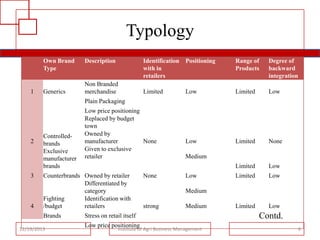
Typology
Own Brand
Type

1

Generics

Description

Identification
with in
retailers

Range of
Products

Degree of
backward
integration

Limited

Low

Limited

Low

Low

Limited

None

Limited

Non Branded
merchandise

Positioning

Low

Limited

Low

Limited

Low

Plain Packaging

2

3

4

Controlledbrands
Exclusive
manufacturer
brands

Low price positioning
Replaced by budget
town
Owned by
manufacturer
None
Given to exclusive
retailer

Counterbrands Owned by retailer
Differentiated by
category
Fighting
Identification with
/budget
retailers
Brands

12/19/2013

None

Medium
Low

Medium
strong

Medium

Stress on retail itself
Low price positioning

Institute of Agri Business Management

Contd.
6
5

Copycat Brands

B

C

6

Reengineered
brands

A

Low cost-retailer
owned
Same functionally

Lookalikes

Similar quality

House brands

Imitate visual features
Name of retailer
appears
strong

Exclusive
Designer
Label

strong

Wide

High

Medium

Limited

High

Medium

Wide

High

strong

High

Limited

High

Very strong

Medium

Wide

High

Medium
Medium

as separate brand
Exclusively designed
for
retailers carry
designer's

Low

name
7

Fascia brands

12/19/2013

Private labels
Retailer's name is
strongly associated

High

Institute of Agri Business Management

7
Brand Development Strategy
 A retail brand is a combination of company’s heritage, merchandise
mix, store ambience, service strategy, advertising and promotion.
 Three major questions
- Can brand identified with lifestyle of customers?
- Is there any perceptible difference between retailers?
- Can a story be woven around the brand?

12/19/2013

Institute of Agri Business Management

8
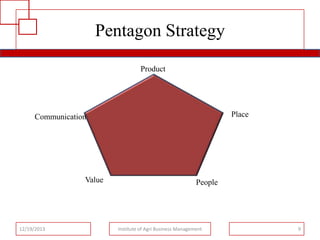
Pentagon Strategy
Product

Place

Communication

Value

12/19/2013

People

Institute of Agri Business Management

9
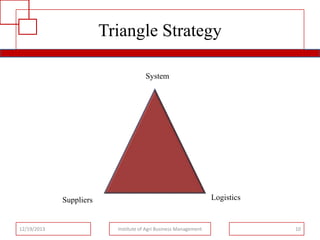
Triangle Strategy
System

Logistics

Suppliers

12/19/2013

Institute of Agri Business Management

10
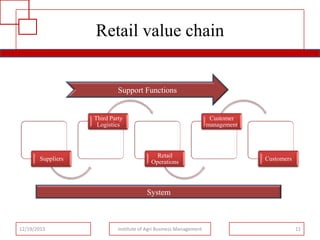
Retail value chain

Support Functions

Third Party
Logistics

Suppliers

Customer
management

Retail
Operations

Customers

System

12/19/2013

Institute of Agri Business Management

11
Key Issues
 Look alike own brands
Not only imitate trade marks, graphics, colours, lettering, words and
packaging but also name of branded products.
 Brand owner verses retailers
- Lookalike steals goodwill
- Gimmick to position
- Diminish consumer choice

12/19/2013

Institute of Agri Business Management

12
New Developments in Own Brand Strategy
Low

Extent of innovation

High

Contribution to brand positioning

High
House
Brands

Fascia
Brands

Reengineered
copycat

Tactical
Counter brand

Budget/fighting
Generics

Low
12/19/2013

Institute of Agri Business Management

13
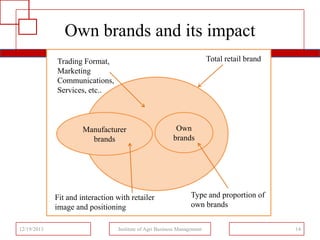
Own brands and its impact
Total retail brand

Trading Format,
Marketing
Communications,
Services, etc..

Manufacturer
brands

Fit and interaction with retailer
image and positioning
12/19/2013

Own
brands

Type and proportion of
own brands

Institute of Agri Business Management

14
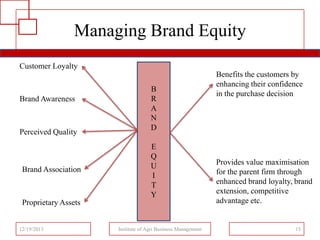
Managing Brand Equity
Customer Loyalty

Brand Awareness

Perceived Quality

Brand Association

B
R
A
N
D
E
Q
U
I
T
Y

Proprietary Assets

12/19/2013

Institute of Agri Business Management

Benefits the customers by
enhancing their confidence
in the purchase decision

Provides value maximisation
for the parent firm through
enhanced brand loyalty, brand
extension, competitive
advantage etc.

15
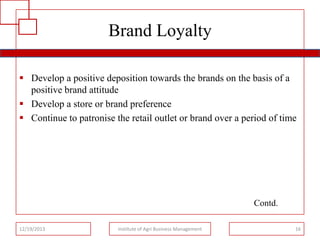
Brand Loyalty
 Develop a positive deposition towards the brands on the basis of a
positive brand attitude
 Develop a store or brand preference
 Continue to patronise the retail outlet or brand over a period of time

Contd.
12/19/2013

Institute of Agri Business Management

16







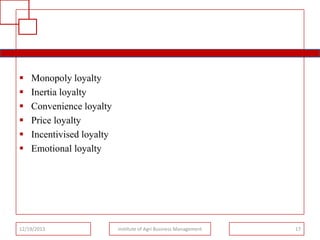
Monopoly loyalty
Inertia loyalty
Convenience loyalty
Price loyalty
Incentivised loyalty
Emotional loyalty

12/19/2013

Institute of Agri Business Management

17
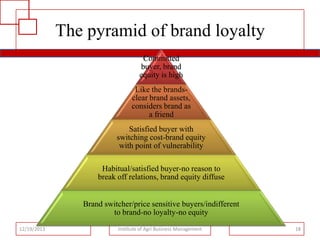
The pyramid of brand loyalty
Committed
buyer, brand
equity is high
Like the brandsclear brand assets,
considers brand as
a friend
Satisfied buyer with
switching cost-brand equity
with point of vulnerability

Habitual/satisfied buyer-no reason to
break off relations, brand equity diffuse
Brand switcher/price sensitive buyers/indifferent
to brand-no loyalty-no equity
12/19/2013

Institute of Agri Business Management

18
Key terms







Brand Value
Brand Equity
Brand Loyalty
Brand Awareness
Brand Association
Perceived Quality

12/19/2013

Institute of Agri Business Management

19
References
 Retail Management by S. C. Bhatia (pp 278-299)
 Retailing Management Text and Cases by Swapna Pradhan (pp 481516)
 Retail Management by Suja Nair (pp 401-412)
 Retail management by Gibson G. Vedamani (pp 191-203)

12/19/2013

Institute of Agri Business Management

20

Retail brand management

  • 1.
  • 2.
    Overview  Introduction  Concept Branding  Retail Branding  Growth  Typology  Brand Development Strategy  Retail Value Chain  Key Issues  Lookalike own brands  Brand Owner Verses Retailers 12/19/2013 Institute of Agri Business Management Contd. 2
  • 3.
         New Developments inOwn Brand Strategy Own Brand and Its Impact on Retail Brand Brand Equity Brand Loyalty Quiz 12/19/2013 Institute of Agri Business Management 3
  • 4.
    Concept  Branding The intangiblesum of product’s attributes; its name, packaging, price, history, reputation and the way it’s advertised - David Ogilvy  Retail Branding Retail branding does not only focus only on creation of private label. In multi-brand retailers the task become more difficult as the retailer needs to create a store identity which is different from that of brands, he sold within the store 12/19/2013 Institute of Agri Business Management 4
  • 5.
    Growth  Growth ofretail brand aka own brands, own labels, private labels and store brands, has paralleled growth esp. in grocery segment. 12/19/2013 Institute of Agri Business Management 5
  • 6.
    Typology Own Brand Type 1 Generics Description Identification with in retailers Rangeof Products Degree of backward integration Limited Low Limited Low Low Limited None Limited Non Branded merchandise Positioning Low Limited Low Limited Low Plain Packaging 2 3 4 Controlledbrands Exclusive manufacturer brands Low price positioning Replaced by budget town Owned by manufacturer None Given to exclusive retailer Counterbrands Owned by retailer Differentiated by category Fighting Identification with /budget retailers Brands 12/19/2013 None Medium Low Medium strong Medium Stress on retail itself Low price positioning Institute of Agri Business Management Contd. 6
  • 7.
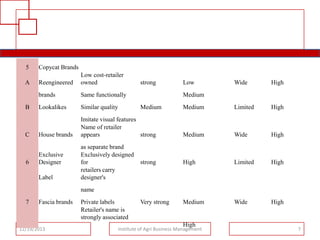
    5 Copycat Brands B C 6 Reengineered brands A Low cost-retailer owned Samefunctionally Lookalikes Similar quality House brands Imitate visual features Name of retailer appears strong Exclusive Designer Label strong Wide High Medium Limited High Medium Wide High strong High Limited High Very strong Medium Wide High Medium Medium as separate brand Exclusively designed for retailers carry designer's Low name 7 Fascia brands 12/19/2013 Private labels Retailer's name is strongly associated High Institute of Agri Business Management 7
  • 8.
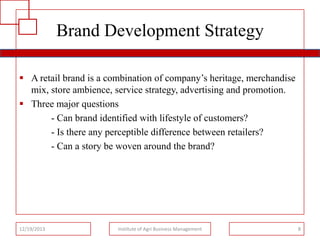
    Brand Development Strategy A retail brand is a combination of company’s heritage, merchandise mix, store ambience, service strategy, advertising and promotion.  Three major questions - Can brand identified with lifestyle of customers? - Is there any perceptible difference between retailers? - Can a story be woven around the brand? 12/19/2013 Institute of Agri Business Management 8
  • 9.
  • 10.
  • 11.
    Retail value chain SupportFunctions Third Party Logistics Suppliers Customer management Retail Operations Customers System 12/19/2013 Institute of Agri Business Management 11
  • 12.
    Key Issues  Lookalike own brands Not only imitate trade marks, graphics, colours, lettering, words and packaging but also name of branded products.  Brand owner verses retailers - Lookalike steals goodwill - Gimmick to position - Diminish consumer choice 12/19/2013 Institute of Agri Business Management 12
  • 13.
    New Developments inOwn Brand Strategy Low Extent of innovation High Contribution to brand positioning High House Brands Fascia Brands Reengineered copycat Tactical Counter brand Budget/fighting Generics Low 12/19/2013 Institute of Agri Business Management 13
  • 14.
    Own brands andits impact Total retail brand Trading Format, Marketing Communications, Services, etc.. Manufacturer brands Fit and interaction with retailer image and positioning 12/19/2013 Own brands Type and proportion of own brands Institute of Agri Business Management 14
  • 15.
    Managing Brand Equity CustomerLoyalty Brand Awareness Perceived Quality Brand Association B R A N D E Q U I T Y Proprietary Assets 12/19/2013 Institute of Agri Business Management Benefits the customers by enhancing their confidence in the purchase decision Provides value maximisation for the parent firm through enhanced brand loyalty, brand extension, competitive advantage etc. 15
  • 16.
    Brand Loyalty  Developa positive deposition towards the brands on the basis of a positive brand attitude  Develop a store or brand preference  Continue to patronise the retail outlet or brand over a period of time Contd. 12/19/2013 Institute of Agri Business Management 16
  • 17.
          Monopoly loyalty Inertia loyalty Convenienceloyalty Price loyalty Incentivised loyalty Emotional loyalty 12/19/2013 Institute of Agri Business Management 17
  • 18.
    The pyramid ofbrand loyalty Committed buyer, brand equity is high Like the brandsclear brand assets, considers brand as a friend Satisfied buyer with switching cost-brand equity with point of vulnerability Habitual/satisfied buyer-no reason to break off relations, brand equity diffuse Brand switcher/price sensitive buyers/indifferent to brand-no loyalty-no equity 12/19/2013 Institute of Agri Business Management 18
  • 19.
    Key terms       Brand Value BrandEquity Brand Loyalty Brand Awareness Brand Association Perceived Quality 12/19/2013 Institute of Agri Business Management 19
  • 20.
    References  Retail Managementby S. C. Bhatia (pp 278-299)  Retailing Management Text and Cases by Swapna Pradhan (pp 481516)  Retail Management by Suja Nair (pp 401-412)  Retail management by Gibson G. Vedamani (pp 191-203) 12/19/2013 Institute of Agri Business Management 20