WALI KHAN
Medical Laboratory Technologist
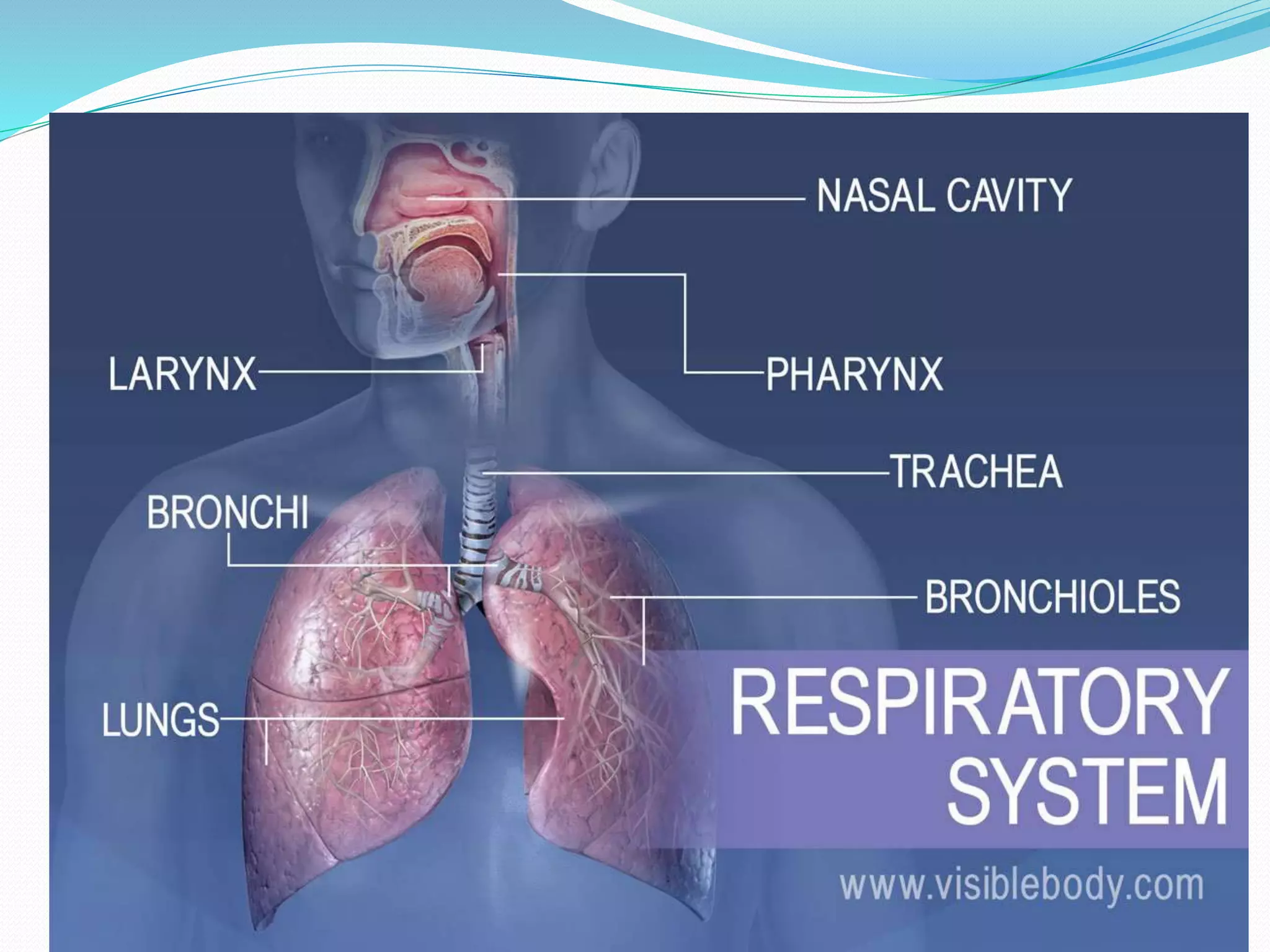
Respiratory System-includes
 Conducting airways-oral & nasal cavities
 Pharynx
 Trachea
 Bronchi
 Lungs
 Nerves controlling Respiration
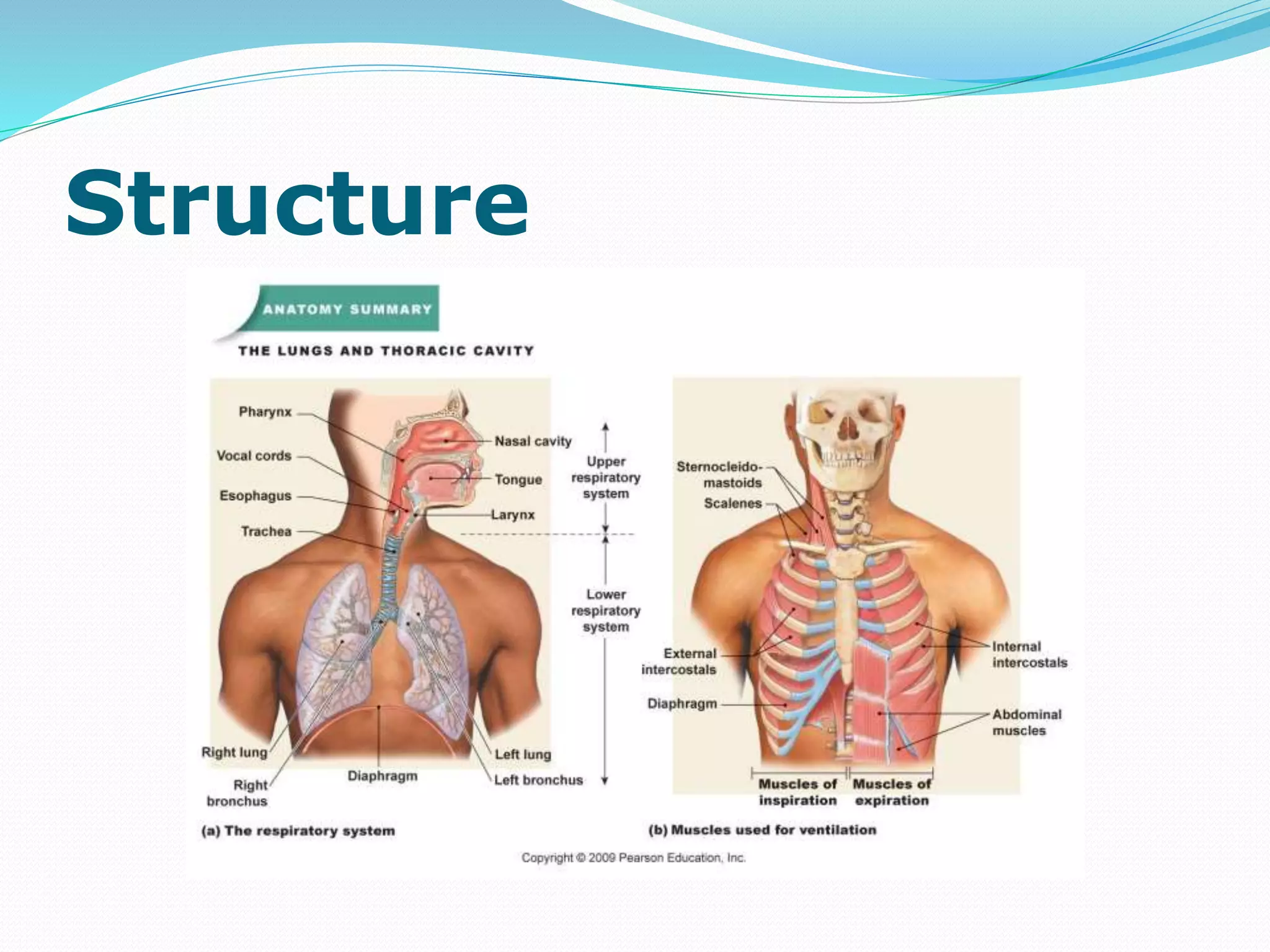
 Structures to move air in & out:
Rib cage , Intercostal muscles,
Diaphragm,Abdominal muscles
Structure
Respiration:
“Exchange of O2 and CO2 between
the atmosphere and body cells ”
STEPS involves
1.Pulmonary Ventilation
2.Diffusion of O2 & CO2
3.Transport of gases
1.Pulmonary Ventilation
 Its means Inflow and outflow between atmosphere
and lungs alveoli,
Inspiration (contains O2)
Expiration ( Contains CO2)
Pulmonary Ventilation
2. Diffusion:-
 Oxygen from alveoli to blood.
 CO2 from blood to alveoli.
3. Transport of Gases
 Transport of O2 and CO2 in blood and body fluid to
and from the cells.
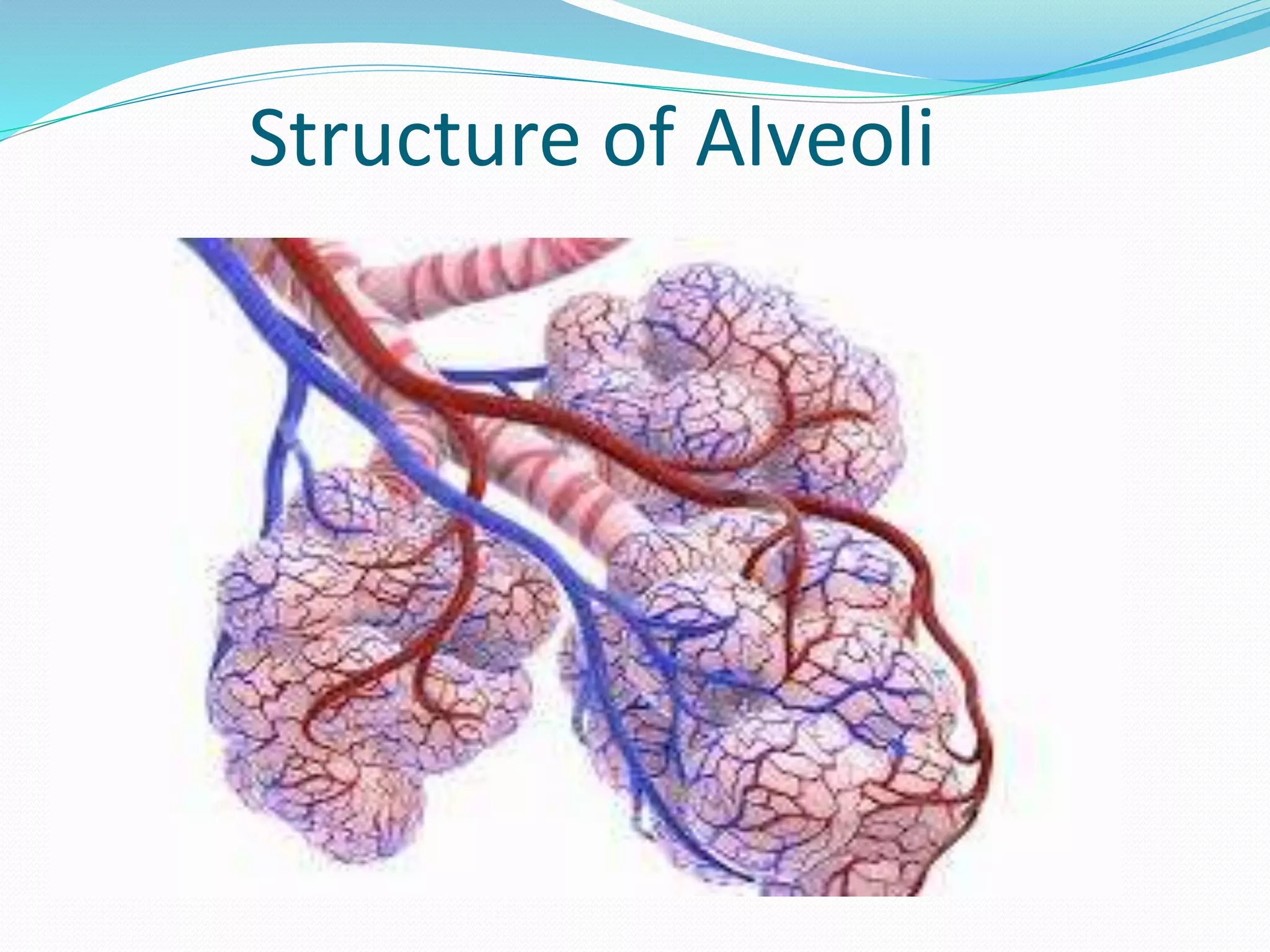
Structure of Alveoli
Function of Lungs:
Basic Mechanism of respiration
 Mechanism of respiration involves the
breathing mechanism and exchange of gases.
 The gaseous exchange occurs by diffusion in the
alveoli.
 It depends upon the pressure differences between
blood and tissues, or atmospheric air and blood.
 The exchange of gases takes place at the surface of the
alveolus
Mechanism of Inspiration
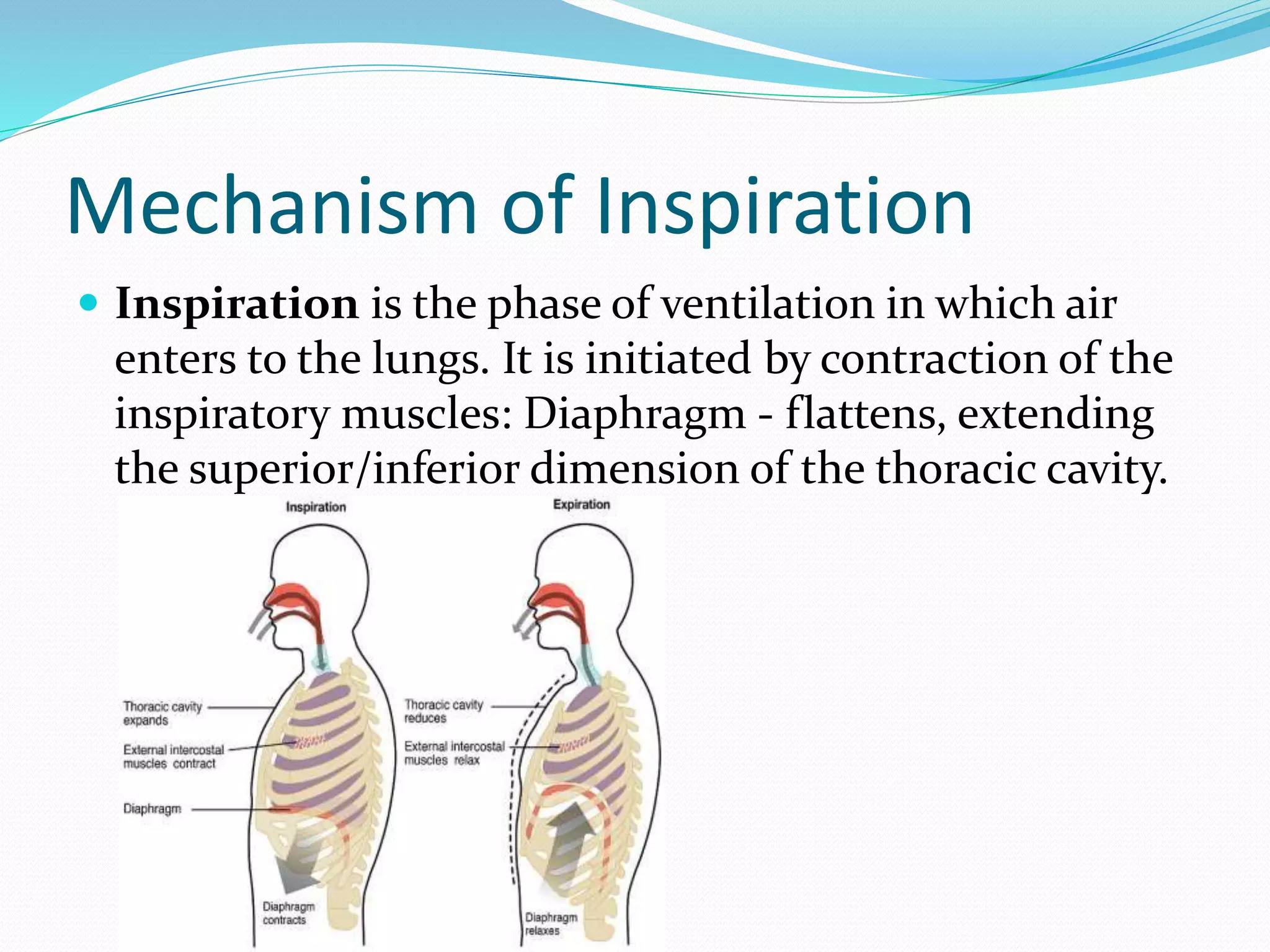
 Inspiration is the phase of ventilation in which air
enters to the lungs. It is initiated by contraction of the
inspiratory muscles: Diaphragm - flattens, extending
the superior/inferior dimension of the thoracic cavity.
Mechanism of Expiration
 Expiration is the process of releasing carbon dioxide
from the body. During expiration, the diaphragm
relaxes and the volume of the thoracic cavity
decreases, and the pressure inside it increases.
Consequently, the lungs contract and the air is forced
out.
https://teachmephysiology.com/respiratory-
system/ventilation/mechanics-of-breathing/
Respiratory Rate:
 Respiratory rate: A person's respiratory rate is the
number of breaths take per minute.
 The normal respiration rate for an adult at rest is 12
to 20 breaths per minute.
 A respiration rate under 12 or over 25 breaths per
minute while resting is considered abnormal.
Respiratory Tidal Volume:
 Tidal volume is the amount of air that moves in or out
of the lungs with each respiratory cycle.
 It measures around 500 mL in an average healthy adult
male and approximately 400 mL in a healthy female.
 It is a vital clinical parameter that allows for proper
ventilation to take place.
 Tidal volume (Vt or TV) is a physiological term used to
describe the amount of air typically moved during
inspiration and expiration while at resting.
 It is measured by spirometry. an average, adults breathe
7 milliliters (mL) per kilogram (kg) of ideal body weight.
Rate and control of respiration
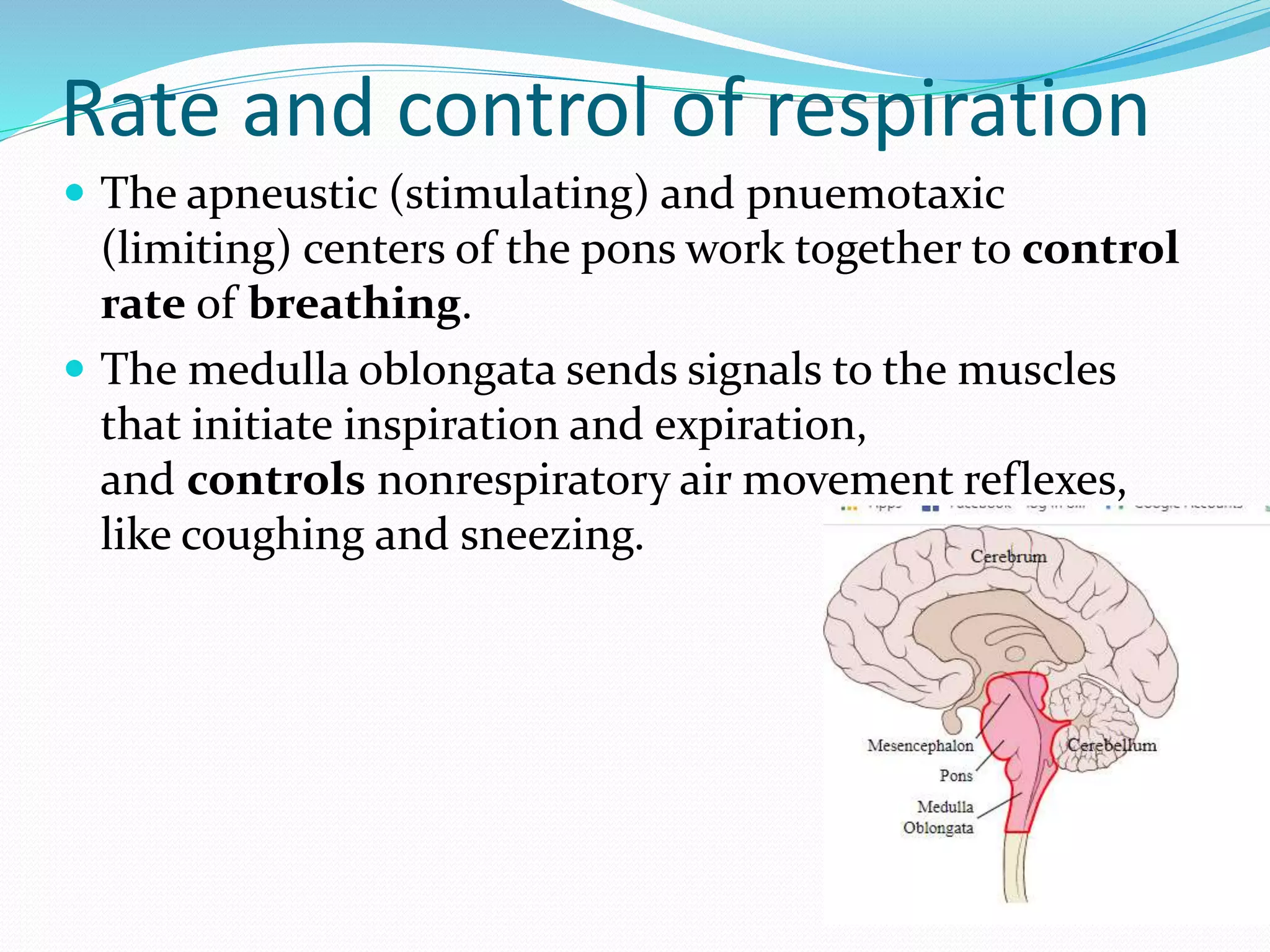
 The apneustic (stimulating) and pnuemotaxic
(limiting) centers of the pons work together to control
rate of breathing.
 The medulla oblongata sends signals to the muscles
that initiate inspiration and expiration,
and controls nonrespiratory air movement reflexes,
like coughing and sneezing.
Nervous control
 The phrenic nerves, vagus nerves, and posterior
thoracic nerves are the major nerves involved
in respiration.
 Voluntary respiration is needed to perform higher
functions, such as voice control.
Chemical control
It is regulated by both reflex and chemical mechanisms.
The chemical regulation of respiration concerns the
hydrogen ion content of the respiratory neurones which in
turn is dependent upon the carbon dioxide tension of the
blood and the rate of flow of blood through the medulla
Oblongata.
 Transport of Oxygen and Carbon Dioxide in Blood and
Tissue Fluids.
 In the body's tissue cells, oxygen reacts with various
foodstuffs to form large quantities of carbon dioxide.
 This carbon dioxide enters the tissue capillaries and
is transported back to the lungs.
Respiratory system

Respiratory system

  • 1.
  • 2.
    Respiratory System-includes  Conductingairways-oral & nasal cavities  Pharynx  Trachea  Bronchi  Lungs  Nerves controlling Respiration  Structures to move air in & out: Rib cage , Intercostal muscles, Diaphragm,Abdominal muscles
  • 4.
  • 5.
    Respiration: “Exchange of O2and CO2 between the atmosphere and body cells ” STEPS involves 1.Pulmonary Ventilation 2.Diffusion of O2 & CO2 3.Transport of gases
  • 6.
    1.Pulmonary Ventilation  Itsmeans Inflow and outflow between atmosphere and lungs alveoli, Inspiration (contains O2) Expiration ( Contains CO2)
  • 7.
  • 8.
    2. Diffusion:-  Oxygenfrom alveoli to blood.  CO2 from blood to alveoli.
  • 9.
    3. Transport ofGases  Transport of O2 and CO2 in blood and body fluid to and from the cells.
  • 10.
  • 11.
  • 13.
    Basic Mechanism ofrespiration  Mechanism of respiration involves the breathing mechanism and exchange of gases.  The gaseous exchange occurs by diffusion in the alveoli.  It depends upon the pressure differences between blood and tissues, or atmospheric air and blood.  The exchange of gases takes place at the surface of the alveolus
  • 14.
    Mechanism of Inspiration Inspiration is the phase of ventilation in which air enters to the lungs. It is initiated by contraction of the inspiratory muscles: Diaphragm - flattens, extending the superior/inferior dimension of the thoracic cavity.
  • 15.
    Mechanism of Expiration Expiration is the process of releasing carbon dioxide from the body. During expiration, the diaphragm relaxes and the volume of the thoracic cavity decreases, and the pressure inside it increases. Consequently, the lungs contract and the air is forced out. https://teachmephysiology.com/respiratory- system/ventilation/mechanics-of-breathing/
  • 16.
    Respiratory Rate:  Respiratoryrate: A person's respiratory rate is the number of breaths take per minute.  The normal respiration rate for an adult at rest is 12 to 20 breaths per minute.  A respiration rate under 12 or over 25 breaths per minute while resting is considered abnormal.
  • 18.
    Respiratory Tidal Volume: Tidal volume is the amount of air that moves in or out of the lungs with each respiratory cycle.  It measures around 500 mL in an average healthy adult male and approximately 400 mL in a healthy female.  It is a vital clinical parameter that allows for proper ventilation to take place.  Tidal volume (Vt or TV) is a physiological term used to describe the amount of air typically moved during inspiration and expiration while at resting.  It is measured by spirometry. an average, adults breathe 7 milliliters (mL) per kilogram (kg) of ideal body weight.
  • 20.
    Rate and controlof respiration  The apneustic (stimulating) and pnuemotaxic (limiting) centers of the pons work together to control rate of breathing.  The medulla oblongata sends signals to the muscles that initiate inspiration and expiration, and controls nonrespiratory air movement reflexes, like coughing and sneezing.
  • 21.
    Nervous control  Thephrenic nerves, vagus nerves, and posterior thoracic nerves are the major nerves involved in respiration.  Voluntary respiration is needed to perform higher functions, such as voice control.
  • 22.
    Chemical control It isregulated by both reflex and chemical mechanisms. The chemical regulation of respiration concerns the hydrogen ion content of the respiratory neurones which in turn is dependent upon the carbon dioxide tension of the blood and the rate of flow of blood through the medulla Oblongata.
  • 23.
     Transport ofOxygen and Carbon Dioxide in Blood and Tissue Fluids.  In the body's tissue cells, oxygen reacts with various foodstuffs to form large quantities of carbon dioxide.  This carbon dioxide enters the tissue capillaries and is transported back to the lungs.