How to Develop and  Write a Research Paper
Research Paper Assignment Identify what the assignment requires: topic possibilities number of sources type of sources (journal, book,  Internet) citation requirements (MLA, APA, Chicago) presentation requirements (oral or  written) length of paper due date
Getting Started Choose a topic based on requirements. Ask yourself questions: What do I know about the topic? What would I like to learn? What will others learn from reading my paper?
Formulate a Research Question Start by finding background information on your topic: Resource Links to Background Information: How to Find Journal Articles in Electronic Databases How to find Books in the  Online Catalog
Personal Exploration of Topic Once you have familiarized yourself with the topic, reflect on your initial impressions: Free Writing – just write down your thoughts  List Key Words – list words that describe your topic Clustering/Webbing  - create a web that links terms together (an example of webbing is on the next slide)
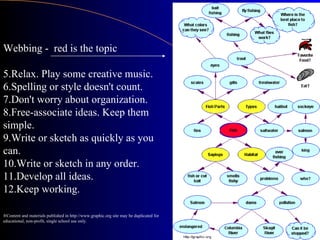
Webbing -  red is the topic  Relax. Play some creative music.  Spelling or style doesn't count. Don't worry about organization.  Free-associate ideas. Keep them  simple.  Write or sketch as quickly as you can.  Write or sketch in any order.  Develop all ideas.  Keep working.  ®Content and materials published in http://www.graphic.org site may be duplicated for educational, non-profit, single school use only.
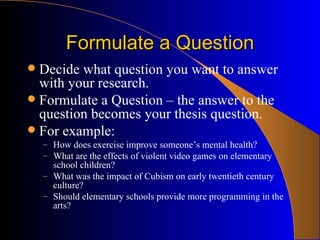
Formulate a Question Decide what question you want to answer with your research.  Formulate a Question – the answer to the question becomes your thesis question. For example:  How does exercise improve someone’s mental health? What are the effects of violent video games on elementary school children? What was the impact of Cubism on early twentieth century culture? Should elementary schools provide more programming in the arts?
Starting Your Research Decide what kind of information that you need based on your research assignment.  The information will be determined by your topic and assignment requirements: Current or historical or both Biographical information Criticism and analysis Statistics And More
Decide on the  Usefulness of a Book How to Evaluate a Book for the Assignment: Read title as clue to content Scan table of contents Search for key terms in book index
Finding Information in Journals Find Journal Articles in electronic databases: Electronic Databases 2.  Ask the Librarian about the best databases to search on your topic: i.e., InfoTrac Expanded Academic  – Journal Articles  - full text or citation (find actual journal through the library)
Decide on the Usefulness of  Journal Articles Evaluate usefulness of journal articles for assignment: Read title and subtitle as clue to content. Read abstract if available. Check key terms at end of article for related links to further explore topic.
Finding Information  Using Internet Resources Click on  Internet Resources  part of the  MLN homepage. Or select a search engine or website.
Decide on the Usefulness of  Internet Site Information Evaluate Internet site: find source of the site and information Who is responsible for the website? Who provided the information? a person who is known in the field of study. an organization that is reputable, i.e. American Cancer Society. note currency of site – when was it last updated? assess relevance of information to the assignment.
Ask a Librarian for Support A librarian can assist you with the process of finding information sources for your assignment. Stop by the library – If you go to college I guarantee you will be here every day.
How to Avoid Plagiarism How to Avoid Plagiarism  – Review the PowerPoint presentation.  It covers: Citing sources of information. How to paraphrase, summarize, quote. How to cite your sources for your works cited page.
Taking Notes Organizing Your Research Using Note Cards Read source actively by highlighting important information. Record quotes that you may want to use later and include source and page number on card. Create paraphrases and summaries on note cards directly from your research. Record on each note card the author’s name and page number for later reference. Organizing Your Research Using a Computer   http://www.studygs.net/plagiarism.htm
Organize Your Research Construct an Outline
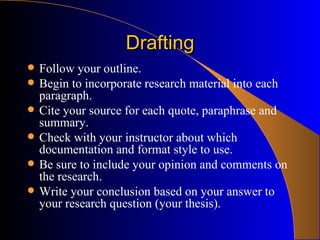
Drafting Follow your outline. Begin to incorporate research material into each paragraph. Cite your source for each quote, paraphrase and summary.  Check with your instructor about which documentation and format style to use. Be sure to include your opinion and comments on the research. Write your conclusion based on your answer to your research question (your thesis).
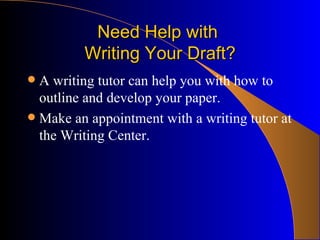
Need Help with  Writing Your Draft? A writing tutor can help you with how to outline and develop your paper.  Make an appointment with a writing tutor at the Writing Center.
Preparing the Final Version of Your Research Paper Revise draft based on comments from your instructor and/or tutor Check cited sources for accuracy and MLA Style or another style format. Proof read your work – don’t forget the Spell and Grammar check in Microsoft Word. Add works cited page. Add title page.
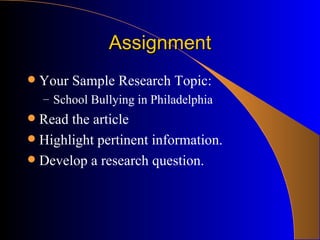
Assignment Your Sample Research Topic: School Bullying in Philadelphia Read the article Highlight pertinent information. Develop a research question.

Research paper2010

  • 1.
    How to Developand Write a Research Paper
  • 2.
    Research Paper AssignmentIdentify what the assignment requires: topic possibilities number of sources type of sources (journal, book, Internet) citation requirements (MLA, APA, Chicago) presentation requirements (oral or written) length of paper due date
  • 3.
    Getting Started Choosea topic based on requirements. Ask yourself questions: What do I know about the topic? What would I like to learn? What will others learn from reading my paper?
  • 4.
    Formulate a ResearchQuestion Start by finding background information on your topic: Resource Links to Background Information: How to Find Journal Articles in Electronic Databases How to find Books in the Online Catalog
  • 5.
    Personal Exploration ofTopic Once you have familiarized yourself with the topic, reflect on your initial impressions: Free Writing – just write down your thoughts List Key Words – list words that describe your topic Clustering/Webbing - create a web that links terms together (an example of webbing is on the next slide)
  • 6.
    Webbing - red is the topic Relax. Play some creative music. Spelling or style doesn't count. Don't worry about organization. Free-associate ideas. Keep them simple. Write or sketch as quickly as you can. Write or sketch in any order. Develop all ideas. Keep working. ®Content and materials published in http://www.graphic.org site may be duplicated for educational, non-profit, single school use only.
  • 7.
    Formulate a QuestionDecide what question you want to answer with your research. Formulate a Question – the answer to the question becomes your thesis question. For example: How does exercise improve someone’s mental health? What are the effects of violent video games on elementary school children? What was the impact of Cubism on early twentieth century culture? Should elementary schools provide more programming in the arts?
  • 8.
    Starting Your ResearchDecide what kind of information that you need based on your research assignment. The information will be determined by your topic and assignment requirements: Current or historical or both Biographical information Criticism and analysis Statistics And More
  • 9.
    Decide on the Usefulness of a Book How to Evaluate a Book for the Assignment: Read title as clue to content Scan table of contents Search for key terms in book index
  • 10.
    Finding Information inJournals Find Journal Articles in electronic databases: Electronic Databases 2. Ask the Librarian about the best databases to search on your topic: i.e., InfoTrac Expanded Academic – Journal Articles - full text or citation (find actual journal through the library)
  • 11.
    Decide on theUsefulness of Journal Articles Evaluate usefulness of journal articles for assignment: Read title and subtitle as clue to content. Read abstract if available. Check key terms at end of article for related links to further explore topic.
  • 12.
    Finding Information Using Internet Resources Click on Internet Resources part of the MLN homepage. Or select a search engine or website.
  • 13.
    Decide on theUsefulness of Internet Site Information Evaluate Internet site: find source of the site and information Who is responsible for the website? Who provided the information? a person who is known in the field of study. an organization that is reputable, i.e. American Cancer Society. note currency of site – when was it last updated? assess relevance of information to the assignment.
  • 14.
    Ask a Librarianfor Support A librarian can assist you with the process of finding information sources for your assignment. Stop by the library – If you go to college I guarantee you will be here every day.
  • 15.
    How to AvoidPlagiarism How to Avoid Plagiarism – Review the PowerPoint presentation. It covers: Citing sources of information. How to paraphrase, summarize, quote. How to cite your sources for your works cited page.
  • 16.
    Taking Notes OrganizingYour Research Using Note Cards Read source actively by highlighting important information. Record quotes that you may want to use later and include source and page number on card. Create paraphrases and summaries on note cards directly from your research. Record on each note card the author’s name and page number for later reference. Organizing Your Research Using a Computer http://www.studygs.net/plagiarism.htm
  • 17.
    Organize Your ResearchConstruct an Outline
  • 18.
    Drafting Follow youroutline. Begin to incorporate research material into each paragraph. Cite your source for each quote, paraphrase and summary. Check with your instructor about which documentation and format style to use. Be sure to include your opinion and comments on the research. Write your conclusion based on your answer to your research question (your thesis).
  • 19.
    Need Help with Writing Your Draft? A writing tutor can help you with how to outline and develop your paper. Make an appointment with a writing tutor at the Writing Center.
  • 20.
    Preparing the FinalVersion of Your Research Paper Revise draft based on comments from your instructor and/or tutor Check cited sources for accuracy and MLA Style or another style format. Proof read your work – don’t forget the Spell and Grammar check in Microsoft Word. Add works cited page. Add title page.
  • 21.
    Assignment Your SampleResearch Topic: School Bullying in Philadelphia Read the article Highlight pertinent information. Develop a research question.