Action Research, Ethnography, 
Work, Organisation, Life
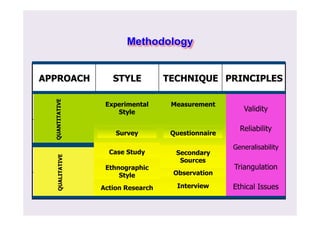
Methodology 
APPROACH STYLE TECHNIQUE PRINCIPLES 
QUANTITATIVE 
QUALITATIVE 
Experimental 
Style 
Survey 
Case Study 
Ethnographic 
Style 
Action Research 
Measurement 
Questionnaire 
Secondary 
Sources 
Observation 
Interview 
Validity 
Reliability 
Generalisability 
Triangulation 
Ethical Issues
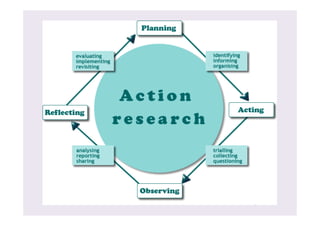
The 
basic 
steps 
of 
an 
ac/on 
research 
process 
cons/tute 
an 
ac/on 
plan: 
• review 
our 
current 
prac/ce, 
• iden/fy 
an 
aspect 
that 
we 
want 
to 
inves/gate, 
• imagine 
a 
way 
forward, 
• try 
it 
out, 
• take 
stock 
of 
what 
happens. 
• modify 
what 
we 
are 
doing 
in 
the 
light 
of 
what 
we 
have 
found, 
and 
con/nue 
working 
in 
this 
new 
way 
(try 
another 
op/on 
if 
the 
new 
way 
of 
working 
is 
not 
right), 
• monitor 
what 
we 
do, 
• review 
and 
evaluate 
the 
modified 
ac/on, 
and 
so 
on 
… 
Two 
processes 
are 
at 
work: 
your 
systema/c 
ac/ons 
as 
you 
work 
your 
way 
through 
these 
steps, 
and 
your 
learning. 
Your 
ac/ons 
embody 
your 
learning, 
and 
your 
learning 
is 
informed 
by 
your 
reflec/ons 
on 
your 
ac/ons. 
Therefore, 
when 
you 
come 
to 
write 
your 
report 
or 
make 
your 
research 
public 
in 
other 
ways, 
you 
should 
aim 
to 
show 
not 
only 
the 
ac/ons 
of 
your 
research, 
but 
also 
the 
learning 
involved. 
(McNiff, 
Lomax 
and 
Whitehead, 
1996)
people 
reflect 
and 
improve 
(or 
develop) 
their 
own 
work 
and 
their 
own 
situa/ons 
by 
/ghtly 
integra/ng 
their 
reflec/on 
and 
ac/on; 
people 
make 
their 
experience 
public 
not 
only 
to 
other 
par/cipants 
but 
also 
to 
other 
persons 
interested 
in 
and 
concerned 
about 
the 
work 
and 
the 
situa/on 
(i.e. 
their 
(public) 
theories 
and 
prac/ces 
of 
the 
work 
and 
the 
situa/on); 
data 
gathering 
by 
par/cipants 
themselves 
(or 
with 
the 
help 
of 
others) 
in 
rela/on 
to 
their 
own 
ques/ons; 
par/cipa/on 
(in 
problem 
posing 
and 
in 
answering 
ques/ons) 
in 
decision 
making; 
power 
sharing 
and 
the 
rela/ve 
suspension 
of 
hierarchical 
ways 
of 
working 
towards 
industrial 
democracy; 
collabora/on 
among 
members 
of 
the 
group 
as 
a 
“cri/cal 
community”; 
self-­‐reflec/on, 
self-­‐evalua/on 
and 
self-­‐management 
by 
autonomous 
and 
responsible 
persons 
and 
groups; 
progressive 
(and 
public) 
learning 
by 
doing 
and 
making 
mistakes 
in 
a 
“self-­‐reflec/ve 
spiral” 
of 
planning, 
ac/ng, 
observing, 
reflec/ng, 
replanning, 
etc; 
reflec/on 
which 
supports 
the 
idea 
of 
the 
“(self-­‐)reflec/ve 
prac//oner”; 
Gerald 
Vinten, 
(1994),"Par/cipant 
Observa/on: 
A 
Model 
for 
Organiza/onal 
Inves/ga/on?", 
Journal 
of 
Managerial 
Psychology, 
Vol. 
9 
Iss: 
2 
pp. 
30 
-­‐ 
38
Reflexivity 
is 
a 
social 
scien0fic 
variety 
of 
self-­‐consciousness. 
It 
means 
that 
the 
researcher 
recognizes 
and 
glories 
in 
the 
endless 
cycle 
of 
interac0ons 
and 
percep0ons 
which 
characterize 
rela0onships 
with 
other 
human 
beings. 
Research 
is 
a 
series 
of 
interac0ons, 
and 
good 
research 
is 
highly 
aAuned 
to 
the 
interrela0onship 
of 
the 
inves0gator 
with 
the 
respondents… 
…As 
long 
as 
qualita0ve 
researchers 
are 
reflexive, 
making 
all 
their 
processes 
explicit, 
then 
issues 
of 
reliability 
and 
validity 
are 
served. 
(Delamont, 
2002)
Bracke0ng 
Epoché, 
or 
'bracke0ng' 
(Ashworth, 
1999; 
Yegdich, 
2000; 
Moran, 
2000) 
Predisposi0ons, 
predilec0ons, 
biases, 
prejudices 
and 
prejudgements 
are 
set 
aside, 
and 
a 
review 
is 
undertaken 
with 
new 
and 
recep-ve 
eyes 
(Moustakas, 
1994). 
Not 
to 
doubt 
or 
eliminate 
everything, 
only 
the 
natural 
a4tude, 
the 
biases 
of 
everyday 
knowledge 
as 
a 
basis 
for 
truth 
and 
reality 
(Husserl, 
1931). 
Adop0ng 
the 
stance 
of 
a 
'stranger' 
(Pring, 
2000)
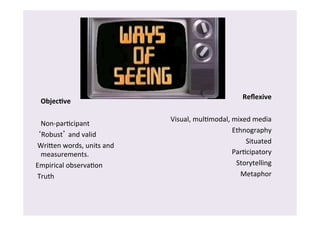
Objec0ve 
Non-­‐par/cipant 
‘Robust’ 
and 
valid 
Wri`en 
words, 
units 
and 
measurements. 
Empirical 
observa/on 
Truth 
Reflexive 
Visual, 
mul/modal, 
mixed 
media 
Ethnography 
Situated 
Par/cipatory 
Storytelling 
Metaphor
Ethnography 
In this way you will want to explore the COMPLEXITY of your work / 
organisation with ‘thick description’. 
ETHNOGRAPHY = PRINCIPLED EFFORTS TO EXPLORE: 
• local meanings from ‘the inside’ – perspectives of the network / setting 
• reflexive questioning of assumptions (including of the producer / 
researcher) 
• blurring / testing boundaries of personal, public, professional spaces 
• patterns in practices and categories of thought / discourse 
• power structures and complicity in them.
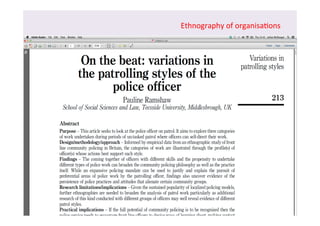
Ethnography 
of 
organisa/ons
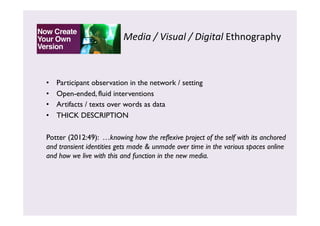
Media 
/ 
Visual 
/ 
Digital 
Ethnography 
• Participant observation in the network / setting 
• Open-ended, fluid interventions 
• Artifacts / texts over words as data 
• THICK DESCRIPTION 
Potter (2012:49): …knowing how the reflexive project of the self with its anchored 
and transient identities gets made & unmade over time in the various spaces online 
and how we live with this and function in the new media.
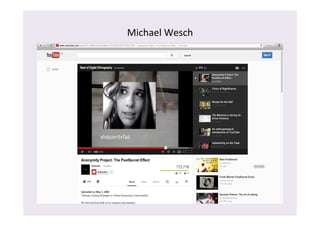
Michael 
Wesch
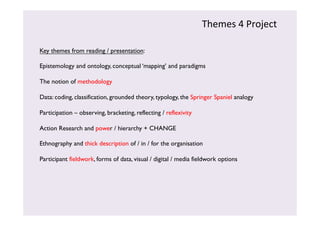
Themes 
4 
Project 
Key themes from reading / presentation: 
Epistemology and ontology, conceptual ‘mapping’ and paradigms 
The notion of methodology 
Data: coding, classification, grounded theory, typology, the Springer Spaniel analogy 
Participation – observing, bracketing, reflecting / reflexivity 
Action Research and power / hierarchy + CHANGE 
Ethnography and thick description of / in / for the organisation 
Participant fieldwork, forms of data, visual / digital / media fieldwork options

Media workplace research methods

  • 1.
    Action Research, Ethnography, Work, Organisation, Life
  • 3.
    Methodology APPROACH STYLETECHNIQUE PRINCIPLES QUANTITATIVE QUALITATIVE Experimental Style Survey Case Study Ethnographic Style Action Research Measurement Questionnaire Secondary Sources Observation Interview Validity Reliability Generalisability Triangulation Ethical Issues
  • 5.
    The basic steps of an ac/on research process cons/tute an ac/on plan: • review our current prac/ce, • iden/fy an aspect that we want to inves/gate, • imagine a way forward, • try it out, • take stock of what happens. • modify what we are doing in the light of what we have found, and con/nue working in this new way (try another op/on if the new way of working is not right), • monitor what we do, • review and evaluate the modified ac/on, and so on … Two processes are at work: your systema/c ac/ons as you work your way through these steps, and your learning. Your ac/ons embody your learning, and your learning is informed by your reflec/ons on your ac/ons. Therefore, when you come to write your report or make your research public in other ways, you should aim to show not only the ac/ons of your research, but also the learning involved. (McNiff, Lomax and Whitehead, 1996)
  • 6.
    people reflect and improve (or develop) their own work and their own situa/ons by /ghtly integra/ng their reflec/on and ac/on; people make their experience public not only to other par/cipants but also to other persons interested in and concerned about the work and the situa/on (i.e. their (public) theories and prac/ces of the work and the situa/on); data gathering by par/cipants themselves (or with the help of others) in rela/on to their own ques/ons; par/cipa/on (in problem posing and in answering ques/ons) in decision making; power sharing and the rela/ve suspension of hierarchical ways of working towards industrial democracy; collabora/on among members of the group as a “cri/cal community”; self-­‐reflec/on, self-­‐evalua/on and self-­‐management by autonomous and responsible persons and groups; progressive (and public) learning by doing and making mistakes in a “self-­‐reflec/ve spiral” of planning, ac/ng, observing, reflec/ng, replanning, etc; reflec/on which supports the idea of the “(self-­‐)reflec/ve prac//oner”; Gerald Vinten, (1994),"Par/cipant Observa/on: A Model for Organiza/onal Inves/ga/on?", Journal of Managerial Psychology, Vol. 9 Iss: 2 pp. 30 -­‐ 38
  • 7.
    Reflexivity is a social scien0fic variety of self-­‐consciousness. It means that the researcher recognizes and glories in the endless cycle of interac0ons and percep0ons which characterize rela0onships with other human beings. Research is a series of interac0ons, and good research is highly aAuned to the interrela0onship of the inves0gator with the respondents… …As long as qualita0ve researchers are reflexive, making all their processes explicit, then issues of reliability and validity are served. (Delamont, 2002)
  • 8.
    Bracke0ng Epoché, or 'bracke0ng' (Ashworth, 1999; Yegdich, 2000; Moran, 2000) Predisposi0ons, predilec0ons, biases, prejudices and prejudgements are set aside, and a review is undertaken with new and recep-ve eyes (Moustakas, 1994). Not to doubt or eliminate everything, only the natural a4tude, the biases of everyday knowledge as a basis for truth and reality (Husserl, 1931). Adop0ng the stance of a 'stranger' (Pring, 2000)
  • 9.
    Objec0ve Non-­‐par/cipant ‘Robust’ and valid Wri`en words, units and measurements. Empirical observa/on Truth Reflexive Visual, mul/modal, mixed media Ethnography Situated Par/cipatory Storytelling Metaphor
  • 10.
    Ethnography In thisway you will want to explore the COMPLEXITY of your work / organisation with ‘thick description’. ETHNOGRAPHY = PRINCIPLED EFFORTS TO EXPLORE: • local meanings from ‘the inside’ – perspectives of the network / setting • reflexive questioning of assumptions (including of the producer / researcher) • blurring / testing boundaries of personal, public, professional spaces • patterns in practices and categories of thought / discourse • power structures and complicity in them.
  • 12.
  • 14.
    Media / Visual / Digital Ethnography • Participant observation in the network / setting • Open-ended, fluid interventions • Artifacts / texts over words as data • THICK DESCRIPTION Potter (2012:49): …knowing how the reflexive project of the self with its anchored and transient identities gets made & unmade over time in the various spaces online and how we live with this and function in the new media.
  • 15.
  • 17.
    Themes 4 Project Key themes from reading / presentation: Epistemology and ontology, conceptual ‘mapping’ and paradigms The notion of methodology Data: coding, classification, grounded theory, typology, the Springer Spaniel analogy Participation – observing, bracketing, reflecting / reflexivity Action Research and power / hierarchy + CHANGE Ethnography and thick description of / in / for the organisation Participant fieldwork, forms of data, visual / digital / media fieldwork options

Editor's Notes

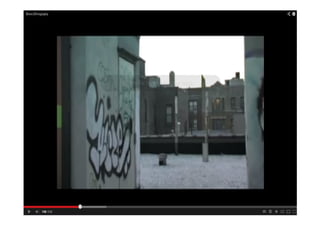
  • #21 ----- Meeting Notes (07/03/2012 11:07) -----Describe new project - play vid