RESEARCH
METHODOLOGY &
BIOSTATISTICS
UNIT 1 :GENERAL
RESEARCH
METHODLOGY
PRABHAKARAN A
TOPICS :
RESEARCH
OBJECTIVE
REQUIREMENTS
PRACTICAL DIFFICULTIES
REVIEW OF LITERATURE
STUDY DESIGN
TYPES OF STUDIES
CONTROLS,RANDOMIZATION,CROSSOVER
DESIGN,PLACEBO,BINDING TECHINQUES
RESEARCH :
 DEFINE :
 “Research is a systematized to effort of gain new knowledge”.
 Involves a data collection
 organization
 Analysis
 Interpretation
 RESEARCH METHODOLOGY :
 Research methodology is a specific procedures or
techniques used to identify,
 Select,
 Process,
 And Analyze the information in the topic.
Study design & types
of Design
 Study design :
 Study design is the define as the specific
plan or protocol for the conducting the study
 Is known as study design.
 Which allows the investigator to translate the
conceptual hypothesis into an operational
one.
Types of
studies
 The study design are two types
 observational studies – studies don’t involve any
intervention or experiment
 Another one Experimental Studies - studies that
entail manipulation of the study factor
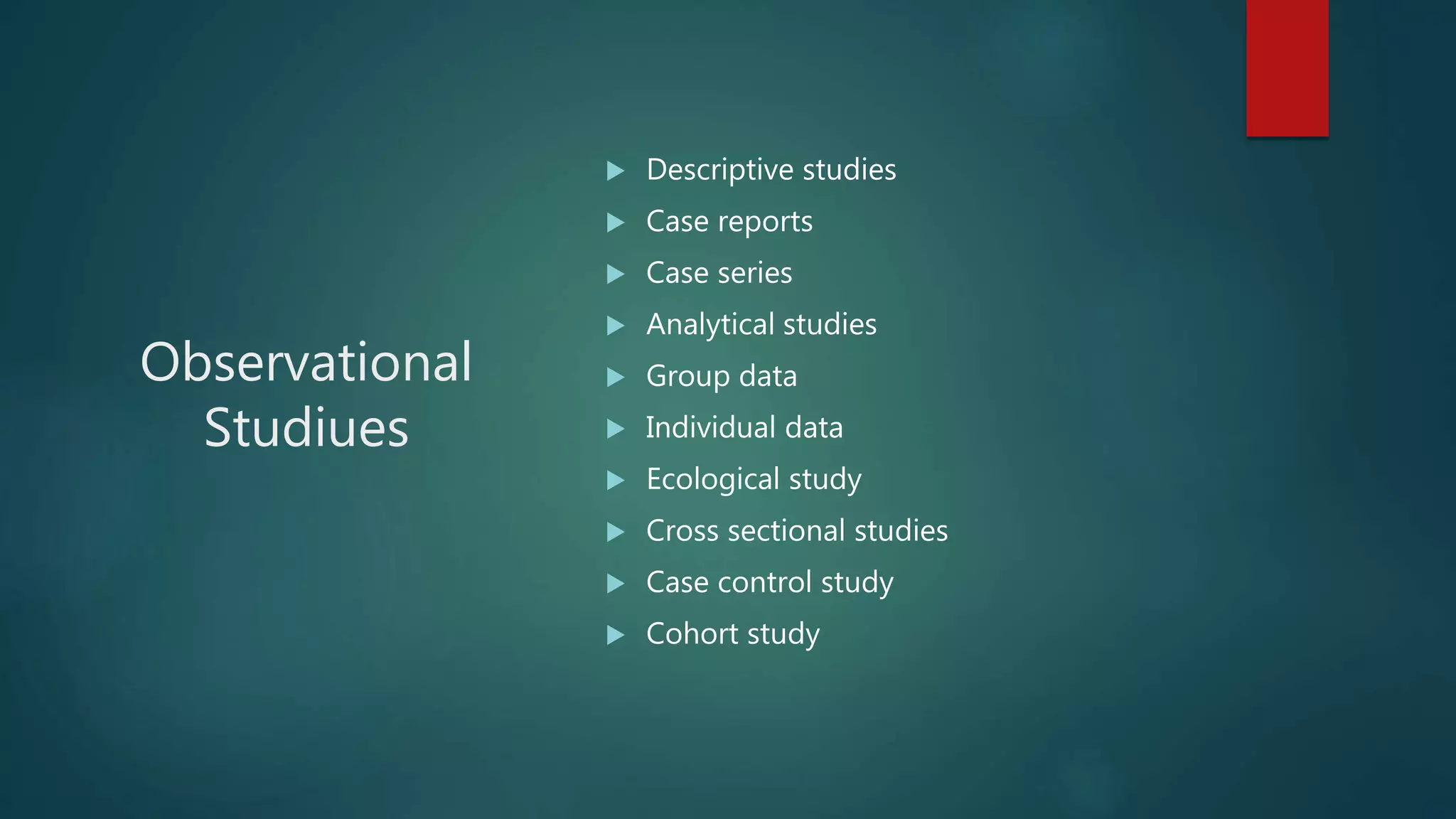
Observational
Studiues
 Descriptive studies
 Case reports
 Case series
 Analytical studies
 Group data
 Individual data
 Ecological study
 Cross sectional studies
 Case control study
 Cohort study
Experimental
studies
 Randomized controlled trial
 Experimental design
 Advantages
 Disadvantages
Other type of
experimental
study
 Field trials
 Community trials
 Animal studies
 Metal analysis
1.Observational studies
 Non experimental
 There is no intervention
 Treatment and exposure occur in a non controlled environment
 Individuals can be observed prospectively
 1.descriptive studies :
 Case reports: detailed presentation of a single case or handful of cases
 Ex; unexpected new therapeutic effect
 adverse events
 Case series : group of patient with similar diagnosis
Advantages &
Disadvantages
 Advantages:
 Useful of hypothesis generation
 Information for very rare disease with few risk
factors
 Disadvantages:
 Cannot study cause and effect relationships
 Cannot assess the disease frequency
Analytical Studies
 Group data :
 Ecology study
 Individual data :
 Cross sectional study
 Case control study
 Cohort study
Ecological study
 An investigation of the distribution of health and determinants b/w groups
and individuals
 The aggregate data not individual level
 It is conducted by first step Research
 Merits:
 Cheap
 Quick and convenient
 Demerits:
 Limit to control effect other factors
Cross sectional studies
 An observational design
 Study only exists at this point in time
 Often used to study conditions
 Nonfatal,chronic conditions
 It measures the prevalence
 Merits:
 Low cost
 Baseline for prospective study
 Health service evaluvation and planning
 Demerits:
 No caluculation of risk
 Temporal sequence is unclear
 Not good for rare diseases
Case control study
 An observational design comparing
exposures in disease cases vs healthy
controls from same population
 Merits:
 Cheap and easy to quick studies
 Multiple exposures
 Suitable when randomization
Cohort study
 It is an observational design
 Compare to the known risk facors or exposure with others without the risk
facors
 One the best observational design
 Merits
 Accurate relative risk estimation
 Multiple outcomes
 Used where randomized is not possible
 Demerits:
 Lengthy and expensive
 Large sampes are required
 Not suitable for many diseases
Experimental
design
 Treatment and exposures occur in a controlled environment
 Planned research designs
 Clinicals trials are called experimental design
 Generally involve a randomization assignments
 Testing casual hypothesis
 Advantages:
 Ability to randomize the subjects
 Best evidence of casuality
 Control extraneous variables
 Disadvantages:
 May be unethical to assign person to certain tmt
 Others:
 Field trials
 Community trials
 Animal studies
References;
 www.slideshare.com
 www.google.com
 Godis.l.epidemiology.w.b.sauderns company

Research methodology & biostatistics

  • 1.
    RESEARCH METHODOLOGY & BIOSTATISTICS UNIT 1:GENERAL RESEARCH METHODLOGY PRABHAKARAN A
  • 2.
    TOPICS : RESEARCH OBJECTIVE REQUIREMENTS PRACTICAL DIFFICULTIES REVIEWOF LITERATURE STUDY DESIGN TYPES OF STUDIES CONTROLS,RANDOMIZATION,CROSSOVER DESIGN,PLACEBO,BINDING TECHINQUES
  • 3.
    RESEARCH :  DEFINE:  “Research is a systematized to effort of gain new knowledge”.  Involves a data collection  organization  Analysis  Interpretation  RESEARCH METHODOLOGY :  Research methodology is a specific procedures or techniques used to identify,  Select,  Process,  And Analyze the information in the topic.
  • 4.
    Study design &types of Design  Study design :  Study design is the define as the specific plan or protocol for the conducting the study  Is known as study design.  Which allows the investigator to translate the conceptual hypothesis into an operational one.
  • 5.
    Types of studies  Thestudy design are two types  observational studies – studies don’t involve any intervention or experiment  Another one Experimental Studies - studies that entail manipulation of the study factor
  • 6.
    Observational Studiues  Descriptive studies Case reports  Case series  Analytical studies  Group data  Individual data  Ecological study  Cross sectional studies  Case control study  Cohort study
  • 7.
    Experimental studies  Randomized controlledtrial  Experimental design  Advantages  Disadvantages
  • 8.
    Other type of experimental study Field trials  Community trials  Animal studies  Metal analysis
  • 9.
    1.Observational studies  Nonexperimental  There is no intervention  Treatment and exposure occur in a non controlled environment  Individuals can be observed prospectively  1.descriptive studies :  Case reports: detailed presentation of a single case or handful of cases  Ex; unexpected new therapeutic effect  adverse events  Case series : group of patient with similar diagnosis
  • 10.
    Advantages & Disadvantages  Advantages: Useful of hypothesis generation  Information for very rare disease with few risk factors  Disadvantages:  Cannot study cause and effect relationships  Cannot assess the disease frequency
  • 11.
    Analytical Studies  Groupdata :  Ecology study  Individual data :  Cross sectional study  Case control study  Cohort study
  • 12.
    Ecological study  Aninvestigation of the distribution of health and determinants b/w groups and individuals  The aggregate data not individual level  It is conducted by first step Research  Merits:  Cheap  Quick and convenient  Demerits:  Limit to control effect other factors
  • 13.
    Cross sectional studies An observational design  Study only exists at this point in time  Often used to study conditions  Nonfatal,chronic conditions  It measures the prevalence  Merits:  Low cost  Baseline for prospective study  Health service evaluvation and planning  Demerits:  No caluculation of risk  Temporal sequence is unclear  Not good for rare diseases
  • 14.
    Case control study An observational design comparing exposures in disease cases vs healthy controls from same population  Merits:  Cheap and easy to quick studies  Multiple exposures  Suitable when randomization
  • 15.
    Cohort study  Itis an observational design  Compare to the known risk facors or exposure with others without the risk facors  One the best observational design  Merits  Accurate relative risk estimation  Multiple outcomes  Used where randomized is not possible  Demerits:  Lengthy and expensive  Large sampes are required  Not suitable for many diseases
  • 16.
    Experimental design  Treatment andexposures occur in a controlled environment  Planned research designs  Clinicals trials are called experimental design  Generally involve a randomization assignments  Testing casual hypothesis  Advantages:  Ability to randomize the subjects  Best evidence of casuality  Control extraneous variables  Disadvantages:  May be unethical to assign person to certain tmt  Others:  Field trials  Community trials  Animal studies
  • 17.
    References;  www.slideshare.com  www.google.com Godis.l.epidemiology.w.b.sauderns company