Lenard,Sophia,
Kir, and Nayomi
Asexual
Asexual
Reproduction
Reproduction on
on
animals
animals
Some animals reproduce
asexually. Asexual
reproduction is when only one
parent is involved and doesn’t
use sex cells.
Animals that reproduce asexually
includes
includes planarians, many annelid
planarians, many annelid
worms including polychaetes and
some oligochaetes, turbellarians
and sea stars. Many fungi and plants
reproduce asexually.
[BUDDING]
In this process, a bud
grows inside or outside an
animal. This means that
budding may lead to the
production of a
completely new adult that
forms away from the
original body. However, it
may also remain attached
to the original body as it
multiplies.
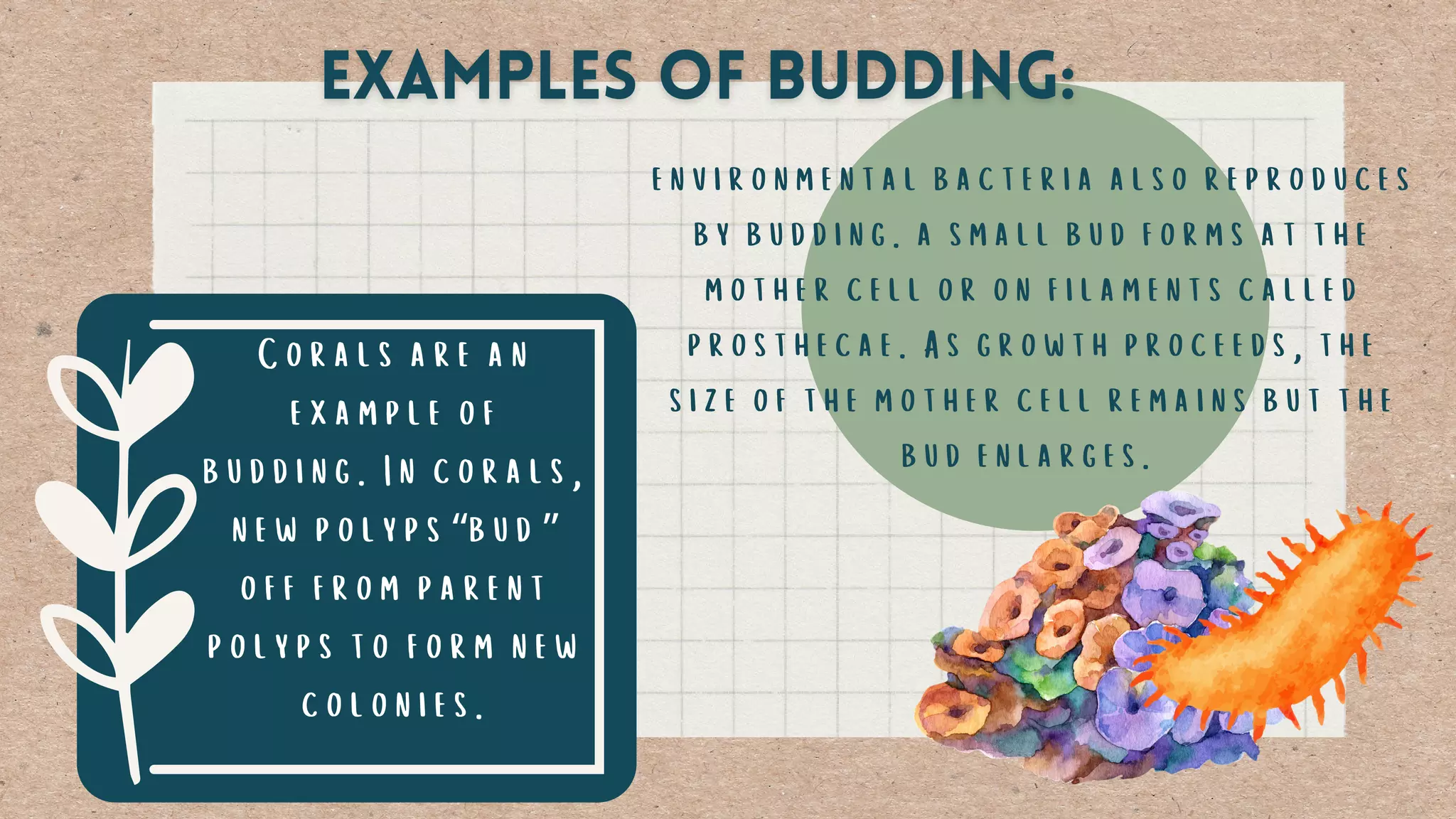
Corals are an
example of
budding. In corals,
new polyps“bud”
off from parent
polyps to form new
colonies.
environmental bacteria also reproduces
by budding. a small bud forms at the
mother cell or on filaments called
prosthecae. As growth proceeds, the
size of the mother cell remains but the
bud enlarges.
[FRAGMENTATION]
In this process, a part
of an animal breaks
off or a fragment of it
is removed from the
rest of the body. Each
part or fragment then
grows other body
parts. Thus, the
organism is able to
multiply by itself.
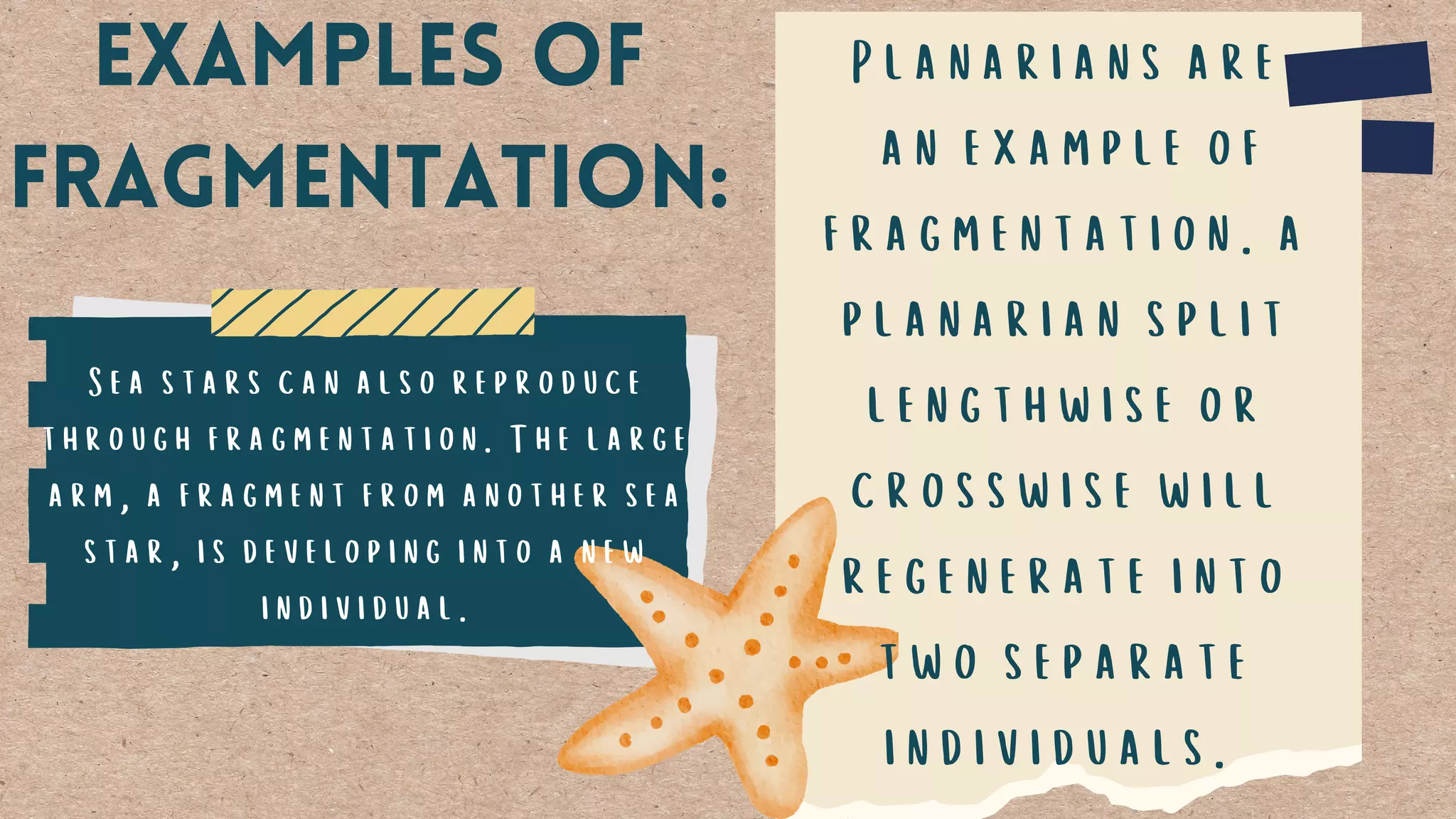
Planarians are
an example of
fragmentation. a
planarian split
lengthwise or
crosswise will
regenerate into
two separate
individuals.
Examples of
fragmentation:
Sea stars can also reproduce
through fragmentation. The large
arm, a fragment from another sea
star, is developing into a new
individual.
Sexual Reproduction happens when a female
reproductive cell and a male reproductive cell
unite in the ess called fertilization. Organisms that
have sexual reproductive system have the capability
to produce sex cells or males are called sperm
cells. Without these , organisms with sexual
reproductive system would not be able to
reproduce.
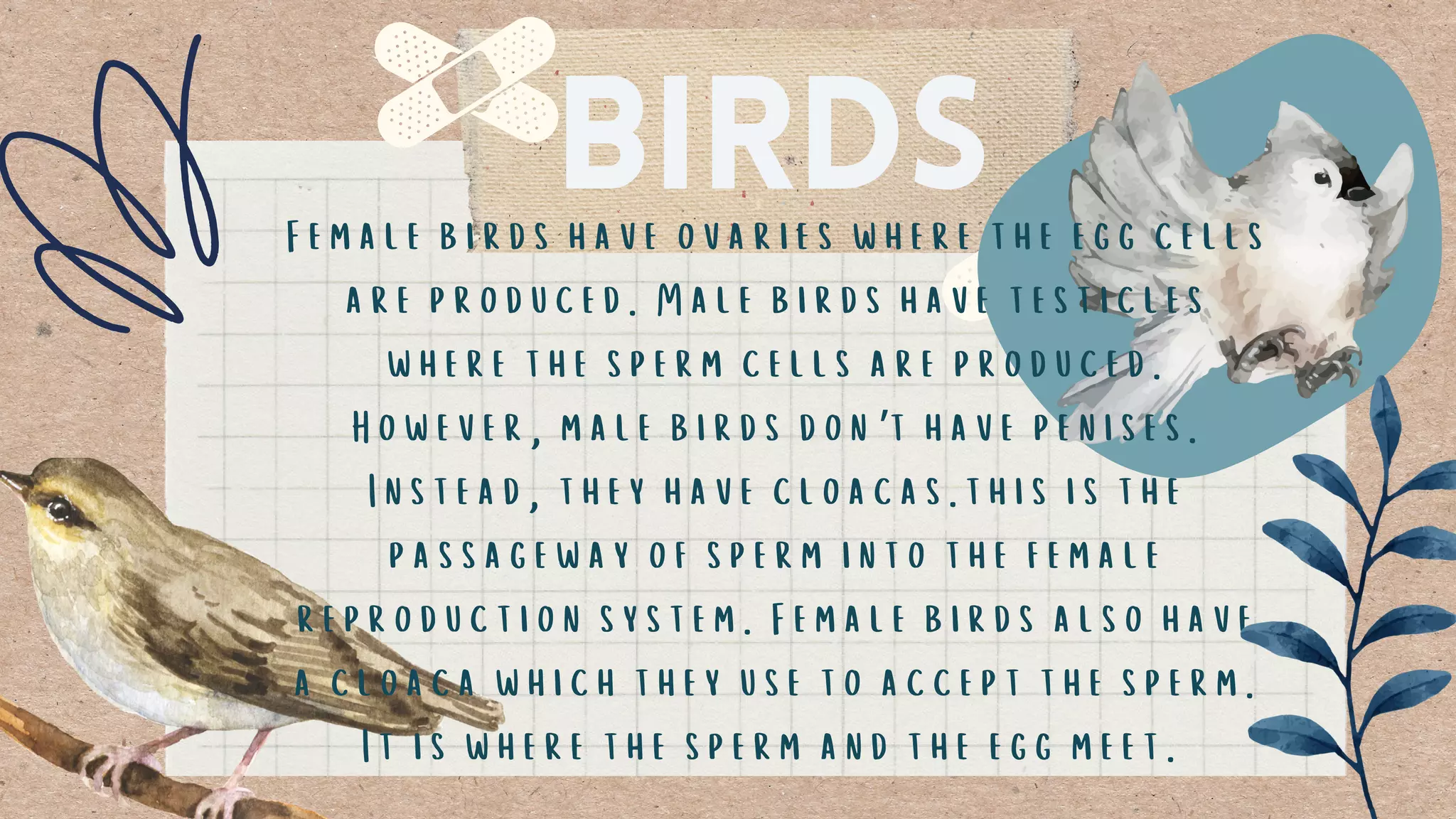
Birds
Female birds have ovaries where the egg cells
are produced. Male birds have testicles
where the sperm cells are produced.
However, male birds don’t have penises.
Instead, they have cloacas.this is the
passageway of sperm into the female
reproduction system. Female birds also have
a cloaca which they use to accept the sperm.
It is where the sperm and the egg meet.
FUN FACT
ABOUT ANIMALS
The 6-Foot Drop Of Being Born Is What Severs The Giraffe's Umbilical Cord. ...
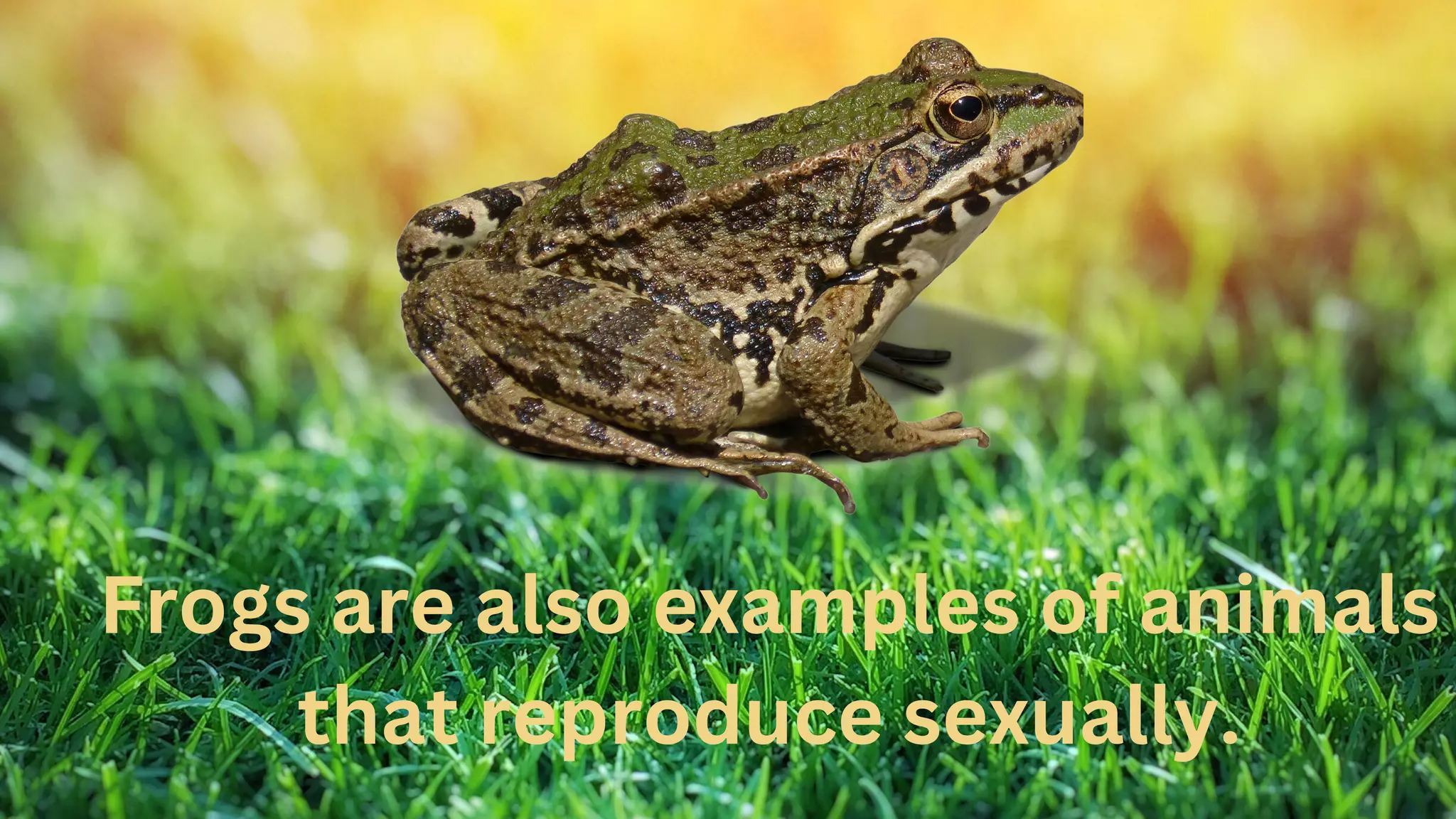
Frogs are also examples of animals
that reproduce sexually.
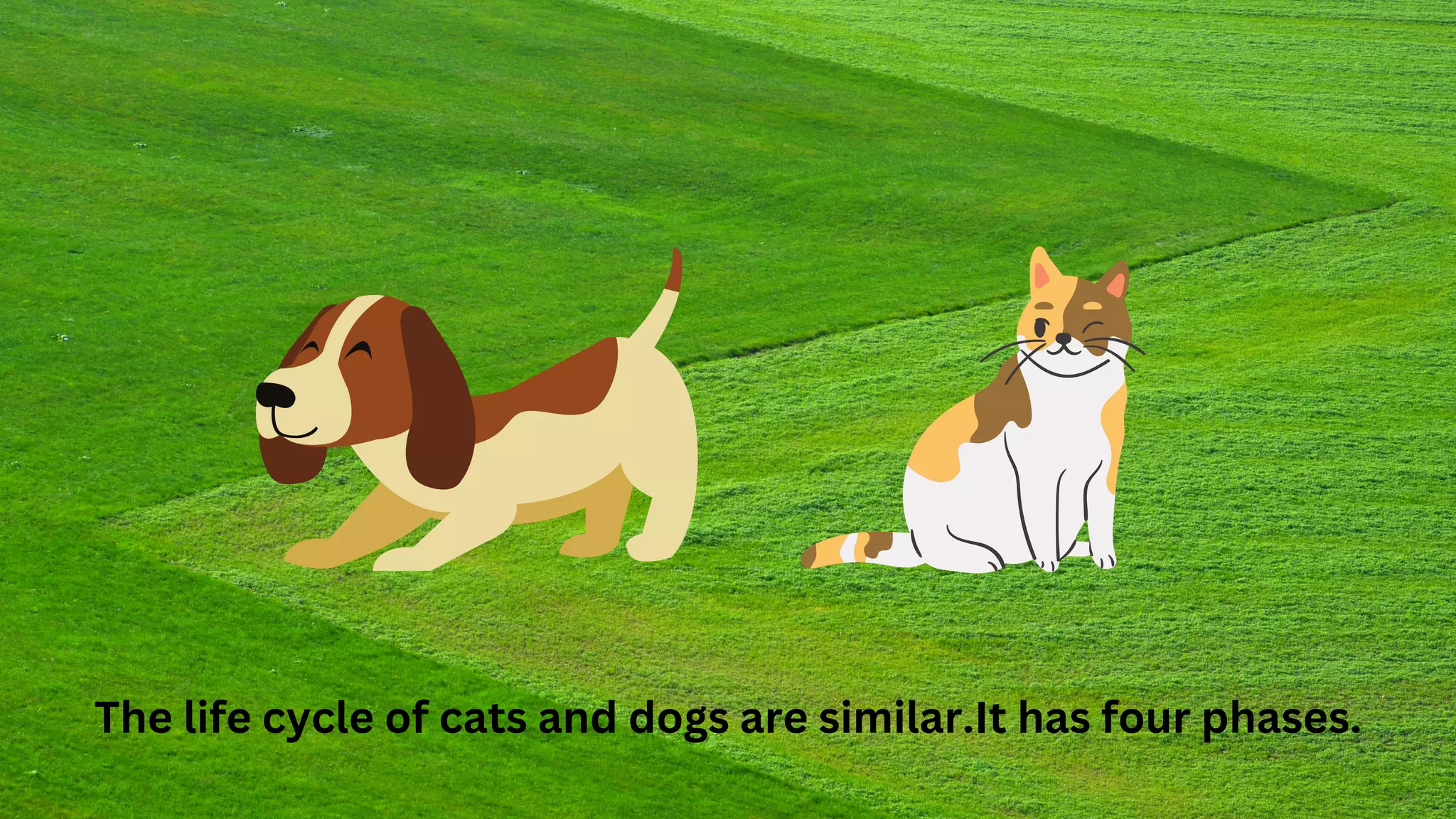
The life cycle of cats and dogs are similar.It has four phases.
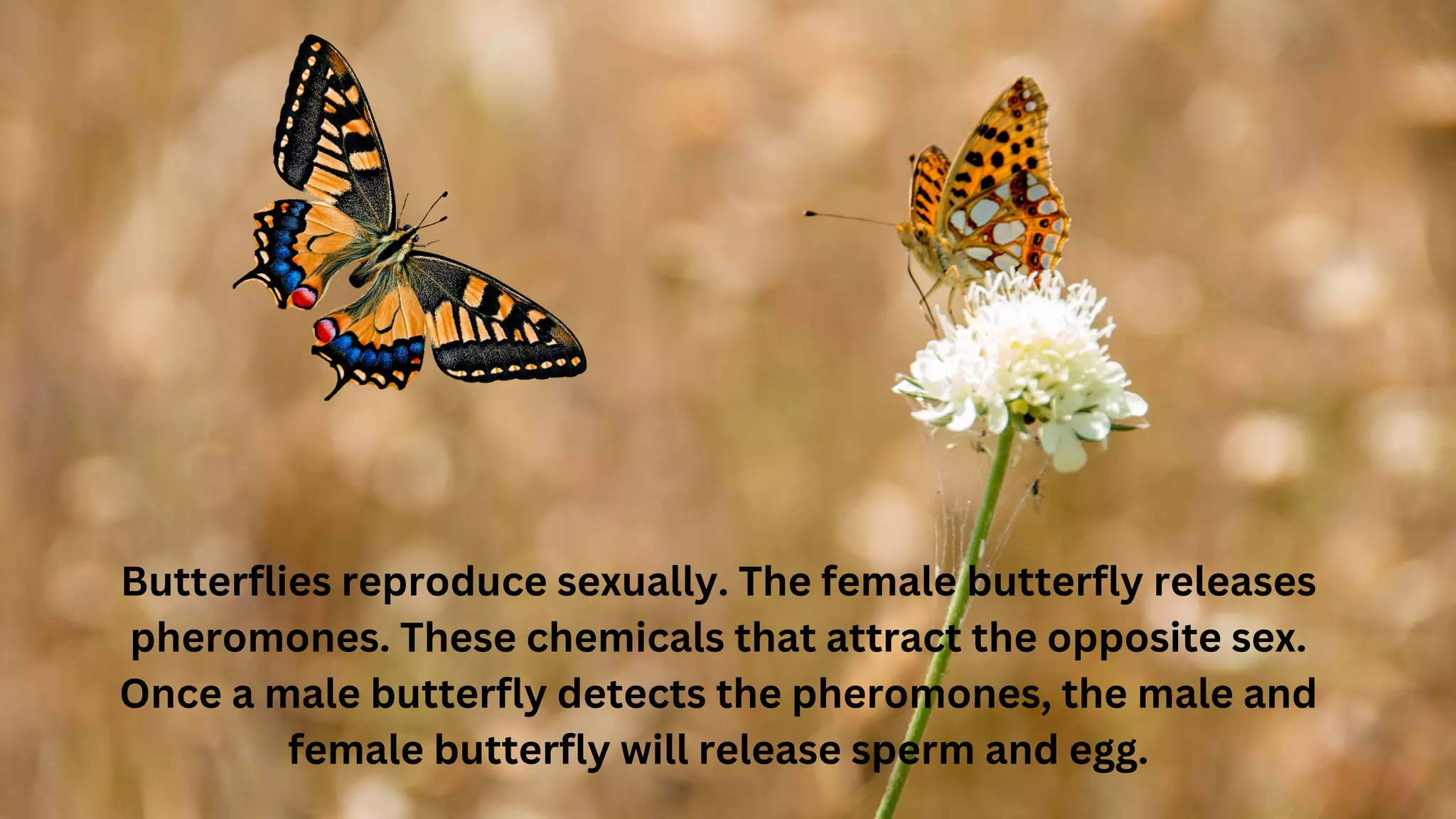
Butterflies reproduce sexually. The female butterfly releases
pheromones. These chemicals that attract the opposite sex.
Once a male butterfly detects the pheromones, the male and
female butterfly will release sperm and egg.
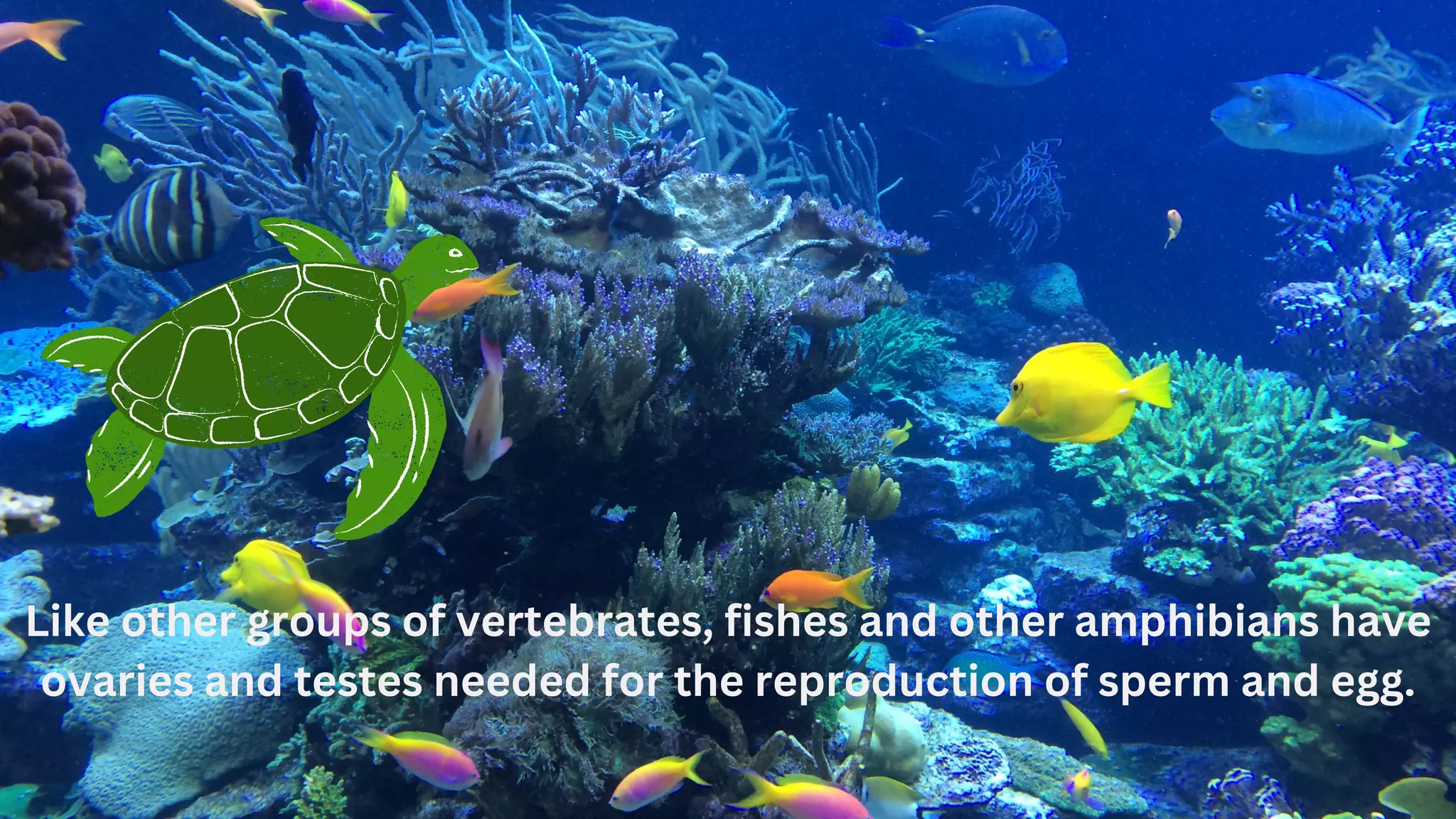
Like other groups of vertebrates, fishes and other amphibians have
ovaries and testes needed for the reproduction of sperm and egg.

Reproduction in animals

  • 2.
  • 4.
    Asexual Asexual Reproduction Reproduction on on animals animals Some animalsreproduce asexually. Asexual reproduction is when only one parent is involved and doesn’t use sex cells.
  • 5.
    Animals that reproduceasexually Animals that reproduce asexually includes includes planarians, many annelid planarians, many annelid worms including polychaetes and worms including polychaetes and some oligochaetes, turbellarians some oligochaetes, turbellarians and sea stars. Many fungi and plants and sea stars. Many fungi and plants reproduce asexually. reproduce asexually.
  • 6.
    [BUDDING] In this process,a bud grows inside or outside an animal. This means that budding may lead to the production of a completely new adult that forms away from the original body. However, it may also remain attached to the original body as it multiplies.
  • 7.
    Corals are an exampleof budding. In corals, new polyps“bud” off from parent polyps to form new colonies. environmental bacteria also reproduces by budding. a small bud forms at the mother cell or on filaments called prosthecae. As growth proceeds, the size of the mother cell remains but the bud enlarges.
  • 8.
    [FRAGMENTATION] In this process,a part of an animal breaks off or a fragment of it is removed from the rest of the body. Each part or fragment then grows other body parts. Thus, the organism is able to multiply by itself.
  • 9.
    Planarians are an exampleof fragmentation. a planarian split lengthwise or crosswise will regenerate into two separate individuals. Examples of fragmentation: Sea stars can also reproduce through fragmentation. The large arm, a fragment from another sea star, is developing into a new individual.
  • 11.
    Sexual Reproduction happenswhen a female reproductive cell and a male reproductive cell unite in the ess called fertilization. Organisms that have sexual reproductive system have the capability to produce sex cells or males are called sperm cells. Without these , organisms with sexual reproductive system would not be able to reproduce.
  • 13.
    Birds Female birds haveovaries where the egg cells are produced. Male birds have testicles where the sperm cells are produced. However, male birds don’t have penises. Instead, they have cloacas.this is the passageway of sperm into the female reproduction system. Female birds also have a cloaca which they use to accept the sperm. It is where the sperm and the egg meet.
  • 14.
    FUN FACT ABOUT ANIMALS The6-Foot Drop Of Being Born Is What Severs The Giraffe's Umbilical Cord. ...
  • 15.
    Frogs are alsoexamples of animals that reproduce sexually.
  • 16.
    The life cycleof cats and dogs are similar.It has four phases.
  • 17.
    Butterflies reproduce sexually.The female butterfly releases pheromones. These chemicals that attract the opposite sex. Once a male butterfly detects the pheromones, the male and female butterfly will release sperm and egg.
  • 18.
    Like other groupsof vertebrates, fishes and other amphibians have ovaries and testes needed for the reproduction of sperm and egg.