By Tina, Taylor and Sophie
REPRESENTATIONS AND
STEREOTYPES
Media representations are the way in which the
media portrays a particular group, communities,
experiences, ideas or topic for a particular
perspective.
REPRESENTATIONS
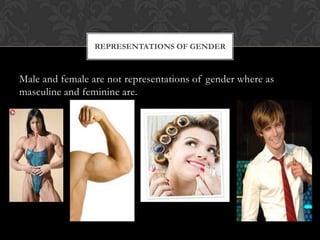
Male and female are not representations of gender where as
masculine and feminine are.
REPRESENTATIONS OF GENDER
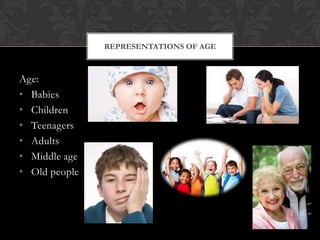
Age:
• Babies
• Children
• Teenagers
• Adults
• Middle age
• Old people
REPRESENTATIONS OF AGE
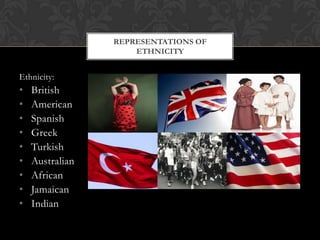
Ethnicity:
• British
• American
• Spanish
• Greek
• Turkish
• Australian
• African
• Jamaican
• Indian
REPRESENTATIONS OF
ETHNICITY
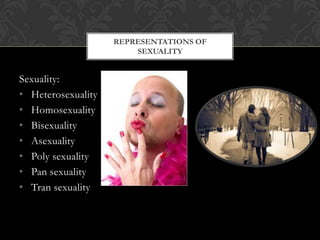
Sexuality:
• Heterosexuality
• Homosexuality
• Bisexuality
• Asexuality
• Poly sexuality
• Pan sexuality
• Tran sexuality
REPRESENTATIONS OF
SEXUALITY
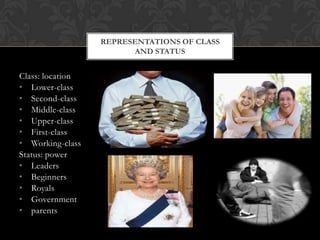
Class: location
• Lower-class
• Second-class
• Middle-class
• Upper-class
• First-class
• Working-class
Status: power
• Leaders
• Beginners
• Royals
• Government
• parents
REPRESENTATIONS OF CLASS
AND STATUS
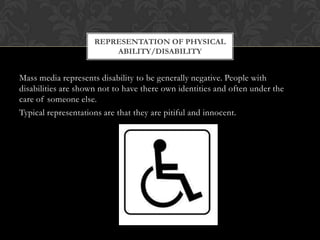
Mass media represents disability to be generally negative. People with
disabilities are shown not to have there own identities and often under the
care of someone else.
Typical representations are that they are pitiful and innocent.
REPRESENTATION OF PHYSICAL
ABILITY/DISABILITY
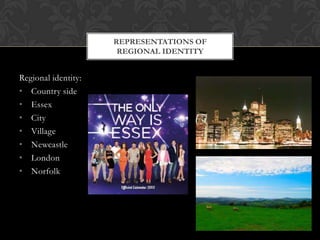
Regional identity:
• Country side
• Essex
• City
• Village
• Newcastle
• London
• Norfolk
REPRESENTATIONS OF
REGIONAL IDENTITY
STEREOTYPES
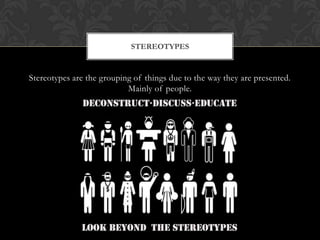
Stereotypes are the grouping of things due to the way they are presented.
Mainly of people.
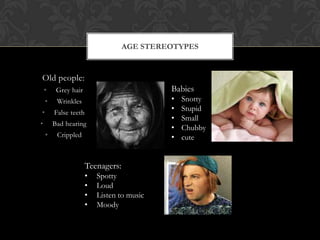
Old people:
• Grey hair
• Wrinkles
• False teeth
• Bad hearing
• Crippled
AGE STEREOTYPES
Teenagers:
• Spotty
• Loud
• Listen to music
• Moody
Babies
• Snotty
• Stupid
• Small
• Chubby
• cute
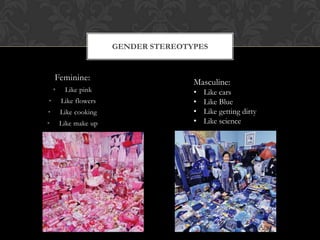
Feminine:
• Like pink
• Like flowers
• Like cooking
• Like make up
GENDER STEREOTYPES
Masculine:
• Like cars
• Like Blue
• Like getting dirty
• Like science
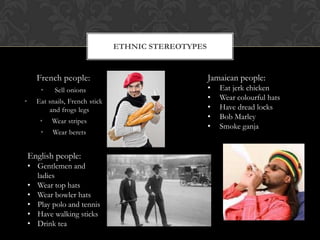
French people:
• Sell onions
• Eat snails, French stick
and frogs legs
• Wear stripes
• Wear berets
ETHNIC STEREOTYPES
Jamaican people:
• Eat jerk chicken
• Wear colourful hats
• Have dread locks
• Bob Marley
• Smoke ganja
English people:
• Gentlemen and
ladies
• Wear top hats
• Wear bowler hats
• Play polo and tennis
• Have walking sticks
• Drink tea
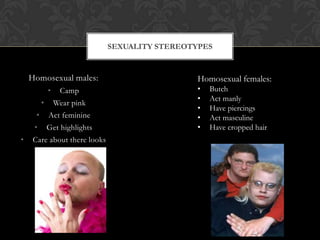
Homosexual males:
• Camp
• Wear pink
• Act feminine
• Get highlights
• Care about there looks
SEXUALITY STEREOTYPES
Homosexual females:
• Butch
• Act manly
• Have piercings
• Act masculine
• Have cropped hair
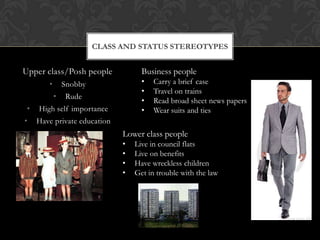
Upper class/Posh people
• Snobby
• Rude
• High self importance
• Have private education
CLASS AND STATUS STEREOTYPES
Lower class people
• Live in council flats
• Live on benefits
• Have wreckless children
• Get in trouble with the law
Business people
• Carry a brief case
• Travel on trains
• Read broad sheet news papers
• Wear suits and ties
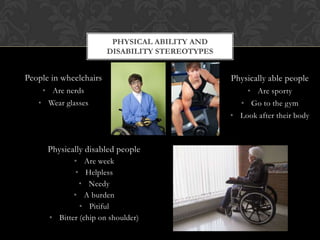
People in wheelchairs
• Are nerds
• Wear glasses
PHYSICAL ABILITY AND
DISABILITY STEREOTYPES
Physically able people
• Are sporty
• Go to the gym
• Look after their body
Physically disabled people
• Are week
• Helpless
• Needy
• A burden
• Pitiful
• Bitter (chip on shoulder)
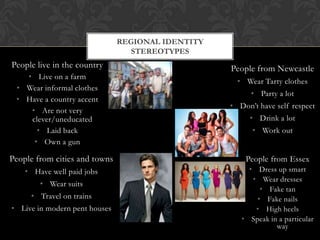
People live in the country
• Live on a farm
• Wear informal clothes
• Have a country accent
• Are not very
clever/uneducated
• Laid back
• Own a gun
REGIONAL IDENTITY
STEREOTYPES
People from cities and towns
• Have well paid jobs
• Wear suits
• Travel on trains
• Live in modern pent houses
People from Newcastle
• Wear Tarty clothes
• Party a lot
• Don’t have self respect
• Drink a lot
• Work out
People from Essex
• Dress up smart
• Wear dresses
• Fake tan
• Fake nails
• High heels
• Speak in a particular
way
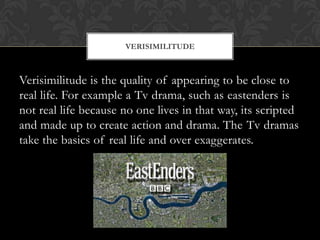
Verisimilitude is the quality of appearing to be close to
real life. For example a Tv drama, such as eastenders is
not real life because no one lives in that way, its scripted
and made up to create action and drama. The Tv dramas
take the basics of real life and over exaggerates.
VERISIMILITUDE

Representations and stereotypes

  • 1.
    By Tina, Taylorand Sophie REPRESENTATIONS AND STEREOTYPES
  • 2.
    Media representations arethe way in which the media portrays a particular group, communities, experiences, ideas or topic for a particular perspective. REPRESENTATIONS
  • 3.
    Male and femaleare not representations of gender where as masculine and feminine are. REPRESENTATIONS OF GENDER
  • 4.
    Age: • Babies • Children •Teenagers • Adults • Middle age • Old people REPRESENTATIONS OF AGE
  • 5.
    Ethnicity: • British • American •Spanish • Greek • Turkish • Australian • African • Jamaican • Indian REPRESENTATIONS OF ETHNICITY
  • 6.
    Sexuality: • Heterosexuality • Homosexuality •Bisexuality • Asexuality • Poly sexuality • Pan sexuality • Tran sexuality REPRESENTATIONS OF SEXUALITY
  • 7.
    Class: location • Lower-class •Second-class • Middle-class • Upper-class • First-class • Working-class Status: power • Leaders • Beginners • Royals • Government • parents REPRESENTATIONS OF CLASS AND STATUS
  • 8.
    Mass media representsdisability to be generally negative. People with disabilities are shown not to have there own identities and often under the care of someone else. Typical representations are that they are pitiful and innocent. REPRESENTATION OF PHYSICAL ABILITY/DISABILITY
  • 9.
    Regional identity: • Countryside • Essex • City • Village • Newcastle • London • Norfolk REPRESENTATIONS OF REGIONAL IDENTITY
  • 10.
    STEREOTYPES Stereotypes are thegrouping of things due to the way they are presented. Mainly of people.
  • 11.
    Old people: • Greyhair • Wrinkles • False teeth • Bad hearing • Crippled AGE STEREOTYPES Teenagers: • Spotty • Loud • Listen to music • Moody Babies • Snotty • Stupid • Small • Chubby • cute
  • 12.
    Feminine: • Like pink •Like flowers • Like cooking • Like make up GENDER STEREOTYPES Masculine: • Like cars • Like Blue • Like getting dirty • Like science
  • 13.
    French people: • Sellonions • Eat snails, French stick and frogs legs • Wear stripes • Wear berets ETHNIC STEREOTYPES Jamaican people: • Eat jerk chicken • Wear colourful hats • Have dread locks • Bob Marley • Smoke ganja English people: • Gentlemen and ladies • Wear top hats • Wear bowler hats • Play polo and tennis • Have walking sticks • Drink tea
  • 14.
    Homosexual males: • Camp •Wear pink • Act feminine • Get highlights • Care about there looks SEXUALITY STEREOTYPES Homosexual females: • Butch • Act manly • Have piercings • Act masculine • Have cropped hair
  • 15.
    Upper class/Posh people •Snobby • Rude • High self importance • Have private education CLASS AND STATUS STEREOTYPES Lower class people • Live in council flats • Live on benefits • Have wreckless children • Get in trouble with the law Business people • Carry a brief case • Travel on trains • Read broad sheet news papers • Wear suits and ties
  • 16.
    People in wheelchairs •Are nerds • Wear glasses PHYSICAL ABILITY AND DISABILITY STEREOTYPES Physically able people • Are sporty • Go to the gym • Look after their body Physically disabled people • Are week • Helpless • Needy • A burden • Pitiful • Bitter (chip on shoulder)
  • 17.
    People live inthe country • Live on a farm • Wear informal clothes • Have a country accent • Are not very clever/uneducated • Laid back • Own a gun REGIONAL IDENTITY STEREOTYPES People from cities and towns • Have well paid jobs • Wear suits • Travel on trains • Live in modern pent houses People from Newcastle • Wear Tarty clothes • Party a lot • Don’t have self respect • Drink a lot • Work out People from Essex • Dress up smart • Wear dresses • Fake tan • Fake nails • High heels • Speak in a particular way
  • 18.
    Verisimilitude is thequality of appearing to be close to real life. For example a Tv drama, such as eastenders is not real life because no one lives in that way, its scripted and made up to create action and drama. The Tv dramas take the basics of real life and over exaggerates. VERISIMILITUDE