Stereotypes
Case Study: Black Men
Many of the worst stereotypes, come
from slavery.
They were meant to demean and dehumanize Black men and reinforce inferiority in
order to justify slavery and its abuses.
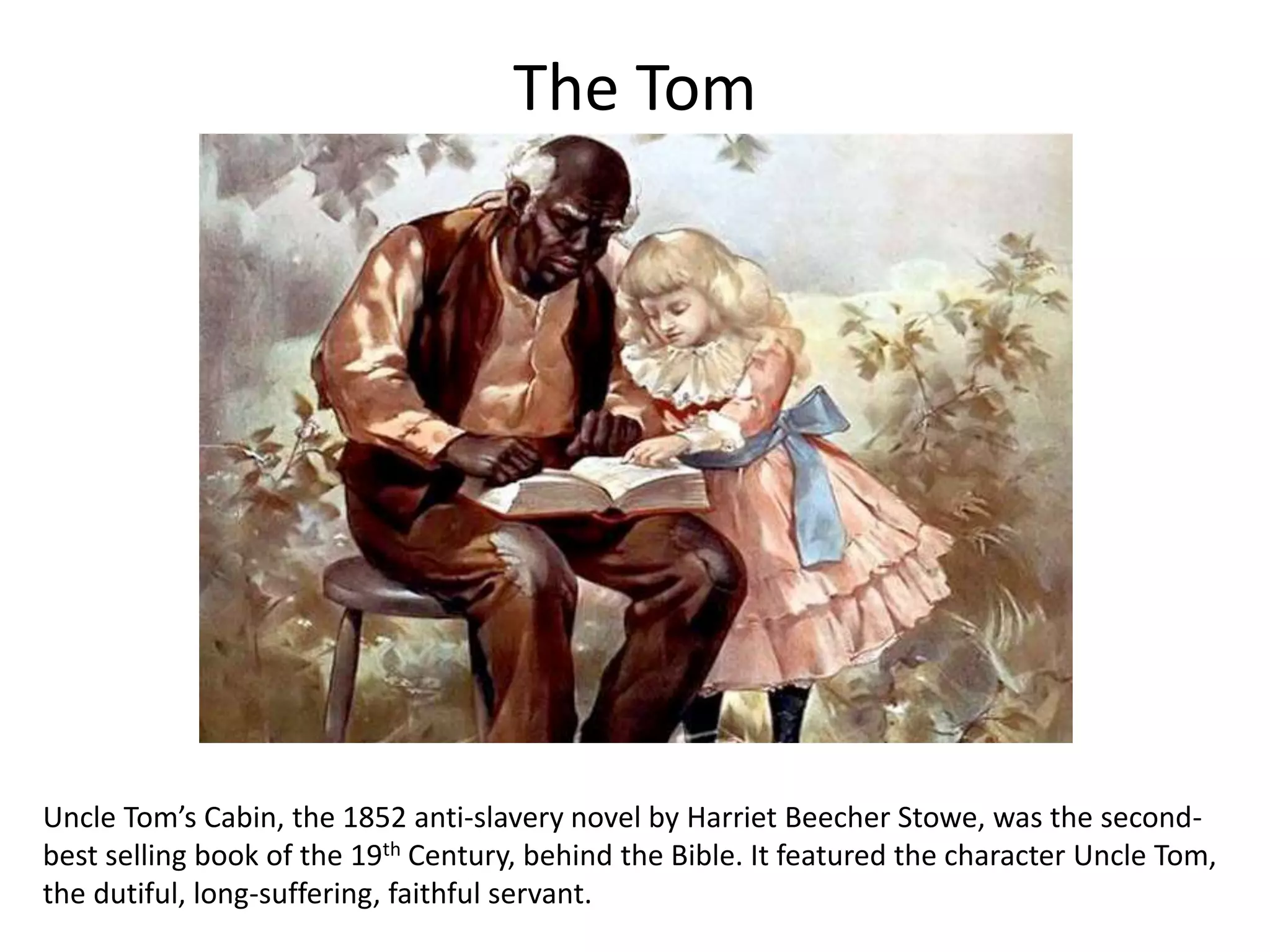
The Tom
Uncle Tom’s Cabin, the 1852 anti-slavery novel by Harriet Beecher Stowe, was the second-
best selling book of the 19th Century, behind the Bible. It featured the character Uncle Tom,
the dutiful, long-suffering, faithful servant.
Uncle Tom’s Cabin, 1927
He’s God-fearing and self-sacrificing—a loyal and trusted servant.
Uncle Remus
Uncle Remus was the kindly, docile fictional narrator of folk tales for kids. Remember
Br’er Rabbit? Here he is in the 1946 Disney film Song of the South.
Bill “Bojangles Robinson
An elegant Tom, Mr. Bojangles with Shirely Temple. Sometimes
called the first onscreen interracial couple.
The face of the
rice box; Aunt
Jemima’s male
counterpart
Rewarded for playing a Tom
Driving Miss Daisy, 1989 best picture. Morgan Freeman receives Golden Globe
for playing Hoke.
The Newer Tom: The Good Negro
In 1967’s Guess Who’s Coming to Dinner, Sidney Poitier plays Mr. Perfect: a smart,
widowed, idealistic physician, who meets his white finance’s parents.
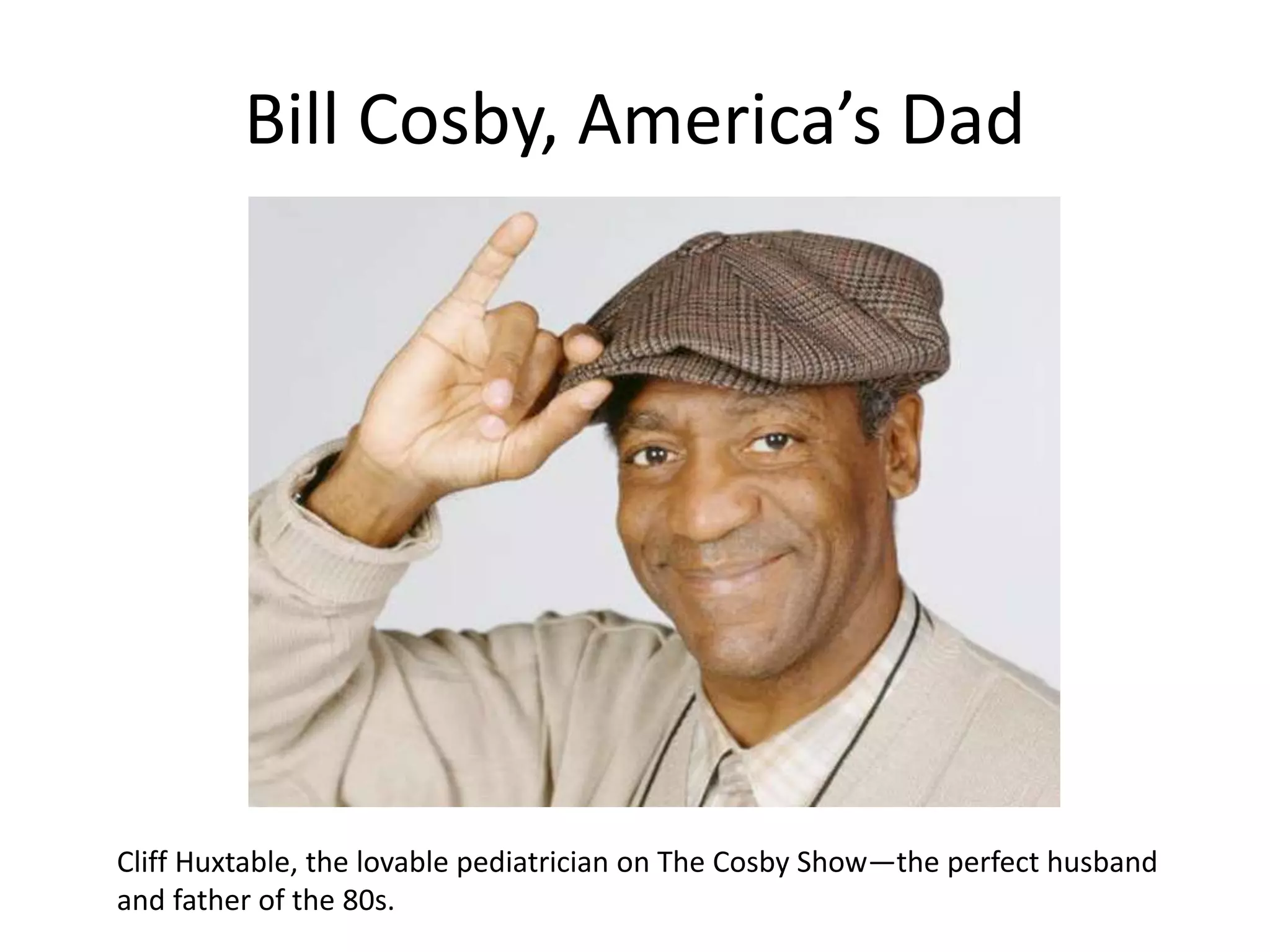
Bill Cosby, America’s Dad
Cliff Huxtable, the lovable pediatrician on The Cosby Show—the perfect husband
and father of the 80s.
Barack Obama
The Harvard-educated, bi-racial professor; perfect father and husband: some say, the
only black man America could accept as president because he’s so perfect!
The Newest Tom: The Magical Negro
Has special, “magical” powers, to selflessly help the white
man. Will Smith as Matt Damon’s caddy in The Legend of
Bagger Vance, 2000
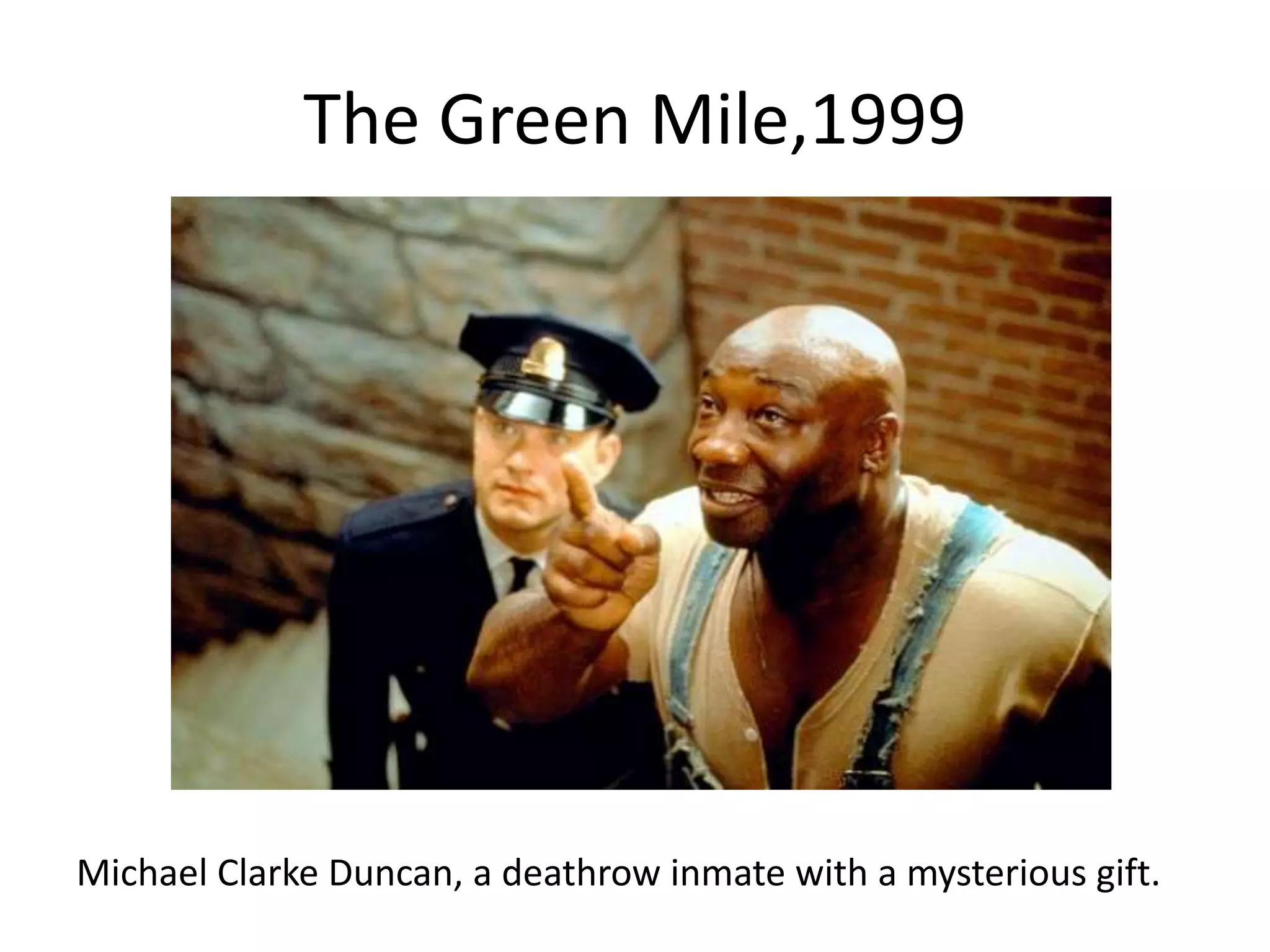
The Green Mile,1999
Michael Clarke Duncan, a deathrow inmate with a mysterious gift.
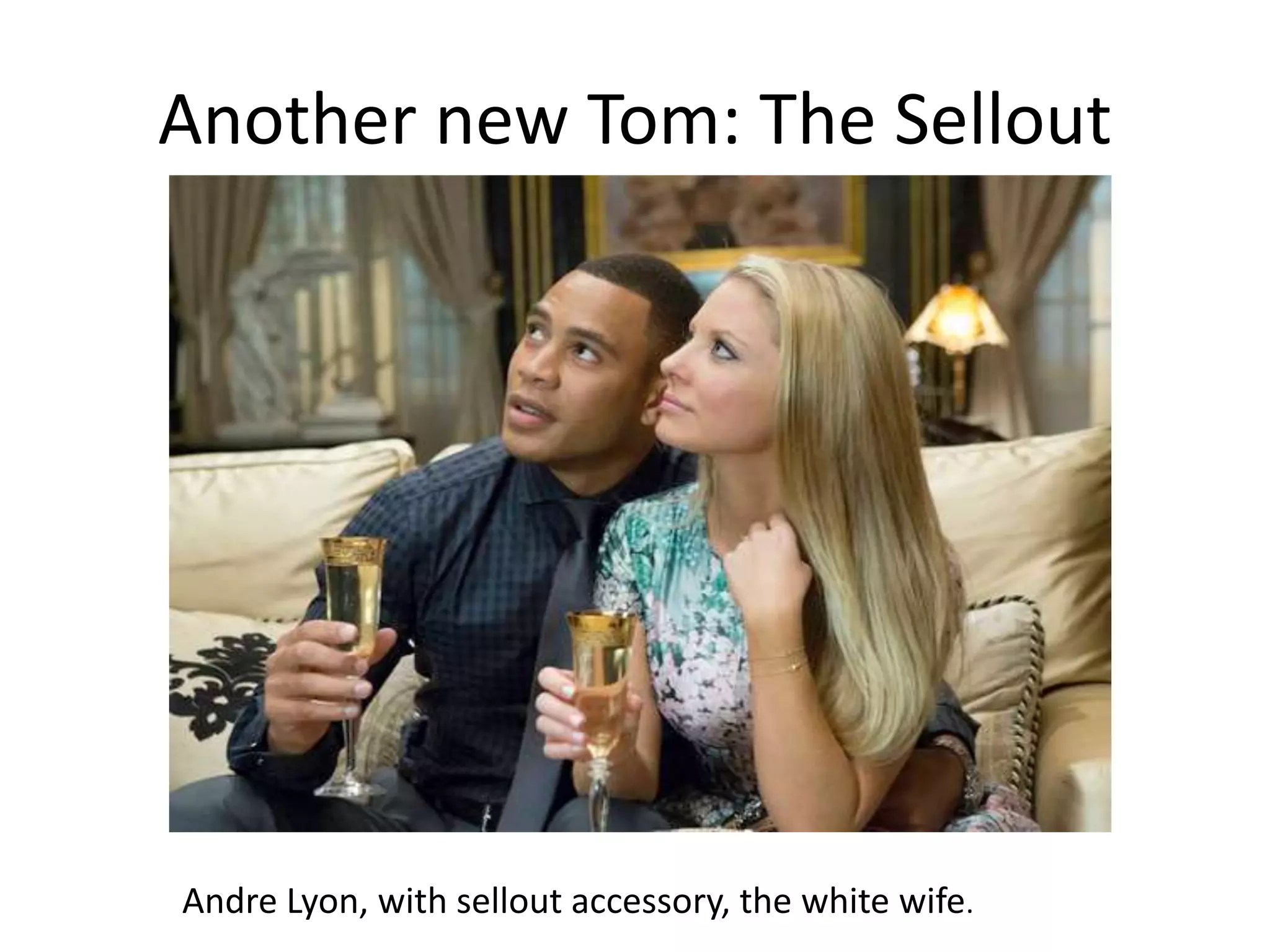
Another new Tom: The Sellout
Andre Lyon, with sellout accessory, the white wife.
Uncle Tom’s revenge
Samuel L. Jackson as Stephen, the head house Negro in charge in Django Unchained, 2013
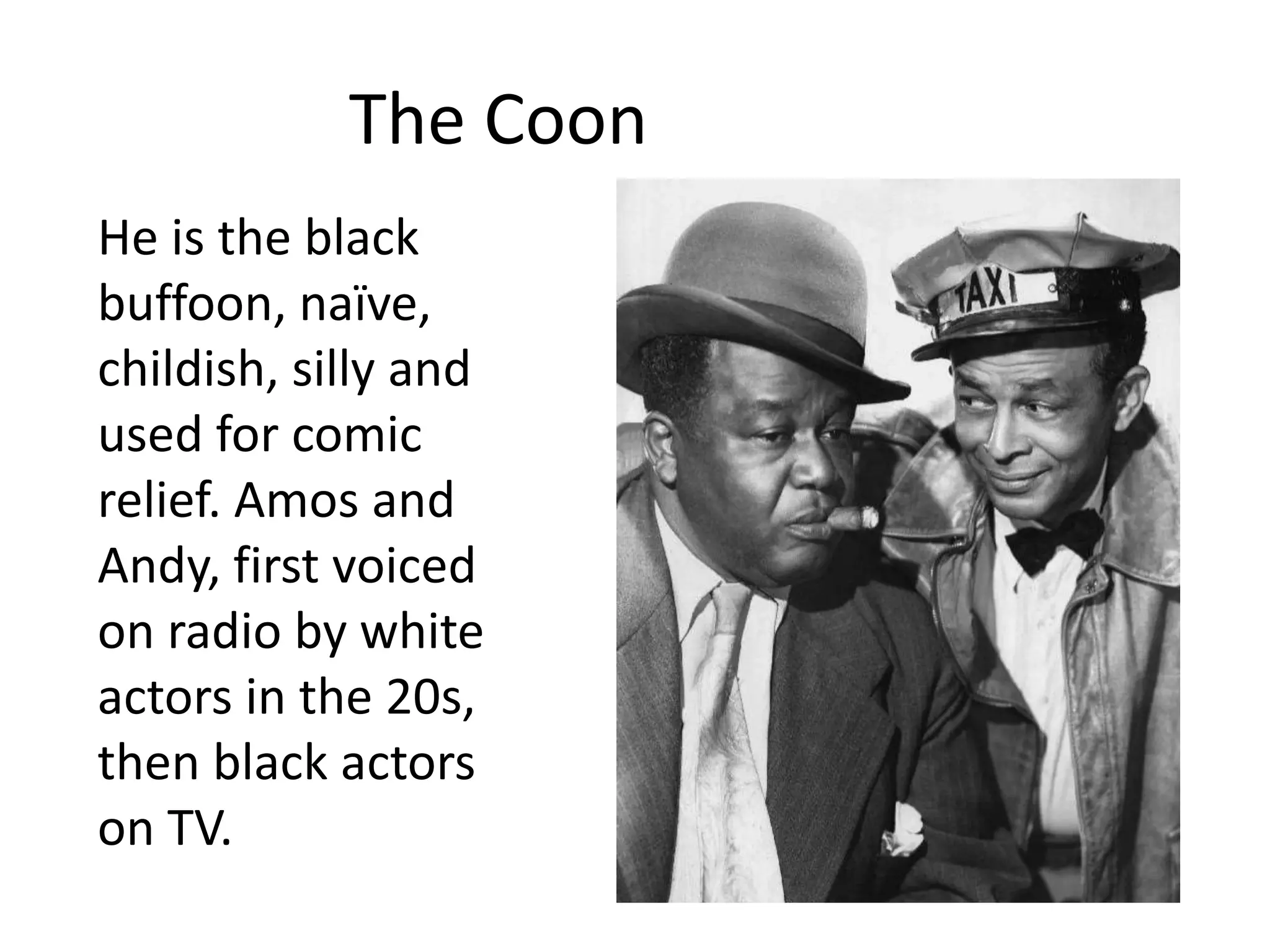
The Coon
He is the black
buffoon, naïve,
childish, silly and
used for comic
relief. Amos and
Andy, first voiced
on radio by white
actors in the 20s,
then black actors
on TV.
Why “coon?”
• The word may have originated from “baracoon,” the Spanish or
Portuguese word for slave pens or barracks slaves were put in
before being sold. Maybe from “raccoon,” which have a tendency
to steal. Sometimes called “sambo,” after the character “Little
Black Sambo.”
The Little Rascals
or Our Gang
Buckwheat, Farina
and Stymie, the
lovable pickaninnies
of the 20s and 30s.
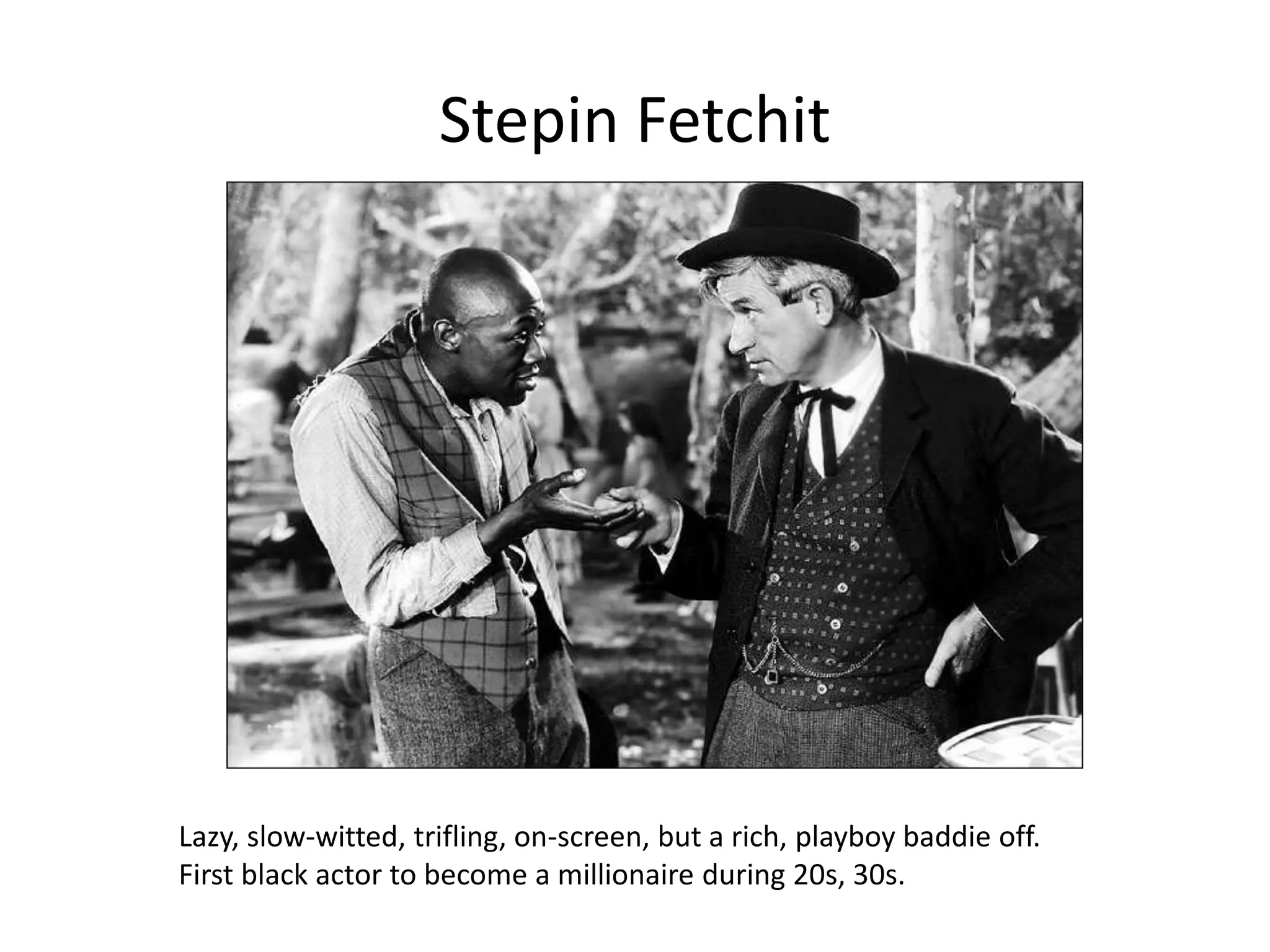
Stepin Fetchit
Lazy, slow-witted, trifling, on-screen, but a rich, playboy baddie off.
First black actor to become a millionaire during 20s, 30s.
Steve
Urkel,
nerdy in
the 90s
Family Matters, 1989 - 1998
Rewarded for “cooning”
Cuba Gooding Jr. won the best supporting actor
Academy Award in 1996 for Jerry Maguire – “show
me the money!!!!”
The Buck
Brutal, violent, dangerous, barbaric, hypersexual, the buck reinforced the
idea that like animals, black men could work the fields all day, be forced to
reproduce and be whipped, punished and controlled. This is Ken Norton in
Mandingo, 1975.
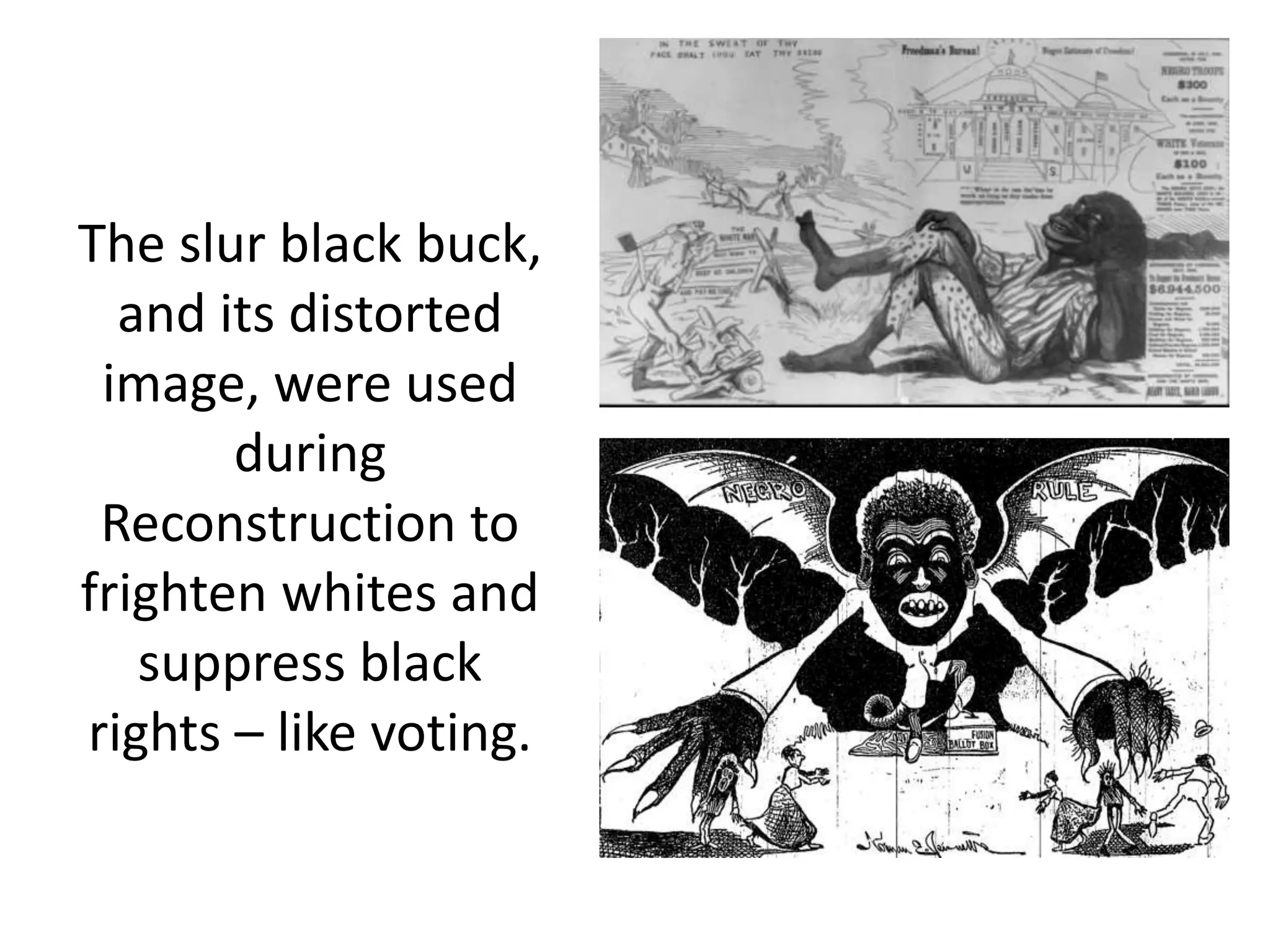
The slur black buck,
and its distorted
image, were used
during
Reconstruction to
frighten whites and
suppress black
rights – like voting.
The first on-screen Buck: Birth of a
Nation, 1915
This white actor in blackface, plays Gus, a vicious former slave who
attempts to rape a white woman. Rather than submit, she kills herself.
Some would call these “buck” images
The Buck Is Back: 70s Blaxpoitation
Dressed in leather, not intimidated by whites, Shaft
(1971) is a bad mother…and a sign of the more radical
times.
Superfly, 1972
Slick, sexy Harlem drug dealer; descended
from the buck
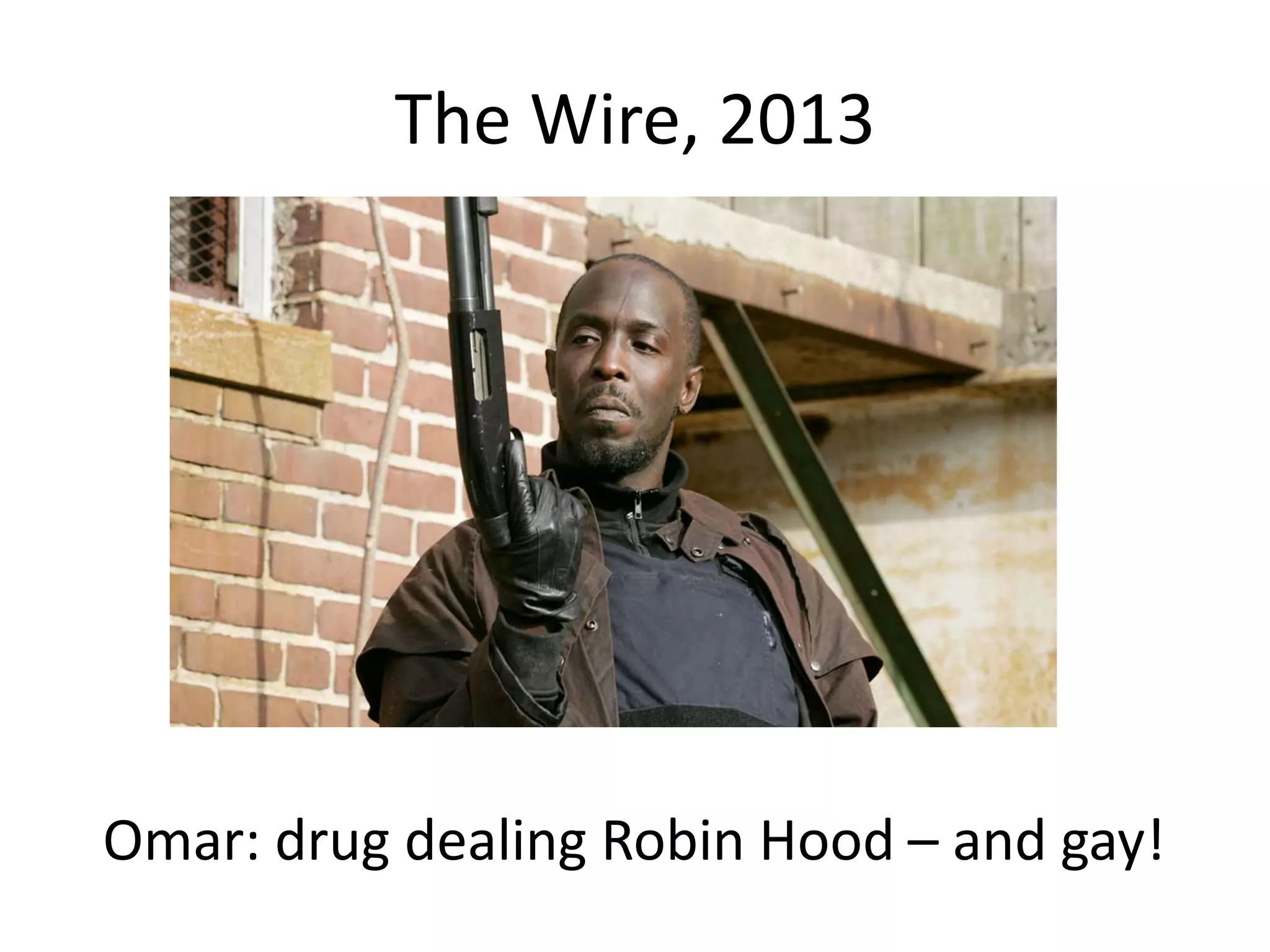
The Wire, 2013
Omar: drug dealing Robin Hood – and gay!
Drug-dealing heroes
Stringer Bell & Avon Barksdale, the Wire
Denzel Washington:
rewarded for playing a thug
Best actor Academy Award for Training Day, 2002
The Revenge of the Buck, 1972
The Buck, re-imagined
Jamie Foxx, slave turned vigilante: “Django, the
‘d’ is silent”
strengths
weaknesses?
How does
this
stereotype
reinforce our
systems of
inequality?
dangerous, deadly
The price of the stereotype
Emmett Till
Killed in
1955 for
“reckless
eyeballing”
Rodney King, beaten by police in 1992
Trayvon Martin, 2012
Mike
Brown,2014
Eric Garner, 2014
Central Park 5
Stereotypes of black males lead to:
• General antagonism toward black males;
• Exaggerated views of, expectations of, and tolerance
for race-based socio-economic disparities;
• Exaggerated views related to criminality and violence;
• Lack of identification with or empathy for black males;
• Reduced attention to structural and other big-picture
factors;
• Public support for punitive approaches to problems
• Worse-- lowered expectations and the perception of
limited options for black men themselves
So why do we glorify and celebrate the
image of the violent black thug?
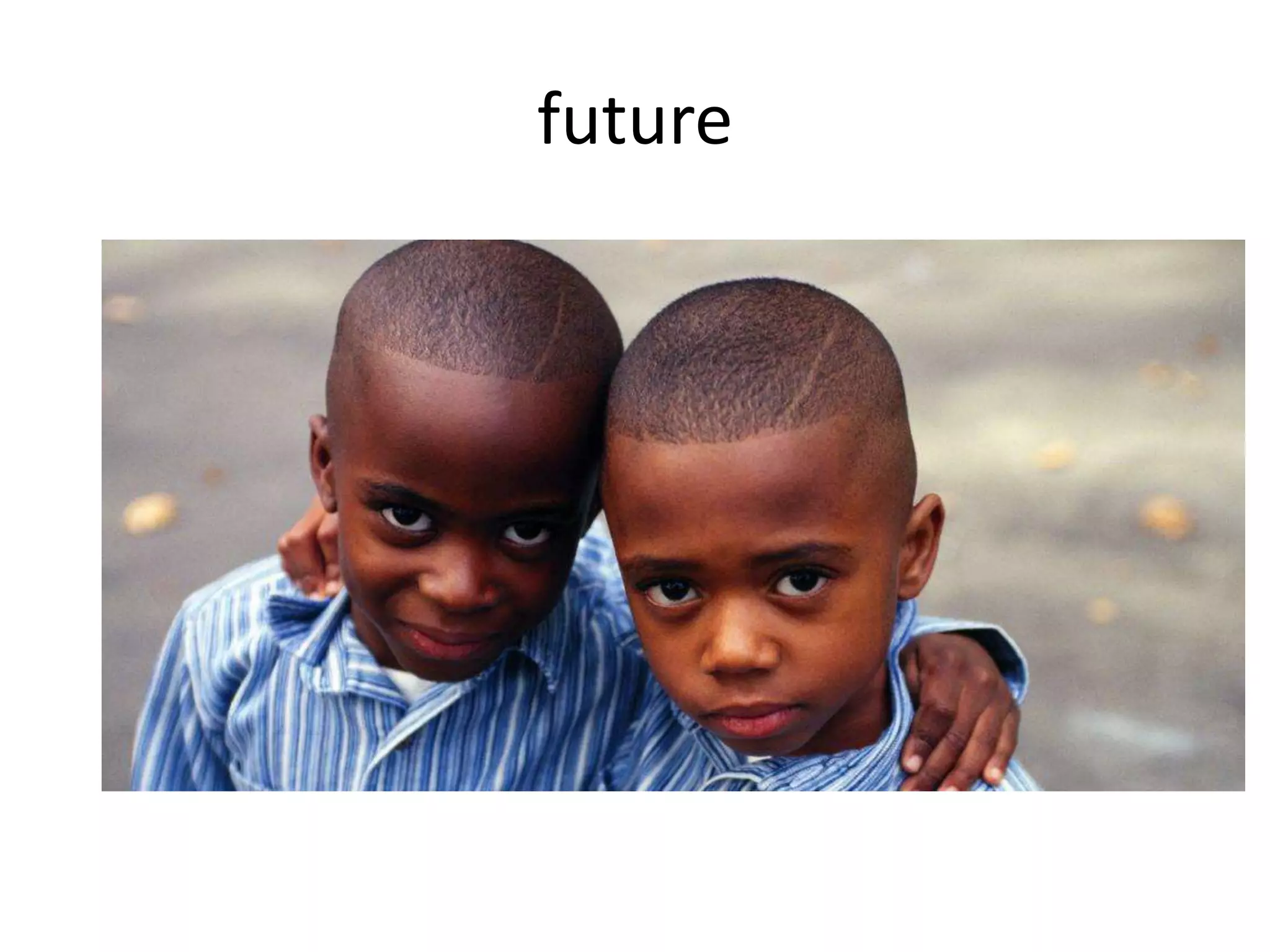
future

Black Male Media Stereotypes

  • 1.
  • 2.
    Many of theworst stereotypes, come from slavery. They were meant to demean and dehumanize Black men and reinforce inferiority in order to justify slavery and its abuses.
  • 3.
    The Tom Uncle Tom’sCabin, the 1852 anti-slavery novel by Harriet Beecher Stowe, was the second- best selling book of the 19th Century, behind the Bible. It featured the character Uncle Tom, the dutiful, long-suffering, faithful servant.
  • 4.
    Uncle Tom’s Cabin,1927 He’s God-fearing and self-sacrificing—a loyal and trusted servant.
  • 5.
    Uncle Remus Uncle Remuswas the kindly, docile fictional narrator of folk tales for kids. Remember Br’er Rabbit? Here he is in the 1946 Disney film Song of the South.
  • 6.
    Bill “Bojangles Robinson Anelegant Tom, Mr. Bojangles with Shirely Temple. Sometimes called the first onscreen interracial couple.
  • 7.
    The face ofthe rice box; Aunt Jemima’s male counterpart
  • 8.
    Rewarded for playinga Tom Driving Miss Daisy, 1989 best picture. Morgan Freeman receives Golden Globe for playing Hoke.
  • 9.
    The Newer Tom:The Good Negro In 1967’s Guess Who’s Coming to Dinner, Sidney Poitier plays Mr. Perfect: a smart, widowed, idealistic physician, who meets his white finance’s parents.
  • 10.
    Bill Cosby, America’sDad Cliff Huxtable, the lovable pediatrician on The Cosby Show—the perfect husband and father of the 80s.
  • 11.
    Barack Obama The Harvard-educated,bi-racial professor; perfect father and husband: some say, the only black man America could accept as president because he’s so perfect!
  • 12.
    The Newest Tom:The Magical Negro Has special, “magical” powers, to selflessly help the white man. Will Smith as Matt Damon’s caddy in The Legend of Bagger Vance, 2000
  • 13.
    The Green Mile,1999 MichaelClarke Duncan, a deathrow inmate with a mysterious gift.
  • 14.
    Another new Tom:The Sellout Andre Lyon, with sellout accessory, the white wife.
  • 15.
    Uncle Tom’s revenge SamuelL. Jackson as Stephen, the head house Negro in charge in Django Unchained, 2013
  • 16.
    The Coon He isthe black buffoon, naïve, childish, silly and used for comic relief. Amos and Andy, first voiced on radio by white actors in the 20s, then black actors on TV.
  • 17.
    Why “coon?” • Theword may have originated from “baracoon,” the Spanish or Portuguese word for slave pens or barracks slaves were put in before being sold. Maybe from “raccoon,” which have a tendency to steal. Sometimes called “sambo,” after the character “Little Black Sambo.”
  • 18.
    The Little Rascals orOur Gang Buckwheat, Farina and Stymie, the lovable pickaninnies of the 20s and 30s.
  • 19.
    Stepin Fetchit Lazy, slow-witted,trifling, on-screen, but a rich, playboy baddie off. First black actor to become a millionaire during 20s, 30s.
  • 20.
  • 21.
    Rewarded for “cooning” CubaGooding Jr. won the best supporting actor Academy Award in 1996 for Jerry Maguire – “show me the money!!!!”
  • 22.
    The Buck Brutal, violent,dangerous, barbaric, hypersexual, the buck reinforced the idea that like animals, black men could work the fields all day, be forced to reproduce and be whipped, punished and controlled. This is Ken Norton in Mandingo, 1975.
  • 23.
    The slur blackbuck, and its distorted image, were used during Reconstruction to frighten whites and suppress black rights – like voting.
  • 24.
    The first on-screenBuck: Birth of a Nation, 1915 This white actor in blackface, plays Gus, a vicious former slave who attempts to rape a white woman. Rather than submit, she kills herself.
  • 25.
    Some would callthese “buck” images
  • 26.
    The Buck IsBack: 70s Blaxpoitation Dressed in leather, not intimidated by whites, Shaft (1971) is a bad mother…and a sign of the more radical times.
  • 27.
    Superfly, 1972 Slick, sexyHarlem drug dealer; descended from the buck
  • 28.
    The Wire, 2013 Omar:drug dealing Robin Hood – and gay!
  • 29.
    Drug-dealing heroes Stringer Bell& Avon Barksdale, the Wire
  • 30.
    Denzel Washington: rewarded forplaying a thug Best actor Academy Award for Training Day, 2002
  • 31.
    The Revenge ofthe Buck, 1972
  • 32.
    The Buck, re-imagined JamieFoxx, slave turned vigilante: “Django, the ‘d’ is silent”
  • 33.
  • 34.
    dangerous, deadly The priceof the stereotype
  • 35.
    Emmett Till Killed in 1955for “reckless eyeballing”
  • 36.
    Rodney King, beatenby police in 1992
  • 37.
  • 38.
  • 39.
  • 40.
  • 41.
    Stereotypes of blackmales lead to: • General antagonism toward black males; • Exaggerated views of, expectations of, and tolerance for race-based socio-economic disparities; • Exaggerated views related to criminality and violence; • Lack of identification with or empathy for black males; • Reduced attention to structural and other big-picture factors; • Public support for punitive approaches to problems • Worse-- lowered expectations and the perception of limited options for black men themselves
  • 42.
    So why dowe glorify and celebrate the image of the violent black thug?
  • 43.