REPORTED SPEECH
Statements, Questions, Commands, Requests
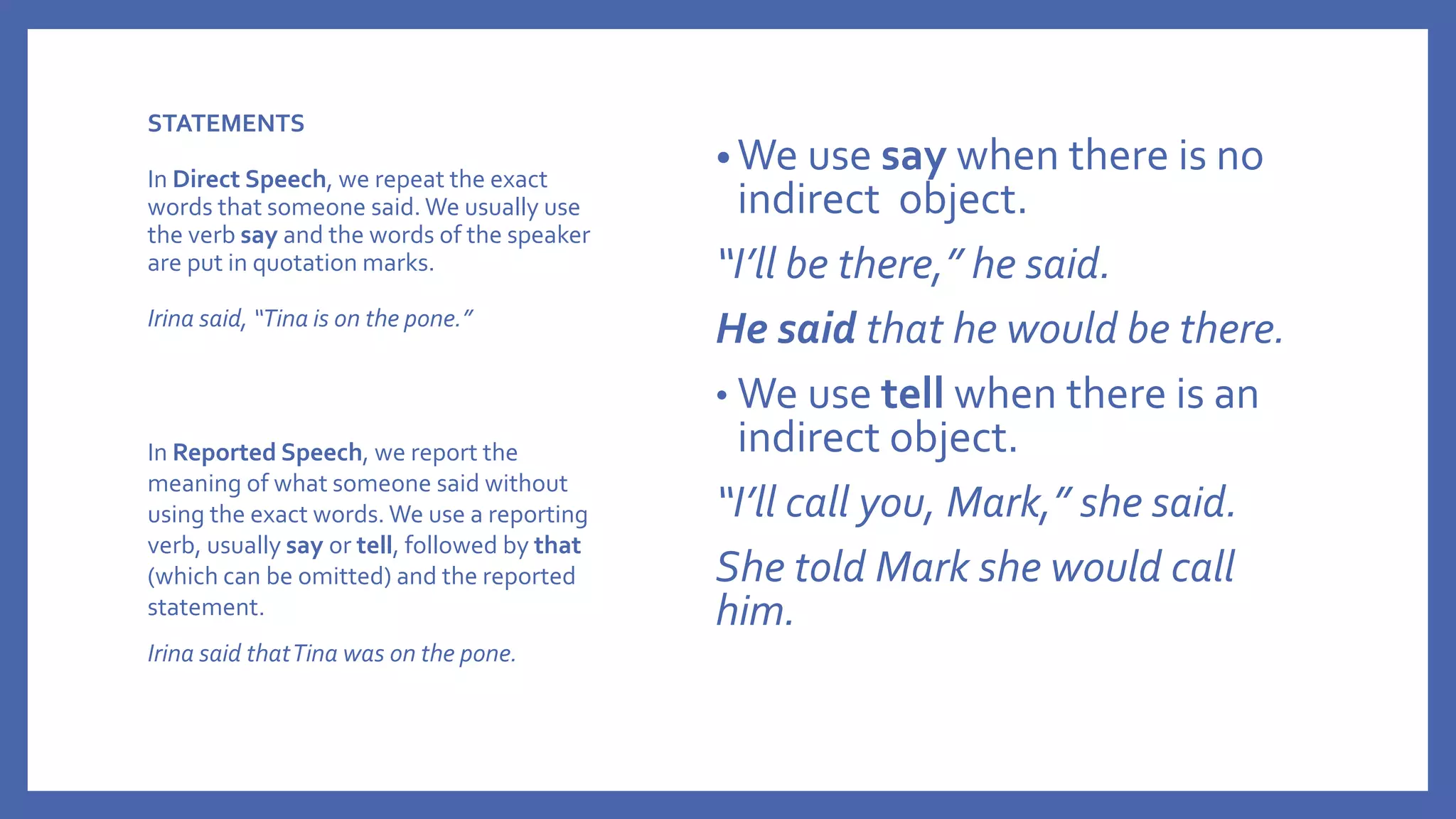
STATEMENTS
In Direct Speech, we repeat the exact
words that someone said. We usually use
the verb say and the words of the speaker
are put in quotation marks.
Irina said, “Tina is on the pone.”
• We use say when there is no
indirect object.
“I’ll be there,” he said.
He said that he would be there.
• We use tell when there is an
indirect object.
“I’ll call you, Mark,” she said.
She told Mark she would call
him.
In Reported Speech, we report the
meaning of what someone said without
using the exact words. We use a reporting
verb, usually say or tell, followed by that
(which can be omitted) and the reported
statement.
Irina said thatTina was on the pone.
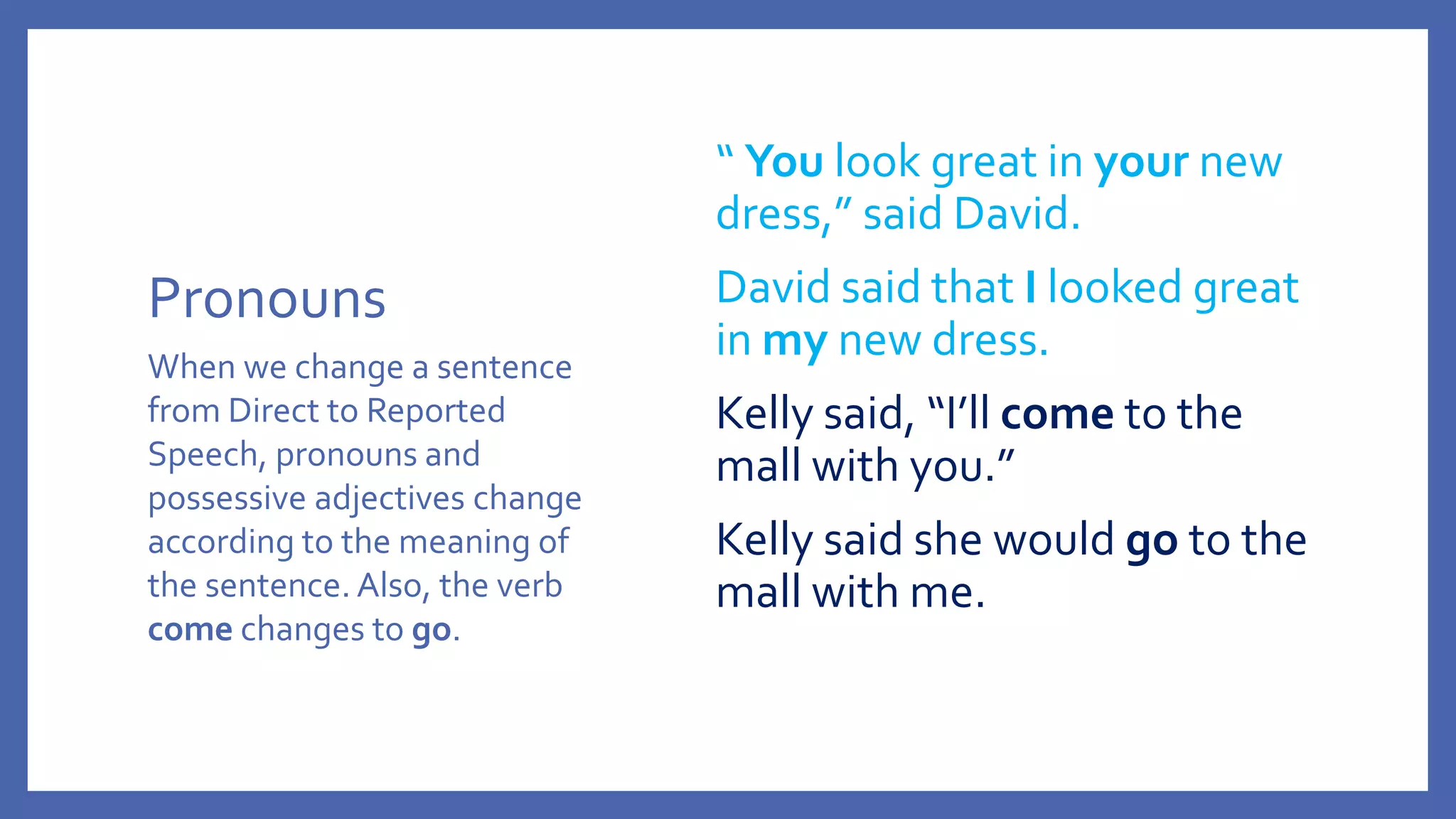
Pronouns
“ You look great in your new
dress,” said David.
David said that I looked great
in my new dress.
Kelly said, “I’ll come to the
mall with you.”
Kelly said she would go to the
mall with me.
When we change a sentence
from Direct to Reported
Speech, pronouns and
possessive adjectives change
according to the meaning of
the sentence. Also, the verb
come changes to go.
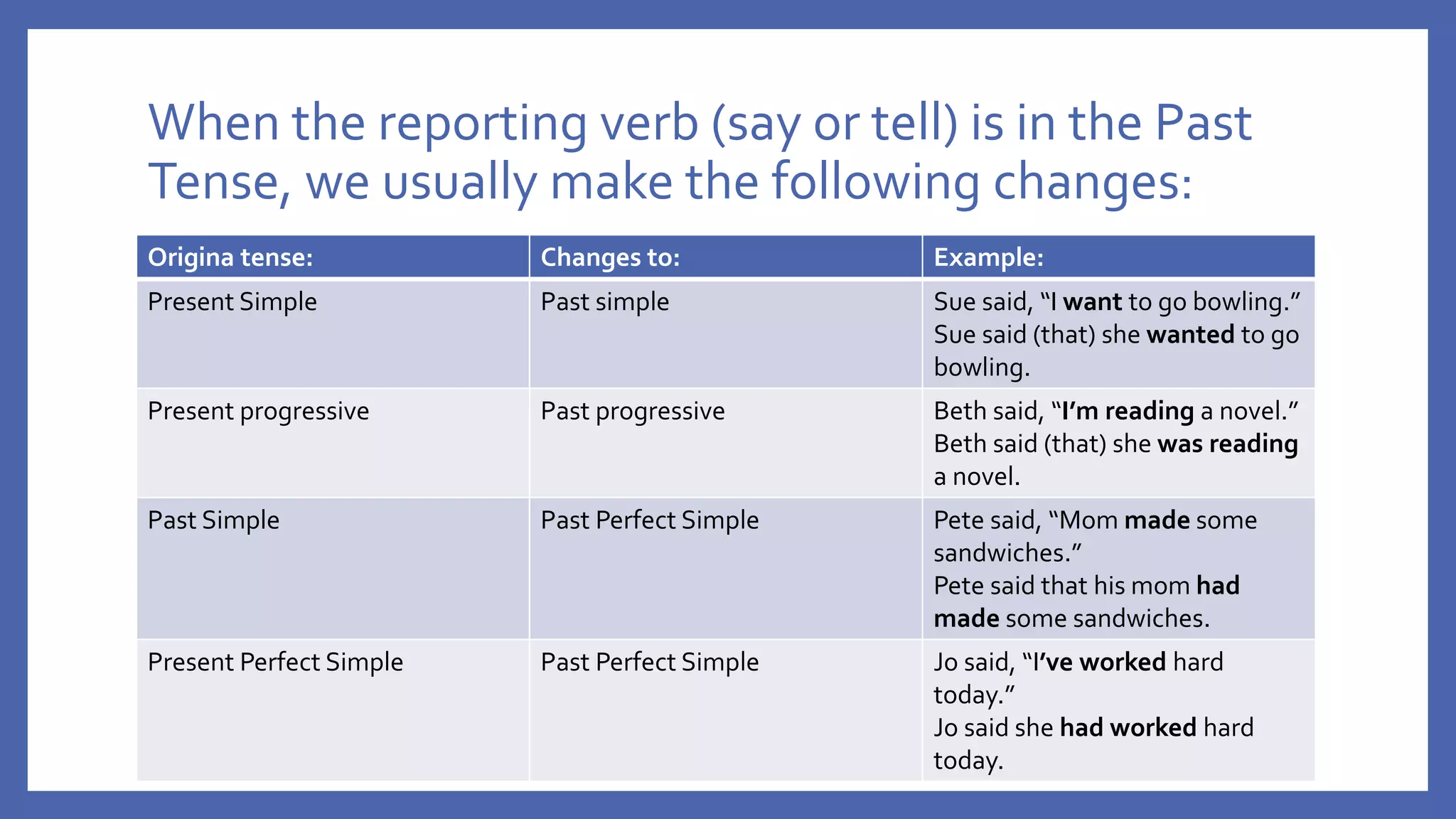
When the reporting verb (say or tell) is in the Past
Tense, we usually make the following changes:
Origina tense: Changes to: Example:
Present Simple Past simple Sue said, “I want to go bowling.”
Sue said (that) she wanted to go
bowling.
Present progressive Past progressive Beth said, “I’m reading a novel.”
Beth said (that) she was reading
a novel.
Past Simple Past Perfect Simple Pete said, “Mom made some
sandwiches.”
Pete said that his mom had
made some sandwiches.
Present Perfect Simple Past Perfect Simple Jo said, “I’ve worked hard
today.”
Jo said she had worked hard
today.
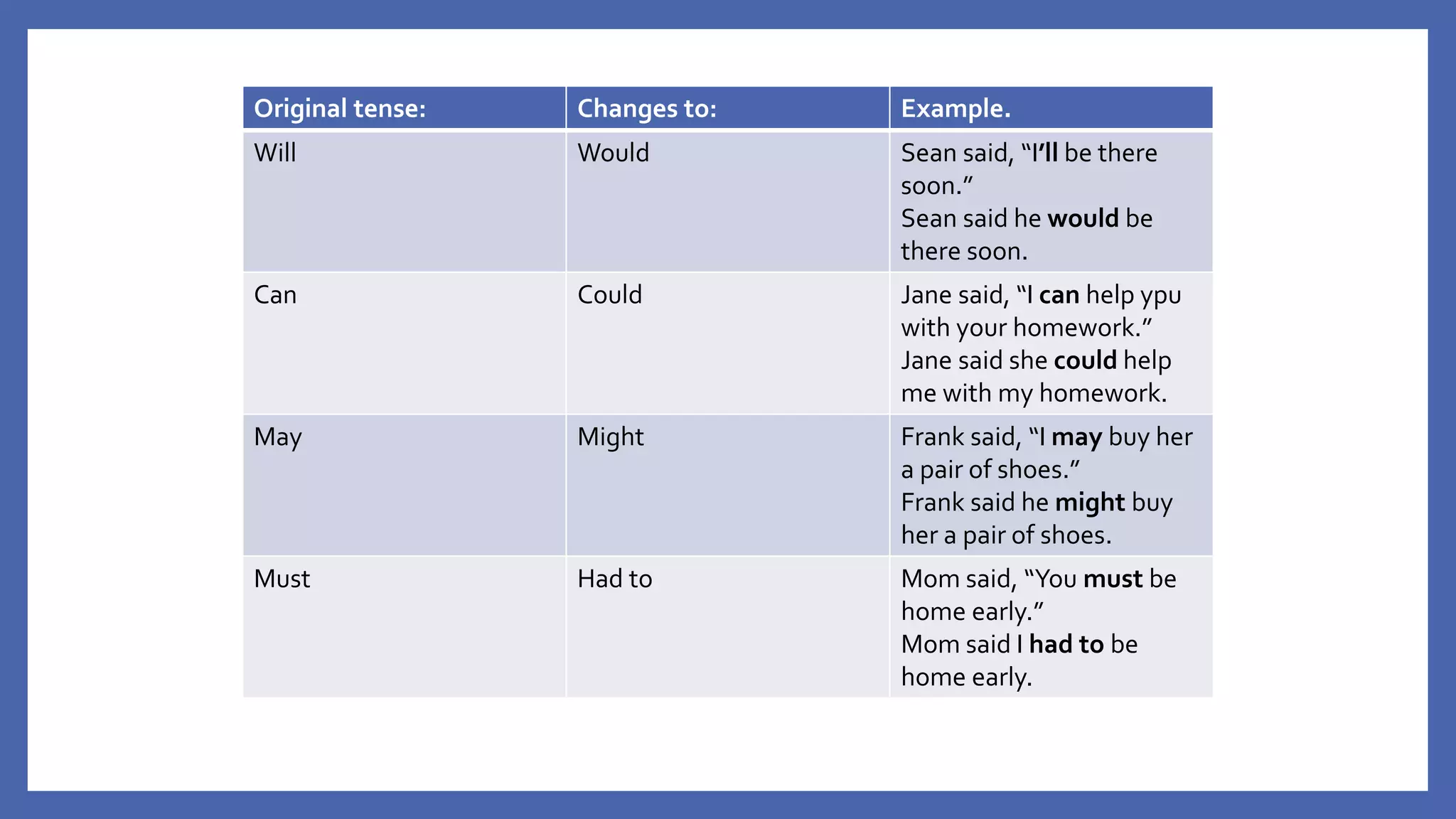
Original tense: Changes to: Example.
Will Would Sean said, “I’ll be there
soon.”
Sean said he would be
there soon.
Can Could Jane said, “I can help ypu
with your homework.”
Jane said she could help
me with my homework.
May Might Frank said, “I may buy her
a pair of shoes.”
Frank said he might buy
her a pair of shoes.
Must Had to Mom said, “You must be
home early.”
Mom said I had to be
home early.
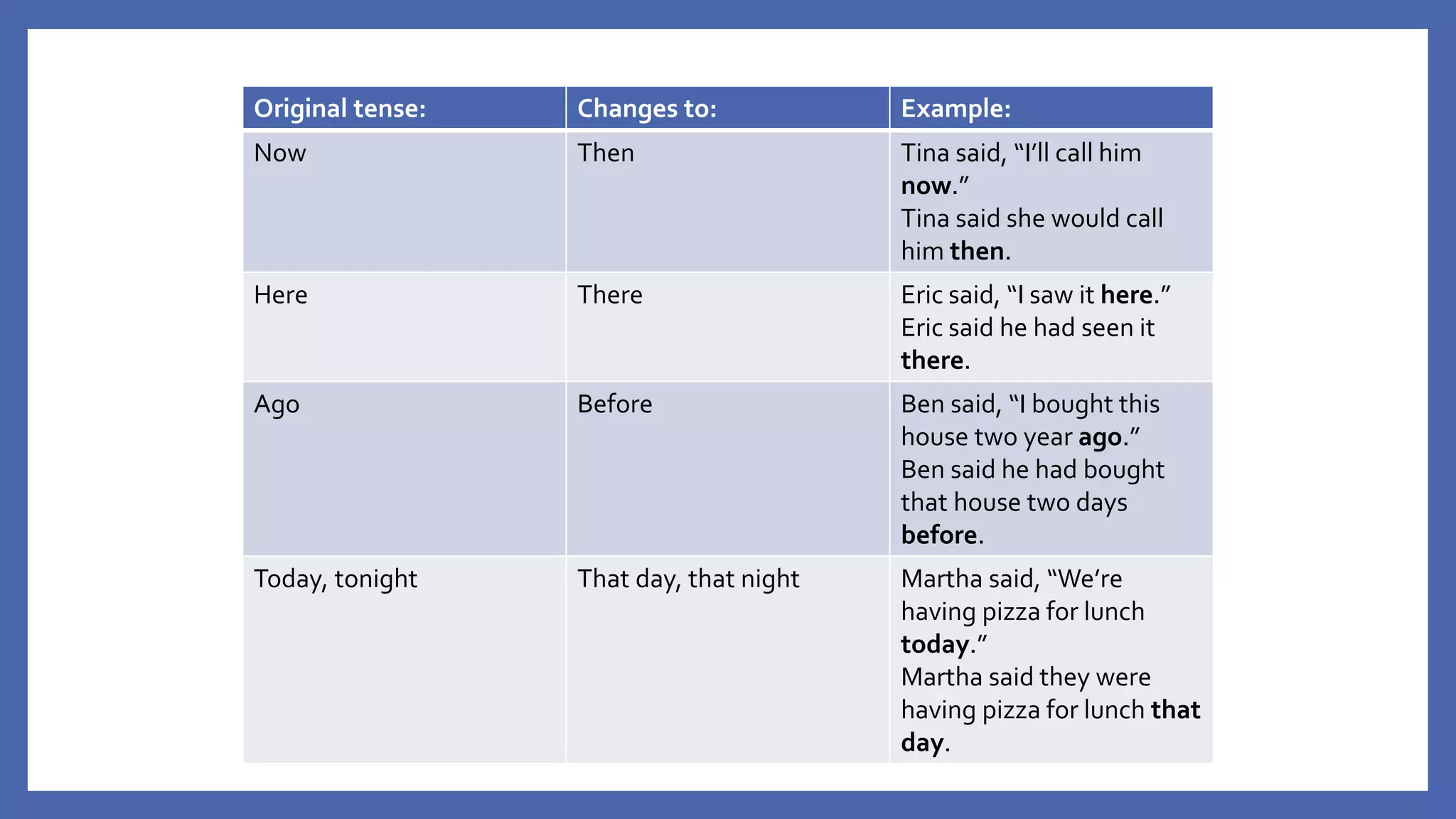
Original tense: Changes to: Example:
Now Then Tina said, “I’ll call him
now.”
Tina said she would call
him then.
Here There Eric said, “I saw it here.”
Eric said he had seen it
there.
Ago Before Ben said, “I bought this
house two year ago.”
Ben said he had bought
that house two days
before.
Today, tonight That day, that night Martha said, “We’re
having pizza for lunch
today.”
Martha said they were
having pizza for lunch that
day.
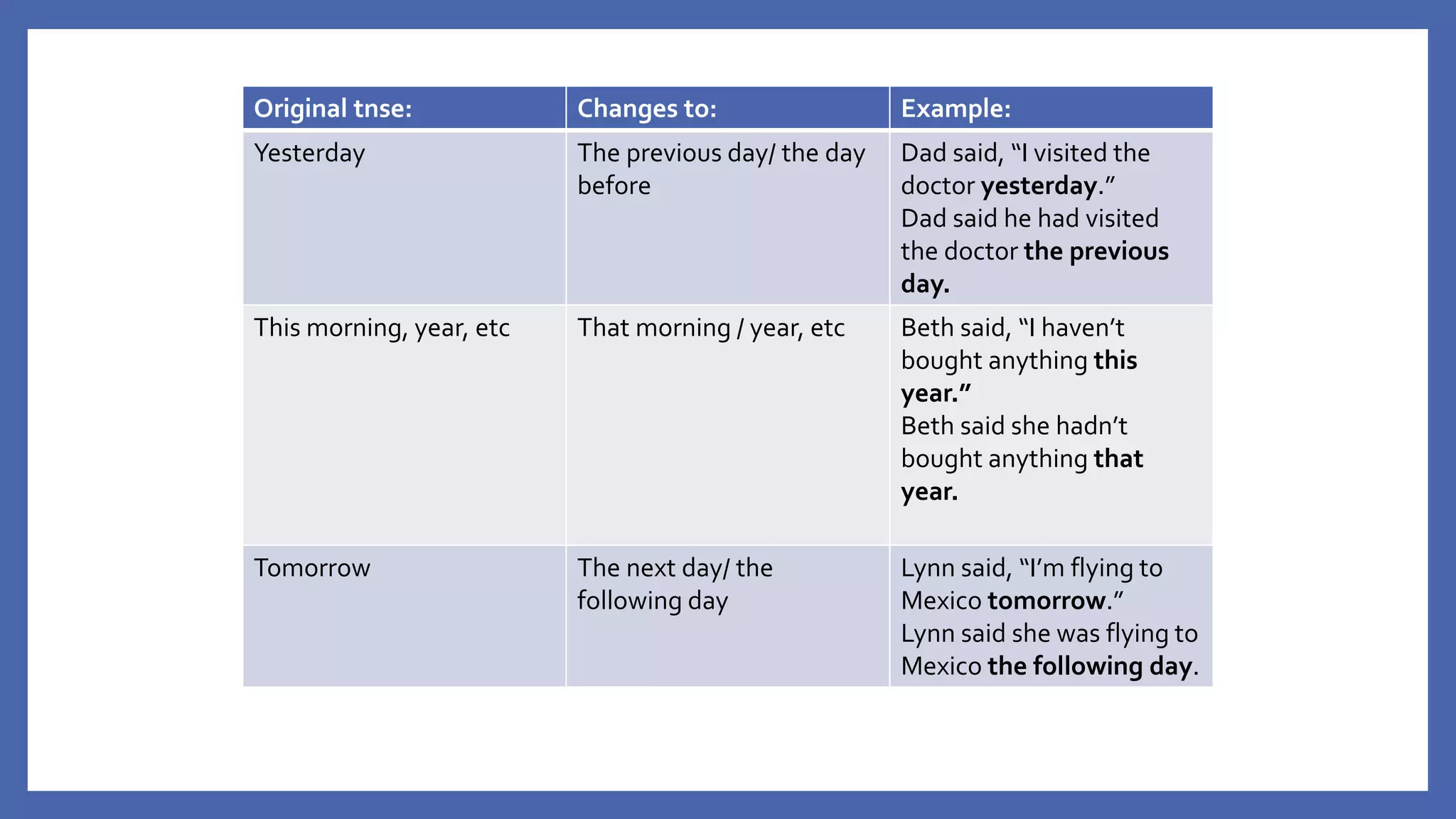
Original tnse: Changes to: Example:
Yesterday The previous day/ the day
before
Dad said, “I visited the
doctor yesterday.”
Dad said he had visited
the doctor the previous
day.
This morning, year, etc That morning / year, etc Beth said, “I haven’t
bought anything this
year.”
Beth said she hadn’t
bought anything that
year.
Tomorrow The next day/ the
following day
Lynn said, “I’m flying to
Mexico tomorrow.”
Lynn said she was flying to
Mexico the following day.
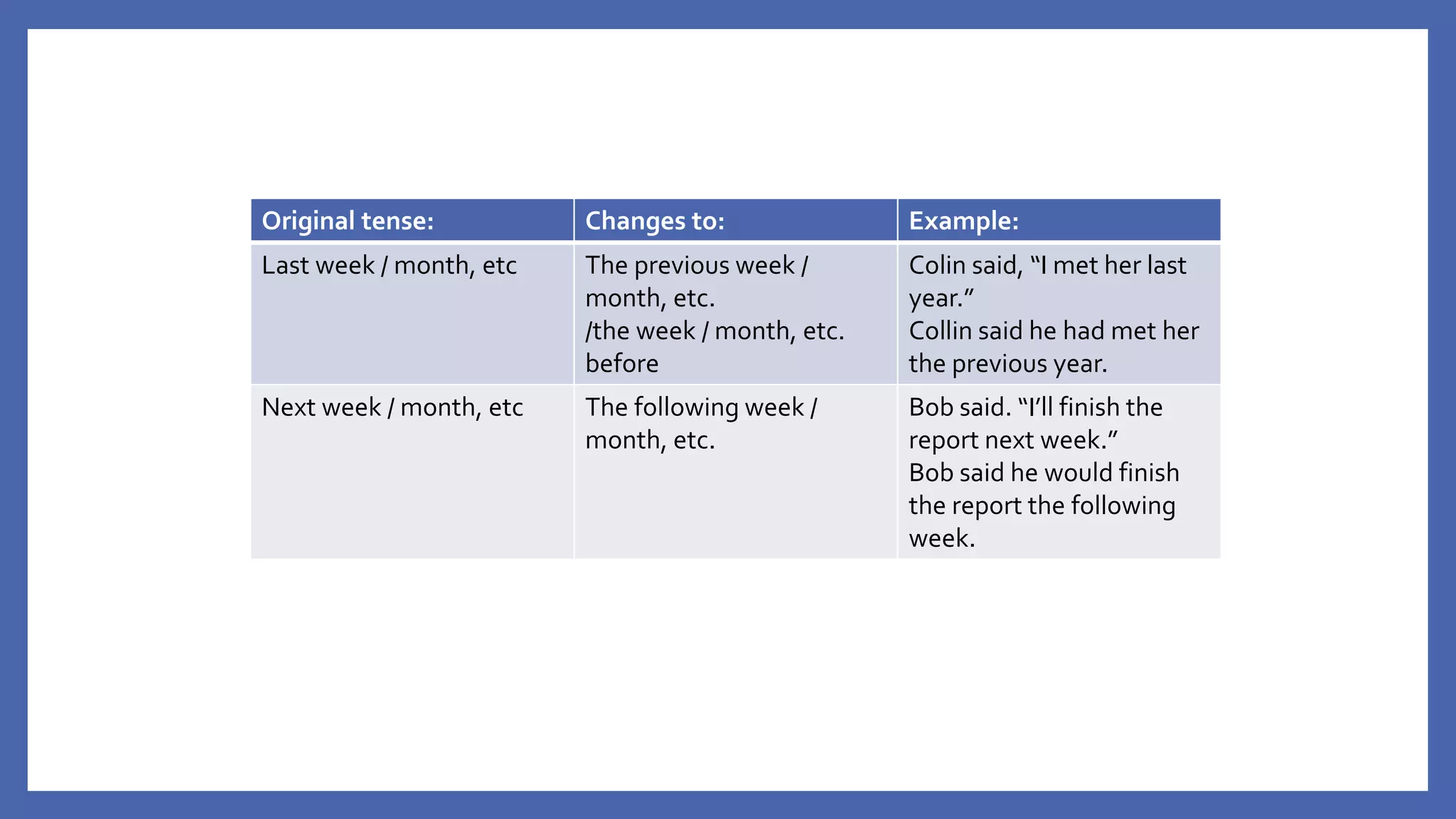
Original tense: Changes to: Example:
Last week / month, etc The previous week /
month, etc.
/the week / month, etc.
before
Colin said, “I met her last
year.”
Collin said he had met her
the previous year.
Next week / month, etc The following week /
month, etc.
Bob said. “I’ll finish the
report next week.”
Bob said he would finish
the report the following
week.
REMEMBER
• THE PAST PERFECT ANDTHEVERBS
COULD, MIGHT, SHOULD,WULD AND
USEDTO DO NOT CHANGE IN
REPORTED SPEECH.
• THE PAST PROGRESSIVE USUALLY
DOESN’T CHANGE IN REPORTED
SPEECH.
REPORTED SPEECH (QUESTIONS)
• We usually introduce reported
questions with the reporting verb
ASK.
• Reported questions follow the Word
order or affirmative sentences.
“Why did he come back?” he asked.
He asked me why he had come back.
• If the direct question begins with a
question Word, the reported question
also begins with the same question
Word.
“What are you doing?” she asked.
She asked me what I was doing.
If the direct question does not
begin with a question word,
the reported question begins
with if / whether.
“Did you enjoy the concert?” he
asked.
He asked me if / whether I had
enjoyed the concert.
When we change questions from
Direct to Reported Speech, pronouns,
tenses, adverbs, etc. change in the
same way as when we report
statememts.
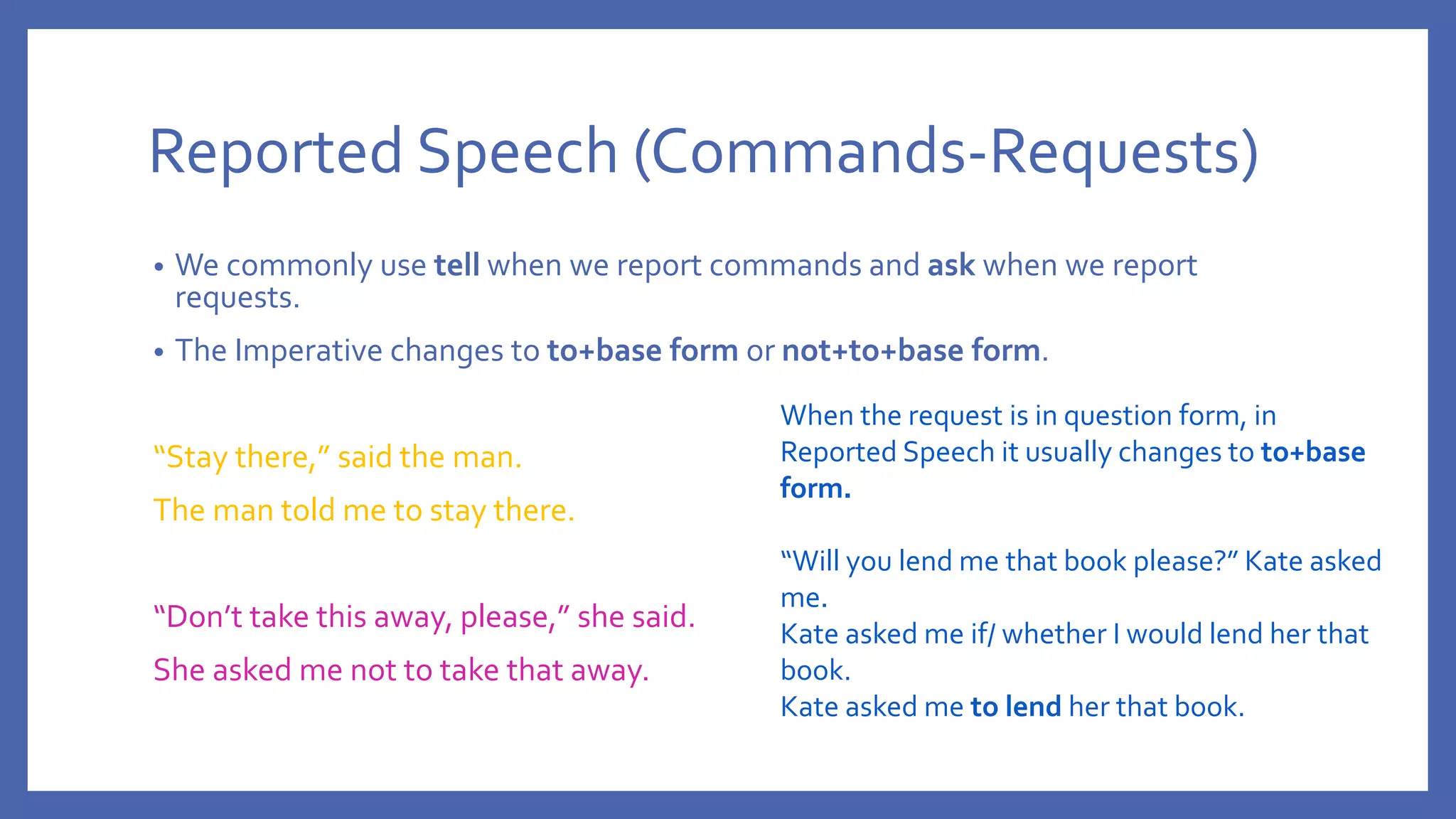
Reported Speech (Commands-Requests)
• We commonly use tell when we report commands and ask when we report
requests.
• The Imperative changes to to+base form or not+to+base form.
“Stay there,” said the man.
The man told me to stay there.
“Don’t take this away, please,” she said.
She asked me not to take that away.
When the request is in question form, in
Reported Speech it usually changes to to+base
form.
“Will you lend me that book please?” Kate asked
me.
Kate asked me if/ whether I would lend her that
book.
Kate asked me to lend her that book.

Reported speech

  • 1.
  • 2.
    STATEMENTS In Direct Speech,we repeat the exact words that someone said. We usually use the verb say and the words of the speaker are put in quotation marks. Irina said, “Tina is on the pone.” • We use say when there is no indirect object. “I’ll be there,” he said. He said that he would be there. • We use tell when there is an indirect object. “I’ll call you, Mark,” she said. She told Mark she would call him. In Reported Speech, we report the meaning of what someone said without using the exact words. We use a reporting verb, usually say or tell, followed by that (which can be omitted) and the reported statement. Irina said thatTina was on the pone.
  • 3.
    Pronouns “ You lookgreat in your new dress,” said David. David said that I looked great in my new dress. Kelly said, “I’ll come to the mall with you.” Kelly said she would go to the mall with me. When we change a sentence from Direct to Reported Speech, pronouns and possessive adjectives change according to the meaning of the sentence. Also, the verb come changes to go.
  • 4.
    When the reportingverb (say or tell) is in the Past Tense, we usually make the following changes: Origina tense: Changes to: Example: Present Simple Past simple Sue said, “I want to go bowling.” Sue said (that) she wanted to go bowling. Present progressive Past progressive Beth said, “I’m reading a novel.” Beth said (that) she was reading a novel. Past Simple Past Perfect Simple Pete said, “Mom made some sandwiches.” Pete said that his mom had made some sandwiches. Present Perfect Simple Past Perfect Simple Jo said, “I’ve worked hard today.” Jo said she had worked hard today.
  • 5.
    Original tense: Changesto: Example. Will Would Sean said, “I’ll be there soon.” Sean said he would be there soon. Can Could Jane said, “I can help ypu with your homework.” Jane said she could help me with my homework. May Might Frank said, “I may buy her a pair of shoes.” Frank said he might buy her a pair of shoes. Must Had to Mom said, “You must be home early.” Mom said I had to be home early.
  • 6.
    Original tense: Changesto: Example: Now Then Tina said, “I’ll call him now.” Tina said she would call him then. Here There Eric said, “I saw it here.” Eric said he had seen it there. Ago Before Ben said, “I bought this house two year ago.” Ben said he had bought that house two days before. Today, tonight That day, that night Martha said, “We’re having pizza for lunch today.” Martha said they were having pizza for lunch that day.
  • 7.
    Original tnse: Changesto: Example: Yesterday The previous day/ the day before Dad said, “I visited the doctor yesterday.” Dad said he had visited the doctor the previous day. This morning, year, etc That morning / year, etc Beth said, “I haven’t bought anything this year.” Beth said she hadn’t bought anything that year. Tomorrow The next day/ the following day Lynn said, “I’m flying to Mexico tomorrow.” Lynn said she was flying to Mexico the following day.
  • 8.
    Original tense: Changesto: Example: Last week / month, etc The previous week / month, etc. /the week / month, etc. before Colin said, “I met her last year.” Collin said he had met her the previous year. Next week / month, etc The following week / month, etc. Bob said. “I’ll finish the report next week.” Bob said he would finish the report the following week.
  • 9.
    REMEMBER • THE PASTPERFECT ANDTHEVERBS COULD, MIGHT, SHOULD,WULD AND USEDTO DO NOT CHANGE IN REPORTED SPEECH. • THE PAST PROGRESSIVE USUALLY DOESN’T CHANGE IN REPORTED SPEECH.
  • 10.
    REPORTED SPEECH (QUESTIONS) •We usually introduce reported questions with the reporting verb ASK. • Reported questions follow the Word order or affirmative sentences. “Why did he come back?” he asked. He asked me why he had come back.
  • 11.
    • If thedirect question begins with a question Word, the reported question also begins with the same question Word. “What are you doing?” she asked. She asked me what I was doing.
  • 12.
    If the directquestion does not begin with a question word, the reported question begins with if / whether. “Did you enjoy the concert?” he asked. He asked me if / whether I had enjoyed the concert. When we change questions from Direct to Reported Speech, pronouns, tenses, adverbs, etc. change in the same way as when we report statememts.
  • 13.
    Reported Speech (Commands-Requests) •We commonly use tell when we report commands and ask when we report requests. • The Imperative changes to to+base form or not+to+base form. “Stay there,” said the man. The man told me to stay there. “Don’t take this away, please,” she said. She asked me not to take that away. When the request is in question form, in Reported Speech it usually changes to to+base form. “Will you lend me that book please?” Kate asked me. Kate asked me if/ whether I would lend her that book. Kate asked me to lend her that book.

Editor's Notes

  • #2 ¿Los colores de la clase son diferentes de lo que ve en esta plantilla? Ningún problema. Haga clic en Diseño -> Variantes (la flecha hacia abajo) -> Elija la combinación de colores que le convenga. Puede cambiar cualquier instrucción de "Deberá..." y "Yo voy a..." para asegurarse de que se alinean con sus procedimientos de clase y reglas.