the future of digital trust 
A European study on the nature 
of consumer trust and personal data 
September 2014
2 the future of digital trust 
my data value 
As outlined in the first instalment of “The Future of Digital Trust” study, European consumers’ 
trust in organisations to hold and manage their personal data has eroded over the last year. 
A lack of trusted ways of finding out 
about personal data management and 
protection online means that there is a 
need for a consumer champion of data 
protection education in Europe. Indeed, 
over three-quarters state that it is hard 
to trust companies when it comes to the 
way they use personal data. Additionally, 
there is a perceived imbalance within 
the data-sharing relationship, with two-thirds 
(67%) of consumers believing 
that organisations benefit the most 
from the sharing of data – just 6% think 
that the consumer benefits the most. 
We can therefore assert that consumers 
are not ignorant to the dynamics of 
sharing data, and indeed that consumers 
recognise their data has a value to 
businesses, and that this value is 
dependent on a number of variables. 
This is what we will be investigating 
in this, the second instalment of the 
Orange Future of Digital Trust Report. 
Data has a value 
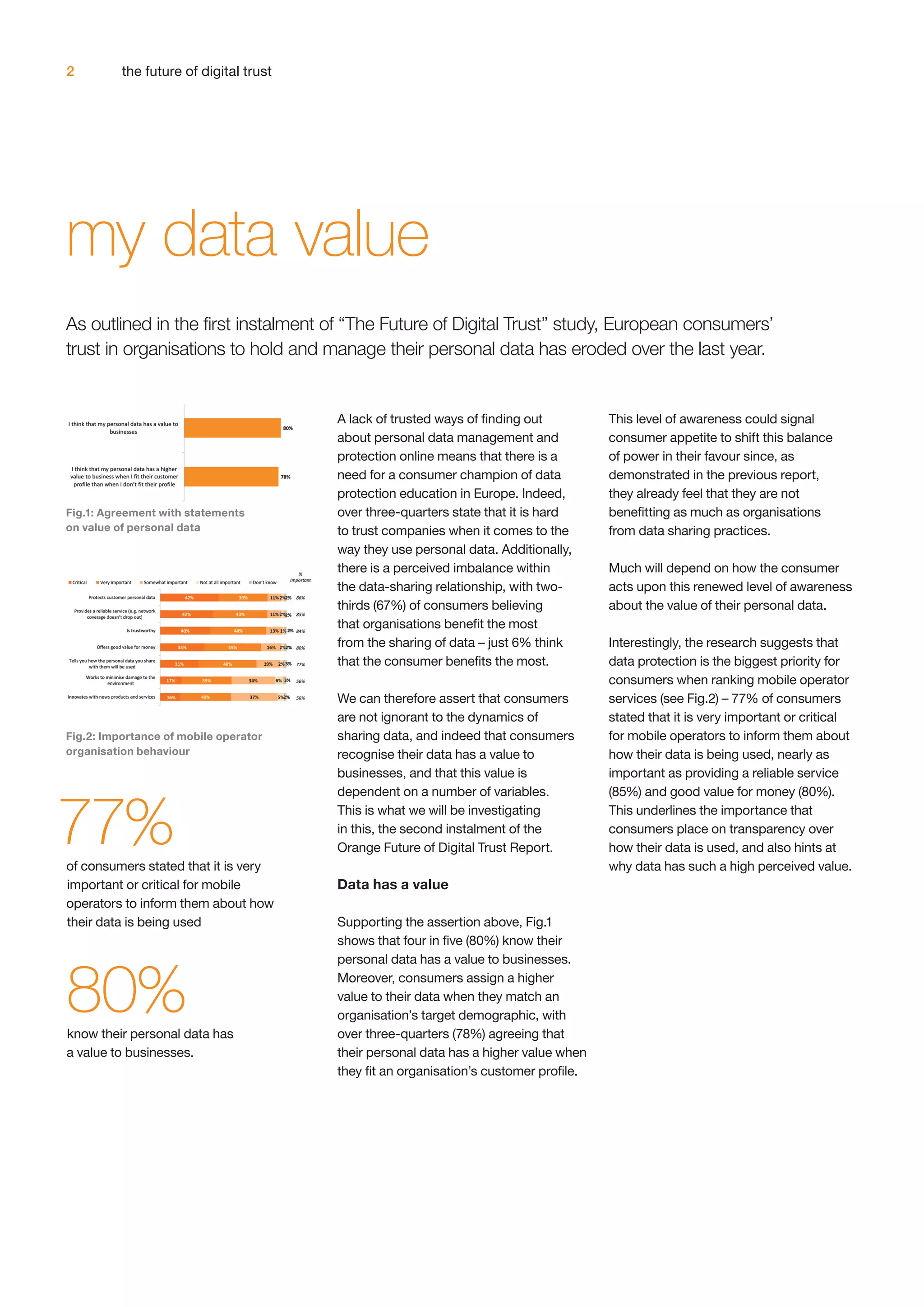
Supporting the assertion above, Fig.1 
shows that four in five (80%) know their 
personal data has a value to businesses. 
Moreover, consumers assign a higher 
value to their data when they match an 
organisation’s target demographic, with 
over three-quarters (78%) agreeing that 
their personal data has a higher value when 
they fit an organisation’s customer profile. 
This level of awareness could signal 
consumer appetite to shift this balance 
of power in their favour since, as 
demonstrated in the previous report, 
they already feel that they are not 
benefitting as much as organisations 
from data sharing practices. 
Much will depend on how the consumer 
acts upon this renewed level of awareness 
about the value of their personal data. 
Interestingly, the research suggests that 
data protection is the biggest priority for 
consumers when ranking mobile operator 
services (see Fig.2) – 77% of consumers 
stated that it is very important or critical 
for mobile operators to inform them about 
how their data is being used, nearly as 
important as providing a reliable service 
(85%) and good value for money (80%). 
This underlines the importance that 
consumers place on transparency over 
how their data is used, and also hints at 
why data has such a high perceived value. 
Fig.1: Agreement with statements 
on value of personal data 
Fig.2: Importance of mobile operator 
organisation behaviour 
77% 
of consumers stated that it is very 
important or critical for mobile 
operators to inform them about how 
their data is being used 
80% 
know their personal data has 
a value to businesses.
3 the future of digital trust 
When we delve into the value of particular types of personal data, there are 
interesting consumer perceptions worth investigating, as not only does the value of 
consumer data depend on the ‘usefulness’ to the organisation in terms of matching 
their target market, but it also depends on the ‘type’ of data in question. 
Data ‘types’ have variable value 
Generally speaking, there are three distinct 
brackets of data which consumers identify 
when it comes to their willingness to 
share their data with an organisation: 
1. third party/financial: data relating 
to friends and other contacts such as 
their preferences or email addresses, 
or to private information (such as 
their own personal income); 
2. behavioural: the second refers 
to behavioural data, including 
information such as location or 
mobile purchase history; 
3. demographic: finally, basic 
demographic data, such as 
name, date of birth, mobile 
number or marital status. 
However, the level of ‘value’ a consumer 
assigns to each of these data types 
seems at odds with the risk commonly 
associated with sharing such important 
data. For instance, information about 
‘third parties’ or ‘private income’ is 
perceived as the most valuable, above 
critical personal demographic data, 
and also above behavioural data such 
as purchase history and location. 
The following statistics 
illustrate this point: 
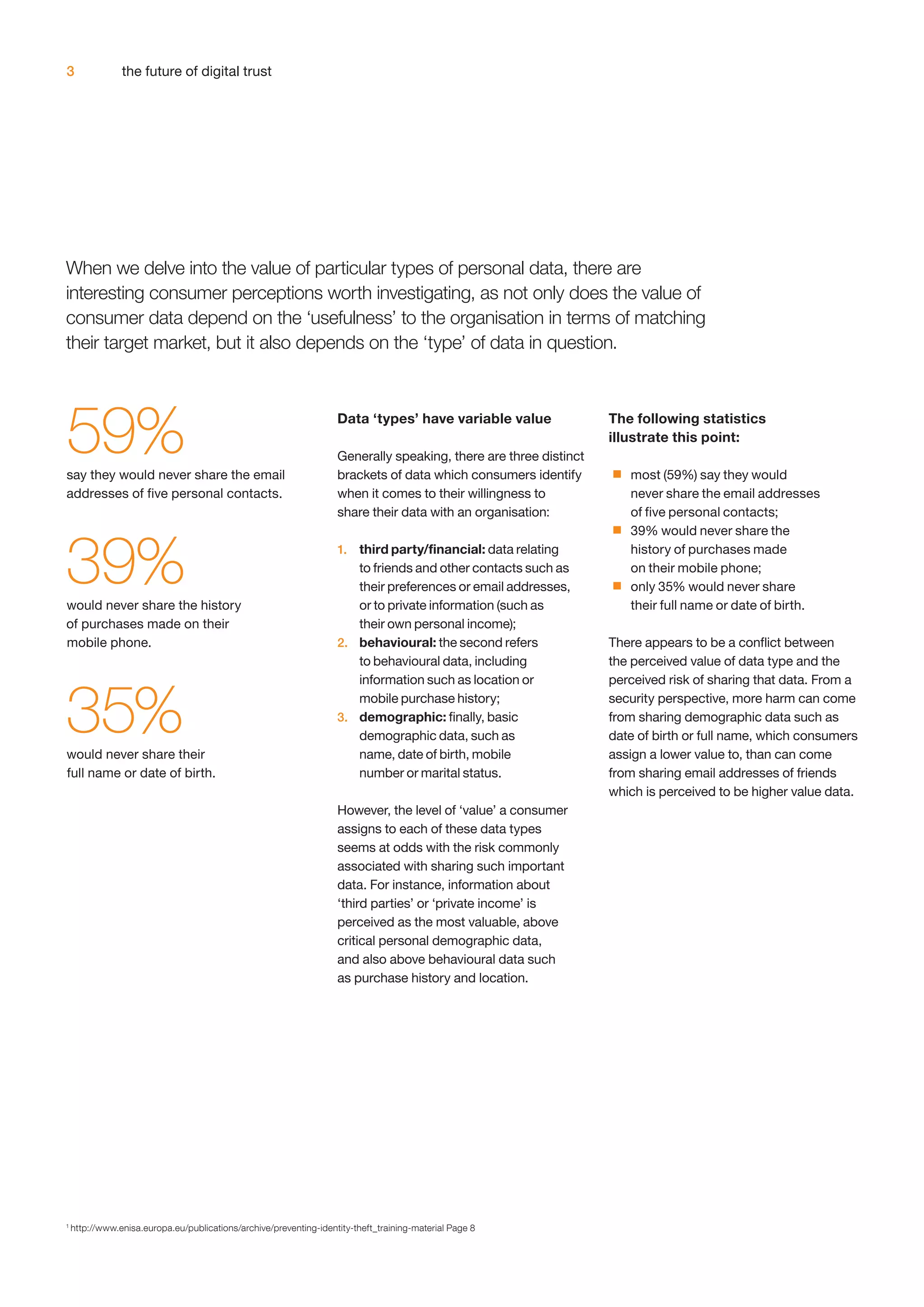
■■ most (59%) say they would 
never share the email addresses 
of five personal contacts; 
■■ 39% would never share the 
history of purchases made 
on their mobile phone; 
■■ only 35% would never share 
their full name or date of birth. 
There appears to be a conflict between 
the perceived value of data type and the 
perceived risk of sharing that data. From a 
security perspective, more harm can come 
from sharing demographic data such as 
date of birth or full name, which consumers 
assign a lower value to, than can come 
from sharing email addresses of friends 
which is perceived to be higher value data. 
59% say they would never share the email 
addresses of five personal contacts. 
39% would never share the history 
of purchases made on their 
mobile phone. 
35% would never share their 
full name or date of birth. 
1 http://www.enisa.europa.eu/publications/archive/preventing-identity-theft_training-material Page 8
4 the future of digital trust 
Demographic data is especially targeted for identity theft and fraud purposes, so it is a concerning 
contradiction that consumers assign less value to this aspect of their personal data. 
This contrast further highlights the need 
for consumer education when it comes 
to protecting and managing personal 
data. While consumers are increasingly 
aware of the value of their data, they 
need to understand how that data may 
be used once they have shared it. 
Consumer relationships with 
organisations impact data value 
Another factor that affects the value 
assigned to personal data is consumers’ 
relationship with the organisations they 
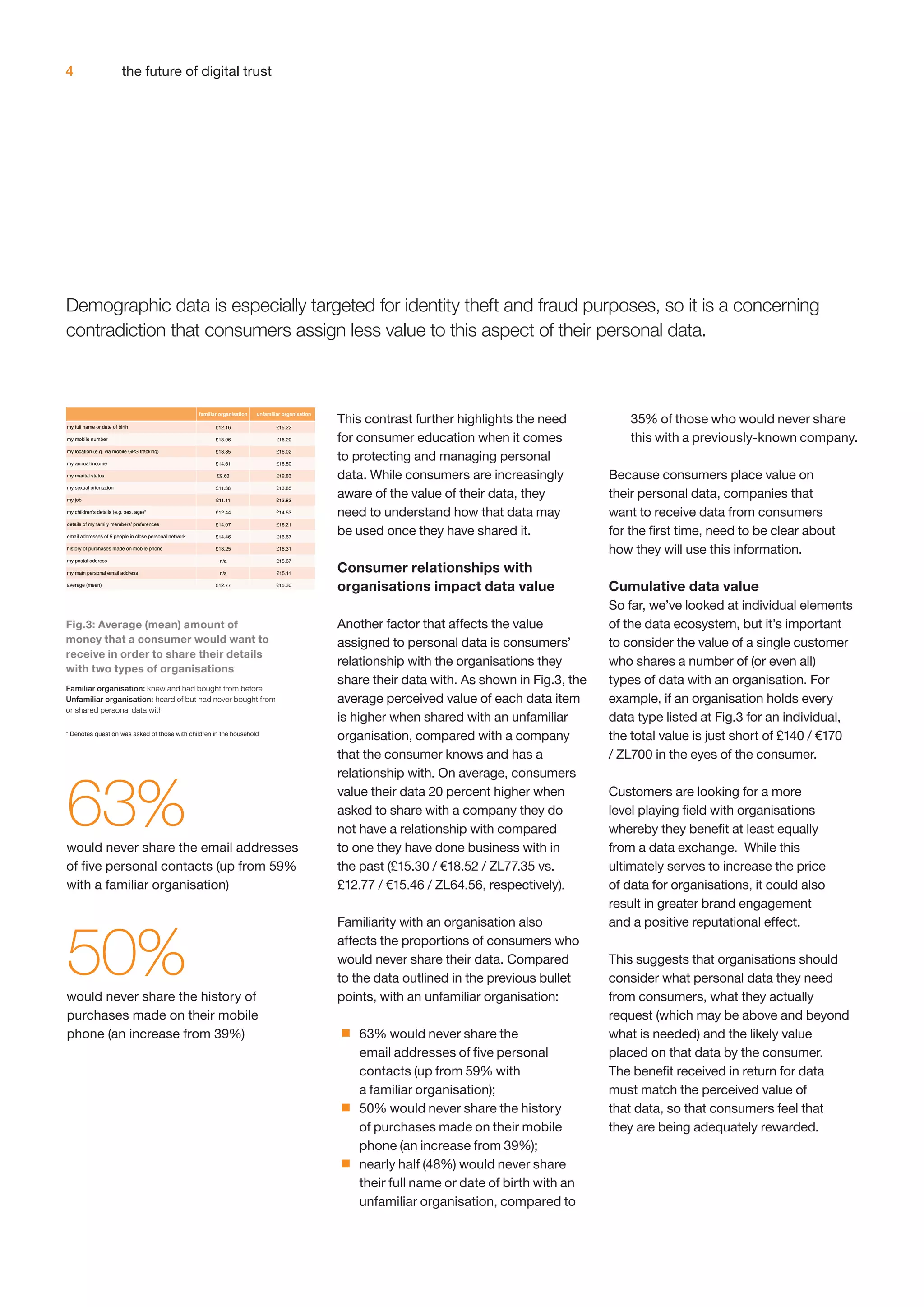
share their data with. As shown in Fig.3, the 
average perceived value of each data item 
is higher when shared with an unfamiliar 
organisation, compared with a company 
that the consumer knows and has a 
relationship with. On average, consumers 
value their data 20 percent higher when 
asked to share with a company they do 
not have a relationship with compared 
to one they have done business with in 
the past (£15.30 / €18.52 / ZL77.35 vs. 
£12.77 / €15.46 / ZL64.56, respectively). 
Familiarity with an organisation also 
affects the proportions of consumers who 
would never share their data. Compared 
to the data outlined in the previous bullet 
points, with an unfamiliar organisation: 
■■ 63% would never share the 
email addresses of five personal 
contacts (up from 59% with 
a familiar organisation); 
■■ 50% would never share the history 
of purchases made on their mobile 
phone (an increase from 39%); 
■■ nearly half (48%) would never share 
their full name or date of birth with an 
unfamiliar organisation, compared to 
35% of those who would never share 
this with a previously-known company. 
Because consumers place value on 
their personal data, companies that 
want to receive data from consumers 
for the first time, need to be clear about 
how they will use this information. 
Cumulative data value 
So far, we’ve looked at individual elements 
of the data ecosystem, but it’s important 
to consider the value of a single customer 
who shares a number of (or even all) 
types of data with an organisation. For 
example, if an organisation holds every 
data type listed at Fig.3 for an individual, 
the total value is just short of £140 / €170 
/ ZL700 in the eyes of the consumer. 
Customers are looking for a more 
level playing field with organisations 
whereby they benefit at least equally 
from a data exchange. While this 
ultimately serves to increase the price 
of data for organisations, it could also 
result in greater brand engagement 
and a positive reputational effect. 
This suggests that organisations should 
consider what personal data they need 
from consumers, what they actually 
request (which may be above and beyond 
what is needed) and the likely value 
placed on that data by the consumer. 
The benefit received in return for data 
must match the perceived value of 
that data, so that consumers feel that 
they are being adequately rewarded. 
familiar organisation! unfamiliar organisation! 
my full name or date of birth! £12.16! £15.22! 
my mobile number! £13.96! £16.20! 
my location (e.g. via mobile GPS tracking)! £13.35! £16.02! 
my annual income! £14.61! £16.50! 
my marital status! £9.63! £12.83! 
my sexual orientation! £11.38! £13.85! 
my job! £11.11! £13.83! 
my children’s details (e.g. sex, age)*! £12.44! £14.53! 
details of my family members’ preferences! £14.07! £16.21! 
email addresses of 5 people in close personal network ! £14.46! £16.67! 
history of purchases made on mobile phone! £13.25! £16.31! 
my postal address! n/a! £15.67! 
my main personal email address! n/a! £15.11! 
average (mean)! £12.77! £15.30! 
Fig.3: Average (mean) amount of 
money that a consumer would want to 
receive in order to share their details 
with two types of organisations 
Familiar organisation: knew and had bought from before 
Unfamiliar organisation: heard of but had never bought from 
or shared personal data with 
* Denotes question was asked of those with children in the household 
63% would never share the email addresses 
of five personal contacts (up from 59% 
with a familiar organisation) 
50% would never share the history of 
purchases made on their mobile 
phone (an increase from 39%)
5 the future of digital trust 
There is a clear distinction between sharing anonymous data and personal data in the 
minds of consumers with consumers feeling more at ease with sharing the former. 
Identity and the purpose 
of data collection 
The research also demonstrates that 
the consumer makes a distinction 
between anonymous and identifiably 
personalised data; two forms which 
consumers have very different attitudes 
around with regard to sharing. 
When data is analysed anonymously and 
without identifying the individual, over half 
(56%) are happy with companies using 
their data in this form – for example as 
census information or for civic planning. 
However, this falls to 41% for companies 
using data collected as a part of being an 
organisation’s customer, (such as purchase 
history, or the times and numbers of phone 
calls made), and to 38% for personal 
data actively given to a company, such 
as name, email address and purchase 
preferences. It is very evident that the 
extent to which data is identifiable to 
the consumer themselves therefore 
matters significantly, and indicates 
once again the need for companies to 
be transparent not only about how they 
are using personal data, but the form in 
which they are using and sharing it. 
The purpose of personal data 
collection is also a variable that impacts 
consumer willingness to share it with 
organisations – with future service 
improvements a more welcome use 
of data than marketing purposes: 
■■ 47% are happy for their anonymous 
data to be used to predict local 
area services and needs; 
■■ only 37% are happy for anonymous 
data to be used for technical 
optimisation of services; 
■■ just 37% are happy for their purchase 
history to be used to suggest other 
items that they might want to buy; 
■■ 30% are comfortable with their 
demographic data being used 
for targeted advertising; 
■■ just 28% are comfortable with 
their information being used for 
location-based advertising. 
This suggests that communicating the 
purposes of data sharing is important 
to boost consumer confidence and 
buy-in. This is especially compelling 
if future service improvements can be 
impacted by the analysis of anonymised 
data, and in this case, not only is data 
confidentiality maintained but the benefit 
of better service is a tangible reward. 
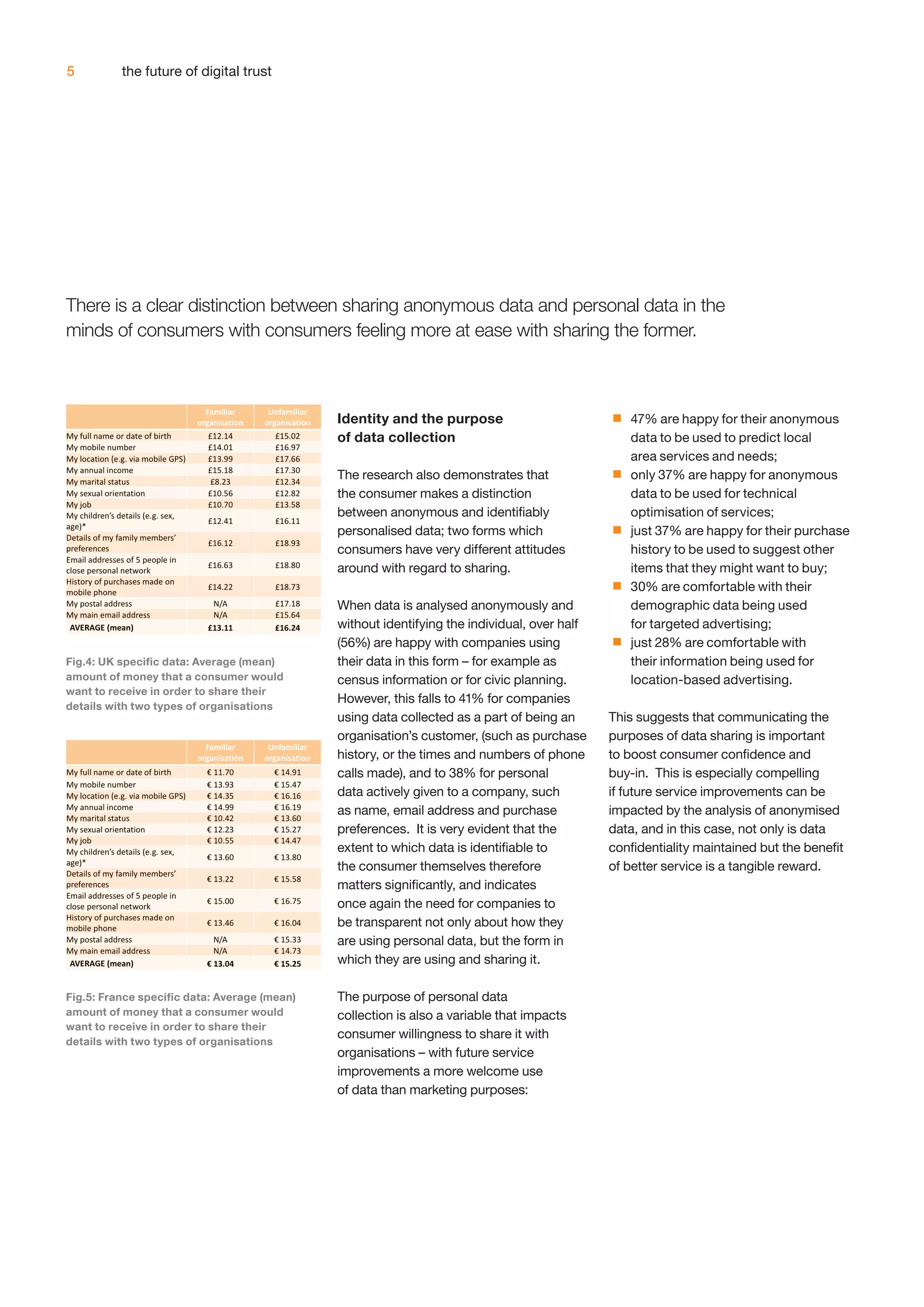
Fig.4: UK specific data: Average (mean) 
amount of money that a consumer would 
want to receive in order to share their 
details with two types of organisations 
Fig.5: France specific data: Average (mean) 
amount of money that a consumer would 
want to receive in order to share their 
details with two types of organisations
6 the future of digital trust 
conclusion 
The research reveals that consumers assign different values to their personal data depending 
on the type of data, the type of organisation with which they are sharing it, the purpose 
of data collection and the nature of data storage, anonymisation and analysis. Individuals 
understand the value of their data, and have an idea of the importance to organisations. 
When put in the context of the erosion of 
trust in organisations and the perception 
that consumers are not getting their 
fair share of benefits from information 
exchanges, it is evident that there 
remains much work to be done for trust 
to be retained, and even grown, by 
those companies associated with data 
collection and across the industries 
where personal data has a role to play. 
There are three levers to 
boost personal data trust 
levels towards businesses: 
■■ transparency: Greater transparency 
about how data is used has already 
been flagged in the first research 
instalment as an important element 
in rebalancing the relationship, 
and the new insight around the 
perception of value strengthens 
this call for realignment in who 
benefits most from the sharing of 
personal data. Organisations should 
make clear the purpose of data 
collection and how it will be used. 
■■ control: Aware that their data has a 
value, consumers want control over 
what data they share and what they 
get in return. Industry should enable 
consumers to choose what data is 
shared and for what purposes. 
■■ education: Consumers have 
become so used to sharing key 
demographic information that they 
assign lower value to it despite it 
being the most valuable from a 
security perspective. Education is 
important to ensure that demographic 
data is valued more highly and that 
consumers understand the benefits, 
such as service improvement, that 
can result from data sharing. 
The next instalment in this series 
will further investigate the possible 
reasons for variable data value 
and why trust has eroded. 
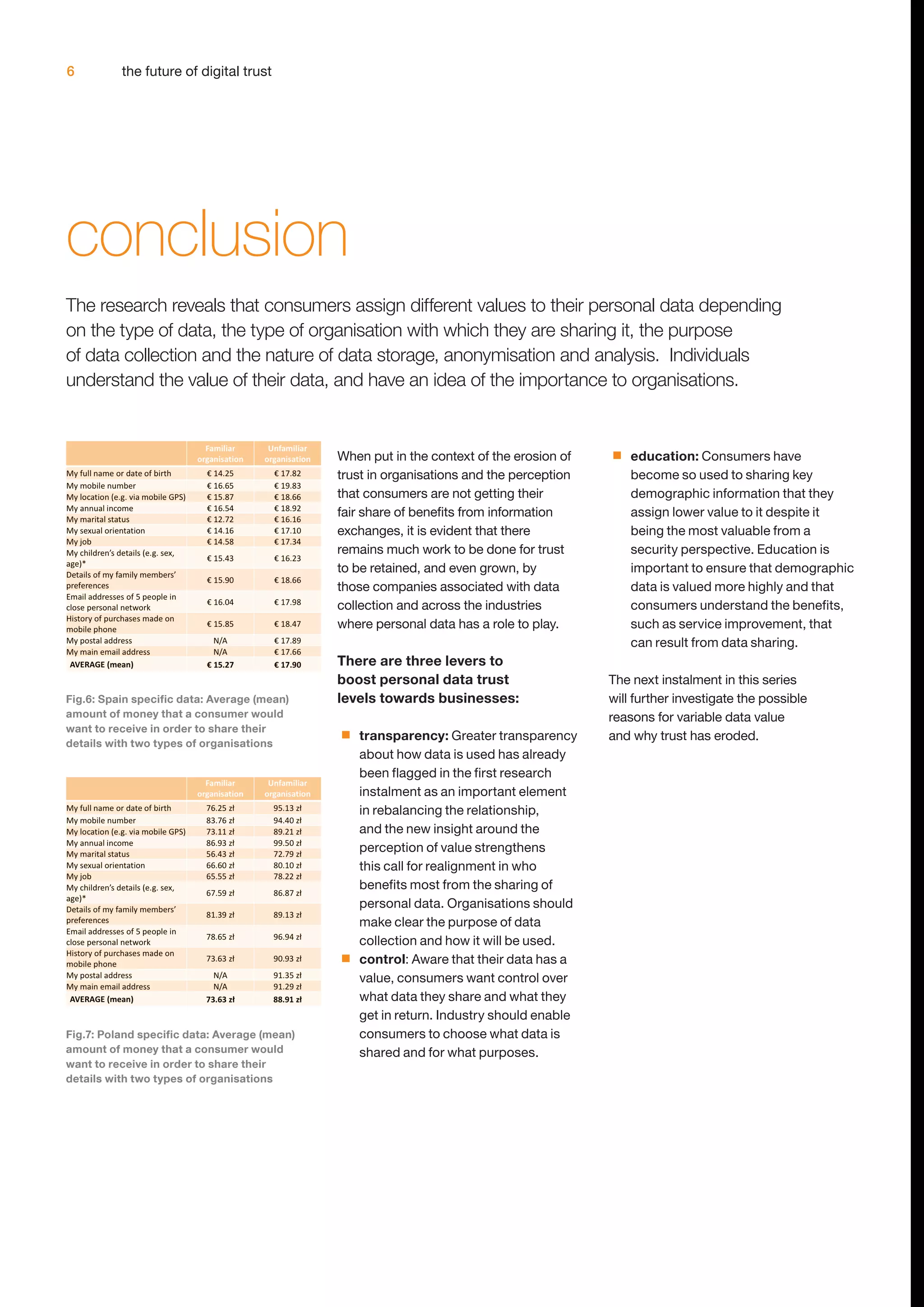
Fig.6: Spain specific data: Average (mean) 
amount of money that a consumer would 
want to receive in order to share their 
details with two types of organisations 
Fig.7: Poland specific data: Average (mean) 
amount of money that a consumer would 
want to receive in order to share their 
details with two types of organisations
Report: mydata value orange - future of digital trust

Report: mydata value orange - future of digital trust

  • 1.
    the future ofdigital trust A European study on the nature of consumer trust and personal data September 2014
  • 2.
    2 the futureof digital trust my data value As outlined in the first instalment of “The Future of Digital Trust” study, European consumers’ trust in organisations to hold and manage their personal data has eroded over the last year. A lack of trusted ways of finding out about personal data management and protection online means that there is a need for a consumer champion of data protection education in Europe. Indeed, over three-quarters state that it is hard to trust companies when it comes to the way they use personal data. Additionally, there is a perceived imbalance within the data-sharing relationship, with two-thirds (67%) of consumers believing that organisations benefit the most from the sharing of data – just 6% think that the consumer benefits the most. We can therefore assert that consumers are not ignorant to the dynamics of sharing data, and indeed that consumers recognise their data has a value to businesses, and that this value is dependent on a number of variables. This is what we will be investigating in this, the second instalment of the Orange Future of Digital Trust Report. Data has a value Supporting the assertion above, Fig.1 shows that four in five (80%) know their personal data has a value to businesses. Moreover, consumers assign a higher value to their data when they match an organisation’s target demographic, with over three-quarters (78%) agreeing that their personal data has a higher value when they fit an organisation’s customer profile. This level of awareness could signal consumer appetite to shift this balance of power in their favour since, as demonstrated in the previous report, they already feel that they are not benefitting as much as organisations from data sharing practices. Much will depend on how the consumer acts upon this renewed level of awareness about the value of their personal data. Interestingly, the research suggests that data protection is the biggest priority for consumers when ranking mobile operator services (see Fig.2) – 77% of consumers stated that it is very important or critical for mobile operators to inform them about how their data is being used, nearly as important as providing a reliable service (85%) and good value for money (80%). This underlines the importance that consumers place on transparency over how their data is used, and also hints at why data has such a high perceived value. Fig.1: Agreement with statements on value of personal data Fig.2: Importance of mobile operator organisation behaviour 77% of consumers stated that it is very important or critical for mobile operators to inform them about how their data is being used 80% know their personal data has a value to businesses.
  • 3.
    3 the futureof digital trust When we delve into the value of particular types of personal data, there are interesting consumer perceptions worth investigating, as not only does the value of consumer data depend on the ‘usefulness’ to the organisation in terms of matching their target market, but it also depends on the ‘type’ of data in question. Data ‘types’ have variable value Generally speaking, there are three distinct brackets of data which consumers identify when it comes to their willingness to share their data with an organisation: 1. third party/financial: data relating to friends and other contacts such as their preferences or email addresses, or to private information (such as their own personal income); 2. behavioural: the second refers to behavioural data, including information such as location or mobile purchase history; 3. demographic: finally, basic demographic data, such as name, date of birth, mobile number or marital status. However, the level of ‘value’ a consumer assigns to each of these data types seems at odds with the risk commonly associated with sharing such important data. For instance, information about ‘third parties’ or ‘private income’ is perceived as the most valuable, above critical personal demographic data, and also above behavioural data such as purchase history and location. The following statistics illustrate this point: ■■ most (59%) say they would never share the email addresses of five personal contacts; ■■ 39% would never share the history of purchases made on their mobile phone; ■■ only 35% would never share their full name or date of birth. There appears to be a conflict between the perceived value of data type and the perceived risk of sharing that data. From a security perspective, more harm can come from sharing demographic data such as date of birth or full name, which consumers assign a lower value to, than can come from sharing email addresses of friends which is perceived to be higher value data. 59% say they would never share the email addresses of five personal contacts. 39% would never share the history of purchases made on their mobile phone. 35% would never share their full name or date of birth. 1 http://www.enisa.europa.eu/publications/archive/preventing-identity-theft_training-material Page 8
  • 4.
    4 the futureof digital trust Demographic data is especially targeted for identity theft and fraud purposes, so it is a concerning contradiction that consumers assign less value to this aspect of their personal data. This contrast further highlights the need for consumer education when it comes to protecting and managing personal data. While consumers are increasingly aware of the value of their data, they need to understand how that data may be used once they have shared it. Consumer relationships with organisations impact data value Another factor that affects the value assigned to personal data is consumers’ relationship with the organisations they share their data with. As shown in Fig.3, the average perceived value of each data item is higher when shared with an unfamiliar organisation, compared with a company that the consumer knows and has a relationship with. On average, consumers value their data 20 percent higher when asked to share with a company they do not have a relationship with compared to one they have done business with in the past (£15.30 / €18.52 / ZL77.35 vs. £12.77 / €15.46 / ZL64.56, respectively). Familiarity with an organisation also affects the proportions of consumers who would never share their data. Compared to the data outlined in the previous bullet points, with an unfamiliar organisation: ■■ 63% would never share the email addresses of five personal contacts (up from 59% with a familiar organisation); ■■ 50% would never share the history of purchases made on their mobile phone (an increase from 39%); ■■ nearly half (48%) would never share their full name or date of birth with an unfamiliar organisation, compared to 35% of those who would never share this with a previously-known company. Because consumers place value on their personal data, companies that want to receive data from consumers for the first time, need to be clear about how they will use this information. Cumulative data value So far, we’ve looked at individual elements of the data ecosystem, but it’s important to consider the value of a single customer who shares a number of (or even all) types of data with an organisation. For example, if an organisation holds every data type listed at Fig.3 for an individual, the total value is just short of £140 / €170 / ZL700 in the eyes of the consumer. Customers are looking for a more level playing field with organisations whereby they benefit at least equally from a data exchange. While this ultimately serves to increase the price of data for organisations, it could also result in greater brand engagement and a positive reputational effect. This suggests that organisations should consider what personal data they need from consumers, what they actually request (which may be above and beyond what is needed) and the likely value placed on that data by the consumer. The benefit received in return for data must match the perceived value of that data, so that consumers feel that they are being adequately rewarded. familiar organisation! unfamiliar organisation! my full name or date of birth! £12.16! £15.22! my mobile number! £13.96! £16.20! my location (e.g. via mobile GPS tracking)! £13.35! £16.02! my annual income! £14.61! £16.50! my marital status! £9.63! £12.83! my sexual orientation! £11.38! £13.85! my job! £11.11! £13.83! my children’s details (e.g. sex, age)*! £12.44! £14.53! details of my family members’ preferences! £14.07! £16.21! email addresses of 5 people in close personal network ! £14.46! £16.67! history of purchases made on mobile phone! £13.25! £16.31! my postal address! n/a! £15.67! my main personal email address! n/a! £15.11! average (mean)! £12.77! £15.30! Fig.3: Average (mean) amount of money that a consumer would want to receive in order to share their details with two types of organisations Familiar organisation: knew and had bought from before Unfamiliar organisation: heard of but had never bought from or shared personal data with * Denotes question was asked of those with children in the household 63% would never share the email addresses of five personal contacts (up from 59% with a familiar organisation) 50% would never share the history of purchases made on their mobile phone (an increase from 39%)
  • 5.
    5 the futureof digital trust There is a clear distinction between sharing anonymous data and personal data in the minds of consumers with consumers feeling more at ease with sharing the former. Identity and the purpose of data collection The research also demonstrates that the consumer makes a distinction between anonymous and identifiably personalised data; two forms which consumers have very different attitudes around with regard to sharing. When data is analysed anonymously and without identifying the individual, over half (56%) are happy with companies using their data in this form – for example as census information or for civic planning. However, this falls to 41% for companies using data collected as a part of being an organisation’s customer, (such as purchase history, or the times and numbers of phone calls made), and to 38% for personal data actively given to a company, such as name, email address and purchase preferences. It is very evident that the extent to which data is identifiable to the consumer themselves therefore matters significantly, and indicates once again the need for companies to be transparent not only about how they are using personal data, but the form in which they are using and sharing it. The purpose of personal data collection is also a variable that impacts consumer willingness to share it with organisations – with future service improvements a more welcome use of data than marketing purposes: ■■ 47% are happy for their anonymous data to be used to predict local area services and needs; ■■ only 37% are happy for anonymous data to be used for technical optimisation of services; ■■ just 37% are happy for their purchase history to be used to suggest other items that they might want to buy; ■■ 30% are comfortable with their demographic data being used for targeted advertising; ■■ just 28% are comfortable with their information being used for location-based advertising. This suggests that communicating the purposes of data sharing is important to boost consumer confidence and buy-in. This is especially compelling if future service improvements can be impacted by the analysis of anonymised data, and in this case, not only is data confidentiality maintained but the benefit of better service is a tangible reward. Fig.4: UK specific data: Average (mean) amount of money that a consumer would want to receive in order to share their details with two types of organisations Fig.5: France specific data: Average (mean) amount of money that a consumer would want to receive in order to share their details with two types of organisations
  • 6.
    6 the futureof digital trust conclusion The research reveals that consumers assign different values to their personal data depending on the type of data, the type of organisation with which they are sharing it, the purpose of data collection and the nature of data storage, anonymisation and analysis. Individuals understand the value of their data, and have an idea of the importance to organisations. When put in the context of the erosion of trust in organisations and the perception that consumers are not getting their fair share of benefits from information exchanges, it is evident that there remains much work to be done for trust to be retained, and even grown, by those companies associated with data collection and across the industries where personal data has a role to play. There are three levers to boost personal data trust levels towards businesses: ■■ transparency: Greater transparency about how data is used has already been flagged in the first research instalment as an important element in rebalancing the relationship, and the new insight around the perception of value strengthens this call for realignment in who benefits most from the sharing of personal data. Organisations should make clear the purpose of data collection and how it will be used. ■■ control: Aware that their data has a value, consumers want control over what data they share and what they get in return. Industry should enable consumers to choose what data is shared and for what purposes. ■■ education: Consumers have become so used to sharing key demographic information that they assign lower value to it despite it being the most valuable from a security perspective. Education is important to ensure that demographic data is valued more highly and that consumers understand the benefits, such as service improvement, that can result from data sharing. The next instalment in this series will further investigate the possible reasons for variable data value and why trust has eroded. Fig.6: Spain specific data: Average (mean) amount of money that a consumer would want to receive in order to share their details with two types of organisations Fig.7: Poland specific data: Average (mean) amount of money that a consumer would want to receive in order to share their details with two types of organisations