Republic of the Philippines
University of Rizal System
Graduate School
Anatomy and Physiology
(P.E. 201)
11:00 – 2:00 pm
Reported by:
Sarah Jane A. Pacamara
Reported to:
Noel P. Aranda Ph.D.
BASKETBALL
BASKETBALL
A. Brief Introduction/ Background of the Topic
C. Scientific Functions of Muscles/ Bones Involved
versus Functions of Muscles/ Bones in Sports
Performance
B. Anatomical Structure of Sports/ Major Structures
or Parts of the Body used in Playing Sports
D. Scientific Preparation for Competition
A. Brief Introduction/ Background of the Topic
C. Scientific Functions of Muscles/ Bones Involved
versus Functions of Muscles/ Bones in Sports
Performance
B. Anatomical Structure of Sports/ Major Structures
or Parts of the Body used in Playing Sports
D. Scientific Preparation for Competition
A. Brief Introduction/ Background of the Topic
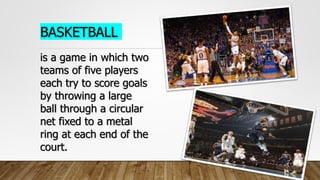
BASKETBALL
is a game in which two
teams of five players
each try to score goals
by throwing a large
ball through a circular
net fixed to a metal
ring at each end of the
court.
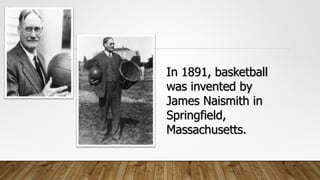
In 1891, basketball
was invented by
James Naismith in
Springfield,
Massachusetts.
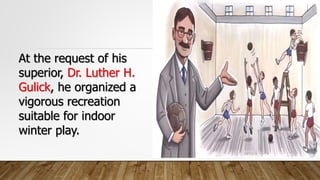
At the request of his
superior, Dr. Luther H.
Gulick, he organized a
vigorous recreation
suitable for indoor
winter play.
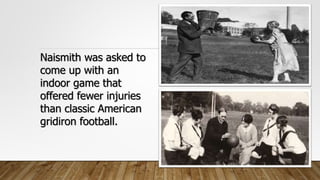
Naismith was asked to
come up with an
indoor game that
offered fewer injuries
than classic American
gridiron football.
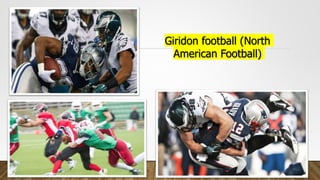
Giridon football (North
American Football)
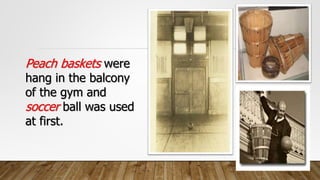
Peach baskets were
hang in the balcony
of the gym and
soccer ball was used
at first.
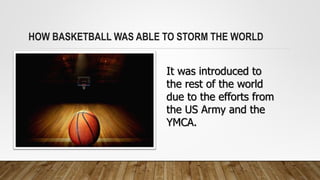
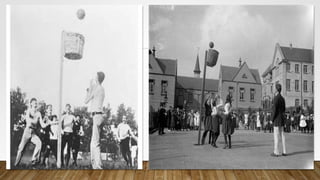
It was introduced to
the rest of the world
due to the efforts from
the US Army and the
YMCA.
HOW BASKETBALL WAS ABLE TO STORM THE WORLD
June 18, 1932-
when FIBA was first
formed.
1936 - become an
Olympic sport
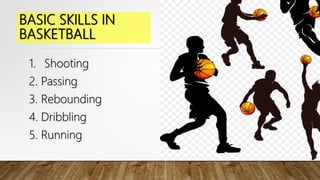
BASIC SKILLS IN
BASKETBALL
1. Shooting
2. Passing
3. Rebounding
4. Dribbling
5. Running
B. Anatomical Structure of Sports/ Major Structures
or Parts of the Body used in Playing Sports
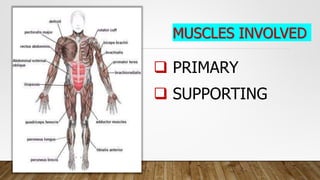
 PRIMARY
 SUPPORTING
MUSCLES INVOLVED
PRIMARY MUSCLES USED IN
BASKETBALL
PRIMARY MUSCLES
a) Trapezius
b) Deltoid
c) Biceps
d) Forearm muscles
e) Abdominal muscles
f. Hamstring
g. Quadriceps
h. Triceps
i. Gluteus Maximus
j. Calf
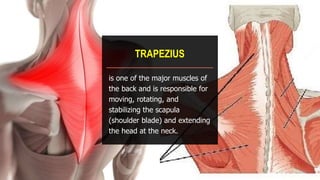
TRAPEZIUS
is one of the major muscles of
the back and is responsible for
moving, rotating, and
stabilizing the scapula
(shoulder blade) and extending
the head at the neck.
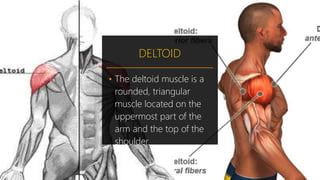
DELTOID
• The deltoid muscle is a
rounded, triangular
muscle located on the
uppermost part of the
arm and the top of the
shoulder.
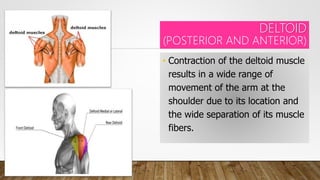
DELTOID
(POSTERIOR AND ANTERIOR)
• Contraction of the deltoid muscle
results in a wide range of
movement of the arm at the
shoulder due to its location and
the wide separation of its muscle
fibers.
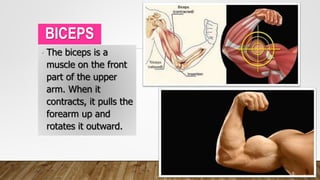
BICEPS
• The biceps is a
muscle on the front
part of the upper
arm. When it
contracts, it pulls the
forearm up and
rotates it outward.
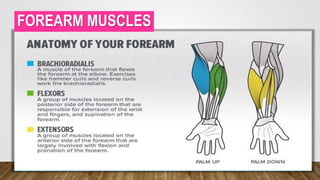
FOREARM MUSCLES
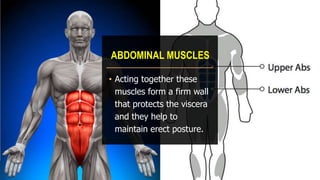
ABDOMINAL MUSCLES
• Acting together these
muscles form a firm wall
that protects the viscera
and they help to
maintain erect posture.
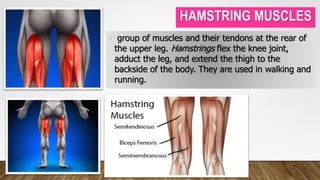
HAMSTRING MUSCLES
• group of muscles and their tendons at the rear of
the upper leg. Hamstrings flex the knee joint,
adduct the leg, and extend the thigh to the
backside of the body. They are used in walking and
running.
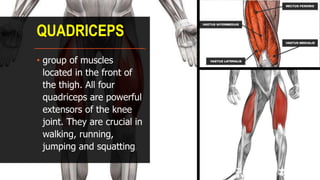
QUADRICEPS
• group of muscles
located in the front of
the thigh. All four
quadriceps are powerful
extensors of the knee
joint. They are crucial in
walking, running,
jumping and squatting.
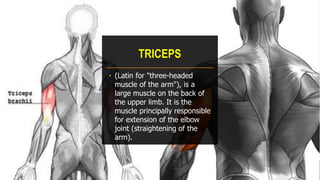
TRICEPS
• (Latin for "three-headed
muscle of the arm"), is a
large muscle on the back of
the upper limb. It is the
muscle principally responsible
for extension of the elbow
joint (straightening of the
arm).
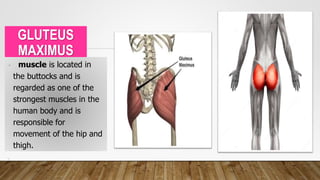
GLUTEUS
MAXIMUS
• muscle is located in
the buttocks and is
regarded as one of the
strongest muscles in the
human body and is
responsible for
movement of the hip and
thigh.
•
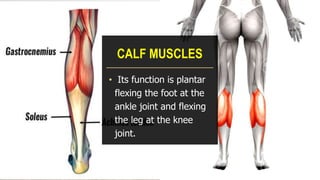
CALF MUSCLES
• Its function is plantar
flexing the foot at the
ankle joint and flexing
the leg at the knee
joint.
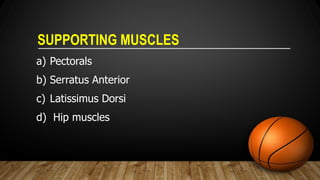
SUPPORTING MUSCLES
USED IN BASKETBALL
SUPPORTING MUSCLES
a) Pectorals
b) Serratus Anterior
c) Latissimus Dorsi
d) Hip muscles
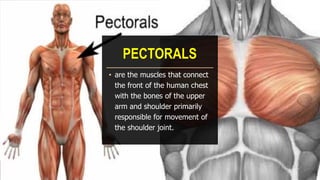
PECTORALS
• are the muscles that connect
the front of the human chest
with the bones of the upper
arm and shoulder primarily
responsible for movement of
the shoulder joint.
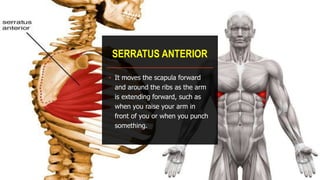
SERRATUS ANTERIOR
• It moves the scapula forward
and around the ribs as the arm
is extending forward, such as
when you raise your arm in
front of you or when you punch
something.
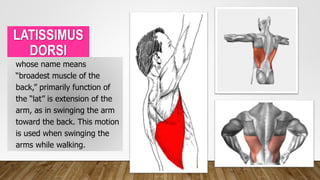
LATISSIMUS
DORSI
• whose name means
“broadest muscle of the
back,” primarily function of
the “lat” is extension of the
arm, as in swinging the arm
toward the back. This motion
is used when swinging the
arms while walking.
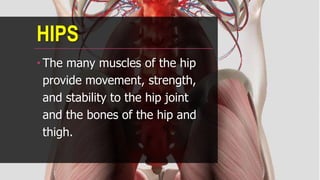
HIPS
•The many muscles of the hip
provide movement, strength,
and stability to the hip joint
and the bones of the hip and
thigh.
Anatomy and Physiology (basketball)

Anatomy and Physiology (basketball)

  • 1.
    Republic of thePhilippines University of Rizal System Graduate School Anatomy and Physiology (P.E. 201) 11:00 – 2:00 pm Reported by: Sarah Jane A. Pacamara Reported to: Noel P. Aranda Ph.D.
  • 2.
  • 4.
    BASKETBALL A. Brief Introduction/Background of the Topic C. Scientific Functions of Muscles/ Bones Involved versus Functions of Muscles/ Bones in Sports Performance B. Anatomical Structure of Sports/ Major Structures or Parts of the Body used in Playing Sports D. Scientific Preparation for Competition A. Brief Introduction/ Background of the Topic C. Scientific Functions of Muscles/ Bones Involved versus Functions of Muscles/ Bones in Sports Performance B. Anatomical Structure of Sports/ Major Structures or Parts of the Body used in Playing Sports D. Scientific Preparation for Competition
  • 5.
    A. Brief Introduction/Background of the Topic
  • 6.
    BASKETBALL is a gamein which two teams of five players each try to score goals by throwing a large ball through a circular net fixed to a metal ring at each end of the court.
  • 7.
    In 1891, basketball wasinvented by James Naismith in Springfield, Massachusetts.
  • 8.
    At the requestof his superior, Dr. Luther H. Gulick, he organized a vigorous recreation suitable for indoor winter play.
  • 9.
    Naismith was askedto come up with an indoor game that offered fewer injuries than classic American gridiron football.
  • 10.
  • 11.
    Peach baskets were hangin the balcony of the gym and soccer ball was used at first.
  • 12.
    It was introducedto the rest of the world due to the efforts from the US Army and the YMCA. HOW BASKETBALL WAS ABLE TO STORM THE WORLD
  • 14.
    June 18, 1932- whenFIBA was first formed. 1936 - become an Olympic sport
  • 15.
    BASIC SKILLS IN BASKETBALL 1.Shooting 2. Passing 3. Rebounding 4. Dribbling 5. Running
  • 16.
    B. Anatomical Structureof Sports/ Major Structures or Parts of the Body used in Playing Sports
  • 17.
  • 18.
    PRIMARY MUSCLES USEDIN BASKETBALL
  • 19.
    PRIMARY MUSCLES a) Trapezius b)Deltoid c) Biceps d) Forearm muscles e) Abdominal muscles f. Hamstring g. Quadriceps h. Triceps i. Gluteus Maximus j. Calf
  • 20.
    TRAPEZIUS is one ofthe major muscles of the back and is responsible for moving, rotating, and stabilizing the scapula (shoulder blade) and extending the head at the neck.
  • 21.
    DELTOID • The deltoidmuscle is a rounded, triangular muscle located on the uppermost part of the arm and the top of the shoulder.
  • 22.
    DELTOID (POSTERIOR AND ANTERIOR) •Contraction of the deltoid muscle results in a wide range of movement of the arm at the shoulder due to its location and the wide separation of its muscle fibers.
  • 23.
    BICEPS • The bicepsis a muscle on the front part of the upper arm. When it contracts, it pulls the forearm up and rotates it outward.
  • 24.
  • 25.
    ABDOMINAL MUSCLES • Actingtogether these muscles form a firm wall that protects the viscera and they help to maintain erect posture.
  • 26.
    HAMSTRING MUSCLES • groupof muscles and their tendons at the rear of the upper leg. Hamstrings flex the knee joint, adduct the leg, and extend the thigh to the backside of the body. They are used in walking and running.
  • 27.
    QUADRICEPS • group ofmuscles located in the front of the thigh. All four quadriceps are powerful extensors of the knee joint. They are crucial in walking, running, jumping and squatting.
  • 28.
    TRICEPS • (Latin for"three-headed muscle of the arm"), is a large muscle on the back of the upper limb. It is the muscle principally responsible for extension of the elbow joint (straightening of the arm).
  • 29.
    GLUTEUS MAXIMUS • muscle islocated in the buttocks and is regarded as one of the strongest muscles in the human body and is responsible for movement of the hip and thigh. •
  • 30.
    CALF MUSCLES • Itsfunction is plantar flexing the foot at the ankle joint and flexing the leg at the knee joint.
  • 31.
  • 32.
    SUPPORTING MUSCLES a) Pectorals b)Serratus Anterior c) Latissimus Dorsi d) Hip muscles
  • 33.
    PECTORALS • are themuscles that connect the front of the human chest with the bones of the upper arm and shoulder primarily responsible for movement of the shoulder joint.
  • 34.
    SERRATUS ANTERIOR • Itmoves the scapula forward and around the ribs as the arm is extending forward, such as when you raise your arm in front of you or when you punch something.
  • 35.
    LATISSIMUS DORSI • whose namemeans “broadest muscle of the back,” primarily function of the “lat” is extension of the arm, as in swinging the arm toward the back. This motion is used when swinging the arms while walking.
  • 36.
    HIPS •The many musclesof the hip provide movement, strength, and stability to the hip joint and the bones of the hip and thigh.

Editor's Notes

  • #7 He came up with a 9-on-9 game that involved shooting a ball into a peach basket.
  • #8 A Canadian Physical Education instructor at YMCA (Young Men’s Christian Association) Naismith concocted a game suited to the room’s high ceiling and rectangular plan, a game that combined elements of soccer, football, hockey, and baseballand that emphasized teamwork and friendly, nonviolent competition.
  • #10 First played with nine members on each team, Naismith’s game quickly spread throughout New England, and then elsewhere in the United States. By 1896 enough colleges had formed teams that the first extramural competition was held, but now with only five players to a team. Since 1900, 5-on-5 basketball has become the standard.
  • #12 Peach baskets were elevated 10 ft, the first ball used is soccer ball about thirty inches in diameter. Under those first rules, a single point was scored for a made basket. The first game would have a final score of 1-0. There were 13 original rules to Naismith’s basketball. Here are the other rules that Naismith included with his game. The basketball had to be held between the hands, without the arms or body holding it. Players could not strike, push, hold, trip, or shoulder their opponent. If they did, this would be considered a foul. Two fouls would disqualify a player until the next basket was made without substitution. An attempt to injure an opponent would disqualify that player for the whole game. Striking at the ball with a fist would be considered a foul. A team committing three consecutive fouls would have a goal counted against them. A goal was scored only if the ball stayed in the basket. If it bounced out, the goal was not counted. Umpires could throw the ball into play if no one knew who had lost it out of bounds. They were also responsible for keeping track of fouls and scoring. Each half was 15 minutes. The side with the most points would win the game.
  • #13 In 1893, the first international basketball match was organized. Members took the game to India, Japan, Persia, and China as well.
  • #15 During the 1936 Summer Olympics held in Berlin, the Federation named James Naismith (1861–1939), the founder of basketball, as its Honorary President. Fédération internationale de basket-ball
  • #21 In anatomy, the scapula (plural scapulae or scapulas; also known as shoulder bone, shoulder blade or wing bone) is the bone that connects the humerus (upper arm bone) with the clavicle (collar bone).
  • #23 The deltoid has three distinct functions that correspond to the three bands of muscle fibers. Contraction of the anterior fibers flexes and medially rotates the arm by pulling the humerus towards the clavicle. Flexion and medial rotation of the arm moves the arm anteriorly, as in reaching forward or throwing a ball underhand. The lateral fibers abduct the arm by pulling the humerus toward the acromion. Abduction of the arm results in the arm moving away from the body, as in reaching out to the side. Contraction of the posterior fibers extends and laterally rotates the arm by pulling the humerus toward the spine of the scapula. Extension and lateral rotation moves the arm posteriorly, as in reaching backwards or winding up to throw a ball underhand.
  • #28 he Latin translation of 'quadriceps' is 'four headed,' as the group contains four separate muscles: the vastus lateralis, vastus medialis, vastus intermedius, and the rectus femoris. Actions‎: ‎Knee extension; Hip flexion
  • #29 The triceps, also triceps brachii (Latin for "three-headed muscle of the arm")
  • #30 The function of the gluteus maximus (G-max) is primarily upper leg (thigh) extension, such as moving the upper leg backward as in rising from a squat position.
  • #31 The gastrocnemius is primarily involved in running, jumping and other "fast" movements of leg, and to a lesser degree in walking and standing.