
Elephants
BY GROUP 2







AJENG DYAH .P
ANDRE WICAKSONO
DEA PUTRI .P
MIA NUR UTAMI
NATTAYA LAKSHITA
ERVINA DIANINGTYAS

 FINDA NORMA
FITRIANA
 INDAH NUR .F
 MUHAMMAD HARIS
.M.S
 RIAN AJI IRAWAN
 ZAIMAH ANI .R
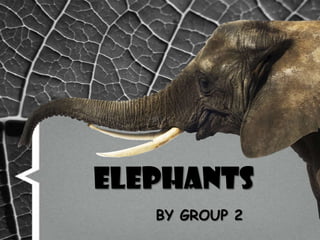
Elephants are the largest
land animals on earth in the
family Elephantidae of the
order Proboscidea. The word
"elephant" is based on the
Latin elephantus ("elephant").
Elephants can live up to 70
years in the wild.
Traditionally, two species are recognized, the
African elephant (Loxodonta africana) and the Asian
elephant (Elephas maximus), although some evidence
suggests that African bush elephants and African
forest elephants are separate species (L. africana and
L. cyclotis respectively). African elephants stand 3–4 m
(10–13 ft) and weigh 4,000–7,000 kg (8,800–15,000 lb)
while Asian elephants stand 2–3.5 m (7–11 ft) and weigh
3,000–5,000 kg (6,600–11,000 lb). In both cases, males
are larger than females.
Elephants have trunk or
proboscis. The trunk is
elongated and specialized
to become the elephant's
most important and
versatile
appendage.
Elephant trunks have
multiple
functions,
including
breathing,
olfaction,
touching,
grasping, and sound
production.
When mating, the male elephant stands up on his hind legs
and mounts the female elephant from behind. He holds on to
her with his front legs and mates with her. The physical mating
takes a few minutes. After mating, the two elephants often
spend time together touching each other with their trunks and
even entwining each other's trunks in an embrace. The two
elephants may spend as much as two weeks together before
the male leaves to live apart from the females again. A male
that is still in musth may go find another female to mate with.
If the female elephant becomes pregnant, she will stay
pregnant for 22 months. When the time comes, she gives birth
to her baby with the other females in the group standing in a
circle around her. The pregnant mother bends her back legs
and squats down during the birthing process. The birth
usually lasts two hours. After the baby elephant is born, the
mother and all of the other females in her group will raise the
baby together without the help of the father.
Elephants
are
herbivorous and will eat
leaves, twigs, fruit, bark
and roots. African
elephants are mostly
browsers while Asian
elephants are mainly
grazers.
They can
consume as much as
150 kg of food and 40 L of
water in a day.
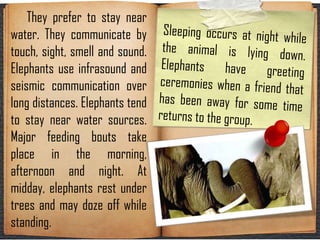
They prefer to stay near
water. They communicate by
touch, sight, smell and sound.
Elephants use infrasound and
seismic communication over
long distances. Elephants tend
to stay near water sources.
Major feeding bouts take
place in the morning,
afternoon and night. At
midday, elephants rest under
trees and may doze off while
standing.
Report elephants

Report elephants

  • 1.
  • 2.
          AJENG DYAH .P ANDREWICAKSONO DEA PUTRI .P MIA NUR UTAMI NATTAYA LAKSHITA ERVINA DIANINGTYAS  FINDA NORMA FITRIANA  INDAH NUR .F  MUHAMMAD HARIS .M.S  RIAN AJI IRAWAN  ZAIMAH ANI .R
  • 3.
    Elephants are thelargest land animals on earth in the family Elephantidae of the order Proboscidea. The word "elephant" is based on the Latin elephantus ("elephant"). Elephants can live up to 70 years in the wild.
  • 4.
    Traditionally, two speciesare recognized, the African elephant (Loxodonta africana) and the Asian elephant (Elephas maximus), although some evidence suggests that African bush elephants and African forest elephants are separate species (L. africana and L. cyclotis respectively). African elephants stand 3–4 m (10–13 ft) and weigh 4,000–7,000 kg (8,800–15,000 lb) while Asian elephants stand 2–3.5 m (7–11 ft) and weigh 3,000–5,000 kg (6,600–11,000 lb). In both cases, males are larger than females.
  • 5.
    Elephants have trunkor proboscis. The trunk is elongated and specialized to become the elephant's most important and versatile appendage. Elephant trunks have multiple functions, including breathing, olfaction, touching, grasping, and sound production.
  • 6.
    When mating, themale elephant stands up on his hind legs and mounts the female elephant from behind. He holds on to her with his front legs and mates with her. The physical mating takes a few minutes. After mating, the two elephants often spend time together touching each other with their trunks and even entwining each other's trunks in an embrace. The two elephants may spend as much as two weeks together before the male leaves to live apart from the females again. A male that is still in musth may go find another female to mate with.
  • 7.
    If the femaleelephant becomes pregnant, she will stay pregnant for 22 months. When the time comes, she gives birth to her baby with the other females in the group standing in a circle around her. The pregnant mother bends her back legs and squats down during the birthing process. The birth usually lasts two hours. After the baby elephant is born, the mother and all of the other females in her group will raise the baby together without the help of the father.
  • 8.
    Elephants are herbivorous and willeat leaves, twigs, fruit, bark and roots. African elephants are mostly browsers while Asian elephants are mainly grazers. They can consume as much as 150 kg of food and 40 L of water in a day.
  • 9.
    They prefer tostay near water. They communicate by touch, sight, smell and sound. Elephants use infrasound and seismic communication over long distances. Elephants tend to stay near water sources. Major feeding bouts take place in the morning, afternoon and night. At midday, elephants rest under trees and may doze off while standing.