InterstringAnimals
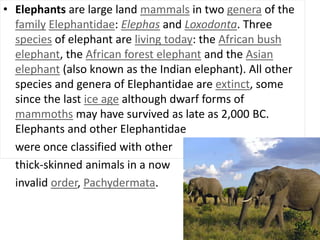
Elephants are large land mammals in two genera of the familyElephantidae: Elephas and Loxodonta. Three species of elephant are living today: the African bush elephant, the African forest elephant and the Asian elephant (also known as the Indian elephant). All other species and genera of Elephantidae are extinct, some since the last ice age although dwarf forms of mammoths may have survived as late as 2,000 BC. Elephants and other Elephantidae	were once classified with other	thick-skinned animals in a now 	invalid order, Pachydermata.
Elephants are the largest land animals now living.[2] The elephant's gestation period is 22 months, the longest of any land animal. At birth it is common for an elephant calf to weigh 120 kilograms (260 lb).
The giraffeis an Africanmammaltallest of all land-living animalspecies, and the largest ruminant. The giraffe's scientific name, which is similar to its antiquated English name of camelopard. The average mass for an adult male giraffe is 1,200 kilograms, while the average mass for an adult female is 830 kilograms. It is approximately 4.3 metres to 5.2 metres tall, although the tallest male recorded stood almost 6 metres.
A monkey is any cercopithecoid (Old World monkey) or platyrrhine (New World monkey) primate. All primates that are not prosimians or apes are monkeys. The 264 known extant monkey species represent two of the three groupings of simian primates (the third group being the 22 species of apes). Monkeys are generally considered to be intelligent and, unlike apes, monkeys usually have tails.

Animal.narek

  • 1.
  • 2.
    Elephants are largeland mammals in two genera of the familyElephantidae: Elephas and Loxodonta. Three species of elephant are living today: the African bush elephant, the African forest elephant and the Asian elephant (also known as the Indian elephant). All other species and genera of Elephantidae are extinct, some since the last ice age although dwarf forms of mammoths may have survived as late as 2,000 BC. Elephants and other Elephantidae were once classified with other thick-skinned animals in a now invalid order, Pachydermata.
  • 3.
    Elephants are thelargest land animals now living.[2] The elephant's gestation period is 22 months, the longest of any land animal. At birth it is common for an elephant calf to weigh 120 kilograms (260 lb).
  • 4.
    The giraffeis anAfricanmammaltallest of all land-living animalspecies, and the largest ruminant. The giraffe's scientific name, which is similar to its antiquated English name of camelopard. The average mass for an adult male giraffe is 1,200 kilograms, while the average mass for an adult female is 830 kilograms. It is approximately 4.3 metres to 5.2 metres tall, although the tallest male recorded stood almost 6 metres.
  • 5.
    A monkey isany cercopithecoid (Old World monkey) or platyrrhine (New World monkey) primate. All primates that are not prosimians or apes are monkeys. The 264 known extant monkey species represent two of the three groupings of simian primates (the third group being the 22 species of apes). Monkeys are generally considered to be intelligent and, unlike apes, monkeys usually have tails.