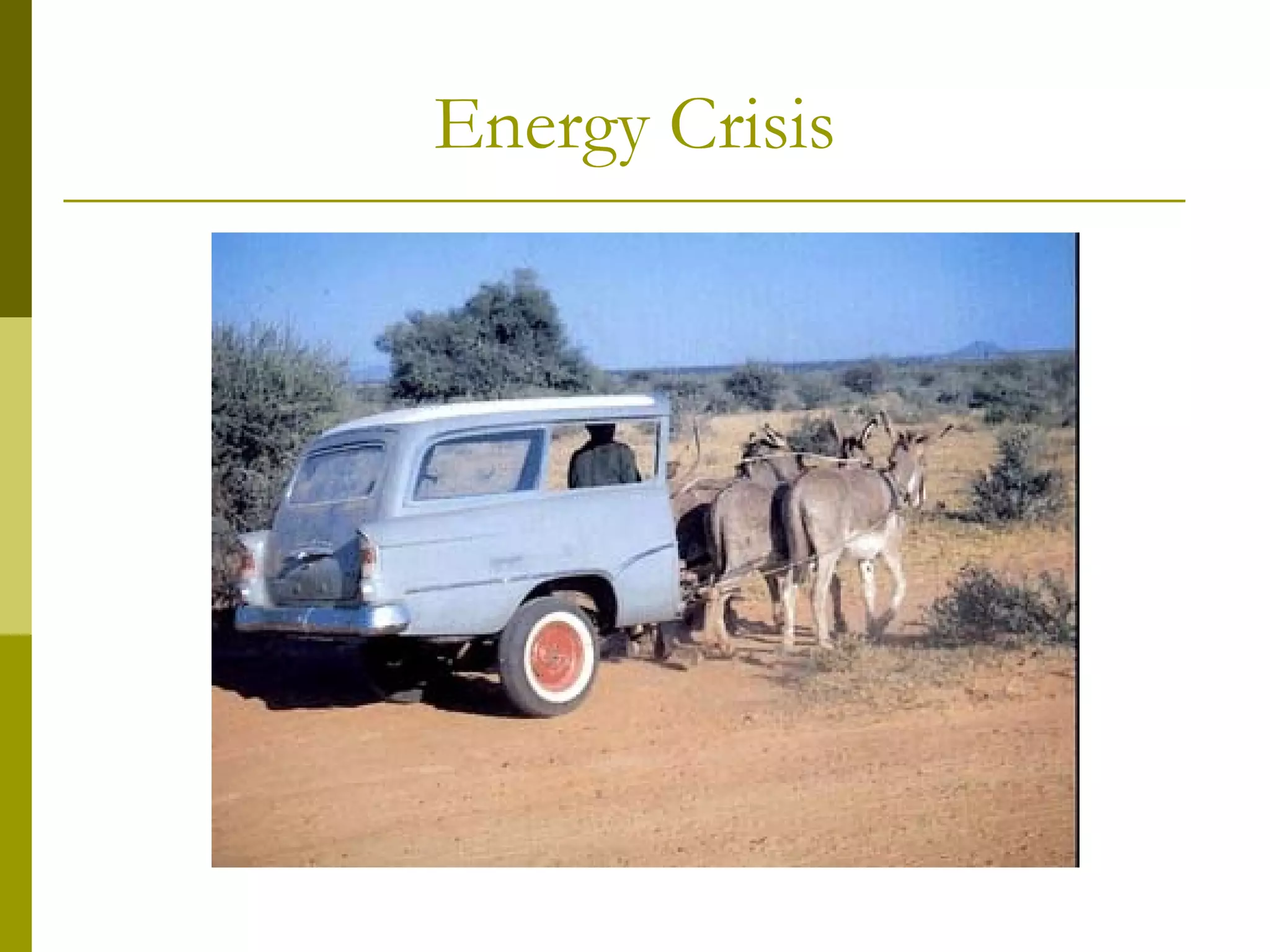
Energy Crisis
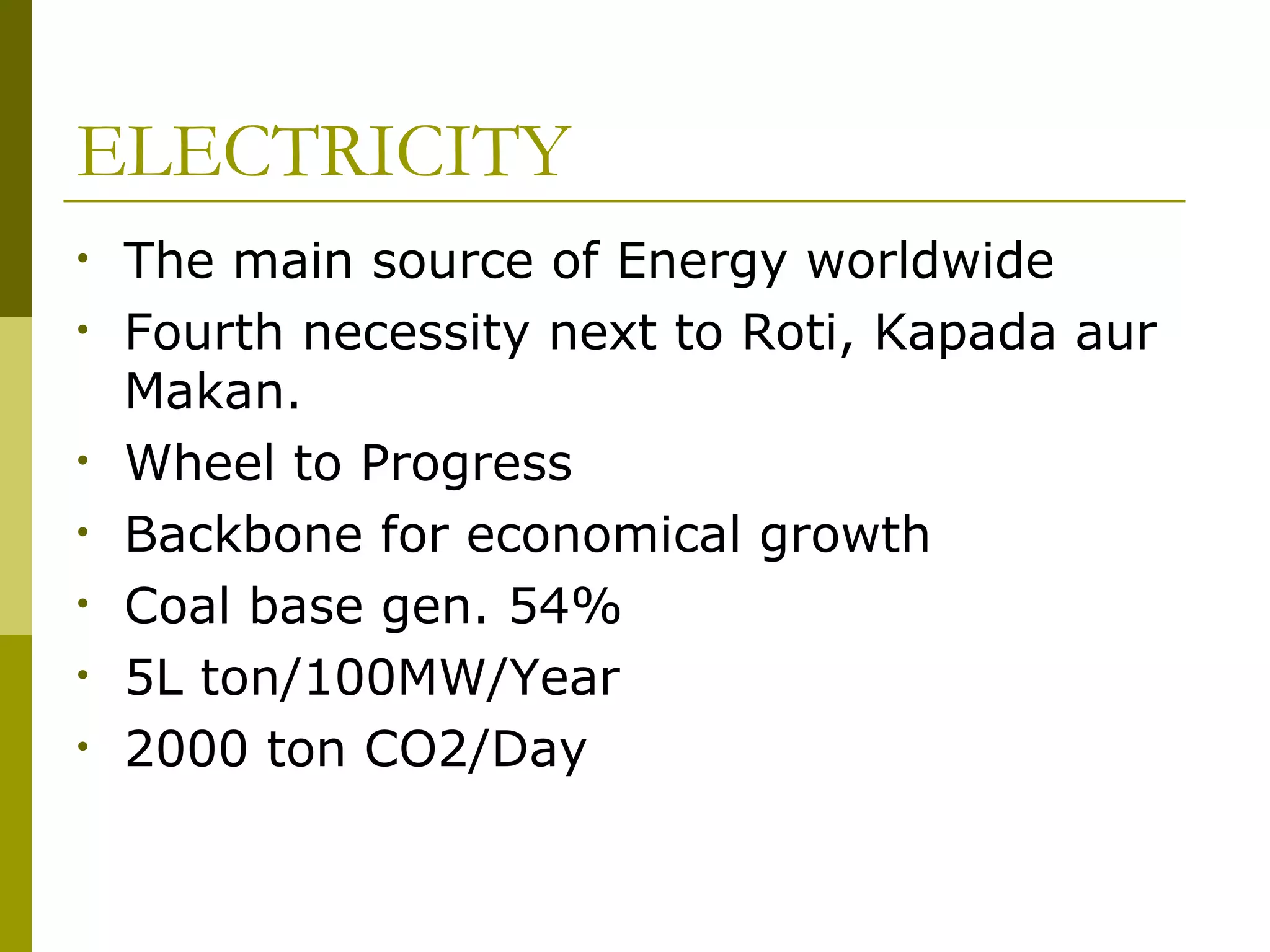
ELECTRICITY
• The main source of Energy worldwide
• Fourth necessity next to Roti, Kapada aur
Makan.
• Wheel to Progress
• Backbone for economical growth
• Coal base gen. 54%
• 5L ton/100MW/Year
• 2000 ton CO2/Day
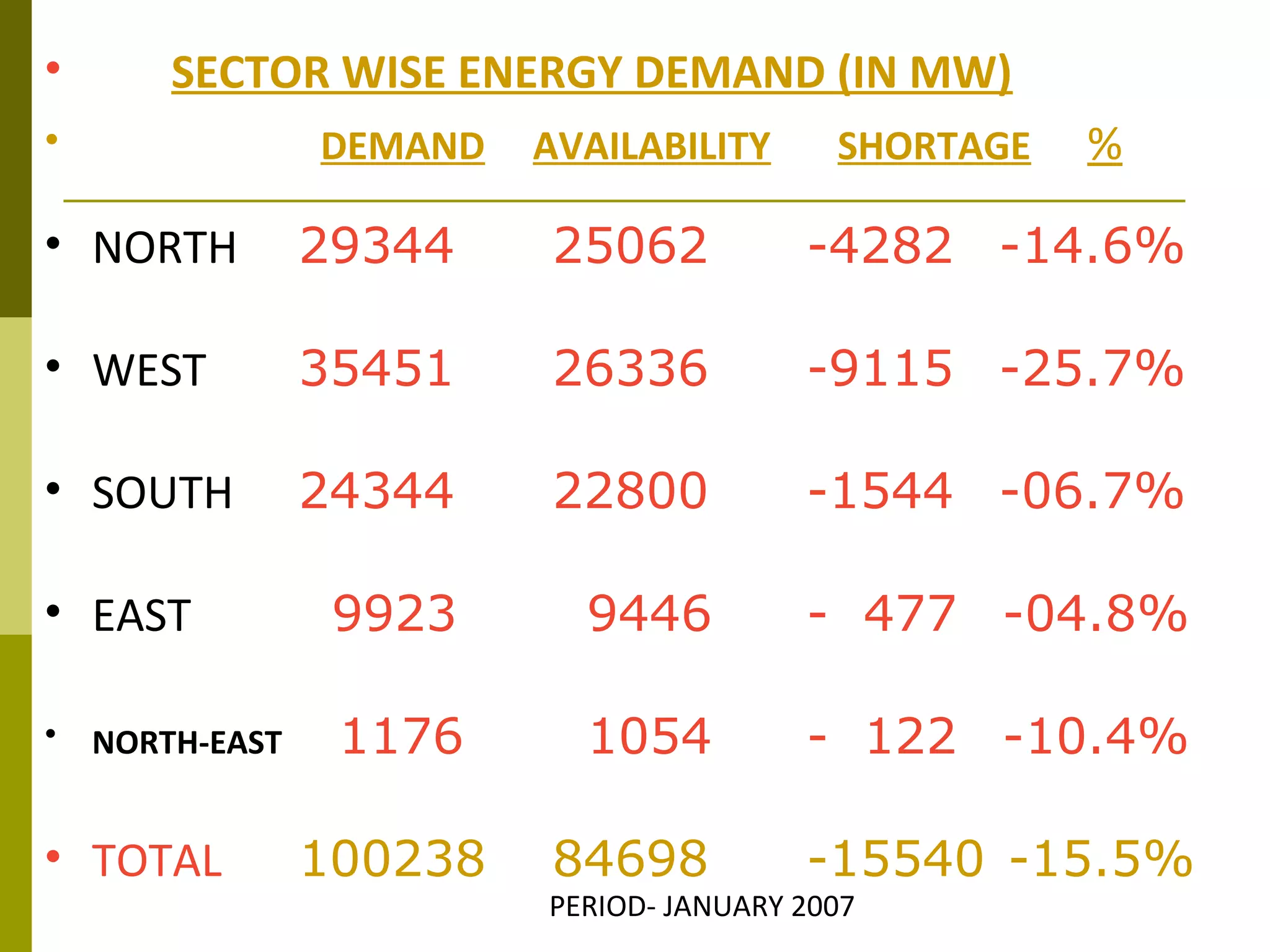
• SECTOR WISE ENERGY DEMAND (IN MW)

• DEMAND AVAILABILITY SHORTAGE %
• NORTH 29344 25062 -4282 -14.6%
• WEST 35451 26336 -9115 -25.7%
• SOUTH 24344 22800 -1544 -06.7%
• EAST 9923 9446 - 477 -04.8%
• NORTH-EAST 1176 1054 - 122 -10.4%
• TOTAL 100238 84698 -15540 -15.5%
PERIOD- JANUARY 2007
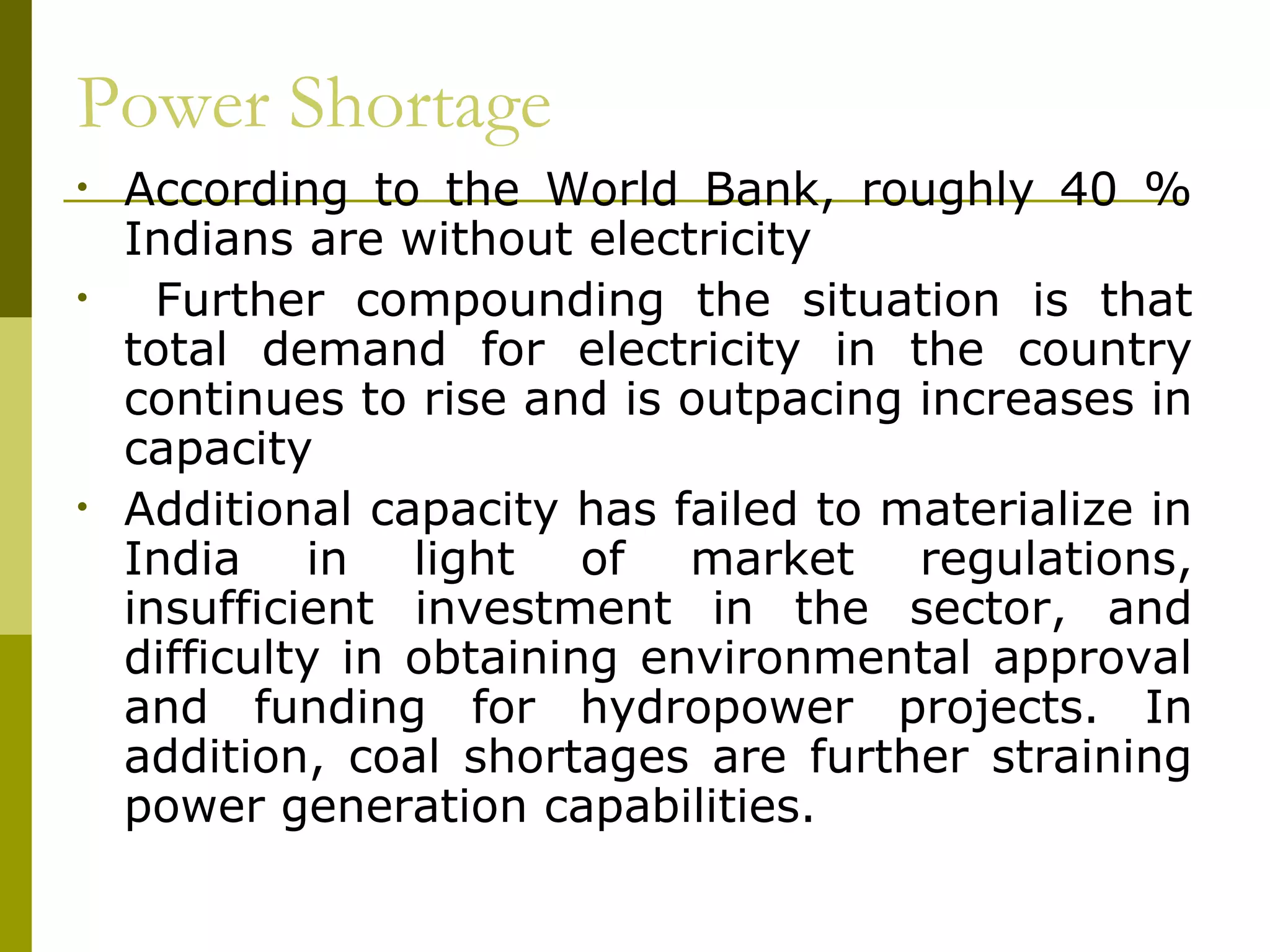
Power Shortage
• According to the World Bank, roughly 40 %
Indians are without electricity
• Further compounding the situation is that
total demand for electricity in the country
continues to rise and is outpacing increases in
capacity
• Additional capacity has failed to materialize in
India in light of market regulations,
insufficient investment in the sector, and
difficulty in obtaining environmental approval
and funding for hydropower projects. In
addition, coal shortages are further straining
power generation capabilities.
6
A Major Renewable source today
Hydro Power Generation
Koradi Training Centre
Mahagenco
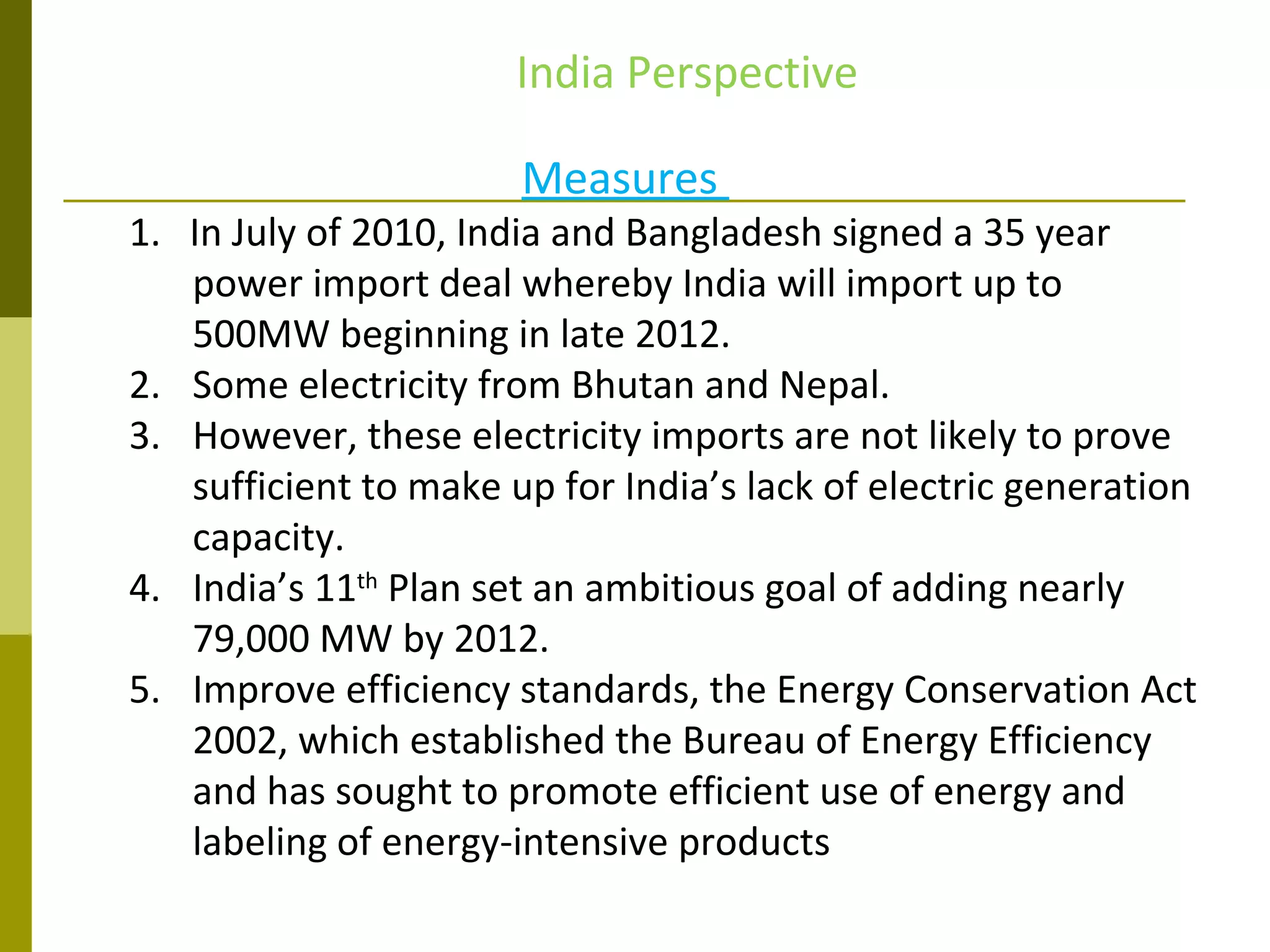
Measures
1. In July of 2010, India and Bangladesh signed a 35 year
power import deal whereby India will import up to
500MW beginning in late 2012.
2. Some electricity from Bhutan and Nepal.
3. However, these electricity imports are not likely to prove
sufficient to make up for India’s lack of electric generation
capacity.
4. India’s 11th
Plan set an ambitious goal of adding nearly
79,000 MW by 2012.
5. Improve efficiency standards, the Energy Conservation Act
2002, which established the Bureau of Energy Efficiency
and has sought to promote efficient use of energy and
labeling of energy-intensive products
India Perspective
OUR INDIA AT GLANCE
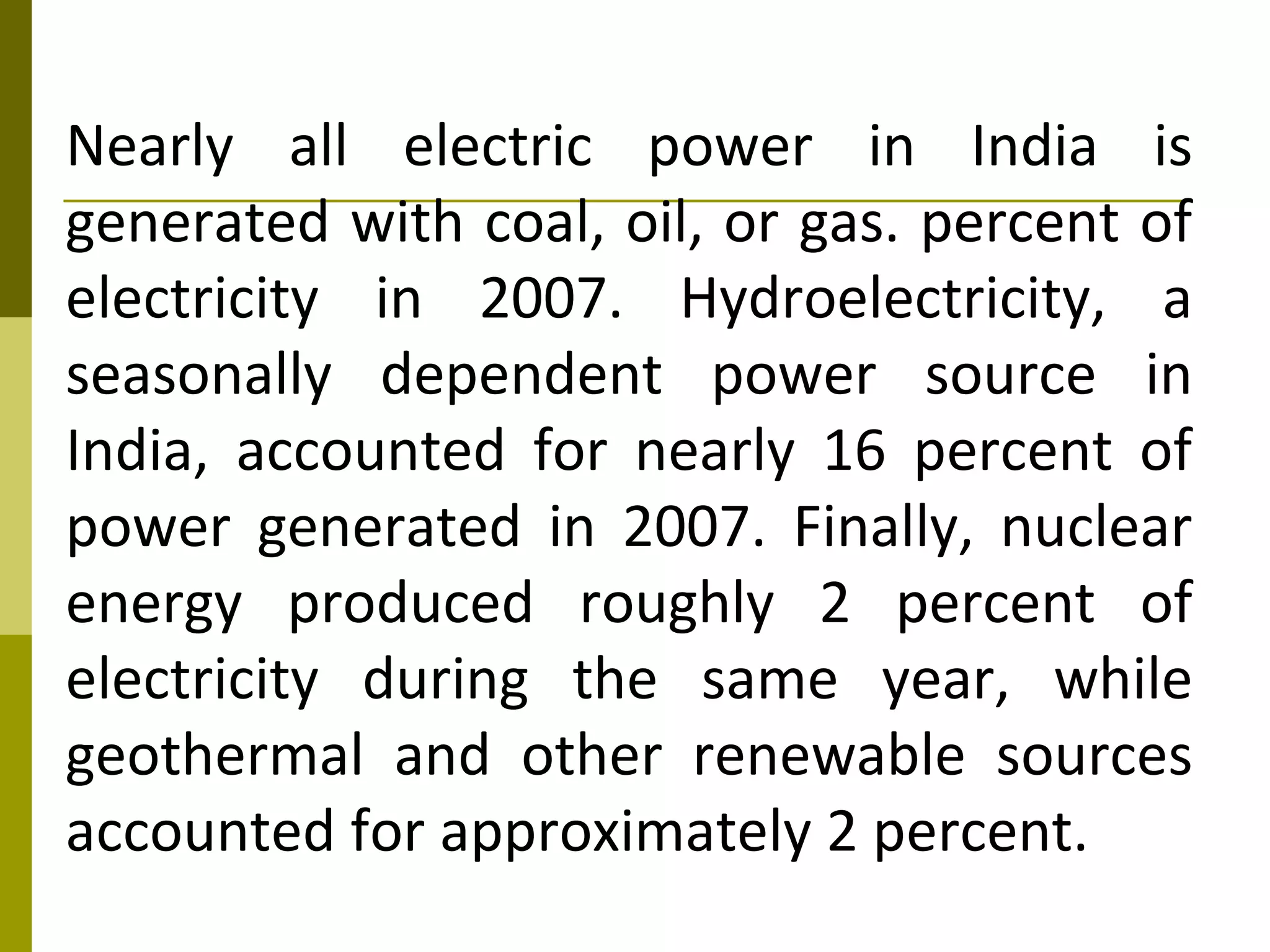
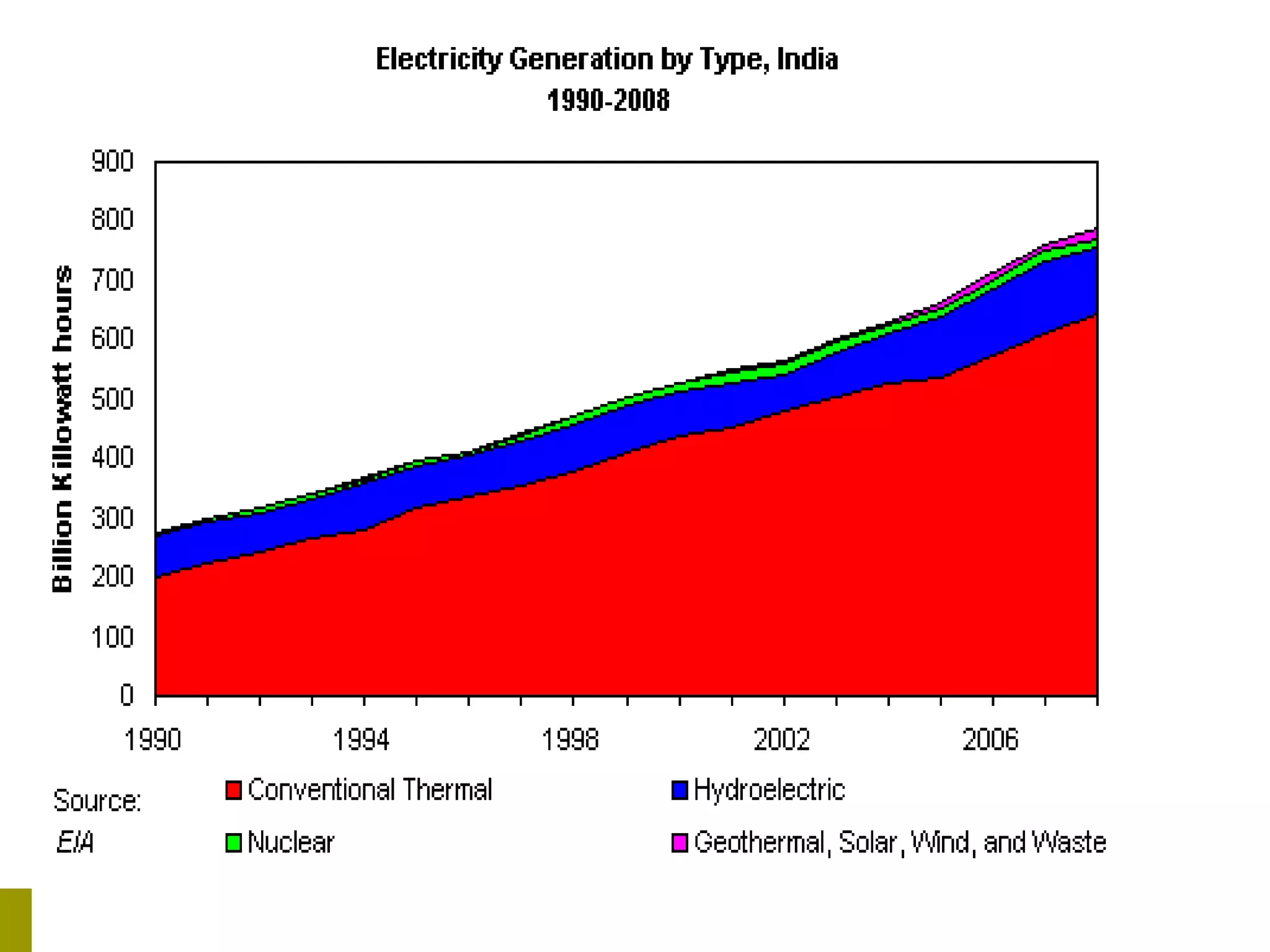
• Installed generating Capacity 159000MW
• Energy Generated 761000MUs
• Conventional thermal sources 80 %
• Hydro electricity 16 %
• Nuclear energy produced roughly 2%
• Renewable, [Geothermal & other] sources 2%
(All above fig are approximate for 2007)
Nearly all electric power in India is
generated with coal, oil, or gas. percent of
electricity in 2007. Hydroelectricity, a
seasonally dependent power source in
India, accounted for nearly 16 percent of
power generated in 2007. Finally, nuclear
energy produced roughly 2 percent of
electricity during the same year, while
geothermal and other renewable sources
accounted for approximately 2 percent.
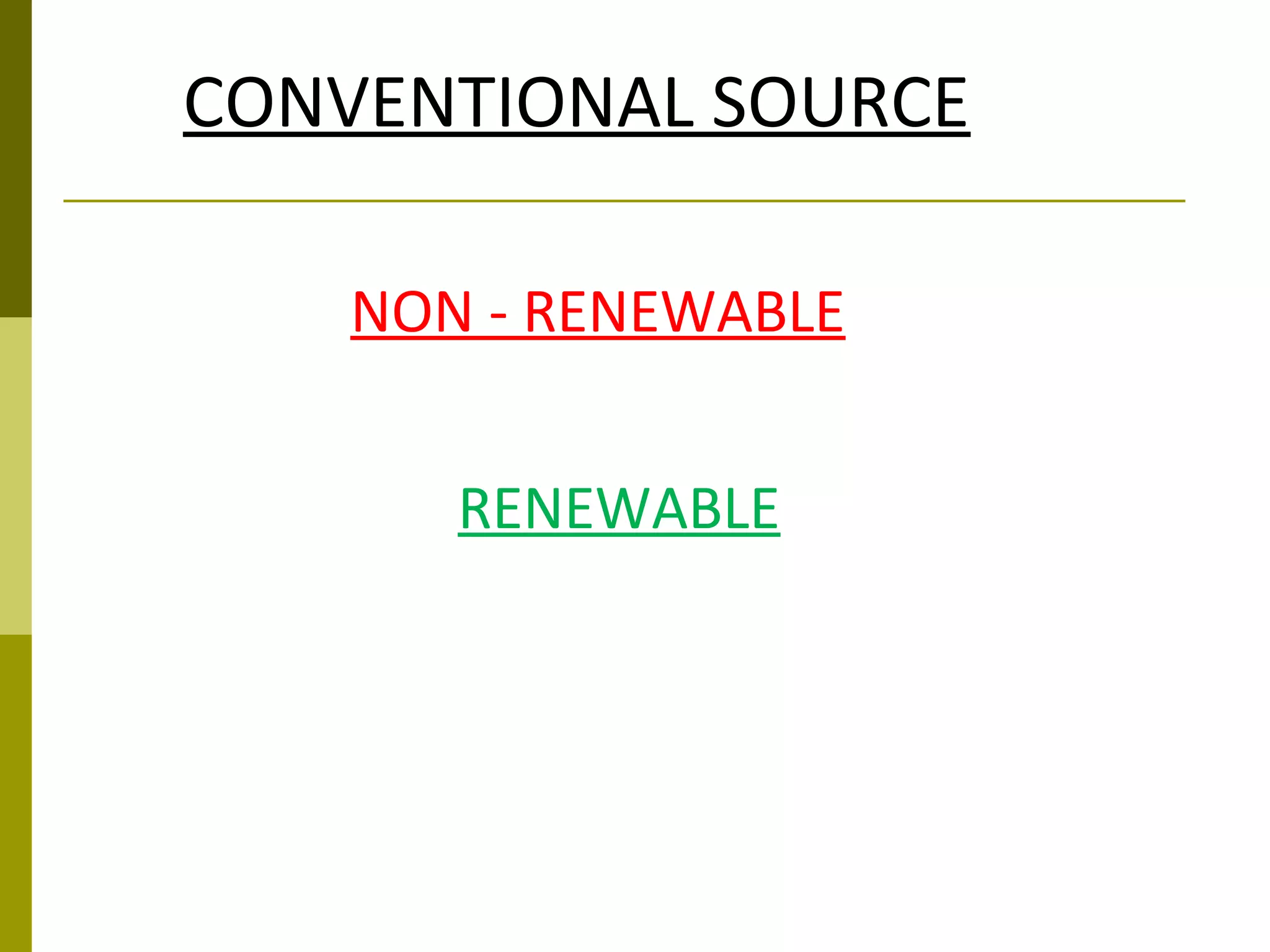
CONVENTIONAL SOURCE
NON - RENEWABLE
RENEWABLE
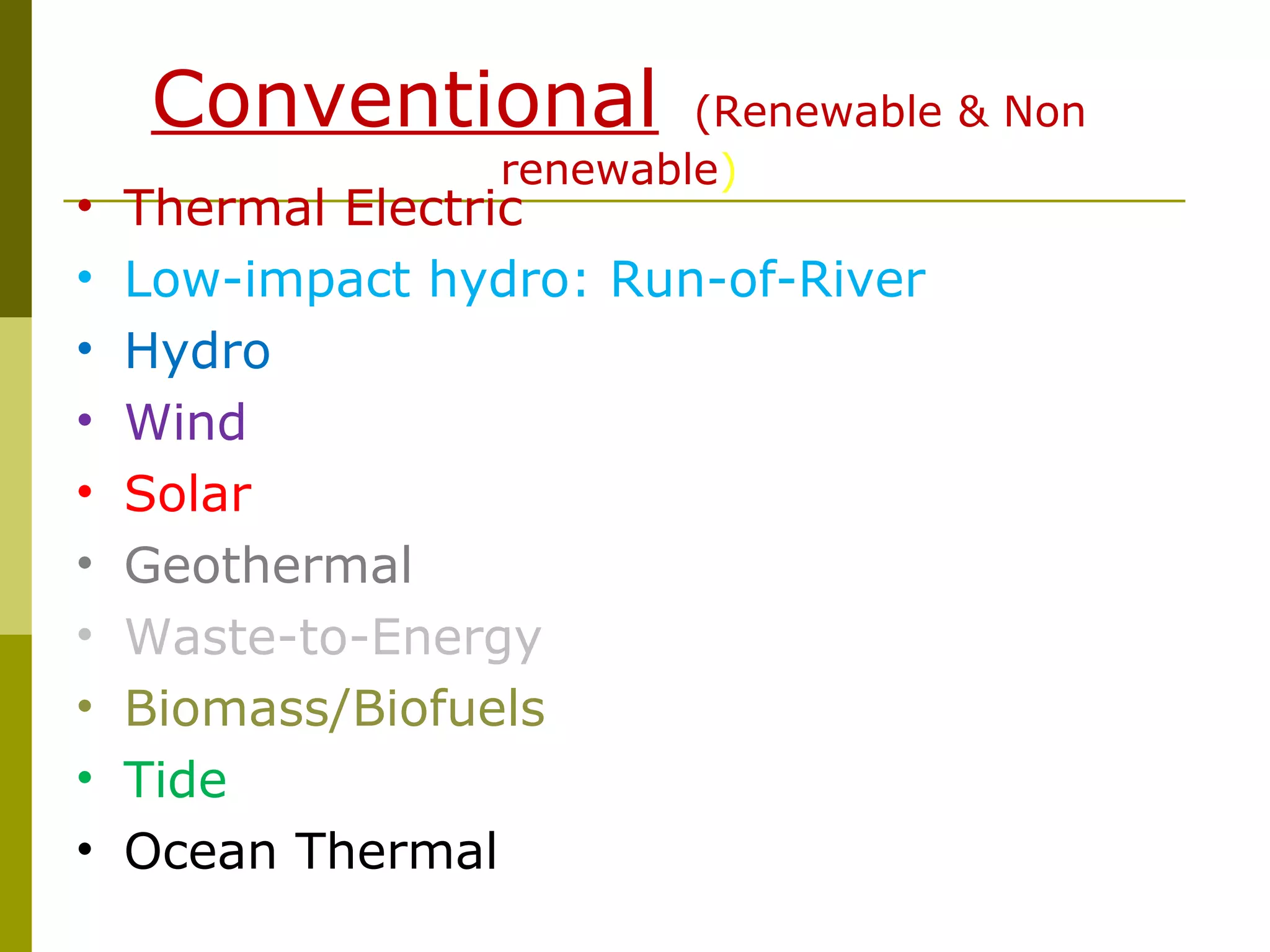
• Thermal Electric
• Low-impact hydro: Run-of-River
• Hydro
• Wind
• Solar
• Geothermal
• Waste-to-Energy
• Biomass/Biofuels
• Tide
• Ocean Thermal
Conventional (Renewable & Non
renewable)
Economy
Reliability
Sustainability
Renewable Vs Nonrenewable
SOURCES OF ENERGY
Costing
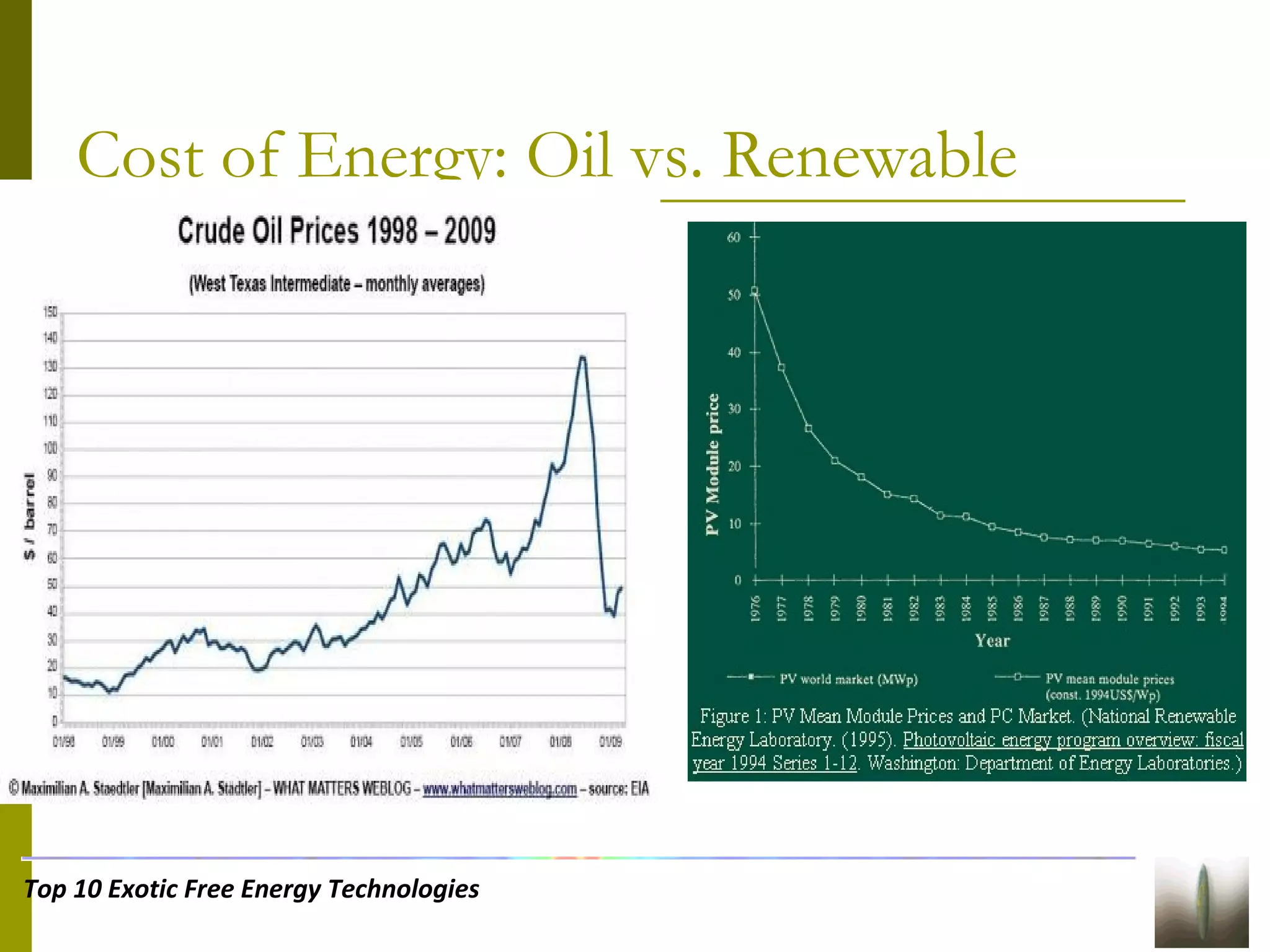
Cost of Energy: Oil vs. Renewable
Top 10 Exotic Free Energy Technologies
Crackpot?
""When you're one stepWhen you're one step
ahead of the crowd you're aahead of the crowd you're a
genius.genius.
When you're two stepsWhen you're two steps
ahead, you're a crackpot.“ahead, you're a crackpot.“
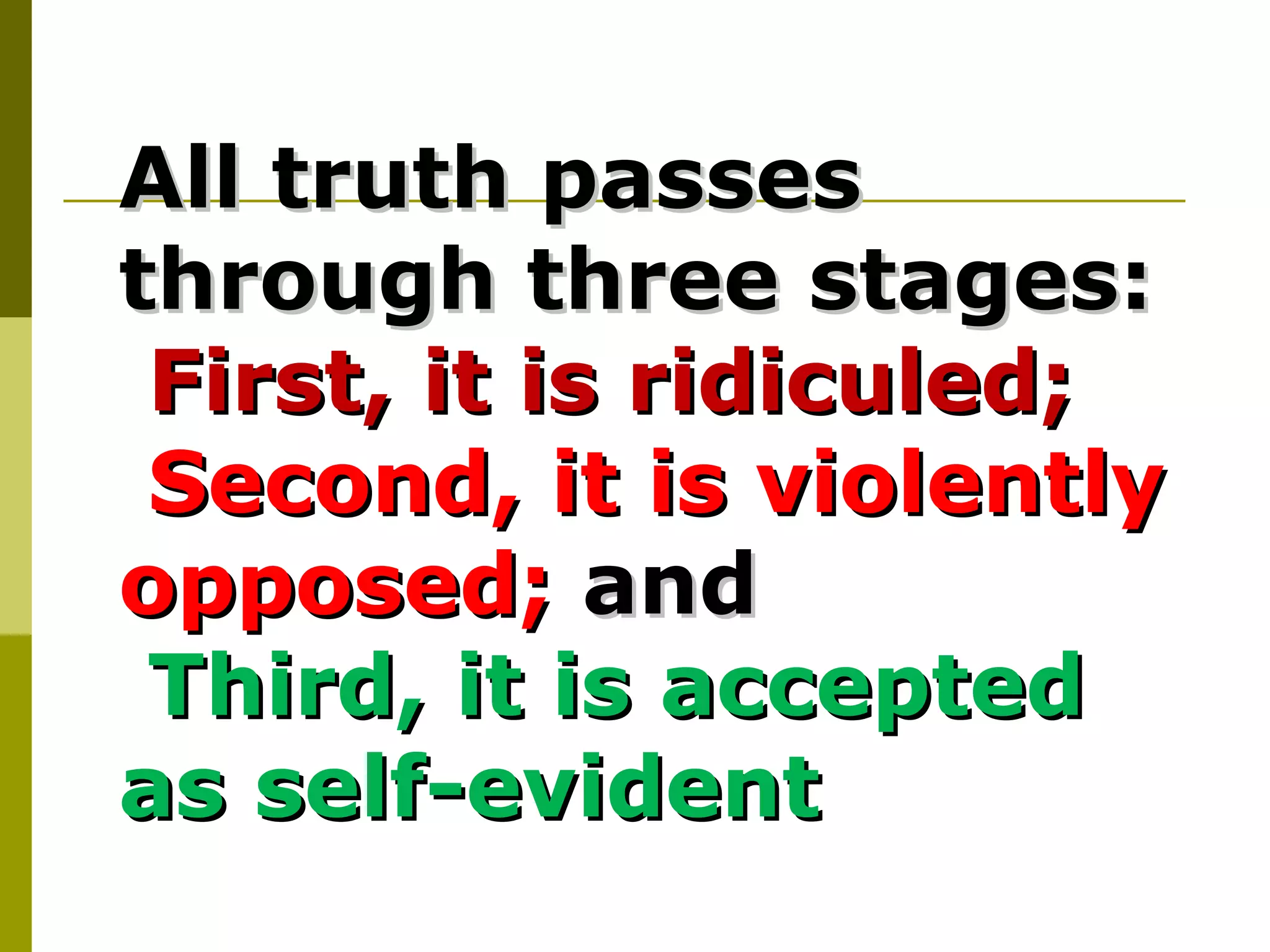
All truth passesAll truth passes
through three stages:through three stages:
First, it is ridiculed;First, it is ridiculed;
Second, it is violentlySecond, it is violently
opposed;opposed; andand
Third, it is acceptedThird, it is accepted
as self-evidentas self-evident
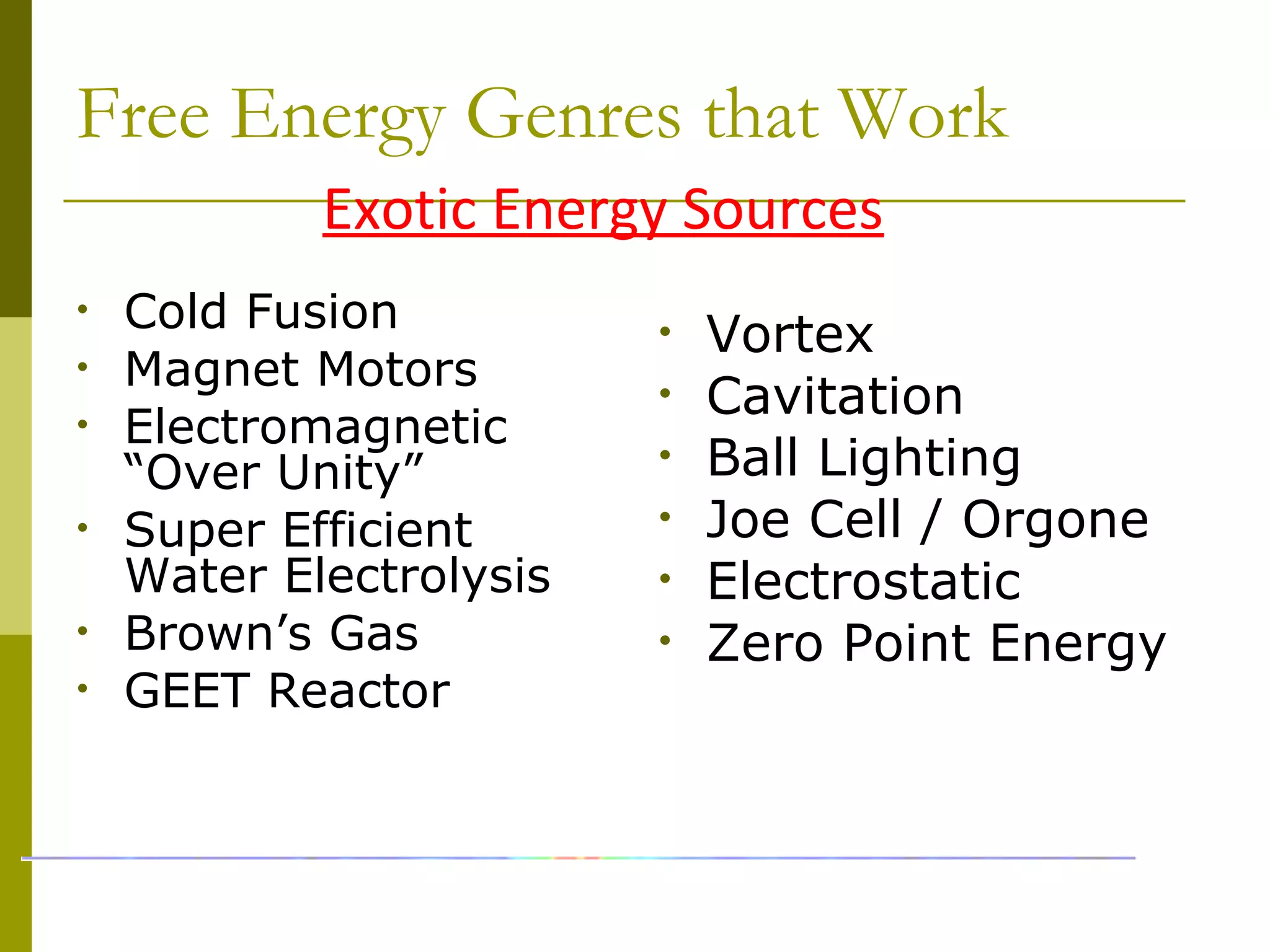
Free Energy Genres that Work
• Vortex
• Cavitation
• Ball Lighting
• Joe Cell / Orgone
• Electrostatic
• Zero Point Energy
Exotic Energy Sources
• Cold Fusion
• Magnet Motors
• Electromagnetic
“Over Unity”
• Super Efficient
Water Electrolysis
• Brown’s Gas
• GEET Reactor
20
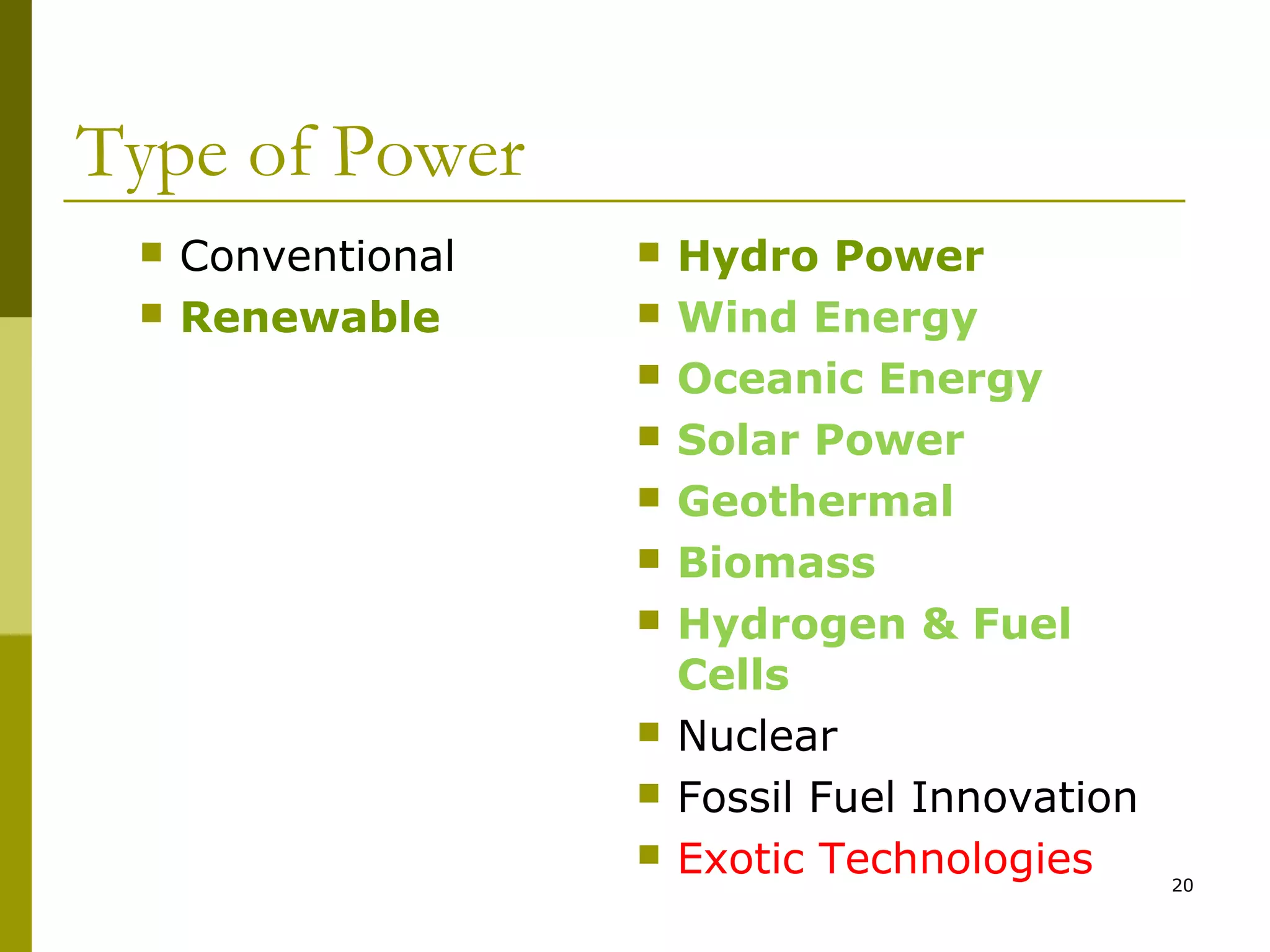
Type of Power
 Conventional
 Renewable
 Hydro Power
 Wind Energy
 Oceanic Energy
 Solar Power
 Geothermal
 Biomass
 Hydrogen & Fuel
Cells
 Nuclear
 Fossil Fuel Innovation
 Exotic Technologies
Dam A Reservoir
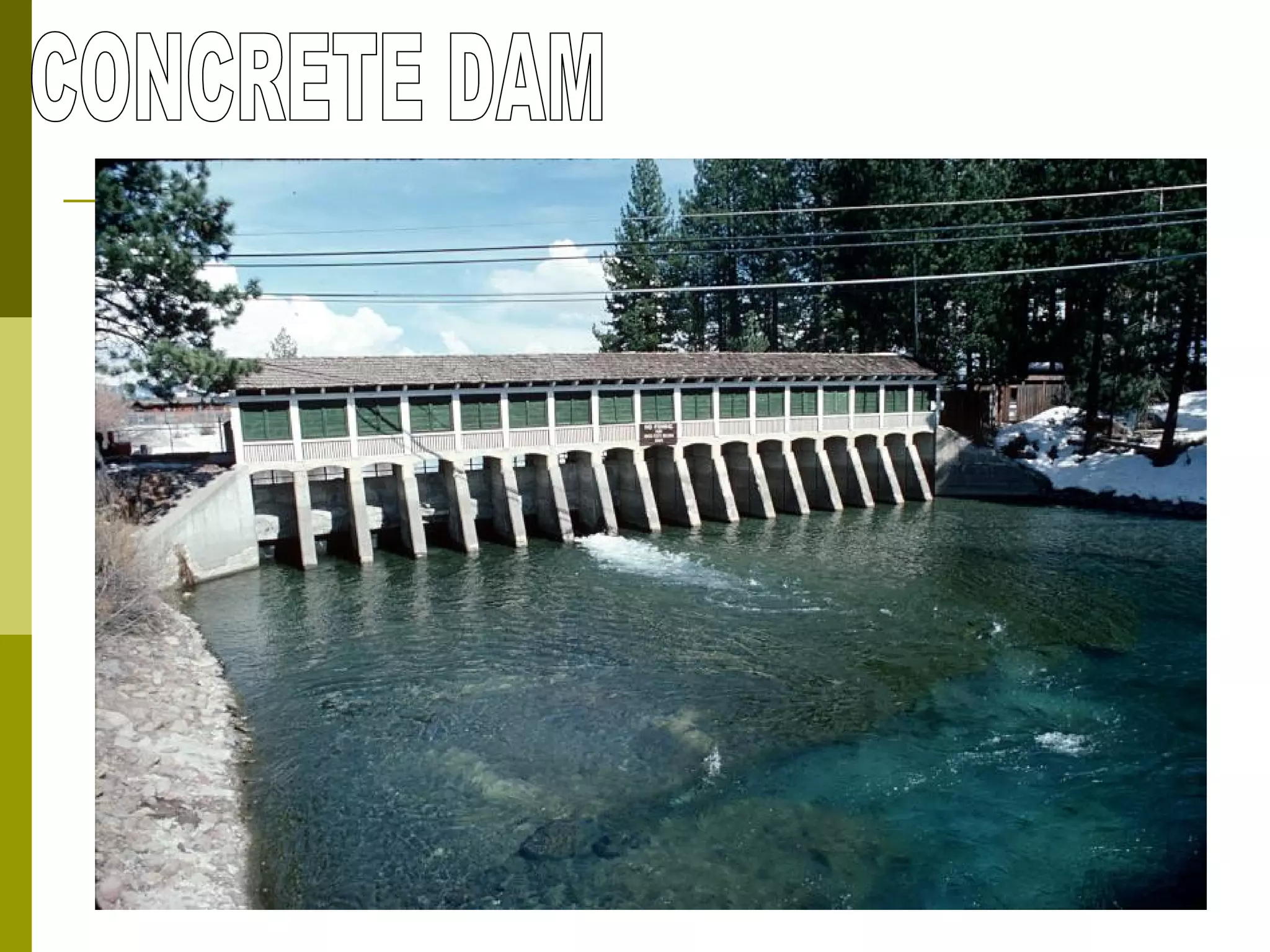
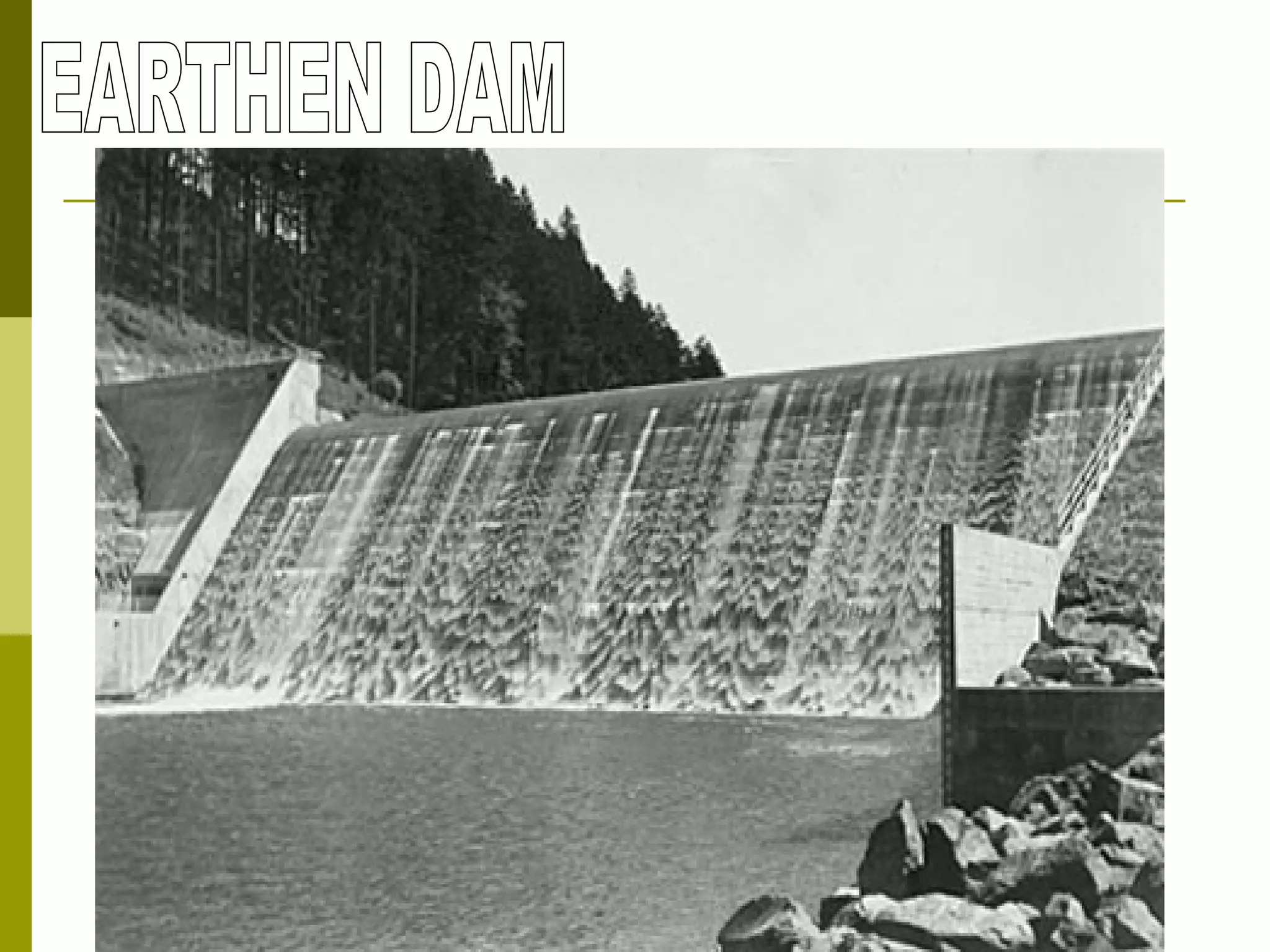
Types of Dam
Rubble/Concrete
Earthen
24
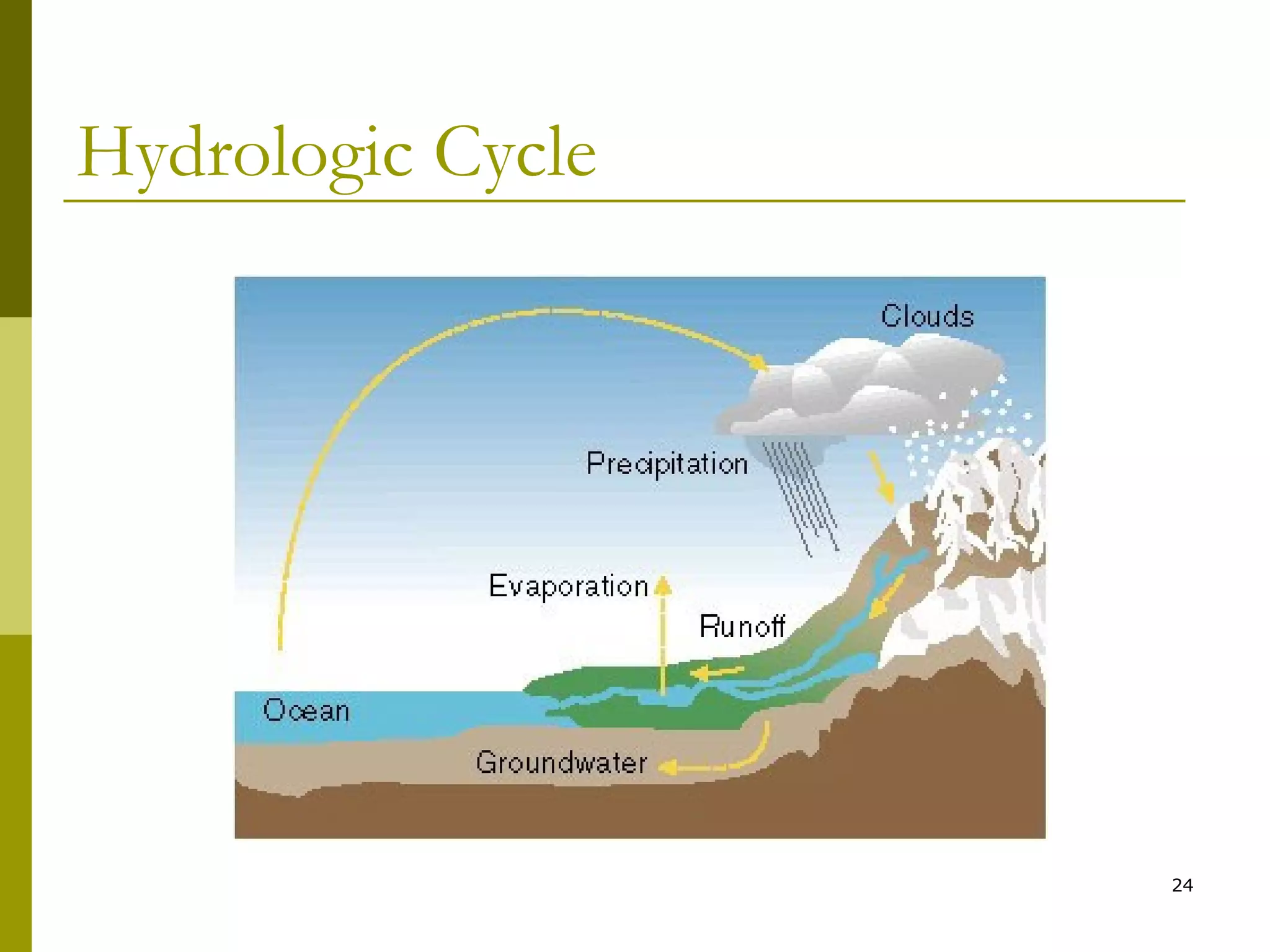
Hydrologic Cycle
25
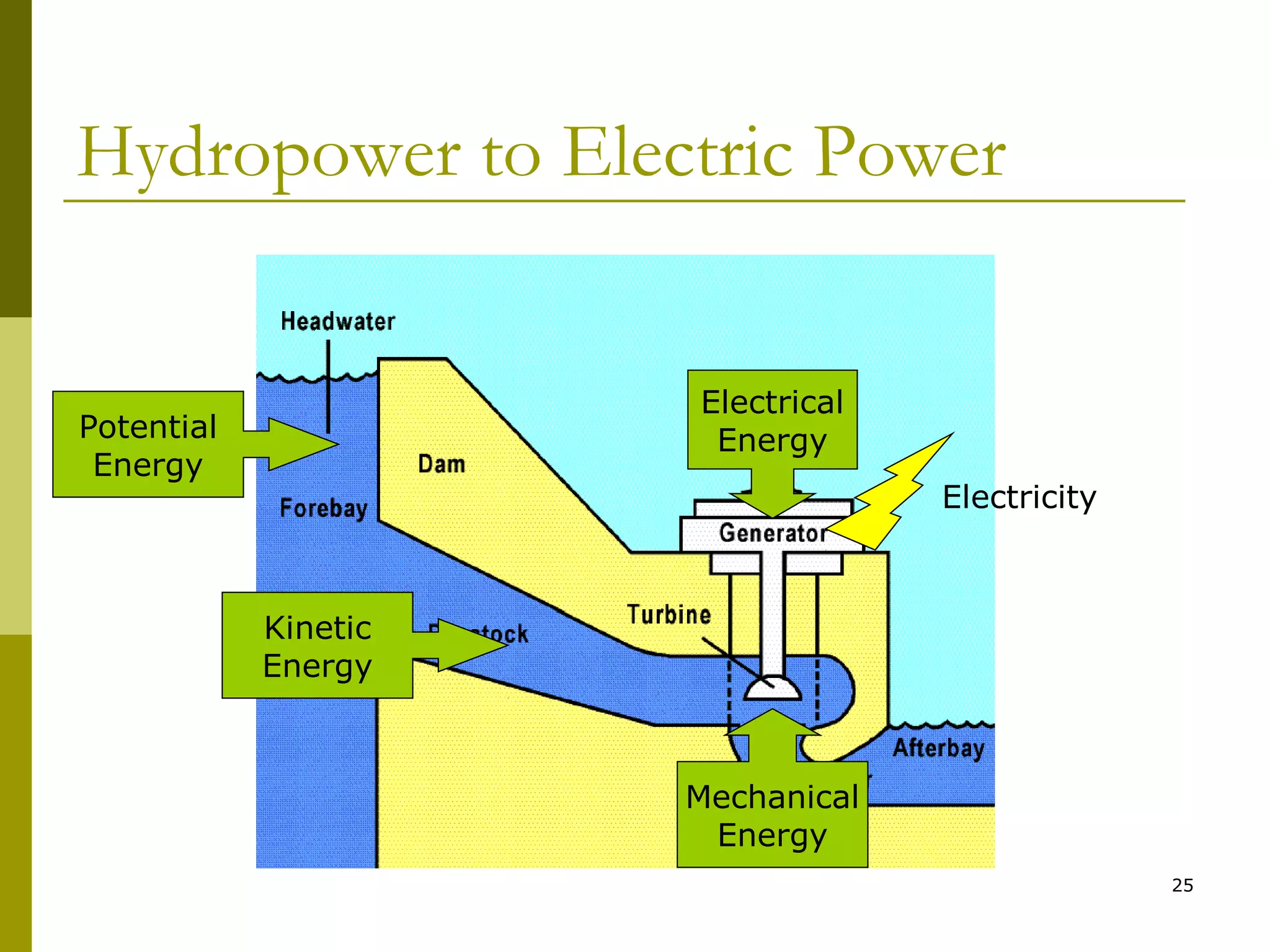
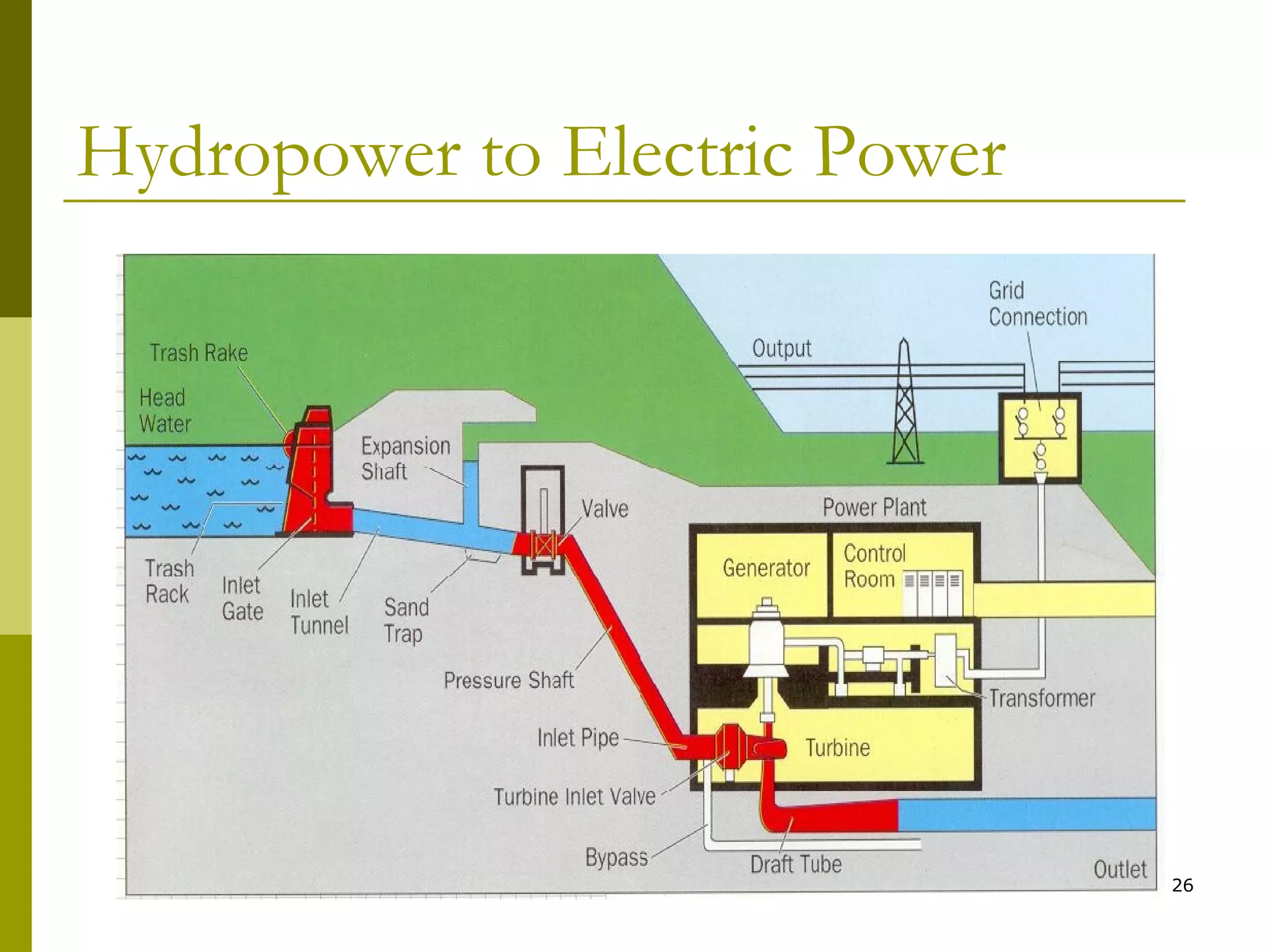
Hydropower to Electric Power
Potential
Energy
Kinetic
Energy
Electrical
Energy
Mechanical
Energy
Electricity
Hydropower to Electric Power
26
27
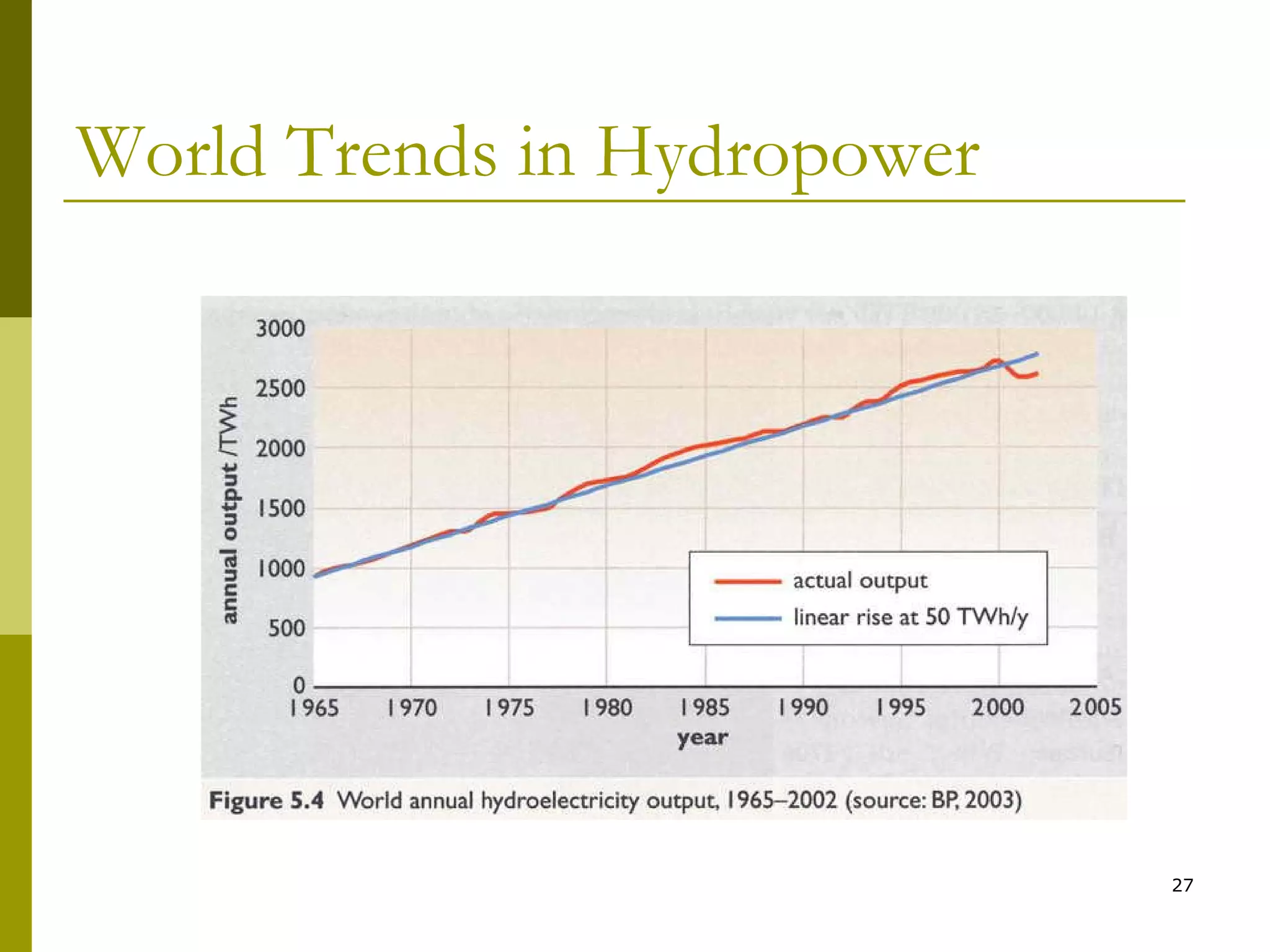
World Trends in Hydropower
28
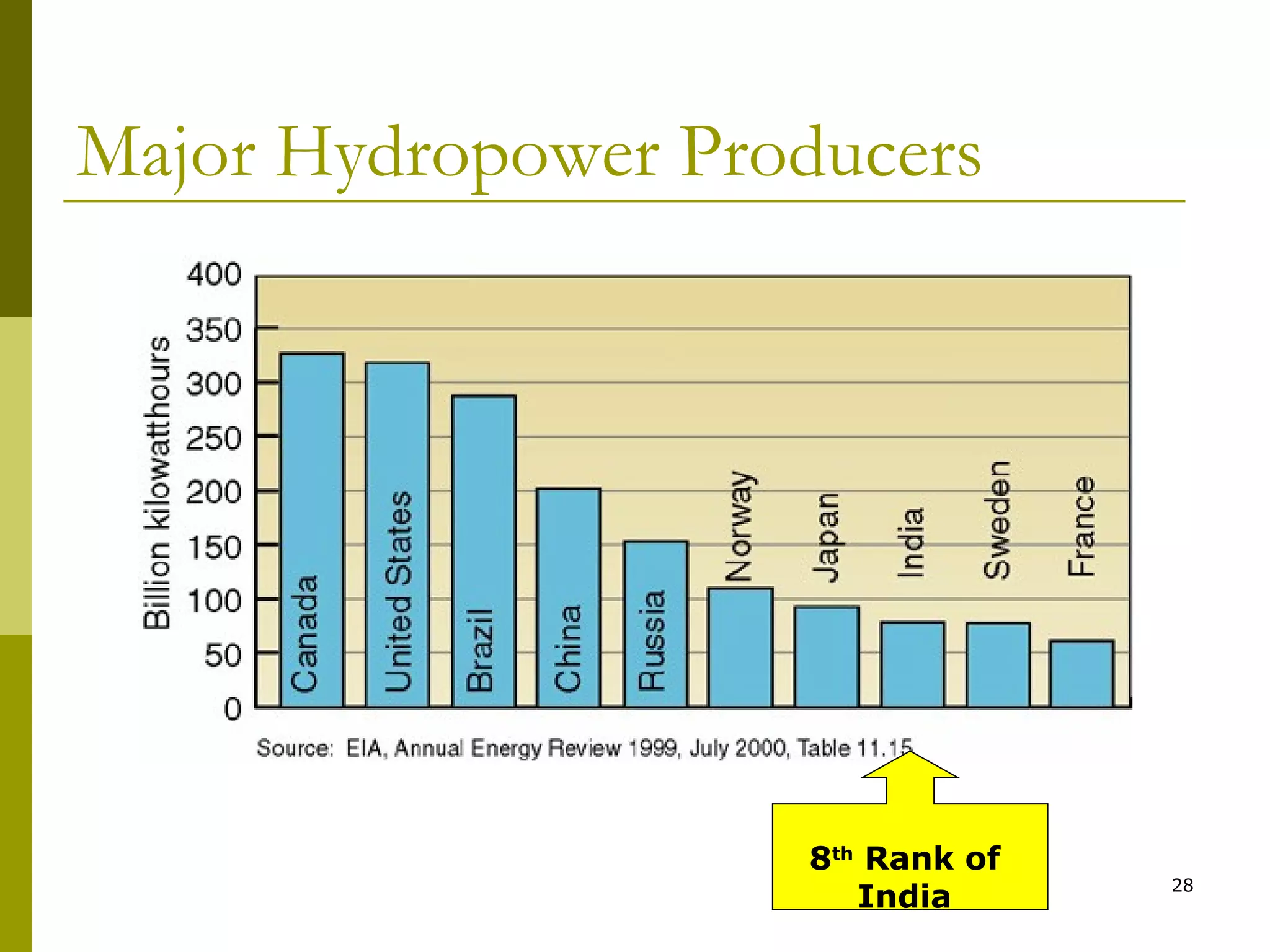
Major Hydropower Producers
8th
Rank of
India
29
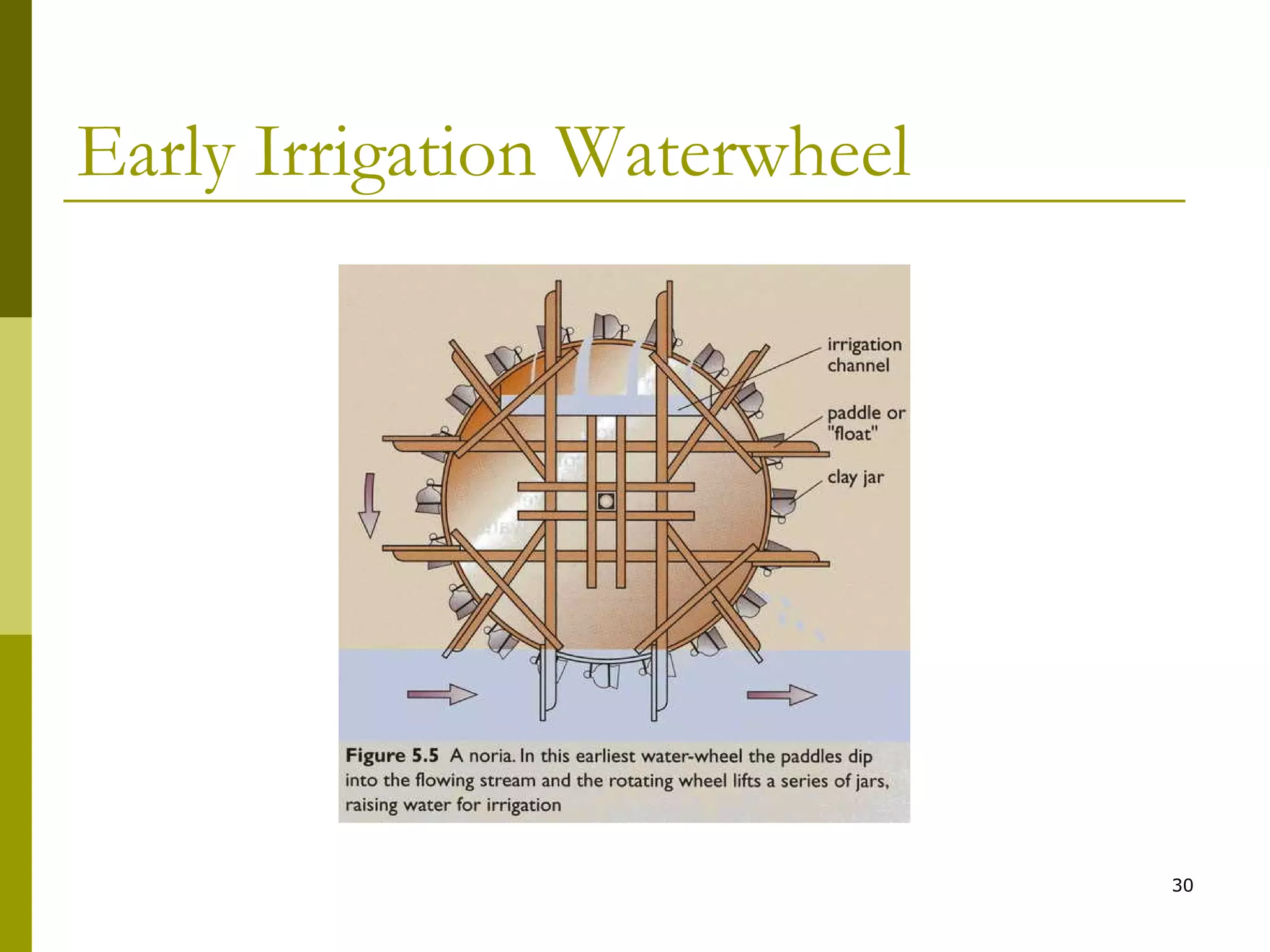
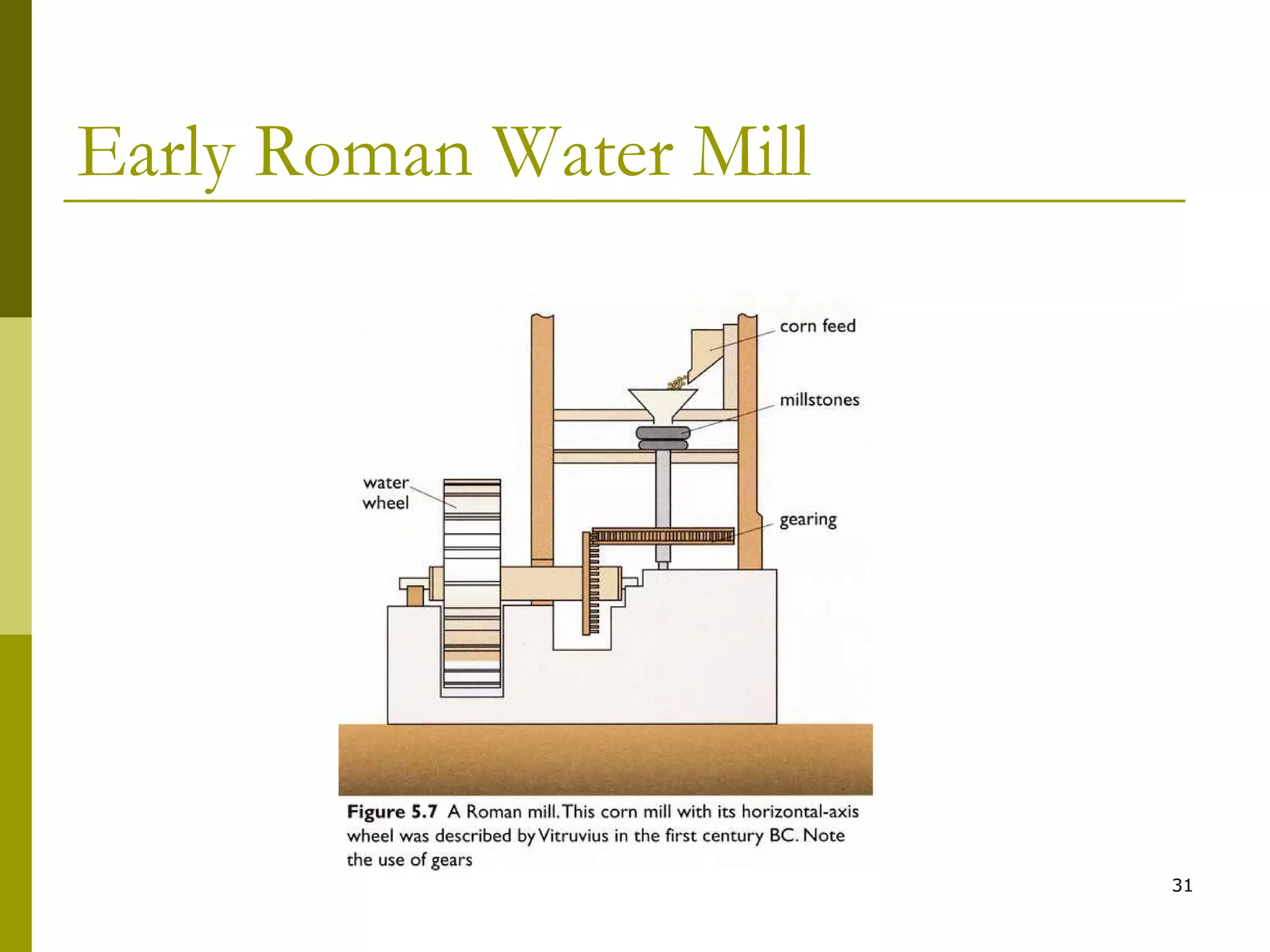
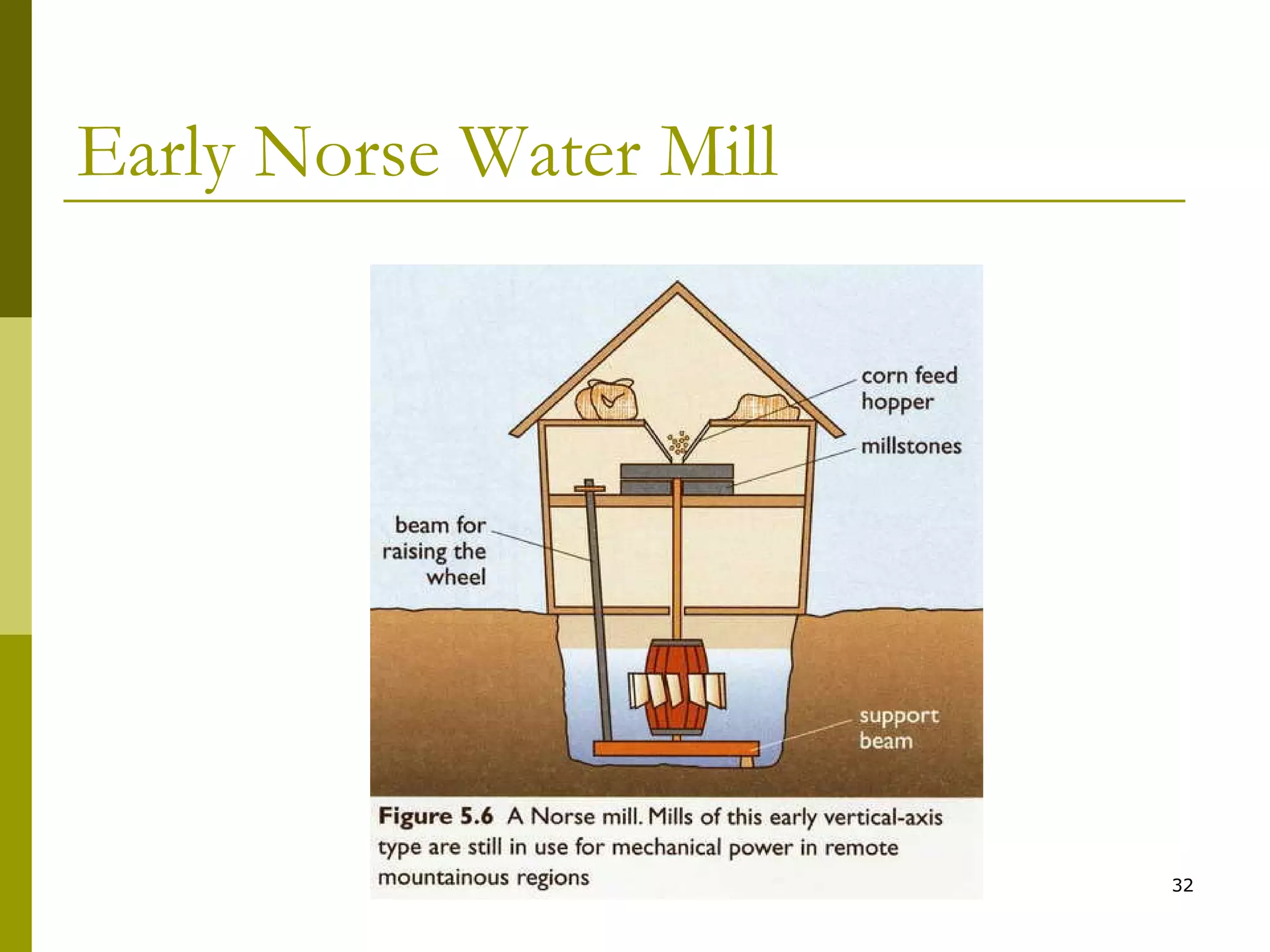
History of Hydro Power
30
Early Irrigation Waterwheel
31
Early Roman Water Mill
32
Early Norse Water Mill
33
Hydropower Design
34
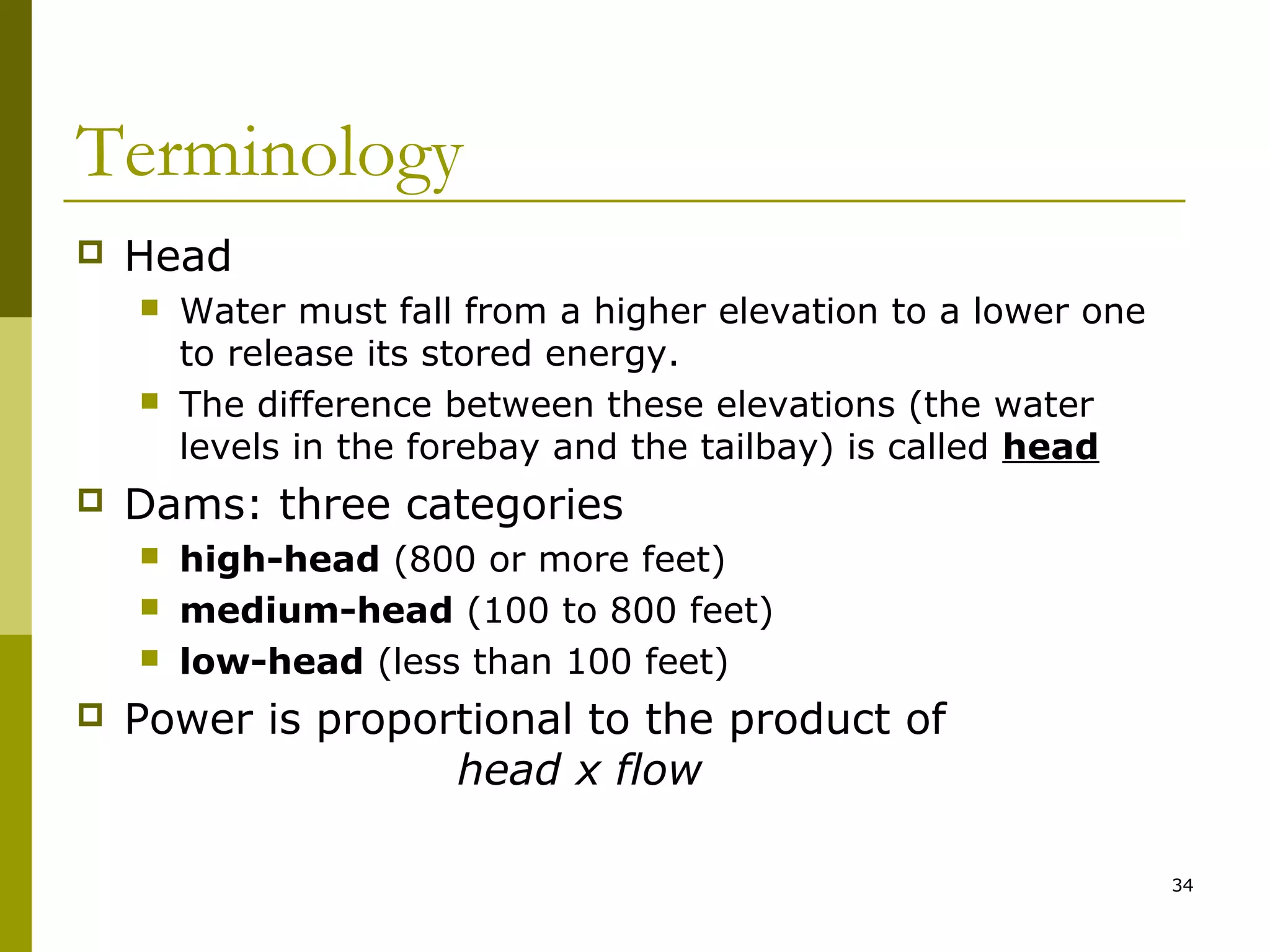
Terminology
 Head
 Water must fall from a higher elevation to a lower one
to release its stored energy.
 The difference between these elevations (the water
levels in the forebay and the tailbay) is called head
 Dams: three categories
 high-head (800 or more feet)
 medium-head (100 to 800 feet)
 low-head (less than 100 feet)
 Power is proportional to the product of
head x flow
35
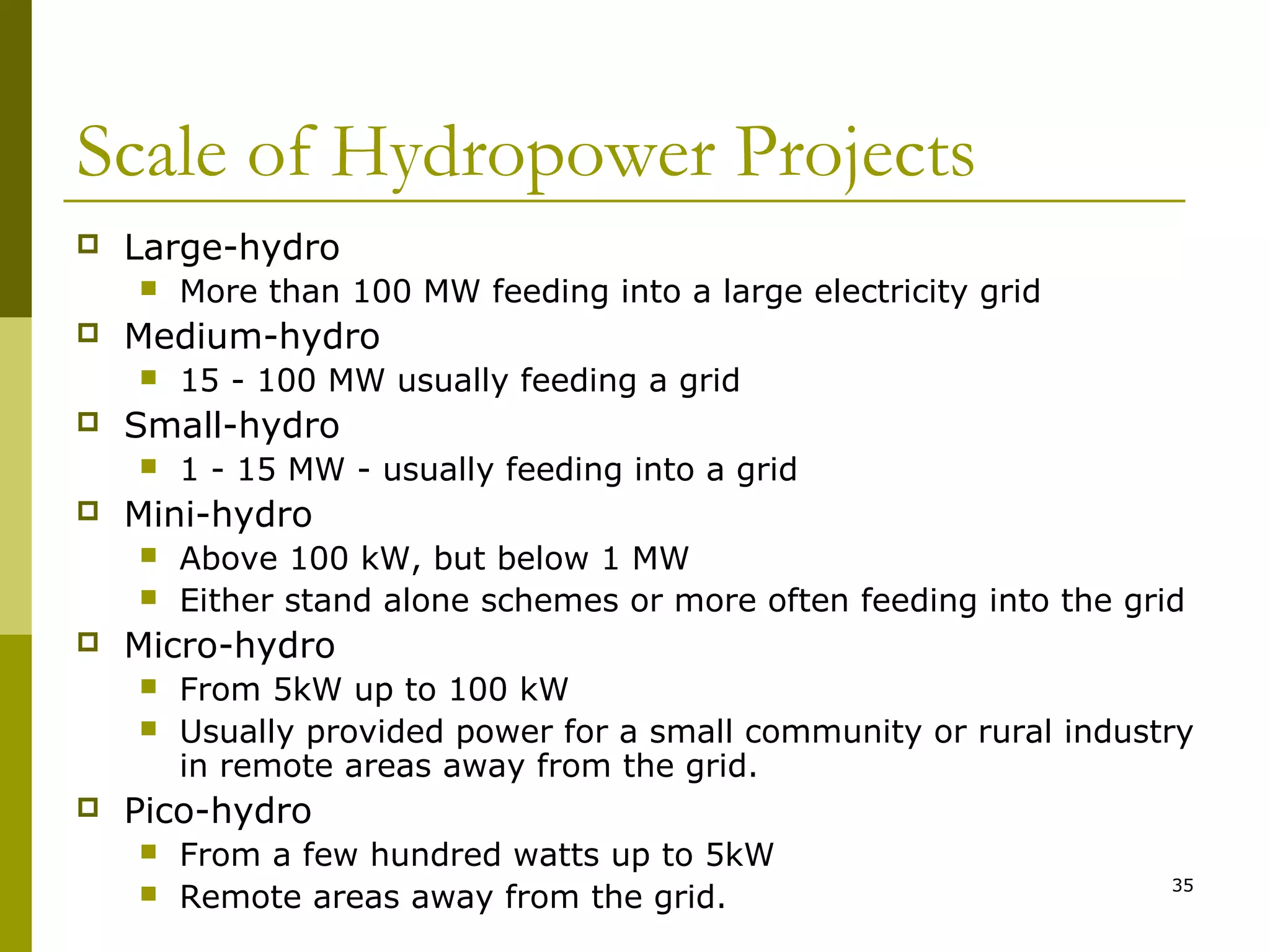
Scale of Hydropower Projects
 Large-hydro
 More than 100 MW feeding into a large electricity grid
 Medium-hydro
 15 - 100 MW usually feeding a grid
 Small-hydro
 1 - 15 MW - usually feeding into a grid
 Mini-hydro
 Above 100 kW, but below 1 MW
 Either stand alone schemes or more often feeding into the grid
 Micro-hydro
 From 5kW up to 100 kW
 Usually provided power for a small community or rural industry
in remote areas away from the grid.
 Pico-hydro
 From a few hundred watts up to 5kW
 Remote areas away from the grid.
36
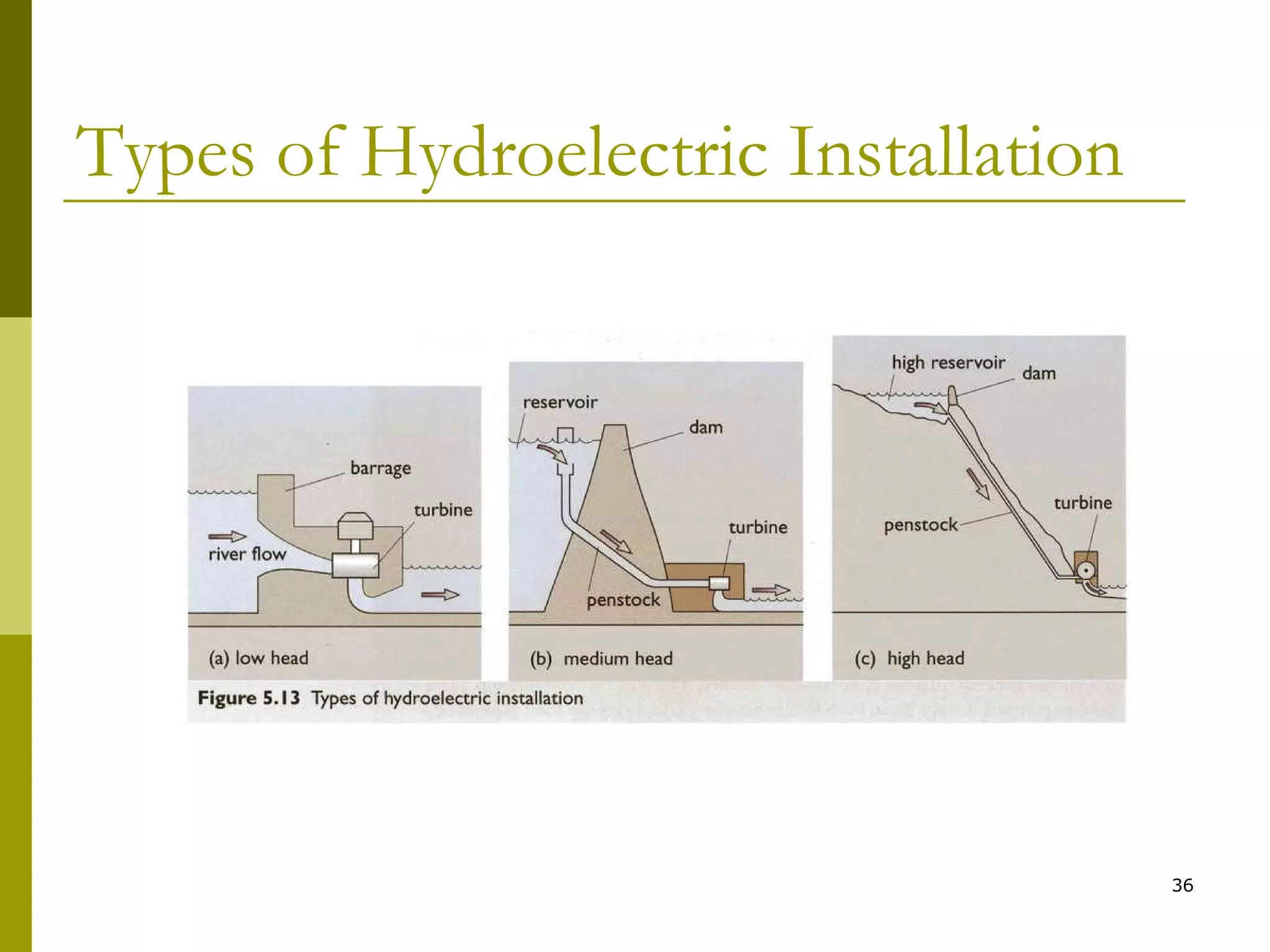
Types of Hydroelectric Installation
37
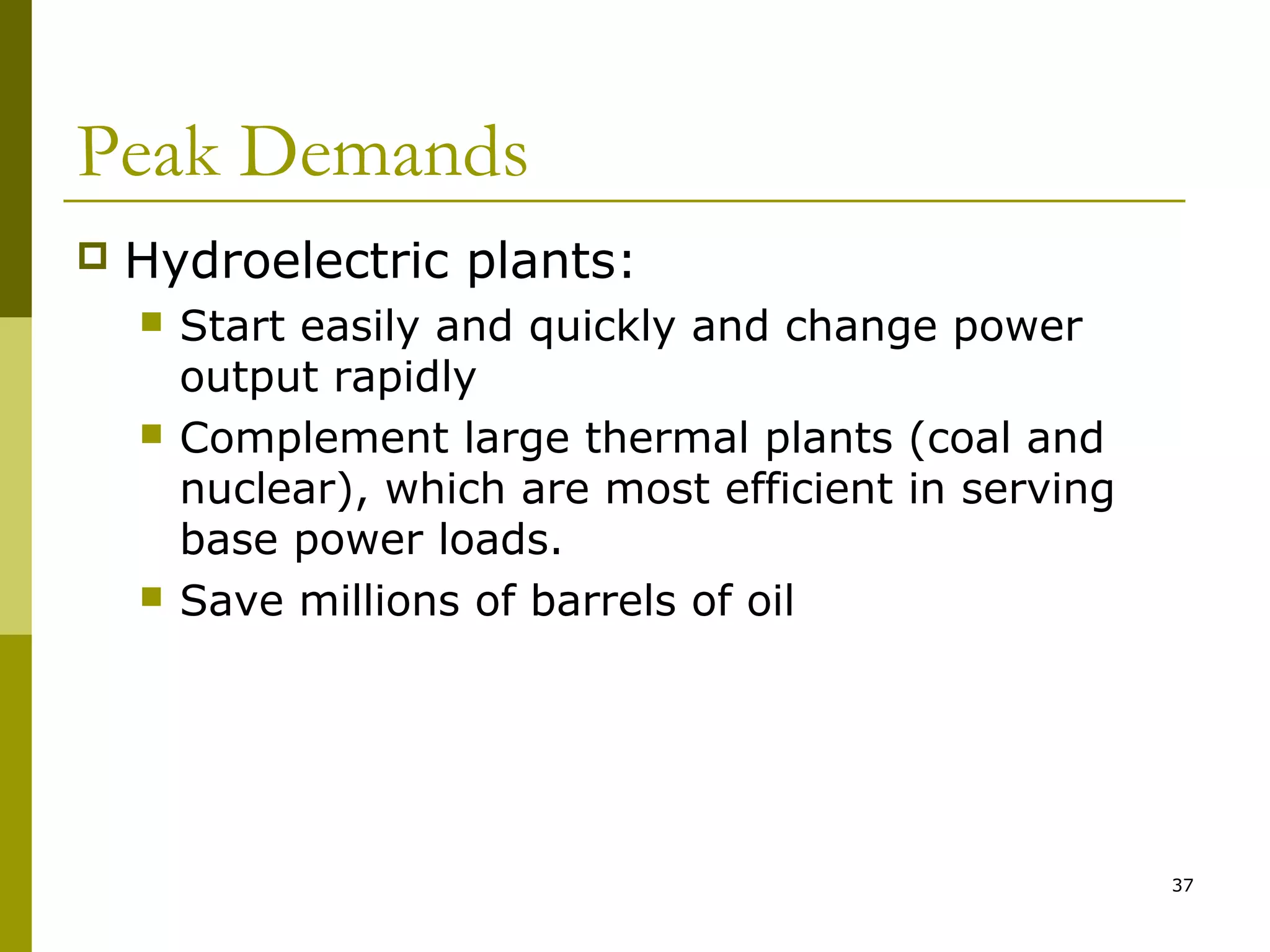
Peak Demands
 Hydroelectric plants:
 Start easily and quickly and change power
output rapidly
 Complement large thermal plants (coal and
nuclear), which are most efficient in serving
base power loads.
 Save millions of barrels of oil
38
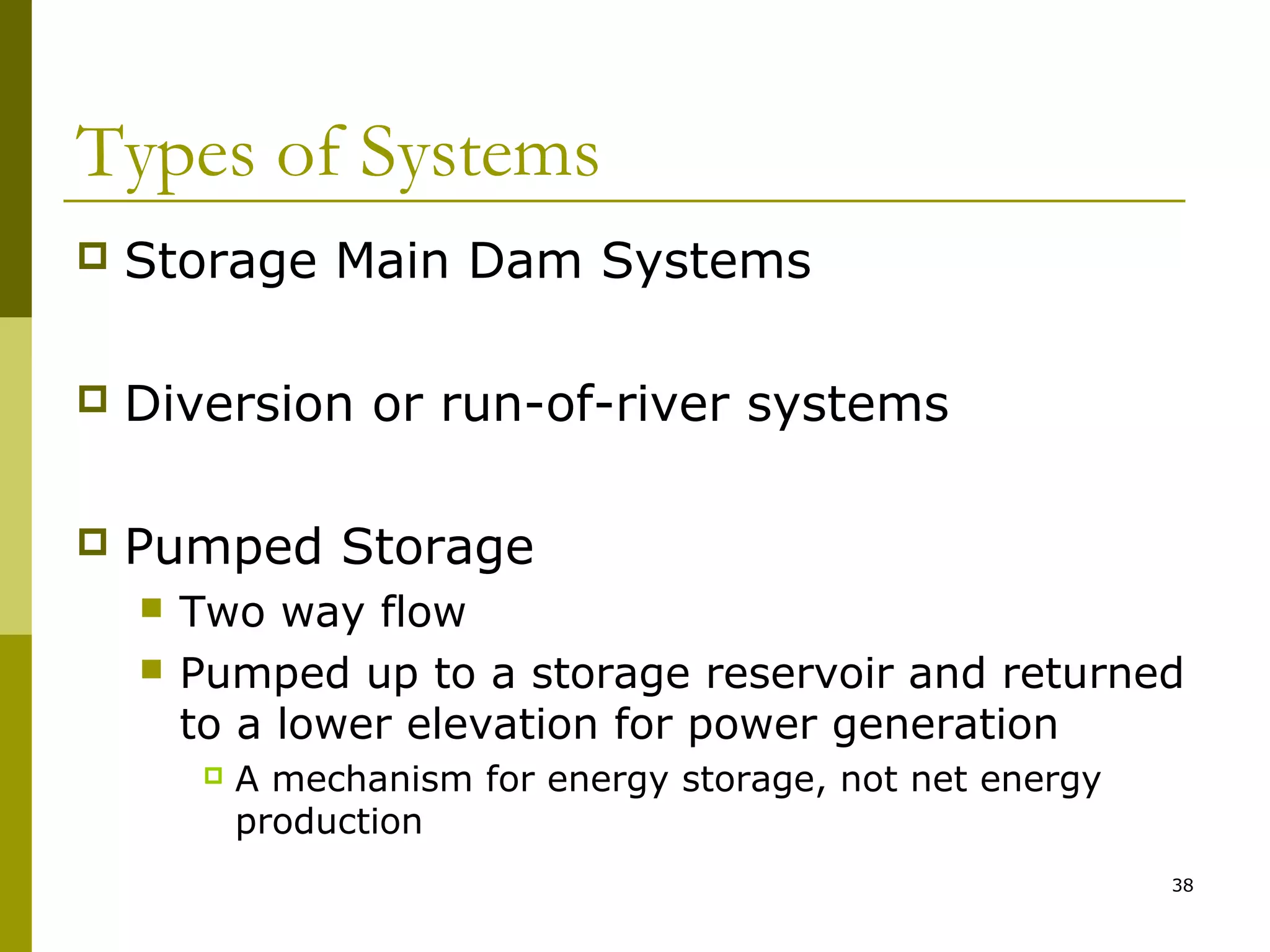
Types of Systems
 Storage Main Dam Systems
 Diversion or run-of-river systems
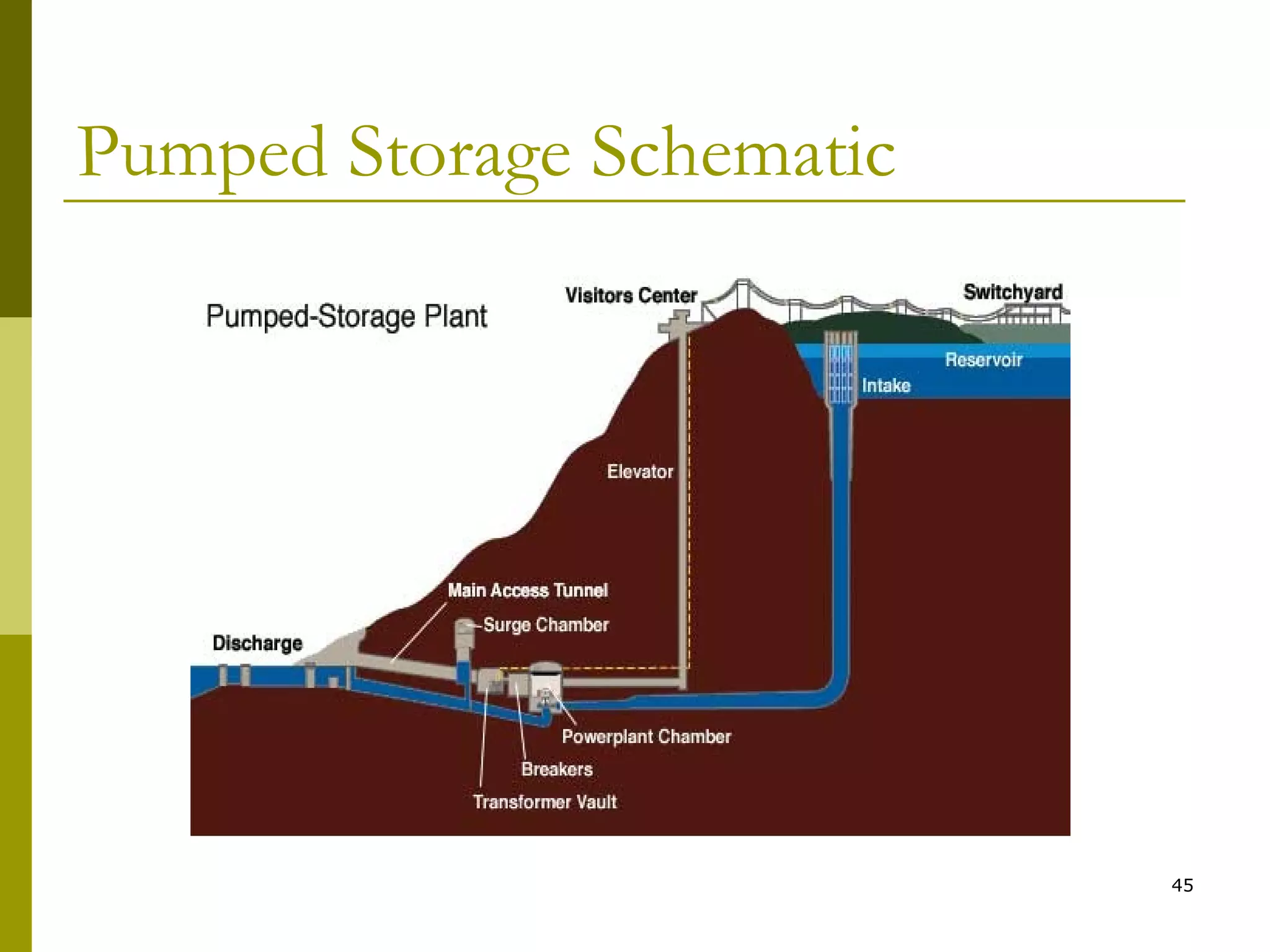
 Pumped Storage
 Two way flow
 Pumped up to a storage reservoir and returned
to a lower elevation for power generation
 A mechanism for energy storage, not net energy
production
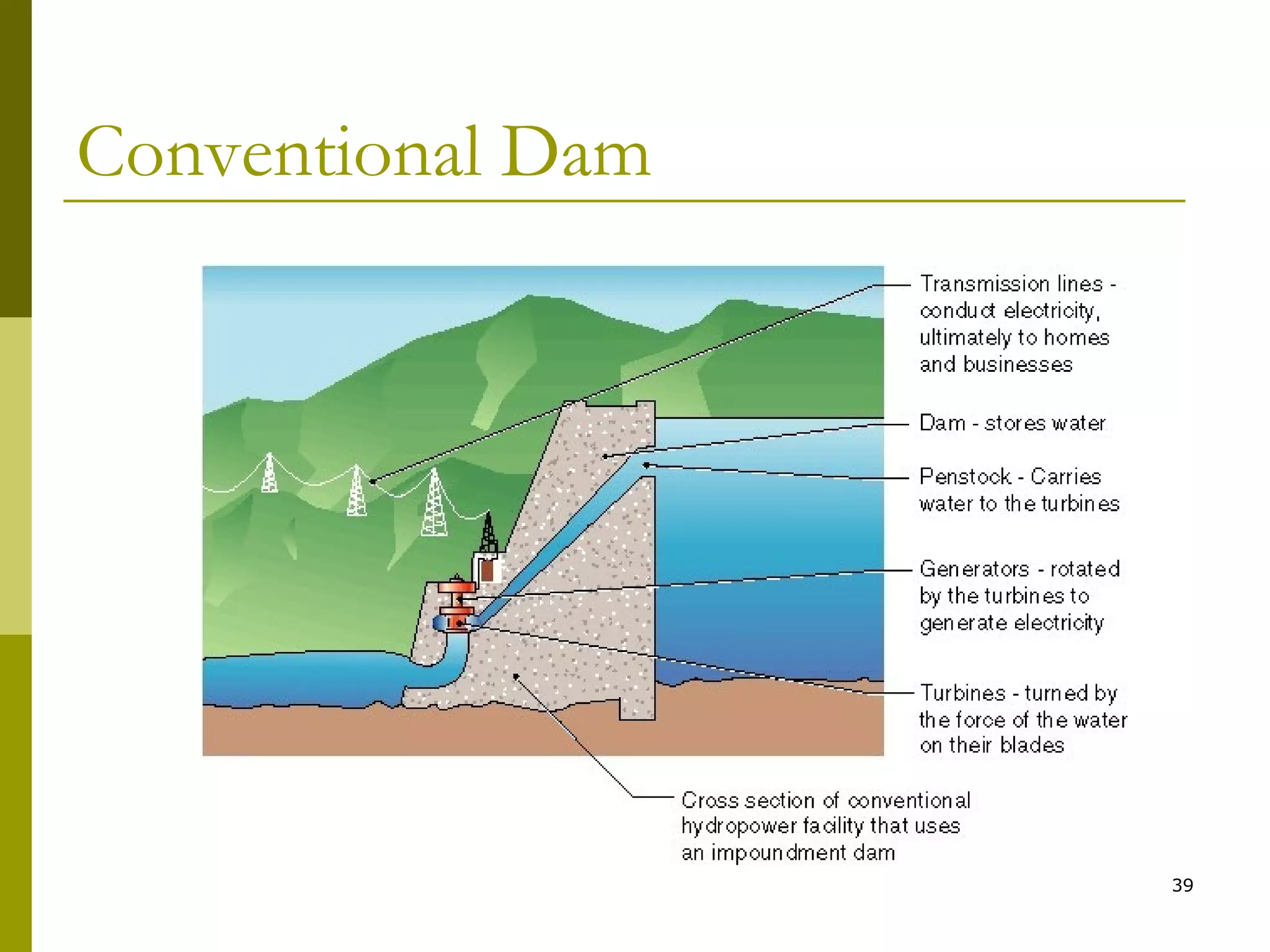
39
Conventional Dam
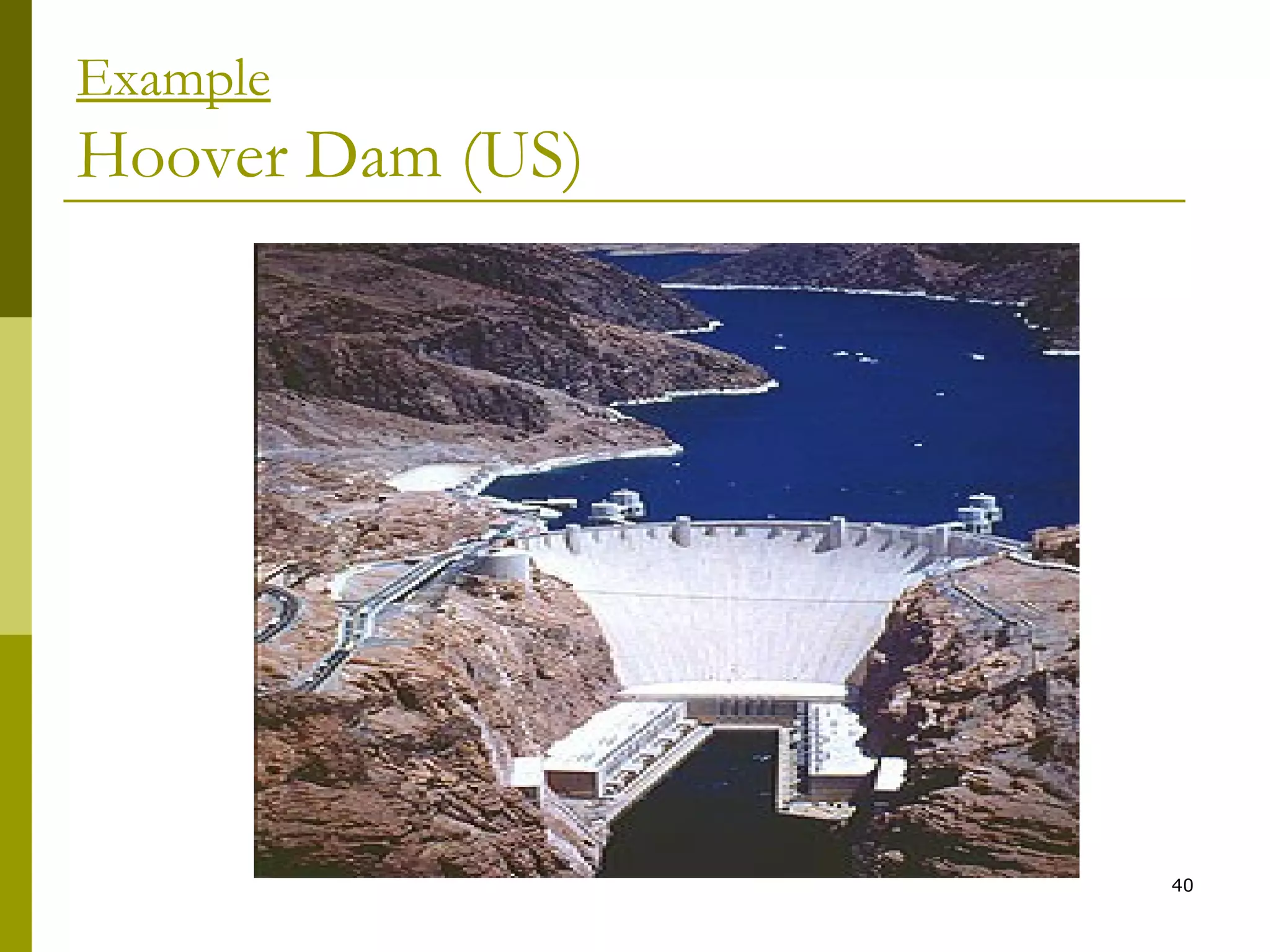
40
Example
Hoover Dam (US)
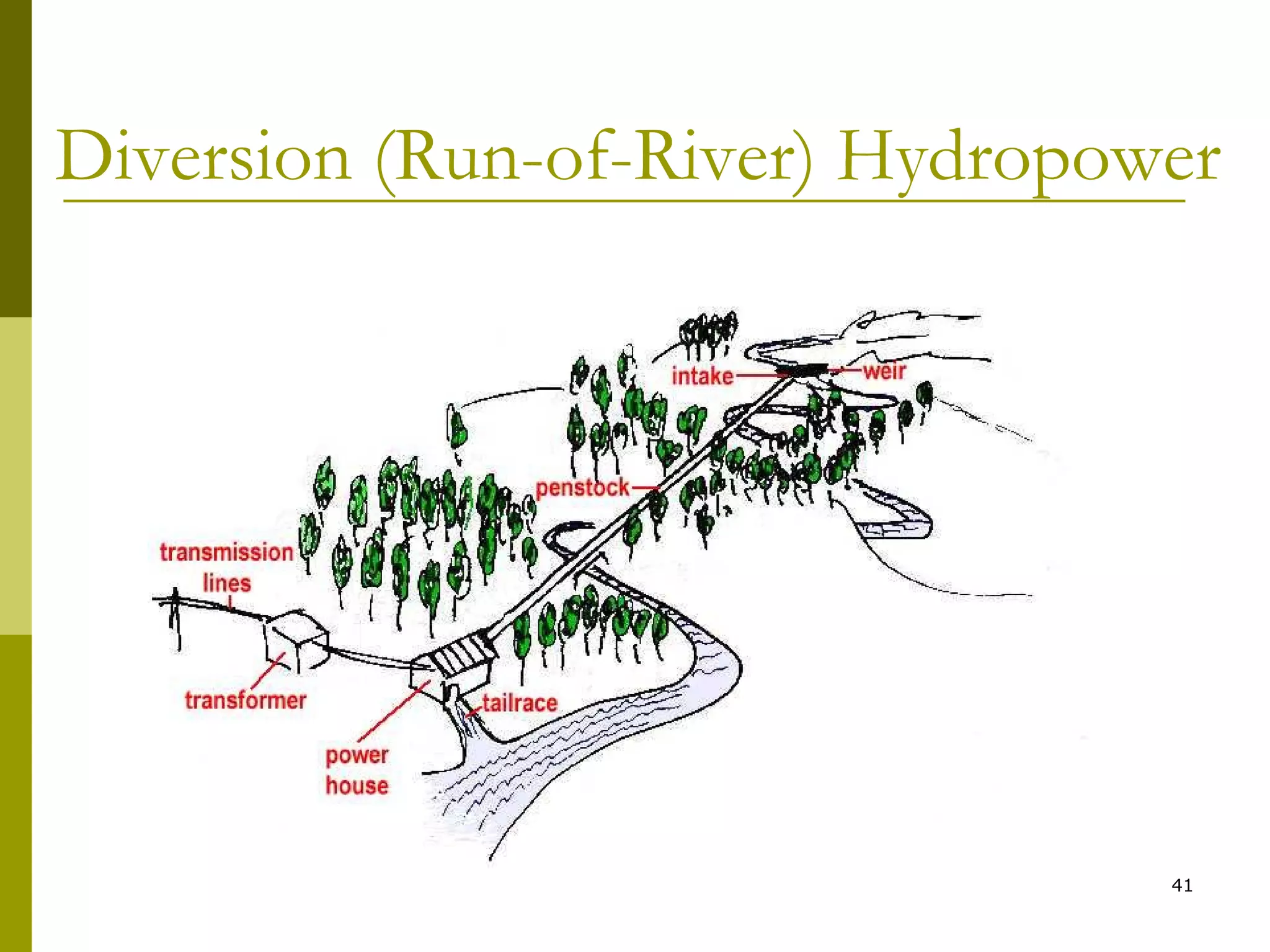
41
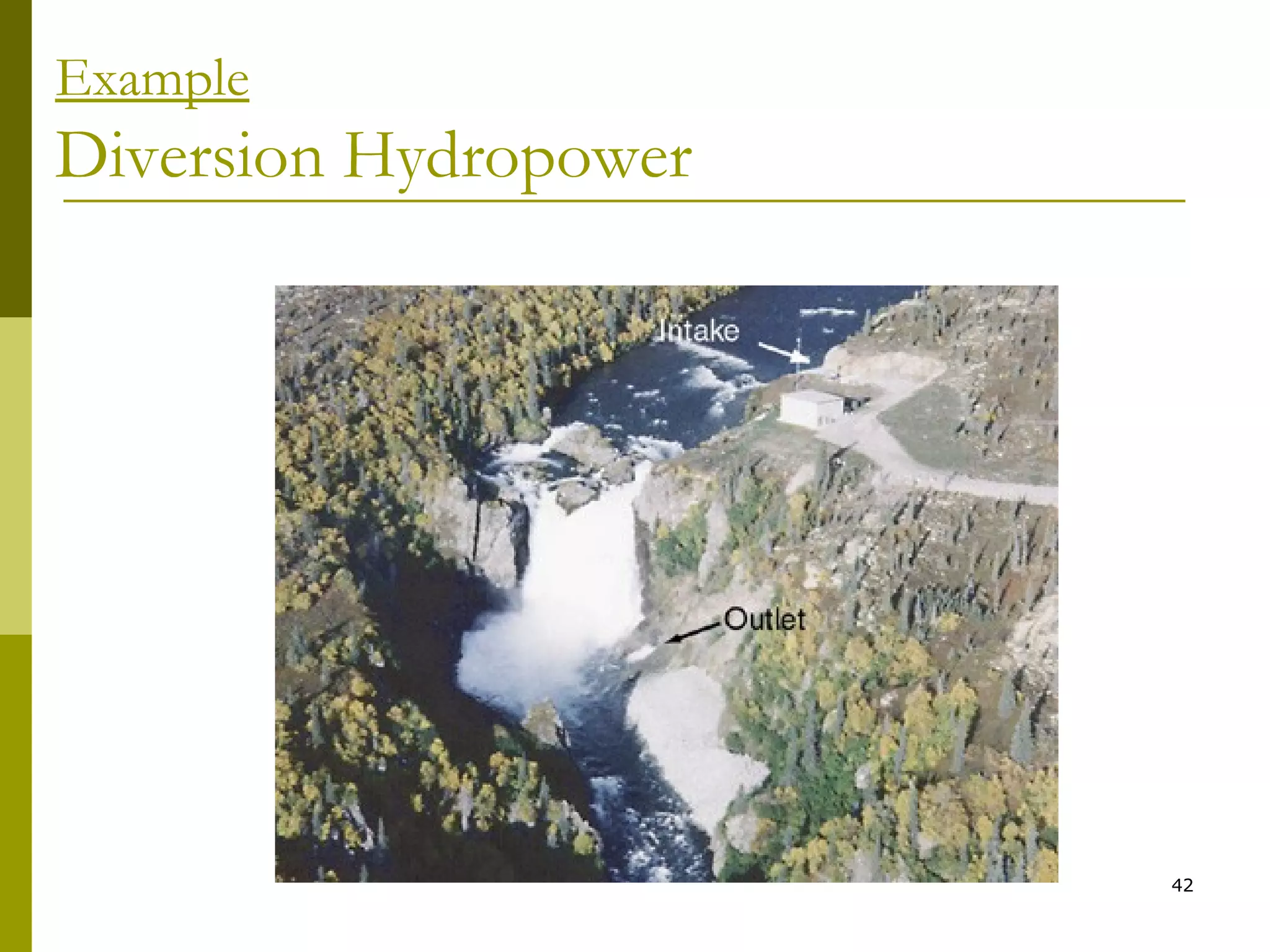
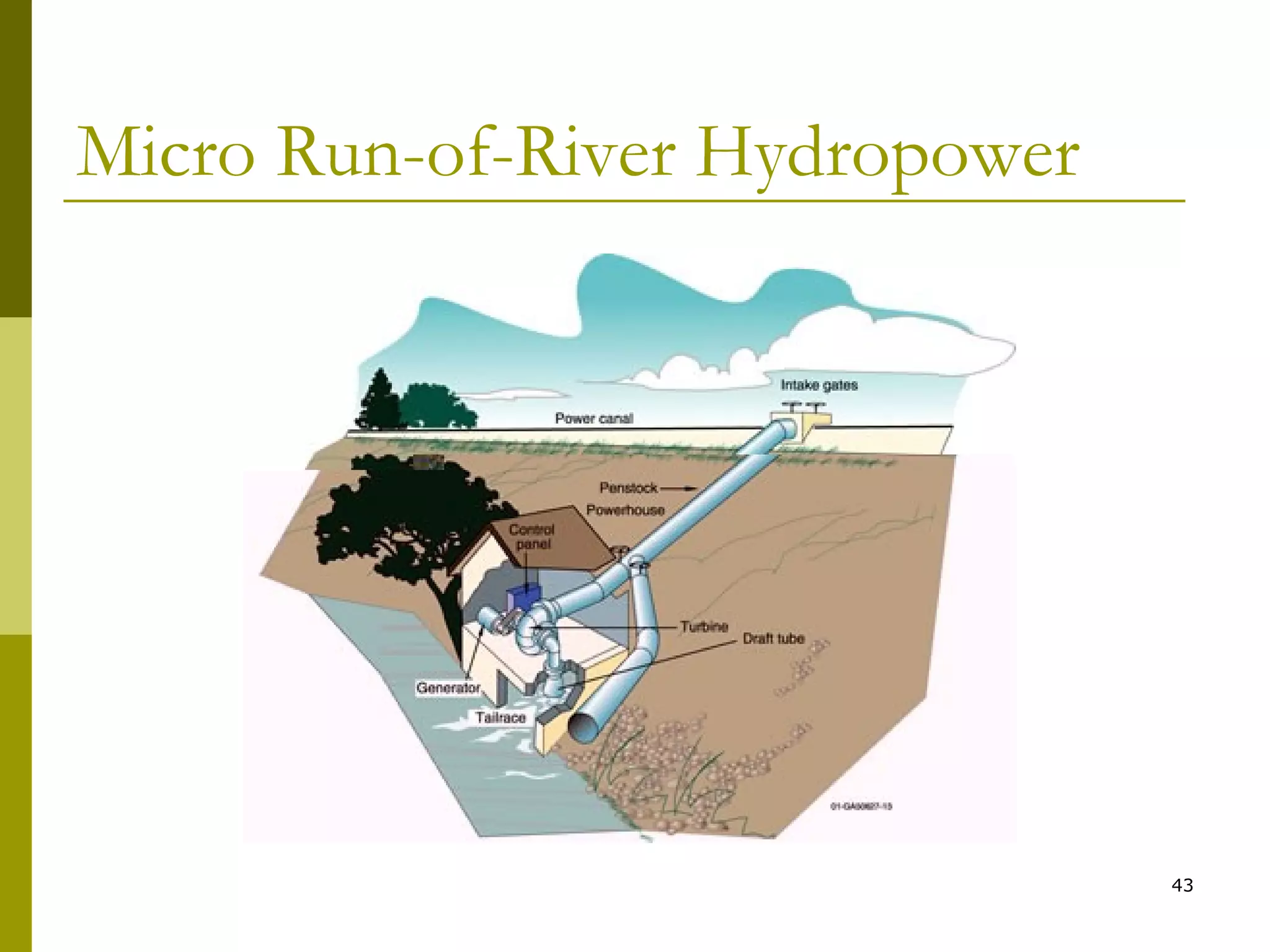
Diversion (Run-of-River) Hydropower
42
Example
Diversion Hydropower
43
Micro Run-of-River Hydropower
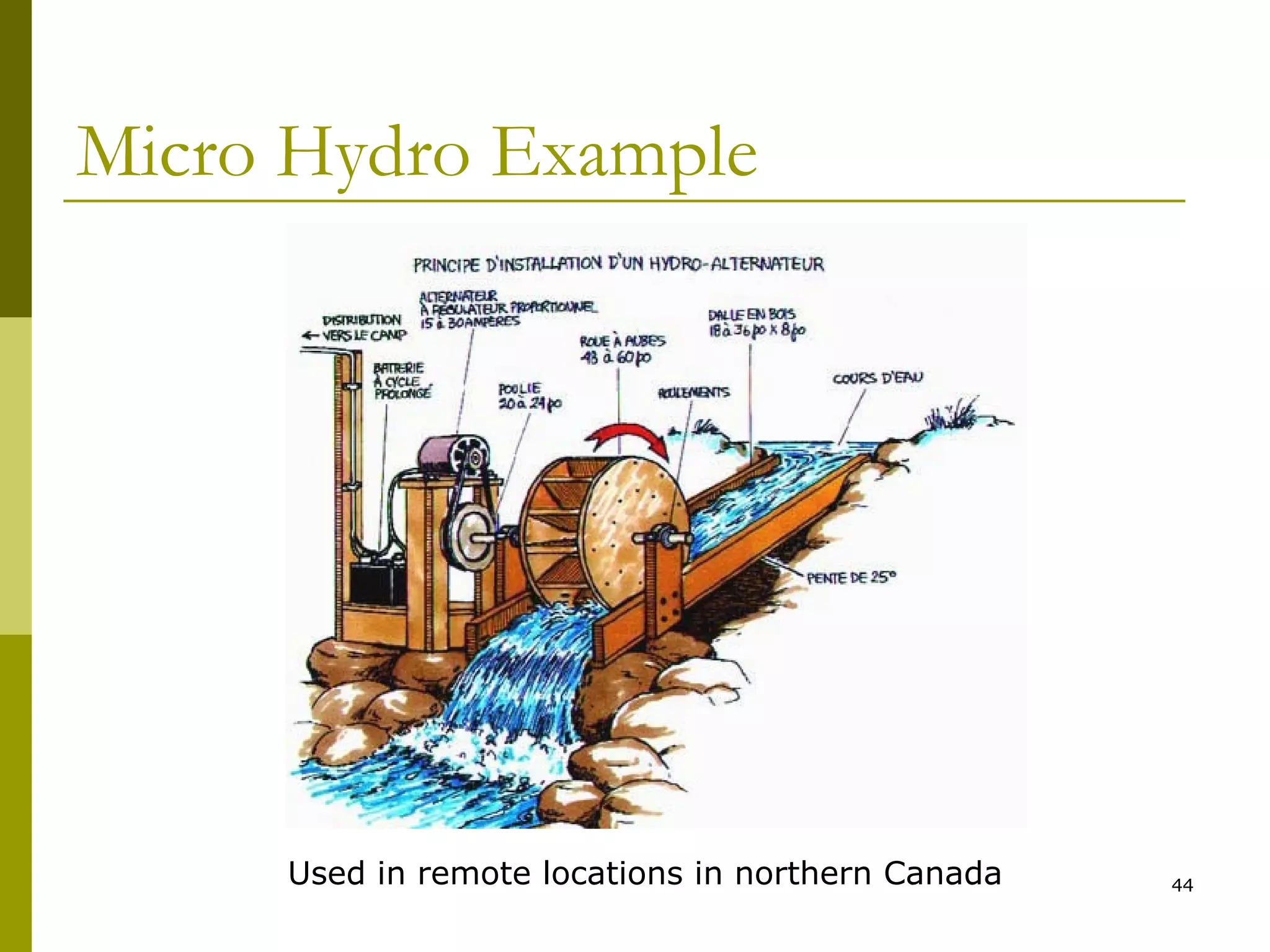
44
Micro Hydro Example
Used in remote locations in northern Canada
45
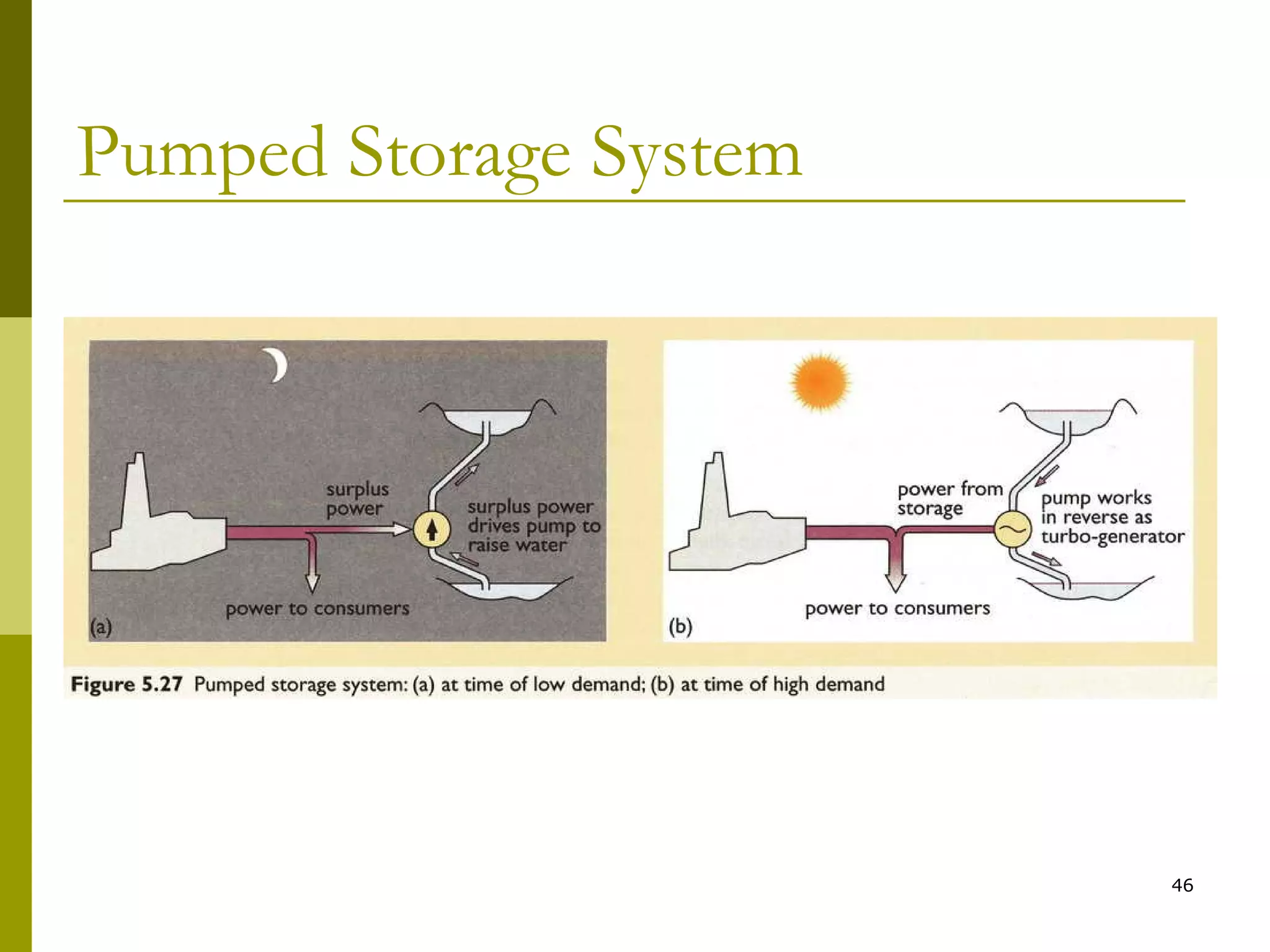
Pumped Storage Schematic
46
Pumped Storage System
47
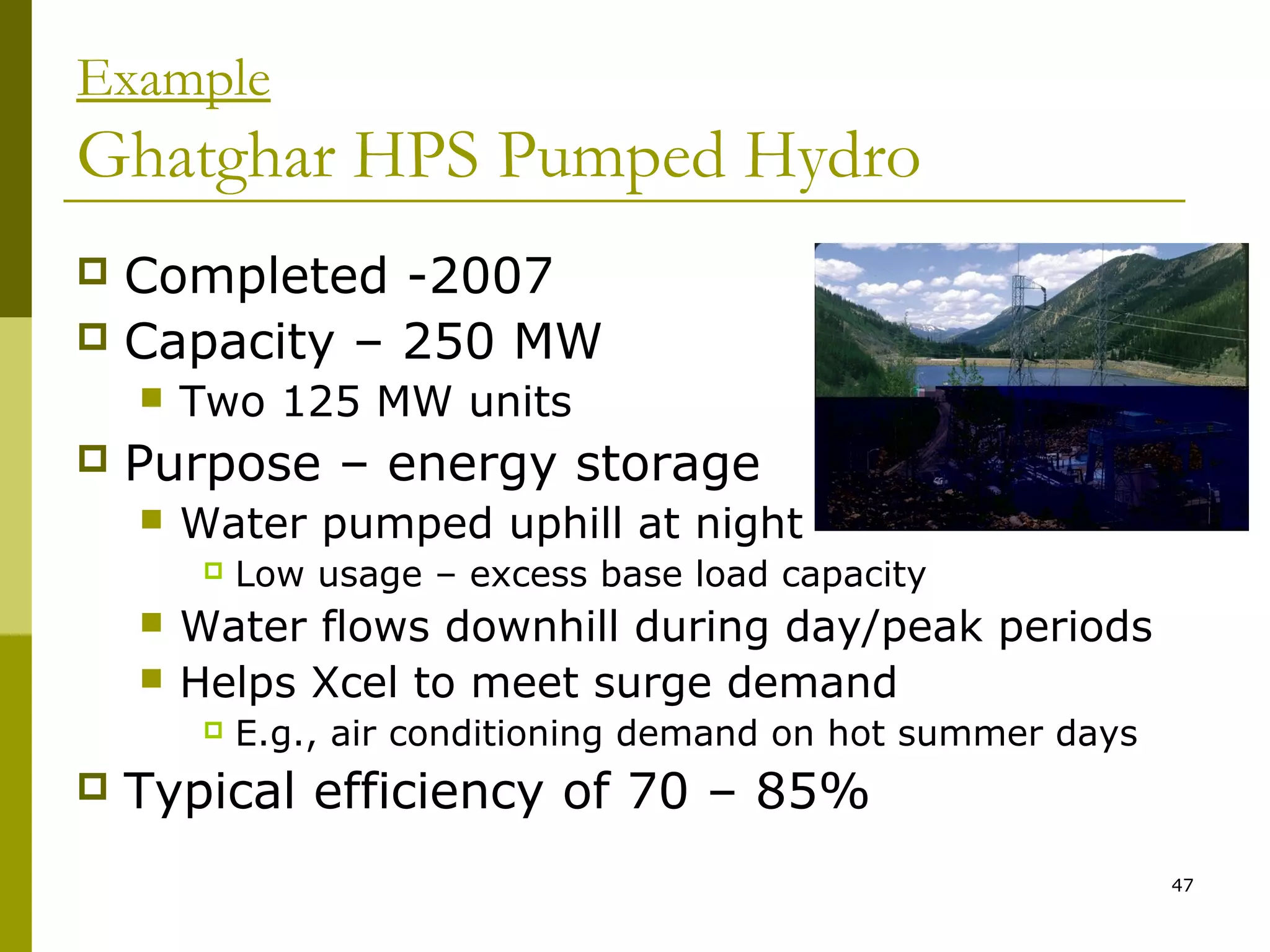
Example
Ghatghar HPS Pumped Hydro
 Completed -2007
 Capacity – 250 MW
 Two 125 MW units
 Purpose – energy storage
 Water pumped uphill at night
 Low usage – excess base load capacity
 Water flows downhill during day/peak periods
 Helps Xcel to meet surge demand
 E.g., air conditioning demand on hot summer days
 Typical efficiency of 70 – 85%
48
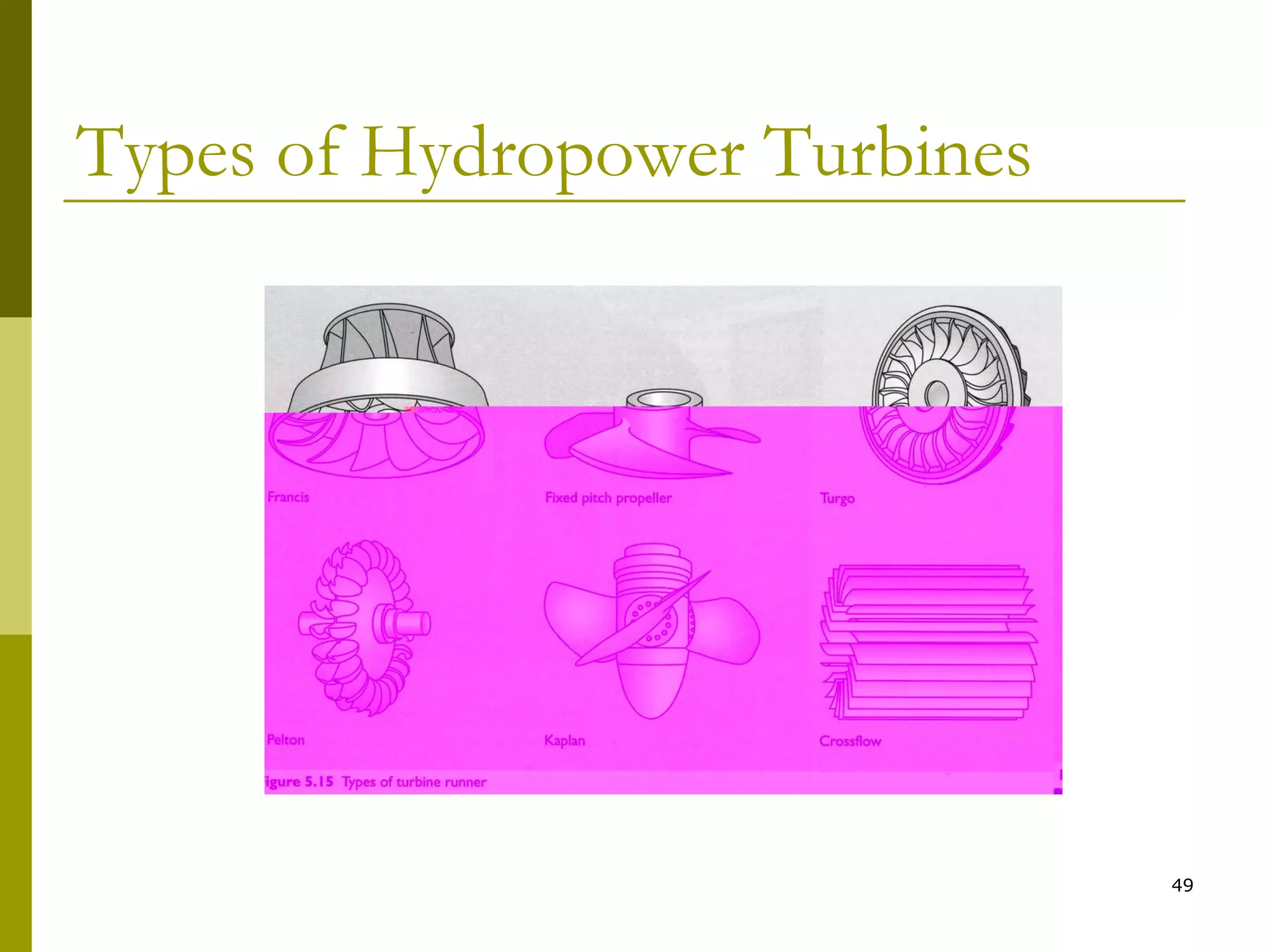
Turbine Design
Francis Turbine
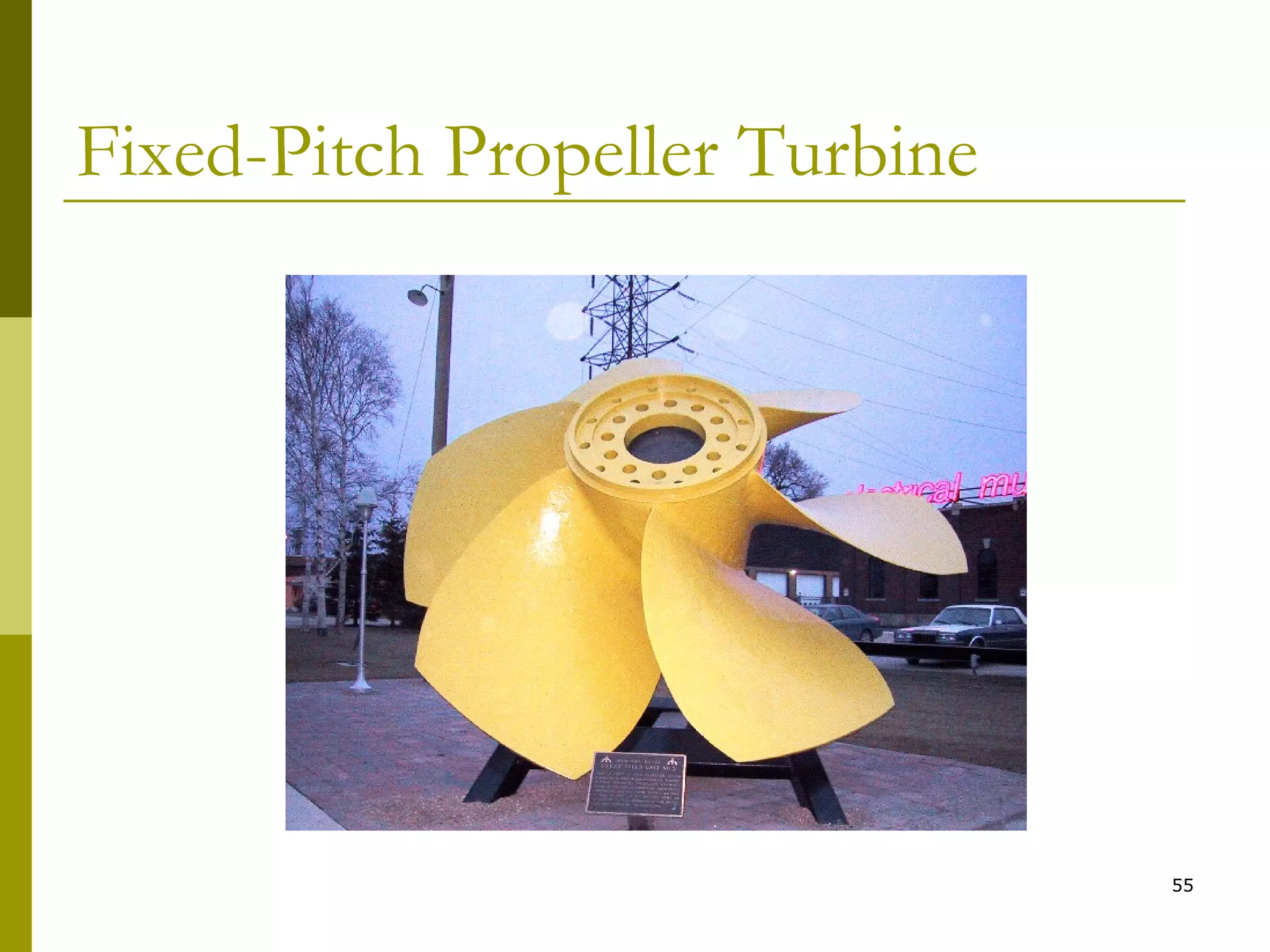
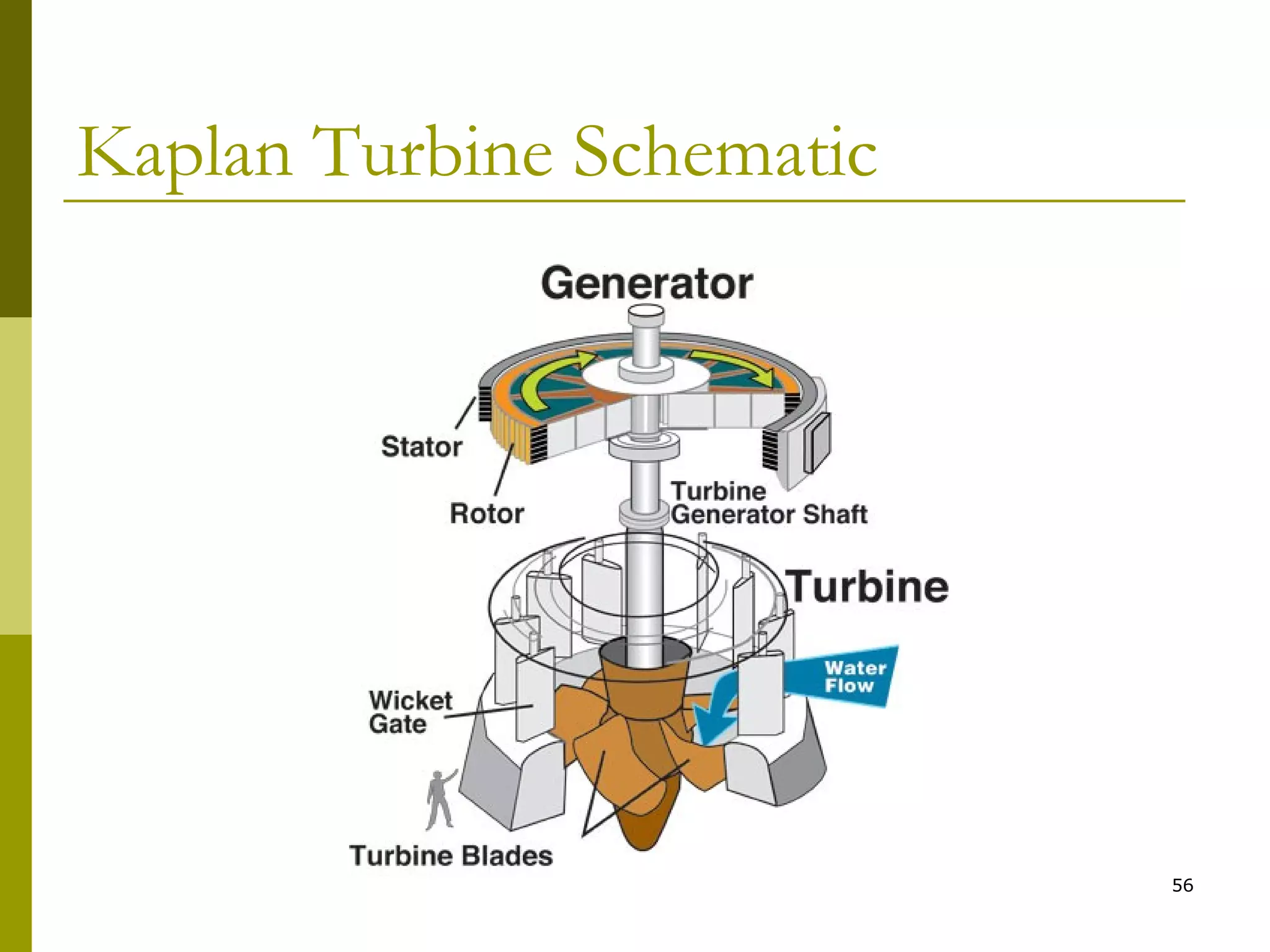
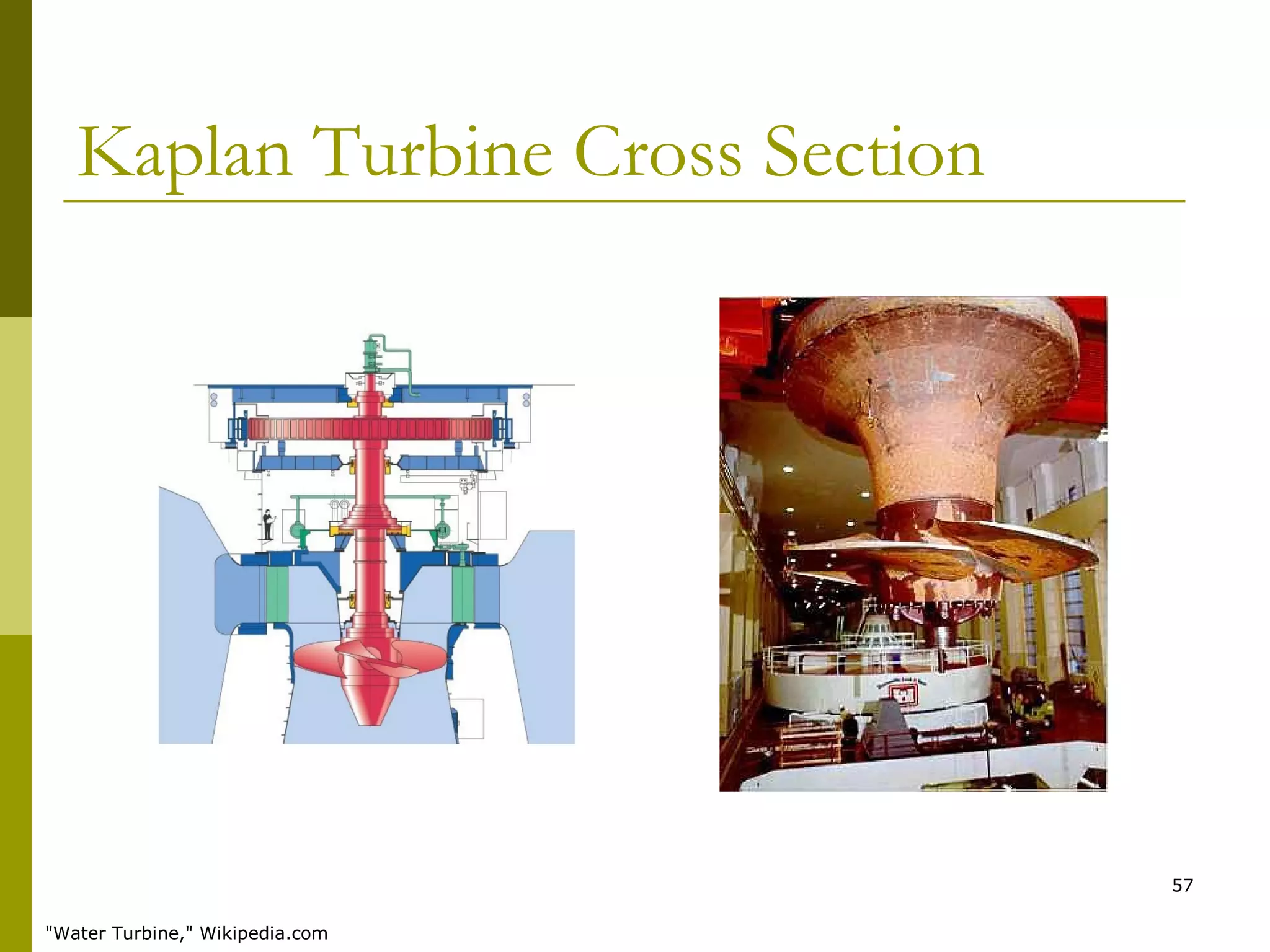
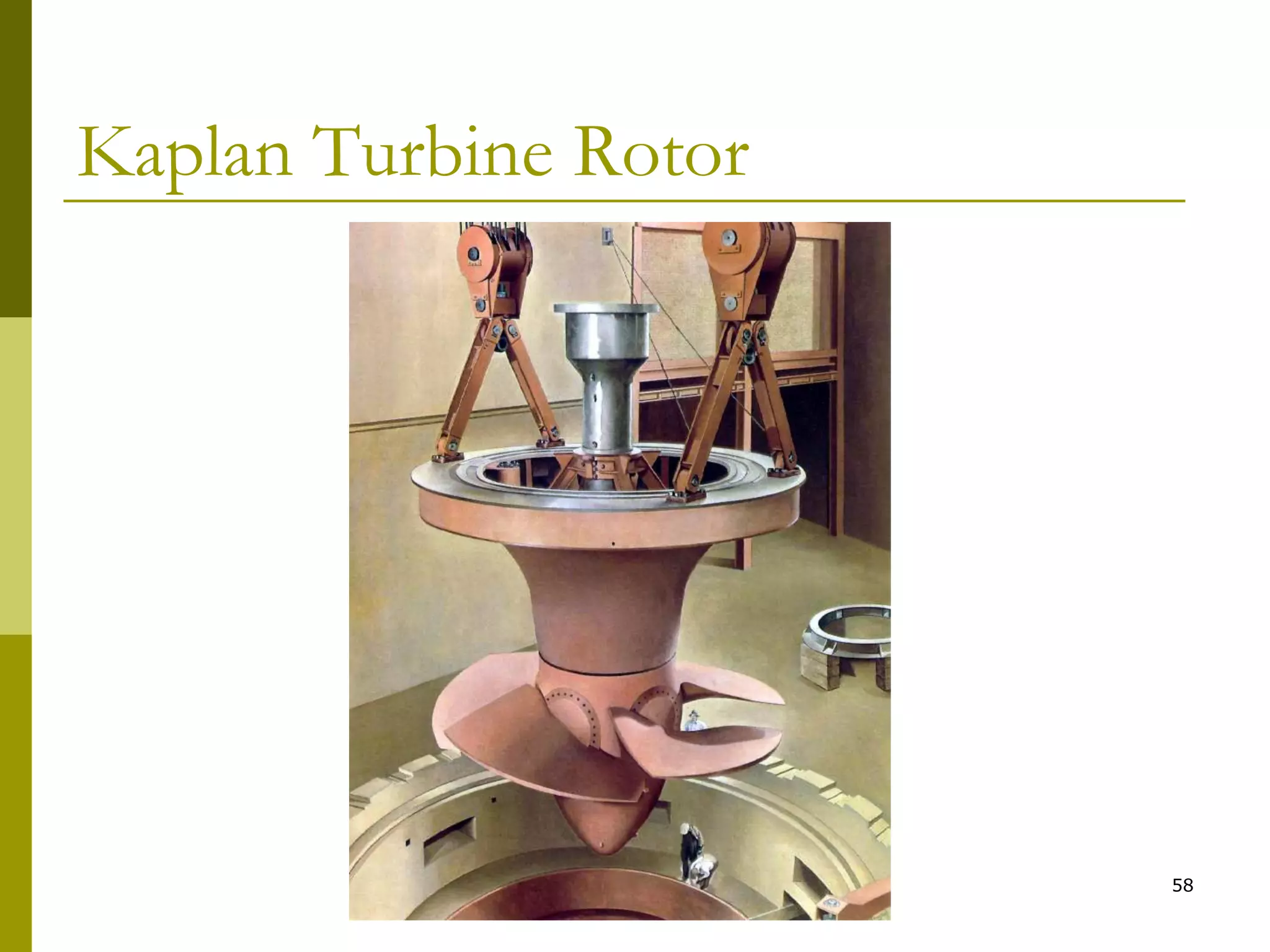
Kaplan Turbine
Pelton Turbine
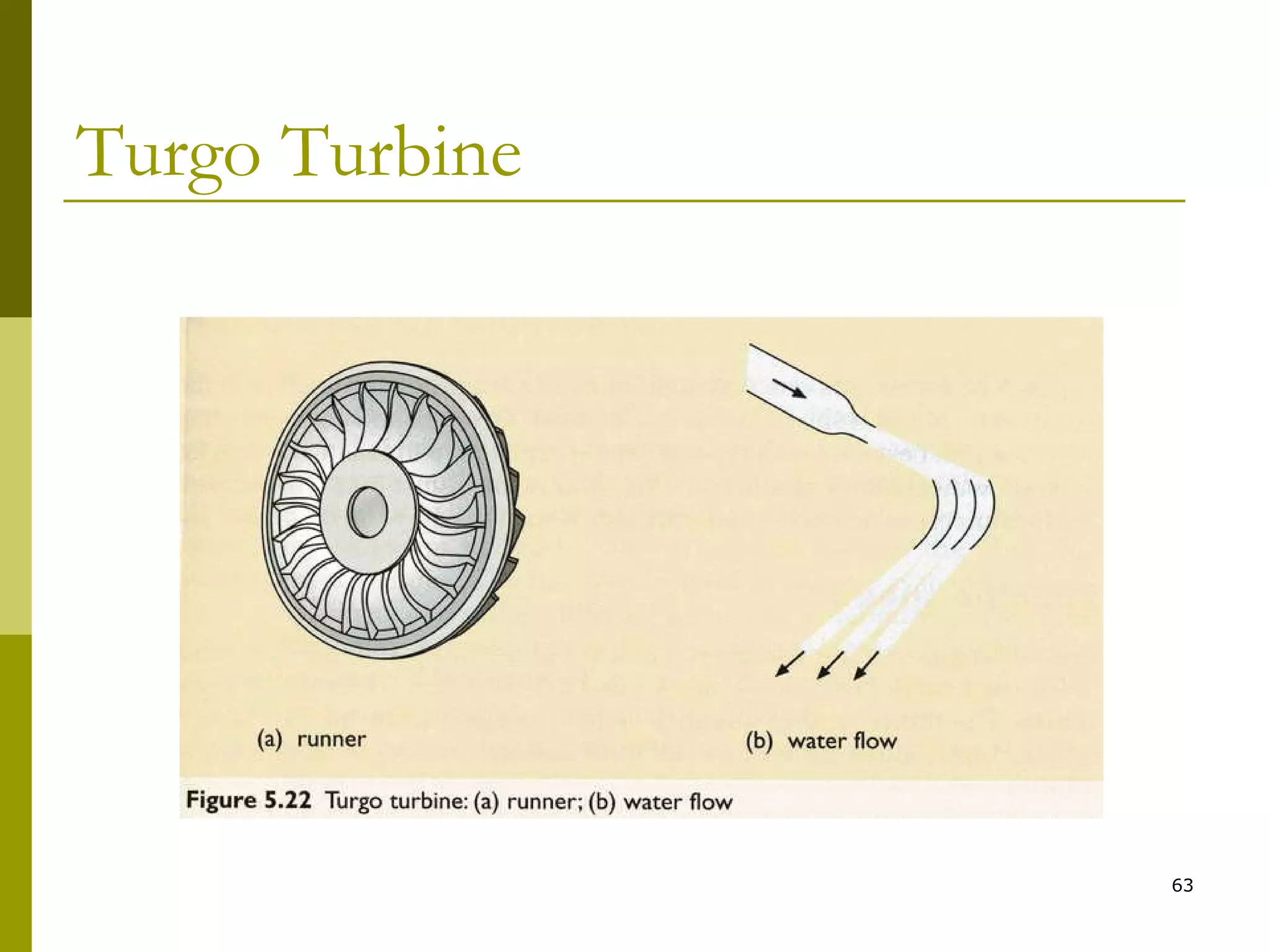
Turgo Turbine
49
Types of Hydropower Turbines
50
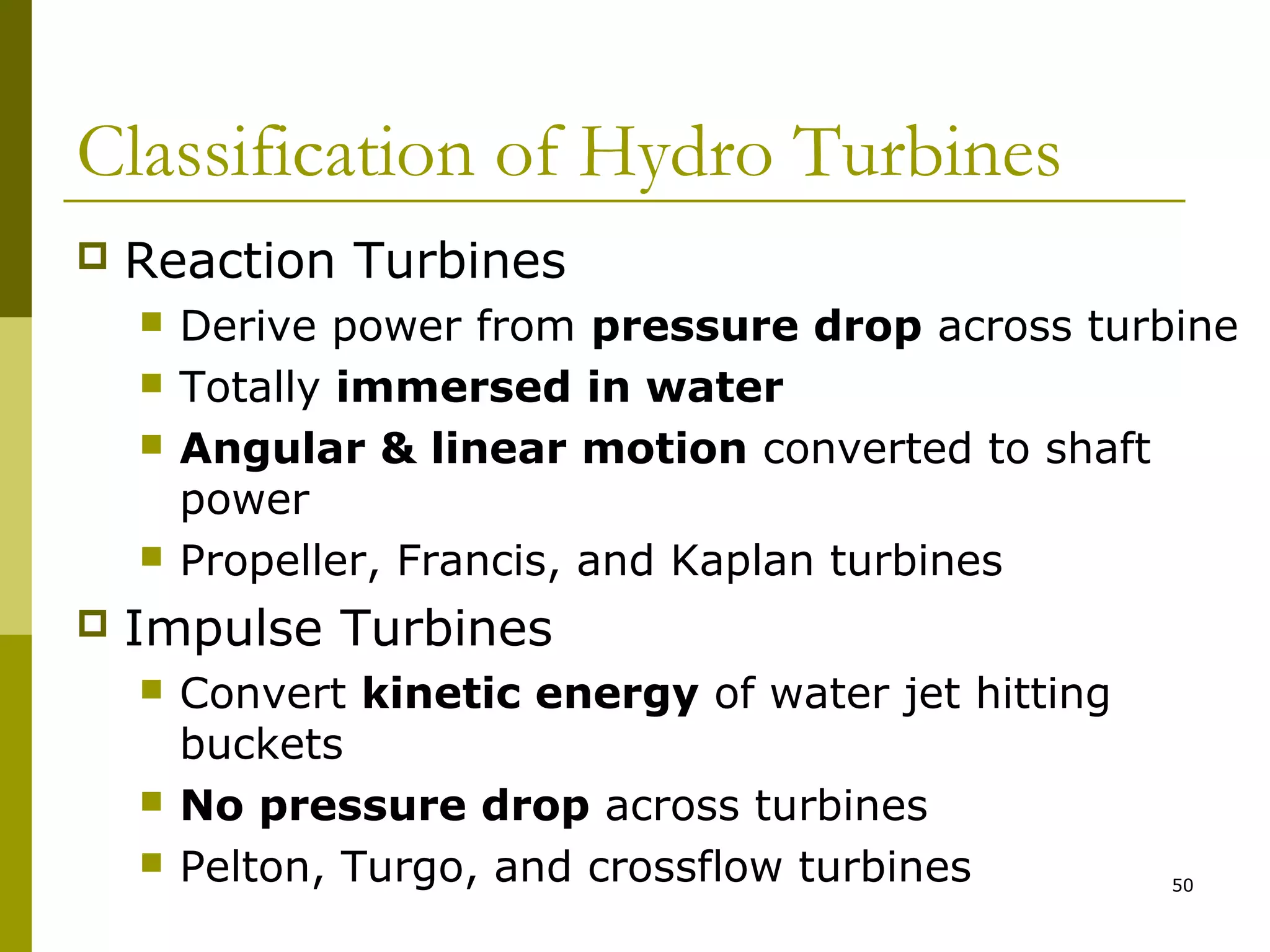
Classification of Hydro Turbines
 Reaction Turbines
 Derive power from pressure drop across turbine
 Totally immersed in water
 Angular & linear motion converted to shaft
power
 Propeller, Francis, and Kaplan turbines
 Impulse Turbines
 Convert kinetic energy of water jet hitting
buckets
 No pressure drop across turbines
 Pelton, Turgo, and crossflow turbines
51
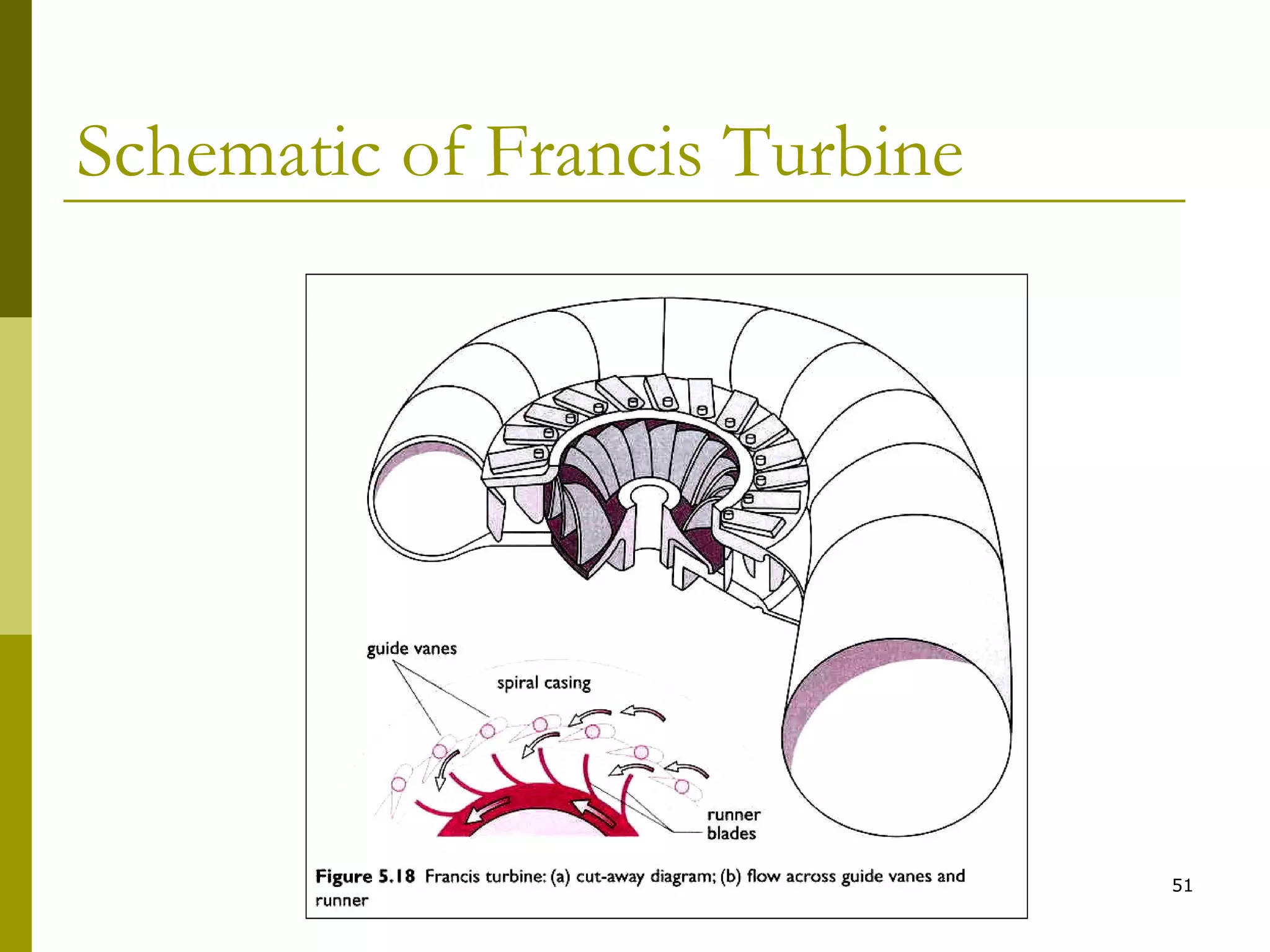
Schematic of Francis Turbine
52
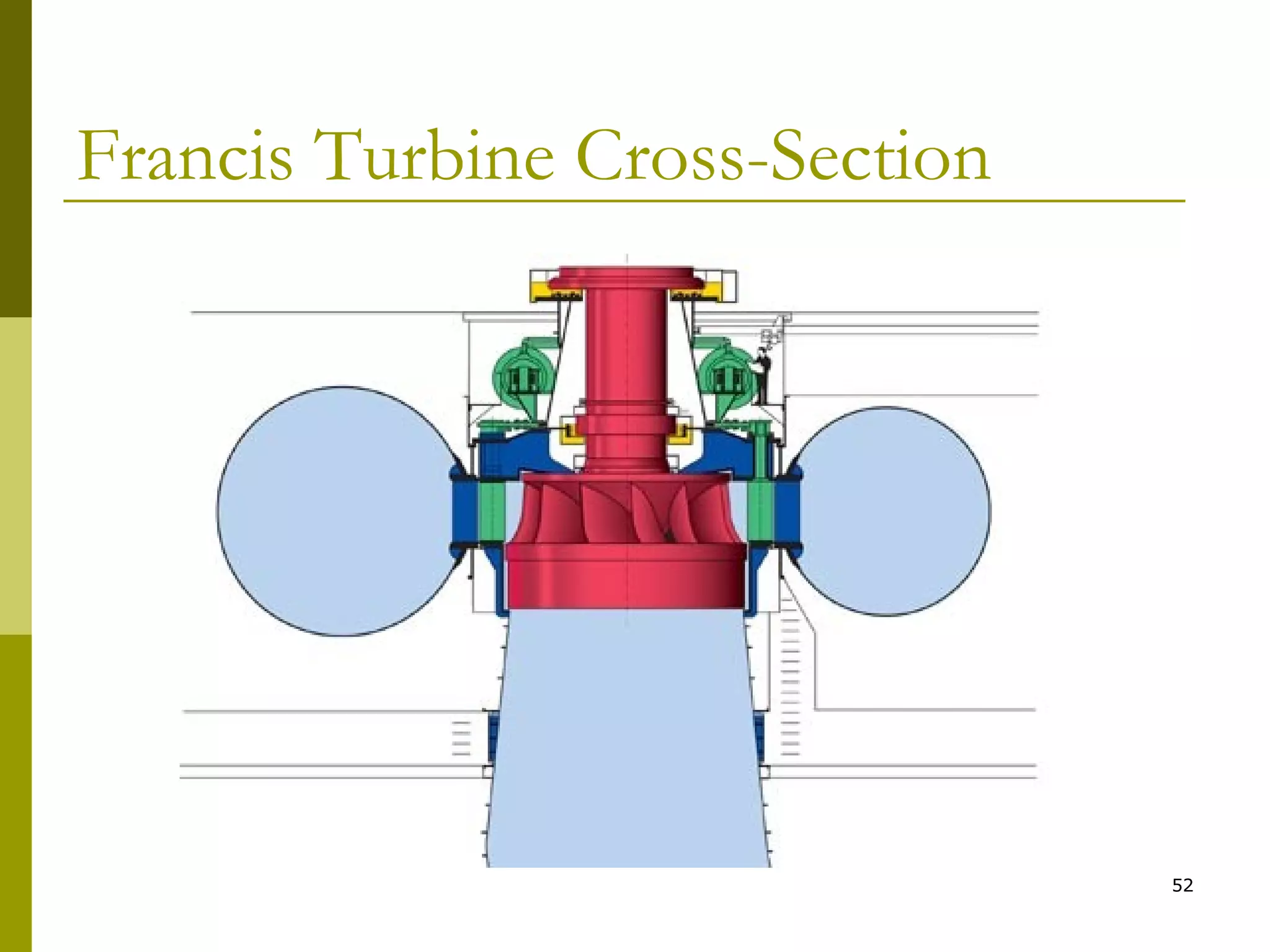
Francis Turbine Cross-Section
53
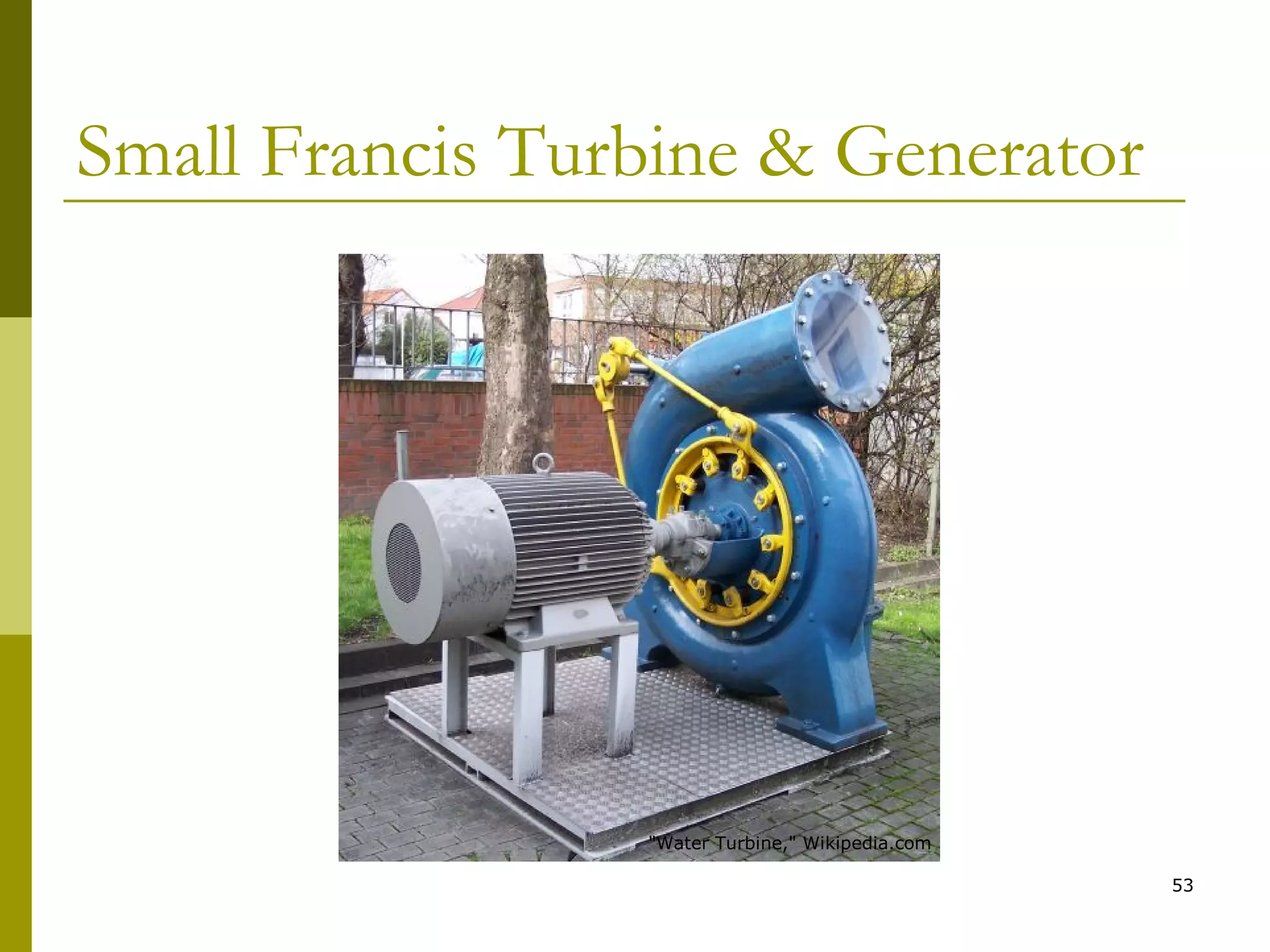
Small Francis Turbine & Generator
"Water Turbine," Wikipedia.com
54
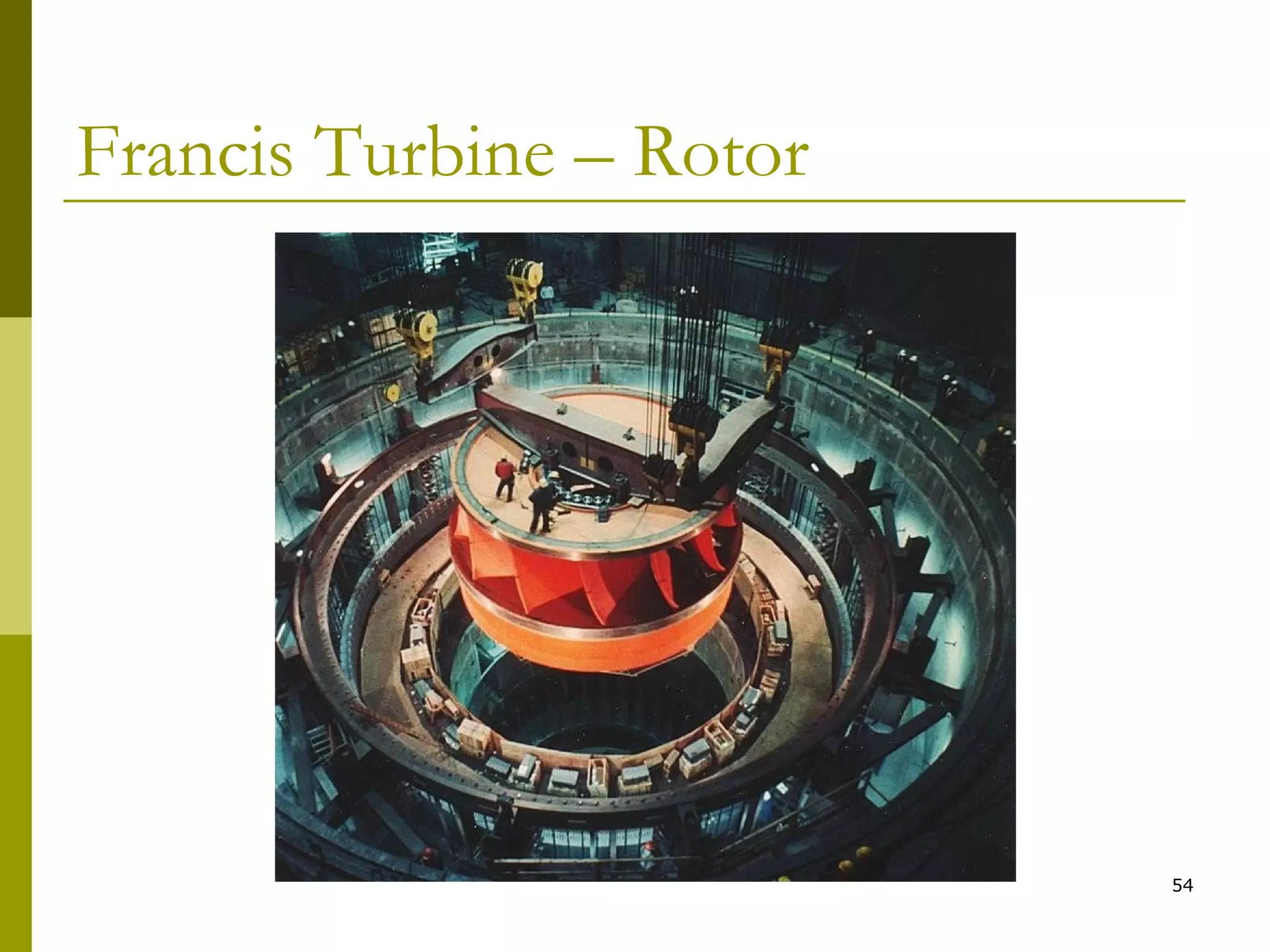
Francis Turbine – Rotor
55
Fixed-Pitch Propeller Turbine
56
Kaplan Turbine Schematic
57
Kaplan Turbine Cross Section
"Water Turbine," Wikipedia.com
58
Kaplan Turbine Rotor
59
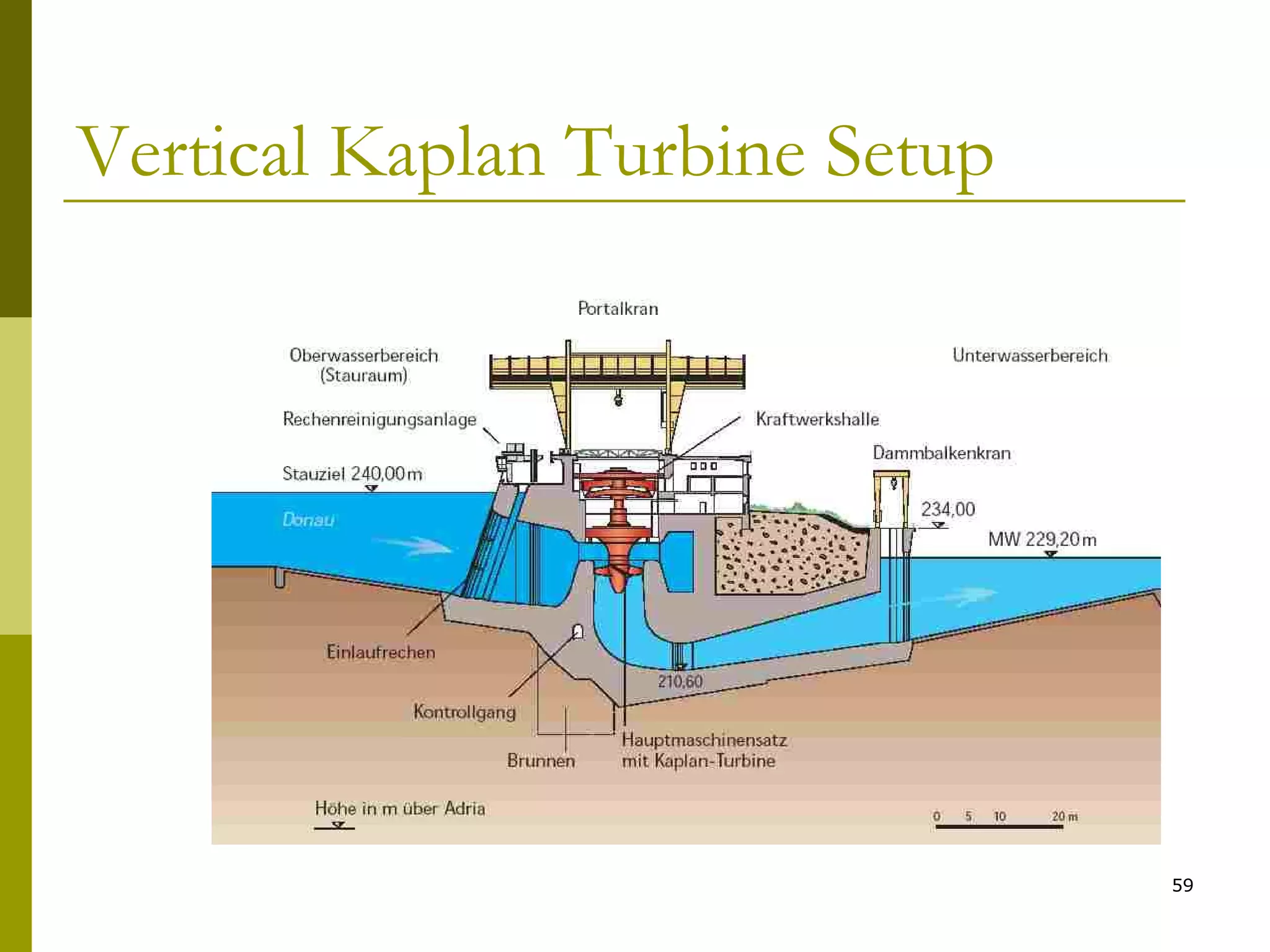
Vertical Kaplan Turbine Setup
60
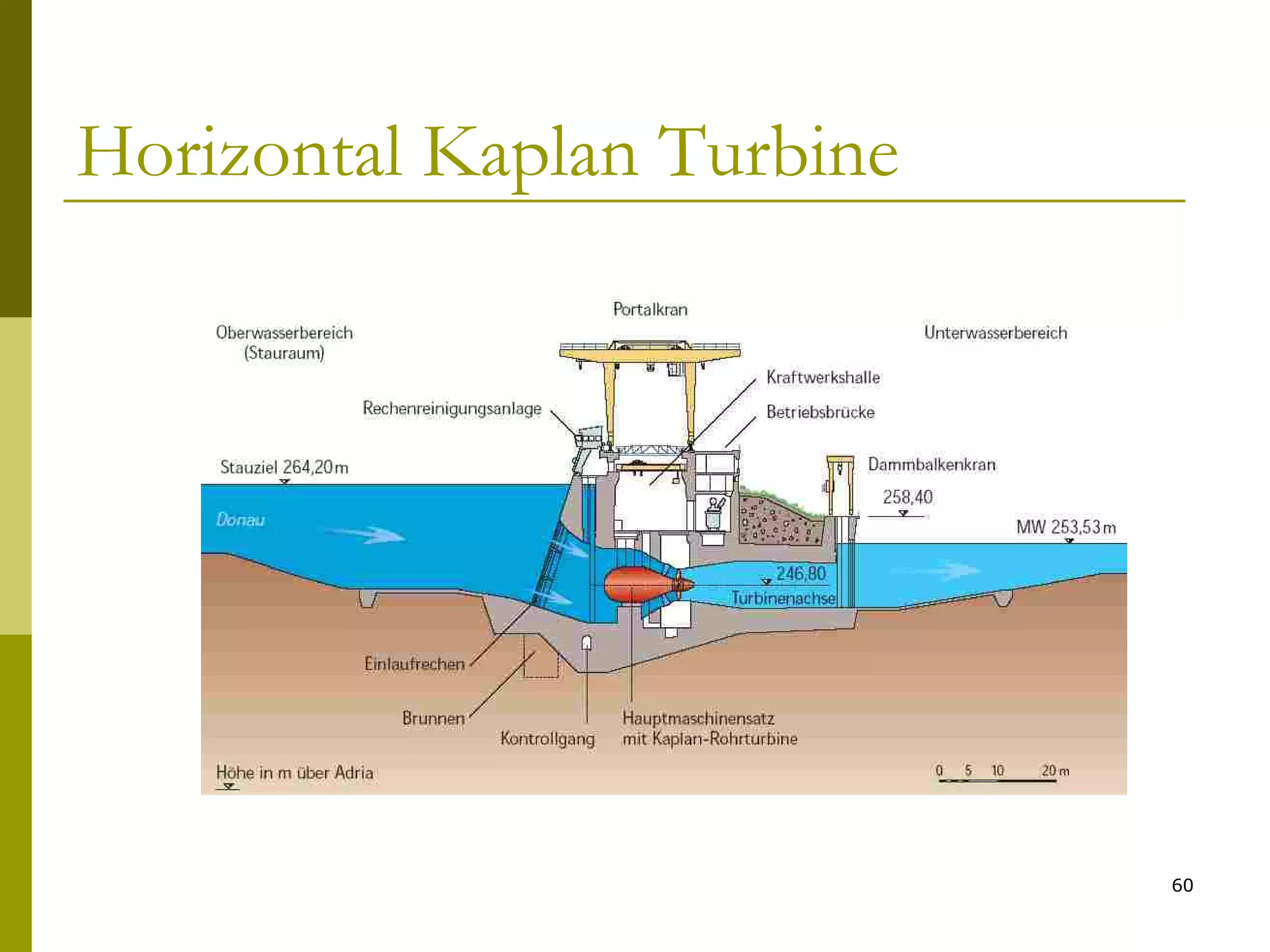
Horizontal Kaplan Turbine
61
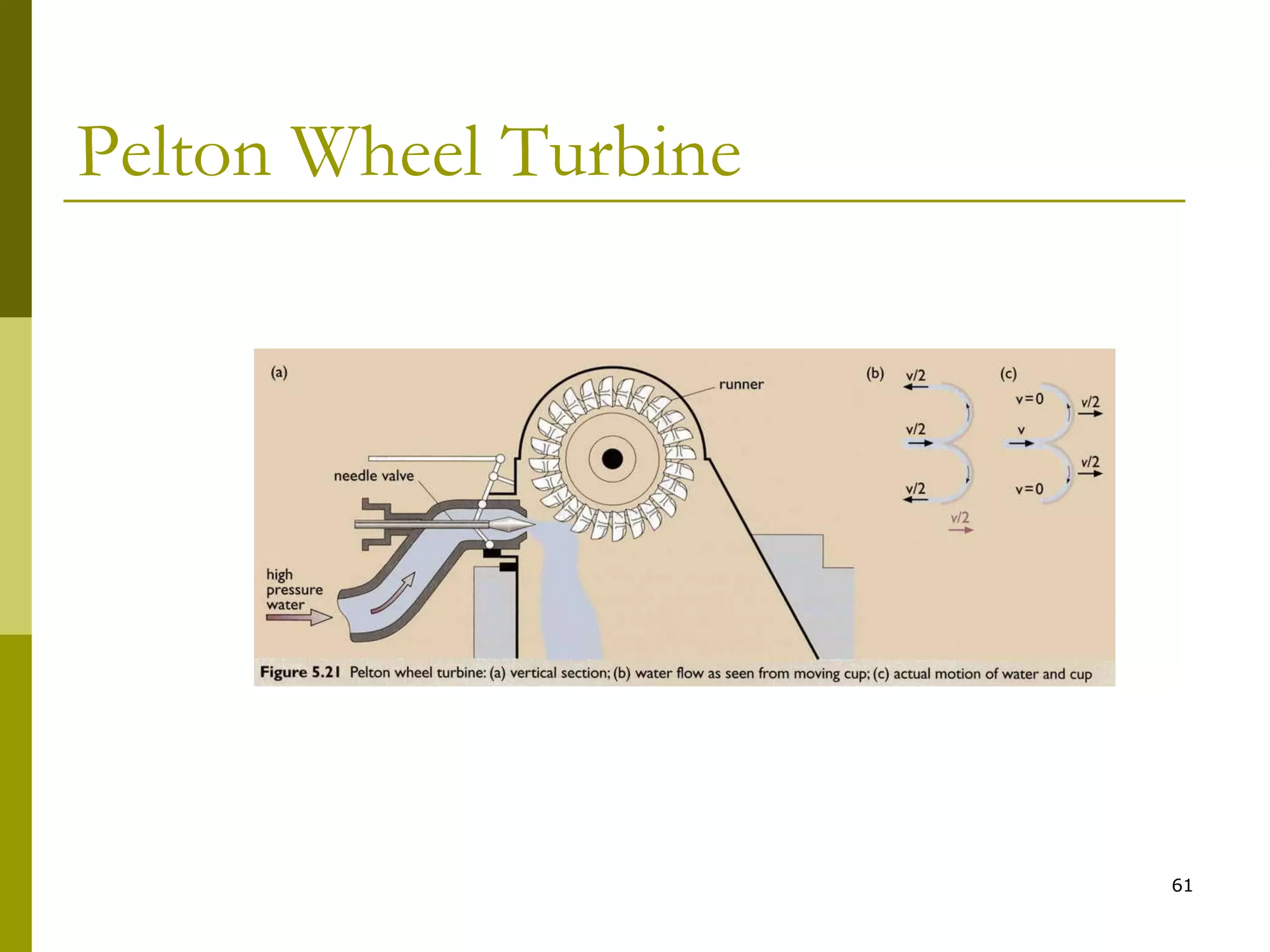
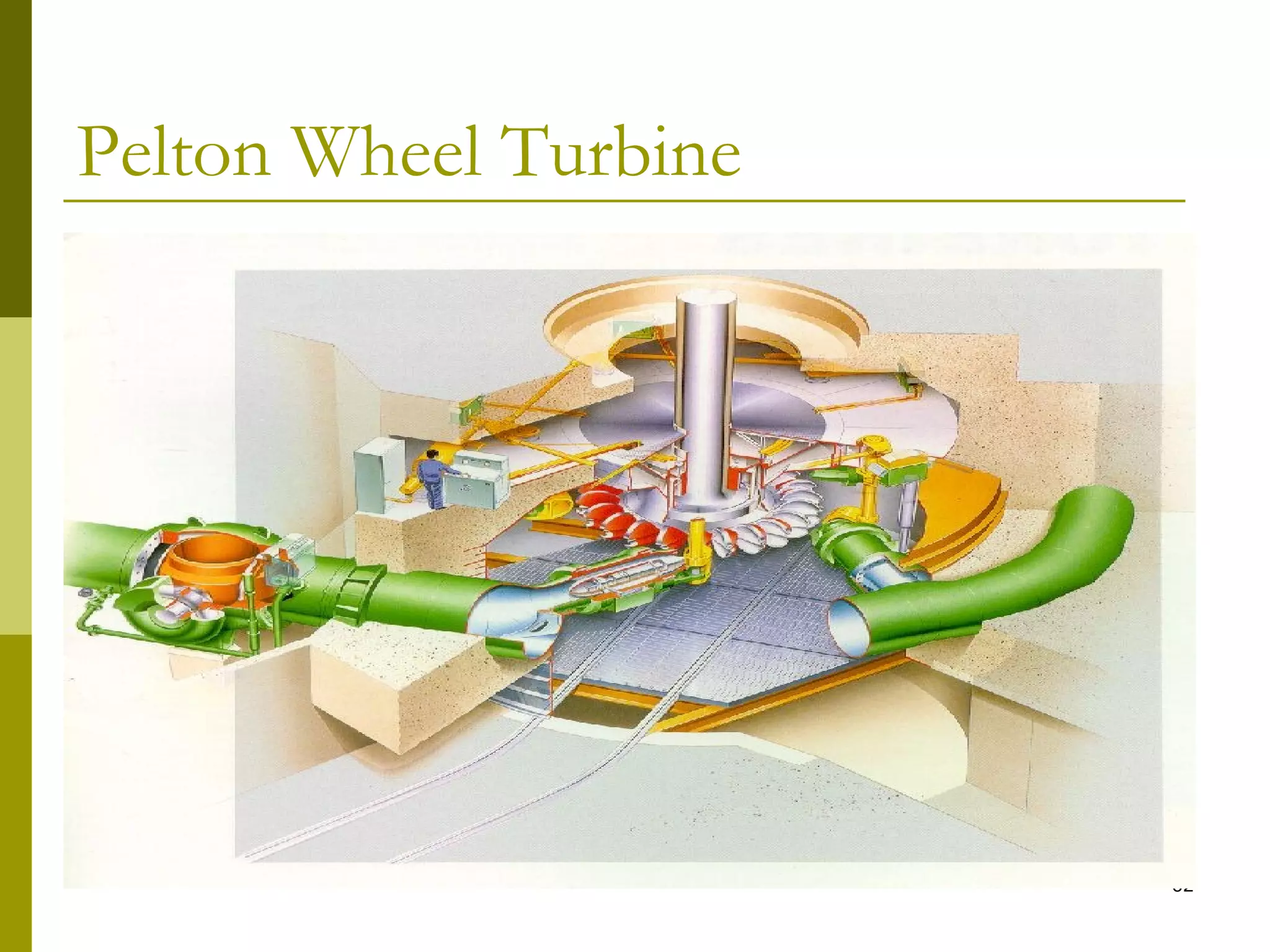
Pelton Wheel Turbine
62
63
Turgo Turbine
64
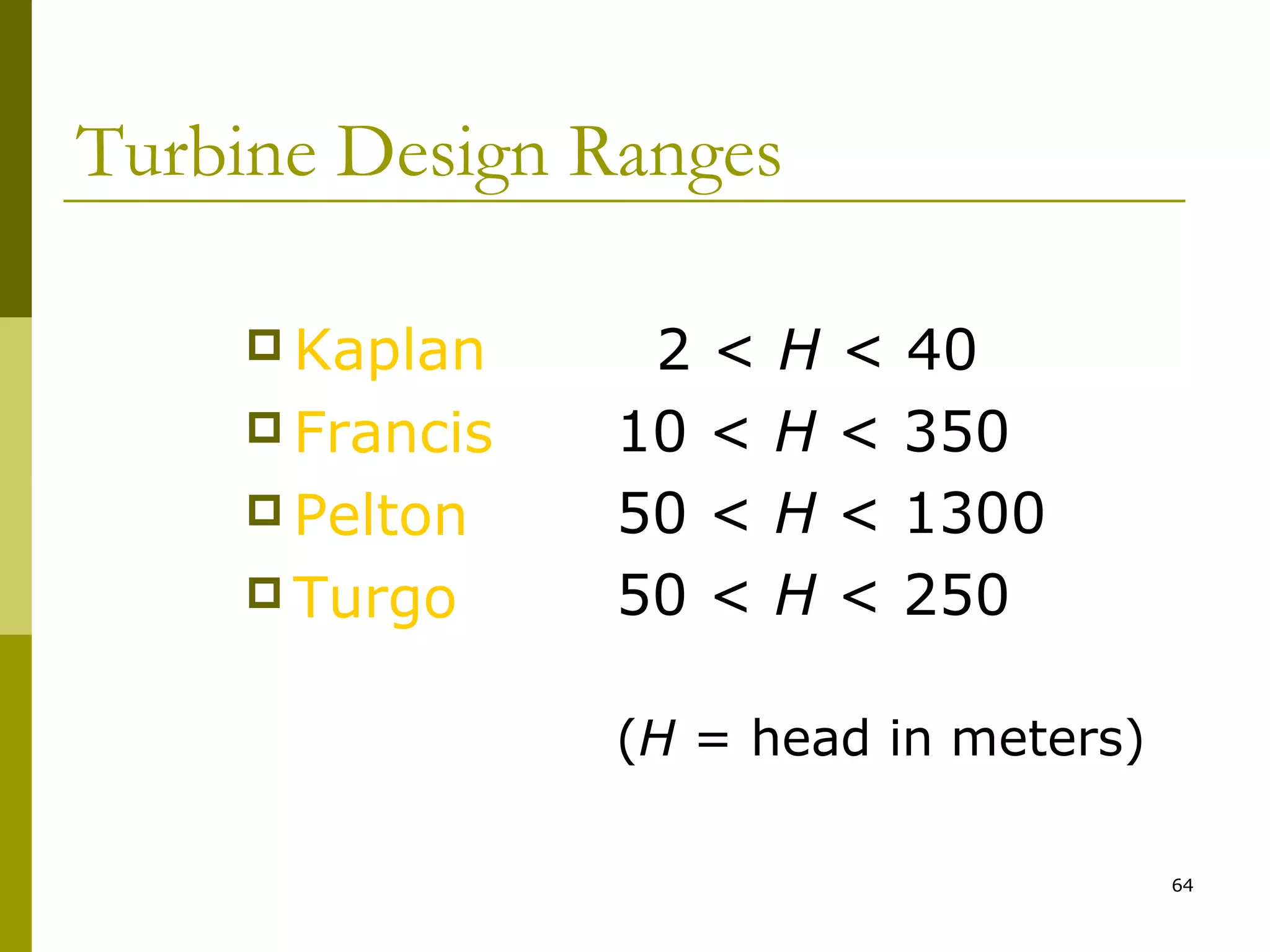
Turbine Design Ranges
 Kaplan
 Francis
 Pelton
 Turgo
2 < H < 40
10 < H < 350
50 < H < 1300
50 < H < 250
(H = head in meters)
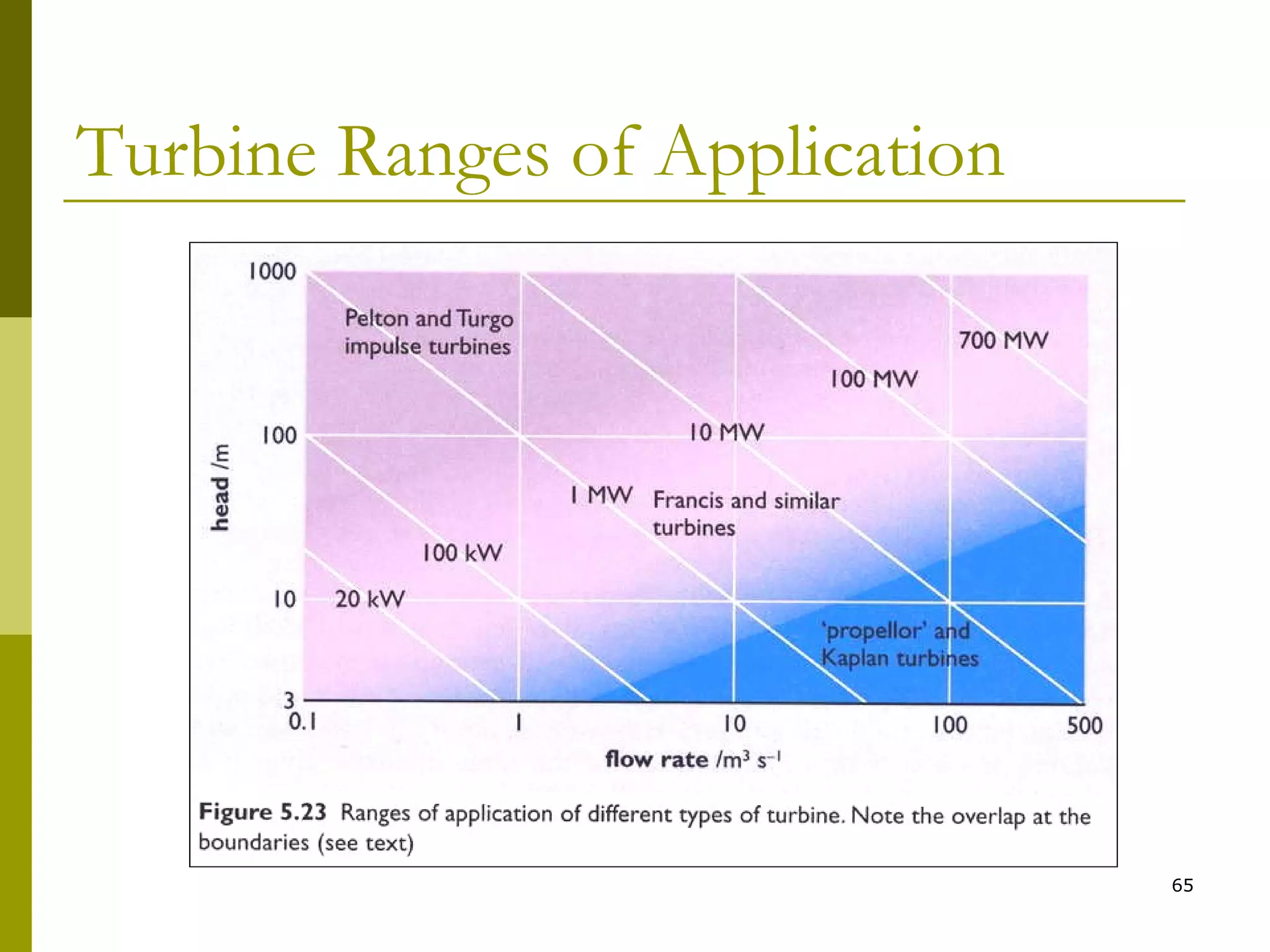
65
Turbine Ranges of Application
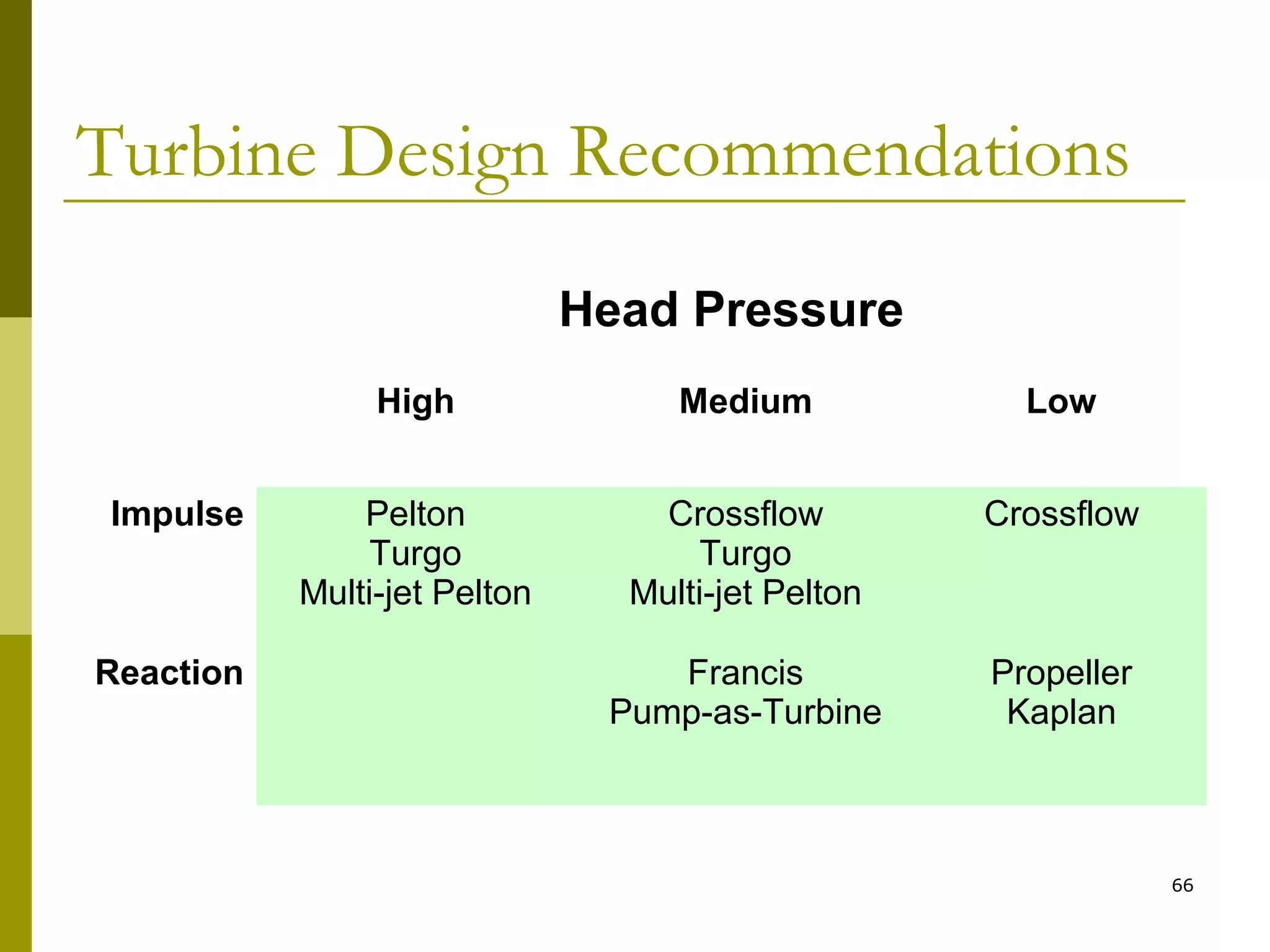
66
Turbine Design Recommendations
Head Pressure
High Medium Low
Impulse Pelton
Turgo
Multi-jet Pelton
Crossflow
Turgo
Multi-jet Pelton
Crossflow
Reaction Francis
Pump-as-Turbine
Propeller
Kaplan
67
Hydro Power Calculations
68
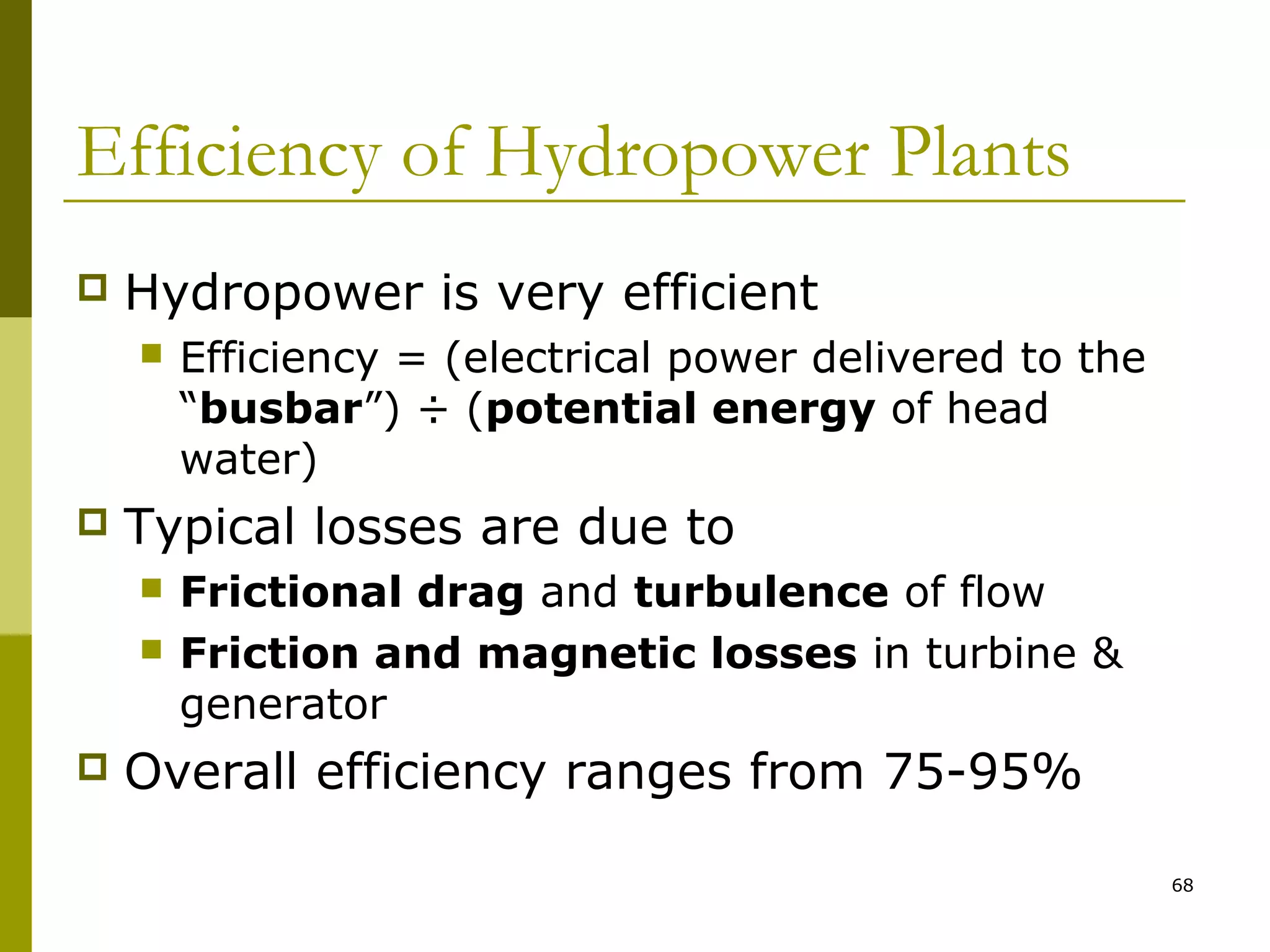
Efficiency of Hydropower Plants
 Hydropower is very efficient
 Efficiency = (electrical power delivered to the
“busbar”) ÷ (potential energy of head
water)
 Typical losses are due to
 Frictional drag and turbulence of flow
 Friction and magnetic losses in turbine &
generator
 Overall efficiency ranges from 75-95%
69
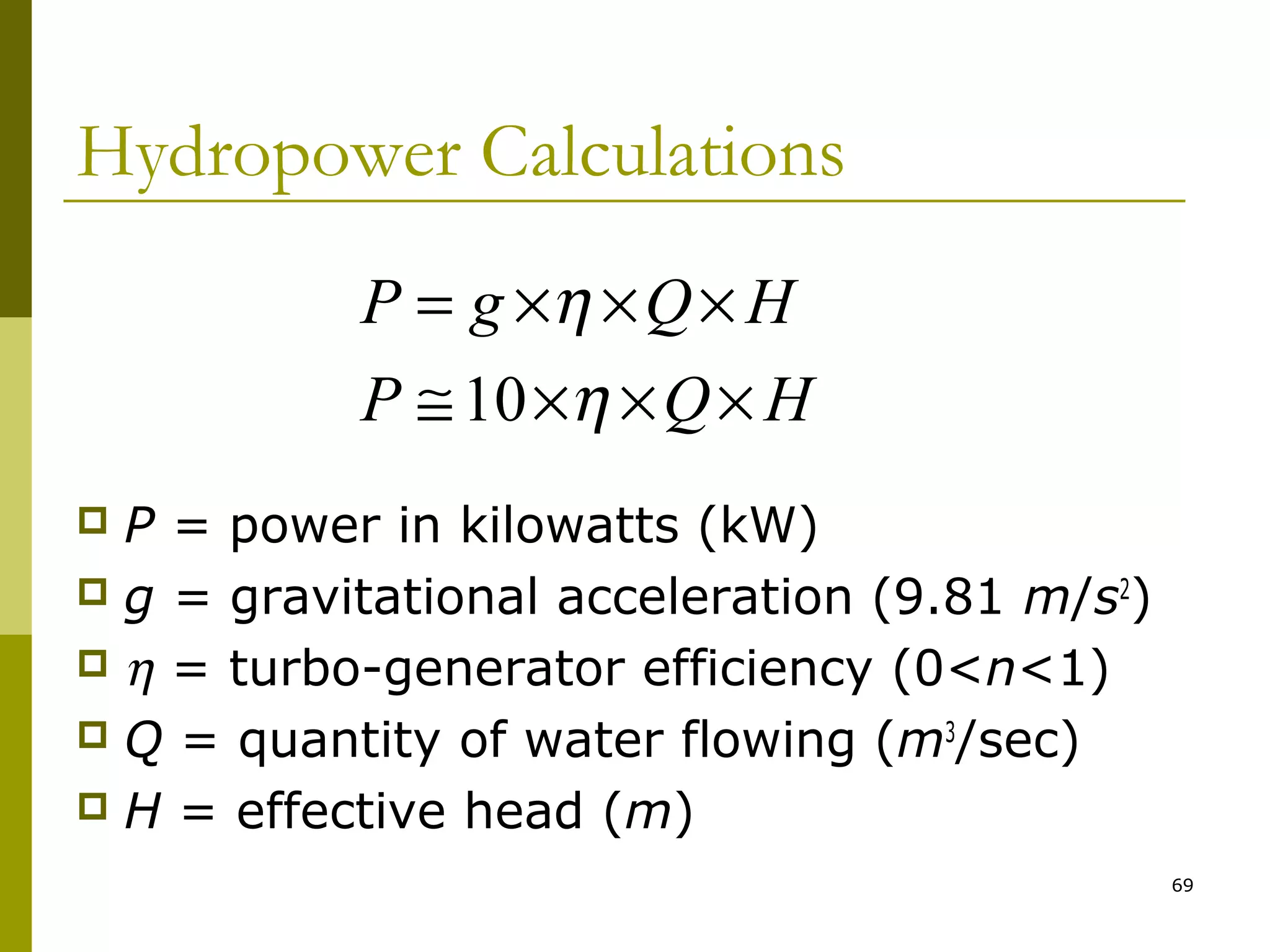
Hydropower Calculations
 P = power in kilowatts (kW)
 g = gravitational acceleration (9.81 m/s2
)
 η = turbo-generator efficiency (0<n<1)
 Q = quantity of water flowing (m3
/sec)
 H = effective head (m)
HQP
HQgP
×××≅
×××=
η
η
10
70
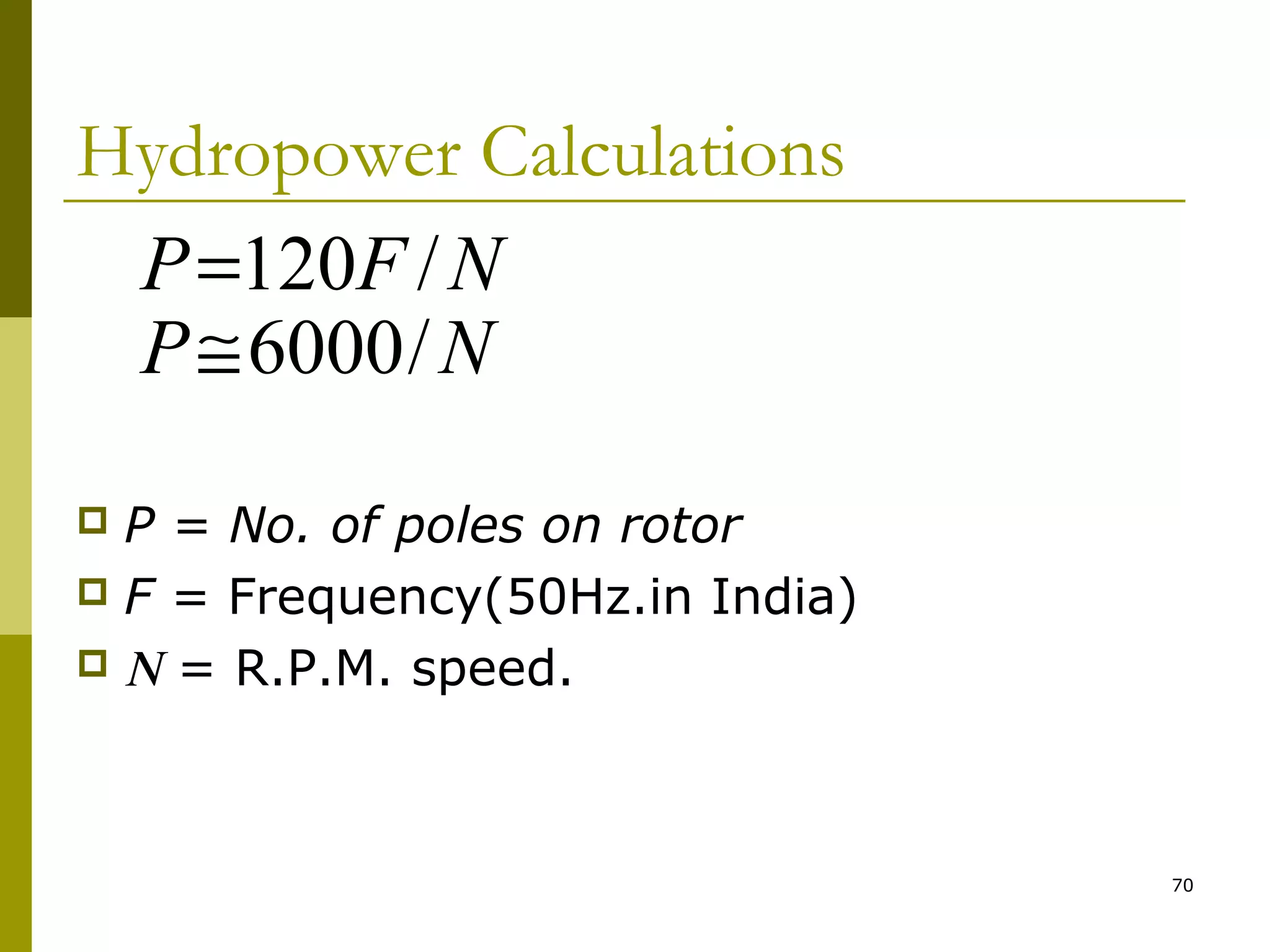
Hydropower Calculations
 P = No. of poles on rotor
 F = Frequency(50Hz.in India)
 Ν = R.P.M. speed.
NP
NFP
/6000
/120
≅
=
71
Economics of Hydropower
72
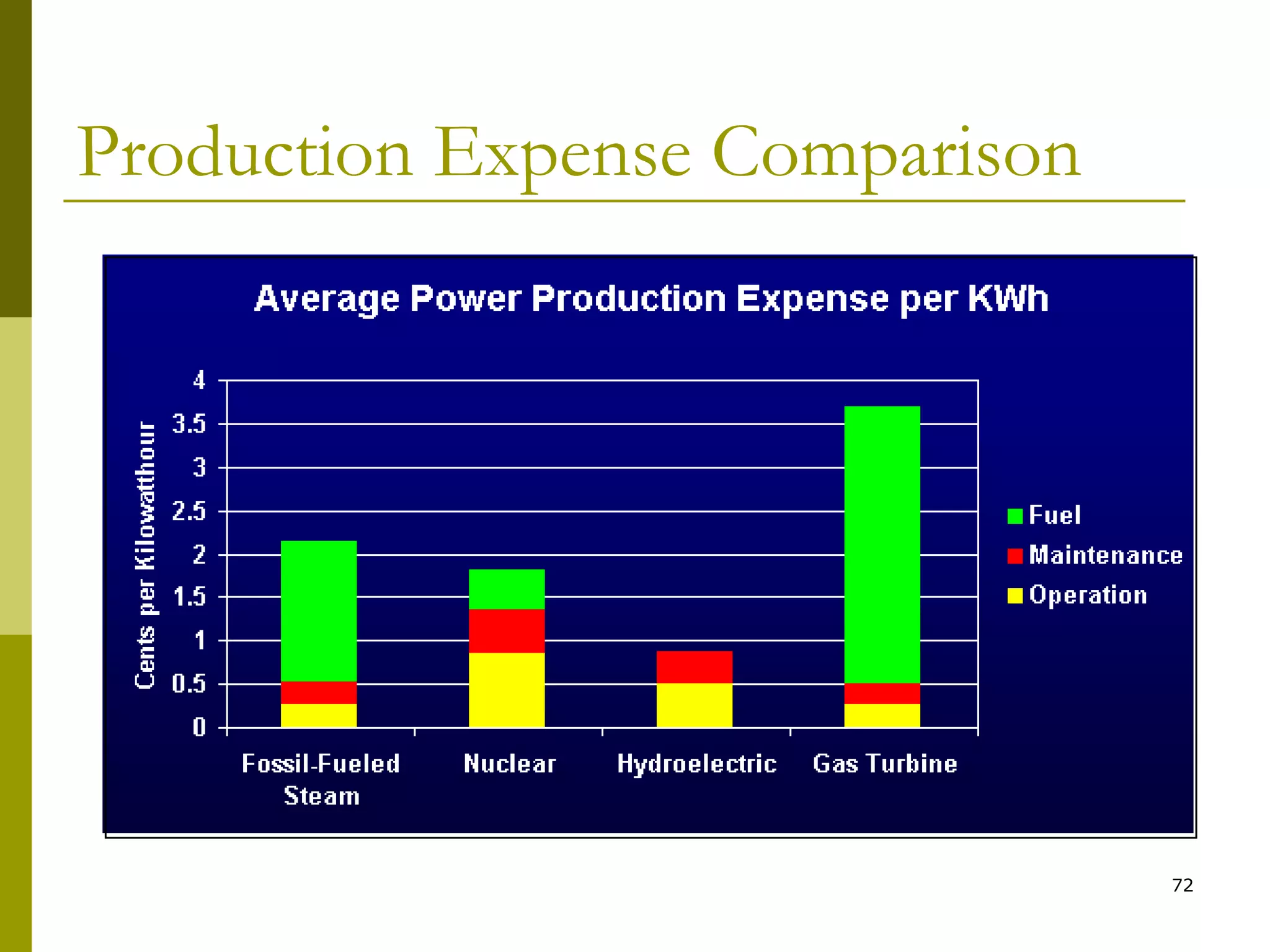
Production Expense Comparison
73
Future of Hydropower
74
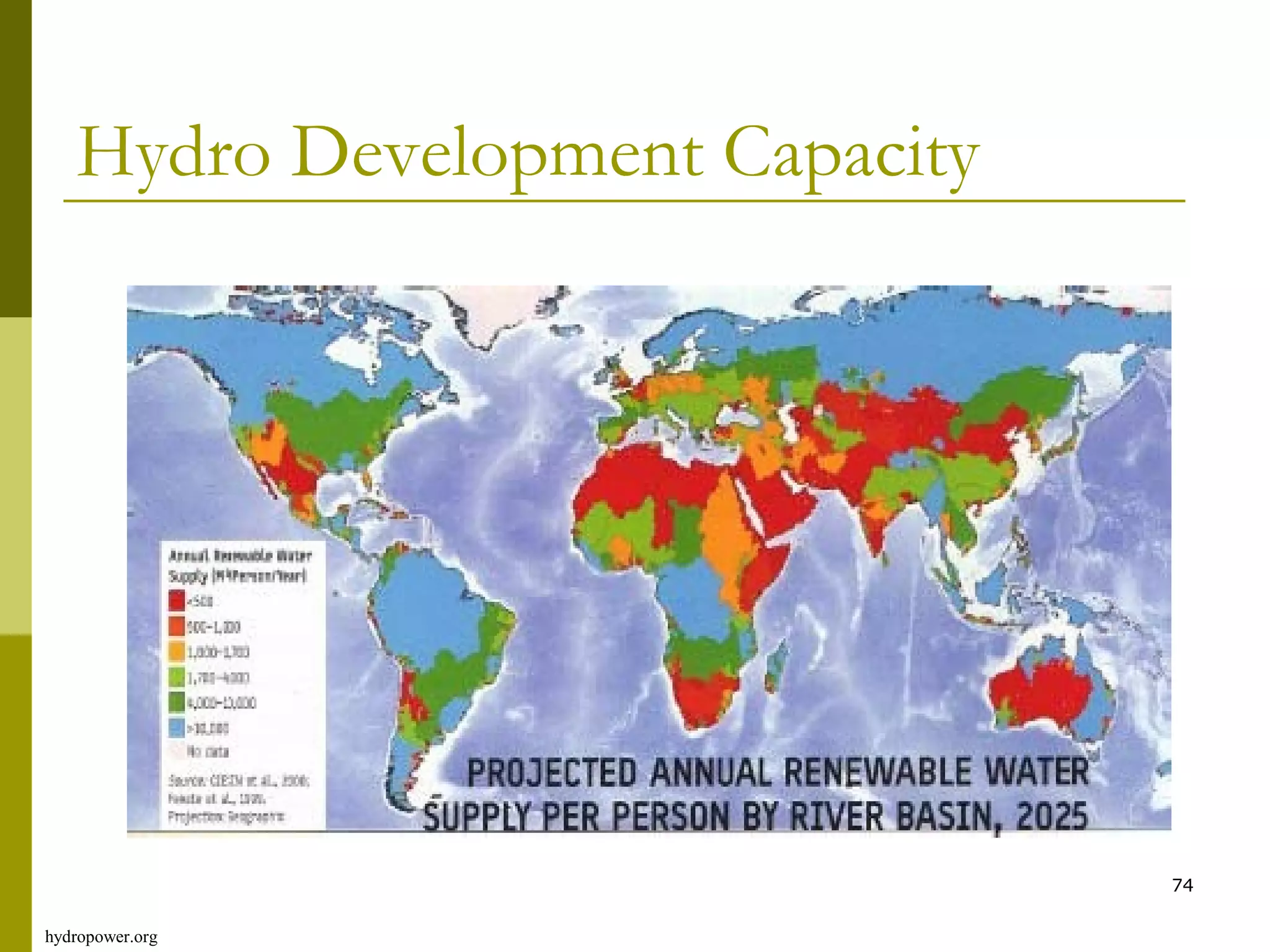
Hydro Development Capacity
hydropower.org
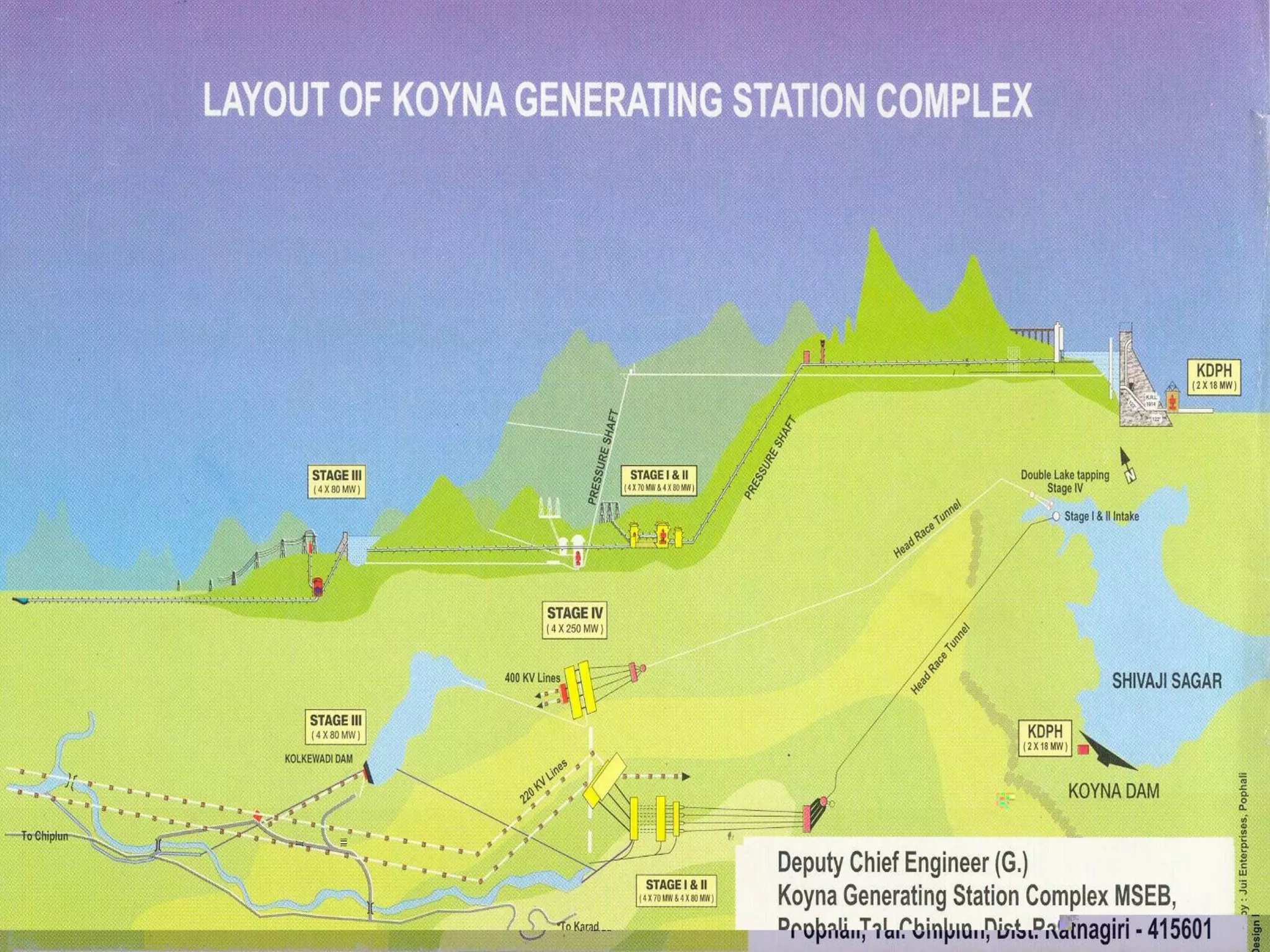
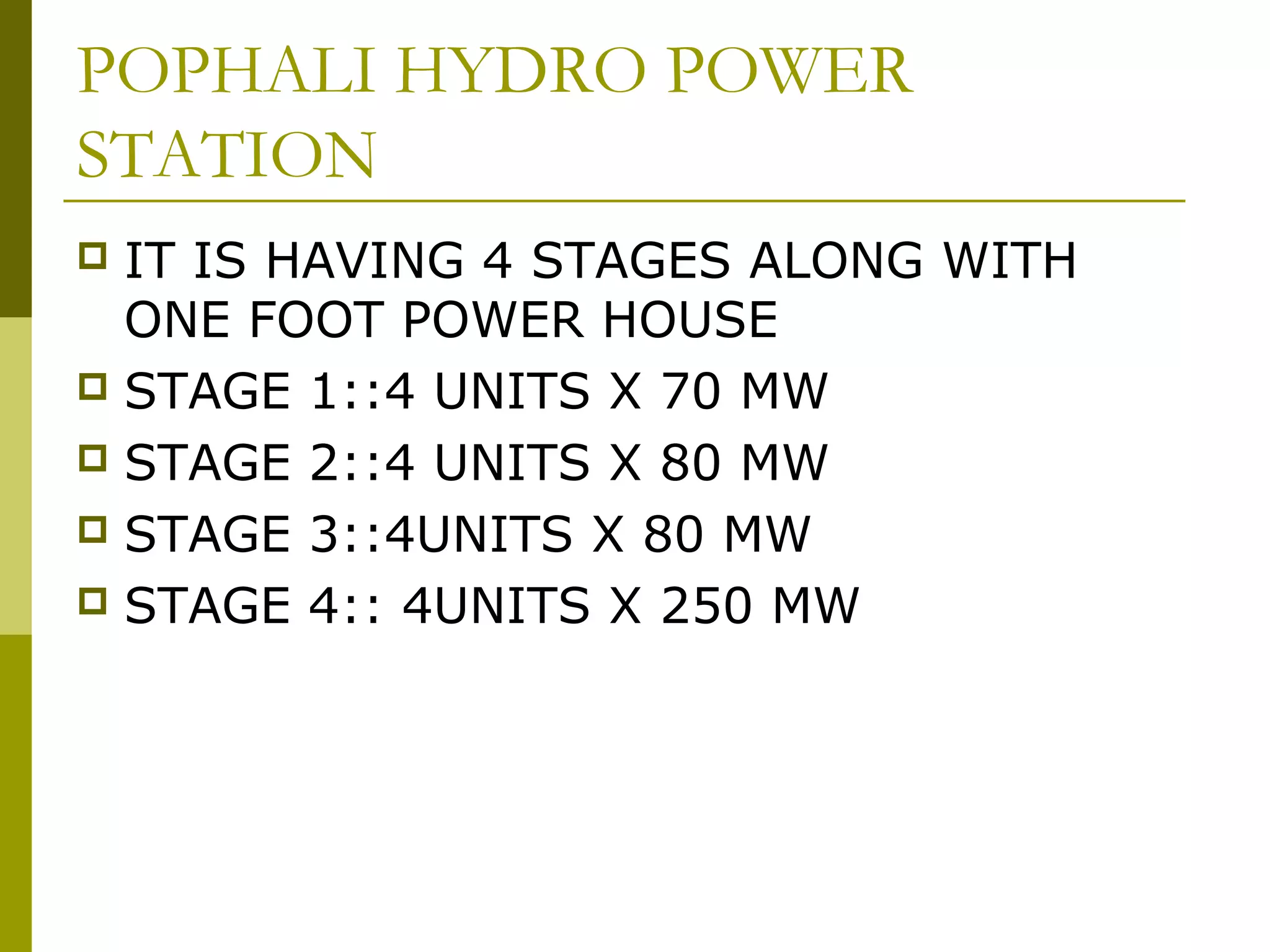
POPHALI HYDRO POWER
STATION
 IT IS HAVING 4 STAGES ALONG WITH
ONE FOOT POWER HOUSE
 STAGE 1::4 UNITS X 70 MW
 STAGE 2::4 UNITS X 80 MW
 STAGE 3::4UNITS X 80 MW
 STAGE 4:: 4UNITS X 250 MW
TEMINOLOGIES
 DAM
 STORAGE
 FORE BAY
 INTAKE
 PENSTOCK
 SURGE TANK
 SPILLWAY
 TAIL RACE
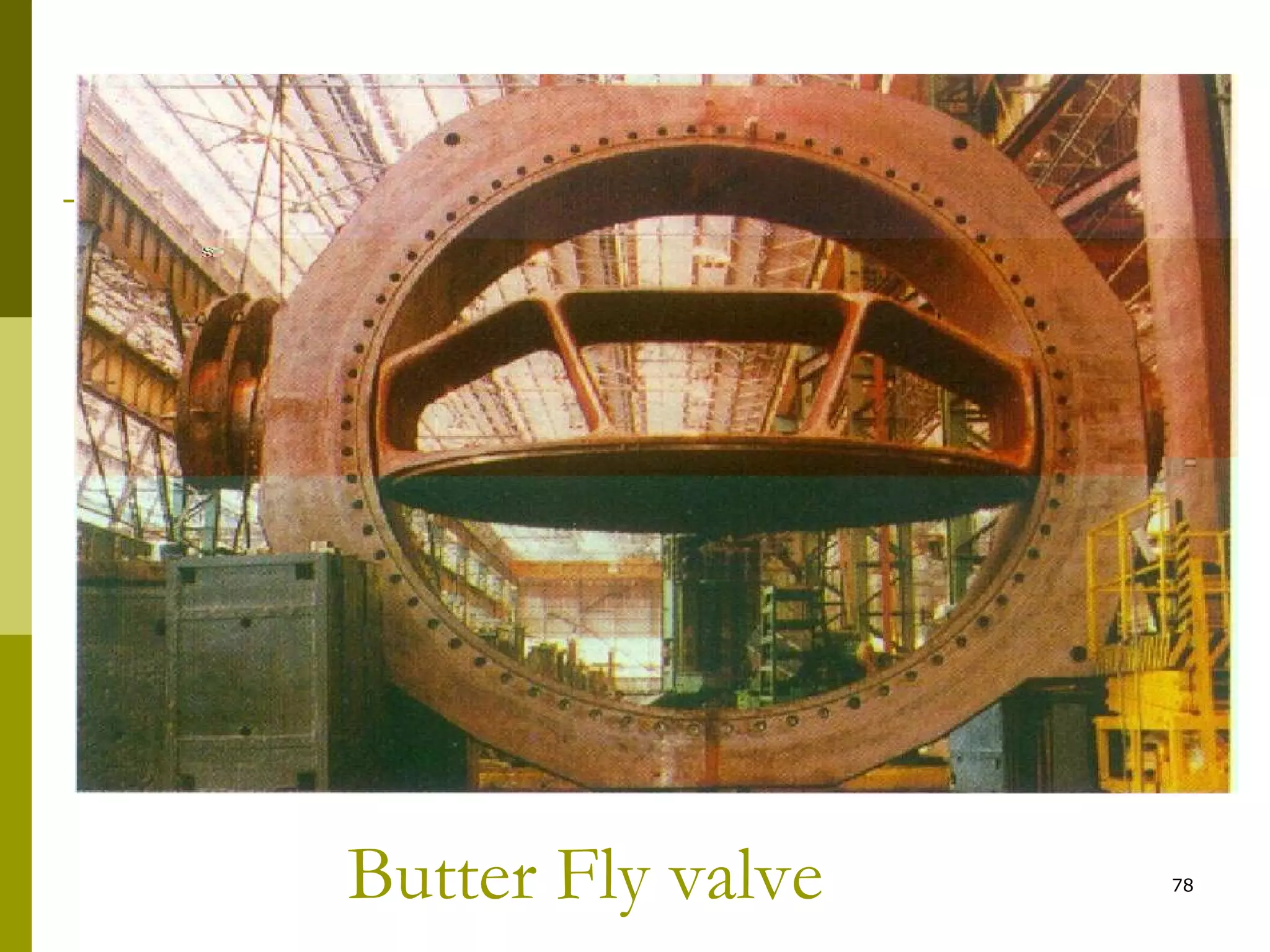
Butter Fly valve 78
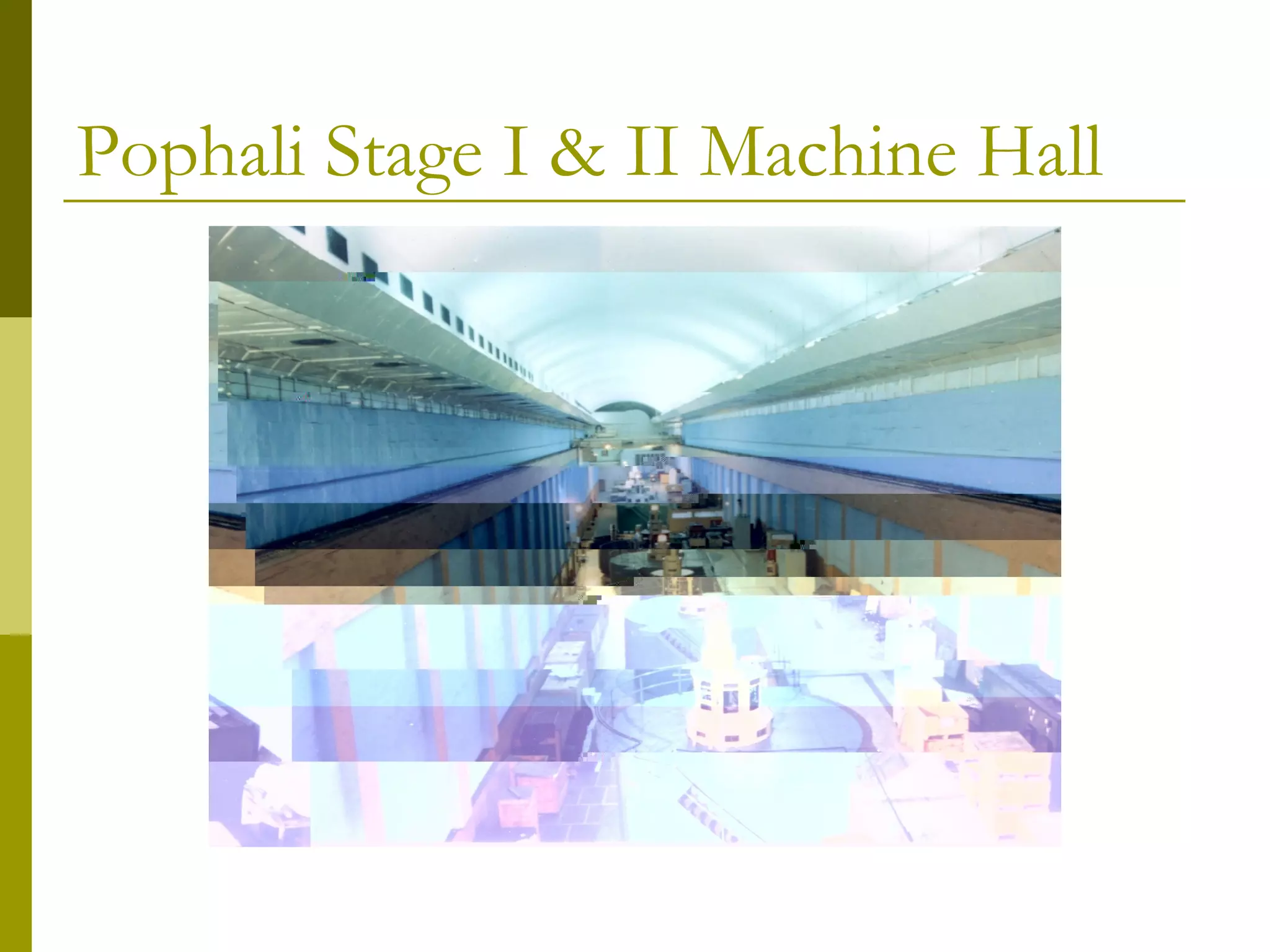
Pophali Stage I & II Machine Hall
80
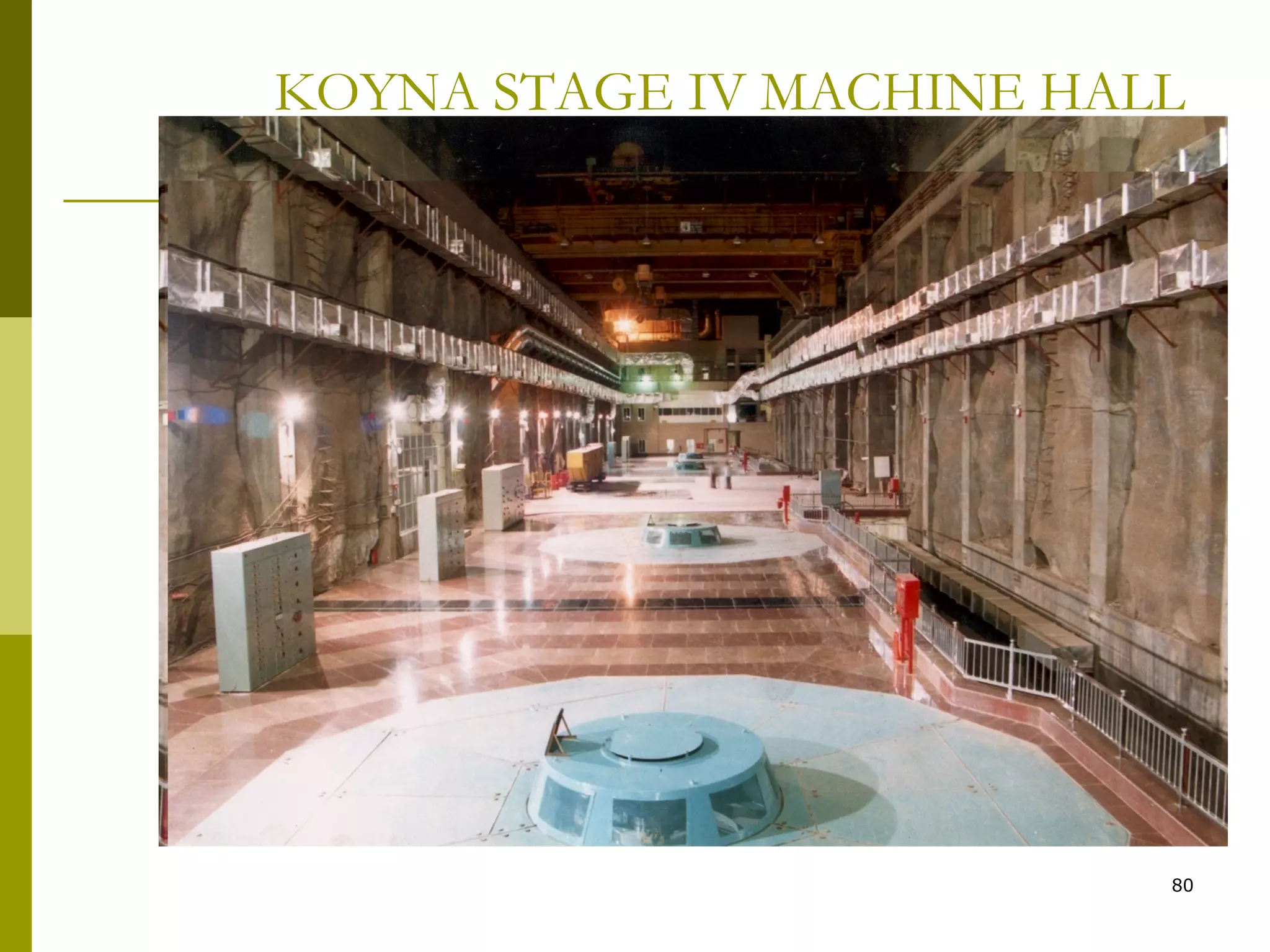
KOYNA STAGE IV MACHINE HALL
81
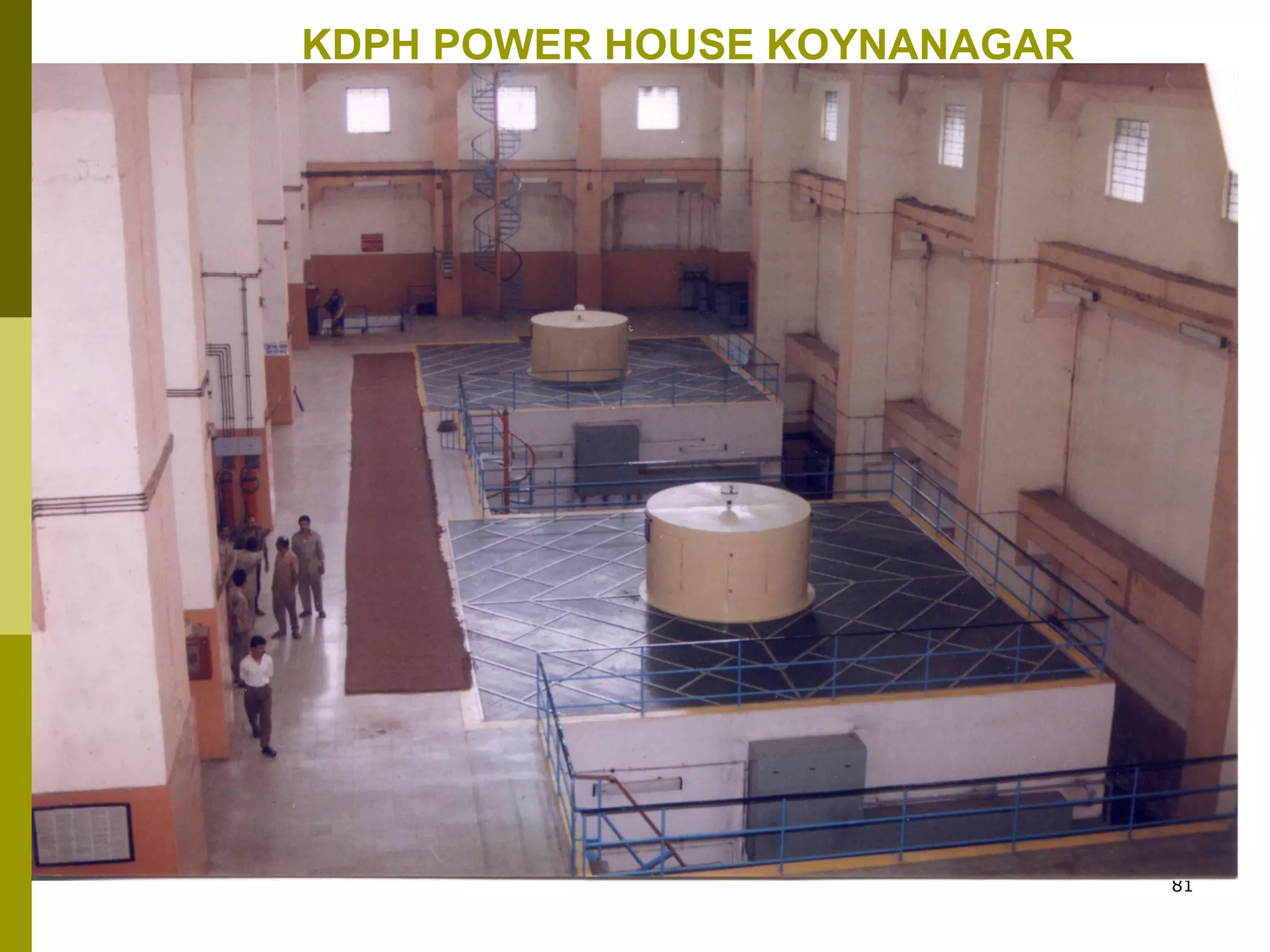
KDPH POWER HOUSE KOYNANAGAR
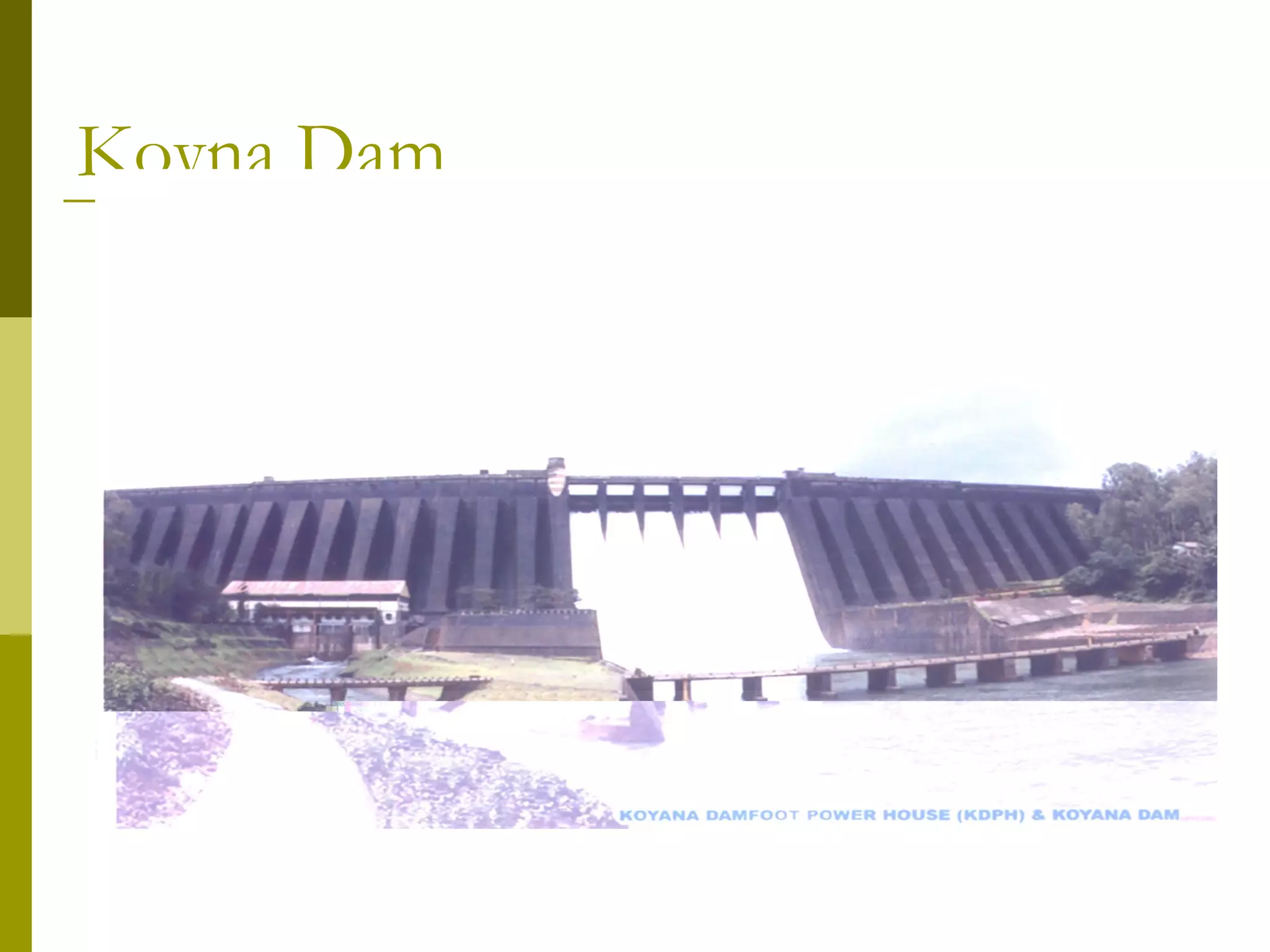
Koyna Dam
Welcome to All 86
Thank You!
87

Best ppt onRenewable & hydropower

Editor's Notes

  • #48 Efficiency losses from water evaporation at upper reservoir and usual mechanical efficiency losses http://www.xcelenergy.com/XLWEB/CDA/0,3080,1-1-1_1875_4797_4010-3663-2_209_376-0,00.html http://en.wikipedia.org/wiki/Pumped-storage_hydroelectricity