By Jagjit Khosla
By Dr. Jagjit Khosla
Definition
- Blood pH <7.35 (Acidemia)
- [HCO3
-]
- [PaCO2]
(1.2 mm Hg fall in [PaCO2] for every 1 meq/L reduction in [HCO3
-])
By Dr. Jagjit Khosla
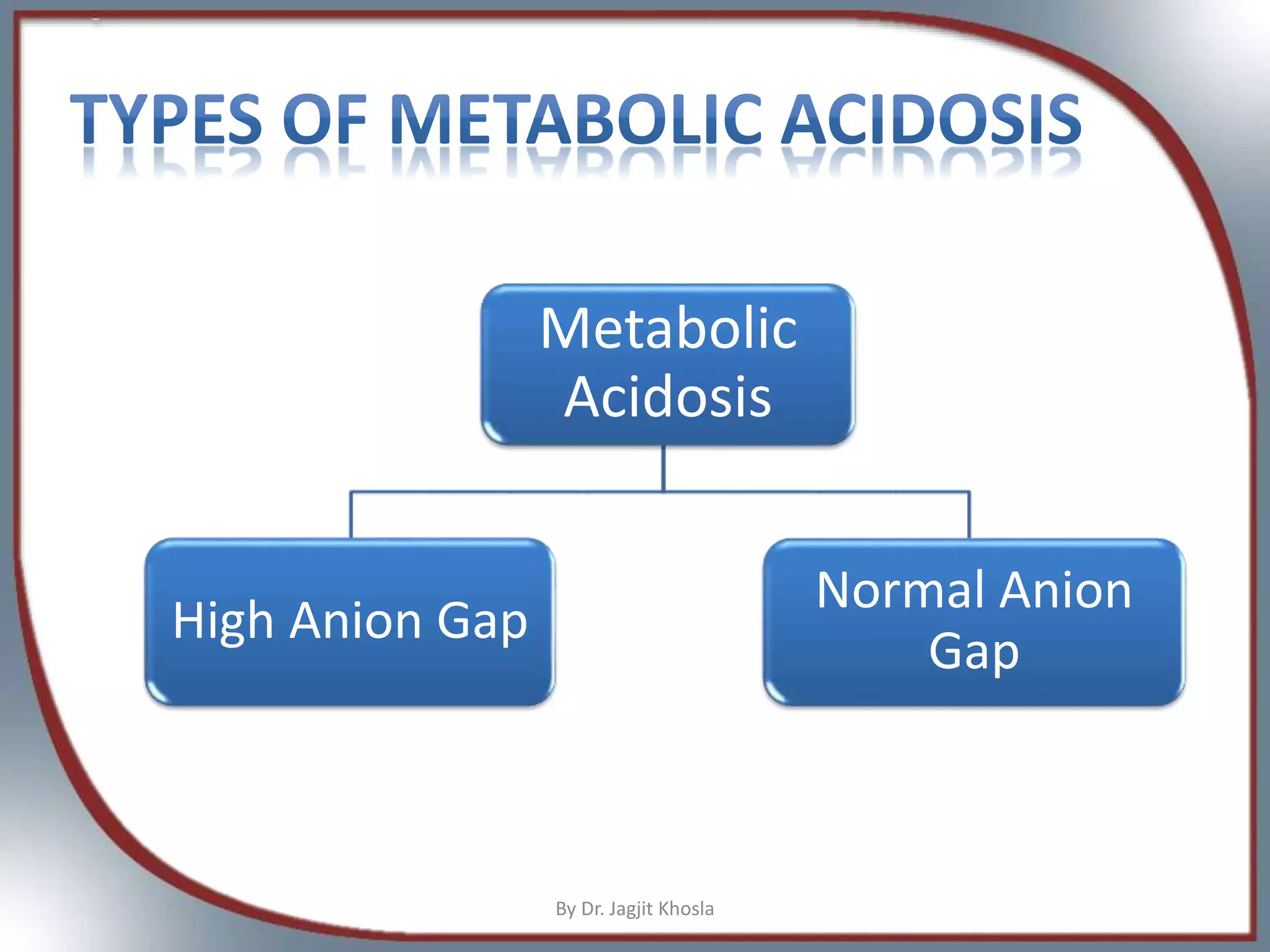
Metabolic
Acidosis
High Anion Gap
Normal Anion
Gap
By Dr. Jagjit Khosla
Na+ + Unmeasured cations = Cl- + HCO3
- + Unmeasured anions
Or, Unmeasured anions – Unmeasured cations = Na+ - (Cl- + HCO3
-)
Anion Gap = Na+ - (Cl- + HCO3
-)
Definition
Anion gap is Quantity of anions not balanced by cations
- usually due to the NEGATIVELY CHARGED PLASMA PROTEINS as the charges
of the other unmeasured cations and anions tend to balance out.
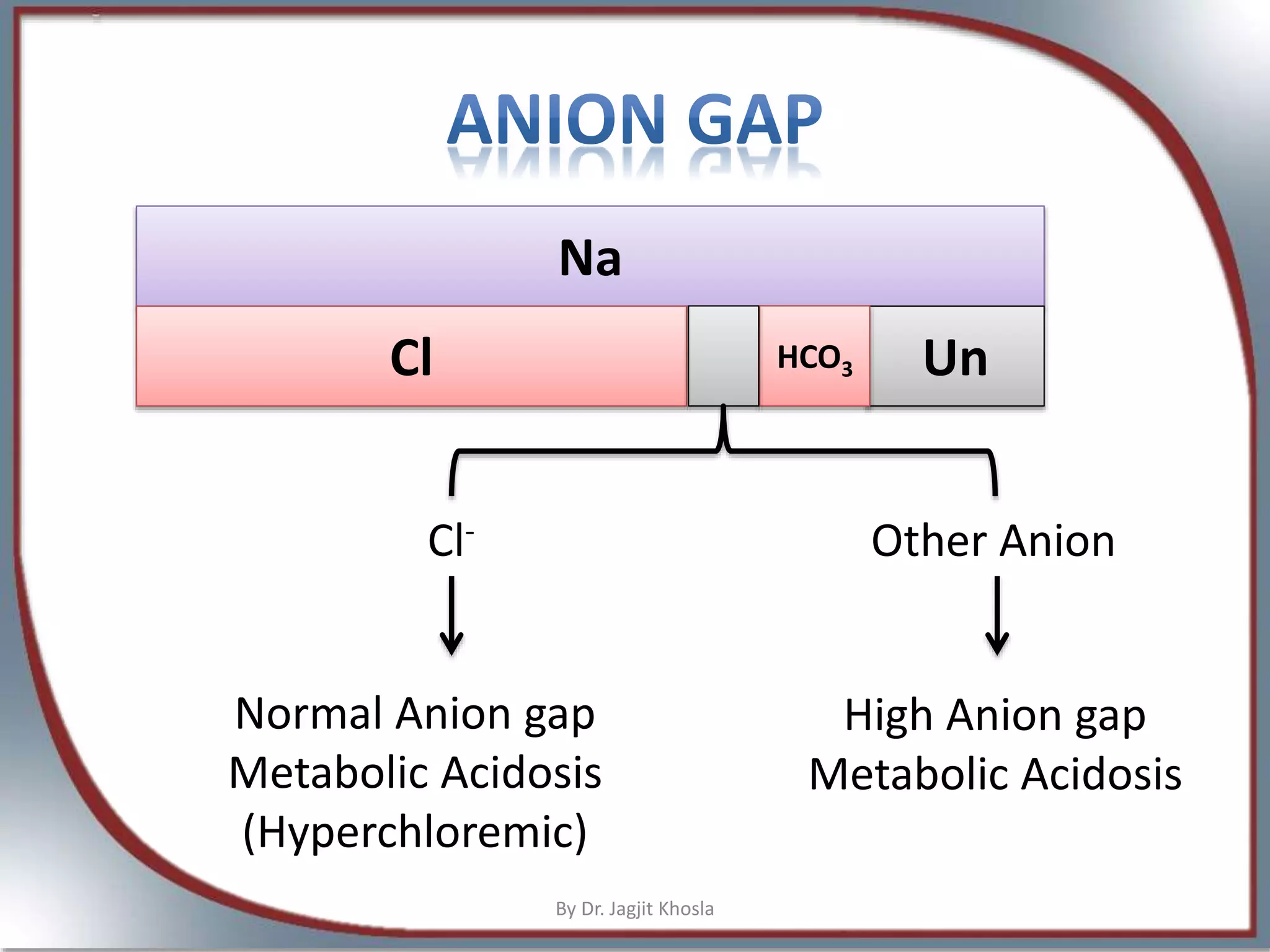
Na
Cl HCO3 Un
Normal Anion Gap
(10 – 12 mM/L)
Note : - Adjust for HypoalbuminemiaBy Dr. Jagjit Khosla
If an acid is added to blood
Anion H+ Na+ HCO3
-+
Na
Cl HCO3 UnHCO3
By Dr. Jagjit Khosla
Na
Cl UnHCO3
Cl- Other Anion
Normal Anion gap
Metabolic Acidosis
(Hyperchloremic)
High Anion gap
Metabolic Acidosis
By Dr. Jagjit Khosla
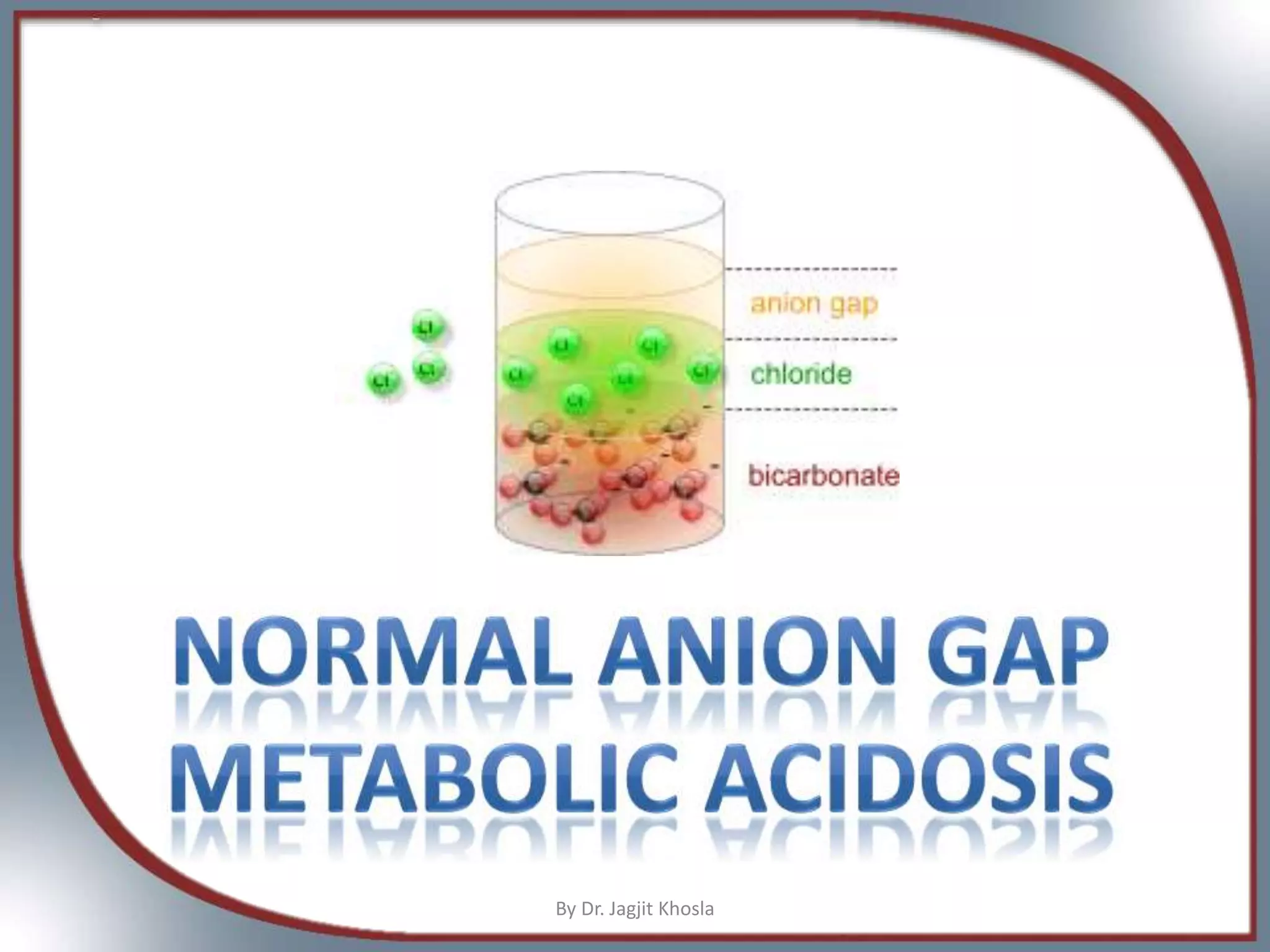
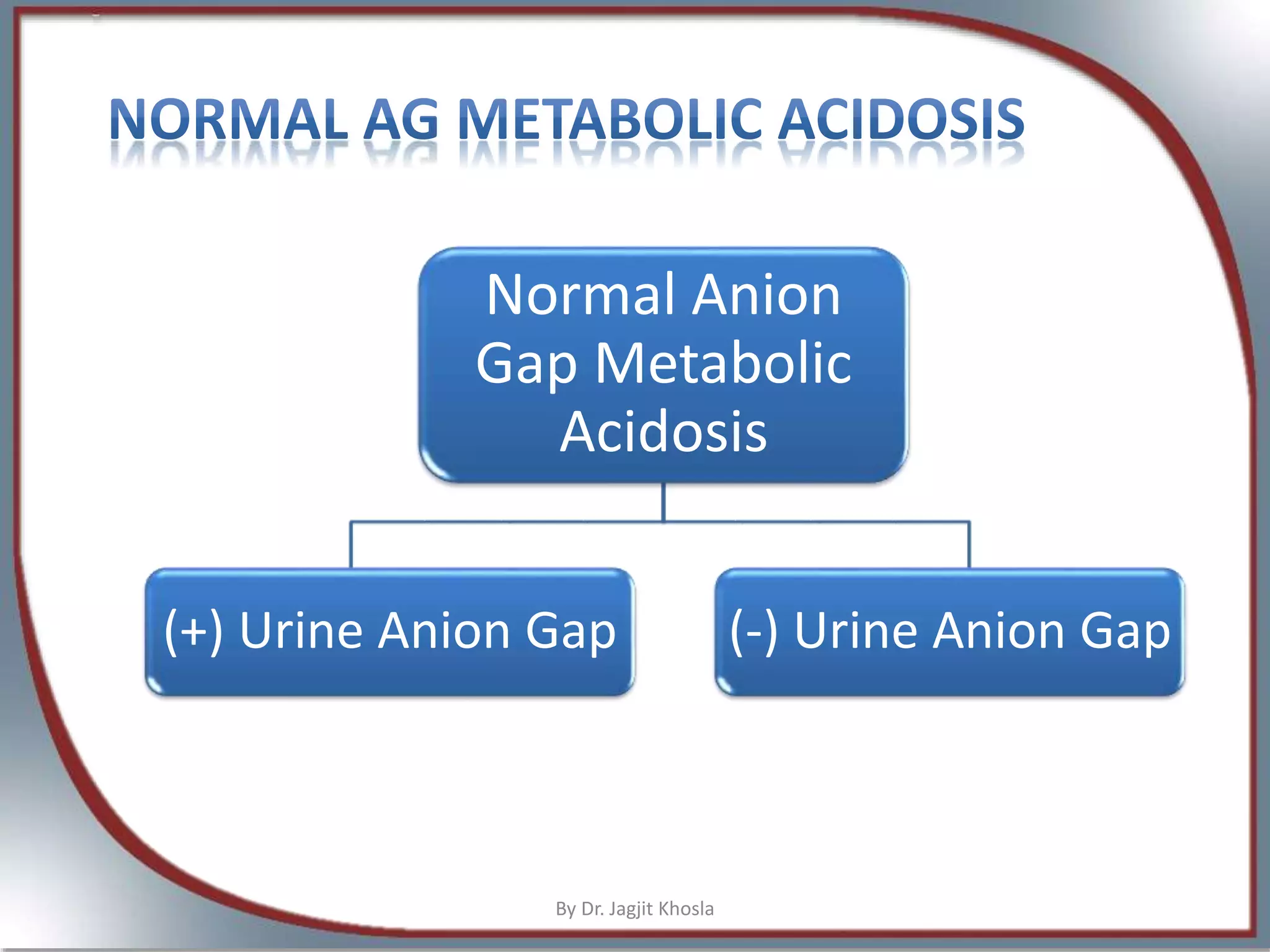
Normal Anion
Gap Metabolic
Acidosis
(+) Urine Anion Gap (-) Urine Anion Gap
By Dr. Jagjit Khosla
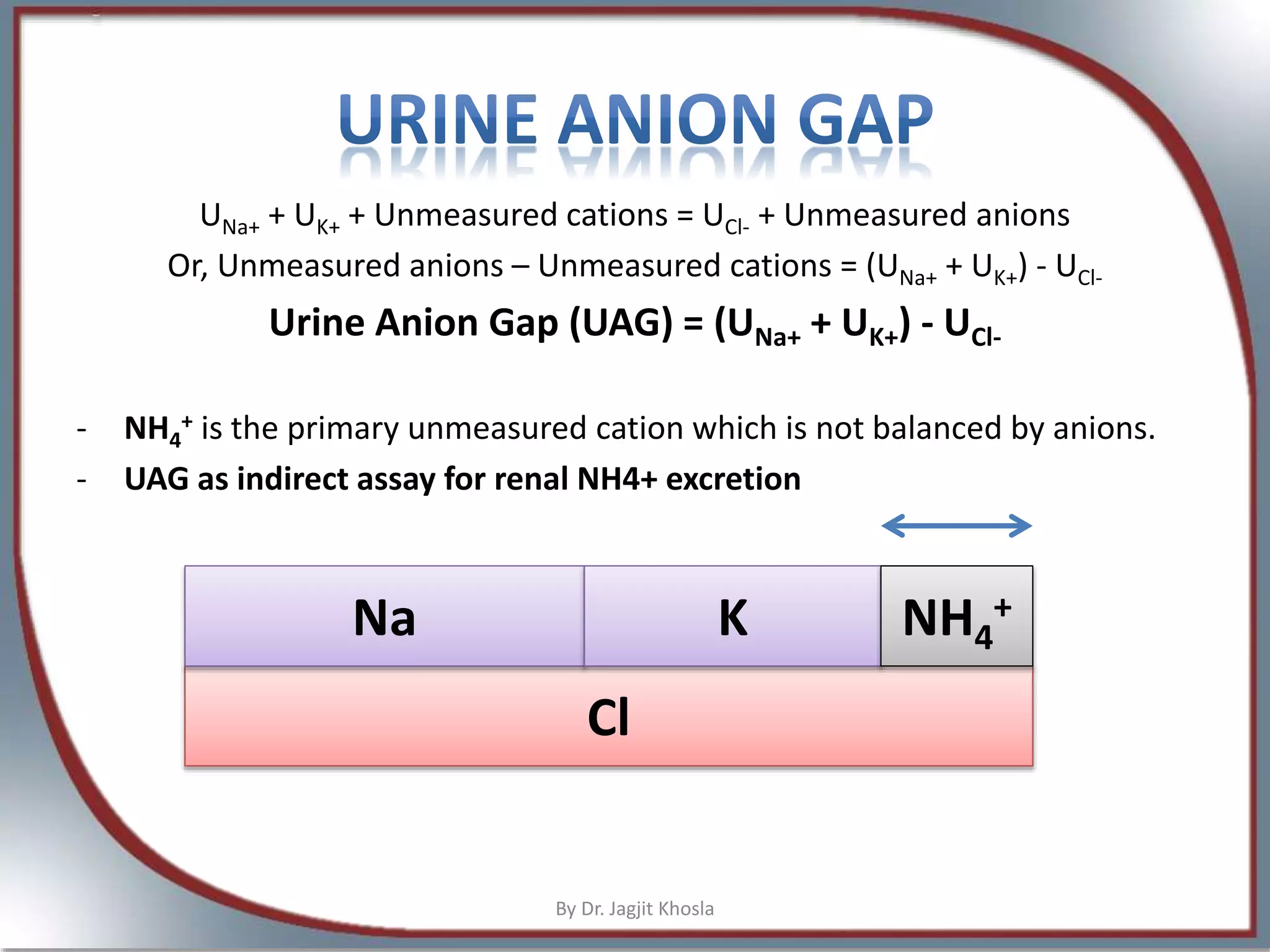
Cl
UNa+ + UK+ + Unmeasured cations = UCl- + Unmeasured anions
Or, Unmeasured anions – Unmeasured cations = (UNa+ + UK+) - UCl-
Urine Anion Gap (UAG) = (UNa+ + UK+) - UCl-
- NH4
+ is the primary unmeasured cation which is not balanced by anions.
- UAG as indirect assay for renal NH4+ excretion
Na K NH4
+
By Dr. Jagjit Khosla
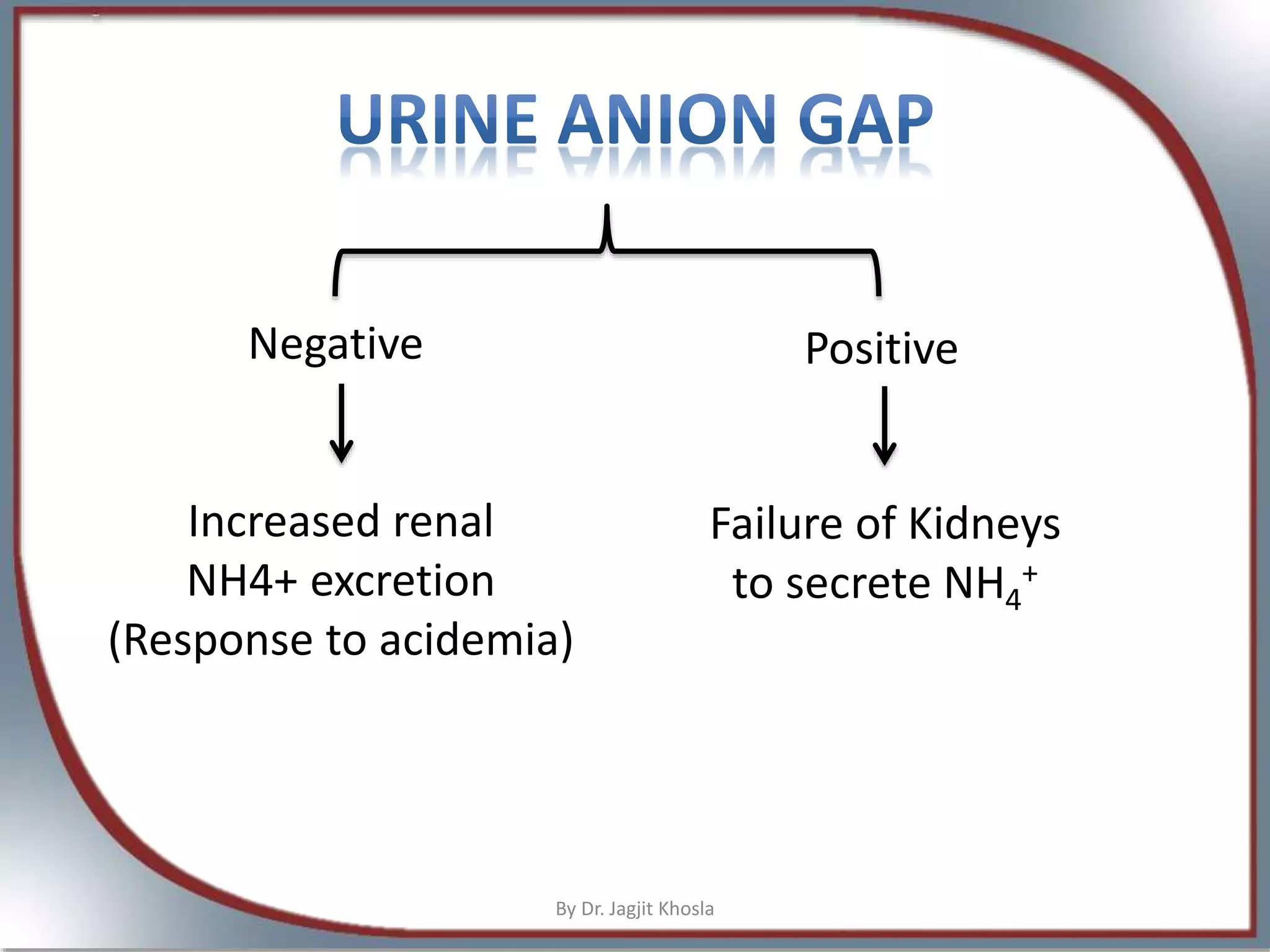
Negative Positive
Increased renal
NH4+ excretion
(Response to acidemia)
Failure of Kidneys
to secrete NH4
+
By Dr. Jagjit Khosla
GI loss of HCO3
Ingestion
Dilutional
Post hypocapnia
1
2
3
4
Type II RTA5
By Dr. Jagjit Khosla
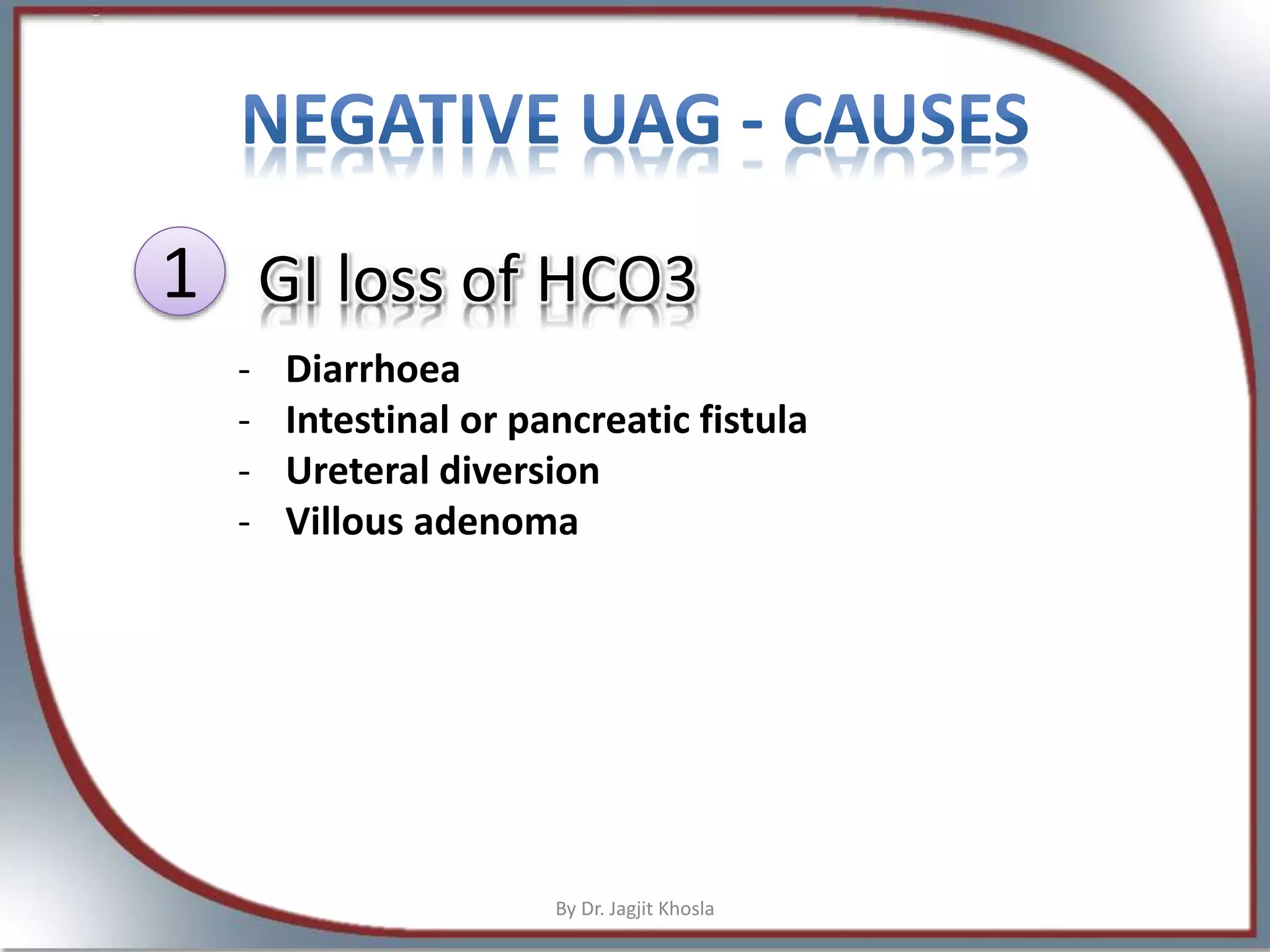
GI loss of HCO31
- Diarrhoea
- Intestinal or pancreatic fistula
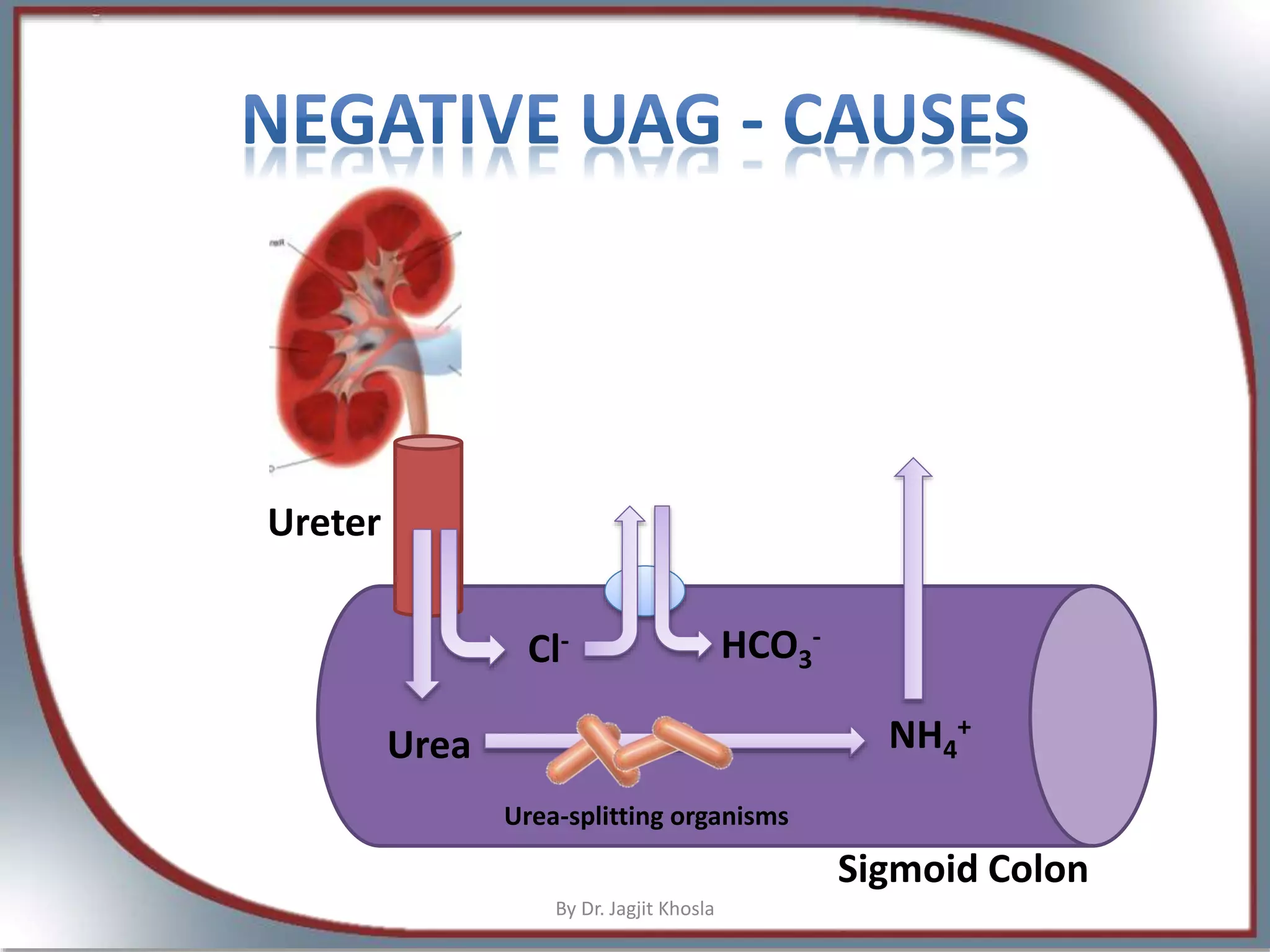
- Ureteral diversion
- Villous adenoma
By Dr. Jagjit Khosla
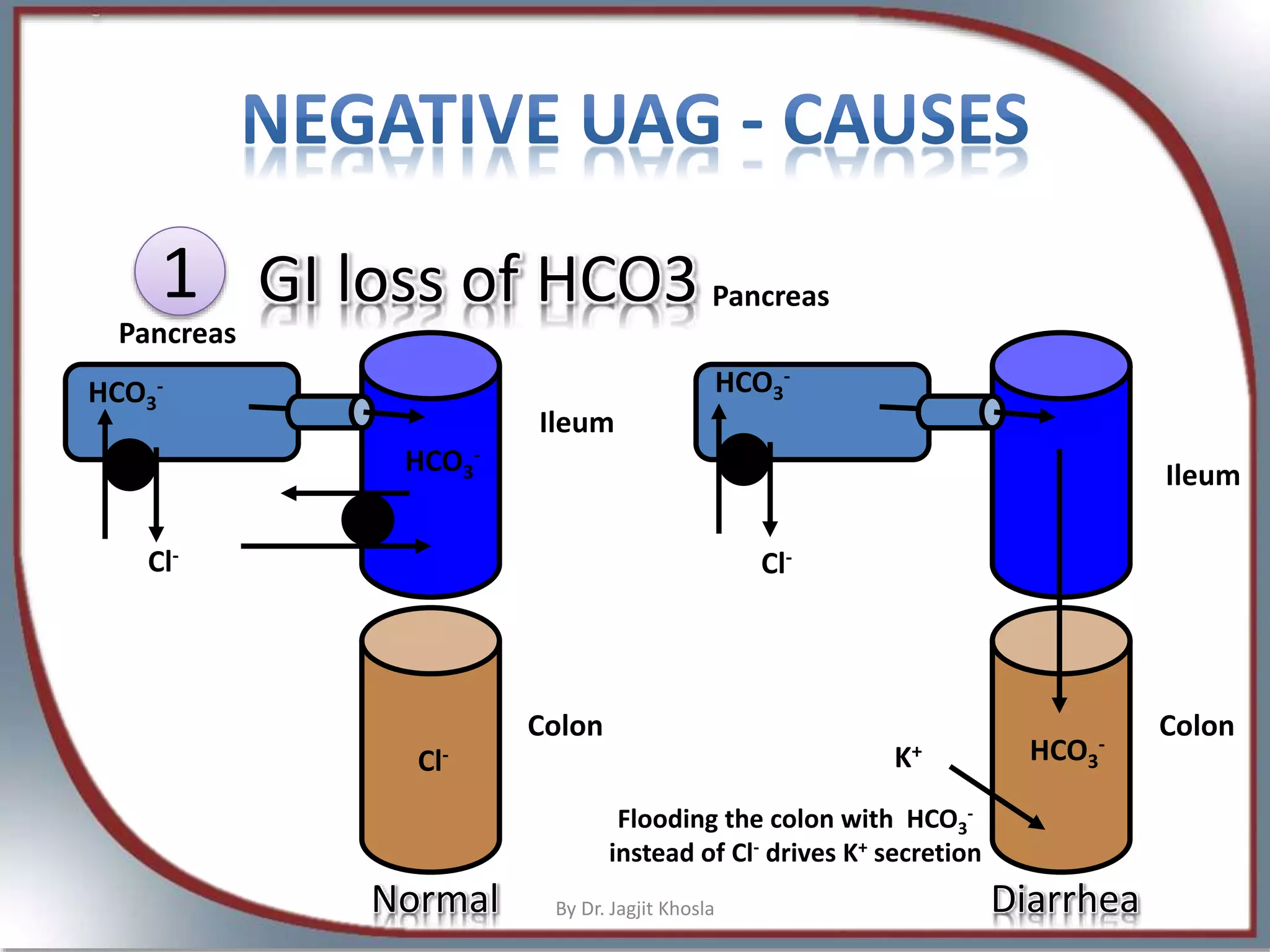
GI loss of HCO31
Pancreas
Ileum
Colon
Pancreas
Ileum
Colon
HCO3
-
HCO3
-
Cl-
HCO3
-
Cl-
K+ HCO3
-
Normal Diarrhea
Cl-
Flooding the colon with HCO3
-
instead of Cl- drives K+ secretion
By Dr. Jagjit Khosla
Cl-
Urea
Ureter
HCO3
-
NH4
+
Sigmoid Colon
Urea-splitting organisms
By Dr. Jagjit Khosla
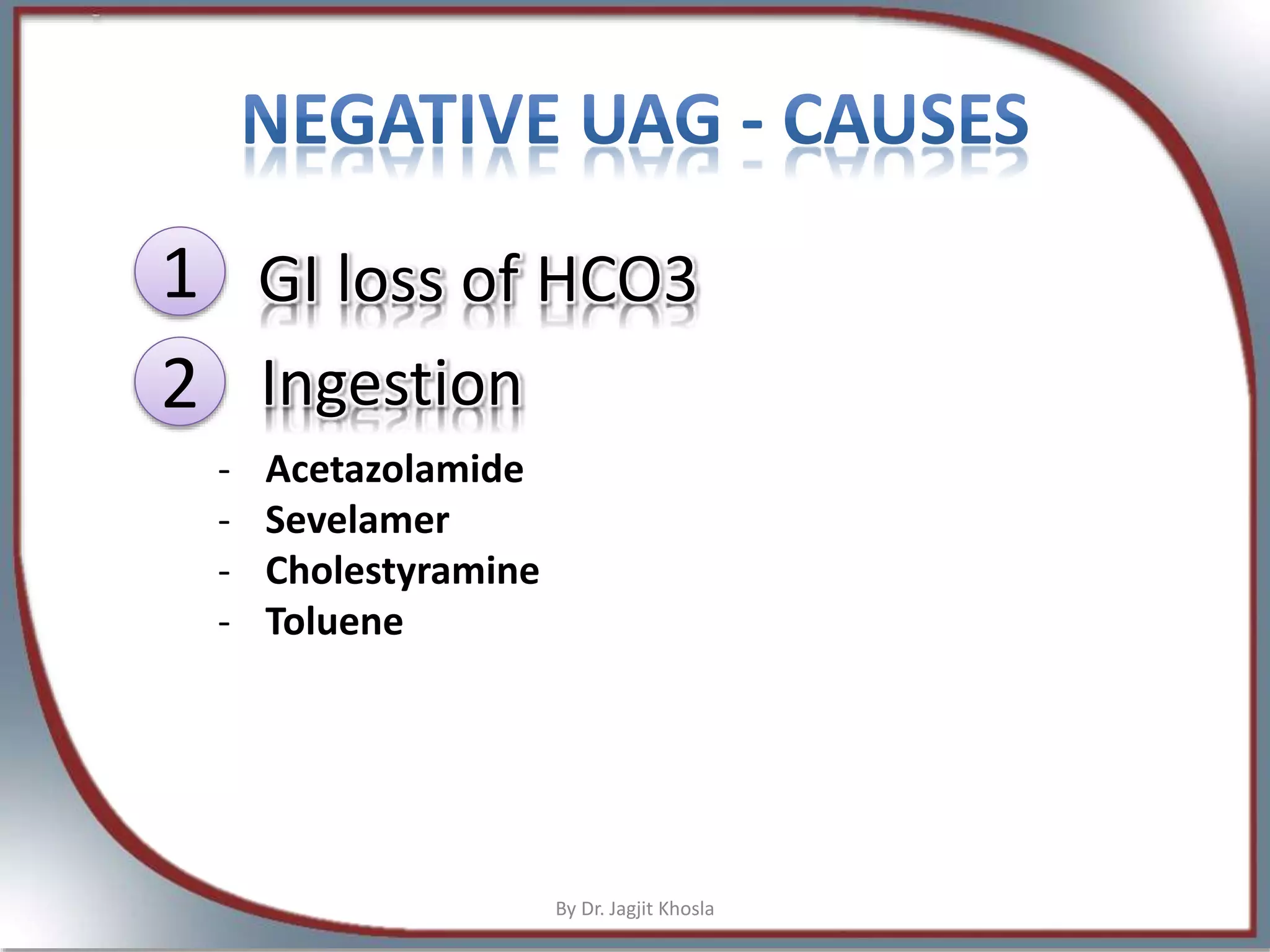
GI loss of HCO3
Ingestion
1
2
- Acetazolamide
- Sevelamer
- Cholestyramine
- Toluene
By Dr. Jagjit Khosla
GI loss of HCO3
Ingestion
Dilutional
1
2
3
- Due to rapid infusion of bicarbonate-free iv fluids
By Dr. Jagjit Khosla
GI loss of HCO3
Ingestion
Dilutional
Post hypocapnia
1
2
3
4
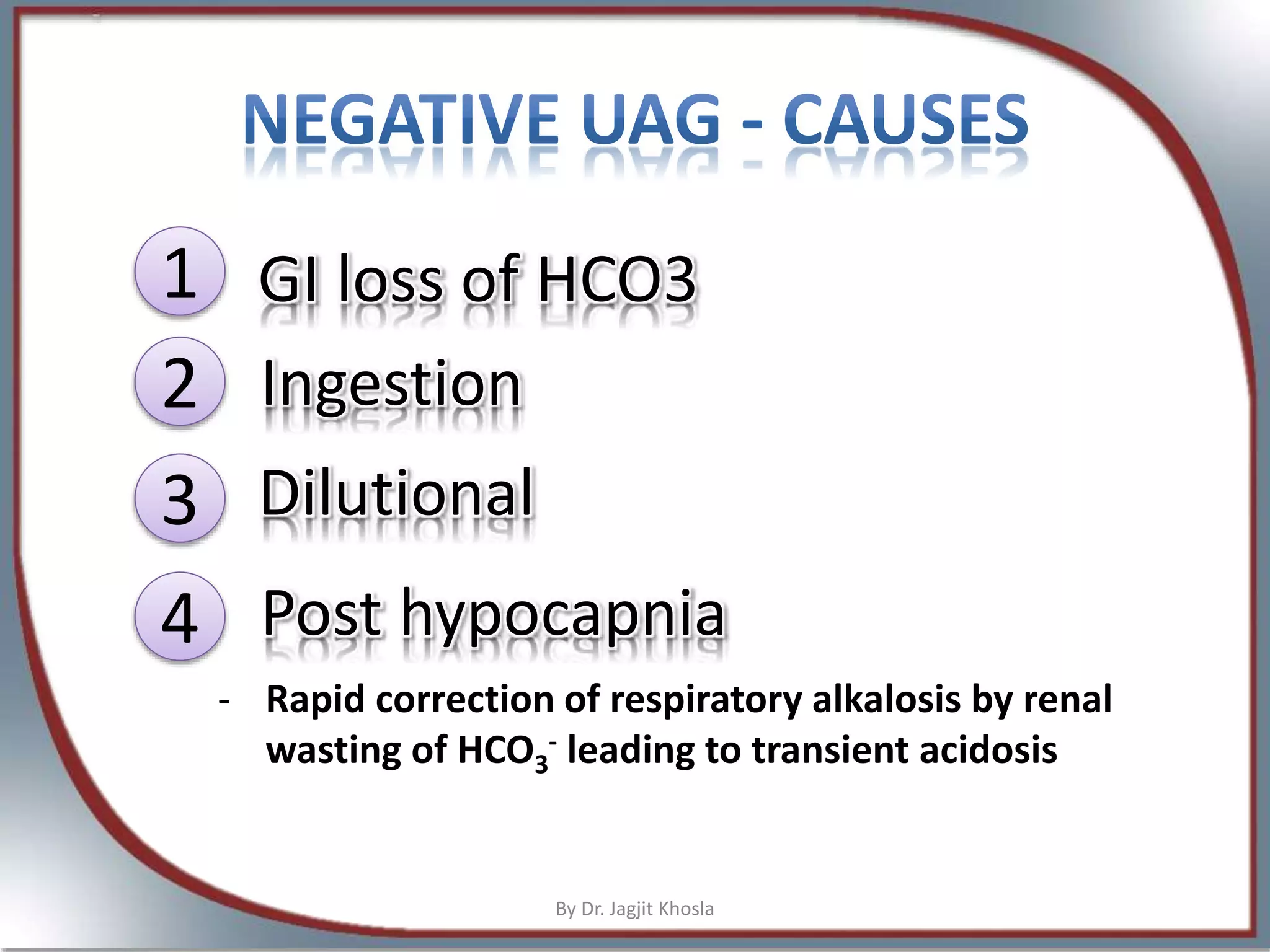
- Rapid correction of respiratory alkalosis by renal
wasting of HCO3
- leading to transient acidosis
By Dr. Jagjit Khosla
GI loss of HCO3
Ingestion
Dilutional
Post hypocapnia
1
2
3
4
Type II RTA5
By Dr. Jagjit Khosla
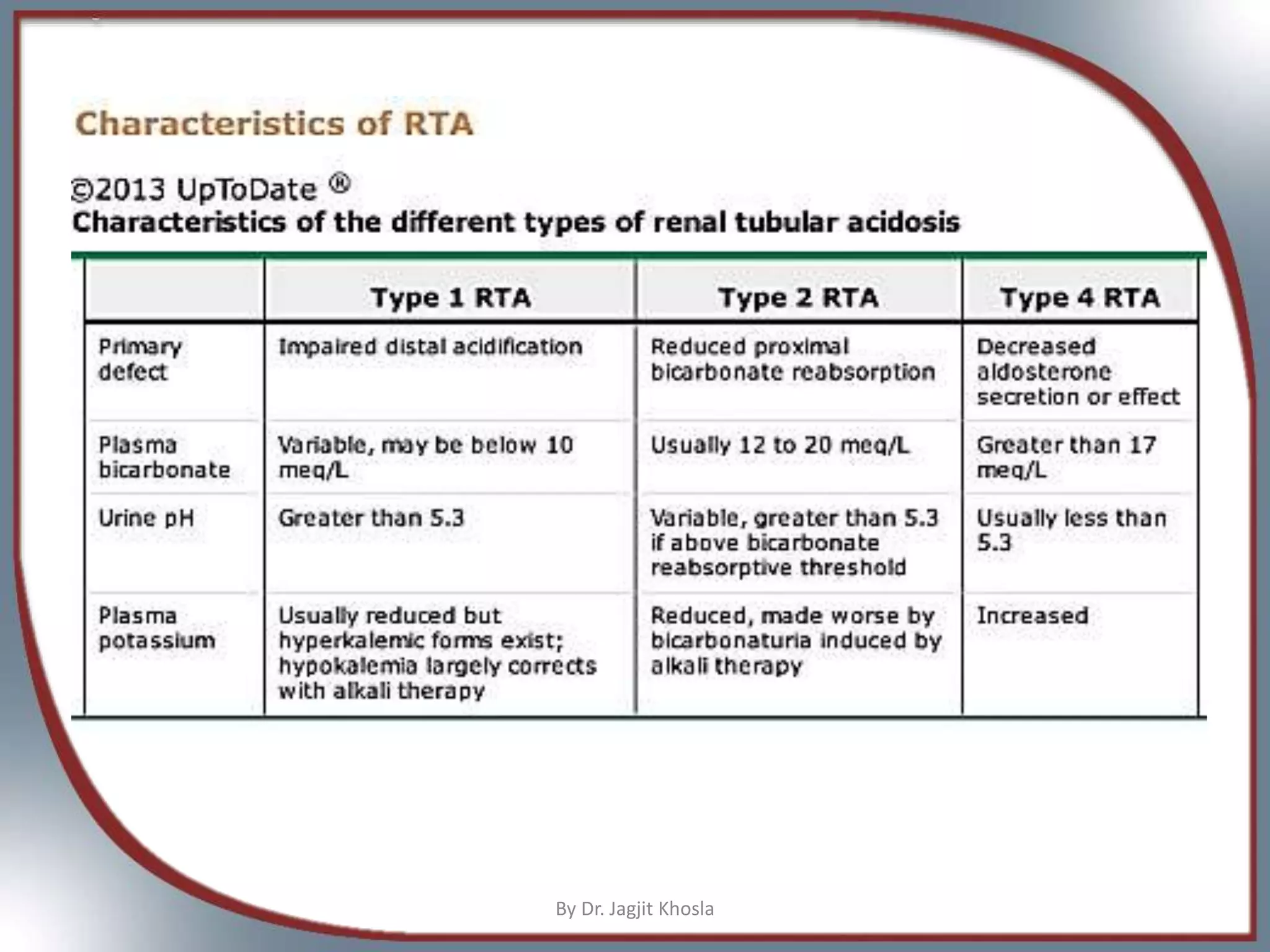
Type I RTA
Type IV RTA
1
2
By Dr. Jagjit Khosla
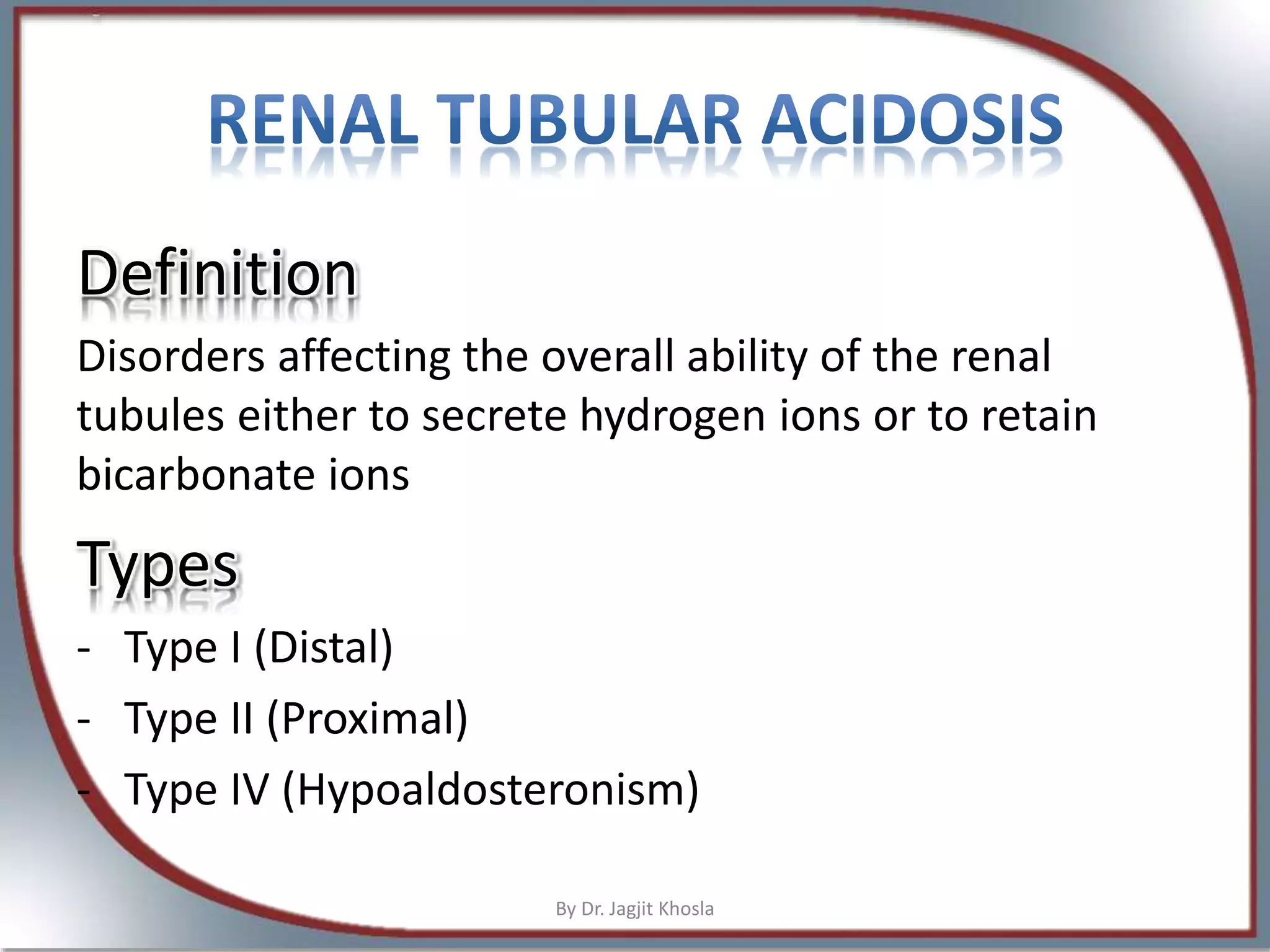
Definition
Disorders affecting the overall ability of the renal
tubules either to secrete hydrogen ions or to retain
bicarbonate ions
Types
- Type I (Distal)
- Type II (Proximal)
- Type IV (Hypoaldosteronism)
By Dr. Jagjit Khosla
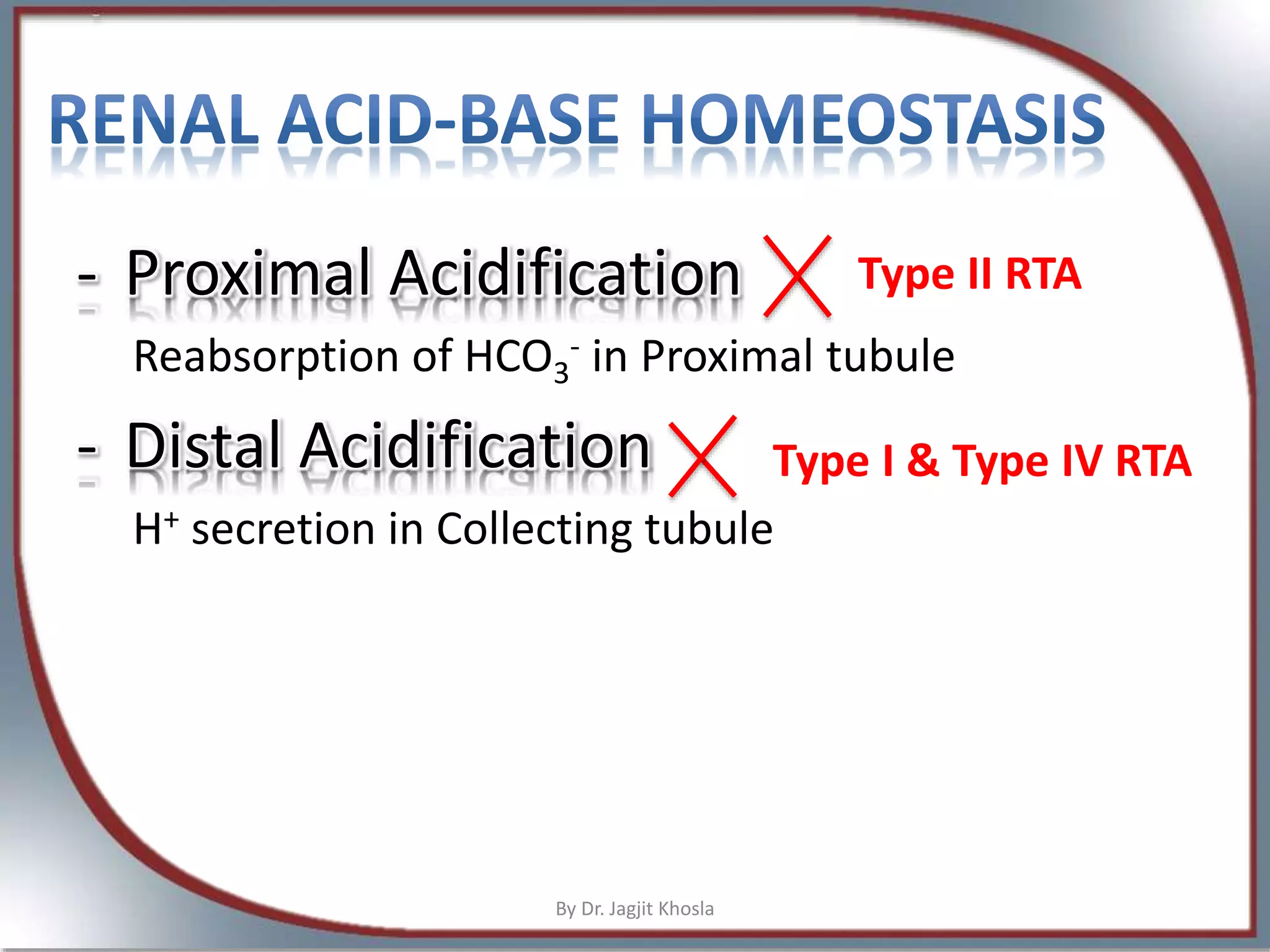
- Proximal Acidification
Reabsorption of HCO3
- in Proximal tubule
- Distal Acidification
H+ secretion in Collecting tubule
Type II RTA
Type I & Type IV RTA
By Dr. Jagjit Khosla
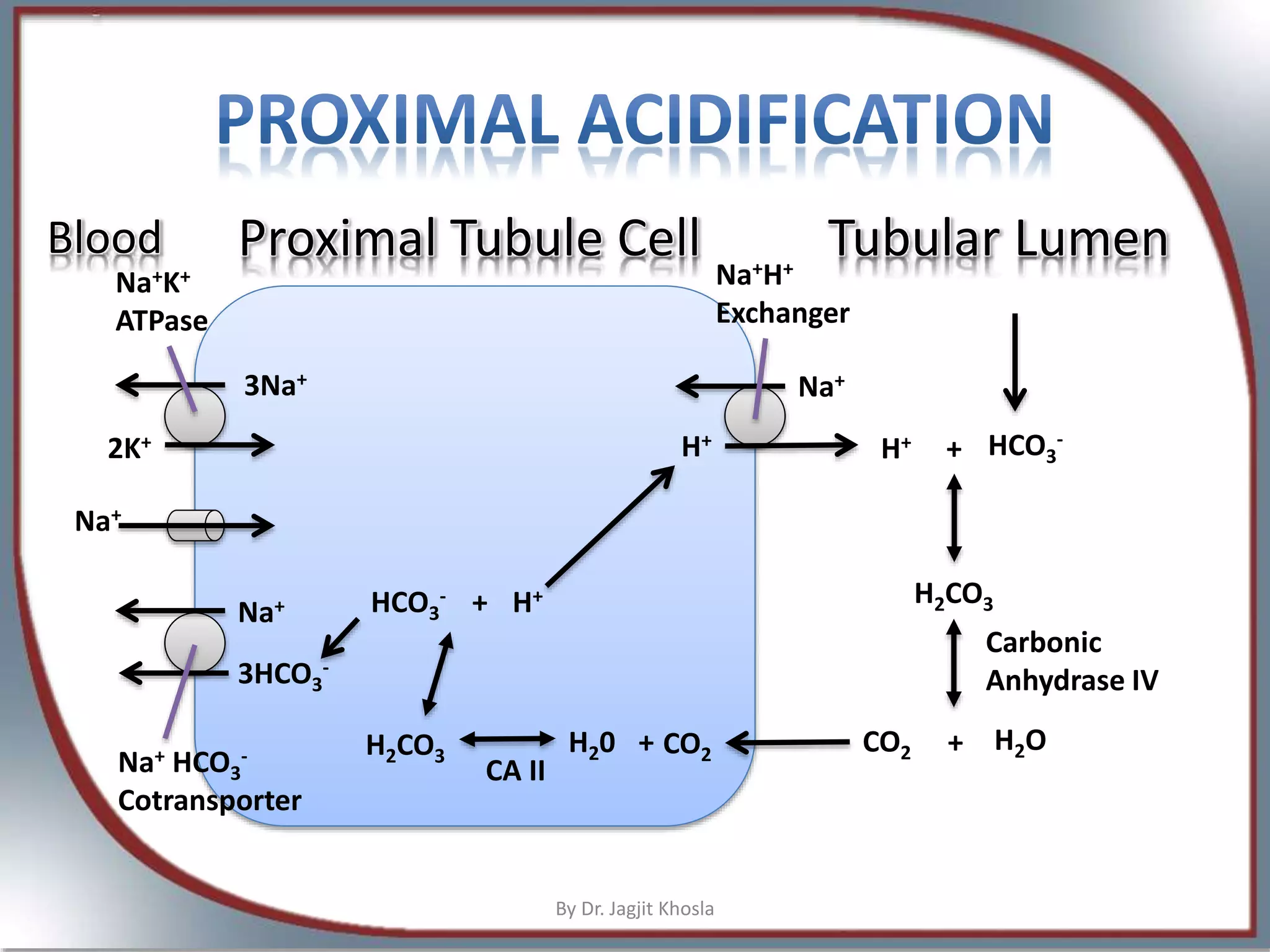
Proximal Tubule Cell Tubular Lumen
Na+
H+
H20 CO2
3HCO3
-
Na+
CA II
3Na+
2K+
Na+K+
ATPase
H+ HCO3
-
+
H2CO3
CO2 H2O+
Carbonic
Anhydrase IV
+
H+HCO3
- +
H2CO3
Na+H+
Exchanger
Na+ HCO3
-
Cotransporter
Na+
Blood
By Dr. Jagjit Khosla
Proximal Tubule Cell Tubular Lumen
Na+
H+
H20 CO2
3HCO3
-
Na+
CA II
3Na+
2K+ H+ HCO3
-
+
H2CO3
CO2 H2O+
Carbonic
Anhydrase IV
+
H+HCO3
- +
H2CO3
Na+H+
Exchanger
Na+ HCO3
-
Cotransporter
Na+
1
2
5
6
3
4
Na+K+
ATPase
Blood
By Dr. Jagjit Khosla
• Fanconi’s syndrome - Loss of Glucose, Calcium,
phosphate, citrate, uric acid, lysozymes, light
chain immunoglobins, and amino acids.
• Isolated HCO3 wasting is rarely identified.
Isolated HCO3
wasting
Generalised
Proximal tubular
dysfunction
By Dr. Jagjit Khosla
Primary disorders
• Idiopathic, sporadic
• Familial disorders
– Cystinosis
– Tyrosinemia
– Hereditary fructose intolerance
– Galactosemia
– Glycogen storage disease(Type I)
– Wilson’s disease
– Lowe’s syndrome
– Carbonic Anhydrase deficiency
Secondary disorders
• Multiple myeloma
• Drugs
– Tenofovir
– Carbonic anhydrase inhibitors
– Ifosfamide
• Amyloidosis
• Heavy metals poisoning (Lead,
Cadmium, Hg, Cu)
• Vitamin D deficiency
• Renal transplantation
• Paroxysmal nocturnal
hemoglobinuria
By Dr. Jagjit Khosla
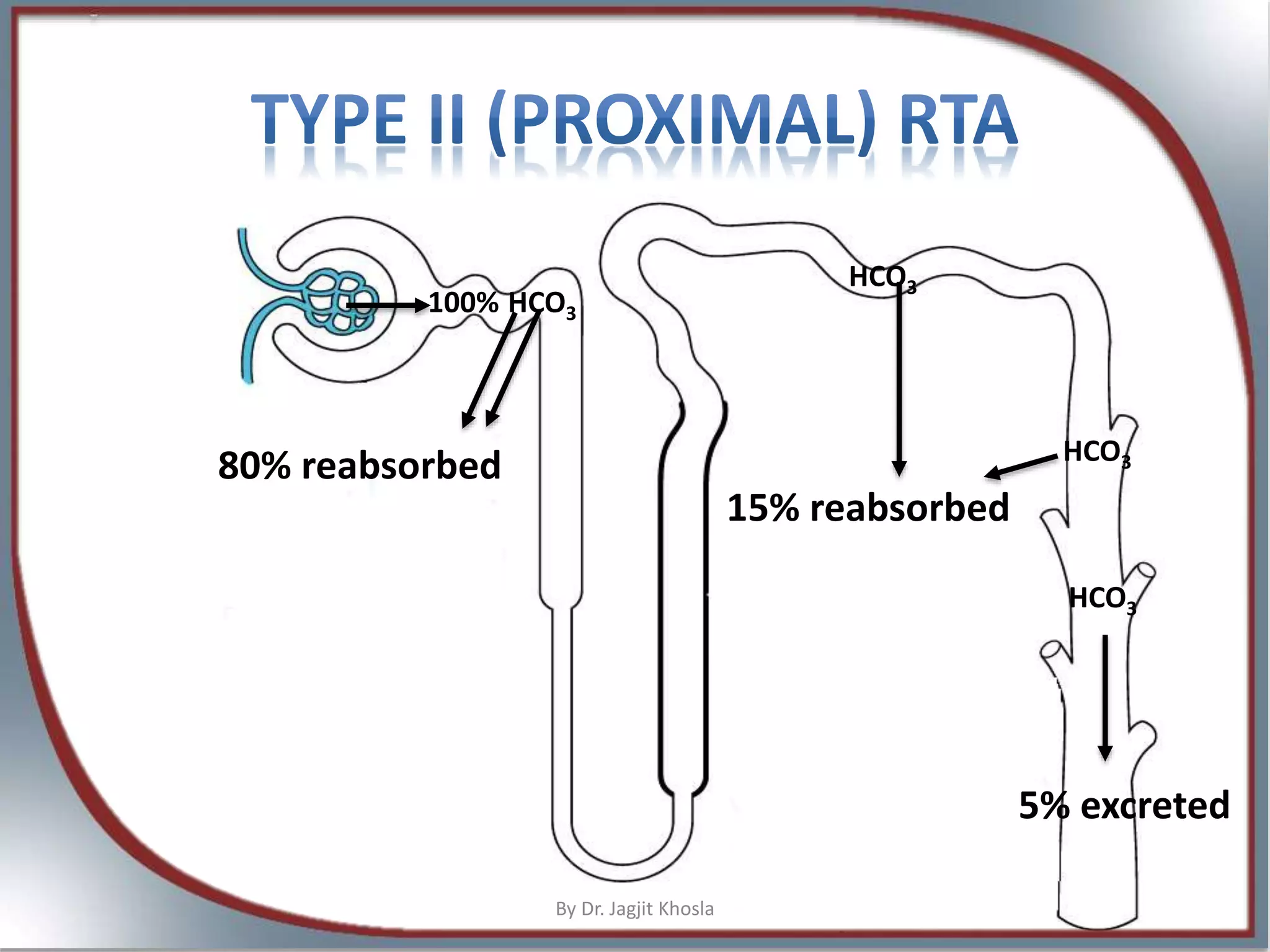
80% reabsorbed
15% reabsorbed
5% excreted
HCO3
HCO3
HCO3
HCO3
100%
By Dr. Jagjit Khosla
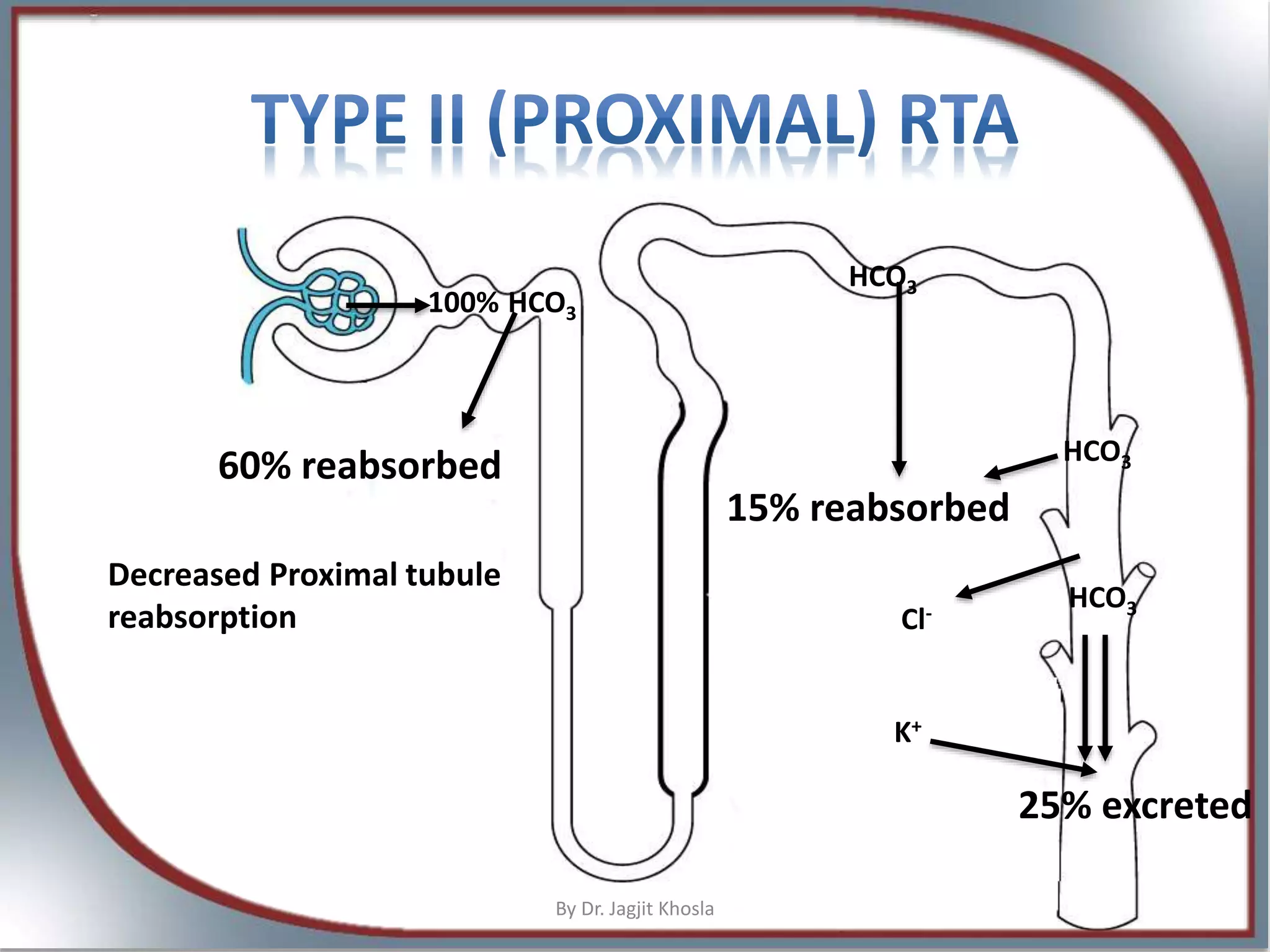
60% reabsorbed
15% reabsorbed
25% excreted
HCO3
HCO3
HCO3
HCO3
100%
Decreased Proximal tubule
reabsorption Cl-
K+
By Dr. Jagjit Khosla
Features
• U. HCO3- (FeHCO3 > 15%)
• U. pH <5.5,
• S. [HCO3
-] 12-20
• U. Na+
• U. K+ - Hypokalemia
Mechanism of enhanced K+ excretion
- Increased distal Na+ delivery
- Sodium wasting induced secondary hyperaldosteronism
By Dr. Jagjit Khosla
Effect on Potassium excretion
Without alkali therapy
Principal Cell LumenBlood
Na+
K+
Na+ Channel
K+ Channel
3Na+
2K+
Na+K+
ATPase
Na+
-+
K+
Aldosterone
By Dr. Jagjit Khosla
Effect on Potassium excretion
With alkali therapy
Increased S. [HCO3
-]
Increased filtered load above proximal reabsorptive capacity
Increased distal sodium and water delivery
Enhanced distal potassium excretion
Note : Alkali therapy in proximal RTA should be accompanied with potassium
to prevent hypokalemia
By Dr. Jagjit Khosla
• Collecting tubule (CT) is the major site of H+
secretion
• Made up of :
– Cortical Collecting tubule – H+ secretion coupled with Na+
reabsorption
– Medullary Collecting tubule – H+ secretion independent of
Na+ reabsorption
• Alpha-intercalated cells are main cells involved
in H+ secretion
By Dr. Jagjit Khosla
Alpha Intercalated cell Lumen
K+
H+
H2CO3
H20CO2 +
HCO3
-
CA II
Cl-
H+
Blood
3Na+
2K+
Na+K+
ATPase
H+ ATPase
H+ K+ ATPase
H+
HPO4
2- NH3
H2PO4
- NH4
+
Anion
Exchanger
By Dr. Jagjit Khosla
Principal Cell LumenBlood
Na+
K+
Na+ Channel
K+ Channel
3Na+
2K+
Na+K+
ATPase
Na+
-+
K+ H+
By Dr. Jagjit Khosla
Alpha Intercalated cell Lumen
K+
H+
H2CO3
H20CO2 +
HCO3
-
CA II
Cl-
H+
Blood
3Na+
2K+
Na+K+
ATPase
H+ ATPase
H+ K+ ATPase
H+
HPO4
2- NH3
H2PO4
- NH4
+
Anion
Exchanger
1
2
3
By Dr. Jagjit Khosla
Principal Cell LumenBlood
Na+
K+
Na+ Channel
K+ Channel
3Na+
2K+
Na+K+
ATPase
Na+
-+
K+ H+
4
By Dr. Jagjit Khosla
Mechanisms
- Defective H+-K+ ATPase (Classic Hypokalemic dRTA)
- Defective H+ ATPase (Normokalemic dRTA)
- Gradient defect (Backleak of secreted H+ e.g. Amphotericin B)
- Voltage depended defect (Hyperkalemic dRTA)
- Abnormal Anion Exchange
By Dr. Jagjit Khosla
Etiology
Primary Idiopathic, Sporadic
Familial Autosomal dominant or recessive
Secondary Sjogren’s syndrome
Hypercalciuria
Rheumatoid Arthritis
Hyperglobulinemia
Ifosfamide
Amphotericin B
Cirrhosis
SLE
Sickle Cell Anemia
Obstructive Uropathy
Lithium
Renal transplantation
By Dr. Jagjit Khosla
Mechanisms
- Reduced Aldosterone production
- Aldosterone resistance
By Dr. Jagjit Khosla
Etiology
Decreased
aldosterone
production
Hyporeninemic hypoaldosteronism
- Renal disease, most often diabetic nephropathy
- Nonsteroidal anti-inflammatory drugs
- Calcineurin inhibitors
- Volume expansion, as in acute glomerulonephritis
Medications
- ACE inhibitors, angiotensin II receptor blockers, and direct
renin inhibitors
Heparin
Primary adrenal insufficiency
Severe illness
Inherited disorders
Congenital isolated hypoaldosteronism
Pseudohypoaldosteronism type 2 (Gordon's syndrome)
By Dr. Jagjit Khosla
Etiology
Aldosterone
resistance
Inhibition of the epithelial sodium channel
- Potassium-sparing diuretics, such as spironolactone,
eplerenone, amiloride, and triamterine
- Antibiotics, trimethoprim and pentamidine
Pseudohypoaldosteronism type 1
By Dr. Jagjit Khosla

Renal tubular acidosis and other causes of Normal anion gap Metabolic acidosis

  • 1.
    By Jagjit Khosla ByDr. Jagjit Khosla
  • 2.
    Definition - Blood pH<7.35 (Acidemia) - [HCO3 -] - [PaCO2] (1.2 mm Hg fall in [PaCO2] for every 1 meq/L reduction in [HCO3 -]) By Dr. Jagjit Khosla
  • 3.
    Metabolic Acidosis High Anion Gap NormalAnion Gap By Dr. Jagjit Khosla
  • 4.
  • 5.
    Na+ + Unmeasuredcations = Cl- + HCO3 - + Unmeasured anions Or, Unmeasured anions – Unmeasured cations = Na+ - (Cl- + HCO3 -) Anion Gap = Na+ - (Cl- + HCO3 -) Definition Anion gap is Quantity of anions not balanced by cations - usually due to the NEGATIVELY CHARGED PLASMA PROTEINS as the charges of the other unmeasured cations and anions tend to balance out. Na Cl HCO3 Un Normal Anion Gap (10 – 12 mM/L) Note : - Adjust for HypoalbuminemiaBy Dr. Jagjit Khosla
  • 6.
    If an acidis added to blood Anion H+ Na+ HCO3 -+ Na Cl HCO3 UnHCO3 By Dr. Jagjit Khosla
  • 7.
    Na Cl UnHCO3 Cl- OtherAnion Normal Anion gap Metabolic Acidosis (Hyperchloremic) High Anion gap Metabolic Acidosis By Dr. Jagjit Khosla
  • 8.
  • 9.
    Normal Anion Gap Metabolic Acidosis (+)Urine Anion Gap (-) Urine Anion Gap By Dr. Jagjit Khosla
  • 10.
    Cl UNa+ + UK++ Unmeasured cations = UCl- + Unmeasured anions Or, Unmeasured anions – Unmeasured cations = (UNa+ + UK+) - UCl- Urine Anion Gap (UAG) = (UNa+ + UK+) - UCl- - NH4 + is the primary unmeasured cation which is not balanced by anions. - UAG as indirect assay for renal NH4+ excretion Na K NH4 + By Dr. Jagjit Khosla
  • 11.
    Negative Positive Increased renal NH4+excretion (Response to acidemia) Failure of Kidneys to secrete NH4 + By Dr. Jagjit Khosla
  • 12.
    GI loss ofHCO3 Ingestion Dilutional Post hypocapnia 1 2 3 4 Type II RTA5 By Dr. Jagjit Khosla
  • 13.
    GI loss ofHCO31 - Diarrhoea - Intestinal or pancreatic fistula - Ureteral diversion - Villous adenoma By Dr. Jagjit Khosla
  • 14.
    GI loss ofHCO31 Pancreas Ileum Colon Pancreas Ileum Colon HCO3 - HCO3 - Cl- HCO3 - Cl- K+ HCO3 - Normal Diarrhea Cl- Flooding the colon with HCO3 - instead of Cl- drives K+ secretion By Dr. Jagjit Khosla
  • 15.
  • 16.
    GI loss ofHCO3 Ingestion 1 2 - Acetazolamide - Sevelamer - Cholestyramine - Toluene By Dr. Jagjit Khosla
  • 17.
    GI loss ofHCO3 Ingestion Dilutional 1 2 3 - Due to rapid infusion of bicarbonate-free iv fluids By Dr. Jagjit Khosla
  • 18.
    GI loss ofHCO3 Ingestion Dilutional Post hypocapnia 1 2 3 4 - Rapid correction of respiratory alkalosis by renal wasting of HCO3 - leading to transient acidosis By Dr. Jagjit Khosla
  • 19.
    GI loss ofHCO3 Ingestion Dilutional Post hypocapnia 1 2 3 4 Type II RTA5 By Dr. Jagjit Khosla
  • 20.
    Type I RTA TypeIV RTA 1 2 By Dr. Jagjit Khosla
  • 21.
  • 22.
    Definition Disorders affecting theoverall ability of the renal tubules either to secrete hydrogen ions or to retain bicarbonate ions Types - Type I (Distal) - Type II (Proximal) - Type IV (Hypoaldosteronism) By Dr. Jagjit Khosla
  • 23.
    - Proximal Acidification Reabsorptionof HCO3 - in Proximal tubule - Distal Acidification H+ secretion in Collecting tubule Type II RTA Type I & Type IV RTA By Dr. Jagjit Khosla
  • 24.
    Proximal Tubule CellTubular Lumen Na+ H+ H20 CO2 3HCO3 - Na+ CA II 3Na+ 2K+ Na+K+ ATPase H+ HCO3 - + H2CO3 CO2 H2O+ Carbonic Anhydrase IV + H+HCO3 - + H2CO3 Na+H+ Exchanger Na+ HCO3 - Cotransporter Na+ Blood By Dr. Jagjit Khosla
  • 25.
    Proximal Tubule CellTubular Lumen Na+ H+ H20 CO2 3HCO3 - Na+ CA II 3Na+ 2K+ H+ HCO3 - + H2CO3 CO2 H2O+ Carbonic Anhydrase IV + H+HCO3 - + H2CO3 Na+H+ Exchanger Na+ HCO3 - Cotransporter Na+ 1 2 5 6 3 4 Na+K+ ATPase Blood By Dr. Jagjit Khosla
  • 26.
    • Fanconi’s syndrome- Loss of Glucose, Calcium, phosphate, citrate, uric acid, lysozymes, light chain immunoglobins, and amino acids. • Isolated HCO3 wasting is rarely identified. Isolated HCO3 wasting Generalised Proximal tubular dysfunction By Dr. Jagjit Khosla
  • 27.
    Primary disorders • Idiopathic,sporadic • Familial disorders – Cystinosis – Tyrosinemia – Hereditary fructose intolerance – Galactosemia – Glycogen storage disease(Type I) – Wilson’s disease – Lowe’s syndrome – Carbonic Anhydrase deficiency Secondary disorders • Multiple myeloma • Drugs – Tenofovir – Carbonic anhydrase inhibitors – Ifosfamide • Amyloidosis • Heavy metals poisoning (Lead, Cadmium, Hg, Cu) • Vitamin D deficiency • Renal transplantation • Paroxysmal nocturnal hemoglobinuria By Dr. Jagjit Khosla
  • 28.
    80% reabsorbed 15% reabsorbed 5%excreted HCO3 HCO3 HCO3 HCO3 100% By Dr. Jagjit Khosla
  • 29.
    60% reabsorbed 15% reabsorbed 25%excreted HCO3 HCO3 HCO3 HCO3 100% Decreased Proximal tubule reabsorption Cl- K+ By Dr. Jagjit Khosla
  • 30.
    Features • U. HCO3-(FeHCO3 > 15%) • U. pH <5.5, • S. [HCO3 -] 12-20 • U. Na+ • U. K+ - Hypokalemia Mechanism of enhanced K+ excretion - Increased distal Na+ delivery - Sodium wasting induced secondary hyperaldosteronism By Dr. Jagjit Khosla
  • 31.
    Effect on Potassiumexcretion Without alkali therapy Principal Cell LumenBlood Na+ K+ Na+ Channel K+ Channel 3Na+ 2K+ Na+K+ ATPase Na+ -+ K+ Aldosterone By Dr. Jagjit Khosla
  • 32.
    Effect on Potassiumexcretion With alkali therapy Increased S. [HCO3 -] Increased filtered load above proximal reabsorptive capacity Increased distal sodium and water delivery Enhanced distal potassium excretion Note : Alkali therapy in proximal RTA should be accompanied with potassium to prevent hypokalemia By Dr. Jagjit Khosla
  • 33.
    • Collecting tubule(CT) is the major site of H+ secretion • Made up of : – Cortical Collecting tubule – H+ secretion coupled with Na+ reabsorption – Medullary Collecting tubule – H+ secretion independent of Na+ reabsorption • Alpha-intercalated cells are main cells involved in H+ secretion By Dr. Jagjit Khosla
  • 34.
    Alpha Intercalated cellLumen K+ H+ H2CO3 H20CO2 + HCO3 - CA II Cl- H+ Blood 3Na+ 2K+ Na+K+ ATPase H+ ATPase H+ K+ ATPase H+ HPO4 2- NH3 H2PO4 - NH4 + Anion Exchanger By Dr. Jagjit Khosla
  • 35.
    Principal Cell LumenBlood Na+ K+ Na+Channel K+ Channel 3Na+ 2K+ Na+K+ ATPase Na+ -+ K+ H+ By Dr. Jagjit Khosla
  • 36.
    Alpha Intercalated cellLumen K+ H+ H2CO3 H20CO2 + HCO3 - CA II Cl- H+ Blood 3Na+ 2K+ Na+K+ ATPase H+ ATPase H+ K+ ATPase H+ HPO4 2- NH3 H2PO4 - NH4 + Anion Exchanger 1 2 3 By Dr. Jagjit Khosla
  • 37.
    Principal Cell LumenBlood Na+ K+ Na+Channel K+ Channel 3Na+ 2K+ Na+K+ ATPase Na+ -+ K+ H+ 4 By Dr. Jagjit Khosla
  • 38.
    Mechanisms - Defective H+-K+ATPase (Classic Hypokalemic dRTA) - Defective H+ ATPase (Normokalemic dRTA) - Gradient defect (Backleak of secreted H+ e.g. Amphotericin B) - Voltage depended defect (Hyperkalemic dRTA) - Abnormal Anion Exchange By Dr. Jagjit Khosla
  • 39.
    Etiology Primary Idiopathic, Sporadic FamilialAutosomal dominant or recessive Secondary Sjogren’s syndrome Hypercalciuria Rheumatoid Arthritis Hyperglobulinemia Ifosfamide Amphotericin B Cirrhosis SLE Sickle Cell Anemia Obstructive Uropathy Lithium Renal transplantation By Dr. Jagjit Khosla
  • 40.
    Mechanisms - Reduced Aldosteroneproduction - Aldosterone resistance By Dr. Jagjit Khosla
  • 41.
    Etiology Decreased aldosterone production Hyporeninemic hypoaldosteronism - Renaldisease, most often diabetic nephropathy - Nonsteroidal anti-inflammatory drugs - Calcineurin inhibitors - Volume expansion, as in acute glomerulonephritis Medications - ACE inhibitors, angiotensin II receptor blockers, and direct renin inhibitors Heparin Primary adrenal insufficiency Severe illness Inherited disorders Congenital isolated hypoaldosteronism Pseudohypoaldosteronism type 2 (Gordon's syndrome) By Dr. Jagjit Khosla
  • 42.
    Etiology Aldosterone resistance Inhibition of theepithelial sodium channel - Potassium-sparing diuretics, such as spironolactone, eplerenone, amiloride, and triamterine - Antibiotics, trimethoprim and pentamidine Pseudohypoaldosteronism type 1 By Dr. Jagjit Khosla
  • 43.
  • 44.