(Oraciones de relativo)‏ Relative clauses
Defining Relative Clauses (Oraciones de relativo especificativas)‏
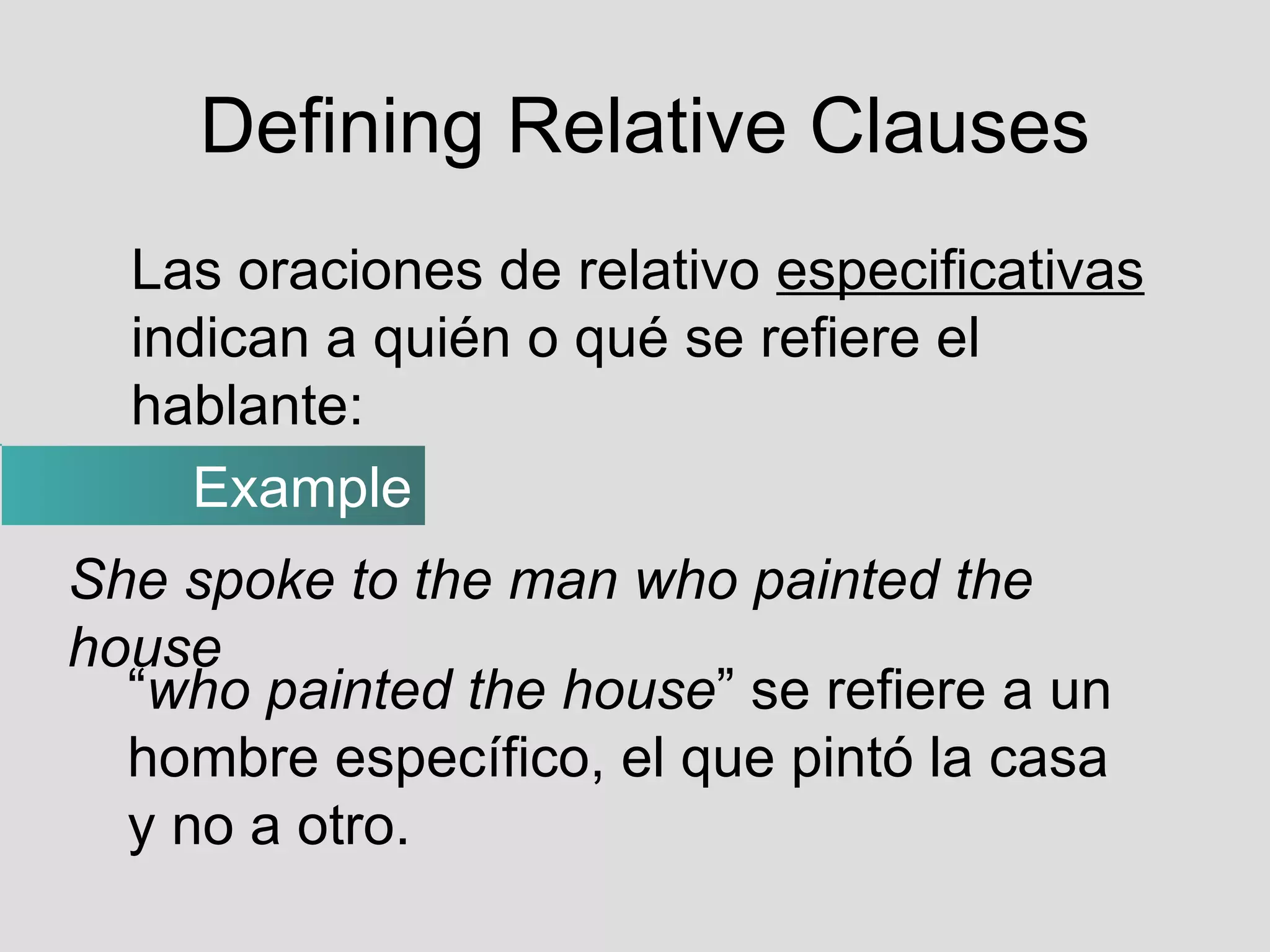
Defining Relative Clauses Las oraciones de relativo  especificativas  indican a quién o qué se refiere el hablante: Example She spoke to the man who painted the house “ who painted the house ” se refiere a un hombre específico, el que pintó la casa y no a otro.
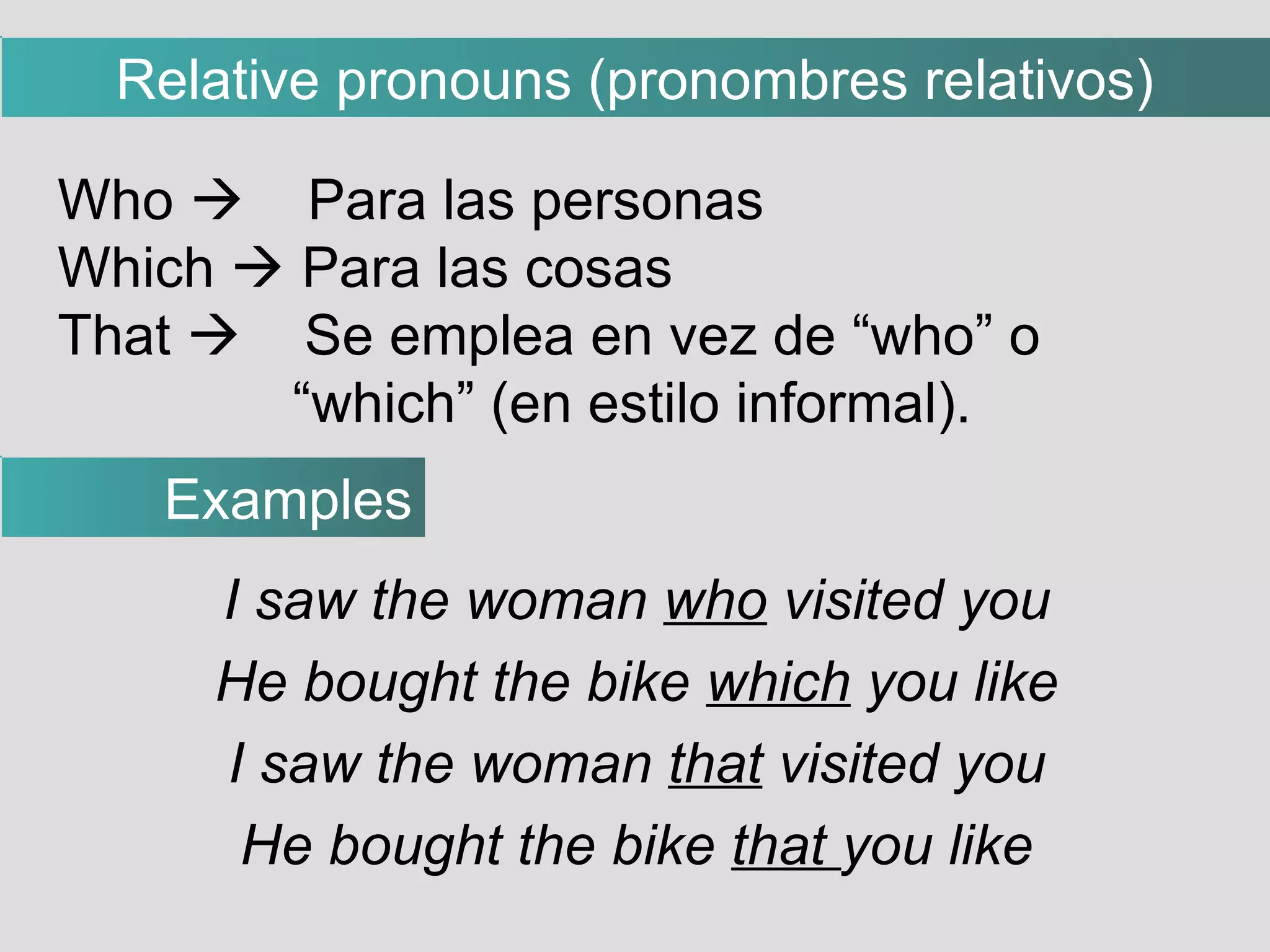
I saw the woman  who  visited you He bought the bike  which  you like I saw the woman  that  visited you He bought the bike  that  you like Who     Para las personas Which    Para las cosas That     Se emplea en vez de “who” o “ which” (en estilo informal). Examples Relative pronouns (pronombres relativos)‏
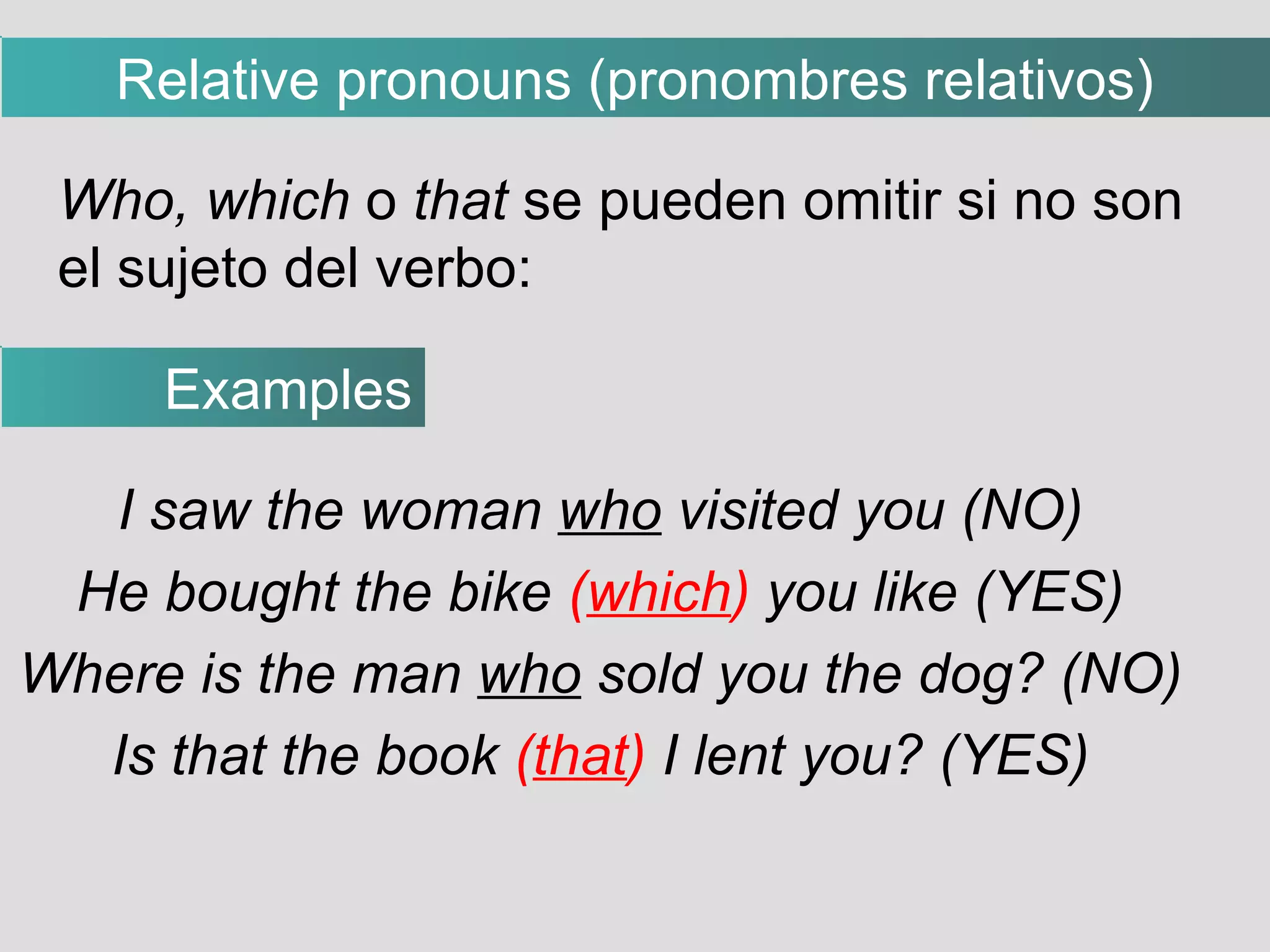
I saw the woman  who  visited you (NO)‏ He bought the bike  ( which )  you like (YES)‏ Where is the man  who  sold you the dog? (NO)‏ Is that the book  ( that )  I lent you? (YES)‏ Who, which  o  that  se pueden omitir si no son el sujeto del verbo: Examples Relative pronouns (pronombres relativos)‏
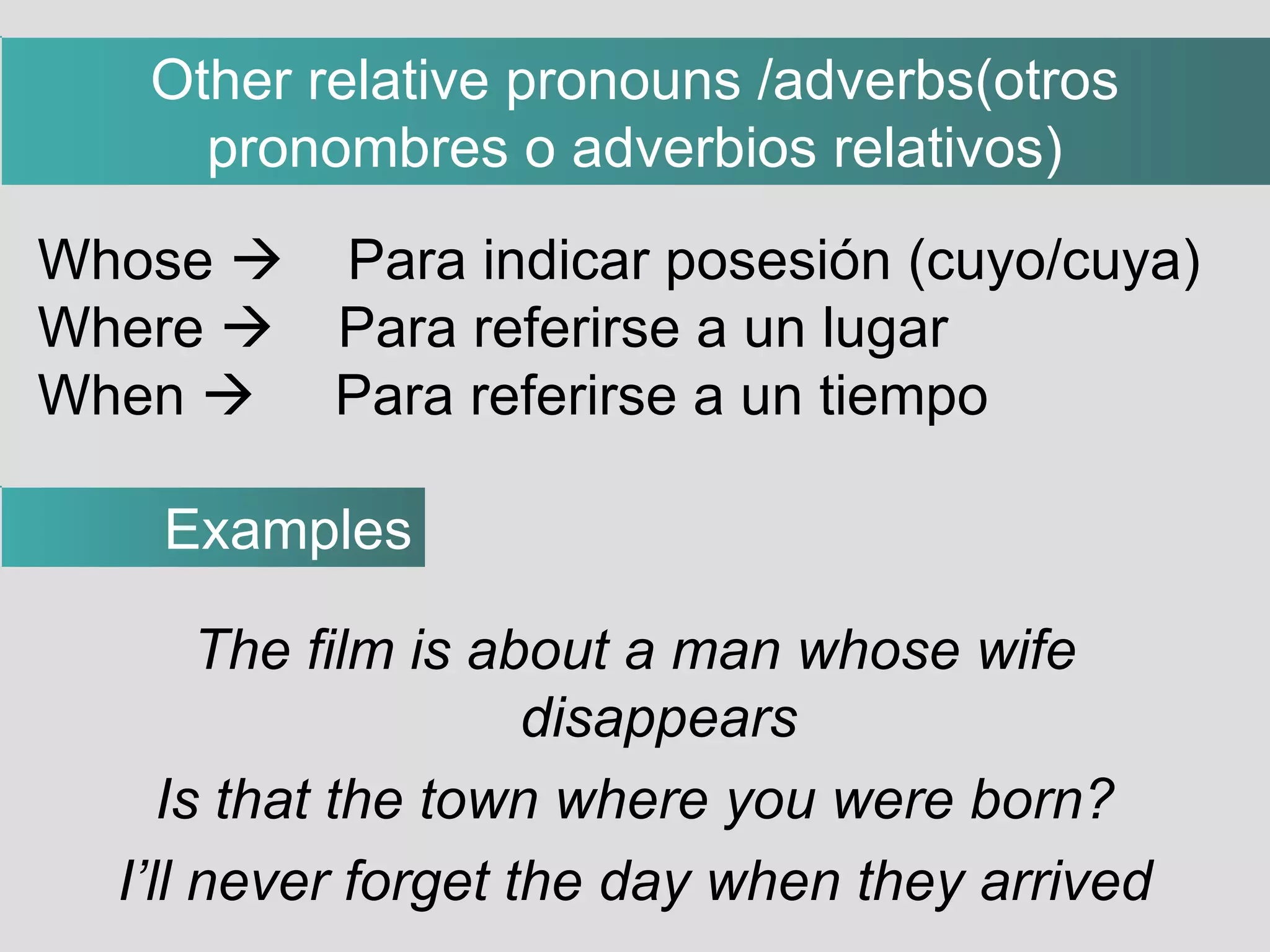
The film is about a man whose wife disappears Is that the town where you were born? I’ll never forget the day when they arrived Whose     Para indicar posesión (cuyo/cuya)‏ Where     Para referirse a un lugar When     Para referirse a un tiempo Examples Other relative pronouns /adverbs(otros pronombres o adverbios relativos)‏
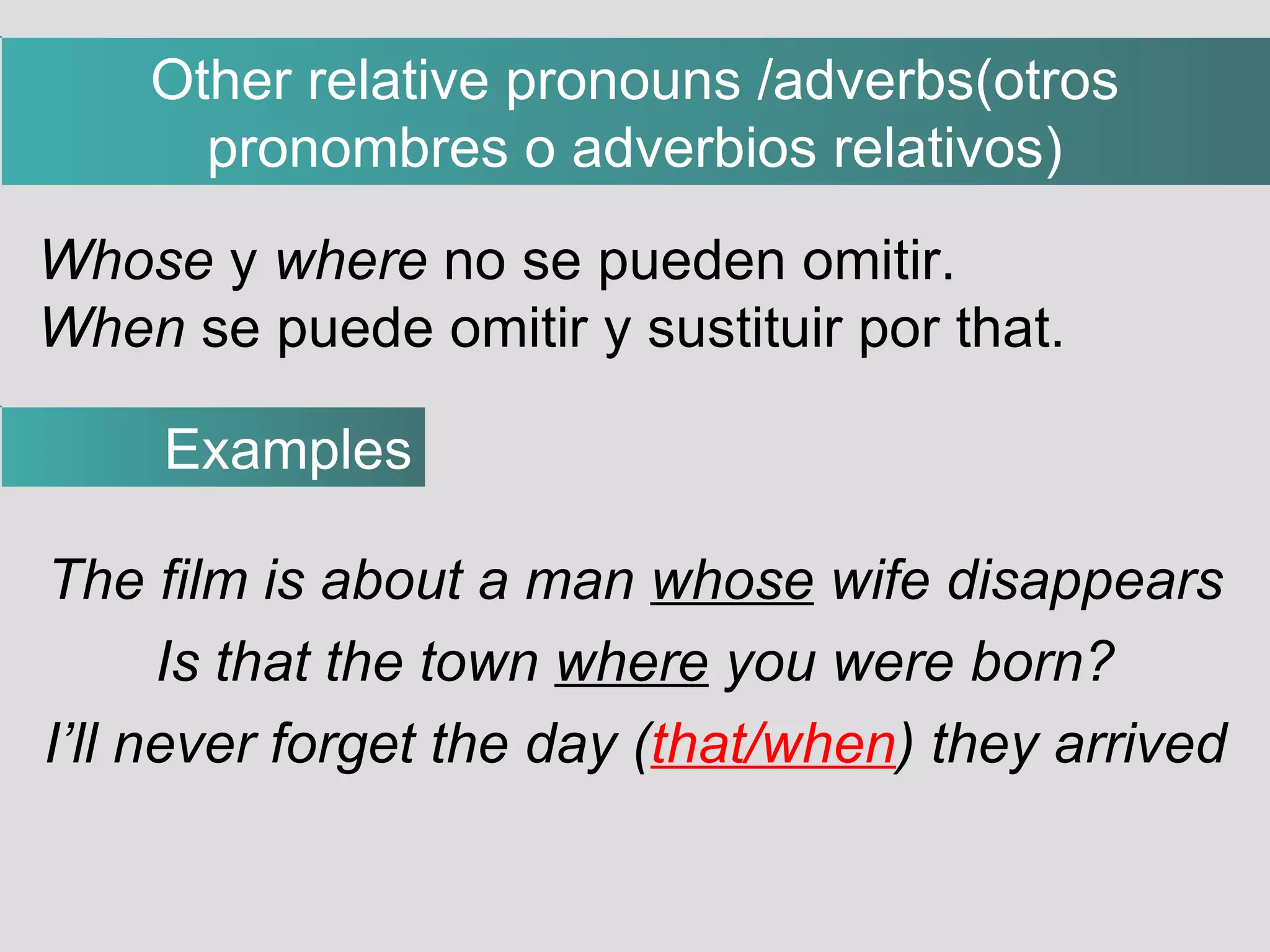
The film is about a man  whose  wife disappears Is that the town  where  you were born? I’ll never forget the day ( that/when ) they arrived Whose  y  where  no se pueden omitir. When  se puede omitir y sustituir por that. Examples Other relative pronouns /adverbs(otros pronombres o adverbios relativos)‏
Non-Defining Relative Clauses (Oraciones de relativo explicativas)‏
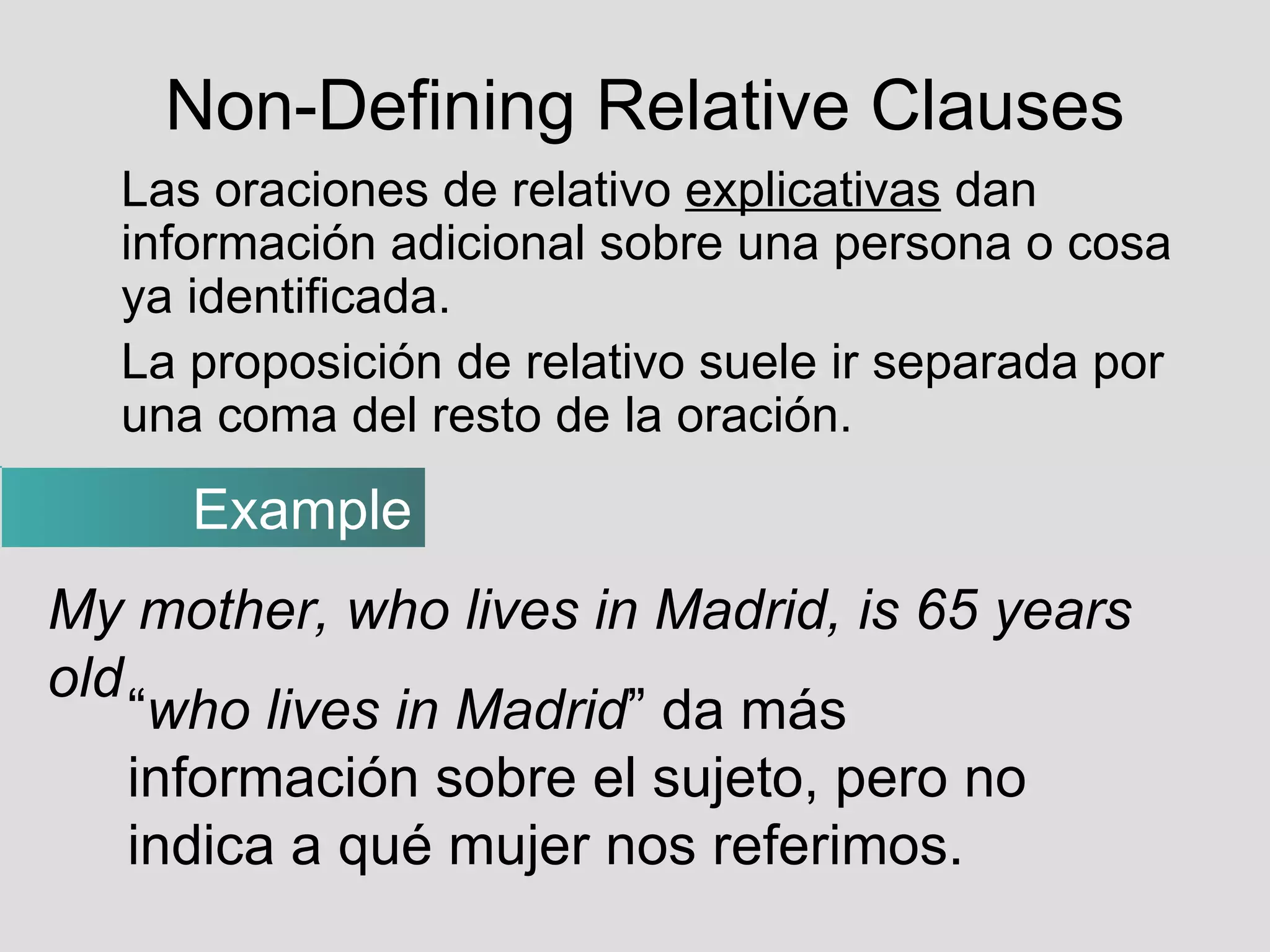
Non-Defining Relative Clauses Las oraciones de relativo  explicativas  dan información adicional sobre una persona o cosa ya identificada. La proposición de relativo suele ir separada por una coma del resto de la oración. Example My mother, who lives in Madrid, is 65 years old “ who lives in Madrid ” da más información sobre el sujeto, pero no indica a qué mujer nos referimos.
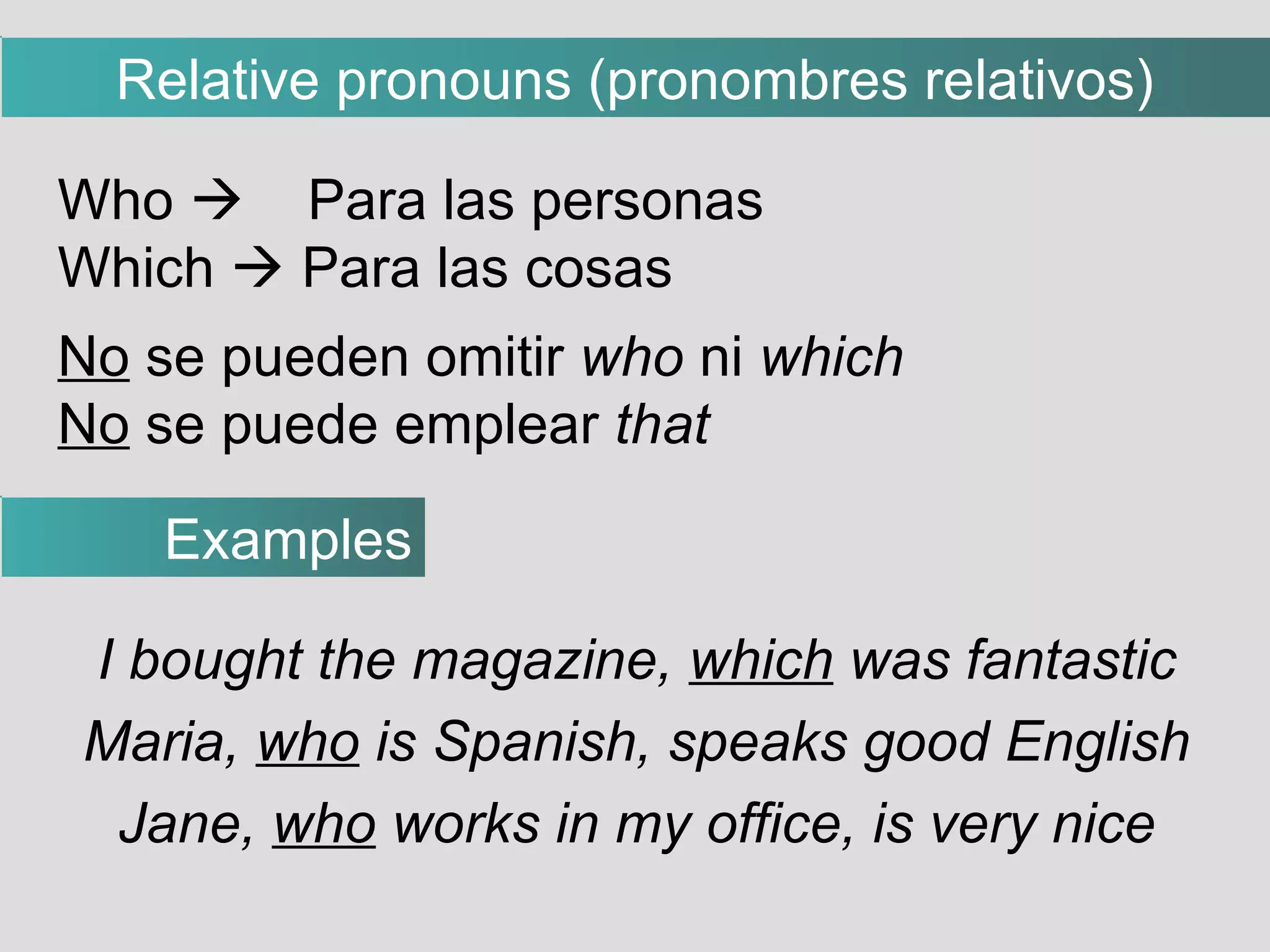
I bought the magazine,  which  was fantastic Maria,  who  is Spanish, speaks good English Jane,  who  works in my office, is very nice Who     Para las personas Which    Para las cosas No  se pueden omitir  who  ni  which No  se puede emplear  that Examples Relative pronouns (pronombres relativos)‏
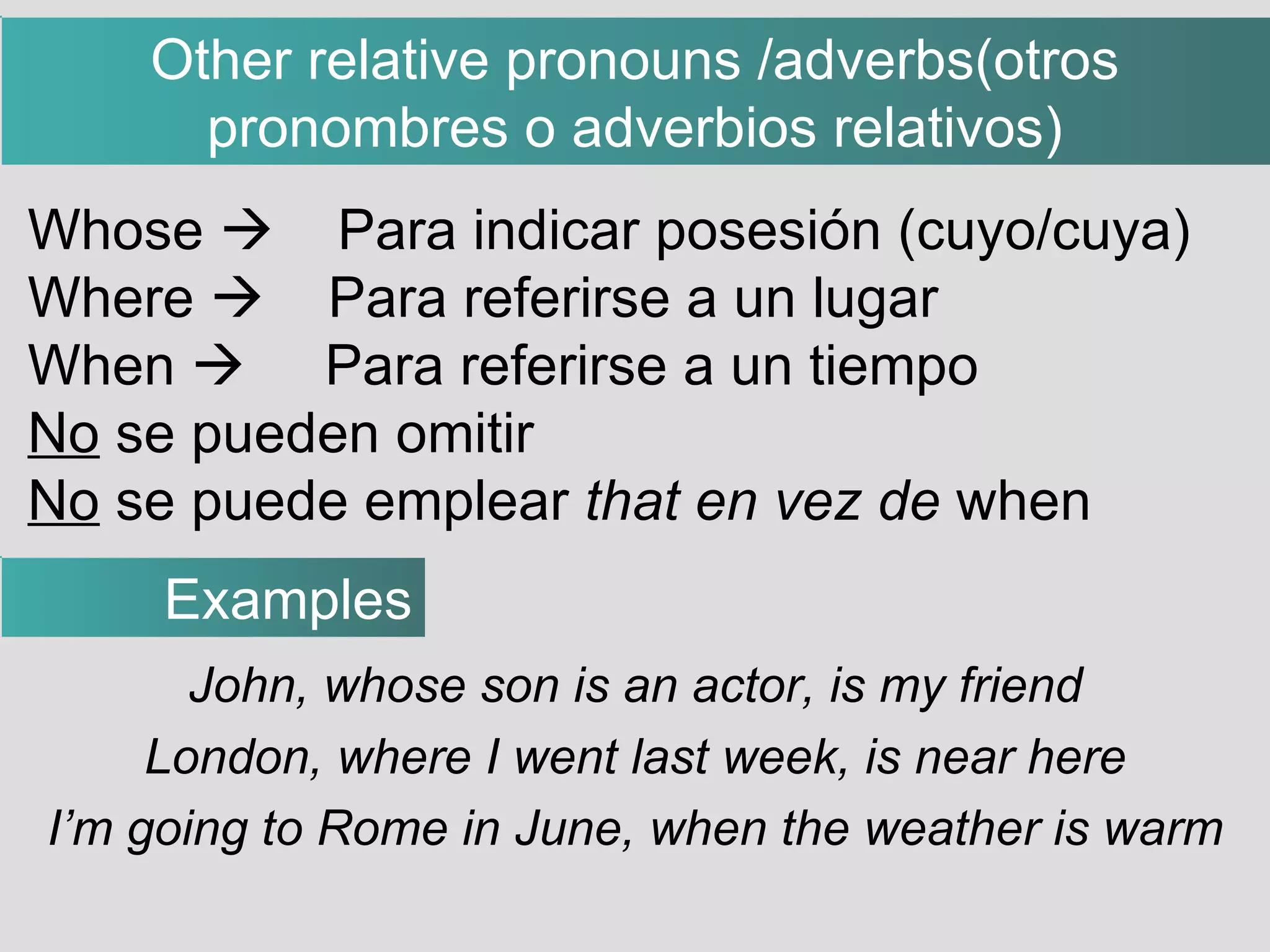
John, whose son is an actor, is my friend London, where I went last week, is near here I’m going to Rome in June, when the weather is warm Whose     Para indicar posesión (cuyo/cuya)‏ Where     Para referirse a un lugar When     Para referirse a un tiempo No  se pueden omitir No  se puede emplear  that en vez de  when Examples Other relative pronouns /adverbs(otros pronombres o adverbios relativos)‏
By IsC 2009 http://laotraclasedeingles.wordpress.com DEFINING AND NON DEFINING RELATIVE CLAUSES

Relative Clauses

  • 1.
  • 2.
    Defining Relative Clauses(Oraciones de relativo especificativas)‏
  • 3.
    Defining Relative ClausesLas oraciones de relativo especificativas indican a quién o qué se refiere el hablante: Example She spoke to the man who painted the house “ who painted the house ” se refiere a un hombre específico, el que pintó la casa y no a otro.
  • 4.
    I saw thewoman who visited you He bought the bike which you like I saw the woman that visited you He bought the bike that you like Who  Para las personas Which  Para las cosas That  Se emplea en vez de “who” o “ which” (en estilo informal). Examples Relative pronouns (pronombres relativos)‏
  • 5.
    I saw thewoman who visited you (NO)‏ He bought the bike ( which ) you like (YES)‏ Where is the man who sold you the dog? (NO)‏ Is that the book ( that ) I lent you? (YES)‏ Who, which o that se pueden omitir si no son el sujeto del verbo: Examples Relative pronouns (pronombres relativos)‏
  • 6.
    The film isabout a man whose wife disappears Is that the town where you were born? I’ll never forget the day when they arrived Whose  Para indicar posesión (cuyo/cuya)‏ Where  Para referirse a un lugar When  Para referirse a un tiempo Examples Other relative pronouns /adverbs(otros pronombres o adverbios relativos)‏
  • 7.
    The film isabout a man whose wife disappears Is that the town where you were born? I’ll never forget the day ( that/when ) they arrived Whose y where no se pueden omitir. When se puede omitir y sustituir por that. Examples Other relative pronouns /adverbs(otros pronombres o adverbios relativos)‏
  • 8.
    Non-Defining Relative Clauses(Oraciones de relativo explicativas)‏
  • 9.
    Non-Defining Relative ClausesLas oraciones de relativo explicativas dan información adicional sobre una persona o cosa ya identificada. La proposición de relativo suele ir separada por una coma del resto de la oración. Example My mother, who lives in Madrid, is 65 years old “ who lives in Madrid ” da más información sobre el sujeto, pero no indica a qué mujer nos referimos.
  • 10.
    I bought themagazine, which was fantastic Maria, who is Spanish, speaks good English Jane, who works in my office, is very nice Who  Para las personas Which  Para las cosas No se pueden omitir who ni which No se puede emplear that Examples Relative pronouns (pronombres relativos)‏
  • 11.
    John, whose sonis an actor, is my friend London, where I went last week, is near here I’m going to Rome in June, when the weather is warm Whose  Para indicar posesión (cuyo/cuya)‏ Where  Para referirse a un lugar When  Para referirse a un tiempo No se pueden omitir No se puede emplear that en vez de when Examples Other relative pronouns /adverbs(otros pronombres o adverbios relativos)‏
  • 12.
    By IsC 2009http://laotraclasedeingles.wordpress.com DEFINING AND NON DEFINING RELATIVE CLAUSES