Reported speech El estilo indirecto
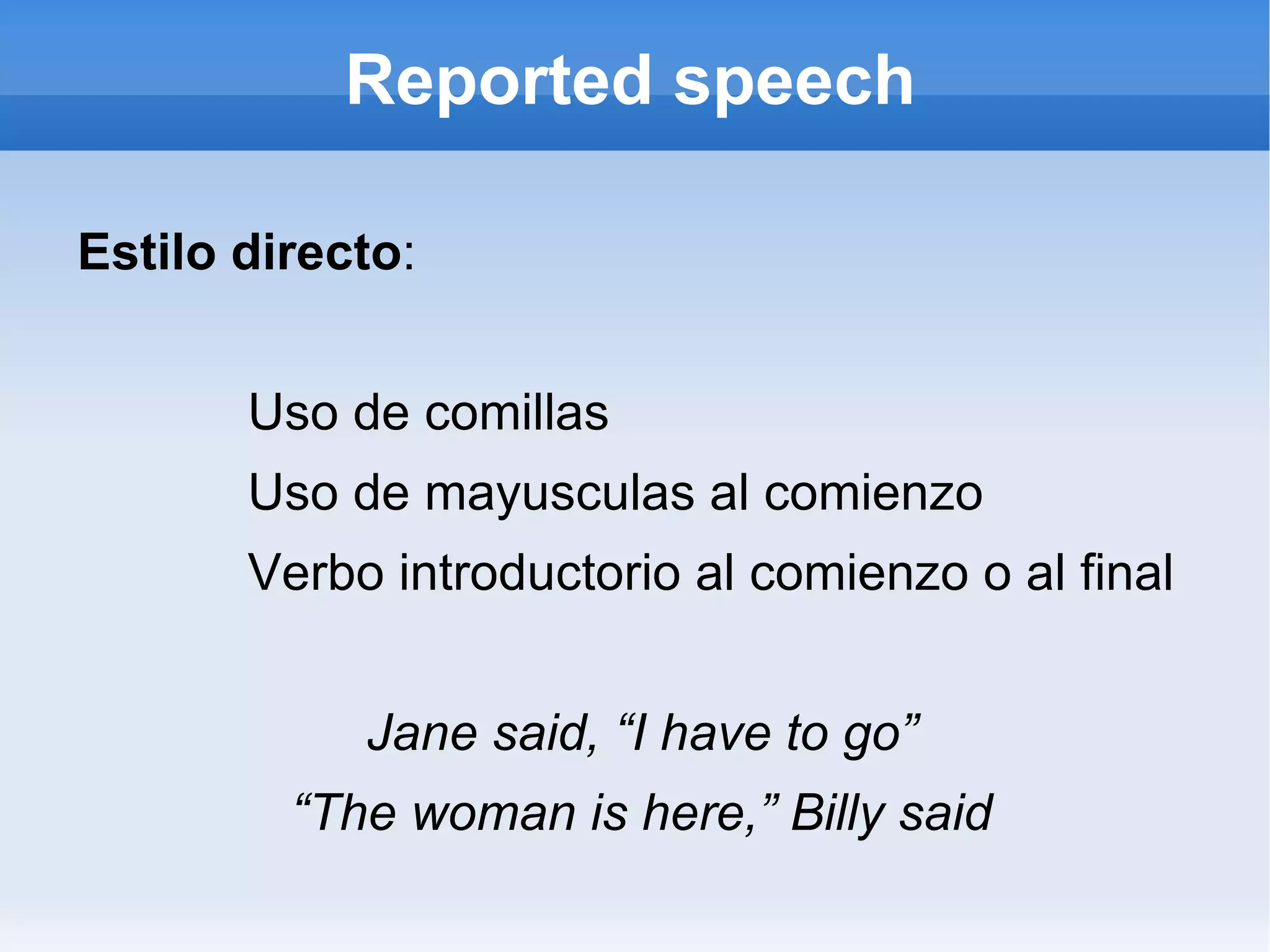
Reported speech Estilo directo :  Uso de comillas Uso de mayusculas al comienzo Verbo introductorio al comienzo o al final Jane said, “I have to go” “ The woman is here,” Billy said
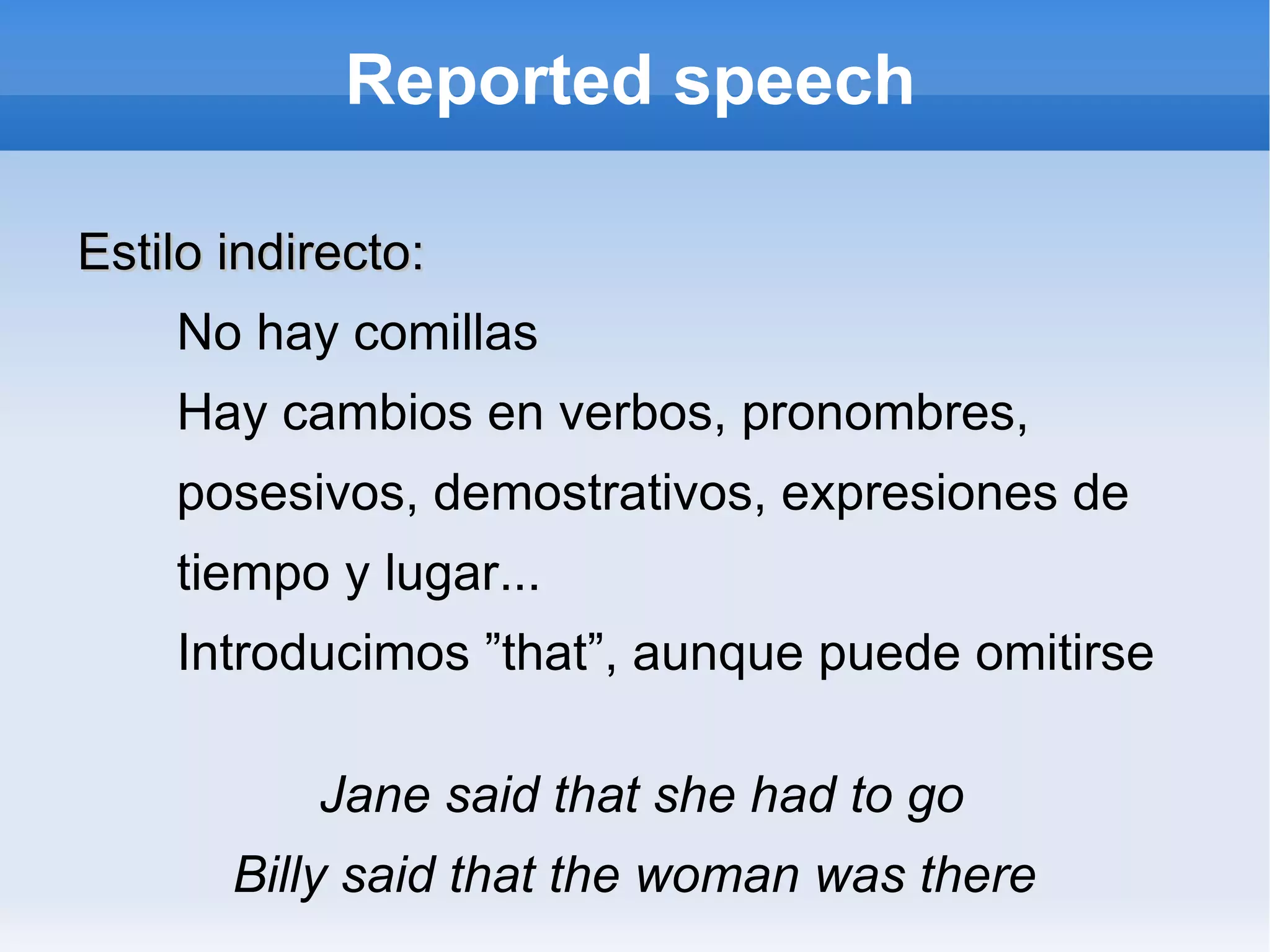
Reported speech Estilo indirecto: No hay comillas Hay cambios en verbos, pronombres,  posesivos, demostrativos, expresiones de  tiempo y lugar... Introducimos ”that”, aunque puede omitirse Jane said that she had to go Billy said that the woman was there
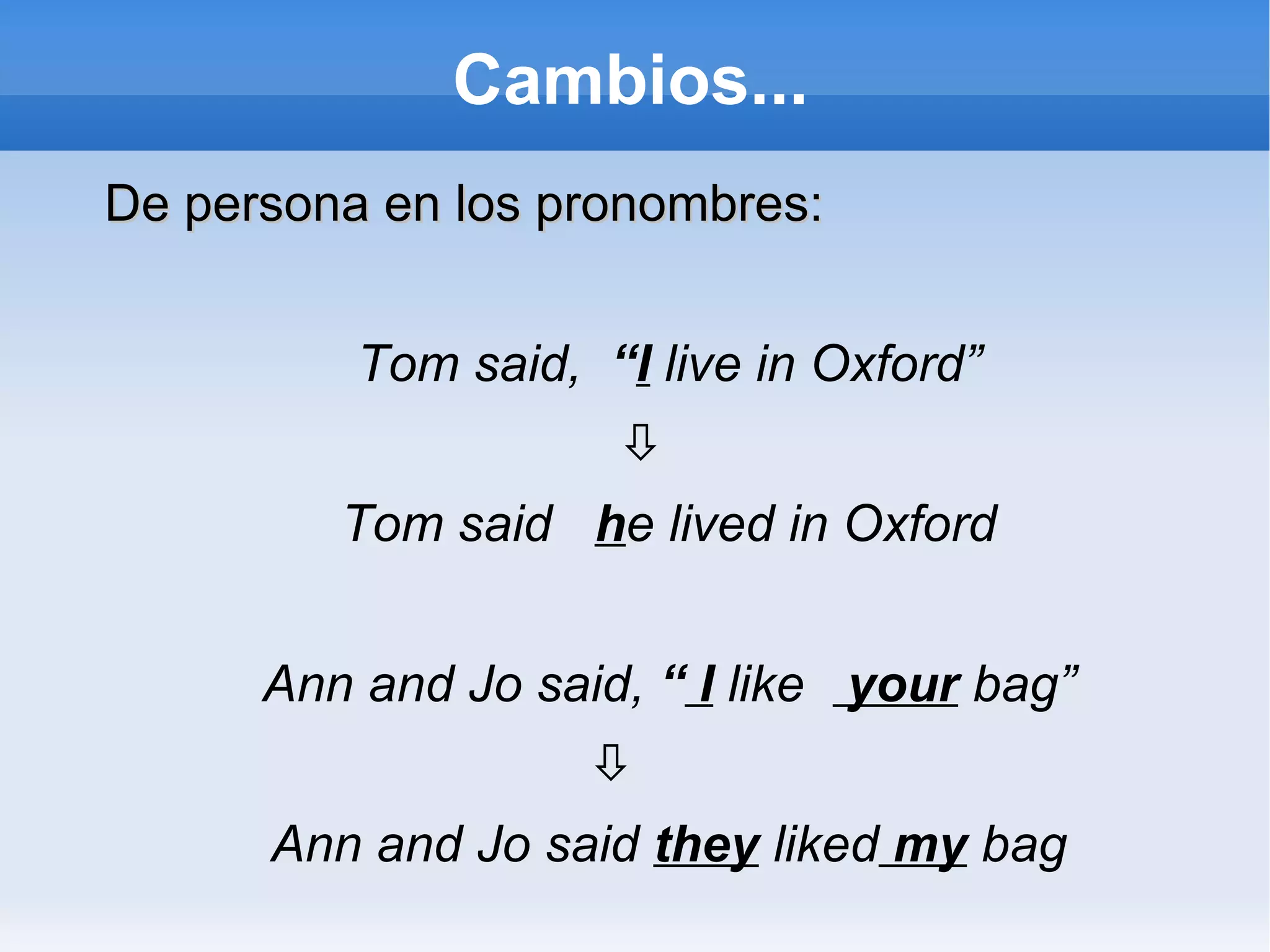
Cambios... De persona en los pronombres: Tom said,  “ I  live in Oxford”  Tom said  h e lived in Oxford Ann and Jo said,  “  I  like  your  bag”      Ann and Jo said  they  liked  my  bag
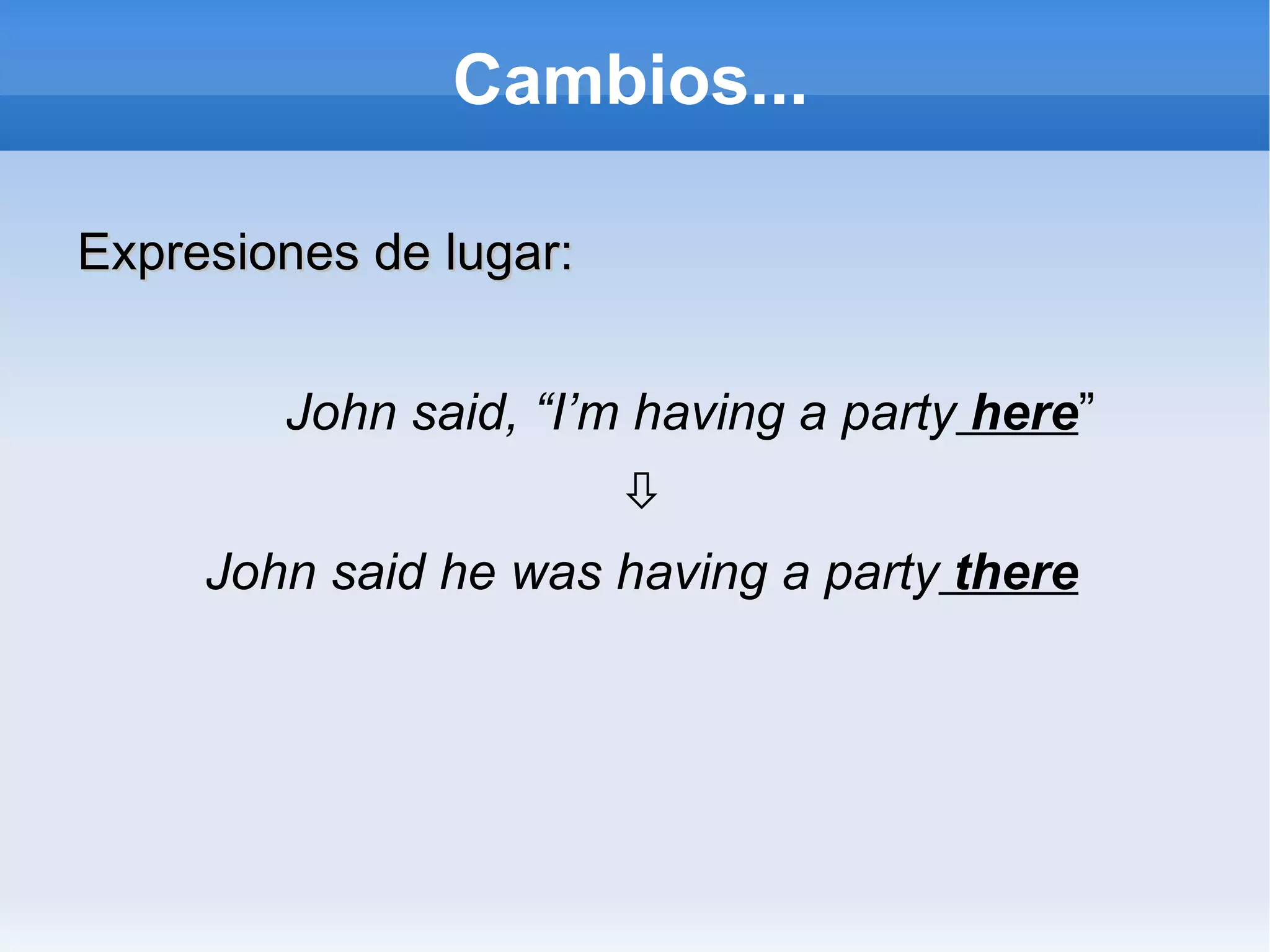
Cambios... Expresiones de lugar: John said, “I’m having a party  here ”  John said he was having a party  there
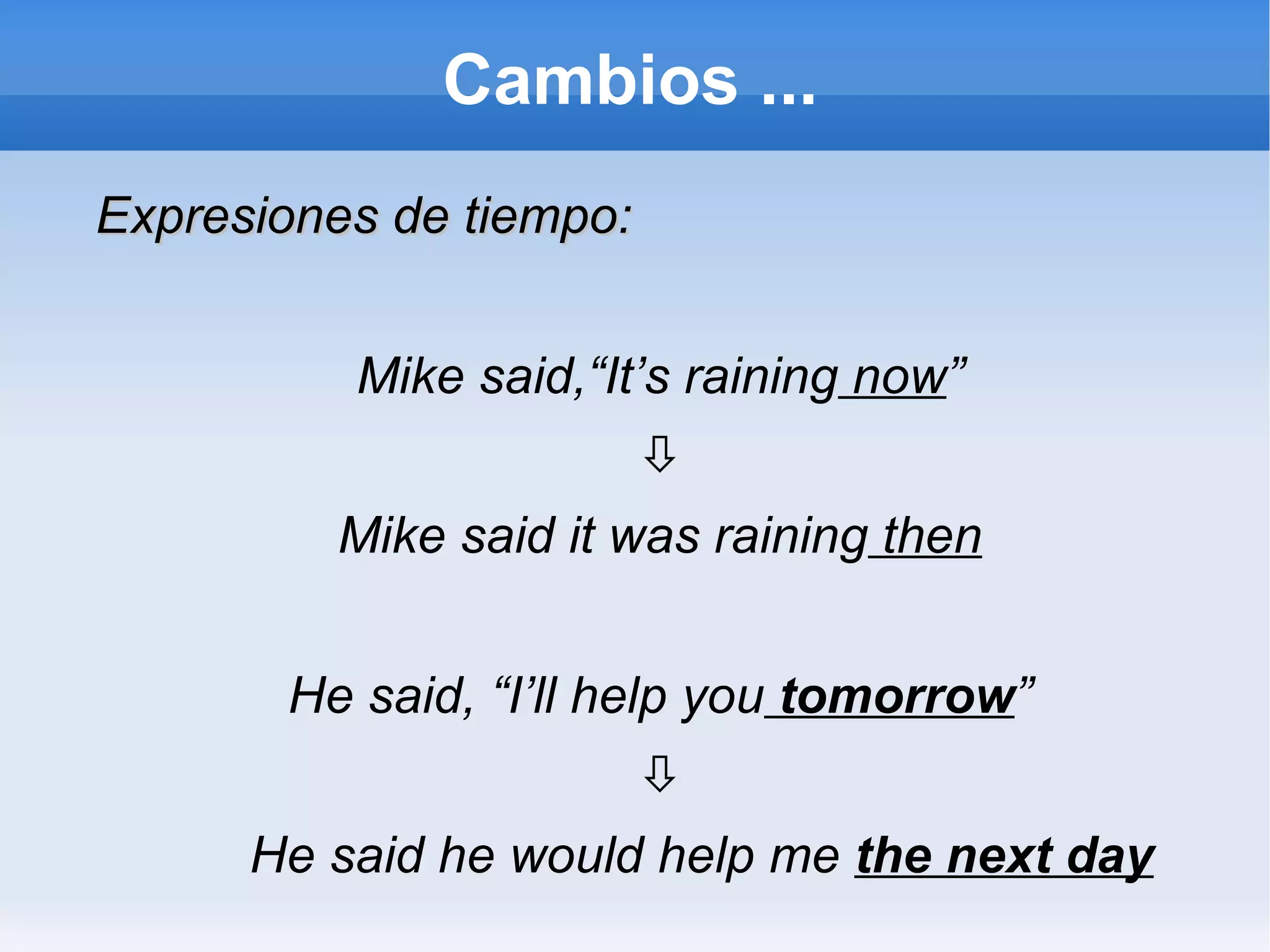
Cambios ... Expresiones de tiempo: Mike said,“It’s raining  now ”  Mike said it was raining  then He said, “I’ll help you  tomorrow ”  He said he would help me  the next day
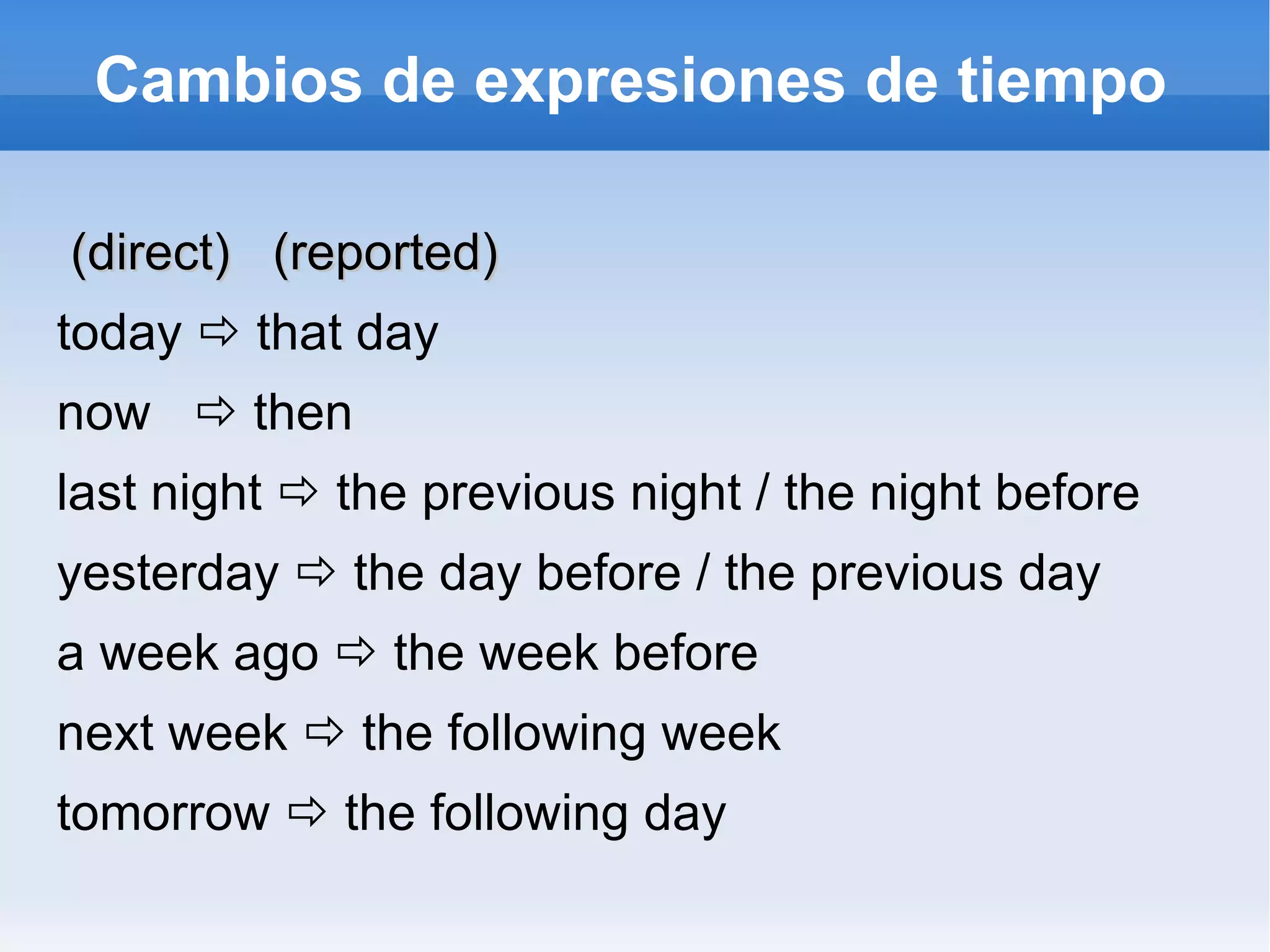
Cambios de expresiones de tiempo (direct)  (reported) today    that day   now    then last night    the previous night / the night before yesterday    the day before / the previous day a week ago    the week before next week    the following week tomorrow    the following day
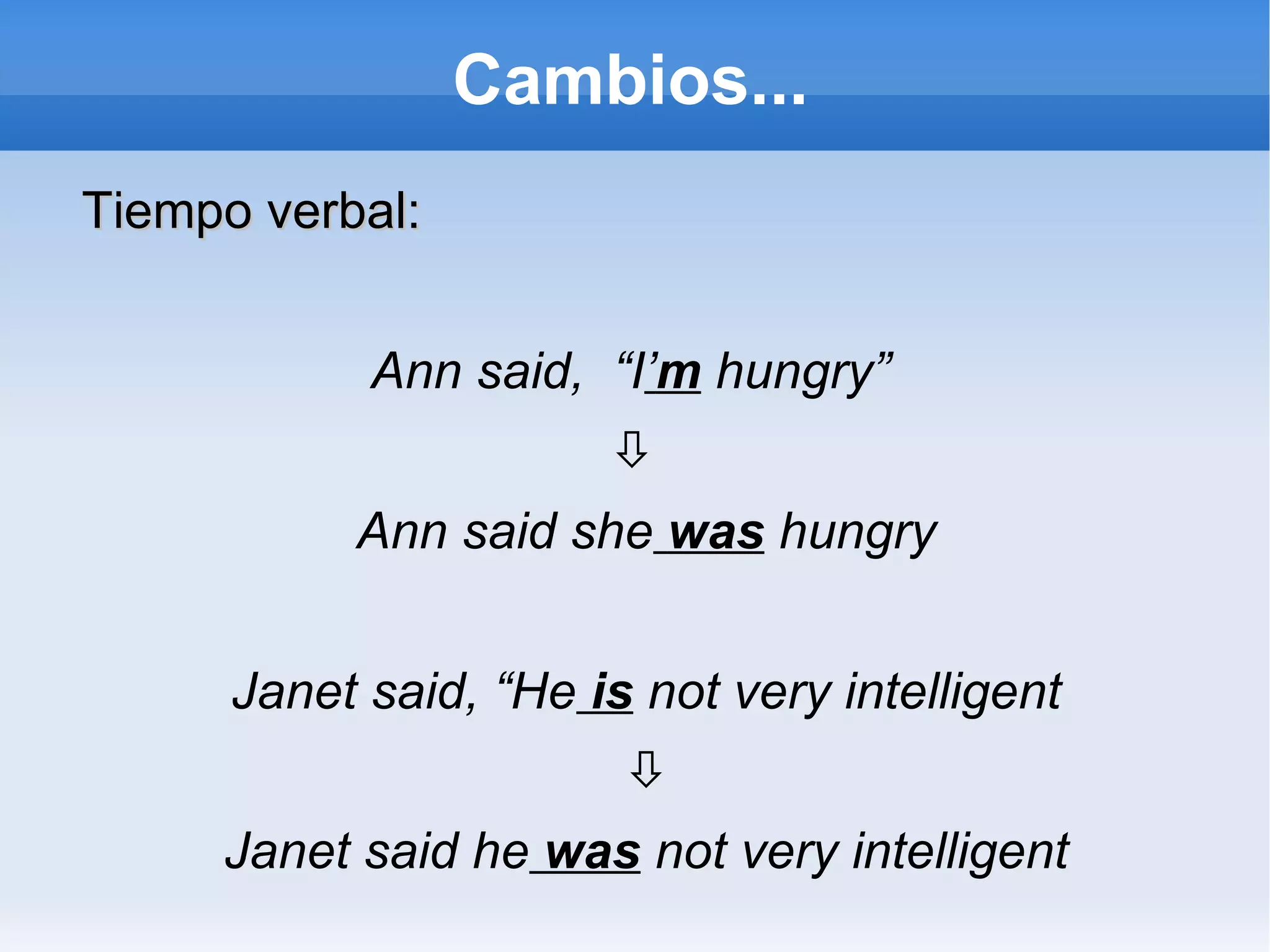
Cambios... Tiempo verbal: Ann said,  “I ’ m  hungry”    Ann said she   was  hungry Janet said, “He  is  not very intelligent  Janet said he  was  not very intelligent
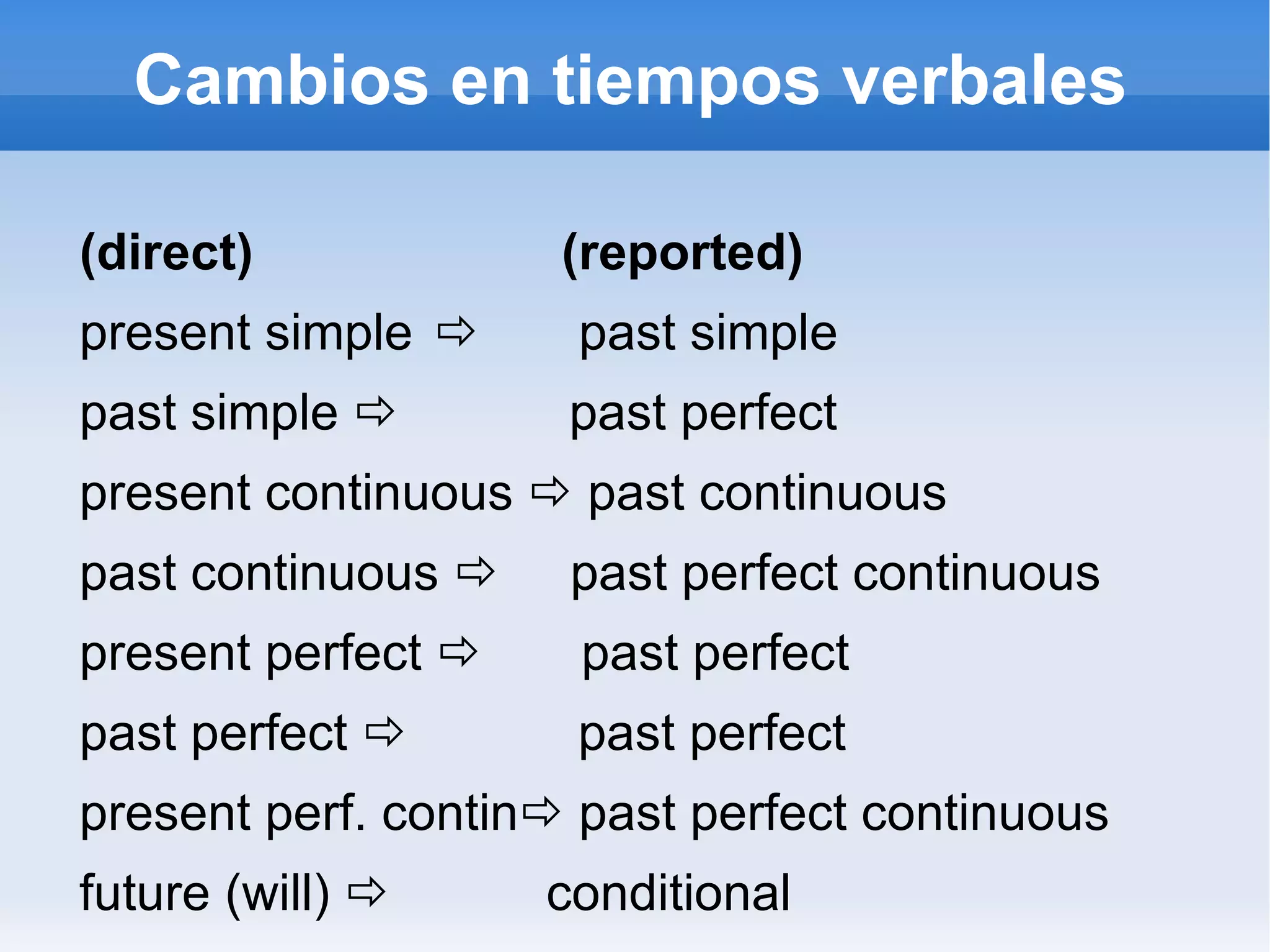
Cambios en tiempos verbales (direct)   (reported) present simple      past simple   past simple     past perfect present continuous    past continuous   past continuous     past perfect continuous present perfect     past perfect   past perfect     past perfect  present perf. contin   past perfect continuous future (will)     conditional
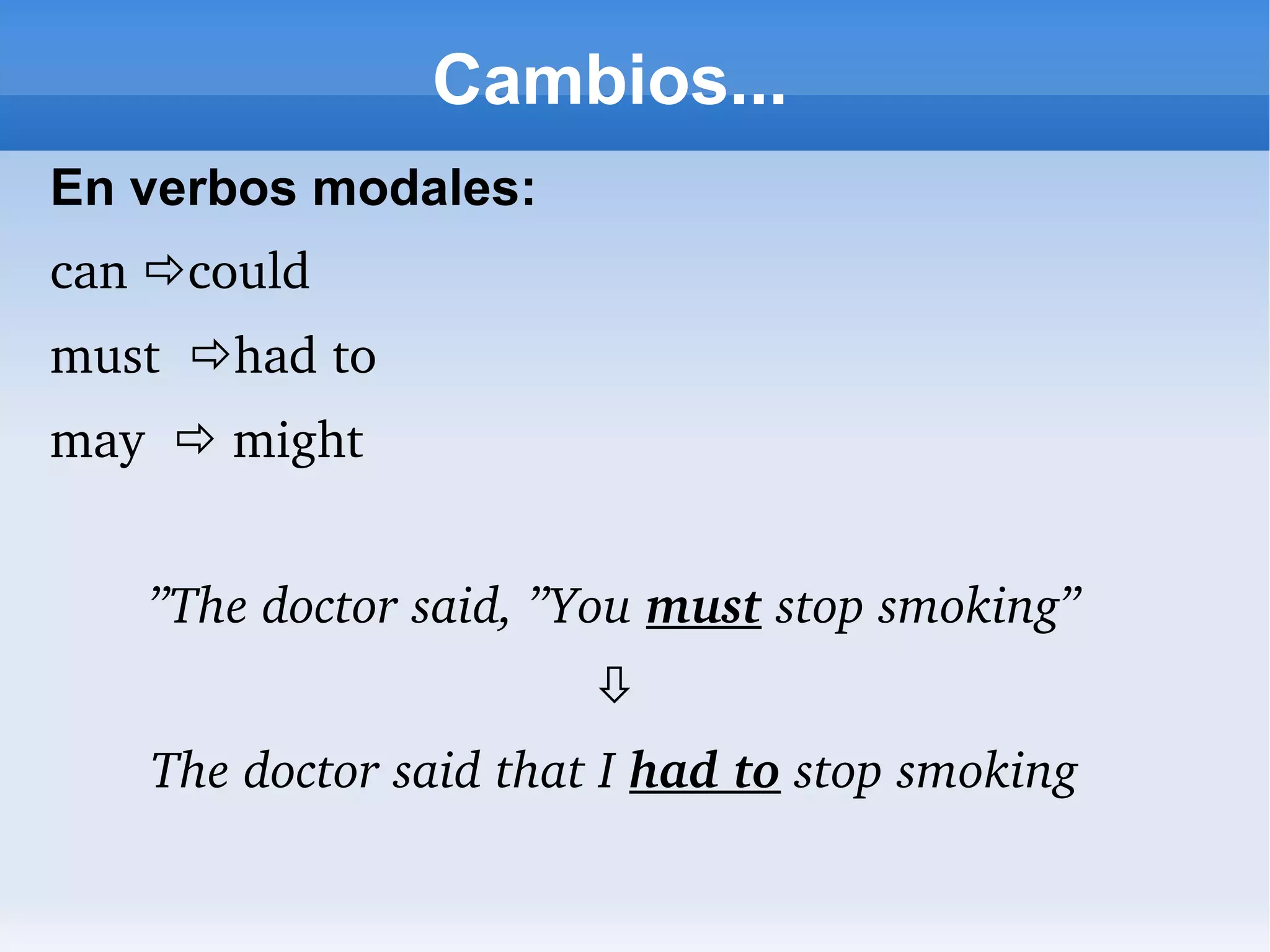
Cambios... En verbos modales: can   could must   had to may    might ” The doctor said, ”You   must   stop smoking”  The doctor said that I  had to  stop smoking
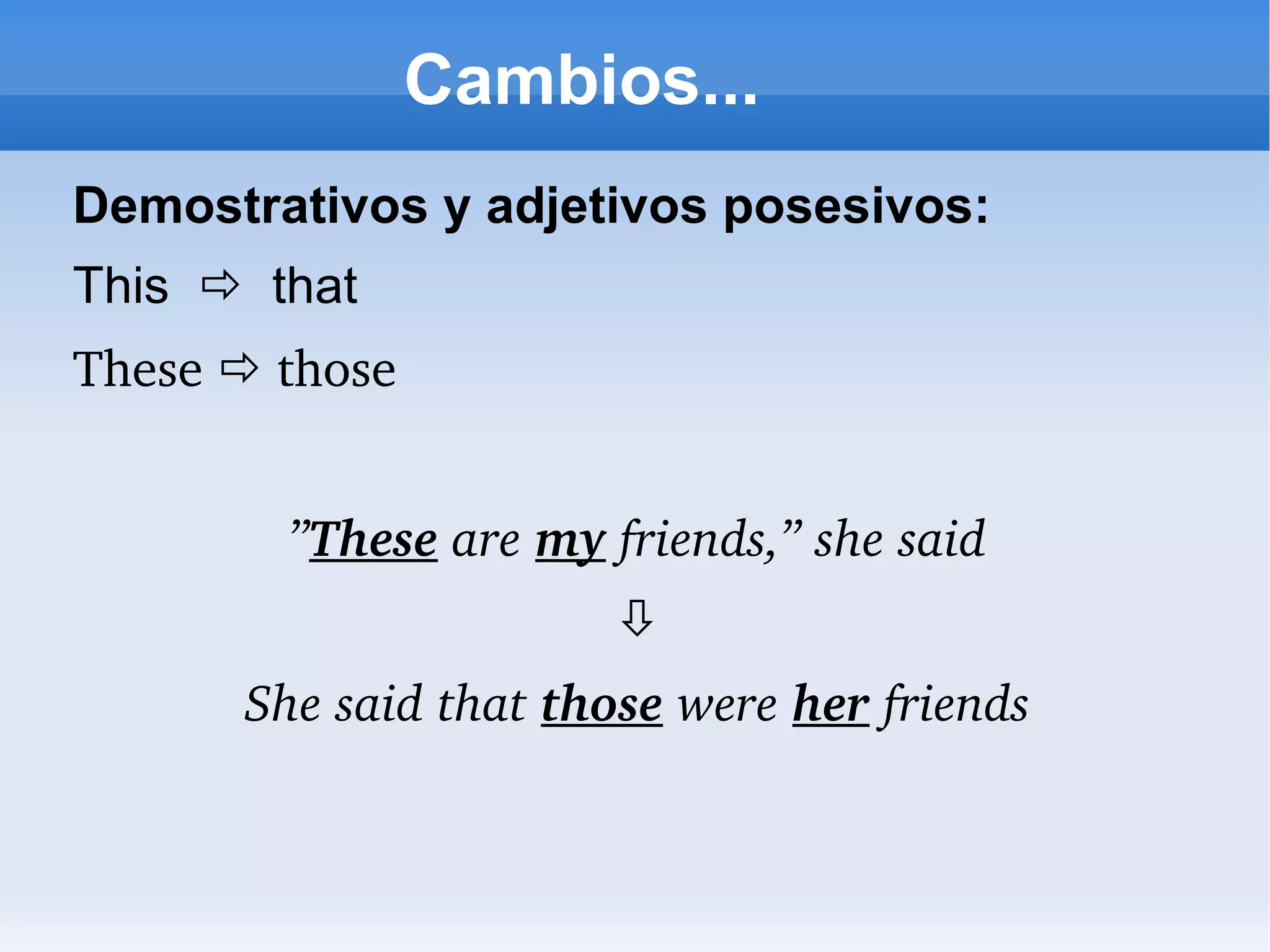
Cambios... Demostrativos y adjetivos posesivos: This     that These    those  ” These  are  my  friends,” she said  She said that  those   were  her  friends
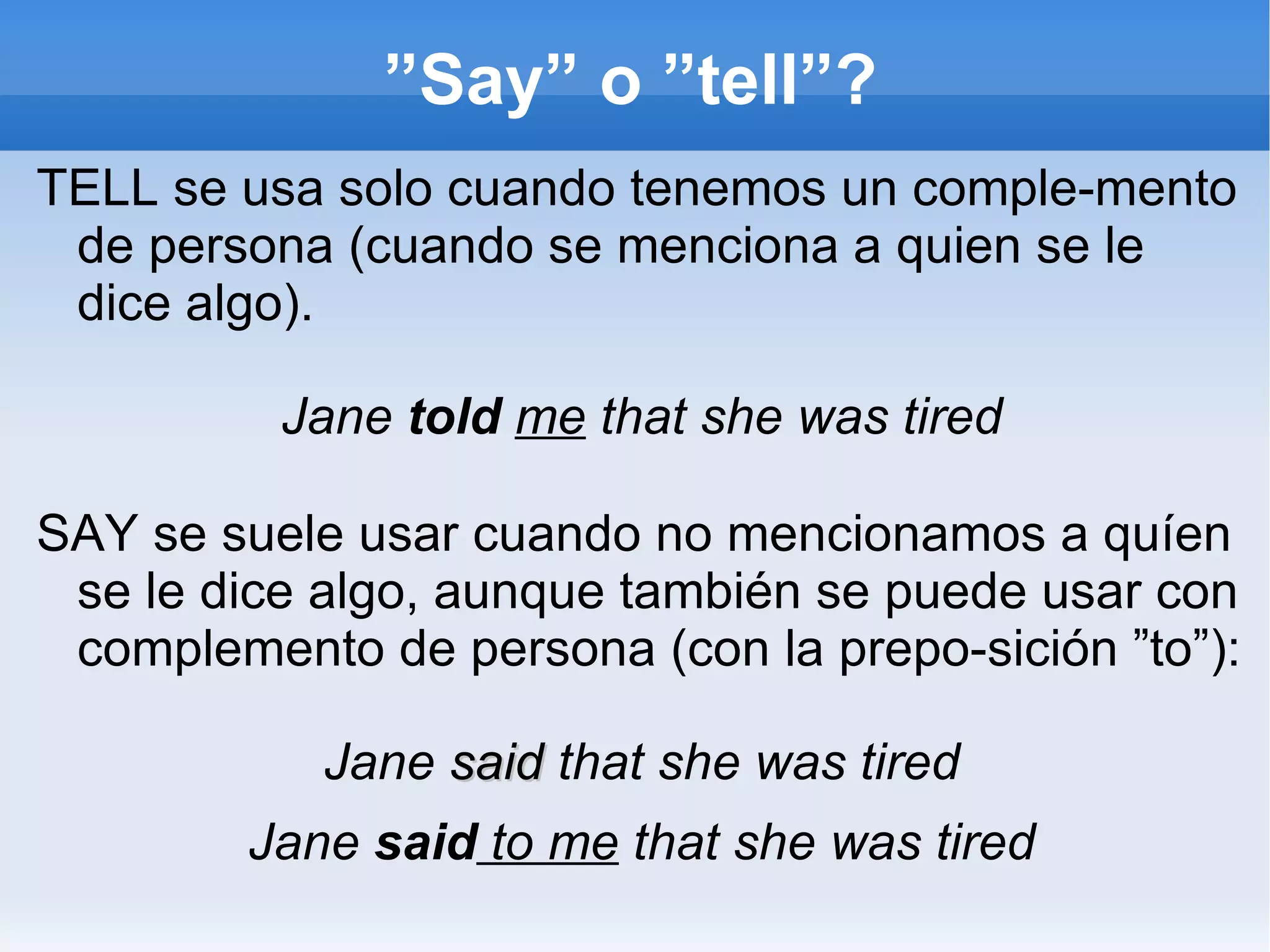
”Say” o ”tell”? TELL se usa solo cuando tenemos un comple-mento de persona (cuando se menciona a quien se le dice algo). Jane  told   me  that she was tired SAY se suele usar cuando no mencionamos a quíen se le dice algo, aunque también se puede usar con complemento de persona (con la prepo-sición ”to”): Jane  said  that she was tired Jane  said  to me  that she was tired
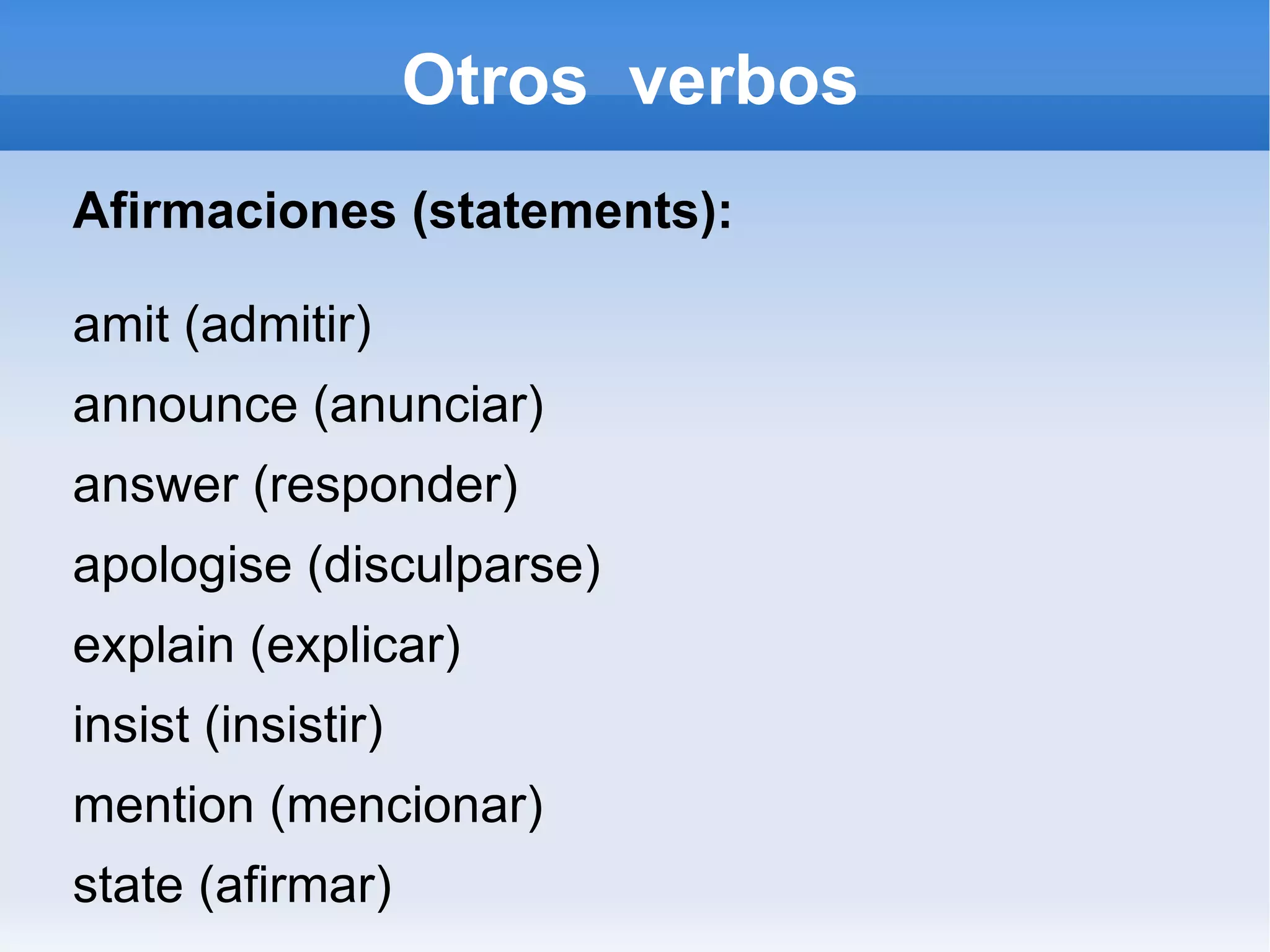
Otros  verbos Afirmaciones (statements): amit (admitir)  announce (anunciar)  answer (responder)  apologise (disculparse)  explain (explicar)  insist (insistir)  mention (mencionar)  state (afirmar)
http://laotraclasedeingles.wordpress.com E l estilo indirecto  R eported speech IsC-2011

Reported speech

  • 1.
    Reported speech Elestilo indirecto
  • 2.
    Reported speech Estilodirecto : Uso de comillas Uso de mayusculas al comienzo Verbo introductorio al comienzo o al final Jane said, “I have to go” “ The woman is here,” Billy said
  • 3.
    Reported speech Estiloindirecto: No hay comillas Hay cambios en verbos, pronombres, posesivos, demostrativos, expresiones de tiempo y lugar... Introducimos ”that”, aunque puede omitirse Jane said that she had to go Billy said that the woman was there
  • 4.
    Cambios... De personaen los pronombres: Tom said, “ I live in Oxford”  Tom said h e lived in Oxford Ann and Jo said, “ I like your bag”  Ann and Jo said they liked my bag
  • 5.
    Cambios... Expresiones delugar: John said, “I’m having a party here ”  John said he was having a party there
  • 6.
    Cambios ... Expresionesde tiempo: Mike said,“It’s raining now ”  Mike said it was raining then He said, “I’ll help you tomorrow ”  He said he would help me the next day
  • 7.
    Cambios de expresionesde tiempo (direct) (reported) today  that day now  then last night  the previous night / the night before yesterday  the day before / the previous day a week ago  the week before next week  the following week tomorrow  the following day
  • 8.
    Cambios... Tiempo verbal:Ann said, “I ’ m hungry”  Ann said she was hungry Janet said, “He is not very intelligent  Janet said he was not very intelligent
  • 9.
    Cambios en tiemposverbales (direct) (reported) present simple  past simple past simple  past perfect present continuous  past continuous past continuous  past perfect continuous present perfect  past perfect past perfect  past perfect present perf. contin  past perfect continuous future (will)  conditional
  • 10.
    Cambios... En verbosmodales: can  could must  had to may  might ” The doctor said, ”You must stop smoking”  The doctor said that I had to stop smoking
  • 11.
    Cambios... Demostrativos yadjetivos posesivos: This  that These  those ” These are my friends,” she said  She said that those were her friends
  • 12.
    ”Say” o ”tell”?TELL se usa solo cuando tenemos un comple-mento de persona (cuando se menciona a quien se le dice algo). Jane told me that she was tired SAY se suele usar cuando no mencionamos a quíen se le dice algo, aunque también se puede usar con complemento de persona (con la prepo-sición ”to”): Jane said that she was tired Jane said to me that she was tired
  • 13.
    Otros verbosAfirmaciones (statements): amit (admitir) announce (anunciar) answer (responder) apologise (disculparse) explain (explicar) insist (insistir) mention (mencionar) state (afirmar)
  • 14.
    http://laotraclasedeingles.wordpress.com E lestilo indirecto  R eported speech IsC-2011