Downloaded 22 times
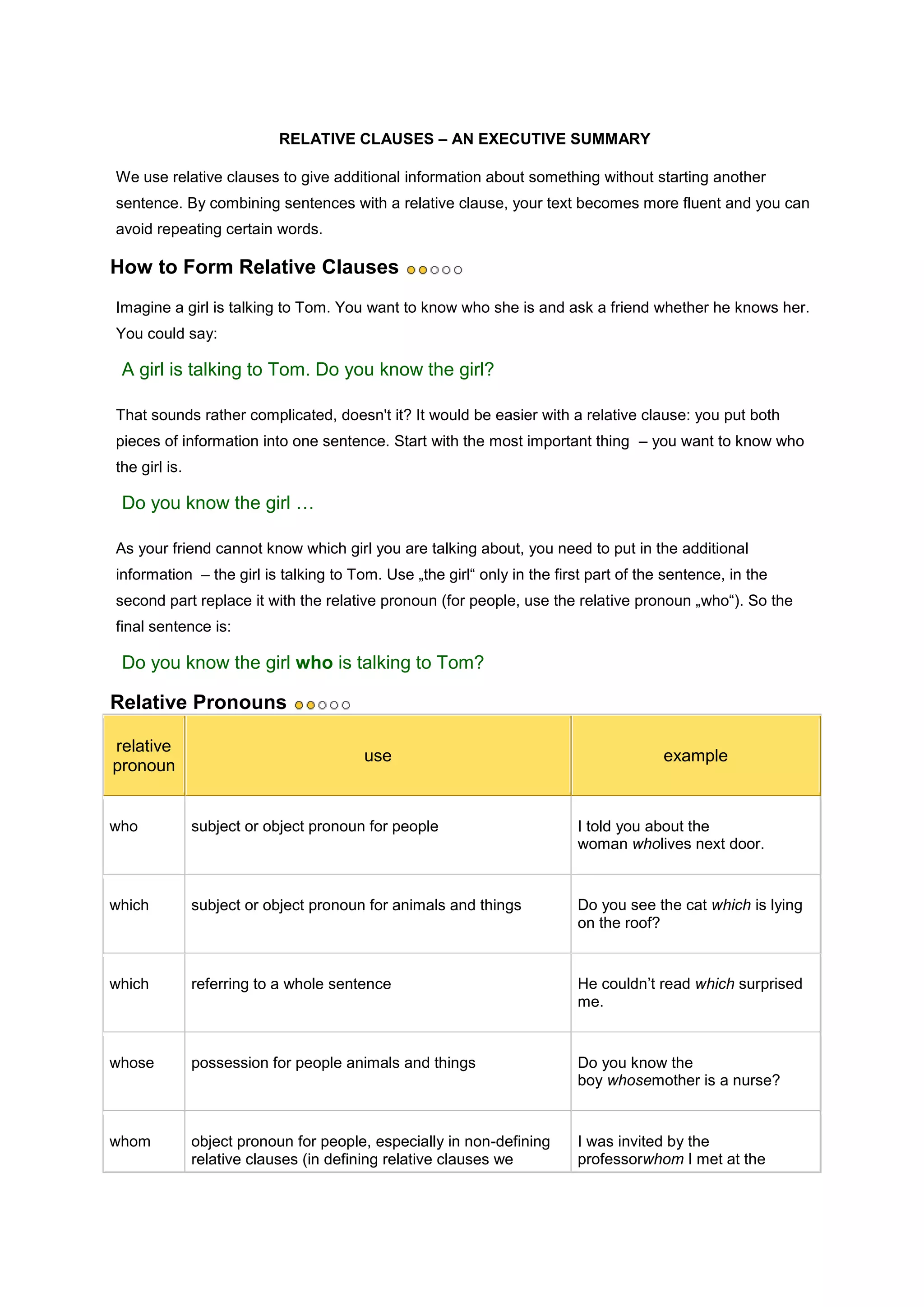
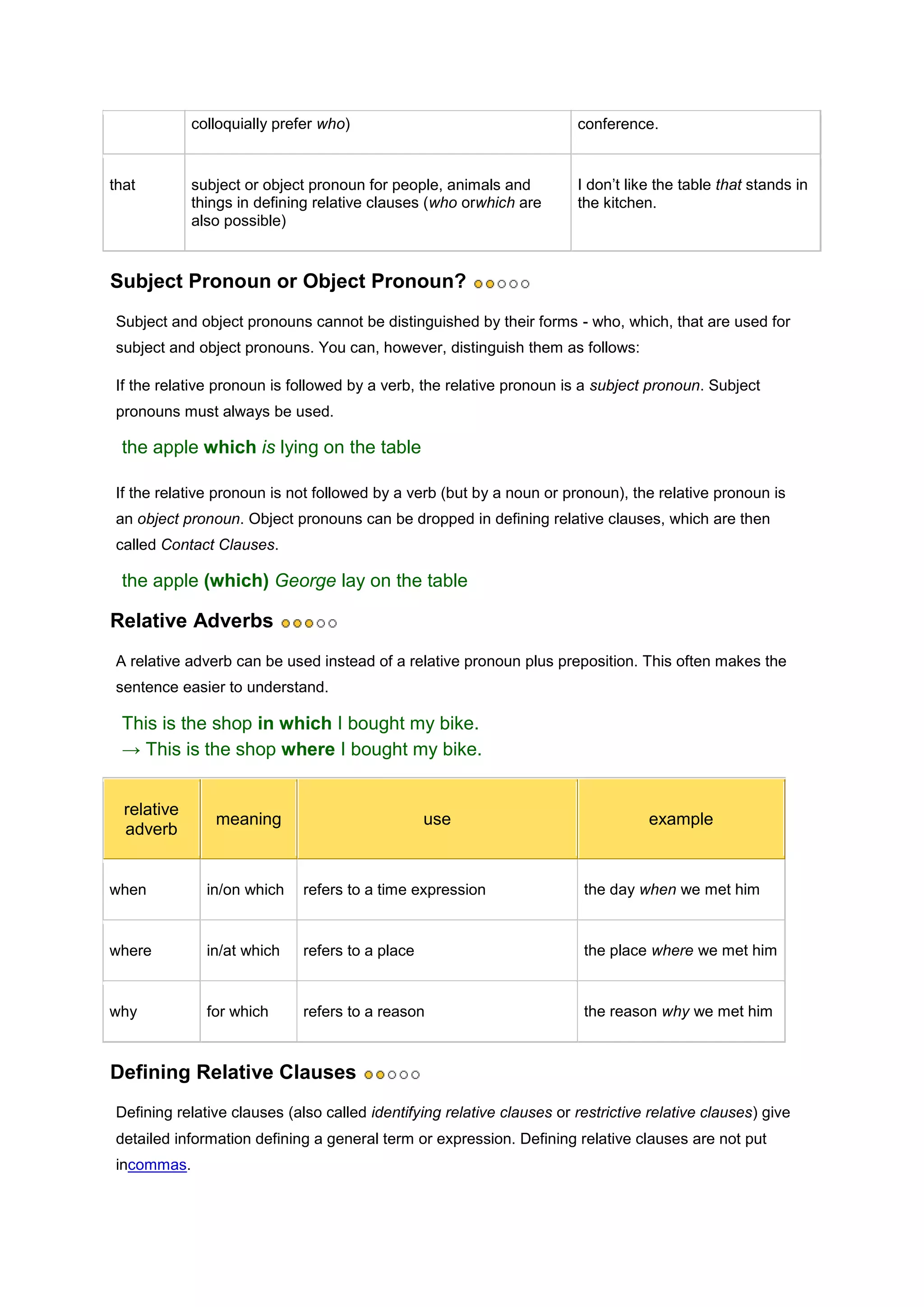
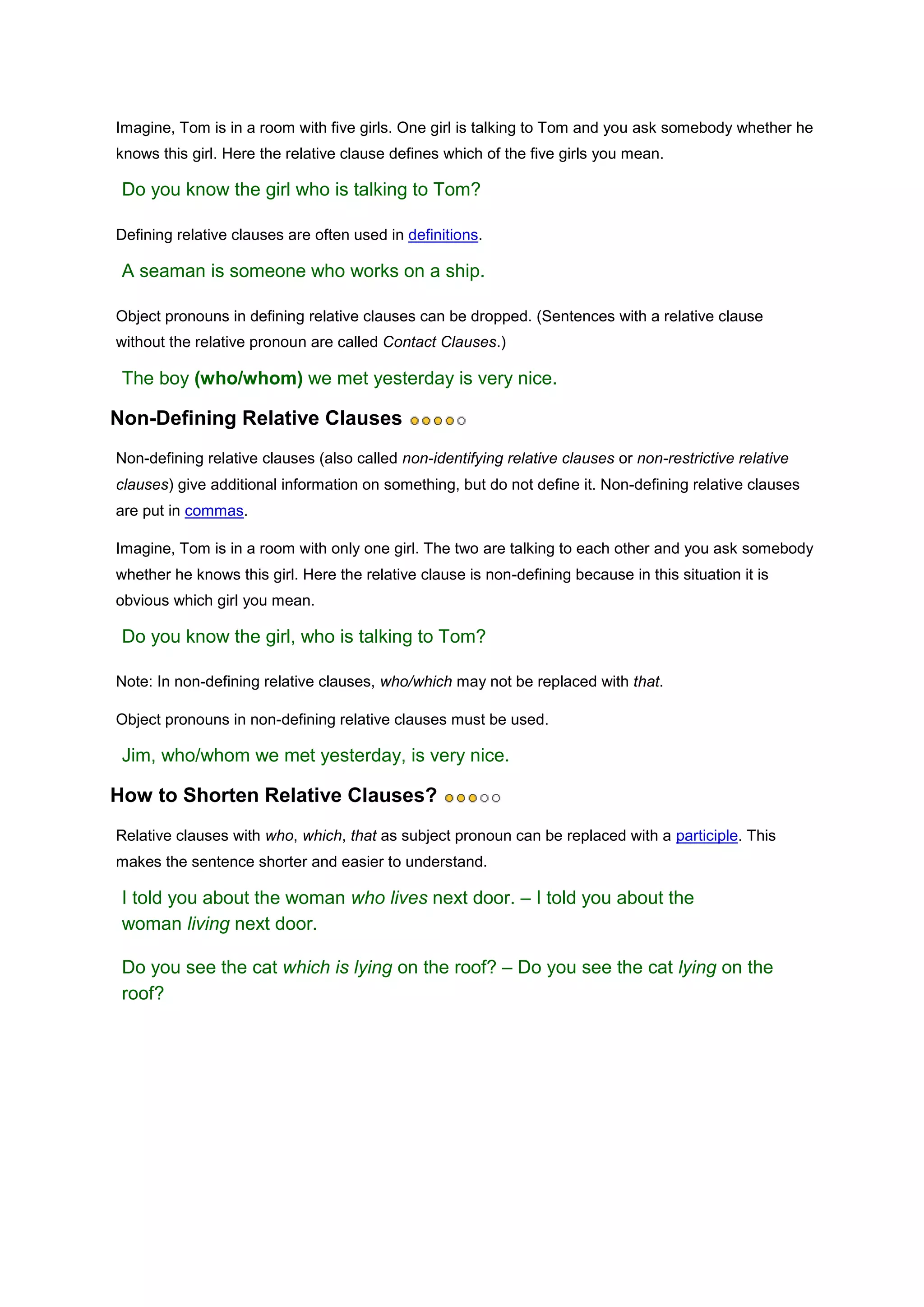

Relative clauses are used to provide additional information about a person, place, or thing without starting a new sentence. They combine two related clauses into one sentence using a relative pronoun like who, which, that, or whose. Relative clauses can be defining, which provide essential information, or non-defining, which provide non-essential extra information. Defining clauses do not use commas while non-defining clauses do use commas. Relative clauses can be shortened by replacing the relative pronoun with a participle to make the sentence more concise.


