Teacher: Mario Guerrero
Student: Dolly Vasquez
DYSLEXIA
 Vocabulary
 Living with dyslexia
 Definition
 Signs and symptoms
 Dispeling myths and misconceptions
 Emotional connections
 How can we help dyslexic chidren?
 Conclusions.
Vocabulary
 To read out
 Stuff
 Goon
 To cope with
 To dread
 Teasing
 Word retrieval
 Jumbled
 Dispel
 Timely
Living with Dyslexia
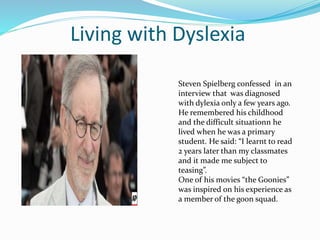
Steven Spielberg confessed in an
interview that was diagnosed
with dylexia only a few years ago.
He remembered his childhood
and the difficult situationn he
lived when he was a primary
student. He said: “I learnt to read
2 years later than my classmates
and it made me subject to
teasing”.
One of his movies “the Goonies”
was inspired on his experience as
a member of the goon squad.
Definition of dyslexia
Take a moment to read the follow:
The bottot line it thit it doet exitt, no bitter whit nibe
teotle give it (i.e. ttecific leirning ditibility, etc). In fict,
iccording to Tilly Thiywitz (2003), itt trevilence it
ictuilly one in five children, which it twenty tercent.
The bottom line is that it does exist, no matter what
name people give it (i.e. specific learning disability,
etc.). In fact, according to Sally Shaywitz (2003), its
prevalence is actually one in five chidren, which is
twenty percent.
Runs in family
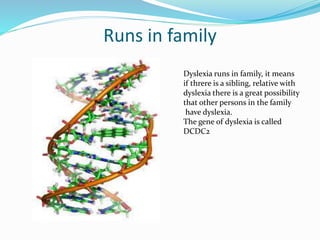
Dyslexia runs in family, it means
if threre is a sibling, relative with
dyslexia there is a great possibility
that other persons in the family
have dyslexia.
The gene of dyslexia is called
DCDC2
Signs and Symptoms
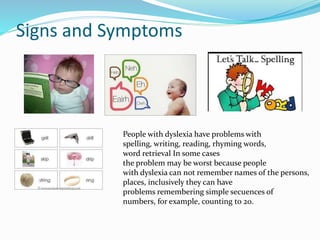
People with dyslexia have problems with
spelling, writing, reading, rhyming words,
word retrieval In some cases
the problem may be worst because people
with dyslexia can not remember names of the persons,
places, inclusively they can have
problems remembering simple secuences of
numbers, for example, counting to 20.
Dispeling myths and misconceptions
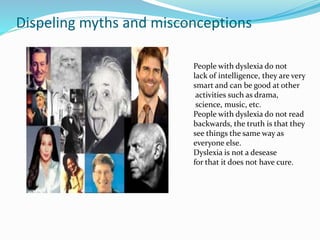
People with dyslexia do not
lack of intelligence, they are very
smart and can be good at other
activities such as drama,
science, music, etc.
People with dyslexia do not read
backwards, the truth is that they
see things the same way as
everyone else.
Dyslexia is not a desease
for that it does not have cure.
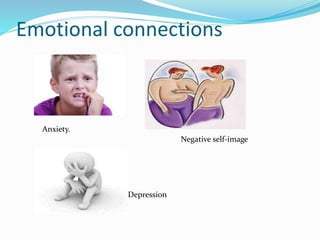
Emotional connections
Anxiety.
Negative self-image
Depression
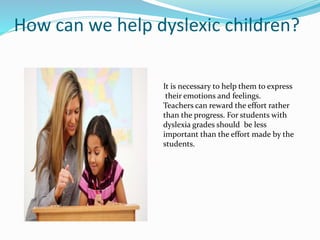
How can we help dyslexic children?
It is necessary to help them to express
their emotions and feelings.
Teachers can reward the effort rather
than the progress. For students with
dyslexia grades should be less
important than the effort made by the
students.
Conclusions
 Dyslexia is not an desease.
 Dyslexic people can become successful.
 Timely intervention can help them overcome their
troubles.
 For people with dyslexia is important to be supported
by their love ones, friends, teachers, and by all those
persons who are around them.

Dyslexia

  • 1.
  • 2.
    DYSLEXIA  Vocabulary  Livingwith dyslexia  Definition  Signs and symptoms  Dispeling myths and misconceptions  Emotional connections  How can we help dyslexic chidren?  Conclusions.
  • 3.
    Vocabulary  To readout  Stuff  Goon  To cope with  To dread  Teasing  Word retrieval  Jumbled  Dispel  Timely
  • 4.
    Living with Dyslexia StevenSpielberg confessed in an interview that was diagnosed with dylexia only a few years ago. He remembered his childhood and the difficult situationn he lived when he was a primary student. He said: “I learnt to read 2 years later than my classmates and it made me subject to teasing”. One of his movies “the Goonies” was inspired on his experience as a member of the goon squad.
  • 5.
    Definition of dyslexia Takea moment to read the follow: The bottot line it thit it doet exitt, no bitter whit nibe teotle give it (i.e. ttecific leirning ditibility, etc). In fict, iccording to Tilly Thiywitz (2003), itt trevilence it ictuilly one in five children, which it twenty tercent. The bottom line is that it does exist, no matter what name people give it (i.e. specific learning disability, etc.). In fact, according to Sally Shaywitz (2003), its prevalence is actually one in five chidren, which is twenty percent.
  • 6.
    Runs in family Dyslexiaruns in family, it means if threre is a sibling, relative with dyslexia there is a great possibility that other persons in the family have dyslexia. The gene of dyslexia is called DCDC2
  • 7.
    Signs and Symptoms Peoplewith dyslexia have problems with spelling, writing, reading, rhyming words, word retrieval In some cases the problem may be worst because people with dyslexia can not remember names of the persons, places, inclusively they can have problems remembering simple secuences of numbers, for example, counting to 20.
  • 8.
    Dispeling myths andmisconceptions People with dyslexia do not lack of intelligence, they are very smart and can be good at other activities such as drama, science, music, etc. People with dyslexia do not read backwards, the truth is that they see things the same way as everyone else. Dyslexia is not a desease for that it does not have cure.
  • 9.
  • 10.
    How can wehelp dyslexic children? It is necessary to help them to express their emotions and feelings. Teachers can reward the effort rather than the progress. For students with dyslexia grades should be less important than the effort made by the students.
  • 11.
    Conclusions  Dyslexia isnot an desease.  Dyslexic people can become successful.  Timely intervention can help them overcome their troubles.  For people with dyslexia is important to be supported by their love ones, friends, teachers, and by all those persons who are around them.