+
Why Relationships
Change and End
+
Learning Outcome
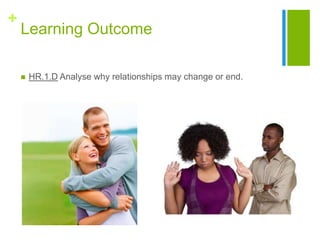
 HR.1.D Analyse why relationships may change or end.
+
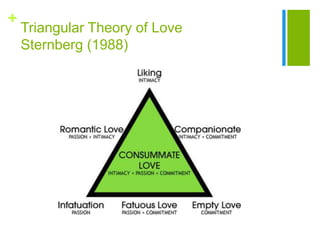
Triangular Theory of Love
Sternberg (1988)
+
Buunk (1998)
Communication and Happiness
 Express their feelings openly
and disclose their thoughts.
 Show affection and
understanding for each others’
feelings (empathy and
perspective taking)
 Show conflict-avoidance
 Demonstrate soothing
 Take part in destructive
communication.
Happy Couples Unhappy Couples
+
Social Exchange Theory
Kelly & Thibaut (1959)
 We make cost-benefits that guide our behavior. (Economic
Thinking)
 A relationship will endure as long as it is profitable to both parties.
 Balance is needed for long-term success
+
Investment Model of Commitment
 Extends on Social Exchange Theory to apply to
close relationships.
 Adds dimensions of satisfaction and commitment.
 Satisfaction: positivity of feelings or attraction to partner or the
relationship.
 Commitment: The tendency to maintain a relationship or feel
psychologically attached to it.
 Comparison to other possible relationships is key
+
Key ideas of Investment Model
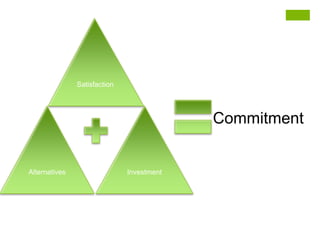
1. Satisfaction in a relationship depends on rewards,
costs, and the partner’s comparison to other possible
relationships.
2. Commitment: A relationship depends on
satisfaction, alternatives, & investment.
3. Commitment directly relates to whether a person
stays in a relationship.
Satisfaction
InvestmentAlternatives
Commitment
+
Two Examples of the Investment
Model
 A dissatisfied partner stays in an abusive
relationship because they feel as though they are
lacking other options or are invested.
 A satisfied partner leaves a relationship because
they feel as though they have other options or are
not attached.
 Key idea: Commitment is the main factor in
maintaining relationships.
+
Rusbult (1983)
 Aim: To investigate why relationships last and end.
 Method: Longitudinal study of 34 new college couples for 7
months.
 Broke participants into 3 categories: The Stayers, The
Abandoned, The Leavers.
 Findings: Stayers had high rewards, low costs, high
satisfaction, few alternatives, & high commitment over the
course of the study.
 Conclusions: Those ratings predict lasting relationships.
+
Investment Model of Commitment
Rusbult
 Patterns of Accommodation (responding to a partner’s
negative behavior) are key to maintaining relationships.
 Constructive Accommodations: Discussing problems openly
and honestly, forgiving each other, and letting problems solve
naturally are key to maintaining relationships.
+
Equity Theory
 The relationship must be perceived as
equal/balanced in order for relationships to last.
 Unhappiness comes from imbalanced
relationships.
+
Hatfield (1979)
 Aim: To investigate how perceptions of equity impact
relationship satisfaction.
 Method: Interviewed over 2000 couples
 Findings/Conclusions:
 Under-benefitted partners were more likely to cheat.
 Greatly-Over or Greatly-Under benefitted partners were more
likely to think their relationships would not last.
 Equitable partners were more likely to think that their
relationship would last.
+
Why Relationships End
Flora & Segrin (2003)
 Aim: To investigate possible factors that predict the break-up of
relationships.
 Method: A longitudinal series of interviews, self-reporting, and
questionnaires of 66 Young dating couples and 65 recently
married couples.
+
Flora and Segrin et al. (2003)
 ¼ of couples broke up
 General concern with the time
spent together and common
interests.
 Men: Negative and positive feelings
had little impact.
 Women: The amount of negative
feelings correlated with the rate of
breaking-up.
 No Divorces
 Concern with both emotions and
shared interest.
 Men: More concerned with shared
interest and shared time. Some
emphasis on negative emotions
shown by their partner.
 Women: Satisfaction largely
dependent on the amount of
negative feelings of their partner.
Dating Couples Married Couples
Conclusion: Gender impacts the perception of a healthy
relationship.
+
Additional Factors that
Impact the End of Relationships
 Women end relationships more than men (Gray and Silver
1990).
 Marriages between younger than average partners are
unstable (Duck 1988).
 Early parenthood and divorce are correlated (Pringle 1986).
 Marriages between partners from lower economic groups and
lower education levels tend to be unstable (Duck 1992).
 Having divorced parents increases divorce rates (Duck 1992).
 Marriage between partners who have had many sexual
partners before marriage are less likely to last (Duck 1992).
+
UP Analysis: Carl and Ellie
 Watch the following clip from UP and explain how
the ideas from this standard explain their
relationship.
 What makes their relationship work? How do they use
communication? What accommodations do they make?
How/why does their relationship change? Why are they able
to make their relationship last?
+
Discussion/Response Questions
 How might these theories relate to the happiness in arranged
and choice marriages?
 What role does communication have on the changes within a
relationship?
 What strengths and limitations exist within these theories?

Relationships ending pp

  • 1.
  • 2.
    + Learning Outcome  HR.1.DAnalyse why relationships may change or end.
  • 3.
    + Triangular Theory ofLove Sternberg (1988)
  • 4.
    + Buunk (1998) Communication andHappiness  Express their feelings openly and disclose their thoughts.  Show affection and understanding for each others’ feelings (empathy and perspective taking)  Show conflict-avoidance  Demonstrate soothing  Take part in destructive communication. Happy Couples Unhappy Couples
  • 5.
    + Social Exchange Theory Kelly& Thibaut (1959)  We make cost-benefits that guide our behavior. (Economic Thinking)  A relationship will endure as long as it is profitable to both parties.  Balance is needed for long-term success
  • 6.
    + Investment Model ofCommitment  Extends on Social Exchange Theory to apply to close relationships.  Adds dimensions of satisfaction and commitment.  Satisfaction: positivity of feelings or attraction to partner or the relationship.  Commitment: The tendency to maintain a relationship or feel psychologically attached to it.  Comparison to other possible relationships is key
  • 7.
    + Key ideas ofInvestment Model 1. Satisfaction in a relationship depends on rewards, costs, and the partner’s comparison to other possible relationships. 2. Commitment: A relationship depends on satisfaction, alternatives, & investment. 3. Commitment directly relates to whether a person stays in a relationship.
  • 8.
  • 9.
    + Two Examples ofthe Investment Model  A dissatisfied partner stays in an abusive relationship because they feel as though they are lacking other options or are invested.  A satisfied partner leaves a relationship because they feel as though they have other options or are not attached.  Key idea: Commitment is the main factor in maintaining relationships.
  • 10.
    + Rusbult (1983)  Aim:To investigate why relationships last and end.  Method: Longitudinal study of 34 new college couples for 7 months.  Broke participants into 3 categories: The Stayers, The Abandoned, The Leavers.  Findings: Stayers had high rewards, low costs, high satisfaction, few alternatives, & high commitment over the course of the study.  Conclusions: Those ratings predict lasting relationships.
  • 11.
    + Investment Model ofCommitment Rusbult  Patterns of Accommodation (responding to a partner’s negative behavior) are key to maintaining relationships.  Constructive Accommodations: Discussing problems openly and honestly, forgiving each other, and letting problems solve naturally are key to maintaining relationships.
  • 12.
    + Equity Theory  Therelationship must be perceived as equal/balanced in order for relationships to last.  Unhappiness comes from imbalanced relationships.
  • 13.
    + Hatfield (1979)  Aim:To investigate how perceptions of equity impact relationship satisfaction.  Method: Interviewed over 2000 couples  Findings/Conclusions:  Under-benefitted partners were more likely to cheat.  Greatly-Over or Greatly-Under benefitted partners were more likely to think their relationships would not last.  Equitable partners were more likely to think that their relationship would last.
  • 14.
    + Why Relationships End Flora& Segrin (2003)  Aim: To investigate possible factors that predict the break-up of relationships.  Method: A longitudinal series of interviews, self-reporting, and questionnaires of 66 Young dating couples and 65 recently married couples.
  • 15.
    + Flora and Segrinet al. (2003)  ¼ of couples broke up  General concern with the time spent together and common interests.  Men: Negative and positive feelings had little impact.  Women: The amount of negative feelings correlated with the rate of breaking-up.  No Divorces  Concern with both emotions and shared interest.  Men: More concerned with shared interest and shared time. Some emphasis on negative emotions shown by their partner.  Women: Satisfaction largely dependent on the amount of negative feelings of their partner. Dating Couples Married Couples Conclusion: Gender impacts the perception of a healthy relationship.
  • 16.
    + Additional Factors that Impactthe End of Relationships  Women end relationships more than men (Gray and Silver 1990).  Marriages between younger than average partners are unstable (Duck 1988).  Early parenthood and divorce are correlated (Pringle 1986).  Marriages between partners from lower economic groups and lower education levels tend to be unstable (Duck 1992).  Having divorced parents increases divorce rates (Duck 1992).  Marriage between partners who have had many sexual partners before marriage are less likely to last (Duck 1992).
  • 17.
    + UP Analysis: Carland Ellie  Watch the following clip from UP and explain how the ideas from this standard explain their relationship.  What makes their relationship work? How do they use communication? What accommodations do they make? How/why does their relationship change? Why are they able to make their relationship last?
  • 18.
    + Discussion/Response Questions  Howmight these theories relate to the happiness in arranged and choice marriages?  What role does communication have on the changes within a relationship?  What strengths and limitations exist within these theories?