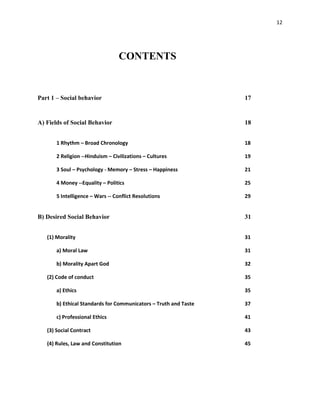
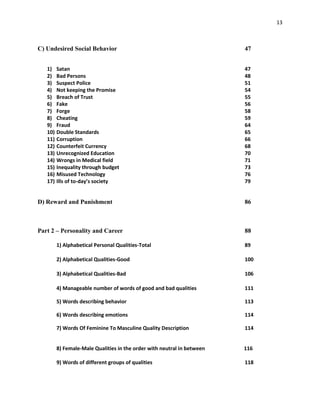
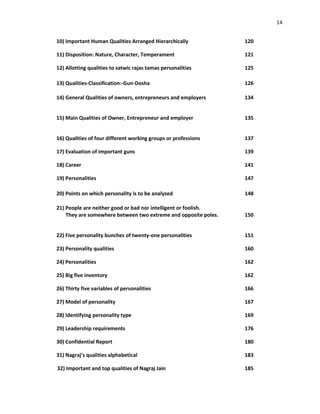
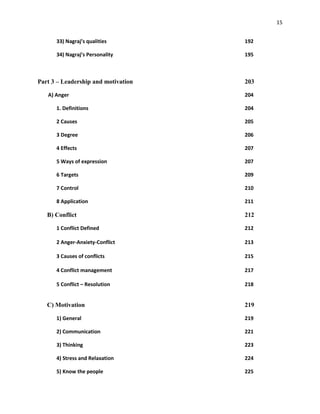
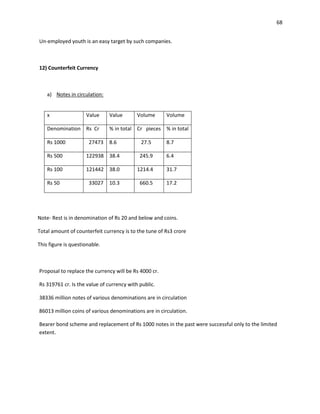
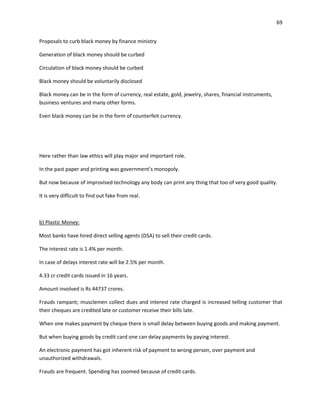
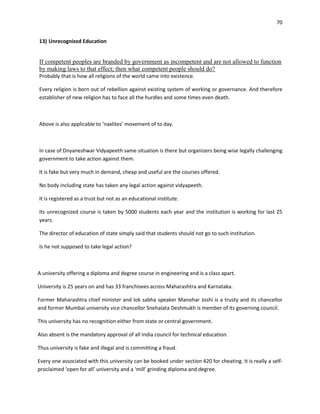
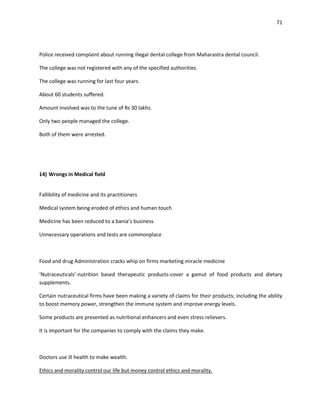
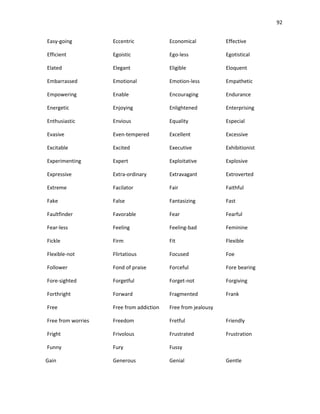
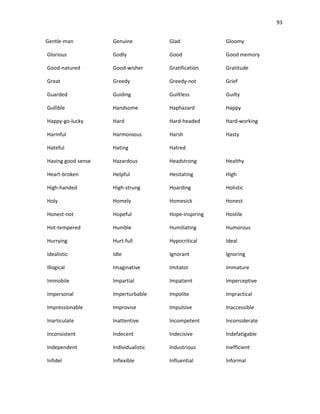
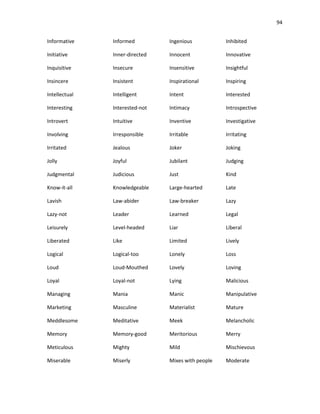
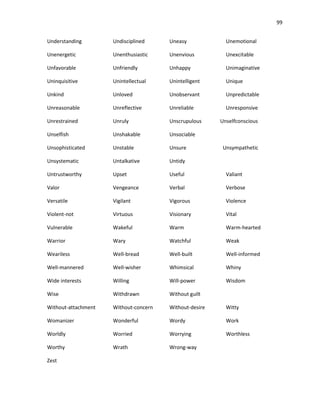
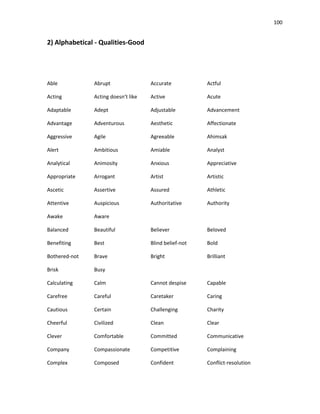
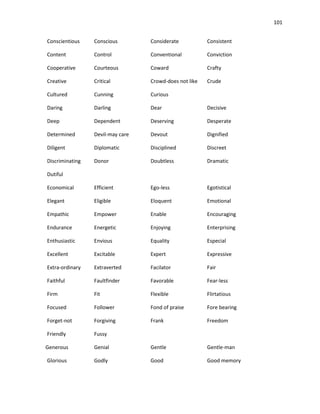
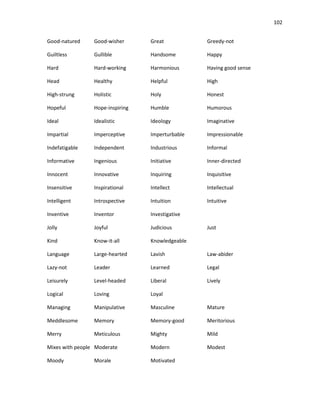
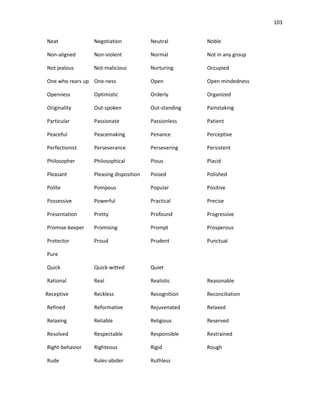
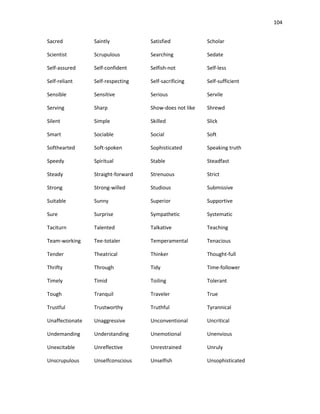
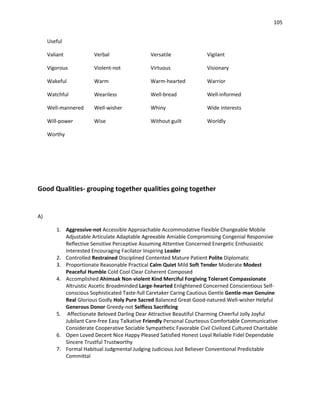
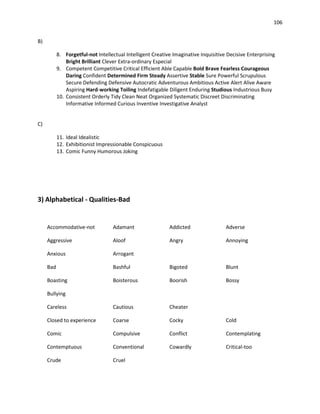
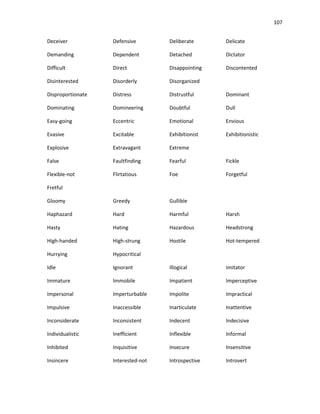
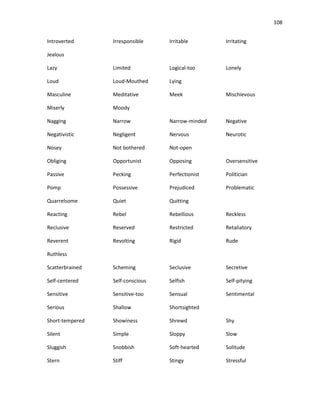
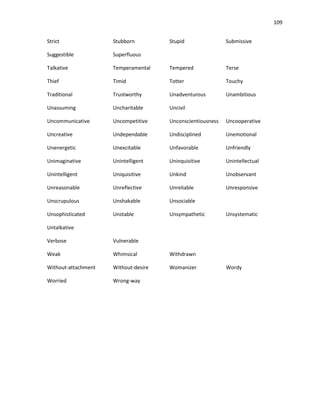
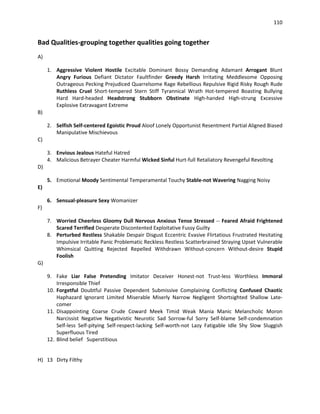
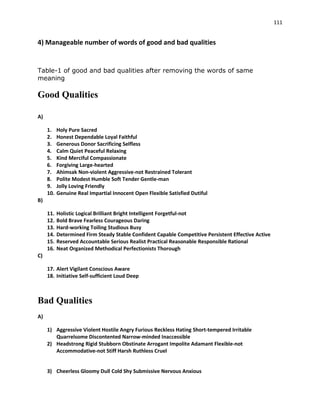
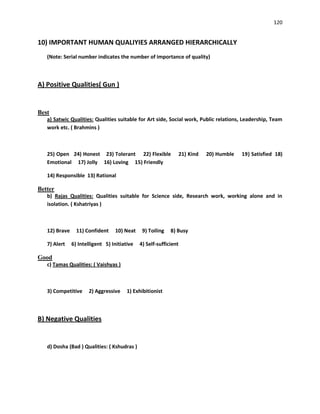
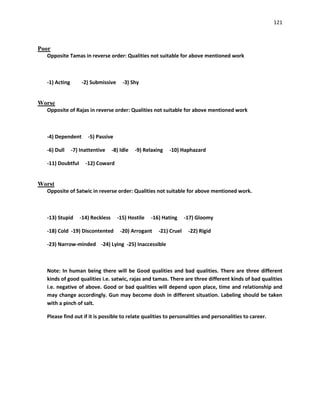
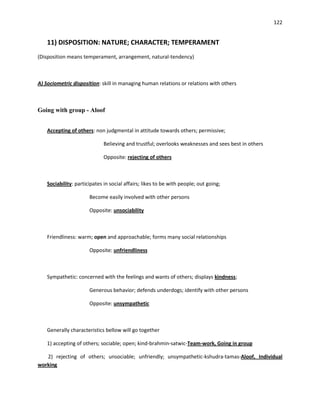
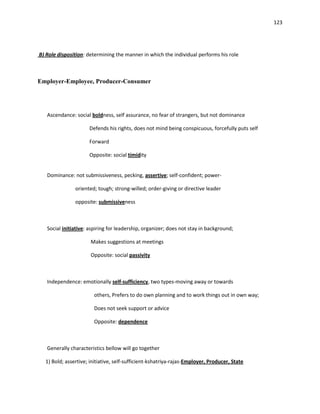
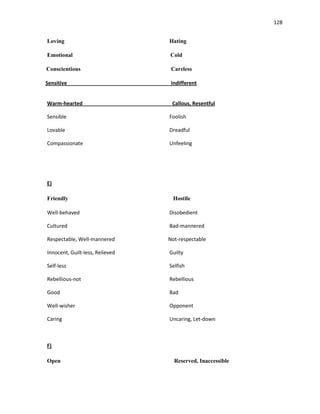
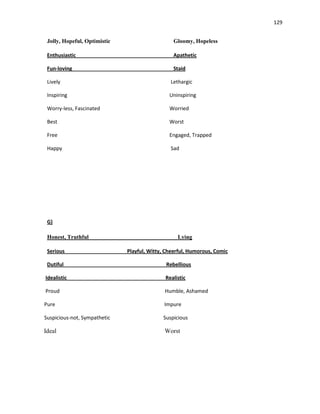
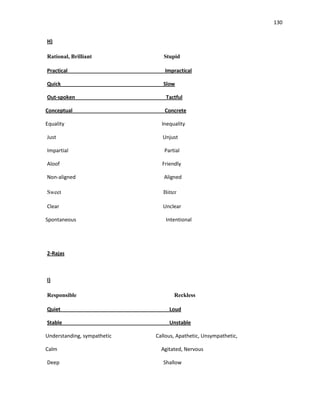
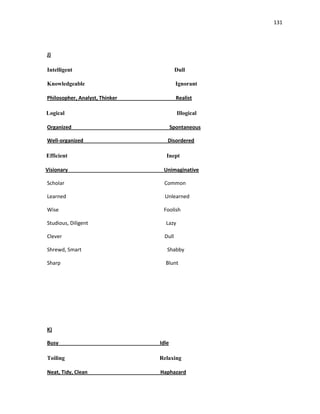
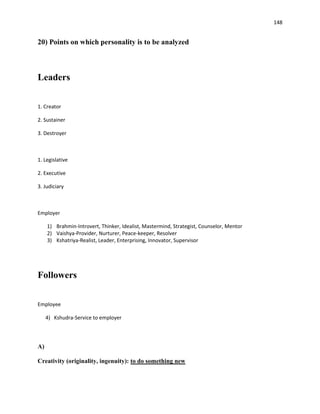
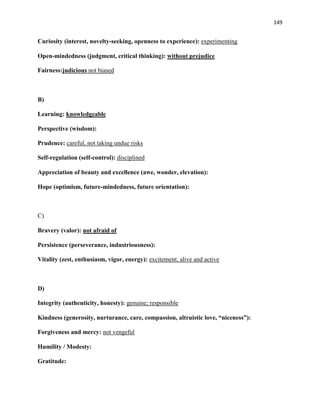
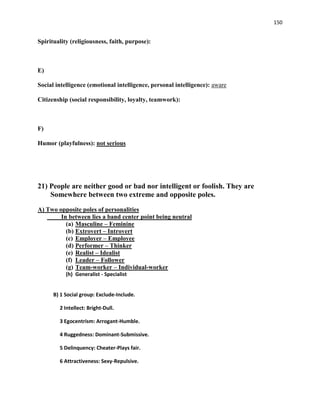
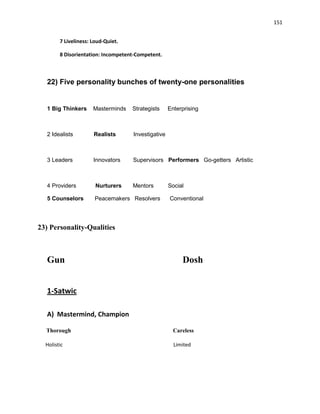
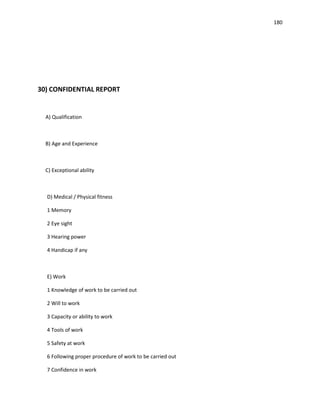
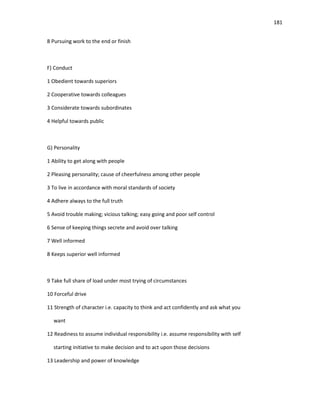
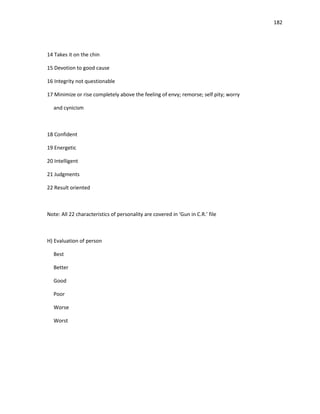
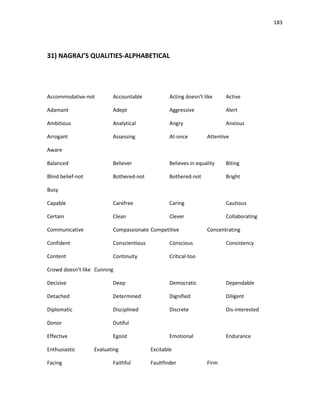
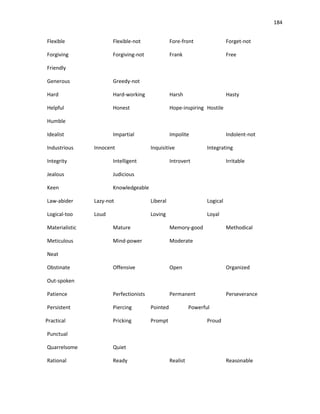
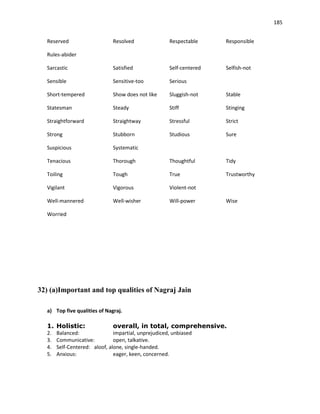
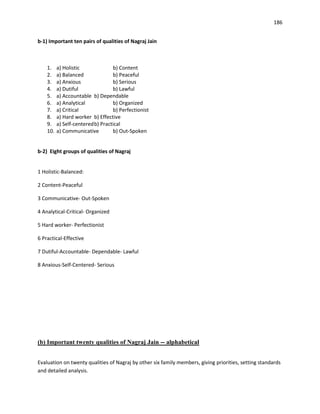
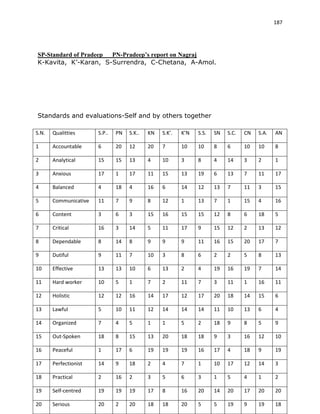
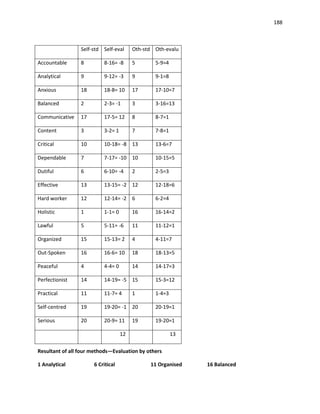
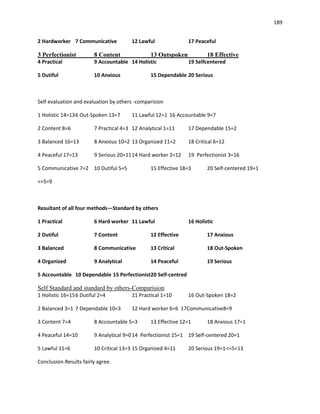
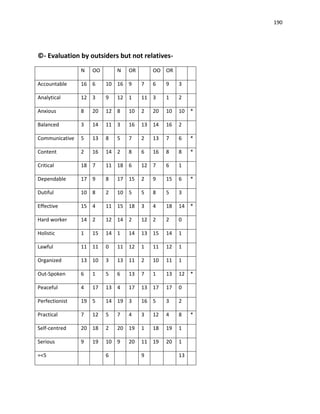
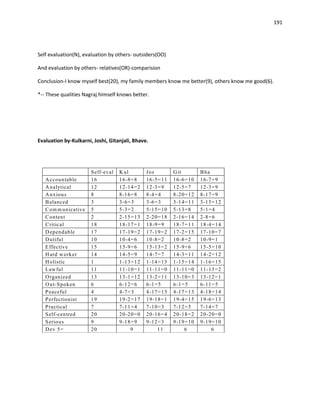
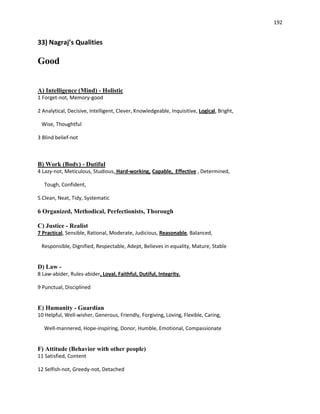
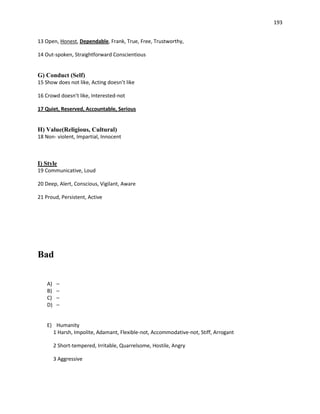
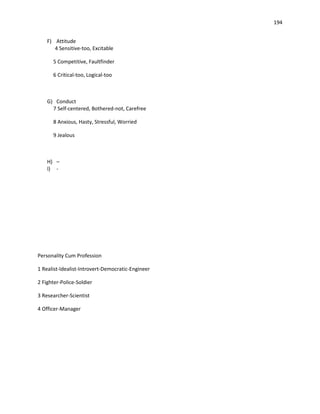
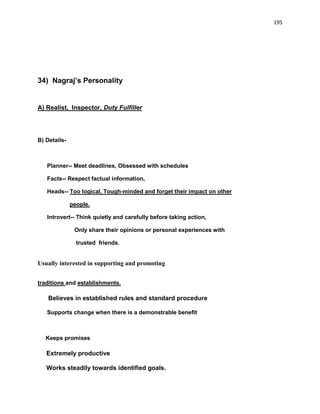
FOREWORDS<br />(A) Observations on book ‘Relationship-3’ <br />By Shri Vasudeo J. Kale - Retired Chief Engineer (Civil), Mumbai Port Trust.<br />Shri Nagraj Jain, an electrical engineer by profession, has a keen interest in ‘human relations’ and ‘human transactions’. The word ‘relation’ is however not to be taken in the narrow sense of ‘personal relation’ but in the broader sense of ‘human social relation’ entering the field of Sociology. He has already written two books on the subject, ‘Relationship’ and ‘Relationship-2’ and now publishing ‘Relationship-3’, which is a natural continuation of the two earlier titles. First two books deal with the science, art and Philosophy of (Human) existence and the present title ‘Relationship-3’ describes the intricacies of various aspects of human transactions which rightfully cover the sociological aspects of human relations.‘Relationship-3’ is in three parts.<br />Part-1: Social Behavior<br />Part-2: Personality and Career <br />Part-3: Motivation and Leadership<br />Shri Jain however does not look at the subject from the traditional angle as a sociologist but looks at it from common- man’s view point, which is quite interesting. His observations and views are restricted to old, orthodox, traditional  Indian family values and religious practices and do not offer views on agnostic, atheists, homosexuals and proponents of equality of genders etc although they form a sizable part of the society. Many of the views on government functioning, cheating, fraud, corruption, counterfeit currency etc. are not necessarily new or original but are grouped together in the form of a book for the benefit of social activists.<br />The author has done a lot of research on the subject and presented his studies, observations and views in a compact book form, as he says ‘Many books in one book’ and a source of reference. I am sure the readers will find it interesting and inspiring. Readers’ response will inspire the author to undertake more “Relationships” ventures in the specific areas of human endeavor like teaching and social work.<br />I wish the author the long and healthy life to enable him to pursue his favorite hobby of writing more books.<br />(B) Acknowledgements<br />All my family members Samar, Karan, Mehul, Amol, Kavita, Pradeep, Saroj, Shailesh, Surrendra, Chetana and Shanta helped me in various ways including analyzing human qualities; during the process of completion of the book.<br />‘Google Search’ helped me a lot in gathering, analyzing and presenting the data. I am obliged to all web sites which proved immensely helpful to me. They made my task easy to complete the book and put it back on the net for readers. I proudly claim my ability to analyze and synthesize a lot of data easily obtained from the net.<br />Without the encouragement and guidance from the following individuals of authority this book would not have been possible.<br />1 Shri B.G.Phadake      M.E. (Automobile)<br />2 Shri G.V.Bhave Architect<br />3 Shri G.K.Sashte M.Tech.<br />4 Shri S.K.Joshi AMIETE<br />5 Shri Arun Joshi M.Sc. Ph.D.<br />6 Smt. Varsha Joshi M.Sc. M.S. M.Phil. Ph.D.<br />7 Shri C.V. Kavedia M.Sc.<br />8 L.P.Bal B.E.<br />9 Shri S.S.Kulkarni  M.A. D.B.M. B.E. M.E. Ph.D.<br />10 Smt G.R.Taori M.D.<br />11 Shri R.P.TripathiB.Sc. B.E. Dharm-Visharad, B.H.U.<br />12 Shri V.N. DeshmukhB.A.<br />There are many more who have directly or indirectly contributed in presenting the material to the reader but remained to be specifically mentioned. I am thankful to all of them for cooperation.<br />Author<br />©Bio Data of Author<br />Material for the book has been collected, conceived, researched, written and designed by the author.<br />Born on 9th September 1939 in Sadari dist-Pali Rajasthan, author passed his S.S.C.E. in the year 1958 from Private high school Pen dist Raigad (then Kolaba ) Maharashtra. He stood 14th in the merit list and first in the district. He was the student of Fergusson College Pune (then Poona) and Government Engineering College Pune. He passed his B.E. (Electrical Engineering) in 1963.<br />The author joined Maharashtra State Electricity Board as a junior engineer in 1963 and retired as superintending engineer in 1997. During service he obtained post graduate diploma in project management in the year 1983 from the business management school. He contributed many papers for various seminars during service. He is the member of the institute of engineers India. <br />During service he brought out his first book ‘Relationship’ in the year 1992. The book is having forewords by Shri Ajeet Nimbalkar  I.A.S. then Chairman of the M.S.E.B. After retirement in the year 2002 he brought his second book ‘Relationship-2’. The book is having forewords by Shri B.N. Mishra I.P.S. then Director General of Police. Now in the year 2010 he has brought his third book ‘Relationship-3’. First two books were printed but third book is E-book on computer. Third book is having observations by Shri Vasudeo Kale, Retired Chief Engineer B.P.T. and past student of private high school Pen. All three books are in series. The first one show our relationship with the universe, second one show our relationship with the society and the third one show our relationship with our self.<br />Writing and reading is the hobby of the author.<br />(D) DAILY PRAYER<br /> 1  <br /> If one prays with a single wish at a time in his mind and works hard towards its achievement then there is all probability of his wish being fulfilled. What you want or wish will happen; rather whatever happens is only because you wish it. This is simply so because one makes or shapes himself and nobody else. At the most what others can do is to influence. One alone is responsible for whatever he does and whatever he is. Therefore never blame others for failure.<br /> 2<br />Mother, father, teacher, elderly, holy men and saints are all good people. My loyalty and faith shall be with them. They are my ideals. I shall conduct my self, keeping them before me as role models.<br />People who are miserable, sinners and cruel pain me. I pity them. I shall guide appropriately the people who have strayed from the right path, even if they may despise and ignore me.<br />I shall always be nice to the people irrespective of what they say about me and how they behave with me. I shall not have any ill feelings towards others. I shall not act with the feeling that I am any different from the others. My behavior will be appropriate and balanced towards all. Please keep me uplifted so that I could encourage others. My journey shall be away from bad and evil but towards good. I shall try to take every one along with me.<br />Oh God, please keep me away from vices and make me righteous. Let me get What ever I need by my wholehearted efforts and by benevolence of those who can grant my needs but not by dishonest means. Please bless me with sweetness in my speech. My honest longing is for the well being of the whole universe and friendship with all. God grant me strength to overcome hatred with love. Let me use my knowledge of love in my conduct. Let my behavior not be extreme in anything.<br /> 3 <br /> I shall ever be determined.<br />I shall never be distractible.<br />I will not be selfish and jealous.<br />I will not make any one feel low or inferior.<br />I will work without any expectation of return, reward or honor.<br />I will not use force for getting things done.<br />I will do nothing with an intention of cheating any one.<br />I will never try to copy others.<br />I will not try to show off.<br />I will be just myself and do what I enjoy doing.<br />I will hold the hands of those above me and climb up and will give the hand to those below me and bring them up. Service and sacrifice shall be my motto. My help to anybody shall be willingly. It will never be with a feeling of bestowing a favor or with disrespect to anyone.<br /> 4               <br />I will never eat unless I am hungry. I will eat only so much as to satisfy my hunger. Eating more than required is sin. I shall sleep for bare minimum and necessary period. For, more sleep can cause negligence, laziness and drowsiness. All things that bring drowsiness must be avoided. I shall not use and keep anything more than I ’really need' for that excess may be useful for others. I shall be economical and simple<br /> 5 <br />May I be fully aware of my strength and weakness? May I have the power of discrimination? May I recognize good from bad?<br />I shall have full control over my senses. Initially this may cause some discomfort but gains are bound to follow. I will be enabled to win over unfavorable situations. My endurance will increase, will power will improve and mental abilities will be strengthened. Physical exercises improve body resilience and strength. Mental and physical strength together will enable me to discharge my duties easily and successfully.<br />My work is my duty. It will be carried out in a prescribed manner and as per rules.<br />It will be carried out sincerely without shirking responsibility, without hypocrisy and pretence.<br />Fruits of labor so reaped, be it joy or sorrow will be accepted as divine blessings. I get caught in the onslaught of joy and sorrow, sins and virtues, good and bad. May I have the strength to bear whatever comes my way? My intellect shall deem pleasure and pain to be of the same importance. My life shall be free from joy and sorrow and ups and downs. Let me not whine and whimper over things beyond my control.<br />The happiest people need not necessarily have the best of all. They simply appreciate what they find on their way.<br /> <br />6<br /> Oh God, let me grow at an appropriate pace. I do not understand how from nothing I came into being. Let me therefore not attempt to comprehend as to how I shall fade back into nothingness. Please make me go as clean as you created me. Days and nights are there, all the seasons are there, births and deaths are there, and living and non-living things are there. Everything in the world is there and exists because of you, oh Lord! I thank you God for enabling me to appreciate and enjoy the beauty of your creation. You are the all knowing one. You are complete. You are without beginning and end. You are infinite and incomprehensible. It is impossible to know you and see you without divine vision. Please grant me such a vision oh Lord.<br />O God, nothing is impossible for you. You conquer enemies. In order to destroy the ones perpetuating evil, you incarnate on earth again and again.<br />God you are merciful, compassionate, kind hearted, and protector.  God you are a friend of miserable and poor, destroyer of pain and sorrow, giver of happiness and joy. Please vanquish my difficulties, sufferings, toil and pain. May I be blessed with joy, happiness and prosperity? Please ensure that good luck comes to me.<br /> 7<br />In this world whatever is complete and perfect is God Himself. Every other thing is only a part of that divine whole. Man himself is a part of God. My life too belongs to Him. I dedicate to Him my life, which already is His. I am here to do His will. O Lord, you are great but I am small. I pray to you, worship you and submit to you. I bow down to you and prostrate before you. Please uplift me. <br />(E) RELATIONSHIPS <br />The World is not monistic.                                                                                                                                             <br />There is no one relationship but many relationships.<br />Relationships determine human behaviors.<br />Here we deal with human social behavior.<br />Behavior may be voluntary, reciprocating, customary or legal.<br />Desired human social behavior is good behavior and is rewarded.<br />Undesired human social behavior is bad behavior and is punished.<br />God represents best behavior. <br />Satan represents worst behavior.<br />Human represents balanced behavior in between two extremes.<br />Essence of existence is relationship.<br />Explore the world through the prism of relationship. <br />Not just the human relationships but also every connection we have with the world around us i.e. our relationship with the environment.<br />Personal Relationships dominate the news stories.<br />Our relationship with ourselves,<br />Our relationship with our loved ones,<br />Our relationships with our allies,<br />Our relationship with our friends and our foes,<br />There is no such thing as ‘thing’ - there is only relationship. <br />Life is confluence of meanings, contexts, stories that stem out of a relationship.<br />Problems in relationships:<br />We are examining the major issues-from personnel to global-of our time in the context of this crisis of perception and reality of relationship.<br />Health problems and stress are ultimately about our relationship with our bodies. Ecological disasters are about our relationships with the environment.   <br />The cartoon (Prophet Mohammad) row is about West’s relationship with Islam. <br />We live in a world of broken relationship.<br />Look at any problem anywhere, and you will find that it has its root in a failure in some relationship or the other. <br />The characteristics of particular relationship are to be understood and followed if that relationship is to be successfully maintained. Otherwise that relationship will fail. The proper balance among different relationships is a must. Balance your life and choices.<br />                              <br />                               CONTENTS<br />                                                                                                                                                                                                                                                                                   Part 1 – Social behavior17<br />A) Fields of Social Behavior18                                <br />1 Rhythm – Broad Chronology 18  <br />2 Religion --Hinduism – Civilizations – Cultures19                                       <br />3 Soul – Psychology - Memory – Stress – Happiness21<br />4 Money --Equality – Politics25<br />5 Intelligence – Wars -- Conflict Resolutions29 <br />B) Desired Social Behavior31<br />(1) Morality31<br />a) Moral Law31<br />b) Morality Apart God32<br />(2) Code of conduct35<br />a) Ethics35<br />b) Ethical Standards for Communicators – Truth and Taste37<br />c) Professional Ethics41<br />(3) Social Contract43<br />(4) Rules, Law and Constitution45<br />C) Undesired Social Behavior47<br />Satan47<br />Bad Persons48<br />Suspect Police51<br />Not keeping the Promise54<br />Breach of Trust55<br />Fake56<br />Forge58<br />Cheating59<br />Fraud64<br />Double Standards65<br />Corruption66<br />Counterfeit Currency68<br />Unrecognized Education70<br />Wrongs in Medical field71<br />Inequality through budget73<br />Misused Technology76<br />Ills of to-day’s society79<br />D) Reward and Punishment86<br />Part 2 – Personality and Career88<br />1) Alphabetical Personal Qualities-Total89<br />2) Alphabetical Qualities-Good                                                                  100<br />3) Alphabetical Qualities-Bad                                                                   106<br />4) Manageable number of words of good and bad qualities                  111<br />5) Words describing behavior                                                                   113<br />6) Words describing emotions                                                                   114<br />7) Words Of Feminine To Masculine Quality Description                      114<br />8) Female-Male Qualities in the order with neutral in between                              116<br />9) Words of different groups of qualities                                                   118<br />10) Important Human Qualities Arranged Hierarchically                     120<br />11) Disposition: Nature, Character, Temperament                                 121<br />12) Allotting qualities to satwic rajas tamas personalities                      125<br />13) Qualities-Classification:-Gun-Dosha                                                    126<br />14) General Qualities of owners, entrepreneurs and employers              134<br />15) Main Qualities of Owner, Entrepreneur and employer                     135<br />16) Qualities of four different working groups or professions              137<br />17) Evaluation of important guns                                                             139<br />18) Career                                                                                                   141<br />19) Personalities                                                                                         147                                                                                      <br />20) Points on which personality is to be analyzed          148<br />21) People are neither good or bad nor intelligent or foolish. <br />             They are somewhere between two extreme and opposite poles.        150<br />22) Five personality bunches of twenty-one personalities                      151<br />23) Personality qualities                                                                             160<br />24) Personalities                                                                                          162<br />25) Big five inventory                                                                                  162<br />26) Thirty five variables of personalities                                                  166<br />27) Model of personality                                                                             167<br />28) Identifying personality type                                                                 169<br />29) Leadership requirements                                                                     176<br />30) Confidential Report                                                                              180<br />31) Nagraj’s qualities alphabetical                                                            183<br />               32) Important and top qualities of Nagraj Jain                                       185                                        <br />33) Nagraj’s qualities                                                                                 192<br />34) Nagraj’s Personality                                                                             195<br />Part 3 – Leadership and motivation203<br />        A) Anger204<br />1. Definitions204<br />2 Causes205<br />3 Degree206<br />4 Effects207<br />5 Ways of expression207<br />6 Targets209<br />7 Control210<br />8 Application211<br />B) Conflict212<br />1 Conflict Defined212<br />2 Anger-Anxiety-Conflict213<br />3 Causes of conflicts215<br />4 Conflict management217<br />5 Conflict – Resolution218<br />C) Motivation219<br />1) General219<br />2) Communication221<br />3) Thinking223<br />4) Stress and Relaxation224<br />5) Know the people225<br />6) Time227<br />7) Miscellaneous228<br />D) Leadership232<br />1) General232<br />2) Leader has to play both roles of good cop and bad cop234<br />3) Manager and Boss235<br />4) Change236<br />5) (a) Personality237<br />    (b) Leadership Qualities238<br />6) Miscellaneous239<br />    <br />    E) General245<br />      1) Wants and needs245<br />2) State purpose and goal of corporation249<br />3) List priorities Of works or functions251<br />4) Organize into departments251<br />5) Improve the working and performance252<br />6) Positive reinforcement towards achieving goal254<br />               7) Feedbacks256<br />8) Concentrate on difficult tasks257<br />               9) Built in fun259<br />10) Make habit261<br />11) Promises and agreements-Reward and punishment262<br />12) Score performances264<br />A) Fields of Human Social Behavior                                <br />1 Rhythm – Broad Chronology  <br />Rhythm (cyclic):<br />There is rhythm in nature. <br />Daily Sun rises and sets. <br />Seasons change periodically. <br />Heart beats rhythmatically. <br />Crystals vibrate.<br />When we find rhythms in so many kinds of phenomena we may be dealing with related parts of the whole (Holistic-Approach).<br />Broad chronology (linear):<br />Printing is from say 1880 A.D.<br />Manuscript is from say 1020 A.D.<br />Rama and Ravana fought with bows and arrows. Ayodhya, birth place of Rama, itself is not very old. Not older than 800 B.C.<br />Tools and weapons of iron are found in India in 1200 to 800 B.C.<br />Man acquired knowledge of copper 5000 to 6000 years ago.<br />Man used tools of bones and stones of different kinds 20000 years ago.<br />Man used smaller stone tools but of different kind during middle stone age i.e. 50000 – 30000 years ago.<br />Man used large tools of stone during early Stone Age i.e. at least 200000 years ago.<br />2 Religion-Hinduism –Civilizations - Cultures<br />Religion:<br />Religion is to remove animal passions from human beings.<br />Man after birth belongs to particular religion. <br />After death he is cremated or buried as per tenets of that religion. <br />Every religion has its own ways of ceremonies particularly when marriage takes place. <br />The way of life and culture man belongs is as per his religion. <br />Three major religions of the world are Christianity, Islam and Buddhism. <br />The Christianity is known for its services, Islam for aggression and Buddhism for peace.<br />Hinduism: <br />Its contradictions make it puzzling. <br />One needs images and symbols so long as God is not realized in its true form. Achieving Moksha means merging into oneness of things. <br />It will not be possible to concentrate if one is guilty conscious. <br />To remove guilty consciousness the need for churches, temples, mosques etc is felt even today. <br />The past habits die-hard.<br />Knowledge spreads through trade and pilgrimage. <br />Even simple acts of life contain the mystery of life and have religious significance. Good man does not grieve. Others do not recognize his merits. <br />A gentleman in his dealings with the world has neither enmities nor affections but wherever he sees right he ranges himself besides it. <br />The effects of the sacramental acts follow only from the faith of the believer.       <br />The faith enables you to see and to have what you would wish.<br />To pass time it is important to recite the name of the god repeatedly. <br />Usually recitation is with loud voice. Like ‘Ohm’ and ‘Sri Ram’.<br />Loud voice will give exercise to lungs, throat and tongue.<br />Old paintings always show a saint or god with a ‘golden circle’ at the back of his head. <br />This represents the field of influence of the entity.<br />Earth’s aura, like magnetic field, is its field of influence. <br />Beyond that its influence will not work.<br />Civilizations:<br />Indian civilization is different from the western one. <br />People are taught to keep their minds on the things of spirit and on a happy after life. <br />Those are the people who could work hard together to build cathedrals for their God, but it does not occur to them to work together to bring clean water to their towns for the comfort and health of man. <br />Water does not have same meaning for them. <br />Bathing and keeping clean are considered rather wicked luxuries.<br />Culture:<br />To maintain law and order means to maintain the existing social system. <br />Man need not depend on magic to solve his problems. <br />Man need not pray to avoid natural calamities. <br />Blindly man should not struggle to face the nature. <br />Man should confidently go ahead harnessing nature for his own use.<br />Fundamental rights are guaranteed even against the majority to avoid the danger of tyranny of majority. <br />But they are not absolute they are relative and subjected to the public good and the safety of the state.<br />Brilliant uniform and slogans firing the imaginations may build up the group who talks sense.<br />3 Soul – Psychology - Memory – Stress – Happiness - Health<br />Soul:<br />Death is the stoppage of the functioning system.<br />Man is a replaceable part of a system just like a cell in human body. <br />As long as dead contents are being replaced by live ones the system is living.<br />World functioning as process has neither beginning nor end.<br />Soul and body are not two different things. <br />Soul may be the property of the body.<br />Soul and body go together as they have come together. There is no separate soul from body.<br />Psychology:<br />All human relationships are mere thought constructions.<br />Men are disturbed not by the things that happen but by their opinion of things that happen. <br />All ‘impossible’ were opinions and not facts.<br />I will not let my opinion color facts in a pessimistic or negative way.<br />Often times, we color incoming sensory data by our own fears, anxieties or desires. <br />You act and feel not according to what things are really like but according to image your mind holds of what they are like.<br />Daily practice will bring these mental pictures or memories clearer and clearer. <br />The effect of learning will also be cumulative. <br />Practice will strengthen the tie in between mental images and physical sensation. Practice improves skill and success not because repetition has any value in itself. <br />If it did we will learn our errors instead of our hits. <br />Experimental and clinical psychologists have proved beyond a shadow of doubt that human nervous system can not tell the difference between an actual experience and an experience imagined vividly and in detail.<br />But to deal effectively with environment we must be willing to acknowledge the truth about it and to accept the truth good or bad. <br />It does not matter ‘who’ is right but ‘what’ is right.<br />American Indians and the early pioneers had to be alert to the sights and sound and feel in their environment in order to survive.<br />Memory:<br />Most people do not remember names and faces for the simple reason that they do not take the time and energy necessary to concentrate and repeat and fix names and faces indelibly in their minds.<br />Memory depends upon neurons and action depends upon muscles. One should have good memory and strong muscles. There are exercises to improve memory and muscle strength. <br />Stress:<br />Man who was eating raw food has changed and now he cooks the food then eats. Man who was using cold water for bath now uses hot water. <br />Man’s requirement of heat energy has increased. <br />The sources of heat energy i.e. wood, coal, gas and petroleum are fast depleting. <br />The cost per b.t.u. of heat energy is fast rising. <br />The energy use in transportation sector is very steeply rising due to globalization. Man is living more and more dangerously. <br />All safety margins are reducing to zero.<br />Scientists are making all efforts to keep more and more people alive. <br />They are trying to improve the quality of life. As a result disparity among people is increasing. <br />Because of more and more use of natural resources, they are depleting very fast. Life is becoming more and more inter dependent. <br />One has to live with reduced margin and safety. <br />Therefore life is becoming more stressful. <br />For stressful life scientists are being blamed unnecessarily.<br />On the contrary scientists are making all the efforts to support more population in the world<br />Happiness:<br />One should find out what he likes and what he dislikes. <br />He will repeat what he likes and will avoid what he dislikes.<br />The aim of living being should be to live fully and happily. <br />Health is important if one has to live happily. <br />Yoga i.e. physical exercises will keep your body healthy and meditation i.e. mental exercises will keep your mind healthy. <br />One should pass his time nicely<br />One should never go to bed with hate, sorrow, misery and unhappiness.<br />Health:<br />Poison in small quantities is the best medicines and useful medicines in too large doses are poisons.<br />The most rigorous diet calls for five days fast, which ensures that all traces of your previous diet have passed through and out of your system.<br />4 Money - Equality - Politics<br />Money:<br />Paper money has got value because nation’s military strength is behind it. <br />After the world war German currency was not even its paper’ worth. <br />In nation being defeated in war people will pass on notes and will keep the metal.<br /> <br />Inflation is the monster. <br />Always stable prices are desired. <br />The economy can be best managed with stable prices.<br />In future prices will depend upon energy or fuel and not on supply of metal.<br />How about nationalizing all savings?<br />What will be the effect of weekly payments instead of monthly payments?<br />Middle classes do not want to risk anything at all.<br />Any one who has to explain failure has failed. <br />Every remedy is reliably a source of new trouble.<br />Nothing or anyhow not much last forever. <br />But what is well established is likely to last for a longer time.<br />Equality:<br />Primitive man was more equitable in sharing wealth. <br />Even tribal man is more equitable compared to civilized man. <br />In the past needs were few and dependence on others was less compared to modern man. <br />Today there is large disparity in income and much more dependence. <br />If we can keep function stripped of status then there is possibility of bringing about a real feeling of equality.<br />Big brother is watching you. <br />Some are more equal. <br />Orwell is right as the power of the state and organized group has grown enormously and an individual is considerably weakened. <br />There is tremendous rise in collectivism. <br />In the last most loved person was sacrificed in order to save skin.<br />Politics:<br />Technology is changing the life style of the people. <br />National boundaries are collapsing. <br />Life styles are becoming uniform through out the world.<br />Probably all religions of the world will merge.<br />The true religious mind is free of all gurus.<br />Rich people do not like poor to become members of their club.<br />In party politics good people are always hated. <br />There are many enemies for good people. <br />Parrot is caged not crow.<br />But if we are open, sensitive to the ugly as well as to the beautiful then we shall see that they are both full of meaning and this perception gives enrichment to life.<br />It is perverted mind that must either have many houses or no house at all to live in.<br />Freedom is not given. <br />It is won by not passive acceptance of suffering but by a struggle against suffering.<br />We must use every constructive means to amass economic and political power.<br />The gulf between the laws and their enforcement is one of the basic reasons why people advocate express contempt for the legislative process.<br />Power properly understood is ability to achieve purpose. <br />It is strength required to bring about social political or economic change. <br />In this sense power is not only desirable but also necessary in order to implement the demands of love and justice. <br />What is needed is a realization that power without love is reckless and abusive and that love without power is sentimental and anemic. <br />Freedom is participation in power. <br />There is no salvation through isolation.<br />To determine what is right by gallop poll is wrong. <br />Genuine leader is not a searcher for consensus but a moulder of consensus.<br />When evil men combine good men must unite; when evil men plot good men must plan; when evil men burn and bomb good men must build and bind.<br />The hope of the world is still in dedicated minorities. <br />The trailblazers in human, academic, scientific and religious freedom have always been in the minority.<br />Civilization survives by oppression and hierarchy. <br />Ultimately it ends but after surviving for longer period. <br />The divide and conquer technique has been a potent weapon in the arsenal of oppression.<br />Live an active life in political circles, learning the technique and art of politics.<br />In democracy it is not understood how long term policies are left to short-term politicians.<br />Beaurocrats are also made short term by frequent transfers by politicians. <br />Thus there is no consistency in government decisions.<br />Democracy based on principles of equality may not survive that longer unless leaders of majority understand the value of intelligent and good people to the society.<br />To guard the wealth created, one has to prepare for defense.<br />War and peace both are the results of political power. <br />They are definitely not the results of technological progress. <br />Therefore for wars of the world politicians deserve blame not the scientists.<br />We still have a choice today non-violent co-existence or violent co-annihilation.<br />Together we must learn to live as brothers or together we will be forced to perish as fools.<br />5 Intelligence – Wars - Conflict Resolutions <br />Intelligence:<br />Requirements of person for intelligence activity: -<br />His amazing accurate memory, his capacity to process vast amount of information, his speed reading ability, his attention to details without loosing sight of big picture, his gifts at interrogation, his ability to read non verbal data and his expertise in confronting people as well as problems were central to his way of working.<br />Person who would like to be with people must attend parties and functions.<br />To collect the information, to understand it, to use it and to act on it is very important. <br />Historically charitable and religious institutions were involved in spying activities.<br />If freedom has to be protected then intelligence is the most important activity. <br />By being alert one can be assured of the dangers one may have to face. <br />Based on the gathered intelligence actions are to be taken to safe guard security.<br />War - Conflict Resolution :<br />If conflicts between two nations are not resolved peacefully war will take place. Nobody gains from war. <br />One may gain by threat of war rather than actual war.<br />In war attack and aggression is preferred to defense. To stop the thrust of the enemy and to push it back is very difficult. In such a situation it is wise to attack enemy on its side or from behind so as to slow its forward thrust.<br />Attack is the best form of defense. <br />Offensive action may not be desired, but offensive out-look is a must, otherwise offensive spirit will not be developed. <br />Mystify, mislead and surprise the enemy in every way. <br />When you are ten times in strength with enemy surround the enemy, when five times attack, when ratio is one to two divide the enemy by opening two fronts, when one to one then fight, when enemy is little strong then avoid and when enemy is surpassing you in all respect run away or quit. <br />Temporary set back is not defeat it may be preparation for future or waiting for suitable time.<br />Doing nothing is positively doing something wrong. <br />One should look into the future when there is nothing to do in the present and prepare.<br />Instead of running away it is better to face the situation. <br />If clash is to be avoided then differences should not be shirked but should be frankly settled. <br />Realize how much capital should be made out of divergence of views.<br />All who believe in human self respect will realize what remains to be done and will call upon their governments to take necessary steps. <br />Democratic forces must unite to fight dictator.<br />B) Desired Human Social Behavior<br />(1) Morality:<br />a) Moral Law<br />The types of behavior, classified as “moral law,” accomplish no purpose other than to enhance the survivability of the human race. <br />Stable society is as a result of moral law. <br />Collective human experience has clearly recognized that certain restrictions on social behavior result in a more pleasant society for all; the existence of civil and criminal law reflects this recognition.<br />‘Action and reactions are equal and opposite’ is the basic principle from which even moral law comes into existence. <br />Moral law is also based on “kinship” and “reciprocation.” <br />Reciprocation means exchange. <br />Exchange involves game. <br />The game of determining fair equivalent.<br />Specialization led to division of labor. As a result trade-off and exchange of commodities and services became necessary. How and who determines ‘equivalent’ in exchange is very important. This is the game people play. Unfair distribution of wealth is a result of cheating.  <br />Moral law tells you-<br />Not to steal from, double-cross or murder persons who treat you with kindness.<br />Not to abuse children, elderly, sick or disabled.<br />Not to admire selfishness.<br />To love your neighbor as yourself.<br />Consider the following groups of people-<br />Elderly (with no relatives) suffering from severe Alzheimer’s disease.<br />Orphan babies with AIDS.<br />Orphan babies with Down’s syndrome.<br />Would you like to have them killed? <br />These people need love and compassion. <br />In these cases we give priority to ‘kindness’ over personal ‘well being’.<br />Mutation, genetic drift, migration and natural selection comprise biological evolution. Love, compassion and sacrifice cannot have biological evolution as its origin.<br />Cultures, which use the ‘good of society’ as a basis for morality, are typically rife with crookedness. <br />In our daily life cheating would often be more pleasurable than truthfulness. <br />On those occasions when you know you won’t be caught, do you really refrain from cheating because you know, in the long run, society will be better place because of your decision? <br />b) Morality Apart God<br />Morality without God is not possible. <br />Theoretically it may look to be possible but practically it is not possible for the masses. The U.S.S.R. tried to build an empire on Godless atheism, and it failed miserably.<br />Behind any change there is force, which causes that change. <br />That force may be called God. <br />God the creator in this sense is clear.<br />Today personal values have replaced values of virtue as the foundation for ethical thought. <br />Basing ethical decisions on personal values is problematic. <br />Problem is of circular reasoning. <br />Is something good because we love it, or do we love it because it is good?<br />When man is allowed to see himself as only an animal, controlled by inborn or acquired instincts, he becomes self-centered and power oriented. <br />Every thing becomes an issue of power to be what he wants to be, and we either seek to create our own reality and purpose in life as the existentialist would do, or we slump into the despair of the post modernist who says nothing makes any difference, and it really does not matter what we do.<br />The Nazi holocaust began with a subtle shift in attitude that judged the value of people based upon their cost / benefit ratio to the state. <br />First, it started with sterilization and euthanasia of people with severe psychiatric illnesses. <br />Soon all those with chronic illness were being exterminated. <br />Before too long, all patients who had been sick for five years or more, or were medically unable to work and unlikely to recover were transported to killing centers; what started as ‘mercy killings’ in rare cases of extreme mental illness soon expanded to mass extermination on an unprecedented scale. <br />Before long all those who could not work and were medically evaluated as incapable of being rehabilitated were killed.<br />Thus corrosion of morals begins in microscopic proportions, but if not checked by a standard beyond ourselves, it will continue until the corrosion wipes away the very foundation of our lives, and we find ourselves sinking in a sea of relativity. <br />Ethics is concern for good behavior and with an obligation to consider not only our personal well-being but also that of others and of human society as a whole. <br />To an alarming extent, America has become complacent, a nation inhabited by people concerned only with their own well-being. <br />Earlier we have seen some unbelievable atrocities that were committed by the German medical profession for the ‘good of society’. <br />“The road to hell is paved with good intentions.” The truth is –<br />From bondage to spiritual faith.   <br />From spiritual faith to great courage.<br />From great courage to liberty.<br />From liberty to abundance.<br />From abundance to selfishness.<br />From selfishness to complacency.<br />From complacency to apathy.<br />From apathy to dependency.<br />From dependency back again into bondage.<br />Thus cycle is completed. Going up to come down and coming up to go down. Going up and coming down are embedded in each other. One starts automatically after the other is completed. This is a sort of circular reasoning.<br />Ethical norms have eroded even with the existence of God. <br />What will happen apart from God?<br />                                                                                                                                   <br />(2) Code of conduct:<br />a) Ethics<br /> In social contracts code of conduct is very important.<br />Rules of behavior towards fellow human being. <br />Without rules there will be chaos. <br />The fact that some people break the rules is quite clearly and obviously not sufficient to do away with the rules. <br />Observing the rules means being moral. <br />For not observing the rules there will be punishment.<br />As human beings form bigger and bigger groups there will be need for more and more rules of behavior / conduct. <br />Different relationships with fellow human beings will prescribe different codes of conduct. <br />Technological progress has enabled human- beings to form very large social groups. Code of conduct also evolves with evolving technology and the size of the group.<br />Mores and etiquettes may be unwritten rules.<br />Mores – customs and rules of conduct. <br />Violation would bring social censure.<br />Etiquettes – rules concerning dress and table manners and deal with politeness. <br />Violation would bring denunciations for being rude. <br />Ethics morality and law has to do with written things.<br />Ethics – it deals with the basic principles that serve as the basis for moral rules. <br />The principles of good and right behavior.<br />Morality – rules of right conduct concerning matters of greater importance. <br />Violation can bring disturbance to individual conscience and social sanctions.<br />Law – rules, which are enforced by society. <br />Violation may bring a loss of or reduction in freedom and possessions.<br />Examples of rules of behavior:<br />Ten Commandments - <br />“You shall not kill.”<br />“You shall not commit adultery.”<br />“You shall not steal.”<br />“You shall not bear false witness against your neighbor.”<br />“You shall not covet anything that is your neighbor’s”<br />“Seventh day you shall not do any work.” (Weekly off)<br />“You shall not take the name of the Lord in vain.” (Drama is not expected)<br />“Honor your father and mother.”<br />“You shall have no other God before me.” (Unity of command)<br />Moral rules –<br />Keep promises.<br />Speak truth.<br />Do not cheat.<br />For Jain additional important rules of behavior are-<br />Ahimsa: non-violence (Do not harm)<br />Aparigrah: non-greediness<br />Morality becomes a law when enough people think that something is immoral they will work to have a law that will forbid it and punish those that do it or that something is moral, they will work to have a law that forbids it and punishes those that do it repealed.<br />Relation of law to morality – just because something is immoral does not make it illegal and just because something is illegal does not make it immoral.<br />‘Cheating on a tax return’ is illegal but not immoral.<br />‘Using abortion as a birth control measure’ is immoral but not illegal.<br />b) Ethical Standards for Communicators – Truth and Taste<br />Communicator is a professional. <br />There may be family, society, science, and corporate communicator. <br />Communicator’s need is to communicate truth. <br />But the way it is communicated is important. <br />It is part of human communication processes. <br />The way it is communicated is decided by the taste of the communicator. <br />The taste has two senses aesthetic and moral. <br />The tastes will be different for different individuals. <br />The taste of masses will be different from the experts. <br />Therefore there is need to have standards of tastes. <br />The highest standards of truth and taste guarantee that the rights of individual liberty, passionately pursued, are balanced against the reasoned responsibility to perform our moral duty.<br />In any profession – and most certainly in communication – the core responsibility for the practitioner is to tell the truth (not to deceive, dissemble, lie, create false impressions, and the like). <br />In being a simple teller of truth, a whistle blower, we can expect to earn the world’s contempt. <br />On the one hand, truth attracts us because it is a sacred gift; on the other hand, truth repels us because its dreadful knowledge is a curse. <br />We live our lives straining between truth’s poles of solace and distress. <br />In our personal lives, we look to philosophy and religion as moral guide; in our professional lives, we look to codes of ethics and professional standards.<br />No form of professional communication shall be prepared or knowingly accepted that is offensive or bad in taste. <br />In branding something as tasteless, we are saying that item, person, event, or circumstance offends our aesthetic sense. <br />One should give credit for ideas and words borrowed from others.<br />Ethical strategies to communicate truth demand at minimum some knowledge of the sender’s and receiver’s values, beliefs, attitudes, and tastes as well as their senses of decorum, tact, diplomacy, and protocol.<br />What is natural may be true but may not be ideal. <br />Many things (elements) are naturally not available in pure forms. <br />Gold has to be refined to make it pure. <br />Even then it is not hundred percent pure.<br />Our perceptions of truth are only as good as our senses, and our senses are extraordinarily fallible. <br />Only “strong sense, united to delicate sentiment, improved by practice, perfected by comparison, and cleared of all prejudice” can result in “the true standard of taste”.<br />The care and consideration we give to other people, may well differ for each because over time our relationship with them has confirmed to both our character (values, needs, and behavior) and their character.<br />One should not forget that over the time language changes, meaning of words changes, morality changes, code of conduct changes. <br />Thus every thing evolves. <br />Truth and taste may also change.<br /> <br />Recent News (January 2006) is thought provoking: <br />Danish cartoons featuring Prophet Mohammed provoke violent protests in Muslim world<br />Generally cartoons on gods, goddesses, prophets etc are tolerated in practically all religions of the world except Islam. <br />Danish value system, which is Judeo-Christian, is different from the Islamic world. <br />Such intolerance can only be dictatorial and undemocratic. <br />In the first place insensitive depiction of Prophet itself is in bad taste. <br />Consequent expression of extent of violence is in worst taste. <br />Everybody should respect the freedom of expression. <br />One may not agree with the depiction but that does not give right to inhibit expression. <br />If you do not agree then you may protest in a democratic way. <br />But dictatorial religions will not understand democratic ways. <br />The Danish cartoons affair is not one of Muslims against the west, but of fundamentalists everywhere against secular democrats. <br />There is need to see that reaction is balanced. <br />It should not be out of proportions. <br />But who is to decide that proportion. <br />Here question involved is not of single individual but of many nations in the world.<br />Sexual morality is very big in India. <br />A couple kissing on the dance floor led to the police closing down a Chennai hotel. Mumbai’s dance bars were shut down by legislative fiat. <br />Does sexual freedom mean society will break down? <br />There is a far bigger morality that is required to hold society together and that is economic morality. <br />Sexual morality should now be identified with individual freedom. <br />In the area of economic morality, our politico-administrative establishment possesses no ethics whatsoever. <br />You can live by producing, or you can live off plunder and theft, extortion and bribery. <br />It does not require deep investigation to conclude that every ‘political party’ is quasi-criminal gang. <br />It will be better if state pays more attention and directs its meager resources to economic morality rather than sexual morality. <br />Is there anybody to bell the cat?<br />The behavior of fundamentalists is everywhere the same in their own family, in their own society, in their own country or in the world.<br />There is need today to draft the code of conduct for individuals and nations from the global point of view against the existing narrow and local view. <br />This is the proper time for taste to evolve.<br />c) Professional Ethics<br />Code of conduct specifies ‘do’ and ‘do not’<br />Doctors, engineers, lawyers, or accountants are professionals. <br />Differences between ethics of the two professionals are not large. <br />Here we are talking about ethics of professionals and not of professions.<br />In knowing and doing there is a lot of difference. <br />One is theory and the other is practice. <br />For engineers, there is no achievement without use; neither beauty nor knowledge is a normal part of assessing an engineering achievement. <br />Engineers seem to do better in large undertaking.<br />There are different kinds of ethics. <br />Each society or group has its own moral code; indeed even each individual can have his own. <br />All civilizations and religions have their own. <br />Ordinary morality, critical morality, minimum requirements kind of morality, may be followed or voluntary kind of morality, business ethics, thieves’ ethics, Nazi ethics, professional ethics etc.<br />Profession is any occupation whose practitioners enjoy high status, high income, advanced education, important social function, or other features easy for the society to measure. <br />It is a group undertaking. <br />The professional organization must set special standards. <br />The publication of code of ethics is generally the signal that an occupation declared itself as a profession.<br />Promise to do whatever morality or law forbids is void.<br />Associations or societies of professionals frame code of conduct. <br />The code should be applicable to not only members of association or society but to all professionals. <br />The statements in the code –<br />Professionals uphold and advance the integrity, honor, and dignity of the profession by<br />Using their knowledge and skill for the enhancement of human welfare.<br />Being honest and impartial, and serving with fidelity the public, their employers and clients.<br />Shall hold paramount the safety, health, and welfare of the public in the performance of professional duties.<br />A member shall adhere to truth and accuracy and to generally accepted standards of good taste.   <br />  As the technology advances higher standards of technical performance are desired.<br />Standards of morality – one should not try to seem superior for we all draw our line in the sand whichever place is comfortable.<br />You have something which gives you power over others. <br />You become rich by having it. <br />You make all efforts that others will not have it. <br />What kind of morality it is?<br />Nuclear powers in the world are having such kind of morality. <br />America and Briton are the leaders of such countries.<br />Nobel who, having invented dynamite and many ways to use it effectively in weapons, came to regret what he had done, devoting much of the considerable fortune derived from his invention to avoiding their use.<br />Every one believes that at any cost country should be able to defend itself.<br />(3) Social Contract:<br />Do not justify your poverty. <br />Fight to gain equality with the richest person. <br />And help poor to become rich.<br />Rich people need defense to remain rich. <br />People must be able to identify with one another, and at least know who each other are.<br />This is the stringent condition for democracy. <br />And in democracy only we can regain our freedom. <br />We are endowed with freedom and equality by nature.<br />The knowledge makes for and sustains prejudices.<br />Your ignorance will keep you poor.<br />Our understanding of persons and their capacities and limitations in understanding are due to veil of ignorance. <br />In the natural or original position, because of veil of ignorance, one is denied any particular knowledge of one’s circumstances, such as one’s race, particular talents, or disabilities, one’s age, social status, one’s particular conception of good life, or the particular state of society in which one lives. <br />Once the veil of ignorance is lifted, one might find oneself on the losing end. <br />The principle of justice demands to have moral capacity of judging from an impartial standpoint. <br />But self interested rationality endorses the principle that favors one sex over the other.<br />Justice proceeds out of fairness.<br />The principles of justice are more fundamental than the social contract traditionally been conceived. <br />Therefore social contract is constrained by the principles of justice. <br />The constitution is concrete expression of social contract. <br />These principles determine the distribution of both civil liberties and social and economic goods. <br />So only if a rising tide truly does carry all boats upwards, economic inequalities can be allowed for in a just society.<br />Rationality alone convinces persons not only to agree to cooperate, but to stick to their agreements as well.<br />By acting to further the interest of other, one serves one’s own interest.<br />Morality should be founded upon an agreement between exclusively self-interested yet rational persons.<br />The first social contract is marriage. <br />Marriage can be defined as union of man and woman with an agreement that woman will work at home and look after the children, where as man will work outside and earn bread. Thus family is the smallest social unit based on division of labor. <br />Marriage contract / agreement is not limited to sexuality only. <br />This contract is useful in expanding family to society. <br />In the contract of marriage man’s relationship to woman is described as husband and wife.<br />Any organization or unit is formed with the understanding that its members will benefit. Organizations are created by leaders and motivated followers.<br />(4) Rules, Law and Constitution:<br />Constitution allows government to protect the lives and liberties of citizens without violating the rights of some to provide gains to other. It requires that people should be governed by the accepted rules, rather than by the arbitrary decisions of the rulers. These rules should be known and certain, and apply equally to all individuals.<br />Since natural law can be derived from what is inherent in human nature, it would be valid even if god did not exist. There exists a system of moral beliefs accessible to human reason and independent of divine revelation. Man has a particular nature involving specific natural needs and ability to use reason to recognize what is good for man in accordance with those needs. Natural law is basic. All other religious laws are derived from natural laws. To believe in the natural law is to believe that there are moral standards that transcend the customs, practices, and laws of any given community. Natural law theory supports universally shared moral principles and norms that raise man above relativism and subjectivism.<br />In free society each person has a recognized private sphere, a protected private realm which government authority cannot encroach upon. The purpose of law is to preserve freedom and moral agency. Under the rule of law, every one is bound by rules, including the government. Law is the activity of subjecting human behavior to the governance of rules; it is about the discovery of rules of just conduct. The history of common law has been one of attempting to discover general rules that will foster a smooth functioning social order. Where as society is a spontaneous order, the state is a protective agent with the monopoly role of enforcing the rules of the game. Since the monopoly on coercion belongs to the government, it is imperative that this power not be misused. Non-stated customary and privately produced laws continue to exist today. Members of many voluntary associations prefer to operate under rules of their own choice and making rather than relying on those of coercive government.<br />‘If rule or law is beneficial to me then only I will follow otherwise not’ is the argument that cannot be simply accepted.<br />The purpose of law should not be lost sight of and law for the sake of law should not be the practice.<br />The purpose of the judge is to maintain social order. He is only to rule when a dispute is brought to him. Judges should carry out the law-not change the law. Social justice is irreconcilable with the rule of law. But during the last half century, the rule of law has been displaced with what has been termed “social justice”.<br />Power should be divided with laws made by one body and administered by another. Also an independent judiciary is required to make certain that laws are administered fairly. As the distinction between administrative commands and rules of justice became blurred, the restraints on government power have weakened.<br />Authority is necessary to ensure unity of action within an organization. Authority requires power. It is restricted to assigned areas. Power exercised without authority is a threat to freedom. Given the corruptible nature of human beings, there is a tendency for power to overflow its bounds. Wide diffusion of power will protect the individual from the tyranny of the one, the few, or the many.<br />In the history Roman Empire has fallen. In the recent past Communist Empire of Russia has fallen. The days of family rule are over. Democracy represents pluralism. Pluralism, both the cause and effect of freedom, involves multiplicity, diversity, and often times, conflicts. Pluralism requires tolerance, voluntarism, and a combination of individualism and voluntary associationism. Pluralism fostered individual freedom, responsibility, and creativity and encouraged the development and growth of new forms of association to meet human needs.<br />Pluralism is concerned with the distribution of authority and functions among the various sectors of society (e.g. the economic, political, and moral-cultural sectors) and among the various types of groupings within each of these sectors. A free society favors processes and devices that disperse decision making power, thus enhancing the possibility for the use of individual freedom.<br />Since men are not angels, and since men are to govern other men, controls on the government are necessary. The government had only those powers that the people have given it by way of constitution. A constitution is a set of fixed written rules that limit the exercise of political power. The American constitutional political system is based on a territorial distribution of power, the distribution of power among agencies with functionally differentiated realms of authorities, a chronological distribution of power through periodic and frequent elections, and a written constitution enforceable by courts. In addition, the party system, the free press, and voluntary associations aid in holding government officials accountable. Politicians are kept responsible through constant publicity of their actions and discussions. The vigilance of the people is an important check on the power of the government.     <br />C) Undesired Human Social Behavior<br />1) Satan<br />Think about following-<br />Drugs  2 Alcohol  3 Cigarettes  4 Gutaka 5 Pornography 6 Prostitution <br />7 Lottery 8 Race (horse)  9 Betting (satta)  10 Casinos<br />11 Paintings (auction)  12 Archives <br />13 Beauty Queen (contests) <br />14 Seminars 15 Trusts 16 Prices  17 Advertising <br />18 Monopoly 19 Cults<br />All of above can be used to deceive or cheat others. <br />Parents, you are responsible for what you allow into your home to influence your children up to the time they reach the age of reason or the age of accountability. That age may be sixteen or eighteen.<br />“But every man is tempted, when he is drawn away of his own lust, and enticed. Then when the lust has conceived, it bringeth forth sin: and sin, when it is finished, bringeth forth death.”<br />Satanists are generally a secretive bunch. They are cultist. They have “The Satanic Bible” like “The Satanic Verses.” The Bible has much to say about devil. There is demon also. We are sternly warned to guard against his lies. There are a number of ways in which Satan can deceive people. <br />The question is how much a man should be open and how much secretive. <br />It is human tendency to call, somebody who is not with you or is against you, as Satan. There are different groups in the society, while criticizing; each group calls other group as Satan. In fact oppressive group or evil organization should be called Satan.<br />From groups sub-groups are formed on the feeling that they are being exploited or neglected. Sub-groups, which are small, may be criticized as demons. These are the ways of majority. Majority has broken because it was unjust to others particularly to its members. If there were no concepts of ‘insider’ or ‘outsider’ and feeling of insecurity, things would have been different.<br /> <br />The deceiver claims that he has some device called “inside knowledge” which he only knows and sells it in the market using the label of religion. <br />This also helps to sell religion.<br />Common people see an expert in one aspect as expert in all aspects, which usually is not true. This usually leads to their deception. <br />Bad Persons<br />a) Copycat Cousins: <br />Bollywood stories ‘inspire’ TV serials<br />How long one can bring new stories? <br />Ultimately stories are to be repeated in a new way if possible.<br />That is how history repeats. <br />There are several ways of telling a story, especially one that has already been told. <br />If an idea is interesting and successful it is bound to be copied. <br />In America however trend has reversed with film studios turning old classic series into feature films.  <br />b) Tax Dodgers: <br />They should be punished, not pampered.<br />The government wants to mop up untaxed income by issuing zero-coupon bonds. <br />The government can mop up a lot of money at no cost to itself-scheme launched in 1997 netted Rs 7600 crores a nearly ten fold increase over the previous amnesty in 1985.<br />So far government has declared five amnesty schemes: in 1951, 1965, 1976, 1985 and 1997. <br />Why should anyone pay tax if an amnesty scheme is always round the corner?<br />Amnesty schemes discriminate against honest taxpayer and reward tax dodgers.<br />c) The cult of the middleman:<br />We see them as legitimate intermediaries else where they are called pimps. <br />Middleman makes huge profits compared to producers and consumers pay heavy prices. This is where corruption creeps in, hoarding and blackmail. <br />We all know this but accept it as normal. <br />Middleman is a fixer. We cannot avoid them. <br />Corruption is too well entrenched and without them we would have to dirty our hands. Once money changes hands middleman disappears, creating a convenient disconnect. They all vanish quicker than they came. <br />One of the most annoying things about us is our undying faith in middleman.<br />d) Mafia: <br />An oil adulteration mafia was evading sales tax worth several hundred crores through import of naphtha. <br />BJP leader Mr.Gadakari to get ‘reward’ of Rs 17 crores for exposing sales tax evasion. <br />e) Dillika Thug: <br />The thug is everywhere and has his hands in every pie. <br />In modern times the way to success is through cheating. <br />Here is cheat list-<br />On the weights of commodities<br />On the running of the electricity meters<br />Selling or mortgaging other’s property for loan<br />Dr Evil has commission from pathological laboratories, kickbacks from nursing homes and hospitals, and gifts from pharmaceutical companies.<br />The list is unending. <br />f) Imposters: <br />He was held while extorting money:<br />The anti-extortion cell arrested one for posing as an ACP.<br />The anti-terrorist squad arrested one who traveled in vehicle with a beacon and pretended to be a judge.<br />Three peoples faking to be CBI officers threatened to book in a rape case and demanded money from the victim. <br />The victim then approached the police and imposters were arrested.<br />It seems to be the time of imposters.<br />g) Oh God:<br />Ex commissioner for seamen’s provident fund cheated 25000 seamen. <br />He used to distribute Bhagavad-Gita by dozens. <br />He had a photograph of Lord Krishna in his office. <br />He meditated and prayed every single day.<br />Income-tax officer’s hideouts continue to yield a never-ending stream of slush money. Ground floor of one of his houses had huge statues of Ganapati and other Hindu gods. Religious outpourings in his diary- If Lord Balaji allowed him Rs 10 crores in bribes every year, he would offer a part of it to him in thanks giving. <br />Suspect Police<br />Lakadawala targets boollywood. <br />Bollywood receive threatening calls from Don. <br />To avoid media attention nobody is complaining to police. <br />Travel agents, traders and businessmen are also targeted. <br />Small gangs are regrouping to work under one command. <br />‘Autonomy is a myth’ says CBI director. <br />Admits political pulls hamper work.<br />Prior sanction is required to investigate senior officers. <br />Sanction will either be delayed very much or denied by government. <br />To investigate the officers of the organization from where one draws his salaries is a tough job. <br />The laws and the code guiding functioning of chief vigilance commissioner act are constantly pulling them back. <br />Maintaining secrecy is a hurdle in government functioning. <br />Another problem is of inadequacy of power.<br />Preettii Jain case:<br />Can sexual intercourse, which is consented to on a promise of marriage be classified as ‘rape’? <br />Such cases at best may attract an offence of cheating. <br />If, at the time of giving such a promise, one did not intend keeping it, then it would certainly amount to cheating. <br />If for some reason later one decides not to keep it, then it is not cheating. <br />If this was accepted as cheating, all broken engagements would land up in court.<br />There can be breach of even an oral promise and contracts can be oral too. <br />In above case another possible legal recourse could only be civil damages under the law of torts for breach of promise.<br />In P.Jain’s case if the rape allegation is untrue, then she could be guilty of attempted extortion.<br />All moral wrongs are not illegal. Submitting to sexual intercourse with an aim to benefiting from it has implications of moral turpitude.<br />We cannot let the law and police come into personal relationships. In such cases it is one person’s word against another and cheating is almost impossible to prove.<br />One of the funniest and stupidest comments is ‘India needs veer-balas, not bar-balas’ <br />It is alleged that public morality has been compromised because of these girls (bar-balas). <br />Cops book them for soliciting. <br />Where many lakhs people are unemployed barbalas dare to do the available job courageously. <br />They need protection rather than harassment. <br />The remedy of the moral police seems to be worse than the disease.<br />Some of art forms are becoming commercialized, so is cricket. <br />Mass culture makes its own choices. <br />Even democracy is commercialized. <br />Education is commercialized.<br />Several law enforcers became lawbreakers in recent months. <br />The image of the city police has already taken beating due to the arrest of several policemen.<br />Cops are no longer afraid of superior officers. <br />These days they openly flaunt political contacts. <br />Even if a cop is booked, he knows conviction rate is poor and getting an acquittal is easy. In many cases witnesses are threatened and they fail to appear in the court during trial. Now a day’s even policeman started advising people how to protect themselves as if it is not their duty. <br />Usually they tell people to be alert and take all necessary precautions. <br />Is it not a wonderful advice from the police whose duty is to maintain law and order?   <br />4) Not keeping the Promise<br />The woods are lovely, dark and deep<br />But I have promises to keep <br />The miles to go before I sleep<br />It is better to keep the promises made than to make new promises.<br />The mother promised her son a computer if he scored more than 94% for his schoolwork, not expecting him to succeed. <br />She welched on the deal when he chalked up an average of 97%, telling him she could not afford to buy the computer. <br />The boy went to court asking a judge to make his mother honor the verbal agreement. <br /> <br />Normally promises are for the action in future. <br />It is therefore very easy to forget the promises made and subsequently deny having made such promises. <br />This happens with our near and dear ones, which ultimately results in broken relationships. <br />Please therefore avoid making the promises.<br /> <br />5) Breach of Trust<br />‘To be trusted is a greater compliment than to be loved’<br />Trust should be the basis of all relations.<br /> <br />Policies of nationalization and privatization should be balanced.<br />Private enterprise must show better efficiency than government. <br />Returns from private business should be more than interest rate.<br /> <br />Government may function with no profit-no loss basis. <br />The field of subsidies must be government’s business.<br />The rule making and the rule breaking eventually lead to the erosion of the institutions, and competitiveness, and contempt for ethics. <br />If some rules are too obstructive or unfair, business should legitimately lobby government to change them. Worldwide, lobbyists are legitimate. The lobbying industry pays taxes.<br />Preferential allotment of privileges and licenses to favored companies must stop. <br />The suffering of the consumer should stop.<br />It is government’s job to balance the interests of consumer and business.   <br />You put your money into the banks. <br />How trusts worthy the banks are?<br />There are public sector banks, private sector banks and cooperative banks.<br />With higher returns the risk involved will always be more.<br />Never put all your eggs in one basket.<br />You can invest money where you are going to maximize your returns keeping risks involved in mind. <br />The rate of interest should at least neutralize the rate of inflation. <br />Other alternatives of investments such as buying gold, shares, properties etc. may also be kept in mind. <br />Liquidity of cash invested is an important factor to be considered.<br />Fake<br /> <br />The art pieces cost a lot. <br />Faking the art has become a business. <br />What are the effects of faking art on the artist, the buyer and the government? <br />Faking business in art is to whose advantage? <br />Study is necessary to find out the facts. <br />Insider’s faking cannot be ruled out. <br />In cases like Munnabhai ‘MBBS’ is it real life plagiarized reel life or it is otherwise?<br />In today’s world real life may be more surprising than fiction.<br />Chivalry helped lady teacher, get selected, remain in the job quite long, that too without complaints from colleague teachers, students, staff, faculty in spite of her very low qualification. <br />Her good rapport and relations with every body helped her to remain in service with fake degree. <br />Misplaced co-operation helped her to cheat.<br />There are many reports of printing fake currency notes. <br />News make the head lines in the papers of the local area. <br />But what happens to those cases subsequently will be a good guess. <br />Probably enforcing the law is very less rewarding than not enforcing. <br />We know that bad currency drives out good currency. <br />Like wise every thing bad drives out every thing good. <br />For enforcing the law state pays miserly to its employees where as for not enforcing the laws criminals pay many times. <br />That is how law does not prevail. <br />Long live democracies.<br />With automatic and mass scale production techniques adopted there is huge unemployment even for the graduates. <br />Taking advantage of this situation certificate or diploma courses are offered for immediate employment. <br />The ads employ such ingenuity and language manipulation technique that it is impossible to understand what their courses are really worth. <br />The students are duped by misleading ads by following methods.<br />First advertisement will be placed informing the publics that there are lot many vacancies for particular type of work. <br />Remuneration offered is also very attractive. <br />But for the kind of work students will have to obtain particular type of training offered by another institution. <br />Heavy fees are charged for such training. <br />But after training students will not be employed. <br />They will come to know, very late that they are deceived. <br />Even such bogus institutions may be registered but courses offered may not be recognized.<br />All India council for technical education announced the cut in 38000 seats in various colleges for inadequate faculty. <br />Whole affair speaks of the quality of the governing body rather than the quality of the governed.<br />US clamps down on diploma mills. <br />The mills offer bogus college, graduate for cash, enabling unscrupulous people to get jobs for which they lack proper qualifications or to qualify improperly for higher pay. Diploma mills pose danger to consumers and employers. <br />They are destructive and unethical. <br />Diploma mills are often fly-by-night on-line entities, which change names and locations frequently. <br />When such is the situation in USA how India can be much different?<br />Murder of a person in fake ticket case not ruled out. <br />About 10000 fake tickets were sold of one-day cricket match. <br />Tickets were costing maximum of Rs 5000. <br />This resulted in over crowding and genuine ticket holders were left out. <br />Fake tickets were sold by insiders i.e. contractor appointed to issue tickets. <br />It is interesting to see that usually insiders indulge in such activities. <br />The motive is money. <br />This type of modus operandi is seen in practically all suppose to be honest establishments.<br />7) Forge<br />A personal account in the fashion of MTNL was opened. <br />The cheques received in the name of MTNL were deposited in the account and cash was withdrawn. <br />Extra money received was kept by the employee and exact cash as per original bill was paid to MTNL. <br />The forged bills sent to company for sanction was for extra amount. <br />Eventually before resigning from the service he duplicated bill for whole year amounting to about Rs 2.5 lakhs. <br />His fraud was discovered after MTNL issued the real bill for that year. <br />Since the person was accountant nobody suspected him. <br />He was working in the company for about five years and amount swindle was to the tune of Rs 40 lakhs. <br />Industrialist forges the signatures of chartered accountants on balance sheet to obtain loan from bank.<br />8) Cheating<br />Is cheating an immoral act?<br />Is cheating like lying is a sub class of deception?<br />Is cheating a special case of breaking one’s promise?<br />Game is a voluntary activity. <br />Voluntary means it is possible to quit. <br />Cheating takes place in games by breaking the rules of the games. <br />The rules may simply grow out of custom, as in generally agreed upon practices in buying and selling. <br />Cheating involves the intentional violation of the rules in order to achieve built-in goal. In the voluntary activity there is no explicit penalty for violation of rules, except perhaps expulsion from the activity. <br />The person who cheats generally will try to conceal his or her cheating from others. <br />This explains why cheating almost always involves deception. <br />People who know that a person has cheated are generally not going to allow him or her to benefit by doing so.<br />Cheating, deceiving and breaking a promise all three of them may be grouped under violation of trust or faith.<br />Allowing some one to win under threat in playing the game of cards is an example of justified cheating. <br />Any game will be more advantageous to some one than the other that does not mean the game is unfair. <br />Basketball gives an advantage to those who are taller. <br />If rules are fair or not is another question. <br />Fair means ‘morally acceptable’<br />Society is viewed as voluntary association. <br />The rules of association are governed by social contract theory.<br />Although fairness is now often taken as impartiality or equality. <br />Cheating generally results only in less significant harms than morality prohibits causing. Cheating provides the model of immoral action for social contract theorists. <br />Adultery is breaking the rules of marriage. <br />Therefore it is regarded as cheating on the spouse.<br />‘Catch me if you can.’<br />Numbers of cheating cases have shot up in last ten years. <br />There is no fear of getting caught because there is a lot of secrecy that is possible now with cell phone, e-mail, or meeting points.<br />Former US president Bill Clinton recently said he cheated on Hillary simply because he could. <br />Those cheating tend to justify their action.<br />It is opportunities that determine cheating. <br />Men cheat to fight boredom. <br />Women cheat out of frustration.<br />People most likely to cheat-<br />Good looking<br />Rich<br />Powerful<br />Emotionally vulnerable<br />Those with opportunity<br />The 100% absolutely predictable things men do when they cheat-<br />They buy an expensive gift for you for no reason at all.  <br />Cheating husband’s behavior pattern is also due to guilt. <br />When a man is being unfaithful he has to shift the blame so it is your fault and not his. This way he can absolve himself of his guilt. <br />There are some men who simply are incapable of being faithful.<br />Presidents, princes, lawyers, actors or the humble salesman, they all behave the same way when they are being unfaithful. <br />It is suggested they learn this behavior by exchanging notes adultery and infidelity or aping high profile cheaters like Bill Clinton and the Prince of Wales. <br />Some of the signs are-<br />Bickering over trivial matters and suggesting therapeutic help<br />Beginning to criticize spouse’s looks, job and the way the household is run<br />Bouts of secretiveness, particularly about the cell<br />Economic offenses wing of city police arrested Mr. Gala owner of famous Asiatic, Status and Samrat in connection with about Rs 3 crore-cheating case. <br />He had promised 25% return on investment and doubling money in 3 years. <br />He failed to return money back to the investors. <br />Investors lodged FIR.<br />Trader held for duping investors of crores<br />High interest rate of 24% lured many to invest including the vice-chancellor of the university. <br />Trader found out the people with huge money and lured them to invest in his company at very high interest rates. <br />Amounts to the extent of Rs 30 lakhs from single individual were accepted. <br />For first few months interests were paid then interest payment was stopped telling that company was in a financial crisis and incurring a loss. <br />The accused was arrested for cheating. <br />Trader has flats and land against which he obtained loan from bank. <br />While a private financier repaid trader’s bank loan, the investors were still chasing him. <br />Four officials booked for lottery scandal: <br />These officials used to leak out lottery tickets with winning numbers and ask their friends to claim prizes from the department. <br />They have been charged with cheating and conspiracy. <br />Before taking draw record of unsold lottery tickets had to be passed on to the lottery office at Mantralaya. <br />This was not done. <br />And after the draw was held, the winning tickets were taken out of the godown and shown to have been sold. <br />In two such cases amount involved was Rs 19 lakhs. <br />The police have handed over the case to EOW.<br />When the judge read seven charges and asked his name, Saddam Hussein replied, ‘I am the president of Iraq’ <br />‘This is all a theatre, the real criminal is Bush’<br />Performance 0f government is determined by statistical figures. <br />With those figures it is possible to compare the performances pertaining to different periods. <br />The credibility of India’s data reporting system has been built-up pains takingly, often at the cost of major embarrassment to the political system. <br />To present better performance if statistical data is manipulated creditability is lost. <br />Miss-information will also result in loss of creditability.<br />In reporting Muslim population and wholesale price index NDA has done a lot to dent that trust. <br />This is the example of government cheating on people.<br />Land telephone lines have addresses. <br />Cell phones being mobile do not have such addresses. <br />Cell phones can be stolen and used by anybody. <br />While conducting business on cell phones extra-care should be taken. <br />The possibility of cheating on cell phone is very high.<br />9) Fraud<br />It is virtually unquestioned in America today that insider trading in the securities markets is a dastardly act. <br />We must make a distinction here trading by insider and trading by insider on the basis of nonpublic information. <br />What could be more immoral than some one’s selling or buying stocks on the basis of information he knows the other party lacks? <br />This is cashing on some one’s ignorance. <br />If benefiting by creating shortages is allowed by law? <br />If law prohibits people from exploiting knowledge advantage, they have less incentive to ferret out valuable knowledge and bring it to market.<br />She prepared power of attorney and forged uncle’s signature on it. <br />She sold the shares and bonds to the bank for Rs one crore and escaped to Germany. <br />It was only a red corner notice issued through Interpol by economic offences wing that got scamster arrested.<br />Three former employees of the Pune based BPO; siphoned off Rs 1.5 crores from four US based Citibank customers. BPOs in US have ethics officers to check on the fraud and identity theft within organization.<br />Bank of Maharashtra fraud linked to National Saving Certificate scam<br />Wagonload of NSC’s had gone missing while on way from Nasik security press to Patna. <br />A financial fraud of Rs 11 crores involving fake NSC’s from above lot was committed.<br />Following are the strategies adopted by deceiver in goods and services –<br />Pose that you are the expert in the goods and the services. <br />Your organization exists for many years.<br />There is approval by customers.<br />Your product or service is certified or approved by government / authority.<br />Your product /service are in demand in foreign countries. It is exported primarily.<br />You are frequently visiting USA –UK and many other countries for catering to expanding business.<br />10) Double Standards<br />All EU nations had already abolished capital punishment. <br />This is in view of humanitarian approach to crime and punishment. <br />Days after Britain successfully lobbied for a stay of an ordinary Indian convict’s death penalty; the country shed its human rights concerns and indicated that it would not oppose capital punishment for a deposed Iraqi president.<br />India has criticized American double standards on nuclear proliferation and terrorism.<br />It is through representative institutions rather than exclusive club of privileged countries that the proliferation threats could be met. <br />International networks of terror appear to cooperate more effectively among themselves than the democratic nations they target. <br />We speak about cooperation, but seem hesitant to commit our selves to pooling of resources, exchange of information, sharing of intelligence and the unambiguous unity of purpose required.<br />UNO still works on the basis of military power as the nations were working in the past.<br />There is urgent need to democratize working of UNO. <br />One nation one vote should be the principle. <br />Power of veto should be done away with.<br />11) Corruption<br /> Occasions for heavy expenditure during the life are-<br />Educational expenses<br />Marriage expenses           <br />Expenses for buying a house<br />Medical expenses during old age and emergencies.<br />Laws governing construction projects are, in many cases, laws as understood and applied by some unscrupulous builders, corrupt politicians and municipal officers. <br />Serious floor space index violations usually take place. <br />Public and judicial view leans against supervisor and builder. <br />The question here arises about the flat purchasers who are not party to any fraud. <br />It is possible to lay down a law for summery proceedings against builders and supervisors and direct them to pay money to the flat purchaser.<br />Ambiguity in the law is maliciously incorporated to benefit out of it.<br />The maxim that is often heard during the hearings by the supreme court-‘Be you ever so high, the law is above you’- seems to have little relevance now.<br />There can not be two criteria for ‘criminals’-one for government public servants and another for elected public servants. <br />An IPS or IAS officer or even a subordinate judicial officer is put under suspension immediately when a charge sheet is filed against him in a criminal case. <br />It is strange that lawmakers have coined a different definition for political ‘criminals’-unless proved guilty by the court they can rule the country or the state. <br />It is not understood how criminals are allowed to rule either in a state or the center; it is allowing lawbreakers to adorn law-making chambers.<br />Shibu Soren has given new dimension to corruption. <br />He saved the Narasimha Rao government by accepting a hefty bribe to vote against a no-confidence motion and he successfully claimed immunity from any legal action for his deeds in the House.<br />How ‘we the people’ can solve this problem?<br />Dabhol and Enron represent public money waylaid by the project promoters. <br />The same is the case with National Highway Authority that represents corruption in the officialdom. <br />Other projects may also not be different. <br />Contractors everywhere offer commissions so as to ensure smooth sailing of the project. If there is no commission then the contractors are likely to face hurdles in the path. <br />The provision for commission is made while submitting the tender.<br />If somebody will not accept the commission then it will go to the other person because there is always a provision. <br />In the case of Bofors all the details are known. <br />Commission may be in the form of Indian agent’s commission. <br />Because of chain in the government offices nobody even get caught. <br />Corruption has been made a group activity.<br /> Some innocent gentleman who is not in the group may be made scapegoat. <br />At present there is no way to remove corruption as it has been converted into habit.<br />Want a job? <br />Pay for it.<br />A company offered membership for Rs 400 to be eligible for immediate repairs to house hold appliances. <br />For marketing membership company recruited employees. <br />A salary of Rs3500 was offered to a person who deposited Rs20000 with the company. The company could not pay salary as promised due to insufficient business. <br />Many employees were cheated in this way. <br />Un-employed youth is an easy target by such companies.<br />12) Counterfeit Currency<br />Notes in circulation:<br />xValueValueVolumeVolumeDenominationRs  Cr% in totalCr   pieces% in totalRs 1000  274738.6   27.58.7Rs 50012293838.4  245.96.4Rs 10012144238.01214.431.7Rs 50  3302710.3  660.517.2<br />Note- Rest is in denomination of Rs 20 and below and coins.<br />Total amount of counterfeit currency is to the tune of Rs3 crore  <br />This figure is questionable.<br />Proposal to replace the currency will be Rs 4000 cr.<br />Rs 319761 cr. Is the value of currency with public.<br />38336 million notes of various denominations are in circulation<br />86013 million coins of various denominations are in circulation.<br />Bearer bond scheme and replacement of Rs 1000 notes in the past were successful only to the limited extent.<br />Proposals to curb black money by finance ministry<br />Generation of black money should be curbed<br />Circulation of black money should be curbed<br />Black money should be voluntarily disclosed<br />Black money can be in the form of currency, real estate, gold, jewelry, shares, financial instruments, business ventures and many other forms. <br />Even black money can be in the form of counterfeit currency.<br />Here rather than law ethics will play major and important role.<br />In the past paper and printing was government’s monopoly. <br />But now because of improvised technology any body can print any thing that too of very good quality.<br />It is very difficult to find out fake from real.<br />b) Plastic Money:<br /> Most banks have hired direct selling agents (DSA) to sell their credit cards.<br />The interest rate is 1.4% per month.<br />In case of delays interest rate will be 2.5% per month.<br />4.33 cr credit cards issued in 16 years. <br />Amount involved is Rs 44737 crores.<br />Frauds rampant; musclemen collect dues and interest rate charged is increased telling customer that their cheques are credited late or customer receive their bills late.<br />When one makes payment by cheque there is small delay between buying goods and making payment. <br />But when buying goods by credit card one can delay payments by paying interest. <br />An electronic payment has got inherent risk of payment to wrong person, over payment and unauthorized withdrawals. <br />Frauds are frequent. Spending has zoomed because of credit cards.<br />Unrecognized Education<br />If competent peoples are branded by government as incompetent and are not allowed to function by making laws to that effect; then what competent people should do? <br />Probably that is how all religions of the world came into existence. <br />Every religion is born out of rebellion against existing system of working or governance. And therefore establisher of new religion has to face all the hurdles and some times even death.<br />Above is also applicable to ‘naxlites’ movement of to day.<br />In case of Dnyaneshwar Vidyapeeth same situation is there but organizers being wise legally challenging government to take action against them. <br />It is fake but very much in demand, cheap and useful are the courses offered. <br />No body including state has taken any legal action against vidyapeeth. <br />It is registered as a trust but not as an educational institute. <br />Its unrecognized course is taken by 5000 students each year and the institution is working for last 25 years. <br />The director of education of state simply said that students should not go to such institution. <br />Is he not supposed to take legal action?  <br />A university offering a diploma and degree course in engineering and is a class apart.<br />University is 25 years on and has 33 franchisees across Maharashtra and Karnataka.<br />Former Maharashtra chief minister and lok sabha speaker Manohar Joshi is a trusty and its chancellor and former Mumbai university vice chancellor Snehalata Deshmukh is member of its governing council.<br />This university has no recognition either from state or central government.<br />Also absent is the mandatory approval of all India council for technical education.<br />Thus university is fake and illegal and is committing a fraud. <br />Every one associated with this university can be booked under section 420 for cheating. It is really a self-proclaimed ‘open for all’ university and a ‘mill’ grinding diploma and degree.<br />Police received complaint about running illegal dental college from Maharastra dental council. <br />The college was not registered with any of the specified authorities. <br />The college was running for last four years. <br />About 60 students suffered. <br />Amount involved was to the tune of Rs 30 lakhs. <br />Only two people managed the college. <br />Both of them were arrested.<br />Wrongs in Medical field<br />Fallibility of medicine and its practitioners<br />Medical system being eroded of ethics and human touch<br />Medicine has been reduced to a bania’s business<br />Unnecessary operations and tests are commonplace<br />Food and drug Administration cracks whip on firms marketing miracle medicine<br />‘Nutraceuticals’-nutrition based therapeutic products-cover a gamut of food products and dietary supplements. <br />Certain nutraceutical firms have been making a variety of claims for their products; including the ability to boost memory power, strengthen the immune system and improve energy levels. <br />Some products are presented as nutritional enhancers and even stress relievers. <br />It is important for the companies to comply with the claims they make.<br />Doctors use ill health to make wealth.<br />Ethics and morality control our life but money control ethics and morality.<br />First critic of medical system is a film ‘Munnabhai MBBS’ and second critic is a book ‘In the Pink of Wealth’<br />Doctors have succumbed to pharma marketing practices, to accepting favors, to accepting cuts and commissions for referrals. They have misused and abused technologies and procedures, have indulged in irrational use of drugs and investigations.<br />Many blame market economy. The capitation fee cultural is also being blamed. How can medicine be an exception in the present day social system?<br />Ignorant patients are sitting ducks for flourishing quacks.<br />What Indian Medical Association and Indian Medical Council doing about it?<br />They can complaint to the police. <br />Even patient can complaint to the police. <br />But patients are ignorant and usually no patient will complain against doctor.<br />There are over 5000 fake MBBS/MD degree holders practicing in posh clinics across Bangalore. <br />After complaint the quack vanishes for two months, relocates him and is back in business. <br />It is the trust, which is battered. <br />In this yug (kaliyug) every ten years we see appreciable fall in ethics and morality. <br />Can we say every ten years ethics and morality becomes halved? <br />Inequality through budget<br />a) India ranks 51st on equality index:<br />Gini-Index-measures the degree of inequality in distribution of family income.<br />It rates countries on a scale of 0 to 100, where 0 implies perfect equality (each family earns the same) and 100 implies an extreme of inequality.<br />There is no country where index is 0. <br />The minimum index value is 21.7 for Belarus. <br />Therefore Belarus is ranking country number 1. <br />India with value of 37.8 is ranking as country number 51. <br />Following is the ranking of other countries- <br />2    Hungary        24.4<br />3    Denmark       24.7<br />28  Bangladesh   33.6<br />30  Srilanka        34.4<br />60  China            40.0<br />66  Pakistan        41.0<br />79  US                45.0<br />Namibia tops income inequality list. <br />Index measures the disparity between rich and poor within a country. <br />Most east European and Scandinavian countries do fairly well on the index.<br />b) A fair equitable budget: <br />On an average Rs 500 p.m. are required for per person expenditure. <br />Which is Rs 6000 p.y. <br />For the population of 130 crores annual amount required will be Rs 780000 crores. Therefore our national production or GDP is Rs 780000 crores. <br />That should be the size of our economy. <br />Government collects taxes to the tune of Rs 340000 Cr per anum. <br />That means Government taxes to the extent of 50% by way of all the taxes collected. <br />Out of this if 50% is capital expenditure then Rs 170000 Cr are spent on administrative expences. <br />If we presume 50% of this amount is spent on defense then Rs 85000 crores are spent on salaries. <br />There will be 1 crore employees. <br />Then per employee expenditure is Rs 85000 per year. <br />This is average expenditure. <br />Therefore average salary comes to Rs 7000. <br />These are the things worked out from common sense. <br />Government should make such figures public. <br />So that where government stands can be checked. <br />Details of assets of government:<br />Land holding         Rs 1147717 crores<br />Loans                     Rs   209000 crores<br />Equity investment  Rs  110805 crores<br />Total of above        Rs 1467522 crores<br />Compare against assets of:<br />Reliance Industries  Rs  80576 crores<br />Tata Groups             Rs  68000 crores<br />Wipro                       Rs  49557 crores <br />Why agricultural income of rich farmers in rural India is not being taxed? <br />Where as urban Mumbai pays 60% of India’s taxes. <br />To keep bankrupt states going we pay taxes. <br />Dishonest enjoy at the cost of honest taxpayer. <br />The benefits of privatization and globalization are not yet seen—<br />Where is reduction in taxes. <br />Efficiency has not increased. <br />The prices have not come down. <br />Expenditure is also not reduced. <br />Probably no-body can find out where this money has gone.<br />c) India Shining:<br />In BJP ruling for five years the prices were practically constant. <br />The interest rates came down from 12% to 6%. <br />The result was they lost election. <br />Now in the congress ruling prices started climbing up. <br />Even interest rates are going up. <br />Probably voters want what congress is doing. <br />Many BJP members were caught taking bribes.<br />Misused technology <br />a) How things vanish from our lives:<br />Fountain pen, letter-writing, Type-writer, Camera, long distant train journey, Land-line telephone, buying music, News-papers, Magazines, Zoo, Watching cricket in the stadium and many more things of the past are vanishing from our lives. <br />New and convenient things are replacing them as the technology advances<br />Just like authority and power can be used or misused, technology can be used or misused. <br />If it spirals out of control future may not look very pretty.<br />Bluetooth technology allows wireless communication between various digital devices, like computer, mobile phone, camera, CD player. <br />A Bluetooth enabled device can transmit information wirelessly to any other Bluetooth-enabled device, within 30 feet. <br />Bluetooth is cool because it removes the clutter of wires from our lives. <br />It is uncool because it comes with the evils of bluejacking, bluesnarfing and bluebugging.<br /> <br />Nanotechnology is engineering at molecular level. <br />Nano-buffs envision fantastic ways in which life can be improved. <br />The dark side of nanotechnology is yet in the realm of science fiction-nanorobots destroying the world. <br />It will be difficult to put nanorganisms and nanorobots to positive use only. <br />The nano size increases the reactivity of organisms. <br />If any country uses nanoparticles for chemical / biological warfare, it would be disastrous. <br />Remote sensing technology, initially was used to monitor crop’s health is now being employed for spying. <br />The US is continuing to monitor globe for its own benefit. <br />Is it fair that technologically advanced countries should by force dictate to others not to acquire these technologies?<br />b) Technology and national boundaries:<br />How long the government’s restrictive policy can hold against the currents of technology? <br />People across the world want to connect, where as government fearing loss of control wants to put the hurdles in the way. <br />Ultimately technology will crush the borders.<br />Through internet sending audio-visual information across the world is becoming very cheap and it is almost instant. <br />The print media has also become very cheap and perfect photographic reproduction is now possible and is also instant.<br />The postal department is the most hurt one because of Internet mail services i.e. E-mail.<br />Whatever government thinks, VOIP (voice over internet protocol) is already being used by most Indians to chat on Yahoo and now Google Talk. <br />With the proliferation of broadband, VOIP calls from home or an Internet parlour is growing.<br />Voip services are much cheaper abroad than in India. <br />Telephone services are very recently made cheaper. <br />By artificial restrictions competition cannot be avoided. <br />Ultimately government will have to open up. <br />c) Increasing intrusion of technology into the domain of privacy:<br />Keyhole journalism-cameraphone<br />Law does not prevent taking pictures in the public places.<br />Many advocates suggest an amendment in the Information Technology act to render the taking of unauthorized pictures with a cameraphone an offence.<br />Protection of human rights act i.e. fundamental right to life and personal liberty is important.<br />The right to life includes the right to live with dignity.<br />If the victim is woman she can use-<br />‘Outraging the modesty of a woman’ section of Indian Penal code.<br />‘Indecent representation of woman (prohibition) act.<br />It is more than a legal issue. <br />It is one of ethics, and in the larger context it is also a cultural issue. <br />Indian society is far more repressed than western in case of issues pertaining to woman. Therefore there is a need to protect woman by law. <br />In the west no such laws are required.<br />Ills of to-day’s society<br />a) We are all virtual:<br />Practically every Indian has known this since very long. <br />‘MAYA’ is our concept. <br />It means our life is like a dream. <br />And therefore nobody should be sorry for loosing it.<br />Our senses understand part of reality and not the whole reality. <br />Part of reality can be called shadow of reality.<br />One remembers and forgets. <br />One partly remembers and partly forgets. <br />One mixedly remembers and mixedly forgets.<br />Split personality is also a virtual reality. <br />Artist plays different roles in cinema or in drama. <br />There is also virtual reality for the artist.<br />Alcohol, smoking, drugs, ganja, charas, marijuana, and other narcotic and psychotic substances change the personality and make the person live virtual life.<br />b) Democracy may be on its way out:<br />Democracy is for the people and by the people. <br />As it is getting commercialized it is getting corrupted. <br />With democracy comes individual freedom. <br />With individual freedom nobody listen to nobody. <br />Unified command is missing. <br />With that disintegration takes place.<br />All democratic nations have slow or negative population growth, while all anti- democratic and uneducated societies multiply fast. <br />Within democratic countries, most well educated families remain small while the least educated families are growing fast. <br />Modern technology is making whole planet as one political entity. <br />In knowledge–based economy and in the age of automation man is reduced to push-button operator. <br />In the past physical fitness was important but in future mental fitness will be important. Signs of unprecedented rise in stock-exchange index suggest that currency is created by stock exchanges and not by government. <br />This indicates that democratic structure of governance is collapsing. <br />c) Transparency:<br />Let’s talk-transparency in relationships-Between husband and wife:<br /> How much transparent the relationship should be? <br />This will depend upon the understanding, maturity, nature and tolerance between the two sharing the information about each other. <br />If one of the two is dominating, possessive or controlling then it may not be possible for the other to tell the truth. <br />One of the most powerful forces is fear of what other person will think or will use the information. <br />So first decide upon what to share and then be transparent.<br />The truth is that we all are liars. <br />We tell comfortable truths to keep our relationships conflict-free. <br />If you want to avoid unnecessary tension with your spouse then set necessary limits in your relationship. <br />This is referred to as maintaining your distance and privacy.<br />Yet, most would agree that at the heart of any healthy relationship is the absence of secrets. <br />Distorting and withholding of information may be harmful and troublesome. <br />You will abuse the trust so remember what is at stake.<br />d) Keeping a safe distance:<br />At interviews one selects and rejects. <br />Rejected ones are going to see as to why they are rejected. <br />If they find partiality then there will be dispute and allegations will follow.<br />The Bhandarkar case has become an industry joke. <br />The existence of a casting couch is an open secrete in Bollywood. <br />Any one whom you have auditioned and have not cast could land you in unimaginable trouble. <br />The media circus that follows is still worse. <br />Therefore some provision should be made to cast those girls whom you have promised roles.<br /> <br />Director should follow a system that minimizes close encounter with starlets. <br />Assistants should go through pictures and shortlist actors. <br />Director will meet the short listed ones at audition along with assistants. <br />He should make sure there is at least one female team member present. <br />All precautions are necessary to avoid future trouble.<br />.<br />e) Open societies are vulnerable to terror:<br />The very openness of our societies makes us more vulnerable and yet we must deal effectively with the threat without loosing the openness we so value and cherish. <br />Both terrorism and battle against it imposes cost on civil societies. <br />The solution is more openness and not less. <br />Pakistan plays word game with terrorist and freedom fighters. <br />Democracies provide legitimate means for expressing dissent. <br />We must fight terrorism wherever it exists, because terrorism anywhere threatens democracy every-where. <br />Democracy is the only system that works in the world.<br />f) Why we are becoming so intolerant?<br />Hundreds of slums have been cruelly flattened. <br />Entire families are on the street, begging.<br />Every thing they once had is gone. <br />True, their homes were illegitimate. <br />But they paid for them with their life’s savings. <br />Do you expect children who have watched their homes demolished before their own eyes to ever respect the law again? <br />Their anger, their frustration will find a way out, to hurt the very society they had once sworn to serve. <br />In the first place the very people who demolished allowed them to stay there for many years after taking ‘hafta’<br />By pushing the vendors off the street and shutting down their means of lively-hood, we are only exacerbating joblessness. <br />All that these young people were doing was borrowing ten square feet of pavement for few hours from the mafia that controls it. <br />They paid regular ‘hafta’<br />They served thousands of people who buy their food, clothes, and books, off the street, cheep. <br />By destroying their stalls, we are not cleaning up Mumbai. <br />We are endangering it.<br />By breaking down restaurants, stores, bungalows that have transgressed a few BMC regulations we are destroying wealth. <br />Warn lawbreakers, fine them. <br />Try and resolve issues. <br />But why demolish wealth that takes years to build? <br />A few laws side stepped cannot be adequate reason to hit back with such ferocity.<br />Law enforcement is fine. <br />But it is more important to ensure justice and fair play. <br />From the treatments meted-out as above no-body will say that citizens were treated with dignity. <br />Sense of proportion seems to have been lost.<br />g) Purposely Mismanaged:<br />I am voting for last many years. <br />To avoid bogus voting government decided to issue photo-identity cards to voters. <br />The whole procedure of issuing was such that it encouraged more bogus voting.<br />After voting they should give some proof to voter that he has casted his vote. <br />I am ration-card holder for many years. <br />To weed out bogus ration-cards government decided to issue new ration-cards. <br />The whole procedure of issuing is such that there will be more bogus ration-cards. <br />By birth I am resident of Sadari. <br />I am domicile of Maharastra since many years. <br />I am citizen of India since my birth. <br />I still do not have any identity card indicating all those facts.<br />.<br />The working of beaurocracy is such that they never accept their mistakes. <br />They will unnecessarily delay the work. <br />For that you will be made responsible. <br />They behave in most irresponsible way. <br />You will be made to run from pillar to post. <br />In the name of improvement they spend money and spoil the things more. <br />No body will ever like to see their face except the middleman. <br />Every day you will have someone turning up at your door and trying to make life difficult for you. <br />Nothing is easy in India. <br />For most citizens government exists to harass. <br />Funnily, even government employees are equally harassed. <br />Every Indian citizen is not a smugger or a terrorist, a target for harassment. <br />The state must learn to respect, trust and allow us the dignity we deserve. <br />Liberalization means simplification. <br />A liberal India is an India free from harassment and intimidation.<br />h) Misleading advertisements:<br />Exit and opinion polls may carry misleading information to the people. <br />At the time of election candidates and political parties issue misleading advertisements. <br />Election commissioner has told the government to address the issue immediately.<br />i) Hate campaign:<br />To woe the voters of own cast one needs not only to praise them but also to denounce the others. <br />To woe the other voters one need to praise them only. <br />To win the election politicians do whatever is required of them. <br />One should not attach serious meaning to their utterances. <br />As soon as politicians know that hate campaign will benefit them they will adopt that.  <br />With hate campaign minorities can be kept under check is the thinking of politicians. They do not bother for long-term effects of their utterances. <br />Though they blame Britishers for adopting divide and rule policy they themselves do not hesitate to follow the same. <br />The cast or class of politicians is same irrespective of culture they belong. <br />Shivsena is now paying for the policy they have adopted. <br />One should have learned not to make many enemies. <br />In such situation time will come when he will be alone as every body else will be enemy. Particularly Maharashtra Nav Nirman Sena should note this. <br />j) Blame game:<br />All political parties blame opposition party for whatever they do. They even blame for good things done by pointing out only deficiencies. They will never praise.<br />D) Reward and Punishments <br />One should be able to reply insults with silence.<br />One should be able to reply anger with love.<br />One should be able to reply arrogance with humility.<br />One should be able to face assault with calm.<br />In the inner world man can be independent limitlessly but in the action oriented physical and social world, there are limits.<br />The duty on an individual is decided by societal beliefs and the constitution. <br />This means that man is free to act any way so long as he does not flout the norms of society and organization.<br />The world of beings survives on interdependence.<br />One should not fear god for if you do evil, then only evil will be done to you. <br />But fear man he may do evil to you even if you do well to him.<br />Rulers are not a terror to good works, but to the evil. <br />You should not be afraid of power. <br />Do that which is good, and you will be praised for that. <br />For ruler is the minister of god to you for good. <br />But if you do that which is evil, be afraid; for he bears not the sword in vain: for he is the minister of god, a revenger to execute wrath upon him that does evil.<br />Why man commits crimes such as murder?<br />Properly carried out, the death penalty sends the message that there is a price tag for violence and barbarism. <br />The seriousness of a crime to society is recognized by the price we demand from those who commit such crimes. <br />The ultimate crime demands the ultimate penalty. <br />The penalty has to be at least proportionate if it has to be deterrent.<br />What are the crimes when you are the judge?<br />In a situation like one against many if law permits injustice to individual in the interest of society?<br />The life of certain pestiferous men is an impediment to the common good which is the concord of human society of men. <br />Therefore, the ruler of a state executes pestiferous men justly and sinlessly in order that the peace of that state may not be disrupted.<br />The law of innocent blood requires the civil government to do its job in avenging the shedding of the innocent blood, or the government and the people will bear the penalty of innocent blood.<br />It is the finality of the death penalty, which instills fear into the heart of every murderer, and it is the fear of punishment, which protects society.<br />Even one innocent should not be punished let ten culprits be set free.<br />(See also in the Part 3 of this book: D) General -- 11 Promises and agreements-Reward and punishment.)<br />Know the person’s qualities from human social behavior point of view<br />Human Quality in single word<br />Word describing quality.<br /> ‘Absence of quality’ words (negation).<br />‘Opposite quality’ words (opposite).<br />Words describing behavior.<br />Words describing emotions.<br />Many different words describing same quality (Group of words).<br />Words describing different degrees of same quality (chain of words).<br />Alphabetical - Personal Qualities-Total<br />AbidingAbleAbruptAccepting<br />AccommodativeAccommodative-notAccomplishedAccountable<br />AccurateAcquiring assetsActingActing - no<br />ActionActiveAcuteAdamant<br />AdaptableAddictedAdeptAdequate <br />Adjustable  AdmirationAdorationAdvancement<br />AdvantageAdventurousAdverseAdvising<br />AestheticAffectedAffectionateAffinity<br />AfraidAggressiveAgileAgreeable<br />AhimsakAlertAliveAloof<br />AltruisticAmazementAmbitiousAmiable<br />AmusementAnalyticalAngerAngry<br />AnimosityAnnoyingAnticipationAnxious <br />AppreciativeApprehensionApproachableAppropriate<br />ArrangedArrogantArtArtistic<br />Artistically-sensitiveAscendanceAsceticAspiring<br />AssertiveAssuredAstonishmentAstute <br />AthleticAttachmentAttentiveAttractive <br />AuspiciousAuthenticAuthoritativeAutocratic<br />AutonomyAversionAwareAwe<br />BadBalancedBashfulBeautiful<br />Believing                                  Believer-not                     Beloved                              Benefiting<br />BestBetrayerBiasedBigoted<br />Blind belief               Blind belief-not Bliss               Blunt<br />BoastingBoisterousBoldBoorish<br />BossyBotheredBothered-notBrave<br />BrightBrilliantBriskBroadminded <br />BullyingBusiness-likeBusy<br />CalculatingCalmCannot despiseCapable<br />CarefreeCarefulCarelessCaretaker<br />CaringCautiousCertainChallenging<br />ChangeableCharityCharmingChatting<br />CheaterCheerfulCheerlessnessChoice. <br />ChoosyCivilizedCleanClear<br />CleverCluelessCoarseCocky<br />CoherentColdCollectedComfortable<br />ComicCommittal-notCommitted            Commonsense <br />CommunicativeCompanyCompassionateCompetent<br />CompetitiveComplainingComplexComposed <br />ComprehendingCompromisingCompulsiveConcerned <br />ConfidentConflictConflict-resolutionConfused <br />CongenialConscientiousConsciousConsiderate<br />ConsistentConsolingConspicuousContemplating<br />ContemptuousContendedContentedContentment<br />ContestantContract-breakerControllableControlled <br />ControllingConventionalConvictionCool<br />CooperativeCourageousCourteousCoward<br />CraftyCreativeCredibleCritical<br />Critical-tooCrowd-does not likeCrudeCruel<br />CulturedCunningCuriousDaring<br />DarlingDaydreamerDearDeceiver<br />DecisiveDedicatedDeepDefending <br />DefensiveDefiantDejectionDeliberate<br />DelicateDelightedDemandingDemonstrative<br />DependabilityDependableDependentDepressive<br />DeservingDesireDespairDesperate<br />DespiseDetachedDetailedDetermined<br />DetestDevil-may careDevotionDevout<br />DictatorDifficultDignifiedDiligent<br />DiplomaticDirectDisappointingDisciplined<br />DiscontentedDiscouragedDiscreetDiscriminating<br />DisgustDishonestDisinterestedDislike<br />DisorderlyDisorganizedDispleased               Disproportionate<br />DissatisfiedDistasteDistressed<br />DistrustfulDoctrinaireDominantDonor<br />DoubtfulDoubtlessDrama-seekerDread<br />DreamyDullDutifulDynamic<br />Easy-goingEccentricEconomicalEffective<br />EfficientEgoisticEgo-lessEgotistical <br />ElatedElegantEligibleEloquent<br />EmbarrassedEmotionalEmotion-lessEmpathetic <br />EmpoweringEnableEncouragingEndurance<br />EnergeticEnjoyingEnlightenedEnterprising<br />EnthusiasticEnviousEqualityEspecial<br />EvasiveEven-temperedExcellentExcessive<br />ExcitableExcitedExecutiveExhibitionist <br />ExperimentingExpertExploitativeExplosive <br />ExpressiveExtra-ordinaryExtravagantExtroverted<br />ExtremeFacilatorFairFaithful<br />FakeFalseFantasizingFast <br />FaultfinderFavorableFearFearful<br />Fear-lessFeelingFeeling-badFeminine <br />FickleFirmFitFlexible<br />Flexible-notFlirtatiousFocusedFoe<br />FollowerFond of praiseForcefulFore bearing<br />Fore-sightedForgetfulForget-notForgiving<br />ForthrightForwardFragmentedFrank<br />FreeFree from addictionFree from jealousy<br />Free from worriesFreedomFretfulFriendly<br />FrightFrivolous FrustratedFrustration<br />FunnyFuryFussy<br />      GainGenerousGenialGentle<br />      Gentle-manGenuineGladGloomy<br />GloriousGodlyGoodGood memory<br />Good-naturedGood-wisherGratificationGratitude<br />GreatGreedyGreedy-not Grief<br />GuardedGuidingGuiltlessGuilty<br />GullibleHandsomeHaphazardHappy<br />Happy-go-luckyHardHard-headedHard-working<br />HarmfulHarmoniousHarshHasty <br />HatefulHatingHatred<br />Having good senseHazardousHeadstrongHealthy<br />Heart-brokenHelpfulHesitatingHigh<br />High-handedHigh-strungHoardingHolistic<br />HolyHomelyHomesickHonest<br />Honest-notHopefulHope-inspiringHostile <br />Hot-temperedHumbleHumiliatingHumorous<br />HurryingHurt-fullHypocriticalIdeal<br />IdealisticIdleIgnorantIgnoring<br />IllogicalImaginativeImitatorImmature <br />ImmobileImpartialImpatientImperceptive<br />ImpersonalImperturbableImpoliteImpractical<br />ImpressionableImproviseImpulsiveInaccessible<br />InarticulateInattentiveIncompetentInconsiderate<br />InconsistentIndecentIndecisiveIndefatigable<br />IndependentIndividualisticIndustriousInefficient<br />InfidelInflexibleInfluentialInformal <br />InformativeInformedIngeniousInhibited<br />InitiativeInner-directedInnocentInnovative<br />InquisitiveInsecureInsensitiveInsightful<br />InsincereInsistentInspirationalInspiring <br />IntellectualIntelligentIntentInterested <br />InterestingInterested-notIntimacyIntrospective<br />IntrovertIntuitiveInventiveInvestigative<br />InvolvingIrresponsibleIrritableIrritating<br />IrritatedJealousJokerJoking<br />JollyJoyfulJubilantJudging<br />JudgmentalJudiciousJustKind<br />Know-it-allKnowledgeableLarge-heartedLate<br />LavishLaw-abiderLaw-breakerLazy<br />Lazy-notLeaderLearnedLegal<br />LeisurelyLevel-headedLiarLiberal<br />LiberatedLikeLimitedLively<br />LogicalLogical-tooLonelyLoss<br />LoudLoud-MouthedLovelyLoving<br />LoyalLoyal-notLyingMalicious<br />ManagingManiaManicManipulative<br />MarketingMasculineMaterialistMature<br />MeddlesomeMeditativeMeekMelancholic<br />MemoryMemory-goodMeritoriousMerry<br />MeticulousMightyMildMischievous<br />MiserableMiserlyMixes with peopleModerate<br />ModernModestMoodyMoral virtue<br />MoraleMoronMotivatedMotivating <br />MovingNaggingNarcissistNarrow<br />Narrow-mindedNeatNegativeNegativistic<br />NegligentNegotiationNervousNeurotic<br />NeutralNever give upNewNice <br />Nice-notNobleNo-dominanceNo-fear <br />NoisyNon-alignedNon-judgmentalNon-violent<br />NormalNoseyNot bothered<br />Not in any groupNot jealousNot-maliciousNot-open<br />Not-submissiveNovelNurturingObjective <br />ObligingObservantOccupiedOffended<br />One who rears upOne-nessOpenOpenness<br />OpinionatedOpportunistOpposingOppressed<br />OptimisticOrderingOrderlyOrganized<br />OrganizerOriginalityOstentatiousOutgoing<br />OutrageOut-spokenOut-standingOverjoyed    <br />OverlookingOversensitiveOverwhelmedPained<br />PainstakingPanicParticularPassionate <br />PassionlessPassivePassive-notPatient<br />PatrioticPeace of mindPeacefulPeacemaking<br />PeckingPenancePeppyPerceiving<br />PerceptivePerfectionistPermissivePersevering<br />PersistentPerspectivePersuasivePetty<br />PhilosophicalPhobiaPioneerPious<br />PityPlacidPlanPlayful<br />PleasantPleasedPleasing dispositionPleasure<br />PoisedPolishedPolitePolitician<br />PompPompousPopularPositive<br />PossessivePowerfulPowerless<br />Power-orientedPracticalPrecisePrejudiced<br />PresentationPretendingPrettyPride<br />ProactiveProbingProblematicProductive <br />ProfoundProgressivePromise-breaker<br />Promise-keeperPromisingPromptProsperous<br />ProtectorProudPrudentPrudential <br />PrudishPunctualPurePushing<br />QuarrelsomeQueerQuestioningQuick<br />Quick-wittedQuietQuitting<br />RageRationalReactingReal<br />RealisticReasonableReasoningRebel<br />RebelliousReceptiveRecklessReclusive<br />RecognitionReconciliationRefinedReformative<br />RefreshedRegretRejectedRejuvenated<br />RelaxedReliableReliable-notRelief<br />ReligiousRemorseRepelledReproach<br />RepulsiveResentmentReservedResolved<br />ResourcefulRespectableResponsibleResponsive<br />RestlessRestrainedRestrictedRetaliatory<br />RevengefulReverentRevoltingRevulsion<br />Right-behaviorRighteousRigidRisky    <br />RobustRomanticRoughRude<br />Rules-abiderRushyRuthlessSacred<br />SadSaintlySanguineSatisfied<br />ScaredScatterbrainedSchedulingScheming<br />ScholarScientistScornScrupulous<br />SearchingSeclusiveSecretiveSecure<br />SedateSelf-assuredSelf-blameSelf-centered<br />Self-condemnationSelf-confident Self-conscious Selfish<br />Selfish-notSelf-lessSelf-pityingSelf-reliant<br />Self-respectingSelf-respect-lackingSelf-sacrificingSelf-satisfied<br />Self-sufficientSelf-worth-notSensibleSensitive<br />Sensitive-tooSensualSensual- pleasureSentimental<br />SereneSeriousServileServing<br />SevereSexyShallowShame<br />SharpShockedShortsighted<br />Short-temperedShow-does not likeShowiness Showing-off                      <br />ShrewdShySilentSimple<br />SincereSkepticalSkilledSlapdash<br />SlickSloppySlowSluggish<br />SmartSnobbishSoberSociable<br />SocialSocializingSoftSoft-hearted<br />Soft-spokenSolitudeSophisticatedSorrow<br />SorrySpeaking truthSpeedySpendthrift<br />SpiritedSpiritualSpontaneous Stable<br />Stage fright SteadfastSteadyStern<br />Stiff StingyStolid <br />StraightforwardStrayingStrenuousStressful<br />StrictStrongStrong-willedStubborn<br />StudiousStupidSuaveSubmissive<br />SuccessfulSuggestibleSuggestingSuitable<br />SunnySuperfluousSuperiorSuperstitious <br />SupportiveSureSurpriseSweetie<br />SympatheticSympathySystematic<br />TaciturnTactfulTalentedTalkative<br />      TeachingTeam-workingTea-totaler<br />      TemperamentalTemperedTenaciousTender<br />      TenseTerrifiedTerrorTerse<br />TheatricalTheoreticalThiefThinking <br />ThoroughThoughtfulThriftyThrough<br />TidyTime-followerTimelyTimid<br />Tired ToilingTolerantTotter<br />TouchyToughTough-mindedTraditional<br />TranquilTravelerTrueTrustful<br />Trust-lessTrustworthyTruthfulTyrannical<br />Un co-operativeUnadventurousUnaffectionateUnaggressive<br />UnambitiousUnassumingUncharitableUncivil<br />UncomfortableUncommunicativeUncompetitive<br />UnconscientiousnessUncontrolledUnconventional Uncooperative<br />UncreativeUncriticalUndemandingUndependable<br />UnderstandingUndisciplinedUneasyUnemotional<br />UnenergeticUnenthusiasticUnenviousUnexcitable<br />UnfavorableUnfriendlyUnhappyUnimaginative<br />UninquisitiveUnintellectualUnintelligentUnique<br />UnkindUnlovedUnobservantUnpredictable<br />UnreasonableUnreflectiveUnreliableUnresponsive<br />UnrestrainedUnrulyUnscrupulous          Unselfconscious   <br />UnselfishUnshakableUnsociable<br />UnsophisticatedUnstableUnsure            Unsympathetic<br />UnsystematicUntalkativeUntidy<br />UntrustworthyUpsetUsefulValiant<br />ValorVengeanceVerbalVerbose <br />Versatile Vigilant VigorousViolence<br />Violent-notVirtuousVisionaryVital   <br />VulnerableWakefulWarmWarm-hearted<br />WarriorWaryWatchfulWeak<br />WearilessWell-breadWell-built Well-informed<br />Well-manneredWell-wisherWhimsicalWhiny <br />Wide interestsWillingWill-powerWisdom<br />WiseWithdrawnWithout guilt<br />Without-attachmentWithout-concernWithout-desireWitty <br />WomanizerWonderfulWordyWork<br />WorldlyWorriedWorryingWorthless<br />WorthyWrathWrong-way<br />Zest<br />2) Alphabetical - Qualities-Good<br />AbleAbruptAccurateActful<br />ActingActing doesn’t likeActiveAcute<br />AdaptableAdeptAdjustableAdvancement<br />AdvantageAdventurousAestheticAffectionate<br />AggressiveAgileAgreeableAhimsak<br />AlertAmbitiousAmiableAnalyst <br />AnalyticalAnimosityAnxiousAppreciative<br />AppropriateArrogantArtistArtistic<br />AsceticAssertiveAssuredAthletic<br />AttentiveAuspiciousAuthoritativeAuthority<br />AwakeAware<br />BalancedBeautifulBelieverBeloved<br />BenefitingBestBlind belief-notBold<br />Bothered-notBraveBrightBrilliant<br />BriskBusy<br />CalculatingCalmCannot despiseCapable<br />CarefreeCarefulCaretakerCaring<br />CautiousCertainChallengingCharity<br />CheerfulCivilizedCleanClear<br />CleverComfortableCommittedCommunicative<br />CompanyCompassionateCompetitiveComplaining <br />ComplexComposed ConfidentConflict-resolution<br />ConscientiousConscious ConsiderateConsistent<br />ContentControlConventionalConviction<br />CooperativeCourteousCowardCrafty<br />CreativeCriticalCrowd-does not likeCrude<br />CulturedCunningCurious<br />DaringDarlingDearDecisive <br />DeepDependentDeservingDesperate<br />DeterminedDevil-may careDevoutDignified<br />DiligentDiplomaticDisciplinedDiscreet<br />DiscriminatingDonorDoubtlessDramatic<br />Dutiful<br />EconomicalEfficientEgo-lessEgotistical<br />ElegantEligibleEloquentEmotional<br />EmpathicEmpowerEnableEncouraging<br />EnduranceEnergeticEnjoyingEnterprising<br />EnthusiasticEnviousEqualityEspecial<br />ExcellentExcitableExpertExpressive<br />Extra-ordinaryExtravertedFacilatorFair<br />FaithfulFaultfinderFavorableFear-less<br />FirmFitFlexibleFlirtatious<br />FocusedFollowerFond of praiseFore bearing<br />Forget-notForgivingFrankFreedom<br />FriendlyFussy<br />      GenerousGenialGentleGentle-man<br />GloriousGodlyGoodGood memory<br />Good-naturedGood-wisherGreatGreedy-not <br />GuiltlessGullibleHandsomeHappy<br />HardHard-workingHarmoniousHaving good sense<br />HeadHealthyHelpfulHigh<br />High-strungHolisticHolyHonest<br />HopefulHope-inspiringHumbleHumorous<br />IdealIdealisticIdeologyImaginative<br />ImpartialImperceptiveImperturbableImpressionable <br />IndefatigableIndependentIndustriousInformal<br />InformativeIngeniousInitiativeInner-directed <br />InnocentInnovativeInquiringInquisitive<br />InsensitiveInspirationalIntellectIntellectual<br />IntelligentIntrospectiveIntuitionIntuitive<br />InventiveInventorInvestigative<br />JollyJoyfulJudiciousJust<br />KindKnow-it-allKnowledgeable <br />LanguageLarge-heartedLavishLaw-abider<br />Lazy-notLeaderLearnedLegal<br />LeisurelyLevel-headedLiberalLively<br />LogicalLovingLoyal<br />ManagingManipulativeMasculineMature<br />MeddlesomeMemoryMemory-goodMeritorious<br />MerryMeticulousMightyMild<br />Mixes with peopleModerateModernModest<br />MoodyMoraleMotivated<br />NeatNegotiationNeutralNoble<br />Non-alignedNon-violentNormalNot in any group<br />Not jealousNot-maliciousNurturingOccupied<br />One who rears upOne-nessOpenOpen mindedness<br />OpennessOptimisticOrderlyOrganized<br />OriginalityOut-spokenOut-standingPainstaking<br />ParticularPassionatePassionlessPatient<br />PeacefulPeacemakingPenancePerceptive<br />PerfectionistPerseverancePerseveringPersistent<br />PhilosopherPhilosophicalPiousPlacid<br />PleasantPleasing dispositionPoisedPolished<br />PolitePompousPopularPositive<br />PossessivePowerfulPracticalPrecise<br />PresentationPrettyProfoundProgressive<br />Promise-keeperPromisingPromptProsperous<br />ProtectorProud PrudentPunctual<br />Pure<br />QuickQuick-wittedQuiet<br />RationalRealRealisticReasonable<br />      ReceptiveRecklessRecognitionReconciliation<br />RefinedReformativeRejuvenatedRelaxed<br />RelaxingReliableReligiousReserved<br />ResolvedRespectableResponsibleRestrained<br />Right-behaviorRighteousRigidRough<br />RudeRules-abiderRuthless<br />SacredSaintlySatisfiedScholar<br />ScientistScrupulousSearchingSedate<br />Self-assuredSelf-confident Selfish-notSelf-less<br />Self-reliantSelf-respectingSelf-sacrificingSelf-sufficient<br />Sensible SensitiveSeriousServile<br />ServingSharpShow-does not likeShrewd <br />Silent SimpleSkilledSlick<br />SmartSociableSocialSoft<br />SoftheartedSoft-spokenSophisticatedSpeaking truth<br />SpeedySpiritualStableSteadfast<br />Steady Straight-forwardStrenuousStrict<br />StrongStrong-willedStudiousSubmissive<br />SuitableSunnySuperiorSupportive<br />SureSurpriseSympatheticSystematic<br />TaciturnTalentedTalkativeTeaching<br />Team-workingTee-totalerTemperamentalTenacious<br />TenderTheatricalThinkerThought-full<br />ThriftyThroughTidyTime-follower<br />TimelyTimidToilingTolerant<br />ToughTranquilTravelerTrue<br />TrustfulTrustworthyTruthfulTyrannical<br />UnaffectionateUnaggressiveUnconventionalUncritical<br />UndemandingUnderstandingUnemotionalUnenvious<br />UnexcitableUnreflectiveUnrestrainedUnruly<br />UnscrupulousUnselfconsciousUnselfishUnsophisticated<br />Useful<br />ValiantVerbalVersatileVigilant <br />VigorousViolent-notVirtuousVisionary<br />WakefulWarmWarm-heartedWarrior<br />WatchfulWearilessWell-breadWell-informed<br />Well-mannered Well-wisherWhinyWide interests<br />Will-powerWiseWithout guiltWorldly<br />Worthy<br />Good Qualities- grouping together qualities going together<br />A)<br />Aggressive-not Accessible Approachable Accommodative Flexible Changeable Mobile Adjustable Articulate Adaptable Agreeable Amiable Compromising Congenial Responsive Reflective Sensitive Perceptive Assuming Attentive Concerned Energetic Enthusiastic Interested Encouraging Facilator Inspiring Leader<br />Controlled Restrained Disciplined Contented Mature Patient Polite Diplomatic <br />Proportionate Reasonable Practical Calm Quiet Mild Soft Tender Moderate Modest Peaceful Humble Cold Cool Clear Coherent Composed<br />Accomplished Ahimsak Non-violent Kind Merciful Forgiving Tolerant Compassionate Altruistic Ascetic Broadminded Large-hearted Enlightened Concerned Conscientious Self-conscious Sophisticated Taste-full Caretaker Caring Cautious Gentle Gentle-man Genuine Real Glorious Godly Holy Pure Sacred Balanced Great Good-natured Well-wisher Helpful Generous Donor Greedy-not Selfless Sacrificing<br /> Affectionate Beloved Darling Dear Attractive Beautiful Charming Cheerful Jolly Joyful Jubilant Care-free Easy Talkative Friendly Personal Courteous Comfortable Communicative Considerate Cooperative Sociable Sympathetic Favorable Civil Civilized Cultured Charitable<br />Open Loved Decent Nice Happy Pleased Satisfied Honest Loyal Reliable Fidel Dependable Sincere Trustful Trustworthy<br />Formal Habitual Judgmental Judging Judicious Just Believer Conventional Predictable Committal<br />B)<br />Forgetful-not Intellectual Intelligent Creative Imaginative Inquisitive Decisive Enterprising Bright Brilliant Clever Extra-ordinary Especial<br />Competent Competitive Critical Efficient Able Capable Bold Brave Fearless Courageous Daring Confident Determined Firm Steady Assertive Stable Sure Powerful Scrupulous Secure Defending Defensive Autocratic Adventurous Ambitious Active Alert Alive Aware Aspiring Hard-working Toiling Indefatigable Diligent Enduring Studious Industrious Busy<br />Consistent Orderly Tidy Clean Neat Organized Systematic Discreet Discriminating Informative Informed Curious Inventive Investigative Analyst<br />C) <br />Ideal Idealistic<br />Exhibitionist Impressionable Conspicuous <br />Comic Funny Humorous Joking<br />3) Alphabetical - Qualities-Bad<br />Accommodative-notAdamantAddictedAdverse<br />AggressiveAloofAngryAnnoying<br />AnxiousArrogant<br />BadBashfulBigotedBlunt<br />BoastingBoisterousBoorishBossy<br />Bullying<br />CarelessCautiousCheater<br />Closed to experienceCoarseCockyCold<br />ComicCompulsiveConflictContemplating<br />ContemptuousConventionalCowardlyCritical-too<br />CrudeCruel<br />DeceiverDefensiveDeliberateDelicate <br />DemandingDependentDetachedDictator<br />DifficultDirectDisappointingDiscontented<br />DisinterestedDisorderlyDisorganized<br />DisproportionateDistressDistrustfulDominant<br />DominatingDomineeringDoubtfulDull<br />Easy-goingEccentricEmotionalEnvious<br />EvasiveExcitableExhibitionistExhibitionistic<br />ExplosiveExtravagantExtreme<br />FalseFaultfindingFearfulFickle<br />Flexible-notFlirtatiousFoeForgetful<br />Fretful<br />GloomyGreedyGullible<br />HaphazardHardHarmfulHarsh<br />HastyHatingHazardousHeadstrong<br />High-handedHigh-strungHostileHot-tempered<br />HurryingHypocritical <br />IdleIgnorantIllogicalImitator<br />ImmatureImmobileImpatientImperceptive<br />ImpersonalImperturbableImpoliteImpractical<br />ImpulsiveInaccessibleInarticulateInattentive<br />InconsiderateInconsistentIndecentIndecisive<br />IndividualisticInefficientInflexibleInformal <br />InhibitedInquisitiveInsecureInsensitive<br />InsincereInterested-notIntrospectiveIntrovert<br />IntrovertedIrresponsibleIrritableIrritating<br />Jealous<br />LazyLimitedLogical-tooLonely<br />LoudLoud-MouthedLying<br />MasculineMeditativeMeekMischievous<br />MiserlyMoody<br />NaggingNarrowNarrow-mindedNegative<br />Negativistic                       NegligentNervousNeurotic<br />NoseyNot botheredNot-open<br />ObligingOpportunistOpposingOversensitive<br />PassivePeckingPerfectionistPolitician<br />PompPossessivePrejudicedProblematic<br />QuarrelsomeQuietQuitting<br />ReactingRebelRebelliousReckless<br />ReclusiveReservedRestrictedRetaliatory<br />ReverentRevoltingRigidRude<br />Ruthless<br />ScatterbrainedSchemingSeclusiveSecretive<br />Self-centeredSelf-consciousSelfishSelf-pitying<br />SensitiveSensitive-tooSensualSentimental<br />SeriousShallowShortsighted<br />Short-temperedShowinessShrewdShy<br />SilentSimpleSloppySlow<br />SluggishSnobbishSoft-heartedSolitude<br />SternStiffStingyStressful <br />StrictStubbornStupidSubmissive<br />SuggestibleSuperfluous<br />TalkativeTemperamentalTemperedTerse<br />ThiefTimidTotterTouchy<br />TraditionalTrustworthyUnadventurousUnambitious <br />UnassumingUncharitableUncivil<br />UncommunicativeUncompetitiveUnconscientiousnessUncooperative<br />UncreativeUndependableUndisciplinedUnemotional<br />UnenergeticUnexcitableUnfavorableUnfriendly<br />UnimaginativeUnintelligentUninquisitiveUnintellectual<br />UnintelligentUniquisitiveUnkindUnobservant<br />UnreasonableUnreflectiveUnreliableUnresponsive<br />UnscrupulousUnshakableUnsociable<br />UnsophisticatedUnstableUnsympatheticUnsystematic<br />Untalkative<br />VerboseVulnerable<br />WeakWhimsicalWithdrawn<br />Without-attachmentWithout-desireWomanizerWordy<br />WorriedWrong-way<br />Bad Qualities-grouping together qualities going together<br />A)<br />Aggressive Violent Hostile Excitable Dominant Bossy Demanding Adamant Arrogant Blunt Angry Furious Defiant Dictator Faultfinder Greedy Harsh Irritating Meddlesome Opposing Outrageous Pecking Prejudiced Quarrelsome Rage Rebellious Repulsive Rigid Risky Rough Rude Ruthless Cruel Short-tempered Stern Stiff Tyrannical Wrath Hot-tempered Boasting Bullying Hard Hard-headed Headstrong Stubborn Obstinate High-handed High-strung Excessive Explosive Extravagant Extreme<br />B)<br />Selfish Self-centered Egoistic Proud Aloof Lonely Opportunist Resentment Partial Aligned Biased Manipulative Mischievous<br />C)<br />Envious Jealous Hateful Hatred <br />Malicious Betrayer Cheater Harmful Wicked Sinful Hurt-full Retaliatory Revengeful Revolting<br />D) <br />Emotional Moody Sentimental Temperamental Touchy Stable-not Wavering Nagging Noisy<br />E)<br />Sensual-pleasure Sexy Womanizer <br />F)<br />Worried Cheerless Gloomy Dull Nervous Anxious Tense Stressed -- Feared Afraid Frightened Scared Terrified Desperate Discontented Exploitative Fussy Guilty <br />Perturbed Restless Shakable Despair Disgust Eccentric Evasive Flirtatious Frustrated Hesitating Impulsive Irritable Panic Problematic Reckless Restless Scatterbrained Straying Upset Vulnerable Whimsical Quitting Rejected Repelled Withdrawn Without-concern Without-desire Stupid Foolish<br />G)<br />Fake Liar False Pretending Imitator Deceiver Honest-not Trust-less Worthless Immoral Irresponsible Thief <br />Forgetful Doubtful Passive Dependent Submissive Complaining Conflicting Confused Chaotic Haphazard Ignorant Limited Miserable Miserly Narrow Negligent Shortsighted Shallow Late-comer<br />Disappointing Coarse Crude Coward Meek Timid Weak Mania Manic Melancholic Moron Narcissist Negative Negativistic Neurotic Sad Sorrow-ful Sorry Self-blame Self-condemnation Self-less Self-pitying Self-respect-lacking Self-worth-not Lazy Fatigable Idle Shy Slow Sluggish Superfluous Tired<br />Blind belief   Superstitious<br />H)   13   Dirty Filthy <br />4) Manageable number of words of good and bad qualities<br />Table-1 of good and bad qualities after removing the words of same meaning<br />Good Qualities<br />A)<br />Holy Pure Sacred <br />Honest Dependable Loyal Faithful <br />Generous Donor Sacrificing Selfless<br />Calm Quiet Peaceful Relaxing <br />Kind Merciful Compassionate <br />Forgiving Large-hearted <br />Ahimsak Non-violent Aggressive-not Restrained Tolerant <br />Polite Modest Humble Soft Tender Gentle-man<br />Jolly Loving Friendly<br />Genuine Real Impartial Innocent Open Flexible Satisfied Dutiful<br />B) <br />Holistic Logical Brilliant Bright Intelligent Forgetful-not <br />Bold Brave Fearless Courageous Daring <br />Hard-working Toiling Studious Busy <br />Determined Firm Steady Stable Confident Capable Competitive Persistent Effective Active<br />Reserved Accountable Serious Realist Practical Reasonable Responsible Rational <br />Neat Organized Methodical Perfectionists Thorough<br />C) <br />Alert Vigilant Conscious Aware <br />Initiative Self-sufficient Loud Deep <br />                         <br />Bad Qualities<br />A)<br />Aggressive Violent Hostile Angry Furious Reckless Hating Short-tempered Irritable Quarrelsome Discontented Narrow-minded Inaccessible<br />Headstrong Rigid Stubborn Obstinate Arrogant Impolite Adamant Flexible-not Accommodative-not Stiff Harsh Ruthless Cruel<br /> <br />Cheerless Gloomy Dull Cold Shy Submissive Nervous Anxious <br />Worried Tense Stressed Feared Afraid Frightened Coward Scared Terrified<br />Lying False Pretending Acting Exhibitionist <br />Forgetful Inattentive Confused Haphazard Doubtful Chaotic Stupid Foolish <br />Dependent Passive Idle  <br />B)<br />Selfish Self-centered Greedy                     <br />Egoistic Proud Faultfinder <br />Moody Emotional Stable-not Wavering Perturbed Restless Bothered-not Carefree Hasty                     <br />Sensual Sexy Sensitive Excitable<br />Envious Jealous Wicked Sinful Immoral <br />Dirty Filthy <br />Table-2 of good and bad qualities after further and final simplification and reduction<br />Good Qualities<br />Holy Pure Honest Kind <br />Calm Tolerant Polite Modest Flexible  <br />Happy Loving Friendly Genuine Impartial <br />Donor Selfless <br />Logical Brilliant Intelligent <br />Brave Firm Able  <br />Hard-working Busy Active <br />Serious Responsible <br />Creative Independent <br />Deep Alert    <br />Practical <br />Neat <br />                         <br />Bad Qualities<br />Aggressive Angry Reckless <br />Inaccessible Narrow-minded Hating Envious Wicked Harsh Faultfinder     <br />Headstrong Arrogant Impolite Adamant <br />Worried Afraid Cheerless Dull Cold Shy<br />Forgetful Inattentive Confused Haphazard Doubtful Foolish <br />Moody Wavering Restless Excitable Sensitive                <br />Idle Dependent Submissive    <br />Lying Pretending<br />Selfish Greedy                      <br />Exhibitionist <br />Sensual <br />Dirty                   <br />    5)  Words describing behavior<br />active-passive  <br />ambitious <br />argumentative,fussy  <br />arrogant,rude-polite   <br />assertive,bossy,domineering,aggressive-docile   <br />cautious,caring-careless,impulsive,moody    <br />clever,conscientious,perfectionist,thoughtful-thoughtless    <br />considerate-inconsiderate  <br />creative,curious,inventive   <br />deceitful <br />dogmatic <br />enthusiastic,charming,pleasant,witty, playful,jolly-nervous,reserved,serious,sincere,shy  <br />excitable <br />extroverted-introverted  <br />faithful,trustworthy  <br />funny <br />irritating    <br />kind <br />loyal <br />persuasive,manipulative  <br />  <br />     6)  Words describing emotions<br />Angry, Furious <br />Annoyed <br />Anxious <br />Ashamed <br />Boredom,Loneliness<br />Confused<br />Delighted <br />Disappointed<br />Disgusted<br />Embarrassed <br />Envious,Jealous  <br />Frightened,Terrified,Horrified <br />Guilty<br />Happy-Unhappy <br />Irritated <br />Keen<br />Lazy<br />Love-Hate<br />Nonplussed <br />Overwhelmed<br />Relaxed-Excited<br />Sad,Worried,Depressed,Reluctant <br />Scared <br />Stressed-Tense <br />Stubborn<br />Surprised<br />Upset <br />7) Words Of Feminine To Masculine Quality Descriptions<br />A) Exclusively female qualities<br />      <br />        Adaptable                                                            <br />Adjustable <br />Attractive <br />Beautiful<br />Beloved<br />Delicate <br />Feminine <br />Fond of praise<br />Fussy <br />Jealous<br />Nagging <br />Nurturing<br />     Passive<br />Poised <br />Pretty<br />Sentimental <br />Serving <br />Soft-hearted<br />Submissive <br />Tender<br />Whiny <br />B) Exclusively male qualities<br />Astute <br />Athletic<br />Coarse<br />Disorderly<br />Egoistic<br />Flirtation<br />Handsome<br />Masculine<br />Reckless <br />Robust<br />Shrewd<br />Suave<br />Tee-totaler<br />Well-built and tough<br />Womanizer<br />8) Female-Male Qualities in the order with neutral in between<br />Fearful   Affected   Curious   Ambitious   Active   Adventurous <br />Feminine Affectionate Meek Assertive Cruel Aggressive<br />Fussy Anxious Nagging Boastful  Energetic Autocratic<br />Sensitive Appreciative Stern Changeable Flirtation Coarse<br />Shy Attractive Submissive Confident Hard-headed Courageous<br />Soft-hearted Charming Talkative Determined High-strung Daring<br />Superstitious Complaining Timid Dominant Humorous Disorderly<br />Sympathetic Dependent Whiny Frivolous Independent Egoistical<br />Weak Dreamy Gentle Reckless Enterprising<br />Emotional Initiative Sophisticated Forceful<br />Excitable Inventive Stolid Lazy<br />Mild Poised Unemotional Loud<br />Prudish Rational Masculine<br />Sentimental Realistic Progressive<br />Sexy Self-confident Robust<br />Worrying Warm Rude<br />Wise Severe<br />Strong<br />Tough<br />9) Words of different groups of qualities<br />     Stereotypically Female - Stereotypically Male as above<br />Pleasure -Pain<br />Virtue –Vice<br />Over statement-understatement<br />Language of institution-special words<br />References to people and animals<br />References to places, locations and routes between them.<br />References to objects.<br />Processes of communicating<br />Motivation-related<br />Other process or change<br />Cognitive orientation (knowing, assessment, and problem solving)<br />Pronouns reflecting an \"
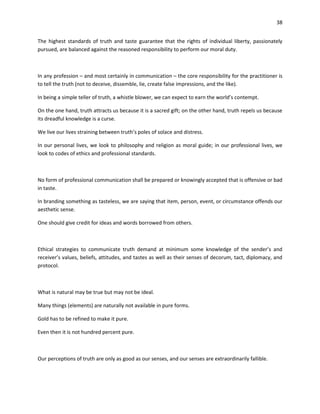
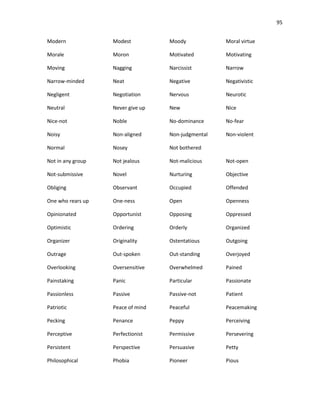
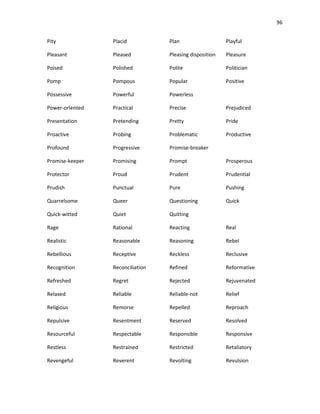
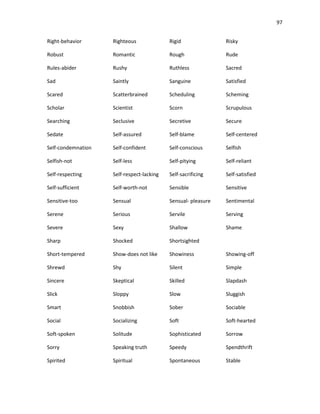
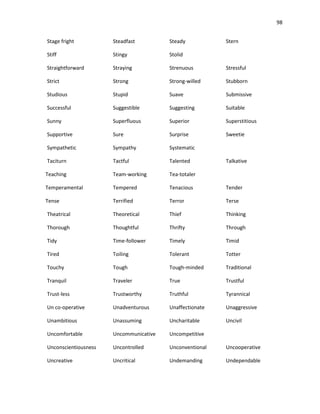
I\"
 vs. \"
we\"
 vs. \"
you\"
 orientation, as well as names:<br />\"
Yes\"
, \"
No\"
, negation and interjections.<br />Verb types.<br />Adjective types. <br />Power<br />moral values<br />Respect status, honor, recognition and prestige<br />Affection love and friendship.<br />Wealth<br />Well-being health and safety<br />Enlightenment knowledge, insight, and information<br />Skill<br />A) ) Sociometric disposition(Conduct-Compassion) : skill in managing human relations or relations with others<br />B) Role disposition(Work-Competency) : determining the manner in which the individual performs his role - Roles, collectivities, rituals, and forms of interpersonal relations,<br />C) Expressive disposition(Personality-Competetive Style) : style or fashion of expression during inter-personal response; here acting may be involved<br />10) IMPORTANT HUMAN QUALIYIES ARRANGED HIERARCHICALLY<br />(Note: Serial number indicates the number of importance of quality)<br />A) Positive Qualities( Gun )<br />     <br />Best<br />a) Satwic Qualities: Qualities suitable for Art side, Social work, Public relations, Leadership, Team work etc. ( Brahmins )<br />25) Open   24) Honest    23) Tolerant     22) Flexible     21) Kind     20) Humble     19) Satisfied  18) Emotional     17) Jolly     16) Loving     15) Friendly     <br />14) Responsible  13) Rational<br />Better<br />b) Rajas Qualities: Qualities suitable for Science side, Research work, working alone and in isolation. ( Kshatriyas )<br />12) Brave     11) Confident     10) Neat     9) Toiling     8) Busy<br />7) Alert     6) Intelligent   5) Initiative     4) Self-sufficient     <br />Good<br />c) Tamas Qualities: ( Vaishyas )<br />3) Competitive     2) Aggressive     1) Exhibitionist    <br />B) Negative Qualities<br />d) Dosha (Bad ) Qualities: ( Kshudras )<br />Poor<br />Opposite Tamas in reverse order: Qualities not suitable for above mentioned work<br />-1) Acting         -2) Submissive     -3) Shy     <br />Worse<br />Opposite of Rajas in reverse order: Qualities not suitable for above mentioned work<br />-4) Dependent     -5) Passive       <br />-6) Dull     -7) Inattentive     -8) Idle     -9) Relaxing     -10) Haphazard     <br />-11) Doubtful     -12) Coward     <br />Worst<br />Opposite of Satwic in reverse order: Qualities not suitable for above mentioned work.<br />-13) Stupid     -14) Reckless     -15) Hostile     -16) Hating     -17) Gloomy     <br />-18) Cold  -19) Discontented     -20) Arrogant     -21) Cruel     -22) Rigid     <br />-23) Narrow-minded    -24) Lying  -25) Inaccessible<br />Note: In human being there will be Good qualities and bad qualities. There are three different kinds of good qualities i.e. satwic, rajas and tamas. There are three different kinds of bad qualities i.e. negative of above. Good or bad qualities will depend upon place, time and relationship and may change accordingly. Gun may become dosh in different situation. Labeling should be taken with a pinch of salt.<br />Please find out if it is possible to relate qualities to personalities and personalities to career.<br />11) Disposition: nature; character; temperament<br />(Disposition means temperament, arrangement, natural-tendency)<br />A) Sociometric disposition: skill in managing human relations or relations with others<br />Going with group - Aloof<br />Accepting of others: non judgmental in attitude towards others; permissive;<br />Believing and trustful; overlooks weaknesses and sees best in others<br />Opposite: rejecting of others<br />Sociability: participates in social affairs; likes to be with people; out going;<br />Become easily involved with other persons                     <br />Opposite: unsociability<br />Friendliness: warm; open and approachable; forms many social relationships<br />Opposite: unfriendliness<br />Sympathetic: concerned with the feelings and wants of others; displays kindness;<br />Generous behavior; defends underdogs; identify with other persons    <br />Opposite: unsympathetic<br />Generally characteristics bellow will go together<br />1) accepting of others; sociable; open; kind-brahmin-satwic-Team-work, Going in group<br />        2) rejecting of others; unsociable; unfriendly; unsympathetic-kshudra-tamas-Aloof, Individual working <br /> B) Role disposition: determining the manner in which the individual performs his role<br />Employer-Employee, Producer-Consumer<br />Ascendance: social boldness, self assurance, no fear of strangers, but not dominance<br />Defends his rights, does not mind being conspicuous, forcefully puts self        <br />Forward<br />Opposite: social timidity<br />Dominance: not submissiveness, pecking, assertive; self-confident; power-      <br />oriented; tough; strong-willed; order-giving or directive leader<br />opposite: submissiveness<br />Social initiative: aspiring for leadership, organizer; does not stay in background; <br /> Makes suggestions at meetings<br /> Opposite: social passivity<br />Independence: emotionally self-sufficiency, two types-moving away or towards      <br />others, Prefers to do own planning and to work things out in own way;<br />                              Does not seek support or advice<br />                              Opposite: dependence <br />Generally characteristics bellow will go together<br />      1) Bold; assertive; initiative, self-sufficient-kshatriya-rajas-Employer, Producer, State<br />      2) Timid; submissive; passive; dependent-kshudra-tamas-Employee, Consumer, Public <br />C) Expressive disposition: style or fashion of expression during inter-personal response; here acting may be involved<br />Active-Passive<br />Competitiveness: one may compete incessantly; sees every relationship as a contest; <br />Others are rivals to be defeated; non-cooperative<br />Opposite: uncompetetiveness<br />Aggressiveness: one may find endless targets for his aggressiveness; attacks others           <br />Directly or indirectly; shows defiant resentment of authority; <br />Quarrelsome; negativistic<br />Opposite: no aggressiveness<br />Self-consciousness: suffers the “torments of the damned” whenever he is exposed to  <br />                                the merciless view of other people; embarrassed when entering <br />                                room After others are seated; suffers excessively from stage <br />                                fright; Hesitates to volunteer in group discussions; bothered by <br />                                people   Watching him at work; feels uncomfortable if different <br />                                from Others<br />     Opposite: social poise<br />Exhibitionist: one may “show-off” at every conceivable opportunity; is given to  <br />                      excess and ostentation in behavior and dress; seeks recognition and                       <br />                      applause; shows off and behaves queerly to attract attention<br />                      opposite:  self-effacing (shy)<br />Generally characteristics bellow will go together<br />1.) Competitiveness; aggressiveness; social poise; exhibitionist (attract attention)-vaishya-style-Active<br />2) Uncompetitive ness; no aggressiveness; bothered by people; feels uncomfortable<br />If different from others; shy-kshudra-style-Passive<br />12) Allotting qualities to personalities<br />      <br />Satwic-Gun<br />25) Open     24) Tolerant     23) Flexible     22) Kind     21) Humble     20) Satisfied<br />19) Emotional     18) Jolly     17) Loving     16) Friendly     15) Responsible  <br />14) Rational     <br />      <br />Rajas-Gun<br />13) Honest     12) Brave     11) Confident     10) Neat     9) Toiling     8) Busy<br />7) Alert     6) Intelligent     5) Initiative     4) Self-sufficient     <br />      <br />Tamas-Gun<br />3) Competitive     2) Aggressive     1) Exhibitionist    <br />       <br />Doshas<br />-1) Acting         -2) Submissive     -3) Shy     <br />-4) Dependent     -5) Passive       -6) Dull     -7) Inattentive     -8) Idle     -9) Relaxing     <br />-10) Haphazard     -11) Doubtful     -12) Coward     -13) Lying<br />-14) Stupid     -15) Reckless     -16) Hostile     -17) Hating     -18) Gloomy     -19) Cold<br />-20) Discontented     -21) Arrogant     -22) Cruel     -23) Rigid     -24) Narrow-minded<br />-25) Inaccessible<br />13) Qualities-Classification:-Gun-Dosha<br />Gun                                                                            Dosh<br />1-Satwic <br />A)<br />Satisfied                                                                        Competing, Concerned <br />      Thorough                                                                       Careles<br />     Contented                                                               Discontented, Impatient<br />     Holistic                                                                             Limited<br />B)<br />Kind,                                                                            Cruel<br />Generous                                                                      Tightfisted<br />        <br />        Loyal                                                                                 Disloyal<br />        Faithful                                                                          Unrealistic<br />        Detached                                                                        Connected<br />      Dependable                                                                  Superficial  <br />      Religious, Godly, Holy, Sacred, Spiritual                         Secular<br />Pious                                                                             Irreverent<br />Donor                                                                            Recipient<br />Non-violent                                                                   Violent<br />Forgiving, Merciful                                                       Vengeful, Unforgiving<br />Righteous                                                                       Sinful<br />Trust-worthy                                                                  Corrupt<br />Indifferent                                                                      Interested<br />      Reliable                                                                          Unreliable <br />      Penance                                                                          Easy-going<br />C)<br />Tolerant                                                                      Narrow-minded<br />Humble                                                                       Arrogant, Uneasy<br />Flexible                                                                       Inflexible, Rigid<br />      Adaptable                                                                    Inflexible<br />      Soft                                                                                         Hard, Steadfast<br />Patience                                                                                Impatience<br />Ego-less                                                                       Egoistic<br />Jealous-not                                                                   Jealous<br />Tee-totaller                                                                  Addicted<br />      <br />D)<br />Loving                                                                         Hating<br />Emotional                                                                    Cold<br />      Conscientious                                                               Careless<br />      Sensitive                                                                                Indifferent<br />Warm-hearted                                                                     Callous, Resentful<br />Sensible                                                                        Foolish<br />Lovable                                                                        Dreadful<br />Compassionate                                                             Unfeeling<br />      <br />E)<br />Friendly                                                                         Hostile<br />Well-behaved                                                                 Disobedient<br />Cultured                                                                         Bad-mannered<br />Respectable, Well-mannered                                         Not-respectable<br />Innocent, Guilt-less, Relieved                                       Guilty<br />Self-less                                                                         Selfish<br />Rebellious-not                                                                Rebellious<br />Good                                                                               Bad<br />Well-wisher                                                                    Opponent<br />Caring                                                                            Uncaring, Let-down<br />F)<br />Open                                                                               Reserved, Inaccessible<br />Jolly, Hopeful, Optimistic                                            Gloomy, Hopeless<br />Enthusiastic                                                                        Apathetic <br />Fun-loving                                                                          Staid                                                                <br />Lively                                                                              Lethargic                                                                       <br />Inspiring                                                                          Uninspiring<br />Worry-less, Fascinated                                                   Worried<br />Best                                                                                 Worst<br />Free                                                                                 Engaged, Trapped<br />Happy                                                                              Sad                                                                               <br /> <br />G)<br />Honest, Truthful                                                              Lying<br />Serious                                                Playful, Witty, Cheerful, Humorous, Comic <br />Dutiful                                                                               Rebellious<br />      Idealistic                                                                            Realistic<br />      Proud                                                                                 Humble, Ashamed<br />     Pure                                                                                    Impure<br />     Suspicious-not, Sympathetic                                         Suspicious<br />    Ideal                                                                     Worst<br />H)<br />Rational, Brilliant                                                  Stupid<br />Practical                                                                           Impractical<br />Quick                                                                               Slow<br />Out-spoken                                                                      Tactful<br />      Conceptual                                                                       Concrete<br />      Equality                                                                           Inequality<br />Just                                                                                  Unjust<br />Impartial                                                                          Partial<br />Aloof                                                                               Friendly<br />Non-aligned                                                                    Aligned<br />Sweet                                                                       Bitter<br />Clear                                                                                Unclear<br />      Spontaneous                                                                     Intentional  <br />2-Rajas<br />I)<br />Responsible                                                                    Reckless<br />Quiet                                                                                Loud<br />Stable                                                                               Unstable<br />      Understanding, sympathetic                                  Callous, Apathetic, Unsympathetic,     <br />      Calm                                                                                Agitated, Nervous<br />Deep                                                                                Shallow<br />J)<br />Intelligent                                                                       Dull<br />Knowledgeable                                                               Ignorant<br />Philosopher, Analyst, Thinker                                             Realist<br />      Logical                                                                              Illogical  <br />Organized                                                                         Spontaneous<br />Well-organized                                                                 Disordered  <br />      Efficient                                                                     Inept<br />      Visionary                                                                          Unimaginative  <br />Scholar                                                                             Common<br />Learned                                                                            Unlearned<br />Wise                                                                                 Foolish<br />Studious, Diligent                                                            Lazy<br />Clever                                                                               Dull<br />Shrewd, Smart                                                                  Shabby<br />Sharp                                                                                 Blunt<br />      <br />K)<br />Busy                                                                              Idle<br />Toiling                                                                  Relaxing<br />Neat, Tidy, Clean                                                        Haphazard<br />      Creative                                                                         Unimaginative<br />Forceful                                                                         Staid<br />Hard-working                                                                Careless<br />Adept, Skill-full                                                             Incompetent<br />Innovative                                                                     Traditional <br />   Original                                                                    Unoriginal <br />      Beautiful                                                                        Ugly<br />Systematic                                                                     Disorganized<br />Tough                                                                            Easy<br />Enduring                                                                        Short-lived<br />Active                                                                            Inactive<br />Industrious                                                                     Indolent<br />Expert                                                                            Amateur<br />Well-versed                                                                   Ignorant<br />      <br />L)<br />Brave                                                                            Timid, Coward<br />Confident                                                                     Doubtful<br />Able                                                                               Unable<br />Leader                                                                             Follower<br />Determined                                                                      Undetermine<br />       Assertive                                                                          Timid<br />      Athletic                                                                            Unfit  <br />      Popular                                                                             Unpopular  <br />Resourceful, Imaginative                                                 Unimaginative<br />      Individualistic                                                                   Common      <br />Well-informed                                                                   Ignorant<br />      People-oriented                                                              Aloof<br />Risk-taker                                                                      Safe<br />Capable                                                                          Incapable<br />Bright                                                                             Dark<br />Fearless, Courageous, Valiant                                       Cowardly<br />High                                                                               Low, Down<br />Dignified                                                                        Undignified<br />Noble                                                                              Poor<br />Worthy                                                                           Unworthy<br />Great                                                                               Tiny<br />Persistent                                                                         Feeble<br />Decisive                                                                           Insignificant<br />Strong, Mighty                                                                Weak<br />      <br />      <br />M)<br />Alert, Vigilant, Watchful                                                  Inattentive<br />Cautious                                                                              Reckless, Daring                                                    Aware                                                                                  Unaware<br />Awake, Wakeful                                                                  Asleep<br />N)<br />Initiative                                                                             Passive<br />      Conceptual                                                                          Concrete <br />O)<br />Self-sufficient, Independent                                              Dependant<br />3-Tamas<br />P)<br />Competitive                                                                         Shy<br />Exhibitionist                                                                        Acting<br />      Reflective                                                                                            Superficial<br />      Aggressive                                                                           Submissive<br />14) General Qualities of owners, entrepreneurs and employers<br />Angry-not<br />Committed<br />Communicator<br />Competitive<br />Confident<br />Co-operative<br />Courageous<br />Creative<br />Flexible<br />Hard working<br />Innovative<br />Intelligent<br />Leader<br />Motivated<br />Organized<br />Passionate<br />Perfectionist<br />Persistent<br />Problem solver<br />Risk taker<br />Self-reliant<br />Visionary<br />15) Main Qualities of  Owner, Entrepreneur and employer<br />Intelligent<br />Hard Worker<br />Co-operative<br />Angry-not<br />A-Do you have a unique service or product?<br />B-Do you have specialized knowledge?<br />C-Do you have adequate experience?<br />Career demands particular personality and particular personality demands required qualities.<br />16) Qualities of four different predominant working groups or professions         <br />4 Kshudra: Serves to three groups mentioned above<br />Like outdoor work<br />Like to feel they are doing something useful.<br />Favor jobs where they can work with their hands or produce things<br />Like physical activity and may prefer working with things to working with people<br />May be impatient and can find rules and details frustrating<br />-1) Acting         -2) Submissive     -3) Shy     <br />-4) Dependent     -5) Passive       -6) Dull     -7) Inattentive     -8) Idle     -9) Relaxing     <br />-10) Haphazard     -11) Doubtful     -12) Coward     -13) Lying<br />-14) Stupid       -15) Rigid        -16) Narrow-minded      -17) Inaccessible<br />-18) Gloomy     -19) Cold         -20) Discontented            -21) Arrogant     <br />-22) Reckless     -23) Hostile     -24) Hating                     -25) Cruel     <br />C) Danav: Having extremely bad qualities.<br />1 Brahmin - Social, Investigative<br />2 Kshatriya – Enterprising, Realistic<br />3 Vaishya – Conventional, Artististic<br />4 Kshudra – Service to all above<br />Types of works<br />Indoorwork(Officework)-                                  Outdoorwork(Fieldwork)<br />Mentalwork(Thinking- action, Brainwork) -     Physicalwork - Menialwork)<br />Researchwork-                                                   Routinework<br />Individualwork (Employeework)-                     Teamwork(Employerwork)                           <br />Working with material-                                      Working with people                                     <br />Unpredictablework-                                           Predictablework                                             <br />Waitingwork(intermittent work)-                      Contineouswork                                                                   <br />Working with past, present and future<br />Working with god, money, language and information.<br />17) Evaluation of important gun<br />Hierarchy of human qualities from top to bottom<br />Serial number itself can be taken as the importance of the quality<br />Qualities are grouped in six bunches. Three negative and three positive<br />Related to confidential report<br />3A-group : Best ( Brahmin-type) : Satwic<br />25) Open    24) Honest     23) Tolerant     22) Flexible     21) Kind     20) Humble     19) Satisfied<br />18) Emotional     17) Jolly     16) Loving     15) Friendly     14) Responsible  <br />13) Rational     <br />2A-group : Better ( Kshatriya-type) : Rajas<br />12) Brave     11) Confident     10) Neat     9) Toiling     8) Busy<br />7) Alert     6) Intelligent     5) Initiative     4) Self-sufficient     <br />1A-group :Good ( Vaishya-type) : Tamas <br />3) Competitive     2) Aggressive     1) Exhibitionist    <br />-1A-group : Poor ( Kshudra-type) : Tamas<br />-1) Acting         -2) Submissive     -3) Shy     <br />-2A-group : Worse ( Kshudra-type) : Tamas<br />-4) Dependent     -5) Passive       -6) Dull     -7) Inattentive     -8) Idle     -9) Relaxing     -10) Haphazard     -11) Doubtful     -12) Coward     <br />-3A-group : Worst ( Kshudra-type) : Tamas<br />-13) Stupid     -14) Reckless     -15) Hostile     -16) Hating     -17) Gloomy     -18) Cold<br />-19) Discontented     -20) Arrogant     -21) Cruel     -22) Rigid     -23) Narrow-minded   -24) Lying   -25) Inaccessible<br /> 18) Career<br />Dispositions-Human qualities-Occupational choice<br />     <br /> Sociometric disposition(Team working – Aloof)<br />      skill in managing human relations or relations with others. Happy family and   <br />      society is the indication of success in social nature of an individual. This is<br />      people oriented value system and presents an “opportunity to work with people   <br />      rather than things” and “being helpful to others’ Represents those who like to     <br />      serve the people; institution of church included. <br />            <br />      Human qualities required are those of “teaching community i.e. Brahmins” and    <br />      are described as “satwic”<br />      <br />      Personality has to be of “compliant type” i.e. those who seek to “move towards     <br />      people”<br />Generally characteristics bellow will go together<br />Predominant traits- accepting of others; sociable; open; kind-brahmin-satwic<br />         <br /> <br />            H.Q.- 25) Open   24) Honest        23) Tolerant     22) Flexible     21) Kind     <br />                      20) Humble     19) Satisfied     18) Emotional     17) Jolly     16) Loving     <br />                      15) Friendly     14) Responsible    13) Rational          <br />       <br />   Occupational choice: 1) Social(Team-working):- social work; social science;    <br />                                            welfare   <br />                                                  Helping, teaching-teacher, Professor;   <br />                                                  Author; medicine; nursing, doctor, Public relations,                     <br />                                                  Leadership, Team work and Personnel, counselor, <br />                                            Minister of religion, clinical psychologist, police officer<br />                                       <br />                                        2) Intellectual and investigative(Aloof):- Science-scientist, <br />                                            engineer, mathematics, Research, Innovative-work,       <br />                                           Theoretical- work, working alone and in isolation.  <br />                                                 Laboratory worker, computer programmer, vet, <br />                                                 Pharmacist.<br />Role disposition: <br />Role may be either of employee or employer, producer-consumer. For one employer there will be many employees. Then there will be those who are self employed. Every body in the society has to earn money by offering the society his services. By performing the role individual expects reward. There is fierce competition to occupy the role available. It is important to determine the manner in which individual performs his role. Role will enable “to earn a good deal of money” and will have social status and prestige” Every body has to find out the suitable role for him or has to perform the role available and offered. Role performance is want satisfaction.<br />Human qualities required are those of “fighter community i.e. kshatriyas” and are described as “rajas”<br />Personality has to be “aggressive type” i.e. those who seek to “move against people”<br /> Generally characteristics bellow will go together<br /> Predominant traits- Bold; assertive; initiative, self-sufficient-kshatriya-rajas<br /> <br />            H.Q.-  12) Brave     11) Confident     10) Neat     9) Toiling     <br />                         8) Busy   7) Alert     6) Intelligent     5) Initiative     4) Self-sufficient     <br />      <br />  Occupational choice: 1) Enterprising (Employer and Producer):- Real estate;        <br />                                           Hotel ling; Selling-sales-man, Advertising; <br />                                           Shop-keepers, business, Marketing,     <br />                                                 Managers, Accountants, Law-Lawyers- Rules,                      <br />                                                 Regulations, Facts, Figures, Supervisor, <br />                                                 Position of status and prestige.<br />                                      <br />                                       2) Realistic and Practical(Employee and consumer):-       <br />                                           Engineering; Practical-work,   <br />                                           Site-work,  mechanical, making, Maintenance,      <br />                                           repairing, handicraft, Engraving, Pottery, Metal-work,  <br />                                           Carpentry, Gardening, Poster-art, Sculptor, <br />                                           Construction, Production, driver, electrician, farmer,<br />                                           Sports person, skilled trades, labourers, military roles-                                              <br />Some.<br />Expressive disposition(Active-Passive) : <br />      style or fashion of expression and presentation during inter-personal      <br />      response; here drama or acting may be involved. Mostly concerned with give and  <br />      take. “self expression oriented” cognitive cluster: “permits creativity and originality” <br />     and “uses my special abilities or aptitudes”<br />     <br />     Human qualities required are those of “trading community i.e. vaishya” and are    <br />     described as<br />     Personality has to be of “detached type” i.e. those who seek to”move away from   <br />     people”<br />     <br />     <br />   Generally characteristics bellow will go together<br />Predominant traits-Competitiveness; aggressiveness; social poise; exhibitionist (attract attention)-vaishya-style<br />  <br />  <br /> H.Q.- 3) Competitive     2) Aggressive     1) Exhibitionist (attract attention)                    <br />                 <br />      Occupational choice:- 1) Artistic and Aesthetic(Active)- art; architecture; Language;    <br />                                            journalism; drama acting; music-musician, dancing,  <br />                                                  painting, Celebrities, Modeling, Singers, Film, Stage,   <br />                                                  Publicity, Parties, Functions, Get-togethers,<br />                                                  Event-managers; Drawing, Photography, Fashion-   <br />                                                  Designer, Interior-Decorator<br />                                        <br />                                             2) Athletics(Active):- Government; Sports, Out-door, <br />                                                 Estate-manager, Army, Police, Excise, Customs, <br />                                                 Fire-services, Forestry, Fishery, Farming<br />                                        <br />Conventional(Passive):- Details, clerical, Routine,   <br />     Office-work,Factory-work,administrative,    <br />     accountancy, banking, book-keeping, <br />     secretarial  work, inspecting role-some.<br />None of the above disposition: Opposite to all above three disposition.<br />Applicable to ‘serving class’ to above three dispositions.<br />Human qualities required are those of kshudra i.e. serving community.<br />Personality has to be of ‘waiting for favors type’<br />           Negative to role disposition-<br />           Predominant opposite traits- Timid; submissive; passive; dependent-kshudra-   <br />           tamas<br />          -4) Dependent     -5) Passive       <br />          -6) Dull     -7) Inattentive     -8) Idle     -9) Relaxing     -10) Haphazard     <br />          -11) Doubtful     -12) Coward     <br />           Negative to sociometric disposition-<br />           Predominant opposite traits-rejecting of others; unsociable; unfriendly;    <br />            unsympathetic-kshudra-tamas<br />           -13) Stupid     -14) Reckless     -15) Hostile     -16) Hating     -17) Gloomy     <br />           - 18) Cold       -19) Discontented     -20) Arrogant     -21) Cruel     -22) Rigid     <br />            -23) Narrow-minded  -24) Lying    -25) Inaccessible<br />            Negative to expressive disposition-<br />            Predominant opposite traits- Uncompetitive ness; no aggressiveness; bothered by    <br />         people; feels uncomfortable if different from others; shy-kshudra-style<br />           -1) Acting         -2) Submissive     -3) Shy     <br />            Occupational choice:- service class to all three dispositions above.<br /> Note- <br />Career choice will depend upon: 1) Natural<br />                                                           2) Teacher advice<br />                                                        3) Parental pressure<br />                                                                         4) Friends’ choice<br />                                                        5) Challenging profession<br />                                                        6) Remunerative profession<br />Self-awareness i.e. knowing your qualities will help a lot; analyze yourself for your strength and weaknesses. A person’s hobbies and interests are good indications of the profession suitable for him. That profession is best where distinction between work and play disappears. In short what one likes will be his best profession. The subject in whom one scores highest will be more suitable. Spare-time interests or leisure pursuits are more important.<br />The labeling of human beings in terms of their interests should not be over done. The same person may have more than one dominant interest or may have significant minor interests along with dominant interest. Take every thing with a pinch of salt.<br />19) Personality<br />How one aquires different personality?<br />Classification and clubbing of qualities into different groups<br />Natural  --  1. Human<br />                   2. Male-Female <br />                   3. Aptitudes-Hobbies<br />Acquired – 1. Social Group – Family, Religion, Culture, Civilization<br />                    2. Place – Geography and History of place, state,                  <br />                        nation, continent, region. <br />                    3. Language                    <br />                                    4. Educations and Training -- Career <br />                                        under-graduate, graduate, post-graduate.<br />                    4. Experience – Age, Wisdom <br />                     5. Personality – Profession.<br />20) Points on which personality is to be analyzed<br />Leaders<br />1. Creator<br />2. Sustainer<br />3. Destroyer<br />1. Legislative<br />2. Executive<br />3. Judiciary<br />Employer<br />Brahmin-Introvert, Thinker, Idealist, Mastermind, Strategist, Counselor, Mentor<br />Vaishya-Provider, Nurturer, Peace-keeper, Resolver<br />Kshatriya-Realist, Leader, Enterprising, Innovator, Supervisor<br />Followers<br />Employee<br />      4)   Kshudra-Service to employer  <br />A)<br />Creativity (originality, ingenuity): to do something new <br />Curiosity (interest, novelty-seeking, openness to experience): experimenting<br />Open-mindedness (judgment, critical thinking): without prejudice <br />Fairness:judicious not biased <br />B)<br />Learning: knowledgeable <br />Perspective (wisdom): <br />Prudence: careful, not taking undue risks <br />Self-regulation (self-control): disciplined<br />Appreciation of beauty and excellence (awe, wonder, elevation): <br />Hope (optimism, future-mindedness, future orientation): <br />C)<br />Bravery (valor): not afraid of <br />Persistence (perseverance, industriousness): <br />Vitality (zest, enthusiasm, vigor, energy): excitement, alive and active<br />D)<br />Integrity (authenticity, honesty): genuine; responsible <br />Kindness (generosity, nurturance, care, compassion, altruistic love, “niceness”): <br />Forgiveness and mercy: not vengeful<br />Humility / Modesty: <br />Gratitude: <br />Spirituality (religiousness, faith, purpose): <br />E)<br />Social intelligence (emotional intelligence, personal intelligence): aware <br />Citizenship (social responsibility, loyalty, teamwork): <br />F)<br />Humor (playfulness): not serious <br /> <br />21) People are neither good or bad nor intelligent or foolish. They are    <br />       Somewhere between two extreme and opposite poles.<br />A) Two opposite poles of personalities<br />         In between lies a band center point being neutral<br />Masculine – Feminine<br />Extrovert – Introvert<br />Employer – Employee<br />Performer – Thinker<br />Realist – Idealist<br />Leader – Follower<br />Team-worker – Individual-worker<br />Generalist - Specialist <br />            <br />            B) 1 Social group: Exclude-Include.<br />                 2 Intellect: Bright-Dull.<br />                 3 Egocentrism: Arrogant-Humble.<br />                 4 Ruggedness: Dominant-Submissive.<br />                 5 Delinquency: Cheater-Plays fair.<br />                 6 Attractiveness: Sexy-Repulsive.<br />                 7 Liveliness: Loud-Quiet.<br />                 8 Disorientation: Incompetent-Competent.<br />22) Five personality bunches of twenty-one personalities <br />1 Big Thinkers    Masterminds    Strategists     Enterprising<br />2 Idealists             Realists           Investigative <br />3 Leaders             Innovators        Supervisors   Performers   Go-getters   Artistic  <br />4 Providers            Nurturers       Mentors         Social            <br />5 Counselors       Peacemakers   Resolvers      Conventional<br />23) Personality-Qualities<br />Gun                                                  Dosh<br />1-Satwic <br />A)  Mastermind, Champion<br />      Thorough                                                                       Careless<br />      Holistic                                                                               Limited<br />B)  Peacemaker, Resolver<br />Kind,                                                                            Cruel<br />Generous                                                          Tightfisted<br />      Loyal                                                                                 Disloyal<br />      Faithful                                                                             Unrealistic<br />      Detached                                                                         Connected<br />      Dependable                                                            Superficial  <br />Satisfied                                                                 Competing <br />      Contended                                                                     Discontented<br />      Religious, Godly, Holy, Sacred, Spiritual                    Secular<br />Pious                                                                              Irreverent<br />Donor                                                                            Recipient<br />Non-violent                                                                   Violent<br />Forgiving, Merciful                                                       Vengeful, Unforgiving<br />Righteous                                                                       Sinful<br />Trust-worthy                                                                  Corrupt<br />      Reliable                                                                          Unreliable <br />      Penance                                                                          Easy-going<br />C) Protector, Guardian,  Provider,  Caregiver,  Nurturer<br />Tolerant                                                                Narrow-minded<br />Humble                                                                         Arrogant<br />Flexible                                                                         Inflexible, Rigid<br />      Adaptable                                                             Inflexible<br />      Soft                                                                                 Hard, Steadfast<br />Patience                                                                       Impatience<br />Ego-less                                                                       Egoistic<br />Jealous-not                                                                   Jealous<br />Tea-totaller                                                                  Addicted<br />      <br />D)  Teacher, Mentor, Counselor,  Giver,  Conventional<br />Loving                                                                              Hating<br />Emotional                                                                        Cold<br />      Conscientious                                                                  Careless<br />      Sensitive                                                                                   Indifferent<br />Warm-hearted                                                                         Callous<br />Sensible                                                                                     Foolish<br />Lovable                                                                                     Dreadful<br />Compassionate                                                                        Unfeeling<br />      <br />E)  Supervisors, Go-getters<br />Friendly                                                                         Hostile<br />Well-behaved                                                                 Disobedient<br />Cultured                                                                         Bad-mannered<br />Respectable, Well-mannered                                         Not-respectable<br />Innocent, Guilt-less                                                        Guilty<br />Self-less                                                                          Selfish<br />Rebellious-not                                                                Rebellious<br />Good                                                                               Bad<br />Well-wisher                                                                    Opponent<br />Caring                                                                             Uncaring<br />F)  Inspirer,  Healer, Promoter <br />Open                                                                        Reserved, Inaccessible<br />Jolly, Hopeful, Optimistic                                     Gloomy<br />Enthusiastic                                                                    Apathetic <br />Fun-loving                                                                      Staid                                                                <br />Lively                                                                              Lethargic                                                                       <br />Inspiring                                                                          Uninspiring<br />Worry-less                                                                       Worried<br />Best                                                                                 Worst<br />Free                                                                                 Engaged<br />Happy                                                                              Sad                                                                               <br /> <br />G) Idealist, Social<br />Honest, Truthful                                                              Lying<br />Serious                                                Playful, Witty, Cheerful, Humorous, Comic Dutiful                                                                               Rebellious<br />      Idealistic                                                                            Realistic<br />      Proud                                                                                  Humble<br />Pure                                                                                    Impure<br />     Suspicious-not                                                                                  Suspicious<br />    Ideal                                                                                   Worst<br />H) Performer (Action), Doer, Duty-Fulfiller-<br />Rational                                                                          Stupid<br />Practical                                                                          Impractical<br />Quick                                                                               Slow<br />Out-spoken                                                                     Tactful<br />      Conceptual                                                                      Concrete<br />      Equality                                                                           Inequality<br />Just                                                                                  Unjust<br />Impartial                                                                          Partial<br />Aloof                                                                               Friendly<br />Non-aligned                                                                    Aligned<br />Sweet                                                                        Bitter<br />Clear                                                                                Unclear<br />      <br />2-Rajas<br />I)  Scientist, Realist, Inventor<br />Responsible                                                              Reckless<br />Stable                                                                               Unstable<br />      Quiet                                                                                 Loud<br />      Understanding, sympathetic                                  Callous, Apathetic, Unsympathetic,     <br />      Calm                                                                                Agitated<br />Deep                                                                                Shallow<br />J) Thinker, Strategists, Enterprising, Visionary<br />Intelligent                                                                       Dull<br />Knowledgeable                                                               Ignorant<br />Philosopher, Analyst, Thinker                                      Realist<br />      Logical                                                                             Illogical  <br />Organized                                                                        Spontaneous<br />Well-organized                                                                Disordered  <br />      Efficient                                                                            Inept<br />      Visionary                                                                          Unimaginative  <br />Scholar                                                                              Common<br />Learned                                                                             Unlearned<br />Wise                                                                                  Foolish<br />Studious, Diligent                                                             Lazy<br />Clever                                                                                Dull<br />Shrewd, Smart                                                                   Shabby<br />Sharp                                                                                 Blunt<br />      <br />K) Crafter Mechanic<br />Busy                                                                              Idle<br />Toiling                                                                          Relaxing<br />Neat, Tidy, Clean                                                        Haphazard<br />      Creative                                                                        Unimaginative<br />Forceful                                                                         Staid<br />Hard-working                                                               Careless<br />Adept, Skill-full                                                            Incompetent<br />Innovative                                                                     Traditional <br />    Original                                                                  Unoriginal <br />      Beautiful                                                                         Ugly<br />Systematic                                                                      Disorganized<br />Tough                                                                             Easy<br />Enduring                                                                         Short-lived<br />Active                                                                             Inactive<br />Industrious                                                                     Indolent<br />Expert                                                                             Amateur<br />Well-versed                                                                    Ignorant<br />      <br />L) Field marshal, Executive, Leader, Innovators<br />Brave                                                                            Timid, Coward<br />Confident                                                                      Doubtful<br />Able                                                                               Unable<br />Leader                                                                           Follower<br />Determined                                                                   Undetermined<br />     Assertive                                                                        Timid<br />      Athletic                                                                           Unfit  <br />      Popular                                                                           Unpopular  <br />Resourceful, Imaginative                                              Unimaginative<br />      Individualistic                                                                 Common      <br />Well-informed                                                                 Ignorant<br />      People-oriented                                                               Aloof<br />Risk-taker                                                                       Safe<br />Initiative                                                                           Passive<br />      Conceptual                                                                        Concrete <br />      Capable                                                                             Incapable<br />Bright                                                                                Dark<br />Fearless, Courageous, Valiant                                           Cowardly<br />High                                                                                   Low<br />Dignified                                                                           Undignified<br />Noble                                                                                 Poor<br />Worthy                                                                             Unworthy<br />Great                                                                                 Tiny<br />Persistent                                                                           Feeble<br />Decisive                                                                             Insignificant<br />Strong, Mighty                                                                  Weak<br />      <br />      <br />M)  Inspector, Investigative<br />Alert, Vigilant, Watchful                                                  Inattentive<br />Competitive                                                                        Shy<br />Exhibitionist                                                                       Acting<br />      Reflective                                                                            Superficial<br />      Aggressive                                                                           Submissive<br />      Cautious                                                                               Reckless                                                          <br />      Aware                                                                                  Unaware<br />Awake, Wakeful                                                                  Asleep<br />N)  Composer Artist Architect--<br />Self-sufficient, Independent                                              Dependant<br />  <br />24) (a) Personalities<br />A)<br />1.  Thinker(Thinking)  <br />Mastermind, Champion <br />Strategists, Enterprising, Visionary  <br />Scientist, Realists, Inventor<br />      B)  <br />Field marshal, Executive, Leaders, Innovators   <br />Inspector, Investigative   <br />Supervisors, Go-getters, Promoter<br />C)<br />Performer(Action)  Doer  Duty-Fulfiller   <br />Composer Artist Architect          <br />Crafter Mechanic<br /> D) <br />Teacher, Mentor, Counselor, Inspirer, Healer, Giver, Conventional<br />Peacemakers, Revolvers <br />Idealist, Social            <br />Protector, Guardian, Provider, Caregiver, Nurturer    <br />(b) Four personalities with opposite polarities that means in all eight           personalities<br />1)<br />Sensing            Intuition<br />Thinking          Feeling<br />Judging            Perceiving<br />A)<br />1.  Thinker (Thinking)  <br />Mastermind, Champion <br />Strategists, Enterprising, Visionary  <br />Scientist, Realists, Inventor<br />2)<br />Prudent             Reckless<br />Logical             Emotional<br />Practical           Theoretical<br />     <br /> B)  <br />Field marshal, Executive, Leaders, Innovators   <br />Inspector, Investigative   <br />Supervisors, Go-getters, Promoter<br />3)<br />Extravert           Introvert<br />Masculine         Feminine<br />Calculator         Sustainer                <br />Driver               Influencer<br />C)<br />Performer (Action) Doer, Duty-Fulfiller   <br />Composer Artist Architect          <br />Crafter Mechanic<br />4)<br />Agreeable           Not agreeable<br />Cultural              Un-cultural<br />D) <br />Teacher, Mentor, Counselor, Inspirer, Healer, Giver, Conventional<br />Peacemakers, Revolvers <br />Idealist, Social            <br />25) The Big Five Inventory (BFI) Sorted by factor<br />1) Behavior with others<br />Desired<br />7 A Is helpful and unselfish with others.<br />17 A Has a forgiving nature.<br />22 A Is generally trusting.<br />24 A Is emotionally stable, not easily upset.<br />32 A Is considerate and kind to almost everyone.<br />42 A Likes to cooperate with others.<br />Not desired<br />2 A- Tends to find fault with others.<br />12 A- Starts quarrels with others.<br />27 A- Can be cold and aloof.<br />37 A- Is sometimes rude to others<br />2) Work performance<br />Desired<br />3 C Does a thorough job.<br />13 C Is a reliable worker.<br />28 C Perseveres until the task is finished<br />33 C Does things efficiently.<br />38 C Makes plans and follows through with them.<br />Not desired<br />8 C- can be somewhat careless.<br />18 C- Tends to be disorganized.<br />23 C- Tends to be lazy.<br />43 C- Is easily distracted.<br />3) Style<br />Desired<br />1 E Is talkative<br />11 E Is full of energy<br />16 E Generates a lot of enthusiasm.<br />26 E Has an assertive personality.<br />36 E Is outgoing, sociable.<br />Not desired<br />6 E- Is reserved.<br />21 E- Tends to be quiet.<br />31 E- Is sometimes shy, inhibited.<br />4) Temparament<br />Desired<br />9 N- Is relaxed, handles stress well.<br />34 N- Remains calm in tense situations.<br />Not desired<br />4 N Is depressed, blue.<br />14 N Can be tense.<br />19 N Worries a lot.<br />29 N Can be moody.<br />39 N Gets nervous easily.<br />5) Thinking<br />Desired<br />5 O Is original, come up with new ideas.<br />10 O Is curious about many different things.<br />15 O Is ingenious, a deep thinker.<br />20 O Has an active imagination.<br />25 O Is inventive.<br />30 O Values artistic, aesthetic experiences.<br />40 O Likes to reflect, play with ideas.<br />44 O Is sophisticated in art, music, literature.<br />Not desired<br />35 O- Prefers work that is routine.<br />41 O- Has few artistic interests.<br />Paunonen and Jackson (Paunonen) have identified several adjective clusters that describe<br />behavioral traits that do not correlate well with the Big Five. These are (presented with one pole<br />only):<br />A)<br />1. Religious, devout, reverent,<br />2. Honest, ethical, moral,<br />3. Conservative, traditional, down-to-earth,<br />B)<br />4. Masculine (with the opposite pole being feminine)<br />5. Sexy, sensual, erotic,<br />6. Egotistical, conceited, snobbish,<br />7. Risk taking, thrill seeking<br />C)<br />8. Humorous, witty, amusing,<br />D)<br />9. Thrifty, frugal, miserly,<br />E)<br />10. Sly, deceptive, manipulative,<br />They believe that there is much important variance in human behavior that is not accounted for by<br />the Big Five personality factors.<br />26) Thirty five Variables of Personality (Both poles)<br />      A)<br />Ready to cooperate vs Obstructive<br />Good-natured, easygoing vs Spiteful, grasping, critical<br />Calm, phlegmatic vs Emotional<br />Attentive to people vs Cool, aloof<br />Mild, self-effacing vs Self-willed, egotistic<br />Silent, introspective vs Talkative<br />Emotionally stable vs Changeable<br />Composed vs Shy, bashful<br />Frank, expressive vs Secretive, reserved<br />Gregarious, sociable vs Self-contained<br />B)<br />Assertive, self-assured vs Submissive <br />Hard, stern vs Kindly, soft-hearted<br />Persevering, determined vs Quitting, fickle<br />Insistently orderly vs Relaxed, indolent<br />Polished vs Clumsy, awkward<br />Rigid vs Adaptable<br />Demanding, impatient vs Emotionally mature<br />C)<br />Suspicious vs Trustful<br />Depressed, solemn vs Cheerful<br />Easily upset vs Unshakable, poised, tough<br />Prone to jealousy vs Not prone to jealousy<br />Neurotic fatigue vs Absence of neurotic fatigue<br />D)<br />Attention-getting vs Self-sufficient<br />Frivolous vs Responsible<br />Languid, slow vs Energetic, alert<br />Boorish vs Intellectual, cultured<br />Hypochondriacal vs Not so<br />Cautious, retiring, timid vs Bold, adventurous<br />Unconventional, eccentric vs Conventional<br />Placid vs Worrying, anxious<br />Conscientious vs Somewhat unscrupulous<br />Sensitively imaginative vs Practical, logical<br />Esthetically fastidious vs Lacking artistic feeling<br />Marked interest in opposite sex vs Slight interest in opposite sex<br />Dependent, immature vs Independent-minded<br />27) Model of Personality<br />1) Traits<br />Extraversion,<br />Agreeableness,<br />Conscientiousness,<br />Neuroticism,<br />Openness to experience<br />2) Intelligence-Domain<br />Linguistic,<br />Musical,<br />Logical / mathematical,<br />Spatial,<br />Kinesthetic,<br />Interpersonal,<br />Intrapersonal,<br />Natural Observation<br />3) Intelligence-Components<br />Production,<br />Creativity,<br />Problem Solving<br />4) Values<br />Spiritual,<br />Aesthetic,<br />Financial,<br />Physical,<br />Social,<br />Political<br />5) Motivators<br />Personalness,<br />Pervasiveness,<br />Permanance<br />28) Identifying Personality Types<br />CALCULATOR - Assesses Others<br />Thinking Critical Organized<br />Accurate Perfectionist <br />Cool Unemotional <br />Distant Reserved Restrained<br />Objective Conservative <br />Diplomatic Courteous<br />DRIVER - Directs Others<br />Directing dominating <br />Powerful authoritative confidant<br />Competitive aggressive<br />Quick impulsive <br />Direct straightforward outspoken<br />SUSTAINER - Accommodates Others <br />Accommodating, willing, conforming Accepting<br />Easygoing, steady, procedural, slow<br />Predictable, consistent, prefers routine<br />Indirect, suggestive<br />INFLUENCER - Relates to Others<br />Leader<br />Outgoing, people oriented, very friendly and affable<br />Enthusiastic, popular, easy to talk to<br />Exudes charm and eloquence; stylish and trendy<br />Positive and optimistic<br />Emotional<br />Conflict-resolver<br />In the majority of your interaction you won’t have the luxury of knowing an individual’s personality style. Instead, you will have to do a quick analysis of that person and take a guess as to what you think their style might be. Having a means to make this assessment will help you determine how best to interact with that person? The remainder of this document will discuss ways to identify personality types and suggestions for ways of managing and communicating with these different types of people. As an example, we will use DISC to help you analyze others with whom you come in contact. Each of the personality styles has its own unique set of characteristics. Here is how you can identify the four different types.<br />DISC is a questionnaire where several options are given and you select the one you most want to do and the one you least want to do. Based on how you answer the questions, you are assigned one of four dominant personality types - Driver, Influencer, Sustainer or Calculator. The test shows a person’s natural style and then their style under stress. It is useful in understanding on the job performance. A personalized report is generated providing a detailed analysis of the personality type, ways of communicating, areas for improvement and keys for managing. This is a great tool for self assessment, and is<br />also beneficial for team building. Pages five through seven discuss in greater detail the personality types of DISC.<br />CALCULATOR - Assesses Others<br /> Cool, distant, reserved, diplomatic, courteous, restrained<br />Thinks before acting<br />Concerned about accuracy<br />Prefers data, facts, and order<br />Objective, conservative, unemotional<br />Under pressure - becomes critical<br />Fears making mistake<br />DRIVER - Directs Others<br />Directing and dominating, take charge person<br />Exudes power, authority and confidence<br />Very competitive and naturally aggressive<br />Quick, impulsive, always pushed for time<br />Direct and straight-forward with people, very outspoken<br />Under pressure - belligerent<br />Fears unfair advantage<br />SUSTAINER - Accommodates Others <br />Easygoing, steady, process oriented, slower paced<br />Predictable, consistent, prefers routine<br />Accepts others slowly<br />Indirect, prefers to suggest<br />Accommodating, willing, conforming<br />Under pressure - slows down<br />Fears change<br />INFLUENCER - Relates to Others<br />Outgoing, people oriented, very friendly and affable<br />Enthusiastic, popular, easy to talk to<br />Exudes charm and eloquence; stylish and trendy<br />Positive and optimistic<br />Under pressure - emotional<br />Fears conflict<br />Tips for Managing and Communicating with Different Personalities<br />It can be difficult to communicate with people who are different personality types. By learning how to recognize other people’s styles and knowing how to effectively communicate with them, you will gain a great advantage. Developing this skill is even more critical for managers. Learning a variety of ways to manage different personality styles can be time consuming and overwhelming, but is vital to being effective. Here are some quick suggestions of how to interact with anyone who scores high in one of the four DISC personality types.<br />CALCULATOR<br />Slow down and listen<br />Explain details<br />Be sincere - lower your tone of voice<br />Be conservative in assertions<br />Answer questions precisely<br />Minimize risks<br />Use restrained body language and emotions<br />Avoid sudden changes<br />Try not to criticize their comments or choices<br />Factors that will create tension:<br />Being too blunt and direct<br />Forcing them to take risks<br />Being overly optimistic<br />Inability to prove what you say<br />Slow response time to their needs<br />Desire to be more correct than others<br />Sloppy work environment<br />Over-convincing<br />DRIVER<br />Be clear, specific, brief and to the point<br />Present the facts logically: plan your presentation efficiently<br />Minimize features, maximize benefits<br />Flatter their egos<br />Talk quickly and listen carefully<br />Ask specific questions & give direct answers<br />Recognize that they are risk-takers<br />Speak with confidence<br />Factors that will create tension:<br />Over controlling the situation<br />Telling him/her what to do<br />Not reacting quickly<br />Speaking slow and deliberately<br />Being indecisive<br />Explaining too many details<br />Appearing disorganized<br />Over using gestures and emotion<br />SUSTAINER<br />Listen Patiently<br />Take time to explain<br />Develop more empathy and patience<br />Take a personal interest in them<br />Exhibit friendly attitudes<br />Slow down<br />Give more attention to details<br />Control body language<br />Speak with a sincere tone of voice<br />Factors that will create tension:<br />Overselling new concepts or ideas<br />Dominating with active body language<br />Being overly optimistic<br />Appearing cool and distant<br />Talking too much and not listening<br />Always adhering to company rules<br />Being positive about information<br />Not demonstrating personal attention<br />INFLUENCER<br />Be friendly and sincere, not dominating<br />Give fewer details than you might normally<br />Ask for their ideas and opinions<br />Give him/her time to ask questions<br />Tell how others will benefit<br />Control your impatience<br />Use emotion and flattery<br />Provide ideas for implementing action<br />Smile and talk more than usual<br />Support your communications with correct facts and data<br />Factors that will create tension:<br />Over controlling<br />Displaying your impatience<br />Talking about yourself<br />Attention to detail<br />“Follow the book” approach<br />Not sharing information freely<br /> Problems with other peoples--<br />1 Others do not bother for your time<br />2 Others do not keep promises<br />3 Others do not understand your point of view<br />29) (a) Leadership Requirements<br />1 Self belief <br />2 Self awareness <br />3 Self management <br />4 Personal integrity <br />5 Intellectual flexibility<br />   <br />6 Broad scanning - Maximiser  <br />7 Drive for improvement <br />8 Seizing the future <br />9 Leading change  through people  <br />10 Collaborative working <br />11 Empowering others <br />12 Effective and strategic influencing <br />13 Holding to account<br />(b) Qualities of leader<br />Achiever<br />Acting    <br />Activator<br />Alert<br />Analyst<br />Artist      <br />Brave<br />Busy   <br />Clever<br />Confused-not<br />Consistent       <br />Contextual <br />Decisive<br />Deliberator   <br />Developer        <br />Disagreeable-not<br />Disagreeable-not <br />Disciplined <br />Distracted-not<br />Emotional-not<br />Empowering<br />Enabling<br />Facilitator<br />Fair   <br />Firm  <br />Futuristic<br />Gentle<br />Good-listener<br />Happy<br />Helpful<br />Honest<br />Humorous       <br />Ideological                <br />Includer<br />Individualiser         <br />Initiator<br />Introvert                      <br />Knowledgeable<br />Logical<br />Lovable  <br />Modern<br />Neat<br />Negotiator<br />Open<br />Patient          <br />Pecker<br />Popular   <br />Presentable<br />Quitter-not    <br />Rational   <br />Reassuring<br />Respectful<br />Responsible<br />Rest orator  <br />Self-sufficient                  <br />Serious-not<br />Spiritual<br />Stable<br />Strategic<br />Strong  <br />Supportive    <br />Surprising<br />Talkative-not   <br />Toiling      <br />Tolerant      <br />Trustworthy<br />Upsetting-not <br />Upsetting-not<br />30) Confidential report<br />      A) Qualification<br />      <br />      B) Age and Experience<br />      <br />      C) Exceptional ability<br />D) Medical / Physical fitness<br />1 Memory<br />2 Eye sight<br />3 Hearing power<br />4 Handicap if any<br />E) Work<br />1 Knowledge of work to be carried out<br />2 Will to work<br />3 Capacity or ability to work<br />4 Tools of work<br />5 Safety at work<br />6 Following proper procedure of work to be carried out<br />7 Confidence in work<br />8 Pursuing work to the end or finish<br />F) Conduct<br />1 Obedient towards superiors<br />2 Cooperative towards colleagues<br />3 Considerate towards subordinates<br />4 Helpful towards public<br />G) Personality<br />1 Ability to get along with people<br />2 Pleasing personality; cause of cheerfulness among other people<br />3 To live in accordance with moral standards of society<br />4 Adhere always to the full truth  <br />5 Avoid trouble making; vicious talking; easy going and poor self control<br />6 Sense of keeping things secrete and avoid over talking<br />7 Well informed<br />8 Keeps superior well informed<br />9 Take full share of load under most trying of circumstances  <br />10 Forceful drive<br />11 Strength of character i.e. capacity to think and act confidently and ask what you       <br />     want<br />12 Readiness to assume individual responsibility i.e. assume responsibility with self    <br />     starting initiative to make decision and to act upon those decisions<br />13 Leadership and power of knowledge   <br />14 Takes it on the chin<br />15 Devotion to good cause<br />16 Integrity not questionable<br />17 Minimize or rise completely above the feeling of envy; remorse; self pity; worry    <br />     and cynicism<br />18 Confident<br />19 Energetic<br />20 Intelligent<br />21 Judgments<br />22 Result oriented<br />Note: All 22 characteristics of personality are covered in ‘Gun in C.R.’ file<br />H) Evaluation of person<br />     Best<br />     Better<br />     Good<br />     Poor<br />     Worse<br />     Worst<br />31) Nagraj’s Qualities-Alphabetical<br />Accommodative-notAccountableActing doesn’t likeActive<br />AdamantAdeptAggressive Alert<br />AmbitiousAnalyticalAngryAnxious<br />ArrogantAssessingAt-onceAttentive<br />Aware<br />BalancedBelieverBelieves in equalityBiting<br />Blind belief-notBothered-notBothered-notBright<br />Busy<br />CapableCarefreeCaringCautious<br />CertainCleanCleverCollaborating<br />CommunicativeCompassionateCompetitiveConcentrating<br />ConfidentConscientiousConsciousConsistency<br />ContentContinuityCritical-too<br />Crowd doesn’t likeCunning<br />DecisiveDeepDemocraticDependable<br />DetachedDeterminedDignifiedDiligent<br />DiplomaticDisciplinedDiscreteDis-interested<br />DonorDutiful<br />EffectiveEgoistEmotionalEndurance<br />EnthusiasticEvaluatingExcitable<br />FacingFaithfulFaultfinderFirm<br />FlexibleFlexible-notFore-frontForget-not<br />ForgivingForgiving-notFrankFree<br />Friendly<br />GenerousGreedy-not<br />HardHard-workingHarshHasty<br />HelpfulHonestHope-inspiringHostile<br />Humble<br />IdealistImpartialImpoliteIndolent-not<br />IndustriousInnocentInquisitiveIntegrating<br />IntegrityIntelligentIntrovertIrritable<br />JealousJudicious<br />KeenKnowledgeable<br />Law-abiderLazy-notLiberalLogical<br />Logical-tooLoudLovingLoyal<br />MaterialisticMatureMemory-goodMethodical<br />MeticulousMind-powerModerate<br />Neat<br />ObstinateOffensiveOpenOrganized<br />Out-spoken<br />PatiencePerfectionistsPermanentPerseverance<br />PersistentPiercingPointedPowerful<br />      PracticalPrickingPromptProud<br />Punctual<br />QuarrelsomeQuiet<br />RationalReadyRealistReasonable<br />ReservedResolvedRespectableResponsible<br />Rules-abider<br />SarcasticSatisfiedSelf-centeredSelfish-not<br />SensibleSensitive-tooSerious<br />Short-temperedShow does not likeSluggish-notStable<br />StatesmanSteadyStiffStinging<br />Straightforward StraightwayStressfulStrict<br />StrongStubbornStudiousSure<br />SuspiciousSystematic<br />TenaciousThoroughThoughtfulTidy<br />ToilingToughTrueTrustworthy<br />VigilantVigorousViolent-not<br />Well-manneredWell-wisherWill-powerWise<br />Worried<br />32) (a)Important and top qualities of Nagraj Jain<br />Top five qualities of Nagraj.<br />Holistic: overall, in total, comprehensive.<br />Balanced: impartial, unprejudiced, unbiased<br />Communicative: open, talkative.<br />Self-Centered: aloof, alone, single-handed. <br />Anxious: eager, keen, concerned.<br />b-1) Important ten pairs of qualities of Nagraj Jain<br />a) Holistic b) Content<br />a) Balanced b) Peaceful<br />a) Anxious b) Serious<br />a) Dutiful b) Lawful<br />a) Accountable b) Dependable <br />a) Analytical b) Organized<br />a) Critical b) Perfectionist<br />a) Hard worker b) Effective<br />a) Self-centeredb) Practical<br />a) Communicative b) Out-Spoken<br />b-2)  Eight groups of qualities of Nagraj<br />1 Holistic-Balanced:<br />2 Content-Peaceful<br />3 Communicative- Out-Spoken<br />4 Analytical-Critical- Organized<br />5 Hard worker- Perfectionist<br />6 Practical-Effective<br />7 Dutiful-Accountable- Dependable- Lawful<br />8 Anxious-Self-Centered- Serious<br />(b) Important twenty qualities of Nagraj Jain -- alphabetical<br />Evaluation on twenty qualities of Nagraj by other six family members, giving priorities, setting standards and detailed analysis.<br />SP-Standard of Pradeep      PN-Pradeep’s report on Nagraj<br />K-Kavita,  K’-Karan,  S-Surrendra,  C-Chetana,  A-Amol.<br />S.N.QualittiesS.P..PNS.K..KNS.K’.K’NS.S.SNS.C.CNS.A.AN1Accountable62012207101086101082Analytical 151513410384143213Anxious1711711151319613711174Balanced41841661412137113155Communicative117981211371154166Content3631516151512861857Critical163145111791512213128Dependable8148999111615201779Dutiful 91171038622581310Effective1313106132419161971411Hard worker 1051721173111161112Holistic 1212161417121720181415613Lawful51011121414141110136414Organized745115218985915Out-Spoken18815132018189316121016Peaceful1176191919161741891917Perfectionist14918247110171214318Practical216235631541219Self-centred1919191781620142017202020Serious20220181820551991918<br />Standards and evaluations-Self and by others together<br />Self-stdSelf-evalOth-stdOth-evaluAccountable88-16= -855-9=4Analytical 99-12= -399-1=8Anxious1818-8= 101717-10=7Balanced22-3= -133-16=13Communicative1717-5= 1288-7=1Content33-2= 177-8=1Critical1010-18= -81313-6=7Dependable77-17= -101010-15=5Dutiful 66-10= -422-5=3Effective1313-15= -21212-18=6Hard worker 1212-14= -266-2=4Holistic 11-1= 01616-14=2Lawful55-11= -61111-12=1Organized1515-13= 244-11=7Out-Spoken1616-6= 101818-13=5Peaceful44-4= 01414-17=3Perfectionist1414-19= -51515-3=12Practical1111-7= 411-4=3Self-centred1919-20= -12020-19=1Serious2020-9= 111919-20=1            12           13<br />Resultant of all four methods—Evaluation by others<br />1 Analytical6 Critical11 Organised16 Balanced<br />2 Hardworker7 Communicative12 Lawful17 Peaceful<br />3 Perfectionist8 Content13 Outspoken18 Effective<br />4 Practical9 Accountable14 Holistic19 Selfcentered<br />5 Dutiful10 Anxious15 Dependable20 Serious<br />Self evaluation and evaluation by others -comparision<br />1 Holistic 14=136 Out-Spoken 13=711 Lawful 12=116 Accountable 9=7<br />2 Content 8=67 Practical 4=312 Analytical 1=1117 Dependable 15=2<br />3 Balanced 16=138 Anxious 10=213 Organized 11=218 Critical 6=12<br />4 Peaceful 17=139 Serious 20=1114 Hard worker 2=1219  Perfectionist 3=16<br />5 Communicative 7=210 Dutiful 5=515 Effective 18=320 Self-centered 19=1<br /><=5=9<br />Resultant of all four methods—Standard by others<br />1 Practical6 Hard worker11 Lawful16 Holistic <br />2 Dutiful7 Content12 Effective17 Anxious<br />3 Balanced8 Communicative13 Critical18 Out-Spoken<br />4 Organized9 Analytical14 Peaceful19 Serious<br />5 Accountable10 Dependable15 Perfectionist20 Self-centred<br />Self Standard and standard by others-Comparision <br />1 Holistic 16=156 Dutiful 2=411 Practical 1=1016 Out-Spoken 18=2 <br />2 Balanced 3=17 Dependable 10=312 Hard worker 6=6  17Communicative8=9<br />3 Content 7=48 Accountable 5=313 Effective 12=118 Anxious 17=1<br />4 Peaceful 14=109 Analytical 9=014  Perfectionist 15=119 Self-centered 20=1<br />5 Lawful 11=610 Critical 13=315 Organized 4=1120 Serious 19=1<=5=13<br />Conclusion-Results fairly agree.<br />©- Evaluation by outsiders but not relatives-<br />NOONOROOORAccountable166101697693Analytical 123912111312Anxious820128102201010*Balanced314113161314162Communicative51385721376*Content216142861688*Critical1871118612761Dependable1798171529156*Dutiful 10821055853Effective154111518341814*Hard worker 1421214212220Holistic 115141141315141Lawful111101112111121Organized131031311210111Out-Spoken615613711312*Peaceful417134171317170Perfectionist1951419316532Practical71257431248*Self-centred201822019118191Serious919109201119201=<56913<br />Self evaluation(N), evaluation by others- outsiders(OO) <br />And evaluation by others- relatives(OR)-comparision<br />Conclusion-I know myself best(20), my family members know me better(9), others know me good(6).<br />*-- These qualities Nagraj himself knows better.<br />Evaluation by-Kulkarni, Joshi, Gitanjali, Bhave.<br />\s<br />33) Nagraj’s Qualities<br />Good<br />A) Intelligence (Mind) - Holistic<br />1 Forget-not, Memory-good<br />2 Analytical, Decisive, Intelligent, Clever, Knowledgeable, Inquisitive, Logical, Bright,     <br />   Wise, Thoughtful<br />3 Blind belief-not<br />B) Work (Body) - Dutiful<br />4 Lazy-not, Meticulous, Studious, Hard-working, Capable,  Effective , Determined,                                         <br />     Tough, Confident,    <br />5 Clean, Neat, Tidy, Systematic<br />6 Organized, Methodical, Perfectionists, Thorough <br />C) Justice - Realist<br />7 Practical, Sensible, Rational, Moderate, Judicious, Reasonable, Balanced,         <br />   Responsible, Dignified, Respectable, Adept, Believes in equality, Mature, Stable<br />D) Law - <br />8 Law-abider, Rules-abider, Loyal, Faithful, Dutiful, Integrity.<br />9 Punctual, Disciplined<br />E) Humanity - Guardian<br />10 Helpful, Well-wisher, Generous, Friendly, Forgiving, Loving, Flexible, Caring, <br />     Well-mannered, Hope-inspiring, Donor, Humble, Emotional, Compassionate<br />F) Attitude (Behavior with other people)<br />11 Satisfied, Content<br />12 Selfish-not, Greedy-not, Detached<br />13 Open, Honest, Dependable, Frank, True, Free, Trustworthy,<br />14 Out-spoken, Straightforward Conscientious <br />G) Conduct (Self)<br />15 Show does not like, Acting doesn’t like<br />16 Crowd doesn’t like, Interested-not<br />17 Quiet, Reserved, Accountable, Serious<br />H) Value(Religious, Cultural) <br />18 Non- violent, Impartial, Innocent <br />I) Style<br />19 Communicative, Loud<br />20 Deep, Alert, Conscious, Vigilant, Aware<br />21 Proud, Persistent, Active<br />Bad<br />–<br />–<br />–<br />–<br />Humanity<br />            1 Harsh, Impolite, Adamant, Flexible-not, Accommodative-not, Stiff, Arrogant <br />            2 Short-tempered, Irritable, Quarrelsome, Hostile, Angry<br />            3 Aggressive <br />Attitude<br />      4 Sensitive-too, Excitable<br />            5 Competitive, Faultfinder<br />            6 Critical-too, Logical-too<br />Conduct<br />            7 Self-centered, Bothered-not, Carefree<br />            8 Anxious, Hasty, Stressful, Worried<br />            9 Jealous<br />– <br />-<br />Personality Cum Profession<br />1 Realist-Idealist-Introvert-Democratic-Engineer<br />2 Fighter-Police-Soldier<br />3 Researcher-Scientist<br />4 Officer-Manager<br />34)  Nagraj’s Personality<br />A) Realist,  Inspector, Duty Fulfiller<br />B) Details-<br />Planner-- Meet deadlines, Obsessed with schedules <br />Facts-- Respect factual information,  <br />Heads-- Too logical, Tough-minded and forget their impact on other   <br />                    people.  <br />Introvert-- Think quietly and carefully before taking action,<br />                       Only share their opinions or personal experiences with       <br />                        trusted  friends. <br />      <br />Usually interested in supporting and promoting<br />      <br />traditions and establishments. <br />      Believes in established rules and standard procedure <br />Supports change when there is a demonstrable benefit <br />     Keeps promises <br />     Extremely productive <br />     Works steadily towards identified goals. <br />     Usually accomplishes any task once set mind to it<br />     Like to be occupied in leisure time with craftwork, hiking or reading<br />     Critical of others <br />     Trouble trusting other people to get the job done properly<br />Under extreme stress complains loudly that events have taken a turn for the worse <br />Predict negative outcomes <br />Well-developed powers of concentration <br />Interested in security and peaceful living <br />C) In short personality described<br />1 Quiet and reserved individual who is interested in security and peaceful living.<br />2 He generally takes things very seriously. He is responsible father, taking his parenting  <br />   roles seriously.<br />3 Believes in laws and traditions, and expect the same from others. He is not comfortable  <br />   with breaking laws or going against the rules. <br />4 Has such a strong sense of duty, he may have a difficult time saying \"
no\"
. He will stop <br />   at no lengths to ensure that he is doing his duty of giving support where support is <br />   needed. He has a strongly-felt internal sense of duty, which lends him a serious air to   <br />   follow through on tasks. <br />5 He likes to be accountable for his actions, and enjoys being in positions of authority.<br />6 Is very loyal, faithful, and dependable. He is extremely dependable on following  <br />   through with things which he or she has promised. <br />7 Organized and methodical in his approach, he can generally succeed at any task which   <br />   he undertakes He has an excellent ability to take any task and define it, organize it, plan    <br />   it, and implement it through to completion.<br />8 Being perfectionists themselves, they have a tendency to take other people's efforts for <br />   granted, like they take their own.<br />9 He is very hard worker, who do not allow obstacles to get in the way of performing his <br />   duties.<br />10 He will resist putting energy into things which don't make sense to him, or for which   <br />    he can't see a practical application. He has little use for theory or abstract thinking, <br />    unless the practical application is clear. <br />11 In general, he has a tremendous amount of potential. He is capable, logical, <br />     reasonable, and effective individual with a deeply driven desire to promote security <br />     and peaceful living, he has what it takes to be highly effective at achieving their <br />     chosen goals – whatever they may be. <br /> <br />    <br />Portrait of an ISTJ - Introverted Sensing Thinking Judging(Introverted Sensing with Extraverted Thinking)<br />The Duty Fulfiller<br />As an ISTJ, your primary mode of living is focused internally, where you take things in via your five senses in a literal, concrete fashion. Your secondary mode is external, where you deal with things rationally and logically. <br />ISTJs are quiet and reserved individuals who are interested in security and peaceful living. They have a strongly-felt internal sense of duty, which lends them a serious air and the motivation to follow through on tasks. Organized and methodical in their approach, they can generally succeed at any task which they undertake. <br />ISTJs are very loyal, faithful, and dependable. They place great importance on honesty and integrity. They are \"
good citizens\"
 who can be depended on to do the right thing for their families and communities. While they generally take things very seriously, they also usually have an offbeat sense of humor and can be a lot of fun - especially at family or work-related gatherings. <br />ISTJs tend to believe in laws and traditions, and expect the same from others. They're not comfortable with breaking laws or going against the rules. If they are able to see a good reason for stepping outside of the established mode of doing things, the ISTJ will support that effort. However, ISTJs more often tend to believe that things should be done according to procedures and plans. If an ISTJ has not developed their Intuitive side sufficiently, they may become overly obsessed with structure, and insist on doing everything \"
by the book\"
. <br />The ISTJ is extremely dependable on following through with things which he or she has promised. For this reason, they sometimes get more and more work piled on them. Because the ISTJ has such a strong sense of duty, they may have a difficult time saying \"
no\"
 when they are given more work than they can reasonably handle. For this reason, the ISTJ often works long hours, and may be unwittingly taken advantage of. <br />The ISTJ will work for long periods of time and put tremendous amounts of energy into doing any task which they see as important to fulfilling a goal. However, they will resist putting energy into things which don't make sense to them, or for which they can't see a practical application. They prefer to work alone, but work well in teams when the situation demands it. They like to be accountable for their actions, and enjoy being in positions of authority. The ISTJ has little use for theory or abstract thinking, unless the practical application is clear. <br />ISTJs have tremendous respect for facts. They hold a tremendous store of facts within themselves, which they have gathered through their Sensing preference. They may have difficulty understanding a theory or idea which is different from their own perspective. However, if they are shown the importance or relevance of the idea to someone who they respect or care about, the idea becomes a fact, which the ISTJ will internalize and support. Once the ISTJ supports a cause or idea, he or she will stop at no lengths to ensure that they are doing their duty of giving support where support is needed. <br />The ISTJ is not naturally in tune with their own feelings and the feelings of others. They may have difficulty picking up on emotional needs immediately, as they are presented. Being perfectionists themselves, they have a tendency to take other people's efforts for granted, like they take their own efforts for granted. They need to remember to pat people on the back once in a while. <br />ISTJs are likely to be uncomfortable expressing affection and emotion to others. However, their strong sense of duty and the ability to see what needs to be done in any situation usually allows them to overcome their natural reservations, and they are usually quite supporting and caring individuals with the people that they love. Once the ISTJ realizes the emotional needs of those who are close to them, they put forth effort to meet those needs. <br />The ISTJ is extremely faithful and loyal. Traditional and family-minded, they will put forth great amounts of effort at making their homes and families running smoothly. They are responsible parents, taking their parenting roles seriously. They are usually good and generous providers to their families. They care deeply about those close to them, although they usually are not comfortable with expressing their love. The ISTJ is likely to express their affection through actions, rather than through words. <br />ISTJs have an excellent ability to take any task and define it, organize it, plan it, and implement it through to completion. They are very hard workers, who do not allow obstacles to get in the way of performing their duties. They do not usually give themselves enough credit for their achievements, seeing their accomplishments simply as the natural fulfillment of their obligations. <br />ISTJs usually have a great sense of space and function, and artistic appreciation. Their homes are likely to be tastefully furnished and immaculately maintained. They are acutely aware of their senses, and want to be in surroundings which fit their need for structure, order, and beauty. <br />Under stress, ISTJs may fall into \"
catastrophe mode\"
, where they see nothing but all of the possibilities of what could go wrong. They will berate themselves for things which they should have done differently, or duties which they failed to perform. They will lose their ability to see things calmly and reasonably, and will depress themselves with their visions of doom. <br />In general, the ISTJ has a tremendous amount of potential. Capable, logical, reasonable, and effective individuals with a deeply driven desire to promote security and peaceful living, the ISTJ has what it takes to be highly effective at achieving their chosen goals - whatever they may be. <br />Jungian functional preference ordering: <br />Dominant: Introverted SensingAuxiliary: Extraverted ThinkingTertiary: Introverted FeelingInferior: Extraverted Intuition<br />Introvert-- Shy Person, Recluse<br />Extravert-- Outgoing Person, Assertive Person, Livewire<br />Sensing-- Sense Thinking-- Wise, Philosopher, Judge  Feeling--Emotion, Sentiment, Mood, Reaction Intuition-- Instinct, Perception, Sixth Sense, Insight<br />A)  Anger<br />1. Definitions<br />Anger:  extreme displeasure,<br />Wrath often involving retaliation,<br />to irritate.<br />Aggress:to make first attack,<br />to begin a quarrel,<br />to intrude.<br />Aggressor: one who attacks first.<br />Aggression:unprovoked attack,<br />first hostile act,<br />attack upon an obstacle or barrier<br />                        or upon an object or person to <br />which the aggression is displaced.<br />Aggressive:self assertive,<br />forceful,<br />offensive.<br />Aggressiveness : It is expressive disposition under interpersonal response  traits, <br />                             Attacks others directly or indirectly;<br />     shows defiant resentment of authority;<br />     quarrelsome,<br />     negativistic.<br />Frustration :the motivational and emotional state, which results from persistent blockage of goal directed behavior.<br />Withdrawal :a response to frustration in which a person removes himself from the frustrating obstacle and obtains want satisfaction in ways such as day-dreaming, sleeping, alcoholism, drug addiction, or escape into work.<br />2 Causes<br />By watching and imitating, anger becomes a habit. <br />Habit is one of the reasons why we get angry.<br />Anger is caused by fear of some thing. <br />We experience fear when we are being threatened, either physically, emotionally or ego wise. <br />And anger is also produced by extreme exploitation or outrage. <br />Other reasons are : to gain control, to get what we  want, to hide our feelings, to get others to help us, to avoid responsibility, to protect ourselves against real or imagined threats, and to protect ourselves against real feelings or bad memories ( rather than confront yourself, you confront the person who has angered you ). <br />Irritation also makes man angry.<br />Anger is a usual reaction against tension. <br />As life styles become increasingly hectic, more and more people are short tempered and small incidents can irritate, enrage and provoke.<br />Anger is a defense mechanism we use when we sense that some one is encroaching upon us. <br />It is useful when we need to draw boundaries. <br />We are angry because we are frustrated and because we cannot say what we want to. <br />We then tend to over react.<br />Aggressive human behavior is produced by anger. <br />Aggressiveness is also produced by unhealthy competition, greed and lust, to try to remain always in forefront, not to be content with whatever one has, and will to dominate others.<br />There are many other reasons for aggressiveness. <br />Such as social situations, poverty, feeling of exploitation, injustice, cultural values and the like.<br />3 Degree<br />Anger is an emotional state that varies in intensity from annoyance or mild irritation to intense fury and rage.<br />4 Effects<br />Anger is completely normal, usually healthy, human emotion. <br />But when it gets out of control and turns destructive, it can lead to problems at work, in your personal relationship, and in the over all quality of your life.<br />People who are hostile for longer period of time are more at risk of health problems. Chronic anger may create other health problems by triggering bad habits such as smoking and drinking.<br />No one appreciates anger. <br />A short-tempered individual is most unpopular. <br />Anger destroys all your plus points and ultimately it may destroy you through hypertension, heart attack and stroke. <br />Thus anger is most self-destructive emotion.<br />5 Ways of expression<br />Anger makes you talk loudly with excitation i.e. shout. <br />There will be outbursts with passion. <br />Some times one may be inclined to quarrel and fight. <br />Some times one gets angry because the opponent’s behavior and words make him angry. Frustration is also a cause of anger. <br />One becomes aggressive if he is angry.<br />Aggressiveness may take the form of feelings and actions of anger and rage, of actual physical violence against objects and people, of verbal attacks, (denunciation and slander), of fantasies of violence and attack. <br />During rage one may hit and harm the other.<br />By doing hostile acts you can invite aggression. <br />Following are the defenses against aggression (1) do not express anger directly (2) distort interpretation of frustrating act. (3) Distortion must result in socially acceptable behavior.<br />Unexpressed anger can create its own set of problems. <br />It can lead to pathological expression of anger, such as passive-aggressive behavior or personality that seems perpetually cynical and hostile, criticizing everything. <br />They are not likely to have many successful relationships.<br />Anger suppressors are people who pretend that everything is o.k. <br />When, in fact, they are not dealing with their emotions. <br />Passive aggression is more dangerous form of suppressing anger. <br />For example an angry employee would retaliate by not doing his job in the working place.<br />Express feelings of anger early lest you explode later. <br />A feeling of unpleasantness gets converted into anger and resentment as it gets cooked in our mental pressure cooker. <br />Not all anger is misplaced and often it is a healthy. <br />Easily angered people do not always curse and throw things; some times they withdraw socially. <br />Typically people who are easily angered come from families that are disruptive, chaotic and not skilled at emotional communication.<br />6 Targets<br />The targets of aggression are not necessarily related logically to the frustrating situation. Often they are completely unconnected with the thwarting agent. <br />Person may find endless targets for his aggressiveness.<br />A man frustrated by failure to get ahead in his job may be likely recruit for an aggressive hate group. <br />Under some circumstances the aggression may even be turned inward against the self.<br />The accumulated tension arising out of persistent frustration often finds expression in aggressive acts which seem to alley, at least temporarily, the frustrated state.<br />Anger or aggressiveness is a driving force to attain one’s goal. <br />As the outcome of aggression may not be clear one will be worried about it.<br />Many times anger is a reaction to other’s aggressive behavior. <br />Reaction may lead to counter aggression or retaliation. <br />Anger can be compared to the force which may be constructive or destructive.<br />The emotion of revenge reflects a biologically rooted sense of justice. <br />It can inspire socially beneficial acts of retaliation and punishment as well as damaging ones. <br />The best way to understand revenge is not as some disease or moral failing or crime but as a deeply human and sometimes very functional behavior. <br />Revenge can be a very good deterrent to bad behavior. <br />Retaliatory acts help keep people in line where formal laws or enforcement do not exist.<br />7 Controls<br />What you may feel is right may not be so from the other person’s point of view and he or she has a much a right to his or her opinion as you have, learn to respect other’s opinion.<br />Try to remove misunderstandings. <br />Remember to display calmness, politeness and respect for all.<br />Anger is a part of violence. <br />To have dialogue, to have communication non-violence is a must. <br />It is the experience of generations that controlling anger one can reach to the highest position. <br />In the life many things happen against our desire. <br />To remain calm and not to be angry and not to give reaction to the things happened against our will is the ethical requirement. <br />One should not get excited in most trying of situations. <br />The anger, violence and aggression must be controlled.<br />The irony is that most of these wants can be addressed in more constructive ways such as assertiveness, negotiations and problem solving. <br />One should tame his temper by asking is my anger appropriate to the situation? <br />For others folly why should I get angered and troubled?<br />Work towards anger resolution through acceptance (learning to live with the fact that certain people and situations, past, present and future will not change).<br />‘You are always forgetting things’ will alienate and humiliate people who might other wise be willing to work with you on the solution of problem. <br />Ensure that normal talks do not turn into arguments. <br />By expressing the anger one should be gainer and not loser.<br />8 Applications<br />It is observed in case of children that their pleasing, pampering, and fondling make them demanding, obstinate, and stubborn. <br />They will become aggressive and destructive if their demands are not fulfilled. <br />The children should be brought up with discipline and proper punishment or reward is necessary to bring them in line. <br />Depending upon rearing up the children will become submissive, defensive or aggressive. Never take good behavior for granted.<br />In case ‘type A’ personality aggressive behavior, hostility, anxiety, competitiveness’, pessimism, is observed. <br />They do not run away from the situation but act expeditiously  to face the tense situation with excitation, impatience and restlessness.<br />White-collar workers would be more inclined to inhibit the direct expression of aggression than would blue-collar workers.<br />When the target of aggression is a racial group, the condition is created for the development of an attitude of racial prejudice that will rationalize such aggression<br />Attitude of racial prejudice, which serves to support aggressions induced by frustration, can derive from economic, social, political or sexual frustration. <br />For some individual, frustration may be chronic state and may be seen as an almost inevitable reflection of their status in society. <br />For others, the experience of significant frustration may be intermittent and may give rise to acute but temporary aggressive impulses. <br />But universality of some degree of frustration among people in our culture suggests that the incidence of aggressive impulses deriving from such frustration is probably very great.<br />In the study of role of displaced aggression in the formation of ethnic prejudice it was found that (1) persons who were rated as dissatisfied with their own economic situation expressed hostile attitudes toward ethnic group more frequently than those who were economically satisfied. (2) Persons who were rated as dissatisfied with the current political situation in the country also exhibited a greater incidence of hostility towards ethnic group than persons rated as politically satisfied.<br />Latent aggression in the person is associated with his tendencies to blame others in international problems.<br />Relations among the blaming other reaction, latent aggression and everyday hostile reaction tendency would be greater among individuals who were highly ‘nationalistic’ in their outlook.<br />The individual’s destructive reaction to international problems could be predicted from a combination of three measures (1) aggressive reaction in everyday problem (2) latent aggression (3) nationalism.<br />B) CONFLICT <br />1 Conflict Defined<br />Conflict<br />If you're a living, breathing human being, you will have conflict. The only people who don't are dead.<br /> <br />\"
There are times in life when we confront values worth fighting for. This is one such time.\"
 <br />-George Bush before the allied attack on Iraq<br />Conflict is there because they don't understand each other's point of view and /or don't care.<br />A clash of interests, values, actions or directions often sparks a conflict.<br />A disagreement through which the parties involved perceive a threat to their needs, interests or concerns may result into conflict. <br />A conceptual conflict can escalate into a verbal exchange and/or result in fighting.<br />A conflict can be internal (within oneself) or external (between two or more individuals).<br />2 Anger-Anxiety-Conflict<br />Anger is probably the most misunderstood and least expressed feeling. To understand anger, it is necessary to explore the process. Anger usually follows an experience of frustration, unmet expectations, loss of self-respect, and fear. The next stage seems to be anxiety, which may be interpreted as a disappointment, discomfort, or powerlessness. This anxiety is then immediately changed, usually without recognition, into feelings or actions of power and fight. Finally, relief is felt only after release of the negative energy in the body. The constructive way to deal with anger is to confront the situation. Guidelines for fighting fair include the following: <br />(1) Establishing the legitimacy of fighting; <br />(2) Dealing with one issue at a time; <br />(3) Choosing the arena carefully; <br />(4) Avoiding reaction to unintentional remarks; <br />(5) Avoiding resolutions that come too soon or too easily;<br />(6) Avoiding name calling; <br />(7) Avoiding cornering an opponent; <br />(8) Agreeing to disagree; <br />(9) Focusing on what is wanted rather than why it is wanted; and <br />(10) Maintaining a sense of humor. <br />We all have times of conflict and when you already have a history of anxiety, conflict can increase your anxiety to where you feel you cannot cope.<br />Here are a few ideas on how to deal with the anger and lessen your anxiety.<br />When you are angry say nothing. If we can remain outwardly silent it gives time for the emotion of anger to leave us.Be indifferent to those who seek to make us angry. Some people may unfortunately take a malicious pleasure in trying to make you mad. However if we can feel indifferent to them and their words; if we feel it is beyond our dignity to even acknowledge them, then their words and actions will have no effect. <br />When we feel anger coming to the fore try to take a step back and say to yourself “This anger will not help me in any way.\"
<br />If we value peace of mind as our most important treasure we will not allow anger to remain in our system. <br />The simple act of breathing deeply will help considerably with removing anger. You will find your anxiety level dropping down to where you can think more clearly and you will know that once again you have anxiety, it does not have you.<br />Physical responses: These responses can play an important role in our ability to meet our needs in the conflict. They include heightened stress, bodily tension, increased perspiration, tunnel vision, shallow or accelerated breathing, nausea, and rapid heartbeat. These responses are similar to those we experience in high-anxiety situations, and they may be managed through stress management techniques. Establishing a calmer environment in which emotions can be managed is more likely if the physical response is addressed effectively. <br />Avoiding is a common response to the negative perception of conflict. \"
Perhaps if we don't bring it up, it will blow over,\"
 we say to ourselves. But, generally, all that happens is that feelings get pent up, views go unexpressed, and the conflict festers until it becomes too big to ignore. Like a cancer that may well have been cured if treated early, the conflict grows and spreads until it kills the relationship. Because needs and concerns go unexpressed, people are often confused, wondering what went wrong in a relationship. Ultimately terminating the relationship may be the best method of solving the problem<br />3 Causes of conflicts<br />Structural Factors (How the conflict is set up)<br />Authority Relationships (The boss and employees beneath him/her) • differences regarding authority <br />Status Inconsistensies• differences regarding responsibility <br />Specialization (The experts in fields)    <br />Juridictional Ambiguities (Who can discipline whom) • non-compliance with rules.  <br />Common Resources (Sharing the same secretary) • competition over resources <br />Interdepenence (A company as a whole can't operate w/o other departments) • lack of cooperation    <br />Goal Differences (One person wants production to rise and others want communication to rise) <br />Personal Factors<br />Communication barriers and failure <br />Conflict management style• methodological differences <br />Personalities conflict <br />Skills and abilities• substandard performance <br />Values and Ethics• value differences <br />Cultural differences <br />Emotions<br />Perception<br />Types of conflicts:<br />Conflicts between people of the same type<br />Conflicts between people of different types<br />Emotional conflict<br />Interpersonal conflict<br />Family conflict<br />Community conflict<br />Religious conflict<br />Political conflict<br />No matter what the problem is, it needs to be solved. It should not become a source of discontent, hard feelings, broken friendships and / or broken business relationships. It is important to recognize that any problem that involves people who oppose your position is a conflict. Any conflict can be dealt with in a logical way. <br />Conflict Resolution Strategies identifies five strategies that, if correctly applied, can lead to a satisfactory resolution. This study of the five major conflict resolution strategies is based on the relative values of outcome vs. relationship. <br />The outcome is certainly important, but what about the relationships themselves? Is it worth it to deteriorate or sacrifice a long established relationship for the sake of the outcome? Is this conflict just a passing cloud, a serious breakdown, or a turning point? <br />Everything comes down to answering the following two important questions: -<br />What value do you place on the outcome of this conflict?<br />What value do you place on your relationship with your opponent? <br />Once you have answered these questions, you choose the appropriate strategy, based on a logical win / lose formula. <br />Collaborate (I Win, You Win) <br />Compete (I Win, You Lose) <br />Accommodate (I Lose, You Win) <br />Avoid (I Lose, You Lose) <br />Compromise (We Both Lose, We Both Win) <br />4 Conflict management<br />The idea of ever achieving a society with no conflict is clearly a pipedream. However, this is not necessarily a problem, as conflict can also be creative and constructive. Many important changes in our society and in the organizations in which we work have occurred as a result of conflicts. The important question, then, is not so much: 'How do we create a world without conflict?', but, rather: 'How do we manage conflict as constructively and positively as we possibly can?'<br />Conflict management is often considered to be distinct from conflict resolution. The latter refers to resolving the dispute to the approval of one or both parties, whereas the former concerns an ongoing process that may never have a resolution.<br />Conflict management refers to the long-term management of intractable conflicts. It is the label for the variety of ways by which people handle grievances — standing up for what they consider to be right and against what they consider to be wrong. Those ways include such diverse phenomena as gossip, ridicule, lynching, terrorism, warfare, feuding, genocide, law, mediation, and avoidance. Which forms of conflict management will be used in any given situation can be somewhat predicted and explained by the social structure — or social geometry — of the case.<br />If possible undesired things can be postponed for the time being.<br />Conflict Management Strategies or styles  There is a menu of strategies we can choose from when in conflict situations: <br />Competing or Forcing - using formal authority or other power that you possess to satisfy your concerns without regard to the concerns of the party that you are in conflict with. <br />Accommodating - allowing the other party to satisfy their concerns while neglecting your own. <br />Avoiding - not paying attention to the conflict and not taking any action to resolve it. <br />Compromising - attempting to resolve a conflict by identifying a solution that is partially satisfactory to both parties, but completely satisfactory to neither. <br />Collaborating - cooperating with the other party to understand their concerns and expressing your own concerns in an effort to find a mutually and completely satisfactory solution (win-win).<br />Matching Strategies to Situations  There are a few key variables that define conflict management situations and determine which conflict management strategies are likely to be effective.  Time pressure is an important variable--if there were never any time pressures, collaboration might always be the best approach to use.  In addition to time pressures, some of the most important factors to consider are issue importance, relationship importance, and relative power: <br />Issue importance - the extent to which important priorities, principles or values are involved in the conflict. <br />Relationship importance - how important it is that you maintain a close, mutually supportive relationship with the other party. <br />Relative power - how much power you have compared to how much power other party has. <br />5 Conflict: - Resolution<br /> When you find yourself in conflict over very important issues, you should normally try to collaborate with the other party.  But, if time is precious and if you have enough power to impose your will, forcing is more appropriate.  Realize that you might need to repair the relationship after using a forcing strategy if the other party feels that you did not show adequate consideration for their concerns.  Again, collaborating is normally the best strategy for handling conflicts over important issues.         <br />When dealing with moderately important issues, compromising can often lead to quick solutions.  However, compromise does not completely satisfy either party, and compromise does not foster innovation the way that taking the time to collaborate can.  So, collaborating is a better approach to dealing with very important issues.         <br />When you find yourself in conflict over a fairly unimportant issue, using an accommodating strategy is a quick way to resolve the conflict without straining your relationship with the other party.  Collaborating is also an option, but it might not be worth the time.         <br />Avoiding should normally be reserved for situations where there is a clear advantage to waiting to resolve the conflict.  Too often, interpersonal conflicts persist and even worsen if there is no attempt to resolve them.  Avoiding is appropriate if you are too busy with more important concerns and if your relationship with the other party is unimportant.  However, if either the issue or the relationship between the parties is important, then avoidance is a poor strategy. <br />In Western society, practitioners usually suggest that attempts to find mutually beneficial solutions lead to the most satisfactory outcomes, but this may not hold true for many Asian societies. <br />Practitioners of non-violance have developed many practices to solve social and political conflicts without resorting to violence or coercion.<br />If fair or creative fighting is attempted, then three positive outcomes may result: an effective resolution may be found; everyone involved may maintain a clear sense of personal dignity throughout the conflict; or the relationship may be in no way damaged and may even be enhanced.  <br />C) Motivation<br />1) General<br />Motivators: Health-Happiness-Moksha<br />Job enrichment will motivate people: <br />Job content factors such as challenge, achievement, recognition, and responsibility are seen as the real motivators.<br /> Motivation is a general term applied to the entire class of drives, desires, needs, wishes and similar forces.<br />.Role of MnO2 (Manganese Di Oxide) in oxygen production is important. <br />Without taking part in the reaction it helps to produce more oxygen.<br />Sharing of experience is very important.<br />People have differing motivation at various times. <br />Work has to be done. <br />Either you do it or get it done by somebody else. <br />If you do it you are the employee. <br />If you get it done you are the employer. <br />Agreement between employer and employee motivates employee to work for employer. <br />Motivate people not by managing them but by managing agreements.<br />When employer is the leader he knows where the employee stands today, estimates to which place he belongs and pushes him to that place by motivating him. <br />Paradoxically, the more we focus on doing our own best work and staying in action to fulfill our personal and professional goals, the more help we are to others. <br />Get better independently what you do without bothering other people’s opinion of you.<br />Master the following paradoxes.<br />a) To get more done, slow down.<br />b) To get your point across, stop talking.<br />c) To hit your number faster, take them less seriously and make a game of it.<br />2) Communication<br />A leader knows that communication solves all problems. <br />Avoidance worsens all problems.<br />Keeping mum or communication avoidance is harmful to the organization. <br />A conversation help rapport, cross examination destroys it.<br />Dialogue is must for motivation.<br />Many organizations leave most of their communication to chance, or to “common sense,” or to old traditions that no longer function to keep every one informed and included. Communicate consciously<br />Positive communication is very important to motivate. <br />You must be responsive to what the other person is saying, provided the other person is not saying something without sense. <br />Before starting prepare groundwork <br />You can not motivate some one who can not hear you. <br />In order for some one to hear you, you must hear him first. <br />To establish proper communication tuning is a must. <br />Meet and hear each one of them one at a time. <br />In transportation and communication there is flow. <br />For maximum flow tuning is required.<br />A leader’s first responsibility is to make sure that the relationship is a mature one. <br />Parent- child approach is not desired. <br />Agreements should be on adult-to-adult basis. <br />In that way both sides enjoy more open and trusting communication. <br />There is also more accountability running both ways. <br />It is now easier to discuss uncomfortable subjects. <br />The communication will be more honest, open and complete. <br />The most powerful, the most important precondition to good performance is trust and respect.<br />Some goals can be reached in a better way only when people work together with         open ended instructions. <br />Open-ended instructions—ones that use phrases like ‘at least’ or ‘as many as possible’—boost both creativity and performance. <br />Avoid traditional bounded instructions.<br />Drowned in data, yet starved of information.<br />3) Thinking<br />You are what you think. <br />Why is it that the rain depresses one person and makes another person happy? <br />It is the thought about the rain that causes the feeling. <br />Feeling is what you get for thinking the way you do. <br />Nothing in the world has any meaning until we give it meaning. <br />We can make things mean anything we want them to, within reason. <br />Why not use that power? <br />Thought is stronger than any material force. <br />You cannot be angry unless you think the thoughts that make you angry. <br />People feel motivated when they think motivated thoughts. <br />Thought rules. <br />Circumstances do not rule. <br />Always see what higher purpose to your job is.<br />Words mean things. <br />Words that form thoughts create things. <br />Words communicate pictures, energy, emotions, possibilities, and fears.<br />a) Always see that talk should swing to appreciation, instead of complaint, grumbling, and criticism.<br />b) If you do not want to lose your enthusiasm for life then do not bother what other people think.<br />c) Everybody cannot be everybody. Everybody can be somebody. Find that somebody in you.<br />d) There is nothing good or bad but thinking makes it so. Always think what you have to do is easy and it will be so.<br />Debate your-self: <br />When we question our own thinking, we start to elevate to new levels of thinking.<br />a) I am more afraid of an army of 100 sheep led by a lion than an army of 100 lions led    by a sheep.<br />b) You can choose another job, or you can choose another perception. <br />You are free.<br />c) It is hard to be aggressive when you are confused.   <br />d) Simplify your life to feel your full power.<br />4) Stress and Relaxation<br />What people are willing to strive is also dulled or sharpened by the organizational climate. <br />Understand: If there is a problem you may be the problem.<br />You get anxious about your peoples poor performance and then you download that anxiety on them. <br />This will motivate that person to get away from you as quickly as possible. <br />It is better to motivate with co-operation rather than with authority.<br />Motivation is getting your job done by some-one else on his own and happily.<br />Use all your skills and be guide to others. <br />Bring out best.<br />Most managers try double negatives as a way to motivate others. <br />First, they intentionally upset themselves over the prospect of not reaching their goals, and then they use the upset as negative energy to fire up the team. <br />Such stressing out makes one does worst. <br />Stress may also be the out-come of time bound performance. <br />Stress is an ignorant state. <br />It believes that every thing is an emergency. <br />In fact nothing is that important. <br />Just lie down. <br />No one performs well than when he is relaxed and focused. <br />True caring makes one do better.<br />To motivate people healthy and constructive competition should be inbuilt in the job people are going to perform. <br />Proper organizing and prioritizing of job is must. <br />Conversation rather than confrontation will help to motivate people. <br />Especially aerobic exercises used to boost energy of people when they are low on energy. Short exercise breaks can greatly boost your energy levels. <br />Dancing is also joyful activity. <br />Music and songs are stress relievers.<br />5) Know the people<br />Find out the doers and feelers on your team. <br />Your ability, to motivate others increases exponentially, as your reputation as doer increases. <br />To live, to succeed, you must know the people. <br />You must know their strengths and weaknesses too. <br />You must know who your friends are and who your enemies are. <br />First find out what this person is good at, and then you move good to great. <br />The moment people start focusing on the things they are good at, their energy will pick up, their self esteem will pickup, and their enthusiasm will pickup.<br />Peoples whom you want to motivate, can be divided in two categories i.e. owners and victims. <br />Owners own their own morale. <br />They own their response to any situation. <br />They take full responsibility for their happiness <br />Where as victims blame others and circumstances or situations. <br />They are always lost in their unfortunate stories. <br />They are hard to deal with. <br />You can convert victims into owners by encouraging and nourishing.<br />Before selecting people for motivation you must know the people. <br />For that you must be leader.<br />It is important to know the people if one have to be successful. <br />One should know what motivates them. <br />How to get work done from them? <br />All types of peoples are there from friends to foes. <br />Maintaining different relationships with the people is important. <br />Horoscope does not reveal more than what you know about the person. <br />Probably s.s.c.e. Certificate may reveal one’s future in a better fashion than horoscope.<br />Story of ekvachani, ekbani and ekpatni Ram. <br />Story of fight between good and evil. <br />How society runs and different characters in the society.<br />God worship-Sex worship<br />Sex generated love makes you love only opposite sex where as God generated love makes you love not only all human beings but also animals.<br />Virtue is not left to stand-alone. <br />He who practices it will have neighbors.<br />The superior man does not set his mind either for or against anything. <br />What is right he will follow?<br />It is characteristic of him who is entirely perfect that he can foreknow.<br />He who acts with a constant view to his own advantage will not make friends.<br />To have faults and not to reform them-this indeed should be called having faulted.<br />He who is willing to enquire will excel but the self-sufficient man will fail.<br />(Part3 of the book is fully allotted for this topic) <br />6) Time<br />People are only motivated when we use both space and time. <br />The space time continuum is a motivator’s best friend. <br />Put your request into a time frame. <br />Dead lines propel action and accountability. <br />Without dead lines there is no goal, which is either way, settled, clear, and complete.<br />What would be the use of immortality to a person who can not use well a half an hour?<br />Today is your whole life in miniature. <br />You were “born” when you woke up, and you will “die” when you go to sleep. <br />Make each day your masterpiece.     <br />Motivators differ from one person to another and also from time to time.<br />For working people time management means saving time for better utilization. <br />For retired peoples time management means spending time with joy.<br />7) Miscellaneous<br />Motivation is leadership.<br />Look into the possibility of extent to which one can be motivated.<br />Motivate with money and praise.<br />To know ‘what people like’ is fact finding but to develop people’s taste so that they will like the thing offered to them is motivating.<br />You will learn motivation from those who have motivated you. <br />If you want to persuade then let the other person think that it is his idea. <br />If you will try to push he will try to push back more. <br />You can ask people gentle questions and make him think your way and try to obtain commitments but finally leave it to him.<br />Get input from people. <br />Be best informed person. <br />Use all the brain you have plus all you can borrow. <br />Incorporate anonymous suggestion system that allows people to claim their ideas later. <br />‘Joint goal setting’ by employees and managers can boost performance.  <br />Earn the right to be proud and confident. <br />You have two ways to go as motivator of others. <br />You can seek to be liked, or you can earn their respect. <br />When their respect runs deep enough, you may end up being loved.<br />During one on one meeting stop disagreement. <br />Do not put any body in low mood. <br />Some times you have to disagree but the less you do better the team will be for you. <br />Do not make any body feel stupid.<br />Leader should listen to his people to motivate them. <br />If we are full of anger, irritation, and prejudices, we do not have the capacity to listen deeply to the people we love. <br />We need to listen with all our heart, without intention to judge, condemn or criticize. <br />This will help leader to understand what his people want. <br />Make their goals fit inside the team objective. <br />That is how long lasting motivation finally happens.<br />Great things are not done by impulse, but by a series of small things brought together. People are motivated by the people they trust. <br />Trust is earned, not just by the big things, but even more so by the little things.<br />People are generally more enthusiastic about being on a team if they have been    <br />able to ‘self select’- to choose their own teammates-rather than being assigned to a team. The volunteers will probably outscore the draftees on every question and overall, meanings that they are happier with their groups than the draftees are<br />Play team-games to understand the importance of teamwork.<br />When we are hungry we feel great if we can eat. <br />Hunger arousals make us eat happily.<br />When we are motivated we experience high state of arousal as with sexual arousal.<br />Instead of just dragging through the day we enthusiastically try to achieve when we are aroused.<br />But some people are naturally energetic; others are reserved. <br />We are stuck with our genes.<br />Find right people with whom to work and play. <br />Take personal characteristics into account when assembling teams. <br />Personality conflicts may have opposite effect.<br />Key motivational principles:<br />What motivates one person might not motivate another.<br />What motivates someone one day, might not work the next day.<br />Action without knowledge is useless and knowledge without action is worthless. <br />To achieve the goal both are needed.<br />No force will work unless there is an opposition. <br />Without opposition there will be unbalance.<br />There will be no nagging wives if domineering husbands are not there. <br />Many things come in pairs.<br />Some facts worth noting-<br />It is notorious that we are most polite to strangers than we are to our own relatives.<br />A man convinced against his will is of the same opinion still.<br />The reason why rivers and seas receive the homage of a hundred mountain streams is that they keep below them.<br />Emotional intimacy precedes physical intimacy. <br />Physical intimacy is possible between trusting partners. <br />Does body intimacy imply sexual contacts?<br />When the controversial behavior was on the part of a person they liked, it was likely to be approved.<br />When you establish a group you create a potentially trouble some force. <br />The group can give efficiency but usually group takes efficiency away.<br />A personable level headed wife who has ‘social sense’ is favored for higher executives because they take on more social responsibilities at each step on the way up.<br />Whatever you want to do, ask your self, is it good and just? <br />Avoid arguments.<br />Research is about 99% failure and 1% success. <br />That one percent is the only thing that counts.                           <br />The right furniture or tools can make work easier to handle and keep you more    <br />productive.<br />De-motivators are people, places, and things that irritate you snapping your energy. <br />In a constructive way eliminate or curtail those de-motivators from your personal or professional life.        <br />Management by ‘exception.’ <br />Management by ‘objective.’ <br />To start with, some decisions are not taken logically but by flipping a coin. <br />Some other method of random selection or assignment can be adopted.<br />Planning is more important in the days of shortages than in the days of plenty<br />because people feel confident and secure. <br />Reinterpret your difficulties in a positive way.<br />The question is how much is enough?<br />One should keep in mind spectrum rather than compartments<br />D) Leadership <br />1) general<br />Leader is individual. <br />Leader is self. <br />Leader is captain.<br />Followers are employees. <br />Followers are peoples. <br />Follower is a team. <br />Follower is a society.<br />Leader is motivator. <br />Followers are motivated.<br />Leader has to carry out work or activity for customers through employees.<br />Corporation is an organization which is designed to do this work or activity.<br />Let us see how best we can establish a corporation.<br />Every body has to do some work. <br />Every body has to get some work done for him through others. <br />In the second case “every body” is the leader as well as motivator. <br />Leader is visionary. <br />Creation is not possible without vision. <br />He has goals and targets to achieve.<br />The greatest value of planning and goal setting is that it gives you your own life to live. <br />It puts you back in charge. <br />It allows you to focus on what is most important to you. <br />You know what you want from your career, you know it in advance. <br />Help your people to verbalize what they want. <br />Make them say it out loud. <br />It is easy to say no to some thing if you have already said yes to some thing better.<br />Great leaders are great recruiters.<br />The leader selects his team. <br />The team is governed by agreements. <br />2) Leader has to play both roles of good cop and bad cop<br />Good cop: <br />Nurturing, mentoring, coaching, serving, and supporting people all the way. <br />Keeping word every time. <br />Removing obstacles to success. <br />Praising and acknowledging all the way. <br />Leading through positive reinforcement of desired behavior, as you are a true leader who knows that you get what you reward.<br />Bad cop: <br />No compromise about people keeping their promises to you, even promises about performance. <br />No rooms for complaints and excuses as substitutions for promises not kept. <br />No room for people who do not make their numbers. <br />No room for lazy. <br />Clarity, conviction, determination-all cards on the table. <br />Clear message-I believe in you. <br />I know what you can do. <br />The whole reason you exist here, in my life, is to get this job done.<br />Obviously you do not call on Bad Cop very often. Only after every Good Cop approach is exhausted. <br />Bad Cop can be a great wake-up call to some one who has never been challenged in life to be the best. <br />And once the Bad Cop session is over, and the person is back in the game, bring Good Cop back right away to complete the process. <br />3) Manager and Boss<br />Difference between leader and manager: <br />The leaders create and managers react.<br />The leader innovates; the manager administrates. <br />The leader focuses on people; the manager focuses on system and structure. <br />The leader inspires; the manager controls. <br />The leader is his own person; the manager is a good soldier. <br />The leader sees a long term; the manager sees the short term.<br />Why are so many managers ineffective leaders? <br />A great leader does not fight fire 24/7. <br />The basic difference between an unconscious manager (letting the fires dictate activity) and a conscious leader (letting desired goal dictate activity) is fire fighter will stop every thing and fight every fire all the time.<br />The leader leads and the boss drives. <br />A boss creates fear, a leader confidence. <br />A boss fixes blame, a leader corrects mistakes. <br />A boss knows all, a leader asks questions. <br />A boss makes work drudgery, a leader makes it interesting.<br />4) Change<br />The rapid change is terrifying to unstable people. <br />Unstable people wish things would just stay the same. <br />Though it is human nature to resist change (even material objects resist change which is called “inertia”) true leader keeps his people cheered up, optimistic, and ready to play full-out in the face of change. <br />One should be ready for change before one has to change.<br />You must be the change you wish to see in the people.<br />Change is an opportunity.<br />Change a little bit every day.<br />Too many people are thinking of security instead of opportunity. <br />They seem to be more afraid of life than death.<br />In the past changes were slow and organization system was basically a hierarchical, military type. <br />Now things are quite complex and ever changing. <br />Global economy is characterized by rapid change, accelerating scientific and technological break- through, and an unprecedented level of competitiveness. <br />These developments ask for greater capacity for innovation, self management, personal responsibility, and self direction. <br />Leader must be alert and must understand his people especially younger people and should modify his leadership skills to suit the present time.<br /> <br />5) (a) Personality<br />Simple intelligence is of no use. <br />Intelligent man has to be moral and not lazy.<br />To measure personality of individual from Dev to Danav, Ram to Ravan or from Gandhi to Godase, all three quotents below must be combined.<br />Intelligence quotient<br />Morality quotient<br />Laziness quotient<br />First two quotients are positive in nature and third one is negative in nature. <br />Real problem in combining is relative importance of each quotient.<br />Personality of leader needs following important qualities or competencies:<br />Selects right team members to achieve goal.<br />Empowers people.<br />Matches subordinates’ skills and tasks.<br />Resolves conflicts before they escalate.<br />Allocates resources fairly, generously, and wisely.<br />It is important to know your-self and others from personality point of view.<br />Creativity and vision are very important for leadership. <br />Imagery exercises help boost creativity. <br />Dreaming is important for leader.<br />(b) Leadership Qualities<br />1 Self belief -  Firm  Strong  Confident  Brave             <br />2 Self awareness – Alert  Distracted-not <br />3 Self management – Confused-not, Decisive, Logical, Analyst      <br />4 Personal integrity – <br />(a) Honest, Spiritual, Trustworthy, Committed, Disciplined <br /> (b) Respectful  Lovable  Popular   Passionate Not-upsetting Not-disagreeable Gentle  Happy   <br />Rational   Restorator  <br />Good-listener   Stable    <br />Not-talkative   Not-emotional<br />©Artist      Acting    <br />Individualiser          Self-sufficient                  <br />Ideological                Introvert                      <br />Humorous       Not-serious         <br />5 Intellectual flexibility- Knowledgeable, Intelligent, Flexible  Clever<br />   <br />6 Broad scanning - Maximiser  <br />7 Drive for improvement – Neat, Presentable          <br />8 Seizing the future – Visionary, Futuristic<br />9 Leading change  through people – Modern,  Initiator, Open, Activator,    Creative, Developer        Patient          Tolerant      Busy   Toiling      <br />10 Collaborative working – Includer, Reassuring, Co-operative, Helpful Communicator    Fair   Conflict-resoler,   Deliberator   Consistent       Contexual <br />11 Empowering others – Empowering, Enabling, Facilitator, Supportive     <br />12 Effective and strategic influencing – Achiever,    Strategic         Pecker        Surprising           Competitive          Negotiator            <br />13 Holding to account – Responsible, Not-quitter    <br />(Part3 of the book is allotted to this topic of personality and career)<br />6) Miscellaneous<br />Leader can not draw forth the best in others if he tries to prove himself right and others wrong in which case his relationship with others will not be inspirational but adversarial.<br />A really strong motivational leader who is admired and respected is one who does not have to be right about anything. <br />Because being right is never going to matter in the long run. <br />What is going to matter in the long run is achieving something. <br />Angels can fly only because they take themselves lightly. <br />Leader should never take all that seriously. <br />The worst failures and most miserable people at work are the ones who take every thing too seriously.<br />Ninety nine percent of failures come from people who have a habit of making excuses. So if you would like to be the CEO someday, start from the moment taking 100 percent responsibility for the entire company. <br />Nothing will motivate your people more than that.<br />Have “I am responsible” attitude. <br />Others may be irresponsible.<br />Enlightened leader do not buy excuses, apologies, the sad fatalism that most non performers skillfully try to sell to them.<br />Shallow people believe in luck, wise and strong people believe in cause and effect. <br />Be the cause not the effect. <br />You can cause that to happen.<br />Never criticize upper management. <br />Avoid confrontation. <br />A true leader never uses the word “they” to refer to senior officials in the company. <br />A true leader says “we.”<br />The old style militaristic leadership is no longer appropriate. <br />All of our people are thinkers not robots. <br />You can be decisive and courageous and hold people accountable without ever being pushy and bossy about it. <br />The great leaders are the best conductors—<br />They concentrate on harmony, symphony, orchestra and band.<br />The object of the coaching process is to allow the leader to discover his hidden strengths and to bring them to the fore front in the daily life of the business. <br />If you are a leader, be open to being coached.<br />Decide to be great. <br />People want to follow you. <br />People want to respect you. <br />People want to do things for you. <br />Why you should not be great?<br />Difficulties are meant to rouse not to discourage. <br />State your concern; create your action plan to address it. <br />It is not inspiring to others when their leaders are worrying. <br />People are more motivated by people in love with life than by people who worry about life. <br />Do not worry be happy.<br />Leaders grow they are not made.<br />Increase your professional strength. <br />Happiness is growth. <br />Happy people are more motivated.<br />No company will ever catch up with a great individual. <br />A great individual will always be more creative than the company as a whole. <br />If a man is called to be a street sweeper, he should sweep streets as Michelangelo painted.<br />For your mind to take you to the next level of leadership performance all you need to do is shift gears, you do not need to replace your gearbox. <br />Reinventing yourself happens. <br />But it happens as a result of a series of gentle shifts. <br />It is a path, not a revolution; it becomes a way of life.<br />In organizations, real power and energy is generated through relationships. <br />The pattern of relationships and the capacities to form them are more important than tasks, functions, roles, and positions.<br />Leader-Employee-customer relationship: <br />Gandhi’s definition of customer. <br />It emphasizes that trader is dependent on customer. <br />They say the customer is a king. <br />Have life time customers instead of single transaction. <br />Customer should feel comfortable when he visits store. <br />Convert a simple phone call into a warm relationship. <br />Convert customer relationship into genuine friendship. <br />When top is detached from bottom organization starts rotting in the same way as fish rots from the head down. <br />A life of reaction is a life of slavery, intellectually, and spiritually. <br />One must fight for a life of action, not reaction. <br />They need to shift from reacting to creating. <br />See the possibilities of creatively relating to others, instead of just relating to others.<br />Do not live in the past. <br />Live the conscious life. <br />If you want a man to be for you, never let him feel he is dependent on you. <br />Make him feel you are in some way dependent on him.<br />Love is always creative and fear is always destructive. <br />You get what you reward. <br />It is true of every relationship. <br />It is true of pets, house plants, children, and lovers. <br />It is especially true of team motivation. <br />General principle is you receive what you give.<br />Nothing is as fatiguing as hanging on an uncompleted task. <br />Help your people to clear incompletes. <br />Waiting creates anxiety which may be distracting every ones’ attention.     <br />Helping yourself is expenditure. <br />Where as helping others is investment.<br />In matters of style, swim with the current. <br />In matters of principles, stand like a rock.<br />Peoples’ natural tendency is to say yes. <br />So ask for what you want. <br />Even though your request may be unreasonable. <br />Be direct with your requests. <br />Every one lives by selling something.<br />There is no one right way to do things. <br />So find the right way which works for you. <br />Peoples are different; they will have different ways to do the same work. <br />Leader should gently guide them in that direction.<br />Patience and perseverance have a magical effect before which difficulties disappear and obstacles vanish.<br />Skill-power is much more effective than will-power.<br />Positivity and colors will influence the outcome. <br />Colors have a significant impact on mood and performance.<br />For those who value autonomy, ownership, and independence self employment may be the key. <br />Jains and Jews belong to that category.<br />If your actions inspire others to dream more, learn more, do more, and become more, you are a leader. <br />A leadership is about inspiration of oneself and others.<br />Leadership is a human activity that comes from heart and considers the heart of others. <br />Real leader brings out best in his people. <br />He draws out their strength, their loyalties, their high performance and all the numbers will tumble in his direction.<br />The “typical” person-immature, stumbling, inept, and lazy-is capable of great dedication and heroism if wisely lead.<br />As a leader or captain of the team help people through tough times. <br />Be creative and design motivating environment.<br />A true motivator leads people from the present into the future.<br />To really lead people, go ahead of them. <br />Inventories can be managed. <br />People can not be managed, people should be led.<br />One measure of leadership is the caliber of people who choose to follow you. <br />Leader has to perform even unpleasant tasks; he is not concerned with always being liked.<br />Doing routine is not leaders job, building routine is.<br />If leaders are great motivators or motivators are great leaders?<br />A loud voice is too insistent. <br />It yells order, instead of giving instructions or asking cooperation. <br />A shouting voice sounds compelling but the leader should impel. <br />The whisper strategy draws people together where as shouting puts distance between them. <br />Excessive emotions and strong desires have no place in a mentally healthy person but motivational forces should not be lacking, they should only be stable and well balanced.<br />The controller or leader must have clear hands, hard mind and warm heart. Opinions and ideas should be freely exchanged. <br />‘Acceptance time’ is powerful antidote towards conflict resolution. <br />Regard ambiguity, uncertainty and imperfection as enemies. <br />Those companies which include minorities are better managed in general than which do not.<br />Try to take success and failure in stride.<br />D) General<br />1 Wants and needs<br />What ever human beings do is described by ‘will and action’.<br />What ever materials do is described by ‘cause and effect’.<br />‘Wanting’ and ‘Fearing’ man acts.<br />Man’s thinking and actions are towards his wants satisfaction. <br />If wants are not satisfied man may get frustrated.<br />Nature and development of self, values, and belief will decide the wants.<br />Cognition, experience and situational cues will also decide the wants. <br />Some major social wants:<br />Affiliation wants, Acquisitive wants, Prestige wants, Power wants, Altruistic wants and curiosity wants.<br />Primary needs: <br />Physiological requirement for water, food, air, sex, sleep and shelter.<br />Secondary needs: <br />self-esteem, status, affiliation, affection, giving, accomplishment or achievement, self-assertion, challenge, competition.<br />Maslow’s hierarchy of needs:<br />1 Physiological needs, e.g., hunger, thrust, shelter.<br />2 Safety needs, e.g., security, order.<br />3 Belongingness and love needs, e.g., affection, identification, to escape loneliness and alienation.<br />4 Esteem needs, e.g., prestige, success, self respect in order to feel satisfied and valuable otherwise one feels inferior or worthless.<br />5 Needs for self actualization, e.g., the desire for self fulfillment, becoming every thing one is capable of. <br />Ladder of wants from belly to brain.<br />In a country without universities, libraries, and laboratories few men will strive to become scholars and scientists; in a country with very few material objects, the acquisitive want may be only infrequently aroused; in a community without poor and the suffering, the altruistic want may remain latent.<br />The career-Woman highly values independence and professional competence.<br />The houses people live in, the cars they drive, the woman they marry, the group they join- these varied goal objects may both satisfy specific wants and enhance self esteem.<br />For most persons it becomes a major goal to achieve an ‘actual’ self which is as similar as possible to the ideal ‘self.’<br />One of the most conspicuous features of human action is persistence in the pursuit of remote goals.<br />Need-Want-Satisfaction chain.<br />The effort-performance-reward-satisfaction system should be integrated into an entire system of managing.<br />A motivation implies a drive toward an outcome, while satisfaction involves outcomes already experienced.<br />Needs are not always the cause of human behavior, but a result of it.<br />Behavior is often what we do and not why we do.<br />Driving forces and restraining forces should be identified.<br />Positive driving forces are: ‘wants,’ ‘desires,’ ‘needs.’ <br />These forces impel a person towards certain objects or conditions. <br />Objects are ‘approach objects. ‘<br />Negative driving forces are: ‘fears,’ ‘aversion.’ <br />These negative forces impel a person away from certain objects or conditions. <br />Objects are ‘avoidance objects.’<br />Reference group and values:<br />Family values: <br />Tell the truth, do not lie. <br />Not to steal. <br />Never cheat<br />Not to catch girls. <br />Not to gamble. <br />Not to drink. <br />Without good clothes you can not go any where where there are lots of people.<br />Clothes affect the wearer as well as the on looker.<br />Society values: <br />‘Good’ man was one who walked in fear of poverty as well as God. <br />The ‘Godly’ man was the rich man.<br />Discipline yourself and others would not need to. <br />. <br />What needs must be appealed to will depend on the personality, wants and desires of individuals.<br />Leaders with a high need for power have a great concern for exercising influence and control. <br />Such individuals generally are seeking positions of leadership; they are forceful, outspoken, hardheaded, and they enjoy teaching and public speaking.<br />Status breeds status: <br />The performance of high-status members was over estimated by the members of the group; the performance of low-status members was under estimated.<br />Also well-known tendency of people to attribute good results to their own efforts and to blame others for poor results should be understood properly.<br />Set the goals in terms of money. Declare awards in term of money.<br />Find and fix your purpose. <br />That will be your personal goal.<br />Over come anxiety and the fear of failure. <br />2 State purpose and goal of corporation<br />Wants may be for individual but goals will be for team. <br />No goal is deadly. <br />A vague goal is confusing. <br />Clear goals boost performance. <br />Have clear life goals professional or personal. <br />Goals can be divided into sub-goals. <br />Sub goals can be arranged in a series of increasingly ambitious goals. <br />In achieving the goals one should know from where to where one has to go. <br />The path or journey should be visualized as clearly as possible.<br />Why the goal?<br />What is the goal?<br />Where is the goal?<br />When you are going to achieve the goal?<br />How you are going to achieve the goal?<br />Past experience and present needs will enable you to set your future goals.<br />Motivate peoples to set the goals.<br />Arrange resources required to achieve the goal.<br />Resources- 1 Space 2 Time 3 People 4 Material 5 Energy 6 Money  <br />                    7 Communication<br />Complete that part of the goal which you alone can do.<br />Form a team to complete the balance work of the goal.<br />Motivate your self and team members to achieve the goal by agreements for rewards for achievements and punishments for failure to achieve.<br />Achieve the goal within time limit desired. You should know when to start and when to finish.<br />This will enable you to visualize new goals. The journey will continue. Enjoy it.<br />Goals are sub-sets of vision.<br />Be clear about the purpose and goal.<br />Have self esteem and actualization.<br />Live by choice. <br />Slow time down to the speed of life by choosing what you choose to do.<br />Live life differently by rational choice of priority instead of feeling.<br />Start by doing what is necessary, then what is possible, and suddenly you are doing the impossible.<br />The best way to predict future is to create it. Do astrologers create future?<br />3 List priorities of works or functions<br />Give priorities. <br />Important things first.<br />Descending order.<br />People who find the joy in leadership find ways to relax into an extremely purposeful day, goal oriented and focused on the highest priority activity.<br />There is nothing as useless as doing efficiently that which should not be done at all.<br />Multitasking is the greatest myth. <br />Leaders are generalists and not experts. <br />Expert focuses on the things he is good at, while generalist focuses on the things he is worst at. <br />Worst first is for leader and not for employee. <br />Technical people are experts.<br />Give importance to today. <br />Do not focus on the past.<br />4 Organize into departments<br />Organize all activities <br />Realize importance of being organized, working methodically, and building a strong foundation. <br />In every large organization it is hard to co-ordinate a lot of energetic, creative people to present themselves as one. <br />A group—an unstructured assemblage of people—is generally far less effective   <br />than a team—a structured, organized assemblage in which roles are clearly defined.<br />There is no such thing as constructive criticism. <br />Though openness is desired the question is how much openness?<br />People who keep list of things to do, do more things. <br />Disorganization leads to stress. <br />Get organized as follows:<br />a) Keep important items in special places.<br />b) Label tasks with priority status.<br />c) Keep frequently used items close by.<br />d) Divide up difficult tasks into small ones.<br />Schedule daily time for planning. <br />Plan for every hour of the day. <br />Inbuilt refreshing exercise like aerobic, fun activities, change of work and things you will like to do.<br />5 Improve the working and performance<br />A life spent making mistakes is not only more honorable but more useful than a life spent in doing nothing. <br />Try to improve whatever you do. <br />Failure is just an outcome. <br />It is not bad or good, just neutral. <br />It can be turned into something good if it is studied for the wisdom to be gained from it. And it can be turned into something bad if it is made into something personal. <br />Defeat and failure on the external can actually be refreshing and rejuvenating.<br />You can not run away from the poor performance of the employees. <br />You have to face, command and hold them accountable. <br />People will break other people’s rules. <br />But people will keep their own agreements. <br />Self monitoring will improve the performance.<br />Competition improves performance.<br />Establish the big picture first, always.<br />Before final adoption experiment is a must. <br />Read ‘My experiment with truth’ by M.K. Gandhi. <br />People may prefer not to change but people love to experiment.<br />Many people are reluctant to make commitments to other people. <br />Commitments can feel constraining, in part because they give other people a degree of power over the one who makes the commitments. <br />All VIP’s and Persons in authority never commit. <br />Find the specific performance which needs improvement and commit for. <br />Make a specific commitment to another person to help him achieve personal goals.<br />6 Positive reinforcement towards achieving goal<br />Resentment groups produce trouble for every one and make few real gains for any one. <br />It is better to belong to mutual admiration group.<br />The look on your face alone will motivate others to follow you.<br />A man without a smiling face should not open a shop.<br />A leader is a dealer in hope.<br />It is a hope that works.<br />Every thing that is done in the world is done in the hope.<br />Leader’s job is to design an environment for performance.<br />Add positivity and reinforcement  <br />Add positives and subtract negatives. <br />That should be the attitude. <br />Powerful positive images can leave powerful, positive residual feelings.<br />Closer and closer behavior to desired target can be reinforced by shouting ‘yes.’     <br />‘Yes’ reinforces your approach towards target<br />Behavioral studies continue to show that positive reinforcement works more than seven times better than negative criticism to change behavior.<br />Negative criticism causes resentment, depression, anger, and sabotage. <br />People will sabotage your leadership if they feel alienated and underappreciated.<br />Failure should not bother you take them in a stride. <br />Learn from failures how to avoid them in future.<br />Your own strength and energy motivate others.<br />What work better is recognition, acknowledgement, and appreciation?<br />Think that there is so much good you can do. <br />Why you should wait. <br />Start taking action. <br />You can do so many things. <br />You just have to choose the most creative and efficient way. <br />What action would bring the highest return to me? <br />Helpful information, offer of service, respect for time, support for success, cheerful friendly encounters, sincere acknowledgements and the like’s massive benefit-based interaction.<br />Nothing great was ever created without enthusiasm. <br />Enthusiasm is contagious. <br />If you are excited, every one else will be excited. <br />Do not be reserved and cool.<br />When you do a chaos act and crisis mentality it is not reassurance. <br />Leader provides reassurance as motivating force. <br />If acting makes every one happy why not act? <br />Every communication from manager to an employee is an opportunity to instill optimism. Do not waste that opportunity. <br />A true leader never does. <br />Optimism is a practice of focusing on opportunities and possibilities rather than complaints and regrets. <br />No pessimist ever discovered the secrets of the stars, or sailed to an uncharted land, or opened a new heaven to the human spirit. <br />It is important to visualize a bright future. <br />Imagining a bright future can help you set inspirational goals. <br />Dream every thing that is ideal and your body is filled with warm and positive feelings.<br />The first duty of leader is towards optimism. <br />How does your subordinate feel after meeting with you? <br />Does he feel uplifted? <br />If not, you are not a leader. <br />You have to decide what small appreciation you can communicate to them. <br />Napoleon once said, “The most amazing thing I have learnt about war is that men will die for ribbons.”<br />7 Feedbacks<br />People like to be involved, to be consulted, and to be given an opportunity to offer suggestions. <br />Feed back from the people will help to identify rein forcers.<br />Feedback from people is very important.<br />Prompt and regular feedback of results is made available.<br />Feed back is an experience.<br />Achievement requires continuous feed back. <br />Feed-back helps in correcting the course. <br />The failure to give appropriate and timely feed back is the most extreme cruelty that we can inflict on any human being. <br />The cruelest form of punishment in prison is solitary confinement. <br />The experience of few minutes of sensory deprivation is relaxing but total sensory deprivation breaks prisoner faster.<br />Every body should know that when feed back can not be positive it should at least be constructive. <br />Criticism should never be destructive. <br />Feed back is much powerful motivator than instructions from authority. <br />This shows why so many people ignore the warnings on cigarette packs. <br />Even a subtle feedback like tiny nod may have power in encouraging creative speaking and thinking.<br />8 Concentrate on difficult tasks<br />Know how to concentrate. <br />Pay attention to necessary things and do not pay attention to un-necessary things. <br />Legend of Arjun to focus on the eye of the bird or fish. <br />The mind entertains one thought at a time. <br />Do first thing first.<br />Do the one thing. <br />Whatever you focus on will grow. <br />Never focus on mistakes, obstacles. <br />Focus on achievements and they will grow.<br />Focus on results. <br />You will always get what you focus on. <br />If you merely focus on activities, that is what you will get-a whole lot of activities.<br />Focused leadership-not hard core, intense concentration but more relaxed and focused.<br />There is nothing more important than oxygen for our life. <br />Therefore our breath is very important to our energy, our focus, and our concentration. The word “inspire” literally means to breathe in. <br />Learn to control your breathing by “pranayam,” and “shavasan.” <br />Get refreshed by breathing.<br />Pranayam i.e. deep cleansing breath is refreshing and will make you stress free.<br />When the going gets tough, we tend to breathe shallowly, which means that we rebreathe excessively. <br />Deliberately controlling one’s breathing is a powerful way to keep control of one’s mood.<br />To relax close your eyes and breathe easily. <br />Prepare your own list of enjoyable activities.<br />Slow down and win. <br />Remember the story of the tortoise and the hare. <br />Do not have big list to accomplish. <br />On your ‘must do daily list’ have only six things. <br />Delegate to others.<br />Noises can be distracting. <br />To concentrate avoid noises. <br />There is cause and effect or it is all a matter of luck? <br />Chances are 50-50.<br />Any thing you pay attention to expands. <br />It grows. <br />Whatever you praise grows. <br />Your prayers will like-wise be answered. <br />You will get more and more of what you want.<br />9 Built in fun<br />To avoid boredom have inbuilt fun activities.<br />There can be job change periodically to avoid routine.<br />One should not be over-loaded or under-loaded.<br />One should like one’s job.<br />Make the activities interesting and colorful. <br />Remove boredom. <br />Convert work into play. <br />Make it full of fun.<br />Built fun in the work so that one will be pleased to start work and will be enthusiastic to complete it soon. <br />Real achievement is to die with most joys.<br />Although some people think that life is a battle, it is actually a game of giving and receiving. <br />Life is passing time. <br />Pass time nicely. <br />Convert work into game and game into fun. <br />The motivation of recreation includes feedback, scorekeeping, goal-setting, consistent coaching, and personal choice.<br />Humor can be used to improve unpleasant situations. <br />Laughter can greatly improve energy level.<br />My wife ran away with my best friend and I miss him.<br />To fight job burnout plan small changes in work place or job definition. <br />It is important to eliminate stress from the job. <br />Small changes can produce big outcomes.<br />For want of a nail, the shoe was lost.<br />For want of a shoe, the horse was lost.<br />For want of the horse, the rider was lost.<br />For want of the rider, the message was lost.<br />For want of the message, the battle was lost.<br />For want of the battle, the war was lost.<br />Role playing (interchanging roles) can be energing, and therefore job exchange might help energize people at work. <br />Try to exchange job at home with wife. It may be interesting.<br />10 Make habit<br />I here and I forget. <br />I see and I remember. <br />I do and I understand. <br />A lot of what they did as players was intuitive and subconscious. <br />To motivate talk less and demonstrate more. <br />Most of the successful people I have known are the ones who do more listening than talking.<br />Simply knowing is not sufficient. <br />Practice that knowing and make it a habit. <br />Belief is not a way to succeed, practice is the way. <br />Knowing should come out automatically without thinking.<br />  <br />Convert bad habits into good habits.<br />Good habits feel natural; bad habits feel natural. <br />That is the nature of a habit. <br />When you change a bad habit that feels natural to a good habit that feels natural, you feel exactly the same. <br />It is just that you get completely different results. <br />It is motivating Satan to be God.<br />The repeated action pattern that you and I demonstrate through out the day are a result of habit, not a result of permanent characteristic, or character defects, or personality quirks.<br />All we have to do to build a new habit is to create a routine. <br />In routine you have not to consciously think about. <br />It comes automatically. <br />To built routine do it weekly once for 20 minutes for 90 days.<br />You would achieve any thing you wanted because you would not quit. <br />Human beings have built in persistence. <br />Quitting habit can be replaced by another habit of will power, courage, drive, or desire.<br />11 Promises and agreements-Reward and punishment<br />Money is the most important motivator. <br />Because most of the things can be brought with money. <br />Government works through money. <br />Money is protected by the strength of the government. <br />In the inter-dependent world money has got very important role to play.<br />People love rewards:<br />Cinema or drama tickets, Books, Hotel, Resorts.<br />Food, dinner, Restaurants.<br />Money, Raise, Equity, Discounts, Coupons.<br />Time off, Improved work environment, Increased work area space.<br />Promotions, Special privileges, Awards.<br />Recognition, Praise.<br />Small rewards, both tangible and intangible, both in the work place and at home can produce big outcomes. <br />Start to-day.<br />Motivators are those things which induce an individual to perform. <br />They may include higher pay, a prestigious title, a name on the office door, the acclaim of colleagues and host of other things that give people a reason to perform.<br />The carrot and the stick:<br />Reward and punishment are still strong motivators.<br />The power of position to give or withhold rewards or impose penalties of various kinds gives them an ability to control to a very great extent the economic and social well being of their subordinates.<br />Money has been and will continue to be an important motivator.<br />Keep the promises and agreements made.<br />Unless commitments are made there are only promises and hopes.<br />Promise can also be a reward.<br />Agreements are for exchanges. <br />Reward for doing the things right. <br />Punishment for doing the things wrong. <br />Compensation may be reward or punishment respectively for right or wrong done.<br />Rewards motivate individuals and teams to achieve goals and targets. <br />Reward systems: <br />a) One person meets a specified goal. Only that person is rewarded. <br />b) Combined performance of the group meets a specified goal. Every one is rewarded. <br />c) One person meets a specified goal. Every one is rewarded. <br />The last system of rewards is best. <br />There people help each other. <br />They share resources.<br />Each individual perform at a high level.<br />Do not communicate wrong things.            <br />Communicate right things.<br />It is the fear of punishment which may produce good results but not actual punishment. Actual punishment may produce negative results. <br />An agreement is reward or benefit for the member or the team for achievement. <br />Rewards are for doing something and punishment is for not doing.<br />12 Score performances<br />Measure and score performances.<br />Coach has to talk about game and score. <br />Leader must measure performance. <br />Knowing the score is first step in all performances and achievements. <br />The more you measure things, the more motivated your people are to do those measured things. <br />Use proper rating scale to measure performance.<br />
Relationship 3 Holistic-Balance

Relationship 3 Holistic-Balance

  • 1.
    FOREWORDS<br />(A) Observationson book ‘Relationship-3’ <br />By Shri Vasudeo J. Kale - Retired Chief Engineer (Civil), Mumbai Port Trust.<br />Shri Nagraj Jain, an electrical engineer by profession, has a keen interest in ‘human relations’ and ‘human transactions’. The word ‘relation’ is however not to be taken in the narrow sense of ‘personal relation’ but in the broader sense of ‘human social relation’ entering the field of Sociology. He has already written two books on the subject, ‘Relationship’ and ‘Relationship-2’ and now publishing ‘Relationship-3’, which is a natural continuation of the two earlier titles. First two books deal with the science, art and Philosophy of (Human) existence and the present title ‘Relationship-3’ describes the intricacies of various aspects of human transactions which rightfully cover the sociological aspects of human relations.‘Relationship-3’ is in three parts.<br />Part-1: Social Behavior<br />Part-2: Personality and Career <br />Part-3: Motivation and Leadership<br />Shri Jain however does not look at the subject from the traditional angle as a sociologist but looks at it from common- man’s view point, which is quite interesting. His observations and views are restricted to old, orthodox, traditional Indian family values and religious practices and do not offer views on agnostic, atheists, homosexuals and proponents of equality of genders etc although they form a sizable part of the society. Many of the views on government functioning, cheating, fraud, corruption, counterfeit currency etc. are not necessarily new or original but are grouped together in the form of a book for the benefit of social activists.<br />The author has done a lot of research on the subject and presented his studies, observations and views in a compact book form, as he says ‘Many books in one book’ and a source of reference. I am sure the readers will find it interesting and inspiring. Readers’ response will inspire the author to undertake more “Relationships” ventures in the specific areas of human endeavor like teaching and social work.<br />I wish the author the long and healthy life to enable him to pursue his favorite hobby of writing more books.<br />(B) Acknowledgements<br />All my family members Samar, Karan, Mehul, Amol, Kavita, Pradeep, Saroj, Shailesh, Surrendra, Chetana and Shanta helped me in various ways including analyzing human qualities; during the process of completion of the book.<br />‘Google Search’ helped me a lot in gathering, analyzing and presenting the data. I am obliged to all web sites which proved immensely helpful to me. They made my task easy to complete the book and put it back on the net for readers. I proudly claim my ability to analyze and synthesize a lot of data easily obtained from the net.<br />Without the encouragement and guidance from the following individuals of authority this book would not have been possible.<br />1 Shri B.G.Phadake M.E. (Automobile)<br />2 Shri G.V.Bhave Architect<br />3 Shri G.K.Sashte M.Tech.<br />4 Shri S.K.Joshi AMIETE<br />5 Shri Arun Joshi M.Sc. Ph.D.<br />6 Smt. Varsha Joshi M.Sc. M.S. M.Phil. Ph.D.<br />7 Shri C.V. Kavedia M.Sc.<br />8 L.P.Bal B.E.<br />9 Shri S.S.Kulkarni M.A. D.B.M. B.E. M.E. Ph.D.<br />10 Smt G.R.Taori M.D.<br />11 Shri R.P.TripathiB.Sc. B.E. Dharm-Visharad, B.H.U.<br />12 Shri V.N. DeshmukhB.A.<br />There are many more who have directly or indirectly contributed in presenting the material to the reader but remained to be specifically mentioned. I am thankful to all of them for cooperation.<br />Author<br />©Bio Data of Author<br />Material for the book has been collected, conceived, researched, written and designed by the author.<br />Born on 9th September 1939 in Sadari dist-Pali Rajasthan, author passed his S.S.C.E. in the year 1958 from Private high school Pen dist Raigad (then Kolaba ) Maharashtra. He stood 14th in the merit list and first in the district. He was the student of Fergusson College Pune (then Poona) and Government Engineering College Pune. He passed his B.E. (Electrical Engineering) in 1963.<br />The author joined Maharashtra State Electricity Board as a junior engineer in 1963 and retired as superintending engineer in 1997. During service he obtained post graduate diploma in project management in the year 1983 from the business management school. He contributed many papers for various seminars during service. He is the member of the institute of engineers India. <br />During service he brought out his first book ‘Relationship’ in the year 1992. The book is having forewords by Shri Ajeet Nimbalkar I.A.S. then Chairman of the M.S.E.B. After retirement in the year 2002 he brought his second book ‘Relationship-2’. The book is having forewords by Shri B.N. Mishra I.P.S. then Director General of Police. Now in the year 2010 he has brought his third book ‘Relationship-3’. First two books were printed but third book is E-book on computer. Third book is having observations by Shri Vasudeo Kale, Retired Chief Engineer B.P.T. and past student of private high school Pen. All three books are in series. The first one show our relationship with the universe, second one show our relationship with the society and the third one show our relationship with our self.<br />Writing and reading is the hobby of the author.<br />(D) DAILY PRAYER<br /> 1  <br /> If one prays with a single wish at a time in his mind and works hard towards its achievement then there is all probability of his wish being fulfilled. What you want or wish will happen; rather whatever happens is only because you wish it. This is simply so because one makes or shapes himself and nobody else. At the most what others can do is to influence. One alone is responsible for whatever he does and whatever he is. Therefore never blame others for failure.<br /> 2<br />Mother, father, teacher, elderly, holy men and saints are all good people. My loyalty and faith shall be with them. They are my ideals. I shall conduct my self, keeping them before me as role models.<br />People who are miserable, sinners and cruel pain me. I pity them. I shall guide appropriately the people who have strayed from the right path, even if they may despise and ignore me.<br />I shall always be nice to the people irrespective of what they say about me and how they behave with me. I shall not have any ill feelings towards others. I shall not act with the feeling that I am any different from the others. My behavior will be appropriate and balanced towards all. Please keep me uplifted so that I could encourage others. My journey shall be away from bad and evil but towards good. I shall try to take every one along with me.<br />Oh God, please keep me away from vices and make me righteous. Let me get What ever I need by my wholehearted efforts and by benevolence of those who can grant my needs but not by dishonest means. Please bless me with sweetness in my speech. My honest longing is for the well being of the whole universe and friendship with all. God grant me strength to overcome hatred with love. Let me use my knowledge of love in my conduct. Let my behavior not be extreme in anything.<br /> 3 <br /> I shall ever be determined.<br />I shall never be distractible.<br />I will not be selfish and jealous.<br />I will not make any one feel low or inferior.<br />I will work without any expectation of return, reward or honor.<br />I will not use force for getting things done.<br />I will do nothing with an intention of cheating any one.<br />I will never try to copy others.<br />I will not try to show off.<br />I will be just myself and do what I enjoy doing.<br />I will hold the hands of those above me and climb up and will give the hand to those below me and bring them up. Service and sacrifice shall be my motto. My help to anybody shall be willingly. It will never be with a feeling of bestowing a favor or with disrespect to anyone.<br /> 4               <br />I will never eat unless I am hungry. I will eat only so much as to satisfy my hunger. Eating more than required is sin. I shall sleep for bare minimum and necessary period. For, more sleep can cause negligence, laziness and drowsiness. All things that bring drowsiness must be avoided. I shall not use and keep anything more than I ’really need' for that excess may be useful for others. I shall be economical and simple<br /> 5 <br />May I be fully aware of my strength and weakness? May I have the power of discrimination? May I recognize good from bad?<br />I shall have full control over my senses. Initially this may cause some discomfort but gains are bound to follow. I will be enabled to win over unfavorable situations. My endurance will increase, will power will improve and mental abilities will be strengthened. Physical exercises improve body resilience and strength. Mental and physical strength together will enable me to discharge my duties easily and successfully.<br />My work is my duty. It will be carried out in a prescribed manner and as per rules.<br />It will be carried out sincerely without shirking responsibility, without hypocrisy and pretence.<br />Fruits of labor so reaped, be it joy or sorrow will be accepted as divine blessings. I get caught in the onslaught of joy and sorrow, sins and virtues, good and bad. May I have the strength to bear whatever comes my way? My intellect shall deem pleasure and pain to be of the same importance. My life shall be free from joy and sorrow and ups and downs. Let me not whine and whimper over things beyond my control.<br />The happiest people need not necessarily have the best of all. They simply appreciate what they find on their way.<br /> <br />6<br /> Oh God, let me grow at an appropriate pace. I do not understand how from nothing I came into being. Let me therefore not attempt to comprehend as to how I shall fade back into nothingness. Please make me go as clean as you created me. Days and nights are there, all the seasons are there, births and deaths are there, and living and non-living things are there. Everything in the world is there and exists because of you, oh Lord! I thank you God for enabling me to appreciate and enjoy the beauty of your creation. You are the all knowing one. You are complete. You are without beginning and end. You are infinite and incomprehensible. It is impossible to know you and see you without divine vision. Please grant me such a vision oh Lord.<br />O God, nothing is impossible for you. You conquer enemies. In order to destroy the ones perpetuating evil, you incarnate on earth again and again.<br />God you are merciful, compassionate, kind hearted, and protector.  God you are a friend of miserable and poor, destroyer of pain and sorrow, giver of happiness and joy. Please vanquish my difficulties, sufferings, toil and pain. May I be blessed with joy, happiness and prosperity? Please ensure that good luck comes to me.<br /> 7<br />In this world whatever is complete and perfect is God Himself. Every other thing is only a part of that divine whole. Man himself is a part of God. My life too belongs to Him. I dedicate to Him my life, which already is His. I am here to do His will. O Lord, you are great but I am small. I pray to you, worship you and submit to you. I bow down to you and prostrate before you. Please uplift me. <br />(E) RELATIONSHIPS <br />The World is not monistic. <br />There is no one relationship but many relationships.<br />Relationships determine human behaviors.<br />Here we deal with human social behavior.<br />Behavior may be voluntary, reciprocating, customary or legal.<br />Desired human social behavior is good behavior and is rewarded.<br />Undesired human social behavior is bad behavior and is punished.<br />God represents best behavior. <br />Satan represents worst behavior.<br />Human represents balanced behavior in between two extremes.<br />Essence of existence is relationship.<br />Explore the world through the prism of relationship. <br />Not just the human relationships but also every connection we have with the world around us i.e. our relationship with the environment.<br />Personal Relationships dominate the news stories.<br />Our relationship with ourselves,<br />Our relationship with our loved ones,<br />Our relationships with our allies,<br />Our relationship with our friends and our foes,<br />There is no such thing as ‘thing’ - there is only relationship. <br />Life is confluence of meanings, contexts, stories that stem out of a relationship.<br />Problems in relationships:<br />We are examining the major issues-from personnel to global-of our time in the context of this crisis of perception and reality of relationship.<br />Health problems and stress are ultimately about our relationship with our bodies. Ecological disasters are about our relationships with the environment. <br />The cartoon (Prophet Mohammad) row is about West’s relationship with Islam. <br />We live in a world of broken relationship.<br />Look at any problem anywhere, and you will find that it has its root in a failure in some relationship or the other. <br />The characteristics of particular relationship are to be understood and followed if that relationship is to be successfully maintained. Otherwise that relationship will fail. The proper balance among different relationships is a must. Balance your life and choices.<br /> <br /> CONTENTS<br /> Part 1 – Social behavior17<br />A) Fields of Social Behavior18 <br />1 Rhythm – Broad Chronology 18 <br />2 Religion --Hinduism – Civilizations – Cultures19 <br />3 Soul – Psychology - Memory – Stress – Happiness21<br />4 Money --Equality – Politics25<br />5 Intelligence – Wars -- Conflict Resolutions29 <br />B) Desired Social Behavior31<br />(1) Morality31<br />a) Moral Law31<br />b) Morality Apart God32<br />(2) Code of conduct35<br />a) Ethics35<br />b) Ethical Standards for Communicators – Truth and Taste37<br />c) Professional Ethics41<br />(3) Social Contract43<br />(4) Rules, Law and Constitution45<br />C) Undesired Social Behavior47<br />Satan47<br />Bad Persons48<br />Suspect Police51<br />Not keeping the Promise54<br />Breach of Trust55<br />Fake56<br />Forge58<br />Cheating59<br />Fraud64<br />Double Standards65<br />Corruption66<br />Counterfeit Currency68<br />Unrecognized Education70<br />Wrongs in Medical field71<br />Inequality through budget73<br />Misused Technology76<br />Ills of to-day’s society79<br />D) Reward and Punishment86<br />Part 2 – Personality and Career88<br />1) Alphabetical Personal Qualities-Total89<br />2) Alphabetical Qualities-Good 100<br />3) Alphabetical Qualities-Bad 106<br />4) Manageable number of words of good and bad qualities 111<br />5) Words describing behavior 113<br />6) Words describing emotions 114<br />7) Words Of Feminine To Masculine Quality Description 114<br />8) Female-Male Qualities in the order with neutral in between 116<br />9) Words of different groups of qualities 118<br />10) Important Human Qualities Arranged Hierarchically 120<br />11) Disposition: Nature, Character, Temperament 121<br />12) Allotting qualities to satwic rajas tamas personalities 125<br />13) Qualities-Classification:-Gun-Dosha 126<br />14) General Qualities of owners, entrepreneurs and employers 134<br />15) Main Qualities of Owner, Entrepreneur and employer 135<br />16) Qualities of four different working groups or professions 137<br />17) Evaluation of important guns 139<br />18) Career 141<br />19) Personalities 147 <br />20) Points on which personality is to be analyzed 148<br />21) People are neither good or bad nor intelligent or foolish. <br /> They are somewhere between two extreme and opposite poles. 150<br />22) Five personality bunches of twenty-one personalities 151<br />23) Personality qualities 160<br />24) Personalities 162<br />25) Big five inventory 162<br />26) Thirty five variables of personalities 166<br />27) Model of personality 167<br />28) Identifying personality type 169<br />29) Leadership requirements 176<br />30) Confidential Report 180<br />31) Nagraj’s qualities alphabetical 183<br /> 32) Important and top qualities of Nagraj Jain 185 <br />33) Nagraj’s qualities 192<br />34) Nagraj’s Personality 195<br />Part 3 – Leadership and motivation203<br /> A) Anger204<br />1. Definitions204<br />2 Causes205<br />3 Degree206<br />4 Effects207<br />5 Ways of expression207<br />6 Targets209<br />7 Control210<br />8 Application211<br />B) Conflict212<br />1 Conflict Defined212<br />2 Anger-Anxiety-Conflict213<br />3 Causes of conflicts215<br />4 Conflict management217<br />5 Conflict – Resolution218<br />C) Motivation219<br />1) General219<br />2) Communication221<br />3) Thinking223<br />4) Stress and Relaxation224<br />5) Know the people225<br />6) Time227<br />7) Miscellaneous228<br />D) Leadership232<br />1) General232<br />2) Leader has to play both roles of good cop and bad cop234<br />3) Manager and Boss235<br />4) Change236<br />5) (a) Personality237<br /> (b) Leadership Qualities238<br />6) Miscellaneous239<br /> <br /> E) General245<br /> 1) Wants and needs245<br />2) State purpose and goal of corporation249<br />3) List priorities Of works or functions251<br />4) Organize into departments251<br />5) Improve the working and performance252<br />6) Positive reinforcement towards achieving goal254<br /> 7) Feedbacks256<br />8) Concentrate on difficult tasks257<br /> 9) Built in fun259<br />10) Make habit261<br />11) Promises and agreements-Reward and punishment262<br />12) Score performances264<br />A) Fields of Human Social Behavior <br />1 Rhythm – Broad Chronology <br />Rhythm (cyclic):<br />There is rhythm in nature. <br />Daily Sun rises and sets. <br />Seasons change periodically. <br />Heart beats rhythmatically. <br />Crystals vibrate.<br />When we find rhythms in so many kinds of phenomena we may be dealing with related parts of the whole (Holistic-Approach).<br />Broad chronology (linear):<br />Printing is from say 1880 A.D.<br />Manuscript is from say 1020 A.D.<br />Rama and Ravana fought with bows and arrows. Ayodhya, birth place of Rama, itself is not very old. Not older than 800 B.C.<br />Tools and weapons of iron are found in India in 1200 to 800 B.C.<br />Man acquired knowledge of copper 5000 to 6000 years ago.<br />Man used tools of bones and stones of different kinds 20000 years ago.<br />Man used smaller stone tools but of different kind during middle stone age i.e. 50000 – 30000 years ago.<br />Man used large tools of stone during early Stone Age i.e. at least 200000 years ago.<br />2 Religion-Hinduism –Civilizations - Cultures<br />Religion:<br />Religion is to remove animal passions from human beings.<br />Man after birth belongs to particular religion. <br />After death he is cremated or buried as per tenets of that religion. <br />Every religion has its own ways of ceremonies particularly when marriage takes place. <br />The way of life and culture man belongs is as per his religion. <br />Three major religions of the world are Christianity, Islam and Buddhism. <br />The Christianity is known for its services, Islam for aggression and Buddhism for peace.<br />Hinduism: <br />Its contradictions make it puzzling. <br />One needs images and symbols so long as God is not realized in its true form. Achieving Moksha means merging into oneness of things. <br />It will not be possible to concentrate if one is guilty conscious. <br />To remove guilty consciousness the need for churches, temples, mosques etc is felt even today. <br />The past habits die-hard.<br />Knowledge spreads through trade and pilgrimage. <br />Even simple acts of life contain the mystery of life and have religious significance. Good man does not grieve. Others do not recognize his merits. <br />A gentleman in his dealings with the world has neither enmities nor affections but wherever he sees right he ranges himself besides it. <br />The effects of the sacramental acts follow only from the faith of the believer. <br />The faith enables you to see and to have what you would wish.<br />To pass time it is important to recite the name of the god repeatedly. <br />Usually recitation is with loud voice. Like ‘Ohm’ and ‘Sri Ram’.<br />Loud voice will give exercise to lungs, throat and tongue.<br />Old paintings always show a saint or god with a ‘golden circle’ at the back of his head. <br />This represents the field of influence of the entity.<br />Earth’s aura, like magnetic field, is its field of influence. <br />Beyond that its influence will not work.<br />Civilizations:<br />Indian civilization is different from the western one. <br />People are taught to keep their minds on the things of spirit and on a happy after life. <br />Those are the people who could work hard together to build cathedrals for their God, but it does not occur to them to work together to bring clean water to their towns for the comfort and health of man. <br />Water does not have same meaning for them. <br />Bathing and keeping clean are considered rather wicked luxuries.<br />Culture:<br />To maintain law and order means to maintain the existing social system. <br />Man need not depend on magic to solve his problems. <br />Man need not pray to avoid natural calamities. <br />Blindly man should not struggle to face the nature. <br />Man should confidently go ahead harnessing nature for his own use.<br />Fundamental rights are guaranteed even against the majority to avoid the danger of tyranny of majority. <br />But they are not absolute they are relative and subjected to the public good and the safety of the state.<br />Brilliant uniform and slogans firing the imaginations may build up the group who talks sense.<br />3 Soul – Psychology - Memory – Stress – Happiness - Health<br />Soul:<br />Death is the stoppage of the functioning system.<br />Man is a replaceable part of a system just like a cell in human body. <br />As long as dead contents are being replaced by live ones the system is living.<br />World functioning as process has neither beginning nor end.<br />Soul and body are not two different things. <br />Soul may be the property of the body.<br />Soul and body go together as they have come together. There is no separate soul from body.<br />Psychology:<br />All human relationships are mere thought constructions.<br />Men are disturbed not by the things that happen but by their opinion of things that happen. <br />All ‘impossible’ were opinions and not facts.<br />I will not let my opinion color facts in a pessimistic or negative way.<br />Often times, we color incoming sensory data by our own fears, anxieties or desires. <br />You act and feel not according to what things are really like but according to image your mind holds of what they are like.<br />Daily practice will bring these mental pictures or memories clearer and clearer. <br />The effect of learning will also be cumulative. <br />Practice will strengthen the tie in between mental images and physical sensation. Practice improves skill and success not because repetition has any value in itself. <br />If it did we will learn our errors instead of our hits. <br />Experimental and clinical psychologists have proved beyond a shadow of doubt that human nervous system can not tell the difference between an actual experience and an experience imagined vividly and in detail.<br />But to deal effectively with environment we must be willing to acknowledge the truth about it and to accept the truth good or bad. <br />It does not matter ‘who’ is right but ‘what’ is right.<br />American Indians and the early pioneers had to be alert to the sights and sound and feel in their environment in order to survive.<br />Memory:<br />Most people do not remember names and faces for the simple reason that they do not take the time and energy necessary to concentrate and repeat and fix names and faces indelibly in their minds.<br />Memory depends upon neurons and action depends upon muscles. One should have good memory and strong muscles. There are exercises to improve memory and muscle strength. <br />Stress:<br />Man who was eating raw food has changed and now he cooks the food then eats. Man who was using cold water for bath now uses hot water. <br />Man’s requirement of heat energy has increased. <br />The sources of heat energy i.e. wood, coal, gas and petroleum are fast depleting. <br />The cost per b.t.u. of heat energy is fast rising. <br />The energy use in transportation sector is very steeply rising due to globalization. Man is living more and more dangerously. <br />All safety margins are reducing to zero.<br />Scientists are making all efforts to keep more and more people alive. <br />They are trying to improve the quality of life. As a result disparity among people is increasing. <br />Because of more and more use of natural resources, they are depleting very fast. Life is becoming more and more inter dependent. <br />One has to live with reduced margin and safety. <br />Therefore life is becoming more stressful. <br />For stressful life scientists are being blamed unnecessarily.<br />On the contrary scientists are making all the efforts to support more population in the world<br />Happiness:<br />One should find out what he likes and what he dislikes. <br />He will repeat what he likes and will avoid what he dislikes.<br />The aim of living being should be to live fully and happily. <br />Health is important if one has to live happily. <br />Yoga i.e. physical exercises will keep your body healthy and meditation i.e. mental exercises will keep your mind healthy. <br />One should pass his time nicely<br />One should never go to bed with hate, sorrow, misery and unhappiness.<br />Health:<br />Poison in small quantities is the best medicines and useful medicines in too large doses are poisons.<br />The most rigorous diet calls for five days fast, which ensures that all traces of your previous diet have passed through and out of your system.<br />4 Money - Equality - Politics<br />Money:<br />Paper money has got value because nation’s military strength is behind it. <br />After the world war German currency was not even its paper’ worth. <br />In nation being defeated in war people will pass on notes and will keep the metal.<br /> <br />Inflation is the monster. <br />Always stable prices are desired. <br />The economy can be best managed with stable prices.<br />In future prices will depend upon energy or fuel and not on supply of metal.<br />How about nationalizing all savings?<br />What will be the effect of weekly payments instead of monthly payments?<br />Middle classes do not want to risk anything at all.<br />Any one who has to explain failure has failed. <br />Every remedy is reliably a source of new trouble.<br />Nothing or anyhow not much last forever. <br />But what is well established is likely to last for a longer time.<br />Equality:<br />Primitive man was more equitable in sharing wealth. <br />Even tribal man is more equitable compared to civilized man. <br />In the past needs were few and dependence on others was less compared to modern man. <br />Today there is large disparity in income and much more dependence. <br />If we can keep function stripped of status then there is possibility of bringing about a real feeling of equality.<br />Big brother is watching you. <br />Some are more equal. <br />Orwell is right as the power of the state and organized group has grown enormously and an individual is considerably weakened. <br />There is tremendous rise in collectivism. <br />In the last most loved person was sacrificed in order to save skin.<br />Politics:<br />Technology is changing the life style of the people. <br />National boundaries are collapsing. <br />Life styles are becoming uniform through out the world.<br />Probably all religions of the world will merge.<br />The true religious mind is free of all gurus.<br />Rich people do not like poor to become members of their club.<br />In party politics good people are always hated. <br />There are many enemies for good people. <br />Parrot is caged not crow.<br />But if we are open, sensitive to the ugly as well as to the beautiful then we shall see that they are both full of meaning and this perception gives enrichment to life.<br />It is perverted mind that must either have many houses or no house at all to live in.<br />Freedom is not given. <br />It is won by not passive acceptance of suffering but by a struggle against suffering.<br />We must use every constructive means to amass economic and political power.<br />The gulf between the laws and their enforcement is one of the basic reasons why people advocate express contempt for the legislative process.<br />Power properly understood is ability to achieve purpose. <br />It is strength required to bring about social political or economic change. <br />In this sense power is not only desirable but also necessary in order to implement the demands of love and justice. <br />What is needed is a realization that power without love is reckless and abusive and that love without power is sentimental and anemic. <br />Freedom is participation in power. <br />There is no salvation through isolation.<br />To determine what is right by gallop poll is wrong. <br />Genuine leader is not a searcher for consensus but a moulder of consensus.<br />When evil men combine good men must unite; when evil men plot good men must plan; when evil men burn and bomb good men must build and bind.<br />The hope of the world is still in dedicated minorities. <br />The trailblazers in human, academic, scientific and religious freedom have always been in the minority.<br />Civilization survives by oppression and hierarchy. <br />Ultimately it ends but after surviving for longer period. <br />The divide and conquer technique has been a potent weapon in the arsenal of oppression.<br />Live an active life in political circles, learning the technique and art of politics.<br />In democracy it is not understood how long term policies are left to short-term politicians.<br />Beaurocrats are also made short term by frequent transfers by politicians. <br />Thus there is no consistency in government decisions.<br />Democracy based on principles of equality may not survive that longer unless leaders of majority understand the value of intelligent and good people to the society.<br />To guard the wealth created, one has to prepare for defense.<br />War and peace both are the results of political power. <br />They are definitely not the results of technological progress. <br />Therefore for wars of the world politicians deserve blame not the scientists.<br />We still have a choice today non-violent co-existence or violent co-annihilation.<br />Together we must learn to live as brothers or together we will be forced to perish as fools.<br />5 Intelligence – Wars - Conflict Resolutions <br />Intelligence:<br />Requirements of person for intelligence activity: -<br />His amazing accurate memory, his capacity to process vast amount of information, his speed reading ability, his attention to details without loosing sight of big picture, his gifts at interrogation, his ability to read non verbal data and his expertise in confronting people as well as problems were central to his way of working.<br />Person who would like to be with people must attend parties and functions.<br />To collect the information, to understand it, to use it and to act on it is very important. <br />Historically charitable and religious institutions were involved in spying activities.<br />If freedom has to be protected then intelligence is the most important activity. <br />By being alert one can be assured of the dangers one may have to face. <br />Based on the gathered intelligence actions are to be taken to safe guard security.<br />War - Conflict Resolution :<br />If conflicts between two nations are not resolved peacefully war will take place. Nobody gains from war. <br />One may gain by threat of war rather than actual war.<br />In war attack and aggression is preferred to defense. To stop the thrust of the enemy and to push it back is very difficult. In such a situation it is wise to attack enemy on its side or from behind so as to slow its forward thrust.<br />Attack is the best form of defense. <br />Offensive action may not be desired, but offensive out-look is a must, otherwise offensive spirit will not be developed. <br />Mystify, mislead and surprise the enemy in every way. <br />When you are ten times in strength with enemy surround the enemy, when five times attack, when ratio is one to two divide the enemy by opening two fronts, when one to one then fight, when enemy is little strong then avoid and when enemy is surpassing you in all respect run away or quit. <br />Temporary set back is not defeat it may be preparation for future or waiting for suitable time.<br />Doing nothing is positively doing something wrong. <br />One should look into the future when there is nothing to do in the present and prepare.<br />Instead of running away it is better to face the situation. <br />If clash is to be avoided then differences should not be shirked but should be frankly settled. <br />Realize how much capital should be made out of divergence of views.<br />All who believe in human self respect will realize what remains to be done and will call upon their governments to take necessary steps. <br />Democratic forces must unite to fight dictator.<br />B) Desired Human Social Behavior<br />(1) Morality:<br />a) Moral Law<br />The types of behavior, classified as “moral law,” accomplish no purpose other than to enhance the survivability of the human race. <br />Stable society is as a result of moral law. <br />Collective human experience has clearly recognized that certain restrictions on social behavior result in a more pleasant society for all; the existence of civil and criminal law reflects this recognition.<br />‘Action and reactions are equal and opposite’ is the basic principle from which even moral law comes into existence. <br />Moral law is also based on “kinship” and “reciprocation.” <br />Reciprocation means exchange. <br />Exchange involves game. <br />The game of determining fair equivalent.<br />Specialization led to division of labor. As a result trade-off and exchange of commodities and services became necessary. How and who determines ‘equivalent’ in exchange is very important. This is the game people play. Unfair distribution of wealth is a result of cheating. <br />Moral law tells you-<br />Not to steal from, double-cross or murder persons who treat you with kindness.<br />Not to abuse children, elderly, sick or disabled.<br />Not to admire selfishness.<br />To love your neighbor as yourself.<br />Consider the following groups of people-<br />Elderly (with no relatives) suffering from severe Alzheimer’s disease.<br />Orphan babies with AIDS.<br />Orphan babies with Down’s syndrome.<br />Would you like to have them killed? <br />These people need love and compassion. <br />In these cases we give priority to ‘kindness’ over personal ‘well being’.<br />Mutation, genetic drift, migration and natural selection comprise biological evolution. Love, compassion and sacrifice cannot have biological evolution as its origin.<br />Cultures, which use the ‘good of society’ as a basis for morality, are typically rife with crookedness. <br />In our daily life cheating would often be more pleasurable than truthfulness. <br />On those occasions when you know you won’t be caught, do you really refrain from cheating because you know, in the long run, society will be better place because of your decision? <br />b) Morality Apart God<br />Morality without God is not possible. <br />Theoretically it may look to be possible but practically it is not possible for the masses. The U.S.S.R. tried to build an empire on Godless atheism, and it failed miserably.<br />Behind any change there is force, which causes that change. <br />That force may be called God. <br />God the creator in this sense is clear.<br />Today personal values have replaced values of virtue as the foundation for ethical thought. <br />Basing ethical decisions on personal values is problematic. <br />Problem is of circular reasoning. <br />Is something good because we love it, or do we love it because it is good?<br />When man is allowed to see himself as only an animal, controlled by inborn or acquired instincts, he becomes self-centered and power oriented. <br />Every thing becomes an issue of power to be what he wants to be, and we either seek to create our own reality and purpose in life as the existentialist would do, or we slump into the despair of the post modernist who says nothing makes any difference, and it really does not matter what we do.<br />The Nazi holocaust began with a subtle shift in attitude that judged the value of people based upon their cost / benefit ratio to the state. <br />First, it started with sterilization and euthanasia of people with severe psychiatric illnesses. <br />Soon all those with chronic illness were being exterminated. <br />Before too long, all patients who had been sick for five years or more, or were medically unable to work and unlikely to recover were transported to killing centers; what started as ‘mercy killings’ in rare cases of extreme mental illness soon expanded to mass extermination on an unprecedented scale. <br />Before long all those who could not work and were medically evaluated as incapable of being rehabilitated were killed.<br />Thus corrosion of morals begins in microscopic proportions, but if not checked by a standard beyond ourselves, it will continue until the corrosion wipes away the very foundation of our lives, and we find ourselves sinking in a sea of relativity. <br />Ethics is concern for good behavior and with an obligation to consider not only our personal well-being but also that of others and of human society as a whole. <br />To an alarming extent, America has become complacent, a nation inhabited by people concerned only with their own well-being. <br />Earlier we have seen some unbelievable atrocities that were committed by the German medical profession for the ‘good of society’. <br />“The road to hell is paved with good intentions.” The truth is –<br />From bondage to spiritual faith. <br />From spiritual faith to great courage.<br />From great courage to liberty.<br />From liberty to abundance.<br />From abundance to selfishness.<br />From selfishness to complacency.<br />From complacency to apathy.<br />From apathy to dependency.<br />From dependency back again into bondage.<br />Thus cycle is completed. Going up to come down and coming up to go down. Going up and coming down are embedded in each other. One starts automatically after the other is completed. This is a sort of circular reasoning.<br />Ethical norms have eroded even with the existence of God. <br />What will happen apart from God?<br /> <br />(2) Code of conduct:<br />a) Ethics<br /> In social contracts code of conduct is very important.<br />Rules of behavior towards fellow human being. <br />Without rules there will be chaos. <br />The fact that some people break the rules is quite clearly and obviously not sufficient to do away with the rules. <br />Observing the rules means being moral. <br />For not observing the rules there will be punishment.<br />As human beings form bigger and bigger groups there will be need for more and more rules of behavior / conduct. <br />Different relationships with fellow human beings will prescribe different codes of conduct. <br />Technological progress has enabled human- beings to form very large social groups. Code of conduct also evolves with evolving technology and the size of the group.<br />Mores and etiquettes may be unwritten rules.<br />Mores – customs and rules of conduct. <br />Violation would bring social censure.<br />Etiquettes – rules concerning dress and table manners and deal with politeness. <br />Violation would bring denunciations for being rude. <br />Ethics morality and law has to do with written things.<br />Ethics – it deals with the basic principles that serve as the basis for moral rules. <br />The principles of good and right behavior.<br />Morality – rules of right conduct concerning matters of greater importance. <br />Violation can bring disturbance to individual conscience and social sanctions.<br />Law – rules, which are enforced by society. <br />Violation may bring a loss of or reduction in freedom and possessions.<br />Examples of rules of behavior:<br />Ten Commandments - <br />“You shall not kill.”<br />“You shall not commit adultery.”<br />“You shall not steal.”<br />“You shall not bear false witness against your neighbor.”<br />“You shall not covet anything that is your neighbor’s”<br />“Seventh day you shall not do any work.” (Weekly off)<br />“You shall not take the name of the Lord in vain.” (Drama is not expected)<br />“Honor your father and mother.”<br />“You shall have no other God before me.” (Unity of command)<br />Moral rules –<br />Keep promises.<br />Speak truth.<br />Do not cheat.<br />For Jain additional important rules of behavior are-<br />Ahimsa: non-violence (Do not harm)<br />Aparigrah: non-greediness<br />Morality becomes a law when enough people think that something is immoral they will work to have a law that will forbid it and punish those that do it or that something is moral, they will work to have a law that forbids it and punishes those that do it repealed.<br />Relation of law to morality – just because something is immoral does not make it illegal and just because something is illegal does not make it immoral.<br />‘Cheating on a tax return’ is illegal but not immoral.<br />‘Using abortion as a birth control measure’ is immoral but not illegal.<br />b) Ethical Standards for Communicators – Truth and Taste<br />Communicator is a professional. <br />There may be family, society, science, and corporate communicator. <br />Communicator’s need is to communicate truth. <br />But the way it is communicated is important. <br />It is part of human communication processes. <br />The way it is communicated is decided by the taste of the communicator. <br />The taste has two senses aesthetic and moral. <br />The tastes will be different for different individuals. <br />The taste of masses will be different from the experts. <br />Therefore there is need to have standards of tastes. <br />The highest standards of truth and taste guarantee that the rights of individual liberty, passionately pursued, are balanced against the reasoned responsibility to perform our moral duty.<br />In any profession – and most certainly in communication – the core responsibility for the practitioner is to tell the truth (not to deceive, dissemble, lie, create false impressions, and the like). <br />In being a simple teller of truth, a whistle blower, we can expect to earn the world’s contempt. <br />On the one hand, truth attracts us because it is a sacred gift; on the other hand, truth repels us because its dreadful knowledge is a curse. <br />We live our lives straining between truth’s poles of solace and distress. <br />In our personal lives, we look to philosophy and religion as moral guide; in our professional lives, we look to codes of ethics and professional standards.<br />No form of professional communication shall be prepared or knowingly accepted that is offensive or bad in taste. <br />In branding something as tasteless, we are saying that item, person, event, or circumstance offends our aesthetic sense. <br />One should give credit for ideas and words borrowed from others.<br />Ethical strategies to communicate truth demand at minimum some knowledge of the sender’s and receiver’s values, beliefs, attitudes, and tastes as well as their senses of decorum, tact, diplomacy, and protocol.<br />What is natural may be true but may not be ideal. <br />Many things (elements) are naturally not available in pure forms. <br />Gold has to be refined to make it pure. <br />Even then it is not hundred percent pure.<br />Our perceptions of truth are only as good as our senses, and our senses are extraordinarily fallible. <br />Only “strong sense, united to delicate sentiment, improved by practice, perfected by comparison, and cleared of all prejudice” can result in “the true standard of taste”.<br />The care and consideration we give to other people, may well differ for each because over time our relationship with them has confirmed to both our character (values, needs, and behavior) and their character.<br />One should not forget that over the time language changes, meaning of words changes, morality changes, code of conduct changes. <br />Thus every thing evolves. <br />Truth and taste may also change.<br /> <br />Recent News (January 2006) is thought provoking: <br />Danish cartoons featuring Prophet Mohammed provoke violent protests in Muslim world<br />Generally cartoons on gods, goddesses, prophets etc are tolerated in practically all religions of the world except Islam. <br />Danish value system, which is Judeo-Christian, is different from the Islamic world. <br />Such intolerance can only be dictatorial and undemocratic. <br />In the first place insensitive depiction of Prophet itself is in bad taste. <br />Consequent expression of extent of violence is in worst taste. <br />Everybody should respect the freedom of expression. <br />One may not agree with the depiction but that does not give right to inhibit expression. <br />If you do not agree then you may protest in a democratic way. <br />But dictatorial religions will not understand democratic ways. <br />The Danish cartoons affair is not one of Muslims against the west, but of fundamentalists everywhere against secular democrats. <br />There is need to see that reaction is balanced. <br />It should not be out of proportions. <br />But who is to decide that proportion. <br />Here question involved is not of single individual but of many nations in the world.<br />Sexual morality is very big in India. <br />A couple kissing on the dance floor led to the police closing down a Chennai hotel. Mumbai’s dance bars were shut down by legislative fiat. <br />Does sexual freedom mean society will break down? <br />There is a far bigger morality that is required to hold society together and that is economic morality. <br />Sexual morality should now be identified with individual freedom. <br />In the area of economic morality, our politico-administrative establishment possesses no ethics whatsoever. <br />You can live by producing, or you can live off plunder and theft, extortion and bribery. <br />It does not require deep investigation to conclude that every ‘political party’ is quasi-criminal gang. <br />It will be better if state pays more attention and directs its meager resources to economic morality rather than sexual morality. <br />Is there anybody to bell the cat?<br />The behavior of fundamentalists is everywhere the same in their own family, in their own society, in their own country or in the world.<br />There is need today to draft the code of conduct for individuals and nations from the global point of view against the existing narrow and local view. <br />This is the proper time for taste to evolve.<br />c) Professional Ethics<br />Code of conduct specifies ‘do’ and ‘do not’<br />Doctors, engineers, lawyers, or accountants are professionals. <br />Differences between ethics of the two professionals are not large. <br />Here we are talking about ethics of professionals and not of professions.<br />In knowing and doing there is a lot of difference. <br />One is theory and the other is practice. <br />For engineers, there is no achievement without use; neither beauty nor knowledge is a normal part of assessing an engineering achievement. <br />Engineers seem to do better in large undertaking.<br />There are different kinds of ethics. <br />Each society or group has its own moral code; indeed even each individual can have his own. <br />All civilizations and religions have their own. <br />Ordinary morality, critical morality, minimum requirements kind of morality, may be followed or voluntary kind of morality, business ethics, thieves’ ethics, Nazi ethics, professional ethics etc.<br />Profession is any occupation whose practitioners enjoy high status, high income, advanced education, important social function, or other features easy for the society to measure. <br />It is a group undertaking. <br />The professional organization must set special standards. <br />The publication of code of ethics is generally the signal that an occupation declared itself as a profession.<br />Promise to do whatever morality or law forbids is void.<br />Associations or societies of professionals frame code of conduct. <br />The code should be applicable to not only members of association or society but to all professionals. <br />The statements in the code –<br />Professionals uphold and advance the integrity, honor, and dignity of the profession by<br />Using their knowledge and skill for the enhancement of human welfare.<br />Being honest and impartial, and serving with fidelity the public, their employers and clients.<br />Shall hold paramount the safety, health, and welfare of the public in the performance of professional duties.<br />A member shall adhere to truth and accuracy and to generally accepted standards of good taste. <br /> As the technology advances higher standards of technical performance are desired.<br />Standards of morality – one should not try to seem superior for we all draw our line in the sand whichever place is comfortable.<br />You have something which gives you power over others. <br />You become rich by having it. <br />You make all efforts that others will not have it. <br />What kind of morality it is?<br />Nuclear powers in the world are having such kind of morality. <br />America and Briton are the leaders of such countries.<br />Nobel who, having invented dynamite and many ways to use it effectively in weapons, came to regret what he had done, devoting much of the considerable fortune derived from his invention to avoiding their use.<br />Every one believes that at any cost country should be able to defend itself.<br />(3) Social Contract:<br />Do not justify your poverty. <br />Fight to gain equality with the richest person. <br />And help poor to become rich.<br />Rich people need defense to remain rich. <br />People must be able to identify with one another, and at least know who each other are.<br />This is the stringent condition for democracy. <br />And in democracy only we can regain our freedom. <br />We are endowed with freedom and equality by nature.<br />The knowledge makes for and sustains prejudices.<br />Your ignorance will keep you poor.<br />Our understanding of persons and their capacities and limitations in understanding are due to veil of ignorance. <br />In the natural or original position, because of veil of ignorance, one is denied any particular knowledge of one’s circumstances, such as one’s race, particular talents, or disabilities, one’s age, social status, one’s particular conception of good life, or the particular state of society in which one lives. <br />Once the veil of ignorance is lifted, one might find oneself on the losing end. <br />The principle of justice demands to have moral capacity of judging from an impartial standpoint. <br />But self interested rationality endorses the principle that favors one sex over the other.<br />Justice proceeds out of fairness.<br />The principles of justice are more fundamental than the social contract traditionally been conceived. <br />Therefore social contract is constrained by the principles of justice. <br />The constitution is concrete expression of social contract. <br />These principles determine the distribution of both civil liberties and social and economic goods. <br />So only if a rising tide truly does carry all boats upwards, economic inequalities can be allowed for in a just society.<br />Rationality alone convinces persons not only to agree to cooperate, but to stick to their agreements as well.<br />By acting to further the interest of other, one serves one’s own interest.<br />Morality should be founded upon an agreement between exclusively self-interested yet rational persons.<br />The first social contract is marriage. <br />Marriage can be defined as union of man and woman with an agreement that woman will work at home and look after the children, where as man will work outside and earn bread. Thus family is the smallest social unit based on division of labor. <br />Marriage contract / agreement is not limited to sexuality only. <br />This contract is useful in expanding family to society. <br />In the contract of marriage man’s relationship to woman is described as husband and wife.<br />Any organization or unit is formed with the understanding that its members will benefit. Organizations are created by leaders and motivated followers.<br />(4) Rules, Law and Constitution:<br />Constitution allows government to protect the lives and liberties of citizens without violating the rights of some to provide gains to other. It requires that people should be governed by the accepted rules, rather than by the arbitrary decisions of the rulers. These rules should be known and certain, and apply equally to all individuals.<br />Since natural law can be derived from what is inherent in human nature, it would be valid even if god did not exist. There exists a system of moral beliefs accessible to human reason and independent of divine revelation. Man has a particular nature involving specific natural needs and ability to use reason to recognize what is good for man in accordance with those needs. Natural law is basic. All other religious laws are derived from natural laws. To believe in the natural law is to believe that there are moral standards that transcend the customs, practices, and laws of any given community. Natural law theory supports universally shared moral principles and norms that raise man above relativism and subjectivism.<br />In free society each person has a recognized private sphere, a protected private realm which government authority cannot encroach upon. The purpose of law is to preserve freedom and moral agency. Under the rule of law, every one is bound by rules, including the government. Law is the activity of subjecting human behavior to the governance of rules; it is about the discovery of rules of just conduct. The history of common law has been one of attempting to discover general rules that will foster a smooth functioning social order. Where as society is a spontaneous order, the state is a protective agent with the monopoly role of enforcing the rules of the game. Since the monopoly on coercion belongs to the government, it is imperative that this power not be misused. Non-stated customary and privately produced laws continue to exist today. Members of many voluntary associations prefer to operate under rules of their own choice and making rather than relying on those of coercive government.<br />‘If rule or law is beneficial to me then only I will follow otherwise not’ is the argument that cannot be simply accepted.<br />The purpose of law should not be lost sight of and law for the sake of law should not be the practice.<br />The purpose of the judge is to maintain social order. He is only to rule when a dispute is brought to him. Judges should carry out the law-not change the law. Social justice is irreconcilable with the rule of law. But during the last half century, the rule of law has been displaced with what has been termed “social justice”.<br />Power should be divided with laws made by one body and administered by another. Also an independent judiciary is required to make certain that laws are administered fairly. As the distinction between administrative commands and rules of justice became blurred, the restraints on government power have weakened.<br />Authority is necessary to ensure unity of action within an organization. Authority requires power. It is restricted to assigned areas. Power exercised without authority is a threat to freedom. Given the corruptible nature of human beings, there is a tendency for power to overflow its bounds. Wide diffusion of power will protect the individual from the tyranny of the one, the few, or the many.<br />In the history Roman Empire has fallen. In the recent past Communist Empire of Russia has fallen. The days of family rule are over. Democracy represents pluralism. Pluralism, both the cause and effect of freedom, involves multiplicity, diversity, and often times, conflicts. Pluralism requires tolerance, voluntarism, and a combination of individualism and voluntary associationism. Pluralism fostered individual freedom, responsibility, and creativity and encouraged the development and growth of new forms of association to meet human needs.<br />Pluralism is concerned with the distribution of authority and functions among the various sectors of society (e.g. the economic, political, and moral-cultural sectors) and among the various types of groupings within each of these sectors. A free society favors processes and devices that disperse decision making power, thus enhancing the possibility for the use of individual freedom.<br />Since men are not angels, and since men are to govern other men, controls on the government are necessary. The government had only those powers that the people have given it by way of constitution. A constitution is a set of fixed written rules that limit the exercise of political power. The American constitutional political system is based on a territorial distribution of power, the distribution of power among agencies with functionally differentiated realms of authorities, a chronological distribution of power through periodic and frequent elections, and a written constitution enforceable by courts. In addition, the party system, the free press, and voluntary associations aid in holding government officials accountable. Politicians are kept responsible through constant publicity of their actions and discussions. The vigilance of the people is an important check on the power of the government. <br />C) Undesired Human Social Behavior<br />1) Satan<br />Think about following-<br />Drugs 2 Alcohol 3 Cigarettes 4 Gutaka 5 Pornography 6 Prostitution <br />7 Lottery 8 Race (horse) 9 Betting (satta) 10 Casinos<br />11 Paintings (auction) 12 Archives <br />13 Beauty Queen (contests) <br />14 Seminars 15 Trusts 16 Prices 17 Advertising <br />18 Monopoly 19 Cults<br />All of above can be used to deceive or cheat others. <br />Parents, you are responsible for what you allow into your home to influence your children up to the time they reach the age of reason or the age of accountability. That age may be sixteen or eighteen.<br />“But every man is tempted, when he is drawn away of his own lust, and enticed. Then when the lust has conceived, it bringeth forth sin: and sin, when it is finished, bringeth forth death.”<br />Satanists are generally a secretive bunch. They are cultist. They have “The Satanic Bible” like “The Satanic Verses.” The Bible has much to say about devil. There is demon also. We are sternly warned to guard against his lies. There are a number of ways in which Satan can deceive people. <br />The question is how much a man should be open and how much secretive. <br />It is human tendency to call, somebody who is not with you or is against you, as Satan. There are different groups in the society, while criticizing; each group calls other group as Satan. In fact oppressive group or evil organization should be called Satan.<br />From groups sub-groups are formed on the feeling that they are being exploited or neglected. Sub-groups, which are small, may be criticized as demons. These are the ways of majority. Majority has broken because it was unjust to others particularly to its members. If there were no concepts of ‘insider’ or ‘outsider’ and feeling of insecurity, things would have been different.<br /> <br />The deceiver claims that he has some device called “inside knowledge” which he only knows and sells it in the market using the label of religion. <br />This also helps to sell religion.<br />Common people see an expert in one aspect as expert in all aspects, which usually is not true. This usually leads to their deception. <br />Bad Persons<br />a) Copycat Cousins: <br />Bollywood stories ‘inspire’ TV serials<br />How long one can bring new stories? <br />Ultimately stories are to be repeated in a new way if possible.<br />That is how history repeats. <br />There are several ways of telling a story, especially one that has already been told. <br />If an idea is interesting and successful it is bound to be copied. <br />In America however trend has reversed with film studios turning old classic series into feature films. <br />b) Tax Dodgers: <br />They should be punished, not pampered.<br />The government wants to mop up untaxed income by issuing zero-coupon bonds. <br />The government can mop up a lot of money at no cost to itself-scheme launched in 1997 netted Rs 7600 crores a nearly ten fold increase over the previous amnesty in 1985.<br />So far government has declared five amnesty schemes: in 1951, 1965, 1976, 1985 and 1997. <br />Why should anyone pay tax if an amnesty scheme is always round the corner?<br />Amnesty schemes discriminate against honest taxpayer and reward tax dodgers.<br />c) The cult of the middleman:<br />We see them as legitimate intermediaries else where they are called pimps. <br />Middleman makes huge profits compared to producers and consumers pay heavy prices. This is where corruption creeps in, hoarding and blackmail. <br />We all know this but accept it as normal. <br />Middleman is a fixer. We cannot avoid them. <br />Corruption is too well entrenched and without them we would have to dirty our hands. Once money changes hands middleman disappears, creating a convenient disconnect. They all vanish quicker than they came. <br />One of the most annoying things about us is our undying faith in middleman.<br />d) Mafia: <br />An oil adulteration mafia was evading sales tax worth several hundred crores through import of naphtha. <br />BJP leader Mr.Gadakari to get ‘reward’ of Rs 17 crores for exposing sales tax evasion. <br />e) Dillika Thug: <br />The thug is everywhere and has his hands in every pie. <br />In modern times the way to success is through cheating. <br />Here is cheat list-<br />On the weights of commodities<br />On the running of the electricity meters<br />Selling or mortgaging other’s property for loan<br />Dr Evil has commission from pathological laboratories, kickbacks from nursing homes and hospitals, and gifts from pharmaceutical companies.<br />The list is unending. <br />f) Imposters: <br />He was held while extorting money:<br />The anti-extortion cell arrested one for posing as an ACP.<br />The anti-terrorist squad arrested one who traveled in vehicle with a beacon and pretended to be a judge.<br />Three peoples faking to be CBI officers threatened to book in a rape case and demanded money from the victim. <br />The victim then approached the police and imposters were arrested.<br />It seems to be the time of imposters.<br />g) Oh God:<br />Ex commissioner for seamen’s provident fund cheated 25000 seamen. <br />He used to distribute Bhagavad-Gita by dozens. <br />He had a photograph of Lord Krishna in his office. <br />He meditated and prayed every single day.<br />Income-tax officer’s hideouts continue to yield a never-ending stream of slush money. Ground floor of one of his houses had huge statues of Ganapati and other Hindu gods. Religious outpourings in his diary- If Lord Balaji allowed him Rs 10 crores in bribes every year, he would offer a part of it to him in thanks giving. <br />Suspect Police<br />Lakadawala targets boollywood. <br />Bollywood receive threatening calls from Don. <br />To avoid media attention nobody is complaining to police. <br />Travel agents, traders and businessmen are also targeted. <br />Small gangs are regrouping to work under one command. <br />‘Autonomy is a myth’ says CBI director. <br />Admits political pulls hamper work.<br />Prior sanction is required to investigate senior officers. <br />Sanction will either be delayed very much or denied by government. <br />To investigate the officers of the organization from where one draws his salaries is a tough job. <br />The laws and the code guiding functioning of chief vigilance commissioner act are constantly pulling them back. <br />Maintaining secrecy is a hurdle in government functioning. <br />Another problem is of inadequacy of power.<br />Preettii Jain case:<br />Can sexual intercourse, which is consented to on a promise of marriage be classified as ‘rape’? <br />Such cases at best may attract an offence of cheating. <br />If, at the time of giving such a promise, one did not intend keeping it, then it would certainly amount to cheating. <br />If for some reason later one decides not to keep it, then it is not cheating. <br />If this was accepted as cheating, all broken engagements would land up in court.<br />There can be breach of even an oral promise and contracts can be oral too. <br />In above case another possible legal recourse could only be civil damages under the law of torts for breach of promise.<br />In P.Jain’s case if the rape allegation is untrue, then she could be guilty of attempted extortion.<br />All moral wrongs are not illegal. Submitting to sexual intercourse with an aim to benefiting from it has implications of moral turpitude.<br />We cannot let the law and police come into personal relationships. In such cases it is one person’s word against another and cheating is almost impossible to prove.<br />One of the funniest and stupidest comments is ‘India needs veer-balas, not bar-balas’ <br />It is alleged that public morality has been compromised because of these girls (bar-balas). <br />Cops book them for soliciting. <br />Where many lakhs people are unemployed barbalas dare to do the available job courageously. <br />They need protection rather than harassment. <br />The remedy of the moral police seems to be worse than the disease.<br />Some of art forms are becoming commercialized, so is cricket. <br />Mass culture makes its own choices. <br />Even democracy is commercialized. <br />Education is commercialized.<br />Several law enforcers became lawbreakers in recent months. <br />The image of the city police has already taken beating due to the arrest of several policemen.<br />Cops are no longer afraid of superior officers. <br />These days they openly flaunt political contacts. <br />Even if a cop is booked, he knows conviction rate is poor and getting an acquittal is easy. In many cases witnesses are threatened and they fail to appear in the court during trial. Now a day’s even policeman started advising people how to protect themselves as if it is not their duty. <br />Usually they tell people to be alert and take all necessary precautions. <br />Is it not a wonderful advice from the police whose duty is to maintain law and order? <br />4) Not keeping the Promise<br />The woods are lovely, dark and deep<br />But I have promises to keep <br />The miles to go before I sleep<br />It is better to keep the promises made than to make new promises.<br />The mother promised her son a computer if he scored more than 94% for his schoolwork, not expecting him to succeed. <br />She welched on the deal when he chalked up an average of 97%, telling him she could not afford to buy the computer. <br />The boy went to court asking a judge to make his mother honor the verbal agreement. <br /> <br />Normally promises are for the action in future. <br />It is therefore very easy to forget the promises made and subsequently deny having made such promises. <br />This happens with our near and dear ones, which ultimately results in broken relationships. <br />Please therefore avoid making the promises.<br /> <br />5) Breach of Trust<br />‘To be trusted is a greater compliment than to be loved’<br />Trust should be the basis of all relations.<br /> <br />Policies of nationalization and privatization should be balanced.<br />Private enterprise must show better efficiency than government. <br />Returns from private business should be more than interest rate.<br /> <br />Government may function with no profit-no loss basis. <br />The field of subsidies must be government’s business.<br />The rule making and the rule breaking eventually lead to the erosion of the institutions, and competitiveness, and contempt for ethics. <br />If some rules are too obstructive or unfair, business should legitimately lobby government to change them. Worldwide, lobbyists are legitimate. The lobbying industry pays taxes.<br />Preferential allotment of privileges and licenses to favored companies must stop. <br />The suffering of the consumer should stop.<br />It is government’s job to balance the interests of consumer and business. <br />You put your money into the banks. <br />How trusts worthy the banks are?<br />There are public sector banks, private sector banks and cooperative banks.<br />With higher returns the risk involved will always be more.<br />Never put all your eggs in one basket.<br />You can invest money where you are going to maximize your returns keeping risks involved in mind. <br />The rate of interest should at least neutralize the rate of inflation. <br />Other alternatives of investments such as buying gold, shares, properties etc. may also be kept in mind. <br />Liquidity of cash invested is an important factor to be considered.<br />Fake<br /> <br />The art pieces cost a lot. <br />Faking the art has become a business. <br />What are the effects of faking art on the artist, the buyer and the government? <br />Faking business in art is to whose advantage? <br />Study is necessary to find out the facts. <br />Insider’s faking cannot be ruled out. <br />In cases like Munnabhai ‘MBBS’ is it real life plagiarized reel life or it is otherwise?<br />In today’s world real life may be more surprising than fiction.<br />Chivalry helped lady teacher, get selected, remain in the job quite long, that too without complaints from colleague teachers, students, staff, faculty in spite of her very low qualification. <br />Her good rapport and relations with every body helped her to remain in service with fake degree. <br />Misplaced co-operation helped her to cheat.<br />There are many reports of printing fake currency notes. <br />News make the head lines in the papers of the local area. <br />But what happens to those cases subsequently will be a good guess. <br />Probably enforcing the law is very less rewarding than not enforcing. <br />We know that bad currency drives out good currency. <br />Like wise every thing bad drives out every thing good. <br />For enforcing the law state pays miserly to its employees where as for not enforcing the laws criminals pay many times. <br />That is how law does not prevail. <br />Long live democracies.<br />With automatic and mass scale production techniques adopted there is huge unemployment even for the graduates. <br />Taking advantage of this situation certificate or diploma courses are offered for immediate employment. <br />The ads employ such ingenuity and language manipulation technique that it is impossible to understand what their courses are really worth. <br />The students are duped by misleading ads by following methods.<br />First advertisement will be placed informing the publics that there are lot many vacancies for particular type of work. <br />Remuneration offered is also very attractive. <br />But for the kind of work students will have to obtain particular type of training offered by another institution. <br />Heavy fees are charged for such training. <br />But after training students will not be employed. <br />They will come to know, very late that they are deceived. <br />Even such bogus institutions may be registered but courses offered may not be recognized.<br />All India council for technical education announced the cut in 38000 seats in various colleges for inadequate faculty. <br />Whole affair speaks of the quality of the governing body rather than the quality of the governed.<br />US clamps down on diploma mills. <br />The mills offer bogus college, graduate for cash, enabling unscrupulous people to get jobs for which they lack proper qualifications or to qualify improperly for higher pay. Diploma mills pose danger to consumers and employers. <br />They are destructive and unethical. <br />Diploma mills are often fly-by-night on-line entities, which change names and locations frequently. <br />When such is the situation in USA how India can be much different?<br />Murder of a person in fake ticket case not ruled out. <br />About 10000 fake tickets were sold of one-day cricket match. <br />Tickets were costing maximum of Rs 5000. <br />This resulted in over crowding and genuine ticket holders were left out. <br />Fake tickets were sold by insiders i.e. contractor appointed to issue tickets. <br />It is interesting to see that usually insiders indulge in such activities. <br />The motive is money. <br />This type of modus operandi is seen in practically all suppose to be honest establishments.<br />7) Forge<br />A personal account in the fashion of MTNL was opened. <br />The cheques received in the name of MTNL were deposited in the account and cash was withdrawn. <br />Extra money received was kept by the employee and exact cash as per original bill was paid to MTNL. <br />The forged bills sent to company for sanction was for extra amount. <br />Eventually before resigning from the service he duplicated bill for whole year amounting to about Rs 2.5 lakhs. <br />His fraud was discovered after MTNL issued the real bill for that year. <br />Since the person was accountant nobody suspected him. <br />He was working in the company for about five years and amount swindle was to the tune of Rs 40 lakhs. <br />Industrialist forges the signatures of chartered accountants on balance sheet to obtain loan from bank.<br />8) Cheating<br />Is cheating an immoral act?<br />Is cheating like lying is a sub class of deception?<br />Is cheating a special case of breaking one’s promise?<br />Game is a voluntary activity. <br />Voluntary means it is possible to quit. <br />Cheating takes place in games by breaking the rules of the games. <br />The rules may simply grow out of custom, as in generally agreed upon practices in buying and selling. <br />Cheating involves the intentional violation of the rules in order to achieve built-in goal. In the voluntary activity there is no explicit penalty for violation of rules, except perhaps expulsion from the activity. <br />The person who cheats generally will try to conceal his or her cheating from others. <br />This explains why cheating almost always involves deception. <br />People who know that a person has cheated are generally not going to allow him or her to benefit by doing so.<br />Cheating, deceiving and breaking a promise all three of them may be grouped under violation of trust or faith.<br />Allowing some one to win under threat in playing the game of cards is an example of justified cheating. <br />Any game will be more advantageous to some one than the other that does not mean the game is unfair. <br />Basketball gives an advantage to those who are taller. <br />If rules are fair or not is another question. <br />Fair means ‘morally acceptable’<br />Society is viewed as voluntary association. <br />The rules of association are governed by social contract theory.<br />Although fairness is now often taken as impartiality or equality. <br />Cheating generally results only in less significant harms than morality prohibits causing. Cheating provides the model of immoral action for social contract theorists. <br />Adultery is breaking the rules of marriage. <br />Therefore it is regarded as cheating on the spouse.<br />‘Catch me if you can.’<br />Numbers of cheating cases have shot up in last ten years. <br />There is no fear of getting caught because there is a lot of secrecy that is possible now with cell phone, e-mail, or meeting points.<br />Former US president Bill Clinton recently said he cheated on Hillary simply because he could. <br />Those cheating tend to justify their action.<br />It is opportunities that determine cheating. <br />Men cheat to fight boredom. <br />Women cheat out of frustration.<br />People most likely to cheat-<br />Good looking<br />Rich<br />Powerful<br />Emotionally vulnerable<br />Those with opportunity<br />The 100% absolutely predictable things men do when they cheat-<br />They buy an expensive gift for you for no reason at all. <br />Cheating husband’s behavior pattern is also due to guilt. <br />When a man is being unfaithful he has to shift the blame so it is your fault and not his. This way he can absolve himself of his guilt. <br />There are some men who simply are incapable of being faithful.<br />Presidents, princes, lawyers, actors or the humble salesman, they all behave the same way when they are being unfaithful. <br />It is suggested they learn this behavior by exchanging notes adultery and infidelity or aping high profile cheaters like Bill Clinton and the Prince of Wales. <br />Some of the signs are-<br />Bickering over trivial matters and suggesting therapeutic help<br />Beginning to criticize spouse’s looks, job and the way the household is run<br />Bouts of secretiveness, particularly about the cell<br />Economic offenses wing of city police arrested Mr. Gala owner of famous Asiatic, Status and Samrat in connection with about Rs 3 crore-cheating case. <br />He had promised 25% return on investment and doubling money in 3 years. <br />He failed to return money back to the investors. <br />Investors lodged FIR.<br />Trader held for duping investors of crores<br />High interest rate of 24% lured many to invest including the vice-chancellor of the university. <br />Trader found out the people with huge money and lured them to invest in his company at very high interest rates. <br />Amounts to the extent of Rs 30 lakhs from single individual were accepted. <br />For first few months interests were paid then interest payment was stopped telling that company was in a financial crisis and incurring a loss. <br />The accused was arrested for cheating. <br />Trader has flats and land against which he obtained loan from bank. <br />While a private financier repaid trader’s bank loan, the investors were still chasing him. <br />Four officials booked for lottery scandal: <br />These officials used to leak out lottery tickets with winning numbers and ask their friends to claim prizes from the department. <br />They have been charged with cheating and conspiracy. <br />Before taking draw record of unsold lottery tickets had to be passed on to the lottery office at Mantralaya. <br />This was not done. <br />And after the draw was held, the winning tickets were taken out of the godown and shown to have been sold. <br />In two such cases amount involved was Rs 19 lakhs. <br />The police have handed over the case to EOW.<br />When the judge read seven charges and asked his name, Saddam Hussein replied, ‘I am the president of Iraq’ <br />‘This is all a theatre, the real criminal is Bush’<br />Performance 0f government is determined by statistical figures. <br />With those figures it is possible to compare the performances pertaining to different periods. <br />The credibility of India’s data reporting system has been built-up pains takingly, often at the cost of major embarrassment to the political system. <br />To present better performance if statistical data is manipulated creditability is lost. <br />Miss-information will also result in loss of creditability.<br />In reporting Muslim population and wholesale price index NDA has done a lot to dent that trust. <br />This is the example of government cheating on people.<br />Land telephone lines have addresses. <br />Cell phones being mobile do not have such addresses. <br />Cell phones can be stolen and used by anybody. <br />While conducting business on cell phones extra-care should be taken. <br />The possibility of cheating on cell phone is very high.<br />9) Fraud<br />It is virtually unquestioned in America today that insider trading in the securities markets is a dastardly act. <br />We must make a distinction here trading by insider and trading by insider on the basis of nonpublic information. <br />What could be more immoral than some one’s selling or buying stocks on the basis of information he knows the other party lacks? <br />This is cashing on some one’s ignorance. <br />If benefiting by creating shortages is allowed by law? <br />If law prohibits people from exploiting knowledge advantage, they have less incentive to ferret out valuable knowledge and bring it to market.<br />She prepared power of attorney and forged uncle’s signature on it. <br />She sold the shares and bonds to the bank for Rs one crore and escaped to Germany. <br />It was only a red corner notice issued through Interpol by economic offences wing that got scamster arrested.<br />Three former employees of the Pune based BPO; siphoned off Rs 1.5 crores from four US based Citibank customers. BPOs in US have ethics officers to check on the fraud and identity theft within organization.<br />Bank of Maharashtra fraud linked to National Saving Certificate scam<br />Wagonload of NSC’s had gone missing while on way from Nasik security press to Patna. <br />A financial fraud of Rs 11 crores involving fake NSC’s from above lot was committed.<br />Following are the strategies adopted by deceiver in goods and services –<br />Pose that you are the expert in the goods and the services. <br />Your organization exists for many years.<br />There is approval by customers.<br />Your product or service is certified or approved by government / authority.<br />Your product /service are in demand in foreign countries. It is exported primarily.<br />You are frequently visiting USA –UK and many other countries for catering to expanding business.<br />10) Double Standards<br />All EU nations had already abolished capital punishment. <br />This is in view of humanitarian approach to crime and punishment. <br />Days after Britain successfully lobbied for a stay of an ordinary Indian convict’s death penalty; the country shed its human rights concerns and indicated that it would not oppose capital punishment for a deposed Iraqi president.<br />India has criticized American double standards on nuclear proliferation and terrorism.<br />It is through representative institutions rather than exclusive club of privileged countries that the proliferation threats could be met. <br />International networks of terror appear to cooperate more effectively among themselves than the democratic nations they target. <br />We speak about cooperation, but seem hesitant to commit our selves to pooling of resources, exchange of information, sharing of intelligence and the unambiguous unity of purpose required.<br />UNO still works on the basis of military power as the nations were working in the past.<br />There is urgent need to democratize working of UNO. <br />One nation one vote should be the principle. <br />Power of veto should be done away with.<br />11) Corruption<br /> Occasions for heavy expenditure during the life are-<br />Educational expenses<br />Marriage expenses <br />Expenses for buying a house<br />Medical expenses during old age and emergencies.<br />Laws governing construction projects are, in many cases, laws as understood and applied by some unscrupulous builders, corrupt politicians and municipal officers. <br />Serious floor space index violations usually take place. <br />Public and judicial view leans against supervisor and builder. <br />The question here arises about the flat purchasers who are not party to any fraud. <br />It is possible to lay down a law for summery proceedings against builders and supervisors and direct them to pay money to the flat purchaser.<br />Ambiguity in the law is maliciously incorporated to benefit out of it.<br />The maxim that is often heard during the hearings by the supreme court-‘Be you ever so high, the law is above you’- seems to have little relevance now.<br />There can not be two criteria for ‘criminals’-one for government public servants and another for elected public servants. <br />An IPS or IAS officer or even a subordinate judicial officer is put under suspension immediately when a charge sheet is filed against him in a criminal case. <br />It is strange that lawmakers have coined a different definition for political ‘criminals’-unless proved guilty by the court they can rule the country or the state. <br />It is not understood how criminals are allowed to rule either in a state or the center; it is allowing lawbreakers to adorn law-making chambers.<br />Shibu Soren has given new dimension to corruption. <br />He saved the Narasimha Rao government by accepting a hefty bribe to vote against a no-confidence motion and he successfully claimed immunity from any legal action for his deeds in the House.<br />How ‘we the people’ can solve this problem?<br />Dabhol and Enron represent public money waylaid by the project promoters. <br />The same is the case with National Highway Authority that represents corruption in the officialdom. <br />Other projects may also not be different. <br />Contractors everywhere offer commissions so as to ensure smooth sailing of the project. If there is no commission then the contractors are likely to face hurdles in the path. <br />The provision for commission is made while submitting the tender.<br />If somebody will not accept the commission then it will go to the other person because there is always a provision. <br />In the case of Bofors all the details are known. <br />Commission may be in the form of Indian agent’s commission. <br />Because of chain in the government offices nobody even get caught. <br />Corruption has been made a group activity.<br /> Some innocent gentleman who is not in the group may be made scapegoat. <br />At present there is no way to remove corruption as it has been converted into habit.<br />Want a job? <br />Pay for it.<br />A company offered membership for Rs 400 to be eligible for immediate repairs to house hold appliances. <br />For marketing membership company recruited employees. <br />A salary of Rs3500 was offered to a person who deposited Rs20000 with the company. The company could not pay salary as promised due to insufficient business. <br />Many employees were cheated in this way. <br />Un-employed youth is an easy target by such companies.<br />12) Counterfeit Currency<br />Notes in circulation:<br />xValueValueVolumeVolumeDenominationRs Cr% in totalCr pieces% in totalRs 1000 274738.6 27.58.7Rs 50012293838.4 245.96.4Rs 10012144238.01214.431.7Rs 50 3302710.3 660.517.2<br />Note- Rest is in denomination of Rs 20 and below and coins.<br />Total amount of counterfeit currency is to the tune of Rs3 crore <br />This figure is questionable.<br />Proposal to replace the currency will be Rs 4000 cr.<br />Rs 319761 cr. Is the value of currency with public.<br />38336 million notes of various denominations are in circulation<br />86013 million coins of various denominations are in circulation.<br />Bearer bond scheme and replacement of Rs 1000 notes in the past were successful only to the limited extent.<br />Proposals to curb black money by finance ministry<br />Generation of black money should be curbed<br />Circulation of black money should be curbed<br />Black money should be voluntarily disclosed<br />Black money can be in the form of currency, real estate, gold, jewelry, shares, financial instruments, business ventures and many other forms. <br />Even black money can be in the form of counterfeit currency.<br />Here rather than law ethics will play major and important role.<br />In the past paper and printing was government’s monopoly. <br />But now because of improvised technology any body can print any thing that too of very good quality.<br />It is very difficult to find out fake from real.<br />b) Plastic Money:<br /> Most banks have hired direct selling agents (DSA) to sell their credit cards.<br />The interest rate is 1.4% per month.<br />In case of delays interest rate will be 2.5% per month.<br />4.33 cr credit cards issued in 16 years. <br />Amount involved is Rs 44737 crores.<br />Frauds rampant; musclemen collect dues and interest rate charged is increased telling customer that their cheques are credited late or customer receive their bills late.<br />When one makes payment by cheque there is small delay between buying goods and making payment. <br />But when buying goods by credit card one can delay payments by paying interest. <br />An electronic payment has got inherent risk of payment to wrong person, over payment and unauthorized withdrawals. <br />Frauds are frequent. Spending has zoomed because of credit cards.<br />Unrecognized Education<br />If competent peoples are branded by government as incompetent and are not allowed to function by making laws to that effect; then what competent people should do? <br />Probably that is how all religions of the world came into existence. <br />Every religion is born out of rebellion against existing system of working or governance. And therefore establisher of new religion has to face all the hurdles and some times even death.<br />Above is also applicable to ‘naxlites’ movement of to day.<br />In case of Dnyaneshwar Vidyapeeth same situation is there but organizers being wise legally challenging government to take action against them. <br />It is fake but very much in demand, cheap and useful are the courses offered. <br />No body including state has taken any legal action against vidyapeeth. <br />It is registered as a trust but not as an educational institute. <br />Its unrecognized course is taken by 5000 students each year and the institution is working for last 25 years. <br />The director of education of state simply said that students should not go to such institution. <br />Is he not supposed to take legal action? <br />A university offering a diploma and degree course in engineering and is a class apart.<br />University is 25 years on and has 33 franchisees across Maharashtra and Karnataka.<br />Former Maharashtra chief minister and lok sabha speaker Manohar Joshi is a trusty and its chancellor and former Mumbai university vice chancellor Snehalata Deshmukh is member of its governing council.<br />This university has no recognition either from state or central government.<br />Also absent is the mandatory approval of all India council for technical education.<br />Thus university is fake and illegal and is committing a fraud. <br />Every one associated with this university can be booked under section 420 for cheating. It is really a self-proclaimed ‘open for all’ university and a ‘mill’ grinding diploma and degree.<br />Police received complaint about running illegal dental college from Maharastra dental council. <br />The college was not registered with any of the specified authorities. <br />The college was running for last four years. <br />About 60 students suffered. <br />Amount involved was to the tune of Rs 30 lakhs. <br />Only two people managed the college. <br />Both of them were arrested.<br />Wrongs in Medical field<br />Fallibility of medicine and its practitioners<br />Medical system being eroded of ethics and human touch<br />Medicine has been reduced to a bania’s business<br />Unnecessary operations and tests are commonplace<br />Food and drug Administration cracks whip on firms marketing miracle medicine<br />‘Nutraceuticals’-nutrition based therapeutic products-cover a gamut of food products and dietary supplements. <br />Certain nutraceutical firms have been making a variety of claims for their products; including the ability to boost memory power, strengthen the immune system and improve energy levels. <br />Some products are presented as nutritional enhancers and even stress relievers. <br />It is important for the companies to comply with the claims they make.<br />Doctors use ill health to make wealth.<br />Ethics and morality control our life but money control ethics and morality.<br />First critic of medical system is a film ‘Munnabhai MBBS’ and second critic is a book ‘In the Pink of Wealth’<br />Doctors have succumbed to pharma marketing practices, to accepting favors, to accepting cuts and commissions for referrals. They have misused and abused technologies and procedures, have indulged in irrational use of drugs and investigations.<br />Many blame market economy. The capitation fee cultural is also being blamed. How can medicine be an exception in the present day social system?<br />Ignorant patients are sitting ducks for flourishing quacks.<br />What Indian Medical Association and Indian Medical Council doing about it?<br />They can complaint to the police. <br />Even patient can complaint to the police. <br />But patients are ignorant and usually no patient will complain against doctor.<br />There are over 5000 fake MBBS/MD degree holders practicing in posh clinics across Bangalore. <br />After complaint the quack vanishes for two months, relocates him and is back in business. <br />It is the trust, which is battered. <br />In this yug (kaliyug) every ten years we see appreciable fall in ethics and morality. <br />Can we say every ten years ethics and morality becomes halved? <br />Inequality through budget<br />a) India ranks 51st on equality index:<br />Gini-Index-measures the degree of inequality in distribution of family income.<br />It rates countries on a scale of 0 to 100, where 0 implies perfect equality (each family earns the same) and 100 implies an extreme of inequality.<br />There is no country where index is 0. <br />The minimum index value is 21.7 for Belarus. <br />Therefore Belarus is ranking country number 1. <br />India with value of 37.8 is ranking as country number 51. <br />Following is the ranking of other countries- <br />2 Hungary 24.4<br />3 Denmark 24.7<br />28 Bangladesh 33.6<br />30 Srilanka 34.4<br />60 China 40.0<br />66 Pakistan 41.0<br />79 US 45.0<br />Namibia tops income inequality list. <br />Index measures the disparity between rich and poor within a country. <br />Most east European and Scandinavian countries do fairly well on the index.<br />b) A fair equitable budget: <br />On an average Rs 500 p.m. are required for per person expenditure. <br />Which is Rs 6000 p.y. <br />For the population of 130 crores annual amount required will be Rs 780000 crores. Therefore our national production or GDP is Rs 780000 crores. <br />That should be the size of our economy. <br />Government collects taxes to the tune of Rs 340000 Cr per anum. <br />That means Government taxes to the extent of 50% by way of all the taxes collected. <br />Out of this if 50% is capital expenditure then Rs 170000 Cr are spent on administrative expences. <br />If we presume 50% of this amount is spent on defense then Rs 85000 crores are spent on salaries. <br />There will be 1 crore employees. <br />Then per employee expenditure is Rs 85000 per year. <br />This is average expenditure. <br />Therefore average salary comes to Rs 7000. <br />These are the things worked out from common sense. <br />Government should make such figures public. <br />So that where government stands can be checked. <br />Details of assets of government:<br />Land holding Rs 1147717 crores<br />Loans Rs 209000 crores<br />Equity investment Rs 110805 crores<br />Total of above Rs 1467522 crores<br />Compare against assets of:<br />Reliance Industries Rs 80576 crores<br />Tata Groups Rs 68000 crores<br />Wipro Rs 49557 crores <br />Why agricultural income of rich farmers in rural India is not being taxed? <br />Where as urban Mumbai pays 60% of India’s taxes. <br />To keep bankrupt states going we pay taxes. <br />Dishonest enjoy at the cost of honest taxpayer. <br />The benefits of privatization and globalization are not yet seen—<br />Where is reduction in taxes. <br />Efficiency has not increased. <br />The prices have not come down. <br />Expenditure is also not reduced. <br />Probably no-body can find out where this money has gone.<br />c) India Shining:<br />In BJP ruling for five years the prices were practically constant. <br />The interest rates came down from 12% to 6%. <br />The result was they lost election. <br />Now in the congress ruling prices started climbing up. <br />Even interest rates are going up. <br />Probably voters want what congress is doing. <br />Many BJP members were caught taking bribes.<br />Misused technology <br />a) How things vanish from our lives:<br />Fountain pen, letter-writing, Type-writer, Camera, long distant train journey, Land-line telephone, buying music, News-papers, Magazines, Zoo, Watching cricket in the stadium and many more things of the past are vanishing from our lives. <br />New and convenient things are replacing them as the technology advances<br />Just like authority and power can be used or misused, technology can be used or misused. <br />If it spirals out of control future may not look very pretty.<br />Bluetooth technology allows wireless communication between various digital devices, like computer, mobile phone, camera, CD player. <br />A Bluetooth enabled device can transmit information wirelessly to any other Bluetooth-enabled device, within 30 feet. <br />Bluetooth is cool because it removes the clutter of wires from our lives. <br />It is uncool because it comes with the evils of bluejacking, bluesnarfing and bluebugging.<br /> <br />Nanotechnology is engineering at molecular level. <br />Nano-buffs envision fantastic ways in which life can be improved. <br />The dark side of nanotechnology is yet in the realm of science fiction-nanorobots destroying the world. <br />It will be difficult to put nanorganisms and nanorobots to positive use only. <br />The nano size increases the reactivity of organisms. <br />If any country uses nanoparticles for chemical / biological warfare, it would be disastrous. <br />Remote sensing technology, initially was used to monitor crop’s health is now being employed for spying. <br />The US is continuing to monitor globe for its own benefit. <br />Is it fair that technologically advanced countries should by force dictate to others not to acquire these technologies?<br />b) Technology and national boundaries:<br />How long the government’s restrictive policy can hold against the currents of technology? <br />People across the world want to connect, where as government fearing loss of control wants to put the hurdles in the way. <br />Ultimately technology will crush the borders.<br />Through internet sending audio-visual information across the world is becoming very cheap and it is almost instant. <br />The print media has also become very cheap and perfect photographic reproduction is now possible and is also instant.<br />The postal department is the most hurt one because of Internet mail services i.e. E-mail.<br />Whatever government thinks, VOIP (voice over internet protocol) is already being used by most Indians to chat on Yahoo and now Google Talk. <br />With the proliferation of broadband, VOIP calls from home or an Internet parlour is growing.<br />Voip services are much cheaper abroad than in India. <br />Telephone services are very recently made cheaper. <br />By artificial restrictions competition cannot be avoided. <br />Ultimately government will have to open up. <br />c) Increasing intrusion of technology into the domain of privacy:<br />Keyhole journalism-cameraphone<br />Law does not prevent taking pictures in the public places.<br />Many advocates suggest an amendment in the Information Technology act to render the taking of unauthorized pictures with a cameraphone an offence.<br />Protection of human rights act i.e. fundamental right to life and personal liberty is important.<br />The right to life includes the right to live with dignity.<br />If the victim is woman she can use-<br />‘Outraging the modesty of a woman’ section of Indian Penal code.<br />‘Indecent representation of woman (prohibition) act.<br />It is more than a legal issue. <br />It is one of ethics, and in the larger context it is also a cultural issue. <br />Indian society is far more repressed than western in case of issues pertaining to woman. Therefore there is a need to protect woman by law. <br />In the west no such laws are required.<br />Ills of to-day’s society<br />a) We are all virtual:<br />Practically every Indian has known this since very long. <br />‘MAYA’ is our concept. <br />It means our life is like a dream. <br />And therefore nobody should be sorry for loosing it.<br />Our senses understand part of reality and not the whole reality. <br />Part of reality can be called shadow of reality.<br />One remembers and forgets. <br />One partly remembers and partly forgets. <br />One mixedly remembers and mixedly forgets.<br />Split personality is also a virtual reality. <br />Artist plays different roles in cinema or in drama. <br />There is also virtual reality for the artist.<br />Alcohol, smoking, drugs, ganja, charas, marijuana, and other narcotic and psychotic substances change the personality and make the person live virtual life.<br />b) Democracy may be on its way out:<br />Democracy is for the people and by the people. <br />As it is getting commercialized it is getting corrupted. <br />With democracy comes individual freedom. <br />With individual freedom nobody listen to nobody. <br />Unified command is missing. <br />With that disintegration takes place.<br />All democratic nations have slow or negative population growth, while all anti- democratic and uneducated societies multiply fast. <br />Within democratic countries, most well educated families remain small while the least educated families are growing fast. <br />Modern technology is making whole planet as one political entity. <br />In knowledge–based economy and in the age of automation man is reduced to push-button operator. <br />In the past physical fitness was important but in future mental fitness will be important. Signs of unprecedented rise in stock-exchange index suggest that currency is created by stock exchanges and not by government. <br />This indicates that democratic structure of governance is collapsing. <br />c) Transparency:<br />Let’s talk-transparency in relationships-Between husband and wife:<br /> How much transparent the relationship should be? <br />This will depend upon the understanding, maturity, nature and tolerance between the two sharing the information about each other. <br />If one of the two is dominating, possessive or controlling then it may not be possible for the other to tell the truth. <br />One of the most powerful forces is fear of what other person will think or will use the information. <br />So first decide upon what to share and then be transparent.<br />The truth is that we all are liars. <br />We tell comfortable truths to keep our relationships conflict-free. <br />If you want to avoid unnecessary tension with your spouse then set necessary limits in your relationship. <br />This is referred to as maintaining your distance and privacy.<br />Yet, most would agree that at the heart of any healthy relationship is the absence of secrets. <br />Distorting and withholding of information may be harmful and troublesome. <br />You will abuse the trust so remember what is at stake.<br />d) Keeping a safe distance:<br />At interviews one selects and rejects. <br />Rejected ones are going to see as to why they are rejected. <br />If they find partiality then there will be dispute and allegations will follow.<br />The Bhandarkar case has become an industry joke. <br />The existence of a casting couch is an open secrete in Bollywood. <br />Any one whom you have auditioned and have not cast could land you in unimaginable trouble. <br />The media circus that follows is still worse. <br />Therefore some provision should be made to cast those girls whom you have promised roles.<br /> <br />Director should follow a system that minimizes close encounter with starlets. <br />Assistants should go through pictures and shortlist actors. <br />Director will meet the short listed ones at audition along with assistants. <br />He should make sure there is at least one female team member present. <br />All precautions are necessary to avoid future trouble.<br />.<br />e) Open societies are vulnerable to terror:<br />The very openness of our societies makes us more vulnerable and yet we must deal effectively with the threat without loosing the openness we so value and cherish. <br />Both terrorism and battle against it imposes cost on civil societies. <br />The solution is more openness and not less. <br />Pakistan plays word game with terrorist and freedom fighters. <br />Democracies provide legitimate means for expressing dissent. <br />We must fight terrorism wherever it exists, because terrorism anywhere threatens democracy every-where. <br />Democracy is the only system that works in the world.<br />f) Why we are becoming so intolerant?<br />Hundreds of slums have been cruelly flattened. <br />Entire families are on the street, begging.<br />Every thing they once had is gone. <br />True, their homes were illegitimate. <br />But they paid for them with their life’s savings. <br />Do you expect children who have watched their homes demolished before their own eyes to ever respect the law again? <br />Their anger, their frustration will find a way out, to hurt the very society they had once sworn to serve. <br />In the first place the very people who demolished allowed them to stay there for many years after taking ‘hafta’<br />By pushing the vendors off the street and shutting down their means of lively-hood, we are only exacerbating joblessness. <br />All that these young people were doing was borrowing ten square feet of pavement for few hours from the mafia that controls it. <br />They paid regular ‘hafta’<br />They served thousands of people who buy their food, clothes, and books, off the street, cheep. <br />By destroying their stalls, we are not cleaning up Mumbai. <br />We are endangering it.<br />By breaking down restaurants, stores, bungalows that have transgressed a few BMC regulations we are destroying wealth. <br />Warn lawbreakers, fine them. <br />Try and resolve issues. <br />But why demolish wealth that takes years to build? <br />A few laws side stepped cannot be adequate reason to hit back with such ferocity.<br />Law enforcement is fine. <br />But it is more important to ensure justice and fair play. <br />From the treatments meted-out as above no-body will say that citizens were treated with dignity. <br />Sense of proportion seems to have been lost.<br />g) Purposely Mismanaged:<br />I am voting for last many years. <br />To avoid bogus voting government decided to issue photo-identity cards to voters. <br />The whole procedure of issuing was such that it encouraged more bogus voting.<br />After voting they should give some proof to voter that he has casted his vote. <br />I am ration-card holder for many years. <br />To weed out bogus ration-cards government decided to issue new ration-cards. <br />The whole procedure of issuing is such that there will be more bogus ration-cards. <br />By birth I am resident of Sadari. <br />I am domicile of Maharastra since many years. <br />I am citizen of India since my birth. <br />I still do not have any identity card indicating all those facts.<br />.<br />The working of beaurocracy is such that they never accept their mistakes. <br />They will unnecessarily delay the work. <br />For that you will be made responsible. <br />They behave in most irresponsible way. <br />You will be made to run from pillar to post. <br />In the name of improvement they spend money and spoil the things more. <br />No body will ever like to see their face except the middleman. <br />Every day you will have someone turning up at your door and trying to make life difficult for you. <br />Nothing is easy in India. <br />For most citizens government exists to harass. <br />Funnily, even government employees are equally harassed. <br />Every Indian citizen is not a smugger or a terrorist, a target for harassment. <br />The state must learn to respect, trust and allow us the dignity we deserve. <br />Liberalization means simplification. <br />A liberal India is an India free from harassment and intimidation.<br />h) Misleading advertisements:<br />Exit and opinion polls may carry misleading information to the people. <br />At the time of election candidates and political parties issue misleading advertisements. <br />Election commissioner has told the government to address the issue immediately.<br />i) Hate campaign:<br />To woe the voters of own cast one needs not only to praise them but also to denounce the others. <br />To woe the other voters one need to praise them only. <br />To win the election politicians do whatever is required of them. <br />One should not attach serious meaning to their utterances. <br />As soon as politicians know that hate campaign will benefit them they will adopt that. <br />With hate campaign minorities can be kept under check is the thinking of politicians. They do not bother for long-term effects of their utterances. <br />Though they blame Britishers for adopting divide and rule policy they themselves do not hesitate to follow the same. <br />The cast or class of politicians is same irrespective of culture they belong. <br />Shivsena is now paying for the policy they have adopted. <br />One should have learned not to make many enemies. <br />In such situation time will come when he will be alone as every body else will be enemy. Particularly Maharashtra Nav Nirman Sena should note this. <br />j) Blame game:<br />All political parties blame opposition party for whatever they do. They even blame for good things done by pointing out only deficiencies. They will never praise.<br />D) Reward and Punishments <br />One should be able to reply insults with silence.<br />One should be able to reply anger with love.<br />One should be able to reply arrogance with humility.<br />One should be able to face assault with calm.<br />In the inner world man can be independent limitlessly but in the action oriented physical and social world, there are limits.<br />The duty on an individual is decided by societal beliefs and the constitution. <br />This means that man is free to act any way so long as he does not flout the norms of society and organization.<br />The world of beings survives on interdependence.<br />One should not fear god for if you do evil, then only evil will be done to you. <br />But fear man he may do evil to you even if you do well to him.<br />Rulers are not a terror to good works, but to the evil. <br />You should not be afraid of power. <br />Do that which is good, and you will be praised for that. <br />For ruler is the minister of god to you for good. <br />But if you do that which is evil, be afraid; for he bears not the sword in vain: for he is the minister of god, a revenger to execute wrath upon him that does evil.<br />Why man commits crimes such as murder?<br />Properly carried out, the death penalty sends the message that there is a price tag for violence and barbarism. <br />The seriousness of a crime to society is recognized by the price we demand from those who commit such crimes. <br />The ultimate crime demands the ultimate penalty. <br />The penalty has to be at least proportionate if it has to be deterrent.<br />What are the crimes when you are the judge?<br />In a situation like one against many if law permits injustice to individual in the interest of society?<br />The life of certain pestiferous men is an impediment to the common good which is the concord of human society of men. <br />Therefore, the ruler of a state executes pestiferous men justly and sinlessly in order that the peace of that state may not be disrupted.<br />The law of innocent blood requires the civil government to do its job in avenging the shedding of the innocent blood, or the government and the people will bear the penalty of innocent blood.<br />It is the finality of the death penalty, which instills fear into the heart of every murderer, and it is the fear of punishment, which protects society.<br />Even one innocent should not be punished let ten culprits be set free.<br />(See also in the Part 3 of this book: D) General -- 11 Promises and agreements-Reward and punishment.)<br />Know the person’s qualities from human social behavior point of view<br />Human Quality in single word<br />Word describing quality.<br /> ‘Absence of quality’ words (negation).<br />‘Opposite quality’ words (opposite).<br />Words describing behavior.<br />Words describing emotions.<br />Many different words describing same quality (Group of words).<br />Words describing different degrees of same quality (chain of words).<br />Alphabetical - Personal Qualities-Total<br />AbidingAbleAbruptAccepting<br />AccommodativeAccommodative-notAccomplishedAccountable<br />AccurateAcquiring assetsActingActing - no<br />ActionActiveAcuteAdamant<br />AdaptableAddictedAdeptAdequate <br />Adjustable AdmirationAdorationAdvancement<br />AdvantageAdventurousAdverseAdvising<br />AestheticAffectedAffectionateAffinity<br />AfraidAggressiveAgileAgreeable<br />AhimsakAlertAliveAloof<br />AltruisticAmazementAmbitiousAmiable<br />AmusementAnalyticalAngerAngry<br />AnimosityAnnoyingAnticipationAnxious <br />AppreciativeApprehensionApproachableAppropriate<br />ArrangedArrogantArtArtistic<br />Artistically-sensitiveAscendanceAsceticAspiring<br />AssertiveAssuredAstonishmentAstute <br />AthleticAttachmentAttentiveAttractive <br />AuspiciousAuthenticAuthoritativeAutocratic<br />AutonomyAversionAwareAwe<br />BadBalancedBashfulBeautiful<br />Believing Believer-not Beloved Benefiting<br />BestBetrayerBiasedBigoted<br />Blind belief Blind belief-not Bliss Blunt<br />BoastingBoisterousBoldBoorish<br />BossyBotheredBothered-notBrave<br />BrightBrilliantBriskBroadminded <br />BullyingBusiness-likeBusy<br />CalculatingCalmCannot despiseCapable<br />CarefreeCarefulCarelessCaretaker<br />CaringCautiousCertainChallenging<br />ChangeableCharityCharmingChatting<br />CheaterCheerfulCheerlessnessChoice. <br />ChoosyCivilizedCleanClear<br />CleverCluelessCoarseCocky<br />CoherentColdCollectedComfortable<br />ComicCommittal-notCommitted Commonsense <br />CommunicativeCompanyCompassionateCompetent<br />CompetitiveComplainingComplexComposed <br />ComprehendingCompromisingCompulsiveConcerned <br />ConfidentConflictConflict-resolutionConfused <br />CongenialConscientiousConsciousConsiderate<br />ConsistentConsolingConspicuousContemplating<br />ContemptuousContendedContentedContentment<br />ContestantContract-breakerControllableControlled <br />ControllingConventionalConvictionCool<br />CooperativeCourageousCourteousCoward<br />CraftyCreativeCredibleCritical<br />Critical-tooCrowd-does not likeCrudeCruel<br />CulturedCunningCuriousDaring<br />DarlingDaydreamerDearDeceiver<br />DecisiveDedicatedDeepDefending <br />DefensiveDefiantDejectionDeliberate<br />DelicateDelightedDemandingDemonstrative<br />DependabilityDependableDependentDepressive<br />DeservingDesireDespairDesperate<br />DespiseDetachedDetailedDetermined<br />DetestDevil-may careDevotionDevout<br />DictatorDifficultDignifiedDiligent<br />DiplomaticDirectDisappointingDisciplined<br />DiscontentedDiscouragedDiscreetDiscriminating<br />DisgustDishonestDisinterestedDislike<br />DisorderlyDisorganizedDispleased Disproportionate<br />DissatisfiedDistasteDistressed<br />DistrustfulDoctrinaireDominantDonor<br />DoubtfulDoubtlessDrama-seekerDread<br />DreamyDullDutifulDynamic<br />Easy-goingEccentricEconomicalEffective<br />EfficientEgoisticEgo-lessEgotistical <br />ElatedElegantEligibleEloquent<br />EmbarrassedEmotionalEmotion-lessEmpathetic <br />EmpoweringEnableEncouragingEndurance<br />EnergeticEnjoyingEnlightenedEnterprising<br />EnthusiasticEnviousEqualityEspecial<br />EvasiveEven-temperedExcellentExcessive<br />ExcitableExcitedExecutiveExhibitionist <br />ExperimentingExpertExploitativeExplosive <br />ExpressiveExtra-ordinaryExtravagantExtroverted<br />ExtremeFacilatorFairFaithful<br />FakeFalseFantasizingFast <br />FaultfinderFavorableFearFearful<br />Fear-lessFeelingFeeling-badFeminine <br />FickleFirmFitFlexible<br />Flexible-notFlirtatiousFocusedFoe<br />FollowerFond of praiseForcefulFore bearing<br />Fore-sightedForgetfulForget-notForgiving<br />ForthrightForwardFragmentedFrank<br />FreeFree from addictionFree from jealousy<br />Free from worriesFreedomFretfulFriendly<br />FrightFrivolous FrustratedFrustration<br />FunnyFuryFussy<br /> GainGenerousGenialGentle<br /> Gentle-manGenuineGladGloomy<br />GloriousGodlyGoodGood memory<br />Good-naturedGood-wisherGratificationGratitude<br />GreatGreedyGreedy-not Grief<br />GuardedGuidingGuiltlessGuilty<br />GullibleHandsomeHaphazardHappy<br />Happy-go-luckyHardHard-headedHard-working<br />HarmfulHarmoniousHarshHasty <br />HatefulHatingHatred<br />Having good senseHazardousHeadstrongHealthy<br />Heart-brokenHelpfulHesitatingHigh<br />High-handedHigh-strungHoardingHolistic<br />HolyHomelyHomesickHonest<br />Honest-notHopefulHope-inspiringHostile <br />Hot-temperedHumbleHumiliatingHumorous<br />HurryingHurt-fullHypocriticalIdeal<br />IdealisticIdleIgnorantIgnoring<br />IllogicalImaginativeImitatorImmature <br />ImmobileImpartialImpatientImperceptive<br />ImpersonalImperturbableImpoliteImpractical<br />ImpressionableImproviseImpulsiveInaccessible<br />InarticulateInattentiveIncompetentInconsiderate<br />InconsistentIndecentIndecisiveIndefatigable<br />IndependentIndividualisticIndustriousInefficient<br />InfidelInflexibleInfluentialInformal <br />InformativeInformedIngeniousInhibited<br />InitiativeInner-directedInnocentInnovative<br />InquisitiveInsecureInsensitiveInsightful<br />InsincereInsistentInspirationalInspiring <br />IntellectualIntelligentIntentInterested <br />InterestingInterested-notIntimacyIntrospective<br />IntrovertIntuitiveInventiveInvestigative<br />InvolvingIrresponsibleIrritableIrritating<br />IrritatedJealousJokerJoking<br />JollyJoyfulJubilantJudging<br />JudgmentalJudiciousJustKind<br />Know-it-allKnowledgeableLarge-heartedLate<br />LavishLaw-abiderLaw-breakerLazy<br />Lazy-notLeaderLearnedLegal<br />LeisurelyLevel-headedLiarLiberal<br />LiberatedLikeLimitedLively<br />LogicalLogical-tooLonelyLoss<br />LoudLoud-MouthedLovelyLoving<br />LoyalLoyal-notLyingMalicious<br />ManagingManiaManicManipulative<br />MarketingMasculineMaterialistMature<br />MeddlesomeMeditativeMeekMelancholic<br />MemoryMemory-goodMeritoriousMerry<br />MeticulousMightyMildMischievous<br />MiserableMiserlyMixes with peopleModerate<br />ModernModestMoodyMoral virtue<br />MoraleMoronMotivatedMotivating <br />MovingNaggingNarcissistNarrow<br />Narrow-mindedNeatNegativeNegativistic<br />NegligentNegotiationNervousNeurotic<br />NeutralNever give upNewNice <br />Nice-notNobleNo-dominanceNo-fear <br />NoisyNon-alignedNon-judgmentalNon-violent<br />NormalNoseyNot bothered<br />Not in any groupNot jealousNot-maliciousNot-open<br />Not-submissiveNovelNurturingObjective <br />ObligingObservantOccupiedOffended<br />One who rears upOne-nessOpenOpenness<br />OpinionatedOpportunistOpposingOppressed<br />OptimisticOrderingOrderlyOrganized<br />OrganizerOriginalityOstentatiousOutgoing<br />OutrageOut-spokenOut-standingOverjoyed <br />OverlookingOversensitiveOverwhelmedPained<br />PainstakingPanicParticularPassionate <br />PassionlessPassivePassive-notPatient<br />PatrioticPeace of mindPeacefulPeacemaking<br />PeckingPenancePeppyPerceiving<br />PerceptivePerfectionistPermissivePersevering<br />PersistentPerspectivePersuasivePetty<br />PhilosophicalPhobiaPioneerPious<br />PityPlacidPlanPlayful<br />PleasantPleasedPleasing dispositionPleasure<br />PoisedPolishedPolitePolitician<br />PompPompousPopularPositive<br />PossessivePowerfulPowerless<br />Power-orientedPracticalPrecisePrejudiced<br />PresentationPretendingPrettyPride<br />ProactiveProbingProblematicProductive <br />ProfoundProgressivePromise-breaker<br />Promise-keeperPromisingPromptProsperous<br />ProtectorProudPrudentPrudential <br />PrudishPunctualPurePushing<br />QuarrelsomeQueerQuestioningQuick<br />Quick-wittedQuietQuitting<br />RageRationalReactingReal<br />RealisticReasonableReasoningRebel<br />RebelliousReceptiveRecklessReclusive<br />RecognitionReconciliationRefinedReformative<br />RefreshedRegretRejectedRejuvenated<br />RelaxedReliableReliable-notRelief<br />ReligiousRemorseRepelledReproach<br />RepulsiveResentmentReservedResolved<br />ResourcefulRespectableResponsibleResponsive<br />RestlessRestrainedRestrictedRetaliatory<br />RevengefulReverentRevoltingRevulsion<br />Right-behaviorRighteousRigidRisky <br />RobustRomanticRoughRude<br />Rules-abiderRushyRuthlessSacred<br />SadSaintlySanguineSatisfied<br />ScaredScatterbrainedSchedulingScheming<br />ScholarScientistScornScrupulous<br />SearchingSeclusiveSecretiveSecure<br />SedateSelf-assuredSelf-blameSelf-centered<br />Self-condemnationSelf-confident Self-conscious Selfish<br />Selfish-notSelf-lessSelf-pityingSelf-reliant<br />Self-respectingSelf-respect-lackingSelf-sacrificingSelf-satisfied<br />Self-sufficientSelf-worth-notSensibleSensitive<br />Sensitive-tooSensualSensual- pleasureSentimental<br />SereneSeriousServileServing<br />SevereSexyShallowShame<br />SharpShockedShortsighted<br />Short-temperedShow-does not likeShowiness Showing-off <br />ShrewdShySilentSimple<br />SincereSkepticalSkilledSlapdash<br />SlickSloppySlowSluggish<br />SmartSnobbishSoberSociable<br />SocialSocializingSoftSoft-hearted<br />Soft-spokenSolitudeSophisticatedSorrow<br />SorrySpeaking truthSpeedySpendthrift<br />SpiritedSpiritualSpontaneous Stable<br />Stage fright SteadfastSteadyStern<br />Stiff StingyStolid <br />StraightforwardStrayingStrenuousStressful<br />StrictStrongStrong-willedStubborn<br />StudiousStupidSuaveSubmissive<br />SuccessfulSuggestibleSuggestingSuitable<br />SunnySuperfluousSuperiorSuperstitious <br />SupportiveSureSurpriseSweetie<br />SympatheticSympathySystematic<br />TaciturnTactfulTalentedTalkative<br /> TeachingTeam-workingTea-totaler<br /> TemperamentalTemperedTenaciousTender<br /> TenseTerrifiedTerrorTerse<br />TheatricalTheoreticalThiefThinking <br />ThoroughThoughtfulThriftyThrough<br />TidyTime-followerTimelyTimid<br />Tired ToilingTolerantTotter<br />TouchyToughTough-mindedTraditional<br />TranquilTravelerTrueTrustful<br />Trust-lessTrustworthyTruthfulTyrannical<br />Un co-operativeUnadventurousUnaffectionateUnaggressive<br />UnambitiousUnassumingUncharitableUncivil<br />UncomfortableUncommunicativeUncompetitive<br />UnconscientiousnessUncontrolledUnconventional Uncooperative<br />UncreativeUncriticalUndemandingUndependable<br />UnderstandingUndisciplinedUneasyUnemotional<br />UnenergeticUnenthusiasticUnenviousUnexcitable<br />UnfavorableUnfriendlyUnhappyUnimaginative<br />UninquisitiveUnintellectualUnintelligentUnique<br />UnkindUnlovedUnobservantUnpredictable<br />UnreasonableUnreflectiveUnreliableUnresponsive<br />UnrestrainedUnrulyUnscrupulous Unselfconscious <br />UnselfishUnshakableUnsociable<br />UnsophisticatedUnstableUnsure Unsympathetic<br />UnsystematicUntalkativeUntidy<br />UntrustworthyUpsetUsefulValiant<br />ValorVengeanceVerbalVerbose <br />Versatile Vigilant VigorousViolence<br />Violent-notVirtuousVisionaryVital <br />VulnerableWakefulWarmWarm-hearted<br />WarriorWaryWatchfulWeak<br />WearilessWell-breadWell-built Well-informed<br />Well-manneredWell-wisherWhimsicalWhiny <br />Wide interestsWillingWill-powerWisdom<br />WiseWithdrawnWithout guilt<br />Without-attachmentWithout-concernWithout-desireWitty <br />WomanizerWonderfulWordyWork<br />WorldlyWorriedWorryingWorthless<br />WorthyWrathWrong-way<br />Zest<br />2) Alphabetical - Qualities-Good<br />AbleAbruptAccurateActful<br />ActingActing doesn’t likeActiveAcute<br />AdaptableAdeptAdjustableAdvancement<br />AdvantageAdventurousAestheticAffectionate<br />AggressiveAgileAgreeableAhimsak<br />AlertAmbitiousAmiableAnalyst <br />AnalyticalAnimosityAnxiousAppreciative<br />AppropriateArrogantArtistArtistic<br />AsceticAssertiveAssuredAthletic<br />AttentiveAuspiciousAuthoritativeAuthority<br />AwakeAware<br />BalancedBeautifulBelieverBeloved<br />BenefitingBestBlind belief-notBold<br />Bothered-notBraveBrightBrilliant<br />BriskBusy<br />CalculatingCalmCannot despiseCapable<br />CarefreeCarefulCaretakerCaring<br />CautiousCertainChallengingCharity<br />CheerfulCivilizedCleanClear<br />CleverComfortableCommittedCommunicative<br />CompanyCompassionateCompetitiveComplaining <br />ComplexComposed ConfidentConflict-resolution<br />ConscientiousConscious ConsiderateConsistent<br />ContentControlConventionalConviction<br />CooperativeCourteousCowardCrafty<br />CreativeCriticalCrowd-does not likeCrude<br />CulturedCunningCurious<br />DaringDarlingDearDecisive <br />DeepDependentDeservingDesperate<br />DeterminedDevil-may careDevoutDignified<br />DiligentDiplomaticDisciplinedDiscreet<br />DiscriminatingDonorDoubtlessDramatic<br />Dutiful<br />EconomicalEfficientEgo-lessEgotistical<br />ElegantEligibleEloquentEmotional<br />EmpathicEmpowerEnableEncouraging<br />EnduranceEnergeticEnjoyingEnterprising<br />EnthusiasticEnviousEqualityEspecial<br />ExcellentExcitableExpertExpressive<br />Extra-ordinaryExtravertedFacilatorFair<br />FaithfulFaultfinderFavorableFear-less<br />FirmFitFlexibleFlirtatious<br />FocusedFollowerFond of praiseFore bearing<br />Forget-notForgivingFrankFreedom<br />FriendlyFussy<br /> GenerousGenialGentleGentle-man<br />GloriousGodlyGoodGood memory<br />Good-naturedGood-wisherGreatGreedy-not <br />GuiltlessGullibleHandsomeHappy<br />HardHard-workingHarmoniousHaving good sense<br />HeadHealthyHelpfulHigh<br />High-strungHolisticHolyHonest<br />HopefulHope-inspiringHumbleHumorous<br />IdealIdealisticIdeologyImaginative<br />ImpartialImperceptiveImperturbableImpressionable <br />IndefatigableIndependentIndustriousInformal<br />InformativeIngeniousInitiativeInner-directed <br />InnocentInnovativeInquiringInquisitive<br />InsensitiveInspirationalIntellectIntellectual<br />IntelligentIntrospectiveIntuitionIntuitive<br />InventiveInventorInvestigative<br />JollyJoyfulJudiciousJust<br />KindKnow-it-allKnowledgeable <br />LanguageLarge-heartedLavishLaw-abider<br />Lazy-notLeaderLearnedLegal<br />LeisurelyLevel-headedLiberalLively<br />LogicalLovingLoyal<br />ManagingManipulativeMasculineMature<br />MeddlesomeMemoryMemory-goodMeritorious<br />MerryMeticulousMightyMild<br />Mixes with peopleModerateModernModest<br />MoodyMoraleMotivated<br />NeatNegotiationNeutralNoble<br />Non-alignedNon-violentNormalNot in any group<br />Not jealousNot-maliciousNurturingOccupied<br />One who rears upOne-nessOpenOpen mindedness<br />OpennessOptimisticOrderlyOrganized<br />OriginalityOut-spokenOut-standingPainstaking<br />ParticularPassionatePassionlessPatient<br />PeacefulPeacemakingPenancePerceptive<br />PerfectionistPerseverancePerseveringPersistent<br />PhilosopherPhilosophicalPiousPlacid<br />PleasantPleasing dispositionPoisedPolished<br />PolitePompousPopularPositive<br />PossessivePowerfulPracticalPrecise<br />PresentationPrettyProfoundProgressive<br />Promise-keeperPromisingPromptProsperous<br />ProtectorProud PrudentPunctual<br />Pure<br />QuickQuick-wittedQuiet<br />RationalRealRealisticReasonable<br /> ReceptiveRecklessRecognitionReconciliation<br />RefinedReformativeRejuvenatedRelaxed<br />RelaxingReliableReligiousReserved<br />ResolvedRespectableResponsibleRestrained<br />Right-behaviorRighteousRigidRough<br />RudeRules-abiderRuthless<br />SacredSaintlySatisfiedScholar<br />ScientistScrupulousSearchingSedate<br />Self-assuredSelf-confident Selfish-notSelf-less<br />Self-reliantSelf-respectingSelf-sacrificingSelf-sufficient<br />Sensible SensitiveSeriousServile<br />ServingSharpShow-does not likeShrewd <br />Silent SimpleSkilledSlick<br />SmartSociableSocialSoft<br />SoftheartedSoft-spokenSophisticatedSpeaking truth<br />SpeedySpiritualStableSteadfast<br />Steady Straight-forwardStrenuousStrict<br />StrongStrong-willedStudiousSubmissive<br />SuitableSunnySuperiorSupportive<br />SureSurpriseSympatheticSystematic<br />TaciturnTalentedTalkativeTeaching<br />Team-workingTee-totalerTemperamentalTenacious<br />TenderTheatricalThinkerThought-full<br />ThriftyThroughTidyTime-follower<br />TimelyTimidToilingTolerant<br />ToughTranquilTravelerTrue<br />TrustfulTrustworthyTruthfulTyrannical<br />UnaffectionateUnaggressiveUnconventionalUncritical<br />UndemandingUnderstandingUnemotionalUnenvious<br />UnexcitableUnreflectiveUnrestrainedUnruly<br />UnscrupulousUnselfconsciousUnselfishUnsophisticated<br />Useful<br />ValiantVerbalVersatileVigilant <br />VigorousViolent-notVirtuousVisionary<br />WakefulWarmWarm-heartedWarrior<br />WatchfulWearilessWell-breadWell-informed<br />Well-mannered Well-wisherWhinyWide interests<br />Will-powerWiseWithout guiltWorldly<br />Worthy<br />Good Qualities- grouping together qualities going together<br />A)<br />Aggressive-not Accessible Approachable Accommodative Flexible Changeable Mobile Adjustable Articulate Adaptable Agreeable Amiable Compromising Congenial Responsive Reflective Sensitive Perceptive Assuming Attentive Concerned Energetic Enthusiastic Interested Encouraging Facilator Inspiring Leader<br />Controlled Restrained Disciplined Contented Mature Patient Polite Diplomatic <br />Proportionate Reasonable Practical Calm Quiet Mild Soft Tender Moderate Modest Peaceful Humble Cold Cool Clear Coherent Composed<br />Accomplished Ahimsak Non-violent Kind Merciful Forgiving Tolerant Compassionate Altruistic Ascetic Broadminded Large-hearted Enlightened Concerned Conscientious Self-conscious Sophisticated Taste-full Caretaker Caring Cautious Gentle Gentle-man Genuine Real Glorious Godly Holy Pure Sacred Balanced Great Good-natured Well-wisher Helpful Generous Donor Greedy-not Selfless Sacrificing<br /> Affectionate Beloved Darling Dear Attractive Beautiful Charming Cheerful Jolly Joyful Jubilant Care-free Easy Talkative Friendly Personal Courteous Comfortable Communicative Considerate Cooperative Sociable Sympathetic Favorable Civil Civilized Cultured Charitable<br />Open Loved Decent Nice Happy Pleased Satisfied Honest Loyal Reliable Fidel Dependable Sincere Trustful Trustworthy<br />Formal Habitual Judgmental Judging Judicious Just Believer Conventional Predictable Committal<br />B)<br />Forgetful-not Intellectual Intelligent Creative Imaginative Inquisitive Decisive Enterprising Bright Brilliant Clever Extra-ordinary Especial<br />Competent Competitive Critical Efficient Able Capable Bold Brave Fearless Courageous Daring Confident Determined Firm Steady Assertive Stable Sure Powerful Scrupulous Secure Defending Defensive Autocratic Adventurous Ambitious Active Alert Alive Aware Aspiring Hard-working Toiling Indefatigable Diligent Enduring Studious Industrious Busy<br />Consistent Orderly Tidy Clean Neat Organized Systematic Discreet Discriminating Informative Informed Curious Inventive Investigative Analyst<br />C) <br />Ideal Idealistic<br />Exhibitionist Impressionable Conspicuous <br />Comic Funny Humorous Joking<br />3) Alphabetical - Qualities-Bad<br />Accommodative-notAdamantAddictedAdverse<br />AggressiveAloofAngryAnnoying<br />AnxiousArrogant<br />BadBashfulBigotedBlunt<br />BoastingBoisterousBoorishBossy<br />Bullying<br />CarelessCautiousCheater<br />Closed to experienceCoarseCockyCold<br />ComicCompulsiveConflictContemplating<br />ContemptuousConventionalCowardlyCritical-too<br />CrudeCruel<br />DeceiverDefensiveDeliberateDelicate <br />DemandingDependentDetachedDictator<br />DifficultDirectDisappointingDiscontented<br />DisinterestedDisorderlyDisorganized<br />DisproportionateDistressDistrustfulDominant<br />DominatingDomineeringDoubtfulDull<br />Easy-goingEccentricEmotionalEnvious<br />EvasiveExcitableExhibitionistExhibitionistic<br />ExplosiveExtravagantExtreme<br />FalseFaultfindingFearfulFickle<br />Flexible-notFlirtatiousFoeForgetful<br />Fretful<br />GloomyGreedyGullible<br />HaphazardHardHarmfulHarsh<br />HastyHatingHazardousHeadstrong<br />High-handedHigh-strungHostileHot-tempered<br />HurryingHypocritical <br />IdleIgnorantIllogicalImitator<br />ImmatureImmobileImpatientImperceptive<br />ImpersonalImperturbableImpoliteImpractical<br />ImpulsiveInaccessibleInarticulateInattentive<br />InconsiderateInconsistentIndecentIndecisive<br />IndividualisticInefficientInflexibleInformal <br />InhibitedInquisitiveInsecureInsensitive<br />InsincereInterested-notIntrospectiveIntrovert<br />IntrovertedIrresponsibleIrritableIrritating<br />Jealous<br />LazyLimitedLogical-tooLonely<br />LoudLoud-MouthedLying<br />MasculineMeditativeMeekMischievous<br />MiserlyMoody<br />NaggingNarrowNarrow-mindedNegative<br />Negativistic NegligentNervousNeurotic<br />NoseyNot botheredNot-open<br />ObligingOpportunistOpposingOversensitive<br />PassivePeckingPerfectionistPolitician<br />PompPossessivePrejudicedProblematic<br />QuarrelsomeQuietQuitting<br />ReactingRebelRebelliousReckless<br />ReclusiveReservedRestrictedRetaliatory<br />ReverentRevoltingRigidRude<br />Ruthless<br />ScatterbrainedSchemingSeclusiveSecretive<br />Self-centeredSelf-consciousSelfishSelf-pitying<br />SensitiveSensitive-tooSensualSentimental<br />SeriousShallowShortsighted<br />Short-temperedShowinessShrewdShy<br />SilentSimpleSloppySlow<br />SluggishSnobbishSoft-heartedSolitude<br />SternStiffStingyStressful <br />StrictStubbornStupidSubmissive<br />SuggestibleSuperfluous<br />TalkativeTemperamentalTemperedTerse<br />ThiefTimidTotterTouchy<br />TraditionalTrustworthyUnadventurousUnambitious <br />UnassumingUncharitableUncivil<br />UncommunicativeUncompetitiveUnconscientiousnessUncooperative<br />UncreativeUndependableUndisciplinedUnemotional<br />UnenergeticUnexcitableUnfavorableUnfriendly<br />UnimaginativeUnintelligentUninquisitiveUnintellectual<br />UnintelligentUniquisitiveUnkindUnobservant<br />UnreasonableUnreflectiveUnreliableUnresponsive<br />UnscrupulousUnshakableUnsociable<br />UnsophisticatedUnstableUnsympatheticUnsystematic<br />Untalkative<br />VerboseVulnerable<br />WeakWhimsicalWithdrawn<br />Without-attachmentWithout-desireWomanizerWordy<br />WorriedWrong-way<br />Bad Qualities-grouping together qualities going together<br />A)<br />Aggressive Violent Hostile Excitable Dominant Bossy Demanding Adamant Arrogant Blunt Angry Furious Defiant Dictator Faultfinder Greedy Harsh Irritating Meddlesome Opposing Outrageous Pecking Prejudiced Quarrelsome Rage Rebellious Repulsive Rigid Risky Rough Rude Ruthless Cruel Short-tempered Stern Stiff Tyrannical Wrath Hot-tempered Boasting Bullying Hard Hard-headed Headstrong Stubborn Obstinate High-handed High-strung Excessive Explosive Extravagant Extreme<br />B)<br />Selfish Self-centered Egoistic Proud Aloof Lonely Opportunist Resentment Partial Aligned Biased Manipulative Mischievous<br />C)<br />Envious Jealous Hateful Hatred <br />Malicious Betrayer Cheater Harmful Wicked Sinful Hurt-full Retaliatory Revengeful Revolting<br />D) <br />Emotional Moody Sentimental Temperamental Touchy Stable-not Wavering Nagging Noisy<br />E)<br />Sensual-pleasure Sexy Womanizer <br />F)<br />Worried Cheerless Gloomy Dull Nervous Anxious Tense Stressed -- Feared Afraid Frightened Scared Terrified Desperate Discontented Exploitative Fussy Guilty <br />Perturbed Restless Shakable Despair Disgust Eccentric Evasive Flirtatious Frustrated Hesitating Impulsive Irritable Panic Problematic Reckless Restless Scatterbrained Straying Upset Vulnerable Whimsical Quitting Rejected Repelled Withdrawn Without-concern Without-desire Stupid Foolish<br />G)<br />Fake Liar False Pretending Imitator Deceiver Honest-not Trust-less Worthless Immoral Irresponsible Thief <br />Forgetful Doubtful Passive Dependent Submissive Complaining Conflicting Confused Chaotic Haphazard Ignorant Limited Miserable Miserly Narrow Negligent Shortsighted Shallow Late-comer<br />Disappointing Coarse Crude Coward Meek Timid Weak Mania Manic Melancholic Moron Narcissist Negative Negativistic Neurotic Sad Sorrow-ful Sorry Self-blame Self-condemnation Self-less Self-pitying Self-respect-lacking Self-worth-not Lazy Fatigable Idle Shy Slow Sluggish Superfluous Tired<br />Blind belief Superstitious<br />H) 13 Dirty Filthy <br />4) Manageable number of words of good and bad qualities<br />Table-1 of good and bad qualities after removing the words of same meaning<br />Good Qualities<br />A)<br />Holy Pure Sacred <br />Honest Dependable Loyal Faithful <br />Generous Donor Sacrificing Selfless<br />Calm Quiet Peaceful Relaxing <br />Kind Merciful Compassionate <br />Forgiving Large-hearted <br />Ahimsak Non-violent Aggressive-not Restrained Tolerant <br />Polite Modest Humble Soft Tender Gentle-man<br />Jolly Loving Friendly<br />Genuine Real Impartial Innocent Open Flexible Satisfied Dutiful<br />B) <br />Holistic Logical Brilliant Bright Intelligent Forgetful-not <br />Bold Brave Fearless Courageous Daring <br />Hard-working Toiling Studious Busy <br />Determined Firm Steady Stable Confident Capable Competitive Persistent Effective Active<br />Reserved Accountable Serious Realist Practical Reasonable Responsible Rational <br />Neat Organized Methodical Perfectionists Thorough<br />C) <br />Alert Vigilant Conscious Aware <br />Initiative Self-sufficient Loud Deep <br /> <br />Bad Qualities<br />A)<br />Aggressive Violent Hostile Angry Furious Reckless Hating Short-tempered Irritable Quarrelsome Discontented Narrow-minded Inaccessible<br />Headstrong Rigid Stubborn Obstinate Arrogant Impolite Adamant Flexible-not Accommodative-not Stiff Harsh Ruthless Cruel<br /> <br />Cheerless Gloomy Dull Cold Shy Submissive Nervous Anxious <br />Worried Tense Stressed Feared Afraid Frightened Coward Scared Terrified<br />Lying False Pretending Acting Exhibitionist <br />Forgetful Inattentive Confused Haphazard Doubtful Chaotic Stupid Foolish <br />Dependent Passive Idle <br />B)<br />Selfish Self-centered Greedy <br />Egoistic Proud Faultfinder <br />Moody Emotional Stable-not Wavering Perturbed Restless Bothered-not Carefree Hasty <br />Sensual Sexy Sensitive Excitable<br />Envious Jealous Wicked Sinful Immoral <br />Dirty Filthy <br />Table-2 of good and bad qualities after further and final simplification and reduction<br />Good Qualities<br />Holy Pure Honest Kind <br />Calm Tolerant Polite Modest Flexible <br />Happy Loving Friendly Genuine Impartial <br />Donor Selfless <br />Logical Brilliant Intelligent <br />Brave Firm Able <br />Hard-working Busy Active <br />Serious Responsible <br />Creative Independent <br />Deep Alert <br />Practical <br />Neat <br /> <br />Bad Qualities<br />Aggressive Angry Reckless <br />Inaccessible Narrow-minded Hating Envious Wicked Harsh Faultfinder <br />Headstrong Arrogant Impolite Adamant <br />Worried Afraid Cheerless Dull Cold Shy<br />Forgetful Inattentive Confused Haphazard Doubtful Foolish <br />Moody Wavering Restless Excitable Sensitive <br />Idle Dependent Submissive <br />Lying Pretending<br />Selfish Greedy <br />Exhibitionist <br />Sensual <br />Dirty <br /> 5) Words describing behavior<br />active-passive <br />ambitious <br />argumentative,fussy <br />arrogant,rude-polite <br />assertive,bossy,domineering,aggressive-docile <br />cautious,caring-careless,impulsive,moody <br />clever,conscientious,perfectionist,thoughtful-thoughtless <br />considerate-inconsiderate <br />creative,curious,inventive <br />deceitful <br />dogmatic <br />enthusiastic,charming,pleasant,witty, playful,jolly-nervous,reserved,serious,sincere,shy <br />excitable <br />extroverted-introverted <br />faithful,trustworthy <br />funny <br />irritating <br />kind <br />loyal <br />persuasive,manipulative <br /> <br /> 6) Words describing emotions<br />Angry, Furious <br />Annoyed <br />Anxious <br />Ashamed <br />Boredom,Loneliness<br />Confused<br />Delighted <br />Disappointed<br />Disgusted<br />Embarrassed <br />Envious,Jealous <br />Frightened,Terrified,Horrified <br />Guilty<br />Happy-Unhappy <br />Irritated <br />Keen<br />Lazy<br />Love-Hate<br />Nonplussed <br />Overwhelmed<br />Relaxed-Excited<br />Sad,Worried,Depressed,Reluctant <br />Scared <br />Stressed-Tense <br />Stubborn<br />Surprised<br />Upset <br />7) Words Of Feminine To Masculine Quality Descriptions<br />A) Exclusively female qualities<br /> <br /> Adaptable <br />Adjustable <br />Attractive <br />Beautiful<br />Beloved<br />Delicate <br />Feminine <br />Fond of praise<br />Fussy <br />Jealous<br />Nagging <br />Nurturing<br /> Passive<br />Poised <br />Pretty<br />Sentimental <br />Serving <br />Soft-hearted<br />Submissive <br />Tender<br />Whiny <br />B) Exclusively male qualities<br />Astute <br />Athletic<br />Coarse<br />Disorderly<br />Egoistic<br />Flirtation<br />Handsome<br />Masculine<br />Reckless <br />Robust<br />Shrewd<br />Suave<br />Tee-totaler<br />Well-built and tough<br />Womanizer<br />8) Female-Male Qualities in the order with neutral in between<br />Fearful Affected Curious Ambitious Active Adventurous <br />Feminine Affectionate Meek Assertive Cruel Aggressive<br />Fussy Anxious Nagging Boastful Energetic Autocratic<br />Sensitive Appreciative Stern Changeable Flirtation Coarse<br />Shy Attractive Submissive Confident Hard-headed Courageous<br />Soft-hearted Charming Talkative Determined High-strung Daring<br />Superstitious Complaining Timid Dominant Humorous Disorderly<br />Sympathetic Dependent Whiny Frivolous Independent Egoistical<br />Weak Dreamy Gentle Reckless Enterprising<br />Emotional Initiative Sophisticated Forceful<br />Excitable Inventive Stolid Lazy<br />Mild Poised Unemotional Loud<br />Prudish Rational Masculine<br />Sentimental Realistic Progressive<br />Sexy Self-confident Robust<br />Worrying Warm Rude<br />Wise Severe<br />Strong<br />Tough<br />9) Words of different groups of qualities<br /> Stereotypically Female - Stereotypically Male as above<br />Pleasure -Pain<br />Virtue –Vice<br />Over statement-understatement<br />Language of institution-special words<br />References to people and animals<br />References to places, locations and routes between them.<br />References to objects.<br />Processes of communicating<br />Motivation-related<br />Other process or change<br />Cognitive orientation (knowing, assessment, and problem solving)<br />Pronouns reflecting an \" I\" vs. \" we\" vs. \" you\" orientation, as well as names:<br />\" Yes\" , \" No\" , negation and interjections.<br />Verb types.<br />Adjective types. <br />Power<br />moral values<br />Respect status, honor, recognition and prestige<br />Affection love and friendship.<br />Wealth<br />Well-being health and safety<br />Enlightenment knowledge, insight, and information<br />Skill<br />A) ) Sociometric disposition(Conduct-Compassion) : skill in managing human relations or relations with others<br />B) Role disposition(Work-Competency) : determining the manner in which the individual performs his role - Roles, collectivities, rituals, and forms of interpersonal relations,<br />C) Expressive disposition(Personality-Competetive Style) : style or fashion of expression during inter-personal response; here acting may be involved<br />10) IMPORTANT HUMAN QUALIYIES ARRANGED HIERARCHICALLY<br />(Note: Serial number indicates the number of importance of quality)<br />A) Positive Qualities( Gun )<br /> <br />Best<br />a) Satwic Qualities: Qualities suitable for Art side, Social work, Public relations, Leadership, Team work etc. ( Brahmins )<br />25) Open 24) Honest 23) Tolerant 22) Flexible 21) Kind 20) Humble 19) Satisfied 18) Emotional 17) Jolly 16) Loving 15) Friendly <br />14) Responsible 13) Rational<br />Better<br />b) Rajas Qualities: Qualities suitable for Science side, Research work, working alone and in isolation. ( Kshatriyas )<br />12) Brave 11) Confident 10) Neat 9) Toiling 8) Busy<br />7) Alert 6) Intelligent 5) Initiative 4) Self-sufficient <br />Good<br />c) Tamas Qualities: ( Vaishyas )<br />3) Competitive 2) Aggressive 1) Exhibitionist <br />B) Negative Qualities<br />d) Dosha (Bad ) Qualities: ( Kshudras )<br />Poor<br />Opposite Tamas in reverse order: Qualities not suitable for above mentioned work<br />-1) Acting -2) Submissive -3) Shy <br />Worse<br />Opposite of Rajas in reverse order: Qualities not suitable for above mentioned work<br />-4) Dependent -5) Passive <br />-6) Dull -7) Inattentive -8) Idle -9) Relaxing -10) Haphazard <br />-11) Doubtful -12) Coward <br />Worst<br />Opposite of Satwic in reverse order: Qualities not suitable for above mentioned work.<br />-13) Stupid -14) Reckless -15) Hostile -16) Hating -17) Gloomy <br />-18) Cold -19) Discontented -20) Arrogant -21) Cruel -22) Rigid <br />-23) Narrow-minded -24) Lying -25) Inaccessible<br />Note: In human being there will be Good qualities and bad qualities. There are three different kinds of good qualities i.e. satwic, rajas and tamas. There are three different kinds of bad qualities i.e. negative of above. Good or bad qualities will depend upon place, time and relationship and may change accordingly. Gun may become dosh in different situation. Labeling should be taken with a pinch of salt.<br />Please find out if it is possible to relate qualities to personalities and personalities to career.<br />11) Disposition: nature; character; temperament<br />(Disposition means temperament, arrangement, natural-tendency)<br />A) Sociometric disposition: skill in managing human relations or relations with others<br />Going with group - Aloof<br />Accepting of others: non judgmental in attitude towards others; permissive;<br />Believing and trustful; overlooks weaknesses and sees best in others<br />Opposite: rejecting of others<br />Sociability: participates in social affairs; likes to be with people; out going;<br />Become easily involved with other persons <br />Opposite: unsociability<br />Friendliness: warm; open and approachable; forms many social relationships<br />Opposite: unfriendliness<br />Sympathetic: concerned with the feelings and wants of others; displays kindness;<br />Generous behavior; defends underdogs; identify with other persons <br />Opposite: unsympathetic<br />Generally characteristics bellow will go together<br />1) accepting of others; sociable; open; kind-brahmin-satwic-Team-work, Going in group<br /> 2) rejecting of others; unsociable; unfriendly; unsympathetic-kshudra-tamas-Aloof, Individual working <br /> B) Role disposition: determining the manner in which the individual performs his role<br />Employer-Employee, Producer-Consumer<br />Ascendance: social boldness, self assurance, no fear of strangers, but not dominance<br />Defends his rights, does not mind being conspicuous, forcefully puts self <br />Forward<br />Opposite: social timidity<br />Dominance: not submissiveness, pecking, assertive; self-confident; power- <br />oriented; tough; strong-willed; order-giving or directive leader<br />opposite: submissiveness<br />Social initiative: aspiring for leadership, organizer; does not stay in background; <br /> Makes suggestions at meetings<br /> Opposite: social passivity<br />Independence: emotionally self-sufficiency, two types-moving away or towards <br />others, Prefers to do own planning and to work things out in own way;<br /> Does not seek support or advice<br /> Opposite: dependence <br />Generally characteristics bellow will go together<br /> 1) Bold; assertive; initiative, self-sufficient-kshatriya-rajas-Employer, Producer, State<br /> 2) Timid; submissive; passive; dependent-kshudra-tamas-Employee, Consumer, Public <br />C) Expressive disposition: style or fashion of expression during inter-personal response; here acting may be involved<br />Active-Passive<br />Competitiveness: one may compete incessantly; sees every relationship as a contest; <br />Others are rivals to be defeated; non-cooperative<br />Opposite: uncompetetiveness<br />Aggressiveness: one may find endless targets for his aggressiveness; attacks others <br />Directly or indirectly; shows defiant resentment of authority; <br />Quarrelsome; negativistic<br />Opposite: no aggressiveness<br />Self-consciousness: suffers the “torments of the damned” whenever he is exposed to <br /> the merciless view of other people; embarrassed when entering <br /> room After others are seated; suffers excessively from stage <br /> fright; Hesitates to volunteer in group discussions; bothered by <br /> people Watching him at work; feels uncomfortable if different <br /> from Others<br /> Opposite: social poise<br />Exhibitionist: one may “show-off” at every conceivable opportunity; is given to <br /> excess and ostentation in behavior and dress; seeks recognition and <br /> applause; shows off and behaves queerly to attract attention<br /> opposite: self-effacing (shy)<br />Generally characteristics bellow will go together<br />1.) Competitiveness; aggressiveness; social poise; exhibitionist (attract attention)-vaishya-style-Active<br />2) Uncompetitive ness; no aggressiveness; bothered by people; feels uncomfortable<br />If different from others; shy-kshudra-style-Passive<br />12) Allotting qualities to personalities<br /> <br />Satwic-Gun<br />25) Open 24) Tolerant 23) Flexible 22) Kind 21) Humble 20) Satisfied<br />19) Emotional 18) Jolly 17) Loving 16) Friendly 15) Responsible <br />14) Rational <br /> <br />Rajas-Gun<br />13) Honest 12) Brave 11) Confident 10) Neat 9) Toiling 8) Busy<br />7) Alert 6) Intelligent 5) Initiative 4) Self-sufficient <br /> <br />Tamas-Gun<br />3) Competitive 2) Aggressive 1) Exhibitionist <br /> <br />Doshas<br />-1) Acting -2) Submissive -3) Shy <br />-4) Dependent -5) Passive -6) Dull -7) Inattentive -8) Idle -9) Relaxing <br />-10) Haphazard -11) Doubtful -12) Coward -13) Lying<br />-14) Stupid -15) Reckless -16) Hostile -17) Hating -18) Gloomy -19) Cold<br />-20) Discontented -21) Arrogant -22) Cruel -23) Rigid -24) Narrow-minded<br />-25) Inaccessible<br />13) Qualities-Classification:-Gun-Dosha<br />Gun Dosh<br />1-Satwic <br />A)<br />Satisfied Competing, Concerned <br /> Thorough Careles<br /> Contented Discontented, Impatient<br /> Holistic Limited<br />B)<br />Kind, Cruel<br />Generous Tightfisted<br /> <br /> Loyal Disloyal<br /> Faithful Unrealistic<br /> Detached Connected<br /> Dependable Superficial <br /> Religious, Godly, Holy, Sacred, Spiritual Secular<br />Pious Irreverent<br />Donor Recipient<br />Non-violent Violent<br />Forgiving, Merciful Vengeful, Unforgiving<br />Righteous Sinful<br />Trust-worthy Corrupt<br />Indifferent Interested<br /> Reliable Unreliable <br /> Penance Easy-going<br />C)<br />Tolerant Narrow-minded<br />Humble Arrogant, Uneasy<br />Flexible Inflexible, Rigid<br /> Adaptable Inflexible<br /> Soft Hard, Steadfast<br />Patience Impatience<br />Ego-less Egoistic<br />Jealous-not Jealous<br />Tee-totaller Addicted<br /> <br />D)<br />Loving Hating<br />Emotional Cold<br /> Conscientious Careless<br /> Sensitive Indifferent<br />Warm-hearted Callous, Resentful<br />Sensible Foolish<br />Lovable Dreadful<br />Compassionate Unfeeling<br /> <br />E)<br />Friendly Hostile<br />Well-behaved Disobedient<br />Cultured Bad-mannered<br />Respectable, Well-mannered Not-respectable<br />Innocent, Guilt-less, Relieved Guilty<br />Self-less Selfish<br />Rebellious-not Rebellious<br />Good Bad<br />Well-wisher Opponent<br />Caring Uncaring, Let-down<br />F)<br />Open Reserved, Inaccessible<br />Jolly, Hopeful, Optimistic Gloomy, Hopeless<br />Enthusiastic Apathetic <br />Fun-loving Staid <br />Lively Lethargic <br />Inspiring Uninspiring<br />Worry-less, Fascinated Worried<br />Best Worst<br />Free Engaged, Trapped<br />Happy Sad <br /> <br />G)<br />Honest, Truthful Lying<br />Serious Playful, Witty, Cheerful, Humorous, Comic <br />Dutiful Rebellious<br /> Idealistic Realistic<br /> Proud Humble, Ashamed<br /> Pure Impure<br /> Suspicious-not, Sympathetic Suspicious<br /> Ideal Worst<br />H)<br />Rational, Brilliant Stupid<br />Practical Impractical<br />Quick Slow<br />Out-spoken Tactful<br /> Conceptual Concrete<br /> Equality Inequality<br />Just Unjust<br />Impartial Partial<br />Aloof Friendly<br />Non-aligned Aligned<br />Sweet Bitter<br />Clear Unclear<br /> Spontaneous Intentional <br />2-Rajas<br />I)<br />Responsible Reckless<br />Quiet Loud<br />Stable Unstable<br /> Understanding, sympathetic Callous, Apathetic, Unsympathetic, <br /> Calm Agitated, Nervous<br />Deep Shallow<br />J)<br />Intelligent Dull<br />Knowledgeable Ignorant<br />Philosopher, Analyst, Thinker Realist<br /> Logical Illogical <br />Organized Spontaneous<br />Well-organized Disordered <br /> Efficient Inept<br /> Visionary Unimaginative <br />Scholar Common<br />Learned Unlearned<br />Wise Foolish<br />Studious, Diligent Lazy<br />Clever Dull<br />Shrewd, Smart Shabby<br />Sharp Blunt<br /> <br />K)<br />Busy Idle<br />Toiling Relaxing<br />Neat, Tidy, Clean Haphazard<br /> Creative Unimaginative<br />Forceful Staid<br />Hard-working Careless<br />Adept, Skill-full Incompetent<br />Innovative Traditional <br /> Original Unoriginal <br /> Beautiful Ugly<br />Systematic Disorganized<br />Tough Easy<br />Enduring Short-lived<br />Active Inactive<br />Industrious Indolent<br />Expert Amateur<br />Well-versed Ignorant<br /> <br />L)<br />Brave Timid, Coward<br />Confident Doubtful<br />Able Unable<br />Leader Follower<br />Determined Undetermine<br /> Assertive Timid<br /> Athletic Unfit <br /> Popular Unpopular <br />Resourceful, Imaginative Unimaginative<br /> Individualistic Common <br />Well-informed Ignorant<br /> People-oriented Aloof<br />Risk-taker Safe<br />Capable Incapable<br />Bright Dark<br />Fearless, Courageous, Valiant Cowardly<br />High Low, Down<br />Dignified Undignified<br />Noble Poor<br />Worthy Unworthy<br />Great Tiny<br />Persistent Feeble<br />Decisive Insignificant<br />Strong, Mighty Weak<br /> <br /> <br />M)<br />Alert, Vigilant, Watchful Inattentive<br />Cautious Reckless, Daring Aware Unaware<br />Awake, Wakeful Asleep<br />N)<br />Initiative Passive<br /> Conceptual Concrete <br />O)<br />Self-sufficient, Independent Dependant<br />3-Tamas<br />P)<br />Competitive Shy<br />Exhibitionist Acting<br /> Reflective Superficial<br /> Aggressive Submissive<br />14) General Qualities of owners, entrepreneurs and employers<br />Angry-not<br />Committed<br />Communicator<br />Competitive<br />Confident<br />Co-operative<br />Courageous<br />Creative<br />Flexible<br />Hard working<br />Innovative<br />Intelligent<br />Leader<br />Motivated<br />Organized<br />Passionate<br />Perfectionist<br />Persistent<br />Problem solver<br />Risk taker<br />Self-reliant<br />Visionary<br />15) Main Qualities of Owner, Entrepreneur and employer<br />Intelligent<br />Hard Worker<br />Co-operative<br />Angry-not<br />A-Do you have a unique service or product?<br />B-Do you have specialized knowledge?<br />C-Do you have adequate experience?<br />Career demands particular personality and particular personality demands required qualities.<br />16) Qualities of four different predominant working groups or professions <br />4 Kshudra: Serves to three groups mentioned above<br />Like outdoor work<br />Like to feel they are doing something useful.<br />Favor jobs where they can work with their hands or produce things<br />Like physical activity and may prefer working with things to working with people<br />May be impatient and can find rules and details frustrating<br />-1) Acting -2) Submissive -3) Shy <br />-4) Dependent -5) Passive -6) Dull -7) Inattentive -8) Idle -9) Relaxing <br />-10) Haphazard -11) Doubtful -12) Coward -13) Lying<br />-14) Stupid -15) Rigid -16) Narrow-minded -17) Inaccessible<br />-18) Gloomy -19) Cold -20) Discontented -21) Arrogant <br />-22) Reckless -23) Hostile -24) Hating -25) Cruel <br />C) Danav: Having extremely bad qualities.<br />1 Brahmin - Social, Investigative<br />2 Kshatriya – Enterprising, Realistic<br />3 Vaishya – Conventional, Artististic<br />4 Kshudra – Service to all above<br />Types of works<br />Indoorwork(Officework)- Outdoorwork(Fieldwork)<br />Mentalwork(Thinking- action, Brainwork) - Physicalwork - Menialwork)<br />Researchwork- Routinework<br />Individualwork (Employeework)- Teamwork(Employerwork) <br />Working with material- Working with people <br />Unpredictablework- Predictablework <br />Waitingwork(intermittent work)- Contineouswork <br />Working with past, present and future<br />Working with god, money, language and information.<br />17) Evaluation of important gun<br />Hierarchy of human qualities from top to bottom<br />Serial number itself can be taken as the importance of the quality<br />Qualities are grouped in six bunches. Three negative and three positive<br />Related to confidential report<br />3A-group : Best ( Brahmin-type) : Satwic<br />25) Open 24) Honest 23) Tolerant 22) Flexible 21) Kind 20) Humble 19) Satisfied<br />18) Emotional 17) Jolly 16) Loving 15) Friendly 14) Responsible <br />13) Rational <br />2A-group : Better ( Kshatriya-type) : Rajas<br />12) Brave 11) Confident 10) Neat 9) Toiling 8) Busy<br />7) Alert 6) Intelligent 5) Initiative 4) Self-sufficient <br />1A-group :Good ( Vaishya-type) : Tamas <br />3) Competitive 2) Aggressive 1) Exhibitionist <br />-1A-group : Poor ( Kshudra-type) : Tamas<br />-1) Acting -2) Submissive -3) Shy <br />-2A-group : Worse ( Kshudra-type) : Tamas<br />-4) Dependent -5) Passive -6) Dull -7) Inattentive -8) Idle -9) Relaxing -10) Haphazard -11) Doubtful -12) Coward <br />-3A-group : Worst ( Kshudra-type) : Tamas<br />-13) Stupid -14) Reckless -15) Hostile -16) Hating -17) Gloomy -18) Cold<br />-19) Discontented -20) Arrogant -21) Cruel -22) Rigid -23) Narrow-minded -24) Lying -25) Inaccessible<br /> 18) Career<br />Dispositions-Human qualities-Occupational choice<br /> <br /> Sociometric disposition(Team working – Aloof)<br /> skill in managing human relations or relations with others. Happy family and <br /> society is the indication of success in social nature of an individual. This is<br /> people oriented value system and presents an “opportunity to work with people <br /> rather than things” and “being helpful to others’ Represents those who like to <br /> serve the people; institution of church included. <br /> <br /> Human qualities required are those of “teaching community i.e. Brahmins” and <br /> are described as “satwic”<br /> <br /> Personality has to be of “compliant type” i.e. those who seek to “move towards <br /> people”<br />Generally characteristics bellow will go together<br />Predominant traits- accepting of others; sociable; open; kind-brahmin-satwic<br /> <br /> <br /> H.Q.- 25) Open 24) Honest 23) Tolerant 22) Flexible 21) Kind <br /> 20) Humble 19) Satisfied 18) Emotional 17) Jolly 16) Loving <br /> 15) Friendly 14) Responsible 13) Rational <br /> <br /> Occupational choice: 1) Social(Team-working):- social work; social science; <br /> welfare <br /> Helping, teaching-teacher, Professor; <br /> Author; medicine; nursing, doctor, Public relations, <br /> Leadership, Team work and Personnel, counselor, <br /> Minister of religion, clinical psychologist, police officer<br /> <br /> 2) Intellectual and investigative(Aloof):- Science-scientist, <br /> engineer, mathematics, Research, Innovative-work, <br /> Theoretical- work, working alone and in isolation. <br /> Laboratory worker, computer programmer, vet, <br /> Pharmacist.<br />Role disposition: <br />Role may be either of employee or employer, producer-consumer. For one employer there will be many employees. Then there will be those who are self employed. Every body in the society has to earn money by offering the society his services. By performing the role individual expects reward. There is fierce competition to occupy the role available. It is important to determine the manner in which individual performs his role. Role will enable “to earn a good deal of money” and will have social status and prestige” Every body has to find out the suitable role for him or has to perform the role available and offered. Role performance is want satisfaction.<br />Human qualities required are those of “fighter community i.e. kshatriyas” and are described as “rajas”<br />Personality has to be “aggressive type” i.e. those who seek to “move against people”<br /> Generally characteristics bellow will go together<br /> Predominant traits- Bold; assertive; initiative, self-sufficient-kshatriya-rajas<br /> <br /> H.Q.- 12) Brave 11) Confident 10) Neat 9) Toiling <br /> 8) Busy 7) Alert 6) Intelligent 5) Initiative 4) Self-sufficient <br /> <br /> Occupational choice: 1) Enterprising (Employer and Producer):- Real estate; <br /> Hotel ling; Selling-sales-man, Advertising; <br /> Shop-keepers, business, Marketing, <br /> Managers, Accountants, Law-Lawyers- Rules, <br /> Regulations, Facts, Figures, Supervisor, <br /> Position of status and prestige.<br /> <br /> 2) Realistic and Practical(Employee and consumer):- <br /> Engineering; Practical-work, <br /> Site-work, mechanical, making, Maintenance, <br /> repairing, handicraft, Engraving, Pottery, Metal-work, <br /> Carpentry, Gardening, Poster-art, Sculptor, <br /> Construction, Production, driver, electrician, farmer,<br /> Sports person, skilled trades, labourers, military roles- <br />Some.<br />Expressive disposition(Active-Passive) : <br /> style or fashion of expression and presentation during inter-personal <br /> response; here drama or acting may be involved. Mostly concerned with give and <br /> take. “self expression oriented” cognitive cluster: “permits creativity and originality” <br /> and “uses my special abilities or aptitudes”<br /> <br /> Human qualities required are those of “trading community i.e. vaishya” and are <br /> described as<br /> Personality has to be of “detached type” i.e. those who seek to”move away from <br /> people”<br /> <br /> <br /> Generally characteristics bellow will go together<br />Predominant traits-Competitiveness; aggressiveness; social poise; exhibitionist (attract attention)-vaishya-style<br /> <br /> <br /> H.Q.- 3) Competitive 2) Aggressive 1) Exhibitionist (attract attention) <br /> <br /> Occupational choice:- 1) Artistic and Aesthetic(Active)- art; architecture; Language; <br /> journalism; drama acting; music-musician, dancing, <br /> painting, Celebrities, Modeling, Singers, Film, Stage, <br /> Publicity, Parties, Functions, Get-togethers,<br /> Event-managers; Drawing, Photography, Fashion- <br /> Designer, Interior-Decorator<br /> <br /> 2) Athletics(Active):- Government; Sports, Out-door, <br /> Estate-manager, Army, Police, Excise, Customs, <br /> Fire-services, Forestry, Fishery, Farming<br /> <br />Conventional(Passive):- Details, clerical, Routine, <br /> Office-work,Factory-work,administrative, <br /> accountancy, banking, book-keeping, <br /> secretarial work, inspecting role-some.<br />None of the above disposition: Opposite to all above three disposition.<br />Applicable to ‘serving class’ to above three dispositions.<br />Human qualities required are those of kshudra i.e. serving community.<br />Personality has to be of ‘waiting for favors type’<br /> Negative to role disposition-<br /> Predominant opposite traits- Timid; submissive; passive; dependent-kshudra- <br /> tamas<br /> -4) Dependent -5) Passive <br /> -6) Dull -7) Inattentive -8) Idle -9) Relaxing -10) Haphazard <br /> -11) Doubtful -12) Coward <br /> Negative to sociometric disposition-<br /> Predominant opposite traits-rejecting of others; unsociable; unfriendly; <br /> unsympathetic-kshudra-tamas<br /> -13) Stupid -14) Reckless -15) Hostile -16) Hating -17) Gloomy <br /> - 18) Cold -19) Discontented -20) Arrogant -21) Cruel -22) Rigid <br /> -23) Narrow-minded -24) Lying -25) Inaccessible<br /> Negative to expressive disposition-<br /> Predominant opposite traits- Uncompetitive ness; no aggressiveness; bothered by <br /> people; feels uncomfortable if different from others; shy-kshudra-style<br /> -1) Acting -2) Submissive -3) Shy <br /> Occupational choice:- service class to all three dispositions above.<br /> Note- <br />Career choice will depend upon: 1) Natural<br /> 2) Teacher advice<br /> 3) Parental pressure<br /> 4) Friends’ choice<br /> 5) Challenging profession<br /> 6) Remunerative profession<br />Self-awareness i.e. knowing your qualities will help a lot; analyze yourself for your strength and weaknesses. A person’s hobbies and interests are good indications of the profession suitable for him. That profession is best where distinction between work and play disappears. In short what one likes will be his best profession. The subject in whom one scores highest will be more suitable. Spare-time interests or leisure pursuits are more important.<br />The labeling of human beings in terms of their interests should not be over done. The same person may have more than one dominant interest or may have significant minor interests along with dominant interest. Take every thing with a pinch of salt.<br />19) Personality<br />How one aquires different personality?<br />Classification and clubbing of qualities into different groups<br />Natural -- 1. Human<br /> 2. Male-Female <br /> 3. Aptitudes-Hobbies<br />Acquired – 1. Social Group – Family, Religion, Culture, Civilization<br /> 2. Place – Geography and History of place, state, <br /> nation, continent, region. <br /> 3. Language <br /> 4. Educations and Training -- Career <br /> under-graduate, graduate, post-graduate.<br /> 4. Experience – Age, Wisdom <br /> 5. Personality – Profession.<br />20) Points on which personality is to be analyzed<br />Leaders<br />1. Creator<br />2. Sustainer<br />3. Destroyer<br />1. Legislative<br />2. Executive<br />3. Judiciary<br />Employer<br />Brahmin-Introvert, Thinker, Idealist, Mastermind, Strategist, Counselor, Mentor<br />Vaishya-Provider, Nurturer, Peace-keeper, Resolver<br />Kshatriya-Realist, Leader, Enterprising, Innovator, Supervisor<br />Followers<br />Employee<br /> 4) Kshudra-Service to employer <br />A)<br />Creativity (originality, ingenuity): to do something new <br />Curiosity (interest, novelty-seeking, openness to experience): experimenting<br />Open-mindedness (judgment, critical thinking): without prejudice <br />Fairness:judicious not biased <br />B)<br />Learning: knowledgeable <br />Perspective (wisdom): <br />Prudence: careful, not taking undue risks <br />Self-regulation (self-control): disciplined<br />Appreciation of beauty and excellence (awe, wonder, elevation): <br />Hope (optimism, future-mindedness, future orientation): <br />C)<br />Bravery (valor): not afraid of <br />Persistence (perseverance, industriousness): <br />Vitality (zest, enthusiasm, vigor, energy): excitement, alive and active<br />D)<br />Integrity (authenticity, honesty): genuine; responsible <br />Kindness (generosity, nurturance, care, compassion, altruistic love, “niceness”): <br />Forgiveness and mercy: not vengeful<br />Humility / Modesty: <br />Gratitude: <br />Spirituality (religiousness, faith, purpose): <br />E)<br />Social intelligence (emotional intelligence, personal intelligence): aware <br />Citizenship (social responsibility, loyalty, teamwork): <br />F)<br />Humor (playfulness): not serious <br /> <br />21) People are neither good or bad nor intelligent or foolish. They are <br /> Somewhere between two extreme and opposite poles.<br />A) Two opposite poles of personalities<br /> In between lies a band center point being neutral<br />Masculine – Feminine<br />Extrovert – Introvert<br />Employer – Employee<br />Performer – Thinker<br />Realist – Idealist<br />Leader – Follower<br />Team-worker – Individual-worker<br />Generalist - Specialist <br /> <br /> B) 1 Social group: Exclude-Include.<br /> 2 Intellect: Bright-Dull.<br /> 3 Egocentrism: Arrogant-Humble.<br /> 4 Ruggedness: Dominant-Submissive.<br /> 5 Delinquency: Cheater-Plays fair.<br /> 6 Attractiveness: Sexy-Repulsive.<br /> 7 Liveliness: Loud-Quiet.<br /> 8 Disorientation: Incompetent-Competent.<br />22) Five personality bunches of twenty-one personalities <br />1 Big Thinkers Masterminds Strategists Enterprising<br />2 Idealists Realists Investigative <br />3 Leaders Innovators Supervisors Performers Go-getters Artistic <br />4 Providers Nurturers Mentors Social <br />5 Counselors Peacemakers Resolvers Conventional<br />23) Personality-Qualities<br />Gun Dosh<br />1-Satwic <br />A) Mastermind, Champion<br /> Thorough Careless<br /> Holistic Limited<br />B) Peacemaker, Resolver<br />Kind, Cruel<br />Generous Tightfisted<br /> Loyal Disloyal<br /> Faithful Unrealistic<br /> Detached Connected<br /> Dependable Superficial <br />Satisfied Competing <br /> Contended Discontented<br /> Religious, Godly, Holy, Sacred, Spiritual Secular<br />Pious Irreverent<br />Donor Recipient<br />Non-violent Violent<br />Forgiving, Merciful Vengeful, Unforgiving<br />Righteous Sinful<br />Trust-worthy Corrupt<br /> Reliable Unreliable <br /> Penance Easy-going<br />C) Protector, Guardian, Provider, Caregiver, Nurturer<br />Tolerant Narrow-minded<br />Humble Arrogant<br />Flexible Inflexible, Rigid<br /> Adaptable Inflexible<br /> Soft Hard, Steadfast<br />Patience Impatience<br />Ego-less Egoistic<br />Jealous-not Jealous<br />Tea-totaller Addicted<br /> <br />D) Teacher, Mentor, Counselor, Giver, Conventional<br />Loving Hating<br />Emotional Cold<br /> Conscientious Careless<br /> Sensitive Indifferent<br />Warm-hearted Callous<br />Sensible Foolish<br />Lovable Dreadful<br />Compassionate Unfeeling<br /> <br />E) Supervisors, Go-getters<br />Friendly Hostile<br />Well-behaved Disobedient<br />Cultured Bad-mannered<br />Respectable, Well-mannered Not-respectable<br />Innocent, Guilt-less Guilty<br />Self-less Selfish<br />Rebellious-not Rebellious<br />Good Bad<br />Well-wisher Opponent<br />Caring Uncaring<br />F) Inspirer, Healer, Promoter <br />Open Reserved, Inaccessible<br />Jolly, Hopeful, Optimistic Gloomy<br />Enthusiastic Apathetic <br />Fun-loving Staid <br />Lively Lethargic <br />Inspiring Uninspiring<br />Worry-less Worried<br />Best Worst<br />Free Engaged<br />Happy Sad <br /> <br />G) Idealist, Social<br />Honest, Truthful Lying<br />Serious Playful, Witty, Cheerful, Humorous, Comic Dutiful Rebellious<br /> Idealistic Realistic<br /> Proud Humble<br />Pure Impure<br /> Suspicious-not Suspicious<br /> Ideal Worst<br />H) Performer (Action), Doer, Duty-Fulfiller-<br />Rational Stupid<br />Practical Impractical<br />Quick Slow<br />Out-spoken Tactful<br /> Conceptual Concrete<br /> Equality Inequality<br />Just Unjust<br />Impartial Partial<br />Aloof Friendly<br />Non-aligned Aligned<br />Sweet Bitter<br />Clear Unclear<br /> <br />2-Rajas<br />I) Scientist, Realist, Inventor<br />Responsible Reckless<br />Stable Unstable<br /> Quiet Loud<br /> Understanding, sympathetic Callous, Apathetic, Unsympathetic, <br /> Calm Agitated<br />Deep Shallow<br />J) Thinker, Strategists, Enterprising, Visionary<br />Intelligent Dull<br />Knowledgeable Ignorant<br />Philosopher, Analyst, Thinker Realist<br /> Logical Illogical <br />Organized Spontaneous<br />Well-organized Disordered <br /> Efficient Inept<br /> Visionary Unimaginative <br />Scholar Common<br />Learned Unlearned<br />Wise Foolish<br />Studious, Diligent Lazy<br />Clever Dull<br />Shrewd, Smart Shabby<br />Sharp Blunt<br /> <br />K) Crafter Mechanic<br />Busy Idle<br />Toiling Relaxing<br />Neat, Tidy, Clean Haphazard<br /> Creative Unimaginative<br />Forceful Staid<br />Hard-working Careless<br />Adept, Skill-full Incompetent<br />Innovative Traditional <br /> Original Unoriginal <br /> Beautiful Ugly<br />Systematic Disorganized<br />Tough Easy<br />Enduring Short-lived<br />Active Inactive<br />Industrious Indolent<br />Expert Amateur<br />Well-versed Ignorant<br /> <br />L) Field marshal, Executive, Leader, Innovators<br />Brave Timid, Coward<br />Confident Doubtful<br />Able Unable<br />Leader Follower<br />Determined Undetermined<br /> Assertive Timid<br /> Athletic Unfit <br /> Popular Unpopular <br />Resourceful, Imaginative Unimaginative<br /> Individualistic Common <br />Well-informed Ignorant<br /> People-oriented Aloof<br />Risk-taker Safe<br />Initiative Passive<br /> Conceptual Concrete <br /> Capable Incapable<br />Bright Dark<br />Fearless, Courageous, Valiant Cowardly<br />High Low<br />Dignified Undignified<br />Noble Poor<br />Worthy Unworthy<br />Great Tiny<br />Persistent Feeble<br />Decisive Insignificant<br />Strong, Mighty Weak<br /> <br /> <br />M) Inspector, Investigative<br />Alert, Vigilant, Watchful Inattentive<br />Competitive Shy<br />Exhibitionist Acting<br /> Reflective Superficial<br /> Aggressive Submissive<br /> Cautious Reckless <br /> Aware Unaware<br />Awake, Wakeful Asleep<br />N) Composer Artist Architect--<br />Self-sufficient, Independent Dependant<br /> <br />24) (a) Personalities<br />A)<br />1. Thinker(Thinking) <br />Mastermind, Champion <br />Strategists, Enterprising, Visionary <br />Scientist, Realists, Inventor<br /> B) <br />Field marshal, Executive, Leaders, Innovators <br />Inspector, Investigative <br />Supervisors, Go-getters, Promoter<br />C)<br />Performer(Action) Doer Duty-Fulfiller <br />Composer Artist Architect <br />Crafter Mechanic<br /> D) <br />Teacher, Mentor, Counselor, Inspirer, Healer, Giver, Conventional<br />Peacemakers, Revolvers <br />Idealist, Social <br />Protector, Guardian, Provider, Caregiver, Nurturer <br />(b) Four personalities with opposite polarities that means in all eight personalities<br />1)<br />Sensing Intuition<br />Thinking Feeling<br />Judging Perceiving<br />A)<br />1. Thinker (Thinking) <br />Mastermind, Champion <br />Strategists, Enterprising, Visionary <br />Scientist, Realists, Inventor<br />2)<br />Prudent Reckless<br />Logical Emotional<br />Practical Theoretical<br /> <br /> B) <br />Field marshal, Executive, Leaders, Innovators <br />Inspector, Investigative <br />Supervisors, Go-getters, Promoter<br />3)<br />Extravert Introvert<br />Masculine Feminine<br />Calculator Sustainer <br />Driver Influencer<br />C)<br />Performer (Action) Doer, Duty-Fulfiller <br />Composer Artist Architect <br />Crafter Mechanic<br />4)<br />Agreeable Not agreeable<br />Cultural Un-cultural<br />D) <br />Teacher, Mentor, Counselor, Inspirer, Healer, Giver, Conventional<br />Peacemakers, Revolvers <br />Idealist, Social <br />25) The Big Five Inventory (BFI) Sorted by factor<br />1) Behavior with others<br />Desired<br />7 A Is helpful and unselfish with others.<br />17 A Has a forgiving nature.<br />22 A Is generally trusting.<br />24 A Is emotionally stable, not easily upset.<br />32 A Is considerate and kind to almost everyone.<br />42 A Likes to cooperate with others.<br />Not desired<br />2 A- Tends to find fault with others.<br />12 A- Starts quarrels with others.<br />27 A- Can be cold and aloof.<br />37 A- Is sometimes rude to others<br />2) Work performance<br />Desired<br />3 C Does a thorough job.<br />13 C Is a reliable worker.<br />28 C Perseveres until the task is finished<br />33 C Does things efficiently.<br />38 C Makes plans and follows through with them.<br />Not desired<br />8 C- can be somewhat careless.<br />18 C- Tends to be disorganized.<br />23 C- Tends to be lazy.<br />43 C- Is easily distracted.<br />3) Style<br />Desired<br />1 E Is talkative<br />11 E Is full of energy<br />16 E Generates a lot of enthusiasm.<br />26 E Has an assertive personality.<br />36 E Is outgoing, sociable.<br />Not desired<br />6 E- Is reserved.<br />21 E- Tends to be quiet.<br />31 E- Is sometimes shy, inhibited.<br />4) Temparament<br />Desired<br />9 N- Is relaxed, handles stress well.<br />34 N- Remains calm in tense situations.<br />Not desired<br />4 N Is depressed, blue.<br />14 N Can be tense.<br />19 N Worries a lot.<br />29 N Can be moody.<br />39 N Gets nervous easily.<br />5) Thinking<br />Desired<br />5 O Is original, come up with new ideas.<br />10 O Is curious about many different things.<br />15 O Is ingenious, a deep thinker.<br />20 O Has an active imagination.<br />25 O Is inventive.<br />30 O Values artistic, aesthetic experiences.<br />40 O Likes to reflect, play with ideas.<br />44 O Is sophisticated in art, music, literature.<br />Not desired<br />35 O- Prefers work that is routine.<br />41 O- Has few artistic interests.<br />Paunonen and Jackson (Paunonen) have identified several adjective clusters that describe<br />behavioral traits that do not correlate well with the Big Five. These are (presented with one pole<br />only):<br />A)<br />1. Religious, devout, reverent,<br />2. Honest, ethical, moral,<br />3. Conservative, traditional, down-to-earth,<br />B)<br />4. Masculine (with the opposite pole being feminine)<br />5. Sexy, sensual, erotic,<br />6. Egotistical, conceited, snobbish,<br />7. Risk taking, thrill seeking<br />C)<br />8. Humorous, witty, amusing,<br />D)<br />9. Thrifty, frugal, miserly,<br />E)<br />10. Sly, deceptive, manipulative,<br />They believe that there is much important variance in human behavior that is not accounted for by<br />the Big Five personality factors.<br />26) Thirty five Variables of Personality (Both poles)<br /> A)<br />Ready to cooperate vs Obstructive<br />Good-natured, easygoing vs Spiteful, grasping, critical<br />Calm, phlegmatic vs Emotional<br />Attentive to people vs Cool, aloof<br />Mild, self-effacing vs Self-willed, egotistic<br />Silent, introspective vs Talkative<br />Emotionally stable vs Changeable<br />Composed vs Shy, bashful<br />Frank, expressive vs Secretive, reserved<br />Gregarious, sociable vs Self-contained<br />B)<br />Assertive, self-assured vs Submissive <br />Hard, stern vs Kindly, soft-hearted<br />Persevering, determined vs Quitting, fickle<br />Insistently orderly vs Relaxed, indolent<br />Polished vs Clumsy, awkward<br />Rigid vs Adaptable<br />Demanding, impatient vs Emotionally mature<br />C)<br />Suspicious vs Trustful<br />Depressed, solemn vs Cheerful<br />Easily upset vs Unshakable, poised, tough<br />Prone to jealousy vs Not prone to jealousy<br />Neurotic fatigue vs Absence of neurotic fatigue<br />D)<br />Attention-getting vs Self-sufficient<br />Frivolous vs Responsible<br />Languid, slow vs Energetic, alert<br />Boorish vs Intellectual, cultured<br />Hypochondriacal vs Not so<br />Cautious, retiring, timid vs Bold, adventurous<br />Unconventional, eccentric vs Conventional<br />Placid vs Worrying, anxious<br />Conscientious vs Somewhat unscrupulous<br />Sensitively imaginative vs Practical, logical<br />Esthetically fastidious vs Lacking artistic feeling<br />Marked interest in opposite sex vs Slight interest in opposite sex<br />Dependent, immature vs Independent-minded<br />27) Model of Personality<br />1) Traits<br />Extraversion,<br />Agreeableness,<br />Conscientiousness,<br />Neuroticism,<br />Openness to experience<br />2) Intelligence-Domain<br />Linguistic,<br />Musical,<br />Logical / mathematical,<br />Spatial,<br />Kinesthetic,<br />Interpersonal,<br />Intrapersonal,<br />Natural Observation<br />3) Intelligence-Components<br />Production,<br />Creativity,<br />Problem Solving<br />4) Values<br />Spiritual,<br />Aesthetic,<br />Financial,<br />Physical,<br />Social,<br />Political<br />5) Motivators<br />Personalness,<br />Pervasiveness,<br />Permanance<br />28) Identifying Personality Types<br />CALCULATOR - Assesses Others<br />Thinking Critical Organized<br />Accurate Perfectionist <br />Cool Unemotional <br />Distant Reserved Restrained<br />Objective Conservative <br />Diplomatic Courteous<br />DRIVER - Directs Others<br />Directing dominating <br />Powerful authoritative confidant<br />Competitive aggressive<br />Quick impulsive <br />Direct straightforward outspoken<br />SUSTAINER - Accommodates Others <br />Accommodating, willing, conforming Accepting<br />Easygoing, steady, procedural, slow<br />Predictable, consistent, prefers routine<br />Indirect, suggestive<br />INFLUENCER - Relates to Others<br />Leader<br />Outgoing, people oriented, very friendly and affable<br />Enthusiastic, popular, easy to talk to<br />Exudes charm and eloquence; stylish and trendy<br />Positive and optimistic<br />Emotional<br />Conflict-resolver<br />In the majority of your interaction you won’t have the luxury of knowing an individual’s personality style. Instead, you will have to do a quick analysis of that person and take a guess as to what you think their style might be. Having a means to make this assessment will help you determine how best to interact with that person? The remainder of this document will discuss ways to identify personality types and suggestions for ways of managing and communicating with these different types of people. As an example, we will use DISC to help you analyze others with whom you come in contact. Each of the personality styles has its own unique set of characteristics. Here is how you can identify the four different types.<br />DISC is a questionnaire where several options are given and you select the one you most want to do and the one you least want to do. Based on how you answer the questions, you are assigned one of four dominant personality types - Driver, Influencer, Sustainer or Calculator. The test shows a person’s natural style and then their style under stress. It is useful in understanding on the job performance. A personalized report is generated providing a detailed analysis of the personality type, ways of communicating, areas for improvement and keys for managing. This is a great tool for self assessment, and is<br />also beneficial for team building. Pages five through seven discuss in greater detail the personality types of DISC.<br />CALCULATOR - Assesses Others<br /> Cool, distant, reserved, diplomatic, courteous, restrained<br />Thinks before acting<br />Concerned about accuracy<br />Prefers data, facts, and order<br />Objective, conservative, unemotional<br />Under pressure - becomes critical<br />Fears making mistake<br />DRIVER - Directs Others<br />Directing and dominating, take charge person<br />Exudes power, authority and confidence<br />Very competitive and naturally aggressive<br />Quick, impulsive, always pushed for time<br />Direct and straight-forward with people, very outspoken<br />Under pressure - belligerent<br />Fears unfair advantage<br />SUSTAINER - Accommodates Others <br />Easygoing, steady, process oriented, slower paced<br />Predictable, consistent, prefers routine<br />Accepts others slowly<br />Indirect, prefers to suggest<br />Accommodating, willing, conforming<br />Under pressure - slows down<br />Fears change<br />INFLUENCER - Relates to Others<br />Outgoing, people oriented, very friendly and affable<br />Enthusiastic, popular, easy to talk to<br />Exudes charm and eloquence; stylish and trendy<br />Positive and optimistic<br />Under pressure - emotional<br />Fears conflict<br />Tips for Managing and Communicating with Different Personalities<br />It can be difficult to communicate with people who are different personality types. By learning how to recognize other people’s styles and knowing how to effectively communicate with them, you will gain a great advantage. Developing this skill is even more critical for managers. Learning a variety of ways to manage different personality styles can be time consuming and overwhelming, but is vital to being effective. Here are some quick suggestions of how to interact with anyone who scores high in one of the four DISC personality types.<br />CALCULATOR<br />Slow down and listen<br />Explain details<br />Be sincere - lower your tone of voice<br />Be conservative in assertions<br />Answer questions precisely<br />Minimize risks<br />Use restrained body language and emotions<br />Avoid sudden changes<br />Try not to criticize their comments or choices<br />Factors that will create tension:<br />Being too blunt and direct<br />Forcing them to take risks<br />Being overly optimistic<br />Inability to prove what you say<br />Slow response time to their needs<br />Desire to be more correct than others<br />Sloppy work environment<br />Over-convincing<br />DRIVER<br />Be clear, specific, brief and to the point<br />Present the facts logically: plan your presentation efficiently<br />Minimize features, maximize benefits<br />Flatter their egos<br />Talk quickly and listen carefully<br />Ask specific questions & give direct answers<br />Recognize that they are risk-takers<br />Speak with confidence<br />Factors that will create tension:<br />Over controlling the situation<br />Telling him/her what to do<br />Not reacting quickly<br />Speaking slow and deliberately<br />Being indecisive<br />Explaining too many details<br />Appearing disorganized<br />Over using gestures and emotion<br />SUSTAINER<br />Listen Patiently<br />Take time to explain<br />Develop more empathy and patience<br />Take a personal interest in them<br />Exhibit friendly attitudes<br />Slow down<br />Give more attention to details<br />Control body language<br />Speak with a sincere tone of voice<br />Factors that will create tension:<br />Overselling new concepts or ideas<br />Dominating with active body language<br />Being overly optimistic<br />Appearing cool and distant<br />Talking too much and not listening<br />Always adhering to company rules<br />Being positive about information<br />Not demonstrating personal attention<br />INFLUENCER<br />Be friendly and sincere, not dominating<br />Give fewer details than you might normally<br />Ask for their ideas and opinions<br />Give him/her time to ask questions<br />Tell how others will benefit<br />Control your impatience<br />Use emotion and flattery<br />Provide ideas for implementing action<br />Smile and talk more than usual<br />Support your communications with correct facts and data<br />Factors that will create tension:<br />Over controlling<br />Displaying your impatience<br />Talking about yourself<br />Attention to detail<br />“Follow the book” approach<br />Not sharing information freely<br /> Problems with other peoples--<br />1 Others do not bother for your time<br />2 Others do not keep promises<br />3 Others do not understand your point of view<br />29) (a) Leadership Requirements<br />1 Self belief <br />2 Self awareness <br />3 Self management <br />4 Personal integrity <br />5 Intellectual flexibility<br /> <br />6 Broad scanning - Maximiser  <br />7 Drive for improvement <br />8 Seizing the future <br />9 Leading change  through people  <br />10 Collaborative working <br />11 Empowering others <br />12 Effective and strategic influencing <br />13 Holding to account<br />(b) Qualities of leader<br />Achiever<br />Acting <br />Activator<br />Alert<br />Analyst<br />Artist <br />Brave<br />Busy <br />Clever<br />Confused-not<br />Consistent <br />Contextual <br />Decisive<br />Deliberator <br />Developer <br />Disagreeable-not<br />Disagreeable-not <br />Disciplined <br />Distracted-not<br />Emotional-not<br />Empowering<br />Enabling<br />Facilitator<br />Fair <br />Firm <br />Futuristic<br />Gentle<br />Good-listener<br />Happy<br />Helpful<br />Honest<br />Humorous <br />Ideological <br />Includer<br />Individualiser <br />Initiator<br />Introvert <br />Knowledgeable<br />Logical<br />Lovable <br />Modern<br />Neat<br />Negotiator<br />Open<br />Patient <br />Pecker<br />Popular <br />Presentable<br />Quitter-not  <br />Rational <br />Reassuring<br />Respectful<br />Responsible<br />Rest orator <br />Self-sufficient <br />Serious-not<br />Spiritual<br />Stable<br />Strategic<br />Strong <br />Supportive  <br />Surprising<br />Talkative-not <br />Toiling <br />Tolerant <br />Trustworthy<br />Upsetting-not <br />Upsetting-not<br />30) Confidential report<br /> A) Qualification<br /> <br /> B) Age and Experience<br /> <br /> C) Exceptional ability<br />D) Medical / Physical fitness<br />1 Memory<br />2 Eye sight<br />3 Hearing power<br />4 Handicap if any<br />E) Work<br />1 Knowledge of work to be carried out<br />2 Will to work<br />3 Capacity or ability to work<br />4 Tools of work<br />5 Safety at work<br />6 Following proper procedure of work to be carried out<br />7 Confidence in work<br />8 Pursuing work to the end or finish<br />F) Conduct<br />1 Obedient towards superiors<br />2 Cooperative towards colleagues<br />3 Considerate towards subordinates<br />4 Helpful towards public<br />G) Personality<br />1 Ability to get along with people<br />2 Pleasing personality; cause of cheerfulness among other people<br />3 To live in accordance with moral standards of society<br />4 Adhere always to the full truth <br />5 Avoid trouble making; vicious talking; easy going and poor self control<br />6 Sense of keeping things secrete and avoid over talking<br />7 Well informed<br />8 Keeps superior well informed<br />9 Take full share of load under most trying of circumstances <br />10 Forceful drive<br />11 Strength of character i.e. capacity to think and act confidently and ask what you <br /> want<br />12 Readiness to assume individual responsibility i.e. assume responsibility with self <br /> starting initiative to make decision and to act upon those decisions<br />13 Leadership and power of knowledge <br />14 Takes it on the chin<br />15 Devotion to good cause<br />16 Integrity not questionable<br />17 Minimize or rise completely above the feeling of envy; remorse; self pity; worry <br /> and cynicism<br />18 Confident<br />19 Energetic<br />20 Intelligent<br />21 Judgments<br />22 Result oriented<br />Note: All 22 characteristics of personality are covered in ‘Gun in C.R.’ file<br />H) Evaluation of person<br /> Best<br /> Better<br /> Good<br /> Poor<br /> Worse<br /> Worst<br />31) Nagraj’s Qualities-Alphabetical<br />Accommodative-notAccountableActing doesn’t likeActive<br />AdamantAdeptAggressive Alert<br />AmbitiousAnalyticalAngryAnxious<br />ArrogantAssessingAt-onceAttentive<br />Aware<br />BalancedBelieverBelieves in equalityBiting<br />Blind belief-notBothered-notBothered-notBright<br />Busy<br />CapableCarefreeCaringCautious<br />CertainCleanCleverCollaborating<br />CommunicativeCompassionateCompetitiveConcentrating<br />ConfidentConscientiousConsciousConsistency<br />ContentContinuityCritical-too<br />Crowd doesn’t likeCunning<br />DecisiveDeepDemocraticDependable<br />DetachedDeterminedDignifiedDiligent<br />DiplomaticDisciplinedDiscreteDis-interested<br />DonorDutiful<br />EffectiveEgoistEmotionalEndurance<br />EnthusiasticEvaluatingExcitable<br />FacingFaithfulFaultfinderFirm<br />FlexibleFlexible-notFore-frontForget-not<br />ForgivingForgiving-notFrankFree<br />Friendly<br />GenerousGreedy-not<br />HardHard-workingHarshHasty<br />HelpfulHonestHope-inspiringHostile<br />Humble<br />IdealistImpartialImpoliteIndolent-not<br />IndustriousInnocentInquisitiveIntegrating<br />IntegrityIntelligentIntrovertIrritable<br />JealousJudicious<br />KeenKnowledgeable<br />Law-abiderLazy-notLiberalLogical<br />Logical-tooLoudLovingLoyal<br />MaterialisticMatureMemory-goodMethodical<br />MeticulousMind-powerModerate<br />Neat<br />ObstinateOffensiveOpenOrganized<br />Out-spoken<br />PatiencePerfectionistsPermanentPerseverance<br />PersistentPiercingPointedPowerful<br /> PracticalPrickingPromptProud<br />Punctual<br />QuarrelsomeQuiet<br />RationalReadyRealistReasonable<br />ReservedResolvedRespectableResponsible<br />Rules-abider<br />SarcasticSatisfiedSelf-centeredSelfish-not<br />SensibleSensitive-tooSerious<br />Short-temperedShow does not likeSluggish-notStable<br />StatesmanSteadyStiffStinging<br />Straightforward StraightwayStressfulStrict<br />StrongStubbornStudiousSure<br />SuspiciousSystematic<br />TenaciousThoroughThoughtfulTidy<br />ToilingToughTrueTrustworthy<br />VigilantVigorousViolent-not<br />Well-manneredWell-wisherWill-powerWise<br />Worried<br />32) (a)Important and top qualities of Nagraj Jain<br />Top five qualities of Nagraj.<br />Holistic: overall, in total, comprehensive.<br />Balanced: impartial, unprejudiced, unbiased<br />Communicative: open, talkative.<br />Self-Centered: aloof, alone, single-handed. <br />Anxious: eager, keen, concerned.<br />b-1) Important ten pairs of qualities of Nagraj Jain<br />a) Holistic b) Content<br />a) Balanced b) Peaceful<br />a) Anxious b) Serious<br />a) Dutiful b) Lawful<br />a) Accountable b) Dependable <br />a) Analytical b) Organized<br />a) Critical b) Perfectionist<br />a) Hard worker b) Effective<br />a) Self-centeredb) Practical<br />a) Communicative b) Out-Spoken<br />b-2) Eight groups of qualities of Nagraj<br />1 Holistic-Balanced:<br />2 Content-Peaceful<br />3 Communicative- Out-Spoken<br />4 Analytical-Critical- Organized<br />5 Hard worker- Perfectionist<br />6 Practical-Effective<br />7 Dutiful-Accountable- Dependable- Lawful<br />8 Anxious-Self-Centered- Serious<br />(b) Important twenty qualities of Nagraj Jain -- alphabetical<br />Evaluation on twenty qualities of Nagraj by other six family members, giving priorities, setting standards and detailed analysis.<br />SP-Standard of Pradeep PN-Pradeep’s report on Nagraj<br />K-Kavita, K’-Karan, S-Surrendra, C-Chetana, A-Amol.<br />S.N.QualittiesS.P..PNS.K..KNS.K’.K’NS.S.SNS.C.CNS.A.AN1Accountable62012207101086101082Analytical 151513410384143213Anxious1711711151319613711174Balanced41841661412137113155Communicative117981211371154166Content3631516151512861857Critical163145111791512213128Dependable8148999111615201779Dutiful 91171038622581310Effective1313106132419161971411Hard worker 1051721173111161112Holistic 1212161417121720181415613Lawful51011121414141110136414Organized745115218985915Out-Spoken18815132018189316121016Peaceful1176191919161741891917Perfectionist14918247110171214318Practical216235631541219Self-centred1919191781620142017202020Serious20220181820551991918<br />Standards and evaluations-Self and by others together<br />Self-stdSelf-evalOth-stdOth-evaluAccountable88-16= -855-9=4Analytical 99-12= -399-1=8Anxious1818-8= 101717-10=7Balanced22-3= -133-16=13Communicative1717-5= 1288-7=1Content33-2= 177-8=1Critical1010-18= -81313-6=7Dependable77-17= -101010-15=5Dutiful 66-10= -422-5=3Effective1313-15= -21212-18=6Hard worker 1212-14= -266-2=4Holistic 11-1= 01616-14=2Lawful55-11= -61111-12=1Organized1515-13= 244-11=7Out-Spoken1616-6= 101818-13=5Peaceful44-4= 01414-17=3Perfectionist1414-19= -51515-3=12Practical1111-7= 411-4=3Self-centred1919-20= -12020-19=1Serious2020-9= 111919-20=1 12 13<br />Resultant of all four methods—Evaluation by others<br />1 Analytical6 Critical11 Organised16 Balanced<br />2 Hardworker7 Communicative12 Lawful17 Peaceful<br />3 Perfectionist8 Content13 Outspoken18 Effective<br />4 Practical9 Accountable14 Holistic19 Selfcentered<br />5 Dutiful10 Anxious15 Dependable20 Serious<br />Self evaluation and evaluation by others -comparision<br />1 Holistic 14=136 Out-Spoken 13=711 Lawful 12=116 Accountable 9=7<br />2 Content 8=67 Practical 4=312 Analytical 1=1117 Dependable 15=2<br />3 Balanced 16=138 Anxious 10=213 Organized 11=218 Critical 6=12<br />4 Peaceful 17=139 Serious 20=1114 Hard worker 2=1219 Perfectionist 3=16<br />5 Communicative 7=210 Dutiful 5=515 Effective 18=320 Self-centered 19=1<br /><=5=9<br />Resultant of all four methods—Standard by others<br />1 Practical6 Hard worker11 Lawful16 Holistic <br />2 Dutiful7 Content12 Effective17 Anxious<br />3 Balanced8 Communicative13 Critical18 Out-Spoken<br />4 Organized9 Analytical14 Peaceful19 Serious<br />5 Accountable10 Dependable15 Perfectionist20 Self-centred<br />Self Standard and standard by others-Comparision <br />1 Holistic 16=156 Dutiful 2=411 Practical 1=1016 Out-Spoken 18=2 <br />2 Balanced 3=17 Dependable 10=312 Hard worker 6=6 17Communicative8=9<br />3 Content 7=48 Accountable 5=313 Effective 12=118 Anxious 17=1<br />4 Peaceful 14=109 Analytical 9=014 Perfectionist 15=119 Self-centered 20=1<br />5 Lawful 11=610 Critical 13=315 Organized 4=1120 Serious 19=1<=5=13<br />Conclusion-Results fairly agree.<br />©- Evaluation by outsiders but not relatives-<br />NOONOROOORAccountable166101697693Analytical 123912111312Anxious820128102201010*Balanced314113161314162Communicative51385721376*Content216142861688*Critical1871118612761Dependable1798171529156*Dutiful 10821055853Effective154111518341814*Hard worker 1421214212220Holistic 115141141315141Lawful111101112111121Organized131031311210111Out-Spoken615613711312*Peaceful417134171317170Perfectionist1951419316532Practical71257431248*Self-centred201822019118191Serious919109201119201=<56913<br />Self evaluation(N), evaluation by others- outsiders(OO) <br />And evaluation by others- relatives(OR)-comparision<br />Conclusion-I know myself best(20), my family members know me better(9), others know me good(6).<br />*-- These qualities Nagraj himself knows better.<br />Evaluation by-Kulkarni, Joshi, Gitanjali, Bhave.<br />\s<br />33) Nagraj’s Qualities<br />Good<br />A) Intelligence (Mind) - Holistic<br />1 Forget-not, Memory-good<br />2 Analytical, Decisive, Intelligent, Clever, Knowledgeable, Inquisitive, Logical, Bright, <br /> Wise, Thoughtful<br />3 Blind belief-not<br />B) Work (Body) - Dutiful<br />4 Lazy-not, Meticulous, Studious, Hard-working, Capable, Effective , Determined, <br /> Tough, Confident, <br />5 Clean, Neat, Tidy, Systematic<br />6 Organized, Methodical, Perfectionists, Thorough <br />C) Justice - Realist<br />7 Practical, Sensible, Rational, Moderate, Judicious, Reasonable, Balanced, <br /> Responsible, Dignified, Respectable, Adept, Believes in equality, Mature, Stable<br />D) Law - <br />8 Law-abider, Rules-abider, Loyal, Faithful, Dutiful, Integrity.<br />9 Punctual, Disciplined<br />E) Humanity - Guardian<br />10 Helpful, Well-wisher, Generous, Friendly, Forgiving, Loving, Flexible, Caring, <br /> Well-mannered, Hope-inspiring, Donor, Humble, Emotional, Compassionate<br />F) Attitude (Behavior with other people)<br />11 Satisfied, Content<br />12 Selfish-not, Greedy-not, Detached<br />13 Open, Honest, Dependable, Frank, True, Free, Trustworthy,<br />14 Out-spoken, Straightforward Conscientious <br />G) Conduct (Self)<br />15 Show does not like, Acting doesn’t like<br />16 Crowd doesn’t like, Interested-not<br />17 Quiet, Reserved, Accountable, Serious<br />H) Value(Religious, Cultural) <br />18 Non- violent, Impartial, Innocent <br />I) Style<br />19 Communicative, Loud<br />20 Deep, Alert, Conscious, Vigilant, Aware<br />21 Proud, Persistent, Active<br />Bad<br />–<br />–<br />–<br />–<br />Humanity<br /> 1 Harsh, Impolite, Adamant, Flexible-not, Accommodative-not, Stiff, Arrogant <br /> 2 Short-tempered, Irritable, Quarrelsome, Hostile, Angry<br /> 3 Aggressive <br />Attitude<br /> 4 Sensitive-too, Excitable<br /> 5 Competitive, Faultfinder<br /> 6 Critical-too, Logical-too<br />Conduct<br /> 7 Self-centered, Bothered-not, Carefree<br /> 8 Anxious, Hasty, Stressful, Worried<br /> 9 Jealous<br />– <br />-<br />Personality Cum Profession<br />1 Realist-Idealist-Introvert-Democratic-Engineer<br />2 Fighter-Police-Soldier<br />3 Researcher-Scientist<br />4 Officer-Manager<br />34) Nagraj’s Personality<br />A) Realist, Inspector, Duty Fulfiller<br />B) Details-<br />Planner-- Meet deadlines, Obsessed with schedules <br />Facts-- Respect factual information, <br />Heads-- Too logical, Tough-minded and forget their impact on other <br /> people. <br />Introvert-- Think quietly and carefully before taking action,<br /> Only share their opinions or personal experiences with <br /> trusted friends. <br /> <br />Usually interested in supporting and promoting<br /> <br />traditions and establishments. <br /> Believes in established rules and standard procedure <br />Supports change when there is a demonstrable benefit <br /> Keeps promises <br /> Extremely productive <br /> Works steadily towards identified goals. <br /> Usually accomplishes any task once set mind to it<br /> Like to be occupied in leisure time with craftwork, hiking or reading<br /> Critical of others <br /> Trouble trusting other people to get the job done properly<br />Under extreme stress complains loudly that events have taken a turn for the worse <br />Predict negative outcomes <br />Well-developed powers of concentration <br />Interested in security and peaceful living <br />C) In short personality described<br />1 Quiet and reserved individual who is interested in security and peaceful living.<br />2 He generally takes things very seriously. He is responsible father, taking his parenting <br /> roles seriously.<br />3 Believes in laws and traditions, and expect the same from others. He is not comfortable <br /> with breaking laws or going against the rules. <br />4 Has such a strong sense of duty, he may have a difficult time saying \" no\" . He will stop <br /> at no lengths to ensure that he is doing his duty of giving support where support is <br /> needed. He has a strongly-felt internal sense of duty, which lends him a serious air to <br /> follow through on tasks. <br />5 He likes to be accountable for his actions, and enjoys being in positions of authority.<br />6 Is very loyal, faithful, and dependable. He is extremely dependable on following <br /> through with things which he or she has promised. <br />7 Organized and methodical in his approach, he can generally succeed at any task which <br /> he undertakes He has an excellent ability to take any task and define it, organize it, plan <br /> it, and implement it through to completion.<br />8 Being perfectionists themselves, they have a tendency to take other people's efforts for <br /> granted, like they take their own.<br />9 He is very hard worker, who do not allow obstacles to get in the way of performing his <br /> duties.<br />10 He will resist putting energy into things which don't make sense to him, or for which <br /> he can't see a practical application. He has little use for theory or abstract thinking, <br /> unless the practical application is clear. <br />11 In general, he has a tremendous amount of potential. He is capable, logical, <br /> reasonable, and effective individual with a deeply driven desire to promote security <br /> and peaceful living, he has what it takes to be highly effective at achieving their <br /> chosen goals – whatever they may be. <br /> <br /> <br />Portrait of an ISTJ - Introverted Sensing Thinking Judging(Introverted Sensing with Extraverted Thinking)<br />The Duty Fulfiller<br />As an ISTJ, your primary mode of living is focused internally, where you take things in via your five senses in a literal, concrete fashion. Your secondary mode is external, where you deal with things rationally and logically. <br />ISTJs are quiet and reserved individuals who are interested in security and peaceful living. They have a strongly-felt internal sense of duty, which lends them a serious air and the motivation to follow through on tasks. Organized and methodical in their approach, they can generally succeed at any task which they undertake. <br />ISTJs are very loyal, faithful, and dependable. They place great importance on honesty and integrity. They are \" good citizens\" who can be depended on to do the right thing for their families and communities. While they generally take things very seriously, they also usually have an offbeat sense of humor and can be a lot of fun - especially at family or work-related gatherings. <br />ISTJs tend to believe in laws and traditions, and expect the same from others. They're not comfortable with breaking laws or going against the rules. If they are able to see a good reason for stepping outside of the established mode of doing things, the ISTJ will support that effort. However, ISTJs more often tend to believe that things should be done according to procedures and plans. If an ISTJ has not developed their Intuitive side sufficiently, they may become overly obsessed with structure, and insist on doing everything \" by the book\" . <br />The ISTJ is extremely dependable on following through with things which he or she has promised. For this reason, they sometimes get more and more work piled on them. Because the ISTJ has such a strong sense of duty, they may have a difficult time saying \" no\" when they are given more work than they can reasonably handle. For this reason, the ISTJ often works long hours, and may be unwittingly taken advantage of. <br />The ISTJ will work for long periods of time and put tremendous amounts of energy into doing any task which they see as important to fulfilling a goal. However, they will resist putting energy into things which don't make sense to them, or for which they can't see a practical application. They prefer to work alone, but work well in teams when the situation demands it. They like to be accountable for their actions, and enjoy being in positions of authority. The ISTJ has little use for theory or abstract thinking, unless the practical application is clear. <br />ISTJs have tremendous respect for facts. They hold a tremendous store of facts within themselves, which they have gathered through their Sensing preference. They may have difficulty understanding a theory or idea which is different from their own perspective. However, if they are shown the importance or relevance of the idea to someone who they respect or care about, the idea becomes a fact, which the ISTJ will internalize and support. Once the ISTJ supports a cause or idea, he or she will stop at no lengths to ensure that they are doing their duty of giving support where support is needed. <br />The ISTJ is not naturally in tune with their own feelings and the feelings of others. They may have difficulty picking up on emotional needs immediately, as they are presented. Being perfectionists themselves, they have a tendency to take other people's efforts for granted, like they take their own efforts for granted. They need to remember to pat people on the back once in a while. <br />ISTJs are likely to be uncomfortable expressing affection and emotion to others. However, their strong sense of duty and the ability to see what needs to be done in any situation usually allows them to overcome their natural reservations, and they are usually quite supporting and caring individuals with the people that they love. Once the ISTJ realizes the emotional needs of those who are close to them, they put forth effort to meet those needs. <br />The ISTJ is extremely faithful and loyal. Traditional and family-minded, they will put forth great amounts of effort at making their homes and families running smoothly. They are responsible parents, taking their parenting roles seriously. They are usually good and generous providers to their families. They care deeply about those close to them, although they usually are not comfortable with expressing their love. The ISTJ is likely to express their affection through actions, rather than through words. <br />ISTJs have an excellent ability to take any task and define it, organize it, plan it, and implement it through to completion. They are very hard workers, who do not allow obstacles to get in the way of performing their duties. They do not usually give themselves enough credit for their achievements, seeing their accomplishments simply as the natural fulfillment of their obligations. <br />ISTJs usually have a great sense of space and function, and artistic appreciation. Their homes are likely to be tastefully furnished and immaculately maintained. They are acutely aware of their senses, and want to be in surroundings which fit their need for structure, order, and beauty. <br />Under stress, ISTJs may fall into \" catastrophe mode\" , where they see nothing but all of the possibilities of what could go wrong. They will berate themselves for things which they should have done differently, or duties which they failed to perform. They will lose their ability to see things calmly and reasonably, and will depress themselves with their visions of doom. <br />In general, the ISTJ has a tremendous amount of potential. Capable, logical, reasonable, and effective individuals with a deeply driven desire to promote security and peaceful living, the ISTJ has what it takes to be highly effective at achieving their chosen goals - whatever they may be. <br />Jungian functional preference ordering: <br />Dominant: Introverted SensingAuxiliary: Extraverted ThinkingTertiary: Introverted FeelingInferior: Extraverted Intuition<br />Introvert-- Shy Person, Recluse<br />Extravert-- Outgoing Person, Assertive Person, Livewire<br />Sensing-- Sense Thinking-- Wise, Philosopher, Judge Feeling--Emotion, Sentiment, Mood, Reaction Intuition-- Instinct, Perception, Sixth Sense, Insight<br />A) Anger<br />1. Definitions<br />Anger: extreme displeasure,<br />Wrath often involving retaliation,<br />to irritate.<br />Aggress:to make first attack,<br />to begin a quarrel,<br />to intrude.<br />Aggressor: one who attacks first.<br />Aggression:unprovoked attack,<br />first hostile act,<br />attack upon an obstacle or barrier<br /> or upon an object or person to <br />which the aggression is displaced.<br />Aggressive:self assertive,<br />forceful,<br />offensive.<br />Aggressiveness : It is expressive disposition under interpersonal response traits, <br /> Attacks others directly or indirectly;<br /> shows defiant resentment of authority;<br /> quarrelsome,<br /> negativistic.<br />Frustration :the motivational and emotional state, which results from persistent blockage of goal directed behavior.<br />Withdrawal :a response to frustration in which a person removes himself from the frustrating obstacle and obtains want satisfaction in ways such as day-dreaming, sleeping, alcoholism, drug addiction, or escape into work.<br />2 Causes<br />By watching and imitating, anger becomes a habit. <br />Habit is one of the reasons why we get angry.<br />Anger is caused by fear of some thing. <br />We experience fear when we are being threatened, either physically, emotionally or ego wise. <br />And anger is also produced by extreme exploitation or outrage. <br />Other reasons are : to gain control, to get what we want, to hide our feelings, to get others to help us, to avoid responsibility, to protect ourselves against real or imagined threats, and to protect ourselves against real feelings or bad memories ( rather than confront yourself, you confront the person who has angered you ). <br />Irritation also makes man angry.<br />Anger is a usual reaction against tension. <br />As life styles become increasingly hectic, more and more people are short tempered and small incidents can irritate, enrage and provoke.<br />Anger is a defense mechanism we use when we sense that some one is encroaching upon us. <br />It is useful when we need to draw boundaries. <br />We are angry because we are frustrated and because we cannot say what we want to. <br />We then tend to over react.<br />Aggressive human behavior is produced by anger. <br />Aggressiveness is also produced by unhealthy competition, greed and lust, to try to remain always in forefront, not to be content with whatever one has, and will to dominate others.<br />There are many other reasons for aggressiveness. <br />Such as social situations, poverty, feeling of exploitation, injustice, cultural values and the like.<br />3 Degree<br />Anger is an emotional state that varies in intensity from annoyance or mild irritation to intense fury and rage.<br />4 Effects<br />Anger is completely normal, usually healthy, human emotion. <br />But when it gets out of control and turns destructive, it can lead to problems at work, in your personal relationship, and in the over all quality of your life.<br />People who are hostile for longer period of time are more at risk of health problems. Chronic anger may create other health problems by triggering bad habits such as smoking and drinking.<br />No one appreciates anger. <br />A short-tempered individual is most unpopular. <br />Anger destroys all your plus points and ultimately it may destroy you through hypertension, heart attack and stroke. <br />Thus anger is most self-destructive emotion.<br />5 Ways of expression<br />Anger makes you talk loudly with excitation i.e. shout. <br />There will be outbursts with passion. <br />Some times one may be inclined to quarrel and fight. <br />Some times one gets angry because the opponent’s behavior and words make him angry. Frustration is also a cause of anger. <br />One becomes aggressive if he is angry.<br />Aggressiveness may take the form of feelings and actions of anger and rage, of actual physical violence against objects and people, of verbal attacks, (denunciation and slander), of fantasies of violence and attack. <br />During rage one may hit and harm the other.<br />By doing hostile acts you can invite aggression. <br />Following are the defenses against aggression (1) do not express anger directly (2) distort interpretation of frustrating act. (3) Distortion must result in socially acceptable behavior.<br />Unexpressed anger can create its own set of problems. <br />It can lead to pathological expression of anger, such as passive-aggressive behavior or personality that seems perpetually cynical and hostile, criticizing everything. <br />They are not likely to have many successful relationships.<br />Anger suppressors are people who pretend that everything is o.k. <br />When, in fact, they are not dealing with their emotions. <br />Passive aggression is more dangerous form of suppressing anger. <br />For example an angry employee would retaliate by not doing his job in the working place.<br />Express feelings of anger early lest you explode later. <br />A feeling of unpleasantness gets converted into anger and resentment as it gets cooked in our mental pressure cooker. <br />Not all anger is misplaced and often it is a healthy. <br />Easily angered people do not always curse and throw things; some times they withdraw socially. <br />Typically people who are easily angered come from families that are disruptive, chaotic and not skilled at emotional communication.<br />6 Targets<br />The targets of aggression are not necessarily related logically to the frustrating situation. Often they are completely unconnected with the thwarting agent. <br />Person may find endless targets for his aggressiveness.<br />A man frustrated by failure to get ahead in his job may be likely recruit for an aggressive hate group. <br />Under some circumstances the aggression may even be turned inward against the self.<br />The accumulated tension arising out of persistent frustration often finds expression in aggressive acts which seem to alley, at least temporarily, the frustrated state.<br />Anger or aggressiveness is a driving force to attain one’s goal. <br />As the outcome of aggression may not be clear one will be worried about it.<br />Many times anger is a reaction to other’s aggressive behavior. <br />Reaction may lead to counter aggression or retaliation. <br />Anger can be compared to the force which may be constructive or destructive.<br />The emotion of revenge reflects a biologically rooted sense of justice. <br />It can inspire socially beneficial acts of retaliation and punishment as well as damaging ones. <br />The best way to understand revenge is not as some disease or moral failing or crime but as a deeply human and sometimes very functional behavior. <br />Revenge can be a very good deterrent to bad behavior. <br />Retaliatory acts help keep people in line where formal laws or enforcement do not exist.<br />7 Controls<br />What you may feel is right may not be so from the other person’s point of view and he or she has a much a right to his or her opinion as you have, learn to respect other’s opinion.<br />Try to remove misunderstandings. <br />Remember to display calmness, politeness and respect for all.<br />Anger is a part of violence. <br />To have dialogue, to have communication non-violence is a must. <br />It is the experience of generations that controlling anger one can reach to the highest position. <br />In the life many things happen against our desire. <br />To remain calm and not to be angry and not to give reaction to the things happened against our will is the ethical requirement. <br />One should not get excited in most trying of situations. <br />The anger, violence and aggression must be controlled.<br />The irony is that most of these wants can be addressed in more constructive ways such as assertiveness, negotiations and problem solving. <br />One should tame his temper by asking is my anger appropriate to the situation? <br />For others folly why should I get angered and troubled?<br />Work towards anger resolution through acceptance (learning to live with the fact that certain people and situations, past, present and future will not change).<br />‘You are always forgetting things’ will alienate and humiliate people who might other wise be willing to work with you on the solution of problem. <br />Ensure that normal talks do not turn into arguments. <br />By expressing the anger one should be gainer and not loser.<br />8 Applications<br />It is observed in case of children that their pleasing, pampering, and fondling make them demanding, obstinate, and stubborn. <br />They will become aggressive and destructive if their demands are not fulfilled. <br />The children should be brought up with discipline and proper punishment or reward is necessary to bring them in line. <br />Depending upon rearing up the children will become submissive, defensive or aggressive. Never take good behavior for granted.<br />In case ‘type A’ personality aggressive behavior, hostility, anxiety, competitiveness’, pessimism, is observed. <br />They do not run away from the situation but act expeditiously to face the tense situation with excitation, impatience and restlessness.<br />White-collar workers would be more inclined to inhibit the direct expression of aggression than would blue-collar workers.<br />When the target of aggression is a racial group, the condition is created for the development of an attitude of racial prejudice that will rationalize such aggression<br />Attitude of racial prejudice, which serves to support aggressions induced by frustration, can derive from economic, social, political or sexual frustration. <br />For some individual, frustration may be chronic state and may be seen as an almost inevitable reflection of their status in society. <br />For others, the experience of significant frustration may be intermittent and may give rise to acute but temporary aggressive impulses. <br />But universality of some degree of frustration among people in our culture suggests that the incidence of aggressive impulses deriving from such frustration is probably very great.<br />In the study of role of displaced aggression in the formation of ethnic prejudice it was found that (1) persons who were rated as dissatisfied with their own economic situation expressed hostile attitudes toward ethnic group more frequently than those who were economically satisfied. (2) Persons who were rated as dissatisfied with the current political situation in the country also exhibited a greater incidence of hostility towards ethnic group than persons rated as politically satisfied.<br />Latent aggression in the person is associated with his tendencies to blame others in international problems.<br />Relations among the blaming other reaction, latent aggression and everyday hostile reaction tendency would be greater among individuals who were highly ‘nationalistic’ in their outlook.<br />The individual’s destructive reaction to international problems could be predicted from a combination of three measures (1) aggressive reaction in everyday problem (2) latent aggression (3) nationalism.<br />B) CONFLICT <br />1 Conflict Defined<br />Conflict<br />If you're a living, breathing human being, you will have conflict. The only people who don't are dead.<br /> <br />\" There are times in life when we confront values worth fighting for. This is one such time.\" <br />-George Bush before the allied attack on Iraq<br />Conflict is there because they don't understand each other's point of view and /or don't care.<br />A clash of interests, values, actions or directions often sparks a conflict.<br />A disagreement through which the parties involved perceive a threat to their needs, interests or concerns may result into conflict. <br />A conceptual conflict can escalate into a verbal exchange and/or result in fighting.<br />A conflict can be internal (within oneself) or external (between two or more individuals).<br />2 Anger-Anxiety-Conflict<br />Anger is probably the most misunderstood and least expressed feeling. To understand anger, it is necessary to explore the process. Anger usually follows an experience of frustration, unmet expectations, loss of self-respect, and fear. The next stage seems to be anxiety, which may be interpreted as a disappointment, discomfort, or powerlessness. This anxiety is then immediately changed, usually without recognition, into feelings or actions of power and fight. Finally, relief is felt only after release of the negative energy in the body. The constructive way to deal with anger is to confront the situation. Guidelines for fighting fair include the following: <br />(1) Establishing the legitimacy of fighting; <br />(2) Dealing with one issue at a time; <br />(3) Choosing the arena carefully; <br />(4) Avoiding reaction to unintentional remarks; <br />(5) Avoiding resolutions that come too soon or too easily;<br />(6) Avoiding name calling; <br />(7) Avoiding cornering an opponent; <br />(8) Agreeing to disagree; <br />(9) Focusing on what is wanted rather than why it is wanted; and <br />(10) Maintaining a sense of humor. <br />We all have times of conflict and when you already have a history of anxiety, conflict can increase your anxiety to where you feel you cannot cope.<br />Here are a few ideas on how to deal with the anger and lessen your anxiety.<br />When you are angry say nothing. If we can remain outwardly silent it gives time for the emotion of anger to leave us.Be indifferent to those who seek to make us angry. Some people may unfortunately take a malicious pleasure in trying to make you mad. However if we can feel indifferent to them and their words; if we feel it is beyond our dignity to even acknowledge them, then their words and actions will have no effect. <br />When we feel anger coming to the fore try to take a step back and say to yourself “This anger will not help me in any way.\" <br />If we value peace of mind as our most important treasure we will not allow anger to remain in our system. <br />The simple act of breathing deeply will help considerably with removing anger. You will find your anxiety level dropping down to where you can think more clearly and you will know that once again you have anxiety, it does not have you.<br />Physical responses: These responses can play an important role in our ability to meet our needs in the conflict. They include heightened stress, bodily tension, increased perspiration, tunnel vision, shallow or accelerated breathing, nausea, and rapid heartbeat. These responses are similar to those we experience in high-anxiety situations, and they may be managed through stress management techniques. Establishing a calmer environment in which emotions can be managed is more likely if the physical response is addressed effectively. <br />Avoiding is a common response to the negative perception of conflict. \" Perhaps if we don't bring it up, it will blow over,\" we say to ourselves. But, generally, all that happens is that feelings get pent up, views go unexpressed, and the conflict festers until it becomes too big to ignore. Like a cancer that may well have been cured if treated early, the conflict grows and spreads until it kills the relationship. Because needs and concerns go unexpressed, people are often confused, wondering what went wrong in a relationship. Ultimately terminating the relationship may be the best method of solving the problem<br />3 Causes of conflicts<br />Structural Factors (How the conflict is set up)<br />Authority Relationships (The boss and employees beneath him/her) • differences regarding authority <br />Status Inconsistensies• differences regarding responsibility <br />Specialization (The experts in fields) <br />Juridictional Ambiguities (Who can discipline whom) • non-compliance with rules. <br />Common Resources (Sharing the same secretary) • competition over resources <br />Interdepenence (A company as a whole can't operate w/o other departments) • lack of cooperation <br />Goal Differences (One person wants production to rise and others want communication to rise) <br />Personal Factors<br />Communication barriers and failure <br />Conflict management style• methodological differences <br />Personalities conflict <br />Skills and abilities• substandard performance <br />Values and Ethics• value differences <br />Cultural differences <br />Emotions<br />Perception<br />Types of conflicts:<br />Conflicts between people of the same type<br />Conflicts between people of different types<br />Emotional conflict<br />Interpersonal conflict<br />Family conflict<br />Community conflict<br />Religious conflict<br />Political conflict<br />No matter what the problem is, it needs to be solved. It should not become a source of discontent, hard feelings, broken friendships and / or broken business relationships. It is important to recognize that any problem that involves people who oppose your position is a conflict. Any conflict can be dealt with in a logical way. <br />Conflict Resolution Strategies identifies five strategies that, if correctly applied, can lead to a satisfactory resolution. This study of the five major conflict resolution strategies is based on the relative values of outcome vs. relationship. <br />The outcome is certainly important, but what about the relationships themselves? Is it worth it to deteriorate or sacrifice a long established relationship for the sake of the outcome? Is this conflict just a passing cloud, a serious breakdown, or a turning point? <br />Everything comes down to answering the following two important questions: -<br />What value do you place on the outcome of this conflict?<br />What value do you place on your relationship with your opponent? <br />Once you have answered these questions, you choose the appropriate strategy, based on a logical win / lose formula. <br />Collaborate (I Win, You Win) <br />Compete (I Win, You Lose) <br />Accommodate (I Lose, You Win) <br />Avoid (I Lose, You Lose) <br />Compromise (We Both Lose, We Both Win) <br />4 Conflict management<br />The idea of ever achieving a society with no conflict is clearly a pipedream. However, this is not necessarily a problem, as conflict can also be creative and constructive. Many important changes in our society and in the organizations in which we work have occurred as a result of conflicts. The important question, then, is not so much: 'How do we create a world without conflict?', but, rather: 'How do we manage conflict as constructively and positively as we possibly can?'<br />Conflict management is often considered to be distinct from conflict resolution. The latter refers to resolving the dispute to the approval of one or both parties, whereas the former concerns an ongoing process that may never have a resolution.<br />Conflict management refers to the long-term management of intractable conflicts. It is the label for the variety of ways by which people handle grievances — standing up for what they consider to be right and against what they consider to be wrong. Those ways include such diverse phenomena as gossip, ridicule, lynching, terrorism, warfare, feuding, genocide, law, mediation, and avoidance. Which forms of conflict management will be used in any given situation can be somewhat predicted and explained by the social structure — or social geometry — of the case.<br />If possible undesired things can be postponed for the time being.<br />Conflict Management Strategies or styles  There is a menu of strategies we can choose from when in conflict situations: <br />Competing or Forcing - using formal authority or other power that you possess to satisfy your concerns without regard to the concerns of the party that you are in conflict with. <br />Accommodating - allowing the other party to satisfy their concerns while neglecting your own. <br />Avoiding - not paying attention to the conflict and not taking any action to resolve it. <br />Compromising - attempting to resolve a conflict by identifying a solution that is partially satisfactory to both parties, but completely satisfactory to neither. <br />Collaborating - cooperating with the other party to understand their concerns and expressing your own concerns in an effort to find a mutually and completely satisfactory solution (win-win).<br />Matching Strategies to Situations  There are a few key variables that define conflict management situations and determine which conflict management strategies are likely to be effective.  Time pressure is an important variable--if there were never any time pressures, collaboration might always be the best approach to use.  In addition to time pressures, some of the most important factors to consider are issue importance, relationship importance, and relative power: <br />Issue importance - the extent to which important priorities, principles or values are involved in the conflict. <br />Relationship importance - how important it is that you maintain a close, mutually supportive relationship with the other party. <br />Relative power - how much power you have compared to how much power other party has. <br />5 Conflict: - Resolution<br /> When you find yourself in conflict over very important issues, you should normally try to collaborate with the other party.  But, if time is precious and if you have enough power to impose your will, forcing is more appropriate.  Realize that you might need to repair the relationship after using a forcing strategy if the other party feels that you did not show adequate consideration for their concerns.  Again, collaborating is normally the best strategy for handling conflicts over important issues.         <br />When dealing with moderately important issues, compromising can often lead to quick solutions.  However, compromise does not completely satisfy either party, and compromise does not foster innovation the way that taking the time to collaborate can.  So, collaborating is a better approach to dealing with very important issues.         <br />When you find yourself in conflict over a fairly unimportant issue, using an accommodating strategy is a quick way to resolve the conflict without straining your relationship with the other party.  Collaborating is also an option, but it might not be worth the time.         <br />Avoiding should normally be reserved for situations where there is a clear advantage to waiting to resolve the conflict.  Too often, interpersonal conflicts persist and even worsen if there is no attempt to resolve them.  Avoiding is appropriate if you are too busy with more important concerns and if your relationship with the other party is unimportant.  However, if either the issue or the relationship between the parties is important, then avoidance is a poor strategy. <br />In Western society, practitioners usually suggest that attempts to find mutually beneficial solutions lead to the most satisfactory outcomes, but this may not hold true for many Asian societies. <br />Practitioners of non-violance have developed many practices to solve social and political conflicts without resorting to violence or coercion.<br />If fair or creative fighting is attempted, then three positive outcomes may result: an effective resolution may be found; everyone involved may maintain a clear sense of personal dignity throughout the conflict; or the relationship may be in no way damaged and may even be enhanced. <br />C) Motivation<br />1) General<br />Motivators: Health-Happiness-Moksha<br />Job enrichment will motivate people: <br />Job content factors such as challenge, achievement, recognition, and responsibility are seen as the real motivators.<br /> Motivation is a general term applied to the entire class of drives, desires, needs, wishes and similar forces.<br />.Role of MnO2 (Manganese Di Oxide) in oxygen production is important. <br />Without taking part in the reaction it helps to produce more oxygen.<br />Sharing of experience is very important.<br />People have differing motivation at various times. <br />Work has to be done. <br />Either you do it or get it done by somebody else. <br />If you do it you are the employee. <br />If you get it done you are the employer. <br />Agreement between employer and employee motivates employee to work for employer. <br />Motivate people not by managing them but by managing agreements.<br />When employer is the leader he knows where the employee stands today, estimates to which place he belongs and pushes him to that place by motivating him. <br />Paradoxically, the more we focus on doing our own best work and staying in action to fulfill our personal and professional goals, the more help we are to others. <br />Get better independently what you do without bothering other people’s opinion of you.<br />Master the following paradoxes.<br />a) To get more done, slow down.<br />b) To get your point across, stop talking.<br />c) To hit your number faster, take them less seriously and make a game of it.<br />2) Communication<br />A leader knows that communication solves all problems. <br />Avoidance worsens all problems.<br />Keeping mum or communication avoidance is harmful to the organization. <br />A conversation help rapport, cross examination destroys it.<br />Dialogue is must for motivation.<br />Many organizations leave most of their communication to chance, or to “common sense,” or to old traditions that no longer function to keep every one informed and included. Communicate consciously<br />Positive communication is very important to motivate. <br />You must be responsive to what the other person is saying, provided the other person is not saying something without sense. <br />Before starting prepare groundwork <br />You can not motivate some one who can not hear you. <br />In order for some one to hear you, you must hear him first. <br />To establish proper communication tuning is a must. <br />Meet and hear each one of them one at a time. <br />In transportation and communication there is flow. <br />For maximum flow tuning is required.<br />A leader’s first responsibility is to make sure that the relationship is a mature one. <br />Parent- child approach is not desired. <br />Agreements should be on adult-to-adult basis. <br />In that way both sides enjoy more open and trusting communication. <br />There is also more accountability running both ways. <br />It is now easier to discuss uncomfortable subjects. <br />The communication will be more honest, open and complete. <br />The most powerful, the most important precondition to good performance is trust and respect.<br />Some goals can be reached in a better way only when people work together with open ended instructions. <br />Open-ended instructions—ones that use phrases like ‘at least’ or ‘as many as possible’—boost both creativity and performance. <br />Avoid traditional bounded instructions.<br />Drowned in data, yet starved of information.<br />3) Thinking<br />You are what you think. <br />Why is it that the rain depresses one person and makes another person happy? <br />It is the thought about the rain that causes the feeling. <br />Feeling is what you get for thinking the way you do. <br />Nothing in the world has any meaning until we give it meaning. <br />We can make things mean anything we want them to, within reason. <br />Why not use that power? <br />Thought is stronger than any material force. <br />You cannot be angry unless you think the thoughts that make you angry. <br />People feel motivated when they think motivated thoughts. <br />Thought rules. <br />Circumstances do not rule. <br />Always see what higher purpose to your job is.<br />Words mean things. <br />Words that form thoughts create things. <br />Words communicate pictures, energy, emotions, possibilities, and fears.<br />a) Always see that talk should swing to appreciation, instead of complaint, grumbling, and criticism.<br />b) If you do not want to lose your enthusiasm for life then do not bother what other people think.<br />c) Everybody cannot be everybody. Everybody can be somebody. Find that somebody in you.<br />d) There is nothing good or bad but thinking makes it so. Always think what you have to do is easy and it will be so.<br />Debate your-self: <br />When we question our own thinking, we start to elevate to new levels of thinking.<br />a) I am more afraid of an army of 100 sheep led by a lion than an army of 100 lions led by a sheep.<br />b) You can choose another job, or you can choose another perception. <br />You are free.<br />c) It is hard to be aggressive when you are confused. <br />d) Simplify your life to feel your full power.<br />4) Stress and Relaxation<br />What people are willing to strive is also dulled or sharpened by the organizational climate. <br />Understand: If there is a problem you may be the problem.<br />You get anxious about your peoples poor performance and then you download that anxiety on them. <br />This will motivate that person to get away from you as quickly as possible. <br />It is better to motivate with co-operation rather than with authority.<br />Motivation is getting your job done by some-one else on his own and happily.<br />Use all your skills and be guide to others. <br />Bring out best.<br />Most managers try double negatives as a way to motivate others. <br />First, they intentionally upset themselves over the prospect of not reaching their goals, and then they use the upset as negative energy to fire up the team. <br />Such stressing out makes one does worst. <br />Stress may also be the out-come of time bound performance. <br />Stress is an ignorant state. <br />It believes that every thing is an emergency. <br />In fact nothing is that important. <br />Just lie down. <br />No one performs well than when he is relaxed and focused. <br />True caring makes one do better.<br />To motivate people healthy and constructive competition should be inbuilt in the job people are going to perform. <br />Proper organizing and prioritizing of job is must. <br />Conversation rather than confrontation will help to motivate people. <br />Especially aerobic exercises used to boost energy of people when they are low on energy. Short exercise breaks can greatly boost your energy levels. <br />Dancing is also joyful activity. <br />Music and songs are stress relievers.<br />5) Know the people<br />Find out the doers and feelers on your team. <br />Your ability, to motivate others increases exponentially, as your reputation as doer increases. <br />To live, to succeed, you must know the people. <br />You must know their strengths and weaknesses too. <br />You must know who your friends are and who your enemies are. <br />First find out what this person is good at, and then you move good to great. <br />The moment people start focusing on the things they are good at, their energy will pick up, their self esteem will pickup, and their enthusiasm will pickup.<br />Peoples whom you want to motivate, can be divided in two categories i.e. owners and victims. <br />Owners own their own morale. <br />They own their response to any situation. <br />They take full responsibility for their happiness <br />Where as victims blame others and circumstances or situations. <br />They are always lost in their unfortunate stories. <br />They are hard to deal with. <br />You can convert victims into owners by encouraging and nourishing.<br />Before selecting people for motivation you must know the people. <br />For that you must be leader.<br />It is important to know the people if one have to be successful. <br />One should know what motivates them. <br />How to get work done from them? <br />All types of peoples are there from friends to foes. <br />Maintaining different relationships with the people is important. <br />Horoscope does not reveal more than what you know about the person. <br />Probably s.s.c.e. Certificate may reveal one’s future in a better fashion than horoscope.<br />Story of ekvachani, ekbani and ekpatni Ram. <br />Story of fight between good and evil. <br />How society runs and different characters in the society.<br />God worship-Sex worship<br />Sex generated love makes you love only opposite sex where as God generated love makes you love not only all human beings but also animals.<br />Virtue is not left to stand-alone. <br />He who practices it will have neighbors.<br />The superior man does not set his mind either for or against anything. <br />What is right he will follow?<br />It is characteristic of him who is entirely perfect that he can foreknow.<br />He who acts with a constant view to his own advantage will not make friends.<br />To have faults and not to reform them-this indeed should be called having faulted.<br />He who is willing to enquire will excel but the self-sufficient man will fail.<br />(Part3 of the book is fully allotted for this topic) <br />6) Time<br />People are only motivated when we use both space and time. <br />The space time continuum is a motivator’s best friend. <br />Put your request into a time frame. <br />Dead lines propel action and accountability. <br />Without dead lines there is no goal, which is either way, settled, clear, and complete.<br />What would be the use of immortality to a person who can not use well a half an hour?<br />Today is your whole life in miniature. <br />You were “born” when you woke up, and you will “die” when you go to sleep. <br />Make each day your masterpiece. <br />Motivators differ from one person to another and also from time to time.<br />For working people time management means saving time for better utilization. <br />For retired peoples time management means spending time with joy.<br />7) Miscellaneous<br />Motivation is leadership.<br />Look into the possibility of extent to which one can be motivated.<br />Motivate with money and praise.<br />To know ‘what people like’ is fact finding but to develop people’s taste so that they will like the thing offered to them is motivating.<br />You will learn motivation from those who have motivated you. <br />If you want to persuade then let the other person think that it is his idea. <br />If you will try to push he will try to push back more. <br />You can ask people gentle questions and make him think your way and try to obtain commitments but finally leave it to him.<br />Get input from people. <br />Be best informed person. <br />Use all the brain you have plus all you can borrow. <br />Incorporate anonymous suggestion system that allows people to claim their ideas later. <br />‘Joint goal setting’ by employees and managers can boost performance. <br />Earn the right to be proud and confident. <br />You have two ways to go as motivator of others. <br />You can seek to be liked, or you can earn their respect. <br />When their respect runs deep enough, you may end up being loved.<br />During one on one meeting stop disagreement. <br />Do not put any body in low mood. <br />Some times you have to disagree but the less you do better the team will be for you. <br />Do not make any body feel stupid.<br />Leader should listen to his people to motivate them. <br />If we are full of anger, irritation, and prejudices, we do not have the capacity to listen deeply to the people we love. <br />We need to listen with all our heart, without intention to judge, condemn or criticize. <br />This will help leader to understand what his people want. <br />Make their goals fit inside the team objective. <br />That is how long lasting motivation finally happens.<br />Great things are not done by impulse, but by a series of small things brought together. People are motivated by the people they trust. <br />Trust is earned, not just by the big things, but even more so by the little things.<br />People are generally more enthusiastic about being on a team if they have been <br />able to ‘self select’- to choose their own teammates-rather than being assigned to a team. The volunteers will probably outscore the draftees on every question and overall, meanings that they are happier with their groups than the draftees are<br />Play team-games to understand the importance of teamwork.<br />When we are hungry we feel great if we can eat. <br />Hunger arousals make us eat happily.<br />When we are motivated we experience high state of arousal as with sexual arousal.<br />Instead of just dragging through the day we enthusiastically try to achieve when we are aroused.<br />But some people are naturally energetic; others are reserved. <br />We are stuck with our genes.<br />Find right people with whom to work and play. <br />Take personal characteristics into account when assembling teams. <br />Personality conflicts may have opposite effect.<br />Key motivational principles:<br />What motivates one person might not motivate another.<br />What motivates someone one day, might not work the next day.<br />Action without knowledge is useless and knowledge without action is worthless. <br />To achieve the goal both are needed.<br />No force will work unless there is an opposition. <br />Without opposition there will be unbalance.<br />There will be no nagging wives if domineering husbands are not there. <br />Many things come in pairs.<br />Some facts worth noting-<br />It is notorious that we are most polite to strangers than we are to our own relatives.<br />A man convinced against his will is of the same opinion still.<br />The reason why rivers and seas receive the homage of a hundred mountain streams is that they keep below them.<br />Emotional intimacy precedes physical intimacy. <br />Physical intimacy is possible between trusting partners. <br />Does body intimacy imply sexual contacts?<br />When the controversial behavior was on the part of a person they liked, it was likely to be approved.<br />When you establish a group you create a potentially trouble some force. <br />The group can give efficiency but usually group takes efficiency away.<br />A personable level headed wife who has ‘social sense’ is favored for higher executives because they take on more social responsibilities at each step on the way up.<br />Whatever you want to do, ask your self, is it good and just? <br />Avoid arguments.<br />Research is about 99% failure and 1% success. <br />That one percent is the only thing that counts. <br />The right furniture or tools can make work easier to handle and keep you more <br />productive.<br />De-motivators are people, places, and things that irritate you snapping your energy. <br />In a constructive way eliminate or curtail those de-motivators from your personal or professional life. <br />Management by ‘exception.’ <br />Management by ‘objective.’ <br />To start with, some decisions are not taken logically but by flipping a coin. <br />Some other method of random selection or assignment can be adopted.<br />Planning is more important in the days of shortages than in the days of plenty<br />because people feel confident and secure. <br />Reinterpret your difficulties in a positive way.<br />The question is how much is enough?<br />One should keep in mind spectrum rather than compartments<br />D) Leadership <br />1) general<br />Leader is individual. <br />Leader is self. <br />Leader is captain.<br />Followers are employees. <br />Followers are peoples. <br />Follower is a team. <br />Follower is a society.<br />Leader is motivator. <br />Followers are motivated.<br />Leader has to carry out work or activity for customers through employees.<br />Corporation is an organization which is designed to do this work or activity.<br />Let us see how best we can establish a corporation.<br />Every body has to do some work. <br />Every body has to get some work done for him through others. <br />In the second case “every body” is the leader as well as motivator. <br />Leader is visionary. <br />Creation is not possible without vision. <br />He has goals and targets to achieve.<br />The greatest value of planning and goal setting is that it gives you your own life to live. <br />It puts you back in charge. <br />It allows you to focus on what is most important to you. <br />You know what you want from your career, you know it in advance. <br />Help your people to verbalize what they want. <br />Make them say it out loud. <br />It is easy to say no to some thing if you have already said yes to some thing better.<br />Great leaders are great recruiters.<br />The leader selects his team. <br />The team is governed by agreements. <br />2) Leader has to play both roles of good cop and bad cop<br />Good cop: <br />Nurturing, mentoring, coaching, serving, and supporting people all the way. <br />Keeping word every time. <br />Removing obstacles to success. <br />Praising and acknowledging all the way. <br />Leading through positive reinforcement of desired behavior, as you are a true leader who knows that you get what you reward.<br />Bad cop: <br />No compromise about people keeping their promises to you, even promises about performance. <br />No rooms for complaints and excuses as substitutions for promises not kept. <br />No room for people who do not make their numbers. <br />No room for lazy. <br />Clarity, conviction, determination-all cards on the table. <br />Clear message-I believe in you. <br />I know what you can do. <br />The whole reason you exist here, in my life, is to get this job done.<br />Obviously you do not call on Bad Cop very often. Only after every Good Cop approach is exhausted. <br />Bad Cop can be a great wake-up call to some one who has never been challenged in life to be the best. <br />And once the Bad Cop session is over, and the person is back in the game, bring Good Cop back right away to complete the process. <br />3) Manager and Boss<br />Difference between leader and manager: <br />The leaders create and managers react.<br />The leader innovates; the manager administrates. <br />The leader focuses on people; the manager focuses on system and structure. <br />The leader inspires; the manager controls. <br />The leader is his own person; the manager is a good soldier. <br />The leader sees a long term; the manager sees the short term.<br />Why are so many managers ineffective leaders? <br />A great leader does not fight fire 24/7. <br />The basic difference between an unconscious manager (letting the fires dictate activity) and a conscious leader (letting desired goal dictate activity) is fire fighter will stop every thing and fight every fire all the time.<br />The leader leads and the boss drives. <br />A boss creates fear, a leader confidence. <br />A boss fixes blame, a leader corrects mistakes. <br />A boss knows all, a leader asks questions. <br />A boss makes work drudgery, a leader makes it interesting.<br />4) Change<br />The rapid change is terrifying to unstable people. <br />Unstable people wish things would just stay the same. <br />Though it is human nature to resist change (even material objects resist change which is called “inertia”) true leader keeps his people cheered up, optimistic, and ready to play full-out in the face of change. <br />One should be ready for change before one has to change.<br />You must be the change you wish to see in the people.<br />Change is an opportunity.<br />Change a little bit every day.<br />Too many people are thinking of security instead of opportunity. <br />They seem to be more afraid of life than death.<br />In the past changes were slow and organization system was basically a hierarchical, military type. <br />Now things are quite complex and ever changing. <br />Global economy is characterized by rapid change, accelerating scientific and technological break- through, and an unprecedented level of competitiveness. <br />These developments ask for greater capacity for innovation, self management, personal responsibility, and self direction. <br />Leader must be alert and must understand his people especially younger people and should modify his leadership skills to suit the present time.<br /> <br />5) (a) Personality<br />Simple intelligence is of no use. <br />Intelligent man has to be moral and not lazy.<br />To measure personality of individual from Dev to Danav, Ram to Ravan or from Gandhi to Godase, all three quotents below must be combined.<br />Intelligence quotient<br />Morality quotient<br />Laziness quotient<br />First two quotients are positive in nature and third one is negative in nature. <br />Real problem in combining is relative importance of each quotient.<br />Personality of leader needs following important qualities or competencies:<br />Selects right team members to achieve goal.<br />Empowers people.<br />Matches subordinates’ skills and tasks.<br />Resolves conflicts before they escalate.<br />Allocates resources fairly, generously, and wisely.<br />It is important to know your-self and others from personality point of view.<br />Creativity and vision are very important for leadership. <br />Imagery exercises help boost creativity. <br />Dreaming is important for leader.<br />(b) Leadership Qualities<br />1 Self belief - Firm Strong Confident Brave <br />2 Self awareness – Alert Distracted-not <br />3 Self management – Confused-not, Decisive, Logical, Analyst <br />4 Personal integrity – <br />(a) Honest, Spiritual, Trustworthy, Committed, Disciplined <br /> (b) Respectful Lovable Popular Passionate Not-upsetting Not-disagreeable Gentle Happy <br />Rational Restorator <br />Good-listener Stable <br />Not-talkative Not-emotional<br />©Artist Acting <br />Individualiser Self-sufficient <br />Ideological Introvert <br />Humorous Not-serious <br />5 Intellectual flexibility- Knowledgeable, Intelligent, Flexible Clever<br /> <br />6 Broad scanning - Maximiser  <br />7 Drive for improvement – Neat, Presentable  <br />8 Seizing the future – Visionary, Futuristic<br />9 Leading change  through people – Modern, Initiator, Open, Activator, Creative, Developer Patient Tolerant Busy Toiling <br />10 Collaborative working – Includer, Reassuring, Co-operative, Helpful Communicator Fair Conflict-resoler, Deliberator Consistent Contexual <br />11 Empowering others – Empowering, Enabling, Facilitator, Supportive   <br />12 Effective and strategic influencing – Achiever, Strategic  Pecker Surprising Competitive Negotiator <br />13 Holding to account – Responsible, Not-quitter  <br />(Part3 of the book is allotted to this topic of personality and career)<br />6) Miscellaneous<br />Leader can not draw forth the best in others if he tries to prove himself right and others wrong in which case his relationship with others will not be inspirational but adversarial.<br />A really strong motivational leader who is admired and respected is one who does not have to be right about anything. <br />Because being right is never going to matter in the long run. <br />What is going to matter in the long run is achieving something. <br />Angels can fly only because they take themselves lightly. <br />Leader should never take all that seriously. <br />The worst failures and most miserable people at work are the ones who take every thing too seriously.<br />Ninety nine percent of failures come from people who have a habit of making excuses. So if you would like to be the CEO someday, start from the moment taking 100 percent responsibility for the entire company. <br />Nothing will motivate your people more than that.<br />Have “I am responsible” attitude. <br />Others may be irresponsible.<br />Enlightened leader do not buy excuses, apologies, the sad fatalism that most non performers skillfully try to sell to them.<br />Shallow people believe in luck, wise and strong people believe in cause and effect. <br />Be the cause not the effect. <br />You can cause that to happen.<br />Never criticize upper management. <br />Avoid confrontation. <br />A true leader never uses the word “they” to refer to senior officials in the company. <br />A true leader says “we.”<br />The old style militaristic leadership is no longer appropriate. <br />All of our people are thinkers not robots. <br />You can be decisive and courageous and hold people accountable without ever being pushy and bossy about it. <br />The great leaders are the best conductors—<br />They concentrate on harmony, symphony, orchestra and band.<br />The object of the coaching process is to allow the leader to discover his hidden strengths and to bring them to the fore front in the daily life of the business. <br />If you are a leader, be open to being coached.<br />Decide to be great. <br />People want to follow you. <br />People want to respect you. <br />People want to do things for you. <br />Why you should not be great?<br />Difficulties are meant to rouse not to discourage. <br />State your concern; create your action plan to address it. <br />It is not inspiring to others when their leaders are worrying. <br />People are more motivated by people in love with life than by people who worry about life. <br />Do not worry be happy.<br />Leaders grow they are not made.<br />Increase your professional strength. <br />Happiness is growth. <br />Happy people are more motivated.<br />No company will ever catch up with a great individual. <br />A great individual will always be more creative than the company as a whole. <br />If a man is called to be a street sweeper, he should sweep streets as Michelangelo painted.<br />For your mind to take you to the next level of leadership performance all you need to do is shift gears, you do not need to replace your gearbox. <br />Reinventing yourself happens. <br />But it happens as a result of a series of gentle shifts. <br />It is a path, not a revolution; it becomes a way of life.<br />In organizations, real power and energy is generated through relationships. <br />The pattern of relationships and the capacities to form them are more important than tasks, functions, roles, and positions.<br />Leader-Employee-customer relationship: <br />Gandhi’s definition of customer. <br />It emphasizes that trader is dependent on customer. <br />They say the customer is a king. <br />Have life time customers instead of single transaction. <br />Customer should feel comfortable when he visits store. <br />Convert a simple phone call into a warm relationship. <br />Convert customer relationship into genuine friendship. <br />When top is detached from bottom organization starts rotting in the same way as fish rots from the head down. <br />A life of reaction is a life of slavery, intellectually, and spiritually. <br />One must fight for a life of action, not reaction. <br />They need to shift from reacting to creating. <br />See the possibilities of creatively relating to others, instead of just relating to others.<br />Do not live in the past. <br />Live the conscious life. <br />If you want a man to be for you, never let him feel he is dependent on you. <br />Make him feel you are in some way dependent on him.<br />Love is always creative and fear is always destructive. <br />You get what you reward. <br />It is true of every relationship. <br />It is true of pets, house plants, children, and lovers. <br />It is especially true of team motivation. <br />General principle is you receive what you give.<br />Nothing is as fatiguing as hanging on an uncompleted task. <br />Help your people to clear incompletes. <br />Waiting creates anxiety which may be distracting every ones’ attention. <br />Helping yourself is expenditure. <br />Where as helping others is investment.<br />In matters of style, swim with the current. <br />In matters of principles, stand like a rock.<br />Peoples’ natural tendency is to say yes. <br />So ask for what you want. <br />Even though your request may be unreasonable. <br />Be direct with your requests. <br />Every one lives by selling something.<br />There is no one right way to do things. <br />So find the right way which works for you. <br />Peoples are different; they will have different ways to do the same work. <br />Leader should gently guide them in that direction.<br />Patience and perseverance have a magical effect before which difficulties disappear and obstacles vanish.<br />Skill-power is much more effective than will-power.<br />Positivity and colors will influence the outcome. <br />Colors have a significant impact on mood and performance.<br />For those who value autonomy, ownership, and independence self employment may be the key. <br />Jains and Jews belong to that category.<br />If your actions inspire others to dream more, learn more, do more, and become more, you are a leader. <br />A leadership is about inspiration of oneself and others.<br />Leadership is a human activity that comes from heart and considers the heart of others. <br />Real leader brings out best in his people. <br />He draws out their strength, their loyalties, their high performance and all the numbers will tumble in his direction.<br />The “typical” person-immature, stumbling, inept, and lazy-is capable of great dedication and heroism if wisely lead.<br />As a leader or captain of the team help people through tough times. <br />Be creative and design motivating environment.<br />A true motivator leads people from the present into the future.<br />To really lead people, go ahead of them. <br />Inventories can be managed. <br />People can not be managed, people should be led.<br />One measure of leadership is the caliber of people who choose to follow you. <br />Leader has to perform even unpleasant tasks; he is not concerned with always being liked.<br />Doing routine is not leaders job, building routine is.<br />If leaders are great motivators or motivators are great leaders?<br />A loud voice is too insistent. <br />It yells order, instead of giving instructions or asking cooperation. <br />A shouting voice sounds compelling but the leader should impel. <br />The whisper strategy draws people together where as shouting puts distance between them. <br />Excessive emotions and strong desires have no place in a mentally healthy person but motivational forces should not be lacking, they should only be stable and well balanced.<br />The controller or leader must have clear hands, hard mind and warm heart. Opinions and ideas should be freely exchanged. <br />‘Acceptance time’ is powerful antidote towards conflict resolution. <br />Regard ambiguity, uncertainty and imperfection as enemies. <br />Those companies which include minorities are better managed in general than which do not.<br />Try to take success and failure in stride.<br />D) General<br />1 Wants and needs<br />What ever human beings do is described by ‘will and action’.<br />What ever materials do is described by ‘cause and effect’.<br />‘Wanting’ and ‘Fearing’ man acts.<br />Man’s thinking and actions are towards his wants satisfaction. <br />If wants are not satisfied man may get frustrated.<br />Nature and development of self, values, and belief will decide the wants.<br />Cognition, experience and situational cues will also decide the wants. <br />Some major social wants:<br />Affiliation wants, Acquisitive wants, Prestige wants, Power wants, Altruistic wants and curiosity wants.<br />Primary needs: <br />Physiological requirement for water, food, air, sex, sleep and shelter.<br />Secondary needs: <br />self-esteem, status, affiliation, affection, giving, accomplishment or achievement, self-assertion, challenge, competition.<br />Maslow’s hierarchy of needs:<br />1 Physiological needs, e.g., hunger, thrust, shelter.<br />2 Safety needs, e.g., security, order.<br />3 Belongingness and love needs, e.g., affection, identification, to escape loneliness and alienation.<br />4 Esteem needs, e.g., prestige, success, self respect in order to feel satisfied and valuable otherwise one feels inferior or worthless.<br />5 Needs for self actualization, e.g., the desire for self fulfillment, becoming every thing one is capable of. <br />Ladder of wants from belly to brain.<br />In a country without universities, libraries, and laboratories few men will strive to become scholars and scientists; in a country with very few material objects, the acquisitive want may be only infrequently aroused; in a community without poor and the suffering, the altruistic want may remain latent.<br />The career-Woman highly values independence and professional competence.<br />The houses people live in, the cars they drive, the woman they marry, the group they join- these varied goal objects may both satisfy specific wants and enhance self esteem.<br />For most persons it becomes a major goal to achieve an ‘actual’ self which is as similar as possible to the ideal ‘self.’<br />One of the most conspicuous features of human action is persistence in the pursuit of remote goals.<br />Need-Want-Satisfaction chain.<br />The effort-performance-reward-satisfaction system should be integrated into an entire system of managing.<br />A motivation implies a drive toward an outcome, while satisfaction involves outcomes already experienced.<br />Needs are not always the cause of human behavior, but a result of it.<br />Behavior is often what we do and not why we do.<br />Driving forces and restraining forces should be identified.<br />Positive driving forces are: ‘wants,’ ‘desires,’ ‘needs.’ <br />These forces impel a person towards certain objects or conditions. <br />Objects are ‘approach objects. ‘<br />Negative driving forces are: ‘fears,’ ‘aversion.’ <br />These negative forces impel a person away from certain objects or conditions. <br />Objects are ‘avoidance objects.’<br />Reference group and values:<br />Family values: <br />Tell the truth, do not lie. <br />Not to steal. <br />Never cheat<br />Not to catch girls. <br />Not to gamble. <br />Not to drink. <br />Without good clothes you can not go any where where there are lots of people.<br />Clothes affect the wearer as well as the on looker.<br />Society values: <br />‘Good’ man was one who walked in fear of poverty as well as God. <br />The ‘Godly’ man was the rich man.<br />Discipline yourself and others would not need to. <br />. <br />What needs must be appealed to will depend on the personality, wants and desires of individuals.<br />Leaders with a high need for power have a great concern for exercising influence and control. <br />Such individuals generally are seeking positions of leadership; they are forceful, outspoken, hardheaded, and they enjoy teaching and public speaking.<br />Status breeds status: <br />The performance of high-status members was over estimated by the members of the group; the performance of low-status members was under estimated.<br />Also well-known tendency of people to attribute good results to their own efforts and to blame others for poor results should be understood properly.<br />Set the goals in terms of money. Declare awards in term of money.<br />Find and fix your purpose. <br />That will be your personal goal.<br />Over come anxiety and the fear of failure. <br />2 State purpose and goal of corporation<br />Wants may be for individual but goals will be for team. <br />No goal is deadly. <br />A vague goal is confusing. <br />Clear goals boost performance. <br />Have clear life goals professional or personal. <br />Goals can be divided into sub-goals. <br />Sub goals can be arranged in a series of increasingly ambitious goals. <br />In achieving the goals one should know from where to where one has to go. <br />The path or journey should be visualized as clearly as possible.<br />Why the goal?<br />What is the goal?<br />Where is the goal?<br />When you are going to achieve the goal?<br />How you are going to achieve the goal?<br />Past experience and present needs will enable you to set your future goals.<br />Motivate peoples to set the goals.<br />Arrange resources required to achieve the goal.<br />Resources- 1 Space 2 Time 3 People 4 Material 5 Energy 6 Money <br /> 7 Communication<br />Complete that part of the goal which you alone can do.<br />Form a team to complete the balance work of the goal.<br />Motivate your self and team members to achieve the goal by agreements for rewards for achievements and punishments for failure to achieve.<br />Achieve the goal within time limit desired. You should know when to start and when to finish.<br />This will enable you to visualize new goals. The journey will continue. Enjoy it.<br />Goals are sub-sets of vision.<br />Be clear about the purpose and goal.<br />Have self esteem and actualization.<br />Live by choice. <br />Slow time down to the speed of life by choosing what you choose to do.<br />Live life differently by rational choice of priority instead of feeling.<br />Start by doing what is necessary, then what is possible, and suddenly you are doing the impossible.<br />The best way to predict future is to create it. Do astrologers create future?<br />3 List priorities of works or functions<br />Give priorities. <br />Important things first.<br />Descending order.<br />People who find the joy in leadership find ways to relax into an extremely purposeful day, goal oriented and focused on the highest priority activity.<br />There is nothing as useless as doing efficiently that which should not be done at all.<br />Multitasking is the greatest myth. <br />Leaders are generalists and not experts. <br />Expert focuses on the things he is good at, while generalist focuses on the things he is worst at. <br />Worst first is for leader and not for employee. <br />Technical people are experts.<br />Give importance to today. <br />Do not focus on the past.<br />4 Organize into departments<br />Organize all activities <br />Realize importance of being organized, working methodically, and building a strong foundation. <br />In every large organization it is hard to co-ordinate a lot of energetic, creative people to present themselves as one. <br />A group—an unstructured assemblage of people—is generally far less effective <br />than a team—a structured, organized assemblage in which roles are clearly defined.<br />There is no such thing as constructive criticism. <br />Though openness is desired the question is how much openness?<br />People who keep list of things to do, do more things. <br />Disorganization leads to stress. <br />Get organized as follows:<br />a) Keep important items in special places.<br />b) Label tasks with priority status.<br />c) Keep frequently used items close by.<br />d) Divide up difficult tasks into small ones.<br />Schedule daily time for planning. <br />Plan for every hour of the day. <br />Inbuilt refreshing exercise like aerobic, fun activities, change of work and things you will like to do.<br />5 Improve the working and performance<br />A life spent making mistakes is not only more honorable but more useful than a life spent in doing nothing. <br />Try to improve whatever you do. <br />Failure is just an outcome. <br />It is not bad or good, just neutral. <br />It can be turned into something good if it is studied for the wisdom to be gained from it. And it can be turned into something bad if it is made into something personal. <br />Defeat and failure on the external can actually be refreshing and rejuvenating.<br />You can not run away from the poor performance of the employees. <br />You have to face, command and hold them accountable. <br />People will break other people’s rules. <br />But people will keep their own agreements. <br />Self monitoring will improve the performance.<br />Competition improves performance.<br />Establish the big picture first, always.<br />Before final adoption experiment is a must. <br />Read ‘My experiment with truth’ by M.K. Gandhi. <br />People may prefer not to change but people love to experiment.<br />Many people are reluctant to make commitments to other people. <br />Commitments can feel constraining, in part because they give other people a degree of power over the one who makes the commitments. <br />All VIP’s and Persons in authority never commit. <br />Find the specific performance which needs improvement and commit for. <br />Make a specific commitment to another person to help him achieve personal goals.<br />6 Positive reinforcement towards achieving goal<br />Resentment groups produce trouble for every one and make few real gains for any one. <br />It is better to belong to mutual admiration group.<br />The look on your face alone will motivate others to follow you.<br />A man without a smiling face should not open a shop.<br />A leader is a dealer in hope.<br />It is a hope that works.<br />Every thing that is done in the world is done in the hope.<br />Leader’s job is to design an environment for performance.<br />Add positivity and reinforcement <br />Add positives and subtract negatives. <br />That should be the attitude. <br />Powerful positive images can leave powerful, positive residual feelings.<br />Closer and closer behavior to desired target can be reinforced by shouting ‘yes.’ <br />‘Yes’ reinforces your approach towards target<br />Behavioral studies continue to show that positive reinforcement works more than seven times better than negative criticism to change behavior.<br />Negative criticism causes resentment, depression, anger, and sabotage. <br />People will sabotage your leadership if they feel alienated and underappreciated.<br />Failure should not bother you take them in a stride. <br />Learn from failures how to avoid them in future.<br />Your own strength and energy motivate others.<br />What work better is recognition, acknowledgement, and appreciation?<br />Think that there is so much good you can do. <br />Why you should wait. <br />Start taking action. <br />You can do so many things. <br />You just have to choose the most creative and efficient way. <br />What action would bring the highest return to me? <br />Helpful information, offer of service, respect for time, support for success, cheerful friendly encounters, sincere acknowledgements and the like’s massive benefit-based interaction.<br />Nothing great was ever created without enthusiasm. <br />Enthusiasm is contagious. <br />If you are excited, every one else will be excited. <br />Do not be reserved and cool.<br />When you do a chaos act and crisis mentality it is not reassurance. <br />Leader provides reassurance as motivating force. <br />If acting makes every one happy why not act? <br />Every communication from manager to an employee is an opportunity to instill optimism. Do not waste that opportunity. <br />A true leader never does. <br />Optimism is a practice of focusing on opportunities and possibilities rather than complaints and regrets. <br />No pessimist ever discovered the secrets of the stars, or sailed to an uncharted land, or opened a new heaven to the human spirit. <br />It is important to visualize a bright future. <br />Imagining a bright future can help you set inspirational goals. <br />Dream every thing that is ideal and your body is filled with warm and positive feelings.<br />The first duty of leader is towards optimism. <br />How does your subordinate feel after meeting with you? <br />Does he feel uplifted? <br />If not, you are not a leader. <br />You have to decide what small appreciation you can communicate to them. <br />Napoleon once said, “The most amazing thing I have learnt about war is that men will die for ribbons.”<br />7 Feedbacks<br />People like to be involved, to be consulted, and to be given an opportunity to offer suggestions. <br />Feed back from the people will help to identify rein forcers.<br />Feedback from people is very important.<br />Prompt and regular feedback of results is made available.<br />Feed back is an experience.<br />Achievement requires continuous feed back. <br />Feed-back helps in correcting the course. <br />The failure to give appropriate and timely feed back is the most extreme cruelty that we can inflict on any human being. <br />The cruelest form of punishment in prison is solitary confinement. <br />The experience of few minutes of sensory deprivation is relaxing but total sensory deprivation breaks prisoner faster.<br />Every body should know that when feed back can not be positive it should at least be constructive. <br />Criticism should never be destructive. <br />Feed back is much powerful motivator than instructions from authority. <br />This shows why so many people ignore the warnings on cigarette packs. <br />Even a subtle feedback like tiny nod may have power in encouraging creative speaking and thinking.<br />8 Concentrate on difficult tasks<br />Know how to concentrate. <br />Pay attention to necessary things and do not pay attention to un-necessary things. <br />Legend of Arjun to focus on the eye of the bird or fish. <br />The mind entertains one thought at a time. <br />Do first thing first.<br />Do the one thing. <br />Whatever you focus on will grow. <br />Never focus on mistakes, obstacles. <br />Focus on achievements and they will grow.<br />Focus on results. <br />You will always get what you focus on. <br />If you merely focus on activities, that is what you will get-a whole lot of activities.<br />Focused leadership-not hard core, intense concentration but more relaxed and focused.<br />There is nothing more important than oxygen for our life. <br />Therefore our breath is very important to our energy, our focus, and our concentration. The word “inspire” literally means to breathe in. <br />Learn to control your breathing by “pranayam,” and “shavasan.” <br />Get refreshed by breathing.<br />Pranayam i.e. deep cleansing breath is refreshing and will make you stress free.<br />When the going gets tough, we tend to breathe shallowly, which means that we rebreathe excessively. <br />Deliberately controlling one’s breathing is a powerful way to keep control of one’s mood.<br />To relax close your eyes and breathe easily. <br />Prepare your own list of enjoyable activities.<br />Slow down and win. <br />Remember the story of the tortoise and the hare. <br />Do not have big list to accomplish. <br />On your ‘must do daily list’ have only six things. <br />Delegate to others.<br />Noises can be distracting. <br />To concentrate avoid noises. <br />There is cause and effect or it is all a matter of luck? <br />Chances are 50-50.<br />Any thing you pay attention to expands. <br />It grows. <br />Whatever you praise grows. <br />Your prayers will like-wise be answered. <br />You will get more and more of what you want.<br />9 Built in fun<br />To avoid boredom have inbuilt fun activities.<br />There can be job change periodically to avoid routine.<br />One should not be over-loaded or under-loaded.<br />One should like one’s job.<br />Make the activities interesting and colorful. <br />Remove boredom. <br />Convert work into play. <br />Make it full of fun.<br />Built fun in the work so that one will be pleased to start work and will be enthusiastic to complete it soon. <br />Real achievement is to die with most joys.<br />Although some people think that life is a battle, it is actually a game of giving and receiving. <br />Life is passing time. <br />Pass time nicely. <br />Convert work into game and game into fun. <br />The motivation of recreation includes feedback, scorekeeping, goal-setting, consistent coaching, and personal choice.<br />Humor can be used to improve unpleasant situations. <br />Laughter can greatly improve energy level.<br />My wife ran away with my best friend and I miss him.<br />To fight job burnout plan small changes in work place or job definition. <br />It is important to eliminate stress from the job. <br />Small changes can produce big outcomes.<br />For want of a nail, the shoe was lost.<br />For want of a shoe, the horse was lost.<br />For want of the horse, the rider was lost.<br />For want of the rider, the message was lost.<br />For want of the message, the battle was lost.<br />For want of the battle, the war was lost.<br />Role playing (interchanging roles) can be energing, and therefore job exchange might help energize people at work. <br />Try to exchange job at home with wife. It may be interesting.<br />10 Make habit<br />I here and I forget. <br />I see and I remember. <br />I do and I understand. <br />A lot of what they did as players was intuitive and subconscious. <br />To motivate talk less and demonstrate more. <br />Most of the successful people I have known are the ones who do more listening than talking.<br />Simply knowing is not sufficient. <br />Practice that knowing and make it a habit. <br />Belief is not a way to succeed, practice is the way. <br />Knowing should come out automatically without thinking.<br /> <br />Convert bad habits into good habits.<br />Good habits feel natural; bad habits feel natural. <br />That is the nature of a habit. <br />When you change a bad habit that feels natural to a good habit that feels natural, you feel exactly the same. <br />It is just that you get completely different results. <br />It is motivating Satan to be God.<br />The repeated action pattern that you and I demonstrate through out the day are a result of habit, not a result of permanent characteristic, or character defects, or personality quirks.<br />All we have to do to build a new habit is to create a routine. <br />In routine you have not to consciously think about. <br />It comes automatically. <br />To built routine do it weekly once for 20 minutes for 90 days.<br />You would achieve any thing you wanted because you would not quit. <br />Human beings have built in persistence. <br />Quitting habit can be replaced by another habit of will power, courage, drive, or desire.<br />11 Promises and agreements-Reward and punishment<br />Money is the most important motivator. <br />Because most of the things can be brought with money. <br />Government works through money. <br />Money is protected by the strength of the government. <br />In the inter-dependent world money has got very important role to play.<br />People love rewards:<br />Cinema or drama tickets, Books, Hotel, Resorts.<br />Food, dinner, Restaurants.<br />Money, Raise, Equity, Discounts, Coupons.<br />Time off, Improved work environment, Increased work area space.<br />Promotions, Special privileges, Awards.<br />Recognition, Praise.<br />Small rewards, both tangible and intangible, both in the work place and at home can produce big outcomes. <br />Start to-day.<br />Motivators are those things which induce an individual to perform. <br />They may include higher pay, a prestigious title, a name on the office door, the acclaim of colleagues and host of other things that give people a reason to perform.<br />The carrot and the stick:<br />Reward and punishment are still strong motivators.<br />The power of position to give or withhold rewards or impose penalties of various kinds gives them an ability to control to a very great extent the economic and social well being of their subordinates.<br />Money has been and will continue to be an important motivator.<br />Keep the promises and agreements made.<br />Unless commitments are made there are only promises and hopes.<br />Promise can also be a reward.<br />Agreements are for exchanges. <br />Reward for doing the things right. <br />Punishment for doing the things wrong. <br />Compensation may be reward or punishment respectively for right or wrong done.<br />Rewards motivate individuals and teams to achieve goals and targets. <br />Reward systems: <br />a) One person meets a specified goal. Only that person is rewarded. <br />b) Combined performance of the group meets a specified goal. Every one is rewarded. <br />c) One person meets a specified goal. Every one is rewarded. <br />The last system of rewards is best. <br />There people help each other. <br />They share resources.<br />Each individual perform at a high level.<br />Do not communicate wrong things. <br />Communicate right things.<br />It is the fear of punishment which may produce good results but not actual punishment. Actual punishment may produce negative results. <br />An agreement is reward or benefit for the member or the team for achievement. <br />Rewards are for doing something and punishment is for not doing.<br />12 Score performances<br />Measure and score performances.<br />Coach has to talk about game and score. <br />Leader must measure performance. <br />Knowing the score is first step in all performances and achievements. <br />The more you measure things, the more motivated your people are to do those measured things. <br />Use proper rating scale to measure performance.<br />