By: Lorrie Burgess
 What is reinforcement?


 Reinforcement is defined as a consequence that
 follows an operant response that increases the
 likelihood of that response occurring in the future.
 An attempt to increase the likelihood of a behavior
  occurring in the future, an operate response is
  followed by the presentation of an appetitive stimulus.
 example


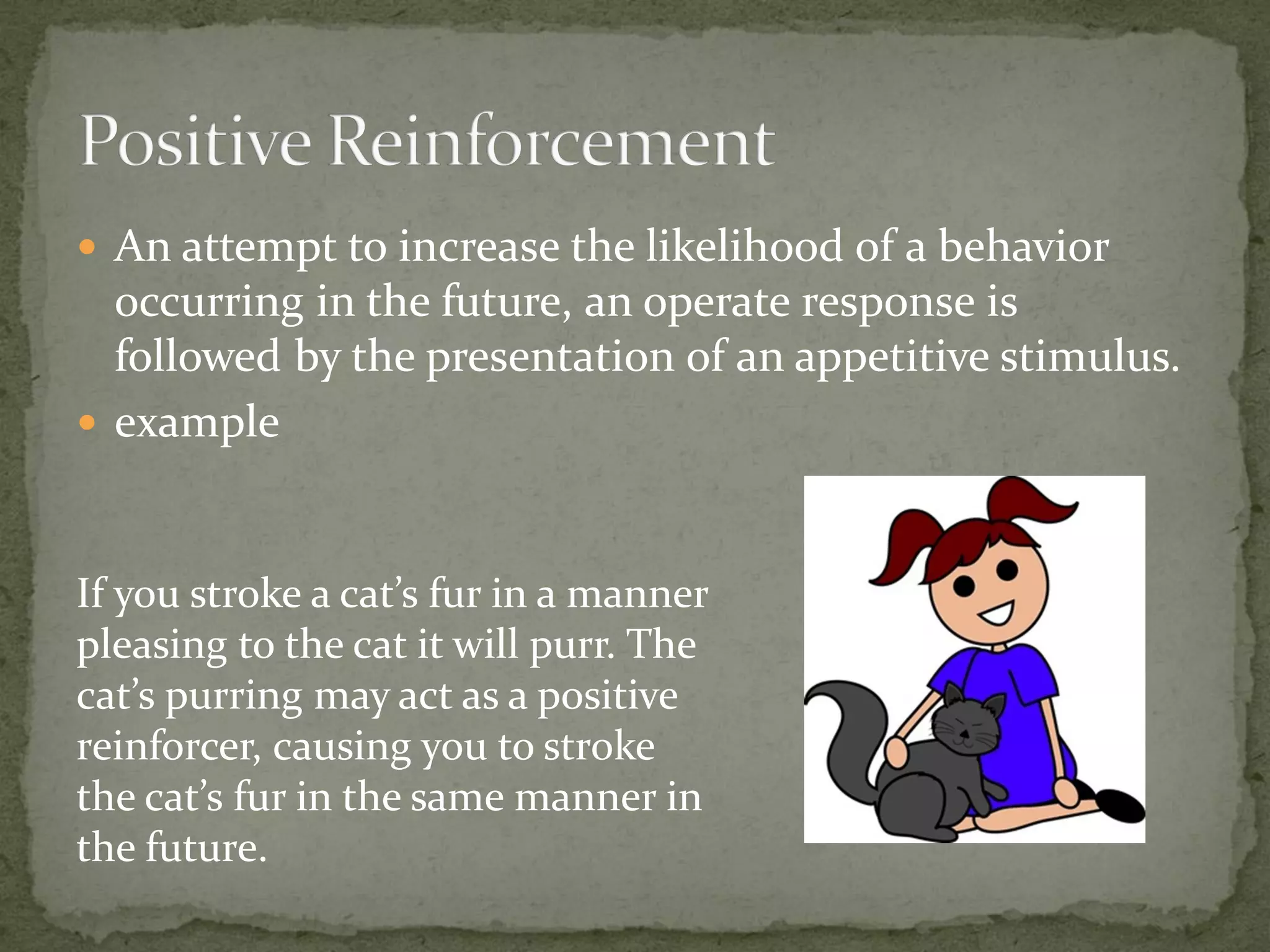
If you stroke a cat’s fur in a manner
pleasing to the cat it will purr. The
cat’s purring may act as a positive
reinforcer, causing you to stroke
the cat’s fur in the same manner in
the future.
 An attempt to increase the likelihood of a behavior
  occurring in the future, an operant response is
  followed by the removal of an aversive stimulus.


 • Example
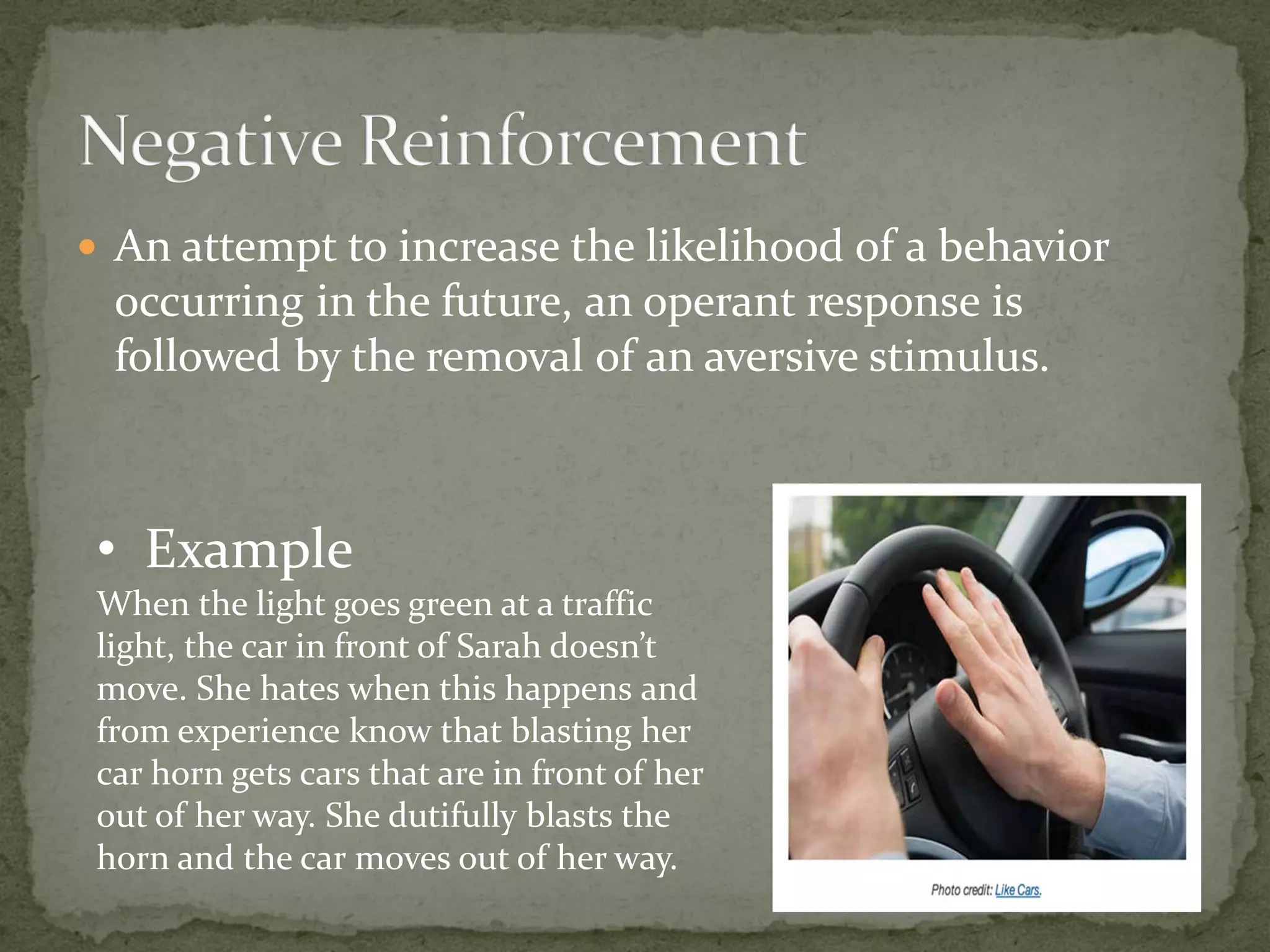
 When the light goes green at a traffic
 light, the car in front of Sarah doesn’t
 move. She hates when this happens and
 from experience know that blasting her
 car horn gets cars that are in front of her
 out of her way. She dutifully blasts the
 horn and the car moves out of her way.
 What is punishment?


 Punishment is defined as a consequence that follows
 an operant response that decreases the likelihood of
 that response occurring in the future.
 An attempt to decrease the likelihood of a behavior
  occurring in the future by following an operant
  response with an aversive stimulus.
 examples
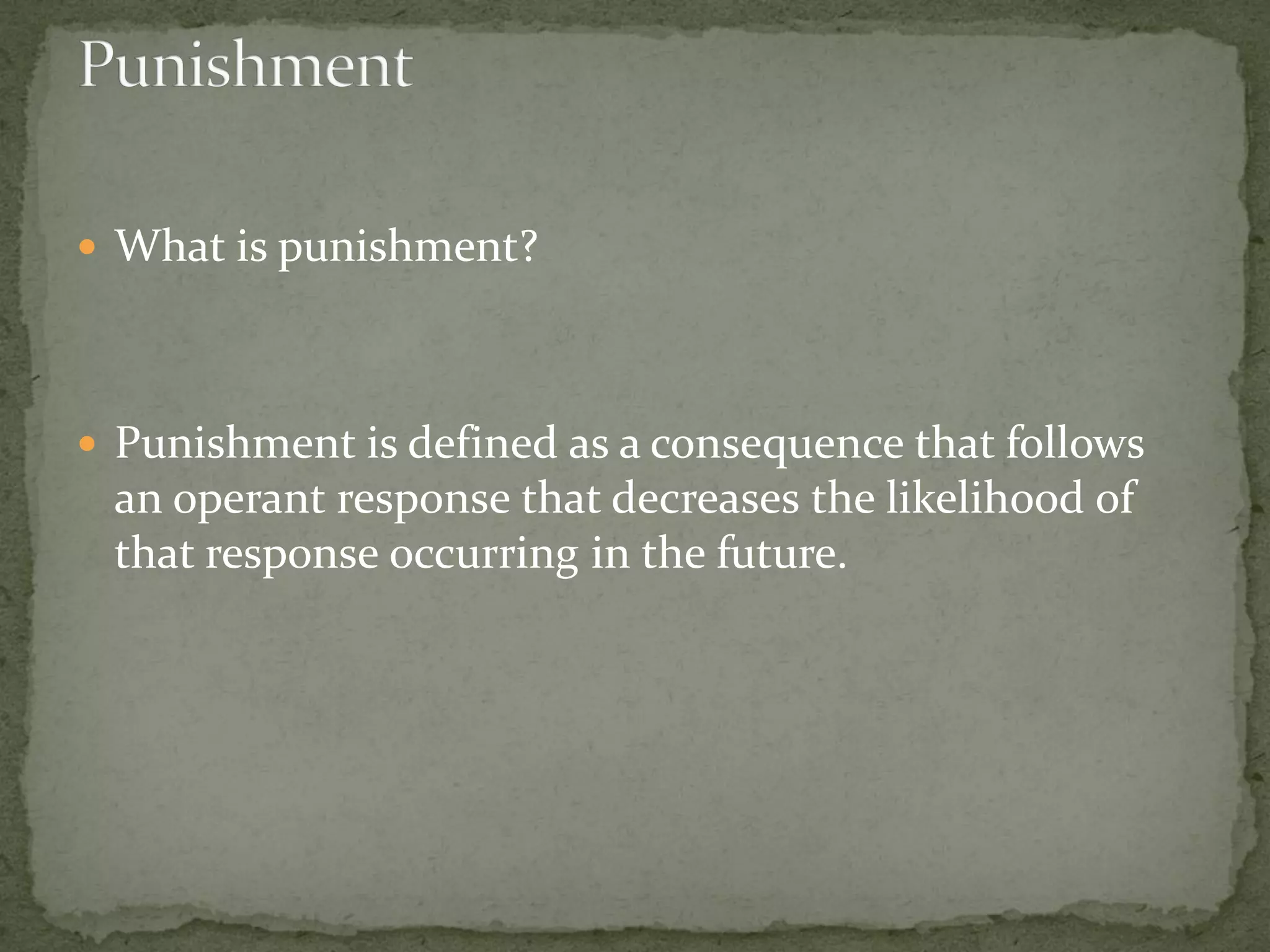
 Burning your hand when you touch a hot
  stove.


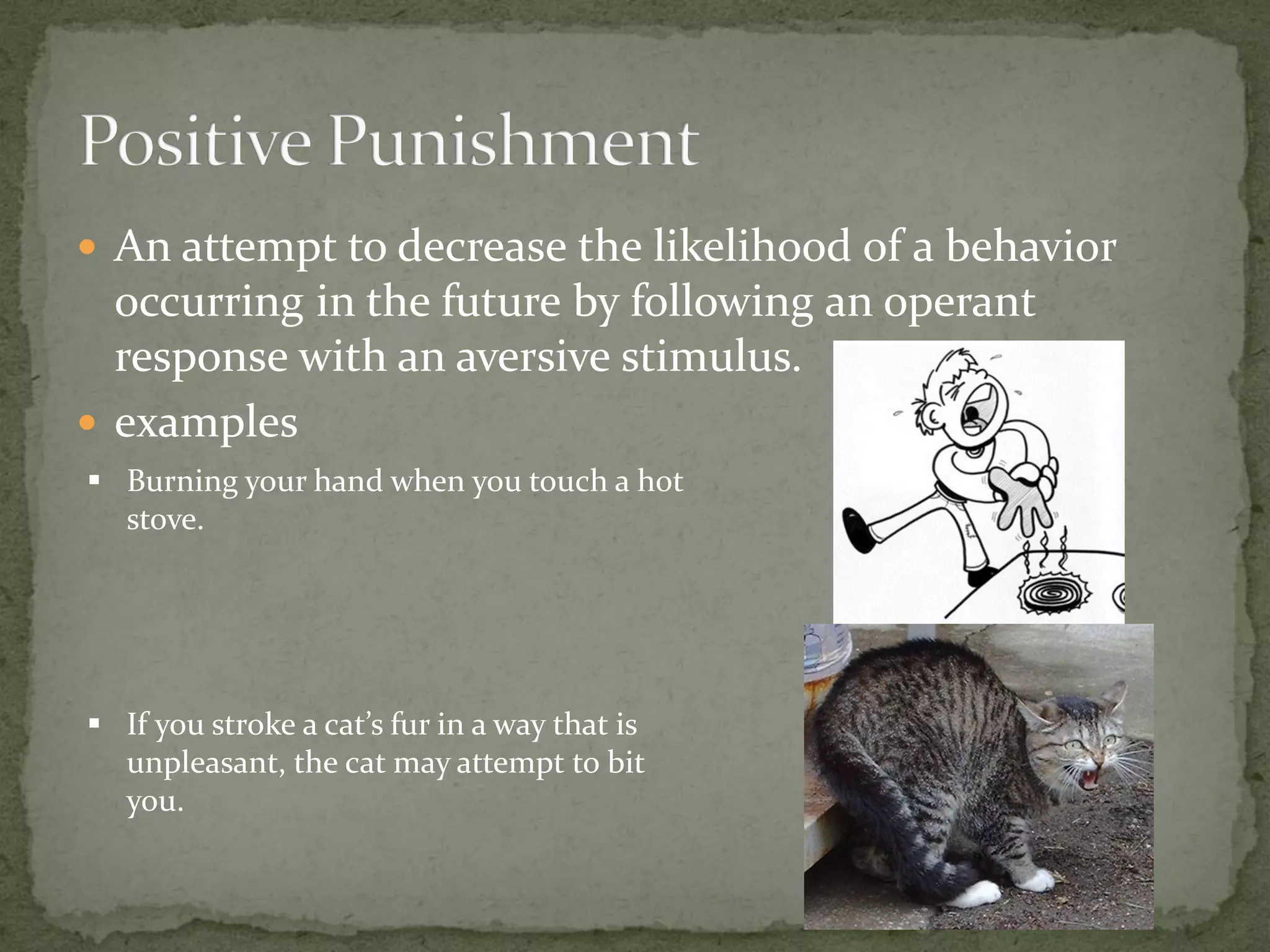
 If you stroke a cat’s fur in a way that is
  unpleasant, the cat may attempt to bit
  you.
 An attempt to decrease the likelihood of a behavior
    occurring in the future, an operant response is
    followed by the removal of an appetitive stimulus.
   Examples


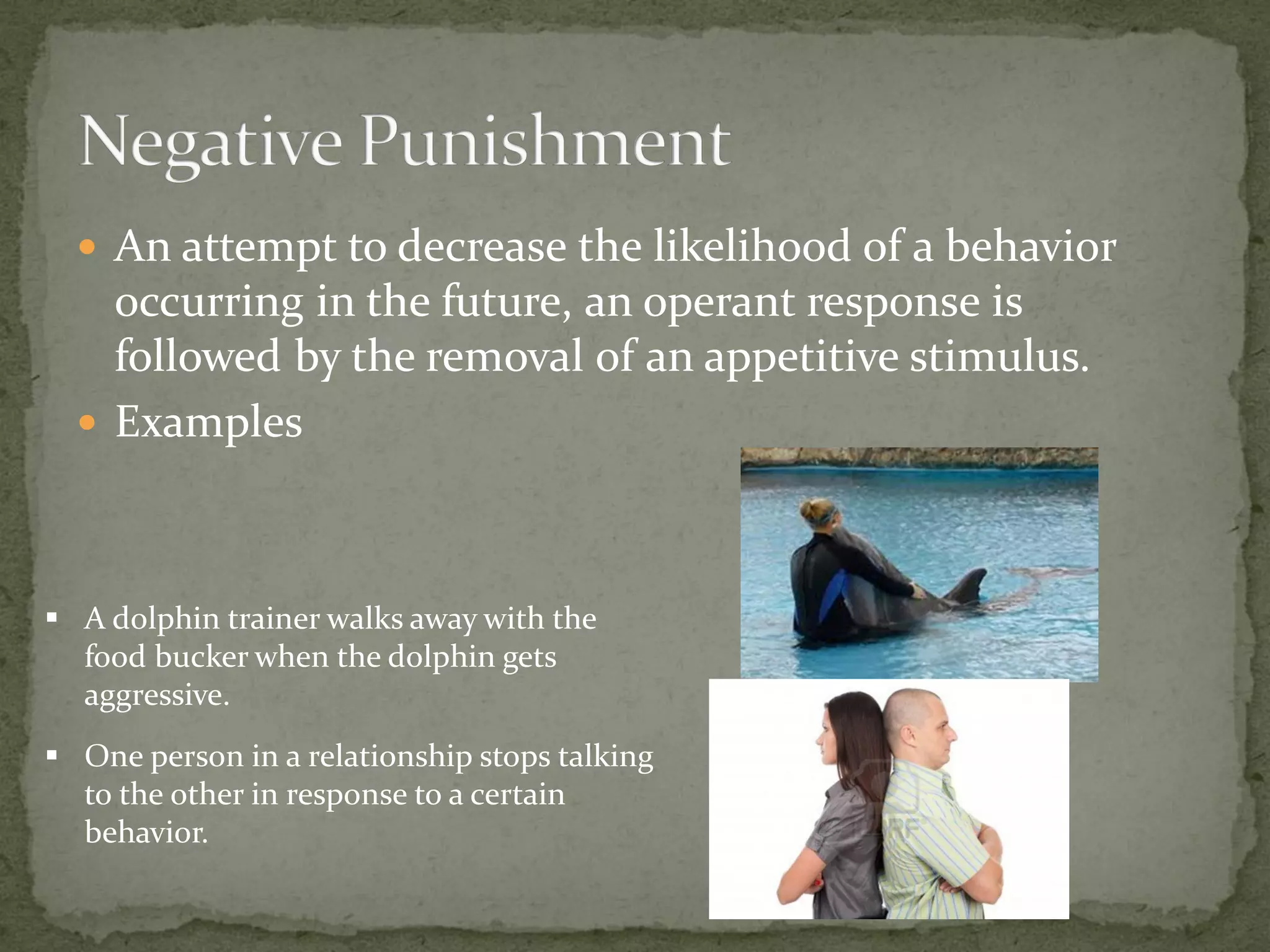
 A dolphin trainer walks away with the
  food bucker when the dolphin gets
  aggressive.
 One person in a relationship stops talking
  to the other in response to a certain
  behavior.
Reinforcement and punishment

Reinforcement and punishment

  • 1.
  • 2.
     What isreinforcement?  Reinforcement is defined as a consequence that follows an operant response that increases the likelihood of that response occurring in the future.
  • 3.
     An attemptto increase the likelihood of a behavior occurring in the future, an operate response is followed by the presentation of an appetitive stimulus.  example If you stroke a cat’s fur in a manner pleasing to the cat it will purr. The cat’s purring may act as a positive reinforcer, causing you to stroke the cat’s fur in the same manner in the future.
  • 4.
     An attemptto increase the likelihood of a behavior occurring in the future, an operant response is followed by the removal of an aversive stimulus. • Example When the light goes green at a traffic light, the car in front of Sarah doesn’t move. She hates when this happens and from experience know that blasting her car horn gets cars that are in front of her out of her way. She dutifully blasts the horn and the car moves out of her way.
  • 5.
     What ispunishment?  Punishment is defined as a consequence that follows an operant response that decreases the likelihood of that response occurring in the future.
  • 6.
     An attemptto decrease the likelihood of a behavior occurring in the future by following an operant response with an aversive stimulus.  examples  Burning your hand when you touch a hot stove.  If you stroke a cat’s fur in a way that is unpleasant, the cat may attempt to bit you.
  • 7.
     An attemptto decrease the likelihood of a behavior occurring in the future, an operant response is followed by the removal of an appetitive stimulus.  Examples  A dolphin trainer walks away with the food bucker when the dolphin gets aggressive.  One person in a relationship stops talking to the other in response to a certain behavior.