REGULATORY DOSSIER PREPARATION &
SUBMISSION AS PER CTD FORMAT
TABLE OF CONTENTS
 Definition of Regulatory Dossier
 Types of dossier
 Countries and their Regulatory Authorities
 What is CTD
 CTD Modules
 Difference between submission forms
 References
DEFINITION OF DOSSIER
 Pharmaceutical Regulatory Dossier is a document that contains all technical data
(administrative, quality, nonclinical, and clinical) of a pharmaceutical product to be approved /
registered / marketed in a country. It is more commonly called as New Drug Application (NDA)
in the USA or Marketing Authorization Application (MAA) in European Union (EU) and other
countries as simply Registration Dossier.
TYPES OF DOSSIER
Drug regulatory affairs in pharma industries have mandated two types of dossier namely
1. ICH-CTD (ICH-Common Technical Dossier): It is followed by ICH countries as well as low
economical or developing countries.
2. ACTD (ASEAN Common Technical Dossier): Followed by Association of Southeast Asian
Nations.
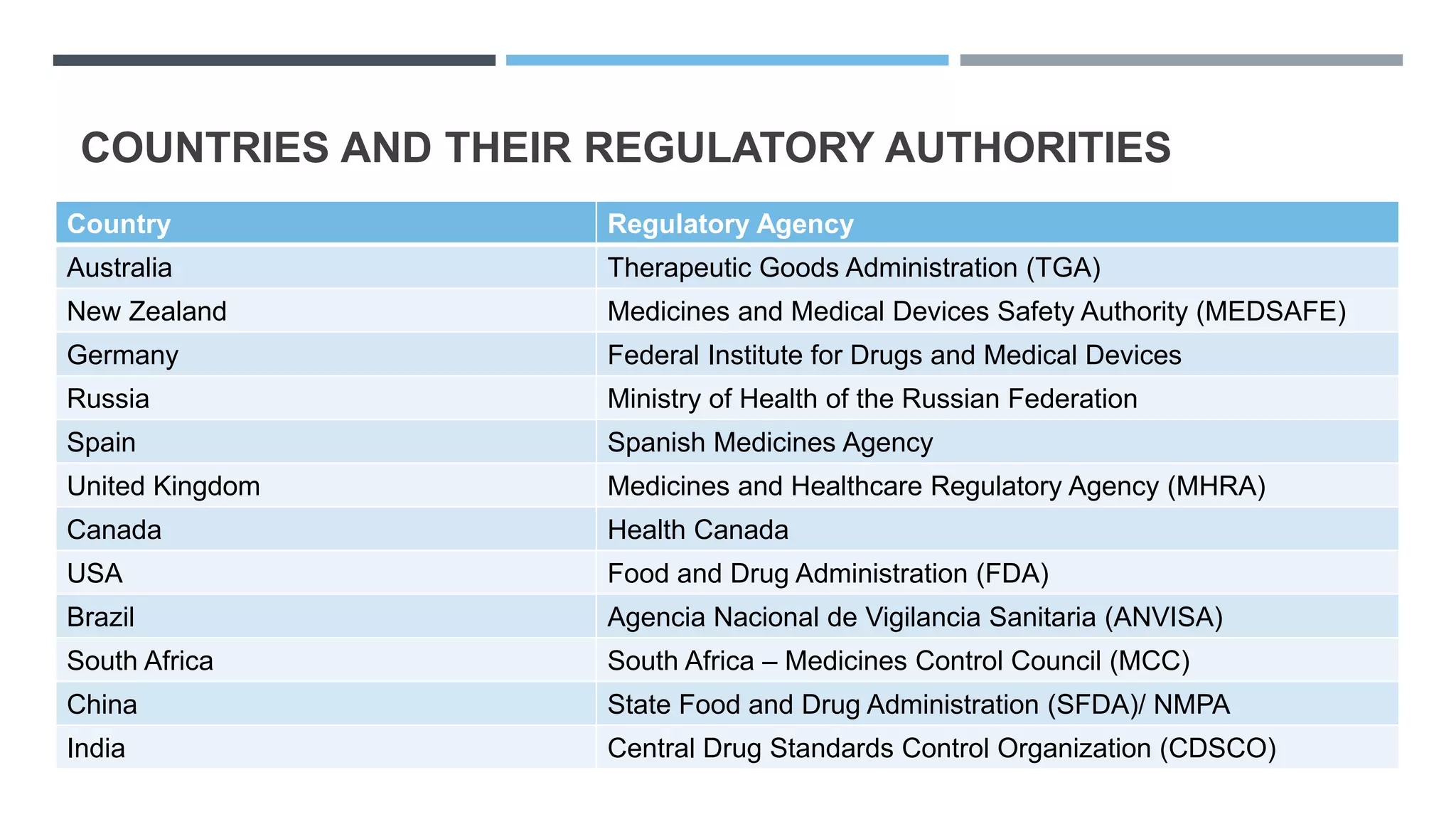
COUNTRIES AND THEIR REGULATORY AUTHORITIES
Country Regulatory Agency
Australia Therapeutic Goods Administration (TGA)
New Zealand Medicines and Medical Devices Safety Authority (MEDSAFE)
Germany Federal Institute for Drugs and Medical Devices
Russia Ministry of Health of the Russian Federation
Spain Spanish Medicines Agency
United Kingdom Medicines and Healthcare Regulatory Agency (MHRA)
Canada Health Canada
USA Food and Drug Administration (FDA)
Brazil Agencia Nacional de Vigilancia Sanitaria (ANVISA)
South Africa South Africa – Medicines Control Council (MCC)
China State Food and Drug Administration (SFDA)/ NMPA
India Central Drug Standards Control Organization (CDSCO)
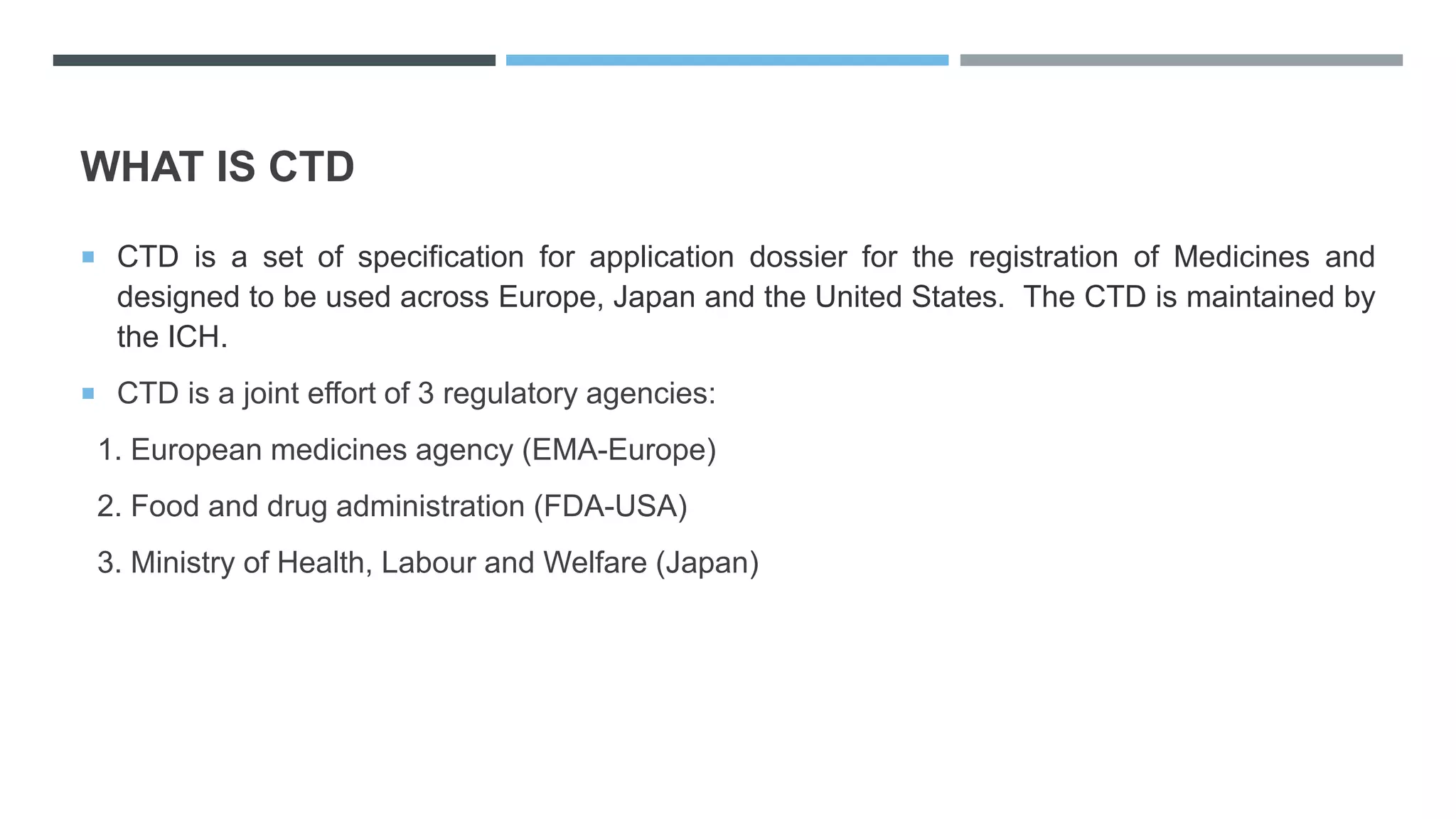
WHAT IS CTD
 CTD is a set of specification for application dossier for the registration of Medicines and
designed to be used across Europe, Japan and the United States. The CTD is maintained by
the ICH.
 CTD is a joint effort of 3 regulatory agencies:
1. European medicines agency (EMA-Europe)
2. Food and drug administration (FDA-USA)
3. Ministry of Health, Labour and Welfare (Japan)
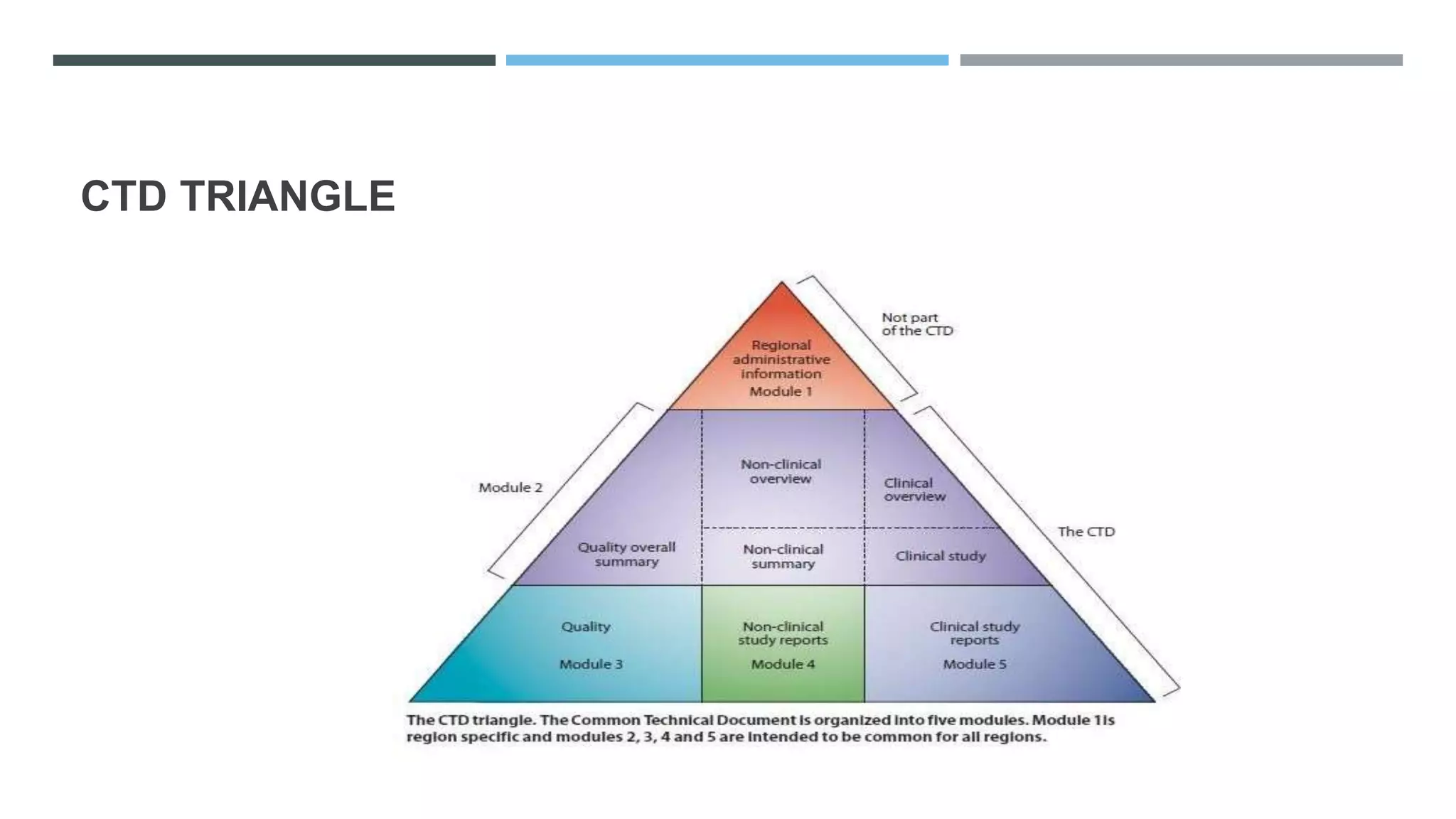
CTD TRIANGLE
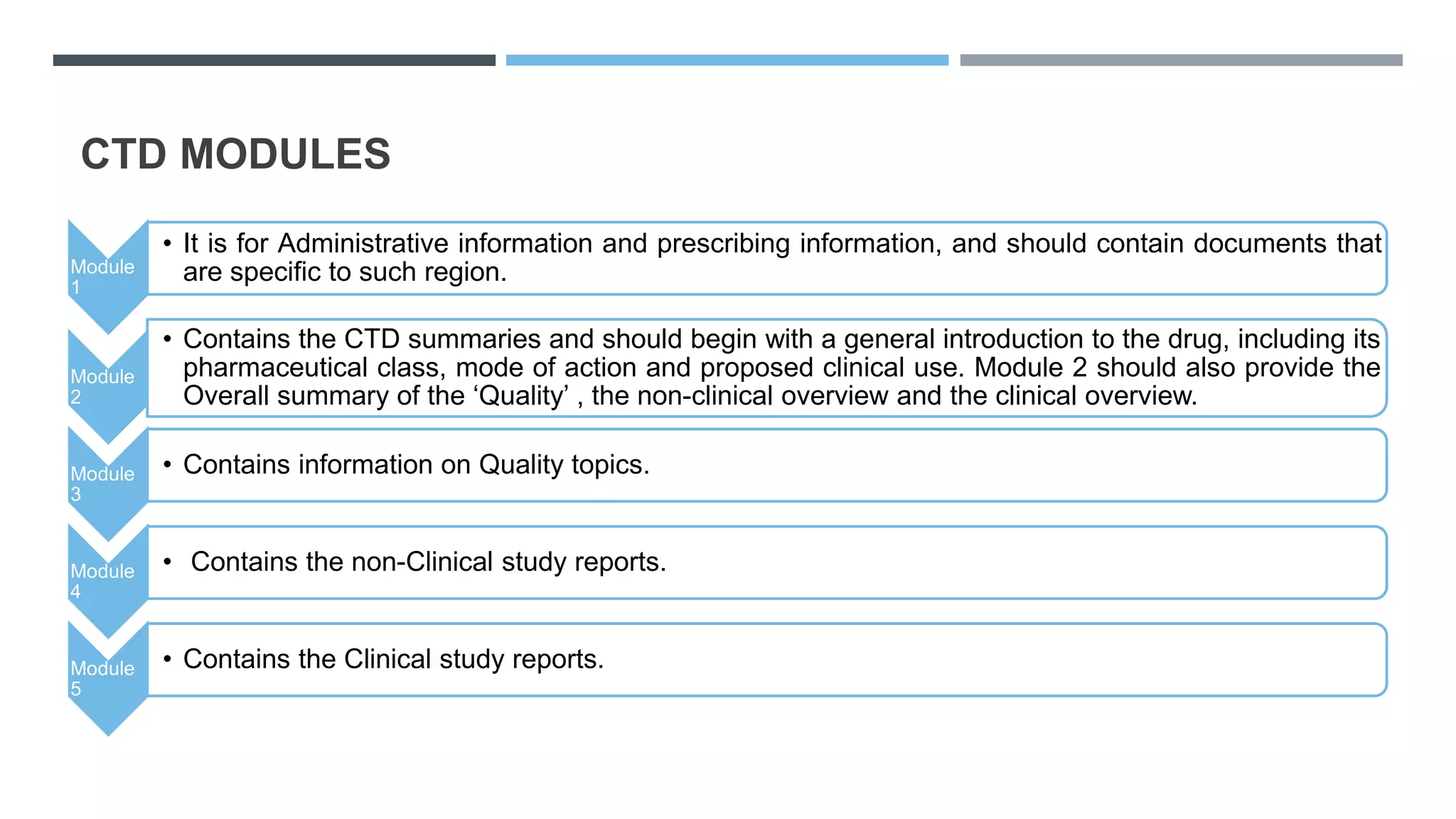
CTD MODULES
Module
1
• It is for Administrative information and prescribing information, and should contain documents that
are specific to such region.
Module
2
• Contains the CTD summaries and should begin with a general introduction to the drug, including its
pharmaceutical class, mode of action and proposed clinical use. Module 2 should also provide the
Overall summary of the ‘Quality’ , the non-clinical overview and the clinical overview.
Module
3
• Contains information on Quality topics.
Module
4
• Contains the non-Clinical study reports.
Module
5
• Contains the Clinical study reports.
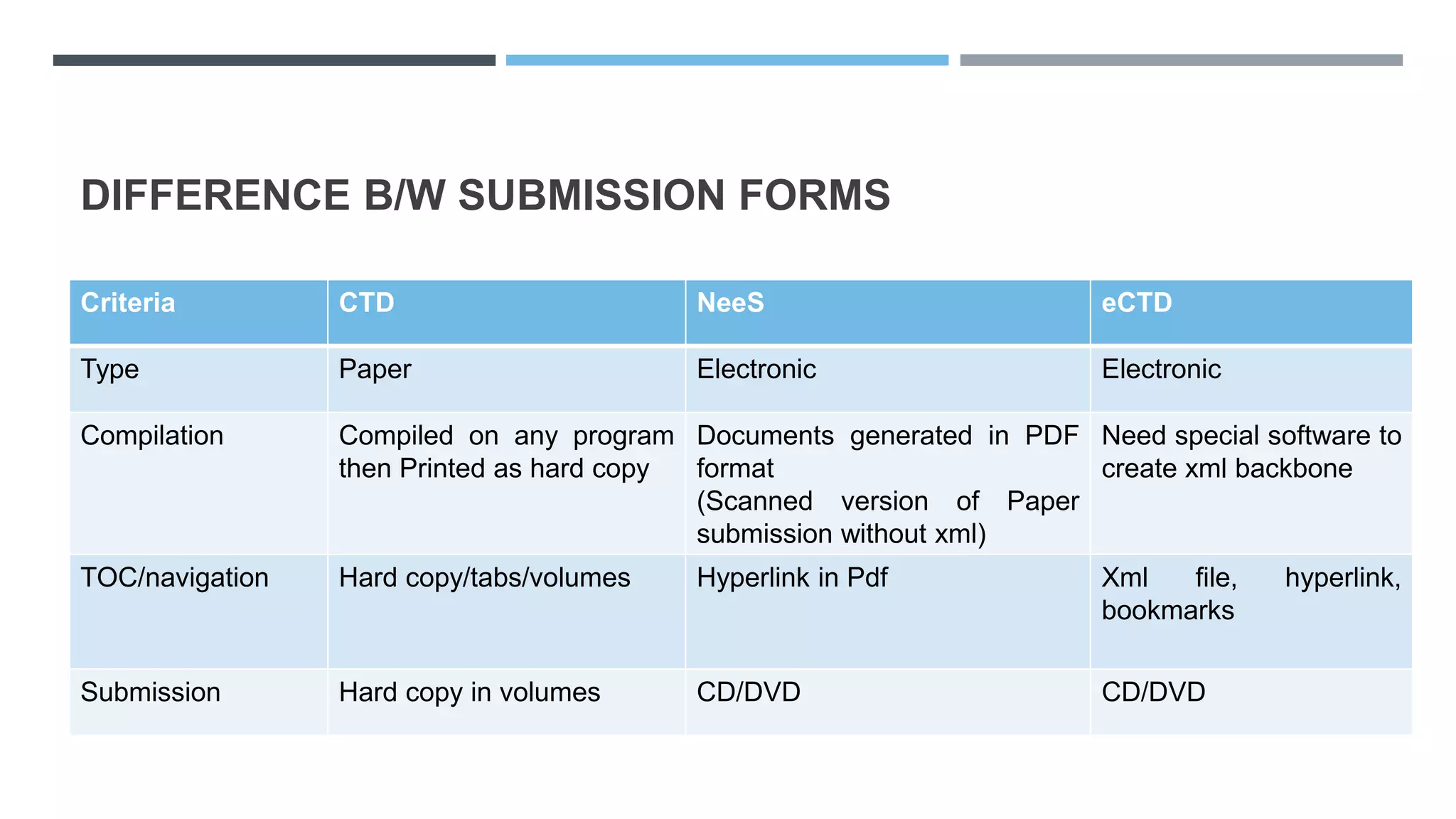
DIFFERENCE B/W SUBMISSION FORMS
Criteria CTD NeeS eCTD
Type Paper Electronic Electronic
Compilation Compiled on any program
then Printed as hard copy
Documents generated in PDF
format
(Scanned version of Paper
submission without xml)
Need special software to
create xml backbone
TOC/navigation Hard copy/tabs/volumes Hyperlink in Pdf Xml file, hyperlink,
bookmarks
Submission Hard copy in volumes CD/DVD CD/DVD
REFERENCES
• https://iaocr.com/clinical-research-regulations/regulatory-authority-links/
• https://www.ich.org/page/ctd
• https://www.slideshare.net/MastKing/dossier-preparation-and-submission-91097120
• https://www.pharmatutor.org/articles/a-study-of-procedures-for-dossier-preparation-and-
their%20marketing-authorisation-in-different-countries-of-selected-drug
• https://pharmexcil.com/uploadfile/ufiles/2013184039_eCTD_Pharmexcil_06_05_2011.pdf
THANKS

Regulatory dossier preparation and submission as per CTD format

  • 1.
    REGULATORY DOSSIER PREPARATION& SUBMISSION AS PER CTD FORMAT
  • 2.
    TABLE OF CONTENTS Definition of Regulatory Dossier  Types of dossier  Countries and their Regulatory Authorities  What is CTD  CTD Modules  Difference between submission forms  References
  • 3.
    DEFINITION OF DOSSIER Pharmaceutical Regulatory Dossier is a document that contains all technical data (administrative, quality, nonclinical, and clinical) of a pharmaceutical product to be approved / registered / marketed in a country. It is more commonly called as New Drug Application (NDA) in the USA or Marketing Authorization Application (MAA) in European Union (EU) and other countries as simply Registration Dossier.
  • 4.
    TYPES OF DOSSIER Drugregulatory affairs in pharma industries have mandated two types of dossier namely 1. ICH-CTD (ICH-Common Technical Dossier): It is followed by ICH countries as well as low economical or developing countries. 2. ACTD (ASEAN Common Technical Dossier): Followed by Association of Southeast Asian Nations.
  • 5.
    COUNTRIES AND THEIRREGULATORY AUTHORITIES Country Regulatory Agency Australia Therapeutic Goods Administration (TGA) New Zealand Medicines and Medical Devices Safety Authority (MEDSAFE) Germany Federal Institute for Drugs and Medical Devices Russia Ministry of Health of the Russian Federation Spain Spanish Medicines Agency United Kingdom Medicines and Healthcare Regulatory Agency (MHRA) Canada Health Canada USA Food and Drug Administration (FDA) Brazil Agencia Nacional de Vigilancia Sanitaria (ANVISA) South Africa South Africa – Medicines Control Council (MCC) China State Food and Drug Administration (SFDA)/ NMPA India Central Drug Standards Control Organization (CDSCO)
  • 6.
    WHAT IS CTD CTD is a set of specification for application dossier for the registration of Medicines and designed to be used across Europe, Japan and the United States. The CTD is maintained by the ICH.  CTD is a joint effort of 3 regulatory agencies: 1. European medicines agency (EMA-Europe) 2. Food and drug administration (FDA-USA) 3. Ministry of Health, Labour and Welfare (Japan)
  • 7.
  • 8.
    CTD MODULES Module 1 • Itis for Administrative information and prescribing information, and should contain documents that are specific to such region. Module 2 • Contains the CTD summaries and should begin with a general introduction to the drug, including its pharmaceutical class, mode of action and proposed clinical use. Module 2 should also provide the Overall summary of the ‘Quality’ , the non-clinical overview and the clinical overview. Module 3 • Contains information on Quality topics. Module 4 • Contains the non-Clinical study reports. Module 5 • Contains the Clinical study reports.
  • 9.
    DIFFERENCE B/W SUBMISSIONFORMS Criteria CTD NeeS eCTD Type Paper Electronic Electronic Compilation Compiled on any program then Printed as hard copy Documents generated in PDF format (Scanned version of Paper submission without xml) Need special software to create xml backbone TOC/navigation Hard copy/tabs/volumes Hyperlink in Pdf Xml file, hyperlink, bookmarks Submission Hard copy in volumes CD/DVD CD/DVD
  • 10.
    REFERENCES • https://iaocr.com/clinical-research-regulations/regulatory-authority-links/ • https://www.ich.org/page/ctd •https://www.slideshare.net/MastKing/dossier-preparation-and-submission-91097120 • https://www.pharmatutor.org/articles/a-study-of-procedures-for-dossier-preparation-and- their%20marketing-authorisation-in-different-countries-of-selected-drug • https://pharmexcil.com/uploadfile/ufiles/2013184039_eCTD_Pharmexcil_06_05_2011.pdf
  • 11.